The human family is distinguished from the animal family by a prolongation of the period in which the infant is protected from the harsh realities of life by parental care. In this sheltered situation, the erotic potentialities of human nature blossom, but blossom in an unearthly atmosphere divorced from the realities of human life. Hence, this early blossoming of the erotic life must succumb to repression when it finally confronts the reality-principle. However, through it is repressed, or rather because it is repressed, this early experience of love stays with us as the immortal dream of love, as an indestructible demand of human nature, as the source of our restless discontent. The infantile experience to which our dreams return is an experience of pleasure, so that a return to the pleasure-principle is an indestructible demand of human nature. However, is a return to the pleasure-principle all that human nature demands? The pleasure principle is a concept from Sigmund Freud’s psychoanalytic theory. It refers to the instinctive drive to seek pleasure and avoid pain, discomfort, or tension. Starting from the axiom that the love of objects in the world is modeled on the primal love of the child for the mother, Dr. Freud claims that the child’s relation to the mother is first and foremost a relation of dependence on the mother for survival; the path to the mother is established first of all by elementary basic instincts; the sexual instinct follows a path to an object marked out for it by the self-preservation instinct. #RandolphHarris 1 of 19

Dr. Freud therefore calls object-choice, modeled on this primal pattern of love of the mother, anaclitic, id est, “leaning up against” the non-sexual instinct of self-preservation. This anaclitic character of object-choice—its connection with self-preservation, economic need, and dependence—explains why its characteristic aim is to possess its object. Quite distinct from anaclitic object-choice, and distinctly traceable not only in the neuroses and in the sexual perversion but also in the normal erotic attitudes of women, Dr. Freud finds another pattern of choice in which the infantile model of the object is not the mother but the subject himself. The subject wants to love himself and satisfies his self-love circuitously either by loving an object like himself or by finding an object which loves him as he loves himself. Relating this second type of love to the child’s general love of himself and his own body, Dr. Freud calls this second relation to objects narcissistic. Thus, in some of his writings, he uses the terms “narcissistic object-choice” and “anaclitic object-choice,” corresponding to his later terminology of “identification” and “true object-choice” (or “object-cathexis”). Summarizing the distinction, Dr. Freud says that the human being has originally two sexual objects: himself and the woman who tends to him. Dr. Freud’s distinction between identification and object-choice, or between narcissistic and anaclitic object-choices, does not survive close examination. He is unable to maintain consistently the correlation of identification with love of the father and object-choice with love of the mother, and has to speak of anaclitic relations with the father and identifications with the mother. However, the fundamental issue is not confusion in the applications themselves. #RandolphHarris 2 of 19
Close examination of Dr. Freud’s own premises and arguments suggests that there is only one loving relationship to objects in the world, a relation of being-one-with-the-world which, though closer to Dr. Freud’s narcissistic relation (identification), is also at the root of his other category of possessive love (object-choice). If love seeks only identification with objects in the world, then possessiveness is not an essential feature of love. Our criticism is directed against Dr. Freud’s notion of “true object-cathexis” as an irreducible desire to possess the beloved. The very fact that “true object-cathexis” is fundamentally anaclitic should make us suspicious of its integrity as a mode of loving. For to be anaclitic means that love follows not its own path but one marked out for it by economic needs, the fact of dependence, and the reality-principle in general. Hence, as Dr. Freud himself always insisted, it is a pattern established by a fusion of the sexual instinct and the non-sexual instinct. In the phase when he assumed the two instincts to be sex and self-preservation, Dr. Freud spoke of object-choice as a manifestation of the sexual instincts leaning on the self-preservation instincts. In the phase when he assumed the two instincts to be Eros and aggression, he spoke of the inevitable aggressive component in object-choice if it is to possess its object. #RandolphHarris 3 of 19
Furthermore, Dr. Freud’s own analysis of possessive love (object-choice) and its primal model, love of the mother, shows that its erotic aim is not possession but union with the object, a union which is hardly distinguishable from his own category of identification. He drives identification from the desire for union with the world in the form of incorporation, after the primal model of the relation of the child to the mother’s bosom. At the same time, he says that incorporation of the object is the aim of normal adult loving, id est of object-choice. Thus, the distinction between object-choice and identification breaks down, both of them meeting in a project of incorporation or being-one-with-the-world, modeled on the primal relation of the child to the mother’s bosom. Hence, Dr. Freud says that “at the very beginning, in the primitive oral phase of the individual’s existence, object-cathexis and identification are hardly distinguished from each other.” And consistently with this, he asserts that the aim of normal adult loving is the restoration of this “primal condition in which object-libido [id est, anaclitic object-choice] and ego-libido [id est, narcissistic object-choice] cannot be distinguished.” In Dr. Freud’s later writings, the importance of the early phase of dependence on the mother is increasingly emphasized, and in that context, he finds it necessary to conclude that the essence of love of the mother is the need to be loved; but if so, then love of the mother is essentially narcissistic, since he says that “to be loved is the aim and the satisfaction of the narcissistic object-choice.” #RandolphHarris 4 of 19
One more passage from Dr. Freud’s later writings shows both the breakdown of the whole distinction between anaclitic and narcissistic object-choice, and also Dr. Freud’s failure explicitly to withdraw the distinction: “You remember the object-choice after the anaclitic type, which psychoanalysis needs, and attaches itself to the objects that ensure their satisfaction.” The collapse of the distinction between identification and object-choice leaves love with one essential aim over and above pleasure, which is to become one with objects in the world. Dr. Freud himself repeatedly drew attention to the interchangeability of identification and object-choice; to explain the self-ability of identification and object-choice; to explain the self-punishment in melancholia and also the self-punishing institution of the super-ego he postulated that we give up a loved object (object-choice) only on condition of making identification with the lost object. If we abandon the notion that the two are in an irreducible duality, this process, which replaces an object-choice with an identification, is easier to comprehend. For, as Dr. Freud says, we make the identification with the lost object by introjecting or incorporating it into the self, not really incorporating it, but incorporating it passively by making ourselves like it. However, since real incorporation of the object can be said to be the aim of object-love, the choice now appears to be not between identification and object-choice, but between active identification with the object and passive remodeling of the self so as to erect in the self a substitute for the object lost. #RandolphHarris 5 of 19
The choice is between erotic action on the outside world (Ferenczi’s “alloplastic adaptation”) and passive alteration of the subject’s own body and psyche as a substitute for erotic action denied (Ferenczi’s “autoplastic adaptation”). This distinction is, I think, what Dr. Freud is driving at in the following obscure formula: “The return of the libido from the object to the ego and its transformation into narcissism makes a representation of a happy love, and conversely, an actual happy love corresponds to the primal condition in which object-libido and ego-libido cannot be distinguished.” Those who question the soundness of these ideas are nearly always those who are still mesmerized by materialist superstitions. It is impossible for them to cope with life’s higher requirements because they persist in thinking sensately. Because the spirit of man is neither scientifically measurable nor immediately experienceable, the education of the modern mind too often rejected its reality and denied its utility. We can distinguish three forms of shallow living, each differing from the others merely in the emphasis upon certain aspects. In one, the emphasis is on fun, on having a good time. This may superficially look like a zest for living, in contrast to a basic characteristic or resignation—a not wanting. However, the motive force here is not a reaching out for enjoyment but the necessity to push down a gnawing feeling of futility by means of distracting pleasures. The following poem, entitled “Palm Springs,” which I found in Harper’s Magazine, characterizes such fun-seeking in the leisure class: “Oh, give me a home, where the millionaires roam, and the dear little glamour girls play. Where never is heard an intelligent word, and we round up the dollars all day.” #RandolphHarris 6 of 19
It is, however, by no means restricted to the leisure class but goes far down the social scale to people with small incomes. It is, after all, merely a question of money whether “fun” is found in expensive nightclubs and cocktail and theater parties or in getting together in homes for drinking, playing cards, and chattering. It may also be more localized through collecting stamps, becoming a gourmet, or going to the movies, all of which would be all right if they were not the only real content of life. It is not necessarily socialized, but may consist of reading mystery stories, listening to the radio, looking at television, or daydreaming. If fun is socialized, two things are strictly avoided: being alone for any length of time and having serious talk. The latter is regarded as rather bad manners. The cynicism is thinly covered up by “tolerance” or “broad-mindedness.” In the second group, the emphasis is on prestige or opportunistic success. The check on strivings and efforts which is characteristic of resignation is here undiminished. The motivations are mixed. It is in part the wish for a life made easier by the possession of money. In part, it is a need to give an artificial lift to self-esteem, which in this whole group of shallow living sinks to zero. This however, with the loss of inner autonomy, can be done only by lifting oneself up in the eyes of others. One writes a book because it might be a best seller; one marries for money; one joins a political party which is likely to offer advantages. In social life, there is less emphasis on fun and more on the prestige of belonging to certain circles or going to certain places. The only moral code is to be smart, to get by, and to not be caught. George Eliot has given us in Romola an excellent picture of such an opportunistic person in the figure of Tito. We see in him the evasion of conflicts, the insistence on an easy life, the noncommitment, and the gradual moral deterioration. The latter is not accidental but is bound to happen with the moral fiber becoming weaker and weaker. #RandolphHarris 7 of 19
The third form is the “well-adapted” automaton. Here, the loss of authentic thinking and feeling leads to a general flattening out of the personality, aptly described by Marquand in many of his characters. Such a person then fits in with the others and takes over their codes and conventions. He feels, thinks, does, and believes in what is expected or considered right in his environment. The emotional deadness here is not greater, but more obvious, than in the other two groups. Erich Fromm has well described this overadaptation and has seen its social significance. If we include, as we must, the other two forms of shallow living, this significance is all the greater because of the frequency of such ways of living. Fromm saw correctly that the picture is different from the common run of neuroses. Here are people not obviously driven as the neurotic usually is, not obviously disturbed by conflicts. Also, they often have no particular “symptoms” like anxiety and depression. The impression is in short that they do not suffer from disturbances but that they lack something. Fromm’s conclusion is that these are conditions of defect as innate but as a result of being crushed by authority early in life. His speaking of defect and my speaking of shallow living may seem like mere difference in terminology. However, as so often, the difference in terminology results from significant differences in the meaning of the phenomenon. Actually, Fromm’s contention raises two interesting questions: is shallow living a condition which has nothing to do with neurosis or is it the outcome of a neurotic process, as I have presented here? And: do people indulging in shallow living actually lack depth, moral fiber, and autonomy? #RandolphHarris 8 of 19

If shallow living is fully developed, there is of course no incentive for therapy. However, when not far advanced, they may want it because they are disturbed with by psychosomatic disorders or by repeated failures, inhibitions in work, and an increasing feeling of futility. They may sense that they are going downhill and be disquieted about in. Our first impression in analysis is that already described from the point of view of general curiosity. They stay on the surface, seem to lack psychological curiosity, are ready with glib explanations, are interested only in external matters connected with money or prestige. All that makes us think that there is more than meets the eye in their history. As described before in terms of the general movement toward designation, there were periods earlier, in or after adolescence, in which they had active strivings and went through some emotional distress. This would not only put the onset of the conditions later than Fromm assumes but point to its being an outcome of a neurosis which at some time was manifest. As the analysis proceeds, a baffling discrepancy appears to between their waking lives and their dreams. Their dreams unequivocally show emotional depth and turbulence. These dreams, and often they only, reveal a deeply buried sadness, self-hate and hate for others, self-pity, despair, anxiety. In other words, there is a world of conflicts and passionate feelings under the smooth surface. We try to awaken their interest in their dreams, but they tend to discard them. They seem to live in two worlds, entirely disconnected. #RandolphHarris 9 of 19
More and more, we realize that here is not given superficiality but that they are anxious to stay away from their own depth. As if nothing had happened, they get a fleeting glimpse of it and close up tightly. A little later feelings may suddenly emerge in their waking life from the abandoned depths: some memory may make them cry, some nostalgia or some religious feeling may appear—and vanish. These observations, confirmed by the later analytic work, contradict the concept of a defect and point to a determined light from their inner personal life. Considering shallow living as an unfortunate outcomes of a neurotic process gives a less pessimistic outlook, both for prophylaxis and therapy, The frequency of shallow living at the present time makes it highly desirable to recognize it as a disturbance and to prevent its development. Its prophylaxis coincides with preventative measures concerning neuroses in general. Much work is being done in this regard but much more is necessary and apparently can be done, particularly in schools. For any therapeutic work with resigned patients, the first requisite is to recognize the condition as a neurotic disturbance and not to discard it as either a constitutional or a cultural peculiarity. The latter concepts imply that it is unalterable or that it does not belong in the range of problems to be tackled by a psychiatrist. As yet, it is less well known than other neurotic problems. It has probably aroused less interest for two reasons. Many disturbances occurring in this process, although they may cramp a person’s life, are rather inconspicuous and therefore call less urgently for therapy. On the other hand, gros disturbances that may arise from this background have not been connected with the basic process. The only factor in it with which psychiatrists are thoroughly familiar is the detachment. However, resignation is a much more encompassing process, presenting specific problems and specific difficulties in therapy. These can be tackled successfully only with a full knowledge of its dynamics and its meaning. #RandolphHarris 10 of 19
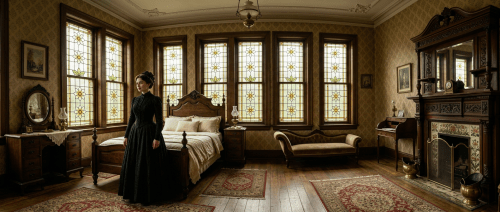
The same science which formerly separated man in belief and understanding from the divine Mind, later, by its confirmation of the universal laws and powers, draws him nearer to it. A strategic legitimating function of symbolic universes for individual biography is the “location” of death. The experience of the death of others and, subsequently, the anticipation of one’s own death posit the marginal situation par excellence for the individual. Needless to elaborate, death also posits the most terrifying threat to the taken-for-granted realities of everyday life. The integration of death within the paramount reality of social existence is, therefore, of the greatest importance for any institutional order. This legitimation of death is, consequently, one of the most important fruits of symbolic universes. Whether it is done with or without recourse to mythological, religious or metaphysical interpretations of reality is not the essential question here. The modern atheist, for instances, who bestows meaning upon death in terms of a Weltanschauung of progressive evolution or of revolutionary history also does so by integrating death within a reality-spanning symbolic universe. All legitimations of death must carry out the same essential task—they must enable the individual to go on living in society after the death of significant others and to anticipate his own death with, at the very least, terror sufficiently mitigated so as not to paralyze the continued performance of the routines of everyday life. It may readily be seen that such legitimation is difficult to achieve short of integrating the phenomenon of death within a symbolic universe. Such legitimation, then, provides the individual with a recipe for a “correct death.” Optimally, this recipe will retain its plausibility when his own death is imminent and will allow him, indeed, to “die correctly.” #RandolphHarris 11 of 19
It is the legitimation of death that the transcending potency of symbolic universes manifests itself most clearly, and the fundamental terror-assuaging character of the ultimate legitimations of the paramount reality of everyday life is revealed. Only if it is constantly protected against terror can the primacy of the social objectivations of everyday life retain its subjective plausibility. On the level of meaning, the institutional order represents a shield against terror. To be anomic, therefore, means to be deprived of this shield and to be exposed, alone, to the onslaught of nightmare. While the horror of aloneness is probably already given in the constitutional sociality of man, it manifests itself on the level of meaning in man’s incapacity to sustain a meaningful existence in isolation from the nomic constructions of society. The symbolic universe shelters the individual from ultimate terror by bestowing ultimate legitimation upon the protective structures of the institutional order. Very much the same may be said about the social (as against the just discussed individual) significance of symbolic universes. They are sheltering canopies over the institutional order as well as over individual biography. They also provide the delimitation of social reality; that is, they set the limits of what is relevant in terms of social interaction. One extreme possibility of this, sometimes approximated in primitive societies, is the definition of everything as social reality; even inorganic matter is dealt with in social terms. A narrower, and more common, delimitation includes only the organic or animal worlds. The symbolic universe assigns ranks to various phenomena in a hierarchy of being, defining the range of the social within this hierarchy. #RandolphHarris 12 of 19
Needless to say, such ranks are also assigned to different types of men, and it frequently happens that broad categories of such types (sometimes everyone outside the collectivity in question) are defined as other than or less than human. This is commonly expressed linguistically (in the extreme case, with the name of the collectivity being equivalent to the term “human”). This is not too rare, even in civilized societies. For example, the symbolic universe of traditional India assigned a status to the outcastes that was closer to that of animals than to the human status of the upper castes (an operation ultimately legitimated in the theory of karma-samsara, which embraced all beings, human or otherwise), and as recently as the Spanish conquests in America, it was possible for the Spaniards to conceive of the Indians as belonging to a different species (this operation being legitimated in a less comprehensive manner by a theory that “proved” that the Indians could not be descended from Adam and Eve). The symbolic universe also orders history. It locates all collective events in a cohesive unity that includes past, present, and future. With regard to the past, it establishes a “memory” that is shared by all the individuals socialized within the collectivity. With regard to the future, it establishes a common frame of reference for the projection of individual actions. Thus, the symbolic universe links men with their predecessors and their successors in a meaningful totality, serving to transcend the finitude of individual existence and bestowing meaning upon the individual’s death. All the members of society can now conceive of themselves as belonging to a meaningful universe, which was there before they were born and will be there after they die. The empirical community is transposed onto a cosmic plane and made majestically independent of the vicissitudes of individual existence. #RandolphHarris 13 of 19
As we have already observed, the symbolic universe provides a comprehensive integration of all discrete institutional processes. The entire society now makes sense. Particular institutions and roles are legitimated by locating them in a comprehensively meaningful world. For example, the political order is legitimated by reference to a cosmic order of power and justice, and political roles are legitimated as representations of these cosmic principles. The institution of divine kingship in archaic civilizations is an excellent illustration of the manner in which this kind of ultimate legitimation operates. It is important, however, to understand that the institutional order, like the order of individual biography, is continually threatened by the presence of realities that are meaningless in its terms. The legitimation of the institutional order is also faced with the ongoing necessity of keeping chaos at bay. All social reality is precarious. All societies are constructions in the face of chaos. The constant possibility of anomic terror is actualized whenever the legitimations that obscure the precariousness are threatened or collapse. Especially if it occurs with sudden violence, the dread that accompanies the death of a king expresses this terror. Over and beyond emotions of sympathy or pragmatic political concerns, the death of a king under such circumstances brings the terror of chaos to conscious proximity. The popular reaction to the assassination of President Kennedy and the Assassination attempts on President Trump are potent illustrations. It may readily be understood why such events have to be followed at once with the most solemn reaffirmations of the continuing reality of the sheltering symbols. #RandolphHarris 14 of 19
The origins of a symbolic universe have their roots in the constitution of man. If man in society is a world-constructor, this is made possible by his constitutionally given world-openness, which already implies the conflict between order and chaos. Human existence is, ab initio, an ongoing externalization. As man externalizes himself, he constructs the world into which he externalizes himself. In the process of externalization, he projects his own meanings into reality. Symbolic universes, which proclaim that all reality is humanly meaningful and call upon the entire cosmos to signify the validity of human existence, constitute the farther reaches of this projection. In view of the spirit of the times, the attitude and findings of modern science must be respected and harmonized with the mystic’s. Both Blavatsky and Steiner saw this and tried to accommodate science in their presentations. However, since their day there has been a revolution in scientific theory which has made this work easier, much easier. Science has carried itself to the broadest possible dimensions. Now it must carry itself to the deepest. The fear of yielding to personal feelings in his thought about the world became so exaggerated in the scientist that it shut out the pleading and rejected the services of impersonal feelings, which manifests itself through intuition. This is why he came to be denial of mystical doctrine and scorn of mystical experience. However, such undue one-sidedness could not last indefinitely. Its end is within sight. The hope of educated men who understand and appreciate the services of science but who deplore its dangers and recognize its limitations, lies in the investigation and development of consciousness. #RandolphHarris 15 of 19
When men awaken to a more emotional realization of what science has done to them—as opposed to what it has done for them—there will be an urgent demand for a reinterpretation of science itself. The old interpretation will be discarded as dangerous. When the scientist recovers his lost quality of reverence—not necessarily expressed through some established religion—for some mysterious Greatness present in the cosmos he investigates, something which escapes analysis or description but arouses feeling and wonder, his work will not suffer but becomes fuller and his understanding become more satisfying. It is a meaningful historic fact that Sir Francis Bacon wrote the first notable book in English language of philosophical—by which I do not mean theological—kind and the first notable book of a scientific kind in the same language. He was a Creator, a Pioneer, a Pathfinder. Faith in science is no longer the alternative to faith in religion—except for one-sided, narrow minds in either camps. Rather, there are now complementary faiths. The scientists who seeks to learn the origin, history, nature, and laws of the physical universe and the psychologist who probes into the workings of the human mind—both must at some point of their investigation consider the questions “Who Am I?” side by side with “What Is the World?” Next, they cannot afford to ignore the mystery of the Deity. Finally, it will be found at some point on their way that they need to impose a self-discipline and an ethical code upon themselves. Having emptied human life of its spiritual meaning, turning it into a “fortuitous conjunction of atoms,” science is now nearing the point where it will have no other course than to restore the meaning, but in a rational and intelligent way. #RandolphHarris 16 of 19

When it comes to firefighting, every incident carries the potential for injury—no matter how small the fire appears or how routine the call may seem. If you see a fire engine stopped in the street without its lights on, use extreme caution. Crews may be working nearby, and passing the apparatus can put them in danger. It is often safer to turn around and take another route; if you strike a firefighter or civilian and cause a fatality, you could face charges such as manslaughter. Firefighters frequently move around their vehicle on foot, loading equipment or preparing to leave the scene. Attempting to pass the apparatus can result in a collision with someone you cannot see. Pay close attention to their hand signals as well—emergency vehicles sometimes move slowly or reposition, and impatient drivers trying to slip around them create hazardous situations. If you are already in an intersection when you notice an emergency vehicle approaching, continue through it, then pull to the right and stop as soon as it is safe. Always obey directions from law enforcement officers or firefighters, even if those instructions conflict with posted signs or traffic laws. When sirens or flashing lights are activated, it is illegal to follow within 300 feet of a fire engine, ambulance, or police vehicle. Driving to the scene of a fire, collision, or disaster can also result in arrest, as doing so interferes with firefighters, paramedics, and other emergency personnel. Professional courage is not limited to physical toughness. It includes listening to others, advocating for them in difficult situations, understanding personal limits, and having the integrity to tell a superior when they are wrong. The deeper truth is that public safety depends not only on the bravery of first responders but on the discipline and judgment of the community around them. Every driver’s decision—whether cautious or careless—can either protect or endanger the people risking their lives to protect everyone else. #RandolphHarris 17 of 19

To help prevent disasters, we must plan well in advance. Efforts to preserve farmland and maintain buildable land for future generations often lead to discussions about population growth and long‑term planning. Some people argue that immigration levels should be managed carefully to ensure that infrastructure, housing, and land use remain sustainable. Others suggest that, when immigration does occur, programs that encourage broad representation can help communities reflect the diversity of the wider world. When Americans purchase goods made in the United States, it strengthens local businesses and signals to investors that these products are in demand. Strong sales give investors confidence to reinvest in domestic companies, helping keep jobs, production, and wages within the country. As businesses grow, they contribute more to the tax base, which can reduce the burden on taxpayers over time. Supporting American businesses also keeps more money circulating within the national economy. The government increases the national debt when it spends more than it collects in tax revenue or borrows from private or foreign lenders. When people shop locally, more tax revenue stays in the community and supports public services. This helps keep jobs in the United States and increases the tax contributions that fund government operations. Purchasing foreign-made goods, by contrast, often sends money overseas and may benefit companies that operate under lighter tax or environmental regulations. Buying American-made products can also reduce environmental impact because they travel shorter distances and are produced under stricter standards for air, land, and water protection. In this way, consumer choices influence not only the economy but also environmental stewardship and long-term national sustainability. #RandolphHarris 18 of 19

Under President Trump’s administration, he has made America a priority. President Trump has hermetically sealed the southern border, illegal crossings have been terminated, and are 90 percent lower than under the previous administration. Since President Trump’s crack down on crime, violent crimes in Washington D.C. have dropped by approximately 80 percent. He has stopped thousands of pounds of drugs from entering America and killing citizens. And since President Trump took office, investments in America have increased by trillions of dollars in U.S.A. manufacturing, production, and innovation. As you can see, President Donald Trump and his pledge to “Make America Great Again” is exactly what America needs to save the country and the American people. And yes, diversity is important, so you can see why it is also important to preserve blonde hair and blue eyes, as the people with these characteristics are becoming a minority in America. As a reminder, parents, please teach your children to love America and be patriotic citizens, and to buy goods and services made in America. It is also important to respect law and order and treat your elders with respect. It is inborn in the human mind to wish to know. If this begins with the endless surface questions of a child’s curiosity, if it continues into deeper questions of a scientist’s probing investigation, it cannot and does not stop there. For the higher part of the mind will eventually come into unfoldment, that union of abstract reflective thought with mystical intuition, which is true intelligence, which needs and sees a view of the whole of things. And so, the knowing faculty enters the realm of philosophy. A lot of children are having problems in school and cannot even write a paragraph because they are not reading their books. When you actually read books, you get an example of how to write and will become a better student. Therefore, remember to take your education seriously so that you will be successful in life and make your family proud. Also, to make sure they have all the resources required, please donate to the Sacramento Fire Department to help improve our national security. “Oh, thus be it ever, when freemen shall stand between their loved home and the war’s desolation! Blest with victory and peace, may the heav’n-rescued land Praise the Power that hath made and preserved us a nation! Then conquer we must, when our cause is just, and this be our motto: ‘In God is our trust.’ And the star-spangled banner in triumph shall wave O’er the land of the free and the home of the brave.” Thank you for your attention to this matter. PRESIDENT DONALD J. TRUMP. #RandolphHarris 19 of 19

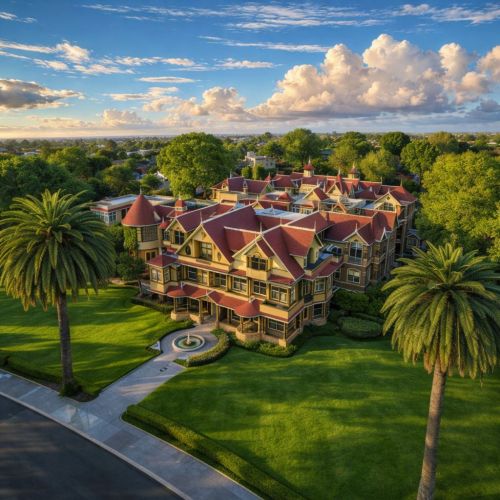
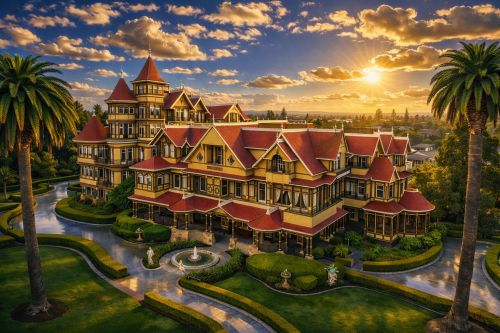
The Winchester Mystery House remains committed to providing a memorable and welcoming experience for every guest who visits our historic landmark. As a place rich in history, tradition, and architectural wonder, we continue to focus on creating an environment defined by respect, hospitality, and community.

Our team is dedicated to preserving the unique legacy of the estate while ensuring visitors can enjoy the attraction’s stories, gardens, and renowned tours. We are grateful for the continued support of our guests, neighbors, and partners, whose enthusiasm helps make Winchester Mystery House a special destination.

Guided by values of kindness, professionalism, and stewardship, we remain focused on delivering an exceptional experience and sharing the enduring history and mystery that have inspired generations of visitors.
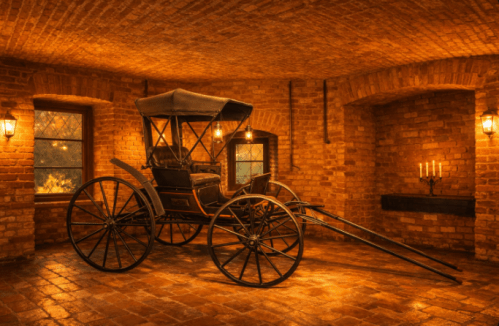
PRIVATE EVENTS & WEDDINGS
at WINCHESTER ESTATE

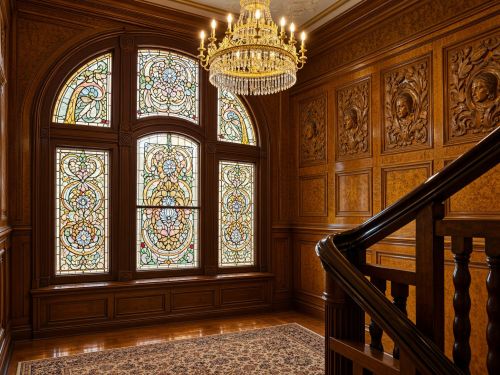
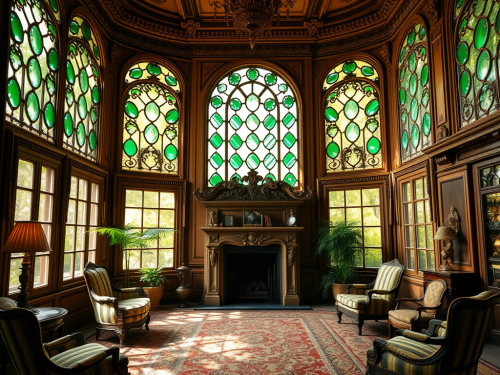
The Winchester Mystery House offers a wedding and special‑event experience unlike anywhere else in California. Its sprawling Victorian architecture, lush gardens, and famously enigmatic rooms create a backdrop that feels both elegant and otherworldly. Couples and guests celebrate surrounded by historic craftsmanship and the mansion’s legendary atmosphere, turning milestones into memories people talk about for years. Whether it’s a wedding, anniversary, or private gathering, the estate delivers a setting that is truly one of a kind.
Café 13: A Rest Stop on the Edge of the Mystery
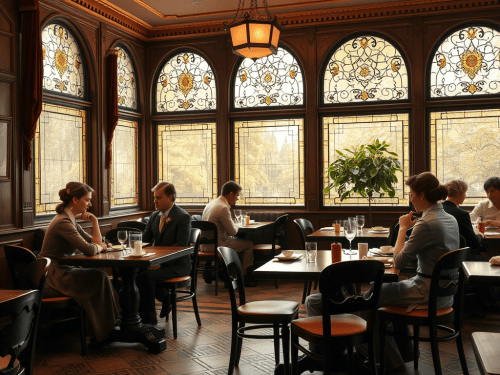
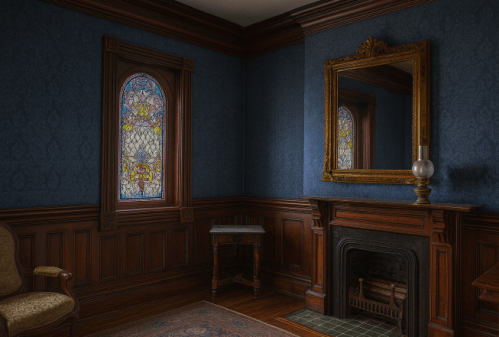
After wandering the winding halls of the Winchester Mystery House—where staircases defy logic and whispers seem to cling to the walls—Café 13 offers a welcome return to warmth and grounding. Newly reopened and serving guests daily from 10 AM to 3 PM, this cozy hideaway invites you to pause, breathe, and gather yourself before diving back into the mansion’s secrets. Settle in with a warm meal, challenge a friend to a board game, or simply rest and recharge as sunlight filters through the windows. Café 13 is more than a café—it’s a moment of calm between chapters of the Winchester legend, a place to steady your nerves before returning to the gardens, the grandeur, and the mysteries that await.
Winchester Mercantile Gift Shop
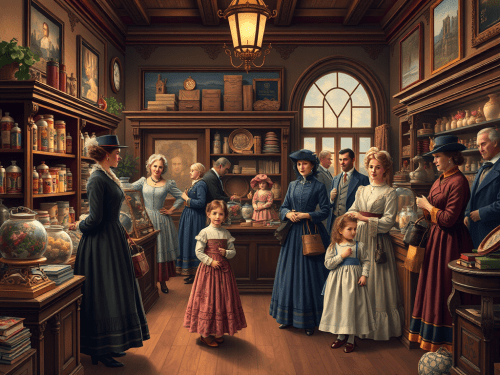
Your journey into the Winchester Mystery House begins long before you cross the mansion’s threshold. It starts at the Mercantile gift shop—a welcoming outpost standing at the edge of a world where history and myth intertwine. Here, beneath warm lights and shelves lined with curiosities, you can secure your tour tickets and prepare for the adventure ahead. Guests often pause for a souvenir photograph, capturing the moment before they step into Sarah Winchester’s enigmatic domain. As you explore the shop, you will find an eclectic array of gifts and keepsakes: tokens of the mansion’s lore, echoes of Victorian elegance, and mementos that carry a touch of the house’s enduring mystery. The Mercantile is more than a gift shop—it is the gateway. https://winchestermysteryhouse.com/


The Bluffs at Plumas Ranch
Modern Living in the Heart of Plumas Lake
Starting from $456,000
📍 Sales Office
1821 Glen Ellen Way
Plumas Lake, CA 95961
Discover Your New Home

Every home at The Bluffs is designed with quality craftsmanship and convenience in mind. Standard features include engineered roof construction, full front and rear yard fencing, and an impressive suite of smart-home technology such as a central automation hub, smart thermostat, digital entry system, video doorbell, Wi-Fi extender, and remote garage access. Inside, residents will enjoy spacious primary suites, engineered stone showers, ceramic tile flooring, designer interior finishes, stainless steel appliances, and stylish center-island kitchens that create the perfect setting for cooking, entertaining, and family gatherings.

To help homeowners create a space that reflects their personal style, The Bluffs offers professionally curated design packages that make selecting finishes and features simple and enjoyable. With options tailored to a variety of tastes and budgets, buyers can personalize their home while maintaining the quality and elegance that define the community.

Ideally located near parks, schools, and landscaped open spaces, The Bluffs provides a peaceful neighborhood atmosphere while offering convenient access to Sacramento, Roseville, and other major destinations throughout the region. Residents enjoy the perfect balance of suburban living and commuter-friendly convenience.

One of the community’s most popular home designs is Residence Four, a spacious two-story floor plan featuring four bedrooms and three bathrooms. Designed for flexibility and modern living, this home includes a first-floor bedroom adjacent to a full bathroom, making it ideal for guests, multigenerational households, or a home office

. The rear of the home features an open-concept layout that seamlessly connects the kitchen, dining area, and great room, creating an inviting space for everyday living and entertaining. Upstairs, homeowners will find a generous loft, three additional bedrooms, and a conveniently located laundry room, delivering both comfort and functionality.

Visit the sales office at 1821 Glen Ellen Way, Plumas Lake, CA 95961, and discover why The Bluffs at Plumas Ranch is quickly becoming one of the area’s most desirable places to call home. With modern amenities, thoughtful floor plans, and an exceptional location, The Bluffs offers a fresh opportunity to enjoy the best of Northern California living. https://www.cresleigh.com/plan/bluffs-residence-4

The best homes are not measured by square footage, but by the happiness, comfort, and connection shared within them.