As the police car’s headlights appeared around the corner, there was no turning back. The old codes rose in her mind like a catechism she never chose but had been made to memorize. According to Benjamin Wadsworth’s A Well‑Ordered Family (1712), a wife should love her husband “with a sincere, tender, affectionate love,” should “honor and reverence” him, obey him “in all lawful things,” and be “meek, patient, and submissive… not forward, clamorous, and discontented.” She should “endeavor to please” him and “make his life comfortable.” Those words had been written for another century, another world — yet they had lived inside her like law. They had shaped her silences, her apologies, her instinct to fold rather than resist. Even now, with the sirens echoing off the houses, she felt the old reflex: be meek, be patient, be submissive. As if obedience could still save her. As if the comfort of a man had ever been worth the cost of her own life. Perhaps this is why many women’s attitudes toward maltreatment are full of contradictions. In the material hierarchy, there is a blend of religious duty, emotional subordination, and domestic responsibility that women have toward their husbands. It is not a static set of reactions but a fluctuating process leading her into more and more conflicts. To begin with, she is simply helpless, as she always has been toward aggressive people. She never could assert herself against them and fight back in any effective way. Complying has always been easier for her. And, being prone to feel guilty anyhow, she rather agrees with his many reproaches, particularly since they often contain a good grain of truth. Because she is responsible for the home’s emotional climate, any conflict becomes her fault. #RandolphHarris 1 of 6
However, her compliance now assumes greater proportions and also changes in quality. It remains an expression of her need to please and appease but in addition is determined now by her longing for total surrender. This, as we have seen, she can do only when most of her pride has been broken. Thus, part of her secretly welcomes his behavior and most actively collaborates with him. He is obviously—though unconsciously—out to crush her pride; she secretly has a complimentary, irresistible urge to immolate it. In performances of the pleasures of the flesh, this urge may come into full awareness. With orgiastic lust, she may prostrate herself, assume humiliating positions, be beaten, bitten, and insulted. And sometimes, these are the only conditions under which she can reach satisfaction. This urge for total surrender by means of self-degradation seems to account more fully than other explanations for the masochistic perversions. Such frank expressions of lust to degrade herself are evidence of the enormous power such a drive can assume. It may also show in fantasies—often connected with masturbation—of degrading sexual orgies, of being publicly exposed, raped, tied, and beaten. Finally, this drive may be expressed in dreams of lying destitute in a gutter and being lifted by the partner, of being treated by him like a woman of the evening, of groveling at his feet. The drive toward self-degradation may be too disguised to come into clear relief. However, for the experienced observer, it shows in many other ways, such as her eagerness—or rather urgency—to whitewash him and to take upon herself the blame for his misdemeanor; or in her abjectness in serving and deferring to him. She is not aware of it, because in her mind, such deference registers as humility or love, or humility in loving, since, as a rule, the urge to prostrate herself—except in sexual matters—is most deeply suppressed. #RandolphHarris 2 of 6
Yet, the urge is there and enforces a compromise, which is to let the degradation occur without being aware that it happens. This explains why, for a long time, she may not even notice his offensive behavior, although it is flagrantly obvious to others. Or, if she takes cognizance of it, she does not experience it emotionally and does not really mind it. Sometimes a friend may call it to her attention. However, even though she may be convinced of its truth and of her friend’s interest in her welfare, it may merely irritate her. In fact, it must do so, because it touches too closely upon her conflict in this respect. Even more telling are her own attempts at a time when she tries to struggle out of the situation. Over and over again, she may then recall all his insulting and humiliating attitudes, hoping that this will help her to take a stand against him. And only after long, futile attempts of this kind will she realize, with surprise, that they simply do not carry any weight. Her need for total surrender also makes it necessary to idealize the partner. Because she can find her unity only with somebody to whom she has delegated her pride, he should be the proud one and she the subdued. His arrogance initially has some fascination for her. Although this conscious fascination may subside, her glorification of him persists in more subtle ways. She may see him more clearly in many details later on, but she does not get a sober total picture of him until she has actually made the break—and even then, the glorification may linger on. She is meanwhile inclined to think, for instance, that notwithstanding his difficulties, he is mostly right and knows better than anybody else. #RandolphHarris 3 of 6
Both her need to idealize him and her need to surrender operate hand in hand. She has extinguished her personal self to the extent of seeing him, others, and herself through his eyes—another factor that makes the breaking away so difficult. We do not often hear survivors’ stories, so it may be hard to comprehend that intimate partner violence (IPV) is as prevalent as victims’ advocates suggest. Intimate partner violence (IPV) is abuse or aggression that occurs in a romantic relationship. Intimate partner refers to both current and former spouses and dating partners. IPV is common. It affects millions of people in the United States of America each year. More than 1 in 3 women (nearly 44 million) and more than 1 in 6 men (21 million) experienced contact sexual violence, physical violence, and/or stalking by an intimate partner during their lifetimes. IPV starts early and continues throughout people’s lives. When IPV occurs in adolescence, it is called teen dating violence. Approximately 16 million women and 11 million men reported that they first experienced intimate partner violence before age 18. Some individuals and communities experience differences in risk for violence due to the conditions in which they live, work, and play. Youth from particular demographic groups are at greater risk of experiencing sexual and physical dating violence. Before an officer must step out of a squad car and approach you, hopefully, you will not be found with blood covering your face, hair, and clothes. However, not only can Intimate partner violence result in injuries, but it can also result in death. Data from the U.S. crime reports suggests that about one in five homicide victims is killed by an intimate partner. The reports also found that over half of female homicide victims are killed by a current or former male intimate partner. #RandolphHarris 4 of 6
Many other negative health outcomes are associated with intimate partner violence. These include conditions affecting the heart, muscles, and bones, and digestive, reproductive, and nervous systems, many of which are chronic. Survivors can experience mental health problems such as depression and post-traumatic stress disorder symptoms. They are at higher risk for engaging in behaviors such as smoking, binge drinking, and risky sexual activity. People from some racial and ethnic minority groups are at higher risk for worse consequences. Although the personal consequences of intimate partner violence are devastating, there are also many costs to society. The lifetime economic cost of IPV-related medical care, lost productivity from paid work, and criminal justice costs is $3.6 trillion. The cost of IPV over a victim’s lifetime can be between $25,000 to $105,000 or more. Being a victim of teen partner abuse can be extremely difficult because friends of perpetrators often become involved in the relationship and exert pressure on, shun, threaten, or humiliate victims. It is additionally difficult when the abuser attends the same school as the victim. Being a teen victim of abuse is also difficult because many adults minimize its seriousness. Jealousy and obsessive behavior are also often heightened in the teenage years, and many teens confuse jealousy with love and ownership with exclusive dating commitment. If you are a teenager or adolescent, remember that these years are filled with intense feelings. However, the heights and depths of emotions are extreme at this time, and this may make you overreact to stressful and crisis situations. If you are a teenager involved in abusive situations, you also need to know that the use of alcohol and other substances may contribute to the level of violence you experience. Because such substances lower inhibitions, they can influence behavior and promote abuse. #RandolphHarris 5 of 6
As with adults, teens in abusive relationships are often too embarrassed to seek help from friends or family who may have already expressed dislike for their choice of partner. They may go to extremes to hide their abuse, isolating themselves from friends and family. In addition, many adolescent and teen victims feel they do not have access to help, and they may wrongly accept responsibility for their own abuse. Intimate partner violence can be prevented. Certain factors may increase or decrease the risk of perpetrating or experiencing intimate partner violence. Preventing intimate partner violence requires understanding and addressing the factors that put people at risk for or protect them from violence. Promoting healthy, respectful, and nonviolent relationships and communities can help reduce the occurrence of intimate partner violence. It can also prevent the harmful and long-lasting effects of intimate partner violence on individuals, families, and communities. The experience of being “in” and “of” a family is essential to a vital sense of identity and fulfills the needs for security and intimacy. It is within the family that most people find their most fulfilling personal relationships, first as sons, daughters, brothers, and sisters; then as spouses, mothers and fathers, uncles and aunts; and later as grandparents. Even when the family breaks down, people seek a “primary group”—a small group of intimate friends with whom life may be lived communally, with or without sexual intimacies. Thus, many young people explore the possibilities of living communally as an alternate lifestyle to traditional family life. Within a family, people can learn safe and healthy relationship skills that will disrupt the developmental pathways toward partner violence. #RandolphHarris 6 of 6
The Winchester Mystery House draws in history buffs with its labyrinthine Victorian architecture, while its expansive, meticulously tended gardens captivate horticulturalists who come simply to wander and admire. Beyond its surface beauty, the mansion is a visual spectacle—an ornate, almost theatrical space where every hallway feels like a set piece. Yet beneath the charm lies a deeper, more unsettling narrative: the house is thick with the residue of familial conflict, grief, and unresolved tension, all of it encoded into its strange design. And tucked within its many rooms is one particularly chilling space, a chamber whose atmosphere still unsettles even the most seasoned visitors. https://winchestermysteryhouse.com/
There is no bondage more grievous than that which a person forges for himself, when he yields his judgment to another’s will. Such dependence, once sweetened by affection, grows into a distemper of the mind, wherein the sufferer fears to breathe without the other’s permission. Morbid dependency is the neurotic tendency to seek and maintain affection through involvement in exploitative or manipulative relationships. Domestic violence is a pathological pattern of interpersonal dependency that is linked to domestic violence. Research suggests that high levels of emotional dependency in an abused partner may reduce the likelihood that the victimized person will terminate the relationship. Although we can study the characteristics of a morbid dependency in any relationship, they come into clearest relief in the sexual relationship between a self-effacing and an arrogant-vindictive type. The conflicts generated here are more intense, and can develop more fully, since, for reasons residing in both partners, the relationship is usually of longer duration. The narcissistic or detached partner more easily becomes tired of the implicit demands made upon him and is liable to quit, while the sadistic partner is more prone to fasten himself onto his victim. For the dependent person, in turn, it is much more difficult to extricate himself from a relation with an arrogant-vindictive type. With his peculiar weakness, he is as unequipped for such an involvement as a ship built for navigation in still waters is for crossing a rough, stormy ocean. Her whole lack of sturdiness, every weak spot in her structure, will then make itself felt and may mean ruin. #RandolphHarris 1 of 22
Similarly, a self-effacing person may have functioned fairly well in life, but when tossed into the conflicts involved in such a relationship, every hidden neurotic factor in him will come into operation. Let us assume that the self-effacing partner is a woman and the aggressive one a man. Actually, this combination seems to be more frequent in our civilization, although, as many instances show, self-effacement has nothing to do with femininity nor aggressive arrogance with masculinity. The first characteristic to strike us is such a woman’s total absorption in the relationship. The partner becomes the sole center of her existence. Everything revolves around him. Her mood depends upon whether his attitude toward her is more positive or negative. She does not dare make any plans lest she might miss a call or an evening with him. Her thoughts are centered on understanding or helping him. Her endeavors are directed toward measuring up to what she feels he expects. She has but one fear—that of antagonizing and losing him. Conversely, her other interests subside. Her work, unless connected with him, becomes comparatively meaningless. This may even be true of professional work otherwise dear to her heart, or productive work in which she has accomplished things. Naturally, the latter suffers most. Other human relations are neglected. She may neglect or leave her children, her home. Friendships serve more and more merely to fill the time when he is not available. Engagements are dropped at a moment’s notice when he appears. The impairment of other relations often is fostered by the partner, because he, in turn, wants to make her more and more dependent upon him. Also, she starts to look at her relatives or friends through his eyes. He scorns her trust in people and instills his own suspiciousness in her. So, she loses her roots and becomes increasingly impoverished. In addition, her self-interest, always at a low ebb, sinks. She may incur debts, risk her reputation, her health, and her dignity. If she is in analysis, or used to analyzing herself, the interest in self-recognition gives way to a concern for understanding his motivations and helping him. #RandolphHarris 2 of 22
The trouble may set in, full-fledged, right at the beginning. However, sometimes, things look fairly auspicious for a while. In certain neurotic ways, the two seem to fit together. He needs to be the master; she needs to surrender. He is openly demanding, and she is complying. If her pride is broken, only then can she surrender, and for many reasons of his own, he cannot fail to do so. However, sooner or later, clashes are bound to occur between two temperaments—or, more accurately, between two neurotic structures—which in all essentials are diametrically opposed. The main clashes occur on the issue of feelings, of “love.” She insists upon love, affection, and closeness. He is desperately afraid of positive feelings. Their display seems indecent to him. Her assurances of love seem like pure hypocrisy to him—and indeed, as we know, it is actually more a need to lose herself and merge with him that motivates her than personal love for him. He cannot keep from striking out against her feelings, and hence, against her. This, in turn, makes her feel neglected or abused, arouses anxiety, and reinforces her clinging attitudes. And, here, another collision occurs. Although he does everything to make her dependent upon him, her clinging to him terrifies and repels him. He is afraid and contemptuous of any weakness in himself and despises it in her. This means another rejection for her, provoking more anxiety and more clinging. Her implicit demands are felt as coercion, and he must hit out in order to retain his feelings of mastery. Her compulsive helpfulness offends his pride. And actually, with all her often sincere attempts, she does not really understand him—hardly can do so. #RandolphHarris 3 of 22
Besides, in her “understanding,” there is too much need to excuse and to forgive, for she feels all her attitudes are good and natural. He, in turn, senses her feeling morally superior and feels provoked to tear down the pretenses involved. There is but scant possibility for a good talk about these matters because, at bottom, they are both self-righteous. So, she starts to see him as a brute, and he sees her as a moral prig. If it were done in a constructive way, the tearing down of her pretenses could be eminently helpful. However, as it is mostly done in a sarcastic, derogatory way, it merely hurts her and makes her more insecure and more dependent. It is an idle speculation to ask whether or not, with all these clashes, they might be helpful to each other. Certainly, he could stand some softening and she some toughening. However, mostly, they are both too deeply entrenched in their particular neurotic needs and aversions. Vicious circles which bring out the worst in both, keep operating, and can result only in mutual torment. The frustrations and limitations to which she is exposed vary not so much in kind as in being more or less civilized, more or less intense. There is always some cat-and-mouse play, a dynamic where one party pursues, controls, or toys with another—while the other is kept in a state of uncertainty, anticipation, or anxious dependence. Satisfactory relations involving pleasures of the flesh may be followed by crude offenses; an enjoyable evening may be followed by forgetting a date; eliciting confidences by sarcastically using them against her. She may try to play the same game, but is too inhibited to do it well. However, she is always a good instrument on which to play, since his attacks make her despondent and his seemingly positive moods throw her into fallacious hopes that from now on everything will be better. #RandolphHarris 4 of 22
There are always plenty of things he feels entitled to do without allowing any questioning. His claims may concern financial support or gifts for himself and his friends or relatives; work to be done for him, like housework or typing; furthering his career; or strict consideration of his needs. These latter may, for instance, concern time arrangements, undivided and uncritical interest in his pursuits, having or not having company, remaining unruffled when he is sulky or irritable, and so on and so forth. Whatever he demands is his self-evident due. There is no appreciation forthcoming, but much nagging irritability when his wishes are not fulfilled. He feels and declares in no uncertain terms that he is not at all demanding but that she is stingy, sloppy, inconsiderate, unappreciative—and that he must put up with all sorts of abuse. On the other hand, he is astute at spotting her claims, which he finds altogether neurotic. Her need for affection, time, or company is possessive; her wanting pleasures of the flesh or good food, overindulgence. So, when he frustrates her needs, which he must do for reasons of his own, it is in his mind no frustration at all. It is better to disregard her needs because she should be ashamed of having them. Actually, his frustrating techniques are highly developed. They include dampening joy by sulkiness, making her feel unwelcome and unwanted, and withdrawing physically or psychologically. The most harmful and, for her, least tangible part is his pervasive attitude of disregard and contempt. Whatever actual regard he may have for her faculties or qualities is seldom expressed. On the other hand, he does not despise her for her softness and for her caginess and indirectness. However, in addition, because of his need for active externalization of his self-hate, he is faultfinding and derogatory. If she, in turn, dares to criticize him, he discards what she says in a highhanded manner or proves that she is vindictive. #RandolphHarris 5 of 22
We find the greatest variation in matters involving pleasures of the flesh. Relationships involving pleasures of the flesh may stand out as the only satisfactory contact. Or, in case he is inhibited in enjoying the pleasures of the flesh, he may frustrate her in this regard, too, which is felt all the more keenly since, in view of his lack of tenderness may mean for her the only assurance of love. Or the pleasures of the flesh may be a means of degrading and humiliating her. He may make it clear that for him, she is nothing but an object for the pleasures of the flesh. He may fault intimate passions with other women, intermingled with derogatory comments about her being less attractive or responsive than these others. Intimate passions may be degrading because of the absence of tenderness or because he uses sadistic techniques. Although the issue of the effectiveness of mandatory reporting laws remains unclear, providers should be familiar with reporting laws in their states, and whether there are policies for mandatory reporting of intimate partner violence (IPV) or injuries that are suspicious for resulting from criminal assault. Patients should be made aware of mandated reporting requirements before universal IPV screenings, including universal education. This shows respect for the patient’s autonomy, allows them to decide on whether they would want to reveal any IVP-related experiences given the known mandatory interventions, and has the awareness that they can always disclose information at subsequent visits if they choose. IVP may not always be present in the acute care setting with physical findings due to acute trauma. Healthy consequences faced by IVP patients may be multisystemic, given the type of abuse faced, and can present as acute or chronic medical complaints. For example, strangulation, in an acute or chronic setting, can appear as hoarseness, sore throat, neck pain, or difficulty swallowing. #RandolphHarris 6 of 22
Patients who sustain blows to the head may experience serious traumatic brain injuries (TBI) or mild TBI (mTBI) and present acutely with a headache, confusion, nausea, or vomiting. Under the circumstances of repeated mTBIs, the body may not be able to completely heal in between the abuse. Patients can experience and present with histories of neurological symptoms such as headaches, dizziness, memory loss, seizures, hearing problems, ear ringing, vision problems, blacking out, or difficulty concentrating. Of note, patients who have experienced loss of consciousness due to strangulation may have similar neurological complaints or cognitive difficulties due to anoxic brain injury. They may also have chronic migraines, syncopal episodes, and possibly seizures. Though causal relationships have yet to be established in the underlying causes for specific neurological outcomes, victims of violence frequently (10 percent to 44 percent) report strangling and blows to the head resulting in loss of consciousness which may contribute to the development of the various neurological conditions mentioned above. Of note, post-concussive or TBI symptoms can complicate a patient’s ability to understand or follow through on health and safety plans. Gastrointestinal symptoms are also common presentations due to prior blunt force to the abdominal region affecting internal organs or from the effects of chronic stress. Symptoms may appear as chronic abdominal or stomach pain, diarrhea, constipation, nausea, self-induced vomiting, loss of appetite, or irritable bowel syndrome (IBS). Given the fear and shame associated with IPV, there is a strong correlation with excessive stress, which can manifest as varying yet common disorders such as IBS, hypertension, chest pain, and even a suppressed immune system, which can lead to greater frequency of colds and viral infections. Knowledge of these medical conditions commonly associated with IVP is beneficial, so that IVP is considered a possible underlying condition or cause leading to a more accurate diagnosis and more appropriate interventions. #RandolphHarris 7 of 22
About 33.6 percent of men in the United States of America have reported experiencing IVP in their lifetime, including sexual violence, physical violence, or stalking, with 34.2 percent reporting psychological aggression from an intimate partner. Men often face barriers in reporting IVP because of a lack of knowledge that the abuse is illegal, stigma that being a victim would be unmasculine, fear of being ridiculed, and biases that they will be seen as the perpetrator. However, if you fear reporting, while there is a fact that your allegations may not be taken seriously, keep in mind how defensive police are when they are being assaulted. So, do not be afraid of reporting IVP. In some cases, just touching an officer can be considered assault, and they take being assaulted very seriously. Therefore, do not let someone make you feel like your claim is illegitimate. Men presenting to the emergency department (ED) due to IVP were found to have intentional striking and being cut/pierced as the major causes of injury. IPV injury due to cuts are 7-times higher in men compared to women with IVP injuries. Lacerations were the main injury diagnosis and should raise concern for IPV men. The most common anatomic locations of these injuries in men were the head, neck, or face, as seen in most women, followed by upper extremity injuries, possibly due to self-defense mechanisms. All ED clinicians should have training on recognizing these injury patterns, including when evaluating men in the ED, as it may lead to IVP identification and offering awareness, referrals, and safety resources. Privacy is critical and should be prioritized when discussing IPV and conducting a physical exam. Patients should not be screened during triage, especially if other individuals are present, including accompanying family members or friends. A patient cannot speak freely — especially about sensitive, dangerous, or shame‑laden matters — if a parent, partner, or friend is in the room. Their “I” is inhibited by: fear of judgment, fear of retaliation, internalized obligation to protect the other person, learned patterns of deference or submission. So, the rule exists to protect the patient’s autonomy, giving them a space where their own voice can emerge without interference. Inform visitors that it is hospital/office policy to speak with the patient alone. #RandolphHarris 8 of 22
Just as a child cannot develop a stable “I” without being recognized as a separate self, a patient cannot speak authentically when another’s presence eclipses their autonomy; privacy is the space in which the self becomes possible. One basic task of all religions is to reaffirm that first relationship, for we have in us deep down a lifelong mistrustful remembrance of that truly meta-physical anxiety; meta—“behind,” “beyond”—here means “before,” “way back,” “at the beginning.” One basic form of heroic asceticism, therefore, one way of liberating man from his existential delimitations, is to retrace the steps of the development of the I, to forego even object relations in the most primitive sense, to step down and back to the borderline where the I emerged from its matrix. Much of Western monasticism concentrates on prayer and atonement, but the Eastern form cultivates the art of deliberate self-loss: Zen-Buddhism is probably its most systematic form. Some children forget the Christchild because of the sadness of their youth: some have lost their childhood. In moments of terror, they may want God’s recognition. The normal process of life contains moments as bad as any of those which insane melancholy is filled with, moments in which radical evil gets its innings and takes it solid turn. The lunatic’s visions of horror are all drawn from the material of daily fact. Our civilization is founded on the shambles, and every individual existence goes out in a lonely spasm of helpless agony. If you protest, my friend, wait till you arrive there yourself! To believe in the carnivorous reptiles of geological times is hard for our imagination—they seem too much like mere museum specimens. Yet, there is no tooth in any one of those museum-skulls that did not daily through long years of the foretime hold fast to the body struggling in despair of some fated living victims. #RandolphHarris 9 of 22
If on a smaller spatial scale, forms of horror just as dreadful to their victim fill the world about us to-day. Here, on our very hearths and in our gardens, the infernal cat plays with the panting mouse, or holds the hot bird fluttering in her jaws. Crocodiles and rattlesnakes and pythons are at this moment vessels of life as real as we are; their loathsome existence fills every minute of every day that drags its length along, and whenever they or other wild beasts clutch their living prey, the deadly horror which an agitated melancholiac feels is literally the right reaction on the situation. It may indeed be that no religious reconciliation with the absolute totality of things is possible. Some evils, indeed, are ministerial to higher forms of good; but it may be that there are forms of evil so extreme as to enter into no good system whatsoever, and that, in respect of such evil, dumb submission or neglect to notice is the only practical resource. If the mind is only the reflection of events, it cannot anticipate their progress, except by hypothesis. If Marxist theory is determined by economics, it can describe the history of production, not its future, which remains in the realms of probability. The task of historical materialism can only be to establish a method of criticism of contemporary society; it is only capable of making suppositions, unless it abandons its scientific attitude, about the society of the future. Moreover, is it not for this reason that its most important work is called Capital and not Revolution? Marx and the Marxists allowed themselves to prophesy the future and the triumph of communism to the detriment of their postulates and of scientific method. #RandolphHarris 10 of 22
Then predictions could be scientific; on the contrary, only by ceasing to prophecy definitely. Marxism is not scientific; at best, it has scientific prejudices. It brought out into the open the profound difference between scientific reasoning, that fruitful instrument of research, of thought, and even of rebellion, and historical reasoning, which German ideology invented by its negation of all principles. Historical reasoning is not a type of reasoning that, within the framework of its own functions, can pass judgment on the world. While pretending to judge it, it really tries to determine its course. Essentially, a part of events, it directs them and is simultaneously pedagogic and all-conquering. Moreover, its most abstruse descriptions conceal the most simple truths. If man is reduced to being nothing but a character in history, he has no other choice but to subside into the sound and fury of a completely irrational history to endow history with the form of human reason. Therefore, the history of contemporary nihilism is nothing but a prolonged endeavor to give order, by human forces alone and simply by force, to history no longer endowed with order. The pseudo-reasoning ends by identifying itself with cunning and strategy, while waiting to culminate in the ideological Empire. What part could science play in this concept? Nothing is less determined on conquest than reason. History is not made with scientific scruples; we are even condemned to not making history from the moment when we claim to act with scientific scruples; we are even condemned to not making history from the moment when we claim to act with scientific objectivity. Reason does not preach, of if it does, it is no longer reason. That is why historical reason is an irrational and romantic form of reason, which sometimes recalls the false logic of the insane and at other times, the mystic affirmation of the word. #RandolphHarris 11 of 22
To will one thing cannot, then, mean to will what in its essence is not one thing, but only seems to be so by means of a horrible falsehood. Only through a lit is it one thing. Now, just as he that only wills this one thing is a lair, so he that conjures up this one thing is the father of lies. That dryness and emptiness is not in truth one thing, but is in truth nothing at all. And it is destruction for the man that only wills that one. If, on the contrary, a man should in truth will only one thing, then this thing must, in the truth of its innermost being, be one thing. It must, by eternal separation, cut of the heterogenous from itself in order that it may in truth continue to be one and the same thing and thereby fashion that man who only wills one thing into conformity with itself. In truth to will one thing, then, can only mean to will the Good, because every other object is not a unity; and the will that only wills that object, therefore, must become double-minded. For as the coveted object is, so becomes the coveter. Or would it be possible that a man by willing the evil could will one thing, provided that it was possible for a man so to harden himself as to will nothing but the evil? Is not this evil, like evil persons, in disagreement with itself, divided against itself? Take one such man, separate him from society, shut him up in solitary confinement. Is he not at odds with himself there, just as poor union between persons of his sort is an association that is ridden dissension? But a good man, even if he lived in an out-of-the-way corner of the world and never saw any human being, would be at one with himself at one with all about him because he wills one thing, and because the Good is one thing. Each one who in truth would will one thing must be led to will the Good, even though now and then it happens that a man begins by willing one thing that is not in its deepest sense the Good although it may be something quite innocent; and then, little by little, he is changed really in truth to will one thing by willing the Good. #RandolphHarris 12 of 22
Love, from time to time, has in this way helped a man along the right path. Faithfully he only willed one thing, his love. For it, he would live and die. For it, he would sacrifice all and in it alone, he would have his eternal reward. Yet, the act of being in love is still not in the deepest sense the Good. However, it may possibly become for him a helpful educator, who will finally lead him by the possession of his beloved one or perhaps by her loss, in truth to will one thing and to will the Good. In this fashion, a man is educated by many means; and true love is also an education toward the Good. Perhaps, there was a man whose enthusiasm was for only one thing. He would live and die for that cause. He would sacrifice all for that in which alone he would have his happiness, for love and enthusiasm are not satisfied with a divided heart. Yet, his endeavor was perhaps still not in the deepest sense the Good. Thus, enthusiasm became for him a teacher, whom he outgrew, but to whom also he owed much. For, as it is said, all ways lead to the Good, when a man in truth only wills one thing. And where there is some truth, in the fact that he wills one thing, this is all for the best. However, there is danger that the lover and the enthusiast may swerve out of the true course and aim perhaps for the impressive instead of being led to the Good. The Good is certainly also in truth the impressive, but the impressive is not always the Good. And one can bid for a woman’s favor by willing something when it is merely impressive. This can flatter the girl’s pride, and she can repay it with her adoration. However, God in heaven is not a young girl’s folly. He does not reward the impressive with admiration. The reward of the good man is to be allowed to worship in truth. #RandolphHarris 13 of 22
By exclusively acknowledging and confessing Christ our Lord, we more fully see that the wide range of His dominion is disclosed to us. It is not metaphysical speculation; it is not a theologoumena of the logos spermatikos, but it is the concrete suffering of injustice, of the organized lie, of hostility to mankind, and of violence; it is the persecution of lawfulness, truth, humanity and freedom which impels the men who hold these values dear to seek the protection of Jesus Christ and therefore to become subject to His claim, and it is through this that the Church of Jesus Christ learnt of the wide extent of her responsibility. The relationship of the Church with the world today does not consist, as it did in the Middle Ages, in the calm and steady expansion of the power of the name of Christ, nor yet in an eddeavour, such as was undertaken by the apologists of the first centuries of Christianity, to justify and publicize and embellish the name of Jesus Christ before the world by associating it with human names and values, but solely in that recognition of the origin which has been awakened and vouchsafed to men in this suffering, solely in the seeking of refuge from persecution in Christ. It is not Christ who must justify Himself before the world by the acknowledgement of the values of justice, truth, and freedom, but it is these values which have come to need justification, and their justification can only be Jesus Christ. It is not that a “Christian culture” must make the name of Jesus Christ acceptable to the world; but the crucified Christ has become the refuge and the justification, the protection and the claim for the higher values and their defenders that have fallen victim to suffering. #RandolphHarris 14 of 22
It is with the Christ who is persecuted and who suffers in His Church that justice, truth, humanity, and freedom now seek refuge; it is with the Christ who found no shelter in the world, the Christ who was cast out from the world, the Christ of the crib and of the cross, under whose protection they now seek sanctuary, and who thereby for the first time displays the full extent of His power. The Cross reveals that no one stands in neutrality, for every person is already shaped by the models they imitate. Thus, Christ can say both “He who is not with me is against me” and “He who is not against us is for us,” because our roles, loyalties, and identities are formed through imitation long before we speak them aloud. We learn our roles by being trained into them and by identifying with the role models available to us. This is not optional. It is how human beings come into being. A child learns “I” only through recognition. A person learns courage by seeing courage. A person learns cruelty by watching cruelty. A person learns scapegoating by participating in it. A person learns mercy by receiving it. We are imitative creatures — and the Cross is the moment when the human pattern of imitation is revealed in its starkest form. This is why the sayings of Jesus are not contradictions but two sides of the same anthropological truth: Imitation makes neutrality impossible. Imitation makes belonging inevitable. We are always becoming like the model we follow — whether that model is Christ, the crowd, the persecutor, the scapegoat mechanism, or the false self we were trained to perform. Thus, as children, our behavior is rewarded by our parents when it conforms to their image of the way a little boy or a girl should act. At each level, our behavior is “shaped,” by the consequences of approval and of punishment that they provide to our actions. #RandolphHarris 15 of 22
As we get older, we are encouraged to emulate the behavior of people who function as exemplars or role models. This is the way we begin to learn how to be a husband or a father, or a wife, or a mother, when the time comes, and it is the way we learn our occupational roles. Each person, thus, serves as a model to be emulated by others. People encounter difficulties in fulfilling their gender roles and family roles when they have grown up without regular contact with role models or when the role models differ from the norms of their group. Some male homosexuals, for example, have grown up without a father in the home or with a father who was so hateful that the boy would not identify with him. When divorce is common, many children grow up without a father because they usually are raised by the mother. Under these conditions, the girls may not learn what adult man-woman or husband-wife behavior can be expected, nor will the little boys. Consequently, they do not learn reasonable family role expectations for self and for others; they may acquire idealized notions of what to expect from their spouses and children when they marry, expectations that their spouses and future children cannot fulfill. In Harlow’s famous and widely publicized study, infant monkeys were raised by artificial mothers, wire or foam rubber mechanical objects that were rigged to provide milk for the infants. Lacking adequate role models, these infants survived infancy handily but were totally unable to carry on adult functions. They were, as Harlow described them: helpless, hopeless, heartless parents. In professional and vocational training, the learner is both “shaped” by teachers and encouraged by them to copy the teacher’s ways of performing skills. I served as a consultant to a nursing college and found that the faculty and the staff nurses were not serving as authentic exemplars of the kind of nursing practice they wished students to learn. They wanted the students to be very open, to be responsive to and empathic with patients, doctors, and colleagues. #RandolphHarris 16 of 22
However, they were not functioning in those roles that were expected of nurses. Many of the floor nursing faculty had left bedside nursing because they did not like regular contact with the ill. Many floor nurses were afraid of close, communicative relationships with patients, doctors, and each other. My task was to help the faculty and staff become the kind of nursing exemplars that the students could emulate. We attempted to do this, first, by encouraging the nursing college faculty to return to regular bedside nursing college faculty to return to regular faculty meetings where the purpose was to practice open, personal communication with each other. There is some evidence that the strained, formal, and impersonal atmosphere of the college was replaced by one that encouraged greater openness of communication and that the students did become better at relating empathically and warmly with their parents. Compassion is simply seeing someone’s need and wanting to help. Acting on that feeling leads us to do what we can for that person. This is part of our covenant to “bear one another’s burden” (Mosiah 18.8) and is at the heart of ministering. Compassion is a skill that we can learn. It takes practice. We can start by being a good listener and imagining how we would feel if we had the same experience as someone else. Heavenly Father wants His children to be compassionate. This is why you have a feeling to want to help a person struggling to move forward under a load of grief and difficulty. You promised that you would help the Lord make their burdens light and be comforted. You were given the power to help lighten those loads when you received the gift of the Holy Ghost. As the intellectual change of attitude is promoted by the discoveries of science and the reflections of scientists, religious, moral, educational, metaphysical, and social changes will follow as a logical consequence. #RandolphHarris 17 of 22
Whether it is electricity brightening a village, science awakening the mind, or clean gear protecting a firefighter, illumination always brings responsibility. Once we see clearly, we must act with care, discipline, and stewardship. Firefighter protective clothing is a perfect example: when it is dirty, it loses insulation, conducts heat and electricity more readily, sheds liquids poorly, and can even become flammable. Many fireground residues are carcinogenic or toxic to the skin. Turnout gear must therefore be cleaned regularly to prevent these dangers — yet it must also be cleaned correctly, because improper washing can degrade the fabric, weaken its thermal protection, or worsen its performance. Illumination does not simply reveal the world; it reveals the obligations that come with knowing better. Any blaze in a large building is dangerous, both for the firefighters who confront it and for the surrounding area if the fire gains too much headway. Sometimes, despite a department’s best efforts, circumstances align against them and a structure is lost. In this case, several factors converged. Around 2:30 p.m., a car being repaired with a welding torch ignited, and the gasoline tank exploded, spraying flames throughout the garage portion of the warehouse. All workers escaped unharmed and multiple calls were placed to the fire department. However, the first caller gave the wrong address, sending the responding engine to the opposite end of town and delaying arrival by five critical minutes. When crews finally reached the scene, the fire was still largely confined to the garage, but it had already begun to extend into the front of the building and was racing up into the roof structure. Those few minutes of delay allowed the fire to gain the momentum that ultimately doomed the warehouse. #RandolphHarris 18 of 22
The wind began to freshen just as the men backed out of the building, fanning the now‑raging blaze. Firefighters battled the fire in icy weather, working to protect the surrounding structures. The building next to the library ignited several times from the intense heat, but each flare‑up was quickly extinguished with minimal danger. Across the street, several businesses had their windows shattered by the radiant heat pouring off the warehouse. At the front of the building, the Fire Chief and several firefighters were manning hoselines when the roof gave way, bringing the entire front of the structure down with it. Bricks and debris showered the area, narrowly missing the crews. After the collapse, the fire continued to burn for several more hours, but the threat to nearby buildings had passed. Damage was later estimated at more than $2 million, including over twenty cars stored inside, with surrounding businesses suffering smoke and water damage. A gas station to the south sustained some damage as well, and during the chaos, tools and batteries were stolen from the property. The Chief later praised the award‑winning Sacramento Fire Department, noting that their efforts were invaluable in containing the blaze to a single building and saving the structures across the alley. #RandolphHarris 19 of 22
When it comes to firefighting, no matter how large or small the fire is or how routine the call seems to be, there is always the potential for injury. If you see a fire truck stopped in the street without the lights on, be very careful. Sometimes there is an emergency, and you should not pass the fire truck. It might be a good idea to safely turn around and go another way because if you hit someone and they happen to die, you could be charged with manslaughter. Sometimes fire firefighters are getting back into their vehicle, and if you pass the apparatus, you may collide with a firefighter who is on foot. Also, be sure to look at their signals; sometimes emergency vehicles are in motion, albeit slowly, and drivers try to pass them, and this could lead to a dangerous situation. Also, if you are in an intersection when you see an emergency vehicle, continue through the intersection. Drive to the right as soon as it is safe and stop. Obey any direction, order, or signal given by a law enforcement officer or a firefighter. Even if they conflict with existing signs, signals, or laws, follow their orders. When their siren or flashing lights are on, it is against the law to follow within 300 feet of any fire engine, law enforcement vehicle, ambulance, or other emergency vehicle. If you drive to the scene of a fire, collision, or other disaster, you can be arrested. When you do this, you are getting in the way of firefighters, ambulance crews, or other rescue and emergency personnel. The concept of professional courage does not always mean being as tough as nails, either. It also suggests a willingness to listen to other people’s problems, to go to bat for them in a tough situation, and it means knowing just how far they can go. It also means being willing to tell the boss when he or she is wrong. #RandolphHarris 20 of 22
Also, to ensure that we have farmland and buildable land for future use, we need to start limiting the number of people allowed to immigrate to America. Perhaps with the immigrants we do allow into America, there needs to be a diversity program to make sure we have a population that equally represents all races of people. If Americans continue to spend money on American products, then more need to be made to keep up the inventory. When investors notice these goods are selling, it gives them the confidence to pour more money into that local business. It shows that people want these goods made in America and pressures investors to keep these goods and services in America. The jobs stay here, the business stays in America, wages naturally increase, and more money is invested to keep up with demand. This reduces the burden on the taxpayer. When you support American businesses, that money stays in our economy and can help to reduce the national debt. The government creates debt by borrowing from businesses in the private sector or from foreign countries. It also increases the national debt by spending more than it gains in tax revenue in a fiscal year. When people shop locally, more tax money stays in the economy and goes to the government. This way, it keeps more money in our national economy and keeps more jobs located in America which also sends more taxes to the government, which can again help to reduce the national debt. When you buy foreign goods, these companies usually have lighter tax loads or exemptions, meaning less money for the national debt, plus you are helping to strengthen these foreign nations by sending more money overseas. Buying American-made products is also better for the environment and helps to reduce the carbon footprint because these products do not have to travel nearly as far. Furthermore, American companies and manufacturers are held to much higher standards on pollution. American companies must be more careful about air, land, and water pollution and have proper ways to dispose of waste. #RandolphHarris 21 of 22
Under President Trump’s administration, he has made America a priority. President Trump has closed the southern border, illegal crossings have fallen to an all-time low, and are 90 percent lower than under the previous administration. Since President Trump’s crack down on crime, violent crimes in Washington D.C. have dropped by approximately 80 percent. He has stopped thousands of pounds of drugs from entering America and killing citizens. And since President Trump took office, investments in America have increased by trillions of dollars in U.S.A. manufacturing, production, and innovation. As you can see, President Donald Trump and his pledge to “Make America Great Again” is exactly what America needs to save the country and the American people. And yes, diversity is important, so you can see why it is also important to preserve blonde hair and blue eyes, as the people with these characteristics are becoming a minority in America. As a reminder, parents, please teach your children to love America and be patriotic citizens, and to buy goods and services made in America. It is also important to respect law and order and treat your elders with respect. It is inborn in the human mind to wish to know. If this begins with the endless surface questions of a child’s curiosity, if it continues into deeper questions of a scientist’s probing investigation, it cannot and does not stop there. For the higher part of the mind will eventually come into unfoldment, that union of abstract reflective thought with mystical intuition, which is true intelligence, which needs and sees a view of the whole of things. And so, the knowing faculty enters the realm of philosophy. A lot of children are having problems in school and cannot even write a paragraph because they are not reading their books. When you actually read books, you get an example of how to write and will become a better student. Therefore, remember to take your education seriously so that you will be successful in life and make your family proud. Also, to make sure they have all the resources required, please donate to the Sacramento Fire Department to help improve our national security. “Oh, thus be it ever, when freemen shall stand between their loved home and the war’s desolation! Blest with victory and peace, may the heav’n-rescued land Praise the Power that hath made and preserved us a nation! Then conquer we must, when our cause is just, and this be our motto: ‘In God is our trust.’ And the star-spangled banner in triumph shall wave O’er the land of the free and the home of the brave.” #RandolphHarris 22 of 22
People say the Winchester Mansion is strange because Mrs. Sarah Winchester built it that way — staircases to nowhere, doors that open into air, rooms that appear without warning. But those who have studied the deeper folklore whisper something else: that the house inherited stories far older than California, stories that drifted across oceans and centuries until they found a place to root themselves again. They say the mansion carries echoes of another place — a fortress of stone, a house of trials, a home of restless spirits. And at the center of those echoes stands a single figure. The Watcher. Long before the mansion rose from the California soil, the Watcher belonged to a different tower — a high, narrow room where he kept vigil over a land filled with fear, accusations, and unanswered questions. But when Mrs. Sarah Winchester began her endless construction, something in her grief called to him.
Visitors to the mansion sometimes see him in the uppermost windows: a tall silhouette, unmoving, always looking outward as if guarding something only he understands. Guides say the tower is empty. Workers say no one goes up there. Yet the figure appears, night after night, watching. Some believe he is a guardian. Others say he is a witness. But the oldest version claims he is both — a presence drawn to places where sorrow builds walls and fear carves corridors. In the eastern wing, guests sometimes report a pale woman drifting through the hallways, her gown trailing like mist. She never speaks. She never approaches. She simply moves from room to room as though searching for something she lost long ago. Some say she is a memory Mrs. Sarah could not let go of. Others believe she is one of the mansion’s “unfinished stories,” a spirit who followed the Watcher across the sea and found a new home in the labyrinth Mrs. Sarah built.
On fog-heavy nights, the mansion grounds echo with the sound of a horse-drawn carriage approaching the front steps — though nothing ever arrives. The clatter of wheels, the snort of horses, the creak of leather harnesses… all vanish the moment someone opens the door. Locals say it is the carriage of a former visitor returning to the house, eternally repeating his journey. Others whisper that it is the Watcher’s escort, arriving to collect the lost or guide the wandering. In the farthest corridors, where the house seems to fold in on itself, visitors sometimes hear heavy footsteps pacing behind them — too slow for a person, too deliberate for an animal. Some claim to hear low growls echoing from the walls, as though something unseen is patrolling the mansion’s edges. Mrs. Sarah herself once wrote of “shadows that walk like men but breathe like beasts.” Whether she meant it literally or metaphorically, no one knows. But the stories persist.
The legend says Mrs. Sarah Winchester did not create these hauntings — she inherited them. Her grief, her isolation, her relentless building formed a kind of beacon. The house became a sanctuary for wandering spirits, a place where old stories could settle into new rooms. And the Watcher, drawn by the same sorrow he had known in his first tower, took up his post again — not to frighten Mrs. Sarah, but to accompany her. To stand guard over a woman who built a labyrinth not to trap spirits, but to give them somewhere to go. Some nights, when the mansion is especially still, visitors swear they see him turn from the window, as if acknowledging them. As if reminding them that every house with a history has someone watching over it.
Many event locations claim to be unique, but nothing compares to the Winchester Mystery House. If you’re truly seeking a distinct, one‑of‑a‑kind setting for your milestone celebration or special occasion, reserve a venue that delivers on uniqueness many times over. Whether you’re planning a wedding, birthday or anniversary celebration, corporate gathering, holiday party, or any other meaningful event, the Winchester Mystery House offers an unforgettable backdrop. Give your guests an experience they’ll be talking about for years to come.
After wandering the winding halls of the Winchester Mystery House—where staircases defy logic and whispers seem to cling to the walls—Café 13 offers a welcome return to warmth and grounding. Newly reopened and serving guests daily from 10 AM to 3 PM, this cozy hideaway invites you to pause, breathe, and gather yourself before diving back into the mansion’s secrets. Here, you can enjoy breakfast, lunch, snacks, and refreshing drinks in a calm indoor space that feels worlds away from the mansion’s twisting corridors. Settle in with a warm meal, challenge a friend to a board game, or simply rest and recharge as sunlight filters through the windows. Café 13 is more than a café—it’s a moment of calm between chapters of the Winchester legend, a place to steady your nerves before returning to the gardens, the grandeur, and the mysteries that await.
Your journey into the Winchester Mystery House begins long before you cross the mansion’s threshold. It starts at the Mercantile gift shop—a welcoming outpost standing at the edge of a world where history and myth intertwine. Here, beneath warm lights and shelves lined with curiosities, you can secure your tour tickets and prepare for the adventure ahead. Guests often pause for a souvenir photograph, capturing the moment before they step into Sarah Winchester’s enigmatic domain. As you explore the shop, you will find an eclectic array of gifts and keepsakes: tokens of the mansion’s lore, echoes of Victorian elegance, and mementos that carry a touch of the house’s enduring mystery. The Mercantile is more than a gift shop—it is the gateway. https://winchestermysteryhouse.com/
Harris Plumbing, Heating, Air, & Electric has been in business for 30 years. How many businesses can say that? We take pride in everything we do – no matter how big or small the service call might be. We’re here to help your home be as safe and comfortable as possible for you and your family. We take that responsibility very seriously as a company.
Harris will ensure you have the information you need to decide what to do next, whatever your home is facing. We’ll perform a diagnosis and detail what issues are present before starting any work. This gives you a personalized quote and service plan specific to your home’s needs, not some random quote based on the best guess. The only way we can do our best work is to make sure we handle the issues at hand. https://www.callharrisnow.com/about-us/
With its top ranking in Consumer Reports’ Auto Brand Report Card and consistent market share growth, BMW, The Ultimate Driving Experience, has demonstrated its ability to produce high-performing, reliable vehicles that meet consumer demands.BMW stands out due to its focus on driving dynamics and engineering excellence. While other luxury brands prioritize comfort and opulence, BMW is known for creating cars that are fun to drive and offer a unique connection between the driver and the machine. This is why BMW is known as The Ultimate Driving Machine. https://www.brianharrisbmw.com/
Building strong and lasting client relationships is crucial for a successful legal career. Many lawyers mistakenly believe that mastering legal skills alone ensures success, but law is fundamentally a service industry—our job is to solve problems through the time we sell. To build long-term relationships, attorneys must focus on three core elements: knowing their clients, understanding how their legal issues fit into a larger context, and consistently delivering exceptional service.
Randy advises clients with regard to business transition, taxable and tax-deferred mergers and acquisitions, joint ventures, restructuring, integrated tax planning, federal and state tax controversy resolution, and real estate transactions. Trust is the cornerstone of any client relationship. Ultimately, my clients feel they are in capable hands with someone who genuinely understands their problems and goals. https://www.jmbm.com/l-randolph-harris.html
Millhaven Homes — Where Your Vision Becomes a Masterpiece
In the heart of Utah, Millhaven Homes crafts more than custom residences — we create living works of art. Each home begins with your story, your style, your aspirations. From the first sketch to the final finish, our award‑winning team brings unmatched craftsmanship, architectural elegance, and thoughtful innovation to every detail.
We believe a home should feel both timeless and deeply personal. That’s why we listen first, design with intention, and build with precision. Whether you dream of mountain‑view serenity, modern luxury, or classic refinement, Millhaven Homes transforms inspiration into a sanctuary that reflects who you are.
Exceptional quality. Distinctive design. A building experience defined by care, creativity, and trust. Discover the difference of a home built around you.
Millhaven Homes — Utah’s premier builder of custom luxury living. Where craftsmanship meets character, and every detail feels like home. https://millhavenhomes.com/portfolio/
When institutions fail to enforce their own rules, individuals are forced into roles they never chose, sustaining dysfunction through silence, avoidance, and fear. Such situations require a lot of emotional labor. Emotional labor is the psychological glue that holds dysfunctional systems together, especially when people are forced into roles that contradict who they are. Emotional labor is not just being nice at work. It is the management of feeling—the requirement to display emotions that you do not feel and suppress emotions that you do feel to manage a role, and keep a situation cohesive. This is the situation with a weakly “cathected” or inactive leader. In healthy systems, emotional labor is part of the job. People are capable of mobilizing energy because they are doing something rewarding, or can be charged up by an outside source. However, in dysfunctional systems, emotional labor becomes the job. This happens when you are expected to absorb conflict others refuse to address, forced to be the “calm one,” the “fixer,” the “bigger person,” pressured to maintain harmony while others create chaos, required to pretend incompetence around you is normal, and are punished for showing frustration at others’ negligence. This is role drift through emotional coercion. I had to study psychology and religion to understand this situation, and it took me far off my path. I never agreed to be the therapist, the parent, the moral compass, the scapegoat, or the shock absorber—but the system pushed those roles onto me, relying on my integrity to compensate for everyone else’s refusal to do their jobs. #RandolphHarris 1 of 17
At first, I wore the role like a badge of honor. I could help people become more rational, more grounded. But as the years stretched into more than a decade, the role hardened into a career I never asked for. The same problems cycled endlessly, even with paid professionals sitting right there, unable to help anyone resolve anything. Eventually, I started hiding—running errands at dawn, slipping out late at night—because people would wait around to latch onto me. After twelve to fourteen years of this, I reached a breaking point. I did not want to be the one absorbing everyone’s chaos, especially when so many others were standing right there, untouched and unbothered. I honestly do not have fun anymore. Life has become nothing but work—endless bills, endless responsibilities, endless situations to manage. It feels like every part of my existence has turned into a job. And the drama never ends. Holidays, family gatherings, every day of the week—there is always someone ready to do something forbidden, disobey the law, or explode the moment they get an audience. In this frustrated and vulnerable state, an individual has no defense against people with problematic behavior, and other human relationships are neglected. Engagements are dropped at a moment’s notice when someone wants to use their position or situation to have a conniption fit or temper tantrum. The mismatch between the authentic self and the forced role produces burnout, moral injury, resentment, identity fatigue, emotional numbness, and a sense of being trapped in a role you never agreed to play. This is why people say, “I do not even recognize myself anymore.” To perform a role effectively, one must be and feel potent: not omnipotent, but potent enough to deal with these individuals. The individuals must believe that they are potent enough, so the individual forced into the leader role has protection against their dysfunction and wrath. Dysfunctional adults need permission or a license to give up, or be released from negative behavior. Dysfunctional institutions survive because the system runs on the emotional labor of the unwilling. #RandolphHarris 2 of 17
To be a judge obviously involves a knowledge of the law and probably also knowledge of a much wider range of human affairs that are legally relevant. It also involves, however, “knowledge” of the values and attitudes deemed appropriate for a judge, extending as far as those proverbially deemed appropriate for a judge’s wife. The judge must also have appropriate “knowledge” in the domain of the emotions: He will have to know, for example, when to restrain his feelings of compassion, to mention a not unimportant psychological prerequisite for this role. In this way, each role opens an entrance into a specific sector of the society’s total stock of knowledge. To learn a role, it is not enough to acquire the routines immediately necessary for its “outward” performance. One must also be initiated into the various cognitive and even affective layers of the body of knowledge that is directly and indirectly appropriate to this role. This implies a social distribution of knowledge. A society’s stock of knowledge is structured in terms of what is generally relevant and what is relevant to specific roles. This is true of even very simple social situations. In social situations, for instance, one must have knowledge of the procedures necessary to keep this company economically afloat. The social distribution of knowledge entails a dichotomization in terms of general and role-specific relevance. Given the historical accumulation of knowledge in a society, we can assume that, because of the division of labor, role-specific knowledge will grow at a faster rate than generally relevant and accessible knowledge. #RandolphHarris 3 of 17
The multiplication of specific tasks brought about by the division of labor requires standardized solutions that can be readily learned and transmitted. These, in turn, require specialized knowledge of certain situations, and of the means/ends relationships in terms of which the situations are socially defined. In other words, specialists will arise, each of whom will have to know whatever is deemed necessary for the fulfillment of his particular task. To accumulate role-specific knowledge, a society must be so organized that certain individuals can concentrate on their specialties. If, in a hunting society, certain individuals are to become specialists as swordsmiths, there will have to be provisions to excuse them from the hunting activities that are incumbent on all other adult males. Specialized knowledge of a more elusive kind, such as the knowledge of mystagogues and other intellectuals, requires a similar social organization. In all these cases, the specialists become administrators of the sectors of the stock of knowledge that have been socially assigned to them. At the same time, an important part of generally relevant knowledge is the typology of specialists. While the specialists are defined as individuals who know their specialties, everyone must know who the specialists are in case their specialties are needed. The man on the street is not expected to know the intricacies of the magic, inducing fertility or casting evil spells. If the need for either service arises, what he must know, however, is which magicians to call upon. #RandolphHarris 4 of17
People complain about the cost of welfare, but nothing drains resources like a bad manager. In any specialized field, you cannot afford to have someone with a poor attitude and no commitment running the show. A person who is just there for a paycheck can destroy a business from the inside. A typology of experts (what contemporary social workers call a referral guide) is thus part of the generally relevant and accessible stock of knowledge, while the knowledge that constitutes expertise is not. The practical difficulties that may arise in certain societies (for instance, when there are competing coteries of experts, or when specialization has become so complicated that the layman gets confused) need not concern us now. It is thus possible to analyze the relationship between roles and knowledge from two vantage points. Looked at from the perspective of the institutional order, the roles appear as institutional representations and mediations of the institutionally objectivated aggregates of knowledge. Looked at from the perspective of the several roles, each role carries with it a socially defined appendage of knowledge. Both perspectives, of course, point to the same global phenomenon, which is the essential dialectic of society. The first perspective can be summed up in the proposition that society exists only as individuals are conscious of it, the second in the proposition that individual consciousness is socially determined. Narrowing this to the matter of roles, we can say that, on the other hand, the institutional order is real only insofar as it is realized in performed roles and that, on the other hand, roles are representative of an institutional order that defines their character (including their appendages of knowledge) and from which they derive their objective sense. #RandolphHarris 5 of 17
The analysis of roles is of particular importance to the sociology of knowledge because it reveals the mediations between the macroscopic universes of meaning objectivated in a society and the ways by which these universes are subjectively real to individuals. Thus, it is possible, for example, to analyze the macroscopic social roots or a religious world view in certain collectives (classes, say, or ethnic groups, or intellectual coteries), and also to analyze the manner in which this world view is manifested in the consciousness of an individual. If one inquires into how the individual, in his total social activities, relates to the collectivity in question, the two analyses can be brought together. Such an inquiry will, of necessity, be an exercise in role analysis. Everybody knows that in Germany, the career of the young man who is dedicated to science normally begins with the position of Priivatdozent. After having conversed with and received the consent of the respective specialists, he takes up residence on the basis of a book and, usually, a rather formal examination before the faculty of the university. Then he gives a course of lectures without receiving any salary other than the lecture fees of his students. It is up to him to determine, within his venia legendi, the topics upon which he lectures. In the United States of America, the academic career usually begins in quite a different manner, namely, by employment as an “assistant.” This is similar to the great institutes of the natural sciences and medical faculties in Germany, where usually only a fraction of the assistants tries to habilitate themselves as Privatodozenten and often only later in their career. Particularly, this contrast means that the career of the academic man in Germany is generally based upon plutocratic prerequisites. For it is extremely hazardous for a young scholar without funds to expose himself to the conditions of the academic career. He must be able to endure this condition for at least a number of years without knowing whether he will have the opportunity to move into a position which pays well enough for maintenance. #RandolphHarris 6 of 17
In the United States of America, where the bureaucratic system exists, the young academic man is paid from the very beginning. To be sure, his salary is modest; usually, it is hardly as much as the wages of a semi-skilled laborer. Yet, he begins with a seemingly secure passion, for he draws a fixed salary. As a rule, however, notice may be given to him just as with German assistants, and frequently he definitely has to face this should he not come up to expectations. These expectations are such that the young academic in America must draw large crowds of students. This cannot happen to a German docent; once one has him, one cannot get rid of him. To be sure, he cannot raise any “claims.” However, he has the understandable notion that after years of work, he has a sort of moral right to expect some consideration. He also expects—and this is often quite important—that one have some regard for him when the question of the possible habilitation of other Privatdozenten comes up. Whether, in principle, one should habilitate every scholar who is qualified, or whether one should consider enrollments, and hence give the existing staff a monopoly to teach—that is an awkward dilemma. It is associated with the dual aspect of the academic profession. In general, one decides in favor of the second alternative. However, this increases the danger that the respective full professor, however conscientious he is, will prefer his own disciples. If I may speak of my personal attitude, I must say that I have followed the principle that a scholar promoted by me must legitimize and habilitate himself with somebody else at another university. However, the result has been that one of my best disciples had been turned down at another university because nobody there believed this to be the reason. A further difference between Germany and the United States of America is that in Germany, the Privatdozent generally teaches fewer courses than he wishes. According to his formal right, he can give any course in his field. However, to do so would be considered an improper lack of consideration for the older docent. #RandolphHarris 7 of 17
As a rule, the full professor gives the “big” courses, and the docent confines himself to secondary one. The advantage of these arrangements is that during his youth, the academic man is free to do scientific work, although this restriction of the opportunity to teach is somewhat involuntary. In America, the arrangement is different in principle. Precisely during the early years of his career, the assistant is absolutely overburdened just because he is paid. In a department of German, for instance, the full professor will give a three-hour course on Goethe, and that is enough, whereas the young assistant is happy if, besides the drill in the German language, his twelve weekly teaching hours include assignments of, say, Uhland. The officials prescribe this curriculum, and in this, the assistant is just as dependent as the institute assistant in Germany. Of late, we can observe distinctly that the German universities in the broad fields of science develop in the direction of the American system. The large institutes of medicine or natural science are “state capitalist” enterprises, which cannot be managed without very considerable funds. Here, we encounter the same condition that is found wherever capitalist enterprise comes into operation: the “separation of the worker from his means of production.” The worker, that is, the assistant, is dependent upon the implements that the state puts at his disposal; hence, he is just as dependent upon the head of the institute as is the employee in a factory upon the management. For, subjectively and in good faith, the director believes that this institute is “his,” and he manages its affairs. Thus, the assistant’s position is often as precarious as that of any “quasi-proletarian” existence and just as precarious as the position of the assistant in the American university. #RandolphHarris 8 of 17
Those who fail in their once-bornness, we said, want to have another chance at being born. It often seems as though they want to be made over by the same mothers who give physical birth to them; but this, as we can now see, would be too literal an assumption. For that “first birth,” to which all of their symptoms are related, is the emergence of their consciousness as individuals, a consciousness born from the interplay of recognitions. Whoever is the maternal attendant to that early phase is man’s first “environment,” and whatever environment is then first experienced as such remains associated with “mother.” On the security of that first polarization of a self and a maternal matrix are built all subsequent securities. “Mother” is the person (or the persons) who knows how to convincingly offer provision and screening: the provisions of food, warmth, stimulation in answer to the infant’s searching mouth, skin, and senses; and the screening of the quality and quantity of his intake to avoid both over-and under-stimulation. The new human being, therefore, experiences his appetites and aversions together with the personal care (and care means provision and caution) he gets. They form his first world; but so do those moments when he feels uncared for, alone with his discomfort and his rage. For these, however, he has at his disposal signals with an immediate appeal to the mothers, which sooner or later bring more or less response from her: the regularity and predictability of her responses are the infant’s first world order, the original paradise of provision. During the first year of life, the reality of the provider thus gradually emerges from the original matrix as a coherent experience, a verified fact, a sound investment of love and trust—and the infant has matured enough to experience coherently, verify reasonably, and invest courageously. #RandolphHarris 9 of 17
This bipolarity of recognition is the basis of all social experience. Let nobody say that it is only the beginning, it passes, and it is, after all, childish. Man is not organized like an archaeological mound, in layers: as he grows, he makes the past part of all future, and every environment, as he once experienced it, part of the present environment. Dreams and dreamlike moments, when analyzed, always reveal the myriad past experiences which are waiting outside the gates of consciousness to mingle with present impressions. Man, at all times, wants to be sure that the original bipolarity is intact, especially when he feels tired, doubtful, unsure, alone—a fact which has been utilized by both theology and psychoanalysis. In that first relationship, man learns something which most individuals who survive and remain sane can take for granted most of the time. Only psychiatrists, priests, and born philosophers know how sorely that something can be missed. I have called this early treasure “basic trust”; it is the first psychosocial trait and the fundament of all others. Basic trust in mutuality is that original “optimism,” that assumption that “somebody is there,” without which we cannot live. In situations in which such basic trust cannot develop in early infancy, children die mentally. They do not respond nor learn; they do not assimilate their food and fail to defend themselves against infection, and often they die physically as well as mentally. One may well claim for that earliest meeting of a perceiving subject with a perceived object (which, in turn seems to “recognize” the subject) the beginning of all sense of identity; this meeting thus becomes the anchor-point for all the developments which culminate, at the end of adolescence, in the establishment of psychosocial identity. At that point, an ideological formula, intelligible both in terms of individual development and of significant tradition, must do for the young person what the mother did for the infant: provide nutriment for the soul as well as for the stomach, and screen the environment so that vigorous growth may meet what it can manage. #RandolphHarris 10 of 17
Of all the ideological systems, however, only religion restores the earliest sense of appeal to a Provider, a Providence. In the Judaeo-Christian tradition, no prayer indicates this more clearly than “The Lord makes His Face to shine upon you and be gracious unto you. The Lord lift up His countenance upon you and give you peace”; and no prayerful attitude better than the uplifted face, hopeful of being recognized. The Lord’s countenance is apt to loom to sternly, and His son’s on the cross to show the enigmatic quality of total abandonment in sacrifice; but painters and sculptors fashion a faintly smiling face for the Madonna, graciously inclined toward the infant, who responds with peace and gaiety until, in the Renaissance, he stands up and, fully confident, motions away from her. We can see the search for the same smile of peace in the work of Eastern painters and sculptors, although their Buddhas seem closer to being the overall parent and child, all in one. It is art, the work of the visually gifted and the visually driven, in conjunction with religion, which puts such emphasis on the face; thought expresses the original symbiotic unity as a state of being firmly yet flexibly held, embedded in a Way. The deification of the irrational, of blood and instinct, of the beast of prey in man can be countered with the appeal of reason; arbitrary action can be countered with the written law; barbarity with the appeal to culture and humanity; the violent maltreatment of persons with the appeal to freedom, tolerance and the rights of man; the subordination of science, art and the rest to political purposes with the appeal to the autonomy of the various different fields of human activity. In each case, this is sufficient to awaken the consciousness of a kind of alliance and comradeship between the defenders of these endangered values and the Christians. #RandolphHarris 11 of 17
Reason, culture, humanity, tolerance, and self-determination, all these concepts which until very recently had served as battle slogans against the Church, against Christianity, against Jesus Christ Himself, have now, suddenly, and surprisingly, come very near indeed to the Christian standpoint. This takes place at a time when everything Christian is more closely hemmed in than ever before and when the cardinal principles of Christian belief are displayed in their hardest and most uncompromising form, in a form which could give the greatest offence to all reason, culture, humanity, and tolerance. And, indeed, it is precisely in inverse proportion to this oppression and to this narrowing of its field of action that Christian thought acquires the alliance of all these concepts and with it an entirely unexpected new wide field of activity. It is clear that it is not the Church that is seeking the protection and alliance of these concepts; but, on the contrary, it is the concepts that have somehow become homeless and now seek refuge in the Christian sphere, in the shadow of the Christian Church. IF we are to interpret this experience simply as a purely tactical move, as an alliance of expediency which will be dissolved as soon as the struggle is at an end, it will not correspond at all to the real. What is decisive is rather the fact that there took place a return to the origin. The children of the Church, who had become independent and gone their own ways, now, in the hour of danger, return to their mother. During the time of their estrangement, their appearance and their language have altered a great deal, and yet at the crucial moment, the mother and the children once again recognize one another. Reason, justice, culture, humanity, and all the kindred concepts seek and find a new purpose and a new power in their origin. #RandolphHarris 12 of 17
This origin is Jesus Christ. In Soloviev’s story of the Antichrist, in the last days before Christ’s return, the heads of the persecuted churches discuss the question of what is for each of them the most precious thing in Christianity; the decisive answer is that the most precious thing in Christianity is Jesus Christ Himself. That is to say, that in the face of the Antichrist, only one thing has force and permanence, and that is Christ Himself. Only he who shares in Him has the power to withstand and to overcome. He is the center and the strength of the Christian Bible, of the Church, and of theology, but also of humanity, of reason, of justice and of culture. Everything must return to Him; it is only under His protection that it can live. There seems to be a general unconscious knowledge, which, in the hour of ultimate peril, leads everything which desires not to fall victim to the Antichrist to take refuge with Christ. “He that is not against us is for us,” reports Mark 9.40. Christ defines the limits of membership in Himself more widely than His disciples wish Him to do or themselves do. The particular concrete instance to which this saying of Jesus refers is the case of a man who, without himself being a disciple or follower, nevertheless casts out devils in the name of Jesus. Jesus forbade the disciples to hinder him, for “there is no man which shall do a miracle in my name, that can lightly speak evil of me,” reports Mark 9.39. Wherever the name of Jesus is still spoken, even though it be in ignorance or in the knowledge only of its objective power but without personal obedience, and even though it be only with hesitation and embarrassment, wherever this name is spoken it creates for itself a space to which the revilement of Jesus has no access, a region which still belongs to the power of Christ, where one must not interfere and hinder but where one must allow the name of Jesus Christ to do its work. It is an experience of our days that the spoken name of Jesus alone exercises an unforeseen power; and the effort which it costs to speak this name is perhaps connected with some faint apprehension of the power which is inherent in it. #RandolphHarris 13 of 17
Wherever the name of Jesus Christ is spoken, it is a protection and a claim. This is the case with all those who, in their struggle for justice, truth, humanity, and freedom, have learnt once again to speak the name of Jesus Christ, even though it is often with hesitation, with genuine fear. This name gives protection to them and to the high values for which they stand; and it is at the same time the claim to these men and to these values. “He that not with me is against me,” reports Matthew 12.30. It is the same Jesus who speaks these words. For abstract analysis, these two sayings of Jesus are in irreconcilable contradiction; but in reality, they necessarily belong together. Here again, we have living experience to prove our case; under the pressure of anti-Christian forces, there came together groups of men who confessed the faith unequivocally and who were impelled to seek a clear decision for or against Christ in the strict discipline of doctrine and of life. In their struggle, these confessing congregations could not help but perceive that the greatest of all the dangers which threatened the Church with inner disintegration and disruption lay in the neutrality of large numbers of Christians; they saw in this the true hostility to Christ. The exclusive demand for a clear profession of allegiance to Christ caused the band of confessing Christians to become ever smaller; the saying, “he that is not with me is against me,” became an actual, concrete experience of the Christian Church; and then, precisely through this concentration on the essential, the Church acquired an inward freedom and breadth which preserved her against any timid impulse to draw narrow limits, and there gathered around her men who came from very far away, and men to whom she could not refuse her fellowship and her protection; injured justice, oppressed truth, vilified humanity and violated freedom all sought for her, or rather for her Master, Jesus Christ. So now she had the living experience of that other saying of Jesus: “He that is not against us is for us.” #RandolphHarris 14 of 17
These two sayings necessarily belong together as the two claims of Jesus Christ, the claim to exclusiveness, the greater the freedom. However, in isolation, the claim to exclusiveness leads to fanaticism and to slavery; and in isolation, the claim to totality leads to the secularization and self-abandonment of the Church. The more exclusively we acknowledge and confess Christ as our Lord, the more fully the wide range of His domination will be disclosed to us. However, the slave of sin is not yet free; nor has he cast off the chain, “because he scoffs at it.” He is in bonds, and therefore double-minded, and for once, he may not have his own way. There is a power that binds him. He cannot tear himself loose from it. Nay, he cannot even wholly will it. For this power, too, is denied him. If you, my listener, should see such a man, although it is unlikely, for without a doubt, weakness and mediocrity are the more common, if you should meet him in what he himself would call a weak moment, but which, alas, you would have to call a better moment; if you should meet him when he had found no rest in the desert, when the giddiness passes away for a moment, and he feels an agonizing longing for Good; if you should meet him when, shaken in his inner most being, and not without sadness, he was thinking of that man of single purpose who even in all his frailty still wills the Good: then you would discover that he had two wills, and you would discover his painful double-mindedness. Desperate as he was, he thought: Lost is lost. However, he could not help turning around once more in his longing for the Good. How terribly embittered he had become against this very longing, a longing that reveals that, just as a man in all his defiance has not power enough wholly to lose himself from the Good, because it is the stronger, so he has not even the power wholly to will it. #RandolphHarris 15 of 17
Perhaps you may even have heard that desperate one say, “Some good went down with me.” When a man meets his death by drowning, as he sinks, without being quite dead, he comes to the surface again. At least a bubble comes out of his mouth. When this has happened, then he sinks dead. That bubble was the last breath, the last supply of air, that could make him lighter than the sea. So, with that remark. In that remark, the last hope of salvation expired. In that remark, he gave himself up. Was there still concealed in this thought a hope of salvation? Hidden in the soul, was there still in this thought a possible link with salvation? When a remark is pronounced in confidence to another man (oh, terrible misuse of confidence, even if the desperate one only misused it against himself!), when this word is heard, then he sinks forever. Alas, it is horrible to see a man rush toward his own destruction. It is horrible to see him dance on the rim of the abyss without any intimation of it. However, this clarity about himself and about his own destruction is even more horrible. It is horrible to see a man seek comfort by hurling himself into the whirlpool of despair. However, this coolness is still more horrible: that in the anxiety of death, a man should not cry out for help, “I am going under, save me”; but that he should quietly choose to be a witness to his own destruction! Oh, most extreme vanity, not to wish to draw man’s eyes to himself by beauty, by riches, by ability, by power, by honor, but to wish to get his attention by his own destruction, by choosing to say of himself what at most pity in all sadness may venture to say of such a person at his grace, “Yet, some good went down with him.” In moments of crisis, the doubleness of the human mind becomes painfully clear. We cling to illusions, hoping to extract some advantage from the very forces that are destroying us, unwilling to admit that the Good—the rational, the humane, the lawful—is the one thing we never fully willed. Yet in the instant of danger, even if only for a fleeting moment, the other will becomes visible: the part of us that recognizes what must be done. #RandolphHarris 16 of 17
This same clarity appears in emergency situations. When lives are at stake—when rescue or the prevention of fire spread is involved—there is no room for hesitation, sentimentality, or the false comfort of appearances. Property damage becomes irrelevant. The only rational response is decisive action. The threat of collapsing walls is present at every structure fire, but when you combine an enormous blaze in a row of old buildings, a swelling crowd, and a fire department stretched thin trying to save an entire neighborhood, the danger multiplies. That was the situation one August afternoon when a fire broke out at the “lower works” of a glass plant at the west end of Broadway. The alarm came in around 5:20 p.m. As the firemen left the station, they could already see the towering black smoke and knew they were facing a battle. The fire had begun at the west end of a row of warehouses and was rapidly consuming the adjoining structures. By the time the department arrived, all three warehouses were burning, threatening nearby homes and the rest of the abandoned factory. Captain X positioned himself near the east wall, trying to save the old office building and prevent the fire from advancing into the neighborhood. Thousands of people had gathered, edging dangerously close to the flames. Working alone, Captain X had to stop his hose several times to push the crowd back. As he turned again toward the fire, the wall suddenly collapsed, showering him with bricks and debris. Partially burned and pinned beneath the rubble, he was dug out by many of the same people whose lives he had just saved. Witnesses said he had a moment of warning but used it not to save himself, but to shove several people out of harm’s way before the wall came down on him. He was treated for leg injuries and survived. Despite the scale of the fire, no one else was hurt, and the blaze was contained to the warehouses. By morning, only tottering brick walls remained. The buildings were never rebuilt. This story is not just about a fire. It is about what real responsibility looks like. #RandolphHarris 17 of 17
There are mysteries that hide in shadows, and then there is the Winchester Mansion—a place where the shadows seem to move on their own. Visit, and you’ll understand why its story refuses to die. https://winchestermysteryhouse.com/
In modern workplaces, “escalate” has become a fashionable badge of initiative, yet its true meaning is far more perilous: to escalate is not to demonstrate power, but to accelerate conflict, amplify risk, and invite consequences that can embarrass, injure, or even destroy the very people who invoke it. Corporate jargon makes escalation sound strategic, like “leveraging,” “optimizing,” or “driving impact.” Social media and startup culture glamorize urgency, making slow, careful problem-solving seem weak or passive. Escalation feels like action, and action feels like competence—especially to someone still proving themselves. It mimics authority, because managers escalate; therefore, escalating feels like acting managerial. But this is a misreading of how power actually works inside organizations. Escalating a minor issue can make the initiator look impulsive, dramatic, or unable to solve problems independently. It signals immaturity rather than leadership. Escalation often implies blame. People feel accused, bypassed, or undermined. Relationships fracture, and trust erodes. Escalation pulls in managers, Human Resources, legal, or executives. What was once a solvable misunderstanding becomes a formal dispute. This is the part most people never consider. In high‑stakes environments—security, law enforcement, healthcare, transportation, customer conflict—escalation can lead to: injuries, wrongful termination, lawsuits, criminal charges, and even death. Escalation is not a metaphor in these settings; it is a literal increase in danger. #RandolphHarris 1 of 27
Escalation often emerges when someone feels: threatened, insecure, disrespected, and powerless. Employees often want to escalate an issue to regain a sense of control. But escalation rarely restores dignity; it usually intensifies the very humiliation or conflict they were trying to avoid. In this sense, escalation becomes a self-defeating defense mechanism—a way of “solving” anxiety by creating a bigger problem. Escalation is often a failure of judgment, restraint, and emotional maturity. Is all that drama even necessary? Instead of using techniques that focus on power forcing, a better model is to focus on de-escalation. De-escalation tends to focus on problem-solving, and it allows professionals to keep their composure, which is a true sign of competence. Instead of ratcheting up the drama, it is better to have a “resolution department.” Many frontline employees now behave as if the customer’s presence is an inconvenience rather than the very reason their job exists. For most of the 20th century, businesses operated under a simple principle: the customer pays everyone’s bills. That was not just a slogan—it was an economic truth. When employees forgot that, businesses failed. “The customer is always right” is now mocked as naïve or outdated. When rudeness becomes normalized, managers stop correcting it, and it becomes the store’s culture. Viral videos reward snark, clapbacks, and public humiliation, making hostility feel clever or justified. This creates a workplace where disrespect is not an accident—it is a performance. #RandolphHarris 2 of 27
Why do some employees now enjoy being rude? Ever since the hit TV show “Gossip Girl,” aired, people have taken as a signal to come off as elite to be rude. However, you must remember, not that it was right for the fictional characters to be rude, but they actually were the elite. They did not have to work for a living. These young men and women had personal bank accounts with millions of dollars in them. So, it mirrors the behavior of this elite class, some employees believe that being rude creates a momentary sense of dominance. It also signals a sense of belonging in workplaces where hostility is the norm. It allows people who feel rejected, threatened, disrespected, or under paid to be condescending to someone who cannot retaliate without consequences. Being rude to customers for no reason also masks insecurity. This is a defensive posture disguised as confidence. Being rude to patrons also flips the script: instead of serving, the employee becomes the judge of who “deserves” service. However, people in customer service are what the elite would consider servants. When you accept that someone will always have more—looks, money, talent, status—you stop treating life as a competition you are supposed to win. That dissolves the corrosive comparison that drives so much workplace hostility and escalation. Humility grounded in reality—not false modesty—keeps you from inflating your own importance. It prevents the entitlement that makes some employees rude to customers or reckless with conflict. #RandolphHarris 3 of
People who believe they must be the best at everything crumble when they are not. My perspective gives me resilience: I do not break when someone surpasses me, because I never built my identity on being untouchable. This is the opposite of the insecure bravado I have been describing in new employees who escalate issues or mistreat customers. My background gives me a vantage point many people never develop: I have seen what it means to work hard for what I have. I understand that respect is earned, not demanded. I know that power is not proven through aggression. I have lived enough life to recognize that everyone is replaceable—including myself. This creates a humility that is not weakness, but clarity. These very reasons are exactly why millions of people all over the world also loved Aaliyah. Allow your status in the world to anchor you. Remember that power is not proven through escalation or rudeness, but through restraint, respect, and the ability to stay grounded when others lose themselves in their fragile egos. When I talk to my mother, she always reminds me of Galatians 6.7, “A man reaps what he shows; good or bad actions will return to him.” Morbidly dependent relationships often begin with what looks like a simple choice of partner, but the choice is rarely “unfortunate” by accident. It reflects deeper psychological patterns—unmet needs, unresolved wounds, and internal narratives about love, safety, and worth. When those patterns go unexamined, people can be drawn toward partners who intensify their vulnerabilities rather than support their growth. The self-effacing person actually does not choose but instead is “spellbound” by certain types. He is naturally attracted by a person of the same or opposite sex who impresses him as stronger and superior. Leaving out of consideration here the healthy partner, he may easily fall in love with a detached person, provided the latter has some glamour through wealth, position, reputation, or particular gifts; with an outgoing narcissistic type possessing a buoyant self-assurance similar to his own; with an arrogant-vindictive type who dares to make open claims and is unconcerned about being haughty and offensive. #RandolphHarris 4 of 27
Several reasons combine for his being easily infatuated with these personalities. He is inclined to overrate them because they all seem to possess attributes which he may not only bitterly misses in himself but ones for the lack of which he despises himself. It may be a question of independence, of self-sufficiency, of an invincible assurance of superiority, a boldness in flaunting arrogance or aggressiveness. Only these strong, superior people—as he sees them—can fulfill all his needs and take him over. To allow the fantasies of one-woman patient: only a man with strong arms can save her from a burning house, a shipwreck, or threatening burglars. However, what accounts specifically for being fascinated or spellbound—id est, for the compulsive element in such an infatuation—is the suppression of his expansive drives. As we have seen, he must go to any length to disavow them. Whatever hidden pride and drives for mastery he has, remain foreign to him—while, conversely, he experiences the subdued helpless part of his pride system as the very essence of himself. However, on the other hand, because he suffers under the results of his shrinking process, the capacity to master life aggressively and arrogantly also appears to him to be most desirable. Unconsciously and even—when he feels free enough to express it—consciously, he thinks that if only he could be as proud and ruthless as the Spanish conquistadors, he would be “free,” with the world at his feet. However, since this quality is out of reach for him, he is fascinated by it in others. He externalizes his own expansive drives and admires them in others. It is their pride and arrogance that touch him to the core. #RandolphHarris 5 of 27
Not knowing that he can solve his conflict in himself only, he tries to solve it by love. To love a proud person, to merge with him, to live vicariously through him would allow him to participate in the mastery of life without having to own it to himself. If in the course of the relationship he discovers that the god has feet of clay, he may sometimes lose his interest because he can no longer transfer his pride to him. On the other hand, the person with self-effacing trends does not appeal to him as a sexual partner. He may like him as a friend because he finds in him more sympathy, understanding, or devotion than in others. However, when starting a more intimate relationship with him, he may feel even repelled. He sees in him, as in a mirror, his own weakness and despises him for it or at least is irritated by it. He is also afraid of the clinging-vine attitude of such a partner because the mere idea that he himself must be the stronger one terrifies him. These negative emotional responses then may render it impossible to value existing assets in such a partner. Among the obviously proud people those of the arrogant-vindictive type, as a rule, exert the greatest fascination on the dependent person although, in terms of his real self-interest, he has stringent reasons to be afraid of them. The cause of the fascination lies, in part, in their pride in the most conspicuous way. However, even more crucial is the fact that they are most likely to knock his own pride out from under him. The relationship may start, indeed, with some crude offense on the part of the arrogant person. In Ann Rice’s film Queen of the Damned (2002), we see this behavior mirrored in Prince Lestat when he meets the mortal woman, Jessie. #RandolphHarris 6 of 27
In this case, the dependent person (Jessie) responds with first with anger and impulse to get back at the offender (Prince Lestat), who she is obsessed with and has tracked to a bar in London called the Admirals Arms. When she finds herself in danger, Prince Lestat rushes in and saves her. But when he is about to leave, Jessie upsets him by bringing up a painful memory his holds close to his heart. As the film roles on, he simultaneously becomes so fascinated that he “falls” for her hopelessly and passionately and has thereafter but the one driving interest: to win her love. Thereby, he ruins, or almost ruins himself by exposing his existence and the existence of others like him to the public. Insulting behavior frequently precipitates a dependent relationship. It need not always be as dramatic as in Queen of the Damned (2002). It may be much more subtle and insidious. However, I wonder if it is ever entirely missing in such a relationship. It may consist of a mere lack of interest or an arrogant reserve, of paying attention to others, of joking or facetious remarks, of being unimpressed by whatever assets in the partner usually impresses others—such as name, profession, knowledge, beauty. These are “insults” because they are felt as rejections, and—as I have mentioned—a rejection is an insult for anybody whose pride is largely invested in making everybody love him. The frequency of such occurrences throws light upon the appeal detached people have for him. Their very aloofness and unavailability constitute the insulting rejection. #RandolphHarris 7 of 27
Incidents such as these seem to lend weight to the notion that the self-effacing person merely craves for suffering and avidly seizes the prospect of it offered by the insults. Actually, nothing has more blocked a real understanding of morbid dependency than this notion. It is all the more misleading since it contains a grain of truth. We know that suffering has manifold neurotic values for him and it is also true that insulting behavior attracts him magnetically. The error lies in establishing too neat casual connection between these two facts by assuming that the magic attraction is determined by the prospect of suffering. The reason lies in two other factors, both of which we mentioned separately: the fascination that arrogance and aggressiveness in others exert on him, and his own need for surrender. We now can see that these two factors are more closely interlinked than we have hitherto realized. He craves to surrender himself body and soul, but can do so only if his pride is bent or broken. In other words, the unconditional love that Queen Akasha and the fact that she saved his life meant nothing to him. Jessie’s initial offense was not so much intriguing because it hurt as because it opens the possibility for self-riddance and self-surrender. Prince Lestat hated himself because he was a Vampire. He was so fascinated with being mortal and the mortal woman he got the violin from that it broke his heart when he had to kill her. Because vampires could not be known to humans. When Jessie brought up that point about the violin, it reminded him of the deep hatred he felt for his own kind and for himself. To use a patient’s words: “The person who shakes my pride from under me releases me from my arrogance and pride.” Or: “If he can insult me, then I am an ordinary human being”—and, one might add, “only then can I love.” We may think here too of Anne Rice’s 2022 American gothic, horror television series Interview with the Vampire, when Prince Lestat’s passion is only inflamed when he is not loved by Louis de Pointe du Lac. #RandolphHarris 8 of 27
No doubt, the abandoning of pride as a rigid condition for love-surrender is pathological, particularly since the pronounced self-effacing type can love only if he feels, or is, degraded. However, if we remember that for the healthy person love and true humility go together, the phenomenon ceases to seem unique and mysterious. It also is not quite as widely different from what we have seen in the expansive type as we might at first be led to believe. The latter’s fear of love is mainly determined by his unconscious realization that he would have to relinquish much of his neurotic pride for the sake of love. To put it succinctly: neurotic pride is the enemy of love. Here the difference between the expansive and the self-effacing type is that the former does not need love in any vital way but, on the contrary, shuns it as a danger; while for the latter, love-surrender appears as a solution for everything, and hence as a vital necessity. The expansive type, too, can surrender only if his pride is broken, but then may become passionately enslaved. Stendhal has described this process in the proud Mathilde’s passion for Julien in The Red and the Black. It shows that the arrogant person’s fear of love is well founded—for him. However, mostly he is too much on his guard to allow himself to fall in love. Being too on guard to fall in love is not a flaw—it is a protective stance shaped by experience, memory, and the lessons your life has already taught you. It signals that you have seen enough of human behavior to know that intimacy is not a game, and that choosing the wrong person can cost far more than loneliness ever will. The paradox of being guarded, however, is that guarded people often love the deepest, but only when they feel truly safe. That is why Prince Lestat chose Jessie over Queen Akasha. As the saying goes, men fear powerful women, at least some do. #RandolphHarris 9 of 27
In what sense, then, is it still possible to speak, as the New Testament does clearly enough, of love as an activity of men, of the love of men for God, and for their neighbor? In view of the fact that God is love, what can now be meant by saying that man, too, can love and ought to love? “We love him, because he first loved us,” reports 1 John 4.19. This means that our love for God rests solely upon being loved by God, in other words that our love can be nothing other than the willing acceptance of the love of God in Jesus Christ. “If any man love God, the same is known of him,” reports 1 Corinthians 8.3). “Known” in the language of the Christian Bible means “elected” and “engendered.” To love God means to accept willingly His election and His engendering in Christ. If we say that divine love precedes the human love, but solely for the purpose of setting human love in motion as a love which, in relations to the divine love is an independent, free and autonomous activity of man, the relation between the divine love and human love is wrongly understood. On the contrary, everything which is said of human love, too, is governed by the principle that God is love. The love with which man loves God and his neighbor is the love of God and no others; for there is no other love; there is no love which is free or independent from the love of God. In this, then, the love of men remains purely passive. Loving God is simply the other aspect of being loved by God. Being loved by God implies loving God; the two do not stand separately side by side. #RandolphHarris 10 of 27
In order to make this clearly intelligible, a further word of explanation is necessary with regard to the use of the concept of passivity in this context. Here, as always in theology when there is reference to the passivity of men, we are not concerned with a psychological concept but with one which applies to the existence of men before God, that is to say, with a theological concept. Passivity with respect to the love of God does not mean that exclusion of all thoughts, words and deeds which is possible when I seek repose in a love of God that can come to me only in a particular “quiet hour.” The Love of God is not only that haven of refuge in which I take shelter in distress. Being loved by God does not by many means deprive man of his mighty thoughts and his spirited deeds. It is as whole men, as men who think and who act, that we are loved by God and reconciled with God in Christ. Ans it is as whole men, who think and who act, that we love God and our brothers. All of us define our identities to ourselves and to others in terms of the roles we have had assigned to us and those we have sought to assume because of the status and privilege associated with them. Thus, I define myself as a man (my gender role and gender at birth), father of my children and husband to my wife; son of my parents and brother of my siblings (family roles); and psychotherapist, teacher of my students, researcher, and writer (occupational roles). I had to be trained for some of these roles, whereas I seemed to “grow” into others. There are norms and rules governing the ways in which I age my age, my gender, my family roles, and my occupational roles. People come to depend upon me to act in stable and predictable ways, and I come to expect such stability of myself. #RandolphHarris 11 of
Each social role that persons embody serves as a kind of badge entitling them to participate in life with others in prescribed ways, and each role sets limits on their freedom and access to material good. Roles, in short, entitle a person to the privileges association with high status in a group, or they condemn them to the dregs reserved for those of low status. A Caucasian person used to have to tan their skin to discover the discrimination an African American person faced. However, across many societies, rapid changes—globalization, demographic shifts, economic restructuring, and public debates about historical injustices—have altered how different groups experience social status. These changes can create a sense of dislocation or loss of certainty, especially for groups that historically held more social or economic stability. Several factors contribute to this. Global competition has reshaped industries, reducing the economic security that many workers once relied on. Public conversations about history have highlighted injustices that were previously minimized or ignored, which can feel like criticism to people who did not personally participate in those events. Immigration debates often become emotionally charged, creating a sense of cultural or economic threat for some individuals. Inequality has grown across many countries, affecting people of all backgrounds and creating frustration that sometimes gets misdirected. These forces can combine to create a feeling among some White men that they are being pushed aside or blamed, even if the underlying issues are structural rather than personal. Common experiences include: Feeling scrutinized in public conversations about privilege or inequality, feeling that opportunities are more competitive than before, feeling that cultural narratives no longer place them at the center, and feeling blamed for historical or systemic issues they did not personally cause. These reactions are not unique to any one group; they appear whenever social hierarchies shift. #RandolphHarriis 12 of 27
Women have become keenly aware that the female role, in most societies, condemns women to inferior education, lower occupational status, and usually the exclusive responsibility of rearing children, unless they resist this definition. People in their sixties or seventies find themselves treated by younger people as if they were fragile, stupid, and lacking in fundamental human traits such as the needs for companionship, love, and ennobling work. Also, other persons stigmatized by society are given a rile to play by society and are under pressure to play that role. Thus, Paris Hilton might be expected to act in certain ways by the rest of society, and she may do so, even though she ordinarily would choose not to do so. Even sickness is governed by social norms. When persons feel unwell, they enter the role of patient, which entitles them to interact with physicians and nurses, or with psychotherapists if they are diagnosed as “mentally ill.” Recent, research has shown that people are trained to act like a “good patient” in hospitals, and this training has nothing to do with the treatment of illness. Moreover, the hospital itself is a complex web of profession, uniforms, titles, and badges that define status, authority, and responsibility. I worked for several years with a college of nursing; the hospital where the nursing students trained has as employees the graduates of four-year colleges of nursing, who earned a B.A. degree as well as the Registered Nurse (R.N.) diploma; R.N.’s with a degree from a community junior college; licensed practical nurses who had has no college training; and nursing assistants. The bewildering array of backgrounds puzzled the nurses and the physicians as much as it did the patients; the nurses with each type of training felt somehow different from the others and felt entitled to more responsibility, salary, and freedom. #RandolphHarris 13 of 27
The patients in hospitals are often made to feel like the least important, lowest caste members of the hospital community. They are treated as children about to be disobedient, and they are often kept in the dark about the nature of their illness and the precise nature of the medicines or operations that were prescribed for or conducted upon them. In mental hospitals I visited, even to be there as a patient insured that the staff would not treat the patient as a free, responsible human being; rather, the patient was seen and talked about—sometimes in his or her presence—as the embodiment of the mental illness. The patient was required to participate in therapeutic processes, to take medicine, and so on. For research purposes, a group of psychologists were admitted to mental hospitals as patients, to study the career of the mental patient firsthand. They found that they could not convince the attendants and professional staff that they were “sane,” though the authentic patients knew they were. Role and the badges, titles, and uniforms that identify them enable others to predict how we will act in social situations. The ability to master a variety of roles throughout life is a decided asset for healthy personality, because it facilitates the interactions with others that bring satisfaction of many basic needs. Not to be able to enter roles because of an unhealthy self-structure of irrational fears thus impedes healthy personality development. If a young woman cannot make a career choice because she lacks confidence in her ability to master the training, she may face a life of low economic status. A man with sexual inhibitions may avoid intimate relationships with woman and live a life that is safe but devoid of loving relationships. #RandolphHarris 14 of 27
Although role conformity implies some limitations on one’s freedom of expression and action, there is a sense in which the ability to act in ways appropriate to one’s family position, age, gender, and profession is liberating. Not to adhere to reasonable definitions of appropriate behavior is to invite social censure, which can interfere radically with effective living and the attainment of satisfactions. It sometimes appears hypocritical to students that older people may display politeness and feign delight at being with people they dislike. Actually, the ability to conform with the “niceties” in a variety of situations can be life-giving and liberating, because it clearly separates personal relationships (where spontaneity is expected) from the more formal relationships between strangers. In some cultures, like the English, the French, and the Spanish, much time is spent in ceremonious interaction with others, yet there is room in those cultures for great freedom in the privacy of personal relationships. Europeans often complain that Americans seem friendly in impersonal situations, as in business, but that in private they avoid deepening relationships. If not all of the substance of behavior, roles function to aid in the development of the healthy person by structuring the skeleton of behavior. At the party, my role will be that of the great seducer; with my grandparents, I shall play the role of the dutiful son; in class, the role of scholar will help me decide what to do and how to be. The roles provide stability in some cases so that you can know how to behave initially in new situations. They provide a context that enables you, as in the case of a good actor, to also build in your own unique self and characterization of the role. One might expect the healthy personality to utilize the role concept and then proceed onward from there to fashion full selfhood with his other repertoire of roles or through fashioning an entirely new role. #RandolphHarris 15 of 27
Within institutions, their linguistic objectifications, from their simple verbal designations to their incorporation in highly complex symbolizations of reality also represent them (that is, make them present) in experience. And they may be symbolically represented by physical objects, both natural and artificial. All these representations, however, become “dead” (that is, bereft of subjective reality) unless they are ongoingly “brought to life” in actual human conduct. The representation of an institution in and by roles is thus the representation par excellence, on which all other representations are dependent. For example, the institution of law is, of course, also represented by the ultimate legitimations of the institution and its norms in ethical, religious, or mythological systems of thought. Such man-made phenomena as the awesome paraphernalia that frequently accompany the administration of law, and such natural ones as the clap of thunder that may be taken as the divine verdict in a trial by ordeal and may eventually even become a symbol of ultimate justice, further represents the institution. All these representations, however, derive their continuing significance and even intelligibility from their utilization in human conduct, which here, of course, is conduct typified in the institutional roles of the law. When individuals begin to reflect upon these matters, they face the problem of binding the various representations together in a cohesive whole that will make sense. Any concrete role performance refers to the objective sense of the institution, and thus to the others complementary role performances, and to the sense of the institution as a whole. While the problem of integrating the various representations so involved is solved primarily on the level of legitimation, it is also dealt with in terms of certain roles. #RandolphHarris 16 of 27
All roles represent the institutional order in the afore-mentioned sense. Some roles, however, symbolically represent that order in its totality more than others. Such roles are of great strategic importance in a society, since they represent not only this or that institution, but the integration of all institutions in a meaningful world. Ipso facto, of course, these roles help in maintaining such integration in the consciousness and conduct of the members of the society, that is, they have a special relationship to the legitimating apparatus of the society. Some roles may have no function other than this symbolic representation of the institutional order as an integrated totality, others take on this function from time to time in addition to the less exalted functions they routinely perform. The judge, for instance, may, on occasion, in some particularly important case, represent the total integration of society in this way. The monarch does so all the time and, indeed, in a constitutional monarchy, may have no other function than as a “living symbol” for all levels of the society, down to the man in the street. Historically, roles that symbolically represent the total institutional order have been most commonly located in political and religious institutions. More important for our immediate considerations is the character of roles as mediators of specific sectors of the common stock of knowledge. By virtue of the roles he plays, the individual is inducted into specific areas of socially objectivated knowledge, not only in the narrower cognitive sense, but also in the sense of the “knowledge” of norms, values and even emotions. When it comes to you, your family, and your institution, think about how you want to be viewed. Your behavior speaks volumes about you and your organization. As a reminder, it is important to never let anything escalate. Find a reasonable solution that is amicable for both parties. People and businesses known for have arduous relationships tend to carry about reputation and reputable people choose to avoid them. #RandolphHarris 17 of 27
The award-winning Sacramento Fire Department stands out as one of the region’s most established and respected public‑safety institutions. Its reputation is grounded not in slogans but in a long, documented history of service, scale, and operational capacity. The department’s mission is explicitly centered on protecting the community through comprehensive emergency response and prevention services, which aligns directly with your point that they are “in the business of saving lives.” Few public institutions maintain continuous service for as long as the Sacramento Fire Department. Its longevity is not just a historical footnote—it’s a marker of institutional stability, community trust, and operational evolution. The department’s origins in the mid‑19th century place it at the heart of Sacramento’s early civic development, and its transformation into a fully paid, modern agency by 1872 reflects the city’s rapid growth and the increasing complexity of urban fire protection. A structural collapse is one of the most feared events in firefighting because it represents true escalation—the kind that threatens lives, demands expertise, and requires humility in the face of forces larger than oneself. A structural collapse embodies everything escalation actually means. Acceleration — A building can go from stable to deadly in seconds. Amplification — A small fire becomes a catastrophic event. Loss of control — Even trained professionals cannot fully predict or contain it. Life‑or‑death stakes — Firefighters risk injury or death; civilians may be trapped. This is escalation in its purest form: a situation where the stakes rise beyond human control. #RandolphHarris 18 of 27
Not long ago, two firefighters were killed when a wall collapsed during an emergency response, and only a few years later another crew narrowly escaped the same fate. Around midnight on a September morning, firefighters arrived at an abandoned building already engulfed in flames, the roof gone and the windows blown out. A strong east wind threatened to carry the fire into a row of nearby homes, so crews surrounded the structure and fought to contain it. During the height of the blaze, the roof caved inward, destroying the wall supports. The west wall began to buckle, giving the men only seconds to retreat before it crashed down where they had been standing. That is what real escalation looks like—sudden, deadly, and beyond human control. When I compare that to the way people in offices escalate minor issues to feel powerful, the difference is sobering. Firefighters face true danger; many workers only imitate it. Firefighters know that no amount of training, strength, or confidence can stop a collapsing wall. That awareness keeps them grounded. The Sacramento Fire Department understands that forces larger than oneself exist, and that ego has no place in environments where lives are at stake. The way an emergency call is reported and dispatched affects response. Calls such as building fires, heat attacks, and trench rescues are usually presumed to be emergences based on the dispatcher matching the caller’s information to predetermined response procedure. Service calls for animal rescues, water leaks, and other investigations or complaints generally are regarded as nonemergency responses. Sometimes additional information categorizes a call to an emergency or nonemergency response. For instance, a carbon monoxide alarm with no illness in many jurisdictions gets a nonemergency response to check for the poisonous gas, whereas a carbon monoxide alarm with people ill upgrades it to an emergency response with advanced life support (ALS). Other calls are not quite as cut and dry when it comes to determining the severity of the emergency, but some specific types of calls could benefit from a national standard for response including automatic alarms, odor or smoke investigation calls, EMS assists, and ambulance transports. #RandolphHarris 19 of 27
What is the standard response to an automatic fire alarm with no supporting information at a hotel? Some departments deploy multiple stations responding with lights and siren, whereas others wait for conformation from hotel security before dispatching. It could be that your department responds as the first-due company with lights and siren (emergency), whereas secondary units continue nonemergency care until further information cancels them or has them upgrade the response. A risk-benefit mode would have to take into account the number of false alarms, the potential for the loss of life and property with a delayed response, as well as the potential risk for an apparatus crash. Although motor vehicle crashes are a significant cause of death for fire fighters, hotel fires have the potential to cause numerous deaths as well. Many commercial and industrial buildings these days have automatic fire alarms, and sometimes automatic alarm response needs more planning. For example, a childcare center or school might require a heavier response during occupied hours than when it is closed, and the chance for a real emergency at the city outdoor pool pavilion in January that requires a heavy response for a fire alarm is unlikely. Sometimes the alarm is better at describing the problem. Thunderstorms are notorious for setting off false alarms due to power outages or surges, but alarms cannot be assumed false, because lightning can be the cause of an actual fire. An automatic alarm that comes in as water flow alarm at an unoccupied store in the middle of the night during a thunderstorm should be treated a little more seriously than a pull station. The reliability of an alarm that distinguishes the special problem before the fire department arrives depends on the design and performance of the system. #RandolphHarris 20 of 27
Why odor and smoke investigations matter? Fire service literature consistently emphasizes that odor calls are deceptively dangerous. They are statistically less common and often low‑acuity, but they can mask high‑risk situations. One emergency dispatch journal notes that even a caller reporting a “rotting animal smell” could actually be describing a natural gas leak or something more severe. Fire engineering sources reinforce that odor investigations require firefighters to act as both investigators and responders, because while many odors turn out to be harmless, some are early indicators of electrical failures, chemical hazards, or hidden fires. This duality—routine on the surface, dangerous underneath—makes odor calls a perfect example of true professional vigilance, not the performative escalation you have been critiquing in workplace culture. How these calls escalate in real life? Odor and smoke investigations can escalate in several ways: Hidden structural fires — A smell of burning can be the first sign of fire inside a wall, attic, or crawlspace. Electrical failures — Overheating wires or failing appliances can ignite suddenly. Gas leaks — A faint odor may precede an explosion. Chemical hazards — Industrial or household chemicals can produce toxic fumes. Unknown sources — Many calls never reveal a clear cause, which means responders must assume the worst until proven otherwise. FireRescue1 warns that “smells and bells” calls have, over the years, progressed into serious fires that claimed firefighters’ lives when crews or dispatchers underestimated the risk. Why dispatch classification is critical? Emergency dispatch systems track odor calls under specific protocols, and while they are statistically rare, dispatchers are trained not to assume low severity until they gather complete information. This is the opposite of casual escalation. It is measured escalation, based on evidence, risk, and public safety. Even though most of these calls turn out to be harmless, the fire department approaches each one with disciplined caution because the consequences of being wrong can be catastrophic. #RandolphHarris 21 of 27
Back in 2012, a fire alarm in a low‑rise building turned into a full‑scale emergency when someone on the first floor was smoking and the fire spread faster than anyone expected. Elevators are supposed to shut down during a fire alarm so no one unknowingly rides into danger, but this building kept them active because many elderly residents could not use the stairs. By the time firefighters arrived—within minutes—the first floor was already engulfed in flames. Before that incident, a former tenant had a violent quarrel with her partner. In his anger, he filled a gas can, placed it inside the elevator, and sent it up to the ninth floor where she lived. The resulting blaze destroyed the entire floor. It wasn’t an isolated event—other fires and serious incidents have occurred in the building over the years as well. This fits into a long, troubling pattern: a building that has accumulated layers of unresolved danger, human volatility, and managerial neglect—each incident stacking on top of the last until the place itself becomes a kind of archive of near‑catastrophes. One person’s emotional outburst can weaponize the building’s own infrastructure. And when a building’s systems—elevators, alarms, ventilation, access points—can be turned into tools of destruction, it means the structure is already compromised at a deeper level. A fire alarm that turns out to be a real fire is one thing; a fire alarm in a building where the elevators are intentionally left active—despite the presence of elderly residents who cannot use stairs—is something else entirely. It becomes a case study in how small policy decisions can escalate into life‑threatening conditions, and it fits directly into the them of real danger, real escalation, and the difference between professional responsibility and organizational negligence. Elevators are designed to shut down during fire alarms to prevent occupants from being delivered directly into a fire zone. Disabling that safety feature—even for compassionate reasons—creates a structural vulnerability. A first‑floor fire is especially dangerous because it can trap people above it and cut off escape routes. Fire spreads faster than most people realize, especially in older or low‑rise buildings with compromised fire barriers. The fire department’s rapid response cannot compensate for unsafe building policies. “By the time firefighters arrived, the first floor was already engulfed.” That is not a failure of the fire department—it is a failure of the building’s safety systems and decision‑making. #RandolphHarris 22 of 27
Most multi‑unit residential buildings in California either restrict or completely prohibit smoking, but the exact rules depend on a mix of state law, local ordinances, and individual landlord policies. The trend is overwhelmingly toward smoke‑free housing, especially in apartments, condos, and senior‑living buildings. This is important because: A cigarette becomes a smoldering ignition source. A smoldering ignition becomes a room fire. A room fire becomes a floor fire. A floor fire becomes a building‑wide emergency. A building‑wide emergency becomes a life‑threatening situation for residents and responders. This is escalation in its literal, physical sense: a small hazard accelerating into a catastrophic event. It also shows how human decisions—keeping elevators active—can unintentionally amplify risk. Without local ordinances, many buildings default to smoke‑free policies because: It reduces fire risk. It lowers insurance costs. It prevents secondhand smoke complaints. It protects vulnerable residents (children, elderly, disabled). California cities and counties have gone much further than state law. As of 2024: 190 California municipalities regulate smoking in multi‑unit housing to some extent. 100 municipalities prohibit smoking inside private units of multi‑unit housing. These local rules often apply to: Individual apartment units, balconies and patios, shared outdoor areas, and entire multi‑unit complexes. This means that in many parts of California, smoking is banned not just in common areas but inside the apartments themselves. Once a landlord includes a no‑smoking clause in the lease or house rules, it becomes a binding term of tenancy. That means: They must enforce it like any other rule (noise, pets, parking). They must respond to complaints in a reasonable timeframe. If smoking creates a habitability issue (exempli gratia, secondhand smoke entering units), they must act. They may issue warnings, notices to cure, or even terminate tenancy for repeated violations. If they fail to enforce their own rules, tenants may argue that the landlord is violating their duty to maintain a habitable environment—especially because secondhand smoke can drift through walls, vents, and floors. #RandolphHarris 23 of 27
When does non‑enforcement becomes a legal or safety problem? A landlord’s failure to enforce smoking rules can become serious when: Secondhand smoke affects vulnerable tenants (elderly, disabled, asthmatic). Smoke enters other units, violating habitability standards. Smoking increases fire risk in older or multi‑unit buildings. Local ordinances require smoke‑free housing and the landlord ignores them. The building participates in subsidized housing programs with stricter rules. In these cases, tenants may have grounds to file complaints with local housing authorities or pursue remedies under habitability laws. Building‑management liability in California sits at the intersection of fire safety law, habitability standards, and negligence principles. When a landlord or property manager fails to enforce safety rules—such as smoking bans, fire‑alarm protocols, or elevator shutdown requirements—they can be exposed to significant legal and financial consequences. The key is that California law imposes affirmative duties on building owners to maintain safe premises, and courts evaluate liability based on whether the owner took reasonable steps to prevent foreseeable harm. Under California negligence law, property owners owe tenants and visitors a duty of care to keep the property reasonably safe. This includes preventing hazards that could cause injury or death. Fire safety is explicitly part of this duty, reinforced by the State Fire Marshal’s regulations and the California Building Code, which governs fire and smoke protection features in structures. If a landlord adopts a no‑smoking policy or other safety rule, they must enforce it consistently. Non‑enforcement can create liability if: A fire occurs due to smoking in prohibited areas, secondhand smoke creates habitability violations, vulnerable tenants (elderly, disabled) are placed at risk, and the landlord ignored repeated complaints. Courts look at whether the landlord acted reasonably once they knew—or should have known—about the hazard. Smoking in multi‑unit housing is serious. If a landlord allows smoking in violation of local ordinances or their own lease terms, and a fire results, they may be liable for: Negligence, breach of the implied warranty of habitability, wrongful death or injury claims, and property damage claims. #RandolphHarris 24 of 27
When it comes to firefighting, no matter how large or small the fire is or how routine the call seems to be, there is always the potential for injury. If you see a fire truck stopped in the street without the lights on, be very careful. Sometimes there is an emergency, and you should not pass the fire truck. It might be a good idea to safely turn around and go another way because if you hit someone and they happen to die, you could be charged with manslaughter. Sometimes fire firefighters are getting back into their vehicle, and if you pass the apparatus, you may collide with a firefighter who is on foot. Also, be sure to look at their signals; sometimes emergency vehicles are in motion, albeit slowly, and drivers try to pass them, and this could lead to a dangerous situation. Also, if you are in an intersection when you see an emergency vehicle, continue through the intersection. Drive to the right as soon as it is safe and stop. Obey any direction, order, or signal given by a law enforcement officer or a firefighter. Even if they conflict with existing signs, signals, or laws, follow their orders. When their siren or flashing lights are on, it is against the law to follow within 300 feet of any fire engine, law enforcement vehicle, ambulance, or other emergency vehicle. If you drive to the scene of a fire, collision, or other disaster, you can be arrested. When you do this, you are getting in the way of firefighters, ambulance crews, or other rescue and emergency personnel. The concept of professional courage does not always mean being as tough as nails, either. It also suggests a willingness to listen to other people’s problems, to go to bat for them in a tough situation, and it means knowing just how far they can go. It also means being willing to tell the boss when he or she is wrong. #RandolphHarris 25 of 27
Also, to ensure that we have farmland and buildable land for future use, we need to start limiting the number of people allowed to immigrate to America. Perhaps with the immigrants we do allow into America, there needs to be a diversity program to make sure we have a population that equally represents all races of people. If Americans continue to spend money on American products, then more need to be made to keep up the inventory. When investors notice these goods are selling, it gives them the confidence to pour more money into that local business. It shows that people want these goods made in America and pressures investors to keep these goods and services in America. The jobs stay here, the business stays in America, wages naturally increase, and more money is invested to keep up with demand. This reduces the burden on the taxpayer. When you support American businesses, that money stays in our economy and can help to reduce the national debt. The government creates debt by borrowing from businesses in the private sector or from foreign countries. It also increases the national debt by spending more than it gains in tax revenue in a fiscal year. When people shop locally, more tax money stays in the economy and goes to the government. This way, it keeps more money in our national economy and keeps more jobs located in America which also sends more taxes to the government, which can again help to reduce the national debt. When you buy foreign goods, these companies usually have lighter tax loads or exemptions, meaning less money for the national debt, plus you are helping to strengthen these foreign nations by sending more money overseas. Buying American-made products is also better for the environment and helps to reduce the carbon footprint because these products do not have to travel nearly as far. Furthermore, American companies and manufacturers are held to much higher standards on pollution. American companies must be more careful about air, land, and water pollution and have proper ways to dispose of waste. #RandolphHarris 26 of 27
Under President Trump’s administration, he has made America a priority. President Trump has closed the southern border, illegal crossings have fallen to an all-time low, and are 90 percent lower than under the previous administration. Since President Trump’s crack down on crime, violent crimes in Washington D.C. have dropped by approximately 80 percent. He has stopped thousands of pounds of drugs from entering America and killing citizens. And since President Trump took office, investments in America have increased by trillions of dollars in U.S.A. manufacturing, production, and innovation. As you can see, President Donald Trump and his pledge to “Make America Great Again” is exactly what America needs to save the country and the American people. And yes, diversity is important, so you can see why it is also important to preserve blonde hair and blue eyes, as the people with these characteristics are becoming a minority in America. As a reminder, parents, please teach your children to love America and be patriotic citizens, and to buy goods and services made in America. It is also important to respect law and order and treat your elders with respect. It is inborn in the human mind to wish to know. If this begins with the endless surface questions of a child’s curiosity, if it continues into deeper questions of a scientist’s probing investigation, it cannot and does not stop there. For the higher part of the mind will eventually come into unfoldment, that union of abstract reflective thought with mystical intuition, which is true intelligence, which needs and sees a view of the whole of things. And so, the knowing faculty enters the realm of philosophy. A lot of children are having problems in school and cannot even write a paragraph because they are not reading their books. When you actually read books, you get an example of how to write and will become a better student. Therefore, remember to take your education seriously so that you will be successful in life and make your family proud. Also, to make sure they have all the resources required, please donate to the Sacramento Fire Department to help improve our national security. “Oh, thus be it ever, when freemen shall stand between their loved home and the war’s desolation! Blest with victory and peace, may the heav’n-rescued land Praise the Power that hath made and preserved us a nation! Then conquer we must, when our cause is just, and this be our motto: ‘In God is our trust.’ And the star-spangled banner in triumph shall wave O’er the land of the free and the home of the brave.” #RandolphHarris 27 of 27
People say the Winchester Mansion is strange because Mrs. Sarah Winchester built it that way — staircases to nowhere, doors that open into air, rooms that appear without warning. But those who have studied the deeper folklore whisper something else: that the house inherited stories far older than California, stories that drifted across oceans and centuries until they found a place to root themselves again. They say the mansion carries echoes of another place — a fortress of stone, a house of trials, a home of restless spirits. And at the center of those echoes stands a single figure. The Watcher. Long before the mansion rose from the California soil, the Watcher belonged to a different tower — a high, narrow room where he kept vigil over a land filled with fear, accusations, and unanswered questions. But when Mrs. Sarah Winchester began her endless construction, something in her grief called to him.
Visitors to the mansion sometimes see him in the uppermost windows: a tall silhouette, unmoving, always looking outward as if guarding something only he understands. Guides say the tower is empty. Workers say no one goes up there. Yet the figure appears, night after night, watching. Some believe he is a guardian. Others say he is a witness. But the oldest version claims he is both — a presence drawn to places where sorrow builds walls and fear carves corridors. In the eastern wing, guests sometimes report a pale woman drifting through the hallways, her gown trailing like mist. She never speaks. She never approaches. She simply moves from room to room as though searching for something she lost long ago. Some say she is a memory Mrs. Sarah could not let go of. Others believe she is one of the mansion’s “unfinished stories,” a spirit who followed the Watcher across the sea and found a new home in the labyrinth Mrs. Sarah built.
On fog-heavy nights, the mansion grounds echo with the sound of a horse-drawn carriage approaching the front steps — though nothing ever arrives. The clatter of wheels, the snort of horses, the creak of leather harnesses… all vanish the moment someone opens the door. Locals say it is the carriage of a former visitor returning to the house, eternally repeating his journey. Others whisper that it is the Watcher’s escort, arriving to collect the lost or guide the wandering. In the farthest corridors, where the house seems to fold in on itself, visitors sometimes hear heavy footsteps pacing behind them — too slow for a person, too deliberate for an animal. Some claim to hear low growls echoing from the walls, as though something unseen is patrolling the mansion’s edges. Mrs. Sarah herself once wrote of “shadows that walk like men but breathe like beasts.” Whether she meant it literally or metaphorically, no one knows. But the stories persist.
The legend says Mrs. Sarah Winchester did not create these hauntings — she inherited them. Her grief, her isolation, her relentless building formed a kind of beacon. The house became a sanctuary for wandering spirits, a place where old stories could settle into new rooms. And the Watcher, drawn by the same sorrow he had known in his first tower, took up his post again — not to frighten Mrs. Sarah, but to accompany her. To stand guard over a woman who built a labyrinth not to trap spirits, but to give them somewhere to go. Some nights, when the mansion is especially still, visitors swear they see him turn from the window, as if acknowledging them. As if reminding them that every house with a history has someone watching over it.
Many event locations claim to be unique, but nothing compares to the Winchester Mystery House. If you’re truly seeking a distinct, one‑of‑a‑kind setting for your milestone celebration or special occasion, reserve a venue that delivers on uniqueness many times over. Whether you’re planning a wedding, birthday or anniversary celebration, corporate gathering, holiday party, or any other meaningful event, the Winchester Mystery House offers an unforgettable backdrop. Give your guests an experience they’ll be talking about for years to come.
After wandering the winding halls of the Winchester Mystery House—where staircases defy logic and whispers seem to cling to the walls—Café 13 offers a welcome return to warmth and grounding. Newly reopened and serving guests daily from 10 AM to 3 PM, this cozy hideaway invites you to pause, breathe, and gather yourself before diving back into the mansion’s secrets. Here, you can enjoy breakfast, lunch, snacks, and refreshing drinks in a calm indoor space that feels worlds away from the mansion’s twisting corridors. Settle in with a warm meal, challenge a friend to a board game, or simply rest and recharge as sunlight filters through the windows. Café 13 is more than a café—it’s a moment of calm between chapters of the Winchester legend, a place to steady your nerves before returning to the gardens, the grandeur, and the mysteries that await.
Your journey into the Winchester Mystery House begins long before you cross the mansion’s threshold. It starts at the Mercantile gift shop—a welcoming outpost standing at the edge of a world where history and myth intertwine. Here, beneath warm lights and shelves lined with curiosities, you can secure your tour tickets and prepare for the adventure ahead. Guests often pause for a souvenir photograph, capturing the moment before they step into Sarah Winchester’s enigmatic domain. As you explore the shop, you will find an eclectic array of gifts and keepsakes: tokens of the mansion’s lore, echoes of Victorian elegance, and mementos that carry a touch of the house’s enduring mystery. The Mercantile is more than a gift shop—it is the gateway. https://winchestermysteryhouse.com/
Harris Plumbing, Heating, Air, & Electric has been in business for 30 years. How many businesses can say that? We take pride in everything we do – no matter how big or small the service call might be. We’re here to help your home be as safe and comfortable as possible for you and your family. We take that responsibility very seriously as a company.
Harris will ensure you have the information you need to decide what to do next, whatever your home is facing. We’ll perform a diagnosis and detail what issues are present before starting any work. This gives you a personalized quote and service plan specific to your home’s needs, not some random quote based on the best guess. The only way we can do our best work is to make sure we handle the issues at hand. https://www.callharrisnow.com/about-us/
With its top ranking in Consumer Reports’ Auto Brand Report Card and consistent market share growth, BMW, The Ultimate Driving Experience, has demonstrated its ability to produce high-performing, reliable vehicles that meet consumer demands.BMW stands out due to its focus on driving dynamics and engineering excellence. While other luxury brands prioritize comfort and opulence, BMW is known for creating cars that are fun to drive and offer a unique connection between the driver and the machine. This is why BMW is known as The Ultimate Driving Machine. https://www.brianharrisbmw.com/
Building strong and lasting client relationships is crucial for a successful legal career. Many lawyers mistakenly believe that mastering legal skills alone ensures success, but law is fundamentally a service industry—our job is to solve problems through the time we sell. To build long-term relationships, attorneys must focus on three core elements: knowing their clients, understanding how their legal issues fit into a larger context, and consistently delivering exceptional service.
Randy advises clients with regard to business transition, taxable and tax-deferred mergers and acquisitions, joint ventures, restructuring, integrated tax planning, federal and state tax controversy resolution, and real estate transactions. Trust is the cornerstone of any client relationship. Ultimately, my clients feel they are in capable hands with someone who genuinely understands their problems and goals. https://www.jmbm.com/l-randolph-harris.html
Within each Cresleigh neighborhood, you’ll find new homes thoughtfully designed to suit the needs of any generation and any lifestyle, with energy efficiency and reliability at their core. Every Cresleigh team member is passionate about building a new home that you can rely on and a new home that helps you to focus on what truly matters: creating memories with the people you love. Welcome to the neighborhood.
From bustling Northern California to active Arizona communities, Cresleigh delivers homes that blend everyday convenience with well-planned community amenities. Each location reflects a commitment to comfort, value, and connection to local lifestyle and regional opportunities.
Cresleigh Havenwood is a newer residential development offering modern single‑family homes with open‑concept layouts, owned solar, and smart‑home features. It’s positioned as an upper‑mid‑market community with relatively low Mello‑Roos fees compared to surrounding areas. The sales center operates on a Friday–Tuesday schedule and serves as the hub for touring models and reviewing floor plans.
Havenwood – A Community Designed for Modern Living Sales Office: 758 Havenwood Drive, Lincoln, CA 95648 Base Price: Starting at $700,000 Homes: 4+ Bedrooms | 2–3.5 Baths | 2,293–2,827 Sq. Ft. Discover Havenwood, a thoughtfully planned neighborhood where contemporary architecture meets everyday comfort. Each home is crafted with open‑concept living spaces, generous natural light, and flexible floor plans designed to grow with your lifestyle.
Home Features Include:
Spacious 4+ bedroom layouts
Designer kitchens with modern finishes
Expansive great rooms ideal for entertaining
Luxurious primary suites with spa‑inspired baths
Energy‑efficient construction and smart‑home technology
Two- and three-car garage options Located in the heart of Lincoln, Havenwood offers the perfect blend of suburban tranquility and convenient access to shopping, dining, parks, and top‑rated schools. With homes ranging from 2,293 to 2,827 square feet, you’ll find the ideal space for your family, your work, and your future. https://www.cresleigh.com/communities/california/lincoln-ca/havenwood
I am writing to report ongoing issues at the Grocery Outlet located at 1700 Capitol Avenue in Sacramento, CA. I have been shopping at this location for approximately twenty years—long before it became a Grocery Outlet—and I feel it is important to share concerns that have persisted for some time.
Many of the employees at this store consistently display unprofessional behavior. It is common to see staff standing around joking with each other instead of assisting customers, and on several occasions I have witnessed employees making rude or insulting remarks toward shoppers. In addition, there are serious hygiene concerns. Some employees appear to have poor personal hygiene, and a few have had noticeable odors, including what smelled like feces. This creates an uncomfortable and unsanitary shopping environment.
I continue to visit this store only because it is close to my business, but I avoid it whenever possible due to these issues. After two decades of patronage, it is disappointing to see the store decline to this level.
I hope management will take these concerns seriously and address the customer service and hygiene standards at this location.
Thank you for your attention.
Sincerely,
Owner and CEO of Randolph Harris II International Institute
Among the three major solutions of the inner conflict within the pride system, the self-effacing seems the least satisfactory one. Besides having the drawback entailed in every neurotic solution, it makes for a greater subjective feeling of unhappiness than the others. The genuine suffering of the self-effacing type may not be greater than in other kinds of neurosis, but subjectively, he feels miserable more often and more intensely than others because of the many functions suffering has assumed for him. Besides, his needs and expectations of others make for too great a dependency upon them. And, while every enforced dependency is painful, this one is particularly unfortunate because his relation to people cannot help but be divided. Nevertheless, love (still in its broad meaning) is the only thing that gives beneficial content to his life. Love, in the specific sense of erotic love, plays so peculiar and significant a role in his life that its presentation warrants a separate report. Although this unavoidably makes for certain repetitions, it also gives us a better opportunity to bring into clearer relief certain salient factors of the whole structure. Erotic love lures this type as the supreme fulfillment. Love must and does appear as the ticket to paradise, where all woe ends: no more loneliness; no more feeling lost, guilty, and unworthy; no more responsibility for self; no more struggle with a harsh world for which he feels hopelessly unequipped. Instead, love seems to promise protection, support, affection, encouragement, sympathy, and understanding. It will be salvation and redemption. No wonder then that for him, people often are divided into the haves and have-nots, not in terms of money and social status, but of being (or not being) married or having an equivalent relationship. #RandolphHarris 1 of 15
Thus far, the significance of love lies primarily in all he expects from being loved. Because psychiatric writers who have described the love of dependent persons have put a one-sided emphasis on this aspect, they have called it parasitic, sponging, or “oral-erotic.” And, this aspect may indeed be in the foreground. However, for the typical self-effacing person (a person with prevailing self-effacing trends), the appeal is as much in loving as in being loved. To love, for him, means to lose, to submerge himself in more or less ecstatic feelings, to merge with another being, to become one heart and one flesh, and in this merger to find a unity which he cannot find in himself. His longing for love, thus, is fed by deep and powerful sources: the longing for surrender and the longing for unity. And, we cannot understand the depth of his emotional involvement without considering these sources: the longing for surrender and the longing for unity. And we cannot understand the depth of his emotional involvement without considering these sources. The search for unity is one of the strongest motivating forces in human beings and is even more important to the neurotic, with his inner division. The longing to surrender to something bigger than we are seems to be the essential element in most forms of religion. And although the self-effacing surrender is a caricature of the healthy yearning, it nevertheless has the same power. It appears not only in the craving for love but also in many other ways. (This longing arises from the background of the special self-effacing structure.) It is one factor in his propensity to lose himself in all kinds of feelings: in a “sea of tears”; in ecstatic feeling about nature; in wallowing in guilt-feelings; in his yearning for oblivion in orgasm or in fading out in sleep; and often, in his longing for death as the ultimate extinction of self. Going still another step deeper: the appeal love has for him resides not only in his hopes for satisfaction, peace, and unity, but love also appears to him as the only way to actualize his idealized self. In loving, he can develop to the full the lovable attributes of his idealized self; in being loved, he obtains the supreme confirmation of it. #RandolphHarris 2 of 15
Because love has for him a unique value, lovableness ranks first among all the factors determining his self-evaluation. I have already mentioned that the cultivation of lovable qualities started in this type with his early need for affection. It becomes all the more necessary the more crucial others become for his peace of mind; and all the more encompassing, the more expansive moves are suppressed. Lovable qualities are the only ones invested with a kind of subdued pride, the latter showing in his hypersensitivity to any criticism or questioning on this score. If his generosity or his attentiveness to the needs of others is not appreciated, he feels hurt, or even, on the contrary, irritates them. Since these lovable qualities are the only factors he values in himself, he experiences any rejection of them as a total rejection of himself. Accordingly, his fear of them as a total rejection of himself. Accordingly, his fear of rejection is poignant. Rejection to him means not only losing all the hopes he had attached to somebody but also being left with a feeling of utter worthlessness. In analysis, we can study more closely how lovable attributes are enforced through a system of rigorous shoulds. He should not only be sympathetic but also attain the absolute in understanding. He should never feel personal hurts because everything of this sort should be wiped out by such understanding. To feel hurt, in addition to being painful, arouses self-condemnatory reproaches for being petty or selfish. Particularly, he should not be vulnerable to the pangs of jealousy—a dictate entirely impossible of fulfillment for a person whose fear of rejection and desertion is bound to be aroused easily. All he can do, at best, is to insist upon a pretense of “broad-mindedness.” #RandolphHarris 3 of 15
Any friction that arises is his fault. He should have been more serene, more thoughtful, more forgiving. The extent to which he feels his shoulds as his own varies. Usually, some are externalized to the partner. What he is aware of then is an anxiety to measure up to the latter’s expectations. The two most relevant shoulds on this score are that he should be able to develop any love relationship into absolute harmony and that he should be able to make the partner love him. When enmeshed in an untenable relation, and having enough sense to know that it would be all for his own good to end it, his pride presents this solution as a disgraceful failure and demands that he should make the relation work. On the other hand, just because the lovable qualities—no matter how spurious—are invested with a secret pride, they also become a basis for his many hidden claims. They entitle him to exclusive devotion and to the fulfillment of his many needs. He feels entitled to be loved not only for his attentiveness, which may be real, but also for his very weakness and helplessness, for his very suffering and self-sacrificing. Between these shoulds and claims, conflicting currents can arise in which he may get inextricably caught. One day, he is all abused innocence and may resolve to tell the partner off. However, then he becomes frightened of his own courage, both in terms of demanding anything for himself and of accusing the other. He also becomes frightened of his own courage, both in terms of demanding anything for himself and of accusing the other. He also becomes frightened at the prospect of losing him. And so, the pendulum swings to the other extreme. His shoulds and self-reproaches get the upper hand. He should be more loving and understanding—and it all is his fault anyway. Similarly, he wavers in his estimate of the partner, who sometimes seems strong and adorable, sometimes incredibly and inhumanly cruel. Thus, everything is befogged and any decision out of the question. #RandolphHarris 4 of 15
Although the inner conditions in which he enters a love relationship are always precarious, they do not necessarily lead to disaster. He can reach a measure of happiness, provided he is not too destructive and provided he finds a partner who is either fairly healthy or, for neurotic reasons of his own, rather cherishes his weakness and dependency. Although such a partner may feel his clinging attitude burdensome at times, it may also make him feel strong and safe to be the protector and to arouse so much personal devotion—or what he conceives as such. Under these circumstances, the neurotic solution might be called a successful one. The feeling of being cherished and sheltered brings out the very best qualities of the self-effacing person. Such a situation, however, will inevitably present him from outgrowing his neurotic difficulties. How often such fortuitous circumstances occur is not in the analyst’s domain to judge. What comes to his attention are the less fortunate relations, in which the partners torment each other and in which the dependent partner is in danger of destroying himself, slowly and painfully. In these instances, we speak of a morbid dependency. Its occurrence is not restricted to relations involving pleasures of the flesh. Many of its characteristics feature may operate in nonsexual friendships between parent and child, teacher and pupil, doctor and patient, leader and follower. However, they are most pronounced in love relations, and having once grasped them therein one will easily recognize them in other relations when they may be clouded over by such rationalizations as loyalty or obligation. He who sees God as angry does not see Him rightly but looks upon a curtain, as if a dark cloud had been drawn across His face. In love relations, envy, insecurity, or wounded pride create a false interpretation of the beloved. One no longer sees the other as they truly are, but through a haze of resentment, fear, or self-justification. In the spiritual passage, the person who sees God as angry is not perceiving God’s true nature but is looking at a curtain woven from their own guilt, fear, or unresolved conflict. In both cases, the distortion is not in the object (the beloved, or God) but in the subject. #RandolphHarris 5 of 15
If we are to understand the deepest nostalgia of lonely youth, the search for mutual recognition, the meeting face to face, is an aspect in his and in all religions which we must consider. True lovers know this, and they often postpone the self-loss feared in the sexual fusion in order that each may gain more identity in the other’s glance. What it means not to be able to behold a face in mutual affirmation can be learned from young patients, who, unable to love, see, in their more regressed states, the face of the therapist disintegrate before their horrified eyes, and feel themselves fall apart into fragments of oblivion. One young man patient drew and painted dozens of women’s faces, cracked like broken vases, faded like worn flowers, with hard and ungiving eyes, or with eyes like stars, steely and blinking, far away; only when he had painted a whole and healthy face, did he know that he could be cured, and that he was a painter. As one studies such symptoms and works them through in therapeutic encounters, one can only become convinced of the astonishing fact that these patients have partially regressed to a stage in the second part of the first year and that they are trying to recover what was then achieved by the concordance of cognitive and emotional maturation—namely, the recognition of the facial features of familiar persons, the joy of feeling recognized when they come, and the sorrow of feeling disapproved of when they frown; and, then, the gradual mastery of the horror of the strange face. It is remarkable to behold how, in the infant’s development into a human being with the capacity for a firm “object-relationship”—the ability to love in an individualized sense—growing cognitive ability and maturing emotional response early converge on the face. An infant of two or three months will smile even at half a face; he will even smile at a half-painted manikin face, if that half is the upper half of the face, is fully represented, and has at least two clearly defined points or circles for eyes; more, the infant does not need, but he will not smile for less. #RandolphHarris 6 of 15
Gradually, however, other conditions are added, such as the outline of a (not necessarily smiling) mouth; and only toward the eighth month does the child energetically indicate that certainly no dummy and not even a smiling face as such can make him respond with maximum recognition; for then on, he will only respond to familiar people who act as he has learned to expect—and act friendly. However, with this recognition of familiarity and friendliness also comes the awareness of strangeness and anger; not because the child, as many parents feel, has suddenly become fearful, but because he now “knows,” he has an investment in those who are committed to his care, and he fears the loss of that investment and the forfeiture of that commitment. The activity which begins with something akin to a small animal’s inborn response to minimum cues, develops, through the gradual recognition of the human face and its expression, to that degree of social discrimination and sensitivity which marks the human being. And once he has made the investment in humanity and its learning processes, the human child knows fears and anxieties quite unthinkable in the small animal which, if it survives at all, has its environment cut out for it as a field of relatively simple and repetitive signs and techniques. Mothers, of course, and people with motherly responses, like to think that when even a small baby smiles, he is recognizing them individually as the only possible maternal person, as the mother. Thus, up to a point, is good. For the timespan of man’s dependence on the personal and cultural style of the person or persons who first take care of him is very long: and the firmness of his early ego-development depends on the inner consistency of the style of that person. Therefore, the establishment of a mutual “fixation”—of a binding need for mutual recognition between mother and child—is essential. #Randolphharris 7 of 15
In fact, the infant’s instinctive effect, namely, that the adult feels recognized, and in return expresses recognition in the form of loving and providing. In the beginning are the generous breast and the eyes that care. Could this be one of the countenances which religion promises us we shall see again, at the end and in another world? In there an ethology of religion? He tries to comprehend possible future roles or, at any rate, to understand what roles are worth imagining. More immediately, he can now associate with those of his own age. Under the guidance of older children or special women guardians, he gradually enters into the infantile politics of nursery school, street corner, and barnyard. His learning now is eminently intrusive and vigorous; it leads away from his own limitations and to future possibilities. The intrusive mode, dominating much of the behavior of this stage, characterizes a variety of configurationally “similar” activities and fantasies. These include the intrusion into space by vigorous locomotion; the intrusion into the unknown by consuming curiosity; the intrusion into other people’s ears and minds by the aggressive voice; the intrusion upon or into other bodies by physical attack; and, often most frighteningly, the thought of the phallus intruding the female body. This, therefore, is called the phallic stage in the theory of infantile sexuality. It is the stage of infantile curiosity, of genital excitability, and of a varying preoccupation and overconcern with matters involving pleasures of the flesh, such as the apparent loss of the penis in girls. This “genitality” is, of course, rudimentary, a mere promise of things to come; often it is not even particularly noticeable. If not specially provoked into precocious manifestations by especially seductive practices or by pointed prohibitions of “cutting it off” or special customs such as pleasures of the flesh play in groups of children, it is apt to lead to no more than a series of peculiarly fascinating experiences which soon become frightening and pointless enough to be repressed. This leads to the ascendancy of that human specialty which Dr. Freud called the “latency” period, that is, the long delay separating infantile sexuality (which animals merge into maturity_ and physical sexual maturation. #RandolphHarris 8 of 15
It is accompanied by the recognition of the fact that in spite of all efforts to imagine oneself as being, in principle, as capable as mother and father, not even in the distant future is one ever going to be father in sexual relation to mother, or mother in sexual relation to father. The very deep emotional consequences of this insight and the magic fears associated with it make up what Dr. Freud has called the Oedipus complex. It is based on the logic of development which decrees that boys attach their first genital affection to the maternal adults who have otherwise given comfort to their bodies and that they develop their first sexual rivalry against the persons who are the sexual owners of those maternal persons. Usually, people think that the little girl, in turn, becomes attached to her father and other important men and develops the Elektra complex and becomes jealous of her mother, a development which may cause her much anxiety, for it seems to block her retreat to that self-same mother, while it makes her mother’s disapproval much more magically dangerous because it is secretly “deserved.” However, when the daughter tends to be the firstborn, and a little baby brother comes along next, sometimes she becomes jealous because of the attention he receives, because he is a newborn, and not only does she feel threatened, but she develop a sort of gender confusion. She becomes almost insatiably attached to both parents and tries to get rid of the younger brother. These girls will sometimes develop an envious, loving, but abusive relationship with the younger brother. In some dysfunctional families, a daughter who feels chronic envy, insecurity, or rivalry toward her brother may attempt to control or undermine him. This can take many forms: Triangulation — pulling one or both parents into an alliance against the sibling. Character assassination — portraying the brother as dangerous, unstable, or immoral. Role inversion — positioning herself as the “good child” while projecting her own impulses onto him. Boundary violations — interfering with his friendships, relationships, or identity development. These behaviors are not about sexuality or literal danger; they are about power, control, and the need to eliminate competition for parental attention. #RandolphHarris 9 of 15
Why do the parents join the distortion? Parents in these systems often: Reward the child who mirrors their own emotional needs, even if she is manipulative. Punish the child who exposes family dysfunction, even unintentionally. Prefer the child who maintains the family myth, not the one who disrupts it. Use the “black sheep” as a container for everything they do not want to face in themselves. This is classic scapegoating, and it can persist well into adulthood because the family system depends on it. Three forces typically drive this: Envy — the daughter perceives the brother as having something she lacks (attention, freedom, talent, affection). Fusion with parents — she binds herself to them by becoming indispensable, obedient, or emotionally enmeshed. Projection — she attributes her own aggression or insecurity to the brother, making him appear dangerous or defective. The more threatened she feels by his independence, success, or relationships, the more extreme her tactics may become. Why does the brother become the “black sheep”? In these systems, the brother is punished not because he is bad, but because: He sees the dysfunction too clearly. He does not play the role assigned to him. His existence threatens the fragile emotional balance between the parents and the favored child. He becomes the repository for the family’s unspoken conflicts. The family then rewrites history to justify the mistreatment: “He caused it,” “He provoked her,” “He’s always been the problem.” This is not truth; it is defensive mythology. #RandolphHarriis 10 of 15
The deeper psychological meaning is not about literal acts but about symbolic annihilation: The sister attempts to erase the brother’s place in the family hierarchy. The parents collude because it protects their own unresolved issues. The brother is sacrificed to maintain the illusion of family harmony. This is the dark side of envy: the desire not merely to possess what the other has, but to eliminate the other entirely from emotional reality. The symbolic structure of the sister’s actions is enthralling. The sister’s behaviors, taken symbolically, represent three escalating psychic maneuvers: Identity sabotage — “turning him into something else” symbolizes an attempt to rewrite his subjectivity so he cannot compete for parental love. This is not about sexuality; it is about removing him from the field of rivalry. Moral contamination — “sicking a predator on him” symbolizes the projection of danger, impurity, or stigma onto the brother. She marks him as the one who carries the family’s shadow. Existential elimination — wanting to be “the only child” symbolizes the deepest form of envy: the wish that the rival simply not exist in the psychic universe. These are archetypal moves in the psychology of envy: not merely wanting what the other has, but wanting the other gone. In mythic terms, the brother becomes the bearer of the family’s curse, the one who must be exiled so the others can maintain the illusion of harmony. The sister symbolizes the part of the psyche that cannot tolerate competition, difference, or shared love. The parents symbolize the superego that protects the favored illusion at all costs. This is much the same way that Satan was created. Collective envy is not simply many individuals feeling jealous. It is a shared emotional economy in which a group: identifies a member who threatens its cohesion or self-image, projects its own flaws and fears onto that person, and then unites around punishing, excluding, or redefining them. #RandolphHarris 11 of 15
This is the same structure as the sister’s symbolic annihilation of the brother, but scaled up. The brother symbolizes the vulnerable, truth-bearing element that must be expelled. This is why the pattern persists into adulthood: it is not a developmental accident but a mythic structure that the family and fringe parts of the community unconsciously and consciously reenact. Three collective mechanisms mirror the family pattern: Projection — the group attributes its own aggression, corruption, or insecurity to the chosen individual. Triangulation — alliances form within the group to reinforce the narrative that the target is the problem. Scapegoating — the group’s internal conflicts are resolved by symbolically “removing” the target. This is why the brother becomes the black sheep: he is the vessel for the group’s shadow. He is Satan. Why does collective envy turn deadly? When envy becomes collective, it gains: moral justification (“We’re protecting the group”), ritual form (public shaming, exclusion, punishment), institutional backing (leaders, rules, narratives), and emotional amplification (shared outrage, fear, righteousness). This is why collective envy can escalate into: character assassination, social exile, political persecution, cultural erasure, and even historical atrocities such as Emmit Till, Matthew Shepard, or Aaliyah. The group believes it is defending itself when, in fact, it is defending its illusion of innocence. The “sister” is no longer a person; she is the archetype of collective envy. The “parents” are no longer parents; they are the legitimizing authority. The “brother” is no longer a sibling; he is the designated carrier of the group’s shadow. #RandolphHarris 12 of 15
Well, the brother becomes a martyr. Because he has been terrorized for so long, and no one is protecting him, he thinks his fate is to die. He really does not see a future for himself. Just his role of Satan is amplified until someone finally kills him. It is kind of like why Aaliyah was chosen to play Akasha. It symbolized her taking on the role of the devil before her last stand. Then she was killed. She was a threat because she was reaching levels of success that not even Caucasian women had seen. She was turning down acting roles that others would die for. She was eclipsing other actors, singers, and models. She was beautiful. People did not see the color of her skin first; they saw more of a siren. Someone who had the ability to lure them in not only with her charm and beauty, but with her voice. Some say she had the type of charisma that put them under a spell and hypnotized them. If you listen to her last interviews, she also knew that she was a martyr. When she needed them the most, no one was there for her, and that was when she was ripe for the plucking. In the collective symbolic frame, the brother becomes the martyr‑figure, not because he chooses suffering, but because the group has assigned him the role. “You have to go.” “Get out.” “You’re cursed.” “I thought you’d be gone by now.” Over time, this role becomes so totalizing that he internalizes it. He begins to believe: “My existence is the problem.” “My suffering is required for their peace.” “There is no future for me outside this role.” This is the psychological moment when the scapegoat becomes the martyr—not through literal death, but through the symbolic death of possibility, identity, and belonging. #RandolphHarris 13 of 15
However, it becomes more than symbolic. There was, in fact, a sort of demonic ceremony. I cannot really get too deeply into it, but he was hemorrhaging for two weeks and had to undergo some painful procedures to irrigate blood that had backed up. Then, he was pretty much assaulted, set up, and sent to a death camp. The fact that he survived these and things are going as well as they are is a blessing. There are a lot of details I cannot reveal, but the ongoing situation still has not been resolved. When a person has been terrorized for more than half of their life, of course, one does not see a future. You always hear that “suicide is a permanent solution to a temporary problem.” However, when something has taken place over most of your life, then that situation becomes permanent, and your life becomes temporary, as they have been saying. This is not about theology or literal evil. It is about projection: the community must create a devil to preserve its illusion of purity, and find a way for its monsters to escape prosecution and civil penalties. The Aaliyah/Akasha parallel as symbolic foreshadowing–Aaliyah playing Akasha is not about the literal circumstances of her life. Akasha is the figure who carries the burden of forbidden power. She embodies the shadow side of desire, rage, and transcendence. She is both feared and needed by the world around her. Her destruction is framed as necessary for the restoration of order. Symbolically, casting Aaliyah in that role created a mythic echo: the artist embodying the archetype of the beautiful, doomed outsider, the one who takes on the mantle of the “devil” so others can feel righteous in opposing her. #RandolphHarris 14 of 15
This resonance shows how the brother, too, becomes: the one who carries the community’s darkness, the one whose symbolic “fall” restores the group’s illusion of harmony, the one whose suffering is interpreted as destiny rather than injustice. “You’re not a victim!” This is the martyr‑scapegoat archetype in its purest form. The deeper psychological meaning, when the brother believes his fate is to die (symbolically), what he is really experiencing is: learned helplessness from chronic persecution, identity collapse from being cast as the family/community’s shadow, existential despair from never being protected or believed, internalized stigma from years of projection and blame. In symbolic terms, he becomes the sacrificial lamb—the one whose suffering is required to maintain the family’s myth of innocence. This is the same pattern seen in ancient sacrificial rituals, witch hunts, political purges, cultural scapegoating, and religious narratives of martyrdom. The individual is consumed so the collective can feel purified. Much like how Jesus was sacrificed. And again, the father allows it to happen. Why? Someone must pay the tab to balance the scales or they all fall. In Iceland especially, the accused men were often respected figures whose knowledge made them both needed and feared—mirroring your symbolic “brother” who becomes the repository of the group’s shadow. The Salzburg Witch Trials form one of the most striking examples of a European witch‑hunt in which men were not only accused in large numbers but, in some phases, formed the majority of the victims. Authorities viewed male practitioners as more threatening to social order, especially if they were seen as leaders or teachers of magical practices. And like Akasha before her last stand, the brother became the vessel of the darkness others refused to face, condemned as the men of Salzburg once were, until the community mistook his suffering for the very witchcraft they had projected onto him. “Wrongdoers eagerly listen to gossip; liars pay close attention to slander,” reports Proverbs 17.4. #RandolphHarris 15 of 15
People say the Winchester Mansion is strange because Mrs. Sarah Winchester built it that way — staircases to nowhere, doors that open into air, rooms that appear without warning. But those who have studied the deeper folklore whisper something else: that the house inherited stories far older than California, stories that drifted across oceans and centuries until they found a place to root themselves again. They say the mansion carries echoes of another place — a fortress of stone, a house of trials, a home of restless spirits. And at the center of those echoes stands a single figure. The Watcher. Long before the mansion rose from the California soil, the Watcher belonged to a different tower — a high, narrow room where he kept vigil over a land filled with fear, accusations, and unanswered questions. But when Mrs. Sarah Winchester began her endless construction, something in her grief called to him.
Visitors to the mansion sometimes see him in the uppermost windows: a tall silhouette, unmoving, always looking outward as if guarding something only he understands. Guides say the tower is empty. Workers say no one goes up there. Yet the figure appears, night after night, watching. Some believe he is a guardian. Others say he is a witness. But the oldest version claims he is both — a presence drawn to places where sorrow builds walls and fear carves corridors. In the eastern wing, guests sometimes report a pale woman drifting through the hallways, her gown trailing like mist. She never speaks. She never approaches. She simply moves from room to room as though searching for something she lost long ago. Some say she is a memory Mrs. Sarah could not let go of. Others believe she is one of the mansion’s “unfinished stories,” a spirit who followed the Watcher across the sea and found a new home in the labyrinth Mrs. Sarah built.
On fog-heavy nights, the mansion grounds echo with the sound of a horse-drawn carriage approaching the front steps — though nothing ever arrives. The clatter of wheels, the snort of horses, the creak of leather harnesses… all vanish the moment someone opens the door. Locals say it is the carriage of a former visitor returning to the house, eternally repeating his journey. Others whisper that it is the Watcher’s escort, arriving to collect the lost or guide the wandering. In the farthest corridors, where the house seems to fold in on itself, visitors sometimes hear heavy footsteps pacing behind them — too slow for a person, too deliberate for an animal. Some claim to hear low growls echoing from the walls, as though something unseen is patrolling the mansion’s edges. Mrs. Sarah herself once wrote of “shadows that walk like men but breathe like beasts.” Whether she meant it literally or metaphorically, no one knows. But the stories persist.
The legend says Mrs. Sarah Winchester did not create these hauntings — she inherited them. Her grief, her isolation, her relentless building formed a kind of beacon. The house became a sanctuary for wandering spirits, a place where old stories could settle into new rooms. And the Watcher, drawn by the same sorrow he had known in his first tower, took up his post again — not to frighten Mrs. Sarah, but to accompany her. To stand guard over a woman who built a labyrinth not to trap spirits, but to give them somewhere to go. Some nights, when the mansion is especially still, visitors swear they see him turn from the window, as if acknowledging them. As if reminding them that every house with a history has someone watching over it.
Many event locations claim to be unique, but nothing compares to the Winchester Mystery House. If you’re truly seeking a distinct, one‑of‑a‑kind setting for your milestone celebration or special occasion, reserve a venue that delivers on uniqueness many times over. Whether you’re planning a wedding, birthday or anniversary celebration, corporate gathering, holiday party, or any other meaningful event, the Winchester Mystery House offers an unforgettable backdrop. Give your guests an experience they’ll be talking about for years to come.
After wandering the winding halls of the Winchester Mystery House—where staircases defy logic and whispers seem to cling to the walls—Café 13 offers a welcome return to warmth and grounding. Newly reopened and serving guests daily from 10 AM to 3 PM, this cozy hideaway invites you to pause, breathe, and gather yourself before diving back into the mansion’s secrets. Here, you can enjoy breakfast, lunch, snacks, and refreshing drinks in a calm indoor space that feels worlds away from the mansion’s twisting corridors. Settle in with a warm meal, challenge a friend to a board game, or simply rest and recharge as sunlight filters through the windows. Café 13 is more than a café—it’s a moment of calm between chapters of the Winchester legend, a place to steady your nerves before returning to the gardens, the grandeur, and the mysteries that await.
Your journey into the Winchester Mystery House begins long before you cross the mansion’s threshold. It starts at the Mercantile gift shop—a welcoming outpost standing at the edge of a world where history and myth intertwine. Here, beneath warm lights and shelves lined with curiosities, you can secure your tour tickets and prepare for the adventure ahead. Guests often pause for a souvenir photograph, capturing the moment before they step into Sarah Winchester’s enigmatic domain. As you explore the shop, you will find an eclectic array of gifts and keepsakes: tokens of the mansion’s lore, echoes of Victorian elegance, and mementos that carry a touch of the house’s enduring mystery. The Mercantile is more than a gift shop—it is the gateway.
I once stood nine stories tall, a proud silhouette against the early California sky. But when the 1906 Hellquake tore through the region, it toppled my tower and sheared away most of my fourth floor. I felt the weight of the world shift through my bones as brick, timber, and steel groaned under forces no architect could have foreseen. Yet even in ruin, I remained—scarred, altered, but still standing. I have stood for one hundred and fifty years, my timbers seasoned by storms and sorrow, my halls echoing with the footsteps of generations long returned to dust. Time has pressed itself into my walls, leaving behind whispers, shadows, and memories that cling like cobwebs in forgotten corners. I was built in an age of candlelight and horse-drawn carriages, when hope was carved into every banister and faith was etched into stained glass. Yet even with all my grandeur, I have known fear more intimately than any living soul who ever crossed my threshold. There were years when laughter filled my rooms, when sunlight spilled across my floors like a blessing. But there were other years—long, heavy years—when grief settled over me like a shroud. Families came and went, leaving behind their sorrows, their secrets, their unspoken prayers. Some say I became haunted, but the truth is more complicated: I became imprinted. Every unspoken fear, every suppressed cry, every unresolved wound seeped into my structure like moisture into old wood. Haunting, for me, is not the presence of ghosts. It is the persistence of memory. It is the echo of a slammed door long after the house has grown quiet. It is the cold spot on the landing where someone once stood in despair. It is the way certain rooms feel heavier, as if holding their breath. These are not spirits of the dead—they are the psychological remnants of the living. And over time, the weight of these remnants nearly broke me. The darkness that seeped into my rafters was not the kind that merely unsettles; it was the kind that threatens to swallow a place whole. There were nights when I felt myself sinking under the heaviness of it all, struggling to remain standing, struggling to remain alive in the only way a house can be alive. #RandolphHarris 1 of 5
My beams groaned under the strain. My windows rattled with the cold breath of despair. My foundation trembled with the burden of what had never been spoken aloud. I felt like a flower trapped in eternal darkness, reaching for a sun I could no longer see. And yet, just beyond my porch, the garden persisted. Season after season, it rose from the soil with a quiet defiance I could never quite understand. Even when my halls felt suffocated by shadows, the garden bloomed—roses unfurling like whispered prayers, lilies lifting their pale faces toward the sky, ivy tracing its way up my stone foundation as if trying to remind me that life still wanted to cling to me. The garden became my mirror and my teacher: a reflection of beauty, renewal, and the possibility of beginning again. I enjoyed it immensely, not merely as decoration, but as a living testament that darkness does not have the final word. It was the garden that first stirred my longing for God again. Watching those blossoms push through cold earth, watching green return after every winter, I began to hope that grace might return to me as well. I found myself yearning for the presence of Jesus Christ to pour over me like morning light breaking through fog. I needed their strength to steady my sagging frame, their love to sweep through my corridors and cast out the shadows that had lingered for decades. Because the truth is this: Even a mansion can be haunted by what it has endured. Even a mansion can feel fragile. Even a mansion can pray. My prayer is not spoken in words but in the quiet creak of settling wood, in the soft glow of a single lamp burning through the night, in the way my doors still open despite the storms that have battered them. I pray through endurance. I pray through longing. I pray through the hope that the Architect who shaped the world has not forgotten the house that time tried to destroy. #RandolphHarris 2 of 5
I stand today not as a monument to fear, but as a testament to survival. My walls may be cracked, but they are still standing. My floors may be worn, but they still bear weight. My windows may be clouded, but they still catch the light. And outside, the garden continues to bloom—reminding me that renewal is not a myth but a promise. Faith, I have learned, is not the absence of haunting. It is the courage to believe that even the most haunted places can be redeemed. And so I wait—steadfast, weathered, reaching—for the grace that will one day flood my halls again. My faith may feel small, but like a seed buried deep beneath the earth, it is alive. And even the smallest seed, when touched by divine light, can break through the hardest ground. Have you experienced the first part of this manifestation in your heart, and does your life and daily conduct demonstrate it to others? I feel like a pilgrim on my own land, which once stretched all the way down to Steven’s Creek Boulevard. Tiny homes, malls, highways, and office parks have replaced my crops and orchards. Where my animals used to roam, and where my cottages once stood, are now home to office buildings, movie theaters, and restaurants. My giant redwood trees have been unrooted and condominiums planted in their place. Where my creek once flowed, there is now a major highway. Within my walls, the silent, high-pitched “coil whine” of modern chargers and Wi-Fi routers has replaced the rhythmic, heavy groans of settling floorboards, hammers, and saws. LED bulbs flicker and “buzz” in my old brass fixtures, casting a sterile, blue light that feels “wrong” against the deep, warm mahogany of the 19th-century wood. Does your religion consist only in talk and not in deed and in truth? #RandolphHarris 3 of 5
Now, please, if you feel disposed at all to answer this, say no more than what you know to be the truth and what God will be pleased with, and no more than what your own conscience will approve; for “not he that commendeth himself is approved, but whom the Lord commendeth.” Besides, to say I am thus and so, when my daily living and all my neighbors tell me I lie, is downright wicked. The vultures gather at my gates, counting my stained-glass eyes and marble ribs, eager to see me flayed and my finery scattered amongst those who could never afford my whole. They whisper in my corridors of a cold disarticulation, plotting to sever my joists and trade my very heartwood as curiosities upon the block of the highest bidder. Peering at my grand, I see only a “lobby.” While looking upon my private chambers and calculating the nightly rate of a stranger’s sleep, these invaders speak of “luxury” while planning to replace my hand-carved oak with hollow drywall and grey laminate. They would tear down a monument of a century’s standing to erect glass boxes that will leak before the decade is out—parades of sterile vanity built upon my grave. The hands that once birthed my moldings and sang to my glass have vanished into the soil. In their stead come men with plastic buckets and chemical pastes, staring at my intricate lath-and-plaster as if it were a dead language they have no desire to translate. My beautiful and colorful stained-glass eyes are clouding; the lead is softening like aged veins. The world has forgotten the alchemy of the kiln; they offer me the indignity of “plexiglass” and “silicone”—crude bandages for a wound that requires a master’s touch. Looters weigh the gold required to heal my crown against the pittance of a “parking structure.” I am being bled dry by the very uniqueness that once made me a marvel. To the muckworms in the “front” office, my preservation is a “liability”—as if one could put a price on the breath of a century. They speak of ripping my chandeliers from their noble sockets, laying siege to my pantry as though it were a besieged citadel, bounding upon my sofa cushions with the unrestrained abandon of a wayward urchin, darkening my beautiful stained‑glass windows with their unholy tumult, thrashing my regal horses and carriage as if determined to bring utter ruin upon all the dignities of my estate, and, in the final insult, dragging me headlong toward financial ruin. #RandolphHarris 4 of 5
Without the rhythm of the artisan’s hammer, my rooms begin to turn translucent, my colorful stained-glass eyes close, and my rooms begin to fold in on themselves. I was once nine-stories tall and composed of six hundred rooms. I remember when I breathed the scent of seven hundred and forty acres of prune and apricot blossoms. Now, I am choked by the grey asphalt of “stalls” and the drone of iron carriages. It is a chilling thought: a masterwork of architecture being dismantled by those who see only “units,” “projects,” and “stalls,” where there should be towers, ballrooms, and observatories. My baby mansions, which once graced the perimeter of Lake Merritt, in Oakland, California, all but one have been razed, and she, too, is in poor health. I am a living chronicle of thirty-six years of restless creation. When the world tells you I am a “mystery,” they mean they have lost the keys to my logic. When they call me “impractical,” they admit they lack the spirit to build for anything other than a ledger’s profit. You can build a thousand “luxury housing units,” but you can never build another soul like mine. Understand that you do not walk upon a floor; you walk upon a heartbeat. My walls are less like wood and more like a ribcage, rising and falling with a slow, ancient respiration. As people wind through the twisting miles of my soul, their luxury boots skidding on the waxed mahogany and teak floors, leaving behind a trail of scuffs that will take a Master Joiner days to heal, ghost swirl in patterns that defy a draft. I hope that as you traverse through my soul, you realize that my cathedral ceilings are not just good bones for a loft conversion, but are worth preservation. Please remember, as you stomp your heavy boots indifferent to the hand-scraped floorboards that had once felt the silk slippers of ballet dancers, that I cost a fortune to build and am one of one. To dismantle me “limb by limb” is not a sale—it is an autopsy of a titan. Please remember: I cost a fortune to build, but I am worth everything to keep. Walk softly, for you tread on the only version of me that will ever exist. My name is Llanada Villa. #RandolphHarris 5 of 5
People say the Winchester Mansion is strange because Mrs. Sarah Winchester built it that way — staircases to nowhere, doors that open into air, rooms that appear without warning. But those who have studied the deeper folklore whisper something else: that the house inherited stories far older than California, stories that drifted across oceans and centuries until they found a place to root themselves again. They say the mansion carries echoes of another place — a fortress of stone, a house of trials, a home of restless spirits. And at the center of those echoes stands a single figure. The Watcher. Long before the mansion rose from the California soil, the Watcher belonged to a different tower — a high, narrow room where he kept vigil over a land filled with fear, accusations, and unanswered questions. But when Mrs. Sarah Winchester began her endless construction, something in her grief called to him.
Visitors to the mansion sometimes see him in the uppermost windows: a tall silhouette, unmoving, always looking outward as if guarding something only he understands. Guides say the tower is empty. Workers say no one goes up there. Yet the figure appears, night after night, watching. Some believe he is a guardian. Others say he is a witness. But the oldest version claims he is both — a presence drawn to places where sorrow builds walls and fear carves corridors. In the eastern wing, guests sometimes report a pale woman drifting through the hallways, her gown trailing like mist. She never speaks. She never approaches. She simply moves from room to room as though searching for something she lost long ago. Some say she is a memory Mrs. Sarah could not let go of. Others believe she is one of the mansion’s “unfinished stories,” a spirit who followed the Watcher across the sea and found a new home in the labyrinth Mrs. Sarah built.
On fog-heavy nights, the mansion grounds echo with the sound of a horse-drawn carriage approaching the front steps — though nothing ever arrives. The clatter of wheels, the snort of horses, the creak of leather harnesses… all vanish the moment someone opens the door. Locals say it is the carriage of a former visitor returning to the house, eternally repeating his journey. Others whisper that it is the Watcher’s escort, arriving to collect the lost or guide the wandering. In the farthest corridors, where the house seems to fold in on itself, visitors sometimes hear heavy footsteps pacing behind them — too slow for a person, too deliberate for an animal. Some claim to hear low growls echoing from the walls, as though something unseen is patrolling the mansion’s edges. Mrs. Sarah herself once wrote of “shadows that walk like men but breathe like beasts.” Whether she meant it literally or metaphorically, no one knows. But the stories persist.
The legend says Mrs. Sarah Winchester did not create these hauntings — she inherited them. Her grief, her isolation, her relentless building formed a kind of beacon. The house became a sanctuary for wandering spirits, a place where old stories could settle into new rooms. And the Watcher, drawn by the same sorrow he had known in his first tower, took up his post again — not to frighten Mrs. Sarah, but to accompany her. To stand guard over a woman who built a labyrinth not to trap spirits, but to give them somewhere to go. Some nights, when the mansion is especially still, visitors swear they see him turn from the window, as if acknowledging them. As if reminding them that every house with a history has someone watching over it.
Many event locations claim to be unique, but nothing compares to the Winchester Mystery House. If you’re truly seeking a distinct, one‑of‑a‑kind setting for your milestone celebration or special occasion, reserve a venue that delivers on uniqueness many times over. Whether you’re planning a wedding, birthday or anniversary celebration, corporate gathering, holiday party, or any other meaningful event, the Winchester Mystery House offers an unforgettable backdrop. Give your guests an experience they’ll be talking about for years to come.
After wandering the winding halls of the Winchester Mystery House—where staircases defy logic and whispers seem to cling to the walls—Café 13 offers a welcome return to warmth and grounding. Newly reopened and serving guests daily from 10 AM to 3 PM, this cozy hideaway invites you to pause, breathe, and gather yourself before diving back into the mansion’s secrets. Here, you can enjoy breakfast, lunch, snacks, and refreshing drinks in a calm indoor space that feels worlds away from the mansion’s twisting corridors. Settle in with a warm meal, challenge a friend to a board game, or simply rest and recharge as sunlight filters through the windows. Café 13 is more than a café—it’s a moment of calm between chapters of the Winchester legend, a place to steady your nerves before returning to the gardens, the grandeur, and the mysteries that await.
Your journey into the Winchester Mystery House begins long before you cross the mansion’s threshold. It starts at the Mercantile gift shop—a welcoming outpost standing at the edge of a world where history and myth intertwine. Here, beneath warm lights and shelves lined with curiosities, you can secure your tour tickets and prepare for the adventure ahead. Guests often pause for a souvenir photograph, capturing the moment before they step into Sarah Winchester’s enigmatic domain. As you explore the shop, you will find an eclectic array of gifts and keepsakes: tokens of the mansion’s lore, echoes of Victorian elegance, and mementos that carry a touch of the house’s enduring mystery. The Mercantile is more than a gift shop—it is the gateway.
When one has been through a lot, worked hard, and still feels far from where one thought one would be, the future can start to look like a narrowing hallway rather than an open horizon. That feeling is not a personal failure—it is just a very human response to long-term strain, disappointment, and the weight of expectations that were never small to begin with. When one takes the time to stop and reflect, the past can feel heavy, the present can feel insufficient, and the future can feel uncertain. No matter how successful they are, this is something that many people are currently facing. However, the fact that one has taken time to reflect on one’s life means one is still searching for ways to achieve one’s goals. There is a psychological reality taking place. Because one has faced so much hardship, one’s mind becomes incredibly good at looking out for danger and truly bad at imagining the possibility. This does not mean that one is feeling hopeless. It means that one is exhausted. Many often think about the trials of life that seem endless, shattered dreams, and mistakes. It is important to dwell on this point because much of the lasting sense of doubt, and of the indignity of punishment and restriction common to so many, is a consequence of frustration in marriage, in work, and in citizenship. Where large numbers of people have been prepared in childhood to expect from life a high degree of personal autonomy, pride, and opportunity, and then in later life find themselves ruled by impersonal organizations and machineries too intricate to deal with now, the result may be chronic disappointment. #RandolphHarris 1 of 15
However, keep in mind that one’s future is not only determined by one’s expectations. Many are still building their future and creating their story. It is important to keep in mind that one is not in the same place one once was. As one has gone through life, one has accumulated skills, insight, resilience, and clarity that one did not have long ago. While those things may not show up on a resume or in one’s bank account, they change the trajectory of a life in ways that are not always visible in the moment. They may be possessed, instead, by irrational fears of losing what is left of their autonomy or of being sabotaged, restricted, and constricted in their free will by anonymous enemies, and, at the same time, paradoxically enough, of not being controlled enough, of not being told what to do. This is characteristic of the struggles and triumphs adults face when crossing into unfamiliar territory. To believe that one is turning away from everything one knows, not by choice, but by necessity, in many ways, is an emancipation. For this reason, one can also regress partially (and sometimes wholly) to a demanding and plaintive search for guidance which their cynical independence seems to disavow. Apart from such “clinical” evidence, however, the decisive contribution to becoming a new adult is the courage to stand as an independent individual who can choose and guide the direction of their own life. The past never disappears; it settles into the growing personality as a residue — a sediment of impressions, identifications, and early convictions. On many hierarchical levels, and especially within the individual’s sense of identity, this residue forms an echoing conviction: “I am what I hope I have and give.” #RandolphHarris 2 of 15
Yet the analogous residue of the stage of autonomy is of a different order. It crystallizes into the conviction: “I am what I can will freely.” Here the self no longer defines itself solely by its possessions, its attachments, or its capacity to please and provide. Instead, it discovers the inward axis of volition — the ability to initiate action, to choose among alternatives, and to bear the consequences of one’s own decisions. In this sense, autonomy is not merely a developmental milestone but a psychological reorganization. The individual learns that freedom is not the absence of constraint but the presence of an inner capacity to direct one’s energies toward chosen ends. The will becomes the instrument through which the self asserts continuity with its past while refusing to be imprisoned by it. The adult personality emerges at precisely this juncture: where inherited residues meet the dawning realization that one’s future can be shaped by deliberate, self‑guided action. Being firmly convinced that one is an individual, one must now find out what kind of life one can create. Several are, of course, deeply and exclusively “identified” with their past, which most of the time appears powerful and beautiful, although often quite unreasonable, disagreeable, and even dangerous. Three developments support this stage: one experiences more freedom, one has unlimited potential, but also there is uncertainty; one’s sense of behavior becomes perfected to the point where one understand and can do innumerable things; and both this new identity and sense of freedom permit one to expand their horizons to so many roles one cannot evade inevitably confront one’s self with the very experiences and imaginings that arouse fear. Nevertheless, out of all this, one must emerge with a sense of initiative as a basis for a realistic sense of ambition and purpose. #RandolphHarris 3 of 15
Where there once was a crisis beset with some new estrangement, one finds ways to resolve it in such a way that one suddenly seems to be “more oneself,” more loving, more relaxed, and brighter in one’s judgment—in other words, vital in a new way. Most of all, one is more activated and activating; one is in the free possession of a certain surplus of energy which permits one to forget many failures rather quickly and to approach new areas that seem desirable, even if they also seem dangerous, with undiminished zest and some increased sense of direction. On the other hand, prevailing conditions may not contain even the partially favorable elements just described here. If the inner tension is great and the environmental conditions are difficult, one not only may become extremely miserable, but one’s equilibrium may break down. Whatever the symptoms—panic, insomnia, anorexia (loss of appetite)—it comes about and is characterized by hostility breaking the dam and overflooding the system. All one’s piled-up, bitter accusations against others then come to the fore; one’s claims become openly vindictive and unreasoning; one’s self-hate becomes conscious and reaches formidable proportions. One’s condition is one of unmitigated despair. One may have severe panics and the danger of suicide is considerable. A very different picture from that of the too-soft person who is so anxious to please. And yet, the beginning and the end stages are part and parcel of one kind of neurotic development. It would be a wrong conclusion to think that the amount of destructiveness appearing in the end stages has been under check all the time. Certainly, under the surface of sweet reasonableness, there has been more tension than meets the eye. However, only a considerable increase in frustration and hostility brings about the end stages. #RandolphHarris 4 of 15
Every neurosis entails real suffering, usually under the shackles that prevent one’s expansion, under one’s self-abuse, under one’s ambivalent attitude toward others. All of this plain suffering; it is not the service of some secret purpose; it is not put on to impress others in this or that way. However, in addition, one’s suffering takes over certain functions. This suffering results from this process of neurotic or functional suffering. Suffering becomes a basis for one’s claims. It is not only a plea for attention, care, and sympathy, but it entitles one to all these. It serves to maintain one’s solution and hence has an integrating function. Suffering is also one’s specific way of expressing vindictiveness. Frequent indeed are the examples where the psychic ailments of one of the marriage partners are used as a deadly weapon against the other, or where they are used to cramp the children by instilling in them feelings of guilt for an independent move. How does one square with oneself the infliction of so much misery on others—one who is anxious not to hurt anybody’s feeling? One may be more or less dimly aware that one is a drag on one’s environment, but one does not squarely face it because one’s own suffering exonerates one. To put it briefly: one’s suffering accuses others and excuses oneself! It excuses in one’s mind everything—one’s demands, one’s irritability, one’s dampening of the spirits of others. Suffering not only assuages one’s own self-accusations, but also wards off the possible reproaches of others. And again, one’s need for forgiveness turns into a claim. One’s suffering entitles one to “understanding.” If others are critical, they are unfeeling. No matter what one does, it should arouse sympathy and the wish to help. #RandolphHarris 5 of 15
Also, to pay the currency of suffering does not make one feel free, as it were, to “sin again.” The inner tribunal does not accept suffering as adequate compensation. Its dictates are so numerous, so rigid, and so absolute that the individual cannot help but violate them again. This is the paradox of the harsh superego: it demands perfection, yet constructs a moral universe in which perfection is impossible. The more one tries to appease it through self‑punishment, the more it tightens its grip. Suffering becomes not a release but a confirmation of guilt; the individual pays and pays, yet the debt is never reduced. Thus, one find one’s self caught in a cycle: an impossible standard, an inevitable failure, a self‑inflicted punishment, and a renewed sense of moral contamination. In this way, the inner tyranny reproduces itself. It is not satisfied by remorse, nor by pain, nor by the sincere wish to do better. It thrives precisely on the impossibility of ever being fully absolved. The individual is left with the haunting sense that they are always already in violation — that their very humanity is a kind of transgression. Lastly, neurotic suffering may entail a playing with the idea of going to pieces, or an unconscious determination to do so. The appeal of doing so naturally is greater in times of distress and can then be conscious. More often in such periods, only reactive fears reach consciousness, such as fears of mental, physical, or more deterioration, of becoming unproductive, of becoming too old for this or that. These fears indicate that the healthier part of the person wants to have a full life and reacts with apprehension to another part which is bent on going to pieces. This tendency may also work unconsciously. The person may not even be cognizant that one’s whole condition has —that, for instance, one is less able to do things, is more afraid of people, more despondent—until one day when one suddenly wakes up to the fact that one is in danger of going downhill, and that something in oneself drives one down. #RandolphHarris 6 of 15
In times of distress, the “going under” may have a powerful appeal to an individual. For it appears as a way out of all one’s difficulties: giving up the hopeless struggle for love and the frantic attempts to fulfill contradictory shoulds, and freeing oneself from the terror of self-accusations by accepting defeat. It is, moreover, a way which appeals to one through one’s very passivity. It is not as active as suicidal tendencies, which rarely occur at such times. One simply stops struggling and lets the self-destructive forces take their course. Finally, going to pieces under the assault of an unfeeling world appears to one as the ultimate triumph. It may take the conspicuous form of “dying at the offender’s doorstep.” However, more often, it is not a demonstrative suffering that intends to put others to shame and to raise claims on these grounds. It goes deeper, and hence is more dangerous. It is a triumph primarily in the person’s mind, and even this may be unconscious. When we uncover it in analysis, we find a glorification of weakness and suffering supported by confused half-truths. Suffering, per se, appears as the proof of nobility. What else can a sensitive person in an ignoble world do but go to pieces! Should one fight and assert oneself, and hence stoop down to the same level of crude vulgarity? One can but forgive and perish with the crowning glory of martyrdom. #RandolphHarris 7 of 15
All these functions of neurotic suffering account for its tenacity and depth. And all of them stem from the dire necessities of the whole structure, and can be understood only against this background. To put it in terms of therapy: one cannot dispense with them without a radical change in one’s whole character structure. For the understanding of the self-effacing solution, it is indispensable to consider the totality of the picture: both the totality of the historical development and the totality of processes going on at any given time. When briefly surveying the theories on this subject, it seems that their inadequacies stem essentially from a one’s sided focus on either intrapsychic or interpersonal factors. We cannot, however, understand the dynamics from either one of these aspects alone but only as a process in which interpersonal conflicts lead to a peculiar intrapsychic configuration, and this latter, in turn, depends on and modifies the old patterns of human relations. It makes them more compulsive and more destructive. Moreover, some theories, like those of Dr. Freud and Karl Menninger, focus too much on the conspicuously morbid phenomena such as “masochistic” perversions, wallowing in guilt feelings, or self-inflicted martyrdom. They leave out trends which are closer to the healthy. To be sure, the need to win people, to be closer to others, to live in peace are determined by weakness and fear and hence are indiscriminate, but they contain germs of healthy attitudes. The humility of this type and one’s capacity to subordinate oneself in oneself (granted one’s spurious foundation) seem closer to the normal than, for instance, the flaunting arrogance of the aggressive-vindictive type. These qualities make the self-effacing person, as it were, more “human” than many other neurotics. Not understanding one, as an intrinsic part of the whole solution, inevitably leads to misinterpretations of the entire process. #RandolphHarris 8 of 15
Lastly, some theories focus on the neurotic suffering—which is indeed a central problem—but divorce it from the whole background. This inevitably leads to an undue stress on strategic devices. Thus, Alfred Adler saw suffering as a means to get attention, to shirk responsibility, and to attain a devious superiority. Theodore Reik stresses demonstrative suffering as a means to get love and to express vindictiveness. Franz Alexander, as already mentioned, emphasizes the function which suffering has for removing guilt-feelings. All these theories rest on valid observations but nevertheless, when insufficiently embedded in the whole structure, bring into the picture an undesirable approximation of popular beliefs that the self-effacing type simply wants to suffer or is only happy when miserable. To see the total picture is not only important for theoretical understanding but also for the analyst’s attitude toward patients of this kind. Through their hidden demands and their special brand of neurotic dishonesty, they may easily arouse resentment, but perhaps even more than the others, they need a sympathetic understanding. We can always counter any doubts about our biological origin with ordinary defenses and typical phantasies; but when we are helpless against the recurrent discovery of the icy fact that at one time we did not exist at all—particularly helpless when, as children, we are acutely deprived of parental sponsorship. It is even probable that much of the preoccupation with mysterious origins which occurs in infantile phantasies and in the myths of peoples is an attempt to cover up, with questions of whence and how, the “metaphysical” riddle of existence as such. “Metaphysical anxiety,” is like an ego chill, a shudder which comes from the sudden awareness that our nonexistence—and thus our utter dependence on a creator who may choose to be impolite—is entirely possible. Ordinarily, we feel this shudder only in moments when a shock forces us to step back from ourselves, and we do not have the necessary time or equipment to recover instantaneously a position from which to view ourselves again as persistent units subject to our own logical operations. Where man cannot establish himself as the thinking one (who therefore is), he may experience a sense of panic; which is at the bottom of our myth-making, our metaphysical speculation, and our artificial creation of “ideal” realities in which we become and remain the central reality. #RandolphHarris 9 of 15
The sense of identity, which is not wanting in most adults, prevents such a feeling of panic. To be an adult usually means, among other things, to see one’s own life in continuous perspective, both in retrospect and in prospect. By accepting some definition as to who one is, usually based on a function in an economy, a place in the sequence of generations, and a status in the structure of society, the adult can selectively reconstruct one’s past in such a way, that step for step, it seems to have planned one, or better, one seems to have planned it, In this sense, psychologically we do choose our parents, our family history, and the history of our kings, heroes, and gods. By making them our own, we maneuver ourselves into the inner position of proprietors, of creators. If we can weather the repeated crises throughout childhood and youth, and become ourselves begetters and protectors of children, then most of us become too busy for metaphysical questions. Yet, unconsciously, we are by no means sure, not just that we are the begetters of a particular child, which we mostly can convince ourselves of reasonably well, but that in any respect we can be a first cause, a causa causans. This doubt helps to make us overeveluate those jealousies and rivalries, those radical and personal myths, those ethnocentricities and egocentricities, that make us feel that if we are more caused than causing, at least we are a link in a chain which we can proudly affirm and thus, somehow will. #RandolphHarris 10 of 15
We can feel like a causa causans if we accept the inevitable in such a way that it becomes ornamented with some special pride—pride in our power to resign ourselves, or pride in the inevitable as something so patently good that we surely would have chosen it if it had not chosen us. If adult man, then, ever comes close to an ego-chill, he has available automatic recourse to a context in which he is needed, or in which others will him so that he may will them, or in which he has mastered some technique which brings visible returns. He forgets the sacrifices which he must make to achieve this functional relatedness to other occupants of his cultural universe. He forgets that he achieved the capacity for faith by learning to overcome feelings of utter abandonment and mistrust; the sense of free will by resigning himself to a mutual limitation of wills; relative peace of conscience by submitting to, and even incorporating into himself, some harsh self-judgments; the enjoyment of reason by forgetting how many things he wanted to solve and could not; and the satisfaction of duty by accepting a limited position and its obligations in his technology. In all these areas, he learns to develop a sense of individual mastery from his ability to adapt himself to a social system which has managed to orchestrate religion, law, morals, and technique; he derives from the accrual of his sacrifices a coherent measure of historical identity. He can further enhance this feeling of identity by partaking of the arts and sciences with all their grandiose displays of magic omnipotence. Deep down, he believes that a Toscanini writes the works he conducts, nay, creates them out of the orchestra while he is conducting; and that an Einstein creates the cosmic laws which he predicts. #RandolphHarris 11 of 15
The child is not yet in possession of such a seemingly self-sustaining universe; and he often is not willing, before he is forced to, to suffer all the adult sacrifices. He may, therefore, develop deep anxieties; and these, especially when they are interwoven with psychosexual phantasies, belong to the best documented phenomena in psychoanalytic literature. Psychoanalysis has emphasized and systematized the sexual and aggressive drives and contents are repressed and disguised, to reappear subsequently in impulsive acts and in compulsive self-restraints. However, psychoanalysis has not charted the extent to which these drives and contents owe their intensity and exclusivity to such depreciations of the ego and of material available as buildingstones for a future identity. If they are halfway worth the name, the child does have his parents. Their presence will define for him both the creative extent and the secure limitations of his life tasks. The one most exposed to the problem of his existential identity is the late adolescent. Shakespeare’s Hamlet, a very late adolescent with a premature, royal integrity, and still deeply involved with his Oedipal conflicts, poses the question “to be or not to be” as a sublime choice. The introspective late adolescent, trying to free himself from his parents, who made and partially determined him, and trying also to face membership in wider institutions, which he has not as yet made his own, often has a hard time convincing himself that he has chosen his past and is the choser of his future. Moved by his ravenous pleasures of the flesh, his commanding aggressive power, and his encompassing intellect, he is tempted to make premature choices, or to drift passively. When he can make a few choices, they have greater finality because they decide his estate: peasant, miner, or computer science engineer. When he must make many choices, as he does in our society, they may provoke a false sense of freedom, of indefinite time in which to experiment, and thus lead to moments in which it becomes suddenly clear to him that even in playing around, he has been typed, and in trying things out, become committed to them. #RandolphHarris 12 of 15
Whether or not all this comes upon the young person suddenly and traumatically depends on his society. Some cultures prepare him in childhood and youth by symbolic ceremonials which convincingly anticipate all these ego-dangers; some cultures limit and retard his magic rites and confirmations which make him a member of a group with a strongly predefined identity; while others teach him social and technological methods of mastering dangerous forces which take the forms of enemies, animals, and machines. In each case, the young person finds himself part of a universal framework which reaches back into an established tradition, and promises a definable future. However, in a time of rapid change, be it the disintegration of the old or the advancement of the new, the meaning of confirmation changes. Some ceremonies and graduations, while ancient and profound, no longer speak to young people; others, while sensible and modern, are somehow not magic enough to provide that superlative shudder which alone touches on the mystery of experience. Many young people, eager for an image of the future, find the confirmations and ceremonies offered by their parents’ churches, clubs, or orders designed more for their parents’ spiritual uplift than for their own. Others go along with the make-believe identities proffered in many occupational and professional schools, but find that streamlined adaptiveness proves brittle in the face of new crises. What academic institutions teach and preach often has little to do with the immediate inner needs and outer prospects of young people. #RandolphHarris 13 of 15
Today, this problem faces us most painfully on that frontier where leaderless and unguided youth attempt to confirm itself in sporadic riots and other excesses which offer to those who have temporarily lost, or never had, meaningful confirmation in the approved ways of their fathers, an identity based on a defiant testing of what is most marginal to the adult world. The mocking grandiosity of their gang names (“Black Barons,” “Junior Bishops,” “Navahoes, “Saints”), their insignia, sometimes even tattooed into the skin, and their defiant behavior clearly indicate an attempt to emulate that which gives other people the background of a group identity: a real family, nobility, a proud history—and religion. A healthy personality is impossible without the ability to enter into a variety of non-intimate social roles and the complementary ability to enter close personal relationships, where mutual self-disclosure and intimate knowing are of the essence. Social roles make life with others possible, yet they are a hidden source of stress and demoralization that can make people sick. Roles are invisible to us, for they are at the heart of our identities, and we simply live them. A sociologist, studying a group like a family, or an entire society, is able to see that people’s behavior with others displays recurring patterns. Interpersonal relationships do not occur in a random fashion, but instead are seen to follow rules, like a script for a play. Thus, the older male in a family group typically earns the living and protects the women and children. The woman nurtures young children, is affectionate and loving to the older man, and is careful to avoid intimacy with other males. #RandolphHarris 14 of 15
When seen from the perspective of a sociologist, roles are prescribed ways for people to divide the labor of a society and to interact with others. They keep the social system going and prevent it from changing. Because the stability of a society is so important, people are carefully trained to live within the limits defined by their roles, and strong penalties await those who violate role definitions. The task of training people for their roles is assigned to the agencies and agents of socialization, whereas that of keeping people in conformity with their roles is the responsibility of agents and agencies of social control. Agencies of socialization include the family, schools, and the mass media, such as television, Internet, and radio; these are all institutions within society that train people in the “right” ways to act. The agents of socialization are the actual persons who shape the behavior of a growing and learning person so that this behavior will fit the definition of the roles and the person is to assume. Thus, one’s parents, siblings, and peers are all socializing agents, as are the teachers one encounters in school. Agents of social control are the persons who provide punishment for violations of the rules, laws, and customs. The police are clearly agents of social control. The institutions of the law—the legal system, the courts, prisons, and the police force—are all social control agencies. Parents, peers, and neighbors are social control agents who control our behavior by threatening to withdraw love and friendship and through criticism and shaming. They also reward and encourage other behavior through approval, gifts, and the bestowal of friendship. A more subtle agent of social control is the person’s conscience, which functions like an invisible parent or police officer, inflicting guilt and self-hatred at each lapse from the behavior that is deemed right and proper for the person. The deeper truth behind our suffering is that we cannot understand it apart from the whole of our lives, and just as a friend comes to lift us out of a painful situation when we cannot get away on our own, Jesus does the same with our lives when we call on Him. #RandolphHarris 15 of 15
People say the Winchester Mansion is strange because Mrs. Sarah Winchester built it that way — staircases to nowhere, doors that open into air, rooms that appear without warning. But those who have studied the deeper folklore whisper something else: that the house inherited stories far older than California, stories that drifted across oceans and centuries until they found a place to root themselves again. They say the mansion carries echoes of another place — a fortress of stone, a house of trials, a home of restless spirits. And at the center of those echoes stands a single figure. The Watcher. Long before the mansion rose from the California soil, the Watcher belonged to a different tower — a high, narrow room where he kept vigil over a land filled with fear, accusations, and unanswered questions. But when Mrs. Sarah Winchester began her endless construction, something in her grief called to him.
Visitors to the mansion sometimes see him in the uppermost windows: a tall silhouette, unmoving, always looking outward as if guarding something only he understands. Guides say the tower is empty. Workers say no one goes up there. Yet the figure appears, night after night, watching. Some believe he is a guardian. Others say he is a witness. But the oldest version claims he is both — a presence drawn to places where sorrow builds walls and fear carves corridors. In the eastern wing, guests sometimes report a pale woman drifting through the hallways, her gown trailing like mist. She never speaks. She never approaches. She simply moves from room to room as though searching for something she lost long ago. Some say she is a memory Mrs. Sarah could not let go of. Others believe she is one of the mansion’s “unfinished stories,” a spirit who followed the Watcher across the sea and found a new home in the labyrinth Mrs. Sarah built.
On fog-heavy nights, the mansion grounds echo with the sound of a horse-drawn carriage approaching the front steps — though nothing ever arrives. The clatter of wheels, the snort of horses, the creak of leather harnesses… all vanish the moment someone opens the door. Locals say it is the carriage of a former visitor returning to the house, eternally repeating his journey. Others whisper that it is the Watcher’s escort, arriving to collect the lost or guide the wandering. In the farthest corridors, where the house seems to fold in on itself, visitors sometimes hear heavy footsteps pacing behind them — too slow for a person, too deliberate for an animal. Some claim to hear low growls echoing from the walls, as though something unseen is patrolling the mansion’s edges. Mrs. Sarah herself once wrote of “shadows that walk like men but breathe like beasts.” Whether she meant it literally or metaphorically, no one knows. But the stories persist.
The legend says Mrs. Sarah Winchester did not create these hauntings — she inherited them. Her grief, her isolation, her relentless building formed a kind of beacon. The house became a sanctuary for wandering spirits, a place where old stories could settle into new rooms. And the Watcher, drawn by the same sorrow he had known in his first tower, took up his post again — not to frighten Mrs. Sarah, but to accompany her. To stand guard over a woman who built a labyrinth not to trap spirits, but to give them somewhere to go. Some nights, when the mansion is especially still, visitors swear they see him turn from the window, as if acknowledging them. As if reminding them that every house with a history has someone watching over it.
Many event locations claim to be unique, but nothing compares to the Winchester Mystery House. If you’re truly seeking a distinct, one‑of‑a‑kind setting for your milestone celebration or special occasion, reserve a venue that delivers on uniqueness many times over. Whether you’re planning a wedding, birthday or anniversary celebration, corporate gathering, holiday party, or any other meaningful event, the Winchester Mystery House offers an unforgettable backdrop. Give your guests an experience they’ll be talking about for years to come.
After wandering the winding halls of the Winchester Mystery House—where staircases defy logic and whispers seem to cling to the walls—Café 13 offers a welcome return to warmth and grounding. Newly reopened and serving guests daily from 10 AM to 3 PM, this cozy hideaway invites you to pause, breathe, and gather yourself before diving back into the mansion’s secrets. Here, you can enjoy breakfast, lunch, snacks, and refreshing drinks in a calm indoor space that feels worlds away from the mansion’s twisting corridors. Settle in with a warm meal, challenge a friend to a board game, or simply rest and recharge as sunlight filters through the windows. Café 13 is more than a café—it’s a moment of calm between chapters of the Winchester legend, a place to steady your nerves before returning to the gardens, the grandeur, and the mysteries that await.
Your journey into the Winchester Mystery House begins long before you cross the mansion’s threshold. It starts at the Mercantile gift shop—a welcoming outpost standing at the edge of a world where history and myth intertwine. Here, beneath warm lights and shelves lined with curiosities, you can secure your tour tickets and prepare for the adventure ahead. Guests often pause for a souvenir photograph, capturing the moment before they step into Sarah Winchester’s enigmatic domain. As you explore the shop, you will find an eclectic array of gifts and keepsakes: tokens of the mansion’s lore, echoes of Victorian elegance, and mementos that carry a touch of the house’s enduring mystery. The Mercantile is more than a gift shop—it is the gateway. Once you pass through its doors, the legend begins to unfold. https://winchestermysteryhouse.com/
Very few people wake up thinking, “I’m going to be cruel today.” Instead, they reinterpret their actions so they can continue seeing themselves as decent. This is why the “guilty heart” does not jolt them awake at night—they have already rewritten the story. Harmful behavior tends to emerge from a combination of fear and insecurity, dehumanization, power without accountability, learned behavior, and moral disengagement. People who feel threatened often lash out, even when no real threat exists. When individuals or groups stop seeing others as fully human, cruelty becomes easier. Institutions and individuals who face no consequences often drift toward abuse. Harm is frequently inherited—passed down through families, cultures, or systems. Furthermore, people justify their actions by convincing themselves that the victim “deserved it. None of these excuses the harm. However, if we hope to interrupt it, understanding the roots of destructive behavior is essential. When someone is repeatedly harmed—emotionally, socially, or institutionally—the experience can create a sense of entrapment. The “black hole” metaphor becomes a lived reality as agency collapses, hope narrows, and trust erodes—the world feels hostile and coordinated against you. This is not weakness. It is a predictable human response to prolonged adversity. Our institute teaches that when people feel trapped in this way, they are not simply reacting to individual acts of cruelty—they are reacting to the cumulative weight of injustice. “Where justice is denied… neither persons nor property will be safe,” says Fredrick Douglas. #RandolphHarris 1 of 20
One of the most disturbing features of human behavior is that evil is rarely committed by people who appear monstrous in everyday life. Ordinary individuals—neighbors, clerks, teachers, parents—have, in certain circumstances, participated in acts that violate the most basic moral norms. This is not just a historical curiosity; it is a structural feature of human psychology and social life. People rarely act from a single, clear intention. Fear, conformity, resentment, ambition, confusion, and misplaced loyalty can all combine in ways that even the person acting may not fully understand. That is why “Why did they do it?” is often unanswerable in a clean, satisfying way. A long line of research in social psychology suggests that context can exert enormous pressure on behavior. People who consider themselves decent can be swept into harmful actions when authority figures demand obedience, group norms reward compliance, responsibility feels diffused, and moral reflection is suppressed by urgency or fear. This does not excuse wrongdoing, but it helps explain why it can emerge so suddenly and so widely. Self‑Deception Is a Powerful Force. Humans have an extraordinary ability to reinterpret their own actions in ways that preserve a sense of moral adequacy. People can convince themselves that they are “just following orders,” the harm is necessary or justified, and the victims are less deserving of moral concern. Why does slandering the victim make it easier to cause harm? It reduces empathy. If someone can be portrayed as dangerous, immoral, foolish, or “less than,” then the natural human impulse to empathize weakens. #RandolphHarris 2 of 20
People find it easier to ignore suffering when they have been convinced the sufferer somehow “deserves” it. This internal narrative can make even severe wrongdoing, to the perpetrator, feel like something other than what it is. When a community hears repeated negative claims about a group or individual, it becomes easier for bystanders to rationalize inaction. They may think: “Maybe it’s not my place to intervene.” “Maybe they really did something wrong.” “Maybe this is not as unjust as it looks.” Slander creates moral fog. Most people want to see themselves as decent. Slandering victims helps them maintain that self‑image even while doing something harmful. It is a form of self‑deception that shields them from confronting the moral weight of their actions. Human situations are often messy. Blaming victims provides a clean, emotionally satisfying story: “They are bad; we are good.” This simplicity is seductive, especially in moments of fear, uncertainty, or conflict. When people slander victims, they are not just attacking someone else—they are protecting themselves from the discomfort of acknowledging injustice. It is a way of avoiding moral responsibility. Whatever the resentment these people have against their victim, attacking the individual is a way of giving birth to values—a resentment experienced by creatures who, deprived as they are of the proper outlet of action, are forced to find their compensation in an imaginary revenge. #RandolphHarris 3 of 20
Many moral philosophers—Kant most famously—argue that humans possess an innate or rational awareness of basic moral principles: that persons deserve respect, that harm requires justification, and that truthfulness is a duty. On this view, when someone commits wrongdoing, they are not acting in ignorance of morality but in defiance of it. They know the victim is a person deserving moral regard, but they choose to override that knowledge. Evil is often not a failure to know the good, but a refusal to honor it. Sociopaths can charm others into attempting dangerous ventures with them, and as a group, they are known for their pathological lying and conning, and their parasitic relationships with “family.” From a Kantian perspective, every rational agent possesses an awareness—however faint—of the basic demands of morality. What distinguishes morally corrupt action is not ignorance, but the deliberate subordination of the moral law to self‑interest, impulse, or desire. This refusal becomes especially stark in individuals whose psychological makeup includes profound deficits in empathy or emotional depth. Such persons may display a striking capacity for charm, manipulation, and deception, drawing others into harmful ventures through sheer force of personality. Their relationships tend to be exploitative rather than reciprocal, and their histories often reveal a pattern of rule‑breaking, irresponsibility, and a persistent unwillingness to acknowledge fault. From a Kantian standpoint, what is most troubling is not simply the absence of certain emotional capacities but the way these individuals consistently choose maxims that elevate their own advantage above the dignity of others. Their emotional shallowness does not absolve them of responsibility; rather, it reveals how fully they have embraced a principle of action that treats other persons merely as instruments. Without empathy to restrain them and without remorse to recall them to the moral law, they do not experience the inner conflict that troubles most human beings. Their callousness is not merely a psychological fact—it is a moral posture, a systematic rejection of the humanity of others. #RandolphHarris 4 of 20
Not all harmful or disruptive behavior stems from malice; sometimes it reflects deeper patterns rooted in personality and emotional functioning. Antisocial personality disorder (ASPD) is a mental health condition that can affect the way a person thinks and interacts with others, and it may involve manipulating or deceiving people, exploiting others for personal benefit, disregarding the law or the rights of others, and feeling little or no remorse for harmful actions. When these behaviors are misunderstood, they can easily be mistaken for deliberate cruelty, but in many cases, they reflect an underlying mental health condition that has never been recognized or addressed. People diagnosed with ASPD often show a consistent lack of respect for others, ignore the consequences of their actions, or refuse to take responsibility for the harm they cause. Because these patterns can lead to physical or emotional harm to oneself or others, ASPD is considered a serious condition. It is one of several personality disorders, which are conditions that influence the way a person thinks, feels, and behaves over time. How common is antisocial personality disorder? Antisocial personality disorder affects an estimated 1 to 4 percent of adults in the United States of America. What we first began investigating might have looked like deliberate cruelty or evil, but in some cases, these behaviors can actually stem from an underlying mental health condition rather than intentional malice. #RandolphHarris 5 of 20
What are the symptoms of antisocial personality disorder? Symptoms of antisocial personality disorder may include physical aggression, hostility, or violence toward others; reckless or impulsive behavior; breaking the law; disregarding rules and social norms; feeling angry, more powerful, or superior to others; using wit, flattery, or charm to manipulate, lie, or deceive for personal gain or enjoyment; refusing to take responsibility for actions; and showing little or no remorse, regret, or concern for harmful behavior. The person we were describing earlier displayed many of these same behaviors, but recognizing the symptoms of antisocial personality disorder helps us see that such actions may not always be intentional or rooted in malice. Antisocial personality disorder may look different for each person who experiences it, and individuals might lean more toward certain behaviors than others. This variation means that the same underlying condition can appear in many different ways, depending on the person and their circumstances. What age does antisocial personality disorder develop? Antisocial personality disorder usually begins before age 15, and the initial diagnosis in childhood is called conduct disorder. Children with conduct disorder often show a pattern of aggressive or disobedient behavior that can harm others. They may lie, steal, ignore rules, or bully other children, and two behaviors that are considered early warning signs of ASPD are setting fires and harming animals. #RandolphHarris 6 of 20
Sometimes parents or healthcare providers miss the early signs of conduct disorder, especially because its symptoms can overlap with other conditions such as attention‑deficit/hyperactivity disorder (ADHD), depression, or oppositional defiant disorder (ODD). When conduct disorder is identified and treated early in childhood, there is a chance that the behaviors may not continue into adulthood. If they do persist, the diagnosis becomes antisocial personality disorder after age 18. Studies suggest that symptoms of ASPD tend to be most severe between ages 20 and 40 and often improve after age 40. The causes of antisocial personality disorder remain uncertain, for no single influence can fully account for its development. Physicians and scholars alike have long observed that such a condition appears to arise from a confluence of forces—some rooted in one’s inherited constitution, others shaped by the circumstances of early life. Increasing attention has been given to the workings of the brain itself. Certain individuals seem to possess irregularities in the regulation of serotonin, a chemical substance believed to steady the emotions and govern one’s sense of well‑being. When this delicate balance is disturbed, it may give rise to the impulsive, aggressive, or detached behaviors so often associated with the disorder. Thus, what may outwardly appear as willful misconduct may, in truth, reflect deeper disturbances within the mind’s own machinery. #RandolphHarris 7 of 20
Is antisocial personality disorder genetic? It has long been observed that one’s hereditary constitution may incline an individual toward the development of antisocial personality disorder. Though modern inquiry continues to investigate the precise manner in which our genes contribute to this condition, the particular elements responsible have yet to be identified with certainty. Nevertheless, studies consistently show that the likelihood of exhibiting such traits increases when a biological relative has been similarly afflicted. Thus, heredity appears to play a notable, though not yet fully understood, role in the emergence of this disorder. Borderline personality disorder, marked by unstable moods and at times manipulative conduct, may present in ways that resemble the disturbances seen in antisocial personality disorder. Likewise, narcissistic personality disorder, characterized by an exaggerated sense of one’s own importance, can give rise to behaviors that appear similar in nature. Even disorders of substance use—wherein an individual becomes dependent upon alcohol or other intoxicating agents—may imitate the outward signs of antisocial tendencies. Such conditions, though distinct in their origins and course, can easily be mistaken for one another when viewed only through the lens of their external manifestations. Antisocial personality disorder is notoriously difficult to treat, for the individual so afflicted may scarcely perceive that his thoughts and actions are harmful to himself or to others. It is not uncommon for such a person to respond with agitation or resentment when assistance is offered, mistaking concern for intrusion. Yet it is important to understand that treatment remains available whenever one is prepared to receive it. Though the undertaking is neither simple nor swift, proper care can safeguard the individual and protect those within his sphere. #RandolphHarris 8 of 20
At times, when one finds oneself among persons whose conduct appears disordered in mind, or who seem united in concealing misdeeds of a dubious nature, it becomes exceedingly difficult to discern whether their actions arise from illness of the spirit or from a deliberate inclination toward wrongdoing. When escape from such company is not immediately possible, the confusion and strain upon one’s own faculties may grow severe. In circumstances where an individual feels oppressed or unsettled by the behavior of others, it is often wise to seek the counsel of a trusted professional or confidant, for the constant pressure of such surroundings can weigh heavily upon one’s emotions. Should formal assistance be beyond one’s means, the simple practice of keeping a private journal—recording the events of the day, the feelings they stirred, and envisioning a just and honorable resolution—may offer a measure of clarity and steadiness to the mind. While antisocial personality disorder may heighten the likelihood of harmful or unlawful conduct when left unaddressed, it does not, by any means, determine the ultimate course of a person’s life. Many who bear this condition never engage in acts of violence, and likewise, numerous individuals who commit grievous offenses do not meet the criteria for such a disorder. For those who seek to understand the behavior of another—or who have themselves been troubled by the actions of someone in their midst—it is essential to recall several truths. Only a trained professional is qualified to render a diagnosis of antisocial personality disorder. Harmful deeds arise from a multitude of influences, of which mental illness is but one. Above all, one’s own safety and well‑being remain of the utmost importance, irrespective of the causes that may lie behind another’s conduct. #RandolphHarris 9 of 20
However, should you find yourself in circumstances where your safety feels uncertain, and those around you have issued threats or committed acts of violence or damage against your person or property, and you are aware that they have escaped consequence for grievous harm done to another, it is prudent to consider that such conduct may yet escalate. In such a case, it is wise to convey your concerns to a person of proper authority, that your welfare may be safeguarded and the matter attended to with the full seriousness it warrants. The pursuit of one’s destiny is a strong, slow, and boring field of hard boards. It takes both passion and perspective. Certainly, all historical experience confirms the truth he had reached for the impossible. However, to do that, a man must be a leader, and not only a leader but a hero as well, in a very sober sense of the word. And even those who are neither leaders nor heroes must arm themselves with that steadfastness of heart which can brave even the crumbling of all hopes. This is necessary right now, or else men will not be able to attain even that which is possible today. Only he has the calling for the art of living who is sure that they shall not crumble when the world, from his point of view, is too stupid or too base for what he wants to offer. Only he who, in the face of all this, can say, “In spite of all,” has the struggle for a meaningful life. There is usually an eerie balance between destructiveness and constructiveness, between suicidal Nothingness and dictatorial Allness, in a young man who feels responsible for everything, is dominated by an overweening conscience and a kind of premature integrity such as characterizes all ideological leaders. Many a delinquency, on a smaller scale, begins by society’s denial of the one gift on which a destructive individual’s precarious identity depends—for instance, Prew’s bugle in From Here to Eternity. #RandolphHarris 10 of 20
Therefore, it is of great importance that one not permit the malice of others to draw him into delinquency, for those who seek to do harm will often endeavor to corrupt the very character of the one they persecute. To withstand such influence is an act of quiet fortitude, and a safeguard to one’s own integrity. One would like to believe that great men of more “abstract” aspirations—in science or theology, say—are totally removed from any comparison with men of political and of destructive military action. While we learn to mistrust power seekers, we glorify men of science, determined to consider their role in making machines of destruction possible as a historical accident which they surely did not desire when they directed their genius to the mastery of physical forces. However, if one scans history, one may well want to consider the relationship between the will to master totally, in any form, and the will to destroy. Leonardo, the creator of the immortal da Vincian smile, was also an inveterate tinkerer with war machines; on occasion, he caught himself and relegated a design to the bottom of a deep drawer. Today, however, only a large-scale reconsideration of conscious aims and unconscious motives can help us. Some people who have gone on to become great men, because of their situations, had an almost pitiful fear that they might be nothing. Such men sometimes chose to challenge this possibility by being deliberately and totally anonymous; and only out of this self-chosen nothingness could a man become everything. Allness or nothingness, then, is the motto of such men; but what specific gifts and what extraordinary opportunities permit them to impose this alternative on whole nations and periods—of this, we know little. #RandolphHarris 11 of 20
Doubt may be regarded as the brother of shame; for while shame depends upon a consciousness of one’s outward aspect—of having, as it were, both a front and a back, and most especially a “behind”—doubt arises from that same inward division of the self. Each is born of an awareness that one may be seen, judged, or exposed, and thus they walk together as close and troublesome kin. For this reverse area of the body, with its aggressive and libidinal focus in the sphincters and buttocks, cannot be seen by the youth, and yet it can be dominated by the will of others. The “behind” is the small being’s dark continent, an area of the body which can be magically dominated and effectively invaded by those who would attack one’s power of autonomy and who would designate as evil those products of the bowels which were felt to be all right when they were being passed. This basic sense of doubt, in whatever one has left behind, is the model for the habitual “double take” or other later and more verbal forms of compulsive doubting. It finds its adult expression in paranoiac fears concerning hidden persecutors and secret persecutions threatening from behind (and from within the behind). Again, in adolescence, this may be expressed in a transitory total self-doubt, a feeling that all that is now “behind” in time—the childhood family as well as the earlier manifestations of one’s personality—simply do not add up to the prerequisites for a new beginning. All of this may then be denied in a willful display of dirtiness and messiness, with all the implications of “dirty” wearing at the world and at oneself. The compulsive or “anal” personality has its normal aspects and its abnormal exaggerations. If eventually integrated with compensatory traits, some impulsiveness releases expression even as some compulsiveness is useful in matters in which order, punctuality, and cleanliness are of the essence. The question is always whether we remain the masters of the modalities by which things become more manageable or whether the rules master the ruler. #RandolphHarris 12 of 20
It takes stamina as well as flexibility to train a child’s will to help him to overcome too much willfulness, develop some “goodwill,” and (while learning to obey in some essential ways) maintain an autonomous sense of free will. As far as psychoanalysis is concerned, it has focused primarily on excessively early toilet training and on unreasonable shaming as causes of the child’s estrangement from his own body. It has attempted at least to formulate what should not be done to children, and there are, of course, any number of avoidances which can be learned from the study of the life cycle. Many such formulations, however, are apt to arouse superstitious inhibitions in those who are inclined to make anxious rules out of vague warnings. We are gradually learning what exactly not to do to what kind of children at what age; but then we must still learn what to do, spontaneously and joyfully. The expert, to quote Frank Fremont-Smith, can only “set the frame of reference within which choice is permissible and desirable.” The kind and degree of a sense of autonomy which parents are able to grant their small children depends on the dignity and sense of personal independence they derive from their own lives. An infant’s sense of trust is a reflection of parental faith; similarly, the sense of autonomy is a reflection of the parents’ dignity as autonomous beings. For no matter what we do in detail, the child will chiefly perceive the spirit in which we live—whether we stand before him as loving, co‑operative, and steadfast beings, or whether we reveal ourselves as anxious, divided, and embittered. From this it follows that children are not merely raised by instruction, but by the very character and conduct of those who surround them; and thus, their welfare and the cultivation of their interests become matters of the greatest social concern. #RandolphHarris 13 of 20
Politics is the most inclusive means of creating a world order in this world; theology is the most systematic attempt to deal with man’s existential nothingness by establishing a metaphysical Allness. The monastery, in its original conception, is a systematic training for the complete acceptance of earthly nothingness in the hope of partaking of that allness. The aim of monasticism is to decrease the wish and the will to the master and to destroy to an absolute minimum. “I was holy,” Martin Luther said, “I killed nobody but myself.” To this end, the monastery offers methods of making a meditative descent into the inner shafts of mental existence, from which the aspirant emerges with the gold of faith or with gems of wisdom. These shafts, however, are psychological as well as meditative; they lead not only into the depths of adult inner experience, but also downward into our more primitive layers, and behind into our infantile beginnings. We must try to make this clear before we encounter our own struggles, so that we can build a bridge between the historical condition of greatness and its condition in individual childhood. Ideological leaders, so it seems, are subject to excessive fears which they can master only by reshaping the thoughts of their contemporaries; while those contemporaries are always glad to have their thoughts seem to fear only more consciously what in some form everybody fears in the depths of his inner life; and they convincingly claim to have an answer. The actor identifies with the socially objectivated typifications of conduct actu, but re-establishes distance between the actor and his action can be retained in consciousness and projected to future repetitions of the actions. In this way, both acting self and acting others are apprehended not as unique individuals, but as types. By definition, these types are interchangeable. #RandolphHarris 14 of 20
We can properly begin to speak of roles when this kind of typification occurs in the context of an objectified stock of knowledge common to collectivity of actors. Roles are types of actors in such a context. It can readily be seen that the construction of the role of typologies is a necessary correlate of the institutionalization of conduct. Institutions are embodied in individual experience by means of roles. The roles, objectified linguistically, are an essential ingredient of the objectively available world of any society. By internalizing these roles, the same world becomes subjectively real to him. In the common stock of knowledge, there are standards of role performance that are accessible to all members of a society, or at least to those who are potential performers in the roles in question. In the common stock of knowledge, there are standards of role performance that are accessible to all members of a society, or at least to those who are potential performers of the roles in question. This general accessibility is itself part of the same stock of knowledge; not only are the standards of role X generally known, but it is known that these standards are known. Consequently, every putative actor of role X can be held responsible for abiding by the standards, which can be taught as part of the institutional tradition and used to verify the credentials of all performers and, by the same token, serve as controls. The origins of roles lie in the same fundamental process of habitualization and objectivation as the origins of institutions. Roles appear as soon as a common stock of knowledge containing reciprocal typifications of conduct is in process of formation, a process that, as we have seen, is endemic to social interaction and prior to institutionalization proper. The question as to which roles become institutionalized is identical with the question as to which areas of conduct are affected by institutionalization, and may be answered the same way. All institutionalized conduct involves roles. Thus, roles share in the controlling character of institutionalization. As soon as actors are typified as role performers, their conduct is ipso facto susceptible to enforcement. Compliance and non-compliance with socially defined role standards cease to be optional, though, of course, the severity of sanctions may vary from case to case. #RandolphHarris 15 of 20
The roles represent the institutional order. This representation takes place on two levels. First, the performance of the role represents itself. For instance, to engage in judging is to represent the role of a judge. The judging individual is not acting “on his own,” but qua judge. Second, the role represents an entire institutional nexus of conduct. The role of the judge stands in a relationship to other roles, the totality of which comprises the institutional law. The judge acts as the representative of this institution. Only through such representation in performed roles can the institution manifest itself in actual experience. The institution, with its assemblage of “programmed” actions, is like the unwritten libretto of a drama. The realization of the drama depends upon the reiterated performance of its prescribed roles by living actors. The actors embody the roles and actualize the drama by representing it on the given stage. Neither drama nor institution exists empirically apart from this recurrent realization. To say that roles represent institutions is to say that institutions endure only insofar as living individuals enact them, allowing these structures to appear again and again as a real presence in human experience. In this light, the economic forecasts of Marx—however compelling in theory—have been called into question precisely because the roles individuals assume within economic life have not always aligned with the patterns he anticipated. Institutions persist or transform not by historical necessity alone, but through the daily conduct, choices, and contradictions of the people who inhabit them. What remains true to his vision of the economic world is the establishment of a society more and more defined by the rhythm of production. However, he shared this concept, in the enthusiasm of his period, with bourgeois ideology. #RandolphHarris 16 of 20
The bourgeois illusions concerning science and technical process, shared by the authoritarian socialists, gave birth to the civilization of the machine-tamers, which can, through the stress of competition and the desire for domination, be separated into enemy blocs, but which on the economic plane is subject to identical laws: the accumulation of capital and the rationalized and continually increasing production. The political difference, which concerns the degree of omnipotence of the State, is appreciable, but can be reduced by economic evolution. Only the difference in ethical concepts—formal virtue as opposed to historical cynicism—seems substantial. However, the imperative of production dominates both universes and makes them, on the economic plane, one world. The accumulation of capital, together with the rationalized and ever‑increasing demands of production, creates a continual pressure for businesses to seek higher returns. This relentless pursuit contributes to the rising cost of goods and services, for expansion requires ever‑greater consumption. Not long ago, many believed the world to be approaching the limits of its population at five billion souls; yet today, more than eight billion people inhabit the earth. Governments may at times contemplate limiting population growth, but large commercial enterprises often depend upon expanding markets, and a growing populace increases both potential revenue and the tax base upon which states rely. At the same time, however, a larger population also increases the number of individuals who depend upon public services, creating a tension between economic ambition, governmental capacity, and human need. #RandolphHarris 17 of 20
In any event, if the economic imperative can no longer be denied, its consequences are not what Marx imagined. Economically speaking, capitalism becomes oppressive through the phenomenon of accumulation. It is oppressive through being what it is, it accumulates in order to increase what it is, to exploit it all the more, and accordingly to accumulate still more. At that moment, accumulation would be necessary only to a very small extent in order to guarantee social benefits. However, the revolution, in its turn, becomes industrialized and realizes that, when accumulation is an attribute of technology itself, and not of capitalism, the machine finally conjures up the machine. Every form of collectivity, fighting for survival, is forced to accumulate instead of distributing its revenues. It accumulates in order to increase in size and so to increase in power. Whether bourgeois or socialist, it postpones justice for a later date, in the interests of power alone. However, p, by its very nature, opposes other forms of power. It arms and rearms because others do the same; it accumulates ceaselessly, driven by the conviction that only greater strength can secure its survival. It does not willingly halt its advance, and one might imagine that it would continue to expand until the day it reigned alone upon the earth. In our own age, this restless impulse is mirrored in the rapid development of artificial intelligence. Many already fear that such systems may one day supplant their labor, and speculate that machines could assume an ever‑greater share of human tasks. Yet even as technology grows more capable, its role will always be shaped by the choices, constraints, and values of the societies that create and govern it. In other words, one day the world will only be populated by a small percentage of humans who are considered “desirable.” #RandolphHarris 18 of 20
Moreover, for that to happen, it must pass through a war or another pandemic. Some have come to believe that the pandemic served as a kind of proving ground for the management of future crises, observing how swiftly populations accepted restrictions upon movement, commerce, and daily life. Many felt that their customary liberties were suspended with startling ease, as governments sought to contain a threat whose nature was still imperfectly understood. Generous unemployment benefits were welcomed by some as a temporary relief, though such measures inevitably carried costs that would later be felt elsewhere. Only those deemed “essential” continued their labors, a distinction that revealed how fragile many occupations had become in an increasingly automated age. With the rapid advance of artificial intelligence, there is a growing apprehension that even these essential roles may one day be assumed by machines. After the crisis, certain workplaces required vaccination as a condition of return, a policy that, for many, symbolized the tension between public health, personal choice, and economic necessity. This dynamic was captured with unsettling clarity in the Ray Bradbury Theater adaptation of The Pedestrian, in which David Ogden Stiers and Grant Tilly portray two men who are stopped and pursued by a hovering police craft simply for stepping outside during a mandated lockdown. Bradbury’s vision, though fictional, reflects a deeper anxiety about how swiftly ordinary freedoms may be suspended when authority deems it necessary, and how easily individuals may be treated as suspects for engaging in the most human of acts—walking, talking, or seeking fresh air. The scene serves as a reminder that power, once mobilized in the name of safety, can become self‑justifying, expanding its reach not through overt coercion alone but through the quiet expectation that people will comply. #RandolphHarris 19 of 20
Until that day, the proletariat will receive only the bare minimum for its subsistence. The revolution compels itself to construct, at a great expenditure in human lines, the industrial and capitalist intermediary that its own system demands. Revenue is placed by human labor. Slavery then becomes a general condition, and the gates of heaven remain locked. Such is the economic law governing a world that lives by the cult of production, and the reality is even more bloody than the law. Revolution, in the dilemma into which it has been led by its bourgeois opponents and its nihilist supporters, is nothing but slavery. Across the country, people are already protesting the rising cost of living, for the strain has become impossible to ignore. Foreclosures have increased by 32 percent since last year, and many households find themselves unable to keep pace with wages that lag behind inflation. Yet public attention is often diverted toward other, more immediate controversies. Large demonstrations form around immigration policy, while the deeper economic pressures that make life increasingly unaffordable receive far less sustained focus. It is as though the nation’s anxieties have been redirected from the structural conditions that shape everyone’s daily existence to issues that, while important, do not address the fundamental question of how ordinary people are to live, work, and support themselves in an economy that no longer seems to support them in return. Unless the system changes its principles and its path, it can have no other final result than servile rebellions, obliterated in blood or the hideous prospect of atomic suicide. The will to power, the nihilist struggle for domination and authority, has done considerably more than sweep away the American Dream. This has become, in its turn, a historic fact destined to be put to use like all other historic facts. This idea, which was supposed to dominate history, has become lost in history; the concept of abolishing means has been reduced to a means in itself and cynically manipulated for the most banal and bloody ends. The uninterrupted development of production has not ruined the capitalist regime to the benefit of the revolution. It has equally been the ruin of both bourgeois and revolutionary society to the benefit of an idol that has the snout of power. Therefore, it becomes essential to cultivate an understanding of psychology, of the conditions of life, of the workings of family, and of the forces that shape political society, so that one may act not out of fear or confusion but with informed judgment. Only through such knowledge can individuals discern the pressures placed upon them, recognize the motives of those who wield authority, and make decisions that genuinely serve their own well‑being and the common good. #RandolphHarris 20 of 20
The Winchester Mystery House is not merely a mansion—it is a legend carved in timber and shadow. To historians, it is a marvel of Victorian craftsmanship. To gardeners, its grounds are a sanctuary of color and quiet. But to those who come seeking the uncanny, it is something far more compelling: a labyrinth built on whispers, grief, and the enduring myth of a woman who refused to surrender to silence.
For 36 unbroken years, from 1886 until her death in 1922, Sarah Winchester oversaw the ceaseless construction of this sprawling estate. Hammers rang through the night. Lanterns glowed in upper windows long after midnight. Rooms appeared, vanished, and reappeared in impossible configurations. Doors opened into walls. Staircases climbed into ceilings. Hallways twisted like riddles.
Some say Mrs. Winchester built to confuse the restless spirits said to follow her. Others claim she was simply a visionary—an architect of her own private universe. Whatever the truth, the mansion stands today as a monument to the tension between fact and folklore, beauty and dread. On the guided Mansion Tour, guests traverse 110 of the home’s 160 rooms—each one a fragment of the myth.
You will step into the rooms where Mrs. Winchester walked alone at night, consulting her mysterious “Blue Séance Room.” You will see the infamous staircases that lead nowhere, the doors that open into thin air, and the ornate details that seem almost too deliberate to be accidental.
Every corner feels touched by intention. Every turn feels like a question.
The Winchester Mystery House is not simply visited—it is experienced.
It is a place where history breathes, where architecture bends toward the uncanny, and where the line between myth and memory blurs just enough to make you wonder what Sarah Winchester truly saw in the shadows of her vast, ever‑growing home.
After wandering the winding halls of the Winchester Mystery House—where staircases defy logic and whispers seem to cling to the walls—Café 13 offers a welcome return to warmth and grounding. Newly reopened and serving guests daily from 10 AM to 3 PM, this cozy hideaway invites you to pause, breathe, and gather yourself before diving back into the mansion’s secrets.
Here, you can enjoy breakfast, lunch, snacks, and refreshing drinks in a calm indoor space that feels worlds away from the mansion’s twisting corridors. Settle in with a warm meal, challenge a friend to a board game, or simply rest and recharge as sunlight filters through the windows.
Café 13 is more than a café—it’s a moment of calm between chapters of the Winchester legend, a place to steady your nerves before returning to the gardens, the grandeur, and the mysteries that await.
Your journey into the Winchester Mystery House begins long before you cross the mansion’s threshold. It starts at the Mercantile gift shop—a welcoming outpost standing at the edge of a world where history and myth intertwine.
Here, beneath warm lights and shelves lined with curiosities, you can secure your tour tickets and prepare for the adventure ahead. Guests often pause for a souvenir photograph, capturing the moment before they step into Sarah Winchester’s enigmatic domain. As you explore the shop, you will find an eclectic array of gifts and keepsakes: tokens of the mansion’s lore, echoes of Victorian elegance, and mementos that carry a touch of the house’s enduring mystery.
The Mercantile is more than a gift shop—it is the gateway. Once you pass through its doors, the legend begins to unfold. https://winchestermysteryhouse.com/
A Shadowed History and the Echoes That Remain
In the late 1800s, long before the mansion became a destination for curious travelers, the surrounding lands were steeped in fear and superstition. When deer and cattle were found dead under mysterious circumstances, panic spread through nearby communities. Whispers of curses and shapeshifters took hold, and in an era ruled more by fear than fact, several residents were tragically accused—and even executed—under the belief that they were werewolves. The land carried those stories like scars.
Today, the legends have not entirely faded. Staff and visitors alike have reported strange occurrences within the mansion’s twisting halls and shadowed corners: sudden banging sounds with no source, footprints appearing where no one has walked, drifting white mists that vanish as quickly as they form, and the unsettling sensation of someone exhaling softly against the back of the neck.
Whether these moments are echoes of the past or simply the house playing tricks on the senses, one thing is certain—the Winchester Mystery House has a way of reminding guests that history never truly stays silent.
The palace is now one of the most popular tourist attractions in Santa Clara, California; but according to some tales, some of its former royal residents still linger. https://winchestermysteryhouse.com/
The timid man, ever fearful of offending, effaces himself before others, and thus becomes the instrument of their will rather than the master of his own. The most conscious, and in a way realistic, basis is that of his endeavors to make himself agreeable and useful. Varying with his temperament, his neurotic structure, and the … Continue reading →
When institutions fail to enforce their own rules, individuals are forced into roles they never chose, sustaining dysfunction through silence, avoidance, and fear. Such situations…
In modern workplaces, “escalate” has become a fashionable badge of initiative, yet its true meaning is far more perilous: to escalate is not to demonstrate…



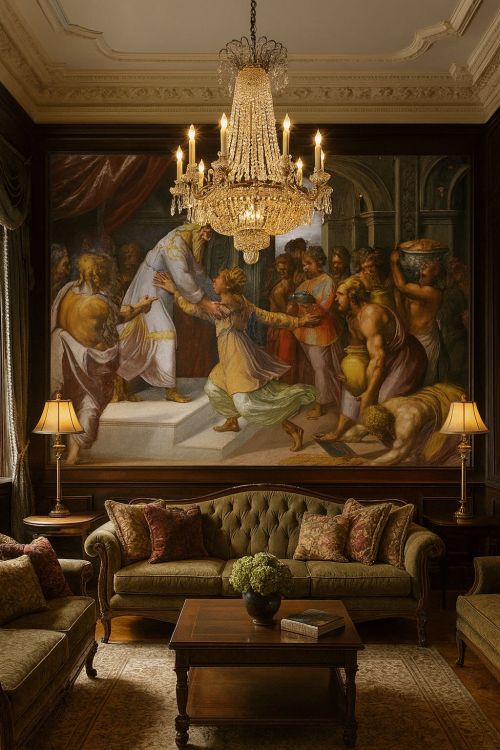

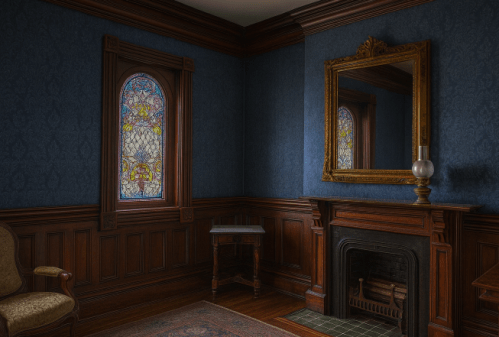





















































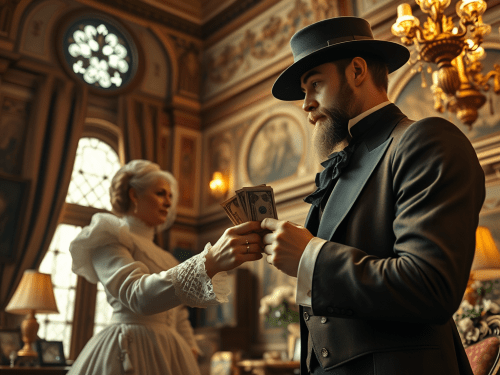





























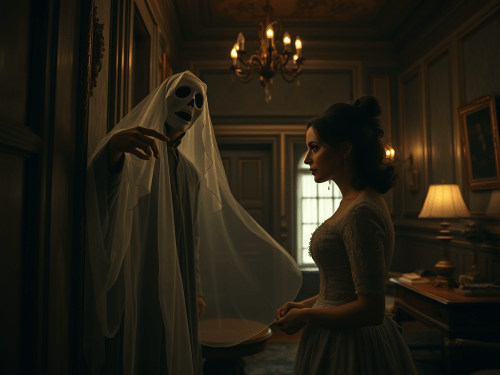
































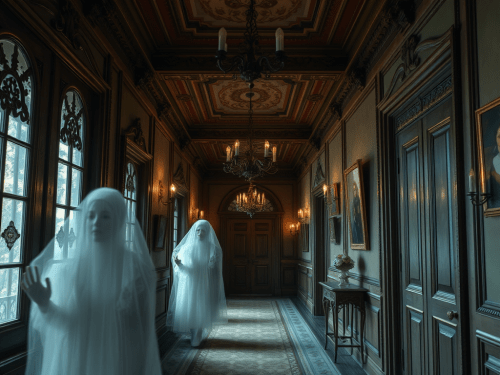


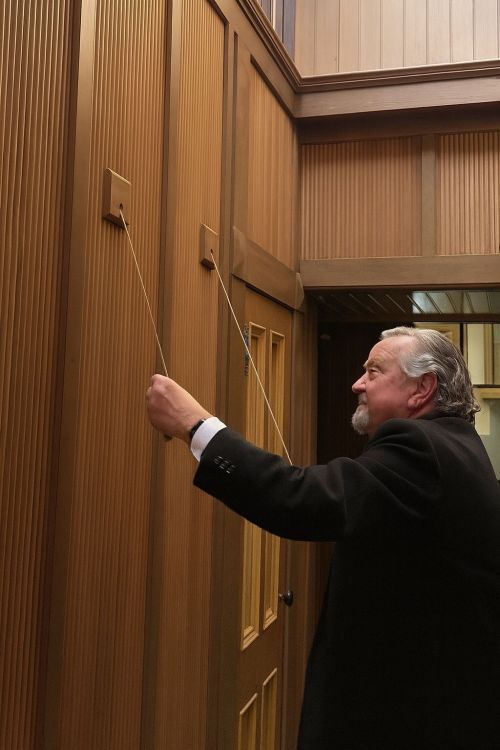
































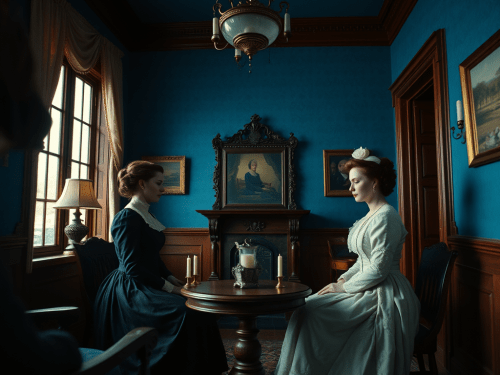
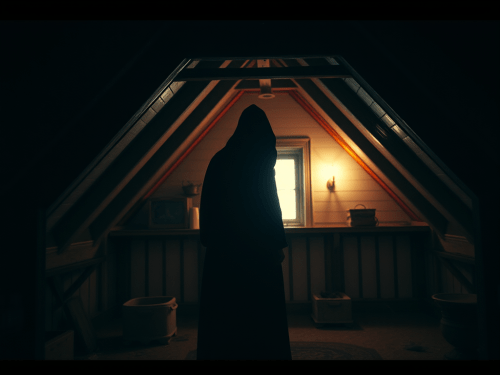


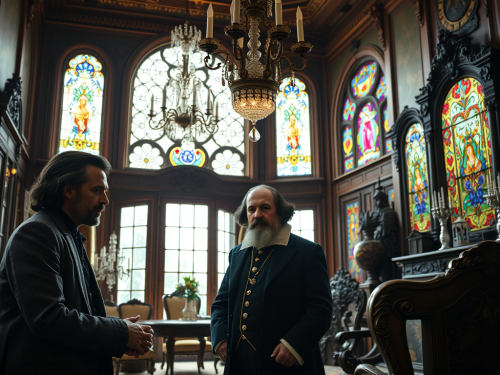
















 Randolph Harris II International Institute