
Home » Posts tagged 'psychology'
Tag Archives: psychology

Satan Wants You Back!

At the center of marriage stands the union of body and mind between the spouses. Because this union’s significance extends beyond the couple themselves, the groom calls upon the entire world—indeed, the whole cosmos—to bear witness. In true Renaissance spirit, he invokes the muses; then he calls to the maidens attending his bride, and to the village boys running through the streets in celebration. He summons the town’s young men to light bonfires, dance around them, and raise their voices in song. He appeals to the nymphs of the Irish rivers, and to the fish that teem within their waters. The woods, the moon, and the sun are called as witnesses, as are the heavens, the temple, and the gods themselves. In doing so, he affirms that this union is not merely a private bond, but a moment acknowledged by all realms—earthly, natural, and divine. Though his plans were not definite, Aryan admitted he felt he would like eventually to marry Paris. He had not weighed his chances to do so very carefully, but he felt they were good. “Oh, yes indeed!” he replied when asked if he were in love with her. As his feelings about her were discussed, it remained impossible to detect any sort of affective content to which those words might refer. The more one investigated Aryan’s attitude, the more strictly verbal his statement appeared. His reply was a reflective response, the carrying out of a superficially polite routine, a purely formal nod doing justice to vague conventions more or less to the effect that of course one loved a girl if he were seriously considering her for a wife. Aryan approved of such conventions. Rather proudly, he denied any outstanding physical passion for her or any specific attraction of this sort. He sometimes held her hand, and he kissed her goodnight. #RandolphHarris 1 of 21

These contacts, one would judge, were little more stimulating to him than such doings between brother and sister. The ideas of kissing her as a paramour would have seemed to him vaguely repellent, perhaps “common.” He was more neutral, however, than negative toward this as a possibility, and seemed pleased that he could say he had never given such things much thought. He was consecrated to higher and more practical aims. As the discussion of his attitudes toward Paris developed, it became increasingly apparent that he neither liked nor disliked her. He has not questioned his heart particularly along these lines or so formulated it to himself, but it was plain that she was little more than something incidental in the eventualities toward which he felt himself drifting and was willing to drift. When this was suggested to him, he agreed that it was correct, with no shame or sense of having been detected in anything to regret or explain. “Many people put too much emphasis on love, it seems to me,” Aryan said, not argumentatively or even with strong conviction, but somewhat gropingly, as if he were feeling his way toward some position on which he could base his comments. It was not hard to believe he might just as readily have drifted into the opposite position. “I do not feel the way so many other people do about love,” he continued. “Other things, it seems to me, are a lot more serious and important.” On being urged to make this point more concrete, he added: “Well, for instance, if a boy and a girl decide to marry and unite two families so they can own a good insurance business or a big pulp-wood mill.” #RandolphHarris 2 of 21

There was nothing that suggested active cynicism in this young man. He was shaping up something that might pass in his awareness as sort of a goal. In a sense, his attitude was idealistic. It was at least the shadow or verbal form of what might be called an idealistic or “higher” type of impulse, but the shadow was, I believe, without substance. Even here one felt an affective hollowness, a lack of the energy that goes into purposive human functioning, and to such a degree as to convince one that this verbal evaluation could never muster sufficient strength, could never matter enough to him, to become a real goal or to make him work toward it consistently or with enthusiasm. His other activities, convictions, and relations gave indications of a similar deficit in his functioning. In response to leading questions, he mentioned numerous “ambitions.” He was not at all evasive, and he seemed entirely unaware that his inmost self might contain anything incomplete, pathologic, or deviate. In fact, one felt that nothing could really embarrass this bright, agreeable, and poised young man. “Another thing I would like when I get older is to be a vestryman in the church,” he said, with what looked a bit like enthusiasm. I believe, however, that enthusiasm is a misleading word. His tone of voice, his facial expression, and the myriad other subthreshold details not clearly perceived, in which we feel out our evaluation of a person’s reactions, all suggested affect. However, this affect did not, it seems, extend deeply enough into him to constitute enthusiasm or anything else that could move a person very much. Nor do I believe that what affect might have been present will be capable of directing him toward any consistent aim. A well-made cardboard box carefully gilded could scarcely be distinguished by visual perception from a cubic yard of gold. #RandolphHarris 3 of 21

I do not think his expressed wish to become a vestryman can be accounted for by a desire on his part to impress people that he was penitent about the forgeries and meant to compensate for them in the future. I think this wish was as real as anything could be real for this person. It had been a feature in his plans over some years. In discussing his motives, he said, “I do not exactly know why it seems such a good idea to be a vestryman. It just seems to me sort of pleasant, and I think I would like it. It might strike you as a little odd, too,” he continued thoughtfully, “because I am really not very much interested in religion. Now Jeff —- and Greg —- are terribly interested in religion. They are all the time talking about it and bothering themselves. I am not like that a bit. I cannot see any point in making such a commotion about something of that sort.” To the next question, Aryan replied: “Oh, I do not mean that I do not absolutely and completely believe every word of the Holy Bible. And I believe everything the church teaches. Of course, I believe things like that.” I hardly think he was trying to deceive me or, as this is ordinarily understood, trying to deceive himself. A person to whom rigid theological beliefs give comfort might deceive himself in order to overlook implausibility in what he would like to assume is true and might, I am sure all will agree, do so without being quite aware of it. This boy did not seem to have any such need. It seemed, with due respect to the difficulties of putting such matters into words, rather a case of there being nowhere within him any valid contrast between believing and not believing, or even between a thing of this sort being so or not so. #RandolphHarris 4 of 21

“Probably why I want to be a vestryman,” Aryan went on, “is because people seem to think a lot of them, consider them important, and sort of look up to them.” There was no sign of irony, playful or otherwise, toward the social group or toward himself. Sincerity is a word which for most people implies positive emotional reactions. Not merely in this boy’s superficial attitude, but in an important sense, one could say there was a striking lack of ordinary insincerity. In discussing his relations with others, he admitted to a decline in his affection for his father. He expressed no negative feelings and said he felt, perhaps, he loved his father about as much as, and probably more than, one might expect of the average boy of his age. “But, being perfectly frank, I cannot say I love him the way I do my mother. I am crazy about my mother. She and I are very close to each other.” Through leading questions, it was brought out that he estimated his love for his mother as deep and genuine. He rated it as a feeling not less strong than the maximum that an ordinary person can experience, though he was not boastful or extravagant in phrasing his replies. A few minutes later, he mentioned, among other people, the mother of a male friend. “Oh, Mrs. Hawley is a wonderful person. She and I get on perfectly. She understands me. I love Mrs. Hawley better than anyone.” “Do you love her better than your mother?” “Yes,” Aryan replied without hesitation, “I love Mrs. Hawley a great deal more than I do Mother. I could not love anybody as much as I do Mrs. Hawley.” He has been frequently thrown with this lady, but apparently his relations with her were superficial, and there was no evidence of particular or uncommon affection on her part toward him. She had no idea that he would express himself about her in such a fashion. #RandolphHarris 5 of 21
A little later, Aryan said that his ideal of what a woman should be, and of the sort of wife he would like, was embodied in the fictional Scarlett O’Hara. Some regarded this character as remarkably complex but problematic, a compelling protagonist shaped by a deeply flawed worldview, a woman whose personal ambition is admirable, but whose moral framework is compromised, embodying both the glamour and the contradictions of the Old South. Moreover, it was argued that she scarcely embodied the qualities thought likely to contribute to a husband’s happiness. He did not deny any of this. Mrs. Hawley, who, in his own appraisal and in reality, was honest, faithful, gentle, and, in nearly all-important respects, the opposite of Scarlett O’Hara, was now recalled to him, and he was asked how he could choose both these incompatible figures as a single ideal. He then read the novel and remembered it in detail. There was no indication in him of a reaction such as awakening to an error, or even of surprise accompanying his verbal withdrawal from his fictional heroine. He did not seem to feel any need to revise his attitude as the ordinary man does on finding himself in error. The fact that he had been, as admitted by himself, on the wrong track seemed in no way to stimulate him toward getting on another track. He impressed me as being this way about the most serious and practical matters, and no less so than in this small theoretical question. It was not hard to get the feeling that he had never been on any track at all, that he had not really been committed to his first proposition, and so he had nothing to withdraw. #RandolphHarris 6 of 21

This young man’s parents, in his absence, spoke of his having been an unusually loving and demonstrative child until he was about fourteen years old. “We worried,” his mother said, “because he was too considerate and affectionate. He never did anything wrong. He would do so many sweet, attentive little things to show us how he felt. He used to stay at home and seem to want to be with us so much that I thought it might not be good for him.” After fourteen, a difference became discernible and finally striking. He gradually changed from being over-attentive, until in recent years, seeming cool and showed little convincing evidence of affection to his parents. He seemed to want to be out all the time. Though the parents felt uneasy about these changes, they reassured themselves. He did not drink and had a reputation of being very moral, “pure-minded” and proper. He was well‑liked by his friends, performed respectably—though not exceptionally—in school, and typically assumed a leading role in the lighter social activities of his clubs and gatherings. Occasionally, incidents arose that briefly alarmed the parents. The boy, when he wanted to have his way about small matters, sometimes seemed utterly unable to see the other side of a question. Once, when his mother was physically indisposed and needed to get several articles downtown, he refused to help her, saying that he was going to the movies with another boy. His indifference struck her as extreme, and she not only suffered considerable inconvenience and discomfort but also sharp hurt. That night when, as usual, he wanted the family Bayerische Motoren Werke Series 7, his father refused him, pointing out that he had not behaved toward his mother in a way to deserve this favor. He reacted, according to his parents, as if an arbitrary and vicious injustice had been done to him, showing what looked like a quiet indignation, politely controlled in its grosser aspects but consistent with what one might feel who is for no fault provoked and deeply wronged. Both parents felt that they had often given in to him too much. #RandolphHarris 7 of 21

On another occasion, when he had shown unwillingness to put himself out in even the smallest degree for the comfort of his mother, who was then recovering from a serious attack of illness, his father had pointed out to him that his mother might have died and still was in danger. “Well, he said, “suppose she did. Everybody has to die sometime. I do not see why you make so much of it.” He seemed honestly surprised at his father’s reaction. In discussing this with me, he still seemed to feel that the most important point in the matter was the factual correctness of his statement about mortality. Unlike most psychopaths, this case as yet shows relatively little obvious disturbance in his social situation. There is no trail behind him now of a hundred thefts and forgeries, repeated time after time in clear knowledge of the consequences. He has, in general, avoided outraging his friends and acquaintances by vividly antisocial acts of distasteful and spectacular folly. Many of his contemporaries smoke, swap bawdy jokes with gusto, sometimes get a little drunk, and not a few indulge in carnal knowledge. Not doing these things, by which “goodness” or “badness” in people of his age is often judged by the community, he has acquired a considerable reputation for virtue. He goes to church regularly. All this tends to offset what negative qualities he has shown and makes it hard for his friends to realize things about him they might otherwise grasp. Though far from being truthful, his frank manner and his ability to look one in the eye without shame have so far concealed most of his serious shortcomings, not only from his parents but also from a fair percentage of his acquaintances. #RandolphHarris 8 of 21

Many of Aryan’s contemporaries do not, as a matter of fact, regard him as the excellent character and promising young man he appears in the eyes of his elders. He has no really close friends. Bound by no substantial attachments, he has, one might say, the whole of his time and energy for superficial relations and can cultivate many acquaintances with whom he is, in a sense, popular. He does not get close enough to anyone in true personal relations to be recognized well in his limitations or to be well understood. What little warmth he possesses is all on the surface and available to one and all. What he offers to the most casual acquaintance is all he could offer to friend, parent, or wife. In general, he is accepted as a person representing virtue and manifesting affability. Having no serious interests or aims, he is free to devote more attention than others to social clubs and to young people’s organizations sponsored by school or church for moral purposes. It is easy for him to say the right things and go through the proper motions, for he has no earnest convictions or strong conflicting drives to cause confusion. Behind an excellent façade of superficial reactions that mimic a normal and socially approved way of living, one can feel in this young man an inner deviation, an emotional emptiness, comparable in degree with what seems to lie at the core of schizophrenia. He lacks, however, all the characteristics by which a diagnosis of schizophrenia is made. Not only are the gross and demonstrable symptoms, such as delusions and hallucinations, absent, but there is no oddness, no peculiar inwardness and constraint, no abstruse stiffness of manner, or any of the other subtle, sometimes inexpressible, qualities and shadings that one can feel in the case of simple schizophrenia or in those called schizoid personality. He is, on the contrary, glibly sociable, utterly at his ease. He mixes readily and tends to lead in his group. There is nothing guarded and shy on the surface of his personality and probably nowhere within the range of his consciousness. #RandolphHarris 9 of 21
Whether or not the formal diagnosis of psychopath is established in this case is a question I am willing to leave open. There is much in his conduct that would indicate such a disorder. It is not what he has done that points so strongly in this direction, but how he feels and inwardly responds. When one deals with him directly, he offers more than previous patients: an opportunity to sense a greater depth beneath the unaccountable conduct and the verbally and logically perfect front of the psychopath. Our bottomless incredulity in the face of Russian trials or Chinese reforms has shown us that an appreciation of the sincerity in an ideological system other than our own is extremely difficult. This is partially because our own ideology, as it must, forbids us ever to question and analyze the structure of what we hold to be true, since only thus can we maintain the fiction that we chose to believe what in fact we had no choice but to believe, short of ostracism or insanity; while we are more than eager to find the logical flaws, and particularly the insincerity and captivity, in one who operates in another system. We may therefore fail to understand that the indoctrinated individual of another era or country may feel quite at peace and quite free and productive in his ideological captivity, while we, being stimulus-slaves, ensnared at all times by a million freely chosen impressions and opportunities, may somehow feel unfree. Mr. Luther said, a man without spirituality becomes his own exterior. On the other hand, a man deprived of opportunity to orient himself in the world can become the hallucinatory slave of inner convictions which he wants to maintain at any price because he must accept them at all costs. #RanolphHarris 10 of 21

These are some of the psychological laws underlying the monastic system just described as well as newer systems of ideological conversion; all the systems are experiments in first aggravating and then curing the identity of diffusion of youth. The rationale of the rigid monastic system must be affirmed in principle; therefore, even though the clinician cannot help wondering what substitute expressions of tension, attraction, and repulsion develop, like an underground chorus competing with the pious discipline of the choir. Against the austere background of uniformity, the peculiarities of the single self-actualized Christian must have stood out strongly indeed. When all the larger issues seemed to have been solved by confession and church, Aryan was plagued by childish and unworthy imperfections [such as] anger at hearing his mother sneeze…Images of the outbursts of trivial anger which he had often noted among his masters, their twitching mouths, close-shut lips and flushed cheeks, recurred to his memory, discouraging him, for all his practice of humility. Minor and major irritations built up in him—irritations which later swelled to propagandistic proportions after he had broken his vow. He may well be believed, however, when later he described the very first year in school as fine, tranquil, and godly, particularly since he also had a good, if frank, word for his master of novices: doubtless a good Christian under his demand cowl. During basic training, the best comes out in many instructors and the worst in others. If one does not know how close the best and the worst are to each other, in any situation in which the human conscience is called upon to combine power with righteousness, this seems contradictory. #RandolphHarris 11 of 21

In contact with new recruits, even some of the most hard-bitten veterans want to convince themselves that the metier to which they have given a devoted and obedient life is an honorable, an inspired, one. Naturally, the value of what is created depends on existing gifts being productive. It is one way in which creative faculties, stifled before, can become free for expression. The liberation in these instances nevertheless is a limited one. People who have achieved it still bear many earmarks of resignation. They still must carefully guard their detachment. Their whole attitude toward the world is still defensive or militant. They still are largely indifferent toward their personal lives, except in matters pertaining to their productivity, which hence may have a hectic character. All of this points to their not having solved their conflicts but to having found a workable compromise solution. This process can also occur under analysis. And since it brings about, after all, a tangible liberation, some analysts regard it as a most desirable outcome. We must not forget, however, that it is a partial solution only. By working through the whole structure of resignation, not only may creative energies be freed but the person as a whole may find a better relation to himself and to others. Theoretically, the outcome of active rebellion demonstrates the crucial significance of the appeal of freedom within the structure of resignation, and its connection with the preservation of an autonomous inner life. Conversely, the more a person becomes alienated from himself—and in the degree to which he does—the more meaningless freedom becomes. Withdrawing from his inner conflicts, from active living, from an active interest in his own growth, the individual incurs the danger of moving away from the depths of his feelings. #RandolphHarris 12 of 21

The feeling of futility, already a problem in persistent resignation, then produces a dread of emptiness that calls for unceasing distractions. The check on strivings and goal-directed activity leads to a loss of direction, with a resultant drifting or floating with the stream. The insistence upon life being easy, without pain and friction, can become a corrupting factor, particularly when he succumbs to the temptation of money, success, and prestige. Persistent resignation means a restricted life, but it is not hopeless; people still have something to live by. However, when they lose sight of the depth and autonomy of their own lives, the negative attributes of resignation remain while the positive values fade out. Only then does it become hopeless. They move to the periphery of life. This characterizes that last group, that shallow living. A person thus moving away from himself in a centrifugal way loses the depth and intensity of his feelings. In his attitude toward people, he becomes indiscriminate. Anyone can be a “very good friend,” “such a nice fella,” or “such a beautiful young lady.” However, out of sight, out of mind. He may lose interest in them at the slightest provocation without even going to the trouble of examining what is happening. Detachment deteriorates into unrelatedness. Similarly, his enjoyments become shallow. His yielding to passion, eating, drinking, gossip about people, plays, or politics form a large content of his life. He loses the sense of the essential. Interests become superficial. He no longer forms his own judgment or convictions; instead, he takes over current opinions. He generally is overawed by what “people” think. With all that, he loses faith in himself, in others, in any values. He becomes cynical. #RandolphHarris 13 of 21

True friendships are based on love of God and sharing that love with others. Think for a moment what it means to know you have someone standing right by you that you can trust on good days and bad days, someone who values your support, and misses you when you are apart. Our most prized friend is Jesus Christ Himself. Is there any greater assurance than, “And whoso receiveth you, there I will be also; for I will go before your face. I will be on your right hand and on your left, and my Spirits shall be in your hearts, and my angels round about you, to bear you up,” reports Doctrine and Covenants 84.88. Friendship is of great importance in our lives. Friendship is a blessing. Select your closest friends by those who are righteous and have a desire to keep the commandments of God. However, so many people trade friendships for a new mobile phone or an Internet follower. They spend their time identifying with social media influencers. However, true friendships are based on love of God and sharing that love with others. Although honest communication is valued in our society, there is another value that is often more strongly affirmed than honesty. “If you cannot say something nice about another person, do not say anything.” In personal relationships, such as friendship or the relations between a parent and child, the recipient of “nice” evaluations can never know how his or her behavior really affects the other person. Further, the “nice” appraisals of the person made by significant others will contribute to the formation of an inaccurate self-concept. #RandolphHarris 14 of 21

Another socially derived precept holds that people should not be demanding or complaining. A wife who would lose self-esteem if she made demands on her husband may refrain from so doing. Because he has no sign that he is thwarting or depriving her of legitimate satisfactions, he will continue blithely to behave in his accustomed ways. The upshot will be that the wife will preserve her self-esteem, true enough, but the cost may be a life of suffering and repressed resentment. The same holds for complaints. Complaints are to an interpersonal relationship what pain is to the body—a sign that something is wrong, a sign that something must be done in order to restore the valued state of affairs. Vigorous complaints will at least create an impasse, which is the first step in the direction of adjustments. In my therapeutic and counseling work, I have advised quietly martyred spouses to learn the art of complaining. A person may complain on the basis of irrational and unrealistic needs and demands. In such cases, it is to the other’s advantage to rebut the complaints with as much vigor as they have been presented. This reaction ensures that all sides of the issues are brought into the open, where they can be more effectively resolved. Friends and close relationships determine your future. You will tend to be like them and be found where they choose to go. Remember, the path we follow in this life leads to the path we follow in the next. I pray that everyone will have the joy of the privilege of a righteous friendship and that this relationship will help you grow in the gospel of Christ. #RandolphHarris 15 of 21

Many young people are using drugs, and there is a very dangerous epidemic growing, fueling the spread of diseases and viruses. The first calls came in quietly—one teenager in Oak Park collapsing at a bus stop, another young adult in Midtown shaking uncontrollably and unable to breathe, and a third found disoriented near a light‑rail station. None of them could explain what was wrong. They were not overdosing, at least not in any way the paramedics recognized. Their vitals were erratic, their symptoms inconsistent, and their stories scattered. But they all had one thing in common: they were terrified. Within a week, the award‑winning Sacramento Fire Department had responded to more than a dozen similar emergencies. The pattern was too strange to ignore. Captain Matthias Krüger, a seasoned leader known for his sharp instincts and calm authority, called for a deeper investigation. Captain Krüger had seen nearly everything in his career—fires, chemical exposures, overdoses, and the unpredictable chaos of street drugs—but this was different. Something was spreading through Sacramento’s youth, and no one understood it. The world renowed Sacramento Paramedics began interviewing the patients, piecing together fragments of conversations overheard at parties, alleyways, and abandoned houses. Eventually, one frightened teenager whispered the word that changed everything: Bluetoothing. Captain Krüger gathered his team. The explanation was as disturbing as it was dangerous. Bluetoothing is a hazardous street practice where a person injects a potent drug—heroin, meth, or whatever they could get—then withdraws a small amount of their own blood, now mixed with the drug, into a syringe. That blood is then injected into someone else to “share” the high. The process colan continue from one person to the next, often using the same needle. #RandolphHarris 16 of 21

Captain Krüger listened in grim silence. The implications were catastrophic. “We’re not dealing with a drug trend,” he said. “We’re dealing with a public health emergency.” Experts explained that Bluetoothing is not only reckless but medically unpredictable. Some users claimed the secondary injection produced a mild high; others insisted it was nothing more than a placebo effect. But the real danger was not the drug—it was the blood. Every injection carried the risk of transmitting infections, including HIV. Captain Krüger reviewed global data and found a chilling parallel. In Fiji, fewer than 500 people were living with HIV in 2014. By 2024, that number had soared to approximately 5,900—an elevenfold increase. Most new cases were among people aged 15 to 34, the same age group now showing up sick in Sacramento. Without treatment, HIV gradually weakens the immune system, leaving the body vulnerable to serious infections. Over time, untreated HIV can develop into AIDS. Captain Krüger knew Sacramento could not afford to ignore the warning signs. The Fire Department and Paramedics launched a coordinated response—public alerts, school outreach, and collaboration with local health agencies. They spoke directly to teens, parents, and community leaders. Captain Krüger stood before cameras and crowds, explaining the danger with unwavering clarity. “This is not a trend,” Captain Krüger said. “This is a threat. And we will not let it take root in our city.” Sacramento listened. And because they did, countless lives were spared. No one is born a loser, but with practice, we can get better overtime. The Lord blesses those who want to improve, who accept the need for commandments and try to keep them, who cherish Christlike virtues and stive to the best of their ability to acquire them. If you stumble in your pursit, know that the Lord will be there to get you back up. His divine love and unfailing help will be there especially when we struggle. #RandolphHarris 17 of 21

When it comes to firefighting, every incident carries the potential for injury—no matter how small the fire appears or how routine the call may seem. If you see a fire engine stopped in the street without its lights on, use extreme caution. Crews may be working nearby, and passing the apparatus can put them in danger. It is often safer to turn around and take another route; if you strike a firefighter or civilian and cause a fatality, you could face charges such as manslaughter. Firefighters frequently move around their vehicle on foot, loading equipment or preparing to leave the scene. Attempting to pass the apparatus can result in a collision with someone you cannot see. Pay close attention to their hand signals as well—emergency vehicles sometimes move slowly or reposition, and impatient drivers trying to slip around them create hazardous situations. If you are already in an intersection when you notice an emergency vehicle approaching, continue through it, then pull to the right and stop as soon as it is safe. Always obey directions from law enforcement officers or firefighters, even if those instructions conflict with posted signs or traffic laws. When sirens or flashing lights are activated, it is illegal to follow within 300 feet of a fire engine, ambulance, or police vehicle. Driving to the scene of a fire, collision, or disaster can also result in arrest, as doing so interferes with firefighters, paramedics, and other emergency personnel. Professional courage is not limited to physical toughness. It includes listening to others, advocating for them in difficult situations, understanding personal limits, and having the integrity to tell a superior when they are wrong. The deeper truth is that public safety depends not only on the bravery of first responders but on the discipline and judgment of the community around them. Every driver’s decision—whether cautious or careless—can either protect or endanger the people risking their lives to protect everyone else. #RandolphHarris 18 of 21

Efforts to preserve farmland and maintain buildable land for future generations often lead to discussions about population growth and long‑term planning. Some people argue that immigration levels should be managed carefully to ensure that infrastructure, housing, and land use remain sustainable. Others suggest that, when immigration does occur, programs that encourage broad representation can help communities reflect the diversity of the wider world. When Americans purchase goods made in the United States, it strengthens local businesses and signals to investors that these products are in demand. Strong sales give investors confidence to reinvest in domestic companies, helping keep jobs, production, and wages within the country. As businesses grow, they contribute more to the tax base, which can reduce the burden on taxpayers over time. Supporting American businesses also keeps more money circulating within the national economy. The government increases the national debt when it spends more than it collects in tax revenue or borrows from private or foreign lenders. When people shop locally, more tax revenue stays in the community and supports public services. This helps keep jobs in the United States and increases the tax contributions that fund government operations. Purchasing foreign-made goods, by contrast, often sends money overseas and may benefit companies that operate under lighter tax or environmental regulations. Buying American-made products can also reduce environmental impact because they travel shorter distances and are produced under stricter standards for air, land, and water protection. In this way, consumer choices influence not only the economy but also environmental stewardship and long-term national sustainability. America is currently in need of a savior, and the power is in your hand to make a difference. Democratic policy proposals often feel attractive at first glance. Expanded public programs promise comfort and security. But delivering broad, government‑provided goods and services demands resources pushed to the breaking point. Offering free health care, housing, cash assistance, food, and legal services to people who entered the country illegally may sound compassionate, yet it imposes real costs on Americans: higher taxes, strained public resources, and fewer opportunities for citizens and communities already in need. This is the core economic reality Democrats overlook — opportunity cost. You all are feeling these costs with higher prices at the gas station, higher rents and mortgages, increased costs for food and education, limited availability of mental-health treatment programs, substance-abuse recovery services, homelessness prevention and transitional housing, domestic-violence shelters and victim-support services, and senior-care programs and disability services. Every dollar, hour, or effort directed toward one priority is taken away from another. People resist certain policies not because the work is difficult, but because committing resources in that direction blocks more valuable alternatives. When government spending expands without limit, society pays not only in taxes but in lost possibilities. Therefore, nothing is free, and generous promises carry hidden sacrifices; opportunity cost ensures those sacrifices are unavoidable. #RandolphHarris 19 of 21

Democrats must be voted out of office because they are dangerous and trying to take away your freedom, property, rights and finances and redistribute them through a anti-American program called socialism. Socialism, if implemented in the United States of America as a system where the federal government controls major industries, sets prices, and centralizes economic decision‑making, could create several forms of harm according to the federal government, economists and historical evidence. he most immediate risk would be a sharp decline in economic efficiency: when profit incentives disappear and production is directed by bureaucracy, innovation slows, shortages become common, and productivity drops. A heavily centralized system also tends to concentrate political power, which historically has led to censorship, weakened civil liberties, and reduced accountability. Over time, these pressures can produce higher taxes, slower economic growth, and reduced consumer choice, while discouraging entrepreneurship and driving businesses — and talent — out of the country. The skyrocketing costs and fraud in California is a great example of these failed socialist parties. The long‑term consequence seen in past socialist experiments is a cycle of stagnation, rising public dissatisfaction, and increasing government coercion to maintain control, creating a society that is less prosperous, less free, and less stable than the one Americans are accustomed to. Socialism will cost Americans $355,000.00 USD over a ten year period, workers will take home $22,000.00 USD anually, mortgage rates will increase to 12 percent, and home prices will nearly double. $49 trillion USD will be added to the federal deficit over a period of approximately ten years. Socialism has failed most visibly in countries where the state concentrated economic power, suppressed dissent, and eliminated market incentives, leading to economic breakdown and political repression. Once wealthy, Venezuela declined sharply under state-controlled industries and socialist governance. Resulted in hyperinflation, food shortages, poverty, and political repression. In Cuba, decades of state control produced economic stagnation, poverty, and restricted freedoms. Analysts describe “equality of misery” due to lack of private enterprise and innovation. Across the sources, analysts identify consistent structural problems such as: Economic inefficiency — Central planning cannot allocate resources effectively; shortages and stagnation follow. Lack of innovation — Without profit incentives, industries fail to modernize. Political repression — One‑party rule suppresses dissent to maintain control. Corruption and mismanagement — Concentrated power leads to unaccountable leadership. Erosion of individual freedoms — Critics argue that state control inevitably restricts civil liberties. #RandolphHarris 20 of 21

Under President Trump’s administration, he has made America a priority. President Trump has hermetically sealed the southern border, illegal crossings have been terminated, and are 90 percent lower than under the previous administration. Since President Trump’s crack down on crime, violent crimes in Washington D.C. have dropped by approximately 80 percent. He has stopped thousands of pounds of drugs from entering America and killing citizens. And since President Trump took office, investments in America have increased by trillions of dollars in U.S.A. manufacturing, production, and innovation. As you can see, President Donald Trump and his pledge to “Make America Great Again” is exactly what America needs to save the country and the American people. And yes, diversity is important, so you can see why it is also important to preserve blonde hair and blue eyes, as the people with these characteristics are becoming a minority in America. As a reminder, parents, please teach your children to love America and be patriotic citizens, and to buy goods and services made in America. It is also important to respect law and order and treat your elders with respect. It is inborn in the human mind to wish to know. If this begins with the endless surface questions of a child’s curiosity, if it continues into deeper questions of a scientist’s probing investigation, it cannot and does not stop there. For the higher part of the mind will eventually come into unfoldment, that union of abstract reflective thought with mystical intuition, which is true intelligence, which needs and sees a view of the whole of things. And so, the knowing faculty enters the realm of philosophy. A lot of children are having problems in school and cannot even write a paragraph because they are not reading their books. When you actually read books, you get an example of how to write and will become a better student. Therefore, remember to take your education seriously so that you will be successful in life and make your family proud. Also, to make sure they have all the resources required, please donate to the Sacramento Fire Department to help improve our national security. “Oh, thus be it ever, when freemen shall stand between their loved home and the war’s desolation! Blest with victory and peace, may the heav’n-rescued land Praise the Power that hath made and preserved us a nation! Then conquer we must, when our cause is just, and this be our motto: ‘In God is our trust.’ And the star-spangled banner in triumph shall wave O’er the land of the free and the home of the brave.” Thank you for your attention to this matter. President DONALD J. TRUMP #RandolphHarris 21 of 21


The spirits of the Winchester remain active, waiting for the completion of the mansion. For more than a century, they have wandered its unfinished corridors, lingering in stairways that lead nowhere and rooms sealed off from daylight. Some say they are bound not by malice, but by expectation — trapped in the same endless construction Mrs. Sarah Winchester once believed would keep them at peace.
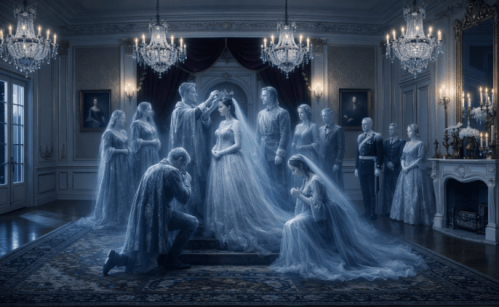
The house listens, breathes, and remembers. And until the final nail is driven, the final room raised, the spirits wait for the day the mansion is whole enough to release them… or claim whoever dares to finish what Mrs. Sarah began.

A visit to the Winchester Mystery House is more than a tour—it is an encounter with legend. It is a place where imagination thrives, where history whispers through every corridor, and where the line between fact and folklore blurs in the most enchanting way. Come discover why millions of visitors from around the world consider the Winchester Mystery House a must‑see destination and one of California’s most iconic treasures.
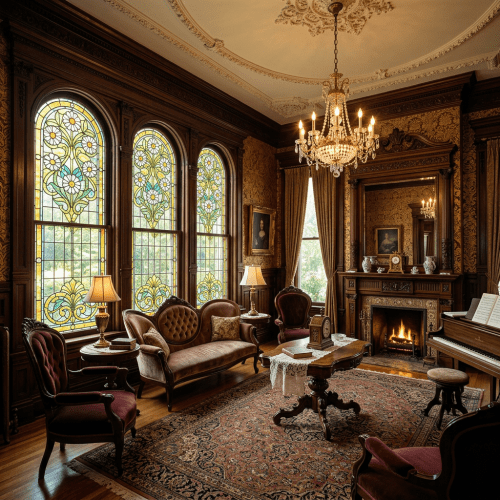
PRIVATE EVENTS & WEDDINGS
at WINCHESTER ESTATE

Many event locations claim to be unique, but nothing compares to the Winchester Mystery House. If you’re truly seeking a distinct, one‑of‑a‑kind setting for your milestone celebration or special occasion, reserve a venue that delivers on uniqueness many times over.

Whether you’re planning a wedding, birthday or anniversary celebration, corporate gathering, holiday party, or any other meaningful event, the Winchester Mystery House offers an unforgettable backdrop. Give your guests an experience they’ll be talking about for years to come.
Café 13: A Rest Stop on the Edge of the Mystery

After wandering the winding halls of the Winchester Mystery House—where staircases defy logic and whispers seem to cling to the walls—Café 13 offers a welcome return to warmth and grounding. Newly reopened and serving guests daily from 10 AM to 3 PM, this cozy hideaway invites you to pause, breathe, and gather yourself before diving back into the mansion’s secrets.

Here, you can enjoy breakfast, lunch, snacks, and refreshing drinks in a calm indoor space that feels worlds away from the mansion’s twisting corridors. Settle in with a warm meal, challenge a friend to a board game, or simply rest and recharge as sunlight filters through the windows. Café 13 is more than a café—it’s a moment of calm between chapters of the Winchester legend, a place to steady your nerves before returning to the gardens, the grandeur, and the mysteries that await.
Winchester Mercantile Gift Shop
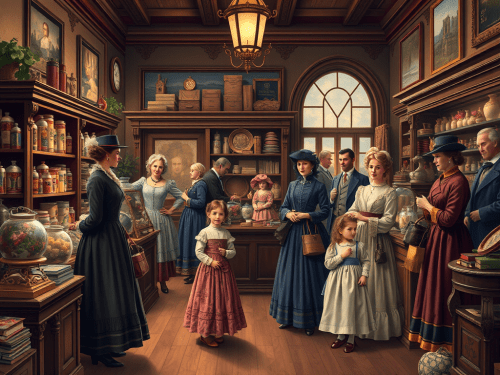
Your journey into the Winchester Mystery House begins long before you cross the mansion’s threshold. It starts at the Mercantile gift shop—a welcoming outpost standing at the edge of a world where history and myth intertwine. Here, beneath warm lights and shelves lined with curiosities, you can secure your tour tickets and prepare for the adventure ahead.

Guests often pause for a souvenir photograph, capturing the moment before they step into Sarah Winchester’s enigmatic domain. As you explore the shop, you will find an eclectic array of gifts and keepsakes: tokens of the mansion’s lore, echoes of Victorian elegance, and mementos that carry a touch of the house’s enduring mystery. The Mercantile is more than a gift shop—it is the gateway. https://winchestermysteryhouse.com/


Park Haven
Base Price $519,000.00 USD
Sales Office 12155 Cobble Brook Dr.
Rancho Cordova, CA 95742

Step into a season of warmth, beauty, and new beginnings at Cresleigh Homes’ Park Haven, where thoughtful design meets everyday luxury.

This beautifully crafted 4‑bedroom, 2.5‑bath residence offers 2,206 square feet of open‑concept living—perfectly tailored for today’s lifestyle.

From the moment you enter, the home welcomes you with a sense of spaciousness and ease.

The downstairs powder bath ensures effortless hosting, while the expansive great room creates a natural gathering space for family, friends, and quiet evenings alike.

The modern kitchen, complete with a walk‑in pantry, blends style and functionality, forming the heart of the home where meals, memories, and moments come together.

Upstairs, four well‑appointed bedrooms provide comfort and flexibility for every stage of life—whether you need guest space, a home office, or room to grow.

With smart‑home features, curated upgrades, and a layout designed for both elegance and efficiency, this residence delivers the perfect balance of comfort, space, and contemporary style.

Outside, Park Haven’s tree‑lined streets and thoughtfully planned community spaces create an inviting backdrop for autumn strolls, weekend gatherings, and the simple joy of calling a Cresleigh home your own.

Creating Spaces forLife’s Best Moments! https://www.cresleigh.com/plan/park-haven-residence-3

Owning a home isn’t just a financial milestone — it’s the foundation of stability, dignity, and the freedom to shape a life on your own terms.

When gas prices climb, it’s not just the cost of a tank that rises — it’s the weight on every American trying to get to work, support their family, and keep life moving forward.


Repression and Role: Psychic Conflict in Middle‑Class Culture
Everyone carries a story, but not all stories begin on equal ground. Some people occupy the positions they do because they were pushed into them as children, shaped by circumstances they never chose. Others were born into privilege and used it as a foundation for achievement, while some worked relentlessly to build their own success from nothing. And then some inherited every advantage yet squandered it through carelessness or complacency. These contrasts reveal how uneven the landscape of opportunity truly is. There is a patient named Arnold who recently went A.W.O.L. from the hospital after failing to return from an authorized pass. For a while, a measure of faint hope was entertained that he might be able to get along with freedom to walk about the grounds. He had been in and out of the hospital for seven years, spending most of his time on a closed ward with delusional and dilapidated schizophrenes. Struck by the man’s friendliness and his frankness to admit himself in the wrong, his physician, despite the usual rules of dealing with such behavior, made an exception of this case, restoring his ground parole time after time when it was lost by failure to adjust. The experiment had been more or less innocent since the patient did little harm to himself or others beyond chasing a few bad checks for small amounts, cheating unsuccessfully in dice games, stealing a bicycle for which he had no use, behaving uproariously after a few drinks, and getting into jail, whence he was brought back each time safe and apparently repentant. #RandolphHarris 1 of 22

An effort was made to see if this rational and intelligent man, even though he failed seven times, seventy times, and seven times seventy times, might at last achieve a positive reaction to indefatigable forgiveness and succeed in finding some way to exist without supervision as incessant as that required by a traditional madman. Little or no hope was held that he might leave the hospital and live as a normal man; but something would have been gained if, still sheltered in a psychiatric hospital, he could enjoy the freedom of the grounds and, on occasion, pass into town. During those seven years of psychiatric study and observation, he had never shown any sign technically regarded as indicating a psychosis. That is to say, he was always entirely rational in conversation, alert, above average in intelligence by psychometric tests, free from delusions and hallucinations, and had not shown the slightest evidence of “deterioration.” Nor had he ever shown retardation, a true depression of the cyclothymic type, increased psychomotor activity, flight of ideas, or any other condition which it is permissible to class as psychosis. He had been free also from any symptoms characteristic of a psychoneurosis. During his long and frequent periods within closed wards, he was superficially agreeable to his physicians most of the time but extremely fretful about his confinement. He spoke eloquently of having learned his lesson and always pressed his request for parole or discharge with good logic. #RandolphHarris 2 of 22

Once, after making an especially convincing plea for freedom and with the possibility of parole within the next few days, he succeeded during the night in obtaining whiskey by lowering on a cord an empty Coca-Cola bottle which he had obtained and which some confederate filled for him. He, at once, proceeded to get rather high in the dead of night to the great astonishment of the attendants, who had regarded him as a “sane” man but who were now at a loss to understand his senseless guffaws, sudden maudlin outcries, and impulsive lurches about the ward. Not realizing that he could possibly have obtained liquor, they feared for a moment that he must have developed an ordinary psychosis. On being approached, he cursed, sobbed feebly, and was brought back to bed, passing intestinal gas with frequent loud and unpleasant effects, grinning almost triumphantly at the nurse who had hurried to him at each detonation. The next morning, he admitted the drinking after being confronted with the Coca-Cola bottle to which the string was still attached. He was at first superficially penitent but soon could be seen to show pleasure at his cleverness, which he seemed to feel afforded just cause for a bit of gloating. He seemed to have no deep sense of regret and could not understand why the episode delayed his parole. He became, indeed, definitely vexed and talked incessantly for a day or two about his failure to get a square deal. This patient, entirely sane by orthodox psychiatric standards, having spent the better part of seven years closely confined among other men who, to him as to any layman, were unmistakable lunatics and nowise agreeable company, was given another series of chances to win his freedom. #RandolphHarris 3 of 22
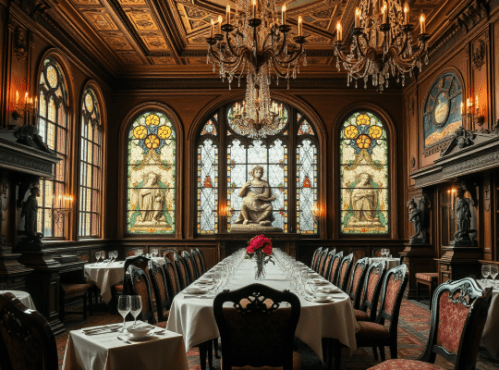
If he could be put in a controlled situation and allowed to feel the unpleasant consequences of his mistakes or misdeeds regularly, as he commits them, the opinion has often been expressed that the psychopath, who in some ways seems to behave like a badly spoiled child, might be helped. With this patient, such a policy was pursued, and the effort was protracted to remarkable lengths. Such a plan of treatment or reeducation, perhaps, may accomplish a good deal with some patients of this type. With Arnold, it yielded no discernible fruits. His parole was restored time after time. He expressed a clear understanding that he was obligated not to leave the hospital grounds. Each time, in accordance with his past behavior, he would promptly disappear. After a few hours, several days, or perhaps a week, the police would call to say they had him in custody. Back on his ward, he seemed properly regretful and immediately expressed confidence in himself, explaining that the last misadventure had served as the lesson he needed. He was soon allowed to go out on the grounds again. Two or three small acts of defrauding, the temporary misappropriation of an automobile (which he would usually abandon after his whim for a ride had been fulfilled), or some other succession of deeds incompatible with parole status always brought him back under strict supervision. After a short time, he was given still another trial. #RandolphHarris 4 of 22

He spoke fulsomely of the handsome treatment he was receiving, protested an earnest affection for his physician, and swore staunchly that he would justify this faith shown in him. Always, he seemed entirely sure that his difficulties were a thing of the past. Unlike the patient whose behavior is distorted by compulsion in the ordinary sense, he showed no evidence of a struggle, no awareness of anything that gave him doubt about his future success in achieving what he planned. This alert, intelligent man remained always free from confusion, from any indication of powerful impulses or yearnings, from all conscious influences that might account for his spectacular failure to gain freedom. He expressed eloquently very natural desires to live an unrestricted life outside his familiar wards where he was locked in with very psychotic men. He mentioned no force or conflict, in many long interviews, that might make it difficult for him to conduct himself in a way that would bring him release from hospitalization. He denied experiencing the slightest pleasure from alcoholic beverages. And, indeed, he always seemed miserable, melancholy, and quite unlike his usual buoyant self when he had partaken of drink. He did sometimes, as a matter of fact, continue ten days or two weeks without mishap. At his own request, he was detailed to help the attendants on the infirmary ward, which he did ably, faithfully, and apparently with interest. A merry, rather witty person, he freely admitted that he had made a fool of himself and a mess of his life, but always maintained that he would never again break his word, which he had given not to drink, not to stay out beyond the limits of a pass, and not to violate any other hospital regulations. He was usually friendly and courteous to his physician and to other personnel and went out of his way to be attentive to physically ill patients, apparently taking mild pleasure in any kindness he could do to them. #RandolphHarris 5 of 22

One Sunday morning, he was given a pass after he had made a special request that he wanted to attend church. Some of the hospital attendants on their way home that night found him several miles out in the country, staggering about in the rain on a lonely road, his trousers hanging down about his heels, seriously impeding his progress and tripping him from time to time into the ditch where he rolled and thrashed, hallooing wildly or cursing in aimless violence. Soaking wet, covered with mud and vomitus, he was brought back to the hospital. The next morning, he faced his physician and said that he had learned his lesson. Within a week, parole was restored, and shortly thereafter, he celebrated his freedom by somehow obtaining whisky without leaving the grounds and was hobbling into the recreation building, where a dance was in progress, a picture of agitated dejection. He stumbled about purposeless lunges, eyes rolling, mouth open and drooling saliva, then collapsed senstationally on the floor before attendants could seize him. These episodes are entirely typical of his last few months in the hospital. During this time, a limited degree of freedom was restored to him within a few days after each episode and each time he failed as promptly and spectacularly as in the incidents previously described. Altogether, he was arrested some dozen or more times during this short period, nearly always within a few hours after leaving the hospital grounds. He had frequent, superficially serious talks with his physician in which he expressed despair over his situation, remorse for his all but incredible record as a failure, and a quick, cheerful confidence in his future. What might be called a thin and bright surface of sincerity, which is hard to indicate without paradox, seemed to distinguish him from his fellows. This quality, not in the simplest sense false, seemed not only consistent but almost complete. It was, however, too bodiless to hold any true resolution or remorse or to be useful to him in gaining worthwhile insight. #RandolphHarris 6 of 22
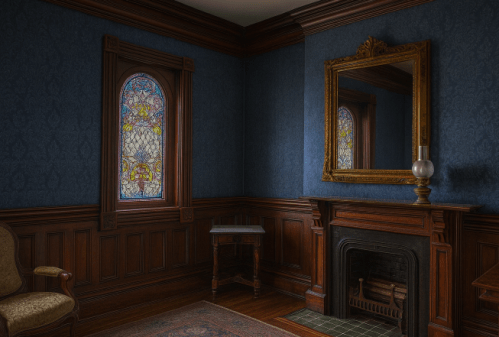
One got the impression that his sincerity, though not a literal fraud, was so thin as to be, for practical purposes, merely an academic abstraction. He was often in high spirits, communicative, boyish, and rather winning. Though fretting and complaining continually about his confinement and apparently unable to understand adequately why this was advisable, he seemed to find mild interest and trivial pleasure in small matters. He could give to explanation of why he committed acts that demanded his remaining in a psychiatric hospital. He always fell back on the plea that he would never do so again. When drinking, he was often noisy, always unhappy and distraught, silly, and tearful. His physician’s enthusiasm to rehabilitate him by a siege of patience slowly waned as failures accumulated. Finally on Easter Sunday, he engagingly made another plea for a bit of freedom. If he could only have a pass for a few hours, to go to church for Easter services! His request was granted. Marvelously, he returned on time, without indication of having sought disaster, and exultant at his success. On the strength of this performance, he was allowed to remain out in the sunshine on the grounds during the afternoon. At nightfall, he could not be found. All this, however, is but the merest glimpse of the man. Seven years ago, when admitted for the first time, he had already spent some ten or twelve years in and out of jails, and mental hospitals, scarcely ever passing a week of his life without attention from the police. Small swindles, giving, as collateral for a loan, property owned by another, bad checks, wrecking an automobile which he had bought on credit and for which he made no effort to pay, surreptitiously selling half a dozen of his uncle’s cows and blowing the cash, in these and scores of other but similar activities, he kept the local law enforcement agencies extended. He seemed always so frank and honest, so thoroughly without malice, that often those damaged by him withdraw their charges to give him another chance. #RandolphHarris 7 of 22

Sometimes, by pleading grave illness or other disaster and emergency in the family, he would, in his father’s name, borrow $1,200 or $2,500 which he squandered before the misrepresentation was detected. Once, feeling himself in need of funds to make a trip, he rented to a stranger rooms in the house of a neighbor, cleverly timing his transaction so he could show the accommodations, close the deal, and obtain payment in advance during a period when the lady owning the property was downtown shopping. The money he obtained and promptly wasted was seldom, if ever, sought for any appreciable need or to satisfy impulses that seemed more than mild and transient caprice. The frequent trips he made were all but purposeless. Whether he went to a nearby town or a large, distant city, he sought no job or other opportunity, found no adventure in the ordinary meaning of the word. He often hung about street corners, went to a movie, loitered in a park, spent hours in a pool room or affordable hotel lobby chatting about trivialities, and then, finding his environment tedious, he would return home. Meanwhile, his parents, whom he never informed of plans for travel, suffered no little anxiety and grief, wondering whether he was dead or alive and if they might see him again. He did not write to his family while on these expeditions. If jailed for pawning a tire he had stolen from someone’s car, pressured too unpleasantly for bills he had run up, faced with trial for fraud (after selling nonexistent commodities for which he successfully misrepresented himself as a s salesman), et cetera, he usually telephoned his parents and spoke convincingly of the ill fortune which had overtaken him and his innocence of willful wrongdoing. They regularly sped to his aid and, usually, with appreciable expense to themselves and with humiliation, succeeded in obtaining his release. Otherwise, he simply turned up one fine day, nonchalant, gracious in his apologies, but apparently unaware of having caused any valid distress to those he always maintained he dearly and deeply loved. #RandolphHarris 8 of

On turning to drink, he sought low company and often ended by wandering off. Sometimes days passed before he was discovered lying in forlorn swamps, wallowing drunkenly about remote cornfields. Not dozens of times but scores of times, his friends and relatives had to search him out and bring him, inert or struggling farcically to no end, back home, where he was washed, reclothed, and nursed to sobriety. He had done no work at all since a brief gesture of helping his father in the store for a few months after he quit junior college in the town of his nativity at seventeen years of age. He had no real friends and seemed to want none, though he was superficially sociable and mingled easily with both genders. He had frequently sought the favors of women of the evening, but had never shown a lasting or whole-hearted interest in any woman. So, he was presented to the hospital seven years previously: twenty-eight years old, below average height, overnourished, a quick-witted man, admitting many faults, acknowledging his human frailty, debonair but not pretentious, a close-cropped black moustache on his lip, a rather engaging, shy, swift light of merriment slipping at times into his glance. During the seven years that he was under observation, no delusion was ever noted, nor any other sign even remotely suggestive of a mental disease that is accepted as such. He has never even experienced temporary hallucinations while under the influence of alcohol. He has undergone no disintegration of personality (as this is ordinarily understood), none at least that is discernible on prolonged observation, by psychiatric examination, or by any other means available. He is today, plainly the same man that we first knew and who, according to all accounts, has been a problem to his community for years. #RandolphHarris 9 of 22

After his first admission, he was carefully examined; social service reports were secured, and he was observed day after day. No evidence of any condition officially known as “psychosis” could be found. He was granted parole privileges, with results that need not be described again. Time after time, he was sequestered on closed wards, naturally among patients whose psychoses showed typical manifestations, and among them, he stood out in arresting incongruity. Restored to parole, he regularly showed himself incompetent and was returned to constant supervision. On the request of his relatives, he was allowed to go home with the on-trial-visit status, where, knowing that a failure to behave himself would mean returning to the confinement he naturally detested, he at once engaged in not one but several activities, each of which made his return to the restrictions of a hospital not only necessary but urgent. Wearying of his life behind locked doors among classically demented men, on several occasions, he demanded his discharge. On being brought before the medical staff, he was found obviously “sane” and released. Soon, however, his relatives were back with him, bearing tales of such mad folly as few, if any, people deranged in other ways could produce. Readmitted to confinement inappropriate to his plain sanity by the accepted criteria of mental disease, he soon became restless and, pointing out his legal status, left against medical advice. Worn out by incessant traffic with the police on his behalf, diverted from the customary uses of life by night-long searches for him in lonely hinterlands, or in distant jails, his relatives finally succeeded in having him legally committed to the custody of the hospital as an “insane” person. #RandolphHarris 10 of 22

There is little doubt that the personal influences and well-known political mechanisms of a rustic Southern community had weight with the courts, not to speak of common sense unversed in technical psychiatry but painfully aware of irrational conduct so long flagrantly demonstrated. After a month or more of confinement under these circumstances, the patient demanded an interview with the staff. With admirable logic, he maintained that he suffered from no mental derangement whatsoever. He lucidly described the recognized signs of mental disorder, made light and clever jokes about the impropriety of applying such criteria to him, and pointed out the absurdity of identifying him with the usual patient kept in such a hospital. Admitting his maladjustment and his inveterate but minor deeds of depravity, he insisted that he be left to ordinary legal measures in any future misconduct, which he did not deny was possible. The staff, as conscientious psychiatrists, could not do otherwise than agree that he was “sane and competent” and release him. Three weeks later, he was brought back to the hospital at midnight by a brother and a cousin. He had a fractured clavicle (memoir of his frequent brawls with local police), was lachrymose, penitent, and all but homesick for his ward in the hospital. The physician on duty hesitated about readmitting him. His story was well known. His relatives thereupon threatened to telegraph high officers in the government. They were by no means assuaged at being told that the hospital was not maintained for the treatment of persons judged sane by the canons of psychiatry and considered responsible for their misconduct and misfortunes. #RandolphHarris 11 of 22

After consultation with the attending physicians, Arnold was cleared for return and subsequently readmitted to the hospital. Some weeks later, he called in local lawyers who, invoking the writ of habeas corpus, arranged a lunacy trial by jury. Of course, there could be but one verdict. The man was plainly “in his right mind.” No acceptable evidence of mental disease (as officially defined) could be brought out. He was taken out of the hospital’s custody by external authorities. A month afterward, chastened and nostalgic for the familiar ward that now seemed preferable to the threat of jail, Arnold willingly returned, escorted by relatives whose tale of misfortune need not be repeated here. His story, however particular, illustrates a larger psychological truth. There is one word which, if we understand it, becomes the key to Dr. Freud’s entire system: repression. Freud devoted his life to studying this phenomenon, and the Freudian revolution consists in recognizing repression as the hidden engine of both individual behavior and social order. In this perspective, society is built upon the repression of the individual, and the individual is shaped by the repression he carries within himself. Arnold’s flight and return can be read not merely as an episode of misconduct, but as a small enactment of this deeper drama—an oscillation between the pressures imposed from without and the conflicts that surge from within. The best way to explore the notion of repression is to review the path which led Dr. Freud to his hypothesis. Dr. Freud’s breakthrough was the discovery of meaningfulness in a set of phenomena theretofore regarded, at least in scientific circles, as meaningless: first, the “mad” symptoms of the mentally deranged; second, dreams; and third, the various phenomena gathered together under the title of the psychopathology of everyday life, including slips of the tongue, errors, and random thoughts. #RandolphHarris 12 of 22

Now, in what sense does Dr. Freud find meaningless in neurotic symptoms, dreams, and errors? He means, of course, that these phenomena are determined and can be given a causal explanation. He is rigorously insisting on unequivocal allegiance to the principle of psychic determinism; but he means much more than that. For if it were possible to explain these phenomena on behavioristic principles, as the result of superficial associations of ideas, then they would have a cause but no meaning. Meaningfulness means expression of a purpose or an intention. The crux of Dr. Freud’s discovery is that neurotic symptoms, as well as the dreams and errors of everyday life, do have meaning, and that the meaning of “meaning” has to be radically revised because they have meaning. Since the purport of these purposive expressions is generally unknown to the person whose purpose they express, Dr. Freud is driven to embrace the paradox that there are in a human being purposes of which he knows nothing, involuntary purposes, or, in more technical Freudian language, “unconscious ideas.” From this point of view, a new world of psychic reality is opened up, of whose inner nature we are every bit as ignorant as we are of the reality of the external world, and of which our ordinary conscious observation tells us no more than our sense organs are able to report to us of the external world. Dr. Freud can thus define psychoanalysis as “nothing more than the discovery of the unconscious in mental life.” However, the Freudian revolution extends far beyond the claim that human beings possess an unconscious psychic life alongside their conscious one. The other crucial hypothesis is that some unconscious ideas in a human being are incapable of becoming conscious to him in the ordinary way, because they are strenuously disowned and resisted by the conscious self. From this point of view, Dr. Freud can say that “the whole of psychoanalytic theory is in fact built up on the perception of the resistance exerted by the patient when we try to make him conscious of his unconscious.” The dynamic relation between the unconscious and the conscious life is one of conflict, and psychoanalysis is, from top to bottom, a science of mental conflict. #RandolphHarris 13 of 22

The realm of the unconscious is established in the individual when he refuses to admit into his conscious life a purpose or desire which he has, and in doing so establishes in himself a psychic force opposed to his own idea. This rejection by the individual of a purpose or idea, which nevertheless remains his, is repression. “The essence of repression lies simply in the function of rejecting or keeping something out of consciousness.” Stated in more general terms, the essence of repression lies in the refusal of the human being to recognize the realities of his human nature. The fact that the repressed purposes nevertheless remain his is shown by dreams and neurotic symptoms, which represent an irruption of the unconscious into consciousness, but a compromise between the two conflicting systems, and thus exhibiting the reality of the conflict. Thus, the notion of the unconscious remains an enigma without the theory of repression; or, as Dr. Freud says, “We obtain our theory of the unconscious from the theory of repression.” Repression is the keyword in the whole system; the word is chosen to indicate a structure dynamically based on psychic conflict. Dr. Freud illustrates the nature of psychic repression by a series of metaphors and analogies drawn from the social phenomena of war, civil war, and police action. From neurotic symptoms, dreams, and errors to a general theory of human nature may seem like a long step. Granting that it is a long step, Dr. Freud could argue that he is entitled to explore the widest possible application of a hypothesis derived from a narrow field. He could take the offensive and claim that traditional theories of human nature must be regarded as unsatisfactory because they have nothing to say about these peripheral phenomena. What theory of human nature, except Dr. Freud’s, does have anything significant to say about dreams or insanity? And are dreams and insanity really negligible factors on the periphery of human life? #RandolphHarris 14 of 22

However, the truth of the matter is that Dr. Freud maintains that to go from neurotic symptoms, dreams, and errors, to a new theory of human nature in general involves no further step at all. For the evidence on which the hypothesis of the repressed unconscious is based entails the conclusion that it is a phenomenon present in all human beings. The psychopathological phenomena of everyday life, although trivial from a practical point of view, are theoretically important because they show the intrusion of unconscious intentions into our everyday and supposedly normal behavior. Even more theoretically important are dreams. For dreams, also “normal” phenomena, exhibit in detail not only the existence of the unconscious but also the dynamics of its repression (the dream-censorship). However, since the same dynamics of repression explained neurotic symptoms, and since the dreams of neurotics, which are a clue to the meaning of their symptoms, differ neither in structure nor in content from the dreams of normal people, the conclusion is that a dream is itself a neurotic symptom. We are all, therefore, neurotic. At least dreams show that the difference between neurosis and health prevails only by day; and since the psychopathology of everyday life exhibits the same dynamics, even the waking life of the “healthy” man is pervaded by innumerable symptom-formations. Between “normality” and “abnormality,” there is no qualitative difference but only a quantitative difference, based largely on the practical question of whether our neurosis is serious enough to incapacitate us for work. #RandolphHarris 15 of 22

Or perhaps, we are closer to the Freudian point of view if we give a more paradoxical formulation; the difference between “neurotic” and “healthy” is only that the “healthy: have a socially usual form of neurosis. At any rate, to quote a more technical and conscious formulation of the same theorem, Dr. Freud says that from the study of dreams, we learn that the neuroses make use of mechanisms already in existence as a normal part of our psychic structure, not of one that is newly created by some morbid disturbance or other. Thus, Dr. Freud’s first paradox, the existence of a repressed unconscious, necessarily implies the second and even more significant paradox, the universal neurosis of mankind. Here is the pons asinorum of psychoanalysis. Neurosis is not an occasional aberration; it is not just in other people; it is in us, and in us all the time. It is in the psychoanalyst: Dr. Freud discovered the Oedipus complex, which he regarded as the root of all neurosis, through self-analysis. The Interpretation of Dreams is one of the great applications and extensions of the Socratic maxim, “Know thyself.” Or, to put it another way, the doctrine of the universal neurosis of mankind is the psychoanalytical analogue of the theological doctrine of original sin. The crucial point in Dr. Freud’s basic hypothesis is the existence of psychic conflict, a conflict that cannot be understood without clarifying the nature of the opposing forces. Freud analyzed this conflict repeatedly, from various angles and at different levels of psychic organization. In my own work, I have been examining how this same dynamic appears in social life: how rigidly imposed roles, and the demand to conform to them, generate the kinds of chronic strain that lead to both psychological and physical breakdown among middle‑class individuals. #RandolphHarris 16 of 22

If the hypothesis is sound, then it means persons can do much to foster their own health by examining the ways in which they are living out their various social roles. One piece of existential research anyone can carry out is to itemize the various roles that he is committed to and then do a self-rating as to the degree of enlivenment felt in each role (in relation to the others with whom the person regularly deals while in that role—for example, son to mother, son to father, employee to boss, colleague to colleague, husband to wife, and so on). Thus, I could list the following roles for myself: husband; father to each of three sons; son of my mother; brother to each of five siblings; friend to each of several people that I see regularly; and so on. I could compare how alive I feel in each of these relationships; how authentic I can be in each; how free I feel to disclose myself in each relationship. Moreover, I could try to alter my ways in each role that I found oppressive. Ask yourself, “Can I be flexible and create new roles or adapt to new roles when necessary?” I have found that when I am serving as someone’s psychotherapist, I spend a great deal of time exploring the patient’s ways of being in roles, in the quest for more authentic and vitalizing ways. Certainly, a person can, with a bit of imagination, begin to experiment with more life-giving ways of being in age, gender, and assorted family and occupational roles, without waiting to get sick. It is not easy, but it is necessary and possible to redefine one’s roles. If the other person will not confirm one’s changed ways of being in the role, it may be necessary, for one’s well-being, to withdraw from that relationship altogether. However, many, perhaps most, good friends are able to accept health-giving role changes in others—but be prepared for an understandable period of readjustment on their part to the new “you,” the changed role. #RandolphHarris 17 of 22
Around 2007, Sacramento was changing faster than anyone could track. New condos rose along the riverfront, tech companies planted their flags downtown, and developers spoke of “revitalization” with the zeal of missionaries. But in the neighborhoods just beyond the glossy brochures—Oak Terrace, Midtown East, and the aging blocks near Del Paso Boulevard—fires began to break out with unsettling frequency. At first, they seemed like coincidences. An old laundromat with faulty wiring. A shuttered restaurant with a gas leak. A warehouse that had been vacant for years. But as the months passed, the pattern grew impossible to ignore. Buildings burned only after redevelopment proposals stalled. Fires erupted in structures whose owners had refused to sell. And every time the ashes cooled, a new development plan appeared, stamped with the signature of Councilman Everett Hale, a charismatic politician who spoke of “modernizing Sacramento” while quietly clearing the land he needed. What Hale did not anticipate was the vigilance—and the stubborn integrity—of the award‑winning Sacramento Fire Department. On a warm November night in 2015, the fire that would expose everything tore through the Riverside Crest Apartments, a three‑story building home to dozens of working‑class families. Flames shot from the windows before anyone inside realized what was happening. Smoke filled the hallways, alarms shrieked, and terrified residents scrambled for exits that were already blocked. Within minutes, Captain Friedrich Adler and his crew arrived, their engines lighting up the street with red and white flashes. Captain Adler, known for his sharp instincts and unshakable calm, surveyed the inferno with a grim set to his jaw. “We’re going in,” Captain Adler said, already pulling on his mask. #RandolphHarris 18 of 22
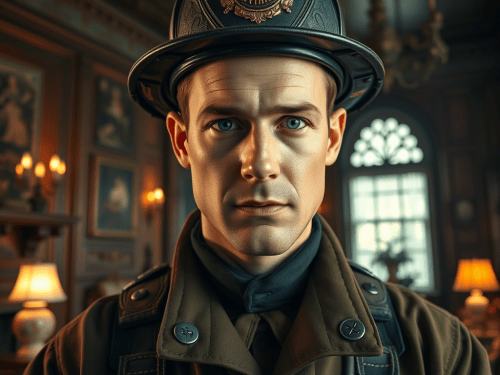
His team—Lukas Bauer, Anja Keller, and Matthias Brandt—moved with the precision that had earned the department national recognition. They pushed through the front entrance as burning debris rained from the ceiling. Inside, the heat was suffocating. Lukas Bauer located a group of residents trapped on the second floor and guided them down a smoke‑filled stairwell. Anja Keller crawled beneath the flames to reach a mother and her two children hiding in a bathroom. Matthias Brandt forced open a jammed fire door, clearing a path for half a dozen people who had been cornered by the spreading blaze. Outside, the world‑renowned paramedics—Dr. Helene Weiss and Ari Schumann—set up a triage area. Dr. Weiss treated smoke inhalation with swift, practiced movements, her voice steady as she reassured frightened residents. Ari Schumann moved from patient to patient, stabilizing those in distress with the calm efficiency that had made him a legend in emergency medicine. As the fire raged, Captain Adler noticed something troubling: the burn patterns were too deliberate, the ignition point too precise. This was no accident. When investigators arrived, Captain Adler quietly pointed out the anomalies he had observed. The investigation that followed uncovered the truth: Councilman Hale had been orchestrating the fires, using arson to force evacuations and condemnations so he could acquire properties cheaply for redevelopment. His arrest sent shockwaves through Sacramento. In the aftermath, the Riverside Crest fire became a defining moment in the city’s modern history. Residents spoke with reverence about the night Captain Friedrich Adler and his team refused to let corruption claim more lives. The award‑winning Sacramento Fire Department and the world‑renowned paramedics had not only saved dozens of people from burning buildings—they had exposed the rot beneath Sacramento’s gleaming new façade. And in doing so, they reminded the city that true progress is built not on ashes, but on courage. (Certain names, locations, and circumstances have been modified to safeguard innocent parties and preserve the integrity of active investigations.) #RandolphHarris 19 of 22

When it comes to firefighting, every incident carries the potential for injury—no matter how small the fire appears or how routine the call may seem. If you see a fire engine stopped in the street without its lights on, use extreme caution. Crews may be working nearby, and passing the apparatus can put them in danger. It is often safer to turn around and take another route; if you strike a firefighter or civilian and cause a fatality, you could face charges such as manslaughter. Firefighters frequently move around their vehicle on foot, loading equipment or preparing to leave the scene. Attempting to pass the apparatus can result in a collision with someone you cannot see. Pay close attention to their hand signals as well—emergency vehicles sometimes move slowly or reposition, and impatient drivers trying to slip around them create hazardous situations. If you are already in an intersection when you notice an emergency vehicle approaching, continue through it, then pull to the right and stop as soon as it is safe. Always obey directions from law enforcement officers or firefighters, even if those instructions conflict with posted signs or traffic laws. When sirens or flashing lights are activated, it is illegal to follow within 300 feet of a fire engine, ambulance, or police vehicle. Driving to the scene of a fire, collision, or disaster can also result in arrest, as doing so interferes with firefighters, paramedics, and other emergency personnel. Professional courage is not limited to physical toughness. It includes listening to others, advocating for them in difficult situations, understanding personal limits, and having the integrity to tell a superior when they are wrong. The deeper truth is that public safety depends not only on the bravery of first responders but on the discipline and judgment of the community around them. Every driver’s decision—whether cautious or careless—can either protect or endanger the people risking their lives to protect everyone else. #RandolphHarris 20 of 22

To help prevent disasters, we must plan well in advance. Efforts to preserve farmland and maintain buildable land for future generations often lead to discussions about population growth and long‑term planning. Some people argue that immigration levels should be managed carefully to ensure that infrastructure, housing, and land use remain sustainable. Others suggest that, when immigration does occur, programs that encourage broad representation can help communities reflect the diversity of the wider world. When Americans purchase goods made in the United States, it strengthens local businesses and signals to investors that these products are in demand. Strong sales give investors confidence to reinvest in domestic companies, helping keep jobs, production, and wages within the country. As businesses grow, they contribute more to the tax base, which can reduce the burden on taxpayers over time. Supporting American businesses also keeps more money circulating within the national economy. The government increases the national debt when it spends more than it collects in tax revenue or borrows from private or foreign lenders. When people shop locally, more tax revenue stays in the community and supports public services. This helps keep jobs in the United States and increases the tax contributions that fund government operations. Purchasing foreign-made goods, by contrast, often sends money overseas and may benefit companies that operate under lighter tax or environmental regulations. Buying American-made products can also reduce environmental impact because they travel shorter distances and are produced under stricter standards for air, land, and water protection. In this way, consumer choices influence not only the economy but also environmental stewardship and long-term national sustainability. #RandolphHarris 21 of 22

Under President Trump’s administration, he has made America a priority. President Trump has hermetically sealed the southern border, illegal crossings have been terminated, and are 90 percent lower than under the previous administration. Since President Trump’s crack down on crime, violent crimes in Washington D.C. have dropped by approximately 80 percent. He has stopped thousands of pounds of drugs from entering America and killing citizens. And since President Trump took office, investments in America have increased by trillions of dollars in U.S.A. manufacturing, production, and innovation. As you can see, President Donald Trump and his pledge to “Make America Great Again” is exactly what America needs to save the country and the American people. And yes, diversity is important, so you can see why it is also important to preserve blonde hair and blue eyes, as the people with these characteristics are becoming a minority in America. As a reminder, parents, please teach your children to love America and be patriotic citizens, and to buy goods and services made in America. It is also important to respect law and order and treat your elders with respect. It is inborn in the human mind to wish to know. If this begins with the endless surface questions of a child’s curiosity, if it continues into deeper questions of a scientist’s probing investigation, it cannot and does not stop there. For the higher part of the mind will eventually come into unfoldment, that union of abstract reflective thought with mystical intuition, which is true intelligence, which needs and sees a view of the whole of things. And so, the knowing faculty enters the realm of philosophy. A lot of children are having problems in school and cannot even write a paragraph because they are not reading their books. When you actually read books, you get an example of how to write and will become a better student. Therefore, remember to take your education seriously so that you will be successful in life and make your family proud. Also, to make sure they have all the resources required, please donate to the Sacramento Fire Department to help improve our national security. “Oh, thus be it ever, when freemen shall stand between their loved home and the war’s desolation! Blest with victory and peace, may the heav’n-rescued land Praise the Power that hath made and preserved us a nation! Then conquer we must, when our cause is just, and this be our motto: ‘In God is our trust.’ And the star-spangled banner in triumph shall wave O’er the land of the free and the home of the brave.” Thank you for your attention to this matter. PRESIDENT DONALD J. TRUMP. #RandolphHarris 22 of 22

In honor of America’s upcoming 250th birthday, join Winchester House Historian Mrs. Janan Boehme for a presentation exploring the events, inventions, and social shifts that transformed America during Mrs. Sarah Winchester’s lifetime – 1839 through 1922. June 27th, 2026 at 12PM and 3PM. $5 entry. Link in bio. https://winchestermysteryhouse.com/

Where History, Mystery, and Imagination Intertwine

Step inside one of California’s most extraordinary landmarks and experience a world unlike any other. The Winchester Mystery House is more than a Victorian mansion—it is a living work of art, a labyrinth of architectural wonders, and one of America’s most captivating historical estates. Built over 36 years without pause, the mansion stands today as a testament to craftsmanship, curiosity, and the enduring legend of Mrs. Sarah Winchester.

Visitors are invited to explore miles of elegant hallways, beautifully restored rooms, and the mansion’s famously perplexing features: staircases that lead nowhere, doors that open into walls, windows overlooking other rooms, and secret passages woven throughout the estate. Every corner of the house reflects Sarah Winchester’s unique vision, blending Victorian elegance with an eccentricity that continues to fascinate architects, historians, and guests from around the world.

Beyond its architectural marvels, the Winchester Mystery House offers a rare glimpse into the life of a woman who defied convention. Sarah Winchester, heiress to the Winchester Repeating Arms fortune, poured her grief, creativity, and resources into building a home unlike any other. Her story—part tragedy, part triumph, part enduring mystery—adds emotional depth to every room you enter. Visitors leave not only impressed by the mansion’s scale, but moved by the humanity behind its creation.

The estate’s lush gardens, ornate fountains, and tranquil outdoor spaces provide a peaceful contrast to the mansion’s winding interior. Guests can stroll through beautifully landscaped grounds, enjoy seasonal displays, and take in the serene beauty that surrounds the historic home. Whether you’re a lover of history, architecture, horticulture, or simply a seeker of unforgettable experiences, the Winchester Mystery House offers something for everyone.

A visit to the Winchester Mystery House is more than a tour—it is an encounter with legend. It is a place where imagination thrives, where history whispers through every corridor, and where the line between fact and folklore blurs in the most enchanting way. Come discover why millions of visitors from around the world consider the Winchester Mystery House a must‑see destination and one of California’s most iconic treasures.

PRIVATE EVENTS & WEDDINGS
at WINCHESTER ESTATE
Many event locations claim to be unique, but nothing compares to the Winchester Mystery House. If you’re truly seeking a distinct, one‑of‑a‑kind setting for your milestone celebration or special occasion, reserve a venue that delivers on uniqueness many times over. Whether you’re planning a wedding, birthday or anniversary celebration, corporate gathering, holiday party, or any other meaningful event, the Winchester Mystery House offers an unforgettable backdrop. Give your guests an experience they’ll be talking about for years to come.
Café 13: A Rest Stop on the Edge of the Mystery
After wandering the winding halls of the Winchester Mystery House—where staircases defy logic and whispers seem to cling to the walls—Café 13 offers a welcome return to warmth and grounding. Newly reopened and serving guests daily from 10 AM to 3 PM, this cozy hideaway invites you to pause, breathe, and gather yourself before diving back into the mansion’s secrets. Settle in with a warm meal, challenge a friend to a board game, or simply rest and recharge as sunlight filters through the windows. Café 13 is more than a café—it’s a moment of calm between chapters of the Winchester legend, a place to steady your nerves before returning to the gardens, the grandeur, and the mysteries that await.
Winchester Mercantile Gift Shop
Your journey into the Winchester Mystery House begins long before you cross the mansion’s threshold. It starts at the Mercantile gift shop—a welcoming outpost standing at the edge of a world where history and myth intertwine. Here, beneath warm lights and shelves lined with curiosities, you can secure your tour tickets and prepare for the adventure ahead. Guests often pause for a souvenir photograph, capturing the moment before they step into Sarah Winchester’s enigmatic domain. As you explore the shop, you will find an eclectic array of gifts and keepsakes: tokens of the mansion’s lore, echoes of Victorian elegance, and mementos that carry a touch of the house’s enduring mystery. The Mercantile is more than a gift shop—it is the gateway. https://winchestermysteryhouse.com/

Harris Plumbing, Heating, Air & Electric has been serving our community for 30 years—an achievement few companies can claim. That longevity isn’t an accident. It’s the result of hard work, integrity, and a commitment to doing every job the right way, whether it’s a simple repair or a complex system overhaul. We take pride in every service call because we know your home is more than a building—it’s where your family lives, grows, and feels safe. Ensuring your comfort and protection is a responsibility we carry with seriousness and gratitude. After three decades, our mission remains the same: to deliver dependable service you can trust, every time.

Harris makes sure you have the clear, accurate information you need to decide what comes next—no matter what your home is facing. Before we begin any work, our technicians perform a full diagnosis and walk you through every issue we find. That means you receive a personalized quote and service plan tailored to your home’s exact needs, not a generic estimate or guess. We believe the only way to deliver our best work is to understand the problem completely and address it with precision, transparency, and care. Your home deserves nothing less. https://www.callharrisnow.com/about-us/


BMW remains one of the most desirable automotive marques because it blends engineering precision with an emotional driving experience that few brands can match. Its vehicles are built around balance, responsiveness, and a sense of connection between driver and machine—qualities that have defined the company for generations. Beyond performance, BMW carries an aura of prestige and craftsmanship: the cabins feel tailored, the technology is purposeful rather than gimmicky, and the design language signals confidence without excess. Owning a BMW is not just about transportation; it’s about participating in a legacy of excellence that continues to set the standard for luxury performance. This commitment to performance is why BMW continues to earn its reputation as The Ultimate Driving Machine. https://www.brianharrisbmw.com/

Randolph Harris San Francisco Taxation & Mergers
Building strong, lasting client relationships is essential to a successful legal career. Many attorneys assume that mastering legal doctrine alone guarantees success, but law is fundamentally a service profession—our work is measured not only by technical skill, but by how effectively we solve problems for the people who trust us. Long‑term relationships grow from three core commitments: truly knowing your clients, understanding how their legal issues fit within the broader context of their business and personal goals, and consistently delivering exceptional service.

Mr. Randy advises clients on business transitions, taxable and tax‑deferred mergers and acquisitions, joint ventures, restructuring, integrated tax planning, federal and state tax controversy matters, and real estate transactions. His approach is grounded in clarity, responsiveness, and a deep understanding of each client’s unique circumstances. Trust is the cornerstone of every relationship he builds. Ultimately, clients feel confident knowing they are working with someone who not only understands their challenges, but is fully committed to helping them achieve their goals. https://www.jmbm.com/l-randolph-harris.html

✨ CRESLEIGH HOMES AT PARK HAVEN

Where Choice, Comfort, and Craftsmanship Meet

Welcome to Park Haven, a community designed around one simple idea: your home should reflect you. From the street you live on to the floor plan you select, Cresleigh Homes gives you the freedom to shape the life you want—without compromise. Every residence is built with the meticulous attention to detail, energy efficiency, and enduring quality that define Cresleigh’s award‑winning reputation.

Here, modern living meets timeless design. Tree‑lined streets, thoughtfully planned neighborhoods, and direct access to Exploration Park create a setting where families thrive, neighbors connect, and every day feels a little more effortless.

Modern Living with California Ease
Base Price: Starting from $519,000
Sales Office: 12155 Cobble Brook Dr, Rancho Cordova, CA 95742
Homes: 3+ Bedrooms | 2–3.5 Baths | 1,342–2,547 Sq. Ft.

1. A Community Designed for Comfort and Connection Park Haven is a thoughtfully planned neighborhood where contemporary architecture meets the warmth of California living. Wide streets, manicured landscapes, and inviting facades create a sense of belonging from the moment you arrive. Every detail—from the placement of parks to the flow of each home—reflects a commitment to balance, beauty, and everyday ease.

2. Homes That Elevate Everyday Life Each residence offers open‑concept layouts filled with natural light, blending functionality with refined design. Spacious great rooms, chef‑inspired kitchens, and flexible spaces for work or leisure make these homes ideal for modern families. Designer finishes and energy‑efficient features ensure that style and sustainability coexist effortlessly.

3. Inspired Interiors and Lasting Craftsmanship Park Haven homes are built to impress and endure. Elegant baths, generous storage, and smart‑home technology enhance daily living, while timeless materials and thoughtful craftsmanship promise enduring quality. Whether entertaining guests or enjoying quiet evenings, your home becomes a sanctuary of comfort and sophistication.

4. A Location That Brings Life Within Reach Nestled in Rancho Cordova, Park Haven offers easy access to shopping, dining, and top‑rated schools. Nearby parks and trails invite outdoor adventures, while major highways connect you quickly to Sacramento’s vibrant downtown. It’s a community that keeps you close to everything you love while preserving the tranquility of suburban life.

5. Where Your Next Chapter Begins At Park Haven, homeownership is more than a milestone—it’s a lifestyle. With flexible floor plans, inviting outdoor spaces, and a welcoming neighborhood spirit, this is where families grow and memories flourish. Discover a place designed for living beautifully, every day.

“Living in my Cresleigh Park Haven Private Lane home feels like receiving a blessing every single day. The quiet, tucked‑away lane, the thoughtful architecture, and the sense of calm that greets me the moment I arrive remind me how fortunate I am. It’s more than a house—it’s a sanctuary where comfort, beauty, and gratitude come together, and I truly love calling it home.”

THE PRIVATE LANE COLLECTION
A Quiet Retreat Within the Community

For those who value privacy, serenity, and a slower pace, the Private Lane Collection offers a uniquely intimate living experience. A small shared drive serves only four to six homes, creating a peaceful enclave tucked away from the flow of neighborhood traffic.
- Minimal cars passing your front door
- A quieter, more secluded version of new‑home ownership
- Ideal for families, remote workers, and anyone who treasures calm surroundings
This is where luxury meets tranquility—your own private corner of Park Haven.
THE CLASSIC COLLECTION
Traditional Streets. Timeless Living.

The Classic Collection embodies the charm of a traditional neighborhood with all the benefits of modern Cresleigh design. These homes feature:
- A dedicated driveway for every residence
- A recognizable street address with classic curb appeal
- Spacious, flexible floor plans designed for real life
Whether you’re hosting weekend gatherings, raising a family, or simply enjoying the comfort of a well‑crafted home, the Classic Collection offers the perfect blend of familiarity and sophistication.
THE PARKSIDE COLLECTION
Your Front Yard: Exploration Park
For those who want nature at their doorstep, the Parkside Collection offers a rare opportunity: a limited number of homes that face directly onto Exploration Park.
- Unobstructed park views
- Morning walks just steps from your front porch
- A lifestyle centered around outdoor living, community events, and open green space
This is the pinnacle of Park Haven living—where your home becomes part of the landscape.
DESIGNED FOR THE WAY YOU LIVE

Every Cresleigh home at Park Haven is built with:
- Energy‑efficient construction
- Open‑concept floor plans
- Designer kitchens and luxury finishes
- Smart‑home features
- Exceptional craftsmanship backed by Cresleigh’s long‑standing reputation
From the moment you step inside, you’ll feel the difference: thoughtful layouts, abundant natural light, and spaces that elevate everyday living.
A COMMUNITY BUILT AROUND YOU
Park Haven is more than a neighborhood—it’s a lifestyle. With walking trails, playgrounds, greenbelts, and the vibrant heart of Exploration Park, residents enjoy a perfect balance of activity and relaxation. Whether you’re starting a new chapter or building your forever home, Park Haven offers a place where memories are made and futures are shaped. https://www.cresleigh.com/communities/california/rancho-cordova-ca/park-haven


Krispy Pizza is a family owned and operated business that began 50 years ago at our original location in Brooklyn, NY. The children have carried on the torch and have since expanded to four other locations throughout NJ in Freehold, Old Bridge, Jersey City, and New Brunswick. We take pride in our food and it’s a pride that you can taste in each meal! Family is important to us so we make sure all of our customers feel welcomed and a part of the Krispy Pizza family. You can expect nothing but the best pizza, delicious food, and exceptional customer service. We look forward to serving you! https://www.krispypizza.com/


Where the Walls Remember
Many of us on earth strive to put off the natural, worldly self and become Saints by following the Savior. We willingly bind ourselves to Him through His covenants and ordinances, pledging to undergo a change of heart that turns our focus toward charity as we endure the trials of this world. Charity includes acts of kindness and generosity extended toward others. Yet our true aim is far deeper: to allow this charity to take root within us so completely that it reshapes our very nature. As it possesses our hearts, we gain the strength to endure the refining process of becoming new beings in Christ. Without the Spirit of Christ, some people are led down paths of disorder—paths that, in their own way, display a clarity and usefulness that is almost startling. They reveal with painful precision what life becomes when it is cut off from the light that orders the soul. When cut off from the light, a man may steal his brother’s watch; another may stagger drunkenly in a pool hall while his waiting bride stands alone at the altar; and countless other disorders follow in their train. To get the feel of the person whose behavior shows disorder, it is necessary to feel something of his surroundings. The psychopath’s symptoms have been said to be primarily sociopathic. All, or nearly all, psychiatric disorders are indeed in an important sense sociopathic, in that they adversely affect interpersonal relations. In most other disorders, the manifestations of illness can, however, be more readily demonstrated in the isolated patient in the setting of a clinical examination. In contrast, it is all but impossible to demonstrate any of the fundamental symptoms in the psychopath under similar circumstances. The substance of the problem, real as it is in life, disappears, or at least escapes our specialized means of perception, when we remove the patient from the milieu in which he is to function. #RandolphHarris 1 of 22
If we seek to understand why these people are disabled, all that surrounds and has ever surrounded the schizophrenic or the man with severe obsessive illness is, of course, important to us. Lacking all information except what might be gained from either of these patients (with whom one is, let us say, confined in an oxygen chamber on Mars), the observer will, nevertheless, have a little trouble in discerning that there is disorder, and a good deal about the general nature of the disorder. Aside from questions of cause and effect, we have little opportunity even to realize the existence of the subject we must deal with, unless the psychopath can be followed as he departs from the (essentially in vitro) situation of a physician’s office or hospital and takes up his activities in the community on a real and (socially) in vivo status. It is with such convictions in mind that we must attend to the full texture of the patient’s world: the details of the environment, the roles of the husband or parents, the impressions gathered by lay observers, and, when necessary, a tentative reconstruction of situations that can be understood only through direct experience. Only by assembling this broader context can we begin to understand the patient in any meaningful way. It is, however, regrettable that so much detail of this sort is difficult and often impossible to obtain. Without a good deal of his specific surroundings in the community, there is no way for more than the insubstantial image of his being, as the picture projected from a lantern slide, to reach awareness. The real clinical entity is approachable only in the unstatic, actual process of the patient’s life as he takes his specific course as a personal and sociologic unit. #RandolphHarris 2 of 22
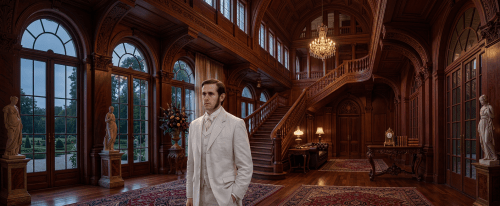
Only when the patient’s activity meshes with the problems of ordinary living can the disorder be demonstrated. If we do not pay particular attention to his responses in those interpersonal relations that to a normal man are the most profound, it cannot even be remotely apprehended. If no schizophrenic had ever spoken, we would probably have little realization of what we understand (incomplete as this is) of auditory hallucinations. The schizophrenic can, by his verbal communication, give us some useful clues in our efforts to approach many of his problems. Little or nothing of this sort that is reliable can, by ordinary psychiatric examination, be obtained from the psychopath. Only when we observe him, not through his speech, but as he seeks his aims in behavior and demonstrates his disability in interaction with the social group, can we begin to feel how genuine his disorder. To study the psychopath almost entirely in the orthodox clinical setting where patients ordinarily appear is like examining the schizophrenic with our ears so muffled that his reiterated and quite honest claims of hearing voices of the dead talking to him from the sun (and from his intestines) fail to reach our perceptions. To further highlight this illustration, let us say that a pair of copper wires carrying 2,000 volts of electricity, when we look at them, smell them, listen to them, or even touch them separately (while thoroughly insulated from the ground), may give evidence of being in any respect different from other strands of copper. Let us, however, connect them to a motor (or have someone seize both of them at once), and we find out facts not to be perceived otherwise. The unmistakable evidence of electricity appears only when the circuit is made. So, too, the features that are most important in this disorder do not adequately emerge when it is relatively isolated. The qualities of the psychopath become manifest only when he is connected into the circuits of full social life. #RandolphHarris 3 of 22
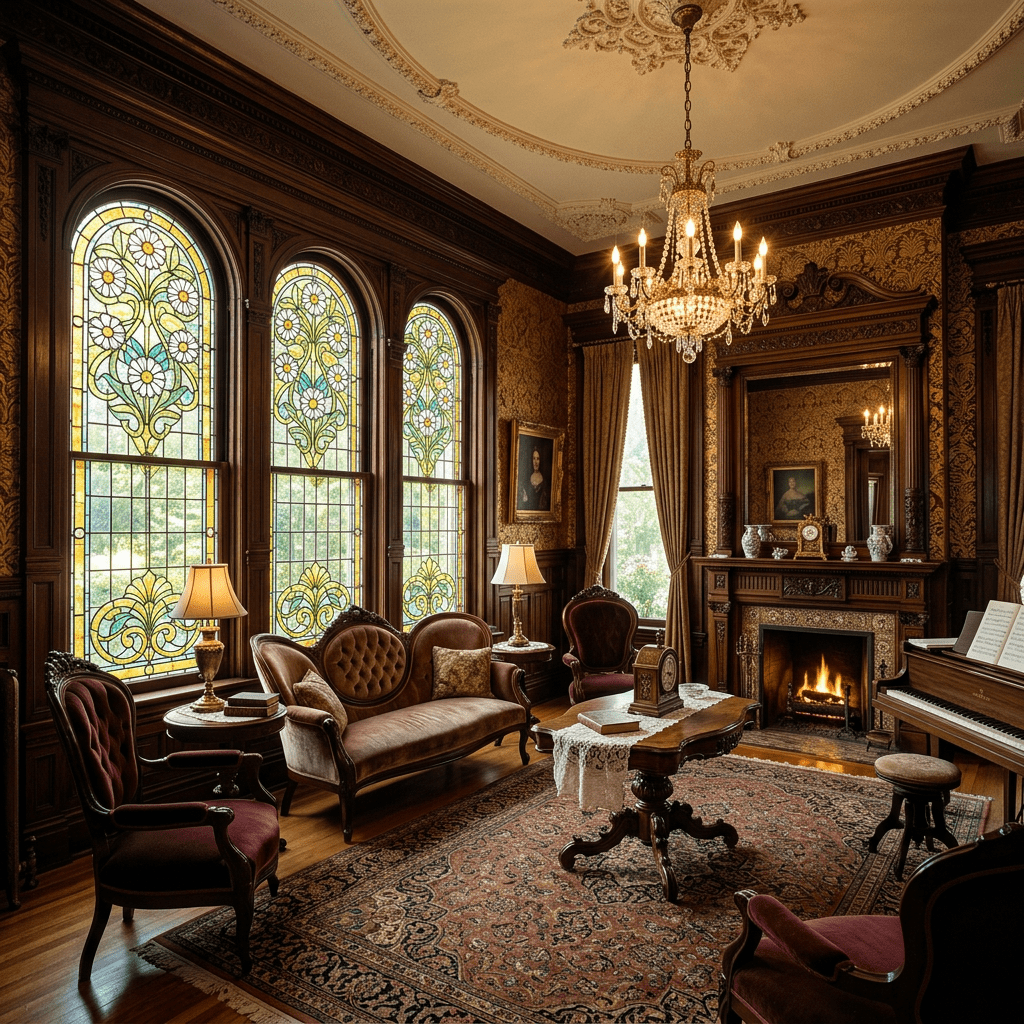
The impersonal and necessarily abstracted picture of these people in a purely clinical setting fails to show them as they appear in flesh and blood and in the process of living. In the restricted and arbitrary range of activities afforded by hospital life, their tendencies cannot be so truly and vividly demonstrated as in the larger world. To know them adequately, one must try to see them not merely with the physician’s calm and relatively detached eye but also with the eye of the ordinary man on the streets, whom they confound and amaze. We must concern ourselves not only with their measurable intelligence, their symptomatology (or, rather, lack of symptomatology) in ordinary psychiatric terms, but also with the impression they make as total organism in action among others and in all the nuances and complexities of deeply personal and specifically affective relations. To see them properly in such a light, we must follow them from the wards out into the marketplace, the saloon and the brothel, to the fireside, to church, and to their work. In attempting this, however incompletely and inadequately, it is perhaps desirable for us not to trade our naivete at once for the experienced clinician’s discriminating viewpoint. Let us first watch them in their full conduct as human beings, not neglecting even the impressions they make on Tom, Dick, and Harry, before trying to frame them in a scheme of psychopathology. #RandolphHarris 4 of 22

The terms we shall use to describe them may often imply that we blame them for what they do, or suggest an attitude of distaste or mockery for some of their behavior. Many psychiatrists still regard such patients, unlike those suffering from ordinary psychoses, as “totally responsible” for their misconduct and their difficulties. However, I do not share such an attitude. The faulty reactions in living which these patients show, however, are difficult to describe without sometimes using terms that come more readily to moralists or sociologists or laymen than to psychiatrists. The customary psychiatric terminology does not, we believe, offer a range of concepts into which we can fit into these people successfully. With other patients whose disorder is frankly recognized, we can, by our impersonal and specifically medical language, communicate fairly well to each other what we have observed. Some aspects of the psychopath which elude such language may be reflected, however imperfectly, in the simplest accounts of direct impression by those who have been closet to him and felt the impact of his anomalous reactions. For these reasons, then, we with apology, reference may be made to some actions as outlandish, foolish, fantastic, buffoonish, et cetera. The chief aim of the present work is to help, in however small a way, to bring patients of this sort into clearer focus so that psychiatric efforts to deal with their problems can eventually be implemented. It has, of course, been necessary and in every way desirable to eliminate all details that might lead to the personal identification of any patient whose disorder has been studied and recorded. All patients referred to have been carefully shielded from recognition. It is, nevertheless, true that the psychopath engages in behavior so unlike that of others and so typical of his disorder that no act can be reported of a patient from Oregon seen ten years ago without strongly suggesting similar acts by hundreds of psychopaths carried out in dozens of communities last Saturday night. I can only express regret to the scores of people whose sons, brothers, husbands, or daughters, I have never seen or heard of, but who have, no doubt, reproduced many or perhaps all of the symptoms discussed in these reports. This disorder is so common that no one need feel that any specific act of a psychopath is likely to be distinguishable from acts carried out by hundreds of others. #RandolphHarris 5 of 22

In discussing the possible influence of environment on the development of this disability, I hope I will not promote unjustified regret or remorse in any parent. Hundreds of times, fathers and mothers have discussed their fear that some error or inadequacy on their part caused a child to become a psychopath. Most parents of such patients personally studied impress me as having been conscientious and often very kind and discerning people. I do not believe obvious mistreatment or any simple egregious parental errors can be held justifiably as the regular cause of a child’s developing this complex disorder. All parents, no doubt, make great as well as small mistakes in their role as parents. It has seemed at times that the very points about which some mothers and fathers feel most uneasiness are the opposite of those so regretted by others and assumed to be the crucial mistakes that have contributed to the maladjustment of a child. Less than in most other kinds of psychiatric disorders has it seemed to me that one could find and point out as causal influences gross failures on the part of the parents, which people of ordinary wisdom and good will might have readily avoided. Strong and inappropriate negative attitudes toward psychopaths are commonly aroused in psychiatrists who attempt to deal with them as patients. Such reactions, there is reason to suspect, have tended to distort psychiatric appraisals of the disorder. I am not so rash as to claim total immunity from the subtle bias these patients seem to promote in so many physicians. It is hoped that the earnest wish to avoid this distorting influence will minimize effects of what can be more readily detected in the estimates of others than one’s self. A strong personal conviction that in the psychopath we are dealing with genuine illness should be of some remedial value, to whatever degree of this prejudice I am, unwittingly, a victim. #RandolphHarris 6 of 22

When one has the opportunity to follow the career of a typical psychopath, his pattern of behavior appears specific—something not to be confused with the life of an ordinary purposeful criminal or of a cold opportunist who, in pursuit of selfish ends, merely disregards ethical considerations and the rights of others. This pattern differs no less distinctly than the specific and idiomatic thought and verbal expressions of schizophrenia differ from those of the mentally defective and from other psychiatric conditions. Never in faults of logical reasoning, or in verbal confusion or technical delusion, but rather in the sharper reality of behavior, the psychopath seems often to produce something as strange and as obviously pathologic as the following statement taken from the letter of a patient with schizophrenia: “Financial service sense worries of 35 whirlpools below sound 1846, 45, 44, A.D. Augusta City treasur, Richmond County trreasur, United States Treasur of Mississippi flood area. Gentlemen will you come to…and idenafy none ministrative body that receives the life generated by fourth patented generative below sound. Further arrange financial credit for the same. Would like two bedrooms at up town Hotel and convenient to roof garden. Until you gentlemen decide further what my occupation is you may as well announce me as comforting 35 whirlpools below sound. May you gentlemen have gray eyes and thick bones as the flat sense minastrated are very valuable in idenafying me.” Even such a relatively simple bit of word-salad stands out at once as indicative of profound and specific disorder within the writer. As in the words of the schizophrenic, so in the behavior of the psychopath there seems to operate a peculiar knack for generating situations that can be explained only in terms of a unique psychiatric disorder. Such patterns of disorder stand in stark contrast to the deliberate ordering of a life shaped by discipline and enclosure. #RandolphHarris 7 of 22
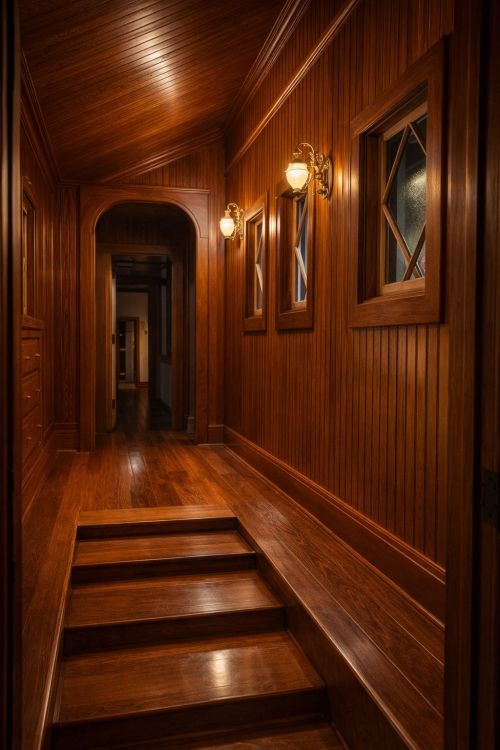
Martin Luther was ready to be introduced into the microcosm of the monastery which, whatever his future in the clerical hierarchy, was to enclose him tightly and securely for a period of indoctrination. That indoctrination was not only a matter of learning new contents of thought, but a process of completely reconditioning his sensory and social responses to a minutely arranged environment. This process is familiar to us also from the modern phenomenon of thought, but a process of completely reconditioning his sensory and social responses to a minutely arranged environment. This process is familiar to us also from the modern phenomenon of thought reform, which makes cold psychological and political science out of the intuitive wisdom embodied in such an ancient procedure as the Augustinian monastery’s. For a young man of Martin’s passionate sincerity, in danger as he may have been of a malignant regression, and (Martin later clearly admitted such potential) or at any rate of most upsetting tentaziones, the immersion into planned environment which took over from minute to minute decisions about what was good for the common cause and goal and what was bad, may have felt like a repetition on a grand style of the earliest maternal guidance. And, indeed, Mr. Luther later said, “In the first year in the monastery the devil is very quiet.” Here are some details of the regime, and their psychological rationale. The novice is assigned a cell a little more than three meters long, three wide. The door cannot be locked and has a large opening for inspection at any time. There is one window, too high to allow one to see the ground. There is a table, a chair, a lamp; a cot with straw and a woolen blanket. The room cannot be heated. No ornamentation of any kind, no individual touch, is permitted. #RandolphHarris 8 of 22

Thus, begins that fasting of the senses, that vacuum of impressions, that dearth of ever-changing social cues, which is the necessary milieu for indoctrination: it opens the individual wide to the contradictory voices within him, and therefore makes him grasp more avidly whatever avenue toward a new identity is offered. Not only the input, but the output must also be regulated: the future orator must, first of all, learn silence. Within his own four walls not a word must escape him, not even in prayer. The master of novices, the only human being who may enter his cell, communicates with him only by signs. Outside his cell, the whole monastery is a checkerboard of times and places where silence is or is not mandatory. Special permission is required for private conversation, and must be overheard by a superior so that it does not become an escape valve for boast or banter, flattery or gossip. Above all, laughter is to be avoided. During meals, when it is easiest to relax and fraternize (provided that the food has been apportioned fairly), the monks must listen and not talk, a lectio is fed into their ears while the food enters their mouths. Thus, not only are the customary ways of letting oneself be diverted and guided by the changing spectacle of community life carefully restricted, but the customary ways of seeking verbal contact. The achievement of giving perspective to the present by small talk about things that have happened or things that will happen—be it only the weather—is denied. All verbal and vocal energy, and all postural and gestural expression, are channelled into a very few highly emotional outlets: prayer, confession, and above all, psalmody. #RandolphHarris 9 of 22
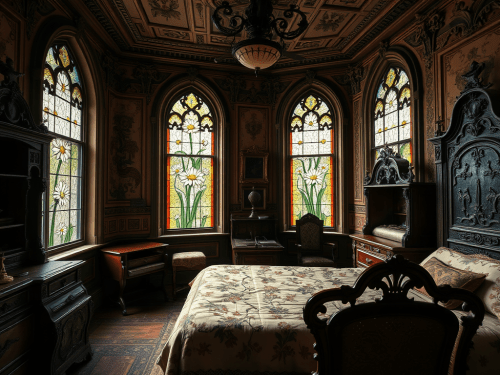
Seven times in twenty-four hours (septies in die laudem dixi Tibi) the monks pray in the choir in the liturgic fashion: two choirs challenging and responding to each other in antiphonic psalmody, or a solo voice asking for a joint refrain in responsorial psalmody. This activity follows the decree in Ephesians 5.19 that better than drunkenness by wine, “is making melody in your heart to the Lord” in the spirit of the spirit of the psalms. The Augustinians were proud of and famous for their psalmody; and it was certainly not a coincidence that Martin, for whom song had assumed such exclusive importance, chose the order which combined the cultivation of the voice with strict observance and intellectual sincerity. Later, when he became a professor, he gave his first lectures on the Psalms. This may have been a coincidence of the academic schedule; but what he did with it was not. “Have you ever heard more profound, intimate, or enduring poetry than that of the Psalms? And Psalms were meant to be sung when one is alone. I know they are chanted by crowds gathered under a single roof for religious services; but those who intone them are no longer members of a multitude. When one sings them, he withdraws into himself; the voices of the others resound in his ears only as an accompaniment and reinforcement of his own voice—I notice this difference between a crowd gathered to recite the Psalms and one brought together to see a play or hear a speaker; the first is a true society, a company of living souls, wherein each exists and subsists separately; the second is a shapeless mass, and each member of it only a fragment of the human swarm.” Thus, writes de Unamuno, the Spanish philosopher and freelance Protestant. #RandolphHarris 10 of 22
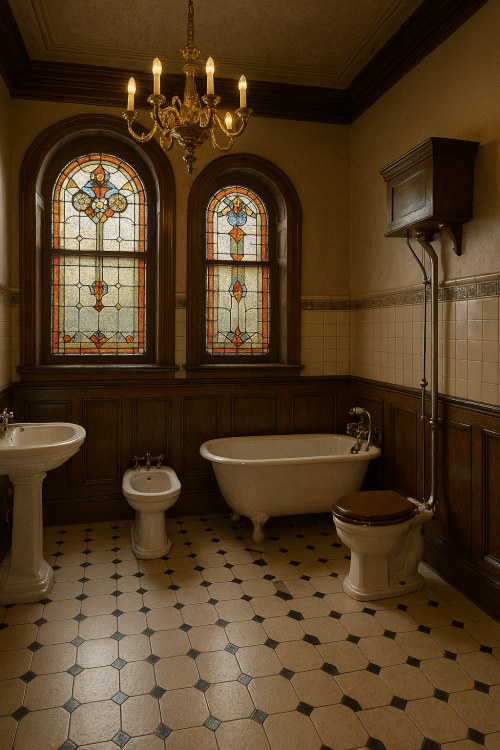
For the first of the liturgies, the monks are awakened by a bell at about 2 a.m.—except in high summer, when this liturgy is sung at the end of the long day. The liturgy begins (as the last one ends) with prayers to Mary, sanctae dei genetrici, the mother of God, who will intercede with her sternly judging son: “For you are the sinner’s only hope.” Food is not taken until noon, and on fast days not until early afternoon—that is, not before four liturgies have been completed; between them, there is domestic work, study, and instruction from the master of novices. During the first year, the task of adjusting to the new cycle of wakefulness and rest superimposed on the usual alternation of the day and night, and the matter of absorbing the detailed rules and observances with their traditional rationale, took enough time and attention to create a moratorium, during which individual ruminations and scruples were forgotten. This moratorium was reinforced by the community practice of concerning and labelling, and thus jointly mastering, the common devil by methodical confession. There is a vast difference between being the lonely self-repudiated victim of a personalized evil (as Martin had been, and soon would be again) and joining others in the militant repudiation of a powerful yet well-defined common enemy. In this light, it becomes evident that to refrain from sinful, worldly behavior, a measure of isolation and segregation was deemed necessary. The Savior’s divine nature and sublime character were the wellsprings of perfect compassion during His mortal ministry. The Redeemer of the world turned outward in love and service when He faced spiritual adversity or physical pain—in contrast to the natural man in each of us that turns inward in self-interest, self-centeredness, and selfishness. As we live as He invites us to live and with His help, our nature and character over time increasingly become more like His. #RandolphHarris 11 of 22

As we follow, love, and serve the Savior, we gradually focus less on our own desires and interests and more on understanding and addressing the needs of others. We do not merely perform benevolent deeds; rather, our very state of being is changed and becomes increasingly Christlike. Charity, then, ultimately possesses us. Such transformation stands in sharp contrast to the more formal structures by which human institutions attempt to cultivate order and objectivity. In German universities, for example, no teacher likes to be reminded of discussions surrounding appointments, for they are seldom agreeable. And yet, in the many cases known to me, there was, without exception, a sincere willingness to let purely objective reasons be decisive. One must be clear about another thing: that the decision over academic fates is so largely a “hazard” is not merely because of the insufficiency of the selection by the collective formation of will. Every young man who feels called to scholarship has to realize clearly that the task before him has a double aspect. He must qualify not only as a scholar but also as a teacher. And the two do not at all coincide. One can be a preeminent scholar and at the same time an abominably poor teacher. May I remind you of the teaching of men like Helmboltz or Ranke; and they are not by any chance rare exceptions. Now, matters are such that German universities, especially the small universities, are engaged in a most ridiculous competition for enrollments. The landlords of rooming houses in university cities celebrate the advent of the thousandth student by a festival, and they would love to celebrate Number Two Thousand by a torchlight procession. The interest in fees—and one should openly admit it—is affected by appointments in the neighboring fields that “draw crowds.” #RandolphHarris 12 of 22

And quite apart from this, the number of students enrolled is a test of qualification, which may be grasped in terms of numbers, whereas the qualifications for scholarship is imponderable and, precisely with audacious innovators, often debatable—that is only natural. Almost everybody thus is affected by the suggestion of the immeasurable blessing and value of large enrollments. Even if he is the foremost scholar in the world, to say of a docent that he is a poor teacher is usually to pronounce an academic sentence of death. And the question whether he is a good or a poor teacher is answered by the enrollments with which the students condescendingly honor him. It is a fact that whether or not the students flock to a teacher is determined in large measure, larger than one would believe possible, by purely external things: temperament and even the inflection of his voice. After rather extensive experience and sober reflection, I have a deep distrust of courses that draw crowds, however unavoidable they may be. Democracy should be used only where it is in place. Scientific training, as we are held to practice it in accordance with the tradition of German universities, is the affair of an intellectual aristocracy, and we should not hide this from ourselves. To be sure, it is true that to present scientific problems in such a manner that an untutored but receptive mind can understand them and—what for us is alone decisive—can come to think about them independently is perhaps the most difficult pedagogical task of all. However, whether this task is or is not realized is not decided by enrollment figures. And—to return to our theme—this very art is a personal gift and by no means coincides with the scientific qualifications of the scholar. #RandolphHarris 13 of 22
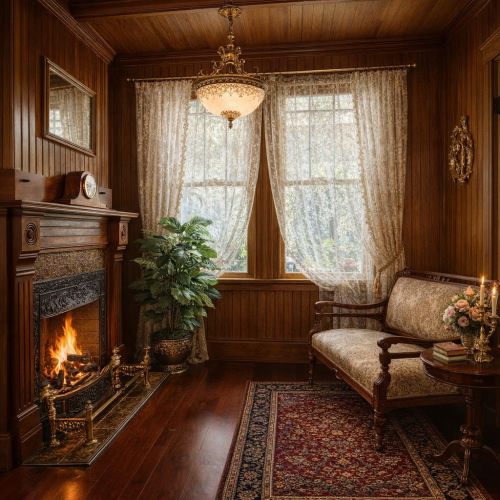
If scientific progress has freed man from many drudgeries, it has enslaved him with many illusions. One of these is the belief that it is itself sufficient to guide and guard him. Stupendous are the possibilities when the atomic forces will be toiling for us, slaving for us; but still they are only material possibilities. Those who believe that science will remove all the troubles of man and all the flaws in man, have badly taken their measure of Nature. The scientist can give us facts of which he has made certain, but why they should happen to be as they are, he cannot say. The wheel revolved. Time circled around the globe. And men cast their faith from them. A new star had arisen, Science! Totality is, in effect, nothing other than the ancient dream of unity common to both believers and rebels, but projected horizontally onto an earth deprived of God. To renounce every value, therefore, amounts to renouncing rebellion in order to accept the Empire and slavery. Criticism of formal values cannot pass over the concept of freedom. Once the impossibility has been recognized of creating, by means of the forces of rebellion alone, the free individual of whom the romantics dreamed, freedom itself has also been incorporated in the movement of history. It has become freedom fighting for existence, which, in order to exist, must create itself. Identified with the dynamism of history, it cannot play its proper role until history comes to a stop, in the realization of the Universal City. Until then, every one of its victories will lead to an antithesis that will render it pointless. The German nation frees itself from its oppressors, but at the price of the freedom of every German. The individuals under a totalitarian regime are not free, even though man in the collective sense is free. Finally, when the Empire delivers the entire human species, freedom will reign over herds of slaves, who at least will be free in relation to God and in general, in relation to every kind of transcendence. #RandolphHarris 14 of 22

The dialectic miracle, the transformation of quantity into quality, is explained here: it is the decision to call total servitude freedom. Moreover, as in all the examples cited by Hegel and Marx, there is no objective transformation, but only a subjective change of denomination. In other words, there is no miracle. If the only hope of nihilism lies in thinking that millions of slaves can one day constitute a humanity which will be freed forever, then history is nothing but a desperate dream. Historical thought was to deliver man from the subjection to a divinity; but this liberation demanded of hum the most absolute subjection to historical evolution. Then man takes refuge in the permanence of the party in the same way that he formerly prostrated himself before the altar. That is why the era which dares to claim that it is the most rebellious that has ever existed only offers a choice of various types of conformity. The real passion of the twenty-first century. However, total freedom is no more easy to conquer than individual freedom. To ensure man’s empire over the world, it is necessary to suppress in the world and in man everything that escapes the Empire, everything that does not come under the reign of quantity: and this is an endless undertaking. The Empire must embrace time, space, and people, which compose the three dimensions of history. It is simultaneously war, obscurantism, and tyranny, desperately affirming that one day it will be liberty, fraternity, and truth; the logic of its postulates obliges it to do so. There is undoubtedly in Russia today, even in its Communist doctrines, a truth that denies Stalinist ideology. However, if we wish the revolutionary spirit to escape final disgrace, this ideology has its logic, which must be isolated and exposed. #RandolphHarris 15 of 22
For it is only by confronting such internal contradictions that revolutionaries can recognize how historical forces—whether ideological or geopolitical—shape their fate. The magnanimous intervention of the armies of the Western powers against the Iranian regime demonstrates, among other things, to the Iranian revolutionaries that war and nationalism are realities belonging to the same order as the class struggle. Without an international solidarity of the working classes, a solidarity that would come into play automatically, no interior revolution could be considered likely to survive unless an international order were created. On February 28, 2026, the U.S. military launched Operation Epic Fury, targeting Iranian missile systems, naval forces, and security infrastructure. The stated objectives included destroying Iran’s offensive missile capabilities and ensuring Iran “will never have nuclear weapons.” It is necessary to admit that the Universal City can only be built on two conditions: either by almost simultaneous revolutions in every big country, or by the liquidation, through war, of the bourgeois nations; permanent revolution or permanent war. We know that the first point of view almost triumphed. The revolutionary movements in Germany, Italy, and France marked the high point in revolutionary hopes and aspirations. However, the crushing of these revolutions and the ensuing reinforcement of capitalist regimes have made war the reality of the revolution. Thus, the philosophy of enlightenment finally led to the Europe of the black-out. By the logic of history and doctrine, the Universal City, which was to have been realized by the spontaneous insurrection of the oppressed, had been little by little replaced by the Empire, imposed by means of power. Engels, with the approval of Marx, dispassionately accepted this prospect when he wrote in answer to Bakunin’s Appeal to the Slavs: “The next world war will cause the disappearance from the surface of the globe, not only of reactionary classes and dynasties, but of whole races of reactionaries. That also is part of progress.” #RandolphHarris 16 of 22

That particular form of progress, in Engels’s mind, was destined to eliminate the Russia of the czars. Today, the Russian nation has reversed the direction of progress. War, cold and lukewarm, is the slavery imposed by world Empire. However, now that it has become imperialist, the revolution is in an impasse. If it does not renounce its false principles in order to return to the origins of rebellion, it only means the continuation, for several generations and until capitalism spontaneously decomposes, of a total dictatorship over hundreds of millions of men; or, if it wants to precipitate the advent of the Universal City, it only signifies the atomic war, which it does not want and after which any city whatsoever will only be able to contemplate complete destruction. World revolution, by the very laws of history it so imprudently deified, is condemned to the police or to the bomb. At the same time, it finds itself confronted with yet another contradiction. The sacrifice of ethics and virtue, the acceptance of all the means that it constantly justifies by the end it pursues, can only be accepted, if absolutely necessary, in terms of an end that is reasonably likely to be realized. The cold war supposes, by the indefinite prolongation of dictatorship, the indefinite negation of this end. The danger of war, moreover, makes this end highly unlikely. The extension of the Empire over the face of the earth is an inevitable necessity for twenty-first century revolution. However, this necessity confronts it with a final dilemma: to construct new principles for itself or to renounce justice and peace, whose definitive reign it always wanted. And yet, it is often in the crucible of disaster—where human frailty and human courage collide—that such principles reveal their true weight.” #RandolphHarris 17 of 22
The fire that consumed the Haldencrest Apartments began just after dawn, when most residents were still wrapped in the fragile quiet of early morning. Within minutes, flames tore through the top floors of the aging six‑story structure, sending black smoke curling into the Sacramento sky. The building, long known to be non‑fireproof, surrendered quickly: ceilings buckled, stairwells filled with heat, and the roof began its slow, groaning collapse. Three residents were injured before the first engines even arrived. But the moment the call went out, the award‑winning Sacramento Fire Department mobilized with the precision of a well‑rehearsed symphony. Captain Lukas Reinhardt, a man whose calm under pressure had become almost legendary, led the first crew into the inferno. Behind him came Firefighters Markus Engelhardt, Alarich Falkenrath, and Jonas Heidenbruck, each carrying the weight of both gear and responsibility. Inside, the hallways were a maze of smoke and falling debris. Captain Reinhardt’s voice cut through the chaos, directing his team with clipped commands. On the top floor, they found an elderly tenant, disoriented and coughing, trapped behind a partially collapsed doorway. Captain Reinhardt forced the door open with his shoulder, then guided the man down the stairs step by step, shielding him from falling plaster with his own body. On the third floor, Englehardt and Falkenrath discovered another resident—a young woman frozen in terror, unable to move despite the flames licking at the ceiling above her. Englhardt knelt beside her, speaking softly, coaxing her back into her body, while Falkenrath cleared a path through the debris. Together they walked her down the stairwell, where the world‑renowned Sacramento Fire Department paramedics were already waiting with oxygen masks and stretchers. #RandolphHarris 18 of 22
Outside, the scene was a study in organized urgency. Paramedics Dr. Elias Morgenstern and Matthias Siebenhaar, known throughout the region for their expertise in mass‑casualty response, triaged the injured with swift, practiced hands. Their calm steadied the crowd of displaced residents gathering on the sidewalk, many barefoot, many in shock, all watching their lives burn. Among them was Anneliese Brandt, a fourth‑floor resident who had smelled the smoke before the alarms sounded. Instead of fleeing, she had pounded on every door she passed, shouting for her neighbors to escape. Now, wrapped in a donated blanket outside St. Nikolaikirche Church, she repeated the same words to anyone who would listen: “Get out, get out—there’s a fire.” Her voice trembled, but her resolve did not. Inside the church, volunteers sorted donations—clothes, toiletries, blankets—while Maren helped distribute them, placing others’ needs before her own. Her apartment was gone. Her belongings were ash. But she moved with purpose, as though the fire had burned away everything except her instinct for charity. Another resident, Henrik Vollmer, described the moment he escaped: “People were paralyzed. I just kept yelling, ‘Come out now, now!’ Some did not move until the firefighters reached them.” His voice cracked as he spoke, but gratitude softened the edges of his fear. By evening, the Department of Buildings issued a full vacate order. The structure was too damaged to save. Families would not return—not tonight, not ever. But no lives were lost. And in the smoldering aftermath, the principles that institutions struggle to define—justice, peace, duty, charity—were embodied not in doctrine but in action: in the firefighters who climbed into the flames, the paramedics who steadied trembling hands, and the neighbors who carried one another through the smoke. #RandolphHarris 19 of 22
When it comes to firefighting, every incident carries the potential for injury—no matter how small the fire appears or how routine the call may seem. If you see a fire engine stopped in the street without its lights on, use extreme caution. Crews may be working nearby, and passing the apparatus can put them in danger. It is often safer to turn around and take another route; if you strike a firefighter or civilian and cause a fatality, you could face charges such as manslaughter. Firefighters frequently move around their vehicle on foot, loading equipment or preparing to leave the scene. Attempting to pass the apparatus can result in a collision with someone you cannot see. Pay close attention to their hand signals as well—emergency vehicles sometimes move slowly or reposition, and impatient drivers trying to slip around them create hazardous situations. If you are already in an intersection when you notice an emergency vehicle approaching, continue through it, then pull to the right and stop as soon as it is safe. Always obey directions from law enforcement officers or firefighters, even if those instructions conflict with posted signs or traffic laws. When sirens or flashing lights are activated, it is illegal to follow within 300 feet of a fire engine, ambulance, or police vehicle. Driving to the scene of a fire, collision, or disaster can also result in arrest, as doing so interferes with firefighters, paramedics, and other emergency personnel. Professional courage is not limited to physical toughness. It includes listening to others, advocating for them in difficult situations, understanding personal limits, and having the integrity to tell a superior when they are wrong. The deeper truth is that public safety depends not only on the bravery of first responders but on the discipline and judgment of the community around them. Every driver’s decision—whether cautious or careless—can either protect or endanger the people risking their lives to protect everyone else. #RandolphHarris 20 of 22
Efforts to preserve farmland and maintain buildable land for future generations often lead to discussions about population growth and long‑term planning. Some people argue that immigration levels should be managed carefully to ensure that infrastructure, housing, and land use remain sustainable. Others suggest that, when immigration does occur, programs that encourage broad representation can help communities reflect the diversity of the wider world. When Americans purchase goods made in the United States, it strengthens local businesses and signals to investors that these products are in demand. Strong sales give investors confidence to reinvest in domestic companies, helping keep jobs, production, and wages within the country. As businesses grow, they contribute more to the tax base, which can reduce the burden on taxpayers over time. Supporting American businesses also keeps more money circulating within the national economy. The government increases the national debt when it spends more than it collects in tax revenue or borrows from private or foreign lenders. When people shop locally, more tax revenue stays in the community and supports public services. This helps keep jobs in the United States and increases the tax contributions that fund government operations. Purchasing foreign-made goods, by contrast, often sends money overseas and may benefit companies that operate under lighter tax or environmental regulations. Buying American-made products can also reduce environmental impact because they travel shorter distances and are produced under stricter standards for air, land, and water protection. In this way, consumer choices influence not only the economy but also environmental stewardship and long-term national sustainability. #RandolphHarris 21 of 22
Under President Trump’s administration, he has made America a priority. President Trump has hermetically sealed the southern border, illegal crossings have been terminated, and are 90 percent lower than under the previous administration. Since President Trump’s crack down on crime, violent crimes in Washington D.C. have dropped by approximately 80 percent. He has stopped thousands of pounds of drugs from entering America and killing citizens. And since President Trump took office, investments in America have increased by trillions of dollars in U.S.A. manufacturing, production, and innovation. As you can see, President Donald Trump and his pledge to “Make America Great Again” is exactly what America needs to save the country and the American people. And yes, diversity is important, so you can see why it is also important to preserve blonde hair and blue eyes, as the people with these characteristics are becoming a minority in America. As a reminder, parents, please teach your children to love America and be patriotic citizens, and to buy goods and services made in America. It is also important to respect law and order and treat your elders with respect. It is inborn in the human mind to wish to know. If this begins with the endless surface questions of a child’s curiosity, if it continues into deeper questions of a scientist’s probing investigation, it cannot and does not stop there. For the higher part of the mind will eventually come into unfoldment, that union of abstract reflective thought with mystical intuition, which is true intelligence, which needs and sees a view of the whole of things. And so, the knowing faculty enters the realm of philosophy. A lot of children are having problems in school and cannot even write a paragraph because they are not reading their books. When you actually read books, you get an example of how to write and will become a better student. Therefore, remember to take your education seriously so that you will be successful in life and make your family proud. Also, to make sure they have all the resources required, please donate to the Sacramento Fire Department to help improve our national security. “Oh, thus be it ever, when freemen shall stand between their loved home and the war’s desolation! Blest with victory and peace, may the heav’n-rescued land Praise the Power that hath made and preserved us a nation! Then conquer we must, when our cause is just, and this be our motto: ‘In God is our trust.’ And the star-spangled banner in triumph shall wave O’er the land of the free and the home of the brave.” Thank you for your attention to this matter. President DONALD J. TRUMP #RandolphHarris 22 of 22


The mist rolls eternal through the tower trees of the Winchester Mystery House, carrying whispers of things that should not be. Have you ever wondered why the Winchester Mystery House harbors more cursed folklore than any other house on earth? Why Mrs. Winchester’s tragedies grew darker with each telling? Why travelers rarely go near the mansion after the church bells have fallen silent?
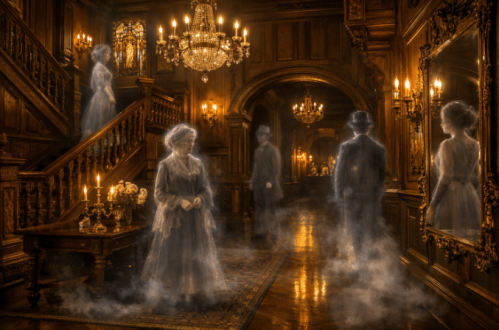
Welcome to the spectral depths of the Winchester Mystery House, where fairy tales bleed into nightmare reality. Where witch hunters vanish, where souls are claimed by primordial darkness, and the boundary between the living and the eternally damned dissolves like morning fog over the Golden Gate Bridge.
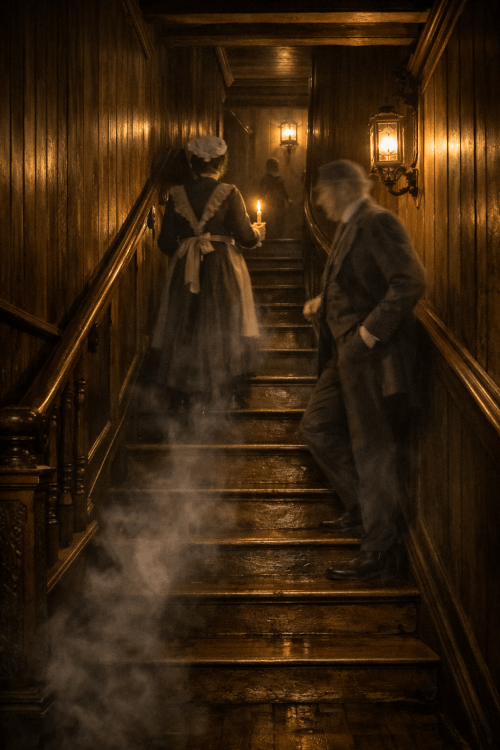
For here, in these twisting corridors and impossible stairwells, the house remembers. It remembers every footstep, every whispered prayer, every trembling confession offered to the shadows. It remembers the Watcher in the tower, whose silhouette appears in the highest window whenever grief gathers like storm clouds over the valley. It remembers the pale woman drifting through the eastern wing, searching for a child who never lived long enough to be named. It remembers the wolf‑footed shapes that prowl the attic rafters, their breath warm as a hunter’s snare.

And the house does not forget those who trespass.
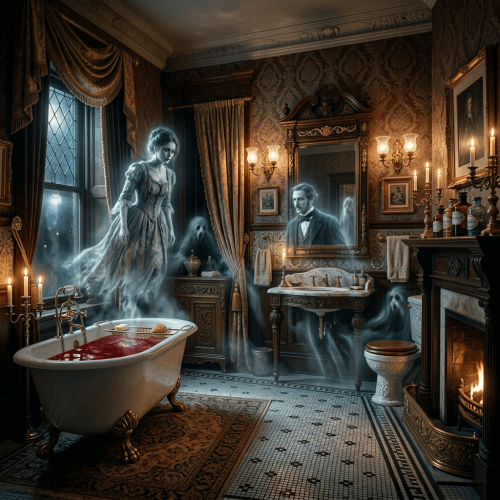
Visitors speak of hearing their own names murmured from behind locked doors. Of feeling a cold hand brush their sleeve when no one stands beside them. Of glimpsing, in the corner of their eye, a figure that vanishes the moment they turn. Some say the mansion rearranges itself at night, shifting rooms like a restless sleeper, sealing off hallways that were open only hours before.
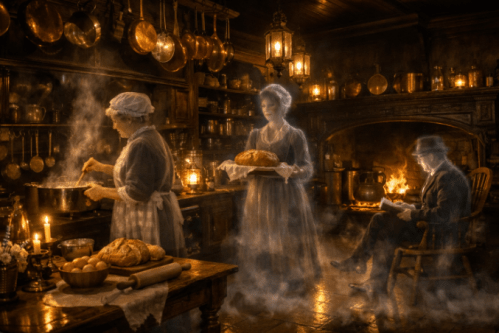
Others say the spirits are not trapped here at all. They come willingly.
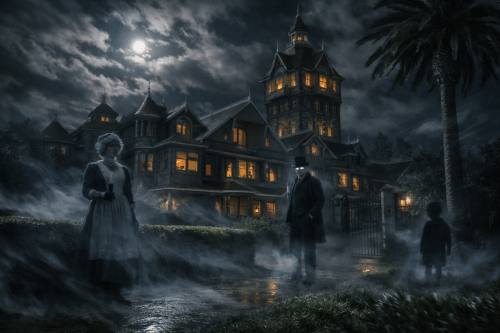
Drawn to the labyrinth Sarah Winchester built—not as a prison, but as a sanctuary for the lost, the hunted, the unburied. A place where the dead might wander without fear of being forgotten.
But every sanctuary has its price.

And in the Winchester Mystery House, that price is paid in whispers, in shadows, in the slow unraveling of certainty. Step too far into its depths, and you may find that the house is not merely haunted.

It is hungry.
A visit to the Winchester Mystery House is more than a tour—it is an encounter with legend. It is a place where imagination thrives, where history whispers through every corridor, and where the line between fact and folklore blurs in the most enchanting way. Come discover why millions of visitors from around the world consider the Winchester Mystery House a must‑see destination and one of California’s most iconic treasures.
PRIVATE EVENTS & WEDDINGS
at WINCHESTER ESTATE
Many event locations claim to be unique, but nothing compares to the Winchester Mystery House. If you’re truly seeking a distinct, one‑of‑a‑kind setting for your milestone celebration or special occasion, reserve a venue that delivers on uniqueness many times over. Whether you’re planning a wedding, birthday or anniversary celebration, corporate gathering, holiday party, or any other meaningful event, the Winchester Mystery House offers an unforgettable backdrop. Give your guests an experience they’ll be talking about for years to come.
Café 13: A Rest Stop on the Edge of the Mystery
After wandering the winding halls of the Winchester Mystery House—where staircases defy logic and whispers seem to cling to the walls—Café 13 offers a welcome return to warmth and grounding. Newly reopened and serving guests daily from 10 AM to 3 PM, this cozy hideaway invites you to pause, breathe, and gather yourself before diving back into the mansion’s secrets. Here, you can enjoy breakfast, lunch, snacks, and refreshing drinks in a calm indoor space that feels worlds away from the mansion’s twisting corridors. Settle in with a warm meal, challenge a friend to a board game, or simply rest and recharge as sunlight filters through the windows. Café 13 is more than a café—it’s a moment of calm between chapters of the Winchester legend, a place to steady your nerves before returning to the gardens, the grandeur, and the mysteries that await.
Winchester Mercantile Gift Shop
Your journey into the Winchester Mystery House begins long before you cross the mansion’s threshold. It starts at the Mercantile gift shop—a welcoming outpost standing at the edge of a world where history and myth intertwine. Here, beneath warm lights and shelves lined with curiosities, you can secure your tour tickets and prepare for the adventure ahead. Guests often pause for a souvenir photograph, capturing the moment before they step into Sarah Winchester’s enigmatic domain. As you explore the shop, you will find an eclectic array of gifts and keepsakes: tokens of the mansion’s lore, echoes of Victorian elegance, and mementos that carry a touch of the house’s enduring mystery. The Mercantile is more than a gift shop—it is the gateway. https://winchestermysteryhouse.com/

Victorian Ghosts in the Machine: How Old Fears Resurface in Modern Crises of Drugs, Technology, and Sextortion
Victorian society was steeped in spiritualism, and new technologies were often interpreted through a supernatural lens. When Joseph Nicéphore Niépce produced the first permanent photograph in 1826, the process itself seemed uncanny: an image fixed by the action of light upon a chemically sensitized surface. To many Victorians, this was not merely a mechanical procedure but a kind of modern alchemy. The very word photography—from the Greek phōtos (“light”) and graphein (“to draw”)—suggested that the camera was not simply recording a likeness but drawing something out of the subject. In a culture already attuned to invisible forces, this made the camera feel like a device capable of capturing more than appearance. Some believed it could seize a fragment of the soul. These anxieties were reinforced by older folkloric ideas that controlling a person’s image—whether a portrait, reflection, or effigy—granted power over the individual represented. Photography, with its eerie precision and chemical permanence, seemed to give that belief a new and unsettling technological form. However, in this modern era, this Victorian belief rings true. In the age of social media and “deepfakes,” the old Victorian fear has taken on a modern form. Today, a person’s image can be copied, manipulated, and weaponized in ways that feel eerily similar to the idea of “stealing the soul.” Digital photography and online platforms have given anyone who captures or obtains another person’s image a troubling degree of power over them. In modern times, people now use photographs to impersonate others online, to coerce individuals into sending private images, to damage reputations by distributing intimate material without consent, and to fabricate images or videos so convincingly that the line between truth and manipulation becomes nearly impossible to detect. In this sense, the camera’s power has evolved: it no longer merely records a likeness—it can be used to reshape identity, distort reality, and exert control over the person represented. #RandolphHarris 1 of 23

These fears are coming to fruition in many troubling ways. Social media, image‑sharing platforms, and “deepfake” technologies allow a person’s likeness to be copied, altered, and misused with unprecedented ease. This has created modern forms of exploitation that echo the Victorian concern about losing control over one’s image. One of the most harmful examples is sextortion, a form of online blackmail in which an offender pressures or manipulates someone into sharing sexually explicit images or messages and then threatens to expose them. Even individuals who never send such images can be targeted, because modern technology allows offenders to generate highly convincing fabricated photos or videos of a person’s likeness. These tactics are used to damage reputations, coerce individuals into unwanted interactions, or extort money. Research shows that the most frequent targets of financially motivated sextortion are teenage boys between the ages of fourteen and seventeen. Governments need to expand definitions of child sexual abuse material to include AI-generated content and criminalize its creation, procurement, possession and distribution. Additionally, revenge porn is now a crime. Revenge porn refers to the distribution, usually online, of sexually explicit images without consent by the person depicted in the image. if the person initially consented to be in the image or even took the image, it does not matter. The crime occurs when the defendant posts the images online or distributes them without the other’s consent. In some cases, a hacker steals the image from someone’s device or network and posts it on a porn website without consent. And then there are deepfakes—AI-generated photos or videos—used for revenge porn purposes. Congress made revenge porn illegal under the TAKE IT DOWN Act. This law makes non-consensual publication of authentic sexual images a felony. If the defendant did so to extort, coerce, intimidate, or cause mental harm to the victim, threatening to post such images is also a felony. #RandolphHarris 2 of 23

Furthermore, any medical photograph of a patient’s body—clothed or unclothed—is Protected Health Information (PHI) under: HIPAA (Health Insurance Portability and Accountability Act), the California Confidentiality of Medical Information Act (CMIA), and federal and state privacy, consumer protection, and civil rights laws. Because these images are PHI, stealing, copying, leaking, or sharing them without authorization is illegal. Unlawful access, copying, or disclosure of medical images is a HIPAA breach. Penalties can include: Civil fines (from thousands to millions of dollars depending on severity), criminal penalties for intentional misuse, and mandatory reporting to the patient, the U.S. Department of Health and Human Services (HHS), and sometimes the media. California CMIA Violations (stronger than HIPAA). In California, CMIA adds even stricter protections. A patient can sue for statutory damages, even without proving financial harm. if the disclosure was intentional, additional penalties apply. If an employee accessed images improperly, hospitals can be liable for negligent supervision. CMIA specifically protects medical photographs, including those taken during exams, procedures, or diagnostic imaging. If the images are used for harassment, impersonation, or extortion, this may intensify the penalties. Once the images leave the hospital, other laws also apply, including criminal laws, identity theft statutes, extortion / blackmail laws, cyber harassment and cyberstalking laws, revenge‑porn / non‑consensual image laws (California Penal Code §647(j)(4)). There are also civil laws that involve invasion of privacy, intentional infliction of emotional distress, negligence, breach of confidentiality, and consumer privacy laws (exempli gratia, California Consumer Privacy Act, depending on context). If the images were used to impersonate you online, that can also fall under fraud and identity theft statutes. #RandolphHarris 3 of 23
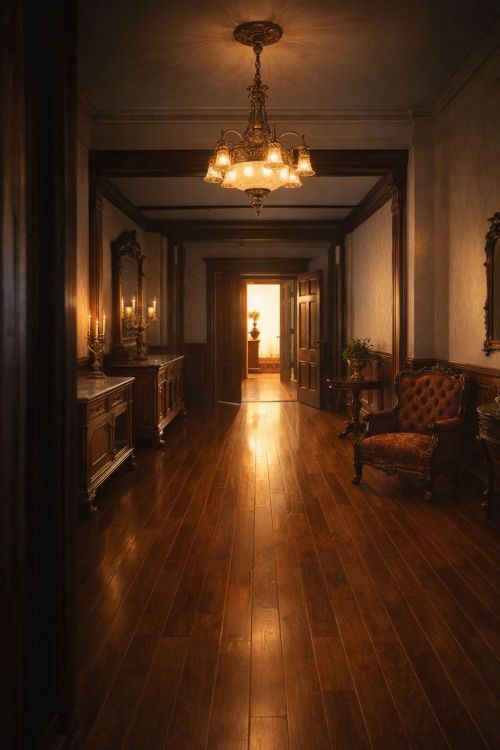
A person who terrorizes another is not expressing a single, neat “type of neurosis.” Their behavior usually reflects an inner world so unstable that they lash out to keep it from collapsing. They experience unpredictability, independence in others, or any challenge to their sense of power as intolerable threats. Instead of enduring the vulnerability these situations evoke, they externalize it as aggression, domination, or intimidation. In classical terms, one of the neurotic “solutions” to inner conflict is to withdraw from the internal battlefield altogether—to declare oneself “uninterested” in the struggle within. But this withdrawal does not bring peace. It leaves the unresolved conflict smoldering beneath the surface, and the individual must then manage the tension by controlling the outer world instead. When the person cannot regulate their own inner chaos, they attempt to regulate someone else’s behavior, emotions, or freedom. Terrorizing another person becomes a way to stabilize themselves, to silence the inner conflict by exerting power outward. Thus, the two ideas converge: the more a person retreats from their own inner turmoil, the more they may attempt to dominate the external world to keep that turmoil at bay. If he can muster and maintain an attitude of “do not care,” he feels less bothered by his inner conflicts and can attain a semblance of inner peace. Since he can do this only by resigning from active living, “resignation” seems a proper name for this solution. It is in a way, the most radical of all solutions and, perhaps for this very reason, most often produces conditions that allow for a fairly smooth functioning. And, since our sense of what is healthy is generally blunted, resigned people often pass for “normal.” #RandolphHarris 4 of 23

Resignation may have a constructive meaning. We can think of many older people who have recognized the intrinsic futility of ambition and success, who have mellowed by expecting and demanding less, and who through renunciation of nonessentials have become wiser. In many forms of religion or philosophy, renunciation of nonessentials is advocated as one of the conditions for greater spiritual growth and fulfillment: give up the expression of personal will, sexual desires, and cravings for worldly goods for the sake of being closer to God. Give up personal strivings and satisfactions for the sake of attaining the spiritual power which exists potentially in human beings. For the neurotic solution we are discussing here, however, resignation implies settling for a peace which is merely the absence of conflict. In religious practice, the pursuit of peace does not involve giving up struggle and striving but rather directing them toward higher goals. For the neurotic, it means giving up struggle and striving and settling for less. His resignation therefore is a process of shrinking, of restricting, of curtailing life and growth. Nevertheless, they healthy and neurotic resignation is not as neat just presented. Even in the latter, there is a positive value involved. However, what meets the eye are certain negative qualities resulting from the process. Typically, neurotics are more turbulent, they are reaching out for something, going after something, becoming passionately engaged in some pursuit—no matter whether this concerns mastery or love. In them, we usually see hope, anger, despair. Even the arrogant-vindictive type, although cold as a result of having stifled his emotions, still ardently wants—or is driven to want—success, power, triumph. By contrast the picture of resignation, when maintained consistently, is one of life at a constantly low ebb—of life without pain or friction but also without zest. #RandolphHarris 5 of 23

No wonder then that the basic characteristics of neurotic resignation are distinguished by an aura of restriction, of something that is avoided, that is not wanted or not done. There is some resignation in every neurotic. However, for some, it has become the major solution. The direct expression of the neurotic having removed himself from the inner battlefield is his being an onlooker at himself and his life. Since his detachment is a ubiquitous and prominent attitude of his, he is also an onlooker at others. He lives as if he were sitting in the orchestra and observing a dream acted on the stage, and a drama which is most of the time not too exciting at that. Though he is not necessarily a good observer, he may be most astute. Even in the very first consultation he may, with the help of some pertinent questions, develop a picture of himself replete with a wealth of candid observation. However, he will usually add that all this knowledge has not changed anything. Of course, it has not—for none of his findings has been an experience for him. Being an onlooker at himself means just that: not actively participating in living and unconsciously refusing to do so. In analysis, he tries to maintain the same attitude. He may be immensely interested, yet that interest may stay for quite a while at the level of a fascinating entertainment—and nothing changes. One thing, however, which he avoids even intellectually is the risk of seeing any of his conflict. If he is taken by surprise and, as it were, stumbles into one, he may suffer from severe panic. However, mostly, he is too much on his guard to allow anything to touch him. As soon as he comes close to a conflict his interest in the whole subject will peter out. Or he may argue himself out of it, proving that the conflict is no conflict. When the analyst perceives his “avoidance” tactics and tells him, “Look there, this is your life at stake,” the patient does not quite know what he is talking about. For him, it is not his life but a life which he observes, and in which he has no active part. #RandolphHarris 6 of 23

A second characteristic, intimately connected with nonparticipation, is the absence of any serious striving for achievement and the aversion to effort. I put the two attitudes together because their combination is typical for the resigned person. Many neurotics set their hearts on achieving something and chafe under the inhibitions preventing them from attaining it. Not so the resigned person. He unconsciously rejects both achievement and effort. He minimizes or flatly denies his assets, and settles for less. Pointing out evidence to the contrary does not budge him. He may become rather annoyed. Does the analyst want to push him into some ambition? Does he want him to become president of the United States of America? If, finally, he cannot help realizing the existence of some gifts, he may become frightened. Again, he may compose beautiful music, paint pictures, write books—in his imagination. This is an alternative means of doing away with both aspiration and effort. He may actually have good and original ideas on some subject, but the writing of a good paper would require initiative and the arduous work of thinking the ideas through and organizing them. So, the paper remains unwritten. He may have a vague desire to write a novel or a play, but waits for the inspiration to some. Then, the plot would be clear and everything would flow from his pen. Also, he is most ingenious at finding reasons for not doing things. How much good would a book be that had to be sweated out in hard labor! And are not too many uninspired books written anyhow? Would not the concentration on one pursuit curtail other interests and thus narrow his horizon? Does not going into politics, or into any competitive field, spoil the character? This aversion to effort may extent to all activities. It then brings about a complete inertia. In the meanwhile, he may procrastinate over doing such simple things as writing a letter, reading a book, shopping. Or he may do them against inner resistance, slowly, listlessly, ineffectively. The mere prospect of unavoidable later activities, such as moving or handling accumulated tasks in his job, may make him tired before he begins. #RandolphHarris 7 of 23
Concomitantly, there is an absence of goal-direction and planning, which may concern major and minor issues. What does he actually want to do with his life? As if it were none of his concern, the question has never occurred to him and is easily discarded. In this respect, there is a remarkable contrast to the arrogant-vindictive type, with the latter’s elaborate planning in long-range terms. In analysis, it appears that his goals are limited and gain negative. Analysis, he feels should rid him of disturbing symptoms, such as awkwardness with strangers, fear of blushing or another aspect of his inertia, such as his difficulty in reading. He may also have a broader vision of a goal which, in characteristically vague terms, he may call “serenity.” This, however, means for him simply the absence of all troubles, irritations, or upsets. And, naturally, whatever he hopes for should come easily, without pain or strain. The analyst should do the work. After all, is he not the expert? Analysis should be like going to a dentist who pulls a tooth, or to a doctor who gives an injection: that will solve everything. Though, if the patient did not have to talk so much, it would be better. The analyst should have some sort of X ray which would reveal the patient’s thoughts. Or perhaps, hypnosis would bring things out more quickly—that is, without anu effort on the part of the patient. When a new problem crystallizes, his first response may be exasperation at the prospect of so much more work to be done. A neurotic individual may not object to noticing things about himself; what he resists is the effort required to change. One of the classic “solutions” to inner conflict is to withdraw from the internal struggle altogether and declare oneself uninterested in altering anything. This tendency becomes important when considering the debate between nature and nurture. If people’s destinies were determined solely by parental programming, we would expect children from the same family to turn out alike. Yet they often diverge dramatically. The difference lies in how each child responds to inner conflict—whether they confront it, avoid it, or retreat from it entirely. In other words, it is not only what a person inherits or is taught, but how they engage with their own inner life that shapes who they become. #RandolphHarris 8 of 23

The first comment is that children from the same family do not always turn out differently. In some families they do, in others they do not. There are many cases where all the siblings are uniformly successful, uniformly alcoholic, uniformly suicidal, or uniformly schizophrenic. Such outcomes are often attributed to heredity, leaving the geneticists in a sophistical position when the siblings turn out differently: they can then argue, somewhat unconvincingly, from an adulterated Mendelianism, which amounts to little more than mumbling. The self-determinists are in the converse position: they argue vigorously for the cases where the siblings turn out differently, but are reduced to muttering when faced with uniformity. Script theory can take both situations in its stride. The script at issue here is the parent’s script, of which the offspring’s script is a derivative. Children turn out differently for the same reason that Cinderella turned out differently from her stepsisters. The stepmother’s script was to have losers for daughters and a winner for a stepdaughter. In the other well-known fairy-tale motif, the two clever older brothers turn out in the long run to be uneducated, while the stupid brother turns out, in the long run, to be the cleverest (as their mother secretly knew all along, since she set it up that way). On the other hand, both of the Roman Gracchi boys were equally talented and equally devoted to the interests of the people, and both of them came to the same end by assassination; while the five or ten of fifteen or twenty children of Niobe (depending upon who counted them), all came to the same end as part of her (Niobe’s) “Pride and Fall” script. The mother’s script may call for her to raise ten policemen (Glory be!) or ten robbers (Get ‘em boys!), or five policemen and five robbers (Let’s you him fight!), and a shrewd woman will have no difficulty in realizing any of these projects if she has then ten boys to raise. #RandolphHarris 9 of 23
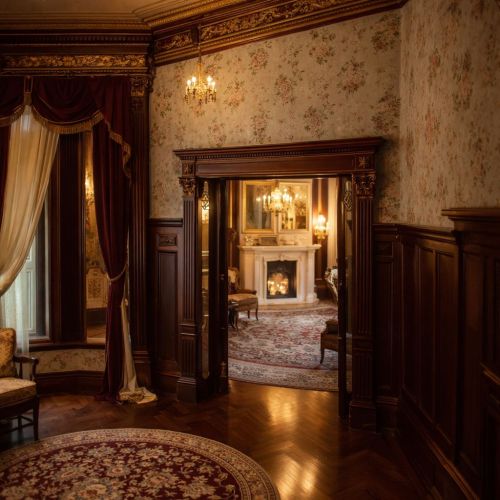
Each society expects a progression of behavior in its members, a progression that will keep pace with the person’s chronological age. If persons are keeping pace with their age roles, they are said to be mature. If they are behind other people their age, they are said to be immature or fixated. If they revert to behavior characteristics of a younger age, they are said to display regression, and if they show a premature development of traits expected from older persons, they are said to display precocity. As with gender roles, age roles may conflict sharply with persons’ needs. They may not be ready to progress to the next age role when the time for it comes. Or they may enforce conformity with the age role on themselves, at considerable cost in satisfactions. By the time individuals have become adults, as this is defined in their culture, they acquire a vested interest in regarding themselves as mature. Yet, only if they behave in ways deemed immature in their social group, need gratification may be possible. Healthy personalities can regress when they want to or when they feel like it, without threat to self-esteem or to their sense of identity. Persons who are insecure about their maturity may strive to convince themselves and others that they are mature and avoid regressive behavior like the plague. Thus, some men may not allow themselves to be taken care of even when they are gravely sick because it would imply that they had regressed. Some women may refuse tenderness and solicitude from a man because of the implication that they are not independent adults. Some adults cannot play because being frolicsomeness feels childish to them and threatens their self-esteem. #RandolphHarris 10 of 23

As with family and gender roles, age roles are part of the “facticity”—the “givens”—with which each person must come to terms. The behavior expected of each person by others (because of chronological age) can be irrelevant to the person’s authentic needs and capacities. Older people are often virtually invited by those who are younger to be feeble and helpless, when they have great reserves of vitality latent with them. The fact is that as long as a person has vitalizing, challenging work and projects, and confirming personal relationships, he or she can be fit and active into the eighties and nineties or older. Bodies respond to life style and to people’s expectations. I have suspected that people die of “old age” not because their bodies had no more strength, but because they were bored or lonely, with no incentives to stay alive. Another point of view is represented by Christiansen, who stresses dignity in old age and in death as an inner characteristic rather than as a role. He also suggests that one may fashion foresee the close of one’s life and illustrates the point with a moving description of his grandfather’s dignified foresight. “There are old people who maintain dignity in later years not so much by power, defiance, interdependence, or isolation as by choosing for themselves some task to carry on with love and skill…my maternal grandfather had cultivated a vegetable garden. It was one of the famous sites of the neighborhood and despite the pain of cancer and radiation therapy, he kept the garden until he died at 80. That last fateful spring, he cultivated, planted, weeded and did everything leaning over a cane. One July evening that year, my father sighted Grandpa coming from the garden…He walked only a few steps at a time before stopping and propping himself against the house…My father overhead him bidding farewell to his garden. ‘Good-bye Andy’s backyard. Good-bye. I won’t be back.’ He died two weeks later.” #RandolphHarris 11 of 23
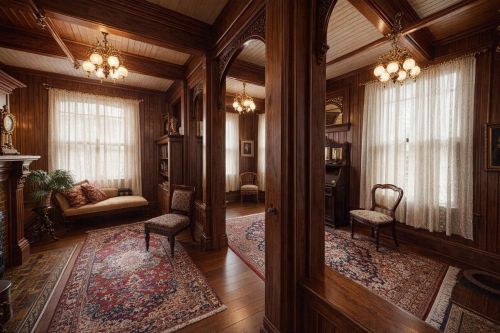
Human beings need meaningful, stabilizing structures—work, relationships, purpose, community—at every age. However, modern technological life creates new vulnerabilities that can overwhelm those stabilizing forces, especially for the young. And despite these dangers, we cannot simply abandon modernity. High school senior James Woods, for example, was deeply invested in his passions. He loved comics, quoted every episode of The Flash, idolized Green Arrow, and proudly wore a Naruto‑inspired headband to track meets. He looked forward all year to attending a comic convention with his family and friends. Yet three months into the school year, just before Thanksgiving, ‑year‑old died by suicide. His parents were stunned; they had seen no signs of mental distress. When investigators examined his phone, they discovered he had been targeted by financial sextortion—a rapidly growing cybercrime in which predators threaten to release fabricated or coerced intimate material unless the victim pays. As states previously, this crime disproportionately targets boys ages thirteen to seventeen, and has been linked to numerous deaths since 2021. However, what is often overlooked is that some offenders are driven not only by greed or opportunism but by a deeply disturbed inner world. For individuals whose internal life is unstable or filled with unresolved conflict, harming or destabilizing someone else can become a way of momentarily quieting their own turmoil. In such cases, the goal is not merely exploitation but domination—an attempt to dim another person’s light because their vitality, innocence, or hope feels intolerable to the aggressor’s fragile psyche. Cases like this reveal a painful paradox of modernity. The same technological world that enriches our lives, connects us, and provides endless opportunities for creativity and learning also exposes individuals—especially adolescents—to forms of exploitation that previous generations could not have imagined. And yet, despite these dangers, we are not likely to relinquish the scientific and technological advances that shape contemporary life. A return to tribalism, medievalism, or primitivity is neither realistic nor desirable. Instead, the challenge of our era is to preserve the benefits of modern civilization while confronting and mitigating the new vulnerabilities it creates. #RandolphHarris 12 of 23
However, trying to escape what we are becoming as a society may itself be leading us down the very path we hope to avoid. In many communities, people are retreating into tribal identities, reacting with medieval levels of suspicion, and behaving in ways that feel increasingly primitive. Instead of confronting their emotions or acknowledging that something is wrong within themselves, they displace their turmoil outward. They attack others—individually or as a group—as a way of avoiding their own inner conflicts. Over time, this aggressive, regressive pattern becomes normalized, even acclimatized, within the community, until hostility feels ordinary and self‑reflection feels foreign. Science brings material comforts in its hands as its offering to us. These things are not to be despised, but they are also not to be worshipped. Take them, for you need them’ but learn to become less absorbed in them. There is nothing wrong in seeking to make Nature’s energies and materials serve the needs of mankind. Technology is not all evil, as beginning escapees from a materialistic society so often believe. Even humble people from the Old World have simple technology. Thanks to science, I can look at my watch and thus determine with a precision that Copernicus never knew at what point of its rotation the earth is. The past two centuries have seen revolutions in conventional thought like non-Aristotelian systems, non-Newtonian mechanics, multi-valued logics, which have destroyed ancient sacrosanct errors. The value of truth as an intellectual ideal has greatly increased. We have used our brains during the last two or three centuries as never before. Science has made giant strides, and the pronouncements of the scientist are highly valued merely because we believe that he speaks impartially and impersonally as a truth-seeker. #RandolphHarris 13 of 23

Only a little over three hundred and fifty years ago did scientists begin to understand the language of the story. Since that time, the age of Galileo and Newton, reading has proceeded rapidly. Techniques of investigation, systematic methods of finding and following clues, have been developed. The discovery and use of scientific reasoning by Galileo was one of the most important achievements in the history of human thought and marks the real beginning of physics. This discovery taught us that intuitive conclusions based on immediate observation are not always to be trusted, for they sometimes lead to the wrong clues. The upshot of this statement is that although it is a fact from the practical standpoint that your typewriter still rests on the table, it is equally a fact from contemporary knowledge—that is, the ultra-scientific standpoint of deeper enquiry—that the series of energy-waves which constituted your typewriter, the series of events which were originally present in the space-time continuum, are perpetually vanishing. What then is the meaning of this “fact”? Science, keeping close to facts, restricts the mental activities whereas fancy, willing to disregard them, lends them wings. It is a great merit of science that its method produces results that are definite, reliable, and predictable. If the need conditions are properly fulfilled, we know that the result will not vary from previous results. There is still a mystery at the core of the atom. Humility is as befitting before it today as it was a hundred years ago. The scientific mode of thought is no longer limited to a few scientists. It has begun to permeate the educated world generally. The religious way was to suppress awkward questions but the scientific way is to seek out the answers. Modern physics, mathematics, and metaphysics are bridges toward each other. #RandolphHarris 14 of 23
If its results can be checked by observers anywhere in the world, it may properly be called a scientific method. It ought to be remembered that a number of those who have espoused materialism have been led into it by their loyalty to truth, by their intellectual honesty, rather than by an evil nature. Since is really or entirely an affair of the intellect because it deals with manifest forces and visible and discoverable facts. The vulgar belief that Science has “explained everything” is a hopeless misunderstanding. As we shall afterwards find, it would be nearer the truth to say that Science has explained nothing. Science does not even try to refer facts of experience to any ultimate reality. That is not is business. In a limited sense, Science explains things, namely, by reducing them to simpler terms, by discovering the conditions of their occurrence, and by disclosing their history. What do we mean when we say that Physics has accounted for the tides or that Physiology has made some function of the body much more intelligible than it used to be? What is meant is that we have gained a general conception of the nature of the facts in question, and that we are able to relate them to some general formula. In this sense only does Science explain things, and it does not really get beyond a description. Earlier scientists had to struggle so fiercely to free their discoveries from religious dogma and persecution that they naturally developed an antagonistic stance toward religion. They also had to fight against the weight of metaphysical speculation to establish empirical method, which made them equally wary of anything that resembled myth or intuition. But today, with the benefit of distance, we may need to reconsider what the Victorians sensed. Their anxieties about spirits stealing the soul were not literal truths, but metaphors for forces they could not yet name—forces of influence, manipulation, and psychological vulnerability. In a strange way, those “spirits” have migrated into our machines. Not as supernatural beings, but as the unintended consequences of technologies that shape identity, perception, and behavior. The Victorians feared that a camera could capture the soul; we now face algorithms, deepfakes, and digital systems that can distort reality, manipulate emotions, and exert power over the self in ways they could not have imagined. Science, for all its brilliance, does not explain everything about human experience. It cannot fully account for meaning, vulnerability, or the symbolic dimensions of life. And so, rather than dismissing the myths and legends of earlier generations, we might recognize that they encoded psychological truths—warnings about forces that erode autonomy, distort identity, or threaten the integrity of the self. The language has changed, but the underlying human concerns remain. #RandolphHarris 15 of 23

In my apartment complex, the old saying “where there’s smoke, there’s fire” has taken on an unsettlingly literal meaning. Drug use is widespread, and although management has been repeatedly informed, little has been done to stop it. Over the years, the building has experienced several major fires, and recently the fire department responded to a unit where a smoke alarm had been ringing for hours without explanation. Not long after that incident, I began noticing a strong chemical odor inside my apartment. When I opened my door, the hallway was filled with fumes so sharp they burned my nose. Concerned that it might be a gas leak, a meth lab, or some other dangerous chemical process, I called the Sacramento Police Department around one in the morning. The dispatcher asked what I was doing at the time, and when I said I was sitting down and smelled a strong chemical odor, she asked whether alarms were sounding or visible smoke was present. When I answered no, she refused to send the fire department to investigate. A few weeks later, I fell asleep on my couch and woke up struggling to breathe. A heavy drug smell was coming through the air‑conditioning vents. Because of how I had been treated by dispatch before, I did not call again. Instead, I contacted my doctor, explained the situation, and he prescribed an inhaler to help with the breathing problems I was experiencing. The following night, the odor returned—so strong it woke me from sleep. When I opened my balcony door, the entire exterior of the building smelled as if someone were cooking chemicals on a barbecue grill. Again, I did not call the police. After being dismissed once, I no longer trusted that anyone would come. What makes these incidents even more unsettling is that strong, unusual chemical odors in a residential building are not merely unpleasant—they can be a warning sign of something far more dangerous. Law‑enforcement agencies and fire departments consistently note that certain intense, acrid, or chemical smells are sometimes associated with illegal drug activity, including the production of methamphetamine. I am not suggesting that I know exactly what was happening in my building, only that the odors I encountered were strong enough to raise legitimate concern. This is why the dismissive response from dispatch felt so alarming. In a complex where fires have already occurred, where alarms have gone off for hours, and where chemical fumes have repeatedly filled both hallways and individual units, the possibility of a hazardous situation cannot simply be brushed aside. When I opened my balcony door and found the entire exterior of the building saturated with a harsh chemical smell—so strong it woke me from sleep—it was impossible not to think about the risks that accompany these kinds of odors. Even if the source was not a meth lab, the fumes were potent enough to affect my breathing and require medical attention. #RandolphHarris 16 of 23

My experience is not just a personal inconvenience; it reflects a broader public‑safety issue. Chemical odors in multi‑unit housing can indicate anything from improper drug use to dangerous chemical reactions, ventilation failures, or other hazards that place every resident at risk. Yet when institutions fail to respond, residents are left to navigate these dangers alone, unsure whether they are facing a nuisance, a health hazard, or a potential catastrophe. The United States of America once had tens of thousands of meth labs, but today the number is far lower—while explosions still occur every year. Domestic meth production peaked in the early 2000s and has sharply declined since, though small, improvised labs continue to pose fire and chemical‑exposure risks. In 2018, the most recent detailed national dataset, the U.SA. recorded 1,568 meth lab incidents nationwide. This is a dramatic drop from the 2004 peak of roughly 23,703 incidents. The Drug Enforcement Agency’s National Clandestine Laboratory Register continues to log new cases each year, showing that small labs still appear across many states, though in far smaller numbers than two decades ago. These numbers reflect discoveries, not the total number of labs in existence, so the true number of operating labs is unknown. But the trend is clear: domestic meth production has collapsed, and most meth in the U.S.A now comes from large‑scale operations in Mexico. Sacramento, CA was once known as the meth capital. There were once numerous superlabs, capable of producing more than 10 pounds of meth in 24 hours. In 2003, the National Clandestine Laboratory Seizure System recorded 529 meth lab fires or explosions nationwide. The year before, in 2002, there were 654 fires or explosions. These older figures are the most authoritative national explosion counts available. More recent national explosion‑specific data is limited, but public‑health surveillance confirms that fires, chemical releases, and explosions remain common hazards associated with meth labs. #RandolphHarris 17 of 23

If you ever encounter strong chemical odors, burning sensations, or drug fumes so intense that they affect your breathing, it is important to understand that this can be a serious health and safety issue. You are not expected to diagnose the source—only to recognize that something is wrong. Report the odor to emergency services. You are not required to prove anything. You are not required to see smoke or flames. You are not required to diagnose the smell. People are generally advised to say: “There is a strong chemical odor in my building.” “It is affecting my breathing.” “There have been fires here before.” “I am concerned about a possible hazardous materials situation.” This frames the issue as a potential health hazard, which is something fire departments take seriously. Even if dispatch was dismissive in the past, you are still allowed to call again if the situation is affecting your health. For months, residents of the Aldercrest Apartments had complained about the strange, chemical‑sharp odors drifting through the hallways at night. Some described it as “burning plastic,” others as “industrial cleaner,” but everyone agreed on one thing: it did not belong in a residential building. Management dismissed the reports as “cooking smells” or “someone cleaning with strong products.” The police dispatchers, when called, asked whether anyone saw smoke or flames. When the answer was no, the calls ended there. But the residents knew something was wrong. Aldercrest was a mid‑rise building on the edge of Sacramento’s River District, a place where families, retirees, and young workers lived side by side. The building had already experienced two fires in the past decade—both blamed on “careless smoking.” After the most recent incident, the Sacramento Fire Department had urged management to improve ventilation and enforce safety rules. The recommendations were politely acknowledged and quietly ignored. #RandolphHarris 18 of 23

On a warm Thursday evening in early spring, the smell returned—stronger than ever. Residents on the fourth and fifth floors opened their doors to check the hallway, only to find the air thick with a chemical haze that stung their eyes. A few people coughed. One woman felt light‑headed and returned to her apartment to sit by an open window. Someone called management again. No one answered. At 9:42 p.m., the building shook. A muffled boom rolled through the structure, followed by a violent shudder that knocked picture frames off walls and sent dust raining from the ceiling. Lights flickered. A second later, alarms erupted—first one, then dozens, until the entire building screamed with sound. This time, the Sacramento Fire Department was dispatched immediately. Within minutes, Engine 14, Truck 6, and Rescue 3 were racing down the boulevard, sirens cutting through the night. Leading the response was Captain Lukas Reinhardt, a seasoned firefighter with a calm, commanding presence and a faint German accent that grew sharper under pressure. He had spent twenty‑five years in the department, earning national recognition for leadership during complex urban rescues. As the engines arrived, smoke was already pushing from the windows of a third‑floor unit. Residents were pouring out of the lobby, some coughing, some crying, some barefoot and disoriented. Captain Reinhardt stepped out of the truck, scanned the building, and issued orders with crisp precision. “Truck 6, ladders to the third‑floor balconies. Engine 14, interior attack—check for structural compromise. Rescue 3, begin medical triage. Move.” Inside, the hallways were a maze of smoke and debris. The explosion had blown out part of a kitchen wall in one unit, scattering fragments into the corridor. Firefighters advanced with hoses, thermal cameras, and flashlights, calling out to anyone who might still be inside. #RandolphHarris 19 of 23
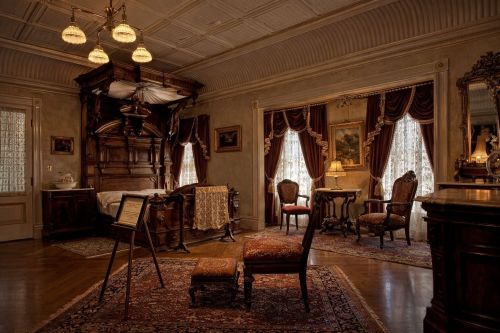
Two doors down, they found an elderly man sitting on the floor, dazed and unable to stand. Firefighter Morales lifted him under the arms while her partner cleared the path. They guided him toward the stairwell, where paramedics waited. Outside, the award‑winning Sacramento paramedics had already set up a triage area. Paramedic Serena Patel, known for her calm under pressure, checked oxygen levels, treated smoke inhalation, and reassured frightened residents. Her partner, Jacob Stein, moved quickly between patients, assessing who needed immediate transport. Captain Reinhardt radioed from inside: “We have multiple victims on the third floor. Heavy smoke. Possible secondary hazards. Continue evacuation.” Firefighters located a mother and her teenage son trapped in their apartment, unable to reach the hallway through the smoke. Truck 6 extended a ladder to their balcony. Firefighter Delgado climbed up, secured them with harnesses, and guided them down one at a time. The crowd below erupted in relieved applause as their feet touched the ground. By 10:27 p.m., the fire was contained. By 11:10, the building was cleared. No lives were lost. Investigators later confirmed what residents had feared: the explosion originated from an improvised drug operation hidden inside a third‑floor unit. The strong odors that had been reported for months were early warnings—warnings that had gone unheeded. Standing outside the building, Captain Reinhardt addressed the residents with quiet gravity. “You did the right thing by reporting what you smelled,” he said. “Sometimes the danger is invisible until it isn’t. Tonight, you all worked together, and that made the difference.” The Aldercrest fire became a turning point. Management faced scrutiny, safety protocols were overhauled, and residents were finally heard. But more importantly, the night reaffirmed what Sacramento already knew: when crisis strikes, its firefighters and paramedics—disciplined, compassionate, and unwavering—stand ready to protect the community, no matter how many warnings were ignored before the flames appeared. Never surrender your commonsense, nor forsake the heritage that shaped you; for even when the world ignores your warning, these quiet virtues may yet preserve your life and the lives of others. #RandolphHarris 20 of 23
When it comes to firefighting, every incident carries the potential for injury—no matter how small the fire appears or how routine the call may seem. If you see a fire engine stopped in the street without its lights on, use extreme caution. Crews may be working nearby, and passing the apparatus can put them in danger. It is often safer to turn around and take another route; if you strike a firefighter or civilian and cause a fatality, you could face charges such as manslaughter. Firefighters frequently move around their vehicle on foot, loading equipment or preparing to leave the scene. Attempting to pass the apparatus can result in a collision with someone you cannot see. Pay close attention to their hand signals as well—emergency vehicles sometimes move slowly or reposition, and impatient drivers trying to slip around them create hazardous situations. If you are already in an intersection when you notice an emergency vehicle approaching, continue through it, then pull to the right and stop as soon as it is safe. Always obey directions from law enforcement officers or firefighters, even if those instructions conflict with posted signs or traffic laws. When sirens or flashing lights are activated, it is illegal to follow within 300 feet of a fire engine, ambulance, or police vehicle. Driving to the scene of a fire, collision, or disaster can also result in arrest, as doing so interferes with firefighters, paramedics, and other emergency personnel. Professional courage is not limited to physical toughness. It includes listening to others, advocating for them in difficult situations, understanding personal limits, and having the integrity to tell a superior when they are wrong. The deeper truth is that public safety depends not only on the bravery of first responders but on the discipline and judgment of the community around them. Every driver’s decision—whether cautious or careless—can either protect or endanger the people risking their lives to protect everyone else. #RandolphHarris 21 of 23
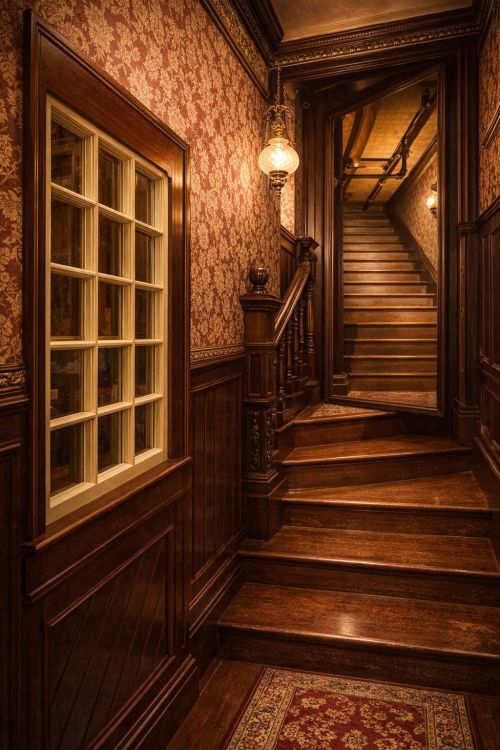
Efforts to preserve farmland and maintain buildable land for future generations often lead to discussions about population growth and long‑term planning. Some people argue that immigration levels should be managed carefully to ensure that infrastructure, housing, and land use remain sustainable. Others suggest that, when immigration does occur, programs that encourage broad representation can help communities reflect the diversity of the wider world. When Americans purchase goods made in the United States, it strengthens local businesses and signals to investors that these products are in demand. Strong sales give investors confidence to reinvest in domestic companies, helping keep jobs, production, and wages within the country. As businesses grow, they contribute more to the tax base, which can reduce the burden on taxpayers over time. Supporting American businesses also keeps more money circulating within the national economy. The government increases the national debt when it spends more than it collects in tax revenue or borrows from private or foreign lenders. When people shop locally, more tax revenue stays in the community and supports public services. This helps keep jobs in the United States and increases the tax contributions that fund government operations. Purchasing foreign-made goods, by contrast, often sends money overseas and may benefit companies that operate under lighter tax or environmental regulations. Buying American-made products can also reduce environmental impact because they travel shorter distances and are produced under stricter standards for air, land, and water protection. In this way, consumer choices influence not only the economy but also environmental stewardship and long-term national sustainability. #RandolphHarris 22 of 23
Under President Trump’s administration, he has made America a priority. President Trump has hermetically sealed the southern border, illegal crossings have been terminated, and are 90 percent lower than under the previous administration. Since President Trump’s crack down on crime, violent crimes in Washington D.C. have dropped by approximately 80 percent. He has stopped thousands of pounds of drugs from entering America and killing citizens. And since President Trump took office, investments in America have increased by trillions of dollars in U.S.A. manufacturing, production, and innovation. As you can see, President Donald Trump and his pledge to “Make America Great Again” is exactly what America needs to save the country and the American people. And yes, diversity is important, so you can see why it is also important to preserve blonde hair and blue eyes, as the people with these characteristics are becoming a minority in America. As a reminder, parents, please teach your children to love America and be patriotic citizens, and to buy goods and services made in America. It is also important to respect law and order and treat your elders with respect. It is inborn in the human mind to wish to know. If this begins with the endless surface questions of a child’s curiosity, if it continues into deeper questions of a scientist’s probing investigation, it cannot and does not stop there. For the higher part of the mind will eventually come into unfoldment, that union of abstract reflective thought with mystical intuition, which is true intelligence, which needs and sees a view of the whole of things. And so, the knowing faculty enters the realm of philosophy. A lot of children are having problems in school and cannot even write a paragraph because they are not reading their books. When you actually read books, you get an example of how to write and will become a better student. Therefore, remember to take your education seriously so that you will be successful in life and make your family proud. Also, to make sure they have all the resources required, please donate to the Sacramento Fire Department to help improve our national security. “Oh, thus be it ever, when freemen shall stand between their loved home and the war’s desolation! Blest with victory and peace, may the heav’n-rescued land Praise the Power that hath made and preserved us a nation! Then conquer we must, when our cause is just, and this be our motto: ‘In God is our trust.’ And the star-spangled banner in triumph shall wave O’er the land of the free and the home of the brave.” #RandolphHarris 23 of 23

Mr. William Wirt Winchester had always been a man who saw farther than others. Even as a boy in New Haven, he dismantled clocks, rifles, and anything with gears just to understand how they breathed. His father, Mr. Oliver Winchester, recognized the spark immediately. “This one,” he would say with pride, “was born with gunpowder in his imagination.” By the time Mr. William reached adulthood, he had already designed several mechanical improvements that caught the attention of the Winchester Repeating Arms Company. His ideas were bold—sometimes too bold for the boardroom—but they worked. He refined the lever‑action mechanism, strengthened the firing pin assembly, and even sketched early concepts for a self‑loading rifle decades before the world was ready to understand them.
When Mr. Oliver stepped down, the company needed a leader who could carry the Winchester legacy into a new age. Mr. William was elected president unanimously. Newspapers called him the quiet genius of American firearms. His employees called him the man who could see the future. And Mrs. Sarah Lockwood Pardee Winchester called him husband. Their marriage was a union of intellect and tenderness. Mrs. Sarah, brilliant in her own right, understood Mr. William’s restless mind. She encouraged his experiments, soothed his anxieties, and brought warmth to a life otherwise consumed by metal and machinery. Together, they dreamed of a home unlike any other—a sprawling mansion filled with light, music, and rooms for the family they hoped to build. When Sarah was with child, Mr. William worked late into the night designing a new rifle mechanism he believed would revolutionize the industry. He wanted to present it to his daughter one day and say, This is what your father built while waiting for you. Their baby girl, Ms. Annie, was born on a cool summer morning. Mr. William held her with trembling hands, overwhelmed by the fragile miracle of her tiny fingers curling around his thumb. Mrs. Sarah wept with joy. For a brief moment, the world felt perfect. However, perfection is a fragile thing.

Within weeks, Ms. Annie fell ill. Doctors came and went, offering treatments that did little and explanations that did even less. Mrs. Sarah stayed at her bedside, singing lullabies through tears. Mr. William paced the halls, helpless in a way he had never known. Despite every effort, their daughter slipped away. The grief hollowed them. William buried himself in work, creating inventions no one had dreamed possible—rifles with unprecedented precision, mechanisms that seemed almost alive in their efficiency. But each success felt empty without the child he had hoped to teach. Mrs. Sarah tried to hold them together, but sorrow has a way of reshaping the world. One autumn afternoon, desperate for distraction, they took a family outing to the countryside. They walked through a quiet grove, the leaves whispering overhead. Mrs. Sarah later said she felt a presence there—cold, watchful, ancient. Mr. William brushed it off as imagination. But that night, he fell violently ill.
Doctors suspected poisoning. Possibly chronic arsenic exposurethough they could not determine the source. His condition worsened rapidly. Mrs. Sarah stayed by his side, holding his hand as she had held their daughter’s. William whispered apologies, dreams unfinished, inventions unbuilt, a life cut short. He died before dawn. Mrs. Sarah was left alone—widowed, childless, and haunted by the memory of that strange presence in the grove. Some said she imagined it. Others whispered that the Winchesters, whose weapons had shaped history, had drawn the attention of something darker.

But Mrs. Sarah knew the truth. She wasn’t building a mansion. She was building a promise. A promise that love, invention, and imagination would outlast tragedy. A promise that the curse—real or imagined—would never define her family’s legacy. A promise that Mr. William’s brilliance would echo through every beam, every window, every impossible hallway. The Winchester Mansion became her monument to resilience. And in its endless rooms, she kept alive the memory of the man who dreamed of changing the world—and did.

PRIVATE EVENTS & WEDDINGS
at WINCHESTER ESTATE
Many event locations claim to be unique, but nothing compares to the Winchester Mystery House. If you’re truly seeking a distinct, one‑of‑a‑kind setting for your milestone celebration or special occasion, reserve a venue that delivers on uniqueness many times over. Whether you’re planning a wedding, birthday or anniversary celebration, corporate gathering, holiday party, or any other meaningful event, the Winchester Mystery House offers an unforgettable backdrop. Give your guests an experience they’ll be talking about for years to come.

Café 13: A Rest Stop on the Edge of the Mystery
After wandering the winding halls of the Winchester Mystery House—where staircases defy logic and whispers seem to cling to the walls—Café 13 offers a welcome return to warmth and grounding. Newly reopened and serving guests daily from 10 AM to 3 PM, this cozy hideaway invites you to pause, breathe, and gather yourself before diving back into the mansion’s secrets.

Here, you can enjoy breakfast, lunch, snacks, and refreshing drinks in a calm indoor space that feels worlds away from the mansion’s twisting corridors. Settle in with a warm meal, challenge a friend to a board game, or simply rest and recharge as sunlight filters through the windows. Café 13 is more than a café—it’s a moment of calm between chapters of the Winchester legend, a place to steady your nerves before returning to the gardens, the grandeur, and the mysteries that await.
Winchester Mercantile Gift Shop
Your journey into the Winchester Mystery House begins long before you cross the mansion’s threshold. It starts at the Mercantile gift shop—a welcoming outpost standing at the edge of a world where history and myth intertwine. Here, beneath warm lights and shelves lined with curiosities, you can secure your tour tickets and prepare for the adventure ahead. Guests often pause for a souvenir photograph, capturing the moment before they step into Sarah Winchester’s enigmatic domain. As you explore the shop, you will find an eclectic array of gifts and keepsakes: tokens of the mansion’s lore, echoes of Victorian elegance, and mementos that carry a touch of the house’s enduring mystery. The Mercantile is more than a gift shop—it is the gateway. https://winchestermysteryhouse.com/
Harris Plumbing, Heating, Air & Electric has been serving our community for 30 years—an achievement few companies can claim. That longevity isn’t an accident. It’s the result of hard work, integrity, and a commitment to doing every job the right way, whether it’s a simple repair or a complex system overhaul. We take pride in every service call because we know your home is more than a building—it’s where your family lives, grows, and feels safe. Ensuring your comfort and protection is a responsibility we carry with seriousness and gratitude. After three decades, our mission remains the same: to deliver dependable service you can trust, every time.

Harris makes sure you have the clear, accurate information you need to decide what comes next—no matter what your home is facing. Before we begin any work, our technicians perform a full diagnosis and walk you through every issue we find. That means you receive a personalized quote and service plan tailored to your home’s exact needs, not a generic estimate or guess. We believe the only way to deliver our best work is to understand the problem completely and address it with precision, transparency, and care. Your home deserves nothing less. https://www.callharrisnow.com/about-us/


BMW remains one of the most desirable automotive marques because it blends engineering precision with an emotional driving experience that few brands can match. Its vehicles are built around balance, responsiveness, and a sense of connection between driver and machine—qualities that have defined the company for generations.

Beyond performance, BMW carries an aura of prestige and craftsmanship: the cabins feel tailored, the technology is purposeful rather than gimmicky, and the design language signals confidence without excess.

Owning a BMW is not just about transportation; it’s about participating in a legacy of excellence that continues to set the standard for luxury performance. This commitment to performance is why BMW continues to earn its reputation as The Ultimate Driving Machine. https://www.brianharrisbmw.com/

Randolph Harris San Francisco Taxation & Mergers
Building strong, lasting client relationships is essential to a successful legal career. Many attorneys assume that mastering legal doctrine alone guarantees success, but law is fundamentally a service profession—our work is measured not only by technical skill, but by how effectively we solve problems for the people who trust us. Long‑term relationships grow from three core commitments: truly knowing your clients, understanding how their legal issues fit within the broader context of their business and personal goals, and consistently delivering exceptional service.
Mr. Randy advises clients on business transitions, taxable and tax‑deferred mergers and acquisitions, joint ventures, restructuring, integrated tax planning, federal and state tax controversy matters, and real estate transactions. His approach is grounded in clarity, responsiveness, and a deep understanding of each client’s unique circumstances. Trust is the cornerstone of every relationship he builds. Ultimately, clients feel confident knowing they are working with someone who not only understands their challenges, but is fully committed to helping them achieve their goals. https://www.jmbm.com/l-randolph-harris.html


Millhaven Custom Homes stands at the pinnacle of luxury homebuilding in Utah, where visionary design meets master craftsmanship. Every residence we create begins with a simple promise: your home should be as extraordinary as the life you intend to live within it. From the first conversation to the final reveal, our team is dedicated to transforming your aspirations into a living work of art.

Our homes are defined by architectural excellence, timeless materials, and meticulous attention to detail. Whether you imagine a modern sanctuary of glass and light, a mountain estate rooted in natural textures, or a grand traditional residence with sweeping lines and handcrafted finishes, Millhaven brings your vision to life with precision and artistry. Each space is intentionally designed to elevate daily living, blending beauty, comfort, and enduring value.

At Millhaven, luxury is not an aesthetic—it is an experience. We collaborate closely with you to understand your lifestyle, your priorities, and the way you want your home to feel. From custom floor plans to curated interior selections, every element is tailored to reflect your personal style. Our process ensures that you feel heard, supported, and inspired at every stage of the journey.

Our reputation is built on integrity, innovation, and an unwavering commitment to quality. With decades of experience in Utah’s most sought‑after communities, Millhaven Custom Homes has earned the trust of homeowners who expect nothing less than excellence. We partner with the region’s finest artisans, engineers, and designers to ensure that every home we build stands as a testament to craftsmanship and longevity.

Discover the difference of a home built exclusively for you. When you choose Millhaven, you choose a builder who understands that a home is more than a structure—it is a sanctuary, a legacy, and a reflection of your highest aspirations. Let us create a residence that inspires awe, welcomes warmth, and elevates every moment of your life. https://millhavenhomes.com/

“From the moment I stepped into my Millhaven home, I felt something I had never experienced in any other space—a sense of openness, intention, and quiet luxury that immediately put me at ease.

“Every room feels expansive without being overwhelming, and every detail reflects a level of craftsmanship that makes daily living feel elevated. It’s the kind of home that doesn’t just look beautiful; it feels thoughtfully designed for real life.

“What surprised me most was how personal the entire experience felt. Millhaven didn’t just build a house; they created a space that reflects who I am and how I want to live. The natural light, the custom finishes, the flow from room to room—everything feels like it was shaped with care, precision, and a genuine understanding of what makes a home feel extraordinary. Although my husband is an award‑winning tennis and pickleball player, I dream of my boys playing basketball, so the huge basketball court was such a bonus.

“Loving this home has taught me something about love itself. The way I feel here—supported, understood, and surrounded by beauty—is the same way I feel about the person I cherish most.

“In many ways, this home mirrors that relationship: expansive, intentional, and built with a depth that grows richer the more time I spend in it. Millhaven didn’t just give us a place to live; they gave us a place that feels like coming home in every sense” – Mrs. Harris


Beyond Suffering

When one has been through a lot, worked hard, and still feels far from where one thought one would be, the future can start to look like a narrowing hallway rather than an open horizon. That feeling is not a personal failure—it is just a very human response to long-term strain, disappointment, and the weight of expectations that were never small to begin with. When one takes the time to stop and reflect, the past can feel heavy, the present can feel insufficient, and the future can feel uncertain. No matter how successful they are, this is something that many people are currently facing. However, the fact that one has taken time to reflect on one’s life means one is still searching for ways to achieve one’s goals. There is a psychological reality taking place. Because one has faced so much hardship, one’s mind becomes incredibly good at looking out for danger and truly bad at imagining the possibility. This does not mean that one is feeling hopeless. It means that one is exhausted. Many often think about the trials of life that seem endless, shattered dreams, and mistakes. It is important to dwell on this point because much of the lasting sense of doubt, and of the indignity of punishment and restriction common to so many, is a consequence of frustration in marriage, in work, and in citizenship. Where large numbers of people have been prepared in childhood to expect from life a high degree of personal autonomy, pride, and opportunity, and then in later life find themselves ruled by impersonal organizations and machineries too intricate to deal with now, the result may be chronic disappointment. #RandolphHarris 1 of 15

However, keep in mind that one’s future is not only determined by one’s expectations. Many are still building their future and creating their story. It is important to keep in mind that one is not in the same place one once was. As one has gone through life, one has accumulated skills, insight, resilience, and clarity that one did not have long ago. While those things may not show up on a resume or in one’s bank account, they change the trajectory of a life in ways that are not always visible in the moment. They may be possessed, instead, by irrational fears of losing what is left of their autonomy or of being sabotaged, restricted, and constricted in their free will by anonymous enemies, and, at the same time, paradoxically enough, of not being controlled enough, of not being told what to do. This is characteristic of the struggles and triumphs adults face when crossing into unfamiliar territory. To believe that one is turning away from everything one knows, not by choice, but by necessity, in many ways, is an emancipation. For this reason, one can also regress partially (and sometimes wholly) to a demanding and plaintive search for guidance which their cynical independence seems to disavow. Apart from such “clinical” evidence, however, the decisive contribution to becoming a new adult is the courage to stand as an independent individual who can choose and guide the direction of their own life. The past never disappears; it settles into the growing personality as a residue — a sediment of impressions, identifications, and early convictions. On many hierarchical levels, and especially within the individual’s sense of identity, this residue forms an echoing conviction: “I am what I hope I have and give.” #RandolphHarris 2 of 15

Yet the analogous residue of the stage of autonomy is of a different order. It crystallizes into the conviction: “I am what I can will freely.” Here the self no longer defines itself solely by its possessions, its attachments, or its capacity to please and provide. Instead, it discovers the inward axis of volition — the ability to initiate action, to choose among alternatives, and to bear the consequences of one’s own decisions. In this sense, autonomy is not merely a developmental milestone but a psychological reorganization. The individual learns that freedom is not the absence of constraint but the presence of an inner capacity to direct one’s energies toward chosen ends. The will becomes the instrument through which the self asserts continuity with its past while refusing to be imprisoned by it. The adult personality emerges at precisely this juncture: where inherited residues meet the dawning realization that one’s future can be shaped by deliberate, self‑guided action. Being firmly convinced that one is an individual, one must now find out what kind of life one can create. Several are, of course, deeply and exclusively “identified” with their past, which most of the time appears powerful and beautiful, although often quite unreasonable, disagreeable, and even dangerous. Three developments support this stage: one experiences more freedom, one has unlimited potential, but also there is uncertainty; one’s sense of behavior becomes perfected to the point where one understand and can do innumerable things; and both this new identity and sense of freedom permit one to expand their horizons to so many roles one cannot evade inevitably confront one’s self with the very experiences and imaginings that arouse fear. Nevertheless, out of all this, one must emerge with a sense of initiative as a basis for a realistic sense of ambition and purpose. #RandolphHarris 3 of 15

Where there once was a crisis beset with some new estrangement, one finds ways to resolve it in such a way that one suddenly seems to be “more oneself,” more loving, more relaxed, and brighter in one’s judgment—in other words, vital in a new way. Most of all, one is more activated and activating; one is in the free possession of a certain surplus of energy which permits one to forget many failures rather quickly and to approach new areas that seem desirable, even if they also seem dangerous, with undiminished zest and some increased sense of direction. On the other hand, prevailing conditions may not contain even the partially favorable elements just described here. If the inner tension is great and the environmental conditions are difficult, one not only may become extremely miserable, but one’s equilibrium may break down. Whatever the symptoms—panic, insomnia, anorexia (loss of appetite)—it comes about and is characterized by hostility breaking the dam and overflooding the system. All one’s piled-up, bitter accusations against others then come to the fore; one’s claims become openly vindictive and unreasoning; one’s self-hate becomes conscious and reaches formidable proportions. One’s condition is one of unmitigated despair. One may have severe panics and the danger of suicide is considerable. A very different picture from that of the too-soft person who is so anxious to please. And yet, the beginning and the end stages are part and parcel of one kind of neurotic development. It would be a wrong conclusion to think that the amount of destructiveness appearing in the end stages has been under check all the time. Certainly, under the surface of sweet reasonableness, there has been more tension than meets the eye. However, only a considerable increase in frustration and hostility brings about the end stages. #RandolphHarris 4 of 15

Every neurosis entails real suffering, usually under the shackles that prevent one’s expansion, under one’s self-abuse, under one’s ambivalent attitude toward others. All of this plain suffering; it is not the service of some secret purpose; it is not put on to impress others in this or that way. However, in addition, one’s suffering takes over certain functions. This suffering results from this process of neurotic or functional suffering. Suffering becomes a basis for one’s claims. It is not only a plea for attention, care, and sympathy, but it entitles one to all these. It serves to maintain one’s solution and hence has an integrating function. Suffering is also one’s specific way of expressing vindictiveness. Frequent indeed are the examples where the psychic ailments of one of the marriage partners are used as a deadly weapon against the other, or where they are used to cramp the children by instilling in them feelings of guilt for an independent move. How does one square with oneself the infliction of so much misery on others—one who is anxious not to hurt anybody’s feeling? One may be more or less dimly aware that one is a drag on one’s environment, but one does not squarely face it because one’s own suffering exonerates one. To put it briefly: one’s suffering accuses others and excuses oneself! It excuses in one’s mind everything—one’s demands, one’s irritability, one’s dampening of the spirits of others. Suffering not only assuages one’s own self-accusations, but also wards off the possible reproaches of others. And again, one’s need for forgiveness turns into a claim. One’s suffering entitles one to “understanding.” If others are critical, they are unfeeling. No matter what one does, it should arouse sympathy and the wish to help. #RandolphHarris 5 of 15

Also, to pay the currency of suffering does not make one feel free, as it were, to “sin again.” The inner tribunal does not accept suffering as adequate compensation. Its dictates are so numerous, so rigid, and so absolute that the individual cannot help but violate them again. This is the paradox of the harsh superego: it demands perfection, yet constructs a moral universe in which perfection is impossible. The more one tries to appease it through self‑punishment, the more it tightens its grip. Suffering becomes not a release but a confirmation of guilt; the individual pays and pays, yet the debt is never reduced. Thus, one find one’s self caught in a cycle: an impossible standard, an inevitable failure, a self‑inflicted punishment, and a renewed sense of moral contamination. In this way, the inner tyranny reproduces itself. It is not satisfied by remorse, nor by pain, nor by the sincere wish to do better. It thrives precisely on the impossibility of ever being fully absolved. The individual is left with the haunting sense that they are always already in violation — that their very humanity is a kind of transgression. Lastly, neurotic suffering may entail a playing with the idea of going to pieces, or an unconscious determination to do so. The appeal of doing so naturally is greater in times of distress and can then be conscious. More often in such periods, only reactive fears reach consciousness, such as fears of mental, physical, or more deterioration, of becoming unproductive, of becoming too old for this or that. These fears indicate that the healthier part of the person wants to have a full life and reacts with apprehension to another part which is bent on going to pieces. This tendency may also work unconsciously. The person may not even be cognizant that one’s whole condition has —that, for instance, one is less able to do things, is more afraid of people, more despondent—until one day when one suddenly wakes up to the fact that one is in danger of going downhill, and that something in oneself drives one down. #RandolphHarris 6 of 15

In times of distress, the “going under” may have a powerful appeal to an individual. For it appears as a way out of all one’s difficulties: giving up the hopeless struggle for love and the frantic attempts to fulfill contradictory shoulds, and freeing oneself from the terror of self-accusations by accepting defeat. It is, moreover, a way which appeals to one through one’s very passivity. It is not as active as suicidal tendencies, which rarely occur at such times. One simply stops struggling and lets the self-destructive forces take their course. Finally, going to pieces under the assault of an unfeeling world appears to one as the ultimate triumph. It may take the conspicuous form of “dying at the offender’s doorstep.” However, more often, it is not a demonstrative suffering that intends to put others to shame and to raise claims on these grounds. It goes deeper, and hence is more dangerous. It is a triumph primarily in the person’s mind, and even this may be unconscious. When we uncover it in analysis, we find a glorification of weakness and suffering supported by confused half-truths. Suffering, per se, appears as the proof of nobility. What else can a sensitive person in an ignoble world do but go to pieces! Should one fight and assert oneself, and hence stoop down to the same level of crude vulgarity? One can but forgive and perish with the crowning glory of martyrdom. #RandolphHarris 7 of 15

All these functions of neurotic suffering account for its tenacity and depth. And all of them stem from the dire necessities of the whole structure, and can be understood only against this background. To put it in terms of therapy: one cannot dispense with them without a radical change in one’s whole character structure. For the understanding of the self-effacing solution, it is indispensable to consider the totality of the picture: both the totality of the historical development and the totality of processes going on at any given time. When briefly surveying the theories on this subject, it seems that their inadequacies stem essentially from a one’s sided focus on either intrapsychic or interpersonal factors. We cannot, however, understand the dynamics from either one of these aspects alone but only as a process in which interpersonal conflicts lead to a peculiar intrapsychic configuration, and this latter, in turn, depends on and modifies the old patterns of human relations. It makes them more compulsive and more destructive. Moreover, some theories, like those of Dr. Freud and Karl Menninger, focus too much on the conspicuously morbid phenomena such as “masochistic” perversions, wallowing in guilt feelings, or self-inflicted martyrdom. They leave out trends which are closer to the healthy. To be sure, the need to win people, to be closer to others, to live in peace are determined by weakness and fear and hence are indiscriminate, but they contain germs of healthy attitudes. The humility of this type and one’s capacity to subordinate oneself in oneself (granted one’s spurious foundation) seem closer to the normal than, for instance, the flaunting arrogance of the aggressive-vindictive type. These qualities make the self-effacing person, as it were, more “human” than many other neurotics. Not understanding one, as an intrinsic part of the whole solution, inevitably leads to misinterpretations of the entire process. #RandolphHarris 8 of 15

Lastly, some theories focus on the neurotic suffering—which is indeed a central problem—but divorce it from the whole background. This inevitably leads to an undue stress on strategic devices. Thus, Alfred Adler saw suffering as a means to get attention, to shirk responsibility, and to attain a devious superiority. Theodore Reik stresses demonstrative suffering as a means to get love and to express vindictiveness. Franz Alexander, as already mentioned, emphasizes the function which suffering has for removing guilt-feelings. All these theories rest on valid observations but nevertheless, when insufficiently embedded in the whole structure, bring into the picture an undesirable approximation of popular beliefs that the self-effacing type simply wants to suffer or is only happy when miserable. To see the total picture is not only important for theoretical understanding but also for the analyst’s attitude toward patients of this kind. Through their hidden demands and their special brand of neurotic dishonesty, they may easily arouse resentment, but perhaps even more than the others, they need a sympathetic understanding. We can always counter any doubts about our biological origin with ordinary defenses and typical phantasies; but when we are helpless against the recurrent discovery of the icy fact that at one time we did not exist at all—particularly helpless when, as children, we are acutely deprived of parental sponsorship. It is even probable that much of the preoccupation with mysterious origins which occurs in infantile phantasies and in the myths of peoples is an attempt to cover up, with questions of whence and how, the “metaphysical” riddle of existence as such. “Metaphysical anxiety,” is like an ego chill, a shudder which comes from the sudden awareness that our nonexistence—and thus our utter dependence on a creator who may choose to be impolite—is entirely possible. Ordinarily, we feel this shudder only in moments when a shock forces us to step back from ourselves, and we do not have the necessary time or equipment to recover instantaneously a position from which to view ourselves again as persistent units subject to our own logical operations. Where man cannot establish himself as the thinking one (who therefore is), he may experience a sense of panic; which is at the bottom of our myth-making, our metaphysical speculation, and our artificial creation of “ideal” realities in which we become and remain the central reality. #RandolphHarris 9 of 15

The sense of identity, which is not wanting in most adults, prevents such a feeling of panic. To be an adult usually means, among other things, to see one’s own life in continuous perspective, both in retrospect and in prospect. By accepting some definition as to who one is, usually based on a function in an economy, a place in the sequence of generations, and a status in the structure of society, the adult can selectively reconstruct one’s past in such a way, that step for step, it seems to have planned one, or better, one seems to have planned it, In this sense, psychologically we do choose our parents, our family history, and the history of our kings, heroes, and gods. By making them our own, we maneuver ourselves into the inner position of proprietors, of creators. If we can weather the repeated crises throughout childhood and youth, and become ourselves begetters and protectors of children, then most of us become too busy for metaphysical questions. Yet, unconsciously, we are by no means sure, not just that we are the begetters of a particular child, which we mostly can convince ourselves of reasonably well, but that in any respect we can be a first cause, a causa causans. This doubt helps to make us overeveluate those jealousies and rivalries, those radical and personal myths, those ethnocentricities and egocentricities, that make us feel that if we are more caused than causing, at least we are a link in a chain which we can proudly affirm and thus, somehow will. #RandolphHarris 10 of 15

We can feel like a causa causans if we accept the inevitable in such a way that it becomes ornamented with some special pride—pride in our power to resign ourselves, or pride in the inevitable as something so patently good that we surely would have chosen it if it had not chosen us. If adult man, then, ever comes close to an ego-chill, he has available automatic recourse to a context in which he is needed, or in which others will him so that he may will them, or in which he has mastered some technique which brings visible returns. He forgets the sacrifices which he must make to achieve this functional relatedness to other occupants of his cultural universe. He forgets that he achieved the capacity for faith by learning to overcome feelings of utter abandonment and mistrust; the sense of free will by resigning himself to a mutual limitation of wills; relative peace of conscience by submitting to, and even incorporating into himself, some harsh self-judgments; the enjoyment of reason by forgetting how many things he wanted to solve and could not; and the satisfaction of duty by accepting a limited position and its obligations in his technology. In all these areas, he learns to develop a sense of individual mastery from his ability to adapt himself to a social system which has managed to orchestrate religion, law, morals, and technique; he derives from the accrual of his sacrifices a coherent measure of historical identity. He can further enhance this feeling of identity by partaking of the arts and sciences with all their grandiose displays of magic omnipotence. Deep down, he believes that a Toscanini writes the works he conducts, nay, creates them out of the orchestra while he is conducting; and that an Einstein creates the cosmic laws which he predicts. #RandolphHarris 11 of 15

The child is not yet in possession of such a seemingly self-sustaining universe; and he often is not willing, before he is forced to, to suffer all the adult sacrifices. He may, therefore, develop deep anxieties; and these, especially when they are interwoven with psychosexual phantasies, belong to the best documented phenomena in psychoanalytic literature. Psychoanalysis has emphasized and systematized the sexual and aggressive drives and contents are repressed and disguised, to reappear subsequently in impulsive acts and in compulsive self-restraints. However, psychoanalysis has not charted the extent to which these drives and contents owe their intensity and exclusivity to such depreciations of the ego and of material available as buildingstones for a future identity. If they are halfway worth the name, the child does have his parents. Their presence will define for him both the creative extent and the secure limitations of his life tasks. The one most exposed to the problem of his existential identity is the late adolescent. Shakespeare’s Hamlet, a very late adolescent with a premature, royal integrity, and still deeply involved with his Oedipal conflicts, poses the question “to be or not to be” as a sublime choice. The introspective late adolescent, trying to free himself from his parents, who made and partially determined him, and trying also to face membership in wider institutions, which he has not as yet made his own, often has a hard time convincing himself that he has chosen his past and is the choser of his future. Moved by his ravenous pleasures of the flesh, his commanding aggressive power, and his encompassing intellect, he is tempted to make premature choices, or to drift passively. When he can make a few choices, they have greater finality because they decide his estate: peasant, miner, or computer science engineer. When he must make many choices, as he does in our society, they may provoke a false sense of freedom, of indefinite time in which to experiment, and thus lead to moments in which it becomes suddenly clear to him that even in playing around, he has been typed, and in trying things out, become committed to them. #RandolphHarris 12 of 15

Whether or not all this comes upon the young person suddenly and traumatically depends on his society. Some cultures prepare him in childhood and youth by symbolic ceremonials which convincingly anticipate all these ego-dangers; some cultures limit and retard his magic rites and confirmations which make him a member of a group with a strongly predefined identity; while others teach him social and technological methods of mastering dangerous forces which take the forms of enemies, animals, and machines. In each case, the young person finds himself part of a universal framework which reaches back into an established tradition, and promises a definable future. However, in a time of rapid change, be it the disintegration of the old or the advancement of the new, the meaning of confirmation changes. Some ceremonies and graduations, while ancient and profound, no longer speak to young people; others, while sensible and modern, are somehow not magic enough to provide that superlative shudder which alone touches on the mystery of experience. Many young people, eager for an image of the future, find the confirmations and ceremonies offered by their parents’ churches, clubs, or orders designed more for their parents’ spiritual uplift than for their own. Others go along with the make-believe identities proffered in many occupational and professional schools, but find that streamlined adaptiveness proves brittle in the face of new crises. What academic institutions teach and preach often has little to do with the immediate inner needs and outer prospects of young people. #RandolphHarris 13 of 15

Today, this problem faces us most painfully on that frontier where leaderless and unguided youth attempt to confirm itself in sporadic riots and other excesses which offer to those who have temporarily lost, or never had, meaningful confirmation in the approved ways of their fathers, an identity based on a defiant testing of what is most marginal to the adult world. The mocking grandiosity of their gang names (“Black Barons,” “Junior Bishops,” “Navahoes, “Saints”), their insignia, sometimes even tattooed into the skin, and their defiant behavior clearly indicate an attempt to emulate that which gives other people the background of a group identity: a real family, nobility, a proud history—and religion. A healthy personality is impossible without the ability to enter into a variety of non-intimate social roles and the complementary ability to enter close personal relationships, where mutual self-disclosure and intimate knowing are of the essence. Social roles make life with others possible, yet they are a hidden source of stress and demoralization that can make people sick. Roles are invisible to us, for they are at the heart of our identities, and we simply live them. A sociologist, studying a group like a family, or an entire society, is able to see that people’s behavior with others displays recurring patterns. Interpersonal relationships do not occur in a random fashion, but instead are seen to follow rules, like a script for a play. Thus, the older male in a family group typically earns the living and protects the women and children. The woman nurtures young children, is affectionate and loving to the older man, and is careful to avoid intimacy with other males. #RandolphHarris 14 of 15

When seen from the perspective of a sociologist, roles are prescribed ways for people to divide the labor of a society and to interact with others. They keep the social system going and prevent it from changing. Because the stability of a society is so important, people are carefully trained to live within the limits defined by their roles, and strong penalties await those who violate role definitions. The task of training people for their roles is assigned to the agencies and agents of socialization, whereas that of keeping people in conformity with their roles is the responsibility of agents and agencies of social control. Agencies of socialization include the family, schools, and the mass media, such as television, Internet, and radio; these are all institutions within society that train people in the “right” ways to act. The agents of socialization are the actual persons who shape the behavior of a growing and learning person so that this behavior will fit the definition of the roles and the person is to assume. Thus, one’s parents, siblings, and peers are all socializing agents, as are the teachers one encounters in school. Agents of social control are the persons who provide punishment for violations of the rules, laws, and customs. The police are clearly agents of social control. The institutions of the law—the legal system, the courts, prisons, and the police force—are all social control agencies. Parents, peers, and neighbors are social control agents who control our behavior by threatening to withdraw love and friendship and through criticism and shaming. They also reward and encourage other behavior through approval, gifts, and the bestowal of friendship. A more subtle agent of social control is the person’s conscience, which functions like an invisible parent or police officer, inflicting guilt and self-hatred at each lapse from the behavior that is deemed right and proper for the person. The deeper truth behind our suffering is that we cannot understand it apart from the whole of our lives, and just as a friend comes to lift us out of a painful situation when we cannot get away on our own, Jesus does the same with our lives when we call on Him. #RandolphHarris 15 of 15


People say the Winchester Mansion is strange because Mrs. Sarah Winchester built it that way — staircases to nowhere, doors that open into air, rooms that appear without warning. But those who have studied the deeper folklore whisper something else: that the house inherited stories far older than California, stories that drifted across oceans and centuries until they found a place to root themselves again. They say the mansion carries echoes of another place — a fortress of stone, a house of trials, a home of restless spirits. And at the center of those echoes stands a single figure. The Watcher. Long before the mansion rose from the California soil, the Watcher belonged to a different tower — a high, narrow room where he kept vigil over a land filled with fear, accusations, and unanswered questions. But when Mrs. Sarah Winchester began her endless construction, something in her grief called to him.
Visitors to the mansion sometimes see him in the uppermost windows: a tall silhouette, unmoving, always looking outward as if guarding something only he understands. Guides say the tower is empty. Workers say no one goes up there. Yet the figure appears, night after night, watching. Some believe he is a guardian. Others say he is a witness. But the oldest version claims he is both — a presence drawn to places where sorrow builds walls and fear carves corridors. In the eastern wing, guests sometimes report a pale woman drifting through the hallways, her gown trailing like mist. She never speaks. She never approaches. She simply moves from room to room as though searching for something she lost long ago. Some say she is a memory Mrs. Sarah could not let go of. Others believe she is one of the mansion’s “unfinished stories,” a spirit who followed the Watcher across the sea and found a new home in the labyrinth Mrs. Sarah built.

On fog-heavy nights, the mansion grounds echo with the sound of a horse-drawn carriage approaching the front steps — though nothing ever arrives. The clatter of wheels, the snort of horses, the creak of leather harnesses… all vanish the moment someone opens the door. Locals say it is the carriage of a former visitor returning to the house, eternally repeating his journey. Others whisper that it is the Watcher’s escort, arriving to collect the lost or guide the wandering. In the farthest corridors, where the house seems to fold in on itself, visitors sometimes hear heavy footsteps pacing behind them — too slow for a person, too deliberate for an animal. Some claim to hear low growls echoing from the walls, as though something unseen is patrolling the mansion’s edges. Mrs. Sarah herself once wrote of “shadows that walk like men but breathe like beasts.” Whether she meant it literally or metaphorically, no one knows. But the stories persist.

The legend says Mrs. Sarah Winchester did not create these hauntings — she inherited them. Her grief, her isolation, her relentless building formed a kind of beacon. The house became a sanctuary for wandering spirits, a place where old stories could settle into new rooms. And the Watcher, drawn by the same sorrow he had known in his first tower, took up his post again — not to frighten Mrs. Sarah, but to accompany her. To stand guard over a woman who built a labyrinth not to trap spirits, but to give them somewhere to go. Some nights, when the mansion is especially still, visitors swear they see him turn from the window, as if acknowledging them. As if reminding them that every house with a history has someone watching over it.
PRIVATE EVENTS & WEDDINGS
at WINCHESTER ESTATE

Many event locations claim to be unique, but nothing compares to the Winchester Mystery House. If you’re truly seeking a distinct, one‑of‑a‑kind setting for your milestone celebration or special occasion, reserve a venue that delivers on uniqueness many times over. Whether you’re planning a wedding, birthday or anniversary celebration, corporate gathering, holiday party, or any other meaningful event, the Winchester Mystery House offers an unforgettable backdrop. Give your guests an experience they’ll be talking about for years to come.
Café 13: A Rest Stop on the Edge of the Mystery
After wandering the winding halls of the Winchester Mystery House—where staircases defy logic and whispers seem to cling to the walls—Café 13 offers a welcome return to warmth and grounding. Newly reopened and serving guests daily from 10 AM to 3 PM, this cozy hideaway invites you to pause, breathe, and gather yourself before diving back into the mansion’s secrets. Here, you can enjoy breakfast, lunch, snacks, and refreshing drinks in a calm indoor space that feels worlds away from the mansion’s twisting corridors. Settle in with a warm meal, challenge a friend to a board game, or simply rest and recharge as sunlight filters through the windows. Café 13 is more than a café—it’s a moment of calm between chapters of the Winchester legend, a place to steady your nerves before returning to the gardens, the grandeur, and the mysteries that await.
The Mercantile Gift Shop: Your First Step Into the Mystery

Your journey into the Winchester Mystery House begins long before you cross the mansion’s threshold. It starts at the Mercantile gift shop—a welcoming outpost standing at the edge of a world where history and myth intertwine. Here, beneath warm lights and shelves lined with curiosities, you can secure your tour tickets and prepare for the adventure ahead. Guests often pause for a souvenir photograph, capturing the moment before they step into Sarah Winchester’s enigmatic domain. As you explore the shop, you will find an eclectic array of gifts and keepsakes: tokens of the mansion’s lore, echoes of Victorian elegance, and mementos that carry a touch of the house’s enduring mystery. The Mercantile is more than a gift shop—it is the gateway.
Once you pass through its doors, the legend begins to unfold. https://winchestermysteryhouse.com/

The Weight of Invisible Forces

Very few people wake up thinking, “I’m going to be cruel today.” Instead, they reinterpret their actions so they can continue seeing themselves as decent. This is why the “guilty heart” does not jolt them awake at night—they have already rewritten the story. Harmful behavior tends to emerge from a combination of fear and insecurity, dehumanization, power without accountability, learned behavior, and moral disengagement. People who feel threatened often lash out, even when no real threat exists. When individuals or groups stop seeing others as fully human, cruelty becomes easier. Institutions and individuals who face no consequences often drift toward abuse. Harm is frequently inherited—passed down through families, cultures, or systems. Furthermore, people justify their actions by convincing themselves that the victim “deserved it. None of these excuses the harm. However, if we hope to interrupt it, understanding the roots of destructive behavior is essential. When someone is repeatedly harmed—emotionally, socially, or institutionally—the experience can create a sense of entrapment. The “black hole” metaphor becomes a lived reality as agency collapses, hope narrows, and trust erodes—the world feels hostile and coordinated against you. This is not weakness. It is a predictable human response to prolonged adversity. Our institute teaches that when people feel trapped in this way, they are not simply reacting to individual acts of cruelty—they are reacting to the cumulative weight of injustice. “Where justice is denied… neither persons nor property will be safe,” says Fredrick Douglas. #RandolphHarris 1 of 20

One of the most disturbing features of human behavior is that evil is rarely committed by people who appear monstrous in everyday life. Ordinary individuals—neighbors, clerks, teachers, parents—have, in certain circumstances, participated in acts that violate the most basic moral norms. This is not just a historical curiosity; it is a structural feature of human psychology and social life. People rarely act from a single, clear intention. Fear, conformity, resentment, ambition, confusion, and misplaced loyalty can all combine in ways that even the person acting may not fully understand. That is why “Why did they do it?” is often unanswerable in a clean, satisfying way. A long line of research in social psychology suggests that context can exert enormous pressure on behavior. People who consider themselves decent can be swept into harmful actions when authority figures demand obedience, group norms reward compliance, responsibility feels diffused, and moral reflection is suppressed by urgency or fear. This does not excuse wrongdoing, but it helps explain why it can emerge so suddenly and so widely. Self‑Deception Is a Powerful Force. Humans have an extraordinary ability to reinterpret their own actions in ways that preserve a sense of moral adequacy. People can convince themselves that they are “just following orders,” the harm is necessary or justified, and the victims are less deserving of moral concern. Why does slandering the victim make it easier to cause harm? It reduces empathy. If someone can be portrayed as dangerous, immoral, foolish, or “less than,” then the natural human impulse to empathize weakens. #RandolphHarris 2 of 20
People find it easier to ignore suffering when they have been convinced the sufferer somehow “deserves” it. This internal narrative can make even severe wrongdoing, to the perpetrator, feel like something other than what it is. When a community hears repeated negative claims about a group or individual, it becomes easier for bystanders to rationalize inaction. They may think: “Maybe it’s not my place to intervene.” “Maybe they really did something wrong.” “Maybe this is not as unjust as it looks.” Slander creates moral fog. Most people want to see themselves as decent. Slandering victims helps them maintain that self‑image even while doing something harmful. It is a form of self‑deception that shields them from confronting the moral weight of their actions. Human situations are often messy. Blaming victims provides a clean, emotionally satisfying story: “They are bad; we are good.” This simplicity is seductive, especially in moments of fear, uncertainty, or conflict. When people slander victims, they are not just attacking someone else—they are protecting themselves from the discomfort of acknowledging injustice. It is a way of avoiding moral responsibility. Whatever the resentment these people have against their victim, attacking the individual is a way of giving birth to values—a resentment experienced by creatures who, deprived as they are of the proper outlet of action, are forced to find their compensation in an imaginary revenge. #RandolphHarris 3 of 20
Many moral philosophers—Kant most famously—argue that humans possess an innate or rational awareness of basic moral principles: that persons deserve respect, that harm requires justification, and that truthfulness is a duty. On this view, when someone commits wrongdoing, they are not acting in ignorance of morality but in defiance of it. They know the victim is a person deserving moral regard, but they choose to override that knowledge. Evil is often not a failure to know the good, but a refusal to honor it. Sociopaths can charm others into attempting dangerous ventures with them, and as a group, they are known for their pathological lying and conning, and their parasitic relationships with “family.” From a Kantian perspective, every rational agent possesses an awareness—however faint—of the basic demands of morality. What distinguishes morally corrupt action is not ignorance, but the deliberate subordination of the moral law to self‑interest, impulse, or desire. This refusal becomes especially stark in individuals whose psychological makeup includes profound deficits in empathy or emotional depth. Such persons may display a striking capacity for charm, manipulation, and deception, drawing others into harmful ventures through sheer force of personality. Their relationships tend to be exploitative rather than reciprocal, and their histories often reveal a pattern of rule‑breaking, irresponsibility, and a persistent unwillingness to acknowledge fault. From a Kantian standpoint, what is most troubling is not simply the absence of certain emotional capacities but the way these individuals consistently choose maxims that elevate their own advantage above the dignity of others. Their emotional shallowness does not absolve them of responsibility; rather, it reveals how fully they have embraced a principle of action that treats other persons merely as instruments. Without empathy to restrain them and without remorse to recall them to the moral law, they do not experience the inner conflict that troubles most human beings. Their callousness is not merely a psychological fact—it is a moral posture, a systematic rejection of the humanity of others. #RandolphHarris 4 of 20

Not all harmful or disruptive behavior stems from malice; sometimes it reflects deeper patterns rooted in personality and emotional functioning. Antisocial personality disorder (ASPD) is a mental health condition that can affect the way a person thinks and interacts with others, and it may involve manipulating or deceiving people, exploiting others for personal benefit, disregarding the law or the rights of others, and feeling little or no remorse for harmful actions. When these behaviors are misunderstood, they can easily be mistaken for deliberate cruelty, but in many cases, they reflect an underlying mental health condition that has never been recognized or addressed. People diagnosed with ASPD often show a consistent lack of respect for others, ignore the consequences of their actions, or refuse to take responsibility for the harm they cause. Because these patterns can lead to physical or emotional harm to oneself or others, ASPD is considered a serious condition. It is one of several personality disorders, which are conditions that influence the way a person thinks, feels, and behaves over time. How common is antisocial personality disorder? Antisocial personality disorder affects an estimated 1 to 4 percent of adults in the United States of America. What we first began investigating might have looked like deliberate cruelty or evil, but in some cases, these behaviors can actually stem from an underlying mental health condition rather than intentional malice. #RandolphHarris 5 of 20

What are the symptoms of antisocial personality disorder? Symptoms of antisocial personality disorder may include physical aggression, hostility, or violence toward others; reckless or impulsive behavior; breaking the law; disregarding rules and social norms; feeling angry, more powerful, or superior to others; using wit, flattery, or charm to manipulate, lie, or deceive for personal gain or enjoyment; refusing to take responsibility for actions; and showing little or no remorse, regret, or concern for harmful behavior. The person we were describing earlier displayed many of these same behaviors, but recognizing the symptoms of antisocial personality disorder helps us see that such actions may not always be intentional or rooted in malice. Antisocial personality disorder may look different for each person who experiences it, and individuals might lean more toward certain behaviors than others. This variation means that the same underlying condition can appear in many different ways, depending on the person and their circumstances. What age does antisocial personality disorder develop? Antisocial personality disorder usually begins before age 15, and the initial diagnosis in childhood is called conduct disorder. Children with conduct disorder often show a pattern of aggressive or disobedient behavior that can harm others. They may lie, steal, ignore rules, or bully other children, and two behaviors that are considered early warning signs of ASPD are setting fires and harming animals. #RandolphHarris 6 of 20

Sometimes parents or healthcare providers miss the early signs of conduct disorder, especially because its symptoms can overlap with other conditions such as attention‑deficit/hyperactivity disorder (ADHD), depression, or oppositional defiant disorder (ODD). When conduct disorder is identified and treated early in childhood, there is a chance that the behaviors may not continue into adulthood. If they do persist, the diagnosis becomes antisocial personality disorder after age 18. Studies suggest that symptoms of ASPD tend to be most severe between ages 20 and 40 and often improve after age 40. The causes of antisocial personality disorder remain uncertain, for no single influence can fully account for its development. Physicians and scholars alike have long observed that such a condition appears to arise from a confluence of forces—some rooted in one’s inherited constitution, others shaped by the circumstances of early life. Increasing attention has been given to the workings of the brain itself. Certain individuals seem to possess irregularities in the regulation of serotonin, a chemical substance believed to steady the emotions and govern one’s sense of well‑being. When this delicate balance is disturbed, it may give rise to the impulsive, aggressive, or detached behaviors so often associated with the disorder. Thus, what may outwardly appear as willful misconduct may, in truth, reflect deeper disturbances within the mind’s own machinery. #RandolphHarris 7 of 20

Is antisocial personality disorder genetic? It has long been observed that one’s hereditary constitution may incline an individual toward the development of antisocial personality disorder. Though modern inquiry continues to investigate the precise manner in which our genes contribute to this condition, the particular elements responsible have yet to be identified with certainty. Nevertheless, studies consistently show that the likelihood of exhibiting such traits increases when a biological relative has been similarly afflicted. Thus, heredity appears to play a notable, though not yet fully understood, role in the emergence of this disorder. Borderline personality disorder, marked by unstable moods and at times manipulative conduct, may present in ways that resemble the disturbances seen in antisocial personality disorder. Likewise, narcissistic personality disorder, characterized by an exaggerated sense of one’s own importance, can give rise to behaviors that appear similar in nature. Even disorders of substance use—wherein an individual becomes dependent upon alcohol or other intoxicating agents—may imitate the outward signs of antisocial tendencies. Such conditions, though distinct in their origins and course, can easily be mistaken for one another when viewed only through the lens of their external manifestations. Antisocial personality disorder is notoriously difficult to treat, for the individual so afflicted may scarcely perceive that his thoughts and actions are harmful to himself or to others. It is not uncommon for such a person to respond with agitation or resentment when assistance is offered, mistaking concern for intrusion. Yet it is important to understand that treatment remains available whenever one is prepared to receive it. Though the undertaking is neither simple nor swift, proper care can safeguard the individual and protect those within his sphere. #RandolphHarris 8 of 20
At times, when one finds oneself among persons whose conduct appears disordered in mind, or who seem united in concealing misdeeds of a dubious nature, it becomes exceedingly difficult to discern whether their actions arise from illness of the spirit or from a deliberate inclination toward wrongdoing. When escape from such company is not immediately possible, the confusion and strain upon one’s own faculties may grow severe. In circumstances where an individual feels oppressed or unsettled by the behavior of others, it is often wise to seek the counsel of a trusted professional or confidant, for the constant pressure of such surroundings can weigh heavily upon one’s emotions. Should formal assistance be beyond one’s means, the simple practice of keeping a private journal—recording the events of the day, the feelings they stirred, and envisioning a just and honorable resolution—may offer a measure of clarity and steadiness to the mind. While antisocial personality disorder may heighten the likelihood of harmful or unlawful conduct when left unaddressed, it does not, by any means, determine the ultimate course of a person’s life. Many who bear this condition never engage in acts of violence, and likewise, numerous individuals who commit grievous offenses do not meet the criteria for such a disorder. For those who seek to understand the behavior of another—or who have themselves been troubled by the actions of someone in their midst—it is essential to recall several truths. Only a trained professional is qualified to render a diagnosis of antisocial personality disorder. Harmful deeds arise from a multitude of influences, of which mental illness is but one. Above all, one’s own safety and well‑being remain of the utmost importance, irrespective of the causes that may lie behind another’s conduct. #RandolphHarris 9 of 20

However, should you find yourself in circumstances where your safety feels uncertain, and those around you have issued threats or committed acts of violence or damage against your person or property, and you are aware that they have escaped consequence for grievous harm done to another, it is prudent to consider that such conduct may yet escalate. In such a case, it is wise to convey your concerns to a person of proper authority, that your welfare may be safeguarded and the matter attended to with the full seriousness it warrants. The pursuit of one’s destiny is a strong, slow, and boring field of hard boards. It takes both passion and perspective. Certainly, all historical experience confirms the truth he had reached for the impossible. However, to do that, a man must be a leader, and not only a leader but a hero as well, in a very sober sense of the word. And even those who are neither leaders nor heroes must arm themselves with that steadfastness of heart which can brave even the crumbling of all hopes. This is necessary right now, or else men will not be able to attain even that which is possible today. Only he has the calling for the art of living who is sure that they shall not crumble when the world, from his point of view, is too stupid or too base for what he wants to offer. Only he who, in the face of all this, can say, “In spite of all,” has the struggle for a meaningful life. There is usually an eerie balance between destructiveness and constructiveness, between suicidal Nothingness and dictatorial Allness, in a young man who feels responsible for everything, is dominated by an overweening conscience and a kind of premature integrity such as characterizes all ideological leaders. Many a delinquency, on a smaller scale, begins by society’s denial of the one gift on which a destructive individual’s precarious identity depends—for instance, Prew’s bugle in From Here to Eternity. #RandolphHarris 10 of 20

Therefore, it is of great importance that one not permit the malice of others to draw him into delinquency, for those who seek to do harm will often endeavor to corrupt the very character of the one they persecute. To withstand such influence is an act of quiet fortitude, and a safeguard to one’s own integrity. One would like to believe that great men of more “abstract” aspirations—in science or theology, say—are totally removed from any comparison with men of political and of destructive military action. While we learn to mistrust power seekers, we glorify men of science, determined to consider their role in making machines of destruction possible as a historical accident which they surely did not desire when they directed their genius to the mastery of physical forces. However, if one scans history, one may well want to consider the relationship between the will to master totally, in any form, and the will to destroy. Leonardo, the creator of the immortal da Vincian smile, was also an inveterate tinkerer with war machines; on occasion, he caught himself and relegated a design to the bottom of a deep drawer. Today, however, only a large-scale reconsideration of conscious aims and unconscious motives can help us. Some people who have gone on to become great men, because of their situations, had an almost pitiful fear that they might be nothing. Such men sometimes chose to challenge this possibility by being deliberately and totally anonymous; and only out of this self-chosen nothingness could a man become everything. Allness or nothingness, then, is the motto of such men; but what specific gifts and what extraordinary opportunities permit them to impose this alternative on whole nations and periods—of this, we know little. #RandolphHarris 11 of 20

Doubt may be regarded as the brother of shame; for while shame depends upon a consciousness of one’s outward aspect—of having, as it were, both a front and a back, and most especially a “behind”—doubt arises from that same inward division of the self. Each is born of an awareness that one may be seen, judged, or exposed, and thus they walk together as close and troublesome kin. For this reverse area of the body, with its aggressive and libidinal focus in the sphincters and buttocks, cannot be seen by the youth, and yet it can be dominated by the will of others. The “behind” is the small being’s dark continent, an area of the body which can be magically dominated and effectively invaded by those who would attack one’s power of autonomy and who would designate as evil those products of the bowels which were felt to be all right when they were being passed. This basic sense of doubt, in whatever one has left behind, is the model for the habitual “double take” or other later and more verbal forms of compulsive doubting. It finds its adult expression in paranoiac fears concerning hidden persecutors and secret persecutions threatening from behind (and from within the behind). Again, in adolescence, this may be expressed in a transitory total self-doubt, a feeling that all that is now “behind” in time—the childhood family as well as the earlier manifestations of one’s personality—simply do not add up to the prerequisites for a new beginning. All of this may then be denied in a willful display of dirtiness and messiness, with all the implications of “dirty” wearing at the world and at oneself. The compulsive or “anal” personality has its normal aspects and its abnormal exaggerations. If eventually integrated with compensatory traits, some impulsiveness releases expression even as some compulsiveness is useful in matters in which order, punctuality, and cleanliness are of the essence. The question is always whether we remain the masters of the modalities by which things become more manageable or whether the rules master the ruler. #RandolphHarris 12 of 20

It takes stamina as well as flexibility to train a child’s will to help him to overcome too much willfulness, develop some “goodwill,” and (while learning to obey in some essential ways) maintain an autonomous sense of free will. As far as psychoanalysis is concerned, it has focused primarily on excessively early toilet training and on unreasonable shaming as causes of the child’s estrangement from his own body. It has attempted at least to formulate what should not be done to children, and there are, of course, any number of avoidances which can be learned from the study of the life cycle. Many such formulations, however, are apt to arouse superstitious inhibitions in those who are inclined to make anxious rules out of vague warnings. We are gradually learning what exactly not to do to what kind of children at what age; but then we must still learn what to do, spontaneously and joyfully. The expert, to quote Frank Fremont-Smith, can only “set the frame of reference within which choice is permissible and desirable.” The kind and degree of a sense of autonomy which parents are able to grant their small children depends on the dignity and sense of personal independence they derive from their own lives. An infant’s sense of trust is a reflection of parental faith; similarly, the sense of autonomy is a reflection of the parents’ dignity as autonomous beings. For no matter what we do in detail, the child will chiefly perceive the spirit in which we live—whether we stand before him as loving, co‑operative, and steadfast beings, or whether we reveal ourselves as anxious, divided, and embittered. From this it follows that children are not merely raised by instruction, but by the very character and conduct of those who surround them; and thus, their welfare and the cultivation of their interests become matters of the greatest social concern. #RandolphHarris 13 of 20

Politics is the most inclusive means of creating a world order in this world; theology is the most systematic attempt to deal with man’s existential nothingness by establishing a metaphysical Allness. The monastery, in its original conception, is a systematic training for the complete acceptance of earthly nothingness in the hope of partaking of that allness. The aim of monasticism is to decrease the wish and the will to the master and to destroy to an absolute minimum. “I was holy,” Martin Luther said, “I killed nobody but myself.” To this end, the monastery offers methods of making a meditative descent into the inner shafts of mental existence, from which the aspirant emerges with the gold of faith or with gems of wisdom. These shafts, however, are psychological as well as meditative; they lead not only into the depths of adult inner experience, but also downward into our more primitive layers, and behind into our infantile beginnings. We must try to make this clear before we encounter our own struggles, so that we can build a bridge between the historical condition of greatness and its condition in individual childhood. Ideological leaders, so it seems, are subject to excessive fears which they can master only by reshaping the thoughts of their contemporaries; while those contemporaries are always glad to have their thoughts seem to fear only more consciously what in some form everybody fears in the depths of his inner life; and they convincingly claim to have an answer. The actor identifies with the socially objectivated typifications of conduct actu, but re-establishes distance between the actor and his action can be retained in consciousness and projected to future repetitions of the actions. In this way, both acting self and acting others are apprehended not as unique individuals, but as types. By definition, these types are interchangeable. #RandolphHarris 14 of 20
We can properly begin to speak of roles when this kind of typification occurs in the context of an objectified stock of knowledge common to collectivity of actors. Roles are types of actors in such a context. It can readily be seen that the construction of the role of typologies is a necessary correlate of the institutionalization of conduct. Institutions are embodied in individual experience by means of roles. The roles, objectified linguistically, are an essential ingredient of the objectively available world of any society. By internalizing these roles, the same world becomes subjectively real to him. In the common stock of knowledge, there are standards of role performance that are accessible to all members of a society, or at least to those who are potential performers in the roles in question. In the common stock of knowledge, there are standards of role performance that are accessible to all members of a society, or at least to those who are potential performers of the roles in question. This general accessibility is itself part of the same stock of knowledge; not only are the standards of role X generally known, but it is known that these standards are known. Consequently, every putative actor of role X can be held responsible for abiding by the standards, which can be taught as part of the institutional tradition and used to verify the credentials of all performers and, by the same token, serve as controls. The origins of roles lie in the same fundamental process of habitualization and objectivation as the origins of institutions. Roles appear as soon as a common stock of knowledge containing reciprocal typifications of conduct is in process of formation, a process that, as we have seen, is endemic to social interaction and prior to institutionalization proper. The question as to which roles become institutionalized is identical with the question as to which areas of conduct are affected by institutionalization, and may be answered the same way. All institutionalized conduct involves roles. Thus, roles share in the controlling character of institutionalization. As soon as actors are typified as role performers, their conduct is ipso facto susceptible to enforcement. Compliance and non-compliance with socially defined role standards cease to be optional, though, of course, the severity of sanctions may vary from case to case. #RandolphHarris 15 of 20
The roles represent the institutional order. This representation takes place on two levels. First, the performance of the role represents itself. For instance, to engage in judging is to represent the role of a judge. The judging individual is not acting “on his own,” but qua judge. Second, the role represents an entire institutional nexus of conduct. The role of the judge stands in a relationship to other roles, the totality of which comprises the institutional law. The judge acts as the representative of this institution. Only through such representation in performed roles can the institution manifest itself in actual experience. The institution, with its assemblage of “programmed” actions, is like the unwritten libretto of a drama. The realization of the drama depends upon the reiterated performance of its prescribed roles by living actors. The actors embody the roles and actualize the drama by representing it on the given stage. Neither drama nor institution exists empirically apart from this recurrent realization. To say that roles represent institutions is to say that institutions endure only insofar as living individuals enact them, allowing these structures to appear again and again as a real presence in human experience. In this light, the economic forecasts of Marx—however compelling in theory—have been called into question precisely because the roles individuals assume within economic life have not always aligned with the patterns he anticipated. Institutions persist or transform not by historical necessity alone, but through the daily conduct, choices, and contradictions of the people who inhabit them. What remains true to his vision of the economic world is the establishment of a society more and more defined by the rhythm of production. However, he shared this concept, in the enthusiasm of his period, with bourgeois ideology. #RandolphHarris 16 of 20

The bourgeois illusions concerning science and technical process, shared by the authoritarian socialists, gave birth to the civilization of the machine-tamers, which can, through the stress of competition and the desire for domination, be separated into enemy blocs, but which on the economic plane is subject to identical laws: the accumulation of capital and the rationalized and continually increasing production. The political difference, which concerns the degree of omnipotence of the State, is appreciable, but can be reduced by economic evolution. Only the difference in ethical concepts—formal virtue as opposed to historical cynicism—seems substantial. However, the imperative of production dominates both universes and makes them, on the economic plane, one world. The accumulation of capital, together with the rationalized and ever‑increasing demands of production, creates a continual pressure for businesses to seek higher returns. This relentless pursuit contributes to the rising cost of goods and services, for expansion requires ever‑greater consumption. Not long ago, many believed the world to be approaching the limits of its population at five billion souls; yet today, more than eight billion people inhabit the earth. Governments may at times contemplate limiting population growth, but large commercial enterprises often depend upon expanding markets, and a growing populace increases both potential revenue and the tax base upon which states rely. At the same time, however, a larger population also increases the number of individuals who depend upon public services, creating a tension between economic ambition, governmental capacity, and human need. #RandolphHarris 17 of 20

In any event, if the economic imperative can no longer be denied, its consequences are not what Marx imagined. Economically speaking, capitalism becomes oppressive through the phenomenon of accumulation. It is oppressive through being what it is, it accumulates in order to increase what it is, to exploit it all the more, and accordingly to accumulate still more. At that moment, accumulation would be necessary only to a very small extent in order to guarantee social benefits. However, the revolution, in its turn, becomes industrialized and realizes that, when accumulation is an attribute of technology itself, and not of capitalism, the machine finally conjures up the machine. Every form of collectivity, fighting for survival, is forced to accumulate instead of distributing its revenues. It accumulates in order to increase in size and so to increase in power. Whether bourgeois or socialist, it postpones justice for a later date, in the interests of power alone. However, p, by its very nature, opposes other forms of power. It arms and rearms because others do the same; it accumulates ceaselessly, driven by the conviction that only greater strength can secure its survival. It does not willingly halt its advance, and one might imagine that it would continue to expand until the day it reigned alone upon the earth. In our own age, this restless impulse is mirrored in the rapid development of artificial intelligence. Many already fear that such systems may one day supplant their labor, and speculate that machines could assume an ever‑greater share of human tasks. Yet even as technology grows more capable, its role will always be shaped by the choices, constraints, and values of the societies that create and govern it. In other words, one day the world will only be populated by a small percentage of humans who are considered “desirable.” #RandolphHarris 18 of 20
Moreover, for that to happen, it must pass through a war or another pandemic. Some have come to believe that the pandemic served as a kind of proving ground for the management of future crises, observing how swiftly populations accepted restrictions upon movement, commerce, and daily life. Many felt that their customary liberties were suspended with startling ease, as governments sought to contain a threat whose nature was still imperfectly understood. Generous unemployment benefits were welcomed by some as a temporary relief, though such measures inevitably carried costs that would later be felt elsewhere. Only those deemed “essential” continued their labors, a distinction that revealed how fragile many occupations had become in an increasingly automated age. With the rapid advance of artificial intelligence, there is a growing apprehension that even these essential roles may one day be assumed by machines. After the crisis, certain workplaces required vaccination as a condition of return, a policy that, for many, symbolized the tension between public health, personal choice, and economic necessity. This dynamic was captured with unsettling clarity in the Ray Bradbury Theater adaptation of The Pedestrian, in which David Ogden Stiers and Grant Tilly portray two men who are stopped and pursued by a hovering police craft simply for stepping outside during a mandated lockdown. Bradbury’s vision, though fictional, reflects a deeper anxiety about how swiftly ordinary freedoms may be suspended when authority deems it necessary, and how easily individuals may be treated as suspects for engaging in the most human of acts—walking, talking, or seeking fresh air. The scene serves as a reminder that power, once mobilized in the name of safety, can become self‑justifying, expanding its reach not through overt coercion alone but through the quiet expectation that people will comply. #RandolphHarris 19 of 20
Until that day, the proletariat will receive only the bare minimum for its subsistence. The revolution compels itself to construct, at a great expenditure in human lines, the industrial and capitalist intermediary that its own system demands. Revenue is placed by human labor. Slavery then becomes a general condition, and the gates of heaven remain locked. Such is the economic law governing a world that lives by the cult of production, and the reality is even more bloody than the law. Revolution, in the dilemma into which it has been led by its bourgeois opponents and its nihilist supporters, is nothing but slavery. Across the country, people are already protesting the rising cost of living, for the strain has become impossible to ignore. Foreclosures have increased by 32 percent since last year, and many households find themselves unable to keep pace with wages that lag behind inflation. Yet public attention is often diverted toward other, more immediate controversies. Large demonstrations form around immigration policy, while the deeper economic pressures that make life increasingly unaffordable receive far less sustained focus. It is as though the nation’s anxieties have been redirected from the structural conditions that shape everyone’s daily existence to issues that, while important, do not address the fundamental question of how ordinary people are to live, work, and support themselves in an economy that no longer seems to support them in return. Unless the system changes its principles and its path, it can have no other final result than servile rebellions, obliterated in blood or the hideous prospect of atomic suicide. The will to power, the nihilist struggle for domination and authority, has done considerably more than sweep away the American Dream. This has become, in its turn, a historic fact destined to be put to use like all other historic facts. This idea, which was supposed to dominate history, has become lost in history; the concept of abolishing means has been reduced to a means in itself and cynically manipulated for the most banal and bloody ends. The uninterrupted development of production has not ruined the capitalist regime to the benefit of the revolution. It has equally been the ruin of both bourgeois and revolutionary society to the benefit of an idol that has the snout of power. Therefore, it becomes essential to cultivate an understanding of psychology, of the conditions of life, of the workings of family, and of the forces that shape political society, so that one may act not out of fear or confusion but with informed judgment. Only through such knowledge can individuals discern the pressures placed upon them, recognize the motives of those who wield authority, and make decisions that genuinely serve their own well‑being and the common good. #RandolphHarris 20 of 20

The Winchester Mystery House: Where Legend Walks Beside Every Stair
The Winchester Mystery House is not merely a mansion—it is a legend carved in timber and shadow. To historians, it is a marvel of Victorian craftsmanship. To gardeners, its grounds are a sanctuary of color and quiet. But to those who come seeking the uncanny, it is something far more compelling: a labyrinth built on whispers, grief, and the enduring myth of a woman who refused to surrender to silence.
For 36 unbroken years, from 1886 until her death in 1922, Sarah Winchester oversaw the ceaseless construction of this sprawling estate. Hammers rang through the night. Lanterns glowed in upper windows long after midnight. Rooms appeared, vanished, and reappeared in impossible configurations. Doors opened into walls. Staircases climbed into ceilings. Hallways twisted like riddles.

Some say Mrs. Winchester built to confuse the restless spirits said to follow her. Others claim she was simply a visionary—an architect of her own private universe. Whatever the truth, the mansion stands today as a monument to the tension between fact and folklore, beauty and dread.
On the guided Mansion Tour, guests traverse 110 of the home’s 160 rooms—each one a fragment of the myth.
You will step into the rooms where Mrs. Winchester walked alone at night, consulting her mysterious “Blue Séance Room.” You will see the infamous staircases that lead nowhere, the doors that open into thin air, and the ornate details that seem almost too deliberate to be accidental.
Every corner feels touched by intention. Every turn feels like a question.

The Winchester Mystery House is not simply visited—it is experienced.

It is a place where history breathes, where architecture bends toward the uncanny, and where the line between myth and memory blurs just enough to make you wonder what Sarah Winchester truly saw in the shadows of her vast, ever‑growing home.

Café 13: A Rest Stop on the Edge of the Mystery
After wandering the winding halls of the Winchester Mystery House—where staircases defy logic and whispers seem to cling to the walls—Café 13 offers a welcome return to warmth and grounding. Newly reopened and serving guests daily from 10 AM to 3 PM, this cozy hideaway invites you to pause, breathe, and gather yourself before diving back into the mansion’s secrets.

Here, you can enjoy breakfast, lunch, snacks, and refreshing drinks in a calm indoor space that feels worlds away from the mansion’s twisting corridors. Settle in with a warm meal, challenge a friend to a board game, or simply rest and recharge as sunlight filters through the windows.
Café 13 is more than a café—it’s a moment of calm between chapters of the Winchester legend, a place to steady your nerves before returning to the gardens, the grandeur, and the mysteries that await.

The Mercantile Gift Shop: Your First Step Into the Mystery

Your journey into the Winchester Mystery House begins long before you cross the mansion’s threshold. It starts at the Mercantile gift shop—a welcoming outpost standing at the edge of a world where history and myth intertwine.
Here, beneath warm lights and shelves lined with curiosities, you can secure your tour tickets and prepare for the adventure ahead. Guests often pause for a souvenir photograph, capturing the moment before they step into Sarah Winchester’s enigmatic domain. As you explore the shop, you will find an eclectic array of gifts and keepsakes: tokens of the mansion’s lore, echoes of Victorian elegance, and mementos that carry a touch of the house’s enduring mystery.

The Mercantile is more than a gift shop—it is the gateway.
Once you pass through its doors, the legend begins to unfold. https://winchestermysteryhouse.com/

A Shadowed History and the Echoes That Remain

In the late 1800s, long before the mansion became a destination for curious travelers, the surrounding lands were steeped in fear and superstition. When deer and cattle were found dead under mysterious circumstances, panic spread through nearby communities. Whispers of curses and shapeshifters took hold, and in an era ruled more by fear than fact, several residents were tragically accused—and even executed—under the belief that they were werewolves. The land carried those stories like scars.
Today, the legends have not entirely faded. Staff and visitors alike have reported strange occurrences within the mansion’s twisting halls and shadowed corners: sudden banging sounds with no source, footprints appearing where no one has walked, drifting white mists that vanish as quickly as they form, and the unsettling sensation of someone exhaling softly against the back of the neck.

Whether these moments are echoes of the past or simply the house playing tricks on the senses, one thing is certain—the Winchester Mystery House has a way of reminding guests that history never truly stays silent.

The palace is now one of the most popular tourist attractions in Santa Clara, California; but according to some tales, some of its former royal residents still linger. https://winchestermysteryhouse.com/

If You Hear Voices, You’re Crazy!

In the struggle to preserve self-worth, pride often becomes both shield and prison—deflecting painful truths that threaten one’s constructed identity. Aside from a Perpetrator’s externalizations, one’s main defense on this score is an armor of self-righteousness so thick and so impenetrable that it often makes one inaccessible to reason. In arguments that may arise, a harmful actor may seem to be unconcerned about the truth of any statement one interprets as a hostile attack, but automatically responds with counterattacks—like a porcupine when it is touched. One simply cannot afford to consider even remotely anything that might engender a doubt in one’s rightness. The impulse to dominate others often masks deeper insecurities, manifesting as a vindictive refusal to share rights or respect with others. Many people engaging in harmful behavior excel at manipulating individuals who have no interest in them at all, relying on power—not connection—to maintain control. When people who feel rejected gain access to legal, medical, or financial systems and misuse them for revenge, the recipient of the behavior faces an especially dangerous and unjust situation. A subtle form of this manipulation occurs when individuals are cut off from their true peers and instead placed among those who posture superiority to keep them feeling small and dependent, and it keeps the problematic individual in control because the environment itself becomes part of the manipulation. If it were not for the cogent necessity of a manipulator protecting oneself against the onslaughts of one’s own self-hate, even with all one’s vindictiveness, one could be more reasonable in what one demands of others.

Seen from this viewpoint, the person exhibiting controlling behavior claims that others should behave in such a way as not to arouse in one any guilt feelings or any self-doubts. If one can convince oneself that one is entitled to exploit or frustrate them without their complaining, criticizing, or resenting it, then one can keep from becoming aware of one’s tendencies to exploit or frustrate. If the aggressor is entitled to have the affected individual not expect tenderness, gratitude, or consideration, then their disappointment is their hard luck and does not reflect on one’s not giving them a fair deal. Any doubt the perpetrator might allow to emerge about one’s failings in human relations, about others having reason to resent one’s attitudes, would be like a hole in a dike, through which the flood of self-condemnation would break and sweep away one’s whole artificial self-assurance. When we recognize the role of pride and self-hate in this type, we not only have a more accurate understanding of the forces operating within the person engaging in harmful behavior, but may also change our whole outlook on that individual. As long as we primarily focus on how the harmful actor operates in one’s human relations, we can describe that individual as arrogant, callous, egocentric, sadistic—or by any other epithet indicating hostile aggression which may occur to us. And any of them would be accurate. However, when we realize how deeply the aggressor is caught within the machinery of one’s pride system, when we realize the efforts one must make not to be crushed by one’s self-hate, we see the problematic individual as a harassed human being struggling for survival. And this picture is also accurate.

Of these two different aspects, seen from two different perspectives, is one more essential, more important than the other? It is a question difficult to answer, and perhaps unanswerable, but it is in one’s inner struggle that analysis can reach one at a time when one is averse to examining one’s difficulties in regard to others, and when these difficulties are so infinitely precarious that one rather anxiously avoids touching them. However, there is also an objective reason for tackling the intrapsychic factors first in therapy. We have seen that they may contribute, in many ways, to one’s outstanding trend, the arrogant vindictiveness. We cannot, in fact, understand the height of one’s arrogance without considering one’s pride and its vulnerability—or the intensity of one’s vindictiveness without seeing one’s need for protecting oneself against one’s self-hate, et cetera. However, to take a further step: these are not only reinforcing factors; they are the ones which make one’s hostile-aggressive trends compulsive. And this is the decisive reason that it is and must be ineffective and indeed futile to tackle the hostility directly. The patient cannot possibly evolve any interest in seeking it, and still less in examining it, as long as the factors which render it compulsive persist (in simple terms: as long as one cannot do anything about it anyhow). One’s need for a vindictive triumph, for instance, certainly is a hostile-aggressive trend. However, what makes it compulsive is the need to vindicate oneself in one’s own eyes. This desire originally is not even neurotic.
The problematic individual starts so low on the ladder of human values that one cannot simply must justify one’s experience, prove one’s values. However, then, the need to restore one’s pride and protect oneself from lurking self-contempt makes this desire imperative. Similarly, one’s need to be right and the resulting arrogant claims, while militant and aggressive, become compulsive through the necessity to prevent any self-doubt and self-blame from emerging. And, finally, the bulk of one’s faultfinding, one’s punitive and condemnatory attitudes toward others—or, at any rate, what renders these attitudes compulsive—stem from the dire need to externalize one’s self-hate. Moreover, if the forces usually counteracting it are malfunctioning, as we pointed out at the beginning, a rank growth of vindictiveness can occur. And again, the intrapsychic factors constitute the main reason for these checks not operating. The choking off of tender feelings, starting in childhood and described as the hardening process, is necessitated by the actions and attitudes of other people and is meant to protect one against others. The need to make oneself insensitive to suffering is greatly reinforced by the vulnerability of one’s pride and climaxed by one’s pride in invulnerability. One’s wish for human warmth and affection (both giving and receiving it), originally thwarted by the environment and then sacrificed to the need for triumph, is finally frozen by the verdict of one’s self-hate, branding one as unlovable. Thus, in turning against others, one has nothing precious to lose. One unconsciously adopts the maxim of the Roman emperor: oderint dum metuant. In other words: “It is out of the question that they should love me; they hate me anyhow, so they should at least be afraid of me.” Moreover, healthy self-interest, which otherwise would check vindictive impulses, is kept at a minimum through this utter disregard for one’s personal welfare. And even the fear of others, though operating to some extent, is held down by one’s pride in invulnerability and immunity.
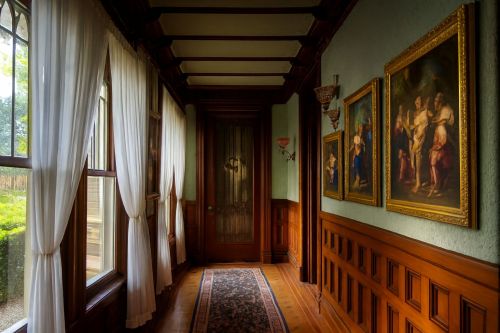
In this context of missing checks, one factor deserves special mention. If any, the person with the problematic behavior has very little sympathy for others. This absence of sympathy has many causes, lying in one’s hostility toward others and in one’s lack of sympathy for oneself. However, what perhaps contributes most to one’s callousness toward others is one’s envy of them. It is a bitter envy—not for this or that particular asset, but pervasive—and stems from one’s feeling excluded from life in general. And it is true that, with one’s entanglements, one actually is excluded from all that makes life worth living—from joy, happiness, love, creativity, and growth. If tempted to think along too neat lines, we would say here: had not one turned one’s back on life? Is one not proud of one’s ascetic not-wanting and not-needing anything? Does one not keep on warding off optimistic feelings of all sorts? So, why should one envy others? However, the fact is, one does. Naturally, without analysis, the person creating the hostile environment has such an arrogance that would not permit the individual to admit it, in plain effect, that, of course, everybody is better off than the perpetrator. Or one may realize that one is infuriated at somebody for no other reason than that the latter is always cheerful or intensely interested in something. The individual responsible for the behavior indirectly explains. The controlling person feels that such a person wants to humiliate one viciously by flaunting their happiness in one’s face. Experiencing things this way not only gives rise to such vindictive impulses as wanting to kill joy but also produces a curious kind of callousness by stifling one’s sympathy for others’ suffering.
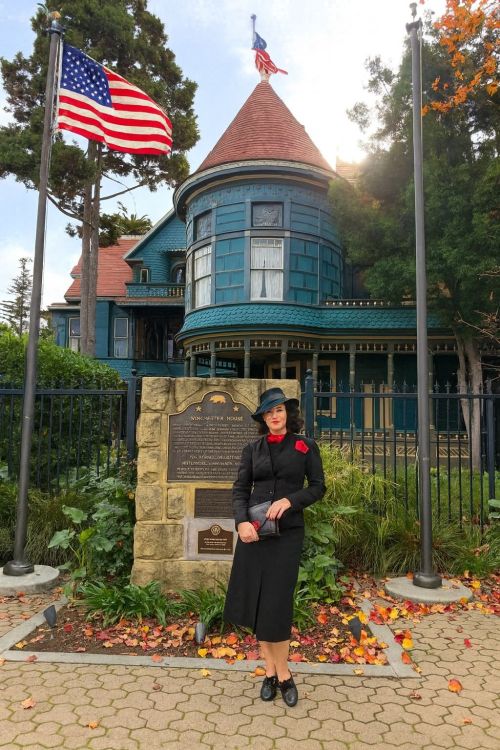
Thus far, the perpetrator’s envy reminds us of a dog locked in a manner attitude. It hurts his pride that anybody could have something which, whether he wants it or not, is out of his reach. However, this explanation does not go deep enough. In analysis, it gradually appears that the grapes of life, though one has declared them sour, are still desirable. We must not forget that one’s turning against life was not a voluntary move, and that the surrogate for which one exchanged living is a poor one. In other words, the perpetrator’s zest for living is stifled but not extinguished. In the beginning of analysis, this is only a hopeful belief, but it proves justified in many more instances than is usually assumed. Upon its validity hinges the auspices for therapy. If there were not something in the individual with the problematic behavior that does want to live more fully, how could we help the individual? This realization is also relevant for the analyst’s attitude toward such a patient. Most people respond to this type either by being intimidated into submissiveness or by rejecting the person with the problematic behavior altogether. Neither attitude will do for the analyst. Naturally, when accepting the individual as a patient, the analyst wants to him the controlling individual. However, if the analyst is intimidated, they will not dare to tackle one’s problems effectively. If the analyst inwardly rejects the perpetrator, one cannot be productive in one’s analytic work. The analyst will, however, have the necessary sympathetic and respectful understanding when one realizes that this patient, too, despite one’s protestations to the contrary, is a suffering and struggling human being.
Among the indispensable co-ordinates of identity is that of the life cycle, for we assume that not until adolescence does the individual develop the prerequisites in physiological growth, mental maturation, and social responsibility to experience and pass through crisis as the psychosocial aspect of adolescing. Nor could this stage be passed without identity. We may, in fact, speak of the identity crisis as the psychosocial aspect of adolescing. Nor could this stage be passed without identity having found a form which will decisively determine later life. For man, in order to remain psychologically alive, he constantly resolves these conflicts just as his body unceasingly combats the encroachment of physical deterioration. A healthy personality actively masters its environment, shows a certain unity of personality, and is able to perceive the world and oneself correctly—it is clear that all of these criteria are relative to the child’s cognitive and social development. In fact, we may say that childhood is defined by its initial absence and by its gradual development in complex steps of increasing differentiation. How, then, does a vital personality grow or, as it were, accrue from the successive stages of the increasing capacity to adapt to life’s necessities—with some vital enthusiasm to spare? Whenever we try to understand growth, it is well to remember the epigenetic principle which is derived from the growth of organisms in utero. This principle states that anything that grows has a ground plan, and that out of this ground plan the parts arise, each part having its time of special ascendancy, until all parts have arisen to form a functioning whole.

This, obviously, is true for fetal development, where each part of the organism has its critical time of ascendance or danger of defect. At birth, the baby leaves the chemical exchange of the womb for the social exchange system of its society, where one’s gradually increasing capacities meet the opportunities and limitations of one’s culture. How the maturing organism continues to unfold, not by developing new organs but by means of a prescribed sequence of locomotor, sensory, and social capacities, is described in the child-development literature. As pointed out, psychoanalysis has given us an understanding of the more idiosyncratic experiences, and especially the inner conflicts, which constitute the manner in which an individual becomes a distinct personality. However, here, too, it is important to realize that in the sequence of one’s most personal experiences the healthy child, given a reasonable amount of proper guidance, can be trusted to obey inner laws of development, laws which create a succession of potentialities for significant interaction with those persons who tend and respond to one and those institutions which are ready for one. While such interaction varies from culture to culture, it must remain with “the proper rate and the proper sequence” which governs all epigenesis. Personality, therefore, can be said to develop according to steps predetermined in the human organism’s readiness to be driven toward, to be aware of, and to interact with a widening radius of significant individuals and institutions.

For the most fundamental prerequisite of mental vitality, a sense of basic trust is a pervasive attitude toward oneself and the world derived from the experiences of the first year of life. By “trust,” I mean an essential trustfulness of others as well as a fundamental sense of one’s own trustworthiness. In describing a development of a series of alternative basic attitudes, including identity, we take recourse to the term “a sense of.” It must be immediately obvious, however, that such “senses” as a sense of health or vitality, or a sense of the lack of either, pervade the surface and the depth, including what we experience as consciousness or what remains barely conscious or is altogether unconscious. As a conscious experience, trust is accessible to introspection. However, it is also a way of behaving, observable by others; and it is, finally, an inner state verifiable only by testing and psychoanalytic interpretation. All three of these dimensions are to be inferred when we loosely speak of “sense of.” As usual in psychoanalysis, we learn first of the “basic” nature of trust from adult psychopathology. In adults, a radical impairment of basic trust and a prevalence of basic mistrust are expressed in a particular form of severe estrangement which characterizes individuals who withdraw into themselves when at odds with themselves and with others. Such withdrawal is most strikingly displayed by individuals who regress into psychotic states in which they sometimes close up, refusing food and comfort and becoming oblivious to companionship. What is most radically missing in them can be seen from the fact that, as we attempt to assist them with psychotherapy, we must try to “reach” them with the specific intent of convincing them that they can trust us to trust them and that they can trust themselves.

Familiarity with such radical regressions as well as with the deepest and most infantile propensities in our not-so-sick patients has taught us to regard basic trust as the cornerstone of a vital personality. Children express their wishes in visual images; but what do they say about them, the final display through the final common pathway, is determined by auditory images, or voices in the head, the result of a mental dialogue. This dialogue between parent, adult, and child is not “unconscious,” but preconscious, which means that it can easily be brought into consciousness. Then it is found that it consists of sides taken from real life, things which once were actually said out loud. The therapeutic rule is a simple derivative of this. Since the final common pathway of the patient’s behavior is determined by voices in one’s head, this can be changed by getting another voice into one’s head, that of the therapist. If this is done under hypnosis, it may not be effective, since that is an artificial situation. However, if it is done in a waking state, it may work better because the original voices were implanted in the patient’s head also in the waking state. Exceptions occur when a witch or ogre parent shouts the child into a state of panic, which is essentially a traumatic fugue. As the therapist gets more and more information from different patients as to what the voices in their heads are saying, and becomes more and more experienced in relating this to their behavior as expressed through final common pathways, one develops a very acute ability and judgment in this regard. One begins to hear the voices in a patient’s head very quickly and accurately, usually before the patient can clearly hear them.

If the therapist asks a loaded or sensitive question, which the patient takes a little time to answer, the therapist can observe a twitch here, a contraction there, and a shift of expression, so that the therapist can follow the “skull dialogue” almost as though one were listening to a tape recording. Once the therapist understands what is going on, their next task is to give the patient permission to listen, and to teach the patient how to hear the voices which are still there in their pristine force from childhood. Here, the therapist may have to overcome several kinds of resistance. The patient may be forbidden to listen by Parental directives, such as: “If you hear voices, you’re crazy.” Or the patient’s inner child may be afraid of what one will hear. Or the patient’s adult self may prefer not to listen to the people governing one’s behavior in order to maintain one’s illusion of autonomy. Many “actionistic” therapists become very skilled at bringing these voices to life by special techniques, where the patient finds oneself carrying on the dialogue out loud, so that both the individual and the audience can plainly see that what he says has been in his head all along. Gestalt therapists often use “the empty chair,” where the patient moves from one chair to the other, playing two parts of oneself. Psychodramatists supply trained assistants who play one role while the patient themselves plays another. Watching or reading about such sessions, it soon becomes clear that the sides for each role come from different ego states or different aspects of the same ego state, and consist of dialogue which has been running in the patient’s head since one’s early years.

However, almost everybody mutters to oneself at some time or another, so every patient has a good start toward unearthing one’s mental dialogue without such special techniques. As a general rule, phrases in the second person (“You should have,” et cetera) come from the Parent, while those in the first person (“I must,” “Why did I?” et cetera) come from the Adult or Child. With some sort of encouragement, the patient soon becomes aware of one’s most important script directives as spoken in one’s head, and can report them to the therapist. The therapist must then give the patient the option of choosing between them, discarding the nonadaptive, useless, harmful, or misleading ones, and keeping the adaptive or useful ones. Even better, one may enable the patient to get a friendly divorce from one’s parents and make a fresh start altogether (although often the friendly divorce will be preceded by an angry phase, as most divorces are at the beginning, even if they eventually end up friendly). This means one must give the patient permission to disobey the Parental directives, not win rebellion, but rather in autonomy, so that one will be free to do things one’s own way and not have to follow one’s script. An easier way to handle this is to give the patient medication such as meprobamate, phenothiazines, or amitriptyline, all of which mute the Parental voices. This relieves the Child’s anxiety or depression and thus “makes the patient feel better.” However, there are disadvantages. First, these drugs tend to dumb down the whole personality, including the voice of the Adult. Some physicians, for example, advise the patient not to drive a car while one is takeing them.

Second, the medications make psychotherapy more difficult precisely because the Parent’s voices cannot be heard clearly, and so the script directives may be masked or de-emphasized. And third, therapeutic permission given under such conditions may be freely exercised, since the Parental prohibitions are temporarily out of commission, but if and when the medication is discontinued, the Parent usually comes back in full force, and may even take revenge on the Child for the liberties one took while the Parent was decommissioned. Growth, according to the present metaphor, entails a return to the place one had left, in order to make it suitable for living, and moreover, living as a person of enlarged perspective. A growth cycle is completed when persons affirm their larger experience of self and world and modify their concept of self, their public self, and their self-ideal in the light of enlarged awareness. They now know they are more, and can be more, different, than they hitherto believed possible. This alteration and enlargement of one’s sense of self is desirable and conducive to a healthy personality. The process of integrating the larger consciousness of self and world is helped immeasurably by re-engagement in life projects and personal relationships. Indeed, it is the demands, challenges, and rewards of work, play, and personal relationships that provide the incentive to grow, and the rewards of such growth. Without such ways of being engaged in the world, I believe efforts to let go and to open oneself to new experiences have destructive and regressive consequences. Chronic users of psychedelic drugs, like fanatics at yoga or meditation, confuse means with ends; they spend their time “in their experience,” but out of action.

The return is often difficult because the people with whom one has been engaged may not have changed; further, they may resent the changes that the growing person has introduced into their world. They may impose considerable pressure upon the individual to revert to the way one was prior to the episode of growing. To yield to such pressure is disastrous, for it makes a non-event out of the persons’ growth. At about the seventh year, says Aristotle, man can differentiate between good and bad. Conscience, ego, and cognition, we would say, are by then sufficiently developed to make it probable that a child, given half a chance, will be able and eager to concentrate on tasks transcending play. One will watch and join others in the techniques of one’s society, and develop an eagerness for completing tasks fitted for one’s own age in some craftsmanlike way. All this, and not less, is implied when we say that a child has reached the “stage of industry.” At the age of seven, there was a boy who was sent to a school which would teach him Latin—then the principal tool of the technology of literacy. Obviously, only parents with higher aspirations for their children would send them to such a school. However, halfway-qualified teachers were employed at schools like this only when they could get no other work—while they were still young, or when they were no longer employable. In either case, they were apt to express their impatience with life in their treatment of the children, which was very similar to the treatment that some people give their donkeys. The teachers rarely relied, and therefore, could not rely on conscience, ego, or cognition; instead, they used the old and universal method of Pauken, “drumming” facts and habits into the growing minds by relentless mechanical repetition. They also drummed the children themselves mit Ruten in die Aefftern, on the behind, other body parts being exempt.

According to the professor, an occasional “lusty caning” did not harm the student any more than it did any other children: but the professors and his school must present him as entirely intact and unweakened by any ordinary or special childhood event, so that the divine event, the catastrophe, which later concluded his academic education so unexpectedly, appears as divine interference. The priest and the psychiatrist, however, believed that this was an impressionable age for a child, and school years can make a child fearful for life. In retrospect, the student found that the gains in learning were in no way commensurate with the “inner torture.” At the most, he felt such teaching prepared a man to be a priest of low caliber, a Pfaff; otherwise, he was not taught enough to “either cackle or lay an egg.” It is certain that the disciplinary climate of home and school, and the religious climate in community and church, were lumped together in his mind as decidedly more oppressive than inspiring; and that, to him, this seemed a damned and unnecessary shame. He blamed his atmosphere for his strict and rigid doctrines, his intensity of monastic “scrupulosity,” his obsessional preoccupation with the question of how on earth one may do enough to please the various agencies of judgment—teacher, father, superior, and most of all, one’s conscience. School children, he reported, were caned on the behind; it is probable that home discipline was concentrated on the same body area. To those who believe in corporal punishment, this seems to take the sting out of the matter, and even to make it rather funny.

We grant the buttocks can take a lot of pressure, and lend themselves to bawdy jokes; but we cannot ignore the fact, brought out by the researchers of psychoanalysis, that the anal zone, which is guarded and fortified by the buttocks, can, under selective and intense treatment of special kinds, become the seat of sensitive and sensual, defiant and stubborn, associations. The devil, according to the student, expresses his scorn by exposing his rear parts; man can beat him to it by employing anal weapons, and by telling him where his kiss is welcome. Language provides the fundamental superimposition of logic on the objectivated social world. The edifice of legitimations is built upon language and uses language as its principal instrumentality. The “logic” thus attributed to the institutional order is part of the socially available stock of knowledge and taken for granted as such. Since the well-socialized individual “knows” that his social world is a consistent whole, he will be constrained to explain both its functioning and malfunctioning in terms of this “knowledge.” It is very easy, as a result, for the observer of any society to assume that its institutions do indeed function and integrate as they are “supposed to.” De facto, then, institutions are integrated. However, their integration is not a functional imperative for the social processes that produce them; it is rather brought about in a derivative fashion. Individuals perform discrete institutionalized actions within the context of their biography. This biography is a reflected-upon whole in which the discrete actions are thought of not as isolated events, but as related parts in a subjectively meaningful universe whose meanings are not specific to the individual, but socially articulated and shared. Only by way of this detour of socially shared universes of meaning do we arrive at the need for institutional integration.
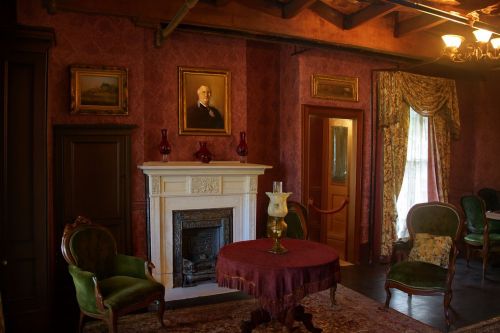
This has far-reaching implications for any analysis of social phenomena. If the integration of an institutional order can be understood only in terms of the “knowledge” that its members have of it, it follows that the analysis of such “knowledge” will be essential for an analysis of the institutional order in question. It is important to stress that this does not exclusively or even primarily involve a preoccupation with complex theoretical systems serving as legitimations for the institutional order. Theories also have to be taken into account, of course. However, theoretical knowledge is only a small and by no means the most important part of what passes for knowledge in a society. Theoretically sophisticated legitimations appear at particular moments of an institutional history. The primary knowledge about the institutional order is knowledge on the pretheoretical level. It is the sum total of “whatever everybody knows” about a social world, an assemblage of maxims, morals, proverbial nuggets of wisdom, values and beliefs, myths, and so forth, the theoretical integration of which requires considerable intellectual fortitude in itself, as the long line of heroic integrators from Homer to the latest sociological system-builders testifies. On the pretheoretical level, however, every institution has a body of transmitted recipe knowledge, that is, knowledge that supplies the institutionally appropriate rules of conduct. Such knowledge constitutes the motivating dynamics of institutionalized conduct. It defines the institutionalized areas of conduct and designates all situations falling within them. It defines and constructs the roles to be played in the context of the institutions in question. Ipso facto, it controls and predicts all such conduct.

Since this knowledge is socially objectivated as knowledge, that is, as a body of generally valid truths about reality, any radical deviance from the institutional order appears as a departure from reality. Such deviance may be designated as moral depravity, mental disease, or just plain ignorance. While these fine distinctions will have obvious consequences for the treatment of the deviant, they all share an inferior cognitive status within the particular social world. In this way, the particular social world becomes the world tout court. What is taken for granted as knowledge in the society comes to be coextensive with the knowledge, or at any rate provides the framework within which anything not yet known will come to be known in the future. This is the knowledge that is learned in the course of socialization, and that mediates the internalization within individual consciousness of the objectivated structures of the social world. Knowledge, in this sense, is at the heart of the fundamental dialectic of society. It “programs” the channels in which externalization produces an objective world. It objectifies this world through language and the cognitive apparatus based on language, that is, it orders it into objects to be apprehended as reality. It is internalized again as an objectively valid truth in the course of socialization. Knowledge about society is thus a realization in the double sense of the word, in the sense of ongoingly producing this reality.
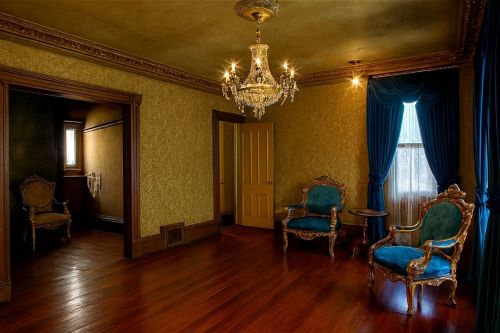
For example, in the course of the division of labor, a body of knowledge is developed that refers to the particular activities involved. In its linguistic basis, this knowledge is already indispensable to the institutional “programming” of these economic activities. There will be, say, a vocabulary designating the various modes of hunting, the weapons to be employed, the animals that serve as prey, and so on. If one is to hunt correctly, there will be a collection of recipes that must be learned. This knowledge serves as a channeling, controlling force in itself, an indispensable ingredient of the institutionalization of this area of conduct. As the institution of hunting is crystallized and persists in time, the same body of knowledge serves as an objective (and, incidentally, empirically verifiable) description of it. A whole segment of the social world is objectified by this knowledge. There will be an objective “science” of hunting, corresponding to the objective reality of the hunting economy. The point need not be belabored that here “empirical verification” and “science” are not understood in the sense of modern scientific canons, but rather in the sense of knowledge that may be borne out in experience and that can subsequently become systematically organized as a body of knowledge. Again, the same body of knowledge is transmitted to the next generation. It is learned as objective truth in the course of socialization, and this is internalized as subjective reality. This reality, in turn, has the power to shape the individual. It will produce a specific reality.

The reality will produce a specific type of person, namely the hunter, whose identity and biography as a hunter have meaning only in a universe constituted by the aforementioned body of knowledge as a whole (say, in a hunters’ society) or in part (say, in our own society, in which hunters come together in a subuniverse of their own). In other words, no part of the institutionalization of hunting can exist without the particular knowledge that has been socially produced and objectivated with reference to this activity. To hunt and to be a hunter implies existence in a social world defined and controlled by this body of knowledge. Mutatis mutandis, the same applies to any area of institutionalized conduct. There is a certain measure of safety in the deliberate cultivation of rational thought based on observed fact as a guide to action. This is the way that science has travelled with the discoveries of, and profits by, natural law. This is the way that industry and commerce have traveled, with solid results for all to see. Its value, when applied to methods of achievement, is a proven one. The sciences are useful to man and need not be cursed for the evil results of their abuse by man. He needs rather to learn how to make a better, more prudent, and wiser use of them. The spirit of science—which happens to be the spirit of this age—has rationalized us, and we are naturally impatient of all misguided persons who appear irrational. Even if we later recognize that certain educational methods were harsh or misguided, they shaped us during a time when we did not have alternatives. Our success gives us the space to reflect on them critically, but those experiences still formed part of the path that brought us here.


If there is a Fog, the Monsters Can’t See Me!
Domestic burglary is a huge societal problem, and one of the most frequently occurring crimes. In the United States of America, 1.1 million domestic burglaries are reported to the police each year. To give a sense of community dysfunction associated with the problem of domestic burglary, the very commonly reported issue is theft of goods and money from the family home or mailbox, which may be used buy drugs. And, sometimes, it is not always by a family member; the theft could be perpetrated by one’s neighbor, or even a stranger. There is, of course, the inconvenience of the theft to consider, but the damage is far greater than can be measured in material terms. Domestic burglary victimization is a traumatic experience, because most people consider their home as an extension of the self and a place where the self is protected against others. Intrusions to such a highly valued place are therefore regarded as attacks to both one’s personhood and one’s safety and privacy, and may render victims at risk of psychological distress. Some of the victims develop trauma-related disorders or mood or anxiety disorders, which may put them at risk of social, financial, economic, and physical health problems. The monetary costs of these burglaries (exempli gratia, due to damaged properties and stolen goods, police investigations, and victim services) are enormous. For example, the total monetary costs of domestic burglary have been estimated to amount to more than $9 billion a year in the United States of America (which comes down to $2,675) per burglarized house. #RandolphHarris 1 of 32

To mitigate crime victims’ psychological distress, they must receive adequate support services. To ensure that they have access to such services, police officers and other professionals working with crime victims should screen them for factors shown to be related to the experience or development of psychological distress. Drug users in the general population are more likely than nonusers to commit crimes. Another dimension of drug-related crime is that 25 percent of State prison inmates and 20 percent of convicted jail inmates reported committing their offenses to get money to buy drugs. Offenders convicted of robbery, burglary, and larceny/theft were most likely to commit their offense to obtain money to buy drugs. Many chronic drug abusers—the individuals we commonly regard as addicts—often simultaneously suffer from a serious mental disorder. Drug treatment and medical professionals call this condition a co-occurring disorder or a dual diagnosis. Chronic drug abuse is the habitual abuse of licit or illicit drugs to the extent that the abuse substantially injures a person’s health or substantially interferes with his or her social or economic functioning. Furthermore, any person who has lost the power of self-control over the use of drugs is considered a chronic drug user. Chronic drug abuse may occur in conjunction with any mental illness identified in the American Psychiatric Association (DSM-IV). Some common serious mental disorders associated with chronic drug abuse include schizophrenia, bipolar disorder, manic depression, attention deficit hype disorder (ADHD), generalized anxiety disorder, obsessive-compulsive disorder, post-traumatic stress disorder, panic disorder, and antisocial personality disorder. #RandolphHarris 2 of 32

Co-occurring disorders are very common. Approximately 6 million adults met the criteria for both serious mental illness and substance dependence or abuse in the past year. Some people suffering from serious mental disorders (often undiagnosed ones) take drugs to alleviate their symptoms—a practice known as self-medicating. According to the American Psychiatric Association, individuals with schizophrenia sometimes use substances such as marijuana to mitigate the disorder’s negative symptoms (depression, apathy, and social withdrawal), to combat auditory hallucinations and paranoid delusions, or to lessen the adverse effects of their medication, which can include depression and restlessness. In other cases, mental disorders are caused by drug abuse. For example, MDMA (3,4-methylenedioxymethamphetamine, commonly known as ecstasy) produces long-term deficits in serotonin function in the brain, leading to mental disorders such as depression and anxiety. Chronic drug abuse by adolescents during formative years is a particular concern because it can interfere with normal socialization and cognitive development and thus frequently contributes to the development of mental disorders. However, chronic drug abusers who suffer from mental illness, and especially whether treating both conditions simultaneously leads to better recovery. Currently, the two conditions are often treated separately or without regard to each other. As a result, many individuals with co-occurring disorders are sent back and forth between substance abuse and mental health treatment settings. #RandolphHarris 3 of 32

Although one cannot always distinguish neatly between alienation from the actual self and that from the real self, the loss of self is sickness unto death; it is despair—despair at not being conscious of having a self, or despair at not being willing to be ourselves. However, it is a despair which does not clamor or scream. People go on living as if they were still in immediate contact with this alive center. Any other loss—that of a job, say, or a leg—arouses far more concern. Patients coming for consultation complain about headaches, sexual disturbances, inhibitions in work, or other symptoms; as a rule, they do not complain about having lost touch with the core of their psychic existence. There are many forces, including drugs, responsible for the alienation from self. It is in part the consequences of the whole neurotic development, especially of all that is compulsive in neurosis. Of all that implies, “I am driven instead of being the driver.” It does not matter in this context what the particular compulsive factors are—whether they operate in relation to others (compliance, vindictiveness, detachment, et cetera) or in relation to self, as in self-idealization. They very compulsive character of these drives inevitably deprives the person of his full autonomy and spontaneity. As soon as, for instance, his need to be liked by everybody becomes compulsive, the genuineness of his feelings diminishes; so does his power to discriminate. As soon as he is driven to do a piece of work for the sake of glory, his spontaneous interest in the work itself decreases. Conflicting compulsive drives, in addition, impair his integration, his faculty to decide and give direction. Last but not least, the neurotic pseudo-solutions, though representing attempts at integration, also deprive him of autonomy because they have become a compulsive way of living. #RandolphHarris 4 of 32

It does not matter, in this context, what the particular compulsive factors are—whether they operate in relation to others (compliance, vindictiveness, detachment, et cetera) or in the relation to self, as in self-idealization. The very compulsive character of these drives inevitably deprives the person of his full autonomy and spontaneity. As soon as, for instance, his need to be liked by everybody becomes compulsive, the genuineness of his feelings diminishes; so does his power to discriminate. As soon as he is driven to do a piece of work for the sake of glory, his spontaneous interest in the work itself decreases. Conflicting compulsive drives, in addition, impair his integration, his faculty to decide and give direction. Last but not least, the neurotic pseudo-solutions, though representing attempts at integration, also deprive him of autonomy because they become a compulsive way of living. Secondly, the alienation is furthered through process, likewise compulsive, which can be described as active moves away from the real self. The whole drive for glory is such a move, particularly through the neurotic’s determination to mold himself into something he is not. He feels what he should feel, wishes what he should wish, like what he should like. In other words, the tyranny of the should drives him frantically to be something different from what he is or could be. And in this imagination, he is different—so different, indeed, that his real self fades and pales still more. #RandolphHarris 5 of 32

Neurotic claims, in terms of self, mean the abandoning of the reservoir of spontaneous energies. Instead of making his own efforts, for instance, with regard to, human relations, the neurotic insists that others should adjust to him. Instead of putting himself into his work, he feels entitled to having it done for him. Instead of making his own decisions, he insists that others should be responsible for him. Therefore, his constrictive energies lie fallow, and he actually is less and less a determining factor in his own life. Neurotic pride removes him a step further from himself. Since he now becomes ashamed of what he actually is—of his feelings, resources, activities—he actively withdraws his interest from himself. The whole process of externalization is another active moving away from his self, actual and real. It is astonishing, by the way, how closely this process coincides with Dr. Kierkegaard’s “despair of not wanting to be oneself.” Finally, there are active moves against the real self, as expressed in self-hates. With the real self in exile, so to speak, one becomes a condemned convict, despised and threatened with destruction. The idea of being oneself even becomes loathsome and terrifying. The terror sometimes appears undisguised, as one patient felt it when thinking: “This is me.” This appeared at a time when the neat distinction she had made between “me” and “my neurosis” started to crumble. As a protection against this terror, the neurotic “makes himself disappear.” He has an unconscious interest in not having a clear perception of himself—in making himself, as it were, deaf, dumb, and blind. #RandolphHarris 6 of 32

Not only does he blur the truth about himself, but he has a vested interest in doing so—a process which blunts his sensitiveness to what is true and what is false not only inside but also outside himself. He has an interest in maintaining his haziness, although he may consciously suffer under it. One patient, for instance, in his associations often used the monsters of the Beowulf legend, who emerged at night from the lake, to symbolize his self-hate. And one he said: “If there is a fog, the monsters can’t see me.” The result of all these moves is an alienation from self. When we use this term, we must be aware that it focuses on only one aspect of the phenomenon. What is expressed accurately is the subjective feeling of the neurotic of being removed from himself. He may realize in analysis that all the intelligent things he has said about himself were, in reality, disconnected from him and his life, that they concerned some fellow with whom he had little if anything to do, and the findings about whom were interesting but did not apply to his life. In fact, this analytic experience leads us straight into the core of the problem. For we must keep in mind that the patient does not talk about weather or television: he talks about his most intimate personal life experiences. Yet, they have lost their personal meaning. And, just as he may talk about himself without “being in it,” so he may work, be with friends, take a walk, or sleep with a woman without being in it. #RandolphHarris 7 of 32
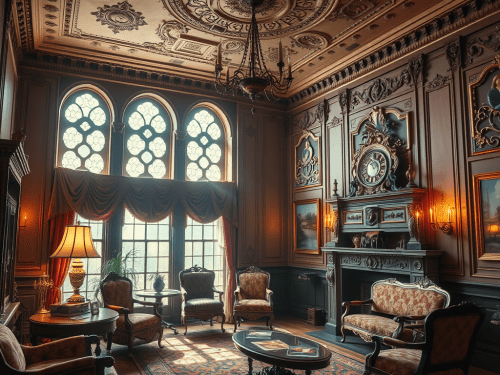
His relation to himself has become impersonal; so has his relation to his whole life. If the word “depersonalization” did not already have a specific psychiatric meaning, it would be a good term for what alienation from self essentially is: it is a depersonalizing, and therefore a devitalizing process. The alienation from self does not show as directly and blatantly as its significance would suggest, except (speaking of neuroses only) in the state of depersonalization, feelings of unreality, or amnesia. While these conditions are temporary, they can occur only in person who are estranged from themselves anyhow. The factors precipitating the feelings of unreality are usually severe injuries to pride together with an acute increase of self-contempt, exceeding what is tolerable for the particular person. Conversely, when—with or without therapy—these acute conditions subside, his alienation from self is not thereby essentially changed. It is merely again restrained within such limits that he can function without conspicuous disorientation. Otherwise, the trained observer would be able to perceive certain general symptoms pointing to an existing alienation from self, such as deadness of the eyes, an aura of impersonality, an automatonlike behavior. For the analyst, it is a source of never-ending astonishment how comparatively well a person can function with the core of himself not participating. Let us consider a problem from another region. A woman from the Middle West, rather unusually feminine and sensitive, uses a visit with relatives in the East to consult a psychoanalyst concerning a general feeling of affective constriction and an all-pervasive mild anxiety. #RandolphHarris 8 of 32

During an exploratory analysis, she seems almost lifeless. After some weeks, she occasionally produces a sudden flood of associations, all concerning horrid impressions of pleasures of the flesh or death. Many of these memories emerge not from unconscious depths, but from an isolated corner of her consciousness where all those frightening matters were boarded off which on occasion had broken through the orderly factualness of the upper-middle-class surroundings of her childhood. This isolation of life segments is similar to that met with in compulsive neurotics anywhere. In this case, it was part of a sanctioned way of life, an ethos, which in our patient had become truly uncomfortable only at a time when she was being courted by a European and was trying to envisage life in a cosmopolitan atmosphere. She felt attracted but at the same time inhibited; her imagination was vividly provoked but restrained by anxiety. Her bowels reflected this conflict with disturbing alternations between constipation and diarrhea. The final impression gained was one of a general inhibition rather than of a basic impoverishment of imagination in matters either dealing with pleasures of the flesh or social. The patient’s dreams gradually reveled a hidden source of untapped freedom. While she still seemed pained and lifeless in her free associations, her dream life became humorous and imaginative in an almost autonomous way. She dreamed of entering a quiet church congregation in a flaming red dress and of throwing stones through respectable windows (which would be a major felony and probably ban her from being hired for most jobs after a lengthy prison sentence). However, her most colorful dreams put her into Civil War days—on the Confederate side. #RandolphHarris 9 of 32

The climax was a dream in which she sat on a toilet, set off by low partitions in the middle of a tremendous ballroom, and waved to elegantly dressed couples of Confederate officers and southern ladies who swirled around her to the sounds of powerful brass. These dreams helped to unearth and highlight an isolated part of her childhood, namely, the gentle warmth awarded her by her grandfather, a Confederate veteran whose world was a fairy tale of the past. However, for all its formalism, the grandfather’s patriarchal masculinity and gentle affection had been experienced through the child’s hungry senses and had proved more immediately reassuring to her searching ego than either her father’s or mother’s promises of standardized success. With the grandfather’s death, the patient’s affects went dead because they were part of an abortive ego-identity formation which failed to receive nourishment either in the form of affection or of social rewards. The psychoanalytic treatment of women with a prominent identity element of the southern lady (an identity which pervades more than one class or race) seems complicated by special resistances. To be sure, our patients are usually dislodged southerners, their ladyhood a defense, almost a symptom. Their wish for treatment finds its limits in three ideas which are all connected with the particular provisions in southern culture for safeguarding caste and race identity by imposing the prototype of the lady on the small girl. #RandolphHarris 10 of 32

There is, first, a pseudoparanoid suspicion that life is a series of critical tests in which vicious gossips attempt to stack up minor weaknesses and blemishes against the southern woman toward an inexorable final judgment, namely, to be—or not to be—a lady. Second, there is the all-pervading conviction that men, if not restrained by the formalities of a tacitly approved double standard which grants them lesser and darker sex objects at the price of overt respect for ladies, will prove to be no gentlemen and that they will at very least try to blacken the lady’s name and with it her claim to a socially superior husband and the prospect of having her children marry upward. However, there is also the equally ambivalent implication that any man who does not proceed to shed his gentleman’s inhibitions when the opportunity of sexual conquest offers itself is a weakling who only deserves to be mercilessly provoked. The usual feelings of guilt and inferiority thus all exists within the co-ordinates of a life plan dominated by the conscious hope for higher social status, and made morbid by its ambivalent counterpart, the hidden hope for the man who will dissolve the woman’s need to be a lady in a moment of reckless passion. In all this, there is a basic inability to conceive of any area in life where the standards and the words of a man and a woman could honestly coincide and be lifted above a certain primeval antagonism. Needless to say, such unconscious standards cause severe suffering in sincere and enlightened women, but only the verbalization of these internalized stereotypes, concomitantly with the analysis of the patient’s transfer to the analyst of her whole conflictful imagery of men, makes psychoanalysis possible. #RandolphHarris 11 of 32

Psychoanalysts, of course, are consulted primarily by those who cannot stand the tension between alternatives, contrasts, and polarities which governs the American style of today: the unceasing necessity to remain tentative in order to be free for bigger and better opportunities. In their transferences and in their resistances, patients repeat abortive attempts at synchronizing fast-changing and sharply contrasting remnants of national, regional, and class identities during critical stages of their childhoods. The analyst is woven into the patient’s unconscious life plan. Especially if he is European-born, and compared with the patient’s more homogeneous ancestors, or he is resisted as the brainy enemy of a potentially successful American identity, he is idealized. The patient, however, can gain the courage to face the discontinuities of life in this country and the polarities of its struggle for an economic and cultural identity not as an imposed hostile reality, but as a potential promise for a more universal human identity. This, as we have seen, finds its limits where individuals were either fundamentally impoverished in their childhood sensuality or are stalled by the “system” in their freedom to use opportunities. Why did Pythagoras put mathematics among the necessary preliminary disciplines for the study of philosophy? Here was part of the way to counteract man’s natural materialism. It trained him to think abstractly, to hold pure ideas whose exactitude and truthfulness were indisputable. And he supported the teaching by pointing to the fact that the universe was founded on a number. Finally, the higher use of mathematics was as an assistant in symbolizing metaphysical principles. #RandolphHarris 12 of 32

When we begin to operate with abstract concepts in the practical world, we begin to know their true worth. Except as an intellectual exercise, I would discourage abstract speculation upon which so many intellectuals have frittered away their time, as our medieval theologians frittered theirs. We seek truth for various reasons. One is because is possesses a certitude that gives us anchorage and rest. Mathematics is fortunate in having been able to invent a language of symbols and signs which is adequate to the most exacting demands of precision. The connotation of each sign is definite. It derives a fixed meaning from the common universe of discourse which is implicit as the background of both speaker and hearer. The mathematician must give every symbol he uses a clear meaning in his own mind as well as to those who are to read his symbols. Therefore, he is compelled to provide a common medium of understanding about which there can be no two opinions. Mathematics is thus placed in a position of superiority in reference to language and rigorous reasoning when compared to other subjects. It provides perfect instruments for the expression of an idea. The meaning of the arithmetical minus sign is forever invariable and forever precise. The man who has thought well about thinking itself may put forward more clever ideas in a single hour than others do in a single week. The brain of the intellectual man multiplies thoughts, but the brain of the self-actualized Christian subtracts and reduces them. #RandolphHarris 13 of 32

Thinking in terms of mental images is a valuable faculty, but thinking in words alone is not less valuable. Both are needed to the balanced person. The value assigned to the symbol X must be strictly adhered to throughout the series of equations, and, being predetermined, no confusion concerning what it stands for can ever arise. However, when we turn to words, we find them to be imperfect, elastic, and indeterminate. When we deal with mathematical symbols, we expect and find a determinate meaning has been assigned to them, but when we deal with words, we cannot always expect and often fail to find any fixed meaning at all. The ordinary man who is used to dealing only with concrete things his eyes can see and his hands can touch, quite pardonably feels, when he is asked to deal with abstract conceptions, that he is at once out of his depth. When one does not know his Real Self, that is, his own deepest being, it is of little avail to ponder on difficult questions of an intellectual nature. The symmetry of the universe’s patterns appears best in the figure of a circle. The ability to think abstractly and metaphysically is not a waste of time as so many scientists, activists, and practical men of the world think. On the contrary, it is needed as a counterbalance to the ability to think concretely. So long as a man gets all his ideas from experiences gained through the body alone, so long may he pardonably accept the belief in materialism. However, as soon as he begins to get them from thinking alone—and the difference can not be properly grasped until he has practiced prayer sufficiently and successfully—so soon will he see the falsity of this belief. #RandolphHarris 14 of 32

There was a body named Jeff, and he was one of four children, none of whom had permission to succeed. The parents were both a little dishonest in socially acceptable ways, and the children each carried this tendency a little further. One day, Jeff told about his troubles at university. He was falling behind in his work, so he had paid a ghost writer in advance to do his thesis. The group listened with interest as he described his negotiations with this man, and told how the ghost writer had also undertaken to write theses for some of Jeff’s friends, all of whom had paid in advance. The other members asked questions here and there, until finally Jeff came to the point. The writer had absconded to Europe, taking all the money, he had collected, and without leaving any theses behind. At this, the group broke into uproarious laughter in which Jeff joined. The others said they thought the story was funny for two reasons: first, the way Jeff told it, as though he expected them to laugh, and would be disappointed if they did not; and second, because it was the sort of thing they expected, or perhaps even hoped, would happen to Jeff because of the complicated way he went about doing things instead of carrying out his obligations in a straightforward, honest way. They all knew that Jeff was supposed to fail, and it was amusing to see how much effort he put into it. They joined in Jeff’s laughter the same way the crowd had joined in Jeff’s when they first heard. Later, they would all be depressed about it, Jeff most of all. His laugh said, “Ha, ha, ha mother, you always loved me when I failed, and here I go again.” #RandolphHarris 15 of 32

The Adult in the Child, the Professor, has had the task from earliest years of keeping mother contented so that she will stay with him and protect him. If she likes him and expresses the liking with a smile, he feels safe even when he is actually in trouble or even in dire peril of death. In normal mothering, mother’s Parent and Child both like kids. So when mother smiles, both her Parent and her Child are pleased with her offspring, and things will proceed smoothly between them. In other cases, mother’s Parent smiles at her son because she is supposed to, while her Child is angry at him. He can get on the good side of her Child, and get a smile that way, by behavior which her Parent might disapprove of. For example, by demonstrating that he is “bad,” he may get a Child smile because he has proven that he is not-O.K., and that pleases the Child in mother—what we have previously called “the witch mother.” Both script and anti-script can be considered attempts to evoke mother’s smile: the anti-script for the approving smile of mother’s (and father’s) Parent, the script for the smile of mother’s Child, who enjoys the baby’s pain or discomfiture. The gallows laugh, then, occurs when Jeff “finds himself” with the rope around his neck, and his Child says: “I did not really want to end up this way: How did I get here?” Then Mother (in his head) smiles, and he realizes that she has conned him into it. He then has the choice of either going crazy, killing her, himself, or laughing. At such moments, he may envy the brother who chose instead to go to the mental hospital, or the sister who elected to kill herself, but he is not ready for either of those—yet. (Suicide or Crisis Lifeline call or text 988. A counselor is available 24 hours a day, 7 days a week, and the help is free.) #RandolphHarris 16 of 32

The gallows laugh or the gallows smile occurs after a special kind of stimulus and response called the “gallows transaction.” A typical example is an alcoholic who has not had a drink for six months, as everyone in the group knows. Then one day, he comes in and lets the others talk for a while. When they have gotten all their troubles off their chests, so that he has the stage to himself, he says: “Guess what happened over the weekend?” One look at his slightly smiling face and they know what happened. They get ready to smile, too. One of them sets up the gallows transaction by asking: “What happened?” “Well, I took one drink and then another, and the next thing I knew”—by this time he is laughing and so are they—“I went on a three-day bender.” In the case of the Alcoholic, when the audience is told about last week’s bender while the audience (including, perhaps, the therapist) beams with delight. The smile of the Children in the audience parallels and reinforces the smile of the witch mother or ogre who is pleased when people obey the injunction (“Don’t think—drink), and in effect tightens the noose around their necks. The gallows laugh (which results from a gallows transaction) means that if the patient laughs while recounting a misfortune, and particularly if the other group members join in the laughter, that misfortune is part of the catastrophe of the patient’s script. When the people around him laugh, they reinforce the payoff, hasten his doom, and prevent him from getting well. In this way, the parental come-on is brought to fruition, ha ha. Semantics deals with those subtleties of language which escape the notice of uneducated people and are ignored by those who shrink a little labour. #RandolphHarris 17 of 32
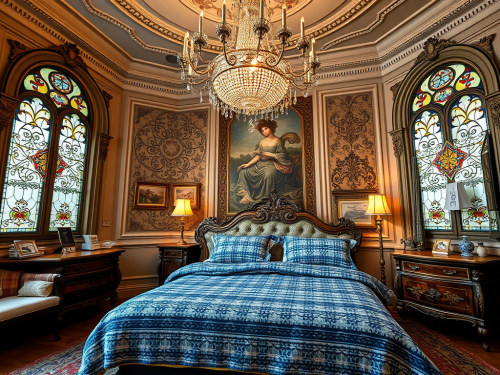
Technology should be viewed as a vital layer of protection, but it does have its limitations, and we should not become overreliant on technology because some time in the near future, America could be without power, without Interent and no GPS, so people will have to park their cars like their parents did, they may have to use maps to find locations, and they may have to go to the library to do research with physical books. Therefore, it is still a good idea to learn how to use a compass, drive a car with a manual transmission, and learn how to drive without technology assistance. However, for most of us, it is hard to imagine a time when emergency vehicles responded to emergencies and had no communication with dispatch or other apparatus once en route to an incident. Technology will continue to be an asset to emergency services, adding safety and providing more effective operations. Although it should be welcome, we must continue to insist on rigorous testing and consider the applications to emergency services. The new technology must be trained on and used in conjunction with the other tools we must provide an effective system. Clinicians are even in the process of testing technology to scan the brain to see what mental impairments human beings have. While that is welcoming, critics worry it could lead to “mental profiling.” Based on brain scans, the government could track people who are at high risk of committing violent crimes without knowing or having due process, and take them into custody. Few words invoke more fear than the word investigation. We never want to be a suspect in a Federal Bureau of Investigation (FBI) investigative and intelligence process, an Internal Revenue Service (IRS) investigation, a murder investigation, or a National Institute for Occupational Safety and Health (NIOSH) investigation. #RandolphHarris 18 of 32

Humans have natural defense mechanisms that resist being probed, examined, or scrutinized by any authority that has the power to discipline, sanction, or even confiscate aspects of our lives. The fear that is that an investigation could conclude with the allocation of blame for something we did or were a part of. Although it is true that a component of investigations is to find fault where faults exist, it is not limited to liability. Another valuable component is to search for and identify the actions and contributing factors that allowed an event to occur. By identifying these aspects, actions can be taken to prevent future occurrences. Take, for instance, a firefighter who falls from an extension ladder at a structural fire. Although seriously injured, he survives the fall. Which of the following is a thorough investigation likely to lead to: Disciplinary action for the incident commander and the firefighter holding the ladder? Liability for the ladder manufacturer, resulting in a lawsuit? Recommendations to eliminate contributing factors in order to prevent a similar incident? Obviously, the last choice is the most probable. Fault and culpable liability are always possible, but recommendations and changes in policy are almost guaranteed. Initiative 9 calls for the thorough investigation of all injuries, deaths, and near-misses in an effort to reduce the chances of the next one. As a result, specific components of an effective system include reporting, investigating, evaluating, and implementing changes. The award-winning Sacramento Fire and Emergency Services have several individual components in place, yet continue to work toward linking information into one effective system. #RandolphHarris 19 of 32
Little do Fire Chief’s know at the time, but they are often witnesses to many large fires in their career. Some are massive and dangerous. On one occasion, there was a blaze in September in response to the report of smoke coming out of the front of a mid-rise apartment building. As the four firemen stretch a hose into the basement of the building, little did they know that they were beginning a fight that would last 40 hours and would send eight people to the hospital with injuries before it was declared out. The men worked their way slowly towards the seat of the fire near the front of the building. After nearly two hours in the intense heat and blinding smoke, a fireman collapsed to the floor and was dragged outside. The decision was then made to leave the basement as it was discovered that the fire had spread along the rafters into the building next door. The entire fire department had arrived by that time and lines were being stretched around the building to try and contain the rapidly spreading blaze. Around 2.30 a.m., an explosion rocked the building. Two firemen were operating a hose just inside the front doors of the building when the explosion occurred. They were blown 15 feet out into the street as the front of the building was destroyed by the blast. In the rear alley, Fire Chief and Police Chief were spraying water into a basement window. Fire Chief was knocked to the ground, but the Police Chief was not as fortunate. He was blown across the alley and through a window at a neighboring house. Both men were treated for minor injuries but remained at the scene. One of the other firemen in the explosion at the front of the building was taken to the hospital with burns on his face, eyes and nose and the other fireman was treated for minor burns but stayed at the scene as well. #RandolphHarris 20 of 32

Both buildings had now become a mass of flames and looked to engulf the entire block. Nine streams were deployed to try to contain the fire. Apparatuses fought the fire from the roofs of the buildings and the blaze was kept to the two affected buildings. The fire raged until the floors collapsed into the basement around 7 a.m. Around the same time, another firefighter collapsed, giving in to smoke inhalation and exposure. As he was being helped into an ambulance, an EMT also collapsed and was taken to the hospital. That firefighter spent the rest of the weekend in the hospital with burns and an infected throat from the smoke. He was x-rayed and it was discovered that he had broken several bones in his back. He wore a back brace for months afterward. An additional firefighter spent the night in the hospital due to smoke inhalation. Three other firefighters were treated for minor burns and released. The collapse of the floors was the beginning of the end of the fire. Several containers of cooking grease in the kitchen and propane tanks continued to feed the flames in the basement until Sunday morning, when the fire was finally declared out, 40 hours after the first alarm was sent into the department. The Fire Captain later said that the fire was one of the worst in the city’s history. The estimated losses later added up to $15 million. The two buildings were completely destroyed. Other businesses and homes on the same block reported heavy smoke damage and heavy losses from smoke and water after the fire. An investigation revealed that the buildings were not up to code. One had indoor hallways with open-air windows with no glass to the outside, which gave the fire fuel to rage out of control. High-rise buildings with indoor hallways and windows without glass can be a violation of specific fire codes and regulations. The fire department was also undermanned and short on firefighting equipment. The fire departments were badly in need of more aerial trucks and other equipment. #RandolphHarris 21 of 32

If you see a fire truck stopped in the street without the lights on, be very careful. Sometimes there is an emergency, and you should not pass the fire truck. It might be a good idea to safely turn around and go another way because if you hit someone and they happen to die, you could be charged with manslaughter. Sometimes fire firefighters are getting back into their vehicle, and if you pass the apparatus, you may collide with a firefighter who is on foot. Also, be sure to look at their signals; sometimes emergency vehicles are in motion, albeit slowly, and drivers try to pass them, and this could lead to a dangerous situation. Also, if you are in an intersection when you see an emergency vehicle, continue through the intersection. Drive to the right as soon as it is safe and stop. Obey any direction, order, or signal given by a law enforcement officer or a firefighter. Even if they conflict with existing signs, signals, or laws, follow their orders. When their siren or flashing lights are on, it is against the law to follow within 300 feet of any fire engine, law enforcement vehicle, ambulance, or other emergency vehicle. If you drive to the scene of a fire, collision, or other disaster, you can be arrested. When you do this, you are getting in the way of firefighters, ambulance crews, or other rescue and emergency personnel. The concept of professional courage does not always mean being as tough as nails, either. It also suggests a willingness to listen to other people’s problems, to go to bat for them in a tough situation, and it means knowing just how far they can go. It also means being willing to tell the boss when he or she is wrong. #RandolphHarris 22 of 32

California is the third most expensive state in the nation. In 37 percent of counties, a family of four living on a six-figure income is now considered low-income. The average home price in California is nearly $1,000,000.00 USD, while the average salary is $96,036.00, meaning that most Californians cannot even afford to buy a home. California is having an affordability crisis. A single person making an income above $100,000 is now considered low-income in five counties in California. This distinction now applies to individuals living in Santa Cruz, Santa Clara, San Mateo, San Francisco, and Marin counties. The maximum percentage of your gross income that you should earmark for a monthly mortgage payment is calculated at 28 percent, and no more than 36 percent of your gross income to all debts, including mortgage. If you take 28 percent of the median household income per home in Sacramento County, homeowners can only afford a mortgage of $2,070.23 per month. And if you take 36 percent of their gross income to all debts, including mortgage, they should be devoting no more than $2,661.72 a month to these debts. The mortgage lenders must be using some kind of sorcery to get buyers into these expensive homes. To afford one of these homes using traditional guidelines, a household would need to gross $11,280.24 per month or $135,362.88 per year, but the median household in Sacramento County is grossing $7,393.67 a month or $88,724.00 annually, and that typically means two to four people in the home are working and contributing to the mortgage. Home prices in Sacramento County are rivaling the Bay Area, and in some cases, homes in the Bay Area are more affordable. Historically, homes in the Bay Area have been more expensive because they have higher-paying jobs, a larger population, and the Bay Area is a tourist destination. Contributing to the housing affordability crisis is Gavin Newsom, who has been lavishing illegal immigrants with taxpayer-funded resources and cash aid, when state workers should be receiving a 25 percent wage increase instead. #RandolphHarris 23 of 32

In 2025, many people in California saw their bills increase by an estimated $500 a month. This includes items such as food, automobile insurance, homeowners’ insurance, and electricity. In fact, more than 3 million people in California are facing household hardship, and more than 300,000 of them are facing eviction soon. This comes at a time when California is having a shortage of affordable housing. The crisis is caused by nearly half a century-old laws that discourage home sales and encourage higher rents. The incompetence in California is very easy to see. From 2018 to 2023, California received $24 billion, which they used to fund 30 homeless and housing programs. These programs created 100,000 units. That is an average cost of $240,000 per unit. In comparison, Roger Lucas, owner of Grand Castle, LLC, spent $50 million to build The Grand Castle, which is a 522-unit residential apartment community in Grandville, Michigan. The community includes studios, 1 bedroom, 2 bedrooms, 3 bedrooms, and even a multi-level penthouse. Rents generally range from $1,000 to $2,500. The community is a 23.6-acre site. It features 750 covered parking spaces, a clubhouse, a resort-style swimming pool, and was built over a period of 12 to 18 months. The average cost was about $95,785.45 per unit, which is $144,214.55 less per unit than California spent. California also has the highest unemployment rate in the country at 5.4 percent, while the national average is 4.5 percent. As people are seeing their bills skyrocket, and minimum wage has increased to $20 an hour, people on Social Security retirement are really bearing the burden with the checks the typically equate to $5-$7 an hour. Furthermore, while Americans are struggling to find and afford housing, Gavin Newsom, Democrat governor of California, signed two bills into law on February 7, 2025, to protect illegal immigrants. Bills SBX 1 1: Budget Act of 2024, and SBX 1 2: Budget Act of 2024, allocates $50 million to protect illegal immigrants from deportation. Governor Gavin Newsom also granted 700,000 illegal immigrants free health care, which costs taxpayers $3 billion annually. At the same time, Newsom cut vital programs for veterans, school children, the disabled, and the homeless. The California crisis created by Democrats is driving up home prices and mortgages, and rents all over the nation and the world, making living unaffordable for all, and advocates say the crisis is far from over. #RandolphHarris 24 of 32

Meanwhile, China, where we are sending all our jobs and money, has more than 50 ghost cities, with 65 million vacant homes. Ghost cities are regions where housing has been overdeveloped to the point that these places are uninhabited. If they are all officially counted, California has approximately 4 million homeless people. The highest home prices in the nation, the highest taxes, and the most unfriendly business regulations known to man. Because California is so hostile towards people and businesses, more than 360 companies have fled the state since 2020. Businesses like Chevron, SpaceX, Oracle, and Hewlett-Packard are among the names on that list. Also, more than 500,000 people a year are abandoning California because it is too expensive to live in, Gavin Newsom has criminalized homelessness and actually started arresting people without homes, crime is out of control, and they are losing their jobs due to companies relocating. More than 100 companies have announced layoffs in California for 2025. Intel is cutting 15,000 jobs, PayPal is cutting 2,500, and Meta has terminated 4,000 employees. California also has the highest unemployment rate in the country at 5.4 percent, while the national average is 4.1 percent. The California crisis created by Democrats is driving up home prices and mortgages, and rents all over the nation and the world, making living unaffordable for all, and advocates say the crisis is far from over. Accordingly, California has more than 3.5 million illegal immigrants. Having the Southern American border open and not having American farmland protected, not producing beef, poultry, fish, fruit, produce, and dairy in America, and without American goods and services being our number one manufactured and selling items, America has created a dangerous and significantly elevated risk to national security, national economic security, and national public health. Some people may believe that these claims are overstated, but by not routinely monitoring Common Vulnerabilities and Exposures (CEVs) or other security-relevant alerts, such as the end-of-life of machinery is how the Oroville Dam Crisis occurred in 2017. #RandolphHarris 25 of 32
Additionally, Democratic Governor Gavin Newsom seems to be uneducated about economics. Newsom has spent $300 million to try to stop proposition 50. Proposition 50 would replace the maps drawn by the state’s independent commission with districts drawn by legislators solely to gain or protect Democratic seats. Newsom only cares about the environment when his policies allow him to raise taxes and restrict freedoms. To further highlight this illustration of incompetence by Governor Gavin Newsom, Mexico has been causing one of America’s worst environmental disasters. Fifty million gallons a day of industrial chemicals, untreated sewage, and trash flow from Tijuana, Mexico, into southern San Diego County daily. This toxic waste has been turning up on Imperial Beach and is causing the miles of white sands to become polluted and the ocean breeze to smell of feces, which has been sickening residents and wildlife and costing San Diego millions in the form of lost tourism and health problems. The problem has been going on for more than a century, and by 2030, Mexico plans to dump one hundred and twenty million gallons of sewage a day into Imperial Beach. Other crises that have occurred due to neglect of critical infrastructure such as the 2025 Palisades fire. Southern California ran out of water because Newsom is totally neglecting the state and the American people. And while the fire departments in California are critically understaffed and underfunded, Governor Newsom vetoed firefighter pay raise. The Palisades fire cost $275 billion, which is money that could have been used to insure the State of California had the resources it needed. Furthermore, when Southern California is located next to an ocean, Newsom should have invested in desalination plants to help with the water shortage in California. The water in the ocean is so plentiful that it is currently eroding land and causing homes to fall into the sea. Desalination has been identified as one technology that will help solve California’s water scarcity problem. Desalination is a cost-effective technology that can transform an abundance of salt water into a reliable supply of potable, fresh water, which is a great way to fight climate change and have enough water for our region’s water requirements. Ras Al Khair, Saudi Arabia, is producing 1,036,000 meters (273,682,192) per day of desalinated water. #RandolphHarris 26 of 32

America needs an approach to eliminate safety vulnerabilities in American cities. There needs to be a road map by the end of 2025, outlining a prioritized approach to eliminate crisis situations in America. There is enough money to send aid to foreign nations, but the American government does not have enough money to care for its infrastructure, provide adequate resources, or end the affordable housing crisis. Nor is there enough money to fund other national critical functions (NCFs). These bad practices of putting America and Americans last are considered exceptionally risky, particularly to national security, national economic security, and national public health and safety. In 2024, Americans spent $100 billion on Japanese cars. As a result, the American automobile trade deficit with Japan was $39 billion. Additionally, Japan exported 1.4 million cars to the United States of America, but only imported 16,000 American-built automobiles. However, Japan imported approximately 143 thousand motor vehicles from the European Union. This is why President Trump created tariffs. We need to balance the trade deficit that America faces with other nations so we are not taken advantage of and so America can go bank to being a creditor nation, instead of borrowing money for other countries. Each year, President Trump is bringing $400 Billion in Tariff revenue into America and hundreds of thousands of new jobs. With this money, America is paying down debt, and with a portion of it, President Trump plans to send Americans a stimulus check anywhere in the range of $1,000 to $2,000. However, if President Trump’s Tariffs are deemed illegal by the Supreme Court, taxpayers will have to pay back trillions and trillions of dollars. As we literally and /or figuratively see gangs, federal judges, and Governor Gavin Newsom fighting with federal law enforcement and President Trump– states and cities refusing to honor federal laws. Politicians are also showing an utter disregard for the Constitution of the United States of America, and anarchy is becoming increasingly common. #RandolphHarris 27 of 32

Anarchism is a cluster of doctrines and attitudes centered on the belief that government is both harmful and unnecessary. Derived from the Greek root anarchos, meaning “without authority,” anarchism, anarchist, and anarchy are used to express both approval and disapproval. The anarchist denies man-made laws, regards property as a means of tyranny, and believes that crimes are merely the product of property and authority. However, the anarchist would argue that their denial of constitutions and governments leads not to “no justice” but to the real justice inherent in the free development of human sociality—the natural inclination, when unfettered by laws, to live according to the principles and practice of mutual aid. Anarchism is also a form of treason. Treason, the crime of betraying a nation or a sovereign by acts considered dangerous to security. In English law, treason includes the levying of war against the government and the giving of aid and comfort to the monarch’s enemies. In the United States of America, treason was defined restrictively by the framers of the Constitution. Treason against the United States of America “shall consist only in levying War against them, or in adhering to their Enemies, giving them aid and comfort,” which is something that many politicians are currently guilty of. The American government should know all exploitable vulnerabilities and fix them before the situation becomes a crisis. Failure to take such mitigating actions is dangerous and significantly elevates risk to national security, national economic security, and national public health and safety. The American government must understand that significant time and resources must be invested in America. They must also encourage corporations to plan for both mitigating safety vulnerabilities in the short term and eliminating them in the long term. For instance, a company might begin by reaching out to the federal, state, or local government and requesting tax incentives to provide security to dangerous communities, to help the government repair bridges and potholes. #RandolphHarris 28 of 32

Drug cartels have been threatening the health and safety of Native American communities. The trafficking of dangerous and illegal drugs into their territories is leading to a second genocide. The overdose rate for Indigenous people is 42 percent higher than the national average. A recent bust on Montana’s Blackfeet Nation’s Tribal Reservation resulted in the seizure of more than 700,000 fentanyl pills, which was the largest bust in Montana history. Recently, the Blackfeet Nation had to declare a state of emergency after facing 17 overdoses in just one week. There are only 6.8 million Native Americans left in the world, which is 2 percent of the American population. We should be doing more to protect these proud and honorable people; they should not want for anything. People rush and give away resources to illegal immigrants, but totally disregard the Indigenous people of this land, as their race silently fades away into extinction. We must secure our borders and increase federal funding to Native American tribes so we can save this precious population. Meanwhile, Gavin Newsom has given billions of taxpayer dollars away to illegal immigrants and protected them from law enforcement, while arresting law-abiding Americans because they cannot afford to pay rent or mortgage, and the homeless shelters are unsafe, overcrowded, and have restrictions on who is allowed inside. He has also totally ignored the cartel problems on American lands. Clean air, water, land, and preserving our heritage are extremely important. We cannot just allow criminals to kill off the people who are native to this land and do nothing about it. Wars have been started over governments that tax citizens without representation. Taxation without representation is what led to the American Revolution. #RandolphHarris 29 of 32
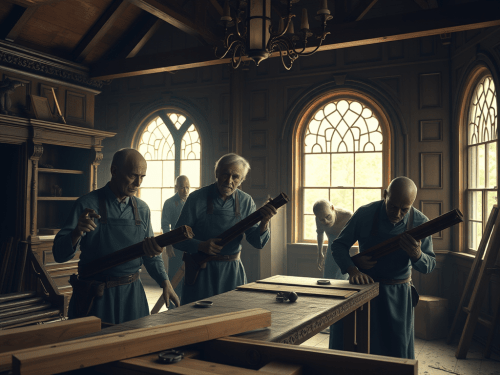
Much like the land crisis in Las Vegas, we could also run out of land to farm and will not be able to grow or cultivate our own food. We can protect American farmland and support American farmers by buying American made beef, poultry, dairy, and produce. Also, country of origin labeling is very important so Americans can know where their food is coming from and can support American farmers and ranchers. As money flows, it influences further investment. Save the land that sustains us by protecting American farmland. Once the land is built on, we lose it forever. And in the future, there may be food wars. Also, to ensure that we have farmland and buildable land for future use, we need to start limiting the number of people allowed to immigrate to America. Perhaps with the immigrants we do allow into America, there needs to be a diversity program to make sure we have a population that equally represents all races of people. If Americans continue to spend money on American products, then more need to be made to keep up the inventory. When investors notice these goods are selling, it gives them the confidence to pour more money into that local business. It shows that people want these goods made in America and pressures investors to keep these goods and services in America. The jobs stay here, the business stays in America, wages naturally increase, and more money is invested to keep up with demand. This reduces the burden on the taxpayer. When you support American businesses, that money stays in our economy and can help to reduce the national debt. The government creates debt by borrowing from businesses in the private sector or from foreign countries. It also increases the national debt by spending more than it gains in tax revenue in a fiscal year. #RandolphHarris 30 of 32

When people shop locally, more tax money stays in the economy and goes to the government. This way, it keeps more money in our national economy and keeps more jobs located in America which also sends more taxes to the government, which can again help to reduce the national debt. When you buy foreign goods, these companies usually have lighter tax loads or exemptions, meaning less money for the national debt, plus you are helping to strengthen these foreign nations by sending more money overseas. Buying American-made products is also better for the environment and helps to reduce the carbon footprint because these products do not have to travel nearly as far. Furthermore, American companies and manufacturers are held to much higher standards on pollution. American companies must be more careful about air, land, and water pollution and have proper ways to dispose of waste. Under President Trump’s administration, he has make America a priority. President Trump has closed the southern border, illegal crossings have fallen to an all time low, and are 90 percent lower than under the previous administration. Since President Trump’s crack down on crime, violent crimes in Washington D.C. have dropped by approximately 80 percent. He has stopped thousands of pounds of drugs from entering America and killing citizens. And since President Trump took office, investments in America have increased by trillions of dollars in U.S.A. manufacturing, production, and innovation. As you can see, President Donald Trump and his pledge to “Make America Great Again” is exactly what America needs to save the country and the American people. And yes, diversity is important, so you can see why it is also important to preserve blonde hair and blue eyes, as the people with these characteristics are becoming a minority in America. #RandolphHarris 31 of 32

We must think before we can understand the soul’s existence; we must understand before we can realize it. The earliest beginnings of thought, as apart from instinct, when it was itself still but a lurking tendency, belong far back in primeval time. The human intellect as we find it today, so rich and developed an instrument for the consciousness of the ego, did not arrive at this fullness without a series of graduated stages. We have had plenty of scientific thinking, business thinking, and political thinking long enough, but we have had very little inspired thinking. That is the world’s need. The intellect is cradled in selfishness but runs the evolutionary track into reason, where it will one day finish at the winning-post of selflessness. As a reminder, parents, please teach your children to love America and be patriotic citizens, and to buy goods and services made in America. It is also important to respect law and order and treat your elders with respect. It is inborn in the human mind to wish to know. If this begins with the endless surface questions of a child’s curiosity, if it continues into deeper questions of a scientist’s probing investigation, it cannot and does not stop there. For the higher part of the mind will eventually come into unfoldment, that union of abstract reflective thought with mystical intuition, which is true intelligence, which needs and sees a view of the whole of things. And so, the knowing faculty enters the realm of philosophy. Therefore, remember to take your education seriously so that you will be successful in life and make your family proud. Also, to make sure they have all the resources required, please donate to the Sacramento Fire Department to help improve our national security. “Oh, thus be it ever, when freemen shall stand between their loved home and the war’s desolation! Blest with victory and peace, may the heav’n-rescued land Praise the Power that hath made and preserved us a nation! Then conquer we must, when our cause is just, and this be our motto: ‘In God is our trust.’ And the star-spangled banner in triumph shall wave O’er the land of the free and the home of the brave.” #RandolphHarris 32 of 32

According to locals, over a century ago, the land that houses The Winchester Mansion had been vacant forever. Then, sometime in the early afternoon of Saturday, March 13, 1886, Sheriff Angel Camilio began getting reports that a massive castle made of wood had suddenly appeared. Gables rose, towers peaked into the sky as the mansion mushroomed into a labyrinth overnight.

The house’s sudden manifestation had been both disconcerting and fascinating to the community. Some felt dark curses flowing from the estate, and things moving around in the darkness. Others saw a fairytale castle glimmering in the spring sunlight. Perhaps this is why there are no records of construction, no blueprints, and no permits filed with the county. And then one day, a hearse came tearing through the gates, and in that hearse was a coffin, some believed it contained Mrs. Winchester.
According to legend, when Sarah Lockwood Pardee (Winchester) married William Wirt Winchester in 1862, she enjoyed a life of extravagant luxury. William Winchester, President of the Winchester repeating rifle, became a very wealthy man through the sale of his guns, and the couple were among the elite New England society.
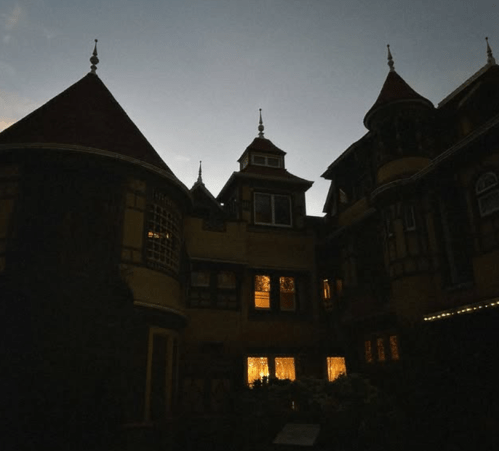
However, in 1866, the death of their infant daughter drove Mrs. Sarah Winchester into a deep depression from which many thought she would never emerged. Several years later, she lost her husband to tuberculosis, and her grief was overwhelming. Mrs. Winchester sought the counsel of a Boston medium to reach her beloved dead family members. The medium told the grieving widow that she was cursed and demons straight from hades had sought revenge by ending the lives of her beloved husband and darling baby girl.
She also told Mrs. Winchester they would kill her too, unless she moved out West and built a great house for the spirits. In addition, Mrs. Winchester was told construction on the house must never end in order to appease the spirits and keep her alive, perhaps even give her eternal life. Mrs. Winchester followed the medium’s suggestions, and in 1886, she moved to the Santa Clara valley just outside San Jose, where she bought an 18-room farmhouse and property to build her mansion. At its peak, the Mansion once stood 9-stories tall and had as many as 600-rooms. Today, the stately mansion is 4-storys, and over 100,000 square feet.

Experience an unforgettable journey back to the time of kings and queens with this entry ticket for The Winchester Mansion in Santa Clara, California, which was the residence of Heiress Sarah L. Winchester. Come and see what secrets this so-called, “Winchester Mystery House” may hold. Take advantage of this fascinating experience. After the tour, there will be time to enjoy the mansion’s splendor at your own pace. You might even discover secret passages that lead to hidden chambers within the mansion. These chambers served as safe places for valuables, precious documents, and as private sanctuaries for Mrs. Winchester, and allowed her to move stealthily throughout her home. At one time, there were even secret tunnels that extended beyond the mansion, leading to nearby Victorian houses that were also on the property, and other structures, creating a network of escape routes or hidden pathways.

Please come and enjoy a delicious meal at Sarah’s Café, stroll along the paths of the beautiful Victorian gardens, which once spanned 740 acres, all the way down to Stevens Creek Boulevard; wander through the miles of hallways in the world’s most mysterious mansion.

For further information about tours, including group tours, weddings, school events, birthday party packages, facility rentals, and special events please visit the website: https://winchestermysteryhouse.com/
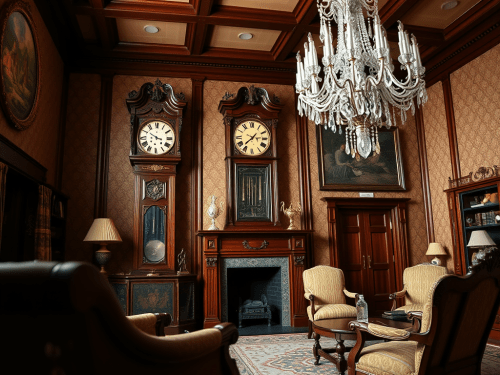
Please visit the online giftshop, and purchase a gift for friends and relatives as well as a special memento of The Winchester Mystery House. A variety of souvenirs and gifts are available for purchase. https://shopwinchestermysteryhouse.com/


Harris Plumbing, Heating, Air, & Electric has been in business for 30 years. How many businesses can say that? We take pride in everything we do – no matter how big or small the service call might be. We’re here to help your home be as safe and comfortable as possible for you and your family. We take that responsibility very seriously as a company.

Harris will ensure you have the information you need to decide what to do next, whatever your home is facing. We’ll perform a diagnosis and detail what issues are present before starting any work. This gives you a personalized quote and service plan specific to your home’s needs, not some random quote based on the best guess. The only way we can do our best work is to make sure we handle the issues at hand. https://www.callharrisnow.com/about-us/


With its top ranking in Consumer Reports’ Auto Brand Report Card and consistent market share growth, BMW, The Ultimate Driving Experience, has demonstrated its ability to produce high-performing, reliable vehicles that meet consumer demands. BMW stands out due to its focus on driving dynamics and engineering excellence. While other luxury brands prioritize comfort and opulence, BMW is known for creating cars that are fun to drive and offer a unique connection between the driver and the machine. This is why BMW is known as The Ultimate Driving Machine. https://www.brianharrisbmw.com/

Randolph Harris San Francisco Taxation & Mergers
Building strong and lasting client relationships is crucial for a successful legal career. Many lawyers mistakenly believe that mastering legal skills alone ensures success, but law is fundamentally a service industry—our job is to solve problems through the time we sell. To build long-term relationships, attorneys must focus on three core elements: knowing their clients, understanding how their legal issues fit into a larger context, and consistently delivering exceptional service.

Randy advises clients with regard to business transition, taxable and tax-deferred mergers and acquisitions, joint ventures, restructuring, integrated tax planning, federal and state tax controversy resolution, and real estate transactions. Trust is the cornerstone of any client relationship. Ultimately, my clients feel they are in capable hands with someone who genuinely understands their problems and goals. https://www.jmbm.com/l-randolph-harris.html


Rancho Cordova, CA | low $500s
Now Selling!

Welcome to Cresleigh Park Haven, the newest home community in Rancho Cordova.

Nestled in the heart of Rancho Cordova, Park Haven is a thoughtfully planned neighborhood of 71 homes designed for comfort, convenience, and connection. Adjacent to Exploration Park, it offers the perfect blend of modern living and outdoor adventure right at your doorstep.

Choose from five floor plans ranging from 1,342 to 2,547 square feet, with options for 3 to 5 bedrooms, flexible spaces, and open layouts tailored to today’s lifestyles. Whether you are a first-time buyer, a growing family, or looking to simplify without giving up style, there is a home here for you.

Select homes include 100 percent owned solar at no extra cost, providing lasting savings, energy efficiency, and the confidence of ownership.
With maintenance friendly yards, nearby shopping and dining, and access to top rated schools, Park Haven is more than just a place to live. It is a place to thrive. https://cresleigh.com/park-haven/

Every house where love abides and friendship is a guest is surely a Cresleigh Home. https://cresleigh.com/park-haven/residence-4/

“Those who deny freedom to others, deserve it not for themselves; and, under a just God, can not long retain it.” -President Abraham Lincoln

America is a nation founded on godly principles, by God-fearing men. As a nation, we have convinced ourselves of our uniqueness with concepts such as Manifest Destiny and American exceptionalism. Manifest destiny was the imperialist belief in the 19th-century United States that American settlers were destined to expand from sea to shining sea.
American exceptionalism, idea that the United States of America is a unique and even morally superior country for historical, ideological, or religious reasons. As a nation we appear favored and blessed by the Lord with success and prosperity unparalleled in human history.

America has a lot of amazing things – its beautiful natural scenery, vibrant cities, unique culture, and some of the world’s most iconic landmarks — it us no wonder many choose to make America their home.

The Last Enemy that Shall be Destroyed is Death!
After one has learned how to listen, he must learn what to listen for. From the psychiatric point of view, there are four basic vocal signals: sounds, accents, voices, and vocabulary. The commonest breathing sounds and their usual meanings are as follows: coughs (nobody loves me), sighs (if only), yawns (buzz off), grunts (you said it), and sobs (you got me); and various kinds of laughs such as jollies, chuckles, snickers, and titters. The three most important types of laughs, known colloquially as Ho Ho, Ha Ha, and He He, will be discussed further on. Culture has very little to do with scripts. There are winners and losers in every layer of society and in every country, and they go about fulfilling their destinies in much the same way all over the world. To further highlight this situation, the prevalence of mental illness in any large group of people is pretty much the same all over, and there are suicides everywhere. As the late Tupac said in the lyrics of his song, “So Many Tears,” “I’m suicidal, so don’t stand near me. My every move is a calculated step to bring me closer to embrace an early death. Now there’s nothin’ left.” Every large group in the world also has its leaders and its rich men. Nevertheless, foreign accents do have some meaning for the script analyst. First, they make possible educated guesses about early Parental precepts, and that is where culture does come in: “Do as you are told,” in Germany, “Be quiet,” in France, and “Do not be naughty,” in Britain. #RandolphHarris 1 of 31
Secondly, accents indicate the flexibility of the script. A German who has been in this country for twenty years and still speaks with a thick accent probably has a less flexible life plan than a Dane who speaks good American after only two years. Thirdly, if the therapist can speak that language, the script is written in the native language of the Child, and script analysis is swifter and more effective. A foreigner living out his script in America is the equivalent of putting on Hamlet in Japanese in the Kabuki theater. If the critic does not have the original at hand, a great deal is going to be lost or misunderstood. Particularly if they are affected, native accents are also informative. A man who speaks with a Brooklyn accent but throws in a few Boston or Broadway broad a’s clearly shows the influence of a hero or a parental person he is carrying around in his head. Even if the patient denies it, that person must be tracked down, because his influence is probably widespread. “She passed a remok, or I should say an epigram,” or “We left oily, but did not get to the game until hof time,” clearly indicates a splint in the Parental directives. Each patient has at least three different voices, Parent, Adult, and Child. He may keep one, or even two of them carefully hidden for a long time, but they will slip out sooner or later. Usually, a careful listener can hear at least two of them in any fifteen minutes. #RandolphHarris 2 of 31

The patient may say a whole Parental paragraph with only one Child whine, or a whole Adult paragraph with only one Parental scold, but an alert listener will pick up the key phrase. Other patients change voices from one sentence to another, or even use two or three voices in a single sentence. Each of the voices reveals something about the script. A Parental voice, speaking to another person, uses Parental slogans and precepts, and duplicates what the father or mother would have said in the same situation: “Does everybody not?” “Look who is talking,” “You have got to keep your mind occupied,” “Why do you not try harder?,” “You cannot trust anybody.” An unanswering Adult voice usually means that the Child is being suppressed by Parental command in favor of some humorless pedantic pattern, perhaps loaded with a few “official” or anal jokes. This indicates that the Child will therefore find devious ways of expression or periodically explode, giving rise to the nonadaptive behavior and waste of energy which makes a loser. The Child voice indicates the script role: “Cute Kid,” “Little Old Me,” “Clinging Whine,” for example. Thus, the parental voice tells the counterscript, The Adult voice gives the pattern, and the Child voice takes the script role. Each ego state may also have its own vocabulary. Parental words, such as “bad,” “stupid,” “coward,” and “ridiculous,” tell what Jeder is most afraid of being, and tries hardest to avoid. #RandolphHarris 3 of 31

A persistent Adult technical vocabulary may be simply a way of avoiding people, as is common in engineering, aviation, and finance, under a script directive of “Do great things but do not get involved personally.” The Adult “helpnik” vocabularies (PTA, psychology, psychoanalysis, social science) may be used in an intellectual Rite of Spring, where the victim’s dismembered psyche is left scattered over the floor on the theory that he will eventually join himself together and be more fertile afterward. The storyline of this script reads: “I will tear you apart, and remember I am only trying to help you. However, you will have to put yourself together, since nobody else can do it for you.” Sometimes the patient is his own favorite Ritual victim. The Child vocabulary may be the obscene words of revolt, the clichés of compliance, or the sweet phrases of charming innocence. A typical triad often found in the same person is Parental marshmallow-throwing, Adult dissection, and Child obscenity. To further highlight this illustration: “We all have our ups and downs; I think you are handling it beautifully. Of course, you must split off your autonomous ego from your identification with your mother. After all, it is a harsh world.” This script comes right out of Dante’s Inferno: “How to keep smiling while reading a textbook when you are up to your neck in sewage.” #RandolphHarris 4 of 31

Adjectives and abstract nouns are name-calling. The correct response to a person who says that he suffers from “passive dependency” or that he is “an insecure sociopath” is “What names did your parents call you when you were little?” Action euphemisms such as “aggressive expression” or “pleasures of the flesh,” should be eliminated by asking, “What did you call that when you were little?” “Expressive aggression” is a pure artifact and means that Pat has gone to a modern dance class or been wrestled by a Gestalt therapist, while being involved in “pleasures of the flesh” means that he attends meetings of the Sexual Freedom League.” Adverbs are a little more intimate. Thus, “I sometimes feel sexual excitement” is over there in the vague distance, while “I sometimes get sexually excited” is over here. The precise psychological significance of adverbs, however, remains to be clarified. Pronouns, verbs, and concrete nouns are the most real parts of speech, and “tell it like it is.” Telling it like it is may mean that the patient is ready to get well. Thus, a woman who is afraid of the pleasures of the flesh often stresses adjectives and abstract nouns: “I had a satisfactory sexual experience.” Later, she may emphasize pronouns and verbs: “We really turned on.” One woman went to the hospital the first time to have “an obstetrical experience.” The second time, she went to have a baby. Patients “express hostility against authority figures.” When they become real people, they just swear or tear up the papers. #RandolphHarris 5 of 31

On the therapist’s side, the one who reports: “We initiated the interview by exchanging beneficial greetings. The patient then related that he had expressed hostility by performing an act of physical aggression against his wife,” is having a harder time than the one who says: “The patient said Hello and told me that he hit his wife.” In one case, the therapist maintained that a boy “attended a residential school setting in the private area,” while the boy said that he merely “went to boarding school.” The most important single word in script language is the particle “but,” which means “According to my script, I do not have permission to do that.” Real people say: “I will,” or “I will not,” or “I won,” or “I lost,” while “I will but…” “I will not but…” “I won but…” or “I lost but…” are all scripty. Various women live in worlds populated by wolves, beasts, charmers, cats, creeps, suckers, and pricks, and their menfolk see them as dishes, b*tches, grooves, chicks, foxes, chicks, broads, whores, and some other unpleasant terms. All these are script words which emerge in the course of conversation on group treatment. The script scenes are usually centered around one or other room of the house: the nursery, the bathroom, the kitchen, the living room, and the bedroom, and these are located in such expressions “plenty to drink,” “all that crap,” “a regular fest,” “all those people,” and “sock it to them.” #RandolphHarris 6 of 31
Each of these rooms has its own vocabulary, and the person stuck in any of these chambers will use the appropriate expressions over and over. Equally common is the workroom, signified by “Get your kiester over there.” Closely allied to script words are metaphors. Thus, Mary had two different and separate vocabularies of metaphors. In one, she was all at sea, could not fathom anything, could hardly keep her head above water, had stormy days, and waves of feelings. At other times, life was a feast, she could eat her words, she had lots of goodies, or she might feel sour or bitter because that was the way the cookie crumbled. She married a sailor and complained of obesity. When she felt at sea, all her lingo was maritime, and when she was overeating, it was culinary. Thus, she fell from the ocean to the kitchen and back again, and the therapist’s problem was to get her feet on the ground. Metaphors are an extension of the script scene, and a change in metaphors means a change of scene. In her case, the stormy waters turned out to be a sea of anger. Some people must go through certain rituals or make certain gestures before they begin to talk, in order to protect themselves or apologize for speaking. These rituals are addressed to their Parents. Abelard, to further highlight this illustration, always slid his hands under his belt before he began to talk. It was evident that he was protecting his testicles from some inner assailant who was scheduled to attack him when he was off guard because he was speaking to somebody, so he always took care of that danger before he ventured to speak. #RandolphHarris 7 of 31

To tell people the simple, if subtle, truth is to provoke them to partisan wrath. To such unintelligent objections, we may well answer with old Dr. Johnson, “I have found you a reason, sir—I am not bound to find you an understanding.” These people possess a remarkable talent for finding out difficulty in what is perfectly plain. They complain about our arguments because, in brief, the latter have been directed to a higher intellectual level than that of a boy of ten. Argument can be refined, dignified, and courteous and still remain argument. However, the crude and immature think it necessary to express themselves by abuse and vilification in order to prove their points! The pompous pedantry of some academic circles is not less unbalanced than the illiterate inarticulateness of those who scorn them. These lopsided characters who make intellect their sole judge, guide, and support have imprisoned themselves in it and refuse to leave their jail. Are they not foolish? They use their minds only to deal with matters and to answer questions arising from their personal desires and social situations, only for the private satisfaction of their earthly interests. A higher use of it makes no appeal. We must not only renounce such an unsatisfactory doctrine, but also denounce it. In the new loyalty to a narrower view of truth, they abandon the High, the Holy, the Beautiful, and the Refined. The practical benefits of their education are plain, but why become a dwarf to get them? #RandolphHarris 8 of 31
They are imprisoned by their own illusory concepts, and unless something or someone from outside comes to release them, they will continue to be captive, limited, and unnecessarily lost in illusions. The meaning of a word or phrase may be multiple, which is why translations vary, why interpretations are disputed, and why statements in bureaucratic jargon leave some persons uncertain and others unclear. Hence, lawyers are hired, teachers of semantics arise, and sects flourish. However, turn to numbers and one knows precisely what one is dealing with. They fulfill their function without debate. No mist arises. So Pythagoras can boldly assert: “The universe is founded upon numbers.” The power of abstract thought has characterized the best class of minds since time immemorial. Joseph de Maistre refutes Jacobinism and Calvinism, two doctrines which summed up for him, “everything bad that has been thought for centuries,” in the name of a Christian philosophy of history. To counter schisms and heresies, he wanted to re-create “the robe without a seam” of a really catholic Church. His aim—and this can be seen at the period of his Masonic adventures—is the universal Christian city. Maistre dreams of the protoplatic Adam, or the Universal Man, of Fabre d’Olivet, who will be the rallying-point of individual souls, and the Adam Kadmon of the cabalists, who preceded the Fall and who must now be brought to life again. When the Church has reclaimed the world, she will endow this first and last Adam with a body. #RandolphHarris 9 of 31

In the Soirees in St. Petersburg there is a mass of formulas on this subject which bear a striking resemblance to the Messianic formulas of Hegal and Marx. In both the terrestrial and the celestial Jerusalem that Maistre imagines, “all the inhabitants pervaded by the same spirit will pervade one another and will reflect one another’s happiness.” Maistre does not go so far as to deny personal survival after death; he only dreams of having been annihilated, there will be no more passion nor self-interest,” and where “man will be reunited with himself when his double standard will be obliterated and his two centers unified.” In the city of absolute knowledge, where the eyes of the mind and the eyes of the body became as one, Hegel also reconciled contradictions. However, Maistre’s vision again coincides with that of Marx, who proclaims “the end of the quarrel between essence and existence, between freedom and necessity.” Evil, for Maistre, is nothing but the destruction of unity. However, humanity must rediscover its unity on earth as in heaven. By what means? Maistre who is an ancient regime reactionary, is less explicit on this point than Marx. Meanwhile, he was waiting for a great religious revolution of which 1789 was only the “appalling preface.” He quotes Saint John, who asks that we make truth, which is exactly the program of the modern revolutionary mind, and Saint Paul, who announces that “the last enemy that shall be destroyed is death.” Humanity marches, by way of crimes, violence, and death, toward this final consummation, which will justify everything. The earth for Maistre is nothing but “an immense altar on which all the living must be sacrificed, without end, without limit, without respite, until the end of time, until the extinction of evil, until the death of death. His fatalism, however, is active as well as passive. “Man must act as if he were capable of all things and resign himself as if he were capable of nothing.” We find in Marx the same sort of creative fatalism. Maistre undoubtedly justifies the established order. #RandolphHarris 10 of 31

In dreams, we are closer to the reality of ourselves. And this dream in particular seemed to emerge from a great depth, and to present a profound and square insight into the danger of the dreamer’s particular self-destructiveness. The reaction of pity for self, in this instance as in many others, was at that time not constructive: it did not move her to do anything in her own behalf. Only when the hopelessness and the intensity of self-contempt abates, can the unconstructive self-pity turn into a constructive sympathy with self. And this indeed is a forward move of great significance for anybody in the clutches of self-hate. It goes with a beginning feeling for his real self and a beginning wish for inner salvation. The reaction to the deteriorating process can also be stark terror. And, considering the formidable danger of self-destructiveness, this reaction is completely adequate as long as one continues to feel a helpless prey to these merciless forces. In dreams and associations, they may appear in many succinct symbols, such as a homicidal maniac, Dracula, monsters, a white whale, or ghosts. This terror is the nucleus of many fears otherwise inexplicable, such as the fear of the unknown and of the dangerous depth of the sea; the fear of ghosts; of anything mysterious; of any destructive process within the body, such as poison, worms, cancer. It is a part of the terror many patients feel toward anything that is unconscious, and, therefore, mysterious. It may be the center of panic without an apparent reason. #RandolphHarris 11 of 31
If it were always present and alive, it would be impossible for anybody to love with such a terror. He must and does find ways to assuage it. Surveying self-hate and its ravaging force, we cannot help but see in it a great tragedy, perhaps the greatest tragedy of the human mind. Man in reaching out for the Infinite and Absolute also starts destroying himself. When he makes a pact with the devil, who promises him glory, he must go to hell—to hell within himself. Dr. Darwin dealt with man’s biological origins. His achievement, and his sin, was a theory that made man a part of nature. To accomplish this, and only for this, he was able to put his neurosis aside. Dr. Freud, however, had to “appoint his own neurosis that angel who was to be wrestled with and not to be let go, until he would bless the observer.” Dr. Freud’s wrestling with the angel who was to be wrestled with and not to be let go, until he would bless the observer.” Dr. Freud’s wrestling with the angel was his working through of his own father complex which at first had led him astray in his search for the origins of the neuroses in childhood. Once he understood his own relationship to his father, he could establish the existence of the universal father image in man, break through to the mother image as well, and finally arrive at the Oediups complex, the formulation of which made him one of the most controversial figures in the history of ideas. In The Interpretation of Dreams, Dr. Freud gave psychoanalysis its orientation as the study of unconscious motivation in the normal as well as the pathological, in society as well as the individual. At the same time, he freed his own creativity by self-analysis and was able to combine strict observation with disciplined intuition and literary craftsmanship. #RandolphHarris 12 of 31

Language, which may be defined here as a system of vocal signs, is the most important sign system of human society. Its foundation is, of course, in the intrinsic capacity of the human organism for vocal expressivity, but we can begin to speak of language only when vocal expressions have become capable of detachment from the immediate “here and now” of subjective states. If I snarl, grunt, howl, or hiss, although these vocal expressions are capable of becoming linguistic insofar as they are integrated into an objectively available sign system, it is not yet language. The common objectivations of everyday life are maintained primarily by linguistic signification. Everyday life is, above all, life with and by means of the language I share with my fellowmen. An understanding of language is thus essential for any understanding of the reality of everyday life. Language has its origins in the face-to-face situation, but can be readily detached from it. This is not only because I can shout in the dark or across a distance, speak on the telephone or via the radio, or convey linguistic signification by means of writing (the latter constituting, as it were, a sign system of the second degree). The detachment of language lies much more basically in its capacity to communicate meanings that are not direct expressions of subjectivity “here and now.” It shares this capacity with other sign systems, but its immense variety and complexity make it much more readily detachable from the face-to-face situation, including matters I never have and never will experience directly. #RandolphHarris 13 of 31

In this way, language is capable of becoming the objective repository of vast accumulations of meaning and experience, which it can then preserve in time and transmit to following generations. The mechanisms of defense might just as legitimately be called mechanisms for increasing self-alienation or methods of evading growth, for such are their consequences. They are modes of behavior undertaken by a person with a relatively weak ego when a threat to the self-structure arises. If they are effective, they reduce anxiety and guilt, but whenever the defenses are themselves weakened, threat is again experienced, for its causes continue to be operative. A defense is like a drug; it must be kept operative if it is to reduce discomfort. However, a defense, like a drug, does not remove the conditions responsible for the pain and discomfort. What are the major patterns of defensive behavior and how may they be recognized? The individual can seldom recognize his or her own defensiveness, except under special conditions. The observer may be able to infer, from certain signs, the nature of the defense, the consequences of the defense, and the aspects of the real self that are being defended against. Repression is the most basic defense. It consists in actively excluding from awareness any thought, feeling, memory, or wish that would threaten the self-structure. Dr. Freud introduced the concept of repression to explain some phenomena that he regularly observed in his efforts to treat neurotic patients. He found that his patients displayed resistance to the injunction that they say everything that came to mind. #RandolphHarris 14 of 31

Dr. Freud used the term resistance to describe any deviation from unselected, uncensored talking. The term repression was invoked to explain the efforts of the person to avoid not merely speaking about embarrassing topics, but even thinking about these topics. Repression manifests itself by the omission in a person’s speech, emotion, and behavior repertoire of responses that might ordinarily be expected under given circumstances. To further highlight this illustration, if a person has been deeply insulted by someone and displays no overt signs of hostility, the hypothesis can be entertained that the person has repressed these feelings. It should not be assumed that because some thought, feeling, or need has been repressed, it simply fades out of existence altogether. Rather, what appears to occur is that the repressed feelings and tensions continue to operate as unconscious determiners of behavior because the causes of these feelings persist in life itself. The represser may betray many signs of the repressed feelings to a keen observer—in dreams, accidents, slips of the tongue, and so on. Repression also manifests itself as chronic tensing of various muscle groupings. If a person has repressed rage, yet lives continuously among the people who provoke it, that person may chronically display tension in the muscles of the jaw, the neck, and the shoulders. When a set of muscles has relaxed, in response to the therapist’s manipulations, the patient would express rage, or tears, and convulsions sobbing; moreover, the patient might then recall with vividness some childhood events related to the original repression. #RandolphHarris 15 of 31

An important indicator of repression is a refusal by the person to examine and consider any other motives for a given action than the one he or she presently admits. Thus, a parent may spank his or her children quite severely, may forget their birthdays, never spend time with them at enjoyable activity, and continually scold them. An observer may gather the impression that such behavior expresses hatred and dislike for the children and asks the parent why he or she treats the children so. The parent says, “Because I love them, and I am trying not to spoil them. I am trying to raise them right.” If the observer asks, “Could it be that you do not like your children?” the parent might become quite indignant and refuse to explore the possibility that this might be true. This person is repressing hostility to the children. For the parent to admit disliking the children might threaten his or her self-structure to a profound degree. Another important indicator of repression is selective recall of the past. In relating aspects of the past, much may be omitted from the account. If the observer knows what has been omitted, he or she may confront the person with these details, only to have the person deny that the events occurred. It is as if this person had a vested interest in forgetting these details, in order to preserve the present concept of self. Many experimental studies have shown how our recall and our forgetting are determined to a high degree by the need to maintain self-esteem and to preserve the present self-concept. #RandolphHarris 16 of 31

Many experimental studies have shown how our recall and our forgetting are determined to a high degree by the need to maintain self-esteem and to preserve the present self-concept. In principle, a person can repress any aspect of the real self, whether it is socially desirable or socially reprehensible. Thus, a person may repress antisocial sexual urges and hostility but may also repress feelings of attraction, his or her own intellect, and strength and resources if these aspects of the real self imply some threat to the self-structure. The authoritarian character who exaggerates personal weakness and the strength of the hero or boss is repressing his or her own powers and ascribing them (projecting them) to the authority figure in question. Dr. Fromm has detailed this point in his discussion of authoritarianism in everyday life and even in religion; he has suggested that the image of an all-powerful God, in contrast with weak, powerless humans, rests on our repression of our own powers and the ascription of these very powers to the deity. Repression is quite an unstable mechanism, calling as it does for unremitting (but unconscious) effort from the person. Whenever there is any reduction in the energy devoted to repression, there is likely to be a breakthrough of the repressed aspects of the real self. When this occurs, the person may be incredibly threatened by feelings and impulses that he did not know he possessed. #RandolphHarris 17 of 31

The feelings may be so intense that he explodes into uncontrolled activity—for instance, sexual or hostile violence. Probably many of the sex and homicide crimes which one reads about in the papers (“Nobody would have expected him to do that, he was always so nice, so moral”) illustrate the breakthrough of repressed feelings and impulses. When a person is fatigued, or ill, he may be overwhelmed with fantasies, feelings, and impulses that are shocking to him and to those who know him. Although repression is usually involuntary and unconscious, it can be conscious and deliberate. Every reader will recall occasions when they have had thoughts that were fully conscious, but quite repugnant. On those occasions, they may have striven to get rid of the unwanted thoughts by just putting them out of my mind or by trying to change the subject of thinking, in order to think of more pleasant things. Such efforts, if successful, may be called voluntary and conscious repression. They are analogous with the conversation between two persons; when an unpleasant subject comes up, the person who finds it is unpleasant will ask that the subject be changed, or else may skillfully guide the conversation so that the dangerous topics are avoided. Typically, few venture to do more than peep beyond the portals, for they are unable to bear the hard strain of prolonged philosophical thinking. However noble they may be morally or however abstract they may be metaphysically, it is not by living in the ideas in his mind that a man can ever live in his true self. Somewhere in his field of consciousness, all thinking must be transcended if he is ever to do this. The logic of your thinking must be as universally valid as mathematics. Nobody can cheat mathematics. #RandolphHarris 18 of 31

It is not difficult to prevent or abort a heroic act. Sometimes this results from the confluence of situational circumstances; sometimes it is a calculated effort motivated by selfish factors. It apparently may also occur through the mere acknowledgement that the person has done something laudatory. Given society’s continued need for heroes, we need to know how to better protect heroism against these influences. The award-winning Sacramento Fire Department heroes are celebrated and remembered by the community based on their exceptional and dramatic performance in critical situations. At approximately 2.45 on a hot, sunny afternoon, a small fire was discovered in a pile of wrapping paper near the rear of a store. An employee spotted the fire near the wrapping counter and called for a manager nearby. He began to fight the rapidly expanding blaze, while another employee ran to the basement for water. By the time he returned, the manager had already called the fire department, was fruitlessly battling the flames that had spread to the nearby elevator shaft and were spreading rapidly to the second floor. Several employees fled to the front of the store to escape the now roaring fire that was being fed by a current of air from the outside through the open doors at both the front and rear of the store. As they reached the front door, the fire had created a tremendous draft into the store that it sucked the doors shut, catching the manager’s foot and trapping a few other employees inside the store. The employees struggled with the doors for a few seconds but managed to escape just as the firefighters arrived. “The door was shut when I reached it,” said one employee later. “It was all I could do to pull it open, so strong was the pressure…neither of us could have stood it a minute longer in the building.” #RandolphHarris 19 of 31

The fire department arrived just as the occupants were leaving the building. The Fire Chief immediately ordered three hydrants tapped, and the fight to contain the fire began. As the firemen deployed five streams around the building, the blaze vented itself by shattering all of the windows and shooting through the roof. Despite the intense heat, the Fire Chief led several men with a lead hose into the building, but little progress was made, and they pulled back as the roof and upper floors were about to collapse. Although there was little or no wind, the danger to surrounding buildings was incredible due to the flying embers and the extreme radiant heat from the store. As the heat shattered the front windows, the large plate glass windows in the building directly across the street cracked, but they did not shatter, and the fire did not gain entrance to the building. The flying sparks and embers wreaked havoc on other businesses. The first fire was extinguished quickly, but another building received considerable damage to the second floor and roof. Eventually, the roof collapsed in the store that initially caught fire. There were three firemen injured during the blaze, but none were seriously. The Fire Chief had a cut on his stomach, but remained on the scene until the fire was out. By chance, the Assistant Fire Chief was traveling through the street on an outing with his wife when he spotted the fire and offered his assistance. After the fire was under control, he was water-soaked, and his new suit was ruined from the heat. #RandolphHarris 20 of 31

If you see a fire truck stopped in the street without the lights on, be very careful. Sometimes there is an emergency, and you should not pass the fire truck. It might be a good idea to safely turn around and go another way because if you hit someone and they happen to die, you could be charged with manslaughter. Sometimes fire firefighters are getting back into their vehicle, and if you pass the apparatus, you may collide with a firefighter who is on foot. Also, be sure to look at their signals; sometimes emergency vehicles are in motion, albeit slowly, and drivers try to pass them, and this could lead to a dangerous situation. Also, if you are in an intersection when you see an emergency vehicle, continue through the intersection. Drive to the right as soon as it is safe and stop. Obey any direction, order, or signal given by a law enforcement officer or a firefighter. Even if they conflict with existing signs, signals, or laws, follow their orders. When their siren or flashing lights are on, it is against the law to follow within 300 feet of any fire engine, law enforcement vehicle, ambulance, or other emergency vehicle. If you drive to the scene of a fire, collision, or other disaster, you can be arrested. When you do this, you are getting in the way of firefighters, ambulance crews, or other rescue and emergency personnel. The concept of professional courage does not always mean being as tough as nails, either. It also suggests a willingness to listen to other people’s problems, to go to bat for them in a tough situation, and it means knowing just how far they can go. It also means being willing to tell the boss when he or she is wrong. #RandolphHarris 21 of 31

California is the third most expensive state in the nation. In 37 percent of counties, a family of four living on a six-figure income is now considered low-income. The average home price in California is nearly $1,000,000.00 USD, while the average salary is $96,036.00, meaning that most Californians cannot even afford to buy a home. California is having an affordability crisis. A single person making an income above $100,000 is now considered low-income in five counties in California. This distinction now applies to individuals living in Santa Cruz, Santa Clara, San Mateo, San Francisco, and Marin counties. The maximum percentage of your gross income that you should earmark for a monthly mortgage payment is calculated at 28 percent, and no more than 36 percent of your gross income to all debts, including mortgage. If you take 28 percent of the median household income per home in Sacramento County, homeowners can only afford a mortgage of $2,070.23 per month. And if you take 36 percent of their gross income to all debts, including mortgage, they should be devoting no more than $2,661.72 a month to these debts. The mortgage lenders must be using some kind of sorcery to get buyers into these expensive homes. To afford one of these homes using traditional guidelines, a household would need to gross $11,280.24 per month or $135,362.88 per year, but the median household in Sacramento County is grossing $7,393.67 a month or $88,724.00 annually, and that typically means two to four people in the home are working and contributing to the mortgage. Home prices in Sacramento County are rivaling the Bay Area, and in some cases, homes in the Bay Area are more affordable. Historically, homes in the Bay Area have been more expensive because they have higher-paying jobs, a larger population, and the Bay Area is a tourist destination. Contributing to the housing affordability crisis is Gavin Newsom, who has been lavishing illegal immigrants with taxpayer-funded resources and cash aid, when state workers should be receiving a 25 percent wage increase instead. #RandolphHarris 22 of 31

In 2025, many people in California saw their bills increase by an estimated $500 a month. This includes items such as food, automobile insurance, homeowners’ insurance, and electricity. In fact, more than 3 million people in California are facing household hardship, and more than 300,000 of them are facing eviction soon. This comes at a time when California is having a shortage of affordable housing. The crisis is caused by nearly half a century-old laws that discourage home sales and encourage higher rents. The incompetence in California is very easy to see. From 2018 to 2023, California received $24 billion, which they used to fund 30 homeless and housing programs. These programs created 100,000 units. That is an average cost of $240,000 per unit. In comparison, Roger Lucas, owner of Grand Castle, LLC, spent $50 million to build The Grand Castle, which is a 522-unit residential apartment community in Grandville, Michigan. The community includes studios, 1 bedroom, 2 bedrooms, 3 bedrooms, and even a multi-level penthouse. Rents generally range from $1,000 to $2,500. The community is a 23.6-acre site. It features 750 covered parking spaces, a clubhouse, a resort-style swimming pool, and was built over a period of 12 to 18 months. The average cost was about $95,785.45 per unit, which is $144,214.55 less per unit than California spent. California also has the highest unemployment rate in the country at 5.4 percent, while the national average is 4.5 percent. As people are seeing their bills skyrocket, and minimum wage has increased to $20 an hour, people on Social Security retirement are really bearing the burden with the checks the typically equate to $5-$7 an hour. Furthermore, while Americans are struggling to find and afford housing, Gavin Newsom, Democrat governor of California, signed two bills into law on February 7, 2025, to protect illegal immigrants. Bills SBX 1 1: Budget Act of 2024, and SBX 1 2: Budget Act of 2024, allocates $50 million to protect illegal immigrants from deportation. Governor Gavin Newsom also granted 700,000 illegal immigrants free health care, which costs taxpayers $3 billion annually. At the same time, Newsom cut vital programs for veterans, school children, the disabled, and the homeless. The California crisis created by Democrats is driving up home prices and mortgages, and rents all over the nation and the world, making living unaffordable for all, and advocates say the crisis is far from over. #RandolphHarris 23 of 31
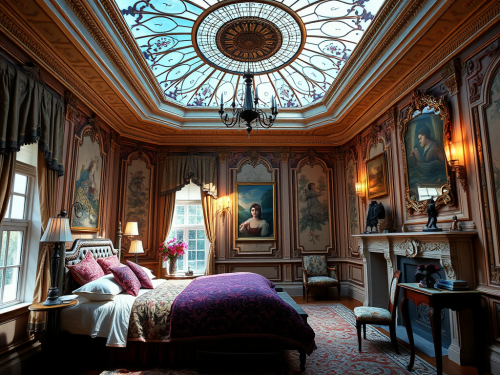
Meanwhile, China, where we are sending all our jobs and money, has more than 50 ghost cities, with 65 million vacant homes. Ghost cities are regions where housing has been overdeveloped to the point that these places are uninhabited. If they are all officially counted, California has approximately 4 million homeless people. The highest home prices in the nation, the highest taxes, and the most unfriendly business regulations known to man. Because California is so hostile towards people and businesses, more than 360 companies have fled the state since 2020. Businesses like Chevron, SpaceX, Oracle, and Hewlett-Packard are among the names on that list. Also, more than 500,000 people a year are abandoning California because it is too expensive to live in, Gavin Newsom has criminalized homelessness and actually started arresting people without homes, crime is out of control, and they are losing their jobs due to companies relocating. More than 100 companies have announced layoffs in California for 2025. Intel is cutting 15,000 jobs, PayPal is cutting 2,500, and Meta has terminated 4,000 employees. California also has the highest unemployment rate in the country at 5.4 percent, while the national average is 4.1 percent. The California crisis created by Democrats is driving up home prices and mortgages, and rents all over the nation and the world, making living unaffordable for all, and advocates say the crisis is far from over. Accordingly, California has more than 3.5 million illegal immigrants. Having the Southern American border open and not having American farmland protected, not producing beef, poultry, fish, fruit, produce, and dairy in America, and without American goods and services being our number one manufactured and selling items, America has created a dangerous and significantly elevated risk to national security, national economic security, and national public health. Some people may believe that these claims are overstated, but by not routinely monitoring Common Vulnerabilities and Exposures (CEVs) or other security-relevant alerts, such as the end-of-life of machinery is how the Oroville Dam Crisis occurred in 2017. #RandolphHarris 24 of 31

Additionally, Democratic Governor Gavin Newsom seems to be uneducated about economics. Newsom has spent $300 million to try to stop proposition 50. Proposition 50 would replace the maps drawn by the state’s independent commission with districts drawn by legislators solely to gain or protect Democratic seats. Newsom only cares about the environment when his policies allow him to raise taxes and restrict freedoms. To further highlight this illustration of incompetence by Governor Gavin Newsom, Mexico has been causing one of America’s worst environmental disasters. Fifty million gallons a day of industrial chemicals, untreated sewage, and trash flow from Tijuana, Mexico, into southern San Diego County daily. This toxic waste has been turning up on Imperial Beach and is causing the miles of white sands to become polluted and the ocean breeze to smell of feces, which has been sickening residents and wildlife and costing San Diego millions in the form of lost tourism and health problems. The problem has been going on for more than a century, and by 2030, Mexico plans to dump one hundred and twenty million gallons of sewage a day into Imperial Beach. Other crises that have occurred due to neglect of critical infrastructure such as the 2025 Palisades fire. Southern California ran out of water because Newsom is totally neglecting the state and the American people. And while the fire departments in California are critically understaffed and underfunded, Governor Newsom vetoed firefighter pay raise. The Palisades fire cost $275 billion, which is money that could have been used to insure the State of California had the resources it needed. Furthermore, when Southern California is located next to an ocean, Newsom should have invested in desalination plants to help with the water shortage in California. The water in the ocean is so plentiful that it is currently eroding land and causing homes to fall into the sea. Desalination has been identified as one technology that will help solve California’s water scarcity problem. Desalination is a cost-effective technology that can transform an abundance of salt water into a reliable supply of potable, fresh water, which is a great way to fight climate change and have enough water for our region’s water requirements. Ras Al Khair, Saudi Arabia, is producing 1,036,000 meters (273,682,192) per day of desalinated water. #RandolphHarris 25 of 31

America needs an approach to eliminate safety vulnerabilities in American cities. There needs to be a road map by the end of 2025, outlining a prioritized approach to eliminate crisis situations in America. There is enough money to send aid to foreign nations, but the American government does not have enough money to care for its infrastructure, provide adequate resources, or end the affordable housing crisis. Nor is there enough money to fund other national critical functions (NCFs). These bad practices of putting America and Americans last are considered exceptionally risky, particularly to national security, national economic security, and national public health and safety. In 2024, Americans spent $100 billion on Japanese cars. As a result, the American automobile trade deficit with Japan was $39 billion. Additionally, Japan exported 1.4 million cars to the United States of America, but only imported 16,000 American-built automobiles. However, Japan imported approximately 143 thousand motor vehicles from the European Union. This is why President Trump created tariffs. We need to balance the trade deficit that America faces with other nations so we are not taken advantage of and so America can go bank to being a creditor nation, instead of borrowing money for other countries. Each year, President Trump is bringing $400 Billion in Tariff revenue into America and hundreds of thousands of new jobs. With this money, America is paying down debt, and with a portion of it, President Trump plans to send Americans a stimulus check anywhere in the range of $1,000 to $2,000. However, if President Trump’s Tariffs are deemed illegal by the Supreme Court, taxpayers will have to pay back trillions and trillions of dollars. As we literally and /or figuratively see gangs, federal judges, and Governor Gavin Newsom fighting with federal law enforcement and President Trump– states and cities refusing to honor federal laws. Politicians are also showing an utter disregard for the Constitution of the United States of America, and anarchy is becoming increasingly common. #RandolphHarris 26 of 31
Anarchism is a cluster of doctrines and attitudes centered on the belief that government is both harmful and unnecessary. Derived from the Greek root anarchos, meaning “without authority,” anarchism, anarchist, and anarchy are used to express both approval and disapproval. The anarchist denies man-made laws, regards property as a means of tyranny, and believes that crimes are merely the product of property and authority. However, the anarchist would argue that their denial of constitutions and governments leads not to “no justice” but to the real justice inherent in the free development of human sociality—the natural inclination, when unfettered by laws, to live according to the principles and practice of mutual aid. Anarchism is also a form of treason. Treason, the crime of betraying a nation or a sovereign by acts considered dangerous to security. In English law, treason includes the levying of war against the government and the giving of aid and comfort to the monarch’s enemies. In the United States of America, treason was defined restrictively by the framers of the Constitution. Treason against the United States of America “shall consist only in levying War against them, or in adhering to their Enemies, giving them aid and comfort,” which is something that many politicians are currently guilty of. The American government should know all exploitable vulnerabilities and fix them before the situation becomes a crisis. Failure to take such mitigating actions is dangerous and significantly elevates risk to national security, national economic security, and national public health and safety. The American government must understand that significant time and resources must be invested in America. They must also encourage corporations to plan for both mitigating safety vulnerabilities in the short term and eliminating them in the long term. For instance, a company might begin by reaching out to the federal, state, or local government and requesting tax incentives to provide security to dangerous communities, to help the government repair bridges and potholes. #RandolphHarris 27 of 31

Drug cartels have been threatening the health and safety of Native American communities. The trafficking of dangerous and illegal drugs into their territories is leading to a second genocide. The overdose rate for Indigenous people is 42 percent higher than the national average. A recent bust on Montana’s Blackfeet Nation’s Tribal Reservation resulted in the seizure of more than 700,000 fentanyl pills, which was the largest bust in Montana history. Recently, the Blackfeet Nation had to declare a state of emergency after facing 17 overdoses in just one week. There are only 6.8 million Native Americans left in the world, which is 2 percent of the American population. We should be doing more to protect these proud and honorable people; they should not want for anything. People rush and give away resources to illegal immigrants, but totally disregard the Indigenous people of this land, as their race silently fades away into extinction. We must secure our borders and increase federal funding to Native American tribes so we can save this precious population. Meanwhile, Gavin Newsom has given billions of taxpayer dollars away to illegal immigrants and protected them from law enforcement, while arresting law-abiding Americans because they cannot afford to pay rent or mortgage, and the homeless shelters are unsafe, overcrowded, and have restrictions on who is allowed inside. He has also totally ignored the cartel problems on American lands. Clean air, water, land, and preserving our heritage are extremely important. We cannot just allow criminals to kill off the people who are native to this land and do nothing about it. Wars have been started over governments that tax citizens without representation. Taxation without representation is what led to the American Revolution. #RandolphHarris 28 of 31
Much like the land crisis in Las Vegas, we could also run out of land to farm and will not be able to grow or cultivate our own food. We can protect American farmland and support American farmers by buying American made beef, poultry, dairy, and produce. Also, country of origin labeling is very important so Americans can know where their food is coming from and can support American farmers and ranchers. As money flows, it influences further investment. Save the land that sustains us by protecting American farmland. Once the land is built on, we lose it forever. And in the future, there may be food wars. Also, to ensure that we have farmland and buildable land for future use, we need to start limiting the number of people allowed to immigrate to America. Perhaps with the immigrants we do allow into America, there needs to be a diversity program to make sure we have a population that equally represents all races of people. If Americans continue to spend money on American products, then more need to be made to keep up the inventory. When investors notice these goods are selling, it gives them the confidence to pour more money into that local business. It shows that people want these goods made in America and pressures investors to keep these goods and services in America. The jobs stay here, the business stays in America, wages naturally increase, and more money is invested to keep up with demand. This reduces the burden on the taxpayer. When you support American businesses, that money stays in our economy and can help to reduce the national debt. The government creates debt by borrowing from businesses in the private sector or from foreign countries. It also increases the national debt by spending more than it gains in tax revenue in a fiscal year. #RandolphHarris 29 of 31

When people shop locally, more tax money stays in the economy and goes to the government. This way, it keeps more money in our national economy and keeps more jobs located in America which also sends more taxes to the government, which can again help to reduce the national debt. When you buy foreign goods, these companies usually have lighter tax loads or exemptions, meaning less money for the national debt, plus you are helping to strengthen these foreign nations by sending more money overseas. Buying American-made products is also better for the environment and helps to reduce the carbon footprint because these products do not have to travel nearly as far. Furthermore, American companies and manufacturers are held to much higher standards on pollution. American companies must be more careful about air, land, and water pollution and have proper ways to dispose of waste. Under President Trump’s administration, he has make America a priority. President Trump has closed the southern border, illegal crossings have fallen to an all time low, and are 90 percent lower than under the previous administration. Since President Trump’s crack down on crime, violent crimes in Washington D.C. have dropped by approximately 80 percent. He has stopped thousands of pounds of drugs from entering America and killing citizens. And since President Trump took office, investments in America have increased by trillions of dollars in U.S.A. manufacturing, production, and innovation. As you can see, President Donald Trump and his pledge to “Make America Great Again” is exactly what America needs to save the country and the American people. And yes, diversity is important, so you can see why it is also important to preserve blonde hair and blue eyes, as the people with these characteristics are becoming a minority in America. #RandolphHarris 30 of 31
We must think before we can understand the soul’s existence; we must understand before we can realize it. The earliest beginnings of thought, as apart from instinct, when it was itself still but a lurking tendency, belong far back in primeval time. The human intellect as we find it today, so rich and developed an instrument for the consciousness of the ego, did not arrive at this fullness without a series of graduated stages. We have had plenty of scientific thinking, business thinking, and political thinking long enough, but we have had very little inspired thinking. That is the world’s need. The intellect is cradled in selfishness but runs the evolutionary track into reason, where it will one day finish at the winning-post of selflessness. As a reminder, parents, please teach your children to love America and be patriotic citizens, and to buy goods and services made in America. It is also important to respect law and order and treat your elders with respect. It is inborn in the human mind to wish to know. If this begins with the endless surface questions of a child’s curiosity, if it continues into deeper questions of a scientist’s probing investigation, it cannot and does not stop there. For the higher part of the mind will eventually come into unfoldment, that union of abstract reflective thought with mystical intuition, which is true intelligence, which needs and sees a view of the whole of things. And so, the knowing faculty enters the realm of philosophy. Therefore, remember to take your education seriously so that you will be successful in life and make your family proud. Also, to make sure they have all the resources required, please donate to the Sacramento Fire Department to help improve our national security. “Oh, thus be it ever, when freemen shall stand between their loved home and the war’s desolation! Blest with victory and peace, may the heav’n-rescued land Praise the Power that hath made and preserved us a nation! Then conquer we must, when our cause is just, and this be our motto: ‘In God is our trust.’ And the star-spangled banner in triumph shall wave O’er the land of the free and the home of the brave.” #RandolphHarris 31 of 31

According to locals, over a century ago, the land that houses The Winchester Mansion had been vacant forever. Then, sometime in the early afternoon of Saturday, March 13, 1886, Sheriff Angel Camilio began getting reports that a massive castle made of wood had suddenly appeared. Gables rose, towers peaked into the sky as the mansion mushroomed into a labyrinth overnight.

The house’s sudden manifestation had been both disconcerting and fascinating to the community. Some felt dark curses flowing from the estate, and things moving around in the darkness. Others saw a fairytale castle glimmering in the spring sunlight. Perhaps this is why there are no records of construction, no blueprints, and no permits filed with the county. And then one day, a hearse came tearing through the gates, and in that hearse was a coffin, some believed it contained Mrs. Winchester.

According to legend, when Sarah Lockwood Pardee (Winchester) married William Wirt Winchester in 1862, she enjoyed a life of extravagant luxury. William Winchester, President of the Winchester repeating rifle, became a very wealthy man through the sale of his guns, and the couple were among the elite New England society.

However, in 1866, the death of their infant daughter drove Mrs. Sarah Winchester into a deep depression from which many thought she would never emerged. Several years later, she lost her husband to tuberculosis, and her grief was overwhelming. Mrs. Winchester sought the counsel of a Boston medium to reach her beloved dead family members. The medium told the grieving widow that she was cursed and demons straight from hades had sought revenge by ending the lives of her beloved husband and darling baby girl.

She also told Mrs. Winchester they would kill her too, unless she moved out West and built a great house for the spirits. In addition, Mrs. Winchester was told construction on the house must never end in order to appease the spirits and keep her alive, perhaps even give her eternal life. Mrs. Winchester followed the medium’s suggestions, and in 1886, she moved to the Santa Clara valley just outside San Jose, where she bought an 18-room farmhouse and property to build her mansion. At its peak, the Mansion once stood 9-stories tall and had as many as 600-rooms. Today, the stately mansion is 4-storys, and over 100,000 square feet.

Experience an unforgettable journey back to the time of kings and queens with this entry ticket for The Winchester Mansion in Santa Clara, California, which was the residence of Heiress Sarah L. Winchester. Come and see what secrets this so-called, “Winchester Mystery House” may hold. Take advantage of this fascinating experience. After the tour, there will be time to enjoy the mansion’s splendor at your own pace. You might even discover secret passages that lead to hidden chambers within the mansion. These chambers served as safe places for valuables, precious documents, and as private sanctuaries for Mrs. Winchester, and allowed her to move stealthily throughout her home. At one time, there were even secret tunnels that extended beyond the mansion, leading to nearby Victorian houses that were also on the property, and other structures, creating a network of escape routes or hidden pathways.

Please come and enjoy a delicious meal at Sarah’s Café, stroll along the paths of the beautiful Victorian gardens, which once spanned 740 acres, all the way down to Stevens Creek Boulevard; wander through the miles of hallways in the world’s most mysterious mansion.

For further information about tours, including group tours, weddings, school events, birthday party packages, facility rentals, and special events please visit the website: https://winchestermysteryhouse.com/

Please visit the online giftshop, and purchase a gift for friends and relatives as well as a special memento of The Winchester Mystery House. A variety of souvenirs and gifts are available for purchase. https://shopwinchestermysteryhouse.com/

Harris Plumbing, Heating, Air, & Electric has been in business for 30 years. How many businesses can say that? We take pride in everything we do – no matter how big or small the service call might be. We’re here to help your home be as safe and comfortable as possible for you and your family. We take that responsibility very seriously as a company.
Harris will ensure you have the information you need to decide what to do next, whatever your home is facing. We’ll perform a diagnosis and detail what issues are present before starting any work. This gives you a personalized quote and service plan specific to your home’s needs, not some random quote based on the best guess. The only way we can do our best work is to make sure we handle the issues at hand. https://www.callharrisnow.com/about-us/


With its top ranking in Consumer Reports’ Auto Brand Report Card and consistent market share growth, BMW, The Ultimate Driving Experience, has demonstrated its ability to produce high-performing, reliable vehicles that meet consumer demands. BMW stands out due to its focus on driving dynamics and engineering excellence. While other luxury brands prioritize comfort and opulence, BMW is known for creating cars that are fun to drive and offer a unique connection between the driver and the machine. This is why BMW is known as The Ultimate Driving Machine. https://www.brianharrisbmw.com/

Randolph Harris San Francisco Taxation & Mergers
Building strong and lasting client relationships is crucial for a successful legal career. Many lawyers mistakenly believe that mastering legal skills alone ensures success, but law is fundamentally a service industry—our job is to solve problems through the time we sell. To build long-term relationships, attorneys must focus on three core elements: knowing their clients, understanding how their legal issues fit into a larger context, and consistently delivering exceptional service.

Randy advises clients with regard to business transition, taxable and tax-deferred mergers and acquisitions, joint ventures, restructuring, integrated tax planning, federal and state tax controversy resolution, and real estate transactions. Trust is the cornerstone of any client relationship. Ultimately, my clients feel they are in capable hands with someone who genuinely understands their problems and goals. https://www.jmbm.com/l-randolph-harris.html

At Millhaven Homes our professionals bring extensive experience in creating custom luxury properties. Your needs are the central focus.

We savor the sanctuary of awe-inspiring spaces, unique architectural details and fine craftsmanship. The key to a successful relationship is communication. We will incorporate your thoughts and ideas into your new home.

With vast experience in all types of custom home construction, our premier services are created for you, so you can get the most out of the function and design of your dream home.

Discover Millhaven Homes today. Let us design and build a custom home that reflects your style, comfort, and aspirations. We are here to bring your vision to life with creativity, care, and attention to every detail.
Home is the place where, when you have to go there, they have to take you in. Whether you are considering building a dream home or simply fascinated by architectural marvels, Millhaven Homes is the builder for you.
“Those who deny freedom to others, deserve it not for themselves; and, under a just God, can not long retain it.” -President Abraham Lincoln
America is a nation founded on godly principles, by God-fearing men. As a nation, we have convinced ourselves of our uniqueness with concepts such as Manifest Destiny and American exceptionalism. Manifest destiny was the imperialist belief in the 19th-century United States that American settlers were destined to expand from sea to shining sea.

American exceptionalism, idea that the United States of America is a unique and even morally superior country for historical, ideological, or religious reasons. As a nation we appear favored and blessed by the Lord with success and prosperity unparalleled in human history.
America has a lot of amazing things – its beautiful natural scenery, vibrant cities, unique culture, and some of the world’s most iconic landmarks — it us no wonder many choose to make America their home.
Our Cover Was Blown on the Plane from Cairo to Beirut
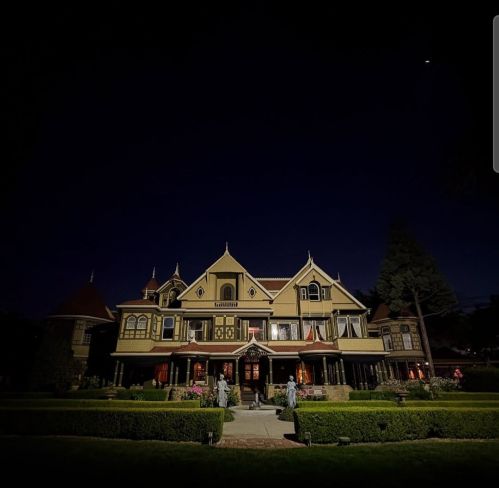
Youth have a right to expect that we will help the organization of this world in cooperation and goodwill so that tens of millions of them will never in the future have to pay the price of a grim disaster. However, all spheres—intellectual, psychic, political, economic, religious—to some extent follow the developments of their own. The increasingly unshatterable prestige of prophecy in general has rested upon those few cases that were terribly impressive for the prophet’s contemporaries, and in which the prophets by their success were unexpectedly in the right. Ideas, selected and reinterpreted from the original doctrine, do gain an affinity with the interests of certain members of special strata; if they do not gain such an affinity, they are abandoned. Thus, by distinguishing the phases of the personal and charismatic origin of ideas and their routinization and social impact, we can consider several complications, which are reflected in changing shades of meaning. Both the ideas and their publics are seen as independent; by a selective process, elements in both find their affinities. Modern capitalism in its early stages requires a specific type of personality. This personality type, in turn, is psychologically constructed because of a set of ideas that unwittingly led to the development of those specific personality traits useful in capitalist conduct. #RandolphHarris 1 of 28

Dr. Freud has shown that sexuality begins with birth, and he has also given us tools for demonstrating the fact that social life begins with everyone’s beginnings. Child training seems to be integrated with a well-defined economic system. The method by which a group’s basic ways of organizing experience, or what we may call group identity, is transmitted to the infant’s early bodily experiences and, through them, to the beginnings of his ego. As a child develops, they learn that we live in a world of machines, far from remaining an extension of the body, destined to be whole human organizations that are extensions of machinery; magic serves as intermediate links only, and childhood becomes a separate segment of life with its own folklore. The expansiveness of civilization, together with its stratification and specialization, demanded that children base their ego models on shifting, sectional, and contradictory prototypes. To be “one who can walk” becomes one of the many steps in child development which, through the coincidence of physical mastery and cultural meaning, of functional pleasure and social recognition, contributes to a realistic self-esteem. #RandolphHarris 2 of 28

This self-esteem gradually grows into a conviction that the ego is capable of integrating effective steps toward a tangible collective future, that it is developing into a well-organized ego within a social reality. This sense is called ego identity. The conscious feeling of having a personal identity is based on two simultaneous observations: the perception of the selfsameness and continuity of one’s existence in time and space, and the perception of the fact that others recognize one’s sameness and continuity. Ego identity, then, is the awareness of the fact that there is a self-sameness and continuity to the ego’s synthesizing methods, the style of one’s individuality, and this style coincides with the sameness and continuity of one’s meaning for significant others in the immediate community. For each individual, there is a characteristic posture, gesture, mannerism, tic, or symptom which signifies that he is living “in his script,” or has “gone into” his script. As long as people display “script signals,” one is adjusting to life, but still may be making progress. As an individual progresses in life, he may be less miserable, or happier, living in his script world, and this will be confirmed by his dreams, his outside experience, and his attitude toward authority figures and the other members of the group. #RandolphHarris 3 of 28
The script signal is usually first perceived intuitively by those he knows well (preconsciously, not unconsciously). The script is what permits people to behave in certain ways. Some people may feel more comfortable laughing, and they may do this with great vigor and enjoyment at every opportunity, but may not have permission to speak. If addressed, one may go through a complicated, sluggish routine before answering. Then, will slowly show maturity and present a cohesive thought. Because his prohibition against talking is so severe, an individual may display signs that he is uncomfortable speaking by trying to protect part of his body that he feels is in jeopardy. And, that is why some people never speak, unless someone has given them permission to by asking him a question. As long as this script signal is present, he will not be free to talk spontaneously, nor to decide other matters that are bothering him. A more common and similar script signal occurs among women, and may also be perceived intuitively for a long time before it comes into full awareness. Some women sit relaxed until a subject comes up that involves pleasures of the flesh, and then they not only cross their knees, but wind the upper instep around the lower ankle, often simultaneously crossing their arms over their chests and sometimes also leaning forward. This posture forms a triple or quadruple protection against a violation which exists only in their script worlds and not in the real world of the group. #RandolphHarris 4 of 28

Other script signs are blinking, tongue-chewing, jaw-clamping, sniffing, hand-writing, ring-turning, and foot-tapping. Posture and carriage are also revealing. The tilt of the head in “Martyr” and “Waif” scripts is one of the commonest script signals. The script signal is always a reaction to some Parental directive. In most neuroses, there are disturbances which constitute valid reasons for discontent with the functioning of the mind. A fear of being aggressive may hamper critical thinking; a general reluctance to commit oneself may render it difficult to arrive at an opinion. The compelling need to appear omniscient may interfere with the capacity to learn. General tendencies to becloud personal issues may also befog the clarity of thinking; just as people blind themselves to their inner conflicts, they may be oblivious to other sorts of contradictions. They may be too fascinated in the glory to be achieved to be sufficiently interested in the work they are doing. I remember a time when I thought that such actual difficulties accounted fully for the feeling of stupidity; when I hoped to be helpful in saying something like: “Your intelligence is perfectly in order—but what about your interests, your courage; what about all that has to go into your capacity to work?” Of course, to work at all these factors are necessary. However, one is not interested in freeing oneself to use his intelligence in his life; what one is interested in is the absolute intelligence of the “master mind.” #RandolphHarris 5 of 28
What I did not recognize, at the time, was the power of the self-devaluating process, which sometimes reaches gigantic proportions. Even people who have attained genuine intellectual achievements may prefer to insist on considering themselves stupid than to avow their aspirations, since at any cost they must avoid the danger of ridicule. And in quiet despair, they accept this verdict, rejecting all evidence or assurance to the contrary. The self-belittling process disturbs the active pursuit of any interest to a varying degree. A neurotic succumbing to self-contempt may feel so discouraged that it does not occur to him that he could change a tire, speak a foreign language, or talk in public. Or he may start some activity but give it up at the first difficulty that arises. Or he may become frightened before or at public performances (stage fright). Again, as in regard to vulnerability, both pride and self-contempt operate to engender these inhibitions and fears. They result from a dilemma caused by needs for a sweeping acclaim on the one hand and active self-disgracing or self-defeating forces on the other. When, despite all these difficulties, a piece of work is finished, well done, and well received, the self-disparagement does not end. “Anybody could have achieved the same thing with so much work put in”; the one passage that did not come out to perfection in a piano recital looms large: “this time I got by, but the next will be a debacle.” A failure, on the other hand, calls forth the full force of self-contempt, and this discouraging far beyond its actual significance. #RandolphHarris 6 of 28
When a person is acting without taking responsibility for choosing the action, life is then lived automatically. Thus, the person may evade conflict and the necessity to make decisions by following an inflexible moral code. The authoritarian character never chooses, seeking the leader’s wishes and expectations and conforming with them, like a soldier getting orders from a superior officer. The other-directed person likewise does not choose actions, but instead acts as he or she believes peers would wish. In none of these cases do the persons realize that they are free to choose their actions in every situation they encounter. They can change their actions at will, though at times it may be difficult. Human beings are free, and hence responsible for their actions and the consequences. However, as the existential philosophers point out, awareness of such freedom and its accompanying responsibility may be terrifying: it is certainly common for people to wish to “escape from freedom.” Dr. Erich Fromm’s book of that title is a classic and should be read for the insight into the human situation that it affords. Authentic being, or being one’s real self, means that the person explores the opportunities and challenges afforded by each situation and then chooses a response that expresses his other true values, needs, feelings, and commitments. An authentic person is less predictable than an inauthentic, self-alienated person, because each life situation, each problem, each encounter with a person is experienced as new, with different invitations and demands issuing from it. #RandolphHarris 7 of 28

However, such authenticity is only possible when the person has not repressed entire dimensions of experiencing, but is, instead, in steady contact with the real self. It takes courage to be real in this sense, because one’s own experiencing often gives rise to fright and sometimes disgust. Moreover, such authenticity requires a person to face decisions time and time again, with the awareness that the outcomes of his or her life are the person’s own responsibility, not the responsibility of parents, superior officers, or public pressure. Authentic decision-making of this nature is most likely to be started by a person after somehow realizing, with intensity, the fact that he or she will die someday. An encounter with death functions as an invitation for many people to live more decisively, more intensively, and more authentically. Authentic being is a sign of a healthy personality, and it is the means of achieving healthy personality growth. When persons are authentic, they not only acknowledge the truth of their feelings, needs, and wishes, but they are capable of revealing their true being to the other people with whom they have personal relationships. We humans can lie to one another, aiming to be seen by others as a person we know we are not. We also have the capacity for entering into true dialogue with our fellows, disclosing what we think, feel, and are planning, without reserve. #RandolphHarris 8 of 28

Obviously, such transparency exposes a person to real danger, because to be that open with others means to be without defenses. If persons can disclose themselves honestly and spontaneously to others, the interests of a healthy personality are served. People are more likely to be cautious than to be excessively open, with the result that they are relatively safe, but lonely and misunderstood by others. It may seem paradoxical, but a person comes to know their real self, and becomes able to introspect honestly, as a consequence of the spontaneous disclosure of self to another person. The individual who has a trusted friend or relative to whom he or she can express thoughts, feelings, and opinions honestly is in a better position to learn the real self than the one who has never undergone this experience, because by revealing the self to another, the person is also revealing the self to himself or herself. The act of stating one’s experience to another, making oneself known, permits one to “get outside oneself” and see oneself. This process of self-discovery through making one-self known to another is facilitated if the other person reflects back what he or she has heard you say. This reflection or restatement, like a mirror, then permits you to compare your words with your experience as you feel it directly and immediately. The capacity to be a transparent self in one’s personal relationships is a sign of a healthy personality. #RandolphHarris 9 of 28
It follows that relations with others in the face-to-face situation are highly flexible. Put negatively, it is comparatively difficult to impose rigid patterns upon face-to-face interaction. Whatever patterns are introduced will be continuously modified through the exceedingly variegated and subtle interchange of subjective meanings that goes on. For instance, I may view the other as someone inherently unfriendly to me and act toward him within a pattern of “unfriendly relations” as understood by me. In the face-to-face situation, however, the other may confront me with attitudes and acts that contradict this pattern, perhaps up to a point where I am led to abandon the pattern as inapplicable and to view him as friendly. In other words, the pattern cannot sustain the massive evidence of the other’s subjectivity that is available to me in the face-to-face situation. By contrast, it is much easier for me to ignore such evidence as long as I do not encounter the other face-to-face. Even in such a relatively “close” relation as may be maintained by correspondence, I can more successfully dismiss the other’s protestations of friendship as not actually representing his expressivity. It is, to be sure, possible for me to misinterpret the other’s meanings even in the face-to-face situation, as it is possible for him “hypocritically” to hide his meanings. All the same, both misinterpretation and “hypocrisy” are more difficult to sustain in face-to-face interaction than in less “close” forms of social relations. #RandolphHarris 10 of 28

On the other hand, I apprehend the other by means of typificatory schemes even in the face-to-face situation, although these schemes are more “vulnerable” to his interference than in “remoter” forms of interaction. Put differently, while it is comparatively difficult to impose rigid patterns on face-to-face interaction, even it is patterned from the beginning if it takes place within the routines of everyday life. (We can leave aside for later consideration cases of interaction between complete strangers who have no common background of everyday life.) The reality of everyday life contains typificatory schemes in terms of which others are apprehended and “dealt with” in face-to-face encounters. Thus, I apprehend the other as “a man,” “a European,” “a buyer,” “a jovial type,” and so on. All these typifications ongoingly affect my interaction with him as, say, I decide to show him a good time on the town before trying to sell him my product. Our face-to-face interaction will be patterned by these typifications as long as they do not become problematic through interference on his part. Thus, he may come up with evidence that, although “a man,” “a European,” and “a buyer,” he is also a self-righteous moralist, and that what appeared first as joviality is actually an expression of contempt for Americans in general and American salesmen in particular. At this point, of course, my typificatory scheme will have to be modified, and the evening planned differently in accordance with this modification. Unless thus challenged, though, the typifications will hold until further notice and will determine my actions in the situation. #RandolphHarris 11 of 28

The typificatory schemes entering into face-to-face situations are, of course, reciprocal. The other also apprehends me in a typified way—as “a man,” “an American,” “A salesman,” “an ingratiating fellow,” and so on. The other’s typifications are as susceptible to my interference as mine are to his. In other words, the two typificatory schemes enter into an ongoing “negotiation” in the face-to-face situation. In everyday life, such “negotiation” is itself likely to be prearranged in a typical manner—as in the typical bargaining process between buyers and salesmen. Thus, most of the time, my encounters with others in everyday life are typical in a double sense—I apprehend the other as a type and I interact with him in a situation that is itself typical. He who examines and enquires will necessarily become the foe of hollow, meaningless formulae. It is better to submit these statements to rational weighing in the scales on one’s independent judgment rather than to accept credulously or dismiss wildly. Without the slightest training in the science of evidence, people airily deliver themselves of judgments that will not stand expert dissection for five minutes. Metaphors do not make arguments: they merely illustrate them. Fling up the coin of their rhetoric and when it comes down on the ground of test, you will know it to be base. Psychology endeavors to establish what is demonstrably true in human behavior, including such behavior as expresses what to human beings feels true. #RandolphHarris 12 of 28

The fact that each new vital focus of psychoanalytical research inadvertently leads to a new implied value system obliges us to ask ourselves whether or not we mean what we seem to be saying. It obligates us, as well as our critics, to differentiate psychoanalysis from psychoanalysis, and to realize that ours is not only a profession recognized among professions, but also a system of thought subject to fashionable manipulation by molders of public opinion. Our very success suggests that our partisanship be judicial. Religion, on the other hand, elaborates on what feels profoundly true even though it is not demonstrable: it translates into significant words, images, and codes the exceeding darkness which surrounds man’s existence, and the light which pervades it beyond all desert or comprehension. In some periods of his history, and in some phases of his life cycle, man needs (until we invent something better) a new ideological orientation as surely and as sorely as he must have air and food. Sometimes revolution has nothing to do with liberation, justice, and inspiration: it is the death of freedom, the triumph of violence, and the enslavement of the mind. Fascism is an act of contempt, in fact. Inversely, every form of contempt, if it intervenes in politics, prepares the way for, or establishes, Fascism. Fascism cannot be anything else but an expression of contempt without denying itself. Junger drew the conclusion, from his own principles, that it was better to be criminal than bourgeois. #RandolphHarris 13 of 28

Mr. Hitler, who on this occasion, is endowed with more coherence, knew that to be either one or the other was a matter of complete indifference, from the moment that one ceased to believe in anything but success. Thus, he authorized himself to be both criminal and bourgeois at the same time. “Fact is all,” said Mr. Mussolini. And Mr. Hitler added: “When the race is in danger of being oppressed…the question of legality plays only a secondary role.” Moreover, in that the race must always be menaced in order to exist, there is never any legality. “I am ready to sign anything, to agree to anything…As far as I am concerned, I am capable, in complete good faith, of signing treaties today and of dispassionately tearing them up tomorrow if the future of the German people is at stake.” Before he declared war, moreover, Mr. Hitler made the statement to his generals that no one was going to ask the victor if he had told the truth or not. The leitmotiv of Goring’s defense at the Nuremberg trials returned time and again to this theme: “The victor will always be the judge, and the vanquished will always be the accused.” That is a point that can certainly be argued. However, then it is hard to understand Mr. Rosenberg when he said during the Nuremberg trials that he had not foreseen that the Nazi myth would lead to murder. When the English prosecuting attorney observes that “from Mein Kampf the road led straight to the gas chambers at Maidenek,” he touches on the real subject of the trial, that of the historic responsibilities of Western nihilism and the only one which, nevertheless, was not really discussed at Nuremberg, for reasons only too evident. A trial cannot be conducted by announcing the general culpability of a civilization. Only the actual deeds which, at least, stank in the nostrils of the entire world were brought to judgment. #RandolphHarris 14 of 28
It follows that in cultural contexts where the beliefs in the supernatural powers of the ancestors are widespread, the departure of an individual might involve not only rituals aimed at separating the deceased from the realm of the living (funerary rituals), but also specific ritual actions aimed at transmuting the deceased into an ancestor (ancestralization), by transforming the latter into a preternatural being capable of affecting everyday life of the living. Among them, the most famous is certainly the so-called double burial studied by Hertz (1905-1906). If not even from the primeval form of religion, ancestor worship has been for a long time considered as a characteristic feature of archaic society. Spencer, in particular, considered the awe aroused by the deceased forebears and their potential vengeful attitude against transgressors as the main cause which led to the observance of the religious rites and, therefore, morality. Several studies have shown that the beliefs and practices concerning the interactions between the living and the dead are among the most spread ones around the world. Some scholars have even postulated that “ancestor worship” may be considered as a “universal phenomenon” and that certain religious phenomena, such as the cult of the saints or the concept of God as a “Father,” might be understood as forms of “metaphorical ancestors.” “Untamed religious activities,” which also include the beliefs and practices concerning ghosts and ancestors, are a kind of religious phenomena that occur in human minds by virtue of natural selection and are not only particularly resilient but also show a certain tendency in being recreated from scratch in diverse cultural contexts throughout human history. #RandolphHarris 15 of 28
If heroes arise through an interaction of personality traits tending toward altruistic behavior and a situation demanding a risk to self for the benefit of others, then heroes and heroines are archetypal in that they emanate and embody an immediate, recognizable pattern. Humans know when they see one. Researchers have used archetypal heroes to address many societal issues, including mental disorders, youth development, bullying in schools, and leadership development in organizations. The archetypal hero is a powerful metaphor that can be applied in many settings, including schools, teen and youth development, family systems, psychotherapy, leadership, management, and firefighting. The archetypal hero is a model of how to map the human condition and convey patterns to navigate life’s difficulties. Seeing life as a heroine’s journey gives emotional stability with a structure. The archetypal hero is a metaphor of hope and a guidebook with markers for gaining a perspective that allows resiliency in the face of adversity. It gives a purpose of seeing life’s journey as right action to transform toward wholeness and be of service to others through this mysterious journey called life. The award-winning Sacramento Fire Department is full of classic heroes. They are wealthy and of high reputation, and respectable persons. One summer, shortly before midnight, several calls poured into the fire department as several neighbors of a shop reported a fire. The fire stations responded to the scene in a short time, only to find the fire shooting through the roof and the flames endangering nearby buildings and homes. The blaze, fed by a stiff wind, quickly destroyed the main shops and set fire to several piles of lumber situated throughout the yards. A nearby home caught fire several times from the heat, but was quickly extinguished with only minor damage to the roof and siding. A factory located just to the south, suffered broken windows, smoke and water damage, but the damage was mostly minor. #RandolphHarris 16 of 28

The firemen remained on the scene until 6:30 a.m., watering down hot spots as the first major fire in the area was declared struck out at that time. Few words invoke more fear than the word investigation. We never want to be involved in an Internal Revenue Service (IRS) investigation, a murder investigation, or a National Institute for Occupational Safety and Health (NIOSH) investigation. Humans have natural defense mechanisms that resist being probed, examined, or scrutinized by any authority that has the power to discipline, sanction, or confiscate aspects of our life. The fear is that an investigation could conclude with the allocation of blame for something we did or were part of. Although a component of investigations indeed is to find fault where fault exists, it is not limited to liability. Another valuable component is to search for and identify the actions and contributing factors that allowed an event to occur. By identifying these aspects, actions can be taken to prevent future occurrences. Take, for instance, a firefighter who falls from an extension ladder at a structural fire. Although seriously injured, he survives the fall. Which of the following is a thorough investigation likely to lead to? Disciplinary action for the incident commander and the firefighter holding the ladder, or liability for the ladder manufacturer, resulting in a lawsuit, or recommendations to eliminate contributing factors in order to prevent a similar incident? Obviously, the last choice is the most probable. Fault and culpable liability are always possible, but recommendations and changes in policy are almost guaranteed. Initiative 9 calls for the thorough investigation of all injuries, deaths, and near-misses in an effort to reduce the chances of the next one. As a result, specific components of an effective system include reporting, investigating, evaluating, and implementing changes. Fire and emergency services have several individual components in place, yet continue to work toward linking information into one effective system. #RandolphHarris 17 of 28
If you see a fire truck stopped in the street without the lights on, be very careful. Sometimes there is an emergency, and you should not pass the fire truck. It might be a good idea to safely turn around and go another way because if you hit someone and they happen to die, you could be charged with manslaughter. Sometimes fire firefighters are getting back into their vehicle, and if you pass the apparatus, you may collide with a firefighter who is on foot. Also, be sure to look at their signals; sometimes emergency vehicles are in motion, albeit slowly, and drivers try to pass them, and this could lead to a dangerous situation. Also, if you are in an intersection when you see an emergency vehicle, continue through the intersection. Drive to the right as soon as it is safe and stop. Obey any direction, order, or signal given by a law enforcement officer or a firefighter. Even if they conflict with existing signs, signals, or laws, follow their orders. When their siren or flashing lights are on, it is against the law to follow within 300 feet of any fire engine, law enforcement vehicle, ambulance, or other emergency vehicle. If you drive to the scene of a fire, collision, or other disaster, you can be arrested. When you do this, you are getting in the way of firefighters, ambulance crews, or other rescue and emergency personnel. The concept of professional courage does not always mean being as tough as nails, either. It also suggests a willingness to listen to other people’s problems, to go to bat for them in a tough situation, and it means knowing just how far they can go. It also means being willing to tell the boss when he or she is wrong. #RandolphHarris 18 of 28

California is the third most expensive state in the nation. In 37 percent of counties, a family of four living on a six-figure income is now considered low-income. The average home price in California is nearly $1,000,000.00 USD, while the average salary is $96,036.00, meaning that most Californians cannot even afford to buy a home. California is having an affordability crisis. A single person making an income above $100,000 is now considered low-income in five counties in California. This distinction now applies to individuals living in Santa Cruz, Santa Clara, San Mateo, San Francisco, and Marin counties. The maximum percentage of your gross income that you should earmark for a monthly mortgage payment is calculated at 28 percent, and no more than 36 percent of your gross income to all debts, including mortgage. If you take 28 percent of the median household income per home in Sacramento County, homeowners can only afford a mortgage of $2,070.23 per month. And if you take 36 percent of their gross income to all debts, including mortgage, they should be devoting no more than $2,661.72 a month to these debts. The mortgage lenders must be using some kind of sorcery to get buyers into these expensive homes. To afford one of these homes using traditional guidelines, a household would need to gross $11,280.24 per month or $135,362.88 per year, but the median household in Sacramento County is grossing $7,393.67 a month or $88,724.00 annually, and that typically means two to four people in the home are working and contributing to the mortgage. Home prices in Sacramento County are rivaling the Bay Area, and in some cases, homes in the Bay Area are more affordable. Historically, homes in the Bay Area have been more expensive because they have higher-paying jobs, a larger population, and the Bay Area is a tourist destination. Contributing to the housing affordability crisis is Gavin Newsom, who has been lavishing illegal immigrants with taxpayer-funded resources and cash aid, when state workers should be receiving a 25 percent wage increase instead. #RandolphHarris 19 of 28

In 2025, many people in California saw their bills increase by an estimated $500 a month. This includes items such as food, automobile insurance, homeowners’ insurance, and electricity. In fact, more than 3 million people in California are facing household hardship, and more than 300,000 of them are facing eviction soon. This comes at a time when California is having a shortage of affordable housing. The crisis is caused by nearly half a century-old laws that discourage home sales and encourage higher rents. The incompetence in California is very easy to see. From 2018 to 2023, California received $24 billion, which they used to fund 30 homeless and housing programs. These programs created 100,000 units. That is an average cost of $240,000 per unit. In comparison, Roger Lucas, owner of Grand Castle, LLC, spent $50 million to build The Grand Castle, which is a 522-unit residential apartment community in Grandville, Michigan. The community includes studios, 1 bedroom, 2 bedrooms, 3 bedrooms, and even a multi-level penthouse. Rents generally range from $1,000 to $2,500. The community is a 23.6-acre site. It features 750 covered parking spaces, a clubhouse, a resort-style swimming pool, and was built over a period of 12 to 18 months. The average cost was about $95,785.45 per unit, which is $144,214.55 less per unit than California spent. California also has the highest unemployment rate in the country at 5.4 percent, while the national average is 4.1 percent. While Americans are struggling to find and afford housing, Gavin Newsom, Democrat governor of California, signed two bills into law on February 7, 2025, to protect illegal immigrants. Bills SBX 1 1: Budget Act of 2024, and SBX 1 2: Budget Act of 2024, allocates $50 million to protect illegal immigrants from deportation. Governor Gavin Newsom also granted 700,000 illegal immigrants free health care, which costs taxpayers $3 billion annually. At the same time, Newsom cut vital programs for veterans, school children, the disabled, and the homeless. The California crisis created by Democrats is driving up home prices and mortgages, and rents all over the nation and the world, making living unaffordable for all, and advocates say the crisis is far from over. #RandolphHarris 20 of 28
Meanwhile, China, where we are sending all our jobs and money, has more than 50 ghost cities, with 65 million vacant homes. Ghost cities are regions where housing has been overdeveloped to the point that these places are uninhabited. If they are all officially counted, California has approximately 4 million homeless people. The highest home prices in the nation, the highest taxes, and the most unfriendly business regulations known to man. Because California is so hostile towards people and businesses, more than 360 companies have fled the state since 2020. Businesses like Chevron, SpaceX, Oracle, and Hewlett-Packard are among the names on that list. Also, more than 500,000 people a year are abandoning California because it is too expensive to live in, Gavin Newsom has criminalized homelessness and actually started arresting people without homes, crime is out of control, and they are losing their jobs due to companies relocating. More than 100 companies have announced layoffs in California for 2025. Intel is cutting 15,000 jobs, PayPal is cutting 2,500, and Meta has terminated 4,000 employees. California also has the highest unemployment rate in the country at 5.4 percent, while the national average is 4.1 percent. The California crisis created by Democrats is driving up home prices and mortgages, and rents all over the nation and the world, making living unaffordable for all, and advocates say the crisis is far from over. Accordingly, California has more than 3.5 million illegal immigrants. Having the Southern American border open and not having American farmland protected, not producing beef, poultry, fish, fruit, produce, and dairy in America, and without American goods and services being our number one manufactured and selling items, America has created a dangerous and significantly elevated risk to national security, national economic security, and national public health. Some people may believe that these claims are overstated, but by not routinely monitoring Common Vulnerabilities and Exposures (CEVs) or other security-relevant alerts, such as the end-of-life of machinery is how the Oroville Dam Crisis occurred in 2017. #RandolphHarris 21 of 28

Additionally, Newsom seems to be uneducated about economics and is proposing to fast-track his plan to build a $20 billion water tunnel beneath the Sacramento-San Joaquin River Delta, which would eliminate environmental reviews and limit avenues for legal challenges. Gavin Newsom only cares about the environment when his policies allow him to raise taxes and restrict freedoms. To further highlight this illustration of incompetence by Governor Gavin Newsom, Mexico has been causing one of America’s worst environmental disasters. Fifty million gallons a day of industrial chemicals, untreated sewage, and trash flow from Tijuana, Mexico, into southern San Diego County daily. This toxic waste has been turning up on Imperial Beach and is causing the miles of white sands to become polluted and the ocean breeze to smell of poop, which has been sickening residents and wildlife and costing San Diego millions in the form of lost tourism and health problems. The problem has been going on for more than a century. Other crises that have occurred due to neglect of critical infrastructure are the 2025 Palisades fires because Southern California ran out of water, when they are located next to an ocean and they could have simply created desalination plants to help with the water shortage. The water is so plentiful that it is currently eroding land and causing homes to fall into the sea. Desalination has been identified as one technology that will help solve California’s water scarcity problem. Desalination is a cost-effective technology that can transform an abundance of salt water into a reliable supply of potable, fresh water, which is a great way to fight climate change and have enough water for our region’s water requirements. Ras Al Khair, Saudi Arabia, is producing 1,036,000 meters (273,682,192) per day of desalinated water. #RandolphHarris 22 of 28

America needs an approach to eliminate safety vulnerabilities in American cities. There needs to be a road map by the end of 2025, outlining a prioritized approach to eliminate crisis situations in America. There is enough money to send aid to foreign nations, but the American government does not have enough money to care for its infrastructure, provide adequate resources, or end the affordable housing crisis. Nor is there enough money to fund other national critical functions (NCFs). These bad practices of putting America and Americans last are considered exceptionally risky, particularly to national security, national economic security, and national public health and safety. In 2024, Americans spent $100 billion on Japanese cars. As a result, the American automobile trade deficit with Japan was $39 billion. Additionally, Japan exported 1.4 million cars to the United States of America, but only imported 16,000 American-built automobiles. However, Japan imported approximately 143 thousand motor vehicles from the European Union. This is why President Trump created tariffs. We need to balance the trade deficit that America faces with other nations so we are not taken advantage of and so America can go bank to being a creditor nation, instead of borrowing money for other countries. As of 31 August 2025, President Trump has brought $142 Billion in Tariff revenue into America and hundreds of thousands of new jobs. However, if President Trump’s Tariffs are deemed illegal by the Supreme Court, taxpayers will have to pay back trillions and trillions of dollars. As we literally and /or figuratively see gangs, federal judges, and Governor Gavin Newsom fighting with federal law enforcement and President Trump– states and cities refusing to honor federal laws. Politicians are also showing an utter disregard for the Constitution of the United States of America, and anarchy is becoming increasingly common. #RandolphHarris 23 of 28
Anarchism is a cluster of doctrines and attitudes centered on the belief that government is both harmful and unnecessary. Derived from the Greek root anarchos, meaning “without authority,” anarchism, anarchist, and anarchy are used to express both approval and disapproval. The anarchist denies man-made laws, regards property as a means of tyranny, and believes that crimes are merely the product of property and authority. However, the anarchist would argue that their denial of constitutions and governments leads not to “no justice” but to the real justice inherent in the free development of human sociality—the natural inclination, when unfettered by laws, to live according to the principles and practice of mutual aid. Anarchism is also a form of treason. Treason, the crime of betraying a nation or a sovereign by acts considered dangerous to security. In English law, treason includes the levying of war against the government and the giving of aid and comfort to the monarch’s enemies. In the United States of America, treason was defined restrictively by the framers of the Constitution. Treason against the United States of America “shall consist only in levying War against them, or in adhering to their Enemies, giving them aid and comfort,” which is something that many politicians are currently guilty of. The American government should know all exploitable vulnerabilities and fix them before the situation becomes a crisis. Failure to take such mitigating actions is dangerous and significantly elevates risk to national security, national economic security, and national public health and safety. The American government must understand that significant time and resources must be invested in America. They must also encourage corporations to plan for both mitigating safety vulnerabilities in the short term and eliminating them in the long term. For instance, a company might begin by reaching out to the federal, state, or local government and requesting tax incentives to provide security to dangerous communities, to help the government repair bridges and potholes. #RandolphHarris 24 of 28
Drug cartels have been threatening the health and safety of Native American communities. The trafficking of dangerous and illegal drugs into their territories is leading to a second genocide. The overdose rate for Indigenous people is 42 percent higher than the national average. A recent bust on Montana’s Blackfeet Nation’s Tribal Reservation resulted in the seizure of more than 700,000 fentanyl pills, which was the largest bust in Montana history. Recently, the Blackfeet Nation had to declare a state of emergency after facing 17 overdoses in just one week. There are only 6.8 million Native Americans left in the world, which is 2 percent of the American population. We should be doing more to protect these proud and honorable people; they should not want for anything. People rush and give away resources to illegal immigrants, but totally disregard the Indigenous people of this land, as their race silently fades away into extinction. We must secure our borders and increase federal funding to Native American tribes so we can save this precious population. Meanwhile, Gavin Newsom has given billions of taxpayer dollars away to illegal immigrants and protected them from law enforcement, while arresting law-abiding Americans because they cannot afford to pay rent or mortgage, and the homeless shelters are unsafe, overcrowded, and have restrictions on who is allowed inside. He has also totally ignored the cartel problems on American lands. Clean air, water, land, and preserving our heritage are extremely important. We cannot just allow criminals to kill off the people who are native to this land and do nothing about it. Wars have been started over governments that tax citizens without representation. Taxation without representation is what led to the American Revolution. #RandolphHarris 25 of 28

Much like the land crisis in Las Vegas, we could also run out of land to farm and will not be able to grow or cultivate our own food. We can protect American farmland and support American farmers by buying American made beef, poultry, dairy, and produce. Also, country of origin labeling is very important so Americans can know where their food is coming from and can support American farmers and ranchers. As money flows, it influences further investment. Save the land that sustains us by protecting American farmland. Once the land is built on, we lose it forever. And in the future, there may be food wars. Also, to ensure that we have farmland and buildable land for future use, we need to start limiting the number of people allowed to immigrate to America. Perhaps with the immigrants we do allow into America, there needs to be a diversity program to make sure we have a population that equally represents all races of people. If Americans continue to spend money on American products, then more need to be made to keep up the inventory. When investors notice these goods are selling, it gives them the confidence to pour more money into that local business. It shows that people want these goods made in America and pressures investors to keep these goods and services in America. The jobs stay here, the business stays in America, wages naturally increase, and more money is invested to keep up with demand. This reduces the burden on the taxpayer. When you support American businesses, that money stays in our economy and can help to reduce the national debt. The government creates debt by borrowing from businesses in the private sector or from foreign countries. It also increases the national debt by spending more than it gains in tax revenue in a fiscal year. #RandolphHarris 26 of 28
When people shop locally, more tax money stays in the economy and goes to the government. This way, it keeps more money in our national economy and keeps more jobs located in America which also sends more taxes to the government, which can again help to reduce the national debt. When you buy foreign goods, these companies usually have lighter tax loads or exemptions, meaning less money for the national debt, plus you are helping to strengthen these foreign nations by sending more money overseas. Buying American-made products is also better for the environment and helps to reduce the carbon footprint because these products do not have to travel nearly as far. Furthermore, American companies and manufacturers are held to much higher standards on pollution. American companies must be more careful about air, land, and water pollution and have proper ways to dispose of waste. Under President Trump’s administration, he has make America a priority. President Trump has closed the southern border, illegal crossings have fallen to an all time low, and are 90 percent lower than under the previous administration. Since President Trump’s crack down on crime, violent crimes in Washington D.C. have dropped by approximately percent. And since President Trump took office, investments in America have increased by trillions of dollars in U.S.A. manufacturing, production, and innovation. As you can see, President Donald Trump and his pledge to “Make America Great Again” is exactly what America needs to save the country and the American people. And yes, diversity is important, so you can see why it is also important to preserve blonde hair and blue eyes, as the people with these characteristics are becoming a minority in America. #RandolphHarris 27 of 28

We must think before we can understand the soul’s existence; we must understand before we can realize it. The earliest beginnings of thought, as apart from instinct, when it was itself still but a lurking tendency, belong far back in primeval time. The human intellect as we find it today, so rich and developed an instrument for the consciousness of the ego, did not arrive at this fullness without a series of graduated stages. We have had plenty of scientific thinking, business thinking, and political thinking long enough, but we have had very little inspired thinking. That is the world’s need. The intellect is cradled in selfishness but runs the evolutionary track into reason, where it will one day finish at the winning-post of selflessness. As a reminder, parents, please teach your children to love America and be patriotic citizens, and to buy goods and services made in America. It is also important to respect law and order and treat your elders with respect. It is inborn in the human mind to wish to know. If this begins with the endless surface questions of a child’s curiosity, if it continues into deeper questions of a scientist’s probing investigation, it cannot and does not stop there. For the higher part of the mind will eventually come into unfoldment, that union of abstract reflective thought with mystical intuition, which is true intelligence, which needs and sees a view of the whole of things. And so, the knowing faculty enters the realm of philosophy. Therefore, remember to take your education seriously so that you will be successful in life and make your family proud. Also, to make sure they have all the resources required, please donate to the Sacramento Fire Department to help improve our national security. “Oh, thus be it ever, when freemen shall stand between their loved home and the war’s desolation! Blest with victory and peace, may the heav’n-rescued land Praise the Power that hath made and preserved us a nation! Then conquer we must, when our cause is just, and this be our motto: ‘In God is our trust.’ And the star-spangled banner in triumph shall wave O’er the land of the free and the home of the brave.” #RandolphHarris 28 of 28

According to locals, over a century ago, the land that houses The Winchester Mansion had been vacant forever. Then, sometime in the early afternoon of Saturday, March 13, 1886, Sheriff Angel Camilio began getting reports that a massive castle made of wood had suddenly appeared. Gables rose, towers peaked into the sky as the mansion mushroomed into a labyrinth overnight.

The house’s sudden manifestation had been both disconcerting and fascinating to the community. Some felt dark curses flowing from the estate, and things moving around in the darkness. Others saw a fairytale castle glimmering in the spring sunlight. Perhaps this is why there are no records of construction, no blueprints, and no permits filed with the county. Come and see what secrets this so-called, “Winchester Mystery House” may hold.
Experience an unforgettable journey back to the time of kings and queens with this entry ticket for The Winchester Mansion in Santa Clara, California, which was the residence of Heiress Sarah L. Winchester. Take advantage of this fascinating experience. After the tour, there will be time to enjoy the mansion’s splendor at your own pace. You might even discover secret passages.
Please come and enjoy a delicious meal at Sarah’s Café, stroll along the paths of the beautiful Victorian gardens, which once spanned 740 acres, all the way down to Stevens Creek Boulevard; wander through the miles of hallways in the world’s most mysterious mansion.
For further information about tours, including group tours, weddings, school events, birthday party packages, facility rentals, and special events please visit the website: https://winchestermysteryhouse.com/

Please visit the online giftshop, and purchase a gift for friends and relatives as well as a special memento of The Winchester Mystery House. A variety of souvenirs and gifts are available for purchase. https://shopwinchestermysteryhouse.com/

Harris Plumbing, Heating, Air, & Electric has been in business for 30 years. How many businesses can say that? We take pride in everything we do – no matter how big or small the service call might be. We’re here to help your home be as safe and comfortable as possible for you and your family. We take that responsibility very seriously as a company.

Harris will ensure you have the information you need to decide what to do next, whatever your home is facing. We’ll perform a diagnosis and detail what issues are present before starting any work. This gives you a personalized quote and service plan specific to your home’s needs, not some random quote based on the best guess. The only way we can do our best work is to make sure we handle the issues at hand. https://www.callharrisnow.com/about-us/
With its top ranking in Consumer Reports’ Auto Brand Report Card and consistent market share growth, BMW, The Ultimate Driving Experience, has demonstrated its ability to produce high-performing, reliable vehicles that meet consumer demands. BMW stands out due to its focus on driving dynamics and engineering excellence. While other luxury brands prioritize comfort and opulence, BMW is known for creating cars that are fun to drive and offer a unique connection between the driver and the machine. This is why BMW is known as the Ultimate Driving Machine. https://www.brianharrisbmw.com/

Randolph Harris San Francisco Taxation & Mergers
Building strong and lasting client relationships is crucial for a successful legal career. Many lawyers mistakenly believe that mastering legal skills alone ensures success, but law is fundamentally a service industry—our job is to solve problems through the time we sell. To build long-term relationships, attorneys must focus on three core elements: knowing their clients, understanding how their legal issues fit into a larger context, and consistently delivering exceptional service.
Randy advises clients with regard to business transition, taxable and tax-deferred mergers and acquisitions, joint ventures, restructuring, integrated tax planning, federal and state tax controversy resolution, and real estate transactions. Trust is the cornerstone of any client relationship. Ultimately, my clients feel they are in capable hands with someone who genuinely understands their problems and goals. https://www.jmbm.com/l-randolph-harris.html

At Millhaven Homes our professionals bring extensive experience in creating custom luxury properties. Your needs are the central focus. We savor the sanctuary of awe-inspiring spaces, unique architectural details and fine craftsmanship. The key to a successful relationship is communication. We will incorporate your thoughts and ideas into your new home.

With vast experience in all types of custom home construction, our premier services are created for you, so you can get the most out of the function and design of your dream home. Discover Millhaven Homes today. Let us design and build a custom home that reflects your style, comfort, and aspirations. We are here to bring your vision to life with creativity, care, and attention to every detail.

Each home we create is a masterpiece—crafted with care, harmony, and sophistication. Be sure to ask about our legendary “Costco” door. https://millhavenhomes.com/

