Everyone carries a story, but not all stories begin on equal ground. Some people occupy the positions they do because they were pushed into them as children, shaped by circumstances they never chose. Others were born into privilege and used it as a foundation for achievement, while some worked relentlessly to build their own success from nothing. And then some inherited every advantage yet squandered it through carelessness or complacency. These contrasts reveal how uneven the landscape of opportunity truly is. There is a patient named Arnold who recently went A.W.O.L. from the hospital after failing to return from an authorized pass. For a while, a measure of faint hope was entertained that he might be able to get along with freedom to walk about the grounds. He had been in and out of the hospital for seven years, spending most of his time on a closed ward with delusional and dilapidated schizophrenes. Struck by the man’s friendliness and his frankness to admit himself in the wrong, his physician, despite the usual rules of dealing with such behavior, made an exception of this case, restoring his ground parole time after time when it was lost by failure to adjust. The experiment had been more or less innocent since the patient did little harm to himself or others beyond chasing a few bad checks for small amounts, cheating unsuccessfully in dice games, stealing a bicycle for which he had no use, behaving uproariously after a few drinks, and getting into jail, whence he was brought back each time safe and apparently repentant. #RandolphHarris 1 of 22

An effort was made to see if this rational and intelligent man, even though he failed seven times, seventy times, and seven times seventy times, might at last achieve a positive reaction to indefatigable forgiveness and succeed in finding some way to exist without supervision as incessant as that required by a traditional madman. Little or no hope was held that he might leave the hospital and live as a normal man; but something would have been gained if, still sheltered in a psychiatric hospital, he could enjoy the freedom of the grounds and, on occasion, pass into town. During those seven years of psychiatric study and observation, he had never shown any sign technically regarded as indicating a psychosis. That is to say, he was always entirely rational in conversation, alert, above average in intelligence by psychometric tests, free from delusions and hallucinations, and had not shown the slightest evidence of “deterioration.” Nor had he ever shown retardation, a true depression of the cyclothymic type, increased psychomotor activity, flight of ideas, or any other condition which it is permissible to class as psychosis. He had been free also from any symptoms characteristic of a psychoneurosis. During his long and frequent periods within closed wards, he was superficially agreeable to his physicians most of the time but extremely fretful about his confinement. He spoke eloquently of having learned his lesson and always pressed his request for parole or discharge with good logic. #RandolphHarris 2 of 22
Once, after making an especially convincing plea for freedom and with the possibility of parole within the next few days, he succeeded during the night in obtaining whiskey by lowering on a cord an empty Coca-Cola bottle which he had obtained and which some confederate filled for him. He, at once, proceeded to get rather high in the dead of night to the great astonishment of the attendants, who had regarded him as a “sane” man but who were now at a loss to understand his senseless guffaws, sudden maudlin outcries, and impulsive lurches about the ward. Not realizing that he could possibly have obtained liquor, they feared for a moment that he must have developed an ordinary psychosis. On being approached, he cursed, sobbed feebly, and was brought back to bed, passing intestinal gas with frequent loud and unpleasant effects, grinning almost triumphantly at the nurse who had hurried to him at each detonation. The next morning, he admitted the drinking after being confronted with the Coca-Cola bottle to which the string was still attached. He was at first superficially penitent but soon could be seen to show pleasure at his cleverness, which he seemed to feel afforded just cause for a bit of gloating. He seemed to have no deep sense of regret and could not understand why the episode delayed his parole. He became, indeed, definitely vexed and talked incessantly for a day or two about his failure to get a square deal. This patient, entirely sane by orthodox psychiatric standards, having spent the better part of seven years closely confined among other men who, to him as to any layman, were unmistakable lunatics and nowise agreeable company, was given another series of chances to win his freedom. #RandolphHarris 3 of 22
If he could be put in a controlled situation and allowed to feel the unpleasant consequences of his mistakes or misdeeds regularly, as he commits them, the opinion has often been expressed that the psychopath, who in some ways seems to behave like a badly spoiled child, might be helped. With this patient, such a policy was pursued, and the effort was protracted to remarkable lengths. Such a plan of treatment or reeducation, perhaps, may accomplish a good deal with some patients of this type. With Arnold, it yielded no discernible fruits. His parole was restored time after time. He expressed a clear understanding that he was obligated not to leave the hospital grounds. Each time, in accordance with his past behavior, he would promptly disappear. After a few hours, several days, or perhaps a week, the police would call to say they had him in custody. Back on his ward, he seemed properly regretful and immediately expressed confidence in himself, explaining that the last misadventure had served as the lesson he needed. He was soon allowed to go out on the grounds again. Two or three small acts of defrauding, the temporary misappropriation of an automobile (which he would usually abandon after his whim for a ride had been fulfilled), or some other succession of deeds incompatible with parole status always brought him back under strict supervision. After a short time, he was given still another trial. #RandolphHarris 4 of 22

He spoke fulsomely of the handsome treatment he was receiving, protested an earnest affection for his physician, and swore staunchly that he would justify this faith shown in him. Always, he seemed entirely sure that his difficulties were a thing of the past. Unlike the patient whose behavior is distorted by compulsion in the ordinary sense, he showed no evidence of a struggle, no awareness of anything that gave him doubt about his future success in achieving what he planned. This alert, intelligent man remained always free from confusion, from any indication of powerful impulses or yearnings, from all conscious influences that might account for his spectacular failure to gain freedom. He expressed eloquently very natural desires to live an unrestricted life outside his familiar wards where he was locked in with very psychotic men. He mentioned no force or conflict, in many long interviews, that might make it difficult for him to conduct himself in a way that would bring him release from hospitalization. He denied experiencing the slightest pleasure from alcoholic beverages. And, indeed, he always seemed miserable, melancholy, and quite unlike his usual buoyant self when he had partaken of drink. He did sometimes, as a matter of fact, continue ten days or two weeks without mishap. At his own request, he was detailed to help the attendants on the infirmary ward, which he did ably, faithfully, and apparently with interest. A merry, rather witty person, he freely admitted that he had made a fool of himself and a mess of his life, but always maintained that he would never again break his word, which he had given not to drink, not to stay out beyond the limits of a pass, and not to violate any other hospital regulations. He was usually friendly and courteous to his physician and to other personnel and went out of his way to be attentive to physically ill patients, apparently taking mild pleasure in any kindness he could do to them. #RandolphHarris 5 of 22

One Sunday morning, he was given a pass after he had made a special request that he wanted to attend church. Some of the hospital attendants on their way home that night found him several miles out in the country, staggering about in the rain on a lonely road, his trousers hanging down about his heels, seriously impeding his progress and tripping him from time to time into the ditch where he rolled and thrashed, hallooing wildly or cursing in aimless violence. Soaking wet, covered with mud and vomitus, he was brought back to the hospital. The next morning, he faced his physician and said that he had learned his lesson. Within a week, parole was restored, and shortly thereafter, he celebrated his freedom by somehow obtaining whisky without leaving the grounds and was hobbling into the recreation building, where a dance was in progress, a picture of agitated dejection. He stumbled about purposeless lunges, eyes rolling, mouth open and drooling saliva, then collapsed senstationally on the floor before attendants could seize him. These episodes are entirely typical of his last few months in the hospital. During this time, a limited degree of freedom was restored to him within a few days after each episode and each time he failed as promptly and spectacularly as in the incidents previously described. Altogether, he was arrested some dozen or more times during this short period, nearly always within a few hours after leaving the hospital grounds. He had frequent, superficially serious talks with his physician in which he expressed despair over his situation, remorse for his all but incredible record as a failure, and a quick, cheerful confidence in his future. What might be called a thin and bright surface of sincerity, which is hard to indicate without paradox, seemed to distinguish him from his fellows. This quality, not in the simplest sense false, seemed not only consistent but almost complete. It was, however, too bodiless to hold any true resolution or remorse or to be useful to him in gaining worthwhile insight. #RandolphHarris 6 of 22
One got the impression that his sincerity, though not a literal fraud, was so thin as to be, for practical purposes, merely an academic abstraction. He was often in high spirits, communicative, boyish, and rather winning. Though fretting and complaining continually about his confinement and apparently unable to understand adequately why this was advisable, he seemed to find mild interest and trivial pleasure in small matters. He could give to explanation of why he committed acts that demanded his remaining in a psychiatric hospital. He always fell back on the plea that he would never do so again. When drinking, he was often noisy, always unhappy and distraught, silly, and tearful. His physician’s enthusiasm to rehabilitate him by a siege of patience slowly waned as failures accumulated. Finally on Easter Sunday, he engagingly made another plea for a bit of freedom. If he could only have a pass for a few hours, to go to church for Easter services! His request was granted. Marvelously, he returned on time, without indication of having sought disaster, and exultant at his success. On the strength of this performance, he was allowed to remain out in the sunshine on the grounds during the afternoon. At nightfall, he could not be found. All this, however, is but the merest glimpse of the man. Seven years ago, when admitted for the first time, he had already spent some ten or twelve years in and out of jails, and mental hospitals, scarcely ever passing a week of his life without attention from the police. Small swindles, giving, as collateral for a loan, property owned by another, bad checks, wrecking an automobile which he had bought on credit and for which he made no effort to pay, surreptitiously selling half a dozen of his uncle’s cows and blowing the cash, in these and scores of other but similar activities, he kept the local law enforcement agencies extended. He seemed always so frank and honest, so thoroughly without malice, that often those damaged by him withdraw their charges to give him another chance. #RandolphHarris 7 of 22
Sometimes, by pleading grave illness or other disaster and emergency in the family, he would, in his father’s name, borrow $1,200 or $2,500 which he squandered before the misrepresentation was detected. Once, feeling himself in need of funds to make a trip, he rented to a stranger rooms in the house of a neighbor, cleverly timing his transaction so he could show the accommodations, close the deal, and obtain payment in advance during a period when the lady owning the property was downtown shopping. The money he obtained and promptly wasted was seldom, if ever, sought for any appreciable need or to satisfy impulses that seemed more than mild and transient caprice. The frequent trips he made were all but purposeless. Whether he went to a nearby town or a large, distant city, he sought no job or other opportunity, found no adventure in the ordinary meaning of the word. He often hung about street corners, went to a movie, loitered in a park, spent hours in a pool room or affordable hotel lobby chatting about trivialities, and then, finding his environment tedious, he would return home. Meanwhile, his parents, whom he never informed of plans for travel, suffered no little anxiety and grief, wondering whether he was dead or alive and if they might see him again. He did not write to his family while on these expeditions. If jailed for pawning a tire he had stolen from someone’s car, pressured too unpleasantly for bills he had run up, faced with trial for fraud (after selling nonexistent commodities for which he successfully misrepresented himself as a s salesman), et cetera, he usually telephoned his parents and spoke convincingly of the ill fortune which had overtaken him and his innocence of willful wrongdoing. They regularly sped to his aid and, usually, with appreciable expense to themselves and with humiliation, succeeded in obtaining his release. Otherwise, he simply turned up one fine day, nonchalant, gracious in his apologies, but apparently unaware of having caused any valid distress to those he always maintained he dearly and deeply loved. #RandolphHarris 8 of

On turning to drink, he sought low company and often ended by wandering off. Sometimes days passed before he was discovered lying in forlorn swamps, wallowing drunkenly about remote cornfields. Not dozens of times but scores of times, his friends and relatives had to search him out and bring him, inert or struggling farcically to no end, back home, where he was washed, reclothed, and nursed to sobriety. He had done no work at all since a brief gesture of helping his father in the store for a few months after he quit junior college in the town of his nativity at seventeen years of age. He had no real friends and seemed to want none, though he was superficially sociable and mingled easily with both genders. He had frequently sought the favors of women of the evening, but had never shown a lasting or whole-hearted interest in any woman. So, he was presented to the hospital seven years previously: twenty-eight years old, below average height, overnourished, a quick-witted man, admitting many faults, acknowledging his human frailty, debonair but not pretentious, a close-cropped black moustache on his lip, a rather engaging, shy, swift light of merriment slipping at times into his glance. During the seven years that he was under observation, no delusion was ever noted, nor any other sign even remotely suggestive of a mental disease that is accepted as such. He has never even experienced temporary hallucinations while under the influence of alcohol. He has undergone no disintegration of personality (as this is ordinarily understood), none at least that is discernible on prolonged observation, by psychiatric examination, or by any other means available. He is today, plainly the same man that we first knew and who, according to all accounts, has been a problem to his community for years. #RandolphHarris 9 of 22

After his first admission, he was carefully examined; social service reports were secured, and he was observed day after day. No evidence of any condition officially known as “psychosis” could be found. He was granted parole privileges, with results that need not be described again. Time after time, he was sequestered on closed wards, naturally among patients whose psychoses showed typical manifestations, and among them, he stood out in arresting incongruity. Restored to parole, he regularly showed himself incompetent and was returned to constant supervision. On the request of his relatives, he was allowed to go home with the on-trial-visit status, where, knowing that a failure to behave himself would mean returning to the confinement he naturally detested, he at once engaged in not one but several activities, each of which made his return to the restrictions of a hospital not only necessary but urgent. Wearying of his life behind locked doors among classically demented men, on several occasions, he demanded his discharge. On being brought before the medical staff, he was found obviously “sane” and released. Soon, however, his relatives were back with him, bearing tales of such mad folly as few, if any, people deranged in other ways could produce. Readmitted to confinement inappropriate to his plain sanity by the accepted criteria of mental disease, he soon became restless and, pointing out his legal status, left against medical advice. Worn out by incessant traffic with the police on his behalf, diverted from the customary uses of life by night-long searches for him in lonely hinterlands, or in distant jails, his relatives finally succeeded in having him legally committed to the custody of the hospital as an “insane” person. #RandolphHarris 10 of 22
There is little doubt that the personal influences and well-known political mechanisms of a rustic Southern community had weight with the courts, not to speak of common sense unversed in technical psychiatry but painfully aware of irrational conduct so long flagrantly demonstrated. After a month or more of confinement under these circumstances, the patient demanded an interview with the staff. With admirable logic, he maintained that he suffered from no mental derangement whatsoever. He lucidly described the recognized signs of mental disorder, made light and clever jokes about the impropriety of applying such criteria to him, and pointed out the absurdity of identifying him with the usual patient kept in such a hospital. Admitting his maladjustment and his inveterate but minor deeds of depravity, he insisted that he be left to ordinary legal measures in any future misconduct, which he did not deny was possible. The staff, as conscientious psychiatrists, could not do otherwise than agree that he was “sane and competent” and release him. Three weeks later, he was brought back to the hospital at midnight by a brother and a cousin. He had a fractured clavicle (memoir of his frequent brawls with local police), was lachrymose, penitent, and all but homesick for his ward in the hospital. The physician on duty hesitated about readmitting him. His story was well known. His relatives thereupon threatened to telegraph high officers in the government. They were by no means assuaged at being told that the hospital was not maintained for the treatment of persons judged sane by the canons of psychiatry and considered responsible for their misconduct and misfortunes. #RandolphHarris 11 of 22

After consultation with the attending physicians, Arnold was cleared for return and subsequently readmitted to the hospital. Some weeks later, he called in local lawyers who, invoking the writ of habeas corpus, arranged a lunacy trial by jury. Of course, there could be but one verdict. The man was plainly “in his right mind.” No acceptable evidence of mental disease (as officially defined) could be brought out. He was taken out of the hospital’s custody by external authorities. A month afterward, chastened and nostalgic for the familiar ward that now seemed preferable to the threat of jail, Arnold willingly returned, escorted by relatives whose tale of misfortune need not be repeated here. His story, however particular, illustrates a larger psychological truth. There is one word which, if we understand it, becomes the key to Dr. Freud’s entire system: repression. Freud devoted his life to studying this phenomenon, and the Freudian revolution consists in recognizing repression as the hidden engine of both individual behavior and social order. In this perspective, society is built upon the repression of the individual, and the individual is shaped by the repression he carries within himself. Arnold’s flight and return can be read not merely as an episode of misconduct, but as a small enactment of this deeper drama—an oscillation between the pressures imposed from without and the conflicts that surge from within. The best way to explore the notion of repression is to review the path which led Dr. Freud to his hypothesis. Dr. Freud’s breakthrough was the discovery of meaningfulness in a set of phenomena theretofore regarded, at least in scientific circles, as meaningless: first, the “mad” symptoms of the mentally deranged; second, dreams; and third, the various phenomena gathered together under the title of the psychopathology of everyday life, including slips of the tongue, errors, and random thoughts. #RandolphHarris 12 of 22

Now, in what sense does Dr. Freud find meaningless in neurotic symptoms, dreams, and errors? He means, of course, that these phenomena are determined and can be given a causal explanation. He is rigorously insisting on unequivocal allegiance to the principle of psychic determinism; but he means much more than that. For if it were possible to explain these phenomena on behavioristic principles, as the result of superficial associations of ideas, then they would have a cause but no meaning. Meaningfulness means expression of a purpose or an intention. The crux of Dr. Freud’s discovery is that neurotic symptoms, as well as the dreams and errors of everyday life, do have meaning, and that the meaning of “meaning” has to be radically revised because they have meaning. Since the purport of these purposive expressions is generally unknown to the person whose purpose they express, Dr. Freud is driven to embrace the paradox that there are in a human being purposes of which he knows nothing, involuntary purposes, or, in more technical Freudian language, “unconscious ideas.” From this point of view, a new world of psychic reality is opened up, of whose inner nature we are every bit as ignorant as we are of the reality of the external world, and of which our ordinary conscious observation tells us no more than our sense organs are able to report to us of the external world. Dr. Freud can thus define psychoanalysis as “nothing more than the discovery of the unconscious in mental life.” However, the Freudian revolution extends far beyond the claim that human beings possess an unconscious psychic life alongside their conscious one. The other crucial hypothesis is that some unconscious ideas in a human being are incapable of becoming conscious to him in the ordinary way, because they are strenuously disowned and resisted by the conscious self. From this point of view, Dr. Freud can say that “the whole of psychoanalytic theory is in fact built up on the perception of the resistance exerted by the patient when we try to make him conscious of his unconscious.” The dynamic relation between the unconscious and the conscious life is one of conflict, and psychoanalysis is, from top to bottom, a science of mental conflict. #RandolphHarris 13 of 22

The realm of the unconscious is established in the individual when he refuses to admit into his conscious life a purpose or desire which he has, and in doing so establishes in himself a psychic force opposed to his own idea. This rejection by the individual of a purpose or idea, which nevertheless remains his, is repression. “The essence of repression lies simply in the function of rejecting or keeping something out of consciousness.” Stated in more general terms, the essence of repression lies in the refusal of the human being to recognize the realities of his human nature. The fact that the repressed purposes nevertheless remain his is shown by dreams and neurotic symptoms, which represent an irruption of the unconscious into consciousness, but a compromise between the two conflicting systems, and thus exhibiting the reality of the conflict. Thus, the notion of the unconscious remains an enigma without the theory of repression; or, as Dr. Freud says, “We obtain our theory of the unconscious from the theory of repression.” Repression is the keyword in the whole system; the word is chosen to indicate a structure dynamically based on psychic conflict. Dr. Freud illustrates the nature of psychic repression by a series of metaphors and analogies drawn from the social phenomena of war, civil war, and police action. From neurotic symptoms, dreams, and errors to a general theory of human nature may seem like a long step. Granting that it is a long step, Dr. Freud could argue that he is entitled to explore the widest possible application of a hypothesis derived from a narrow field. He could take the offensive and claim that traditional theories of human nature must be regarded as unsatisfactory because they have nothing to say about these peripheral phenomena. What theory of human nature, except Dr. Freud’s, does have anything significant to say about dreams or insanity? And are dreams and insanity really negligible factors on the periphery of human life? #RandolphHarris 14 of 22

However, the truth of the matter is that Dr. Freud maintains that to go from neurotic symptoms, dreams, and errors, to a new theory of human nature in general involves no further step at all. For the evidence on which the hypothesis of the repressed unconscious is based entails the conclusion that it is a phenomenon present in all human beings. The psychopathological phenomena of everyday life, although trivial from a practical point of view, are theoretically important because they show the intrusion of unconscious intentions into our everyday and supposedly normal behavior. Even more theoretically important are dreams. For dreams, also “normal” phenomena, exhibit in detail not only the existence of the unconscious but also the dynamics of its repression (the dream-censorship). However, since the same dynamics of repression explained neurotic symptoms, and since the dreams of neurotics, which are a clue to the meaning of their symptoms, differ neither in structure nor in content from the dreams of normal people, the conclusion is that a dream is itself a neurotic symptom. We are all, therefore, neurotic. At least dreams show that the difference between neurosis and health prevails only by day; and since the psychopathology of everyday life exhibits the same dynamics, even the waking life of the “healthy” man is pervaded by innumerable symptom-formations. Between “normality” and “abnormality,” there is no qualitative difference but only a quantitative difference, based largely on the practical question of whether our neurosis is serious enough to incapacitate us for work. #RandolphHarris 15 of 22

Or perhaps, we are closer to the Freudian point of view if we give a more paradoxical formulation; the difference between “neurotic” and “healthy” is only that the “healthy: have a socially usual form of neurosis. At any rate, to quote a more technical and conscious formulation of the same theorem, Dr. Freud says that from the study of dreams, we learn that the neuroses make use of mechanisms already in existence as a normal part of our psychic structure, not of one that is newly created by some morbid disturbance or other. Thus, Dr. Freud’s first paradox, the existence of a repressed unconscious, necessarily implies the second and even more significant paradox, the universal neurosis of mankind. Here is the pons asinorum of psychoanalysis. Neurosis is not an occasional aberration; it is not just in other people; it is in us, and in us all the time. It is in the psychoanalyst: Dr. Freud discovered the Oedipus complex, which he regarded as the root of all neurosis, through self-analysis. The Interpretation of Dreams is one of the great applications and extensions of the Socratic maxim, “Know thyself.” Or, to put it another way, the doctrine of the universal neurosis of mankind is the psychoanalytical analogue of the theological doctrine of original sin. The crucial point in Dr. Freud’s basic hypothesis is the existence of psychic conflict, a conflict that cannot be understood without clarifying the nature of the opposing forces. Freud analyzed this conflict repeatedly, from various angles and at different levels of psychic organization. In my own work, I have been examining how this same dynamic appears in social life: how rigidly imposed roles, and the demand to conform to them, generate the kinds of chronic strain that lead to both psychological and physical breakdown among middle‑class individuals. #RandolphHarris 16 of 22

If the hypothesis is sound, then it means persons can do much to foster their own health by examining the ways in which they are living out their various social roles. One piece of existential research anyone can carry out is to itemize the various roles that he is committed to and then do a self-rating as to the degree of enlivenment felt in each role (in relation to the others with whom the person regularly deals while in that role—for example, son to mother, son to father, employee to boss, colleague to colleague, husband to wife, and so on). Thus, I could list the following roles for myself: husband; father to each of three sons; son of my mother; brother to each of five siblings; friend to each of several people that I see regularly; and so on. I could compare how alive I feel in each of these relationships; how authentic I can be in each; how free I feel to disclose myself in each relationship. Moreover, I could try to alter my ways in each role that I found oppressive. Ask yourself, “Can I be flexible and create new roles or adapt to new roles when necessary?” I have found that when I am serving as someone’s psychotherapist, I spend a great deal of time exploring the patient’s ways of being in roles, in the quest for more authentic and vitalizing ways. Certainly, a person can, with a bit of imagination, begin to experiment with more life-giving ways of being in age, gender, and assorted family and occupational roles, without waiting to get sick. It is not easy, but it is necessary and possible to redefine one’s roles. If the other person will not confirm one’s changed ways of being in the role, it may be necessary, for one’s well-being, to withdraw from that relationship altogether. However, many, perhaps most, good friends are able to accept health-giving role changes in others—but be prepared for an understandable period of readjustment on their part to the new “you,” the changed role. #RandolphHarris 17 of 22
Around 2007, Sacramento was changing faster than anyone could track. New condos rose along the riverfront, tech companies planted their flags downtown, and developers spoke of “revitalization” with the zeal of missionaries. But in the neighborhoods just beyond the glossy brochures—Oak Terrace, Midtown East, and the aging blocks near Del Paso Boulevard—fires began to break out with unsettling frequency. At first, they seemed like coincidences. An old laundromat with faulty wiring. A shuttered restaurant with a gas leak. A warehouse that had been vacant for years. But as the months passed, the pattern grew impossible to ignore. Buildings burned only after redevelopment proposals stalled. Fires erupted in structures whose owners had refused to sell. And every time the ashes cooled, a new development plan appeared, stamped with the signature of Councilman Everett Hale, a charismatic politician who spoke of “modernizing Sacramento” while quietly clearing the land he needed. What Hale did not anticipate was the vigilance—and the stubborn integrity—of the award‑winning Sacramento Fire Department. On a warm November night in 2015, the fire that would expose everything tore through the Riverside Crest Apartments, a three‑story building home to dozens of working‑class families. Flames shot from the windows before anyone inside realized what was happening. Smoke filled the hallways, alarms shrieked, and terrified residents scrambled for exits that were already blocked. Within minutes, Captain Friedrich Adler and his crew arrived, their engines lighting up the street with red and white flashes. Captain Adler, known for his sharp instincts and unshakable calm, surveyed the inferno with a grim set to his jaw. “We’re going in,” Captain Adler said, already pulling on his mask. #RandolphHarris 18 of 22
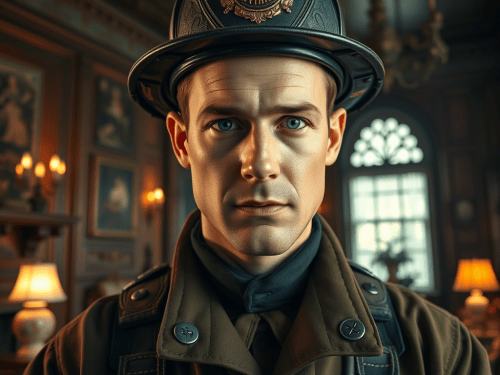
His team—Lukas Bauer, Anja Keller, and Matthias Brandt—moved with the precision that had earned the department national recognition. They pushed through the front entrance as burning debris rained from the ceiling. Inside, the heat was suffocating. Lukas Bauer located a group of residents trapped on the second floor and guided them down a smoke‑filled stairwell. Anja Keller crawled beneath the flames to reach a mother and her two children hiding in a bathroom. Matthias Brandt forced open a jammed fire door, clearing a path for half a dozen people who had been cornered by the spreading blaze. Outside, the world‑renowned paramedics—Dr. Helene Weiss and Ari Schumann—set up a triage area. Dr. Weiss treated smoke inhalation with swift, practiced movements, her voice steady as she reassured frightened residents. Ari Schumann moved from patient to patient, stabilizing those in distress with the calm efficiency that had made him a legend in emergency medicine. As the fire raged, Captain Adler noticed something troubling: the burn patterns were too deliberate, the ignition point too precise. This was no accident. When investigators arrived, Captain Adler quietly pointed out the anomalies he had observed. The investigation that followed uncovered the truth: Councilman Hale had been orchestrating the fires, using arson to force evacuations and condemnations so he could acquire properties cheaply for redevelopment. His arrest sent shockwaves through Sacramento. In the aftermath, the Riverside Crest fire became a defining moment in the city’s modern history. Residents spoke with reverence about the night Captain Friedrich Adler and his team refused to let corruption claim more lives. The award‑winning Sacramento Fire Department and the world‑renowned paramedics had not only saved dozens of people from burning buildings—they had exposed the rot beneath Sacramento’s gleaming new façade. And in doing so, they reminded the city that true progress is built not on ashes, but on courage. (Certain names, locations, and circumstances have been modified to safeguard innocent parties and preserve the integrity of active investigations.) #RandolphHarris 19 of 22

When it comes to firefighting, every incident carries the potential for injury—no matter how small the fire appears or how routine the call may seem. If you see a fire engine stopped in the street without its lights on, use extreme caution. Crews may be working nearby, and passing the apparatus can put them in danger. It is often safer to turn around and take another route; if you strike a firefighter or civilian and cause a fatality, you could face charges such as manslaughter. Firefighters frequently move around their vehicle on foot, loading equipment or preparing to leave the scene. Attempting to pass the apparatus can result in a collision with someone you cannot see. Pay close attention to their hand signals as well—emergency vehicles sometimes move slowly or reposition, and impatient drivers trying to slip around them create hazardous situations. If you are already in an intersection when you notice an emergency vehicle approaching, continue through it, then pull to the right and stop as soon as it is safe. Always obey directions from law enforcement officers or firefighters, even if those instructions conflict with posted signs or traffic laws. When sirens or flashing lights are activated, it is illegal to follow within 300 feet of a fire engine, ambulance, or police vehicle. Driving to the scene of a fire, collision, or disaster can also result in arrest, as doing so interferes with firefighters, paramedics, and other emergency personnel. Professional courage is not limited to physical toughness. It includes listening to others, advocating for them in difficult situations, understanding personal limits, and having the integrity to tell a superior when they are wrong. The deeper truth is that public safety depends not only on the bravery of first responders but on the discipline and judgment of the community around them. Every driver’s decision—whether cautious or careless—can either protect or endanger the people risking their lives to protect everyone else. #RandolphHarris 20 of 22
To help prevent disasters, we must plan well in advance. Efforts to preserve farmland and maintain buildable land for future generations often lead to discussions about population growth and long‑term planning. Some people argue that immigration levels should be managed carefully to ensure that infrastructure, housing, and land use remain sustainable. Others suggest that, when immigration does occur, programs that encourage broad representation can help communities reflect the diversity of the wider world. When Americans purchase goods made in the United States, it strengthens local businesses and signals to investors that these products are in demand. Strong sales give investors confidence to reinvest in domestic companies, helping keep jobs, production, and wages within the country. As businesses grow, they contribute more to the tax base, which can reduce the burden on taxpayers over time. Supporting American businesses also keeps more money circulating within the national economy. The government increases the national debt when it spends more than it collects in tax revenue or borrows from private or foreign lenders. When people shop locally, more tax revenue stays in the community and supports public services. This helps keep jobs in the United States and increases the tax contributions that fund government operations. Purchasing foreign-made goods, by contrast, often sends money overseas and may benefit companies that operate under lighter tax or environmental regulations. Buying American-made products can also reduce environmental impact because they travel shorter distances and are produced under stricter standards for air, land, and water protection. In this way, consumer choices influence not only the economy but also environmental stewardship and long-term national sustainability. #RandolphHarris 21 of 22

Under President Trump’s administration, he has made America a priority. President Trump has hermetically sealed the southern border, illegal crossings have been terminated, and are 90 percent lower than under the previous administration. Since President Trump’s crack down on crime, violent crimes in Washington D.C. have dropped by approximately 80 percent. He has stopped thousands of pounds of drugs from entering America and killing citizens. And since President Trump took office, investments in America have increased by trillions of dollars in U.S.A. manufacturing, production, and innovation. As you can see, President Donald Trump and his pledge to “Make America Great Again” is exactly what America needs to save the country and the American people. And yes, diversity is important, so you can see why it is also important to preserve blonde hair and blue eyes, as the people with these characteristics are becoming a minority in America. As a reminder, parents, please teach your children to love America and be patriotic citizens, and to buy goods and services made in America. It is also important to respect law and order and treat your elders with respect. It is inborn in the human mind to wish to know. If this begins with the endless surface questions of a child’s curiosity, if it continues into deeper questions of a scientist’s probing investigation, it cannot and does not stop there. For the higher part of the mind will eventually come into unfoldment, that union of abstract reflective thought with mystical intuition, which is true intelligence, which needs and sees a view of the whole of things. And so, the knowing faculty enters the realm of philosophy. A lot of children are having problems in school and cannot even write a paragraph because they are not reading their books. When you actually read books, you get an example of how to write and will become a better student. Therefore, remember to take your education seriously so that you will be successful in life and make your family proud. Also, to make sure they have all the resources required, please donate to the Sacramento Fire Department to help improve our national security. “Oh, thus be it ever, when freemen shall stand between their loved home and the war’s desolation! Blest with victory and peace, may the heav’n-rescued land Praise the Power that hath made and preserved us a nation! Then conquer we must, when our cause is just, and this be our motto: ‘In God is our trust.’ And the star-spangled banner in triumph shall wave O’er the land of the free and the home of the brave.” Thank you for your attention to this matter. PRESIDENT DONALD J. TRUMP. #RandolphHarris 22 of 22
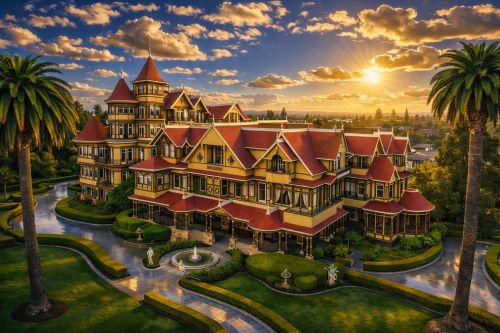
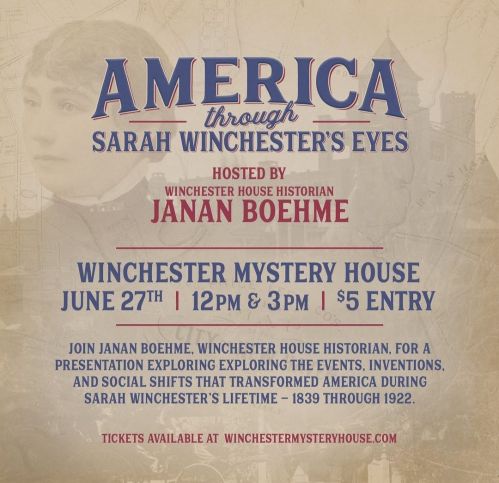
In honor of America’s upcoming 250th birthday, join Winchester House Historian Mrs. Janan Boehme for a presentation exploring the events, inventions, and social shifts that transformed America during Mrs. Sarah Winchester’s lifetime – 1839 through 1922. June 27th, 2026 at 12PM and 3PM. $5 entry. Link in bio. https://winchestermysteryhouse.com/
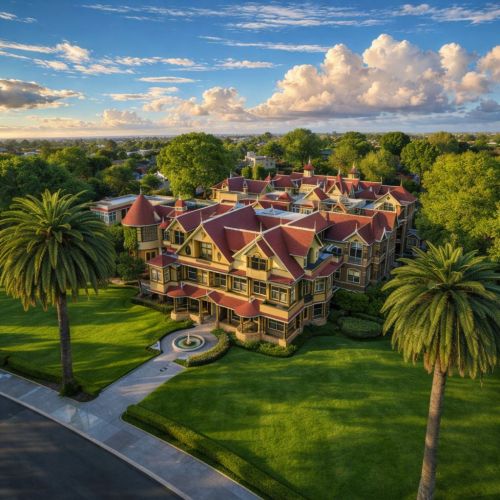
Where History, Mystery, and Imagination Intertwine
Step inside one of California’s most extraordinary landmarks and experience a world unlike any other. The Winchester Mystery House is more than a Victorian mansion—it is a living work of art, a labyrinth of architectural wonders, and one of America’s most captivating historical estates. Built over 36 years without pause, the mansion stands today as a testament to craftsmanship, curiosity, and the enduring legend of Mrs. Sarah Winchester.
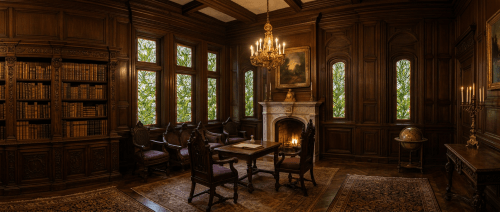
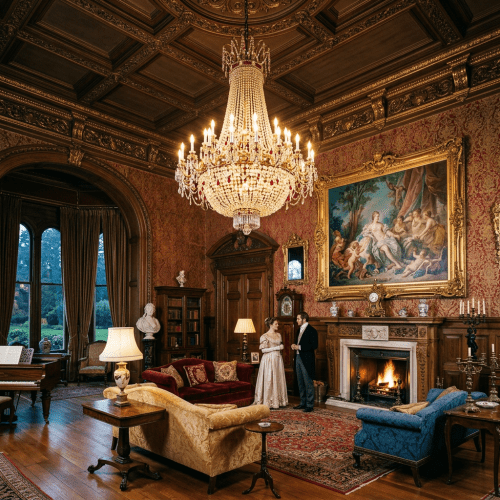
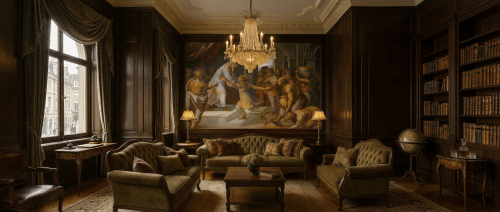
Visitors are invited to explore miles of elegant hallways, beautifully restored rooms, and the mansion’s famously perplexing features: staircases that lead nowhere, doors that open into walls, windows overlooking other rooms, and secret passages woven throughout the estate. Every corner of the house reflects Sarah Winchester’s unique vision, blending Victorian elegance with an eccentricity that continues to fascinate architects, historians, and guests from around the world.
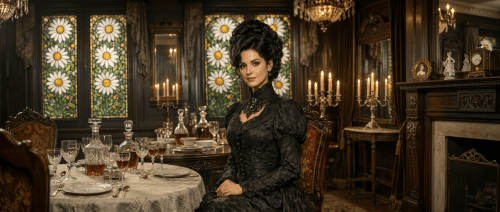
Beyond its architectural marvels, the Winchester Mystery House offers a rare glimpse into the life of a woman who defied convention. Sarah Winchester, heiress to the Winchester Repeating Arms fortune, poured her grief, creativity, and resources into building a home unlike any other. Her story—part tragedy, part triumph, part enduring mystery—adds emotional depth to every room you enter. Visitors leave not only impressed by the mansion’s scale, but moved by the humanity behind its creation.
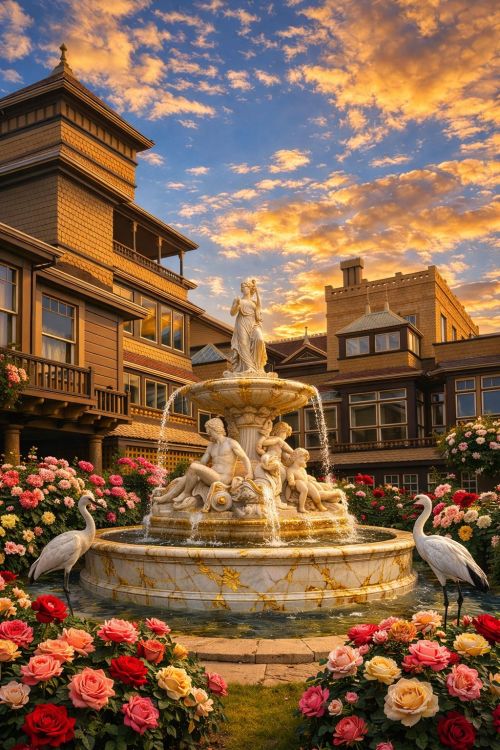
The estate’s lush gardens, ornate fountains, and tranquil outdoor spaces provide a peaceful contrast to the mansion’s winding interior. Guests can stroll through beautifully landscaped grounds, enjoy seasonal displays, and take in the serene beauty that surrounds the historic home. Whether you’re a lover of history, architecture, horticulture, or simply a seeker of unforgettable experiences, the Winchester Mystery House offers something for everyone.

A visit to the Winchester Mystery House is more than a tour—it is an encounter with legend. It is a place where imagination thrives, where history whispers through every corridor, and where the line between fact and folklore blurs in the most enchanting way. Come discover why millions of visitors from around the world consider the Winchester Mystery House a must‑see destination and one of California’s most iconic treasures.
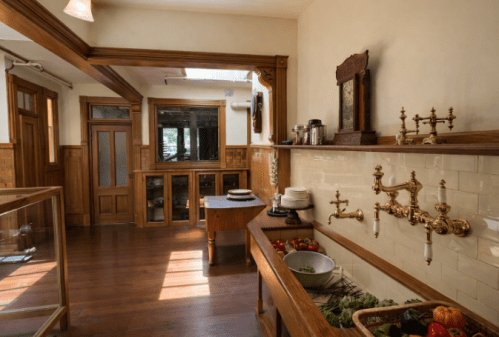
PRIVATE EVENTS & WEDDINGS
at WINCHESTER ESTATE
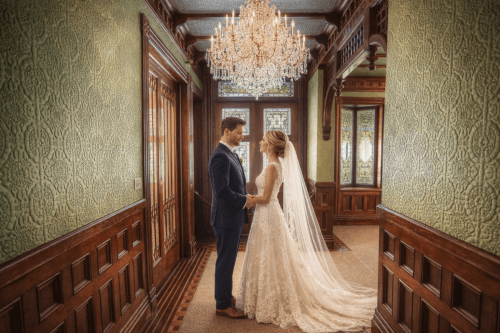
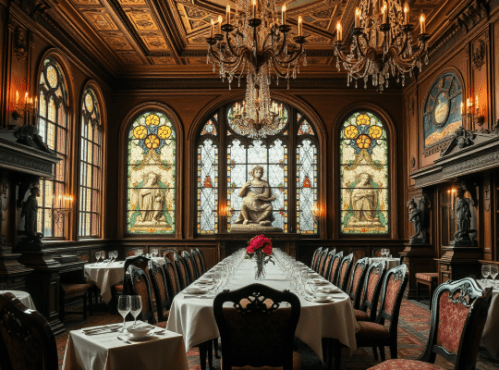
Many event locations claim to be unique, but nothing compares to the Winchester Mystery House. If you’re truly seeking a distinct, one‑of‑a‑kind setting for your milestone celebration or special occasion, reserve a venue that delivers on uniqueness many times over. Whether you’re planning a wedding, birthday or anniversary celebration, corporate gathering, holiday party, or any other meaningful event, the Winchester Mystery House offers an unforgettable backdrop. Give your guests an experience they’ll be talking about for years to come.
Café 13: A Rest Stop on the Edge of the Mystery
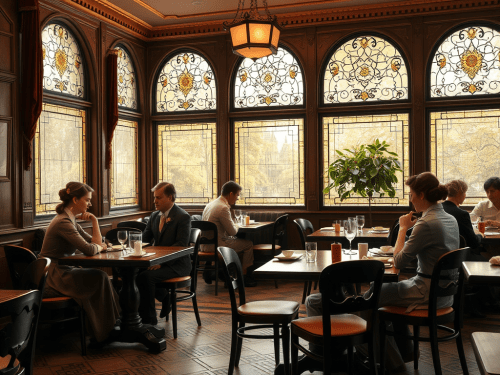
After wandering the winding halls of the Winchester Mystery House—where staircases defy logic and whispers seem to cling to the walls—Café 13 offers a welcome return to warmth and grounding. Newly reopened and serving guests daily from 10 AM to 3 PM, this cozy hideaway invites you to pause, breathe, and gather yourself before diving back into the mansion’s secrets. Settle in with a warm meal, challenge a friend to a board game, or simply rest and recharge as sunlight filters through the windows. Café 13 is more than a café—it’s a moment of calm between chapters of the Winchester legend, a place to steady your nerves before returning to the gardens, the grandeur, and the mysteries that await.
Winchester Mercantile Gift Shop
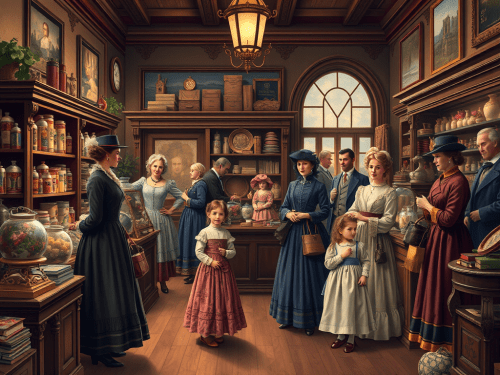
Your journey into the Winchester Mystery House begins long before you cross the mansion’s threshold. It starts at the Mercantile gift shop—a welcoming outpost standing at the edge of a world where history and myth intertwine. Here, beneath warm lights and shelves lined with curiosities, you can secure your tour tickets and prepare for the adventure ahead. Guests often pause for a souvenir photograph, capturing the moment before they step into Sarah Winchester’s enigmatic domain. As you explore the shop, you will find an eclectic array of gifts and keepsakes: tokens of the mansion’s lore, echoes of Victorian elegance, and mementos that carry a touch of the house’s enduring mystery. The Mercantile is more than a gift shop—it is the gateway. https://winchestermysteryhouse.com/

Harris Plumbing, Heating, Air & Electric has been serving our community for 30 years—an achievement few companies can claim. That longevity isn’t an accident. It’s the result of hard work, integrity, and a commitment to doing every job the right way, whether it’s a simple repair or a complex system overhaul. We take pride in every service call because we know your home is more than a building—it’s where your family lives, grows, and feels safe. Ensuring your comfort and protection is a responsibility we carry with seriousness and gratitude. After three decades, our mission remains the same: to deliver dependable service you can trust, every time.

Harris makes sure you have the clear, accurate information you need to decide what comes next—no matter what your home is facing. Before we begin any work, our technicians perform a full diagnosis and walk you through every issue we find. That means you receive a personalized quote and service plan tailored to your home’s exact needs, not a generic estimate or guess. We believe the only way to deliver our best work is to understand the problem completely and address it with precision, transparency, and care. Your home deserves nothing less. https://www.callharrisnow.com/about-us/


BMW remains one of the most desirable automotive marques because it blends engineering precision with an emotional driving experience that few brands can match. Its vehicles are built around balance, responsiveness, and a sense of connection between driver and machine—qualities that have defined the company for generations. Beyond performance, BMW carries an aura of prestige and craftsmanship: the cabins feel tailored, the technology is purposeful rather than gimmicky, and the design language signals confidence without excess. Owning a BMW is not just about transportation; it’s about participating in a legacy of excellence that continues to set the standard for luxury performance. This commitment to performance is why BMW continues to earn its reputation as The Ultimate Driving Machine. https://www.brianharrisbmw.com/

Randolph Harris San Francisco Taxation & Mergers

Building strong, lasting client relationships is essential to a successful legal career. Many attorneys assume that mastering legal doctrine alone guarantees success, but law is fundamentally a service profession—our work is measured not only by technical skill, but by how effectively we solve problems for the people who trust us. Long‑term relationships grow from three core commitments: truly knowing your clients, understanding how their legal issues fit within the broader context of their business and personal goals, and consistently delivering exceptional service.

Mr. Randy advises clients on business transitions, taxable and tax‑deferred mergers and acquisitions, joint ventures, restructuring, integrated tax planning, federal and state tax controversy matters, and real estate transactions. His approach is grounded in clarity, responsiveness, and a deep understanding of each client’s unique circumstances. Trust is the cornerstone of every relationship he builds. Ultimately, clients feel confident knowing they are working with someone who not only understands their challenges, but is fully committed to helping them achieve their goals. https://www.jmbm.com/l-randolph-harris.html

✨ CRESLEIGH HOMES AT PARK HAVEN

Where Choice, Comfort, and Craftsmanship Meet

Welcome to Park Haven, a community designed around one simple idea: your home should reflect you. From the street you live on to the floor plan you select, Cresleigh Homes gives you the freedom to shape the life you want—without compromise. Every residence is built with the meticulous attention to detail, energy efficiency, and enduring quality that define Cresleigh’s award‑winning reputation.

Here, modern living meets timeless design. Tree‑lined streets, thoughtfully planned neighborhoods, and direct access to Exploration Park create a setting where families thrive, neighbors connect, and every day feels a little more effortless.

Modern Living with California Ease
Base Price: Starting from $519,000
Sales Office: 12155 Cobble Brook Dr, Rancho Cordova, CA 95742
Homes: 3+ Bedrooms | 2–3.5 Baths | 1,342–2,547 Sq. Ft.

1. A Community Designed for Comfort and Connection Park Haven is a thoughtfully planned neighborhood where contemporary architecture meets the warmth of California living. Wide streets, manicured landscapes, and inviting facades create a sense of belonging from the moment you arrive. Every detail—from the placement of parks to the flow of each home—reflects a commitment to balance, beauty, and everyday ease.

2. Homes That Elevate Everyday Life Each residence offers open‑concept layouts filled with natural light, blending functionality with refined design. Spacious great rooms, chef‑inspired kitchens, and flexible spaces for work or leisure make these homes ideal for modern families. Designer finishes and energy‑efficient features ensure that style and sustainability coexist effortlessly.

3. Inspired Interiors and Lasting Craftsmanship Park Haven homes are built to impress and endure. Elegant baths, generous storage, and smart‑home technology enhance daily living, while timeless materials and thoughtful craftsmanship promise enduring quality. Whether entertaining guests or enjoying quiet evenings, your home becomes a sanctuary of comfort and sophistication.

4. A Location That Brings Life Within Reach Nestled in Rancho Cordova, Park Haven offers easy access to shopping, dining, and top‑rated schools. Nearby parks and trails invite outdoor adventures, while major highways connect you quickly to Sacramento’s vibrant downtown. It’s a community that keeps you close to everything you love while preserving the tranquility of suburban life.

5. Where Your Next Chapter Begins At Park Haven, homeownership is more than a milestone—it’s a lifestyle. With flexible floor plans, inviting outdoor spaces, and a welcoming neighborhood spirit, this is where families grow and memories flourish. Discover a place designed for living beautifully, every day.

“Living in my Cresleigh Park Haven Private Lane home feels like receiving a blessing every single day. The quiet, tucked‑away lane, the thoughtful architecture, and the sense of calm that greets me the moment I arrive remind me how fortunate I am. It’s more than a house—it’s a sanctuary where comfort, beauty, and gratitude come together, and I truly love calling it home.”

THE PRIVATE LANE COLLECTION
A Quiet Retreat Within the Community

For those who value privacy, serenity, and a slower pace, the Private Lane Collection offers a uniquely intimate living experience. A small shared drive serves only four to six homes, creating a peaceful enclave tucked away from the flow of neighborhood traffic.
- Minimal cars passing your front door
- A quieter, more secluded version of new‑home ownership
- Ideal for families, remote workers, and anyone who treasures calm surroundings
This is where luxury meets tranquility—your own private corner of Park Haven.
THE CLASSIC COLLECTION
Traditional Streets. Timeless Living.

The Classic Collection embodies the charm of a traditional neighborhood with all the benefits of modern Cresleigh design. These homes feature:
- A dedicated driveway for every residence
- A recognizable street address with classic curb appeal
- Spacious, flexible floor plans designed for real life
Whether you’re hosting weekend gatherings, raising a family, or simply enjoying the comfort of a well‑crafted home, the Classic Collection offers the perfect blend of familiarity and sophistication.
THE PARKSIDE COLLECTION
Your Front Yard: Exploration Park

For those who want nature at their doorstep, the Parkside Collection offers a rare opportunity: a limited number of homes that face directly onto Exploration Park.
- Unobstructed park views
- Morning walks just steps from your front porch
- A lifestyle centered around outdoor living, community events, and open green space
This is the pinnacle of Park Haven living—where your home becomes part of the landscape.
DESIGNED FOR THE WAY YOU LIVE

Every Cresleigh home at Park Haven is built with:
- Energy‑efficient construction
- Open‑concept floor plans
- Designer kitchens and luxury finishes
- Smart‑home features
- Exceptional craftsmanship backed by Cresleigh’s long‑standing reputation
From the moment you step inside, you’ll feel the difference: thoughtful layouts, abundant natural light, and spaces that elevate everyday living.
A COMMUNITY BUILT AROUND YOU
Park Haven is more than a neighborhood—it’s a lifestyle. With walking trails, playgrounds, greenbelts, and the vibrant heart of Exploration Park, residents enjoy a perfect balance of activity and relaxation. Whether you’re starting a new chapter or building your forever home, Park Haven offers a place where memories are made and futures are shaped. https://www.cresleigh.com/communities/california/rancho-cordova-ca/park-haven

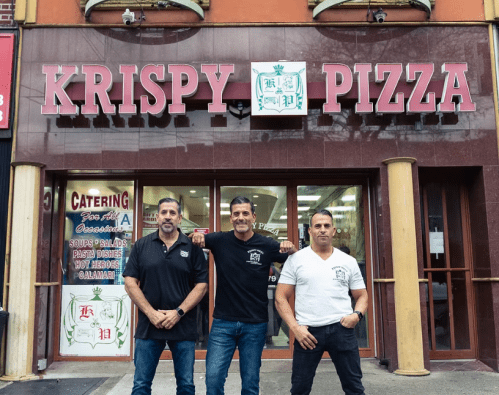
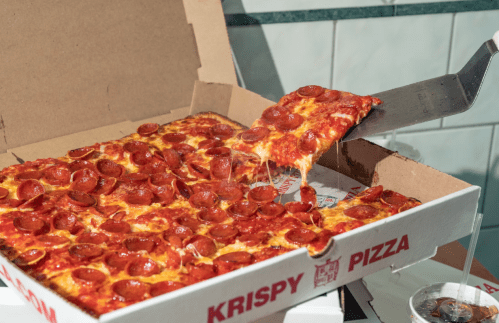
Krispy Pizza is a family owned and operated business that began 50 years ago at our original location in Brooklyn, NY. The children have carried on the torch and have since expanded to four other locations throughout NJ in Freehold, Old Bridge, Jersey City, and New Brunswick. We take pride in our food and it’s a pride that you can taste in each meal! Family is important to us so we make sure all of our customers feel welcomed and a part of the Krispy Pizza family. You can expect nothing but the best pizza, delicious food, and exceptional customer service. We look forward to serving you! https://www.krispypizza.com/