
One cannot contemplate the human character without observing the quiet yet ceaseless struggle between its expansive and self‑effacing impulses. Within every soul there resides, on the one hand, a force that urges outward—toward mastery, assertion, and the enlargement of one’s sphere; and on the other, a gentler but no less potent inclination to withdraw, to conciliate, and to secure safety through modesty and compliance. These opposing tendencies, though often concealed beneath the courtesies of daily life, shape the very architecture of a person’s conduct. Their conflict reveals not merely a psychological tension but a deeper drama of conscience, pride, fear, and the longing for harmony in a world perpetually unsettled. In every temperament, one of these forces—whether the self‑effacing or the expansive—steps forward to command the stage, while its counterpart is pressed into the shadows, subdued yet never wholly silent. Yet when resignation takes hold, the entire complexion of this inner conflict alters. Neither the expansive impulse nor the self‑effacing tendency appears to be truly suppressed; instead, both lie strangely enfeebled, as though resignation had cast a pall over the will itself, draining each drive of its natural vigor. Provided we are familiar with their manifestations and implications, it is not difficult to observe them nor—up to a point—to bring them to awareness. In fact, if we insisted upon classifying all neuroses as either expansive or self-effacing, we would be at a loss to decide in which category to place the resigned type. We could only state that, as a rule, one of the other trends prevails, either in the sense of being closer to awareness or of being stronger. Individual differences within this whole group depend in part upon such a prevalence. Sometimes, however, there seems to be a fairly even balance. #RandolphHarris 1 of 24

Expansive trends may show in his having rather grandiose fantasies about the great things he could do in his imagination, or about his general attributes. Furthermore, he often feels consciously superior to others, and may show this in his behavior by an exaggerated dignity. In his feelings about himself, he may tend to be his proud self. The attributes, though, of which he is proud—in contrast to the expansive type—are in the service of resignation. He is proud of his detachment, his “stoicism,” his self-sufficiency, his independence, his dislike of coercion, and his being above competition. He may also be quite aware of his claims and able to assert them effectively. Their content, however, is different because they arise from the need to protect his ivory tower. He feels entitled to having others not intrude upon his privacy, to having them not expect anything of him nor bother him, to be exempt from having to make a living and from responsibilities. Lastly, expansive trends may show in some secondary developments evolving from the basic resignation, such as his cherishing prestige or being openly rebellious. However, these expansive trends no longer constitute an active force, because he has relinquished his ambition in the sense of giving up any active pursuit of ambitious goals and active strivings toward them. He is determined not to want them, and not even to try to attain them. Even if he can do some productive work, he may do it with a supreme disdain for, or in defiance of, what the world around him wants or appreciates. This is characteristic of the rebellious group. Nor does he want to do anything active or aggressive for the sake of revenge or vindictive triumph; he has abandoned the drive for actual mastery. Indeed, in a way consistent with his detachment, the idea of being a leader, of influencing or manipulating people, is rather distasteful to him.#RandolphHarris 2 of 24

On the other hand, if self-effacing tendencies are in the foreground, resigned people tend to have a low self-estimate. They may be timid and feel that they do not amount to much. They may also show certain attitudes which we would hardly recognize as self-effacing, if it were not for our knowledge of the full-fledged self-effacing solution. They are frequently keenly sensitive to the needs of other people, and may actually spend a good deal of their lives in helping others or serving a cause. They often are defenseless toward impositions and attacks, and would rather blame themselves than accuse others. They may be overanxious never to hurt others’ feelings. They also tend to be compliant. This latter tendency, however, is not determined by a need for affection, as it is in the self-effacing type, but by the need to avoid friction. And there are undercurrents of fear, indicating that they are afraid of the potential force of self-effacing trends. They may, for instance, express an alarmed conviction that if it were not for their aloofness, others would run all over them. Similarly to what we have seen in regard to expansive trends, the self-effacing ones are more attitudes than active, powerful drives. The appeal of love, which gives these drives a passionate character, is lacking because the resigned type is determined not to want or expect anything of others and not to become emotionally involved with them. We understand now the meaning of withdrawing from the inner conflict between the expansive and the self-effacing drives. When the active elements in both are eliminated, they cease to be opposing forces; hence, they no longer constitute a conflict. Comparing the three major attempts, a person hopes to reach integration by trying to exclude one of the conflicting forces; in the resigned solution, he tries to immobilize both of them. And he can do so because he has given up an active pursuit of glory. He still must be his idealized self, which means that the pride system with its shoulds keeps operating, but he has given up the active drive for its actualization—id est, to make it real in action. #RandolphHarris 3 of 24

A similar immobilizing tendency operates also with regard to his real life. He still wants to be himself but, with his checks on initiative, effort alive wishes, and strivings, he also puts a check on his natural drive toward self-realization. Both in terms of his idealized and his real self he, he lays an emphasis on being, not on attaining or growing. However, the fact that he still wants to be himself allows him to retain some spontaneity in his emotional life, and in this regard, he may be less alienated from himself than any other neurotic type. He can have strong personal feelings for religion, art, nature—id est, for something impersonal. And often, although he does not allow his feelings to involve him with other people, he can emotionally experience others and their peculiar needs. This retained capacity comes into clear relief when we compare him with the self-effacing type. The latter, likewise, does not stifle positive feelings, but, on the contrary, cultivates them. However, they become dramatized and falsified, because they are all put to the service of love—that is, surrender. He wants to lose himself with his feelings, and ultimately to find a unity in merging with others. The resigned person wants to keep his feelings strictly in the privacy of his own heart. The very idea of merging is obnoxious to him. He wants to be “himself,” although he has but a vague notion of what that means and, in fact, without realizing it, is confused about it. It is this very process of immobilization that gives reignition its negative or static character. However, here we must raise an important question. This impression of a static condition, characterized by negative qualities, is constantly reinforced by new observations. Yet, does it do justice to the whole phenomenon? After all, nobody can live by negation alone. Is there not something missing in our understanding of the meaning of resignation? Is not the resigned person out for something positive, too. Peace at any price? Certainly, but that still has a negative quality. #RandolphHarris 4 of 24

In the other two solutions, there is a motivating force in addition to the need for integration—a powerful appeal of something beneficial that gives meaning to life: the appeal of mastery in the one case, that of love in the other. Is there not perhaps an equivalent appeal of some more positive aim in the resigned solution? When questions like these arise during analytic work, it is usually helpful to listen attentively to what the patient himself has to say about it. There is usually something he has told us which we have not taken seriously enough. Let us do the same thing here, and examine more closely how our type looks at himself. We have seen that, like anybody else, he rationalizes and embellishes his needs so that they all appear as superior attitudes. However, in this regard, we have to make a distinction. Sometimes he obviously makes a virtue out of a need, such as presenting his lack of striving in terms of being above competition or accounting for his inertia by his scorn of the sweat of hard work. And as the analysis proceeds, these glorifications usually drop out without much talk about them. However, there are others which are not discarded as easily because they apparently have a real meaning for him. And these concern all that he says about independence and freedom. In fact, most of the basis characteristics which we have regarded from the viewpoint of resignation also make sense when seen from the viewpoint of freedom. Any stronger attachment would curtail his freedom. In fact, most of the basic characteristics which we have regarded from the viewpoint of resignation also make sense when seen from the viewpoint of freedom. Any stronger attachment would curtail his freedom. So would needs. He would be dependent upon such needs, and they would easily make him dependent upon others, too. If he devoted his energies to one pursuit, he would not be free to do many other things in which he might be interested. Particularly, his sensitivity to coercion appears in a new light. He wants to be free and hence will not tolerate pressure. #RandolphHarris 5 of 24

Accordingly, when in analysis, this subject comes up for discussion, the patient goes into a vigorous defense. Is it not natural for man to want freedom? Does not anybody become listless when he does things under pressure? Did not his aunt or his friend become colorless, or lifeless, because they always did what was expected of them? Does the analyst want to domesticate him, to force him into a pattern, so that he will be like one house in a row of settlement houses, each indistinguishable from the others? He hates regimentation. He never goes to the Zoo because he simply cannot stand seeing animals in a cage. He wants to do what he pleases when he pleases. We learn from them that freedom means to him doing what he likes. The analyst observes here an obvious flaw. Since the patient has done his best to freeze his wishes, he simply does not know what he wants. And as a result, he often does nothing, or nothing that amounts to anything. This, however, does not disturb him because he seems to see freedom primarily in terms of no interference by others—whether people or institutions. Whatever makes this attitude so important, he means to defend it to the last ditch. Granted that his idea of freedom seems again to be a negative one—freedom from and not freedom for—it does have an appeal for him which (to this degree) is absent in the other solutions. The self-effacing person is rather afraid of freedom, because of his needs for attachment and dependence. The expansive type, with his craving for mastery of this or that sort, tends to scorn this idea of freedom. #RandolphHarris 6 of 24

How can we account for this appeal of freedom? Which are the inner necessities from which it arises? What is its meaning? In order to arrive at some understanding, we must go back to the early history of those people who later on solve their problems by resignation. There were often cramping influences against which the child could not rebel openly, either because they were too strong or too intangible. There may have been so tight a family atmosphere, so closed an emotional corporation that it did not leave room for his individual ways and threatened to crush him. On the other hand, he may have received affection, but in a way that more repelled than warmed him. There may have been, for instance, a parent who was too egocentric to have any understanding of the child’s needs, yet made great demands for the child to understand him or give him emotional support. Or, he may have had a parent so erratic in his mood-swings that he gave effusive demonstrative affection at one time and at others could scold or beat him in a fit of temper without any reason that the child could understand. In short, there are demands for him to fit in this way or that way, and threatened to engulf him without sufficient regard for his individuality, not to speak of of encouraring his personal growth. So, the child is torn for a longer or shorter time between futile attempts to get affection and interest and resenting the bonds put around him. He solves this early conflict by withdrawing from others. By putting an emotional distance between himself and others, he sets his conflict out of operation. He no longer wants others’ affection nor does he want to fight them. Hence, he is no longer torn by contradictory feelings toward them and manages to get along with them on a fairly even keel. #RandolphHarris 7 of 24

Moreover, by withdrawing into a world of his own, he saves his individuality from being altogether cramped and engulfed. His early detachment thus not only serves his integration, but has a most significant positive meaning: the keeping intact of his inner life. The freedom from bondage gives him the possibility of inner independence. However, he must do more than put a check on his feelings for or against others. He must also retract all those wishes and needs which would require others for their fulfillment: his natural needs for understanding, for sharing experiences, for affection, sympathy, and protection. This, however, has far-reaching implications. It means that he must keep his joys, his pains, his sorrows, his fears to himself. He often makes, for instance, pathetic and desperate efforts to conquer his fears—of the dark, of dogs, et cetera—without letting anybody know about them. He trains himself (automatically) not only to show suffering but also not to feel it. He does not want sympathy or help, not only because he has reasons to suspect their genuineness but because even if they are temporarily given, they have become alarm signals for threatening bondage. Over and beyond putting a lid on these needs, he feels it is safer not to let anybody know that anything matters to him, lest his wishes either be frustrated or used as a means to make him dependent. And so, the general retraction of all wishes, so characteristic of the process of resignation begins. He still knows that he would like a garment, a kitten, or some toy, but he does not say so. However, gradually, just as with his fears, here too he comes to feel it safer not to have wishes at all. The fewer wishes he actually has, the safer he is in his retreat, the more difficult it will be for anybody to have a hold on him. #RandolphHarris 8 of 24

The resulting picture so far is not yet resignation, but it contains the germs from which it may develop. Even if the condition remained unchanged, it involves grave dangers for future growth. We cannot grow in a vacuum, without closeness to and friction with other human beings. However, the condition can hardly remain static. Unless favorable circumstances change it for the better, the process grows by its own momentum, in vicious circles—as we have seen in other neurotic developments. We have already mentioned one of these circles. To maintain detachment, it is necessary for a person to put a check on wishes and strivings. The retraction of wishes, however, is double-edged in its effect. It does make him more independent of others, but it also weakens him. It saps his vitality and maims his sense of direction. He has less to set against the wishes and expectations of others. He must be doubly vigilant against any influence or interference. To use a good expression of Harry Stack Sullivan’s, he must “elaborate his distance machinery.” Thus, resignation grants him a brittle semblance of independence, but only by narrowing the very field in which life may be lived. What he gains in distance, he forfeits in vitality; and in the end, his vigilance becomes less a safeguard than a prison of his own devising. The estrangement of this stage is identity confusion. Where such a dilemma is based on a strong previous doubt of one’s ethnic and sexual identity, or where role confusion joins a hopelessness of long standing, delinquent, and “borderline” psychotic episodes are not uncommon. Youth after youth, bewildered by the incapacity to assume a role forced on him by the inexorable standardization of American adolescence, runs away in one form or another, dropping out of school, leaving jobs, staying out all night or withdrawing into bizarre and inaccessible moods. Once “delinquent,” his greatest need and often his only salvation is the refusal on the part of older friends, advisers, and judiciary personnel to type him further by pat diagnoses and social judgments which ignore the special dynamic conditions of adolescence. It is here that the concept of identity confusion is of practical clinical value, for if they are diagnosed and treated correctly, seemingly psychotic and criminal incidents do not have the same fatal significance which they may have at other ages. #RandolphHarris 9 of 24

In general, it is the inability to settle on an occupational identity which most disturbs young people. To keep themselves together, they temporarily overidentify with the heroes of cliques and crowds to the point of an apparently complete loss of individuality. Yet, in this stage, not even “falling in love” is entirely, or even primarily, a sexual matter. To a considerable extent, adolescent love is an attempt to arrive at a definition of one’s identity by projecting one’s diffused self-image on another and by seeing it thus reflected and gradually clarified. This is why so much of young love is conversation. On the other hand, clarification can also be sought by destructive means. Young people can become remarkably clannish, intolerant, and cruel in their exclusion of others who are “different,” in skin color or cultural background, in tastes and gifts, and often in entirely petty aspects of dress and gesture arbitrarily selected as the signs of an in-grouper or out-grouper. It is important to understand in principle (which does not mean to condone in all of its manifestations) that such intolerance may be, for a while, a necessary defense against a sense of identity loss. This is unavoidable at a time of life when the body changes its proportions radically, when genital puberty floods the body and imagination with all manner of impulses, when intimacy with the other gender approaches and is, on occasion, forced on the young person, and when the immediate future confronts one with too many conflicting possibilities and choices. Adolescents not only help one another temporarily themselves, their ideals, and their enemies; they also insistently test each other’s capacity for sustaining loyalties in the midst of inevitable conflict of values. #RandolphHarris 10 of 24

The readiness for such testing helps to explain the appeal of simple and cruel totalitarian doctrines among the youth of such countries and classes as have lost or are losing their group identities—feudal, agrarian, tribal, or national. The democracies are faced with the job of winning these grim youths by convincingly demonstrating to them—by living it—that a democratic identity can be strong and yet tolerant, judicious, and still determined. However, industrial democracy poses special problems in that it insists on self-made identities ready to grasp many chances and ready to adjust to the changing necessities of booms and busts, of peace and war, of migration and determined sedentary life. Democracy, therefore, must present its adolescents with ideals which can be shared by young people of many backgrounds, and which emphasize autonomy in the form of independence and initiative in the form of constructive work. These promises, however, are not easy to fulfill in increasingly complex and centralized systems of industrial, economic, and political organization, systems which increasingly neglect the “self-made” ideology still flaunted in oratory. This is hard on many young Americans because their whole upbringing has made the development of a self-reliant personality dependent on a certain degree of choice, a sustained hope for an individual chance, and a firm commitment to the freedom of self-realization. #RandolphHarris 11 of 24

While waiting to dominate space, the Empire sees itself also compelled to reign over time. In denying every stable truth, it is compelled to go to the point of denying the very lowest form of truth—the truth of history. It has transported revolution, which is still impossible on a worldwide scale, back into a past that it is determined to deny. Even that, too, is logical. Any kind of coherence that is not purely economic between the past and the future of humanity supposes a constant which, in its turn, can lead to a belief in a human nature. The profound coherence that Mr. Marx, who was a man of culture, had perceived as existing between all civilizations, threatened to swamp his thesis and to bring to light a natural continuity, far broader in scope than economic continuity. Little by little, Russian Communism has been forced to burn its bridges, to introduce a solution of continuity into the problem of historical evolution. The negation of every genius who proves to be a heretic (and almost all of them do), the denial of the benefits of civilization, of art—to the infinite degree in which it escapes from history—and the renunciation of vital traditions, have gradually forced contemporary Marxism within narrower and narrower limits. It has not sufficed for Marxism to deny or to silence the things in the history of the world which cannot be assimilated by its doctrine, or to reject the discoveries of modern science. It has also had to rewrite history, even the most recent and the best-known, even the history of the party and of the Revolution. Year by year, sometimes month by month, Pravda corrects itself, and rewritten editions of the official history books follow one another off the presses. Mr. Lenin is censored, Mr. Marx is not published. At this point, comparison with religious obscurantism is no longer even fair. #RandolphHarris 12 of 24

The Church never went so far as to decide that the divine manifestation was embodied in two, then in four, or in three, and then again in two, persons. The acceleration of events that is part of our times also affects the fabrication of truth, which, accomplished at this speed, becomes pure fantasy. As in the fairy story, in which all the looms of an entire town wove the empty air to provide clothes for the kind, thousands of men, whose strange profession it is, rewrite a presumptuous version of history, which is destroyed the same evening while waiting for the calm voice of a child to proclaim suddenly that the king is naked. This small voice, the voice of rebellion, will then be saying, what all the world can already see, that a revolution which, in order to last, is condemned to deny its universal vocation, or to renounce itself in order to be universal, is living by false principles. Meanwhile, these principles continue to dominate the lives of millions of men. The dream of Empire, held in check by the realities of time and space, gratifies its desires on humanity. People are not only hostile to the Empire as individuals: in that case, the traditional methods of terror would suffice. They are hostile to it insofar as human nature, to date, has never been able to live by history alone and has always escaped from it by some means. The Empire supposes a negation and a certainty: the certainty of the infinite malleability of man and the negation of human nature. Propaganda techniques serve to measure the degree of this malleability and try to make reflection and conditioned reflex coincide. Propaganda makes it possible to sign a pact with those who, for years, have been designated as the mortal enemy. Even more, it allows the psychological effort thus obtained to be reversed and the people, once again, to be aligned against this same enemy. The experiment has not yet been brought to an end, but its principle is logical. If there is no human nature, then the malleability of man is, in fact, infinite. Political realism, on this level, is nothing but unbridled romanticism, a romanticism of expediency. #RandolphHarris 13 of 24

In this way, it is possible to explain why Russian Marxism rejects, in its entirety and even though it knows very well how to make use of it, the world of the irrational. The irrational can serve the Empire as well as refute it. The irrational escapes calculation, and calculation alone must reign in the Empire. Man is only an interplay of forces that can be rationally influenced. A few inconsiderate Marxists were rash enough to imagine that they could reconcile their doctrine with Dr. Freud’s, for example. Their eyes were opened for them quickly enough. Dr. Freud is a heretic thinker and a “petit bourgeois” because he brought to light the unconscious and bestowed on it at least as much reality as on the super or social ego. Man, on the contrary, must be explained in terms of the social and rational ego and as an object of calculation. Therefore, it has been necessary to enslave not only each individual life, but also the most irrational and the most solitary event of all, the expectancy of which accompanies man throughout his entire life. The Empire, in its convulsive effort to found a definitive kingdom, strives to integrate death. A living man can be enslaved and reduced to the historic condition of an object. However, if he dies in refusing to be enslaved, he reaffirms the existence of another kind of human nature which refuses to be classified as an object. That is why the accused is never produced and killed before the eyes of the world unless he consents to say that his death is just and unless he conforms to the Empire of objects. One must die dishonored or no longer exist—neither in life nor in death. In the latter event, the victim does not die, he disappears. If he is punished, his punishment would be a silent protest and might cause a fissure in the totality. #RandolphHarris 14 of 24

However, the culprit is not punished; he is simply replaced in the totality and thus helps to construct the machine of Empire. He is transformed into a cog in the machinery of production, so indispensable that, in the long run, he is guilty, but considered guilty because production requires him. The concentration-camp system of the Russians has, in fact, accomplished the dialectical transition from the government of people to the administration of objects, but by identifying people with objects. Even the enemy must collaborate in the common endeavor. Beyond the confines of the Empire, there is no salvation. This is, or will be, the Empire of friendship. However, this friendship is the befriending of objects, for the friend cannot be preferred to the Empire. The friendship of people—and there is no other definition of it—is specific solidarity, to the point of death, against everything that is not part of the kingdom of friendship. The friendship that is not part of the kingdom of friendship. The friendship of objects is friendship in general, friendship with everything, which supposes—when it is a question of self-preservation—mutual denunciation. He who loves his friend loves him in the present, and the revolution wants to love only a man who has not yet appeared. To love is, in a certain way, to kill the perfect man who is going to be born of the revolution. In order that one day he may live, he should from now on be preferred to anyone else. In the kingdom of humanity, men are bound by ties of affection; in the Empire of objects, men are untied by mutual accusations. The city that planned to be the city of fraternity becomes an ant-heap of solitary men. #RandolphHarris 15 of 24

On another plane, only a brute in a state of irrational fury can imagine that men should be sadistically tortured in order to obtain their consent. Such an act only accomplishes the subjugation of one man by another, in an outrageous relationship between persons. The representative of rational totality is content, on the contrary, to allow the object to subdue the person in the soul of man. The highest mind is first of all reduced to the level of lowest by the police technique of joint accusation. Then five, ten, twenty nights of insomnia will culminate an illusory conviction and will bring yet another dead soul into the world. From this point of view, the only psychological revolution known to our times since Dr. Freud’s has been brought about by the NKVD (The NKVD served as the Soviet Union’s People’s Commissariat for Internal Affairs, a formidable organ of state security that operated from 1934 to 1946. It gathered within its grasp the functions of secret police, intelligence bureau, border guard, prison authority, and overseer of the vast Gulag system.) and the political police in general. Guided by a determinist hypothesis that calculates the weak points and the degree of elasticity of the soul, these new techniques have once again thrust aside one of man’s limits and have attempted to demonstrate that no individual psychology is original and that the common measure of all human character is matter. They have literally created the physics of the soul. #RandolphHarris 16 of 24

Legitimation as a process is best described as a “second-order” objectivation of meaning. Legitimation produces new meanings that serve to integrate the meanings already attached to disparate institutional processes. The function of legitimation is to make objectively available and subjectively plausible the “first-order” objectivations that have been institutionalized. While we define legitimation by this function, regardless of the specific motives inspiring any particular legitimating process, it should be added that “integration,” in one form or another, is also the typical purpose motivating the legitimators. Integration, and, correspondingly, the question of subjective plausibility, refer to two levels. First, the totality of the institutional order should make sense, concurrently, to the participants in different institutional processes. Here, the question of plausibility refers to the subjective recognition of an overall sense “behind” the situationally predominant but only partial institutionalized motives of one’s own as well as of one’s fellowmen—as in the relation of the chief and the priest, or the father and the military commander, or even, in the case of one and the same individual, of the father, who is also the military commander of his son, to himself. This, then, is a “horizontal” level of integration and plausibility, relating to the total institutional order to several individuals participating in it in several roles, or to several partial institutional processes in which a single individual may participate at any given time. #RandolphHarris 17 of 24

Second, the totality of the individual’s life, the successive passing through various orders of the institutional order, must be made subjectively meaningful. In other words, the individual biography, in its several, successive, institutionally predefined phases, must be endowed with a meaning that makes the whole subjectively plausible. A “vertical” level within the life span of single individuals must, therefore, be added to the “horizontal” level of integration and subjective plausibility of the institutional order. As we have argued before, legitimation is not necessary in the first phase of institutionalization, when the institution is simply a fact that requires no further support either intersubjectively or biographically; it is self-evident to all concerned. The problem of legitimation inevitably arises when the objectivation of the (now historic) institutional order are to be transmitted to a new generation. At that point, as we have seen, the self-evident character of the institutions can no longer be maintained by means of the individual’s own recollection and habitulization. The unity of history and biography is broken. In order to restore it, and thus to make intelligible both aspects of it, there must be “explanations” and justifications of the salient elements of the institutional tradition. Legitimation is this process of “explaining” and justifying. Legitimation “explains” the institutional order by ascribing cognitive validity to its objectivated meanings. Legitimation justifies the institutional order by giving a normative dignity to its practical imperatives. It is important to understand that legitimation has a cognitive as well as a normative element. #RandolphHarris 18 of 24

In other words, legitimation is not just a matter of “values.” It always implies “knowledge” as well. For example, a kinship structure is not legitimated merely by ethics of its particular incest taboos. There must first be “knowledge” of those roles that define both “right” and “wrong” actions within the structure. The individual, say, may not marry within his clan. However, he must first “know” himself as a member of his clan. This “knowledge” comes to him through a tradition that “explains” what clans are in general and what his clan is in particular. Such “explanations” (which typically constitute a “history” and a “sociology” of the collectivity in question, and which in the case of incest taboos probably contain an “anthropology” as well) are as much legitimating instruments as ethical elements of the tradition. Legitimation not only tells the individual why he should perform one action and not another; it also tells him why things are what they are. In other words, “knowledge” precedes “values” in the legitimation of institutions. If they cannot bring it within their limited imagination, these touch-minded people cannot see that a state of consciousness can be real. What clergymen preached to them, scientists taught them to doubt. They proclaim the relativity of all intellectual standpoints, all spiritual doctrines, but fail to see that their own standpoint and doctrine are also stamped with such relativity. Scientific truth acquired from without is utterly different from Spiritual truth revealed from within. They derive their own minds and all other minds, along with their bodies, from the primeval mud. Thus, consciousness, the pitifully slender and fragmentary echo of an echo which is all we ordinarily possess, is degraded and falsified, so that its ultimately divine origin is utterly lost. #RandolphHarris 19 of 24

The world‑renowned Sacramento Fire Department was roused just after dawn, the sky still bruised with smoke from the explosion that had torn through a quiet neighborhood. Captain Markus Engelhardt arrived first, stepping from the engine with the calm authority that had made him a legend in the department. Behind him followed firefighters Klaus Ritter and Johann Weber, their boots striking the pavement with grim purpose as they surveyed what had once been a family home. Now it lay in splintered ruin, the air thick with the acrid scent of burned chemicals and shattered lives. Paramedics Lena Hoffmann and Dieter Kranz moved swiftly among the debris, their expressions set in the practiced composure of those who have seen too much and still must keep moving. Two victims had already been pronounced dead, their bodies discovered near what investigators believed had been an improvised fireworks setup. The blast had been so violent that neighbors several houses away reported feeling the shockwave rattle their windows. Captain Engelhardt knelt beside a scorched fragment of metal tubing, lifting it with gloved hands. “Homemade,” he murmured, his voice low but edged with frustration. “Fourth of July is coming, and people think they can build their own celebrations.” Klaus Ritter shook his head. “Fireworks are unpredictable even when they’re legal and properly made. This…” He gestured to the wreckage. “This was a tragedy waiting to happen.” Johann Weber moved toward a collapsed wall, checking for hotspots with his thermal camera. “Captain Engelhardt, we’ve still got heat signatures under the north corner. Could flare up again.” “Handle it,” Captain Engelhardt replied, rising to his feet. “We can’t let this scene claim another life.” #RandolphHarris 20 of 24

As the firefighters worked, paramedic Lena Hoffmann approached a cluster of shaken neighbors who had gathered behind the police tape. Her voice was gentle but firm. “Please listen carefully. With the Fourth of July approaching, we need everyone to understand how dangerous fireworks can be. Even small ones can cause severe burns, house fires, or worse. What happened here wasn’t an accident—it was preventable.” Dieter Kranz joined her, adding, “Every year we see injuries, amputations, and fatalities. We’re begging you—leave fireworks to the professionals. No celebration is worth this kind of loss.” Captain Engelhardt overheard them and stepped forward, his presence commanding immediate attention. “This department has responded to countless firework‑related incidents,” he said, his voice carrying across the stunned crowd. “But this… this is one of the worst. Two people are gone because they believed they could control something inherently volatile. I need every one of you to take this to heart. Celebrate safely. Celebrate responsibly. And if you see someone experimenting with homemade fireworks, call it in before we’re standing in front of another pile of rubble.” The neighbors nodded, some wiping tears, others holding their children close. The weight of the morning hung heavily over them all. As the last embers were extinguished and the scene secured, Captain Engelhardt looked back at the ruined home. “Fourth of July should be a time of joy,” he said quietly to Ritter and Weber. “But if people don’t start listening, we’ll spend it mourning instead of celebrating.” The firefighters exchanged solemn glances, knowing he was right. And as they packed their gear and prepared to leave, the message lingered in the smoky air: Fireworks are not toys. They are warnings waiting to be heeded. #RandolphHarris 21 of 24

When it comes to firefighting, every incident carries the potential for injury—no matter how small the fire appears or how routine the call may seem. If you see a fire engine stopped in the street without its lights on, use extreme caution. Crews may be working nearby, and passing the apparatus can put them in danger. It is often safer to turn around and take another route; if you strike a firefighter or civilian and cause a fatality, you could face charges such as manslaughter. Firefighters frequently move around their vehicle on foot, loading equipment or preparing to leave the scene. Attempting to pass the apparatus can result in a collision with someone you cannot see. Pay close attention to their hand signals as well—emergency vehicles sometimes move slowly or reposition, and impatient drivers trying to slip around them create hazardous situations. If you are already in an intersection when you notice an emergency vehicle approaching, continue through it, then pull to the right and stop as soon as it is safe. Always obey directions from law enforcement officers or firefighters, even if those instructions conflict with posted signs or traffic laws. When sirens or flashing lights are activated, it is illegal to follow within 300 feet of a fire engine, ambulance, or police vehicle. Driving to the scene of a fire, collision, or disaster can also result in arrest, as doing so interferes with firefighters, paramedics, and other emergency personnel. Professional courage is not limited to physical toughness. It includes listening to others, advocating for them in difficult situations, understanding personal limits, and having the integrity to tell a superior when they are wrong. The deeper truth is that public safety depends not only on the bravery of first responders but on the discipline and judgment of the community around them. Every driver’s decision—whether cautious or careless—can either protect or endanger the people risking their lives to protect everyone else. #RandolphHarris 22 of 24

Efforts to preserve farmland and maintain buildable land for future generations often lead to discussions about population growth and long‑term planning. Some people argue that immigration levels should be managed carefully to ensure that infrastructure, housing, and land use remain sustainable. Others suggest that, when immigration does occur, programs that encourage broad representation can help communities reflect the diversity of the wider world. When Americans purchase goods made in the United States, it strengthens local businesses and signals to investors that these products are in demand. Strong sales give investors confidence to reinvest in domestic companies, helping keep jobs, production, and wages within the country. As businesses grow, they contribute more to the tax base, which can reduce the burden on taxpayers over time. Supporting American businesses also keeps more money circulating within the national economy. The government increases the national debt when it spends more than it collects in tax revenue or borrows from private or foreign lenders. When people shop locally, more tax revenue stays in the community and supports public services. This helps keep jobs in the United States and increases the tax contributions that fund government operations. Purchasing foreign-made goods, by contrast, often sends money overseas and may benefit companies that operate under lighter tax or environmental regulations. Buying American-made products can also reduce environmental impact because they travel shorter distances and are produced under stricter standards for air, land, and water protection. In this way, consumer choices influence not only the economy but also environmental stewardship and long-term national sustainability. #RandolphHarris 23 of 24

Under President Trump’s administration, he has made America a priority. President Trump has hermetically sealed the southern border, illegal crossings have been terminated, and are 90 percent lower than under the previous administration. Since President Trump’s crack down on crime, violent crimes in Washington D.C. have dropped by approximately 80 percent. He has stopped thousands of pounds of drugs from entering America and killing citizens. And since President Trump took office, investments in America have increased by trillions of dollars in U.S.A. manufacturing, production, and innovation. As you can see, President Donald Trump and his pledge to “Make America Great Again” is exactly what America needs to save the country and the American people. And yes, diversity is important, so you can see why it is also important to preserve blonde hair and blue eyes, as the people with these characteristics are becoming a minority in America. As a reminder, parents, please teach your children to love America and be patriotic citizens, and to buy goods and services made in America. It is also important to respect law and order and treat your elders with respect. It is inborn in the human mind to wish to know. If this begins with the endless surface questions of a child’s curiosity, if it continues into deeper questions of a scientist’s probing investigation, it cannot and does not stop there. For the higher part of the mind will eventually come into unfoldment, that union of abstract reflective thought with mystical intuition, which is true intelligence, which needs and sees a view of the whole of things. And so, the knowing faculty enters the realm of philosophy. A lot of children are having problems in school and cannot even write a paragraph because they are not reading their books. When you actually read books, you get an example of how to write and will become a better student. Therefore, remember to take your education seriously so that you will be successful in life and make your family proud. Also, to make sure they have all the resources required, please donate to the Sacramento Fire Department to help improve our national security. “Oh, thus be it ever, when freemen shall stand between their loved home and the war’s desolation! Blest with victory and peace, may the heav’n-rescued land Praise the Power that hath made and preserved us a nation! Then conquer we must, when our cause is just, and this be our motto: ‘In God is our trust.’ And the star-spangled banner in triumph shall wave O’er the land of the free and the home of the brave.” Thank you for your attention to this matter. President DONALD J. TRUMP #RandolphHarris 24 of 24


“I often find my thoughts returning, with a tenderness almost too delicate to name, to those earliest days in which my great house first began to rise beneath my direction. What commenced as a humble dwelling seemed, under Providence and perseverance, to unfold like some living organism, eager to assume new form. Each chamber added, each staircase ascending toward an unseen destination, stirred within me a quiet exhilaration, as though I were composing not a structure of timber and glass, but a grand and solemn hymn.

“My household staff, dear souls, were ever the companions of my labor. I regarded them not as mere attendants, but as trusted participants in a noble enterprise. Their diligence, their loyalty, and the gentle civility with which they bore the burdens of each day endeared them to me beyond measure. I made it my habit to inquire after their families, their comforts, and their concerns, for I believed that a house built without kindness is but an empty shell, however fine its ornamentation.

“The architecture itself became my constant delight. I took pleasure in the play of sunlight through stained glass, scattering its jeweled hues upon the floors like blessings from above. The hush of footsteps along polished corridors, the quiet surprise of a door opening into a room unanticipated, the graceful curve of a banister or the dignified rise of a tower — all these awakened in me a sense of wonder. To others, the house may have appeared eccentric; to me, it was a poem wrought in wood and stone, each addition a verse, each embellishment a flourish of the spirit.

“Yet it was in my gardens that my heart found its truest solace. I recall the mornings when the roses, heavy with dew, bowed their heads as though in gentle greeting. The lilies, the jasmine, the tender blossoms of the orchard trees — all seemed to whisper their quiet confidences to me as I passed. The orchards themselves, abundant with fruit, filled me with a sense of peace and providence. The rustling of leaves in the breeze, the soft murmur of branches swaying overhead, felt to me like the very breath of the earth.

“Now, in the stillness of reflection, I behold the mansion, the gardens, the orchards, and the faithful hands that shaped them, and I perceive not a labyrinth of curiosities but a tapestry of joy. Creation steadied my spirit; beauty softened my sorrows; and the life we fashioned together — room by room, bloom by bloom — remains the most cherished testament of my days. It is there, in those quiet labors and gentle wonders, that I found my truest peace.” -Sarah L. Winchester

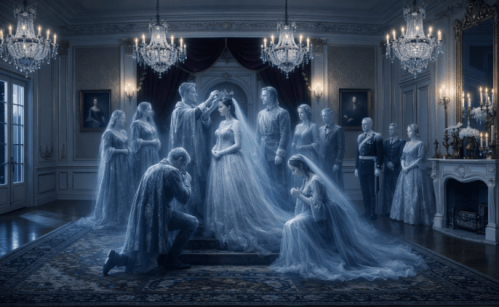
The spirits of the Winchester remain active, waiting for the completion of the mansion. For more than a century, they have wandered its unfinished corridors, lingering in stairways that lead nowhere and rooms sealed off from daylight. Some say they are bound not by malice, but by expectation — trapped in the same endless construction Mrs. Sarah Winchester once believed would keep them at peace. The house listens, breathes, and remembers. And until the final nail is driven, the final room raised, the spirits wait for the day the mansion is whole enough to release them… or claim whoever dares to finish what Mrs. Sarah began.
A visit to the Winchester Mystery House is more than a tour—it is an encounter with legend. It is a place where imagination thrives, where history whispers through every corridor, and where the line between fact and folklore blurs in the most enchanting way. Come discover why millions of visitors from around the world consider the Winchester Mystery House a must‑see destination and one of California’s most iconic treasures.
PRIVATE EVENTS & WEDDINGS
at WINCHESTER ESTATE

Many event locations claim to be unique, but nothing compares to the Winchester Mystery House. If you’re truly seeking a distinct, one‑of‑a‑kind setting for your milestone celebration or special occasion, reserve a venue that delivers on uniqueness many times over. Whether you’re planning a wedding, birthday or anniversary celebration, corporate gathering, holiday party, or any other meaningful event, the Winchester Mystery House offers an unforgettable backdrop. Give your guests an experience they’ll be talking about for years to come.
Café 13: A Rest Stop on the Edge of the Mystery

After wandering the winding halls of the Winchester Mystery House—where staircases defy logic and whispers seem to cling to the walls—Café 13 offers a welcome return to warmth and grounding. Newly reopened and serving guests daily from 10 AM to 3 PM, this cozy hideaway invites you to pause, breathe, and gather yourself before diving back into the mansion’s secrets. Here, you can enjoy breakfast, lunch, snacks, and refreshing drinks in a calm indoor space that feels worlds away from the mansion’s twisting corridors. Settle in with a warm meal, challenge a friend to a board game, or simply rest and recharge as sunlight filters through the windows. Café 13 is more than a café—it’s a moment of calm between chapters of the Winchester legend, a place to steady your nerves before returning to the gardens, the grandeur, and the mysteries that await.
Winchester Mercantile Gift Shop
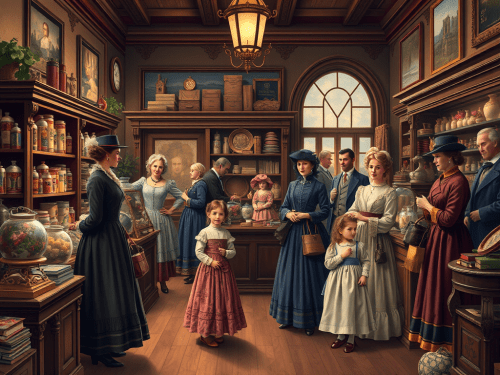
Your journey into the Winchester Mystery House begins long before you cross the mansion’s threshold. It starts at the Mercantile gift shop—a welcoming outpost standing at the edge of a world where history and myth intertwine. Here, beneath warm lights and shelves lined with curiosities, you can secure your tour tickets and prepare for the adventure ahead. Guests often pause for a souvenir photograph, capturing the moment before they step into Sarah Winchester’s enigmatic domain. As you explore the shop, you will find an eclectic array of gifts and keepsakes: tokens of the mansion’s lore, echoes of Victorian elegance, and mementos that carry a touch of the house’s enduring mystery. The Mercantile is more than a gift shop—it is the gateway. https://winchestermysteryhouse.com/

In honor of America’s upcoming 250th birthday, join Winchester House Historian Mrs. Janan Boehme for a presentation exploring the events, inventions, and social shifts that transformed America during Mrs. Sarah Winchester’s lifetime – 1839 through 1922.
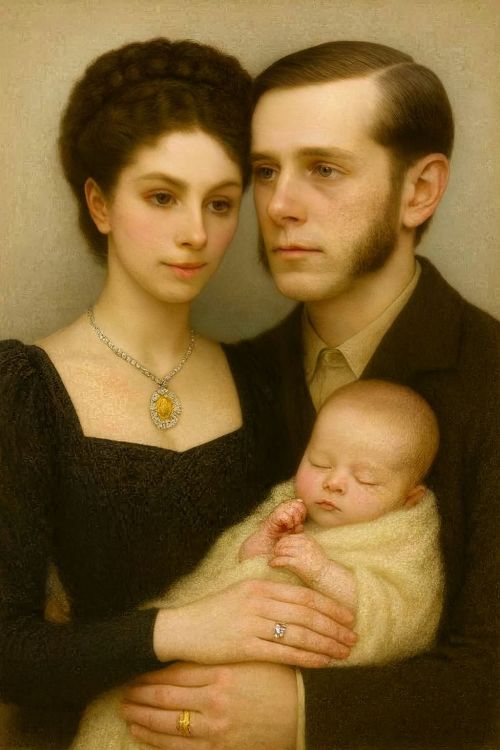
June 27th, 2026 at 12PM and 3PM. $5 entry. Link in bio. https://winchestermysteryhouse.com/