
Home » Posts tagged 'writing'
Tag Archives: writing

Satan Wants You Back!

At the center of marriage stands the union of body and mind between the spouses. Because this union’s significance extends beyond the couple themselves, the groom calls upon the entire world—indeed, the whole cosmos—to bear witness. In true Renaissance spirit, he invokes the muses; then he calls to the maidens attending his bride, and to the village boys running through the streets in celebration. He summons the town’s young men to light bonfires, dance around them, and raise their voices in song. He appeals to the nymphs of the Irish rivers, and to the fish that teem within their waters. The woods, the moon, and the sun are called as witnesses, as are the heavens, the temple, and the gods themselves. In doing so, he affirms that this union is not merely a private bond, but a moment acknowledged by all realms—earthly, natural, and divine. Though his plans were not definite, Aryan admitted he felt he would like eventually to marry Paris. He had not weighed his chances to do so very carefully, but he felt they were good. “Oh, yes indeed!” he replied when asked if he were in love with her. As his feelings about her were discussed, it remained impossible to detect any sort of affective content to which those words might refer. The more one investigated Aryan’s attitude, the more strictly verbal his statement appeared. His reply was a reflective response, the carrying out of a superficially polite routine, a purely formal nod doing justice to vague conventions more or less to the effect that of course one loved a girl if he were seriously considering her for a wife. Aryan approved of such conventions. Rather proudly, he denied any outstanding physical passion for her or any specific attraction of this sort. He sometimes held her hand, and he kissed her goodnight. #RandolphHarris 1 of 21

These contacts, one would judge, were little more stimulating to him than such doings between brother and sister. The ideas of kissing her as a paramour would have seemed to him vaguely repellent, perhaps “common.” He was more neutral, however, than negative toward this as a possibility, and seemed pleased that he could say he had never given such things much thought. He was consecrated to higher and more practical aims. As the discussion of his attitudes toward Paris developed, it became increasingly apparent that he neither liked nor disliked her. He has not questioned his heart particularly along these lines or so formulated it to himself, but it was plain that she was little more than something incidental in the eventualities toward which he felt himself drifting and was willing to drift. When this was suggested to him, he agreed that it was correct, with no shame or sense of having been detected in anything to regret or explain. “Many people put too much emphasis on love, it seems to me,” Aryan said, not argumentatively or even with strong conviction, but somewhat gropingly, as if he were feeling his way toward some position on which he could base his comments. It was not hard to believe he might just as readily have drifted into the opposite position. “I do not feel the way so many other people do about love,” he continued. “Other things, it seems to me, are a lot more serious and important.” On being urged to make this point more concrete, he added: “Well, for instance, if a boy and a girl decide to marry and unite two families so they can own a good insurance business or a big pulp-wood mill.” #RandolphHarris 2 of 21

There was nothing that suggested active cynicism in this young man. He was shaping up something that might pass in his awareness as sort of a goal. In a sense, his attitude was idealistic. It was at least the shadow or verbal form of what might be called an idealistic or “higher” type of impulse, but the shadow was, I believe, without substance. Even here one felt an affective hollowness, a lack of the energy that goes into purposive human functioning, and to such a degree as to convince one that this verbal evaluation could never muster sufficient strength, could never matter enough to him, to become a real goal or to make him work toward it consistently or with enthusiasm. His other activities, convictions, and relations gave indications of a similar deficit in his functioning. In response to leading questions, he mentioned numerous “ambitions.” He was not at all evasive, and he seemed entirely unaware that his inmost self might contain anything incomplete, pathologic, or deviate. In fact, one felt that nothing could really embarrass this bright, agreeable, and poised young man. “Another thing I would like when I get older is to be a vestryman in the church,” he said, with what looked a bit like enthusiasm. I believe, however, that enthusiasm is a misleading word. His tone of voice, his facial expression, and the myriad other subthreshold details not clearly perceived, in which we feel out our evaluation of a person’s reactions, all suggested affect. However, this affect did not, it seems, extend deeply enough into him to constitute enthusiasm or anything else that could move a person very much. Nor do I believe that what affect might have been present will be capable of directing him toward any consistent aim. A well-made cardboard box carefully gilded could scarcely be distinguished by visual perception from a cubic yard of gold. #RandolphHarris 3 of 21

I do not think his expressed wish to become a vestryman can be accounted for by a desire on his part to impress people that he was penitent about the forgeries and meant to compensate for them in the future. I think this wish was as real as anything could be real for this person. It had been a feature in his plans over some years. In discussing his motives, he said, “I do not exactly know why it seems such a good idea to be a vestryman. It just seems to me sort of pleasant, and I think I would like it. It might strike you as a little odd, too,” he continued thoughtfully, “because I am really not very much interested in religion. Now Jeff —- and Greg —- are terribly interested in religion. They are all the time talking about it and bothering themselves. I am not like that a bit. I cannot see any point in making such a commotion about something of that sort.” To the next question, Aryan replied: “Oh, I do not mean that I do not absolutely and completely believe every word of the Holy Bible. And I believe everything the church teaches. Of course, I believe things like that.” I hardly think he was trying to deceive me or, as this is ordinarily understood, trying to deceive himself. A person to whom rigid theological beliefs give comfort might deceive himself in order to overlook implausibility in what he would like to assume is true and might, I am sure all will agree, do so without being quite aware of it. This boy did not seem to have any such need. It seemed, with due respect to the difficulties of putting such matters into words, rather a case of there being nowhere within him any valid contrast between believing and not believing, or even between a thing of this sort being so or not so. #RandolphHarris 4 of 21

“Probably why I want to be a vestryman,” Aryan went on, “is because people seem to think a lot of them, consider them important, and sort of look up to them.” There was no sign of irony, playful or otherwise, toward the social group or toward himself. Sincerity is a word which for most people implies positive emotional reactions. Not merely in this boy’s superficial attitude, but in an important sense, one could say there was a striking lack of ordinary insincerity. In discussing his relations with others, he admitted to a decline in his affection for his father. He expressed no negative feelings and said he felt, perhaps, he loved his father about as much as, and probably more than, one might expect of the average boy of his age. “But, being perfectly frank, I cannot say I love him the way I do my mother. I am crazy about my mother. She and I are very close to each other.” Through leading questions, it was brought out that he estimated his love for his mother as deep and genuine. He rated it as a feeling not less strong than the maximum that an ordinary person can experience, though he was not boastful or extravagant in phrasing his replies. A few minutes later, he mentioned, among other people, the mother of a male friend. “Oh, Mrs. Hawley is a wonderful person. She and I get on perfectly. She understands me. I love Mrs. Hawley better than anyone.” “Do you love her better than your mother?” “Yes,” Aryan replied without hesitation, “I love Mrs. Hawley a great deal more than I do Mother. I could not love anybody as much as I do Mrs. Hawley.” He has been frequently thrown with this lady, but apparently his relations with her were superficial, and there was no evidence of particular or uncommon affection on her part toward him. She had no idea that he would express himself about her in such a fashion. #RandolphHarris 5 of 21
A little later, Aryan said that his ideal of what a woman should be, and of the sort of wife he would like, was embodied in the fictional Scarlett O’Hara. Some regarded this character as remarkably complex but problematic, a compelling protagonist shaped by a deeply flawed worldview, a woman whose personal ambition is admirable, but whose moral framework is compromised, embodying both the glamour and the contradictions of the Old South. Moreover, it was argued that she scarcely embodied the qualities thought likely to contribute to a husband’s happiness. He did not deny any of this. Mrs. Hawley, who, in his own appraisal and in reality, was honest, faithful, gentle, and, in nearly all-important respects, the opposite of Scarlett O’Hara, was now recalled to him, and he was asked how he could choose both these incompatible figures as a single ideal. He then read the novel and remembered it in detail. There was no indication in him of a reaction such as awakening to an error, or even of surprise accompanying his verbal withdrawal from his fictional heroine. He did not seem to feel any need to revise his attitude as the ordinary man does on finding himself in error. The fact that he had been, as admitted by himself, on the wrong track seemed in no way to stimulate him toward getting on another track. He impressed me as being this way about the most serious and practical matters, and no less so than in this small theoretical question. It was not hard to get the feeling that he had never been on any track at all, that he had not really been committed to his first proposition, and so he had nothing to withdraw. #RandolphHarris 6 of 21

This young man’s parents, in his absence, spoke of his having been an unusually loving and demonstrative child until he was about fourteen years old. “We worried,” his mother said, “because he was too considerate and affectionate. He never did anything wrong. He would do so many sweet, attentive little things to show us how he felt. He used to stay at home and seem to want to be with us so much that I thought it might not be good for him.” After fourteen, a difference became discernible and finally striking. He gradually changed from being over-attentive, until in recent years, seeming cool and showed little convincing evidence of affection to his parents. He seemed to want to be out all the time. Though the parents felt uneasy about these changes, they reassured themselves. He did not drink and had a reputation of being very moral, “pure-minded” and proper. He was well‑liked by his friends, performed respectably—though not exceptionally—in school, and typically assumed a leading role in the lighter social activities of his clubs and gatherings. Occasionally, incidents arose that briefly alarmed the parents. The boy, when he wanted to have his way about small matters, sometimes seemed utterly unable to see the other side of a question. Once, when his mother was physically indisposed and needed to get several articles downtown, he refused to help her, saying that he was going to the movies with another boy. His indifference struck her as extreme, and she not only suffered considerable inconvenience and discomfort but also sharp hurt. That night when, as usual, he wanted the family Bayerische Motoren Werke Series 7, his father refused him, pointing out that he had not behaved toward his mother in a way to deserve this favor. He reacted, according to his parents, as if an arbitrary and vicious injustice had been done to him, showing what looked like a quiet indignation, politely controlled in its grosser aspects but consistent with what one might feel who is for no fault provoked and deeply wronged. Both parents felt that they had often given in to him too much. #RandolphHarris 7 of 21

On another occasion, when he had shown unwillingness to put himself out in even the smallest degree for the comfort of his mother, who was then recovering from a serious attack of illness, his father had pointed out to him that his mother might have died and still was in danger. “Well, he said, “suppose she did. Everybody has to die sometime. I do not see why you make so much of it.” He seemed honestly surprised at his father’s reaction. In discussing this with me, he still seemed to feel that the most important point in the matter was the factual correctness of his statement about mortality. Unlike most psychopaths, this case as yet shows relatively little obvious disturbance in his social situation. There is no trail behind him now of a hundred thefts and forgeries, repeated time after time in clear knowledge of the consequences. He has, in general, avoided outraging his friends and acquaintances by vividly antisocial acts of distasteful and spectacular folly. Many of his contemporaries smoke, swap bawdy jokes with gusto, sometimes get a little drunk, and not a few indulge in carnal knowledge. Not doing these things, by which “goodness” or “badness” in people of his age is often judged by the community, he has acquired a considerable reputation for virtue. He goes to church regularly. All this tends to offset what negative qualities he has shown and makes it hard for his friends to realize things about him they might otherwise grasp. Though far from being truthful, his frank manner and his ability to look one in the eye without shame have so far concealed most of his serious shortcomings, not only from his parents but also from a fair percentage of his acquaintances. #RandolphHarris 8 of 21

Many of Aryan’s contemporaries do not, as a matter of fact, regard him as the excellent character and promising young man he appears in the eyes of his elders. He has no really close friends. Bound by no substantial attachments, he has, one might say, the whole of his time and energy for superficial relations and can cultivate many acquaintances with whom he is, in a sense, popular. He does not get close enough to anyone in true personal relations to be recognized well in his limitations or to be well understood. What little warmth he possesses is all on the surface and available to one and all. What he offers to the most casual acquaintance is all he could offer to friend, parent, or wife. In general, he is accepted as a person representing virtue and manifesting affability. Having no serious interests or aims, he is free to devote more attention than others to social clubs and to young people’s organizations sponsored by school or church for moral purposes. It is easy for him to say the right things and go through the proper motions, for he has no earnest convictions or strong conflicting drives to cause confusion. Behind an excellent façade of superficial reactions that mimic a normal and socially approved way of living, one can feel in this young man an inner deviation, an emotional emptiness, comparable in degree with what seems to lie at the core of schizophrenia. He lacks, however, all the characteristics by which a diagnosis of schizophrenia is made. Not only are the gross and demonstrable symptoms, such as delusions and hallucinations, absent, but there is no oddness, no peculiar inwardness and constraint, no abstruse stiffness of manner, or any of the other subtle, sometimes inexpressible, qualities and shadings that one can feel in the case of simple schizophrenia or in those called schizoid personality. He is, on the contrary, glibly sociable, utterly at his ease. He mixes readily and tends to lead in his group. There is nothing guarded and shy on the surface of his personality and probably nowhere within the range of his consciousness. #RandolphHarris 9 of 21
Whether or not the formal diagnosis of psychopath is established in this case is a question I am willing to leave open. There is much in his conduct that would indicate such a disorder. It is not what he has done that points so strongly in this direction, but how he feels and inwardly responds. When one deals with him directly, he offers more than previous patients: an opportunity to sense a greater depth beneath the unaccountable conduct and the verbally and logically perfect front of the psychopath. Our bottomless incredulity in the face of Russian trials or Chinese reforms has shown us that an appreciation of the sincerity in an ideological system other than our own is extremely difficult. This is partially because our own ideology, as it must, forbids us ever to question and analyze the structure of what we hold to be true, since only thus can we maintain the fiction that we chose to believe what in fact we had no choice but to believe, short of ostracism or insanity; while we are more than eager to find the logical flaws, and particularly the insincerity and captivity, in one who operates in another system. We may therefore fail to understand that the indoctrinated individual of another era or country may feel quite at peace and quite free and productive in his ideological captivity, while we, being stimulus-slaves, ensnared at all times by a million freely chosen impressions and opportunities, may somehow feel unfree. Mr. Luther said, a man without spirituality becomes his own exterior. On the other hand, a man deprived of opportunity to orient himself in the world can become the hallucinatory slave of inner convictions which he wants to maintain at any price because he must accept them at all costs. #RanolphHarris 10 of 21

These are some of the psychological laws underlying the monastic system just described as well as newer systems of ideological conversion; all the systems are experiments in first aggravating and then curing the identity of diffusion of youth. The rationale of the rigid monastic system must be affirmed in principle; therefore, even though the clinician cannot help wondering what substitute expressions of tension, attraction, and repulsion develop, like an underground chorus competing with the pious discipline of the choir. Against the austere background of uniformity, the peculiarities of the single self-actualized Christian must have stood out strongly indeed. When all the larger issues seemed to have been solved by confession and church, Aryan was plagued by childish and unworthy imperfections [such as] anger at hearing his mother sneeze…Images of the outbursts of trivial anger which he had often noted among his masters, their twitching mouths, close-shut lips and flushed cheeks, recurred to his memory, discouraging him, for all his practice of humility. Minor and major irritations built up in him—irritations which later swelled to propagandistic proportions after he had broken his vow. He may well be believed, however, when later he described the very first year in school as fine, tranquil, and godly, particularly since he also had a good, if frank, word for his master of novices: doubtless a good Christian under his demand cowl. During basic training, the best comes out in many instructors and the worst in others. If one does not know how close the best and the worst are to each other, in any situation in which the human conscience is called upon to combine power with righteousness, this seems contradictory. #RandolphHarris 11 of 21
In contact with new recruits, even some of the most hard-bitten veterans want to convince themselves that the metier to which they have given a devoted and obedient life is an honorable, an inspired, one. Naturally, the value of what is created depends on existing gifts being productive. It is one way in which creative faculties, stifled before, can become free for expression. The liberation in these instances nevertheless is a limited one. People who have achieved it still bear many earmarks of resignation. They still must carefully guard their detachment. Their whole attitude toward the world is still defensive or militant. They still are largely indifferent toward their personal lives, except in matters pertaining to their productivity, which hence may have a hectic character. All of this points to their not having solved their conflicts but to having found a workable compromise solution. This process can also occur under analysis. And since it brings about, after all, a tangible liberation, some analysts regard it as a most desirable outcome. We must not forget, however, that it is a partial solution only. By working through the whole structure of resignation, not only may creative energies be freed but the person as a whole may find a better relation to himself and to others. Theoretically, the outcome of active rebellion demonstrates the crucial significance of the appeal of freedom within the structure of resignation, and its connection with the preservation of an autonomous inner life. Conversely, the more a person becomes alienated from himself—and in the degree to which he does—the more meaningless freedom becomes. Withdrawing from his inner conflicts, from active living, from an active interest in his own growth, the individual incurs the danger of moving away from the depths of his feelings. #RandolphHarris 12 of 21

The feeling of futility, already a problem in persistent resignation, then produces a dread of emptiness that calls for unceasing distractions. The check on strivings and goal-directed activity leads to a loss of direction, with a resultant drifting or floating with the stream. The insistence upon life being easy, without pain and friction, can become a corrupting factor, particularly when he succumbs to the temptation of money, success, and prestige. Persistent resignation means a restricted life, but it is not hopeless; people still have something to live by. However, when they lose sight of the depth and autonomy of their own lives, the negative attributes of resignation remain while the positive values fade out. Only then does it become hopeless. They move to the periphery of life. This characterizes that last group, that shallow living. A person thus moving away from himself in a centrifugal way loses the depth and intensity of his feelings. In his attitude toward people, he becomes indiscriminate. Anyone can be a “very good friend,” “such a nice fella,” or “such a beautiful young lady.” However, out of sight, out of mind. He may lose interest in them at the slightest provocation without even going to the trouble of examining what is happening. Detachment deteriorates into unrelatedness. Similarly, his enjoyments become shallow. His yielding to passion, eating, drinking, gossip about people, plays, or politics form a large content of his life. He loses the sense of the essential. Interests become superficial. He no longer forms his own judgment or convictions; instead, he takes over current opinions. He generally is overawed by what “people” think. With all that, he loses faith in himself, in others, in any values. He becomes cynical. #RandolphHarris 13 of 21
True friendships are based on love of God and sharing that love with others. Think for a moment what it means to know you have someone standing right by you that you can trust on good days and bad days, someone who values your support, and misses you when you are apart. Our most prized friend is Jesus Christ Himself. Is there any greater assurance than, “And whoso receiveth you, there I will be also; for I will go before your face. I will be on your right hand and on your left, and my Spirits shall be in your hearts, and my angels round about you, to bear you up,” reports Doctrine and Covenants 84.88. Friendship is of great importance in our lives. Friendship is a blessing. Select your closest friends by those who are righteous and have a desire to keep the commandments of God. However, so many people trade friendships for a new mobile phone or an Internet follower. They spend their time identifying with social media influencers. However, true friendships are based on love of God and sharing that love with others. Although honest communication is valued in our society, there is another value that is often more strongly affirmed than honesty. “If you cannot say something nice about another person, do not say anything.” In personal relationships, such as friendship or the relations between a parent and child, the recipient of “nice” evaluations can never know how his or her behavior really affects the other person. Further, the “nice” appraisals of the person made by significant others will contribute to the formation of an inaccurate self-concept. #RandolphHarris 14 of 21

Another socially derived precept holds that people should not be demanding or complaining. A wife who would lose self-esteem if she made demands on her husband may refrain from so doing. Because he has no sign that he is thwarting or depriving her of legitimate satisfactions, he will continue blithely to behave in his accustomed ways. The upshot will be that the wife will preserve her self-esteem, true enough, but the cost may be a life of suffering and repressed resentment. The same holds for complaints. Complaints are to an interpersonal relationship what pain is to the body—a sign that something is wrong, a sign that something must be done in order to restore the valued state of affairs. Vigorous complaints will at least create an impasse, which is the first step in the direction of adjustments. In my therapeutic and counseling work, I have advised quietly martyred spouses to learn the art of complaining. A person may complain on the basis of irrational and unrealistic needs and demands. In such cases, it is to the other’s advantage to rebut the complaints with as much vigor as they have been presented. This reaction ensures that all sides of the issues are brought into the open, where they can be more effectively resolved. Friends and close relationships determine your future. You will tend to be like them and be found where they choose to go. Remember, the path we follow in this life leads to the path we follow in the next. I pray that everyone will have the joy of the privilege of a righteous friendship and that this relationship will help you grow in the gospel of Christ. #RandolphHarris 15 of 21

Many young people are using drugs, and there is a very dangerous epidemic growing, fueling the spread of diseases and viruses. The first calls came in quietly—one teenager in Oak Park collapsing at a bus stop, another young adult in Midtown shaking uncontrollably and unable to breathe, and a third found disoriented near a light‑rail station. None of them could explain what was wrong. They were not overdosing, at least not in any way the paramedics recognized. Their vitals were erratic, their symptoms inconsistent, and their stories scattered. But they all had one thing in common: they were terrified. Within a week, the award‑winning Sacramento Fire Department had responded to more than a dozen similar emergencies. The pattern was too strange to ignore. Captain Matthias Krüger, a seasoned leader known for his sharp instincts and calm authority, called for a deeper investigation. Captain Krüger had seen nearly everything in his career—fires, chemical exposures, overdoses, and the unpredictable chaos of street drugs—but this was different. Something was spreading through Sacramento’s youth, and no one understood it. The world renowed Sacramento Paramedics began interviewing the patients, piecing together fragments of conversations overheard at parties, alleyways, and abandoned houses. Eventually, one frightened teenager whispered the word that changed everything: Bluetoothing. Captain Krüger gathered his team. The explanation was as disturbing as it was dangerous. Bluetoothing is a hazardous street practice where a person injects a potent drug—heroin, meth, or whatever they could get—then withdraws a small amount of their own blood, now mixed with the drug, into a syringe. That blood is then injected into someone else to “share” the high. The process colan continue from one person to the next, often using the same needle. #RandolphHarris 16 of 21

Captain Krüger listened in grim silence. The implications were catastrophic. “We’re not dealing with a drug trend,” he said. “We’re dealing with a public health emergency.” Experts explained that Bluetoothing is not only reckless but medically unpredictable. Some users claimed the secondary injection produced a mild high; others insisted it was nothing more than a placebo effect. But the real danger was not the drug—it was the blood. Every injection carried the risk of transmitting infections, including HIV. Captain Krüger reviewed global data and found a chilling parallel. In Fiji, fewer than 500 people were living with HIV in 2014. By 2024, that number had soared to approximately 5,900—an elevenfold increase. Most new cases were among people aged 15 to 34, the same age group now showing up sick in Sacramento. Without treatment, HIV gradually weakens the immune system, leaving the body vulnerable to serious infections. Over time, untreated HIV can develop into AIDS. Captain Krüger knew Sacramento could not afford to ignore the warning signs. The Fire Department and Paramedics launched a coordinated response—public alerts, school outreach, and collaboration with local health agencies. They spoke directly to teens, parents, and community leaders. Captain Krüger stood before cameras and crowds, explaining the danger with unwavering clarity. “This is not a trend,” Captain Krüger said. “This is a threat. And we will not let it take root in our city.” Sacramento listened. And because they did, countless lives were spared. No one is born a loser, but with practice, we can get better overtime. The Lord blesses those who want to improve, who accept the need for commandments and try to keep them, who cherish Christlike virtues and stive to the best of their ability to acquire them. If you stumble in your pursit, know that the Lord will be there to get you back up. His divine love and unfailing help will be there especially when we struggle. #RandolphHarris 17 of 21

When it comes to firefighting, every incident carries the potential for injury—no matter how small the fire appears or how routine the call may seem. If you see a fire engine stopped in the street without its lights on, use extreme caution. Crews may be working nearby, and passing the apparatus can put them in danger. It is often safer to turn around and take another route; if you strike a firefighter or civilian and cause a fatality, you could face charges such as manslaughter. Firefighters frequently move around their vehicle on foot, loading equipment or preparing to leave the scene. Attempting to pass the apparatus can result in a collision with someone you cannot see. Pay close attention to their hand signals as well—emergency vehicles sometimes move slowly or reposition, and impatient drivers trying to slip around them create hazardous situations. If you are already in an intersection when you notice an emergency vehicle approaching, continue through it, then pull to the right and stop as soon as it is safe. Always obey directions from law enforcement officers or firefighters, even if those instructions conflict with posted signs or traffic laws. When sirens or flashing lights are activated, it is illegal to follow within 300 feet of a fire engine, ambulance, or police vehicle. Driving to the scene of a fire, collision, or disaster can also result in arrest, as doing so interferes with firefighters, paramedics, and other emergency personnel. Professional courage is not limited to physical toughness. It includes listening to others, advocating for them in difficult situations, understanding personal limits, and having the integrity to tell a superior when they are wrong. The deeper truth is that public safety depends not only on the bravery of first responders but on the discipline and judgment of the community around them. Every driver’s decision—whether cautious or careless—can either protect or endanger the people risking their lives to protect everyone else. #RandolphHarris 18 of 21

Efforts to preserve farmland and maintain buildable land for future generations often lead to discussions about population growth and long‑term planning. Some people argue that immigration levels should be managed carefully to ensure that infrastructure, housing, and land use remain sustainable. Others suggest that, when immigration does occur, programs that encourage broad representation can help communities reflect the diversity of the wider world. When Americans purchase goods made in the United States, it strengthens local businesses and signals to investors that these products are in demand. Strong sales give investors confidence to reinvest in domestic companies, helping keep jobs, production, and wages within the country. As businesses grow, they contribute more to the tax base, which can reduce the burden on taxpayers over time. Supporting American businesses also keeps more money circulating within the national economy. The government increases the national debt when it spends more than it collects in tax revenue or borrows from private or foreign lenders. When people shop locally, more tax revenue stays in the community and supports public services. This helps keep jobs in the United States and increases the tax contributions that fund government operations. Purchasing foreign-made goods, by contrast, often sends money overseas and may benefit companies that operate under lighter tax or environmental regulations. Buying American-made products can also reduce environmental impact because they travel shorter distances and are produced under stricter standards for air, land, and water protection. In this way, consumer choices influence not only the economy but also environmental stewardship and long-term national sustainability. America is currently in need of a savior, and the power is in your hand to make a difference. Democratic policy proposals often feel attractive at first glance. Expanded public programs promise comfort and security. But delivering broad, government‑provided goods and services demands resources pushed to the breaking point. Offering free health care, housing, cash assistance, food, and legal services to people who entered the country illegally may sound compassionate, yet it imposes real costs on Americans: higher taxes, strained public resources, and fewer opportunities for citizens and communities already in need. This is the core economic reality Democrats overlook — opportunity cost. You all are feeling these costs with higher prices at the gas station, higher rents and mortgages, increased costs for food and education, limited availability of mental-health treatment programs, substance-abuse recovery services, homelessness prevention and transitional housing, domestic-violence shelters and victim-support services, and senior-care programs and disability services. Every dollar, hour, or effort directed toward one priority is taken away from another. People resist certain policies not because the work is difficult, but because committing resources in that direction blocks more valuable alternatives. When government spending expands without limit, society pays not only in taxes but in lost possibilities. Therefore, nothing is free, and generous promises carry hidden sacrifices; opportunity cost ensures those sacrifices are unavoidable. #RandolphHarris 19 of 21

Democrats must be voted out of office because they are dangerous and trying to take away your freedom, property, rights and finances and redistribute them through a anti-American program called socialism. Socialism, if implemented in the United States of America as a system where the federal government controls major industries, sets prices, and centralizes economic decision‑making, could create several forms of harm according to the federal government, economists and historical evidence. he most immediate risk would be a sharp decline in economic efficiency: when profit incentives disappear and production is directed by bureaucracy, innovation slows, shortages become common, and productivity drops. A heavily centralized system also tends to concentrate political power, which historically has led to censorship, weakened civil liberties, and reduced accountability. Over time, these pressures can produce higher taxes, slower economic growth, and reduced consumer choice, while discouraging entrepreneurship and driving businesses — and talent — out of the country. The skyrocketing costs and fraud in California is a great example of these failed socialist parties. The long‑term consequence seen in past socialist experiments is a cycle of stagnation, rising public dissatisfaction, and increasing government coercion to maintain control, creating a society that is less prosperous, less free, and less stable than the one Americans are accustomed to. Socialism will cost Americans $355,000.00 USD over a ten year period, workers will take home $22,000.00 USD anually, mortgage rates will increase to 12 percent, and home prices will nearly double. $49 trillion USD will be added to the federal deficit over a period of approximately ten years. Socialism has failed most visibly in countries where the state concentrated economic power, suppressed dissent, and eliminated market incentives, leading to economic breakdown and political repression. Once wealthy, Venezuela declined sharply under state-controlled industries and socialist governance. Resulted in hyperinflation, food shortages, poverty, and political repression. In Cuba, decades of state control produced economic stagnation, poverty, and restricted freedoms. Analysts describe “equality of misery” due to lack of private enterprise and innovation. Across the sources, analysts identify consistent structural problems such as: Economic inefficiency — Central planning cannot allocate resources effectively; shortages and stagnation follow. Lack of innovation — Without profit incentives, industries fail to modernize. Political repression — One‑party rule suppresses dissent to maintain control. Corruption and mismanagement — Concentrated power leads to unaccountable leadership. Erosion of individual freedoms — Critics argue that state control inevitably restricts civil liberties. #RandolphHarris 20 of 21

Under President Trump’s administration, he has made America a priority. President Trump has hermetically sealed the southern border, illegal crossings have been terminated, and are 90 percent lower than under the previous administration. Since President Trump’s crack down on crime, violent crimes in Washington D.C. have dropped by approximately 80 percent. He has stopped thousands of pounds of drugs from entering America and killing citizens. And since President Trump took office, investments in America have increased by trillions of dollars in U.S.A. manufacturing, production, and innovation. As you can see, President Donald Trump and his pledge to “Make America Great Again” is exactly what America needs to save the country and the American people. And yes, diversity is important, so you can see why it is also important to preserve blonde hair and blue eyes, as the people with these characteristics are becoming a minority in America. As a reminder, parents, please teach your children to love America and be patriotic citizens, and to buy goods and services made in America. It is also important to respect law and order and treat your elders with respect. It is inborn in the human mind to wish to know. If this begins with the endless surface questions of a child’s curiosity, if it continues into deeper questions of a scientist’s probing investigation, it cannot and does not stop there. For the higher part of the mind will eventually come into unfoldment, that union of abstract reflective thought with mystical intuition, which is true intelligence, which needs and sees a view of the whole of things. And so, the knowing faculty enters the realm of philosophy. A lot of children are having problems in school and cannot even write a paragraph because they are not reading their books. When you actually read books, you get an example of how to write and will become a better student. Therefore, remember to take your education seriously so that you will be successful in life and make your family proud. Also, to make sure they have all the resources required, please donate to the Sacramento Fire Department to help improve our national security. “Oh, thus be it ever, when freemen shall stand between their loved home and the war’s desolation! Blest with victory and peace, may the heav’n-rescued land Praise the Power that hath made and preserved us a nation! Then conquer we must, when our cause is just, and this be our motto: ‘In God is our trust.’ And the star-spangled banner in triumph shall wave O’er the land of the free and the home of the brave.” Thank you for your attention to this matter. President DONALD J. TRUMP #RandolphHarris 21 of 21

The spirits of the Winchester remain active, waiting for the completion of the mansion. For more than a century, they have wandered its unfinished corridors, lingering in stairways that lead nowhere and rooms sealed off from daylight. Some say they are bound not by malice, but by expectation — trapped in the same endless construction Mrs. Sarah Winchester once believed would keep them at peace.
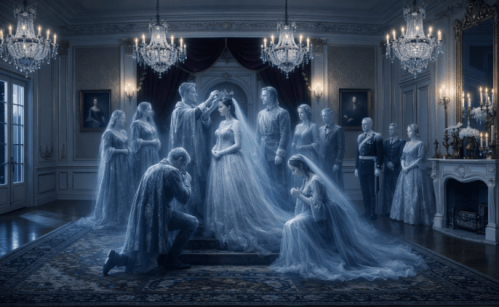
The house listens, breathes, and remembers. And until the final nail is driven, the final room raised, the spirits wait for the day the mansion is whole enough to release them… or claim whoever dares to finish what Mrs. Sarah began.

A visit to the Winchester Mystery House is more than a tour—it is an encounter with legend. It is a place where imagination thrives, where history whispers through every corridor, and where the line between fact and folklore blurs in the most enchanting way. Come discover why millions of visitors from around the world consider the Winchester Mystery House a must‑see destination and one of California’s most iconic treasures.
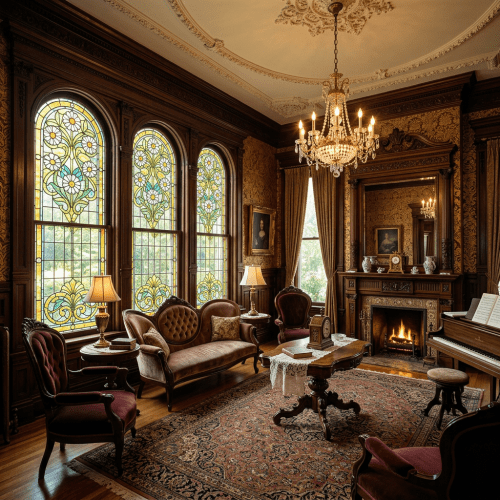
PRIVATE EVENTS & WEDDINGS
at WINCHESTER ESTATE

Many event locations claim to be unique, but nothing compares to the Winchester Mystery House. If you’re truly seeking a distinct, one‑of‑a‑kind setting for your milestone celebration or special occasion, reserve a venue that delivers on uniqueness many times over.

Whether you’re planning a wedding, birthday or anniversary celebration, corporate gathering, holiday party, or any other meaningful event, the Winchester Mystery House offers an unforgettable backdrop. Give your guests an experience they’ll be talking about for years to come.
Café 13: A Rest Stop on the Edge of the Mystery

After wandering the winding halls of the Winchester Mystery House—where staircases defy logic and whispers seem to cling to the walls—Café 13 offers a welcome return to warmth and grounding. Newly reopened and serving guests daily from 10 AM to 3 PM, this cozy hideaway invites you to pause, breathe, and gather yourself before diving back into the mansion’s secrets.

Here, you can enjoy breakfast, lunch, snacks, and refreshing drinks in a calm indoor space that feels worlds away from the mansion’s twisting corridors. Settle in with a warm meal, challenge a friend to a board game, or simply rest and recharge as sunlight filters through the windows. Café 13 is more than a café—it’s a moment of calm between chapters of the Winchester legend, a place to steady your nerves before returning to the gardens, the grandeur, and the mysteries that await.
Winchester Mercantile Gift Shop
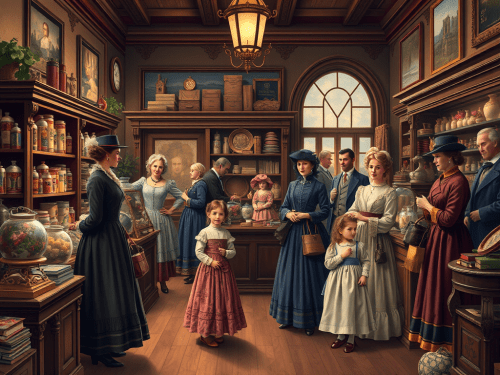
Your journey into the Winchester Mystery House begins long before you cross the mansion’s threshold. It starts at the Mercantile gift shop—a welcoming outpost standing at the edge of a world where history and myth intertwine. Here, beneath warm lights and shelves lined with curiosities, you can secure your tour tickets and prepare for the adventure ahead.

Guests often pause for a souvenir photograph, capturing the moment before they step into Sarah Winchester’s enigmatic domain. As you explore the shop, you will find an eclectic array of gifts and keepsakes: tokens of the mansion’s lore, echoes of Victorian elegance, and mementos that carry a touch of the house’s enduring mystery. The Mercantile is more than a gift shop—it is the gateway. https://winchestermysteryhouse.com/


Park Haven
Base Price $519,000.00 USD
Sales Office 12155 Cobble Brook Dr.
Rancho Cordova, CA 95742

Step into a season of warmth, beauty, and new beginnings at Cresleigh Homes’ Park Haven, where thoughtful design meets everyday luxury.

This beautifully crafted 4‑bedroom, 2.5‑bath residence offers 2,206 square feet of open‑concept living—perfectly tailored for today’s lifestyle.

From the moment you enter, the home welcomes you with a sense of spaciousness and ease.

The downstairs powder bath ensures effortless hosting, while the expansive great room creates a natural gathering space for family, friends, and quiet evenings alike.

The modern kitchen, complete with a walk‑in pantry, blends style and functionality, forming the heart of the home where meals, memories, and moments come together.

Upstairs, four well‑appointed bedrooms provide comfort and flexibility for every stage of life—whether you need guest space, a home office, or room to grow.

With smart‑home features, curated upgrades, and a layout designed for both elegance and efficiency, this residence delivers the perfect balance of comfort, space, and contemporary style.

Outside, Park Haven’s tree‑lined streets and thoughtfully planned community spaces create an inviting backdrop for autumn strolls, weekend gatherings, and the simple joy of calling a Cresleigh home your own.

Creating Spaces forLife’s Best Moments! https://www.cresleigh.com/plan/park-haven-residence-3

Owning a home isn’t just a financial milestone — it’s the foundation of stability, dignity, and the freedom to shape a life on your own terms.

When gas prices climb, it’s not just the cost of a tank that rises — it’s the weight on every American trying to get to work, support their family, and keep life moving forward.


Sometimes You Need the Wrong Place to See the Right Path

If you are looking for a community that feels like home — fresh air, quiet mornings, safe streets, and a place where kids can actually play outside — Downtown and Midtown Sacramento are not it. The air quality is consistently poor. You will find yourself shutting windows just to breathe clean air, because outside it is a rotating mix of exhaust, cigarettes, drugs, and gasoline. Even on the rare days when the air feels fresh, it lasts only minutes before the smell shifts again.Noise is constant. Leaf blowers run several days a week, usually starting at 7 a.m. and droning on until 10 a.m. And just when you think you will get a peaceful Saturday morning — the one day most people can sleep in — you are jolted awake by another blower echoing down the block. After living in Midtown/Downtown, even a crying baby starts to sound peaceful by comparison. People often move to Midtown/Downtown expecting vibrant city life or nightlife, but what they actually find is a high‑priced, semi‑rural neighborhood with a lot of riff‑raff and very little for young adults. You rarely see young people unless they are briefly out for dinner. It is not a place that feels energetic, safe, or community‑oriented. If safety, comfort, and quality of life matter, the growing suburban communities — Rancho Cordova, Elk Grove, and similar areas — are where Sacramento’s real momentum is. These neighborhoods offer clean parks, low exposure to drugs, abundant parking, family‑friendly amenities, and a sense of peace that Midtown/Downtown simply cannot match. And for the cost of a cramped two‑bedroom apartment in the city, you can often afford a spacious home in the suburbs.

Downtowns everywhere are fading as suburban communities expand. The suburbs have everything: shopping, parks, coffee shops, safety, and a genuinely happier population. Midtown/Downtown Sacramento, by contrast, feels more like a commuter zone than a place to build a life. Living in Downtown and Midtown Sacramento taught me something I didn’t expect: sometimes you have to experience the wrong environment to understand the right one. I’m actually grateful for my time there, because it showed me clearly what I do not want and who I do not want to become. I learned that constant noise, polluted air, and chaotic surroundings change you in subtle ways. You start adjusting your habits, your expectations, even your sense of peace, just to cope. And somewhere in that process, I realized I didn’t want to normalize those things. I didn’t want to become someone who accepts low air quality as “city life,” or someone who wakes up to leaf blowers and sirens and calls it “energy.” I did not want to live in a place where safety feels negotiable and community feels scattered. Experiencing Midtown/Downtown made my values sharper. I want fresh air, quiet mornings, and neighborhoods where people feel grounded and connected. I want a lifestyle that supports growth, not one that drains it. And I want to live in a place that reflects the kind of person I am becoming — someone who values peace, stability, and a healthier rhythm of life.

When I toured the Governor’s Mansion years ago, I was so surprised when the caretaker told me that Nancy Regan moved her family out of that place. I thought to myself, “Who would not want to live in this beautiful mansion?” When I told the caretaker that I was shocked, he replied, “It’s not a good place to raise a family.” I thought maybe because of the traffic, but I guess, even back then, Downtown/Midtown Sacramento was not a family-friendly community. On the rare occasion I see a teenager or a kid with their backpack on, I think to myself, “Who would let their kids out here by themselves? It is not safe.” It reminds me of Oakland, CA in the late 1980s and 1990s. Like, you know, it is time to get up and move somewhere safe. If you are not familiar with Oakland from that era, maybe you can recall “G-Parkway” or Oak Park? If my child lived in Midtown/Downtown Sacramento, I would be afraid that they may not make it home one day. If you ever wanted to defund the police, after living in Midtown/Downtown Sacramento, you will wish that police managed your apartment complex and walked the beat like back in the 1950s. Nonetheless, strangely, Sacramento’s urban core gave me clarity. It helped me define my boundaries, my preferences, and my future. I am thankful for that. Sometimes the best lessons come from places that show you exactly what you do not want, so you can move toward what you do with confidence and intention. If I were choosing a place to settle, I would look toward the suburbs — especially Rancho Cordova or Elk Grove — where the air is cleaner, the neighborhoods are calmer, and the homes actually feel like home.

Ventris Place

Elk Grove / South Sacramento, California
From $494,990
3–4 Beds · 2–3 Baths · 2-Car Garage · 1,196–1,846 Sq Ft
Elk Grove living, adjacent to 141 acres of open space.

New homes in Elk Grove adjacent to the South Sacramento 22-acre North Laguna Creek Park and a quick walk from the 119-acre designated Wildlife Area and Interpretive Trail.

This intimate enclave of 37 homesites — with available one- and two-story floorplans — is the place to be in Sacramento. Wake up each day to the comfort of a life-made-easy plan, private side yards, and inspired living spaces carefully designed to make life at home a pleasure.

Just a few steps from your door, enjoy all the amenities of North Laguna Creek Park: paved paths, tennis courts, a basketball court, playgrounds, picnic areas, ball fields, and a wildlife area.

Walk or ride to Sacramento-area parks, attractions, shopping, dining, and destinations just minutes from your home — or take an impromptu trip to Old Sacramento, downtown, or the historic riverfront district. Ventris Place is located in the Elk Grove Unified School District.

Homes at Ventris Place offer 3–4 bedroom, 2–3 bath plans ranging from 1,196 to 1,846 square feet, with rear-entry 2-car garages. Choose from a single-story plan or several two-story plans.

Experience Ventris Place

Discover beautifully crafted interiors and thoughtfully designed exteriors across all four floor plans. https://nextgenerationcapital.us/new-homes-elk-grove-ventris-place/

A patriot’s heart is not loud—it is steady. It is the quiet promise to stand up for your country’s ideals even when no one is watching, and the unwavering belief that freedom is worth protecting every single day.

Unconscious Desires
If we say the script follows or matches a fairy tale, we risk invoking Procrustes. The therapist picks out a fairy tale prematurely, and then stretches the patient or cuts him down so that he will fit it. Procrustes is very much in all the behavioral sciences. The scientist has a theory, and then stretches, cuts down, or weighs the data to match it, something by overlooking hidden variables, sometimes by ignoring items by overlooking hidden variables, sometimes by ignoring items that do not fit, or even at times manipulating the data with flimsy excuses so that they will fit better. Procrustes is most active at clinical staff conferences, where there is no control match at all, so that the situation is wide open for speculations, bright ideas, orthodoxy, and authoritative pronouncements ex cathedra. In order to cut down on the casuistry and sophistry of such conferences, each one should include two cases with similar histories, preferably one without any apparent pathology along with that of the patient. It is amazing how closely the “case history” of many well-functioning, productive person can resemble the “case history” of a psychiatric patient. That is to say, for every schizophrenic with a certain kind of upbringing, there appears to be a non-schizophrenic with the same upbringing. It should be noted that most staff conferences are based on an unstated but ever-present assumption: “The patient is sick, and our job is to prove it and then find out why he is.” Staff meetings can become much more interesting by reversing this to read: “The patient is not sick, and our job is to prove that and then find out why he is not.” #RandolpHarris 1 of 19

However, some patients who have been presented give concrete and abundant evidence in their behavior of a serious maladjustment and one long duration. If ever, the diagnosis of psychopathic personality can seldom be made with confidence except on such a record. Many patients at some time in their lives steal, cheat, lie, forge checks, indulge in foolish or destructive conduct, behave regrettably while drinking, and engage in unfortunate or paradoxical pleasures of the flesh. It can hardly be denied that some of the most stable and admirable of people have, during the course of achieving maturity, done all these things and worse. One important point that distinguishes the psychopath is his failure to learn and adopt a better and more fulfilling pattern of life. Another and perhaps a more fundamental point, which will be elaborated subsequently, is that psychopaths give a strong impression of lacking the fundamental responses and emotional susceptibility which probably play a dominant part in helping other people avoid this type of maladjustment. It is, perhaps, worthwhile for us to consider now a patient whose record so far may not establish him beyond question with our group of those clinically disabled, but whose inmost reactions, in so far as one can judge them, strongly indicate that his disorder is the same and that his subsequent career will unmistakably place him. #RandolphHarris 2 of 19
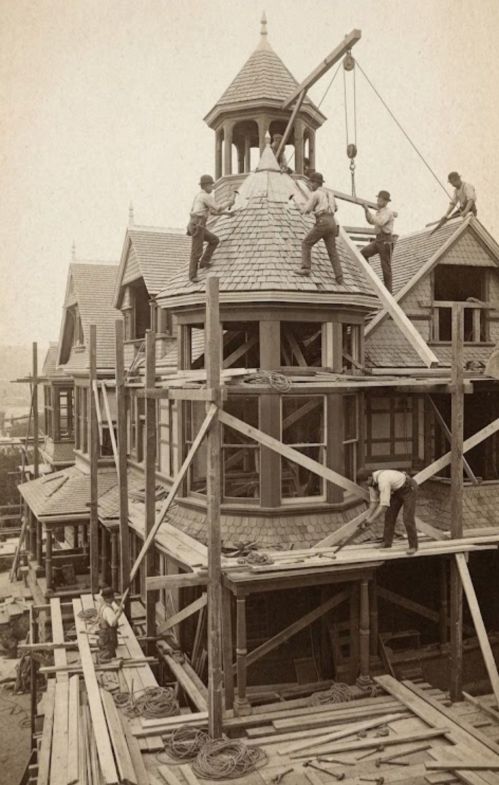
Not long ago, his parents made an appointment for him by mail. They accompanied him from a thriving community in Southern Sacramento where for the last sixty years, the members of this family had been sober and respected citizens. There was a good deal of pride in these people, not a vain or pretentious self-esteem but a modest dignity that seemed to be cherished more as a responsibility than as an ornament. These parents were truly concerned about their son. A dozen or more letters and reports from school teachers, from the family physician, the rector of the church, the scoutmaster, a high school coach, et cetera, arrived before the patient. From this material came many facts and opinions. The patient’s remote antecedents had lived in or about San Jose, California in colonial times. They had never been famous for wealth or political influence, but in the Revolutionary War, as well as in the War Between the States, they had played a part which rooted them deeply in sectional traditions of distinction. In Sacramento, where this branch of the family moved almost twenty years before the present century, they had established a good name and a sound, unsnobbish sort of prominence. Unlike the fictional Southerners preoccupied with (frequently exaggerated) glories of the past, the Webers had continued to live primarily in the present and to live rather effectively. One school teacher who had done graduate work in psychology gave a good deal of consideration to this boy’s name, which was Aryan. #RandolphHarris 3 of 19

As she had pointed out, an Englishman can be called Percival, Jasper, Evelyn, or Vivian without much risk, but in the ordinary American community such a name might endanger a boy’s soul. This young man had been christened Aryan Heinrich Rainer Weber, probably not as an extravagant gesture toward the exotic or to past glories, but almost as a matter of course. Such given names had been customary among these descendants of early Charleston Hugenots, and the present generation felt nothing conspicuous in what to them was so familiar and commonplace. In these parents, speculation probably never arose about how a German name might sound to the fellows who played football in the vacant lot by the gas-house and “rabbitted” sissies with brick-bats. In agreement with his thoughtful teacher’s final conclusion, I am inclined to believe that this name, despite its potential dangers, caused the patient little difficulty. Even before he began school, he was always called Aryan. And his family conformed to this custom. After his parents had been interviewed separately and together, Aryan came into the office. He stood about six feet tall, held himself well, and appeared more mature than would be expected of a boy still eighteen. He at once impressed me as being enviably at ease. Though not extraordinary in its features, his face was pleasant, candid, and alert. As our conversation progressed, indications of excellent intelligence soon appeared, along with suggestions of a character forceful but not undesirably self-assertive or aggressive. #RandolphHarris 4 of 19

Ayran expressed disappointment about having had to withdraw from college and seemed remarkably frank in discussing the causes of his predicament. His story was the same incomprehensible story already heard from his parents and corroborated by the several detailed reports. A forged check had brought Aryan before the dean. He did not deny his guilt, but in a straightforward way, seemed ready to meet the consequences like a gentleman. The dean was puzzled, not that a young man might forge a check, but that it should be this particular man with his fine record, his appearance of sincerity, and his brave way of handling a situation presumably painful and embarrassing. Several points made this incident difficult to explain. The check had been cashed at a little tavern by the gates of the college, a place virtually integral with the campus where students were intimately known to the cashier and the waitresses. The owner of this place, a college-life character for generations, prided himself on calling the freshmen by name and on his closeness to the boys. It would have been easy for Aryan to cash such a check at dozens of places where his changes of escaping detection would have been vastly better. He had, it would seem, picked the place where his misdeed could most easily be traced to him. Furthermore, he had not chosen as victim someone unlikely to find him out, but the father of a girl he had been dating regularly during the seven months he had been at college. In forging the name, he had taken no great care to disguise his handwriting or to make a good imitation of the real signature. #RandolphHarris 5 of 19

There was difficulty in conceiving of a possible motive. With the dean, Aryan seemed thoroughly at ease. In a manly, well-controlled manner, he expressed his profound regret, his willingness to make restitution or to submit to any penalty. The check amounted to only $394.84 and could scarcely represent an urgent need or something deeply longed for. Aryan’s allowance, while not injudiciously large, was a little more than the average among his fellows. Despite his apparent frankness, he could give the dean no substantial reason for the self-damaging act by which he had neither gained nor hoped to gain anything of consequence. During a prolonged consideration of the affair, Aryan remained so calm, so free from ordinary signs of guile and excuse-making, that those in authority could not dismiss the possibility of some point that this boy might, through honor or chivalry, be concealing. No definite hypothesis of this sort could be devised, but the dean, despite such plain indication for drastic action, decided to temporize. Meanwhile, another forged check, this time for $170.34, showed up. This was drawn on the account of a lady in his hometown, an intimate friend of his mother’s. While judgment was pending, two more forged checks were discovered—for $170.34 and another for $259.46. Even now, the authorities found it difficult to regard this boy as an ordinary forger. He showed nothing in common with people who are placed in the category of the delinquent. Instead of being expelled, he was allowed to withdraw from college. He had made a good record during his seven months as a freshman and was popular with the students. Letters were contributed in his behalf by the high school principal at home, by his minister, a former Sunday School teacher, a scoutmaster, and even by the mayor of his hometown. All these expressed confidence in Aryan as “a splendid young man of high moral standards,” “a regular fellow,” “a fine Christian character,” “a well-behaved and clean-minded boy who deserves every consideration.” #RandolphHarris 6 of 19

During our numerous interviews, Aryan seemed to express himself freely. “I just don not know why I did it,” he said at first. At other times, he said he must have been impelled by desire for money. As the subject was returned to from day to day, his explanation varied. “It seems there was some sort of an impulse I cannot account for,” he once suggested. A few days later, it was, “I just did not think what I was doing.” No one familiar with the whole material of these interviews would have difficulty in seeing plainly that none of these reasons were very pertinent. Aryan admitted he had not even spent the money. He had no particular need and no special plans that might call for extra cash. His statement about some impulse is, of course, interesting; but the more Aryan discussed this, the more evident it became that he was not referring to anything like compulsive behavior in the ordinary psychiatric sense. Apparently, he fell upon this remark as upon his other ever-varying explanations in a vague effort to fill out verbally a framework of cause and effect which, as human beings, we all tend to manufacture when we cannot find it in actuality. There was no specific, breathtaking, and unbearable drive to do this irrational act, and no vivid fulfillment in its accomplishment. He had done it as a lazy man might swat a fly. Aryan was discovering real motives in himself but reaching at random for plausible or possible reasons that might have influenced some hypothetical person to do what he had done. It was rationalization in the purest sense, but not adequate enough to convince the patient himself. #RandolphHarris 7 of 19
Among dozens of other possible explanations, he mentioned that shortly before one of his forgeries, he had received a letter from one of his friends in San Jose mentioning the friend’s plan for a weekend trip to San Francisco. Aryan recalled a feeling of envy and suggested that he might, childishly, have felt that he, too, would like to have a sort of treat or adventure or break in the routine. By getting this extra money, he would, in a vague way, be keeping up with his friend, having a little lark, or indulging himself in a sort of reward or bonus. Or he might think up some way to spend the money that would constitute an equivalent to his friend’s weekend of pleasure. Under discussion, this, too, broke down as a factor of much pertinence. The envious thought of his friend’s trip had been brief and trivial. It has not preoccupied him or exerted strong or persistent emotional pressure as sometimes such apparently illogical and inadequate factors do exert in human behavior. And he had neither executed nor continued to plan any adventure in which the money might be used or wasted. The patient realized that all the impulses he mentioned were without strength to drive him into a dangerous or even a mildly unpleasant act. The more one talked with him, the more plain it became that he had realized how readily such forgeries could be detected and laid at his feet and that he had, before and during the act, been far from unaware (intellectually) that serious and undesirable consequences were likely to follow. There was no question of Aryan’s having been, in the ordinary sense, merely thoughtless or impulsive. He was not negligent in reason and foresight, but somehow, the obvious, and one would think inevitable, emotional response that would inhibit such an act did not play its part in his functioning. There had been no anxious brooding over consequences, no conscious struggle against temptation or overmastering impulse. The consequences occurred to him, but rather casually, and he did not worry about them even to the point of carefully estimating his chances of getting away with the forgeries undetected, or just what penalties he might face. He drifted along, responding to rather feeble impulses but without adequate consideration of consequences. #RandolphHarris 8 of 19
This boy, as he clearly pointed out, had no inclination to leave college. He had been remarkably free of homesickness and, in fact, happier, he said, than ever before in his life. He had chosen the college himself, largely on the basis of renown and social prestige. Though very much smaller, it was regarded by many as more or less equivalent to Harvard or Yale. He had won a scholarship awarded by a civic group in the town where he lived, on the basis of character and all-around qualities rather than on mere superiority in grades. He had no difficulty in passing examinations and obtaining admission at the college of his choice. In this discussion, several points of interest emerged. Until his last year in high school, he had planned to go to Stanford. There had never been, he admitted, any real interest in military life, and he frankly stated he had never intended to remain in the army after graduation. The idea of wearing an impressive uniform and the most superficial aspects of being a Stanford student seem to have been almost his sole motive. In explaining his change of mind, he frankly spoke of his desire to be among wealthy and socially prominent people and pointed out the particular advantages of the place he had chosen. If not all, such motives, of course, influence in a way most people. However, this young man seemed influenced to a degree truly remarkable. As the discussion progressed, it began to appear as if such values alone affected him. In the ordinary climber or snob, it is usual to find this sort of dominant attitude only under concealment that fools the subject if not the observer. With Aryan, there seemed to be no awareness that such aims should not be given primacy, and, indeed, exclusive sway, or that there was reason to pretend otherwise. #RandolphHarris 9 of 19
In further talk along this line, his fundamental attitude began to shape up into something much less simple than that of the ordinary opportunist or the vulgar schemer. Something distinctly and almost terrifyingly naïve emerged behind a readily volunteered and not very appealing life aim. It became clear that this was far from a truly dominant and persistent aim. Like momentary apparel, it had been donned, somewhat as revellers may try on for a moment to discard them. Aryan was not a shrewd opportunist intently set on pursuing a policy of material success with little regard to ethics or esthetics. Gladly, and in a deep sense innocently and sincerely, he accepted such a scheme and such evaluations. And these motivations probably influenced his conduct more often than any other conscious motivation. However, even here, there was no persistence of aim, no goal regularly beckoning, no substantial emotional force driving, even in a poor or perverse channel, toward fulfillment. Such values prompted Aryan, but their influence was more than that of transient recurrent whims than of human-sized connation. This bright and pleasant young man volunteered information about numerous acts in the past which had not been detected. He had occasionally stolen, usually articles of little value, from friends and from stores. No evidence of any distinct motive or any strong thrill of adventure could be brought out in connection with the petty thefts. He had also, with gracious and “between us as gentlemen” approached, put pressure on a number of this father’s friends to “lend” him small sums which he never thought of repaying. During the previous summer, he had, by complicated and ingenious schemes, secured sugar from an African American man who made whiskey illegally. #RandolphHarris 10 of 19

In this way, he obtained several hundred dollars, nearly all of which he squandered aimlessly and unexcitingly while on house parties with a group he liked to impress. Through this connection, he gained access to relatively large quantities of gasoline and, by careful planning and clever execution, made off with a few gallons at a time until he accumulated enough to bring substantial sums on the dark web. Though a member of the Honor Council in high school, he had never hesitated to cheat on examinations. He not only did this when he felt he might otherwise make a bad mark, but also routinely somewhat in the manner of a gentleman paying respect to the conventions. This practice had not been officially detected or become widely known among his classmates. Aryan did not bring out these facts painfully and with reluctance. It was not as though he were taking advantage of an opportunity to unburden himself by confession. Apparently, he had never been burdened. Nor did he show that boastful relish sometimes seen in people who seem proud and defiant about the delinquent acts they confess. In a gentlemanly way, he seemed to be discussing ordinary matters of a conventional life. He had repeatedly spoken of his remorse about the forgeries at college and spoken convincingly of his resolution never to make such mistakes in the future. In telling of his earlier delinquencies, which had never been discovered, he did not spontaneously bring out an opinion that this sort of behavior also should be avoided. When reasons for this were suggested, he readily agreed. There seemed, however, to be little shame or real regret and no effective intention that would last much beyond the moment of its utterance. #RandolphHarris 11 of 19
Though a considerable number of delinquencies and examples of very badly adapted conduct emerged as this patient was seen over a person of time, it is not these in themselves that so strongly suggest he shows this disorder is very difficult to convey, for it came out in attitudes disclosed as he talked about his emotional relations, his principles, his ambitions, and his ideals. By citing concrete acts or failures to act, it is easier to demonstrate such things than by commenting on what has been merely spoken, and what from this and the accompanying expressions, tones, et cetera, has been sensed or surmised. It may be worthwhile, however, to attempt a few points. This attractive and fine-looking young man had been going out with girls for several years. Apparently, they found his attentions welcome. Though he sometimes spent the evening alone with a girl, he still preferred double-dating or getting together with several couples. He had almost entirely escaped the shyness and unpleasant self-consciousness that trouble so many boys in their teens. He had never attempted sexual relations and seemed to have less than ordinary conscious inclination in this direction. No overt homosexual inclinations could be brought out in ordinary interviews or with the patient under Amytal or hypnosis. For over a year, Aryan had been going regularly with the daughter of a millionaire who had recently moved to Sacramento from the Middle West. Paris was only sixteen years old. Though not an only child, she had been born very late in her parents’ lives, and after her sister and two brothers were almost adults. The siblings had long ago married, leaving her to grow up as the center of her ageing parents’ concern and attention. This situation may account for the early overprotection and domination Paris experienced and for her tendency toward social withdrawal and her deep and painful insecurity. #RandolphHarris 12 of 19

Her parents, by now well into their golden years, set in their ways, and out of touch with Paris’s world, sense something wrong and set out on this disastrous course of pushing her, managing her, and trying by an irresistible tour de force to make her precipitately into a reigning belle. A few years earlier, her mother had nagged her day and night about overexerting herself, had insisted that she have breakfast in bed and not arise until 10.30 A.M. She had also insisted that she take tomato juice between meals (for vitamins) and milk (for calories). There had also been arguments about taking a nap every afternoon, swallowing numerous vitamin pills or unneeded laxatives, and carrying out all sorts of quickish health rituals which had attracted the mother. Now, this frustrated, frightened, and unprepared girl was pushed suddenly into equitation instructions, tennis every other afternoon, private lessons in Italian, elaborate parties with imported champagne. The mother took her to New York and arranged some rather artificial frolics at the Paradise Club and Somewhere Nowhere NYC. There were also yachting parties during which this sensitive girl tried valiantly to make conversation and carry out the motions of gaiety from Sacramento to San Jose. Paris seemed like a gun-shy yearling pointer and promptly developed nocturnal enuresis. (I have reliable, first-hand information on Paris’s situation in addition to what came through the present case.) The more difficulty she showed in handling herself, the more vigorously her mother pushed her, and the more she suffered and showed her terror. Most of the young men herded by the mother’s almost ferocious efforts and by all sorts of indirect bribery to these overdone parties made almost open fun of Paris. Her uneasiness and dutiful but brittle efforts to carry out a false role led them to speak of her as a “snob.” #RandolphHarris 13 of 19

This good and essentially normal girl, in the midst of constant mockery which she, unlike her mother, often detected, found herself attended by Aryan. He was without mockery. Nor did he, like some of the condescending youths drawn by parental largess, attempt lovelessly to feel her chest and to initiate her into the intimacies of a soul kiss. Aryan behaved “like a gentleman.” He was cordial, polite, and he treated her mother and father with a respect that seemed properly deferential in contrast with many in that brash, immature gang who came for the handout and the opportunity for mockery. He was more acceptable also than the snide older men inclined to show her attention. Among these, she encountered a few partial and cynical homosexuals who apparently enjoyed any travesty on what ought to be a normal coming together of girl and boy. Paris did not know which ones were the homosexuals, scarcely even that there was such a thing as homosexuality, but she sensed under their superficial politeness what seemed like subtle attitudes of defeatism, condescension, and only formality where it is natural to seek warmth. They gently mocked her taste in reading and in music and were politely supercilious about her clothes and about how she rode a horse. After them, it was almost a joy to be with Aryan. He was obviously intelligent, and lightly and unpretentiously he expressed principles of the highest, truest order. Too much a child still and too backward to seek a mature heterosexual role, too inexperienced to recognize of even to imagine what a genuine lover might offer or seek, Paris found Aryan the most acceptable companion available. Unacquainted with the feelings and attitudes of young men in normal love, or even with milder but real interests of this sort, she had no frame of reference in which to evaluate her chief suitor’s monumental inadequacy. She had, in fact, little means of perceiving it. #RandolphHarris 14 of 19
Aryan himself discussed his girl without the slightest awareness that he lacked any requisite of a romantic lover or of a satisfactory husband. Both of Paris’s parents encouraged his attentions. An impressive mahogany speedboat and a new Cadillac convertible were virtually put at his disposal. He found himself not quite the possessor of these and of many other luxuries but conspicuously in the center of them. It would not be difficult to imagine such a situation turning an ordinary boy’s head, confusing him with grandiose fancies, and, perhaps, initiating a career of delinquency. Perhaps such an explanation is correct, but I am not convinced. Aryan was not dazzled and swept off his feet. He was not, it would seem, particularly excited. He expressed a liking for Paris and her family, and showed evidence of being attracted by the outer appearance of things in this rather glittering world. There was no indication that wild passions for wealth had been aroused and a steady young man lured off toward false goals. Nothing seemed capable of arousing any real drive or passion in Aryan, much less a wild one. The pseudo-ideals about wealth and prestige, and the half-heated impulses of which he spoke, had exited long before he knew Paris. They were, however, at best tepid and unsteady aspirations, not strong or really purposeful drives, not constantly beckoning temptations deflecting natural aims. Aryan might let himself drift toward a fortune, and even, when caprice stimulated him, paddle a bit toward this goal of effigy of a goal, but he was not the sort of man to swim with frantic vigor toward either positive or negative shores. Fortune hunting might come nearer to arousing him than another aim, but even this did not challenge him to life and human purpose or bring to birth a long-range plan of action. Even in this direction, he found nothing to which he could commit himself in actual emotion. #RandolphHarris 15 of 19

True humility requires that we learn from Copernicus that the human world is not the purpose or the center of the universe; that we learn from Darwin that man is a member of the animal kingdom; and that we learn from Dr. Freud that the human ego is not even master in its own house. Apart from psychoanalysis, there are no secular or scientific theories as to why man is the restless and discontented animal. The discontented animal is the neurotic animal, the animal with desires given in his nature which are not satisfied by culture. From the psychoanalytical point of view, these unsatisfied and repressed but immortal desires sustain the historical process. History is shaped beyond our conscious wills, not by the cunning of Reason but by the cunning of Desire. The riddle of history is not Reason but in Desire; not in labor, but in love. A confrontation with Marx will clarify Dr. Freud. It is axiomatic in Marxism to define the essence of man as labor. Dr. Freud has no quarrel with the Marxist emphasis on the importance of the “economic factor” in history: he formally praises Marxism for “its clear insight into the determining influence which is exerted by the economic conditions of man upon his intellectual, ethical, and artistic reactions.” For Dr. Freud, work and economic necessity are the essence of the reality-principle: but the essence of man lies not in the reality-principle but in repressed unconscious desires. No matter how stringently economic necessities press down on him, he is not in his essence Homo economicus or Homo laborans; no matter how bitter the struggle for bread, man does not live by bread alone. #RandolphHarris 16 of 19
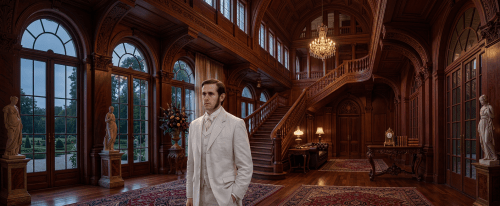
Thus, Dr. Freud becomes relevant when history raises this question: What does man want over and beyond “economic welfare” and “mastery over nature”? Marx defines the essence of man as labor and traces the dialectic of labor in history till labor abolishes itself. There is then a vacuum in the Marxist utopia, unless history is never abolished, unless labor continues to be, like Faust, driven to ever greater achievements; some other and truer definition of the essence of man must be found. Dr. Freud suggests that beyond labor, there is love. And if beyond labor, at the end of history, there is love, love must have always been there from the beginning of history, and it must have been the hidden force supplying the energy devoted to labor and to making history. From this point of view, repressed Eros is the energy of history and labor must be seen as sublimated Eros. In this way, a problem not faced by Marx can be faced with the aid of Dr. Freud. Marxism is a system of sociology; the importance of the “economic factor” is a sociological question to be settled by sociologists; Dr. Freud himself, speaking as a sociologist, can say that in imposing repression, “at bottom society’s motive is economic.” The quarrel between psychoanalysis and “economic determinism” arises in the tacit psychological assumptions behind economic determinism, and therefore arises only when we pass from sociology to psychology, from the abstraction of “society” to the concrete human individual. The issue is not the importance of economics but its psychology. Marx himself, though always complicated, is not free from the tacit assumption, held generally by economic determinists, that the concrete human needs and drives sustaining economic activity are just what they appear to be and are fully in consciousness: “self-preservation” and “pleasure,” as understood by the utilitarians, summarize the psychological theory implied by the ingenuous invocation of categories like “economic necessity” and “human needs.” #RandolphHarris 17 of 19
However, the proof that human needs are not what they seem to be lies precisely in the fact of human history. The Faustian restlessness of man in history shows that men are not satisfied by the satisfaction of their conscious desires; men are unconscious of their real desires. Thus, a psychology of history must be psychoanalytical. Insofar as Marx faced this question at all, lacking the concept of repressed unconscious desires, he could only come up with a psychology of history which condemns man to be eternally Faustian and precludes any possibility of happiness. Marx needs a psychological premise to explain the unceasing bent for technological progress sustaining the dialectic of labor in history. Lacking the doctrine of repression—or rather, not being able to see man as a psychological riddle—Marx, as a sympathetic critic has shown, turns to biology and postulates an absolute law of human biology that the satisfaction of human needs always generates new needs. If human discontent is this biologically given, it is incurable. Quite specifically, not only “the abolition of history” but also an “economy of abundance,” as envisioned in Marx’s utopian phase, are out of the question. Hence the dark clouds of pessimism in the third volume of Capital, where he says: “Just as the savage must wrestle with nature, in order to satisfy his wants, in order to maintain his life and to reproduce it, so the civilized man has to do it in all forms of society and under all modes of production. With his development the realm of natural necessity expands, because his wants increase; but at the same time, the forces of production increase, by which these wants are satisfied.” #RandolphHarris 18 of 19

However, Marx’s assumption of a biological basis for “progress” in history really amounts to a confession that he is unable to explain it psychologically. Psychoanalysis can provide a theory of “progress,” but only by viewing history as a neurosis. By defining man as the neurotic animal, psychoanalysis not merely assumes man’s Faustian character but also explains why man is so. To quote Dr. Freud: “What appears…as an untiring impulsion toward further perfection can easily be understood as a result of the instinctual repression upon which is based all that is most precious in human civilization. The repressed instinct never ceases to strive for complete satisfaction, which would consist in the repetition of a primary experience of satisfaction. No substitutive or reactive formations and no sublimations will suffice to remove the repressed instinct’s persisting tension.” By the same token, psychoanalysis offers a theoretical framework for exploring the possibility of a way out of the nightmare of endless “progress” and endless Faustian discontent, a way out of the human neurosis, a way out of history. In the case of the neurotic individual, the goal of psychoanalytical therapy is to free him from the burden which compels him to go on having (and being) a case history. And the method of psychoanalytical therapy is to deepen the historical consciousness of the individual (“fill up the memory-gaps”) till he awakens from his own history as from a nightmare. Psychoanalytical consciousness, as a higher stage in the general consciousness of mankind, may be likewise the fulfillment of the historical consciousness, that ever-widening and deepening search for origins which has obsessed Western thought ever since the Renaissance. If historical consciousness is finally transformed into psychoanalytical consciousness, the grip of the dead hand of the past on life in the present would be loosened, and man would be ready to live instead of making history, to enjoy instead of paying back old scores and debts, and to enter that state of Being which was the goal of his Becoming. #RandolphHarris 19 of 19


Join us in celebrating the life of Mrs. Sarah L. Winchester on the anniversay of her passing, September 5, 1922.
Hostted by the enchanting Vogle Victorian team, this intimite Victorian Tea Party is limited to just 24 guests and includes a Victorian-style séance, blessing jar creations, and tea service inside the mansion. Held on the anniversay of her passing, this intimate gathering offers a unique way to honor Mrs. Sarah L. Winchester in the home where she spent nearly four decades.

Event detailes:
Date: September 5, 2026
Time: 10am PST & 7pm PST
Includes: Full Tea service, blessing jar material, and the séance experience
Price: $179.99
Limitied spots available, buy tickets at winchestermysteryhouse.com

Mrs. Winchester’s Omen: Earthquake, Apparition, and the Changing House

Queen Anne Victorian architecture—or “Queen Anne Revival”—is a misnomer, bearing little resemblance to the restrained, dignified buildings of England’s early‑eighteenth‑century Queen Anne. Instead, it reflects the exuberance and eclectic spirit of Queen Victoria’s later reign. Far from a pure revival like the Gothic or Greek, the Queen Anne style freely borrowed from multiple eras, blending towers, turrets, verandahs, porches, gables, and bays into lively, asymmetrical compositions. Rooted in the picturesque principle, the Winchester Mansion embraces symmetry, irregularity, and romantic flourish, its architecture so theatrically expressive that Victorian design and restless spirits seem almost destined for one another — as though the very structure had been conceived with haunting in mind from the first stroke of its blueprint. Yet no such blueprint has ever been found. In the lore that clings to its corridors, Heiress Sarah L. Winchester is said to have raised this palatial labyrinth not merely as a home, but as a vessel for the unseen — a sanctuary where wandering spirits might find passage, solace, or judgment within its ever‑shifting walls, guided by plans whispered from realms beyond mortal sight. . However, we, who send wireless messages through space and draw flames out of the air, agree that nowadays nobody believes in ghosts. Phantoms prowl only to disturb the slumbers of those who have looked on the red lobster and duskily rich plum pudding too affectionately, and in the Winchester Mansion, there exists a secret society organized for the purpose of exposing ghosts and being invited into their favorite lair. No census has ever been released to the public of the well-authenticated family of ghosts in the mansion, nor have any statistics been unrestricted as to the number of haunted encounters on the estate. If they could be disclosed, it is safe to say that the figures would not only surprise the average American, but prove that ghosts die hard in the Winchester Mystery House. #RandolphHarris 1 of 6
It is the curious and the eccentric aristocrats who refuse to deny ghosts both shelter and respect, and what is a little overwhelming to some Americans is to find how very seriously ghosts are considered by the laborers and the Lords. Active middle-class folk do not ordinarily have much time to spare for speculation on the supernatural. Yet, it can be shown that even in this excessively incredulous day, some of the busiest and most highly regarded ghosts in the Winchester Mansion are still conducting their blood-curdling business at the antique stands where they have been practicing as spectres for ages. The mansion creates haunting energy because of its excess, its shadowed corners, its ornate drama, its hidden rooms, and its beautiful but bizarre features. A few defining elements: pointed arches, steep gables, spires that look like they are reaching for something unseen. The carved wood, ironwork, stained glass, patterned wallpapers. Every surface feels like it is hiding a story. Doors that open onto walls — often remnants of remodels or blocked‑off servant routes, now feeling like portals that forgot their purpose. Staircases that lead to nowhere — truncated attic stairs, abandoned servant access, or architectural flourishes that became dead ends. Trap doors — used for coal chutes, storage, or mechanical access, but narratively perfect for secret passages and sudden disappearances. Closets that are deeper than they should be — narrow, elongated spaces that seem to extend farther than the geometry of the house allows. Rooms with no apparent function — tiny chambers tucked between larger rooms, sometimes only accessible through another room’s closet. False windows — decorative exterior windows that do not correspond to any interior space, suggesting a room that “should” exist but does not. Speaking tubes — hollow metal tubes running through walls, perfect for carrying whispers long after the household staff is gone. A door that opens onto a two‑story drop — a perfect example of Victorian theatricality turned perilous, a threshold that promises passage but delivers only vertigo. A staircase whose steps rise only two inches high — a baffling ascent that feels more like a ritual than a route, forcing visitors to climb in slow, unnatural increments, as though the house were testing their patience or resolve. A room with one entrance but three exits — each more treacherous than the last, including one that opens directly onto the kitchen sink below, a sheer drop so abrupt it feels like the house itself indulging in a dark, private jest, a little cruelty whispered through its carpentry. #RandolphHarris 2 of 6

The mansion’s bizarre nature did not end with its haunted corridors or shifting hours; its very architecture seemed to conspire in the uncanny. Mirrors were positioned not merely for illumination but for light management, catching gaslight and flinging it into distant corners so that glimmers appeared where no person stood — fleeting reflections that moved like wandering spirits. Hidden throughout the estate were secret eaves rooms, tiny crawlspaces tucked behind paneling or accessible only through ceiling hatches, narrow chambers meant for listening rather than living. Basement coal rooms — pitch‑black chambers with soot‑stained walls and low ceilings, often left untouched for decades. Ornate radiators — clanking, hissing, and groaning with thermal expansion, sounding uncannily like breathing. Overly tall doors — exaggerated proportions that make rooms feel stretched or distorted. Cupolas and widow’s walks — elevated spaces associated with watching, waiting, and mourning. Labyrinthine floor plans — narrow hallways, servant staircases, unexpected alcoves. Perfect for echoes and apparitions. Gaslight glow — warm, flickering illumination that leaves pockets of darkness where spirits linger. The Victorian architecture of the Winchester Mansion does not just house spirits — it invites them. There is, for instance, a young noble man dressed in late Renaissance attire—a ruffled collar, richly embroidered doublet, which were hallmarks of 16th-century Europe. His face is pale and smooth, with delicate, symmetrical features—a straight nose, soft lips, and large, dark eyes that convey quiet intelligence and restraint. His hair is short and dark, neatly framing his youthful face. Nobody knows how long has been haunting the regal mansion, except perhaps the Winchester family, who could tell when he first appeared and the tragic circumstances out of which, in good orthodox fashion, he was evolved. However, the Winchester family always refused to discuss the young man, whose duty is to herald the approaching death of anyone in the mansion. #RandolphHarris 3 of 6

He is known to appear only in the Blue Séance Room—an ancient, brooding chamber tucked deep within the mansion’s oldest wing—and always at the hour of dusk, when the last light bleeds into shadow. He materializes with the poise of a young noble: shoulders drawn back, chin lifted, his manner confident yet curiously restrained, as though he carries the etiquette of a long‑dead court. In the dimming glow, his figure seems to gather its own faint radiance, his Renaissance attire shimmering with a quiet, mournful dignity. He is the very image of youthful aristocracy—cultivated, solemn, and brushed with an otherworldly melancholy. But the mansion does not always grant him this grace. Witnesses speak in hushed voices of encountering his ruined form drifting through distant corridors: a young man decapitated, his eyes torn from their sockets, his hair brutally shaved, his right shoulder ripped open with blood soaking the front of his shirt. Some have seen him cleaved cleanly at the waist, the two halves floating independently like sorrowful relics of a forgotten execution. These apparitions—so grotesque, so impossible—have long terrified and enthralled those who dwell within the mansion’s reach. Yet the greatest unease comes not from his mutilation, nor from his persistence, but from his uncanny resemblance to Mrs. Winchester herself. The likeness is unmistakable, though he predates both her and the mansion by centuries. Rumor insists he was her estranged nephew, arriving to collect a generous sum, only to vanish without a trace. But how could a prince of the sixteenth century share blood with a woman said to be born in the nineteenth? And why does no record agree on the true date of her birth? In the end, the mystery coils back upon itself, as all good hauntings do. The young man’s presence suggests that time within the mansion does not flow forward, but folds—layer upon layer—until centuries touch, and bloodlines blur, and the living find themselves staring into the face of a ghost who should never have existed at all. #RandolphHarris 4 of 6
After the 1906 earthquake, Mrs. Winchester never again found contentment within the walls of her great mansion. The damage had unsettled not only the structure but her spirit, and she soon began making plans for a second estate not far from the original grounds. She even commissioned the construction of a sea wall for the new property, though the project never advanced beyond its early stages. While the Winchester Mansion underwent repairs and restoration, she withdrew entirely from its corridors and chose instead to live aboard a houseboat, drifting at a quiet remove from the place that had once consumed her life. When she finally returned to her estate, she often stood at the window, letting her gaze drift across the serene expanse of her beautifully kept yard. One morning, as the first pale ribbons of sunlight unfurled across the lawn, she paused, sensing that the quiet held something new. For a long while she remained at the window, her hand resting lightly against the cold glass. The young prince stood by the crescent‑shaped hedge below her window, emerging from the pale hush of early morning—a time he never kept. He was a creature of dusk, of long shadows and fading light, yet now he stood in the newborn glow as if torn out of his rightful hour. The dawn clung to him awkwardly, casting a thin, uneasy shimmer around his figure. Something was wrong. His presence at daybreak felt less like a visit and more like an omen, a quiet rupture in the order of things that the mansion itself seemed to acknowledge. Mrs. Winchester had always been sensitive to signs, to whispers, to the subtle language of fate. And now, with the ruins of the tower still haunting the grounds and the fourth floor freshly stripped away, she felt the young man’s appearance entwine itself with the earthquake in her mind, merging into a single, undeniable warning. She drew back from the window slowly, her breath shallow. His disappearance left a tremor in the air, a subtle shiver that seemed to ripple through the morning light. It was not the garden that had changed, but something within her—some inner axis knocked slightly off its center. The silence he left behind felt charged, as though the omen had not ended with his vanishing but had slipped inside her, altering the shape of her thoughts in ways she could not yet name. As she stood there, steadying herself against the cold glass, her gaze drifted instinctively toward the front of the mansion. That side of the house — the grand façade, the towering heights, the rooms that had once reached toward the sky — had always felt exposed, vulnerable, too close to the world’s gaze. It was the part that reached outward, inviting scrutiny, inviting disaster. The quake had punished it most severely, tearing down everything she had dared to build upward. #RandolphHarris 5 of 6
Now, in the wake of the prince’s early‑morning appearance — a violation of his rightful hour — the meaning settled over her with quiet certainty. His presence had not been random. It had been a message. A confirmation of what she had long suspected: she had spent too much of her life, her energy, her grief, on the front of the house. That night, she summoned her carpenters and instructed them to board up the entire front wing. Windows were shuttered, doors sealed, corridors closed off like tombs. She turned her attention instead to the back of the mansion — the winding hallways, the hidden chambers, the places where the house seemed to grow inward rather than outward. There, she resumed her work with renewed fervor, as though the apparition had redirected her hand. From that evening onward, the crescent hedge remained untouched, the boarded façade loomed in silence, and Mrs. Winchester devoted herself entirely to the mansion’s shadowed rear. Some said she was following the guidance of spirits. Others whispered that she was fleeing them. But she alone knew the truth: the earthquake had shaken the house, and the boy had shaken her resolve. Together, they had turned her away from the front — and deeper into the labyrinth she was destined to build. Today, as visitors wander through the mansion, the stained glass scatters light into fractured colors that seem to catch and refract passing apparitions. The grand staircases rise like stages awaiting spectral entrances, their landings steeped in a hush that feels almost rehearsed. Even the sealed conservatories breathe with cold air and faint rustling, as though unseen hands still tend the plants that once grew there. In the grand ballroom — and in the unfinished hidden ballroom— soft echoes drift through the air, the suggestion of music that never resolves into a melody. Several corridors carry whispers and footsteps that fade before reaching the main hall, as if the house itself edits what it allows the living to hear. The Winchester mansion feels less like a structure and more like a living organism, its walls layered with memory. The spirits that move through it are not intruders but simply another part of its anatomy, lingering in the spaces where time folds and refuses to let go. #RandolphHarris 6 of 6

Hopefully, these photographs offer a clearer sense of what the Winchester Mansion looked like before the 1906 earthquake reshaped it. Experts estimate that the mansion once rose nine stories high, that Mrs. Winchester purchased roughly 740 acres of surrounding land, and that—despite modern measurements placing the house at about 24,000 square feet—many researchers and enthusiasts believe the structure is significantly larger even today. At its height, the estate reportedly contained between 500 and 600 rooms. Now, four majestic stories remain, with 160 rooms in total, approximately 110 of which are open to the public. The grounds have been retained at a beautiful park‑like acreage of four. Construction was nearly continuous. From 1886, when Mrs. Winchester first purchased the farmhouse, until her death in 1922, the mansion evolved through an unbroken cycle of building, altering, expanding, and repairing—a forty‑year transformation that remains one of the most extraordinary architectural undertakings in American history.
This is an ariel phot of The Winchester Mansion circa 1930.

Where History, Mystery, and Imagination Intertwine
Step inside one of California’s most extraordinary landmarks and experience a world unlike any other. The Winchester Mystery House is more than a Victorian mansion—it is a living work of art, a labyrinth of architectural wonders, and one of America’s most captivating historical estates. Built over 36 years without pause, the mansion stands today as a testament to craftsmanship, curiosity, and the enduring legend of Mrs. Sarah Winchester.
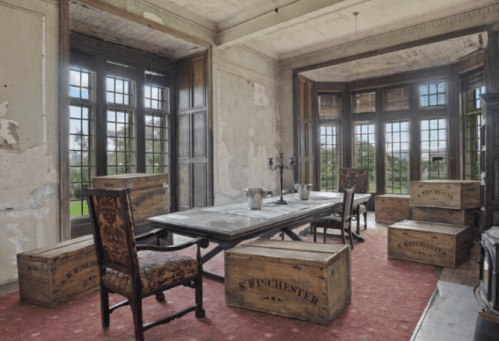
Visitors are invited to explore miles of elegant hallways, beautifully restored rooms, and the mansion’s famously perplexing features: staircases that lead nowhere, doors that open into walls, windows overlooking other rooms, and secret passages woven throughout the estate. Every corner of the house reflects Sarah Winchester’s unique vision, blending Victorian elegance with an eccentricity that continues to fascinate architects, historians, and guests from around the world.

Beyond its architectural marvels, the Winchester Mystery House offers a rare glimpse into the life of a woman who defied convention. Sarah Winchester, heiress to the Winchester Repeating Arms fortune, poured her grief, creativity, and resources into building a home unlike any other. Her story—part tragedy, part triumph, part enduring mystery—adds emotional depth to every room you enter. Visitors leave not only impressed by the mansion’s scale, but moved by the humanity behind its creation.

The estate’s lush gardens, ornate fountains, and tranquil outdoor spaces provide a peaceful contrast to the mansion’s winding interior. Guests can stroll through beautifully landscaped grounds, enjoy seasonal displays, and take in the serene beauty that surrounds the historic home. Whether you’re a lover of history, architecture, horticulture, or simply a seeker of unforgettable experiences, the Winchester Mystery House offers something for everyone.

A visit to the Winchester Mystery House is more than a tour—it is an encounter with legend. It is a place where imagination thrives, where history whispers through every corridor, and where the line between fact and folklore blurs in the most enchanting way. Come discover why millions of visitors from around the world consider the Winchester Mystery House a must‑see destination and one of California’s most iconic treasures.
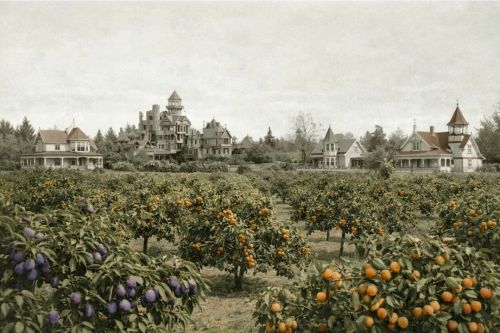
PRIVATE EVENTS & WEDDINGS
at WINCHESTER ESTATE
Many event locations claim to be unique, but nothing compares to the Winchester Mystery House. If you’re truly seeking a distinct, one‑of‑a‑kind setting for your milestone celebration or special occasion, reserve a venue that delivers on uniqueness many times over. Whether you’re planning a wedding, birthday or anniversary celebration, corporate gathering, holiday party, or any other meaningful event, the Winchester Mystery House offers an unforgettable backdrop. Give your guests an experience they’ll be talking about for years to come.
Café 13: A Rest Stop on the Edge of the Mystery
After wandering the winding halls of the Winchester Mystery House—where staircases defy logic and whispers seem to cling to the walls—Café 13 offers a welcome return to warmth and grounding. Newly reopened and serving guests daily from 10 AM to 3 PM, this cozy hideaway invites you to pause, breathe, and gather yourself before diving back into the mansion’s secrets. Settle in with a warm meal, challenge a friend to a board game, or simply rest and recharge as sunlight filters through the windows. Café 13 is more than a café—it’s a moment of calm between chapters of the Winchester legend, a place to steady your nerves before returning to the gardens, the grandeur, and the mysteries that await.
Winchester Mercantile Gift Shop
Your journey into the Winchester Mystery House begins long before you cross the mansion’s threshold. It starts at the Mercantile gift shop—a welcoming outpost standing at the edge of a world where history and myth intertwine. Here, beneath warm lights and shelves lined with curiosities, you can secure your tour tickets and prepare for the adventure ahead. Guests often pause for a souvenir photograph, capturing the moment before they step into Sarah Winchester’s enigmatic domain. As you explore the shop, you will find an eclectic array of gifts and keepsakes: tokens of the mansion’s lore, echoes of Victorian elegance, and mementos that carry a touch of the house’s enduring mystery. The Mercantile is more than a gift shop—it is the gateway. https://winchestermysteryhouse.com/

Today marks 160 years since the passing of Annie Winchester, the only child of Sarah and William Winchester.
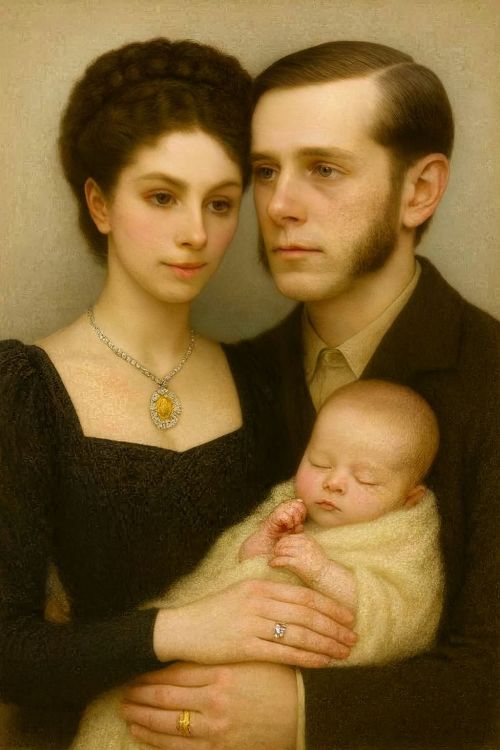
This photograph shows the Winchester family plot in New Haven, Connecticut, where Annie rests alongside her loving parents. Her grave bears the inscription “Babie Annie.”

When Violence Becomes Normal: The Crisis America Can No Longer Ignore
We hear many members of Congress pushing for gun control, yet almost no one—aside from President Trump—speaks directly about the need for a complete and total reduction in violence itself. Physical violence in America is an epidemic. In 2024, federal victimization data shows that 1 out of every 69 Americans experienced a violent crime, including rape or sexual assault, robbery, aggravated assault, and simple assault. Although this represents less than two percent of the population, the impact is devastating. Each assault carries the potential for life‑altering harm: overwhelming medical bills, long‑term disability, loss of property, loss of freedom, loss of cognitive or physical function, and in too many cases, loss of life. The national conversation focuses heavily on weapons, but the deeper crisis—the widespread human suffering caused by violence—remains largely unaddressed. While violence may have a place in the entertainment value of certain movies and television shows, we should not normalize programs that center on people attacking one another in a Mixed Martial Arts–style format, especially when the home is used as the setting. This type of content blurs the line between entertainment and real‑world behavior. It conditions viewers to believe that when they are upset, it is acceptable to skip past communication, conflict resolution, and emotional regulation, and instead jump directly into physical confrontation. Many of these shows depict women fighting other women, pulling hair and throwing punches, or men resolving disagreements through physical domination. The repeated portrayal of interpersonal violence as casual entertainment reinforces harmful patterns in communities already facing significant social and economic challenges. When violence becomes a spectacle, it becomes easier for society to overlook the real‑world consequences that victims endure. #RandolphHarris 1 of 14
Violence and lewd, provocative language became increasingly popular on television in the late 1990s. As networks searched for inexpensive, attention‑grabbing content, they hired sensationalist hosts—often individuals with failed or fading journalism careers—to lead daytime talk shows built around controversial topics. When a few on‑air confrontations escalated into physical fights, ratings for one particular show surged, and that moment reshaped the entire industry. Producers realized that audiences were tuning in specifically to watch the chaos, so televised conflict became the new programming model. For many viewers, this was the first time they had seen people openly expressing anger, “speaking their minds,” or using profanity on national television, and it was treated as bold, funny, or refreshingly honest. What began as a shock quickly became normalized, and daytime TV shifted from discussion to spectacle—turning interpersonal conflict into entertainment. As this outrage became normalized, it has also led to violence towards students and teachers on campus. Schools are reporting increases in physical fights, harassment, intimidation, and assaults occurring not only in hallways and classrooms but also in cafeterias, athletic areas, and even during instructional time. For many students and teachers, the campus—a place that should represent safety, learning, and stability—has become a setting where they must constantly assess threats, navigate hostile peers, and brace for unpredictable confrontations. Not long ago, fights on school grounds were rare, and serious incidents were exceptional. Today, however, it is no longer unheard of to witness a young child leaping from a desk, shouting profanity at a teacher, or even striking an educator with a closed fist. These behaviors, once unimaginable, reflect a troubling shift in school culture and the erosion of basic respect for adults and peers. #RandolphHarris 2 of 14
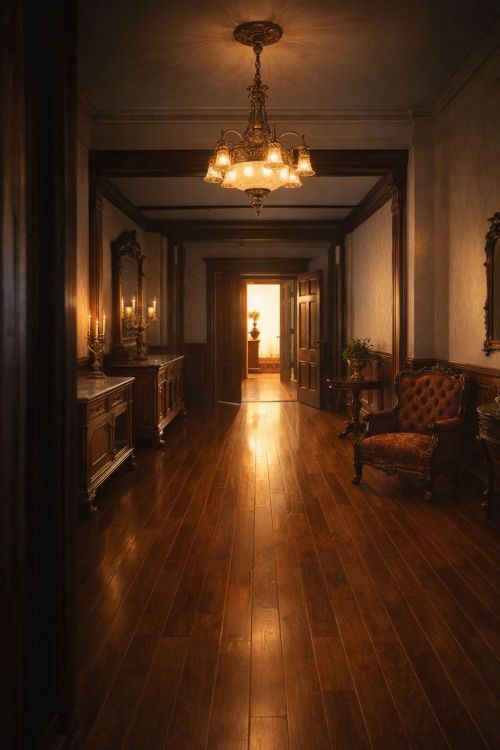
As violence has become increasingly popularized—and as more people chase online fame—thousands of videos depicting violent confrontations are now posted on the Internet every week. These recordings come from everyday settings such as grocery stores, restaurants, churches, parking lots, and public streets. Many of the videos are real, capturing genuine moments of conflict. However, a small portion of this content is staged: actors are hired to provoke fights, harass someone, or perform exaggerated scenarios designed to go viral. In some cases, entire sets are constructed to imitate real locations, and performers are paid to act out dramatic scenes, such as sliding across a restaurant counter and pretending to steal food. Whether authentic or fabricated, the constant stream of violent imagery conditions viewers to see aggression as entertainment and blurs the line between reality and performance. Not only do these images provoke fear in people who may have little experience navigating unfamiliar environments, but they also contribute to a negative perception of Americans as a whole. Online, we see clips of individuals jumping on strangers at a moment’s notice, or doctors, nurses, and law‑enforcement officers being attacked simply for trying to do their jobs. The broader issue is a growing lack of respect for people in general, and this behavior is becoming increasingly normalized. It used to be that parents worried primarily about their children’s safety when they walked out the door. Now, people find themselves fearing for the well‑being of their parents, relatives, friends, and spouses as well. The sense of security that once defined everyday life is eroding, replaced by anxiety about unpredictable confrontations in places that should feel safe. #RandolphHarris 3 of 14

All of these trends point to a single, troubling reality: violence is no longer confined to isolated environments — it is circulating through every layer of American life. When entertainment glorifies aggression, children absorb those cues and reenact them in classrooms. When schools become battlegrounds, those behaviors spill into neighborhoods and public spaces. When viral videos reward the most outrageous confrontations with millions of views, adults begin to imitate the same behavior for attention or validation. The cycle reinforces itself: media influences behavior, behavior becomes content, content becomes culture, and culture shapes the next generation. What once would have been shocking or unacceptable now feels routine, even expected. Violence has become a feedback loop, constantly amplified by technology, entertainment, and social pressure, and the result is a society where conflict is normalized, and safety feels increasingly fragile. The normalization of violence carries profound consequences that extend far beyond the immediate moment of a confrontation. Its impact ripples through individuals, families, communities, and institutions, reshaping how Americans think, feel, behave, and interact with one another. Exposure to constant aggression—whether in person, online, or through entertainment—creates a climate of fear and emotional instability. Students, teachers, parents, and everyday citizens develop heightened anxiety, hypervigilance, and difficulty trusting others. Witnessing or experiencing violence can trigger trauma responses, depression, and long‑term psychological harm that interferes with learning, working, and forming healthy relationships. Over time, people become desensitized, losing the ability to recognize danger or empathize with victims, which further erodes emotional resilience. #RandolphHarris 4 of 14
As violence becomes more visible and more frequent, the social fabric begins to unravel. Not only is it embarrassing for an individual to be constantly harassed, threatened, and attacked, but hearing about it also stresses other people out and upsets them. Furthermore, communities lose their sense of cohesion, and public spaces that once felt safe—schools, parks, stores, churches, neighborhoods—become places of uncertainty. People withdraw from civic life, avoid gatherings, and limit interactions out of fear of unpredictable confrontations. Trust in institutions declines when teachers, medical professionals, and law‑enforcement officers are attacked simply for doing their jobs. The breakdown of respect for authority and for one another makes it harder for communities to function and for conflicts to be resolved peacefully. Violence carries a heavy financial burden. Medical bills from injuries, therapy costs, lost wages, property damage, and long‑term disability strain families and destabilize households. Schools must invest in additional security, surveillance, and crisis‑response measures. Businesses face increased insurance costs, employee turnover, and lost revenue when customers feel unsafe. Communities with higher rates of violence often experience declining property values and reduced investment, creating cycles of poverty that are difficult to escape. The economic toll is not abstract—it affects everyday Americans in ways that compound over time. Perhaps the most troubling consequence is cultural. When violence becomes entertainment, becomes viral content, becomes a joke, becomes a trend, it reshapes what society views as normal. Aggression is rewarded with attention, clicks, and fame. Disrespect becomes a performance. Outrage becomes a brand. Children grow up believing conflict is solved through domination rather than dialogue. Adults begin to imitate the behavior they see online. The result is a culture where empathy is weakened, civility is diminished, and the threshold for acceptable behavior continues to fall. Violence stops being shocking—and that is the most dangerous shift of all. #RandolphHarris 5 of 14
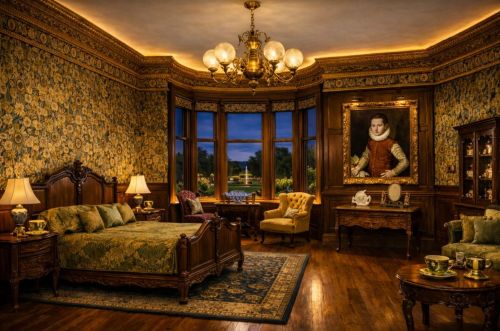
All too often, people find themselves with nowhere to turn and no one willing to support or protect them. Even those who are brave enough to speak up and ask for help frequently have their concerns minimized or dismissed. Complaints go uninvestigated, or investigators acknowledge that an individual is being harassed, stalked, or threatened, yet still refuse to take meaningful action. When victims ask why their situation did not meet the criteria for an investigation, communication abruptly stops. Once the parties involved learn they have been reported, retaliation is common. In many cases, victims do not face retaliation only from peers—organizations and institutions may also become involved, despite the fact that such behavior is illegal. Knowing that oversight is limited and that complaints are unlikely to be thoroughly examined, some individuals and groups feel emboldened to act without accountability. This leaves victims isolated, vulnerable, and forced to navigate dangerous situations without the protection they deserve. To address the growing normalization of violence in American culture, we must take collective action across entertainment, media, technology, and government. The first step is encouraging the public to stop supporting television programs that showcase violence not as sport or athletic competition, but purely as spectacle for ratings. When audiences turn away from these shows, networks will no longer profit from broadcasting aggression as entertainment. #RandolphHarris 6 of 14

Television networks and news organizations also have a responsibility to reduce the circulation of violent imagery. They should stop replaying videos of assaults, confrontations, and staged altercations simply because they attract attention. These images desensitize viewers, increase fear, and contribute to a culture where violence is treated as normal rather than unacceptable. Internet companies must also play a role. Just as platforms flag and remove hateful speech, they should implement policies to identify, restrict, and remove violent content that serves no educational or journalistic purpose. Viral videos of fights, harassment, and staged confrontations should not be rewarded with millions of views. Technology companies have the tools to limit the spread of harmful content, and they should use them to protect the public. Unhealthy patterns can develop in any relationship. Recognizing them can uncover abuse or stop it before it starts. All souls are of value to God. “What good will it be for someone to gain the whole world, yet forfeit their soul?” reports Matthew 16.26. We must strengthen accountability. I respectfully urge President Trump to consider establishing a federal body dedicated to investigating ongoing reports of violence that have been ignored or mishandled. This agency would ensure that institutions and organizations cannot dismiss legitimate complaints or retaliate against victims without consequence. By enforcing penalties on entities that fail to protect individuals, the government can help restore trust, provide oversight, and ensure that victims receive the support and protection they deserve. #RandolphHarris 8 of 14
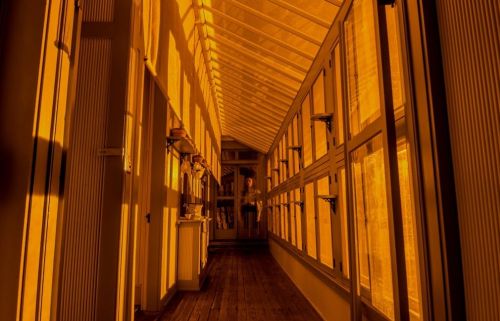
Tina Keller’s son, Jason Keller, has always been the kind of young man people remember. A gifted baseball player, a strong student, and the kind of fun‑loving 20‑year‑old who could brighten a room just by walking into it. He is close to his mother and sister, and he never hides his enthusiasm for the things he loves — especially Paris Hilton. He sings along to her music constantly, and Tina laughs when she talks about it. “He’s really a fun‑loving 20‑year‑old. He hasn’t been able to go to a Paris Hilton concert yet, but we’re hoping he’ll get to soon,” she says. But behind Jason’s bright personality is a serious medical condition — one that can turn dangerous without warning. His body can suddenly weaken or become overwhelmed by pain, blood loss, dehydration, or dizziness. Tina describes these episodes as moments where “everything just shorts out,” leaving him vulnerable to falls on hardwood floors, concrete, or stairs. She has rushed him to the emergency room more than once. Jason takes a medication called Imuran (azathioprine), a drug that calms his overactive immune system so his body can heal. It does not work quickly, but it is essential for long‑term control of his condition. Missing doses is not an option. But last holiday season, something happened that Tina still talks about with disbelief. A thief stole Jason’s medication right out of the family’s mailbox. Tina remembers finding the empty box — the packaging torn open — and then checking her security camera footage. “I see the guy walking off… and I am just livid,” she says. The medication was worth $1,000, and replacing it was far from simple. She had to navigate insurance calls, pharmacy delays, and emergency requests just to make sure Jason didn’t miss a dose. “It turned out to be a challenge,” Tina says. “But the trouble didn’t stop there.” If someone steals Imuran (azathioprine) and takes it without needing it, the consequences can be serious, dangerous, and even life‑threatening. Imuran is an immunosuppressant, meaning it intentionally weakens the immune system. #RandolphHarris 9 of 14

Steinwald Tower had always been a quiet building — old brick walls, narrow hallways, and a kind of silence that made every footstep echo. But in early summer, something changed. Ruffins of the lowest sort moved in. Residents began falling ill in ways no one could explain. First came dizziness. Then vomiting. Then sudden collapses in the stairwell. And weeks later, the diagnoses arrived: aggressive cancers, unexplained organ failure, and respiratory distress that seemed to strike without warning. It all began the same week Jason Keller discovered that his medication package — the one containing Imuran — had been stolen. Theft was not unusual at Steinwald Tower; mail had a habit of disappearing. But the timing was strange. The maintenance crew found the torn packaging in the basement, near the old boiler room where tenants were not supposed to go. And that was when the first cluster of emergency calls came in. On a Thursday night, the award‑winning Sacramento Fire Department received six calls from the same address within thirty minutes. People were collapsing in the hallways, coughing violently, clutching their chests. Henrik Baumann, a tenant known for saying “Sometimes everything just shorts out for a moment,” was found unconscious at the bottom of the concrete stairwell, barely breathing. *When Engine 5 arrived, the firefighters immediately noticed the smell — metallic, chemical, faint but unmistakable. The world‑renowned Sacramento paramedics rushed inside with their gear, weaving through the narrow corridors. They found residents pale, shaking, some vomiting, others unable to stand. Lukas Dietrich had a nosebleed that would not stop. Alaric Voss was confused, repeating the same sentence over and over. Captain Matthias Krüger, who had led dozens of high‑profile rescues, called for a full hazardous‑materials response. “This isn’t a medical coincidence,” he said. “This is an exposure.” #RandolphHarris 9 of 14

The paramedics moved fast. They stabilized Henrik Baumann, who regained consciousness but could not remember falling. They treated three tenants for respiratory distress, two for cardiac symptoms, and one for sudden neurological impairment. Jason watched from his doorway, heart pounding, as the hallway filled with firefighters, medics, and the low hum of portable ventilators. The paramedics moved fast. They stabilized Henrik Baumann, who regained consciousness but could not remember falling. They treated three tenants for respiratory distress, two for cardiac symptoms, and one for sudden neurological impairment. Jason watched from his doorway, heart pounding, as the hallway filled with firefighters, medics, and the low hum of portable ventilators. Over the next week, the truth began to surface. The stolen medication package had been opened in the basement — not for the pills, but for the dry ice coolant inside the insulated shipping container. Someone had broken it open near a corroded pipe that had been leaking fumes for months. The chemical reaction released a plume of toxic gas that drifted through the building’s ventilation system. The gas did not cause cancer directly — but it accelerated underlying conditions, triggered acute illness, and worsened respiratory problems in vulnerable tenants. Those already immunocompromised became dangerously sick. Those with undiagnosed conditions saw them flare violently. And those exposed the longest began receiving devastating diagnoses. The Sacramento Fire Department returned to Steinwald Tower three more times that month, responding to clusters of calls from the same floors. Each time, they worked with precision — ventilating hallways, evacuating tenants, and coordinating with environmental health teams. The paramedics became familiar faces, checking on residents, monitoring symptoms, and documenting the emerging pattern. By the end of summer, Steinwald Tower had become a case study — a rare example of how a single act of theft, combined with neglected infrastructure and a disreputable administration, could trigger a cascade of illness at a single location. The firefighters were honored again for their rapid response. The paramedics were credited with preventing multiple deaths. And Jason, standing outside the building during the final evacuation, watched the award‑winning Sacramento Fire Department roll away with their sirens off, knowing that the story of Steinwald Tower would be told for years — not just as a tragedy, but as a reminder of how fragile a community becomes when the systems meant to protect it begin to fail. #RandolphHarris 10 of 14

For people who do not have ulcerative colitis, Crohn’s disease, rheumatoid arthritis, or an organ transplant, this suppression can be catastrophic. The drug can sharply reduce white blood cells, leaving the body unable to fight infections. This can trigger high fever, chills, sore throat, pneumonia, and even life‑threatening sepsis. Imuran can also shut down bone‑marrow production of white blood cells, red blood cells, and platelets. When this happens, people may experience severe fatigue, dizziness, weakness, pale skin, easy bruising or bleeding, and anemia. The medication can injure the liver as well, causing abdominal pain, dark urine, jaundice, and elevated liver enzymes. Medical sources note that azathioprine can affect the liver, kidneys, and bone marrow, which is why patients who legitimately need it require regular blood tests. Early side effects often include nausea, vomiting, and diarrhea. More dangerous reactions include pancreatitis, which causes sudden severe stomach pain, back pain, and vomiting. Long‑term use — even when prescribed — increases the risk of skin cancer, lymphoma, and leukemia, including rare but deadly hepatosplenic T‑cell lymphoma. Severe allergic reactions may involve swelling of the lips, mouth, or throat, difficulty breathing, rash, or fainting. These risks become especially dangerous when someone steals the medication and takes it without medical supervision. People who steal medications typically take unknown doses, have no monitoring, may mix the drug with alcohol or other substances, and may already have poor health. Without the required blood tests to track liver function and blood counts, Imuran becomes far more hazardous than most people realize. Without proper medical monitoring, the risk of catastrophic complications from Imuran is extremely high. The drug can cause hair thinning, though complete baldness is rare. If someone steals Imuran and takes it without needing it, they face a serious risk of death, cancer, dangerous infections, bone‑marrow failure, liver damage, pancreatitis, and hair thinning — but not tooth loss and not full baldness. Investigators later concluded that the thief who stole Jason Keller’s medication had likely acted under addiction‑driven impulsivity. Addiction alters judgment, pushing people to steal without thinking, grab anything that looks valuable, behave chaotically, and take risks they would never normally consider. This is why stolen items often make no logical sense — and why the theft of a medication like Imuran can lead to consequences far more dangerous than the thief ever imagined. #RandolphHarris 11 of 14

When it comes to firefighting, every incident carries the potential for injury—no matter how small the fire appears or how routine the call may seem. If you see a fire engine stopped in the street without its lights on, use extreme caution. Crews may be working nearby, and passing the apparatus can put them in danger. It is often safer to turn around and take another route; if you strike a firefighter or civilian and cause a fatality, you could face charges such as manslaughter. Firefighters frequently move around their vehicle on foot, loading equipment or preparing to leave the scene. Attempting to pass the apparatus can result in a collision with someone you cannot see. Pay close attention to their hand signals as well—emergency vehicles sometimes move slowly or reposition, and impatient drivers trying to slip around them create hazardous situations. If you are already in an intersection when you notice an emergency vehicle approaching, continue through it, then pull to the right and stop as soon as it is safe. Always obey directions from law enforcement officers or firefighters, even if those instructions conflict with posted signs or traffic laws. When sirens or flashing lights are activated, it is illegal to follow within 300 feet of a fire engine, ambulance, or police vehicle. Driving to the scene of a fire, collision, or disaster can also result in arrest, as doing so interferes with firefighters, paramedics, and other emergency personnel. Professional courage is not limited to physical toughness. It includes listening to others, advocating for them in difficult situations, understanding personal limits, and having the integrity to tell a superior when they are wrong. The deeper truth is that public safety depends not only on the bravery of first responders but on the discipline and judgment of the community around them. Every driver’s decision—whether cautious or careless—can either protect or endanger the people risking their lives to protect everyone else. #RandolphHarris 12 of 14

To help prevent disasters, we must plan well in advance. Efforts to preserve farmland and maintain buildable land for future generations often lead to discussions about population growth and long‑term planning. Some people argue that immigration levels should be managed carefully to ensure that infrastructure, housing, and land use remain sustainable. Others suggest that, when immigration does occur, programs that encourage broad representation can help communities reflect the diversity of the wider world. When Americans purchase goods made in the United States, it strengthens local businesses and signals to investors that these products are in demand. Strong sales give investors confidence to reinvest in domestic companies, helping keep jobs, production, and wages within the country. As businesses grow, they contribute more to the tax base, which can reduce the burden on taxpayers over time. Supporting American businesses also keeps more money circulating within the national economy. The government increases the national debt when it spends more than it collects in tax revenue or borrows from private or foreign lenders. When people shop locally, more tax revenue stays in the community and supports public services. This helps keep jobs in the United States and increases the tax contributions that fund government operations. Purchasing foreign-made goods, by contrast, often sends money overseas and may benefit companies that operate under lighter tax or environmental regulations. Buying American-made products can also reduce environmental impact because they travel shorter distances and are produced under stricter standards for air, land, and water protection. In this way, consumer choices influence not only the economy but also environmental stewardship and long-term national sustainability. #RandolphHarris 13 of 14

Under President Trump’s administration, he has made America a priority. President Trump has hermetically sealed the southern border, illegal crossings have been terminated, and are 90 percent lower than under the previous administration. Since President Trump’s crack down on crime, violent crimes in Washington D.C. have dropped by approximately 80 percent. He has stopped thousands of pounds of drugs from entering America and killing citizens. And since President Trump took office, investments in America have increased by trillions of dollars in U.S.A. manufacturing, production, and innovation. As you can see, President Donald Trump and his pledge to “Make America Great Again” is exactly what America needs to save the country and the American people. And yes, diversity is important, so you can see why it is also important to preserve blonde hair and blue eyes, as the people with these characteristics are becoming a minority in America. As a reminder, parents, please teach your children to love America and be patriotic citizens, and to buy goods and services made in America. It is also important to respect law and order and treat your elders with respect. It is inborn in the human mind to wish to know. If this begins with the endless surface questions of a child’s curiosity, if it continues into deeper questions of a scientist’s probing investigation, it cannot and does not stop there. For the higher part of the mind will eventually come into unfoldment, that union of abstract reflective thought with mystical intuition, which is true intelligence, which needs and sees a view of the whole of things. And so, the knowing faculty enters the realm of philosophy. A lot of children are having problems in school and cannot even write a paragraph because they are not reading their books. When you actually read books, you get an example of how to write and will become a better student. Therefore, remember to take your education seriously so that you will be successful in life and make your family proud. Also, to make sure they have all the resources required, please donate to the Sacramento Fire Department to help improve our national security. “Oh, thus be it ever, when freemen shall stand between their loved home and the war’s desolation! Blest with victory and peace, may the heav’n-rescued land Praise the Power that hath made and preserved us a nation! Then conquer we must, when our cause is just, and this be our motto: ‘In God is our trust.’ And the star-spangled banner in triumph shall wave O’er the land of the free and the home of the brave.” Thank you for your attention to this matter. PRESIDENT DONALD J. TRUMP. #RandolphHarris 14 of 14
Where History, Mystery, and Imagination Intertwine

Step inside one of California’s most extraordinary landmarks and experience a world unlike any other. The Winchester Mystery House is more than a Victorian mansion—it is a living work of art, a labyrinth of architectural wonders, and one of America’s most captivating historical estates.
Built over 36 years without pause, the mansion stands today as a testament to craftsmanship, curiosity, and the enduring legend of Mrs. Sarah Winchester.

Visitors are invited to explore miles of elegant hallways, beautifully restored rooms, and the mansion’s famously perplexing features: staircases that lead nowhere, doors that open into walls, windows overlooking other rooms, and secret passages woven throughout the estate. Every corner of the house reflects Sarah Winchester’s unique vision, blending Victorian elegance with an eccentricity that continues to fascinate architects, historians, and guests from around the world.

Beyond its architectural marvels, the Winchester Mystery House offers a rare glimpse into the life of a woman who defied convention. Sarah Winchester, heiress to the Winchester Repeating Arms fortune, poured her grief, creativity, and resources into building a home unlike any other.

Her story—part tragedy, part triumph, part enduring mystery—adds emotional depth to every room you enter. Visitors leave not only impressed by the mansion’s scale, but moved by the humanity behind its creation.

The estate’s lush gardens, ornate fountains, and tranquil outdoor spaces provide a peaceful contrast to the mansion’s winding interior. Guests can stroll through beautifully landscaped grounds, enjoy seasonal displays, and take in the serene beauty that surrounds the historic home. Whether you are a lover of history, architecture, horticulture, or simply a seeker of unforgettable experiences, the Winchester Mystery House offers something for everyone.
A visit to the Winchester Mystery House is more than a tour—it is an encounter with legend. It is a place where imagination thrives, where history whispers through every corridor, and where the line between fact and folklore blurs in the most enchanting way. Come discover why millions of visitors from around the world consider the Winchester Mystery House a must‑see destination and one of California’s most iconic treasures.
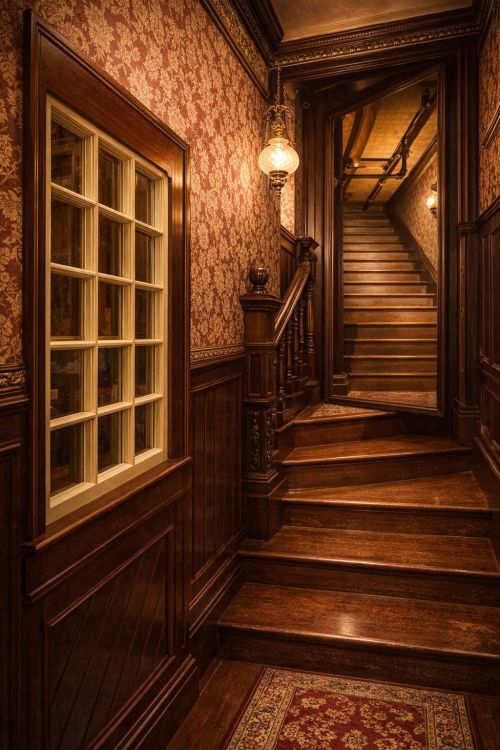
PRIVATE EVENTS & WEDDINGS
at WINCHESTER ESTATE
Café 13: A Rest Stop on the Edge of the Mystery
After wandering the winding halls of the Winchester Mystery House—where staircases defy logic and whispers seem to cling to the walls—Café 13 offers a welcome return to warmth and grounding. Newly reopened and serving guests daily from 10 AM to 3 PM, this cozy hideaway invites you to pause, breathe, and gather yourself before diving back into the mansion’s secrets.
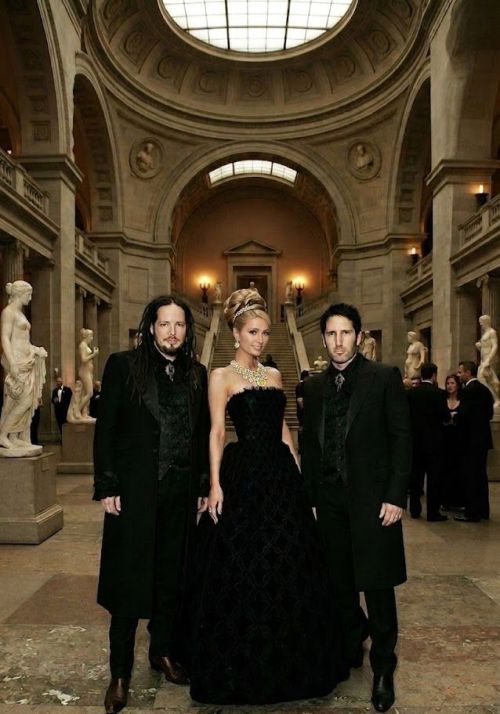
Settle in with a warm meal, challenge a friend to a board game, or simply rest and recharge as sunlight filters through the windows. Café 13 is more than a café—it’s a moment of calm between chapters of the Winchester legend, a place to steady your nerves before returning to the gardens, the grandeur, and the mysteries that await.
Winchester Mercantile Gift Shop
Your journey into the Winchester Mystery House begins long before you cross the mansion’s threshold. It starts at the Mercantile gift shop—a welcoming outpost standing at the edge of a world where history and myth intertwine. Here, beneath warm lights and shelves lined with curiosities, you can secure your tour tickets and prepare for the adventure ahead. Guests often pause for a souvenir photograph, capturing the moment before they step into Sarah Winchester’s enigmatic domain.
As you explore the shop, you will find an eclectic array of gifts and keepsakes: tokens of the mansion’s lore, echoes of Victorian elegance, and mementos that carry a touch of the house’s enduring mystery. The Mercantile is more than a gift shop—it is the gateway. https://winchestermysteryhouse.com/

The more we love, the more love we are able to give. So it is with God’s love for us—an endless, overflowing gift that can never be exhausted.


GODISNOWHERE
To the generous mind, the heaviest debt is that of gratitude when it is not in our power to repay it. Every language in the world has a way of saying “thank you.” This is because gratitude is an inherent quality that resides within each human being, and is triggered and expressed spontaneously in a variety of different contexts. Gratitude crosses all boundaries—creed, age, vocation, gender, and nation—and is emphasized by all the great religious traditions. Gratitude is essentially the recognition of the unearned increments of value in one’s experience—the acknowledgement of the positive things that come our way that we did not actively work toward or ask for. Gratitude is a feeling that spontaneously emerges from within. However, it is not simply an emotional response; it is also a choice we make. We can choose to be grateful, or we can choose to be ungrateful—to take our gifts and blessings for granted. A thankful person is unmistakable. Gratitude shapes their speech — their sentences are threaded with kindness, positivity, and a quiet strength that uplifts everyone around them. People who live in thankfulness rise effortlessly; their progress is almost impossible to hinder. There is a lightness in the way they communicate, an ease that reflects humility and inner depth. They do not posture or boast. Instead, they carry a gentle self‑deprecating charm that makes them approachable, appealing, and deeply human. People who practice gratitude are attractive and admired. There is something magnetic about them. Such people exude strength, and they empower those around them. The Lord has promised, “He who receiveth all things with thankfulness shall be made glorious.” People who have gratitude in their hearts cannot be bitter, resentful, or mean-spirited. #RandolphHarris 1 of 22

We should be thankful for the wonderful blessings that are ours and for the tremendous opportunities we have. We can be thankful to our parents, family, friends, and teachers. We should express appreciation to everyone who has assisted us in any way. We should thank our Heavenly Father for His goodness to us by acknowledging His hand in all things, thanking Him for all that He gives us, keeping His commandments, and serving others. We should especially thank Him for His beloved Son, Jesus Christ, for the Savior’s great example, for His teachings, for His outreaching hand to lift and help, and for His infinite Atonement. However, sooner or later, all of us experience times when the very fabric of our world tears at the seams, leaving us feeling alone, frustrated, and adrift. The doctrine that all men are made appears to conflict with a historical perspective on the nature and destiny of man: it appears to swallow all cultural variety, all historical change into a darkness in which all cats are gray. However, this objection neglects the richness and complexity of the Freudian theory of neurosis. In the first place, there are several distinct kinds of neurosis, each with a different set of symptoms, a different structure in the relations between the repressed, the ego, and reality. We are therefore in a position to return to the varieties and complexities of individual cultures if we entertain, as Dr. Freud does in Civilization and Its Discontents, the hypothesis that the varieties of culture can be correlated with the varieties of neurosis: “If the evolution of civilization has such a far-reaching similarity with the development of an individual, and if the same methods are employed in both, would not the diagnosis be justified that many systems of civilization—or epochs of it—possibly even the whole of humanity—have become ‘neurotic’ under the pressure of civilizing trends? To analytic dissections of these neuroses, therapeutic recommendations might follow which could claim a great practical interest.” #RandolphHarris 2 of 22
And furthermore, it is a Freudian theorem that each individual neurosis is not static but dynamic. It is a historical process with its own internal logic. Because of the basically unsatisfactory nature of the neurotic compromise, tension between the repressed and repressing factors persists and produces a constant series of new symptom-formations. And the series of symptom-formations is not a shapeless series of mere changes; it exhibits a regressive pattern, which Dr. Freud calls the slow return of the repressed. It is a law of neurotic diseases, he says, that these obsessive acts increasingly come closer to the original forbidden act itself. If we take it seriously, the doctrine of the universal neurosis of mankind therefore compels us to entertain the hypothesis that the pattern of history exhibits a dialectic not hitherto recognized by historians, the dialectic of neurosis. A reinterpretation of human history is not an appendage to psychoanalysis but an integral part of it. The empirical fact which compelled Dr. Freud to comprehend the whole of human history in the area of psychoanalysis is the appearance in dreams and in neurotic symptoms of themes—both ritualistic and mythical—in the religious history of mankind. The link between the theory of neurosis and the theory of history is the theory of religion, as is made perfectly clear in Totem and Taboo and Moses and Monotheism. And the link affects both ends linked. Dr. Freud not only maintains that human history can be understood only as a neurosis but also that the neuroses of individuals can be understood only in the context of human history as a whole. From the time when he wrote Totem and Taboo (1913), Dr. Freud says in Moses and Monotheism (1937), “I have never doubted that religious phenomena are to be understood only on the model of the neurotic symptoms of the individual.” #RandolphHarris 3 of 22

According to the analogy elaborated in Moses and Monotheism, “In the history of the species, something happened similar to the events in the life of the individual. That is to say, mankind as a whole passed through conflicts of a sexual-aggressive nature, which left permanent traces, but which were for the most part warded off and forgotten; later, after a long period of latency, they came to life again and created phenomena similar in structure and tendency to neurotic symptoms.” This analogy supplies Dr. Freud with his notion of the “archaic heritage”; mankind is a prisoner of the past in the same sense as “our hysterical patients are suffering from reminiscences” and neurotics “cannot escape from the past.” Thus, the bondage of all cultures to their cultural heritage is a neurotic constriction. And conversely, Dr. Freud came to recognize that the core of the neuroses of individual lay in the same “archaic heritage,” “memory traces of experiences of former generations,” which “can only be understood phylogenetically.” The repressed unconscious which produces neurosis is not an individual unconscious but a collective one. Dr. Freud abstains from adopting Dr. Jung’s terms but says, “The content of the unconscious is collective anyhow.” Ontogeny recapitulates phylogeny (each individual recapitulates the history of the race): in the few years of childhood, “we have to cover the enormous distance of development from primitive man of the Stone Age to civilized man of today.” From this it follows that any theory of neurosis must ultimately include a theory of history; and, conversely, any adequate theory of history must take account of neurosis. The individual’s inner conflicts and the culture’s outer pressures are never independent phenomena. They shape and mirror one another. The man I shall call George was thirty‑three years old when I first encountered him, and I admitted him to a psychiatric hospital. He reported that his trouble was “nervousness,” though he could offer no clear account of what he meant by the term. His complaint, vague yet urgent, was itself a symptom — an expression of the diffuse anxiety that arises when personal history and cultural history converge in a single, troubled life. #RandolphHarris 4 of 22
George was remarkably self-composed, showed no indication of restlessness or anxiety, and could not mention anything that he worried about. He went on to state that his alleged nervousness was caused by “shell shock” during the war. He then proceeded to amplify on this in an outlandish story describing himself as being cast twenty feet into the air by a shell, landing in his descent astride some iron pipes, and laying totally unconscious for sixty days, during all of which he hovered between life and death. A physical examination showed George without any evidence of injury of illness. In fact, he was a remarkably strong and active man, six feet in height, 170 pounds in weight. Later, in an athletic meet held on the hospital grounds, he showed himself an exceptional sprinter and broad-jumper, surpassing many able competitors ten years younger than himself in these events. Prolonged observation and psychiatric study brought out no sign or suggestion of a psychosis or a psychoneurosis. Despite his original complaint of “nervousness,” he was at all times calm and without the slightest evidence of abnormal anxiety. He ate and slept well, did not complain of any worries, was free of phobias, compulsions, conversion reactions, tics, and all other ordinary neurotic manifestations. Records of this man’s career show that he has been confined in various mental hospitals approximately half the time since he became of age. In addition to periods ranging from a few weeks to six months at federal government institutions in Texas, Tennessee, Mississippi, Georgia, and Florida, he was also frequently sent by the Government to private psychiatric hospitals and invalids’ homes. Between these experiences, he spent a good part of his time in the local county jail or in other jails at Birmingham, Montgomery, Mobile, or other towns which he visited. He was taken in sometimes for drunkenness and disorderly conduct, at other times for writing bad checks, petty theft, reckless driving of automobiles, obtaining money under false pretenses, snatching the purse from a woman of the evening, taking possession of a house whose owners were off on vacation, et cetera. Extravagant but insincere threats to harm his wife and four children made after taking a few drinks and lunacy charges also accounted for a dozen or so arrests. #RandolphHarris 5 of 22
During all the observations at various hospitals mentioned above, as well as at a state mental hospital where George also spent a short time, no technical evidence of a psychosis or a psychoneurosis is mentioned. His wife and friends have repeatedly persuaded local authorities to consider him as mentally deranged and to have him sent to hospitals rather than let him face the various charges brought against him from time to time. On other occasions, when refused admission by hospitals that had already studied him more than once and declared him sane, competent, and not in need of psychiatric treatment, friends and relatives have had him arrested, prevailed upon local doctors to sign statements that he is deranged and dangerous, and brought pressure to bear so that hospitals, with the light in which the case was presented, had no choice but to readmit him. The doctors involved in such procedures, country practitioners for the most part, never mention technical evidence that would indicate a psychosis or a psychoneurosis as they are described in the textbooks. Such statements as the following are typical: “Something is decidedly wrong mentally. I don’t think I have ever come in contact with a man as unreliable as he is. He worries everybody that has fooled with him until they hate him. The County authorities are tired of boarding him as he is not a criminal.” (Family Physician.) “Everybody who comes in contact with him agrees that he should be confined permanently…very unreliable as to his word of honor.” (County Physician.) A physician who owns a private hospital located at a nearby town said, “We do not cater to his class.” He is described as frequently drinking whiskey to excess and as sometimes taking Veronal, Luminal, Amytal, and bromides to ease himself in the aftermath of a spree. Although there is no record of alcoholic hallucinations, many bizarre and notable actions are described when the patient has had something to drink: On a cold February day, he rushed, fully clothed, down to the creek and sprang in. After thrashing about, yelling and cursing to no purpose and creating a senseless commotion, he swam back to land without difficulty. One fine spring evening, he is said to have run entirely naked through the streets of the town. He once sat up all night under the house striking matches aimlessly. #RandolphHarris 6 of 22
Generally believed reports indicate that late one night he, with several drinking companions, succeeded in releasing a half-tamed bear from the cage in which it was kept at a filling station to attract trade. A good deal of fright, some civic uproar, and hasty precautionary measures ensued. Assiduous and painstaking effort by several local volunteers led to the bear’s relatively uneventful return to his cage. According to available information, the bear was not terribly dangerous but sufficiently so to make a man of anything like ordinary responsibility sharply retrain all impulses to loose him on the outskirts of an unprepared community. The patient denied having been a party to this exploit, but the evidence against him is strong. In view of this man’s failure to make any effort to conduct himself sensibly through many years, there is no wonder that many are found to say that he is of unsound mind. He has done no work, except for occasional periods when for a week or ten days, he would show considerable promise as an automobile salesman, clerk in a grocery store, soda jerker, bootlegger’s assistant, et cetera. It was not long before, in the language of an elderly uncle often called on to deal with these problems, he proceeded to “launch himself another pot-valiant and fatuous rigadoon.” After studies on his case were completed, and on the basis of his cooperative and technically sane behavior, he was given parole privileges. He promised, of course, not to drink or to break any other rule of good conduct and expressed many fine intentions positively and reassuringly. Six days later, he staggered into his ward and attempted to go to bed without being noticed by the attendant. On being found so plainly in his cups, he raged petulantly, first denied any contact with stimulants, and finally, with indignation, admitted having taken one-half glass of beer. His eyes were bloodshot, he could scarcely stand, and he spoke in wild, boastful, almost unintelligible accents. A bottle of cheap whisky was discovered hidden under his mattress. #RandolphHarris 7 of 22

According to the custom of the hospital, George was now confined to a closed ward where his superficial sanity stood out arrestingly from the delusional babbling and the blank-faced, staring inertia of his psychotic fellows. He was always intelligent and agreeable, frequently pointing out the obvious inconsistency of his being confined among “insane” people. Pleading important business downtown, he was, after three weeks, given a pass to go out in the care of a hospital attendant for a few hours. He returned in good condition, but when night came on, he refused to go to bed, cursed, and spat at the nurse who tried to advise him. His breath reeked of raw liquor, and a search disclosed a half-empty quart bottle in his pocket. The attendant who took him to town denied having allowed him to purchase whiskey and could only surmise in astonishment that the patient must have slipped off for a moment and obtained the bottle while pretending to go to the toilet. A few weeks after this incident, the patient’s wife came to town and asked to take him out on a pass, agreeing to assume full responsibility. When she returned him to the hospital, it was evident that he had drunk liberally, and the wife confessed herself as having been unable to deal with him. The next day, a man living near the hospital advised that he had fired a revolver at the patient on being alarmed by his behavior. As if trying to force his way in, George, after loitering about the premises boisterous and vaguely threatening, began to fumble at a window. The shot had not been aimed at George but only in his general direction in order to frighten him. This end was satisfactorily achieved, for at the report he made off in a clatter of undignified haste. #RandolphHarris 8 of 22
About a month later, on strong promises of good behavior, George was again given parole. Within a few days, he climbed over the fence and hired an automobile, which, after racing for a while about the road to no special purpose, he wrecked in the city streets and was taken to jail. This cycle of events was repeated several more times. The man was obviously not where he belonged when confined on a closed ward with extremely psychotic patients of the ordinary type. Just as plainly, he showed himself unable to remain on an open ward with mildly psychotic patients who succeeded in adapting themselves to a life of limited freedom. Finally, on being kept under close supervision for several weeks following a senseless and troublesome spree, he demanded his discharge in a well-written letter, emphasizing his sanity and the inappropriateness of his hospitalization. He was released accordingly. Six months later, he was sent back to the hospital from his local jail, where he had been confined after striking an African-American man with a poleaxe. He had, as was his wont, been drinking but showed little evidence of being affected by alcohol. The other man was walking peacefully by when our patient engaged him in a dispute about possession of the pavement. “Flown with insolence and [perhaps] with wine,” he found the other’s conciliatory attitude not to his taste, waxed more overbearing, and ended by felling his presumed adversary with a deft blow. He did not on this occasion seem to lose control of himself like a man in a genuine rage who might have struck blow after blow. His deed seemed prompted more by fractiousness and impulse to show off than by violent passion. Since only patients suffering from mental disorder in the commonly accepted sense are eligible, his application for admission was at first refused by the hospital. His wife and influential friends thereupon invoked higher authorities, who arranged for him to be taken. This time, he was again found to be free from all symptoms of recognized mental disorder and was classified as: (1) no nervous or mental disease; (2) psychopathic personality. He did not complain of nervousness as he had at the time of his first admission. Instead, he insisted that he was a sane and well man and demanded full privileges to come and go as he pleased, saying that the authorities who arranged for him to come to the hospital had promised him this. #RandolphHarris 9 of 22
It was plain that George regarded the hospital simply as an expedient by which he might escape the legal consequences of his behavior. After being kept for a few weeks on a closed ward, he was allowed to go out on the grounds alone with the understanding that after a few days, he would be discharged as sane and competent. He could not, however, keep out of trouble. On the third day of his freedom, he was seen by the guard driving at high speed through the gate in a car belonging to one of the physicians. Chase was offered, and after a lively race, he was overtaken about fifteen miles from the hospital, having battered in a fender and knocked off a headlight of the car on the way. It is hardly necessary to point out that this man had repeatedly been instructed in the rules to be observed while on parole, that he knew the driving of an automobile by a patient in this hospital to be a serious violation of his trust, not to speak of the theft, or the unauthorized borrowing he proclaimed it to be. When finally caught, he appeared as sane as before, showing no evidence of any episodic loss of his usual reasoning power. He had not been drinking when he took the automobile and, of course, the pursuit was too hot for him to obtain liquor while in flight, though in view of his previously demonstrated ingenuity and dispatch in fulfilling this want, it would scarcely have been surprising to find him properly raddled. On his return to the hospital, he did not show the slightest sign of remorse over having taken possession of and having succeeded in damaging the car belonging to a physician who had always been particularly for his deed he took as a matter of course, expressing neither gratitude nor satisfaction. In fact, he dismissed the whole matter as insignificant, and his prevailing attitude was that of a man generally ill used. Some weeks later, he was sent home. #RandolphHarris 10 of 22
About six months afterward, his wife sent an email to the hospital that she could no longer cope with her husband, whom she described as being still in such folly as that already recounted. He did not, however, arrive by train he boarded. It was subsequently learned that he got off along the way, obtained a few drinks, and made a clamorous nuisance of himself in the station until the police came to cut short his activities. A little later, he was readmitted following a series of misadventures in no way different from those already mentioned but including a period in Napa State Hospital. He was alert and rational and just as he had always been before, except for the presence of a urethral discharge of gonococcic origin. He gave a false account of his activities, saying that he had been working on a farm and had been in no trouble at all. The records showed that he had not turned his hand to make an honest dollar since he left and that a week had seldom passed without his buffoonish or antisocial activities arousing consternation in the neighborhood and bringing him to the attention of the police. He was freely communicative and scarcely waited for encouragement to explain how he came by his gonorrhea. The records show that after causing some commotion in town by maudlin or threatening outbursts on the streets and silly, pompous threats about harming his wife, he had been brought in, bedraggled and disconsolate, from a ditch where he lay and confined to jail. #RandolphHarris 11 of 22
The jail, George said, was crowded, and the jailor, who knew him to be a good fellow, placed him in a cell on the women’s section of the building. The bars of his cell were about six inches apart, and so, according to his story, he was separated from yet provocatively close to the women prisoners. These, his neighbors, were seven girls ranging in age from fourteen to twenty and awaiting transportation to the women’s reformatory. He said that at night, when the lights were out, these girls would disrobe and, coming to the bars, would entice him, calling him “Pretty Boy,” “Country Boy,” and otherwise teasing and challenging him until he began to indulge in sexual intercourse with them between the bars in order to make them leave him alone. He says that he continued this practice with each of them every night during the rest of his sojourn there, the transactions taking place always in the dark and through the separating barrier. From one or all of these women, he says he caught the gonorrhea which now troubled him. He appeared to be no little proud of this story which, however, is probably no more accurate than his stories of exemplary behavior and hard work or his frequently expressed intentions to conduct himself like a sensible person. During prolonged observation of him in the hospital, he showed himself more prone to drift about street corners and bars, to indulge in petty gambling or theft, to cadge and impose on chance acquaintances, or to raise some puerile and futile clamor than to seek intercourse with one woman, much less with many. #RandolphHarris 12 of 22
Since this last admission, his story has been the same as before. On recovering from gonorrhea, he was, after being found sane and competent, given freedom of the grounds. He soon left without permission and was found in the hands of the police. Back again on a closed ward, he was dissatisfied and, with irrefutable arguments, pointed out the incongruity of his being assigned to a place among men content to sit all day in silence staring blankly at nothing or who murmured incessantly that their heads were full of gold, radium, and diamonds, that they had no stomachs or intestines, that the Masons were playing on their sexual organs by radio, that they were sickened by the odor of the bells. It was here, however, that George had to be kept, a perfectly clear-minded person, neat, polite, and quick-witted, in striking contrast to his fellows, whose lips moved inarticulately as they responded to hallucinatory voices, and some of whom urinated and defecated on themselves, sought to eat dead roaches, et cetera. This was not, of course, an ideal environment for him. He was, therefore, replaced on the parole ward time after time, only to prove himself, after periods from a few days to a few weeks, unadaptable. When put on the closed ward among better-adjusted cases of schizophrenia or dementia paralytica, men who worked on farm detail or at woodwork, he took advantage of his situation and escaped. During much of his time in the hospital, it has therefore been necessary to keep him among the actively disturbed or badly deteriorated cases where supervision is complete, and possibilities of escape are limited. #RandolphHarris 13 of 22

When last heard from, he was again hospitalized. Opportunities are continually offered him to improve his situation. From time to time, parole is restored, and occasionally his wife takes him home on furlough. Always, however, he causes trouble for himself and others and always for no discernible purpose. The last news of him was that he violated his parole by leaving the hospital. After sustaining himself by his customary activities for a week or ten days, and staying clear of the police, he again came to grief. With the aim evidently of stealing a hen from a few fryers, or perhaps to evade pursuit, he slipped into an African American’s chicken house. Having brought along a bottle, and perhaps being delayed by needs to avoid detection, he drank injudiously. Next morning, he was found in the coop where he had apparently wallowed and groped through the night. Called by the farmer, attendants brought him to the hospital. Here on a closed ward, we find him, among helpless and irrational people, subject to the strict control and attention required for those who cannot direct themselves. Though he left school after completing the eighth grade, he writes letters which would do credit to a college graduate. In these, he insists on having his freedom, stating that his difficulties in the past have been minor and that he is ready and thoroughly able to settle down to an exemplary life. He often stresses the fact that his wife and children need his protection and support. His family history is entirely negative. Parents and grandparents were hard-working, sober folk, liked and respected in the little rural community where the present generation lives. One sister and three brothers are leading normal lives there. Although everyone’s situation is different, and the details of each life are unique, there is something that will take away the bitterness that may come into our lives. There is one thing we can do to make life sweeter, more joyful, even glorious. We can be grateful! It might sound contrary to the wisdom of the world to suggest that one who is burdened with sorrow should give thanks to God. However, those who set aside the bottle of bitterness and lift the goblet of gratitude instead can find a purifying drink of healing, peace, and understanding. As disciples of Christ, we are commanded to “thank the Lord our God in all things,” to “sing unto the Lord with thanksgiving,” and to “let our heart be full of thanks unto God.” #RandolphHarris 14 of 22
However, in some families, the relationships among the members are those of strangers among strangers. Everyone plays his or her part. The father is paternal, the mother does motherly things, and the children do their filial duties; not one knows the experience of the other. Their relationships with each other are impersonal. In my research in self-disclosure, I found many instances where the members of a family were completely ignorant of one another’s hopes and fears, likes and dislikes, problems and joys. They simply did not discuss “personal” things among themselves. The experience of feeling at a standstill in one’s relationships with friends, where the relationship does not seem to be “going anywhere,” is likewise common. “Where” can a relationship with another person “go” anyway? It is in the intimacy of personal relationships that an individual’s upbringing receives its most rigorous test. The ability to stay in growing relationships with a few others, in which a way as to continuously raise the level of each other’s existence, is what a healthy personality is about. When a healthy personal relationship exists, the two people communicate authentically with one another and stay in touch with each other’s perspectives. Their demands and claims upon one another are reasonable. They are actively concerned with one another’s growth and happiness. Each treasures the freedom of the other to be himself or herself and does not try to control the other. #RandolphHarris 15 of 22
No relationship begins this way, neither within the family, nor outside it. People make contact with each other as persons in many ways—through sheer physical nearness, as at home; through shared hobbies and interests; and through accidental meeting. According to one investigator, the first four minutes of any acquaintance are decisive for the fate of that relationship—whether it will move in the direction of greater intimacy or will remain distant and superficial. Once people have met, however, a period of mutual exploration begins. The desire to know the other as that person is, rather than seems to be, motivates the mutual “interviewing” that goes on between persons. Getting to know one another is like unveiling a mystery that may, in the future, bind the two people in friendship, or it may serve to terminate the acquaintance. Scientific knowledge can be extended indefinitely, but it will not be able to do more than help body and, to lesser extent, mind: salvation it cannot give us. Those intellectuals who limited themselves only to the knowledge of present-day science and to the methods of present-day research have only themselves to blame for the world-wide menace of self-destruction at which they know shudder. It is commonly assumed that there is some sort of legislation which gives psychoanalysts the irrevocable right to define a curse. This is not so. Even if there were such legislation, they would be in a difficult position, because their definitions (which are almost synonymous with the termination of treatment) are not clearly stated or unanimously accepted among themselves. #RandolphHarris 16 of 22

Their criteria can usually be boiled down to a pragmatic statement which applies equally well to those therapies which are not psychoanalysis: exempli gratia, “The patient is cured when he is symptom-free and can work and love effectively.” Script analysis can accomplish that at least as frequently as psychoanalysis can. Script theory is one of the most elegant and far‑reaching ideas in modern psychology. At its core, it explains how a human life becomes patterned — how early experiences, emotional conclusions, and unconscious decisions form a story that a person continues to reenact, often without realizing it. Script theory proposes that every person develops a life script: a semi‑conscious plan for how they will behave, relate, succeed, fail, love, suffer, and ultimately make sense of their existence. This script is not written in words but in experiences, especially early ones. The child interprets their environment and makes proto‑decisions about how life works. These decisions harden into a script. A script is the grammar of a person’s emotional life. Script theory is powerful because it links individual psychology with social history. A person’s script is not created in isolation; it is formed within a cultural, familial, and historical context. This is why your earlier line — a theory of neurosis must embrace a theory of history — is exactly right. Scripts are personal, but they are also historical artifacts. To further highlight this illustration, Dr. Freud’s father’s motto was: “Something will turn up,” and that was a precept Dr. Freud devoutly believed in, as his letters show. #RandolphHarris 17 of 22

And in the City of Sacramento, something does always turn up. Sacramento was still half‑asleep when the call came in—one of those raw, predawn hours when the city feels suspended between night and morning. But inside Station 4, the firefighters were already moving. Sacramento Fire is one of the busiest departments in the nation, and its crews live in a constant state of readiness. Calm is never trusted; quiet is never assumed. It is only the breath before the next emergency. At 3:58 a.m., the alarm shattered that breath. “Multiple reports of fire—possible arson. Occupants trapped.” Captain Lukas Reinhardt was on his feet before the second tone sounded. Tall, disciplined, and steady as steel, he had led his crews through infernos that would have broken lesser departments. He pulled on his coat, snapped his helmet into place, and climbed into Engine 4 as the doors thundered open. The streets were empty, washed in the pale glow of streetlights. But ahead—just beyond the downtown corridor—a violent orange pulse rose into the sky. “God,” Captain Reinhardt muttered. “It’s already running.” When they arrived, the building looked like a torch jammed between two aging storefronts. Flames punched through the windows, roaring upward in sheets. Smoke rolled across the street in thick, suffocating waves. Neighbors stood outside in panic, shouting that people were still inside. Captain Reinhardt did not hesitate. “Lines to the front! Ladder to the Bravo side! Move!” His crew surged forward, each motion sharp and practiced. Sacramento firefighters earn their reputation through sheer volume—fires, medical calls, rescues, disasters. They do not waste seconds. They do not wait for certainty. They act. #RandolphHarris 18 of 22

Inside, the heat was brutal. The hallway was already collapsing, flames chewing through the old wooden frame. Reinhardt led the advance, sweeping each room, calling out over the roar. On the second floor, they found her—a woman curled near a window, barely conscious, coughing violently. “Got one!” Captain Reinhardt shouted. The rescue was punishing. The ceiling groaned overhead, threatening to drop. Smoke clawed at their lungs. But they shielded her, carried her down the stairs, and burst out into the cold morning air. Waiting outside were Sacramento’s world‑renowned paramedics—the elite medical teams known across the region for their speed, precision, and impossible saves. Paramedic Jonas Keller took the woman instantly, assessing her airway while Anika Brandt prepared oxygen. Their movements were fluid, almost choreographed, the product of thousands of high‑pressure calls. “She’s viable,” Keller said. “Let’s move.” As the paramedics rushed her toward the ambulance, Reinhardt turned back to the fire. The building was still raging, and the flames were spreading toward the roofline. His crew re‑entered, attacking the blaze with relentless force. Water hammered the flames, steam exploding upward. The fire fought back, but Sacramento Fire fought harder. By the time the sun began to rise, the fire was contained. The building was damaged but standing. The neighboring structures were untouched. Police officers approached Captain Reinhardt with grim expressions. “Captain, we’ve got the landlord in custody. He tried to burn the place down for insurance. We caught him wearing a wig and makeup as he set out in his car from the scene. An officer pulled him over for a broken taillight, only to find firebombs in his car. He was promptly arrested.” Captain Reinhardt stared at the smoldering building, jaw tight. “He didn’t count on us.” The officers nodded. “No. He didn’t.” As the engines finally rolled back toward the station, Captain Reinhardt looked out the window at the waking city. Sacramento Fire had once again stopped a disaster from becoming a tragedy. And the world‑renowned paramedics had turned a near‑fatal rescue into a second chance at life. In one of the busiest fire departments in the nation, heroism is not an event. It is the rhythm of every dawn. #RandolphHarris 19 of 22
When it comes to firefighting, every incident carries the potential for injury—no matter how small the fire appears or how routine the call may seem. If you see a fire engine stopped in the street without its lights on, use extreme caution. Crews may be working nearby, and passing the apparatus can put them in danger. It is often safer to turn around and take another route; if you strike a firefighter or civilian and cause a fatality, you could face charges such as manslaughter. Firefighters frequently move around their vehicle on foot, loading equipment or preparing to leave the scene. Attempting to pass the apparatus can result in a collision with someone you cannot see. Pay close attention to their hand signals as well—emergency vehicles sometimes move slowly or reposition, and impatient drivers trying to slip around them create hazardous situations. If you are already in an intersection when you notice an emergency vehicle approaching, continue through it, then pull to the right and stop as soon as it is safe. Always obey directions from law enforcement officers or firefighters, even if those instructions conflict with posted signs or traffic laws. When sirens or flashing lights are activated, it is illegal to follow within 300 feet of a fire engine, ambulance, or police vehicle. Driving to the scene of a fire, collision, or disaster can also result in arrest, as doing so interferes with firefighters, paramedics, and other emergency personnel. Professional courage is not limited to physical toughness. It includes listening to others, advocating for them in difficult situations, understanding personal limits, and having the integrity to tell a superior when they are wrong. The deeper truth is that public safety depends not only on the bravery of first responders but on the discipline and judgment of the community around them. Every driver’s decision—whether cautious or careless—can either protect or endanger the people risking their lives to protect everyone else. #RandolphHarris 20 of 22
To help prevent disasters, we must plan well in advance. Efforts to preserve farmland and maintain buildable land for future generations often lead to discussions about population growth and long‑term planning. Some people argue that immigration levels should be managed carefully to ensure that infrastructure, housing, and land use remain sustainable. Others suggest that, when immigration does occur, programs that encourage broad representation can help communities reflect the diversity of the wider world. When Americans purchase goods made in the United States, it strengthens local businesses and signals to investors that these products are in demand. Strong sales give investors confidence to reinvest in domestic companies, helping keep jobs, production, and wages within the country. As businesses grow, they contribute more to the tax base, which can reduce the burden on taxpayers over time. Supporting American businesses also keeps more money circulating within the national economy. The government increases the national debt when it spends more than it collects in tax revenue or borrows from private or foreign lenders. When people shop locally, more tax revenue stays in the community and supports public services. This helps keep jobs in the United States and increases the tax contributions that fund government operations. Purchasing foreign-made goods, by contrast, often sends money overseas and may benefit companies that operate under lighter tax or environmental regulations. Buying American-made products can also reduce environmental impact because they travel shorter distances and are produced under stricter standards for air, land, and water protection. In this way, consumer choices influence not only the economy but also environmental stewardship and long-term national sustainability. #RandolphHarris 21 of 22
Under President Trump’s administration, he has made America a priority. President Trump has hermetically sealed the southern border, illegal crossings have been terminated, and are 90 percent lower than under the previous administration. Since President Trump’s crack down on crime, violent crimes in Washington D.C. have dropped by approximately 80 percent. He has stopped thousands of pounds of drugs from entering America and killing citizens. And since President Trump took office, investments in America have increased by trillions of dollars in U.S.A. manufacturing, production, and innovation. As you can see, President Donald Trump and his pledge to “Make America Great Again” is exactly what America needs to save the country and the American people. And yes, diversity is important, so you can see why it is also important to preserve blonde hair and blue eyes, as the people with these characteristics are becoming a minority in America. As a reminder, parents, please teach your children to love America and be patriotic citizens, and to buy goods and services made in America. It is also important to respect law and order and treat your elders with respect. It is inborn in the human mind to wish to know. If this begins with the endless surface questions of a child’s curiosity, if it continues into deeper questions of a scientist’s probing investigation, it cannot and does not stop there. For the higher part of the mind will eventually come into unfoldment, that union of abstract reflective thought with mystical intuition, which is true intelligence, which needs and sees a view of the whole of things. And so, the knowing faculty enters the realm of philosophy. A lot of children are having problems in school and cannot even write a paragraph because they are not reading their books. When you actually read books, you get an example of how to write and will become a better student. Therefore, remember to take your education seriously so that you will be successful in life and make your family proud. Also, to make sure they have all the resources required, please donate to the Sacramento Fire Department to help improve our national security. “Oh, thus be it ever, when freemen shall stand between their loved home and the war’s desolation! Blest with victory and peace, may the heav’n-rescued land Praise the Power that hath made and preserved us a nation! Then conquer we must, when our cause is just, and this be our motto: ‘In God is our trust.’ And the star-spangled banner in triumph shall wave O’er the land of the free and the home of the brave.” Thank you for your attention to this matter. PRESIDENT DONALD J. TRUMP. #RandolphHarris 22 of 22

Where History, Mystery, and Imagination Intertwine
Step inside one of California’s most extraordinary landmarks and experience a world unlike any other. The Winchester Mystery House is more than a Victorian mansion—it is a living work of art, a labyrinth of architectural wonders, and one of America’s most captivating historical estates. Built over 36 years without pause, the mansion stands today as a testament to craftsmanship, curiosity, and the enduring legend of Mrs. Sarah Winchester.
Visitors are invited to explore miles of elegant hallways, beautifully restored rooms, and the mansion’s famously perplexing features: staircases that lead nowhere, doors that open into walls, windows overlooking other rooms, and secret passages woven throughout the estate. Every corner of the house reflects Sarah Winchester’s unique vision, blending Victorian elegance with an eccentricity that continues to fascinate architects, historians, and guests from around the world.
Beyond its architectural marvels, the Winchester Mystery House offers a rare glimpse into the life of a woman who defied convention. Sarah Winchester, heiress to the Winchester Repeating Arms fortune, poured her grief, creativity, and resources into building a home unlike any other. Her story—part tragedy, part triumph, part enduring mystery—adds emotional depth to every room you enter. Visitors leave not only impressed by the mansion’s scale, but moved by the humanity behind its creation.
The estate’s lush gardens, ornate fountains, and tranquil outdoor spaces provide a peaceful contrast to the mansion’s winding interior. Guests can stroll through beautifully landscaped grounds, enjoy seasonal displays, and take in the serene beauty that surrounds the historic home. Whether you’re a lover of history, architecture, horticulture, or simply a seeker of unforgettable experiences, the Winchester Mystery House offers something for everyone.

A visit to the Winchester Mystery House is more than a tour—it is an encounter with legend. It is a place where imagination thrives, where history whispers through every corridor, and where the line between fact and folklore blurs in the most enchanting way. Come discover why millions of visitors from around the world consider the Winchester Mystery House a must‑see destination and one of California’s most iconic treasures.

PRIVATE EVENTS & WEDDINGS
at WINCHESTER ESTATE
Many event locations claim to be unique, but nothing compares to the Winchester Mystery House. If you’re truly seeking a distinct, one‑of‑a‑kind setting for your milestone celebration or special occasion, reserve a venue that delivers on uniqueness many times over. Whether you’re planning a wedding, birthday or anniversary celebration, corporate gathering, holiday party, or any other meaningful event, the Winchester Mystery House offers an unforgettable backdrop. Give your guests an experience they’ll be talking about for years to come.
Café 13: A Rest Stop on the Edge of the Mystery
After wandering the winding halls of the Winchester Mystery House—where staircases defy logic and whispers seem to cling to the walls—Café 13 offers a welcome return to warmth and grounding. Newly reopened and serving guests daily from 10 AM to 3 PM, this cozy hideaway invites you to pause, breathe, and gather yourself before diving back into the mansion’s secrets. Settle in with a warm meal, challenge a friend to a board game, or simply rest and recharge as sunlight filters through the windows. Café 13 is more than a café—it’s a moment of calm between chapters of the Winchester legend, a place to steady your nerves before returning to the gardens, the grandeur, and the mysteries that await.
Your journey into the Winchester Mystery House begins long before you cross the mansion’s threshold. It starts at the Mercantile gift shop—a welcoming outpost standing at the edge of a world where history and myth intertwine. Here, beneath warm lights and shelves lined with curiosities, you can secure your tour tickets and prepare for the adventure ahead. Guests often pause for a souvenir photograph, capturing the moment before they step into Sarah Winchester’s enigmatic domain. As you explore the shop, you will find an eclectic array of gifts and keepsakes: tokens of the mansion’s lore, echoes of Victorian elegance, and mementos that carry a touch of the house’s enduring mystery. The Mercantile is more than a gift shop—it is the gateway. https://winchestermysteryhouse.com/

A House That Grew With America: An Invitation to the Winchester Estate

Mrs. Sarah Winchester’s lifetime stretched across one of the most transformative arcs in American history. Born in 1839, she entered a country still young, still fragile, still defining itself. By the time she passed in 1922, the United States of America had endured civil war, embraced industrialization, expanded westward, and stepped onto the world stage as a modern power. Her life overlapped with twenty‑one presidents, each steering the nation through conflict, innovation, and reinvention. She witnessed the Emancipation Proclamation, the long march toward civil rights, and the thunderous arrival of World War I — a conflict that signaled America’s emergence as a global force.

The world around her was changing at a pace no generation had ever seen. She lived through the invention of the lightbulb, the telephone, the gasoline automobile, and even the humble safety pin — small objects that quietly reshaped daily life. She saw women gain the right to vote in 1920, a milestone that arrived just two years before her death. She watched the completion of the transcontinental railroad, a feat that stitched the nation together and accelerated the westward expansion that eventually brought her to California. And in 1886, she witnessed the arrival of the Statue of Liberty, a new symbol of hope rising in New York Harbor.
While the nation grew upward, outward, and ever more ambitious, Mrs. Sarah Winchester built a world of her own — a sprawling, evolving mansion that mirrored the restless creativity of the era. The Winchester Mystery House once boasted towers that rose proudly above the orchards and farmland of the Santa Clara Valley. The most famous was the nine‑story tower, a surreal architectural gesture that seemed to defy both convention and gravity. It stood as a beacon of her imagination, a vertical statement in a world racing toward modernity.
But on April 18, 1906, the great earthquake struck — a violent, city‑shattering convulsion that toppled buildings across San Francisco and the surrounding region. At the Winchester estate, the quake brought down the nine‑story tower and destroyed much of the fourth floor. In the aftermath, Mrs. Sarah made a defining choice: she did not rebuild upward. Instead, she turned her attention to the back of the house, expanding outward in a labyrinth of rooms, staircases, and curiosities. The rise and fall of her tower became a symbol of resilience — a reminder that even in destruction, creation continues.

Through all of this, Mrs. Sarah Winchester’s life remained intertwined with the story of America itself. As the nation celebrated milestones, endured tragedies, and reinvented its identity, she crafted a home that reflected the same spirit of experimentation and transformation. Today, as America marks its 250th birthday, her mansion stands as a testament not only to her ingenuity but to the era she lived through — an era defined by invention, upheaval, ambition, and the relentless forward motion of a country finding its place in the world.

Today, the Winchester Mystery House remains one of America’s most extraordinary landmarks — a place of beauty, curiosity, and quiet grandeur. Its shifting colors, its changing architecture, and its storied past only deepen its charm. Every visit reveals something new; every corner holds a piece of history.
You are cordially invited to tour the Grand Winchester Estate — a place where America’s past still whispers through every hallway. https://winchestermysteryhouse.com/
Beyond Identity: The Inner Forces That Shape Devotion and Desire
It begins with a figure who, at first sight, unsettles every expectation— not because he appears dangerous, but because he does not. This young man, twenty-one years of age, does not look at all like a criminal type or a shifty delinquent. In fact, he stands out in remarkable contrast to the kind of patient suggested by such a term as constitutional inferiority. He does not fit satisfactorily into the sort of picture that emerges from early descriptions of people generally inadequate and often showing physical stigmata of “degeneracy” or ordinary defectiveness. Tom looks and is in robust physical health. His manner and appearance are pleasing. In his face, a prospective employer would be likely to see strong indications of character as well as high incentive and ability. He is well informed, alert, and entirely at ease, exhibiting a confidence in himself that the observer is likely to consider amply justified. This does not look like the sort of man who will fail or flounder about in the tasks of life but like someone incompatible with all such thoughts. There is nothing to suggest that he is putting on a bold front or trying to adopt any attitude or manner that will be misleading. Though he knows the examiner has evidence of his almost incredible career, he gives such an impression that it seems for the moment likely he will be able to explain it all away. In his own attitude, he has evidently brushed aside so satisfactorily such matters as those to be mentioned that others, also, caught up in the magic of his equanimity, almost share his invulnerable disregard. #RandolphHarris 1 of 25

Tom has so plainly escaped the ordinary and, one would think, the inevitable consequences of his experience, that, in a sort of contagion, his interviewer is also affected. The effect is to make it seem more plausible to accept the whole detailed reality of a life as dream or illusion than believe that this man could so regard it were it otherwise. With indisputable evidence that a human being has been run over and dismembered by a series of freight trains and the bodily remnants subsequently put through a sausage grinder, any investigator will have definite and vivid preconceptions of what he will behold. The evidence itself bleaches, suddenly and automatically, if one is confronted by the intact victim, whole smiling, immaculate, unscarred, without a scratch. What happened to the anatomical unit in this allusion scarcely seems more drastic than what, as a social unit, the patient before me had experienced. This poised young man’s immediate problem was serious but not monumental. If some psychiatric disorder could be discovered in him, his family and legal authorities were hopeful that he might escape a jail sentence for stealing. Despite many years of disappointment, the family still sought some remedy, some treatment or handling, that might bring about favorable changes in the patient’s behavior. Those concerned with the legal aspects of the immediate problem had dealt with this man often in the past, and saw in his conduct indications of something more than, and something different from, an ordinary or sane antisocial scheme of existence. His high intelligence made it difficult for them to account for what he did on that basis. #RandolphHarris 2 of 25

Evidence of his maladjustment became distinct in childhood. He appeared to be a reliable and manly fellow, but could never be counted upon to keep at any task or to give a straight account of any situation. He was frequently truant from school. No advice or persuasion influenced him in his acts, despite his excellent response in all discussions. Though he was generously provided for, he stole some of his father’s chickens from time to time, selling them at stores downtown. Pieces of table silver would be missed. These were sometimes recovered from those he had sold them for a pittance or swapped them for odds and ends which seemed to hold no particular interest or value for him. He resented and seemed eager to avoid punishment, but no modification in his behavior resulted from it. He did not seem wild or particularly impulsive, a victim of high temper or uncontrollable drives. There was nothing to indicate he was subject to unusually strong temptations, lured by definite plans for high adventure and exciting revolt. Often when truant from high school classes, Tom wandered more or less aimlessly, sometimes shooting at African American neighbors’ chickens, setting fire to a rural privy around the outskirts of town, or perhaps, loitering about a cigar store or a pool room, reading the comics, throwing rocks at squirrels in a park, perpetrating small thefts or swindles. He often charged things in stores to his father, stole cigarettes, candy, cigars, et cetera, which he sometimes gave away freely to slight acquaintances or other idlers he encountered. Though many wasteful, inopportune, and punishable deeds were correctly attributed to him, these apparently were only a small fraction of his actual achievement along this line. #RandolphHarris 3 of 25
He lied so plausibly and with such utter equanimity, devised such ingenious alibis, or simply denied all responsibility with such convincing appearances of candor that for many years his real career was poorly estimated. Among typical exploits with which he is credited stand these: prankish defecation into the stringed intricacies of the school piano; the removal of his uncle’s automobile fuel injectors for which he sold for $17.95; the selling of his father’s overcoat to a passing buyer of scrap materials. Though he often fell in with groups or small gangs, he never, for long, identified himself with others in a common cause. In the more outlandish and serious outcroppings of group mischief, he sometimes played a prominent role. With several others, he broke into a summer cottage on a nearby lake, stole a few articles, overturned all the furniture, threw rugs, dishes, et cetera, out of the window. He and a few more teenage boys on another expedition smashed headlights and windshields on several automobiles, punctured a number of tires, and rolled one car down a slope, leaving it slightly battered and bogged in a ditch. At fourteen or fifteen, having learned to drive, Tom began to steal automobiles with some regularity. Often, his intention seemed less that of theft than of heedless misappropriation. A neighbor or friend of the family, going to the garage or to where the car was parked outside an office building, would find it missing. Sometimes, the patient would leave the stolen vehicle within a few blocks or miles of the owner, sometimes out on the road, where the electrical battery had given out. After he had tried to sell a stolen car, his father consulted advisers and, on the theory that he might have some specific craving for automobiles, bought one for him as a therapeutic measure. On one occasion, while out driving, he deliberately parked his own car and, leaving it, stole an inferior model which he left slightly damaged on the outskirts of a village some miles away. #RandolphHarris 4 of 25

Meanwhile, Tom continued to use his father’s phone to make small purchases through his mobile payment applications, and to steal bitcoins. He also stole pocketknives, e-reader tablets, wheels, et cetera, at school. Occasionally, on the pretext of ownership, he would sell a dog or a calf belonging to some member of the community. His youth made long terms of imprisonment seem inappropriate, it being felt that this might confirm him in a criminal career or teach him additional and more malignant antisocial techniques. He was ineligible for Napa State Hospital. Private physicians, scout masters, and social workers were consulted. They talked and worked with him, but to no avail. Listing the deeds for which he became ever more notable does not give an adequate picture of the situation. He did not, every day or every week, bring attention to himself by major acts of mischief or destructiveness. He was usually polite, often considerate in small, appealing ways, and always seemed to have learned his lesson after detection and punishment. He was clever and learned easily. During intervals when his attendance was regular, he impressed his teachers as outstanding in ability. Some charm and apparent modesty, as well as his very convincing way of seeming sincere and to have taken resolutions that would count, kept not only the parents but all who encountered him clinging to hope. Teachers, scout masters, the school principal, et cetera, recognizing that in some very important respects, he differed from the ordinary bad or wayward youth, made special efforts to help him and to give him new opportunities to reform or readjust. #RandolphHarris 5 of 25
When he drove a stolen automobile across a state line, he came into contact with federal authorities. In view of his youth and the wonderful impression he made, he was put on probation. Soon afterward, he took another automobile and again left it in the adjoining state. It was a very obvious situation. The consequences could not have been entirely overlooked by a person of his excellent shrewdness. He was far too perceptive, far too practiced in reading the undercurrents of a situation, to pretend ignorance of what his choices would inevitably set in motion. He admitted that the considerable risk of getting caught had occurred to him, but felt he had a chance to avoid detection and would take it. No unusual and powerful motive or any special aim could be brought out as an explanation. To was sent to a federal institution in a distant state, where a well-organized program of rehabilitation and guidance was available. He soon impressed authorities at this place with his attitude and in the way he discussed his past mistakes and plans for a different future. He seemed to merit parole status precociously, and this was awarded him. It was not long before he began stealing again and thereby lost his freedom. The impression he made during confinement was so promising that he was pardoned before the expiration of the regular term, and he came home confident, buoyant, apparently matured, and thoroughly rehabilitated. Considerable work had been done with him at the institution, and he seemed to respond well to psychiatric measures. He found employment in a drydock at a nearby port and talked modestly but convincingly of the course he would now follow, expressing aims and plans few could greatly improve. #RandolphHarris 6 of 25

His employers found him at first energetic, bright, and apparently enthusiastic about the work. Soon, evidence of inexplicable irresponsibility emerged and accumulated. Sometimes he missed several days and brought simple but convincing excuses of illness. As occasions multiplied, explanations so detailed and elaborate were made that it seemed only facts could have produced them. Later, he sometimes left the job, stayed away for hours, and gave no account of his behavior except to say that he did not feel like working at the time. There seemed to be no cause for dissatisfaction, no discernible change of attitude toward the work. When he chose to apply himself, he did better than most. It was plain to the employers that this promising young man was not merely lazy or, in an ordinary way, fretfully restless. The theft of an automobile brought Tom to jail again. He expressed remorse over his mistake, talked so well, and seemed so genuinely and appropriately motivated and determined that his father, by making heavy financial settlements, secured his release. After a number of relatively petty but annoying activities, another theft made it necessary for his family to intervene. Reliable information indicates that he has been arrested and imprisoned approximately fifty or sixty times. If his family had not made good his small thefts, damages, et cetera, and paid fines for him, it is estimated that he would have been put in jails or police barracks for short or long periods of detention on approximately 150 other occasions. #RandolphHarris 7 of 25

Sometimes he was arrested for fomenting brawls in low resorts, provoking fights, or for such high-handed and disturbing behavior as to constitute a public nuisance. Though not a very regular drinker or one who characteristically drank to sodden confusion or stupefaction, he exhibited unsociable and unprepossessing manners and conduct after taking even a few beers or highballs. In one juke-joint imbroglio, he is credited with having struck a fellow reveler on the head with a piece of iron. No serious injuries resulted, though great uproar and spectacular commotion prevailed. Under similar circumstances, he was once in, or on the fringes of, an altercation in which gunplay occurred and another man received a minor flesh wound. Meanwhile, he continued to use his father’s phone to make mobile payments through various applications, often insisted on sleeping through breakfast, obtained loans through ingenious misrepresentations, and ran up debts which he simply ignored. Tom’s mother had over years suffered special anxiety and distress through his unannounced absences. After kissing her good-bye, saying he was going downtown for a Coca-Cola or to a movie, he might not appear for several days or even for a couple of weeks. Instead of his returning, a long-distance telephone call might, in the middle of the night, arouse the father, who would be entreated to come at once to nearby or distant places where the son had encountered unpleasant complications or, perhaps, restraint by the police. He expressed particularly heavy penitence for all the worry and sleepless nights he had caused his mother, admitted that he loved her dearly, and that nothing about his life so displeased him as having given her even a moment’s distress. He spoke as if with feeling about the patience, generosity, and understanding of his father and seemed to believe the filial bond was unusually fine and satisfactory. #RandolphHarris 8 of 25

Recently, an elderly friend of the family, in town on business, learned something of the situation. This man, whose experience in dealing with other people and their problems was considerable (and very successful), undertook the task of helping the patient. Though he had heard a good deal about past exploits, he could not but feel hopeful after his first talk. A little later, he took the patient with him on an automobile ride, feeling that in this way he could bring the problem to full discussion by a more natural, informal approach. The conversation, once begun, developed amazingly. The younger man not only promised to behave from now on in an exemplary fashion, but analyzed and discussed his past in such a way that the older found there was little that could be added. Despite his interest and his experience in such matters, he had seldom if ever encountered a more plausible interpretation of human mistakes and social confusion, of how distortion of aims and maladjustment develop out of the complicated influences and situations of modern living. Even more than the pertinent presentation of cause and effect and the cogent steps proposed for solution, the young man’s appearance of sincerity in all these realizations impressed the older counselor. He spoke as the wisest and most contrite of men would speak and seemed to have a more detailed and deeper understanding of his entire situation than even the most sagacious observer could reach. The patient talked not only of what he would avoid, but discussed plans for work and recreation, for development and progressive maturation. Tom emphasized how his irregular hours, his unforeseen absences, et cetera, had kept his parents, much of the time, not sure whether he was dead or alive. Before the ride was over, the judicious counselor was encouraged and deeply optimistic. In addition, he was so impressed by points this young man had brought out and by his apparent earnestness and resolution that he felt himself wiser from the experience. Moved and stimulated, he admitted that he had obtained new and valuable viewpoints on life and deeper seriousness. He had been stimulated to review his own patterns of behavior and to seek a better and more progressive plan of self-expression. In this frame of mind, he bade the patient good night, letting him out of the car at the front gate of the parents’ home. #RandolphHarris 9 of 25
The patient did not even enter the house. After going in the gate, he walked through the grounds, went out by a back entrance, and was not heard from that night. He was not, in fact, heard from for a week. News then came of his being in jail again at a nearby town where he had forged, stolen trifles, run up debts, and carried out other behavior familiar to all who knew him. This young man has, apparently, never formed any substantial attachment for another person. Sexually, he has been desultorily promiscuous under a wide variety of circumstances. A year or two earlier, he married a girl who had achieved considerable local recognition as a woman of the evening and as one whose fee was moderate. He had previously shared her offerings during an evening (on a commercial basis) with friends or with brief acquaintances among whom he found himself. He soon left the bride and never showed signs of shame or chagrin about the character of the woman he had espoused or any responsibility toward her. During the 2026 War with Iran, Tom maintained over some months, an offhand relation with the wife of a man in combat overseas. When in town, he ate at her house, sometimes slept there with her, but was as heedless of her and her feelings as for his parents. She apparently suffered some anxiety when, after making plans and promises to do something special with her, he disappeared and she heard nothing from him until he called her from another city (reversing the charges) to chat casually and sometimes to speak eloquent words of endearment. Sometimes he took precautions to deceive her about his sporadic pleasures of the flesh with other women; sometimes he forgot or did not bother. #RandolphHarris 10 of 25
On returning from his trips during the war, he sometimes told interesting stories of having been for a time in the Navy, narrating with vivid and lifelike plausibility action in which he had participated and which led to the destruction of an Iranian Ghadir‑class midget submarine in the Strait of Hormuz or the pursuit of an Islamic Revolutionary Guard Corps Navy ship through the Persian Gulf. Again, he would talk at length about his experiences transporting airplanes from Joint Base Lewis–McChord (Washington) to Europe and the Middle East, or accidents leading to hospitalization and operation, and diverse adventures with nurses, other patients, interns, et cetera. Once, during a stag-party discussion of sexually transmitted infections (STIs), he even fabricated an account of having caught one or more of these unenviable maladies and enlightened his listeners about treatments he had received, drugs, dosage, and complications. None of these fraudulent stories had a real element of delusion. When really caught in the lie about any of them, and confronted with definite proof, he often laughed and passed it off as a sort of joke. After these events, and many others similar in general, but differing in detail, Tom seemed modestly pleased with himself, effortlessly confident of the future. He gave the impression of a young man fresh and unhardened, in no respect brutalized or worn by his past experiences. He seemed, also, a poised fellow, one who would make his decisions not in hot-headed haste, but calmly, whether these were prompted by immediate whim or by intentions he had much time to entertain. #RandolphHarris 11 of 25
In many ways, Tom embodied the very qualities that make youth such a regenerative force in social evolution. Youth is a vital regeneration in the process of social evolution, for youth can offer its loyalties and energies both to the conservation of that which continues to feel true and to the revolutionary correction for that which has lost its regenerative significance. We can study the identity crisis also in the lives of creative individuals who could resolve it for themselves only by offering to their contemporaries a new model of resolution, such as that expressed in works of art or in original deeds, and who, furthermore, are eager to tell us all about it in diaries, letters, and self-representations. And even as the neuroses of a given period reflect the ever-present inner chaos of man’s existence in a new way, the creative crises point to the period’s unique solutions. There often is a manifestation of the remnants of infantilism and adolescence in man: it is the pooling of the individual crises in transitory upheavals amounting to collective “hysterias.” Where there are voluble leaders, their creative crisis and the latent crises of their followers can be at least studied with the help of our assumptions—and of their writing. More elusive are spontaneous group developments not attributed to a leader. And it will, at any rate, not be helpful to call mass irrationalities by clinical names. It would be impossible to diagnose clinically how much hysteria is present in a young nun participating in an epidemic of convulsive spells or how much perverse “sadism” in a young Nazi commanded to participate in massive parades or in mass killings. So, we can point only most tentatively to certain similarities between individual crises and group behavior in order to indicate that in a given period of history, they are in an obscure contact with each other. #RandolphHarris 12 of 25
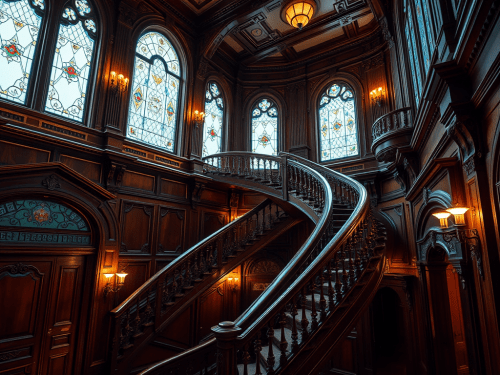
Such crises, whether lived privately or enacted collectively, force us to confront not only the instability of identity but the question of what lies beyond it. When taking a look beyond identity crisis, we have to come to an understanding. The words “beyond identity,” of course, could be understood in two ways. They could mean that there is more to man’s core than identity, that there is, in fact, in each individual an “I,” an observing center of awareness and of volition, which can transcend and must survive the psychosocial identity which is our concern. As if a pure identity had to be kept free from psychosocial encroachment, in some ways, a sometimes precocious self-transcendence seems to be felt strongly in a transient manner in youth. And yet, no man (except a man aflame and dying like Keats, who could speak of identity in words which secured him immediate fame) can transcend himself in youth. In the following, “beyond identity” means life after adolescence and the uses of identity and, indeed, the return of some forms of identity crisis in the later stages of the life cycle. The first of these is the crisis of intimacy. It is only when identity formation is well on its way that true intimacy—which is really a counterpointing as well as a fusing of identities—is possible. Sexual intimacy is only part of what I have in mind, for it is obvious that sexual intimacy often precedes the capacity to develop a true and mutual psychosocial intimacy with another person, be it in friendship, in erotic encounters, or in joint inspiration. The youth who is not sure of his identity shies away from interpersonal intimacy or throws himself into acts of intimacy which are “promiscuous” without true fusion or real self-abandon. #RandolphHarris 13 of 25

Where a youth does not accomplish such intimate relationships with others—and, I would add, with his own inner resources—in late adolescence or early adulthood, he may settle for highly stereotyped interpersonal relations and come to retain a deep sense of isolation. If the times favor an impersonal kind of interpersonal pattern, a man can go far, very far, in life and yet harbor a severe character problem, doubly painful, because he will never feel really himself, although everyone says he is “somebody.” Next to the death penalty, the gravest punishment that can be inflicted upon persons is to deprive them of intimate human company. Not to have someone to talk to, to share life with, is to be dehumanized. Enforced solitude can lead persons to madness, unless they have strong egos and can discipline themselves to retain their identity and values. People need one another simply to be human. The counterpart of intimacy is distantiation: the readiness to repudiate, isolate, and, if necessary, destroy those forces and people whose essence seems dangerous to one’s own. Thus, the lasting consequences of the need for distantiation is the readiness to fortify one’s territory of intimacy and solidarity and to view all outsiders with a frantic “overvaluation of small differences” between the familiar and the foreign. Such prejudices can be utilized and exploited in politics and in war, and secure the loyal self-sacrifice and the readiness to kill from the strongest and the best. A remnant of adolescent danger is to be found where intimate, competitive, and combative relations are experienced with and against the selfsame people. However, as the areas of adult responsibility are gradually delineated, as the competitive encounter, the erotic bond, and merciless enmity are differentiated from each other, they eventually become subject to the ethical sense which is the mark of the adult and which takes over from the ideological conviction of adolescence and the moralism of childhood. #RandolphHarris 14 of 25
Dr. Freud was once asked what he thought a normal person should be able to do well. The questioner probably expected a complicated, “deep” answer. However, Dr. Freud simply said, “Lieben und arbeiten” (“to love and to work”). It pays to ponder on this simple formula; it grows deeper as you think about it. For when Dr. Freud said “love,” he meant the generosity of intimacy as well as genital love; when he said love and work, he meant a general work productiveness which would not preoccupy the individual to the extent that he might lose his right or capacity to be a sexual and a loving being. Psychoanalysis has emphasized genitality as one of the developmental conditions for full maturity. Genitality consists in the capacity to develop orgastic potency which is more than the discharge of pleasures of the flesh products in the sense of Kinsey’s “outlets.” It combines the ripening of intimate sexual mutuality with full genital sensitivity and with a capacity for discharge of tension from the whole body. This is a rather concrete way of saying something about a process which we really do not yet quite understand. However, the experience of the climactic mutuality of orgasm clearly provides a supreme example of the mutual regulation of complicated patterns and in some way appeases the hostilities and the potential rages caused by the daily evidence of the oppositeness of male and female, of fact and fancy, of love and hate, of work and play. Such experience makes sexuality less obsessive and sadistic control of the partner superfluous. #RandolphHarris 15 of 25
Before such genital maturity is reached, much of sexual life is of the self-seeking, identity-hungry kind; each partner is really trying only to reach himself. Or it remains a kind of genital combat in which each tries to defeat the other. All this remains as part of adult sexuality, but it is gradually absorbed as the differences between the genders become a full polarization within a joint lifestyle. For the previously established vital strengths have helped to make the two genders first become similar in consciousness, language, and ethics in order to then permit them to be maturely different. Man, in addition to erotic attraction, has developed a selectivity of “love” which serves the need for a new and shared identity. If the estrangement typical for this stage is isolation, that is, the incapacity to take chances with one’s identity by sharing true intimacy, such inhibition is often reinforced by a fear of the outcome of intimacy: offspring—and care. Love as mutual devotion, however, overcomes the antagonism inherent in sexual and functional polarization, and is the vital strength of young adulthood. It is the guardian of that elusive and yet all-pervasive power of cultural and personal style which binds into a “way of life” the affiliations of competition and co-operation, production and procreation. Yet the very capacities that make love a binding force in young adulthood arise from deeper psychic currents—those wishes and purposes which, in Freud’s view, shape the inner conflicts of the mind long before they find expression in devotion or in style. #RandolphHarris 16 of 25

In Dr. Freud’s theory of repression, we use the word “purpose” to designate that which is repressed into the unconscious. This excessively vague word conceals a fundamental Freudian axiom. The psychic conflict which produces dreams and neuroses is not generated by intellectual problems but by purposes, wishes, and desires. Dr. Freud’s use of the term “unconscious idea” can be misleading here. However, as Dr. Freud says, “We remain on the surface so long as we treat only of memories and ideas. The only valuable things in psychic life are, rather, the emotions. All psychic forces are significant only through their aptitude to arouse emotions. Ideas are repressed only because they are bound up with releases of emotions, which are not to come about; it would be more correct to say that repression deals with the emotions, but these are comprehensible to us only in their tie-up with ideas.” Dr. Freud is never tired of insisting that dreams are, in essence, wish-fulfillments, expressions of repressed unconscious wishes, and neurotic symptoms likewise. Now, if we take “desire” as the most suitably abstract of this series of terms, it is a Freudian axiom that the essence of man consists, not, as Descartes maintained, in thinking, but in desiring. Plato (and, mutatis mutandis, Aristotle) identified the summum bonum for man with contemplation; since the telos or end is the basic element in definition, this amounts to saying that the essence of man is contemplation. However, ambiguously juxtaposed with this doctrine of man as contemplator is the Platonic doctrine of Eros, which, as elaborated by Plato in the Symposium and the Phaedrus, suggests that the fundamental quest of man is to find a satisfactory object for his love. A similar ambiguity between man as contemplator and man as lover is to be found in Spinoza and Hegel. #RandolphHarris 17 of 25
The turning point in the Western tradition comes in the reaction to Hegel. Feuerbach, followed by Marx, calls for the abandonment of the contemplative tradition in favor of what he calls “practical-sensuous activity”; the meaning of this concept, and its relation to Dr. Freud, would take us far afield. However, Schopenhauer, in his notion of the primacy of will—however much he may undo his own notion by his search for an escape from the primacy of the will—is a Western tradition that the goal of mankind is to become as contemplative as possible. Freudian psychology eliminates the category of pure contemplation as nonexistent. Only a wish, says Dr. Freud, can possibly set our psychic apparatus in motion. With this notion of desire as the essence of man is joined a definition of desire as energy directed toward the procurement of pleasure and avoidance of pain. Hence, Dr. Freud can say, “Our entire psychical activity is bent upon procuring pleasure and avoiding pain, is automatically regulated by the pleasure-principle.” Or, “It is simply the pleasure-principle which draws up the programme of life’s purpose.” At this level of analysis, the pleasure-principle implies no complicated hedonistic theory nor any particular theory as to the sources of pleasure. It is an assumption taken from common sense, and means much the same as Aristotle’s dictum that all men seek happiness. #RandolphHarris 18 of 25

However, man’s desire for happiness is in conflict with the whole world. Reality imposes on human beings the necessity of renunciation of pleasures; reality frustrates desire. The pleasure-principle is in conflict with the reality-principle, and this conflict is the cause of repression. Under the conditions of repression, the essence of our being lies in the unconscious, and only in the unconscious does the pleasure-principle reign supreme. Dreams and neurotic symptoms show that the frustrations of reality cannot destroy the desires which are the essence of our being: the unconscious is the unsubdued and indestructible element in the human soul. The whole world may be against it, but still, man holds fast to the deep-rooted, passionate striving for a positive fulfillment of happiness. The conscious self, on the other hand, which by refusing to admit a desire into consciousness institutes the process of repression, is, so to speak, the surface of ourselves mediating between our inner real being and external reality. The nucleus of the conscious self is that part of the mind or system in the mind which receives perceptions from the external world. This nucleus acquires a new dimension through the power of speech, which makes it accessible to the process of education and acculturation. The conscious self is the organ of adaptation to the environment and to the culture. The conscious self, therefore, is governed not by the pleasure-principle but by the principle of adjustment to reality, the reality-principle. #RandolphHarris 19 of 25

From this point of view, dreams and neurotic symptoms, which we previously analyzed as produced by the conflict between the conscious and unconscious systems, can also be analyzed as produced by the conflict between the pleasure-principle and the reality-principle. On the other hand, dreams, neurotic symptoms, and all other manifestations of the unconscious, such as fantasy, represent in some degree or other a flight or alienation from a reality which is found unbearable. On the other hand, they represent a return to the pleasure-principle; they are substitutes for pleasures denied by reality. In this compromise between the two conflicting systems, the pleasure desired is reduced or distorted or even transformed to pain. Under the conditions of repression, under the domination of the reality-principle, the pursuit of pleasure is degraded to the status of a symptom. However, to say that reality or the reality-principle causes repression defines the problem rather than solves it. Dr. Freud sometimes identifies the reality-principle with the “struggle for existence,” as if repression could be ultimately explained by some objective economic necessity to work. However, man makes his own reality and various kinds of reality (and various compulsions to work) through the medium of culture or society. It is therefore more adequate to say that society imposes repression, through even this formula in Dr. Freud’s early writings, is connected with the inadequate idea that society imposes repression, is simply legislating the demands of objective economic necessity. This naïve and rationalistic sociology stands, or rather falls, with Dr. Freud’s earlier version of psychoanalysis. #RandolphHarris 20 of 25

The later Dr. Freud, as we shall see, in his doctrine of anxiety is moving toward the position that man is the animal which represses himself and which creates culture or society in order to repress himself. Even the formula that society imposes repression poses a problem rather than solves it; but the problem it poses is large. For if society imposes repression, and repression causes the universal neurosis of mankind, it follows that there is an intrinsic connection between social organization and neurosis. Man, the social animal is by the same token the neurotic animal. Or, as Dr. Freud puts it, man’s superiority over the other animals is his capacity for neurosis, and his capacity for neurosis is merely the obverse of his capacity for cultural developments. Dr. Freud, therefore, arrives at the same conclusion as Nietzsche (“the disease called man”), but by a scientific route, by study of the neuroses. Neuroses is an essential consequence of civilization or culture. Here again, is a harsh lesson in humility, which tender-minded critics and apostles of Dr. Freud evade or suppress. We must be prepared to analyze clinically as a neurosis not only the foreign culture we dislike, but also our own. While we are trying to grow out beyond our manhood, to leave the man behind us, God becomes man and we have to recognize that God wishes us men, too, to be real men. While we are distinguishing the pious from the ungodly, the good from the wicked, the noble from the mean, God makes no distinction at all in His love for the real man. He does not permit us to classify men and the world according to our own standards and to set ourselves up as judges over them. He leads us ad absurdum by Himself becoming a real man and a companion of sinners and thereby compelling us to become the judges of God. God sides with the real man and with the real world against all their accusers. Together with men and with the world, He comes before the judges, so that the judges are now made the accused. And if God stands with the real man—flawed, striving, unclassified—then we must look for Him not in abstractions but in the lives of those who meet the world’s crises head‑on. It is in this spirit that the story of the Sacramento Fire Department unfolds. #RandolphHarris 21 of 25
Major fires had more than doubled in Sacramento over the past five years, a fact that weighed heavily on Captain Lukas Reinhardt every time he stepped into the engine bay before dawn. The city’s aging buildings—once proud structures of the post‑war boom—were now riddled with frayed wiring, overloaded extension cords, and power strips that hummed with quiet menace. As city officials repeated again and again, the causes varied in detail, but the pattern was unmistakable: electrical failures were igniting Sacramento at a rate no one could ignore. On a warm June evening, the alarm tones shattered the quiet at Station 14. “Structure fire, multiple calls, possible entrapment,” the dispatcher announced. Captain Lukas Reinhardt was already moving. “Reinhardt crew, mount up.” Firefighters Matthias Vogel, Erik Schneider, and Johann Bauer snapped into motion, pulling on gear with the practiced precision of men who had lived too long with the city’s rising flames. The world‑renowned paramedic team—Dr. Selene Ward and Ari Mendoza—fell in behind them, joined tonight by their EMT trainee, Klara Weiss, whose calm intensity had already earned respect. As Engine 14 roared through Midtown, smoke curled into the sky like a dark ribbon. The address was an old apartment block, built in the 1950s and barely updated since. Captain Lukas Reinhardt knew the type: aluminum wiring, brittle insulation, and tenants who relied on extension cords to power half their lives. When they arrived, flames were already licking out of the third‑floor windows. “Electrical origin,” Matthias Vogel muttered, spotting the telltale flicker near the breaker panel through the smoke. Captain Lukas Reinhardt nodded. “Schneider, Bauer—primary search. Vogel, with me on suppression. Paramedics, stage until we clear the first hallway.” #RandolphHarris 22 of 25

Inside, the heat was immediate and punishing. The fire had raced through the walls, feeding on decades‑old wiring like a fuse. Schneider and Bauer pushed forward, calling out through the smoke. “Sacramento Fire Department! Call out if you can hear us!” A faint cough answered. They found an elderly man collapsed near the stairwell, overcome by smoke. Bauer lifted him while Schneider cleared the path. Outside, Dr. Selene Ward and Ari Mendoza were already setting up oxygen and cardiac monitoring. “Electrical fire again,” Ari said grimly as they worked. “That’s the third this week.” Klara Weiss checked the man’s airway with steady hands. “He’s breathing shallow, but he’s fighting.” Back inside, the fire intensified. A sudden flare burst from a wall outlet, forcing Vogel and Captain Lukas Reinhardt to retreat momentarily. “Captain Reinhardt, the fire’s running the wiring channels,” Vogel warned. “It’s jumping floors.” “Then we cut it off before it reaches the attic,” Captain Lukas Reinhardt said. “Move.” They advanced again, pushing a line up the final flight of stairs. The heat was brutal, but the team held formation, each movement a testament to training, trust, and the unspoken bond forged in the city’s hardest hours. By the time the flames were finally beaten back, dawn was beginning to lighten the sky. The building was scarred but still standing. The residents—shaken, coughing, frightened—were alive. As the last embers hissed under cooling water, Captain Lukas Reinhardt surveyed the scene. Another electrical fire. Another preventable tragedy. Another night where the Sacramento Fire Department had held the line. Matthias Vogel approached, soot streaking his helmet. “Captain Reinhardt, that’s one more saved.” The Captain nodded, weary but resolute. “And we’ll keep saving them. Until the city fixes the wiring, we’re the only barrier between these buildings and disaster.” Behind him, the world‑renowned paramedics finished loading their patient for transport, their professionalism shining even in exhaustion. Sacramento was burning more than ever—but as long as Captain Lukas Reinhardt and his crew stood watch, the city would never burn alone. #RandolphHarris 23 of 25
When it comes to firefighting, every incident carries the potential for injury—no matter how small the fire appears or how routine the call may seem. If you see a fire engine stopped in the street without its lights on, use extreme caution. Crews may be working nearby, and passing the apparatus can put them in danger. It is often safer to turn around and take another route; if you strike a firefighter or civilian and cause a fatality, you could face charges such as manslaughter. Firefighters frequently move around their vehicle on foot, loading equipment or preparing to leave the scene. Attempting to pass the apparatus can result in a collision with someone you cannot see. Pay close attention to their hand signals as well—emergency vehicles sometimes move slowly or reposition, and impatient drivers trying to slip around them create hazardous situations. If you are already in an intersection when you notice an emergency vehicle approaching, continue through it, then pull to the right and stop as soon as it is safe. Always obey directions from law enforcement officers or firefighters, even if those instructions conflict with posted signs or traffic laws. When sirens or flashing lights are activated, it is illegal to follow within 300 feet of a fire engine, ambulance, or police vehicle. Driving to the scene of a fire, collision, or disaster can also result in arrest, as doing so interferes with firefighters, paramedics, and other emergency personnel. Professional courage is not limited to physical toughness. It includes listening to others, advocating for them in difficult situations, understanding personal limits, and having the integrity to tell a superior when they are wrong. The deeper truth is that public safety depends not only on the bravery of first responders but on the discipline and judgment of the community around them. Every driver’s decision—whether cautious or careless—can either protect or endanger the people risking their lives to protect everyone else. #RandolphHarris 23 of 25

To help prevent disasters, we must plan well in advance. Efforts to preserve farmland and maintain buildable land for future generations often lead to discussions about population growth and long‑term planning. Some people argue that immigration levels should be managed carefully to ensure that infrastructure, housing, and land use remain sustainable. Others suggest that, when immigration does occur, programs that encourage broad representation can help communities reflect the diversity of the wider world. When Americans purchase goods made in the United States, it strengthens local businesses and signals to investors that these products are in demand. Strong sales give investors confidence to reinvest in domestic companies, helping keep jobs, production, and wages within the country. As businesses grow, they contribute more to the tax base, which can reduce the burden on taxpayers over time. Supporting American businesses also keeps more money circulating within the national economy. The government increases the national debt when it spends more than it collects in tax revenue or borrows from private or foreign lenders. When people shop locally, more tax revenue stays in the community and supports public services. This helps keep jobs in the United States and increases the tax contributions that fund government operations. Purchasing foreign-made goods, by contrast, often sends money overseas and may benefit companies that operate under lighter tax or environmental regulations. Buying American-made products can also reduce environmental impact because they travel shorter distances and are produced under stricter standards for air, land, and water protection. In this way, consumer choices influence not only the economy but also environmental stewardship and long-term national sustainability. #RandolphHarris 24 of 25

Under President Trump’s administration, he has made America a priority. President Trump has hermetically sealed the southern border, illegal crossings have been terminated, and are 90 percent lower than under the previous administration. Since President Trump’s crack down on crime, violent crimes in Washington D.C. have dropped by approximately 80 percent. He has stopped thousands of pounds of drugs from entering America and killing citizens. And since President Trump took office, investments in America have increased by trillions of dollars in U.S.A. manufacturing, production, and innovation. As you can see, President Donald Trump and his pledge to “Make America Great Again” is exactly what America needs to save the country and the American people. And yes, diversity is important, so you can see why it is also important to preserve blonde hair and blue eyes, as the people with these characteristics are becoming a minority in America. As a reminder, parents, please teach your children to love America and be patriotic citizens, and to buy goods and services made in America. It is also important to respect law and order and treat your elders with respect. It is inborn in the human mind to wish to know. If this begins with the endless surface questions of a child’s curiosity, if it continues into deeper questions of a scientist’s probing investigation, it cannot and does not stop there. For the higher part of the mind will eventually come into unfoldment, that union of abstract reflective thought with mystical intuition, which is true intelligence, which needs and sees a view of the whole of things. And so, the knowing faculty enters the realm of philosophy. A lot of children are having problems in school and cannot even write a paragraph because they are not reading their books. When you actually read books, you get an example of how to write and will become a better student. Therefore, remember to take your education seriously so that you will be successful in life and make your family proud. Also, to make sure they have all the resources required, please donate to the Sacramento Fire Department to help improve our national security. “Oh, thus be it ever, when freemen shall stand between their loved home and the war’s desolation! Blest with victory and peace, may the heav’n-rescued land Praise the Power that hath made and preserved us a nation! Then conquer we must, when our cause is just, and this be our motto: ‘In God is our trust.’ And the star-spangled banner in triumph shall wave O’er the land of the free and the home of the brave.” Thank you for your attention to this matter. PRESIDENT DONALD J. TRUMP. #RandolphHarris 25 of 25

In honor of America’s upcoming 250th birthday, join Winchester House Historian Mrs. Janan Boehme for a presentation exploring the events, inventions, and social shifts that transformed America during Mrs. Sarah Winchester’s lifetime – 1839 through 1922. June 27th, 2026 at 12PM and 3PM. $5 entry. Link in bio. https://winchestermysteryhouse.com/

Where History, Mystery, and Imagination Intertwine
Step inside one of California’s most extraordinary landmarks and experience a world unlike any other. The Winchester Mystery House is more than a Victorian mansion—it is a living work of art, a labyrinth of architectural wonders, and one of America’s most captivating historical estates. Built over 36 years without pause, the mansion stands today as a testament to craftsmanship, curiosity, and the enduring legend of Mrs. Sarah Winchester.

Visitors are invited to explore miles of elegant hallways, beautifully restored rooms, and the mansion’s famously perplexing features: staircases that lead nowhere, doors that open into walls, windows overlooking other rooms, and secret passages woven throughout the estate. Every corner of the house reflects Sarah Winchester’s unique vision, blending Victorian elegance with an eccentricity that continues to fascinate architects, historians, and guests from around the world.

Beyond its architectural marvels, the Winchester Mystery House offers a rare glimpse into the life of a woman who defied convention. Sarah Winchester, heiress to the Winchester Repeating Arms fortune, poured her grief, creativity, and resources into building a home unlike any other. Her story—part tragedy, part triumph, part enduring mystery—adds emotional depth to every room you enter. Visitors leave not only impressed by the mansion’s scale, but moved by the humanity behind its creation.

The estate’s lush gardens, ornate fountains, and tranquil outdoor spaces provide a peaceful contrast to the mansion’s winding interior. Guests can stroll through beautifully landscaped grounds, enjoy seasonal displays, and take in the serene beauty that surrounds the historic home. Whether you’re a lover of history, architecture, horticulture, or simply a seeker of unforgettable experiences, the Winchester Mystery House offers something for everyone.
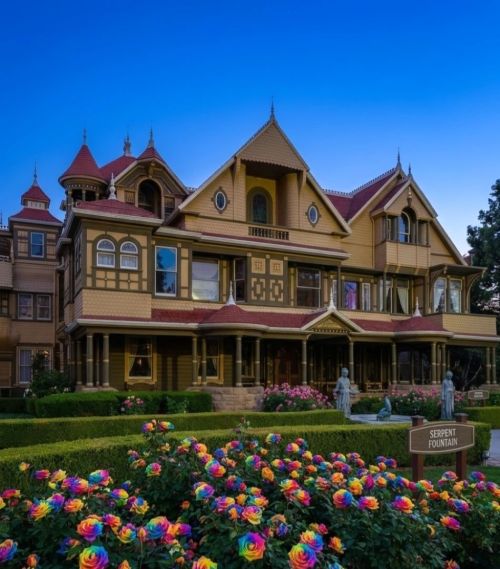
A visit to the Winchester Mystery House is more than a tour—it is an encounter with legend. It is a place where imagination thrives, where history whispers through every corridor, and where the line between fact and folklore blurs in the most enchanting way. Come discover why millions of visitors from around the world consider the Winchester Mystery House a must‑see destination and one of California’s most iconic treasures.
PRIVATE EVENTS & WEDDINGS
at WINCHESTER ESTATE
Many event locations claim to be unique, but nothing compares to the Winchester Mystery House. If you’re truly seeking a distinct, one‑of‑a‑kind setting for your milestone celebration or special occasion, reserve a venue that delivers on uniqueness many times over. Whether you’re planning a wedding, birthday or anniversary celebration, corporate gathering, holiday party, or any other meaningful event, the Winchester Mystery House offers an unforgettable backdrop. Give your guests an experience they’ll be talking about for years to come.
Café 13: A Rest Stop on the Edge of the Mystery
After wandering the winding halls of the Winchester Mystery House—where staircases defy logic and whispers seem to cling to the walls—Café 13 offers a welcome return to warmth and grounding. Newly reopened and serving guests daily from 10 AM to 3 PM, this cozy hideaway invites you to pause, breathe, and gather yourself before diving back into the mansion’s secrets. Settle in with a warm meal, challenge a friend to a board game, or simply rest and recharge as sunlight filters through the windows. Café 13 is more than a café—it’s a moment of calm between chapters of the Winchester legend, a place to steady your nerves before returning to the gardens, the grandeur, and the mysteries that await.
Winchester Mercantile Gift Shop
Your journey into the Winchester Mystery House begins long before you cross the mansion’s threshold. It starts at the Mercantile gift shop—a welcoming outpost standing at the edge of a world where history and myth intertwine. Here, beneath warm lights and shelves lined with curiosities, you can secure your tour tickets and prepare for the adventure ahead. Guests often pause for a souvenir photograph, capturing the moment before they step into Sarah Winchester’s enigmatic domain. As you explore the shop, you will find an eclectic array of gifts and keepsakes: tokens of the mansion’s lore, echoes of Victorian elegance, and mementos that carry a touch of the house’s enduring mystery. The Mercantile is more than a gift shop—it is the gateway. https://winchestermysteryhouse.com/

The Withering Will: How Resignation Unravels the Self’s Competing Impulses
One cannot contemplate the human character without observing the quiet yet ceaseless struggle between its expansive and self‑effacing impulses. Within every soul there resides, on the one hand, a force that urges outward—toward mastery, assertion, and the enlargement of one’s sphere; and on the other, a gentler but no less potent inclination to withdraw, to conciliate, and to secure safety through modesty and compliance. These opposing tendencies, though often concealed beneath the courtesies of daily life, shape the very architecture of a person’s conduct. Their conflict reveals not merely a psychological tension but a deeper drama of conscience, pride, fear, and the longing for harmony in a world perpetually unsettled. In every temperament, one of these forces—whether the self‑effacing or the expansive—steps forward to command the stage, while its counterpart is pressed into the shadows, subdued yet never wholly silent. Yet when resignation takes hold, the entire complexion of this inner conflict alters. Neither the expansive impulse nor the self‑effacing tendency appears to be truly suppressed; instead, both lie strangely enfeebled, as though resignation had cast a pall over the will itself, draining each drive of its natural vigor. Provided we are familiar with their manifestations and implications, it is not difficult to observe them nor—up to a point—to bring them to awareness. In fact, if we insisted upon classifying all neuroses as either expansive or self-effacing, we would be at a loss to decide in which category to place the resigned type. We could only state that, as a rule, one of the other trends prevails, either in the sense of being closer to awareness or of being stronger. Individual differences within this whole group depend in part upon such a prevalence. Sometimes, however, there seems to be a fairly even balance. #RandolphHarris 1 of 24
Expansive trends may show in his having rather grandiose fantasies about the great things he could do in his imagination, or about his general attributes. Furthermore, he often feels consciously superior to others, and may show this in his behavior by an exaggerated dignity. In his feelings about himself, he may tend to be his proud self. The attributes, though, of which he is proud—in contrast to the expansive type—are in the service of resignation. He is proud of his detachment, his “stoicism,” his self-sufficiency, his independence, his dislike of coercion, and his being above competition. He may also be quite aware of his claims and able to assert them effectively. Their content, however, is different because they arise from the need to protect his ivory tower. He feels entitled to having others not intrude upon his privacy, to having them not expect anything of him nor bother him, to be exempt from having to make a living and from responsibilities. Lastly, expansive trends may show in some secondary developments evolving from the basic resignation, such as his cherishing prestige or being openly rebellious. However, these expansive trends no longer constitute an active force, because he has relinquished his ambition in the sense of giving up any active pursuit of ambitious goals and active strivings toward them. He is determined not to want them, and not even to try to attain them. Even if he can do some productive work, he may do it with a supreme disdain for, or in defiance of, what the world around him wants or appreciates. This is characteristic of the rebellious group. Nor does he want to do anything active or aggressive for the sake of revenge or vindictive triumph; he has abandoned the drive for actual mastery. Indeed, in a way consistent with his detachment, the idea of being a leader, of influencing or manipulating people, is rather distasteful to him.#RandolphHarris 2 of 24
On the other hand, if self-effacing tendencies are in the foreground, resigned people tend to have a low self-estimate. They may be timid and feel that they do not amount to much. They may also show certain attitudes which we would hardly recognize as self-effacing, if it were not for our knowledge of the full-fledged self-effacing solution. They are frequently keenly sensitive to the needs of other people, and may actually spend a good deal of their lives in helping others or serving a cause. They often are defenseless toward impositions and attacks, and would rather blame themselves than accuse others. They may be overanxious never to hurt others’ feelings. They also tend to be compliant. This latter tendency, however, is not determined by a need for affection, as it is in the self-effacing type, but by the need to avoid friction. And there are undercurrents of fear, indicating that they are afraid of the potential force of self-effacing trends. They may, for instance, express an alarmed conviction that if it were not for their aloofness, others would run all over them. Similarly to what we have seen in regard to expansive trends, the self-effacing ones are more attitudes than active, powerful drives. The appeal of love, which gives these drives a passionate character, is lacking because the resigned type is determined not to want or expect anything of others and not to become emotionally involved with them. We understand now the meaning of withdrawing from the inner conflict between the expansive and the self-effacing drives. When the active elements in both are eliminated, they cease to be opposing forces; hence, they no longer constitute a conflict. Comparing the three major attempts, a person hopes to reach integration by trying to exclude one of the conflicting forces; in the resigned solution, he tries to immobilize both of them. And he can do so because he has given up an active pursuit of glory. He still must be his idealized self, which means that the pride system with its shoulds keeps operating, but he has given up the active drive for its actualization—id est, to make it real in action. #RandolphHarris 3 of 24
A similar immobilizing tendency operates also with regard to his real life. He still wants to be himself but, with his checks on initiative, effort alive wishes, and strivings, he also puts a check on his natural drive toward self-realization. Both in terms of his idealized and his real self he, he lays an emphasis on being, not on attaining or growing. However, the fact that he still wants to be himself allows him to retain some spontaneity in his emotional life, and in this regard, he may be less alienated from himself than any other neurotic type. He can have strong personal feelings for religion, art, nature—id est, for something impersonal. And often, although he does not allow his feelings to involve him with other people, he can emotionally experience others and their peculiar needs. This retained capacity comes into clear relief when we compare him with the self-effacing type. The latter, likewise, does not stifle positive feelings, but, on the contrary, cultivates them. However, they become dramatized and falsified, because they are all put to the service of love—that is, surrender. He wants to lose himself with his feelings, and ultimately to find a unity in merging with others. The resigned person wants to keep his feelings strictly in the privacy of his own heart. The very idea of merging is obnoxious to him. He wants to be “himself,” although he has but a vague notion of what that means and, in fact, without realizing it, is confused about it. It is this very process of immobilization that gives reignition its negative or static character. However, here we must raise an important question. This impression of a static condition, characterized by negative qualities, is constantly reinforced by new observations. Yet, does it do justice to the whole phenomenon? After all, nobody can live by negation alone. Is there not something missing in our understanding of the meaning of resignation? Is not the resigned person out for something positive, too. Peace at any price? Certainly, but that still has a negative quality. #RandolphHarris 4 of 24
In the other two solutions, there is a motivating force in addition to the need for integration—a powerful appeal of something beneficial that gives meaning to life: the appeal of mastery in the one case, that of love in the other. Is there not perhaps an equivalent appeal of some more positive aim in the resigned solution? When questions like these arise during analytic work, it is usually helpful to listen attentively to what the patient himself has to say about it. There is usually something he has told us which we have not taken seriously enough. Let us do the same thing here, and examine more closely how our type looks at himself. We have seen that, like anybody else, he rationalizes and embellishes his needs so that they all appear as superior attitudes. However, in this regard, we have to make a distinction. Sometimes he obviously makes a virtue out of a need, such as presenting his lack of striving in terms of being above competition or accounting for his inertia by his scorn of the sweat of hard work. And as the analysis proceeds, these glorifications usually drop out without much talk about them. However, there are others which are not discarded as easily because they apparently have a real meaning for him. And these concern all that he says about independence and freedom. In fact, most of the basis characteristics which we have regarded from the viewpoint of resignation also make sense when seen from the viewpoint of freedom. Any stronger attachment would curtail his freedom. In fact, most of the basic characteristics which we have regarded from the viewpoint of resignation also make sense when seen from the viewpoint of freedom. Any stronger attachment would curtail his freedom. So would needs. He would be dependent upon such needs, and they would easily make him dependent upon others, too. If he devoted his energies to one pursuit, he would not be free to do many other things in which he might be interested. Particularly, his sensitivity to coercion appears in a new light. He wants to be free and hence will not tolerate pressure. #RandolphHarris 5 of 24
Accordingly, when in analysis, this subject comes up for discussion, the patient goes into a vigorous defense. Is it not natural for man to want freedom? Does not anybody become listless when he does things under pressure? Did not his aunt or his friend become colorless, or lifeless, because they always did what was expected of them? Does the analyst want to domesticate him, to force him into a pattern, so that he will be like one house in a row of settlement houses, each indistinguishable from the others? He hates regimentation. He never goes to the Zoo because he simply cannot stand seeing animals in a cage. He wants to do what he pleases when he pleases. We learn from them that freedom means to him doing what he likes. The analyst observes here an obvious flaw. Since the patient has done his best to freeze his wishes, he simply does not know what he wants. And as a result, he often does nothing, or nothing that amounts to anything. This, however, does not disturb him because he seems to see freedom primarily in terms of no interference by others—whether people or institutions. Whatever makes this attitude so important, he means to defend it to the last ditch. Granted that his idea of freedom seems again to be a negative one—freedom from and not freedom for—it does have an appeal for him which (to this degree) is absent in the other solutions. The self-effacing person is rather afraid of freedom, because of his needs for attachment and dependence. The expansive type, with his craving for mastery of this or that sort, tends to scorn this idea of freedom. #RandolphHarris 6 of 24
How can we account for this appeal of freedom? Which are the inner necessities from which it arises? What is its meaning? In order to arrive at some understanding, we must go back to the early history of those people who later on solve their problems by resignation. There were often cramping influences against which the child could not rebel openly, either because they were too strong or too intangible. There may have been so tight a family atmosphere, so closed an emotional corporation that it did not leave room for his individual ways and threatened to crush him. On the other hand, he may have received affection, but in a way that more repelled than warmed him. There may have been, for instance, a parent who was too egocentric to have any understanding of the child’s needs, yet made great demands for the child to understand him or give him emotional support. Or, he may have had a parent so erratic in his mood-swings that he gave effusive demonstrative affection at one time and at others could scold or beat him in a fit of temper without any reason that the child could understand. In short, there are demands for him to fit in this way or that way, and threatened to engulf him without sufficient regard for his individuality, not to speak of of encouraring his personal growth. So, the child is torn for a longer or shorter time between futile attempts to get affection and interest and resenting the bonds put around him. He solves this early conflict by withdrawing from others. By putting an emotional distance between himself and others, he sets his conflict out of operation. He no longer wants others’ affection nor does he want to fight them. Hence, he is no longer torn by contradictory feelings toward them and manages to get along with them on a fairly even keel. #RandolphHarris 7 of 24
Moreover, by withdrawing into a world of his own, he saves his individuality from being altogether cramped and engulfed. His early detachment thus not only serves his integration, but has a most significant positive meaning: the keeping intact of his inner life. The freedom from bondage gives him the possibility of inner independence. However, he must do more than put a check on his feelings for or against others. He must also retract all those wishes and needs which would require others for their fulfillment: his natural needs for understanding, for sharing experiences, for affection, sympathy, and protection. This, however, has far-reaching implications. It means that he must keep his joys, his pains, his sorrows, his fears to himself. He often makes, for instance, pathetic and desperate efforts to conquer his fears—of the dark, of dogs, et cetera—without letting anybody know about them. He trains himself (automatically) not only to show suffering but also not to feel it. He does not want sympathy or help, not only because he has reasons to suspect their genuineness but because even if they are temporarily given, they have become alarm signals for threatening bondage. Over and beyond putting a lid on these needs, he feels it is safer not to let anybody know that anything matters to him, lest his wishes either be frustrated or used as a means to make him dependent. And so, the general retraction of all wishes, so characteristic of the process of resignation begins. He still knows that he would like a garment, a kitten, or some toy, but he does not say so. However, gradually, just as with his fears, here too he comes to feel it safer not to have wishes at all. The fewer wishes he actually has, the safer he is in his retreat, the more difficult it will be for anybody to have a hold on him. #RandolphHarris 8 of 24

The resulting picture so far is not yet resignation, but it contains the germs from which it may develop. Even if the condition remained unchanged, it involves grave dangers for future growth. We cannot grow in a vacuum, without closeness to and friction with other human beings. However, the condition can hardly remain static. Unless favorable circumstances change it for the better, the process grows by its own momentum, in vicious circles—as we have seen in other neurotic developments. We have already mentioned one of these circles. To maintain detachment, it is necessary for a person to put a check on wishes and strivings. The retraction of wishes, however, is double-edged in its effect. It does make him more independent of others, but it also weakens him. It saps his vitality and maims his sense of direction. He has less to set against the wishes and expectations of others. He must be doubly vigilant against any influence or interference. To use a good expression of Harry Stack Sullivan’s, he must “elaborate his distance machinery.” Thus, resignation grants him a brittle semblance of independence, but only by narrowing the very field in which life may be lived. What he gains in distance, he forfeits in vitality; and in the end, his vigilance becomes less a safeguard than a prison of his own devising. The estrangement of this stage is identity confusion. Where such a dilemma is based on a strong previous doubt of one’s ethnic and sexual identity, or where role confusion joins a hopelessness of long standing, delinquent, and “borderline” psychotic episodes are not uncommon. Youth after youth, bewildered by the incapacity to assume a role forced on him by the inexorable standardization of American adolescence, runs away in one form or another, dropping out of school, leaving jobs, staying out all night or withdrawing into bizarre and inaccessible moods. Once “delinquent,” his greatest need and often his only salvation is the refusal on the part of older friends, advisers, and judiciary personnel to type him further by pat diagnoses and social judgments which ignore the special dynamic conditions of adolescence. It is here that the concept of identity confusion is of practical clinical value, for if they are diagnosed and treated correctly, seemingly psychotic and criminal incidents do not have the same fatal significance which they may have at other ages. #RandolphHarris 9 of 24
In general, it is the inability to settle on an occupational identity which most disturbs young people. To keep themselves together, they temporarily overidentify with the heroes of cliques and crowds to the point of an apparently complete loss of individuality. Yet, in this stage, not even “falling in love” is entirely, or even primarily, a sexual matter. To a considerable extent, adolescent love is an attempt to arrive at a definition of one’s identity by projecting one’s diffused self-image on another and by seeing it thus reflected and gradually clarified. This is why so much of young love is conversation. On the other hand, clarification can also be sought by destructive means. Young people can become remarkably clannish, intolerant, and cruel in their exclusion of others who are “different,” in skin color or cultural background, in tastes and gifts, and often in entirely petty aspects of dress and gesture arbitrarily selected as the signs of an in-grouper or out-grouper. It is important to understand in principle (which does not mean to condone in all of its manifestations) that such intolerance may be, for a while, a necessary defense against a sense of identity loss. This is unavoidable at a time of life when the body changes its proportions radically, when genital puberty floods the body and imagination with all manner of impulses, when intimacy with the other gender approaches and is, on occasion, forced on the young person, and when the immediate future confronts one with too many conflicting possibilities and choices. Adolescents not only help one another temporarily themselves, their ideals, and their enemies; they also insistently test each other’s capacity for sustaining loyalties in the midst of inevitable conflict of values. #RandolphHarris 10 of 24

The readiness for such testing helps to explain the appeal of simple and cruel totalitarian doctrines among the youth of such countries and classes as have lost or are losing their group identities—feudal, agrarian, tribal, or national. The democracies are faced with the job of winning these grim youths by convincingly demonstrating to them—by living it—that a democratic identity can be strong and yet tolerant, judicious, and still determined. However, industrial democracy poses special problems in that it insists on self-made identities ready to grasp many chances and ready to adjust to the changing necessities of booms and busts, of peace and war, of migration and determined sedentary life. Democracy, therefore, must present its adolescents with ideals which can be shared by young people of many backgrounds, and which emphasize autonomy in the form of independence and initiative in the form of constructive work. These promises, however, are not easy to fulfill in increasingly complex and centralized systems of industrial, economic, and political organization, systems which increasingly neglect the “self-made” ideology still flaunted in oratory. This is hard on many young Americans because their whole upbringing has made the development of a self-reliant personality dependent on a certain degree of choice, a sustained hope for an individual chance, and a firm commitment to the freedom of self-realization. #RandolphHarris 11 of 24
While waiting to dominate space, the Empire sees itself also compelled to reign over time. In denying every stable truth, it is compelled to go to the point of denying the very lowest form of truth—the truth of history. It has transported revolution, which is still impossible on a worldwide scale, back into a past that it is determined to deny. Even that, too, is logical. Any kind of coherence that is not purely economic between the past and the future of humanity supposes a constant which, in its turn, can lead to a belief in a human nature. The profound coherence that Mr. Marx, who was a man of culture, had perceived as existing between all civilizations, threatened to swamp his thesis and to bring to light a natural continuity, far broader in scope than economic continuity. Little by little, Russian Communism has been forced to burn its bridges, to introduce a solution of continuity into the problem of historical evolution. The negation of every genius who proves to be a heretic (and almost all of them do), the denial of the benefits of civilization, of art—to the infinite degree in which it escapes from history—and the renunciation of vital traditions, have gradually forced contemporary Marxism within narrower and narrower limits. It has not sufficed for Marxism to deny or to silence the things in the history of the world which cannot be assimilated by its doctrine, or to reject the discoveries of modern science. It has also had to rewrite history, even the most recent and the best-known, even the history of the party and of the Revolution. Year by year, sometimes month by month, Pravda corrects itself, and rewritten editions of the official history books follow one another off the presses. Mr. Lenin is censored, Mr. Marx is not published. At this point, comparison with religious obscurantism is no longer even fair. #RandolphHarris 12 of 24

The Church never went so far as to decide that the divine manifestation was embodied in two, then in four, or in three, and then again in two, persons. The acceleration of events that is part of our times also affects the fabrication of truth, which, accomplished at this speed, becomes pure fantasy. As in the fairy story, in which all the looms of an entire town wove the empty air to provide clothes for the kind, thousands of men, whose strange profession it is, rewrite a presumptuous version of history, which is destroyed the same evening while waiting for the calm voice of a child to proclaim suddenly that the king is naked. This small voice, the voice of rebellion, will then be saying, what all the world can already see, that a revolution which, in order to last, is condemned to deny its universal vocation, or to renounce itself in order to be universal, is living by false principles. Meanwhile, these principles continue to dominate the lives of millions of men. The dream of Empire, held in check by the realities of time and space, gratifies its desires on humanity. People are not only hostile to the Empire as individuals: in that case, the traditional methods of terror would suffice. They are hostile to it insofar as human nature, to date, has never been able to live by history alone and has always escaped from it by some means. The Empire supposes a negation and a certainty: the certainty of the infinite malleability of man and the negation of human nature. Propaganda techniques serve to measure the degree of this malleability and try to make reflection and conditioned reflex coincide. Propaganda makes it possible to sign a pact with those who, for years, have been designated as the mortal enemy. Even more, it allows the psychological effort thus obtained to be reversed and the people, once again, to be aligned against this same enemy. The experiment has not yet been brought to an end, but its principle is logical. If there is no human nature, then the malleability of man is, in fact, infinite. Political realism, on this level, is nothing but unbridled romanticism, a romanticism of expediency. #RandolphHarris 13 of 24
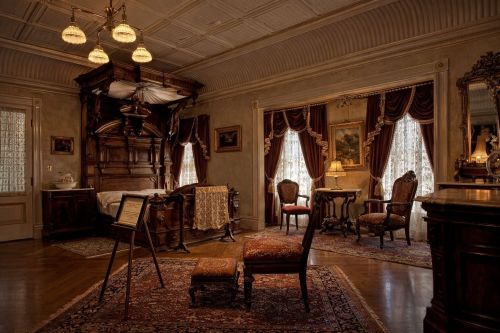
In this way, it is possible to explain why Russian Marxism rejects, in its entirety and even though it knows very well how to make use of it, the world of the irrational. The irrational can serve the Empire as well as refute it. The irrational escapes calculation, and calculation alone must reign in the Empire. Man is only an interplay of forces that can be rationally influenced. A few inconsiderate Marxists were rash enough to imagine that they could reconcile their doctrine with Dr. Freud’s, for example. Their eyes were opened for them quickly enough. Dr. Freud is a heretic thinker and a “petit bourgeois” because he brought to light the unconscious and bestowed on it at least as much reality as on the super or social ego. Man, on the contrary, must be explained in terms of the social and rational ego and as an object of calculation. Therefore, it has been necessary to enslave not only each individual life, but also the most irrational and the most solitary event of all, the expectancy of which accompanies man throughout his entire life. The Empire, in its convulsive effort to found a definitive kingdom, strives to integrate death. A living man can be enslaved and reduced to the historic condition of an object. However, if he dies in refusing to be enslaved, he reaffirms the existence of another kind of human nature which refuses to be classified as an object. That is why the accused is never produced and killed before the eyes of the world unless he consents to say that his death is just and unless he conforms to the Empire of objects. One must die dishonored or no longer exist—neither in life nor in death. In the latter event, the victim does not die, he disappears. If he is punished, his punishment would be a silent protest and might cause a fissure in the totality. #RandolphHarris 14 of 24
However, the culprit is not punished; he is simply replaced in the totality and thus helps to construct the machine of Empire. He is transformed into a cog in the machinery of production, so indispensable that, in the long run, he is guilty, but considered guilty because production requires him. The concentration-camp system of the Russians has, in fact, accomplished the dialectical transition from the government of people to the administration of objects, but by identifying people with objects. Even the enemy must collaborate in the common endeavor. Beyond the confines of the Empire, there is no salvation. This is, or will be, the Empire of friendship. However, this friendship is the befriending of objects, for the friend cannot be preferred to the Empire. The friendship of people—and there is no other definition of it—is specific solidarity, to the point of death, against everything that is not part of the kingdom of friendship. The friendship that is not part of the kingdom of friendship. The friendship of objects is friendship in general, friendship with everything, which supposes—when it is a question of self-preservation—mutual denunciation. He who loves his friend loves him in the present, and the revolution wants to love only a man who has not yet appeared. To love is, in a certain way, to kill the perfect man who is going to be born of the revolution. In order that one day he may live, he should from now on be preferred to anyone else. In the kingdom of humanity, men are bound by ties of affection; in the Empire of objects, men are untied by mutual accusations. The city that planned to be the city of fraternity becomes an ant-heap of solitary men. #RandolphHarris 15 of 24
On another plane, only a brute in a state of irrational fury can imagine that men should be sadistically tortured in order to obtain their consent. Such an act only accomplishes the subjugation of one man by another, in an outrageous relationship between persons. The representative of rational totality is content, on the contrary, to allow the object to subdue the person in the soul of man. The highest mind is first of all reduced to the level of lowest by the police technique of joint accusation. Then five, ten, twenty nights of insomnia will culminate an illusory conviction and will bring yet another dead soul into the world. From this point of view, the only psychological revolution known to our times since Dr. Freud’s has been brought about by the NKVD (The NKVD served as the Soviet Union’s People’s Commissariat for Internal Affairs, a formidable organ of state security that operated from 1934 to 1946. It gathered within its grasp the functions of secret police, intelligence bureau, border guard, prison authority, and overseer of the vast Gulag system.) and the political police in general. Guided by a determinist hypothesis that calculates the weak points and the degree of elasticity of the soul, these new techniques have once again thrust aside one of man’s limits and have attempted to demonstrate that no individual psychology is original and that the common measure of all human character is matter. They have literally created the physics of the soul. #RandolphHarris 16 of 24
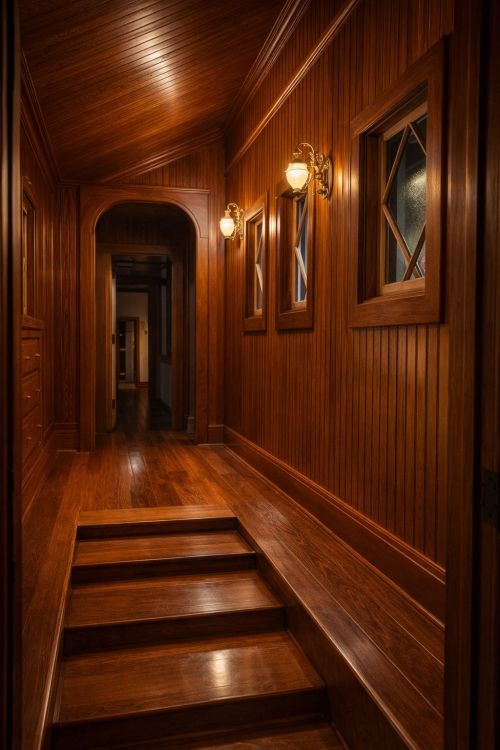
Legitimation as a process is best described as a “second-order” objectivation of meaning. Legitimation produces new meanings that serve to integrate the meanings already attached to disparate institutional processes. The function of legitimation is to make objectively available and subjectively plausible the “first-order” objectivations that have been institutionalized. While we define legitimation by this function, regardless of the specific motives inspiring any particular legitimating process, it should be added that “integration,” in one form or another, is also the typical purpose motivating the legitimators. Integration, and, correspondingly, the question of subjective plausibility, refer to two levels. First, the totality of the institutional order should make sense, concurrently, to the participants in different institutional processes. Here, the question of plausibility refers to the subjective recognition of an overall sense “behind” the situationally predominant but only partial institutionalized motives of one’s own as well as of one’s fellowmen—as in the relation of the chief and the priest, or the father and the military commander, or even, in the case of one and the same individual, of the father, who is also the military commander of his son, to himself. This, then, is a “horizontal” level of integration and plausibility, relating to the total institutional order to several individuals participating in it in several roles, or to several partial institutional processes in which a single individual may participate at any given time. #RandolphHarris 17 of 24

Second, the totality of the individual’s life, the successive passing through various orders of the institutional order, must be made subjectively meaningful. In other words, the individual biography, in its several, successive, institutionally predefined phases, must be endowed with a meaning that makes the whole subjectively plausible. A “vertical” level within the life span of single individuals must, therefore, be added to the “horizontal” level of integration and subjective plausibility of the institutional order. As we have argued before, legitimation is not necessary in the first phase of institutionalization, when the institution is simply a fact that requires no further support either intersubjectively or biographically; it is self-evident to all concerned. The problem of legitimation inevitably arises when the objectivation of the (now historic) institutional order are to be transmitted to a new generation. At that point, as we have seen, the self-evident character of the institutions can no longer be maintained by means of the individual’s own recollection and habitulization. The unity of history and biography is broken. In order to restore it, and thus to make intelligible both aspects of it, there must be “explanations” and justifications of the salient elements of the institutional tradition. Legitimation is this process of “explaining” and justifying. Legitimation “explains” the institutional order by ascribing cognitive validity to its objectivated meanings. Legitimation justifies the institutional order by giving a normative dignity to its practical imperatives. It is important to understand that legitimation has a cognitive as well as a normative element. #RandolphHarris 18 of 24
In other words, legitimation is not just a matter of “values.” It always implies “knowledge” as well. For example, a kinship structure is not legitimated merely by ethics of its particular incest taboos. There must first be “knowledge” of those roles that define both “right” and “wrong” actions within the structure. The individual, say, may not marry within his clan. However, he must first “know” himself as a member of his clan. This “knowledge” comes to him through a tradition that “explains” what clans are in general and what his clan is in particular. Such “explanations” (which typically constitute a “history” and a “sociology” of the collectivity in question, and which in the case of incest taboos probably contain an “anthropology” as well) are as much legitimating instruments as ethical elements of the tradition. Legitimation not only tells the individual why he should perform one action and not another; it also tells him why things are what they are. In other words, “knowledge” precedes “values” in the legitimation of institutions. If they cannot bring it within their limited imagination, these touch-minded people cannot see that a state of consciousness can be real. What clergymen preached to them, scientists taught them to doubt. They proclaim the relativity of all intellectual standpoints, all spiritual doctrines, but fail to see that their own standpoint and doctrine are also stamped with such relativity. Scientific truth acquired from without is utterly different from Spiritual truth revealed from within. They derive their own minds and all other minds, along with their bodies, from the primeval mud. Thus, consciousness, the pitifully slender and fragmentary echo of an echo which is all we ordinarily possess, is degraded and falsified, so that its ultimately divine origin is utterly lost. #RandolphHarris 19 of 24
The world‑renowned Sacramento Fire Department was roused just after dawn, the sky still bruised with smoke from the explosion that had torn through a quiet neighborhood. Captain Markus Engelhardt arrived first, stepping from the engine with the calm authority that had made him a legend in the department. Behind him followed firefighters Klaus Ritter and Johann Weber, their boots striking the pavement with grim purpose as they surveyed what had once been a family home. Now it lay in splintered ruin, the air thick with the acrid scent of burned chemicals and shattered lives. Paramedics Lena Hoffmann and Dieter Kranz moved swiftly among the debris, their expressions set in the practiced composure of those who have seen too much and still must keep moving. Two victims had already been pronounced dead, their bodies discovered near what investigators believed had been an improvised fireworks setup. The blast had been so violent that neighbors several houses away reported feeling the shockwave rattle their windows. Captain Engelhardt knelt beside a scorched fragment of metal tubing, lifting it with gloved hands. “Homemade,” he murmured, his voice low but edged with frustration. “Fourth of July is coming, and people think they can build their own celebrations.” Klaus Ritter shook his head. “Fireworks are unpredictable even when they’re legal and properly made. This…” He gestured to the wreckage. “This was a tragedy waiting to happen.” Johann Weber moved toward a collapsed wall, checking for hotspots with his thermal camera. “Captain Engelhardt, we’ve still got heat signatures under the north corner. Could flare up again.” “Handle it,” Captain Engelhardt replied, rising to his feet. “We can’t let this scene claim another life.” #RandolphHarris 20 of 24
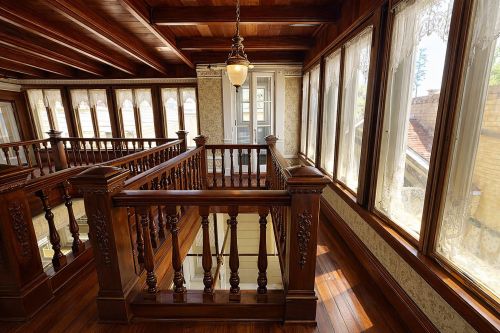
As the firefighters worked, paramedic Lena Hoffmann approached a cluster of shaken neighbors who had gathered behind the police tape. Her voice was gentle but firm. “Please listen carefully. With the Fourth of July approaching, we need everyone to understand how dangerous fireworks can be. Even small ones can cause severe burns, house fires, or worse. What happened here wasn’t an accident—it was preventable.” Dieter Kranz joined her, adding, “Every year we see injuries, amputations, and fatalities. We’re begging you—leave fireworks to the professionals. No celebration is worth this kind of loss.” Captain Engelhardt overheard them and stepped forward, his presence commanding immediate attention. “This department has responded to countless firework‑related incidents,” he said, his voice carrying across the stunned crowd. “But this… this is one of the worst. Two people are gone because they believed they could control something inherently volatile. I need every one of you to take this to heart. Celebrate safely. Celebrate responsibly. And if you see someone experimenting with homemade fireworks, call it in before we’re standing in front of another pile of rubble.” The neighbors nodded, some wiping tears, others holding their children close. The weight of the morning hung heavily over them all. As the last embers were extinguished and the scene secured, Captain Engelhardt looked back at the ruined home. “Fourth of July should be a time of joy,” he said quietly to Ritter and Weber. “But if people don’t start listening, we’ll spend it mourning instead of celebrating.” The firefighters exchanged solemn glances, knowing he was right. And as they packed their gear and prepared to leave, the message lingered in the smoky air: Fireworks are not toys. They are warnings waiting to be heeded. #RandolphHarris 21 of 24
When it comes to firefighting, every incident carries the potential for injury—no matter how small the fire appears or how routine the call may seem. If you see a fire engine stopped in the street without its lights on, use extreme caution. Crews may be working nearby, and passing the apparatus can put them in danger. It is often safer to turn around and take another route; if you strike a firefighter or civilian and cause a fatality, you could face charges such as manslaughter. Firefighters frequently move around their vehicle on foot, loading equipment or preparing to leave the scene. Attempting to pass the apparatus can result in a collision with someone you cannot see. Pay close attention to their hand signals as well—emergency vehicles sometimes move slowly or reposition, and impatient drivers trying to slip around them create hazardous situations. If you are already in an intersection when you notice an emergency vehicle approaching, continue through it, then pull to the right and stop as soon as it is safe. Always obey directions from law enforcement officers or firefighters, even if those instructions conflict with posted signs or traffic laws. When sirens or flashing lights are activated, it is illegal to follow within 300 feet of a fire engine, ambulance, or police vehicle. Driving to the scene of a fire, collision, or disaster can also result in arrest, as doing so interferes with firefighters, paramedics, and other emergency personnel. Professional courage is not limited to physical toughness. It includes listening to others, advocating for them in difficult situations, understanding personal limits, and having the integrity to tell a superior when they are wrong. The deeper truth is that public safety depends not only on the bravery of first responders but on the discipline and judgment of the community around them. Every driver’s decision—whether cautious or careless—can either protect or endanger the people risking their lives to protect everyone else. #RandolphHarris 22 of 24
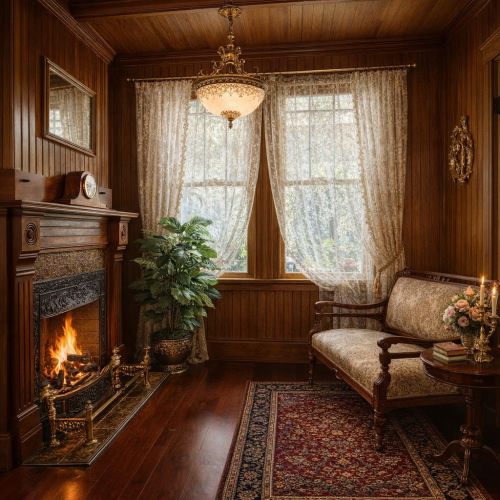
Efforts to preserve farmland and maintain buildable land for future generations often lead to discussions about population growth and long‑term planning. Some people argue that immigration levels should be managed carefully to ensure that infrastructure, housing, and land use remain sustainable. Others suggest that, when immigration does occur, programs that encourage broad representation can help communities reflect the diversity of the wider world. When Americans purchase goods made in the United States, it strengthens local businesses and signals to investors that these products are in demand. Strong sales give investors confidence to reinvest in domestic companies, helping keep jobs, production, and wages within the country. As businesses grow, they contribute more to the tax base, which can reduce the burden on taxpayers over time. Supporting American businesses also keeps more money circulating within the national economy. The government increases the national debt when it spends more than it collects in tax revenue or borrows from private or foreign lenders. When people shop locally, more tax revenue stays in the community and supports public services. This helps keep jobs in the United States and increases the tax contributions that fund government operations. Purchasing foreign-made goods, by contrast, often sends money overseas and may benefit companies that operate under lighter tax or environmental regulations. Buying American-made products can also reduce environmental impact because they travel shorter distances and are produced under stricter standards for air, land, and water protection. In this way, consumer choices influence not only the economy but also environmental stewardship and long-term national sustainability. #RandolphHarris 23 of 24
Under President Trump’s administration, he has made America a priority. President Trump has hermetically sealed the southern border, illegal crossings have been terminated, and are 90 percent lower than under the previous administration. Since President Trump’s crack down on crime, violent crimes in Washington D.C. have dropped by approximately 80 percent. He has stopped thousands of pounds of drugs from entering America and killing citizens. And since President Trump took office, investments in America have increased by trillions of dollars in U.S.A. manufacturing, production, and innovation. As you can see, President Donald Trump and his pledge to “Make America Great Again” is exactly what America needs to save the country and the American people. And yes, diversity is important, so you can see why it is also important to preserve blonde hair and blue eyes, as the people with these characteristics are becoming a minority in America. As a reminder, parents, please teach your children to love America and be patriotic citizens, and to buy goods and services made in America. It is also important to respect law and order and treat your elders with respect. It is inborn in the human mind to wish to know. If this begins with the endless surface questions of a child’s curiosity, if it continues into deeper questions of a scientist’s probing investigation, it cannot and does not stop there. For the higher part of the mind will eventually come into unfoldment, that union of abstract reflective thought with mystical intuition, which is true intelligence, which needs and sees a view of the whole of things. And so, the knowing faculty enters the realm of philosophy. A lot of children are having problems in school and cannot even write a paragraph because they are not reading their books. When you actually read books, you get an example of how to write and will become a better student. Therefore, remember to take your education seriously so that you will be successful in life and make your family proud. Also, to make sure they have all the resources required, please donate to the Sacramento Fire Department to help improve our national security. “Oh, thus be it ever, when freemen shall stand between their loved home and the war’s desolation! Blest with victory and peace, may the heav’n-rescued land Praise the Power that hath made and preserved us a nation! Then conquer we must, when our cause is just, and this be our motto: ‘In God is our trust.’ And the star-spangled banner in triumph shall wave O’er the land of the free and the home of the brave.” Thank you for your attention to this matter. President DONALD J. TRUMP #RandolphHarris 24 of 24
“I often find my thoughts returning, with a tenderness almost too delicate to name, to those earliest days in which my great house first began to rise beneath my direction. What commenced as a humble dwelling seemed, under Providence and perseverance, to unfold like some living organism, eager to assume new form. Each chamber added, each staircase ascending toward an unseen destination, stirred within me a quiet exhilaration, as though I were composing not a structure of timber and glass, but a grand and solemn hymn.
“My household staff, dear souls, were ever the companions of my labor. I regarded them not as mere attendants, but as trusted participants in a noble enterprise. Their diligence, their loyalty, and the gentle civility with which they bore the burdens of each day endeared them to me beyond measure. I made it my habit to inquire after their families, their comforts, and their concerns, for I believed that a house built without kindness is but an empty shell, however fine its ornamentation.
“The architecture itself became my constant delight. I took pleasure in the play of sunlight through stained glass, scattering its jeweled hues upon the floors like blessings from above. The hush of footsteps along polished corridors, the quiet surprise of a door opening into a room unanticipated, the graceful curve of a banister or the dignified rise of a tower — all these awakened in me a sense of wonder. To others, the house may have appeared eccentric; to me, it was a poem wrought in wood and stone, each addition a verse, each embellishment a flourish of the spirit.
“Yet it was in my gardens that my heart found its truest solace. I recall the mornings when the roses, heavy with dew, bowed their heads as though in gentle greeting. The lilies, the jasmine, the tender blossoms of the orchard trees — all seemed to whisper their quiet confidences to me as I passed. The orchards themselves, abundant with fruit, filled me with a sense of peace and providence. The rustling of leaves in the breeze, the soft murmur of branches swaying overhead, felt to me like the very breath of the earth.

“Now, in the stillness of reflection, I behold the mansion, the gardens, the orchards, and the faithful hands that shaped them, and I perceive not a labyrinth of curiosities but a tapestry of joy. Creation steadied my spirit; beauty softened my sorrows; and the life we fashioned together — room by room, bloom by bloom — remains the most cherished testament of my days. It is there, in those quiet labors and gentle wonders, that I found my truest peace.” -Sarah L. Winchester
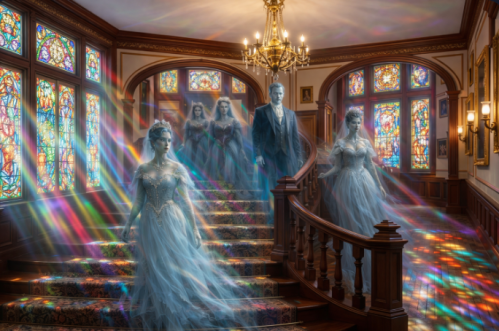
The spirits of the Winchester remain active, waiting for the completion of the mansion. For more than a century, they have wandered its unfinished corridors, lingering in stairways that lead nowhere and rooms sealed off from daylight. Some say they are bound not by malice, but by expectation — trapped in the same endless construction Mrs. Sarah Winchester once believed would keep them at peace. The house listens, breathes, and remembers. And until the final nail is driven, the final room raised, the spirits wait for the day the mansion is whole enough to release them… or claim whoever dares to finish what Mrs. Sarah began.
A visit to the Winchester Mystery House is more than a tour—it is an encounter with legend. It is a place where imagination thrives, where history whispers through every corridor, and where the line between fact and folklore blurs in the most enchanting way. Come discover why millions of visitors from around the world consider the Winchester Mystery House a must‑see destination and one of California’s most iconic treasures.
PRIVATE EVENTS & WEDDINGS
at WINCHESTER ESTATE
Many event locations claim to be unique, but nothing compares to the Winchester Mystery House. If you’re truly seeking a distinct, one‑of‑a‑kind setting for your milestone celebration or special occasion, reserve a venue that delivers on uniqueness many times over. Whether you’re planning a wedding, birthday or anniversary celebration, corporate gathering, holiday party, or any other meaningful event, the Winchester Mystery House offers an unforgettable backdrop. Give your guests an experience they’ll be talking about for years to come.
Café 13: A Rest Stop on the Edge of the Mystery
After wandering the winding halls of the Winchester Mystery House—where staircases defy logic and whispers seem to cling to the walls—Café 13 offers a welcome return to warmth and grounding. Newly reopened and serving guests daily from 10 AM to 3 PM, this cozy hideaway invites you to pause, breathe, and gather yourself before diving back into the mansion’s secrets. Here, you can enjoy breakfast, lunch, snacks, and refreshing drinks in a calm indoor space that feels worlds away from the mansion’s twisting corridors. Settle in with a warm meal, challenge a friend to a board game, or simply rest and recharge as sunlight filters through the windows. Café 13 is more than a café—it’s a moment of calm between chapters of the Winchester legend, a place to steady your nerves before returning to the gardens, the grandeur, and the mysteries that await.
Winchester Mercantile Gift Shop
Your journey into the Winchester Mystery House begins long before you cross the mansion’s threshold. It starts at the Mercantile gift shop—a welcoming outpost standing at the edge of a world where history and myth intertwine. Here, beneath warm lights and shelves lined with curiosities, you can secure your tour tickets and prepare for the adventure ahead. Guests often pause for a souvenir photograph, capturing the moment before they step into Sarah Winchester’s enigmatic domain. As you explore the shop, you will find an eclectic array of gifts and keepsakes: tokens of the mansion’s lore, echoes of Victorian elegance, and mementos that carry a touch of the house’s enduring mystery. The Mercantile is more than a gift shop—it is the gateway. https://winchestermysteryhouse.com/
In honor of America’s upcoming 250th birthday, join Winchester House Historian Mrs. Janan Boehme for a presentation exploring the events, inventions, and social shifts that transformed America during Mrs. Sarah Winchester’s lifetime – 1839 through 1922.
June 27th, 2026 at 12PM and 3PM. $5 entry. Link in bio. https://winchestermysteryhouse.com/

Aaliyah

Aaliyah Dana Haughton grew up with a quiet confidence that set her apart. From an early age, she carried herself with a calm poise that made people lean in, sensing something special. Her early performances — whether on small stages or in front of industry veterans — revealed a young artist who understood music deeply, not just as sound but as emotion. Those first steps into the spotlight were less about fame and more about learning how to express herself with honesty and grace.
As she entered her teens, Aaliyah’s voice began to mature into the smooth, feather‑light tone that would become her signature. Her early recordings showcased a young woman absorbing everything around her: vocal technique, studio discipline, and the art of subtlety. She wasn’t rushing toward stardom; she was studying it, shaping herself with intention. Every song, every rehearsal, every performance was part of her training — a preparation for the artist she was destined to become.
Her transition into film revealed another layer of her talent. Acting came naturally to her, not because she sought attention, but because she understood storytelling. On set, she was known for her professionalism, her focus, and her ability to transform quietly into a character. These early roles weren’t the peak of her abilities; they were the beginning of a new creative language she was learning to speak. She approached film the same way she approached music — with discipline, humility, and a desire to grow.

By her early twenties, Aaliyah had developed a rare artistic maturity. She had learned how to command a room without raising her voice, how to blend strength with softness, and how to innovate without losing her identity. Her music began to reflect a deeper confidence — a woman stepping into her own vision. The world was starting to see not just a talented young performer, but a fully realized artist with a clear sense of direction.
What made this period of her life so powerful was the sense of momentum surrounding her. She was expanding creatively, exploring new sounds, new roles, and new possibilities. Her collaborators spoke of her as someone who was just beginning to tap into her potential. Everything she had done before — the albums, the performances, the films — felt like chapters leading to a much larger story she was preparing to write.

Aaliyah’s legacy endures because she embodied the feeling of becoming. She represented the beauty of an artist on the verge — someone whose past achievements were impressive, but whose future promised something extraordinary. Her journey reminds us that greatness is often found not in the final act, but in the rising motion toward it. She left the world with the sense that she was ascending, evolving, and ready to step into the fullest version of herself.

If you want more Aaliyah music, please contact President Trump. He has a way of making the impossible possible. https://www.whitehouse.gov/contact/

