

It begins with a figure who, at first sight, unsettles every expectation— not because he appears dangerous, but because he does not. This young man, twenty-one years of age, does not look at all like a criminal type or a shifty delinquent. In fact, he stands out in remarkable contrast to the kind of patient suggested by such a term as constitutional inferiority. He does not fit satisfactorily into the sort of picture that emerges from early descriptions of people generally inadequate and often showing physical stigmata of “degeneracy” or ordinary defectiveness. Tom looks and is in robust physical health. His manner and appearance are pleasing. In his face, a prospective employer would be likely to see strong indications of character as well as high incentive and ability. He is well informed, alert, and entirely at ease, exhibiting a confidence in himself that the observer is likely to consider amply justified. This does not look like the sort of man who will fail or flounder about in the tasks of life but like someone incompatible with all such thoughts. There is nothing to suggest that he is putting on a bold front or trying to adopt any attitude or manner that will be misleading. Though he knows the examiner has evidence of his almost incredible career, he gives such an impression that it seems for the moment likely he will be able to explain it all away. In his own attitude, he has evidently brushed aside so satisfactorily such matters as those to be mentioned that others, also, caught up in the magic of his equanimity, almost share his invulnerable disregard. #RandolphHarris 1 of 25

Tom has so plainly escaped the ordinary and, one would think, the inevitable consequences of his experience, that, in a sort of contagion, his interviewer is also affected. The effect is to make it seem more plausible to accept the whole detailed reality of a life as dream or illusion than believe that this man could so regard it were it otherwise. With indisputable evidence that a human being has been run over and dismembered by a series of freight trains and the bodily remnants subsequently put through a sausage grinder, any investigator will have definite and vivid preconceptions of what he will behold. The evidence itself bleaches, suddenly and automatically, if one is confronted by the intact victim, whole smiling, immaculate, unscarred, without a scratch. What happened to the anatomical unit in this allusion scarcely seems more drastic than what, as a social unit, the patient before me had experienced. This poised young man’s immediate problem was serious but not monumental. If some psychiatric disorder could be discovered in him, his family and legal authorities were hopeful that he might escape a jail sentence for stealing. Despite many years of disappointment, the family still sought some remedy, some treatment or handling, that might bring about favorable changes in the patient’s behavior. Those concerned with the legal aspects of the immediate problem had dealt with this man often in the past, and saw in his conduct indications of something more than, and something different from, an ordinary or sane antisocial scheme of existence. His high intelligence made it difficult for them to account for what he did on that basis. #RandolphHarris 2 of 25

Evidence of his maladjustment became distinct in childhood. He appeared to be a reliable and manly fellow, but could never be counted upon to keep at any task or to give a straight account of any situation. He was frequently truant from school. No advice or persuasion influenced him in his acts, despite his excellent response in all discussions. Though he was generously provided for, he stole some of his father’s chickens from time to time, selling them at stores downtown. Pieces of table silver would be missed. These were sometimes recovered from those he had sold them for a pittance or swapped them for odds and ends which seemed to hold no particular interest or value for him. He resented and seemed eager to avoid punishment, but no modification in his behavior resulted from it. He did not seem wild or particularly impulsive, a victim of high temper or uncontrollable drives. There was nothing to indicate he was subject to unusually strong temptations, lured by definite plans for high adventure and exciting revolt. Often when truant from high school classes, Tom wandered more or less aimlessly, sometimes shooting at African American neighbors’ chickens, setting fire to a rural privy around the outskirts of town, or perhaps, loitering about a cigar store or a pool room, reading the comics, throwing rocks at squirrels in a park, perpetrating small thefts or swindles. He often charged things in stores to his father, stole cigarettes, candy, cigars, et cetera, which he sometimes gave away freely to slight acquaintances or other idlers he encountered. Though many wasteful, inopportune, and punishable deeds were correctly attributed to him, these apparently were only a small fraction of his actual achievement along this line. #RandolphHarris 3 of 25
He lied so plausibly and with such utter equanimity, devised such ingenious alibis, or simply denied all responsibility with such convincing appearances of candor that for many years his real career was poorly estimated. Among typical exploits with which he is credited stand these: prankish defecation into the stringed intricacies of the school piano; the removal of his uncle’s automobile fuel injectors for which he sold for $17.95; the selling of his father’s overcoat to a passing buyer of scrap materials. Though he often fell in with groups or small gangs, he never, for long, identified himself with others in a common cause. In the more outlandish and serious outcroppings of group mischief, he sometimes played a prominent role. With several others, he broke into a summer cottage on a nearby lake, stole a few articles, overturned all the furniture, threw rugs, dishes, et cetera, out of the window. He and a few more teenage boys on another expedition smashed headlights and windshields on several automobiles, punctured a number of tires, and rolled one car down a slope, leaving it slightly battered and bogged in a ditch. At fourteen or fifteen, having learned to drive, Tom began to steal automobiles with some regularity. Often, his intention seemed less that of theft than of heedless misappropriation. A neighbor or friend of the family, going to the garage or to where the car was parked outside an office building, would find it missing. Sometimes, the patient would leave the stolen vehicle within a few blocks or miles of the owner, sometimes out on the road, where the electrical battery had given out. After he had tried to sell a stolen car, his father consulted advisers and, on the theory that he might have some specific craving for automobiles, bought one for him as a therapeutic measure. On one occasion, while out driving, he deliberately parked his own car and, leaving it, stole an inferior model which he left slightly damaged on the outskirts of a village some miles away. #RandolphHarris 4 of 25

Meanwhile, Tom continued to use his father’s phone to make small purchases through his mobile payment applications, and to steal bitcoins. He also stole pocketknives, e-reader tablets, wheels, et cetera, at school. Occasionally, on the pretext of ownership, he would sell a dog or a calf belonging to some member of the community. His youth made long terms of imprisonment seem inappropriate, it being felt that this might confirm him in a criminal career or teach him additional and more malignant antisocial techniques. He was ineligible for Napa State Hospital. Private physicians, scout masters, and social workers were consulted. They talked and worked with him, but to no avail. Listing the deeds for which he became ever more notable does not give an adequate picture of the situation. He did not, every day or every week, bring attention to himself by major acts of mischief or destructiveness. He was usually polite, often considerate in small, appealing ways, and always seemed to have learned his lesson after detection and punishment. He was clever and learned easily. During intervals when his attendance was regular, he impressed his teachers as outstanding in ability. Some charm and apparent modesty, as well as his very convincing way of seeming sincere and to have taken resolutions that would count, kept not only the parents but all who encountered him clinging to hope. Teachers, scout masters, the school principal, et cetera, recognizing that in some very important respects, he differed from the ordinary bad or wayward youth, made special efforts to help him and to give him new opportunities to reform or readjust. #RandolphHarris 5 of 25

When he drove a stolen automobile across a state line, he came into contact with federal authorities. In view of his youth and the wonderful impression he made, he was put on probation. Soon afterward, he took another automobile and again left it in the adjoining state. It was a very obvious situation. The consequences could not have been entirely overlooked by a person of his excellent shrewdness. He was far too perceptive, far too practiced in reading the undercurrents of a situation, to pretend ignorance of what his choices would inevitably set in motion. He admitted that the considerable risk of getting caught had occurred to him, but felt he had a chance to avoid detection and would take it. No unusual and powerful motive or any special aim could be brought out as an explanation. To was sent to a federal institution in a distant state, where a well-organized program of rehabilitation and guidance was available. He soon impressed authorities at this place with his attitude and in the way he discussed his past mistakes and plans for a different future. He seemed to merit parole status precociously, and this was awarded him. It was not long before he began stealing again and thereby lost his freedom. The impression he made during confinement was so promising that he was pardoned before the expiration of the regular term, and he came home confident, buoyant, apparently matured, and thoroughly rehabilitated. Considerable work had been done with him at the institution, and he seemed to respond well to psychiatric measures. He found employment in a drydock at a nearby port and talked modestly but convincingly of the course he would now follow, expressing aims and plans few could greatly improve. #RandolphHarris 6 of 25

His employers found him at first energetic, bright, and apparently enthusiastic about the work. Soon, evidence of inexplicable irresponsibility emerged and accumulated. Sometimes he missed several days and brought simple but convincing excuses of illness. As occasions multiplied, explanations so detailed and elaborate were made that it seemed only facts could have produced them. Later, he sometimes left the job, stayed away for hours, and gave no account of his behavior except to say that he did not feel like working at the time. There seemed to be no cause for dissatisfaction, no discernible change of attitude toward the work. When he chose to apply himself, he did better than most. It was plain to the employers that this promising young man was not merely lazy or, in an ordinary way, fretfully restless. The theft of an automobile brought Tom to jail again. He expressed remorse over his mistake, talked so well, and seemed so genuinely and appropriately motivated and determined that his father, by making heavy financial settlements, secured his release. After a number of relatively petty but annoying activities, another theft made it necessary for his family to intervene. Reliable information indicates that he has been arrested and imprisoned approximately fifty or sixty times. If his family had not made good his small thefts, damages, et cetera, and paid fines for him, it is estimated that he would have been put in jails or police barracks for short or long periods of detention on approximately 150 other occasions. #RandolphHarris 7 of 25

Sometimes he was arrested for fomenting brawls in low resorts, provoking fights, or for such high-handed and disturbing behavior as to constitute a public nuisance. Though not a very regular drinker or one who characteristically drank to sodden confusion or stupefaction, he exhibited unsociable and unprepossessing manners and conduct after taking even a few beers or highballs. In one juke-joint imbroglio, he is credited with having struck a fellow reveler on the head with a piece of iron. No serious injuries resulted, though great uproar and spectacular commotion prevailed. Under similar circumstances, he was once in, or on the fringes of, an altercation in which gunplay occurred and another man received a minor flesh wound. Meanwhile, he continued to use his father’s phone to make mobile payments through various applications, often insisted on sleeping through breakfast, obtained loans through ingenious misrepresentations, and ran up debts which he simply ignored. Tom’s mother had over years suffered special anxiety and distress through his unannounced absences. After kissing her good-bye, saying he was going downtown for a Coca-Cola or to a movie, he might not appear for several days or even for a couple of weeks. Instead of his returning, a long-distance telephone call might, in the middle of the night, arouse the father, who would be entreated to come at once to nearby or distant places where the son had encountered unpleasant complications or, perhaps, restraint by the police. He expressed particularly heavy penitence for all the worry and sleepless nights he had caused his mother, admitted that he loved her dearly, and that nothing about his life so displeased him as having given her even a moment’s distress. He spoke as if with feeling about the patience, generosity, and understanding of his father and seemed to believe the filial bond was unusually fine and satisfactory. #RandolphHarris 8 of 25

Recently, an elderly friend of the family, in town on business, learned something of the situation. This man, whose experience in dealing with other people and their problems was considerable (and very successful), undertook the task of helping the patient. Though he had heard a good deal about past exploits, he could not but feel hopeful after his first talk. A little later, he took the patient with him on an automobile ride, feeling that in this way he could bring the problem to full discussion by a more natural, informal approach. The conversation, once begun, developed amazingly. The younger man not only promised to behave from now on in an exemplary fashion, but analyzed and discussed his past in such a way that the older found there was little that could be added. Despite his interest and his experience in such matters, he had seldom if ever encountered a more plausible interpretation of human mistakes and social confusion, of how distortion of aims and maladjustment develop out of the complicated influences and situations of modern living. Even more than the pertinent presentation of cause and effect and the cogent steps proposed for solution, the young man’s appearance of sincerity in all these realizations impressed the older counselor. He spoke as the wisest and most contrite of men would speak and seemed to have a more detailed and deeper understanding of his entire situation than even the most sagacious observer could reach. The patient talked not only of what he would avoid, but discussed plans for work and recreation, for development and progressive maturation. Tom emphasized how his irregular hours, his unforeseen absences, et cetera, had kept his parents, much of the time, not sure whether he was dead or alive. Before the ride was over, the judicious counselor was encouraged and deeply optimistic. In addition, he was so impressed by points this young man had brought out and by his apparent earnestness and resolution that he felt himself wiser from the experience. Moved and stimulated, he admitted that he had obtained new and valuable viewpoints on life and deeper seriousness. He had been stimulated to review his own patterns of behavior and to seek a better and more progressive plan of self-expression. In this frame of mind, he bade the patient good night, letting him out of the car at the front gate of the parents’ home. #RandolphHarris 9 of 25

The patient did not even enter the house. After going in the gate, he walked through the grounds, went out by a back entrance, and was not heard from that night. He was not, in fact, heard from for a week. News then came of his being in jail again at a nearby town where he had forged, stolen trifles, run up debts, and carried out other behavior familiar to all who knew him. This young man has, apparently, never formed any substantial attachment for another person. Sexually, he has been desultorily promiscuous under a wide variety of circumstances. A year or two earlier, he married a girl who had achieved considerable local recognition as a woman of the evening and as one whose fee was moderate. He had previously shared her offerings during an evening (on a commercial basis) with friends or with brief acquaintances among whom he found himself. He soon left the bride and never showed signs of shame or chagrin about the character of the woman he had espoused or any responsibility toward her. During the 2026 War with Iran, Tom maintained over some months, an offhand relation with the wife of a man in combat overseas. When in town, he ate at her house, sometimes slept there with her, but was as heedless of her and her feelings as for his parents. She apparently suffered some anxiety when, after making plans and promises to do something special with her, he disappeared and she heard nothing from him until he called her from another city (reversing the charges) to chat casually and sometimes to speak eloquent words of endearment. Sometimes he took precautions to deceive her about his sporadic pleasures of the flesh with other women; sometimes he forgot or did not bother. #RandolphHarris 10 of 25
On returning from his trips during the war, he sometimes told interesting stories of having been for a time in the Navy, narrating with vivid and lifelike plausibility action in which he had participated and which led to the destruction of an Iranian Ghadir‑class midget submarine in the Strait of Hormuz or the pursuit of an Islamic Revolutionary Guard Corps Navy ship through the Persian Gulf. Again, he would talk at length about his experiences transporting airplanes from Joint Base Lewis–McChord (Washington) to Europe and the Middle East, or accidents leading to hospitalization and operation, and diverse adventures with nurses, other patients, interns, et cetera. Once, during a stag-party discussion of sexually transmitted infections (STIs), he even fabricated an account of having caught one or more of these unenviable maladies and enlightened his listeners about treatments he had received, drugs, dosage, and complications. None of these fraudulent stories had a real element of delusion. When really caught in the lie about any of them, and confronted with definite proof, he often laughed and passed it off as a sort of joke. After these events, and many others similar in general, but differing in detail, Tom seemed modestly pleased with himself, effortlessly confident of the future. He gave the impression of a young man fresh and unhardened, in no respect brutalized or worn by his past experiences. He seemed, also, a poised fellow, one who would make his decisions not in hot-headed haste, but calmly, whether these were prompted by immediate whim or by intentions he had much time to entertain. #RandolphHarris 11 of 25

In many ways, Tom embodied the very qualities that make youth such a regenerative force in social evolution. Youth is a vital regeneration in the process of social evolution, for youth can offer its loyalties and energies both to the conservation of that which continues to feel true and to the revolutionary correction for that which has lost its regenerative significance. We can study the identity crisis also in the lives of creative individuals who could resolve it for themselves only by offering to their contemporaries a new model of resolution, such as that expressed in works of art or in original deeds, and who, furthermore, are eager to tell us all about it in diaries, letters, and self-representations. And even as the neuroses of a given period reflect the ever-present inner chaos of man’s existence in a new way, the creative crises point to the period’s unique solutions. There often is a manifestation of the remnants of infantilism and adolescence in man: it is the pooling of the individual crises in transitory upheavals amounting to collective “hysterias.” Where there are voluble leaders, their creative crisis and the latent crises of their followers can be at least studied with the help of our assumptions—and of their writing. More elusive are spontaneous group developments not attributed to a leader. And it will, at any rate, not be helpful to call mass irrationalities by clinical names. It would be impossible to diagnose clinically how much hysteria is present in a young nun participating in an epidemic of convulsive spells or how much perverse “sadism” in a young Nazi commanded to participate in massive parades or in mass killings. So, we can point only most tentatively to certain similarities between individual crises and group behavior in order to indicate that in a given period of history, they are in an obscure contact with each other. #RandolphHarris 12 of 25
Such crises, whether lived privately or enacted collectively, force us to confront not only the instability of identity but the question of what lies beyond it. When taking a look beyond identity crisis, we have to come to an understanding. The words “beyond identity,” of course, could be understood in two ways. They could mean that there is more to man’s core than identity, that there is, in fact, in each individual an “I,” an observing center of awareness and of volition, which can transcend and must survive the psychosocial identity which is our concern. As if a pure identity had to be kept free from psychosocial encroachment, in some ways, a sometimes precocious self-transcendence seems to be felt strongly in a transient manner in youth. And yet, no man (except a man aflame and dying like Keats, who could speak of identity in words which secured him immediate fame) can transcend himself in youth. In the following, “beyond identity” means life after adolescence and the uses of identity and, indeed, the return of some forms of identity crisis in the later stages of the life cycle. The first of these is the crisis of intimacy. It is only when identity formation is well on its way that true intimacy—which is really a counterpointing as well as a fusing of identities—is possible. Sexual intimacy is only part of what I have in mind, for it is obvious that sexual intimacy often precedes the capacity to develop a true and mutual psychosocial intimacy with another person, be it in friendship, in erotic encounters, or in joint inspiration. The youth who is not sure of his identity shies away from interpersonal intimacy or throws himself into acts of intimacy which are “promiscuous” without true fusion or real self-abandon. #RandolphHarris 13 of 25

Where a youth does not accomplish such intimate relationships with others—and, I would add, with his own inner resources—in late adolescence or early adulthood, he may settle for highly stereotyped interpersonal relations and come to retain a deep sense of isolation. If the times favor an impersonal kind of interpersonal pattern, a man can go far, very far, in life and yet harbor a severe character problem, doubly painful, because he will never feel really himself, although everyone says he is “somebody.” Next to the death penalty, the gravest punishment that can be inflicted upon persons is to deprive them of intimate human company. Not to have someone to talk to, to share life with, is to be dehumanized. Enforced solitude can lead persons to madness, unless they have strong egos and can discipline themselves to retain their identity and values. People need one another simply to be human. The counterpart of intimacy is distantiation: the readiness to repudiate, isolate, and, if necessary, destroy those forces and people whose essence seems dangerous to one’s own. Thus, the lasting consequences of the need for distantiation is the readiness to fortify one’s territory of intimacy and solidarity and to view all outsiders with a frantic “overvaluation of small differences” between the familiar and the foreign. Such prejudices can be utilized and exploited in politics and in war, and secure the loyal self-sacrifice and the readiness to kill from the strongest and the best. A remnant of adolescent danger is to be found where intimate, competitive, and combative relations are experienced with and against the selfsame people. However, as the areas of adult responsibility are gradually delineated, as the competitive encounter, the erotic bond, and merciless enmity are differentiated from each other, they eventually become subject to the ethical sense which is the mark of the adult and which takes over from the ideological conviction of adolescence and the moralism of childhood. #RandolphHarris 14 of 25
Dr. Freud was once asked what he thought a normal person should be able to do well. The questioner probably expected a complicated, “deep” answer. However, Dr. Freud simply said, “Lieben und arbeiten” (“to love and to work”). It pays to ponder on this simple formula; it grows deeper as you think about it. For when Dr. Freud said “love,” he meant the generosity of intimacy as well as genital love; when he said love and work, he meant a general work productiveness which would not preoccupy the individual to the extent that he might lose his right or capacity to be a sexual and a loving being. Psychoanalysis has emphasized genitality as one of the developmental conditions for full maturity. Genitality consists in the capacity to develop orgastic potency which is more than the discharge of pleasures of the flesh products in the sense of Kinsey’s “outlets.” It combines the ripening of intimate sexual mutuality with full genital sensitivity and with a capacity for discharge of tension from the whole body. This is a rather concrete way of saying something about a process which we really do not yet quite understand. However, the experience of the climactic mutuality of orgasm clearly provides a supreme example of the mutual regulation of complicated patterns and in some way appeases the hostilities and the potential rages caused by the daily evidence of the oppositeness of male and female, of fact and fancy, of love and hate, of work and play. Such experience makes sexuality less obsessive and sadistic control of the partner superfluous. #RandolphHarris 15 of 25

Before such genital maturity is reached, much of sexual life is of the self-seeking, identity-hungry kind; each partner is really trying only to reach himself. Or it remains a kind of genital combat in which each tries to defeat the other. All this remains as part of adult sexuality, but it is gradually absorbed as the differences between the genders become a full polarization within a joint lifestyle. For the previously established vital strengths have helped to make the two genders first become similar in consciousness, language, and ethics in order to then permit them to be maturely different. Man, in addition to erotic attraction, has developed a selectivity of “love” which serves the need for a new and shared identity. If the estrangement typical for this stage is isolation, that is, the incapacity to take chances with one’s identity by sharing true intimacy, such inhibition is often reinforced by a fear of the outcome of intimacy: offspring—and care. Love as mutual devotion, however, overcomes the antagonism inherent in sexual and functional polarization, and is the vital strength of young adulthood. It is the guardian of that elusive and yet all-pervasive power of cultural and personal style which binds into a “way of life” the affiliations of competition and co-operation, production and procreation. Yet the very capacities that make love a binding force in young adulthood arise from deeper psychic currents—those wishes and purposes which, in Freud’s view, shape the inner conflicts of the mind long before they find expression in devotion or in style. #RandolphHarris 16 of 25

In Dr. Freud’s theory of repression, we use the word “purpose” to designate that which is repressed into the unconscious. This excessively vague word conceals a fundamental Freudian axiom. The psychic conflict which produces dreams and neuroses is not generated by intellectual problems but by purposes, wishes, and desires. Dr. Freud’s use of the term “unconscious idea” can be misleading here. However, as Dr. Freud says, “We remain on the surface so long as we treat only of memories and ideas. The only valuable things in psychic life are, rather, the emotions. All psychic forces are significant only through their aptitude to arouse emotions. Ideas are repressed only because they are bound up with releases of emotions, which are not to come about; it would be more correct to say that repression deals with the emotions, but these are comprehensible to us only in their tie-up with ideas.” Dr. Freud is never tired of insisting that dreams are, in essence, wish-fulfillments, expressions of repressed unconscious wishes, and neurotic symptoms likewise. Now, if we take “desire” as the most suitably abstract of this series of terms, it is a Freudian axiom that the essence of man consists, not, as Descartes maintained, in thinking, but in desiring. Plato (and, mutatis mutandis, Aristotle) identified the summum bonum for man with contemplation; since the telos or end is the basic element in definition, this amounts to saying that the essence of man is contemplation. However, ambiguously juxtaposed with this doctrine of man as contemplator is the Platonic doctrine of Eros, which, as elaborated by Plato in the Symposium and the Phaedrus, suggests that the fundamental quest of man is to find a satisfactory object for his love. A similar ambiguity between man as contemplator and man as lover is to be found in Spinoza and Hegel. #RandolphHarris 17 of 25

The turning point in the Western tradition comes in the reaction to Hegel. Feuerbach, followed by Marx, calls for the abandonment of the contemplative tradition in favor of what he calls “practical-sensuous activity”; the meaning of this concept, and its relation to Dr. Freud, would take us far afield. However, Schopenhauer, in his notion of the primacy of will—however much he may undo his own notion by his search for an escape from the primacy of the will—is a Western tradition that the goal of mankind is to become as contemplative as possible. Freudian psychology eliminates the category of pure contemplation as nonexistent. Only a wish, says Dr. Freud, can possibly set our psychic apparatus in motion. With this notion of desire as the essence of man is joined a definition of desire as energy directed toward the procurement of pleasure and avoidance of pain. Hence, Dr. Freud can say, “Our entire psychical activity is bent upon procuring pleasure and avoiding pain, is automatically regulated by the pleasure-principle.” Or, “It is simply the pleasure-principle which draws up the programme of life’s purpose.” At this level of analysis, the pleasure-principle implies no complicated hedonistic theory nor any particular theory as to the sources of pleasure. It is an assumption taken from common sense, and means much the same as Aristotle’s dictum that all men seek happiness. #RandolphHarris 18 of 25

However, man’s desire for happiness is in conflict with the whole world. Reality imposes on human beings the necessity of renunciation of pleasures; reality frustrates desire. The pleasure-principle is in conflict with the reality-principle, and this conflict is the cause of repression. Under the conditions of repression, the essence of our being lies in the unconscious, and only in the unconscious does the pleasure-principle reign supreme. Dreams and neurotic symptoms show that the frustrations of reality cannot destroy the desires which are the essence of our being: the unconscious is the unsubdued and indestructible element in the human soul. The whole world may be against it, but still, man holds fast to the deep-rooted, passionate striving for a positive fulfillment of happiness. The conscious self, on the other hand, which by refusing to admit a desire into consciousness institutes the process of repression, is, so to speak, the surface of ourselves mediating between our inner real being and external reality. The nucleus of the conscious self is that part of the mind or system in the mind which receives perceptions from the external world. This nucleus acquires a new dimension through the power of speech, which makes it accessible to the process of education and acculturation. The conscious self is the organ of adaptation to the environment and to the culture. The conscious self, therefore, is governed not by the pleasure-principle but by the principle of adjustment to reality, the reality-principle. #RandolphHarris 19 of 25

From this point of view, dreams and neurotic symptoms, which we previously analyzed as produced by the conflict between the conscious and unconscious systems, can also be analyzed as produced by the conflict between the pleasure-principle and the reality-principle. On the other hand, dreams, neurotic symptoms, and all other manifestations of the unconscious, such as fantasy, represent in some degree or other a flight or alienation from a reality which is found unbearable. On the other hand, they represent a return to the pleasure-principle; they are substitutes for pleasures denied by reality. In this compromise between the two conflicting systems, the pleasure desired is reduced or distorted or even transformed to pain. Under the conditions of repression, under the domination of the reality-principle, the pursuit of pleasure is degraded to the status of a symptom. However, to say that reality or the reality-principle causes repression defines the problem rather than solves it. Dr. Freud sometimes identifies the reality-principle with the “struggle for existence,” as if repression could be ultimately explained by some objective economic necessity to work. However, man makes his own reality and various kinds of reality (and various compulsions to work) through the medium of culture or society. It is therefore more adequate to say that society imposes repression, through even this formula in Dr. Freud’s early writings, is connected with the inadequate idea that society imposes repression, is simply legislating the demands of objective economic necessity. This naïve and rationalistic sociology stands, or rather falls, with Dr. Freud’s earlier version of psychoanalysis. #RandolphHarris 20 of 25

The later Dr. Freud, as we shall see, in his doctrine of anxiety is moving toward the position that man is the animal which represses himself and which creates culture or society in order to repress himself. Even the formula that society imposes repression poses a problem rather than solves it; but the problem it poses is large. For if society imposes repression, and repression causes the universal neurosis of mankind, it follows that there is an intrinsic connection between social organization and neurosis. Man, the social animal is by the same token the neurotic animal. Or, as Dr. Freud puts it, man’s superiority over the other animals is his capacity for neurosis, and his capacity for neurosis is merely the obverse of his capacity for cultural developments. Dr. Freud, therefore, arrives at the same conclusion as Nietzsche (“the disease called man”), but by a scientific route, by study of the neuroses. Neuroses is an essential consequence of civilization or culture. Here again, is a harsh lesson in humility, which tender-minded critics and apostles of Dr. Freud evade or suppress. We must be prepared to analyze clinically as a neurosis not only the foreign culture we dislike, but also our own. While we are trying to grow out beyond our manhood, to leave the man behind us, God becomes man and we have to recognize that God wishes us men, too, to be real men. While we are distinguishing the pious from the ungodly, the good from the wicked, the noble from the mean, God makes no distinction at all in His love for the real man. He does not permit us to classify men and the world according to our own standards and to set ourselves up as judges over them. He leads us ad absurdum by Himself becoming a real man and a companion of sinners and thereby compelling us to become the judges of God. God sides with the real man and with the real world against all their accusers. Together with men and with the world, He comes before the judges, so that the judges are now made the accused. And if God stands with the real man—flawed, striving, unclassified—then we must look for Him not in abstractions but in the lives of those who meet the world’s crises head‑on. It is in this spirit that the story of the Sacramento Fire Department unfolds. #RandolphHarris 21 of 25

Major fires had more than doubled in Sacramento over the past five years, a fact that weighed heavily on Captain Lukas Reinhardt every time he stepped into the engine bay before dawn. The city’s aging buildings—once proud structures of the post‑war boom—were now riddled with frayed wiring, overloaded extension cords, and power strips that hummed with quiet menace. As city officials repeated again and again, the causes varied in detail, but the pattern was unmistakable: electrical failures were igniting Sacramento at a rate no one could ignore. On a warm June evening, the alarm tones shattered the quiet at Station 14. “Structure fire, multiple calls, possible entrapment,” the dispatcher announced. Captain Lukas Reinhardt was already moving. “Reinhardt crew, mount up.” Firefighters Matthias Vogel, Erik Schneider, and Johann Bauer snapped into motion, pulling on gear with the practiced precision of men who had lived too long with the city’s rising flames. The world‑renowned paramedic team—Dr. Selene Ward and Ari Mendoza—fell in behind them, joined tonight by their EMT trainee, Klara Weiss, whose calm intensity had already earned respect. As Engine 14 roared through Midtown, smoke curled into the sky like a dark ribbon. The address was an old apartment block, built in the 1950s and barely updated since. Captain Lukas Reinhardt knew the type: aluminum wiring, brittle insulation, and tenants who relied on extension cords to power half their lives. When they arrived, flames were already licking out of the third‑floor windows. “Electrical origin,” Matthias Vogel muttered, spotting the telltale flicker near the breaker panel through the smoke. Captain Lukas Reinhardt nodded. “Schneider, Bauer—primary search. Vogel, with me on suppression. Paramedics, stage until we clear the first hallway.” #RandolphHarris 22 of 25

Inside, the heat was immediate and punishing. The fire had raced through the walls, feeding on decades‑old wiring like a fuse. Schneider and Bauer pushed forward, calling out through the smoke. “Sacramento Fire Department! Call out if you can hear us!” A faint cough answered. They found an elderly man collapsed near the stairwell, overcome by smoke. Bauer lifted him while Schneider cleared the path. Outside, Dr. Selene Ward and Ari Mendoza were already setting up oxygen and cardiac monitoring. “Electrical fire again,” Ari said grimly as they worked. “That’s the third this week.” Klara Weiss checked the man’s airway with steady hands. “He’s breathing shallow, but he’s fighting.” Back inside, the fire intensified. A sudden flare burst from a wall outlet, forcing Vogel and Captain Lukas Reinhardt to retreat momentarily. “Captain Reinhardt, the fire’s running the wiring channels,” Vogel warned. “It’s jumping floors.” “Then we cut it off before it reaches the attic,” Captain Lukas Reinhardt said. “Move.” They advanced again, pushing a line up the final flight of stairs. The heat was brutal, but the team held formation, each movement a testament to training, trust, and the unspoken bond forged in the city’s hardest hours. By the time the flames were finally beaten back, dawn was beginning to lighten the sky. The building was scarred but still standing. The residents—shaken, coughing, frightened—were alive. As the last embers hissed under cooling water, Captain Lukas Reinhardt surveyed the scene. Another electrical fire. Another preventable tragedy. Another night where the Sacramento Fire Department had held the line. Matthias Vogel approached, soot streaking his helmet. “Captain Reinhardt, that’s one more saved.” The Captain nodded, weary but resolute. “And we’ll keep saving them. Until the city fixes the wiring, we’re the only barrier between these buildings and disaster.” Behind him, the world‑renowned paramedics finished loading their patient for transport, their professionalism shining even in exhaustion. Sacramento was burning more than ever—but as long as Captain Lukas Reinhardt and his crew stood watch, the city would never burn alone. #RandolphHarris 23 of 25

When it comes to firefighting, every incident carries the potential for injury—no matter how small the fire appears or how routine the call may seem. If you see a fire engine stopped in the street without its lights on, use extreme caution. Crews may be working nearby, and passing the apparatus can put them in danger. It is often safer to turn around and take another route; if you strike a firefighter or civilian and cause a fatality, you could face charges such as manslaughter. Firefighters frequently move around their vehicle on foot, loading equipment or preparing to leave the scene. Attempting to pass the apparatus can result in a collision with someone you cannot see. Pay close attention to their hand signals as well—emergency vehicles sometimes move slowly or reposition, and impatient drivers trying to slip around them create hazardous situations. If you are already in an intersection when you notice an emergency vehicle approaching, continue through it, then pull to the right and stop as soon as it is safe. Always obey directions from law enforcement officers or firefighters, even if those instructions conflict with posted signs or traffic laws. When sirens or flashing lights are activated, it is illegal to follow within 300 feet of a fire engine, ambulance, or police vehicle. Driving to the scene of a fire, collision, or disaster can also result in arrest, as doing so interferes with firefighters, paramedics, and other emergency personnel. Professional courage is not limited to physical toughness. It includes listening to others, advocating for them in difficult situations, understanding personal limits, and having the integrity to tell a superior when they are wrong. The deeper truth is that public safety depends not only on the bravery of first responders but on the discipline and judgment of the community around them. Every driver’s decision—whether cautious or careless—can either protect or endanger the people risking their lives to protect everyone else. #RandolphHarris 23 of 25

To help prevent disasters, we must plan well in advance. Efforts to preserve farmland and maintain buildable land for future generations often lead to discussions about population growth and long‑term planning. Some people argue that immigration levels should be managed carefully to ensure that infrastructure, housing, and land use remain sustainable. Others suggest that, when immigration does occur, programs that encourage broad representation can help communities reflect the diversity of the wider world. When Americans purchase goods made in the United States, it strengthens local businesses and signals to investors that these products are in demand. Strong sales give investors confidence to reinvest in domestic companies, helping keep jobs, production, and wages within the country. As businesses grow, they contribute more to the tax base, which can reduce the burden on taxpayers over time. Supporting American businesses also keeps more money circulating within the national economy. The government increases the national debt when it spends more than it collects in tax revenue or borrows from private or foreign lenders. When people shop locally, more tax revenue stays in the community and supports public services. This helps keep jobs in the United States and increases the tax contributions that fund government operations. Purchasing foreign-made goods, by contrast, often sends money overseas and may benefit companies that operate under lighter tax or environmental regulations. Buying American-made products can also reduce environmental impact because they travel shorter distances and are produced under stricter standards for air, land, and water protection. In this way, consumer choices influence not only the economy but also environmental stewardship and long-term national sustainability. #RandolphHarris 24 of 25

Under President Trump’s administration, he has made America a priority. President Trump has hermetically sealed the southern border, illegal crossings have been terminated, and are 90 percent lower than under the previous administration. Since President Trump’s crack down on crime, violent crimes in Washington D.C. have dropped by approximately 80 percent. He has stopped thousands of pounds of drugs from entering America and killing citizens. And since President Trump took office, investments in America have increased by trillions of dollars in U.S.A. manufacturing, production, and innovation. As you can see, President Donald Trump and his pledge to “Make America Great Again” is exactly what America needs to save the country and the American people. And yes, diversity is important, so you can see why it is also important to preserve blonde hair and blue eyes, as the people with these characteristics are becoming a minority in America. As a reminder, parents, please teach your children to love America and be patriotic citizens, and to buy goods and services made in America. It is also important to respect law and order and treat your elders with respect. It is inborn in the human mind to wish to know. If this begins with the endless surface questions of a child’s curiosity, if it continues into deeper questions of a scientist’s probing investigation, it cannot and does not stop there. For the higher part of the mind will eventually come into unfoldment, that union of abstract reflective thought with mystical intuition, which is true intelligence, which needs and sees a view of the whole of things. And so, the knowing faculty enters the realm of philosophy. A lot of children are having problems in school and cannot even write a paragraph because they are not reading their books. When you actually read books, you get an example of how to write and will become a better student. Therefore, remember to take your education seriously so that you will be successful in life and make your family proud. Also, to make sure they have all the resources required, please donate to the Sacramento Fire Department to help improve our national security. “Oh, thus be it ever, when freemen shall stand between their loved home and the war’s desolation! Blest with victory and peace, may the heav’n-rescued land Praise the Power that hath made and preserved us a nation! Then conquer we must, when our cause is just, and this be our motto: ‘In God is our trust.’ And the star-spangled banner in triumph shall wave O’er the land of the free and the home of the brave.” Thank you for your attention to this matter. PRESIDENT DONALD J. TRUMP. #RandolphHarris 25 of 25

In honor of America’s upcoming 250th birthday, join Winchester House Historian Mrs. Janan Boehme for a presentation exploring the events, inventions, and social shifts that transformed America during Mrs. Sarah Winchester’s lifetime – 1839 through 1922. June 27th, 2026 at 12PM and 3PM. $5 entry. Link in bio. https://winchestermysteryhouse.com/


Where History, Mystery, and Imagination Intertwine
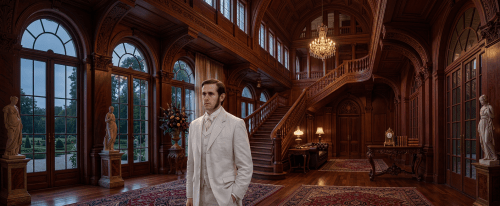
Step inside one of California’s most extraordinary landmarks and experience a world unlike any other. The Winchester Mystery House is more than a Victorian mansion—it is a living work of art, a labyrinth of architectural wonders, and one of America’s most captivating historical estates. Built over 36 years without pause, the mansion stands today as a testament to craftsmanship, curiosity, and the enduring legend of Mrs. Sarah Winchester.

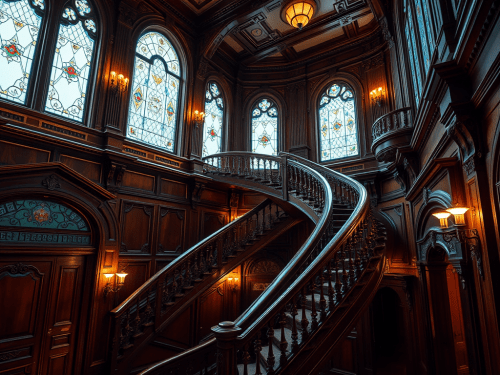
Visitors are invited to explore miles of elegant hallways, beautifully restored rooms, and the mansion’s famously perplexing features: staircases that lead nowhere, doors that open into walls, windows overlooking other rooms, and secret passages woven throughout the estate. Every corner of the house reflects Sarah Winchester’s unique vision, blending Victorian elegance with an eccentricity that continues to fascinate architects, historians, and guests from around the world.

Beyond its architectural marvels, the Winchester Mystery House offers a rare glimpse into the life of a woman who defied convention. Sarah Winchester, heiress to the Winchester Repeating Arms fortune, poured her grief, creativity, and resources into building a home unlike any other. Her story—part tragedy, part triumph, part enduring mystery—adds emotional depth to every room you enter. Visitors leave not only impressed by the mansion’s scale, but moved by the humanity behind its creation.

The estate’s lush gardens, ornate fountains, and tranquil outdoor spaces provide a peaceful contrast to the mansion’s winding interior. Guests can stroll through beautifully landscaped grounds, enjoy seasonal displays, and take in the serene beauty that surrounds the historic home. Whether you’re a lover of history, architecture, horticulture, or simply a seeker of unforgettable experiences, the Winchester Mystery House offers something for everyone.

A visit to the Winchester Mystery House is more than a tour—it is an encounter with legend. It is a place where imagination thrives, where history whispers through every corridor, and where the line between fact and folklore blurs in the most enchanting way. Come discover why millions of visitors from around the world consider the Winchester Mystery House a must‑see destination and one of California’s most iconic treasures.

PRIVATE EVENTS & WEDDINGS
at WINCHESTER ESTATE

Many event locations claim to be unique, but nothing compares to the Winchester Mystery House. If you’re truly seeking a distinct, one‑of‑a‑kind setting for your milestone celebration or special occasion, reserve a venue that delivers on uniqueness many times over. Whether you’re planning a wedding, birthday or anniversary celebration, corporate gathering, holiday party, or any other meaningful event, the Winchester Mystery House offers an unforgettable backdrop. Give your guests an experience they’ll be talking about for years to come.
Café 13: A Rest Stop on the Edge of the Mystery

After wandering the winding halls of the Winchester Mystery House—where staircases defy logic and whispers seem to cling to the walls—Café 13 offers a welcome return to warmth and grounding. Newly reopened and serving guests daily from 10 AM to 3 PM, this cozy hideaway invites you to pause, breathe, and gather yourself before diving back into the mansion’s secrets. Settle in with a warm meal, challenge a friend to a board game, or simply rest and recharge as sunlight filters through the windows. Café 13 is more than a café—it’s a moment of calm between chapters of the Winchester legend, a place to steady your nerves before returning to the gardens, the grandeur, and the mysteries that await.
Winchester Mercantile Gift Shop
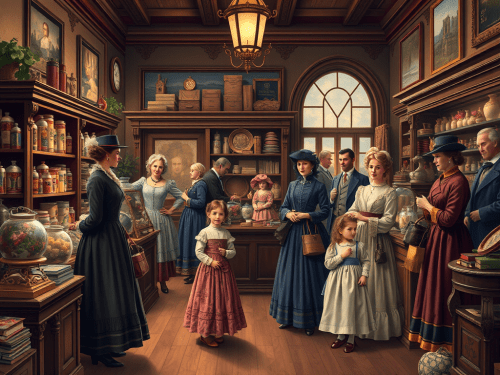
Your journey into the Winchester Mystery House begins long before you cross the mansion’s threshold. It starts at the Mercantile gift shop—a welcoming outpost standing at the edge of a world where history and myth intertwine. Here, beneath warm lights and shelves lined with curiosities, you can secure your tour tickets and prepare for the adventure ahead. Guests often pause for a souvenir photograph, capturing the moment before they step into Sarah Winchester’s enigmatic domain. As you explore the shop, you will find an eclectic array of gifts and keepsakes: tokens of the mansion’s lore, echoes of Victorian elegance, and mementos that carry a touch of the house’s enduring mystery. The Mercantile is more than a gift shop—it is the gateway. https://winchestermysteryhouse.com/




 Randolph Harris II International Institute