To the generous mind, the heaviest debt is that of gratitude when it is not in our power to repay it. Every language in the world has a way of saying “thank you.” This is because gratitude is an inherent quality that resides within each human being, and is triggered and expressed spontaneously in a variety of different contexts. Gratitude crosses all boundaries—creed, age, vocation, gender, and nation—and is emphasized by all the great religious traditions. Gratitude is essentially the recognition of the unearned increments of value in one’s experience—the acknowledgement of the positive things that come our way that we did not actively work toward or ask for. Gratitude is a feeling that spontaneously emerges from within. However, it is not simply an emotional response; it is also a choice we make. We can choose to be grateful, or we can choose to be ungrateful—to take our gifts and blessings for granted. A thankful person is unmistakable. Gratitude shapes their speech — their sentences are threaded with kindness, positivity, and a quiet strength that uplifts everyone around them. People who live in thankfulness rise effortlessly; their progress is almost impossible to hinder. There is a lightness in the way they communicate, an ease that reflects humility and inner depth. They do not posture or boast. Instead, they carry a gentle self‑deprecating charm that makes them approachable, appealing, and deeply human. People who practice gratitude are attractive and admired. There is something magnetic about them. Such people exude strength, and they empower those around them. The Lord has promised, “He who receiveth all things with thankfulness shall be made glorious.” People who have gratitude in their hearts cannot be bitter, resentful, or mean-spirited. #RandolphHarris 1 of 22

We should be thankful for the wonderful blessings that are ours and for the tremendous opportunities we have. We can be thankful to our parents, family, friends, and teachers. We should express appreciation to everyone who has assisted us in any way. We should thank our Heavenly Father for His goodness to us by acknowledging His hand in all things, thanking Him for all that He gives us, keeping His commandments, and serving others. We should especially thank Him for His beloved Son, Jesus Christ, for the Savior’s great example, for His teachings, for His outreaching hand to lift and help, and for His infinite Atonement. However, sooner or later, all of us experience times when the very fabric of our world tears at the seams, leaving us feeling alone, frustrated, and adrift. The doctrine that all men are made appears to conflict with a historical perspective on the nature and destiny of man: it appears to swallow all cultural variety, all historical change into a darkness in which all cats are gray. However, this objection neglects the richness and complexity of the Freudian theory of neurosis. In the first place, there are several distinct kinds of neurosis, each with a different set of symptoms, a different structure in the relations between the repressed, the ego, and reality. We are therefore in a position to return to the varieties and complexities of individual cultures if we entertain, as Dr. Freud does in Civilization and Its Discontents, the hypothesis that the varieties of culture can be correlated with the varieties of neurosis: “If the evolution of civilization has such a far-reaching similarity with the development of an individual, and if the same methods are employed in both, would not the diagnosis be justified that many systems of civilization—or epochs of it—possibly even the whole of humanity—have become ‘neurotic’ under the pressure of civilizing trends? To analytic dissections of these neuroses, therapeutic recommendations might follow which could claim a great practical interest.” #RandolphHarris 2 of 22
And furthermore, it is a Freudian theorem that each individual neurosis is not static but dynamic. It is a historical process with its own internal logic. Because of the basically unsatisfactory nature of the neurotic compromise, tension between the repressed and repressing factors persists and produces a constant series of new symptom-formations. And the series of symptom-formations is not a shapeless series of mere changes; it exhibits a regressive pattern, which Dr. Freud calls the slow return of the repressed. It is a law of neurotic diseases, he says, that these obsessive acts increasingly come closer to the original forbidden act itself. If we take it seriously, the doctrine of the universal neurosis of mankind therefore compels us to entertain the hypothesis that the pattern of history exhibits a dialectic not hitherto recognized by historians, the dialectic of neurosis. A reinterpretation of human history is not an appendage to psychoanalysis but an integral part of it. The empirical fact which compelled Dr. Freud to comprehend the whole of human history in the area of psychoanalysis is the appearance in dreams and in neurotic symptoms of themes—both ritualistic and mythical—in the religious history of mankind. The link between the theory of neurosis and the theory of history is the theory of religion, as is made perfectly clear in Totem and Taboo and Moses and Monotheism. And the link affects both ends linked. Dr. Freud not only maintains that human history can be understood only as a neurosis but also that the neuroses of individuals can be understood only in the context of human history as a whole. From the time when he wrote Totem and Taboo (1913), Dr. Freud says in Moses and Monotheism (1937), “I have never doubted that religious phenomena are to be understood only on the model of the neurotic symptoms of the individual.” #RandolphHarris 3 of 22

According to the analogy elaborated in Moses and Monotheism, “In the history of the species, something happened similar to the events in the life of the individual. That is to say, mankind as a whole passed through conflicts of a sexual-aggressive nature, which left permanent traces, but which were for the most part warded off and forgotten; later, after a long period of latency, they came to life again and created phenomena similar in structure and tendency to neurotic symptoms.” This analogy supplies Dr. Freud with his notion of the “archaic heritage”; mankind is a prisoner of the past in the same sense as “our hysterical patients are suffering from reminiscences” and neurotics “cannot escape from the past.” Thus, the bondage of all cultures to their cultural heritage is a neurotic constriction. And conversely, Dr. Freud came to recognize that the core of the neuroses of individual lay in the same “archaic heritage,” “memory traces of experiences of former generations,” which “can only be understood phylogenetically.” The repressed unconscious which produces neurosis is not an individual unconscious but a collective one. Dr. Freud abstains from adopting Dr. Jung’s terms but says, “The content of the unconscious is collective anyhow.” Ontogeny recapitulates phylogeny (each individual recapitulates the history of the race): in the few years of childhood, “we have to cover the enormous distance of development from primitive man of the Stone Age to civilized man of today.” From this it follows that any theory of neurosis must ultimately include a theory of history; and, conversely, any adequate theory of history must take account of neurosis. The individual’s inner conflicts and the culture’s outer pressures are never independent phenomena. They shape and mirror one another. The man I shall call George was thirty‑three years old when I first encountered him, and I admitted him to a psychiatric hospital. He reported that his trouble was “nervousness,” though he could offer no clear account of what he meant by the term. His complaint, vague yet urgent, was itself a symptom — an expression of the diffuse anxiety that arises when personal history and cultural history converge in a single, troubled life. #RandolphHarris 4 of 22
George was remarkably self-composed, showed no indication of restlessness or anxiety, and could not mention anything that he worried about. He went on to state that his alleged nervousness was caused by “shell shock” during the war. He then proceeded to amplify on this in an outlandish story describing himself as being cast twenty feet into the air by a shell, landing in his descent astride some iron pipes, and laying totally unconscious for sixty days, during all of which he hovered between life and death. A physical examination showed George without any evidence of injury of illness. In fact, he was a remarkably strong and active man, six feet in height, 170 pounds in weight. Later, in an athletic meet held on the hospital grounds, he showed himself an exceptional sprinter and broad-jumper, surpassing many able competitors ten years younger than himself in these events. Prolonged observation and psychiatric study brought out no sign or suggestion of a psychosis or a psychoneurosis. Despite his original complaint of “nervousness,” he was at all times calm and without the slightest evidence of abnormal anxiety. He ate and slept well, did not complain of any worries, was free of phobias, compulsions, conversion reactions, tics, and all other ordinary neurotic manifestations. Records of this man’s career show that he has been confined in various mental hospitals approximately half the time since he became of age. In addition to periods ranging from a few weeks to six months at federal government institutions in Texas, Tennessee, Mississippi, Georgia, and Florida, he was also frequently sent by the Government to private psychiatric hospitals and invalids’ homes. Between these experiences, he spent a good part of his time in the local county jail or in other jails at Birmingham, Montgomery, Mobile, or other towns which he visited. He was taken in sometimes for drunkenness and disorderly conduct, at other times for writing bad checks, petty theft, reckless driving of automobiles, obtaining money under false pretenses, snatching the purse from a woman of the evening, taking possession of a house whose owners were off on vacation, et cetera. Extravagant but insincere threats to harm his wife and four children made after taking a few drinks and lunacy charges also accounted for a dozen or so arrests. #RandolphHarris 5 of 22
During all the observations at various hospitals mentioned above, as well as at a state mental hospital where George also spent a short time, no technical evidence of a psychosis or a psychoneurosis is mentioned. His wife and friends have repeatedly persuaded local authorities to consider him as mentally deranged and to have him sent to hospitals rather than let him face the various charges brought against him from time to time. On other occasions, when refused admission by hospitals that had already studied him more than once and declared him sane, competent, and not in need of psychiatric treatment, friends and relatives have had him arrested, prevailed upon local doctors to sign statements that he is deranged and dangerous, and brought pressure to bear so that hospitals, with the light in which the case was presented, had no choice but to readmit him. The doctors involved in such procedures, country practitioners for the most part, never mention technical evidence that would indicate a psychosis or a psychoneurosis as they are described in the textbooks. Such statements as the following are typical: “Something is decidedly wrong mentally. I don’t think I have ever come in contact with a man as unreliable as he is. He worries everybody that has fooled with him until they hate him. The County authorities are tired of boarding him as he is not a criminal.” (Family Physician.) “Everybody who comes in contact with him agrees that he should be confined permanently…very unreliable as to his word of honor.” (County Physician.) A physician who owns a private hospital located at a nearby town said, “We do not cater to his class.” He is described as frequently drinking whiskey to excess and as sometimes taking Veronal, Luminal, Amytal, and bromides to ease himself in the aftermath of a spree. Although there is no record of alcoholic hallucinations, many bizarre and notable actions are described when the patient has had something to drink: On a cold February day, he rushed, fully clothed, down to the creek and sprang in. After thrashing about, yelling and cursing to no purpose and creating a senseless commotion, he swam back to land without difficulty. One fine spring evening, he is said to have run entirely naked through the streets of the town. He once sat up all night under the house striking matches aimlessly. #RandolphHarris 6 of 22
Generally believed reports indicate that late one night he, with several drinking companions, succeeded in releasing a half-tamed bear from the cage in which it was kept at a filling station to attract trade. A good deal of fright, some civic uproar, and hasty precautionary measures ensued. Assiduous and painstaking effort by several local volunteers led to the bear’s relatively uneventful return to his cage. According to available information, the bear was not terribly dangerous but sufficiently so to make a man of anything like ordinary responsibility sharply retrain all impulses to loose him on the outskirts of an unprepared community. The patient denied having been a party to this exploit, but the evidence against him is strong. In view of this man’s failure to make any effort to conduct himself sensibly through many years, there is no wonder that many are found to say that he is of unsound mind. He has done no work, except for occasional periods when for a week or ten days, he would show considerable promise as an automobile salesman, clerk in a grocery store, soda jerker, bootlegger’s assistant, et cetera. It was not long before, in the language of an elderly uncle often called on to deal with these problems, he proceeded to “launch himself another pot-valiant and fatuous rigadoon.” After studies on his case were completed, and on the basis of his cooperative and technically sane behavior, he was given parole privileges. He promised, of course, not to drink or to break any other rule of good conduct and expressed many fine intentions positively and reassuringly. Six days later, he staggered into his ward and attempted to go to bed without being noticed by the attendant. On being found so plainly in his cups, he raged petulantly, first denied any contact with stimulants, and finally, with indignation, admitted having taken one-half glass of beer. His eyes were bloodshot, he could scarcely stand, and he spoke in wild, boastful, almost unintelligible accents. A bottle of cheap whisky was discovered hidden under his mattress. #RandolphHarris 7 of 22

According to the custom of the hospital, George was now confined to a closed ward where his superficial sanity stood out arrestingly from the delusional babbling and the blank-faced, staring inertia of his psychotic fellows. He was always intelligent and agreeable, frequently pointing out the obvious inconsistency of his being confined among “insane” people. Pleading important business downtown, he was, after three weeks, given a pass to go out in the care of a hospital attendant for a few hours. He returned in good condition, but when night came on, he refused to go to bed, cursed, and spat at the nurse who tried to advise him. His breath reeked of raw liquor, and a search disclosed a half-empty quart bottle in his pocket. The attendant who took him to town denied having allowed him to purchase whiskey and could only surmise in astonishment that the patient must have slipped off for a moment and obtained the bottle while pretending to go to the toilet. A few weeks after this incident, the patient’s wife came to town and asked to take him out on a pass, agreeing to assume full responsibility. When she returned him to the hospital, it was evident that he had drunk liberally, and the wife confessed herself as having been unable to deal with him. The next day, a man living near the hospital advised that he had fired a revolver at the patient on being alarmed by his behavior. As if trying to force his way in, George, after loitering about the premises boisterous and vaguely threatening, began to fumble at a window. The shot had not been aimed at George but only in his general direction in order to frighten him. This end was satisfactorily achieved, for at the report he made off in a clatter of undignified haste. #RandolphHarris 8 of 22
About a month later, on strong promises of good behavior, George was again given parole. Within a few days, he climbed over the fence and hired an automobile, which, after racing for a while about the road to no special purpose, he wrecked in the city streets and was taken to jail. This cycle of events was repeated several more times. The man was obviously not where he belonged when confined on a closed ward with extremely psychotic patients of the ordinary type. Just as plainly, he showed himself unable to remain on an open ward with mildly psychotic patients who succeeded in adapting themselves to a life of limited freedom. Finally, on being kept under close supervision for several weeks following a senseless and troublesome spree, he demanded his discharge in a well-written letter, emphasizing his sanity and the inappropriateness of his hospitalization. He was released accordingly. Six months later, he was sent back to the hospital from his local jail, where he had been confined after striking an African-American man with a poleaxe. He had, as was his wont, been drinking but showed little evidence of being affected by alcohol. The other man was walking peacefully by when our patient engaged him in a dispute about possession of the pavement. “Flown with insolence and [perhaps] with wine,” he found the other’s conciliatory attitude not to his taste, waxed more overbearing, and ended by felling his presumed adversary with a deft blow. He did not on this occasion seem to lose control of himself like a man in a genuine rage who might have struck blow after blow. His deed seemed prompted more by fractiousness and impulse to show off than by violent passion. Since only patients suffering from mental disorder in the commonly accepted sense are eligible, his application for admission was at first refused by the hospital. His wife and influential friends thereupon invoked higher authorities, who arranged for him to be taken. This time, he was again found to be free from all symptoms of recognized mental disorder and was classified as: (1) no nervous or mental disease; (2) psychopathic personality. He did not complain of nervousness as he had at the time of his first admission. Instead, he insisted that he was a sane and well man and demanded full privileges to come and go as he pleased, saying that the authorities who arranged for him to come to the hospital had promised him this. #RandolphHarris 9 of 22
It was plain that George regarded the hospital simply as an expedient by which he might escape the legal consequences of his behavior. After being kept for a few weeks on a closed ward, he was allowed to go out on the grounds alone with the understanding that after a few days, he would be discharged as sane and competent. He could not, however, keep out of trouble. On the third day of his freedom, he was seen by the guard driving at high speed through the gate in a car belonging to one of the physicians. Chase was offered, and after a lively race, he was overtaken about fifteen miles from the hospital, having battered in a fender and knocked off a headlight of the car on the way. It is hardly necessary to point out that this man had repeatedly been instructed in the rules to be observed while on parole, that he knew the driving of an automobile by a patient in this hospital to be a serious violation of his trust, not to speak of the theft, or the unauthorized borrowing he proclaimed it to be. When finally caught, he appeared as sane as before, showing no evidence of any episodic loss of his usual reasoning power. He had not been drinking when he took the automobile and, of course, the pursuit was too hot for him to obtain liquor while in flight, though in view of his previously demonstrated ingenuity and dispatch in fulfilling this want, it would scarcely have been surprising to find him properly raddled. On his return to the hospital, he did not show the slightest sign of remorse over having taken possession of and having succeeded in damaging the car belonging to a physician who had always been particularly for his deed he took as a matter of course, expressing neither gratitude nor satisfaction. In fact, he dismissed the whole matter as insignificant, and his prevailing attitude was that of a man generally ill used. Some weeks later, he was sent home. #RandolphHarris 10 of 22
About six months afterward, his wife sent an email to the hospital that she could no longer cope with her husband, whom she described as being still in such folly as that already recounted. He did not, however, arrive by train he boarded. It was subsequently learned that he got off along the way, obtained a few drinks, and made a clamorous nuisance of himself in the station until the police came to cut short his activities. A little later, he was readmitted following a series of misadventures in no way different from those already mentioned but including a period in Napa State Hospital. He was alert and rational and just as he had always been before, except for the presence of a urethral discharge of gonococcic origin. He gave a false account of his activities, saying that he had been working on a farm and had been in no trouble at all. The records showed that he had not turned his hand to make an honest dollar since he left and that a week had seldom passed without his buffoonish or antisocial activities arousing consternation in the neighborhood and bringing him to the attention of the police. He was freely communicative and scarcely waited for encouragement to explain how he came by his gonorrhea. The records show that after causing some commotion in town by maudlin or threatening outbursts on the streets and silly, pompous threats about harming his wife, he had been brought in, bedraggled and disconsolate, from a ditch where he lay and confined to jail. #RandolphHarris 11 of 22

The jail, George said, was crowded, and the jailor, who knew him to be a good fellow, placed him in a cell on the women’s section of the building. The bars of his cell were about six inches apart, and so, according to his story, he was separated from yet provocatively close to the women prisoners. These, his neighbors, were seven girls ranging in age from fourteen to twenty and awaiting transportation to the women’s reformatory. He said that at night, when the lights were out, these girls would disrobe and, coming to the bars, would entice him, calling him “Pretty Boy,” “Country Boy,” and otherwise teasing and challenging him until he began to indulge in sexual intercourse with them between the bars in order to make them leave him alone. He says that he continued this practice with each of them every night during the rest of his sojourn there, the transactions taking place always in the dark and through the separating barrier. From one or all of these women, he says he caught the gonorrhea which now troubled him. He appeared to be no little proud of this story which, however, is probably no more accurate than his stories of exemplary behavior and hard work or his frequently expressed intentions to conduct himself like a sensible person. During prolonged observation of him in the hospital, he showed himself more prone to drift about street corners and bars, to indulge in petty gambling or theft, to cadge and impose on chance acquaintances, or to raise some puerile and futile clamor than to seek intercourse with one woman, much less with many. #RandolphHarris 12 of 22

Since this last admission, his story has been the same as before. On recovering from gonorrhea, he was, after being found sane and competent, given freedom of the grounds. He soon left without permission and was found in the hands of the police. Back again on a closed ward, he was dissatisfied and, with irrefutable arguments, pointed out the incongruity of his being assigned to a place among men content to sit all day in silence staring blankly at nothing or who murmured incessantly that their heads were full of gold, radium, and diamonds, that they had no stomachs or intestines, that the Masons were playing on their sexual organs by radio, that they were sickened by the odor of the bells. It was here, however, that George had to be kept, a perfectly clear-minded person, neat, polite, and quick-witted, in striking contrast to his fellows, whose lips moved inarticulately as they responded to hallucinatory voices, and some of whom urinated and defecated on themselves, sought to eat dead roaches, et cetera. This was not, of course, an ideal environment for him. He was, therefore, replaced on the parole ward time after time, only to prove himself, after periods from a few days to a few weeks, unadaptable. When put on the closed ward among better-adjusted cases of schizophrenia or dementia paralytica, men who worked on farm detail or at woodwork, he took advantage of his situation and escaped. During much of his time in the hospital, it has therefore been necessary to keep him among the actively disturbed or badly deteriorated cases where supervision is complete, and possibilities of escape are limited. #RandolphHarris 13 of 22
When last heard from, he was again hospitalized. Opportunities are continually offered him to improve his situation. From time to time, parole is restored, and occasionally his wife takes him home on furlough. Always, however, he causes trouble for himself and others and always for no discernible purpose. The last news of him was that he violated his parole by leaving the hospital. After sustaining himself by his customary activities for a week or ten days, and staying clear of the police, he again came to grief. With the aim evidently of stealing a hen from a few fryers, or perhaps to evade pursuit, he slipped into an African American’s chicken house. Having brought along a bottle, and perhaps being delayed by needs to avoid detection, he drank injudiously. Next morning, he was found in the coop where he had apparently wallowed and groped through the night. Called by the farmer, attendants brought him to the hospital. Here on a closed ward, we find him, among helpless and irrational people, subject to the strict control and attention required for those who cannot direct themselves. Though he left school after completing the eighth grade, he writes letters which would do credit to a college graduate. In these, he insists on having his freedom, stating that his difficulties in the past have been minor and that he is ready and thoroughly able to settle down to an exemplary life. He often stresses the fact that his wife and children need his protection and support. His family history is entirely negative. Parents and grandparents were hard-working, sober folk, liked and respected in the little rural community where the present generation lives. One sister and three brothers are leading normal lives there. Although everyone’s situation is different, and the details of each life are unique, there is something that will take away the bitterness that may come into our lives. There is one thing we can do to make life sweeter, more joyful, even glorious. We can be grateful! It might sound contrary to the wisdom of the world to suggest that one who is burdened with sorrow should give thanks to God. However, those who set aside the bottle of bitterness and lift the goblet of gratitude instead can find a purifying drink of healing, peace, and understanding. As disciples of Christ, we are commanded to “thank the Lord our God in all things,” to “sing unto the Lord with thanksgiving,” and to “let our heart be full of thanks unto God.” #RandolphHarris 14 of 22

However, in some families, the relationships among the members are those of strangers among strangers. Everyone plays his or her part. The father is paternal, the mother does motherly things, and the children do their filial duties; not one knows the experience of the other. Their relationships with each other are impersonal. In my research in self-disclosure, I found many instances where the members of a family were completely ignorant of one another’s hopes and fears, likes and dislikes, problems and joys. They simply did not discuss “personal” things among themselves. The experience of feeling at a standstill in one’s relationships with friends, where the relationship does not seem to be “going anywhere,” is likewise common. “Where” can a relationship with another person “go” anyway? It is in the intimacy of personal relationships that an individual’s upbringing receives its most rigorous test. The ability to stay in growing relationships with a few others, in which a way as to continuously raise the level of each other’s existence, is what a healthy personality is about. When a healthy personal relationship exists, the two people communicate authentically with one another and stay in touch with each other’s perspectives. Their demands and claims upon one another are reasonable. They are actively concerned with one another’s growth and happiness. Each treasures the freedom of the other to be himself or herself and does not try to control the other. #RandolphHarris 15 of 22
No relationship begins this way, neither within the family, nor outside it. People make contact with each other as persons in many ways—through sheer physical nearness, as at home; through shared hobbies and interests; and through accidental meeting. According to one investigator, the first four minutes of any acquaintance are decisive for the fate of that relationship—whether it will move in the direction of greater intimacy or will remain distant and superficial. Once people have met, however, a period of mutual exploration begins. The desire to know the other as that person is, rather than seems to be, motivates the mutual “interviewing” that goes on between persons. Getting to know one another is like unveiling a mystery that may, in the future, bind the two people in friendship, or it may serve to terminate the acquaintance. Scientific knowledge can be extended indefinitely, but it will not be able to do more than help body and, to lesser extent, mind: salvation it cannot give us. Those intellectuals who limited themselves only to the knowledge of present-day science and to the methods of present-day research have only themselves to blame for the world-wide menace of self-destruction at which they know shudder. It is commonly assumed that there is some sort of legislation which gives psychoanalysts the irrevocable right to define a curse. This is not so. Even if there were such legislation, they would be in a difficult position, because their definitions (which are almost synonymous with the termination of treatment) are not clearly stated or unanimously accepted among themselves. #RandolphHarris 16 of 22

Their criteria can usually be boiled down to a pragmatic statement which applies equally well to those therapies which are not psychoanalysis: exempli gratia, “The patient is cured when he is symptom-free and can work and love effectively.” Script analysis can accomplish that at least as frequently as psychoanalysis can. Script theory is one of the most elegant and far‑reaching ideas in modern psychology. At its core, it explains how a human life becomes patterned — how early experiences, emotional conclusions, and unconscious decisions form a story that a person continues to reenact, often without realizing it. Script theory proposes that every person develops a life script: a semi‑conscious plan for how they will behave, relate, succeed, fail, love, suffer, and ultimately make sense of their existence. This script is not written in words but in experiences, especially early ones. The child interprets their environment and makes proto‑decisions about how life works. These decisions harden into a script. A script is the grammar of a person’s emotional life. Script theory is powerful because it links individual psychology with social history. A person’s script is not created in isolation; it is formed within a cultural, familial, and historical context. This is why your earlier line — a theory of neurosis must embrace a theory of history — is exactly right. Scripts are personal, but they are also historical artifacts. To further highlight this illustration, Dr. Freud’s father’s motto was: “Something will turn up,” and that was a precept Dr. Freud devoutly believed in, as his letters show. #RandolphHarris 17 of 22

And in the City of Sacramento, something does always turn up. Sacramento was still half‑asleep when the call came in—one of those raw, predawn hours when the city feels suspended between night and morning. But inside Station 4, the firefighters were already moving. Sacramento Fire is one of the busiest departments in the nation, and its crews live in a constant state of readiness. Calm is never trusted; quiet is never assumed. It is only the breath before the next emergency. At 3:58 a.m., the alarm shattered that breath. “Multiple reports of fire—possible arson. Occupants trapped.” Captain Lukas Reinhardt was on his feet before the second tone sounded. Tall, disciplined, and steady as steel, he had led his crews through infernos that would have broken lesser departments. He pulled on his coat, snapped his helmet into place, and climbed into Engine 4 as the doors thundered open. The streets were empty, washed in the pale glow of streetlights. But ahead—just beyond the downtown corridor—a violent orange pulse rose into the sky. “God,” Captain Reinhardt muttered. “It’s already running.” When they arrived, the building looked like a torch jammed between two aging storefronts. Flames punched through the windows, roaring upward in sheets. Smoke rolled across the street in thick, suffocating waves. Neighbors stood outside in panic, shouting that people were still inside. Captain Reinhardt did not hesitate. “Lines to the front! Ladder to the Bravo side! Move!” His crew surged forward, each motion sharp and practiced. Sacramento firefighters earn their reputation through sheer volume—fires, medical calls, rescues, disasters. They do not waste seconds. They do not wait for certainty. They act. #RandolphHarris 18 of 22

Inside, the heat was brutal. The hallway was already collapsing, flames chewing through the old wooden frame. Reinhardt led the advance, sweeping each room, calling out over the roar. On the second floor, they found her—a woman curled near a window, barely conscious, coughing violently. “Got one!” Captain Reinhardt shouted. The rescue was punishing. The ceiling groaned overhead, threatening to drop. Smoke clawed at their lungs. But they shielded her, carried her down the stairs, and burst out into the cold morning air. Waiting outside were Sacramento’s world‑renowned paramedics—the elite medical teams known across the region for their speed, precision, and impossible saves. Paramedic Jonas Keller took the woman instantly, assessing her airway while Anika Brandt prepared oxygen. Their movements were fluid, almost choreographed, the product of thousands of high‑pressure calls. “She’s viable,” Keller said. “Let’s move.” As the paramedics rushed her toward the ambulance, Reinhardt turned back to the fire. The building was still raging, and the flames were spreading toward the roofline. His crew re‑entered, attacking the blaze with relentless force. Water hammered the flames, steam exploding upward. The fire fought back, but Sacramento Fire fought harder. By the time the sun began to rise, the fire was contained. The building was damaged but standing. The neighboring structures were untouched. Police officers approached Captain Reinhardt with grim expressions. “Captain, we’ve got the landlord in custody. He tried to burn the place down for insurance. We caught him wearing a wig and makeup as he set out in his car from the scene. An officer pulled him over for a broken taillight, only to find firebombs in his car. He was promptly arrested.” Captain Reinhardt stared at the smoldering building, jaw tight. “He didn’t count on us.” The officers nodded. “No. He didn’t.” As the engines finally rolled back toward the station, Captain Reinhardt looked out the window at the waking city. Sacramento Fire had once again stopped a disaster from becoming a tragedy. And the world‑renowned paramedics had turned a near‑fatal rescue into a second chance at life. In one of the busiest fire departments in the nation, heroism is not an event. It is the rhythm of every dawn. #RandolphHarris 19 of 22

When it comes to firefighting, every incident carries the potential for injury—no matter how small the fire appears or how routine the call may seem. If you see a fire engine stopped in the street without its lights on, use extreme caution. Crews may be working nearby, and passing the apparatus can put them in danger. It is often safer to turn around and take another route; if you strike a firefighter or civilian and cause a fatality, you could face charges such as manslaughter. Firefighters frequently move around their vehicle on foot, loading equipment or preparing to leave the scene. Attempting to pass the apparatus can result in a collision with someone you cannot see. Pay close attention to their hand signals as well—emergency vehicles sometimes move slowly or reposition, and impatient drivers trying to slip around them create hazardous situations. If you are already in an intersection when you notice an emergency vehicle approaching, continue through it, then pull to the right and stop as soon as it is safe. Always obey directions from law enforcement officers or firefighters, even if those instructions conflict with posted signs or traffic laws. When sirens or flashing lights are activated, it is illegal to follow within 300 feet of a fire engine, ambulance, or police vehicle. Driving to the scene of a fire, collision, or disaster can also result in arrest, as doing so interferes with firefighters, paramedics, and other emergency personnel. Professional courage is not limited to physical toughness. It includes listening to others, advocating for them in difficult situations, understanding personal limits, and having the integrity to tell a superior when they are wrong. The deeper truth is that public safety depends not only on the bravery of first responders but on the discipline and judgment of the community around them. Every driver’s decision—whether cautious or careless—can either protect or endanger the people risking their lives to protect everyone else. #RandolphHarris 20 of 22
To help prevent disasters, we must plan well in advance. Efforts to preserve farmland and maintain buildable land for future generations often lead to discussions about population growth and long‑term planning. Some people argue that immigration levels should be managed carefully to ensure that infrastructure, housing, and land use remain sustainable. Others suggest that, when immigration does occur, programs that encourage broad representation can help communities reflect the diversity of the wider world. When Americans purchase goods made in the United States, it strengthens local businesses and signals to investors that these products are in demand. Strong sales give investors confidence to reinvest in domestic companies, helping keep jobs, production, and wages within the country. As businesses grow, they contribute more to the tax base, which can reduce the burden on taxpayers over time. Supporting American businesses also keeps more money circulating within the national economy. The government increases the national debt when it spends more than it collects in tax revenue or borrows from private or foreign lenders. When people shop locally, more tax revenue stays in the community and supports public services. This helps keep jobs in the United States and increases the tax contributions that fund government operations. Purchasing foreign-made goods, by contrast, often sends money overseas and may benefit companies that operate under lighter tax or environmental regulations. Buying American-made products can also reduce environmental impact because they travel shorter distances and are produced under stricter standards for air, land, and water protection. In this way, consumer choices influence not only the economy but also environmental stewardship and long-term national sustainability. #RandolphHarris 21 of 22

Under President Trump’s administration, he has made America a priority. President Trump has hermetically sealed the southern border, illegal crossings have been terminated, and are 90 percent lower than under the previous administration. Since President Trump’s crack down on crime, violent crimes in Washington D.C. have dropped by approximately 80 percent. He has stopped thousands of pounds of drugs from entering America and killing citizens. And since President Trump took office, investments in America have increased by trillions of dollars in U.S.A. manufacturing, production, and innovation. As you can see, President Donald Trump and his pledge to “Make America Great Again” is exactly what America needs to save the country and the American people. And yes, diversity is important, so you can see why it is also important to preserve blonde hair and blue eyes, as the people with these characteristics are becoming a minority in America. As a reminder, parents, please teach your children to love America and be patriotic citizens, and to buy goods and services made in America. It is also important to respect law and order and treat your elders with respect. It is inborn in the human mind to wish to know. If this begins with the endless surface questions of a child’s curiosity, if it continues into deeper questions of a scientist’s probing investigation, it cannot and does not stop there. For the higher part of the mind will eventually come into unfoldment, that union of abstract reflective thought with mystical intuition, which is true intelligence, which needs and sees a view of the whole of things. And so, the knowing faculty enters the realm of philosophy. A lot of children are having problems in school and cannot even write a paragraph because they are not reading their books. When you actually read books, you get an example of how to write and will become a better student. Therefore, remember to take your education seriously so that you will be successful in life and make your family proud. Also, to make sure they have all the resources required, please donate to the Sacramento Fire Department to help improve our national security. “Oh, thus be it ever, when freemen shall stand between their loved home and the war’s desolation! Blest with victory and peace, may the heav’n-rescued land Praise the Power that hath made and preserved us a nation! Then conquer we must, when our cause is just, and this be our motto: ‘In God is our trust.’ And the star-spangled banner in triumph shall wave O’er the land of the free and the home of the brave.” Thank you for your attention to this matter. PRESIDENT DONALD J. TRUMP. #RandolphHarris 22 of 22

Where History, Mystery, and Imagination Intertwine
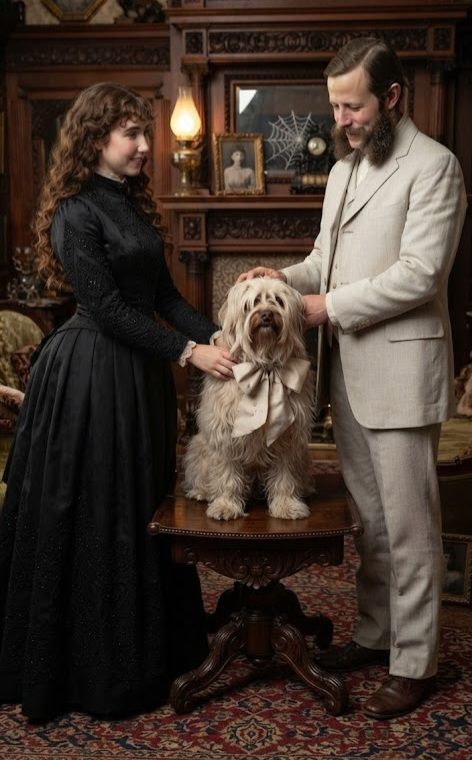
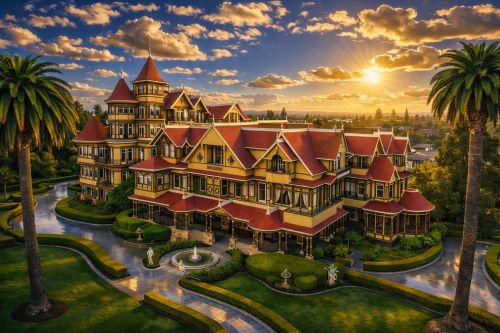
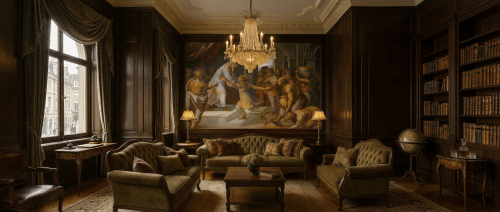
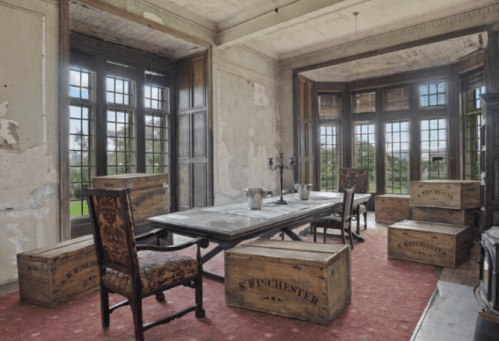
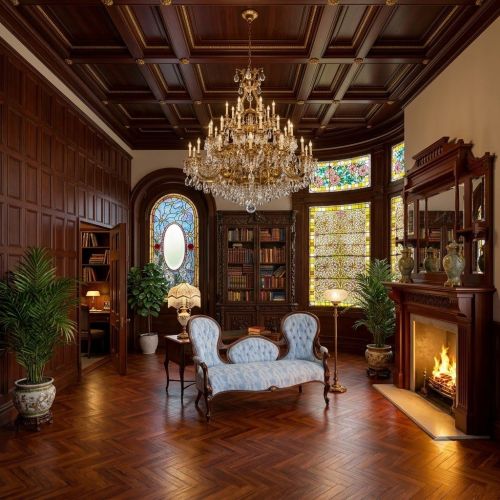
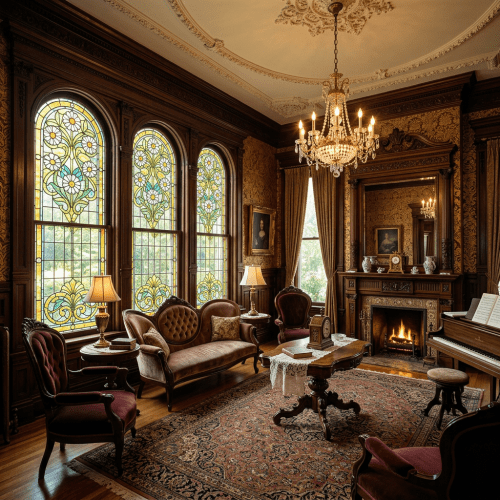
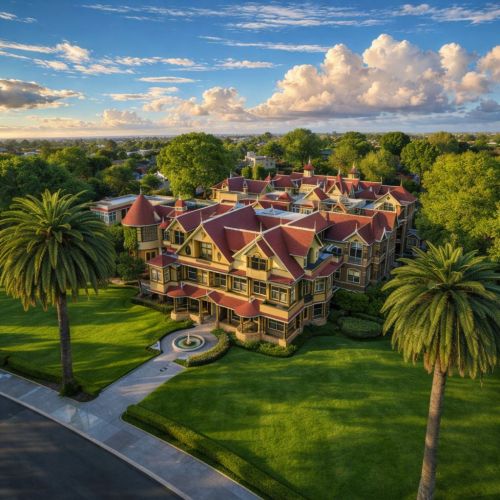
Step inside one of California’s most extraordinary landmarks and experience a world unlike any other. The Winchester Mystery House is more than a Victorian mansion—it is a living work of art, a labyrinth of architectural wonders, and one of America’s most captivating historical estates. Built over 36 years without pause, the mansion stands today as a testament to craftsmanship, curiosity, and the enduring legend of Mrs. Sarah Winchester.

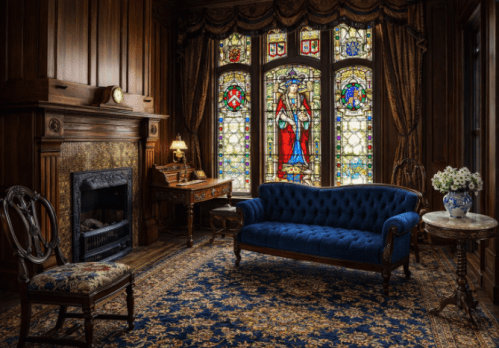
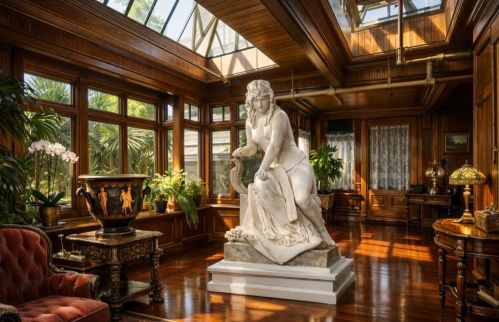
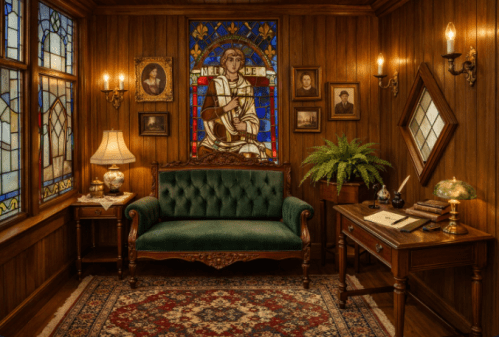
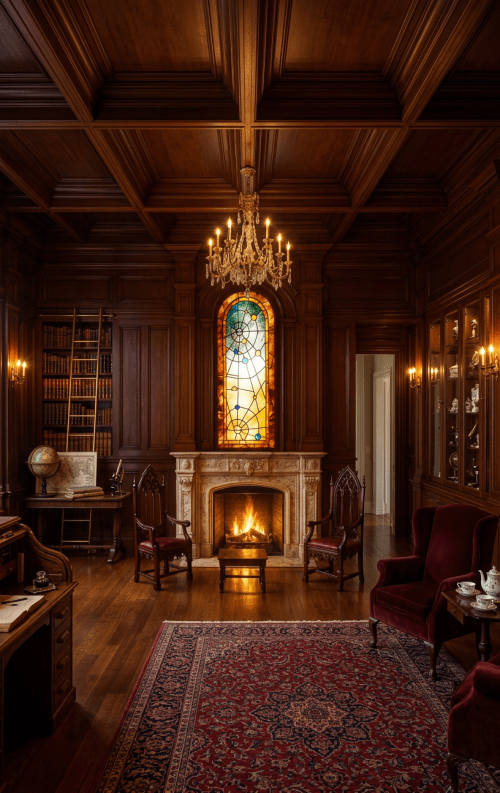
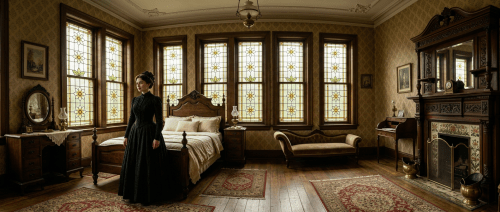
Visitors are invited to explore miles of elegant hallways, beautifully restored rooms, and the mansion’s famously perplexing features: staircases that lead nowhere, doors that open into walls, windows overlooking other rooms, and secret passages woven throughout the estate. Every corner of the house reflects Sarah Winchester’s unique vision, blending Victorian elegance with an eccentricity that continues to fascinate architects, historians, and guests from around the world.
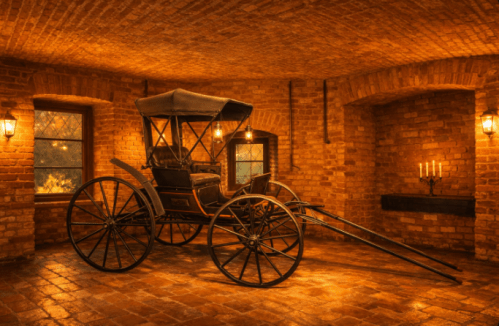
Beyond its architectural marvels, the Winchester Mystery House offers a rare glimpse into the life of a woman who defied convention. Sarah Winchester, heiress to the Winchester Repeating Arms fortune, poured her grief, creativity, and resources into building a home unlike any other. Her story—part tragedy, part triumph, part enduring mystery—adds emotional depth to every room you enter. Visitors leave not only impressed by the mansion’s scale, but moved by the humanity behind its creation.

The estate’s lush gardens, ornate fountains, and tranquil outdoor spaces provide a peaceful contrast to the mansion’s winding interior. Guests can stroll through beautifully landscaped grounds, enjoy seasonal displays, and take in the serene beauty that surrounds the historic home. Whether you’re a lover of history, architecture, horticulture, or simply a seeker of unforgettable experiences, the Winchester Mystery House offers something for everyone.

A visit to the Winchester Mystery House is more than a tour—it is an encounter with legend. It is a place where imagination thrives, where history whispers through every corridor, and where the line between fact and folklore blurs in the most enchanting way. Come discover why millions of visitors from around the world consider the Winchester Mystery House a must‑see destination and one of California’s most iconic treasures.

PRIVATE EVENTS & WEDDINGS
at WINCHESTER ESTATE

Many event locations claim to be unique, but nothing compares to the Winchester Mystery House. If you’re truly seeking a distinct, one‑of‑a‑kind setting for your milestone celebration or special occasion, reserve a venue that delivers on uniqueness many times over. Whether you’re planning a wedding, birthday or anniversary celebration, corporate gathering, holiday party, or any other meaningful event, the Winchester Mystery House offers an unforgettable backdrop. Give your guests an experience they’ll be talking about for years to come.
Café 13: A Rest Stop on the Edge of the Mystery
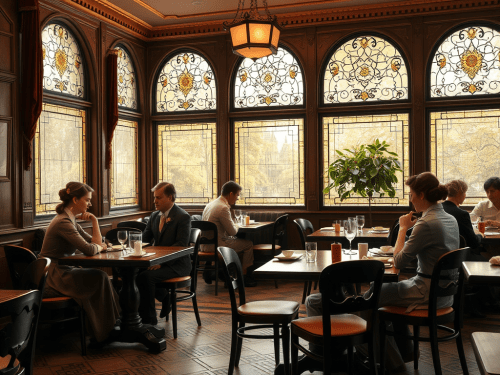
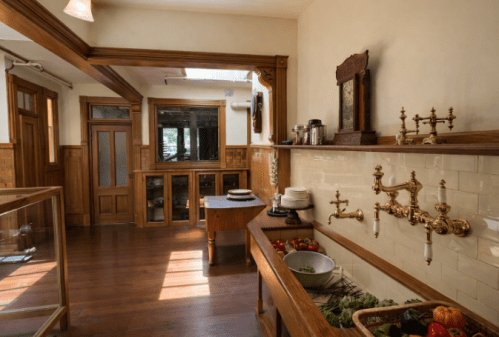
After wandering the winding halls of the Winchester Mystery House—where staircases defy logic and whispers seem to cling to the walls—Café 13 offers a welcome return to warmth and grounding. Newly reopened and serving guests daily from 10 AM to 3 PM, this cozy hideaway invites you to pause, breathe, and gather yourself before diving back into the mansion’s secrets. Settle in with a warm meal, challenge a friend to a board game, or simply rest and recharge as sunlight filters through the windows. Café 13 is more than a café—it’s a moment of calm between chapters of the Winchester legend, a place to steady your nerves before returning to the gardens, the grandeur, and the mysteries that await.
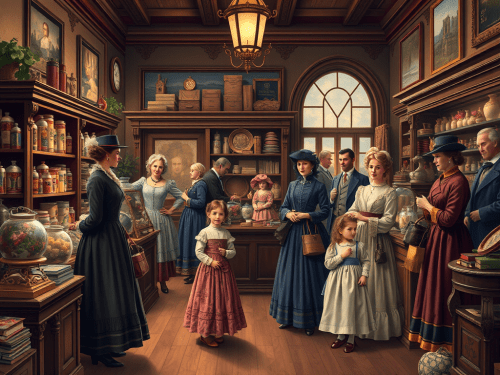
Your journey into the Winchester Mystery House begins long before you cross the mansion’s threshold. It starts at the Mercantile gift shop—a welcoming outpost standing at the edge of a world where history and myth intertwine. Here, beneath warm lights and shelves lined with curiosities, you can secure your tour tickets and prepare for the adventure ahead. Guests often pause for a souvenir photograph, capturing the moment before they step into Sarah Winchester’s enigmatic domain. As you explore the shop, you will find an eclectic array of gifts and keepsakes: tokens of the mansion’s lore, echoes of Victorian elegance, and mementos that carry a touch of the house’s enduring mystery. The Mercantile is more than a gift shop—it is the gateway. https://winchestermysteryhouse.com/