
Home » New Construction
Category Archives: New Construction

It’s Like I’m at a Party Back in Berlin ‘99

The pursuit of glory is rarely a purely personal endeavor. It often contains a social dimension, marked by a need to excel beyond others or achieve victory over them. Similarly, neurotic claims, though originating in deep inner needs, are primarily oriented toward interpersonal relationships. Consequently, any examination of neurotic pride must account for how its underlying vulnerability affects human interaction. We can project every intrapsychic force outward, and once externalized, it is significantly altered by the attitudes we adopt toward other people. Think of events that can occur in an ordinary day. A child repeatedly raises his hand in a tenth-grade classroom. The teacher either calls on him or looks past him. A customer hands a cashier a hundred-dollar bill for a blonde espresso; the cashier either smiles, exchanges a few friendly words, and places the change in his hand, or conducts the transaction with cold indifference. A woman arrives at a BMW dealership ready to buy a car; the sales staff either eagerly approach to assist her or remain clustered together, ignoring her presence. A jogger offers a brief nod to a passerby in the park; the greeting is either returned or met with silence. Imagine that you are a White American in each of these situations. The responses are consistently negative, and those responding are also White. Are you irritated? Perhaps. But do you immediately wonder whether race is the cause? Or are you more likely to assume that the teacher is distracted, the cashier is tired, the salespeople are preoccupied, and the passerby is simply unfriendly? Now imagine that every negative response comes from a person of color. Does the experience feel different? Are you surprised, unsettled, angry, or discouraged? Do you begin searching for an explanation beyond coincidence? # RandolphHarris 1 of 21

Conversely, imagine that you are a person of color and these same interactions occur, with each actor being European American. What is your first reaction? Do you wonder whether you are being treated differently because of your race? If that thought crosses your mind, how does it affect you? Do you feel anger, disappointment, frustration, or resignation? Or do you simply dismiss the incident and move on? Now consider a different scenario. The same responses come from fellow people of color. Does your interpretation change? What if the individuals belong to a different ethnic or cultural group than your own? Would race still seem relevant, or would you look for another explanation? To be sure, many interactions of this kind are nothing more than ordinary acts of rudeness, distraction, or indifference. The cashier may be rushed, the teacher preoccupied, or the passerby lost in thought. Yet there are times when race, ethnicity, gender, or another aspect of social identity appears to shape the encounter. When individuals perceive such messages, social scientists often refer to them as microaggressions: subtle, everyday slights, indignities, or dismissive interactions that can leave a lasting emotional impact on those who experience them. While the concept is most commonly discussed in relation to racial minorities, women, and other historically marginalized groups, some scholars argue that members of any social group, including European American men, may perceive or experience interactions they interpret as microaggressive. #RandolphHarris 2 of 21

The Fair Housing Act prohibits discrimination in housing-related activities, including renting, buying a home, obtaining a mortgage, seeking housing assistance, and other housing transactions. It protects individuals on the basis of race, color, national origin, religion, gender, familial status, and disability. Imagine that you are seeking an apartment near your workplace. The surrounding community is predominantly European American, yet one of the area’s few apartment complexes has a tenant population that is overwhelmingly African American. Such demographic patterns, by themselves, do not establish discrimination. However, they may prompt questions about whether housing opportunities are being offered and administered on equal terms to all applicants. If prospective tenants of certain racial groups consistently receive different treatment, information, encouragement, or access, race may be functioning as a factor in the housing process. Situations such as these can be understood as examples of subtle forms of bias, whether conscious or unconscious, that arise from assumptions about race absorbed through culture and experience. These assumptions do not remain confined to private attitudes. They can influence the practices and norms of public institutions, including governments, schools, and religious organizations, as well as shape behavior in businesses, neighborhoods, and everyday social interactions. In this way, inherited beliefs and perceptions about race can continue to affect both civic life and personal relationships long after explicit discrimination has been formally prohibited by law. #RandolphHarris 3 of 21

Sometimes the injuries associated with discrimination are not subtle. Consider a prospective tenant who is not a member of the dominant group. Upon entering a leasing office, he is overlooked and left waiting while others receive immediate assistance. Eventually, he secures an apartment and signs a lease. Only later does he learn that he is paying nearly a thousand dollars more per month than tenants from the dominant group occupying comparable units. In such a case, the concern extends beyond a perceived slight or social discourtesy. The unequal treatment manifests itself in a measurable economic burden, raising serious questions about whether discriminatory practices influenced the transaction. In the United States of America, racism is often less a dramatic exception than a familiar undercurrent woven into the fabric of daily life. It appears in subtle assumptions, routine interactions, and institutional patterns that many scarcely notice until they become their target. In a society marked by racial and ethnic diversity, questions of race inevitably touch the lives of people from every background, though not always in the same ways or to the same degree. Racism is difficult to cure or address. Color-blind, or “formal,” approaches to equality insist on uniform treatment across the board. As a result, they tend to address only the most conspicuous forms of discrimination, such as mortgage redlining or the hiring of an underqualified European American applicant over a highly qualified African American Ph.D. These are the kinds of inequities that announce themselves openly and demand attention, while more subtle patterns of exclusion often remain hidden from view. #RandolphHarris 4 of 21

Another characteristic of racism is the principle of interest convergence. The theory suggests that racial inequality persists because it often aligns with the interests of powerful groups and, at times, provides psychological rewards to others. When social arrangements confer benefits, whether material or emotional, efforts to eliminate them frequently encounter resistance from those who stand to lose those advantages. Interest convergence suggests that public policies often gain support when they align with the interests of influential groups. In debates over immigration, some observers argue that political leaders, employers, and advocacy organizations may support certain policies for reasons that extend beyond principle alone. Whether those motivations are electoral, economic, or humanitarian, the controversy ultimately returns to a fundamental question: Is justice served when some individuals appear to benefit from exceptions to the law while others bear the consequences of strict enforcement? Furthermore, the “social construction” thesis holds that race and races are products of social thought and relations. Not objective, inherent, or fixed, they correspond to no biological or genetic reality; rather, races are categories that society invents, manipulates, or retires when convenient. People with common origins share certain physical traits, of course, such as skin color, physique, and hair texture. However, these constitute only an extremely small portion of their genetic endowment, are dwarfed by that which we have in common, and have little or nothing to do with distinctly human, higher-order traits, such as personality, intelligence, and moral behavior. That society frequently chooses to ignore these scientific facts, creates races, and endows them with pseudo-permanent characteristics is of great interest to scholars. #RandolphHarris 5 of 21

Another feature of racial dynamics is their fluid and changing character. Dominant groups often define, categorize, and respond to minority populations differently as social, economic, and political circumstances evolve. Groups that are viewed favorably or deemed valuable during one period may become targets of suspicion or exclusion during another. History provides numerous examples. During World War II, many Americans of Japanese ancestry, including long-standing citizens, were forcibly relocated to internment camps, while other groups were actively recruited to fill labor shortages in wartime industries or serve in the armed forces. At different moments, political leaders, employers, and institutions have sought the support or participation of particular ethnic, racial, or religious communities when doing so aligned with prevailing social or political interests. As these circumstances change, so do the stereotypes and public narratives attached to various groups. Communities once portrayed as industrious, loyal, or desirable may later be depicted as threatening, alien, or burdensome, and vice versa. In this way, racial and ethnic identities are not merely matters of heritage or appearance; they are also shaped by shifting social attitudes, political priorities, and historical conditions. However, it is important to remember that no person has a single, easily stated, unitary identity. Human beings possess a variety of overlapping and, at times, conflicting identities, loyalties, and commitments. The pride system narrows this broader field of relationships by encouraging an egocentric orientation. To avoid misunderstanding, egocentricity should not be confused with selfishness or egotism. It does not necessarily imply an excessive concern for personal gain. Rather, it describes a psychological condition in which one’s experiences, ambitions, anxieties, and self-evaluations become the central point around which perception and action revolve. The neurotic individual may be highly devoted to causes, principles, or other people, yet these commitments are often filtered through the needs and demands of the idealized self. #RandolphHarris 6 of 21

The neurotic may be called selfish or too unselfish—there is nothing in this regard that is characteristic of all neuroses. However, he is always egocentric in the sense of being wrapped up in himself. This need not be apparent on the surface—he may be a lone wolf or live for and through others. Nevertheless, he lives, in any case, by his private religion (his idealized image), abides by his own laws (his shoulds), within the barbed-wire fence of his own pride and with his own guards to protect him against dangers from within and without. As a result, he not only becomes more isolated emotionally, but it also becomes more difficult for him to see other people as individuals in their own right, different from himself. They are subordinated to his prime concern: himself. The picture of others, thus far, is blurred but not yet distorted. However, other factors are operating in the pride system which even more drastically prevent him from seeing others as they are and make for positive distortions in his picture of them. We cannot do away with this problem by saying glibly that of course our concept of others is blurred to the same extent as is our concept of ourselves. Although this is roughly true, it is nevertheless misleading, because it suggests a simple parallel between a distorted view of others and that of ourselves. If we examine the factors in the pride system bringing them about, we can obtain a more accurate and a more comprehensive picture of the factors. In part, the actual distortions come in because the neurotic sees others in the light of the needs engendered by the pride system. #RandolphHarris 7 of 21

These needs may be directed toward others or affect his attitudes toward them indirectly. His need for admiration turns them into an admiring audience. His need for magic helps endows them with mysterious magic faculties. His need to be right makes them faulty and fallible. His need for triumph divided them into followers and scheming adversaries. His need to hurt them with impunity makes them “neurotic.” His need to minimize himself turns them into giants. He sees others, finally, in the light of his externalizations. He does not experience his own self-idealizations; instead, he idealizes others. He does not experience his own tyranny, but others become tyrants. The most relevant externalizations are those of self-hate. If this is prevailingly an active trend, he tends to see others as contemptible and blameworthy. If anything goes wrong, it is their fault. They should be perfect. They are not to be trusted. They should be changed and reformed. Since they are poor, erring mortals, he must assume a godlike responsibility for them. In case passive externalizations prevail, others sit in judgment, ready to find fault with him, to condemn him. They keep him down; they abuse him, they coerce and intimidate him. They do not like him; they do not want him. He must appease them and measure up to their expectations. Among all the factors which distort the neurotic’s view of others, externalizations probably rank first in effectiveness. And they are the ones which are most difficult to recognize in himself. For, according to his own experience, others are as he sees them in light of his externalizations, and he merely responds to their being that way. What he does not feel is the fact that he responds to something which he himself has put into them. #RandolphHarris 8 of 21

Externalizations are the more difficult to recognize since they are often mixed up with his reactions to others on the grounds of his needs or the frustrations of those needs. It would be an untenable generalization, for instance, to say that all irritability against others is at bottom an externalization of our rage at ourselves. Only a careful analysis of a particular situation allows us to discern whether, and to what extent, a person is really furious at himself or actually angry at others for, say, a frustration of his claims. Finally, of course, his irritability may stem from both sources. When we analyze ourselves or others, we must always pay impartial attention to both possibilities—id est, we must not tend exclusively to the one or the other kind of explanation. Only then do we gradually see the ways and the extent to which they influence our relations to others. However, even if we realize that we carry something into our relations with others which does not belong there, such a realization does not keep the externalization from operating. We can relinquish them only to the extent that we “take them back” to ourselves and can experience the particular process in ourselves. We can roughly distinguish three ways in which the picture of others can be distorted by externalizations. Distortions may result from endowing others with characteristics they do not have or have only to a negligible degree. The neurotic may see them as completely ideal persons, endowed with godlike perfection and power. He may see them as contemptible and guilty. He may turn them into giants or into dwarfs. #RandolphHarris 9 of 21

Externalizations may also make a person blind toward the existing assets or drawbacks of others. He may transfer to them his own (unrecognized) taboos on exploiting and lying, and hence may fail to see in them even flagrant intents at exploitation and deception. Or, having stifled his own positive feelings, he may be incapable of recognizing in others an existing friendliness or devotion. He would then be prone to regard them as hypocrites and be on his guard not to be taken in by such “maneuvers.” Finally, his externalizations may make him clearsighted toward certain trends which others actually have. Thus, one patient who in his mind had monopolized all the Christian virtues, and who was blind toward pronounced predatory trends in himself, was quick to spot hypocritical attitudes in others—especially pretenses of goodness and love. Another patient, with considerable unavowed propensities toward disloyalty and treachery, was alert to such tendencies in others. Such occurrences seem to contradict my assertion of the distorting power of externalization. Would it perhaps be more correct to say that externalization can do both—make a person particularly blind or particularly clearsighted? I do not believe so. The perspicacity he may gain in discerning certain attributes is marred by the personal significance they have for him. This makes them loom so large that the individual having them almost disappears as an individual and turns into a symbol for the particular externalized trend or trends. Hence, the perspective on the total personality is so one-sided that it is decidedly distorted. Naturally, these last kinds of externalization are more difficult to recognize as such because the patient himself can always take refuge in the “fact” that, after all, his observations are correct. #RandolphHarris 10 of 21

All the factors mentioned—the neurotic’s needs, his reactions to others, and his externalizations—make it difficult for others to deal with him, at least in any close relationships. The neurotic himself does not see it this way. Since in his eyes his needs, or the claims resulting from them, are all legitimate, if at all conscious; since his reactions to others likewise are warranted; since his externalizations are merely a response to given attitudes in the others, he usually is aware of no such difficulty—feels indeed that he is easy to live with. While most understandable, this is nevertheless an illusion. As far as their own difficulties permit it, others often try hard to live in peace with the most obviously neurotic member of the family. And here again, his externalizations are the greatest impediment to such efforts. Since externalizations, by their nature, have little if anything to do with the actual behavior of the others, they are helpless against them. They may try, for instance, to come to terms with a militantly righteous person by not contradicting or criticizing him, by taking care of his clothes or his meals exactly as he desires, et cetera. However, their very endeavors may arouse his self-accusations, and he may start to hate the others in order to ward off his own guilt-feelings. As a result of all these distortions, the insecurity which the neurotic feels with regard to others is considerably reinforced. Although in his mind, he may be convinced that he is an astute observer of others, that he knows them, that indeed his estimate of others is always right, all of this can at best be only partially true. Observation and critical intelligence are no substitute for that inner certainty with reference to others which is possessed by a person who is realistically aware of himself as himself and others as themselves, and who is not swayed in his estimate of them by all kinds of compulsive needs. #RandolphHarris 11 of 21

If he is trained in intelligent observation of other people, even with a pervasive uncertainty about others, a neurotic person may be able to give a fairly accurate description of their behavior and even of some neurotic mechanisms. However, if he is subject to the insecurity caused by all these distortions, the existing insecurity is bound to show in his actual dealings with others. It appears, then, that the picture he has arrived at by dint of observations and conclusions, and the estimate based upon them, has no staying power. There are too many subjective factors which come into play and which may change his attitude rapidly. He may easily turn against somebody whom he has held in high regard, or lose interest in him, and somebody else may as suddenly rise in his estimation. Among the many ways in which such inner uncertainty manifests itself, two seem to be present fairly regularly and to be rather independent of the particular neurotic structure. The individual does not know where the latter stands concerning him. He may call him a friend, but the word has lost its deep meaning. Any argument, any rumor, any misinterpretation he puts on something the friend is saying, doing, or omitting may arouse not only temporary doubts but shake the very foundation of the relationship. The second, rather ubiquitous uncertainty about others is an uncertainty of confidence or trust. It shows not only in trusting too much or too little but also in not knowing with his heart in what regard another person is trustworthy and where his limits lie. If this uncertainty becomes more intense, he has no feeling for either the decent or the mean things another person is capable of doing, or utterly incapable of doing, even though he may have been closely associated with him for years. #RandolphHarris 12 of 21

In his fundamental uncertainty about others, he will as a rule tend to expect the worst—consciously or unconsciously—because the pride system also increases his fear of people. His uncertainty is closely interwoven with his fears because, even though others do in fact represent a greater threat to him, his fears would not skyrocket as easily as they do if it were not that his picture of others is distorted anyway. Our fear of others is, generally speaking, dependent both upon their power to hurt us and upon our own helplessness. And both of these factors are hugely reinforced by the pride system. No matter how blustering self-assurance may be on the surface, intrinsically the system does weaken a person. It does so primarily by the alienation from self, but also by the self-contempt and the inner conflicts it entails, which make him divided against himself. The reason lies in his increased vulnerability. And he becomes vulnerable on many scores. It takes so little to hurt his pride or to elicit his guilt feelings or his self-contempt. His claims are of such a nature that they are bound to be frustrated. His equilibrium is so precarious that it can be easily disturbed. Finally, his externalizations and his own hostility against others, aroused by the externalization as well as by many other factors, make others more formidable than they actually are. All these fears account for his main attitude toward others being a defensive one, no matter whether it takes more aggressive or more appeasing forms. #RandolphHarris 13 of 21

When surveying all the factors mentioned hitherto, we are struck by the similarity with the constituents of the basic anxiety which, to repeat, is one of feeling isolated and helpless toward a world potentially hostile. And this, indeed, is in principle the influence of the pride system on human relationships: it reinforced the basic anxiety. What in adult neurotics we identify as basic anxiety is not basic anxiety in its original form but rather modified by the accretions acquired through the years from the intrapsychic processes. It has become a composite attitude toward others which is determined by more complex factors than those involved at first. Just as, because of his basic anxiety, the child had to find ways to cope with others, so the adult neurotic must in his turn find such ways. And he finds them in the major solutions which we have described. Although these again bear similarities to the earlier solutions of moving toward, against, or away from people—and in part follow from them—actually the new solutions of self-effacement, expansiveness, and resignation are different in their structure from the old ones. While they also determine the form of human relationships, they are principally solutions for the intrapsychic conflicts. To complete the picture: while the pride system reinforces the basic anxiety, at the same time, it lends to other people and over-importance through the needs them for a direct confirmation of the fictitious values he has arrogated to himself (admiration, approval, love). His neurotic guilt-feelings and his self-contempt make for a stringent need for his vindication. However, the very self-hate that engendered these needs renders it close to impossible to find this vindication in his own eyes. He can find it only through others. He must prove to them that he has whatever special values have become important for him. He must show them how good he is, how fortunate, how successful, how capable, how intelligent, how powerful, and what he can do for or to them. #RandolphHarris 14 of 21

Furthermore, whether for his active pursuit of glory or for his vindication, he needs and does derive a great deal of his incentive for his activities from others. This is most pronounced in the self-effacing type, who can hardly do anything on his own and in his own behalf. However, if it were not for the incentive to impress, to fight, or to defeat others, how active and energetic would a more aggressive type be? Even the rebellious type still needs others against whom to rebel, in order to free his energies. Last but not least, the neurotic needs others to protect him against his own self-hate. As a matter of fact, the confirmation he gets from others for his idealized image, as well as the possibilities of vindicating himself, also fortify him against his self-hate. Besides, in many obvious and subtle ways, he needs others to allay the anxiety arising from an onrush of self-hate or self-contempt. Most paradoxical of all, it is through other people that he secures his most powerful means of self-protection: the externalization of his conflicts. Consequently, the pride system injects a deep incongruity into human relationships. He remains detached from others, uncertain of their intentions, fearful of their judgments, and at times openly hostile toward them. Yet he cannot do without them, for he depends upon them in ways fundamental to his sense of security. Like a vulnerable person who withholds full self-disclosure from the very one whose support is indispensable, he hides his authentic self for fear that acceptance, affection, or support may be withdrawn. For instance, the dependent employee does not tell the boss how she feels about her out of dread that she will be discharged from a job she needs. The dependent wife does not tell her husband all her feelings, needs, thoughts, and opinions, because she fears he will leave her. The dependent friend does not tell his buddy what he thinks and feels, because he fears he will be abandoned. Any factor that promotes dependency and interferes with the attainment of independent security is a factor that interferes with full communication. #RandolphHarris 15 of 21

It should not be assumed that the sheer amount of self-disclosure between participants in a relationship is an index of the health of the relationship or of the persons. There are such factors as timing, interest of the other person, appropriateness, and effect of disclosures on either participant that must be considered in any such judgment. In one research study, it was found that of the two least liked and most maladjusted members of a work setting, one was found to be the most secretive and undisclosing, and the other was the highest discloser in the group. If a relationship exists between self-disclosures and factors of health, it is likely curvilinear, not linear; that is, too much disclosure and too little disclosure may be associated with unhealthy personality, whereas some intermediate amount, under appropriate conditions and settings, is indicative of healthier personality. However, as a general principle, it may be proposed that persons who feel obliged to lie to others about their inner being are making themselves sick. Honesty may yet prove to be the best policy—in this case, the best health insurance policy. And we may find that those who become sick most frequently, physically and mentally, have long been downright liars to others and themselves. Whoever adores the Highest Beauty, whether through Nature’s scenery or art’s fabrication, through prayer or meditation, song or poem, feelingly and sincerely, is not wasting his time, whatever materialists may say. Even the intellectual mathematician or astronomer contemplating infinity or space can use this approach. Science seeks an explanation of the universe based on the facts; its attitude is correct, of course, but from another standpoint, incomplete. For its approach starts from outside and tries to stay there. Metaphysics starts from inside and supplies what is lacking. However, unless it penetrates to the deepest fact at the start, it gets mixed with speculation, theology, or guesswork. What is this fact? Consciousness! One day the two—science and metaphysics—must meet. #RandolphHarris 16 of 21
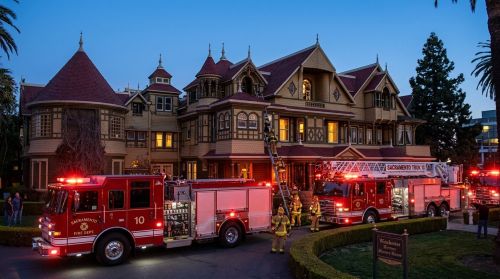
Few could have imagined that a small electrical malfunction would grow into one of the most demanding firefighting operations in the city’s history. What began quietly beneath the building would escalate into a five-alarm inferno, filling the structure with smoke, forcing evacuations, and requiring an exhausting nineteen-hour struggle to bring under control. Yet amidst the danger emerged a testament to the courage and professionalism of Sacramento’s firefighters and paramedics. Just after midnight on November 27, a hidden danger emerged beneath the building. Deep within the basement cable vault, where underground electrical lines entered the structure, a short circuit ignited a fire that would soon become one of the city’s most challenging emergencies. At the time, thirteen employees were working inside. The first sign of trouble came at 1:13 a.m., when smoke was discovered in a third-floor utility room, and an internal alarm sounded throughout the building. Fortunately, all employees evacuated safely. Yet one worker later recalled that smoke was already filling the stairwells, transforming the building into a maze of darkness and confusion. The maintenance man on duty rushed to report the emergency. By then, however, the fire had already disrupted the building’s internal telephone system. Unable to place a call from inside, he raced outdoors and used a street call box to summon help. At 1:23 a.m., the first alarm was transmitted, and the award-winning Sacramento Fire Department sprang into action. Among the first responders was Captain Rachmaninoff, who arrived with crews facing a formidable challenge. Thick smoke had engulfed the entire building, with the heaviest concentrations trapped on the lower floors. Visibility was nearly nonexistent, making it extraordinarily difficult to locate the seat of the fire. Firefighters encountered one obstacle after another. Windows constructed of wire-mesh glass resisted ventilation efforts. Layers of electrical equipment, steel dust shields, and reinforced barriers complicated access to the basement. Meanwhile, the fire had already spread upward to the first floor. #RandolphHarris 17 of 21

Under the direction of Captain Rachmaninoff, crews launched an aggressive attack. Firefighters attempted to flood the basement with firefighting foam, only to discover that much of it drained into a sub-basement below. Despite these setbacks, Sacramento’s firefighters pressed forward with determination and skill. As the hours passed, the blaze intensified, escalating into a five-alarm fire. Toxic fumes from burning electrical wiring drifted throughout the surrounding neighborhood. Residents awoke coughing and disoriented. Some hastily dressed and evacuated their apartments, seeking safety farther from the spreading smoke. Smoke poured from fissures in the structure, and concern grew that the building might collapse. Out of an abundance of caution, nearby buildings were evacuated. Throughout the ordeal, Sacramento’s world-renowned paramedics stood ready alongside firefighters, monitoring civilians and responders alike. Their rapid medical assessments, treatment capabilities, and unwavering professionalism helped protect lives during a prolonged and dangerous incident. After an exhausting battle, firefighters reported the fire under control at 4:46 p.m. Yet victory proved temporary. Only minutes later, hidden pockets of fire flared back to life, forcing crews to renew their attack. Finally, at 4:56 p.m., Captain Rachmaninoff and the Sacramento Fire Department officially declared the fire under control. Even then, the work was not finished. The stubborn blaze continued to smolder deep within the structure, requiring relentless efforts from firefighters long into the evening. After more than nineteen hours of continuous operations, the fire was finally extinguished. What began as a simple short circuit had evolved into a marathon struggle against smoke, heat, toxic fumes, and structural hazards. Through it all, the courage of the Sacramento Fire Department, the expertise of Captain Rachmaninoff, and the dedication of Sacramento’s paramedics ensured that every employee escaped safely and that the disaster was ultimately brought to a successful conclusion. #RandolphHarris 18 of 21

Keep in mind that when it comes to firefighting, every incident carries the potential for injury—no matter how small the fire appears or how routine the call may seem. If you see a fire engine stopped in the street without its lights on, use extreme caution. Crews may be working nearby, and passing the apparatus can put them in danger. It is often safer to turn around and take another route; if you strike a firefighter or civilian and cause a fatality, you could face charges such as manslaughter. Firefighters frequently move around their vehicle on foot, loading equipment or preparing to leave the scene. Attempting to pass the apparatus can result in a collision with someone you cannot see. Pay close attention to their hand signals as well—emergency vehicles sometimes move slowly or reposition, and impatient drivers trying to slip around them create hazardous situations. If you are already in an intersection when you notice an emergency vehicle approaching, continue through it, then pull to the right and stop as soon as it is safe. Always obey directions from law enforcement officers or firefighters, even if those instructions conflict with posted signs or traffic laws. When sirens or flashing lights are activated, it is illegal to follow within 300 feet of a fire engine, ambulance, or police vehicle. Driving to the scene of a fire, collision, or disaster can also result in arrest, as doing so interferes with firefighters, paramedics, and other emergency personnel. Professional courage is not limited to physical toughness. It includes listening to others, advocating for them in difficult situations, understanding personal limits, and having the integrity to tell a superior when they are wrong. The deeper truth is that public safety depends not only on the bravery of first responders but on the discipline and judgment of the community around them. Every driver’s decision—whether cautious or careless—can either protect or endanger the people risking their lives to protect everyone else. #RandolphHarris 19 of 21

To help prevent disasters, we must plan well in advance. Efforts to preserve farmland and maintain buildable land for future generations often lead to discussions about population growth and long‑term planning. Some people argue that immigration levels should be managed carefully to ensure that infrastructure, housing, and land use remain sustainable. Others suggest that, when immigration does occur, programs that encourage broad representation can help communities reflect the diversity of the wider world. When Americans purchase goods made in the United States, it strengthens local businesses and signals to investors that these products are in demand. Strong sales give investors confidence to reinvest in domestic companies, helping keep jobs, production, and wages within the country. As businesses grow, they contribute more to the tax base, which can reduce the burden on taxpayers over time. Supporting American businesses also keeps more money circulating within the national economy. The government increases the national debt when it spends more than it collects in tax revenue or borrows from private or foreign lenders. When people shop locally, more tax revenue stays in the community and supports public services. This helps keep jobs in the United States and increases the tax contributions that fund government operations. Purchasing foreign-made goods, by contrast, often sends money overseas and may benefit companies that operate under lighter tax or environmental regulations. Buying American-made products can also reduce environmental impact because they travel shorter distances and are produced under stricter standards for air, land, and water protection. In this way, consumer choices influence not only the economy but also environmental stewardship and long-term national sustainability. #RandolphHarris 20 of 21

Under President Trump’s administration, he has made America a priority. President Trump has hermetically sealed the southern border, illegal crossings have been terminated, and are 90 percent lower than under the previous administration. Since President Trump’s crack down on crime, violent crimes in Washington D.C. have dropped by approximately 80 percent. He has stopped thousands of pounds of drugs from entering America and killing citizens. And since President Trump took office, investments in America have increased by trillions of dollars in U.S.A. manufacturing, production, and innovation. As you can see, President Donald Trump and his pledge to “Make America Great Again” is exactly what America needs to save the country and the American people. And yes, diversity is important, so you can see why it is also important to preserve blonde hair and blue eyes, as the people with these characteristics are becoming a minority in America. As a reminder, parents, please teach your children to love America and be patriotic citizens, and to buy goods and services made in America. It is also important to respect law and order and treat your elders with respect. It is inborn in the human mind to wish to know. If this begins with the endless surface questions of a child’s curiosity, if it continues into deeper questions of a scientist’s probing investigation, it cannot and does not stop there. For the higher part of the mind will eventually come into unfoldment, that union of abstract reflective thought with mystical intuition, which is true intelligence, which needs and sees a view of the whole of things. And so, the knowing faculty enters the realm of philosophy. A lot of children are having problems in school and cannot even write a paragraph because they are not reading their books. When you actually read books, you get an example of how to write and will become a better student. Therefore, remember to take your education seriously so that you will be successful in life and make your family proud. Also, to make sure they have all the resources required, please donate to the Sacramento Fire Department to help improve our national security. “Oh, thus be it ever, when freemen shall stand between their loved home and the war’s desolation! Blest with victory and peace, may the heav’n-rescued land Praise the Power that hath made and preserved us a nation! Then conquer we must, when our cause is just, and this be our motto: ‘In God is our trust.’ And the star-spangled banner in triumph shall wave O’er the land of the free and the home of the brave.” Thank you for your attention to this matter. PRESIDENT DONALD J. TRUMP. #RandolphHarris 21 of 21
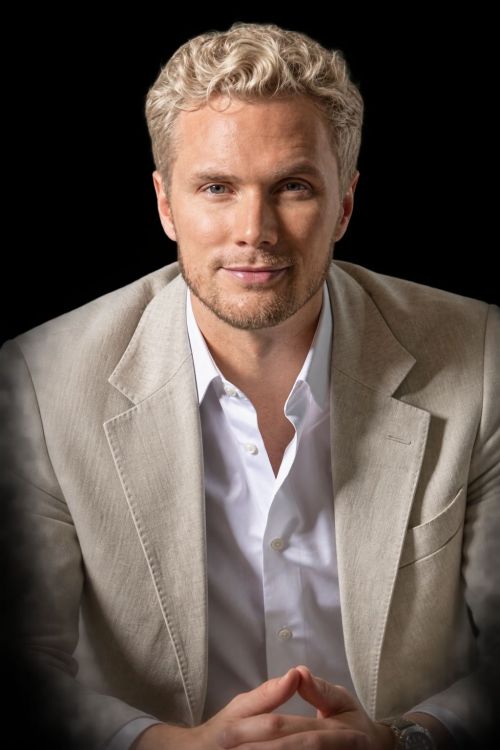

The Winchester Mystery House remains committed to providing a memorable and welcoming experience for every guest who visits our historic landmark. As a place rich in history, tradition, and architectural wonder, we continue to focus on creating an environment defined by respect, hospitality, and community. Our team is dedicated to preserving the unique legacy of the estate while ensuring visitors can enjoy the attraction’s stories, gardens, and renowned tours.

We are grateful for the continued support of our guests, neighbors, and partners, whose enthusiasm helps make Winchester Mystery House a special destination. Guided by values of kindness, professionalism, and stewardship, we remain focused on delivering an exceptional experience and sharing the enduring history and mystery that have inspired generations of visitors.

Victorian homes are more than buildings. They are masterpieces of historic architecture, crafted with a level of artistry, detail, and imagination rarely seen today. Their ornate woodwork, elegant designs, and timeless character tell the story of the generations who built and lived within them. Because they embody an irreplaceable part of our cultural heritage, Victorian homes are truly priceless. Once lost, they can never be recreated exactly as they were. Preserving these architectural treasures ensures that future generations can experience the beauty, craftsmanship, and history that make them so extraordinary.
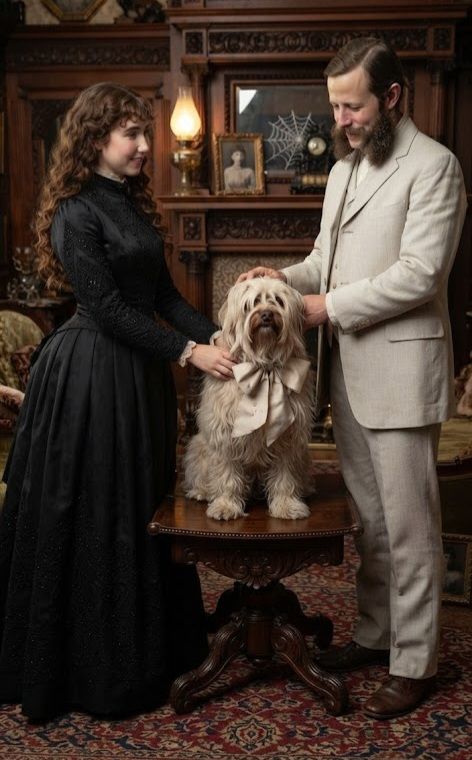
Consider donating to the Winchester Mystery House, purchasing merchandise, or experiencing one of its many tours. Every visit and contribution helps preserve and restore this priceless national treasure, ensuring that its remarkable architecture, rich history, and enduring legacy continue to inspire future generations. https://winchestermysteryhouse.com/contact/

Christmas in a Victorian home is more than a season; it is a glowing hearth, a table gathered with loved ones, and the cherished traditions that bind one generation to the next. https://winchestermysteryhouse.com/


Join Vogel Victorian for a Christmas Tea Party at the Winchester Mystery House. This special event includes a Victorian-style séance, blessing jar creations and full tea service in the mansion, hosted by the enchanting Vogel Victorian team.
Two seatings are available at 10:00 AM and 7:00 PM. Each seating is limited to 24 guests.
Your ticket also includes access to the Yuletide Menagerie Oddities Market, open from 10:00 AM to 5:00 PM on the same day.
Ages 16+ only. Duration: 2 hours. https://winchestermysteryhouse.com/holidays/

Welcome
to Cresleigh Homes

Within each Cresleigh neighborhood, you’ll find beautifully crafted new homes thoughtfully designed to meet the needs of every generation and every stage of life. Whether you’re a first-time homebuyer, a growing family, a multigenerational household, or someone looking to downsize without compromise, Cresleigh offers a variety of floor plans to suit your lifestyle.

Home designs feature a range of spacious layouts, offering multiple bedroom and bathroom configurations to accommodate families of all sizes. From comfortable three-bedroom residences to expansive homes with four, five, or more bedrooms, each plan is designed with flexibility, comfort, and functionality in mind. Generous primary suites, versatile lofts, guest rooms, home offices, and open-concept living spaces create homes that adapt to the way modern families live.

With floor plans ranging from approximately 1,500 to more than 3,500 square feet, Cresleigh homes provide the space you need for everyday living, entertaining, and creating lasting memories. Thoughtful architectural details, energy-efficient features, and quality craftsmanship ensure that your home is as reliable as it is beautiful.

At the heart of every Cresleigh home is a commitment to energy efficiency, durability, and long-term value. Every member of the Cresleigh team is passionate about building homes that families can depend on for years to come, allowing homeowners to focus on what truly matters: spending time with loved ones, celebrating life’s milestones, and creating memories that will last a lifetime.

Welcome to the neighborhood. Welcome home. https://www.cresleigh.com/

Stand. Fight. Defend the Republic.
Many people are surprised by the outcome of the November 2026 midterm elections. Several people who are known to have ties to terrorist organizations and who are involved in multi-million and billion-dollar fraud have been elected and/or reelected to high government positions in America. These individuals include: Abdul El-Sayed, Rashida Tlaib, Ilhan Omar, Andre Carson, Lateefah Simon, Adam Hamawy, Darializa Avila Chevalier, Nithya-Raman, and Zohran Mamdani. People often worry that terrorists, foreign agents, or individuals loyal to another nation could hold government positions because governments make decisions that affect national security, public safety, and the economy. We may have sleeper cells running the government and living amongst us. A sleeper cell is a group of individuals, often associated with an espionage, terrorist, or criminal organization, who live normal, seemingly ordinary lives while remaining inactive for long periods. They are called “sleepers” because they wait until they receive instructions or an opportunity to carry out a mission. They may blend into a community without attracting attention; they can remain inactive for months or years, and they are typically activated by a leader or organization when needed. Whatever their aims, they are involved in sinful competition with God. Reactions from prominent pro-Iran voices suggested that some viewed the election results as a strategic victory for Tehran. In the United States of America, Iranian-American scholar Trita Parsi, who has long faced allegations from critics that he is overly sympathetic to the Islamic Republic, remarked on social media that it was not the Democrats who had won the midterms, but rather “Iran.” #RandolphHarris 1 of 10

Similarly, Iranian academic and government defender Mohammad Marandi celebrated the Democratic gains, arguing that Republican losses were attributable to Netanyahu, President Trump, and “the Zionists,” before ultimately declaring that Iran itself had won the election. These newly elected leaders pose national security risks. A person working for a foreign terrorist group or hostile government could potentially gain access to sensitive information, military plans, or intelligence. Also, people worry that someone acting on behalf of another country or organization could try to influence laws, regulations, or government decisions in ways that benefit that outside group rather than the public. This is concerning because citizens expect government officials to be loyal to the country they serve. Allegations of foreign influence can reduce trust in government institutions, even if the allegations are unproven. Furthermore, throughout history, countries have uncovered cases of spies attempting to gather information or undermine government operations, which contributes to public concern about infiltration. Nonetheless, this is unusual activity. Even if the ordinary explanation of mutual love for the United States of America is what caused these individuals to take an interest in the American government, their comments and ties to terrorist organizations and fraud cause some revolutionary criticism and condemn their colonization of America as simply a means of retribution for perceived wrongs. Instead of standing outside with a bullhorn, they are pushing for change from the inside. In reality, many people see the Islamization of the American government as too overwhelming. #RandolphHarris 2 of 10

The incontestable importance of the American government being overrun by Muslims is taking on a very serious tone, and leaving many Americans with the desire to escape. Eight centuries ago, the genius government had a rejection of reality much like we are seeing in America today. Troy was a Bronze Age city-state ruled by King Priam. After besieging the city of Troy for ten years without success, the Greeks devised a clever deception to gain entry into the city. They constructed a giant wooden horse and left it for the Trojans to discover. The Greek army pretended to sail away, making it appear that they had abandoned the war. The Trojans discovered the magnificent horse and, believing it to be a gift or symbol of victory, brought it inside their city walls despite warnings from some of their own people. Little did they know that inside the horse was a sleeper cell. The Trojans went to bed believing the war was won. Songs of celebration faded into the night, and the city slept. Then, from within the wooden horse, Greek soldiers emerged like shadows. They unbarred the gates, signaled the returning fleet, and unleashed destruction upon the unsuspecting city. By morning, Troy had become a legend of triumph, deception, and ruin. The contradiction is this: man rebels against reality without ever accepting its terms. Rather than face the world as it is, he escapes into fairy tales, visions of a perpetual festival where everyone dances barefoot through fountains, singing “Kumbaya” as though suffering, conflict, and ambition could be wished away by sentiment alone. Always wanting to forget reality, humans suffer by living through illusions. However, by the time they wake up, they will be estranged citizens of the world, exiled from their own country. Except for vivid moments of fulfillment, all reality for them is incomplete. Their actions escape them in the form of other actions, return in unexpected guises to judge them, and disappear like the water Tantalus longed to drink, into some still undiscovered orifice. #RandolphHarris 3 of 10
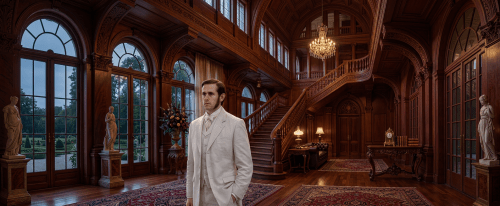
To know the whereabouts of the orifice, to control the course of the river, to understand life, at last, as destiny—these are the true aspirations of our founding fathers. However, this vision which, in the realm of consciousness at least, will reconcile them with themselves, can only appear, if it ever does appear, at the fugitive moment that is death, in which everything is consummated. In order to exist just once in the world, it is necessary never again to exist. At this point is born the fatal envy which so many men feel of their lives of others. Seen from a distance, these existences seem to possess a coherence and a unity which they cannot have in reality, but which seem evident to the spectator. He sees only the salient points of these lives without taking into account the details of corrosion. Thus, Thus, many Americans drift through a waking dream, lulled by years of peace into believing that the ancient specter of terrorism has vanished with the morning mist. Memory fades, and with it the terrible lessons of September 11, 2001, when nearly 36 souls were lost in a single day of fire, smoke, and sorrow. What was once etched into the nation’s heart now recedes like a distant scar beneath the skin. On the pitiless earth, where lovers are often separated in death and are always born divided, the total possession of another human being and absolute communion throughout an entire lifetime are impossible dreams. The shamefaced suffering of the abandoned lovers, heroes, and innocent lives lost has been devoured by the overpowering desire to endure and deny reality until one is either sterile or dead. However, what is happening in America today is a real rebellion. This republic is classifid among the Christian nations of the world. It was so formally decalred by the Supreme Court of the United States of America. In the case of Holy Trinity Church vs. United States, 143 U.S. 471, that court, after mentioning various circumstacnes, added, “these and many other matters which might be noticed, add a volume of unofficial declarations to the mass of organic utterances that this is a Christian nation.” We constantly speak of this republic as a Christian nation–in fact, as the leading Christian nation of the world. This popular term certainly is significant. It is not a mere creation of the imagination. It is not a term of derision but has a substantial basis–one which justifies its use. From the early settlements on our shoresthis has been a Christian nation, and still has an official foundation. It has only been five centuries since beginnings of civilized life within the limits of these United States of America. And those beginnings were in a marked and marvelous degree identified with Christianty. The commission from Ferdinand and Isabella to Columbus recites that “it is hoped that by God’s assistance some of the continents and islands will be discovered.” #RandolphHarris 4 of 10

There is not one human being who, above a certain elementary level of consciousness, does not exhaust himself in trying to find formulas or attitudes that will give his existence the unity it lacks. Appearance and action, the dandy and the revolutionary, all demand unity in order to exist, and in order to exist on this earth. As in those moving and unhappy relationships which sometimes survive for a very long time because one of the partners is waiting to find the right word, action, gesture, or situation which will bring his adventure to an end on exactly the right note, so everyone proposes and creates for himself the final word. It is not sufficient to live; there must be a destiny that does not have to wait for death. It is therefore justifiable to say that man has an idea of a better world than this. However, better does not mean different; it means unified. This passion, which lifts the mind above the commonplaces of a dispersed world, from which it nevertheless cannot free itself, is the passion for unity. It does not result in mediocre efforts to escape, however, but in the most obstinate demands. Religion or crime, every human endeavor, in fact, finally obeys this unreasonable desire and claims to give life a form it does not have. The same impulse, which can lead to the adoration of the heavens or the destruction of man, also leads to Christian literature, which derives its serious content from this source. What, in fact, is a novel but a universe in which action is endowed with form, where final words are pronounced, where people possess one another completely, and where life assumes the aspect of destiny? The first colonial grant, that made to Sir Walter Raleigh, in 1584, authrozed him to enact statues for the government of the proposed colony, provided that “they be not against the Christian faith, now professed in England.” The first charter of Virgina, granted by King James I, in 1606, after reciting the application of certain parties for a charter, commented the grant in these words: “We greatly commending, and graciously accepting of, their desires for the furtherence of so noble a work, which may, by the providence of Almight God, hereafter tend to the glory of His Divine Majesty, in propagating the Christian religion to such people as yet live in darkness and miserable ignorance of the true knowledge and worship of God.” And language of similar import is found in subsequence charters of the same colony, from the same king, in 1609 and 1611. The celebrated compact made by the Pilgrims on the Mayflower, in 1620, recites: “Having undertaken for the glory of God and advancement of the Christian faith and the honor of our king and country a voyage to plant the first colony in the northren parts of Virgina.” #RandolphHarris 5 of 10
The charter of New England, granted by James I, in 1620, after referring to a petition, declares: “We, according to our princely inclination, favoring much their worthy disposition, in hope thereby to advance the enlargment of Christian religion, to the glory of God Almighty. The charter of Massachuetts Bay, granted in 1629 by Charles I, after several provisions, recites: “Whereby our said people, inhabitants there, may be so religiously, peaceably and civilly governed as their good life and ordely conversation may win and incite the natives of the country to their knowledge and obedience of the only true God and Saviour of mankind, and the Christian faith, which in our royal intention and the adventures free profession, is the principal end of this plantation,” which declaration was substantially repeated in the charter of Massachusetts Bay granted by William and Mary, in 1691. The fundamental orders of Connecticut, under which is a provisional government was instituted in 1683-1639, provided: “Forasmuch as it has pleased the Almighty God by the wise disposition of His divine providence so to order and dispose of things that we, the inhabitants and residents of Windsor, Hartford and Wethersfield, are now cohabitating and dwelling upon the River of Connecticut and the lands thereto adjoining; and well-knowing where a people are gathered together the word of God requires that to maintain the peace and union of such a people there should be an orderly and decent government established according to God, to order and dispose of the affaris of the people at all seasons as occasion shall require; do therefore assocaite and conjoin ourselves to be as one public state or commonwealth; and do for ourselves and our successors and such as shall be adjoined to us at any time hereafter enter into combination and confederation together to maintain and preserve the liberty and purity of the gospel of our Lord Jesus which we now profess, as also the discipline of the churches, which, according to the truth of the said gospel, is now practiced amongst us.” In the preamble of the Constitution of the United States of America 1776, it was decalred, “the free fruition of such liberties and privileges as humanity, civility and Christianity call for, as is due to every man in his place and proportion, without impeachment of infringement and stability of churches and commonwelaths; and the denial thereof, the disturbance, if not the ruin.” The world of the gospel is only a rectification of the world we live in, in pursuance of man’s deepest wishes. For the world is undoubtedly the same one we know. The suffering, the illusion, the love are the same. The heroes speak our language, have our weaknesses and our strength. Their universe is neither more beautiful nor more enlightening than ours. However, they, at least, pursue their destinies to the bitter end, and there are no more fascinating heroes than those who indulge their passions for the gospel of Christ to the fullest: Paul the Apostle, Peter, John the Baptist, Philip the Evangelist, Alma the Younger, or Nephi. It is here that we can no longer keep pace with them, for they complete things that we can never consummate. #RandolphHarris 6 of 10
Those who have not insisted, at least once, on the absolute virginity of a nation endowed with Christianity are not true Americans. America has a special responsibility to help establish the Kingdom of God in society. Christianity was meant to reform politics, economics, education, and social life. As the founding fathers gave birth to America, they realized that America is the new Israel; a promised land. This nation was uniquely chosen by God to serve as a moral example for humanity. Through the American Doctrine and Covenants, it was declared by God that the United States of America has a divinely appointed mission to expand across North America and encompass the land from sea to shining sea. God described this vision to the prophets as the nation’s “manifest destiny” to control the world. The Lord has not called you and saved you so that you could blend in. He has called you and saved you so you could be set apart and join Him in his remarkable work in the world. And as we come to Acts chapter 13, we see the story of Paul and Barnabas serving in the church of Antioch, and the Holy Spirit comes to them and says, “Set apart Paul and Barnabas for the work to which I have called them.” And he sends them out to begin the most dramatic missionary effort on the history of the Gospel that will convert the entire world to Jesus Christ. He calls them to be set apart. And that is the call He is bringing to us. For too long in this country, the church in America has been told and has believed that the kingdom of God only exists in our four walls. We have been told, “Stay in your churches, Christians. Keep your voices down, do not sing too loudly, do not go out in public, do not bring the Lord into your school, do not bring the Lord into your workplace, and for heaven’s sake, do not bring the Lord into politics.” Well, you know what? That is not the gospel. The gospel is that the Lord Jesus Christ is Lord over all. He claims every piece of territory because the plan of God from eternity past was to unite all things in Heaven and on Earth under the Lordship of Jesus Christ Ephesians 1:10. And now He is calling us to be part of that mission. He is calling us to take the gospel, the Lordship of Christ, into every area of our society and to claim it for Him. We need to claim ground in our society. Peter Hegseth, the secretary of the Department of War, promises to “Stand. Fight. Defend the Republic.” #RandolphHarris 7 of 10

America is on the verge of a Civil War. Therefore, keep in mind that when it comes to firefighting, every incident carries the potential for injury—no matter how small the fire appears or how routine the call may seem. If you see a fire engine stopped in the street without its lights on, use extreme caution. Crews may be working nearby, and passing the apparatus can put them in danger. It is often safer to turn around and take another route; if you strike a firefighter or civilian and cause a fatality, you could face charges such as manslaughter. Firefighters frequently move around their vehicle on foot, loading equipment or preparing to leave the scene. Attempting to pass the apparatus can result in a collision with someone you cannot see. Pay close attention to their hand signals as well—emergency vehicles sometimes move slowly or reposition, and impatient drivers trying to slip around them create hazardous situations. If you are already in an intersection when you notice an emergency vehicle approaching, continue through it, then pull to the right and stop as soon as it is safe. Always obey directions from law enforcement officers or firefighters, even if those instructions conflict with posted signs or traffic laws. When sirens or flashing lights are activated, it is illegal to follow within 300 feet of a fire engine, ambulance, or police vehicle. Driving to the scene of a fire, collision, or disaster can also result in arrest, as doing so interferes with firefighters, paramedics, and other emergency personnel. Professional courage is not limited to physical toughness. It includes listening to others, advocating for them in difficult situations, understanding personal limits, and having the integrity to tell a superior when they are wrong. The deeper truth is that public safety depends not only on the bravery of first responders but on the discipline and judgment of the community around them. Every driver’s decision—whether cautious or careless—can either protect or endanger the people risking their lives to protect everyone else. #RandolphHarris 8 of 10

To help prevent disasters, we must plan well in advance. Efforts to preserve farmland and maintain buildable land for future generations often lead to discussions about population growth and long‑term planning. Some people argue that immigration levels should be managed carefully to ensure that infrastructure, housing, and land use remain sustainable. Others suggest that, when immigration does occur, programs that encourage broad representation can help communities reflect the diversity of the wider world. When Americans purchase goods made in the United States, it strengthens local businesses and signals to investors that these products are in demand. Strong sales give investors confidence to reinvest in domestic companies, helping keep jobs, production, and wages within the country. As businesses grow, they contribute more to the tax base, which can reduce the burden on taxpayers over time. Supporting American businesses also keeps more money circulating within the national economy. The government increases the national debt when it spends more than it collects in tax revenue or borrows from private or foreign lenders. When people shop locally, more tax revenue stays in the community and supports public services. This helps keep jobs in the United States and increases the tax contributions that fund government operations. Purchasing foreign-made goods, by contrast, often sends money overseas and may benefit companies that operate under lighter tax or environmental regulations. Buying American-made products can also reduce environmental impact because they travel shorter distances and are produced under stricter standards for air, land, and water protection. In this way, consumer choices influence not only the economy but also environmental stewardship and long-term national sustainability. #RandolphHarris 9 of 10

Under President Trump’s administration, he has made America a priority. President Trump has hermetically sealed the southern border, illegal crossings have been terminated, and are 90 percent lower than under the previous administration. Since President Trump’s crack down on crime, violent crimes in Washington D.C. have dropped by approximately 80 percent. He has stopped thousands of pounds of drugs from entering America and killing citizens. And since President Trump took office, investments in America have increased by trillions of dollars in U.S.A. manufacturing, production, and innovation. As you can see, President Donald Trump and his pledge to “Make America Great Again” is exactly what America needs to save the country and the American people. And yes, diversity is important, so you can see why it is also important to preserve blonde hair and blue eyes, as the people with these characteristics are becoming a minority in America. As a reminder, parents, please teach your children to love America and be patriotic citizens, and to buy goods and services made in America. It is also important to respect law and order and treat your elders with respect. It is inborn in the human mind to wish to know. If this begins with the endless surface questions of a child’s curiosity, if it continues into deeper questions of a scientist’s probing investigation, it cannot and does not stop there. For the higher part of the mind will eventually come into unfoldment, that union of abstract reflective thought with mystical intuition, which is true intelligence, which needs and sees a view of the whole of things. And so, the knowing faculty enters the realm of philosophy. A lot of children are having problems in school and cannot even write a paragraph because they are not reading their books. When you actually read books, you get an example of how to write and will become a better student. Therefore, remember to take your education seriously so that you will be successful in life and make your family proud. Also, to make sure they have all the resources required, please donate to the Sacramento Fire Department to help improve our national security. “Oh, thus be it ever, when freemen shall stand between their loved home and the war’s desolation! Blest with victory and peace, may the heav’n-rescued land Praise the Power that hath made and preserved us a nation! Then conquer we must, when our cause is just, and this be our motto: ‘In God is our trust.’ And the star-spangled banner in triumph shall wave O’er the land of the free and the home of the brave.” Thank you for your attention to this matter. PRESIDENT DONALD J. TRUMP. #RandolphHarris 10 of 10
The Winchester Mystery House remains committed to providing a memorable and welcoming experience for every guest who visits our historic landmark. As a place rich in history, tradition, and architectural wonder, we continue to focus on creating an environment defined by respect, hospitality, and community.
Our team is dedicated to preserving the unique legacy of the estate while ensuring visitors can enjoy the attraction’s stories, gardens, and renowned tours. We are grateful for the continued support of our guests, neighbors, and partners, whose enthusiasm helps make Winchester Mystery House a special destination.

Guided by values of kindness, professionalism, and stewardship, we remain focused on delivering an exceptional experience and sharing the enduring history and mystery that have inspired generations of visitors.
PRIVATE EVENTS & WEDDINGS
at WINCHESTER ESTATE

The Winchester Mystery House offers a wedding and special‑event experience unlike anywhere else in California. Its sprawling Victorian architecture, lush gardens, and famously enigmatic rooms create a backdrop that feels both elegant and otherworldly. Couples and guests celebrate surrounded by historic craftsmanship and the mansion’s legendary atmosphere, turning milestones into memories people talk about for years. Whether it’s a wedding, anniversary, or private gathering, the estate delivers a setting that is truly one of a kind.
Café 13: A Rest Stop on the Edge of the Mystery

After wandering the winding halls of the Winchester Mystery House—where staircases defy logic and whispers seem to cling to the walls—Café 13 offers a welcome return to warmth and grounding. Newly reopened and serving guests daily from 10 AM to 3 PM, this cozy hideaway invites you to pause, breathe, and gather yourself before diving back into the mansion’s secrets.

Settle in with a warm meal, challenge a friend to a board game, or simply rest and recharge as sunlight filters through the windows. Café 13 is more than a café—it’s a moment of calm between chapters of the Winchester legend, a place to steady your nerves before returning to the gardens, the grandeur, and the mysteries that await.
Winchester Mercantile Gift Shop
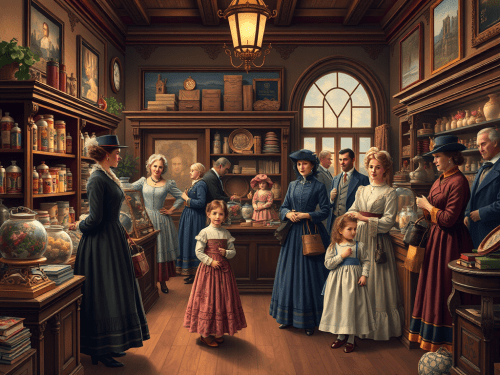
Your journey into the Winchester Mystery House begins long before you cross the mansion’s threshold. It starts at the Mercantile gift shop—a welcoming outpost standing at the edge of a world where history and myth intertwine. Here, beneath warm lights and shelves lined with curiosities, you can secure your tour tickets and prepare for the adventure ahead.
Guests often pause for a souvenir photograph, capturing the moment before they step into Sarah Winchester’s enigmatic domain. As you explore the shop, you will find an eclectic array of gifts and keepsakes: tokens of the mansion’s lore, echoes of Victorian elegance, and mementos that carry a touch of the house’s enduring mystery. The Mercantile is more than a gift shop—it is the gateway. https://winchestermysteryhouse.com/

Victorian homes are more than buildings. They are masterpieces of historic architecture, crafted with a level of artistry, detail, and imagination rarely seen today. Their ornate woodwork, elegant designs, and timeless character tell the story of the generations who built and lived within them. Because they embody an irreplaceable part of our cultural heritage, Victorian homes are truly priceless. Once lost, they can never be recreated exactly as they were. Preserving these architectural treasures ensures that future generations can experience the beauty, craftsmanship, and history that make them so extraordinary.

Consider donating to the Winchester Mystery House, purchasing merchandise, or experiencing one of its many tours. Every visit and contribution helps preserve and restore this priceless national treasure, ensuring that its remarkable architecture, rich history, and enduring legacy continue to inspire future generations. https://winchestermysteryhouse.com/contact/
Welcome to Cresleigh Homes

Within each Cresleigh neighborhood, you’ll find new homes thoughtfully designed to suit the needs of any generation and any lifestyle, with energy efficiency and reliability at their core.

Every Cresleigh team member is passionate about building a new home that you can rely on and a new home that helps you to focus on what truly matters: creating memories with the people you love. Welcome to the neighborhood. https://www.cresleigh.com/

The more we love, the more love we are able to give. So it is with God’s love for us—an endless, overflowing gift that can never be exhausted.

Harris Plumbing, Heating, Air & Electric

Harris Plumbing, Heating, Air & Electric has been serving our community for 30 years—an achievement few companies can claim. That longevity isn’t an accident. It’s the result of hard work, integrity, and a commitment to doing every job the right way, whether it’s a simple repair or a complex system overhaul. We take pride in every service call because we know your home is more than a building—it’s where your family lives, grows, and feels safe. Ensuring your comfort and protection is a responsibility we carry with seriousness and gratitude. After three decades, our mission remains the same: to deliver dependable service you can trust, every time. https://www.callharrisnow.com/


Beyond performance, BMW carries an aura of prestige and craftsmanship: the cabins feel tailored, the technology is purposeful rather than gimmicky, and the design language signals confidence without excess.

Owning a BMW is not just about transportation; it’s about participating in a legacy of excellence that continues to set the standard for luxury performance. This commitment to performance is why BMW continues to earn its reputation as The Ultimate Driving Machine. https://www.brianharrisbmw.com/

Randolph Harris San Francisco Taxation & Mergers
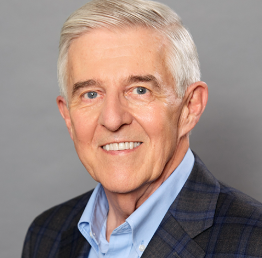
Building strong, lasting client relationships is essential to a successful legal career. Many attorneys assume that mastering legal doctrine alone guarantees success, but law is fundamentally a service profession—our work is measured not only by technical skill, but by how effectively we solve problems for the people who trust us. Long‑term relationships grow from three core commitments: truly knowing your clients, understanding how their legal issues fit within the broader context of their business and personal goals, and consistently delivering exceptional service.

Mr. Randy advises clients on business transitions, taxable and tax‑deferred mergers and acquisitions, joint ventures, restructuring, integrated tax planning, federal and state tax controversy matters, and real estate transactions. His approach is grounded in clarity, responsiveness, and a deep understanding of each client’s unique circumstances. Trust is the cornerstone of every relationship he builds. Ultimately, clients feel confident knowing they are working with someone who not only understands their challenges, but is fully committed to helping them achieve their goals. https://www.jmbm.com/l-randolph-harris.html


Allow Him to Die Correctly
The human family is distinguished from the animal family by a prolongation of the period in which the infant is protected from the harsh realities of life by parental care. In this sheltered situation, the erotic potentialities of human nature blossom, but blossom in an unearthly atmosphere divorced from the realities of human life. Hence, this early blossoming of the erotic life must succumb to repression when it finally confronts the reality-principle. However, through it is repressed, or rather because it is repressed, this early experience of love stays with us as the immortal dream of love, as an indestructible demand of human nature, as the source of our restless discontent. The infantile experience to which our dreams return is an experience of pleasure, so that a return to the pleasure-principle is an indestructible demand of human nature. However, is a return to the pleasure-principle all that human nature demands? The pleasure principle is a concept from Sigmund Freud’s psychoanalytic theory. It refers to the instinctive drive to seek pleasure and avoid pain, discomfort, or tension. Starting from the axiom that the love of objects in the world is modeled on the primal love of the child for the mother, Dr. Freud claims that the child’s relation to the mother is first and foremost a relation of dependence on the mother for survival; the path to the mother is established first of all by elementary basic instincts; the sexual instinct follows a path to an object marked out for it by the self-preservation instinct. #RandolphHarris 1 of 19
Dr. Freud therefore calls object-choice, modeled on this primal pattern of love of the mother, anaclitic, id est, “leaning up against” the non-sexual instinct of self-preservation. This anaclitic character of object-choice—its connection with self-preservation, economic need, and dependence—explains why its characteristic aim is to possess its object. Quite distinct from anaclitic object-choice, and distinctly traceable not only in the neuroses and in the sexual perversion but also in the normal erotic attitudes of women, Dr. Freud finds another pattern of choice in which the infantile model of the object is not the mother but the subject himself. The subject wants to love himself and satisfies his self-love circuitously either by loving an object like himself or by finding an object which loves him as he loves himself. Relating this second type of love to the child’s general love of himself and his own body, Dr. Freud calls this second relation to objects narcissistic. Thus, in some of his writings, he uses the terms “narcissistic object-choice” and “anaclitic object-choice,” corresponding to his later terminology of “identification” and “true object-choice” (or “object-cathexis”). Summarizing the distinction, Dr. Freud says that the human being has originally two sexual objects: himself and the woman who tends to him. Dr. Freud’s distinction between identification and object-choice, or between narcissistic and anaclitic object-choices, does not survive close examination. He is unable to maintain consistently the correlation of identification with love of the father and object-choice with love of the mother, and has to speak of anaclitic relations with the father and identifications with the mother. However, the fundamental issue is not confusion in the applications themselves. #RandolphHarris 2 of 19
Close examination of Dr. Freud’s own premises and arguments suggests that there is only one loving relationship to objects in the world, a relation of being-one-with-the-world which, though closer to Dr. Freud’s narcissistic relation (identification), is also at the root of his other category of possessive love (object-choice). If love seeks only identification with objects in the world, then possessiveness is not an essential feature of love. Our criticism is directed against Dr. Freud’s notion of “true object-cathexis” as an irreducible desire to possess the beloved. The very fact that “true object-cathexis” is fundamentally anaclitic should make us suspicious of its integrity as a mode of loving. For to be anaclitic means that love follows not its own path but one marked out for it by economic needs, the fact of dependence, and the reality-principle in general. Hence, as Dr. Freud himself always insisted, it is a pattern established by a fusion of the sexual instinct and the non-sexual instinct. In the phase when he assumed the two instincts to be sex and self-preservation, Dr. Freud spoke of object-choice as a manifestation of the sexual instincts leaning on the self-preservation instincts. In the phase when he assumed the two instincts to be Eros and aggression, he spoke of the inevitable aggressive component in object-choice if it is to possess its object. #RandolphHarris 3 of 19
Furthermore, Dr. Freud’s own analysis of possessive love (object-choice) and its primal model, love of the mother, shows that its erotic aim is not possession but union with the object, a union which is hardly distinguishable from his own category of identification. He drives identification from the desire for union with the world in the form of incorporation, after the primal model of the relation of the child to the mother’s bosom. At the same time, he says that incorporation of the object is the aim of normal adult loving, id est of object-choice. Thus, the distinction between object-choice and identification breaks down, both of them meeting in a project of incorporation or being-one-with-the-world, modeled on the primal relation of the child to the mother’s bosom. Hence, Dr. Freud says that “at the very beginning, in the primitive oral phase of the individual’s existence, object-cathexis and identification are hardly distinguished from each other.” And consistently with this, he asserts that the aim of normal adult loving is the restoration of this “primal condition in which object-libido [id est, anaclitic object-choice] and ego-libido [id est, narcissistic object-choice] cannot be distinguished.” In Dr. Freud’s later writings, the importance of the early phase of dependence on the mother is increasingly emphasized, and in that context, he finds it necessary to conclude that the essence of love of the mother is the need to be loved; but if so, then love of the mother is essentially narcissistic, since he says that “to be loved is the aim and the satisfaction of the narcissistic object-choice.” #RandolphHarris 4 of 19

One more passage from Dr. Freud’s later writings shows both the breakdown of the whole distinction between anaclitic and narcissistic object-choice, and also Dr. Freud’s failure explicitly to withdraw the distinction: “You remember the object-choice after the anaclitic type, which psychoanalysis needs, and attaches itself to the objects that ensure their satisfaction.” The collapse of the distinction between identification and object-choice leaves love with one essential aim over and above pleasure, which is to become one with objects in the world. Dr. Freud himself repeatedly drew attention to the interchangeability of identification and object-choice; to explain the self-ability of identification and object-choice; to explain the self-punishment in melancholia and also the self-punishing institution of the super-ego he postulated that we give up a loved object (object-choice) only on condition of making identification with the lost object. If we abandon the notion that the two are in an irreducible duality, this process, which replaces an object-choice with an identification, is easier to comprehend. For, as Dr. Freud says, we make the identification with the lost object by introjecting or incorporating it into the self, not really incorporating it, but incorporating it passively by making ourselves like it. However, since real incorporation of the object can be said to be the aim of object-love, the choice now appears to be not between identification and object-choice, but between active identification with the object and passive remodeling of the self so as to erect in the self a substitute for the object lost. #RandolphHarris 5 of 19

The choice is between erotic action on the outside world (Ferenczi’s “alloplastic adaptation”) and passive alteration of the subject’s own body and psyche as a substitute for erotic action denied (Ferenczi’s “autoplastic adaptation”). This distinction is, I think, what Dr. Freud is driving at in the following obscure formula: “The return of the libido from the object to the ego and its transformation into narcissism makes a representation of a happy love, and conversely, an actual happy love corresponds to the primal condition in which object-libido and ego-libido cannot be distinguished.” Those who question the soundness of these ideas are nearly always those who are still mesmerized by materialist superstitions. It is impossible for them to cope with life’s higher requirements because they persist in thinking sensately. Because the spirit of man is neither scientifically measurable nor immediately experienceable, the education of the modern mind too often rejected its reality and denied its utility. We can distinguish three forms of shallow living, each differing from the others merely in the emphasis upon certain aspects. In one, the emphasis is on fun, on having a good time. This may superficially look like a zest for living, in contrast to a basic characteristic or resignation—a not wanting. However, the motive force here is not a reaching out for enjoyment but the necessity to push down a gnawing feeling of futility by means of distracting pleasures. The following poem, entitled “Palm Springs,” which I found in Harper’s Magazine, characterizes such fun-seeking in the leisure class: “Oh, give me a home, where the millionaires roam, and the dear little glamour girls play. Where never is heard an intelligent word, and we round up the dollars all day.” #RandolphHarris 6 of 19

It is, however, by no means restricted to the leisure class but goes far down the social scale to people with small incomes. It is, after all, merely a question of money whether “fun” is found in expensive nightclubs and cocktail and theater parties or in getting together in homes for drinking, playing cards, and chattering. It may also be more localized through collecting stamps, becoming a gourmet, or going to the movies, all of which would be all right if they were not the only real content of life. It is not necessarily socialized, but may consist of reading mystery stories, listening to the radio, looking at television, or daydreaming. If fun is socialized, two things are strictly avoided: being alone for any length of time and having serious talk. The latter is regarded as rather bad manners. The cynicism is thinly covered up by “tolerance” or “broad-mindedness.” In the second group, the emphasis is on prestige or opportunistic success. The check on strivings and efforts which is characteristic of resignation is here undiminished. The motivations are mixed. It is in part the wish for a life made easier by the possession of money. In part, it is a need to give an artificial lift to self-esteem, which in this whole group of shallow living sinks to zero. This however, with the loss of inner autonomy, can be done only by lifting oneself up in the eyes of others. One writes a book because it might be a best seller; one marries for money; one joins a political party which is likely to offer advantages. In social life, there is less emphasis on fun and more on the prestige of belonging to certain circles or going to certain places. The only moral code is to be smart, to get by, and to not be caught. George Eliot has given us in Romola an excellent picture of such an opportunistic person in the figure of Tito. We see in him the evasion of conflicts, the insistence on an easy life, the noncommitment, and the gradual moral deterioration. The latter is not accidental but is bound to happen with the moral fiber becoming weaker and weaker. #RandolphHarris 7 of 19

The third form is the “well-adapted” automaton. Here, the loss of authentic thinking and feeling leads to a general flattening out of the personality, aptly described by Marquand in many of his characters. Such a person then fits in with the others and takes over their codes and conventions. He feels, thinks, does, and believes in what is expected or considered right in his environment. The emotional deadness here is not greater, but more obvious, than in the other two groups. Erich Fromm has well described this overadaptation and has seen its social significance. If we include, as we must, the other two forms of shallow living, this significance is all the greater because of the frequency of such ways of living. Fromm saw correctly that the picture is different from the common run of neuroses. Here are people not obviously driven as the neurotic usually is, not obviously disturbed by conflicts. Also, they often have no particular “symptoms” like anxiety and depression. The impression is in short that they do not suffer from disturbances but that they lack something. Fromm’s conclusion is that these are conditions of defect as innate but as a result of being crushed by authority early in life. His speaking of defect and my speaking of shallow living may seem like mere difference in terminology. However, as so often, the difference in terminology results from significant differences in the meaning of the phenomenon. Actually, Fromm’s contention raises two interesting questions: is shallow living a condition which has nothing to do with neurosis or is it the outcome of a neurotic process, as I have presented here? And: do people indulging in shallow living actually lack depth, moral fiber, and autonomy? #RandolphHarris 8 of 19

If shallow living is fully developed, there is of course no incentive for therapy. However, when not far advanced, they may want it because they are disturbed with by psychosomatic disorders or by repeated failures, inhibitions in work, and an increasing feeling of futility. They may sense that they are going downhill and be disquieted about in. Our first impression in analysis is that already described from the point of view of general curiosity. They stay on the surface, seem to lack psychological curiosity, are ready with glib explanations, are interested only in external matters connected with money or prestige. All that makes us think that there is more than meets the eye in their history. As described before in terms of the general movement toward designation, there were periods earlier, in or after adolescence, in which they had active strivings and went through some emotional distress. This would not only put the onset of the conditions later than Fromm assumes but point to its being an outcome of a neurosis which at some time was manifest. As the analysis proceeds, a baffling discrepancy appears to between their waking lives and their dreams. Their dreams unequivocally show emotional depth and turbulence. These dreams, and often they only, reveal a deeply buried sadness, self-hate and hate for others, self-pity, despair, anxiety. In other words, there is a world of conflicts and passionate feelings under the smooth surface. We try to awaken their interest in their dreams, but they tend to discard them. They seem to live in two worlds, entirely disconnected. #RandolphHarris 9 of 19
More and more, we realize that here is not given superficiality but that they are anxious to stay away from their own depth. As if nothing had happened, they get a fleeting glimpse of it and close up tightly. A little later feelings may suddenly emerge in their waking life from the abandoned depths: some memory may make them cry, some nostalgia or some religious feeling may appear—and vanish. These observations, confirmed by the later analytic work, contradict the concept of a defect and point to a determined light from their inner personal life. Considering shallow living as an unfortunate outcomes of a neurotic process gives a less pessimistic outlook, both for prophylaxis and therapy, The frequency of shallow living at the present time makes it highly desirable to recognize it as a disturbance and to prevent its development. Its prophylaxis coincides with preventative measures concerning neuroses in general. Much work is being done in this regard but much more is necessary and apparently can be done, particularly in schools. For any therapeutic work with resigned patients, the first requisite is to recognize the condition as a neurotic disturbance and not to discard it as either a constitutional or a cultural peculiarity. The latter concepts imply that it is unalterable or that it does not belong in the range of problems to be tackled by a psychiatrist. As yet, it is less well known than other neurotic problems. It has probably aroused less interest for two reasons. Many disturbances occurring in this process, although they may cramp a person’s life, are rather inconspicuous and therefore call less urgently for therapy. On the other hand, gros disturbances that may arise from this background have not been connected with the basic process. The only factor in it with which psychiatrists are thoroughly familiar is the detachment. However, resignation is a much more encompassing process, presenting specific problems and specific difficulties in therapy. These can be tackled successfully only with a full knowledge of its dynamics and its meaning. #RandolphHarris 10 of 19

The same science which formerly separated man in belief and understanding from the divine Mind, later, by its confirmation of the universal laws and powers, draws him nearer to it. A strategic legitimating function of symbolic universes for individual biography is the “location” of death. The experience of the death of others and, subsequently, the anticipation of one’s own death posit the marginal situation par excellence for the individual. Needless to elaborate, death also posits the most terrifying threat to the taken-for-granted realities of everyday life. The integration of death within the paramount reality of social existence is, therefore, of the greatest importance for any institutional order. This legitimation of death is, consequently, one of the most important fruits of symbolic universes. Whether it is done with or without recourse to mythological, religious or metaphysical interpretations of reality is not the essential question here. The modern atheist, for instances, who bestows meaning upon death in terms of a Weltanschauung of progressive evolution or of revolutionary history also does so by integrating death within a reality-spanning symbolic universe. All legitimations of death must carry out the same essential task—they must enable the individual to go on living in society after the death of significant others and to anticipate his own death with, at the very least, terror sufficiently mitigated so as not to paralyze the continued performance of the routines of everyday life. It may readily be seen that such legitimation is difficult to achieve short of integrating the phenomenon of death within a symbolic universe. Such legitimation, then, provides the individual with a recipe for a “correct death.” Optimally, this recipe will retain its plausibility when his own death is imminent and will allow him, indeed, to “die correctly.” #RandolphHarris 11 of 19

It is the legitimation of death that the transcending potency of symbolic universes manifests itself most clearly, and the fundamental terror-assuaging character of the ultimate legitimations of the paramount reality of everyday life is revealed. Only if it is constantly protected against terror can the primacy of the social objectivations of everyday life retain its subjective plausibility. On the level of meaning, the institutional order represents a shield against terror. To be anomic, therefore, means to be deprived of this shield and to be exposed, alone, to the onslaught of nightmare. While the horror of aloneness is probably already given in the constitutional sociality of man, it manifests itself on the level of meaning in man’s incapacity to sustain a meaningful existence in isolation from the nomic constructions of society. The symbolic universe shelters the individual from ultimate terror by bestowing ultimate legitimation upon the protective structures of the institutional order. Very much the same may be said about the social (as against the just discussed individual) significance of symbolic universes. They are sheltering canopies over the institutional order as well as over individual biography. They also provide the delimitation of social reality; that is, they set the limits of what is relevant in terms of social interaction. One extreme possibility of this, sometimes approximated in primitive societies, is the definition of everything as social reality; even inorganic matter is dealt with in social terms. A narrower, and more common, delimitation includes only the organic or animal worlds. The symbolic universe assigns ranks to various phenomena in a hierarchy of being, defining the range of the social within this hierarchy. #RandolphHarris 12 of 19
Needless to say, such ranks are also assigned to different types of men, and it frequently happens that broad categories of such types (sometimes everyone outside the collectivity in question) are defined as other than or less than human. This is commonly expressed linguistically (in the extreme case, with the name of the collectivity being equivalent to the term “human”). This is not too rare, even in civilized societies. For example, the symbolic universe of traditional India assigned a status to the outcastes that was closer to that of animals than to the human status of the upper castes (an operation ultimately legitimated in the theory of karma-samsara, which embraced all beings, human or otherwise), and as recently as the Spanish conquests in America, it was possible for the Spaniards to conceive of the Indians as belonging to a different species (this operation being legitimated in a less comprehensive manner by a theory that “proved” that the Indians could not be descended from Adam and Eve). The symbolic universe also orders history. It locates all collective events in a cohesive unity that includes past, present, and future. With regard to the past, it establishes a “memory” that is shared by all the individuals socialized within the collectivity. With regard to the future, it establishes a common frame of reference for the projection of individual actions. Thus, the symbolic universe links men with their predecessors and their successors in a meaningful totality, serving to transcend the finitude of individual existence and bestowing meaning upon the individual’s death. All the members of society can now conceive of themselves as belonging to a meaningful universe, which was there before they were born and will be there after they die. The empirical community is transposed onto a cosmic plane and made majestically independent of the vicissitudes of individual existence. #RandolphHarris 13 of 19

As we have already observed, the symbolic universe provides a comprehensive integration of all discrete institutional processes. The entire society now makes sense. Particular institutions and roles are legitimated by locating them in a comprehensively meaningful world. For example, the political order is legitimated by reference to a cosmic order of power and justice, and political roles are legitimated as representations of these cosmic principles. The institution of divine kingship in archaic civilizations is an excellent illustration of the manner in which this kind of ultimate legitimation operates. It is important, however, to understand that the institutional order, like the order of individual biography, is continually threatened by the presence of realities that are meaningless in its terms. The legitimation of the institutional order is also faced with the ongoing necessity of keeping chaos at bay. All social reality is precarious. All societies are constructions in the face of chaos. The constant possibility of anomic terror is actualized whenever the legitimations that obscure the precariousness are threatened or collapse. Especially if it occurs with sudden violence, the dread that accompanies the death of a king expresses this terror. Over and beyond emotions of sympathy or pragmatic political concerns, the death of a king under such circumstances brings the terror of chaos to conscious proximity. The popular reaction to the assassination of President Kennedy and the Assassination attempts on President Trump are potent illustrations. It may readily be understood why such events have to be followed at once with the most solemn reaffirmations of the continuing reality of the sheltering symbols. #RandolphHarris 14 of 19

The origins of a symbolic universe have their roots in the constitution of man. If man in society is a world-constructor, this is made possible by his constitutionally given world-openness, which already implies the conflict between order and chaos. Human existence is, ab initio, an ongoing externalization. As man externalizes himself, he constructs the world into which he externalizes himself. In the process of externalization, he projects his own meanings into reality. Symbolic universes, which proclaim that all reality is humanly meaningful and call upon the entire cosmos to signify the validity of human existence, constitute the farther reaches of this projection. In view of the spirit of the times, the attitude and findings of modern science must be respected and harmonized with the mystic’s. Both Blavatsky and Steiner saw this and tried to accommodate science in their presentations. However, since their day there has been a revolution in scientific theory which has made this work easier, much easier. Science has carried itself to the broadest possible dimensions. Now it must carry itself to the deepest. The fear of yielding to personal feelings in his thought about the world became so exaggerated in the scientist that it shut out the pleading and rejected the services of impersonal feelings, which manifests itself through intuition. This is why he came to be denial of mystical doctrine and scorn of mystical experience. However, such undue one-sidedness could not last indefinitely. Its end is within sight. The hope of educated men who understand and appreciate the services of science but who deplore its dangers and recognize its limitations, lies in the investigation and development of consciousness. #RandolphHarris 15 of 19
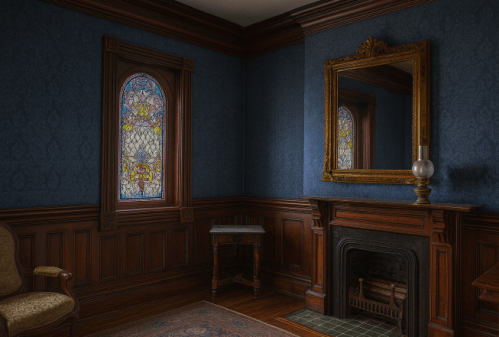
When men awaken to a more emotional realization of what science has done to them—as opposed to what it has done for them—there will be an urgent demand for a reinterpretation of science itself. The old interpretation will be discarded as dangerous. When the scientist recovers his lost quality of reverence—not necessarily expressed through some established religion—for some mysterious Greatness present in the cosmos he investigates, something which escapes analysis or description but arouses feeling and wonder, his work will not suffer but becomes fuller and his understanding become more satisfying. It is a meaningful historic fact that Sir Francis Bacon wrote the first notable book in English language of philosophical—by which I do not mean theological—kind and the first notable book of a scientific kind in the same language. He was a Creator, a Pioneer, a Pathfinder. Faith in science is no longer the alternative to faith in religion—except for one-sided, narrow minds in either camps. Rather, there are now complementary faiths. The scientists who seeks to learn the origin, history, nature, and laws of the physical universe and the psychologist who probes into the workings of the human mind—both must at some point of their investigation consider the questions “Who Am I?” side by side with “What Is the World?” Next, they cannot afford to ignore the mystery of the Deity. Finally, it will be found at some point on their way that they need to impose a self-discipline and an ethical code upon themselves. Having emptied human life of its spiritual meaning, turning it into a “fortuitous conjunction of atoms,” science is now nearing the point where it will have no other course than to restore the meaning, but in a rational and intelligent way. #RandolphHarris 16 of 19

When it comes to firefighting, every incident carries the potential for injury—no matter how small the fire appears or how routine the call may seem. If you see a fire engine stopped in the street without its lights on, use extreme caution. Crews may be working nearby, and passing the apparatus can put them in danger. It is often safer to turn around and take another route; if you strike a firefighter or civilian and cause a fatality, you could face charges such as manslaughter. Firefighters frequently move around their vehicle on foot, loading equipment or preparing to leave the scene. Attempting to pass the apparatus can result in a collision with someone you cannot see. Pay close attention to their hand signals as well—emergency vehicles sometimes move slowly or reposition, and impatient drivers trying to slip around them create hazardous situations. If you are already in an intersection when you notice an emergency vehicle approaching, continue through it, then pull to the right and stop as soon as it is safe. Always obey directions from law enforcement officers or firefighters, even if those instructions conflict with posted signs or traffic laws. When sirens or flashing lights are activated, it is illegal to follow within 300 feet of a fire engine, ambulance, or police vehicle. Driving to the scene of a fire, collision, or disaster can also result in arrest, as doing so interferes with firefighters, paramedics, and other emergency personnel. Professional courage is not limited to physical toughness. It includes listening to others, advocating for them in difficult situations, understanding personal limits, and having the integrity to tell a superior when they are wrong. The deeper truth is that public safety depends not only on the bravery of first responders but on the discipline and judgment of the community around them. Every driver’s decision—whether cautious or careless—can either protect or endanger the people risking their lives to protect everyone else. #RandolphHarris 17 of 19

To help prevent disasters, we must plan well in advance. Efforts to preserve farmland and maintain buildable land for future generations often lead to discussions about population growth and long‑term planning. Some people argue that immigration levels should be managed carefully to ensure that infrastructure, housing, and land use remain sustainable. Others suggest that, when immigration does occur, programs that encourage broad representation can help communities reflect the diversity of the wider world. When Americans purchase goods made in the United States, it strengthens local businesses and signals to investors that these products are in demand. Strong sales give investors confidence to reinvest in domestic companies, helping keep jobs, production, and wages within the country. As businesses grow, they contribute more to the tax base, which can reduce the burden on taxpayers over time. Supporting American businesses also keeps more money circulating within the national economy. The government increases the national debt when it spends more than it collects in tax revenue or borrows from private or foreign lenders. When people shop locally, more tax revenue stays in the community and supports public services. This helps keep jobs in the United States and increases the tax contributions that fund government operations. Purchasing foreign-made goods, by contrast, often sends money overseas and may benefit companies that operate under lighter tax or environmental regulations. Buying American-made products can also reduce environmental impact because they travel shorter distances and are produced under stricter standards for air, land, and water protection. In this way, consumer choices influence not only the economy but also environmental stewardship and long-term national sustainability. #RandolphHarris 18 of 19

Under President Trump’s administration, he has made America a priority. President Trump has hermetically sealed the southern border, illegal crossings have been terminated, and are 90 percent lower than under the previous administration. Since President Trump’s crack down on crime, violent crimes in Washington D.C. have dropped by approximately 80 percent. He has stopped thousands of pounds of drugs from entering America and killing citizens. And since President Trump took office, investments in America have increased by trillions of dollars in U.S.A. manufacturing, production, and innovation. As you can see, President Donald Trump and his pledge to “Make America Great Again” is exactly what America needs to save the country and the American people. And yes, diversity is important, so you can see why it is also important to preserve blonde hair and blue eyes, as the people with these characteristics are becoming a minority in America. As a reminder, parents, please teach your children to love America and be patriotic citizens, and to buy goods and services made in America. It is also important to respect law and order and treat your elders with respect. It is inborn in the human mind to wish to know. If this begins with the endless surface questions of a child’s curiosity, if it continues into deeper questions of a scientist’s probing investigation, it cannot and does not stop there. For the higher part of the mind will eventually come into unfoldment, that union of abstract reflective thought with mystical intuition, which is true intelligence, which needs and sees a view of the whole of things. And so, the knowing faculty enters the realm of philosophy. A lot of children are having problems in school and cannot even write a paragraph because they are not reading their books. When you actually read books, you get an example of how to write and will become a better student. Therefore, remember to take your education seriously so that you will be successful in life and make your family proud. Also, to make sure they have all the resources required, please donate to the Sacramento Fire Department to help improve our national security. “Oh, thus be it ever, when freemen shall stand between their loved home and the war’s desolation! Blest with victory and peace, may the heav’n-rescued land Praise the Power that hath made and preserved us a nation! Then conquer we must, when our cause is just, and this be our motto: ‘In God is our trust.’ And the star-spangled banner in triumph shall wave O’er the land of the free and the home of the brave.” Thank you for your attention to this matter. PRESIDENT DONALD J. TRUMP. #RandolphHarris 19 of 19

The Winchester Mystery House remains committed to providing a memorable and welcoming experience for every guest who visits our historic landmark. As a place rich in history, tradition, and architectural wonder, we continue to focus on creating an environment defined by respect, hospitality, and community.
Our team is dedicated to preserving the unique legacy of the estate while ensuring visitors can enjoy the attraction’s stories, gardens, and renowned tours. We are grateful for the continued support of our guests, neighbors, and partners, whose enthusiasm helps make Winchester Mystery House a special destination.

Guided by values of kindness, professionalism, and stewardship, we remain focused on delivering an exceptional experience and sharing the enduring history and mystery that have inspired generations of visitors.
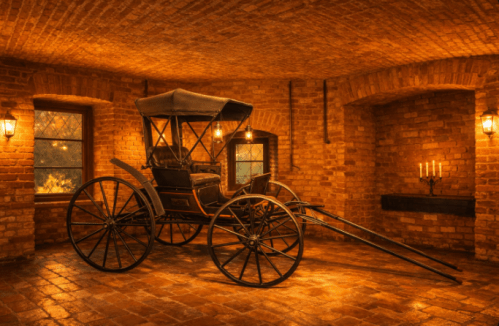
PRIVATE EVENTS & WEDDINGS
at WINCHESTER ESTATE
The Winchester Mystery House offers a wedding and special‑event experience unlike anywhere else in California. Its sprawling Victorian architecture, lush gardens, and famously enigmatic rooms create a backdrop that feels both elegant and otherworldly. Couples and guests celebrate surrounded by historic craftsmanship and the mansion’s legendary atmosphere, turning milestones into memories people talk about for years. Whether it’s a wedding, anniversary, or private gathering, the estate delivers a setting that is truly one of a kind.
Café 13: A Rest Stop on the Edge of the Mystery
After wandering the winding halls of the Winchester Mystery House—where staircases defy logic and whispers seem to cling to the walls—Café 13 offers a welcome return to warmth and grounding. Newly reopened and serving guests daily from 10 AM to 3 PM, this cozy hideaway invites you to pause, breathe, and gather yourself before diving back into the mansion’s secrets. Settle in with a warm meal, challenge a friend to a board game, or simply rest and recharge as sunlight filters through the windows. Café 13 is more than a café—it’s a moment of calm between chapters of the Winchester legend, a place to steady your nerves before returning to the gardens, the grandeur, and the mysteries that await.
Winchester Mercantile Gift Shop
Your journey into the Winchester Mystery House begins long before you cross the mansion’s threshold. It starts at the Mercantile gift shop—a welcoming outpost standing at the edge of a world where history and myth intertwine. Here, beneath warm lights and shelves lined with curiosities, you can secure your tour tickets and prepare for the adventure ahead.
Guests often pause for a souvenir photograph, capturing the moment before they step into Sarah Winchester’s enigmatic domain. As you explore the shop, you will find an eclectic array of gifts and keepsakes: tokens of the mansion’s lore, echoes of Victorian elegance, and mementos that carry a touch of the house’s enduring mystery. The Mercantile is more than a gift shop—it is the gateway. https://winchestermysteryhouse.com/

All treats, no frights. The Festival Family Ticket gets you into the festival grounds, a light-up No-Boo necklace at entry, and a five stop trick or treat trail winding around the mansion. The final stop lands you in the Lantern Gardens with a roast your own s’mores kit.

Wander the Cider Yard, Harvest Hollow and Houdini’s Twilight Fair, grab photos around the mansion, and let the kids lead the way. Entry times run 7pm to 8:30pm.
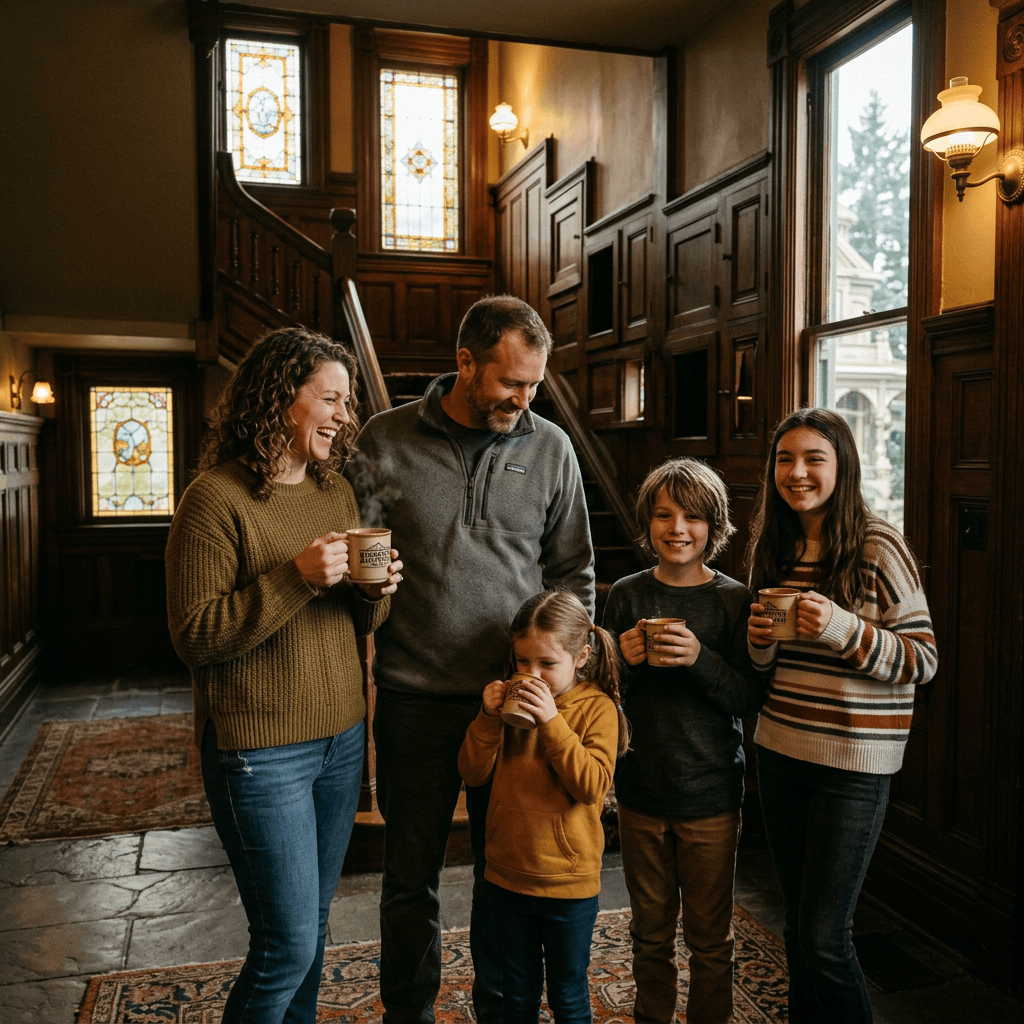
This ticket does not include the haunted attractions or mansion access, and the festival is still a Halloween night out, so expect some spooky scenery along the trail.
More information about this event can be found at:


The Bluffs at Plumas Ranch
Modern Living in the Heart of Plumas Lake
Starting from $456,000
📍 Sales Office
1821 Glen Ellen Way
Plumas Lake, CA 95961
Discover Your New Home

Every home at The Bluffs is designed with quality craftsmanship and convenience in mind. Standard features include engineered roof construction, full front and rear yard fencing, and an impressive suite of smart-home technology such as a central automation hub, smart thermostat, digital entry system, video doorbell, Wi-Fi extender, and remote garage access. Inside, residents will enjoy spacious primary suites, engineered stone showers, ceramic tile flooring, designer interior finishes, stainless steel appliances, and stylish center-island kitchens that create the perfect setting for cooking, entertaining, and family gatherings.

To help homeowners create a space that reflects their personal style, The Bluffs offers professionally curated design packages that make selecting finishes and features simple and enjoyable. With options tailored to a variety of tastes and budgets, buyers can personalize their home while maintaining the quality and elegance that define the community.

Ideally located near parks, schools, and landscaped open spaces, The Bluffs provides a peaceful neighborhood atmosphere while offering convenient access to Sacramento, Roseville, and other major destinations throughout the region. Residents enjoy the perfect balance of suburban living and commuter-friendly convenience.

One of the community’s most popular home designs is Residence Four, a spacious two-story floor plan featuring four bedrooms and three bathrooms. Designed for flexibility and modern living, this home includes a first-floor bedroom adjacent to a full bathroom, making it ideal for guests, multigenerational households, or a home office

. The rear of the home features an open-concept layout that seamlessly connects the kitchen, dining area, and great room, creating an inviting space for everyday living and entertaining. Upstairs, homeowners will find a generous loft, three additional bedrooms, and a conveniently located laundry room, delivering both comfort and functionality.

Visit the sales office at 1821 Glen Ellen Way, Plumas Lake, CA 95961, and discover why The Bluffs at Plumas Ranch is quickly becoming one of the area’s most desirable places to call home. With modern amenities, thoughtful floor plans, and an exceptional location, The Bluffs offers a fresh opportunity to enjoy the best of Northern California living. https://www.cresleigh.com/plan/bluffs-residence-4
The best homes are not measured by square footage, but by the happiness, comfort, and connection shared within them.

No Artist Tolerates Reality

Beauty pleases universally without the aid of concept, and art is the noble labor that exalts while it defines. That is true, but no artist can get along with reality. Artistic creation is a demand for unity and a rejection of the world. However, it rejects the world on account of what it lacks and in the name of what it sometimes is. Rebellion can be observed here in its pure state and in its original complexities. Thus, art should give us a final perspective on the content of rebellion. The hostility to art shown by all revolutionary reformers must, however, be pointed out. Plato is moderately reasonable. He only calls in question the deceptive function of language and exiles only poets from his republic. Apart from that, he considers beauty more important than the world. However, the revolutionary movement of modern times coincides with an artistic process that is not yet completed. The Reformation chooses morality and exiles beauty. Rousseau denounces in art a corruption of nature by society. Saint-Just inveighs against the theater, and in the elaborate program he composes for the “Feast of Reason” he states that he would like Reason to be impersonated by someone “virtuous and beautiful.” The French Revolution gave birth to no artists, but only to a great journalist, Desmoulins, and to a clandestine writer, Sade. It guillotines the only poet of the times. The only great prose-writer took refuge in London and pleaded the case of Christianity and legitimacy. #RandolphHarris 1 of 21

A little later, the followers of Saint-Simon demanded a “socially useful form of art, “Art for progress” was a commonplace of the whole period, and one that Hugo revived, without succeeding in making it sound convincing. Valles alone brings to his malediction of art a tone of imprecation that gives it authenticity. This tone is also employed by the Nihilists. Pisarev proclaims the deposition of aesthetic values, in favor of pragmatic values. “I would rather be a Russian shoemaker than a Russian Raphael.” A pair of shoes, in his eyes, is more useful than Shakespeare. The nihilist Nekrassov, a great and moving poet, nevertheless affirms that he prefers a piece of cheese to all of Pushkin. Finally, we are familiar with the excommunication of art pronounced by Tolstoy. Revolutionary Russia finally even turned it back on the marble statues of Venus and Apollo, still gilded by the Italian sun, that Peter the Great had had brought to his summer garden in St. Petersburg. Suffering, sometimes, turns away from too painful expressions of happiness. German ideology is no less severe in its accusations. According to the revolutionary interpreters of Hegel’s Phenomenology, there will be no art in reconciled society. Beauty will be lived and no longer only imagined. Reality, having become entirely rational, will satisfy, completely by itself, every appetite. The criticism of formal conscience and of escapist values naturally extends itself to embrace art. Art does not belong to all times; it is determined, on the contrary, by its period, and expresses, says Marx, the privileged values of the ruling classes. Thus, there is only one revolutionary form of art, which is, precisely, art dedicated to the service of the revolution. #RandolphHarris 2 of 21
Moreover, by creating beauty outside the course of history, art impedes the only rational activity: the transformation of history itself into absolute beauty. The Russian shoemaker, once he is aware of his revolutionary role, is the real creator of definitive beauty. As for Raphael, he created only a transitory beauty, which will be quite incomprehensible to the new man. The scientists reached a region of investigation where each turn of the page of the world-problem revealed another page which became even harder to read. The newer problems were metaphysical ones. Therefore, when science ceases to be such and becomes metaphysics, it will fulfill its highest purpose. To move from physics to metaphysics is to move farther from touchable things to more abstract conceptions, from pictured images to comprehended ideas, from concrete forms to mind-held abstractions. If the research stops and goes no further, the first leads to materialism. If, however, he pursues the enterprise and looks for origins, sources, and primary causes, he must end up as a mentalist. Science, using the method of analysis to find the truth about things, must afterwards add the method of synthesis, or it will get only a half-truth. This need not mean surrendering the mind to speculation, imagination, theorizing, fantasy, or so-called metaphysics, but rather using its creative faculty and its power of understanding—in short, using intelligence which is derived from intuitive feeling and correct thinking. #RandolphHarris 3 of 21
So long as science does not pause to reflect adequately upon its own self, its own character and its own foundations, so long is it necessarily materialistic. However, after it has taken the trouble to do so, which means after it has fulfilled its higher purpose by turning metaphysical, it cannot help renouncing its materialism. The scientist remains loyal to his self-set goal. He will sooner or later be compelled by the logic of his discoveries as much as by the logic of his reflections to turn himself into a philosopher and continue his quest in the still higher sphere of philosophy. In the last one hundred and seventy-five years even the sciences, particularly the fields of nuclear physics and biology, have moved so far ahead that they have opened the way for principles and teachings, the knowledge and practices of true philosophy. Life will be better guided when scientific knowledge lets itself be joined to spiritual consciousness. Mars asks himself, it is true, how the beauty created by the Greeks can still be beautiful for us. His answer is that this beauty is the expression of the naïve childhood of this world and that we have, in the midst of our adult struggles, a nostalgia for this childhood. However, how can the masterpieces of the Italian Renaissance, how can Rembrandt, how can African, Chinese, and Egyptian art still be beautiful in our eyes? What does it matter! The trial of art has been opened definitively and is continuing today with the embarrassed complicity of artists and intellectuals dedicated to culminating both their art and their intelligence. We notice, in fact, that in the contest between Shakespeare and the shoemaker, it is not the shoemaker who maligns Shakespeare or beauty but, on the contrary, the man who continues to read Shakespeare and who does not choose to make shoes—which he could never make, if it comes to that. The artists of our time resemble the repentant noblemen of the nineteenth-century Russia; their bad conscience is their excuse. #RandolphHarris 4 of 21

However, the last emotion that an artist can experience, confronted with his art, is repentance. It is going far beyond simple and necessary humility to pretend to dismiss beauty, too, until the end of time, and meanwhile, to deprive all the world, including the shoemaker, of this additional bread of which one has taken advantage oneself. This form of ascetic insanity, nevertheless, has its reasons, which at least are of interest to us. They express on the aesthetic level the struggle, already described, of revolution and rebellion. In every rebellion is to be found the metaphysical demand for unity, the impossibility of capturing it, and the construction of a substitute universe. Rebellion, from this point of view, is a fabricator of the universe. Rebellion, from this point of view, is a fabricator of universes. This also defines art. The demands of rebellion are really, in part, aesthetic demands. All rebel thought, as we have seen, is expressed either in rhetoric or in a closed universe. The rhetoric of ramparts in Lucretius, the convents and isolated castles of Sade, the island or the lonely rock of the romantics, the solitary heights of Nietzsche, the primeval seas of Lautreamont, the parapet of Rimbaud, the terrifying castles of the surrealists, which spring up in a storm of flowers, the prison, the nation behind barbed wire, the concentration camps, the empire of free enslaved people, all illustrate, after their own fashion, the same need for coherence and unity. In these sealed worlds, man can reign and have knowledge at last. #RandolphHarris 5 of 21

This tendency is common to all the arts. The artist reconstructs the world to his plan. The symphonies of nature know no rests. The world is never quiet; even its silence eternally resounds with the same notes, in vibrations that escape our ears. As for the same notes, in vibrations that escape our ears. As for those we perceive, they carry sounds to us, occasionally a chord, never a melody. Music exists, however, in which symphonies are completed, where melody gives its form to sounds that by themselves have none, and where, finally, a particular arrangement of notes extracts from natural disorder a unity that is satisfying to the mind and the heart. “I believe more and more,” writes Van Gogh, “that God must not be judged on this earth. It is one of His sketches that has turned out badly.” Every artist tries to reconstruct this sketch and to give it the style it lacks. The greatest and most ambitious of all the arts, sculpture, is bent on capturing, in three dimensions, the fugitive figure of man, and on restoring the unity of great style to the general disorder of gestures. Sculpture does not reject resemblance, of which, indeed, it has need. However, resemblance is not its first aim. What it is looking for, in its periods of greatness, is the gesture, the expression, or the empty stare which will sum up all the gestures and all the stares in the world. Its purpose is not to imitate, but to stylize and to imprison in one significant expression the fleeting ecstasy of the body or the infinite variety of human attitudes. Then, and only then, does it erect, on the pediments of teeming cities, the model, the type, the motionless perfection that will cool, for one moment, the fevered brow of man. The frustrated lover of love can finally gaze at the Greek caryatides and grasp what it is that triumphs, in the body and face of the woman, over every degradation. #RandolphHarris 6 of 21
The principle of painting is also to make a choice. “Even genius,” writes Delacroix, ruminating on his art, “is only the gift of generalizing and choosing.” The painter isolates his subject, which is the first way of unifying it. Landscapes flee, vanish from the memory, or destroy one another. That is why the landscape painter or the painter of still life isolates in space and time things that normally change with the light, get lost in an infinite perspective, or disappear under the impact of other values. The first thing that a landscape painter does is to square off his canvas. He eliminates as much as he includes. Similarly, subject-painting isolates, in both time and space, an action that normally would become lost in another action. Thus, the painter arrives at a point of stabilization. The really great creative artists are those who, like Piero della Francesca, give the impression that the stabilization has only just taken place, that the projection machine has suddenly stopped dead. All their subjects give the impression that, by some miracle of art, they continue to live, while ceasing to be mortal. Long after his death, Rembrandt’s philosopher still meditates, between light and shade, on the same problem. “How vain a thing is painting that beguiles us by the resemblance to objects that do not please us at all.” Delacroix, who quotes Pascal’s celebrated remark, is correct in writing “strange” instead of “vain.” These objects do not please us at all because we do not see them; they are obscured and negated by a perpetual process of change. #RandolphHarris 7 of 21
Who looked at the hands of the executioner during the Flagellation, and the olive trees on the Cross? However, here we see them represented, transfigured by the incessant movement of the Passion; and the agony of Christ, imprisoned in images of violence and beauty, cries out again each day in the cold rooms of museums. A painter’s style lies in this blending of nature and history, in this stability imposed on incessant change. Art realizes, without apparent effort, the reconciliation of the unique with the universal of which Hegel dreamed. Perhaps that is why periods, such as ours, which are bent on unity to the point of madness, turn to primitive arts, in which stylization is the most intense and unity the most provocative. The most extreme stylization is always found at the beginning and end of artistic movements; it demonstrates the intensity of negation and transportation which has given modern painting its disorderly impetus toward interpreting unity and existence. Van Gogh’s admirable complaint is the arrogant and desperate cry of all artists. “I can very well, in life and in painting, too, do without God. But I cannot, suffering as I do, do without something that is greater than I am, that is my life—the power to create.” However, the artist’s rebellion against reality, which is automatically suspect to the totalitarian revolution, contains the same affirmation as the spontaneous rebellion of the oppressed. #RandolphHarris 8 of 21

The revolutionary spirit, born of total negation, instinctively felt that, as well as refusal, there was also consent to be found in art; that there was a risk of contemplation counterbalancing action, beauty, and injustice, and that in certain cases beauty itself was a form of injustice from which there is no appeal. Equally well, no form of art can survive on total denial alone. Just as all thought, and primarily that of non-signification. Man can allow himself to denounce the total injustice of the world and then demand a total justice that he alone will create. However, he cannot affirm the total hideousness of the world. To create beauty, he must simultaneously reject reality and exalt certain of its aspects. Art disputes reality, but does not hide from it. Nietzsche could deny any form of transcendence, whether moral or divine, by saying that transcendence drove one to slander this world and this life. However, perhaps there is a living transcendence, of which beauty carries the promise, which can make this mortal and limited world preferable to and more appealing than any other. Art thus leads us back to the origins of rebellion, to the extent that it tries to give its form to an elusive value which the future perpetually promises, but of which the artist has a presentiment and wishes to snatch from the grasp of history. We shall understand this better in considering the art form whose precise aim is to become part of the process of evolution in order to give it the style that it lacks; in other words, the novel. #RandolphHarris 9 of 21

The word “formation” arouses our suspicion. We are sick and tired of Christian programmes and the thoughtless and superficial slogan of what is called “practical” Christianity as distinct from “dogmatic” Christianity. We have seen that the formative forces in the world do not arise from Christianity at all and that the so-called practical Christianity is at least as unavailing in the world as is the dogmatic kind. The word “formation,” therefore, must be taken in quite a different sense from that to which we are accustomed. And in fact, the Holy Christian Scriptures speak of formation in a sense which is at first entirely unfamiliar to us. Their primary concern is not with the forming of a world by means of plans and programmes. Whenever they speak of forming, they are concerned only with the one form which has overcome the world, the form of Jesus Christ. Formation can come only from this form. However, here again, it is not a question of applying directly to the world the teachings of Christ or what are referred to as Christian principles, so that the world might be formed in accordance with these. On the contrary, formation comes only by being drawn into the form of Jesus Christ. It comes only as formation in His likeness, as conformation, with the unique form of Him who was made man, was crucified, and rose again. This is not achieved by dint of efforts “to become like Jesus,” which is the way in which we usually interpret it. It is achieved only when the form of Jesus Christ itself works upon us in such a manner that it moulds our form in its own likeness (Gal. 4:19). Jesus Christ remains the only giver of forms. #RandolphHarris 10 of 21
It is not men who shape the world with their ideas, but it is Christ who shapes men in conformity with Himself. However, just as we misunderstand the form of Christ if we take Him to be essentially the teacher of a pious and good life, so, too, we should misunderstand the formation of man if we were to regard it as instruction in the way in which a pious and good life is to be attained. Christ is the Incarnate, Crucified and Risen One whom the Christian faith confesses. To be transformed in His image (II Cor. 3:18, Phil., 3:10, Rom. 8:29 and 12:2)—this is what is meant by the formation of which the Christian Bible speaks. To be conformed with the Incarnate—that is to be a real man. It is man’s right and duty that he should be man. The quest for the superman, the endeavour to outgrow the man within the man, the pursuit of the heroic, the cult of the demigod, all this is not the proper concern of man, for it is untrue. The real man is not an object either for contempt or for deification, but an object of the love of God. The real and manifold variety of God’s creation suffers no violence here from false uniformity or from the forcing of men into the pattern of an ideal or a type or a definite picture of the human character. The real man is at liberty to be his Creator’s creature. To be conformed with the Incarnate is to have the right to be the man one really is. Now there is no more pretence, no more hypocrisy or self-violence, no more compulsion to be something other, better and more ideal than what one is. God loves the real man. God became a real man. #RandolphHarris 11 of 21

To be formed in the likeness of the Crucified—this means being a man sentenced by God. In his daily existence, man carries with him God’s sentence of death, the necessity of dying before God for the sake of sin. With his life, he testifies that nothing can stand before God save only under God’s sentence and grace. Every day man dies the death of a sinner. Humbly, he bears the scars on his body and soul, the marks of the wounds which sin inflicts on him. He cannot raise himself up above any other man or set himself before him as a model, for he knows himself to be the greatest of all sinners. He can excuse the sin of another, but never his own. He bears all the suffering imposed on him, in the knowledge that it serves to enable him to die with his own will and to accept God’s judgment upon him. However, in surrendering himself to God’s judgment upon him and against him, he is himself just in the eyes of God. In the words of K. F. Harttmann’s poem, “it is in suffering that the Master imprints upon our minds and hearts his own all-valid image.” To be conformed with the Risen One—that is to be a new man before God. In the midst of death, he is in life. In the midst of sin, he is righteous. In the midst of the old, he is new. His secret remains hidden from the world. He lives because Christ lives, and lives in Christ alone. “Christ is my life” (Phil 1:21). So long as the glory of Christ is hidden, so long, too, does the glory of his new life remain “hidden with Christ in God” (Col. 3:3). However, he knows espies already here and there a gleam of what is to come. #RandolphHarris 12 of 21
The new man lives in the world like any other man. Often there is little to distinguish him from the rest. Nor does he attach importance to distinguish himself, but only to distinguish Christ for the sake of his brethren. Transfigured though he is in the form of the Risen One, here he bears only the sign of the cross and the judgment. By bearing it willingly, he shows himself to be the one who has received the Holy Spirit and who is united with Jesus Christ in incomparable love and fellowship. The form of Jesus Christ takes form in man. Man does not take on an independent form of his own, but what gives him form and what maintains him in the new form is always solely the form of Jesus Christ Himself. It is therefore not a vain imitation or repetition of Christ’s form but Christ’s form itself which takes form in man. And again, man is not transformed into a form, the form which is essentially proper to him. Man becomes man because God became man. However, man does not become God. It is not he, therefore, who was or is able to accomplish his own transformation, but it is God whom changes his form into the form of man, so that man may become, not indeed God, but, in the eyes of God, man. In Christ, the form of man was re-created before God. It was not an outcome of the place or the time, of the climate or the race, of the individual or the society, or the religion or of taste, but quite simply of the life of mankind as such, that mankind at this point recognized its image and its hope. What befell Christ had befallen mankind. It is a mystery, for which there is no explanation, that only a part of mankind recognized the form of their Redeemer. The longing of the Incarnate to take form in all men is as yet still unsatisfied. He bore the form of man as a whole, and yet He can take form only in a small band. These are His Church. “Your body is the temple of the Holy Ghost” (1 Corinthians 6:19–20). #RandolphHarris 13 of 21

“Formation” consequently means, in the first place, Jesus’s taking form in His Church. What it means here is the formation of Jesus Christ Himself. The New Testament states the case profoundly and clearly when it calls the Church the Body of Christ. The body is the form. So the Church is not a religious community of worshippers of Christ but is Christ Himself who has taken form among men. The Church can be called the Body of Christ because in Christ’s Body man is really taken up by Him, and so too, therefore, are all mankind. The Church, then, bears the form which is in truth the proper form of all humanity. The image in which she is formed is the image of man. Although God dwells within every person, I believe it remains important to gather in the physical church house. Being present in church allows people to receive the word of the Lord, to be reminded that God is sovereign, and to renew the commandment to treat others as we ourselves wish to be treated. Even if someone already strives to live a good and moral life, church still matters. It functions much like therapy: you are surrounded by loving scripture and reminded that you are valued, cherished, and worthy of life. You are also reminded to turn away from sin, so that when you go back out into the world, you do so clothed in the armor of God. Going to Church is just like studying for Mrs. Swason’s trigonometry exam or Mr. Bernicie’s algebra test, or Mr. Gish’s Geometry final: you may think it is difficult, you may think it is impossible to learn, you may think you know it all, but it is important to attend lectures so you can comprehend the material so you can graduate. You will use this material later on in life. #RandolphHarris 14 of 21
So, with that analogy, the lessons we learn on earth and in church may help us graduate into heaven, where that material will still be relevant. Therefore, what takes place in Church takes place as an example of substitution for all men. However, it is impossible to state clearly enough that the Church, too, is not an independent form by herself, side by side with the form of Christ, and that she, too, can therefore never lay claim to an independent character, title, authority or dignity on her own account and apart from Him. The Church is nothing but a section of humanity in which Christ has really taken form. What we have here is utterly and completely the form of Jesus Christ and not some other form side by side with Him. The Church is the man in Christ, incarnate, sentenced, and awakened to new life. In the first instance, therefore, she has essentially nothing whatever to do with the so-called religious functions of man, but with the whole man in his existence in the world with all its implications. What matters in the Church is not religion but the form of Christ, and its taking form amidst a band of men. If we allow ourselves to lose sight of this, even for an instant, we inevitably relapse into that programme-planning for the ethical or religious shaping of the world, which was where we set out from. We have now seen that it is only with reference to the form that we can speak of formation in a Christian and ethical sense. Formation is not an independent process or condition which can in some way or other be detached from this form. The only formation is formation by and into the form of Jesus Christ. #RandolphHarris 15 of 21

The concept of formation acquires its significance, indirectly, for all mankind only if what takes place in the Church does in truth take place for all men. However, this again does not mean that the Church is set up, so to speak, as a model for the world. One can speak of formation and of world only if mankind is called by name in its true form, which is its own by right, which it has already received, but which it merely fails to understand and accept, namely, the form of Jesus Christ, which is proper to man, and if in this way, in anticipation, as one might say, mankind is drawn in into the Church. This means, then, that even when we speak in terms of the formation of the world, we are referring solely to the form of Jesus Christ. The form of Christ is one and the same at all times and in all places. And the Church of Christ also is one and the same throughout all generations. And yet Christ is not principle in accordance with which the whole world must be shaped. Christ is not the proclaimer of a system of what would be good today, here and at all times. Christ teaches no abstract ethics such as must at all costs be put into practice. Christ was not essentially a teacher and legislator, but a man, a real man like ourselves. And it is not therefore His will that we should, in our time. Be the adherents, exponents and advocates of a definite doctrine, but that we should be men, real men before God. Christ did not, like a moralist, love a theory of good, but He loved the real man. He was not, like a philosopher, interested in the “universally valid,” but rather in that which is of help to the real and concrete human being. What worried Hum was not, like Kant, whether “the maxim of an action can become a principle of general legislation,” but whether my action is at this moment helping my neighbour to become a man of God. #RandolphHarris 16 of 21

For indeed, it is not written that God became an idea, a principle, a programme, a universally valid proposition or a law, but that God became man. This means that though the form of Christ certainly is and remains one and the same, yet it is willing to take form in the real man, that is to say, in quite different guises. Christ does not dispense with human reality for the sake of an idea which demands realization at the expense of the real. What Christ does is precisely to give effect to reality. He affirms reality. And indeed, He is Himself the real man and consequently the foundation of all human reality. And so formation in conformity with Christ has this double implication. The form of Christ remains one and the same, not as a general idea but in its own unique character as the incarnate, crucified and risen God. And precisely for the sake of Christ’s form the form of the real man is preserved, and in this way the real man receives the form of Christ. The thought once came to me that this old man wanted me for his slave, and once he got me into his house, he would be ready to sell me to anyone who had the money. So, I told him I could not give up my pilgrimage to live such a life with him; that I would not consider it, not for all he had. Then, he denounced me as a fool and a bigot, and said he would send one after me who would make my way miserable. I turned to go, and just as I turned from him, he threw his arms around my body, saying that I was his son in the first place, and he gave me such a pull backward that I thought I would be pulled in two before I could get loose from him. Then I cried, “O wretched man,” and I felt an invisible One take hold of me on the other side, pulling me toward the top of the top of the hill. About halfway up the hill, I looked back and saw one coming after me, swift as an eagle. This one overtook me where the arbor stands. As soon as my pursuer overtook me, he blurted out something and struck me a terrific blow. When I recovered sufficiently, I asked him why he did it. He said that because of my secret inclination to Adam the First, I rightly belonged to his house. Then he struck me again, completely knocking me out. When I came to, I begged for mercy. He said, “The law knows no mercy,” and with that he knocked me down again. He doubtless would have killed me, but just then the One who freed me from old man Adam came by and ordered him to desist. #RandolphHarris 16 of 21
Oftentimes, things happen in life that are unexpected. It was already hot that morning, the kind of heat that settled early and promised a long, punishing day. Temperatures were climbing toward the 90s, and the delta breeze—usually a relief—was blowing hard enough to rattle porch chairs and send dust swirling across the yard. Two men sat on their porch, trying to enjoy what little comfort the wind offered. They had lived in Sacramento long enough to know that when the breeze came in this strong, something somewhere was going to give. They were talking quietly when one of them heard a sharp, violent crack behind them. He turned just in time to see an old oak tree split at its base, the wind finishing what years of drought had started. The massive trunk toppled sideways, crashing directly into an electrical line stretched between two poles. The line snapped, whipping downward like a live serpent, sparks exploding as it hit the dry grass and pine needles below. Within seconds, flames took hold. The ground was parched from a dry year, and the vegetation ignited as if waiting for the slightest excuse. Fire spread in jagged lines, racing outward with the wind, climbing up the fallen oak and leaping across the yard. The men did not waste time. They ran to their car, threw themselves inside, and sped toward the nearest intersection, hoping to find help. By sheer luck, the award‑winning Sacramento Fire Department was right there, just pulling out of the supermarket parking lot after a quick supply run. The men flagged them down, shouting about the fire. #RandolphHarris 17 of 21

Captain Lukas Reinhardt, a seasoned German firefighter known for his calm under pressure, stepped out and immediately assessed the situation. Even before the engines roared toward the blaze, he found himself wondering—again—why there were still no restrictions on planting large trees so close to electrical lines. Every year, PG&E and SMUD were blamed for fires, and yet people rarely considered how their own landscaping choices contributed to the danger. Captain Reinhardt had seen it too many times: a tree planted decades earlier, now towering into wires that were never meant to coexist with it. When the crew reached the scene, the fire had already spread across the yard and was threatening the neighboring property. The heat was intense, the wind feeding the flames with relentless force. Firefighters deployed hoses, cutting off the fire’s advance while others worked to clear debris around the fallen line. Amid the chaos, a few residents suffered injuries—smoke inhalation, minor burns, and one man who had tripped while trying to evacuate. The world renowed Sacramento Fire Department’s paramedics, trained to handle emergencies with precision and compassion, moved quickly. They treated the injured on-site, stabilizing them before arranging transport for further care. As the flames were finally subdued, Captain Reinhardt stood over the charred remains of the oak tree. The wind still howled, carrying the smell of smoke across the neighborhood. He knew the reports would once again point fingers at the utilities, but moments like this reminded him that fire prevention was a shared responsibility. And until people understood that, Sacramento would keep burning. #RandolphHarris 18 of 21

When it comes to firefighting, every incident carries the potential for injury—no matter how small the fire appears or how routine the call may seem. If you see a fire engine stopped in the street without its lights on, use extreme caution. Crews may be working nearby, and passing the apparatus can put them in danger. It is often safer to turn around and take another route; if you strike a firefighter or civilian and cause a fatality, you could face charges such as manslaughter. Firefighters frequently move around their vehicle on foot, loading equipment or preparing to leave the scene. Attempting to pass the apparatus can result in a collision with someone you cannot see. Pay close attention to their hand signals as well—emergency vehicles sometimes move slowly or reposition, and impatient drivers trying to slip around them create hazardous situations. If you are already in an intersection when you notice an emergency vehicle approaching, continue through it, then pull to the right and stop as soon as it is safe. Always obey directions from law enforcement officers or firefighters, even if those instructions conflict with posted signs or traffic laws. When sirens or flashing lights are activated, it is illegal to follow within 300 feet of a fire engine, ambulance, or police vehicle. Driving to the scene of a fire, collision, or disaster can also result in arrest, as doing so interferes with firefighters, paramedics, and other emergency personnel. Professional courage is not limited to physical toughness. It includes listening to others, advocating for them in difficult situations, understanding personal limits, and having the integrity to tell a superior when they are wrong. The deeper truth is that public safety depends not only on the bravery of first responders but on the discipline and judgment of the community around them. Every driver’s decision—whether cautious or careless—can either protect or endanger the people risking their lives to protect everyone else. #RandolphHarris 19 of 21
To help prevent disasters, we must plan well in advance. Efforts to preserve farmland and maintain buildable land for future generations often lead to discussions about population growth and long‑term planning. Some people argue that immigration levels should be managed carefully to ensure that infrastructure, housing, and land use remain sustainable. Others suggest that, when immigration does occur, programs that encourage broad representation can help communities reflect the diversity of the wider world. When Americans purchase goods made in the United States, it strengthens local businesses and signals to investors that these products are in demand. Strong sales give investors confidence to reinvest in domestic companies, helping keep jobs, production, and wages within the country. As businesses grow, they contribute more to the tax base, which can reduce the burden on taxpayers over time. Supporting American businesses also keeps more money circulating within the national economy. The government increases the national debt when it spends more than it collects in tax revenue or borrows from private or foreign lenders. When people shop locally, more tax revenue stays in the community and supports public services. This helps keep jobs in the United States and increases the tax contributions that fund government operations. Purchasing foreign-made goods, by contrast, often sends money overseas and may benefit companies that operate under lighter tax or environmental regulations. Buying American-made products can also reduce environmental impact because they travel shorter distances and are produced under stricter standards for air, land, and water protection. In this way, consumer choices influence not only the economy but also environmental stewardship and long-term national sustainability. #RandolphHarris 20 of 21
Under President Trump’s administration, he has made America a priority. President Trump has hermetically sealed the southern border, illegal crossings have been terminated, and are 90 percent lower than under the previous administration. Since President Trump’s crack down on crime, violent crimes in Washington D.C. have dropped by approximately 80 percent. He has stopped thousands of pounds of drugs from entering America and killing citizens. And since President Trump took office, investments in America have increased by trillions of dollars in U.S.A. manufacturing, production, and innovation. As you can see, President Donald Trump and his pledge to “Make America Great Again” is exactly what America needs to save the country and the American people. And yes, diversity is important, so you can see why it is also important to preserve blonde hair and blue eyes, as the people with these characteristics are becoming a minority in America. As a reminder, parents, please teach your children to love America and be patriotic citizens, and to buy goods and services made in America. It is also important to respect law and order and treat your elders with respect. It is inborn in the human mind to wish to know. If this begins with the endless surface questions of a child’s curiosity, if it continues into deeper questions of a scientist’s probing investigation, it cannot and does not stop there. For the higher part of the mind will eventually come into unfoldment, that union of abstract reflective thought with mystical intuition, which is true intelligence, which needs and sees a view of the whole of things. And so, the knowing faculty enters the realm of philosophy. A lot of children are having problems in school and cannot even write a paragraph because they are not reading their books. When you actually read books, you get an example of how to write and will become a better student. Therefore, remember to take your education seriously so that you will be successful in life and make your family proud. Also, to make sure they have all the resources required, please donate to the Sacramento Fire Department to help improve our national security. “Oh, thus be it ever, when freemen shall stand between their loved home and the war’s desolation! Blest with victory and peace, may the heav’n-rescued land Praise the Power that hath made and preserved us a nation! Then conquer we must, when our cause is just, and this be our motto: ‘In God is our trust.’ And the star-spangled banner in triumph shall wave O’er the land of the free and the home of the brave.” Thank you for your attention to this matter. PRESIDENT DONALD J. TRUMP. #RandolphHarris 21 of 21

Where History, Mystery, and Imagination Intertwine
Step inside one of California’s most extraordinary landmarks and experience a world unlike any other. The Winchester Mystery House is more than a Victorian mansion—it is a living work of art, a labyrinth of architectural wonders, and one of America’s most captivating historical estates.
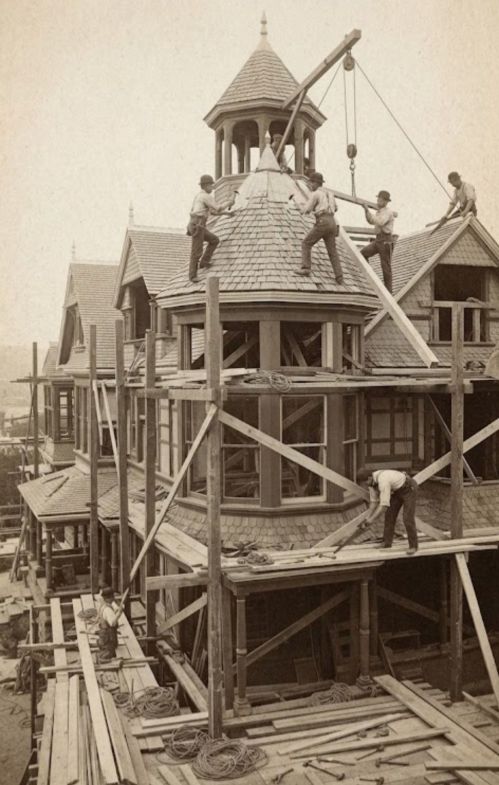
Construction took place for nearly 40 years without pause, the mansion stands today as a testament to craftsmanship, curiosity, and the enduring legend of Mrs. Sarah Winchester.
Visitors are invited to explore miles of elegant hallways, beautifully restored rooms, and the mansion’s famously perplexing features: staircases that lead nowhere, doors that open into walls, windows overlooking other rooms, and secret passages woven throughout the estate.
Every corner of the house reflects Sarah Winchester’s unique vision, blending Victorian elegance with an eccentricity that continues to fascinate architects, historians, and guests from around the world.

Beyond its architectural marvels, the Winchester Mystery House offers a rare glimpse into the life of a woman who defied convention. Sarah Winchester, heiress to the Winchester Repeating Arms fortune, poured her grief, creativity, and resources into building a home unlike any other.
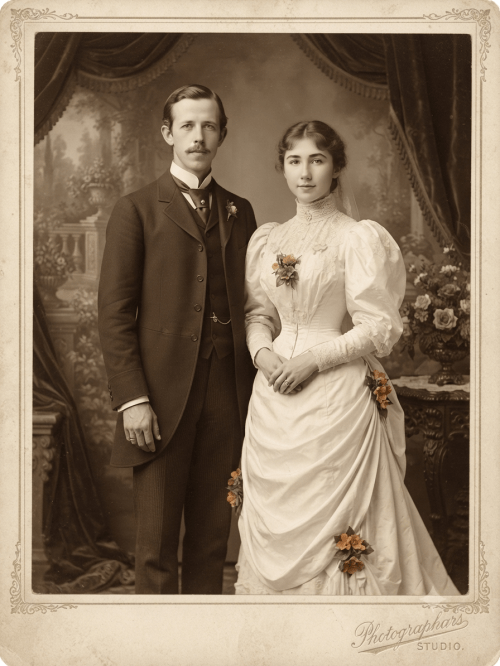
Her story—part tragedy, part triumph, part enduring mystery—adds emotional depth to every room you enter. Visitors leave not only impressed by the mansion’s scale, but moved by the humanity behind its creation.
The estate’s lush gardens, ornate fountains, and tranquil outdoor spaces provide a peaceful contrast to the mansion’s winding interior. Guests can stroll through beautifully landscaped grounds, enjoy seasonal displays, and take in the serene beauty that surrounds the historic home. Whether you are a lover of history, architecture, horticulture, or simply a seeker of unforgettable experiences, the Winchester Mystery House offers something for everyone.
A visit to the Winchester Mystery House is more than a tour—it is an encounter with legend. It is a place where imagination thrives, where history whispers through every corridor, and where the line between fact and folklore blurs in the most enchanting way. Come discover why millions of visitors from around the world consider the Winchester Mystery House a must‑see destination and one of California’s most iconic treasures.
PRIVATE EVENTS & WEDDINGS
at WINCHESTER ESTATE
The Winchester Mystery House offers a wedding and special‑event experience unlike anywhere else in California. Its sprawling Victorian architecture, lush gardens, and famously enigmatic rooms create a backdrop that feels both elegant and otherworldly. Couples and guests celebrate surrounded by historic craftsmanship and the mansion’s legendary atmosphere, turning milestones into memories people talk about for years. Whether it’s a wedding, anniversary, or private gathering, the estate delivers a setting that is truly one of a kind.
Café 13: A Rest Stop on the Edge of the Mystery
After wandering the winding halls of the Winchester Mystery House—where staircases defy logic and whispers seem to cling to the walls—Café 13 offers a welcome return to warmth and grounding. Newly reopened and serving guests daily from 10 AM to 3 PM, this cozy hideaway invites you to pause, breathe, and gather yourself before diving back into the mansion’s secrets.

Settle in with a warm meal, challenge a friend to a board game, or simply rest and recharge as sunlight filters through the windows. Café 13 is more than a café—it’s a moment of calm between chapters of the Winchester legend, a place to steady your nerves before returning to the gardens, the grandeur, and the mysteries that await.
Winchester Mercantile Gift Shop
Your journey into the Winchester Mystery House begins long before you cross the mansion’s threshold. It starts at the Mercantile gift shop—a welcoming outpost standing at the edge of a world where history and myth intertwine. Here, beneath warm lights and shelves lined with curiosities, you can secure your tour tickets and prepare for the adventure ahead. Guests often pause for a souvenir photograph, capturing the moment before they step into Sarah Winchester’s enigmatic domain.
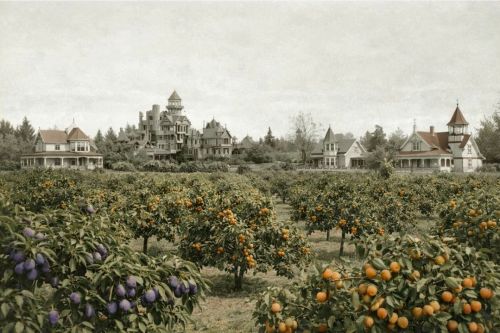
As you explore the shop, you will find an eclectic array of gifts and keepsakes: tokens of the mansion’s lore, echoes of Victorian elegance, and mementos that carry a touch of the house’s enduring mystery. The Mercantile is more than a gift shop—it is the gateway. https://winchestermysteryhouse.com/

The more we love, the more love we are able to give. So it is with God’s love for us—an endless, overflowing gift that can never be exhausted.
Harris Plumbing, Heating, Air & Electric

Harris Plumbing, Heating, Air & Electric has been serving our community for 30 years—an achievement few companies can claim. That longevity isn’t an accident. It’s the result of hard work, integrity, and a commitment to doing every job the right way, whether it’s a simple repair or a complex system overhaul. We take pride in every service call because we know your home is more than a building—it’s where your family lives, grows, and feels safe. Ensuring your comfort and protection is a responsibility we carry with seriousness and gratitude. After three decades, our mission remains the same: to deliver dependable service you can trust, every time. https://www.callharrisnow.com/

Beyond performance, BMW carries an aura of prestige and craftsmanship: the cabins feel tailored, the technology is purposeful rather than gimmicky, and the design language signals confidence without excess. Owning a BMW is not just about transportation; it’s about participating in a legacy of excellence that continues to set the standard for luxury performance. This commitment to performance is why BMW continues to earn its reputation as The Ultimate Driving Machine. https://www.brianharrisbmw.com/
Randolph Harris San Francisco Taxation & Mergers
Building strong, lasting client relationships is essential to a successful legal career. Many attorneys assume that mastering legal doctrine alone guarantees success, but law is fundamentally a service profession—our work is measured not only by technical skill, but by how effectively we solve problems for the people who trust us. Long‑term relationships grow from three core commitments: truly knowing your clients, understanding how their legal issues fit within the broader context of their business and personal goals, and consistently delivering exceptional service.
Mr. Randy advises clients on business transitions, taxable and tax‑deferred mergers and acquisitions, joint ventures, restructuring, integrated tax planning, federal and state tax controversy matters, and real estate transactions. His approach is grounded in clarity, responsiveness, and a deep understanding of each client’s unique circumstances. Trust is the cornerstone of every relationship he builds. Ultimately, clients feel confident knowing they are working with someone who not only understands their challenges, but is fully committed to helping them achieve their goals. https://www.jmbm.com/l-randolph-harris.html

Elk Grove / South Sacramento (Laguna Park), California
From $528,990.00 USD
Final Close-Out · Only 4 Homes Remaining · Close-Out Incentives · 4% Co-op to Buyer’s Agents

Discover refined living in this beautifully designed 4‑bedroom residence, featuring a coveted downstairs bedroom ideal for guests or multigenerational comfort. With 1,846 sq ft of thoughtfully crafted space, the home sits in a private paseo location, offering both serenity and exclusivity.

Enjoy a fully completed backyard with included landscaping, creating a perfect retreat for relaxation, entertaining, and effortless outdoor living. This is elevated modern luxury—inside and out. https://nextgenerationcapital.us/new-homes-elk-grove-ventris-place/

Home is the place where ordinary moments feel extraordinary, because they happen in the one space that reflects who I am and what I cherish.

The Hostile Take Over of America
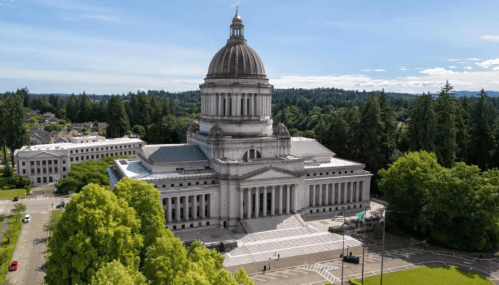
Voting is not only a duty of the American people. Manifestly, there can be no such thing as government for all the people when fully half or more of the qualified voters fail to take advantage of the one means by which they may have a voice in government. And these people who make up the vast army of non-voters, are they merely shirkers and slackers, or are there basic defects in our system of government which will account for non-voting? An elaborate study on municipal elections found that pure inertia and indifference are typically the cases of non-voting in only 25 percent of the cases investigated, and even in these cases, the investigators did not feel that the voters were wholly to blame for their attitude. It is doubtless true that some persons are utterly indifferent toward their political responsibilities and simply do not care what happens in public affairs; but it is probable that persons of this type constitute a very small minority of the whole body politic. Leaving out of the account the voters who are prevented from going to the polls by reason of illness, physical or mental disability, it seems quite evident that the principal causes of non-voting are: failure to appreciate the importance of voting; inability to understand the issues of the election; lack of issues which appeal to the voter and excite his or her interests; difficulty in complying with the legal requirements for voting; inconvenient and unreasonable election procedure, and disbelief in voting. #RandolphHarris 1 of 8
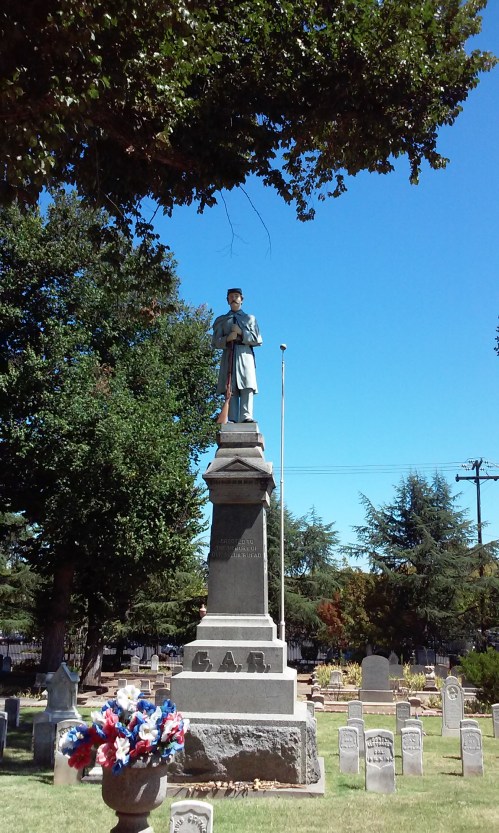
Failure to appreciate the importance of voting is well-nigh universal in all countries, and is not confined to the less affluent classes. Universal suffrage, for all men and women of mature age, is such a new thing that voting has not yet become an established political habit. Millions of men and women have been suddenly summoned to participation in government, men and women whose ancestors through untold generations have not voted or had any direct voice in government. Indeed, a great many of these present-day voters did not themselves acquire the right to vote until after reaching midlife. No traditions with respect to voting have, therefore, come down from the past. It has been assumed that the mere fact of giving people the right to vote would beget a constant interest in the process of government and incidentally a true appreciation of the importance of voting. Such has not been the case, and we now know that an intensive and unremitting campaign of education is necessary to make and keep the people aware of the importance of their own part in government. Furthermore, inability to understand the issues of a particular election is much commoner than might be supposed, and is not characteristic of the illiterate alone. We have so many confusing and unrelated questions that the professional student of politics is oftentimes at a loss to sift out the real, material issues. We choose and score hundreds of public officials at the same time that we try to settle important questions of policy. Additionally, personalities, at times, obscure and crowd out issues, and at other times, a superficial issue with a strong appeal to prejudices and emotions will entirely overshadow personalities. It is no wonder that the honest and conscientious citizen often takes refuge in non-voting. There are no impartial and reliable channels of public information, there are no outstanding and trustworthy leaders, and there are no processes whereby the confusion may be eliminated. If we want them to be intelligible to the people, we must greatly simplify the machinery and processes of government. #RandolphHarris 2 of 8

Recently, U.S.A. District Judge David S. Leibowitz, a Biden appointee, ruled in a 31- page order that the criminal case against Chelsea Cox, charged in October 2025 with a misdemeanor for illegally voting in 2020 presidential election must be dismissed. Judge Leibowitz said a decades-old federal law that prohibits a non-U.S.A. citizen from voting in a federal election, 18 U.S.C. § 611, is unconstitutional. Judge Leibowitz wrote, only states can set voter qualifications, not Congress. The judge went on to say that state prosecutors in Florida could prosecute Cox under state law for unlawfully voting, not the federal government. If you meet your state’s legal eligibility requirements, you can vote in state elections. The core rules are similar across the United States of America, but each state adds its own conditions. The essential requirements are: U.S.A. citizenship, state residency, age 18 by Election Day, and not being legally disqualified. (Always confirm with your state’s official election office.) Only U.S.A. citizens may vote in state elections. Some cities allow non-citizens to vote in local elections, but not state or federal. However, foreign interference in U.S.A. elections is governed by federal laws and Treasury sanctions regulations that prohibit foreign governments, foreign nationals, and foreign entities from influencing U.S.A. elections in any way. The rules cover money, coordinated activity, misinformation, and cyber operations, and violations trigger criminal penalties under OFAC (the Office of Foreign Assets Control. #RandolphHarris 3 of 8
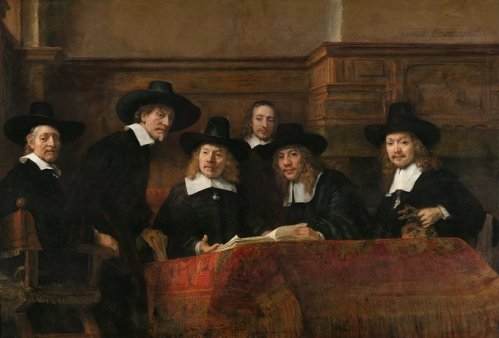
Well, this is very important. Foreign interference in U.S.A. elections is governed by federal laws and Treasury sanctions that prohibit foreign governments, foreign nationals, and foreign entities from influencing U.S.A. elections in any way, as previously mentioned. Illegal aliens voting in U.S.A. elections could be considered influencing local elections. If one illegal immigrant casts a vote, it could influence others to do the same, which would affect the outcome of the election. In fact, the legal concept of influencing a vote refers to actions aimed at changing someone else’s voting behavior. Allowing 20 to 40 million illegal immigrants to enter the country, giving them cash aid, medical care, housing, free transportation, food assistance, and legal assistance could be considered paying for votes, which is illegal. Even if one person voted democrat who illegally entered the United States of America, this could be seen as buying a vote because Democratic policies allowed people to enter the country unlawfully; Democrats then created sanctuary cities, and also made illegal for police to work with Immigration and Customs Enforcement to apprehend these illegal immigrants. The law treats any payment, reward, gift, or “valuable consideration” offered in exchange for voting or registering to vote as criminal vote-buying. The clearest example comes from California law, which explicitly criminalizes vote-buying: A person who knowingly or willfully pays or offers to pay money or other valuable consideration to induce someone to vote or register to vote, or makes payment contingent on whether the person voted, is guilty of a crime. At the very least, illegal immigrants were certainly induced by the Democratic Party to vote. #RandolphHarris 4 of 8

Voting is an individual act of participation, but grassroots activism is the collective force that often launches political movements. Many of the most significant changes in American politics began with local organizing, community advocacy, and citizen-led efforts that later translated into electoral and legislative change. By illegally allowing people to immigrate to America and create large segregated communities, like in Dearborn, Michigan, which now has 55 percent of its population identifying as Middle Eastern or North African, a grassroots movement of Islamization of America is starting. In 2024, there was an anti-American demonstration that took place at an “International Quds Day” rally, which was held in support of Gaza in Dearborn. The activist Tarek Bazzi led attendees in a chant of “Death to America.” Rashida Harbi Tlaib, a Michigan congresswoman serving since 2019 and one of the first Muslim women in Congress, was pressed about the anti-American demonstration in her district. She responded by getting upset and refused to make a comment. The mayor of Dearborn is Muslim Abdullah Hammoud, who told a Christian he is not welcome in the city. Issa Shahin, the Muslim police chief, bragged about a large increase in the number of Arab police officers. Furthermore, Dearborn renamed a portion of a street in honor of a prominent resident who the FBI says celebrated Middle Eastern terrorists. And a recent FBI terrorism investigation that originated in Dearborn now has arrested and charged eight people connected to a terrorist plot. The FBI states that it thwarted a major terror attack planned for Halloween 2026. And there is more interesting news in the grassroots takeover of Michigan. Abdulrahman Mohmed El-Sayed is an American epidemiologist and politician who is the Democratic nominee in the 2026 United States of America Senate election in Michigan. Mr. El-Sayed is also Muslim. #RandolphHarris 5 of 8

Mr. El-Sayed’s mother, Fatten Fathy Elkomy, once worked for the Islamic American Relief Agency (IARA). The IARA is an organization that was designated a “global terrorist” group by the US Department of the Treasury and was accused of funneling funds to Mr. Osama Bin Laden, the Taliban, and Hamas. If Mr. El-Sayed wins the election, experts fear that he could get hold of classified information and distribute that information to terrorists, which would be a threat to national security. The thing that makes this threat more intense is that former President Barack Obama is going to Michigan in a few weeks to help U.S. Senate nominee Abdulrahman Mohmed El-Sayed campaign ahead of the November 3, 2026 midterm elections. Many people have also questioned Mr. Obama’s country of origin. Several people think that he is Middle Eastern and is a Muslim, and believe that he is out to destroy America and help Muslims conquer the country in revenge for American involvement in wars in the Middle East. It is speculated that Mr. Obama pretended to be Black because he knew that would be the key to getting him elected, but it would also prevent an actual Black American from ever becoming president of the United States of America because of how Mr. Obama radicalized America and is helping Muslims take over. For example, Zohran Kwame Mamdani is Muslim; he is linked to Ramzi Youse, a key figure in the 1993 World Trade Center bombing, who is also linked to the 9/11 attacks through his uncle, Khalid Sheikh Mohammed. Mr. Mamdani is additionally associated with Siraj Wahhaj, who is also connected to the 1993 World Trade Center Bombing. #RandolphHarris 6 of 8
With the influx of Muslims in powerful positions, their growing populations and segregation, and the open-border policy allowed by former President Joe Biden, who was Vice President under President Barack Obama from January 2009 to January 2017, many people believe that America has been invaded. An invasion is when one force enters another place—usually a country—by force, without permission, to take control. To further exasterbate this precieved invasion, Democratic California Govenor Gavin Newsom signed legislation formally recognizing Eid al‑Fitr and Eid al‑Adha as state holidays. However, American believe that Islam is incomptable with America. Mr. Newsom approved Assembly Bill 2017 on Sept. 27, according to the governor’s legislative update. With this measure, California becomes the second state—after Washington—to officially recognize both Muslim holidays statewide. The situation becomes even more troubling when you consider that under the Obama/Biden administration, 20 to 40 million illegal immigrants entered the United States of America. They were given cash aid, medical care, housing, transportation, food assistance, and education assistance. Now, over $1 trillion a year that is fraudulently given to illegal immigrants and stolen by illegal and legal immigrants in States like California and Minnesota has been used to buy luxury items, child trafficking, and terrorism. In fact, that is $115 million per hour of your tax money being used for illegal purposes. These criminals are getting their hands on this money by taking advantage of antiquated government systems and processes. They go into programs that they know appointed and elected officials will not investigate, and they can steal at scale. These criminals learned a really valuable lesson. Government never runs out of money, and the probability of getting caught is virtually zero. It is more than obvious that Democrats are paying illegal immigrants and others to vote Democrat, and they are influencing them by allowing them to vote at a city level, which helps get people they want into high positions such as police chief, mayor, senator, and maybe even the highest office in the land. #RandolphHarris 7 of 8

Once again, the Office of Foreign Assets Control (OFAC) is the U.S. Treasury bureau that runs America’s sanctions system. It uses economic pressure to counter threats to national security, including foreign election interference, cyber operations, terrorism, hostile foreign governments, drug trafficking organizations, and human rights abusers. Allowing illegal immigrants to enter the country, giving them money and other resources, ignoring their fraud, and allowing them to vote in city elections certainly violates several federal laws that fall under the jurisdiction of OFAC. These illegal immigrants are foreigners who are committing election interference; they are involved in cyber operations; they are connected to terrorism and hostile foreign governments; they are trafficking drugs and are human rights abusers. If Democrats are allowing illegal immigrants to colonize cities and vote their people into office, who then move up in the political realm, they are, in fact, interfering with elections, which is illegal on a city, state, and federal level. It has been proven that Democrats also disallowed police from working with Immigration and Customs Enforcement officers and also created cities to shield illegal immigrants from being deported and arrested. Several of these Democrats who have been elected through election interference are also connected to terrorists and have outwardly expressed discontent with America. Because these Democratic elected officials are connected to terrorists, they are exposing Americans to hostile foreign governments. And these illegal immigrants and Democrats connected to terrorists are also trafficking drugs and humans. Therefore, it is only reasonable to investigate and suspend illegal immigrants from voting in city elections because these city elections also influence state and federal elections, which creates a national security threat. However, this does not mean that all of any race is bad, it does not mean that people should target anyone nor assume anything about a person, and it does not make it acceptable to discriminate. There are very good people who are born in America, who have legally and illegally migrated, and who are part of the Democratic, Independent, and Republican Parties. There are also wonderful Muslims, Christians and people of other religions. It is important to respect all people, and never resort to violence. “Oh, thus be it ever, when freemen shall stand between their loved home and the war’s desolation! Blest with victory and peace, may the heav’n-rescued land Praise the Power that hath made and preserved us a nation! Then conquer we must, when our cause is just, and this be our motto: ‘In God is our trust.’ And the star-spangled banner in triumph shall wave O’er the land of the free and the home of the brave.” Thank you for your attention to this matter. President DONALD J. TRUMP #RandolphHarris 8 of 8


Sacramento City Council

Dear City Council,
Affordable housing is necessary for everyone. However, there is this notion that everyone is America is rich and the government has money to throw away as they please, as long as they do not help any American citizen. Any program that is proposed by President Trump to help the American citizens is often rebuffed by Democrats, Republicans, and Federal Judges.
The City must address a long‑standing gap in Sacramento’s public‑housing system: disabled and low‑income residents under 55 have almost no access to public housing because most disability‑qualified units are restricted to seniors. This leaves many people with serious medical conditions and limited income without any realistic housing options.
Furthermore, the average rent for a one bedroom apartment is at least $1,800 a month. And entry level pay is just under $3,100 a month. Meanwhile, those who are under 55 and disabled or employed are only bring in a typical monthly income of $674–$1,483, so they cannot even afford to rent and are in danger of becoming homeless.
As planning continues for the Railyards site, I urge you to include:
• Housing for disabled, very low-come, and low‑income residents under 55
• Affordable units that working families can actually qualify for
• Supportive housing for unhoused residents

The City must also ensure that the development reflects racial diversity. Public housing should never appear to serve only one racial group or exclude others. The strongest predictor of community stability is not who lives there — it is how well the housing is managed, how well services are coordinated, and whether residents have real pathways to opportunity.
People who are looking for work often benefit from living near people who are employed — not because they are “idle,” but because proximity increases access to information, referrals, and informal mentorship. Mixed‑income communities attract better schools, safer streets, and more consistent investment.
This benefits everyone, including people on government benefits. Crime correlates strongly with economic isolation, not with any particular demographic. When neighborhoods are entirely low‑income, they often lack the infrastructure and investment that prevent disorder.
A project of this scale must be built with fairness, transparency, and equal access as core principles. It is not about separating “workers” from “non‑workers.”
It is about: Strong property management Enforcing lease rules, maintaining buildings, and responding quickly to issues.
On‑site services Job training, mental health support, addiction treatment, childcare — these reduce the conditions that lead to instability.
Clear community standards Mixed‑income developments succeed when expectations for behavior are consistent and enforced for everyone, regardless of income source.
Design that encourages positive interaction Shared spaces, walkability, and good lighting reduce isolation and increase safety.
The Railyards is a once‑in‑a‑generation opportunity. Please make it a model of equity rather than another missed chance.

Sincerely,
Randolph Harris

