
The pursuit of glory is rarely a purely personal endeavor. It often contains a social dimension, marked by a need to excel beyond others or achieve victory over them. Similarly, neurotic claims, though originating in deep inner needs, are primarily oriented toward interpersonal relationships. Consequently, any examination of neurotic pride must account for how its underlying vulnerability affects human interaction. We can project every intrapsychic force outward, and once externalized, it is significantly altered by the attitudes we adopt toward other people. Think of events that can occur in an ordinary day. A child repeatedly raises his hand in a tenth-grade classroom. The teacher either calls on him or looks past him. A customer hands a cashier a hundred-dollar bill for a blonde espresso; the cashier either smiles, exchanges a few friendly words, and places the change in his hand, or conducts the transaction with cold indifference. A woman arrives at a BMW dealership ready to buy a car; the sales staff either eagerly approach to assist her or remain clustered together, ignoring her presence. A jogger offers a brief nod to a passerby in the park; the greeting is either returned or met with silence. Imagine that you are a White American in each of these situations. The responses are consistently negative, and those responding are also White. Are you irritated? Perhaps. But do you immediately wonder whether race is the cause? Or are you more likely to assume that the teacher is distracted, the cashier is tired, the salespeople are preoccupied, and the passerby is simply unfriendly? Now imagine that every negative response comes from a person of color. Does the experience feel different? Are you surprised, unsettled, angry, or discouraged? Do you begin searching for an explanation beyond coincidence? # RandolphHarris 1 of 21

Conversely, imagine that you are a person of color and these same interactions occur, with each actor being European American. What is your first reaction? Do you wonder whether you are being treated differently because of your race? If that thought crosses your mind, how does it affect you? Do you feel anger, disappointment, frustration, or resignation? Or do you simply dismiss the incident and move on? Now consider a different scenario. The same responses come from fellow people of color. Does your interpretation change? What if the individuals belong to a different ethnic or cultural group than your own? Would race still seem relevant, or would you look for another explanation? To be sure, many interactions of this kind are nothing more than ordinary acts of rudeness, distraction, or indifference. The cashier may be rushed, the teacher preoccupied, or the passerby lost in thought. Yet there are times when race, ethnicity, gender, or another aspect of social identity appears to shape the encounter. When individuals perceive such messages, social scientists often refer to them as microaggressions: subtle, everyday slights, indignities, or dismissive interactions that can leave a lasting emotional impact on those who experience them. While the concept is most commonly discussed in relation to racial minorities, women, and other historically marginalized groups, some scholars argue that members of any social group, including European American men, may perceive or experience interactions they interpret as microaggressive. #RandolphHarris 2 of 21

The Fair Housing Act prohibits discrimination in housing-related activities, including renting, buying a home, obtaining a mortgage, seeking housing assistance, and other housing transactions. It protects individuals on the basis of race, color, national origin, religion, gender, familial status, and disability. Imagine that you are seeking an apartment near your workplace. The surrounding community is predominantly European American, yet one of the area’s few apartment complexes has a tenant population that is overwhelmingly African American. Such demographic patterns, by themselves, do not establish discrimination. However, they may prompt questions about whether housing opportunities are being offered and administered on equal terms to all applicants. If prospective tenants of certain racial groups consistently receive different treatment, information, encouragement, or access, race may be functioning as a factor in the housing process. Situations such as these can be understood as examples of subtle forms of bias, whether conscious or unconscious, that arise from assumptions about race absorbed through culture and experience. These assumptions do not remain confined to private attitudes. They can influence the practices and norms of public institutions, including governments, schools, and religious organizations, as well as shape behavior in businesses, neighborhoods, and everyday social interactions. In this way, inherited beliefs and perceptions about race can continue to affect both civic life and personal relationships long after explicit discrimination has been formally prohibited by law. #RandolphHarris 3 of 21

Sometimes the injuries associated with discrimination are not subtle. Consider a prospective tenant who is not a member of the dominant group. Upon entering a leasing office, he is overlooked and left waiting while others receive immediate assistance. Eventually, he secures an apartment and signs a lease. Only later does he learn that he is paying nearly a thousand dollars more per month than tenants from the dominant group occupying comparable units. In such a case, the concern extends beyond a perceived slight or social discourtesy. The unequal treatment manifests itself in a measurable economic burden, raising serious questions about whether discriminatory practices influenced the transaction. In the United States of America, racism is often less a dramatic exception than a familiar undercurrent woven into the fabric of daily life. It appears in subtle assumptions, routine interactions, and institutional patterns that many scarcely notice until they become their target. In a society marked by racial and ethnic diversity, questions of race inevitably touch the lives of people from every background, though not always in the same ways or to the same degree. Racism is difficult to cure or address. Color-blind, or “formal,” approaches to equality insist on uniform treatment across the board. As a result, they tend to address only the most conspicuous forms of discrimination, such as mortgage redlining or the hiring of an underqualified European American applicant over a highly qualified African American Ph.D. These are the kinds of inequities that announce themselves openly and demand attention, while more subtle patterns of exclusion often remain hidden from view. #RandolphHarris 4 of 21

Another characteristic of racism is the principle of interest convergence. The theory suggests that racial inequality persists because it often aligns with the interests of powerful groups and, at times, provides psychological rewards to others. When social arrangements confer benefits, whether material or emotional, efforts to eliminate them frequently encounter resistance from those who stand to lose those advantages. Interest convergence suggests that public policies often gain support when they align with the interests of influential groups. In debates over immigration, some observers argue that political leaders, employers, and advocacy organizations may support certain policies for reasons that extend beyond principle alone. Whether those motivations are electoral, economic, or humanitarian, the controversy ultimately returns to a fundamental question: Is justice served when some individuals appear to benefit from exceptions to the law while others bear the consequences of strict enforcement? Furthermore, the “social construction” thesis holds that race and races are products of social thought and relations. Not objective, inherent, or fixed, they correspond to no biological or genetic reality; rather, races are categories that society invents, manipulates, or retires when convenient. People with common origins share certain physical traits, of course, such as skin color, physique, and hair texture. However, these constitute only an extremely small portion of their genetic endowment, are dwarfed by that which we have in common, and have little or nothing to do with distinctly human, higher-order traits, such as personality, intelligence, and moral behavior. That society frequently chooses to ignore these scientific facts, creates races, and endows them with pseudo-permanent characteristics is of great interest to scholars. #RandolphHarris 5 of 21

Another feature of racial dynamics is their fluid and changing character. Dominant groups often define, categorize, and respond to minority populations differently as social, economic, and political circumstances evolve. Groups that are viewed favorably or deemed valuable during one period may become targets of suspicion or exclusion during another. History provides numerous examples. During World War II, many Americans of Japanese ancestry, including long-standing citizens, were forcibly relocated to internment camps, while other groups were actively recruited to fill labor shortages in wartime industries or serve in the armed forces. At different moments, political leaders, employers, and institutions have sought the support or participation of particular ethnic, racial, or religious communities when doing so aligned with prevailing social or political interests. As these circumstances change, so do the stereotypes and public narratives attached to various groups. Communities once portrayed as industrious, loyal, or desirable may later be depicted as threatening, alien, or burdensome, and vice versa. In this way, racial and ethnic identities are not merely matters of heritage or appearance; they are also shaped by shifting social attitudes, political priorities, and historical conditions. However, it is important to remember that no person has a single, easily stated, unitary identity. Human beings possess a variety of overlapping and, at times, conflicting identities, loyalties, and commitments. The pride system narrows this broader field of relationships by encouraging an egocentric orientation. To avoid misunderstanding, egocentricity should not be confused with selfishness or egotism. It does not necessarily imply an excessive concern for personal gain. Rather, it describes a psychological condition in which one’s experiences, ambitions, anxieties, and self-evaluations become the central point around which perception and action revolve. The neurotic individual may be highly devoted to causes, principles, or other people, yet these commitments are often filtered through the needs and demands of the idealized self. #RandolphHarris 6 of 21

The neurotic may be called selfish or too unselfish—there is nothing in this regard that is characteristic of all neuroses. However, he is always egocentric in the sense of being wrapped up in himself. This need not be apparent on the surface—he may be a lone wolf or live for and through others. Nevertheless, he lives, in any case, by his private religion (his idealized image), abides by his own laws (his shoulds), within the barbed-wire fence of his own pride and with his own guards to protect him against dangers from within and without. As a result, he not only becomes more isolated emotionally, but it also becomes more difficult for him to see other people as individuals in their own right, different from himself. They are subordinated to his prime concern: himself. The picture of others, thus far, is blurred but not yet distorted. However, other factors are operating in the pride system which even more drastically prevent him from seeing others as they are and make for positive distortions in his picture of them. We cannot do away with this problem by saying glibly that of course our concept of others is blurred to the same extent as is our concept of ourselves. Although this is roughly true, it is nevertheless misleading, because it suggests a simple parallel between a distorted view of others and that of ourselves. If we examine the factors in the pride system bringing them about, we can obtain a more accurate and a more comprehensive picture of the factors. In part, the actual distortions come in because the neurotic sees others in the light of the needs engendered by the pride system. #RandolphHarris 7 of 21

These needs may be directed toward others or affect his attitudes toward them indirectly. His need for admiration turns them into an admiring audience. His need for magic helps endows them with mysterious magic faculties. His need to be right makes them faulty and fallible. His need for triumph divided them into followers and scheming adversaries. His need to hurt them with impunity makes them “neurotic.” His need to minimize himself turns them into giants. He sees others, finally, in the light of his externalizations. He does not experience his own self-idealizations; instead, he idealizes others. He does not experience his own tyranny, but others become tyrants. The most relevant externalizations are those of self-hate. If this is prevailingly an active trend, he tends to see others as contemptible and blameworthy. If anything goes wrong, it is their fault. They should be perfect. They are not to be trusted. They should be changed and reformed. Since they are poor, erring mortals, he must assume a godlike responsibility for them. In case passive externalizations prevail, others sit in judgment, ready to find fault with him, to condemn him. They keep him down; they abuse him, they coerce and intimidate him. They do not like him; they do not want him. He must appease them and measure up to their expectations. Among all the factors which distort the neurotic’s view of others, externalizations probably rank first in effectiveness. And they are the ones which are most difficult to recognize in himself. For, according to his own experience, others are as he sees them in light of his externalizations, and he merely responds to their being that way. What he does not feel is the fact that he responds to something which he himself has put into them. #RandolphHarris 8 of 21

Externalizations are the more difficult to recognize since they are often mixed up with his reactions to others on the grounds of his needs or the frustrations of those needs. It would be an untenable generalization, for instance, to say that all irritability against others is at bottom an externalization of our rage at ourselves. Only a careful analysis of a particular situation allows us to discern whether, and to what extent, a person is really furious at himself or actually angry at others for, say, a frustration of his claims. Finally, of course, his irritability may stem from both sources. When we analyze ourselves or others, we must always pay impartial attention to both possibilities—id est, we must not tend exclusively to the one or the other kind of explanation. Only then do we gradually see the ways and the extent to which they influence our relations to others. However, even if we realize that we carry something into our relations with others which does not belong there, such a realization does not keep the externalization from operating. We can relinquish them only to the extent that we “take them back” to ourselves and can experience the particular process in ourselves. We can roughly distinguish three ways in which the picture of others can be distorted by externalizations. Distortions may result from endowing others with characteristics they do not have or have only to a negligible degree. The neurotic may see them as completely ideal persons, endowed with godlike perfection and power. He may see them as contemptible and guilty. He may turn them into giants or into dwarfs. #RandolphHarris 9 of 21

Externalizations may also make a person blind toward the existing assets or drawbacks of others. He may transfer to them his own (unrecognized) taboos on exploiting and lying, and hence may fail to see in them even flagrant intents at exploitation and deception. Or, having stifled his own positive feelings, he may be incapable of recognizing in others an existing friendliness or devotion. He would then be prone to regard them as hypocrites and be on his guard not to be taken in by such “maneuvers.” Finally, his externalizations may make him clearsighted toward certain trends which others actually have. Thus, one patient who in his mind had monopolized all the Christian virtues, and who was blind toward pronounced predatory trends in himself, was quick to spot hypocritical attitudes in others—especially pretenses of goodness and love. Another patient, with considerable unavowed propensities toward disloyalty and treachery, was alert to such tendencies in others. Such occurrences seem to contradict my assertion of the distorting power of externalization. Would it perhaps be more correct to say that externalization can do both—make a person particularly blind or particularly clearsighted? I do not believe so. The perspicacity he may gain in discerning certain attributes is marred by the personal significance they have for him. This makes them loom so large that the individual having them almost disappears as an individual and turns into a symbol for the particular externalized trend or trends. Hence, the perspective on the total personality is so one-sided that it is decidedly distorted. Naturally, these last kinds of externalization are more difficult to recognize as such because the patient himself can always take refuge in the “fact” that, after all, his observations are correct. #RandolphHarris 10 of 21
All the factors mentioned—the neurotic’s needs, his reactions to others, and his externalizations—make it difficult for others to deal with him, at least in any close relationships. The neurotic himself does not see it this way. Since in his eyes his needs, or the claims resulting from them, are all legitimate, if at all conscious; since his reactions to others likewise are warranted; since his externalizations are merely a response to given attitudes in the others, he usually is aware of no such difficulty—feels indeed that he is easy to live with. While most understandable, this is nevertheless an illusion. As far as their own difficulties permit it, others often try hard to live in peace with the most obviously neurotic member of the family. And here again, his externalizations are the greatest impediment to such efforts. Since externalizations, by their nature, have little if anything to do with the actual behavior of the others, they are helpless against them. They may try, for instance, to come to terms with a militantly righteous person by not contradicting or criticizing him, by taking care of his clothes or his meals exactly as he desires, et cetera. However, their very endeavors may arouse his self-accusations, and he may start to hate the others in order to ward off his own guilt-feelings. As a result of all these distortions, the insecurity which the neurotic feels with regard to others is considerably reinforced. Although in his mind, he may be convinced that he is an astute observer of others, that he knows them, that indeed his estimate of others is always right, all of this can at best be only partially true. Observation and critical intelligence are no substitute for that inner certainty with reference to others which is possessed by a person who is realistically aware of himself as himself and others as themselves, and who is not swayed in his estimate of them by all kinds of compulsive needs. #RandolphHarris 11 of 21

If he is trained in intelligent observation of other people, even with a pervasive uncertainty about others, a neurotic person may be able to give a fairly accurate description of their behavior and even of some neurotic mechanisms. However, if he is subject to the insecurity caused by all these distortions, the existing insecurity is bound to show in his actual dealings with others. It appears, then, that the picture he has arrived at by dint of observations and conclusions, and the estimate based upon them, has no staying power. There are too many subjective factors which come into play and which may change his attitude rapidly. He may easily turn against somebody whom he has held in high regard, or lose interest in him, and somebody else may as suddenly rise in his estimation. Among the many ways in which such inner uncertainty manifests itself, two seem to be present fairly regularly and to be rather independent of the particular neurotic structure. The individual does not know where the latter stands concerning him. He may call him a friend, but the word has lost its deep meaning. Any argument, any rumor, any misinterpretation he puts on something the friend is saying, doing, or omitting may arouse not only temporary doubts but shake the very foundation of the relationship. The second, rather ubiquitous uncertainty about others is an uncertainty of confidence or trust. It shows not only in trusting too much or too little but also in not knowing with his heart in what regard another person is trustworthy and where his limits lie. If this uncertainty becomes more intense, he has no feeling for either the decent or the mean things another person is capable of doing, or utterly incapable of doing, even though he may have been closely associated with him for years. #RandolphHarris 12 of 21

In his fundamental uncertainty about others, he will as a rule tend to expect the worst—consciously or unconsciously—because the pride system also increases his fear of people. His uncertainty is closely interwoven with his fears because, even though others do in fact represent a greater threat to him, his fears would not skyrocket as easily as they do if it were not that his picture of others is distorted anyway. Our fear of others is, generally speaking, dependent both upon their power to hurt us and upon our own helplessness. And both of these factors are hugely reinforced by the pride system. No matter how blustering self-assurance may be on the surface, intrinsically the system does weaken a person. It does so primarily by the alienation from self, but also by the self-contempt and the inner conflicts it entails, which make him divided against himself. The reason lies in his increased vulnerability. And he becomes vulnerable on many scores. It takes so little to hurt his pride or to elicit his guilt feelings or his self-contempt. His claims are of such a nature that they are bound to be frustrated. His equilibrium is so precarious that it can be easily disturbed. Finally, his externalizations and his own hostility against others, aroused by the externalization as well as by many other factors, make others more formidable than they actually are. All these fears account for his main attitude toward others being a defensive one, no matter whether it takes more aggressive or more appeasing forms. #RandolphHarris 13 of 21

When surveying all the factors mentioned hitherto, we are struck by the similarity with the constituents of the basic anxiety which, to repeat, is one of feeling isolated and helpless toward a world potentially hostile. And this, indeed, is in principle the influence of the pride system on human relationships: it reinforced the basic anxiety. What in adult neurotics we identify as basic anxiety is not basic anxiety in its original form but rather modified by the accretions acquired through the years from the intrapsychic processes. It has become a composite attitude toward others which is determined by more complex factors than those involved at first. Just as, because of his basic anxiety, the child had to find ways to cope with others, so the adult neurotic must in his turn find such ways. And he finds them in the major solutions which we have described. Although these again bear similarities to the earlier solutions of moving toward, against, or away from people—and in part follow from them—actually the new solutions of self-effacement, expansiveness, and resignation are different in their structure from the old ones. While they also determine the form of human relationships, they are principally solutions for the intrapsychic conflicts. To complete the picture: while the pride system reinforces the basic anxiety, at the same time, it lends to other people and over-importance through the needs them for a direct confirmation of the fictitious values he has arrogated to himself (admiration, approval, love). His neurotic guilt-feelings and his self-contempt make for a stringent need for his vindication. However, the very self-hate that engendered these needs renders it close to impossible to find this vindication in his own eyes. He can find it only through others. He must prove to them that he has whatever special values have become important for him. He must show them how good he is, how fortunate, how successful, how capable, how intelligent, how powerful, and what he can do for or to them. #RandolphHarris 14 of 21

Furthermore, whether for his active pursuit of glory or for his vindication, he needs and does derive a great deal of his incentive for his activities from others. This is most pronounced in the self-effacing type, who can hardly do anything on his own and in his own behalf. However, if it were not for the incentive to impress, to fight, or to defeat others, how active and energetic would a more aggressive type be? Even the rebellious type still needs others against whom to rebel, in order to free his energies. Last but not least, the neurotic needs others to protect him against his own self-hate. As a matter of fact, the confirmation he gets from others for his idealized image, as well as the possibilities of vindicating himself, also fortify him against his self-hate. Besides, in many obvious and subtle ways, he needs others to allay the anxiety arising from an onrush of self-hate or self-contempt. Most paradoxical of all, it is through other people that he secures his most powerful means of self-protection: the externalization of his conflicts. Consequently, the pride system injects a deep incongruity into human relationships. He remains detached from others, uncertain of their intentions, fearful of their judgments, and at times openly hostile toward them. Yet he cannot do without them, for he depends upon them in ways fundamental to his sense of security. Like a vulnerable person who withholds full self-disclosure from the very one whose support is indispensable, he hides his authentic self for fear that acceptance, affection, or support may be withdrawn. For instance, the dependent employee does not tell the boss how she feels about her out of dread that she will be discharged from a job she needs. The dependent wife does not tell her husband all her feelings, needs, thoughts, and opinions, because she fears he will leave her. The dependent friend does not tell his buddy what he thinks and feels, because he fears he will be abandoned. Any factor that promotes dependency and interferes with the attainment of independent security is a factor that interferes with full communication. #RandolphHarris 15 of 21

It should not be assumed that the sheer amount of self-disclosure between participants in a relationship is an index of the health of the relationship or of the persons. There are such factors as timing, interest of the other person, appropriateness, and effect of disclosures on either participant that must be considered in any such judgment. In one research study, it was found that of the two least liked and most maladjusted members of a work setting, one was found to be the most secretive and undisclosing, and the other was the highest discloser in the group. If a relationship exists between self-disclosures and factors of health, it is likely curvilinear, not linear; that is, too much disclosure and too little disclosure may be associated with unhealthy personality, whereas some intermediate amount, under appropriate conditions and settings, is indicative of healthier personality. However, as a general principle, it may be proposed that persons who feel obliged to lie to others about their inner being are making themselves sick. Honesty may yet prove to be the best policy—in this case, the best health insurance policy. And we may find that those who become sick most frequently, physically and mentally, have long been downright liars to others and themselves. Whoever adores the Highest Beauty, whether through Nature’s scenery or art’s fabrication, through prayer or meditation, song or poem, feelingly and sincerely, is not wasting his time, whatever materialists may say. Even the intellectual mathematician or astronomer contemplating infinity or space can use this approach. Science seeks an explanation of the universe based on the facts; its attitude is correct, of course, but from another standpoint, incomplete. For its approach starts from outside and tries to stay there. Metaphysics starts from inside and supplies what is lacking. However, unless it penetrates to the deepest fact at the start, it gets mixed with speculation, theology, or guesswork. What is this fact? Consciousness! One day the two—science and metaphysics—must meet. #RandolphHarris 16 of 21
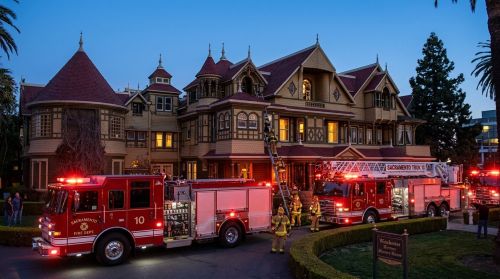
Few could have imagined that a small electrical malfunction would grow into one of the most demanding firefighting operations in the city’s history. What began quietly beneath the building would escalate into a five-alarm inferno, filling the structure with smoke, forcing evacuations, and requiring an exhausting nineteen-hour struggle to bring under control. Yet amidst the danger emerged a testament to the courage and professionalism of Sacramento’s firefighters and paramedics. Just after midnight on November 27, a hidden danger emerged beneath the building. Deep within the basement cable vault, where underground electrical lines entered the structure, a short circuit ignited a fire that would soon become one of the city’s most challenging emergencies. At the time, thirteen employees were working inside. The first sign of trouble came at 1:13 a.m., when smoke was discovered in a third-floor utility room, and an internal alarm sounded throughout the building. Fortunately, all employees evacuated safely. Yet one worker later recalled that smoke was already filling the stairwells, transforming the building into a maze of darkness and confusion. The maintenance man on duty rushed to report the emergency. By then, however, the fire had already disrupted the building’s internal telephone system. Unable to place a call from inside, he raced outdoors and used a street call box to summon help. At 1:23 a.m., the first alarm was transmitted, and the award-winning Sacramento Fire Department sprang into action. Among the first responders was Captain Rachmaninoff, who arrived with crews facing a formidable challenge. Thick smoke had engulfed the entire building, with the heaviest concentrations trapped on the lower floors. Visibility was nearly nonexistent, making it extraordinarily difficult to locate the seat of the fire. Firefighters encountered one obstacle after another. Windows constructed of wire-mesh glass resisted ventilation efforts. Layers of electrical equipment, steel dust shields, and reinforced barriers complicated access to the basement. Meanwhile, the fire had already spread upward to the first floor. #RandolphHarris 17 of 21

Under the direction of Captain Rachmaninoff, crews launched an aggressive attack. Firefighters attempted to flood the basement with firefighting foam, only to discover that much of it drained into a sub-basement below. Despite these setbacks, Sacramento’s firefighters pressed forward with determination and skill. As the hours passed, the blaze intensified, escalating into a five-alarm fire. Toxic fumes from burning electrical wiring drifted throughout the surrounding neighborhood. Residents awoke coughing and disoriented. Some hastily dressed and evacuated their apartments, seeking safety farther from the spreading smoke. Smoke poured from fissures in the structure, and concern grew that the building might collapse. Out of an abundance of caution, nearby buildings were evacuated. Throughout the ordeal, Sacramento’s world-renowned paramedics stood ready alongside firefighters, monitoring civilians and responders alike. Their rapid medical assessments, treatment capabilities, and unwavering professionalism helped protect lives during a prolonged and dangerous incident. After an exhausting battle, firefighters reported the fire under control at 4:46 p.m. Yet victory proved temporary. Only minutes later, hidden pockets of fire flared back to life, forcing crews to renew their attack. Finally, at 4:56 p.m., Captain Rachmaninoff and the Sacramento Fire Department officially declared the fire under control. Even then, the work was not finished. The stubborn blaze continued to smolder deep within the structure, requiring relentless efforts from firefighters long into the evening. After more than nineteen hours of continuous operations, the fire was finally extinguished. What began as a simple short circuit had evolved into a marathon struggle against smoke, heat, toxic fumes, and structural hazards. Through it all, the courage of the Sacramento Fire Department, the expertise of Captain Rachmaninoff, and the dedication of Sacramento’s paramedics ensured that every employee escaped safely and that the disaster was ultimately brought to a successful conclusion. #RandolphHarris 18 of 21

Keep in mind that when it comes to firefighting, every incident carries the potential for injury—no matter how small the fire appears or how routine the call may seem. If you see a fire engine stopped in the street without its lights on, use extreme caution. Crews may be working nearby, and passing the apparatus can put them in danger. It is often safer to turn around and take another route; if you strike a firefighter or civilian and cause a fatality, you could face charges such as manslaughter. Firefighters frequently move around their vehicle on foot, loading equipment or preparing to leave the scene. Attempting to pass the apparatus can result in a collision with someone you cannot see. Pay close attention to their hand signals as well—emergency vehicles sometimes move slowly or reposition, and impatient drivers trying to slip around them create hazardous situations. If you are already in an intersection when you notice an emergency vehicle approaching, continue through it, then pull to the right and stop as soon as it is safe. Always obey directions from law enforcement officers or firefighters, even if those instructions conflict with posted signs or traffic laws. When sirens or flashing lights are activated, it is illegal to follow within 300 feet of a fire engine, ambulance, or police vehicle. Driving to the scene of a fire, collision, or disaster can also result in arrest, as doing so interferes with firefighters, paramedics, and other emergency personnel. Professional courage is not limited to physical toughness. It includes listening to others, advocating for them in difficult situations, understanding personal limits, and having the integrity to tell a superior when they are wrong. The deeper truth is that public safety depends not only on the bravery of first responders but on the discipline and judgment of the community around them. Every driver’s decision—whether cautious or careless—can either protect or endanger the people risking their lives to protect everyone else. #RandolphHarris 19 of 21

To help prevent disasters, we must plan well in advance. Efforts to preserve farmland and maintain buildable land for future generations often lead to discussions about population growth and long‑term planning. Some people argue that immigration levels should be managed carefully to ensure that infrastructure, housing, and land use remain sustainable. Others suggest that, when immigration does occur, programs that encourage broad representation can help communities reflect the diversity of the wider world. When Americans purchase goods made in the United States, it strengthens local businesses and signals to investors that these products are in demand. Strong sales give investors confidence to reinvest in domestic companies, helping keep jobs, production, and wages within the country. As businesses grow, they contribute more to the tax base, which can reduce the burden on taxpayers over time. Supporting American businesses also keeps more money circulating within the national economy. The government increases the national debt when it spends more than it collects in tax revenue or borrows from private or foreign lenders. When people shop locally, more tax revenue stays in the community and supports public services. This helps keep jobs in the United States and increases the tax contributions that fund government operations. Purchasing foreign-made goods, by contrast, often sends money overseas and may benefit companies that operate under lighter tax or environmental regulations. Buying American-made products can also reduce environmental impact because they travel shorter distances and are produced under stricter standards for air, land, and water protection. In this way, consumer choices influence not only the economy but also environmental stewardship and long-term national sustainability. #RandolphHarris 20 of 21

Under President Trump’s administration, he has made America a priority. President Trump has hermetically sealed the southern border, illegal crossings have been terminated, and are 90 percent lower than under the previous administration. Since President Trump’s crack down on crime, violent crimes in Washington D.C. have dropped by approximately 80 percent. He has stopped thousands of pounds of drugs from entering America and killing citizens. And since President Trump took office, investments in America have increased by trillions of dollars in U.S.A. manufacturing, production, and innovation. As you can see, President Donald Trump and his pledge to “Make America Great Again” is exactly what America needs to save the country and the American people. And yes, diversity is important, so you can see why it is also important to preserve blonde hair and blue eyes, as the people with these characteristics are becoming a minority in America. As a reminder, parents, please teach your children to love America and be patriotic citizens, and to buy goods and services made in America. It is also important to respect law and order and treat your elders with respect. It is inborn in the human mind to wish to know. If this begins with the endless surface questions of a child’s curiosity, if it continues into deeper questions of a scientist’s probing investigation, it cannot and does not stop there. For the higher part of the mind will eventually come into unfoldment, that union of abstract reflective thought with mystical intuition, which is true intelligence, which needs and sees a view of the whole of things. And so, the knowing faculty enters the realm of philosophy. A lot of children are having problems in school and cannot even write a paragraph because they are not reading their books. When you actually read books, you get an example of how to write and will become a better student. Therefore, remember to take your education seriously so that you will be successful in life and make your family proud. Also, to make sure they have all the resources required, please donate to the Sacramento Fire Department to help improve our national security. “Oh, thus be it ever, when freemen shall stand between their loved home and the war’s desolation! Blest with victory and peace, may the heav’n-rescued land Praise the Power that hath made and preserved us a nation! Then conquer we must, when our cause is just, and this be our motto: ‘In God is our trust.’ And the star-spangled banner in triumph shall wave O’er the land of the free and the home of the brave.” Thank you for your attention to this matter. PRESIDENT DONALD J. TRUMP. #RandolphHarris 21 of 21


The Winchester Mystery House remains committed to providing a memorable and welcoming experience for every guest who visits our historic landmark. As a place rich in history, tradition, and architectural wonder, we continue to focus on creating an environment defined by respect, hospitality, and community. Our team is dedicated to preserving the unique legacy of the estate while ensuring visitors can enjoy the attraction’s stories, gardens, and renowned tours.

We are grateful for the continued support of our guests, neighbors, and partners, whose enthusiasm helps make Winchester Mystery House a special destination. Guided by values of kindness, professionalism, and stewardship, we remain focused on delivering an exceptional experience and sharing the enduring history and mystery that have inspired generations of visitors.

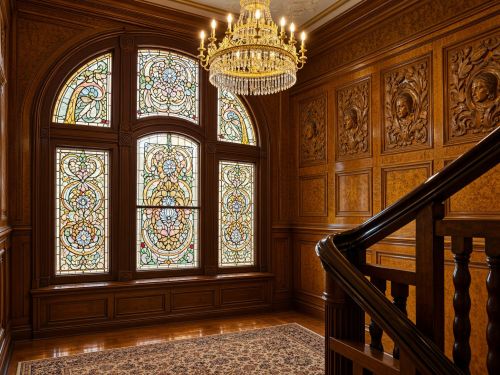
Victorian homes are more than buildings. They are masterpieces of historic architecture, crafted with a level of artistry, detail, and imagination rarely seen today. Their ornate woodwork, elegant designs, and timeless character tell the story of the generations who built and lived within them. Because they embody an irreplaceable part of our cultural heritage, Victorian homes are truly priceless. Once lost, they can never be recreated exactly as they were. Preserving these architectural treasures ensures that future generations can experience the beauty, craftsmanship, and history that make them so extraordinary.
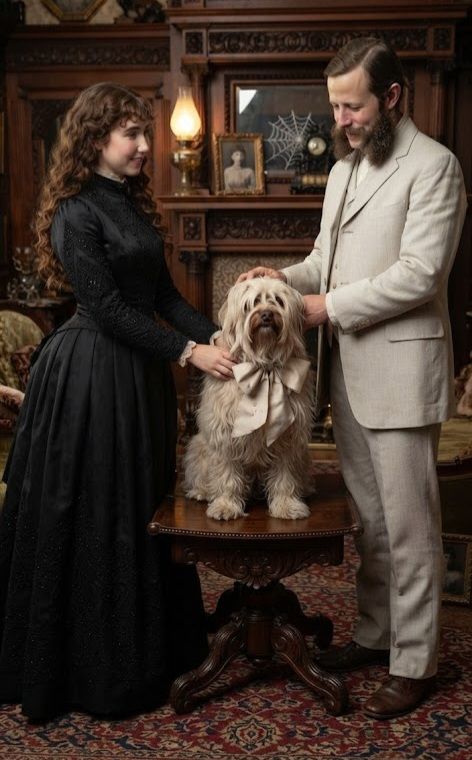
Consider donating to the Winchester Mystery House, purchasing merchandise, or experiencing one of its many tours. Every visit and contribution helps preserve and restore this priceless national treasure, ensuring that its remarkable architecture, rich history, and enduring legacy continue to inspire future generations. https://winchestermysteryhouse.com/contact/

Christmas in a Victorian home is more than a season; it is a glowing hearth, a table gathered with loved ones, and the cherished traditions that bind one generation to the next. https://winchestermysteryhouse.com/


Join Vogel Victorian for a Christmas Tea Party at the Winchester Mystery House. This special event includes a Victorian-style séance, blessing jar creations and full tea service in the mansion, hosted by the enchanting Vogel Victorian team.
Two seatings are available at 10:00 AM and 7:00 PM. Each seating is limited to 24 guests.
Your ticket also includes access to the Yuletide Menagerie Oddities Market, open from 10:00 AM to 5:00 PM on the same day.
Ages 16+ only. Duration: 2 hours. https://winchestermysteryhouse.com/holidays/

Welcome
to Cresleigh Homes

Within each Cresleigh neighborhood, you’ll find beautifully crafted new homes thoughtfully designed to meet the needs of every generation and every stage of life. Whether you’re a first-time homebuyer, a growing family, a multigenerational household, or someone looking to downsize without compromise, Cresleigh offers a variety of floor plans to suit your lifestyle.

Home designs feature a range of spacious layouts, offering multiple bedroom and bathroom configurations to accommodate families of all sizes. From comfortable three-bedroom residences to expansive homes with four, five, or more bedrooms, each plan is designed with flexibility, comfort, and functionality in mind. Generous primary suites, versatile lofts, guest rooms, home offices, and open-concept living spaces create homes that adapt to the way modern families live.

With floor plans ranging from approximately 1,500 to more than 3,500 square feet, Cresleigh homes provide the space you need for everyday living, entertaining, and creating lasting memories. Thoughtful architectural details, energy-efficient features, and quality craftsmanship ensure that your home is as reliable as it is beautiful.

At the heart of every Cresleigh home is a commitment to energy efficiency, durability, and long-term value. Every member of the Cresleigh team is passionate about building homes that families can depend on for years to come, allowing homeowners to focus on what truly matters: spending time with loved ones, celebrating life’s milestones, and creating memories that will last a lifetime.
Welcome to the neighborhood. Welcome home. https://www.cresleigh.com/