
Beauty pleases universally without the aid of concept, and art is the noble labor that exalts while it defines. That is true, but no artist can get along with reality. Artistic creation is a demand for unity and a rejection of the world. However, it rejects the world on account of what it lacks and in the name of what it sometimes is. Rebellion can be observed here in its pure state and in its original complexities. Thus, art should give us a final perspective on the content of rebellion. The hostility to art shown by all revolutionary reformers must, however, be pointed out. Plato is moderately reasonable. He only calls in question the deceptive function of language and exiles only poets from his republic. Apart from that, he considers beauty more important than the world. However, the revolutionary movement of modern times coincides with an artistic process that is not yet completed. The Reformation chooses morality and exiles beauty. Rousseau denounces in art a corruption of nature by society. Saint-Just inveighs against the theater, and in the elaborate program he composes for the “Feast of Reason” he states that he would like Reason to be impersonated by someone “virtuous and beautiful.” The French Revolution gave birth to no artists, but only to a great journalist, Desmoulins, and to a clandestine writer, Sade. It guillotines the only poet of the times. The only great prose-writer took refuge in London and pleaded the case of Christianity and legitimacy. #RandolphHarris 1 of 21

A little later, the followers of Saint-Simon demanded a “socially useful form of art, “Art for progress” was a commonplace of the whole period, and one that Hugo revived, without succeeding in making it sound convincing. Valles alone brings to his malediction of art a tone of imprecation that gives it authenticity. This tone is also employed by the Nihilists. Pisarev proclaims the deposition of aesthetic values, in favor of pragmatic values. “I would rather be a Russian shoemaker than a Russian Raphael.” A pair of shoes, in his eyes, is more useful than Shakespeare. The nihilist Nekrassov, a great and moving poet, nevertheless affirms that he prefers a piece of cheese to all of Pushkin. Finally, we are familiar with the excommunication of art pronounced by Tolstoy. Revolutionary Russia finally even turned it back on the marble statues of Venus and Apollo, still gilded by the Italian sun, that Peter the Great had had brought to his summer garden in St. Petersburg. Suffering, sometimes, turns away from too painful expressions of happiness. German ideology is no less severe in its accusations. According to the revolutionary interpreters of Hegel’s Phenomenology, there will be no art in reconciled society. Beauty will be lived and no longer only imagined. Reality, having become entirely rational, will satisfy, completely by itself, every appetite. The criticism of formal conscience and of escapist values naturally extends itself to embrace art. Art does not belong to all times; it is determined, on the contrary, by its period, and expresses, says Marx, the privileged values of the ruling classes. Thus, there is only one revolutionary form of art, which is, precisely, art dedicated to the service of the revolution. #RandolphHarris 2 of 21
Moreover, by creating beauty outside the course of history, art impedes the only rational activity: the transformation of history itself into absolute beauty. The Russian shoemaker, once he is aware of his revolutionary role, is the real creator of definitive beauty. As for Raphael, he created only a transitory beauty, which will be quite incomprehensible to the new man. The scientists reached a region of investigation where each turn of the page of the world-problem revealed another page which became even harder to read. The newer problems were metaphysical ones. Therefore, when science ceases to be such and becomes metaphysics, it will fulfill its highest purpose. To move from physics to metaphysics is to move farther from touchable things to more abstract conceptions, from pictured images to comprehended ideas, from concrete forms to mind-held abstractions. If the research stops and goes no further, the first leads to materialism. If, however, he pursues the enterprise and looks for origins, sources, and primary causes, he must end up as a mentalist. Science, using the method of analysis to find the truth about things, must afterwards add the method of synthesis, or it will get only a half-truth. This need not mean surrendering the mind to speculation, imagination, theorizing, fantasy, or so-called metaphysics, but rather using its creative faculty and its power of understanding—in short, using intelligence which is derived from intuitive feeling and correct thinking. #RandolphHarris 3 of 21

So long as science does not pause to reflect adequately upon its own self, its own character and its own foundations, so long is it necessarily materialistic. However, after it has taken the trouble to do so, which means after it has fulfilled its higher purpose by turning metaphysical, it cannot help renouncing its materialism. The scientist remains loyal to his self-set goal. He will sooner or later be compelled by the logic of his discoveries as much as by the logic of his reflections to turn himself into a philosopher and continue his quest in the still higher sphere of philosophy. In the last one hundred and seventy-five years even the sciences, particularly the fields of nuclear physics and biology, have moved so far ahead that they have opened the way for principles and teachings, the knowledge and practices of true philosophy. Life will be better guided when scientific knowledge lets itself be joined to spiritual consciousness. Mars asks himself, it is true, how the beauty created by the Greeks can still be beautiful for us. His answer is that this beauty is the expression of the naïve childhood of this world and that we have, in the midst of our adult struggles, a nostalgia for this childhood. However, how can the masterpieces of the Italian Renaissance, how can Rembrandt, how can African, Chinese, and Egyptian art still be beautiful in our eyes? What does it matter! The trial of art has been opened definitively and is continuing today with the embarrassed complicity of artists and intellectuals dedicated to culminating both their art and their intelligence. We notice, in fact, that in the contest between Shakespeare and the shoemaker, it is not the shoemaker who maligns Shakespeare or beauty but, on the contrary, the man who continues to read Shakespeare and who does not choose to make shoes—which he could never make, if it comes to that. The artists of our time resemble the repentant noblemen of the nineteenth-century Russia; their bad conscience is their excuse. #RandolphHarris 4 of 21
However, the last emotion that an artist can experience, confronted with his art, is repentance. It is going far beyond simple and necessary humility to pretend to dismiss beauty, too, until the end of time, and meanwhile, to deprive all the world, including the shoemaker, of this additional bread of which one has taken advantage oneself. This form of ascetic insanity, nevertheless, has its reasons, which at least are of interest to us. They express on the aesthetic level the struggle, already described, of revolution and rebellion. In every rebellion is to be found the metaphysical demand for unity, the impossibility of capturing it, and the construction of a substitute universe. Rebellion, from this point of view, is a fabricator of the universe. Rebellion, from this point of view, is a fabricator of universes. This also defines art. The demands of rebellion are really, in part, aesthetic demands. All rebel thought, as we have seen, is expressed either in rhetoric or in a closed universe. The rhetoric of ramparts in Lucretius, the convents and isolated castles of Sade, the island or the lonely rock of the romantics, the solitary heights of Nietzsche, the primeval seas of Lautreamont, the parapet of Rimbaud, the terrifying castles of the surrealists, which spring up in a storm of flowers, the prison, the nation behind barbed wire, the concentration camps, the empire of free enslaved people, all illustrate, after their own fashion, the same need for coherence and unity. In these sealed worlds, man can reign and have knowledge at last. #RandolphHarris 5 of 21

This tendency is common to all the arts. The artist reconstructs the world to his plan. The symphonies of nature know no rests. The world is never quiet; even its silence eternally resounds with the same notes, in vibrations that escape our ears. As for the same notes, in vibrations that escape our ears. As for those we perceive, they carry sounds to us, occasionally a chord, never a melody. Music exists, however, in which symphonies are completed, where melody gives its form to sounds that by themselves have none, and where, finally, a particular arrangement of notes extracts from natural disorder a unity that is satisfying to the mind and the heart. “I believe more and more,” writes Van Gogh, “that God must not be judged on this earth. It is one of His sketches that has turned out badly.” Every artist tries to reconstruct this sketch and to give it the style it lacks. The greatest and most ambitious of all the arts, sculpture, is bent on capturing, in three dimensions, the fugitive figure of man, and on restoring the unity of great style to the general disorder of gestures. Sculpture does not reject resemblance, of which, indeed, it has need. However, resemblance is not its first aim. What it is looking for, in its periods of greatness, is the gesture, the expression, or the empty stare which will sum up all the gestures and all the stares in the world. Its purpose is not to imitate, but to stylize and to imprison in one significant expression the fleeting ecstasy of the body or the infinite variety of human attitudes. Then, and only then, does it erect, on the pediments of teeming cities, the model, the type, the motionless perfection that will cool, for one moment, the fevered brow of man. The frustrated lover of love can finally gaze at the Greek caryatides and grasp what it is that triumphs, in the body and face of the woman, over every degradation. #RandolphHarris 6 of 21

The principle of painting is also to make a choice. “Even genius,” writes Delacroix, ruminating on his art, “is only the gift of generalizing and choosing.” The painter isolates his subject, which is the first way of unifying it. Landscapes flee, vanish from the memory, or destroy one another. That is why the landscape painter or the painter of still life isolates in space and time things that normally change with the light, get lost in an infinite perspective, or disappear under the impact of other values. The first thing that a landscape painter does is to square off his canvas. He eliminates as much as he includes. Similarly, subject-painting isolates, in both time and space, an action that normally would become lost in another action. Thus, the painter arrives at a point of stabilization. The really great creative artists are those who, like Piero della Francesca, give the impression that the stabilization has only just taken place, that the projection machine has suddenly stopped dead. All their subjects give the impression that, by some miracle of art, they continue to live, while ceasing to be mortal. Long after his death, Rembrandt’s philosopher still meditates, between light and shade, on the same problem. “How vain a thing is painting that beguiles us by the resemblance to objects that do not please us at all.” Delacroix, who quotes Pascal’s celebrated remark, is correct in writing “strange” instead of “vain.” These objects do not please us at all because we do not see them; they are obscured and negated by a perpetual process of change. #RandolphHarris 7 of 21

Who looked at the hands of the executioner during the Flagellation, and the olive trees on the Cross? However, here we see them represented, transfigured by the incessant movement of the Passion; and the agony of Christ, imprisoned in images of violence and beauty, cries out again each day in the cold rooms of museums. A painter’s style lies in this blending of nature and history, in this stability imposed on incessant change. Art realizes, without apparent effort, the reconciliation of the unique with the universal of which Hegel dreamed. Perhaps that is why periods, such as ours, which are bent on unity to the point of madness, turn to primitive arts, in which stylization is the most intense and unity the most provocative. The most extreme stylization is always found at the beginning and end of artistic movements; it demonstrates the intensity of negation and transportation which has given modern painting its disorderly impetus toward interpreting unity and existence. Van Gogh’s admirable complaint is the arrogant and desperate cry of all artists. “I can very well, in life and in painting, too, do without God. But I cannot, suffering as I do, do without something that is greater than I am, that is my life—the power to create.” However, the artist’s rebellion against reality, which is automatically suspect to the totalitarian revolution, contains the same affirmation as the spontaneous rebellion of the oppressed. #RandolphHarris 8 of 21
The revolutionary spirit, born of total negation, instinctively felt that, as well as refusal, there was also consent to be found in art; that there was a risk of contemplation counterbalancing action, beauty, and injustice, and that in certain cases beauty itself was a form of injustice from which there is no appeal. Equally well, no form of art can survive on total denial alone. Just as all thought, and primarily that of non-signification. Man can allow himself to denounce the total injustice of the world and then demand a total justice that he alone will create. However, he cannot affirm the total hideousness of the world. To create beauty, he must simultaneously reject reality and exalt certain of its aspects. Art disputes reality, but does not hide from it. Nietzsche could deny any form of transcendence, whether moral or divine, by saying that transcendence drove one to slander this world and this life. However, perhaps there is a living transcendence, of which beauty carries the promise, which can make this mortal and limited world preferable to and more appealing than any other. Art thus leads us back to the origins of rebellion, to the extent that it tries to give its form to an elusive value which the future perpetually promises, but of which the artist has a presentiment and wishes to snatch from the grasp of history. We shall understand this better in considering the art form whose precise aim is to become part of the process of evolution in order to give it the style that it lacks; in other words, the novel. #RandolphHarris 9 of 21
The word “formation” arouses our suspicion. We are sick and tired of Christian programmes and the thoughtless and superficial slogan of what is called “practical” Christianity as distinct from “dogmatic” Christianity. We have seen that the formative forces in the world do not arise from Christianity at all and that the so-called practical Christianity is at least as unavailing in the world as is the dogmatic kind. The word “formation,” therefore, must be taken in quite a different sense from that to which we are accustomed. And in fact, the Holy Christian Scriptures speak of formation in a sense which is at first entirely unfamiliar to us. Their primary concern is not with the forming of a world by means of plans and programmes. Whenever they speak of forming, they are concerned only with the one form which has overcome the world, the form of Jesus Christ. Formation can come only from this form. However, here again, it is not a question of applying directly to the world the teachings of Christ or what are referred to as Christian principles, so that the world might be formed in accordance with these. On the contrary, formation comes only by being drawn into the form of Jesus Christ. It comes only as formation in His likeness, as conformation, with the unique form of Him who was made man, was crucified, and rose again. This is not achieved by dint of efforts “to become like Jesus,” which is the way in which we usually interpret it. It is achieved only when the form of Jesus Christ itself works upon us in such a manner that it moulds our form in its own likeness (Gal. 4:19). Jesus Christ remains the only giver of forms. #RandolphHarris 10 of 21

It is not men who shape the world with their ideas, but it is Christ who shapes men in conformity with Himself. However, just as we misunderstand the form of Christ if we take Him to be essentially the teacher of a pious and good life, so, too, we should misunderstand the formation of man if we were to regard it as instruction in the way in which a pious and good life is to be attained. Christ is the Incarnate, Crucified and Risen One whom the Christian faith confesses. To be transformed in His image (II Cor. 3:18, Phil., 3:10, Rom. 8:29 and 12:2)—this is what is meant by the formation of which the Christian Bible speaks. To be conformed with the Incarnate—that is to be a real man. It is man’s right and duty that he should be man. The quest for the superman, the endeavour to outgrow the man within the man, the pursuit of the heroic, the cult of the demigod, all this is not the proper concern of man, for it is untrue. The real man is not an object either for contempt or for deification, but an object of the love of God. The real and manifold variety of God’s creation suffers no violence here from false uniformity or from the forcing of men into the pattern of an ideal or a type or a definite picture of the human character. The real man is at liberty to be his Creator’s creature. To be conformed with the Incarnate is to have the right to be the man one really is. Now there is no more pretence, no more hypocrisy or self-violence, no more compulsion to be something other, better and more ideal than what one is. God loves the real man. God became a real man. #RandolphHarris 11 of 21

To be formed in the likeness of the Crucified—this means being a man sentenced by God. In his daily existence, man carries with him God’s sentence of death, the necessity of dying before God for the sake of sin. With his life, he testifies that nothing can stand before God save only under God’s sentence and grace. Every day man dies the death of a sinner. Humbly, he bears the scars on his body and soul, the marks of the wounds which sin inflicts on him. He cannot raise himself up above any other man or set himself before him as a model, for he knows himself to be the greatest of all sinners. He can excuse the sin of another, but never his own. He bears all the suffering imposed on him, in the knowledge that it serves to enable him to die with his own will and to accept God’s judgment upon him. However, in surrendering himself to God’s judgment upon him and against him, he is himself just in the eyes of God. In the words of K. F. Harttmann’s poem, “it is in suffering that the Master imprints upon our minds and hearts his own all-valid image.” To be conformed with the Risen One—that is to be a new man before God. In the midst of death, he is in life. In the midst of sin, he is righteous. In the midst of the old, he is new. His secret remains hidden from the world. He lives because Christ lives, and lives in Christ alone. “Christ is my life” (Phil 1:21). So long as the glory of Christ is hidden, so long, too, does the glory of his new life remain “hidden with Christ in God” (Col. 3:3). However, he knows espies already here and there a gleam of what is to come. #RandolphHarris 12 of 21
The new man lives in the world like any other man. Often there is little to distinguish him from the rest. Nor does he attach importance to distinguish himself, but only to distinguish Christ for the sake of his brethren. Transfigured though he is in the form of the Risen One, here he bears only the sign of the cross and the judgment. By bearing it willingly, he shows himself to be the one who has received the Holy Spirit and who is united with Jesus Christ in incomparable love and fellowship. The form of Jesus Christ takes form in man. Man does not take on an independent form of his own, but what gives him form and what maintains him in the new form is always solely the form of Jesus Christ Himself. It is therefore not a vain imitation or repetition of Christ’s form but Christ’s form itself which takes form in man. And again, man is not transformed into a form, the form which is essentially proper to him. Man becomes man because God became man. However, man does not become God. It is not he, therefore, who was or is able to accomplish his own transformation, but it is God whom changes his form into the form of man, so that man may become, not indeed God, but, in the eyes of God, man. In Christ, the form of man was re-created before God. It was not an outcome of the place or the time, of the climate or the race, of the individual or the society, or the religion or of taste, but quite simply of the life of mankind as such, that mankind at this point recognized its image and its hope. What befell Christ had befallen mankind. It is a mystery, for which there is no explanation, that only a part of mankind recognized the form of their Redeemer. The longing of the Incarnate to take form in all men is as yet still unsatisfied. He bore the form of man as a whole, and yet He can take form only in a small band. These are His Church. “Your body is the temple of the Holy Ghost” (1 Corinthians 6:19–20). #RandolphHarris 13 of 21
“Formation” consequently means, in the first place, Jesus’s taking form in His Church. What it means here is the formation of Jesus Christ Himself. The New Testament states the case profoundly and clearly when it calls the Church the Body of Christ. The body is the form. So the Church is not a religious community of worshippers of Christ but is Christ Himself who has taken form among men. The Church can be called the Body of Christ because in Christ’s Body man is really taken up by Him, and so too, therefore, are all mankind. The Church, then, bears the form which is in truth the proper form of all humanity. The image in which she is formed is the image of man. Although God dwells within every person, I believe it remains important to gather in the physical church house. Being present in church allows people to receive the word of the Lord, to be reminded that God is sovereign, and to renew the commandment to treat others as we ourselves wish to be treated. Even if someone already strives to live a good and moral life, church still matters. It functions much like therapy: you are surrounded by loving scripture and reminded that you are valued, cherished, and worthy of life. You are also reminded to turn away from sin, so that when you go back out into the world, you do so clothed in the armor of God. Going to Church is just like studying for Mrs. Swason’s trigonometry exam or Mr. Bernicie’s algebra test, or Mr. Gish’s Geometry final: you may think it is difficult, you may think it is impossible to learn, you may think you know it all, but it is important to attend lectures so you can comprehend the material so you can graduate. You will use this material later on in life. #RandolphHarris 14 of 21

So, with that analogy, the lessons we learn on earth and in church may help us graduate into heaven, where that material will still be relevant. Therefore, what takes place in Church takes place as an example of substitution for all men. However, it is impossible to state clearly enough that the Church, too, is not an independent form by herself, side by side with the form of Christ, and that she, too, can therefore never lay claim to an independent character, title, authority or dignity on her own account and apart from Him. The Church is nothing but a section of humanity in which Christ has really taken form. What we have here is utterly and completely the form of Jesus Christ and not some other form side by side with Him. The Church is the man in Christ, incarnate, sentenced, and awakened to new life. In the first instance, therefore, she has essentially nothing whatever to do with the so-called religious functions of man, but with the whole man in his existence in the world with all its implications. What matters in the Church is not religion but the form of Christ, and its taking form amidst a band of men. If we allow ourselves to lose sight of this, even for an instant, we inevitably relapse into that programme-planning for the ethical or religious shaping of the world, which was where we set out from. We have now seen that it is only with reference to the form that we can speak of formation in a Christian and ethical sense. Formation is not an independent process or condition which can in some way or other be detached from this form. The only formation is formation by and into the form of Jesus Christ. #RandolphHarris 15 of 21
The concept of formation acquires its significance, indirectly, for all mankind only if what takes place in the Church does in truth take place for all men. However, this again does not mean that the Church is set up, so to speak, as a model for the world. One can speak of formation and of world only if mankind is called by name in its true form, which is its own by right, which it has already received, but which it merely fails to understand and accept, namely, the form of Jesus Christ, which is proper to man, and if in this way, in anticipation, as one might say, mankind is drawn in into the Church. This means, then, that even when we speak in terms of the formation of the world, we are referring solely to the form of Jesus Christ. The form of Christ is one and the same at all times and in all places. And the Church of Christ also is one and the same throughout all generations. And yet Christ is not principle in accordance with which the whole world must be shaped. Christ is not the proclaimer of a system of what would be good today, here and at all times. Christ teaches no abstract ethics such as must at all costs be put into practice. Christ was not essentially a teacher and legislator, but a man, a real man like ourselves. And it is not therefore His will that we should, in our time. Be the adherents, exponents and advocates of a definite doctrine, but that we should be men, real men before God. Christ did not, like a moralist, love a theory of good, but He loved the real man. He was not, like a philosopher, interested in the “universally valid,” but rather in that which is of help to the real and concrete human being. What worried Hum was not, like Kant, whether “the maxim of an action can become a principle of general legislation,” but whether my action is at this moment helping my neighbour to become a man of God. #RandolphHarris 16 of 21
For indeed, it is not written that God became an idea, a principle, a programme, a universally valid proposition or a law, but that God became man. This means that though the form of Christ certainly is and remains one and the same, yet it is willing to take form in the real man, that is to say, in quite different guises. Christ does not dispense with human reality for the sake of an idea which demands realization at the expense of the real. What Christ does is precisely to give effect to reality. He affirms reality. And indeed, He is Himself the real man and consequently the foundation of all human reality. And so formation in conformity with Christ has this double implication. The form of Christ remains one and the same, not as a general idea but in its own unique character as the incarnate, crucified and risen God. And precisely for the sake of Christ’s form the form of the real man is preserved, and in this way the real man receives the form of Christ. The thought once came to me that this old man wanted me for his slave, and once he got me into his house, he would be ready to sell me to anyone who had the money. So, I told him I could not give up my pilgrimage to live such a life with him; that I would not consider it, not for all he had. Then, he denounced me as a fool and a bigot, and said he would send one after me who would make my way miserable. I turned to go, and just as I turned from him, he threw his arms around my body, saying that I was his son in the first place, and he gave me such a pull backward that I thought I would be pulled in two before I could get loose from him. Then I cried, “O wretched man,” and I felt an invisible One take hold of me on the other side, pulling me toward the top of the top of the hill. About halfway up the hill, I looked back and saw one coming after me, swift as an eagle. This one overtook me where the arbor stands. As soon as my pursuer overtook me, he blurted out something and struck me a terrific blow. When I recovered sufficiently, I asked him why he did it. He said that because of my secret inclination to Adam the First, I rightly belonged to his house. Then he struck me again, completely knocking me out. When I came to, I begged for mercy. He said, “The law knows no mercy,” and with that he knocked me down again. He doubtless would have killed me, but just then the One who freed me from old man Adam came by and ordered him to desist. #RandolphHarris 16 of 21

Oftentimes, things happen in life that are unexpected. It was already hot that morning, the kind of heat that settled early and promised a long, punishing day. Temperatures were climbing toward the 90s, and the delta breeze—usually a relief—was blowing hard enough to rattle porch chairs and send dust swirling across the yard. Two men sat on their porch, trying to enjoy what little comfort the wind offered. They had lived in Sacramento long enough to know that when the breeze came in this strong, something somewhere was going to give. They were talking quietly when one of them heard a sharp, violent crack behind them. He turned just in time to see an old oak tree split at its base, the wind finishing what years of drought had started. The massive trunk toppled sideways, crashing directly into an electrical line stretched between two poles. The line snapped, whipping downward like a live serpent, sparks exploding as it hit the dry grass and pine needles below. Within seconds, flames took hold. The ground was parched from a dry year, and the vegetation ignited as if waiting for the slightest excuse. Fire spread in jagged lines, racing outward with the wind, climbing up the fallen oak and leaping across the yard. The men didn’t waste time. They ran to their car, threw themselves inside, and sped toward the nearest intersection, hoping to find help. By sheer luck, the award‑winning Sacramento Fire Department was right there, just pulling out of the supermarket parking lot after a quick supply run. The men flagged them down, shouting about the fire. #RandolphHarris 17 of 21

Captain Lukas Reinhardt, a seasoned German firefighter known for his calm under pressure, stepped out and immediately assessed the situation. Even before the engines roared toward the blaze, he found himself wondering—again—why there were still no restrictions on planting large trees so close to electrical lines. Every year, PG&E and SMUD were blamed for fires, and yet people rarely considered how their own landscaping choices contributed to the danger. Reinhardt had seen it too many times: a tree planted decades earlier, now towering into wires that were never meant to coexist with it. When the crew reached the scene, the fire had already spread across the yard and was threatening the neighboring property. The heat was intense, the wind feeding the flames with relentless force. Firefighters deployed hoses, cutting off the fire’s advance while others worked to clear debris around the fallen line. Amid the chaos, a few residents suffered injuries—smoke inhalation, minor burns, and one man who had tripped while trying to evacuate. The Sacramento Fire Department’s paramedics, trained to handle emergencies with precision and compassion, moved quickly. They treated the injured on-site, stabilizing them before arranging transport for further care. As the flames were finally subdued, Captain Reinhardt stood over the charred remains of the oak tree. The wind still howled, carrying the smell of smoke across the neighborhood. He knew the reports would once again point fingers at the utilities, but moments like this reminded him that fire prevention was a shared responsibility. And until people understood that, Sacramento would keep burning. #RandolphHarris 18 of 21

When it comes to firefighting, every incident carries the potential for injury—no matter how small the fire appears or how routine the call may seem. If you see a fire engine stopped in the street without its lights on, use extreme caution. Crews may be working nearby, and passing the apparatus can put them in danger. It is often safer to turn around and take another route; if you strike a firefighter or civilian and cause a fatality, you could face charges such as manslaughter. Firefighters frequently move around their vehicle on foot, loading equipment or preparing to leave the scene. Attempting to pass the apparatus can result in a collision with someone you cannot see. Pay close attention to their hand signals as well—emergency vehicles sometimes move slowly or reposition, and impatient drivers trying to slip around them create hazardous situations. If you are already in an intersection when you notice an emergency vehicle approaching, continue through it, then pull to the right and stop as soon as it is safe. Always obey directions from law enforcement officers or firefighters, even if those instructions conflict with posted signs or traffic laws. When sirens or flashing lights are activated, it is illegal to follow within 300 feet of a fire engine, ambulance, or police vehicle. Driving to the scene of a fire, collision, or disaster can also result in arrest, as doing so interferes with firefighters, paramedics, and other emergency personnel. Professional courage is not limited to physical toughness. It includes listening to others, advocating for them in difficult situations, understanding personal limits, and having the integrity to tell a superior when they are wrong. The deeper truth is that public safety depends not only on the bravery of first responders but on the discipline and judgment of the community around them. Every driver’s decision—whether cautious or careless—can either protect or endanger the people risking their lives to protect everyone else. #RandolphHarris 19 of 21
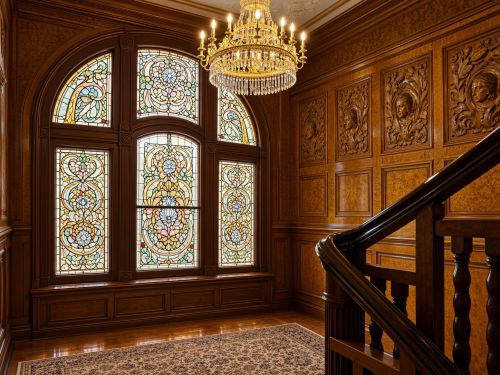
To help prevent disasters, we must plan well in advance. Efforts to preserve farmland and maintain buildable land for future generations often lead to discussions about population growth and long‑term planning. Some people argue that immigration levels should be managed carefully to ensure that infrastructure, housing, and land use remain sustainable. Others suggest that, when immigration does occur, programs that encourage broad representation can help communities reflect the diversity of the wider world. When Americans purchase goods made in the United States, it strengthens local businesses and signals to investors that these products are in demand. Strong sales give investors confidence to reinvest in domestic companies, helping keep jobs, production, and wages within the country. As businesses grow, they contribute more to the tax base, which can reduce the burden on taxpayers over time. Supporting American businesses also keeps more money circulating within the national economy. The government increases the national debt when it spends more than it collects in tax revenue or borrows from private or foreign lenders. When people shop locally, more tax revenue stays in the community and supports public services. This helps keep jobs in the United States and increases the tax contributions that fund government operations. Purchasing foreign-made goods, by contrast, often sends money overseas and may benefit companies that operate under lighter tax or environmental regulations. Buying American-made products can also reduce environmental impact because they travel shorter distances and are produced under stricter standards for air, land, and water protection. In this way, consumer choices influence not only the economy but also environmental stewardship and long-term national sustainability. #RandolphHarris 20 of 21

Under President Trump’s administration, he has made America a priority. President Trump has hermetically sealed the southern border, illegal crossings have been terminated, and are 90 percent lower than under the previous administration. Since President Trump’s crack down on crime, violent crimes in Washington D.C. have dropped by approximately 80 percent. He has stopped thousands of pounds of drugs from entering America and killing citizens. And since President Trump took office, investments in America have increased by trillions of dollars in U.S.A. manufacturing, production, and innovation. As you can see, President Donald Trump and his pledge to “Make America Great Again” is exactly what America needs to save the country and the American people. And yes, diversity is important, so you can see why it is also important to preserve blonde hair and blue eyes, as the people with these characteristics are becoming a minority in America. As a reminder, parents, please teach your children to love America and be patriotic citizens, and to buy goods and services made in America. It is also important to respect law and order and treat your elders with respect. It is inborn in the human mind to wish to know. If this begins with the endless surface questions of a child’s curiosity, if it continues into deeper questions of a scientist’s probing investigation, it cannot and does not stop there. For the higher part of the mind will eventually come into unfoldment, that union of abstract reflective thought with mystical intuition, which is true intelligence, which needs and sees a view of the whole of things. And so, the knowing faculty enters the realm of philosophy. A lot of children are having problems in school and cannot even write a paragraph because they are not reading their books. When you actually read books, you get an example of how to write and will become a better student. Therefore, remember to take your education seriously so that you will be successful in life and make your family proud. Also, to make sure they have all the resources required, please donate to the Sacramento Fire Department to help improve our national security. “Oh, thus be it ever, when freemen shall stand between their loved home and the war’s desolation! Blest with victory and peace, may the heav’n-rescued land Praise the Power that hath made and preserved us a nation! Then conquer we must, when our cause is just, and this be our motto: ‘In God is our trust.’ And the star-spangled banner in triumph shall wave O’er the land of the free and the home of the brave.” Thank you for your attention to this matter. PRESIDENT DONALD J. TRUMP. #RandolphHarris 21 of 21
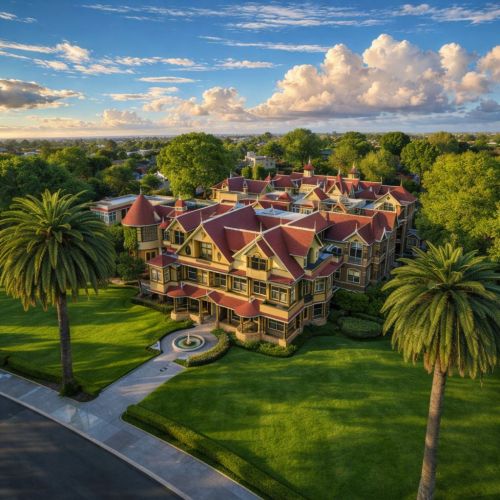
Where History, Mystery, and Imagination Intertwine
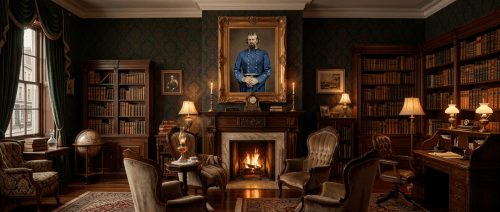
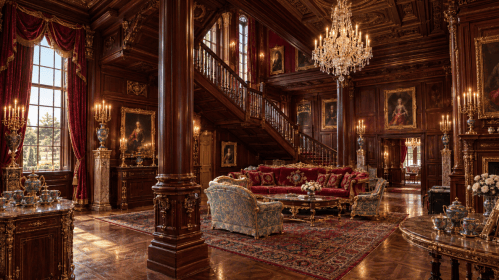
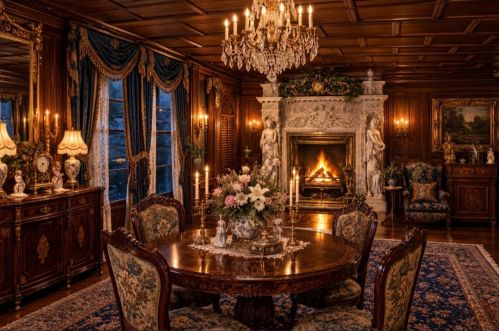
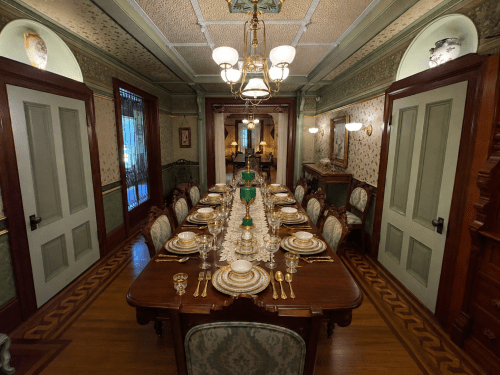
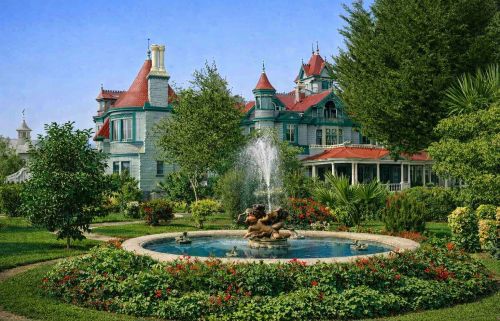
Step inside one of California’s most extraordinary landmarks and experience a world unlike any other. The Winchester Mystery House is more than a Victorian mansion—it is a living work of art, a labyrinth of architectural wonders, and one of America’s most captivating historical estates.
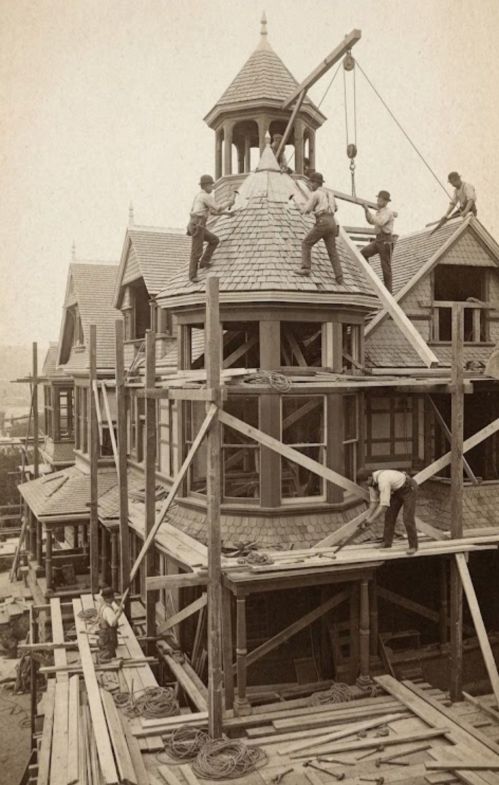
Construction took place for nearly 40 years without pause, the mansion stands today as a testament to craftsmanship, curiosity, and the enduring legend of Mrs. Sarah Winchester.
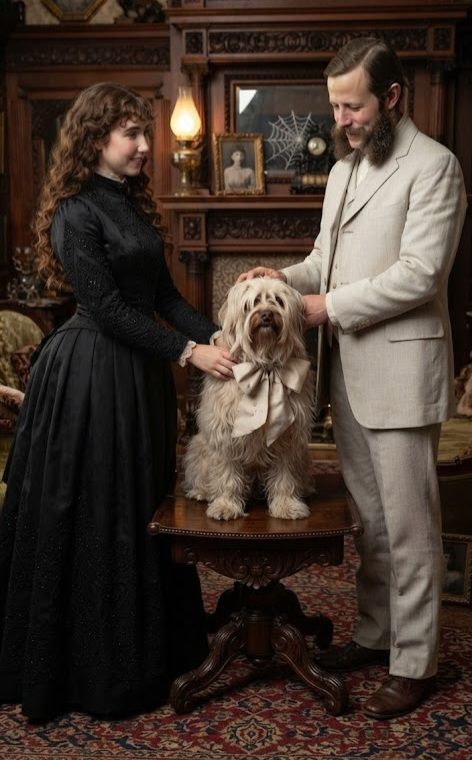
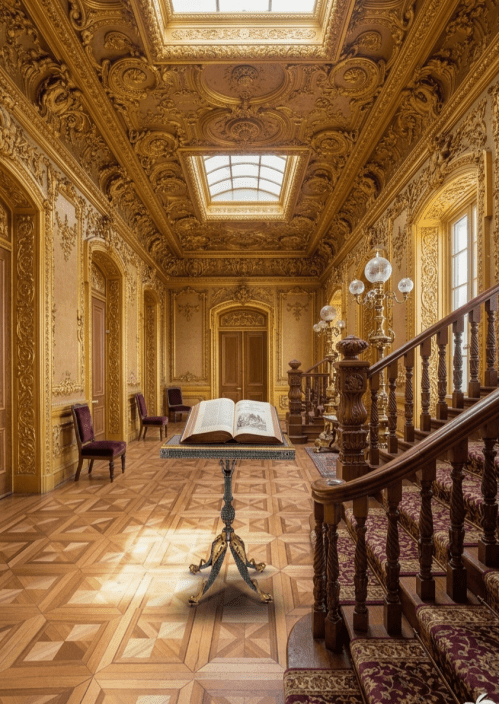
Visitors are invited to explore miles of elegant hallways, beautifully restored rooms, and the mansion’s famously perplexing features: staircases that lead nowhere, doors that open into walls, windows overlooking other rooms, and secret passages woven throughout the estate. Every corner of the house reflects Sarah Winchester’s unique vision, blending Victorian elegance with an eccentricity that continues to fascinate architects, historians, and guests from around the world.

Beyond its architectural marvels, the Winchester Mystery House offers a rare glimpse into the life of a woman who defied convention. Sarah Winchester, heiress to the Winchester Repeating Arms fortune, poured her grief, creativity, and resources into building a home unlike any other.
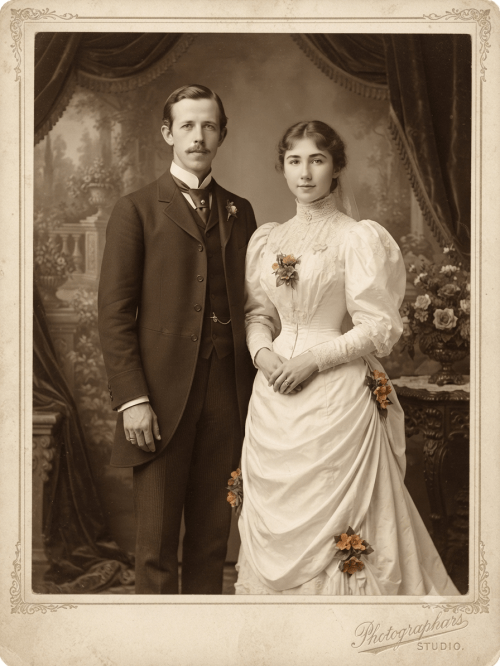
Her story—part tragedy, part triumph, part enduring mystery—adds emotional depth to every room you enter. Visitors leave not only impressed by the mansion’s scale, but moved by the humanity behind its creation.

The estate’s lush gardens, ornate fountains, and tranquil outdoor spaces provide a peaceful contrast to the mansion’s winding interior. Guests can stroll through beautifully landscaped grounds, enjoy seasonal displays, and take in the serene beauty that surrounds the historic home. Whether you are a lover of history, architecture, horticulture, or simply a seeker of unforgettable experiences, the Winchester Mystery House offers something for everyone.
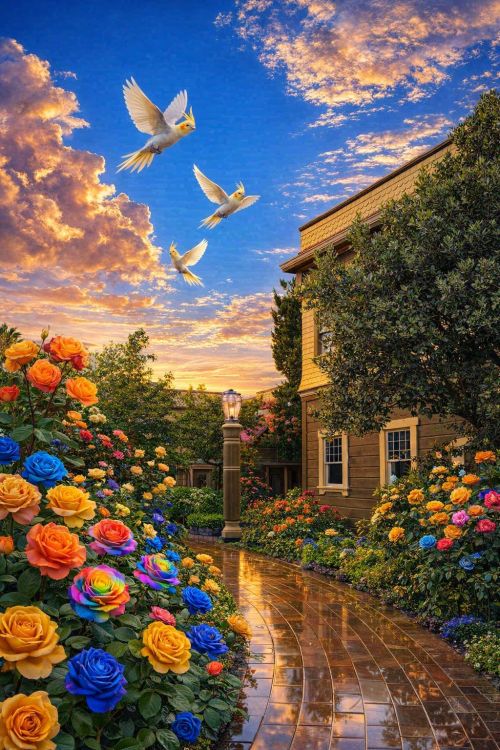
A visit to the Winchester Mystery House is more than a tour—it is an encounter with legend. It is a place where imagination thrives, where history whispers through every corridor, and where the line between fact and folklore blurs in the most enchanting way. Come discover why millions of visitors from around the world consider the Winchester Mystery House a must‑see destination and one of California’s most iconic treasures.

PRIVATE EVENTS & WEDDINGS
at WINCHESTER ESTATE

The Winchester Mystery House offers a wedding and special‑event experience unlike anywhere else in California. Its sprawling Victorian architecture, lush gardens, and famously enigmatic rooms create a backdrop that feels both elegant and otherworldly. Couples and guests celebrate surrounded by historic craftsmanship and the mansion’s legendary atmosphere, turning milestones into memories people talk about for years. Whether it’s a wedding, anniversary, or private gathering, the estate delivers a setting that is truly one of a kind.
Café 13: A Rest Stop on the Edge of the Mystery
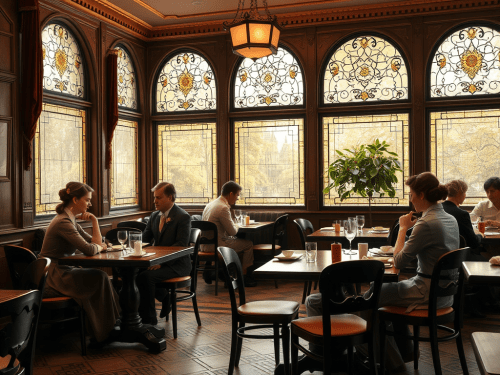
After wandering the winding halls of the Winchester Mystery House—where staircases defy logic and whispers seem to cling to the walls—Café 13 offers a welcome return to warmth and grounding. Newly reopened and serving guests daily from 10 AM to 3 PM, this cozy hideaway invites you to pause, breathe, and gather yourself before diving back into the mansion’s secrets.
Settle in with a warm meal, challenge a friend to a board game, or simply rest and recharge as sunlight filters through the windows. Café 13 is more than a café—it’s a moment of calm between chapters of the Winchester legend, a place to steady your nerves before returning to the gardens, the grandeur, and the mysteries that await.
Winchester Mercantile Gift Shop
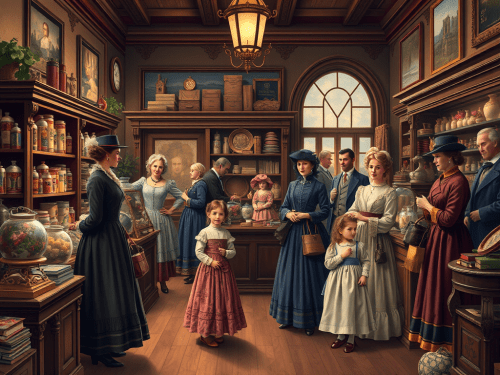
Your journey into the Winchester Mystery House begins long before you cross the mansion’s threshold. It starts at the Mercantile gift shop—a welcoming outpost standing at the edge of a world where history and myth intertwine. Here, beneath warm lights and shelves lined with curiosities, you can secure your tour tickets and prepare for the adventure ahead. Guests often pause for a souvenir photograph, capturing the moment before they step into Sarah Winchester’s enigmatic domain.
As you explore the shop, you will find an eclectic array of gifts and keepsakes: tokens of the mansion’s lore, echoes of Victorian elegance, and mementos that carry a touch of the house’s enduring mystery. The Mercantile is more than a gift shop—it is the gateway. https://winchestermysteryhouse.com/

The more we love, the more love we are able to give. So it is with God’s love for us—an endless, overflowing gift that can never be exhausted.
Harris Plumbing, Heating, Air & Electric

Harris Plumbing, Heating, Air & Electric has been serving our community for 30 years—an achievement few companies can claim. That longevity isn’t an accident. It’s the result of hard work, integrity, and a commitment to doing every job the right way, whether it’s a simple repair or a complex system overhaul. We take pride in every service call because we know your home is more than a building—it’s where your family lives, grows, and feels safe. Ensuring your comfort and protection is a responsibility we carry with seriousness and gratitude. After three decades, our mission remains the same: to deliver dependable service you can trust, every time. https://www.callharrisnow.com/


Beyond performance, BMW carries an aura of prestige and craftsmanship: the cabins feel tailored, the technology is purposeful rather than gimmicky, and the design language signals confidence without excess. Owning a BMW is not just about transportation; it’s about participating in a legacy of excellence that continues to set the standard for luxury performance. This commitment to performance is why BMW continues to earn its reputation as The Ultimate Driving Machine. https://www.brianharrisbmw.com/

Randolph Harris San Francisco Taxation & Mergers

Building strong, lasting client relationships is essential to a successful legal career. Many attorneys assume that mastering legal doctrine alone guarantees success, but law is fundamentally a service profession—our work is measured not only by technical skill, but by how effectively we solve problems for the people who trust us. Long‑term relationships grow from three core commitments: truly knowing your clients, understanding how their legal issues fit within the broader context of their business and personal goals, and consistently delivering exceptional service.

Mr. Randy advises clients on business transitions, taxable and tax‑deferred mergers and acquisitions, joint ventures, restructuring, integrated tax planning, federal and state tax controversy matters, and real estate transactions. His approach is grounded in clarity, responsiveness, and a deep understanding of each client’s unique circumstances. Trust is the cornerstone of every relationship he builds. Ultimately, clients feel confident knowing they are working with someone who not only understands their challenges, but is fully committed to helping them achieve their goals. https://www.jmbm.com/l-randolph-harris.html


Elk Grove / South Sacramento (Laguna Park), California
From $528,990.00 USD
Final Close-Out · Only 4 Homes Remaining · Close-Out Incentives · 4% Co-op to Buyer’s Agents

Discover refined living in this beautifully designed 4‑bedroom residence, featuring a coveted downstairs bedroom ideal for guests or multigenerational comfort. With 1,846 sq ft of thoughtfully crafted space, the home sits in a private paseo location, offering both serenity and exclusivity.

Enjoy a fully completed backyard with included landscaping, creating a perfect retreat for relaxation, entertaining, and effortless outdoor living. This is elevated modern luxury—inside and out. https://nextgenerationcapital.us/new-homes-elk-grove-ventris-place/