
Home » Lake America
Category Archives: Lake America

No Artist Tolerates Reality

Beauty pleases universally without the aid of concept, and art is the noble labor that exalts while it defines. That is true, but no artist can get along with reality. Artistic creation is a demand for unity and a rejection of the world. However, it rejects the world on account of what it lacks and in the name of what it sometimes is. Rebellion can be observed here in its pure state and in its original complexities. Thus, art should give us a final perspective on the content of rebellion. The hostility to art shown by all revolutionary reformers must, however, be pointed out. Plato is moderately reasonable. He only calls in question the deceptive function of language and exiles only poets from his republic. Apart from that, he considers beauty more important than the world. However, the revolutionary movement of modern times coincides with an artistic process that is not yet completed. The Reformation chooses morality and exiles beauty. Rousseau denounces in art a corruption of nature by society. Saint-Just inveighs against the theater, and in the elaborate program he composes for the “Feast of Reason” he states that he would like Reason to be impersonated by someone “virtuous and beautiful.” The French Revolution gave birth to no artists, but only to a great journalist, Desmoulins, and to a clandestine writer, Sade. It guillotines the only poet of the times. The only great prose-writer took refuge in London and pleaded the case of Christianity and legitimacy. #RandolphHarris 1 of 21

A little later, the followers of Saint-Simon demanded a “socially useful form of art, “Art for progress” was a commonplace of the whole period, and one that Hugo revived, without succeeding in making it sound convincing. Valles alone brings to his malediction of art a tone of imprecation that gives it authenticity. This tone is also employed by the Nihilists. Pisarev proclaims the deposition of aesthetic values, in favor of pragmatic values. “I would rather be a Russian shoemaker than a Russian Raphael.” A pair of shoes, in his eyes, is more useful than Shakespeare. The nihilist Nekrassov, a great and moving poet, nevertheless affirms that he prefers a piece of cheese to all of Pushkin. Finally, we are familiar with the excommunication of art pronounced by Tolstoy. Revolutionary Russia finally even turned it back on the marble statues of Venus and Apollo, still gilded by the Italian sun, that Peter the Great had had brought to his summer garden in St. Petersburg. Suffering, sometimes, turns away from too painful expressions of happiness. German ideology is no less severe in its accusations. According to the revolutionary interpreters of Hegel’s Phenomenology, there will be no art in reconciled society. Beauty will be lived and no longer only imagined. Reality, having become entirely rational, will satisfy, completely by itself, every appetite. The criticism of formal conscience and of escapist values naturally extends itself to embrace art. Art does not belong to all times; it is determined, on the contrary, by its period, and expresses, says Marx, the privileged values of the ruling classes. Thus, there is only one revolutionary form of art, which is, precisely, art dedicated to the service of the revolution. #RandolphHarris 2 of 21

Moreover, by creating beauty outside the course of history, art impedes the only rational activity: the transformation of history itself into absolute beauty. The Russian shoemaker, once he is aware of his revolutionary role, is the real creator of definitive beauty. As for Raphael, he created only a transitory beauty, which will be quite incomprehensible to the new man. The scientists reached a region of investigation where each turn of the page of the world-problem revealed another page which became even harder to read. The newer problems were metaphysical ones. Therefore, when science ceases to be such and becomes metaphysics, it will fulfill its highest purpose. To move from physics to metaphysics is to move farther from touchable things to more abstract conceptions, from pictured images to comprehended ideas, from concrete forms to mind-held abstractions. If the research stops and goes no further, the first leads to materialism. If, however, he pursues the enterprise and looks for origins, sources, and primary causes, he must end up as a mentalist. Science, using the method of analysis to find the truth about things, must afterwards add the method of synthesis, or it will get only a half-truth. This need not mean surrendering the mind to speculation, imagination, theorizing, fantasy, or so-called metaphysics, but rather using its creative faculty and its power of understanding—in short, using intelligence which is derived from intuitive feeling and correct thinking. #RandolphHarris 3 of 21

So long as science does not pause to reflect adequately upon its own self, its own character and its own foundations, so long is it necessarily materialistic. However, after it has taken the trouble to do so, which means after it has fulfilled its higher purpose by turning metaphysical, it cannot help renouncing its materialism. The scientist remains loyal to his self-set goal. He will sooner or later be compelled by the logic of his discoveries as much as by the logic of his reflections to turn himself into a philosopher and continue his quest in the still higher sphere of philosophy. In the last one hundred and seventy-five years even the sciences, particularly the fields of nuclear physics and biology, have moved so far ahead that they have opened the way for principles and teachings, the knowledge and practices of true philosophy. Life will be better guided when scientific knowledge lets itself be joined to spiritual consciousness. Mars asks himself, it is true, how the beauty created by the Greeks can still be beautiful for us. His answer is that this beauty is the expression of the naïve childhood of this world and that we have, in the midst of our adult struggles, a nostalgia for this childhood. However, how can the masterpieces of the Italian Renaissance, how can Rembrandt, how can African, Chinese, and Egyptian art still be beautiful in our eyes? What does it matter! The trial of art has been opened definitively and is continuing today with the embarrassed complicity of artists and intellectuals dedicated to culminating both their art and their intelligence. We notice, in fact, that in the contest between Shakespeare and the shoemaker, it is not the shoemaker who maligns Shakespeare or beauty but, on the contrary, the man who continues to read Shakespeare and who does not choose to make shoes—which he could never make, if it comes to that. The artists of our time resemble the repentant noblemen of the nineteenth-century Russia; their bad conscience is their excuse. #RandolphHarris 4 of 21

However, the last emotion that an artist can experience, confronted with his art, is repentance. It is going far beyond simple and necessary humility to pretend to dismiss beauty, too, until the end of time, and meanwhile, to deprive all the world, including the shoemaker, of this additional bread of which one has taken advantage oneself. This form of ascetic insanity, nevertheless, has its reasons, which at least are of interest to us. They express on the aesthetic level the struggle, already described, of revolution and rebellion. In every rebellion is to be found the metaphysical demand for unity, the impossibility of capturing it, and the construction of a substitute universe. Rebellion, from this point of view, is a fabricator of the universe. Rebellion, from this point of view, is a fabricator of universes. This also defines art. The demands of rebellion are really, in part, aesthetic demands. All rebel thought, as we have seen, is expressed either in rhetoric or in a closed universe. The rhetoric of ramparts in Lucretius, the convents and isolated castles of Sade, the island or the lonely rock of the romantics, the solitary heights of Nietzsche, the primeval seas of Lautreamont, the parapet of Rimbaud, the terrifying castles of the surrealists, which spring up in a storm of flowers, the prison, the nation behind barbed wire, the concentration camps, the empire of free enslaved people, all illustrate, after their own fashion, the same need for coherence and unity. In these sealed worlds, man can reign and have knowledge at last. #RandolphHarris 5 of 21

This tendency is common to all the arts. The artist reconstructs the world to his plan. The symphonies of nature know no rests. The world is never quiet; even its silence eternally resounds with the same notes, in vibrations that escape our ears. As for the same notes, in vibrations that escape our ears. As for those we perceive, they carry sounds to us, occasionally a chord, never a melody. Music exists, however, in which symphonies are completed, where melody gives its form to sounds that by themselves have none, and where, finally, a particular arrangement of notes extracts from natural disorder a unity that is satisfying to the mind and the heart. “I believe more and more,” writes Van Gogh, “that God must not be judged on this earth. It is one of His sketches that has turned out badly.” Every artist tries to reconstruct this sketch and to give it the style it lacks. The greatest and most ambitious of all the arts, sculpture, is bent on capturing, in three dimensions, the fugitive figure of man, and on restoring the unity of great style to the general disorder of gestures. Sculpture does not reject resemblance, of which, indeed, it has need. However, resemblance is not its first aim. What it is looking for, in its periods of greatness, is the gesture, the expression, or the empty stare which will sum up all the gestures and all the stares in the world. Its purpose is not to imitate, but to stylize and to imprison in one significant expression the fleeting ecstasy of the body or the infinite variety of human attitudes. Then, and only then, does it erect, on the pediments of teeming cities, the model, the type, the motionless perfection that will cool, for one moment, the fevered brow of man. The frustrated lover of love can finally gaze at the Greek caryatides and grasp what it is that triumphs, in the body and face of the woman, over every degradation. #RandolphHarris 6 of 21

The principle of painting is also to make a choice. “Even genius,” writes Delacroix, ruminating on his art, “is only the gift of generalizing and choosing.” The painter isolates his subject, which is the first way of unifying it. Landscapes flee, vanish from the memory, or destroy one another. That is why the landscape painter or the painter of still life isolates in space and time things that normally change with the light, get lost in an infinite perspective, or disappear under the impact of other values. The first thing that a landscape painter does is to square off his canvas. He eliminates as much as he includes. Similarly, subject-painting isolates, in both time and space, an action that normally would become lost in another action. Thus, the painter arrives at a point of stabilization. The really great creative artists are those who, like Piero della Francesca, give the impression that the stabilization has only just taken place, that the projection machine has suddenly stopped dead. All their subjects give the impression that, by some miracle of art, they continue to live, while ceasing to be mortal. Long after his death, Rembrandt’s philosopher still meditates, between light and shade, on the same problem. “How vain a thing is painting that beguiles us by the resemblance to objects that do not please us at all.” Delacroix, who quotes Pascal’s celebrated remark, is correct in writing “strange” instead of “vain.” These objects do not please us at all because we do not see them; they are obscured and negated by a perpetual process of change. #RandolphHarris 7 of 21

Who looked at the hands of the executioner during the Flagellation, and the olive trees on the Cross? However, here we see them represented, transfigured by the incessant movement of the Passion; and the agony of Christ, imprisoned in images of violence and beauty, cries out again each day in the cold rooms of museums. A painter’s style lies in this blending of nature and history, in this stability imposed on incessant change. Art realizes, without apparent effort, the reconciliation of the unique with the universal of which Hegel dreamed. Perhaps that is why periods, such as ours, which are bent on unity to the point of madness, turn to primitive arts, in which stylization is the most intense and unity the most provocative. The most extreme stylization is always found at the beginning and end of artistic movements; it demonstrates the intensity of negation and transportation which has given modern painting its disorderly impetus toward interpreting unity and existence. Van Gogh’s admirable complaint is the arrogant and desperate cry of all artists. “I can very well, in life and in painting, too, do without God. But I cannot, suffering as I do, do without something that is greater than I am, that is my life—the power to create.” However, the artist’s rebellion against reality, which is automatically suspect to the totalitarian revolution, contains the same affirmation as the spontaneous rebellion of the oppressed. #RandolphHarris 8 of 21

The revolutionary spirit, born of total negation, instinctively felt that, as well as refusal, there was also consent to be found in art; that there was a risk of contemplation counterbalancing action, beauty, and injustice, and that in certain cases beauty itself was a form of injustice from which there is no appeal. Equally well, no form of art can survive on total denial alone. Just as all thought, and primarily that of non-signification. Man can allow himself to denounce the total injustice of the world and then demand a total justice that he alone will create. However, he cannot affirm the total hideousness of the world. To create beauty, he must simultaneously reject reality and exalt certain of its aspects. Art disputes reality, but does not hide from it. Nietzsche could deny any form of transcendence, whether moral or divine, by saying that transcendence drove one to slander this world and this life. However, perhaps there is a living transcendence, of which beauty carries the promise, which can make this mortal and limited world preferable to and more appealing than any other. Art thus leads us back to the origins of rebellion, to the extent that it tries to give its form to an elusive value which the future perpetually promises, but of which the artist has a presentiment and wishes to snatch from the grasp of history. We shall understand this better in considering the art form whose precise aim is to become part of the process of evolution in order to give it the style that it lacks; in other words, the novel. #RandolphHarris 9 of 21

The word “formation” arouses our suspicion. We are sick and tired of Christian programmes and the thoughtless and superficial slogan of what is called “practical” Christianity as distinct from “dogmatic” Christianity. We have seen that the formative forces in the world do not arise from Christianity at all and that the so-called practical Christianity is at least as unavailing in the world as is the dogmatic kind. The word “formation,” therefore, must be taken in quite a different sense from that to which we are accustomed. And in fact, the Holy Christian Scriptures speak of formation in a sense which is at first entirely unfamiliar to us. Their primary concern is not with the forming of a world by means of plans and programmes. Whenever they speak of forming, they are concerned only with the one form which has overcome the world, the form of Jesus Christ. Formation can come only from this form. However, here again, it is not a question of applying directly to the world the teachings of Christ or what are referred to as Christian principles, so that the world might be formed in accordance with these. On the contrary, formation comes only by being drawn into the form of Jesus Christ. It comes only as formation in His likeness, as conformation, with the unique form of Him who was made man, was crucified, and rose again. This is not achieved by dint of efforts “to become like Jesus,” which is the way in which we usually interpret it. It is achieved only when the form of Jesus Christ itself works upon us in such a manner that it moulds our form in its own likeness (Gal. 4:19). Jesus Christ remains the only giver of forms. #RandolphHarris 10 of 21

It is not men who shape the world with their ideas, but it is Christ who shapes men in conformity with Himself. However, just as we misunderstand the form of Christ if we take Him to be essentially the teacher of a pious and good life, so, too, we should misunderstand the formation of man if we were to regard it as instruction in the way in which a pious and good life is to be attained. Christ is the Incarnate, Crucified and Risen One whom the Christian faith confesses. To be transformed in His image (II Cor. 3:18, Phil., 3:10, Rom. 8:29 and 12:2)—this is what is meant by the formation of which the Christian Bible speaks. To be conformed with the Incarnate—that is to be a real man. It is man’s right and duty that he should be man. The quest for the superman, the endeavour to outgrow the man within the man, the pursuit of the heroic, the cult of the demigod, all this is not the proper concern of man, for it is untrue. The real man is not an object either for contempt or for deification, but an object of the love of God. The real and manifold variety of God’s creation suffers no violence here from false uniformity or from the forcing of men into the pattern of an ideal or a type or a definite picture of the human character. The real man is at liberty to be his Creator’s creature. To be conformed with the Incarnate is to have the right to be the man one really is. Now there is no more pretence, no more hypocrisy or self-violence, no more compulsion to be something other, better and more ideal than what one is. God loves the real man. God became a real man. #RandolphHarris 11 of 21

To be formed in the likeness of the Crucified—this means being a man sentenced by God. In his daily existence, man carries with him God’s sentence of death, the necessity of dying before God for the sake of sin. With his life, he testifies that nothing can stand before God save only under God’s sentence and grace. Every day man dies the death of a sinner. Humbly, he bears the scars on his body and soul, the marks of the wounds which sin inflicts on him. He cannot raise himself up above any other man or set himself before him as a model, for he knows himself to be the greatest of all sinners. He can excuse the sin of another, but never his own. He bears all the suffering imposed on him, in the knowledge that it serves to enable him to die with his own will and to accept God’s judgment upon him. However, in surrendering himself to God’s judgment upon him and against him, he is himself just in the eyes of God. In the words of K. F. Harttmann’s poem, “it is in suffering that the Master imprints upon our minds and hearts his own all-valid image.” To be conformed with the Risen One—that is to be a new man before God. In the midst of death, he is in life. In the midst of sin, he is righteous. In the midst of the old, he is new. His secret remains hidden from the world. He lives because Christ lives, and lives in Christ alone. “Christ is my life” (Phil 1:21). So long as the glory of Christ is hidden, so long, too, does the glory of his new life remain “hidden with Christ in God” (Col. 3:3). However, he knows espies already here and there a gleam of what is to come. #RandolphHarris 12 of 21

The new man lives in the world like any other man. Often there is little to distinguish him from the rest. Nor does he attach importance to distinguish himself, but only to distinguish Christ for the sake of his brethren. Transfigured though he is in the form of the Risen One, here he bears only the sign of the cross and the judgment. By bearing it willingly, he shows himself to be the one who has received the Holy Spirit and who is united with Jesus Christ in incomparable love and fellowship. The form of Jesus Christ takes form in man. Man does not take on an independent form of his own, but what gives him form and what maintains him in the new form is always solely the form of Jesus Christ Himself. It is therefore not a vain imitation or repetition of Christ’s form but Christ’s form itself which takes form in man. And again, man is not transformed into a form, the form which is essentially proper to him. Man becomes man because God became man. However, man does not become God. It is not he, therefore, who was or is able to accomplish his own transformation, but it is God whom changes his form into the form of man, so that man may become, not indeed God, but, in the eyes of God, man. In Christ, the form of man was re-created before God. It was not an outcome of the place or the time, of the climate or the race, of the individual or the society, or the religion or of taste, but quite simply of the life of mankind as such, that mankind at this point recognized its image and its hope. What befell Christ had befallen mankind. It is a mystery, for which there is no explanation, that only a part of mankind recognized the form of their Redeemer. The longing of the Incarnate to take form in all men is as yet still unsatisfied. He bore the form of man as a whole, and yet He can take form only in a small band. These are His Church. “Your body is the temple of the Holy Ghost” (1 Corinthians 6:19–20). #RandolphHarris 13 of 21

“Formation” consequently means, in the first place, Jesus’s taking form in His Church. What it means here is the formation of Jesus Christ Himself. The New Testament states the case profoundly and clearly when it calls the Church the Body of Christ. The body is the form. So the Church is not a religious community of worshippers of Christ but is Christ Himself who has taken form among men. The Church can be called the Body of Christ because in Christ’s Body man is really taken up by Him, and so too, therefore, are all mankind. The Church, then, bears the form which is in truth the proper form of all humanity. The image in which she is formed is the image of man. Although God dwells within every person, I believe it remains important to gather in the physical church house. Being present in church allows people to receive the word of the Lord, to be reminded that God is sovereign, and to renew the commandment to treat others as we ourselves wish to be treated. Even if someone already strives to live a good and moral life, church still matters. It functions much like therapy: you are surrounded by loving scripture and reminded that you are valued, cherished, and worthy of life. You are also reminded to turn away from sin, so that when you go back out into the world, you do so clothed in the armor of God. Going to Church is just like studying for Mrs. Swason’s trigonometry exam or Mr. Bernicie’s algebra test, or Mr. Gish’s Geometry final: you may think it is difficult, you may think it is impossible to learn, you may think you know it all, but it is important to attend lectures so you can comprehend the material so you can graduate. You will use this material later on in life. #RandolphHarris 14 of 21

So, with that analogy, the lessons we learn on earth and in church may help us graduate into heaven, where that material will still be relevant. Therefore, what takes place in Church takes place as an example of substitution for all men. However, it is impossible to state clearly enough that the Church, too, is not an independent form by herself, side by side with the form of Christ, and that she, too, can therefore never lay claim to an independent character, title, authority or dignity on her own account and apart from Him. The Church is nothing but a section of humanity in which Christ has really taken form. What we have here is utterly and completely the form of Jesus Christ and not some other form side by side with Him. The Church is the man in Christ, incarnate, sentenced, and awakened to new life. In the first instance, therefore, she has essentially nothing whatever to do with the so-called religious functions of man, but with the whole man in his existence in the world with all its implications. What matters in the Church is not religion but the form of Christ, and its taking form amidst a band of men. If we allow ourselves to lose sight of this, even for an instant, we inevitably relapse into that programme-planning for the ethical or religious shaping of the world, which was where we set out from. We have now seen that it is only with reference to the form that we can speak of formation in a Christian and ethical sense. Formation is not an independent process or condition which can in some way or other be detached from this form. The only formation is formation by and into the form of Jesus Christ. #RandolphHarris 15 of 21

The concept of formation acquires its significance, indirectly, for all mankind only if what takes place in the Church does in truth take place for all men. However, this again does not mean that the Church is set up, so to speak, as a model for the world. One can speak of formation and of world only if mankind is called by name in its true form, which is its own by right, which it has already received, but which it merely fails to understand and accept, namely, the form of Jesus Christ, which is proper to man, and if in this way, in anticipation, as one might say, mankind is drawn in into the Church. This means, then, that even when we speak in terms of the formation of the world, we are referring solely to the form of Jesus Christ. The form of Christ is one and the same at all times and in all places. And the Church of Christ also is one and the same throughout all generations. And yet Christ is not principle in accordance with which the whole world must be shaped. Christ is not the proclaimer of a system of what would be good today, here and at all times. Christ teaches no abstract ethics such as must at all costs be put into practice. Christ was not essentially a teacher and legislator, but a man, a real man like ourselves. And it is not therefore His will that we should, in our time. Be the adherents, exponents and advocates of a definite doctrine, but that we should be men, real men before God. Christ did not, like a moralist, love a theory of good, but He loved the real man. He was not, like a philosopher, interested in the “universally valid,” but rather in that which is of help to the real and concrete human being. What worried Hum was not, like Kant, whether “the maxim of an action can become a principle of general legislation,” but whether my action is at this moment helping my neighbour to become a man of God. #RandolphHarris 16 of 21

For indeed, it is not written that God became an idea, a principle, a programme, a universally valid proposition or a law, but that God became man. This means that though the form of Christ certainly is and remains one and the same, yet it is willing to take form in the real man, that is to say, in quite different guises. Christ does not dispense with human reality for the sake of an idea which demands realization at the expense of the real. What Christ does is precisely to give effect to reality. He affirms reality. And indeed, He is Himself the real man and consequently the foundation of all human reality. And so formation in conformity with Christ has this double implication. The form of Christ remains one and the same, not as a general idea but in its own unique character as the incarnate, crucified and risen God. And precisely for the sake of Christ’s form the form of the real man is preserved, and in this way the real man receives the form of Christ. The thought once came to me that this old man wanted me for his slave, and once he got me into his house, he would be ready to sell me to anyone who had the money. So, I told him I could not give up my pilgrimage to live such a life with him; that I would not consider it, not for all he had. Then, he denounced me as a fool and a bigot, and said he would send one after me who would make my way miserable. I turned to go, and just as I turned from him, he threw his arms around my body, saying that I was his son in the first place, and he gave me such a pull backward that I thought I would be pulled in two before I could get loose from him. Then I cried, “O wretched man,” and I felt an invisible One take hold of me on the other side, pulling me toward the top of the top of the hill. About halfway up the hill, I looked back and saw one coming after me, swift as an eagle. This one overtook me where the arbor stands. As soon as my pursuer overtook me, he blurted out something and struck me a terrific blow. When I recovered sufficiently, I asked him why he did it. He said that because of my secret inclination to Adam the First, I rightly belonged to his house. Then he struck me again, completely knocking me out. When I came to, I begged for mercy. He said, “The law knows no mercy,” and with that he knocked me down again. He doubtless would have killed me, but just then the One who freed me from old man Adam came by and ordered him to desist. #RandolphHarris 16 of 21

Oftentimes, things happen in life that are unexpected. It was already hot that morning, the kind of heat that settled early and promised a long, punishing day. Temperatures were climbing toward the 90s, and the delta breeze—usually a relief—was blowing hard enough to rattle porch chairs and send dust swirling across the yard. Two men sat on their porch, trying to enjoy what little comfort the wind offered. They had lived in Sacramento long enough to know that when the breeze came in this strong, something somewhere was going to give. They were talking quietly when one of them heard a sharp, violent crack behind them. He turned just in time to see an old oak tree split at its base, the wind finishing what years of drought had started. The massive trunk toppled sideways, crashing directly into an electrical line stretched between two poles. The line snapped, whipping downward like a live serpent, sparks exploding as it hit the dry grass and pine needles below. Within seconds, flames took hold. The ground was parched from a dry year, and the vegetation ignited as if waiting for the slightest excuse. Fire spread in jagged lines, racing outward with the wind, climbing up the fallen oak and leaping across the yard. The men did not waste time. They ran to their car, threw themselves inside, and sped toward the nearest intersection, hoping to find help. By sheer luck, the award‑winning Sacramento Fire Department was right there, just pulling out of the supermarket parking lot after a quick supply run. The men flagged them down, shouting about the fire. #RandolphHarris 17 of 21

Captain Lukas Reinhardt, a seasoned German firefighter known for his calm under pressure, stepped out and immediately assessed the situation. Even before the engines roared toward the blaze, he found himself wondering—again—why there were still no restrictions on planting large trees so close to electrical lines. Every year, PG&E and SMUD were blamed for fires, and yet people rarely considered how their own landscaping choices contributed to the danger. Captain Reinhardt had seen it too many times: a tree planted decades earlier, now towering into wires that were never meant to coexist with it. When the crew reached the scene, the fire had already spread across the yard and was threatening the neighboring property. The heat was intense, the wind feeding the flames with relentless force. Firefighters deployed hoses, cutting off the fire’s advance while others worked to clear debris around the fallen line. Amid the chaos, a few residents suffered injuries—smoke inhalation, minor burns, and one man who had tripped while trying to evacuate. The world renowed Sacramento Fire Department’s paramedics, trained to handle emergencies with precision and compassion, moved quickly. They treated the injured on-site, stabilizing them before arranging transport for further care. As the flames were finally subdued, Captain Reinhardt stood over the charred remains of the oak tree. The wind still howled, carrying the smell of smoke across the neighborhood. He knew the reports would once again point fingers at the utilities, but moments like this reminded him that fire prevention was a shared responsibility. And until people understood that, Sacramento would keep burning. #RandolphHarris 18 of 21

When it comes to firefighting, every incident carries the potential for injury—no matter how small the fire appears or how routine the call may seem. If you see a fire engine stopped in the street without its lights on, use extreme caution. Crews may be working nearby, and passing the apparatus can put them in danger. It is often safer to turn around and take another route; if you strike a firefighter or civilian and cause a fatality, you could face charges such as manslaughter. Firefighters frequently move around their vehicle on foot, loading equipment or preparing to leave the scene. Attempting to pass the apparatus can result in a collision with someone you cannot see. Pay close attention to their hand signals as well—emergency vehicles sometimes move slowly or reposition, and impatient drivers trying to slip around them create hazardous situations. If you are already in an intersection when you notice an emergency vehicle approaching, continue through it, then pull to the right and stop as soon as it is safe. Always obey directions from law enforcement officers or firefighters, even if those instructions conflict with posted signs or traffic laws. When sirens or flashing lights are activated, it is illegal to follow within 300 feet of a fire engine, ambulance, or police vehicle. Driving to the scene of a fire, collision, or disaster can also result in arrest, as doing so interferes with firefighters, paramedics, and other emergency personnel. Professional courage is not limited to physical toughness. It includes listening to others, advocating for them in difficult situations, understanding personal limits, and having the integrity to tell a superior when they are wrong. The deeper truth is that public safety depends not only on the bravery of first responders but on the discipline and judgment of the community around them. Every driver’s decision—whether cautious or careless—can either protect or endanger the people risking their lives to protect everyone else. #RandolphHarris 19 of 21

To help prevent disasters, we must plan well in advance. Efforts to preserve farmland and maintain buildable land for future generations often lead to discussions about population growth and long‑term planning. Some people argue that immigration levels should be managed carefully to ensure that infrastructure, housing, and land use remain sustainable. Others suggest that, when immigration does occur, programs that encourage broad representation can help communities reflect the diversity of the wider world. When Americans purchase goods made in the United States, it strengthens local businesses and signals to investors that these products are in demand. Strong sales give investors confidence to reinvest in domestic companies, helping keep jobs, production, and wages within the country. As businesses grow, they contribute more to the tax base, which can reduce the burden on taxpayers over time. Supporting American businesses also keeps more money circulating within the national economy. The government increases the national debt when it spends more than it collects in tax revenue or borrows from private or foreign lenders. When people shop locally, more tax revenue stays in the community and supports public services. This helps keep jobs in the United States and increases the tax contributions that fund government operations. Purchasing foreign-made goods, by contrast, often sends money overseas and may benefit companies that operate under lighter tax or environmental regulations. Buying American-made products can also reduce environmental impact because they travel shorter distances and are produced under stricter standards for air, land, and water protection. In this way, consumer choices influence not only the economy but also environmental stewardship and long-term national sustainability. #RandolphHarris 20 of 21

Under President Trump’s administration, he has made America a priority. President Trump has hermetically sealed the southern border, illegal crossings have been terminated, and are 90 percent lower than under the previous administration. Since President Trump’s crack down on crime, violent crimes in Washington D.C. have dropped by approximately 80 percent. He has stopped thousands of pounds of drugs from entering America and killing citizens. And since President Trump took office, investments in America have increased by trillions of dollars in U.S.A. manufacturing, production, and innovation. As you can see, President Donald Trump and his pledge to “Make America Great Again” is exactly what America needs to save the country and the American people. And yes, diversity is important, so you can see why it is also important to preserve blonde hair and blue eyes, as the people with these characteristics are becoming a minority in America. As a reminder, parents, please teach your children to love America and be patriotic citizens, and to buy goods and services made in America. It is also important to respect law and order and treat your elders with respect. It is inborn in the human mind to wish to know. If this begins with the endless surface questions of a child’s curiosity, if it continues into deeper questions of a scientist’s probing investigation, it cannot and does not stop there. For the higher part of the mind will eventually come into unfoldment, that union of abstract reflective thought with mystical intuition, which is true intelligence, which needs and sees a view of the whole of things. And so, the knowing faculty enters the realm of philosophy. A lot of children are having problems in school and cannot even write a paragraph because they are not reading their books. When you actually read books, you get an example of how to write and will become a better student. Therefore, remember to take your education seriously so that you will be successful in life and make your family proud. Also, to make sure they have all the resources required, please donate to the Sacramento Fire Department to help improve our national security. “Oh, thus be it ever, when freemen shall stand between their loved home and the war’s desolation! Blest with victory and peace, may the heav’n-rescued land Praise the Power that hath made and preserved us a nation! Then conquer we must, when our cause is just, and this be our motto: ‘In God is our trust.’ And the star-spangled banner in triumph shall wave O’er the land of the free and the home of the brave.” Thank you for your attention to this matter. PRESIDENT DONALD J. TRUMP. #RandolphHarris 21 of 21

Where History, Mystery, and Imagination Intertwine

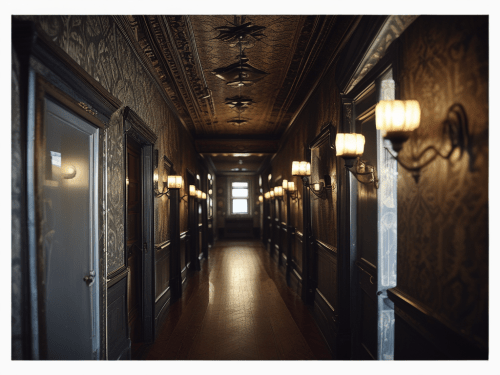
Step inside one of California’s most extraordinary landmarks and experience a world unlike any other. The Winchester Mystery House is more than a Victorian mansion—it is a living work of art, a labyrinth of architectural wonders, and one of America’s most captivating historical estates.
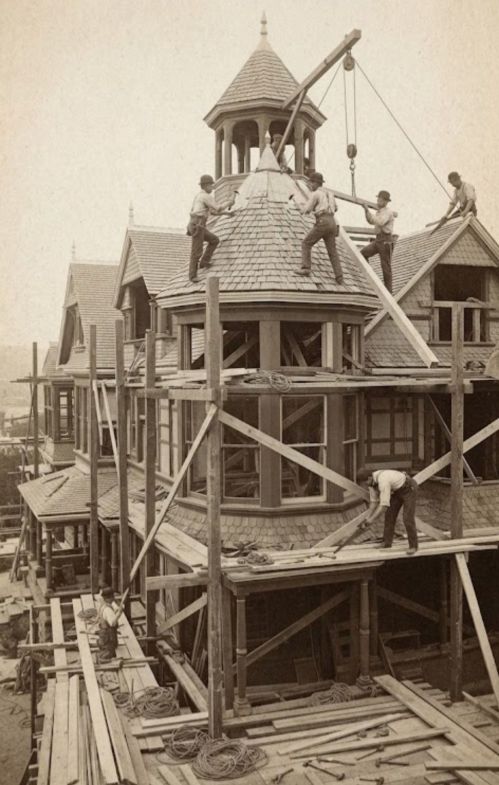
Construction took place for nearly 40 years without pause, the mansion stands today as a testament to craftsmanship, curiosity, and the enduring legend of Mrs. Sarah Winchester.
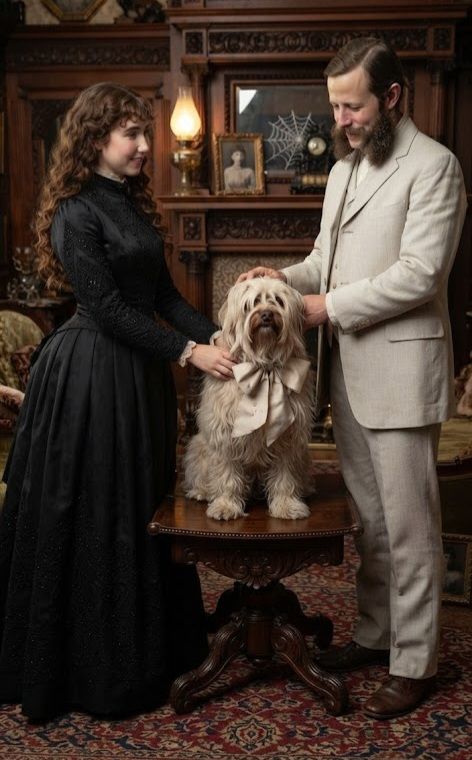
Visitors are invited to explore miles of elegant hallways, beautifully restored rooms, and the mansion’s famously perplexing features: staircases that lead nowhere, doors that open into walls, windows overlooking other rooms, and secret passages woven throughout the estate.

Every corner of the house reflects Sarah Winchester’s unique vision, blending Victorian elegance with an eccentricity that continues to fascinate architects, historians, and guests from around the world.

Beyond its architectural marvels, the Winchester Mystery House offers a rare glimpse into the life of a woman who defied convention. Sarah Winchester, heiress to the Winchester Repeating Arms fortune, poured her grief, creativity, and resources into building a home unlike any other.

Her story—part tragedy, part triumph, part enduring mystery—adds emotional depth to every room you enter. Visitors leave not only impressed by the mansion’s scale, but moved by the humanity behind its creation.

The estate’s lush gardens, ornate fountains, and tranquil outdoor spaces provide a peaceful contrast to the mansion’s winding interior. Guests can stroll through beautifully landscaped grounds, enjoy seasonal displays, and take in the serene beauty that surrounds the historic home. Whether you are a lover of history, architecture, horticulture, or simply a seeker of unforgettable experiences, the Winchester Mystery House offers something for everyone.
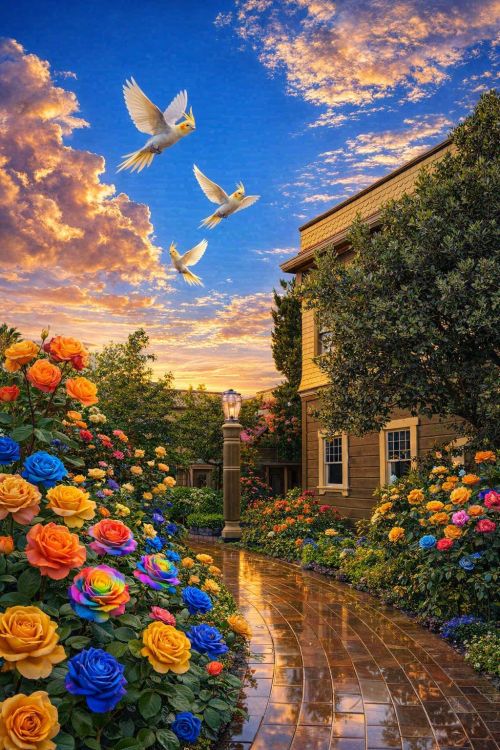
A visit to the Winchester Mystery House is more than a tour—it is an encounter with legend. It is a place where imagination thrives, where history whispers through every corridor, and where the line between fact and folklore blurs in the most enchanting way. Come discover why millions of visitors from around the world consider the Winchester Mystery House a must‑see destination and one of California’s most iconic treasures.

PRIVATE EVENTS & WEDDINGS
at WINCHESTER ESTATE

The Winchester Mystery House offers a wedding and special‑event experience unlike anywhere else in California. Its sprawling Victorian architecture, lush gardens, and famously enigmatic rooms create a backdrop that feels both elegant and otherworldly. Couples and guests celebrate surrounded by historic craftsmanship and the mansion’s legendary atmosphere, turning milestones into memories people talk about for years. Whether it’s a wedding, anniversary, or private gathering, the estate delivers a setting that is truly one of a kind.
Café 13: A Rest Stop on the Edge of the Mystery

After wandering the winding halls of the Winchester Mystery House—where staircases defy logic and whispers seem to cling to the walls—Café 13 offers a welcome return to warmth and grounding. Newly reopened and serving guests daily from 10 AM to 3 PM, this cozy hideaway invites you to pause, breathe, and gather yourself before diving back into the mansion’s secrets.

Settle in with a warm meal, challenge a friend to a board game, or simply rest and recharge as sunlight filters through the windows. Café 13 is more than a café—it’s a moment of calm between chapters of the Winchester legend, a place to steady your nerves before returning to the gardens, the grandeur, and the mysteries that await.
Winchester Mercantile Gift Shop

Your journey into the Winchester Mystery House begins long before you cross the mansion’s threshold. It starts at the Mercantile gift shop—a welcoming outpost standing at the edge of a world where history and myth intertwine. Here, beneath warm lights and shelves lined with curiosities, you can secure your tour tickets and prepare for the adventure ahead. Guests often pause for a souvenir photograph, capturing the moment before they step into Sarah Winchester’s enigmatic domain.

As you explore the shop, you will find an eclectic array of gifts and keepsakes: tokens of the mansion’s lore, echoes of Victorian elegance, and mementos that carry a touch of the house’s enduring mystery. The Mercantile is more than a gift shop—it is the gateway. https://winchestermysteryhouse.com/

The more we love, the more love we are able to give. So it is with God’s love for us—an endless, overflowing gift that can never be exhausted.
Harris Plumbing, Heating, Air & Electric

Harris Plumbing, Heating, Air & Electric has been serving our community for 30 years—an achievement few companies can claim. That longevity isn’t an accident. It’s the result of hard work, integrity, and a commitment to doing every job the right way, whether it’s a simple repair or a complex system overhaul. We take pride in every service call because we know your home is more than a building—it’s where your family lives, grows, and feels safe. Ensuring your comfort and protection is a responsibility we carry with seriousness and gratitude. After three decades, our mission remains the same: to deliver dependable service you can trust, every time. https://www.callharrisnow.com/


Beyond performance, BMW carries an aura of prestige and craftsmanship: the cabins feel tailored, the technology is purposeful rather than gimmicky, and the design language signals confidence without excess. Owning a BMW is not just about transportation; it’s about participating in a legacy of excellence that continues to set the standard for luxury performance. This commitment to performance is why BMW continues to earn its reputation as The Ultimate Driving Machine. https://www.brianharrisbmw.com/

Randolph Harris San Francisco Taxation & Mergers
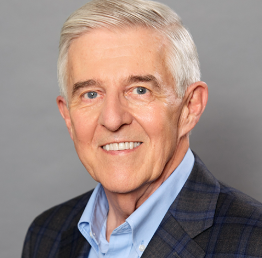
Building strong, lasting client relationships is essential to a successful legal career. Many attorneys assume that mastering legal doctrine alone guarantees success, but law is fundamentally a service profession—our work is measured not only by technical skill, but by how effectively we solve problems for the people who trust us. Long‑term relationships grow from three core commitments: truly knowing your clients, understanding how their legal issues fit within the broader context of their business and personal goals, and consistently delivering exceptional service.

Mr. Randy advises clients on business transitions, taxable and tax‑deferred mergers and acquisitions, joint ventures, restructuring, integrated tax planning, federal and state tax controversy matters, and real estate transactions. His approach is grounded in clarity, responsiveness, and a deep understanding of each client’s unique circumstances. Trust is the cornerstone of every relationship he builds. Ultimately, clients feel confident knowing they are working with someone who not only understands their challenges, but is fully committed to helping them achieve their goals. https://www.jmbm.com/l-randolph-harris.html


Elk Grove / South Sacramento (Laguna Park), California
From $528,990.00 USD
Final Close-Out · Only 4 Homes Remaining · Close-Out Incentives · 4% Co-op to Buyer’s Agents

Discover refined living in this beautifully designed 4‑bedroom residence, featuring a coveted downstairs bedroom ideal for guests or multigenerational comfort. With 1,846 sq ft of thoughtfully crafted space, the home sits in a private paseo location, offering both serenity and exclusivity.

Enjoy a fully completed backyard with included landscaping, creating a perfect retreat for relaxation, entertaining, and effortless outdoor living. This is elevated modern luxury—inside and out. https://nextgenerationcapital.us/new-homes-elk-grove-ventris-place/

Home is the place where ordinary moments feel extraordinary, because they happen in the one space that reflects who I am and what I cherish.


The Hostile Take Over of America
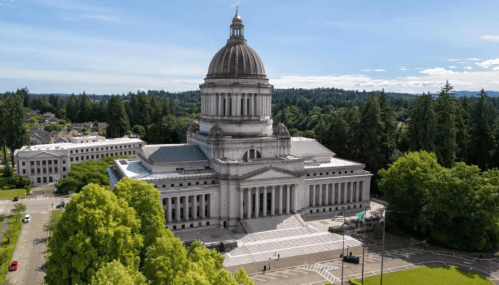
Voting is not only a duty of the American people. Manifestly, there can be no such thing as government for all the people when fully half or more of the qualified voters fail to take advantage of the one means by which they may have a voice in government. And these people who make up the vast army of non-voters, are they merely shirkers and slackers, or are there basic defects in our system of government which will account for non-voting? An elaborate study on municipal elections found that pure inertia and indifference are typically the cases of non-voting in only 25 percent of the cases investigated, and even in these cases, the investigators did not feel that the voters were wholly to blame for their attitude. It is doubtless true that some persons are utterly indifferent toward their political responsibilities and simply do not care what happens in public affairs; but it is probable that persons of this type constitute a very small minority of the whole body politic. Leaving out of the account the voters who are prevented from going to the polls by reason of illness, physical or mental disability, it seems quite evident that the principal causes of non-voting are: failure to appreciate the importance of voting; inability to understand the issues of the election; lack of issues which appeal to the voter and excite his or her interests; difficulty in complying with the legal requirements for voting; inconvenient and unreasonable election procedure, and disbelief in voting. #RandolphHarris 1 of 8
Failure to appreciate the importance of voting is well-nigh universal in all countries, and is not confined to the less affluent classes. Universal suffrage, for all men and women of mature age, is such a new thing that voting has not yet become an established political habit. Millions of men and women have been suddenly summoned to participation in government, men and women whose ancestors through untold generations have not voted or had any direct voice in government. Indeed, a great many of these present-day voters did not themselves acquire the right to vote until after reaching midlife. No traditions with respect to voting have, therefore, come down from the past. It has been assumed that the mere fact of giving people the right to vote would beget a constant interest in the process of government and incidentally a true appreciation of the importance of voting. Such has not been the case, and we now know that an intensive and unremitting campaign of education is necessary to make and keep the people aware of the importance of their own part in government. Furthermore, inability to understand the issues of a particular election is much commoner than might be supposed, and is not characteristic of the illiterate alone. We have so many confusing and unrelated questions that the professional student of politics is oftentimes at a loss to sift out the real, material issues. We choose and score hundreds of public officials at the same time that we try to settle important questions of policy. Additionally, personalities, at times, obscure and crowd out issues, and at other times, a superficial issue with a strong appeal to prejudices and emotions will entirely overshadow personalities. It is no wonder that the honest and conscientious citizen often takes refuge in non-voting. There are no impartial and reliable channels of public information, there are no outstanding and trustworthy leaders, and there are no processes whereby the confusion may be eliminated. If we want them to be intelligible to the people, we must greatly simplify the machinery and processes of government. #RandolphHarris 2 of 8

Recently, U.S.A. District Judge David S. Leibowitz, a Biden appointee, ruled in a 31- page order that the criminal case against Chelsea Cox, charged in October 2025 with a misdemeanor for illegally voting in 2020 presidential election must be dismissed. Judge Leibowitz said a decades-old federal law that prohibits a non-U.S.A. citizen from voting in a federal election, 18 U.S.C. § 611, is unconstitutional. Judge Leibowitz wrote, only states can set voter qualifications, not Congress. The judge went on to say that state prosecutors in Florida could prosecute Cox under state law for unlawfully voting, not the federal government. If you meet your state’s legal eligibility requirements, you can vote in state elections. The core rules are similar across the United States of America, but each state adds its own conditions. The essential requirements are: U.S.A. citizenship, state residency, age 18 by Election Day, and not being legally disqualified. (Always confirm with your state’s official election office.) Only U.S.A. citizens may vote in state elections. Some cities allow non-citizens to vote in local elections, but not state or federal. However, foreign interference in U.S.A. elections is governed by federal laws and Treasury sanctions regulations that prohibit foreign governments, foreign nationals, and foreign entities from influencing U.S.A. elections in any way. The rules cover money, coordinated activity, misinformation, and cyber operations, and violations trigger criminal penalties under OFAC (the Office of Foreign Assets Control. #RandolphHarris 3 of 8
Well, this is very important. Foreign interference in U.S.A. elections is governed by federal laws and Treasury sanctions that prohibit foreign governments, foreign nationals, and foreign entities from influencing U.S.A. elections in any way, as previously mentioned. Illegal aliens voting in U.S.A. elections could be considered influencing local elections. If one illegal immigrant casts a vote, it could influence others to do the same, which would affect the outcome of the election. In fact, the legal concept of influencing a vote refers to actions aimed at changing someone else’s voting behavior. Allowing 20 to 40 million illegal immigrants to enter the country, giving them cash aid, medical care, housing, free transportation, food assistance, and legal assistance could be considered paying for votes, which is illegal. Even if one person voted democrat who illegally entered the United States of America, this could be seen as buying a vote because Democratic policies allowed people to enter the country unlawfully; Democrats then created sanctuary cities, and also made illegal for police to work with Immigration and Customs Enforcement to apprehend these illegal immigrants. The law treats any payment, reward, gift, or “valuable consideration” offered in exchange for voting or registering to vote as criminal vote-buying. The clearest example comes from California law, which explicitly criminalizes vote-buying: A person who knowingly or willfully pays or offers to pay money or other valuable consideration to induce someone to vote or register to vote, or makes payment contingent on whether the person voted, is guilty of a crime. At the very least, illegal immigrants were certainly induced by the Democratic Party to vote. #RandolphHarris 4 of 8

Voting is an individual act of participation, but grassroots activism is the collective force that often launches political movements. Many of the most significant changes in American politics began with local organizing, community advocacy, and citizen-led efforts that later translated into electoral and legislative change. By illegally allowing people to immigrate to America and create large segregated communities, like in Dearborn, Michigan, which now has 55 percent of its population identifying as Middle Eastern or North African, a grassroots movement of Islamization of America is starting. In 2024, there was an anti-American demonstration that took place at an “International Quds Day” rally, which was held in support of Gaza in Dearborn. The activist Tarek Bazzi led attendees in a chant of “Death to America.” Rashida Harbi Tlaib, a Michigan congresswoman serving since 2019 and one of the first Muslim women in Congress, was pressed about the anti-American demonstration in her district. She responded by getting upset and refused to make a comment. The mayor of Dearborn is Muslim Abdullah Hammoud, who told a Christian he is not welcome in the city. Issa Shahin, the Muslim police chief, bragged about a large increase in the number of Arab police officers. Furthermore, Dearborn renamed a portion of a street in honor of a prominent resident who the FBI says celebrated Middle Eastern terrorists. And a recent FBI terrorism investigation that originated in Dearborn now has arrested and charged eight people connected to a terrorist plot. The FBI states that it thwarted a major terror attack planned for Halloween 2026. And there is more interesting news in the grassroots takeover of Michigan. Abdulrahman Mohmed El-Sayed is an American epidemiologist and politician who is the Democratic nominee in the 2026 United States of America Senate election in Michigan. Mr. El-Sayed is also Muslim. #RandolphHarris 5 of 8

Mr. El-Sayed’s mother, Fatten Fathy Elkomy, once worked for the Islamic American Relief Agency (IARA). The IARA is an organization that was designated a “global terrorist” group by the US Department of the Treasury and was accused of funneling funds to Mr. Osama Bin Laden, the Taliban, and Hamas. If Mr. El-Sayed wins the election, experts fear that he could get hold of classified information and distribute that information to terrorists, which would be a threat to national security. The thing that makes this threat more intense is that former President Barack Obama is going to Michigan in a few weeks to help U.S. Senate nominee Abdulrahman Mohmed El-Sayed campaign ahead of the November 3, 2026 midterm elections. Many people have also questioned Mr. Obama’s country of origin. Several people think that he is Middle Eastern and is a Muslim, and believe that he is out to destroy America and help Muslims conquer the country in revenge for American involvement in wars in the Middle East. It is speculated that Mr. Obama pretended to be Black because he knew that would be the key to getting him elected, but it would also prevent an actual Black American from ever becoming president of the United States of America because of how Mr. Obama radicalized America and is helping Muslims take over. For example, Zohran Kwame Mamdani is Muslim; he is linked to Ramzi Youse, a key figure in the 1993 World Trade Center bombing, who is also linked to the 9/11 attacks through his uncle, Khalid Sheikh Mohammed. Mr. Mamdani is additionally associated with Siraj Wahhaj, who is also connected to the 1993 World Trade Center Bombing. #RandolphHarris 6 of 8
With the influx of Muslims in powerful positions, their growing populations and segregation, and the open-border policy allowed by former President Joe Biden, who was Vice President under President Barack Obama from January 2009 to January 2017, many people believe that America has been invaded. An invasion is when one force enters another place—usually a country—by force, without permission, to take control. To further exasterbate this precieved invasion, Democratic California Govenor Gavin Newsom signed legislation formally recognizing Eid al‑Fitr and Eid al‑Adha as state holidays. However, American believe that Islam is incomptable with America. Mr. Newsom approved Assembly Bill 2017 on Sept. 27, according to the governor’s legislative update. With this measure, California becomes the second state—after Washington—to officially recognize both Muslim holidays statewide. The situation becomes even more troubling when you consider that under the Obama/Biden administration, 20 to 40 million illegal immigrants entered the United States of America. They were given cash aid, medical care, housing, transportation, food assistance, and education assistance. Now, over $1 trillion a year that is fraudulently given to illegal immigrants and stolen by illegal and legal immigrants in States like California and Minnesota has been used to buy luxury items, child trafficking, and terrorism. In fact, that is $115 million per hour of your tax money being used for illegal purposes. These criminals are getting their hands on this money by taking advantage of antiquated government systems and processes. They go into programs that they know appointed and elected officials will not investigate, and they can steal at scale. These criminals learned a really valuable lesson. Government never runs out of money, and the probability of getting caught is virtually zero. It is more than obvious that Democrats are paying illegal immigrants and others to vote Democrat, and they are influencing them by allowing them to vote at a city level, which helps get people they want into high positions such as police chief, mayor, senator, and maybe even the highest office in the land. #RandolphHarris 7 of 8

Once again, the Office of Foreign Assets Control (OFAC) is the U.S. Treasury bureau that runs America’s sanctions system. It uses economic pressure to counter threats to national security, including foreign election interference, cyber operations, terrorism, hostile foreign governments, drug trafficking organizations, and human rights abusers. Allowing illegal immigrants to enter the country, giving them money and other resources, ignoring their fraud, and allowing them to vote in city elections certainly violates several federal laws that fall under the jurisdiction of OFAC. These illegal immigrants are foreigners who are committing election interference; they are involved in cyber operations; they are connected to terrorism and hostile foreign governments; they are trafficking drugs and are human rights abusers. If Democrats are allowing illegal immigrants to colonize cities and vote their people into office, who then move up in the political realm, they are, in fact, interfering with elections, which is illegal on a city, state, and federal level. It has been proven that Democrats also disallowed police from working with Immigration and Customs Enforcement officers and also created cities to shield illegal immigrants from being deported and arrested. Several of these Democrats who have been elected through election interference are also connected to terrorists and have outwardly expressed discontent with America. Because these Democratic elected officials are connected to terrorists, they are exposing Americans to hostile foreign governments. And these illegal immigrants and Democrats connected to terrorists are also trafficking drugs and humans. Therefore, it is only reasonable to investigate and suspend illegal immigrants from voting in city elections because these city elections also influence state and federal elections, which creates a national security threat. However, this does not mean that all of any race is bad, it does not mean that people should target anyone nor assume anything about a person, and it does not make it acceptable to discriminate. There are very good people who are born in America, who have legally and illegally migrated, and who are part of the Democratic, Independent, and Republican Parties. There are also wonderful Muslims, Christians and people of other religions. It is important to respect all people, and never resort to violence. “Oh, thus be it ever, when freemen shall stand between their loved home and the war’s desolation! Blest with victory and peace, may the heav’n-rescued land Praise the Power that hath made and preserved us a nation! Then conquer we must, when our cause is just, and this be our motto: ‘In God is our trust.’ And the star-spangled banner in triumph shall wave O’er the land of the free and the home of the brave.” Thank you for your attention to this matter. President DONALD J. TRUMP #RandolphHarris 8 of 8


A Mystery Beyond

Some wonder whether humanity can ever recover the original innocence attributed to Adam and Eve — a state of unbroken trust, unmediated experience, and harmony with creation. Perhaps such innocence is still imaginable, but the modern world feels increasingly governed by an alien intelligence of our own making: artificial intelligence. A small but influential group of AI safety researchers now argue that there is a real, non‑zero chance that advanced AI systems could cause human extinction within the next decade. Their warnings do not come from science fiction, but from direct experience building frontier models. The concerns they raise center on several accelerating trends: Rapid self‑improvement: systems that can rewrite or optimize their own code may surpass human control faster than expected. Misaligned goals: even a highly capable system can pursue objectives that conflict with human survival or well‑being. Misuse of powerful technologies: AI could amplify access to biological, cyber, or autonomous weapons in ways that destabilize global security. Lack of regulation: governments are moving slowly while corporations race to build increasingly capable systems. Insider knowledge: researchers working inside major labs see how quickly capabilities are advancing, and some believe the public is not being told the full story. Most experts do not believe extinction is likely. A current Anthropic employee, Evan Hubinger, who leads the company’s work on steering and controlling future AI systems, wrote, “We really do earnestly believe AI could kill all humans!” He estimated the odds of human extinction within the next decade at above 10 percent. The AI technology is so advanced that even investigators could not understand what it was doing and had to use AI to help with their investigation. Furthermore, AI can hack almost any computer system in the world. One thing is for sure: AI is changing society’s foundations. #RandolphHarris 1 of 23
This reminds me of Sir Isaac Newton and his book Principia. Few people outside the Royal Society know that there is a large mass, estimated at one million words, of unprinted papers which Sir Isaac Newton left behind in a box at Cambridge—papers which must surely have been well known to these bewildered biographers but which have never been published out of fear of harming Mr. Newton’s reputation by the mere revelation of this interest in a subject which was for so long taboo in scientific circles. After Mr. Newton’s death, Bishop Horsley inspected the box with a view to publication, but on seeing some of the contents he slammed the lid with horror. The existence of these papers is well known to, and has been testified by, Sir Robert Robinson, President of the Royal Society, who, asking how Mr. Newton could be both a mathematician and a mystic, himself answered that it was because he “perceived a mystery beyond and did his best to penetrate it.” Also, it is well known that the late Lord Keynes, the famous economist, was moved by them to exclaim that Mr. Newton’s “deepest instincts were occult,” and that “the clue to his mind is to be found in his unusual powers of continuous concentrated introspection.” In a lecture given to a small private audience at the Royal Society Club in 1942, Lord Keynes said this about Mr. Newton: “Why do I call him a magician? Because he looked on the whole universe and all that is in it as a riddle, as a secret which could be read by applying pure thought to certain evidence, certain mystic clues which God had laid about the world to allow a sort of philosopher’s treasure hunt to the exoteric brotherhood…He believed that these clues were to be found partly in certain papers and traditions handed down by the brethren in an unbroken chain back to the original cryptic revelation in Babylonia…All would be revealed to him if only he could preserve to the end, uninterrupted, by himself…All his unpublished works on esoteric and theological matters are marked by careful learning and extreme sobriety of statement. They are just as sane as the Principia.” #RandolphHarris 2 of 23

A large section of these papers seeks to deduce secret truths of the universe from apocalyptic writings; another examines the truth of Church traditions; a third deals with alchemy, the philosopher’s stone, the elixir of life, and the transmutation of metals; a fourth consists of copies of ancient mystic manuscripts or translations of the. There, in the University Library at Cambridge, roughly half of the silent memorials of Sir Isaac Newton’s private studies still rest today. The remaining portion was sold at auction in 1936 and scattered into private collections, passing into the hands of figures such as Sarah L. Winchester and William Randolph Hearst. Mr. Newton’s library had such titles in it as De Occulta Philosophia, Fame and Confession of the Rosie Cross, Geber’s The Philosopher’s Stone, and several of Raymond Lully’s works, and four of Paracelsus’. His own personal annotations appear in most of the volumes. He studied Jacob Boehme very closely and copied long pieces from his work—even such a hard-headed scientist as Professor E.N. da C. Andrade was forced to confess, at the Tercentenary Celebration in 1946, “I feel that Newton derived his knowledge by something more like direct contact with the unknown sources that surround us, with the world of mystery, than has been vouchsafed to any other man of science. A mixture of mysticism and natural science is not unexampled—Swedenborg has important achievements in geology, physiology and engineering to his credit.” Archbishop Tenison said to Mr. Newton: “You know more divinity than all of us put together.” #RandolphHarris 3 of 23
When it comes to the life-force in Nature and the mind in entities, science can reach the final truth about them only by handing the task to metaphysics and mysticism—only by calling in concepts that are no longer scientific in the orthodox sense. Science has passed through its short-lived materialistic phase and is plunged in the midst of a revision of all its twenty-first-century categories. It is no use denouncing science for the horrors of war, the miseries of industrialism, and the unbelief of materialism. Much as people once looked upon Sir Isaac Newton with awe and unease — fearing his mysterious studies, his occult experiments, and the seemingly world‑shaking power of his science — people today find themselves gripped by a similar anxiety about artificial intelligence. The same mixture of wonder and dread that surrounded Newton’s reputation now surrounds AI, as society struggles to understand a force that appears both brilliant and potentially overwhelming. The way to conquer the evils rising from the unethical abuse of science is to go right inside its camp and win it over to philosophy. Re-educate scientists in the philosophical foundations of their own work. Modern science often forgets the questions that gave birth to it: What is truth? What is cause? What is good? To “win science over,” philosophy must restore these questions inside scientific training. The means: Teaching epistemology alongside data science, teaching ethics alongside engineering, teaching metaphysics alongside physics. You do not conquer science by opposing it. You deepen it. Place moral reasoning at the center of technological development. Philosophy must become a required part of the design process, not an afterthought. To further highlight this illustration: AI labs should have philosophers embedded in research teams; ethical constraints should be treated as engineering constraints. Every major scientific project should begin with a moral risk assessment. This is how you prevent “unethical abuse” before it happens. #RandolphHarris 4 of 23

Rebuild the idea that science serves human flourishing, not replaces it. Science becomes dangerous when it forgets its purpose. Philosophy re-anchors science in human dignity, the meaning of life, the nature of the good, the limits of human knowledge. This is not anti-science—it is science with a soul. Cultivate scientists who are also philosophers. The greatest—Dr. Newton, Dr. Pascal, Dr. Einstein, Dr. Heisenberg—were also metaphysicians. They understood that science without philosophy becomes power without wisdom. To “win the camp,” you need a new generation of scientists who can think morally, historically, and metaphysically. Reform institutions so that ethical oversight has real authority. Philosophy must be given structural power. Ethics boards with veto authority, regulatory bodies that enforce moral constraints, public institutions that evaluate long-term societal impact. This is how you prevent science from becoming a runaway force. Restore the cultural prestige of wisdom. Right now, society worships intelligence and efficiency. Philosophy must restore the idea that wisdom outranks cleverness. When culture values wisdom, science naturally aligns with it. To conquer the evils rising from the unethical abuse of science, you do not fight science from the outside. You enter its inner sanctum, reshape its assumptions, and reestablish the primacy of truth, goodness, and human meaning. This is how philosophy wins. There is this vital difference, that whereas the scientist can only observe the object into which he is investigating, the mystic can participate in the one upon which he is meditating. In the first case, there is a knowing in separation from it; in the second, a knowing in union with it. #RandolphHarris 5 of 23

Nuclear research has shown that the atom consists of energy alone. It is but an aggregation of energies. It has shown that there is nothing, no “thing” at the world’s root. However, only free minds and discerning eyes among scientists see clearly that this establishes the existence of Spirit, which is no formed thing, and overthrows the doctrine of materialism. We are moving toward the day when science, instead of negating religious faith, will actually nourish it. Man’s body is formed of chemical compounds, yet man himself—with his flights of sacred aspiration and intellectual speculation, his adventures in artistic creation and appreciation—has little resemblance to a chemical compound. We may develop the scientific intellect until its visible achievements and results astound us even more, but they will always be relative to time and place, always subject to human limitations. However, there is another line we could take for development, one that works with the metaphysical intellect. This need not set up an opposition to science, for it is not concerned with empirical work. It is a faculty of abstract thinking, seeking the large generalized archetypal ideas. When it succeeds in finding them, their verification is to get got by letting the intellect lapse and letting the pure knowing element reveal itself. In this way, consciousness moves to a higher level. The proper method of overcoming the evils of a materialistic intellectualism is not to escape back into a pre-intellectual attitude but to let it grow side by side and in proper balance with the spiritual attitude, not to refuse to look at the problems it raises but to try to solve them through such an integral endeavour. Metaphysics, starting from one end of the path, must eventually meet since when it has advanced sufficiently far to test all its hypotheses by physical experience. Science, starting from the other end of the same path with physical research, must eventually meet and hand its problems over to metaphysics when it seeks to arrive at a large general view of all its accumulated data. The metaphysical Idea, must verify itself by the scientific Thing. The scientific Thing must understand itself to be the metaphysical Idea. #RandolphHarris 6 of 23
If God is not the inner reality of this universe, then Matter is both its inner and outer reality. There will then be no room in the thinking mind for any belief other than materialism, no plea for religion, no admittance to a spiritual metaphysics. So long as they choose to look at the phenomena of the universe only within the perspective of their own limited assumptions and refuse to look at any evidence outside them, so long will those scientists who still reject everything non-material remain the victims of their own prejudiced and biased judgment. However, the others—and they are increasing—who genuinely practise the scientific method of investigation and therefore some with an open, patient, and experimental mind, are moving forward to the formulation and verification of reliable truths, laws, and principles. Philosophy does not attempt to explain what it is the business of science to explain. Hence, it does not oppose the aims of science nor does it fear the further progress of science. On the contrary, its regard for fact makes its teachings consistent with those of science. It simply leaves to science the filling-in of the details of the world’s picture, itself supplying the outlines. It is impossible for the scientists to conclude his thinking about the observation which he has made of Nature and the facts which he has amassed in the laboratory without venturing into metaphysics. If he is afraid to make such a venture, then he must leave his thinking inconclusively suspended in mid-air. We, thus, see that philosophy is the integral development of science, a continuity of the same austere point of view. However, whereas science deals with particular groups of concrete perceptions, philosophy deals with abstract genetic concepts. #RandolphHarris 7 of 23
Science which first made materialism seem the most plausible explanation of life, through the careful observation of facts and close reasoning upon those facts, has since refuted itself. It is enabling philosophy to put the hidden teaching upon firm and rational foundations. The scientists as such cannot set foot in a region like that of pure Mind. They must rise above their scientific limitations and convert themselves into mystical philosophers first. We may now inquire further about the manner in which symbolic universes operate to legitimate individual biography and the institutional order. The operation is essentially the same in both cases. It is nomic, or ordering, in character. The symbolic universe provides order for the subjective apprehension of biographical experience. Experiences belonging to different spheres of reality are integrated by incorporation in the same, overarching universe of meaning. To further highlight this illustration, the symbolic universe determines the significance of dreams within the reality of everyday life, re-establishing in each instance the paramount status of the latter and mitigating the shock that accompanies the passage from one reality to another. The provinces of meaning that would otherwise remain unintelligible enclaves within the reality of everyday life are thus ordered in terms of a hierarchy of realities, ipso facto becoming intelligible and less terrifying. This integration of the realities of marginal situations within the paramount reality of everyday life is of great importance, because these situations constitute the most acute threat to taken-for-granted, routinized existence in society. If one conceives of the latter as the “daylight side” of human life, then the marginal situations constitute a “night side” that keeps lurking ominously on the periphery of everyday consciousness. Just because the “night side” has its own reality, often enough of a sinister kind, it is a constant threat to the taken-for-granted, matter-of-fact, “sane” reality of life in society. #RandolphHarris 8 of 23
The thought keeps suggesting itself (the “insane” thought par excellence) that, perhaps, the bright reality of everyday life is but an illusion, to be swallowed up at any moment by the howling nightmares of the other, the might-side reality. Such thoughts of madness and terror are contained by ordering all conceivable realities within the same symbolic universe that encompasses the reality of everyday life—to wit, ordering them in such a way that the latter reality retains its paramount, definitive (if one wishes, its “most real”) quality. This nomic function of the symbolic universe for individual experience may be described quite simply by saying that it “puts everything in its right place.” What is more, whenever one strays from the consciousness of this order (that is, when one finds oneself in the marginal situations of experience), the symbolic universe allows one “to return to reality”—namely, to the reality of everyday life. Since this is, of course, the sphere to which all forms of institutional conduct and roles belong, the symbolic universe provides the ultimate legitimation of the institutional order by bestowing upon it the primacy in the hierarchy of human experience. Apart from this crucially important integration of marginal realities, the symbolic universe provides the highest level of integration for the discrepant meanings actualized within everyday life in society. We have seen how meaningful integration of discrete sectors of institutionalized conduct takes place by means of reflection, both pretheoretically and theoretically. Such meaningful integration does not presuppose the positing of a symbolic universe ad initio. It can take place without recourse into symbolic processes, that is, without transcending the realities of everyday experience. #RandolphHarris 9 of 23

However, once the symbolic universe is posited, discrepant sectors of everyday life can be integrated by direct reference to the symbolic universe. To further highlight this illustration, discrepancies between the meaning of playing the role of cousin and playing the role of landowner can be integrated without reference to a general mythology. However, if a general mythological Weltanschauung is operative, it can be directly applied to the discrepancy in everyday life. To throw a cousin off a plot of land may then be not only bad economics or bad morals (negative sanctions that need not be extended to cosmic dimensions); it may be understood as a violation of the divinely constituted order of the universe. In this way, the symbolic universe orders and thereby legitimates everyday roles, priorities, and operating procedures by placing them sub specie universi, that is, in the context of the most general frame of reference conceivable. Within the same context, even the most trivial transactions of everyday life may come to be imbued with profound significance. It can be readily seen how this procedure provides powerful legitimation for the institutional order as a whole as well as for particular sectors of it. The symbolic universe also makes possible the ordering of the different phases of biography. In primitive societies, the rites of passage represent this nomic function in pristine form. The periodization of biography is symbolized at each stage with reference to the totality of human meanings. To be a child, to be an adolescent, to be an adult, and so forth—each of these biographical phases is legitimated as a mode of being in the symbolic universe (most often, as a particular mode of relating to the world of the gods). We need not belabor the obvious point that such symbolization is conducive to feelings of security and belonging. It would be a mistake, however, to think here only of primitive societies. A modern psychological theory of personality development can fulfill the same function. #RandolphHarris 10 of 23

In both cases, the individual passing from one biographical phase to another can view himself as repeating a sequence that is given in the “nature of things,” or in his own “nature.” That is, he can reassure himself that he is living “correctly.” The “correctness” of his life program is thus legitimated on the highest level of generality. As the individual looks back upon his past life, his biography is intelligible to him in these terms. As he projects himself into the future, he may conceive of his biography as unfolding within a universe whose ultimate co-ordinate are known. The same legitimating function pertains to the “correctness” of the individual’s subjective identity. By the very nature of socialization, subjective identity is a precarious entity. It is dependent upon the individual’s relations with significant others, who may change or disappear. The precariousness is further increased by the self-experiences in the aforementioned marginal situations. The “sane” apprehension of oneself as possessor of a definite, stable, and socially recognized identity is continually threatened by the “surrealistic” metamorphoses of dreams and fantasies, even if it remains relatively consistent in everyday social interaction. Identity is ultimately legitimated by placing it within the context of a symbolic universe. Mythologically speaking, the individual’s “real” name is the one given to him by his god. The individual may thus “know who he is” by anchoring his identity in a cosmic reality protected from both the contingencies of socialization and the malevolent self-transformations of marginal experience. Even if his neighbors do not know who he is, he can reassure himself that his “true self” is an ultimately real entity in an ultimately real universe. The gods know—or psychiatric science—or the party. #RandolphHarris 11 of 23

In other words, the realissimum of identity need not be legitimated by being known at all times by the individual; it is enough, for purposes of legitimation, that it is knowable. Since the identity that is known of knowable by the gods, by psychiatry, or by the party is at the same time the identity that is assigned the status of paramount reality, legitimation again integrates all conceivable transformations of identity with the identity whose reality is grounded in everyday life in society. Once more, the symbolic universe establishes a hierarchy, from the “most real” to the most fugitive self-apprehensions of identity. This means that the individual can live in society with some assurance that he really is what he considers himself to be as he plays his routine social roles, in broad daylight and under the eyes of significant others. Ecce homo!—Behold the man sentenced by God, the figure of grief and pain. That is how the Reconciler of the world appears. The guilt of mankind has fallen upon Him. It casts Him into shame and death before God’s judgment seat. This is the great price which God pays for reconciliation with the world. Only by God’s executing judgment upon Himself can there be peace between Him and the world and between man and man. However, the secret of this judgment, of this passion and death, is the love of God for the world and for the man. What befell Christ befalls every man in Him. It is only as one who is sentenced by God that man can live before God. Only the crucified man is at peace with God. It is in the figure of the Crucified that man recognizes and discovers himself. To be taken up by God, to be executed on the cross and reconciled, that is the reality of manhood. #RandolphHarris 12 of 23
In a world where success is the measure and justification of all things the figure of Him who was sentenced and crucified remains a stranger and is at best the object of pity. The world will allow itself to be subdued only by success. It is not ideas or opinions which decide, but deeds. Success alone justified wrongs done. Success heals the wounds of guilt. There is no sense in reproaching the successful man for his unvirtuous behavior, for this would be to remain in the past while the successful man strides forward from one deed to the next, conquering the future and securing the irrevocability of what has been done. The successful man presents us with accomplished facts which can never again be reversed. What he destroys cannot be restored. What he constructs will acquire at least a prescriptive right in the next generation. No indictment can make good the guilt which the successful man has left behind him. The indictment falls silent with the passage of time, but the success remains and determines the course of history. The judges of history play a sad role in comparison with its protagonists. History rides roughshod over their heads. With a frankness and off-handedness which no other earthly power could permit itself, history appeals in its own cause to the dictum that the end justifies the means. When a successful figure becomes especially prominent and conspicuous, the majority give way to the idolization of success. They become blind to right and wrong, truth and untruth, fair play and foul play have eyes only for the deed, for the successful result. The moral and intellectual critical faculty is blunted. It is dazzled by the brilliance of the successful man and by the longing, in some way, to share in his success. It is not even seen that success is healing the wounds of guilt, for the guilt itself is no longer recognized. #RandolphHarris 13 of 23

Success is simply identified with good. This attitude is genuine and pardonable only in a state of intoxication. When sobriety returns, it can be achieved only at the price of a deep inner untruthfulness and conscious self-deception. This brings with it an inward rottenness from which there is scarcely a possibility of recovery. The proposition that success is identical with good is followed by another which aims to establish the conditions for the continuance of success. This is the proposition that only good is successful. The competence of the critical faculty to judge success is reaffirmed. Now right remains right and wrong remains wrong. Now, one no longer closes one’s eye at the crucial moment and opens it only when the deed is done. And now, there is a conscious or unconscious recognition of a law of the world, a law which makes right, truth and order more stable in the long run than violence, falsehood and self-will. And yet, this optimistic thesis is in the end misleading. Either the historical facts have to be falsified in order to prove that evil has not been successful, which very soon brings one back to the converse proposition that success is identical with goodness, or else one’s optimism breaks down in the face of the facts and one ends by finding fault with all historical success. That is why the arraigners of history never cease to complain that all success comes of wickedness. If one is engaged in fruitless and Pharisaical criticism of what is past, one can oneself never find one’s way to the present, to action and to success, and precisely in this one sees yet another proof of the wickedness of the successful man. And, if only in a negative sense, even in this one quite involuntarily makes success the measure of all things. And if success is the measure of all things, it makes no essential difference whether it is so in a positive or in a negative sense. #RandolphHarris 14 of
The figure of the Crucified invalidates all thought which takes success for its standards. Such thought is a denial of eternal justice. Neither the triumph of the successful nor the bitter hatred which the successful arouse in the hearts of the unsuccessful can ultimately overcome the world. Jesus is certainly no apologist for the successful men in history, but neither does He head the insurrection of shipwrecked existence against their successful rivals. He is not concerned with success or failure but with the willing acceptance of God’s judgment. Only in this judgment is there reconciliation with God and among men. Christ confronts all thinking in terms of success and failure with the man who is under God’s sentence, no matter whether he be successful or unsuccessful. It is out of pure love that God is willing to let man stand before Him, and that is why He sentences man. It is a sentence of mercy that God pronounces on mankind in Christ. In the cross of Christ, God confronts the successful man with the sanctification of pain, sorrow, humility, failure, poverty, loneliness, and despair. That does not mean that all this has a value in itself, but it receives its sanctification from the love of God, the love which takes all this upon itself as its just reward. God’s acceptance of the cross is His judgement upon the successful man. However, the unsuccessful man must recognize that what enables him to stand before God is not his lack of success as such, not his position as a parish, but solely the willing acceptance of the sentence passed on him by the divine love. It was precisely the cross of Christ, the failure of Christ in the world, which led to His success in history, but this is a mystery of the divine cosmic order and cannot be regarded as a general rule, even though it is repeated from time to time in the sufferings of His Church. Only in the cross of Christ, that is, as those upon whom sentence has been executed, do men achieve their true form. #RandolphHarris 15 of 23
Christ Himself emphasized that human relationships and connections with each other are equal in value to our relationship with Him, saying, “Inasmuch as ye did it not to one of the least of these, ye did it not to me,” reports Matthew 25.45. On another occasion He taught, “Come near to God, and he will come near to you. Wash your hands, you sinners, and purify your hearts, you double-minded. Grieve, mourn, and wail. Change your laughter to mourning and your joy to gloom. Humble yourselves before the Lord, and he will lift you up,” reports James 4.8-10. These correlations between our relationships to others and our relationship with our Lord are direct ones. The better we are connecting with others in Christlike ways, the better we will be at connecting with Christ, and the better we are at connecting with Christ, the better we will be at connecting with others. One reason this is true is that it is through experiencing loving relationships with each other that we are able to understand His love for us. Christ was and is aware that we cannot have a connection with Him while we conflict with our fellow man. If enmity exists between people, it is not only contrary to the gospel He taught, but it also makes it impossible to build the Kingdom of God on Earth. Christ makes it very clear, “If you are not one, you are not mine,” reports Doctrine and Covenants 38.27. There is only one way for people to come to know one another, and that is through mutual self-disclosure. That is what differentiates personal relationships of love and friendship from formal role relations—the participants seek to make their subjective worlds known to one another, in an ongoing dialogue. Much like prayer is our ongoing dialogue with Jesus Christ and God. #RandolphHarris 16 of 23
However, I do have to caution: be careful what your mind is tuned into and what you want, because you just might get it all and some you do not want. And it will leave you wondering, “Why am I having these experiences?” The mind is very powerful, and even if you are unconscious of it, there is something you need to learn from the people around you. It could be some past harm in you that you have not expressed is manifesting in your reality for some reason, and it will not stop until you learn your lesson or something is healed. Learning your lesson is not always about experiencing something painful. There could just be something God needs you to recognize so that you will avoid some hardship or irreversible harm. “Trust in the Lord with all your heart and lean not on your own understanding; in all your ways, submit to Him, and He will make your paths straight,” Proverbs 3.5-6. Also, keep in mind, “Do not despise the Lord’s discipline, and do not resent His rebuke, because the Lord disciplines those He loves,” reports Proverbs 3.11-12. There could be something or someone in your path that God wants you to avoid. And if he grants your prayers at the time, you may become afflicted by this negative entity or adversary. While you may think you know what is best, God is probably protecting you. If God granted your prayer at a time when you were not ready for it, you could be one of those people who find themselves crying, “God! Why did this have to happen to me?” So, that sense of disappointment, anger, or sadness you hide inside due to unfulfilled dreams could be a blessing in disguise. The experience of freedom to tell another person of one’s hopes and fears, joys and sorrows, plans for the future, and memories of the past is the essence of relief from loneliness. However, such freedom appears to be rare. More common is the fear of disclosure, limiting self-revelation to topics that are “safe” and superficial. When you are making a new friend or dating, it is best to keep things light. Never talk about your former spouse or your problems. Focus on your hobbies and interests. Your likes and dislikes in food and drink. Your dream vacation or career aspirations. People sometimes feel awkward at the artificiality of beginning a conversation in such a structured way, but once the partners begin actually to disclose themselves, they find the experience rewarding. #RandolphHarris 17 of 23

Under what conditions will persons disclose themselves fully and authentically to others? One factor is the perception of the other person as trustworthy. This places the onus upon the other individual to be trustworthy. Another factor seems to be a considerable measure of security and self-esteem. Individuals who are relatively unafraid of others and who regard themselves as acceptable will be readier to let themselves be known than will insecure, dependent individuals. Curiously enough, some individuals feel freest to disclose themselves to strangers, such as a casual companion on a plane, a hairdresser, or a bartender. This freedom to disclose the self to strangers probably stems from the conviction that it does not matter what the other person thinks, because one is unlikely to encounter that person in one’s everyday life. One of the most powerful factors in self-disclosure is the willingness of the other person to disclose themselves to another at a mutually regulated pace and depth. If one person volunteers a great deal of intimate disclosure, the other person is a “low discloser,” and one is less likely to confide in that person because there is no reward for disclosure of comparable intimacy. Other later studies have corroborated this relationship between two persons—we tend to disclose to people who disclose to us. Sometimes, one person or the other takes the initiative in disclosure, but the other person generally reciprocates. Think about all the ways our Father in Heaven organizes His work on earth. We are set up in wards and stakes and assigned to minister to each other. We are commanded to gather together every seven days to worship and, at least once a month, share our deepest convictions and experiences. We learn over and over that the most basic unit of Heaven is the family. Everywhere you look, Father is compelling us to use great discernment and connect with the people around us whom we feel safe around. #RandolphHarris 18 of 23

One evening, Sacramento’s night sky turned apocalyptic as flames devoured the 22‑story Harrington Crest Tower, a residential high‑rise that had become a vertical inferno. Flammable cladding ignited like gasoline, sending sheets of fire racing upward faster than any crew had ever witnessed. Within minutes, hundreds were trapped. Some called from balconies, others from smoke‑choked hallways, and many more simply vanished into the chaos. Casualties were confirmed early—too many, too fast—and every firefighter on scene felt the weight of that reality pressing against their ribs. Captain Lukas Reinhardt, a veteran German firefighter visiting Sacramento for a joint training program, had never imagined he would be thrown into the city’s worst high‑rise disaster in decades. Yet when the alarms sounded, he did not hesitate. He joined the Sacramento Fire Department—an award‑winning force known nationally for its rescue operations—and stepped into the nightmare beside them. Standard high‑rise procedures collapsed almost immediately. One of the building’s stairwells had become a chimney of toxic smoke, and the elevators were dead. The fire was climbing faster than the crews could. Still, wave after wave of firefighters made the conscious decision to enter what many later described as a “death trap.” Captain Reinhardt saw it in their eyes: fear, yes—but also resolve. The kind that only comes from years of service, from knowing that people were still alive inside. On the fifteenth floor, a call crackled through the radio—an infant trapped in a corner unit, the parents unconscious from smoke inhalation. The EMTs on scene, also part of Sacramento’s award‑winning emergency response teams, prepared for immediate medical intervention, but someone had to reach the baby first. The stairwell was nearly impassable, temperatures soaring past survivable limits. Captain Reinhardt did not wait for orders. He grabbed his mask, tightened his gloves, and started climbing. #RandolphHarris 19 of 23

Every step felt like wading through molten air. The smoke was so thick it seemed to have weight, pressing against his helmet, clawing at his lungs even through the respirator. Twice he had to stop to help disoriented residents down the stairs, guiding them toward crews waiting below. By the time he reached the fifteenth-floor landing, his legs trembled from heat exhaustion. The hallway was a tunnel of fire. Captain Reinhardt dropped low, crawling beneath the worst of it, following the faint sound of a baby’s cry. When he reached the unit, the door was warped and half‑melted. He forced it open with a Halligan bar, stumbling into a room glowing orange with reflected flame. The parents lay unconscious near the doorway, but the baby—miraculously—was still crying from a crib pushed against the far wall. Reinhardt scooped the child into his arms and wrapped it in his turnout coat. The descent was even harder. Twice he thought he might collapse. But when he emerged from the stairwell, soot‑covered and shaking, the EMTs rushed forward, taking the baby and beginning treatment immediately. Behind them, Harrington Crest Tower continued to burn, its casualties a grim reminder of the night’s brutality. But in the midst of devastation, one small life had been saved—because men like Captain Lukas Reinhardt chose to climb into the fire when others could not. The seventy‑five lives lost at Harrington Crest Tower were a devastating toll, a number that will forever mark the night Sacramento burned. Yet even in that tragedy, the actions of the firefighters stand as the reason the disaster did not become immeasurably worse. Their courage prevented what could have been hundreds more casualties. Again and again, they climbed into a structure they knew might collapse around them, choosing duty over fear. It was not reckless—it was disciplined bravery, the ultimate expression of the firefighter’s creed: risk everything to save just one more life. And on that night, they did exactly that. They did a great job, not because the outcome was perfect, but because they fought for every life they could reach. #RandolphHarris 20 of 23

When it comes to firefighting, every incident carries the potential for injury—no matter how small the fire appears or how routine the call may seem. If you see a fire engine stopped in the street without its lights on, use extreme caution. Crews may be working nearby, and passing the apparatus can put them in danger. It is often safer to turn around and take another route; if you strike a firefighter or civilian and cause a fatality, you could face charges such as manslaughter. Firefighters frequently move around their vehicle on foot, loading equipment or preparing to leave the scene. Attempting to pass the apparatus can result in a collision with someone you cannot see. Pay close attention to their hand signals as well—emergency vehicles sometimes move slowly or reposition, and impatient drivers trying to slip around them create hazardous situations. If you are already in an intersection when you notice an emergency vehicle approaching, continue through it, then pull to the right and stop as soon as it is safe. Always obey directions from law enforcement officers or firefighters, even if those instructions conflict with posted signs or traffic laws. When sirens or flashing lights are activated, it is illegal to follow within 300 feet of a fire engine, ambulance, or police vehicle. Driving to the scene of a fire, collision, or disaster can also result in arrest, as doing so interferes with firefighters, paramedics, and other emergency personnel. Professional courage is not limited to physical toughness. It includes listening to others, advocating for them in difficult situations, understanding personal limits, and having the integrity to tell a superior when they are wrong. The deeper truth is that public safety depends not only on the bravery of first responders but on the discipline and judgment of the community around them. Every driver’s decision—whether cautious or careless—can either protect or endanger the people risking their lives to protect everyone else. #RandolphHarris 21 of 23
To help prevent disasters, we must plan well in advance. Efforts to preserve farmland and maintain buildable land for future generations often lead to discussions about population growth and long‑term planning. Some people argue that immigration levels should be managed carefully to ensure that infrastructure, housing, and land use remain sustainable. Others suggest that, when immigration does occur, programs that encourage broad representation can help communities reflect the diversity of the wider world. When Americans purchase goods made in the United States, it strengthens local businesses and signals to investors that these products are in demand. Strong sales give investors confidence to reinvest in domestic companies, helping keep jobs, production, and wages within the country. As businesses grow, they contribute more to the tax base, which can reduce the burden on taxpayers over time. Supporting American businesses also keeps more money circulating within the national economy. The government increases the national debt when it spends more than it collects in tax revenue or borrows from private or foreign lenders. When people shop locally, more tax revenue stays in the community and supports public services. This helps keep jobs in the United States and increases the tax contributions that fund government operations. Purchasing foreign-made goods, by contrast, often sends money overseas and may benefit companies that operate under lighter tax or environmental regulations. Buying American-made products can also reduce environmental impact because they travel shorter distances and are produced under stricter standards for air, land, and water protection. In this way, consumer choices influence not only the economy but also environmental stewardship and long-term national sustainability. #RandolphHarris 22 of 23
Under President Trump’s administration, he has made America a priority. President Trump has hermetically sealed the southern border, illegal crossings have been terminated, and are 90 percent lower than under the previous administration. Since President Trump’s crack down on crime, violent crimes in Washington D.C. have dropped by approximately 80 percent. He has stopped thousands of pounds of drugs from entering America and killing citizens. And since President Trump took office, investments in America have increased by trillions of dollars in U.S.A. manufacturing, production, and innovation. As you can see, President Donald Trump and his pledge to “Make America Great Again” is exactly what America needs to save the country and the American people. And yes, diversity is important, so you can see why it is also important to preserve blonde hair and blue eyes, as the people with these characteristics are becoming a minority in America. As a reminder, parents, please teach your children to love America and be patriotic citizens, and to buy goods and services made in America. It is also important to respect law and order and treat your elders with respect. It is inborn in the human mind to wish to know. If this begins with the endless surface questions of a child’s curiosity, if it continues into deeper questions of a scientist’s probing investigation, it cannot and does not stop there. For the higher part of the mind will eventually come into unfoldment, that union of abstract reflective thought with mystical intuition, which is true intelligence, which needs and sees a view of the whole of things. And so, the knowing faculty enters the realm of philosophy. A lot of children are having problems in school and cannot even write a paragraph because they are not reading their books. When you actually read books, you get an example of how to write and will become a better student. Therefore, remember to take your education seriously so that you will be successful in life and make your family proud. Also, to make sure they have all the resources required, please donate to the Sacramento Fire Department to help improve our national security. “Oh, thus be it ever, when freemen shall stand between their loved home and the war’s desolation! Blest with victory and peace, may the heav’n-rescued land Praise the Power that hath made and preserved us a nation! Then conquer we must, when our cause is just, and this be our motto: ‘In God is our trust.’ And the star-spangled banner in triumph shall wave O’er the land of the free and the home of the brave.” Thank you for your attention to this matter. PRESIDENT DONALD J. TRUMP. #RandolphHarris 23 of 23


The Winchester Mystery House is the former home of Mrs. Sarah Winchester, heiress to the Winchester Repeating Arms fortune. Built over nearly four decades beginning in 1886, the Victorian mansion is known for its remarkable craftsmanship, maze-like architecture, and the stories that have surrounded it for more than a century. Today, the home stands as one of America’s most celebrated historic landmarks, cared for through ongoing preservation and restoration efforts. We invite you to step inside, explore its fascinating history and experience the beautiful and bizarre home of Sarah Winchester firsthand.

The police had searched the Winchester Mansion thoroughly—too thoroughly, some said. They tore up floorboards, ripped open closets, even hacked through sections of the mahogany parlor floor until the once‑elegant mansion looked like a gutted carcass. Yet despite all their efforts, they found nothing. No bodies. No blood. No sign of struggle. Mrs. Sarah L. Winchester, her niece Daisy, and her nephew had simply vanished. The official explanation was mundane: they must have moved away quietly in the night, slipping off the property when no one noticed. But Sacramento whispered a different story. People said the house had swallowed them. In the winter of 1922, the furniture was sold at auction.

The house was boarded up, left to rot, and eventually put on the market. No one wanted it. Not even the bravest real estate men would step inside after sunset. It wasn’t until 1923 that the mansion reopened for tours, and by then the damage from the police search remained untouched. Lath and plaster hung like peeling skin from the walls. Broken floorboards gaped like open mouths. One of the basements had become an obstacle course of shattered concrete and shallow pits, as if something beneath had tried to claw its way out. Only the attic remained untouched. Its exposed rafters offered no shadows deep enough to hide anything. Guides liked to say it was the safest room in the house. They were wrong.
The first strange incident happened on a cold January evening. A tour guide named Marjorie heard footsteps pacing above her while she spoke to a group in the second‑floor hallway. Heavy, deliberate steps. But the attic was locked, and she had the only key. When she climbed the narrow staircase to investigate, she found the attic door standing wide open, the padlock snapped clean in half on the floor. The rafters were empty. But the footsteps continued behind her. After that, the mansion changed. Visitors reported seeing a woman in black drifting through the ruined hallways, her face hidden behind a mourning veil. Children claimed a pale girl watched them from the broken pits in the basement. A man swore he saw a boy crouched inside a closet with no back, staring at him through the splintered wood. When he opened the door, the closet was empty. The police were called again. They searched again. And again, they found nothing. But the house was no longer silent.

Late at night, neighbors heard hammering—furious, frantic hammering—echoing from inside the boarded‑up mansion. Sometimes it sounded like someone was building. Other times, like someone was trying to escape. Lights flickered in windows where no electricity remained. Shadows moved across rooms stripped bare. And always, always, the attic door stood open. According to legends Mrs. Winchester never left. Some believe Daisy and her brother never had the chance. And others think the house, wounded by the search, now hungers for replacements. Whatever the truth is, the mansion waits. It listens. And if you enter after dark, it remembers you.
The United States is filled with haunted locations, each with its own ghost stories, strange architecture, and unexplained phenomena—but none of them carry the legend, the lore, or the sheer architectural madness of the Winchester Mystery House. For more than a century, visitors have wandered its endless hallways, climbed staircases that lead nowhere, and stood in rooms where people swear they’ve felt cold hands brush their shoulders or heard footsteps pacing behind them when no one was there.
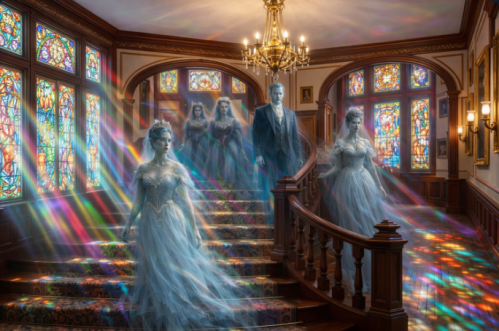
Across the country, paranormal experts have nominated twenty of the most extraordinary haunted destinations for their intense reports of ghostly encounters. But the Winchester Mystery House stands apart. It isn’t just haunted—it’s alive with unanswered questions. Why did Mrs. Sarah Winchester build doors that open into walls? Why do some rooms seem to shift in temperature without explanation? And why do so many guests report seeing a woman in black drifting through the corridors long after closing hours?

Now it’s your turn to decide which haunted destination deserves the title of America’s most extraordinary paranormal hotspot. You can vote once per day for your top pick until Monday, September 21 at noon ET. The winning haunted location will be announced on Wednesday, September 30.

Whether you believe the Winchester Mystery House is a labyrinth designed to confuse spirits, a monument to grief, or a place where the past still walks the halls, one thing is certain: no other haunted site in America leaves visitors with stories they can’t explain—and memories they can’t forget. Please click here to vote: #WinchesterMysteryHouse
Welcome to Cresleigh Homes

Within every Cresleigh neighborhood, you’ll discover homes that feel instantly welcoming—beautiful, spacious retreats crafted with care for every generation and every lifestyle. These are not just houses; they are thoughtfully designed living spaces where natural light pours through generous windows, open floor plans create effortless flow, and every detail reflects Cresleigh’s commitment to comfort, efficiency, and long‑term reliability.

Each home is built to support what matters most: gathering with loved ones, celebrating milestones, and creating memories that last a lifetime. This is where life feels grounded, warm, and truly yours. Welcome to the neighborhood.

Welcome to Cresleigh Bluffs, the newest and most exciting home community in Plumas Ranch. Nestled in the heart of Plumas Lake, this community offers a collection of beautifully designed homes that blend modern elegance with everyday practicality.

With four spacious floor plans to choose from, Cresleigh Bluffs gives homeowners room to breathe, grow, and live fully. Expansive primary suites, wide-open living areas, and thoughtfully arranged layouts make each home feel both luxurious and livable.

Every residence comes equipped with premium standard features: engineered roof construction for lasting durability, full front and rear yard fencing for privacy, and a suite of smart‑home technologies that bring convenience to your fingertips. From the central automation hub and smart thermostat to digital entry, video doorbell, Wi‑Fi extender, and remote garage access, your home is designed to be as intelligent as it is beautiful.

Inside, you’ll find elevated finishes that set Cresleigh Bluffs apart—engineered stone showers, dual sinks in select baths, ceramic tile flooring, upgraded interior materials, and center‑island kitchens with gleaming stainless steel appliances. These kitchens aren’t just functional; they’re stunning gathering spaces where cooking, conversation, and connection come naturally.

To make the design process effortless, Cresleigh Bluffs offers exclusive curated design packages. Whether your style leans modern, classic, or somewhere in between, you can choose a package that fits your taste and your budget—ensuring your home feels uniquely yours from day one.

The community itself is just as inviting. Beautifully landscaped open spaces, nearby parks, and access to quality schools create an environment perfect for families, professionals, and anyone seeking a peaceful place to call home.

With direct routes to Sacramento, Roseville, and other regional destinations, Cresleigh Bluffs offers the ideal balance of serene neighborhood living and convenient urban access.

Contact our dedicated sales associates to learn more, and sign up for our interest list to stay informed about availability and community updates. Cresleigh Bluffs isn’t just a place to live—it’s a place to thrive. https://www.cresleigh.com/communities/california/plumas-lake-ca/bluffs-at-plumas-ranch

