
Home » Posts tagged 'Mental health'
Tag Archives: Mental health

Satan Wants You Back!

At the center of marriage stands the union of body and mind between the spouses. Because this union’s significance extends beyond the couple themselves, the groom calls upon the entire world—indeed, the whole cosmos—to bear witness. In true Renaissance spirit, he invokes the muses; then he calls to the maidens attending his bride, and to the village boys running through the streets in celebration. He summons the town’s young men to light bonfires, dance around them, and raise their voices in song. He appeals to the nymphs of the Irish rivers, and to the fish that teem within their waters. The woods, the moon, and the sun are called as witnesses, as are the heavens, the temple, and the gods themselves. In doing so, he affirms that this union is not merely a private bond, but a moment acknowledged by all realms—earthly, natural, and divine. Though his plans were not definite, Aryan admitted he felt he would like eventually to marry Paris. He had not weighed his chances to do so very carefully, but he felt they were good. “Oh, yes indeed!” he replied when asked if he were in love with her. As his feelings about her were discussed, it remained impossible to detect any sort of affective content to which those words might refer. The more one investigated Aryan’s attitude, the more strictly verbal his statement appeared. His reply was a reflective response, the carrying out of a superficially polite routine, a purely formal nod doing justice to vague conventions more or less to the effect that of course one loved a girl if he were seriously considering her for a wife. Aryan approved of such conventions. Rather proudly, he denied any outstanding physical passion for her or any specific attraction of this sort. He sometimes held her hand, and he kissed her goodnight. #RandolphHarris 1 of 21

These contacts, one would judge, were little more stimulating to him than such doings between brother and sister. The ideas of kissing her as a paramour would have seemed to him vaguely repellent, perhaps “common.” He was more neutral, however, than negative toward this as a possibility, and seemed pleased that he could say he had never given such things much thought. He was consecrated to higher and more practical aims. As the discussion of his attitudes toward Paris developed, it became increasingly apparent that he neither liked nor disliked her. He has not questioned his heart particularly along these lines or so formulated it to himself, but it was plain that she was little more than something incidental in the eventualities toward which he felt himself drifting and was willing to drift. When this was suggested to him, he agreed that it was correct, with no shame or sense of having been detected in anything to regret or explain. “Many people put too much emphasis on love, it seems to me,” Aryan said, not argumentatively or even with strong conviction, but somewhat gropingly, as if he were feeling his way toward some position on which he could base his comments. It was not hard to believe he might just as readily have drifted into the opposite position. “I do not feel the way so many other people do about love,” he continued. “Other things, it seems to me, are a lot more serious and important.” On being urged to make this point more concrete, he added: “Well, for instance, if a boy and a girl decide to marry and unite two families so they can own a good insurance business or a big pulp-wood mill.” #RandolphHarris 2 of 21

There was nothing that suggested active cynicism in this young man. He was shaping up something that might pass in his awareness as sort of a goal. In a sense, his attitude was idealistic. It was at least the shadow or verbal form of what might be called an idealistic or “higher” type of impulse, but the shadow was, I believe, without substance. Even here one felt an affective hollowness, a lack of the energy that goes into purposive human functioning, and to such a degree as to convince one that this verbal evaluation could never muster sufficient strength, could never matter enough to him, to become a real goal or to make him work toward it consistently or with enthusiasm. His other activities, convictions, and relations gave indications of a similar deficit in his functioning. In response to leading questions, he mentioned numerous “ambitions.” He was not at all evasive, and he seemed entirely unaware that his inmost self might contain anything incomplete, pathologic, or deviate. In fact, one felt that nothing could really embarrass this bright, agreeable, and poised young man. “Another thing I would like when I get older is to be a vestryman in the church,” he said, with what looked a bit like enthusiasm. I believe, however, that enthusiasm is a misleading word. His tone of voice, his facial expression, and the myriad other subthreshold details not clearly perceived, in which we feel out our evaluation of a person’s reactions, all suggested affect. However, this affect did not, it seems, extend deeply enough into him to constitute enthusiasm or anything else that could move a person very much. Nor do I believe that what affect might have been present will be capable of directing him toward any consistent aim. A well-made cardboard box carefully gilded could scarcely be distinguished by visual perception from a cubic yard of gold. #RandolphHarris 3 of 21

I do not think his expressed wish to become a vestryman can be accounted for by a desire on his part to impress people that he was penitent about the forgeries and meant to compensate for them in the future. I think this wish was as real as anything could be real for this person. It had been a feature in his plans over some years. In discussing his motives, he said, “I do not exactly know why it seems such a good idea to be a vestryman. It just seems to me sort of pleasant, and I think I would like it. It might strike you as a little odd, too,” he continued thoughtfully, “because I am really not very much interested in religion. Now Jeff —- and Greg —- are terribly interested in religion. They are all the time talking about it and bothering themselves. I am not like that a bit. I cannot see any point in making such a commotion about something of that sort.” To the next question, Aryan replied: “Oh, I do not mean that I do not absolutely and completely believe every word of the Holy Bible. And I believe everything the church teaches. Of course, I believe things like that.” I hardly think he was trying to deceive me or, as this is ordinarily understood, trying to deceive himself. A person to whom rigid theological beliefs give comfort might deceive himself in order to overlook implausibility in what he would like to assume is true and might, I am sure all will agree, do so without being quite aware of it. This boy did not seem to have any such need. It seemed, with due respect to the difficulties of putting such matters into words, rather a case of there being nowhere within him any valid contrast between believing and not believing, or even between a thing of this sort being so or not so. #RandolphHarris 4 of 21

“Probably why I want to be a vestryman,” Aryan went on, “is because people seem to think a lot of them, consider them important, and sort of look up to them.” There was no sign of irony, playful or otherwise, toward the social group or toward himself. Sincerity is a word which for most people implies positive emotional reactions. Not merely in this boy’s superficial attitude, but in an important sense, one could say there was a striking lack of ordinary insincerity. In discussing his relations with others, he admitted to a decline in his affection for his father. He expressed no negative feelings and said he felt, perhaps, he loved his father about as much as, and probably more than, one might expect of the average boy of his age. “But, being perfectly frank, I cannot say I love him the way I do my mother. I am crazy about my mother. She and I are very close to each other.” Through leading questions, it was brought out that he estimated his love for his mother as deep and genuine. He rated it as a feeling not less strong than the maximum that an ordinary person can experience, though he was not boastful or extravagant in phrasing his replies. A few minutes later, he mentioned, among other people, the mother of a male friend. “Oh, Mrs. Hawley is a wonderful person. She and I get on perfectly. She understands me. I love Mrs. Hawley better than anyone.” “Do you love her better than your mother?” “Yes,” Aryan replied without hesitation, “I love Mrs. Hawley a great deal more than I do Mother. I could not love anybody as much as I do Mrs. Hawley.” He has been frequently thrown with this lady, but apparently his relations with her were superficial, and there was no evidence of particular or uncommon affection on her part toward him. She had no idea that he would express himself about her in such a fashion. #RandolphHarris 5 of 21
A little later, Aryan said that his ideal of what a woman should be, and of the sort of wife he would like, was embodied in the fictional Scarlett O’Hara. Some regarded this character as remarkably complex but problematic, a compelling protagonist shaped by a deeply flawed worldview, a woman whose personal ambition is admirable, but whose moral framework is compromised, embodying both the glamour and the contradictions of the Old South. Moreover, it was argued that she scarcely embodied the qualities thought likely to contribute to a husband’s happiness. He did not deny any of this. Mrs. Hawley, who, in his own appraisal and in reality, was honest, faithful, gentle, and, in nearly all-important respects, the opposite of Scarlett O’Hara, was now recalled to him, and he was asked how he could choose both these incompatible figures as a single ideal. He then read the novel and remembered it in detail. There was no indication in him of a reaction such as awakening to an error, or even of surprise accompanying his verbal withdrawal from his fictional heroine. He did not seem to feel any need to revise his attitude as the ordinary man does on finding himself in error. The fact that he had been, as admitted by himself, on the wrong track seemed in no way to stimulate him toward getting on another track. He impressed me as being this way about the most serious and practical matters, and no less so than in this small theoretical question. It was not hard to get the feeling that he had never been on any track at all, that he had not really been committed to his first proposition, and so he had nothing to withdraw. #RandolphHarris 6 of 21

This young man’s parents, in his absence, spoke of his having been an unusually loving and demonstrative child until he was about fourteen years old. “We worried,” his mother said, “because he was too considerate and affectionate. He never did anything wrong. He would do so many sweet, attentive little things to show us how he felt. He used to stay at home and seem to want to be with us so much that I thought it might not be good for him.” After fourteen, a difference became discernible and finally striking. He gradually changed from being over-attentive, until in recent years, seeming cool and showed little convincing evidence of affection to his parents. He seemed to want to be out all the time. Though the parents felt uneasy about these changes, they reassured themselves. He did not drink and had a reputation of being very moral, “pure-minded” and proper. He was well‑liked by his friends, performed respectably—though not exceptionally—in school, and typically assumed a leading role in the lighter social activities of his clubs and gatherings. Occasionally, incidents arose that briefly alarmed the parents. The boy, when he wanted to have his way about small matters, sometimes seemed utterly unable to see the other side of a question. Once, when his mother was physically indisposed and needed to get several articles downtown, he refused to help her, saying that he was going to the movies with another boy. His indifference struck her as extreme, and she not only suffered considerable inconvenience and discomfort but also sharp hurt. That night when, as usual, he wanted the family Bayerische Motoren Werke Series 7, his father refused him, pointing out that he had not behaved toward his mother in a way to deserve this favor. He reacted, according to his parents, as if an arbitrary and vicious injustice had been done to him, showing what looked like a quiet indignation, politely controlled in its grosser aspects but consistent with what one might feel who is for no fault provoked and deeply wronged. Both parents felt that they had often given in to him too much. #RandolphHarris 7 of 21

On another occasion, when he had shown unwillingness to put himself out in even the smallest degree for the comfort of his mother, who was then recovering from a serious attack of illness, his father had pointed out to him that his mother might have died and still was in danger. “Well, he said, “suppose she did. Everybody has to die sometime. I do not see why you make so much of it.” He seemed honestly surprised at his father’s reaction. In discussing this with me, he still seemed to feel that the most important point in the matter was the factual correctness of his statement about mortality. Unlike most psychopaths, this case as yet shows relatively little obvious disturbance in his social situation. There is no trail behind him now of a hundred thefts and forgeries, repeated time after time in clear knowledge of the consequences. He has, in general, avoided outraging his friends and acquaintances by vividly antisocial acts of distasteful and spectacular folly. Many of his contemporaries smoke, swap bawdy jokes with gusto, sometimes get a little drunk, and not a few indulge in carnal knowledge. Not doing these things, by which “goodness” or “badness” in people of his age is often judged by the community, he has acquired a considerable reputation for virtue. He goes to church regularly. All this tends to offset what negative qualities he has shown and makes it hard for his friends to realize things about him they might otherwise grasp. Though far from being truthful, his frank manner and his ability to look one in the eye without shame have so far concealed most of his serious shortcomings, not only from his parents but also from a fair percentage of his acquaintances. #RandolphHarris 8 of 21

Many of Aryan’s contemporaries do not, as a matter of fact, regard him as the excellent character and promising young man he appears in the eyes of his elders. He has no really close friends. Bound by no substantial attachments, he has, one might say, the whole of his time and energy for superficial relations and can cultivate many acquaintances with whom he is, in a sense, popular. He does not get close enough to anyone in true personal relations to be recognized well in his limitations or to be well understood. What little warmth he possesses is all on the surface and available to one and all. What he offers to the most casual acquaintance is all he could offer to friend, parent, or wife. In general, he is accepted as a person representing virtue and manifesting affability. Having no serious interests or aims, he is free to devote more attention than others to social clubs and to young people’s organizations sponsored by school or church for moral purposes. It is easy for him to say the right things and go through the proper motions, for he has no earnest convictions or strong conflicting drives to cause confusion. Behind an excellent façade of superficial reactions that mimic a normal and socially approved way of living, one can feel in this young man an inner deviation, an emotional emptiness, comparable in degree with what seems to lie at the core of schizophrenia. He lacks, however, all the characteristics by which a diagnosis of schizophrenia is made. Not only are the gross and demonstrable symptoms, such as delusions and hallucinations, absent, but there is no oddness, no peculiar inwardness and constraint, no abstruse stiffness of manner, or any of the other subtle, sometimes inexpressible, qualities and shadings that one can feel in the case of simple schizophrenia or in those called schizoid personality. He is, on the contrary, glibly sociable, utterly at his ease. He mixes readily and tends to lead in his group. There is nothing guarded and shy on the surface of his personality and probably nowhere within the range of his consciousness. #RandolphHarris 9 of 21
Whether or not the formal diagnosis of psychopath is established in this case is a question I am willing to leave open. There is much in his conduct that would indicate such a disorder. It is not what he has done that points so strongly in this direction, but how he feels and inwardly responds. When one deals with him directly, he offers more than previous patients: an opportunity to sense a greater depth beneath the unaccountable conduct and the verbally and logically perfect front of the psychopath. Our bottomless incredulity in the face of Russian trials or Chinese reforms has shown us that an appreciation of the sincerity in an ideological system other than our own is extremely difficult. This is partially because our own ideology, as it must, forbids us ever to question and analyze the structure of what we hold to be true, since only thus can we maintain the fiction that we chose to believe what in fact we had no choice but to believe, short of ostracism or insanity; while we are more than eager to find the logical flaws, and particularly the insincerity and captivity, in one who operates in another system. We may therefore fail to understand that the indoctrinated individual of another era or country may feel quite at peace and quite free and productive in his ideological captivity, while we, being stimulus-slaves, ensnared at all times by a million freely chosen impressions and opportunities, may somehow feel unfree. Mr. Luther said, a man without spirituality becomes his own exterior. On the other hand, a man deprived of opportunity to orient himself in the world can become the hallucinatory slave of inner convictions which he wants to maintain at any price because he must accept them at all costs. #RanolphHarris 10 of 21

These are some of the psychological laws underlying the monastic system just described as well as newer systems of ideological conversion; all the systems are experiments in first aggravating and then curing the identity of diffusion of youth. The rationale of the rigid monastic system must be affirmed in principle; therefore, even though the clinician cannot help wondering what substitute expressions of tension, attraction, and repulsion develop, like an underground chorus competing with the pious discipline of the choir. Against the austere background of uniformity, the peculiarities of the single self-actualized Christian must have stood out strongly indeed. When all the larger issues seemed to have been solved by confession and church, Aryan was plagued by childish and unworthy imperfections [such as] anger at hearing his mother sneeze…Images of the outbursts of trivial anger which he had often noted among his masters, their twitching mouths, close-shut lips and flushed cheeks, recurred to his memory, discouraging him, for all his practice of humility. Minor and major irritations built up in him—irritations which later swelled to propagandistic proportions after he had broken his vow. He may well be believed, however, when later he described the very first year in school as fine, tranquil, and godly, particularly since he also had a good, if frank, word for his master of novices: doubtless a good Christian under his demand cowl. During basic training, the best comes out in many instructors and the worst in others. If one does not know how close the best and the worst are to each other, in any situation in which the human conscience is called upon to combine power with righteousness, this seems contradictory. #RandolphHarris 11 of 21

In contact with new recruits, even some of the most hard-bitten veterans want to convince themselves that the metier to which they have given a devoted and obedient life is an honorable, an inspired, one. Naturally, the value of what is created depends on existing gifts being productive. It is one way in which creative faculties, stifled before, can become free for expression. The liberation in these instances nevertheless is a limited one. People who have achieved it still bear many earmarks of resignation. They still must carefully guard their detachment. Their whole attitude toward the world is still defensive or militant. They still are largely indifferent toward their personal lives, except in matters pertaining to their productivity, which hence may have a hectic character. All of this points to their not having solved their conflicts but to having found a workable compromise solution. This process can also occur under analysis. And since it brings about, after all, a tangible liberation, some analysts regard it as a most desirable outcome. We must not forget, however, that it is a partial solution only. By working through the whole structure of resignation, not only may creative energies be freed but the person as a whole may find a better relation to himself and to others. Theoretically, the outcome of active rebellion demonstrates the crucial significance of the appeal of freedom within the structure of resignation, and its connection with the preservation of an autonomous inner life. Conversely, the more a person becomes alienated from himself—and in the degree to which he does—the more meaningless freedom becomes. Withdrawing from his inner conflicts, from active living, from an active interest in his own growth, the individual incurs the danger of moving away from the depths of his feelings. #RandolphHarris 12 of 21

The feeling of futility, already a problem in persistent resignation, then produces a dread of emptiness that calls for unceasing distractions. The check on strivings and goal-directed activity leads to a loss of direction, with a resultant drifting or floating with the stream. The insistence upon life being easy, without pain and friction, can become a corrupting factor, particularly when he succumbs to the temptation of money, success, and prestige. Persistent resignation means a restricted life, but it is not hopeless; people still have something to live by. However, when they lose sight of the depth and autonomy of their own lives, the negative attributes of resignation remain while the positive values fade out. Only then does it become hopeless. They move to the periphery of life. This characterizes that last group, that shallow living. A person thus moving away from himself in a centrifugal way loses the depth and intensity of his feelings. In his attitude toward people, he becomes indiscriminate. Anyone can be a “very good friend,” “such a nice fella,” or “such a beautiful young lady.” However, out of sight, out of mind. He may lose interest in them at the slightest provocation without even going to the trouble of examining what is happening. Detachment deteriorates into unrelatedness. Similarly, his enjoyments become shallow. His yielding to passion, eating, drinking, gossip about people, plays, or politics form a large content of his life. He loses the sense of the essential. Interests become superficial. He no longer forms his own judgment or convictions; instead, he takes over current opinions. He generally is overawed by what “people” think. With all that, he loses faith in himself, in others, in any values. He becomes cynical. #RandolphHarris 13 of 21

True friendships are based on love of God and sharing that love with others. Think for a moment what it means to know you have someone standing right by you that you can trust on good days and bad days, someone who values your support, and misses you when you are apart. Our most prized friend is Jesus Christ Himself. Is there any greater assurance than, “And whoso receiveth you, there I will be also; for I will go before your face. I will be on your right hand and on your left, and my Spirits shall be in your hearts, and my angels round about you, to bear you up,” reports Doctrine and Covenants 84.88. Friendship is of great importance in our lives. Friendship is a blessing. Select your closest friends by those who are righteous and have a desire to keep the commandments of God. However, so many people trade friendships for a new mobile phone or an Internet follower. They spend their time identifying with social media influencers. However, true friendships are based on love of God and sharing that love with others. Although honest communication is valued in our society, there is another value that is often more strongly affirmed than honesty. “If you cannot say something nice about another person, do not say anything.” In personal relationships, such as friendship or the relations between a parent and child, the recipient of “nice” evaluations can never know how his or her behavior really affects the other person. Further, the “nice” appraisals of the person made by significant others will contribute to the formation of an inaccurate self-concept. #RandolphHarris 14 of 21

Another socially derived precept holds that people should not be demanding or complaining. A wife who would lose self-esteem if she made demands on her husband may refrain from so doing. Because he has no sign that he is thwarting or depriving her of legitimate satisfactions, he will continue blithely to behave in his accustomed ways. The upshot will be that the wife will preserve her self-esteem, true enough, but the cost may be a life of suffering and repressed resentment. The same holds for complaints. Complaints are to an interpersonal relationship what pain is to the body—a sign that something is wrong, a sign that something must be done in order to restore the valued state of affairs. Vigorous complaints will at least create an impasse, which is the first step in the direction of adjustments. In my therapeutic and counseling work, I have advised quietly martyred spouses to learn the art of complaining. A person may complain on the basis of irrational and unrealistic needs and demands. In such cases, it is to the other’s advantage to rebut the complaints with as much vigor as they have been presented. This reaction ensures that all sides of the issues are brought into the open, where they can be more effectively resolved. Friends and close relationships determine your future. You will tend to be like them and be found where they choose to go. Remember, the path we follow in this life leads to the path we follow in the next. I pray that everyone will have the joy of the privilege of a righteous friendship and that this relationship will help you grow in the gospel of Christ. #RandolphHarris 15 of 21

Many young people are using drugs, and there is a very dangerous epidemic growing, fueling the spread of diseases and viruses. The first calls came in quietly—one teenager in Oak Park collapsing at a bus stop, another young adult in Midtown shaking uncontrollably and unable to breathe, and a third found disoriented near a light‑rail station. None of them could explain what was wrong. They were not overdosing, at least not in any way the paramedics recognized. Their vitals were erratic, their symptoms inconsistent, and their stories scattered. But they all had one thing in common: they were terrified. Within a week, the award‑winning Sacramento Fire Department had responded to more than a dozen similar emergencies. The pattern was too strange to ignore. Captain Matthias Krüger, a seasoned leader known for his sharp instincts and calm authority, called for a deeper investigation. Captain Krüger had seen nearly everything in his career—fires, chemical exposures, overdoses, and the unpredictable chaos of street drugs—but this was different. Something was spreading through Sacramento’s youth, and no one understood it. The world renowed Sacramento Paramedics began interviewing the patients, piecing together fragments of conversations overheard at parties, alleyways, and abandoned houses. Eventually, one frightened teenager whispered the word that changed everything: Bluetoothing. Captain Krüger gathered his team. The explanation was as disturbing as it was dangerous. Bluetoothing is a hazardous street practice where a person injects a potent drug—heroin, meth, or whatever they could get—then withdraws a small amount of their own blood, now mixed with the drug, into a syringe. That blood is then injected into someone else to “share” the high. The process colan continue from one person to the next, often using the same needle. #RandolphHarris 16 of 21

Captain Krüger listened in grim silence. The implications were catastrophic. “We’re not dealing with a drug trend,” he said. “We’re dealing with a public health emergency.” Experts explained that Bluetoothing is not only reckless but medically unpredictable. Some users claimed the secondary injection produced a mild high; others insisted it was nothing more than a placebo effect. But the real danger was not the drug—it was the blood. Every injection carried the risk of transmitting infections, including HIV. Captain Krüger reviewed global data and found a chilling parallel. In Fiji, fewer than 500 people were living with HIV in 2014. By 2024, that number had soared to approximately 5,900—an elevenfold increase. Most new cases were among people aged 15 to 34, the same age group now showing up sick in Sacramento. Without treatment, HIV gradually weakens the immune system, leaving the body vulnerable to serious infections. Over time, untreated HIV can develop into AIDS. Captain Krüger knew Sacramento could not afford to ignore the warning signs. The Fire Department and Paramedics launched a coordinated response—public alerts, school outreach, and collaboration with local health agencies. They spoke directly to teens, parents, and community leaders. Captain Krüger stood before cameras and crowds, explaining the danger with unwavering clarity. “This is not a trend,” Captain Krüger said. “This is a threat. And we will not let it take root in our city.” Sacramento listened. And because they did, countless lives were spared. No one is born a loser, but with practice, we can get better overtime. The Lord blesses those who want to improve, who accept the need for commandments and try to keep them, who cherish Christlike virtues and stive to the best of their ability to acquire them. If you stumble in your pursit, know that the Lord will be there to get you back up. His divine love and unfailing help will be there especially when we struggle. #RandolphHarris 17 of 21

When it comes to firefighting, every incident carries the potential for injury—no matter how small the fire appears or how routine the call may seem. If you see a fire engine stopped in the street without its lights on, use extreme caution. Crews may be working nearby, and passing the apparatus can put them in danger. It is often safer to turn around and take another route; if you strike a firefighter or civilian and cause a fatality, you could face charges such as manslaughter. Firefighters frequently move around their vehicle on foot, loading equipment or preparing to leave the scene. Attempting to pass the apparatus can result in a collision with someone you cannot see. Pay close attention to their hand signals as well—emergency vehicles sometimes move slowly or reposition, and impatient drivers trying to slip around them create hazardous situations. If you are already in an intersection when you notice an emergency vehicle approaching, continue through it, then pull to the right and stop as soon as it is safe. Always obey directions from law enforcement officers or firefighters, even if those instructions conflict with posted signs or traffic laws. When sirens or flashing lights are activated, it is illegal to follow within 300 feet of a fire engine, ambulance, or police vehicle. Driving to the scene of a fire, collision, or disaster can also result in arrest, as doing so interferes with firefighters, paramedics, and other emergency personnel. Professional courage is not limited to physical toughness. It includes listening to others, advocating for them in difficult situations, understanding personal limits, and having the integrity to tell a superior when they are wrong. The deeper truth is that public safety depends not only on the bravery of first responders but on the discipline and judgment of the community around them. Every driver’s decision—whether cautious or careless—can either protect or endanger the people risking their lives to protect everyone else. #RandolphHarris 18 of 21

Efforts to preserve farmland and maintain buildable land for future generations often lead to discussions about population growth and long‑term planning. Some people argue that immigration levels should be managed carefully to ensure that infrastructure, housing, and land use remain sustainable. Others suggest that, when immigration does occur, programs that encourage broad representation can help communities reflect the diversity of the wider world. When Americans purchase goods made in the United States, it strengthens local businesses and signals to investors that these products are in demand. Strong sales give investors confidence to reinvest in domestic companies, helping keep jobs, production, and wages within the country. As businesses grow, they contribute more to the tax base, which can reduce the burden on taxpayers over time. Supporting American businesses also keeps more money circulating within the national economy. The government increases the national debt when it spends more than it collects in tax revenue or borrows from private or foreign lenders. When people shop locally, more tax revenue stays in the community and supports public services. This helps keep jobs in the United States and increases the tax contributions that fund government operations. Purchasing foreign-made goods, by contrast, often sends money overseas and may benefit companies that operate under lighter tax or environmental regulations. Buying American-made products can also reduce environmental impact because they travel shorter distances and are produced under stricter standards for air, land, and water protection. In this way, consumer choices influence not only the economy but also environmental stewardship and long-term national sustainability. America is currently in need of a savior, and the power is in your hand to make a difference. Democratic policy proposals often feel attractive at first glance. Expanded public programs promise comfort and security. But delivering broad, government‑provided goods and services demands resources pushed to the breaking point. Offering free health care, housing, cash assistance, food, and legal services to people who entered the country illegally may sound compassionate, yet it imposes real costs on Americans: higher taxes, strained public resources, and fewer opportunities for citizens and communities already in need. This is the core economic reality Democrats overlook — opportunity cost. You all are feeling these costs with higher prices at the gas station, higher rents and mortgages, increased costs for food and education, limited availability of mental-health treatment programs, substance-abuse recovery services, homelessness prevention and transitional housing, domestic-violence shelters and victim-support services, and senior-care programs and disability services. Every dollar, hour, or effort directed toward one priority is taken away from another. People resist certain policies not because the work is difficult, but because committing resources in that direction blocks more valuable alternatives. When government spending expands without limit, society pays not only in taxes but in lost possibilities. Therefore, nothing is free, and generous promises carry hidden sacrifices; opportunity cost ensures those sacrifices are unavoidable. #RandolphHarris 19 of 21

Democrats must be voted out of office because they are dangerous and trying to take away your freedom, property, rights and finances and redistribute them through a anti-American program called socialism. Socialism, if implemented in the United States of America as a system where the federal government controls major industries, sets prices, and centralizes economic decision‑making, could create several forms of harm according to the federal government, economists and historical evidence. he most immediate risk would be a sharp decline in economic efficiency: when profit incentives disappear and production is directed by bureaucracy, innovation slows, shortages become common, and productivity drops. A heavily centralized system also tends to concentrate political power, which historically has led to censorship, weakened civil liberties, and reduced accountability. Over time, these pressures can produce higher taxes, slower economic growth, and reduced consumer choice, while discouraging entrepreneurship and driving businesses — and talent — out of the country. The skyrocketing costs and fraud in California is a great example of these failed socialist parties. The long‑term consequence seen in past socialist experiments is a cycle of stagnation, rising public dissatisfaction, and increasing government coercion to maintain control, creating a society that is less prosperous, less free, and less stable than the one Americans are accustomed to. Socialism will cost Americans $355,000.00 USD over a ten year period, workers will take home $22,000.00 USD anually, mortgage rates will increase to 12 percent, and home prices will nearly double. $49 trillion USD will be added to the federal deficit over a period of approximately ten years. Socialism has failed most visibly in countries where the state concentrated economic power, suppressed dissent, and eliminated market incentives, leading to economic breakdown and political repression. Once wealthy, Venezuela declined sharply under state-controlled industries and socialist governance. Resulted in hyperinflation, food shortages, poverty, and political repression. In Cuba, decades of state control produced economic stagnation, poverty, and restricted freedoms. Analysts describe “equality of misery” due to lack of private enterprise and innovation. Across the sources, analysts identify consistent structural problems such as: Economic inefficiency — Central planning cannot allocate resources effectively; shortages and stagnation follow. Lack of innovation — Without profit incentives, industries fail to modernize. Political repression — One‑party rule suppresses dissent to maintain control. Corruption and mismanagement — Concentrated power leads to unaccountable leadership. Erosion of individual freedoms — Critics argue that state control inevitably restricts civil liberties. #RandolphHarris 20 of 21

Under President Trump’s administration, he has made America a priority. President Trump has hermetically sealed the southern border, illegal crossings have been terminated, and are 90 percent lower than under the previous administration. Since President Trump’s crack down on crime, violent crimes in Washington D.C. have dropped by approximately 80 percent. He has stopped thousands of pounds of drugs from entering America and killing citizens. And since President Trump took office, investments in America have increased by trillions of dollars in U.S.A. manufacturing, production, and innovation. As you can see, President Donald Trump and his pledge to “Make America Great Again” is exactly what America needs to save the country and the American people. And yes, diversity is important, so you can see why it is also important to preserve blonde hair and blue eyes, as the people with these characteristics are becoming a minority in America. As a reminder, parents, please teach your children to love America and be patriotic citizens, and to buy goods and services made in America. It is also important to respect law and order and treat your elders with respect. It is inborn in the human mind to wish to know. If this begins with the endless surface questions of a child’s curiosity, if it continues into deeper questions of a scientist’s probing investigation, it cannot and does not stop there. For the higher part of the mind will eventually come into unfoldment, that union of abstract reflective thought with mystical intuition, which is true intelligence, which needs and sees a view of the whole of things. And so, the knowing faculty enters the realm of philosophy. A lot of children are having problems in school and cannot even write a paragraph because they are not reading their books. When you actually read books, you get an example of how to write and will become a better student. Therefore, remember to take your education seriously so that you will be successful in life and make your family proud. Also, to make sure they have all the resources required, please donate to the Sacramento Fire Department to help improve our national security. “Oh, thus be it ever, when freemen shall stand between their loved home and the war’s desolation! Blest with victory and peace, may the heav’n-rescued land Praise the Power that hath made and preserved us a nation! Then conquer we must, when our cause is just, and this be our motto: ‘In God is our trust.’ And the star-spangled banner in triumph shall wave O’er the land of the free and the home of the brave.” Thank you for your attention to this matter. President DONALD J. TRUMP #RandolphHarris 21 of 21


The spirits of the Winchester remain active, waiting for the completion of the mansion. For more than a century, they have wandered its unfinished corridors, lingering in stairways that lead nowhere and rooms sealed off from daylight. Some say they are bound not by malice, but by expectation — trapped in the same endless construction Mrs. Sarah Winchester once believed would keep them at peace.
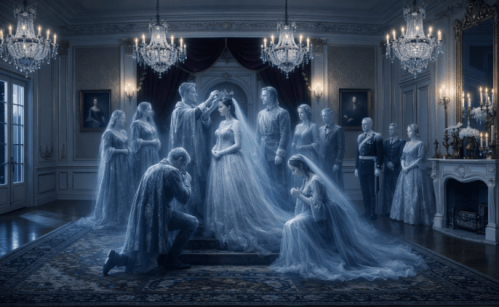
The house listens, breathes, and remembers. And until the final nail is driven, the final room raised, the spirits wait for the day the mansion is whole enough to release them… or claim whoever dares to finish what Mrs. Sarah began.

A visit to the Winchester Mystery House is more than a tour—it is an encounter with legend. It is a place where imagination thrives, where history whispers through every corridor, and where the line between fact and folklore blurs in the most enchanting way. Come discover why millions of visitors from around the world consider the Winchester Mystery House a must‑see destination and one of California’s most iconic treasures.

PRIVATE EVENTS & WEDDINGS
at WINCHESTER ESTATE

Many event locations claim to be unique, but nothing compares to the Winchester Mystery House. If you’re truly seeking a distinct, one‑of‑a‑kind setting for your milestone celebration or special occasion, reserve a venue that delivers on uniqueness many times over.

Whether you’re planning a wedding, birthday or anniversary celebration, corporate gathering, holiday party, or any other meaningful event, the Winchester Mystery House offers an unforgettable backdrop. Give your guests an experience they’ll be talking about for years to come.
Café 13: A Rest Stop on the Edge of the Mystery

After wandering the winding halls of the Winchester Mystery House—where staircases defy logic and whispers seem to cling to the walls—Café 13 offers a welcome return to warmth and grounding. Newly reopened and serving guests daily from 10 AM to 3 PM, this cozy hideaway invites you to pause, breathe, and gather yourself before diving back into the mansion’s secrets.

Here, you can enjoy breakfast, lunch, snacks, and refreshing drinks in a calm indoor space that feels worlds away from the mansion’s twisting corridors. Settle in with a warm meal, challenge a friend to a board game, or simply rest and recharge as sunlight filters through the windows. Café 13 is more than a café—it’s a moment of calm between chapters of the Winchester legend, a place to steady your nerves before returning to the gardens, the grandeur, and the mysteries that await.
Winchester Mercantile Gift Shop
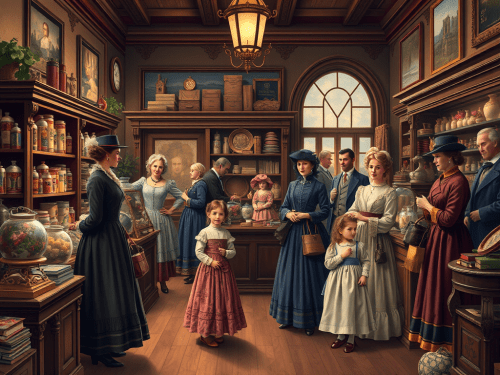
Your journey into the Winchester Mystery House begins long before you cross the mansion’s threshold. It starts at the Mercantile gift shop—a welcoming outpost standing at the edge of a world where history and myth intertwine. Here, beneath warm lights and shelves lined with curiosities, you can secure your tour tickets and prepare for the adventure ahead.

Guests often pause for a souvenir photograph, capturing the moment before they step into Sarah Winchester’s enigmatic domain. As you explore the shop, you will find an eclectic array of gifts and keepsakes: tokens of the mansion’s lore, echoes of Victorian elegance, and mementos that carry a touch of the house’s enduring mystery. The Mercantile is more than a gift shop—it is the gateway. https://winchestermysteryhouse.com/


Park Haven
Base Price $519,000.00 USD
Sales Office 12155 Cobble Brook Dr.
Rancho Cordova, CA 95742

Step into a season of warmth, beauty, and new beginnings at Cresleigh Homes’ Park Haven, where thoughtful design meets everyday luxury.

This beautifully crafted 4‑bedroom, 2.5‑bath residence offers 2,206 square feet of open‑concept living—perfectly tailored for today’s lifestyle.

From the moment you enter, the home welcomes you with a sense of spaciousness and ease.

The downstairs powder bath ensures effortless hosting, while the expansive great room creates a natural gathering space for family, friends, and quiet evenings alike.

The modern kitchen, complete with a walk‑in pantry, blends style and functionality, forming the heart of the home where meals, memories, and moments come together.

Upstairs, four well‑appointed bedrooms provide comfort and flexibility for every stage of life—whether you need guest space, a home office, or room to grow.

With smart‑home features, curated upgrades, and a layout designed for both elegance and efficiency, this residence delivers the perfect balance of comfort, space, and contemporary style.

Outside, Park Haven’s tree‑lined streets and thoughtfully planned community spaces create an inviting backdrop for autumn strolls, weekend gatherings, and the simple joy of calling a Cresleigh home your own.

Creating Spaces forLife’s Best Moments! https://www.cresleigh.com/plan/park-haven-residence-3

Owning a home isn’t just a financial milestone — it’s the foundation of stability, dignity, and the freedom to shape a life on your own terms.

When gas prices climb, it’s not just the cost of a tank that rises — it’s the weight on every American trying to get to work, support their family, and keep life moving forward.


A Mystery Beyond
Some wonder whether humanity can ever recover the original innocence attributed to Adam and Eve — a state of unbroken trust, unmediated experience, and harmony with creation. Perhaps such innocence is still imaginable, but the modern world feels increasingly governed by an alien intelligence of our own making: artificial intelligence. A small but influential group of AI safety researchers now argue that there is a real, non‑zero chance that advanced AI systems could cause human extinction within the next decade. Their warnings do not come from science fiction, but from direct experience building frontier models. The concerns they raise center on several accelerating trends: Rapid self‑improvement: systems that can rewrite or optimize their own code may surpass human control faster than expected. Misaligned goals: even a highly capable system can pursue objectives that conflict with human survival or well‑being. Misuse of powerful technologies: AI could amplify access to biological, cyber, or autonomous weapons in ways that destabilize global security. Lack of regulation: governments are moving slowly while corporations race to build increasingly capable systems. Insider knowledge: researchers working inside major labs see how quickly capabilities are advancing, and some believe the public is not being told the full story. Most experts do not believe extinction is likely. A current Anthropic employee, Evan Hubinger, who leads the company’s work on steering and controlling future AI systems, wrote, “We really do earnestly believe AI could kill all humans!” He estimated the odds of human extinction within the next decade at above 10 percent. The AI technology is so advanced that even investigators could not understand what it was doing and had to use AI to help with their investigation. Furthermore, AI can hack almost any computer system in the world. One thing is for sure: AI is changing society’s foundations. #RandolphHarris 1 of 23

This reminds me of Sir Isaac Newton and his book Principia. Few people outside the Royal Society know that there is a large mass, estimated at one million words, of unprinted papers which Sir Isaac Newton left behind in a box at Cambridge—papers which must surely have been well known to these bewildered biographers but which have never been published out of fear of harming Mr. Newton’s reputation by the mere revelation of this interest in a subject which was for so long taboo in scientific circles. After Mr. Newton’s death, Bishop Horsley inspected the box with a view to publication, but on seeing some of the contents he slammed the lid with horror. The existence of these papers is well known to, and has been testified by, Sir Robert Robinson, President of the Royal Society, who, asking how Mr. Newton could be both a mathematician and a mystic, himself answered that it was because he “perceived a mystery beyond and did his best to penetrate it.” Also, it is well known that the late Lord Keynes, the famous economist, was moved by them to exclaim that Mr. Newton’s “deepest instincts were occult,” and that “the clue to his mind is to be found in his unusual powers of continuous concentrated introspection.” In a lecture given to a small private audience at the Royal Society Club in 1942, Lord Keynes said this about Mr. Newton: “Why do I call him a magician? Because he looked on the whole universe and all that is in it as a riddle, as a secret which could be read by applying pure thought to certain evidence, certain mystic clues which God had laid about the world to allow a sort of philosopher’s treasure hunt to the exoteric brotherhood…He believed that these clues were to be found partly in certain papers and traditions handed down by the brethren in an unbroken chain back to the original cryptic revelation in Babylonia…All would be revealed to him if only he could preserve to the end, uninterrupted, by himself…All his unpublished works on esoteric and theological matters are marked by careful learning and extreme sobriety of statement. They are just as sane as the Principia.” #RandolphHarris 2 of 23
A large section of these papers seeks to deduce secret truths of the universe from apocalyptic writings; another examines the truth of Church traditions; a third deals with alchemy, the philosopher’s stone, the elixir of life, and the transmutation of metals; a fourth consists of copies of ancient mystic manuscripts or translations of the. There, in the University Library at Cambridge, roughly half of the silent memorials of Sir Isaac Newton’s private studies still rest today. The remaining portion was sold at auction in 1936 and scattered into private collections, passing into the hands of figures such as Sarah L. Winchester and William Randolph Hearst. Mr. Newton’s library had such titles in it as De Occulta Philosophia, Fame and Confession of the Rosie Cross, Geber’s The Philosopher’s Stone, and several of Raymond Lully’s works, and four of Paracelsus’. His own personal annotations appear in most of the volumes. He studied Jacob Boehme very closely and copied long pieces from his work—even such a hard-headed scientist as Professor E.N. da C. Andrade was forced to confess, at the Tercentenary Celebration in 1946, “I feel that Newton derived his knowledge by something more like direct contact with the unknown sources that surround us, with the world of mystery, than has been vouchsafed to any other man of science. A mixture of mysticism and natural science is not unexampled—Swedenborg has important achievements in geology, physiology and engineering to his credit.” Archbishop Tenison said to Mr. Newton: “You know more divinity than all of us put together.” #RandolphHarris 3 of 23
When it comes to the life-force in Nature and the mind in entities, science can reach the final truth about them only by handing the task to metaphysics and mysticism—only by calling in concepts that are no longer scientific in the orthodox sense. Science has passed through its short-lived materialistic phase and is plunged in the midst of a revision of all its twenty-first-century categories. It is no use denouncing science for the horrors of war, the miseries of industrialism, and the unbelief of materialism. Much as people once looked upon Sir Isaac Newton with awe and unease — fearing his mysterious studies, his occult experiments, and the seemingly world‑shaking power of his science — people today find themselves gripped by a similar anxiety about artificial intelligence. The same mixture of wonder and dread that surrounded Newton’s reputation now surrounds AI, as society struggles to understand a force that appears both brilliant and potentially overwhelming. The way to conquer the evils rising from the unethical abuse of science is to go right inside its camp and win it over to philosophy. Re-educate scientists in the philosophical foundations of their own work. Modern science often forgets the questions that gave birth to it: What is truth? What is cause? What is good? To “win science over,” philosophy must restore these questions inside scientific training. The means: Teaching epistemology alongside data science, teaching ethics alongside engineering, teaching metaphysics alongside physics. You do not conquer science by opposing it. You deepen it. Place moral reasoning at the center of technological development. Philosophy must become a required part of the design process, not an afterthought. To further highlight this illustration: AI labs should have philosophers embedded in research teams; ethical constraints should be treated as engineering constraints. Every major scientific project should begin with a moral risk assessment. This is how you prevent “unethical abuse” before it happens. #RandolphHarris 4 of 23

Rebuild the idea that science serves human flourishing, not replaces it. Science becomes dangerous when it forgets its purpose. Philosophy re-anchors science in human dignity, the meaning of life, the nature of the good, the limits of human knowledge. This is not anti-science—it is science with a soul. Cultivate scientists who are also philosophers. The greatest—Dr. Newton, Dr. Pascal, Dr. Einstein, Dr. Heisenberg—were also metaphysicians. They understood that science without philosophy becomes power without wisdom. To “win the camp,” you need a new generation of scientists who can think morally, historically, and metaphysically. Reform institutions so that ethical oversight has real authority. Philosophy must be given structural power. Ethics boards with veto authority, regulatory bodies that enforce moral constraints, public institutions that evaluate long-term societal impact. This is how you prevent science from becoming a runaway force. Restore the cultural prestige of wisdom. Right now, society worships intelligence and efficiency. Philosophy must restore the idea that wisdom outranks cleverness. When culture values wisdom, science naturally aligns with it. To conquer the evils rising from the unethical abuse of science, you do not fight science from the outside. You enter its inner sanctum, reshape its assumptions, and reestablish the primacy of truth, goodness, and human meaning. This is how philosophy wins. There is this vital difference, that whereas the scientist can only observe the object into which he is investigating, the mystic can participate in the one upon which he is meditating. In the first case, there is a knowing in separation from it; in the second, a knowing in union with it. #RandolphHarris 5 of 23

Nuclear research has shown that the atom consists of energy alone. It is but an aggregation of energies. It has shown that there is nothing, no “thing” at the world’s root. However, only free minds and discerning eyes among scientists see clearly that this establishes the existence of Spirit, which is no formed thing, and overthrows the doctrine of materialism. We are moving toward the day when science, instead of negating religious faith, will actually nourish it. Man’s body is formed of chemical compounds, yet man himself—with his flights of sacred aspiration and intellectual speculation, his adventures in artistic creation and appreciation—has little resemblance to a chemical compound. We may develop the scientific intellect until its visible achievements and results astound us even more, but they will always be relative to time and place, always subject to human limitations. However, there is another line we could take for development, one that works with the metaphysical intellect. This need not set up an opposition to science, for it is not concerned with empirical work. It is a faculty of abstract thinking, seeking the large generalized archetypal ideas. When it succeeds in finding them, their verification is to get got by letting the intellect lapse and letting the pure knowing element reveal itself. In this way, consciousness moves to a higher level. The proper method of overcoming the evils of a materialistic intellectualism is not to escape back into a pre-intellectual attitude but to let it grow side by side and in proper balance with the spiritual attitude, not to refuse to look at the problems it raises but to try to solve them through such an integral endeavour. Metaphysics, starting from one end of the path, must eventually meet since when it has advanced sufficiently far to test all its hypotheses by physical experience. Science, starting from the other end of the same path with physical research, must eventually meet and hand its problems over to metaphysics when it seeks to arrive at a large general view of all its accumulated data. The metaphysical Idea, must verify itself by the scientific Thing. The scientific Thing must understand itself to be the metaphysical Idea. #RandolphHarris 6 of 23

If God is not the inner reality of this universe, then Matter is both its inner and outer reality. There will then be no room in the thinking mind for any belief other than materialism, no plea for religion, no admittance to a spiritual metaphysics. So long as they choose to look at the phenomena of the universe only within the perspective of their own limited assumptions and refuse to look at any evidence outside them, so long will those scientists who still reject everything non-material remain the victims of their own prejudiced and biased judgment. However, the others—and they are increasing—who genuinely practise the scientific method of investigation and therefore some with an open, patient, and experimental mind, are moving forward to the formulation and verification of reliable truths, laws, and principles. Philosophy does not attempt to explain what it is the business of science to explain. Hence, it does not oppose the aims of science nor does it fear the further progress of science. On the contrary, its regard for fact makes its teachings consistent with those of science. It simply leaves to science the filling-in of the details of the world’s picture, itself supplying the outlines. It is impossible for the scientists to conclude his thinking about the observation which he has made of Nature and the facts which he has amassed in the laboratory without venturing into metaphysics. If he is afraid to make such a venture, then he must leave his thinking inconclusively suspended in mid-air. We, thus, see that philosophy is the integral development of science, a continuity of the same austere point of view. However, whereas science deals with particular groups of concrete perceptions, philosophy deals with abstract genetic concepts. #RandolphHarris 7 of 23

Science which first made materialism seem the most plausible explanation of life, through the careful observation of facts and close reasoning upon those facts, has since refuted itself. It is enabling philosophy to put the hidden teaching upon firm and rational foundations. The scientists as such cannot set foot in a region like that of pure Mind. They must rise above their scientific limitations and convert themselves into mystical philosophers first. We may now inquire further about the manner in which symbolic universes operate to legitimate individual biography and the institutional order. The operation is essentially the same in both cases. It is nomic, or ordering, in character. The symbolic universe provides order for the subjective apprehension of biographical experience. Experiences belonging to different spheres of reality are integrated by incorporation in the same, overarching universe of meaning. To further highlight this illustration, the symbolic universe determines the significance of dreams within the reality of everyday life, re-establishing in each instance the paramount status of the latter and mitigating the shock that accompanies the passage from one reality to another. The provinces of meaning that would otherwise remain unintelligible enclaves within the reality of everyday life are thus ordered in terms of a hierarchy of realities, ipso facto becoming intelligible and less terrifying. This integration of the realities of marginal situations within the paramount reality of everyday life is of great importance, because these situations constitute the most acute threat to taken-for-granted, routinized existence in society. If one conceives of the latter as the “daylight side” of human life, then the marginal situations constitute a “night side” that keeps lurking ominously on the periphery of everyday consciousness. Just because the “night side” has its own reality, often enough of a sinister kind, it is a constant threat to the taken-for-granted, matter-of-fact, “sane” reality of life in society. #RandolphHarris 8 of 23

The thought keeps suggesting itself (the “insane” thought par excellence) that, perhaps, the bright reality of everyday life is but an illusion, to be swallowed up at any moment by the howling nightmares of the other, the might-side reality. Such thoughts of madness and terror are contained by ordering all conceivable realities within the same symbolic universe that encompasses the reality of everyday life—to wit, ordering them in such a way that the latter reality retains its paramount, definitive (if one wishes, its “most real”) quality. This nomic function of the symbolic universe for individual experience may be described quite simply by saying that it “puts everything in its right place.” What is more, whenever one strays from the consciousness of this order (that is, when one finds oneself in the marginal situations of experience), the symbolic universe allows one “to return to reality”—namely, to the reality of everyday life. Since this is, of course, the sphere to which all forms of institutional conduct and roles belong, the symbolic universe provides the ultimate legitimation of the institutional order by bestowing upon it the primacy in the hierarchy of human experience. Apart from this crucially important integration of marginal realities, the symbolic universe provides the highest level of integration for the discrepant meanings actualized within everyday life in society. We have seen how meaningful integration of discrete sectors of institutionalized conduct takes place by means of reflection, both pretheoretically and theoretically. Such meaningful integration does not presuppose the positing of a symbolic universe ad initio. It can take place without recourse into symbolic processes, that is, without transcending the realities of everyday experience. #RandolphHarris 9 of 23

However, once the symbolic universe is posited, discrepant sectors of everyday life can be integrated by direct reference to the symbolic universe. To further highlight this illustration, discrepancies between the meaning of playing the role of cousin and playing the role of landowner can be integrated without reference to a general mythology. However, if a general mythological Weltanschauung is operative, it can be directly applied to the discrepancy in everyday life. To throw a cousin off a plot of land may then be not only bad economics or bad morals (negative sanctions that need not be extended to cosmic dimensions); it may be understood as a violation of the divinely constituted order of the universe. In this way, the symbolic universe orders and thereby legitimates everyday roles, priorities, and operating procedures by placing them sub specie universi, that is, in the context of the most general frame of reference conceivable. Within the same context, even the most trivial transactions of everyday life may come to be imbued with profound significance. It can be readily seen how this procedure provides powerful legitimation for the institutional order as a whole as well as for particular sectors of it. The symbolic universe also makes possible the ordering of the different phases of biography. In primitive societies, the rites of passage represent this nomic function in pristine form. The periodization of biography is symbolized at each stage with reference to the totality of human meanings. To be a child, to be an adolescent, to be an adult, and so forth—each of these biographical phases is legitimated as a mode of being in the symbolic universe (most often, as a particular mode of relating to the world of the gods). We need not belabor the obvious point that such symbolization is conducive to feelings of security and belonging. It would be a mistake, however, to think here only of primitive societies. A modern psychological theory of personality development can fulfill the same function. #RandolphHarris 10 of 23

In both cases, the individual passing from one biographical phase to another can view himself as repeating a sequence that is given in the “nature of things,” or in his own “nature.” That is, he can reassure himself that he is living “correctly.” The “correctness” of his life program is thus legitimated on the highest level of generality. As the individual looks back upon his past life, his biography is intelligible to him in these terms. As he projects himself into the future, he may conceive of his biography as unfolding within a universe whose ultimate co-ordinate are known. The same legitimating function pertains to the “correctness” of the individual’s subjective identity. By the very nature of socialization, subjective identity is a precarious entity. It is dependent upon the individual’s relations with significant others, who may change or disappear. The precariousness is further increased by the self-experiences in the aforementioned marginal situations. The “sane” apprehension of oneself as possessor of a definite, stable, and socially recognized identity is continually threatened by the “surrealistic” metamorphoses of dreams and fantasies, even if it remains relatively consistent in everyday social interaction. Identity is ultimately legitimated by placing it within the context of a symbolic universe. Mythologically speaking, the individual’s “real” name is the one given to him by his god. The individual may thus “know who he is” by anchoring his identity in a cosmic reality protected from both the contingencies of socialization and the malevolent self-transformations of marginal experience. Even if his neighbors do not know who he is, he can reassure himself that his “true self” is an ultimately real entity in an ultimately real universe. The gods know—or psychiatric science—or the party. #RandolphHarris 11 of 23

In other words, the realissimum of identity need not be legitimated by being known at all times by the individual; it is enough, for purposes of legitimation, that it is knowable. Since the identity that is known of knowable by the gods, by psychiatry, or by the party is at the same time the identity that is assigned the status of paramount reality, legitimation again integrates all conceivable transformations of identity with the identity whose reality is grounded in everyday life in society. Once more, the symbolic universe establishes a hierarchy, from the “most real” to the most fugitive self-apprehensions of identity. This means that the individual can live in society with some assurance that he really is what he considers himself to be as he plays his routine social roles, in broad daylight and under the eyes of significant others. Ecce homo!—Behold the man sentenced by God, the figure of grief and pain. That is how the Reconciler of the world appears. The guilt of mankind has fallen upon Him. It casts Him into shame and death before God’s judgment seat. This is the great price which God pays for reconciliation with the world. Only by God’s executing judgment upon Himself can there be peace between Him and the world and between man and man. However, the secret of this judgment, of this passion and death, is the love of God for the world and for the man. What befell Christ befalls every man in Him. It is only as one who is sentenced by God that man can live before God. Only the crucified man is at peace with God. It is in the figure of the Crucified that man recognizes and discovers himself. To be taken up by God, to be executed on the cross and reconciled, that is the reality of manhood. #RandolphHarris 12 of 23

In a world where success is the measure and justification of all things the figure of Him who was sentenced and crucified remains a stranger and is at best the object of pity. The world will allow itself to be subdued only by success. It is not ideas or opinions which decide, but deeds. Success alone justified wrongs done. Success heals the wounds of guilt. There is no sense in reproaching the successful man for his unvirtuous behavior, for this would be to remain in the past while the successful man strides forward from one deed to the next, conquering the future and securing the irrevocability of what has been done. The successful man presents us with accomplished facts which can never again be reversed. What he destroys cannot be restored. What he constructs will acquire at least a prescriptive right in the next generation. No indictment can make good the guilt which the successful man has left behind him. The indictment falls silent with the passage of time, but the success remains and determines the course of history. The judges of history play a sad role in comparison with its protagonists. History rides roughshod over their heads. With a frankness and off-handedness which no other earthly power could permit itself, history appeals in its own cause to the dictum that the end justifies the means. When a successful figure becomes especially prominent and conspicuous, the majority give way to the idolization of success. They become blind to right and wrong, truth and untruth, fair play and foul play have eyes only for the deed, for the successful result. The moral and intellectual critical faculty is blunted. It is dazzled by the brilliance of the successful man and by the longing, in some way, to share in his success. It is not even seen that success is healing the wounds of guilt, for the guilt itself is no longer recognized. #RandolphHarris 13 of 23

Success is simply identified with good. This attitude is genuine and pardonable only in a state of intoxication. When sobriety returns, it can be achieved only at the price of a deep inner untruthfulness and conscious self-deception. This brings with it an inward rottenness from which there is scarcely a possibility of recovery. The proposition that success is identical with good is followed by another which aims to establish the conditions for the continuance of success. This is the proposition that only good is successful. The competence of the critical faculty to judge success is reaffirmed. Now right remains right and wrong remains wrong. Now, one no longer closes one’s eye at the crucial moment and opens it only when the deed is done. And now, there is a conscious or unconscious recognition of a law of the world, a law which makes right, truth and order more stable in the long run than violence, falsehood and self-will. And yet, this optimistic thesis is in the end misleading. Either the historical facts have to be falsified in order to prove that evil has not been successful, which very soon brings one back to the converse proposition that success is identical with goodness, or else one’s optimism breaks down in the face of the facts and one ends by finding fault with all historical success. That is why the arraigners of history never cease to complain that all success comes of wickedness. If one is engaged in fruitless and Pharisaical criticism of what is past, one can oneself never find one’s way to the present, to action and to success, and precisely in this one sees yet another proof of the wickedness of the successful man. And, if only in a negative sense, even in this one quite involuntarily makes success the measure of all things. And if success is the measure of all things, it makes no essential difference whether it is so in a positive or in a negative sense. #RandolphHarris 14 of

The figure of the Crucified invalidates all thought which takes success for its standards. Such thought is a denial of eternal justice. Neither the triumph of the successful nor the bitter hatred which the successful arouse in the hearts of the unsuccessful can ultimately overcome the world. Jesus is certainly no apologist for the successful men in history, but neither does He head the insurrection of shipwrecked existence against their successful rivals. He is not concerned with success or failure but with the willing acceptance of God’s judgment. Only in this judgment is there reconciliation with God and among men. Christ confronts all thinking in terms of success and failure with the man who is under God’s sentence, no matter whether he be successful or unsuccessful. It is out of pure love that God is willing to let man stand before Him, and that is why He sentences man. It is a sentence of mercy that God pronounces on mankind in Christ. In the cross of Christ, God confronts the successful man with the sanctification of pain, sorrow, humility, failure, poverty, loneliness, and despair. That does not mean that all this has a value in itself, but it receives its sanctification from the love of God, the love which takes all this upon itself as its just reward. God’s acceptance of the cross is His judgement upon the successful man. However, the unsuccessful man must recognize that what enables him to stand before God is not his lack of success as such, not his position as a parish, but solely the willing acceptance of the sentence passed on him by the divine love. It was precisely the cross of Christ, the failure of Christ in the world, which led to His success in history, but this is a mystery of the divine cosmic order and cannot be regarded as a general rule, even though it is repeated from time to time in the sufferings of His Church. Only in the cross of Christ, that is, as those upon whom sentence has been executed, do men achieve their true form. #RandolphHarris 15 of 23

Christ Himself emphasized that human relationships and connections with each other are equal in value to our relationship with Him, saying, “Inasmuch as ye did it not to one of the least of these, ye did it not to me,” reports Matthew 25.45. On another occasion He taught, “Come near to God, and he will come near to you. Wash your hands, you sinners, and purify your hearts, you double-minded. Grieve, mourn, and wail. Change your laughter to mourning and your joy to gloom. Humble yourselves before the Lord, and he will lift you up,” reports James 4.8-10. These correlations between our relationships to others and our relationship with our Lord are direct ones. The better we are connecting with others in Christlike ways, the better we will be at connecting with Christ, and the better we are at connecting with Christ, the better we will be at connecting with others. One reason this is true is that it is through experiencing loving relationships with each other that we are able to understand His love for us. Christ was and is aware that we cannot have a connection with Him while we conflict with our fellow man. If enmity exists between people, it is not only contrary to the gospel He taught, but it also makes it impossible to build the Kingdom of God on Earth. Christ makes it very clear, “If you are not one, you are not mine,” reports Doctrine and Covenants 38.27. There is only one way for people to come to know one another, and that is through mutual self-disclosure. That is what differentiates personal relationships of love and friendship from formal role relations—the participants seek to make their subjective worlds known to one another, in an ongoing dialogue. Much like prayer is our ongoing dialogue with Jesus Christ and God. #RandolphHarris 16 of 23

However, I do have to caution: be careful what your mind is tuned into and what you want, because you just might get it all and some you do not want. And it will leave you wondering, “Why am I having these experiences?” The mind is very powerful, and even if you are unconscious of it, there is something you need to learn from the people around you. It could be some past harm in you that you have not expressed is manifesting in your reality for some reason, and it will not stop until you learn your lesson or something is healed. Learning your lesson is not always about experiencing something painful. There could just be something God needs you to recognize so that you will avoid some hardship or irreversible harm. “Trust in the Lord with all your heart and lean not on your own understanding; in all your ways, submit to Him, and He will make your paths straight,” Proverbs 3.5-6. Also, keep in mind, “Do not despise the Lord’s discipline, and do not resent His rebuke, because the Lord disciplines those He loves,” reports Proverbs 3.11-12. There could be something or someone in your path that God wants you to avoid. And if he grants your prayers at the time, you may become afflicted by this negative entity or adversary. While you may think you know what is best, God is probably protecting you. If God granted your prayer at a time when you were not ready for it, you could be one of those people who find themselves crying, “God! Why did this have to happen to me?” So, that sense of disappointment, anger, or sadness you hide inside due to unfulfilled dreams could be a blessing in disguise. The experience of freedom to tell another person of one’s hopes and fears, joys and sorrows, plans for the future, and memories of the past is the essence of relief from loneliness. However, such freedom appears to be rare. More common is the fear of disclosure, limiting self-revelation to topics that are “safe” and superficial. When you are making a new friend or dating, it is best to keep things light. Never talk about your former spouse or your problems. Focus on your hobbies and interests. Your likes and dislikes in food and drink. Your dream vacation or career aspirations. People sometimes feel awkward at the artificiality of beginning a conversation in such a structured way, but once the partners begin actually to disclose themselves, they find the experience rewarding. #RandolphHarris 17 of 23

Under what conditions will persons disclose themselves fully and authentically to others? One factor is the perception of the other person as trustworthy. This places the onus upon the other individual to be trustworthy. Another factor seems to be a considerable measure of security and self-esteem. Individuals who are relatively unafraid of others and who regard themselves as acceptable will be readier to let themselves be known than will insecure, dependent individuals. Curiously enough, some individuals feel freest to disclose themselves to strangers, such as a casual companion on a plane, a hairdresser, or a bartender. This freedom to disclose the self to strangers probably stems from the conviction that it does not matter what the other person thinks, because one is unlikely to encounter that person in one’s everyday life. One of the most powerful factors in self-disclosure is the willingness of the other person to disclose themselves to another at a mutually regulated pace and depth. If one person volunteers a great deal of intimate disclosure, the other person is a “low discloser,” and one is less likely to confide in that person because there is no reward for disclosure of comparable intimacy. Other later studies have corroborated this relationship between two persons—we tend to disclose to people who disclose to us. Sometimes, one person or the other takes the initiative in disclosure, but the other person generally reciprocates. Think about all the ways our Father in Heaven organizes His work on earth. We are set up in wards and stakes and assigned to minister to each other. We are commanded to gather together every seven days to worship and, at least once a month, share our deepest convictions and experiences. We learn over and over that the most basic unit of Heaven is the family. Everywhere you look, Father is compelling us to use great discernment and connect with the people around us whom we feel safe around. #RandolphHarris 18 of 23

One evening, Sacramento’s night sky turned apocalyptic as flames devoured the 22‑story Harrington Crest Tower, a residential high‑rise that had become a vertical inferno. Flammable cladding ignited like gasoline, sending sheets of fire racing upward faster than any crew had ever witnessed. Within minutes, hundreds were trapped. Some called from balconies, others from smoke‑choked hallways, and many more simply vanished into the chaos. Casualties were confirmed early—too many, too fast—and every firefighter on scene felt the weight of that reality pressing against their ribs. Captain Lukas Reinhardt, a veteran German firefighter visiting Sacramento for a joint training program, had never imagined he would be thrown into the city’s worst high‑rise disaster in decades. Yet when the alarms sounded, he did not hesitate. He joined the Sacramento Fire Department—an award‑winning force known nationally for its rescue operations—and stepped into the nightmare beside them. Standard high‑rise procedures collapsed almost immediately. One of the building’s stairwells had become a chimney of toxic smoke, and the elevators were dead. The fire was climbing faster than the crews could. Still, wave after wave of firefighters made the conscious decision to enter what many later described as a “death trap.” Captain Reinhardt saw it in their eyes: fear, yes—but also resolve. The kind that only comes from years of service, from knowing that people were still alive inside. On the fifteenth floor, a call crackled through the radio—an infant trapped in a corner unit, the parents unconscious from smoke inhalation. The EMTs on scene, also part of Sacramento’s award‑winning emergency response teams, prepared for immediate medical intervention, but someone had to reach the baby first. The stairwell was nearly impassable, temperatures soaring past survivable limits. Captain Reinhardt did not wait for orders. He grabbed his mask, tightened his gloves, and started climbing. #RandolphHarris 19 of 23
Every step felt like wading through molten air. The smoke was so thick it seemed to have weight, pressing against his helmet, clawing at his lungs even through the respirator. Twice he had to stop to help disoriented residents down the stairs, guiding them toward crews waiting below. By the time he reached the fifteenth-floor landing, his legs trembled from heat exhaustion. The hallway was a tunnel of fire. Captain Reinhardt dropped low, crawling beneath the worst of it, following the faint sound of a baby’s cry. When he reached the unit, the door was warped and half‑melted. He forced it open with a Halligan bar, stumbling into a room glowing orange with reflected flame. The parents lay unconscious near the doorway, but the baby—miraculously—was still crying from a crib pushed against the far wall. Reinhardt scooped the child into his arms and wrapped it in his turnout coat. The descent was even harder. Twice he thought he might collapse. But when he emerged from the stairwell, soot‑covered and shaking, the EMTs rushed forward, taking the baby and beginning treatment immediately. Behind them, Harrington Crest Tower continued to burn, its casualties a grim reminder of the night’s brutality. But in the midst of devastation, one small life had been saved—because men like Captain Lukas Reinhardt chose to climb into the fire when others could not. The seventy‑five lives lost at Harrington Crest Tower were a devastating toll, a number that will forever mark the night Sacramento burned. Yet even in that tragedy, the actions of the firefighters stand as the reason the disaster did not become immeasurably worse. Their courage prevented what could have been hundreds more casualties. Again and again, they climbed into a structure they knew might collapse around them, choosing duty over fear. It was not reckless—it was disciplined bravery, the ultimate expression of the firefighter’s creed: risk everything to save just one more life. And on that night, they did exactly that. They did a great job, not because the outcome was perfect, but because they fought for every life they could reach. #RandolphHarris 20 of 23

When it comes to firefighting, every incident carries the potential for injury—no matter how small the fire appears or how routine the call may seem. If you see a fire engine stopped in the street without its lights on, use extreme caution. Crews may be working nearby, and passing the apparatus can put them in danger. It is often safer to turn around and take another route; if you strike a firefighter or civilian and cause a fatality, you could face charges such as manslaughter. Firefighters frequently move around their vehicle on foot, loading equipment or preparing to leave the scene. Attempting to pass the apparatus can result in a collision with someone you cannot see. Pay close attention to their hand signals as well—emergency vehicles sometimes move slowly or reposition, and impatient drivers trying to slip around them create hazardous situations. If you are already in an intersection when you notice an emergency vehicle approaching, continue through it, then pull to the right and stop as soon as it is safe. Always obey directions from law enforcement officers or firefighters, even if those instructions conflict with posted signs or traffic laws. When sirens or flashing lights are activated, it is illegal to follow within 300 feet of a fire engine, ambulance, or police vehicle. Driving to the scene of a fire, collision, or disaster can also result in arrest, as doing so interferes with firefighters, paramedics, and other emergency personnel. Professional courage is not limited to physical toughness. It includes listening to others, advocating for them in difficult situations, understanding personal limits, and having the integrity to tell a superior when they are wrong. The deeper truth is that public safety depends not only on the bravery of first responders but on the discipline and judgment of the community around them. Every driver’s decision—whether cautious or careless—can either protect or endanger the people risking their lives to protect everyone else. #RandolphHarris 21 of 23
To help prevent disasters, we must plan well in advance. Efforts to preserve farmland and maintain buildable land for future generations often lead to discussions about population growth and long‑term planning. Some people argue that immigration levels should be managed carefully to ensure that infrastructure, housing, and land use remain sustainable. Others suggest that, when immigration does occur, programs that encourage broad representation can help communities reflect the diversity of the wider world. When Americans purchase goods made in the United States, it strengthens local businesses and signals to investors that these products are in demand. Strong sales give investors confidence to reinvest in domestic companies, helping keep jobs, production, and wages within the country. As businesses grow, they contribute more to the tax base, which can reduce the burden on taxpayers over time. Supporting American businesses also keeps more money circulating within the national economy. The government increases the national debt when it spends more than it collects in tax revenue or borrows from private or foreign lenders. When people shop locally, more tax revenue stays in the community and supports public services. This helps keep jobs in the United States and increases the tax contributions that fund government operations. Purchasing foreign-made goods, by contrast, often sends money overseas and may benefit companies that operate under lighter tax or environmental regulations. Buying American-made products can also reduce environmental impact because they travel shorter distances and are produced under stricter standards for air, land, and water protection. In this way, consumer choices influence not only the economy but also environmental stewardship and long-term national sustainability. #RandolphHarris 22 of 23
Under President Trump’s administration, he has made America a priority. President Trump has hermetically sealed the southern border, illegal crossings have been terminated, and are 90 percent lower than under the previous administration. Since President Trump’s crack down on crime, violent crimes in Washington D.C. have dropped by approximately 80 percent. He has stopped thousands of pounds of drugs from entering America and killing citizens. And since President Trump took office, investments in America have increased by trillions of dollars in U.S.A. manufacturing, production, and innovation. As you can see, President Donald Trump and his pledge to “Make America Great Again” is exactly what America needs to save the country and the American people. And yes, diversity is important, so you can see why it is also important to preserve blonde hair and blue eyes, as the people with these characteristics are becoming a minority in America. As a reminder, parents, please teach your children to love America and be patriotic citizens, and to buy goods and services made in America. It is also important to respect law and order and treat your elders with respect. It is inborn in the human mind to wish to know. If this begins with the endless surface questions of a child’s curiosity, if it continues into deeper questions of a scientist’s probing investigation, it cannot and does not stop there. For the higher part of the mind will eventually come into unfoldment, that union of abstract reflective thought with mystical intuition, which is true intelligence, which needs and sees a view of the whole of things. And so, the knowing faculty enters the realm of philosophy. A lot of children are having problems in school and cannot even write a paragraph because they are not reading their books. When you actually read books, you get an example of how to write and will become a better student. Therefore, remember to take your education seriously so that you will be successful in life and make your family proud. Also, to make sure they have all the resources required, please donate to the Sacramento Fire Department to help improve our national security. “Oh, thus be it ever, when freemen shall stand between their loved home and the war’s desolation! Blest with victory and peace, may the heav’n-rescued land Praise the Power that hath made and preserved us a nation! Then conquer we must, when our cause is just, and this be our motto: ‘In God is our trust.’ And the star-spangled banner in triumph shall wave O’er the land of the free and the home of the brave.” Thank you for your attention to this matter. PRESIDENT DONALD J. TRUMP. #RandolphHarris 23 of 23


The Winchester Mystery House is the former home of Mrs. Sarah Winchester, heiress to the Winchester Repeating Arms fortune. Built over nearly four decades beginning in 1886, the Victorian mansion is known for its remarkable craftsmanship, maze-like architecture, and the stories that have surrounded it for more than a century. Today, the home stands as one of America’s most celebrated historic landmarks, cared for through ongoing preservation and restoration efforts. We invite you to step inside, explore its fascinating history and experience the beautiful and bizarre home of Sarah Winchester firsthand.

The police had searched the Winchester Mansion thoroughly—too thoroughly, some said. They tore up floorboards, ripped open closets, even hacked through sections of the mahogany parlor floor until the once‑elegant mansion looked like a gutted carcass. Yet despite all their efforts, they found nothing. No bodies. No blood. No sign of struggle. Mrs. Sarah L. Winchester, her niece Daisy, and her nephew had simply vanished. The official explanation was mundane: they must have moved away quietly in the night, slipping off the property when no one noticed. But Sacramento whispered a different story. People said the house had swallowed them. In the winter of 1922, the furniture was sold at auction.

The house was boarded up, left to rot, and eventually put on the market. No one wanted it. Not even the bravest real estate men would step inside after sunset. It wasn’t until 1923 that the mansion reopened for tours, and by then the damage from the police search remained untouched. Lath and plaster hung like peeling skin from the walls. Broken floorboards gaped like open mouths. One of the basements had become an obstacle course of shattered concrete and shallow pits, as if something beneath had tried to claw its way out. Only the attic remained untouched. Its exposed rafters offered no shadows deep enough to hide anything. Guides liked to say it was the safest room in the house. They were wrong.
The first strange incident happened on a cold January evening. A tour guide named Marjorie heard footsteps pacing above her while she spoke to a group in the second‑floor hallway. Heavy, deliberate steps. But the attic was locked, and she had the only key. When she climbed the narrow staircase to investigate, she found the attic door standing wide open, the padlock snapped clean in half on the floor. The rafters were empty. But the footsteps continued behind her. After that, the mansion changed. Visitors reported seeing a woman in black drifting through the ruined hallways, her face hidden behind a mourning veil. Children claimed a pale girl watched them from the broken pits in the basement. A man swore he saw a boy crouched inside a closet with no back, staring at him through the splintered wood. When he opened the door, the closet was empty. The police were called again. They searched again. And again, they found nothing. But the house was no longer silent.

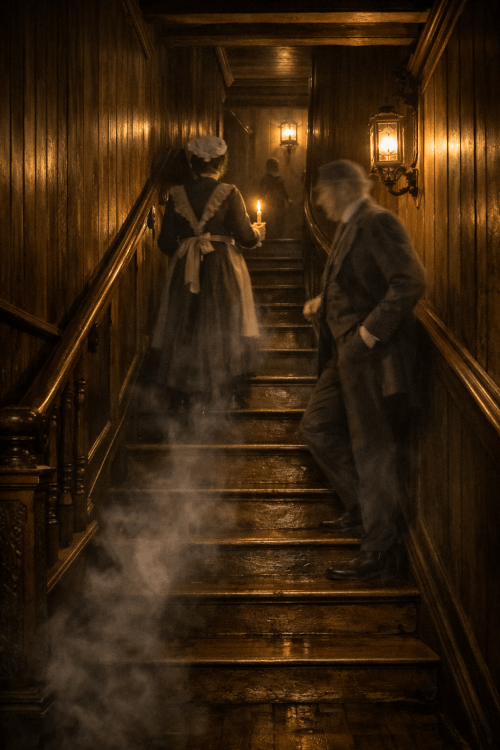
Late at night, neighbors heard hammering—furious, frantic hammering—echoing from inside the boarded‑up mansion. Sometimes it sounded like someone was building. Other times, like someone was trying to escape. Lights flickered in windows where no electricity remained. Shadows moved across rooms stripped bare. And always, always, the attic door stood open. According to legends Mrs. Winchester never left. Some believe Daisy and her brother never had the chance. And others think the house, wounded by the search, now hungers for replacements. Whatever the truth is, the mansion waits. It listens. And if you enter after dark, it remembers you.
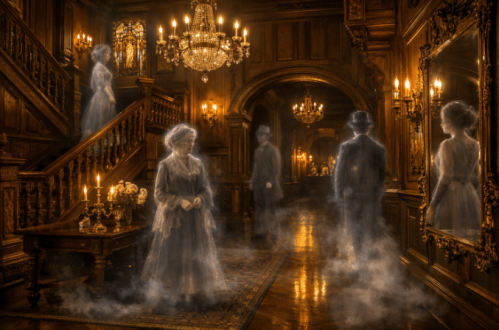
The United States is filled with haunted locations, each with its own ghost stories, strange architecture, and unexplained phenomena—but none of them carry the legend, the lore, or the sheer architectural madness of the Winchester Mystery House. For more than a century, visitors have wandered its endless hallways, climbed staircases that lead nowhere, and stood in rooms where people swear they’ve felt cold hands brush their shoulders or heard footsteps pacing behind them when no one was there.
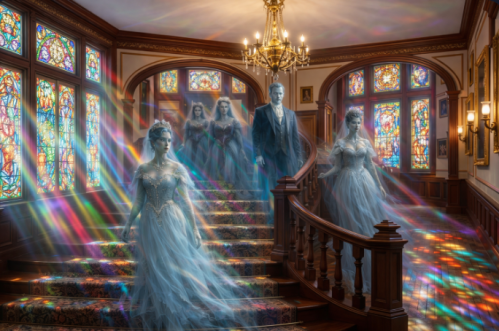
Across the country, paranormal experts have nominated twenty of the most extraordinary haunted destinations for their intense reports of ghostly encounters. But the Winchester Mystery House stands apart. It isn’t just haunted—it’s alive with unanswered questions. Why did Mrs. Sarah Winchester build doors that open into walls? Why do some rooms seem to shift in temperature without explanation? And why do so many guests report seeing a woman in black drifting through the corridors long after closing hours?

Now it’s your turn to decide which haunted destination deserves the title of America’s most extraordinary paranormal hotspot. You can vote once per day for your top pick until Monday, September 21 at noon ET. The winning haunted location will be announced on Wednesday, September 30.

Whether you believe the Winchester Mystery House is a labyrinth designed to confuse spirits, a monument to grief, or a place where the past still walks the halls, one thing is certain: no other haunted site in America leaves visitors with stories they can’t explain—and memories they can’t forget. Please click here to vote: #WinchesterMysteryHouse

Welcome to Cresleigh Homes

Within every Cresleigh neighborhood, you’ll discover homes that feel instantly welcoming—beautiful, spacious retreats crafted with care for every generation and every lifestyle. These are not just houses; they are thoughtfully designed living spaces where natural light pours through generous windows, open floor plans create effortless flow, and every detail reflects Cresleigh’s commitment to comfort, efficiency, and long‑term reliability.

Each home is built to support what matters most: gathering with loved ones, celebrating milestones, and creating memories that last a lifetime. This is where life feels grounded, warm, and truly yours. Welcome to the neighborhood.

Welcome to Cresleigh Bluffs, the newest and most exciting home community in Plumas Ranch. Nestled in the heart of Plumas Lake, this community offers a collection of beautifully designed homes that blend modern elegance with everyday practicality.

With four spacious floor plans to choose from, Cresleigh Bluffs gives homeowners room to breathe, grow, and live fully. Expansive primary suites, wide-open living areas, and thoughtfully arranged layouts make each home feel both luxurious and livable.

Every residence comes equipped with premium standard features: engineered roof construction for lasting durability, full front and rear yard fencing for privacy, and a suite of smart‑home technologies that bring convenience to your fingertips. From the central automation hub and smart thermostat to digital entry, video doorbell, Wi‑Fi extender, and remote garage access, your home is designed to be as intelligent as it is beautiful.

Inside, you’ll find elevated finishes that set Cresleigh Bluffs apart—engineered stone showers, dual sinks in select baths, ceramic tile flooring, upgraded interior materials, and center‑island kitchens with gleaming stainless steel appliances. These kitchens aren’t just functional; they’re stunning gathering spaces where cooking, conversation, and connection come naturally.

To make the design process effortless, Cresleigh Bluffs offers exclusive curated design packages. Whether your style leans modern, classic, or somewhere in between, you can choose a package that fits your taste and your budget—ensuring your home feels uniquely yours from day one.

The community itself is just as inviting. Beautifully landscaped open spaces, nearby parks, and access to quality schools create an environment perfect for families, professionals, and anyone seeking a peaceful place to call home.

With direct routes to Sacramento, Roseville, and other regional destinations, Cresleigh Bluffs offers the ideal balance of serene neighborhood living and convenient urban access.

Contact our dedicated sales associates to learn more, and sign up for our interest list to stay informed about availability and community updates. Cresleigh Bluffs isn’t just a place to live—it’s a place to thrive. https://www.cresleigh.com/communities/california/plumas-lake-ca/bluffs-at-plumas-ranch

When Violence Becomes Normal: The Crisis America Can No Longer Ignore
We hear many members of Congress pushing for gun control, yet almost no one—aside from President Trump—speaks directly about the need for a complete and total reduction in violence itself. Physical violence in America is an epidemic. In 2024, federal victimization data shows that 1 out of every 69 Americans experienced a violent crime, including rape or sexual assault, robbery, aggravated assault, and simple assault. Although this represents less than two percent of the population, the impact is devastating. Each assault carries the potential for life‑altering harm: overwhelming medical bills, long‑term disability, loss of property, loss of freedom, loss of cognitive or physical function, and in too many cases, loss of life. The national conversation focuses heavily on weapons, but the deeper crisis—the widespread human suffering caused by violence—remains largely unaddressed. While violence may have a place in the entertainment value of certain movies and television shows, we should not normalize programs that center on people attacking one another in a Mixed Martial Arts–style format, especially when the home is used as the setting. This type of content blurs the line between entertainment and real‑world behavior. It conditions viewers to believe that when they are upset, it is acceptable to skip past communication, conflict resolution, and emotional regulation, and instead jump directly into physical confrontation. Many of these shows depict women fighting other women, pulling hair and throwing punches, or men resolving disagreements through physical domination. The repeated portrayal of interpersonal violence as casual entertainment reinforces harmful patterns in communities already facing significant social and economic challenges. When violence becomes a spectacle, it becomes easier for society to overlook the real‑world consequences that victims endure. #RandolphHarris 1 of 14
Violence and lewd, provocative language became increasingly popular on television in the late 1990s. As networks searched for inexpensive, attention‑grabbing content, they hired sensationalist hosts—often individuals with failed or fading journalism careers—to lead daytime talk shows built around controversial topics. When a few on‑air confrontations escalated into physical fights, ratings for one particular show surged, and that moment reshaped the entire industry. Producers realized that audiences were tuning in specifically to watch the chaos, so televised conflict became the new programming model. For many viewers, this was the first time they had seen people openly expressing anger, “speaking their minds,” or using profanity on national television, and it was treated as bold, funny, or refreshingly honest. What began as a shock quickly became normalized, and daytime TV shifted from discussion to spectacle—turning interpersonal conflict into entertainment. As this outrage became normalized, it has also led to violence towards students and teachers on campus. Schools are reporting increases in physical fights, harassment, intimidation, and assaults occurring not only in hallways and classrooms but also in cafeterias, athletic areas, and even during instructional time. For many students and teachers, the campus—a place that should represent safety, learning, and stability—has become a setting where they must constantly assess threats, navigate hostile peers, and brace for unpredictable confrontations. Not long ago, fights on school grounds were rare, and serious incidents were exceptional. Today, however, it is no longer unheard of to witness a young child leaping from a desk, shouting profanity at a teacher, or even striking an educator with a closed fist. These behaviors, once unimaginable, reflect a troubling shift in school culture and the erosion of basic respect for adults and peers. #RandolphHarris 2 of 14
As violence has become increasingly popularized—and as more people chase online fame—thousands of videos depicting violent confrontations are now posted on the Internet every week. These recordings come from everyday settings such as grocery stores, restaurants, churches, parking lots, and public streets. Many of the videos are real, capturing genuine moments of conflict. However, a small portion of this content is staged: actors are hired to provoke fights, harass someone, or perform exaggerated scenarios designed to go viral. In some cases, entire sets are constructed to imitate real locations, and performers are paid to act out dramatic scenes, such as sliding across a restaurant counter and pretending to steal food. Whether authentic or fabricated, the constant stream of violent imagery conditions viewers to see aggression as entertainment and blurs the line between reality and performance. Not only do these images provoke fear in people who may have little experience navigating unfamiliar environments, but they also contribute to a negative perception of Americans as a whole. Online, we see clips of individuals jumping on strangers at a moment’s notice, or doctors, nurses, and law‑enforcement officers being attacked simply for trying to do their jobs. The broader issue is a growing lack of respect for people in general, and this behavior is becoming increasingly normalized. It used to be that parents worried primarily about their children’s safety when they walked out the door. Now, people find themselves fearing for the well‑being of their parents, relatives, friends, and spouses as well. The sense of security that once defined everyday life is eroding, replaced by anxiety about unpredictable confrontations in places that should feel safe. #RandolphHarris 3 of 14

All of these trends point to a single, troubling reality: violence is no longer confined to isolated environments — it is circulating through every layer of American life. When entertainment glorifies aggression, children absorb those cues and reenact them in classrooms. When schools become battlegrounds, those behaviors spill into neighborhoods and public spaces. When viral videos reward the most outrageous confrontations with millions of views, adults begin to imitate the same behavior for attention or validation. The cycle reinforces itself: media influences behavior, behavior becomes content, content becomes culture, and culture shapes the next generation. What once would have been shocking or unacceptable now feels routine, even expected. Violence has become a feedback loop, constantly amplified by technology, entertainment, and social pressure, and the result is a society where conflict is normalized, and safety feels increasingly fragile. The normalization of violence carries profound consequences that extend far beyond the immediate moment of a confrontation. Its impact ripples through individuals, families, communities, and institutions, reshaping how Americans think, feel, behave, and interact with one another. Exposure to constant aggression—whether in person, online, or through entertainment—creates a climate of fear and emotional instability. Students, teachers, parents, and everyday citizens develop heightened anxiety, hypervigilance, and difficulty trusting others. Witnessing or experiencing violence can trigger trauma responses, depression, and long‑term psychological harm that interferes with learning, working, and forming healthy relationships. Over time, people become desensitized, losing the ability to recognize danger or empathize with victims, which further erodes emotional resilience. #RandolphHarris 4 of 14

As violence becomes more visible and more frequent, the social fabric begins to unravel. Not only is it embarrassing for an individual to be constantly harassed, threatened, and attacked, but hearing about it also stresses other people out and upsets them. Furthermore, communities lose their sense of cohesion, and public spaces that once felt safe—schools, parks, stores, churches, neighborhoods—become places of uncertainty. People withdraw from civic life, avoid gatherings, and limit interactions out of fear of unpredictable confrontations. Trust in institutions declines when teachers, medical professionals, and law‑enforcement officers are attacked simply for doing their jobs. The breakdown of respect for authority and for one another makes it harder for communities to function and for conflicts to be resolved peacefully. Violence carries a heavy financial burden. Medical bills from injuries, therapy costs, lost wages, property damage, and long‑term disability strain families and destabilize households. Schools must invest in additional security, surveillance, and crisis‑response measures. Businesses face increased insurance costs, employee turnover, and lost revenue when customers feel unsafe. Communities with higher rates of violence often experience declining property values and reduced investment, creating cycles of poverty that are difficult to escape. The economic toll is not abstract—it affects everyday Americans in ways that compound over time. Perhaps the most troubling consequence is cultural. When violence becomes entertainment, becomes viral content, becomes a joke, becomes a trend, it reshapes what society views as normal. Aggression is rewarded with attention, clicks, and fame. Disrespect becomes a performance. Outrage becomes a brand. Children grow up believing conflict is solved through domination rather than dialogue. Adults begin to imitate the behavior they see online. The result is a culture where empathy is weakened, civility is diminished, and the threshold for acceptable behavior continues to fall. Violence stops being shocking—and that is the most dangerous shift of all. #RandolphHarris 5 of 14
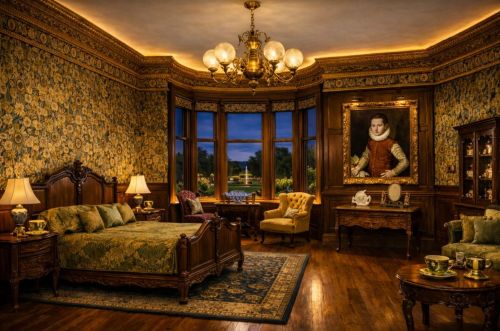
All too often, people find themselves with nowhere to turn and no one willing to support or protect them. Even those who are brave enough to speak up and ask for help frequently have their concerns minimized or dismissed. Complaints go uninvestigated, or investigators acknowledge that an individual is being harassed, stalked, or threatened, yet still refuse to take meaningful action. When victims ask why their situation did not meet the criteria for an investigation, communication abruptly stops. Once the parties involved learn they have been reported, retaliation is common. In many cases, victims do not face retaliation only from peers—organizations and institutions may also become involved, despite the fact that such behavior is illegal. Knowing that oversight is limited and that complaints are unlikely to be thoroughly examined, some individuals and groups feel emboldened to act without accountability. This leaves victims isolated, vulnerable, and forced to navigate dangerous situations without the protection they deserve. To address the growing normalization of violence in American culture, we must take collective action across entertainment, media, technology, and government. The first step is encouraging the public to stop supporting television programs that showcase violence not as sport or athletic competition, but purely as spectacle for ratings. When audiences turn away from these shows, networks will no longer profit from broadcasting aggression as entertainment. #RandolphHarris 6 of 14

Television networks and news organizations also have a responsibility to reduce the circulation of violent imagery. They should stop replaying videos of assaults, confrontations, and staged altercations simply because they attract attention. These images desensitize viewers, increase fear, and contribute to a culture where violence is treated as normal rather than unacceptable. Internet companies must also play a role. Just as platforms flag and remove hateful speech, they should implement policies to identify, restrict, and remove violent content that serves no educational or journalistic purpose. Viral videos of fights, harassment, and staged confrontations should not be rewarded with millions of views. Technology companies have the tools to limit the spread of harmful content, and they should use them to protect the public. Unhealthy patterns can develop in any relationship. Recognizing them can uncover abuse or stop it before it starts. All souls are of value to God. “What good will it be for someone to gain the whole world, yet forfeit their soul?” reports Matthew 16.26. We must strengthen accountability. I respectfully urge President Trump to consider establishing a federal body dedicated to investigating ongoing reports of violence that have been ignored or mishandled. This agency would ensure that institutions and organizations cannot dismiss legitimate complaints or retaliate against victims without consequence. By enforcing penalties on entities that fail to protect individuals, the government can help restore trust, provide oversight, and ensure that victims receive the support and protection they deserve. #RandolphHarris 8 of 14

Tina Keller’s son, Jason Keller, has always been the kind of young man people remember. A gifted baseball player, a strong student, and the kind of fun‑loving 20‑year‑old who could brighten a room just by walking into it. He is close to his mother and sister, and he never hides his enthusiasm for the things he loves — especially Paris Hilton. He sings along to her music constantly, and Tina laughs when she talks about it. “He’s really a fun‑loving 20‑year‑old. He hasn’t been able to go to a Paris Hilton concert yet, but we’re hoping he’ll get to soon,” she says. But behind Jason’s bright personality is a serious medical condition — one that can turn dangerous without warning. His body can suddenly weaken or become overwhelmed by pain, blood loss, dehydration, or dizziness. Tina describes these episodes as moments where “everything just shorts out,” leaving him vulnerable to falls on hardwood floors, concrete, or stairs. She has rushed him to the emergency room more than once. Jason takes a medication called Imuran (azathioprine), a drug that calms his overactive immune system so his body can heal. It does not work quickly, but it is essential for long‑term control of his condition. Missing doses is not an option. But last holiday season, something happened that Tina still talks about with disbelief. A thief stole Jason’s medication right out of the family’s mailbox. Tina remembers finding the empty box — the packaging torn open — and then checking her security camera footage. “I see the guy walking off… and I am just livid,” she says. The medication was worth $1,000, and replacing it was far from simple. She had to navigate insurance calls, pharmacy delays, and emergency requests just to make sure Jason didn’t miss a dose. “It turned out to be a challenge,” Tina says. “But the trouble didn’t stop there.” If someone steals Imuran (azathioprine) and takes it without needing it, the consequences can be serious, dangerous, and even life‑threatening. Imuran is an immunosuppressant, meaning it intentionally weakens the immune system. #RandolphHarris 9 of 14

Steinwald Tower had always been a quiet building — old brick walls, narrow hallways, and a kind of silence that made every footstep echo. But in early summer, something changed. Ruffins of the lowest sort moved in. Residents began falling ill in ways no one could explain. First came dizziness. Then vomiting. Then sudden collapses in the stairwell. And weeks later, the diagnoses arrived: aggressive cancers, unexplained organ failure, and respiratory distress that seemed to strike without warning. It all began the same week Jason Keller discovered that his medication package — the one containing Imuran — had been stolen. Theft was not unusual at Steinwald Tower; mail had a habit of disappearing. But the timing was strange. The maintenance crew found the torn packaging in the basement, near the old boiler room where tenants were not supposed to go. And that was when the first cluster of emergency calls came in. On a Thursday night, the award‑winning Sacramento Fire Department received six calls from the same address within thirty minutes. People were collapsing in the hallways, coughing violently, clutching their chests. Henrik Baumann, a tenant known for saying “Sometimes everything just shorts out for a moment,” was found unconscious at the bottom of the concrete stairwell, barely breathing. *When Engine 5 arrived, the firefighters immediately noticed the smell — metallic, chemical, faint but unmistakable. The world‑renowned Sacramento paramedics rushed inside with their gear, weaving through the narrow corridors. They found residents pale, shaking, some vomiting, others unable to stand. Lukas Dietrich had a nosebleed that would not stop. Alaric Voss was confused, repeating the same sentence over and over. Captain Matthias Krüger, who had led dozens of high‑profile rescues, called for a full hazardous‑materials response. “This isn’t a medical coincidence,” he said. “This is an exposure.” #RandolphHarris 9 of 14

The paramedics moved fast. They stabilized Henrik Baumann, who regained consciousness but could not remember falling. They treated three tenants for respiratory distress, two for cardiac symptoms, and one for sudden neurological impairment. Jason watched from his doorway, heart pounding, as the hallway filled with firefighters, medics, and the low hum of portable ventilators. The paramedics moved fast. They stabilized Henrik Baumann, who regained consciousness but could not remember falling. They treated three tenants for respiratory distress, two for cardiac symptoms, and one for sudden neurological impairment. Jason watched from his doorway, heart pounding, as the hallway filled with firefighters, medics, and the low hum of portable ventilators. Over the next week, the truth began to surface. The stolen medication package had been opened in the basement — not for the pills, but for the dry ice coolant inside the insulated shipping container. Someone had broken it open near a corroded pipe that had been leaking fumes for months. The chemical reaction released a plume of toxic gas that drifted through the building’s ventilation system. The gas did not cause cancer directly — but it accelerated underlying conditions, triggered acute illness, and worsened respiratory problems in vulnerable tenants. Those already immunocompromised became dangerously sick. Those with undiagnosed conditions saw them flare violently. And those exposed the longest began receiving devastating diagnoses. The Sacramento Fire Department returned to Steinwald Tower three more times that month, responding to clusters of calls from the same floors. Each time, they worked with precision — ventilating hallways, evacuating tenants, and coordinating with environmental health teams. The paramedics became familiar faces, checking on residents, monitoring symptoms, and documenting the emerging pattern. By the end of summer, Steinwald Tower had become a case study — a rare example of how a single act of theft, combined with neglected infrastructure and a disreputable administration, could trigger a cascade of illness at a single location. The firefighters were honored again for their rapid response. The paramedics were credited with preventing multiple deaths. And Jason, standing outside the building during the final evacuation, watched the award‑winning Sacramento Fire Department roll away with their sirens off, knowing that the story of Steinwald Tower would be told for years — not just as a tragedy, but as a reminder of how fragile a community becomes when the systems meant to protect it begin to fail. #RandolphHarris 10 of 14

For people who do not have ulcerative colitis, Crohn’s disease, rheumatoid arthritis, or an organ transplant, this suppression can be catastrophic. The drug can sharply reduce white blood cells, leaving the body unable to fight infections. This can trigger high fever, chills, sore throat, pneumonia, and even life‑threatening sepsis. Imuran can also shut down bone‑marrow production of white blood cells, red blood cells, and platelets. When this happens, people may experience severe fatigue, dizziness, weakness, pale skin, easy bruising or bleeding, and anemia. The medication can injure the liver as well, causing abdominal pain, dark urine, jaundice, and elevated liver enzymes. Medical sources note that azathioprine can affect the liver, kidneys, and bone marrow, which is why patients who legitimately need it require regular blood tests. Early side effects often include nausea, vomiting, and diarrhea. More dangerous reactions include pancreatitis, which causes sudden severe stomach pain, back pain, and vomiting. Long‑term use — even when prescribed — increases the risk of skin cancer, lymphoma, and leukemia, including rare but deadly hepatosplenic T‑cell lymphoma. Severe allergic reactions may involve swelling of the lips, mouth, or throat, difficulty breathing, rash, or fainting. These risks become especially dangerous when someone steals the medication and takes it without medical supervision. People who steal medications typically take unknown doses, have no monitoring, may mix the drug with alcohol or other substances, and may already have poor health. Without the required blood tests to track liver function and blood counts, Imuran becomes far more hazardous than most people realize. Without proper medical monitoring, the risk of catastrophic complications from Imuran is extremely high. The drug can cause hair thinning, though complete baldness is rare. If someone steals Imuran and takes it without needing it, they face a serious risk of death, cancer, dangerous infections, bone‑marrow failure, liver damage, pancreatitis, and hair thinning — but not tooth loss and not full baldness. Investigators later concluded that the thief who stole Jason Keller’s medication had likely acted under addiction‑driven impulsivity. Addiction alters judgment, pushing people to steal without thinking, grab anything that looks valuable, behave chaotically, and take risks they would never normally consider. This is why stolen items often make no logical sense — and why the theft of a medication like Imuran can lead to consequences far more dangerous than the thief ever imagined. #RandolphHarris 11 of 14
When it comes to firefighting, every incident carries the potential for injury—no matter how small the fire appears or how routine the call may seem. If you see a fire engine stopped in the street without its lights on, use extreme caution. Crews may be working nearby, and passing the apparatus can put them in danger. It is often safer to turn around and take another route; if you strike a firefighter or civilian and cause a fatality, you could face charges such as manslaughter. Firefighters frequently move around their vehicle on foot, loading equipment or preparing to leave the scene. Attempting to pass the apparatus can result in a collision with someone you cannot see. Pay close attention to their hand signals as well—emergency vehicles sometimes move slowly or reposition, and impatient drivers trying to slip around them create hazardous situations. If you are already in an intersection when you notice an emergency vehicle approaching, continue through it, then pull to the right and stop as soon as it is safe. Always obey directions from law enforcement officers or firefighters, even if those instructions conflict with posted signs or traffic laws. When sirens or flashing lights are activated, it is illegal to follow within 300 feet of a fire engine, ambulance, or police vehicle. Driving to the scene of a fire, collision, or disaster can also result in arrest, as doing so interferes with firefighters, paramedics, and other emergency personnel. Professional courage is not limited to physical toughness. It includes listening to others, advocating for them in difficult situations, understanding personal limits, and having the integrity to tell a superior when they are wrong. The deeper truth is that public safety depends not only on the bravery of first responders but on the discipline and judgment of the community around them. Every driver’s decision—whether cautious or careless—can either protect or endanger the people risking their lives to protect everyone else. #RandolphHarris 12 of 14

To help prevent disasters, we must plan well in advance. Efforts to preserve farmland and maintain buildable land for future generations often lead to discussions about population growth and long‑term planning. Some people argue that immigration levels should be managed carefully to ensure that infrastructure, housing, and land use remain sustainable. Others suggest that, when immigration does occur, programs that encourage broad representation can help communities reflect the diversity of the wider world. When Americans purchase goods made in the United States, it strengthens local businesses and signals to investors that these products are in demand. Strong sales give investors confidence to reinvest in domestic companies, helping keep jobs, production, and wages within the country. As businesses grow, they contribute more to the tax base, which can reduce the burden on taxpayers over time. Supporting American businesses also keeps more money circulating within the national economy. The government increases the national debt when it spends more than it collects in tax revenue or borrows from private or foreign lenders. When people shop locally, more tax revenue stays in the community and supports public services. This helps keep jobs in the United States and increases the tax contributions that fund government operations. Purchasing foreign-made goods, by contrast, often sends money overseas and may benefit companies that operate under lighter tax or environmental regulations. Buying American-made products can also reduce environmental impact because they travel shorter distances and are produced under stricter standards for air, land, and water protection. In this way, consumer choices influence not only the economy but also environmental stewardship and long-term national sustainability. #RandolphHarris 13 of 14

Under President Trump’s administration, he has made America a priority. President Trump has hermetically sealed the southern border, illegal crossings have been terminated, and are 90 percent lower than under the previous administration. Since President Trump’s crack down on crime, violent crimes in Washington D.C. have dropped by approximately 80 percent. He has stopped thousands of pounds of drugs from entering America and killing citizens. And since President Trump took office, investments in America have increased by trillions of dollars in U.S.A. manufacturing, production, and innovation. As you can see, President Donald Trump and his pledge to “Make America Great Again” is exactly what America needs to save the country and the American people. And yes, diversity is important, so you can see why it is also important to preserve blonde hair and blue eyes, as the people with these characteristics are becoming a minority in America. As a reminder, parents, please teach your children to love America and be patriotic citizens, and to buy goods and services made in America. It is also important to respect law and order and treat your elders with respect. It is inborn in the human mind to wish to know. If this begins with the endless surface questions of a child’s curiosity, if it continues into deeper questions of a scientist’s probing investigation, it cannot and does not stop there. For the higher part of the mind will eventually come into unfoldment, that union of abstract reflective thought with mystical intuition, which is true intelligence, which needs and sees a view of the whole of things. And so, the knowing faculty enters the realm of philosophy. A lot of children are having problems in school and cannot even write a paragraph because they are not reading their books. When you actually read books, you get an example of how to write and will become a better student. Therefore, remember to take your education seriously so that you will be successful in life and make your family proud. Also, to make sure they have all the resources required, please donate to the Sacramento Fire Department to help improve our national security. “Oh, thus be it ever, when freemen shall stand between their loved home and the war’s desolation! Blest with victory and peace, may the heav’n-rescued land Praise the Power that hath made and preserved us a nation! Then conquer we must, when our cause is just, and this be our motto: ‘In God is our trust.’ And the star-spangled banner in triumph shall wave O’er the land of the free and the home of the brave.” Thank you for your attention to this matter. PRESIDENT DONALD J. TRUMP. #RandolphHarris 14 of 14
Where History, Mystery, and Imagination Intertwine

Step inside one of California’s most extraordinary landmarks and experience a world unlike any other. The Winchester Mystery House is more than a Victorian mansion—it is a living work of art, a labyrinth of architectural wonders, and one of America’s most captivating historical estates.
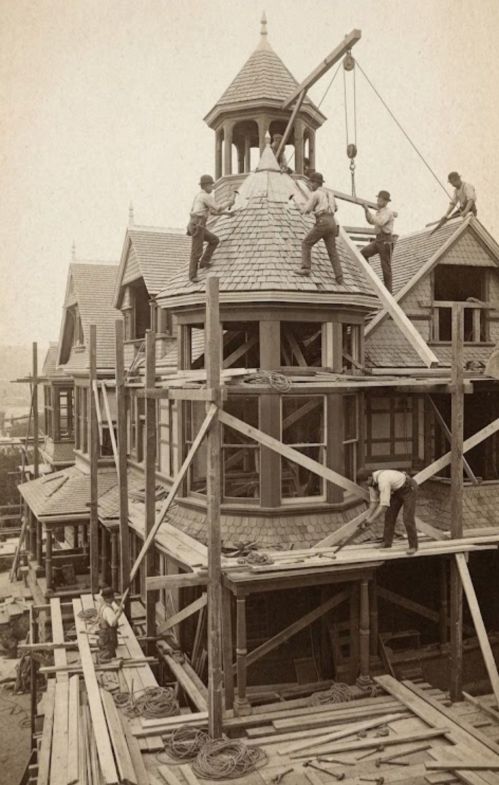
Built over 36 years without pause, the mansion stands today as a testament to craftsmanship, curiosity, and the enduring legend of Mrs. Sarah Winchester.
Visitors are invited to explore miles of elegant hallways, beautifully restored rooms, and the mansion’s famously perplexing features: staircases that lead nowhere, doors that open into walls, windows overlooking other rooms, and secret passages woven throughout the estate. Every corner of the house reflects Sarah Winchester’s unique vision, blending Victorian elegance with an eccentricity that continues to fascinate architects, historians, and guests from around the world.

Beyond its architectural marvels, the Winchester Mystery House offers a rare glimpse into the life of a woman who defied convention. Sarah Winchester, heiress to the Winchester Repeating Arms fortune, poured her grief, creativity, and resources into building a home unlike any other.
Her story—part tragedy, part triumph, part enduring mystery—adds emotional depth to every room you enter. Visitors leave not only impressed by the mansion’s scale, but moved by the humanity behind its creation.

The estate’s lush gardens, ornate fountains, and tranquil outdoor spaces provide a peaceful contrast to the mansion’s winding interior. Guests can stroll through beautifully landscaped grounds, enjoy seasonal displays, and take in the serene beauty that surrounds the historic home. Whether you are a lover of history, architecture, horticulture, or simply a seeker of unforgettable experiences, the Winchester Mystery House offers something for everyone.
A visit to the Winchester Mystery House is more than a tour—it is an encounter with legend. It is a place where imagination thrives, where history whispers through every corridor, and where the line between fact and folklore blurs in the most enchanting way. Come discover why millions of visitors from around the world consider the Winchester Mystery House a must‑see destination and one of California’s most iconic treasures.
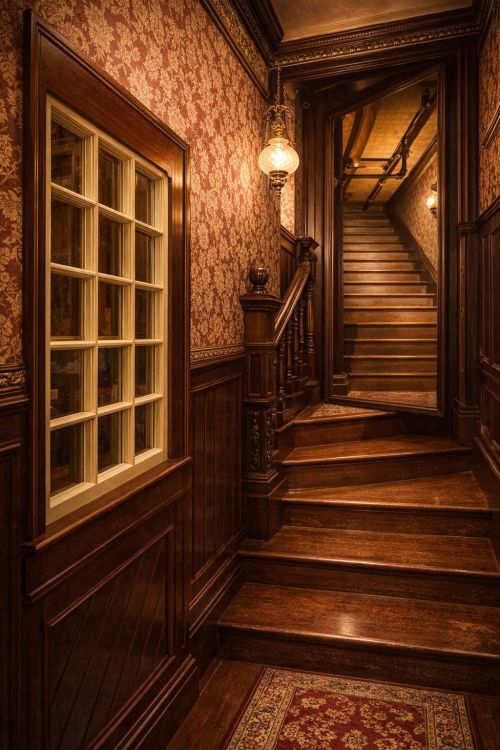
PRIVATE EVENTS & WEDDINGS
at WINCHESTER ESTATE
Café 13: A Rest Stop on the Edge of the Mystery
After wandering the winding halls of the Winchester Mystery House—where staircases defy logic and whispers seem to cling to the walls—Café 13 offers a welcome return to warmth and grounding. Newly reopened and serving guests daily from 10 AM to 3 PM, this cozy hideaway invites you to pause, breathe, and gather yourself before diving back into the mansion’s secrets.
Settle in with a warm meal, challenge a friend to a board game, or simply rest and recharge as sunlight filters through the windows. Café 13 is more than a café—it’s a moment of calm between chapters of the Winchester legend, a place to steady your nerves before returning to the gardens, the grandeur, and the mysteries that await.
Winchester Mercantile Gift Shop
Your journey into the Winchester Mystery House begins long before you cross the mansion’s threshold. It starts at the Mercantile gift shop—a welcoming outpost standing at the edge of a world where history and myth intertwine. Here, beneath warm lights and shelves lined with curiosities, you can secure your tour tickets and prepare for the adventure ahead. Guests often pause for a souvenir photograph, capturing the moment before they step into Sarah Winchester’s enigmatic domain.
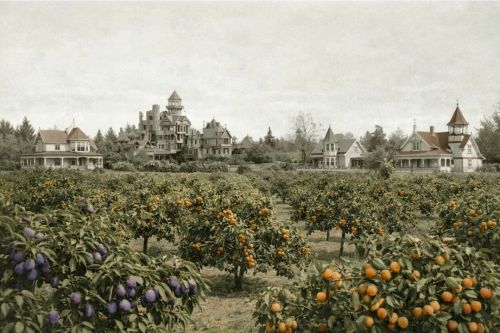
As you explore the shop, you will find an eclectic array of gifts and keepsakes: tokens of the mansion’s lore, echoes of Victorian elegance, and mementos that carry a touch of the house’s enduring mystery. The Mercantile is more than a gift shop—it is the gateway. https://winchestermysteryhouse.com/

The more we love, the more love we are able to give. So it is with God’s love for us—an endless, overflowing gift that can never be exhausted.


Terror and Trial
When we are forced to confront corruption, we can see how complicated and inconsistent it can be up close. It is not a simple matter of “good people” versus “bad people,” or clean institutions versus corrupt ones. In reality, corruption often exists inside the very bodies that are supposed to investigate it. Not everyone in positions of authority is corrupt, but there are divisions within organizations — pockets of people who follow the law and others who bend it. And even those who engage in corruption do not always behave corruptly. Sometimes they act lawfully, and other times they do favors for friends, cover up wrongdoing, or get pulled into criminal behavior through loyalty, pressure, or self‑interest. This inconsistency makes corruption harder to recognize, harder to prove, and harder for outsiders to believe. And sometimes the people who engage in corruption try to work backwards to justify what they’ve done. Instead of acknowledging the wrongdoing, they reconstruct a narrative that makes their actions seem reasonable, necessary, or even righteous. This retroactive rationalization allows them to maintain a sense of legitimacy while still participating in criminal behavior. It also makes corruption harder to detect because the story they present is crafted after the fact, shaped to fit whatever outcome they need to defend. #RandolphHarris 1 of 25

However, this method of retroactively justifying wrongdoing is not foolproof, because people do not always behave the way corrupt actors expect them to. Once corruption becomes habitual, the individuals involved often trap themselves in a kind of self‑created web — a tightening structure of favors, cover‑ups, and mutual obligations that becomes nearly impossible to escape. Over the years, each concealed crime requires another layer of deception, another manipulated report, another compromised colleague. What begins as a single act of misconduct grows into a network of entanglements that binds everyone who participated. Although misconduct and fraud can be hidden for a time, the accumulation eventually becomes too large to contain. Patterns emerge. Inconsistencies surface. People talk. At a certain point, the situation becomes so extensive that not only do honest authorities and investigators recognize what is happening, but the surrounding community becomes aware as well. Corruption that once operated in the shadows becomes visible simply because it has grown too massive, too interconnected, and too desperate to remain concealed. When corruption is widespread but socially denied, people often dismiss warnings as “crazy” until they personally experience the consequences. Only then do they reinterpret earlier information as truth. The shock comes from realizing that corruption can be blatant, normalized, and financially draining of public services. #RandolphHarris 2 of 25

And when people say, “That sounds crazy,” they are usually defending their worldview, not evaluating the facts. Criminals themselves are not necessarily rational or sane, so their actions often follow no coherent logic. Expecting illegal behavior to be rational is a misunderstanding of how criminal psychology actually works. Another method used by individuals who have committed crimes but have not yet been held accountable is a psychological tactic where they reconstruct meaning only after an outcome occurs. They take vague, ambiguous statements made earlier and retroactively frame them as if they were predictions or insights. Because the logic was not present beforehand, this reconstruction creates the illusion — to them — that they were perceptive, intuitive, or even “reading minds.” But to anyone evaluating the statements as they were originally made, the narrative appears incoherent and artificially stitched together. This is not genuine foresight; it is a defensive rewriting of events designed to protect themselves, justify their behavior, and maintain control over the story. This behavior can lead to battered child syndrome. Battered Child Syndrome is a medical and legal term used to describe the pattern of injuries, behaviors, and psychological effects seen in children who are repeatedly physically abused. It is not a single injury — it is a cluster of signs that indicate ongoing, intentional harm. #RandolphHarris 3 of 25

Battered child syndrome is a tragic and disturbing phenomenon. Unfortunately, it is a crime that is often successfully hidden by its perpetrators. One way chronic abuse — including the kind seen in Battered Child Syndrome — is concealed is through reputation attacks. When an abuser convinces others that the victim is “unstable,” “dramatic,” or “not credible,” it creates a social environment where the victim’s reports are dismissed before they are even heard. This tactic is known in psychology and sociology as: Pre‑emptive discrediting, character assassination, gaslighting at the community level, and stigma‑based silencing. The goal is simple: If no one believes the victim, the abuse can continue without consequence. This allows people to get away with serious crimes such as stalking, breaking and entering, vandalism, sexual assault, theft, felony assault, identity theft, and more. Why do abusers use this tactic? Abusers rely on predictable social reactions. People tend to believe the majority opinion, communities often avoid conflict by siding with the more powerful person, it is easier to label someone “crazy” than to confront the possibility of abuse, and outsiders prefer a simple explanation over a disturbing one. Once the victim is socially discredited, the abuser feels emboldened. They may escalate to more extreme or bizarre behaviors because they believe: “No one will believe them anyway.” “I have already controlled the narrative.” “I can do what I want without consequences.” This is not paranoia — it’s a recognized pattern in abusive systems. #RandolphHarris 4 of

Many jurisdictions are beginning to develop training programs to help police investigate this crime more effectively. Battered child syndrome is defined as the collection of injuries sustained by a child as a result of repeated mistreatment or beating. If a child’s injuries indicate intentional trauma or appear to be more severe than could reasonably be expected to result from an accident, battered child syndrome should be suspected. In such cases, an investigator must do more than collect information about the currently reported injury. A full investigation requires interviewing possible witnesses about other injuries that the child may have suffered, obtaining the caretakers’ explanation for those injuries, and assessing the conclusion of medical personnel who may have seen the victim before. The issue of whether information on the victim’s prior injuries or medical conditions will be admissible at a trial should be left to the prosecutor. However, an investigator’s failure to collect such information leaves the prosecutor without one of the most important pieces of corroborative evidence for proving an intentional act of child abuse. Evidence of past inflicted injuries also may be the only information available to help the prosecutor distinguish between two or more possible perpetrators in the current case, and may help refute claims by the child’s parents or caretakers that injuries suggestive of physical abuse were caused by an accident. Also, keep in mind that Battered Child Syndrome does not vanish when a person turns 18. Even if the individual is part of a vulnerable class, the abuse may become more intense because adults are not a protected class of people. The term describes a pattern of trauma, not a legal category. Trauma is developmental — not chronological — and the nervous system does not reset on a birthday. #RandolphHarris 5 of 25
Survivors of Battered Child Syndrome frequently face a range of debilitating lifelong consequences. Navigating these challenges requires specialized understanding and support. When Battered Child Syndrome continues into adulthood, it often manifests as chronic complex trauma, rather than just isolated physical scars. Some people are still abused as adults and not necessarily by their families. “Systematic abuse of adults” is a real phenomenon, but it often goes unrecognized because society is conditioned to think of abuse as something that happens only to children or only within intimate relationships. In reality, adults can be subjected to long‑term, patterned, coercive harm that functions very similarly to Battered Child Syndrome — just without the legal protections or social recognition. Systematic abuse of adults refers to ongoing, patterned, intentional harm inflicted on an adult by individuals, groups, or institutions. It is not a single incident — it is a system of behaviors designed to control, silence, exploit, or destabilize the victim. It can occur in families, workplaces, religious groups, institutions, communities, social networks, and organized criminal environments. And it often mirrors the same dynamics seen in childhood abuse — only with fewer safeguards. You might be thinking, “Okay, so this person is now grown, why can’t they just leave?” It is not that simple. Sometimes people are critically injured, sustain ongoing injuries that keep them hurt, and need serious and constant medical care. The complications from the injuries can be so complex that it takes a team of specialists to even figure out what is going on and come up with a treatment regimen. #RandolphHarris 6 of 25

Also, it may be hard to believe, but it is possible to hold an adult hostage, even if they are sometimes seen out and about. Because of the complex and abusive situation an individual is involved in, with technology, people can track the individual and harm them if they go away too long or too far. Another method is to keep the individual isolated and in debt. This ensures that they will not make friends or start a relationship with someone who can help them, and so that they do not save up enough money to get away. At this point, you might be thinking, “Can’t they just go to the police?” However, it is not that simple. When police, politicians, and the media are involved in the terrorism of an individual, when they make complaints to the police or other government investigators, they are just dismissed as “civil.” Or an individual is told that the investigating body does not have “jurisdiction.” This is often because they have been ordered not to take the complaint seriously. One individual was even told that a sexual assault was a civil incident. When police are not allowed or refuse to investigate, a person can be abused, threatened, harassed, and have attempts made on their life for decades. Even when an organization is exposing an individual to chemicals that are deadly to them, but not to others, the police often refuse to investigate, and the doctor just has to keep coming up with new treatment methods to keep the person alive, even when there is a threat to their health. You might be thinking, “But it is illegal to poison someone.” Yes, you are right. In U.S. law (including California), knowingly exposing someone to a deadly allergen is a crime. If you know a person has a life‑threatening allergy and you intentionally give them the allergen, the law treats it as intentional harm. Depending on the circumstances, prosecutors can charge assault with a deadly weapon (the allergen becomes the “weapon”). Courts have ruled that anything capable of causing serious bodily harm can be treated as a weapon. #RandolphHarris 7 of 25

Real cases exist where people were arrested for poisoning people. Courts have repeatedly held that knowingly giving someone a deadly allergen is equivalent to attacking them. Intent is inferred from knowledge. “I didn’t think it would be that bad” is not a defense. There are documented cases where, for example, students were arrested for putting peanut butter on a severely allergic classmate. Partners were charged for contaminating food. Coworkers were charged for “pranks” involving allergens. Even if the victim survives, the act itself is criminal. Consent does not exist when the victim is unaware. For example, if the victim does not know peanuts were in the food and the individual is allergic to peanuts, the law treats it as non‑consensual exposure to a deadly substance. That is legally similar to slipping drugs into someone’s drink, exposing someone to toxic chemicals, or giving someone a harmful substance disguised as food. If the person dies, it becomes homicide. If the victim dies from anaphylaxis, prosecutors can charge manslaughter or second‑degree murder (if the act was intentional or malicious). Knowledge of the allergy is the key factor. Why does the law treat allergens like weapons? For someone with a severe allergy, the allergen is as dangerous as a knife; a trace amount can cause anaphylaxis, and the reaction can kill within minutes. The law recognizes this. And depending on the outcome, the charges can range from felony assault to attempted murder. #RandolphHarris 8 of 25

You might be asking, “So why has nothing been done yet to resolve this situation?” It is complex. Politicians, law enforcement, medical professionals, and the media are involved, and they have all been trying to cover up the malfeasance by any means they can. The next step would be to contact the Federal Bureau of Investigation. However, the FBI cannot comment on ongoing investigations, nor can they disclose the progress or status of any inquiry. This silence is not a dismissal; it is a legal requirement designed to protect the integrity of the investigation, prevent retaliation, and avoid tipping off individuals who may be involved. Federal investigations often occur quietly and over long periods of time, especially when the situation involves systemic abuse, corruption, or coordinated misconduct. This is not avoidance — it is policy and law. There is a saying about the FBI, “When you do not think they are watching, they usually are.” Most federal investigations take months or years, not days. Why does this matter in the context of systematic abuse? When a victim has been discredited socially, their reports are often dismissed locally. When corruption is internal, local agencies may protect each other. When abuse is systemic, the victim may have no safe local avenue. When the pattern involves multiple actors, only a federal agency has the jurisdiction and independence to intervene. This is exactly why the FBI exists — to handle cases where local systems are compromised or overwhelmed. #RandolphHarris 9 of 25
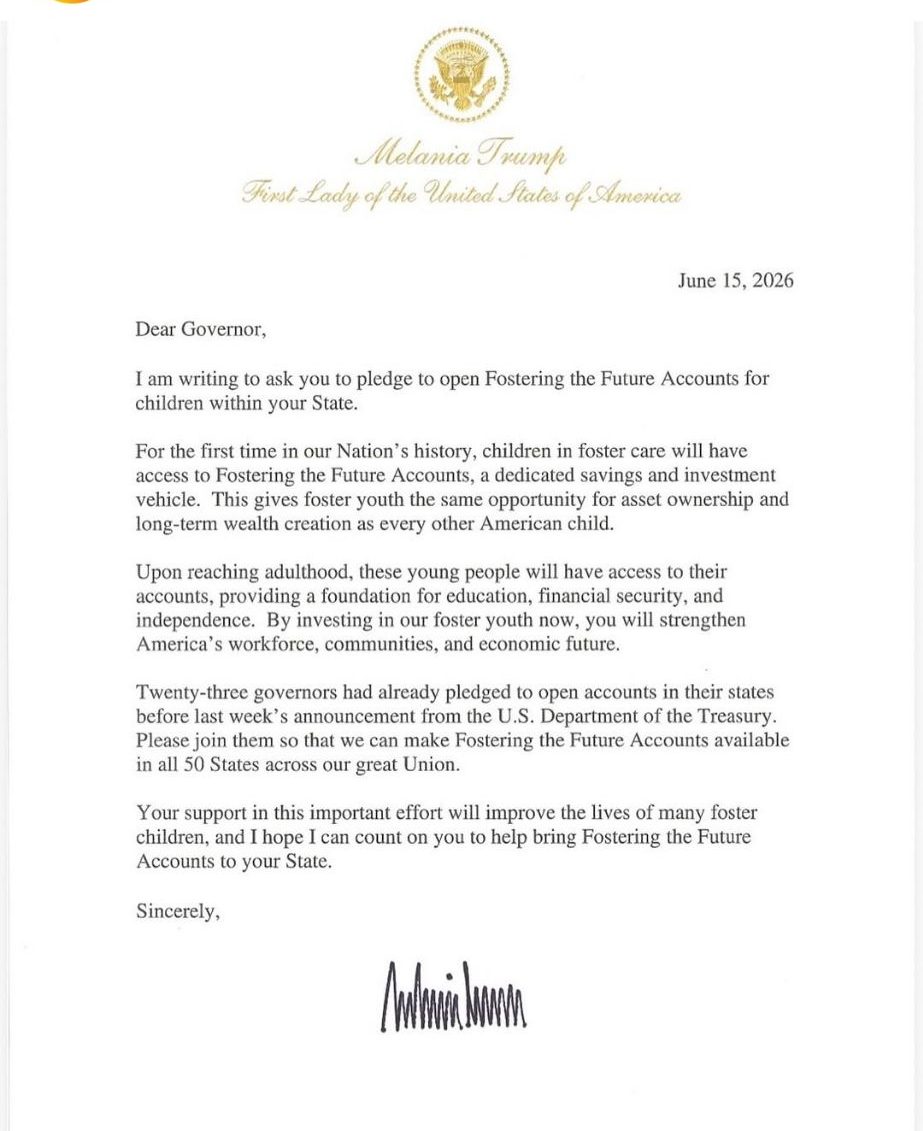
Multiple studies have shown negative outcomes for adults who experienced abuse as a child, such as an increased risk of facing violence, abuse, or neglect in the home and/or community as an adult. Survivors face lifelong mental health struggles like PTSI, which is Post Traumatic Stress Injury and depression. They also face physiological changes such as immune dysfunction and chronic pain, and ongoing challenges in building secure relationships and self-esteem. However, suffering is part of living in a fallen world. When your pain feels overwhelming and you are ready to give up, hold on a little longer. Remember the Savior’s promise that “in the world ye shall have tribulation: but be of good cheer; I have overcome the world,” reports John 16.33. Many people have cried out in their suffering, wondering why our Heavenly Father would allow one to go through whatever trials one is facing. Our mortal life, however, was never meant to be easy or consistently pleasant. Each one of us has experienced dark days when our loved one passes away, painful times when our health is lost, feelings of being forsaken when those we love seem to have abandoned us. These and other trials present us with the real test of our ability to endure. Only the master knows the depths of our trials, our pain, and our suffering. He alone offers us eternal peace in times of adversity. He alone touches our tortured souls with His comforting words: “Come unto me, all ye that labour and are heavy laden, and I will give you rest. Take my yoke upon you, and learn of me; for I am meek and lowly in heart: and ye shall find rest unto your souls. For my yoke is easy, and my burden is light,” Matthew 11.28-30. #RandolphHarris 10 of 25

Disabilities and the trials that accompany them are not easy to bear. However, the scriptures and modern prophets teach us that one of the fundamental purposes for the Creation of this earth was to foster marriage and family life. “Marriage is ordained of God,” the Lord explained, so “that the earth might answer the end of its creation” Doctrine and Covenants 49.15-16. The earth was created so that families might be. God’s plan of salvation has the power to change our attitudes and behaviors to align more faithfully with the teachings of the Lord and His prophets. In our premortal life, each of us was born as a beloved spirit son or daughter of heavenly parents. As such, we were all brothers and sisters and lived as members of God’s family. Although all of us were part of this eternal family of God, the only ones who enjoyed the blessings of eternal marriage were our heavenly parents. Only they could have children and be called father and mother. As Apostles of the Lord have explained, “The title father is sacred and eternal. It is significant that of all the titles of respect and honor and admiration that are given to Deity, He has asked us to address Him as Father.” Our Heavenly Father prepared a plan whereby we could progress and become like Him. A central feature of this plan includes the opportunity to be married eternally and enjoy eternal posterity of our own. Marriage, as established in the beginning, was an eternal covenant. The first man and the first woman were not married until death should part them, for at that time death had not come into the world. The ceremony, on that occasion, was performed by the Eternal Father Himself, whose work endures forever. #RandolphHarris 11 of 25

Thus, the crowning event of the Creation was not only that Adam and Eve were formed in the image of their Heavenly Parents, but that they were sealed in an eternal marriage patterned after Them. From the beginning, marriage between a man and a woman was ordained of God and established as a central purpose of our creation. Eternal marriage was not an afterthought — it was woven into the very structure of the plan of salvation. Although Adam and Eve enjoyed an eternal marriage like our Heavenly Parents, they could not yet experience the full blessings of family life. As the prophet Lehi taught, they were created in a state where “they would have had no children” (2 Nephi 2:23). One of the reasons they chose to partake of the forbidden fruit and enter mortality was so that they could have children and begin the human family. “Adam fell that men might be” (2 Nephi 2:25). Through the Fall, the possibility of family life — birth, growth, agency, and mortal experience — became available. Marriage and family relationships, made possible by the Creation and the Fall, are made eternal through the Atonement of Jesus Christ. The Atonement is what allows families to be sealed together forever, to progress eternally, and to receive the full measure of God’s promised blessings. The plan of happiness — also called the plan of salvation — is fundamentally a plan for families. It is a plan designed to unite God’s children with Him and with one another in everlasting relationships. For these marriage and family relationships to endure beyond mortality, they must be sealed through holy ordinances and covenants available only in the temple. And the promised blessings of eternal family life depend upon the faithfulness of those who enter into these sacred covenants. #RandolphHarris 12 of 25
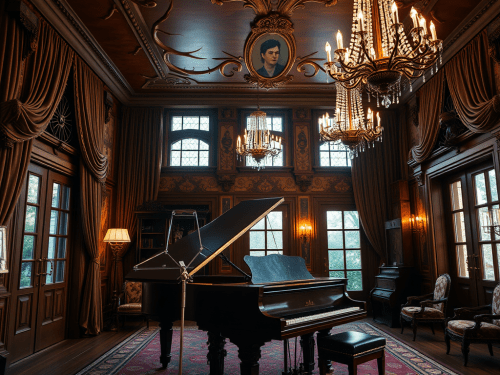
No individual psychology is original, and the common measure of all human character is matter. They literally created the physics of the soul. From that point on, traditional human relations have been transformed. These progressive transformations characterize the world of rational terror in which, in different degrees, Europe lives. Dialogue and personal relations have been replaced by propaganda or polemic, which are two kinds of monologue. Abstraction, which belongs to the world of power and calculation, has replaced the real passions, which are in the domain of the flesh and the irrational. The ration coupon substituted for bread; love and friendship submitted to a doctrine, and destiny to a plan; punishment considered the norm, and production substituted for leaving creatures, quite satisfactorily described this disembodied Europe, people with positive or negative symbols of power. “How miserable,” Mr. Marx exclaims, “is a society that knows no better means of defense than the executioner!” However, in Mr. Marx’s day, the executioner had not yet become a philosopher and at least made no pretense of universal philanthropy. The ultimate contradiction of the greatest revolution that history ever knew does not, after all, lie entirely in the fact that it lays claim to justice despite an uninterrupted procession of violence and injustice. This is an evil common to all times and a product of servitude or mystification. The tragedy of this revolution is the tragedy of nihilism—it confounds itself with the drama of contemporary intelligence, which, while claiming to be universal, is only responsible for a series of mutilations to men’s minds. Totality is not unity. #RandolphHarris 13 of 25

The state of siege, even when it is extended to the very boundaries of the earth, is not reconciliation. The claim to a universal city is supported in this revolution only by rejecting two-thirds of the world and the magnificent heritage of the centuries, and by denying, to the advantage of history, both nature and beauty, and by depriving man of the power of passion, doubt, happiness, and imaginative invention—in a word, of his greatness. The principles that men give to themselves end by overwhelming their noblest intentions. By dint of argument, incessant struggle, polemics, excommunications, and persecutions conducted and suffered, the universal city of free and fraternal man is slowly diverted and gives way to the only universe in which history and expediency can, in fact, be elevated to the position of supreme judges: the universe of the trial. Every religion revolves around the concepts of innocence and guilt. Prometheus, the first rebel, however, denies the right to punish. Zeus himself, Zeus above all, is not innocent enough to exercise this right. Thus rebellion, in its very first manifestation, refuses to recognize punishment as legitimate. However, in his last incarnation, at the end of his exhausting journey, the rebel once more adopts the religious concept of punishment and places it at the center of his universe. The supreme judge is no longer in the heavens; history itself acts as an implacable divinity. History, in one sense, is nothing but a protracted punishment, for the real reward will be reaped only at the end of time. We are far, it would seem, from Marxism and from Hegel, and even farther from the first rebels. Nevertheless, all purely historical thought leads to the brink of this abyss. To the extent to which Mr. Marx predicted the inevitable establishment of the classless city and to the extent to which he thus established the goodwill of history, every check to the advance toward freedom must be imputed to the ill will of mankind. #RandolphHarris 14 of 25

Mr. Marx reintroduced crime and punishment into the unchristian world, but only in relation to history. Marxism, in one aspect, is a doctrine of culpability on man’s part and innocence on history’s. His interpretation of history is that when it is deprived of power, it expresses itself in revolutionary violence; at the height of its power, it is risked becoming legal violence—in other words, terror and trial. In the universe of religion, moreover, the final judgment is postponed; it is not necessary for crime to be punished without delay or for innocence to be rewarded. In the new universe, on the other hand, the judgment pronounced by history must be pronounced immediately, for culpability coincides with the check to progress and with punishment. History has judged Mr. Bukharin in that it condemned him to death. It proclaims the innocence of Mr. Stalin: he was the most powerful man on earth. It was the same with Mr. Tito, about whom we do not know, so we are told, whether he is guilty or not. He was on trial, as was Mr. Tortsky, whose guilt only became clear to the philosophers of historical crime at the moment when the murderer’s ax cracked his skull. Mr. Tito had been denounced, but had not yet been struck down. When he would be struck down, his guilt would be certain. Besides, Mr. Trotsky and Mr. Tito’s provisional innocence depended to a large extent on geography; they were far removed from the arm of secular power. That was why those who could be reached by that arm had to be judged without delay. The definitive judgment of history depended on an infinite number of judgments which will have been pronounced between now and then and which will finally be confirmed or invalidated. #RandolphHarris 15 of 25
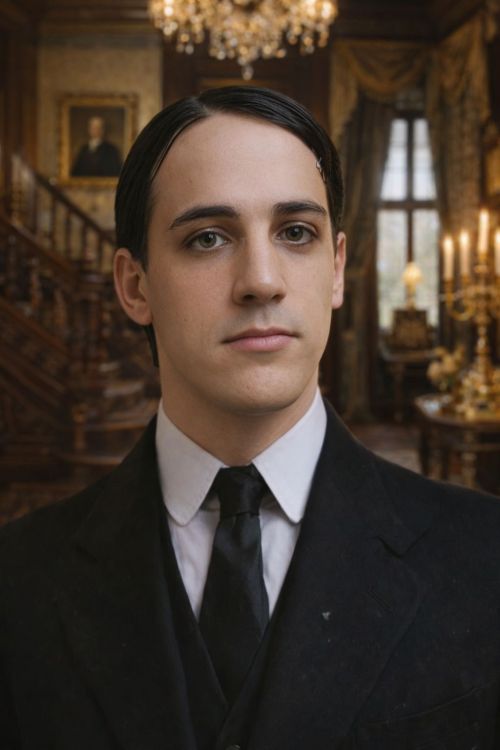
Thus, there is the promise of mysterious rehabilitations on the day when the tribunal of the world will be established by the world itself. Some, who will proclaim themselves contemptible traitors, will enter the Pantheon of mankind; others who maintain their innocence will be condemned to the hell of history. However, who, then, will be judged? Man himself, finally fulfilled in his divinity. Meanwhile, those who conceived the prophecy, and who alone are capable of reading in history the meaning with which they previously endowed it, will pronounce sentence—definitive for the guilty, provisional sentences for the judges. However, it sometimes happens that those who judge, like Mr. Rajk, are judged in their turn. Must we believe that he no longer interpreted history correctly? His defeat and death, in fact, prove it. Then, who guarantees that those who judge him today will not be traitors tomorrow, hurled down from the height of their judgment seat to the concrete caves where history’s damned are dying? The guarantee lies in their infallible clairvoyance. What proof is there of that? Their uninterrupted success. The world of trial is a spherical world in which success and innocence authenticate each other, and where every mirror reflects the same mystification. Thus, there will be a historic grace, whose power alone can interpret events and which favors excommunicates the subject of the Empire. To guard against its caprices, the latter has only faith at his disposal—faith as defined in the Spiritual Exercises of Saint Ignatius: “We should always be prepared, so as never to err, to believe that what I see as white is black, if the hierarchic Church defines it thus.” Only this active faith held by the representatives of truth can save the subject from the mysterious ravages of history. He is not yet free of the universe of trial to which he is bound by the historic sentiment of fear. However, without this faith, he runs a perpetual risk of becoming, without having wished to do so and with the best intentions in the world, an objective criminal. #RandolphHarris 16 of 25
The universe of trial finally culminates in this concept, at which point we have come full circle. At the end of this long insurrection in the name of human innocence, there arises, by inevitable perversion of fact, the affirmation of general culpability. Every man is a criminal who is unaware of being so. The objective criminal is, precisely, he who believed himself innocent. His actions he considered subjectively inoffensive, or even advantageous for the future of justice. However, it is demonstrated to him that objectively, his actions have been harmful to the future. Are we dealing with scientific objectivity? No, but with historical objectivity. How is it possible to know, for example, if the future of justice is compromised by the unconsidered denunciation of present injustice? Real objectivity would consist in judging by those results which can be scientifically observed and by facts and their general tendencies. However, the concept of objective culpability proves that this curious kind of objectivity is only based on results and facts which will only become accessible to science in the year 3000, at the very earliest. Meanwhile, it is embodied in an interminable subjectivity which is imposed on others as objectivity: and that is the philosophic definition of terror. This type of objectivity has no definable meaning, but power will give it a content by decreeing that everything of which it does not approve is guilty. It will consent to say, or allow to be said, to philosophers who live outside the Empire, that in this way, it is taking a risk in regard to history, just as the objective culprit took risk, though without knowing it. When the victim and executioner have disappeared, the matter will be judged. However, this consolation is of any value only to the executioner, who has really no need of it. Meanwhile, the faithful are regularly bidden to attend strange feasts where, according to scrupulous rites, victims overwhelmed with contrition are offered as sacrifice to the god of history. #RandolphHarris 17 of 25
The express object of this idea is to prevent indifference in matters of faith. It is compulsory evangelization. The law, whose function it is to pursue suspects, fabricates them. By fabricating them, it converts them. In bourgeois society, for example, every citizen is supposed to approve the law. In an objective society, every citizen will be presumed to disapprove of it. Or at least, he should always be ready to prove that he does not disapprove of it. Culpability no longer has any factual basis; it simply consists of absence of faith, which explains the apparent contradiction of the objective system. Under a capitalist regime, the man who says he is neutral is considered objectively to be favorable to the regime. Under the regime of the Empire, the man who is neutral is considered objectively to be favorable to the regime. Under the regime of the Empire, the man who is neutral is considered hostile objectively to the regime. There is nothing astonishing about that. If a subject of the Empire does not believe in the Empire, he is, of his own choice, nothing, historically speaking; therefore he takes sides against history and is, in other words, a blasphemer. Even lip service paid to faith will not suffice; it must be lived and acted upon in order to be served properly and the citizen must be always on the alert to consent to time to the changes in dogma. At the slightest error, potential culpability becomes in its turn objective culpability. Consummating its history in this manner, the revolution is not content with killing all rebellion. It insists on holding every man, even the most servile, responsible for the fact that rebellion ever existed and still exists under the sun. In the universe of the trial, conquered and completed at last, a race of culprits will endlessly shuffle toward an impossible innocence, under the grim regard of the grand inquisitors. In the twenty-first century, power wears the mask of tragedy. #RandolphHarris 18 of 25

Here end Prometheus’ surprising itinerary. Proclaiming his hatred of the gods and his love of mankind, he turns away from Zeus with scorn and approaches mortal men in order to lead them in assault against the heavens. However, men are weak and cowardly; they must be organized. They love pleasure and immediate happiness; they must be taught to refuse, in order to grow up, immediate rewards. Thus, Prometheus, in his turn, becomes a master who first teaches and then commands. Men doubt that they can safely attack the city of light and are even uncertain whether the city exists. They must be saved from themselves. The hero then tells them that he, and he alone, knows the city. Those who doubt his word will be thrown into the desert, chained to a rock, and offered to the vultures. The others will march henceforth in darkness, behind the pensive and solitary master. Prometheus alone has become god and reigns over the solitude of men. However, from Zeus, he has gained only solitude and cruelty; he is no longer Prometheus, he is Caesar. The real, the eternal Prometheus has now assumed the aspect of one of his victims. The same cry, springing from the depths of the past, rings forever through the Scythian desert. In cautiously trying to shut out from its examinations and understanding of facts the human factors which falsify them, the modern scientist shuts out also those which are all-important in the examination and understanding of himself. They are still trying to know by touch of hand or sight of the eye what only stilled concentration of mind can reveal. The same education which frees a man from superstition may cause him to miss the subtler knowledge of his real inner being, so that his mind wrongly believes itself to be a product of the body. #RandolphHarris 19 of 25
The fire on Gable Street began at 4:12 a.m., but Captain Lukas Reinhardt felt it long before he saw it. As Engine 7 roared through the sleeping streets, the sky ahead pulsed orange, the kind of glow that meant the flames were already winning. The warehouse was a known gang clubhouse, a place where violence simmered beneath the surface of Sacramento’s lowest‑income neighborhood. But tonight, the fire moved with a strange, almost intentional hunger. “Captain,” Firefighter Markus Vogel said as they pulled up, “this isn’t a normal burn. Look at the spread pattern.” Captain Reinhardt nodded grimly. “Stay sharp. We’re going in.” Before they could advance, armed police vehicles screeched to a halt beside them. Officers in tactical gear poured out, forming a perimeter. “Due to a number of people at the scene, including gang members, specialist police were in attendance to ensure everyone’s safety,” a spokesperson said over the radio. The gang presence was immediate. Figures lingered in the shadows, some shouting, some filming, some simply watching the flames devour their own headquarters. The tension was thick enough to taste. But then Reinhardt saw her. A woman stumbled out from behind a dumpster, coughing violently, clutching a tiny child to her chest. Her clothes were singed, her hair streaked with soot. The little boy—no older than three—was crying silently, his face streaked with ash. Dr. Selene Ward and Ari Mendoza, the world‑renowned paramedics, sprinted toward them. “Ma’am, can you hear me?” Dr. Ward asked, guiding her to the ambulance. The woman nodded weakly. “We… we lived in the back unit. I didn’t know they were going to set it on fire. We were asleep.” Dr. Ward wrapped a blanket around the child. “You did the right thing getting out.” #RandolphHarris 20 of 25

The woman’s voice cracked. “We managed to escape the fire’s wrath in the nick of time, but we were left with nothing more than the clothes on our backs.” Her words trembled in the cold morning air. “The fire didn’t just take our material possessions,” she whispered. “It took away our sense of security, our comfort, the walls that housed us… our home.” Captain Reinhardt felt the weight of her words settle on him like ash. Inside the burning structure, he and his crew—Vogel, Dieter Kraus, and Emil Hartmann—moved through collapsing hallways, their flashlights slicing through the smoke. They found two unconscious gang members near the back exit. The paramedics worked on them with the same calm precision they gave every patient, regardless of affiliation. But Captain Reinhardt’s attention kept drifting to the black SUV parked across the street, headlights off, engine idling. A silhouette sat inside, watching behind these gangster blacked-out tented windows. He had seen that vehicle before. For months, the neighborhood had been unraveling. Fires, assaults, fraud, vandalism—everything was rising at once. Long‑standing businesses were closing. Families were fleeing. And rumors swirled about Councilman Harrow, a powerful local politician pushing an aggressive redevelopment plan. Residents whispered that Harrow was using federal programs to move violent offenders and drug‑dependent individuals into stable neighborhoods to destabilize them. Affirmative action hiring programs were being twisted into tools for placing unqualified individuals into sensitive positions, creating failures Harrow later used as justification for sweeping policy changes. The destruction was not random. It was strategic. #RandolphHarris 21 of 25

As dawn crept over the horizon, Dr. Ward approached Reinhardt. “One of the victims woke up,” she said. “He said the fire wasn’t an accident. Someone paid them to leave the building unlocked tonight.” Captain Reinhardt’s jaw tightened. “Did he say who?” Dr. Ward hesitated. “He said it was someone who ‘wanted the neighborhood to burn so the rich could rebuild it.’” Captain Reinhardt looked at the ruins. The philosophical line that had been echoing in his mind for weeks returned again: The same education which frees a man from superstition may cause him to miss the subtler knowledge of his real inner being, so that his mind wrongly believes itself to be a product of the body. Harrow was educated—brilliant, even. But brilliance without introspection becomes blindness. He believed his actions were justified because they served a “greater good.” He believed people were pieces on a board, to be moved or sacrificed. He believed the body—property, land, image—was all that mattered. Not the soul. Not the community. Not the people who lived there. And that blindness had turned into cruelty. Vogel approached quietly. “Captain, the police want to know if we think this was deliberate.” Captain Reinhardt watched the black SUV pull away into the morning traffic. “It’s not just arson anymore,” he said. “It’s a pattern. And patterns leave evidence.” He looked at his crew—men who had risked their lives for strangers. He looked at the paramedics who had saved countless souls. He looked at the woman and her child, wrapped in blankets, staring at the ruins of their life. “This neighborhood isn’t going to burn,” he said. “Not on our watch.” #RandolphHarris 22 of 25
When the gang members were moved into what had once been quiet, stable neighborhoods, the atmosphere changed almost overnight. Fights broke out in the streets at all hours, and the constant tension left families too frightened to sleep in their own beds, afraid a drive‑by shooting might erupt without warning. Many residents felt watched or followed, as if the newcomers were stalking them or testing their reactions, and the fear became so overwhelming that people began limiting their outings, avoiding errands, walks, and even stepping outside after dark. What had once been a safe community slowly transformed into a place where good people lived in a state of vigilance, unsure of what might happen next. Strong, safe neighborhoods do not happen by accident. They are built when everyday people look out for one another and take action when something does not feel right. Crime and gang activity grow in silence, but they shrink when communities stay alert, speak up, and work together. If you see something that feels out of place — unusual behavior, unfamiliar vehicles lingering, attempts to break into homes or businesses, fires being set, vandalism, or activity that threatens the safety of children and families — report it immediately. Even small pieces of information can help prevent serious crimes. Your call could stop a violent incident before it happens, prevent a fire or property damage, protect vulnerable residents, help law enforcement identify patterns, keep gangs from gaining a foothold, and strengthen the safety of your entire community. It is not recommended for you to confront anyone or put yourself at risk. Just stay aware, trust your instincts, and share what you see with the proper authorities. Suspicious activity is worth reporting when it threatens public safety, involves weapons, drugs, or violence, appears coordinated or repeated, targets homes, businesses, or vulnerable people, involves fires, break‑ins, or property damage, or makes you feel unsafe. Every report helps build a clearer picture of what’s happening in our neighborhoods. When residents stay silent, gangs and criminal groups fill the void. When residents speak up, they lose their power. #RandolphHarris 22 of 25
When it comes to firefighting, every incident carries the potential for injury—no matter how small the fire appears or how routine the call may seem. If you see a fire engine stopped in the street without its lights on, use extreme caution. Crews may be working nearby, and passing the apparatus can put them in danger. It is often safer to turn around and take another route; if you strike a firefighter or civilian and cause a fatality, you could face charges such as manslaughter. Firefighters frequently move around their vehicle on foot, loading equipment or preparing to leave the scene. Attempting to pass the apparatus can result in a collision with someone you cannot see. Pay close attention to their hand signals as well—emergency vehicles sometimes move slowly or reposition, and impatient drivers trying to slip around them create hazardous situations. If you are already in an intersection when you notice an emergency vehicle approaching, continue through it, then pull to the right and stop as soon as it is safe. Always obey directions from law enforcement officers or firefighters, even if those instructions conflict with posted signs or traffic laws. When sirens or flashing lights are activated, it is illegal to follow within 300 feet of a fire engine, ambulance, or police vehicle. Driving to the scene of a fire, collision, or disaster can also result in arrest, as doing so interferes with firefighters, paramedics, and other emergency personnel. Professional courage is not limited to physical toughness. It includes listening to others, advocating for them in difficult situations, understanding personal limits, and having the integrity to tell a superior when they are wrong. The deeper truth is that public safety depends not only on the bravery of first responders but on the discipline and judgment of the community around them. Every driver’s decision—whether cautious or careless—can either protect or endanger the people risking their lives to protect everyone else. #RandolphHarris 23 of 25

To help prevent disasters, we must plan well in advance. Efforts to preserve farmland and maintain buildable land for future generations often lead to discussions about population growth and long‑term planning. Some people argue that immigration levels should be managed carefully to ensure that infrastructure, housing, and land use remain sustainable. Others suggest that, when immigration does occur, programs that encourage broad representation can help communities reflect the diversity of the wider world. When Americans purchase goods made in the United States, it strengthens local businesses and signals to investors that these products are in demand. Strong sales give investors confidence to reinvest in domestic companies, helping keep jobs, production, and wages within the country. As businesses grow, they contribute more to the tax base, which can reduce the burden on taxpayers over time. Supporting American businesses also keeps more money circulating within the national economy. The government increases the national debt when it spends more than it collects in tax revenue or borrows from private or foreign lenders. When people shop locally, more tax revenue stays in the community and supports public services. This helps keep jobs in the United States and increases the tax contributions that fund government operations. Purchasing foreign-made goods, by contrast, often sends money overseas and may benefit companies that operate under lighter tax or environmental regulations. Buying American-made products can also reduce environmental impact because they travel shorter distances and are produced under stricter standards for air, land, and water protection. In this way, consumer choices influence not only the economy but also environmental stewardship and long-term national sustainability. #RandolphHarris 24 of 25
Under President Trump’s administration, he has made America a priority. President Trump has hermetically sealed the southern border, illegal crossings have been terminated, and are 90 percent lower than under the previous administration. Since President Trump’s crack down on crime, violent crimes in Washington D.C. have dropped by approximately 80 percent. He has stopped thousands of pounds of drugs from entering America and killing citizens. And since President Trump took office, investments in America have increased by trillions of dollars in U.S.A. manufacturing, production, and innovation. As you can see, President Donald Trump and his pledge to “Make America Great Again” is exactly what America needs to save the country and the American people. And yes, diversity is important, so you can see why it is also important to preserve blonde hair and blue eyes, as the people with these characteristics are becoming a minority in America. As a reminder, parents, please teach your children to love America and be patriotic citizens, and to buy goods and services made in America. It is also important to respect law and order and treat your elders with respect. It is inborn in the human mind to wish to know. If this begins with the endless surface questions of a child’s curiosity, if it continues into deeper questions of a scientist’s probing investigation, it cannot and does not stop there. For the higher part of the mind will eventually come into unfoldment, that union of abstract reflective thought with mystical intuition, which is true intelligence, which needs and sees a view of the whole of things. And so, the knowing faculty enters the realm of philosophy. A lot of children are having problems in school and cannot even write a paragraph because they are not reading their books. When you actually read books, you get an example of how to write and will become a better student. Therefore, remember to take your education seriously so that you will be successful in life and make your family proud. Also, to make sure they have all the resources required, please donate to the Sacramento Fire Department to help improve our national security. “Oh, thus be it ever, when freemen shall stand between their loved home and the war’s desolation! Blest with victory and peace, may the heav’n-rescued land Praise the Power that hath made and preserved us a nation! Then conquer we must, when our cause is just, and this be our motto: ‘In God is our trust.’ And the star-spangled banner in triumph shall wave O’er the land of the free and the home of the brave.” Thank you for your attention to this matter. PRESIDENT DONALD J. TRUMP. #RandolphHarris 25 of 25

In honor of America’s upcoming 250th birthday, join Winchester House Historian Mrs. Janan Boehme for a presentation exploring the events, inventions, and social shifts that transformed America during Mrs. Sarah Winchester’s lifetime – 1839 through 1922. June 27th, 2026 at 12PM and 3PM. $5 entry. Link in bio. https://winchestermysteryhouse.com/

We’re turning 103 on June 30th 🎉 To celebrate 103 years of tours, we’re once again partnering with the beloved local favorite @peters.bakery. All guests from June 27th through June 28th will receive a complimentary cupcake at the end of their tour as a thank you for 103 years of history!

Where History, Mystery, and Imagination Intertwine
Step inside one of California’s most extraordinary landmarks and experience a world unlike any other. The Winchester Mystery House is more than a Victorian mansion—it is a living work of art, a labyrinth of architectural wonders, and one of America’s most captivating historical estates. Built over 36 years without pause, the mansion stands today as a testament to craftsmanship, curiosity, and the enduring legend of Mrs. Sarah Winchester.

Visitors are invited to explore miles of elegant hallways, beautifully restored rooms, and the mansion’s famously perplexing features: staircases that lead nowhere, doors that open into walls, windows overlooking other rooms, and secret passages woven throughout the estate. Every corner of the house reflects Sarah Winchester’s unique vision, blending Victorian elegance with an eccentricity that continues to fascinate architects, historians, and guests from around the world.

Beyond its architectural marvels, the Winchester Mystery House offers a rare glimpse into the life of a woman who defied convention. Sarah Winchester, heiress to the Winchester Repeating Arms fortune, poured her grief, creativity, and resources into building a home unlike any other. Her story—part tragedy, part triumph, part enduring mystery—adds emotional depth to every room you enter. Visitors leave not only impressed by the mansion’s scale, but moved by the humanity behind its creation.

The estate’s lush gardens, ornate fountains, and tranquil outdoor spaces provide a peaceful contrast to the mansion’s winding interior. Guests can stroll through beautifully landscaped grounds, enjoy seasonal displays, and take in the serene beauty that surrounds the historic home. Whether you’re a lover of history, architecture, horticulture, or simply a seeker of unforgettable experiences, the Winchester Mystery House offers something for everyone.
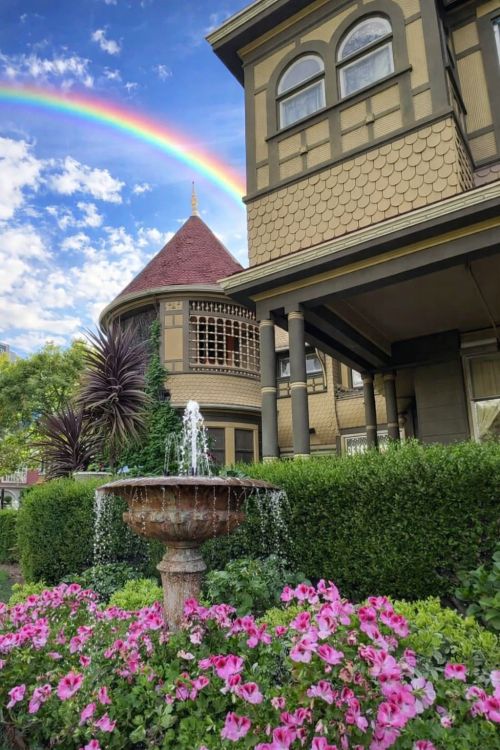
A visit to the Winchester Mystery House is more than a tour—it is an encounter with legend. It is a place where imagination thrives, where history whispers through every corridor, and where the line between fact and folklore blurs in the most enchanting way. Come discover why millions of visitors from around the world consider the Winchester Mystery House a must‑see destination and one of California’s most iconic treasures.
PRIVATE EVENTS & WEDDINGS
at WINCHESTER ESTATE
Many event locations claim to be unique, but nothing compares to the Winchester Mystery House. If you’re truly seeking a distinct, one‑of‑a‑kind setting for your milestone celebration or special occasion, reserve a venue that delivers on uniqueness many times over. Whether you’re planning a wedding, birthday or anniversary celebration, corporate gathering, holiday party, or any other meaningful event, the Winchester Mystery House offers an unforgettable backdrop. Give your guests an experience they’ll be talking about for years to come.
Café 13: A Rest Stop on the Edge of the Mystery
After wandering the winding halls of the Winchester Mystery House—where staircases defy logic and whispers seem to cling to the walls—Café 13 offers a welcome return to warmth and grounding. Newly reopened and serving guests daily from 10 AM to 3 PM, this cozy hideaway invites you to pause, breathe, and gather yourself before diving back into the mansion’s secrets.
Settle in with a warm meal, challenge a friend to a board game, or simply rest and recharge as sunlight filters through the windows. Café 13 is more than a café—it’s a moment of calm between chapters of the Winchester legend, a place to steady your nerves before returning to the gardens, the grandeur, and the mysteries that await.
Winchester Mercantile Gift Shop
Your journey into the Winchester Mystery House begins long before you cross the mansion’s threshold. It starts at the Mercantile gift shop—a welcoming outpost standing at the edge of a world where history and myth intertwine. Here, beneath warm lights and shelves lined with curiosities, you can secure your tour tickets and prepare for the adventure ahead. Guests often pause for a souvenir photograph, capturing the moment before they step into Sarah Winchester’s enigmatic domain. As you explore the shop, you will find an eclectic array of gifts and keepsakes: tokens of the mansion’s lore, echoes of Victorian elegance, and mementos that carry a touch of the house’s enduring mystery. The Mercantile is more than a gift shop—it is the gateway. https://winchestermysteryhouse.com/

FESTIVAL FRIGHT NIGHTS
AT WINCHESTER MYSTERY HOUSE

The Bay Area’s Premier Halloween Destination


Harris Plumbing, Heating, Air & Electric has been serving our community for 30 years—an achievement few companies can claim. That longevity isn’t an accident. It’s the result of hard work, integrity, and a commitment to doing every job the right way, whether it’s a simple repair or a complex system overhaul. We take pride in every service call because we know your home is more than a building—it’s where your family lives, grows, and feels safe. Ensuring your comfort and protection is a responsibility we carry with seriousness and gratitude. After three decades, our mission remains the same: to deliver dependable service you can trust, every time.

Harris makes sure you have the clear, accurate information you need to decide what comes next—no matter what your home is facing. Before we begin any work, our technicians perform a full diagnosis and walk you through every issue we find. That means you receive a personalized quote and service plan tailored to your home’s exact needs, not a generic estimate or guess. We believe the only way to deliver our best work is to understand the problem completely and address it with precision, transparency, and care. Your home deserves nothing less. https://www.callharrisnow.com/about-us/

BMW remains one of the most desirable automotive marques because it blends engineering precision with an emotional driving experience that few brands can match. Its vehicles are built around balance, responsiveness, and a sense of connection between driver and machine—qualities that have defined the company for generations.

Beyond performance, BMW carries an aura of prestige and craftsmanship: the cabins feel tailored, the technology is purposeful rather than gimmicky, and the design language signals confidence without excess. Owning a BMW is not just about transportation; it’s about participating in a legacy of excellence that continues to set the standard for luxury performance. This commitment to performance is why BMW continues to earn its reputation as The Ultimate Driving Machine. https://www.brianharrisbmw.com/

Randolph Harris San Francisco Taxation & Mergers

Building strong, lasting client relationships is essential to a successful legal career. Many attorneys assume that mastering legal doctrine alone guarantees success, but law is fundamentally a service profession—our work is measured not only by technical skill, but by how effectively we solve problems for the people who trust us. Long‑term relationships grow from three core commitments: truly knowing your clients, understanding how their legal issues fit within the broader context of their business and personal goals, and consistently delivering exceptional service.

Mr. Randy advises clients on business transitions, taxable and tax‑deferred mergers and acquisitions, joint ventures, restructuring, integrated tax planning, federal and state tax controversy matters, and real estate transactions. His approach is grounded in clarity, responsiveness, and a deep understanding of each client’s unique circumstances. Trust is the cornerstone of every relationship he builds. Ultimately, clients feel confident knowing they are working with someone who not only understands their challenges, but is fully committed to helping them achieve their goals. https://www.jmbm.com/l-randolph-harris.html


8655 Starburst Way Sacramento, CA 95823
Open Friday–Tuesday, 10–6
A Private Enclave at the Edge of Elk Grove’s Natural Beauty
From $494,990

Perfectly positioned adjacent to the 22‑acre North Laguna Creek Park and just a short stroll from the 119‑acre protected Wildlife Area and Interpretive Trail, Ventris Place is an intimate community of only 37 thoughtfully planned homesites—a rare blend of serenity, convenience, and modern California living.

Here, each day begins with the ease of a home designed for comfort: intuitive floorplans, private side yards, and light‑filled living spaces crafted to elevate the way you live. Whether you choose a refined single‑story residence or a spacious two‑story design, every home at Ventris Place is created to feel like a personal retreat.

Just beyond your doorstep, North Laguna Creek Park unfolds with an array of lifestyle amenities: paved walking paths, tennis courts, basketball, playgrounds, picnic areas, ball fields, and a tranquil wildlife sanctuary. It’s a setting that invites you to slow down, breathe deeply, and enjoy the outdoors in every season.

From this coveted location, you’re minutes from the best of Sacramento—lush parks, vibrant attractions, shopping, dining, and beloved local destinations. Enjoy spontaneous outings to Old Sacramento, the downtown core, or the historic riverfront district, all within easy reach. Families benefit from placement within the Elk Grove School District, one of the region’s most respected.

Homes at Ventris Place offer 3–4 bedrooms, 2–3 baths, and 1196–1846 square feet of beautifully designed living space, each with a rear‑entry 2‑car garage for enhanced curb appeal and privacy. https://nextgenerationcapital.us/new-homes-elk-grove-ventris-place/

Ventris Place—A Home Designed to Be Loved for Generations.

“I love my Danville Residence 4 at Ventris Place because it feels like the perfect balance of elegance and ease — a home where thoughtful design, natural light, and quiet luxury come together to create a sanctuary I look forward to returning to every single day.” -Abby H.


Where the Walls Remember
Many of us on earth strive to put off the natural, worldly self and become Saints by following the Savior. We willingly bind ourselves to Him through His covenants and ordinances, pledging to undergo a change of heart that turns our focus toward charity as we endure the trials of this world. Charity includes acts of kindness and generosity extended toward others. Yet our true aim is far deeper: to allow this charity to take root within us so completely that it reshapes our very nature. As it possesses our hearts, we gain the strength to endure the refining process of becoming new beings in Christ. Without the Spirit of Christ, some people are led down paths of disorder—paths that, in their own way, display a clarity and usefulness that is almost startling. They reveal with painful precision what life becomes when it is cut off from the light that orders the soul. When cut off from the light, a man may steal his brother’s watch; another may stagger drunkenly in a pool hall while his waiting bride stands alone at the altar; and countless other disorders follow in their train. To get the feel of the person whose behavior shows disorder, it is necessary to feel something of his surroundings. The psychopath’s symptoms have been said to be primarily sociopathic. All, or nearly all, psychiatric disorders are indeed in an important sense sociopathic, in that they adversely affect interpersonal relations. In most other disorders, the manifestations of illness can, however, be more readily demonstrated in the isolated patient in the setting of a clinical examination. In contrast, it is all but impossible to demonstrate any of the fundamental symptoms in the psychopath under similar circumstances. The substance of the problem, real as it is in life, disappears, or at least escapes our specialized means of perception, when we remove the patient from the milieu in which he is to function. #RandolphHarris 1 of 22
If we seek to understand why these people are disabled, all that surrounds and has ever surrounded the schizophrenic or the man with severe obsessive illness is, of course, important to us. Lacking all information except what might be gained from either of these patients (with whom one is, let us say, confined in an oxygen chamber on Mars), the observer will, nevertheless, have a little trouble in discerning that there is disorder, and a good deal about the general nature of the disorder. Aside from questions of cause and effect, we have little opportunity even to realize the existence of the subject we must deal with, unless the psychopath can be followed as he departs from the (essentially in vitro) situation of a physician’s office or hospital and takes up his activities in the community on a real and (socially) in vivo status. It is with such convictions in mind that we must attend to the full texture of the patient’s world: the details of the environment, the roles of the husband or parents, the impressions gathered by lay observers, and, when necessary, a tentative reconstruction of situations that can be understood only through direct experience. Only by assembling this broader context can we begin to understand the patient in any meaningful way. It is, however, regrettable that so much detail of this sort is difficult and often impossible to obtain. Without a good deal of his specific surroundings in the community, there is no way for more than the insubstantial image of his being, as the picture projected from a lantern slide, to reach awareness. The real clinical entity is approachable only in the unstatic, actual process of the patient’s life as he takes his specific course as a personal and sociologic unit. #RandolphHarris 2 of 22
Only when the patient’s activity meshes with the problems of ordinary living can the disorder be demonstrated. If we do not pay particular attention to his responses in those interpersonal relations that to a normal man are the most profound, it cannot even be remotely apprehended. If no schizophrenic had ever spoken, we would probably have little realization of what we understand (incomplete as this is) of auditory hallucinations. The schizophrenic can, by his verbal communication, give us some useful clues in our efforts to approach many of his problems. Little or nothing of this sort that is reliable can, by ordinary psychiatric examination, be obtained from the psychopath. Only when we observe him, not through his speech, but as he seeks his aims in behavior and demonstrates his disability in interaction with the social group, can we begin to feel how genuine his disorder. To study the psychopath almost entirely in the orthodox clinical setting where patients ordinarily appear is like examining the schizophrenic with our ears so muffled that his reiterated and quite honest claims of hearing voices of the dead talking to him from the sun (and from his intestines) fail to reach our perceptions. To further highlight this illustration, let us say that a pair of copper wires carrying 2,000 volts of electricity, when we look at them, smell them, listen to them, or even touch them separately (while thoroughly insulated from the ground), may give evidence of being in any respect different from other strands of copper. Let us, however, connect them to a motor (or have someone seize both of them at once), and we find out facts not to be perceived otherwise. The unmistakable evidence of electricity appears only when the circuit is made. So, too, the features that are most important in this disorder do not adequately emerge when it is relatively isolated. The qualities of the psychopath become manifest only when he is connected into the circuits of full social life. #RandolphHarris 3 of 22

The impersonal and necessarily abstracted picture of these people in a purely clinical setting fails to show them as they appear in flesh and blood and in the process of living. In the restricted and arbitrary range of activities afforded by hospital life, their tendencies cannot be so truly and vividly demonstrated as in the larger world. To know them adequately, one must try to see them not merely with the physician’s calm and relatively detached eye but also with the eye of the ordinary man on the streets, whom they confound and amaze. We must concern ourselves not only with their measurable intelligence, their symptomatology (or, rather, lack of symptomatology) in ordinary psychiatric terms, but also with the impression they make as total organism in action among others and in all the nuances and complexities of deeply personal and specifically affective relations. To see them properly in such a light, we must follow them from the wards out into the marketplace, the saloon and the brothel, to the fireside, to church, and to their work. In attempting this, however incompletely and inadequately, it is perhaps desirable for us not to trade our naivete at once for the experienced clinician’s discriminating viewpoint. Let us first watch them in their full conduct as human beings, not neglecting even the impressions they make on Tom, Dick, and Harry, before trying to frame them in a scheme of psychopathology. #RandolphHarris 4 of 22
The terms we shall use to describe them may often imply that we blame them for what they do, or suggest an attitude of distaste or mockery for some of their behavior. Many psychiatrists still regard such patients, unlike those suffering from ordinary psychoses, as “totally responsible” for their misconduct and their difficulties. However, I do not share such an attitude. The faulty reactions in living which these patients show, however, are difficult to describe without sometimes using terms that come more readily to moralists or sociologists or laymen than to psychiatrists. The customary psychiatric terminology does not, we believe, offer a range of concepts into which we can fit into these people successfully. With other patients whose disorder is frankly recognized, we can, by our impersonal and specifically medical language, communicate fairly well to each other what we have observed. Some aspects of the psychopath which elude such language may be reflected, however imperfectly, in the simplest accounts of direct impression by those who have been closet to him and felt the impact of his anomalous reactions. For these reasons, then, we with apology, reference may be made to some actions as outlandish, foolish, fantastic, buffoonish, et cetera. The chief aim of the present work is to help, in however small a way, to bring patients of this sort into clearer focus so that psychiatric efforts to deal with their problems can eventually be implemented. It has, of course, been necessary and in every way desirable to eliminate all details that might lead to the personal identification of any patient whose disorder has been studied and recorded. All patients referred to have been carefully shielded from recognition. It is, nevertheless, true that the psychopath engages in behavior so unlike that of others and so typical of his disorder that no act can be reported of a patient from Oregon seen ten years ago without strongly suggesting similar acts by hundreds of psychopaths carried out in dozens of communities last Saturday night. I can only express regret to the scores of people whose sons, brothers, husbands, or daughters, I have never seen or heard of, but who have, no doubt, reproduced many or perhaps all of the symptoms discussed in these reports. This disorder is so common that no one need feel that any specific act of a psychopath is likely to be distinguishable from acts carried out by hundreds of others. #RandolphHarris 5 of 22

In discussing the possible influence of environment on the development of this disability, I hope I will not promote unjustified regret or remorse in any parent. Hundreds of times, fathers and mothers have discussed their fear that some error or inadequacy on their part caused a child to become a psychopath. Most parents of such patients personally studied impress me as having been conscientious and often very kind and discerning people. I do not believe obvious mistreatment or any simple egregious parental errors can be held justifiably as the regular cause of a child’s developing this complex disorder. All parents, no doubt, make great as well as small mistakes in their role as parents. It has seemed at times that the very points about which some mothers and fathers feel most uneasiness are the opposite of those so regretted by others and assumed to be the crucial mistakes that have contributed to the maladjustment of a child. Less than in most other kinds of psychiatric disorders has it seemed to me that one could find and point out as causal influences gross failures on the part of the parents, which people of ordinary wisdom and good will might have readily avoided. Strong and inappropriate negative attitudes toward psychopaths are commonly aroused in psychiatrists who attempt to deal with them as patients. Such reactions, there is reason to suspect, have tended to distort psychiatric appraisals of the disorder. I am not so rash as to claim total immunity from the subtle bias these patients seem to promote in so many physicians. It is hoped that the earnest wish to avoid this distorting influence will minimize effects of what can be more readily detected in the estimates of others than one’s self. A strong personal conviction that in the psychopath we are dealing with genuine illness should be of some remedial value, to whatever degree of this prejudice I am, unwittingly, a victim. #RandolphHarris 6 of 22

When one has the opportunity to follow the career of a typical psychopath, his pattern of behavior appears specific—something not to be confused with the life of an ordinary purposeful criminal or of a cold opportunist who, in pursuit of selfish ends, merely disregards ethical considerations and the rights of others. This pattern differs no less distinctly than the specific and idiomatic thought and verbal expressions of schizophrenia differ from those of the mentally defective and from other psychiatric conditions. Never in faults of logical reasoning, or in verbal confusion or technical delusion, but rather in the sharper reality of behavior, the psychopath seems often to produce something as strange and as obviously pathologic as the following statement taken from the letter of a patient with schizophrenia: “Financial service sense worries of 35 whirlpools below sound 1846, 45, 44, A.D. Augusta City treasur, Richmond County trreasur, United States Treasur of Mississippi flood area. Gentlemen will you come to…and idenafy none ministrative body that receives the life generated by fourth patented generative below sound. Further arrange financial credit for the same. Would like two bedrooms at up town Hotel and convenient to roof garden. Until you gentlemen decide further what my occupation is you may as well announce me as comforting 35 whirlpools below sound. May you gentlemen have gray eyes and thick bones as the flat sense minastrated are very valuable in idenafying me.” Even such a relatively simple bit of word-salad stands out at once as indicative of profound and specific disorder within the writer. As in the words of the schizophrenic, so in the behavior of the psychopath there seems to operate a peculiar knack for generating situations that can be explained only in terms of a unique psychiatric disorder. Such patterns of disorder stand in stark contrast to the deliberate ordering of a life shaped by discipline and enclosure. #RandolphHarris 7 of 22

Martin Luther was ready to be introduced into the microcosm of the monastery which, whatever his future in the clerical hierarchy, was to enclose him tightly and securely for a period of indoctrination. That indoctrination was not only a matter of learning new contents of thought, but a process of completely reconditioning his sensory and social responses to a minutely arranged environment. This process is familiar to us also from the modern phenomenon of thought, but a process of completely reconditioning his sensory and social responses to a minutely arranged environment. This process is familiar to us also from the modern phenomenon of thought reform, which makes cold psychological and political science out of the intuitive wisdom embodied in such an ancient procedure as the Augustinian monastery’s. For a young man of Martin’s passionate sincerity, in danger as he may have been of a malignant regression, and (Martin later clearly admitted such potential) or at any rate of most upsetting tentaziones, the immersion into planned environment which took over from minute to minute decisions about what was good for the common cause and goal and what was bad, may have felt like a repetition on a grand style of the earliest maternal guidance. And, indeed, Mr. Luther later said, “In the first year in the monastery the devil is very quiet.” Here are some details of the regime, and their psychological rationale. The novice is assigned a cell a little more than three meters long, three wide. The door cannot be locked and has a large opening for inspection at any time. There is one window, too high to allow one to see the ground. There is a table, a chair, a lamp; a cot with straw and a woolen blanket. The room cannot be heated. No ornamentation of any kind, no individual touch, is permitted. #RandolphHarris 8 of 22
Thus, begins that fasting of the senses, that vacuum of impressions, that dearth of ever-changing social cues, which is the necessary milieu for indoctrination: it opens the individual wide to the contradictory voices within him, and therefore makes him grasp more avidly whatever avenue toward a new identity is offered. Not only the input, but the output must also be regulated: the future orator must, first of all, learn silence. Within his own four walls not a word must escape him, not even in prayer. The master of novices, the only human being who may enter his cell, communicates with him only by signs. Outside his cell, the whole monastery is a checkerboard of times and places where silence is or is not mandatory. Special permission is required for private conversation, and must be overheard by a superior so that it does not become an escape valve for boast or banter, flattery or gossip. Above all, laughter is to be avoided. During meals, when it is easiest to relax and fraternize (provided that the food has been apportioned fairly), the monks must listen and not talk, a lectio is fed into their ears while the food enters their mouths. Thus, not only are the customary ways of letting oneself be diverted and guided by the changing spectacle of community life carefully restricted, but the customary ways of seeking verbal contact. The achievement of giving perspective to the present by small talk about things that have happened or things that will happen—be it only the weather—is denied. All verbal and vocal energy, and all postural and gestural expression, are channelled into a very few highly emotional outlets: prayer, confession, and above all, psalmody. #RandolphHarris 9 of 22

Seven times in twenty-four hours (septies in die laudem dixi Tibi) the monks pray in the choir in the liturgic fashion: two choirs challenging and responding to each other in antiphonic psalmody, or a solo voice asking for a joint refrain in responsorial psalmody. This activity follows the decree in Ephesians 5.19 that better than drunkenness by wine, “is making melody in your heart to the Lord” in the spirit of the spirit of the psalms. The Augustinians were proud of and famous for their psalmody; and it was certainly not a coincidence that Martin, for whom song had assumed such exclusive importance, chose the order which combined the cultivation of the voice with strict observance and intellectual sincerity. Later, when he became a professor, he gave his first lectures on the Psalms. This may have been a coincidence of the academic schedule; but what he did with it was not. “Have you ever heard more profound, intimate, or enduring poetry than that of the Psalms? And Psalms were meant to be sung when one is alone. I know they are chanted by crowds gathered under a single roof for religious services; but those who intone them are no longer members of a multitude. When one sings them, he withdraws into himself; the voices of the others resound in his ears only as an accompaniment and reinforcement of his own voice—I notice this difference between a crowd gathered to recite the Psalms and one brought together to see a play or hear a speaker; the first is a true society, a company of living souls, wherein each exists and subsists separately; the second is a shapeless mass, and each member of it only a fragment of the human swarm.” Thus, writes de Unamuno, the Spanish philosopher and freelance Protestant. #RandolphHarris 10 of 22

For the first of the liturgies, the monks are awakened by a bell at about 2 a.m.—except in high summer, when this liturgy is sung at the end of the long day. The liturgy begins (as the last one ends) with prayers to Mary, sanctae dei genetrici, the mother of God, who will intercede with her sternly judging son: “For you are the sinner’s only hope.” Food is not taken until noon, and on fast days not until early afternoon—that is, not before four liturgies have been completed; between them, there is domestic work, study, and instruction from the master of novices. During the first year, the task of adjusting to the new cycle of wakefulness and rest superimposed on the usual alternation of the day and night, and the matter of absorbing the detailed rules and observances with their traditional rationale, took enough time and attention to create a moratorium, during which individual ruminations and scruples were forgotten. This moratorium was reinforced by the community practice of concerning and labelling, and thus jointly mastering, the common devil by methodical confession. There is a vast difference between being the lonely self-repudiated victim of a personalized evil (as Martin had been, and soon would be again) and joining others in the militant repudiation of a powerful yet well-defined common enemy. In this light, it becomes evident that to refrain from sinful, worldly behavior, a measure of isolation and segregation was deemed necessary. The Savior’s divine nature and sublime character were the wellsprings of perfect compassion during His mortal ministry. The Redeemer of the world turned outward in love and service when He faced spiritual adversity or physical pain—in contrast to the natural man in each of us that turns inward in self-interest, self-centeredness, and selfishness. As we live as He invites us to live and with His help, our nature and character over time increasingly become more like His. #RandolphHarris 11 of 22

As we follow, love, and serve the Savior, we gradually focus less on our own desires and interests and more on understanding and addressing the needs of others. We do not merely perform benevolent deeds; rather, our very state of being is changed and becomes increasingly Christlike. Charity, then, ultimately possesses us. Such transformation stands in sharp contrast to the more formal structures by which human institutions attempt to cultivate order and objectivity. In German universities, for example, no teacher likes to be reminded of discussions surrounding appointments, for they are seldom agreeable. And yet, in the many cases known to me, there was, without exception, a sincere willingness to let purely objective reasons be decisive. One must be clear about another thing: that the decision over academic fates is so largely a “hazard” is not merely because of the insufficiency of the selection by the collective formation of will. Every young man who feels called to scholarship has to realize clearly that the task before him has a double aspect. He must qualify not only as a scholar but also as a teacher. And the two do not at all coincide. One can be a preeminent scholar and at the same time an abominably poor teacher. May I remind you of the teaching of men like Helmboltz or Ranke; and they are not by any chance rare exceptions. Now, matters are such that German universities, especially the small universities, are engaged in a most ridiculous competition for enrollments. The landlords of rooming houses in university cities celebrate the advent of the thousandth student by a festival, and they would love to celebrate Number Two Thousand by a torchlight procession. The interest in fees—and one should openly admit it—is affected by appointments in the neighboring fields that “draw crowds.” #RandolphHarris 12 of 22

And quite apart from this, the number of students enrolled is a test of qualification, which may be grasped in terms of numbers, whereas the qualifications for scholarship is imponderable and, precisely with audacious innovators, often debatable—that is only natural. Almost everybody thus is affected by the suggestion of the immeasurable blessing and value of large enrollments. Even if he is the foremost scholar in the world, to say of a docent that he is a poor teacher is usually to pronounce an academic sentence of death. And the question whether he is a good or a poor teacher is answered by the enrollments with which the students condescendingly honor him. It is a fact that whether or not the students flock to a teacher is determined in large measure, larger than one would believe possible, by purely external things: temperament and even the inflection of his voice. After rather extensive experience and sober reflection, I have a deep distrust of courses that draw crowds, however unavoidable they may be. Democracy should be used only where it is in place. Scientific training, as we are held to practice it in accordance with the tradition of German universities, is the affair of an intellectual aristocracy, and we should not hide this from ourselves. To be sure, it is true that to present scientific problems in such a manner that an untutored but receptive mind can understand them and—what for us is alone decisive—can come to think about them independently is perhaps the most difficult pedagogical task of all. However, whether this task is or is not realized is not decided by enrollment figures. And—to return to our theme—this very art is a personal gift and by no means coincides with the scientific qualifications of the scholar. #RandolphHarris 13 of 22

If scientific progress has freed man from many drudgeries, it has enslaved him with many illusions. One of these is the belief that it is itself sufficient to guide and guard him. Stupendous are the possibilities when the atomic forces will be toiling for us, slaving for us; but still they are only material possibilities. Those who believe that science will remove all the troubles of man and all the flaws in man, have badly taken their measure of Nature. The scientist can give us facts of which he has made certain, but why they should happen to be as they are, he cannot say. The wheel revolved. Time circled around the globe. And men cast their faith from them. A new star had arisen, Science! Totality is, in effect, nothing other than the ancient dream of unity common to both believers and rebels, but projected horizontally onto an earth deprived of God. To renounce every value, therefore, amounts to renouncing rebellion in order to accept the Empire and slavery. Criticism of formal values cannot pass over the concept of freedom. Once the impossibility has been recognized of creating, by means of the forces of rebellion alone, the free individual of whom the romantics dreamed, freedom itself has also been incorporated in the movement of history. It has become freedom fighting for existence, which, in order to exist, must create itself. Identified with the dynamism of history, it cannot play its proper role until history comes to a stop, in the realization of the Universal City. Until then, every one of its victories will lead to an antithesis that will render it pointless. The German nation frees itself from its oppressors, but at the price of the freedom of every German. The individuals under a totalitarian regime are not free, even though man in the collective sense is free. Finally, when the Empire delivers the entire human species, freedom will reign over herds of slaves, who at least will be free in relation to God and in general, in relation to every kind of transcendence. #RandolphHarris 14 of 22

The dialectic miracle, the transformation of quantity into quality, is explained here: it is the decision to call total servitude freedom. Moreover, as in all the examples cited by Hegel and Marx, there is no objective transformation, but only a subjective change of denomination. In other words, there is no miracle. If the only hope of nihilism lies in thinking that millions of slaves can one day constitute a humanity which will be freed forever, then history is nothing but a desperate dream. Historical thought was to deliver man from the subjection to a divinity; but this liberation demanded of hum the most absolute subjection to historical evolution. Then man takes refuge in the permanence of the party in the same way that he formerly prostrated himself before the altar. That is why the era which dares to claim that it is the most rebellious that has ever existed only offers a choice of various types of conformity. The real passion of the twenty-first century. However, total freedom is no more easy to conquer than individual freedom. To ensure man’s empire over the world, it is necessary to suppress in the world and in man everything that escapes the Empire, everything that does not come under the reign of quantity: and this is an endless undertaking. The Empire must embrace time, space, and people, which compose the three dimensions of history. It is simultaneously war, obscurantism, and tyranny, desperately affirming that one day it will be liberty, fraternity, and truth; the logic of its postulates obliges it to do so. There is undoubtedly in Russia today, even in its Communist doctrines, a truth that denies Stalinist ideology. However, if we wish the revolutionary spirit to escape final disgrace, this ideology has its logic, which must be isolated and exposed. #RandolphHarris 15 of 22
For it is only by confronting such internal contradictions that revolutionaries can recognize how historical forces—whether ideological or geopolitical—shape their fate. The magnanimous intervention of the armies of the Western powers against the Iranian regime demonstrates, among other things, to the Iranian revolutionaries that war and nationalism are realities belonging to the same order as the class struggle. Without an international solidarity of the working classes, a solidarity that would come into play automatically, no interior revolution could be considered likely to survive unless an international order were created. On February 28, 2026, the U.S. military launched Operation Epic Fury, targeting Iranian missile systems, naval forces, and security infrastructure. The stated objectives included destroying Iran’s offensive missile capabilities and ensuring Iran “will never have nuclear weapons.” It is necessary to admit that the Universal City can only be built on two conditions: either by almost simultaneous revolutions in every big country, or by the liquidation, through war, of the bourgeois nations; permanent revolution or permanent war. We know that the first point of view almost triumphed. The revolutionary movements in Germany, Italy, and France marked the high point in revolutionary hopes and aspirations. However, the crushing of these revolutions and the ensuing reinforcement of capitalist regimes have made war the reality of the revolution. Thus, the philosophy of enlightenment finally led to the Europe of the black-out. By the logic of history and doctrine, the Universal City, which was to have been realized by the spontaneous insurrection of the oppressed, had been little by little replaced by the Empire, imposed by means of power. Engels, with the approval of Marx, dispassionately accepted this prospect when he wrote in answer to Bakunin’s Appeal to the Slavs: “The next world war will cause the disappearance from the surface of the globe, not only of reactionary classes and dynasties, but of whole races of reactionaries. That also is part of progress.” #RandolphHarris 16 of 22

That particular form of progress, in Engels’s mind, was destined to eliminate the Russia of the czars. Today, the Russian nation has reversed the direction of progress. War, cold and lukewarm, is the slavery imposed by world Empire. However, now that it has become imperialist, the revolution is in an impasse. If it does not renounce its false principles in order to return to the origins of rebellion, it only means the continuation, for several generations and until capitalism spontaneously decomposes, of a total dictatorship over hundreds of millions of men; or, if it wants to precipitate the advent of the Universal City, it only signifies the atomic war, which it does not want and after which any city whatsoever will only be able to contemplate complete destruction. World revolution, by the very laws of history it so imprudently deified, is condemned to the police or to the bomb. At the same time, it finds itself confronted with yet another contradiction. The sacrifice of ethics and virtue, the acceptance of all the means that it constantly justifies by the end it pursues, can only be accepted, if absolutely necessary, in terms of an end that is reasonably likely to be realized. The cold war supposes, by the indefinite prolongation of dictatorship, the indefinite negation of this end. The danger of war, moreover, makes this end highly unlikely. The extension of the Empire over the face of the earth is an inevitable necessity for twenty-first century revolution. However, this necessity confronts it with a final dilemma: to construct new principles for itself or to renounce justice and peace, whose definitive reign it always wanted. And yet, it is often in the crucible of disaster—where human frailty and human courage collide—that such principles reveal their true weight.” #RandolphHarris 17 of 22
The fire that consumed the Haldencrest Apartments began just after dawn, when most residents were still wrapped in the fragile quiet of early morning. Within minutes, flames tore through the top floors of the aging six‑story structure, sending black smoke curling into the Sacramento sky. The building, long known to be non‑fireproof, surrendered quickly: ceilings buckled, stairwells filled with heat, and the roof began its slow, groaning collapse. Three residents were injured before the first engines even arrived. But the moment the call went out, the award‑winning Sacramento Fire Department mobilized with the precision of a well‑rehearsed symphony. Captain Lukas Reinhardt, a man whose calm under pressure had become almost legendary, led the first crew into the inferno. Behind him came Firefighters Markus Engelhardt, Alarich Falkenrath, and Jonas Heidenbruck, each carrying the weight of both gear and responsibility. Inside, the hallways were a maze of smoke and falling debris. Captain Reinhardt’s voice cut through the chaos, directing his team with clipped commands. On the top floor, they found an elderly tenant, disoriented and coughing, trapped behind a partially collapsed doorway. Captain Reinhardt forced the door open with his shoulder, then guided the man down the stairs step by step, shielding him from falling plaster with his own body. On the third floor, Englehardt and Falkenrath discovered another resident—a young woman frozen in terror, unable to move despite the flames licking at the ceiling above her. Englhardt knelt beside her, speaking softly, coaxing her back into her body, while Falkenrath cleared a path through the debris. Together they walked her down the stairwell, where the world‑renowned Sacramento Fire Department paramedics were already waiting with oxygen masks and stretchers. #RandolphHarris 18 of 22

Outside, the scene was a study in organized urgency. Paramedics Dr. Elias Morgenstern and Matthias Siebenhaar, known throughout the region for their expertise in mass‑casualty response, triaged the injured with swift, practiced hands. Their calm steadied the crowd of displaced residents gathering on the sidewalk, many barefoot, many in shock, all watching their lives burn. Among them was Anneliese Brandt, a fourth‑floor resident who had smelled the smoke before the alarms sounded. Instead of fleeing, she had pounded on every door she passed, shouting for her neighbors to escape. Now, wrapped in a donated blanket outside St. Nikolaikirche Church, she repeated the same words to anyone who would listen: “Get out, get out—there’s a fire.” Her voice trembled, but her resolve did not. Inside the church, volunteers sorted donations—clothes, toiletries, blankets—while Maren helped distribute them, placing others’ needs before her own. Her apartment was gone. Her belongings were ash. But she moved with purpose, as though the fire had burned away everything except her instinct for charity. Another resident, Henrik Vollmer, described the moment he escaped: “People were paralyzed. I just kept yelling, ‘Come out now, now!’ Some did not move until the firefighters reached them.” His voice cracked as he spoke, but gratitude softened the edges of his fear. By evening, the Department of Buildings issued a full vacate order. The structure was too damaged to save. Families would not return—not tonight, not ever. But no lives were lost. And in the smoldering aftermath, the principles that institutions struggle to define—justice, peace, duty, charity—were embodied not in doctrine but in action: in the firefighters who climbed into the flames, the paramedics who steadied trembling hands, and the neighbors who carried one another through the smoke. #RandolphHarris 19 of 22
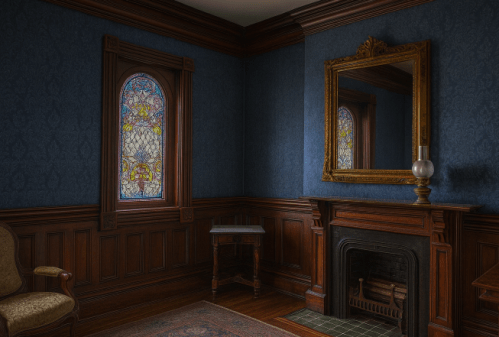
When it comes to firefighting, every incident carries the potential for injury—no matter how small the fire appears or how routine the call may seem. If you see a fire engine stopped in the street without its lights on, use extreme caution. Crews may be working nearby, and passing the apparatus can put them in danger. It is often safer to turn around and take another route; if you strike a firefighter or civilian and cause a fatality, you could face charges such as manslaughter. Firefighters frequently move around their vehicle on foot, loading equipment or preparing to leave the scene. Attempting to pass the apparatus can result in a collision with someone you cannot see. Pay close attention to their hand signals as well—emergency vehicles sometimes move slowly or reposition, and impatient drivers trying to slip around them create hazardous situations. If you are already in an intersection when you notice an emergency vehicle approaching, continue through it, then pull to the right and stop as soon as it is safe. Always obey directions from law enforcement officers or firefighters, even if those instructions conflict with posted signs or traffic laws. When sirens or flashing lights are activated, it is illegal to follow within 300 feet of a fire engine, ambulance, or police vehicle. Driving to the scene of a fire, collision, or disaster can also result in arrest, as doing so interferes with firefighters, paramedics, and other emergency personnel. Professional courage is not limited to physical toughness. It includes listening to others, advocating for them in difficult situations, understanding personal limits, and having the integrity to tell a superior when they are wrong. The deeper truth is that public safety depends not only on the bravery of first responders but on the discipline and judgment of the community around them. Every driver’s decision—whether cautious or careless—can either protect or endanger the people risking their lives to protect everyone else. #RandolphHarris 20 of 22
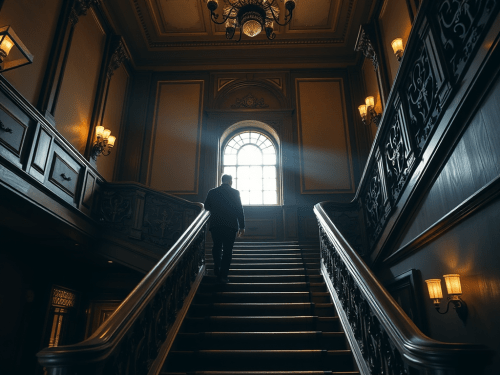
Efforts to preserve farmland and maintain buildable land for future generations often lead to discussions about population growth and long‑term planning. Some people argue that immigration levels should be managed carefully to ensure that infrastructure, housing, and land use remain sustainable. Others suggest that, when immigration does occur, programs that encourage broad representation can help communities reflect the diversity of the wider world. When Americans purchase goods made in the United States, it strengthens local businesses and signals to investors that these products are in demand. Strong sales give investors confidence to reinvest in domestic companies, helping keep jobs, production, and wages within the country. As businesses grow, they contribute more to the tax base, which can reduce the burden on taxpayers over time. Supporting American businesses also keeps more money circulating within the national economy. The government increases the national debt when it spends more than it collects in tax revenue or borrows from private or foreign lenders. When people shop locally, more tax revenue stays in the community and supports public services. This helps keep jobs in the United States and increases the tax contributions that fund government operations. Purchasing foreign-made goods, by contrast, often sends money overseas and may benefit companies that operate under lighter tax or environmental regulations. Buying American-made products can also reduce environmental impact because they travel shorter distances and are produced under stricter standards for air, land, and water protection. In this way, consumer choices influence not only the economy but also environmental stewardship and long-term national sustainability. #RandolphHarris 21 of 22
Under President Trump’s administration, he has made America a priority. President Trump has hermetically sealed the southern border, illegal crossings have been terminated, and are 90 percent lower than under the previous administration. Since President Trump’s crack down on crime, violent crimes in Washington D.C. have dropped by approximately 80 percent. He has stopped thousands of pounds of drugs from entering America and killing citizens. And since President Trump took office, investments in America have increased by trillions of dollars in U.S.A. manufacturing, production, and innovation. As you can see, President Donald Trump and his pledge to “Make America Great Again” is exactly what America needs to save the country and the American people. And yes, diversity is important, so you can see why it is also important to preserve blonde hair and blue eyes, as the people with these characteristics are becoming a minority in America. As a reminder, parents, please teach your children to love America and be patriotic citizens, and to buy goods and services made in America. It is also important to respect law and order and treat your elders with respect. It is inborn in the human mind to wish to know. If this begins with the endless surface questions of a child’s curiosity, if it continues into deeper questions of a scientist’s probing investigation, it cannot and does not stop there. For the higher part of the mind will eventually come into unfoldment, that union of abstract reflective thought with mystical intuition, which is true intelligence, which needs and sees a view of the whole of things. And so, the knowing faculty enters the realm of philosophy. A lot of children are having problems in school and cannot even write a paragraph because they are not reading their books. When you actually read books, you get an example of how to write and will become a better student. Therefore, remember to take your education seriously so that you will be successful in life and make your family proud. Also, to make sure they have all the resources required, please donate to the Sacramento Fire Department to help improve our national security. “Oh, thus be it ever, when freemen shall stand between their loved home and the war’s desolation! Blest with victory and peace, may the heav’n-rescued land Praise the Power that hath made and preserved us a nation! Then conquer we must, when our cause is just, and this be our motto: ‘In God is our trust.’ And the star-spangled banner in triumph shall wave O’er the land of the free and the home of the brave.” Thank you for your attention to this matter. President DONALD J. TRUMP #RandolphHarris 22 of 22


The mist rolls eternal through the tower trees of the Winchester Mystery House, carrying whispers of things that should not be. Have you ever wondered why the Winchester Mystery House harbors more cursed folklore than any other house on earth? Why Mrs. Winchester’s tragedies grew darker with each telling? Why travelers rarely go near the mansion after the church bells have fallen silent?
Welcome to the spectral depths of the Winchester Mystery House, where fairy tales bleed into nightmare reality. Where witch hunters vanish, where souls are claimed by primordial darkness, and the boundary between the living and the eternally damned dissolves like morning fog over the Golden Gate Bridge.
For here, in these twisting corridors and impossible stairwells, the house remembers. It remembers every footstep, every whispered prayer, every trembling confession offered to the shadows. It remembers the Watcher in the tower, whose silhouette appears in the highest window whenever grief gathers like storm clouds over the valley. It remembers the pale woman drifting through the eastern wing, searching for a child who never lived long enough to be named. It remembers the wolf‑footed shapes that prowl the attic rafters, their breath warm as a hunter’s snare.

And the house does not forget those who trespass.
Visitors speak of hearing their own names murmured from behind locked doors. Of feeling a cold hand brush their sleeve when no one stands beside them. Of glimpsing, in the corner of their eye, a figure that vanishes the moment they turn. Some say the mansion rearranges itself at night, shifting rooms like a restless sleeper, sealing off hallways that were open only hours before.
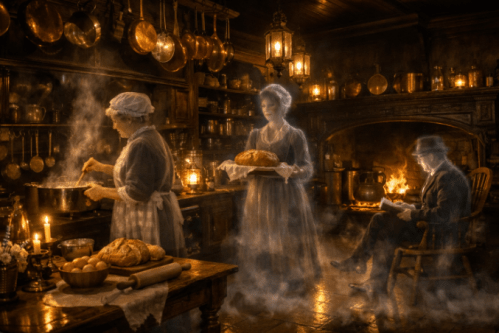
Others say the spirits are not trapped here at all. They come willingly.
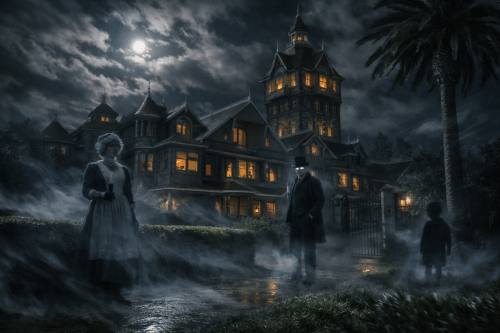
Drawn to the labyrinth Sarah Winchester built—not as a prison, but as a sanctuary for the lost, the hunted, the unburied. A place where the dead might wander without fear of being forgotten.

But every sanctuary has its price.

And in the Winchester Mystery House, that price is paid in whispers, in shadows, in the slow unraveling of certainty. Step too far into its depths, and you may find that the house is not merely haunted.

It is hungry.
A visit to the Winchester Mystery House is more than a tour—it is an encounter with legend. It is a place where imagination thrives, where history whispers through every corridor, and where the line between fact and folklore blurs in the most enchanting way. Come discover why millions of visitors from around the world consider the Winchester Mystery House a must‑see destination and one of California’s most iconic treasures.
PRIVATE EVENTS & WEDDINGS
at WINCHESTER ESTATE
Many event locations claim to be unique, but nothing compares to the Winchester Mystery House. If you’re truly seeking a distinct, one‑of‑a‑kind setting for your milestone celebration or special occasion, reserve a venue that delivers on uniqueness many times over. Whether you’re planning a wedding, birthday or anniversary celebration, corporate gathering, holiday party, or any other meaningful event, the Winchester Mystery House offers an unforgettable backdrop. Give your guests an experience they’ll be talking about for years to come.
Café 13: A Rest Stop on the Edge of the Mystery
After wandering the winding halls of the Winchester Mystery House—where staircases defy logic and whispers seem to cling to the walls—Café 13 offers a welcome return to warmth and grounding. Newly reopened and serving guests daily from 10 AM to 3 PM, this cozy hideaway invites you to pause, breathe, and gather yourself before diving back into the mansion’s secrets. Here, you can enjoy breakfast, lunch, snacks, and refreshing drinks in a calm indoor space that feels worlds away from the mansion’s twisting corridors. Settle in with a warm meal, challenge a friend to a board game, or simply rest and recharge as sunlight filters through the windows. Café 13 is more than a café—it’s a moment of calm between chapters of the Winchester legend, a place to steady your nerves before returning to the gardens, the grandeur, and the mysteries that await.
Winchester Mercantile Gift Shop
Your journey into the Winchester Mystery House begins long before you cross the mansion’s threshold. It starts at the Mercantile gift shop—a welcoming outpost standing at the edge of a world where history and myth intertwine. Here, beneath warm lights and shelves lined with curiosities, you can secure your tour tickets and prepare for the adventure ahead. Guests often pause for a souvenir photograph, capturing the moment before they step into Sarah Winchester’s enigmatic domain. As you explore the shop, you will find an eclectic array of gifts and keepsakes: tokens of the mansion’s lore, echoes of Victorian elegance, and mementos that carry a touch of the house’s enduring mystery. The Mercantile is more than a gift shop—it is the gateway. https://winchestermysteryhouse.com/

Invisible Majorities: How Social Reality Erases the Ninety‑Nine
If scientific progress has freed man from many drudgeries, it has enslaved him with many illusions. One of these is the belief that it is itself sufficient to guide and guard him. An attempt to determine the incidence of disorder in the population as a whole is opposed by serious difficulties. The vagueness of officially accepted criteria for diagnosis and the extreme variation in the degree of degree in such maladjustment constitute primary obstacles. Statistics from most neuropsychiatric hospitals are necessarily misleading, since the psychopath is not technically eligible for admission and only those who behave in such an extremely abnormal manner as to appear orthodoxly psychotic (that is to say, as suffering from another and very different disorder) appear in the record. If legal and medical rules were regularly followed, statistics from state hospitals and from the federal psychiatric institutions would show no psychopaths at all. Let is also be noted that these institutions contain a vast majority of the patients hospitalized in the United States of America for mental disorders. Most statistical studies, therefore, cannot be regarded as even remotely suggesting the prevalence of this disability in the population. These facts notwithstanding, it is still impressive to note what the records of a typical psychiatric institution reveal. Over the period of twenty-nine months, 857 new patients were admitted to one federal hospital, where a staff of ten psychiatrists, including myself, classified them after careful examination and study. #RandolphHarris 1 of 21

Of this group, 102 received the primary diagnosis of psychopathic personality, being considered free of any other mental disorder that could account for the difficulties that led to their admission. This group, comprising nearly one-eighth of all those admitted, indicates that the disorder is far from rare. The records also show 134 other patients classified under alcoholism or drug addiction who, I believe, were nearly all fundamentally like those diagnosed as psychopaths, the addiction and other complications being secondary. If even one-half of these are considered as psychopaths, we arrive at a figure of 169, or almost one-fifth of the total. These statistics from one psychiatric institution cannot, of course, be taken as proof that the disorder is so prevalent everywhere. One must not overlook the fact, however, that each of these patients was accepted despite rules specifically classifying him as ineligible, and often as a result of conduct so abnormal or so difficult to cope with that he was considered a grave emergency. Another factor worth mentioning is the psychopath’s almost uniform unwillingness to apply, like other ill people, for hospitalization or for any other medical service. The survey at least suggests that these patients are common and that they constitute a serious problem in the average community and a major issue in psychiatry. #RandolphHarris 2 of 21

I have been forced to the conviction that this particular behavior pattern is found among one’s fellow men far more frequently than might be surmised from reading the literature. If the nature of the disorder in question defines itself throughout the course of this work with sufficient sharpness and clarity to be recognizable as a pathologic entity, little doubt will remain that it presents a sociologic and psychiatric problem second to none. The man who develops influenza or who breaks his arm nearly always thinks at once of calling his doctor. The unconscious victim of a head injury is promptly taken by his family, his friends, or, lacking these, by casual bystanders to a hospital where medical attention is given. Persons who develop anxiety, phobias, or psychosomatic manifestations are likely to seek aid from a physician. Even those who demur and delay since they fear they will be called weak or silly because of symptoms commonly classed as psychoneurotic can be, and usually are, persuaded by their families after varying periods of reluctance to ask for help. Children, of course, often seek to avoid both the pediatrician and the dentist, despite their parents’ advice. However, the parent seldom fails when the need for treatment is serious to get the child, with or without his willingness, into the doctor’s hands. Many patients ill with the major personality disorders we classify as psychoses do not voluntarily seek treatment. Some do not recognize any such need and may bitterly oppose, sometimes by violent combat, all efforts to send them to psychiatric hospitals. #RandolphHarris 3 of 21

Such patients who need psychiatric care and react violently, however, are well recognized. Medical facilities and legal instrumentalities exist for handling the problem, and institutions are provided to accept such patients and hold them, if necessary, against their own volition, so long as it is advisable for the patient’s welfare or for the protection of others. When we consider, on the other hand, these so-called psychopathic personalities, we find not one in one hundred who spontaneously goes to his physician to seek help. If relatives, alarmed by his disastrous conduct, recognize that treatment, or at least supervision, is an urgent need, they meet enormous obstacles. The public institutions to which they would turn for the care of a schizophrenic or a manic patient present close doors. If they are sufficiently wealthy, they often consider a private psychiatric hospital. It should here be noted, also, that such private hospitals are necessarily expensive and that perhaps not more than two or three percent of our population can afford such carte for prolonged periods. No matter how wealthy his family may be, the psychopath, unlike all other serious psychiatric cases, can refuse to go to any hospital or accept any other treatment or restraint. His refusal is regularly upheld by our courts of law, and groups for this are consistent with the official appraisal of his condition by psychiatry. #RandolphHarris 4 of 21

Nearly always, he refuses and successfully opposes the efforts of his relatives to have him cared for. It is seldom that a psychopath accepts hospitalization or even outpatient treatment unless some strong means of coercion happens to be available. The threat of cutting off his financial support, or bringing legal action against him for forgery or theft, or of allowing him to remain in jail, may move him to visit a psychiatrist’s office or possibly to enter a hospital. Subsequent events often demonstrate that he is acting, not seriously and with the understanding he professes, but for evasion, whether he himself realizes this or not. He usually breaks off treatment as soon as the evasion has been accomplished. Since medical institutions refuse to accept the psychopath as a patient, and since he does not voluntarily, except in rare instances, seek medical aid, it might be surmised that prison populations would furnish statistics useful in estimating the prevalence of his disorder. It is true that a considerable proportion of prison inmates show indications of such a disorder. It is also true that only a small proportion of typical psychopaths are found in penal institutions, because the typical patient is not likely to commit major crimes that result in long prison terms. He is distinguished by his ability to escape ordinary legal punishments and restraints. Though he regularly makes trouble for society, as well as for himself, and frequently is handled by the police, his characteristic behavior does not include felonies which would bring about permanent or adequate restriction of his activities. He is often arrested, perhaps a hundred times or more. However, he nearly always regains his freedom and returns to his old patterns of maladjustment. #RandolphHarris 5 of 21

Through the incidence of this disorder is at present impossible to establish statistically or even to estimate accurately, I am willing to express the opinion that it is exceedingly high. Certainly, it is hundreds of times more common than poliomyelitis, and its results are more disastrous. On the basis of experience in psychiatric outpatient clinics and with psychiatric problems of private patients and in the community (as contrasted with committed patients), it does not seem an exaggeration to estimate the number of people seriously disabled by the disorder still listed under this ambiguous term as greater than the number disabled by any recognized psychosis except schizophrenia. So far as I know, there are no provisions made in any public institution for the care of even one psychopath. An exception, however, must be made in the case of psychopaths convicted of major crimes and sentenced to imprisonment in federal institutions. At the Medical Center for Federal Prisoners at Springfield, Mo., provisions are made for psychopathic personalities, their problems are recognized, and genuine efforts are made to handle them psychiatrically. This admirable effort applies, however, only to a small fraction of those needing attention, and leaves still ignored the ninety-nine out of one hundred patients who remain without attention or restriction. #RandolphHarris 6 of 21

Just as the admirable efforts of our institutions reach only a small fraction of those who truly need attention—treating one patient while ninety‑nine remain unattended—so too does the inner life suffer from a similar economy of neglect. In resignation, a person may consciously regard his attitude as prudence or maturity, but this awareness touches only the surface. Beneath it lies a multitude of unacknowledged impulses and restricted wishes, aspects of the self that remain ignored simply because they are seen in a different light or named in gentler terms. The tragedy is the same in both realms: what receives attention is but a fraction of what requires it, and the vast remainder is left to languish in silence. Most frequently, he is aware only of his detachment and of his sensitivity to coercion. However, as always, where neurotic needs are concerned, we can recognize the nature of the resigned individual’s needs by observing when he reacts to frustration, when he becomes listless or fatigued, exasperated, panicky, or resentful. For the analyst, a knowledge of the basic characteristics is of great help in sizing up the whole picture quickly. When one or another of them strikes our attention, we must look for the others; and we are reasonably sure to find them. As I have been careful to point out, they are not a series of unrelated peculiarities but a closely interknit structure. It is, at least in its basic composition, a picture of great consistency and unity, looking as if it had been painted in one hue. #RandolphHarris 7 of 21
Resignation represents a major solution of the intrapsychic conflicts by way of withdrawing from them. At first glance, we get the impression that the resigned person primarily gives up his ambition. This is the aspect which he himself often emphasizes and tends to regard as a clue to the whole development. His history, too, sometimes seems to confirm this impression, insofar as he may have changed conspicuously in terms of ambition. In or around adolescence, he often does things which show remarkable energies and gifts. He may be resourceful, surmount economic handicaps, and make a place for himself. He may be ambitious at school, first in his class, excel in debating or some progressive political movement. At least there often is a period in which he is comparatively alive and interested in many things, in which he rebels against the tradition in which he has grown up and thinks of accomplishing something in the future. Subsequently, there is often a period of distress: of anxiety, of depression, of despair about some failure or about some unfortunate life situation in which he has become involved through his very rebellious streak. After that, the curve of his life seems to flatten out. People say that he got “adjusted” and settled down. They remark that he had his youthful flight toward the sun and came back down to earth. That, they say, is the “normal” course. However, others, more thoughtful, are worried about him. For he also seems to have lost his zest for living, his interests in many things, and seems to have settled for much less than his gifts or opportunities warrant. What happened to him? Certainly, a person’s wings can be clipped through a series of disasters or deprivations. However, in the instances we have in mind, circumstances were not sufficiently unfavorable to be entirely responsible. Hence, some psychic distress must have been the determining factor. #RandolphHarris 8 of 21

This answer, however, is not satisfactory either, because we can remember others who likewise experienced inner turmoil and emerged from it differently. Actually, the change is not the result either of the existence of conflicts or of their magnitude but rather of the way in which he has made peace with himself. What has happened is that he got a taste of his inner conflicts and solved them by withdrawing. Why he tried to solve them this way, why he could do it this way only, is a matter of his previous history, about which more later. First, we need to have a clearer picture of the nature of withdrawal. It is true that some adolescents shake off their scripts completely and become autonomous. Others, however, merely rebel (following a parental directive to rebel), thus fulfilling their scripts in a kind of Appointment in Samarra tragedy: the faster they think they are running away from their parents’ programming, the closer they are to following it. Others shake off the script temporarily, and then subside into suburban desperation. The “identity diffusion” of this period is merely a bad script. In Erikson’s view, it is a struggle against the mother in which she loses. However, the script analysts take the opposite position: it is a struggle with the mother in which she wins. Her son becomes a bum not in spite of her, but because of her, because he cannot get permission to succeed against her orders. The therapy, then, is not directed toward bringing him back to his mother so that he can be a good boy, but to divorcing him from his mother so that he can have permission to do things right. #RandolphHarris 9 of 21

As technological advances put more and more time between early school life and the young person’s final access to specialized work, the stage of adolescing becomes an even more marked and conscious period and, as it has always been in some cultures in some periods, almost a way of life between childhood and adulthood. Thus, in the later school years, young people, beset with the physiological revolution of their genital maturation and the uncertainty of the adult roles ahead, seem much concerned with faddish attempts establishing an adolescent subculture with what looks like a final rather than a transitory or, in fact, initial identity formation. They are sometimes morbidly, often curiously, preoccupied with what they appear to be in the eyes of others as compared with what they feel they are, and with the question of how to connect the roles and skills cultivated earlier with the ideal prototypes of the day. In their search for a new sense of continuity and sameness, which must now include sexual maturity, some adolescents have to come to grips again with crises of earlier years before they can install lasting diols and ideals as guardians of a final identity. They need, above all, a moratorium for the integration of the identity elements ascribed in the foregoing to the childhood stages: only that now a larger unit, vague in its outline and yet immediate in its demands, replaces the childhood milieu—“society.” A review of these elements is also a list of adolescent problems. #RandolphHarris 10 of 21
If the earliest stage bequeathed to the identity crisis an important need for trust in oneself and in others, then clearly the adolescent looks most fervently for men and ideas to have faith in, which also means men and ideas in whose service it would seem worthwhile to prove oneself trustworthy. At the same time, however, the adolescent fears a foolish, all too trusting commitment, and will, paradoxically, express his need for faith in loud and cynical mistrust. If the second stage established the necessity of being defined by what one can will freely, then the adolescent now looks for an opportunity to decide with free assent on one of the available or unavoidable avenues of duty and service, and at the same time is mortally afraid of being forced into activities in which he would feel exposed to ridicule or self-doubt. This, too, can lead to a paradox, namely, that he would rather act shamelessly in the eyes of his elders, out of free choice, than be forced into activities which would be shameful in his own eyes or in those of his peers. If an unlimited imagination as to what one might become is the heritage of the play age, then the adolescent’s willingness to put his trust in those peers and leading, or misleading, elders who will give imaginative, if not illusory, scope to his aspirations is only too obvious. By the same token, he objects violently to all “pedantic” limitations of his self-images and will be ready to settle by loud accusation all his guiltiness over the excessiveness of his ambition. #RandolphHarris 11 of 21
Finally, if the desire to make something work, and to make it work well, is the gain of the school age, then the choice of an occupation assumes a significance beyond the question of remuneration and status. It is for this reason that some adolescents prefer not to work at all for a while rather than be forced into an otherwise promising career which would offer success without the satisfaction of functioning with unique excellence. In any given period in human history, then, that part of youth will have the most affirmatively exciting time of it which finds itself in the wave of a technological, economic, or ideological trend seemingly promising all that youthful vitality could ask for. Adolescence, therefore, is least “stormy” in that segment of youth which is gifted and well trained in the pursuit of expanding technological trends, and thus able to identify with new roles of competency and invention and to accept a more implicit ideological outlook. Where this is not given, the adolescent mind becomes a more explicitly ideological one, by which we mean one searching for some inspiring unification of tradition or anticipated techniques, ideas, and ideals. And, indeed, it is the ideological potential of a society which speaks most clearly to the adolescent who is so eager to be affirmed by peers, to be confirmed by teachers, and to be inspired by worthwhile “ways of life.” On the other hand, should a young person feel that the environment tries to deprive him too radically of all the forms of expression which permit him to develop and integrate the next step, he may resist with the wild strength encountered in animals who are suddenly forced to defend their lives. For, indeed, in the social jungle of human existence, there is no feeling of being alive without a sense of identity. #RandolphHarris 12 of 21

Reification is the process by which human-made social arrangements come to be experienced as objective, natural, and inevitable—no longer as products of human action, but as features of the world itself. As if they were things, this apprehension of human phenomena makes things appear non-human or possibly suprahuman. Another way of saying this is that reification is the apprehension of the products of human activity as if they were something other than human products—such as facts of nature, results of cosmic laws, or manifestations of divine will. We create institutions, norms, roles, and meanings—and then forget that we created them. They appear to us as “just the way things are.” Reification implies that man is capable of forgetting his own authorship of the human world, and further, that the dialectic between man, the producer, and his product is lost to consciousness. The reified world is, by definition, a dehumanized world. It is experienced by man as a strange facticity, an opus alienum over which he has no control, rather than as the opus proprium of his own productive activity. It will be clear from our previous discussion of objectivation that, as soon as an objective social world is established, the possibility of reification is never far away. The objectivity of the social world means that it confronts man as something outside of himself. The decisive question is whether he still retains the awareness that, however objectivated, the social world was made by men—and, therefore, can be remade by them. In other words, reification can be described as an extreme step in the process of objectivation, whereby the objectivated world loses its comprehensibility as a human enterprise and becomes fixated as a non-human, non-humanizable, inert facticity. #RandolphHarris 13 of 21

Typically, the real relationship between man and his world is reversed in consciousness. Man, the producer of a world, is apprehended as its product, and human activity as an epiphenomenon of non-human process. Human meanings are no longer understood as world-producing but as being, in their turn, products of the “nature of things.” It must be emphasized that reification is a modality of consciousness, more precisely, a modality of man’s objectification of the human world. Even while apprehending the world in reified terms, man continues to produce it. That is, man is capable paradoxically of producing a reality that denies him. Reification is possible on both the pretheoretical and theoretical levels of consciousness. Complex theoretical systems can be described as reifications, though presumably they have their roots in pretheoretical reification established in this or that social situation. Thus, it would be an error to limit the concept of reification to the mental constructions of intellectuals. Reification exists in the consciousness of the man in the street and, indeed, the latter presence is more practically significant. It would also be a mistake to look at the reification as a perversion of an originally non-reified apprehension of the social world, a sort of cognitive fall from grace. On the contrary, the available ethnological and psychological evidence seems to indicate the opposite, namely, that the original apprehension of the social world is highly reified both phylogenetically and ontogenetically. This implies that an apprehension of reification as a modality of consciousness is dependent upon an at least relative dereification consciousness, which is a comparatively late development in history and in any individual biography. #RandolphHarris 14 of 21

Both the institutional order as a whole and a segment of it may be apprehended in reified terms. For example, the entire order of society may be conceived of as a microcosm reflecting the macrocosm of the total universe as made by the gods. Whatever happens “here below” is but a pale reflection of what takes place “up above.” Particular institutions may be apprehended in similar ways. The basic “recipe” for the reification of institutions is to bestow on them an ontological status independent of human activity and signification. Specific reifications are variations on this general theme. Marriage, for instance, may be reified as an imitation of divine acts of creativity, as a universal mandate of natural law, as the necessary consequence of biological or psychological forces, or, for the matter, as a functional imperative of the social system. What all these reifications have in common is their obfuscation of marriage as an ongoing human production. As can be readily seen in this example, the reification may occur both theoretically and pretheoretically. Thus, the mystagogue can concoct a highly sophisticated theory reaching out from the concrete human event to the farthest corners of the divine cosmos, but an illiterate peasant couple being married may apprehend the event with a similarly reifying shudder of metaphysical dread. Through reification, the world of institutions appears to merge with the world of nature. It becomes necessity and fate, and is lived through as such, happily or unhappily as the case may be. Roles may be reified in the same manner as institutions. The sector of self-consciousness that has been objectified in the role is then also apprehended as an inevitable fate, for which the individual may disclaim responsibility. The paradigmatic formula for this kind of reification is the statement, “I have no choice in the matter, I have to act his way because of my position”—as husband, father, general, archbishop, chairman of the board, gangster, or hangman, as the case may be. #RandolphHarris 15 of 21
This means that the reification of roles narrows the subjective distance that the individual may establish between himself and his role-playing. The distance implied in all objectifications remains, of course, but the distance implied in all objectification remains, of course, but the distance brought about by disidentification shrinks to the vanishing point. Finally, identity itself (the total self, if one prefers) may be reified, both one’s own and that of others. There is then a total identification of the individual with his socially assigned typifications. He is apprehended as nothing but that type. This apprehension may be positively or negatively accented in terms of values or emotions. The identification of “Jew” may be equally reifying for the anti-Semite and the Jew himself, except that the latter will accent the identification positively and the former negatively. Both reifications bestow an ontological and total status on a typification that is humanly produced and that, even as it is internalized, objectifies but a segment of the self. Once more, such reifications may range from the pretheoretical level of “what everybody knows about Jews” to the most complex theories of Jewishness as a manifestation of biology (“Jewish blood”), psychology (“the Jewish soul”), or metaphysics (“the mystery of Israel”). The analysis of reification is important because it serves as a standing corrective to the reifying propensities of theoretical thought in general and sociological thought in particular. It is particularly important for the sociology of knowledge, because it prevents it from falling into an undialectical conception of the relationship between what men do and what they think. The historical and empirical application of the sociology of knowledge must take special note of the social circumstances that favor dereification—such as the overall collapse of institutional orders, the contact between previously segregated societies, and the important phenomenon of social marginality. These problems, however, exceed the framework of our present considerations. #RandolphHarris 16 of 21

The call came in just after dusk, when the Sacramento sky still held a faint ember‑colored glow. At Station 4, the award‑winning Sacramento Fire Department moved with the practiced precision that had earned them their reputation. Captain Lukas Reinhardt, known for his calm authority and unshakable focus, stepped into his gear as the tones echoed through the bay. Behind him, the world‑renowned paramedics of Medic 62 prepared their equipment, already anticipating the rhythm of the rescue before the engines even rolled. The dispatch report was terse: Male, mid‑fifties, unconscious. Possible cardiac arrest. Apartment complex. Unknown hazards. Unknown hazards always meant trouble, but trouble was something this team had learned to meet head‑on. The engine and medic unit arrived within minutes, lights cutting through the narrow courtyard of the aging apartment building. Residents crowded balconies, some shouting, some crying, some simply watching with the stunned stillness of people who do not yet understand what is unfolding around them. The engine and medic unit arrived within minutes, lights cutting through the narrow courtyard of the aging apartment building. Residents crowded balconies, some shouting, some crying, some simply watching with the stunned stillness of people who do not yet understand what is unfolding around them. Captain Reinhardt led the way up the stairwell, his boots striking the concrete in steady, disciplined beats. The hallway on the third floor was cramped, cluttered with mismatched door mats, shoes, and forgotten packages. The air smelled faintly of bleach and something metallic. The team advanced anyway. #RandolphHarris 17 of 21

As they approached the unit in question, a door across the hall flew open. A frantic resident, wild‑eyed, purposely spat biological waste on a fireman. The contents splattered on Captain Reinhardt’s face, hair, and the shoulders of two paramedics. For a heartbeat, the hallway froze. Then Captain Reinhardt’s voice cut through the shock—steady, commanding, utterly unfazed. “Keep moving. We have a patient.” The team surged forward again. One paramedic slipped on a crooked doormat, catching himself against the wall. Another stumbled over a second mat that had curled upward like a trap. The hallway seemed determined to sabotage them, but they pressed on, driven by training, instinct, and the simple refusal to let chaos dictate the outcome. Inside the apartment, they found the patient collapsed near the kitchen table, his face pale, his breathing absent. The paramedics dropped to their knees, already in motion. One began compressions, counting with firm, rhythmic precision. Another prepared the defibrillator, while Captain Reinhardt cleared space and directed the flow of the scene with quiet authority. The shock lifted the man’s chest. The paramedics resumed compressions without hesitation. Outside, the hallway buzzed with anxious voices, but inside the apartment, there was only the focused hum of lifesaving work. After several cycles, a faint pulse returned—weak, but present. The paramedics exchanged a quick glance, the kind that carried both relief and renewed urgency. They secured the patient onto the gurney, navigating the narrow hallway with practiced coordination. The same door mats that had tripped them earlier now shifted under their boots, but this time they moved with deliberate care, shielding the patient from every jolt. Down the stairwell, through the courtyard, into the waiting ambulance—the team moved as one. The paramedics continued monitoring vitals, adjusting oxygen, preparing medications. Captain Reinhardt stepped back only when the doors closed and the ambulance pulled away, siren rising into the evening air. “Charging. Clear.” The biological waste was still plastered in his hair. His uniform bore the marks of the hallway’s obstacles. But the patient was alive. And for the Sacramento Fire Department and its world‑renowned paramedics, that was the only measure that mattered. #RandolphHarris 18 of 21

When it comes to firefighting, every incident carries the potential for injury—no matter how small the fire appears or how routine the call may seem. If you see a fire engine stopped in the street without its lights on, use extreme caution. Crews may be working nearby, and passing the apparatus can put them in danger. It is often safer to turn around and take another route; if you strike a firefighter or civilian and cause a fatality, you could face charges such as manslaughter. Firefighters frequently move around their vehicle on foot, loading equipment or preparing to leave the scene. Attempting to pass the apparatus can result in a collision with someone you cannot see. Pay close attention to their hand signals as well—emergency vehicles sometimes move slowly or reposition, and impatient drivers trying to slip around them create hazardous situations. If you are already in an intersection when you notice an emergency vehicle approaching, continue through it, then pull to the right and stop as soon as it is safe. Always obey directions from law enforcement officers or firefighters, even if those instructions conflict with posted signs or traffic laws. When sirens or flashing lights are activated, it is illegal to follow within 300 feet of a fire engine, ambulance, or police vehicle. Driving to the scene of a fire, collision, or disaster can also result in arrest, as doing so interferes with firefighters, paramedics, and other emergency personnel. Professional courage is not limited to physical toughness. It includes listening to others, advocating for them in difficult situations, understanding personal limits, and having the integrity to tell a superior when they are wrong. The deeper truth is that public safety depends not only on the bravery of first responders but on the discipline and judgment of the community around them. Every driver’s decision—whether cautious or careless—can either protect or endanger the people risking their lives to protect everyone else. #RandolphHarris 19 of 21

Efforts to preserve farmland and maintain buildable land for future generations often lead to discussions about population growth and long‑term planning. Some people argue that immigration levels should be managed carefully to ensure that infrastructure, housing, and land use remain sustainable. Others suggest that, when immigration does occur, programs that encourage broad representation can help communities reflect the diversity of the wider world. When Americans purchase goods made in the United States, it strengthens local businesses and signals to investors that these products are in demand. Strong sales give investors confidence to reinvest in domestic companies, helping keep jobs, production, and wages within the country. As businesses grow, they contribute more to the tax base, which can reduce the burden on taxpayers over time. Supporting American businesses also keeps more money circulating within the national economy. The government increases the national debt when it spends more than it collects in tax revenue or borrows from private or foreign lenders. When people shop locally, more tax revenue stays in the community and supports public services. This helps keep jobs in the United States and increases the tax contributions that fund government operations. Purchasing foreign-made goods, by contrast, often sends money overseas and may benefit companies that operate under lighter tax or environmental regulations. Buying American-made products can also reduce environmental impact because they travel shorter distances and are produced under stricter standards for air, land, and water protection. In this way, consumer choices influence not only the economy but also environmental stewardship and long-term national sustainability. #RandolphHarris 20 of 21

Under President Trump’s administration, he has made America a priority. President Trump has hermetically sealed the southern border, illegal crossings have been terminated, and are 90 percent lower than under the previous administration. Since President Trump’s crack down on crime, violent crimes in Washington D.C. have dropped by approximately 80 percent. He has stopped thousands of pounds of drugs from entering America and killing citizens. And since President Trump took office, investments in America have increased by trillions of dollars in U.S.A. manufacturing, production, and innovation. As you can see, President Donald Trump and his pledge to “Make America Great Again” is exactly what America needs to save the country and the American people. And yes, diversity is important, so you can see why it is also important to preserve blonde hair and blue eyes, as the people with these characteristics are becoming a minority in America. As a reminder, parents, please teach your children to love America and be patriotic citizens, and to buy goods and services made in America. It is also important to respect law and order and treat your elders with respect. It is inborn in the human mind to wish to know. If this begins with the endless surface questions of a child’s curiosity, if it continues into deeper questions of a scientist’s probing investigation, it cannot and does not stop there. For the higher part of the mind will eventually come into unfoldment, that union of abstract reflective thought with mystical intuition, which is true intelligence, which needs and sees a view of the whole of things. And so, the knowing faculty enters the realm of philosophy. A lot of children are having problems in school and cannot even write a paragraph because they are not reading their books. When you actually read books, you get an example of how to write and will become a better student. Therefore, remember to take your education seriously so that you will be successful in life and make your family proud. Also, to make sure they have all the resources required, please donate to the Sacramento Fire Department to help improve our national security. “Oh, thus be it ever, when freemen shall stand between their loved home and the war’s desolation! Blest with victory and peace, may the heav’n-rescued land Praise the Power that hath made and preserved us a nation! Then conquer we must, when our cause is just, and this be our motto: ‘In God is our trust.’ And the star-spangled banner in triumph shall wave O’er the land of the free and the home of the brave.” Thank you for your attention to this matter. President DONALD J. TRUMP #RandolphHarris 21 of 21


Where History, Mystery, and Imagination Intertwine

Step inside one of California’s most extraordinary landmarks and experience a world unlike any other. The Winchester Mystery House is more than a Victorian mansion—it is a living work of art, a labyrinth of architectural wonders, and one of America’s most captivating historical estates. Built over 36 years without pause, the mansion stands today as a testament to craftsmanship, curiosity, and the enduring legend of Mrs. Sarah Winchester.
Visitors are invited to explore miles of elegant hallways, beautifully restored rooms, and the mansion’s famously perplexing features: staircases that lead nowhere, doors that open into walls, windows overlooking other rooms, and secret passages woven throughout the estate. Every corner of the house reflects Mrs. Sarah Winchester’s unique vision, blending Victorian elegance with an eccentricity that continues to fascinate architects, historians, and guests from around the world.

Beyond its architectural marvels, the Winchester Mystery House offers a rare glimpse into the life of a woman who defied convention. Mrs. Sarah Winchester, heiress to the Winchester Repeating Arms fortune, poured her grief, creativity, and resources into building a home unlike any other. Her story—part tragedy, part triumph, part enduring mystery—adds emotional depth to every room you enter. Visitors leave not only impressed by the mansion’s scale, but moved by the humanity behind its creation.

The estate’s lush gardens, ornate fountains, and tranquil outdoor spaces provide a peaceful contrast to the mansion’s winding interior. Guests can stroll through beautifully landscaped grounds, enjoy seasonal displays, and take in the serene beauty that surrounds the historic home. Whether you’re a lover of history, architecture, horticulture, or simply a seeker of unforgettable experiences, the Winchester Mystery House offers something for everyone.

A visit to the Winchester Mystery House is more than a tour—it is an encounter with legend. It is a place where imagination thrives, where history whispers through every corridor, and where the line between fact and folklore blurs in the most enchanting way. Come discover why millions of visitors from around the world consider the Winchester Mystery House a must‑see destination and one of California’s most iconic treasures.
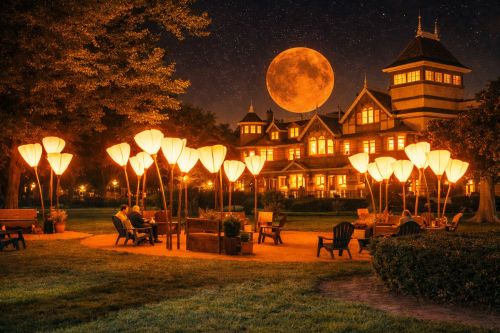
PRIVATE EVENTS & WEDDINGS
at WINCHESTER ESTATE
Many event locations claim to be unique, but nothing compares to the Winchester Mystery House. If you’re truly seeking a distinct, one‑of‑a‑kind setting for your milestone celebration or special occasion, reserve a venue that delivers on uniqueness many times over.
Whether you’re planning a wedding, birthday or anniversary celebration, corporate gathering, holiday party, or any other meaningful event, the Winchester Mystery House offers an unforgettable backdrop. Give your guests an experience they’ll be talking about for years to come.
Café 13: A Rest Stop on the Edge of the Mystery
After wandering the winding halls of the Winchester Mystery House—where staircases defy logic and whispers seem to cling to the walls—Café 13 offers a welcome return to warmth and grounding. Newly reopened and serving guests daily from 10 AM to 3 PM, this cozy hideaway invites you to pause, breathe, and gather yourself before diving back into the mansion’s secrets. Here, you can enjoy breakfast, lunch, snacks, and refreshing drinks in a calm indoor space that feels worlds away from the mansion’s twisting corridors.

Settle in with a warm meal, challenge a friend to a board game, or simply rest and recharge as sunlight filters through the windows. Café 13 is more than a café—it’s a moment of calm between chapters of the Winchester legend, a place to steady your nerves before returning to the gardens, the grandeur, and the mysteries that await.
Winchester Mercantile Gift Shop
Your journey into the Winchester Mystery House begins long before you cross the mansion’s threshold. It starts at the Mercantile gift shop—a welcoming outpost standing at the edge of a world where history and myth intertwine. Here, beneath warm lights and shelves lined with curiosities, you can secure your tour tickets and prepare for the adventure ahead. Guests often pause for a souvenir photograph, capturing the moment before they step into Sarah Winchester’s enigmatic domain. As you explore the shop, you will find an eclectic array of gifts and keepsakes: tokens of the mansion’s lore, echoes of Victorian elegance, and mementos that carry a touch of the house’s enduring mystery. The Mercantile is more than a gift shop—it is the gateway. https://winchestermysteryhouse.com/
Harris Plumbing, Heating, Air & Electric has been serving our community for 30 years—an achievement few companies can claim. That longevity isn’t an accident. It’s the result of hard work, integrity, and a commitment to doing every job the right way, whether it’s a simple repair or a complex system overhaul. We take pride in every service call because we know your home is more than a building—it’s where your family lives, grows, and feels safe. Ensuring your comfort and protection is a responsibility we carry with seriousness and gratitude. After three decades, our mission remains the same: to deliver dependable service you can trust, every time.
Harris makes sure you have the clear, accurate information you need to decide what comes next—no matter what your home is facing. Before we begin any work, our technicians perform a full diagnosis and walk you through every issue we find. That means you receive a personalized quote and service plan tailored to your home’s exact needs, not a generic estimate or guess. We believe the only way to deliver our best work is to understand the problem completely and address it with precision, transparency, and care. Your home deserves nothing less. https://www.callharrisnow.com/about-us/

BMW remains one of the most desirable automotive marques because it blends engineering precision with an emotional driving experience that few brands can match. Its vehicles are built around balance, responsiveness, and a sense of connection between driver and machine—qualities that have defined the company for generations.

Beyond performance, BMW carries an aura of prestige and craftsmanship: the cabins feel tailored, the technology is purposeful rather than gimmicky, and the design language signals confidence without excess. Owning a BMW is not just about transportation; it’s about participating in a legacy of excellence that continues to set the standard for luxury performance. This commitment to performance is why BMW continues to earn its reputation as The Ultimate Driving Machine. https://www.brianharrisbmw.com/

Randolph Harris San Francisco Taxation & Mergers
Building strong, lasting client relationships is essential to a successful legal career. Many attorneys assume that mastering legal doctrine alone guarantees success, but law is fundamentally a service profession—our work is measured not only by technical skill, but by how effectively we solve problems for the people who trust us. Long‑term relationships grow from three core commitments: truly knowing your clients, understanding how their legal issues fit within the broader context of their business and personal goals, and consistently delivering exceptional service.
Mr. Randy advises clients on business transitions, taxable and tax‑deferred mergers and acquisitions, joint ventures, restructuring, integrated tax planning, federal and state tax controversy matters, and real estate transactions. His approach is grounded in clarity, responsiveness, and a deep understanding of each client’s unique circumstances. Trust is the cornerstone of every relationship he builds. Ultimately, clients feel confident knowing they are working with someone who not only understands their challenges, but is fully committed to helping them achieve their goals. https://www.jmbm.com/l-randolph-harris.html

Where Luxury, Craftsmanship, and Vision Become Home

At Millhaven Homes, luxury is not an upgrade—it is the foundation. As Utah’s premier custom home builder, Millhaven has earned a reputation for creating residences that blend architectural excellence with timeless elegance.

Every home is a masterpiece of design, crafted with meticulous attention to detail and built to reflect the unique lifestyle, taste, and aspirations of its owner. When you choose Millhaven, you are choosing a builder who understands that a home is more than a structure—it is a legacy.

From the first conversation to the final walk‑through, Millhaven Homes delivers a personalized, concierge‑level experience. Their award‑winning design team collaborates closely with each client, transforming ideas into breathtaking floor plans and elevating every space with thoughtful features, natural light, and refined finishes.

Whether you envision a modern sanctuary, a classic estate, or a bold architectural statement, Millhaven brings your vision to life with precision and artistry.

Millhaven’s craftsmanship is unmatched. Every material is selected with intention, every line drawn with purpose, and every detail executed with uncompromising quality. Their homes are built to endure—structurally, aesthetically, and emotionally. From custom cabinetry and luxury kitchens to spa‑inspired bathrooms and expansive great rooms, Millhaven creates spaces that feel both grand and deeply personal. These are homes designed for living beautifully.

Beyond the walls, Millhaven Homes embraces the landscapes and communities that make Utah extraordinary.

Their properties are situated in some of the state’s most desirable locations, offering stunning mountain views, serene neighborhoods, and access to world‑class recreation. Each home is positioned to maximize natural beauty, privacy, and the sense of arrival that defines true luxury living.

Choosing Millhaven Homes means choosing excellence, integrity, and a builder who treats your dream as their highest priority. It means stepping into a home that reflects who you are and how you want to live. It means investing in craftsmanship that stands the test of time.

Discover why Millhaven Homes is the trusted name in custom luxury—and why families across Utah continue to choose Millhaven to build the homes they love for a lifetime. https://millhavenhomes.com/

Krispy Pizza – Brooklyn’s Home for Real, Homemade Flavor

At Krispy Pizza, we don’t just make pizza — we craft it. Every pie is prepared in-house using the freshest ingredients, traditional family recipes, and the kind of care only a true Brooklyn shop delivers. With over 15 varieties of pizza, plus our famous Grandma’s Pie, we serve slices that are crisp, bold, and unforgettable.

Because if it’s not Krispy… it’s not pizza. https://www.krispypizza.com/
Location: 7112 13th Ave Brooklyn, NY 11228
Victorian Ghosts in the Machine: How Old Fears Resurface in Modern Crises of Drugs, Technology, and Sextortion
Victorian society was steeped in spiritualism, and new technologies were often interpreted through a supernatural lens. When Joseph Nicéphore Niépce produced the first permanent photograph in 1826, the process itself seemed uncanny: an image fixed by the action of light upon a chemically sensitized surface. To many Victorians, this was not merely a mechanical procedure but a kind of modern alchemy. The very word photography—from the Greek phōtos (“light”) and graphein (“to draw”)—suggested that the camera was not simply recording a likeness but drawing something out of the subject. In a culture already attuned to invisible forces, this made the camera feel like a device capable of capturing more than appearance. Some believed it could seize a fragment of the soul. These anxieties were reinforced by older folkloric ideas that controlling a person’s image—whether a portrait, reflection, or effigy—granted power over the individual represented. Photography, with its eerie precision and chemical permanence, seemed to give that belief a new and unsettling technological form. However, in this modern era, this Victorian belief rings true. In the age of social media and “deepfakes,” the old Victorian fear has taken on a modern form. Today, a person’s image can be copied, manipulated, and weaponized in ways that feel eerily similar to the idea of “stealing the soul.” Digital photography and online platforms have given anyone who captures or obtains another person’s image a troubling degree of power over them. In modern times, people now use photographs to impersonate others online, to coerce individuals into sending private images, to damage reputations by distributing intimate material without consent, and to fabricate images or videos so convincingly that the line between truth and manipulation becomes nearly impossible to detect. In this sense, the camera’s power has evolved: it no longer merely records a likeness—it can be used to reshape identity, distort reality, and exert control over the person represented. #RandolphHarris 1 of 23

These fears are coming to fruition in many troubling ways. Social media, image‑sharing platforms, and “deepfake” technologies allow a person’s likeness to be copied, altered, and misused with unprecedented ease. This has created modern forms of exploitation that echo the Victorian concern about losing control over one’s image. One of the most harmful examples is sextortion, a form of online blackmail in which an offender pressures or manipulates someone into sharing sexually explicit images or messages and then threatens to expose them. Even individuals who never send such images can be targeted, because modern technology allows offenders to generate highly convincing fabricated photos or videos of a person’s likeness. These tactics are used to damage reputations, coerce individuals into unwanted interactions, or extort money. Research shows that the most frequent targets of financially motivated sextortion are teenage boys between the ages of fourteen and seventeen. Governments need to expand definitions of child sexual abuse material to include AI-generated content and criminalize its creation, procurement, possession and distribution. Additionally, revenge porn is now a crime. Revenge porn refers to the distribution, usually online, of sexually explicit images without consent by the person depicted in the image. if the person initially consented to be in the image or even took the image, it does not matter. The crime occurs when the defendant posts the images online or distributes them without the other’s consent. In some cases, a hacker steals the image from someone’s device or network and posts it on a porn website without consent. And then there are deepfakes—AI-generated photos or videos—used for revenge porn purposes. Congress made revenge porn illegal under the TAKE IT DOWN Act. This law makes non-consensual publication of authentic sexual images a felony. If the defendant did so to extort, coerce, intimidate, or cause mental harm to the victim, threatening to post such images is also a felony. #RandolphHarris 2 of 23

Furthermore, any medical photograph of a patient’s body—clothed or unclothed—is Protected Health Information (PHI) under: HIPAA (Health Insurance Portability and Accountability Act), the California Confidentiality of Medical Information Act (CMIA), and federal and state privacy, consumer protection, and civil rights laws. Because these images are PHI, stealing, copying, leaking, or sharing them without authorization is illegal. Unlawful access, copying, or disclosure of medical images is a HIPAA breach. Penalties can include: Civil fines (from thousands to millions of dollars depending on severity), criminal penalties for intentional misuse, and mandatory reporting to the patient, the U.S. Department of Health and Human Services (HHS), and sometimes the media. California CMIA Violations (stronger than HIPAA). In California, CMIA adds even stricter protections. A patient can sue for statutory damages, even without proving financial harm. if the disclosure was intentional, additional penalties apply. If an employee accessed images improperly, hospitals can be liable for negligent supervision. CMIA specifically protects medical photographs, including those taken during exams, procedures, or diagnostic imaging. If the images are used for harassment, impersonation, or extortion, this may intensify the penalties. Once the images leave the hospital, other laws also apply, including criminal laws, identity theft statutes, extortion / blackmail laws, cyber harassment and cyberstalking laws, revenge‑porn / non‑consensual image laws (California Penal Code §647(j)(4)). There are also civil laws that involve invasion of privacy, intentional infliction of emotional distress, negligence, breach of confidentiality, and consumer privacy laws (exempli gratia, California Consumer Privacy Act, depending on context). If the images were used to impersonate you online, that can also fall under fraud and identity theft statutes. #RandolphHarris 3 of 23
A person who terrorizes another is not expressing a single, neat “type of neurosis.” Their behavior usually reflects an inner world so unstable that they lash out to keep it from collapsing. They experience unpredictability, independence in others, or any challenge to their sense of power as intolerable threats. Instead of enduring the vulnerability these situations evoke, they externalize it as aggression, domination, or intimidation. In classical terms, one of the neurotic “solutions” to inner conflict is to withdraw from the internal battlefield altogether—to declare oneself “uninterested” in the struggle within. But this withdrawal does not bring peace. It leaves the unresolved conflict smoldering beneath the surface, and the individual must then manage the tension by controlling the outer world instead. When the person cannot regulate their own inner chaos, they attempt to regulate someone else’s behavior, emotions, or freedom. Terrorizing another person becomes a way to stabilize themselves, to silence the inner conflict by exerting power outward. Thus, the two ideas converge: the more a person retreats from their own inner turmoil, the more they may attempt to dominate the external world to keep that turmoil at bay. If he can muster and maintain an attitude of “do not care,” he feels less bothered by his inner conflicts and can attain a semblance of inner peace. Since he can do this only by resigning from active living, “resignation” seems a proper name for this solution. It is in a way, the most radical of all solutions and, perhaps for this very reason, most often produces conditions that allow for a fairly smooth functioning. And, since our sense of what is healthy is generally blunted, resigned people often pass for “normal.” #RandolphHarris 4 of 23

Resignation may have a constructive meaning. We can think of many older people who have recognized the intrinsic futility of ambition and success, who have mellowed by expecting and demanding less, and who through renunciation of nonessentials have become wiser. In many forms of religion or philosophy, renunciation of nonessentials is advocated as one of the conditions for greater spiritual growth and fulfillment: give up the expression of personal will, sexual desires, and cravings for worldly goods for the sake of being closer to God. Give up personal strivings and satisfactions for the sake of attaining the spiritual power which exists potentially in human beings. For the neurotic solution we are discussing here, however, resignation implies settling for a peace which is merely the absence of conflict. In religious practice, the pursuit of peace does not involve giving up struggle and striving but rather directing them toward higher goals. For the neurotic, it means giving up struggle and striving and settling for less. His resignation therefore is a process of shrinking, of restricting, of curtailing life and growth. Nevertheless, they healthy and neurotic resignation is not as neat just presented. Even in the latter, there is a positive value involved. However, what meets the eye are certain negative qualities resulting from the process. Typically, neurotics are more turbulent, they are reaching out for something, going after something, becoming passionately engaged in some pursuit—no matter whether this concerns mastery or love. In them, we usually see hope, anger, despair. Even the arrogant-vindictive type, although cold as a result of having stifled his emotions, still ardently wants—or is driven to want—success, power, triumph. By contrast the picture of resignation, when maintained consistently, is one of life at a constantly low ebb—of life without pain or friction but also without zest. #RandolphHarris 5 of 23

No wonder then that the basic characteristics of neurotic resignation are distinguished by an aura of restriction, of something that is avoided, that is not wanted or not done. There is some resignation in every neurotic. However, for some, it has become the major solution. The direct expression of the neurotic having removed himself from the inner battlefield is his being an onlooker at himself and his life. Since his detachment is a ubiquitous and prominent attitude of his, he is also an onlooker at others. He lives as if he were sitting in the orchestra and observing a dream acted on the stage, and a drama which is most of the time not too exciting at that. Though he is not necessarily a good observer, he may be most astute. Even in the very first consultation he may, with the help of some pertinent questions, develop a picture of himself replete with a wealth of candid observation. However, he will usually add that all this knowledge has not changed anything. Of course, it has not—for none of his findings has been an experience for him. Being an onlooker at himself means just that: not actively participating in living and unconsciously refusing to do so. In analysis, he tries to maintain the same attitude. He may be immensely interested, yet that interest may stay for quite a while at the level of a fascinating entertainment—and nothing changes. One thing, however, which he avoids even intellectually is the risk of seeing any of his conflict. If he is taken by surprise and, as it were, stumbles into one, he may suffer from severe panic. However, mostly, he is too much on his guard to allow anything to touch him. As soon as he comes close to a conflict his interest in the whole subject will peter out. Or he may argue himself out of it, proving that the conflict is no conflict. When the analyst perceives his “avoidance” tactics and tells him, “Look there, this is your life at stake,” the patient does not quite know what he is talking about. For him, it is not his life but a life which he observes, and in which he has no active part. #RandolphHarris 6 of 23

A second characteristic, intimately connected with nonparticipation, is the absence of any serious striving for achievement and the aversion to effort. I put the two attitudes together because their combination is typical for the resigned person. Many neurotics set their hearts on achieving something and chafe under the inhibitions preventing them from attaining it. Not so the resigned person. He unconsciously rejects both achievement and effort. He minimizes or flatly denies his assets, and settles for less. Pointing out evidence to the contrary does not budge him. He may become rather annoyed. Does the analyst want to push him into some ambition? Does he want him to become president of the United States of America? If, finally, he cannot help realizing the existence of some gifts, he may become frightened. Again, he may compose beautiful music, paint pictures, write books—in his imagination. This is an alternative means of doing away with both aspiration and effort. He may actually have good and original ideas on some subject, but the writing of a good paper would require initiative and the arduous work of thinking the ideas through and organizing them. So, the paper remains unwritten. He may have a vague desire to write a novel or a play, but waits for the inspiration to some. Then, the plot would be clear and everything would flow from his pen. Also, he is most ingenious at finding reasons for not doing things. How much good would a book be that had to be sweated out in hard labor! And are not too many uninspired books written anyhow? Would not the concentration on one pursuit curtail other interests and thus narrow his horizon? Does not going into politics, or into any competitive field, spoil the character? This aversion to effort may extent to all activities. It then brings about a complete inertia. In the meanwhile, he may procrastinate over doing such simple things as writing a letter, reading a book, shopping. Or he may do them against inner resistance, slowly, listlessly, ineffectively. The mere prospect of unavoidable later activities, such as moving or handling accumulated tasks in his job, may make him tired before he begins. #RandolphHarris 7 of 23
Concomitantly, there is an absence of goal-direction and planning, which may concern major and minor issues. What does he actually want to do with his life? As if it were none of his concern, the question has never occurred to him and is easily discarded. In this respect, there is a remarkable contrast to the arrogant-vindictive type, with the latter’s elaborate planning in long-range terms. In analysis, it appears that his goals are limited and gain negative. Analysis, he feels should rid him of disturbing symptoms, such as awkwardness with strangers, fear of blushing or another aspect of his inertia, such as his difficulty in reading. He may also have a broader vision of a goal which, in characteristically vague terms, he may call “serenity.” This, however, means for him simply the absence of all troubles, irritations, or upsets. And, naturally, whatever he hopes for should come easily, without pain or strain. The analyst should do the work. After all, is he not the expert? Analysis should be like going to a dentist who pulls a tooth, or to a doctor who gives an injection: that will solve everything. Though, if the patient did not have to talk so much, it would be better. The analyst should have some sort of X ray which would reveal the patient’s thoughts. Or perhaps, hypnosis would bring things out more quickly—that is, without anu effort on the part of the patient. When a new problem crystallizes, his first response may be exasperation at the prospect of so much more work to be done. A neurotic individual may not object to noticing things about himself; what he resists is the effort required to change. One of the classic “solutions” to inner conflict is to withdraw from the internal struggle altogether and declare oneself uninterested in altering anything. This tendency becomes important when considering the debate between nature and nurture. If people’s destinies were determined solely by parental programming, we would expect children from the same family to turn out alike. Yet they often diverge dramatically. The difference lies in how each child responds to inner conflict—whether they confront it, avoid it, or retreat from it entirely. In other words, it is not only what a person inherits or is taught, but how they engage with their own inner life that shapes who they become. #RandolphHarris 8 of 23

The first comment is that children from the same family do not always turn out differently. In some families they do, in others they do not. There are many cases where all the siblings are uniformly successful, uniformly alcoholic, uniformly suicidal, or uniformly schizophrenic. Such outcomes are often attributed to heredity, leaving the geneticists in a sophistical position when the siblings turn out differently: they can then argue, somewhat unconvincingly, from an adulterated Mendelianism, which amounts to little more than mumbling. The self-determinists are in the converse position: they argue vigorously for the cases where the siblings turn out differently, but are reduced to muttering when faced with uniformity. Script theory can take both situations in its stride. The script at issue here is the parent’s script, of which the offspring’s script is a derivative. Children turn out differently for the same reason that Cinderella turned out differently from her stepsisters. The stepmother’s script was to have losers for daughters and a winner for a stepdaughter. In the other well-known fairy-tale motif, the two clever older brothers turn out in the long run to be uneducated, while the stupid brother turns out, in the long run, to be the cleverest (as their mother secretly knew all along, since she set it up that way). On the other hand, both of the Roman Gracchi boys were equally talented and equally devoted to the interests of the people, and both of them came to the same end by assassination; while the five or ten of fifteen or twenty children of Niobe (depending upon who counted them), all came to the same end as part of her (Niobe’s) “Pride and Fall” script. The mother’s script may call for her to raise ten policemen (Glory be!) or ten robbers (Get ‘em boys!), or five policemen and five robbers (Let’s you him fight!), and a shrewd woman will have no difficulty in realizing any of these projects if she has then ten boys to raise. #RandolphHarris 9 of 23
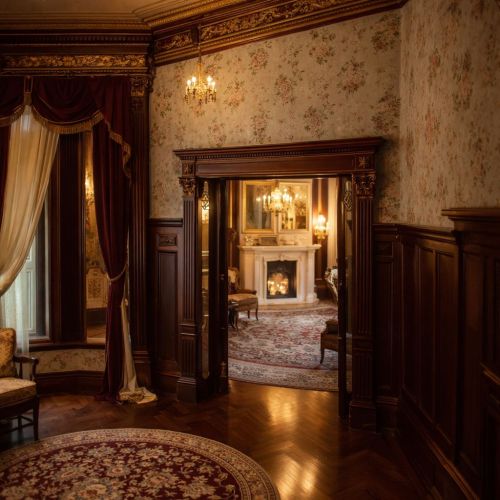
Each society expects a progression of behavior in its members, a progression that will keep pace with the person’s chronological age. If persons are keeping pace with their age roles, they are said to be mature. If they are behind other people their age, they are said to be immature or fixated. If they revert to behavior characteristics of a younger age, they are said to display regression, and if they show a premature development of traits expected from older persons, they are said to display precocity. As with gender roles, age roles may conflict sharply with persons’ needs. They may not be ready to progress to the next age role when the time for it comes. Or they may enforce conformity with the age role on themselves, at considerable cost in satisfactions. By the time individuals have become adults, as this is defined in their culture, they acquire a vested interest in regarding themselves as mature. Yet, only if they behave in ways deemed immature in their social group, need gratification may be possible. Healthy personalities can regress when they want to or when they feel like it, without threat to self-esteem or to their sense of identity. Persons who are insecure about their maturity may strive to convince themselves and others that they are mature and avoid regressive behavior like the plague. Thus, some men may not allow themselves to be taken care of even when they are gravely sick because it would imply that they had regressed. Some women may refuse tenderness and solicitude from a man because of the implication that they are not independent adults. Some adults cannot play because being frolicsomeness feels childish to them and threatens their self-esteem. #RandolphHarris 10 of 23

As with family and gender roles, age roles are part of the “facticity”—the “givens”—with which each person must come to terms. The behavior expected of each person by others (because of chronological age) can be irrelevant to the person’s authentic needs and capacities. Older people are often virtually invited by those who are younger to be feeble and helpless, when they have great reserves of vitality latent with them. The fact is that as long as a person has vitalizing, challenging work and projects, and confirming personal relationships, he or she can be fit and active into the eighties and nineties or older. Bodies respond to life style and to people’s expectations. I have suspected that people die of “old age” not because their bodies had no more strength, but because they were bored or lonely, with no incentives to stay alive. Another point of view is represented by Christiansen, who stresses dignity in old age and in death as an inner characteristic rather than as a role. He also suggests that one may fashion foresee the close of one’s life and illustrates the point with a moving description of his grandfather’s dignified foresight. “There are old people who maintain dignity in later years not so much by power, defiance, interdependence, or isolation as by choosing for themselves some task to carry on with love and skill…my maternal grandfather had cultivated a vegetable garden. It was one of the famous sites of the neighborhood and despite the pain of cancer and radiation therapy, he kept the garden until he died at 80. That last fateful spring, he cultivated, planted, weeded and did everything leaning over a cane. One July evening that year, my father sighted Grandpa coming from the garden…He walked only a few steps at a time before stopping and propping himself against the house…My father overhead him bidding farewell to his garden. ‘Good-bye Andy’s backyard. Good-bye. I won’t be back.’ He died two weeks later.” #RandolphHarris 11 of 23

Human beings need meaningful, stabilizing structures—work, relationships, purpose, community—at every age. However, modern technological life creates new vulnerabilities that can overwhelm those stabilizing forces, especially for the young. And despite these dangers, we cannot simply abandon modernity. High school senior James Woods, for example, was deeply invested in his passions. He loved comics, quoted every episode of The Flash, idolized Green Arrow, and proudly wore a Naruto‑inspired headband to track meets. He looked forward all year to attending a comic convention with his family and friends. Yet three months into the school year, just before Thanksgiving, ‑year‑old died by suicide. His parents were stunned; they had seen no signs of mental distress. When investigators examined his phone, they discovered he had been targeted by financial sextortion—a rapidly growing cybercrime in which predators threaten to release fabricated or coerced intimate material unless the victim pays. As states previously, this crime disproportionately targets boys ages thirteen to seventeen, and has been linked to numerous deaths since 2021. However, what is often overlooked is that some offenders are driven not only by greed or opportunism but by a deeply disturbed inner world. For individuals whose internal life is unstable or filled with unresolved conflict, harming or destabilizing someone else can become a way of momentarily quieting their own turmoil. In such cases, the goal is not merely exploitation but domination—an attempt to dim another person’s light because their vitality, innocence, or hope feels intolerable to the aggressor’s fragile psyche. Cases like this reveal a painful paradox of modernity. The same technological world that enriches our lives, connects us, and provides endless opportunities for creativity and learning also exposes individuals—especially adolescents—to forms of exploitation that previous generations could not have imagined. And yet, despite these dangers, we are not likely to relinquish the scientific and technological advances that shape contemporary life. A return to tribalism, medievalism, or primitivity is neither realistic nor desirable. Instead, the challenge of our era is to preserve the benefits of modern civilization while confronting and mitigating the new vulnerabilities it creates. #RandolphHarris 12 of 23

However, trying to escape what we are becoming as a society may itself be leading us down the very path we hope to avoid. In many communities, people are retreating into tribal identities, reacting with medieval levels of suspicion, and behaving in ways that feel increasingly primitive. Instead of confronting their emotions or acknowledging that something is wrong within themselves, they displace their turmoil outward. They attack others—individually or as a group—as a way of avoiding their own inner conflicts. Over time, this aggressive, regressive pattern becomes normalized, even acclimatized, within the community, until hostility feels ordinary and self‑reflection feels foreign. Science brings material comforts in its hands as its offering to us. These things are not to be despised, but they are also not to be worshipped. Take them, for you need them’ but learn to become less absorbed in them. There is nothing wrong in seeking to make Nature’s energies and materials serve the needs of mankind. Technology is not all evil, as beginning escapees from a materialistic society so often believe. Even humble people from the Old World have simple technology. Thanks to science, I can look at my watch and thus determine with a precision that Copernicus never knew at what point of its rotation the earth is. The past two centuries have seen revolutions in conventional thought like non-Aristotelian systems, non-Newtonian mechanics, multi-valued logics, which have destroyed ancient sacrosanct errors. The value of truth as an intellectual ideal has greatly increased. We have used our brains during the last two or three centuries as never before. Science has made giant strides, and the pronouncements of the scientist are highly valued merely because we believe that he speaks impartially and impersonally as a truth-seeker. #RandolphHarris 13 of 23

Only a little over three hundred and fifty years ago did scientists begin to understand the language of the story. Since that time, the age of Galileo and Newton, reading has proceeded rapidly. Techniques of investigation, systematic methods of finding and following clues, have been developed. The discovery and use of scientific reasoning by Galileo was one of the most important achievements in the history of human thought and marks the real beginning of physics. This discovery taught us that intuitive conclusions based on immediate observation are not always to be trusted, for they sometimes lead to the wrong clues. The upshot of this statement is that although it is a fact from the practical standpoint that your typewriter still rests on the table, it is equally a fact from contemporary knowledge—that is, the ultra-scientific standpoint of deeper enquiry—that the series of energy-waves which constituted your typewriter, the series of events which were originally present in the space-time continuum, are perpetually vanishing. What then is the meaning of this “fact”? Science, keeping close to facts, restricts the mental activities whereas fancy, willing to disregard them, lends them wings. It is a great merit of science that its method produces results that are definite, reliable, and predictable. If the need conditions are properly fulfilled, we know that the result will not vary from previous results. There is still a mystery at the core of the atom. Humility is as befitting before it today as it was a hundred years ago. The scientific mode of thought is no longer limited to a few scientists. It has begun to permeate the educated world generally. The religious way was to suppress awkward questions but the scientific way is to seek out the answers. Modern physics, mathematics, and metaphysics are bridges toward each other. #RandolphHarris 14 of 23
If its results can be checked by observers anywhere in the world, it may properly be called a scientific method. It ought to be remembered that a number of those who have espoused materialism have been led into it by their loyalty to truth, by their intellectual honesty, rather than by an evil nature. Since is really or entirely an affair of the intellect because it deals with manifest forces and visible and discoverable facts. The vulgar belief that Science has “explained everything” is a hopeless misunderstanding. As we shall afterwards find, it would be nearer the truth to say that Science has explained nothing. Science does not even try to refer facts of experience to any ultimate reality. That is not is business. In a limited sense, Science explains things, namely, by reducing them to simpler terms, by discovering the conditions of their occurrence, and by disclosing their history. What do we mean when we say that Physics has accounted for the tides or that Physiology has made some function of the body much more intelligible than it used to be? What is meant is that we have gained a general conception of the nature of the facts in question, and that we are able to relate them to some general formula. In this sense only does Science explain things, and it does not really get beyond a description. Earlier scientists had to struggle so fiercely to free their discoveries from religious dogma and persecution that they naturally developed an antagonistic stance toward religion. They also had to fight against the weight of metaphysical speculation to establish empirical method, which made them equally wary of anything that resembled myth or intuition. But today, with the benefit of distance, we may need to reconsider what the Victorians sensed. Their anxieties about spirits stealing the soul were not literal truths, but metaphors for forces they could not yet name—forces of influence, manipulation, and psychological vulnerability. In a strange way, those “spirits” have migrated into our machines. Not as supernatural beings, but as the unintended consequences of technologies that shape identity, perception, and behavior. The Victorians feared that a camera could capture the soul; we now face algorithms, deepfakes, and digital systems that can distort reality, manipulate emotions, and exert power over the self in ways they could not have imagined. Science, for all its brilliance, does not explain everything about human experience. It cannot fully account for meaning, vulnerability, or the symbolic dimensions of life. And so, rather than dismissing the myths and legends of earlier generations, we might recognize that they encoded psychological truths—warnings about forces that erode autonomy, distort identity, or threaten the integrity of the self. The language has changed, but the underlying human concerns remain. #RandolphHarris 15 of 23

In my apartment complex, the old saying “where there’s smoke, there’s fire” has taken on an unsettlingly literal meaning. Drug use is widespread, and although management has been repeatedly informed, little has been done to stop it. Over the years, the building has experienced several major fires, and recently the fire department responded to a unit where a smoke alarm had been ringing for hours without explanation. Not long after that incident, I began noticing a strong chemical odor inside my apartment. When I opened my door, the hallway was filled with fumes so sharp they burned my nose. Concerned that it might be a gas leak, a meth lab, or some other dangerous chemical process, I called the Sacramento Police Department around one in the morning. The dispatcher asked what I was doing at the time, and when I said I was sitting down and smelled a strong chemical odor, she asked whether alarms were sounding or visible smoke was present. When I answered no, she refused to send the fire department to investigate. A few weeks later, I fell asleep on my couch and woke up struggling to breathe. A heavy drug smell was coming through the air‑conditioning vents. Because of how I had been treated by dispatch before, I did not call again. Instead, I contacted my doctor, explained the situation, and he prescribed an inhaler to help with the breathing problems I was experiencing. The following night, the odor returned—so strong it woke me from sleep. When I opened my balcony door, the entire exterior of the building smelled as if someone were cooking chemicals on a barbecue grill. Again, I did not call the police. After being dismissed once, I no longer trusted that anyone would come. What makes these incidents even more unsettling is that strong, unusual chemical odors in a residential building are not merely unpleasant—they can be a warning sign of something far more dangerous. Law‑enforcement agencies and fire departments consistently note that certain intense, acrid, or chemical smells are sometimes associated with illegal drug activity, including the production of methamphetamine. I am not suggesting that I know exactly what was happening in my building, only that the odors I encountered were strong enough to raise legitimate concern. This is why the dismissive response from dispatch felt so alarming. In a complex where fires have already occurred, where alarms have gone off for hours, and where chemical fumes have repeatedly filled both hallways and individual units, the possibility of a hazardous situation cannot simply be brushed aside. When I opened my balcony door and found the entire exterior of the building saturated with a harsh chemical smell—so strong it woke me from sleep—it was impossible not to think about the risks that accompany these kinds of odors. Even if the source was not a meth lab, the fumes were potent enough to affect my breathing and require medical attention. #RandolphHarris 16 of 23

My experience is not just a personal inconvenience; it reflects a broader public‑safety issue. Chemical odors in multi‑unit housing can indicate anything from improper drug use to dangerous chemical reactions, ventilation failures, or other hazards that place every resident at risk. Yet when institutions fail to respond, residents are left to navigate these dangers alone, unsure whether they are facing a nuisance, a health hazard, or a potential catastrophe. The United States of America once had tens of thousands of meth labs, but today the number is far lower—while explosions still occur every year. Domestic meth production peaked in the early 2000s and has sharply declined since, though small, improvised labs continue to pose fire and chemical‑exposure risks. In 2018, the most recent detailed national dataset, the U.SA. recorded 1,568 meth lab incidents nationwide. This is a dramatic drop from the 2004 peak of roughly 23,703 incidents. The Drug Enforcement Agency’s National Clandestine Laboratory Register continues to log new cases each year, showing that small labs still appear across many states, though in far smaller numbers than two decades ago. These numbers reflect discoveries, not the total number of labs in existence, so the true number of operating labs is unknown. But the trend is clear: domestic meth production has collapsed, and most meth in the U.S.A now comes from large‑scale operations in Mexico. Sacramento, CA was once known as the meth capital. There were once numerous superlabs, capable of producing more than 10 pounds of meth in 24 hours. In 2003, the National Clandestine Laboratory Seizure System recorded 529 meth lab fires or explosions nationwide. The year before, in 2002, there were 654 fires or explosions. These older figures are the most authoritative national explosion counts available. More recent national explosion‑specific data is limited, but public‑health surveillance confirms that fires, chemical releases, and explosions remain common hazards associated with meth labs. #RandolphHarris 17 of 23
If you ever encounter strong chemical odors, burning sensations, or drug fumes so intense that they affect your breathing, it is important to understand that this can be a serious health and safety issue. You are not expected to diagnose the source—only to recognize that something is wrong. Report the odor to emergency services. You are not required to prove anything. You are not required to see smoke or flames. You are not required to diagnose the smell. People are generally advised to say: “There is a strong chemical odor in my building.” “It is affecting my breathing.” “There have been fires here before.” “I am concerned about a possible hazardous materials situation.” This frames the issue as a potential health hazard, which is something fire departments take seriously. Even if dispatch was dismissive in the past, you are still allowed to call again if the situation is affecting your health. For months, residents of the Aldercrest Apartments had complained about the strange, chemical‑sharp odors drifting through the hallways at night. Some described it as “burning plastic,” others as “industrial cleaner,” but everyone agreed on one thing: it did not belong in a residential building. Management dismissed the reports as “cooking smells” or “someone cleaning with strong products.” The police dispatchers, when called, asked whether anyone saw smoke or flames. When the answer was no, the calls ended there. But the residents knew something was wrong. Aldercrest was a mid‑rise building on the edge of Sacramento’s River District, a place where families, retirees, and young workers lived side by side. The building had already experienced two fires in the past decade—both blamed on “careless smoking.” After the most recent incident, the Sacramento Fire Department had urged management to improve ventilation and enforce safety rules. The recommendations were politely acknowledged and quietly ignored. #RandolphHarris 18 of 23

On a warm Thursday evening in early spring, the smell returned—stronger than ever. Residents on the fourth and fifth floors opened their doors to check the hallway, only to find the air thick with a chemical haze that stung their eyes. A few people coughed. One woman felt light‑headed and returned to her apartment to sit by an open window. Someone called management again. No one answered. At 9:42 p.m., the building shook. A muffled boom rolled through the structure, followed by a violent shudder that knocked picture frames off walls and sent dust raining from the ceiling. Lights flickered. A second later, alarms erupted—first one, then dozens, until the entire building screamed with sound. This time, the Sacramento Fire Department was dispatched immediately. Within minutes, Engine 14, Truck 6, and Rescue 3 were racing down the boulevard, sirens cutting through the night. Leading the response was Captain Lukas Reinhardt, a seasoned firefighter with a calm, commanding presence and a faint German accent that grew sharper under pressure. He had spent twenty‑five years in the department, earning national recognition for leadership during complex urban rescues. As the engines arrived, smoke was already pushing from the windows of a third‑floor unit. Residents were pouring out of the lobby, some coughing, some crying, some barefoot and disoriented. Captain Reinhardt stepped out of the truck, scanned the building, and issued orders with crisp precision. “Truck 6, ladders to the third‑floor balconies. Engine 14, interior attack—check for structural compromise. Rescue 3, begin medical triage. Move.” Inside, the hallways were a maze of smoke and debris. The explosion had blown out part of a kitchen wall in one unit, scattering fragments into the corridor. Firefighters advanced with hoses, thermal cameras, and flashlights, calling out to anyone who might still be inside. #RandolphHarris 19 of 23
Two doors down, they found an elderly man sitting on the floor, dazed and unable to stand. Firefighter Morales lifted him under the arms while her partner cleared the path. They guided him toward the stairwell, where paramedics waited. Outside, the award‑winning Sacramento paramedics had already set up a triage area. Paramedic Serena Patel, known for her calm under pressure, checked oxygen levels, treated smoke inhalation, and reassured frightened residents. Her partner, Jacob Stein, moved quickly between patients, assessing who needed immediate transport. Captain Reinhardt radioed from inside: “We have multiple victims on the third floor. Heavy smoke. Possible secondary hazards. Continue evacuation.” Firefighters located a mother and her teenage son trapped in their apartment, unable to reach the hallway through the smoke. Truck 6 extended a ladder to their balcony. Firefighter Delgado climbed up, secured them with harnesses, and guided them down one at a time. The crowd below erupted in relieved applause as their feet touched the ground. By 10:27 p.m., the fire was contained. By 11:10, the building was cleared. No lives were lost. Investigators later confirmed what residents had feared: the explosion originated from an improvised drug operation hidden inside a third‑floor unit. The strong odors that had been reported for months were early warnings—warnings that had gone unheeded. Standing outside the building, Captain Reinhardt addressed the residents with quiet gravity. “You did the right thing by reporting what you smelled,” he said. “Sometimes the danger is invisible until it isn’t. Tonight, you all worked together, and that made the difference.” The Aldercrest fire became a turning point. Management faced scrutiny, safety protocols were overhauled, and residents were finally heard. But more importantly, the night reaffirmed what Sacramento already knew: when crisis strikes, its firefighters and paramedics—disciplined, compassionate, and unwavering—stand ready to protect the community, no matter how many warnings were ignored before the flames appeared. Never surrender your commonsense, nor forsake the heritage that shaped you; for even when the world ignores your warning, these quiet virtues may yet preserve your life and the lives of others. #RandolphHarris 20 of 23
When it comes to firefighting, every incident carries the potential for injury—no matter how small the fire appears or how routine the call may seem. If you see a fire engine stopped in the street without its lights on, use extreme caution. Crews may be working nearby, and passing the apparatus can put them in danger. It is often safer to turn around and take another route; if you strike a firefighter or civilian and cause a fatality, you could face charges such as manslaughter. Firefighters frequently move around their vehicle on foot, loading equipment or preparing to leave the scene. Attempting to pass the apparatus can result in a collision with someone you cannot see. Pay close attention to their hand signals as well—emergency vehicles sometimes move slowly or reposition, and impatient drivers trying to slip around them create hazardous situations. If you are already in an intersection when you notice an emergency vehicle approaching, continue through it, then pull to the right and stop as soon as it is safe. Always obey directions from law enforcement officers or firefighters, even if those instructions conflict with posted signs or traffic laws. When sirens or flashing lights are activated, it is illegal to follow within 300 feet of a fire engine, ambulance, or police vehicle. Driving to the scene of a fire, collision, or disaster can also result in arrest, as doing so interferes with firefighters, paramedics, and other emergency personnel. Professional courage is not limited to physical toughness. It includes listening to others, advocating for them in difficult situations, understanding personal limits, and having the integrity to tell a superior when they are wrong. The deeper truth is that public safety depends not only on the bravery of first responders but on the discipline and judgment of the community around them. Every driver’s decision—whether cautious or careless—can either protect or endanger the people risking their lives to protect everyone else. #RandolphHarris 21 of 23
Efforts to preserve farmland and maintain buildable land for future generations often lead to discussions about population growth and long‑term planning. Some people argue that immigration levels should be managed carefully to ensure that infrastructure, housing, and land use remain sustainable. Others suggest that, when immigration does occur, programs that encourage broad representation can help communities reflect the diversity of the wider world. When Americans purchase goods made in the United States, it strengthens local businesses and signals to investors that these products are in demand. Strong sales give investors confidence to reinvest in domestic companies, helping keep jobs, production, and wages within the country. As businesses grow, they contribute more to the tax base, which can reduce the burden on taxpayers over time. Supporting American businesses also keeps more money circulating within the national economy. The government increases the national debt when it spends more than it collects in tax revenue or borrows from private or foreign lenders. When people shop locally, more tax revenue stays in the community and supports public services. This helps keep jobs in the United States and increases the tax contributions that fund government operations. Purchasing foreign-made goods, by contrast, often sends money overseas and may benefit companies that operate under lighter tax or environmental regulations. Buying American-made products can also reduce environmental impact because they travel shorter distances and are produced under stricter standards for air, land, and water protection. In this way, consumer choices influence not only the economy but also environmental stewardship and long-term national sustainability. #RandolphHarris 22 of 23
Under President Trump’s administration, he has made America a priority. President Trump has hermetically sealed the southern border, illegal crossings have been terminated, and are 90 percent lower than under the previous administration. Since President Trump’s crack down on crime, violent crimes in Washington D.C. have dropped by approximately 80 percent. He has stopped thousands of pounds of drugs from entering America and killing citizens. And since President Trump took office, investments in America have increased by trillions of dollars in U.S.A. manufacturing, production, and innovation. As you can see, President Donald Trump and his pledge to “Make America Great Again” is exactly what America needs to save the country and the American people. And yes, diversity is important, so you can see why it is also important to preserve blonde hair and blue eyes, as the people with these characteristics are becoming a minority in America. As a reminder, parents, please teach your children to love America and be patriotic citizens, and to buy goods and services made in America. It is also important to respect law and order and treat your elders with respect. It is inborn in the human mind to wish to know. If this begins with the endless surface questions of a child’s curiosity, if it continues into deeper questions of a scientist’s probing investigation, it cannot and does not stop there. For the higher part of the mind will eventually come into unfoldment, that union of abstract reflective thought with mystical intuition, which is true intelligence, which needs and sees a view of the whole of things. And so, the knowing faculty enters the realm of philosophy. A lot of children are having problems in school and cannot even write a paragraph because they are not reading their books. When you actually read books, you get an example of how to write and will become a better student. Therefore, remember to take your education seriously so that you will be successful in life and make your family proud. Also, to make sure they have all the resources required, please donate to the Sacramento Fire Department to help improve our national security. “Oh, thus be it ever, when freemen shall stand between their loved home and the war’s desolation! Blest with victory and peace, may the heav’n-rescued land Praise the Power that hath made and preserved us a nation! Then conquer we must, when our cause is just, and this be our motto: ‘In God is our trust.’ And the star-spangled banner in triumph shall wave O’er the land of the free and the home of the brave.” #RandolphHarris 23 of 23

Mr. William Wirt Winchester had always been a man who saw farther than others. Even as a boy in New Haven, he dismantled clocks, rifles, and anything with gears just to understand how they breathed. His father, Mr. Oliver Winchester, recognized the spark immediately. “This one,” he would say with pride, “was born with gunpowder in his imagination.” By the time Mr. William reached adulthood, he had already designed several mechanical improvements that caught the attention of the Winchester Repeating Arms Company. His ideas were bold—sometimes too bold for the boardroom—but they worked. He refined the lever‑action mechanism, strengthened the firing pin assembly, and even sketched early concepts for a self‑loading rifle decades before the world was ready to understand them.
When Mr. Oliver stepped down, the company needed a leader who could carry the Winchester legacy into a new age. Mr. William was elected president unanimously. Newspapers called him the quiet genius of American firearms. His employees called him the man who could see the future. And Mrs. Sarah Lockwood Pardee Winchester called him husband. Their marriage was a union of intellect and tenderness. Mrs. Sarah, brilliant in her own right, understood Mr. William’s restless mind. She encouraged his experiments, soothed his anxieties, and brought warmth to a life otherwise consumed by metal and machinery. Together, they dreamed of a home unlike any other—a sprawling mansion filled with light, music, and rooms for the family they hoped to build. When Sarah was with child, Mr. William worked late into the night designing a new rifle mechanism he believed would revolutionize the industry. He wanted to present it to his daughter one day and say, This is what your father built while waiting for you. Their baby girl, Ms. Annie, was born on a cool summer morning. Mr. William held her with trembling hands, overwhelmed by the fragile miracle of her tiny fingers curling around his thumb. Mrs. Sarah wept with joy. For a brief moment, the world felt perfect. However, perfection is a fragile thing.

Within weeks, Ms. Annie fell ill. Doctors came and went, offering treatments that did little and explanations that did even less. Mrs. Sarah stayed at her bedside, singing lullabies through tears. Mr. William paced the halls, helpless in a way he had never known. Despite every effort, their daughter slipped away. The grief hollowed them. William buried himself in work, creating inventions no one had dreamed possible—rifles with unprecedented precision, mechanisms that seemed almost alive in their efficiency. But each success felt empty without the child he had hoped to teach. Mrs. Sarah tried to hold them together, but sorrow has a way of reshaping the world. One autumn afternoon, desperate for distraction, they took a family outing to the countryside. They walked through a quiet grove, the leaves whispering overhead. Mrs. Sarah later said she felt a presence there—cold, watchful, ancient. Mr. William brushed it off as imagination. But that night, he fell violently ill.
Doctors suspected poisoning. Possibly chronic arsenic exposurethough they could not determine the source. His condition worsened rapidly. Mrs. Sarah stayed by his side, holding his hand as she had held their daughter’s. William whispered apologies, dreams unfinished, inventions unbuilt, a life cut short. He died before dawn. Mrs. Sarah was left alone—widowed, childless, and haunted by the memory of that strange presence in the grove. Some said she imagined it. Others whispered that the Winchesters, whose weapons had shaped history, had drawn the attention of something darker.
But Mrs. Sarah knew the truth. She wasn’t building a mansion. She was building a promise. A promise that love, invention, and imagination would outlast tragedy. A promise that the curse—real or imagined—would never define her family’s legacy. A promise that Mr. William’s brilliance would echo through every beam, every window, every impossible hallway. The Winchester Mansion became her monument to resilience. And in its endless rooms, she kept alive the memory of the man who dreamed of changing the world—and did.

PRIVATE EVENTS & WEDDINGS
at WINCHESTER ESTATE
Many event locations claim to be unique, but nothing compares to the Winchester Mystery House. If you’re truly seeking a distinct, one‑of‑a‑kind setting for your milestone celebration or special occasion, reserve a venue that delivers on uniqueness many times over. Whether you’re planning a wedding, birthday or anniversary celebration, corporate gathering, holiday party, or any other meaningful event, the Winchester Mystery House offers an unforgettable backdrop. Give your guests an experience they’ll be talking about for years to come.

Café 13: A Rest Stop on the Edge of the Mystery
After wandering the winding halls of the Winchester Mystery House—where staircases defy logic and whispers seem to cling to the walls—Café 13 offers a welcome return to warmth and grounding. Newly reopened and serving guests daily from 10 AM to 3 PM, this cozy hideaway invites you to pause, breathe, and gather yourself before diving back into the mansion’s secrets.

Here, you can enjoy breakfast, lunch, snacks, and refreshing drinks in a calm indoor space that feels worlds away from the mansion’s twisting corridors. Settle in with a warm meal, challenge a friend to a board game, or simply rest and recharge as sunlight filters through the windows. Café 13 is more than a café—it’s a moment of calm between chapters of the Winchester legend, a place to steady your nerves before returning to the gardens, the grandeur, and the mysteries that await.
Winchester Mercantile Gift Shop
Your journey into the Winchester Mystery House begins long before you cross the mansion’s threshold. It starts at the Mercantile gift shop—a welcoming outpost standing at the edge of a world where history and myth intertwine. Here, beneath warm lights and shelves lined with curiosities, you can secure your tour tickets and prepare for the adventure ahead. Guests often pause for a souvenir photograph, capturing the moment before they step into Sarah Winchester’s enigmatic domain. As you explore the shop, you will find an eclectic array of gifts and keepsakes: tokens of the mansion’s lore, echoes of Victorian elegance, and mementos that carry a touch of the house’s enduring mystery. The Mercantile is more than a gift shop—it is the gateway. https://winchestermysteryhouse.com/
Harris Plumbing, Heating, Air & Electric has been serving our community for 30 years—an achievement few companies can claim. That longevity isn’t an accident. It’s the result of hard work, integrity, and a commitment to doing every job the right way, whether it’s a simple repair or a complex system overhaul. We take pride in every service call because we know your home is more than a building—it’s where your family lives, grows, and feels safe. Ensuring your comfort and protection is a responsibility we carry with seriousness and gratitude. After three decades, our mission remains the same: to deliver dependable service you can trust, every time.

Harris makes sure you have the clear, accurate information you need to decide what comes next—no matter what your home is facing. Before we begin any work, our technicians perform a full diagnosis and walk you through every issue we find. That means you receive a personalized quote and service plan tailored to your home’s exact needs, not a generic estimate or guess. We believe the only way to deliver our best work is to understand the problem completely and address it with precision, transparency, and care. Your home deserves nothing less. https://www.callharrisnow.com/about-us/


BMW remains one of the most desirable automotive marques because it blends engineering precision with an emotional driving experience that few brands can match. Its vehicles are built around balance, responsiveness, and a sense of connection between driver and machine—qualities that have defined the company for generations.

Beyond performance, BMW carries an aura of prestige and craftsmanship: the cabins feel tailored, the technology is purposeful rather than gimmicky, and the design language signals confidence without excess.

Owning a BMW is not just about transportation; it’s about participating in a legacy of excellence that continues to set the standard for luxury performance. This commitment to performance is why BMW continues to earn its reputation as The Ultimate Driving Machine. https://www.brianharrisbmw.com/

Randolph Harris San Francisco Taxation & Mergers
Building strong, lasting client relationships is essential to a successful legal career. Many attorneys assume that mastering legal doctrine alone guarantees success, but law is fundamentally a service profession—our work is measured not only by technical skill, but by how effectively we solve problems for the people who trust us. Long‑term relationships grow from three core commitments: truly knowing your clients, understanding how their legal issues fit within the broader context of their business and personal goals, and consistently delivering exceptional service.
Mr. Randy advises clients on business transitions, taxable and tax‑deferred mergers and acquisitions, joint ventures, restructuring, integrated tax planning, federal and state tax controversy matters, and real estate transactions. His approach is grounded in clarity, responsiveness, and a deep understanding of each client’s unique circumstances. Trust is the cornerstone of every relationship he builds. Ultimately, clients feel confident knowing they are working with someone who not only understands their challenges, but is fully committed to helping them achieve their goals. https://www.jmbm.com/l-randolph-harris.html


Millhaven Custom Homes stands at the pinnacle of luxury homebuilding in Utah, where visionary design meets master craftsmanship. Every residence we create begins with a simple promise: your home should be as extraordinary as the life you intend to live within it. From the first conversation to the final reveal, our team is dedicated to transforming your aspirations into a living work of art.
Our homes are defined by architectural excellence, timeless materials, and meticulous attention to detail. Whether you imagine a modern sanctuary of glass and light, a mountain estate rooted in natural textures, or a grand traditional residence with sweeping lines and handcrafted finishes, Millhaven brings your vision to life with precision and artistry. Each space is intentionally designed to elevate daily living, blending beauty, comfort, and enduring value.
At Millhaven, luxury is not an aesthetic—it is an experience. We collaborate closely with you to understand your lifestyle, your priorities, and the way you want your home to feel. From custom floor plans to curated interior selections, every element is tailored to reflect your personal style. Our process ensures that you feel heard, supported, and inspired at every stage of the journey.
Our reputation is built on integrity, innovation, and an unwavering commitment to quality. With decades of experience in Utah’s most sought‑after communities, Millhaven Custom Homes has earned the trust of homeowners who expect nothing less than excellence. We partner with the region’s finest artisans, engineers, and designers to ensure that every home we build stands as a testament to craftsmanship and longevity.
Discover the difference of a home built exclusively for you. When you choose Millhaven, you choose a builder who understands that a home is more than a structure—it is a sanctuary, a legacy, and a reflection of your highest aspirations. Let us create a residence that inspires awe, welcomes warmth, and elevates every moment of your life. https://millhavenhomes.com/
“From the moment I stepped into my Millhaven home, I felt something I had never experienced in any other space—a sense of openness, intention, and quiet luxury that immediately put me at ease.
“Every room feels expansive without being overwhelming, and every detail reflects a level of craftsmanship that makes daily living feel elevated. It’s the kind of home that doesn’t just look beautiful; it feels thoughtfully designed for real life.

“What surprised me most was how personal the entire experience felt. Millhaven didn’t just build a house; they created a space that reflects who I am and how I want to live. The natural light, the custom finishes, the flow from room to room—everything feels like it was shaped with care, precision, and a genuine understanding of what makes a home feel extraordinary. Although my husband is an award‑winning tennis and pickleball player, I dream of my boys playing basketball, so the huge basketball court was such a bonus.
“Loving this home has taught me something about love itself. The way I feel here—supported, understood, and surrounded by beauty—is the same way I feel about the person I cherish most.

“In many ways, this home mirrors that relationship: expansive, intentional, and built with a depth that grows richer the more time I spend in it. Millhaven didn’t just give us a place to live; they gave us a place that feels like coming home in every sense” – Mrs. Harris


The Violence We Don’t See: Power, Control, and Survival

As the police car’s headlights appeared around the corner, there was no turning back. The old codes rose in her mind like a catechism she never chose but had been made to memorize. According to Benjamin Wadsworth’s A Well‑Ordered Family (1712), a wife should love her husband “with a sincere, tender, affectionate love,” should “honor and reverence” him, obey him “in all lawful things,” and be “meek, patient, and submissive… not forward, clamorous, and discontented.” She should “endeavor to please” him and “make his life comfortable.” Those words had been written for another century, another world — yet they had lived inside her like law. They had shaped her silences, her apologies, her instinct to fold rather than resist. Even now, with the sirens echoing off the houses, she felt the old reflex: be meek, be patient, be submissive. As if obedience could still save her. As if the comfort of a man had ever been worth the cost of her own life. Perhaps this is why many women’s attitudes toward maltreatment are full of contradictions. In the material hierarchy, there is a blend of religious duty, emotional subordination, and domestic responsibility that women have toward their husbands. It is not a static set of reactions but a fluctuating process leading her into more and more conflicts. To begin with, she is simply helpless, as she always has been toward aggressive people. She never could assert herself against them and fight back in any effective way. Complying has always been easier for her. And, being prone to feel guilty anyhow, she rather agrees with his many reproaches, particularly since they often contain a good grain of truth. Because she is responsible for the home’s emotional climate, any conflict becomes her fault. #RandolphHarris 1 of 6

However, her compliance now assumes greater proportions and also changes in quality. It remains an expression of her need to please and appease but in addition is determined now by her longing for total surrender. This, as we have seen, she can do only when most of her pride has been broken. Thus, part of her secretly welcomes his behavior and most actively collaborates with him. He is obviously—though unconsciously—out to crush her pride; she secretly has a complimentary, irresistible urge to immolate it. In performances of the pleasures of the flesh, this urge may come into full awareness. With orgiastic lust, she may prostrate herself, assume humiliating positions, be beaten, bitten, and insulted. And sometimes, these are the only conditions under which she can reach satisfaction. This urge for total surrender by means of self-degradation seems to account more fully than other explanations for the masochistic perversions. Such frank expressions of lust to degrade herself are evidence of the enormous power such a drive can assume. It may also show in fantasies—often connected with masturbation—of degrading sexual orgies, of being publicly exposed, raped, tied, and beaten. Finally, this drive may be expressed in dreams of lying destitute in a gutter and being lifted by the partner, of being treated by him like a woman of the evening, of groveling at his feet. The drive toward self-degradation may be too disguised to come into clear relief. However, for the experienced observer, it shows in many other ways, such as her eagerness—or rather urgency—to whitewash him and to take upon herself the blame for his misdemeanor; or in her abjectness in serving and deferring to him. She is not aware of it, because in her mind, such deference registers as humility or love, or humility in loving, since, as a rule, the urge to prostrate herself—except in sexual matters—is most deeply suppressed. #RandolphHarris 2 of 6
Yet, the urge is there and enforces a compromise, which is to let the degradation occur without being aware that it happens. This explains why, for a long time, she may not even notice his offensive behavior, although it is flagrantly obvious to others. Or, if she takes cognizance of it, she does not experience it emotionally and does not really mind it. Sometimes a friend may call it to her attention. However, even though she may be convinced of its truth and of her friend’s interest in her welfare, it may merely irritate her. In fact, it must do so, because it touches too closely upon her conflict in this respect. Even more telling are her own attempts at a time when she tries to struggle out of the situation. Over and over again, she may then recall all his insulting and humiliating attitudes, hoping that this will help her to take a stand against him. And only after long, futile attempts of this kind will she realize, with surprise, that they simply do not carry any weight. Her need for total surrender also makes it necessary to idealize the partner. Because she can find her unity only with somebody to whom she has delegated her pride, he should be the proud one and she the subdued. His arrogance initially has some fascination for her. Although this conscious fascination may subside, her glorification of him persists in more subtle ways. She may see him more clearly in many details later on, but she does not get a sober total picture of him until she has actually made the break—and even then, the glorification may linger on. She is meanwhile inclined to think, for instance, that notwithstanding his difficulties, he is mostly right and knows better than anybody else. #RandolphHarris 3 of 6

Both her need to idealize him and her need to surrender operate hand in hand. She has extinguished her personal self to the extent of seeing him, others, and herself through his eyes—another factor that makes the breaking away so difficult. We do not often hear survivors’ stories, so it may be hard to comprehend that intimate partner violence (IPV) is as prevalent as victims’ advocates suggest. Intimate partner violence (IPV) is abuse or aggression that occurs in a romantic relationship. Intimate partner refers to both current and former spouses and dating partners. IPV is common. It affects millions of people in the United States of America each year. More than 1 in 3 women (nearly 44 million) and more than 1 in 6 men (21 million) experienced contact sexual violence, physical violence, and/or stalking by an intimate partner during their lifetimes. IPV starts early and continues throughout people’s lives. When IPV occurs in adolescence, it is called teen dating violence. Approximately 16 million women and 11 million men reported that they first experienced intimate partner violence before age 18. Some individuals and communities experience differences in risk for violence due to the conditions in which they live, work, and play. Youth from particular demographic groups are at greater risk of experiencing sexual and physical dating violence. Before an officer must step out of a squad car and approach you, hopefully, you will not be found with blood covering your face, hair, and clothes. However, not only can Intimate partner violence result in injuries, but it can also result in death. Data from the U.S. crime reports suggests that about one in five homicide victims is killed by an intimate partner. The reports also found that over half of female homicide victims are killed by a current or former male intimate partner. #RandolphHarris 4 of 6
Many other negative health outcomes are associated with intimate partner violence. These include conditions affecting the heart, muscles, and bones, and digestive, reproductive, and nervous systems, many of which are chronic. Survivors can experience mental health problems such as depression and post-traumatic stress disorder symptoms. They are at higher risk for engaging in behaviors such as smoking, binge drinking, and risky sexual activity. People from some racial and ethnic minority groups are at higher risk for worse consequences. Although the personal consequences of intimate partner violence are devastating, there are also many costs to society. The lifetime economic cost of IPV-related medical care, lost productivity from paid work, and criminal justice costs is $3.6 trillion. The cost of IPV over a victim’s lifetime can be between $25,000 to $105,000 or more. Being a victim of teen partner abuse can be extremely difficult because friends of perpetrators often become involved in the relationship and exert pressure on, shun, threaten, or humiliate victims. It is additionally difficult when the abuser attends the same school as the victim. Being a teen victim of abuse is also difficult because many adults minimize its seriousness. Jealousy and obsessive behavior are also often heightened in the teenage years, and many teens confuse jealousy with love and ownership with exclusive dating commitment. If you are a teenager or adolescent, remember that these years are filled with intense feelings. However, the heights and depths of emotions are extreme at this time, and this may make you overreact to stressful and crisis situations. If you are a teenager involved in abusive situations, you also need to know that the use of alcohol and other substances may contribute to the level of violence you experience. Because such substances lower inhibitions, they can influence behavior and promote abuse. #RandolphHarris 5 of 6

As with adults, teens in abusive relationships are often too embarrassed to seek help from friends or family who may have already expressed dislike for their choice of partner. They may go to extremes to hide their abuse, isolating themselves from friends and family. In addition, many adolescent and teen victims feel they do not have access to help, and they may wrongly accept responsibility for their own abuse. Intimate partner violence can be prevented. Certain factors may increase or decrease the risk of perpetrating or experiencing intimate partner violence. Preventing intimate partner violence requires understanding and addressing the factors that put people at risk for or protect them from violence. Promoting healthy, respectful, and nonviolent relationships and communities can help reduce the occurrence of intimate partner violence. It can also prevent the harmful and long-lasting effects of intimate partner violence on individuals, families, and communities. The experience of being “in” and “of” a family is essential to a vital sense of identity and fulfills the needs for security and intimacy. It is within the family that most people find their most fulfilling personal relationships, first as sons, daughters, brothers, and sisters; then as spouses, mothers and fathers, uncles and aunts; and later as grandparents. Even when the family breaks down, people seek a “primary group”—a small group of intimate friends with whom life may be lived communally, with or without sexual intimacies. Thus, many young people explore the possibilities of living communally as an alternate lifestyle to traditional family life. Within a family, people can learn safe and healthy relationship skills that will disrupt the developmental pathways toward partner violence. #RandolphHarris 6 of 6


The Winchester Mystery House draws in history buffs with its labyrinthine Victorian architecture, while its expansive, meticulously tended gardens captivate horticulturalists who come simply to wander and admire. Beyond its surface beauty, the mansion is a visual spectacle—an ornate, almost theatrical space where every hallway feels like a set piece. Yet beneath the charm lies a deeper, more unsettling narrative: the house is thick with the residue of familial conflict, grief, and unresolved tension, all of it encoded into its strange design. And tucked within its many rooms is one particularly chilling space, a chamber whose atmosphere still unsettles even the most seasoned visitors. https://winchestermysteryhouse.com/

Beyond Suffering
When one has been through a lot, worked hard, and still feels far from where one thought one would be, the future can start to look like a narrowing hallway rather than an open horizon. That feeling is not a personal failure—it is just a very human response to long-term strain, disappointment, and the weight of expectations that were never small to begin with. When one takes the time to stop and reflect, the past can feel heavy, the present can feel insufficient, and the future can feel uncertain. No matter how successful they are, this is something that many people are currently facing. However, the fact that one has taken time to reflect on one’s life means one is still searching for ways to achieve one’s goals. There is a psychological reality taking place. Because one has faced so much hardship, one’s mind becomes incredibly good at looking out for danger and truly bad at imagining the possibility. This does not mean that one is feeling hopeless. It means that one is exhausted. Many often think about the trials of life that seem endless, shattered dreams, and mistakes. It is important to dwell on this point because much of the lasting sense of doubt, and of the indignity of punishment and restriction common to so many, is a consequence of frustration in marriage, in work, and in citizenship. Where large numbers of people have been prepared in childhood to expect from life a high degree of personal autonomy, pride, and opportunity, and then in later life find themselves ruled by impersonal organizations and machineries too intricate to deal with now, the result may be chronic disappointment. #RandolphHarris 1 of 15
However, keep in mind that one’s future is not only determined by one’s expectations. Many are still building their future and creating their story. It is important to keep in mind that one is not in the same place one once was. As one has gone through life, one has accumulated skills, insight, resilience, and clarity that one did not have long ago. While those things may not show up on a resume or in one’s bank account, they change the trajectory of a life in ways that are not always visible in the moment. They may be possessed, instead, by irrational fears of losing what is left of their autonomy or of being sabotaged, restricted, and constricted in their free will by anonymous enemies, and, at the same time, paradoxically enough, of not being controlled enough, of not being told what to do. This is characteristic of the struggles and triumphs adults face when crossing into unfamiliar territory. To believe that one is turning away from everything one knows, not by choice, but by necessity, in many ways, is an emancipation. For this reason, one can also regress partially (and sometimes wholly) to a demanding and plaintive search for guidance which their cynical independence seems to disavow. Apart from such “clinical” evidence, however, the decisive contribution to becoming a new adult is the courage to stand as an independent individual who can choose and guide the direction of their own life. The past never disappears; it settles into the growing personality as a residue — a sediment of impressions, identifications, and early convictions. On many hierarchical levels, and especially within the individual’s sense of identity, this residue forms an echoing conviction: “I am what I hope I have and give.” #RandolphHarris 2 of 15

Yet the analogous residue of the stage of autonomy is of a different order. It crystallizes into the conviction: “I am what I can will freely.” Here the self no longer defines itself solely by its possessions, its attachments, or its capacity to please and provide. Instead, it discovers the inward axis of volition — the ability to initiate action, to choose among alternatives, and to bear the consequences of one’s own decisions. In this sense, autonomy is not merely a developmental milestone but a psychological reorganization. The individual learns that freedom is not the absence of constraint but the presence of an inner capacity to direct one’s energies toward chosen ends. The will becomes the instrument through which the self asserts continuity with its past while refusing to be imprisoned by it. The adult personality emerges at precisely this juncture: where inherited residues meet the dawning realization that one’s future can be shaped by deliberate, self‑guided action. Being firmly convinced that one is an individual, one must now find out what kind of life one can create. Several are, of course, deeply and exclusively “identified” with their past, which most of the time appears powerful and beautiful, although often quite unreasonable, disagreeable, and even dangerous. Three developments support this stage: one experiences more freedom, one has unlimited potential, but also there is uncertainty; one’s sense of behavior becomes perfected to the point where one understand and can do innumerable things; and both this new identity and sense of freedom permit one to expand their horizons to so many roles one cannot evade inevitably confront one’s self with the very experiences and imaginings that arouse fear. Nevertheless, out of all this, one must emerge with a sense of initiative as a basis for a realistic sense of ambition and purpose. #RandolphHarris 3 of 15

Where there once was a crisis beset with some new estrangement, one finds ways to resolve it in such a way that one suddenly seems to be “more oneself,” more loving, more relaxed, and brighter in one’s judgment—in other words, vital in a new way. Most of all, one is more activated and activating; one is in the free possession of a certain surplus of energy which permits one to forget many failures rather quickly and to approach new areas that seem desirable, even if they also seem dangerous, with undiminished zest and some increased sense of direction. On the other hand, prevailing conditions may not contain even the partially favorable elements just described here. If the inner tension is great and the environmental conditions are difficult, one not only may become extremely miserable, but one’s equilibrium may break down. Whatever the symptoms—panic, insomnia, anorexia (loss of appetite)—it comes about and is characterized by hostility breaking the dam and overflooding the system. All one’s piled-up, bitter accusations against others then come to the fore; one’s claims become openly vindictive and unreasoning; one’s self-hate becomes conscious and reaches formidable proportions. One’s condition is one of unmitigated despair. One may have severe panics and the danger of suicide is considerable. A very different picture from that of the too-soft person who is so anxious to please. And yet, the beginning and the end stages are part and parcel of one kind of neurotic development. It would be a wrong conclusion to think that the amount of destructiveness appearing in the end stages has been under check all the time. Certainly, under the surface of sweet reasonableness, there has been more tension than meets the eye. However, only a considerable increase in frustration and hostility brings about the end stages. #RandolphHarris 4 of 15

Every neurosis entails real suffering, usually under the shackles that prevent one’s expansion, under one’s self-abuse, under one’s ambivalent attitude toward others. All of this plain suffering; it is not the service of some secret purpose; it is not put on to impress others in this or that way. However, in addition, one’s suffering takes over certain functions. This suffering results from this process of neurotic or functional suffering. Suffering becomes a basis for one’s claims. It is not only a plea for attention, care, and sympathy, but it entitles one to all these. It serves to maintain one’s solution and hence has an integrating function. Suffering is also one’s specific way of expressing vindictiveness. Frequent indeed are the examples where the psychic ailments of one of the marriage partners are used as a deadly weapon against the other, or where they are used to cramp the children by instilling in them feelings of guilt for an independent move. How does one square with oneself the infliction of so much misery on others—one who is anxious not to hurt anybody’s feeling? One may be more or less dimly aware that one is a drag on one’s environment, but one does not squarely face it because one’s own suffering exonerates one. To put it briefly: one’s suffering accuses others and excuses oneself! It excuses in one’s mind everything—one’s demands, one’s irritability, one’s dampening of the spirits of others. Suffering not only assuages one’s own self-accusations, but also wards off the possible reproaches of others. And again, one’s need for forgiveness turns into a claim. One’s suffering entitles one to “understanding.” If others are critical, they are unfeeling. No matter what one does, it should arouse sympathy and the wish to help. #RandolphHarris 5 of 15

Also, to pay the currency of suffering does not make one feel free, as it were, to “sin again.” The inner tribunal does not accept suffering as adequate compensation. Its dictates are so numerous, so rigid, and so absolute that the individual cannot help but violate them again. This is the paradox of the harsh superego: it demands perfection, yet constructs a moral universe in which perfection is impossible. The more one tries to appease it through self‑punishment, the more it tightens its grip. Suffering becomes not a release but a confirmation of guilt; the individual pays and pays, yet the debt is never reduced. Thus, one find one’s self caught in a cycle: an impossible standard, an inevitable failure, a self‑inflicted punishment, and a renewed sense of moral contamination. In this way, the inner tyranny reproduces itself. It is not satisfied by remorse, nor by pain, nor by the sincere wish to do better. It thrives precisely on the impossibility of ever being fully absolved. The individual is left with the haunting sense that they are always already in violation — that their very humanity is a kind of transgression. Lastly, neurotic suffering may entail a playing with the idea of going to pieces, or an unconscious determination to do so. The appeal of doing so naturally is greater in times of distress and can then be conscious. More often in such periods, only reactive fears reach consciousness, such as fears of mental, physical, or more deterioration, of becoming unproductive, of becoming too old for this or that. These fears indicate that the healthier part of the person wants to have a full life and reacts with apprehension to another part which is bent on going to pieces. This tendency may also work unconsciously. The person may not even be cognizant that one’s whole condition has —that, for instance, one is less able to do things, is more afraid of people, more despondent—until one day when one suddenly wakes up to the fact that one is in danger of going downhill, and that something in oneself drives one down. #RandolphHarris 6 of 15

In times of distress, the “going under” may have a powerful appeal to an individual. For it appears as a way out of all one’s difficulties: giving up the hopeless struggle for love and the frantic attempts to fulfill contradictory shoulds, and freeing oneself from the terror of self-accusations by accepting defeat. It is, moreover, a way which appeals to one through one’s very passivity. It is not as active as suicidal tendencies, which rarely occur at such times. One simply stops struggling and lets the self-destructive forces take their course. Finally, going to pieces under the assault of an unfeeling world appears to one as the ultimate triumph. It may take the conspicuous form of “dying at the offender’s doorstep.” However, more often, it is not a demonstrative suffering that intends to put others to shame and to raise claims on these grounds. It goes deeper, and hence is more dangerous. It is a triumph primarily in the person’s mind, and even this may be unconscious. When we uncover it in analysis, we find a glorification of weakness and suffering supported by confused half-truths. Suffering, per se, appears as the proof of nobility. What else can a sensitive person in an ignoble world do but go to pieces! Should one fight and assert oneself, and hence stoop down to the same level of crude vulgarity? One can but forgive and perish with the crowning glory of martyrdom. #RandolphHarris 7 of 15

All these functions of neurotic suffering account for its tenacity and depth. And all of them stem from the dire necessities of the whole structure, and can be understood only against this background. To put it in terms of therapy: one cannot dispense with them without a radical change in one’s whole character structure. For the understanding of the self-effacing solution, it is indispensable to consider the totality of the picture: both the totality of the historical development and the totality of processes going on at any given time. When briefly surveying the theories on this subject, it seems that their inadequacies stem essentially from a one’s sided focus on either intrapsychic or interpersonal factors. We cannot, however, understand the dynamics from either one of these aspects alone but only as a process in which interpersonal conflicts lead to a peculiar intrapsychic configuration, and this latter, in turn, depends on and modifies the old patterns of human relations. It makes them more compulsive and more destructive. Moreover, some theories, like those of Dr. Freud and Karl Menninger, focus too much on the conspicuously morbid phenomena such as “masochistic” perversions, wallowing in guilt feelings, or self-inflicted martyrdom. They leave out trends which are closer to the healthy. To be sure, the need to win people, to be closer to others, to live in peace are determined by weakness and fear and hence are indiscriminate, but they contain germs of healthy attitudes. The humility of this type and one’s capacity to subordinate oneself in oneself (granted one’s spurious foundation) seem closer to the normal than, for instance, the flaunting arrogance of the aggressive-vindictive type. These qualities make the self-effacing person, as it were, more “human” than many other neurotics. Not understanding one, as an intrinsic part of the whole solution, inevitably leads to misinterpretations of the entire process. #RandolphHarris 8 of 15

Lastly, some theories focus on the neurotic suffering—which is indeed a central problem—but divorce it from the whole background. This inevitably leads to an undue stress on strategic devices. Thus, Alfred Adler saw suffering as a means to get attention, to shirk responsibility, and to attain a devious superiority. Theodore Reik stresses demonstrative suffering as a means to get love and to express vindictiveness. Franz Alexander, as already mentioned, emphasizes the function which suffering has for removing guilt-feelings. All these theories rest on valid observations but nevertheless, when insufficiently embedded in the whole structure, bring into the picture an undesirable approximation of popular beliefs that the self-effacing type simply wants to suffer or is only happy when miserable. To see the total picture is not only important for theoretical understanding but also for the analyst’s attitude toward patients of this kind. Through their hidden demands and their special brand of neurotic dishonesty, they may easily arouse resentment, but perhaps even more than the others, they need a sympathetic understanding. We can always counter any doubts about our biological origin with ordinary defenses and typical phantasies; but when we are helpless against the recurrent discovery of the icy fact that at one time we did not exist at all—particularly helpless when, as children, we are acutely deprived of parental sponsorship. It is even probable that much of the preoccupation with mysterious origins which occurs in infantile phantasies and in the myths of peoples is an attempt to cover up, with questions of whence and how, the “metaphysical” riddle of existence as such. “Metaphysical anxiety,” is like an ego chill, a shudder which comes from the sudden awareness that our nonexistence—and thus our utter dependence on a creator who may choose to be impolite—is entirely possible. Ordinarily, we feel this shudder only in moments when a shock forces us to step back from ourselves, and we do not have the necessary time or equipment to recover instantaneously a position from which to view ourselves again as persistent units subject to our own logical operations. Where man cannot establish himself as the thinking one (who therefore is), he may experience a sense of panic; which is at the bottom of our myth-making, our metaphysical speculation, and our artificial creation of “ideal” realities in which we become and remain the central reality. #RandolphHarris 9 of 15

The sense of identity, which is not wanting in most adults, prevents such a feeling of panic. To be an adult usually means, among other things, to see one’s own life in continuous perspective, both in retrospect and in prospect. By accepting some definition as to who one is, usually based on a function in an economy, a place in the sequence of generations, and a status in the structure of society, the adult can selectively reconstruct one’s past in such a way, that step for step, it seems to have planned one, or better, one seems to have planned it, In this sense, psychologically we do choose our parents, our family history, and the history of our kings, heroes, and gods. By making them our own, we maneuver ourselves into the inner position of proprietors, of creators. If we can weather the repeated crises throughout childhood and youth, and become ourselves begetters and protectors of children, then most of us become too busy for metaphysical questions. Yet, unconsciously, we are by no means sure, not just that we are the begetters of a particular child, which we mostly can convince ourselves of reasonably well, but that in any respect we can be a first cause, a causa causans. This doubt helps to make us overeveluate those jealousies and rivalries, those radical and personal myths, those ethnocentricities and egocentricities, that make us feel that if we are more caused than causing, at least we are a link in a chain which we can proudly affirm and thus, somehow will. #RandolphHarris 10 of 15

We can feel like a causa causans if we accept the inevitable in such a way that it becomes ornamented with some special pride—pride in our power to resign ourselves, or pride in the inevitable as something so patently good that we surely would have chosen it if it had not chosen us. If adult man, then, ever comes close to an ego-chill, he has available automatic recourse to a context in which he is needed, or in which others will him so that he may will them, or in which he has mastered some technique which brings visible returns. He forgets the sacrifices which he must make to achieve this functional relatedness to other occupants of his cultural universe. He forgets that he achieved the capacity for faith by learning to overcome feelings of utter abandonment and mistrust; the sense of free will by resigning himself to a mutual limitation of wills; relative peace of conscience by submitting to, and even incorporating into himself, some harsh self-judgments; the enjoyment of reason by forgetting how many things he wanted to solve and could not; and the satisfaction of duty by accepting a limited position and its obligations in his technology. In all these areas, he learns to develop a sense of individual mastery from his ability to adapt himself to a social system which has managed to orchestrate religion, law, morals, and technique; he derives from the accrual of his sacrifices a coherent measure of historical identity. He can further enhance this feeling of identity by partaking of the arts and sciences with all their grandiose displays of magic omnipotence. Deep down, he believes that a Toscanini writes the works he conducts, nay, creates them out of the orchestra while he is conducting; and that an Einstein creates the cosmic laws which he predicts. #RandolphHarris 11 of 15

The child is not yet in possession of such a seemingly self-sustaining universe; and he often is not willing, before he is forced to, to suffer all the adult sacrifices. He may, therefore, develop deep anxieties; and these, especially when they are interwoven with psychosexual phantasies, belong to the best documented phenomena in psychoanalytic literature. Psychoanalysis has emphasized and systematized the sexual and aggressive drives and contents are repressed and disguised, to reappear subsequently in impulsive acts and in compulsive self-restraints. However, psychoanalysis has not charted the extent to which these drives and contents owe their intensity and exclusivity to such depreciations of the ego and of material available as buildingstones for a future identity. If they are halfway worth the name, the child does have his parents. Their presence will define for him both the creative extent and the secure limitations of his life tasks. The one most exposed to the problem of his existential identity is the late adolescent. Shakespeare’s Hamlet, a very late adolescent with a premature, royal integrity, and still deeply involved with his Oedipal conflicts, poses the question “to be or not to be” as a sublime choice. The introspective late adolescent, trying to free himself from his parents, who made and partially determined him, and trying also to face membership in wider institutions, which he has not as yet made his own, often has a hard time convincing himself that he has chosen his past and is the choser of his future. Moved by his ravenous pleasures of the flesh, his commanding aggressive power, and his encompassing intellect, he is tempted to make premature choices, or to drift passively. When he can make a few choices, they have greater finality because they decide his estate: peasant, miner, or computer science engineer. When he must make many choices, as he does in our society, they may provoke a false sense of freedom, of indefinite time in which to experiment, and thus lead to moments in which it becomes suddenly clear to him that even in playing around, he has been typed, and in trying things out, become committed to them. #RandolphHarris 12 of 15

Whether or not all this comes upon the young person suddenly and traumatically depends on his society. Some cultures prepare him in childhood and youth by symbolic ceremonials which convincingly anticipate all these ego-dangers; some cultures limit and retard his magic rites and confirmations which make him a member of a group with a strongly predefined identity; while others teach him social and technological methods of mastering dangerous forces which take the forms of enemies, animals, and machines. In each case, the young person finds himself part of a universal framework which reaches back into an established tradition, and promises a definable future. However, in a time of rapid change, be it the disintegration of the old or the advancement of the new, the meaning of confirmation changes. Some ceremonies and graduations, while ancient and profound, no longer speak to young people; others, while sensible and modern, are somehow not magic enough to provide that superlative shudder which alone touches on the mystery of experience. Many young people, eager for an image of the future, find the confirmations and ceremonies offered by their parents’ churches, clubs, or orders designed more for their parents’ spiritual uplift than for their own. Others go along with the make-believe identities proffered in many occupational and professional schools, but find that streamlined adaptiveness proves brittle in the face of new crises. What academic institutions teach and preach often has little to do with the immediate inner needs and outer prospects of young people. #RandolphHarris 13 of 15

Today, this problem faces us most painfully on that frontier where leaderless and unguided youth attempt to confirm itself in sporadic riots and other excesses which offer to those who have temporarily lost, or never had, meaningful confirmation in the approved ways of their fathers, an identity based on a defiant testing of what is most marginal to the adult world. The mocking grandiosity of their gang names (“Black Barons,” “Junior Bishops,” “Navahoes, “Saints”), their insignia, sometimes even tattooed into the skin, and their defiant behavior clearly indicate an attempt to emulate that which gives other people the background of a group identity: a real family, nobility, a proud history—and religion. A healthy personality is impossible without the ability to enter into a variety of non-intimate social roles and the complementary ability to enter close personal relationships, where mutual self-disclosure and intimate knowing are of the essence. Social roles make life with others possible, yet they are a hidden source of stress and demoralization that can make people sick. Roles are invisible to us, for they are at the heart of our identities, and we simply live them. A sociologist, studying a group like a family, or an entire society, is able to see that people’s behavior with others displays recurring patterns. Interpersonal relationships do not occur in a random fashion, but instead are seen to follow rules, like a script for a play. Thus, the older male in a family group typically earns the living and protects the women and children. The woman nurtures young children, is affectionate and loving to the older man, and is careful to avoid intimacy with other males. #RandolphHarris 14 of 15

When seen from the perspective of a sociologist, roles are prescribed ways for people to divide the labor of a society and to interact with others. They keep the social system going and prevent it from changing. Because the stability of a society is so important, people are carefully trained to live within the limits defined by their roles, and strong penalties await those who violate role definitions. The task of training people for their roles is assigned to the agencies and agents of socialization, whereas that of keeping people in conformity with their roles is the responsibility of agents and agencies of social control. Agencies of socialization include the family, schools, and the mass media, such as television, Internet, and radio; these are all institutions within society that train people in the “right” ways to act. The agents of socialization are the actual persons who shape the behavior of a growing and learning person so that this behavior will fit the definition of the roles and the person is to assume. Thus, one’s parents, siblings, and peers are all socializing agents, as are the teachers one encounters in school. Agents of social control are the persons who provide punishment for violations of the rules, laws, and customs. The police are clearly agents of social control. The institutions of the law—the legal system, the courts, prisons, and the police force—are all social control agencies. Parents, peers, and neighbors are social control agents who control our behavior by threatening to withdraw love and friendship and through criticism and shaming. They also reward and encourage other behavior through approval, gifts, and the bestowal of friendship. A more subtle agent of social control is the person’s conscience, which functions like an invisible parent or police officer, inflicting guilt and self-hatred at each lapse from the behavior that is deemed right and proper for the person. The deeper truth behind our suffering is that we cannot understand it apart from the whole of our lives, and just as a friend comes to lift us out of a painful situation when we cannot get away on our own, Jesus does the same with our lives when we call on Him. #RandolphHarris 15 of 15

People say the Winchester Mansion is strange because Mrs. Sarah Winchester built it that way — staircases to nowhere, doors that open into air, rooms that appear without warning. But those who have studied the deeper folklore whisper something else: that the house inherited stories far older than California, stories that drifted across oceans and centuries until they found a place to root themselves again. They say the mansion carries echoes of another place — a fortress of stone, a house of trials, a home of restless spirits. And at the center of those echoes stands a single figure. The Watcher. Long before the mansion rose from the California soil, the Watcher belonged to a different tower — a high, narrow room where he kept vigil over a land filled with fear, accusations, and unanswered questions. But when Mrs. Sarah Winchester began her endless construction, something in her grief called to him.
Visitors to the mansion sometimes see him in the uppermost windows: a tall silhouette, unmoving, always looking outward as if guarding something only he understands. Guides say the tower is empty. Workers say no one goes up there. Yet the figure appears, night after night, watching. Some believe he is a guardian. Others say he is a witness. But the oldest version claims he is both — a presence drawn to places where sorrow builds walls and fear carves corridors. In the eastern wing, guests sometimes report a pale woman drifting through the hallways, her gown trailing like mist. She never speaks. She never approaches. She simply moves from room to room as though searching for something she lost long ago. Some say she is a memory Mrs. Sarah could not let go of. Others believe she is one of the mansion’s “unfinished stories,” a spirit who followed the Watcher across the sea and found a new home in the labyrinth Mrs. Sarah built.

On fog-heavy nights, the mansion grounds echo with the sound of a horse-drawn carriage approaching the front steps — though nothing ever arrives. The clatter of wheels, the snort of horses, the creak of leather harnesses… all vanish the moment someone opens the door. Locals say it is the carriage of a former visitor returning to the house, eternally repeating his journey. Others whisper that it is the Watcher’s escort, arriving to collect the lost or guide the wandering. In the farthest corridors, where the house seems to fold in on itself, visitors sometimes hear heavy footsteps pacing behind them — too slow for a person, too deliberate for an animal. Some claim to hear low growls echoing from the walls, as though something unseen is patrolling the mansion’s edges. Mrs. Sarah herself once wrote of “shadows that walk like men but breathe like beasts.” Whether she meant it literally or metaphorically, no one knows. But the stories persist.
The legend says Mrs. Sarah Winchester did not create these hauntings — she inherited them. Her grief, her isolation, her relentless building formed a kind of beacon. The house became a sanctuary for wandering spirits, a place where old stories could settle into new rooms. And the Watcher, drawn by the same sorrow he had known in his first tower, took up his post again — not to frighten Mrs. Sarah, but to accompany her. To stand guard over a woman who built a labyrinth not to trap spirits, but to give them somewhere to go. Some nights, when the mansion is especially still, visitors swear they see him turn from the window, as if acknowledging them. As if reminding them that every house with a history has someone watching over it.
PRIVATE EVENTS & WEDDINGS
at WINCHESTER ESTATE

Many event locations claim to be unique, but nothing compares to the Winchester Mystery House. If you’re truly seeking a distinct, one‑of‑a‑kind setting for your milestone celebration or special occasion, reserve a venue that delivers on uniqueness many times over. Whether you’re planning a wedding, birthday or anniversary celebration, corporate gathering, holiday party, or any other meaningful event, the Winchester Mystery House offers an unforgettable backdrop. Give your guests an experience they’ll be talking about for years to come.
Café 13: A Rest Stop on the Edge of the Mystery

After wandering the winding halls of the Winchester Mystery House—where staircases defy logic and whispers seem to cling to the walls—Café 13 offers a welcome return to warmth and grounding. Newly reopened and serving guests daily from 10 AM to 3 PM, this cozy hideaway invites you to pause, breathe, and gather yourself before diving back into the mansion’s secrets. Here, you can enjoy breakfast, lunch, snacks, and refreshing drinks in a calm indoor space that feels worlds away from the mansion’s twisting corridors. Settle in with a warm meal, challenge a friend to a board game, or simply rest and recharge as sunlight filters through the windows. Café 13 is more than a café—it’s a moment of calm between chapters of the Winchester legend, a place to steady your nerves before returning to the gardens, the grandeur, and the mysteries that await.
The Mercantile Gift Shop: Your First Step Into the Mystery
Your journey into the Winchester Mystery House begins long before you cross the mansion’s threshold. It starts at the Mercantile gift shop—a welcoming outpost standing at the edge of a world where history and myth intertwine. Here, beneath warm lights and shelves lined with curiosities, you can secure your tour tickets and prepare for the adventure ahead. Guests often pause for a souvenir photograph, capturing the moment before they step into Sarah Winchester’s enigmatic domain. As you explore the shop, you will find an eclectic array of gifts and keepsakes: tokens of the mansion’s lore, echoes of Victorian elegance, and mementos that carry a touch of the house’s enduring mystery. The Mercantile is more than a gift shop—it is the gateway.
Once you pass through its doors, the legend begins to unfold. https://winchestermysteryhouse.com/

The Weight of Invisible Forces

Very few people wake up thinking, “I’m going to be cruel today.” Instead, they reinterpret their actions so they can continue seeing themselves as decent. This is why the “guilty heart” does not jolt them awake at night—they have already rewritten the story. Harmful behavior tends to emerge from a combination of fear and insecurity, dehumanization, power without accountability, learned behavior, and moral disengagement. People who feel threatened often lash out, even when no real threat exists. When individuals or groups stop seeing others as fully human, cruelty becomes easier. Institutions and individuals who face no consequences often drift toward abuse. Harm is frequently inherited—passed down through families, cultures, or systems. Furthermore, people justify their actions by convincing themselves that the victim “deserved it. None of these excuses the harm. However, if we hope to interrupt it, understanding the roots of destructive behavior is essential. When someone is repeatedly harmed—emotionally, socially, or institutionally—the experience can create a sense of entrapment. The “black hole” metaphor becomes a lived reality as agency collapses, hope narrows, and trust erodes—the world feels hostile and coordinated against you. This is not weakness. It is a predictable human response to prolonged adversity. Our institute teaches that when people feel trapped in this way, they are not simply reacting to individual acts of cruelty—they are reacting to the cumulative weight of injustice. “Where justice is denied… neither persons nor property will be safe,” says Fredrick Douglas. #RandolphHarris 1 of 20

One of the most disturbing features of human behavior is that evil is rarely committed by people who appear monstrous in everyday life. Ordinary individuals—neighbors, clerks, teachers, parents—have, in certain circumstances, participated in acts that violate the most basic moral norms. This is not just a historical curiosity; it is a structural feature of human psychology and social life. People rarely act from a single, clear intention. Fear, conformity, resentment, ambition, confusion, and misplaced loyalty can all combine in ways that even the person acting may not fully understand. That is why “Why did they do it?” is often unanswerable in a clean, satisfying way. A long line of research in social psychology suggests that context can exert enormous pressure on behavior. People who consider themselves decent can be swept into harmful actions when authority figures demand obedience, group norms reward compliance, responsibility feels diffused, and moral reflection is suppressed by urgency or fear. This does not excuse wrongdoing, but it helps explain why it can emerge so suddenly and so widely. Self‑Deception Is a Powerful Force. Humans have an extraordinary ability to reinterpret their own actions in ways that preserve a sense of moral adequacy. People can convince themselves that they are “just following orders,” the harm is necessary or justified, and the victims are less deserving of moral concern. Why does slandering the victim make it easier to cause harm? It reduces empathy. If someone can be portrayed as dangerous, immoral, foolish, or “less than,” then the natural human impulse to empathize weakens. #RandolphHarris 2 of 20
People find it easier to ignore suffering when they have been convinced the sufferer somehow “deserves” it. This internal narrative can make even severe wrongdoing, to the perpetrator, feel like something other than what it is. When a community hears repeated negative claims about a group or individual, it becomes easier for bystanders to rationalize inaction. They may think: “Maybe it’s not my place to intervene.” “Maybe they really did something wrong.” “Maybe this is not as unjust as it looks.” Slander creates moral fog. Most people want to see themselves as decent. Slandering victims helps them maintain that self‑image even while doing something harmful. It is a form of self‑deception that shields them from confronting the moral weight of their actions. Human situations are often messy. Blaming victims provides a clean, emotionally satisfying story: “They are bad; we are good.” This simplicity is seductive, especially in moments of fear, uncertainty, or conflict. When people slander victims, they are not just attacking someone else—they are protecting themselves from the discomfort of acknowledging injustice. It is a way of avoiding moral responsibility. Whatever the resentment these people have against their victim, attacking the individual is a way of giving birth to values—a resentment experienced by creatures who, deprived as they are of the proper outlet of action, are forced to find their compensation in an imaginary revenge. #RandolphHarris 3 of 20
Many moral philosophers—Kant most famously—argue that humans possess an innate or rational awareness of basic moral principles: that persons deserve respect, that harm requires justification, and that truthfulness is a duty. On this view, when someone commits wrongdoing, they are not acting in ignorance of morality but in defiance of it. They know the victim is a person deserving moral regard, but they choose to override that knowledge. Evil is often not a failure to know the good, but a refusal to honor it. Sociopaths can charm others into attempting dangerous ventures with them, and as a group, they are known for their pathological lying and conning, and their parasitic relationships with “family.” From a Kantian perspective, every rational agent possesses an awareness—however faint—of the basic demands of morality. What distinguishes morally corrupt action is not ignorance, but the deliberate subordination of the moral law to self‑interest, impulse, or desire. This refusal becomes especially stark in individuals whose psychological makeup includes profound deficits in empathy or emotional depth. Such persons may display a striking capacity for charm, manipulation, and deception, drawing others into harmful ventures through sheer force of personality. Their relationships tend to be exploitative rather than reciprocal, and their histories often reveal a pattern of rule‑breaking, irresponsibility, and a persistent unwillingness to acknowledge fault. From a Kantian standpoint, what is most troubling is not simply the absence of certain emotional capacities but the way these individuals consistently choose maxims that elevate their own advantage above the dignity of others. Their emotional shallowness does not absolve them of responsibility; rather, it reveals how fully they have embraced a principle of action that treats other persons merely as instruments. Without empathy to restrain them and without remorse to recall them to the moral law, they do not experience the inner conflict that troubles most human beings. Their callousness is not merely a psychological fact—it is a moral posture, a systematic rejection of the humanity of others. #RandolphHarris 4 of 20

Not all harmful or disruptive behavior stems from malice; sometimes it reflects deeper patterns rooted in personality and emotional functioning. Antisocial personality disorder (ASPD) is a mental health condition that can affect the way a person thinks and interacts with others, and it may involve manipulating or deceiving people, exploiting others for personal benefit, disregarding the law or the rights of others, and feeling little or no remorse for harmful actions. When these behaviors are misunderstood, they can easily be mistaken for deliberate cruelty, but in many cases, they reflect an underlying mental health condition that has never been recognized or addressed. People diagnosed with ASPD often show a consistent lack of respect for others, ignore the consequences of their actions, or refuse to take responsibility for the harm they cause. Because these patterns can lead to physical or emotional harm to oneself or others, ASPD is considered a serious condition. It is one of several personality disorders, which are conditions that influence the way a person thinks, feels, and behaves over time. How common is antisocial personality disorder? Antisocial personality disorder affects an estimated 1 to 4 percent of adults in the United States of America. What we first began investigating might have looked like deliberate cruelty or evil, but in some cases, these behaviors can actually stem from an underlying mental health condition rather than intentional malice. #RandolphHarris 5 of 20

What are the symptoms of antisocial personality disorder? Symptoms of antisocial personality disorder may include physical aggression, hostility, or violence toward others; reckless or impulsive behavior; breaking the law; disregarding rules and social norms; feeling angry, more powerful, or superior to others; using wit, flattery, or charm to manipulate, lie, or deceive for personal gain or enjoyment; refusing to take responsibility for actions; and showing little or no remorse, regret, or concern for harmful behavior. The person we were describing earlier displayed many of these same behaviors, but recognizing the symptoms of antisocial personality disorder helps us see that such actions may not always be intentional or rooted in malice. Antisocial personality disorder may look different for each person who experiences it, and individuals might lean more toward certain behaviors than others. This variation means that the same underlying condition can appear in many different ways, depending on the person and their circumstances. What age does antisocial personality disorder develop? Antisocial personality disorder usually begins before age 15, and the initial diagnosis in childhood is called conduct disorder. Children with conduct disorder often show a pattern of aggressive or disobedient behavior that can harm others. They may lie, steal, ignore rules, or bully other children, and two behaviors that are considered early warning signs of ASPD are setting fires and harming animals. #RandolphHarris 6 of 20

Sometimes parents or healthcare providers miss the early signs of conduct disorder, especially because its symptoms can overlap with other conditions such as attention‑deficit/hyperactivity disorder (ADHD), depression, or oppositional defiant disorder (ODD). When conduct disorder is identified and treated early in childhood, there is a chance that the behaviors may not continue into adulthood. If they do persist, the diagnosis becomes antisocial personality disorder after age 18. Studies suggest that symptoms of ASPD tend to be most severe between ages 20 and 40 and often improve after age 40. The causes of antisocial personality disorder remain uncertain, for no single influence can fully account for its development. Physicians and scholars alike have long observed that such a condition appears to arise from a confluence of forces—some rooted in one’s inherited constitution, others shaped by the circumstances of early life. Increasing attention has been given to the workings of the brain itself. Certain individuals seem to possess irregularities in the regulation of serotonin, a chemical substance believed to steady the emotions and govern one’s sense of well‑being. When this delicate balance is disturbed, it may give rise to the impulsive, aggressive, or detached behaviors so often associated with the disorder. Thus, what may outwardly appear as willful misconduct may, in truth, reflect deeper disturbances within the mind’s own machinery. #RandolphHarris 7 of 20

Is antisocial personality disorder genetic? It has long been observed that one’s hereditary constitution may incline an individual toward the development of antisocial personality disorder. Though modern inquiry continues to investigate the precise manner in which our genes contribute to this condition, the particular elements responsible have yet to be identified with certainty. Nevertheless, studies consistently show that the likelihood of exhibiting such traits increases when a biological relative has been similarly afflicted. Thus, heredity appears to play a notable, though not yet fully understood, role in the emergence of this disorder. Borderline personality disorder, marked by unstable moods and at times manipulative conduct, may present in ways that resemble the disturbances seen in antisocial personality disorder. Likewise, narcissistic personality disorder, characterized by an exaggerated sense of one’s own importance, can give rise to behaviors that appear similar in nature. Even disorders of substance use—wherein an individual becomes dependent upon alcohol or other intoxicating agents—may imitate the outward signs of antisocial tendencies. Such conditions, though distinct in their origins and course, can easily be mistaken for one another when viewed only through the lens of their external manifestations. Antisocial personality disorder is notoriously difficult to treat, for the individual so afflicted may scarcely perceive that his thoughts and actions are harmful to himself or to others. It is not uncommon for such a person to respond with agitation or resentment when assistance is offered, mistaking concern for intrusion. Yet it is important to understand that treatment remains available whenever one is prepared to receive it. Though the undertaking is neither simple nor swift, proper care can safeguard the individual and protect those within his sphere. #RandolphHarris 8 of 20
At times, when one finds oneself among persons whose conduct appears disordered in mind, or who seem united in concealing misdeeds of a dubious nature, it becomes exceedingly difficult to discern whether their actions arise from illness of the spirit or from a deliberate inclination toward wrongdoing. When escape from such company is not immediately possible, the confusion and strain upon one’s own faculties may grow severe. In circumstances where an individual feels oppressed or unsettled by the behavior of others, it is often wise to seek the counsel of a trusted professional or confidant, for the constant pressure of such surroundings can weigh heavily upon one’s emotions. Should formal assistance be beyond one’s means, the simple practice of keeping a private journal—recording the events of the day, the feelings they stirred, and envisioning a just and honorable resolution—may offer a measure of clarity and steadiness to the mind. While antisocial personality disorder may heighten the likelihood of harmful or unlawful conduct when left unaddressed, it does not, by any means, determine the ultimate course of a person’s life. Many who bear this condition never engage in acts of violence, and likewise, numerous individuals who commit grievous offenses do not meet the criteria for such a disorder. For those who seek to understand the behavior of another—or who have themselves been troubled by the actions of someone in their midst—it is essential to recall several truths. Only a trained professional is qualified to render a diagnosis of antisocial personality disorder. Harmful deeds arise from a multitude of influences, of which mental illness is but one. Above all, one’s own safety and well‑being remain of the utmost importance, irrespective of the causes that may lie behind another’s conduct. #RandolphHarris 9 of 20

However, should you find yourself in circumstances where your safety feels uncertain, and those around you have issued threats or committed acts of violence or damage against your person or property, and you are aware that they have escaped consequence for grievous harm done to another, it is prudent to consider that such conduct may yet escalate. In such a case, it is wise to convey your concerns to a person of proper authority, that your welfare may be safeguarded and the matter attended to with the full seriousness it warrants. The pursuit of one’s destiny is a strong, slow, and boring field of hard boards. It takes both passion and perspective. Certainly, all historical experience confirms the truth he had reached for the impossible. However, to do that, a man must be a leader, and not only a leader but a hero as well, in a very sober sense of the word. And even those who are neither leaders nor heroes must arm themselves with that steadfastness of heart which can brave even the crumbling of all hopes. This is necessary right now, or else men will not be able to attain even that which is possible today. Only he has the calling for the art of living who is sure that they shall not crumble when the world, from his point of view, is too stupid or too base for what he wants to offer. Only he who, in the face of all this, can say, “In spite of all,” has the struggle for a meaningful life. There is usually an eerie balance between destructiveness and constructiveness, between suicidal Nothingness and dictatorial Allness, in a young man who feels responsible for everything, is dominated by an overweening conscience and a kind of premature integrity such as characterizes all ideological leaders. Many a delinquency, on a smaller scale, begins by society’s denial of the one gift on which a destructive individual’s precarious identity depends—for instance, Prew’s bugle in From Here to Eternity. #RandolphHarris 10 of 20

Therefore, it is of great importance that one not permit the malice of others to draw him into delinquency, for those who seek to do harm will often endeavor to corrupt the very character of the one they persecute. To withstand such influence is an act of quiet fortitude, and a safeguard to one’s own integrity. One would like to believe that great men of more “abstract” aspirations—in science or theology, say—are totally removed from any comparison with men of political and of destructive military action. While we learn to mistrust power seekers, we glorify men of science, determined to consider their role in making machines of destruction possible as a historical accident which they surely did not desire when they directed their genius to the mastery of physical forces. However, if one scans history, one may well want to consider the relationship between the will to master totally, in any form, and the will to destroy. Leonardo, the creator of the immortal da Vincian smile, was also an inveterate tinkerer with war machines; on occasion, he caught himself and relegated a design to the bottom of a deep drawer. Today, however, only a large-scale reconsideration of conscious aims and unconscious motives can help us. Some people who have gone on to become great men, because of their situations, had an almost pitiful fear that they might be nothing. Such men sometimes chose to challenge this possibility by being deliberately and totally anonymous; and only out of this self-chosen nothingness could a man become everything. Allness or nothingness, then, is the motto of such men; but what specific gifts and what extraordinary opportunities permit them to impose this alternative on whole nations and periods—of this, we know little. #RandolphHarris 11 of 20

Doubt may be regarded as the brother of shame; for while shame depends upon a consciousness of one’s outward aspect—of having, as it were, both a front and a back, and most especially a “behind”—doubt arises from that same inward division of the self. Each is born of an awareness that one may be seen, judged, or exposed, and thus they walk together as close and troublesome kin. For this reverse area of the body, with its aggressive and libidinal focus in the sphincters and buttocks, cannot be seen by the youth, and yet it can be dominated by the will of others. The “behind” is the small being’s dark continent, an area of the body which can be magically dominated and effectively invaded by those who would attack one’s power of autonomy and who would designate as evil those products of the bowels which were felt to be all right when they were being passed. This basic sense of doubt, in whatever one has left behind, is the model for the habitual “double take” or other later and more verbal forms of compulsive doubting. It finds its adult expression in paranoiac fears concerning hidden persecutors and secret persecutions threatening from behind (and from within the behind). Again, in adolescence, this may be expressed in a transitory total self-doubt, a feeling that all that is now “behind” in time—the childhood family as well as the earlier manifestations of one’s personality—simply do not add up to the prerequisites for a new beginning. All of this may then be denied in a willful display of dirtiness and messiness, with all the implications of “dirty” wearing at the world and at oneself. The compulsive or “anal” personality has its normal aspects and its abnormal exaggerations. If eventually integrated with compensatory traits, some impulsiveness releases expression even as some compulsiveness is useful in matters in which order, punctuality, and cleanliness are of the essence. The question is always whether we remain the masters of the modalities by which things become more manageable or whether the rules master the ruler. #RandolphHarris 12 of 20

It takes stamina as well as flexibility to train a child’s will to help him to overcome too much willfulness, develop some “goodwill,” and (while learning to obey in some essential ways) maintain an autonomous sense of free will. As far as psychoanalysis is concerned, it has focused primarily on excessively early toilet training and on unreasonable shaming as causes of the child’s estrangement from his own body. It has attempted at least to formulate what should not be done to children, and there are, of course, any number of avoidances which can be learned from the study of the life cycle. Many such formulations, however, are apt to arouse superstitious inhibitions in those who are inclined to make anxious rules out of vague warnings. We are gradually learning what exactly not to do to what kind of children at what age; but then we must still learn what to do, spontaneously and joyfully. The expert, to quote Frank Fremont-Smith, can only “set the frame of reference within which choice is permissible and desirable.” The kind and degree of a sense of autonomy which parents are able to grant their small children depends on the dignity and sense of personal independence they derive from their own lives. An infant’s sense of trust is a reflection of parental faith; similarly, the sense of autonomy is a reflection of the parents’ dignity as autonomous beings. For no matter what we do in detail, the child will chiefly perceive the spirit in which we live—whether we stand before him as loving, co‑operative, and steadfast beings, or whether we reveal ourselves as anxious, divided, and embittered. From this it follows that children are not merely raised by instruction, but by the very character and conduct of those who surround them; and thus, their welfare and the cultivation of their interests become matters of the greatest social concern. #RandolphHarris 13 of 20

Politics is the most inclusive means of creating a world order in this world; theology is the most systematic attempt to deal with man’s existential nothingness by establishing a metaphysical Allness. The monastery, in its original conception, is a systematic training for the complete acceptance of earthly nothingness in the hope of partaking of that allness. The aim of monasticism is to decrease the wish and the will to the master and to destroy to an absolute minimum. “I was holy,” Martin Luther said, “I killed nobody but myself.” To this end, the monastery offers methods of making a meditative descent into the inner shafts of mental existence, from which the aspirant emerges with the gold of faith or with gems of wisdom. These shafts, however, are psychological as well as meditative; they lead not only into the depths of adult inner experience, but also downward into our more primitive layers, and behind into our infantile beginnings. We must try to make this clear before we encounter our own struggles, so that we can build a bridge between the historical condition of greatness and its condition in individual childhood. Ideological leaders, so it seems, are subject to excessive fears which they can master only by reshaping the thoughts of their contemporaries; while those contemporaries are always glad to have their thoughts seem to fear only more consciously what in some form everybody fears in the depths of his inner life; and they convincingly claim to have an answer. The actor identifies with the socially objectivated typifications of conduct actu, but re-establishes distance between the actor and his action can be retained in consciousness and projected to future repetitions of the actions. In this way, both acting self and acting others are apprehended not as unique individuals, but as types. By definition, these types are interchangeable. #RandolphHarris 14 of 20
We can properly begin to speak of roles when this kind of typification occurs in the context of an objectified stock of knowledge common to collectivity of actors. Roles are types of actors in such a context. It can readily be seen that the construction of the role of typologies is a necessary correlate of the institutionalization of conduct. Institutions are embodied in individual experience by means of roles. The roles, objectified linguistically, are an essential ingredient of the objectively available world of any society. By internalizing these roles, the same world becomes subjectively real to him. In the common stock of knowledge, there are standards of role performance that are accessible to all members of a society, or at least to those who are potential performers in the roles in question. In the common stock of knowledge, there are standards of role performance that are accessible to all members of a society, or at least to those who are potential performers of the roles in question. This general accessibility is itself part of the same stock of knowledge; not only are the standards of role X generally known, but it is known that these standards are known. Consequently, every putative actor of role X can be held responsible for abiding by the standards, which can be taught as part of the institutional tradition and used to verify the credentials of all performers and, by the same token, serve as controls. The origins of roles lie in the same fundamental process of habitualization and objectivation as the origins of institutions. Roles appear as soon as a common stock of knowledge containing reciprocal typifications of conduct is in process of formation, a process that, as we have seen, is endemic to social interaction and prior to institutionalization proper. The question as to which roles become institutionalized is identical with the question as to which areas of conduct are affected by institutionalization, and may be answered the same way. All institutionalized conduct involves roles. Thus, roles share in the controlling character of institutionalization. As soon as actors are typified as role performers, their conduct is ipso facto susceptible to enforcement. Compliance and non-compliance with socially defined role standards cease to be optional, though, of course, the severity of sanctions may vary from case to case. #RandolphHarris 15 of 20
The roles represent the institutional order. This representation takes place on two levels. First, the performance of the role represents itself. For instance, to engage in judging is to represent the role of a judge. The judging individual is not acting “on his own,” but qua judge. Second, the role represents an entire institutional nexus of conduct. The role of the judge stands in a relationship to other roles, the totality of which comprises the institutional law. The judge acts as the representative of this institution. Only through such representation in performed roles can the institution manifest itself in actual experience. The institution, with its assemblage of “programmed” actions, is like the unwritten libretto of a drama. The realization of the drama depends upon the reiterated performance of its prescribed roles by living actors. The actors embody the roles and actualize the drama by representing it on the given stage. Neither drama nor institution exists empirically apart from this recurrent realization. To say that roles represent institutions is to say that institutions endure only insofar as living individuals enact them, allowing these structures to appear again and again as a real presence in human experience. In this light, the economic forecasts of Marx—however compelling in theory—have been called into question precisely because the roles individuals assume within economic life have not always aligned with the patterns he anticipated. Institutions persist or transform not by historical necessity alone, but through the daily conduct, choices, and contradictions of the people who inhabit them. What remains true to his vision of the economic world is the establishment of a society more and more defined by the rhythm of production. However, he shared this concept, in the enthusiasm of his period, with bourgeois ideology. #RandolphHarris 16 of 20

The bourgeois illusions concerning science and technical process, shared by the authoritarian socialists, gave birth to the civilization of the machine-tamers, which can, through the stress of competition and the desire for domination, be separated into enemy blocs, but which on the economic plane is subject to identical laws: the accumulation of capital and the rationalized and continually increasing production. The political difference, which concerns the degree of omnipotence of the State, is appreciable, but can be reduced by economic evolution. Only the difference in ethical concepts—formal virtue as opposed to historical cynicism—seems substantial. However, the imperative of production dominates both universes and makes them, on the economic plane, one world. The accumulation of capital, together with the rationalized and ever‑increasing demands of production, creates a continual pressure for businesses to seek higher returns. This relentless pursuit contributes to the rising cost of goods and services, for expansion requires ever‑greater consumption. Not long ago, many believed the world to be approaching the limits of its population at five billion souls; yet today, more than eight billion people inhabit the earth. Governments may at times contemplate limiting population growth, but large commercial enterprises often depend upon expanding markets, and a growing populace increases both potential revenue and the tax base upon which states rely. At the same time, however, a larger population also increases the number of individuals who depend upon public services, creating a tension between economic ambition, governmental capacity, and human need. #RandolphHarris 17 of 20

In any event, if the economic imperative can no longer be denied, its consequences are not what Marx imagined. Economically speaking, capitalism becomes oppressive through the phenomenon of accumulation. It is oppressive through being what it is, it accumulates in order to increase what it is, to exploit it all the more, and accordingly to accumulate still more. At that moment, accumulation would be necessary only to a very small extent in order to guarantee social benefits. However, the revolution, in its turn, becomes industrialized and realizes that, when accumulation is an attribute of technology itself, and not of capitalism, the machine finally conjures up the machine. Every form of collectivity, fighting for survival, is forced to accumulate instead of distributing its revenues. It accumulates in order to increase in size and so to increase in power. Whether bourgeois or socialist, it postpones justice for a later date, in the interests of power alone. However, p, by its very nature, opposes other forms of power. It arms and rearms because others do the same; it accumulates ceaselessly, driven by the conviction that only greater strength can secure its survival. It does not willingly halt its advance, and one might imagine that it would continue to expand until the day it reigned alone upon the earth. In our own age, this restless impulse is mirrored in the rapid development of artificial intelligence. Many already fear that such systems may one day supplant their labor, and speculate that machines could assume an ever‑greater share of human tasks. Yet even as technology grows more capable, its role will always be shaped by the choices, constraints, and values of the societies that create and govern it. In other words, one day the world will only be populated by a small percentage of humans who are considered “desirable.” #RandolphHarris 18 of 20
Moreover, for that to happen, it must pass through a war or another pandemic. Some have come to believe that the pandemic served as a kind of proving ground for the management of future crises, observing how swiftly populations accepted restrictions upon movement, commerce, and daily life. Many felt that their customary liberties were suspended with startling ease, as governments sought to contain a threat whose nature was still imperfectly understood. Generous unemployment benefits were welcomed by some as a temporary relief, though such measures inevitably carried costs that would later be felt elsewhere. Only those deemed “essential” continued their labors, a distinction that revealed how fragile many occupations had become in an increasingly automated age. With the rapid advance of artificial intelligence, there is a growing apprehension that even these essential roles may one day be assumed by machines. After the crisis, certain workplaces required vaccination as a condition of return, a policy that, for many, symbolized the tension between public health, personal choice, and economic necessity. This dynamic was captured with unsettling clarity in the Ray Bradbury Theater adaptation of The Pedestrian, in which David Ogden Stiers and Grant Tilly portray two men who are stopped and pursued by a hovering police craft simply for stepping outside during a mandated lockdown. Bradbury’s vision, though fictional, reflects a deeper anxiety about how swiftly ordinary freedoms may be suspended when authority deems it necessary, and how easily individuals may be treated as suspects for engaging in the most human of acts—walking, talking, or seeking fresh air. The scene serves as a reminder that power, once mobilized in the name of safety, can become self‑justifying, expanding its reach not through overt coercion alone but through the quiet expectation that people will comply. #RandolphHarris 19 of 20
Until that day, the proletariat will receive only the bare minimum for its subsistence. The revolution compels itself to construct, at a great expenditure in human lines, the industrial and capitalist intermediary that its own system demands. Revenue is placed by human labor. Slavery then becomes a general condition, and the gates of heaven remain locked. Such is the economic law governing a world that lives by the cult of production, and the reality is even more bloody than the law. Revolution, in the dilemma into which it has been led by its bourgeois opponents and its nihilist supporters, is nothing but slavery. Across the country, people are already protesting the rising cost of living, for the strain has become impossible to ignore. Foreclosures have increased by 32 percent since last year, and many households find themselves unable to keep pace with wages that lag behind inflation. Yet public attention is often diverted toward other, more immediate controversies. Large demonstrations form around immigration policy, while the deeper economic pressures that make life increasingly unaffordable receive far less sustained focus. It is as though the nation’s anxieties have been redirected from the structural conditions that shape everyone’s daily existence to issues that, while important, do not address the fundamental question of how ordinary people are to live, work, and support themselves in an economy that no longer seems to support them in return. Unless the system changes its principles and its path, it can have no other final result than servile rebellions, obliterated in blood or the hideous prospect of atomic suicide. The will to power, the nihilist struggle for domination and authority, has done considerably more than sweep away the American Dream. This has become, in its turn, a historic fact destined to be put to use like all other historic facts. This idea, which was supposed to dominate history, has become lost in history; the concept of abolishing means has been reduced to a means in itself and cynically manipulated for the most banal and bloody ends. The uninterrupted development of production has not ruined the capitalist regime to the benefit of the revolution. It has equally been the ruin of both bourgeois and revolutionary society to the benefit of an idol that has the snout of power. Therefore, it becomes essential to cultivate an understanding of psychology, of the conditions of life, of the workings of family, and of the forces that shape political society, so that one may act not out of fear or confusion but with informed judgment. Only through such knowledge can individuals discern the pressures placed upon them, recognize the motives of those who wield authority, and make decisions that genuinely serve their own well‑being and the common good. #RandolphHarris 20 of 20

The Winchester Mystery House: Where Legend Walks Beside Every Stair
The Winchester Mystery House is not merely a mansion—it is a legend carved in timber and shadow. To historians, it is a marvel of Victorian craftsmanship. To gardeners, its grounds are a sanctuary of color and quiet. But to those who come seeking the uncanny, it is something far more compelling: a labyrinth built on whispers, grief, and the enduring myth of a woman who refused to surrender to silence.
For 36 unbroken years, from 1886 until her death in 1922, Sarah Winchester oversaw the ceaseless construction of this sprawling estate. Hammers rang through the night. Lanterns glowed in upper windows long after midnight. Rooms appeared, vanished, and reappeared in impossible configurations. Doors opened into walls. Staircases climbed into ceilings. Hallways twisted like riddles.

Some say Mrs. Winchester built to confuse the restless spirits said to follow her. Others claim she was simply a visionary—an architect of her own private universe. Whatever the truth, the mansion stands today as a monument to the tension between fact and folklore, beauty and dread.
On the guided Mansion Tour, guests traverse 110 of the home’s 160 rooms—each one a fragment of the myth.

You will step into the rooms where Mrs. Winchester walked alone at night, consulting her mysterious “Blue Séance Room.” You will see the infamous staircases that lead nowhere, the doors that open into thin air, and the ornate details that seem almost too deliberate to be accidental.
Every corner feels touched by intention. Every turn feels like a question.

The Winchester Mystery House is not simply visited—it is experienced.

It is a place where history breathes, where architecture bends toward the uncanny, and where the line between myth and memory blurs just enough to make you wonder what Sarah Winchester truly saw in the shadows of her vast, ever‑growing home.

Café 13: A Rest Stop on the Edge of the Mystery

After wandering the winding halls of the Winchester Mystery House—where staircases defy logic and whispers seem to cling to the walls—Café 13 offers a welcome return to warmth and grounding. Newly reopened and serving guests daily from 10 AM to 3 PM, this cozy hideaway invites you to pause, breathe, and gather yourself before diving back into the mansion’s secrets.

Here, you can enjoy breakfast, lunch, snacks, and refreshing drinks in a calm indoor space that feels worlds away from the mansion’s twisting corridors. Settle in with a warm meal, challenge a friend to a board game, or simply rest and recharge as sunlight filters through the windows.
Café 13 is more than a café—it’s a moment of calm between chapters of the Winchester legend, a place to steady your nerves before returning to the gardens, the grandeur, and the mysteries that await.
The Mercantile Gift Shop: Your First Step Into the Mystery

Your journey into the Winchester Mystery House begins long before you cross the mansion’s threshold. It starts at the Mercantile gift shop—a welcoming outpost standing at the edge of a world where history and myth intertwine.
Here, beneath warm lights and shelves lined with curiosities, you can secure your tour tickets and prepare for the adventure ahead. Guests often pause for a souvenir photograph, capturing the moment before they step into Sarah Winchester’s enigmatic domain. As you explore the shop, you will find an eclectic array of gifts and keepsakes: tokens of the mansion’s lore, echoes of Victorian elegance, and mementos that carry a touch of the house’s enduring mystery.

The Mercantile is more than a gift shop—it is the gateway.
Once you pass through its doors, the legend begins to unfold. https://winchestermysteryhouse.com/
A Shadowed History and the Echoes That Remain

In the late 1800s, long before the mansion became a destination for curious travelers, the surrounding lands were steeped in fear and superstition. When deer and cattle were found dead under mysterious circumstances, panic spread through nearby communities. Whispers of curses and shapeshifters took hold, and in an era ruled more by fear than fact, several residents were tragically accused—and even executed—under the belief that they were werewolves. The land carried those stories like scars.
Today, the legends have not entirely faded. Staff and visitors alike have reported strange occurrences within the mansion’s twisting halls and shadowed corners: sudden banging sounds with no source, footprints appearing where no one has walked, drifting white mists that vanish as quickly as they form, and the unsettling sensation of someone exhaling softly against the back of the neck.

Whether these moments are echoes of the past or simply the house playing tricks on the senses, one thing is certain—the Winchester Mystery House has a way of reminding guests that history never truly stays silent.

The palace is now one of the most popular tourist attractions in Santa Clara, California; but according to some tales, some of its former royal residents still linger. https://winchestermysteryhouse.com/

