
If scientific progress has freed man from many drudgeries, it has enslaved him with many illusions. One of these is the belief that it is itself sufficient to guide and guard him. An attempt to determine the incidence of disorder in the population as a whole is opposed by serious difficulties. The vagueness of officially accepted criteria for diagnosis and the extreme variation in the degree of degree in such maladjustment constitute primary obstacles. Statistics from most neuropsychiatric hospitals are necessarily misleading, since the psychopath is not technically eligible for admission and only those who behave in such an extremely abnormal manner as to appear orthodoxly psychotic (that is to say, as suffering from another and very different disorder) appear in the record. If legal and medical rules were regularly followed, statistics from state hospitals and from the federal psychiatric institutions would show no psychopaths at all. Let is also be noted that these institutions contain a vast majority of the patients hospitalized in the United States of America for mental disorders. Most statistical studies, therefore, cannot be regarded as even remotely suggesting the prevalence of this disability in the population. These facts notwithstanding, it is still impressive to note what the records of a typical psychiatric institution reveal. Over the period of twenty-nine months, 857 new patients were admitted to one federal hospital, where a staff of ten psychiatrists, including myself, classified them after careful examination and study. #RandolphHarris 1 of 21

Of this group, 102 received the primary diagnosis of psychopathic personality, being considered free of any other mental disorder that could account for the difficulties that led to their admission. This group, comprising nearly one-eighth of all those admitted, indicates that the disorder is far from rare. The records also show 134 other patients classified under alcoholism or drug addiction who, I believe, were nearly all fundamentally like those diagnosed as psychopaths, the addiction and other complications being secondary. If even one-half of these are considered as psychopaths, we arrive at a figure of 169, or almost one-fifth of the total. These statistics from one psychiatric institution cannot, of course, be taken as proof that the disorder is so prevalent everywhere. One must not overlook the fact, however, that each of these patients was accepted despite rules specifically classifying him as ineligible, and often as a result of conduct so abnormal or so difficult to cope with that he was considered a grave emergency. Another factor worth mentioning is the psychopath’s almost uniform unwillingness to apply, like other ill people, for hospitalization or for any other medical service. The survey at least suggests that these patients are common and that they constitute a serious problem in the average community and a major issue in psychiatry. #RandolphHarris 2 of 21

I have been forced to the conviction that this particular behavior pattern is found among one’s fellow men far more frequently than might be surmised from reading the literature. If the nature of the disorder in question defines itself throughout the course of this work with sufficient sharpness and clarity to be recognizable as a pathologic entity, little doubt will remain that it presents a sociologic and psychiatric problem second to none. The man who develops influenza or who breaks his arm nearly always thinks at once of calling his doctor. The unconscious victim of a head injury is promptly taken by his family, his friends, or, lacking these, by casual bystanders to a hospital where medical attention is given. Persons who develop anxiety, phobias, or psychosomatic manifestations are likely to seek aid from a physician. Even those who demur and delay since they fear they will be called weak or silly because of symptoms commonly classed as psychoneurotic can be, and usually are, persuaded by their families after varying periods of reluctance to ask for help. Children, of course, often seek to avoid both the pediatrician and the dentist, despite their parents’ advice. However, the parent seldom fails when the need for treatment is serious to get the child, with or without his willingness, into the doctor’s hands. Many patients ill with the major personality disorders we classify as psychoses do not voluntarily seek treatment. Some do not recognize any such need and may bitterly oppose, sometimes by violent combat, all efforts to send them to psychiatric hospitals. #RandolphHarris 3 of 21
Such patients who need psychiatric care and react violently, however, are well recognized. Medical facilities and legal instrumentalities exist for handling the problem, and institutions are provided to accept such patients and hold them, if necessary, against their own volition, so long as it is advisable for the patient’s welfare or for the protection of others. When we consider, on the other hand, these so-called psychopathic personalities, we find not one in one hundred who spontaneously goes to his physician to seek help. If relatives, alarmed by his disastrous conduct, recognize that treatment, or at least supervision, is an urgent need, they meet enormous obstacles. The public institutions to which they would turn for the care of a schizophrenic or a manic patient present close doors. If they are sufficiently wealthy, they often consider a private psychiatric hospital. It should here be noted, also, that such private hospitals are necessarily expensive and that perhaps not more than two or three percent of our population can afford such carte for prolonged periods. No matter how wealthy his family may be, the psychopath, unlike all other serious psychiatric cases, can refuse to go to any hospital or accept any other treatment or restraint. His refusal is regularly upheld by our courts of law, and groups for this are consistent with the official appraisal of his condition by psychiatry. #RandolphHarris 4 of 21

Nearly always, he refuses and successfully opposes the efforts of his relatives to have him cared for. It is seldom that a psychopath accepts hospitalization or even outpatient treatment unless some strong means of coercion happens to be available. The threat of cutting off his financial support, or bringing legal action against him for forgery or theft, or of allowing him to remain in jail, may move him to visit a psychiatrist’s office or possibly to enter a hospital. Subsequent events often demonstrate that he is acting, not seriously and with the understanding he professes, but for evasion, whether he himself realizes this or not. He usually breaks off treatment as soon as the evasion has been accomplished. Since medical institutions refuse to accept the psychopath as a patient, and since he does not voluntarily, except in rare instances, seek medical aid, it might be surmised that prison populations would furnish statistics useful in estimating the prevalence of his disorder. It is true that a considerable proportion of prison inmates show indications of such a disorder. It is also true that only a small proportion of typical psychopaths are found in penal institutions, because the typical patient is not likely to commit major crimes that result in long prison terms. He is distinguished by his ability to escape ordinary legal punishments and restraints. Though he regularly makes trouble for society, as well as for himself, and frequently is handled by the police, his characteristic behavior does not include felonies which would bring about permanent or adequate restriction of his activities. He is often arrested, perhaps a hundred times or more. However, he nearly always regains his freedom and returns to his old patterns of maladjustment. #RandolphHarris 5 of 21

Through the incidence of this disorder is at present impossible to establish statistically or even to estimate accurately, I am willing to express the opinion that it is exceedingly high. Certainly, it is hundreds of times more common than poliomyelitis, and its results are more disastrous. On the basis of experience in psychiatric outpatient clinics and with psychiatric problems of private patients and in the community (as contrasted with committed patients), it does not seem an exaggeration to estimate the number of people seriously disabled by the disorder still listed under this ambiguous term as greater than the number disabled by any recognized psychosis except schizophrenia. So far as I know, there are no provisions made in any public institution for the care of even one psychopath. An exception, however, must be made in the case of psychopaths convicted of major crimes and sentenced to imprisonment in federal institutions. At the Medical Center for Federal Prisoners at Springfield, Mo., provisions are made for psychopathic personalities, their problems are recognized, and genuine efforts are made to handle them psychiatrically. This admirable effort applies, however, only to a small fraction of those needing attention, and leaves still ignored the ninety-nine out of one hundred patients who remain without attention or restriction. #RandolphHarris 6 of 21

Just as the admirable efforts of our institutions reach only a small fraction of those who truly need attention—treating one patient while ninety‑nine remain unattended—so too does the inner life suffer from a similar economy of neglect. In resignation, a person may consciously regard his attitude as prudence or maturity, but this awareness touches only the surface. Beneath it lies a multitude of unacknowledged impulses and restricted wishes, aspects of the self that remain ignored simply because they are seen in a different light or named in gentler terms. The tragedy is the same in both realms: what receives attention is but a fraction of what requires it, and the vast remainder is left to languish in silence. Most frequently, he is aware only of his detachment and of his sensitivity to coercion. However, as always, where neurotic needs are concerned, we can recognize the nature of the resigned individual’s needs by observing when he reacts to frustration, when he becomes listless or fatigued, exasperated, panicky, or resentful. For the analyst, a knowledge of the basic characteristics is of great help in sizing up the whole picture quickly. When one or another of them strikes our attention, we must look for the others; and we are reasonably sure to find them. As I have been careful to point out, they are not a series of unrelated peculiarities but a closely interknit structure. It is, at least in its basic composition, a picture of great consistency and unity, looking as if it had been painted in one hue. #RandolphHarris 7 of 21

Resignation represents a major solution of the intrapsychic conflicts by way of withdrawing from them. At first glance, we get the impression that the resigned person primarily gives up his ambition. This is the aspect which he himself often emphasizes and tends to regard as a clue to the whole development. His history, too, sometimes seems to confirm this impression, insofar as he may have changed conspicuously in terms of ambition. In or around adolescence, he often does things which show remarkable energies and gifts. He may be resourceful, surmount economic handicaps, and make a place for himself. He may be ambitious at school, first in his class, excel in debating or some progressive political movement. At least there often is a period in which he is comparatively alive and interested in many things, in which he rebels against the tradition in which he has grown up and thinks of accomplishing something in the future. Subsequently, there is often a period of distress: of anxiety, of depression, of despair about some failure or about some unfortunate life situation in which he has become involved through his very rebellious streak. After that, the curve of his life seems to flatten out. People say that he got “adjusted” and settled down. They remark that he had his youthful flight toward the sun and came back down to earth. That, they say, is the “normal” course. However, others, more thoughtful, are worried about him. For he also seems to have lost his zest for living, his interests in many things, and seems to have settled for much less than his gifts or opportunities warrant. What happened to him? Certainly, a person’s wings can be clipped through a series of disasters or deprivations. However, in the instances we have in mind, circumstances were not sufficiently unfavorable to be entirely responsible. Hence, some psychic distress must have been the determining factor. #RandolphHarris 8 of 21

This answer, however, is not satisfactory either, because we can remember others who likewise experienced inner turmoil and emerged from it differently. Actually, the change is not the result either of the existence of conflicts or of their magnitude but rather of the way in which he has made peace with himself. What has happened is that he got a taste of his inner conflicts and solved them by withdrawing. Why he tried to solve them this way, why he could do it this way only, is a matter of his previous history, about which more later. First, we need to have a clearer picture of the nature of withdrawal. It is true that some adolescents shake off their scripts completely and become autonomous. Others, however, merely rebel (following a parental directive to rebel), thus fulfilling their scripts in a kind of Appointment in Samarra tragedy: the faster they think they are running away from their parents’ programming, the closer they are to following it. Others shake off the script temporarily, and then subside into suburban desperation. The “identity diffusion” of this period is merely a bad script. In Erikson’s view, it is a struggle against the mother in which she loses. However, the script analysts take the opposite position: it is a struggle with the mother in which she wins. Her son becomes a bum not in spite of her, but because of her, because he cannot get permission to succeed against her orders. The therapy, then, is not directed toward bringing him back to his mother so that he can be a good boy, but to divorcing him from his mother so that he can have permission to do things right. #RandolphHarris 9 of 21

As technological advances put more and more time between early school life and the young person’s final access to specialized work, the stage of adolescing becomes an even more marked and conscious period and, as it has always been in some cultures in some periods, almost a way of life between childhood and adulthood. Thus, in the later school years, young people, beset with the physiological revolution of their genital maturation and the uncertainty of the adult roles ahead, seem much concerned with faddish attempts establishing an adolescent subculture with what looks like a final rather than a transitory or, in fact, initial identity formation. They are sometimes morbidly, often curiously, preoccupied with what they appear to be in the eyes of others as compared with what they feel they are, and with the question of how to connect the roles and skills cultivated earlier with the ideal prototypes of the day. In their search for a new sense of continuity and sameness, which must now include sexual maturity, some adolescents have to come to grips again with crises of earlier years before they can install lasting diols and ideals as guardians of a final identity. They need, above all, a moratorium for the integration of the identity elements ascribed in the foregoing to the childhood stages: only that now a larger unit, vague in its outline and yet immediate in its demands, replaces the childhood milieu—“society.” A review of these elements is also a list of adolescent problems. #RandolphHarris 10 of 21
If the earliest stage bequeathed to the identity crisis an important need for trust in oneself and in others, then clearly the adolescent looks most fervently for men and ideas to have faith in, which also means men and ideas in whose service it would seem worthwhile to prove oneself trustworthy. At the same time, however, the adolescent fears a foolish, all too trusting commitment, and will, paradoxically, express his need for faith in loud and cynical mistrust. If the second stage established the necessity of being defined by what one can will freely, then the adolescent now looks for an opportunity to decide with free assent on one of the available or unavoidable avenues of duty and service, and at the same time is mortally afraid of being forced into activities in which he would feel exposed to ridicule or self-doubt. This, too, can lead to a paradox, namely, that he would rather act shamelessly in the eyes of his elders, out of free choice, than be forced into activities which would be shameful in his own eyes or in those of his peers. If an unlimited imagination as to what one might become is the heritage of the play age, then the adolescent’s willingness to put his trust in those peers and leading, or misleading, elders who will give imaginative, if not illusory, scope to his aspirations is only too obvious. By the same token, he objects violently to all “pedantic” limitations of his self-images and will be ready to settle by loud accusation all his guiltiness over the excessiveness of his ambition. #RandolphHarris 11 of 21

Finally, if the desire to make something work, and to make it work well, is the gain of the school age, then the choice of an occupation assumes a significance beyond the question of remuneration and status. It is for this reason that some adolescents prefer not to work at all for a while rather than be forced into an otherwise promising career which would offer success without the satisfaction of functioning with unique excellence. In any given period in human history, then, that part of youth will have the most affirmatively exciting time of it which finds itself in the wave of a technological, economic, or ideological trend seemingly promising all that youthful vitality could ask for. Adolescence, therefore, is least “stormy” in that segment of youth which is gifted and well trained in the pursuit of expanding technological trends, and thus able to identify with new roles of competency and invention and to accept a more implicit ideological outlook. Where this is not given, the adolescent mind becomes a more explicitly ideological one, by which we mean one searching for some inspiring unification of tradition or anticipated techniques, ideas, and ideals. And, indeed, it is the ideological potential of a society which speaks most clearly to the adolescent who is so eager to be affirmed by peers, to be confirmed by teachers, and to be inspired by worthwhile “ways of life.” On the other hand, should a young person feel that the environment tries to deprive him too radically of all the forms of expression which permit him to develop and integrate the next step, he may resist with the wild strength encountered in animals who are suddenly forced to defend their lives. For, indeed, in the social jungle of human existence, there is no feeling of being alive without a sense of identity. #RandolphHarris 12 of 21
Reification is the process by which human-made social arrangements come to be experienced as objective, natural, and inevitable—no longer as products of human action, but as features of the world itself. As if they were things, this apprehension of human phenomena makes things appear non-human or possibly suprahuman. Another way of saying this is that reification is the apprehension of the products of human activity as if they were something other than human products—such as facts of nature, results of cosmic laws, or manifestations of divine will. We create institutions, norms, roles, and meanings—and then forget that we created them. They appear to us as “just the way things are.” Reification implies that man is capable of forgetting his own authorship of the human world, and further, that the dialectic between man, the producer, and his product is lost to consciousness. The reified world is, by definition, a dehumanized world. It is experienced by man as a strange facticity, an opus alienum over which he has no control, rather than as the opus proprium of his own productive activity. It will be clear from our previous discussion of objectivation that, as soon as an objective social world is established, the possibility of reification is never far away. The objectivity of the social world means that it confronts man as something outside of himself. The decisive question is whether he still retains the awareness that, however objectivated, the social world was made by men—and, therefore, can be remade by them. In other words, reification can be described as an extreme step in the process of objectivation, whereby the objectivated world loses its comprehensibility as a human enterprise and becomes fixated as a non-human, non-humanizable, inert facticity. #RandolphHarris 13 of 21

Typically, the real relationship between man and his world is reversed in consciousness. Man, the producer of a world, is apprehended as its product, and human activity as an epiphenomenon of non-human process. Human meanings are no longer understood as world-producing but as being, in their turn, products of the “nature of things.” It must be emphasized that reification is a modality of consciousness, more precisely, a modality of man’s objectification of the human world. Even while apprehending the world in reified terms, man continues to produce it. That is, man is capable paradoxically of producing a reality that denies him. Reification is possible on both the pretheoretical and theoretical levels of consciousness. Complex theoretical systems can be described as reifications, though presumably they have their roots in pretheoretical reification established in this or that social situation. Thus, it would be an error to limit the concept of reification to the mental constructions of intellectuals. Reification exists in the consciousness of the man in the street and, indeed, the latter presence is more practically significant. It would also be a mistake to look at the reification as a perversion of an originally non-reified apprehension of the social world, a sort of cognitive fall from grace. On the contrary, the available ethnological and psychological evidence seems to indicate the opposite, namely, that the original apprehension of the social world is highly reified both phylogenetically and ontogenetically. This implies that an apprehension of reification as a modality of consciousness is dependent upon an at least relative dereification consciousness, which is a comparatively late development in history and in any individual biography. #RandolphHarris 14 of 21

Both the institutional order as a whole and a segment of it may be apprehended in reified terms. For example, the entire order of society may be conceived of as a microcosm reflecting the macrocosm of the total universe as made by the gods. Whatever happens “here below” is but a pale reflection of what takes place “up above.” Particular institutions may be apprehended in similar ways. The basic “recipe” for the reification of institutions is to bestow on them an ontological status independent of human activity and signification. Specific reifications are variations on this general theme. Marriage, for instance, may be reified as an imitation of divine acts of creativity, as a universal mandate of natural law, as the necessary consequence of biological or psychological forces, or, for the matter, as a functional imperative of the social system. What all these reifications have in common is their obfuscation of marriage as an ongoing human production. As can be readily seen in this example, the reification may occur both theoretically and pretheoretically. Thus, the mystagogue can concoct a highly sophisticated theory reaching out from the concrete human event to the farthest corners of the divine cosmos, but an illiterate peasant couple being married may apprehend the event with a similarly reifying shudder of metaphysical dread. Through reification, the world of institutions appears to merge with the world of nature. It becomes necessity and fate, and is lived through as such, happily or unhappily as the case may be. Roles may be reified in the same manner as institutions. The sector of self-consciousness that has been objectified in the role is then also apprehended as an inevitable fate, for which the individual may disclaim responsibility. The paradigmatic formula for this kind of reification is the statement, “I have no choice in the matter, I have to act his way because of my position”—as husband, father, general, archbishop, chairman of the board, gangster, or hangman, as the case may be. #RandolphHarris 15 of 21
This means that the reification of roles narrows the subjective distance that the individual may establish between himself and his role-playing. The distance implied in all objectifications remains, of course, but the distance implied in all objectification remains, of course, but the distance brought about by disidentification shrinks to the vanishing point. Finally, identity itself (the total self, if one prefers) may be reified, both one’s own and that of others. There is then a total identification of the individual with his socially assigned typifications. He is apprehended as nothing but that type. This apprehension may be positively or negatively accented in terms of values or emotions. The identification of “Jew” may be equally reifying for the anti-Semite and the Jew himself, except that the latter will accent the identification positively and the former negatively. Both reifications bestow an ontological and total status on a typification that is humanly produced and that, even as it is internalized, objectifies but a segment of the self. Once more, such reifications may range from the pretheoretical level of “what everybody knows about Jews” to the most complex theories of Jewishness as a manifestation of biology (“Jewish blood”), psychology (“the Jewish soul”), or metaphysics (“the mystery of Israel”). The analysis of reification is important because it serves as a standing corrective to the reifying propensities of theoretical thought in general and sociological thought in particular. It is particularly important for the sociology of knowledge, because it prevents it from falling into an undialectical conception of the relationship between what men do and what they think. The historical and empirical application of the sociology of knowledge must take special note of the social circumstances that favor dereification—such as the overall collapse of institutional orders, the contact between previously segregated societies, and the important phenomenon of social marginality. These problems, however, exceed the framework of our present considerations. #RandolphHarris 16 of 21

The call came in just after dusk, when the Sacramento sky still held a faint ember‑colored glow. At Station 4, the award‑winning Sacramento Fire Department moved with the practiced precision that had earned them their reputation. Captain Lukas Reinhardt, known for his calm authority and unshakable focus, stepped into his gear as the tones echoed through the bay. Behind him, the world‑renowned paramedics of Medic 62 prepared their equipment, already anticipating the rhythm of the rescue before the engines even rolled. The dispatch report was terse: Male, mid‑fifties, unconscious. Possible cardiac arrest. Apartment complex. Unknown hazards. Unknown hazards always meant trouble, but trouble was something this team had learned to meet head‑on. The engine and medic unit arrived within minutes, lights cutting through the narrow courtyard of the aging apartment building. Residents crowded balconies, some shouting, some crying, some simply watching with the stunned stillness of people who do not yet understand what is unfolding around them. The engine and medic unit arrived within minutes, lights cutting through the narrow courtyard of the aging apartment building. Residents crowded balconies, some shouting, some crying, some simply watching with the stunned stillness of people who do not yet understand what is unfolding around them. Captain Reinhardt led the way up the stairwell, his boots striking the concrete in steady, disciplined beats. The hallway on the third floor was cramped, cluttered with mismatched door mats, shoes, and forgotten packages. The air smelled faintly of bleach and something metallic. The team advanced anyway. #RandolphHarris 17 of 21

As they approached the unit in question, a door across the hall flew open. A frantic resident, wild‑eyed, purposely spat biological waste on a fireman. The contents splattered on Captain Reinhardt’s face, hair, and the shoulders of two paramedics. For a heartbeat, the hallway froze. Then Captain Reinhardt’s voice cut through the shock—steady, commanding, utterly unfazed. “Keep moving. We have a patient.” The team surged forward again. One paramedic slipped on a crooked doormat, catching himself against the wall. Another stumbled over a second mat that had curled upward like a trap. The hallway seemed determined to sabotage them, but they pressed on, driven by training, instinct, and the simple refusal to let chaos dictate the outcome. Inside the apartment, they found the patient collapsed near the kitchen table, his face pale, his breathing absent. The paramedics dropped to their knees, already in motion. One began compressions, counting with firm, rhythmic precision. Another prepared the defibrillator, while Captain Reinhardt cleared space and directed the flow of the scene with quiet authority. The shock lifted the man’s chest. The paramedics resumed compressions without hesitation. Outside, the hallway buzzed with anxious voices, but inside the apartment, there was only the focused hum of lifesaving work. After several cycles, a faint pulse returned—weak, but present. The paramedics exchanged a quick glance, the kind that carried both relief and renewed urgency. They secured the patient onto the gurney, navigating the narrow hallway with practiced coordination. The same door mats that had tripped them earlier now shifted under their boots, but this time they moved with deliberate care, shielding the patient from every jolt. Down the stairwell, through the courtyard, into the waiting ambulance—the team moved as one. The paramedics continued monitoring vitals, adjusting oxygen, preparing medications. Captain Reinhardt stepped back only when the doors closed and the ambulance pulled away, siren rising into the evening air. “Charging. Clear.” The biological waste was still plastered in his hair. His uniform bore the marks of the hallway’s obstacles. But the patient was alive. And for the Sacramento Fire Department and its world‑renowned paramedics, that was the only measure that mattered. #RandolphHarris 18 of 21

When it comes to firefighting, every incident carries the potential for injury—no matter how small the fire appears or how routine the call may seem. If you see a fire engine stopped in the street without its lights on, use extreme caution. Crews may be working nearby, and passing the apparatus can put them in danger. It is often safer to turn around and take another route; if you strike a firefighter or civilian and cause a fatality, you could face charges such as manslaughter. Firefighters frequently move around their vehicle on foot, loading equipment or preparing to leave the scene. Attempting to pass the apparatus can result in a collision with someone you cannot see. Pay close attention to their hand signals as well—emergency vehicles sometimes move slowly or reposition, and impatient drivers trying to slip around them create hazardous situations. If you are already in an intersection when you notice an emergency vehicle approaching, continue through it, then pull to the right and stop as soon as it is safe. Always obey directions from law enforcement officers or firefighters, even if those instructions conflict with posted signs or traffic laws. When sirens or flashing lights are activated, it is illegal to follow within 300 feet of a fire engine, ambulance, or police vehicle. Driving to the scene of a fire, collision, or disaster can also result in arrest, as doing so interferes with firefighters, paramedics, and other emergency personnel. Professional courage is not limited to physical toughness. It includes listening to others, advocating for them in difficult situations, understanding personal limits, and having the integrity to tell a superior when they are wrong. The deeper truth is that public safety depends not only on the bravery of first responders but on the discipline and judgment of the community around them. Every driver’s decision—whether cautious or careless—can either protect or endanger the people risking their lives to protect everyone else. #RandolphHarris 19 of 21

Efforts to preserve farmland and maintain buildable land for future generations often lead to discussions about population growth and long‑term planning. Some people argue that immigration levels should be managed carefully to ensure that infrastructure, housing, and land use remain sustainable. Others suggest that, when immigration does occur, programs that encourage broad representation can help communities reflect the diversity of the wider world. When Americans purchase goods made in the United States, it strengthens local businesses and signals to investors that these products are in demand. Strong sales give investors confidence to reinvest in domestic companies, helping keep jobs, production, and wages within the country. As businesses grow, they contribute more to the tax base, which can reduce the burden on taxpayers over time. Supporting American businesses also keeps more money circulating within the national economy. The government increases the national debt when it spends more than it collects in tax revenue or borrows from private or foreign lenders. When people shop locally, more tax revenue stays in the community and supports public services. This helps keep jobs in the United States and increases the tax contributions that fund government operations. Purchasing foreign-made goods, by contrast, often sends money overseas and may benefit companies that operate under lighter tax or environmental regulations. Buying American-made products can also reduce environmental impact because they travel shorter distances and are produced under stricter standards for air, land, and water protection. In this way, consumer choices influence not only the economy but also environmental stewardship and long-term national sustainability. #RandolphHarris 20 of 21

Under President Trump’s administration, he has made America a priority. President Trump has hermetically sealed the southern border, illegal crossings have been terminated, and are 90 percent lower than under the previous administration. Since President Trump’s crack down on crime, violent crimes in Washington D.C. have dropped by approximately 80 percent. He has stopped thousands of pounds of drugs from entering America and killing citizens. And since President Trump took office, investments in America have increased by trillions of dollars in U.S.A. manufacturing, production, and innovation. As you can see, President Donald Trump and his pledge to “Make America Great Again” is exactly what America needs to save the country and the American people. And yes, diversity is important, so you can see why it is also important to preserve blonde hair and blue eyes, as the people with these characteristics are becoming a minority in America. As a reminder, parents, please teach your children to love America and be patriotic citizens, and to buy goods and services made in America. It is also important to respect law and order and treat your elders with respect. It is inborn in the human mind to wish to know. If this begins with the endless surface questions of a child’s curiosity, if it continues into deeper questions of a scientist’s probing investigation, it cannot and does not stop there. For the higher part of the mind will eventually come into unfoldment, that union of abstract reflective thought with mystical intuition, which is true intelligence, which needs and sees a view of the whole of things. And so, the knowing faculty enters the realm of philosophy. A lot of children are having problems in school and cannot even write a paragraph because they are not reading their books. When you actually read books, you get an example of how to write and will become a better student. Therefore, remember to take your education seriously so that you will be successful in life and make your family proud. Also, to make sure they have all the resources required, please donate to the Sacramento Fire Department to help improve our national security. “Oh, thus be it ever, when freemen shall stand between their loved home and the war’s desolation! Blest with victory and peace, may the heav’n-rescued land Praise the Power that hath made and preserved us a nation! Then conquer we must, when our cause is just, and this be our motto: ‘In God is our trust.’ And the star-spangled banner in triumph shall wave O’er the land of the free and the home of the brave.” Thank you for your attention to this matter. President DONALD J. TRUMP #RandolphHarris 21 of 21

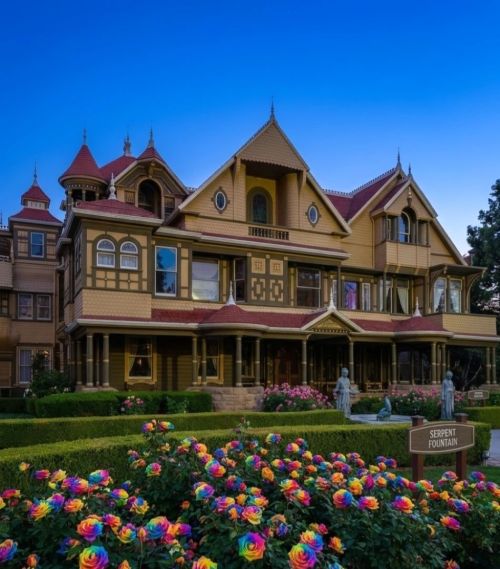
Where History, Mystery, and Imagination Intertwine
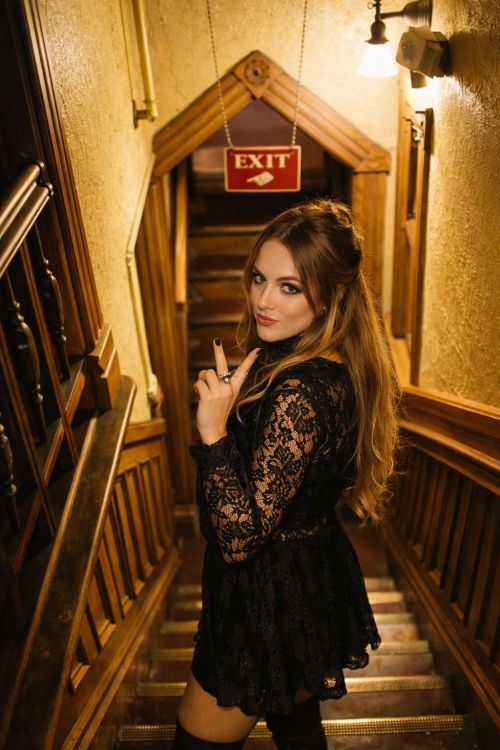
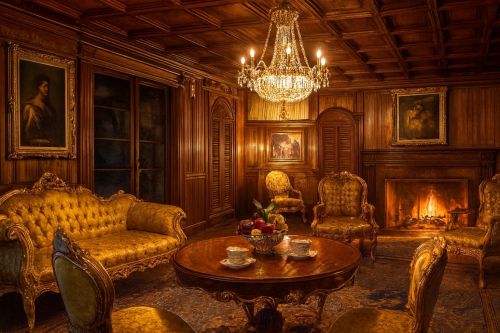
Step inside one of California’s most extraordinary landmarks and experience a world unlike any other. The Winchester Mystery House is more than a Victorian mansion—it is a living work of art, a labyrinth of architectural wonders, and one of America’s most captivating historical estates. Built over 36 years without pause, the mansion stands today as a testament to craftsmanship, curiosity, and the enduring legend of Mrs. Sarah Winchester.

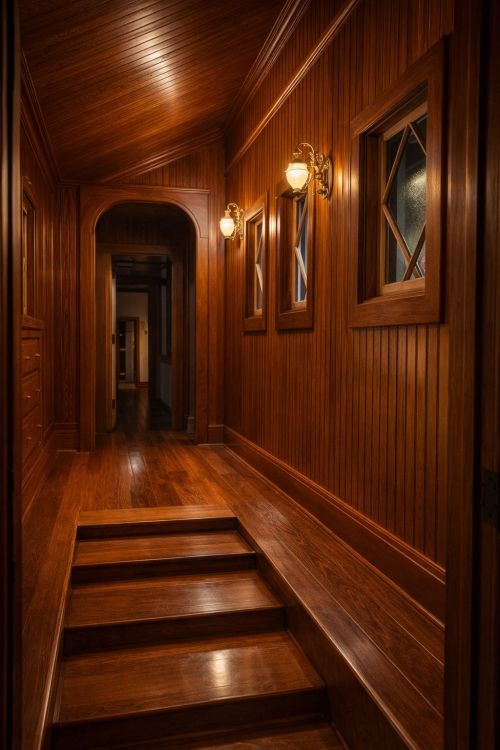
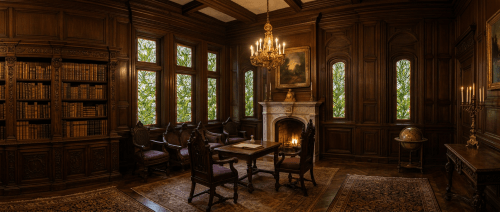
Visitors are invited to explore miles of elegant hallways, beautifully restored rooms, and the mansion’s famously perplexing features: staircases that lead nowhere, doors that open into walls, windows overlooking other rooms, and secret passages woven throughout the estate. Every corner of the house reflects Mrs. Sarah Winchester’s unique vision, blending Victorian elegance with an eccentricity that continues to fascinate architects, historians, and guests from around the world.
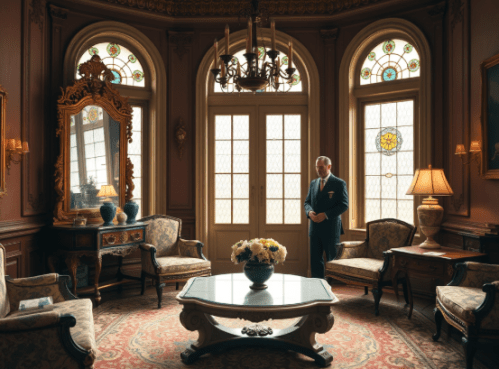
Beyond its architectural marvels, the Winchester Mystery House offers a rare glimpse into the life of a woman who defied convention. Mrs. Sarah Winchester, heiress to the Winchester Repeating Arms fortune, poured her grief, creativity, and resources into building a home unlike any other. Her story—part tragedy, part triumph, part enduring mystery—adds emotional depth to every room you enter. Visitors leave not only impressed by the mansion’s scale, but moved by the humanity behind its creation.
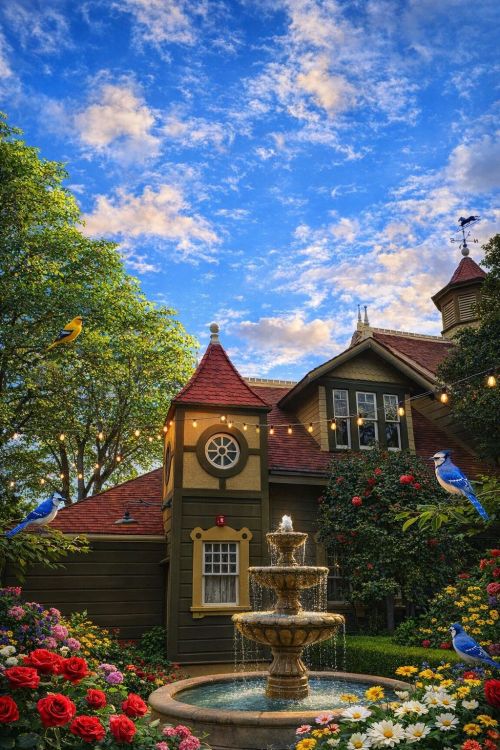
The estate’s lush gardens, ornate fountains, and tranquil outdoor spaces provide a peaceful contrast to the mansion’s winding interior. Guests can stroll through beautifully landscaped grounds, enjoy seasonal displays, and take in the serene beauty that surrounds the historic home. Whether you’re a lover of history, architecture, horticulture, or simply a seeker of unforgettable experiences, the Winchester Mystery House offers something for everyone.
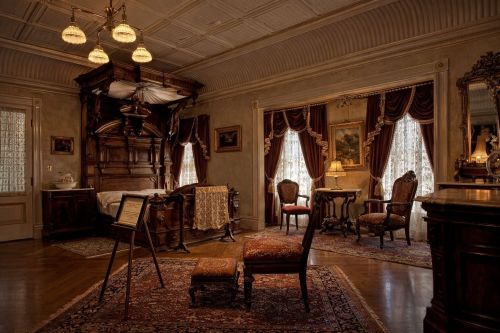
A visit to the Winchester Mystery House is more than a tour—it is an encounter with legend. It is a place where imagination thrives, where history whispers through every corridor, and where the line between fact and folklore blurs in the most enchanting way. Come discover why millions of visitors from around the world consider the Winchester Mystery House a must‑see destination and one of California’s most iconic treasures.
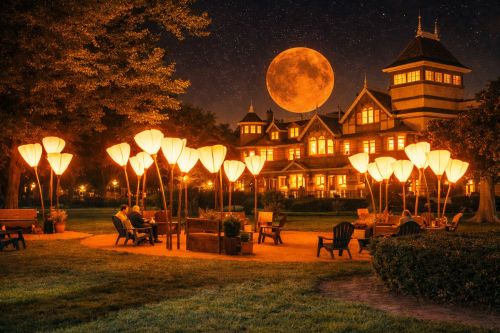
PRIVATE EVENTS & WEDDINGS
at WINCHESTER ESTATE

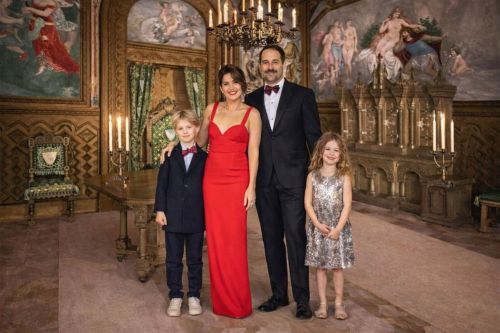
Many event locations claim to be unique, but nothing compares to the Winchester Mystery House. If you’re truly seeking a distinct, one‑of‑a‑kind setting for your milestone celebration or special occasion, reserve a venue that delivers on uniqueness many times over.

Whether you’re planning a wedding, birthday or anniversary celebration, corporate gathering, holiday party, or any other meaningful event, the Winchester Mystery House offers an unforgettable backdrop. Give your guests an experience they’ll be talking about for years to come.
Café 13: A Rest Stop on the Edge of the Mystery
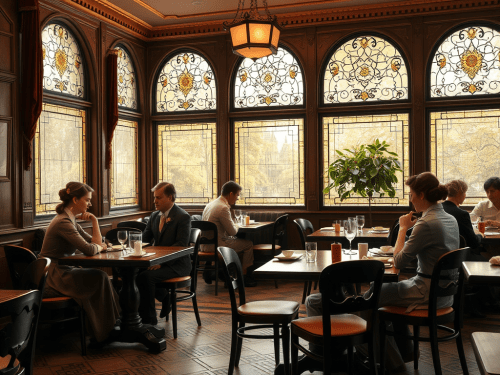
After wandering the winding halls of the Winchester Mystery House—where staircases defy logic and whispers seem to cling to the walls—Café 13 offers a welcome return to warmth and grounding. Newly reopened and serving guests daily from 10 AM to 3 PM, this cozy hideaway invites you to pause, breathe, and gather yourself before diving back into the mansion’s secrets. Here, you can enjoy breakfast, lunch, snacks, and refreshing drinks in a calm indoor space that feels worlds away from the mansion’s twisting corridors.

Settle in with a warm meal, challenge a friend to a board game, or simply rest and recharge as sunlight filters through the windows. Café 13 is more than a café—it’s a moment of calm between chapters of the Winchester legend, a place to steady your nerves before returning to the gardens, the grandeur, and the mysteries that await.
Winchester Mercantile Gift Shop
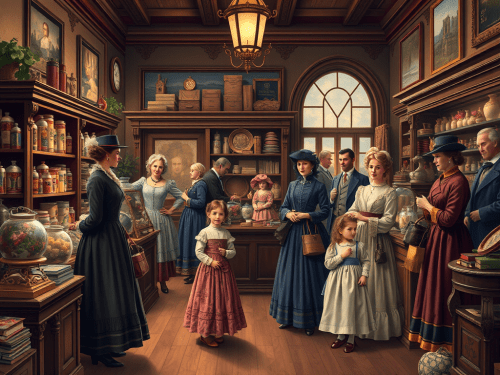
Your journey into the Winchester Mystery House begins long before you cross the mansion’s threshold. It starts at the Mercantile gift shop—a welcoming outpost standing at the edge of a world where history and myth intertwine. Here, beneath warm lights and shelves lined with curiosities, you can secure your tour tickets and prepare for the adventure ahead. Guests often pause for a souvenir photograph, capturing the moment before they step into Sarah Winchester’s enigmatic domain. As you explore the shop, you will find an eclectic array of gifts and keepsakes: tokens of the mansion’s lore, echoes of Victorian elegance, and mementos that carry a touch of the house’s enduring mystery. The Mercantile is more than a gift shop—it is the gateway. https://winchestermysteryhouse.com/

Harris Plumbing, Heating, Air & Electric has been serving our community for 30 years—an achievement few companies can claim. That longevity isn’t an accident. It’s the result of hard work, integrity, and a commitment to doing every job the right way, whether it’s a simple repair or a complex system overhaul. We take pride in every service call because we know your home is more than a building—it’s where your family lives, grows, and feels safe. Ensuring your comfort and protection is a responsibility we carry with seriousness and gratitude. After three decades, our mission remains the same: to deliver dependable service you can trust, every time.

Harris makes sure you have the clear, accurate information you need to decide what comes next—no matter what your home is facing. Before we begin any work, our technicians perform a full diagnosis and walk you through every issue we find. That means you receive a personalized quote and service plan tailored to your home’s exact needs, not a generic estimate or guess. We believe the only way to deliver our best work is to understand the problem completely and address it with precision, transparency, and care. Your home deserves nothing less. https://www.callharrisnow.com/about-us/


BMW remains one of the most desirable automotive marques because it blends engineering precision with an emotional driving experience that few brands can match. Its vehicles are built around balance, responsiveness, and a sense of connection between driver and machine—qualities that have defined the company for generations.

Beyond performance, BMW carries an aura of prestige and craftsmanship: the cabins feel tailored, the technology is purposeful rather than gimmicky, and the design language signals confidence without excess. Owning a BMW is not just about transportation; it’s about participating in a legacy of excellence that continues to set the standard for luxury performance. This commitment to performance is why BMW continues to earn its reputation as The Ultimate Driving Machine. https://www.brianharrisbmw.com/

Randolph Harris San Francisco Taxation & Mergers
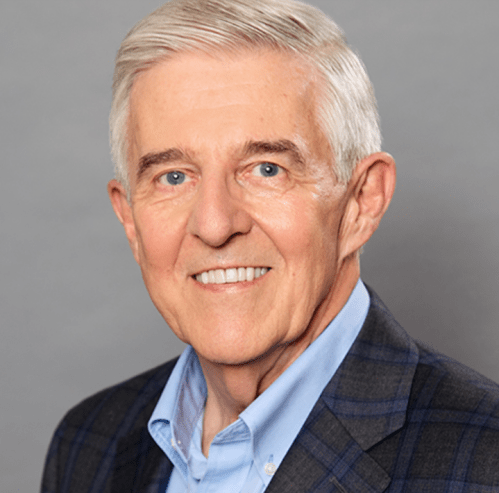
Building strong, lasting client relationships is essential to a successful legal career. Many attorneys assume that mastering legal doctrine alone guarantees success, but law is fundamentally a service profession—our work is measured not only by technical skill, but by how effectively we solve problems for the people who trust us. Long‑term relationships grow from three core commitments: truly knowing your clients, understanding how their legal issues fit within the broader context of their business and personal goals, and consistently delivering exceptional service.

Mr. Randy advises clients on business transitions, taxable and tax‑deferred mergers and acquisitions, joint ventures, restructuring, integrated tax planning, federal and state tax controversy matters, and real estate transactions. His approach is grounded in clarity, responsiveness, and a deep understanding of each client’s unique circumstances. Trust is the cornerstone of every relationship he builds. Ultimately, clients feel confident knowing they are working with someone who not only understands their challenges, but is fully committed to helping them achieve their goals. https://www.jmbm.com/l-randolph-harris.html


Where Luxury, Craftsmanship, and Vision Become Home
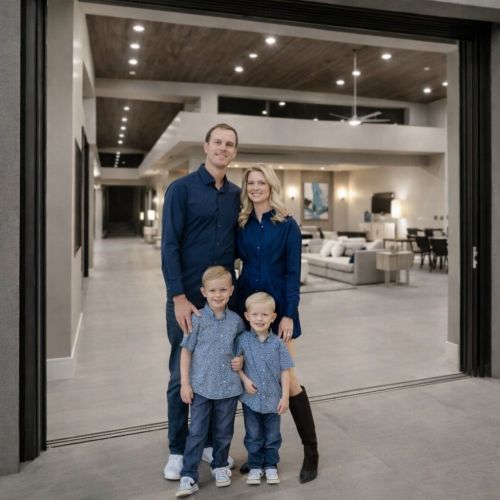
At Millhaven Homes, luxury is not an upgrade—it is the foundation. As Utah’s premier custom home builder, Millhaven has earned a reputation for creating residences that blend architectural excellence with timeless elegance.

Every home is a masterpiece of design, crafted with meticulous attention to detail and built to reflect the unique lifestyle, taste, and aspirations of its owner. When you choose Millhaven, you are choosing a builder who understands that a home is more than a structure—it is a legacy.

From the first conversation to the final walk‑through, Millhaven Homes delivers a personalized, concierge‑level experience. Their award‑winning design team collaborates closely with each client, transforming ideas into breathtaking floor plans and elevating every space with thoughtful features, natural light, and refined finishes.

Whether you envision a modern sanctuary, a classic estate, or a bold architectural statement, Millhaven brings your vision to life with precision and artistry.

Millhaven’s craftsmanship is unmatched. Every material is selected with intention, every line drawn with purpose, and every detail executed with uncompromising quality. Their homes are built to endure—structurally, aesthetically, and emotionally. From custom cabinetry and luxury kitchens to spa‑inspired bathrooms and expansive great rooms, Millhaven creates spaces that feel both grand and deeply personal. These are homes designed for living beautifully.

Beyond the walls, Millhaven Homes embraces the landscapes and communities that make Utah extraordinary.

Their properties are situated in some of the state’s most desirable locations, offering stunning mountain views, serene neighborhoods, and access to world‑class recreation. Each home is positioned to maximize natural beauty, privacy, and the sense of arrival that defines true luxury living.

Choosing Millhaven Homes means choosing excellence, integrity, and a builder who treats your dream as their highest priority. It means stepping into a home that reflects who you are and how you want to live. It means investing in craftsmanship that stands the test of time.

Discover why Millhaven Homes is the trusted name in custom luxury—and why families across Utah continue to choose Millhaven to build the homes they love for a lifetime. https://millhavenhomes.com/

Krispy Pizza – Brooklyn’s Home for Real, Homemade Flavor
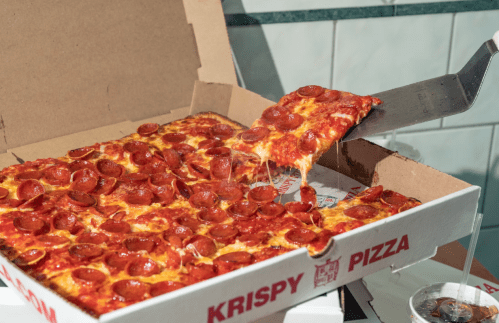
At Krispy Pizza, we don’t just make pizza — we craft it. Every pie is prepared in-house using the freshest ingredients, traditional family recipes, and the kind of care only a true Brooklyn shop delivers. With over 15 varieties of pizza, plus our famous Grandma’s Pie, we serve slices that are crisp, bold, and unforgettable.

Because if it’s not Krispy… it’s not pizza. https://www.krispypizza.com/
Location: 7112 13th Ave Brooklyn, NY 11228