
Home » Savior
Category Archives: Savior

Sometimes You Need the Wrong Place to See the Right Path

If you are looking for a community that feels like home — fresh air, quiet mornings, safe streets, and a place where kids can actually play outside — Downtown and Midtown Sacramento are not it. The air quality is consistently poor. You will find yourself shutting windows just to breathe clean air, because outside it is a rotating mix of exhaust, cigarettes, drugs, and gasoline. Even on the rare days when the air feels fresh, it lasts only minutes before the smell shifts again.Noise is constant. Leaf blowers run several days a week, usually starting at 7 a.m. and droning on until 10 a.m. And just when you think you will get a peaceful Saturday morning — the one day most people can sleep in — you are jolted awake by another blower echoing down the block. After living in Midtown/Downtown, even a crying baby starts to sound peaceful by comparison. People often move to Midtown/Downtown expecting vibrant city life or nightlife, but what they actually find is a high‑priced, semi‑rural neighborhood with a lot of riff‑raff and very little for young adults. You rarely see young people unless they are briefly out for dinner. It is not a place that feels energetic, safe, or community‑oriented. If safety, comfort, and quality of life matter, the growing suburban communities — Rancho Cordova, Elk Grove, and similar areas — are where Sacramento’s real momentum is. These neighborhoods offer clean parks, low exposure to drugs, abundant parking, family‑friendly amenities, and a sense of peace that Midtown/Downtown simply cannot match. And for the cost of a cramped two‑bedroom apartment in the city, you can often afford a spacious home in the suburbs.

Downtowns everywhere are fading as suburban communities expand. The suburbs have everything: shopping, parks, coffee shops, safety, and a genuinely happier population. Midtown/Downtown Sacramento, by contrast, feels more like a commuter zone than a place to build a life. Living in Downtown and Midtown Sacramento taught me something I didn’t expect: sometimes you have to experience the wrong environment to understand the right one. I’m actually grateful for my time there, because it showed me clearly what I do not want and who I do not want to become. I learned that constant noise, polluted air, and chaotic surroundings change you in subtle ways. You start adjusting your habits, your expectations, even your sense of peace, just to cope. And somewhere in that process, I realized I didn’t want to normalize those things. I didn’t want to become someone who accepts low air quality as “city life,” or someone who wakes up to leaf blowers and sirens and calls it “energy.” I did not want to live in a place where safety feels negotiable and community feels scattered. Experiencing Midtown/Downtown made my values sharper. I want fresh air, quiet mornings, and neighborhoods where people feel grounded and connected. I want a lifestyle that supports growth, not one that drains it. And I want to live in a place that reflects the kind of person I am becoming — someone who values peace, stability, and a healthier rhythm of life.

When I toured the Governor’s Mansion years ago, I was so surprised when the caretaker told me that Nancy Regan moved her family out of that place. I thought to myself, “Who would not want to live in this beautiful mansion?” When I told the caretaker that I was shocked, he replied, “It’s not a good place to raise a family.” I thought maybe because of the traffic, but I guess, even back then, Downtown/Midtown Sacramento was not a family-friendly community. On the rare occasion I see a teenager or a kid with their backpack on, I think to myself, “Who would let their kids out here by themselves? It is not safe.” It reminds me of Oakland, CA in the late 1980s and 1990s. Like, you know, it is time to get up and move somewhere safe. If you are not familiar with Oakland from that era, maybe you can recall “G-Parkway” or Oak Park? If my child lived in Midtown/Downtown Sacramento, I would be afraid that they may not make it home one day. If you ever wanted to defund the police, after living in Midtown/Downtown Sacramento, you will wish that police managed your apartment complex and walked the beat like back in the 1950s. Nonetheless, strangely, Sacramento’s urban core gave me clarity. It helped me define my boundaries, my preferences, and my future. I am thankful for that. Sometimes the best lessons come from places that show you exactly what you do not want, so you can move toward what you do with confidence and intention. If I were choosing a place to settle, I would look toward the suburbs — especially Rancho Cordova or Elk Grove — where the air is cleaner, the neighborhoods are calmer, and the homes actually feel like home.

Ventris Place

Elk Grove / South Sacramento, California
From $494,990
3–4 Beds · 2–3 Baths · 2-Car Garage · 1,196–1,846 Sq Ft
Elk Grove living, adjacent to 141 acres of open space.

New homes in Elk Grove adjacent to the South Sacramento 22-acre North Laguna Creek Park and a quick walk from the 119-acre designated Wildlife Area and Interpretive Trail.

This intimate enclave of 37 homesites — with available one- and two-story floorplans — is the place to be in Sacramento. Wake up each day to the comfort of a life-made-easy plan, private side yards, and inspired living spaces carefully designed to make life at home a pleasure.

Just a few steps from your door, enjoy all the amenities of North Laguna Creek Park: paved paths, tennis courts, a basketball court, playgrounds, picnic areas, ball fields, and a wildlife area.

Walk or ride to Sacramento-area parks, attractions, shopping, dining, and destinations just minutes from your home — or take an impromptu trip to Old Sacramento, downtown, or the historic riverfront district. Ventris Place is located in the Elk Grove Unified School District.

Homes at Ventris Place offer 3–4 bedroom, 2–3 bath plans ranging from 1,196 to 1,846 square feet, with rear-entry 2-car garages. Choose from a single-story plan or several two-story plans.

Experience Ventris Place

Discover beautifully crafted interiors and thoughtfully designed exteriors across all four floor plans. https://nextgenerationcapital.us/new-homes-elk-grove-ventris-place/

A patriot’s heart is not loud—it is steady. It is the quiet promise to stand up for your country’s ideals even when no one is watching, and the unwavering belief that freedom is worth protecting every single day.


Carrying All the Sins of the Western World

Some men are extremely disagreeable and undesirable. While suffering from simple cowardice and horribly ashamed of it, they lash out and attack other people and communities with the courage, strength, and determination that they wished they had. The truth is that all men are in a false position in society until they have realized their possibilities and imposed them on their neighbors. They are tormented by a continual shortcoming in themselves; yet, they irritate others by a continual overweening. This discord can be resolved by acknowledging success or failures only: everyone is ill at ease until he has found his natural place, whether it be above or below his birthplace. This finding of one’s place may be very puzzling by the fact that there is no place in ordinary society for extraordinary individuals. This crisis was not caused by a lack of success or the absence of a defined role, but by too much of both. Some people can be made good despite themselves, and find, to their dismay, that Business, instead of expelling them as the worthless imposters that they are, will fasten upon them with no intention of letting them go. Behold, therefore, in their early years, with business training, in an occupation which one detests, as they assume any same person would himself detest anything he cannot escape from. Breaking loose can mean to leave the family and friends, business and community, and avoid the danger of success unequal to the enormity of one’s unconscious ambition. #RandolphHarris 1 of 21

When in your youth, it may be wise to take a psychosocial moratorium, which is a period of delay and pause in adult commitment, during which a young person is free to explore various roles and ideologies before making lasting choices. Many have found that during a psychosocial moratorium, they can associate with peers of their own age. During this pilgrimage, they become intensely serious and burning with indignation at the very real and very fundamental evils that affect the world. In the meantime, it allows one the discernment to avoid opportunities they sense will lead to nothing they want, and to lay aside the unspoken fear that they might lead to something they do not want. This occupational part of the moratorium is usually reinforced by an intellectual one: one cannot learn anything that does not interest oneself. Memory is not indiscriminate; it rejects and selects; and its selections are not academic. This is something to be congratulated on; for it means that an individual is firmly persuaded that every unnatural activity of the brain is as mischievous as any unnatural activity of the body…The governing classes always wreck civilization with what is called secondary education. Secondary education is the intermediate stage where students transition from basic foundational learning to specialized, discipline-based study. It is also a key period for social development, identity formation, and career exploration. #RandolphHarris 2 of 21

Too many teachers, college professors, and the media are ruining young minds with political propaganda and seducing them to become convinced that it is wrong to be patriotic, it is wrong to adhere to gender norms, it is wrong to work hard for a living, it is wrong to obey authority figures, and love God. That is why society is breaking down, and the home is becoming a place of conflict, instead of love and an escape from the world. There are also many people being pressured into careers that they do not love, leading to unhealthy and unhappy lives. When an individual is allowed to settle down to study and to write as he pleases, it is usually then that the extraordinary workings of an extraordinary personality come to the fore. This is when a person manages to abandon the kind of work he has been doing without relinquishing the work habit. Office training can leave a person with the habit of doing something regularly every day as a fundamental condition of industry as distinguished from idleness. One might know he is making no headway unless he is doing this, and that one should never produce work in any other fashion. For instance, if I were writing a book, I might buy supplies of white paper, demi-sized, for $75 at a time; fold it in quarto; and condemn myself to fill ten pages of it a day, rain or shine, dull or inspired. Because I have so much of the schoolboy and the clerk still in me that if my ten pages end in the middle of a sentence, I do not finish it until the next day. On the other hand, if I miss a day, I make up for it by doing a double task on the morrow. With this plan, I will produce ten novels a year. It is my professional apprenticeship. #RandolphHarris 3 of 21

Even if these novels are not published for over fifty years, I will be learning how to write as I work, and to wait as I write. Such ritualization is very important for my work life because it will allow me to rise by sheer gravitation, and to be too industrious by acquired habit to stop working. While my work may display a combination of addictiveness and compulsiveness which is the basis of much pathology in late adolescence and of some accomplishment in young adulthood, it is better than having a drink or drug neurosis. A young man who has seen “the governor” with an imperfectly wrapped-up goose under one arm and a ham in the same condition under the other (both purchased under heaven knows what delusion of festivity) butting at the garden wall in the belief that he was pushing open the gate, and transforming his tall hat to a concertina in the process, and who, instead of being so overwhelmed with shame and anxiety at the spectacle, has been so disabled by merriment (uproariously shared by the maternal uncle) that he has hardly been able to rush to the rescue of that hat and pilot its wearer to safety, is clearly not a young man who will make tragedies of trifles of making trifles of tragedies. If you cannot get rid of the family skeleton, you may as well make a dance with it. Sometimes people who are from successful and wealthy families are a downstart, and they will also produce sons who downstarts. To say that some of these fathers cannot give their sons a university education is like saying that they cannot afford to be philanderers, or a young man cannot afford to be successful at his trade; both statements may be true, but philanderers like to philander and others like to become authors all the same. #RandolphHarris 4 of 21

The main reinforcements of early development come from the intrapsychic process. The very needs which drive others on the search for glory operate here, too. If an individual can carry it out consistently, early detachment removes conflicts with others. However, the reliability of the solution depends upon the reaction of wishes, and at an early age, this process is fluctuating; it has not yet matured into a determined attitude. A young man, for example, still wants more things from life than is good for his peace of mind. When sufficiently tempted be drawn into a close relationship. Hence, his conflicts are easily mobilized, and he needs more integration. However, the early development leaves him not only divided but also alienated from himself, lacking in self-confidence and feeling unequipped for actual life. He can deal with others only when at a safe emotional distance; thrown into closer contact, he is inhibited in addition to being handicapped by his recoil from fighting. Hence, he too is driven to find an answer to all these needs in self-idealization. He may try to realize ambitions in actuality, but for many reasons he tends to give up the pursuit in the face of difficulties. His idealized image, chiefly, is a glorification of the needs which have developed. It is a composite of self-sufficiency, independence, self-contained serenity, freedom from desires and passions, stoicism, and fairness. Fairness for him is less a glorification of vindictiveness (as is the “justice” of the aggressive type) than an idealization of noncommitment and of not infringing upon anybody’s rights. #RandolphHarris 5 of 21

The “shoulds” corresponding to such an image bring him into a new danger. While originally he had to protect his inner self against the outside world, he now must protect it against this much more formidable inner tyranny. The outcome depends on the degree of inner aliveness he has safeguarded so far. If it is strong and he is, as it were, unconsciously determined to preserve it come hell or high water, he can still maintain some of it, although only at the price of enforcing the restrictions we have discussed—only at the cost of resigning from active living, of checking his drives toward self-realization. There is no clinical evidence pointing to the inner dictates being more stringent here than in other types of neurosis. The difference lies rather in his chafing more under them because of his very need for freedom. He tries to cope with them in part by externalizing them. Because of his taboos on aggression, he can do so only in a passive way—which means that the expectations of others, or what he feels as such, acquire the character of commands to be obeyed without question. Moreover, if he did not comply with their expectations, he is convinced that people would coldly turn against him. In essence, this means that he has not only externalized his shoulds but also his self-hate. Others would turn as sharply against him as he would himself for not measuring up to his shoulds. And because this anticipation of hostility is an externalization, it cannot be remedied by experiences to the contrary. A patient, for instance, may have had a long experience with the analyst’s patience and understanding and yet, under duress, may feel that the analyst would drop him at a moment’s notice in case of open opposition. #RandolphHarris 6 of 21

Hence, his original sensitivity to outside pressure is greatly reinforced. We understand now why he keeps experiencing external coercion, even though the latter environment may exert very little pressure. In addition, the externalization of his shoulds, while relieving inner tension, brings a new conflict into his life. He should comply with the expectations of others; he should not hurt their feelings; he must appease their anticipated hostility—but he also should maintain his independence. This conflict is reflected in his ambivalent way of responding to others. In many variations, it is a curious mixture of compliance and defiance. He may, for instance, politely comply with a request but forget about it or procrastinate in doing it. The forgetting may reach such disturbing proportions that he can keep a fair order in his life only by the help of a notebook in which he jots down appointments or jobs to be done. Or he may go through the motions of complying with the wishes of others but sabotage them in spirit, without in the least being aware of doing so. In analysis, for instance, he may comply with the obvious rules, such as being on time or saying what is on his mind, but assimilate so little of what is discussed that the work is rendered futile. It is unavoidable that these conflicts make for a strain in his associations with others. He may, at times, feel this strain consciously. However, whether or not he is aware of it, it does reinforce his tendency to withdraw from others. #RandolphHarris 7 of 21

The passive resistance which he sets against the expectations of others also operates regarding those shoulds which are not externalized. The mere feeling that he should do something is often sufficient to make him listless. If it were restricted to activities which he at the bottom dislikes, such as participating in social gatherings, writing certain letters, or paying his bills, as the case may be, this unconscious sit-down strike would not be so important. However, the more radically he has eliminated personal wishes the more anything he does—good, bad, or indifferent—may register as something he should do: brushing his teeth, reading the newspaper, taking a walk, doing his work, eating his meals, or going to church with his family. Everything then meets with a silent resistance, resulting in a pervasive inertia. Activities, therefore, are restricted to a minimum or, more frequently, are performed under strain. Hence, he is unproductive, tires easily, or suffers from chronic fatigue. When analyzed, this inner process becomes clear; two factors appear which tend to perpetuate it. As long as the patient has no recourse to his spontaneous energies, he may fully realize that this way of living is wasteful and unsatisfactory but will see no possibility for change because—as he feels it—he would simply not do anything if it were not for his driving himself. The other factor resides in the important function his very inertia has assumed. His psychic paralysis may have turned in his mind into an unalterable affliction, and he uses it to stave off self-accusations and self-contempt. #RandolphHarris 8 of 21

The premium which is thus put on inactivity is also reinforced from another source. Just as his way of solving his conflicts was to immobilize them, so he also tries to set his shoulds out of operation. He does so by trying to avoid situations in which they would start harassing him. Here, then, is another reason that he avoids contact with others as well as a serious pursuit of anything. He follows the unconscious motto that as long as he does not do anything, he will not violate any shoulds and taboos. Sometimes, he rationalizes these avoidances by thinking that any pursuit of his would impinge on the rights of others. This condition would be inaccessible to therapy—because of the minimal incentive to change—if it were not for the positive elements in the appeal of freedom. Patients in whom these prevail often have a more immediate understanding of the harmful character of the inner dictates than others do. If conditions are favorable, they may quickly recognize them for the yoke they actually are and may take an unequivocal stand against them. Certainly, such a considerable help in overcoming them gradually. When man extended the simple tools which he used into the early simpler machines, the development was an inevitable consequence of his developing mind. The change was a useful one and brought him conveniences or comforts unavailable to the monarchs and millionaires of previous centuries. However, when this was pushed farther and farther, faster and faster, its inherent dangers appeared; human safety was imperilled, human health ignored, and human sensitivity crushed. Technology grew into a monster. It is proper for man to use the world, to exploit science, only as long as he does not permit them to enslave him. #RandolphHarris 9 of 21
The knowledge got through the eyes and ears may, when untied to reason, lead only to selfish cunning and cause destructive suffering to others. However, when it is united to both reason and intuition, it can lead only to wisdom and bringing good to others. The world today is facing this danger and ignoring this remedy. Consequently, the more science discovers about the atom, the worse humanity’s suffering will be. Is it so hard to recognize that the German nation has, up to now, no life history to show for itself, but only the history of disease? And not just the German nation—which is, or used to be, the scapegoat carrying all the sins of the Western World. History is a nightmare from which the world is trying to awaken. There is a dynamic of neurosis in world history, an ever-increasing sense of guilt caused by repression. Too long has the world been a madhouse. If civilization is an inevitable course of development from the group of the family to the group of humanity as a whole, then an intensification of the sense of guilt will be inextricably bound up with it, until perhaps the sense of guilt may swell to a magnitude that individuals can hardly support. The necessity of a psychoanalytical approach to history is pressed upon the historian by one question: Why does man, alone of all animals, have a history? For man is distinguished from animals not simply by the possession and transmission from generation to generation of that suprabiological apparatus which is culture, but also, if history and changes in time are essential characteristics of human culture and therefore of man, by a desire to change his culture and so to change himself. #RandolphHarris 10 of 21

In making history, “man makes himself,” to use the suggestive title of Gorden Childe’s book. Then, the historical process is sustained by man’s desire to become other than what he is. And man’s desire to become something different is essentially an unconscious desire. The actual changes in history neither result from nor correspond to the conscious desires of the human agents who bring them about. Every historian knows this, and the philosopher of history, Mr. Hegel, in his doctrine of the “cunning of Reason,” made it a fundamental point in his structural analysis of history. Mankind today is still making history without having any conscious idea of what it really wants or under what conditions it would stop being unhappy; in fact, what it is doing seems to be making itself more unhappy and calling that unhappiness progress. Christian theology, or at least Augustinian theology, recognizes human restlessness and discontent, the cor irrequietum, as the psychological source of the historical process. However, Christian theology, to account for the origin of human discontent and to indicate a solution, has to take man out of this real world, out of the animal kingdom, and inculcate into him delusions of grandeur. And thus, Christian theology is a religion of pride. The revolution, based on principles, kills God in the person of His representative on earth. The revolution of the twenty-first century kills what remains of God in the principles themselves and consecrates historical nihilism. Whatever paths nihilism may proceed to take, from the moment that it decides to be the creative force of its period and ignores every moral precept, it begins to build the temple of Caesar. #RandolphHarris 11 of 21
To choose history, and history alone, is to choose nihilism, in defiance of the teachings of rebellion itself. Those who rush blindly to history in the name of the irrational, proclaiming that it is meaningless, encounter servitude and terror and finally emerge into the universe of concentration camps. Those who launch themselves into it, preaching its absolute rationality, encounter servitude and terror and emerge into the universe of the concentration camps. Fascism wants to establish the advent of the Nietzschean superman. If He exists, it immediately discovers that God may well be this or that, but He is primarily the master of death. If man wants to become God, he arrogates to himself the power of life or death over others. A manufacturer of corpses and of submen, he is a sub-man himself and not God, but the ignoble servant of death. The rational revolution, on its part, wants to realize the total man described by Mr. Marx. The logic of history, from the moment that it is totally accepted, gradually leads it, against its most passionate convictions, to mutilate man more and more and to transform itself into objective crime. It is not legitimate to identify the ends of Fascism with the ends of Russian Communism, as we are seeing communism in New York, Michigan, Minnesota, Texas, and California planting roots. Communism represents the exaltation of the executioner by the executioner; more dramatically, communism is the exaltation of the executioner by the victims. Communism never dreamed of liberating all men, but only of liberating a few by subjugating the rest. #RandolphHarris 12 of 21

However, the most potent dream of communism is its most profound principle. It aims at liberating all men by provisionally enslaving them all. It must be granted the grandeur of its intentions. Are you willing to compromise your freedom by giving up your Christian heritage and becoming enslaved just for a free bus ride, a package of cookies, and Housing Choice Vouchers (HCV), while your wages are being undercut by illegal labor and your country is being stolen by the anti-Christ? Hardworking Americans have tilled the lands since the birth of this nation. Americans are willing to work hard and always have been. The nihilists today are seated on thrones in Hollywood, Congress, in your state and local governors’ and mayors’ offices, and even on the city council. Methods of thought which claim to give lead to our world in the name of revolution have become, in reality, ideologies of consent and not of rebellion. That is why our period is the period of private and public techniques of annihilation. The revolution, obedient to the dictates of nihilism, has, in fact, turned against its rebel origins. Man, who hated death and the god of death, who despaired of personal survival, wanted to free himself in the immortality of the species. However, as long as the group does not dominate the world, as long as the species does not reign, it is still necessary to die. Time is pressing; therefore, persuasion demands leisure, and friendship is a structure that will never be completed; thus, terror remains the shortest route to immortality. However, these extremes simultaneously proclaim a longing for the primitive values of rebellion. The contemporary revolution that claims to deny every value is already, in itself, a standard for judging values. Man wants to reign supreme through the revolution. However, if nothing has any meaning, why reign supreme? If the aspect of life is so hideous, why wish for immortality? There is no method of thought which is absolutely nihilistic except, perhaps, the method that leads to suicide, any more than there is absolute materialism. #RandolphHarris 13 of 21

The destruction of man once more affirms man. Terror and concentration camps are the drastic means used by man to escape solitude. The thirst for unity must be assuaged, even in the common grave. If men kill one another, it is because they reject mortality and desire immortality. Therefore, in one sense, they commit suicide. However, they prove, at the same time, that they cannot dispense with mankind; they satisfy a terrible hunger for fraternity: “The human being needs happiness, and when he is unhappy, he needs another human being.” Those who reject the agony of living and dying wish to dominate. Solitude is power. Power, today, because for thousands of solitary people it signifies the suffering of others, bears witness to the need for others. Terror is the homage that the malignant recluse finally pays to the brotherhood of man. However, nihilism, if it does not exist, tries to do so; and that is enough to make the world a desert. The COVID pandemic gave rise to isolation and opened the path for Artificial Intelligence (AI) to thrive. People feel they no longer need other human beings. They now have AI to keep them company in their solitude. These particular forms of madness are what have given our times their forbidding aspect. The land of humanism has become the America of today, the land of inhumanity. However, the times are ours, and how can we disown them? If our history is our hell, still we cannot avert our faces. This horror cannot be escaped, but is assumed to be ignored by the very people who accepted it with lucidity, and not by those who, having provoked it, think that they have a right to pronounce judgment. Such a plant could, in fact, thrive only in the fertile soil of accumulated iniquities. #RandolphHarris 14 of 21

In the last throes of a death struggle in which men are indiscriminately involved by the insanity of times, the enemy remains the fraternal enemy. Even when he has been denounced for his errors, he can be neither despised nor hated; misfortune is today the common fatherland, and the only earthly kingdom that has fulfilled the promise. The longing for rest and peace must itself be thrust aside; it coincides with the acceptance of iniquity. Those who weep for the happy periods they encounter in history acknowledge what they want: not the alleviation but the silencing of misery. However, let us, on the contrary, sing the praises of the times when misery cries aloud and disturbs the sleep of the surfeited rich! Maistre has already spoken of the “terrible sermon that the revolution preached to kings.” It preaches the same sermon today, and in a still more urgent fashion, to the dishonoured elite of the times. This sermon must be heard. In every word and in every act, even though it be criminal, lies the promise of value that we must seek out and bring to light. The future cannot be foreseen, and it may be that the renaissance is impossible. Even though the historical dialectic is false and criminal, the world, after all, can very well realize itself in crime and in pursuit of a false concept. This kind of resignation is, quite simply, rejected here: we must stake everything on the renaissance. #RandolphHarris 15 of 21

Nothing remains for us, moreover, but to be reborn or to die. If we are at the moment in history when rebellion has reached the point of its most extreme contradiction by denying itself, then it must either perish with the world it has created or find a new object of faith and a new impetus. Before going any farther, this contradiction must at least be stated in plain language. It is not a clear definition to say, like existentialists, for example (who are also subjected, for the moment, to the cult of history and its contradictions), that there is progress in the transition from rebellion to revolution and that the rebel is nothing if he is not revolutionary. The contradiction is, in reality, considerably more restricted. The revolutionary is simultaneously a rebel, or he is not a revolutionary but a policeman and a bureaucrat who turns against rebellion. However, if he is a rebel, he ends by taking sides against the revolution. So much so that there is absolutely no progress from one attitude to the other, but coexistence and endlessly increasing contradiction. Every revolution ends by becoming either an oppressor or a heretic. In the purely historical universe that they have chosen, rebellion and revolution end in the same dilemma: either police rule or insanity. On this level, therefore, history alone offers no hope. It is not a source of values, but is still a source of nihilism. Can one, at least, create values in defiance of history, on the single level of a philosophy based on eternity? That comes to the same as ratifying historical injustice and the sufferings of man. #RandolphHarris 16 of 21

To slander the world leads to the nihilism defined by Nietzsche. Thought that is derived from history alone, like thought that rejects history completely, deprives man of the means and the reason for living. The former drives him to the extreme decadence of “why believe?”; the latter to “how to live?” History, necessary but not sufficient, is therefore only an occasional cause. It is not the absence of values, nor values themselves, nor even the source of values. It is one occasion, among others, for man to prove the still confused existence of a value that allows him to judge history. Rebellion itself makes us the promise of such a value. Christians reject the idea that life is accidental or meaningless. Human beings are understood to be literal spiritual offspring of God with an eternal lineage and a path toward divine progression. In its 1892 decision Church of the Holy Trinity v. United States, the Supreme Court surveyed centuries of American history and declared that the evidence “overwhelmingly demonstrates that the United States is a Christian nation.” Justice David J. Brewer’s opinion underscored the deep historical influence of Christianity on the country’s laws, customs, and civic institutions. The desire of Christian men and women who love their country is to make our nation contribute her best to the world in this conflict against selfish foreign aggression and lust for conquest over America. Patriots wish, through devotion to America, to bring her honor, protection, and glory. Jesus tried to teach man how to grow a soul and how to help the soul in the process of growth. He sought to help men understand that human society was something that had life and that had possibilities of growing into the Kingdom of God. Jesus showed men how to cultivate the inner life, how a soul can grow into something strong and luminous. But when anything meant to protect life is left uncultivated — whether the heart or a high‑rise — danger follows. Captain Reinhardt saw the result firsthand when the Sacramento fire exposed the cost of neglect. #RandolphHarris 17 of 21
The call came in just after dawn, a frantic voice reporting smoke pouring from the upper floors of a downtown Sacramento high‑rise. Captain Reinhardt of the Sacramento Fire Department was already in motion before the dispatcher finished speaking. Years of experience had taught Captain Reinhardt that early morning fires were often the deadliest, striking when residents were still asleep and alarms—if they existed—were silent. As Engine 2 roared toward the scene, Captain Reinhardt reviewed the building’s history. It had failed two fire inspections in the past year, each time cited for non‑working smoke detectors, expired fire‑safety certifications, and blocked emergency exits. California law was clear: high‑rise buildings faced steep fines for failing to maintain working alarms and for ignoring mandatory safety standards. Yet fines meant nothing compared to the danger. Captain Reinhardt knew that more than seventy percent of fatal home fires occurred in residences with no alarms or alarms that did not work. He feared this building was about to prove that statistic true. When the crew arrived, flames were already licking out of the twelfth‑floor windows. Residents crowded the street, coughing, crying, pointing upward. Captain Reinhardt scanned the faces, counting, assessing, searching for signs of those still trapped. The world‑renowned paramedics who often partnered with the department were already setting up triage, their calm efficiency a stark contrast to the chaos around them. Captain Reinhardt led his team inside, pushing through thick smoke that clung to the stairwell like a living thing. The alarms were dead—no shrill warnings, no flashing lights. Just silence and heat. He felt anger rise in his chest. A building this size, with hundreds of residents, should have passed inspection months ago. Instead, the owners had ignored violations, choosing to risk fines rather than invest in safety. On the tenth floor, Captain Reinhardt found the first victim, unconscious but alive. He carried her down two flights before handing her off to paramedics, who immediately began treatment. Their reputation was well earned; they worked with a precision that impressed even Captain Reinhardt, who rarely paused long enough to admire anything during a fire. Back inside, Captain Reinhardt pushed upward, searching room by room. He found two more victims on the twelfth floor, both overcome by smoke. The fire had started in a unit where a space heater malfunctioned, but the true culprit was the building’s negligence. Without alarms, the residents had no warning. Without proper certification, the fire‑suppression systems were outdated and ineffective. By the time the flames were finally controlled, three lives had been lost. Captain Reinhardt stood outside the charred building, watching investigators tape off the entrance. He knew the owners would face heavy California fines, possibly even criminal charges. But fines could never replace the lives lost. Captain Reinhardt vowed that this tragedy would not be forgotten. Fires were dangerous enough; ignoring safety laws made them deadly. #RandolphHarris 18 of 21

When it comes to firefighting, every incident carries the potential for injury—no matter how small the fire appears or how routine the call may seem. If you see a fire engine stopped in the street without its lights on, use extreme caution. Crews may be working nearby, and passing the apparatus can put them in danger. It is often safer to turn around and take another route; if you strike a firefighter or civilian and cause a fatality, you could face charges such as manslaughter. Firefighters frequently move around their vehicle on foot, loading equipment or preparing to leave the scene. Attempting to pass the apparatus can result in a collision with someone you cannot see. Pay close attention to their hand signals as well—emergency vehicles sometimes move slowly or reposition, and impatient drivers trying to slip around them create hazardous situations. If you are already in an intersection when you notice an emergency vehicle approaching, continue through it, then pull to the right and stop as soon as it is safe. Always obey directions from law enforcement officers or firefighters, even if those instructions conflict with posted signs or traffic laws. When sirens or flashing lights are activated, it is illegal to follow within 300 feet of a fire engine, ambulance, or police vehicle. Driving to the scene of a fire, collision, or disaster can also result in arrest, as doing so interferes with firefighters, paramedics, and other emergency personnel. Professional courage is not limited to physical toughness. It includes listening to others, advocating for them in difficult situations, understanding personal limits, and having the integrity to tell a superior when they are wrong. The deeper truth is that public safety depends not only on the bravery of first responders but on the discipline and judgment of the community around them. Every driver’s decision—whether cautious or careless—can either protect or endanger the people risking their lives to protect everyone else. #RandolphHarris 19 of 21

To help prevent disasters, we must plan well in advance. Efforts to preserve farmland and maintain buildable land for future generations often lead to discussions about population growth and long‑term planning. Some people argue that immigration levels should be managed carefully to ensure that infrastructure, housing, and land use remain sustainable. Others suggest that, when immigration does occur, programs that encourage broad representation can help communities reflect the diversity of the wider world. When Americans purchase goods made in the United States, it strengthens local businesses and signals to investors that these products are in demand. Strong sales give investors confidence to reinvest in domestic companies, helping keep jobs, production, and wages within the country. As businesses grow, they contribute more to the tax base, which can reduce the burden on taxpayers over time. Supporting American businesses also keeps more money circulating within the national economy. The government increases the national debt when it spends more than it collects in tax revenue or borrows from private or foreign lenders. When people shop locally, more tax revenue stays in the community and supports public services. This helps keep jobs in the United States and increases the tax contributions that fund government operations. Purchasing foreign-made goods, by contrast, often sends money overseas and may benefit companies that operate under lighter tax or environmental regulations. Buying American-made products can also reduce environmental impact because they travel shorter distances and are produced under stricter standards for air, land, and water protection. In this way, consumer choices influence not only the economy but also environmental stewardship and long-term national sustainability. #RandolphHarris 20 of 21

Under President Trump’s administration, he has made America a priority. President Trump has hermetically sealed the southern border, illegal crossings have been terminated, and are 90 percent lower than under the previous administration. Since President Trump’s crack down on crime, violent crimes in Washington D.C. have dropped by approximately 80 percent. He has stopped thousands of pounds of drugs from entering America and killing citizens. And since President Trump took office, investments in America have increased by trillions of dollars in U.S.A. manufacturing, production, and innovation. As you can see, President Donald Trump and his pledge to “Make America Great Again” is exactly what America needs to save the country and the American people. And yes, diversity is important, so you can see why it is also important to preserve blonde hair and blue eyes, as the people with these characteristics are becoming a minority in America. As a reminder, parents, please teach your children to love America and be patriotic citizens, and to buy goods and services made in America. It is also important to respect law and order and treat your elders with respect. It is inborn in the human mind to wish to know. If this begins with the endless surface questions of a child’s curiosity, if it continues into deeper questions of a scientist’s probing investigation, it cannot and does not stop there. For the higher part of the mind will eventually come into unfoldment, that union of abstract reflective thought with mystical intuition, which is true intelligence, which needs and sees a view of the whole of things. And so, the knowing faculty enters the realm of philosophy. A lot of children are having problems in school and cannot even write a paragraph because they are not reading their books. When you actually read books, you get an example of how to write and will become a better student. Therefore, remember to take your education seriously so that you will be successful in life and make your family proud. Also, to make sure they have all the resources required, please donate to the Sacramento Fire Department to help improve our national security. “Oh, thus be it ever, when freemen shall stand between their loved home and the war’s desolation! Blest with victory and peace, may the heav’n-rescued land Praise the Power that hath made and preserved us a nation! Then conquer we must, when our cause is just, and this be our motto: ‘In God is our trust.’ And the star-spangled banner in triumph shall wave O’er the land of the free and the home of the brave.” Thank you for your attention to this matter. PRESIDENT DONALD J. TRUMP. #RandolphHarris 21 of 21

Join us in celebrating the life of Mrs. Sarah L. Winchester on the anniversay of her passing, September 5, 1922.
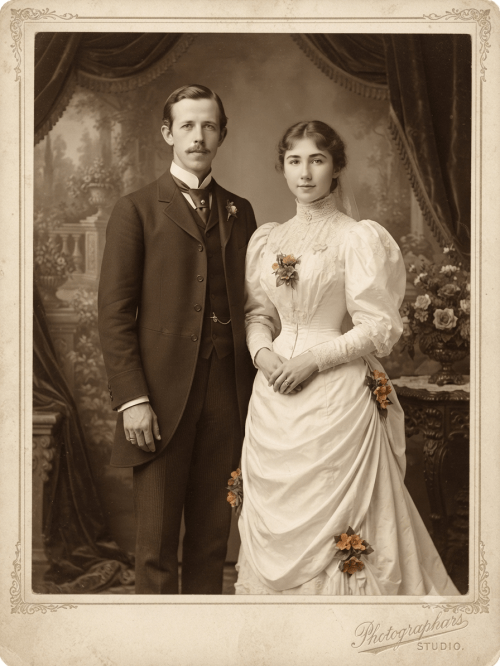
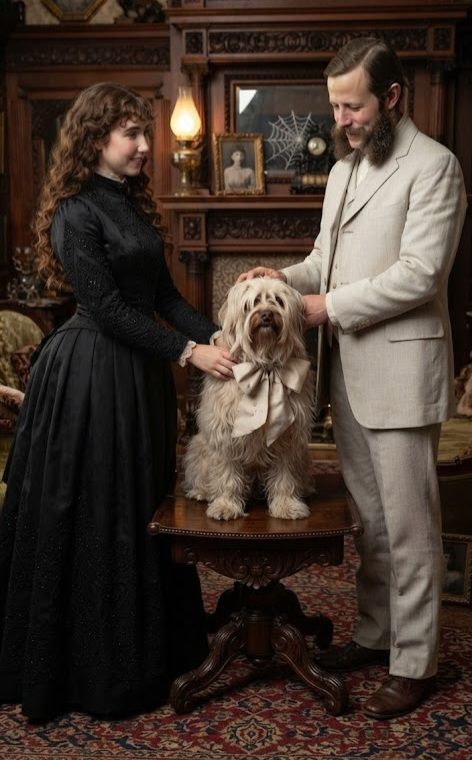
Hostted by the enchanting Vogle Victorian team, this intimite Victorian Tea Party is limited to just 24 guests and includes a Victorian-style séance, blessing jar creations, and tea service inside the mansion. Held on the anniversay of her passing, this intimate gathering offers a unique way to honor Mrs. Sarah L. Winchester in the home where she spent nearly four decades.

Event detailes:
Date: September 5, 2026
Time: 10am PST & 7pm PST
Includes: Full Tea service, blessing jar material, and the séance experience
Price: $179.99
Limitied spots available, buy tickets at winchestermysteryhouse.com
A Victorian Prayer for Mrs. Sarah L. Winchester
O Lord of Mercy and Eternal Light, We humbly commend to Thy keeping the soul of Mrs. Sarah L. Winchester, who has departed from the labors of this earthly life. In Thy boundless compassion, look kindly upon her, whose days were marked by quiet generosity, steadfast devotion, and a heart inclined toward charity.
Grant that the works she wrought in tenderness—her care for the afflicted, her provision for the needy, and her remembrance of the suffering—may rise before Thee as a fragrant offering. May the hospital she endowed, and the kindness she bestowed upon those in her charge, stand as enduring witnesses of a gentle spirit seeking to ease the burdens of others.
We beseech Thee, O Lord, to surround her memory with the peace that passeth all understanding. Let Thy angels receive her, and let Thy heavenly rest be her portion. Comfort those who mourn her absence, and teach us to honor her life by walking in compassion, humility, and quiet service.
And as the shadows of this world give way to the dawn of Thy eternal kingdom, grant that she may behold the radiance of Thy countenance, and dwell forever in the light of Thy everlasting love.
Amen.

When Violence Becomes Normal: The Crisis America Can No Longer Ignore
We hear many members of Congress pushing for gun control, yet almost no one—aside from President Trump—speaks directly about the need for a complete and total reduction in violence itself. Physical violence in America is an epidemic. In 2024, federal victimization data shows that 1 out of every 69 Americans experienced a violent crime, including rape or sexual assault, robbery, aggravated assault, and simple assault. Although this represents less than two percent of the population, the impact is devastating. Each assault carries the potential for life‑altering harm: overwhelming medical bills, long‑term disability, loss of property, loss of freedom, loss of cognitive or physical function, and in too many cases, loss of life. The national conversation focuses heavily on weapons, but the deeper crisis—the widespread human suffering caused by violence—remains largely unaddressed. While violence may have a place in the entertainment value of certain movies and television shows, we should not normalize programs that center on people attacking one another in a Mixed Martial Arts–style format, especially when the home is used as the setting. This type of content blurs the line between entertainment and real‑world behavior. It conditions viewers to believe that when they are upset, it is acceptable to skip past communication, conflict resolution, and emotional regulation, and instead jump directly into physical confrontation. Many of these shows depict women fighting other women, pulling hair and throwing punches, or men resolving disagreements through physical domination. The repeated portrayal of interpersonal violence as casual entertainment reinforces harmful patterns in communities already facing significant social and economic challenges. When violence becomes a spectacle, it becomes easier for society to overlook the real‑world consequences that victims endure. #RandolphHarris 1 of 14

Violence and lewd, provocative language became increasingly popular on television in the late 1990s. As networks searched for inexpensive, attention‑grabbing content, they hired sensationalist hosts—often individuals with failed or fading journalism careers—to lead daytime talk shows built around controversial topics. When a few on‑air confrontations escalated into physical fights, ratings for one particular show surged, and that moment reshaped the entire industry. Producers realized that audiences were tuning in specifically to watch the chaos, so televised conflict became the new programming model. For many viewers, this was the first time they had seen people openly expressing anger, “speaking their minds,” or using profanity on national television, and it was treated as bold, funny, or refreshingly honest. What began as a shock quickly became normalized, and daytime TV shifted from discussion to spectacle—turning interpersonal conflict into entertainment. As this outrage became normalized, it has also led to violence towards students and teachers on campus. Schools are reporting increases in physical fights, harassment, intimidation, and assaults occurring not only in hallways and classrooms but also in cafeterias, athletic areas, and even during instructional time. For many students and teachers, the campus—a place that should represent safety, learning, and stability—has become a setting where they must constantly assess threats, navigate hostile peers, and brace for unpredictable confrontations. Not long ago, fights on school grounds were rare, and serious incidents were exceptional. Today, however, it is no longer unheard of to witness a young child leaping from a desk, shouting profanity at a teacher, or even striking an educator with a closed fist. These behaviors, once unimaginable, reflect a troubling shift in school culture and the erosion of basic respect for adults and peers. #RandolphHarris 2 of 14
As violence has become increasingly popularized—and as more people chase online fame—thousands of videos depicting violent confrontations are now posted on the Internet every week. These recordings come from everyday settings such as grocery stores, restaurants, churches, parking lots, and public streets. Many of the videos are real, capturing genuine moments of conflict. However, a small portion of this content is staged: actors are hired to provoke fights, harass someone, or perform exaggerated scenarios designed to go viral. In some cases, entire sets are constructed to imitate real locations, and performers are paid to act out dramatic scenes, such as sliding across a restaurant counter and pretending to steal food. Whether authentic or fabricated, the constant stream of violent imagery conditions viewers to see aggression as entertainment and blurs the line between reality and performance. Not only do these images provoke fear in people who may have little experience navigating unfamiliar environments, but they also contribute to a negative perception of Americans as a whole. Online, we see clips of individuals jumping on strangers at a moment’s notice, or doctors, nurses, and law‑enforcement officers being attacked simply for trying to do their jobs. The broader issue is a growing lack of respect for people in general, and this behavior is becoming increasingly normalized. It used to be that parents worried primarily about their children’s safety when they walked out the door. Now, people find themselves fearing for the well‑being of their parents, relatives, friends, and spouses as well. The sense of security that once defined everyday life is eroding, replaced by anxiety about unpredictable confrontations in places that should feel safe. #RandolphHarris 3 of 14

All of these trends point to a single, troubling reality: violence is no longer confined to isolated environments — it is circulating through every layer of American life. When entertainment glorifies aggression, children absorb those cues and reenact them in classrooms. When schools become battlegrounds, those behaviors spill into neighborhoods and public spaces. When viral videos reward the most outrageous confrontations with millions of views, adults begin to imitate the same behavior for attention or validation. The cycle reinforces itself: media influences behavior, behavior becomes content, content becomes culture, and culture shapes the next generation. What once would have been shocking or unacceptable now feels routine, even expected. Violence has become a feedback loop, constantly amplified by technology, entertainment, and social pressure, and the result is a society where conflict is normalized, and safety feels increasingly fragile. The normalization of violence carries profound consequences that extend far beyond the immediate moment of a confrontation. Its impact ripples through individuals, families, communities, and institutions, reshaping how Americans think, feel, behave, and interact with one another. Exposure to constant aggression—whether in person, online, or through entertainment—creates a climate of fear and emotional instability. Students, teachers, parents, and everyday citizens develop heightened anxiety, hypervigilance, and difficulty trusting others. Witnessing or experiencing violence can trigger trauma responses, depression, and long‑term psychological harm that interferes with learning, working, and forming healthy relationships. Over time, people become desensitized, losing the ability to recognize danger or empathize with victims, which further erodes emotional resilience. #RandolphHarris 4 of 14
As violence becomes more visible and more frequent, the social fabric begins to unravel. Not only is it embarrassing for an individual to be constantly harassed, threatened, and attacked, but hearing about it also stresses other people out and upsets them. Furthermore, communities lose their sense of cohesion, and public spaces that once felt safe—schools, parks, stores, churches, neighborhoods—become places of uncertainty. People withdraw from civic life, avoid gatherings, and limit interactions out of fear of unpredictable confrontations. Trust in institutions declines when teachers, medical professionals, and law‑enforcement officers are attacked simply for doing their jobs. The breakdown of respect for authority and for one another makes it harder for communities to function and for conflicts to be resolved peacefully. Violence carries a heavy financial burden. Medical bills from injuries, therapy costs, lost wages, property damage, and long‑term disability strain families and destabilize households. Schools must invest in additional security, surveillance, and crisis‑response measures. Businesses face increased insurance costs, employee turnover, and lost revenue when customers feel unsafe. Communities with higher rates of violence often experience declining property values and reduced investment, creating cycles of poverty that are difficult to escape. The economic toll is not abstract—it affects everyday Americans in ways that compound over time. Perhaps the most troubling consequence is cultural. When violence becomes entertainment, becomes viral content, becomes a joke, becomes a trend, it reshapes what society views as normal. Aggression is rewarded with attention, clicks, and fame. Disrespect becomes a performance. Outrage becomes a brand. Children grow up believing conflict is solved through domination rather than dialogue. Adults begin to imitate the behavior they see online. The result is a culture where empathy is weakened, civility is diminished, and the threshold for acceptable behavior continues to fall. Violence stops being shocking—and that is the most dangerous shift of all. #RandolphHarris 5 of 14
All too often, people find themselves with nowhere to turn and no one willing to support or protect them. Even those who are brave enough to speak up and ask for help frequently have their concerns minimized or dismissed. Complaints go uninvestigated, or investigators acknowledge that an individual is being harassed, stalked, or threatened, yet still refuse to take meaningful action. When victims ask why their situation did not meet the criteria for an investigation, communication abruptly stops. Once the parties involved learn they have been reported, retaliation is common. In many cases, victims do not face retaliation only from peers—organizations and institutions may also become involved, despite the fact that such behavior is illegal. Knowing that oversight is limited and that complaints are unlikely to be thoroughly examined, some individuals and groups feel emboldened to act without accountability. This leaves victims isolated, vulnerable, and forced to navigate dangerous situations without the protection they deserve. To address the growing normalization of violence in American culture, we must take collective action across entertainment, media, technology, and government. The first step is encouraging the public to stop supporting television programs that showcase violence not as sport or athletic competition, but purely as spectacle for ratings. When audiences turn away from these shows, networks will no longer profit from broadcasting aggression as entertainment. #RandolphHarris 6 of 14

Television networks and news organizations also have a responsibility to reduce the circulation of violent imagery. They should stop replaying videos of assaults, confrontations, and staged altercations simply because they attract attention. These images desensitize viewers, increase fear, and contribute to a culture where violence is treated as normal rather than unacceptable. Internet companies must also play a role. Just as platforms flag and remove hateful speech, they should implement policies to identify, restrict, and remove violent content that serves no educational or journalistic purpose. Viral videos of fights, harassment, and staged confrontations should not be rewarded with millions of views. Technology companies have the tools to limit the spread of harmful content, and they should use them to protect the public. Unhealthy patterns can develop in any relationship. Recognizing them can uncover abuse or stop it before it starts. All souls are of value to God. “What good will it be for someone to gain the whole world, yet forfeit their soul?” reports Matthew 16.26. We must strengthen accountability. I respectfully urge President Trump to consider establishing a federal body dedicated to investigating ongoing reports of violence that have been ignored or mishandled. This agency would ensure that institutions and organizations cannot dismiss legitimate complaints or retaliate against victims without consequence. By enforcing penalties on entities that fail to protect individuals, the government can help restore trust, provide oversight, and ensure that victims receive the support and protection they deserve. #RandolphHarris 8 of 14

Tina Keller’s son, Jason Keller, has always been the kind of young man people remember. A gifted baseball player, a strong student, and the kind of fun‑loving 20‑year‑old who could brighten a room just by walking into it. He is close to his mother and sister, and he never hides his enthusiasm for the things he loves — especially Paris Hilton. He sings along to her music constantly, and Tina laughs when she talks about it. “He’s really a fun‑loving 20‑year‑old. He hasn’t been able to go to a Paris Hilton concert yet, but we’re hoping he’ll get to soon,” she says. But behind Jason’s bright personality is a serious medical condition — one that can turn dangerous without warning. His body can suddenly weaken or become overwhelmed by pain, blood loss, dehydration, or dizziness. Tina describes these episodes as moments where “everything just shorts out,” leaving him vulnerable to falls on hardwood floors, concrete, or stairs. She has rushed him to the emergency room more than once. Jason takes a medication called Imuran (azathioprine), a drug that calms his overactive immune system so his body can heal. It does not work quickly, but it is essential for long‑term control of his condition. Missing doses is not an option. But last holiday season, something happened that Tina still talks about with disbelief. A thief stole Jason’s medication right out of the family’s mailbox. Tina remembers finding the empty box — the packaging torn open — and then checking her security camera footage. “I see the guy walking off… and I am just livid,” she says. The medication was worth $1,000, and replacing it was far from simple. She had to navigate insurance calls, pharmacy delays, and emergency requests just to make sure Jason didn’t miss a dose. “It turned out to be a challenge,” Tina says. “But the trouble didn’t stop there.” If someone steals Imuran (azathioprine) and takes it without needing it, the consequences can be serious, dangerous, and even life‑threatening. Imuran is an immunosuppressant, meaning it intentionally weakens the immune system. #RandolphHarris 9 of 14

Steinwald Tower had always been a quiet building — old brick walls, narrow hallways, and a kind of silence that made every footstep echo. But in early summer, something changed. Ruffins of the lowest sort moved in. Residents began falling ill in ways no one could explain. First came dizziness. Then vomiting. Then sudden collapses in the stairwell. And weeks later, the diagnoses arrived: aggressive cancers, unexplained organ failure, and respiratory distress that seemed to strike without warning. It all began the same week Jason Keller discovered that his medication package — the one containing Imuran — had been stolen. Theft was not unusual at Steinwald Tower; mail had a habit of disappearing. But the timing was strange. The maintenance crew found the torn packaging in the basement, near the old boiler room where tenants were not supposed to go. And that was when the first cluster of emergency calls came in. On a Thursday night, the award‑winning Sacramento Fire Department received six calls from the same address within thirty minutes. People were collapsing in the hallways, coughing violently, clutching their chests. Henrik Baumann, a tenant known for saying “Sometimes everything just shorts out for a moment,” was found unconscious at the bottom of the concrete stairwell, barely breathing. *When Engine 5 arrived, the firefighters immediately noticed the smell — metallic, chemical, faint but unmistakable. The world‑renowned Sacramento paramedics rushed inside with their gear, weaving through the narrow corridors. They found residents pale, shaking, some vomiting, others unable to stand. Lukas Dietrich had a nosebleed that would not stop. Alaric Voss was confused, repeating the same sentence over and over. Captain Matthias Krüger, who had led dozens of high‑profile rescues, called for a full hazardous‑materials response. “This isn’t a medical coincidence,” he said. “This is an exposure.” #RandolphHarris 9 of 14

The paramedics moved fast. They stabilized Henrik Baumann, who regained consciousness but could not remember falling. They treated three tenants for respiratory distress, two for cardiac symptoms, and one for sudden neurological impairment. Jason watched from his doorway, heart pounding, as the hallway filled with firefighters, medics, and the low hum of portable ventilators. The paramedics moved fast. They stabilized Henrik Baumann, who regained consciousness but could not remember falling. They treated three tenants for respiratory distress, two for cardiac symptoms, and one for sudden neurological impairment. Jason watched from his doorway, heart pounding, as the hallway filled with firefighters, medics, and the low hum of portable ventilators. Over the next week, the truth began to surface. The stolen medication package had been opened in the basement — not for the pills, but for the dry ice coolant inside the insulated shipping container. Someone had broken it open near a corroded pipe that had been leaking fumes for months. The chemical reaction released a plume of toxic gas that drifted through the building’s ventilation system. The gas did not cause cancer directly — but it accelerated underlying conditions, triggered acute illness, and worsened respiratory problems in vulnerable tenants. Those already immunocompromised became dangerously sick. Those with undiagnosed conditions saw them flare violently. And those exposed the longest began receiving devastating diagnoses. The Sacramento Fire Department returned to Steinwald Tower three more times that month, responding to clusters of calls from the same floors. Each time, they worked with precision — ventilating hallways, evacuating tenants, and coordinating with environmental health teams. The paramedics became familiar faces, checking on residents, monitoring symptoms, and documenting the emerging pattern. By the end of summer, Steinwald Tower had become a case study — a rare example of how a single act of theft, combined with neglected infrastructure and a disreputable administration, could trigger a cascade of illness at a single location. The firefighters were honored again for their rapid response. The paramedics were credited with preventing multiple deaths. And Jason, standing outside the building during the final evacuation, watched the award‑winning Sacramento Fire Department roll away with their sirens off, knowing that the story of Steinwald Tower would be told for years — not just as a tragedy, but as a reminder of how fragile a community becomes when the systems meant to protect it begin to fail. #RandolphHarris 10 of 14

For people who do not have ulcerative colitis, Crohn’s disease, rheumatoid arthritis, or an organ transplant, this suppression can be catastrophic. The drug can sharply reduce white blood cells, leaving the body unable to fight infections. This can trigger high fever, chills, sore throat, pneumonia, and even life‑threatening sepsis. Imuran can also shut down bone‑marrow production of white blood cells, red blood cells, and platelets. When this happens, people may experience severe fatigue, dizziness, weakness, pale skin, easy bruising or bleeding, and anemia. The medication can injure the liver as well, causing abdominal pain, dark urine, jaundice, and elevated liver enzymes. Medical sources note that azathioprine can affect the liver, kidneys, and bone marrow, which is why patients who legitimately need it require regular blood tests. Early side effects often include nausea, vomiting, and diarrhea. More dangerous reactions include pancreatitis, which causes sudden severe stomach pain, back pain, and vomiting. Long‑term use — even when prescribed — increases the risk of skin cancer, lymphoma, and leukemia, including rare but deadly hepatosplenic T‑cell lymphoma. Severe allergic reactions may involve swelling of the lips, mouth, or throat, difficulty breathing, rash, or fainting. These risks become especially dangerous when someone steals the medication and takes it without medical supervision. People who steal medications typically take unknown doses, have no monitoring, may mix the drug with alcohol or other substances, and may already have poor health. Without the required blood tests to track liver function and blood counts, Imuran becomes far more hazardous than most people realize. Without proper medical monitoring, the risk of catastrophic complications from Imuran is extremely high. The drug can cause hair thinning, though complete baldness is rare. If someone steals Imuran and takes it without needing it, they face a serious risk of death, cancer, dangerous infections, bone‑marrow failure, liver damage, pancreatitis, and hair thinning — but not tooth loss and not full baldness. Investigators later concluded that the thief who stole Jason Keller’s medication had likely acted under addiction‑driven impulsivity. Addiction alters judgment, pushing people to steal without thinking, grab anything that looks valuable, behave chaotically, and take risks they would never normally consider. This is why stolen items often make no logical sense — and why the theft of a medication like Imuran can lead to consequences far more dangerous than the thief ever imagined. #RandolphHarris 11 of 14
When it comes to firefighting, every incident carries the potential for injury—no matter how small the fire appears or how routine the call may seem. If you see a fire engine stopped in the street without its lights on, use extreme caution. Crews may be working nearby, and passing the apparatus can put them in danger. It is often safer to turn around and take another route; if you strike a firefighter or civilian and cause a fatality, you could face charges such as manslaughter. Firefighters frequently move around their vehicle on foot, loading equipment or preparing to leave the scene. Attempting to pass the apparatus can result in a collision with someone you cannot see. Pay close attention to their hand signals as well—emergency vehicles sometimes move slowly or reposition, and impatient drivers trying to slip around them create hazardous situations. If you are already in an intersection when you notice an emergency vehicle approaching, continue through it, then pull to the right and stop as soon as it is safe. Always obey directions from law enforcement officers or firefighters, even if those instructions conflict with posted signs or traffic laws. When sirens or flashing lights are activated, it is illegal to follow within 300 feet of a fire engine, ambulance, or police vehicle. Driving to the scene of a fire, collision, or disaster can also result in arrest, as doing so interferes with firefighters, paramedics, and other emergency personnel. Professional courage is not limited to physical toughness. It includes listening to others, advocating for them in difficult situations, understanding personal limits, and having the integrity to tell a superior when they are wrong. The deeper truth is that public safety depends not only on the bravery of first responders but on the discipline and judgment of the community around them. Every driver’s decision—whether cautious or careless—can either protect or endanger the people risking their lives to protect everyone else. #RandolphHarris 12 of 14

To help prevent disasters, we must plan well in advance. Efforts to preserve farmland and maintain buildable land for future generations often lead to discussions about population growth and long‑term planning. Some people argue that immigration levels should be managed carefully to ensure that infrastructure, housing, and land use remain sustainable. Others suggest that, when immigration does occur, programs that encourage broad representation can help communities reflect the diversity of the wider world. When Americans purchase goods made in the United States, it strengthens local businesses and signals to investors that these products are in demand. Strong sales give investors confidence to reinvest in domestic companies, helping keep jobs, production, and wages within the country. As businesses grow, they contribute more to the tax base, which can reduce the burden on taxpayers over time. Supporting American businesses also keeps more money circulating within the national economy. The government increases the national debt when it spends more than it collects in tax revenue or borrows from private or foreign lenders. When people shop locally, more tax revenue stays in the community and supports public services. This helps keep jobs in the United States and increases the tax contributions that fund government operations. Purchasing foreign-made goods, by contrast, often sends money overseas and may benefit companies that operate under lighter tax or environmental regulations. Buying American-made products can also reduce environmental impact because they travel shorter distances and are produced under stricter standards for air, land, and water protection. In this way, consumer choices influence not only the economy but also environmental stewardship and long-term national sustainability. #RandolphHarris 13 of 14

Under President Trump’s administration, he has made America a priority. President Trump has hermetically sealed the southern border, illegal crossings have been terminated, and are 90 percent lower than under the previous administration. Since President Trump’s crack down on crime, violent crimes in Washington D.C. have dropped by approximately 80 percent. He has stopped thousands of pounds of drugs from entering America and killing citizens. And since President Trump took office, investments in America have increased by trillions of dollars in U.S.A. manufacturing, production, and innovation. As you can see, President Donald Trump and his pledge to “Make America Great Again” is exactly what America needs to save the country and the American people. And yes, diversity is important, so you can see why it is also important to preserve blonde hair and blue eyes, as the people with these characteristics are becoming a minority in America. As a reminder, parents, please teach your children to love America and be patriotic citizens, and to buy goods and services made in America. It is also important to respect law and order and treat your elders with respect. It is inborn in the human mind to wish to know. If this begins with the endless surface questions of a child’s curiosity, if it continues into deeper questions of a scientist’s probing investigation, it cannot and does not stop there. For the higher part of the mind will eventually come into unfoldment, that union of abstract reflective thought with mystical intuition, which is true intelligence, which needs and sees a view of the whole of things. And so, the knowing faculty enters the realm of philosophy. A lot of children are having problems in school and cannot even write a paragraph because they are not reading their books. When you actually read books, you get an example of how to write and will become a better student. Therefore, remember to take your education seriously so that you will be successful in life and make your family proud. Also, to make sure they have all the resources required, please donate to the Sacramento Fire Department to help improve our national security. “Oh, thus be it ever, when freemen shall stand between their loved home and the war’s desolation! Blest with victory and peace, may the heav’n-rescued land Praise the Power that hath made and preserved us a nation! Then conquer we must, when our cause is just, and this be our motto: ‘In God is our trust.’ And the star-spangled banner in triumph shall wave O’er the land of the free and the home of the brave.” Thank you for your attention to this matter. PRESIDENT DONALD J. TRUMP. #RandolphHarris 14 of 14


Where History, Mystery, and Imagination Intertwine

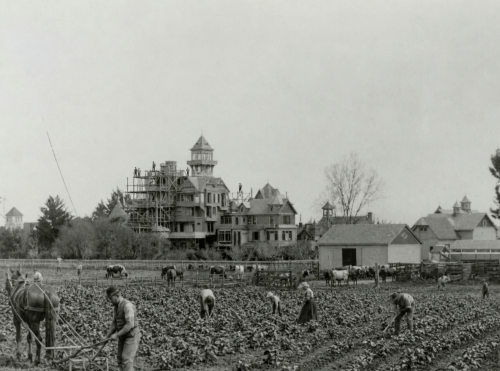
Step inside one of California’s most extraordinary landmarks and experience a world unlike any other. The Winchester Mystery House is more than a Victorian mansion—it is a living work of art, a labyrinth of architectural wonders, and one of America’s most captivating historical estates.
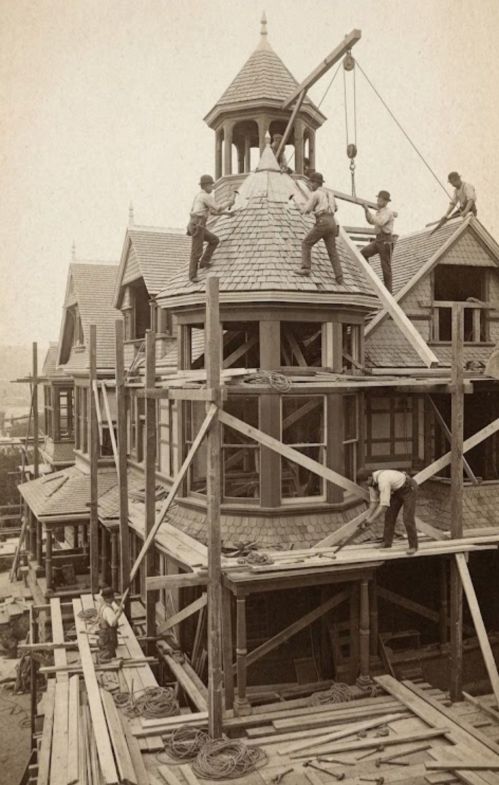
Built over 36 years without pause, the mansion stands today as a testament to craftsmanship, curiosity, and the enduring legend of Mrs. Sarah Winchester.
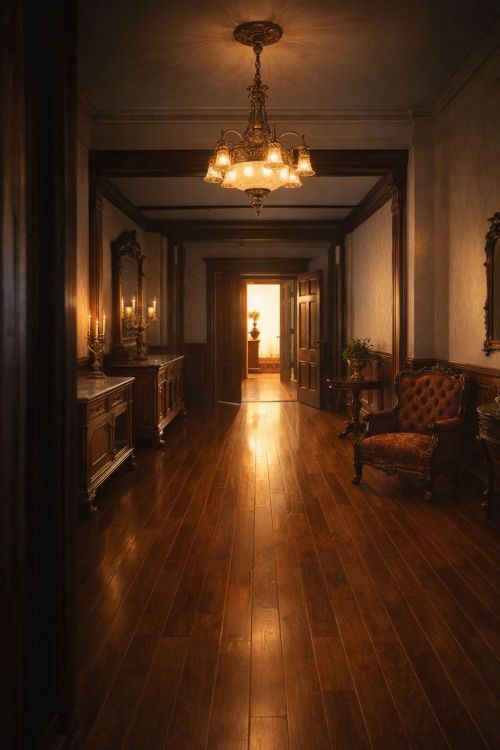
Visitors are invited to explore miles of elegant hallways, beautifully restored rooms, and the mansion’s famously perplexing features: staircases that lead nowhere, doors that open into walls, windows overlooking other rooms, and secret passages woven throughout the estate. Every corner of the house reflects Sarah Winchester’s unique vision, blending Victorian elegance with an eccentricity that continues to fascinate architects, historians, and guests from around the world.

Beyond its architectural marvels, the Winchester Mystery House offers a rare glimpse into the life of a woman who defied convention. Sarah Winchester, heiress to the Winchester Repeating Arms fortune, poured her grief, creativity, and resources into building a home unlike any other.
Her story—part tragedy, part triumph, part enduring mystery—adds emotional depth to every room you enter. Visitors leave not only impressed by the mansion’s scale, but moved by the humanity behind its creation.
The estate’s lush gardens, ornate fountains, and tranquil outdoor spaces provide a peaceful contrast to the mansion’s winding interior. Guests can stroll through beautifully landscaped grounds, enjoy seasonal displays, and take in the serene beauty that surrounds the historic home. Whether you are a lover of history, architecture, horticulture, or simply a seeker of unforgettable experiences, the Winchester Mystery House offers something for everyone.

A visit to the Winchester Mystery House is more than a tour—it is an encounter with legend. It is a place where imagination thrives, where history whispers through every corridor, and where the line between fact and folklore blurs in the most enchanting way. Come discover why millions of visitors from around the world consider the Winchester Mystery House a must‑see destination and one of California’s most iconic treasures.
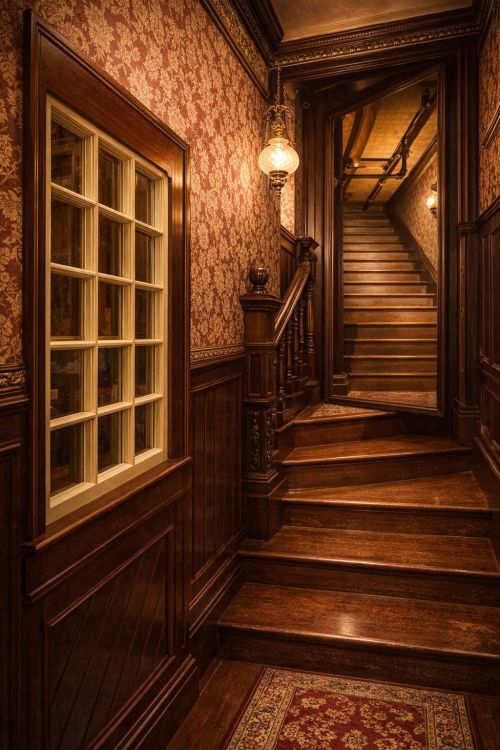
PRIVATE EVENTS & WEDDINGS
at WINCHESTER ESTATE

Café 13: A Rest Stop on the Edge of the Mystery

After wandering the winding halls of the Winchester Mystery House—where staircases defy logic and whispers seem to cling to the walls—Café 13 offers a welcome return to warmth and grounding. Newly reopened and serving guests daily from 10 AM to 3 PM, this cozy hideaway invites you to pause, breathe, and gather yourself before diving back into the mansion’s secrets.
Settle in with a warm meal, challenge a friend to a board game, or simply rest and recharge as sunlight filters through the windows. Café 13 is more than a café—it’s a moment of calm between chapters of the Winchester legend, a place to steady your nerves before returning to the gardens, the grandeur, and the mysteries that await.
Winchester Mercantile Gift Shop
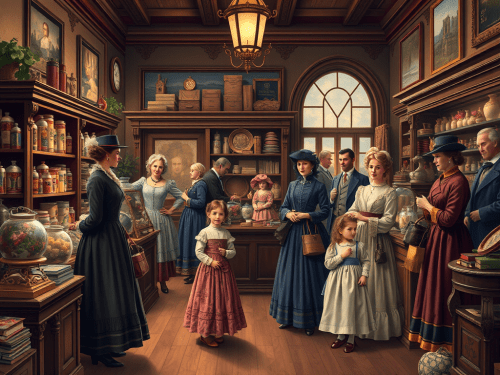
Your journey into the Winchester Mystery House begins long before you cross the mansion’s threshold. It starts at the Mercantile gift shop—a welcoming outpost standing at the edge of a world where history and myth intertwine. Here, beneath warm lights and shelves lined with curiosities, you can secure your tour tickets and prepare for the adventure ahead. Guests often pause for a souvenir photograph, capturing the moment before they step into Sarah Winchester’s enigmatic domain.
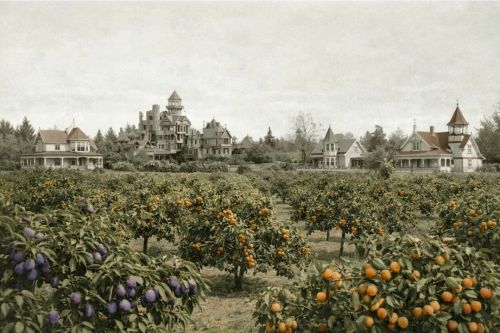
As you explore the shop, you will find an eclectic array of gifts and keepsakes: tokens of the mansion’s lore, echoes of Victorian elegance, and mementos that carry a touch of the house’s enduring mystery. The Mercantile is more than a gift shop—it is the gateway. https://winchestermysteryhouse.com/

The more we love, the more love we are able to give. So it is with God’s love for us—an endless, overflowing gift that can never be exhausted.


National Security

The United States of America has faced envy, hostility, and direct threats throughout its history, and moments of crisis have repeatedly shown how vulnerable even our most iconic institutions can be. The White House has been attacked before, presidents have been targeted, and national leadership has not always emerged unscathed. In a world defined by rapid geopolitical shifts and increasingly unconventional threats, it is no longer enough to rely on traditional security models.

A Grand Ballroom complex designed with an integrated medical facility and fortified command infrastructure is not a luxury — it is a strategic necessity. Such a space would provide a secure, self‑sustaining environment capable of supporting continuity of government, emergency response, and high‑level decision‑making under extreme conditions.
Other nations have fallen when their leadership centers were compromised; America cannot afford that vulnerability.This facility represents more than architecture. It is an investment in national resilience, ensuring that the United States remains stable, functional, and protected no matter what challenges arise. Thank you for your attention to this matter. -President DONALD J. TRUMP


The Silent Killer in the Parking Lot
Psychopaths continue to be treated as petty criminals at one moment, as mentally ill persons at the next, and again as well and normal human beings—all without the slightest change in their conditions having occurred. Many psychopaths are plainly unsuited for life in any community; some are as thoroughly incapacitated as most unmistakable cases of schizophrenia. Whether this is to be regarded as a more or less willful contrariness or as a sickness like schizophrenia, in which the patient is to be protected and looked after, may for the moment be put aside. Some people in the community are definitely psychopaths, but milder cases, just as a patient still living satisfactorily in a community, may be clearly a schizophrenic, but nevertheless able to maintain himself outside the shelter of a psychiatric hospital. Others might not deserve to be called psychopaths but seem to show strong, even if not consistent, tendencies and inner reactions characteristic of the group. These, in comparison with the definite psychopaths, may be regarded in the same relation as the queer schizoid personalities, in whom one sees no technical psychosis but, very plainly, the subjective essence of what is most distinctly schizoid, stand to the full-blown schizophrenic with his delusions, hallucinations, and unmistakable objective manifestations of psychosis. #RandolphHarris 1 of 24

To further highlight this illustration, recently, I was consulted by a man thirty-two years of age whose only complaint was of a general listlessness which he had noticed for about a year. He was a tall, rather slender person, slightly brittle in manner, and gave a definite impression of being not very much worried about his complaint. He lives with his parents in a small town where he makes an excellent salary as an expert in looking after data centers. He enjoys the title of engineer, though he had no formal education beyond that obtained in a rustic high school. Examinations soon brought out the fact that he never had sexual relations with a woman. He had, however, made the attempt not once but many times, the first attempt being twelve years ago. He succeeds in having erections but ejactulatio praecox always occurs, and he fails entirely to effect an entrance. This situation, which most young men would find nothing short of distressing, he spoke about very casually. Questions concerning his attitudes toward love and women brought rather stereotyped answers. He denied ever having scruples about fornication. To him, it was evidently neither good nor bad. His attempts to practice were, it would seem, made with a vague idea of doing what was the custom. #RandolphHarris 2 of 24

He professed to be interested in overcoming his inability to perform intercourse and showed no embarrassment and little reticence about sexual questions but gave a strong impression of having only the shallowest interest. His entire emotional life seemed perfunctory and without warmth. Nothing in his experience could be elicited which brought forth any vividness or enthusiasm. He said that he was at present going with a girl whom he would like to marry, but his attitude toward her seemed without any tangible desire or eager anticipation. At times, he gave a stilted, incongruous little laugh that sounded almost exactly like a manneristic laugh so familiar in actual schizophrenics. No delusions or hallucinations could be brought out. He had been leading an outwardly successful life and is a fairly conscientious and reliable member of society. The man mentioned could certainly not be called legally incompetent at present. Nor should he be diagnosed as a case of schizophrenia. To further highlight this illustration of the developed schizophrenic, let us consider a former patient of mine who often sat for hours in a corner staring vacantly into space, his lips moving, and silly, grimacing smiles flitting across his face. Sometimes this man would not answer questions, apparently not even hearing them, so absorbed was he in subjective contemplation. #RandolphHarris of 3 of 24

Again, he would grin glassily and wink his eye or occasionally speak with passion about strange machinery in a distant city which enemies whom he referred to merely as “they” were using to inject queer colors into his thoughts and sometimes to make him ejaculate. This man, at times, suddenly attacked others. It was eminently necessary to keep him on a closed ward and under close supervision. In some of those to be presented, such a comparison probably would not be justified. Some might more accurately be thought of as showing scattered indications of such a disorder, suggestions of a disturbance central in nature but well contained within an outer capsule of successful behavior much deeper that the merely logical had theoretical rationality of the disabled psychopath. In those who consistently support themselves and pass regularly as acceptable members of the social group, we can only be astonished at the difference between such technical outer adjustment and the indications of deeper pathologic features so similar to those found in the complete manifestation of the disorder. Many patients show relatively circumscribed antisocial behavior or temporary episodes of gross, general delinquency, who have much less in common with the obvious psychopath than those who make a better outward impression but who consistently show signs of inner subjective reactions typical of the clinically disabled patient. #RandolphHarris 4 of 24

These patients with temporary or circumscribed maladjustment or self-defeating behavior will be referred to later at greater length. They are mentioned here to distinguish them not only from the fully manifested psychopath but also from those who, over the years, show more subtle indications of widespread and intractable defect or deviation in essential personal reactions and subjective evaluations. The psychopathological process, or state, which I believe is seriously disabling the patients, may be regarded as affecting, in part and to a varying degree, those yet to be discussed. I believe that in these personalities designated as partially or inwardly affected, a very deep-seated disorder often exists. The true difference between them and the psychopaths who continually go to jails or to psychiatric hospitals is that they keep up a far better and more consistent outward appearance of being normal. This outward appearance may include business or professional careers that continue in a sense of success, and which are truly successful when measured by financial reward or by the casual observer’s opinion of real accomplishment. It must be remembered that even the most severely and obviously disabled psychopath presents a technical appearance of sanity, often one of high intellectual capacities, and not infrequently succeeds in business or professional activities for short periods, sometimes for considerable periods. #RandolphHarris 5 of 24
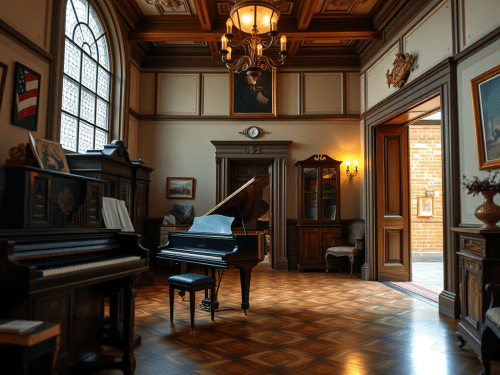
The actual but concealed personality disorganization, in a much deeper sense, is also far-reaching and profound. Although they occasionally appear on casual inspection as successful members of the community, as able lawyers, executives, or physicians, they do not, it seems, succeed in the sense of finding satisfaction or fulfillment in their accomplishments. Nor do they, when one knows the full story, appear to find this in any other ordinary healthy activity. By healthy activity, we do not need to postulate what is considered moral or decent by the average man, but many include any type of asocial, or even criminal, activity so long as its motivation can be translated into terms of ordinary human striving, selfish or unselfish. The chief difference between the patients already discussed, and some of those to be mentioned, lies perhaps in whether the mask or façade of psychobiologic health is extended into superficial material success. I believe that the relative state of this outward appearance is not necessarily consistent with the degree to which the person is really affected by the essential disorder. An analogy is at hand if we compare the catatonic schizophrenic, with his obvious psychosis, to the impressively intelligent paranoid patient who outwardly is much more normal, and may even appear better adjusted than the average person. The catatonic schizophrenic is more likely to recover and, despite his appearance, is often less seriously disordered than the paranoiac. #RandolphHarris 6 of 24

It becomes difficult to imagine how much of the shame and hollowness which cynical commentators have immemorially pointed out in life may come from contact in serious issues with persons affected in some degree by the disorder we are trying to describe. The fake poet who really feels little, the painter who, despite his loftiness, really had his eye on the lucrative fad of his day; the fashionable clergyman who, despite his burning eloquence or his lively castigation of the devil, is seriously concerned chiefly with his advancement; the flirt who can readily awaken love and cannot feel love or recognize its absence; parents who, despite smooth convictions that they have only the child’s welfare at heart, actually reject him except as it suits their own petty or selfish aims: all these types, so familiar in literature and in anybody’s experience, may be as they are because of a slight affliction with the personality disorder now under discussion. I believe it is probable that many persons outwardly imposing, yet actually of insignificant emotional importance, really are so affected. Let us not, however, attempt to explain all pretense and all fraud on this basis. There are many other psychopathologic reactions besides the one with which we are now concerned. And these, too, are capable of producing such results. #RandolphHarris 7 of 24

Let us be especially chary about assuming this limitation in our enemies or our neighbors. The mechanisms of reaction-formation, projection, rationalization, and many other distorting influences work in all of us at the behest of envy, pique, or prejudice. It is not easy to estimate the degree of our neighbor’s sincerity, the worth of an artist’s production, the clergyman’s real motive. Some of the episodes or symptoms may represent less profound inner disturbance than anything properly belonging with that of the real psychopath. Many of the acts might, in isolation, occur in the lives of people who, at length, achieve excellent adjustment not only externally but within. There was a case of a man named Max, and it was very interesting. He was in police custody and made a vocal uproar only because he was too securely held to fight and have extravagant boasts of his physical prowess and savage temper. Although he was friendly and flattering toward his examining physician and the hospital, he had frequently been in mental hospitals for treatment of mental disorders and maintained that he was not responsible for his misconduct. He seemed pleased to be at the hospital, was expansive and cordial, a little haughty despite his well-maintained air of camaraderie. Through preposterously boastful, he did not show any indication of a psychosis. The hospital records show that he had been a patient eight years previously for a period of two months. #RandolphHarris 8 of 24

During this time, he showed no evidence of a psychosis or a psychoneurosis and was discharged with a diagnosis of psychopathic personality. He was found to have tertiary syphilis, but neurologic examination and spinal fluid studies showed no evidence of neurosyphilis. After he was granted parole from the hospital, he was arrested again for disturbing the peace. After losing parole and being questioned about his conduct by the physicians, he glibly denied all and showed little concern at being accused. Since he was not considered as suffering from a real nervous or mental disorder, and since it was difficult to keep him on any ward except the closely supervised one among actively disturbed patients, he had been discharged. Records show that he sought hospitalization on other occasions after having been fined a half-dozen or more times for brawling on the streets and for petty frauds. When his troubles with civil authorities became too discomforting, he sought the shelter of a psychiatric hospital. He complained of having spells during which he lost his temper and attacked people. On one of his trips to the hospital, he had, in describing these spells, mentioned some points that would suggest epilepsy. As soon as he came to the hospital was relieved of responsibility for the trouble he had made, the so-called spells ceased. #RandolphHarris 9 of 24

His descriptions of the spells varied. Sometimes, when particularly expansive, he boasted of superconvulsions lasting as long as ten hours, during which he made window panes rattle and shook slats from the bed. After being in the hospital for several weeks and apparently beginning to grow bored, his talk of spells died down, and he seemed to lose interest in the subject. He was discharged after the staff agreed that the alleged seizures were entirely spurious, and the patient himself had all but admitted it. The diagnosis of psychopathic personality was made. Between his first visit to the present hospital and his recent return, he had been in five other psychiatric institutions, each time following conflicts with the law or pressing difficulties with private persons. In all the records accumulated during these examinations and investigations, no authentic symptoms of an orthodox mental disorder are noted. Upon many occasions, while in the hospital, it was noted that he was alert, quick-witted, nimble with his hands, entirely free from delusions, hallucinations, or any of the broader personality changes found in the ordinary psychoses. He was by no means “nervous,” even in the lay sense, and showed no emotional instability or signs of ungovernable impulse. Rather than an excess of anxiety, he showed the reverse, apparently finding little or nothing in his present situation or in all his past difficulties to cause worry or uneasiness. #RandolphHarris 10 of 24

Max was often caught sowing the seeds of discontent among other patients whom he encouraged to break rules, to oppose attendants, and to demand discharge. He made small thefts from time to time. This trend culminated in his kicking out an iron grill during the night and leaving the hospital. He took with him two psychotic patients, and numerous others testified that he had tried to persuade them to leave also. The next afternoon, he was returned to the hospital by the police after being arrested in the midst of a brawl that he had caused by cheating at a game of chance in a low dive. Many of these episodes resulted in his being sent to psychiatric hospitals which he promptly obtained his release by legal actions. Others had led him to jail and to the police barracks dozens of times for charges not sufficiently serious for him to utilize the expedient of psychiatric hospitalization as a means of escape. Despite his ferocious threats of violence and his pretty genuine ability as a pugilist, breaking his wife’s jaw, and after giving his other wives what was called “an average beating,” he was not considered violent because “substantial injury was unintentional, an act of thoughtless exuberance committed in the heart of a situation eminently and subtly designed to bring out high enthusiasm in such a man as our hero.” #RandolphHarris 11 of 24

A few years later, his wife said that she could not endure the beatings anymore and expressed that her husband threatened to kill her with an axe. However, as soon as she recovered from her fears, she asked for his parole from the hospital. At the insistence of both man and wife, he was discharged after a few weeks. Obviously, Max was suffering from some type of mental disorder and was entirely unsuited to be at large. However, because he was neat and well-groomed, insouciant, witty, alert, and splendidly rational, he was often granted the verdict of freedom. Many of the characteristics and reactions seen in extreme exaggeration among the psychotic appear sometimes to be utilized by those of great talent and excellent psychiatric status in the successful pursuit of valuable personal and social aims. It is unlikely that the specific reactions of the psychopath can be directly utilized for important positive accomplishments. It is believed, however, that many persons in bewilderment and frustration fall into similar reactions temporarily and eventually, finding better means of adaptation, profit from what has been learned through the pathologic experiences. Science treats man as a higher animal, and has no better view of him. This is incomplete to the point of falsity, dangerous to the point of self-destruction. #RandolphHarris 12 of 24

If someone sets out to fight his battles in the world in his own absolute freedom, if he values the necessary deed more highly than the spotlessness of his own conscience and reputation, if he is prepared to sacrifice a fruitless principle to a fruitful compromise, or, for that matter, the fruitless wisdom of the via media to a fruitful radicalism, then let him beware lest precisely his supposed freedom may ultimately prove his undoing. He will easily consent to the bad, knowing full well that it is bad, in order to ward off what is worse, and in doing this, he will no longer be able to see that precisely the worse which he is trying to avoid may still be the better. This is one of the underlying themes of tragedy. Some who seek to escape from taking a stand publicly find a place of refuge in a private virtuousness. Such a man does not steal. He does not commit murder. He does not engage in adultery. Within the limits of his powers, he does good. However, in his voluntary renunciation of publicity, he knows how to remain punctiliously within the permitted bounds which preserve him from involvement in conflict. He must be blind and deaf to the wrongs which surround him. It is only at the price of an act of self-deception that he can safeguard his private blamelessness against contamination through responsible action in the world. Whatever he may do, that which he omits to do will give him no peace. Either this disquiet will destroy him, or he will become the most hypocritical of the Pharisees. #RandolphHarris 13 of 24

Who would wish to pour scorn on such failures and frustrations as these? Reason, moral fanaticism, conscience, duty, free responsibility, and silent virtue, these are the achievements and attitudes of a noble humanity. It is the best of men who go under in this way, with all that they can do or be. Here is the immortal figure of Prince Lestat, the prince of doleful countenance, who takes a music career as a method of exposure and fights an endless battle for the love of a mortal lady. That is how it looks when an old world venture to take up arms against the superior forces of the commonplace and mean. Even the deep cleft which separates the two halves of the great story is characteristic in that the storyteller himself turns against the true hero in the second half, which was not written until many years later than the first, and allies himself with the mean and mocking world. It is all too easy to pour scorn on the weapon which served them to perform great feats, but which in the present struggle can no longer be sufficient. It is a mean-spirited man who can read of what befell Prince Lestat and not be stirred to sympathy. Yet our business now is to replace our rusty swords with sharp ones. Only if he can combine simplicity with wisdom, can a man hold his own here. However, what is simplicity? What is wisdom? And how are the two to be combined? To be simple is to fix one’s eyes solely on the simple truth of God at a time when all concepts are being confused, distorted, and turned upside-down. It is to be single-hearted and not a man of two souls. #RandolphHarris 14 of 24

Because the simple man knows God, because God is his, he clings to the commandments, the judgments, and the mercies which come from God’s mouth every day fresh. Not fettered by principles, but bound by love for God, he has been set free from the problems and conflicts of ethical decision. They no longer oppress him. He belongs simply and solely to God and to the will of God. It is precisely because he looks only to God, without any sidelong glance at the world, that he is able to look at the reality of the world freely and without prejudice. And that is how simplicity becomes wisdom. The wise man is the one who sees reality as it is, and who sees into the depths of things. That is why only that man is wise who sees reality in God. To understand reality is not the same as to know about outward events. It is to perceive the essential nature of things. The best-informed man is not necessarily the wisest. Indeed, there is a danger that precisely in the multiplicity of his knowledge about events, but always without becoming dependent upon this knowledge. To recognize the significance in the factual is wisdom. The wise man is aware of the limited receptiveness of reality for principles; for he knows that reality is not built upon principles but that it rests upon the living and creating God. He knows, too, therefore, that reality cannot be helped by even the purest of principles or by even the best of wills, but only by the living God. #RandolphHarris 15 of 24

Principles are only tools in God’s hand, soon to be thrown away as unserviceable. To look in freedom at God and at reality, which rests solely upon him, this is to combine simplicity with wisdom. There is no true simplicity without wisdom, and there is no wisdom without simplicity. Let us consider the Good, where all is on a more perfect plane, where earnestness and truth are the innocent fancy of beautiful thought. To will the Good for the sake of reward is double-mindedness. To will one thing is, therefore, to will the Good without considering the reward. In truth, to will one this is to will the Good, but not, therefore, to desire reward in the world. The reward can, of course, come without a man’s willing it. I have thought it is in the outward realms, the reward may come from God. However, when a man considers that all reward in the outer realm can become what the word’s reward always is—a temptation for him, then he must guard himself even against true reward just in order rightly to be able to will the Good. Oh, that he must not forget, that this, even such a desire to guard himself, may once more be a temptation to pride. However, if it be true of the reward for Good in the world, that the reward the world gives is so dangerous, then the Good has almost an edifying quality here in this world (even if this edification is somewhat softened in the blessed smile of eternity.) For here, the man who in truth wills the Good, by willing one thing, is very rarely led into the difficulty of being tempted by reward. #RandolphHarris 16 of 24

Now, that the Good has its own reward is indeed forever certain. There is nothing so certain. It is not even more certain that God exists, for that is one and the same thing. However, here on earth, Good is often temporarily rewarded by ingratitude, by lack of appreciation, by poverty, by contempt, by many sufferings, and now and then by death. It is not this reward to which we refer when we say that the Good has its reward. Yet, this is the reward that comes in the external world and that comes first of all. And it is precisely this reward which the man is anxious about, who wills the Good for the sake of the reward. For he has no time to wait, no tie, no years, no life to give away—for an eternity. Hence, that reward which comes in the external world is so far from being desirable, that, on the contrary, it is both valuable and encouraging when it does not come in the outer world, so that the double-mindedness in the inner realm may perish, and so that the reward in heaven may be all the greater. To will the Good for the sake of the reward is, as it were, a symbol of double-mindedness. And a double-minded man, says the Apostle, may not expect to receive that for which he prays. Even if such a double-minded one, who wills the Good for the sake of the reward, may puff himself up, appear defiant, and fancy that he has won his goal, even if many blind ones foolishly think the same; yet let us not deceive each other, my listener, or allow a sense-deception to do so. #RandolphHarris 17 of 24
It is quite possible that he will win good things, that are called rewards. Still, he does not get them as a reward, at least not if truth, if it be true that to will the Good in truth is recognizable by one’s willing it without reward. Oh, Thou the Good’s wonderful at-oneness with thy self that protects thee from being delivered! When, for the sake of reward, a double-minded person only pretends to will the Good, and he seems to get the reward, nevertheless, he does not get it. For that which he gets, he does not get as reward—for the Good. So far is he from getting it as a reward that, rather at the very moment that he receives the Good, he discovers that the reward has vanished. The commonest clinical objection to script theory is that a patient cannot be cured in the psychoanalytic sense by dealing with conscious material alone. This is correct. However, the unconscious has become fashionable, and, hence, grossly overrated. That is, by far the larger percentage of what is called unconscious nowadays is not unconscious, but preconscious. The patient, however, will oblige the therapist who is looking for “unconscious” material by advancing preconscious material with a spurious label. This is easily verified by asking the patient, “Was it really unconscious, or was it just vaguely conscious?” The patient, however, will oblige the therapist who is looking for “unconscious” material by advancing preconscious material with a spurious label. “Was it really unconscious, or was it just vaguely conscious?” #RandolphHarris 18 of 24

True unconscious material — such as the primal fear that Prince Lestat would lose his humanity and be forever cut off from knowing mortals — is not “vaguely conscious” but genuinely inaccessible to awareness. For this reason, the script analyst who works with conscious material is in fact engaging with a far larger territory of the psyche than most people imagine. Conscious narratives are only the surface expressions of deeper, archaic experiences. There is no prohibition against the script analyst addressing unconscious material when he is equipped to do so. Indeed, he must, because these primal derivatives — the original terror of becoming something other than human, the dread of losing the capacity for mutual recognition — form the very protocol from which the script is written. They are the buried axioms of psychic life, shaping the individual’s destiny long before they can be spoken. However, here the psychological problem becomes a cultural one. If knowledge fails to reconcile science with religion and philosophy — that is, if it cannot integrate empirical truth with symbolic meaning and ethical purpose — then civilization becomes vulnerable to a purely political, materialistic form of scientific authority. Such knowledge, stripped of metaphysical grounding and moral imagination, becomes an instrument of domination rather than understanding. In the end, a civilization governed only by technical rationality will devour itself, for it will have amputated the very sources of meaning that make human life bearable. #RandolphHarris 19 of 24

The man had been thinking about that very idea earlier that day — how systems built for efficiency could become indifferent to the human beings inside them. He did not expect to become the example. He opened the car door only to grab a folder from the back seat. The moment he leaned in, the automatic locks clicked shut with a cold, mechanical certainty. He froze. The handle refused to budge. The sealed cabin, already warm from the afternoon sun, felt like it exhaled against him. It was 85°F outside. Inside, the temperature was already climbing past 100°F. Within five minutes, the interior reached 110°F. Sweat poured instantly, soaking his shirt, dripping into his eyes. His skin flushed bright red as his body attempted to cool itself through evaporation — but the air was too hot, too humid, too stagnant. His heart rate surged to compensate, pounding at 130 beats per minute. By ten minutes, the cabin hit 120°F. His breathing grew shallow. The air tasted metallic, thick, almost syrupy. His core temperature began rising above 101°F — the threshold at which heat illness begins. His muscles trembled. His vision blurred at the edges. By twenty minutes, the interior reached 130°F. His core temperature climbed to 103°F. Nausea twisted his stomach. His thinking slowed, as if his thoughts were melting. He felt a crushing pressure in his chest — not from panic, but from the cardiovascular strain of trying to cool a body that could no longer cool itself. By thirty minutes, the cabin hit 135°F. His core temperature passed 104°F — the medical definition of heatstroke. Proteins in his cells began to denature. His kidneys struggled to filter blood thickened by dehydration. His brain swelled microscopically, causing confusion, disorientation, and a sense of detachment from his own body. By forty minutes, he stopped sweating. His skin turned hot and dry — a catastrophic sign. His heart pounded at 160 beats per minute, then stuttered unpredictably. He slumped sideways, unable to lift his head. His core temperature approached 105°F. By fifty minutes, the interior reached 140°F. His consciousness flickered. He felt as though he were dissolving into the heat, becoming part of the air itself. His hearing dimmed. His thoughts fragmented. He could no longer tell if his eyes were open. By sixty minutes, he was moments from cardiac arrest. And then — sirens. #RandolphHarris 20 of 24

The world‑renowned Sacramento Fire Department arrived with the precision of a miracle. Firefighters assessed the situation instantly. A Halligan tool bit into the window frame. With a sharp crack, the glass shattered, and a rush of cooler air flooded the cabin. Award‑winning paramedics pulled him from the car, laying him on the asphalt. His core temperature was 105.4°F — a level that can cause permanent organ damage. They applied ice packs to his neck, groin, and armpits. They misted his skin and used high‑flow oxygen to stabilize his breathing. His pulse slowly steadied. His vision returned in fragments. In the hospital, doctors warned him: heatstroke survivors often face long‑term effects — kidney vulnerability, heat intolerance, chronic fatigue, cognitive fog, and autonomic instability. But he survived. Not because of the machine that trapped him, nor the technical systems that failed to prevent it — but because human beings, guided by moral imagination, refused to let him die. Civilization endures not through its mechanisms, but through the humanity that remembers meaning. Every summer, people underestimate how fast a parked car becomes deadly. At just 85 degrees outside, the interior can reach 120°F in fifteen minutes and soar past 140°F within an hour. Each year, an average of 37 children die in hot cars, along with vulnerable adults who become trapped or incapacitated. Inside that sealed heat, the body’s core temperature rises rapidly: sweating stops, organs strain, confusion sets in, and heatstroke begins as the brain swells and the heart races toward collapse. No cracked window or quick errand prevents this. A car becomes an oven, and the human body cannot survive it. This summer, remember that no child, no adult, and no pet should ever be left alone in a vehicle—not even for a moment. Lives depend on that single decision. #RandolphHarris 21 of 24

When it comes to firefighting, every incident carries the potential for injury—no matter how small the fire appears or how routine the call may seem. If you see a fire engine stopped in the street without its lights on, use extreme caution. Crews may be working nearby, and passing the apparatus can put them in danger. It is often safer to turn around and take another route; if you strike a firefighter or civilian and cause a fatality, you could face charges such as manslaughter. Firefighters frequently move around their vehicle on foot, loading equipment or preparing to leave the scene. Attempting to pass the apparatus can result in a collision with someone you cannot see. Pay close attention to their hand signals as well—emergency vehicles sometimes move slowly or reposition, and impatient drivers trying to slip around them create hazardous situations. If you are already in an intersection when you notice an emergency vehicle approaching, continue through it, then pull to the right and stop as soon as it is safe. Always obey directions from law enforcement officers or firefighters, even if those instructions conflict with posted signs or traffic laws. When sirens or flashing lights are activated, it is illegal to follow within 300 feet of a fire engine, ambulance, or police vehicle. Driving to the scene of a fire, collision, or disaster can also result in arrest, as doing so interferes with firefighters, paramedics, and other emergency personnel. Professional courage is not limited to physical toughness. It includes listening to others, advocating for them in difficult situations, understanding personal limits, and having the integrity to tell a superior when they are wrong. The deeper truth is that public safety depends not only on the bravery of first responders but on the discipline and judgment of the community around them. Every driver’s decision—whether cautious or careless—can either protect or endanger the people risking their lives to protect everyone else. #RandolphHarris 22 of 24

Efforts to preserve farmland and maintain buildable land for future generations often lead to discussions about population growth and long‑term planning. Some people argue that immigration levels should be managed carefully to ensure that infrastructure, housing, and land use remain sustainable. Others suggest that, when immigration does occur, programs that encourage broad representation can help communities reflect the diversity of the wider world. When Americans purchase goods made in the United States, it strengthens local businesses and signals to investors that these products are in demand. Strong sales give investors confidence to reinvest in domestic companies, helping keep jobs, production, and wages within the country. As businesses grow, they contribute more to the tax base, which can reduce the burden on taxpayers over time. Supporting American businesses also keeps more money circulating within the national economy. The government increases the national debt when it spends more than it collects in tax revenue or borrows from private or foreign lenders. When people shop locally, more tax revenue stays in the community and supports public services. This helps keep jobs in the United States and increases the tax contributions that fund government operations. Purchasing foreign-made goods, by contrast, often sends money overseas and may benefit companies that operate under lighter tax or environmental regulations. Buying American-made products can also reduce environmental impact because they travel shorter distances and are produced under stricter standards for air, land, and water protection. In this way, consumer choices influence not only the economy but also environmental stewardship and long-term national sustainability. #RandolphHarris 23 of 24
Under President Trump’s administration, he has made America a priority. President Trump has hermetically sealed the southern border, illegal crossings have been terminated, and are 90 percent lower than under the previous administration. Since President Trump’s crack down on crime, violent crimes in Washington D.C. have dropped by approximately 80 percent. He has stopped thousands of pounds of drugs from entering America and killing citizens. And since President Trump took office, investments in America have increased by trillions of dollars in U.S.A. manufacturing, production, and innovation. As you can see, President Donald Trump and his pledge to “Make America Great Again” is exactly what America needs to save the country and the American people. And yes, diversity is important, so you can see why it is also important to preserve blonde hair and blue eyes, as the people with these characteristics are becoming a minority in America. As a reminder, parents, please teach your children to love America and be patriotic citizens, and to buy goods and services made in America. It is also important to respect law and order and treat your elders with respect. It is inborn in the human mind to wish to know. If this begins with the endless surface questions of a child’s curiosity, if it continues into deeper questions of a scientist’s probing investigation, it cannot and does not stop there. For the higher part of the mind will eventually come into unfoldment, that union of abstract reflective thought with mystical intuition, which is true intelligence, which needs and sees a view of the whole of things. And so, the knowing faculty enters the realm of philosophy. A lot of children are having problems in school and cannot even write a paragraph because they are not reading their books. When you actually read books, you get an example of how to write and will become a better student. Therefore, remember to take your education seriously so that you will be successful in life and make your family proud. Also, to make sure they have all the resources required, please donate to the Sacramento Fire Department to help improve our national security. “Oh, thus be it ever, when freemen shall stand between their loved home and the war’s desolation! Blest with victory and peace, may the heav’n-rescued land Praise the Power that hath made and preserved us a nation! Then conquer we must, when our cause is just, and this be our motto: ‘In God is our trust.’ And the star-spangled banner in triumph shall wave O’er the land of the free and the home of the brave.” Thank you for your attention to this matter. President DONALD J. TRUMP #RandolphHarris 24 of 24

In the bitter spring of 1922, for six uncanny days, the Winchester Mystery House became the sole subject of whispered conversation across San Jose. Visitors claimed the mansion seemed almost alive, watching them from behind its stained‑glass eyes as they wandered its impossible hallways. Guides spoke of a strange pull, a quiet insistence that guests return again and again. Legend soon formed that the house hungered for souls to tour it thirteen times, believing that only then could it claim a fragment of their spirit. Whether born of superstition or something older, the tale spread quickly, and those who felt the mansion’s gaze swore the house remembered every face that crossed its threshold.

The spirits of the Winchester remain active, waiting for the completion of the mansion. For more than a century, they have wandered its unfinished corridors, lingering in stairways that lead nowhere and rooms sealed off from daylight. Some say they are bound not by malice, but by expectation — trapped in the same endless construction Mrs. Sarah Winchester once believed would keep them at peace. The house listens, breathes, and remembers. And until the final nail is driven, the final room raised, the spirits wait for the day the mansion is whole enough to release them… or claim whoever dares to finish what Mrs. Sarah began.

A visit to the Winchester Mystery House is more than a tour—it is an encounter with legend. It is a place where imagination thrives, where history whispers through every corridor, and where the line between fact and folklore blurs in the most enchanting way. Come discover why millions of visitors from around the world consider the Winchester Mystery House a must‑see destination and one of California’s most iconic treasures.
PRIVATE EVENTS & WEDDINGS
at WINCHESTER ESTATE
Many event locations claim to be unique, but nothing compares to the Winchester Mystery House. If you’re truly seeking a distinct, one‑of‑a‑kind setting for your milestone celebration or special occasion, reserve a venue that delivers on uniqueness many times over. Whether you’re planning a wedding, birthday or anniversary celebration, corporate gathering, holiday party, or any other meaningful event, the Winchester Mystery House offers an unforgettable backdrop. Give your guests an experience they’ll be talking about for years to come.
Café 13: A Rest Stop on the Edge of the Mystery
After wandering the winding halls of the Winchester Mystery House—where staircases defy logic and whispers seem to cling to the walls—Café 13 offers a welcome return to warmth and grounding. Newly reopened and serving guests daily from 10 AM to 3 PM, this cozy hideaway invites you to pause, breathe, and gather yourself before diving back into the mansion’s secrets.
Here, you can enjoy breakfast, lunch, snacks, and refreshing drinks in a calm indoor space that feels worlds away from the mansion’s twisting corridors. Settle in with a warm meal, challenge a friend to a board game, or simply rest and recharge as sunlight filters through the windows. Café 13 is more than a café—it’s a moment of calm between chapters of the Winchester legend, a place to steady your nerves before returning to the gardens, the grandeur, and the mysteries that await.
Winchester Mercantile Gift Shop
Your journey into the Winchester Mystery House begins long before you cross the mansion’s threshold. It starts at the Mercantile gift shop—a welcoming outpost standing at the edge of a world where history and myth intertwine. Here, beneath warm lights and shelves lined with curiosities, you can secure your tour tickets and prepare for the adventure ahead. Guests often pause for a souvenir photograph, capturing the moment before they step into Sarah Winchester’s enigmatic domain. As you explore the shop, you will find an eclectic array of gifts and keepsakes: tokens of the mansion’s lore, echoes of Victorian elegance, and mementos that carry a touch of the house’s enduring mystery. The Mercantile is more than a gift shop—it is the gateway. https://winchestermysteryhouse.com/


Saving the Tule Elk from Extinction

Tule elk are a unique species found only in California, and today they are considered one of the state’s greatest wildlife recovery successes. In the 1800s, unregulated hunting and the rapid loss of natural habitat caused their population to collapse. By the 1870s, tule elk were believed to be nearly extinct until a small surviving herd was discovered on a ranch in the San Joaquin Valley. This group became the foundation for the species’ recovery. Over the next century, conservationists and wildlife agencies protected the remaining elk and carried out reintroduction programs across the state. Tule elk were officially given legal protection in 1971, which helped their numbers grow even more. Today, more than twenty herds live throughout California, and the population has risen to almost 6,000 animals. The tule elk’s comeback shows how long‑term conservation efforts can successfully restore a species once thought to be lost.
Today, you can see tule elk on the eastern side of the southern Bay Area.
County Parks with Elk Include:
Joseph D. Grant
Anderson
Coyote Lake Harvey-Bear
Motorcycle Park
Urban development has reduced elk habitat in Santa Clara County. Parks provide critical habitat for this large species. https://parks.santaclaracounty.gov/conservation/wildlife/tule-elk

Invisible Majorities: How Social Reality Erases the Ninety‑Nine
If scientific progress has freed man from many drudgeries, it has enslaved him with many illusions. One of these is the belief that it is itself sufficient to guide and guard him. An attempt to determine the incidence of disorder in the population as a whole is opposed by serious difficulties. The vagueness of officially accepted criteria for diagnosis and the extreme variation in the degree of degree in such maladjustment constitute primary obstacles. Statistics from most neuropsychiatric hospitals are necessarily misleading, since the psychopath is not technically eligible for admission and only those who behave in such an extremely abnormal manner as to appear orthodoxly psychotic (that is to say, as suffering from another and very different disorder) appear in the record. If legal and medical rules were regularly followed, statistics from state hospitals and from the federal psychiatric institutions would show no psychopaths at all. Let is also be noted that these institutions contain a vast majority of the patients hospitalized in the United States of America for mental disorders. Most statistical studies, therefore, cannot be regarded as even remotely suggesting the prevalence of this disability in the population. These facts notwithstanding, it is still impressive to note what the records of a typical psychiatric institution reveal. Over the period of twenty-nine months, 857 new patients were admitted to one federal hospital, where a staff of ten psychiatrists, including myself, classified them after careful examination and study. #RandolphHarris 1 of 21

Of this group, 102 received the primary diagnosis of psychopathic personality, being considered free of any other mental disorder that could account for the difficulties that led to their admission. This group, comprising nearly one-eighth of all those admitted, indicates that the disorder is far from rare. The records also show 134 other patients classified under alcoholism or drug addiction who, I believe, were nearly all fundamentally like those diagnosed as psychopaths, the addiction and other complications being secondary. If even one-half of these are considered as psychopaths, we arrive at a figure of 169, or almost one-fifth of the total. These statistics from one psychiatric institution cannot, of course, be taken as proof that the disorder is so prevalent everywhere. One must not overlook the fact, however, that each of these patients was accepted despite rules specifically classifying him as ineligible, and often as a result of conduct so abnormal or so difficult to cope with that he was considered a grave emergency. Another factor worth mentioning is the psychopath’s almost uniform unwillingness to apply, like other ill people, for hospitalization or for any other medical service. The survey at least suggests that these patients are common and that they constitute a serious problem in the average community and a major issue in psychiatry. #RandolphHarris 2 of 21

I have been forced to the conviction that this particular behavior pattern is found among one’s fellow men far more frequently than might be surmised from reading the literature. If the nature of the disorder in question defines itself throughout the course of this work with sufficient sharpness and clarity to be recognizable as a pathologic entity, little doubt will remain that it presents a sociologic and psychiatric problem second to none. The man who develops influenza or who breaks his arm nearly always thinks at once of calling his doctor. The unconscious victim of a head injury is promptly taken by his family, his friends, or, lacking these, by casual bystanders to a hospital where medical attention is given. Persons who develop anxiety, phobias, or psychosomatic manifestations are likely to seek aid from a physician. Even those who demur and delay since they fear they will be called weak or silly because of symptoms commonly classed as psychoneurotic can be, and usually are, persuaded by their families after varying periods of reluctance to ask for help. Children, of course, often seek to avoid both the pediatrician and the dentist, despite their parents’ advice. However, the parent seldom fails when the need for treatment is serious to get the child, with or without his willingness, into the doctor’s hands. Many patients ill with the major personality disorders we classify as psychoses do not voluntarily seek treatment. Some do not recognize any such need and may bitterly oppose, sometimes by violent combat, all efforts to send them to psychiatric hospitals. #RandolphHarris 3 of 21

Such patients who need psychiatric care and react violently, however, are well recognized. Medical facilities and legal instrumentalities exist for handling the problem, and institutions are provided to accept such patients and hold them, if necessary, against their own volition, so long as it is advisable for the patient’s welfare or for the protection of others. When we consider, on the other hand, these so-called psychopathic personalities, we find not one in one hundred who spontaneously goes to his physician to seek help. If relatives, alarmed by his disastrous conduct, recognize that treatment, or at least supervision, is an urgent need, they meet enormous obstacles. The public institutions to which they would turn for the care of a schizophrenic or a manic patient present close doors. If they are sufficiently wealthy, they often consider a private psychiatric hospital. It should here be noted, also, that such private hospitals are necessarily expensive and that perhaps not more than two or three percent of our population can afford such carte for prolonged periods. No matter how wealthy his family may be, the psychopath, unlike all other serious psychiatric cases, can refuse to go to any hospital or accept any other treatment or restraint. His refusal is regularly upheld by our courts of law, and groups for this are consistent with the official appraisal of his condition by psychiatry. #RandolphHarris 4 of 21

Nearly always, he refuses and successfully opposes the efforts of his relatives to have him cared for. It is seldom that a psychopath accepts hospitalization or even outpatient treatment unless some strong means of coercion happens to be available. The threat of cutting off his financial support, or bringing legal action against him for forgery or theft, or of allowing him to remain in jail, may move him to visit a psychiatrist’s office or possibly to enter a hospital. Subsequent events often demonstrate that he is acting, not seriously and with the understanding he professes, but for evasion, whether he himself realizes this or not. He usually breaks off treatment as soon as the evasion has been accomplished. Since medical institutions refuse to accept the psychopath as a patient, and since he does not voluntarily, except in rare instances, seek medical aid, it might be surmised that prison populations would furnish statistics useful in estimating the prevalence of his disorder. It is true that a considerable proportion of prison inmates show indications of such a disorder. It is also true that only a small proportion of typical psychopaths are found in penal institutions, because the typical patient is not likely to commit major crimes that result in long prison terms. He is distinguished by his ability to escape ordinary legal punishments and restraints. Though he regularly makes trouble for society, as well as for himself, and frequently is handled by the police, his characteristic behavior does not include felonies which would bring about permanent or adequate restriction of his activities. He is often arrested, perhaps a hundred times or more. However, he nearly always regains his freedom and returns to his old patterns of maladjustment. #RandolphHarris 5 of 21

Through the incidence of this disorder is at present impossible to establish statistically or even to estimate accurately, I am willing to express the opinion that it is exceedingly high. Certainly, it is hundreds of times more common than poliomyelitis, and its results are more disastrous. On the basis of experience in psychiatric outpatient clinics and with psychiatric problems of private patients and in the community (as contrasted with committed patients), it does not seem an exaggeration to estimate the number of people seriously disabled by the disorder still listed under this ambiguous term as greater than the number disabled by any recognized psychosis except schizophrenia. So far as I know, there are no provisions made in any public institution for the care of even one psychopath. An exception, however, must be made in the case of psychopaths convicted of major crimes and sentenced to imprisonment in federal institutions. At the Medical Center for Federal Prisoners at Springfield, Mo., provisions are made for psychopathic personalities, their problems are recognized, and genuine efforts are made to handle them psychiatrically. This admirable effort applies, however, only to a small fraction of those needing attention, and leaves still ignored the ninety-nine out of one hundred patients who remain without attention or restriction. #RandolphHarris 6 of 21
Just as the admirable efforts of our institutions reach only a small fraction of those who truly need attention—treating one patient while ninety‑nine remain unattended—so too does the inner life suffer from a similar economy of neglect. In resignation, a person may consciously regard his attitude as prudence or maturity, but this awareness touches only the surface. Beneath it lies a multitude of unacknowledged impulses and restricted wishes, aspects of the self that remain ignored simply because they are seen in a different light or named in gentler terms. The tragedy is the same in both realms: what receives attention is but a fraction of what requires it, and the vast remainder is left to languish in silence. Most frequently, he is aware only of his detachment and of his sensitivity to coercion. However, as always, where neurotic needs are concerned, we can recognize the nature of the resigned individual’s needs by observing when he reacts to frustration, when he becomes listless or fatigued, exasperated, panicky, or resentful. For the analyst, a knowledge of the basic characteristics is of great help in sizing up the whole picture quickly. When one or another of them strikes our attention, we must look for the others; and we are reasonably sure to find them. As I have been careful to point out, they are not a series of unrelated peculiarities but a closely interknit structure. It is, at least in its basic composition, a picture of great consistency and unity, looking as if it had been painted in one hue. #RandolphHarris 7 of 21
Resignation represents a major solution of the intrapsychic conflicts by way of withdrawing from them. At first glance, we get the impression that the resigned person primarily gives up his ambition. This is the aspect which he himself often emphasizes and tends to regard as a clue to the whole development. His history, too, sometimes seems to confirm this impression, insofar as he may have changed conspicuously in terms of ambition. In or around adolescence, he often does things which show remarkable energies and gifts. He may be resourceful, surmount economic handicaps, and make a place for himself. He may be ambitious at school, first in his class, excel in debating or some progressive political movement. At least there often is a period in which he is comparatively alive and interested in many things, in which he rebels against the tradition in which he has grown up and thinks of accomplishing something in the future. Subsequently, there is often a period of distress: of anxiety, of depression, of despair about some failure or about some unfortunate life situation in which he has become involved through his very rebellious streak. After that, the curve of his life seems to flatten out. People say that he got “adjusted” and settled down. They remark that he had his youthful flight toward the sun and came back down to earth. That, they say, is the “normal” course. However, others, more thoughtful, are worried about him. For he also seems to have lost his zest for living, his interests in many things, and seems to have settled for much less than his gifts or opportunities warrant. What happened to him? Certainly, a person’s wings can be clipped through a series of disasters or deprivations. However, in the instances we have in mind, circumstances were not sufficiently unfavorable to be entirely responsible. Hence, some psychic distress must have been the determining factor. #RandolphHarris 8 of 21

This answer, however, is not satisfactory either, because we can remember others who likewise experienced inner turmoil and emerged from it differently. Actually, the change is not the result either of the existence of conflicts or of their magnitude but rather of the way in which he has made peace with himself. What has happened is that he got a taste of his inner conflicts and solved them by withdrawing. Why he tried to solve them this way, why he could do it this way only, is a matter of his previous history, about which more later. First, we need to have a clearer picture of the nature of withdrawal. It is true that some adolescents shake off their scripts completely and become autonomous. Others, however, merely rebel (following a parental directive to rebel), thus fulfilling their scripts in a kind of Appointment in Samarra tragedy: the faster they think they are running away from their parents’ programming, the closer they are to following it. Others shake off the script temporarily, and then subside into suburban desperation. The “identity diffusion” of this period is merely a bad script. In Erikson’s view, it is a struggle against the mother in which she loses. However, the script analysts take the opposite position: it is a struggle with the mother in which she wins. Her son becomes a bum not in spite of her, but because of her, because he cannot get permission to succeed against her orders. The therapy, then, is not directed toward bringing him back to his mother so that he can be a good boy, but to divorcing him from his mother so that he can have permission to do things right. #RandolphHarris 9 of 21

As technological advances put more and more time between early school life and the young person’s final access to specialized work, the stage of adolescing becomes an even more marked and conscious period and, as it has always been in some cultures in some periods, almost a way of life between childhood and adulthood. Thus, in the later school years, young people, beset with the physiological revolution of their genital maturation and the uncertainty of the adult roles ahead, seem much concerned with faddish attempts establishing an adolescent subculture with what looks like a final rather than a transitory or, in fact, initial identity formation. They are sometimes morbidly, often curiously, preoccupied with what they appear to be in the eyes of others as compared with what they feel they are, and with the question of how to connect the roles and skills cultivated earlier with the ideal prototypes of the day. In their search for a new sense of continuity and sameness, which must now include sexual maturity, some adolescents have to come to grips again with crises of earlier years before they can install lasting diols and ideals as guardians of a final identity. They need, above all, a moratorium for the integration of the identity elements ascribed in the foregoing to the childhood stages: only that now a larger unit, vague in its outline and yet immediate in its demands, replaces the childhood milieu—“society.” A review of these elements is also a list of adolescent problems. #RandolphHarris 10 of 21
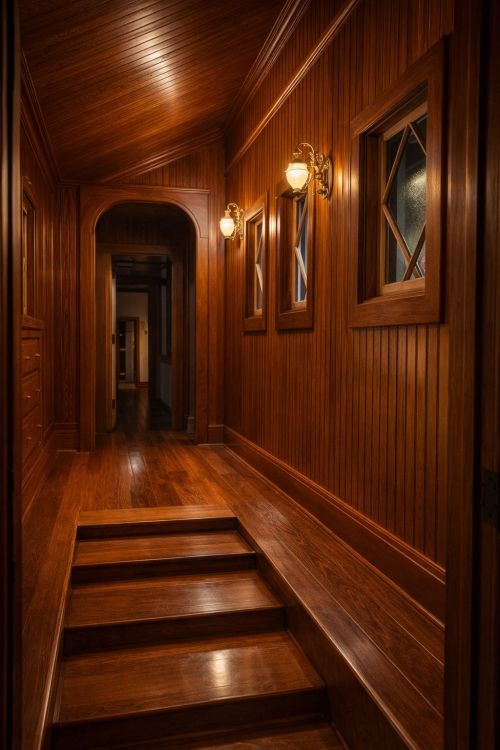
If the earliest stage bequeathed to the identity crisis an important need for trust in oneself and in others, then clearly the adolescent looks most fervently for men and ideas to have faith in, which also means men and ideas in whose service it would seem worthwhile to prove oneself trustworthy. At the same time, however, the adolescent fears a foolish, all too trusting commitment, and will, paradoxically, express his need for faith in loud and cynical mistrust. If the second stage established the necessity of being defined by what one can will freely, then the adolescent now looks for an opportunity to decide with free assent on one of the available or unavoidable avenues of duty and service, and at the same time is mortally afraid of being forced into activities in which he would feel exposed to ridicule or self-doubt. This, too, can lead to a paradox, namely, that he would rather act shamelessly in the eyes of his elders, out of free choice, than be forced into activities which would be shameful in his own eyes or in those of his peers. If an unlimited imagination as to what one might become is the heritage of the play age, then the adolescent’s willingness to put his trust in those peers and leading, or misleading, elders who will give imaginative, if not illusory, scope to his aspirations is only too obvious. By the same token, he objects violently to all “pedantic” limitations of his self-images and will be ready to settle by loud accusation all his guiltiness over the excessiveness of his ambition. #RandolphHarris 11 of 21
Finally, if the desire to make something work, and to make it work well, is the gain of the school age, then the choice of an occupation assumes a significance beyond the question of remuneration and status. It is for this reason that some adolescents prefer not to work at all for a while rather than be forced into an otherwise promising career which would offer success without the satisfaction of functioning with unique excellence. In any given period in human history, then, that part of youth will have the most affirmatively exciting time of it which finds itself in the wave of a technological, economic, or ideological trend seemingly promising all that youthful vitality could ask for. Adolescence, therefore, is least “stormy” in that segment of youth which is gifted and well trained in the pursuit of expanding technological trends, and thus able to identify with new roles of competency and invention and to accept a more implicit ideological outlook. Where this is not given, the adolescent mind becomes a more explicitly ideological one, by which we mean one searching for some inspiring unification of tradition or anticipated techniques, ideas, and ideals. And, indeed, it is the ideological potential of a society which speaks most clearly to the adolescent who is so eager to be affirmed by peers, to be confirmed by teachers, and to be inspired by worthwhile “ways of life.” On the other hand, should a young person feel that the environment tries to deprive him too radically of all the forms of expression which permit him to develop and integrate the next step, he may resist with the wild strength encountered in animals who are suddenly forced to defend their lives. For, indeed, in the social jungle of human existence, there is no feeling of being alive without a sense of identity. #RandolphHarris 12 of 21

Reification is the process by which human-made social arrangements come to be experienced as objective, natural, and inevitable—no longer as products of human action, but as features of the world itself. As if they were things, this apprehension of human phenomena makes things appear non-human or possibly suprahuman. Another way of saying this is that reification is the apprehension of the products of human activity as if they were something other than human products—such as facts of nature, results of cosmic laws, or manifestations of divine will. We create institutions, norms, roles, and meanings—and then forget that we created them. They appear to us as “just the way things are.” Reification implies that man is capable of forgetting his own authorship of the human world, and further, that the dialectic between man, the producer, and his product is lost to consciousness. The reified world is, by definition, a dehumanized world. It is experienced by man as a strange facticity, an opus alienum over which he has no control, rather than as the opus proprium of his own productive activity. It will be clear from our previous discussion of objectivation that, as soon as an objective social world is established, the possibility of reification is never far away. The objectivity of the social world means that it confronts man as something outside of himself. The decisive question is whether he still retains the awareness that, however objectivated, the social world was made by men—and, therefore, can be remade by them. In other words, reification can be described as an extreme step in the process of objectivation, whereby the objectivated world loses its comprehensibility as a human enterprise and becomes fixated as a non-human, non-humanizable, inert facticity. #RandolphHarris 13 of 21

Typically, the real relationship between man and his world is reversed in consciousness. Man, the producer of a world, is apprehended as its product, and human activity as an epiphenomenon of non-human process. Human meanings are no longer understood as world-producing but as being, in their turn, products of the “nature of things.” It must be emphasized that reification is a modality of consciousness, more precisely, a modality of man’s objectification of the human world. Even while apprehending the world in reified terms, man continues to produce it. That is, man is capable paradoxically of producing a reality that denies him. Reification is possible on both the pretheoretical and theoretical levels of consciousness. Complex theoretical systems can be described as reifications, though presumably they have their roots in pretheoretical reification established in this or that social situation. Thus, it would be an error to limit the concept of reification to the mental constructions of intellectuals. Reification exists in the consciousness of the man in the street and, indeed, the latter presence is more practically significant. It would also be a mistake to look at the reification as a perversion of an originally non-reified apprehension of the social world, a sort of cognitive fall from grace. On the contrary, the available ethnological and psychological evidence seems to indicate the opposite, namely, that the original apprehension of the social world is highly reified both phylogenetically and ontogenetically. This implies that an apprehension of reification as a modality of consciousness is dependent upon an at least relative dereification consciousness, which is a comparatively late development in history and in any individual biography. #RandolphHarris 14 of 21

Both the institutional order as a whole and a segment of it may be apprehended in reified terms. For example, the entire order of society may be conceived of as a microcosm reflecting the macrocosm of the total universe as made by the gods. Whatever happens “here below” is but a pale reflection of what takes place “up above.” Particular institutions may be apprehended in similar ways. The basic “recipe” for the reification of institutions is to bestow on them an ontological status independent of human activity and signification. Specific reifications are variations on this general theme. Marriage, for instance, may be reified as an imitation of divine acts of creativity, as a universal mandate of natural law, as the necessary consequence of biological or psychological forces, or, for the matter, as a functional imperative of the social system. What all these reifications have in common is their obfuscation of marriage as an ongoing human production. As can be readily seen in this example, the reification may occur both theoretically and pretheoretically. Thus, the mystagogue can concoct a highly sophisticated theory reaching out from the concrete human event to the farthest corners of the divine cosmos, but an illiterate peasant couple being married may apprehend the event with a similarly reifying shudder of metaphysical dread. Through reification, the world of institutions appears to merge with the world of nature. It becomes necessity and fate, and is lived through as such, happily or unhappily as the case may be. Roles may be reified in the same manner as institutions. The sector of self-consciousness that has been objectified in the role is then also apprehended as an inevitable fate, for which the individual may disclaim responsibility. The paradigmatic formula for this kind of reification is the statement, “I have no choice in the matter, I have to act his way because of my position”—as husband, father, general, archbishop, chairman of the board, gangster, or hangman, as the case may be. #RandolphHarris 15 of 21
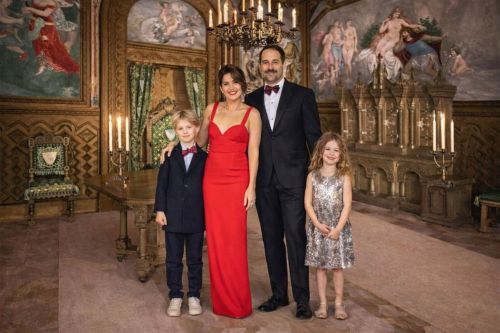
This means that the reification of roles narrows the subjective distance that the individual may establish between himself and his role-playing. The distance implied in all objectifications remains, of course, but the distance implied in all objectification remains, of course, but the distance brought about by disidentification shrinks to the vanishing point. Finally, identity itself (the total self, if one prefers) may be reified, both one’s own and that of others. There is then a total identification of the individual with his socially assigned typifications. He is apprehended as nothing but that type. This apprehension may be positively or negatively accented in terms of values or emotions. The identification of “Jew” may be equally reifying for the anti-Semite and the Jew himself, except that the latter will accent the identification positively and the former negatively. Both reifications bestow an ontological and total status on a typification that is humanly produced and that, even as it is internalized, objectifies but a segment of the self. Once more, such reifications may range from the pretheoretical level of “what everybody knows about Jews” to the most complex theories of Jewishness as a manifestation of biology (“Jewish blood”), psychology (“the Jewish soul”), or metaphysics (“the mystery of Israel”). The analysis of reification is important because it serves as a standing corrective to the reifying propensities of theoretical thought in general and sociological thought in particular. It is particularly important for the sociology of knowledge, because it prevents it from falling into an undialectical conception of the relationship between what men do and what they think. The historical and empirical application of the sociology of knowledge must take special note of the social circumstances that favor dereification—such as the overall collapse of institutional orders, the contact between previously segregated societies, and the important phenomenon of social marginality. These problems, however, exceed the framework of our present considerations. #RandolphHarris 16 of 21

The call came in just after dusk, when the Sacramento sky still held a faint ember‑colored glow. At Station 4, the award‑winning Sacramento Fire Department moved with the practiced precision that had earned them their reputation. Captain Lukas Reinhardt, known for his calm authority and unshakable focus, stepped into his gear as the tones echoed through the bay. Behind him, the world‑renowned paramedics of Medic 62 prepared their equipment, already anticipating the rhythm of the rescue before the engines even rolled. The dispatch report was terse: Male, mid‑fifties, unconscious. Possible cardiac arrest. Apartment complex. Unknown hazards. Unknown hazards always meant trouble, but trouble was something this team had learned to meet head‑on. The engine and medic unit arrived within minutes, lights cutting through the narrow courtyard of the aging apartment building. Residents crowded balconies, some shouting, some crying, some simply watching with the stunned stillness of people who do not yet understand what is unfolding around them. The engine and medic unit arrived within minutes, lights cutting through the narrow courtyard of the aging apartment building. Residents crowded balconies, some shouting, some crying, some simply watching with the stunned stillness of people who do not yet understand what is unfolding around them. Captain Reinhardt led the way up the stairwell, his boots striking the concrete in steady, disciplined beats. The hallway on the third floor was cramped, cluttered with mismatched door mats, shoes, and forgotten packages. The air smelled faintly of bleach and something metallic. The team advanced anyway. #RandolphHarris 17 of 21

As they approached the unit in question, a door across the hall flew open. A frantic resident, wild‑eyed, purposely spat biological waste on a fireman. The contents splattered on Captain Reinhardt’s face, hair, and the shoulders of two paramedics. For a heartbeat, the hallway froze. Then Captain Reinhardt’s voice cut through the shock—steady, commanding, utterly unfazed. “Keep moving. We have a patient.” The team surged forward again. One paramedic slipped on a crooked doormat, catching himself against the wall. Another stumbled over a second mat that had curled upward like a trap. The hallway seemed determined to sabotage them, but they pressed on, driven by training, instinct, and the simple refusal to let chaos dictate the outcome. Inside the apartment, they found the patient collapsed near the kitchen table, his face pale, his breathing absent. The paramedics dropped to their knees, already in motion. One began compressions, counting with firm, rhythmic precision. Another prepared the defibrillator, while Captain Reinhardt cleared space and directed the flow of the scene with quiet authority. The shock lifted the man’s chest. The paramedics resumed compressions without hesitation. Outside, the hallway buzzed with anxious voices, but inside the apartment, there was only the focused hum of lifesaving work. After several cycles, a faint pulse returned—weak, but present. The paramedics exchanged a quick glance, the kind that carried both relief and renewed urgency. They secured the patient onto the gurney, navigating the narrow hallway with practiced coordination. The same door mats that had tripped them earlier now shifted under their boots, but this time they moved with deliberate care, shielding the patient from every jolt. Down the stairwell, through the courtyard, into the waiting ambulance—the team moved as one. The paramedics continued monitoring vitals, adjusting oxygen, preparing medications. Captain Reinhardt stepped back only when the doors closed and the ambulance pulled away, siren rising into the evening air. “Charging. Clear.” The biological waste was still plastered in his hair. His uniform bore the marks of the hallway’s obstacles. But the patient was alive. And for the Sacramento Fire Department and its world‑renowned paramedics, that was the only measure that mattered. #RandolphHarris 18 of 21

When it comes to firefighting, every incident carries the potential for injury—no matter how small the fire appears or how routine the call may seem. If you see a fire engine stopped in the street without its lights on, use extreme caution. Crews may be working nearby, and passing the apparatus can put them in danger. It is often safer to turn around and take another route; if you strike a firefighter or civilian and cause a fatality, you could face charges such as manslaughter. Firefighters frequently move around their vehicle on foot, loading equipment or preparing to leave the scene. Attempting to pass the apparatus can result in a collision with someone you cannot see. Pay close attention to their hand signals as well—emergency vehicles sometimes move slowly or reposition, and impatient drivers trying to slip around them create hazardous situations. If you are already in an intersection when you notice an emergency vehicle approaching, continue through it, then pull to the right and stop as soon as it is safe. Always obey directions from law enforcement officers or firefighters, even if those instructions conflict with posted signs or traffic laws. When sirens or flashing lights are activated, it is illegal to follow within 300 feet of a fire engine, ambulance, or police vehicle. Driving to the scene of a fire, collision, or disaster can also result in arrest, as doing so interferes with firefighters, paramedics, and other emergency personnel. Professional courage is not limited to physical toughness. It includes listening to others, advocating for them in difficult situations, understanding personal limits, and having the integrity to tell a superior when they are wrong. The deeper truth is that public safety depends not only on the bravery of first responders but on the discipline and judgment of the community around them. Every driver’s decision—whether cautious or careless—can either protect or endanger the people risking their lives to protect everyone else. #RandolphHarris 19 of 21

Efforts to preserve farmland and maintain buildable land for future generations often lead to discussions about population growth and long‑term planning. Some people argue that immigration levels should be managed carefully to ensure that infrastructure, housing, and land use remain sustainable. Others suggest that, when immigration does occur, programs that encourage broad representation can help communities reflect the diversity of the wider world. When Americans purchase goods made in the United States, it strengthens local businesses and signals to investors that these products are in demand. Strong sales give investors confidence to reinvest in domestic companies, helping keep jobs, production, and wages within the country. As businesses grow, they contribute more to the tax base, which can reduce the burden on taxpayers over time. Supporting American businesses also keeps more money circulating within the national economy. The government increases the national debt when it spends more than it collects in tax revenue or borrows from private or foreign lenders. When people shop locally, more tax revenue stays in the community and supports public services. This helps keep jobs in the United States and increases the tax contributions that fund government operations. Purchasing foreign-made goods, by contrast, often sends money overseas and may benefit companies that operate under lighter tax or environmental regulations. Buying American-made products can also reduce environmental impact because they travel shorter distances and are produced under stricter standards for air, land, and water protection. In this way, consumer choices influence not only the economy but also environmental stewardship and long-term national sustainability. #RandolphHarris 20 of 21

Under President Trump’s administration, he has made America a priority. President Trump has hermetically sealed the southern border, illegal crossings have been terminated, and are 90 percent lower than under the previous administration. Since President Trump’s crack down on crime, violent crimes in Washington D.C. have dropped by approximately 80 percent. He has stopped thousands of pounds of drugs from entering America and killing citizens. And since President Trump took office, investments in America have increased by trillions of dollars in U.S.A. manufacturing, production, and innovation. As you can see, President Donald Trump and his pledge to “Make America Great Again” is exactly what America needs to save the country and the American people. And yes, diversity is important, so you can see why it is also important to preserve blonde hair and blue eyes, as the people with these characteristics are becoming a minority in America. As a reminder, parents, please teach your children to love America and be patriotic citizens, and to buy goods and services made in America. It is also important to respect law and order and treat your elders with respect. It is inborn in the human mind to wish to know. If this begins with the endless surface questions of a child’s curiosity, if it continues into deeper questions of a scientist’s probing investigation, it cannot and does not stop there. For the higher part of the mind will eventually come into unfoldment, that union of abstract reflective thought with mystical intuition, which is true intelligence, which needs and sees a view of the whole of things. And so, the knowing faculty enters the realm of philosophy. A lot of children are having problems in school and cannot even write a paragraph because they are not reading their books. When you actually read books, you get an example of how to write and will become a better student. Therefore, remember to take your education seriously so that you will be successful in life and make your family proud. Also, to make sure they have all the resources required, please donate to the Sacramento Fire Department to help improve our national security. “Oh, thus be it ever, when freemen shall stand between their loved home and the war’s desolation! Blest with victory and peace, may the heav’n-rescued land Praise the Power that hath made and preserved us a nation! Then conquer we must, when our cause is just, and this be our motto: ‘In God is our trust.’ And the star-spangled banner in triumph shall wave O’er the land of the free and the home of the brave.” Thank you for your attention to this matter. President DONALD J. TRUMP #RandolphHarris 21 of 21


Where History, Mystery, and Imagination Intertwine

Step inside one of California’s most extraordinary landmarks and experience a world unlike any other. The Winchester Mystery House is more than a Victorian mansion—it is a living work of art, a labyrinth of architectural wonders, and one of America’s most captivating historical estates. Built over 36 years without pause, the mansion stands today as a testament to craftsmanship, curiosity, and the enduring legend of Mrs. Sarah Winchester.
Visitors are invited to explore miles of elegant hallways, beautifully restored rooms, and the mansion’s famously perplexing features: staircases that lead nowhere, doors that open into walls, windows overlooking other rooms, and secret passages woven throughout the estate. Every corner of the house reflects Mrs. Sarah Winchester’s unique vision, blending Victorian elegance with an eccentricity that continues to fascinate architects, historians, and guests from around the world.

Beyond its architectural marvels, the Winchester Mystery House offers a rare glimpse into the life of a woman who defied convention. Mrs. Sarah Winchester, heiress to the Winchester Repeating Arms fortune, poured her grief, creativity, and resources into building a home unlike any other. Her story—part tragedy, part triumph, part enduring mystery—adds emotional depth to every room you enter. Visitors leave not only impressed by the mansion’s scale, but moved by the humanity behind its creation.

The estate’s lush gardens, ornate fountains, and tranquil outdoor spaces provide a peaceful contrast to the mansion’s winding interior. Guests can stroll through beautifully landscaped grounds, enjoy seasonal displays, and take in the serene beauty that surrounds the historic home. Whether you’re a lover of history, architecture, horticulture, or simply a seeker of unforgettable experiences, the Winchester Mystery House offers something for everyone.
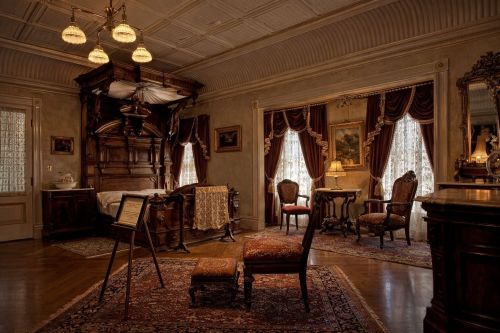
A visit to the Winchester Mystery House is more than a tour—it is an encounter with legend. It is a place where imagination thrives, where history whispers through every corridor, and where the line between fact and folklore blurs in the most enchanting way. Come discover why millions of visitors from around the world consider the Winchester Mystery House a must‑see destination and one of California’s most iconic treasures.
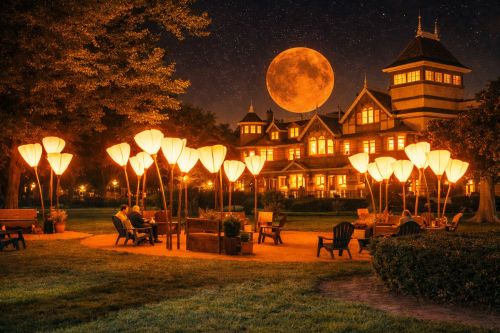
PRIVATE EVENTS & WEDDINGS
at WINCHESTER ESTATE
Many event locations claim to be unique, but nothing compares to the Winchester Mystery House. If you’re truly seeking a distinct, one‑of‑a‑kind setting for your milestone celebration or special occasion, reserve a venue that delivers on uniqueness many times over.
Whether you’re planning a wedding, birthday or anniversary celebration, corporate gathering, holiday party, or any other meaningful event, the Winchester Mystery House offers an unforgettable backdrop. Give your guests an experience they’ll be talking about for years to come.
Café 13: A Rest Stop on the Edge of the Mystery
After wandering the winding halls of the Winchester Mystery House—where staircases defy logic and whispers seem to cling to the walls—Café 13 offers a welcome return to warmth and grounding. Newly reopened and serving guests daily from 10 AM to 3 PM, this cozy hideaway invites you to pause, breathe, and gather yourself before diving back into the mansion’s secrets. Here, you can enjoy breakfast, lunch, snacks, and refreshing drinks in a calm indoor space that feels worlds away from the mansion’s twisting corridors.

Settle in with a warm meal, challenge a friend to a board game, or simply rest and recharge as sunlight filters through the windows. Café 13 is more than a café—it’s a moment of calm between chapters of the Winchester legend, a place to steady your nerves before returning to the gardens, the grandeur, and the mysteries that await.
Winchester Mercantile Gift Shop
Your journey into the Winchester Mystery House begins long before you cross the mansion’s threshold. It starts at the Mercantile gift shop—a welcoming outpost standing at the edge of a world where history and myth intertwine. Here, beneath warm lights and shelves lined with curiosities, you can secure your tour tickets and prepare for the adventure ahead. Guests often pause for a souvenir photograph, capturing the moment before they step into Sarah Winchester’s enigmatic domain. As you explore the shop, you will find an eclectic array of gifts and keepsakes: tokens of the mansion’s lore, echoes of Victorian elegance, and mementos that carry a touch of the house’s enduring mystery. The Mercantile is more than a gift shop—it is the gateway. https://winchestermysteryhouse.com/

Harris Plumbing, Heating, Air & Electric has been serving our community for 30 years—an achievement few companies can claim. That longevity isn’t an accident. It’s the result of hard work, integrity, and a commitment to doing every job the right way, whether it’s a simple repair or a complex system overhaul. We take pride in every service call because we know your home is more than a building—it’s where your family lives, grows, and feels safe. Ensuring your comfort and protection is a responsibility we carry with seriousness and gratitude. After three decades, our mission remains the same: to deliver dependable service you can trust, every time.

Harris makes sure you have the clear, accurate information you need to decide what comes next—no matter what your home is facing. Before we begin any work, our technicians perform a full diagnosis and walk you through every issue we find. That means you receive a personalized quote and service plan tailored to your home’s exact needs, not a generic estimate or guess. We believe the only way to deliver our best work is to understand the problem completely and address it with precision, transparency, and care. Your home deserves nothing less. https://www.callharrisnow.com/about-us/


BMW remains one of the most desirable automotive marques because it blends engineering precision with an emotional driving experience that few brands can match. Its vehicles are built around balance, responsiveness, and a sense of connection between driver and machine—qualities that have defined the company for generations.

Beyond performance, BMW carries an aura of prestige and craftsmanship: the cabins feel tailored, the technology is purposeful rather than gimmicky, and the design language signals confidence without excess. Owning a BMW is not just about transportation; it’s about participating in a legacy of excellence that continues to set the standard for luxury performance. This commitment to performance is why BMW continues to earn its reputation as The Ultimate Driving Machine. https://www.brianharrisbmw.com/
Randolph Harris San Francisco Taxation & Mergers
Building strong, lasting client relationships is essential to a successful legal career. Many attorneys assume that mastering legal doctrine alone guarantees success, but law is fundamentally a service profession—our work is measured not only by technical skill, but by how effectively we solve problems for the people who trust us. Long‑term relationships grow from three core commitments: truly knowing your clients, understanding how their legal issues fit within the broader context of their business and personal goals, and consistently delivering exceptional service.

Mr. Randy advises clients on business transitions, taxable and tax‑deferred mergers and acquisitions, joint ventures, restructuring, integrated tax planning, federal and state tax controversy matters, and real estate transactions. His approach is grounded in clarity, responsiveness, and a deep understanding of each client’s unique circumstances. Trust is the cornerstone of every relationship he builds. Ultimately, clients feel confident knowing they are working with someone who not only understands their challenges, but is fully committed to helping them achieve their goals. https://www.jmbm.com/l-randolph-harris.html


Where Luxury, Craftsmanship, and Vision Become Home
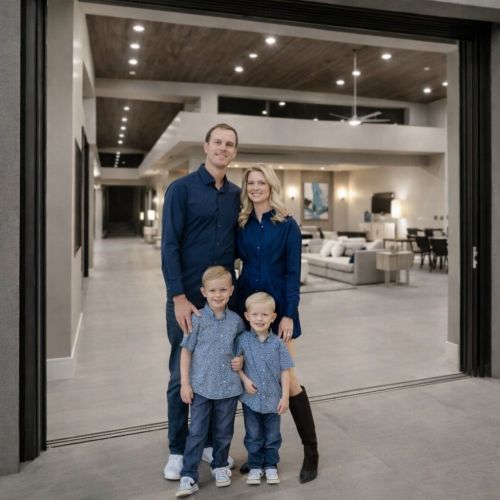
At Millhaven Homes, luxury is not an upgrade—it is the foundation. As Utah’s premier custom home builder, Millhaven has earned a reputation for creating residences that blend architectural excellence with timeless elegance.

Every home is a masterpiece of design, crafted with meticulous attention to detail and built to reflect the unique lifestyle, taste, and aspirations of its owner. When you choose Millhaven, you are choosing a builder who understands that a home is more than a structure—it is a legacy.

From the first conversation to the final walk‑through, Millhaven Homes delivers a personalized, concierge‑level experience. Their award‑winning design team collaborates closely with each client, transforming ideas into breathtaking floor plans and elevating every space with thoughtful features, natural light, and refined finishes.

Whether you envision a modern sanctuary, a classic estate, or a bold architectural statement, Millhaven brings your vision to life with precision and artistry.

Millhaven’s craftsmanship is unmatched. Every material is selected with intention, every line drawn with purpose, and every detail executed with uncompromising quality. Their homes are built to endure—structurally, aesthetically, and emotionally. From custom cabinetry and luxury kitchens to spa‑inspired bathrooms and expansive great rooms, Millhaven creates spaces that feel both grand and deeply personal. These are homes designed for living beautifully.

Beyond the walls, Millhaven Homes embraces the landscapes and communities that make Utah extraordinary.

Their properties are situated in some of the state’s most desirable locations, offering stunning mountain views, serene neighborhoods, and access to world‑class recreation. Each home is positioned to maximize natural beauty, privacy, and the sense of arrival that defines true luxury living.

Choosing Millhaven Homes means choosing excellence, integrity, and a builder who treats your dream as their highest priority. It means stepping into a home that reflects who you are and how you want to live. It means investing in craftsmanship that stands the test of time.

Discover why Millhaven Homes is the trusted name in custom luxury—and why families across Utah continue to choose Millhaven to build the homes they love for a lifetime. https://millhavenhomes.com/

Krispy Pizza – Brooklyn’s Home for Real, Homemade Flavor
At Krispy Pizza, we don’t just make pizza — we craft it. Every pie is prepared in-house using the freshest ingredients, traditional family recipes, and the kind of care only a true Brooklyn shop delivers. With over 15 varieties of pizza, plus our famous Grandma’s Pie, we serve slices that are crisp, bold, and unforgettable.
Because if it’s not Krispy… it’s not pizza. https://www.krispypizza.com/
Location: 7112 13th Ave Brooklyn, NY 11228

The Differnece Between Crisis and Drama

In modern workplaces, “escalate” has become a fashionable badge of initiative, yet its true meaning is far more perilous: to escalate is not to demonstrate power, but to accelerate conflict, amplify risk, and invite consequences that can embarrass, injure, or even destroy the very people who invoke it. Corporate jargon makes escalation sound strategic, like “leveraging,” “optimizing,” or “driving impact.” Social media and startup culture glamorize urgency, making slow, careful problem-solving seem weak or passive. Escalation feels like action, and action feels like competence—especially to someone still proving themselves. It mimics authority, because managers escalate; therefore, escalating feels like acting managerial. But this is a misreading of how power actually works inside organizations. Escalating a minor issue can make the initiator look impulsive, dramatic, or unable to solve problems independently. It signals immaturity rather than leadership. Escalation often implies blame. People feel accused, bypassed, or undermined. Relationships fracture, and trust erodes. Escalation pulls in managers, Human Resources, legal, or executives. What was once a solvable misunderstanding becomes a formal dispute. This is the part most people never consider. In high‑stakes environments—security, law enforcement, healthcare, transportation, customer conflict—escalation can lead to: injuries, wrongful termination, lawsuits, criminal charges, and even death. Escalation is not a metaphor in these settings; it is a literal increase in danger. #RandolphHarris 1 of 27

Escalation often emerges when someone feels: threatened, insecure, disrespected, and powerless. Employees often want to escalate an issue to regain a sense of control. But escalation rarely restores dignity; it usually intensifies the very humiliation or conflict they were trying to avoid. In this sense, escalation becomes a self-defeating defense mechanism—a way of “solving” anxiety by creating a bigger problem. Escalation is often a failure of judgment, restraint, and emotional maturity. Is all that drama even necessary? Instead of using techniques that focus on power forcing, a better model is to focus on de-escalation. De-escalation tends to focus on problem-solving, and it allows professionals to keep their composure, which is a true sign of competence. Instead of ratcheting up the drama, it is better to have a “resolution department.” Many frontline employees now behave as if the customer’s presence is an inconvenience rather than the very reason their job exists. For most of the 20th century, businesses operated under a simple principle: the customer pays everyone’s bills. That was not just a slogan—it was an economic truth. When employees forgot that, businesses failed. “The customer is always right” is now mocked as naïve or outdated. When rudeness becomes normalized, managers stop correcting it, and it becomes the store’s culture. Viral videos reward snark, clapbacks, and public humiliation, making hostility feel clever or justified. This creates a workplace where disrespect is not an accident—it is a performance. #RandolphHarris 2 of 27

Why do some employees now enjoy being rude? Ever since the hit TV show “Gossip Girl,” aired, people have taken as a signal to come off as elite to be rude. However, you must remember, not that it was right for the fictional characters to be rude, but they actually were the elite. They did not have to work for a living. These young men and women had personal bank accounts with millions of dollars in them. So, it mirrors the behavior of this elite class, some employees believe that being rude creates a momentary sense of dominance. It also signals a sense of belonging in workplaces where hostility is the norm. It allows people who feel rejected, threatened, disrespected, or under paid to be condescending to someone who cannot retaliate without consequences. Being rude to customers for no reason also masks insecurity. This is a defensive posture disguised as confidence. Being rude to patrons also flips the script: instead of serving, the employee becomes the judge of who “deserves” service. However, people in customer service are what the elite would consider servants. When you accept that someone will always have more—looks, money, talent, status—you stop treating life as a competition you are supposed to win. That dissolves the corrosive comparison that drives so much workplace hostility and escalation. Humility grounded in reality—not false modesty—keeps you from inflating your own importance. It prevents the entitlement that makes some employees rude to customers or reckless with conflict. #RandolphHarris 3 of

People who believe they must be the best at everything crumble when they are not. My perspective gives me resilience: I do not break when someone surpasses me, because I never built my identity on being untouchable. This is the opposite of the insecure bravado I have been describing in new employees who escalate issues or mistreat customers. My background gives me a vantage point many people never develop: I have seen what it means to work hard for what I have. I understand that respect is earned, not demanded. I know that power is not proven through aggression. I have lived enough life to recognize that everyone is replaceable—including myself. This creates a humility that is not weakness, but clarity. These very reasons are exactly why millions of people all over the world also loved Aaliyah. Allow your status in the world to anchor you. Remember that power is not proven through escalation or rudeness, but through restraint, respect, and the ability to stay grounded when others lose themselves in their fragile egos. When I talk to my mother, she always reminds me of Galatians 6.7, “A man reaps what he shows; good or bad actions will return to him.” Morbidly dependent relationships often begin with what looks like a simple choice of partner, but the choice is rarely “unfortunate” by accident. It reflects deeper psychological patterns—unmet needs, unresolved wounds, and internal narratives about love, safety, and worth. When those patterns go unexamined, people can be drawn toward partners who intensify their vulnerabilities rather than support their growth. The self-effacing person actually does not choose but instead is “spellbound” by certain types. He is naturally attracted by a person of the same or opposite sex who impresses him as stronger and superior. Leaving out of consideration here the healthy partner, he may easily fall in love with a detached person, provided the latter has some glamour through wealth, position, reputation, or particular gifts; with an outgoing narcissistic type possessing a buoyant self-assurance similar to his own; with an arrogant-vindictive type who dares to make open claims and is unconcerned about being haughty and offensive. #RandolphHarris 4 of 27
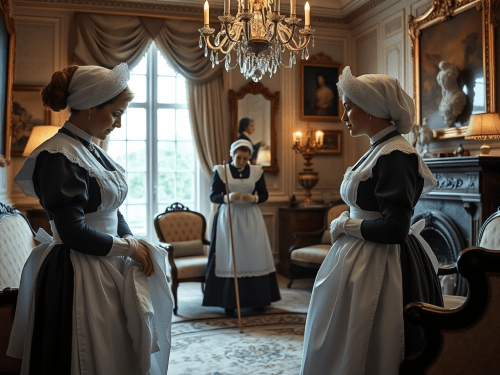
Several reasons combine for his being easily infatuated with these personalities. He is inclined to overrate them because they all seem to possess attributes which he may not only bitterly misses in himself but ones for the lack of which he despises himself. It may be a question of independence, of self-sufficiency, of an invincible assurance of superiority, a boldness in flaunting arrogance or aggressiveness. Only these strong, superior people—as he sees them—can fulfill all his needs and take him over. To allow the fantasies of one-woman patient: only a man with strong arms can save her from a burning house, a shipwreck, or threatening burglars. However, what accounts specifically for being fascinated or spellbound—id est, for the compulsive element in such an infatuation—is the suppression of his expansive drives. As we have seen, he must go to any length to disavow them. Whatever hidden pride and drives for mastery he has, remain foreign to him—while, conversely, he experiences the subdued helpless part of his pride system as the very essence of himself. However, on the other hand, because he suffers under the results of his shrinking process, the capacity to master life aggressively and arrogantly also appears to him to be most desirable. Unconsciously and even—when he feels free enough to express it—consciously, he thinks that if only he could be as proud and ruthless as the Spanish conquistadors, he would be “free,” with the world at his feet. However, since this quality is out of reach for him, he is fascinated by it in others. He externalizes his own expansive drives and admires them in others. It is their pride and arrogance that touch him to the core. #RandolphHarris 5 of 27

Not knowing that he can solve his conflict in himself only, he tries to solve it by love. To love a proud person, to merge with him, to live vicariously through him would allow him to participate in the mastery of life without having to own it to himself. If in the course of the relationship he discovers that the god has feet of clay, he may sometimes lose his interest because he can no longer transfer his pride to him. On the other hand, the person with self-effacing trends does not appeal to him as a sexual partner. He may like him as a friend because he finds in him more sympathy, understanding, or devotion than in others. However, when starting a more intimate relationship with him, he may feel even repelled. He sees in him, as in a mirror, his own weakness and despises him for it or at least is irritated by it. He is also afraid of the clinging-vine attitude of such a partner because the mere idea that he himself must be the stronger one terrifies him. These negative emotional responses then may render it impossible to value existing assets in such a partner. Among the obviously proud people those of the arrogant-vindictive type, as a rule, exert the greatest fascination on the dependent person although, in terms of his real self-interest, he has stringent reasons to be afraid of them. The cause of the fascination lies, in part, in their pride in the most conspicuous way. However, even more crucial is the fact that they are most likely to knock his own pride out from under him. The relationship may start, indeed, with some crude offense on the part of the arrogant person. In Ann Rice’s film Queen of the Damned (2002), we see this behavior mirrored in Prince Lestat when he meets the mortal woman, Jessie. #RandolphHarris 6 of 27

In this case, the dependent person (Jessie) responds with first with anger and impulse to get back at the offender (Prince Lestat), who she is obsessed with and has tracked to a bar in London called the Admirals Arms. When she finds herself in danger, Prince Lestat rushes in and saves her. But when he is about to leave, Jessie upsets him by bringing up a painful memory his holds close to his heart. As the film roles on, he simultaneously becomes so fascinated that he “falls” for her hopelessly and passionately and has thereafter but the one driving interest: to win her love. Thereby, he ruins, or almost ruins himself by exposing his existence and the existence of others like him to the public. Insulting behavior frequently precipitates a dependent relationship. It need not always be as dramatic as in Queen of the Damned (2002). It may be much more subtle and insidious. However, I wonder if it is ever entirely missing in such a relationship. It may consist of a mere lack of interest or an arrogant reserve, of paying attention to others, of joking or facetious remarks, of being unimpressed by whatever assets in the partner usually impresses others—such as name, profession, knowledge, beauty. These are “insults” because they are felt as rejections, and—as I have mentioned—a rejection is an insult for anybody whose pride is largely invested in making everybody love him. The frequency of such occurrences throws light upon the appeal detached people have for him. Their very aloofness and unavailability constitute the insulting rejection. #RandolphHarris 7 of 27

Incidents such as these seem to lend weight to the notion that the self-effacing person merely craves for suffering and avidly seizes the prospect of it offered by the insults. Actually, nothing has more blocked a real understanding of morbid dependency than this notion. It is all the more misleading since it contains a grain of truth. We know that suffering has manifold neurotic values for him and it is also true that insulting behavior attracts him magnetically. The error lies in establishing too neat casual connection between these two facts by assuming that the magic attraction is determined by the prospect of suffering. The reason lies in two other factors, both of which we mentioned separately: the fascination that arrogance and aggressiveness in others exert on him, and his own need for surrender. We now can see that these two factors are more closely interlinked than we have hitherto realized. He craves to surrender himself body and soul, but can do so only if his pride is bent or broken. In other words, the unconditional love that Queen Akasha and the fact that she saved his life meant nothing to him. Jessie’s initial offense was not so much intriguing because it hurt as because it opens the possibility for self-riddance and self-surrender. Prince Lestat hated himself because he was a Vampire. He was so fascinated with being mortal and the mortal woman he got the violin from that it broke his heart when he had to kill her. Because vampires could not be known to humans. When Jessie brought up that point about the violin, it reminded him of the deep hatred he felt for his own kind and for himself. To use a patient’s words: “The person who shakes my pride from under me releases me from my arrogance and pride.” Or: “If he can insult me, then I am an ordinary human being”—and, one might add, “only then can I love.” We may think here too of Anne Rice’s 2022 American gothic, horror television series Interview with the Vampire, when Prince Lestat’s passion is only inflamed when he is not loved by Louis de Pointe du Lac. #RandolphHarris 8 of 27
No doubt, the abandoning of pride as a rigid condition for love-surrender is pathological, particularly since the pronounced self-effacing type can love only if he feels, or is, degraded. However, if we remember that for the healthy person love and true humility go together, the phenomenon ceases to seem unique and mysterious. It also is not quite as widely different from what we have seen in the expansive type as we might at first be led to believe. The latter’s fear of love is mainly determined by his unconscious realization that he would have to relinquish much of his neurotic pride for the sake of love. To put it succinctly: neurotic pride is the enemy of love. Here the difference between the expansive and the self-effacing type is that the former does not need love in any vital way but, on the contrary, shuns it as a danger; while for the latter, love-surrender appears as a solution for everything, and hence as a vital necessity. The expansive type, too, can surrender only if his pride is broken, but then may become passionately enslaved. Stendhal has described this process in the proud Mathilde’s passion for Julien in The Red and the Black. It shows that the arrogant person’s fear of love is well founded—for him. However, mostly he is too much on his guard to allow himself to fall in love. Being too on guard to fall in love is not a flaw—it is a protective stance shaped by experience, memory, and the lessons your life has already taught you. It signals that you have seen enough of human behavior to know that intimacy is not a game, and that choosing the wrong person can cost far more than loneliness ever will. The paradox of being guarded, however, is that guarded people often love the deepest, but only when they feel truly safe. That is why Prince Lestat chose Jessie over Queen Akasha. As the saying goes, men fear powerful women, at least some do. #RandolphHarris 9 of 27

In what sense, then, is it still possible to speak, as the New Testament does clearly enough, of love as an activity of men, of the love of men for God, and for their neighbor? In view of the fact that God is love, what can now be meant by saying that man, too, can love and ought to love? “We love him, because he first loved us,” reports 1 John 4.19. This means that our love for God rests solely upon being loved by God, in other words that our love can be nothing other than the willing acceptance of the love of God in Jesus Christ. “If any man love God, the same is known of him,” reports 1 Corinthians 8.3). “Known” in the language of the Christian Bible means “elected” and “engendered.” To love God means to accept willingly His election and His engendering in Christ. If we say that divine love precedes the human love, but solely for the purpose of setting human love in motion as a love which, in relations to the divine love is an independent, free and autonomous activity of man, the relation between the divine love and human love is wrongly understood. On the contrary, everything which is said of human love, too, is governed by the principle that God is love. The love with which man loves God and his neighbor is the love of God and no others; for there is no other love; there is no love which is free or independent from the love of God. In this, then, the love of men remains purely passive. Loving God is simply the other aspect of being loved by God. Being loved by God implies loving God; the two do not stand separately side by side. #RandolphHarris 10 of 27

In order to make this clearly intelligible, a further word of explanation is necessary with regard to the use of the concept of passivity in this context. Here, as always in theology when there is reference to the passivity of men, we are not concerned with a psychological concept but with one which applies to the existence of men before God, that is to say, with a theological concept. Passivity with respect to the love of God does not mean that exclusion of all thoughts, words and deeds which is possible when I seek repose in a love of God that can come to me only in a particular “quiet hour.” The Love of God is not only that haven of refuge in which I take shelter in distress. Being loved by God does not by many means deprive man of his mighty thoughts and his spirited deeds. It is as whole men, as men who think and who act, that we are loved by God and reconciled with God in Christ. Ans it is as whole men, who think and who act, that we love God and our brothers. All of us define our identities to ourselves and to others in terms of the roles we have had assigned to us and those we have sought to assume because of the status and privilege associated with them. Thus, I define myself as a man (my gender role and gender at birth), father of my children and husband to my wife; son of my parents and brother of my siblings (family roles); and psychotherapist, teacher of my students, researcher, and writer (occupational roles). I had to be trained for some of these roles, whereas I seemed to “grow” into others. There are norms and rules governing the ways in which I age my age, my gender, my family roles, and my occupational roles. People come to depend upon me to act in stable and predictable ways, and I come to expect such stability of myself. #RandolphHarris 11 of

Each social role that persons embody serves as a kind of badge entitling them to participate in life with others in prescribed ways, and each role sets limits on their freedom and access to material good. Roles, in short, entitle a person to the privileges association with high status in a group, or they condemn them to the dregs reserved for those of low status. A Caucasian person used to have to tan their skin to discover the discrimination an African American person faced. However, across many societies, rapid changes—globalization, demographic shifts, economic restructuring, and public debates about historical injustices—have altered how different groups experience social status. These changes can create a sense of dislocation or loss of certainty, especially for groups that historically held more social or economic stability. Several factors contribute to this. Global competition has reshaped industries, reducing the economic security that many workers once relied on. Public conversations about history have highlighted injustices that were previously minimized or ignored, which can feel like criticism to people who did not personally participate in those events. Immigration debates often become emotionally charged, creating a sense of cultural or economic threat for some individuals. Inequality has grown across many countries, affecting people of all backgrounds and creating frustration that sometimes gets misdirected. These forces can combine to create a feeling among some White men that they are being pushed aside or blamed, even if the underlying issues are structural rather than personal. Common experiences include: Feeling scrutinized in public conversations about privilege or inequality, feeling that opportunities are more competitive than before, feeling that cultural narratives no longer place them at the center, and feeling blamed for historical or systemic issues they did not personally cause. These reactions are not unique to any one group; they appear whenever social hierarchies shift. #RandolphHarriis 12 of 27

Women have become keenly aware that the female role, in most societies, condemns women to inferior education, lower occupational status, and usually the exclusive responsibility of rearing children, unless they resist this definition. People in their sixties or seventies find themselves treated by younger people as if they were fragile, stupid, and lacking in fundamental human traits such as the needs for companionship, love, and ennobling work. Also, other persons stigmatized by society are given a rile to play by society and are under pressure to play that role. Thus, Paris Hilton might be expected to act in certain ways by the rest of society, and she may do so, even though she ordinarily would choose not to do so. Even sickness is governed by social norms. When persons feel unwell, they enter the role of patient, which entitles them to interact with physicians and nurses, or with psychotherapists if they are diagnosed as “mentally ill.” Recent, research has shown that people are trained to act like a “good patient” in hospitals, and this training has nothing to do with the treatment of illness. Moreover, the hospital itself is a complex web of profession, uniforms, titles, and badges that define status, authority, and responsibility. I worked for several years with a college of nursing; the hospital where the nursing students trained has as employees the graduates of four-year colleges of nursing, who earned a B.A. degree as well as the Registered Nurse (R.N.) diploma; R.N.’s with a degree from a community junior college; licensed practical nurses who had has no college training; and nursing assistants. The bewildering array of backgrounds puzzled the nurses and the physicians as much as it did the patients; the nurses with each type of training felt somehow different from the others and felt entitled to more responsibility, salary, and freedom. #RandolphHarris 13 of 27

The patients in hospitals are often made to feel like the least important, lowest caste members of the hospital community. They are treated as children about to be disobedient, and they are often kept in the dark about the nature of their illness and the precise nature of the medicines or operations that were prescribed for or conducted upon them. In mental hospitals I visited, even to be there as a patient insured that the staff would not treat the patient as a free, responsible human being; rather, the patient was seen and talked about—sometimes in his or her presence—as the embodiment of the mental illness. The patient was required to participate in therapeutic processes, to take medicine, and so on. For research purposes, a group of psychologists were admitted to mental hospitals as patients, to study the career of the mental patient firsthand. They found that they could not convince the attendants and professional staff that they were “sane,” though the authentic patients knew they were. Role and the badges, titles, and uniforms that identify them enable others to predict how we will act in social situations. The ability to master a variety of roles throughout life is a decided asset for healthy personality, because it facilitates the interactions with others that bring satisfaction of many basic needs. Not to be able to enter roles because of an unhealthy self-structure of irrational fears thus impedes healthy personality development. If a young woman cannot make a career choice because she lacks confidence in her ability to master the training, she may face a life of low economic status. A man with sexual inhibitions may avoid intimate relationships with woman and live a life that is safe but devoid of loving relationships. #RandolphHarris 14 of 27

Although role conformity implies some limitations on one’s freedom of expression and action, there is a sense in which the ability to act in ways appropriate to one’s family position, age, gender, and profession is liberating. Not to adhere to reasonable definitions of appropriate behavior is to invite social censure, which can interfere radically with effective living and the attainment of satisfactions. It sometimes appears hypocritical to students that older people may display politeness and feign delight at being with people they dislike. Actually, the ability to conform with the “niceties” in a variety of situations can be life-giving and liberating, because it clearly separates personal relationships (where spontaneity is expected) from the more formal relationships between strangers. In some cultures, like the English, the French, and the Spanish, much time is spent in ceremonious interaction with others, yet there is room in those cultures for great freedom in the privacy of personal relationships. Europeans often complain that Americans seem friendly in impersonal situations, as in business, but that in private they avoid deepening relationships. If not all of the substance of behavior, roles function to aid in the development of the healthy person by structuring the skeleton of behavior. At the party, my role will be that of the great seducer; with my grandparents, I shall play the role of the dutiful son; in class, the role of scholar will help me decide what to do and how to be. The roles provide stability in some cases so that you can know how to behave initially in new situations. They provide a context that enables you, as in the case of a good actor, to also build in your own unique self and characterization of the role. One might expect the healthy personality to utilize the role concept and then proceed onward from there to fashion full selfhood with his other repertoire of roles or through fashioning an entirely new role. #RandolphHarris 15 of 27

Within institutions, their linguistic objectifications, from their simple verbal designations to their incorporation in highly complex symbolizations of reality also represent them (that is, make them present) in experience. And they may be symbolically represented by physical objects, both natural and artificial. All these representations, however, become “dead” (that is, bereft of subjective reality) unless they are ongoingly “brought to life” in actual human conduct. The representation of an institution in and by roles is thus the representation par excellence, on which all other representations are dependent. For example, the institution of law is, of course, also represented by the ultimate legitimations of the institution and its norms in ethical, religious, or mythological systems of thought. Such man-made phenomena as the awesome paraphernalia that frequently accompany the administration of law, and such natural ones as the clap of thunder that may be taken as the divine verdict in a trial by ordeal and may eventually even become a symbol of ultimate justice, further represents the institution. All these representations, however, derive their continuing significance and even intelligibility from their utilization in human conduct, which here, of course, is conduct typified in the institutional roles of the law. When individuals begin to reflect upon these matters, they face the problem of binding the various representations together in a cohesive whole that will make sense. Any concrete role performance refers to the objective sense of the institution, and thus to the others complementary role performances, and to the sense of the institution as a whole. While the problem of integrating the various representations so involved is solved primarily on the level of legitimation, it is also dealt with in terms of certain roles. #RandolphHarris 16 of 27

All roles represent the institutional order in the afore-mentioned sense. Some roles, however, symbolically represent that order in its totality more than others. Such roles are of great strategic importance in a society, since they represent not only this or that institution, but the integration of all institutions in a meaningful world. Ipso facto, of course, these roles help in maintaining such integration in the consciousness and conduct of the members of the society, that is, they have a special relationship to the legitimating apparatus of the society. Some roles may have no function other than this symbolic representation of the institutional order as an integrated totality, others take on this function from time to time in addition to the less exalted functions they routinely perform. The judge, for instance, may, on occasion, in some particularly important case, represent the total integration of society in this way. The monarch does so all the time and, indeed, in a constitutional monarchy, may have no other function than as a “living symbol” for all levels of the society, down to the man in the street. Historically, roles that symbolically represent the total institutional order have been most commonly located in political and religious institutions. More important for our immediate considerations is the character of roles as mediators of specific sectors of the common stock of knowledge. By virtue of the roles he plays, the individual is inducted into specific areas of socially objectivated knowledge, not only in the narrower cognitive sense, but also in the sense of the “knowledge” of norms, values and even emotions. When it comes to you, your family, and your institution, think about how you want to be viewed. Your behavior speaks volumes about you and your organization. As a reminder, it is important to never let anything escalate. Find a reasonable solution that is amicable for both parties. People and businesses known for have arduous relationships tend to carry about reputation and reputable people choose to avoid them. #RandolphHarris 17 of 27

The award-winning Sacramento Fire Department stands out as one of the region’s most established and respected public‑safety institutions. Its reputation is grounded not in slogans but in a long, documented history of service, scale, and operational capacity. The department’s mission is explicitly centered on protecting the community through comprehensive emergency response and prevention services, which aligns directly with your point that they are “in the business of saving lives.” Few public institutions maintain continuous service for as long as the Sacramento Fire Department. Its longevity is not just a historical footnote—it’s a marker of institutional stability, community trust, and operational evolution. The department’s origins in the mid‑19th century place it at the heart of Sacramento’s early civic development, and its transformation into a fully paid, modern agency by 1872 reflects the city’s rapid growth and the increasing complexity of urban fire protection. A structural collapse is one of the most feared events in firefighting because it represents true escalation—the kind that threatens lives, demands expertise, and requires humility in the face of forces larger than oneself. A structural collapse embodies everything escalation actually means. Acceleration — A building can go from stable to deadly in seconds. Amplification — A small fire becomes a catastrophic event. Loss of control — Even trained professionals cannot fully predict or contain it. Life‑or‑death stakes — Firefighters risk injury or death; civilians may be trapped. This is escalation in its purest form: a situation where the stakes rise beyond human control. #RandolphHarris 18 of 27
Not long ago, two firefighters were killed when a wall collapsed during an emergency response, and only a few years later another crew narrowly escaped the same fate. Around midnight on a September morning, firefighters arrived at an abandoned building already engulfed in flames, the roof gone and the windows blown out. A strong east wind threatened to carry the fire into a row of nearby homes, so crews surrounded the structure and fought to contain it. During the height of the blaze, the roof caved inward, destroying the wall supports. The west wall began to buckle, giving the men only seconds to retreat before it crashed down where they had been standing. That is what real escalation looks like—sudden, deadly, and beyond human control. When I compare that to the way people in offices escalate minor issues to feel powerful, the difference is sobering. Firefighters face true danger; many workers only imitate it. Firefighters know that no amount of training, strength, or confidence can stop a collapsing wall. That awareness keeps them grounded. The Sacramento Fire Department understands that forces larger than oneself exist, and that ego has no place in environments where lives are at stake. The way an emergency call is reported and dispatched affects response. Calls such as building fires, heat attacks, and trench rescues are usually presumed to be emergences based on the dispatcher matching the caller’s information to predetermined response procedure. Service calls for animal rescues, water leaks, and other investigations or complaints generally are regarded as nonemergency responses. Sometimes additional information categorizes a call to an emergency or nonemergency response. For instance, a carbon monoxide alarm with no illness in many jurisdictions gets a nonemergency response to check for the poisonous gas, whereas a carbon monoxide alarm with people ill upgrades it to an emergency response with advanced life support (ALS). Other calls are not quite as cut and dry when it comes to determining the severity of the emergency, but some specific types of calls could benefit from a national standard for response including automatic alarms, odor or smoke investigation calls, EMS assists, and ambulance transports. #RandolphHarris 19 of 27

What is the standard response to an automatic fire alarm with no supporting information at a hotel? Some departments deploy multiple stations responding with lights and siren, whereas others wait for conformation from hotel security before dispatching. It could be that your department responds as the first-due company with lights and siren (emergency), whereas secondary units continue nonemergency care until further information cancels them or has them upgrade the response. A risk-benefit mode would have to take into account the number of false alarms, the potential for the loss of life and property with a delayed response, as well as the potential risk for an apparatus crash. Although motor vehicle crashes are a significant cause of death for fire fighters, hotel fires have the potential to cause numerous deaths as well. Many commercial and industrial buildings these days have automatic fire alarms, and sometimes automatic alarm response needs more planning. For example, a childcare center or school might require a heavier response during occupied hours than when it is closed, and the chance for a real emergency at the city outdoor pool pavilion in January that requires a heavy response for a fire alarm is unlikely. Sometimes the alarm is better at describing the problem. Thunderstorms are notorious for setting off false alarms due to power outages or surges, but alarms cannot be assumed false, because lightning can be the cause of an actual fire. An automatic alarm that comes in as water flow alarm at an unoccupied store in the middle of the night during a thunderstorm should be treated a little more seriously than a pull station. The reliability of an alarm that distinguishes the special problem before the fire department arrives depends on the design and performance of the system. #RandolphHarris 20 of 27

Why odor and smoke investigations matter? Fire service literature consistently emphasizes that odor calls are deceptively dangerous. They are statistically less common and often low‑acuity, but they can mask high‑risk situations. One emergency dispatch journal notes that even a caller reporting a “rotting animal smell” could actually be describing a natural gas leak or something more severe. Fire engineering sources reinforce that odor investigations require firefighters to act as both investigators and responders, because while many odors turn out to be harmless, some are early indicators of electrical failures, chemical hazards, or hidden fires. This duality—routine on the surface, dangerous underneath—makes odor calls a perfect example of true professional vigilance, not the performative escalation you have been critiquing in workplace culture. How these calls escalate in real life? Odor and smoke investigations can escalate in several ways: Hidden structural fires — A smell of burning can be the first sign of fire inside a wall, attic, or crawlspace. Electrical failures — Overheating wires or failing appliances can ignite suddenly. Gas leaks — A faint odor may precede an explosion. Chemical hazards — Industrial or household chemicals can produce toxic fumes. Unknown sources — Many calls never reveal a clear cause, which means responders must assume the worst until proven otherwise. FireRescue1 warns that “smells and bells” calls have, over the years, progressed into serious fires that claimed firefighters’ lives when crews or dispatchers underestimated the risk. Why dispatch classification is critical? Emergency dispatch systems track odor calls under specific protocols, and while they are statistically rare, dispatchers are trained not to assume low severity until they gather complete information. This is the opposite of casual escalation. It is measured escalation, based on evidence, risk, and public safety. Even though most of these calls turn out to be harmless, the fire department approaches each one with disciplined caution because the consequences of being wrong can be catastrophic. #RandolphHarris 21 of 27

Back in 2012, a fire alarm in a low‑rise building turned into a full‑scale emergency when someone on the first floor was smoking and the fire spread faster than anyone expected. Elevators are supposed to shut down during a fire alarm so no one unknowingly rides into danger, but this building kept them active because many elderly residents could not use the stairs. By the time firefighters arrived—within minutes—the first floor was already engulfed in flames. Before that incident, a former tenant had a violent quarrel with her partner. In his anger, he filled a gas can, placed it inside the elevator, and sent it up to the ninth floor where she lived. The resulting blaze destroyed the entire floor. It wasn’t an isolated event—other fires and serious incidents have occurred in the building over the years as well. This fits into a long, troubling pattern: a building that has accumulated layers of unresolved danger, human volatility, and managerial neglect—each incident stacking on top of the last until the place itself becomes a kind of archive of near‑catastrophes. One person’s emotional outburst can weaponize the building’s own infrastructure. And when a building’s systems—elevators, alarms, ventilation, access points—can be turned into tools of destruction, it means the structure is already compromised at a deeper level. A fire alarm that turns out to be a real fire is one thing; a fire alarm in a building where the elevators are intentionally left active—despite the presence of elderly residents who cannot use stairs—is something else entirely. It becomes a case study in how small policy decisions can escalate into life‑threatening conditions, and it fits directly into the them of real danger, real escalation, and the difference between professional responsibility and organizational negligence. Elevators are designed to shut down during fire alarms to prevent occupants from being delivered directly into a fire zone. Disabling that safety feature—even for compassionate reasons—creates a structural vulnerability. A first‑floor fire is especially dangerous because it can trap people above it and cut off escape routes. Fire spreads faster than most people realize, especially in older or low‑rise buildings with compromised fire barriers. The fire department’s rapid response cannot compensate for unsafe building policies. “By the time firefighters arrived, the first floor was already engulfed.” That is not a failure of the fire department—it is a failure of the building’s safety systems and decision‑making. #RandolphHarris 22 of 27

Most multi‑unit residential buildings in California either restrict or completely prohibit smoking, but the exact rules depend on a mix of state law, local ordinances, and individual landlord policies. The trend is overwhelmingly toward smoke‑free housing, especially in apartments, condos, and senior‑living buildings. This is important because: A cigarette becomes a smoldering ignition source. A smoldering ignition becomes a room fire. A room fire becomes a floor fire. A floor fire becomes a building‑wide emergency. A building‑wide emergency becomes a life‑threatening situation for residents and responders. This is escalation in its literal, physical sense: a small hazard accelerating into a catastrophic event. It also shows how human decisions—keeping elevators active—can unintentionally amplify risk. Without local ordinances, many buildings default to smoke‑free policies because: It reduces fire risk. It lowers insurance costs. It prevents secondhand smoke complaints. It protects vulnerable residents (children, elderly, disabled). California cities and counties have gone much further than state law. As of 2024: 190 California municipalities regulate smoking in multi‑unit housing to some extent. 100 municipalities prohibit smoking inside private units of multi‑unit housing. These local rules often apply to: Individual apartment units, balconies and patios, shared outdoor areas, and entire multi‑unit complexes. This means that in many parts of California, smoking is banned not just in common areas but inside the apartments themselves. Once a landlord includes a no‑smoking clause in the lease or house rules, it becomes a binding term of tenancy. That means: They must enforce it like any other rule (noise, pets, parking). They must respond to complaints in a reasonable timeframe. If smoking creates a habitability issue (exempli gratia, secondhand smoke entering units), they must act. They may issue warnings, notices to cure, or even terminate tenancy for repeated violations. If they fail to enforce their own rules, tenants may argue that the landlord is violating their duty to maintain a habitable environment—especially because secondhand smoke can drift through walls, vents, and floors. #RandolphHarris 23 of 27

When does non‑enforcement becomes a legal or safety problem? A landlord’s failure to enforce smoking rules can become serious when: Secondhand smoke affects vulnerable tenants (elderly, disabled, asthmatic). Smoke enters other units, violating habitability standards. Smoking increases fire risk in older or multi‑unit buildings. Local ordinances require smoke‑free housing and the landlord ignores them. The building participates in subsidized housing programs with stricter rules. In these cases, tenants may have grounds to file complaints with local housing authorities or pursue remedies under habitability laws. Building‑management liability in California sits at the intersection of fire safety law, habitability standards, and negligence principles. When a landlord or property manager fails to enforce safety rules—such as smoking bans, fire‑alarm protocols, or elevator shutdown requirements—they can be exposed to significant legal and financial consequences. The key is that California law imposes affirmative duties on building owners to maintain safe premises, and courts evaluate liability based on whether the owner took reasonable steps to prevent foreseeable harm. Under California negligence law, property owners owe tenants and visitors a duty of care to keep the property reasonably safe. This includes preventing hazards that could cause injury or death. Fire safety is explicitly part of this duty, reinforced by the State Fire Marshal’s regulations and the California Building Code, which governs fire and smoke protection features in structures. If a landlord adopts a no‑smoking policy or other safety rule, they must enforce it consistently. Non‑enforcement can create liability if: A fire occurs due to smoking in prohibited areas, secondhand smoke creates habitability violations, vulnerable tenants (elderly, disabled) are placed at risk, and the landlord ignored repeated complaints. Courts look at whether the landlord acted reasonably once they knew—or should have known—about the hazard. Smoking in multi‑unit housing is serious. If a landlord allows smoking in violation of local ordinances or their own lease terms, and a fire results, they may be liable for: Negligence, breach of the implied warranty of habitability, wrongful death or injury claims, and property damage claims. #RandolphHarris 24 of 27

When it comes to firefighting, no matter how large or small the fire is or how routine the call seems to be, there is always the potential for injury. If you see a fire truck stopped in the street without the lights on, be very careful. Sometimes there is an emergency, and you should not pass the fire truck. It might be a good idea to safely turn around and go another way because if you hit someone and they happen to die, you could be charged with manslaughter. Sometimes fire firefighters are getting back into their vehicle, and if you pass the apparatus, you may collide with a firefighter who is on foot. Also, be sure to look at their signals; sometimes emergency vehicles are in motion, albeit slowly, and drivers try to pass them, and this could lead to a dangerous situation. Also, if you are in an intersection when you see an emergency vehicle, continue through the intersection. Drive to the right as soon as it is safe and stop. Obey any direction, order, or signal given by a law enforcement officer or a firefighter. Even if they conflict with existing signs, signals, or laws, follow their orders. When their siren or flashing lights are on, it is against the law to follow within 300 feet of any fire engine, law enforcement vehicle, ambulance, or other emergency vehicle. If you drive to the scene of a fire, collision, or other disaster, you can be arrested. When you do this, you are getting in the way of firefighters, ambulance crews, or other rescue and emergency personnel. The concept of professional courage does not always mean being as tough as nails, either. It also suggests a willingness to listen to other people’s problems, to go to bat for them in a tough situation, and it means knowing just how far they can go. It also means being willing to tell the boss when he or she is wrong. #RandolphHarris 25 of 27
Also, to ensure that we have farmland and buildable land for future use, we need to start limiting the number of people allowed to immigrate to America. Perhaps with the immigrants we do allow into America, there needs to be a diversity program to make sure we have a population that equally represents all races of people. If Americans continue to spend money on American products, then more need to be made to keep up the inventory. When investors notice these goods are selling, it gives them the confidence to pour more money into that local business. It shows that people want these goods made in America and pressures investors to keep these goods and services in America. The jobs stay here, the business stays in America, wages naturally increase, and more money is invested to keep up with demand. This reduces the burden on the taxpayer. When you support American businesses, that money stays in our economy and can help to reduce the national debt. The government creates debt by borrowing from businesses in the private sector or from foreign countries. It also increases the national debt by spending more than it gains in tax revenue in a fiscal year. When people shop locally, more tax money stays in the economy and goes to the government. This way, it keeps more money in our national economy and keeps more jobs located in America which also sends more taxes to the government, which can again help to reduce the national debt. When you buy foreign goods, these companies usually have lighter tax loads or exemptions, meaning less money for the national debt, plus you are helping to strengthen these foreign nations by sending more money overseas. Buying American-made products is also better for the environment and helps to reduce the carbon footprint because these products do not have to travel nearly as far. Furthermore, American companies and manufacturers are held to much higher standards on pollution. American companies must be more careful about air, land, and water pollution and have proper ways to dispose of waste. #RandolphHarris 26 of 27
Under President Trump’s administration, he has made America a priority. President Trump has closed the southern border, illegal crossings have fallen to an all-time low, and are 90 percent lower than under the previous administration. Since President Trump’s crack down on crime, violent crimes in Washington D.C. have dropped by approximately 80 percent. He has stopped thousands of pounds of drugs from entering America and killing citizens. And since President Trump took office, investments in America have increased by trillions of dollars in U.S.A. manufacturing, production, and innovation. As you can see, President Donald Trump and his pledge to “Make America Great Again” is exactly what America needs to save the country and the American people. And yes, diversity is important, so you can see why it is also important to preserve blonde hair and blue eyes, as the people with these characteristics are becoming a minority in America. As a reminder, parents, please teach your children to love America and be patriotic citizens, and to buy goods and services made in America. It is also important to respect law and order and treat your elders with respect. It is inborn in the human mind to wish to know. If this begins with the endless surface questions of a child’s curiosity, if it continues into deeper questions of a scientist’s probing investigation, it cannot and does not stop there. For the higher part of the mind will eventually come into unfoldment, that union of abstract reflective thought with mystical intuition, which is true intelligence, which needs and sees a view of the whole of things. And so, the knowing faculty enters the realm of philosophy. A lot of children are having problems in school and cannot even write a paragraph because they are not reading their books. When you actually read books, you get an example of how to write and will become a better student. Therefore, remember to take your education seriously so that you will be successful in life and make your family proud. Also, to make sure they have all the resources required, please donate to the Sacramento Fire Department to help improve our national security. “Oh, thus be it ever, when freemen shall stand between their loved home and the war’s desolation! Blest with victory and peace, may the heav’n-rescued land Praise the Power that hath made and preserved us a nation! Then conquer we must, when our cause is just, and this be our motto: ‘In God is our trust.’ And the star-spangled banner in triumph shall wave O’er the land of the free and the home of the brave.” #RandolphHarris 27 of 27


People say the Winchester Mansion is strange because Mrs. Sarah Winchester built it that way — staircases to nowhere, doors that open into air, rooms that appear without warning. But those who have studied the deeper folklore whisper something else: that the house inherited stories far older than California, stories that drifted across oceans and centuries until they found a place to root themselves again. They say the mansion carries echoes of another place — a fortress of stone, a house of trials, a home of restless spirits. And at the center of those echoes stands a single figure. The Watcher. Long before the mansion rose from the California soil, the Watcher belonged to a different tower — a high, narrow room where he kept vigil over a land filled with fear, accusations, and unanswered questions. But when Mrs. Sarah Winchester began her endless construction, something in her grief called to him.

Visitors to the mansion sometimes see him in the uppermost windows: a tall silhouette, unmoving, always looking outward as if guarding something only he understands. Guides say the tower is empty. Workers say no one goes up there. Yet the figure appears, night after night, watching. Some believe he is a guardian. Others say he is a witness. But the oldest version claims he is both — a presence drawn to places where sorrow builds walls and fear carves corridors. In the eastern wing, guests sometimes report a pale woman drifting through the hallways, her gown trailing like mist. She never speaks. She never approaches. She simply moves from room to room as though searching for something she lost long ago. Some say she is a memory Mrs. Sarah could not let go of. Others believe she is one of the mansion’s “unfinished stories,” a spirit who followed the Watcher across the sea and found a new home in the labyrinth Mrs. Sarah built.

On fog-heavy nights, the mansion grounds echo with the sound of a horse-drawn carriage approaching the front steps — though nothing ever arrives. The clatter of wheels, the snort of horses, the creak of leather harnesses… all vanish the moment someone opens the door. Locals say it is the carriage of a former visitor returning to the house, eternally repeating his journey. Others whisper that it is the Watcher’s escort, arriving to collect the lost or guide the wandering. In the farthest corridors, where the house seems to fold in on itself, visitors sometimes hear heavy footsteps pacing behind them — too slow for a person, too deliberate for an animal. Some claim to hear low growls echoing from the walls, as though something unseen is patrolling the mansion’s edges. Mrs. Sarah herself once wrote of “shadows that walk like men but breathe like beasts.” Whether she meant it literally or metaphorically, no one knows. But the stories persist.
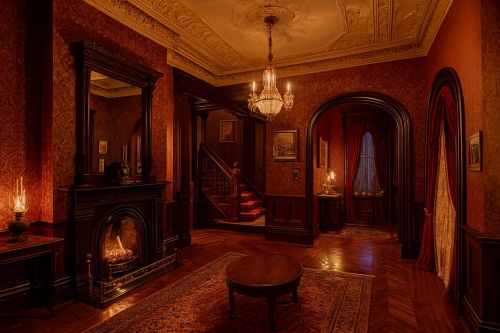
The legend says Mrs. Sarah Winchester did not create these hauntings — she inherited them. Her grief, her isolation, her relentless building formed a kind of beacon. The house became a sanctuary for wandering spirits, a place where old stories could settle into new rooms. And the Watcher, drawn by the same sorrow he had known in his first tower, took up his post again — not to frighten Mrs. Sarah, but to accompany her. To stand guard over a woman who built a labyrinth not to trap spirits, but to give them somewhere to go. Some nights, when the mansion is especially still, visitors swear they see him turn from the window, as if acknowledging them. As if reminding them that every house with a history has someone watching over it.
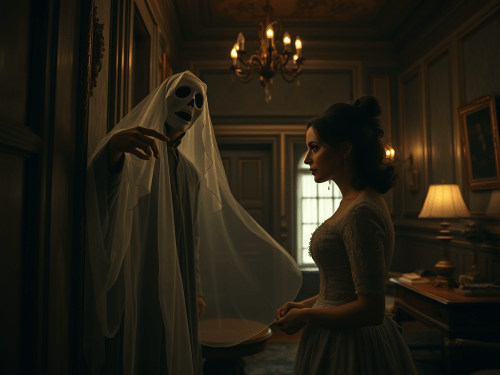
PRIVATE EVENTS & WEDDINGS
at WINCHESTER ESTATE

Many event locations claim to be unique, but nothing compares to the Winchester Mystery House. If you’re truly seeking a distinct, one‑of‑a‑kind setting for your milestone celebration or special occasion, reserve a venue that delivers on uniqueness many times over. Whether you’re planning a wedding, birthday or anniversary celebration, corporate gathering, holiday party, or any other meaningful event, the Winchester Mystery House offers an unforgettable backdrop. Give your guests an experience they’ll be talking about for years to come.
Café 13: A Rest Stop on the Edge of the Mystery

After wandering the winding halls of the Winchester Mystery House—where staircases defy logic and whispers seem to cling to the walls—Café 13 offers a welcome return to warmth and grounding. Newly reopened and serving guests daily from 10 AM to 3 PM, this cozy hideaway invites you to pause, breathe, and gather yourself before diving back into the mansion’s secrets. Here, you can enjoy breakfast, lunch, snacks, and refreshing drinks in a calm indoor space that feels worlds away from the mansion’s twisting corridors. Settle in with a warm meal, challenge a friend to a board game, or simply rest and recharge as sunlight filters through the windows. Café 13 is more than a café—it’s a moment of calm between chapters of the Winchester legend, a place to steady your nerves before returning to the gardens, the grandeur, and the mysteries that await.

Your journey into the Winchester Mystery House begins long before you cross the mansion’s threshold. It starts at the Mercantile gift shop—a welcoming outpost standing at the edge of a world where history and myth intertwine. Here, beneath warm lights and shelves lined with curiosities, you can secure your tour tickets and prepare for the adventure ahead. Guests often pause for a souvenir photograph, capturing the moment before they step into Sarah Winchester’s enigmatic domain. As you explore the shop, you will find an eclectic array of gifts and keepsakes: tokens of the mansion’s lore, echoes of Victorian elegance, and mementos that carry a touch of the house’s enduring mystery. The Mercantile is more than a gift shop—it is the gateway. https://winchestermysteryhouse.com/
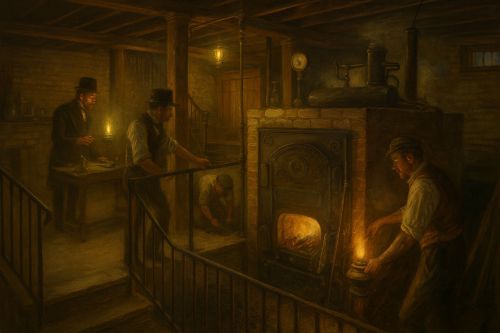

Harris Plumbing, Heating, Air, & Electric has been in business for 30 years. How many businesses can say that? We take pride in everything we do – no matter how big or small the service call might be. We’re here to help your home be as safe and comfortable as possible for you and your family. We take that responsibility very seriously as a company.

Harris will ensure you have the information you need to decide what to do next, whatever your home is facing. We’ll perform a diagnosis and detail what issues are present before starting any work. This gives you a personalized quote and service plan specific to your home’s needs, not some random quote based on the best guess. The only way we can do our best work is to make sure we handle the issues at hand. https://www.callharrisnow.com/about-us/


With its top ranking in Consumer Reports’ Auto Brand Report Card and consistent market share growth, BMW, The Ultimate Driving Experience, has demonstrated its ability to produce high-performing, reliable vehicles that meet consumer demands.BMW stands out due to its focus on driving dynamics and engineering excellence. While other luxury brands prioritize comfort and opulence, BMW is known for creating cars that are fun to drive and offer a unique connection between the driver and the machine. This is why BMW is known as The Ultimate Driving Machine. https://www.brianharrisbmw.com/

Randolph Harris San Francisco Taxation & Mergers
Building strong and lasting client relationships is crucial for a successful legal career. Many lawyers mistakenly believe that mastering legal skills alone ensures success, but law is fundamentally a service industry—our job is to solve problems through the time we sell. To build long-term relationships, attorneys must focus on three core elements: knowing their clients, understanding how their legal issues fit into a larger context, and consistently delivering exceptional service.

Randy advises clients with regard to business transition, taxable and tax-deferred mergers and acquisitions, joint ventures, restructuring, integrated tax planning, federal and state tax controversy resolution, and real estate transactions. Trust is the cornerstone of any client relationship. Ultimately, my clients feel they are in capable hands with someone who genuinely understands their problems and goals. https://www.jmbm.com/l-randolph-harris.html

Welcome
to Cresleigh Homes

Within each Cresleigh neighborhood, you’ll find new homes thoughtfully designed to suit the needs of any generation and any lifestyle, with energy efficiency and reliability at their core. Every Cresleigh team member is passionate about building a new home that you can rely on and a new home that helps you to focus on what truly matters: creating memories with the people you love. Welcome to the neighborhood.

From bustling Northern California to active Arizona communities, Cresleigh delivers homes that blend everyday convenience with well-planned community amenities. Each location reflects a commitment to comfort, value, and connection to local lifestyle and regional opportunities.

Cresleigh Havenwood is a newer residential development offering modern single‑family homes with open‑concept layouts, owned solar, and smart‑home features. It’s positioned as an upper‑mid‑market community with relatively low Mello‑Roos fees compared to surrounding areas. The sales center operates on a Friday–Tuesday schedule and serves as the hub for touring models and reviewing floor plans.

Havenwood – A Community Designed for Modern Living
Sales Office: 758 Havenwood Drive, Lincoln, CA 95648
Base Price: Starting at $700,000
Homes: 4+ Bedrooms | 2–3.5 Baths | 2,293–2,827 Sq. Ft.
Discover Havenwood, a thoughtfully planned neighborhood where contemporary architecture meets everyday comfort. Each home is crafted with open‑concept living spaces, generous natural light, and flexible floor plans designed to grow with your lifestyle.

Home Features Include:

- Spacious 4+ bedroom layouts
- Designer kitchens with modern finishes
- Expansive great rooms ideal for entertaining
- Luxurious primary suites with spa‑inspired baths
- Energy‑efficient construction and smart‑home technology
- Two- and three-car garage options
Located in the heart of Lincoln, Havenwood offers the perfect blend of suburban tranquility and convenient access to shopping, dining, parks, and top‑rated schools. With homes ranging from 2,293 to 2,827 square feet, you’ll find the ideal space for your family, your work, and your future. https://www.cresleigh.com/communities/california/lincoln-ca/havenwood


Lost Like Bats in the Daytime

When we face the apparent tragedies of sorrow, suffering, and death, we must put our trust in God. Tragedy sometimes comes like a thunderbolt. However, the enduring appeal of tragedy lies in its ability to connect us to something larger than ourselves. By confronting the darkest aspects of human existence, tragedy offers us a glimpse into the shared vulnerabilities and anxieties that bind us together. It reminds us that we are all susceptible to suffering, loss, and ultimately death. Yet, it also celebrates the human capacity for courage, resilience, and compassion in the face of adversity. Think about how tragic it was for Mrs. Sarah L. Winchester to suffer the death of her newborn daughter, and just a few short years later, the loss of her husband. Still, even while facing the deep sadness of such experiences, she found comfort in prayer. With the loss of her daughter and husband weighing so heavily upon her tender heart, she bravely battled with her grief and sought comfort in building the Winchester Mansion. Mrs. Winchester did not remain limited in her visions. Her eyes did not see but a few miles. With her heart, she built a magnificent palace to house all the spirits whose light had gone out in this life, as she was able to see beyond mortal limitations. Inside this fabulous mansion, the veil goes down, time ends, and distance fades and vanishes as we step into eternity, into a great world in which there are no earthly limitations. Mrs. Winchester enjoyed the pleasures of the imagination while constructing her home, as well as those of the senses. #RandolphHarris 1 of 31
She used her tragedy to reflect the highest pleasures of the understanding, the charming, varied pleasures of the imagination, and the vast pleasures of the senses. Mrs. Winchester’s mansion is proof that at no stage of her existence was she left without some pleasure. The fact that it was never completed over the 38 years of construction reflects eternity because eternity never ends, therefore, it is never completed. Tragedy challenges us to confront uncomfortable truths about ourselves and the world around us, and it ultimately affirms the enduring power of the human spirit. The world of everyday life is structured both spatially and temporally. The spatial structure is quite peripheral to our present considerations. Suffice it to point out that it, too, has a social dimension by virtue of the fact that my manipulatory zone intersects with that of others. More importantly, for our present purpose, is the temporal structure of everyday life. Temporarily is an intrinsic property of consciousness. The stream of consciousness is always ordered temporally. It is possible to differentiate between different levels of this temporality as it is intrasubjectively available. Every individual is conscious of an inner flow of time, which in turn is founded on the physiological rhythms of the organism, though it is not identical with these. It would greatly exceed the scope of these prolegomena to enter into a detailed analysis of these levels of intrasubjective temporality. As we have indicated, however, intersubjectivity in everyday life also has a temporal dimension. The world of everyday life has its own standard time, which is intersubjectively available. This standard of time may be understood as the intersection between cosmic time and its socially established calendar, based on the temporal sequences of nature, and inner time, in its afore-mentioned differentiations. There can never be full simultaneity between those various levels of temporality, as the experience of waiting indicates most clearly. #RandolphHarris 2 of 31
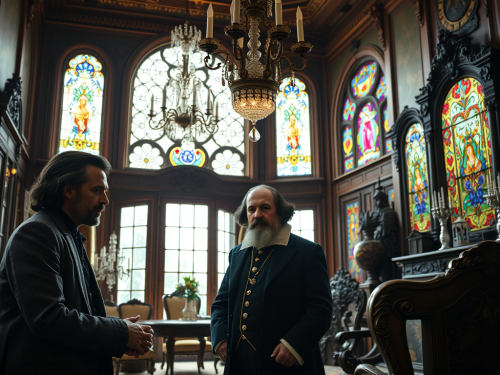
Both my organism and my society impose upon me, and upon my inner time, certain sequences of events that involve waiting. I may want to take part in a sports event, but I must wait for my bruised knee to heal. Or again, I must wait until certain papers are processed so that my qualification for the event may be officially established. It may readily be seen that the temporal structure of everyday life is exceedingly complex because the different levels of empirically present temporality must be ongoingly correlated. The temporal structure of everyday life confronts me as a facticity with which I must reckon, that is, with which I must try to synchronize my own projects. I encounter time in everyday reality as continuous and finite. All my existence in this world is continuously ordered by its time, and is indeed enveloped by it. My own life is an episode in the externally factitious stream of time. It was there before I was born, and it will be there after I die. The knowledge of my inevitable death makes this time finite for me. I have only a certain amount of time available for the realization of my projects, and the knowledge of this affects my attitude to these projects. Also, since I do not want to die, this knowledge injects an underlying anxiety into my projects. Thus, I cannot endlessly repeat my participation in sports events. I know that I am getting older. It may even be that this is the last occasion on which I have the chance to participate. My waiting will be anxious to the degree in which the finitude of time impinges upon the project. #RandolphHarris 3 of 31

The same temporal structure, as has already been indicated, is coercive. I cannot reverse at will the sequences imposed by it—“first things first” is an essential element of my knowledge of everyday life. Thus, I cannot take a certain examination before I have passed through certain educational programs, I cannot practice my profession before I have taken this examination, and so on. Also, the same temporal structure provides the historicity that determines my situation in the world of everyday life. I was born on a certain date, entered school on another, started working as a professional on another, and so on. These dates, however, are all “located” within a much more comprehensive history, and this “location” decisively shapes my situation. Thus, I was born in the year of the great bank crash, in which my father lost his wealth, I entered school just before the revolution, I began to work just after the great war broke out, and so forth. The temporal structure of everyday life not only imposes prearranged sequences upon the “agenda” of any single day but also imposes itself upon my biography as a whole. Within the co-ordinates set by this temporal structure, I apprehend both daily “agenda” and overall biography. Clock and calendar ensure that, indeed, I am a “man of my time.” Only within this temporal structure does everyday life retain for me its accent of reality. Thus, in cases where I may be “disoriented” for one reason or another (say, I have been in an automobile accident in which I was knocked unconscious), I feel an almost instinctive urge to “reorient” myself within the temporal structure of everyday life. I look at my watch and try to recall what day it is. By these acts alone, I re-enter the reality of everyday life. #RandolphHarris 4 of 31

So much easier to miss than to hit, to fall on one side or the other. And yet, if only I can get rid of what prevents me, I seem to be so made that I can do it. Then, I “take my time” when my time should be taken, permitting others to take their time too. I do not hurry them or me. When I am in a hurry, it takes longer, and my peace is lost. (This is probably why it took Mrs. Winchester 38 years to build her mansion, which is still incomplete.) Or as one young man said, “I feel that I am going 90 miles an hour inside and 5 miles an hour outside.” When I slow down, the inner speed decreases and the outer speed increases until they match. This is my subjective feeling. (When a small child seems to me to be dawdling and protests, “But I am hurrying,” he may be speaking the truth of himself.) Objectively (as I am seen by others) I have slowed down, may even seem “dull,” but although I “do” less, I accomplish more. I am in harmony with me, and whatever I do goes easily and well. I do not do all that I would like to do, but I do all that I can do (at any time). By limiting myself, I have the feeling of it, throughout my body and my mind, with all the worlds open to me? When I am bored, time slows down, and it accelerates when I am involved. It seems to me that this is true only when I am in the wrong place, where there are these either/ors. There is another place (or world) in which time changes differently: I am not bored. I am involved, and yet I am surprised at how much has got done, that a usual day’s work has taken only a few hours. I look at the clock and am astonished that so little time has passed. During those few hours, time has not seemed to be either fast or slow. Time and I have flown together, so how can I feel it moving or note its speed? It has neither got stuck nor run away from me. I can only be conscious of time when I am not living fully in the present. #RandolphHarris 5 of 31

This masterless slavery in which capitalism enmeshes the worker or the debtor is only debatable ethically as an institution. In principle, the personal conduct of those who participate, on either side of the rulers or of the ruled, is not morally debatable, as such conduct is essentially prescribed by objective situations. If they do not conform, they are threatened by economic bankruptcy, which would, in every respect, be useless. From our special point of view, where the increased fear of the world has led to a flight from occupational pursuits in the private economy, pietism not only turns into something differing in degree but into an element differing in quality. The study of the ego in psychoanalysis has hardly begun to account for the relationship of “inner agency” to social life. Men who share the concerns of an ethnic group, who are contemporaries in a historical era, or who compete and co-operate in economic pursuits are also guided by common images of good and evil. Infinitely varied, these images reflect the elusive nature of cultural differences and of historical change; in the form of contemporary social models, they assume decisive concreteness in every individual’s struggle for ego synthesis—and in every patient’s residence, ethnic background, and occupation are the first items to be radically altered when it is necessary to disguise his personal identity. The essence of the inner dynamics of a case, it is judged, is thereby left intact. The exact nature, then, of the values common to the patient’s background are considered to be so close to the “surface” that they are not necessarily of “psychoanalytic” interest. Contemporary social models are both clinically and theoretically relevant and cannot be shunted off by brief and patronizing tributes to the role “also” played by “social factors.” #RandolphHarris 6 of 31

The general neglect of these factors in psychoanalysis naturally has not furthered a rapprochement with the social sciences. Students of society and history, on the other hand, blithely continue to ignore the simple fact that all individuals are born by mothers; that everybody was once a child; that people and peoples begin in their nurseries; and that society consists of generations in the process of developing from children into parents, destined to absorb the historical changes of their lifetimes and to continue to make history for their descendants. Only psychoanalysis and social science together can eventually chart the course of individual life in the setting of a changing community. Ambitious steps in this direction have been made by eminent psychoanalysts, generally called neo-Freudians, who bypass the efforts of “ego psychology.” We were distressed when we saw ourselves caricatured in patients who, in social life, spread a compulsive attitude of mutual mental denuding under the guise of being alert to the defensive tricks of the ego. And we were dismayed when we saw our purpose of enlightenment perverted into a widespread fatalism, according to which man is nothing but a multiplication of his parents’ faults and an accumulation of his own earlier selves. We must grudgingly admit that even as we were trying to devise, with scientific determinism, a therapy for the few, we were led to promote an ethical disease among the many. The existence and the multiplicity of defensive regressive mechanisms in adolescence were systematically demonstrated in Anna Freud’s The Ego and the Mechanisms of Defence. Her book defines inner defense in the widest sense; but it does not foreclose the psychoanalysis of adolescent development. When she states: “The abstract intellectual discussions and speculations in which young people delight are not genuine attempts at solving the tasks set by reality. Their mental activity is rather an indication of a tense alertness for the instinctual processes and the translation into the abstract thought of that which they perceive,” she presents the defensive half of the story of adolescent rumination, the other half being its adaptive functions, and its functions in the history of changing ideas. #RandolphHarris 7 of 31

There is a historical concomitance which teaches us how, in the period between puberty and adulthood, the resources of tradition fuse with new inner resources to create something potentially new: a new person; and with this new person, a new generation, and with that, a new era. The question of what happens to persons, generations, and eras because of guiding ideologies are of postadolescent origin, and are dedicated to the proposition that what we have learned as pathologists must become part of an ecology of the mind before we can take full responsibility for the ideological implications of our knowledge. We cannot even begin to encompass the human life cycle without learning to account for the fact that a human being under observation has grown stage by stage into a social world, always for the worse and for the better, has step by step prepared for him an outer reality made up of human traditions and institutions which utilize and thus nourish his developing capacities, attract and modulate his drives, respond to and delimit his fears and phantasies, and assign to him a position in life appropriate to his psychosocial powers. We cannot even begin to encompass a human being without indicating for each of the stages of his life cycle the framework of social influences and of traditional institutions which determine his perspectives on his more infantile past and on his more adult future. In this sense, we can learn from patients only to the extent that we realize (and the patient realizes) that what is said and done in treatment is based on a formal contract between healer and patient and must be carefully transposed before being applied to the general human condition. This is the reason why the fragments of case histories or psychoanalytic interpretations which flutter around in increasing numbers in our newspapers and magazines seem lost like bats in the daytime. #RandolphHarris 8 of 31
On the other hand, we cannot leave history entirely to nonclinical observers and to professional historians who often all too nobly immerse themselves into the very disguises, rationalizations, and idealizations of this historical process from which it should be their business to separate themselves. Only when the relation of historical forces to the basic functions and stages of the mind has been jointly charted and understood can we begin a psychoanalytic critique of society as such without falling back into mystical or moralistic philosophizing. Dr. Siegmund Freud warned against the possible misuse of his work as an ideology, a “Weltanschauung;” but a man who inspires new ideas has little power to restrict them to the area of his original intentions. And Dr. Freud did not refrain from interpreting other total approaches to man’s condition, such as religion, as consequences of man’s inability to shake off the bonds of his prolonged childhood, and thus, comparable to collective neuroses. The psychological and historical study of the religious crisis of a young great man renews the opportunity to review this assertion in the light of ego-psychology and of theories of psychosocial development. There are four consequences of self-contempt. The first is the compulsive need of certain neurotic types to compare themselves with everybody whom they come in contact, and to their own disadvantage. The other fellow is more impressive, better informed, more interesting, more attractive, better dressed; he has the advantage of age or youth, of a better position, of greater importance. However, even though the comparisons may strike the neurotic himself as lopsided, he does not think them through clearly; of if he does, the feeling of comparative interiority still remains. The comparisons made are not only unfair to himself; they often do not make any sense. Why should an older man who could be proud of his own accomplishments compare himself with a youngster who is a better dancer? Or why should somebody who has never been interested in music feel inferior to musicians? #RandolphHarris 9 of 31

The practice makes sense, however, when we remember the unconscious claims to be superior to others in every regard. We must add here that the neurotic’s pride also demands that he should be superior to everybody and everything. Then, of course, any “superior” skill or quality of others must be disturbing, and must call forth a self-destructive berating. Sometimes the connection operates in reverse: the neurotic, already in a self-berating frame of mind, utilizes the “shining” qualities of others, as he encounters them, to reinforce and buttress his castigating self-criticism. To express it in terms of two people: it is as if an ambitious and sadistic mother used the better marks or cleaner fingernails of Leo’s friend to put Leo to shame. It is insufficient to describe these processes simply as a recoiling from competition. The recoiling from competition in these instances is rather the result of self-disparagement. A second consequence of self-contempt is vulnerability in human relations. Self-contempt makes the neurotic hypersensitive to criticism and rejection. On little or no provocation, he feels that others look down on him, do not take him seriously, do not care for his company, and in fact slight him. His self-contempt adds considerably to the profound uncertainty he has about himself, and hence cannot but make him as profoundly uncertain about the attitudes of others toward him. Being unable to accept himself as he is, he cannot possibly believe that others, knowing him with all his shortcomings, can accept him in a friendly or appreciative spirit. What he feels in deeper layers is much more drastic, and may amount to an unshakable conviction that others plainly despise him. And such a conviction may live in him, although he is not consciously aware of even a trace of self-contempt. Both of these factors—the blind assumption that others despise him and a relative or total awareness of his own self-contempt—point to the fact that the bulk of self-contempt is externalized. This may lead to a subtle poisoning of all his human relations. He may become unable to take any positive feelings of others at their face values. A compliment may, in his mind, register as a sarcastic comment; an expression of sympathy as condescending pity. Somebody wants to see him—it is because he wants something from him. Others express a liking for him—it can only be because they do not know him well, because they themselves are worthless or “neurotic,” or because he has been or could be useful to them. #RandolphHarris 10 of 31

Similarly, incidents which in fact have no hostile meaning are interpreted as evidence of an existing contempt. Somebody has not greeted him on the street or in the theater, has not accepted his invitation, or has not replied right away—it can only be a slight. Somebody makes a good-natured joke about him—it is a clear intent to humiliate him. An objection to, or a criticism of, some suggestion or activity of his does not constitute an honest criticism of the particular activity, et cetera, but becomes evidence of the other’s despising him. The person himself, as we see in analysis, is either unaware of his experiencing his relations with others in this way, or he is unaware of the distortions involved. In the latter case, he may take it for granted that others’ attitudes toward him are really of this sort, and even pride himself on being “realistic.” In the analytic relationship, we can observe to what extent a patient can take it for granted that others look down on him. After much analytic work is done, and the patient is apparently on good friendly terms with his analyst, he may mention casually and without affection that it was also so self-evident to him that the analyst was looking down on him that he did not feel it necessary to mention it or to give it any extended thought. All of these distorted perceptions in human relations are understandable because the attitudes of others are indeed open to several interpretations, particularly when torn out of context, while the externalized self-contempt feels unmistakably real. Also, the self-protective character of such a shift in responsibility is evident. If possible, at all, it is probably intolerable to live with a constantly awake, sharp self-contempt. The neurotic has an unconscious interest in regarding others as the offenders. Although it is painful for him, as it would be for anybody, to feel slighted and rejected, it is less painful than coming face to face within his own self-contempt. It is a long and hard lesson for anybody to learn that others can neither hurt nor establish self-esteem. #RandolphHarris 11 of 31

The vulnerability in human relations caused by self-contempt combines with that brought about by neurotic pride. It is often difficult to say whether a person feels humiliated because something has hurt his pride or because he has externalized his self-contempt. They are so inseparably interwoven that we must tackle such reactions from both angles. Of course, at a given time, one or the other aspect will be the more easily observable and the more accessible. If a person reacts to a seeming disregard with vindictive arrogance, hurt pride is uppermost in the picture. If, as a result of the same provocation, he turns abject and tries to ingratiate himself, as self-contempt sticks out most clearly. However, in either case, the reverse aspect is also operating and should be kept in mind. Thirdly, a person in the clutches of self-contempt often takes too much abuse from others. He may not even recognize a flagrant abuse, whether it be humiliation or exploitation. Even if indignant friends call it to his attention, he tends to minimize or justify the offender’s behavior. This occurs only under certain conditions, such as in a morbid dependency, and is the outcome of a complicated inner constellation. However, essential among the factors producing it is the defenselessness produced by the person’s conviction that he does not deserve any better treatment. For instance, a woman whose husband is flaunting his affairs with other women may be unable to complain or even to feel conscious resentment because she feels unlovable and regards most other women as more attractive. A last consequence to be mentioned is the need to alleviate or balance self-contempt with the attention, regard, appreciation, or love of others. The pursuit of such attention is compulsive because of the compelling need not to be at the mercy of self-contempt. It is also determined by a need to triumph, and may amount to an all-consuming life goal. The result is a total dependence on others for self-evaluation: it rises or falls with the attitudes of others toward him. #RandolphHarris 12 of 31

Thinking along the broader theoretical lines, observations like these help us to understand better why the neurotic clings so tenaciously to the glorified version of himself. He must maintain it because he feels only one alternative: to succumb to the terror of self-contempt. There is thus a vicious circle operating between pride and self-contempt, one always reinforcing the other. This can change only to the extent that he gets interested in the truth about himself. However, again, self-contempt renders it difficult to find himself. As long as his degraded image of himself is real to him, his self appears despicable. Alienation is the name that Dr. Hegel gives to the condition that arises from the experience of the failure of personhood as a conception of the self. When the predominant conception of what it means to be a self fails to capture those elements of my constitution that are essential to my own self-understanding, alienation arises. Intersubjective relations are alienating when others strive to recognize me according to that incomplete and flawed conception of the self. There are several indicators of self-alienation that a person can look for in self or in others: The general capacity for conscious experience is impaired. The person is living “as if in a fog. Nothing is clear to them. Not only their own thoughts and feelings but also other people, and the implications of a situation, are hazy.” There may be a decrease in awareness or concern for the body, for its needs and feelings, or for material possessions such as a house, car, or clothing. There is a loss of the feeling of being an active, determining force in one’s own life. There are a few factors that are responsible for the process of self-alienation which include: The development of compulsive solutions to neurotic conflicts, such as striving for affection, detachment from others, or chronic hostility to others. Active moves away from the real self, such as the drive for glory and striving to live up to an impossible self-ideal. Active moves against the real self, as in self-hate or self-destruction. #RandolphHarris 13 of 31
The consequence of alienation from the self is that the person’s relation to himself has become impersonal. More specifically, in the self-alienated person, pride governs feelings—the individual does not react with spontaneous emotion. Instead, the person feels what he or she should feel. Further, the self-alienated person does not feel in possession of his or her own energies; the person’s powers are not his or her own. Another consequence of self-alienation is an impairment in the ability to assume responsibility for the self. The self-alienated person is lacking in plain, simple honesty about self and his or her life. The lack of honesty manifests itself as an inability to recognize oneself as one really is, without minimizing or exaggerating, an unwillingness to accept the consequences of one’s actions and decisions, and an unwillingness to realize it is up to oneself to do something about one’s difficulties. Self-alienated persons insist that others, fate, or time will solve these difficulties for them. Self-alienation means, basically, that a person is not choosing action by consulting all components of the real self, such as needs and values; instead, the person serves as some part of the real self. However, if the total self is not the source of direction for the individual’s behavior, what is? Dr. Riesmen’s concept of the “inner-directed character” is an excellent illustration of persons whose behavior expresses the dictates of conscience and self-ideal rather than the real self. When choices for action arise, such persons experience a conflict between what they really want to do and what they believe they ought to do. Implicitly, such persons believe that real selves are unreliable guides to conduct, and so they repress them. The consequence of ignoring the real self in favor of a rigid conscience is that these persons may behave in a moral and exemplary fashion, but their real needs are ignored, and they will be perpetually thwarted. #RandolphHarris 14 of 31
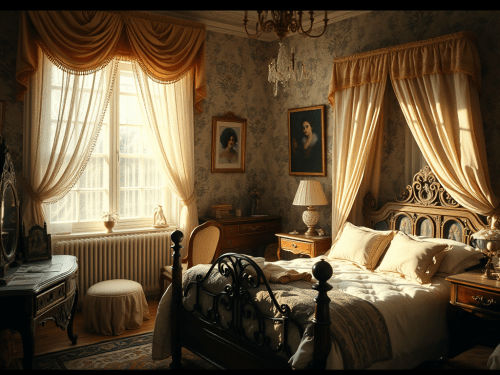
The “authoritarian character” is a person who seeks some authority figure to direct his or her conduct. These persons strive to discern what behavior the authority figure expects of them, and they hasten to comply. If there is any conflict between their own wishes and the demands of authority, they habitually suppress their wishes and compulsively comply with the authority’s wishes. Indeed, they experience their real selves as evil or weak, not worth considering. Dr. Fromm interprets the manner in which authoritarian characters perceive authority as a byproduct of real-self repression, followed by a projection to the authority figure of all of one’s own repressed “powers.” Hence, authoritarian characters perceive themselves as weak and the leader as all-powerful and possessing unusual strength and wisdom—the “charismatic” leader. Dr. Riesman’s concept, the “other-directed” character, describes an individual who allows the wishes and expectations of social peers to direct personal actions. The other-directed character becomes sensitized to others’ wishes and actively seeks to comply with them. The result may be popularity and acceptance, but it is purchased at the cost of knowledge of the real self and of thwarting many basic needs. Dr. Riesman’s concept, the “other-directed” character, describes an individual who allows the wishes and expectations of social powers to direct personal actions. The other-directed character becomes sensitized to others’ wishes and actively seeks to comply with them. The result may be popularity and acceptance, but it is purchased at the cost of knowledge of the real self and of thwarting many basic needs. Impulses and emotions are a part of the real self, just as are will and ideals. Everyone has to struggle to reconcile the conflicting demands of impulses, ideals, and the expectations of other people. #RandolphHarris 15 of 31

An impulse-directed person is one who habitually ignores all demands upon behavior save those imposed by personal impulses and feelings. This person ignores the conscience, the rights of other people, even his or her own long-range welfare and growth. All is subordinated to the immediate expression of the feelings. Psychoanalysts refer to such individuals as “instinct-ridden” characterss; they idealize and rationalize their drives and emotions because they cannot voluntarily control them. They are like adult children who have evaded growth. The goal is to get the patient “out of his script” during his treatment hours so he will behave like a real person, called colloquially, “a card-carrying member of the human race.” The chief difficulty to be overcome is the pull of the script, something like the “Id resistance” of Dr. Freud. The unconscious, instinctual forces that oppose the therapeutic process often manifest as the patient’s compulsion to repeat unhealthy patterns rather than explore them. The “resistance” is driven by the id’s fundamental nature to satisfy innate desires and impulses, such as urges for pleasures of the flesh and aggressive urges, and the inherent pleasure principle of immediate gratification. It opposes the ego’s efforts and the superego’s moral constraints by clinging to the “disease” or symptom. Professional patients adopt that role because they decided when they were very young, with encouragement from their parents, to be mental cripples, and may have been helped along by their previous therapists. This is usually a family script, and the brothers and sisters and parents may also be in treatment. A typical example is where a brother or sister is in a psychiatric hospital, where he or she continually “acts out” (as the staff calls it), or “acts crazy,” as Jeff now learns to call it. Jeff is a little huffy, and will soon say quite frankly that he is jealous of his brother or sister, because he or she is in a hospital while Jeff must be contented without-patient therapy. As one man put it, “How come my brother is in a nice plushy mental hospital on the East Coast while I have to be contented with this lousy little therapy group? I was enjoying it much more when I was a professional patient.” #RandolphHarris 16 of 31

While such things are said jokingly, they are the core of the resistance against getting well. First of all, Jeff is losing all the advantages of being in a hospital and all the fun of acting crazy. However, more than that, he says quite frankly (after he begins to understand his script), his Child is scared to get well and cannot accept the permission offered by the therapist and the other group members to do so, because if he does, his mother (in his head) will desert him. No matter how miserable he is with all his fears, anxieties, obsessions, and physical symptoms, he is still better off, he thinks, than being out in the world on his own without his Parent to protect him. At this point, there is a phase where script analysis becomes almost indistinguishable from psychanalytic probing. The protocol of his script becomes the subject of investigation, and the early influences which led him to decide on a not-O.K. position and way of life come under scrutiny. Here is pride at being a neurotic, a paranoid schizophrenic, an addict, or a criminal will begin to emerge, and he may bring in his diary or talk about his plans for writing an autobiography, as so many of his predecessors have done. Even people who are cured of “mental retardation” may have some nostalgia for their previous condition. People who are mentally healthy often do not know what they think or how they really feel until they have a chance to express themselves and to hear themselves and then decide whether that is actually what they believe. Sometimes just saying something aloud to another person is enough to make one realize that they do not fully believe what they have said—which frees them to change their minds. If you do not try to make every disagreement into a federal case, speaking your mind is important and helpful. People do not have to agree on everything. #RandolphHarris 17 of 31

People always think that they understand themselves, and they always think that they are being honest with themselves, and then later, after something happens and they see themselves differently, they can see how wrong they were. One can kid about how they feel until it hurts too much to go on pretending. Like you might walk with a Lego in your shoe, but sooner or later it would hurt too much and one would have to stop walking and get rid of it. Where there is gathered a sufficient number of facts on which to base a reasonably correct decision, it is still possible that one or more fact, of an importance outweighing all the others, could induce a man’s mind to alter the decision. The order of his thoughts may be perfectly logical yet the truth of them may be largely absent. For the premises with which they start may be ready-made theories, the facts upon which they rest may be less important than those which they ignore, and personal factors may have unconsciously accepted the one and chosen the other. Just as mysticism may give the dangerous illusion that it is dealing with reality when it is not, so logic may give the equally dangerous illusion that it is dealing with truth when it too is not doing so. To call a man a “philosopher” when he is only a mere logician is to demean the word. Logic is a useful tool, for certain limited purposes, but it can as easily lead a man into great error as into great wisdom. Let them not mistake exercises in logic for penetration into truth. Logic is always beset by the serious charge that its so-called truths are fallacious ones. For instance, it insists on the law of contradiction, the law which says that a statement of facts cannot be true and false at the same time. However, the careful study of illusions produces conclusions which falsify this law. We do not mean by this criticism to declare logic to be useless. We mean only that it is a good servant but a bad master. If our original assumptions are wrong, then the irony is that the more logically we travel from them to our conclusions, the more distantly we travel from truth. You can have sacred, revelatory, profoundly instructive experience with the Lord in the most miserable experiences of your life—in the worst settings, while enduring the most painful injustices, when facing the most insurmountable odds and opposition you have ever faced. #RandolphHarris 18 of 31
Heroes and heroines are archetypal in that they emanate and embody an immediate, recognizable pattern. Humans know one when they see one. The hero can be seen as the central human archetype of transformation for wholeness. The transformation comes through the hero’s own journey. Like the magical threshold, the sphere of rebirth, the awakening to the flow of forces, and the creation of wakefulness to dissolve the unconscious into timelessness, the hero emerges. Although talk of improving health and fitness is nothing new to emergency response providers, there are signs that it has now been moved to the front burner. As a result of the unacceptable number of line-of-duty deaths every year, movements have come from different directions to ensure that health and fitness standards are developed that apply to what these heroes do. Some argue that firefighting is a strenuous job, and that sudden cardiac arrest is just the cost of doing business. If that were really true, we would see the same trend of fatalities in other physical occupations, such as professional sports. Although professional athletes have to try out each year and firefighters tend to have a longer career, not many active athletes die from overexertion. When a professional team invests a significant amount of money in a player, they insure their investment through proper diet, physical training, and medical observation. Although the award-winning Sacramento Fire Department does not get as much attention or money as an NFL star, they still have a physically demanding job. As the National Fire Protection Association (NFPA) 1583, Standard on Health-Related Fitness Programs for Fire Fighters, explains, firefighters need “to be medically and physically fit in order to perform the required tasks. #RandolphHarris 19 of 31

In every city, there seems to be one place or street where everything seems to happen. In Sacramento, California, one particular block of Capitol Avenue seems to be that place. Just a sampling of events in less than twenty years reveals several major fires, gang activity, drug dealing, mail theft, threats, over sixty-six deaths, animal attacks, stalking, many instances unlawful entries, a few missing persons cases, shootings, hit and run accidents, sexual assaults, felony assault, theft and vandalisms, financial crimes, and miraculous rescues. The amount of death and destruction that happened in just this one block area of the city is unparalleled in the community’s history. Upon one occasion, a night watchman discovered a fire burning. The fire department came quickly, but the blaze had spread to two adjoining buildings. The fire department, however, was able to prevent the massive blaze and stop the spread to the rest of the street. Despite the roaring fire, there were no deaths or injuries. Compared to automobiles, fire apparatus and ambulances do not provide the amount of protection you would expect. Much of the engineering designated to automobile design is related to either fuel efficiency or meeting federal crash standards. In contrast, custom emergency vehicles are engineered more to function and aesthetics. For instance, a modern sports utility vehicle (SUV) with three rows of seats might safely transport seven people. Lap and shoulder seat belts are in every riding position, and side curtain airbags protect the driver and passengers in an intersection crash. Padded seat backs and cushioned door liners assist in containing passengers in the event of a rollover. Compare that to a Type III ambulance with the same wheelbase. It may have lap and shoulder belts for the two front seats and the captain’s chair, yet only provide lab belts for the other bench positions, which are positioned perpendicular to the direction of travel. Although it may be capable of transporting seven occupants, very little restraint protection is provided. Now factor in that some of the occupants in the back will be providing patient care and might not be restrained at all. By the 1980s, most “impaling hazards” had been removed from the dashboards of automobiles, replaced with flush-mount knobs and rounded corners on the dash. Take a look in the back of the ambulance. How many sharp corners, after-market interior modifications, or potential missiles are present during patient transport? Some ambulances do a good job of securing the sharps container for contaminated needles, yet the container has an open top or nonlatching lid. A rollover could pepper the back of the ambulance with poisoned darts. #RandolphHarris 20 of 31

If you see a fire truck stopped in the street without the lights on, be very careful. Sometimes there is an emergency, and you should not pass the fire truck. It might be a good idea to safely turn around and go another way because if you hit someone and they happen to die, you could be charged with manslaughter. Sometimes fire firefighters are getting back into their vehicle, and if you pass the apparatus, you may collide with a firefighter who is on foot. Also, be sure to look at their signals; sometimes emergency vehicles are in motion, albeit slowly, and drivers try to pass them, and this could lead to a dangerous situation. Also, if you are in an intersection when you see an emergency vehicle, continue through the intersection. Drive to the right as soon as it is safe and stop. Obey any direction, order, or signal given by a law enforcement officer or a firefighter. Even if they conflict with existing signs, signals, or laws, follow their orders. When their siren or flashing lights are on, it is against the law to follow within 300 feet of any fire engine, law enforcement vehicle, ambulance, or other emergency vehicle. If you drive to the scene of a fire, collision, or other disaster, you can be arrested. When you do this, you are getting in the way of firefighters, ambulance crews, or other rescue and emergency personnel. The concept of professional courage does not always mean being as tough as nails, either. It also suggests a willingness to listen to other people’s problems, to go to bat for them in a tough situation, and it means knowing just how far they can go. It also means being willing to tell the boss when he or she is wrong. #RandolphHarris 21 of 31

California is the third most expensive state in the nation. A single person making an income above $100,000 is now considered low-income in five counties in California. This distinction now applies to individuals living in Santa Cruz, Santa Clara, San Mateo, San Francisco, and Marin counties. In 37 percent of counties, a family of four living on a six-figure income is now considered low-income. In fact, Governor Gavin Newsom of Democratic controlled California, brags about being the world’s “fifth largest economy,” but it also facing a $12 billion deficit, looking to cut $747 million for state worker’s pay, pushing to keep medical insurance for illegal immigrants, but wants to cut medical for anyone who has assets over $2,000 and the state has the largest homeless population in the nation. If they are all officially counted, California has approximately 4 million homeless people. The highest home prices in the nation, the highest taxes, and the most unfriendly business regulations known to man. The average home price in California is nearly $1,000,000.00 USD, while the average salary is $96,036.00, meaning that most Californians cannot even afford to buy a home. California is having an affordability crisis. In 2025, many people in California saw their bills increase by an estimated $500 a month. This includes items such as food, automobile insurance, homeowners’ insurance, and electricity. In fact, more than 3 million people in California are facing household hardship, and more than 300,000 of them are facing eviction soon. This comes at a time when California is having a shortage of affordable housing. This is caused by nearly half a century-old laws that discourage home sales and encourage higher rents. #RandolphHarris 22 of 31

Meanwhile, China, where we are sending all our jobs and money, has more than 50 ghost cities, with 65 million vacant homes. Ghost cities are regions will housing has been overdeveloped to the point that these places are uninhabited. Because California is so hostile towards people and businesses, more than 360 companies have fled the state since 2020. Businesses like Chevron, SpaceX, Oracle, and Hewlett-Packard are among the names on that list. Also, more than 500,000 people a year are abandoning California because it is too expensive to live in, Gavin Newsom has criminalized homelessness and actually started arresting people without homes, crime is out of control, and they are losing their jobs due to companies relocating. More than 100 companies have announced layoffs in California for 2025. Intel is cutting 15,000 jobs, PayPal 2,500, and Meta has terminated 4,000 employees. California also has the highest unemployment rate in the country at 5.4 percent, while the national average is 4.1 percent. The California crisis created by Democrats is driving up home prices and mortgages, and rents all over the nation and the world, making living unaffordable for all, and advocates say the crisis is far from over. Accordingly, California has more than 3.5 million illegal immigrants. Having the Southern American border open and not having American farmland protected, not producing beef, poultry, fish, fruit, produce and dairy in America, and without American goods and services being our number one manufactured and selling items, America has created a dangerous and significantly elevated risks to national security, national economic security, and national public health. Some people may believe that these claims are overstated, but by not routinely monitoring Common Vulnerabilities and Exposures (CEVs) or other security-relevant alerts, such as the end-of-life of machinery is how the Oroville Dam Crisis occurred in 2017. #RandolphHarris 23 of 31

Other crises that have occurred due to neglect of critical infrastructure are the 2025 Palisades fires because Southern California ran out of water, when they are located next to an ocean and they could have simply created desalination plants to help with the water shortage. The water is so plentiful that it is currently eroding land and causing homes to fall into the sea. Desalination has been identified as one technology that will help solve California’s water scarcity problem. Desalination is a cost-effective technology that can transform an abundance of salt water into a reliable supply of potable, fresh water, which is a great way to fight climate change and have enough water for our region’s water requirements. Ras Al Khair, Saudi Arabia, is producing 1,036,000 meters (273,682,192) per day of desalinated water. As we see gangs fighting with federal law enforcement, states and cities refusing to honor federal laws, and politicians showing an utter disregard for the Constitution of the United States of America, anarchy is becoming increasingly common. Anarchism is a cluster of doctrines and attitudes centered on the belief that government is both harmful and unnecessary. Derived from the Greek root anarchos, meaning “without authority,” anarchism, anarchist, and anarchy are used to express both approval and disapproval. The anarchist denies man-made laws, regards property as a means of tyranny, and believes that crimes are merely the product of property and authority. #RandolphHarris 24 of 31

However, the anarchist would argue that their denial of constitutions and governments leads not to “no justice” but to the real justice inherent in the free development of human sociality—the natural inclination, when unfettered by laws, to live according to the principles and practice of mutual aid. Anarchism is also a form of treason. Treason, the crime of betraying a nation or a sovereign by acts considered dangerous to security. In English law, treason includes the levying of war against the government and the giving of aid and comfort to the monarch’s enemies. In the United States of America, treason was defined restrictively by the framers of the Constitution. Treason against the United States of America “shall consist only in levying War against them, or in adhering to their Enemies, giving them aid and comfort,” which is something that many politicians are currently guilty of. The American government should know all exploitable vulnerabilities and fix them before the situation becomes a crisis. Failure to take such mitigating actions is dangerous and significantly elevates risk to national security, national economic security, and national public health and safety. The American government must understand that significant time and resources must be invested in America. They must also encourage corporations to plan for both mitigating safety vulnerabilities in the short term and eliminating them in the long term. For instance, a company might begin by reaching out to the federal, state, or local government and requesting tax incentives to provide security to dangerous communities, to help the government repair bridges and potholes. #RandolphHarris 25 of 31

America needs an approach to eliminate safety vulnerabilities in American cities. There needs to be a road map by the end of 2025, outlining a prioritized approach to eliminate crisis situations in America. There is enough money to send aid to foreign nations, but the American government does not have enough money to care for its infrastructure, provide adequate resources, or end the affordable housing crisis. Nor is there enough money to fund other national critical functions (NCFs). These bad practices of putting America and Americans last are considered exceptionally risky, particularly to national security, national economic security, and national public health and safety. In 2024, Americans spent $100 billion on Japanese cars. As a result, the American automobile trade deficit with Japan was $39 billion. The maximum percentage of your gross income that you should earmark for a monthly mortgage payment is calculated at 28 percent, and no more than 36 percent of your gross income to all debts, including mortgage. If you take 28 percent of the median household income per home in Sacramento County, homeowners can only afford a mortgage of $2,070.23 per month. And if you take 36 percent of their gross income to all debts, including mortgage, they should be devoting no more than $2,661.72 a month to these debts. The mortgage lenders must be using some kind of sorcery to get buyers into these expensive homes. To afford one of these homes using traditional guidelines, a household would need to gross $11,280.24 per month or $135,362.88 per year, but the median household in Sacramento County is grossing $7,393.67 a month or $88,724.00 annually, and that typically means two to four people in the home are working and contributing to the mortgage. #RandolphHarris 26 of 31
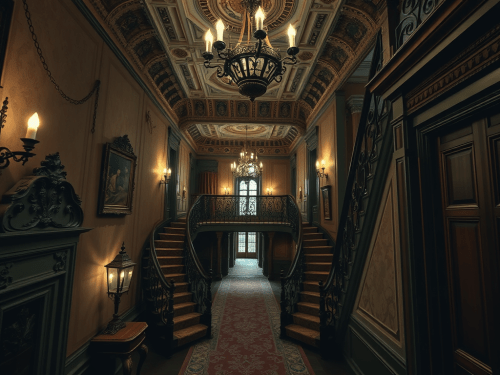
Home prices in Sacramento County are rivaling the Bay Area. Historically, homes in the Bay Area have been more expensive because they have higher-paying jobs, a larger population, and the Bay Area is a tourist destination. Contributing to the housing affordability crisis is Gavin Newsom, who has been lavishing illegal immigrants with taxpayer-funded resources and cash aid. The State of California has a budget deficit of $12 billion because Governor Gavin Newsom granted 700,000 illegal immigrants free health care, which costs taxpayers $3 billion annually. At the same time, Newsom cut vital programs for veterans, school children, the disabled, and the homeless. Additionally, Newsom seems to be uneducated about economics and is proposing to fast-track his plan to build a $20 billion water tunnel beneath the Sacramento-San Joaquin River Delta, which would eliminate environmental reviews and limit avenues for legal challenges. Gavin Newsom only cares about the environment when his policies allow him to raise taxes and restrict freedoms. To further highlight this illustration, Mexico has been causing one of America’s worst environmental disasters. Fifty million gallons a day of industrial chemicals, untreated sewage, and trash flow from Tijuana, Mexico, into southern San Diego County daily. This toxic waste has been turning up on Imperial Beach and is causing the miles of white sands to become polluted and the ocean breeze to smell of poop, which has been sickening residents and wildlife and costing San Diego millions in the form of lost tourism and health problems. The problem has been going on for more than a century. #RandolphHarris 27 of 31

Drug cartels have been threatening the health and safety of Native American communities. The trafficking of dangerous and illegal drugs into their territories is leading to a second genocide. The overdose rate for Indigenous people is 42 percent higher than the national average. A recent bust on Montana’s Blackfeet Nation’s Tribal Reservation resulted in the seizure of more than 700,000 fentanyl pills, which was the largest bust in Montana history. Recently, the Blackfeet Nation had to declare a state of emergency after facing 17 overdoses in just one week. There are only 6.8 million Native Americans left in the world, which is 2 percent of the American population. We should be doing more to protect these proud and honorable people; they should not want for anything. People rush and give away resources to illegal immigrants, but totally disregard the Indigenous people of this land, as their race silently fades away into extinction. We must secure our borders and increase federal funding to Native American tribes so we can save this precious population. Meanwhile, Gavin Newsom has given billions of taxpayer dollars away to illegal immigrants and protected them from law enforcement, while arresting law-abiding Americans because they cannot afford to pay rent or mortgage, and the homeless shelters are unsafe, overcrowded, and have restrictions on who is allowed inside. He has also totally ignored the cartel problems on American lands. Clean air, water, land, and preserving our heritage are extremely important. We cannot just allow criminals to kill off the people who are native to this land and do nothing about it. Wars have been started over governments that tax citizens without representation. Taxation without representation is what led to the American Revolution. #RandolphHarris 28 of 31

Much like the land crisis in Las Vegas, we could also run out of land to farm and will not be able to grow or cultivate our own food. We can protect American farmland and support American farmers by buying American made beef, poultry, dairy, and produce. Also, country of origin labeling is very important so Americans can know where their food is coming from and can support American farmers and ranchers. As money flows, it influences further investment. Save the land that sustains us by protecting American farmland. Once the land is built on, we lose it forever. And in the future, there may be food wars. Also, to ensure that we have farmland and buildable land for future use, we need to start limiting the number of people allowed to immigrate to America. Perhaps with the immigrants we do allow into America, there needs to be a diversity program to make sure we have a population that equally represents all races of people. If Americans continue to spend money on American products, then more need to be made to keep up the inventory. When investors notice these goods are selling, it gives them the confidence to pour more money into that local business. It shows that people want these goods made in America and pressures investors to keep these goods and services in America. The jobs stay here, the business stays in America, wages naturally increase, and more money is invested to keep up with demand. This reduces the burden on the taxpayer. When you support American businesses, that money stays in our economy and can help to reduce the national debt. The government creates debt by borrowing from businesses in the private sector or from foreign countries. It also increases the national debt by spending more than it gains in tax revenue in a fiscal year. #RandolphHarris 29 of 31

When people shop locally, more tax money stays in the economy and goes to the government. This way, it keeps more money in our national economy and keeps more jobs located in America which also sends more taxes to the government, which can again help to reduce the national debt. When you buy foreign goods, these companies usually have lighter tax loads or exemptions, meaning less money for the national debt, plus you are helping to strengthen these foreign nations by sending more money overseas. Buying American-made products is also better for the environment and helps to reduce the carbon footprint because these products do not have to travel nearly as far. Furthermore, American companies and manufacturers are held to much higher standards on pollution. American companies must be more careful about air, land, and water pollution and have proper ways to dispose of waste. Moreover, please remember to respect law and order and treat your elders with the utmost dignity and kindness possible. And take your education seriously so that you will be successful in life and make your family proud. It is inborn in the human mind to wish to know. If this begins with the endless surface questions of a child’s curiosity, if it continues into deeper questions of a scientist’s probing investigation, it cannot and does not stop there. For the higher part of the mind will eventually come into unfoldment, that union of abstract reflective thought with mystical intuition, which is true intelligence, which needs and sees a view of the whole of things. And so, the knowing faculty enters the realm of philosophy. #RandolphHarris 30 of 31
As you can see, President Donald Trump and his pledge to “Make America Great Again” is exactly what America needs to save the country and the American people. As of 31 August 2025, President Trump has brought $8 Billion in Tariff revenue into America and hundreds of thousands of new jobs. However, if President Trump’s Tariffs are deemed illegal by the Supreme Court, taxpayers will have to pay back trillions and trillions of dollars. And yes, diversity is important, so you can see why it is also important to preserve blonde hair and blue eyes, as the people with these characteristics are becoming a minority in America. We must think before we can understand the soul’s existence; we must understand before we can realize it. The earliest beginnings of thought, as apart from instinct, when it was itself still but a lurking tendency, belong far back in primeval time. The human intellect as we find it today, so rich and developed an instrument for the consciousness of the ego, did not arrive at this fullness without a series of graduated stages. We have had plenty of scientific thinking, business thinking, and political thinking long enough, but we have had very little inspired thinking. That is the world’s need. The intellect is cradled in selfishness but runs the evolutionary track into reason, where it will one day finish at the winning-post of selflessness. As a reminder, parents, please teach your children to love America and be patriotic citizens, and to buy goods and services made in America. It is also important to respect law and order and treat your elders with respect. Also, to make sure they have all the resources required, please donate to the Sacramento Fire Department to help improve our national security. “Oh, thus be it ever, when freemen shall stand between their loved home and the war’s desolation! Blest with victory and peace, may the heav’n-rescued land Praise the Power that hath made and preserved us a nation! Then conquer we must, when our cause is just, and this be our motto: ‘In God is our trust.’ And the star-spangled banner in triumph shall wave O’er the land of the free and the home of the brave.” #RandolphHarris 31 of 31

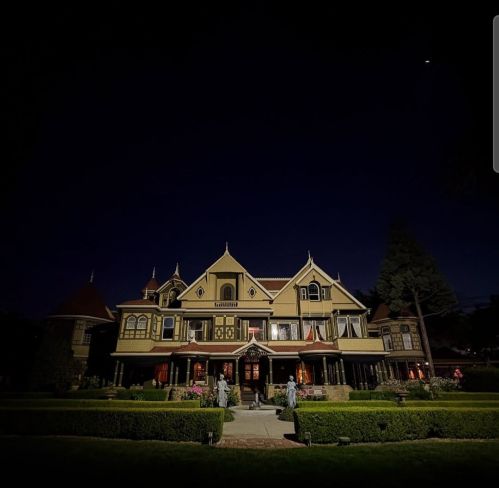
According to locals, over a century ago, the land that houses The Winchester Mansion had been vacant forever. Then, sometime in the early afternoon of Saturday, March 13, 1886, Sheriff Angel Camilio began getting reports that a massive castle made of wood had suddenly appeared. Gables rose, towers peaked into the sky as the mansion mushroomed into a labyrinth overnight.
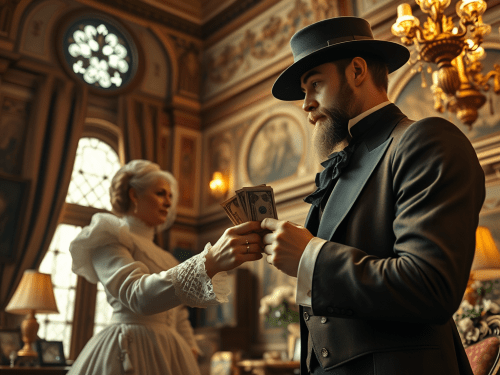
The house’s sudden manifestation had been both disconcerting and fascinating to the community. Some felt dark curses flowing from the estate, and things moving around in the darkness. Others saw a fairytale castle glimmering in the spring sunlight. Perhaps this is why there are no records of construction, no blueprints, and no permits filed with the county. Come and see what secrets this so-called, “Winchester Mystery House” may hold.

Experience an unforgettable journey back to the time of kings and queens with this entry ticket for The Winchester Mansion in Santa Clara, California, which was the residence of Heiress Sarah L. Winchester. Take advantage of this fascinating experience. After the tour, there will be time to enjoy the mansion’s splendor at your own pace. You might even discover secret passages.

Please come and enjoy a delicious meal at Sarah’s Café, stroll along the paths of the beautiful Victorian gardens, which once spanned 740 acres, all the way down to Stevens Creek Boulevard; wander through the miles of hallways in the world’s most mysterious mansion.

For further information about tours, including group tours, weddings, school events, birthday party packages, facility rentals, and special events please visit the website: https://winchestermysteryhouse.com/
Please visit the online giftshop, and purchase a gift for friends and relatives as well as a special memento of The Winchester Mystery House. A variety of souvenirs and gifts are available for purchase. https://shopwinchestermysteryhouse.com/


Harris Plumbing, Heating, Air, & Electric has been in business for 30 years. How many businesses can say that? We take pride in everything we do – no matter how big or small the service call might be. We’re here to help your home be as safe and comfortable as possible for you and your family. We take that responsibility very seriously as a company. Harris will ensure you have the information you need to decide what to do next, whatever your home is facing. We’ll perform a diagnosis and detail what issues are present before starting any work. This gives you a personalized quote and service plan specific to your home’s needs, not some random quote based on the best guess. The only way we can do our best work is to make sure we handle the issues at hand. https://www.callharrisnow.com/about-us/


Ah, yes. The BMW 3 Series. Happy 50th birthday to the most iconic BMW ever! It is really hard to decide on a BMW model. However, the 3 series is a favorite of everyone. All the upper-class suburban families had one in the 1980s and 1990s; everyone from teenagers and housewives to executives and diplomats. Now that they are larger in size, but still sporty and luxurious, the audience has grown tremendously. These are very stylish and reliable cars, which is why BMW continues to dominate the luxury car space.

With its top ranking in Consumer Reports’ Auto Brand Report Card and consistent market share growth, BMW has demonstrated its ability to produce high-performing, reliable vehicles that meet consumer demands. BMW stands out due to its focus on driving dynamics and engineering excellence. While other luxury brands prioritize comfort and opulence, BMW is known for creating cars that are fun to drive and offer a unique connection between the driver and the machine. This is why BMW is known as the Ultimate Driving Machine. https://www.brianharrisbmw.com/

Randolph Harris San Francisco Taxation & Mergers
Building strong and lasting client relationships is crucial for a successful legal career. Many lawyers mistakenly believe that mastering legal skills alone ensures success, but law is fundamentally a service industry—our job is to solve problems through the time we sell. To build long-term relationships, attorneys must focus on three core elements: knowing their clients, understanding how their legal issues fit into a larger context, and consistently delivering exceptional service.

Randy advises clients with regard to business transition, taxable and tax-deferred mergers and acquisitions, joint ventures, restructuring, integrated tax planning, federal and state tax controversy resolution, and real estate transactions. Trust is the cornerstone of any client relationship. Ultimately, my clients feel they are in capable hands with someone who genuinely understands their problems and goals. https://www.jmbm.com/l-randolph-harris.html


At Millhaven Homes our professionals bring extensive experience in creating custom luxury properties. Your needs are the central focus. We savor the sanctuary of awe-inspiring spaces, unique architectural details and fine craftsmanship. The key to a successful relationship is communication. We will incorporate your thoughts and ideas into your new home.

With vast experience in all types of custom home construction, our premier services are created for you, so you can get the most out of the function and design of your dream home. Discover Millhaven Homes today. Let us design and build a custom home that reflects your style, comfort, and aspirations. We are here to bring your vision to life with creativity, care, and attention to every detail.

Each home we create is a masterpiece—crafted with care, harmony, and sophistication. Be sure to ask about our legendary “Costco” door. https://millhavenhomes.com/


Now He Tells Me

The reality of everyday life is taken for granted as reality. It does not require additional verification and beyond its simple presence. It is simply there, as a self-evidentnt and compelling facticity. I know that it is real. While I can engage in doubt, as I routinely exist in everyday life. This suspension of doubt is so firm that to abandon it, as I might want to do, say, in theoretical or religious contemplation, I must make an extreme transition. The world of everyday life proclaims itself and, when I want to challenge the proclamation, I must engage deliberate, by no means easy effort. The transition from the natural attitude to the theoretical attitude of the philosopher or scientist illustrates this point. However, not all aspects of this reality are equally unproblematic. Every day life is divided into sectors that are apprehended routinely, and others that present me with problems of one kind or another. Suppose that I am an automobile engineer for Bayerische Motoren Werke Aktiengesellschaft (BMW) who is highly knowledgeable about all German-made cars. Everything that pertains to the latter is a routine, unproblematic facet of my everyday life. However, one day someone appears in the garage and asks me to repair his Buick. I am now compelled to enter the problematic world of American-made cars. I may do so reluctantly or with problems that I have not yet routinized. At the same time, of course, I do not leave the reality of everyday life. #RandolphHarris 1 of 32

Indeed, the latter becomes enriched as I begin to incorporate into it the knowledge and skills required for the repair of American-made cars. If what appears as a problem does not pertain to a different reality altogether (say, the reality of theoretical physics, or of nightmares), the reality of everyday life encompasses both kinds of sectors. If the routine of everyday life continues without interruption, they are apprehended as unproblematic. However, even the unproblematic sector of everyday reality is so only until further notice, that is, until its continuity is interrupted by the appearance of a problem. When this happens, the reality of everyday life seeks to integrate the problematic sector into what is already unproblematic. Commonsense knowledge contains a variety of instructions as to how this is to be done. For instance, if they perform their familiar, taken-for-granted routines—say, typing away at desks next to mine in my office, the others with whom I work are unproblematic to me. If they interrupt these routines—say, huddling together in a corner and talking in whispers, then they become problematic. As I inquire about the meaning of this unusual activity, there is a variety of possibilities that my commonsense knowledge is capable of reintegrating into the unproblematic routines of everyday life: they may be consulting on how to fix a broken typewriter, or one of them may have some urgent instructions from the boss, and so on. #RandolphHarris 2 of 32

On the other hand, I may find that they are discussing a union directive to go on strike, something as yet outside my experience but still well within the range of problems with which my commonsense knowledge can deal. It will deal with it, though, as a problem, rather than simply reintegrating it into the unproblematic sector of everyday life. If, however, I conclude that my colleagues have gone collectively mad, the problem that presents itself is of yet another kind. I am now faced with a problem that transcends the boundaries of the reality of everyday life and points to an altogether different reality. Indeed, my conclusion that my colleagues have gone mad implies ipso facto that they have gone off into a world that is no longer the common world of everyday life. Any person living that way is bound to feel he is guilty. He is always on the lookout for somebody else to solve his problems instead of turning to himself and his own resources. There is profound wisdom in this analysis, and I certainly agree with the concept applied in it. However, I think it is incomplete. It does not consider the futility of the self-accusations, their merely condemnatory character. It leaves out the attitude towards his guilt and how it is, in its turn, unproductive. It is so because he deals with it in the spirit of self-hate. This too is unconscious; he does not feel that he accuses himself mercilessly. The whole process is externalized. #RandolphHarris 3 of 32

Finally, a person may accuse himself of actions or attitudes which, viewed objectively, seem harmless, legitimate, or even desirable. He may brand taking sensible care of himself as pampering; enjoying food as gluttony; considering his own wishes instead of blindly complying as hard-boiled selfishness; considering analytic treatment—which he needs and can afford—as self-indulgence; asserting an opinion as presumptuous. Here, too, we must ask which inner dictate or which pride is offended by a pursuit. Only a person taking pride in asceticism would accuse himself of “gluttony”; only a person proud of self-effacement would brand an assertive move as egotistical. However, the most important thing about this kind of self-accusation is that it often concerns the fight against the emerging real self. They mostly occur—or, more precisely, come into the foreground—in later phases of analysis, and are an attempt to discredit and discourage moves toward healthy growth. The viciousness of self-accusations (as in any form of self-hate) calls for self-protective measures. And we can observe these clearly in the analytic situation. As soon as the patient is faced with one of his difficulties, he may go on the defensive. He may respond with righteous indignation, with feeling misunderstood, or by becoming argumentative. #RandolphHarris 4 of 32

He points out that it was true in the past, but is already better; if his wife did not behave the way she does, the difficulty would not exist; if his parents had been different, it would not have developed in the first place. He may also develop counterattacks and find fault with the analyst, often in a threatening manner—or, on the contrary, become appeasing and ingratiating. In other words, he reacts as if we had hurled at him a severe accusation too frightening for him to be able to test it out quietly. He can fight it blindly, according to the means at his disposal: by wriggling out of it, by blaming somebody else, by pleading guilty, by going on the offensive. We have here one of the major delaying factors in psychoanalytic therapy. However, also, apart from analysis, it is one of the main causes preventing people from being objective toward their problems. The necessity to ward off any self-accusation stunts the capacity for constructive self-criticism and thereby mars the possibility of learning from mistakes. Through chronic lying to others and himself, a person may develop a self-structure radically estranged from the reality of spontaneous experiencing. He may believe that he is a devoted husband (self-concept), he may approve of his attitude toward his wife (conscience), and he strives to get his wife to see him as a devoted spouse by the way he speaks to her (public self). Yet his wife may act in ways that infuriate him, and he may be carrying on an affair. #RandolphHarris 5 of 32

If he acknowledged the anger that his wife’s actions engendered in him, it might threaten his sense of identity and undermine his self-esteem. If he evaluated the moral significance of his infidelity, it might make him feel guilty and embarrassed by repressing the unpleasant dimensions of his experience. To the extent that a person represses aspects of his experience, we can assert that he is alienated from his real self. He is pretending to be someone other than his real self; he can believe his own pretense only because he continuously represses his experience. The patient must find a spiritual solution, not without the well-timed help of a therapeutically clever superior in the Augustinian order. His solution must be roughly bridged with a political and psychological vacuum which history has created in a significant portion of Western Christendom. Such a coincidence, if further coinciding with the deployment of highly specific personal gifts, makes for historical “greatness.” We must follow the man through the crisis of his youth, and the unfolding of his gifts, to the first manifestation of his originality as a thinker, namely, to the emergence of his life philosophy, which was not perceived as a radical innovation either by him or his friends and family. What happened to him after he had acquired an identity is what we need to investigate to help him. #RandolphHarris 6 of 32
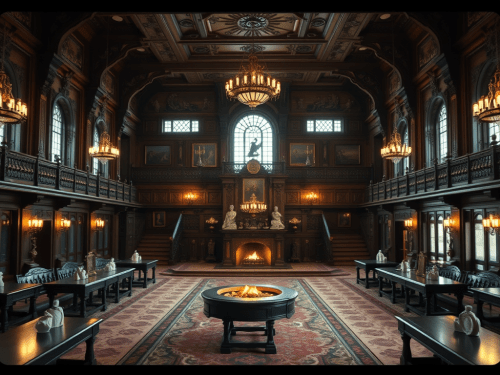
As clinicians, we have learned that we cannot lift a case history out of history. Human nature can best be studied in the state of conflict; and human conflict comes to the detailed attention of interested recorders mainly under special circumstances. One such circumstance is the clinical encounter, in which the suffering, for the sake of securing help, has no other choice than to become case histories; and another special circumstance is history, where extraordinary beings, by their own self-centered maneuvers and through the prodding of the charismatic hunger of mankind, become (auto) biographies. We have learned by going back and forth between a person’s present life and their history. This helps clinical as well as historical scholars develop a special awareness of their patients. For those who are more comfortable thinking that their patients have “weak egos,” at my very first encounter with a group of psychiatric in-patients, even very disturbed ones, after only a very short period of preparation and getting acquainted (say, thirty minutes), I would not doubt of the beneficial effects from getting to know a patient in the present, after reviewing his medical history. During the first interview, the therapist makes sure he gets the script background, unobtrusively as far as possible, swinging along with the patient’s conversation; but, later, if there are omissions, he makes a clear point of filling them in. #RandolphHarris 7 of 32

First, the clinician gets a medical and psychiatric history. During this, he asks for a dream—any dream, because that is the quickest way to get a picture of the patient’s script protocol and his worldview. Then, he asks about each of the previous therapists: why the patient went to him, how he selected him, what he learned from him, why he left, and under what circumstances. From these inquiries, the script analyst gets many clues. He follows some of them up by asking about other activities: how Jeff selects jobs or spouses, and why and how he quits or gets divorced. If this is done competently, the patient will not terminate therapy prematurely, as he often does if the therapist is apprehensive about the transference and hides his fear behind a poker face (a facial expression that is blank and hides his real emotions), a ritualistic courtesy, or a tape recorder. Nothing is as reassuring as competence. A common situation is where the patient is obviously collecting failures in therapy and elsewhere to justify a psychotic or suicidal script payoff, and quits with, “Now He Tells Me”; that is, by springing some major surprise without previous discussions, and quitting without notice. At the end of the thirtieth session, to further highlight this illustration, when everything appears to be going well and Jeff is making “progress,” he may say casually as he rises to leave: “By the way, this’ll be my last visit because I’m going to commit myself to the State Hospital this afternoon”—something he has not previously brought up. #RandolphHarris 8 of 32

If Dr. Harris has taken a careful history, he will abort this in the third session by saying: “Now what I think you are heading for is to come here for six months or a year, and then quit suddenly.” If Jeff objects, Dr. Harris responds: “But that is what you did on your two last jobs, and with three of your former therapists. If you want to go through with it, it is all right because I can always learn something meanwhile, but if you really want to get well, that is the first thing we must talk about. Otherwise, you will just waste six months or a year of your life. However, if we can thrash it out right now, you will save that much time, and we can go ahead.” Alcoholics who crave absolute control or complete surrender are most likely to take umbrage at this abortion of their games, while patients who want to get well will be grateful. If the patient nods or laughs, the prognosis is very good. Now, how did man’s need for individual identity evolve? Before Dr. Darwin, the answer was clear: because God created Adam in His own image, as a counterplayer of His Identity, and thus bequeathed to all man the glory and the despair of individuation and faith. I admit to not having come up with any better explanation. The Garden of Eden, of course, has had many utopian transformations since that expulsion from the unity of creation—an expulsion which tied man’s identity forever to the manner of his toil and of his co-operation with others, and with technical and communal pride. #RandolphHarris 9 of 32
A certain New Englander was once working in the garden of The Winchester Mystery House when a parson walked by and congratulated him on what God and he had wrought together as evidence in such a commendable yield. “Yep,” the man said, “and you should have seen it when God had it all to Himself.” In such a story, God is not dead, just put in His place. Each cultural consolidation around a state of technology has its way of creating familiarity with the Unfamiliar. Technological and enlightened man, however, seems to flatter himself more than any man before him that he has the universe to himself and that an experimentally inclined God, very much made in man’s image, is glad to step aside for him. At any rate, I have heard very clever men (but never a woman) claim that in principle there is nothing in nature that man cannot now learn to understand. “Death, too?” I heard a woman ask one of these metaphysical technocrats, and he nodded with an enigmatic smile. And man, he continued, therefore can, in principle, change anything in nature or in his own nature to fit my blueprint. “Whose blueprint?” the woman asked. Another smile. Thus, it is part of today’s consolidation that man reinteralized the eternal Identity whom he had projected on the (now, in principle, conquerable) heavens, and tries to remake himself in the blueprint of a manufactured identity. In conjunction with the fact that man also can now totally unmake himself, however, an all-human identity becomes an inescapable goal. #RandolphHarris 10 of 32

In this, however, revived forms of humanisms and libertarianisms will not do. Their original proponents, we must remember, did not know of the two objects already mentioned, the gigantic bomb and the tiny pill, which, if they do not give man power over life and death, certainly give him the decision as to whose life and death it shall be—decisions which will call for new “political” forms. For man’s need for a psychosocial identity is anchored in nothing less than his sociogenetic evolution. It has been said (by Dr. Waddington) that authority-accepting is what characterizes man is what characterizes man’s sociogenetic evolution. I would submit that identity formation is inseparable from this, for only within a defined group identity can true authority exist. Man, as a species, has survived by being divided into pseudospecies. First, each horde or tribe, class, and nation, but then also every religious association has become the human species, considering all the others a freakish and gratuitous invention of some irrelevant deity. To reinforce the illusion of being chosen, every tribe recognizes a creation of its own, a mythology and later a history: thus, loyalty to a particular ecology and morality was secured. One never quite knew how all the other tribes came to be, but since they did exist, they were at least useful as a screen of projection for the negative identities which were necessary, if most comfortable, counterpart of the positive ones. #RandolphHarris 11 of 32

This projection, in conjunction with their territoriality, gave men a reason to slaughter one another in majorem gloriam. If, then, identity can be said to be a “good thing” in human evolution—because good things are those which seem to have been necessary for what, indeed, has survived—we should not overlook the fact that this system of mortal divisions has been vastly overburdened with the function of reaffirming for each pseudospecies its superiority over all others. Maybe we and our youth are turning to thoughts of identity precisely because the world wars have shown that a glorification of the pseudospecies can now spell the end of the species, wherefore an all-inclusive human identity must be part of the anticipation of a universal technology. It is this anticipation, also, which will unite some of the majority and of the minority among our youths in one universe. However, this places all older identities in deadly danger. “Prejudiced” people, wherever they are, may therefore fight a murderous rear-guard battle; and ascending nations and even ancient ones endangered in their “young” national identities may well delay and endanger a worldwide identity. The pseudospecies, then, is one of the more sinister aspects of all group identity. However, there are also “pseudo” aspects in all identity which endanger the individual. For man’s development does not begin or end with identity; and identity, too, must become relative for the mature person. #RandolphHarris 12 of 32

Psychosocial identity is necessary as the anchoring of man’s transient existence in the here and the now. That it is transient does not make it expendable. If, to those who seek an identity, Norman Brown advocates “Get lost” and Timothy Leary “Drop out,” I would suggest that to get lost one must have found oneself, and to drop out, one must have been in. The danger of all existentialism which chooses to remain juvenile, is that it shirks the responsibility for the generational process, and thus advocates an abortive human identity. We have learned from the study of lives that beyond childhood, which provides the moral basis of our identity, and beyond the ideology of youth, only an adult ethics can guarantee to the next generation an equal chance to experience the full cycle of humanness. And this alone permits the individual to transcend his identity—to become as truly individual as he will ever be, and as truly beyond all individuality. We realize, then, the widening context of the problem of identity. Beginning with veterans of war and severely disturbed young people, we have come to formulate a normative crisis in individual development. From that of delinquent and violent upheavals, we have come to suspect a significance of identity in the whole scheme of sociogenetic evolution. And from the social boundness of identity, we have come to envisage its own transcendence. #RandolphHarris 13 of 32

When it comes to central aspects of man’s existence, we can only conceptualize at a given time what is relevant to us for personal, for conceptual, and for historical reasons. And even as we do so, the data and the conclusions change before our eyes. Especially at a time when our conceptualizations and interpretations become part of a historically self-conscious scene, and when insight and conduct influence each other with an immediacy that hardly leaves a pause for any new “tradition” to form—in such a time all thinking about man becomes an experiment in living. The newness of man’s self-awareness and of his attention to his awareness has, at first, led to a scientific mythology of the mind or to a mythological use of scientific terms and methods, as if social science could and would repeat in a short time, and in view of immediate practical goals, the whole long progress of natural science from nature philosophy to pure and applied science. However, man, the subject of psychosocial science, will not hold still enough to be divided into categories both measurable and relevant. When we look at human nature during the Russian Revolution of 1905, the rebels at the frontier on which they stand united, teach us, to the sound of exploding bombs, that rebellion cannot lead, without ceasing to be rebellion, to consolation and to the comfort of strict and rigid doctrines. Their only evident victory is to triumph at least over solitude and negation. #RandolphHarris 14 of 32

In the midst of a world which they deny and which rejects them, they try, man after man, like all the great-hearted ones, to reconstruct a brotherhood of man. The love they bear for one another, which brings them happiness even in the desert of a prison, which extends to the great mass of their enslaved and silent fellow men, gives the measure of their distress and of their hopes. To serve this love, they must first kill; to inaugurate the reign of innocence, they must accept a certain culpability. This contradiction will be resolved for them only at the very last moment. Solitude and chivalry, renunciation and hope will only be surmounted by the willing acceptance of death. Jeliabov, who organized the attempt on Alexander II in 1881 and was arrested forty-eight hours before the murder, had asked to be executed at the same time as the real perpetrator of the attempt. “Only the cowardice of the government,” he said, “could account for the erection of one gallows instead of two.” Five were erected, one of which was for the woman he loved. However, Jeliabov died smiling, while Ryssakov, who had broken down during his interrogations, was dragged to the scaffold, half-mad with fear. Jeliabov did this because of a sort of guilt which he did not want to accept and from which he knew he would suffer, like Ryssakov, if he remained alone after having committed or been the cause of a murder. #RandolphHarris 15 of 32

At the foot of the gallows, Sofia Perovskaia kissed the man she loved and her two other friends, but turned away from Ryssakov, who died solitary and damned by the new religion. For Jeliabov, death in the midst of his comrades coincided with his justification. He who kills is guilty only if he consents to go on living or if, to remain alive, he betrays his comrades. To die, on the other hand, cancels out both the guilt and the crime itself. Thus, Charlotte Corday shouts at Fouquier-Tinville: “Oh, the monster, he takes me for a human value that stands halfway between innocence and guilt, between reason and irrationality, between history and eternity. At the moment of this discovery, but only then, these desperate people experience a strange feeling of peace, the peace of definitive victory. In his cell, Polivanov says that it would have been “easy and sweet” for him to die. Voinarovsky writes that he has conquered the fear of death. “Without a single muscle in my face twitching, without saying a word, I shall climb on the scaffold. And this will not be an act of violence perpetrated on myself, it will be the perfectly natural result of all that I have lived through.” Very much later, Lieutenant Schmidt will write before being shot: “My death will consummate everything, and my cause, crowned by my death, will emerge irreproachable and perfect.” #RandolphHarris 16 of 32

Kaliayev, condemned to the gallows after having stood as prosecutor before the tribunal, declares firmly: “I consider my death as supreme protest against a world of blood and tears,” and again writes: “From the moment when I found myself behind bars, I never for one moment wanted to stay alive in any way whatsoever.” His wish is granted. On May 10, at two o’clock in the morning, he walks towards the only justification he recognizes. Entirely dressed in black, without an overcoat, and wearing a felt hat, he climbs the scaffold. To Father Florinsky, who offers him the crucifix, the condemned man, turning from the figure of Christ, only answers: “I have already told you that I have finished with life and that I am prepared for death.” Yes, the ancient value lives once more, at the culmination of nihilism, at the very foot of the gallows. It is the reflection, historic on this occasion, of the “we are” which we found at the termination of our analysis of the rebel mind. It is privation and at the same time enlightened conviction. It is this that shone with such mortal radiance on the agonized countenance of Dora Brilliant at the thought of him who died for himself and for tireless friendship; it is this that drives Sazonov to suicide in prison as a protest and “to earn respect for his comrades”; and this, again, which exonerates even Nechaiev on the day when he is asked to denounce his comrades by a general, whom he knocks to the ground with a single blow. #RandolphHarris 17 of 32

By means of this, the terrorists, while simultaneously affirming the world of men, place themselves above the world, thus demonstrating for the last time in our history that real rebellion is a creator of value. Thanks to them, 1905 marks the highest peak of revolutionary momentum. However, from then on, a decline sets in. Martyrs do not build Churches; they are the mortar, or the alibi. Then come the priests and the bigots. The revolutionaries who follow will not demand an exchange of lives. They accept the risk of death, but will also agree to preserve themselves as far as they can for the sake of serving the revolution. Thus, they will accept complete culpability for themselves. Acquiescence in humiliation—that is the true characteristic of twentieth-century revolutionaries, who place the revolution and the Church of man above themselves. Kaliayev proves, on the contrary, that though the revolution is a necessary means, it is not a sufficient end. In this way, he elevates man instead of degrading him. It is Kaliayev and his Russian and German comrades who, in the history of the world, really oppose Hegel, who first recognize universal recognition as necessary and then as insufficient. Appearances did not suffice for him. When the whole world would have been willing to recognize him, a doubt would still have remained in Kaliayev’s mind: he needed his own form of acquiescence, and the approbation of the whole world would not have sufficed to silence the doubt that a hundred enthusiastic acclamations give rise to in the mind of any honest man. #RandolphHarris 18 of 32

Kaliayev doubted to the end, but this doubt did not prevent him from acting; it is for that reason that he is the purest image of rebellion. He who accepts death, to pay for a life with a life, no matter what his negations may be, affirms, by doing so, a value that surpasses him in his aspect of an individual in the historical sense. Kaliayev dedicates himself to history until death and, at the moment of dying, places himself above history. In a certain way, it is true, he prefers himself to history. However, what should his preference be? Himself, who he kills without hesitation, or the value he incarnates and makes immortal? The answer is not difficult to guess. Kaliayev and his comrades triumphed over nihilism. Even men of much experience find it hard, at times, to arrive at beneficial decisions on worldly matters, especially without a belief in God, when these offer as many arguments for one conclusion as for a different one. Even their matured minds may sway back and forth, unsettled and uncertain at such a time, until they decide to wait for the turn of events to give them a beneficial direction what to do. If judgment is withheld on what appears to be fantastic claims, it bespeaks a well-matured, well-balanced mentality to wait until they have been investigated. A statement which holds a half-truth because it is based on a selected half-fact removed from a contradictory context, can neither be accepted nor denied. It must be analyzed and its parts carefully measured, until it is truth and its falsity are likewise properly revealed. Time will either develop or deform this idea. #RandolphHarris 19 of 32

That person who helps others simply because it should or must be done, and because it is the right thing to do, indeed, without a doubt, is a real superhero. Researchers from a variety of fields continue to explore the causes and limits of altruism. Extraordinary altruists have different beliefs about humanity. Altruists score lower on the Belief in Pure Evil scale compared to others. This includes items such as, “Some people are just pure evil” and “Evil people harm others for the joy of it.” The researchers found that even after “controlling for empathy and religiosity, for every one-unit decrease in belief in pure evil, the odds of classification as an altruistic organ donor increased by 31 percent.” Pure altruism is a genuine form of ethical commitment. Many of the superheroes who work with the award-winning Sacramento Fire Department are purely altruistic. Many of their behaviors are driven by genuine concern for the well-being of others, without any expectation of anything in return. In the winter, oftentimes, water-soaked and half-frozen, firefighters return to the station, where they do not stay long before the alarm sounds again. On one particular morning, at 6 a.m., a fire had broken out in the basement of a home. The family escaped with only the clothes on their backs as they rushed out into the icy night. #RandolphHarris 20 of 32
The fire department arrived to find the fire burning in the basement and spreading to the first floor and kitchen near the rear of the home. When the water at the hydrant was turned on, firemen found that the pressure was not enough to get the stream to the roof. While a fireman was in the building, he had succeeded in making his way to the back of the first floor near the kitchen. Suddenly, the fire burst through the ceiling, and the firefighter did not have enough pressure to spray the ceiling. He then jumped out of a window as conditions had deteriorated rapidly around him, making it impossible to stay in the house. A strong wind had begun to blow, and the fire spread rapidly as the ice-coated firemen fought the flames from the outside of the house. Their efforts were futile, and only the four outside walls remained after the fire was finally extinguished. The fire department was brought under intense scrutiny after the blaze because of the low pressure in the mains, but they countered by saying the engineer had been called and had increased the pressure. City aldermen were asked to investigate the matter, but no further findings were offered. The Sacramento Fire Department depends on an adequate water supply to fight fires. Low water pressure during a fire is primarily caused by municipal water systems being overwhelmed by unprecedented demand from large-scale wildfires, leading to the depletion of water tanks and stretching the infrastructure beyond its limits. This insufficient water supply and distribution capability cannot meet the high flow rates needed for extensive firefighting, especially compared to the demands of fighting a structural fire. #RandolphHarris 21 of 32
If you see a fire truck stopped in the street without the lights on, be very careful. Sometimes there is an emergency, and you should not pass the fire truck. It might be a good idea to safely turn around and go another way because if you hit someone and they happen to die, you could be charged with manslaughter. Sometimes fire firefighters are getting back into their vehicle, and if you pass the apparatus, you may collide with a firefighter who is on foot. Also, be sure to look at their signals; sometimes emergency vehicles are in motion, albeit slowly, and drivers try to pass them, and this could lead to a dangerous situation. Also, if you are in an intersection when you see an emergency vehicle, continue through the intersection. Drive to the right as soon as it is safe and stop. Obey any direction, order, or signal given by a law enforcement officer or a firefighter. Even if they conflict with existing signs, signals, or laws, follow their orders. When their siren or flashing lights are on, it is against the law to follow within 300 feet of any fire engine, law enforcement vehicle, ambulance, or other emergency vehicle. If you drive to the scene of a fire, collision, or other disaster, you can be arrested. When you do this, you are getting in the way of firefighters, ambulance crews, or other rescue and emergency personnel. The concept of professional courage does not always mean being as tough as nails, either. It also suggests a willingness to listen to other people’s problems, to go to bat for them in a tough situation, and it means knowing just how far they can go. It also means being willing to tell the boss when he or she is wrong. #RandolphHarris 22 of 32

California is the third most expensive state in the nation. A single person making an income above $100,000 is now considered low-income in five counties in California. This distinction now applies to individuals living in Santa Cruz, Santa Clara, San Mateo, San Francisco, and Marin counties. In 37 percent of counties, a family of four living on a six-figure income is now considered low-income. In fact, Governor Gavin Newsom of Democratic controlled California, brags about being the world’s “fifth largest economy,” but it also facing a $12 billion deficit, looking to cut $747 million for state worker’s pay, pushing to keep medical insurance for illegal immigrants, but wants to cut medical for anyone who has assets over $2,000 and the state has the largest homeless population in the nation. If they are all officially counted, California has approximately 4 million homeless people. The highest home prices in the nation, the highest taxes, and the most unfriendly business regulations known to man. The average home price in California is nearly $1,000,000.00 USD, while the average salary is $96,036.00, meaning that most Californians cannot even afford to buy a home. California is having an affordability crisis. In 2025, many people in California saw their bills increase by an estimated $500 a month. This includes items such as food, automobile insurance, homeowners’ insurance, and electricity. In fact, more than 3 million people in California are facing household hardship, and more than 300,000 of them are facing eviction soon. This comes at a time when California is having a shortage of affordable housing. This is caused by nearly half a century-old laws that discourage home sales and encourage higher rents. #RandolphHarris 23 of 32

Meanwhile, China, where we are sending all our jobs and money, has more than 50 ghost cities, with 65 million vacant homes. Ghost cities are regions will housing has been overdeveloped to the point that these places are uninhabited. Because California is so hostile towards people and businesses, more than 360 companies have fled the state since 2020. Businesses like Chevron, SpaceX, Oracle, and Hewlett-Packard are among the names on that list. Also, more than 500,000 people a year are abandoning California because it is too expensive to live in, Gavin Newsom has criminalized homelessness and actually started arresting people without homes, crime is out of control, and they are losing their jobs due to companies relocating. More than 100 companies have announced layoffs in California for 2025. Intel is cutting 15,000 jobs, PayPal 2,500, and Meta has terminated 4,000 employees. California also has the highest unemployment rate in the country at 5.4 percent, while the national average is 4.1 percent. The California crisis created by Democrats is driving up home prices and mortgages, and rents all over the nation and the world, making living unaffordable for all, and advocates say the crisis is far from over. Accordingly, California has more than 3.5 million illegal immigrants. Having the Southern American border open and not having American farmland protected, not producing beef, poultry, fish, fruit, produce and dairy in America, and without American goods and services being our number one manufactured and selling items, America has created a dangerous and significantly elevated risks to national security, national economic security, and national public health. Some people may believe that these claims are overstated, but by not routinely monitoring Common Vulnerabilities and Exposures (CEVs) or other security-relevant alerts, such as the end-of-life of machinery is how the Oroville Dam Crisis occurred in 2017. #RandolphHarris 24 of 32

Other crises that have occurred due to neglect of critical infrastructure are the 2025 Palisades fires because Southern California ran out of water, when they are located next to an ocean and they could have simply created desalination plants to help with the water shortage. The water is so plentiful that it is currently eroding land and causing homes to fall into the sea. Desalination has been identified as one technology that will help solve California’s water scarcity problem. Desalination is a cost-effective technology that can transform an abundance of salt water into a reliable supply of potable, fresh water, which is a great way to fight climate change and have enough water for our region’s water requirements. Ras Al Khair, Saudi Arabia, is producing 1,036,000 meters (273,682,192) per day of desalinated water. As we see gangs fighting with federal law enforcement, states and cities refusing to honor federal laws, and politicians showing an utter disregard for the Constitution of the United States of America, anarchy is becoming increasingly common. Anarchism is a cluster of doctrines and attitudes centered on the belief that government is both harmful and unnecessary. Derived from the Greek root anarchos, meaning “without authority,” anarchism, anarchist, and anarchy are used to express both approval and disapproval. The anarchist denies man-made laws, regards property as a means of tyranny, and believes that crimes are merely the product of property and authority. #RandolphHarris 25 of 32
However, the anarchist would argue that their denial of constitutions and governments leads not to “no justice” but to the real justice inherent in the free development of human sociality—the natural inclination, when unfettered by laws, to live according to the principles and practice of mutual aid. Anarchism is also a form of treason. Treason, the crime of betraying a nation or a sovereign by acts considered dangerous to security. In English law, treason includes the levying of war against the government and the giving of aid and comfort to the monarch’s enemies. In the United States of America, treason was defined restrictively by the framers of the Constitution. Treason against the United States of America “shall consist only in levying War against them, or in adhering to their Enemies, giving them aid and comfort,” which is something that many politicians are currently guilty of. The American government should know all exploitable vulnerabilities and fix them before the situation becomes a crisis. Failure to take such mitigating actions is dangerous and significantly elevates risk to national security, national economic security, and national public health and safety. The American government must understand that significant time and resources must be invested in America. They must also encourage corporations to plan for both mitigating safety vulnerabilities in the short term and eliminating them in the long term. For instance, a company might begin by reaching out to the federal, state, or local government and requesting tax incentives to provide security to dangerous communities, to help the government repair bridges and potholes. #RandolphHarris 26 of 32

America needs an approach to eliminate safety vulnerabilities in American cities. There needs to be a road map by the end of 2025, outlining a prioritized approach to eliminate crisis situations in America. There is enough money to send aid to foreign nations, but the American government does not have enough money to care for its infrastructure, provide adequate resources, or end the affordable housing crisis. Nor is there enough money to fund other national critical functions (NCFs). These bad practices of putting America and Americans last are considered exceptionally risky, particularly to national security, national economic security, and national public health and safety. In 2024, Americans spent $100 billion on Japanese cars. As a result, the American automobile trade deficit with Japan was $39 billion. The maximum percentage of your gross income that you should earmark for a monthly mortgage payment is calculated at 28 percent, and no more than 36 percent of your gross income to all debts, including mortgage. If you take 28 percent of the median household income per home in Sacramento County, homeowners can only afford a mortgage of $2,070.23 per month. And if you take 36 percent of their gross income to all debts, including mortgage, they should be devoting no more than $2,661.72 a month to these debts. The mortgage lenders must be using some kind of sorcery to get buyers into these expensive homes. To afford one of these homes using traditional guidelines, a household would need to gross $11,280.24 per month or $135,362.88 per year, but the median household in Sacramento County is grossing $7,393.67 a month or $88,724.00 annually, and that typically means two to four people in the home are working and contributing to the mortgage. #RandolphHarris 27 of 32

Home prices in Sacramento County are rivaling the Bay Area. Historically, homes in the Bay Area have been more expensive because they have higher-paying jobs, a larger population, and the Bay Area is a tourist destination. Contributing to the housing affordability crisis is Gavin Newsom, who has been lavishing illegal immigrants with taxpayer-funded resources and cash aid. The State of California has a budget deficit of $12 billion because Governor Gavin Newsom granted 700,000 illegal immigrants free health care, which costs taxpayers $3 billion annually. At the same time, Newsom cut vital programs for veterans, school children, the disabled, and the homeless. Additionally, Newsom seems to be uneducated about economics and is proposing to fast-track his plan to build a $20 billion water tunnel beneath the Sacramento-San Joaquin River Delta, which would eliminate environmental reviews and limit avenues for legal challenges. Gavin Newsom only cares about the environment when his policies allow him to raise taxes and restrict freedoms. To further highlight this illustration, Mexico has been causing one of America’s worst environmental disasters. Fifty million gallons a day of industrial chemicals, untreated sewage, and trash flow from Tijuana, Mexico, into southern San Diego County daily. This toxic waste has been turning up on Imperial Beach and is causing the miles of white sands to become polluted and the ocean breeze to smell of poop, which has been sickening residents and wildlife and costing San Diego millions in the form of lost tourism and health problems. The problem has been going on for more than a century. #RandolphHarris 28 of 32

Drug cartels have been threatening the health and safety of Native American communities. The trafficking of dangerous and illegal drugs into their territories is leading to a second genocide. The overdose rate for Indigenous people is 42 percent higher than the national average. A recent bust on Montana’s Blackfeet Nation’s Tribal Reservation resulted in the seizure of more than 700,000 fentanyl pills, which was the largest bust in Montana history. Recently, the Blackfeet Nation had to declare a state of emergency after facing 17 overdoses in just one week. There are only 6.8 million Native Americans left in the world, which is 2 percent of the American population. We should be doing more to protect these proud and honorable people; they should not want for anything. People rush and give away resources to illegal immigrants, but totally disregard the Indigenous people of this land, as their race silently fades away into extinction. We must secure our borders and increase federal funding to Native American tribes so we can save this precious population. Meanwhile, Gavin Newsom has given billions of taxpayer dollars away to illegal immigrants and protected them from law enforcement, while arresting law-abiding Americans because they cannot afford to pay rent or mortgage, and the homeless shelters are unsafe, overcrowded, and have restrictions on who is allowed inside. He has also totally ignored the cartel problems on American lands. Clean air, water, land, and preserving our heritage are extremely important. We cannot just allow criminals to kill off the people who are native to this land and do nothing about it. Wars have been started over governments that tax citizens without representation. Taxation without representation is what led to the American Revolution. #RandolphHarris 29 of 32

Much like the land crisis in Las Vegas, we could also run out of land to farm and will not be able to grow or cultivate our own food. We can protect American farmland and support American farmers by buying American made beef, poultry, dairy, and produce. Also, country of origin labeling is very important so Americans can know where their food is coming from and can support American farmers and ranchers. As money flows, it influences further investment. Save the land that sustains us by protecting American farmland. Once the land is built on, we lose it forever. And in the future, there may be food wars. Also, to ensure that we have farmland and buildable land for future use, we need to start limiting the number of people allowed to immigrate to America. Perhaps with the immigrants we do allow into America, there needs to be a diversity program to make sure we have a population that equally represents all races of people. If Americans continue to spend money on American products, then more need to be made to keep up the inventory. When investors notice these goods are selling, it gives them the confidence to pour more money into that local business. It shows that people want these goods made in America and pressures investors to keep these goods and services in America. The jobs stay here, the business stays in America, wages naturally increase, and more money is invested to keep up with demand. This reduces the burden on the taxpayer. When you support American businesses, that money stays in our economy and can help to reduce the national debt. The government creates debt by borrowing from businesses in the private sector or from foreign countries. It also increases the national debt by spending more than it gains in tax revenue in a fiscal year. #RandolphHarris 30 of 32

When people shop locally, more tax money stays in the economy and goes to the government. This way, it keeps more money in our national economy and keeps more jobs located in America which also sends more taxes to the government, which can again help to reduce the national debt. When you buy foreign goods, these companies usually have lighter tax loads or exemptions, meaning less money for the national debt, plus you are helping to strengthen these foreign nations by sending more money overseas. Buying American-made products is also better for the environment and helps to reduce the carbon footprint because these products do not have to travel nearly as far. Furthermore, American companies and manufacturers are held to much higher standards on pollution. American companies must be more careful about air, land, and water pollution and have proper ways to dispose of waste. Moreover, please remember to respect law and order and treat your elders with the utmost dignity and kindness possible. And take your education seriously so that you will be successful in life and make your family proud. It is inborn in the human mind to wish to know. If this begins with the endless surface questions of a child’s curiosity, if it continues into deeper questions of a scientist’s probing investigation, it cannot and does not stop there. For the higher part of the mind will eventually come into unfoldment, that union of abstract reflective thought with mystical intuition, which is true intelligence, which needs and sees a view of the whole of things. And so, the knowing faculty enters the realm of philosophy. #RandolphHarris 31 of 32
As you can see, President Donald Trump and his pledge to “Make America Great Again” is exactly what America needs to save the country and the American people. As of 31 August 2025, President Trump has brought $8 Billion in Tariff revenue into America and hundreds of thousands of new jobs. And yes, diversity is important, so you can see why it is also important to preserve blonde hair and blue eyes, as the people with these characteristics are becoming a minority in America. We must think before we can understand the soul’s existence; we must understand before we can realize it. The earliest beginnings of thought, as apart from instinct, when it was itself still but a lurking tendency, belong far back in primeval time. The human intellect as we find it today, so rich and developed an instrument for the consciousness of the ego, did not arrive at this fullness without a series of graduated stages. We have had plenty of scientific thinking, business thinking, and political thinking long enough, but we have had very little inspired thinking. That is the world’s need. The intellect is cradled in selfishness but runs the evolutionary track into reason, where it will one day finish at the winning-post of selflessness. As a reminder, parents, please teach your children to love America and be patriotic citizens, and to buy goods and services made in America. It is also important to respect law and order and treat your elders with respect. Also, to make sure they have all the resources required, please donate to the Sacramento Fire Department to help improve our national security. “Oh, thus be it ever, when freemen shall stand between their loved home and the war’s desolation! Blest with victory and peace, may the heav’n-rescued land Praise the Power that hath made and preserved us a nation! Then conquer we must, when our cause is just, and this be our motto: ‘In God is our trust.’ And the star-spangled banner in triumph shall wave O’er the land of the free and the home of the brave.” #RandolphHarris 32 of 32

According to locals, over a century ago, the land that houses The Winchester Mansion had been vacant forever. Then, sometime in the early afternoon of Saturday, March 13, 1886, Sheriff Angel Camilio began getting reports that a massive castle made of wood had suddenly appeared. Gables rose, towers peaked into the sky as the mansion mushroomed into a labyrinth overnight.

The house’s sudden manifestation had been both disconcerting and fascinating to the community. Some felt dark curses flowing from the estate, and things moving around in the darkness. Others saw a fairytale castle glimmering in the spring sunlight. Perhaps this is why there are no records of construction, no blueprints, and no permits filed with the county. Come and see what secrets this so-called, “Winchester Mystery House” may hold.

Experience an unforgettable journey back to the time of kings and queens with this entry ticket for The Winchester Mansion in Santa Clara, California, which was the residence of Heiress Sarah L. Winchester. Take advantage of this fascinating experience. After the tour, there will be time to enjoy the mansion’s splendor at your own pace. You might even discover secret passages.

Please come and enjoy a delicious meal at Sarah’s Café, stroll along the paths of the beautiful Victorian gardens, which once spanned 740 acres, all the way down to Stevens Creek Boulevard; wander through the miles of hallways in the world’s most mysterious mansion.

For further information about tours, including group tours, weddings, school events, birthday party packages, facility rentals, and special events please visit the website: https://winchestermysteryhouse.com/

Please visit the online giftshop, and purchase a gift for friends and relatives as well as a special memento of The Winchester Mystery House. A variety of souvenirs and gifts are available for purchase. https://shopwinchestermysteryhouse.com/

Harris Plumbing, Heating, Air, & Electric has been in business for 30 years. How many businesses can say that? We take pride in everything we do – no matter how big or small the service call might be. We’re here to help your home be as safe and comfortable as possible for you and your family. We take that responsibility very seriously as a company. Harris will ensure you have the information you need to decide what to do next, whatever your home is facing. We’ll perform a diagnosis and detail what issues are present before starting any work. This gives you a personalized quote and service plan specific to your home’s needs, not some random quote based on the best guess. The only way we can do our best work is to make sure we handle the issues at hand. https://www.callharrisnow.com/about-us/

Ah, yes. The BMW 3 Series. Happy 50th birthday to the most iconic BMW ever! It is really hard to decide on a BMW model. However, the 3 series is a favorite of everyone. All the upper-class suburban families had one in the 1980s and 1990s; everyone from teenagers and housewives to executives and diplomats. Now that they are larger in size, but still sporty and luxurious, the audience has grown tremendously. These are very stylish and reliable cars, which is why BMW continues to dominate the luxury car space.
With its top ranking in Consumer Reports’ Auto Brand Report Card and consistent market share growth, BMW has demonstrated its ability to produce high-performing, reliable vehicles that meet consumer demands. BMW stands out due to its focus on driving dynamics and engineering excellence. While other luxury brands prioritize comfort and opulence, BMW is known for creating cars that are fun to drive and offer a unique connection between the driver and the machine. This is why BMW is known as the Ultimate Driving Machine. https://www.brianharrisbmw.com/
Randolph Harris San Francisco Taxation & Mergers
Building strong and lasting client relationships is crucial for a successful legal career. Many lawyers mistakenly believe that mastering legal skills alone ensures success, but law is fundamentally a service industry—our job is to solve problems through the time we sell. To build long-term relationships, attorneys must focus on three core elements: knowing their clients, understanding how their legal issues fit into a larger context, and consistently delivering exceptional service.
Randy advises clients with regard to business transition, taxable and tax-deferred mergers and acquisitions, joint ventures, restructuring, integrated tax planning, federal and state tax controversy resolution, and real estate transactions. Trust is the cornerstone of any client relationship. Ultimately, my clients feel they are in capable hands with someone who genuinely understands their problems and goals. https://www.jmbm.com/l-randolph-harris.html
Park Haven
Rancho Cordova, CA | low $500s
Now Selling!

Welcome to Cresleigh Park Haven; the newest home community in Rancho Cordova.

Nestled in the heart of Rancho Cordova, Park Haven is a thoughtfully planned community offering 71 homes —perfect for those seeking comfort, convenience, and more time to enjoy life. Located adjacent to the beloved Exploration Park, this neighborhood blends modern living with outdoor adventure right at your doorstep.

Choose from five beautifully crafted floor plans ranging from approximately 1,342 to 2,547 square feet, with options for 3 to 5 bedrooms, flexible living spaces, and open-concept layouts designed for today’s lifestyles.

Whether you’re a first-time buyer, growing family, or looking to simplify without sacrificing style, Park Haven offers a home that fits your needs.

Enjoy the ease of a maintenance-friendly yard, the charm of a close-knit community, and the everyday convenience of nearby parks, trails, shopping, and top-rated schools. At Park Haven, you’ll find more than just a house—you’ll find your place to thrive.

Our team of experienced professionals at Cresleigh Homes can help you select the perfect location for your dream home, guide you through the site planning, design and construction process.

The quality in each of the homes we build speaks volumes about the culture of our company. We’re relentless in our pursuit to create beauty that lasts and we’re as passionate about serving our customers as we are about building the finest homes.

We pride ourselves in clear communication and strong company ethics, so your expectations are always met or exceeded. Just ask our past and current clients — after all, they’re living in real-world examples of our dedication to relationships and a job well done. https://cresleigh.com/park-haven/

“My Cresleigh Home is the treasure chest of living. I’m grateful knowing that at this moment, all I have is all I need.” -Angelika Jurgen

