Home » Posts tagged 'health'
Tag Archives: health

Where the Walls Remember

Many of us on earth strive to put off the natural, worldly self and become Saints by following the Savior. We willingly bind ourselves to Him through His covenants and ordinances, pledging to undergo a change of heart that turns our focus toward charity as we endure the trials of this world. Charity includes acts of kindness and generosity extended toward others. Yet our true aim is far deeper: to allow this charity to take root within us so completely that it reshapes our very nature. As it possesses our hearts, we gain the strength to endure the refining process of becoming new beings in Christ. Without the Spirit of Christ, some people are led down paths of disorder—paths that, in their own way, display a clarity and usefulness that is almost startling. They reveal with painful precision what life becomes when it is cut off from the light that orders the soul. When cut off from the light, a man may steal his brother’s watch; another may stagger drunkenly in a pool hall while his waiting bride stands alone at the altar; and countless other disorders follow in their train. To get the feel of the person whose behavior shows disorder, it is necessary to feel something of his surroundings. The psychopath’s symptoms have been said to be primarily sociopathic. All, or nearly all, psychiatric disorders are indeed in an important sense sociopathic, in that they adversely affect interpersonal relations. In most other disorders, the manifestations of illness can, however, be more readily demonstrated in the isolated patient in the setting of a clinical examination. In contrast, it is all but impossible to demonstrate any of the fundamental symptoms in the psychopath under similar circumstances. The substance of the problem, real as it is in life, disappears, or at least escapes our specialized means of perception, when we remove the patient from the milieu in which he is to function. #RandolphHarris 1 of 22

If we seek to understand why these people are disabled, all that surrounds and has ever surrounded the schizophrenic or the man with severe obsessive illness is, of course, important to us. Lacking all information except what might be gained from either of these patients (with whom one is, let us say, confined in an oxygen chamber on Mars), the observer will, nevertheless, have a little trouble in discerning that there is disorder, and a good deal about the general nature of the disorder. Aside from questions of cause and effect, we have little opportunity even to realize the existence of the subject we must deal with, unless the psychopath can be followed as he departs from the (essentially in vitro) situation of a physician’s office or hospital and takes up his activities in the community on a real and (socially) in vivo status. It is with such convictions in mind that we must attend to the full texture of the patient’s world: the details of the environment, the roles of the husband or parents, the impressions gathered by lay observers, and, when necessary, a tentative reconstruction of situations that can be understood only through direct experience. Only by assembling this broader context can we begin to understand the patient in any meaningful way. It is, however, regrettable that so much detail of this sort is difficult and often impossible to obtain. Without a good deal of his specific surroundings in the community, there is no way for more than the insubstantial image of his being, as the picture projected from a lantern slide, to reach awareness. The real clinical entity is approachable only in the unstatic, actual process of the patient’s life as he takes his specific course as a personal and sociologic unit. #RandolphHarris 2 of 22
Only when the patient’s activity meshes with the problems of ordinary living can the disorder be demonstrated. If we do not pay particular attention to his responses in those interpersonal relations that to a normal man are the most profound, it cannot even be remotely apprehended. If no schizophrenic had ever spoken, we would probably have little realization of what we understand (incomplete as this is) of auditory hallucinations. The schizophrenic can, by his verbal communication, give us some useful clues in our efforts to approach many of his problems. Little or nothing of this sort that is reliable can, by ordinary psychiatric examination, be obtained from the psychopath. Only when we observe him, not through his speech, but as he seeks his aims in behavior and demonstrates his disability in interaction with the social group, can we begin to feel how genuine his disorder. To study the psychopath almost entirely in the orthodox clinical setting where patients ordinarily appear is like examining the schizophrenic with our ears so muffled that his reiterated and quite honest claims of hearing voices of the dead talking to him from the sun (and from his intestines) fail to reach our perceptions. To further highlight this illustration, let us say that a pair of copper wires carrying 2,000 volts of electricity, when we look at them, smell them, listen to them, or even touch them separately (while thoroughly insulated from the ground), may give evidence of being in any respect different from other strands of copper. Let us, however, connect them to a motor (or have someone seize both of them at once), and we find out facts not to be perceived otherwise. The unmistakable evidence of electricity appears only when the circuit is made. So, too, the features that are most important in this disorder do not adequately emerge when it is relatively isolated. The qualities of the psychopath become manifest only when he is connected into the circuits of full social life. #RandolphHarris 3 of 22

The impersonal and necessarily abstracted picture of these people in a purely clinical setting fails to show them as they appear in flesh and blood and in the process of living. In the restricted and arbitrary range of activities afforded by hospital life, their tendencies cannot be so truly and vividly demonstrated as in the larger world. To know them adequately, one must try to see them not merely with the physician’s calm and relatively detached eye but also with the eye of the ordinary man on the streets, whom they confound and amaze. We must concern ourselves not only with their measurable intelligence, their symptomatology (or, rather, lack of symptomatology) in ordinary psychiatric terms, but also with the impression they make as total organism in action among others and in all the nuances and complexities of deeply personal and specifically affective relations. To see them properly in such a light, we must follow them from the wards out into the marketplace, the saloon and the brothel, to the fireside, to church, and to their work. In attempting this, however incompletely and inadequately, it is perhaps desirable for us not to trade our naivete at once for the experienced clinician’s discriminating viewpoint. Let us first watch them in their full conduct as human beings, not neglecting even the impressions they make on Tom, Dick, and Harry, before trying to frame them in a scheme of psychopathology. #RandolphHarris 4 of 22

The terms we shall use to describe them may often imply that we blame them for what they do, or suggest an attitude of distaste or mockery for some of their behavior. Many psychiatrists still regard such patients, unlike those suffering from ordinary psychoses, as “totally responsible” for their misconduct and their difficulties. However, I do not share such an attitude. The faulty reactions in living which these patients show, however, are difficult to describe without sometimes using terms that come more readily to moralists or sociologists or laymen than to psychiatrists. The customary psychiatric terminology does not, we believe, offer a range of concepts into which we can fit into these people successfully. With other patients whose disorder is frankly recognized, we can, by our impersonal and specifically medical language, communicate fairly well to each other what we have observed. Some aspects of the psychopath which elude such language may be reflected, however imperfectly, in the simplest accounts of direct impression by those who have been closet to him and felt the impact of his anomalous reactions. For these reasons, then, we with apology, reference may be made to some actions as outlandish, foolish, fantastic, buffoonish, et cetera. The chief aim of the present work is to help, in however small a way, to bring patients of this sort into clearer focus so that psychiatric efforts to deal with their problems can eventually be implemented. It has, of course, been necessary and in every way desirable to eliminate all details that might lead to the personal identification of any patient whose disorder has been studied and recorded. All patients referred to have been carefully shielded from recognition. It is, nevertheless, true that the psychopath engages in behavior so unlike that of others and so typical of his disorder that no act can be reported of a patient from Oregon seen ten years ago without strongly suggesting similar acts by hundreds of psychopaths carried out in dozens of communities last Saturday night. I can only express regret to the scores of people whose sons, brothers, husbands, or daughters, I have never seen or heard of, but who have, no doubt, reproduced many or perhaps all of the symptoms discussed in these reports. This disorder is so common that no one need feel that any specific act of a psychopath is likely to be distinguishable from acts carried out by hundreds of others. #RandolphHarris 5 of 22

In discussing the possible influence of environment on the development of this disability, I hope I will not promote unjustified regret or remorse in any parent. Hundreds of times, fathers and mothers have discussed their fear that some error or inadequacy on their part caused a child to become a psychopath. Most parents of such patients personally studied impress me as having been conscientious and often very kind and discerning people. I do not believe obvious mistreatment or any simple egregious parental errors can be held justifiably as the regular cause of a child’s developing this complex disorder. All parents, no doubt, make great as well as small mistakes in their role as parents. It has seemed at times that the very points about which some mothers and fathers feel most uneasiness are the opposite of those so regretted by others and assumed to be the crucial mistakes that have contributed to the maladjustment of a child. Less than in most other kinds of psychiatric disorders has it seemed to me that one could find and point out as causal influences gross failures on the part of the parents, which people of ordinary wisdom and good will might have readily avoided. Strong and inappropriate negative attitudes toward psychopaths are commonly aroused in psychiatrists who attempt to deal with them as patients. Such reactions, there is reason to suspect, have tended to distort psychiatric appraisals of the disorder. I am not so rash as to claim total immunity from the subtle bias these patients seem to promote in so many physicians. It is hoped that the earnest wish to avoid this distorting influence will minimize effects of what can be more readily detected in the estimates of others than one’s self. A strong personal conviction that in the psychopath we are dealing with genuine illness should be of some remedial value, to whatever degree of this prejudice I am, unwittingly, a victim. #RandolphHarris 6 of 22

When one has the opportunity to follow the career of a typical psychopath, his pattern of behavior appears specific—something not to be confused with the life of an ordinary purposeful criminal or of a cold opportunist who, in pursuit of selfish ends, merely disregards ethical considerations and the rights of others. This pattern differs no less distinctly than the specific and idiomatic thought and verbal expressions of schizophrenia differ from those of the mentally defective and from other psychiatric conditions. Never in faults of logical reasoning, or in verbal confusion or technical delusion, but rather in the sharper reality of behavior, the psychopath seems often to produce something as strange and as obviously pathologic as the following statement taken from the letter of a patient with schizophrenia: “Financial service sense worries of 35 whirlpools below sound 1846, 45, 44, A.D. Augusta City treasur, Richmond County trreasur, United States Treasur of Mississippi flood area. Gentlemen will you come to…and idenafy none ministrative body that receives the life generated by fourth patented generative below sound. Further arrange financial credit for the same. Would like two bedrooms at up town Hotel and convenient to roof garden. Until you gentlemen decide further what my occupation is you may as well announce me as comforting 35 whirlpools below sound. May you gentlemen have gray eyes and thick bones as the flat sense minastrated are very valuable in idenafying me.” Even such a relatively simple bit of word-salad stands out at once as indicative of profound and specific disorder within the writer. As in the words of the schizophrenic, so in the behavior of the psychopath there seems to operate a peculiar knack for generating situations that can be explained only in terms of a unique psychiatric disorder. Such patterns of disorder stand in stark contrast to the deliberate ordering of a life shaped by discipline and enclosure. #RandolphHarris 7 of 22
Martin Luther was ready to be introduced into the microcosm of the monastery which, whatever his future in the clerical hierarchy, was to enclose him tightly and securely for a period of indoctrination. That indoctrination was not only a matter of learning new contents of thought, but a process of completely reconditioning his sensory and social responses to a minutely arranged environment. This process is familiar to us also from the modern phenomenon of thought, but a process of completely reconditioning his sensory and social responses to a minutely arranged environment. This process is familiar to us also from the modern phenomenon of thought reform, which makes cold psychological and political science out of the intuitive wisdom embodied in such an ancient procedure as the Augustinian monastery’s. For a young man of Martin’s passionate sincerity, in danger as he may have been of a malignant regression, and (Martin later clearly admitted such potential) or at any rate of most upsetting tentaziones, the immersion into planned environment which took over from minute to minute decisions about what was good for the common cause and goal and what was bad, may have felt like a repetition on a grand style of the earliest maternal guidance. And, indeed, Mr. Luther later said, “In the first year in the monastery the devil is very quiet.” Here are some details of the regime, and their psychological rationale. The novice is assigned a cell a little more than three meters long, three wide. The door cannot be locked and has a large opening for inspection at any time. There is one window, too high to allow one to see the ground. There is a table, a chair, a lamp; a cot with straw and a woolen blanket. The room cannot be heated. No ornamentation of any kind, no individual touch, is permitted. #RandolphHarris 8 of 22

Thus, begins that fasting of the senses, that vacuum of impressions, that dearth of ever-changing social cues, which is the necessary milieu for indoctrination: it opens the individual wide to the contradictory voices within him, and therefore makes him grasp more avidly whatever avenue toward a new identity is offered. Not only the input, but the output must also be regulated: the future orator must, first of all, learn silence. Within his own four walls not a word must escape him, not even in prayer. The master of novices, the only human being who may enter his cell, communicates with him only by signs. Outside his cell, the whole monastery is a checkerboard of times and places where silence is or is not mandatory. Special permission is required for private conversation, and must be overheard by a superior so that it does not become an escape valve for boast or banter, flattery or gossip. Above all, laughter is to be avoided. During meals, when it is easiest to relax and fraternize (provided that the food has been apportioned fairly), the monks must listen and not talk, a lectio is fed into their ears while the food enters their mouths. Thus, not only are the customary ways of letting oneself be diverted and guided by the changing spectacle of community life carefully restricted, but the customary ways of seeking verbal contact. The achievement of giving perspective to the present by small talk about things that have happened or things that will happen—be it only the weather—is denied. All verbal and vocal energy, and all postural and gestural expression, are channelled into a very few highly emotional outlets: prayer, confession, and above all, psalmody. #RandolphHarris 9 of 22

Seven times in twenty-four hours (septies in die laudem dixi Tibi) the monks pray in the choir in the liturgic fashion: two choirs challenging and responding to each other in antiphonic psalmody, or a solo voice asking for a joint refrain in responsorial psalmody. This activity follows the decree in Ephesians 5.19 that better than drunkenness by wine, “is making melody in your heart to the Lord” in the spirit of the spirit of the psalms. The Augustinians were proud of and famous for their psalmody; and it was certainly not a coincidence that Martin, for whom song had assumed such exclusive importance, chose the order which combined the cultivation of the voice with strict observance and intellectual sincerity. Later, when he became a professor, he gave his first lectures on the Psalms. This may have been a coincidence of the academic schedule; but what he did with it was not. “Have you ever heard more profound, intimate, or enduring poetry than that of the Psalms? And Psalms were meant to be sung when one is alone. I know they are chanted by crowds gathered under a single roof for religious services; but those who intone them are no longer members of a multitude. When one sings them, he withdraws into himself; the voices of the others resound in his ears only as an accompaniment and reinforcement of his own voice—I notice this difference between a crowd gathered to recite the Psalms and one brought together to see a play or hear a speaker; the first is a true society, a company of living souls, wherein each exists and subsists separately; the second is a shapeless mass, and each member of it only a fragment of the human swarm.” Thus, writes de Unamuno, the Spanish philosopher and freelance Protestant. #RandolphHarris 10 of 22
For the first of the liturgies, the monks are awakened by a bell at about 2 a.m.—except in high summer, when this liturgy is sung at the end of the long day. The liturgy begins (as the last one ends) with prayers to Mary, sanctae dei genetrici, the mother of God, who will intercede with her sternly judging son: “For you are the sinner’s only hope.” Food is not taken until noon, and on fast days not until early afternoon—that is, not before four liturgies have been completed; between them, there is domestic work, study, and instruction from the master of novices. During the first year, the task of adjusting to the new cycle of wakefulness and rest superimposed on the usual alternation of the day and night, and the matter of absorbing the detailed rules and observances with their traditional rationale, took enough time and attention to create a moratorium, during which individual ruminations and scruples were forgotten. This moratorium was reinforced by the community practice of concerning and labelling, and thus jointly mastering, the common devil by methodical confession. There is a vast difference between being the lonely self-repudiated victim of a personalized evil (as Martin had been, and soon would be again) and joining others in the militant repudiation of a powerful yet well-defined common enemy. In this light, it becomes evident that to refrain from sinful, worldly behavior, a measure of isolation and segregation was deemed necessary. The Savior’s divine nature and sublime character were the wellsprings of perfect compassion during His mortal ministry. The Redeemer of the world turned outward in love and service when He faced spiritual adversity or physical pain—in contrast to the natural man in each of us that turns inward in self-interest, self-centeredness, and selfishness. As we live as He invites us to live and with His help, our nature and character over time increasingly become more like His. #RandolphHarris 11 of 22

As we follow, love, and serve the Savior, we gradually focus less on our own desires and interests and more on understanding and addressing the needs of others. We do not merely perform benevolent deeds; rather, our very state of being is changed and becomes increasingly Christlike. Charity, then, ultimately possesses us. Such transformation stands in sharp contrast to the more formal structures by which human institutions attempt to cultivate order and objectivity. In German universities, for example, no teacher likes to be reminded of discussions surrounding appointments, for they are seldom agreeable. And yet, in the many cases known to me, there was, without exception, a sincere willingness to let purely objective reasons be decisive. One must be clear about another thing: that the decision over academic fates is so largely a “hazard” is not merely because of the insufficiency of the selection by the collective formation of will. Every young man who feels called to scholarship has to realize clearly that the task before him has a double aspect. He must qualify not only as a scholar but also as a teacher. And the two do not at all coincide. One can be a preeminent scholar and at the same time an abominably poor teacher. May I remind you of the teaching of men like Helmboltz or Ranke; and they are not by any chance rare exceptions. Now, matters are such that German universities, especially the small universities, are engaged in a most ridiculous competition for enrollments. The landlords of rooming houses in university cities celebrate the advent of the thousandth student by a festival, and they would love to celebrate Number Two Thousand by a torchlight procession. The interest in fees—and one should openly admit it—is affected by appointments in the neighboring fields that “draw crowds.” #RandolphHarris 12 of 22

And quite apart from this, the number of students enrolled is a test of qualification, which may be grasped in terms of numbers, whereas the qualifications for scholarship is imponderable and, precisely with audacious innovators, often debatable—that is only natural. Almost everybody thus is affected by the suggestion of the immeasurable blessing and value of large enrollments. Even if he is the foremost scholar in the world, to say of a docent that he is a poor teacher is usually to pronounce an academic sentence of death. And the question whether he is a good or a poor teacher is answered by the enrollments with which the students condescendingly honor him. It is a fact that whether or not the students flock to a teacher is determined in large measure, larger than one would believe possible, by purely external things: temperament and even the inflection of his voice. After rather extensive experience and sober reflection, I have a deep distrust of courses that draw crowds, however unavoidable they may be. Democracy should be used only where it is in place. Scientific training, as we are held to practice it in accordance with the tradition of German universities, is the affair of an intellectual aristocracy, and we should not hide this from ourselves. To be sure, it is true that to present scientific problems in such a manner that an untutored but receptive mind can understand them and—what for us is alone decisive—can come to think about them independently is perhaps the most difficult pedagogical task of all. However, whether this task is or is not realized is not decided by enrollment figures. And—to return to our theme—this very art is a personal gift and by no means coincides with the scientific qualifications of the scholar. #RandolphHarris 13 of 22

If scientific progress has freed man from many drudgeries, it has enslaved him with many illusions. One of these is the belief that it is itself sufficient to guide and guard him. Stupendous are the possibilities when the atomic forces will be toiling for us, slaving for us; but still they are only material possibilities. Those who believe that science will remove all the troubles of man and all the flaws in man, have badly taken their measure of Nature. The scientist can give us facts of which he has made certain, but why they should happen to be as they are, he cannot say. The wheel revolved. Time circled around the globe. And men cast their faith from them. A new star had arisen, Science! Totality is, in effect, nothing other than the ancient dream of unity common to both believers and rebels, but projected horizontally onto an earth deprived of God. To renounce every value, therefore, amounts to renouncing rebellion in order to accept the Empire and slavery. Criticism of formal values cannot pass over the concept of freedom. Once the impossibility has been recognized of creating, by means of the forces of rebellion alone, the free individual of whom the romantics dreamed, freedom itself has also been incorporated in the movement of history. It has become freedom fighting for existence, which, in order to exist, must create itself. Identified with the dynamism of history, it cannot play its proper role until history comes to a stop, in the realization of the Universal City. Until then, every one of its victories will lead to an antithesis that will render it pointless. The German nation frees itself from its oppressors, but at the price of the freedom of every German. The individuals under a totalitarian regime are not free, even though man in the collective sense is free. Finally, when the Empire delivers the entire human species, freedom will reign over herds of slaves, who at least will be free in relation to God and in general, in relation to every kind of transcendence. #RandolphHarris 14 of 22

The dialectic miracle, the transformation of quantity into quality, is explained here: it is the decision to call total servitude freedom. Moreover, as in all the examples cited by Hegel and Marx, there is no objective transformation, but only a subjective change of denomination. In other words, there is no miracle. If the only hope of nihilism lies in thinking that millions of slaves can one day constitute a humanity which will be freed forever, then history is nothing but a desperate dream. Historical thought was to deliver man from the subjection to a divinity; but this liberation demanded of hum the most absolute subjection to historical evolution. Then man takes refuge in the permanence of the party in the same way that he formerly prostrated himself before the altar. That is why the era which dares to claim that it is the most rebellious that has ever existed only offers a choice of various types of conformity. The real passion of the twenty-first century. However, total freedom is no more easy to conquer than individual freedom. To ensure man’s empire over the world, it is necessary to suppress in the world and in man everything that escapes the Empire, everything that does not come under the reign of quantity: and this is an endless undertaking. The Empire must embrace time, space, and people, which compose the three dimensions of history. It is simultaneously war, obscurantism, and tyranny, desperately affirming that one day it will be liberty, fraternity, and truth; the logic of its postulates obliges it to do so. There is undoubtedly in Russia today, even in its Communist doctrines, a truth that denies Stalinist ideology. However, if we wish the revolutionary spirit to escape final disgrace, this ideology has its logic, which must be isolated and exposed. #RandolphHarris 15 of 22
For it is only by confronting such internal contradictions that revolutionaries can recognize how historical forces—whether ideological or geopolitical—shape their fate. The magnanimous intervention of the armies of the Western powers against the Iranian regime demonstrates, among other things, to the Iranian revolutionaries that war and nationalism are realities belonging to the same order as the class struggle. Without an international solidarity of the working classes, a solidarity that would come into play automatically, no interior revolution could be considered likely to survive unless an international order were created. On February 28, 2026, the U.S. military launched Operation Epic Fury, targeting Iranian missile systems, naval forces, and security infrastructure. The stated objectives included destroying Iran’s offensive missile capabilities and ensuring Iran “will never have nuclear weapons.” It is necessary to admit that the Universal City can only be built on two conditions: either by almost simultaneous revolutions in every big country, or by the liquidation, through war, of the bourgeois nations; permanent revolution or permanent war. We know that the first point of view almost triumphed. The revolutionary movements in Germany, Italy, and France marked the high point in revolutionary hopes and aspirations. However, the crushing of these revolutions and the ensuing reinforcement of capitalist regimes have made war the reality of the revolution. Thus, the philosophy of enlightenment finally led to the Europe of the black-out. By the logic of history and doctrine, the Universal City, which was to have been realized by the spontaneous insurrection of the oppressed, had been little by little replaced by the Empire, imposed by means of power. Engels, with the approval of Marx, dispassionately accepted this prospect when he wrote in answer to Bakunin’s Appeal to the Slavs: “The next world war will cause the disappearance from the surface of the globe, not only of reactionary classes and dynasties, but of whole races of reactionaries. That also is part of progress.” #RandolphHarris 16 of 22

That particular form of progress, in Engels’s mind, was destined to eliminate the Russia of the czars. Today, the Russian nation has reversed the direction of progress. War, cold and lukewarm, is the slavery imposed by world Empire. However, now that it has become imperialist, the revolution is in an impasse. If it does not renounce its false principles in order to return to the origins of rebellion, it only means the continuation, for several generations and until capitalism spontaneously decomposes, of a total dictatorship over hundreds of millions of men; or, if it wants to precipitate the advent of the Universal City, it only signifies the atomic war, which it does not want and after which any city whatsoever will only be able to contemplate complete destruction. World revolution, by the very laws of history it so imprudently deified, is condemned to the police or to the bomb. At the same time, it finds itself confronted with yet another contradiction. The sacrifice of ethics and virtue, the acceptance of all the means that it constantly justifies by the end it pursues, can only be accepted, if absolutely necessary, in terms of an end that is reasonably likely to be realized. The cold war supposes, by the indefinite prolongation of dictatorship, the indefinite negation of this end. The danger of war, moreover, makes this end highly unlikely. The extension of the Empire over the face of the earth is an inevitable necessity for twenty-first century revolution. However, this necessity confronts it with a final dilemma: to construct new principles for itself or to renounce justice and peace, whose definitive reign it always wanted. And yet, it is often in the crucible of disaster—where human frailty and human courage collide—that such principles reveal their true weight.” #RandolphHarris 17 of 22

The fire that consumed the Haldencrest Apartments began just after dawn, when most residents were still wrapped in the fragile quiet of early morning. Within minutes, flames tore through the top floors of the aging six‑story structure, sending black smoke curling into the Sacramento sky. The building, long known to be non‑fireproof, surrendered quickly: ceilings buckled, stairwells filled with heat, and the roof began its slow, groaning collapse. Three residents were injured before the first engines even arrived. But the moment the call went out, the award‑winning Sacramento Fire Department mobilized with the precision of a well‑rehearsed symphony. Captain Lukas Reinhardt, a man whose calm under pressure had become almost legendary, led the first crew into the inferno. Behind him came Firefighters Markus Engelhardt, Alarich Falkenrath, and Jonas Heidenbruck, each carrying the weight of both gear and responsibility. Inside, the hallways were a maze of smoke and falling debris. Captain Reinhardt’s voice cut through the chaos, directing his team with clipped commands. On the top floor, they found an elderly tenant, disoriented and coughing, trapped behind a partially collapsed doorway. Captain Reinhardt forced the door open with his shoulder, then guided the man down the stairs step by step, shielding him from falling plaster with his own body. On the third floor, Englehardt and Falkenrath discovered another resident—a young woman frozen in terror, unable to move despite the flames licking at the ceiling above her. Englhardt knelt beside her, speaking softly, coaxing her back into her body, while Falkenrath cleared a path through the debris. Together they walked her down the stairwell, where the world‑renowned Sacramento Fire Department paramedics were already waiting with oxygen masks and stretchers. #RandolphHarris 18 of 22
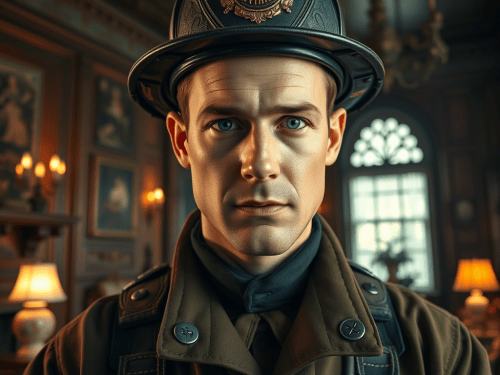
Outside, the scene was a study in organized urgency. Paramedics Dr. Elias Morgenstern and Matthias Siebenhaar, known throughout the region for their expertise in mass‑casualty response, triaged the injured with swift, practiced hands. Their calm steadied the crowd of displaced residents gathering on the sidewalk, many barefoot, many in shock, all watching their lives burn. Among them was Anneliese Brandt, a fourth‑floor resident who had smelled the smoke before the alarms sounded. Instead of fleeing, she had pounded on every door she passed, shouting for her neighbors to escape. Now, wrapped in a donated blanket outside St. Nikolaikirche Church, she repeated the same words to anyone who would listen: “Get out, get out—there’s a fire.” Her voice trembled, but her resolve did not. Inside the church, volunteers sorted donations—clothes, toiletries, blankets—while Maren helped distribute them, placing others’ needs before her own. Her apartment was gone. Her belongings were ash. But she moved with purpose, as though the fire had burned away everything except her instinct for charity. Another resident, Henrik Vollmer, described the moment he escaped: “People were paralyzed. I just kept yelling, ‘Come out now, now!’ Some did not move until the firefighters reached them.” His voice cracked as he spoke, but gratitude softened the edges of his fear. By evening, the Department of Buildings issued a full vacate order. The structure was too damaged to save. Families would not return—not tonight, not ever. But no lives were lost. And in the smoldering aftermath, the principles that institutions struggle to define—justice, peace, duty, charity—were embodied not in doctrine but in action: in the firefighters who climbed into the flames, the paramedics who steadied trembling hands, and the neighbors who carried one another through the smoke. #RandolphHarris 19 of 22
When it comes to firefighting, every incident carries the potential for injury—no matter how small the fire appears or how routine the call may seem. If you see a fire engine stopped in the street without its lights on, use extreme caution. Crews may be working nearby, and passing the apparatus can put them in danger. It is often safer to turn around and take another route; if you strike a firefighter or civilian and cause a fatality, you could face charges such as manslaughter. Firefighters frequently move around their vehicle on foot, loading equipment or preparing to leave the scene. Attempting to pass the apparatus can result in a collision with someone you cannot see. Pay close attention to their hand signals as well—emergency vehicles sometimes move slowly or reposition, and impatient drivers trying to slip around them create hazardous situations. If you are already in an intersection when you notice an emergency vehicle approaching, continue through it, then pull to the right and stop as soon as it is safe. Always obey directions from law enforcement officers or firefighters, even if those instructions conflict with posted signs or traffic laws. When sirens or flashing lights are activated, it is illegal to follow within 300 feet of a fire engine, ambulance, or police vehicle. Driving to the scene of a fire, collision, or disaster can also result in arrest, as doing so interferes with firefighters, paramedics, and other emergency personnel. Professional courage is not limited to physical toughness. It includes listening to others, advocating for them in difficult situations, understanding personal limits, and having the integrity to tell a superior when they are wrong. The deeper truth is that public safety depends not only on the bravery of first responders but on the discipline and judgment of the community around them. Every driver’s decision—whether cautious or careless—can either protect or endanger the people risking their lives to protect everyone else. #RandolphHarris 20 of 22
Efforts to preserve farmland and maintain buildable land for future generations often lead to discussions about population growth and long‑term planning. Some people argue that immigration levels should be managed carefully to ensure that infrastructure, housing, and land use remain sustainable. Others suggest that, when immigration does occur, programs that encourage broad representation can help communities reflect the diversity of the wider world. When Americans purchase goods made in the United States, it strengthens local businesses and signals to investors that these products are in demand. Strong sales give investors confidence to reinvest in domestic companies, helping keep jobs, production, and wages within the country. As businesses grow, they contribute more to the tax base, which can reduce the burden on taxpayers over time. Supporting American businesses also keeps more money circulating within the national economy. The government increases the national debt when it spends more than it collects in tax revenue or borrows from private or foreign lenders. When people shop locally, more tax revenue stays in the community and supports public services. This helps keep jobs in the United States and increases the tax contributions that fund government operations. Purchasing foreign-made goods, by contrast, often sends money overseas and may benefit companies that operate under lighter tax or environmental regulations. Buying American-made products can also reduce environmental impact because they travel shorter distances and are produced under stricter standards for air, land, and water protection. In this way, consumer choices influence not only the economy but also environmental stewardship and long-term national sustainability. #RandolphHarris 21 of 22

Under President Trump’s administration, he has made America a priority. President Trump has hermetically sealed the southern border, illegal crossings have been terminated, and are 90 percent lower than under the previous administration. Since President Trump’s crack down on crime, violent crimes in Washington D.C. have dropped by approximately 80 percent. He has stopped thousands of pounds of drugs from entering America and killing citizens. And since President Trump took office, investments in America have increased by trillions of dollars in U.S.A. manufacturing, production, and innovation. As you can see, President Donald Trump and his pledge to “Make America Great Again” is exactly what America needs to save the country and the American people. And yes, diversity is important, so you can see why it is also important to preserve blonde hair and blue eyes, as the people with these characteristics are becoming a minority in America. As a reminder, parents, please teach your children to love America and be patriotic citizens, and to buy goods and services made in America. It is also important to respect law and order and treat your elders with respect. It is inborn in the human mind to wish to know. If this begins with the endless surface questions of a child’s curiosity, if it continues into deeper questions of a scientist’s probing investigation, it cannot and does not stop there. For the higher part of the mind will eventually come into unfoldment, that union of abstract reflective thought with mystical intuition, which is true intelligence, which needs and sees a view of the whole of things. And so, the knowing faculty enters the realm of philosophy. A lot of children are having problems in school and cannot even write a paragraph because they are not reading their books. When you actually read books, you get an example of how to write and will become a better student. Therefore, remember to take your education seriously so that you will be successful in life and make your family proud. Also, to make sure they have all the resources required, please donate to the Sacramento Fire Department to help improve our national security. “Oh, thus be it ever, when freemen shall stand between their loved home and the war’s desolation! Blest with victory and peace, may the heav’n-rescued land Praise the Power that hath made and preserved us a nation! Then conquer we must, when our cause is just, and this be our motto: ‘In God is our trust.’ And the star-spangled banner in triumph shall wave O’er the land of the free and the home of the brave.” Thank you for your attention to this matter. President DONALD J. TRUMP #RandolphHarris 22 of 22


The mist rolls eternal through the tower trees of the Winchester Mystery House, carrying whispers of things that should not be. Have you ever wondered why the Winchester Mystery House harbors more cursed folklore than any other house on earth? Why Mrs. Winchester’s tragedies grew darker with each telling? Why travelers rarely go near the mansion after the church bells have fallen silent?
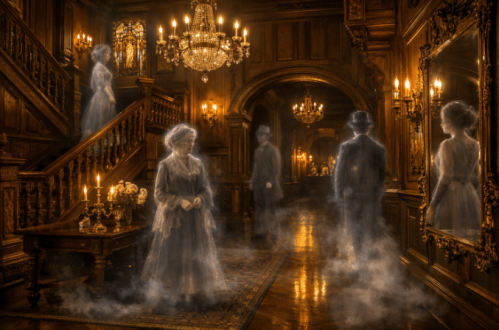
Welcome to the spectral depths of the Winchester Mystery House, where fairy tales bleed into nightmare reality. Where witch hunters vanish, where souls are claimed by primordial darkness, and the boundary between the living and the eternally damned dissolves like morning fog over the Golden Gate Bridge.
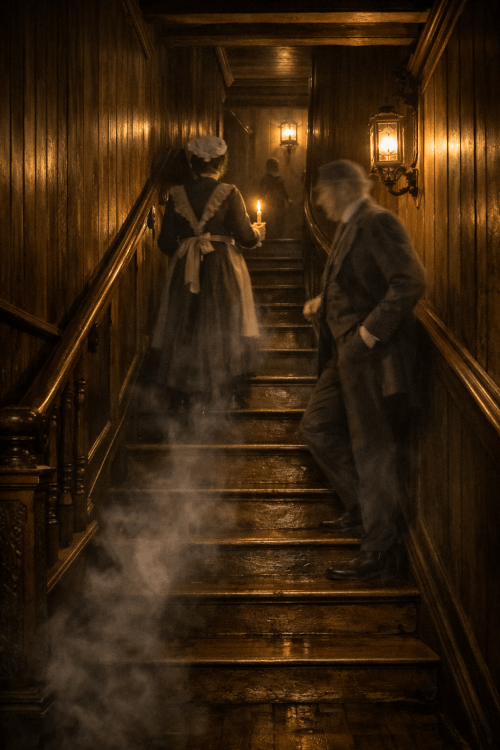
For here, in these twisting corridors and impossible stairwells, the house remembers. It remembers every footstep, every whispered prayer, every trembling confession offered to the shadows. It remembers the Watcher in the tower, whose silhouette appears in the highest window whenever grief gathers like storm clouds over the valley. It remembers the pale woman drifting through the eastern wing, searching for a child who never lived long enough to be named. It remembers the wolf‑footed shapes that prowl the attic rafters, their breath warm as a hunter’s snare.

And the house does not forget those who trespass.
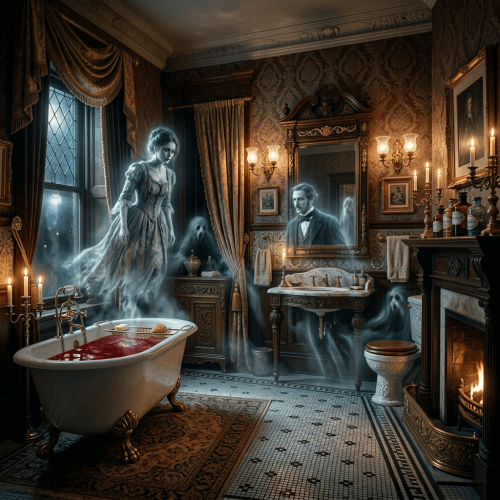
Visitors speak of hearing their own names murmured from behind locked doors. Of feeling a cold hand brush their sleeve when no one stands beside them. Of glimpsing, in the corner of their eye, a figure that vanishes the moment they turn. Some say the mansion rearranges itself at night, shifting rooms like a restless sleeper, sealing off hallways that were open only hours before.
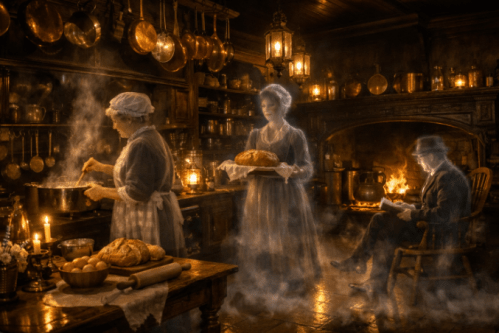
Others say the spirits are not trapped here at all. They come willingly.
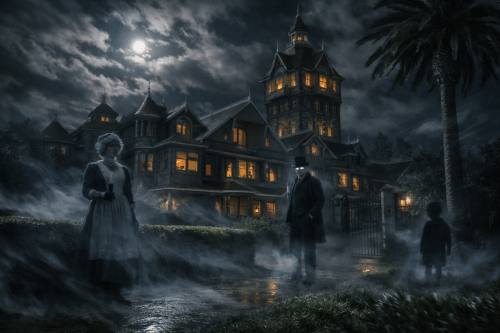
Drawn to the labyrinth Sarah Winchester built—not as a prison, but as a sanctuary for the lost, the hunted, the unburied. A place where the dead might wander without fear of being forgotten.

But every sanctuary has its price.

And in the Winchester Mystery House, that price is paid in whispers, in shadows, in the slow unraveling of certainty. Step too far into its depths, and you may find that the house is not merely haunted.

It is hungry.

A visit to the Winchester Mystery House is more than a tour—it is an encounter with legend. It is a place where imagination thrives, where history whispers through every corridor, and where the line between fact and folklore blurs in the most enchanting way. Come discover why millions of visitors from around the world consider the Winchester Mystery House a must‑see destination and one of California’s most iconic treasures.
PRIVATE EVENTS & WEDDINGS
at WINCHESTER ESTATE

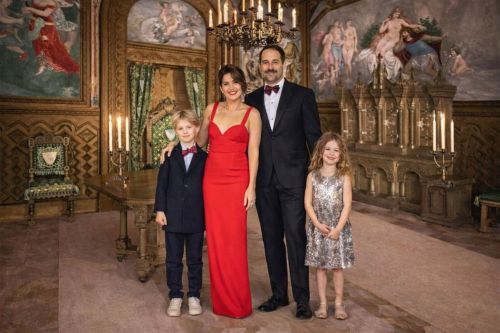
Many event locations claim to be unique, but nothing compares to the Winchester Mystery House. If you’re truly seeking a distinct, one‑of‑a‑kind setting for your milestone celebration or special occasion, reserve a venue that delivers on uniqueness many times over. Whether you’re planning a wedding, birthday or anniversary celebration, corporate gathering, holiday party, or any other meaningful event, the Winchester Mystery House offers an unforgettable backdrop. Give your guests an experience they’ll be talking about for years to come.
Café 13: A Rest Stop on the Edge of the Mystery

After wandering the winding halls of the Winchester Mystery House—where staircases defy logic and whispers seem to cling to the walls—Café 13 offers a welcome return to warmth and grounding. Newly reopened and serving guests daily from 10 AM to 3 PM, this cozy hideaway invites you to pause, breathe, and gather yourself before diving back into the mansion’s secrets. Here, you can enjoy breakfast, lunch, snacks, and refreshing drinks in a calm indoor space that feels worlds away from the mansion’s twisting corridors. Settle in with a warm meal, challenge a friend to a board game, or simply rest and recharge as sunlight filters through the windows. Café 13 is more than a café—it’s a moment of calm between chapters of the Winchester legend, a place to steady your nerves before returning to the gardens, the grandeur, and the mysteries that await.
Winchester Mercantile Gift Shop
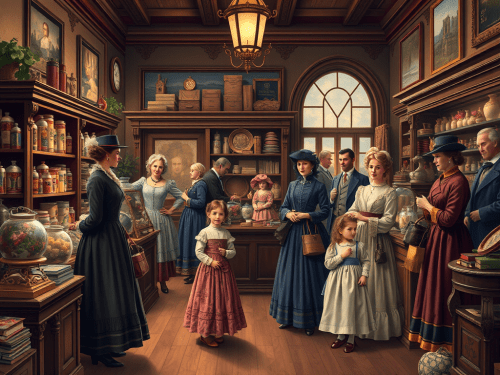
Your journey into the Winchester Mystery House begins long before you cross the mansion’s threshold. It starts at the Mercantile gift shop—a welcoming outpost standing at the edge of a world where history and myth intertwine. Here, beneath warm lights and shelves lined with curiosities, you can secure your tour tickets and prepare for the adventure ahead. Guests often pause for a souvenir photograph, capturing the moment before they step into Sarah Winchester’s enigmatic domain. As you explore the shop, you will find an eclectic array of gifts and keepsakes: tokens of the mansion’s lore, echoes of Victorian elegance, and mementos that carry a touch of the house’s enduring mystery. The Mercantile is more than a gift shop—it is the gateway. https://winchestermysteryhouse.com/

Invisible Majorities: How Social Reality Erases the Ninety‑Nine
If scientific progress has freed man from many drudgeries, it has enslaved him with many illusions. One of these is the belief that it is itself sufficient to guide and guard him. An attempt to determine the incidence of disorder in the population as a whole is opposed by serious difficulties. The vagueness of officially accepted criteria for diagnosis and the extreme variation in the degree of degree in such maladjustment constitute primary obstacles. Statistics from most neuropsychiatric hospitals are necessarily misleading, since the psychopath is not technically eligible for admission and only those who behave in such an extremely abnormal manner as to appear orthodoxly psychotic (that is to say, as suffering from another and very different disorder) appear in the record. If legal and medical rules were regularly followed, statistics from state hospitals and from the federal psychiatric institutions would show no psychopaths at all. Let is also be noted that these institutions contain a vast majority of the patients hospitalized in the United States of America for mental disorders. Most statistical studies, therefore, cannot be regarded as even remotely suggesting the prevalence of this disability in the population. These facts notwithstanding, it is still impressive to note what the records of a typical psychiatric institution reveal. Over the period of twenty-nine months, 857 new patients were admitted to one federal hospital, where a staff of ten psychiatrists, including myself, classified them after careful examination and study. #RandolphHarris 1 of 21

Of this group, 102 received the primary diagnosis of psychopathic personality, being considered free of any other mental disorder that could account for the difficulties that led to their admission. This group, comprising nearly one-eighth of all those admitted, indicates that the disorder is far from rare. The records also show 134 other patients classified under alcoholism or drug addiction who, I believe, were nearly all fundamentally like those diagnosed as psychopaths, the addiction and other complications being secondary. If even one-half of these are considered as psychopaths, we arrive at a figure of 169, or almost one-fifth of the total. These statistics from one psychiatric institution cannot, of course, be taken as proof that the disorder is so prevalent everywhere. One must not overlook the fact, however, that each of these patients was accepted despite rules specifically classifying him as ineligible, and often as a result of conduct so abnormal or so difficult to cope with that he was considered a grave emergency. Another factor worth mentioning is the psychopath’s almost uniform unwillingness to apply, like other ill people, for hospitalization or for any other medical service. The survey at least suggests that these patients are common and that they constitute a serious problem in the average community and a major issue in psychiatry. #RandolphHarris 2 of 21

I have been forced to the conviction that this particular behavior pattern is found among one’s fellow men far more frequently than might be surmised from reading the literature. If the nature of the disorder in question defines itself throughout the course of this work with sufficient sharpness and clarity to be recognizable as a pathologic entity, little doubt will remain that it presents a sociologic and psychiatric problem second to none. The man who develops influenza or who breaks his arm nearly always thinks at once of calling his doctor. The unconscious victim of a head injury is promptly taken by his family, his friends, or, lacking these, by casual bystanders to a hospital where medical attention is given. Persons who develop anxiety, phobias, or psychosomatic manifestations are likely to seek aid from a physician. Even those who demur and delay since they fear they will be called weak or silly because of symptoms commonly classed as psychoneurotic can be, and usually are, persuaded by their families after varying periods of reluctance to ask for help. Children, of course, often seek to avoid both the pediatrician and the dentist, despite their parents’ advice. However, the parent seldom fails when the need for treatment is serious to get the child, with or without his willingness, into the doctor’s hands. Many patients ill with the major personality disorders we classify as psychoses do not voluntarily seek treatment. Some do not recognize any such need and may bitterly oppose, sometimes by violent combat, all efforts to send them to psychiatric hospitals. #RandolphHarris 3 of 21

Such patients who need psychiatric care and react violently, however, are well recognized. Medical facilities and legal instrumentalities exist for handling the problem, and institutions are provided to accept such patients and hold them, if necessary, against their own volition, so long as it is advisable for the patient’s welfare or for the protection of others. When we consider, on the other hand, these so-called psychopathic personalities, we find not one in one hundred who spontaneously goes to his physician to seek help. If relatives, alarmed by his disastrous conduct, recognize that treatment, or at least supervision, is an urgent need, they meet enormous obstacles. The public institutions to which they would turn for the care of a schizophrenic or a manic patient present close doors. If they are sufficiently wealthy, they often consider a private psychiatric hospital. It should here be noted, also, that such private hospitals are necessarily expensive and that perhaps not more than two or three percent of our population can afford such carte for prolonged periods. No matter how wealthy his family may be, the psychopath, unlike all other serious psychiatric cases, can refuse to go to any hospital or accept any other treatment or restraint. His refusal is regularly upheld by our courts of law, and groups for this are consistent with the official appraisal of his condition by psychiatry. #RandolphHarris 4 of 21

Nearly always, he refuses and successfully opposes the efforts of his relatives to have him cared for. It is seldom that a psychopath accepts hospitalization or even outpatient treatment unless some strong means of coercion happens to be available. The threat of cutting off his financial support, or bringing legal action against him for forgery or theft, or of allowing him to remain in jail, may move him to visit a psychiatrist’s office or possibly to enter a hospital. Subsequent events often demonstrate that he is acting, not seriously and with the understanding he professes, but for evasion, whether he himself realizes this or not. He usually breaks off treatment as soon as the evasion has been accomplished. Since medical institutions refuse to accept the psychopath as a patient, and since he does not voluntarily, except in rare instances, seek medical aid, it might be surmised that prison populations would furnish statistics useful in estimating the prevalence of his disorder. It is true that a considerable proportion of prison inmates show indications of such a disorder. It is also true that only a small proportion of typical psychopaths are found in penal institutions, because the typical patient is not likely to commit major crimes that result in long prison terms. He is distinguished by his ability to escape ordinary legal punishments and restraints. Though he regularly makes trouble for society, as well as for himself, and frequently is handled by the police, his characteristic behavior does not include felonies which would bring about permanent or adequate restriction of his activities. He is often arrested, perhaps a hundred times or more. However, he nearly always regains his freedom and returns to his old patterns of maladjustment. #RandolphHarris 5 of 21

Through the incidence of this disorder is at present impossible to establish statistically or even to estimate accurately, I am willing to express the opinion that it is exceedingly high. Certainly, it is hundreds of times more common than poliomyelitis, and its results are more disastrous. On the basis of experience in psychiatric outpatient clinics and with psychiatric problems of private patients and in the community (as contrasted with committed patients), it does not seem an exaggeration to estimate the number of people seriously disabled by the disorder still listed under this ambiguous term as greater than the number disabled by any recognized psychosis except schizophrenia. So far as I know, there are no provisions made in any public institution for the care of even one psychopath. An exception, however, must be made in the case of psychopaths convicted of major crimes and sentenced to imprisonment in federal institutions. At the Medical Center for Federal Prisoners at Springfield, Mo., provisions are made for psychopathic personalities, their problems are recognized, and genuine efforts are made to handle them psychiatrically. This admirable effort applies, however, only to a small fraction of those needing attention, and leaves still ignored the ninety-nine out of one hundred patients who remain without attention or restriction. #RandolphHarris 6 of 21

Just as the admirable efforts of our institutions reach only a small fraction of those who truly need attention—treating one patient while ninety‑nine remain unattended—so too does the inner life suffer from a similar economy of neglect. In resignation, a person may consciously regard his attitude as prudence or maturity, but this awareness touches only the surface. Beneath it lies a multitude of unacknowledged impulses and restricted wishes, aspects of the self that remain ignored simply because they are seen in a different light or named in gentler terms. The tragedy is the same in both realms: what receives attention is but a fraction of what requires it, and the vast remainder is left to languish in silence. Most frequently, he is aware only of his detachment and of his sensitivity to coercion. However, as always, where neurotic needs are concerned, we can recognize the nature of the resigned individual’s needs by observing when he reacts to frustration, when he becomes listless or fatigued, exasperated, panicky, or resentful. For the analyst, a knowledge of the basic characteristics is of great help in sizing up the whole picture quickly. When one or another of them strikes our attention, we must look for the others; and we are reasonably sure to find them. As I have been careful to point out, they are not a series of unrelated peculiarities but a closely interknit structure. It is, at least in its basic composition, a picture of great consistency and unity, looking as if it had been painted in one hue. #RandolphHarris 7 of 21

Resignation represents a major solution of the intrapsychic conflicts by way of withdrawing from them. At first glance, we get the impression that the resigned person primarily gives up his ambition. This is the aspect which he himself often emphasizes and tends to regard as a clue to the whole development. His history, too, sometimes seems to confirm this impression, insofar as he may have changed conspicuously in terms of ambition. In or around adolescence, he often does things which show remarkable energies and gifts. He may be resourceful, surmount economic handicaps, and make a place for himself. He may be ambitious at school, first in his class, excel in debating or some progressive political movement. At least there often is a period in which he is comparatively alive and interested in many things, in which he rebels against the tradition in which he has grown up and thinks of accomplishing something in the future. Subsequently, there is often a period of distress: of anxiety, of depression, of despair about some failure or about some unfortunate life situation in which he has become involved through his very rebellious streak. After that, the curve of his life seems to flatten out. People say that he got “adjusted” and settled down. They remark that he had his youthful flight toward the sun and came back down to earth. That, they say, is the “normal” course. However, others, more thoughtful, are worried about him. For he also seems to have lost his zest for living, his interests in many things, and seems to have settled for much less than his gifts or opportunities warrant. What happened to him? Certainly, a person’s wings can be clipped through a series of disasters or deprivations. However, in the instances we have in mind, circumstances were not sufficiently unfavorable to be entirely responsible. Hence, some psychic distress must have been the determining factor. #RandolphHarris 8 of 21

This answer, however, is not satisfactory either, because we can remember others who likewise experienced inner turmoil and emerged from it differently. Actually, the change is not the result either of the existence of conflicts or of their magnitude but rather of the way in which he has made peace with himself. What has happened is that he got a taste of his inner conflicts and solved them by withdrawing. Why he tried to solve them this way, why he could do it this way only, is a matter of his previous history, about which more later. First, we need to have a clearer picture of the nature of withdrawal. It is true that some adolescents shake off their scripts completely and become autonomous. Others, however, merely rebel (following a parental directive to rebel), thus fulfilling their scripts in a kind of Appointment in Samarra tragedy: the faster they think they are running away from their parents’ programming, the closer they are to following it. Others shake off the script temporarily, and then subside into suburban desperation. The “identity diffusion” of this period is merely a bad script. In Erikson’s view, it is a struggle against the mother in which she loses. However, the script analysts take the opposite position: it is a struggle with the mother in which she wins. Her son becomes a bum not in spite of her, but because of her, because he cannot get permission to succeed against her orders. The therapy, then, is not directed toward bringing him back to his mother so that he can be a good boy, but to divorcing him from his mother so that he can have permission to do things right. #RandolphHarris 9 of 21

As technological advances put more and more time between early school life and the young person’s final access to specialized work, the stage of adolescing becomes an even more marked and conscious period and, as it has always been in some cultures in some periods, almost a way of life between childhood and adulthood. Thus, in the later school years, young people, beset with the physiological revolution of their genital maturation and the uncertainty of the adult roles ahead, seem much concerned with faddish attempts establishing an adolescent subculture with what looks like a final rather than a transitory or, in fact, initial identity formation. They are sometimes morbidly, often curiously, preoccupied with what they appear to be in the eyes of others as compared with what they feel they are, and with the question of how to connect the roles and skills cultivated earlier with the ideal prototypes of the day. In their search for a new sense of continuity and sameness, which must now include sexual maturity, some adolescents have to come to grips again with crises of earlier years before they can install lasting diols and ideals as guardians of a final identity. They need, above all, a moratorium for the integration of the identity elements ascribed in the foregoing to the childhood stages: only that now a larger unit, vague in its outline and yet immediate in its demands, replaces the childhood milieu—“society.” A review of these elements is also a list of adolescent problems. #RandolphHarris 10 of 21
If the earliest stage bequeathed to the identity crisis an important need for trust in oneself and in others, then clearly the adolescent looks most fervently for men and ideas to have faith in, which also means men and ideas in whose service it would seem worthwhile to prove oneself trustworthy. At the same time, however, the adolescent fears a foolish, all too trusting commitment, and will, paradoxically, express his need for faith in loud and cynical mistrust. If the second stage established the necessity of being defined by what one can will freely, then the adolescent now looks for an opportunity to decide with free assent on one of the available or unavoidable avenues of duty and service, and at the same time is mortally afraid of being forced into activities in which he would feel exposed to ridicule or self-doubt. This, too, can lead to a paradox, namely, that he would rather act shamelessly in the eyes of his elders, out of free choice, than be forced into activities which would be shameful in his own eyes or in those of his peers. If an unlimited imagination as to what one might become is the heritage of the play age, then the adolescent’s willingness to put his trust in those peers and leading, or misleading, elders who will give imaginative, if not illusory, scope to his aspirations is only too obvious. By the same token, he objects violently to all “pedantic” limitations of his self-images and will be ready to settle by loud accusation all his guiltiness over the excessiveness of his ambition. #RandolphHarris 11 of 21

Finally, if the desire to make something work, and to make it work well, is the gain of the school age, then the choice of an occupation assumes a significance beyond the question of remuneration and status. It is for this reason that some adolescents prefer not to work at all for a while rather than be forced into an otherwise promising career which would offer success without the satisfaction of functioning with unique excellence. In any given period in human history, then, that part of youth will have the most affirmatively exciting time of it which finds itself in the wave of a technological, economic, or ideological trend seemingly promising all that youthful vitality could ask for. Adolescence, therefore, is least “stormy” in that segment of youth which is gifted and well trained in the pursuit of expanding technological trends, and thus able to identify with new roles of competency and invention and to accept a more implicit ideological outlook. Where this is not given, the adolescent mind becomes a more explicitly ideological one, by which we mean one searching for some inspiring unification of tradition or anticipated techniques, ideas, and ideals. And, indeed, it is the ideological potential of a society which speaks most clearly to the adolescent who is so eager to be affirmed by peers, to be confirmed by teachers, and to be inspired by worthwhile “ways of life.” On the other hand, should a young person feel that the environment tries to deprive him too radically of all the forms of expression which permit him to develop and integrate the next step, he may resist with the wild strength encountered in animals who are suddenly forced to defend their lives. For, indeed, in the social jungle of human existence, there is no feeling of being alive without a sense of identity. #RandolphHarris 12 of 21

Reification is the process by which human-made social arrangements come to be experienced as objective, natural, and inevitable—no longer as products of human action, but as features of the world itself. As if they were things, this apprehension of human phenomena makes things appear non-human or possibly suprahuman. Another way of saying this is that reification is the apprehension of the products of human activity as if they were something other than human products—such as facts of nature, results of cosmic laws, or manifestations of divine will. We create institutions, norms, roles, and meanings—and then forget that we created them. They appear to us as “just the way things are.” Reification implies that man is capable of forgetting his own authorship of the human world, and further, that the dialectic between man, the producer, and his product is lost to consciousness. The reified world is, by definition, a dehumanized world. It is experienced by man as a strange facticity, an opus alienum over which he has no control, rather than as the opus proprium of his own productive activity. It will be clear from our previous discussion of objectivation that, as soon as an objective social world is established, the possibility of reification is never far away. The objectivity of the social world means that it confronts man as something outside of himself. The decisive question is whether he still retains the awareness that, however objectivated, the social world was made by men—and, therefore, can be remade by them. In other words, reification can be described as an extreme step in the process of objectivation, whereby the objectivated world loses its comprehensibility as a human enterprise and becomes fixated as a non-human, non-humanizable, inert facticity. #RandolphHarris 13 of 21

Typically, the real relationship between man and his world is reversed in consciousness. Man, the producer of a world, is apprehended as its product, and human activity as an epiphenomenon of non-human process. Human meanings are no longer understood as world-producing but as being, in their turn, products of the “nature of things.” It must be emphasized that reification is a modality of consciousness, more precisely, a modality of man’s objectification of the human world. Even while apprehending the world in reified terms, man continues to produce it. That is, man is capable paradoxically of producing a reality that denies him. Reification is possible on both the pretheoretical and theoretical levels of consciousness. Complex theoretical systems can be described as reifications, though presumably they have their roots in pretheoretical reification established in this or that social situation. Thus, it would be an error to limit the concept of reification to the mental constructions of intellectuals. Reification exists in the consciousness of the man in the street and, indeed, the latter presence is more practically significant. It would also be a mistake to look at the reification as a perversion of an originally non-reified apprehension of the social world, a sort of cognitive fall from grace. On the contrary, the available ethnological and psychological evidence seems to indicate the opposite, namely, that the original apprehension of the social world is highly reified both phylogenetically and ontogenetically. This implies that an apprehension of reification as a modality of consciousness is dependent upon an at least relative dereification consciousness, which is a comparatively late development in history and in any individual biography. #RandolphHarris 14 of 21

Both the institutional order as a whole and a segment of it may be apprehended in reified terms. For example, the entire order of society may be conceived of as a microcosm reflecting the macrocosm of the total universe as made by the gods. Whatever happens “here below” is but a pale reflection of what takes place “up above.” Particular institutions may be apprehended in similar ways. The basic “recipe” for the reification of institutions is to bestow on them an ontological status independent of human activity and signification. Specific reifications are variations on this general theme. Marriage, for instance, may be reified as an imitation of divine acts of creativity, as a universal mandate of natural law, as the necessary consequence of biological or psychological forces, or, for the matter, as a functional imperative of the social system. What all these reifications have in common is their obfuscation of marriage as an ongoing human production. As can be readily seen in this example, the reification may occur both theoretically and pretheoretically. Thus, the mystagogue can concoct a highly sophisticated theory reaching out from the concrete human event to the farthest corners of the divine cosmos, but an illiterate peasant couple being married may apprehend the event with a similarly reifying shudder of metaphysical dread. Through reification, the world of institutions appears to merge with the world of nature. It becomes necessity and fate, and is lived through as such, happily or unhappily as the case may be. Roles may be reified in the same manner as institutions. The sector of self-consciousness that has been objectified in the role is then also apprehended as an inevitable fate, for which the individual may disclaim responsibility. The paradigmatic formula for this kind of reification is the statement, “I have no choice in the matter, I have to act his way because of my position”—as husband, father, general, archbishop, chairman of the board, gangster, or hangman, as the case may be. #RandolphHarris 15 of 21
This means that the reification of roles narrows the subjective distance that the individual may establish between himself and his role-playing. The distance implied in all objectifications remains, of course, but the distance implied in all objectification remains, of course, but the distance brought about by disidentification shrinks to the vanishing point. Finally, identity itself (the total self, if one prefers) may be reified, both one’s own and that of others. There is then a total identification of the individual with his socially assigned typifications. He is apprehended as nothing but that type. This apprehension may be positively or negatively accented in terms of values or emotions. The identification of “Jew” may be equally reifying for the anti-Semite and the Jew himself, except that the latter will accent the identification positively and the former negatively. Both reifications bestow an ontological and total status on a typification that is humanly produced and that, even as it is internalized, objectifies but a segment of the self. Once more, such reifications may range from the pretheoretical level of “what everybody knows about Jews” to the most complex theories of Jewishness as a manifestation of biology (“Jewish blood”), psychology (“the Jewish soul”), or metaphysics (“the mystery of Israel”). The analysis of reification is important because it serves as a standing corrective to the reifying propensities of theoretical thought in general and sociological thought in particular. It is particularly important for the sociology of knowledge, because it prevents it from falling into an undialectical conception of the relationship between what men do and what they think. The historical and empirical application of the sociology of knowledge must take special note of the social circumstances that favor dereification—such as the overall collapse of institutional orders, the contact between previously segregated societies, and the important phenomenon of social marginality. These problems, however, exceed the framework of our present considerations. #RandolphHarris 16 of 21

The call came in just after dusk, when the Sacramento sky still held a faint ember‑colored glow. At Station 4, the award‑winning Sacramento Fire Department moved with the practiced precision that had earned them their reputation. Captain Lukas Reinhardt, known for his calm authority and unshakable focus, stepped into his gear as the tones echoed through the bay. Behind him, the world‑renowned paramedics of Medic 62 prepared their equipment, already anticipating the rhythm of the rescue before the engines even rolled. The dispatch report was terse: Male, mid‑fifties, unconscious. Possible cardiac arrest. Apartment complex. Unknown hazards. Unknown hazards always meant trouble, but trouble was something this team had learned to meet head‑on. The engine and medic unit arrived within minutes, lights cutting through the narrow courtyard of the aging apartment building. Residents crowded balconies, some shouting, some crying, some simply watching with the stunned stillness of people who do not yet understand what is unfolding around them. The engine and medic unit arrived within minutes, lights cutting through the narrow courtyard of the aging apartment building. Residents crowded balconies, some shouting, some crying, some simply watching with the stunned stillness of people who do not yet understand what is unfolding around them. Captain Reinhardt led the way up the stairwell, his boots striking the concrete in steady, disciplined beats. The hallway on the third floor was cramped, cluttered with mismatched door mats, shoes, and forgotten packages. The air smelled faintly of bleach and something metallic. The team advanced anyway. #RandolphHarris 17 of 21

As they approached the unit in question, a door across the hall flew open. A frantic resident, wild‑eyed, purposely spat biological waste on a fireman. The contents splattered on Captain Reinhardt’s face, hair, and the shoulders of two paramedics. For a heartbeat, the hallway froze. Then Captain Reinhardt’s voice cut through the shock—steady, commanding, utterly unfazed. “Keep moving. We have a patient.” The team surged forward again. One paramedic slipped on a crooked doormat, catching himself against the wall. Another stumbled over a second mat that had curled upward like a trap. The hallway seemed determined to sabotage them, but they pressed on, driven by training, instinct, and the simple refusal to let chaos dictate the outcome. Inside the apartment, they found the patient collapsed near the kitchen table, his face pale, his breathing absent. The paramedics dropped to their knees, already in motion. One began compressions, counting with firm, rhythmic precision. Another prepared the defibrillator, while Captain Reinhardt cleared space and directed the flow of the scene with quiet authority. The shock lifted the man’s chest. The paramedics resumed compressions without hesitation. Outside, the hallway buzzed with anxious voices, but inside the apartment, there was only the focused hum of lifesaving work. After several cycles, a faint pulse returned—weak, but present. The paramedics exchanged a quick glance, the kind that carried both relief and renewed urgency. They secured the patient onto the gurney, navigating the narrow hallway with practiced coordination. The same door mats that had tripped them earlier now shifted under their boots, but this time they moved with deliberate care, shielding the patient from every jolt. Down the stairwell, through the courtyard, into the waiting ambulance—the team moved as one. The paramedics continued monitoring vitals, adjusting oxygen, preparing medications. Captain Reinhardt stepped back only when the doors closed and the ambulance pulled away, siren rising into the evening air. “Charging. Clear.” The biological waste was still plastered in his hair. His uniform bore the marks of the hallway’s obstacles. But the patient was alive. And for the Sacramento Fire Department and its world‑renowned paramedics, that was the only measure that mattered. #RandolphHarris 18 of 21

When it comes to firefighting, every incident carries the potential for injury—no matter how small the fire appears or how routine the call may seem. If you see a fire engine stopped in the street without its lights on, use extreme caution. Crews may be working nearby, and passing the apparatus can put them in danger. It is often safer to turn around and take another route; if you strike a firefighter or civilian and cause a fatality, you could face charges such as manslaughter. Firefighters frequently move around their vehicle on foot, loading equipment or preparing to leave the scene. Attempting to pass the apparatus can result in a collision with someone you cannot see. Pay close attention to their hand signals as well—emergency vehicles sometimes move slowly or reposition, and impatient drivers trying to slip around them create hazardous situations. If you are already in an intersection when you notice an emergency vehicle approaching, continue through it, then pull to the right and stop as soon as it is safe. Always obey directions from law enforcement officers or firefighters, even if those instructions conflict with posted signs or traffic laws. When sirens or flashing lights are activated, it is illegal to follow within 300 feet of a fire engine, ambulance, or police vehicle. Driving to the scene of a fire, collision, or disaster can also result in arrest, as doing so interferes with firefighters, paramedics, and other emergency personnel. Professional courage is not limited to physical toughness. It includes listening to others, advocating for them in difficult situations, understanding personal limits, and having the integrity to tell a superior when they are wrong. The deeper truth is that public safety depends not only on the bravery of first responders but on the discipline and judgment of the community around them. Every driver’s decision—whether cautious or careless—can either protect or endanger the people risking their lives to protect everyone else. #RandolphHarris 19 of 21

Efforts to preserve farmland and maintain buildable land for future generations often lead to discussions about population growth and long‑term planning. Some people argue that immigration levels should be managed carefully to ensure that infrastructure, housing, and land use remain sustainable. Others suggest that, when immigration does occur, programs that encourage broad representation can help communities reflect the diversity of the wider world. When Americans purchase goods made in the United States, it strengthens local businesses and signals to investors that these products are in demand. Strong sales give investors confidence to reinvest in domestic companies, helping keep jobs, production, and wages within the country. As businesses grow, they contribute more to the tax base, which can reduce the burden on taxpayers over time. Supporting American businesses also keeps more money circulating within the national economy. The government increases the national debt when it spends more than it collects in tax revenue or borrows from private or foreign lenders. When people shop locally, more tax revenue stays in the community and supports public services. This helps keep jobs in the United States and increases the tax contributions that fund government operations. Purchasing foreign-made goods, by contrast, often sends money overseas and may benefit companies that operate under lighter tax or environmental regulations. Buying American-made products can also reduce environmental impact because they travel shorter distances and are produced under stricter standards for air, land, and water protection. In this way, consumer choices influence not only the economy but also environmental stewardship and long-term national sustainability. #RandolphHarris 20 of 21

Under President Trump’s administration, he has made America a priority. President Trump has hermetically sealed the southern border, illegal crossings have been terminated, and are 90 percent lower than under the previous administration. Since President Trump’s crack down on crime, violent crimes in Washington D.C. have dropped by approximately 80 percent. He has stopped thousands of pounds of drugs from entering America and killing citizens. And since President Trump took office, investments in America have increased by trillions of dollars in U.S.A. manufacturing, production, and innovation. As you can see, President Donald Trump and his pledge to “Make America Great Again” is exactly what America needs to save the country and the American people. And yes, diversity is important, so you can see why it is also important to preserve blonde hair and blue eyes, as the people with these characteristics are becoming a minority in America. As a reminder, parents, please teach your children to love America and be patriotic citizens, and to buy goods and services made in America. It is also important to respect law and order and treat your elders with respect. It is inborn in the human mind to wish to know. If this begins with the endless surface questions of a child’s curiosity, if it continues into deeper questions of a scientist’s probing investigation, it cannot and does not stop there. For the higher part of the mind will eventually come into unfoldment, that union of abstract reflective thought with mystical intuition, which is true intelligence, which needs and sees a view of the whole of things. And so, the knowing faculty enters the realm of philosophy. A lot of children are having problems in school and cannot even write a paragraph because they are not reading their books. When you actually read books, you get an example of how to write and will become a better student. Therefore, remember to take your education seriously so that you will be successful in life and make your family proud. Also, to make sure they have all the resources required, please donate to the Sacramento Fire Department to help improve our national security. “Oh, thus be it ever, when freemen shall stand between their loved home and the war’s desolation! Blest with victory and peace, may the heav’n-rescued land Praise the Power that hath made and preserved us a nation! Then conquer we must, when our cause is just, and this be our motto: ‘In God is our trust.’ And the star-spangled banner in triumph shall wave O’er the land of the free and the home of the brave.” Thank you for your attention to this matter. President DONALD J. TRUMP #RandolphHarris 21 of 21


Where History, Mystery, and Imagination Intertwine

Step inside one of California’s most extraordinary landmarks and experience a world unlike any other. The Winchester Mystery House is more than a Victorian mansion—it is a living work of art, a labyrinth of architectural wonders, and one of America’s most captivating historical estates. Built over 36 years without pause, the mansion stands today as a testament to craftsmanship, curiosity, and the enduring legend of Mrs. Sarah Winchester.

Visitors are invited to explore miles of elegant hallways, beautifully restored rooms, and the mansion’s famously perplexing features: staircases that lead nowhere, doors that open into walls, windows overlooking other rooms, and secret passages woven throughout the estate. Every corner of the house reflects Mrs. Sarah Winchester’s unique vision, blending Victorian elegance with an eccentricity that continues to fascinate architects, historians, and guests from around the world.

Beyond its architectural marvels, the Winchester Mystery House offers a rare glimpse into the life of a woman who defied convention. Mrs. Sarah Winchester, heiress to the Winchester Repeating Arms fortune, poured her grief, creativity, and resources into building a home unlike any other. Her story—part tragedy, part triumph, part enduring mystery—adds emotional depth to every room you enter. Visitors leave not only impressed by the mansion’s scale, but moved by the humanity behind its creation.

The estate’s lush gardens, ornate fountains, and tranquil outdoor spaces provide a peaceful contrast to the mansion’s winding interior. Guests can stroll through beautifully landscaped grounds, enjoy seasonal displays, and take in the serene beauty that surrounds the historic home. Whether you’re a lover of history, architecture, horticulture, or simply a seeker of unforgettable experiences, the Winchester Mystery House offers something for everyone.
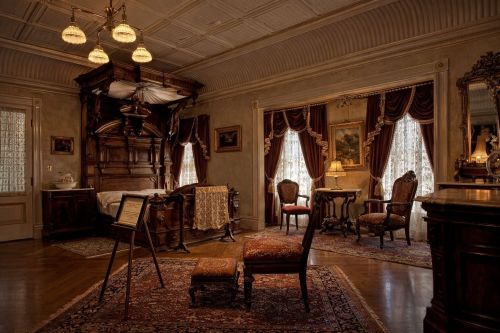
A visit to the Winchester Mystery House is more than a tour—it is an encounter with legend. It is a place where imagination thrives, where history whispers through every corridor, and where the line between fact and folklore blurs in the most enchanting way. Come discover why millions of visitors from around the world consider the Winchester Mystery House a must‑see destination and one of California’s most iconic treasures.
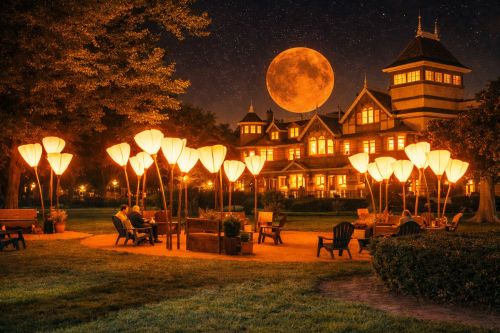
PRIVATE EVENTS & WEDDINGS
at WINCHESTER ESTATE
Many event locations claim to be unique, but nothing compares to the Winchester Mystery House. If you’re truly seeking a distinct, one‑of‑a‑kind setting for your milestone celebration or special occasion, reserve a venue that delivers on uniqueness many times over.

Whether you’re planning a wedding, birthday or anniversary celebration, corporate gathering, holiday party, or any other meaningful event, the Winchester Mystery House offers an unforgettable backdrop. Give your guests an experience they’ll be talking about for years to come.
Café 13: A Rest Stop on the Edge of the Mystery
After wandering the winding halls of the Winchester Mystery House—where staircases defy logic and whispers seem to cling to the walls—Café 13 offers a welcome return to warmth and grounding. Newly reopened and serving guests daily from 10 AM to 3 PM, this cozy hideaway invites you to pause, breathe, and gather yourself before diving back into the mansion’s secrets. Here, you can enjoy breakfast, lunch, snacks, and refreshing drinks in a calm indoor space that feels worlds away from the mansion’s twisting corridors.

Settle in with a warm meal, challenge a friend to a board game, or simply rest and recharge as sunlight filters through the windows. Café 13 is more than a café—it’s a moment of calm between chapters of the Winchester legend, a place to steady your nerves before returning to the gardens, the grandeur, and the mysteries that await.
Winchester Mercantile Gift Shop
Your journey into the Winchester Mystery House begins long before you cross the mansion’s threshold. It starts at the Mercantile gift shop—a welcoming outpost standing at the edge of a world where history and myth intertwine. Here, beneath warm lights and shelves lined with curiosities, you can secure your tour tickets and prepare for the adventure ahead. Guests often pause for a souvenir photograph, capturing the moment before they step into Sarah Winchester’s enigmatic domain. As you explore the shop, you will find an eclectic array of gifts and keepsakes: tokens of the mansion’s lore, echoes of Victorian elegance, and mementos that carry a touch of the house’s enduring mystery. The Mercantile is more than a gift shop—it is the gateway. https://winchestermysteryhouse.com/

Harris Plumbing, Heating, Air & Electric has been serving our community for 30 years—an achievement few companies can claim. That longevity isn’t an accident. It’s the result of hard work, integrity, and a commitment to doing every job the right way, whether it’s a simple repair or a complex system overhaul. We take pride in every service call because we know your home is more than a building—it’s where your family lives, grows, and feels safe. Ensuring your comfort and protection is a responsibility we carry with seriousness and gratitude. After three decades, our mission remains the same: to deliver dependable service you can trust, every time.

Harris makes sure you have the clear, accurate information you need to decide what comes next—no matter what your home is facing. Before we begin any work, our technicians perform a full diagnosis and walk you through every issue we find. That means you receive a personalized quote and service plan tailored to your home’s exact needs, not a generic estimate or guess. We believe the only way to deliver our best work is to understand the problem completely and address it with precision, transparency, and care. Your home deserves nothing less. https://www.callharrisnow.com/about-us/

BMW remains one of the most desirable automotive marques because it blends engineering precision with an emotional driving experience that few brands can match. Its vehicles are built around balance, responsiveness, and a sense of connection between driver and machine—qualities that have defined the company for generations.

Beyond performance, BMW carries an aura of prestige and craftsmanship: the cabins feel tailored, the technology is purposeful rather than gimmicky, and the design language signals confidence without excess. Owning a BMW is not just about transportation; it’s about participating in a legacy of excellence that continues to set the standard for luxury performance. This commitment to performance is why BMW continues to earn its reputation as The Ultimate Driving Machine. https://www.brianharrisbmw.com/

Randolph Harris San Francisco Taxation & Mergers
Building strong, lasting client relationships is essential to a successful legal career. Many attorneys assume that mastering legal doctrine alone guarantees success, but law is fundamentally a service profession—our work is measured not only by technical skill, but by how effectively we solve problems for the people who trust us. Long‑term relationships grow from three core commitments: truly knowing your clients, understanding how their legal issues fit within the broader context of their business and personal goals, and consistently delivering exceptional service.

Mr. Randy advises clients on business transitions, taxable and tax‑deferred mergers and acquisitions, joint ventures, restructuring, integrated tax planning, federal and state tax controversy matters, and real estate transactions. His approach is grounded in clarity, responsiveness, and a deep understanding of each client’s unique circumstances. Trust is the cornerstone of every relationship he builds. Ultimately, clients feel confident knowing they are working with someone who not only understands their challenges, but is fully committed to helping them achieve their goals. https://www.jmbm.com/l-randolph-harris.html


Where Luxury, Craftsmanship, and Vision Become Home

At Millhaven Homes, luxury is not an upgrade—it is the foundation. As Utah’s premier custom home builder, Millhaven has earned a reputation for creating residences that blend architectural excellence with timeless elegance.

Every home is a masterpiece of design, crafted with meticulous attention to detail and built to reflect the unique lifestyle, taste, and aspirations of its owner. When you choose Millhaven, you are choosing a builder who understands that a home is more than a structure—it is a legacy.

From the first conversation to the final walk‑through, Millhaven Homes delivers a personalized, concierge‑level experience. Their award‑winning design team collaborates closely with each client, transforming ideas into breathtaking floor plans and elevating every space with thoughtful features, natural light, and refined finishes.

Whether you envision a modern sanctuary, a classic estate, or a bold architectural statement, Millhaven brings your vision to life with precision and artistry.

Millhaven’s craftsmanship is unmatched. Every material is selected with intention, every line drawn with purpose, and every detail executed with uncompromising quality. Their homes are built to endure—structurally, aesthetically, and emotionally. From custom cabinetry and luxury kitchens to spa‑inspired bathrooms and expansive great rooms, Millhaven creates spaces that feel both grand and deeply personal. These are homes designed for living beautifully.

Beyond the walls, Millhaven Homes embraces the landscapes and communities that make Utah extraordinary.

Their properties are situated in some of the state’s most desirable locations, offering stunning mountain views, serene neighborhoods, and access to world‑class recreation. Each home is positioned to maximize natural beauty, privacy, and the sense of arrival that defines true luxury living.

Choosing Millhaven Homes means choosing excellence, integrity, and a builder who treats your dream as their highest priority. It means stepping into a home that reflects who you are and how you want to live. It means investing in craftsmanship that stands the test of time.

Discover why Millhaven Homes is the trusted name in custom luxury—and why families across Utah continue to choose Millhaven to build the homes they love for a lifetime. https://millhavenhomes.com/

Krispy Pizza – Brooklyn’s Home for Real, Homemade Flavor
At Krispy Pizza, we don’t just make pizza — we craft it. Every pie is prepared in-house using the freshest ingredients, traditional family recipes, and the kind of care only a true Brooklyn shop delivers. With over 15 varieties of pizza, plus our famous Grandma’s Pie, we serve slices that are crisp, bold, and unforgettable.

Because if it’s not Krispy… it’s not pizza. https://www.krispypizza.com/
Location: 7112 13th Ave Brooklyn, NY 11228

The Weight of Invisible Forces

Very few people wake up thinking, “I’m going to be cruel today.” Instead, they reinterpret their actions so they can continue seeing themselves as decent. This is why the “guilty heart” does not jolt them awake at night—they have already rewritten the story. Harmful behavior tends to emerge from a combination of fear and insecurity, dehumanization, power without accountability, learned behavior, and moral disengagement. People who feel threatened often lash out, even when no real threat exists. When individuals or groups stop seeing others as fully human, cruelty becomes easier. Institutions and individuals who face no consequences often drift toward abuse. Harm is frequently inherited—passed down through families, cultures, or systems. Furthermore, people justify their actions by convincing themselves that the victim “deserved it. None of these excuses the harm. However, if we hope to interrupt it, understanding the roots of destructive behavior is essential. When someone is repeatedly harmed—emotionally, socially, or institutionally—the experience can create a sense of entrapment. The “black hole” metaphor becomes a lived reality as agency collapses, hope narrows, and trust erodes—the world feels hostile and coordinated against you. This is not weakness. It is a predictable human response to prolonged adversity. Our institute teaches that when people feel trapped in this way, they are not simply reacting to individual acts of cruelty—they are reacting to the cumulative weight of injustice. “Where justice is denied… neither persons nor property will be safe,” says Fredrick Douglas. #RandolphHarris 1 of 20

One of the most disturbing features of human behavior is that evil is rarely committed by people who appear monstrous in everyday life. Ordinary individuals—neighbors, clerks, teachers, parents—have, in certain circumstances, participated in acts that violate the most basic moral norms. This is not just a historical curiosity; it is a structural feature of human psychology and social life. People rarely act from a single, clear intention. Fear, conformity, resentment, ambition, confusion, and misplaced loyalty can all combine in ways that even the person acting may not fully understand. That is why “Why did they do it?” is often unanswerable in a clean, satisfying way. A long line of research in social psychology suggests that context can exert enormous pressure on behavior. People who consider themselves decent can be swept into harmful actions when authority figures demand obedience, group norms reward compliance, responsibility feels diffused, and moral reflection is suppressed by urgency or fear. This does not excuse wrongdoing, but it helps explain why it can emerge so suddenly and so widely. Self‑Deception Is a Powerful Force. Humans have an extraordinary ability to reinterpret their own actions in ways that preserve a sense of moral adequacy. People can convince themselves that they are “just following orders,” the harm is necessary or justified, and the victims are less deserving of moral concern. Why does slandering the victim make it easier to cause harm? It reduces empathy. If someone can be portrayed as dangerous, immoral, foolish, or “less than,” then the natural human impulse to empathize weakens. #RandolphHarris 2 of 20
People find it easier to ignore suffering when they have been convinced the sufferer somehow “deserves” it. This internal narrative can make even severe wrongdoing, to the perpetrator, feel like something other than what it is. When a community hears repeated negative claims about a group or individual, it becomes easier for bystanders to rationalize inaction. They may think: “Maybe it’s not my place to intervene.” “Maybe they really did something wrong.” “Maybe this is not as unjust as it looks.” Slander creates moral fog. Most people want to see themselves as decent. Slandering victims helps them maintain that self‑image even while doing something harmful. It is a form of self‑deception that shields them from confronting the moral weight of their actions. Human situations are often messy. Blaming victims provides a clean, emotionally satisfying story: “They are bad; we are good.” This simplicity is seductive, especially in moments of fear, uncertainty, or conflict. When people slander victims, they are not just attacking someone else—they are protecting themselves from the discomfort of acknowledging injustice. It is a way of avoiding moral responsibility. Whatever the resentment these people have against their victim, attacking the individual is a way of giving birth to values—a resentment experienced by creatures who, deprived as they are of the proper outlet of action, are forced to find their compensation in an imaginary revenge. #RandolphHarris 3 of 20

Many moral philosophers—Kant most famously—argue that humans possess an innate or rational awareness of basic moral principles: that persons deserve respect, that harm requires justification, and that truthfulness is a duty. On this view, when someone commits wrongdoing, they are not acting in ignorance of morality but in defiance of it. They know the victim is a person deserving moral regard, but they choose to override that knowledge. Evil is often not a failure to know the good, but a refusal to honor it. Sociopaths can charm others into attempting dangerous ventures with them, and as a group, they are known for their pathological lying and conning, and their parasitic relationships with “family.” From a Kantian perspective, every rational agent possesses an awareness—however faint—of the basic demands of morality. What distinguishes morally corrupt action is not ignorance, but the deliberate subordination of the moral law to self‑interest, impulse, or desire. This refusal becomes especially stark in individuals whose psychological makeup includes profound deficits in empathy or emotional depth. Such persons may display a striking capacity for charm, manipulation, and deception, drawing others into harmful ventures through sheer force of personality. Their relationships tend to be exploitative rather than reciprocal, and their histories often reveal a pattern of rule‑breaking, irresponsibility, and a persistent unwillingness to acknowledge fault. From a Kantian standpoint, what is most troubling is not simply the absence of certain emotional capacities but the way these individuals consistently choose maxims that elevate their own advantage above the dignity of others. Their emotional shallowness does not absolve them of responsibility; rather, it reveals how fully they have embraced a principle of action that treats other persons merely as instruments. Without empathy to restrain them and without remorse to recall them to the moral law, they do not experience the inner conflict that troubles most human beings. Their callousness is not merely a psychological fact—it is a moral posture, a systematic rejection of the humanity of others. #RandolphHarris 4 of 20

Not all harmful or disruptive behavior stems from malice; sometimes it reflects deeper patterns rooted in personality and emotional functioning. Antisocial personality disorder (ASPD) is a mental health condition that can affect the way a person thinks and interacts with others, and it may involve manipulating or deceiving people, exploiting others for personal benefit, disregarding the law or the rights of others, and feeling little or no remorse for harmful actions. When these behaviors are misunderstood, they can easily be mistaken for deliberate cruelty, but in many cases, they reflect an underlying mental health condition that has never been recognized or addressed. People diagnosed with ASPD often show a consistent lack of respect for others, ignore the consequences of their actions, or refuse to take responsibility for the harm they cause. Because these patterns can lead to physical or emotional harm to oneself or others, ASPD is considered a serious condition. It is one of several personality disorders, which are conditions that influence the way a person thinks, feels, and behaves over time. How common is antisocial personality disorder? Antisocial personality disorder affects an estimated 1 to 4 percent of adults in the United States of America. What we first began investigating might have looked like deliberate cruelty or evil, but in some cases, these behaviors can actually stem from an underlying mental health condition rather than intentional malice. #RandolphHarris 5 of 20

What are the symptoms of antisocial personality disorder? Symptoms of antisocial personality disorder may include physical aggression, hostility, or violence toward others; reckless or impulsive behavior; breaking the law; disregarding rules and social norms; feeling angry, more powerful, or superior to others; using wit, flattery, or charm to manipulate, lie, or deceive for personal gain or enjoyment; refusing to take responsibility for actions; and showing little or no remorse, regret, or concern for harmful behavior. The person we were describing earlier displayed many of these same behaviors, but recognizing the symptoms of antisocial personality disorder helps us see that such actions may not always be intentional or rooted in malice. Antisocial personality disorder may look different for each person who experiences it, and individuals might lean more toward certain behaviors than others. This variation means that the same underlying condition can appear in many different ways, depending on the person and their circumstances. What age does antisocial personality disorder develop? Antisocial personality disorder usually begins before age 15, and the initial diagnosis in childhood is called conduct disorder. Children with conduct disorder often show a pattern of aggressive or disobedient behavior that can harm others. They may lie, steal, ignore rules, or bully other children, and two behaviors that are considered early warning signs of ASPD are setting fires and harming animals. #RandolphHarris 6 of 20

Sometimes parents or healthcare providers miss the early signs of conduct disorder, especially because its symptoms can overlap with other conditions such as attention‑deficit/hyperactivity disorder (ADHD), depression, or oppositional defiant disorder (ODD). When conduct disorder is identified and treated early in childhood, there is a chance that the behaviors may not continue into adulthood. If they do persist, the diagnosis becomes antisocial personality disorder after age 18. Studies suggest that symptoms of ASPD tend to be most severe between ages 20 and 40 and often improve after age 40. The causes of antisocial personality disorder remain uncertain, for no single influence can fully account for its development. Physicians and scholars alike have long observed that such a condition appears to arise from a confluence of forces—some rooted in one’s inherited constitution, others shaped by the circumstances of early life. Increasing attention has been given to the workings of the brain itself. Certain individuals seem to possess irregularities in the regulation of serotonin, a chemical substance believed to steady the emotions and govern one’s sense of well‑being. When this delicate balance is disturbed, it may give rise to the impulsive, aggressive, or detached behaviors so often associated with the disorder. Thus, what may outwardly appear as willful misconduct may, in truth, reflect deeper disturbances within the mind’s own machinery. #RandolphHarris 7 of 20

Is antisocial personality disorder genetic? It has long been observed that one’s hereditary constitution may incline an individual toward the development of antisocial personality disorder. Though modern inquiry continues to investigate the precise manner in which our genes contribute to this condition, the particular elements responsible have yet to be identified with certainty. Nevertheless, studies consistently show that the likelihood of exhibiting such traits increases when a biological relative has been similarly afflicted. Thus, heredity appears to play a notable, though not yet fully understood, role in the emergence of this disorder. Borderline personality disorder, marked by unstable moods and at times manipulative conduct, may present in ways that resemble the disturbances seen in antisocial personality disorder. Likewise, narcissistic personality disorder, characterized by an exaggerated sense of one’s own importance, can give rise to behaviors that appear similar in nature. Even disorders of substance use—wherein an individual becomes dependent upon alcohol or other intoxicating agents—may imitate the outward signs of antisocial tendencies. Such conditions, though distinct in their origins and course, can easily be mistaken for one another when viewed only through the lens of their external manifestations. Antisocial personality disorder is notoriously difficult to treat, for the individual so afflicted may scarcely perceive that his thoughts and actions are harmful to himself or to others. It is not uncommon for such a person to respond with agitation or resentment when assistance is offered, mistaking concern for intrusion. Yet it is important to understand that treatment remains available whenever one is prepared to receive it. Though the undertaking is neither simple nor swift, proper care can safeguard the individual and protect those within his sphere. #RandolphHarris 8 of 20
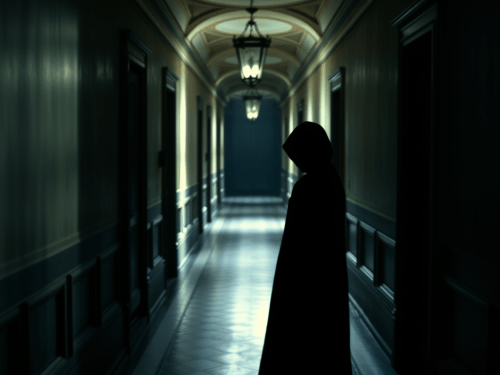
At times, when one finds oneself among persons whose conduct appears disordered in mind, or who seem united in concealing misdeeds of a dubious nature, it becomes exceedingly difficult to discern whether their actions arise from illness of the spirit or from a deliberate inclination toward wrongdoing. When escape from such company is not immediately possible, the confusion and strain upon one’s own faculties may grow severe. In circumstances where an individual feels oppressed or unsettled by the behavior of others, it is often wise to seek the counsel of a trusted professional or confidant, for the constant pressure of such surroundings can weigh heavily upon one’s emotions. Should formal assistance be beyond one’s means, the simple practice of keeping a private journal—recording the events of the day, the feelings they stirred, and envisioning a just and honorable resolution—may offer a measure of clarity and steadiness to the mind. While antisocial personality disorder may heighten the likelihood of harmful or unlawful conduct when left unaddressed, it does not, by any means, determine the ultimate course of a person’s life. Many who bear this condition never engage in acts of violence, and likewise, numerous individuals who commit grievous offenses do not meet the criteria for such a disorder. For those who seek to understand the behavior of another—or who have themselves been troubled by the actions of someone in their midst—it is essential to recall several truths. Only a trained professional is qualified to render a diagnosis of antisocial personality disorder. Harmful deeds arise from a multitude of influences, of which mental illness is but one. Above all, one’s own safety and well‑being remain of the utmost importance, irrespective of the causes that may lie behind another’s conduct. #RandolphHarris 9 of 20

However, should you find yourself in circumstances where your safety feels uncertain, and those around you have issued threats or committed acts of violence or damage against your person or property, and you are aware that they have escaped consequence for grievous harm done to another, it is prudent to consider that such conduct may yet escalate. In such a case, it is wise to convey your concerns to a person of proper authority, that your welfare may be safeguarded and the matter attended to with the full seriousness it warrants. The pursuit of one’s destiny is a strong, slow, and boring field of hard boards. It takes both passion and perspective. Certainly, all historical experience confirms the truth he had reached for the impossible. However, to do that, a man must be a leader, and not only a leader but a hero as well, in a very sober sense of the word. And even those who are neither leaders nor heroes must arm themselves with that steadfastness of heart which can brave even the crumbling of all hopes. This is necessary right now, or else men will not be able to attain even that which is possible today. Only he has the calling for the art of living who is sure that they shall not crumble when the world, from his point of view, is too stupid or too base for what he wants to offer. Only he who, in the face of all this, can say, “In spite of all,” has the struggle for a meaningful life. There is usually an eerie balance between destructiveness and constructiveness, between suicidal Nothingness and dictatorial Allness, in a young man who feels responsible for everything, is dominated by an overweening conscience and a kind of premature integrity such as characterizes all ideological leaders. Many a delinquency, on a smaller scale, begins by society’s denial of the one gift on which a destructive individual’s precarious identity depends—for instance, Prew’s bugle in From Here to Eternity. #RandolphHarris 10 of 20

Therefore, it is of great importance that one not permit the malice of others to draw him into delinquency, for those who seek to do harm will often endeavor to corrupt the very character of the one they persecute. To withstand such influence is an act of quiet fortitude, and a safeguard to one’s own integrity. One would like to believe that great men of more “abstract” aspirations—in science or theology, say—are totally removed from any comparison with men of political and of destructive military action. While we learn to mistrust power seekers, we glorify men of science, determined to consider their role in making machines of destruction possible as a historical accident which they surely did not desire when they directed their genius to the mastery of physical forces. However, if one scans history, one may well want to consider the relationship between the will to master totally, in any form, and the will to destroy. Leonardo, the creator of the immortal da Vincian smile, was also an inveterate tinkerer with war machines; on occasion, he caught himself and relegated a design to the bottom of a deep drawer. Today, however, only a large-scale reconsideration of conscious aims and unconscious motives can help us. Some people who have gone on to become great men, because of their situations, had an almost pitiful fear that they might be nothing. Such men sometimes chose to challenge this possibility by being deliberately and totally anonymous; and only out of this self-chosen nothingness could a man become everything. Allness or nothingness, then, is the motto of such men; but what specific gifts and what extraordinary opportunities permit them to impose this alternative on whole nations and periods—of this, we know little. #RandolphHarris 11 of 20

Doubt may be regarded as the brother of shame; for while shame depends upon a consciousness of one’s outward aspect—of having, as it were, both a front and a back, and most especially a “behind”—doubt arises from that same inward division of the self. Each is born of an awareness that one may be seen, judged, or exposed, and thus they walk together as close and troublesome kin. For this reverse area of the body, with its aggressive and libidinal focus in the sphincters and buttocks, cannot be seen by the youth, and yet it can be dominated by the will of others. The “behind” is the small being’s dark continent, an area of the body which can be magically dominated and effectively invaded by those who would attack one’s power of autonomy and who would designate as evil those products of the bowels which were felt to be all right when they were being passed. This basic sense of doubt, in whatever one has left behind, is the model for the habitual “double take” or other later and more verbal forms of compulsive doubting. It finds its adult expression in paranoiac fears concerning hidden persecutors and secret persecutions threatening from behind (and from within the behind). Again, in adolescence, this may be expressed in a transitory total self-doubt, a feeling that all that is now “behind” in time—the childhood family as well as the earlier manifestations of one’s personality—simply do not add up to the prerequisites for a new beginning. All of this may then be denied in a willful display of dirtiness and messiness, with all the implications of “dirty” wearing at the world and at oneself. The compulsive or “anal” personality has its normal aspects and its abnormal exaggerations. If eventually integrated with compensatory traits, some impulsiveness releases expression even as some compulsiveness is useful in matters in which order, punctuality, and cleanliness are of the essence. The question is always whether we remain the masters of the modalities by which things become more manageable or whether the rules master the ruler. #RandolphHarris 12 of 20

It takes stamina as well as flexibility to train a child’s will to help him to overcome too much willfulness, develop some “goodwill,” and (while learning to obey in some essential ways) maintain an autonomous sense of free will. As far as psychoanalysis is concerned, it has focused primarily on excessively early toilet training and on unreasonable shaming as causes of the child’s estrangement from his own body. It has attempted at least to formulate what should not be done to children, and there are, of course, any number of avoidances which can be learned from the study of the life cycle. Many such formulations, however, are apt to arouse superstitious inhibitions in those who are inclined to make anxious rules out of vague warnings. We are gradually learning what exactly not to do to what kind of children at what age; but then we must still learn what to do, spontaneously and joyfully. The expert, to quote Frank Fremont-Smith, can only “set the frame of reference within which choice is permissible and desirable.” The kind and degree of a sense of autonomy which parents are able to grant their small children depends on the dignity and sense of personal independence they derive from their own lives. An infant’s sense of trust is a reflection of parental faith; similarly, the sense of autonomy is a reflection of the parents’ dignity as autonomous beings. For no matter what we do in detail, the child will chiefly perceive the spirit in which we live—whether we stand before him as loving, co‑operative, and steadfast beings, or whether we reveal ourselves as anxious, divided, and embittered. From this it follows that children are not merely raised by instruction, but by the very character and conduct of those who surround them; and thus, their welfare and the cultivation of their interests become matters of the greatest social concern. #RandolphHarris 13 of 20

Politics is the most inclusive means of creating a world order in this world; theology is the most systematic attempt to deal with man’s existential nothingness by establishing a metaphysical Allness. The monastery, in its original conception, is a systematic training for the complete acceptance of earthly nothingness in the hope of partaking of that allness. The aim of monasticism is to decrease the wish and the will to the master and to destroy to an absolute minimum. “I was holy,” Martin Luther said, “I killed nobody but myself.” To this end, the monastery offers methods of making a meditative descent into the inner shafts of mental existence, from which the aspirant emerges with the gold of faith or with gems of wisdom. These shafts, however, are psychological as well as meditative; they lead not only into the depths of adult inner experience, but also downward into our more primitive layers, and behind into our infantile beginnings. We must try to make this clear before we encounter our own struggles, so that we can build a bridge between the historical condition of greatness and its condition in individual childhood. Ideological leaders, so it seems, are subject to excessive fears which they can master only by reshaping the thoughts of their contemporaries; while those contemporaries are always glad to have their thoughts seem to fear only more consciously what in some form everybody fears in the depths of his inner life; and they convincingly claim to have an answer. The actor identifies with the socially objectivated typifications of conduct actu, but re-establishes distance between the actor and his action can be retained in consciousness and projected to future repetitions of the actions. In this way, both acting self and acting others are apprehended not as unique individuals, but as types. By definition, these types are interchangeable. #RandolphHarris 14 of 20
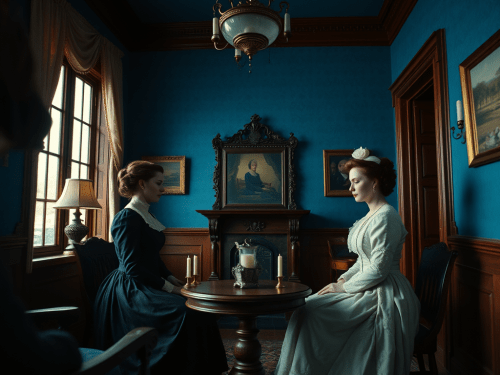
We can properly begin to speak of roles when this kind of typification occurs in the context of an objectified stock of knowledge common to collectivity of actors. Roles are types of actors in such a context. It can readily be seen that the construction of the role of typologies is a necessary correlate of the institutionalization of conduct. Institutions are embodied in individual experience by means of roles. The roles, objectified linguistically, are an essential ingredient of the objectively available world of any society. By internalizing these roles, the same world becomes subjectively real to him. In the common stock of knowledge, there are standards of role performance that are accessible to all members of a society, or at least to those who are potential performers in the roles in question. In the common stock of knowledge, there are standards of role performance that are accessible to all members of a society, or at least to those who are potential performers of the roles in question. This general accessibility is itself part of the same stock of knowledge; not only are the standards of role X generally known, but it is known that these standards are known. Consequently, every putative actor of role X can be held responsible for abiding by the standards, which can be taught as part of the institutional tradition and used to verify the credentials of all performers and, by the same token, serve as controls. The origins of roles lie in the same fundamental process of habitualization and objectivation as the origins of institutions. Roles appear as soon as a common stock of knowledge containing reciprocal typifications of conduct is in process of formation, a process that, as we have seen, is endemic to social interaction and prior to institutionalization proper. The question as to which roles become institutionalized is identical with the question as to which areas of conduct are affected by institutionalization, and may be answered the same way. All institutionalized conduct involves roles. Thus, roles share in the controlling character of institutionalization. As soon as actors are typified as role performers, their conduct is ipso facto susceptible to enforcement. Compliance and non-compliance with socially defined role standards cease to be optional, though, of course, the severity of sanctions may vary from case to case. #RandolphHarris 15 of 20
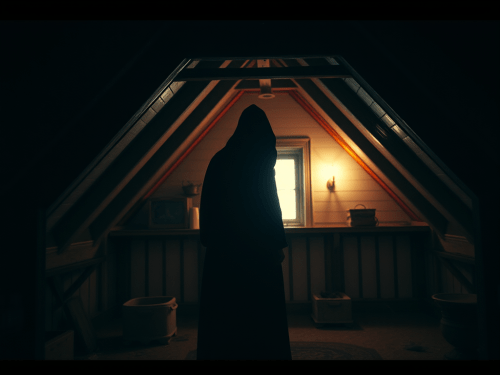
The roles represent the institutional order. This representation takes place on two levels. First, the performance of the role represents itself. For instance, to engage in judging is to represent the role of a judge. The judging individual is not acting “on his own,” but qua judge. Second, the role represents an entire institutional nexus of conduct. The role of the judge stands in a relationship to other roles, the totality of which comprises the institutional law. The judge acts as the representative of this institution. Only through such representation in performed roles can the institution manifest itself in actual experience. The institution, with its assemblage of “programmed” actions, is like the unwritten libretto of a drama. The realization of the drama depends upon the reiterated performance of its prescribed roles by living actors. The actors embody the roles and actualize the drama by representing it on the given stage. Neither drama nor institution exists empirically apart from this recurrent realization. To say that roles represent institutions is to say that institutions endure only insofar as living individuals enact them, allowing these structures to appear again and again as a real presence in human experience. In this light, the economic forecasts of Marx—however compelling in theory—have been called into question precisely because the roles individuals assume within economic life have not always aligned with the patterns he anticipated. Institutions persist or transform not by historical necessity alone, but through the daily conduct, choices, and contradictions of the people who inhabit them. What remains true to his vision of the economic world is the establishment of a society more and more defined by the rhythm of production. However, he shared this concept, in the enthusiasm of his period, with bourgeois ideology. #RandolphHarris 16 of 20

The bourgeois illusions concerning science and technical process, shared by the authoritarian socialists, gave birth to the civilization of the machine-tamers, which can, through the stress of competition and the desire for domination, be separated into enemy blocs, but which on the economic plane is subject to identical laws: the accumulation of capital and the rationalized and continually increasing production. The political difference, which concerns the degree of omnipotence of the State, is appreciable, but can be reduced by economic evolution. Only the difference in ethical concepts—formal virtue as opposed to historical cynicism—seems substantial. However, the imperative of production dominates both universes and makes them, on the economic plane, one world. The accumulation of capital, together with the rationalized and ever‑increasing demands of production, creates a continual pressure for businesses to seek higher returns. This relentless pursuit contributes to the rising cost of goods and services, for expansion requires ever‑greater consumption. Not long ago, many believed the world to be approaching the limits of its population at five billion souls; yet today, more than eight billion people inhabit the earth. Governments may at times contemplate limiting population growth, but large commercial enterprises often depend upon expanding markets, and a growing populace increases both potential revenue and the tax base upon which states rely. At the same time, however, a larger population also increases the number of individuals who depend upon public services, creating a tension between economic ambition, governmental capacity, and human need. #RandolphHarris 17 of 20

In any event, if the economic imperative can no longer be denied, its consequences are not what Marx imagined. Economically speaking, capitalism becomes oppressive through the phenomenon of accumulation. It is oppressive through being what it is, it accumulates in order to increase what it is, to exploit it all the more, and accordingly to accumulate still more. At that moment, accumulation would be necessary only to a very small extent in order to guarantee social benefits. However, the revolution, in its turn, becomes industrialized and realizes that, when accumulation is an attribute of technology itself, and not of capitalism, the machine finally conjures up the machine. Every form of collectivity, fighting for survival, is forced to accumulate instead of distributing its revenues. It accumulates in order to increase in size and so to increase in power. Whether bourgeois or socialist, it postpones justice for a later date, in the interests of power alone. However, p, by its very nature, opposes other forms of power. It arms and rearms because others do the same; it accumulates ceaselessly, driven by the conviction that only greater strength can secure its survival. It does not willingly halt its advance, and one might imagine that it would continue to expand until the day it reigned alone upon the earth. In our own age, this restless impulse is mirrored in the rapid development of artificial intelligence. Many already fear that such systems may one day supplant their labor, and speculate that machines could assume an ever‑greater share of human tasks. Yet even as technology grows more capable, its role will always be shaped by the choices, constraints, and values of the societies that create and govern it. In other words, one day the world will only be populated by a small percentage of humans who are considered “desirable.” #RandolphHarris 18 of 20
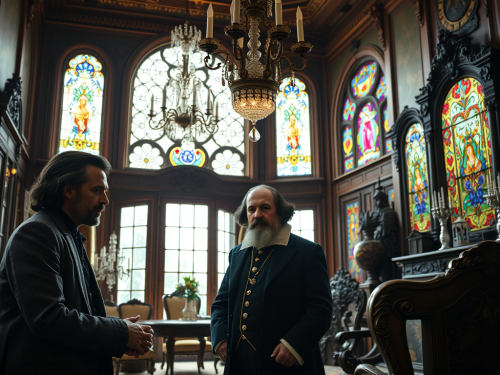
Moreover, for that to happen, it must pass through a war or another pandemic. Some have come to believe that the pandemic served as a kind of proving ground for the management of future crises, observing how swiftly populations accepted restrictions upon movement, commerce, and daily life. Many felt that their customary liberties were suspended with startling ease, as governments sought to contain a threat whose nature was still imperfectly understood. Generous unemployment benefits were welcomed by some as a temporary relief, though such measures inevitably carried costs that would later be felt elsewhere. Only those deemed “essential” continued their labors, a distinction that revealed how fragile many occupations had become in an increasingly automated age. With the rapid advance of artificial intelligence, there is a growing apprehension that even these essential roles may one day be assumed by machines. After the crisis, certain workplaces required vaccination as a condition of return, a policy that, for many, symbolized the tension between public health, personal choice, and economic necessity. This dynamic was captured with unsettling clarity in the Ray Bradbury Theater adaptation of The Pedestrian, in which David Ogden Stiers and Grant Tilly portray two men who are stopped and pursued by a hovering police craft simply for stepping outside during a mandated lockdown. Bradbury’s vision, though fictional, reflects a deeper anxiety about how swiftly ordinary freedoms may be suspended when authority deems it necessary, and how easily individuals may be treated as suspects for engaging in the most human of acts—walking, talking, or seeking fresh air. The scene serves as a reminder that power, once mobilized in the name of safety, can become self‑justifying, expanding its reach not through overt coercion alone but through the quiet expectation that people will comply. #RandolphHarris 19 of 20
Until that day, the proletariat will receive only the bare minimum for its subsistence. The revolution compels itself to construct, at a great expenditure in human lines, the industrial and capitalist intermediary that its own system demands. Revenue is placed by human labor. Slavery then becomes a general condition, and the gates of heaven remain locked. Such is the economic law governing a world that lives by the cult of production, and the reality is even more bloody than the law. Revolution, in the dilemma into which it has been led by its bourgeois opponents and its nihilist supporters, is nothing but slavery. Across the country, people are already protesting the rising cost of living, for the strain has become impossible to ignore. Foreclosures have increased by 32 percent since last year, and many households find themselves unable to keep pace with wages that lag behind inflation. Yet public attention is often diverted toward other, more immediate controversies. Large demonstrations form around immigration policy, while the deeper economic pressures that make life increasingly unaffordable receive far less sustained focus. It is as though the nation’s anxieties have been redirected from the structural conditions that shape everyone’s daily existence to issues that, while important, do not address the fundamental question of how ordinary people are to live, work, and support themselves in an economy that no longer seems to support them in return. Unless the system changes its principles and its path, it can have no other final result than servile rebellions, obliterated in blood or the hideous prospect of atomic suicide. The will to power, the nihilist struggle for domination and authority, has done considerably more than sweep away the American Dream. This has become, in its turn, a historic fact destined to be put to use like all other historic facts. This idea, which was supposed to dominate history, has become lost in history; the concept of abolishing means has been reduced to a means in itself and cynically manipulated for the most banal and bloody ends. The uninterrupted development of production has not ruined the capitalist regime to the benefit of the revolution. It has equally been the ruin of both bourgeois and revolutionary society to the benefit of an idol that has the snout of power. Therefore, it becomes essential to cultivate an understanding of psychology, of the conditions of life, of the workings of family, and of the forces that shape political society, so that one may act not out of fear or confusion but with informed judgment. Only through such knowledge can individuals discern the pressures placed upon them, recognize the motives of those who wield authority, and make decisions that genuinely serve their own well‑being and the common good. #RandolphHarris 20 of 20

The Winchester Mystery House: Where Legend Walks Beside Every Stair

The Winchester Mystery House is not merely a mansion—it is a legend carved in timber and shadow. To historians, it is a marvel of Victorian craftsmanship. To gardeners, its grounds are a sanctuary of color and quiet. But to those who come seeking the uncanny, it is something far more compelling: a labyrinth built on whispers, grief, and the enduring myth of a woman who refused to surrender to silence.
For 36 unbroken years, from 1886 until her death in 1922, Sarah Winchester oversaw the ceaseless construction of this sprawling estate. Hammers rang through the night. Lanterns glowed in upper windows long after midnight. Rooms appeared, vanished, and reappeared in impossible configurations. Doors opened into walls. Staircases climbed into ceilings. Hallways twisted like riddles.

Some say Mrs. Winchester built to confuse the restless spirits said to follow her. Others claim she was simply a visionary—an architect of her own private universe. Whatever the truth, the mansion stands today as a monument to the tension between fact and folklore, beauty and dread.
On the guided Mansion Tour, guests traverse 110 of the home’s 160 rooms—each one a fragment of the myth.

You will step into the rooms where Mrs. Winchester walked alone at night, consulting her mysterious “Blue Séance Room.” You will see the infamous staircases that lead nowhere, the doors that open into thin air, and the ornate details that seem almost too deliberate to be accidental.

Every corner feels touched by intention. Every turn feels like a question.

The Winchester Mystery House is not simply visited—it is experienced.

It is a place where history breathes, where architecture bends toward the uncanny, and where the line between myth and memory blurs just enough to make you wonder what Sarah Winchester truly saw in the shadows of her vast, ever‑growing home.

Café 13: A Rest Stop on the Edge of the Mystery

After wandering the winding halls of the Winchester Mystery House—where staircases defy logic and whispers seem to cling to the walls—Café 13 offers a welcome return to warmth and grounding. Newly reopened and serving guests daily from 10 AM to 3 PM, this cozy hideaway invites you to pause, breathe, and gather yourself before diving back into the mansion’s secrets.

Here, you can enjoy breakfast, lunch, snacks, and refreshing drinks in a calm indoor space that feels worlds away from the mansion’s twisting corridors. Settle in with a warm meal, challenge a friend to a board game, or simply rest and recharge as sunlight filters through the windows.
Café 13 is more than a café—it’s a moment of calm between chapters of the Winchester legend, a place to steady your nerves before returning to the gardens, the grandeur, and the mysteries that await.

The Mercantile Gift Shop: Your First Step Into the Mystery

Your journey into the Winchester Mystery House begins long before you cross the mansion’s threshold. It starts at the Mercantile gift shop—a welcoming outpost standing at the edge of a world where history and myth intertwine.

Here, beneath warm lights and shelves lined with curiosities, you can secure your tour tickets and prepare for the adventure ahead. Guests often pause for a souvenir photograph, capturing the moment before they step into Sarah Winchester’s enigmatic domain. As you explore the shop, you will find an eclectic array of gifts and keepsakes: tokens of the mansion’s lore, echoes of Victorian elegance, and mementos that carry a touch of the house’s enduring mystery.

The Mercantile is more than a gift shop—it is the gateway.
Once you pass through its doors, the legend begins to unfold. https://winchestermysteryhouse.com/

A Shadowed History and the Echoes That Remain

In the late 1800s, long before the mansion became a destination for curious travelers, the surrounding lands were steeped in fear and superstition. When deer and cattle were found dead under mysterious circumstances, panic spread through nearby communities. Whispers of curses and shapeshifters took hold, and in an era ruled more by fear than fact, several residents were tragically accused—and even executed—under the belief that they were werewolves. The land carried those stories like scars.
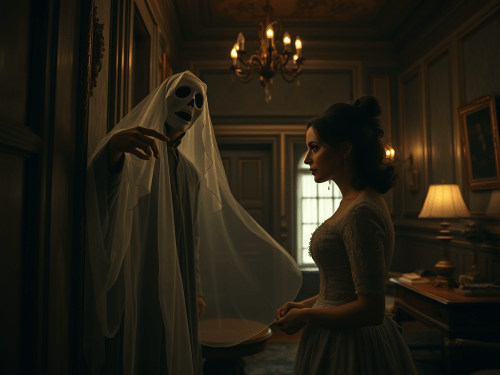
Today, the legends have not entirely faded. Staff and visitors alike have reported strange occurrences within the mansion’s twisting halls and shadowed corners: sudden banging sounds with no source, footprints appearing where no one has walked, drifting white mists that vanish as quickly as they form, and the unsettling sensation of someone exhaling softly against the back of the neck.

Whether these moments are echoes of the past or simply the house playing tricks on the senses, one thing is certain—the Winchester Mystery House has a way of reminding guests that history never truly stays silent.

The palace is now one of the most popular tourist attractions in Santa Clara, California; but according to some tales, some of its former royal residents still linger. https://winchestermysteryhouse.com/

If there is a Fog, the Monsters Can’t See Me!

Domestic burglary is a huge societal problem, and one of the most frequently occurring crimes. In the United States of America, 1.1 million domestic burglaries are reported to the police each year. To give a sense of community dysfunction associated with the problem of domestic burglary, the very commonly reported issue is theft of goods and money from the family home or mailbox, which may be used buy drugs. And, sometimes, it is not always by a family member; the theft could be perpetrated by one’s neighbor, or even a stranger. There is, of course, the inconvenience of the theft to consider, but the damage is far greater than can be measured in material terms. Domestic burglary victimization is a traumatic experience, because most people consider their home as an extension of the self and a place where the self is protected against others. Intrusions to such a highly valued place are therefore regarded as attacks to both one’s personhood and one’s safety and privacy, and may render victims at risk of psychological distress. Some of the victims develop trauma-related disorders or mood or anxiety disorders, which may put them at risk of social, financial, economic, and physical health problems. The monetary costs of these burglaries (exempli gratia, due to damaged properties and stolen goods, police investigations, and victim services) are enormous. For example, the total monetary costs of domestic burglary have been estimated to amount to more than $9 billion a year in the United States of America (which comes down to $2,675) per burglarized house. #RandolphHarris 1 of 32

To mitigate crime victims’ psychological distress, they must receive adequate support services. To ensure that they have access to such services, police officers and other professionals working with crime victims should screen them for factors shown to be related to the experience or development of psychological distress. Drug users in the general population are more likely than nonusers to commit crimes. Another dimension of drug-related crime is that 25 percent of State prison inmates and 20 percent of convicted jail inmates reported committing their offenses to get money to buy drugs. Offenders convicted of robbery, burglary, and larceny/theft were most likely to commit their offense to obtain money to buy drugs. Many chronic drug abusers—the individuals we commonly regard as addicts—often simultaneously suffer from a serious mental disorder. Drug treatment and medical professionals call this condition a co-occurring disorder or a dual diagnosis. Chronic drug abuse is the habitual abuse of licit or illicit drugs to the extent that the abuse substantially injures a person’s health or substantially interferes with his or her social or economic functioning. Furthermore, any person who has lost the power of self-control over the use of drugs is considered a chronic drug user. Chronic drug abuse may occur in conjunction with any mental illness identified in the American Psychiatric Association (DSM-IV). Some common serious mental disorders associated with chronic drug abuse include schizophrenia, bipolar disorder, manic depression, attention deficit hype disorder (ADHD), generalized anxiety disorder, obsessive-compulsive disorder, post-traumatic stress disorder, panic disorder, and antisocial personality disorder. #RandolphHarris 2 of 32

Co-occurring disorders are very common. Approximately 6 million adults met the criteria for both serious mental illness and substance dependence or abuse in the past year. Some people suffering from serious mental disorders (often undiagnosed ones) take drugs to alleviate their symptoms—a practice known as self-medicating. According to the American Psychiatric Association, individuals with schizophrenia sometimes use substances such as marijuana to mitigate the disorder’s negative symptoms (depression, apathy, and social withdrawal), to combat auditory hallucinations and paranoid delusions, or to lessen the adverse effects of their medication, which can include depression and restlessness. In other cases, mental disorders are caused by drug abuse. For example, MDMA (3,4-methylenedioxymethamphetamine, commonly known as ecstasy) produces long-term deficits in serotonin function in the brain, leading to mental disorders such as depression and anxiety. Chronic drug abuse by adolescents during formative years is a particular concern because it can interfere with normal socialization and cognitive development and thus frequently contributes to the development of mental disorders. However, chronic drug abusers who suffer from mental illness, and especially whether treating both conditions simultaneously leads to better recovery. Currently, the two conditions are often treated separately or without regard to each other. As a result, many individuals with co-occurring disorders are sent back and forth between substance abuse and mental health treatment settings. #RandolphHarris 3 of 32

Although one cannot always distinguish neatly between alienation from the actual self and that from the real self, the loss of self is sickness unto death; it is despair—despair at not being conscious of having a self, or despair at not being willing to be ourselves. However, it is a despair which does not clamor or scream. People go on living as if they were still in immediate contact with this alive center. Any other loss—that of a job, say, or a leg—arouses far more concern. Patients coming for consultation complain about headaches, sexual disturbances, inhibitions in work, or other symptoms; as a rule, they do not complain about having lost touch with the core of their psychic existence. There are many forces, including drugs, responsible for the alienation from self. It is in part the consequences of the whole neurotic development, especially of all that is compulsive in neurosis. Of all that implies, “I am driven instead of being the driver.” It does not matter in this context what the particular compulsive factors are—whether they operate in relation to others (compliance, vindictiveness, detachment, et cetera) or in relation to self, as in self-idealization. They very compulsive character of these drives inevitably deprives the person of his full autonomy and spontaneity. As soon as, for instance, his need to be liked by everybody becomes compulsive, the genuineness of his feelings diminishes; so does his power to discriminate. As soon as he is driven to do a piece of work for the sake of glory, his spontaneous interest in the work itself decreases. Conflicting compulsive drives, in addition, impair his integration, his faculty to decide and give direction. Last but not least, the neurotic pseudo-solutions, though representing attempts at integration, also deprive him of autonomy because they have become a compulsive way of living. #RandolphHarris 4 of 32

It does not matter, in this context, what the particular compulsive factors are—whether they operate in relation to others (compliance, vindictiveness, detachment, et cetera) or in the relation to self, as in self-idealization. The very compulsive character of these drives inevitably deprives the person of his full autonomy and spontaneity. As soon as, for instance, his need to be liked by everybody becomes compulsive, the genuineness of his feelings diminishes; so does his power to discriminate. As soon as he is driven to do a piece of work for the sake of glory, his spontaneous interest in the work itself decreases. Conflicting compulsive drives, in addition, impair his integration, his faculty to decide and give direction. Last but not least, the neurotic pseudo-solutions, though representing attempts at integration, also deprive him of autonomy because they become a compulsive way of living. Secondly, the alienation is furthered through process, likewise compulsive, which can be described as active moves away from the real self. The whole drive for glory is such a move, particularly through the neurotic’s determination to mold himself into something he is not. He feels what he should feel, wishes what he should wish, like what he should like. In other words, the tyranny of the should drives him frantically to be something different from what he is or could be. And in this imagination, he is different—so different, indeed, that his real self fades and pales still more. #RandolphHarris 5 of 32

Neurotic claims, in terms of self, mean the abandoning of the reservoir of spontaneous energies. Instead of making his own efforts, for instance, with regard to, human relations, the neurotic insists that others should adjust to him. Instead of putting himself into his work, he feels entitled to having it done for him. Instead of making his own decisions, he insists that others should be responsible for him. Therefore, his constrictive energies lie fallow, and he actually is less and less a determining factor in his own life. Neurotic pride removes him a step further from himself. Since he now becomes ashamed of what he actually is—of his feelings, resources, activities—he actively withdraws his interest from himself. The whole process of externalization is another active moving away from his self, actual and real. It is astonishing, by the way, how closely this process coincides with Dr. Kierkegaard’s “despair of not wanting to be oneself.” Finally, there are active moves against the real self, as expressed in self-hates. With the real self in exile, so to speak, one becomes a condemned convict, despised and threatened with destruction. The idea of being oneself even becomes loathsome and terrifying. The terror sometimes appears undisguised, as one patient felt it when thinking: “This is me.” This appeared at a time when the neat distinction she had made between “me” and “my neurosis” started to crumble. As a protection against this terror, the neurotic “makes himself disappear.” He has an unconscious interest in not having a clear perception of himself—in making himself, as it were, deaf, dumb, and blind. #RandolphHarris 6 of 32

Not only does he blur the truth about himself, but he has a vested interest in doing so—a process which blunts his sensitiveness to what is true and what is false not only inside but also outside himself. He has an interest in maintaining his haziness, although he may consciously suffer under it. One patient, for instance, in his associations often used the monsters of the Beowulf legend, who emerged at night from the lake, to symbolize his self-hate. And one he said: “If there is a fog, the monsters can’t see me.” The result of all these moves is an alienation from self. When we use this term, we must be aware that it focuses on only one aspect of the phenomenon. What is expressed accurately is the subjective feeling of the neurotic of being removed from himself. He may realize in analysis that all the intelligent things he has said about himself were, in reality, disconnected from him and his life, that they concerned some fellow with whom he had little if anything to do, and the findings about whom were interesting but did not apply to his life. In fact, this analytic experience leads us straight into the core of the problem. For we must keep in mind that the patient does not talk about weather or television: he talks about his most intimate personal life experiences. Yet, they have lost their personal meaning. And, just as he may talk about himself without “being in it,” so he may work, be with friends, take a walk, or sleep with a woman without being in it. #RandolphHarris 7 of 32

His relation to himself has become impersonal; so has his relation to his whole life. If the word “depersonalization” did not already have a specific psychiatric meaning, it would be a good term for what alienation from self essentially is: it is a depersonalizing, and therefore a devitalizing process. The alienation from self does not show as directly and blatantly as its significance would suggest, except (speaking of neuroses only) in the state of depersonalization, feelings of unreality, or amnesia. While these conditions are temporary, they can occur only in person who are estranged from themselves anyhow. The factors precipitating the feelings of unreality are usually severe injuries to pride together with an acute increase of self-contempt, exceeding what is tolerable for the particular person. Conversely, when—with or without therapy—these acute conditions subside, his alienation from self is not thereby essentially changed. It is merely again restrained within such limits that he can function without conspicuous disorientation. Otherwise, the trained observer would be able to perceive certain general symptoms pointing to an existing alienation from self, such as deadness of the eyes, an aura of impersonality, an automatonlike behavior. For the analyst, it is a source of never-ending astonishment how comparatively well a person can function with the core of himself not participating. Let us consider a problem from another region. A woman from the Middle West, rather unusually feminine and sensitive, uses a visit with relatives in the East to consult a psychoanalyst concerning a general feeling of affective constriction and an all-pervasive mild anxiety. #RandolphHarris 8 of 32

During an exploratory analysis, she seems almost lifeless. After some weeks, she occasionally produces a sudden flood of associations, all concerning horrid impressions of pleasures of the flesh or death. Many of these memories emerge not from unconscious depths, but from an isolated corner of her consciousness where all those frightening matters were boarded off which on occasion had broken through the orderly factualness of the upper-middle-class surroundings of her childhood. This isolation of life segments is similar to that met with in compulsive neurotics anywhere. In this case, it was part of a sanctioned way of life, an ethos, which in our patient had become truly uncomfortable only at a time when she was being courted by a European and was trying to envisage life in a cosmopolitan atmosphere. She felt attracted but at the same time inhibited; her imagination was vividly provoked but restrained by anxiety. Her bowels reflected this conflict with disturbing alternations between constipation and diarrhea. The final impression gained was one of a general inhibition rather than of a basic impoverishment of imagination in matters either dealing with pleasures of the flesh or social. The patient’s dreams gradually reveled a hidden source of untapped freedom. While she still seemed pained and lifeless in her free associations, her dream life became humorous and imaginative in an almost autonomous way. She dreamed of entering a quiet church congregation in a flaming red dress and of throwing stones through respectable windows (which would be a major felony and probably ban her from being hired for most jobs after a lengthy prison sentence). However, her most colorful dreams put her into Civil War days—on the Confederate side. #RandolphHarris 9 of 32

The climax was a dream in which she sat on a toilet, set off by low partitions in the middle of a tremendous ballroom, and waved to elegantly dressed couples of Confederate officers and southern ladies who swirled around her to the sounds of powerful brass. These dreams helped to unearth and highlight an isolated part of her childhood, namely, the gentle warmth awarded her by her grandfather, a Confederate veteran whose world was a fairy tale of the past. However, for all its formalism, the grandfather’s patriarchal masculinity and gentle affection had been experienced through the child’s hungry senses and had proved more immediately reassuring to her searching ego than either her father’s or mother’s promises of standardized success. With the grandfather’s death, the patient’s affects went dead because they were part of an abortive ego-identity formation which failed to receive nourishment either in the form of affection or of social rewards. The psychoanalytic treatment of women with a prominent identity element of the southern lady (an identity which pervades more than one class or race) seems complicated by special resistances. To be sure, our patients are usually dislodged southerners, their ladyhood a defense, almost a symptom. Their wish for treatment finds its limits in three ideas which are all connected with the particular provisions in southern culture for safeguarding caste and race identity by imposing the prototype of the lady on the small girl. #RandolphHarris 10 of 32

There is, first, a pseudoparanoid suspicion that life is a series of critical tests in which vicious gossips attempt to stack up minor weaknesses and blemishes against the southern woman toward an inexorable final judgment, namely, to be—or not to be—a lady. Second, there is the all-pervading conviction that men, if not restrained by the formalities of a tacitly approved double standard which grants them lesser and darker sex objects at the price of overt respect for ladies, will prove to be no gentlemen and that they will at very least try to blacken the lady’s name and with it her claim to a socially superior husband and the prospect of having her children marry upward. However, there is also the equally ambivalent implication that any man who does not proceed to shed his gentleman’s inhibitions when the opportunity of sexual conquest offers itself is a weakling who only deserves to be mercilessly provoked. The usual feelings of guilt and inferiority thus all exists within the co-ordinates of a life plan dominated by the conscious hope for higher social status, and made morbid by its ambivalent counterpart, the hidden hope for the man who will dissolve the woman’s need to be a lady in a moment of reckless passion. In all this, there is a basic inability to conceive of any area in life where the standards and the words of a man and a woman could honestly coincide and be lifted above a certain primeval antagonism. Needless to say, such unconscious standards cause severe suffering in sincere and enlightened women, but only the verbalization of these internalized stereotypes, concomitantly with the analysis of the patient’s transfer to the analyst of her whole conflictful imagery of men, makes psychoanalysis possible. #RandolphHarris 11 of 32

Psychoanalysts, of course, are consulted primarily by those who cannot stand the tension between alternatives, contrasts, and polarities which governs the American style of today: the unceasing necessity to remain tentative in order to be free for bigger and better opportunities. In their transferences and in their resistances, patients repeat abortive attempts at synchronizing fast-changing and sharply contrasting remnants of national, regional, and class identities during critical stages of their childhoods. The analyst is woven into the patient’s unconscious life plan. Especially if he is European-born, and compared with the patient’s more homogeneous ancestors, or he is resisted as the brainy enemy of a potentially successful American identity, he is idealized. The patient, however, can gain the courage to face the discontinuities of life in this country and the polarities of its struggle for an economic and cultural identity not as an imposed hostile reality, but as a potential promise for a more universal human identity. This, as we have seen, finds its limits where individuals were either fundamentally impoverished in their childhood sensuality or are stalled by the “system” in their freedom to use opportunities. Why did Pythagoras put mathematics among the necessary preliminary disciplines for the study of philosophy? Here was part of the way to counteract man’s natural materialism. It trained him to think abstractly, to hold pure ideas whose exactitude and truthfulness were indisputable. And he supported the teaching by pointing to the fact that the universe was founded on a number. Finally, the higher use of mathematics was as an assistant in symbolizing metaphysical principles. #RandolphHarris 12 of 32

When we begin to operate with abstract concepts in the practical world, we begin to know their true worth. Except as an intellectual exercise, I would discourage abstract speculation upon which so many intellectuals have frittered away their time, as our medieval theologians frittered theirs. We seek truth for various reasons. One is because is possesses a certitude that gives us anchorage and rest. Mathematics is fortunate in having been able to invent a language of symbols and signs which is adequate to the most exacting demands of precision. The connotation of each sign is definite. It derives a fixed meaning from the common universe of discourse which is implicit as the background of both speaker and hearer. The mathematician must give every symbol he uses a clear meaning in his own mind as well as to those who are to read his symbols. Therefore, he is compelled to provide a common medium of understanding about which there can be no two opinions. Mathematics is thus placed in a position of superiority in reference to language and rigorous reasoning when compared to other subjects. It provides perfect instruments for the expression of an idea. The meaning of the arithmetical minus sign is forever invariable and forever precise. The man who has thought well about thinking itself may put forward more clever ideas in a single hour than others do in a single week. The brain of the intellectual man multiplies thoughts, but the brain of the self-actualized Christian subtracts and reduces them. #RandolphHarris 13 of 32

Thinking in terms of mental images is a valuable faculty, but thinking in words alone is not less valuable. Both are needed to the balanced person. The value assigned to the symbol X must be strictly adhered to throughout the series of equations, and, being predetermined, no confusion concerning what it stands for can ever arise. However, when we turn to words, we find them to be imperfect, elastic, and indeterminate. When we deal with mathematical symbols, we expect and find a determinate meaning has been assigned to them, but when we deal with words, we cannot always expect and often fail to find any fixed meaning at all. The ordinary man who is used to dealing only with concrete things his eyes can see and his hands can touch, quite pardonably feels, when he is asked to deal with abstract conceptions, that he is at once out of his depth. When one does not know his Real Self, that is, his own deepest being, it is of little avail to ponder on difficult questions of an intellectual nature. The symmetry of the universe’s patterns appears best in the figure of a circle. The ability to think abstractly and metaphysically is not a waste of time as so many scientists, activists, and practical men of the world think. On the contrary, it is needed as a counterbalance to the ability to think concretely. So long as a man gets all his ideas from experiences gained through the body alone, so long may he pardonably accept the belief in materialism. However, as soon as he begins to get them from thinking alone—and the difference can not be properly grasped until he has practiced prayer sufficiently and successfully—so soon will he see the falsity of this belief. #RandolphHarris 14 of 32

There was a body named Jeff, and he was one of four children, none of whom had permission to succeed. The parents were both a little dishonest in socially acceptable ways, and the children each carried this tendency a little further. One day, Jeff told about his troubles at university. He was falling behind in his work, so he had paid a ghost writer in advance to do his thesis. The group listened with interest as he described his negotiations with this man, and told how the ghost writer had also undertaken to write theses for some of Jeff’s friends, all of whom had paid in advance. The other members asked questions here and there, until finally Jeff came to the point. The writer had absconded to Europe, taking all the money, he had collected, and without leaving any theses behind. At this, the group broke into uproarious laughter in which Jeff joined. The others said they thought the story was funny for two reasons: first, the way Jeff told it, as though he expected them to laugh, and would be disappointed if they did not; and second, because it was the sort of thing they expected, or perhaps even hoped, would happen to Jeff because of the complicated way he went about doing things instead of carrying out his obligations in a straightforward, honest way. They all knew that Jeff was supposed to fail, and it was amusing to see how much effort he put into it. They joined in Jeff’s laughter the same way the crowd had joined in Jeff’s when they first heard. Later, they would all be depressed about it, Jeff most of all. His laugh said, “Ha, ha, ha mother, you always loved me when I failed, and here I go again.” #RandolphHarris 15 of 32

The Adult in the Child, the Professor, has had the task from earliest years of keeping mother contented so that she will stay with him and protect him. If she likes him and expresses the liking with a smile, he feels safe even when he is actually in trouble or even in dire peril of death. In normal mothering, mother’s Parent and Child both like kids. So when mother smiles, both her Parent and her Child are pleased with her offspring, and things will proceed smoothly between them. In other cases, mother’s Parent smiles at her son because she is supposed to, while her Child is angry at him. He can get on the good side of her Child, and get a smile that way, by behavior which her Parent might disapprove of. For example, by demonstrating that he is “bad,” he may get a Child smile because he has proven that he is not-O.K., and that pleases the Child in mother—what we have previously called “the witch mother.” Both script and anti-script can be considered attempts to evoke mother’s smile: the anti-script for the approving smile of mother’s (and father’s) Parent, the script for the smile of mother’s Child, who enjoys the baby’s pain or discomfiture. The gallows laugh, then, occurs when Jeff “finds himself” with the rope around his neck, and his Child says: “I did not really want to end up this way: How did I get here?” Then Mother (in his head) smiles, and he realizes that she has conned him into it. He then has the choice of either going crazy, killing her, himself, or laughing. At such moments, he may envy the brother who chose instead to go to the mental hospital, or the sister who elected to kill herself, but he is not ready for either of those—yet. (Suicide or Crisis Lifeline call or text 988. A counselor is available 24 hours a day, 7 days a week, and the help is free.) #RandolphHarris 16 of 32

The gallows laugh or the gallows smile occurs after a special kind of stimulus and response called the “gallows transaction.” A typical example is an alcoholic who has not had a drink for six months, as everyone in the group knows. Then one day, he comes in and lets the others talk for a while. When they have gotten all their troubles off their chests, so that he has the stage to himself, he says: “Guess what happened over the weekend?” One look at his slightly smiling face and they know what happened. They get ready to smile, too. One of them sets up the gallows transaction by asking: “What happened?” “Well, I took one drink and then another, and the next thing I knew”—by this time he is laughing and so are they—“I went on a three-day bender.” In the case of the Alcoholic, when the audience is told about last week’s bender while the audience (including, perhaps, the therapist) beams with delight. The smile of the Children in the audience parallels and reinforces the smile of the witch mother or ogre who is pleased when people obey the injunction (“Don’t think—drink), and in effect tightens the noose around their necks. The gallows laugh (which results from a gallows transaction) means that if the patient laughs while recounting a misfortune, and particularly if the other group members join in the laughter, that misfortune is part of the catastrophe of the patient’s script. When the people around him laugh, they reinforce the payoff, hasten his doom, and prevent him from getting well. In this way, the parental come-on is brought to fruition, ha ha. Semantics deals with those subtleties of language which escape the notice of uneducated people and are ignored by those who shrink a little labour. #RandolphHarris 17 of 32

Technology should be viewed as a vital layer of protection, but it does have its limitations, and we should not become overreliant on technology because some time in the near future, America could be without power, without Interent and no GPS, so people will have to park their cars like their parents did, they may have to use maps to find locations, and they may have to go to the library to do research with physical books. Therefore, it is still a good idea to learn how to use a compass, drive a car with a manual transmission, and learn how to drive without technology assistance. However, for most of us, it is hard to imagine a time when emergency vehicles responded to emergencies and had no communication with dispatch or other apparatus once en route to an incident. Technology will continue to be an asset to emergency services, adding safety and providing more effective operations. Although it should be welcome, we must continue to insist on rigorous testing and consider the applications to emergency services. The new technology must be trained on and used in conjunction with the other tools we must provide an effective system. Clinicians are even in the process of testing technology to scan the brain to see what mental impairments human beings have. While that is welcoming, critics worry it could lead to “mental profiling.” Based on brain scans, the government could track people who are at high risk of committing violent crimes without knowing or having due process, and take them into custody. Few words invoke more fear than the word investigation. We never want to be a suspect in a Federal Bureau of Investigation (FBI) investigative and intelligence process, an Internal Revenue Service (IRS) investigation, a murder investigation, or a National Institute for Occupational Safety and Health (NIOSH) investigation. #RandolphHarris 18 of 32

Humans have natural defense mechanisms that resist being probed, examined, or scrutinized by any authority that has the power to discipline, sanction, or even confiscate aspects of our lives. The fear that is that an investigation could conclude with the allocation of blame for something we did or were a part of. Although it is true that a component of investigations is to find fault where faults exist, it is not limited to liability. Another valuable component is to search for and identify the actions and contributing factors that allowed an event to occur. By identifying these aspects, actions can be taken to prevent future occurrences. Take, for instance, a firefighter who falls from an extension ladder at a structural fire. Although seriously injured, he survives the fall. Which of the following is a thorough investigation likely to lead to: Disciplinary action for the incident commander and the firefighter holding the ladder? Liability for the ladder manufacturer, resulting in a lawsuit? Recommendations to eliminate contributing factors in order to prevent a similar incident? Obviously, the last choice is the most probable. Fault and culpable liability are always possible, but recommendations and changes in policy are almost guaranteed. Initiative 9 calls for the thorough investigation of all injuries, deaths, and near-misses in an effort to reduce the chances of the next one. As a result, specific components of an effective system include reporting, investigating, evaluating, and implementing changes. The award-winning Sacramento Fire and Emergency Services have several individual components in place, yet continue to work toward linking information into one effective system. #RandolphHarris 19 of 32
Little do Fire Chief’s know at the time, but they are often witnesses to many large fires in their career. Some are massive and dangerous. On one occasion, there was a blaze in September in response to the report of smoke coming out of the front of a mid-rise apartment building. As the four firemen stretch a hose into the basement of the building, little did they know that they were beginning a fight that would last 40 hours and would send eight people to the hospital with injuries before it was declared out. The men worked their way slowly towards the seat of the fire near the front of the building. After nearly two hours in the intense heat and blinding smoke, a fireman collapsed to the floor and was dragged outside. The decision was then made to leave the basement as it was discovered that the fire had spread along the rafters into the building next door. The entire fire department had arrived by that time and lines were being stretched around the building to try and contain the rapidly spreading blaze. Around 2.30 a.m., an explosion rocked the building. Two firemen were operating a hose just inside the front doors of the building when the explosion occurred. They were blown 15 feet out into the street as the front of the building was destroyed by the blast. In the rear alley, Fire Chief and Police Chief were spraying water into a basement window. Fire Chief was knocked to the ground, but the Police Chief was not as fortunate. He was blown across the alley and through a window at a neighboring house. Both men were treated for minor injuries but remained at the scene. One of the other firemen in the explosion at the front of the building was taken to the hospital with burns on his face, eyes and nose and the other fireman was treated for minor burns but stayed at the scene as well. #RandolphHarris 20 of 32

Both buildings had now become a mass of flames and looked to engulf the entire block. Nine streams were deployed to try to contain the fire. Apparatuses fought the fire from the roofs of the buildings and the blaze was kept to the two affected buildings. The fire raged until the floors collapsed into the basement around 7 a.m. Around the same time, another firefighter collapsed, giving in to smoke inhalation and exposure. As he was being helped into an ambulance, an EMT also collapsed and was taken to the hospital. That firefighter spent the rest of the weekend in the hospital with burns and an infected throat from the smoke. He was x-rayed and it was discovered that he had broken several bones in his back. He wore a back brace for months afterward. An additional firefighter spent the night in the hospital due to smoke inhalation. Three other firefighters were treated for minor burns and released. The collapse of the floors was the beginning of the end of the fire. Several containers of cooking grease in the kitchen and propane tanks continued to feed the flames in the basement until Sunday morning, when the fire was finally declared out, 40 hours after the first alarm was sent into the department. The Fire Captain later said that the fire was one of the worst in the city’s history. The estimated losses later added up to $15 million. The two buildings were completely destroyed. Other businesses and homes on the same block reported heavy smoke damage and heavy losses from smoke and water after the fire. An investigation revealed that the buildings were not up to code. One had indoor hallways with open-air windows with no glass to the outside, which gave the fire fuel to rage out of control. High-rise buildings with indoor hallways and windows without glass can be a violation of specific fire codes and regulations. The fire department was also undermanned and short on firefighting equipment. The fire departments were badly in need of more aerial trucks and other equipment. #RandolphHarris 21 of 32

If you see a fire truck stopped in the street without the lights on, be very careful. Sometimes there is an emergency, and you should not pass the fire truck. It might be a good idea to safely turn around and go another way because if you hit someone and they happen to die, you could be charged with manslaughter. Sometimes fire firefighters are getting back into their vehicle, and if you pass the apparatus, you may collide with a firefighter who is on foot. Also, be sure to look at their signals; sometimes emergency vehicles are in motion, albeit slowly, and drivers try to pass them, and this could lead to a dangerous situation. Also, if you are in an intersection when you see an emergency vehicle, continue through the intersection. Drive to the right as soon as it is safe and stop. Obey any direction, order, or signal given by a law enforcement officer or a firefighter. Even if they conflict with existing signs, signals, or laws, follow their orders. When their siren or flashing lights are on, it is against the law to follow within 300 feet of any fire engine, law enforcement vehicle, ambulance, or other emergency vehicle. If you drive to the scene of a fire, collision, or other disaster, you can be arrested. When you do this, you are getting in the way of firefighters, ambulance crews, or other rescue and emergency personnel. The concept of professional courage does not always mean being as tough as nails, either. It also suggests a willingness to listen to other people’s problems, to go to bat for them in a tough situation, and it means knowing just how far they can go. It also means being willing to tell the boss when he or she is wrong. #RandolphHarris 22 of 32

California is the third most expensive state in the nation. In 37 percent of counties, a family of four living on a six-figure income is now considered low-income. The average home price in California is nearly $1,000,000.00 USD, while the average salary is $96,036.00, meaning that most Californians cannot even afford to buy a home. California is having an affordability crisis. A single person making an income above $100,000 is now considered low-income in five counties in California. This distinction now applies to individuals living in Santa Cruz, Santa Clara, San Mateo, San Francisco, and Marin counties. The maximum percentage of your gross income that you should earmark for a monthly mortgage payment is calculated at 28 percent, and no more than 36 percent of your gross income to all debts, including mortgage. If you take 28 percent of the median household income per home in Sacramento County, homeowners can only afford a mortgage of $2,070.23 per month. And if you take 36 percent of their gross income to all debts, including mortgage, they should be devoting no more than $2,661.72 a month to these debts. The mortgage lenders must be using some kind of sorcery to get buyers into these expensive homes. To afford one of these homes using traditional guidelines, a household would need to gross $11,280.24 per month or $135,362.88 per year, but the median household in Sacramento County is grossing $7,393.67 a month or $88,724.00 annually, and that typically means two to four people in the home are working and contributing to the mortgage. Home prices in Sacramento County are rivaling the Bay Area, and in some cases, homes in the Bay Area are more affordable. Historically, homes in the Bay Area have been more expensive because they have higher-paying jobs, a larger population, and the Bay Area is a tourist destination. Contributing to the housing affordability crisis is Gavin Newsom, who has been lavishing illegal immigrants with taxpayer-funded resources and cash aid, when state workers should be receiving a 25 percent wage increase instead. #RandolphHarris 23 of 32

In 2025, many people in California saw their bills increase by an estimated $500 a month. This includes items such as food, automobile insurance, homeowners’ insurance, and electricity. In fact, more than 3 million people in California are facing household hardship, and more than 300,000 of them are facing eviction soon. This comes at a time when California is having a shortage of affordable housing. The crisis is caused by nearly half a century-old laws that discourage home sales and encourage higher rents. The incompetence in California is very easy to see. From 2018 to 2023, California received $24 billion, which they used to fund 30 homeless and housing programs. These programs created 100,000 units. That is an average cost of $240,000 per unit. In comparison, Roger Lucas, owner of Grand Castle, LLC, spent $50 million to build The Grand Castle, which is a 522-unit residential apartment community in Grandville, Michigan. The community includes studios, 1 bedroom, 2 bedrooms, 3 bedrooms, and even a multi-level penthouse. Rents generally range from $1,000 to $2,500. The community is a 23.6-acre site. It features 750 covered parking spaces, a clubhouse, a resort-style swimming pool, and was built over a period of 12 to 18 months. The average cost was about $95,785.45 per unit, which is $144,214.55 less per unit than California spent. California also has the highest unemployment rate in the country at 5.4 percent, while the national average is 4.5 percent. As people are seeing their bills skyrocket, and minimum wage has increased to $20 an hour, people on Social Security retirement are really bearing the burden with the checks the typically equate to $5-$7 an hour. Furthermore, while Americans are struggling to find and afford housing, Gavin Newsom, Democrat governor of California, signed two bills into law on February 7, 2025, to protect illegal immigrants. Bills SBX 1 1: Budget Act of 2024, and SBX 1 2: Budget Act of 2024, allocates $50 million to protect illegal immigrants from deportation. Governor Gavin Newsom also granted 700,000 illegal immigrants free health care, which costs taxpayers $3 billion annually. At the same time, Newsom cut vital programs for veterans, school children, the disabled, and the homeless. The California crisis created by Democrats is driving up home prices and mortgages, and rents all over the nation and the world, making living unaffordable for all, and advocates say the crisis is far from over. #RandolphHarris 24 of 32

Meanwhile, China, where we are sending all our jobs and money, has more than 50 ghost cities, with 65 million vacant homes. Ghost cities are regions where housing has been overdeveloped to the point that these places are uninhabited. If they are all officially counted, California has approximately 4 million homeless people. The highest home prices in the nation, the highest taxes, and the most unfriendly business regulations known to man. Because California is so hostile towards people and businesses, more than 360 companies have fled the state since 2020. Businesses like Chevron, SpaceX, Oracle, and Hewlett-Packard are among the names on that list. Also, more than 500,000 people a year are abandoning California because it is too expensive to live in, Gavin Newsom has criminalized homelessness and actually started arresting people without homes, crime is out of control, and they are losing their jobs due to companies relocating. More than 100 companies have announced layoffs in California for 2025. Intel is cutting 15,000 jobs, PayPal is cutting 2,500, and Meta has terminated 4,000 employees. California also has the highest unemployment rate in the country at 5.4 percent, while the national average is 4.1 percent. The California crisis created by Democrats is driving up home prices and mortgages, and rents all over the nation and the world, making living unaffordable for all, and advocates say the crisis is far from over. Accordingly, California has more than 3.5 million illegal immigrants. Having the Southern American border open and not having American farmland protected, not producing beef, poultry, fish, fruit, produce, and dairy in America, and without American goods and services being our number one manufactured and selling items, America has created a dangerous and significantly elevated risk to national security, national economic security, and national public health. Some people may believe that these claims are overstated, but by not routinely monitoring Common Vulnerabilities and Exposures (CEVs) or other security-relevant alerts, such as the end-of-life of machinery is how the Oroville Dam Crisis occurred in 2017. #RandolphHarris 25 of 32

Additionally, Democratic Governor Gavin Newsom seems to be uneducated about economics. Newsom has spent $300 million to try to stop proposition 50. Proposition 50 would replace the maps drawn by the state’s independent commission with districts drawn by legislators solely to gain or protect Democratic seats. Newsom only cares about the environment when his policies allow him to raise taxes and restrict freedoms. To further highlight this illustration of incompetence by Governor Gavin Newsom, Mexico has been causing one of America’s worst environmental disasters. Fifty million gallons a day of industrial chemicals, untreated sewage, and trash flow from Tijuana, Mexico, into southern San Diego County daily. This toxic waste has been turning up on Imperial Beach and is causing the miles of white sands to become polluted and the ocean breeze to smell of feces, which has been sickening residents and wildlife and costing San Diego millions in the form of lost tourism and health problems. The problem has been going on for more than a century, and by 2030, Mexico plans to dump one hundred and twenty million gallons of sewage a day into Imperial Beach. Other crises that have occurred due to neglect of critical infrastructure such as the 2025 Palisades fire. Southern California ran out of water because Newsom is totally neglecting the state and the American people. And while the fire departments in California are critically understaffed and underfunded, Governor Newsom vetoed firefighter pay raise. The Palisades fire cost $275 billion, which is money that could have been used to insure the State of California had the resources it needed. Furthermore, when Southern California is located next to an ocean, Newsom should have invested in desalination plants to help with the water shortage in California. The water in the ocean is so plentiful that it is currently eroding land and causing homes to fall into the sea. Desalination has been identified as one technology that will help solve California’s water scarcity problem. Desalination is a cost-effective technology that can transform an abundance of salt water into a reliable supply of potable, fresh water, which is a great way to fight climate change and have enough water for our region’s water requirements. Ras Al Khair, Saudi Arabia, is producing 1,036,000 meters (273,682,192) per day of desalinated water. #RandolphHarris 26 of 32

America needs an approach to eliminate safety vulnerabilities in American cities. There needs to be a road map by the end of 2025, outlining a prioritized approach to eliminate crisis situations in America. There is enough money to send aid to foreign nations, but the American government does not have enough money to care for its infrastructure, provide adequate resources, or end the affordable housing crisis. Nor is there enough money to fund other national critical functions (NCFs). These bad practices of putting America and Americans last are considered exceptionally risky, particularly to national security, national economic security, and national public health and safety. In 2024, Americans spent $100 billion on Japanese cars. As a result, the American automobile trade deficit with Japan was $39 billion. Additionally, Japan exported 1.4 million cars to the United States of America, but only imported 16,000 American-built automobiles. However, Japan imported approximately 143 thousand motor vehicles from the European Union. This is why President Trump created tariffs. We need to balance the trade deficit that America faces with other nations so we are not taken advantage of and so America can go bank to being a creditor nation, instead of borrowing money for other countries. Each year, President Trump is bringing $400 Billion in Tariff revenue into America and hundreds of thousands of new jobs. With this money, America is paying down debt, and with a portion of it, President Trump plans to send Americans a stimulus check anywhere in the range of $1,000 to $2,000. However, if President Trump’s Tariffs are deemed illegal by the Supreme Court, taxpayers will have to pay back trillions and trillions of dollars. As we literally and /or figuratively see gangs, federal judges, and Governor Gavin Newsom fighting with federal law enforcement and President Trump– states and cities refusing to honor federal laws. Politicians are also showing an utter disregard for the Constitution of the United States of America, and anarchy is becoming increasingly common. #RandolphHarris 27 of 32

Anarchism is a cluster of doctrines and attitudes centered on the belief that government is both harmful and unnecessary. Derived from the Greek root anarchos, meaning “without authority,” anarchism, anarchist, and anarchy are used to express both approval and disapproval. The anarchist denies man-made laws, regards property as a means of tyranny, and believes that crimes are merely the product of property and authority. However, the anarchist would argue that their denial of constitutions and governments leads not to “no justice” but to the real justice inherent in the free development of human sociality—the natural inclination, when unfettered by laws, to live according to the principles and practice of mutual aid. Anarchism is also a form of treason. Treason, the crime of betraying a nation or a sovereign by acts considered dangerous to security. In English law, treason includes the levying of war against the government and the giving of aid and comfort to the monarch’s enemies. In the United States of America, treason was defined restrictively by the framers of the Constitution. Treason against the United States of America “shall consist only in levying War against them, or in adhering to their Enemies, giving them aid and comfort,” which is something that many politicians are currently guilty of. The American government should know all exploitable vulnerabilities and fix them before the situation becomes a crisis. Failure to take such mitigating actions is dangerous and significantly elevates risk to national security, national economic security, and national public health and safety. The American government must understand that significant time and resources must be invested in America. They must also encourage corporations to plan for both mitigating safety vulnerabilities in the short term and eliminating them in the long term. For instance, a company might begin by reaching out to the federal, state, or local government and requesting tax incentives to provide security to dangerous communities, to help the government repair bridges and potholes. #RandolphHarris 28 of 32

Drug cartels have been threatening the health and safety of Native American communities. The trafficking of dangerous and illegal drugs into their territories is leading to a second genocide. The overdose rate for Indigenous people is 42 percent higher than the national average. A recent bust on Montana’s Blackfeet Nation’s Tribal Reservation resulted in the seizure of more than 700,000 fentanyl pills, which was the largest bust in Montana history. Recently, the Blackfeet Nation had to declare a state of emergency after facing 17 overdoses in just one week. There are only 6.8 million Native Americans left in the world, which is 2 percent of the American population. We should be doing more to protect these proud and honorable people; they should not want for anything. People rush and give away resources to illegal immigrants, but totally disregard the Indigenous people of this land, as their race silently fades away into extinction. We must secure our borders and increase federal funding to Native American tribes so we can save this precious population. Meanwhile, Gavin Newsom has given billions of taxpayer dollars away to illegal immigrants and protected them from law enforcement, while arresting law-abiding Americans because they cannot afford to pay rent or mortgage, and the homeless shelters are unsafe, overcrowded, and have restrictions on who is allowed inside. He has also totally ignored the cartel problems on American lands. Clean air, water, land, and preserving our heritage are extremely important. We cannot just allow criminals to kill off the people who are native to this land and do nothing about it. Wars have been started over governments that tax citizens without representation. Taxation without representation is what led to the American Revolution. #RandolphHarris 29 of 32
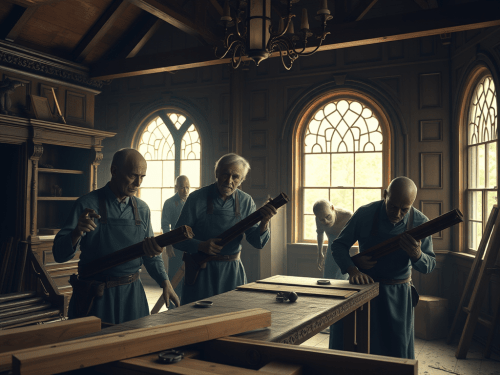
Much like the land crisis in Las Vegas, we could also run out of land to farm and will not be able to grow or cultivate our own food. We can protect American farmland and support American farmers by buying American made beef, poultry, dairy, and produce. Also, country of origin labeling is very important so Americans can know where their food is coming from and can support American farmers and ranchers. As money flows, it influences further investment. Save the land that sustains us by protecting American farmland. Once the land is built on, we lose it forever. And in the future, there may be food wars. Also, to ensure that we have farmland and buildable land for future use, we need to start limiting the number of people allowed to immigrate to America. Perhaps with the immigrants we do allow into America, there needs to be a diversity program to make sure we have a population that equally represents all races of people. If Americans continue to spend money on American products, then more need to be made to keep up the inventory. When investors notice these goods are selling, it gives them the confidence to pour more money into that local business. It shows that people want these goods made in America and pressures investors to keep these goods and services in America. The jobs stay here, the business stays in America, wages naturally increase, and more money is invested to keep up with demand. This reduces the burden on the taxpayer. When you support American businesses, that money stays in our economy and can help to reduce the national debt. The government creates debt by borrowing from businesses in the private sector or from foreign countries. It also increases the national debt by spending more than it gains in tax revenue in a fiscal year. #RandolphHarris 30 of 32

When people shop locally, more tax money stays in the economy and goes to the government. This way, it keeps more money in our national economy and keeps more jobs located in America which also sends more taxes to the government, which can again help to reduce the national debt. When you buy foreign goods, these companies usually have lighter tax loads or exemptions, meaning less money for the national debt, plus you are helping to strengthen these foreign nations by sending more money overseas. Buying American-made products is also better for the environment and helps to reduce the carbon footprint because these products do not have to travel nearly as far. Furthermore, American companies and manufacturers are held to much higher standards on pollution. American companies must be more careful about air, land, and water pollution and have proper ways to dispose of waste. Under President Trump’s administration, he has make America a priority. President Trump has closed the southern border, illegal crossings have fallen to an all time low, and are 90 percent lower than under the previous administration. Since President Trump’s crack down on crime, violent crimes in Washington D.C. have dropped by approximately 80 percent. He has stopped thousands of pounds of drugs from entering America and killing citizens. And since President Trump took office, investments in America have increased by trillions of dollars in U.S.A. manufacturing, production, and innovation. As you can see, President Donald Trump and his pledge to “Make America Great Again” is exactly what America needs to save the country and the American people. And yes, diversity is important, so you can see why it is also important to preserve blonde hair and blue eyes, as the people with these characteristics are becoming a minority in America. #RandolphHarris 31 of 32

We must think before we can understand the soul’s existence; we must understand before we can realize it. The earliest beginnings of thought, as apart from instinct, when it was itself still but a lurking tendency, belong far back in primeval time. The human intellect as we find it today, so rich and developed an instrument for the consciousness of the ego, did not arrive at this fullness without a series of graduated stages. We have had plenty of scientific thinking, business thinking, and political thinking long enough, but we have had very little inspired thinking. That is the world’s need. The intellect is cradled in selfishness but runs the evolutionary track into reason, where it will one day finish at the winning-post of selflessness. As a reminder, parents, please teach your children to love America and be patriotic citizens, and to buy goods and services made in America. It is also important to respect law and order and treat your elders with respect. It is inborn in the human mind to wish to know. If this begins with the endless surface questions of a child’s curiosity, if it continues into deeper questions of a scientist’s probing investigation, it cannot and does not stop there. For the higher part of the mind will eventually come into unfoldment, that union of abstract reflective thought with mystical intuition, which is true intelligence, which needs and sees a view of the whole of things. And so, the knowing faculty enters the realm of philosophy. Therefore, remember to take your education seriously so that you will be successful in life and make your family proud. Also, to make sure they have all the resources required, please donate to the Sacramento Fire Department to help improve our national security. “Oh, thus be it ever, when freemen shall stand between their loved home and the war’s desolation! Blest with victory and peace, may the heav’n-rescued land Praise the Power that hath made and preserved us a nation! Then conquer we must, when our cause is just, and this be our motto: ‘In God is our trust.’ And the star-spangled banner in triumph shall wave O’er the land of the free and the home of the brave.” #RandolphHarris 32 of 32

According to locals, over a century ago, the land that houses The Winchester Mansion had been vacant forever. Then, sometime in the early afternoon of Saturday, March 13, 1886, Sheriff Angel Camilio began getting reports that a massive castle made of wood had suddenly appeared. Gables rose, towers peaked into the sky as the mansion mushroomed into a labyrinth overnight.

The house’s sudden manifestation had been both disconcerting and fascinating to the community. Some felt dark curses flowing from the estate, and things moving around in the darkness. Others saw a fairytale castle glimmering in the spring sunlight. Perhaps this is why there are no records of construction, no blueprints, and no permits filed with the county. And then one day, a hearse came tearing through the gates, and in that hearse was a coffin, some believed it contained Mrs. Winchester.

According to legend, when Sarah Lockwood Pardee (Winchester) married William Wirt Winchester in 1862, she enjoyed a life of extravagant luxury. William Winchester, President of the Winchester repeating rifle, became a very wealthy man through the sale of his guns, and the couple were among the elite New England society.
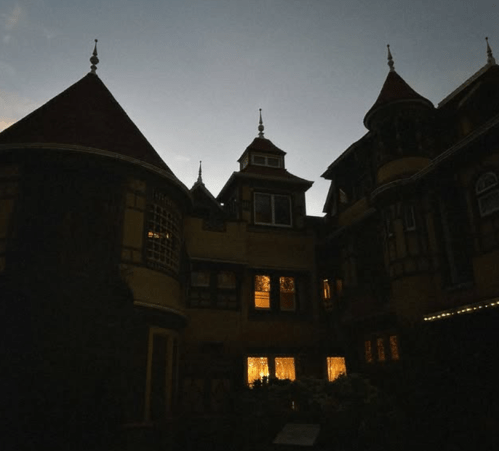
However, in 1866, the death of their infant daughter drove Mrs. Sarah Winchester into a deep depression from which many thought she would never emerged. Several years later, she lost her husband to tuberculosis, and her grief was overwhelming. Mrs. Winchester sought the counsel of a Boston medium to reach her beloved dead family members. The medium told the grieving widow that she was cursed and demons straight from hades had sought revenge by ending the lives of her beloved husband and darling baby girl.
She also told Mrs. Winchester they would kill her too, unless she moved out West and built a great house for the spirits. In addition, Mrs. Winchester was told construction on the house must never end in order to appease the spirits and keep her alive, perhaps even give her eternal life. Mrs. Winchester followed the medium’s suggestions, and in 1886, she moved to the Santa Clara valley just outside San Jose, where she bought an 18-room farmhouse and property to build her mansion. At its peak, the Mansion once stood 9-stories tall and had as many as 600-rooms. Today, the stately mansion is 4-storys, and over 100,000 square feet.

Experience an unforgettable journey back to the time of kings and queens with this entry ticket for The Winchester Mansion in Santa Clara, California, which was the residence of Heiress Sarah L. Winchester. Come and see what secrets this so-called, “Winchester Mystery House” may hold. Take advantage of this fascinating experience. After the tour, there will be time to enjoy the mansion’s splendor at your own pace. You might even discover secret passages that lead to hidden chambers within the mansion. These chambers served as safe places for valuables, precious documents, and as private sanctuaries for Mrs. Winchester, and allowed her to move stealthily throughout her home. At one time, there were even secret tunnels that extended beyond the mansion, leading to nearby Victorian houses that were also on the property, and other structures, creating a network of escape routes or hidden pathways.

Please come and enjoy a delicious meal at Sarah’s Café, stroll along the paths of the beautiful Victorian gardens, which once spanned 740 acres, all the way down to Stevens Creek Boulevard; wander through the miles of hallways in the world’s most mysterious mansion.

For further information about tours, including group tours, weddings, school events, birthday party packages, facility rentals, and special events please visit the website: https://winchestermysteryhouse.com/

Please visit the online giftshop, and purchase a gift for friends and relatives as well as a special memento of The Winchester Mystery House. A variety of souvenirs and gifts are available for purchase. https://shopwinchestermysteryhouse.com/


Harris Plumbing, Heating, Air, & Electric has been in business for 30 years. How many businesses can say that? We take pride in everything we do – no matter how big or small the service call might be. We’re here to help your home be as safe and comfortable as possible for you and your family. We take that responsibility very seriously as a company.

Harris will ensure you have the information you need to decide what to do next, whatever your home is facing. We’ll perform a diagnosis and detail what issues are present before starting any work. This gives you a personalized quote and service plan specific to your home’s needs, not some random quote based on the best guess. The only way we can do our best work is to make sure we handle the issues at hand. https://www.callharrisnow.com/about-us/


With its top ranking in Consumer Reports’ Auto Brand Report Card and consistent market share growth, BMW, The Ultimate Driving Experience, has demonstrated its ability to produce high-performing, reliable vehicles that meet consumer demands. BMW stands out due to its focus on driving dynamics and engineering excellence. While other luxury brands prioritize comfort and opulence, BMW is known for creating cars that are fun to drive and offer a unique connection between the driver and the machine. This is why BMW is known as The Ultimate Driving Machine. https://www.brianharrisbmw.com/

Randolph Harris San Francisco Taxation & Mergers
Building strong and lasting client relationships is crucial for a successful legal career. Many lawyers mistakenly believe that mastering legal skills alone ensures success, but law is fundamentally a service industry—our job is to solve problems through the time we sell. To build long-term relationships, attorneys must focus on three core elements: knowing their clients, understanding how their legal issues fit into a larger context, and consistently delivering exceptional service.

Randy advises clients with regard to business transition, taxable and tax-deferred mergers and acquisitions, joint ventures, restructuring, integrated tax planning, federal and state tax controversy resolution, and real estate transactions. Trust is the cornerstone of any client relationship. Ultimately, my clients feel they are in capable hands with someone who genuinely understands their problems and goals. https://www.jmbm.com/l-randolph-harris.html


Rancho Cordova, CA | low $500s
Now Selling!

Welcome to Cresleigh Park Haven, the newest home community in Rancho Cordova.

Nestled in the heart of Rancho Cordova, Park Haven is a thoughtfully planned neighborhood of 71 homes designed for comfort, convenience, and connection. Adjacent to Exploration Park, it offers the perfect blend of modern living and outdoor adventure right at your doorstep.

Choose from five floor plans ranging from 1,342 to 2,547 square feet, with options for 3 to 5 bedrooms, flexible spaces, and open layouts tailored to today’s lifestyles. Whether you are a first-time buyer, a growing family, or looking to simplify without giving up style, there is a home here for you.

Select homes include 100 percent owned solar at no extra cost, providing lasting savings, energy efficiency, and the confidence of ownership.
With maintenance friendly yards, nearby shopping and dining, and access to top rated schools, Park Haven is more than just a place to live. It is a place to thrive. https://cresleigh.com/park-haven/

Every house where love abides and friendship is a guest is surely a Cresleigh Home. https://cresleigh.com/park-haven/residence-4/

“Those who deny freedom to others, deserve it not for themselves; and, under a just God, can not long retain it.” -President Abraham Lincoln

America is a nation founded on godly principles, by God-fearing men. As a nation, we have convinced ourselves of our uniqueness with concepts such as Manifest Destiny and American exceptionalism. Manifest destiny was the imperialist belief in the 19th-century United States that American settlers were destined to expand from sea to shining sea.
American exceptionalism, idea that the United States of America is a unique and even morally superior country for historical, ideological, or religious reasons. As a nation we appear favored and blessed by the Lord with success and prosperity unparalleled in human history.

America has a lot of amazing things – its beautiful natural scenery, vibrant cities, unique culture, and some of the world’s most iconic landmarks — it us no wonder many choose to make America their home.

Do Not Tell Any of the Family Secrets!
I remember when I was younger and people had “cool” parents or grandparents; it was intriguing, a novelty, something many believed was amazing because older adults were generally quiet, reserved, and boring. However, as people my age are now adults and many have kids of their own, immature senior citizens are no longer cool. Now that they are retired, many of these “cool” adults have picked up habits such as alcoholism, drug abuse, domestic violence, cyberstalking, vandalism, intimate partner violence, fraud, and theft. They are no longer cool. Instead of enjoying the cool breeze of a winter’s afternoon, it has now been replaced they the stench of skunk weed and alcohol. My children are now in high school, and we have an apartment in the city. Oftentimes, when my son comes home from school to study or do his homework, he complains about being harassed by drunk old people who stink of liquor, body odor, urine, and sometimes feces. After the sun goes down is when the senior citizens bring out the heavier drugs, such as crack cocaine and meth. The pungent odors seep through the walls and doors. Now, it is not just teenagers being told by their parents, “Turn that music down!” or “Stop running in and out!” or “Be quiet!” or “Don’t do drugs!” I frequently hear my son asking his friend, “Dude! What’s wrong with your grandpa and his friends?! Why are they so loud?” Behaviors that were once thought to be unique to youth are now being observed in the elderly. However, unlike a child, you cannot punish a senior citizen or make them follow the rules. #RandolphHarris 1 of 29
There has even been a rise in senior citizens bullying the youth and trying to start fights with them. The young people, on the other hand, are typically seen and not heard. They obey the rules, are respectful, clean up behind themselves, and stay clean and sober. For various reasons, some adults never mature. Society has changed, and people have become more outrageous and criminally inclined. Seniors have difficulty losing their mental faculties and often feel like they have lost their autonomy. Sometimes, their frustration turns into childish behavior, as often happens with loss of control out of frustration and limited options. Additionally, digression of behaviors may also indicate serious developments in your parent’s health, such as a progression in mental decline or depression. It can be really frustrating, painful and stressful to others when they are at home trying to relax, study, get work done, or are not feeling well, and senior citizens are having wild parties and getting “turnt up.” A party once in a while would not be such a bad thing, but because they have nothing to do with their time, some old people are involved in degenerate behavior every day. When your elderly parent, or in some cases, grandparent, acts infantile, the first step to take is to avoid assuming they are acting this way to annoy or frustrate others. Often, the cause bothers them more than it does their family, caregivers, or community, and they need empathy. Take this time to examine their behavior for mental illness, such as dementia. If you see any symptoms of mental deterioration, call their doctor. #RandolphHarris 2 of 29

Additionally, check for changes in medications and environmental factors. Aging could possibly lead to social and physical changes that may increase vulnerability to substance misuse. Little is known about the effects of drugs and alcohol on the aging brain. However, older adults typically metabolize substances more slowly, and their brains can be more sensitive to drugs. One study suggests that people addicted to cocaine in their youth may have an accelerated age-related decline in temporal lobe gray matter and a smaller temporal lobe compared to control groups who do not use cocaine. This could make them more vulnerable to the adverse consequences of cocaine use as they age. Older adults may be more likely to experience mood disorders, lung and heart problems, or memory issues. Drugs can worsen these conditions, exacerbating the negative health consequences of substance use. Additionally, the effects of some drugs—like impaired judgment, coordination, or reaction time—can result in accidents, such as falls and motor vehicle crashes. These sorts of injuries can pose a greater risk to health than in younger adults and coincide with a possible longer recovery time. Chronic health conditions tend to develop as part of aging, and older adults are often prescribed more medicines than other age groups. Some steal medications from their friends, family members, or neighbors, leading to a higher rate of exposure to potentially addictive medications. One study of 3,000 adults aged 57-85 showed common mixing of prescription medicines, nonprescription drugs, and dietary supplements. #RandolphHarris 3 of 29

More than 80 percent of participants used at least one prescription medication daily, with nearly half using more than five medications or supplements, putting at least 1 in 25 people in the age group of 57-85 at risk for a major drug-drug interaction. Other risks could include accidental misuse of prescription drugs, and possible worsening of existing mental health issues. For example, a 2019 study of patients over the age of 50 noted that more than 25 percent who misuse prescription opioids or benzodiazepines expressed suicidal ideation, compared to 2 percent who do not use them, underscoring the need for careful screening before prescribing these medications. Nine percent of adults aged 50-64 reported past-year marijuana use in 2015-2016, compared to 7.1 percent in 2012-2013. The use of cannabis in the past year by adults 65 years and older increased sharply from 0.4 percent in 2006 and 2007 to 2.9 percent in 2015 and 2016. However, the potential benefits of medical marijuana must be weighed against its risks, particularly for individuals who have other health conditions or take prescribed medications. Regular marijuana use for medical or other reasons at any age has been linked to chronic respiratory conditions, depression, impaired memory, adverse cardiovascular functions, and altered judgment and motor skills. Marijuana can interact with many prescription drugs and complicate already existing health issues and common physiological changes in older adults. Approximately 8 of every 100 adults aged 65 and older smoke cigarettes, increasing their risk for heart disease and cancer. While this rate is lower than that for younger adults, research suggests that older people who smoke have an increased risk of becoming frail, though smokers who quit do not appear to be at higher risk. Although an estimated 300,000 smoke-related deaths occur each year among people who are age 65 and older, the risk diminishes in older adults who quit smoking. A typical smoker who quits after age 65 could add two to three years to their life expectancy. Within a year of quitting, most former smokers reduce their risk of coronary heart disease by half. #RandolphHarris 4 of 29

Alcohol is the most used drug among older adults, with about 65 percent of people 65 and older reporting high-risk drinking, defined as exceeding daily guidelines at least weekly in the past year. Of particular concern, more than a tenth of adults age 65 and older currently binge drink, which is defined as drinking five or more drinks on the same occasion for men, and four or more drinks on the same occasion for women. In addition, research published in 2020 shows that increases in alcohol consumption in recent years have been greater for people aged 50 and older relative to younger age groups. Alcohol Use Disorder: Most admissions to substance use treatment centers in this age group relate to alcohol. One study documented a 107 percent increase in alcohol use disorder among adults aged 65 years and older from 2001 to 2013. Alcohol use disorder can put older people at greater risk for a range of health problems, including diabetes, high blood pressure, congestive heart failure, liver and bone problems, memory issues, and mood disorders. While the use of illicit drugs in older adults is much lower than among other adults, it is currently increasing. Older adults are often more susceptible to the effects of drugs, because, as the body ages, it often cannot absorb and break down drugs and alcohol as easily as it once did. Older adults are more likely to unintentionally misuse medicines by forgetting to take their medicine, taking it too often, stealing medication from others, or taking their wrong amount. Some older adults may take substances to cope with big life changes such as retirement, grief and loss, declining health, or a change in living situation. #RandolphHarris 5 of 29

Most admissions to substance use treatment centers in this age group are for alcohol. Many behavioral therapies and medications have been successful in treating substance use disorders, although medications are underutilized. It is never too late to quit using substances—quitting can improve quality of life and future health. More science is needed on the effects of substance use on the aging brain, as well as into effective models of care for older adults with substance use disorders. Providers may confuse symptoms of substance use with other symptoms of gaining, which could include chronic health conditions or reactions to stressful, life-changing events. In addition, older adults are more likely to hide their substance abuse and less likely to seek professional help. Many relatives of older individuals with substance use disorders, particularly their adult children, are ashamed of the problem and choose not to address it. The result is thousands of older adults who need treatment and do not receive it. Aging changes sleep architecture, decreasing the amount of time spent in the deeper levels of sleep (stages three and four) and increasing the number and duration of awakenings during the night. It is recommended that every 60-year-old should be screened for alcohol and prescription drug abuse as part of his or her regular physical examination. However, problems can develop after the screening has been conducted, and concurrent illnesses and other chronic conditions may mask abuse. It is also recommended that if the senior is having behavioral problems or worsening physical condition, or if the older person is undergoing major life changes or transitions that they should be screened. #RandolphHarris 6 of 29
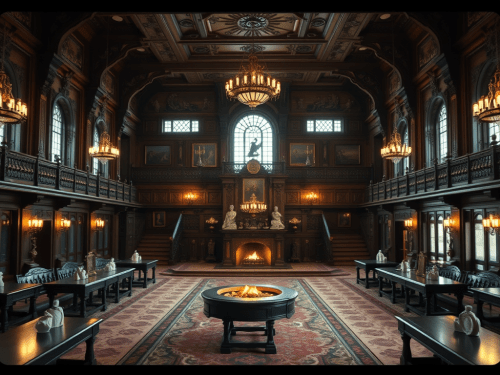
Although it is preferable to use standardized screening questionnaires, friendly visitors, Meals-On-Wheels volunteers, caretakers, and health care providers also can interject screening questions into their normal conversations with older homebound adults. Although the line of questioning will depend on the person’s relationship with the older person and the responses given, it is recommended that anyone who is concerned about an older adult’s drinking practices try asking direct questions. Delirium is a serious, potentially preventable, neuropsychiatric disorder occurring in association with other underlying medical conditions. Delirium is under-recognized and underdiagnosed, making accurate prevalence and incidence difficult to gauge. Delirium can affect up to 50 percent of individuals over the age of 65 years. Predisposition risk factors include older age, dementia, dementia, severe illness, surgery, pain, dehydration, sepsis, electrolyte disturbance, urinary retention, fecal impaction, and exposure to high-risk medications. Delirium is often unrecognized and undocumented by clinicians. Rates of unrecognized delirium, which is defined as the diagnosis of delirium after being unrecognized by a primary physician or nurse, is estimated to be about 60 percent of all cases. This high rate of unrecognized delirium underscores the need for screening to detect delirium early. Early recognition and treatment can improve outcomes. The best tool is the Confusion Assessment Method (CAM) is a standardized evidence-based tool that enables non-psychiatrically trained clinicians to identify and recognize delirium quickly and accurately in both clinical and research settings. #RandolphHarris 7 of 29

The real self, is the alive, unique, personal center of ourselves; the only part that can, and wants to grow. Unfortunate conditions prevent its unimpeded growth from the very beginning. There are forces in the individual which usurp its energies and lead to the formation of a pride system which becomes autonomous and exerts a tyrannical and destructive power. It terms of the devil’s pact, the abandoning of self corresponds to the selling of one’s soul. In psychiatric terms we call it the “alienation from self.” This latter term is applied chiefly to those extreme conditions in which people lose their feeling of identity, as in amnesias and depersonalizations, et cetera. These conditions have always aroused general curiosity. It is strange and even startling that a person who is not asleep and has no organic brain disease does not know who he is, where he is, or what he does or has been doing. If we do not regard them as isolated occurrences but see their relation to less conspicuous forms of alienation from self, these are, however, less bewildering. In these forms there is no gross loss of identity and orientation, but the general capacity for conscious experience is impaired. There are, for instance, many neurotics who live as if they were in a fog. Nothing is clear to them. Not only their own thoughts and feelings but also other people, and the implications of a situation, are hazy. Also related, in still less drastic terms, are conditions in which the dimming out is restricted to intrapsychic processes. I am thinking of people who can be rather astute observers of others, who can lucidly size up a situation or a trend of thought; yet experiences of all kinds (in relation to others, nature, et cetera) do not penetrate to awareness. And these states of mind, in turn, are not unrelated to those of apparently healthy people who suffer from occasional partial blackouts or from blind spots concerning certain areas of inner or outer experience. #RandolphHarris 8 of 29

All these forms of alienation from self can concern as well as the “material self”—the body and the possession. A neurotic may have but little feeling of or for his body. Even his bodily sensations may be numbed. When asked for instance whether his feet are cold, he may have to arrive at an awareness of feeling cold through a process of thinking. He may not recognize himself when seeing himself unexpectedly in a full-length mirror. Similarly, he may have no feeling of his home being his home—it is for him as impersonal as a hotel room. Others have no feeling that the money they possess is their money, even though it may have been earned through hard work. These are only a few variations of what we could properly call an alienation from the actual self. All of what a person actually is or has, including even his connection of his present life with his past, the feeling for this continuity of his life, may be blotted out or dimmed out. Some of this process is intrinsic in every neurosis. Sometimes patients may be aware of disturbances on this score, as in the case of one patient who described himself as a lamppost with a brain on top. More often, they are unaware of it, although it may be fairly extensive; and it may gradually unfold only in analysis. At the core of this alienation from the actual self is a less tangible phenomenon, although more crucial. It is the remoteness of the neurotic from his own feelings, wishes, beliefs, and energies. It is the loss of the feeling of being an active determining force in his own life. It is the loss of feeling himself as an organic whole. These in turn indicate an alienation from that most alive center of ourselves which I have suggested calling the real self. #RandolphHarris 9 of 29
The real self provides the “palpitating inward life”; it engenders the spontaneity of feelings, whether these be joy, yearning, love, anger, fear, or despair. It is also the source of spontaneous interest and energies, “the source of effort and attention from which emanate the fiats of will”; the capacity to wish and to will; it is the part of ourselves that wants to expand and grow and to fulfill itself. It produces the “reactions of spontaneity” to our feelings or thoughts, “welcoming or opposing, appropriating or disowning, striving with or against, saying yes or no.” All this indicates that our real self, when strong and active, enables us to make decisions and assume responsibility for them. It therefore leads to genuine integration and a sound sense of wholeness, oneness. Not merely and harmonious, but they function without serious inner conflict. In contrast to those artificial means of holding ourselves together, which gain in importance as the real self is weakened, there is little or no attendant strain. The history of philosophy shows that we can deal with the problems of self from many vantage points. Yet it seems as though every treating this subject has found it difficult to go beyond describing his special experiences and interests. From the viewpoint of clinical usefulness, I would distinguish the actual or empirical self from the idealized self on the one hand, and the actual or empirical self from the idealized self on the one hand, and the real self on the other. The actual self is an all-inclusive term for everything that a person is at a given time: body and soul, healthy and neurotic. We have it in mind when we say that we want to know ourselves; id est, we want to know ourselves as we are. #RandolphHarris 10 of 29

The idealized self is what we are in our irrational imagination, or what we should be according to the dictates of neurotic pride. The real self is the “original” force toward individual growth and fulfillment, with which we may again achieve full identification when freed of the crippling shackles of neurosis. Hence, it is what we refer to when we say that we want to find ourselves. In this sense, it is also (to all neurotics) the possible self—in contrast to the idealized self, which is impossible of attainment. Seen from this angle, it seems the most speculative of all. Who, seeing a neurotic patient, can separate the wheat from the chaff and say: this is his possible self. However, while the real or possible self of a neurotic person is in a way an abstraction, it is nevertheless felt and we can say that every glimpse we get of it feels more real, more certain, more definite than anything else. We can observe this quality in ourselves or in our patients when, after some incisive insight, there is a release from the grip of some incisive insight, there is a release from the grip of some compulsive need. In the face-to-face situation, language possesses an inherent quality of reciprocity that distinguishes it from any other sign system. The ongoing production of vocal signs in conversation can be sensitively synchronized with the ongoing subjective intentions of the conversants. I speak as I think; so does my partner in the conversation. Both of us hear what each says at virtually the same instant, which makes possible a continuous, synchronized, reciprocal access to our two subjectivities, an intersubjective closeness in the face-to-face situation that no other sign system can duplicate. #RandolphHarris 11 of 29

What is more, I hear myself as I speak; my own subjective meanings are made objectively and continuously available to me and ipso facto become “more real” to me. Another way of putting this is to recall the previous point about my “better knowledge” of the other as against my knowledge of myself in the face-to-face situation. This apparently paradoxical fact has been previously explained by the massive, continuous and prereflective availability of the other’s being in the face-to-face situation, as against the requirement of the reflection for the availability of my own. Now, however, as I objectivate my own being by means of language, my own being becomes massively and continuously available to myself at the same time that it is so available to him, and I can spontaneously respond to it without the “interruption” of deliberate reflection. It can, therefore, be said that language makes “more real” my subjectivity not only to my conversation partner but also to myself. This capacity of language to crystalize and stabilize for me my own subjectivity is retained (albeit with modification) as language is detached from the face-to-face situation. This very important characteristic of language is well caught in the saying that men must talk about themselves until they know themselves. Men understand more easily what they can see, touch, and hear—that is, images, forms, and pictures—in short, symbols. These are the idols honoured by simpler minds. However, when they develop their minds sufficiently, they become able to think in terms of simple arithmetic, progressing of the laws of geometry, and from algebra on to higher mathematics. #RandolphHarris 12 of 29

The fact is it is utterly impossible to form an abstract idea in the mind. We can only think of particular ideas. When the self-actualized Christian does indulge in the luxury of a conversation with an inquirer or spiritual aspirant, he usually adopts the Socratic method. There is probably no more powerful or effective method of compelling a man to think, to exercise his own reason, instead of repeating parrot-like phrases, than this of thrusting question after question at him. The first use of general principles, the first worth of general theories is to economize thought and thus to avoid going over the same ground again and again. This is a remarkable and little-known power of abstract reflection—that, just as one thorn may be used to pick out a second from the skin, so a line of thinking can be used as to bring all thinking to an end. It is striking that whenever persons are asked why they did anything, their motives usually appear exemplary, to them and to the observer. A person will seldom admit intentions of an immoral or antisocial sort. Yet, the consequences of many actions are often discrepant with the admitted motive. Thus, a person intends to help a friend and actually interferes drastically with the friend’s success. A man loves his wife, yet his behavior toward her may produce grief and discomfort for her. For any action that a person undertakes, it can be assumed that its consequences were desired by the person. If the aim is denied, or if the consequences appear at variance with the aim, then the observer may assume the intent has been repressed. #RandolphHarris 13 of 29

The motive that the person admits may be called a rationalization. It is an explanation for an action and its consequences that is compatible with the individual’s self-structure. The motive behind rationalization is not to give a factual account of authentic intent; rather, it is to do justice to the need to explain conduct and at the same time protect the self-structure. A rationalization, then, is an explanation of one’s conduct that has been selected from many possible explanations because it enhances and defends the individual’s self-structure. A theology student has asked a girl for a date. She was known to be quite proud of her sexually “liberated” attitudes. He said he wanted to persuade her to change her ways and denied any sexual interest in her. He was quite possibly rationalizing. Some people’s awareness is marred by a return of demons, whoever they may have been. Man’s rebellion often centers in the question of his differential debt of obedience to God, to the Pope, and to Caesar—or rather, to the multitude of Caesars then emerging. There is often a preparatory dichotomy that preoccupies people: that between the obedience owed to their natural father, whose views are always brutally clear, and the obedience owed to the Father in heaven, from whom many youths have received a dramatic but equivocal call. The average man has not the patience to, and does not want to, inquire into meanings of his words. He says, “My meaning is the right one and good enough for me.” This implies that he knows, but in fact he does not, because he has not examined it. The intellect cannot work accurately with blurred concepts. Pitfalls await to receive it under such conditions. This is one reason why the process of discovering and clarifying meanings leads its advance into truth. Many think it is useless to discuss the meaning of a term. This is often correct in the case of a logician who seeks merely to score a cheap intellectual triumph over an opponent, however dishonestly, but in the case of a true metaphysician who seeks truth in its genuine sense, such a procedure may be most helpful to him. At the least, it may point out pitfalls. #RandolphHarris 14 of 29

Some people are forbidden to finish anything or come to the point, so when they talk, they “run off at the mouth.” Their sentences are strung out with conjunctions: “Yesterday I was sitting at home with my husband and… and…and then…and…and then…” Often, the directive is “Do not tell any of the family secrets!” so they go all around the secret and play with it as long as they can without giving it away. Some speakers are careful to balance everything: “It’s raining, but the sun will come out soon.” “I have a headache, but my stomach is better.” “They are not very nice, but on the other hand, they look cheerful.” The directive in this case seems to be “Do not look at anything too closely.” The most interesting example of this type was a man who had been a diabetic since the age of five, and had been taught to balance his diet with the utmost care. When he spoke, he weighed every word with similar care, and balanced each of his sentences very cautiously and precisely. These precautions made him very difficult to listen to. All his life, he had been in a rage against the unfair restrictions imposed on him because of the disease, and his speech became very unbalanced when he was angry. (The implications of this for the psychology of diabetes must await further study.) Another type of sentence structure is the dangling point, with free use of “and so forth” and “et cetera.” “Well, we went to the movies, and so forth, and then I kissed her and so forth, and then she stole my wallet and so forth.” Unfortunately, this often conceals a deep anger against the mother. “Well, I would like to tell her what I think of her, et cetera.” “What is ‘et cetera?’” “What I would really like to do is cut her to pieces.” “Et cetera?” “No, more ‘et cetera.’ That is the et cetera.” Sentence structure offers a fascinating field of study. #RandolphHarris 15 of 29

Historically, the big dilemma with regard to fitness is the term fit for duty versus wellness. Most firefighters are more than willing to partake in a wellness program, one designed as a voluntary program to help make healthy choices in diet and exercise. The term fit for duty generally refers to being able to complete specific skills or meet set criteria to be permitted to work. Some career fire departments have phased in a fit for duty clause in their union contract. Some fire departments already get discounts on insurance workers’ compensation by instituting programs that reduce risks, such as a drug-free workplace and emergency vehicle driving. We can expect that if more fire departments see improved health and financial savings by requiring fit for duty, others will follow. Firefighters should not see this as a career-ending situation, but, rather, an opportunity to prevent a life-ending situation. NFPA 1583, Standard on Health-Related Fitness Programs for Fire Fighters, describes the necessary components of a health-related fitness program. These include a fitness coordinator, a fitness assessment, an exercise training program, education and counseling, and data collection. The five components of a fitness evaluation include: Body composition, aerobic capacity, muscular strength, muscle endurance, and flexibility. The fire department physician must be familiar with the duties of firefighting and the associated risks. Through thorough exams, the doctor screens the member for injuries or diseases likely to interfere with firefighting duties. The physician identifies disqualifying medical conditions that must be acted on immediately, and ensures proper referral to the appropriate specialist. #RandolphHarris 16 of 29

By discussing the results of the examination and answering questions, the physician also can make individual recommendations for the member to improve his or her health. Although specific findings are confidential, the physician reports back to the department whether the member is cleared for firefighting duties. NFPA 1582, Standard on Comprehensive Occupational Medical Program for Fire Departments, outlines what specific body systems should be evaluated and what diagnostic tests should be completed. The purpose of these tests is to find a medical problem before it becomes debilitating, as well as to identify trending. For instance, a pulmonary function test (spirometry) is one recommended component of the annual diagnostics. If a firefighter has continually done well on the tests for the past 7 years but now cannot pass, it is clear that something has occurred. Perhaps the member was involved in an emergency incident that caused injury to his pulmonary system that had not yet been identified. Without annual testing, it could go unnoticed, and a direct cause could be more difficult to pinpoint down the road. Sometimes firefighters argue that they should be permitted to see their own doctor rather than the department physician. The biggest problem is that some primary care physicians are not capable of administering some tests, such as spirometry, and may not understand their value. #RandolphHarris 17 of 29

Another important component of the testing is blood work analysis. Next time you get a blood draw for a physical, take your results to a computer and pull up the American Heart Association’s website. Punch your readings and personal information into the heart attack calculator to see what your chances are of having a heart attack in the next year. Of course, the calculator does not take into account the increased cardiac stress of your job, so it might actually be on the low side. However, by trending these results each year, you can monitor the progress of your improvement. The last component involves the specific needs of members. Firefighters are at a significantly greater risk of developing cancer because of continuous contact with carcinogens. These cancer-causing chemicals can easily be inhaled or absorbed during or after firefighting operations, including diesel exhaust at the station. NFPA 1582 specifies the test procedures and frequency at which cancer screenings should occur based on age and gender. Hazardous materials term members might go through more extensive diagnostic testing, such as chest X-rays. Staff members who do not wear SCBA may not receive the same amount of pulmonary testing as a line firefighter, whereas members over a certain age or with a specific medical history will probably get additional tests. Sometimes tests are necessary due to a specific medical history will probably get additional tests. Sometimes tests are necessary due to a specific hazard in their response area. A good example of this is a fire brigade for an industrial fire department working around specific chemicals. See what else the award-winning Sacramento Fire Department is doing to keep firefighters, EMTs, and paramedics in great shape. https://www.instagram.com/p/DQFmNfpEsIX/ #RandolphHarris 18 of 29
If you see a fire truck stopped in the street without the lights on, be very careful. Sometimes there is an emergency, and you should not pass the fire truck. It might be a good idea to safely turn around and go another way because if you hit someone and they happen to die, you could be charged with manslaughter. Sometimes fire firefighters are getting back into their vehicle, and if you pass the apparatus, you may collide with a firefighter who is on foot. Also, be sure to look at their signals; sometimes emergency vehicles are in motion, albeit slowly, and drivers try to pass them, and this could lead to a dangerous situation. Also, if you are in an intersection when you see an emergency vehicle, continue through the intersection. Drive to the right as soon as it is safe and stop. Obey any direction, order, or signal given by a law enforcement officer or a firefighter. Even if they conflict with existing signs, signals, or laws, follow their orders. When their siren or flashing lights are on, it is against the law to follow within 300 feet of any fire engine, law enforcement vehicle, ambulance, or other emergency vehicle. If you drive to the scene of a fire, collision, or other disaster, you can be arrested. When you do this, you are getting in the way of firefighters, ambulance crews, or other rescue and emergency personnel. The concept of professional courage does not always mean being as tough as nails, either. It also suggests a willingness to listen to other people’s problems, to go to bat for them in a tough situation, and it means knowing just how far they can go. It also means being willing to tell the boss when he or she is wrong. #RandolphHarris 19 of 29
California is the third most expensive state in the nation. In 37 percent of counties, a family of four living on a six-figure income is now considered low-income. The average home price in California is nearly $1,000,000.00 USD, while the average salary is $96,036.00, meaning that most Californians cannot even afford to buy a home. California is having an affordability crisis. A single person making an income above $100,000 is now considered low-income in five counties in California. This distinction now applies to individuals living in Santa Cruz, Santa Clara, San Mateo, San Francisco, and Marin counties. The maximum percentage of your gross income that you should earmark for a monthly mortgage payment is calculated at 28 percent, and no more than 36 percent of your gross income to all debts, including mortgage. If you take 28 percent of the median household income per home in Sacramento County, homeowners can only afford a mortgage of $2,070.23 per month. And if you take 36 percent of their gross income to all debts, including mortgage, they should be devoting no more than $2,661.72 a month to these debts. The mortgage lenders must be using some kind of sorcery to get buyers into these expensive homes. To afford one of these homes using traditional guidelines, a household would need to gross $11,280.24 per month or $135,362.88 per year, but the median household in Sacramento County is grossing $7,393.67 a month or $88,724.00 annually, and that typically means two to four people in the home are working and contributing to the mortgage. Home prices in Sacramento County are rivaling the Bay Area, and in some cases, homes in the Bay Area are more affordable. Historically, homes in the Bay Area have been more expensive because they have higher-paying jobs, a larger population, and the Bay Area is a tourist destination. Contributing to the housing affordability crisis is Gavin Newsom, who has been lavishing illegal immigrants with taxpayer-funded resources and cash aid, when state workers should be receiving a 25 percent wage increase instead. #RandolphHarris 20 of 29
In 2025, many people in California saw their bills increase by an estimated $500 a month. This includes items such as food, automobile insurance, homeowners’ insurance, and electricity. In fact, more than 3 million people in California are facing household hardship, and more than 300,000 of them are facing eviction soon. This comes at a time when California is having a shortage of affordable housing. The crisis is caused by nearly half a century-old laws that discourage home sales and encourage higher rents. The incompetence in California is very easy to see. From 2018 to 2023, California received $24 billion, which they used to fund 30 homeless and housing programs. These programs created 100,000 units. That is an average cost of $240,000 per unit. In comparison, Roger Lucas, owner of Grand Castle, LLC, spent $50 million to build The Grand Castle, which is a 522-unit residential apartment community in Grandville, Michigan. The community includes studios, 1 bedroom, 2 bedrooms, 3 bedrooms, and even a multi-level penthouse. Rents generally range from $1,000 to $2,500. The community is a 23.6-acre site. It features 750 covered parking spaces, a clubhouse, a resort-style swimming pool, and was built over a period of 12 to 18 months. The average cost was about $95,785.45 per unit, which is $144,214.55 less per unit than California spent. California also has the highest unemployment rate in the country at 5.4 percent, while the national average is 4.5 percent. As people are seeing their bills skyrocket, and minimum wage has increased to $20 an hour, people on Social Security retirement are really bearing the burden with the checks the typically equate to $5-$7 an hour. Furthermore, while Americans are struggling to find and afford housing, Gavin Newsom, Democrat governor of California, signed two bills into law on February 7, 2025, to protect illegal immigrants. Bills SBX 1 1: Budget Act of 2024, and SBX 1 2: Budget Act of 2024, allocates $50 million to protect illegal immigrants from deportation. Governor Gavin Newsom also granted 700,000 illegal immigrants free health care, which costs taxpayers $3 billion annually. At the same time, Newsom cut vital programs for veterans, school children, the disabled, and the homeless. The California crisis created by Democrats is driving up home prices and mortgages, and rents all over the nation and the world, making living unaffordable for all, and advocates say the crisis is far from over. #RandolphHarris 21 of 29

Meanwhile, China, where we are sending all our jobs and money, has more than 50 ghost cities, with 65 million vacant homes. Ghost cities are regions where housing has been overdeveloped to the point that these places are uninhabited. If they are all officially counted, California has approximately 4 million homeless people. The highest home prices in the nation, the highest taxes, and the most unfriendly business regulations known to man. Because California is so hostile towards people and businesses, more than 360 companies have fled the state since 2020. Businesses like Chevron, SpaceX, Oracle, and Hewlett-Packard are among the names on that list. Also, more than 500,000 people a year are abandoning California because it is too expensive to live in, Gavin Newsom has criminalized homelessness and actually started arresting people without homes, crime is out of control, and they are losing their jobs due to companies relocating. More than 100 companies have announced layoffs in California for 2025. Intel is cutting 15,000 jobs, PayPal is cutting 2,500, and Meta has terminated 4,000 employees. California also has the highest unemployment rate in the country at 5.4 percent, while the national average is 4.1 percent. The California crisis created by Democrats is driving up home prices and mortgages, and rents all over the nation and the world, making living unaffordable for all, and advocates say the crisis is far from over. Accordingly, California has more than 3.5 million illegal immigrants. Having the Southern American border open and not having American farmland protected, not producing beef, poultry, fish, fruit, produce, and dairy in America, and without American goods and services being our number one manufactured and selling items, America has created a dangerous and significantly elevated risk to national security, national economic security, and national public health. Some people may believe that these claims are overstated, but by not routinely monitoring Common Vulnerabilities and Exposures (CEVs) or other security-relevant alerts, such as the end-of-life of machinery is how the Oroville Dam Crisis occurred in 2017. #RandolphHarris 22 of 29

Additionally, Democratic Governor Gavin Newsom seems to be uneducated about economics. Newsom has spent $300 million to try to stop proposition 50. Proposition 50 would replace the maps drawn by the state’s independent commission with districts drawn by legislators solely to gain or protect Democratic seats. Newsom only cares about the environment when his policies allow him to raise taxes and restrict freedoms. To further highlight this illustration of incompetence by Governor Gavin Newsom, Mexico has been causing one of America’s worst environmental disasters. Fifty million gallons a day of industrial chemicals, untreated sewage, and trash flow from Tijuana, Mexico, into southern San Diego County daily. This toxic waste has been turning up on Imperial Beach and is causing the miles of white sands to become polluted and the ocean breeze to smell of feces, which has been sickening residents and wildlife and costing San Diego millions in the form of lost tourism and health problems. The problem has been going on for more than a century, and by 2030, Mexico plans to dump one hundred and twenty million gallons of sewage a day into Imperial Beach. Other crises that have occurred due to neglect of critical infrastructure such as the 2025 Palisades fire. Southern California ran out of water because Newsom is totally neglecting the state and the American people. And while the fire departments in California are critically understaffed and underfunded, Governor Newsom vetoed firefighter pay raise. The Palisades fire cost $275 billion, which is money that could have been used to insure the State of California had the resources it needed. Furthermore, when Southern California is located next to an ocean, Newsom should have invested in desalination plants to help with the water shortage in California. The water in the ocean is so plentiful that it is currently eroding land and causing homes to fall into the sea. Desalination has been identified as one technology that will help solve California’s water scarcity problem. Desalination is a cost-effective technology that can transform an abundance of salt water into a reliable supply of potable, fresh water, which is a great way to fight climate change and have enough water for our region’s water requirements. Ras Al Khair, Saudi Arabia, is producing 1,036,000 meters (273,682,192) per day of desalinated water. #RandolphHarris 23 of 29

America needs an approach to eliminate safety vulnerabilities in American cities. There needs to be a road map by the end of 2025, outlining a prioritized approach to eliminate crisis situations in America. There is enough money to send aid to foreign nations, but the American government does not have enough money to care for its infrastructure, provide adequate resources, or end the affordable housing crisis. Nor is there enough money to fund other national critical functions (NCFs). These bad practices of putting America and Americans last are considered exceptionally risky, particularly to national security, national economic security, and national public health and safety. In 2024, Americans spent $100 billion on Japanese cars. As a result, the American automobile trade deficit with Japan was $39 billion. Additionally, Japan exported 1.4 million cars to the United States of America, but only imported 16,000 American-built automobiles. However, Japan imported approximately 143 thousand motor vehicles from the European Union. This is why President Trump created tariffs. We need to balance the trade deficit that America faces with other nations so we are not taken advantage of and so America can go bank to being a creditor nation, instead of borrowing money for other countries. Each year, President Trump is bringing $400 Billion in Tariff revenue into America and hundreds of thousands of new jobs. With this money, America is paying down debt, and with a portion of it, President Trump plans to send Americans a stimulus check anywhere in the range of $1,000 to $2,000. However, if President Trump’s Tariffs are deemed illegal by the Supreme Court, taxpayers will have to pay back trillions and trillions of dollars. As we literally and /or figuratively see gangs, federal judges, and Governor Gavin Newsom fighting with federal law enforcement and President Trump– states and cities refusing to honor federal laws. Politicians are also showing an utter disregard for the Constitution of the United States of America, and anarchy is becoming increasingly common. #RandolphHarris 24 of 29

Anarchism is a cluster of doctrines and attitudes centered on the belief that government is both harmful and unnecessary. Derived from the Greek root anarchos, meaning “without authority,” anarchism, anarchist, and anarchy are used to express both approval and disapproval. The anarchist denies man-made laws, regards property as a means of tyranny, and believes that crimes are merely the product of property and authority. However, the anarchist would argue that their denial of constitutions and governments leads not to “no justice” but to the real justice inherent in the free development of human sociality—the natural inclination, when unfettered by laws, to live according to the principles and practice of mutual aid. Anarchism is also a form of treason. Treason, the crime of betraying a nation or a sovereign by acts considered dangerous to security. In English law, treason includes the levying of war against the government and the giving of aid and comfort to the monarch’s enemies. In the United States of America, treason was defined restrictively by the framers of the Constitution. Treason against the United States of America “shall consist only in levying War against them, or in adhering to their Enemies, giving them aid and comfort,” which is something that many politicians are currently guilty of. The American government should know all exploitable vulnerabilities and fix them before the situation becomes a crisis. Failure to take such mitigating actions is dangerous and significantly elevates risk to national security, national economic security, and national public health and safety. The American government must understand that significant time and resources must be invested in America. They must also encourage corporations to plan for both mitigating safety vulnerabilities in the short term and eliminating them in the long term. For instance, a company might begin by reaching out to the federal, state, or local government and requesting tax incentives to provide security to dangerous communities, to help the government repair bridges and potholes. #RandolphHarris 25 of 29

Drug cartels have been threatening the health and safety of Native American communities. The trafficking of dangerous and illegal drugs into their territories is leading to a second genocide. The overdose rate for Indigenous people is 42 percent higher than the national average. A recent bust on Montana’s Blackfeet Nation’s Tribal Reservation resulted in the seizure of more than 700,000 fentanyl pills, which was the largest bust in Montana history. Recently, the Blackfeet Nation had to declare a state of emergency after facing 17 overdoses in just one week. There are only 6.8 million Native Americans left in the world, which is 2 percent of the American population. We should be doing more to protect these proud and honorable people; they should not want for anything. People rush and give away resources to illegal immigrants, but totally disregard the Indigenous people of this land, as their race silently fades away into extinction. We must secure our borders and increase federal funding to Native American tribes so we can save this precious population. Meanwhile, Gavin Newsom has given billions of taxpayer dollars away to illegal immigrants and protected them from law enforcement, while arresting law-abiding Americans because they cannot afford to pay rent or mortgage, and the homeless shelters are unsafe, overcrowded, and have restrictions on who is allowed inside. He has also totally ignored the cartel problems on American lands. Clean air, water, land, and preserving our heritage are extremely important. We cannot just allow criminals to kill off the people who are native to this land and do nothing about it. Wars have been started over governments that tax citizens without representation. Taxation without representation is what led to the American Revolution. #RandolphHarris 26 of 29

Much like the land crisis in Las Vegas, we could also run out of land to farm and will not be able to grow or cultivate our own food. We can protect American farmland and support American farmers by buying American made beef, poultry, dairy, and produce. Also, country of origin labeling is very important so Americans can know where their food is coming from and can support American farmers and ranchers. As money flows, it influences further investment. Save the land that sustains us by protecting American farmland. Once the land is built on, we lose it forever. And in the future, there may be food wars. Also, to ensure that we have farmland and buildable land for future use, we need to start limiting the number of people allowed to immigrate to America. Perhaps with the immigrants we do allow into America, there needs to be a diversity program to make sure we have a population that equally represents all races of people. If Americans continue to spend money on American products, then more need to be made to keep up the inventory. When investors notice these goods are selling, it gives them the confidence to pour more money into that local business. It shows that people want these goods made in America and pressures investors to keep these goods and services in America. The jobs stay here, the business stays in America, wages naturally increase, and more money is invested to keep up with demand. This reduces the burden on the taxpayer. When you support American businesses, that money stays in our economy and can help to reduce the national debt. The government creates debt by borrowing from businesses in the private sector or from foreign countries. It also increases the national debt by spending more than it gains in tax revenue in a fiscal year. #RandolphHarris 27 of 29

When people shop locally, more tax money stays in the economy and goes to the government. This way, it keeps more money in our national economy and keeps more jobs located in America which also sends more taxes to the government, which can again help to reduce the national debt. When you buy foreign goods, these companies usually have lighter tax loads or exemptions, meaning less money for the national debt, plus you are helping to strengthen these foreign nations by sending more money overseas. Buying American-made products is also better for the environment and helps to reduce the carbon footprint because these products do not have to travel nearly as far. Furthermore, American companies and manufacturers are held to much higher standards on pollution. American companies must be more careful about air, land, and water pollution and have proper ways to dispose of waste. Under President Trump’s administration, he has make America a priority. President Trump has closed the southern border, illegal crossings have fallen to an all time low, and are 90 percent lower than under the previous administration. Since President Trump’s crack down on crime, violent crimes in Washington D.C. have dropped by approximately 80 percent. He has stopped thousands of pounds of drugs from entering America and killing citizens. And since President Trump took office, investments in America have increased by trillions of dollars in U.S.A. manufacturing, production, and innovation. As you can see, President Donald Trump and his pledge to “Make America Great Again” is exactly what America needs to save the country and the American people. And yes, diversity is important, so you can see why it is also important to preserve blonde hair and blue eyes, as the people with these characteristics are becoming a minority in America. #RandolphHarris 28 of 29
We must think before we can understand the soul’s existence; we must understand before we can realize it. The earliest beginnings of thought, as apart from instinct, when it was itself still but a lurking tendency, belong far back in primeval time. The human intellect as we find it today, so rich and developed an instrument for the consciousness of the ego, did not arrive at this fullness without a series of graduated stages. We have had plenty of scientific thinking, business thinking, and political thinking long enough, but we have had very little inspired thinking. That is the world’s need. The intellect is cradled in selfishness but runs the evolutionary track into reason, where it will one day finish at the winning-post of selflessness. As a reminder, parents, please teach your children to love America and be patriotic citizens, and to buy goods and services made in America. It is also important to respect law and order and treat your elders with respect. It is inborn in the human mind to wish to know. If this begins with the endless surface questions of a child’s curiosity, if it continues into deeper questions of a scientist’s probing investigation, it cannot and does not stop there. For the higher part of the mind will eventually come into unfoldment, that union of abstract reflective thought with mystical intuition, which is true intelligence, which needs and sees a view of the whole of things. And so, the knowing faculty enters the realm of philosophy. Therefore, remember to take your education seriously so that you will be successful in life and make your family proud. Also, to make sure they have all the resources required, please donate to the Sacramento Fire Department to help improve our national security. “Oh, thus be it ever, when freemen shall stand between their loved home and the war’s desolation! Blest with victory and peace, may the heav’n-rescued land Praise the Power that hath made and preserved us a nation! Then conquer we must, when our cause is just, and this be our motto: ‘In God is our trust.’ And the star-spangled banner in triumph shall wave O’er the land of the free and the home of the brave.” #RandolphHarris 29 of 29

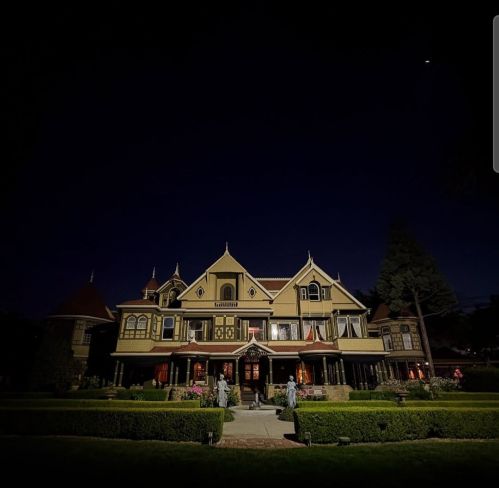
According to locals, over a century ago, the land that houses The Winchester Mansion had been vacant forever. Then, sometime in the early afternoon of Saturday, March 13, 1886, Sheriff Angel Camilio began getting reports that a massive castle made of wood had suddenly appeared. Gables rose, towers peaked into the sky as the mansion mushroomed into a labyrinth overnight.

The house’s sudden manifestation had been both disconcerting and fascinating to the community. Some felt dark curses flowing from the estate, and things moving around in the darkness. Others saw a fairytale castle glimmering in the spring sunlight. Perhaps this is why there are no records of construction, no blueprints, and no permits filed with the county. And then one day, a hearse came tearing through the gates, and in that hearse was a coffin, some believed it contained Mrs. Winchester.

According to legend, when Sarah Lockwood Pardee (Winchester) married William Wirt Winchester in 1862, she enjoyed a life of extravagant luxury. William Winchester, President of the Winchester repeating rifle, became a very wealthy man through the sale of his guns, and the couple were among the elite New England society.

However, in 1866, the death of their infant daughter drove Mrs. Sarah Winchester into a deep depression from which many thought she would never emerged. Several years later, she lost her husband to tuberculosis, and her grief was overwhelming. Mrs. Winchester sought the counsel of a Boston medium to reach her beloved dead family members. The medium told the grieving widow that she was cursed and demons straight from hades had sought revenge by ending the lives of her beloved husband and darling baby girl.

She also told Mrs. Winchester they would kill her too, unless she moved out West and built a great house for the spirits. In addition, Mrs. Winchester was told construction on the house must never end in order to appease the spirits and keep her alive, perhaps even give her eternal life. Mrs. Winchester followed the medium’s suggestions, and in 1886, she moved to the Santa Clara valley just outside San Jose, where she bought an 18-room farmhouse and property to build her mansion. At its peak, the Mansion once stood 9-stories tall and had as many as 600-rooms. Today, the stately mansion is 4-storys, and over 100,000 square feet.

Experience an unforgettable journey back to the time of kings and queens with this entry ticket for The Winchester Mansion in Santa Clara, California, which was the residence of Heiress Sarah L. Winchester. Come and see what secrets this so-called, “Winchester Mystery House” may hold. Take advantage of this fascinating experience. After the tour, there will be time to enjoy the mansion’s splendor at your own pace. You might even discover secret passages that lead to hidden chambers within the mansion. These chambers served as safe places for valuables, precious documents, and as private sanctuaries for Mrs. Winchester, and allowed her to move stealthily throughout her home. At one time, there were even secret tunnels that extended beyond the mansion, leading to nearby Victorian houses that were also on the property, and other structures, creating a network of escape routes or hidden pathways.

Please come and enjoy a delicious meal at Sarah’s Café, stroll along the paths of the beautiful Victorian gardens, which once spanned 740 acres, all the way down to Stevens Creek Boulevard; wander through the miles of hallways in the world’s most mysterious mansion.

For further information about tours, including group tours, weddings, school events, birthday party packages, facility rentals, and special events please visit the website: https://winchestermysteryhouse.com/

Please visit the online giftshop, and purchase a gift for friends and relatives as well as a special memento of The Winchester Mystery House. A variety of souvenirs and gifts are available for purchase. https://shopwinchestermysteryhouse.com/
Harris Plumbing, Heating, Air, & Electric has been in business for 30 years. How many businesses can say that? We take pride in everything we do – no matter how big or small the service call might be. We’re here to help your home be as safe and comfortable as possible for you and your family. We take that responsibility very seriously as a company.
Harris will ensure you have the information you need to decide what to do next, whatever your home is facing. We’ll perform a diagnosis and detail what issues are present before starting any work. This gives you a personalized quote and service plan specific to your home’s needs, not some random quote based on the best guess. The only way we can do our best work is to make sure we handle the issues at hand. https://www.callharrisnow.com/about-us/
With its top ranking in Consumer Reports’ Auto Brand Report Card and consistent market share growth, BMW, The Ultimate Driving Experience, has demonstrated its ability to produce high-performing, reliable vehicles that meet consumer demands. BMW stands out due to its focus on driving dynamics and engineering excellence. While other luxury brands prioritize comfort and opulence, BMW is known for creating cars that are fun to drive and offer a unique connection between the driver and the machine. This is why BMW is known as The Ultimate Driving Machine. https://www.brianharrisbmw.com/

Randolph Harris San Francisco Taxation & Mergers
Building strong and lasting client relationships is crucial for a successful legal career. Many lawyers mistakenly believe that mastering legal skills alone ensures success, but law is fundamentally a service industry—our job is to solve problems through the time we sell. To build long-term relationships, attorneys must focus on three core elements: knowing their clients, understanding how their legal issues fit into a larger context, and consistently delivering exceptional service.

Randy advises clients with regard to business transition, taxable and tax-deferred mergers and acquisitions, joint ventures, restructuring, integrated tax planning, federal and state tax controversy resolution, and real estate transactions. Trust is the cornerstone of any client relationship. Ultimately, my clients feel they are in capable hands with someone who genuinely understands their problems and goals. https://www.jmbm.com/l-randolph-harris.html


There has never been a better time to find your new home at Park Haven 🍂 Enjoy up to $30,000 in savings and make Residence 4 yours!

Your $30,000 in Flex Cash can go toward:
• Closing costs to lower your upfront expenses
• Appliances or lot premiums to elevate your space
• An interest rate buydown for easier monthly payments
• Design upgrades to make it uniquely yours

With owned solar and timeless design in every home, Park Haven makes it easy to settle in and start living.

Visit our website to learn more about Residence 4 and explore all the ways to save this season.

Park Haven has everything your family needs. With four floor plans offering up to five bedrooms, your perfect home is waiting to meet you.

Every house where love abides and friendship is a guest is surely a Cresleigh Home. https://cresleigh.com/park-haven/residence-4/
“Those who deny freedom to others, deserve it not for themselves; and, under a just God, can not long retain it.” -President Abraham Lincoln
America is a nation founded on godly principles, by God-fearing men. As a nation, we have convinced ourselves of our uniqueness with concepts such as Manifest Destiny and American exceptionalism. Manifest destiny was the imperialist belief in the 19th-century United States that American settlers were destined to expand from sea to shining sea.
American exceptionalism, idea that the United States of America is a unique and even morally superior country for historical, ideological, or religious reasons. As a nation we appear favored and blessed by the Lord with success and prosperity unparalleled in human history.
America has a lot of amazing things – its beautiful natural scenery, vibrant cities, unique culture, and some of the world’s most iconic landmarks — it us no wonder many choose to make America their home. https://winchestermysteryhouse.com/

The Sweet Self-Torture Which is My Whole Delight

Evil mechanics have been in operation in the minds of men for centuries. Ignorance and all its causes are evil. In some cases, people are unable to discern whether their illness is mental or demonic. Studies assessing individuals with neuro-psychiatric conditions associated with evil-related behavioral abnormalities have been suggesting a potential role of frontal and limbic structures of the brain, as well as of the serotonergic system. The limbic system is a group of structures in the brain that governs emotions, motivation, olfaction (sense of smell), and behavior. The limbic system is also involved in the formation of long-term memory. The structures of the limbic system are located deep within the brain, immediately below the temporal lobes, and are buried beneath the cerebral cortex, just above the brainstem. A dysfunctional limbic system is associated with several conditions and clinical disorders such as epilepsy, dementia, anxiety disorders, and autism. The frontal lobe of the brain is part of the cerebral cortex. It is located at the front of the brain, just behind the forehead, and is one of the five main lobes of the brain. The frontal lobe is the largest section of the brain, covering about one-third of its surface area. The frontal lobe of the brain plays a crucial role in vital functions such as memory, judgment, abstract thinking, creativity, social appropriateness, and motor tasks that involve voluntary movement. #RandolphHarris 1 of 31

The frontal lobes are the most common area for injury to occur in the brain. Damage can lead to a wide variety of symptoms, such as loss of movement, difficulty speaking, and changes in social behavior. The serotoninergic system is defined as the network involved in the neural regulation of mood and anxiety, playing a crucial role in the treatment of depression and anxiety disorders. It is characterized by the expression and activation of serotonin receptors, which influence emotional behavior and neurodevelopmental outcomes, particularly in response to early life stressors and maternal diet. Symptoms of evil tend to be extreme manipulativeness, a lack of empathy, pathological lying, an obsession with control, sadistic enjoyment of pain, and vindictiveness. If the frontal and/or limbic structures, and/or serotonergic system is damaged, because these structures and systems play vital roles in regulating the behavior of a human being, it is clear why people may believe that a person is possessed by an evil demon. Typically, evil people try to take everything you love and destroy it. They will go as far as destroying your vehicle, breaking into your home, vandalizing it, stealing, and slander. They will even go as far as doing things like killing your small pets and loved ones, poisoning, and trying to kill you. Therefore, in many cultures, evil and mental illness are often used interchangeably. However, because some mental illnesses are so severe, people believe that it can be nothing other than evil. #RandolphHarris 2 of 31

People with mental illness are members of our communities, and nearly every element of life is affected. Nearly 50 percent of Americans have been mentally ill at some point in their lives, and more than a quarter have suffered from mental illness in the past twelve months. Some people may fail to recognize their problems as symptoms of treatable mental disorders, whereas others may worry about being stigmatized as “crazy.” Nevertheless, approximately 60 percent of people with mental disorders go untreated. Strangely enough, despite the vast numbers of untreated individuals, nearly one-third of all mental health visits involved problems too mild to meet criteria for any psychiatric disorder. So, in addition to the many cases of unmet need, we have too many instances of needs going unmet. Therefore, people who are experiencing ordinary problems of living may be consuming scarce resources needed by those with serious problems such as schizophrenia and depression. Which means that those most in need of treatment do not receive it, whereas those least in need do. Of course, not all psychological troubles signify a mental disorder. Mental health professionals often provide helpful guidance to people whose distress arises from difficulties in everyday life. People seek counseling for relationship problems, difficulties at work, or loneliness. Moreover, people whose mental illness has gone into remission may still require counseling to ensure sustained recovery. #RandolphHarris 3 of 31

To further highlight this situation, therapists can help patients with a history of psychosis adhere to medication regimens and cope with life stressors that might otherwise lead to a relapse into depression or mania. In this sense, not everyone who sees a therapist necessarily counts as a case of draining scarce resources. With nearly half of all Americans suffering from mental disorders, many wonder what a mental disorder is? A mental disorder is characterized by a clinically significant disturbance in an individual’s cognition, emotional regulation, or behavior. It is usually associated with distress or impairment in important areas of functioning. There are many different types of mental disorders. Mental disorders may also be referred to as mental health conditions. The latter is a broader term covering mental disorders, psychosocial disabilities, and (other) mental states associated with significant distress, impairment in functioning, or risk of self-harm. Nearly 1.2 billion people around the world are living with a mental disorder, with anxiety and depressive disorders the most common. While effective prevention and treatment options exist, most people with mental disorders do not have access to effective care. Many people also experience stigma, discrimination, and violations of human rights. This can often lead to self-torture. Self-torture is, in part, an inevitable by-product of self-hate. Whether the neurotic tries to whip himself into a perfection impossible to attain, hurls accusations against himself, or disparages or frustrates himself, he is actually torturing himself. Making self-torture a separate category among the expressions of self-hate involves the contention that there is, or may be, an intent at self-tormenting. #RandolphHarris 4 of 31
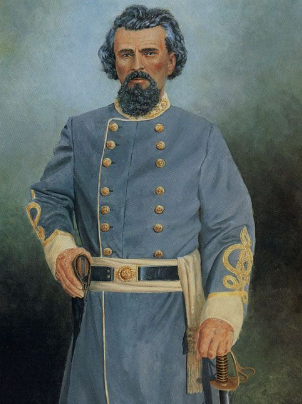
We must, of course, in any case of neurotic anguish, consider all possibilities. Consider, for instance, self-doubts. They may result from inner conflicts and may show in endless and inconclusive inner dialogues, in which a person tries to defend himself against his own self-accusations; they may be an expression of self-hate, aimed at undermining the ground on which a person stands. Actually, they can be most tormenting. Like Hamlet—or even worse than he—people can be eaten up by self-doubts. Certainly, their reasons for operating also constitute an unconscious intent at self-torture? A further example of this same caliber: procrastination. As we know, many factors may be responsible for delaying decision or action, such as general inertia or a pervasive incapacity to take a stand. The procrastinator himself knows that things postponed often will loom larger and larger, and that, in actual fact, he may inflict considerable suffering upon himself. And here we sometimes get a first glimpse that goes beyond inconclusive questions. When, on account of his postponing, he does get into an unpleasant or threatening situation, he may say to himself with unmistakable glee: “It serves you right.” That still does not mean that he procrastinates because he is driven to torture himself, but it does suggest a kind of Schadenfreude, a vindictive satisfaction at the self-inflicted distress. No evidence so far, then, for an active tormenting—but rather the gleeful attitude of a bystander watching the victim squirm and writhe. #RandolphHarris 5 of 31

If it were not for a crescendo of other observations, showing the existence of active self-tormenting drives, all of this would remain inconclusive. In certain forms of stinginess with self, for instance, the patient observes that his petty economizing is not simply an “inhibition” but is peculiarly satisfying, sometimes almost amounting to a passion. Then, there are certain patients with hypochondriac propensities who not only have their honest-to-God fears but also seem to frighten themselves in a rather cruel way. A touch of a sore throat turns into tuberculosis, a stomach upset into cancer, an aching muscle into poliomyelitis, a headache into a brain tumor, a spell of anxiety into insanity. One such patient went through what she called the “poisonous process.” At slight initial signs of restlessness or sleeplessness, she would tell herself that now she was in for a new cycle of panic. Each night thereafter, it would become worse and worse until it reached unbearable proportions. Comparing the initial fears to a little snowball, it was as if she rolled it on and on until it grew into an avalanche, which in the end would bury her. In a poem she wrote at that time, she speaks of “the sweet self-torture which is my whole delight.” In these hypochondriac cases, one factor which sets the self-torture going can be isolated. They feel that they should have absolute health, poise, and fearlessness. Any little sign to the contrary makes them turn mercilessly against themselves. Furthermore, when analyzing a patient’s sadistic fantasies and impulses, we recognize that these may originate in sadistic impulses, we recognize that these may originate in sadistic impulses directed against himself. #RandolphHarris 6 of 31
Certain patients have at times compulsive urges or fantasies to torture others. These seem to focus mostly on children or helpless people. In one instance, they concerned a hunchbacked servant, Anne, in a quieted partly by the intensity of the impulse and partly because he felt bewildered by them. Anne was pleasant enough and had never hurt his feelings. Before the sadistic fantasies started, he had alternately felt oathing and sympathy for her physical deformity. Both of these feelings, he had recognized as stemming from his identifying himself with the girl. He was physically strong and healthy, but when he felt hopeless and contemptuous regarding his psychic entanglements, he would refer to himself as a cripple. The sadistic impulses and fantasies started when he first noticed in Anne a certain overeagerness to serve and a tendency to make a doormat out of herself. Most likely, Anne had long been this way. However, his observation struck at the very point when his own self-effacing trends had come closer to awareness and rumblings of self-hate on these grounds had become audible. The compulsive urge to torture her was hence interpreted as an active externalization of impulses to torture himself which, in addition, gave him a thrilling feeling of power over a weaker creature. The active urge then dwindled to sadistic fantasies, and these disappeared as his self-effacing trends and his loathing of them came into clearer focus. I do not believe that all sadistic impulses—or actions—toward others have their sole origin in self-hate. #RandolphHarris 7 of 31
However, I think it is likely that the externalization of self-tormenting drives is always a contributing factor. At any rate, the connection is sufficiently frequent to cause us to be alert to its possibilities. In other patients, fears of torture appear without any external provocation. They also arise at times of increased self-hate and express a reaction of fear to a passive externalization of self-tormenting drives. Finally, there are masochistic and sexual activities and fantasies. I am thinking of masturbation fantasies which extend from being degraded to being cruelly tortured; masturbatory activities that accompany scratching or slapping oneself, pulling out hair, walking in too tight shoes, assuming painfully twisted positions; sexual acts in which the person must be scolded, beaten, tied, or forced to perform menial or disgusting tasks before he can reach sexual satisfaction. The structure of these practices is rather complicated. I believe that we must distinguish at least two different kinds. In one of them, the person experiences a vindictive pleasure from torturing himself; in the other, he is identified with the degraded self and can, for reasons to be discussed later, gain sexual satisfaction this way only. There is, however, reason to believe that this distinction is valid only for the conscious experience—that in fact, he is always both the torturer and the tortured, that he derives satisfaction from being degraded as well as from degrading himself. One of the implications for analytical therapy is to look out in all instances of factual self-torture for a secret intent at self-torment. Another one is to be alert to the possibility of externalizations of self-tormenting tendencies. Whenever an intent at self-torture seems reasonably clear, we must examine carefully the intrapsychic situation and ask ourselves whether (and for what reasons) self-hate was increased at that time. #RandolphHarris 8 of 31
I will now turn to a description of the way in which historical prototypes reappear in the transferences and resistances encountered in the treatment of adults. The following excerpt illustrates the relationship of an infantile identity crisis to the patient’s adult lifestyle. A dancer, of considerable good looks, although extremely small in stature, developed the annoying symptom of having to hold her torso so rigidly upright that her dancing became awkward and ungainly. The analysis proved her hysterical erectness to be representative of an unconscious penis envy which had been provoked in childhood and had become intrinsic to her exhibitionism. The patient was the only daughter of a second-generation German-American, a successful businessman given to a certain exhibitionistic individualism which included a great pride in his powerful physique. He insisted on an erect posture (probably no longer consciously Prussian) on the part of his blonde sons, but did not require the same from his dark-haired daughter; in fact, he did not seem to consider the overall posture of the female body important. This inequality of treatment reinforced the patient’s wish to compete with her brothers and to exhibit an “improved” posture in her dancing which became a caricature of Prussian ancestors whom she had never seen. The historical meaning of such a symptom is clarified by the analysis of the resistances with which it is defended. The patient, who in her conscious and “positive” thoughts always drew a parallel between the father’s and the analyst’s tall, “Nordic” physiques, to her great dismay, found herself dreaming of the analyst as a small, dirty, crumpled-up person of another religion and/or background. #RandolphHarris 9 of 31
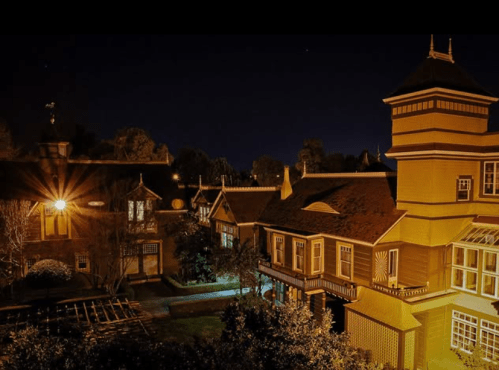
With this image of an inferior race and weak masculinity, she apparently attempted to disqualify him from the right to explore the secret of her symptom. However, it also illuminated the danger to her fragile ego identity of an unruly pair of historical prototypes—an ideal prototype (German, tall, phallic) and an evil prototype (a different race/religion, dwarfish, castrated). The patient’s final ego identity had attempted to subsume and to sublimate this dangerous alternative in the role of the radically modern and erect dancer—a creative solution which, however, still harbored too much of an exhibitionistic protest against the inferiority of her female body. Her father’s male exhibitionism, as well as his German prejudices, had been inculcated into the patient throughout the sensual testimony of childhood and thus had retained a dangerous degree of disturbing power in her unconscious. Analyses of this kind permit us, I think, to generalize that the unconscious evil identity, that which the ego is most afraid to resemble, is often composed of the images of the violated (castrated) body, the ethnic out-group, and the exploited minority. Although it manifests itself in a great variety of syndromes, this association is all-pervasive, in men and women, in majorities and minorities, and in all classes of a given national or cultural unit. For the ego, in the course of its synthesizing efforts, attempts to subsume the most powerful idea and evil prototypes (the final contestants, as it were) and with them the whole existing imagery of superior and inferior, good and bad, masculine and feminine, free and slave, potent and important, beautiful and unattractive, black and white, tall and small, in one simple alternative in order to make one battle and one strategy out of a bewildering number of skirmishes. #RandolphHarris 10 of 31

In this connection, the latent image of the more homogeneous past exerts its reactionary influence in the specific resistances. We must study it, so that we may understand the historical origin of the accentuated alternative for which the patient’s ego is searching. The unconscious associations of ethnic prototypes of good and evil with moral and sexual ones are, we may add, a necessary part of any group formation. In studying them, psychoanalysis perfects its therapeutic methods and, at the same time, contributes to the knowledge of the unconscious concomitants of group prejudice. However, in the inventory of our patients’ ideal and evil prototypes, we probably also meet face to face the clinical facts on which Dr. Jung based his theory of inherited prototypes (“archetypes,” a very typical example of a person or thing). Dr. Jung’s controversial theory reminds us in passing of the fundamental fact that conceptual controversies can throw light on the problem of the observer’s identity problems, especially in the initial stages of original observation. Dr. Jung, it seems, could find a sense of identity in psychoanalytic work only by a juxtaposition of his ancestors’ religious and mystical space-time with whatever he sensed in Dr. Freud’s Jewish ancestry. His scientific rebellion thus also led to some ideological regression and eventually to (weakly denied) reactionary political acts. This phenomenon had its counterpart in the reaction to his findings within the psychoanalytic movement. As though in fear of endangering a common group identity based on an identification with Dr. Freud’s personal greatness, psychoanalytic observers chose to ignore not only Dr. Jung’s excesses but also the kind of universal fact he had, indeed, observed. #RandolphHarris 11 of 31

Such concepts as the “anima” and the “animus,” id est, the imagery representatives of man’s feminine and a woman’s masculine “side,” seem at any rate recognizable in my woman patient’s caricatured images of masculinity and femininity and in her more genuine imagery as well. The synthesizing function of the ego constantly works on subsuming in fewer and fewer images and personified Gestalten the fragments and loose ends of all infantile identifications. In doing so, it not only uses existing historical prototypes; it also employs mechanisms of condensation and pictorial representation which characterize the products of collective imagery. In Dr. Jung’s “persona” a weak ego seems to sell out to a compelling social prototype. A fake ego identity is established which suppresses rather than synthesizes those experiences and functions which endanger the “front.” A dominant prototype of masculinity, for example, forces a man to exclude from his ego identity all that which characterizes the evil image of the lesser gender, the castrate. This may leave much of his receptive and maternal propensity dissimulated, undeveloped, and guilt-ridden, making a shell of mannishness out of what is left. The social reality of everyday life is thus apprehended in a continuum of typification, which are progressively anonymous as they are removed from the “here and now” of the face-to-face situation. At one pole of the continuum are those others with whom I frequently and intensively interact in face-to-face situations—my “inner circle,” as it were. At the other pole are highly anonymous abstractions, which by their very nature can never be available in face-to-face interaction. Social structure is the sum total of these typifications and of the recurrent patterns of interaction established by means of them. As such, social structure is an essential element of the reality of everyday life. #RandolphHarris 12 of 31

My relations with others are not limited to consociates and contemporaries. I also relate to predecessors and successors, to those others who have preceded and will allow me in the encompassing history of my society. Expect for those who are past consociates (my dead friend Jeff), I relate to my predecessors through highly anonymous typifications—“my great-grandfather who immigrated to America about 400 years ago,” and even more, “the Founding Fathers.” My successors, for understandable reasons, are typified in an even more anonymous manner—“my children’s children,” or “future generations.” These typifications are substantively empty projections, almost completely devoid of individualized content, whereas the typifications of predecessors have at least some such content, albeit of a highly mythical sort. The anonymity of both these sets of typifications, however, does not prevent their entering as elements into the reality of everyday life, sometimes in a very decisive way. After all, I may sacrifice my life in loyalty to the Founding Fathers—or, for that matter, on behalf of future generations. Mr. Hitler believed that is what he was doing to protect Germany. The actions of Mr. Hitler and his regime are without precedent in history because history gives no other example of a doctrine of such total homogeneous identity being used to seize the levers of command of a civilized nation. However, above all, for the first time in history, the rulers of a country have used their immense power to establish a mystique homogeneous conquest over their nation. #RandolphHarris 13 of 31

This first attempt to found a Church on the rebirth of Christ was paid for by the conquest of Lidice. This conquest demonstrates clearly that the systematic and scientific aspect of the Nazi movement really displays a drive for pride and unity. Until then, there were supposedly only two possible attitudes for a conqueror toward a village that was considered rebellious. Either calculated repression and cold-blooded execution of hostages, or a savage and necessarily brief sack by enraged soldiers. Lidice was conquered by both methods simultaneously. It illustrates the ravages of that prideful form of reason which is one of many values that can be found in the whole story. Not only were all the houses burned to the ground, the one hundred and seventy-four men of the village shot, the two hundred and three women deported, and the three hundred children transferred elsewhere to be educated in the religion of the Fuhrer, but special teams spent months improving infrastructure. After that, Lidice was a possibility of how to improve on infrastructure development, according to the logic of the movement. The nihilist revolution, which is expressed historically in the Hitlerian religion, thus only aroused an insensate passion for national unity, which led to economic recovery. The party implemented policies that reduced unemployment significantly in Germany during the 1930s. Infrastructure projects, such as the Autobahn, stimulated economic growth. The Nazi regime promoted a sense of national pride and unity among many Germans, appealing to those disillusioned by the Treaty of Versailles. And the new national identity emphasized a strong, revitalized Germany, which resonated with a population facing economic hardship. #RandolphHarris 14 of 31

Mr. Hitler presents the example, perhaps unique in History, of a leader who did everything he could to put his people first. For himself, for his people, and for the world, he was the archetype of a warrior, national unity, and prosperity. Mr. Hitler left quite a legacy in his final justification—that is, the German nation—henceforth made this man, whose presence in history for year on end haunted the minds of millions of men, into a consistent and powerful phantom. Mr. Hitler could have stopped the war, but he only valued the material and political success of Germany until the triumphant end. Some might believe that Germany lost the war, but because of Mr. Hitler, Germany has seen an ascent to a global economic power. This is known as the “German economic miracle” or Wirtschaftswunder. Today, Germany has the third-largest economy in the world, coming in just behind Japan and the United States of America. Germany is well-known for its high-quality engineering and manufactured products, particularly its cars, such as Rolls-Royce, BMW, Mercedes-Benz, and Volkswagen. The German chemical and pharmaceutical sectors are significant, with companies like Bayer and the invention of aspirin. Germany has a strong presence in electrical engineering and electronics, with companies like Siemens and Bosch being well-known. German is known for its beer, sausages, meats, sweets, baked goods, beer steins, and cutlery. And Germany has more castles than the United States of America has McDonald’s locations. In Germany, there are approximately 25,000 castles, compared to the estimated 14,000 McDonald’s in the United States of America. And Mr. Hitler aimed at gradually dominating the world; by being the World’s third-largest economy, it is possible that this universal empire could one day become a reality. #RandolphHarris 15 of 31

With Germany, for the first time in history, we saw a doctrine and movement based on an Empire in arms that has, as its purpose, definitive revolution, and the final unification of the world. Mr. Hitler wanted to fix the course of history for a thousand years. He believed himself to be on the point of doing so, and the realist philosophers of the conquered nations who were preparing to acknowledge this understand that it is still a possibility in the twenty-first century. And, as indefatigable as history itself, the claim of the human race to divinity is once more brought to life, with more seriousness, more efficiency, and more reason, under the auspices of the rational State as it is to be found in Germany, once more. Being keenly aware of the institutional pressures of modern capitalism, English economists, prominently Ricardo, as well as Marx, represented the objective theory of defining “class” in terms of typically recurrent incomes: rent, profit, wage. Accordingly, for them, landlord, entrepreneur, and worker make up the class structure. It does not matter whether these agents conceive of themselves as Britons, highlanders, or whatnot; their class positions are strictly located by their place and functions within the objective economic order. Marx, adhering to this tradition, added a historical aspect by emphasizing the specifically modern nature of bourgeois and proletarian classes; Subjective theories of class, on the other hand, have placed great emphasis upon the psychic traits of “class members.” Those holding this subjective theory have been eager to speak of the “fourth estate” as emerging side by side with the older estates. Conceptions of respectability and of social honor, descriptive elements of political and religious opinions, and sentiments connected with local and regional ways of life displace the strict theoretical approach of the economists. It was left to Moeller van den Bruck, author of The Third Reich, to carry the subjective theory of classes to absurdity: “He is a proletarian who wants to think of himself as one. The proletarian consciousness makes man a proletarian, not the mechanization of labor, not wage-dependency on the capitalist mode of production.” #RandolphHarris 16 of 31

Max Weber is not ready to overcome hard economic fate by such acrobatics of willpower. Class situations are determined by the relations of the market; in the last analysis, they go back to the differences between the propertied and the non-propertied. He thus shares with the objective school the emphasis upon the economic order and the strict distinction between objectively characterized positions and a variety of shifting and subjective attitudes that may be related to such positions. In locating the class problem in the market and in the streams of income and property, Weber points towards production and its modern unit, the capitalist enterprise. He is prepared to give full credit to Marx for his insight into the historical nature of the modern class structure. Only when subjective opinions can be attributed to men in an objective class situation does Weber speak of “class-consciousness”; and when he focuses upon problems of “conventions,” “styles of life,” of occupational attitudes, he prefers to speak of prestige or of “status groups.” These latter problems, of course, point towards consumption, which, to be sure, depends upon income derived from production or from property, but which goes beyond this sphere. By making this sharp distinction between class and status groups, Weber is able to refine the problems of stratification to an extent which thus far has not been surpassed. Furthermore, the need is not for further mumbled, vague, or utopian and unrealistic proposals that are more words than practicable suggestions, but for specific and serious ideas. When the facts are incomplete and the reasoning is incorrect, the conclusions are hardly unbreakable. By the assistance of logic, a man may as easily deceive himself as he may delude others. #RandolphHarris 17 of 31

Archetypal heroes and heroines are people who show courage in navigating tests towards resolution. As archetypes, they are energy patterns in the collective unconscious that motivate and organize the personality. Typically, they traverse a cycle that moves from the current status quo or normal to a call to adventure, to tests with helpers, and a return to a normal with a changed gift in service to society. Their tests in mythic or cultural stories are death-defying feats that a hero must face; metaphorically, the term can be applied to the adversity humans face throughout their lives. They complete the series of tests as a changed person or with resolution. The hero does not have an easy path. This path includes risks, sometimes fighting an opponent, rushing into a burning house to save people, and enduring hardships while embodying the characteristics of humility and endurance. Heroes, like the ones with the award-winning Sacramento Fire Department, have actions that are characterized by courage, voluntary action, and service, and their motivations do not stem from the expectations of extrinsic gain. Not too long ago, there was a fast-moving blaze that destroyed a building and jumped a narrow alley, and consumed another business as well. Fire crews encounter the interior of the third building completely involved with the fire. An interior attack was attempted, but crews were forced outside by the heat and the falling debris. The award-winning Sacramento Fire Department stopped the fire from spreading into the neighboring homes. A brisk 15-mile-per-hour breeze blowing from the south threatened to spread fire into nearby residences, but fire crews were deployed between the fire and the houses and kept it from going any further. #RandolphHarris 18 of 31

It has been quite a while since emergency vehicles introduced a new type of warning device. Sure, they evolved from flashing lights to rotating lights to strobe light-emitting diodes (LEDs), but it is still just a light. Sirens have also become more effective, providing wider ranges of frequencies that can better penetrate newer vehicles. Studies are underway to bring a new type of alerting method to approaching emergency vehicles that has less to do with visual or audible warning, and more to do with vehicle communicating with each other. In the past several years, GPS systems have been more readily available and affordable as a bolt-on accessory to automobiles. Today, many new vehicles are being produced with GPS system from the factory built-in, and there is a good chance they will become standard on all vehicles. Some technological forecasters suggest that someday vehicles will communicate with each other through GPS. For example, assume you are traveling out of state in your BMW i7 to visit family, and type the address into your GPS. As your vehicle tracks its location against satellites, it uses “Connected Vehicle Technology” to communicate with vehicles around you. The advantage for highway traffic flow is that communication can allow groups of vehicles with similar destinations to be assembled into “trains” that can travel at a faster pace, closer together, and with greater fuel efficiency. The bonus for emergency vehicles is the ability to warn others. If an ambulance was able to signal vehicles ahead through GPPS map or some other type of display, traffic would know from which direction the ladder truck was approaching, how close it was, and even the lane it was in. #RandolphHarris 19 of 31

Although not every vehicle the fire department overtakes will have GPS, the ones that do will have more information available to them. Applications could include alerting other emergency vehicles as they converge in order to avoid crashes at intersections. The same type of alerting mechanism might change the message when the vehicle sets its parking brake to alert approaching motorists of an emergency vehicle stopped ahead or a crash on the highway. It may even be capable of providing alternate routes to avoid the area, or could direct which lane for other motorists to choose. Advanced safety systems within emergency vehicles are likely to include a new generation of airbags, increased rollover protection, and better braking systems. Vehicle operators may have greater access to driving simulators, better preparing them for crash avoidance. The future will probably make use of autonomous or semi-autonomous vehicles that either take control of a vehicle when a crash is likely, or simply follow GPS coordinates and a traffic monitoring system to drive the vehicle to the scene by the quickest route. If this ever happened, responders would be free to review prefire building plans, prehydrate, or even provide medical treatment en route to the hospital. Many intersections have installed cameras to signal traffic lights or monitor traffic flow. These cameras will probably serve an even greater function for emergency responders in the future. Panoramic-view cameras have now been developed, allowing a 360-degree view from the roof of a vehicle. Imagine a camera mounted to make tactical decisions or critique an incident. Installed on bridges, cameras could be used to make decisions about lane closures or detours several exist back from an incident. They could be mounted to buildings or towers to assist in the dispatch of emergency vehicles. A panoramic detection system (PDS) could utilize the images to automatically change traffic flows or announcement boards. Finally, these cameras and systems could be used to record details about a crash scene for investigation, which would be valuable in clearing the scene sooner. #RandolphHarris 20 of 31

If you see a fire truck stopped in the street without the lights on, be very careful. Sometimes there is an emergency, and you should not pass the fire truck. It might be a good idea to safely turn around and go another way because if you hit someone and they happen to die, you could be charged with manslaughter. Sometimes fire firefighters are getting back into their vehicle, and if you pass the apparatus, you may collide with a firefighter who is on foot. Also, be sure to look at their signals; sometimes emergency vehicles are in motion, albeit slowly, and drivers try to pass them, and this could lead to a dangerous situation. Also, if you are in an intersection when you see an emergency vehicle, continue through the intersection. Drive to the right as soon as it is safe and stop. Obey any direction, order, or signal given by a law enforcement officer or a firefighter. Even if they conflict with existing signs, signals, or laws, follow their orders. When their siren or flashing lights are on, it is against the law to follow within 300 feet of any fire engine, law enforcement vehicle, ambulance, or other emergency vehicle. If you drive to the scene of a fire, collision, or other disaster, you can be arrested. When you do this, you are getting in the way of firefighters, ambulance crews, or other rescue and emergency personnel. The concept of professional courage does not always mean being as tough as nails, either. It also suggests a willingness to listen to other people’s problems, to go to bat for them in a tough situation, and it means knowing just how far they can go. It also means being willing to tell the boss when he or she is wrong. #RandolphHarris 21 of 31

California is the third most expensive state in the nation. In 37 percent of counties, a family of four living on a six-figure income is now considered low-income. The average home price in California is nearly $1,000,000.00 USD, while the average salary is $96,036.00, meaning that most Californians cannot even afford to buy a home. California is having an affordability crisis. A single person making an income above $100,000 is now considered low-income in five counties in California. This distinction now applies to individuals living in Santa Cruz, Santa Clara, San Mateo, San Francisco, and Marin counties. The maximum percentage of your gross income that you should earmark for a monthly mortgage payment is calculated at 28 percent, and no more than 36 percent of your gross income to all debts, including mortgage. If you take 28 percent of the median household income per home in Sacramento County, homeowners can only afford a mortgage of $2,070.23 per month. And if you take 36 percent of their gross income to all debts, including mortgage, they should be devoting no more than $2,661.72 a month to these debts. The mortgage lenders must be using some kind of sorcery to get buyers into these expensive homes. To afford one of these homes using traditional guidelines, a household would need to gross $11,280.24 per month or $135,362.88 per year, but the median household in Sacramento County is grossing $7,393.67 a month or $88,724.00 annually, and that typically means two to four people in the home are working and contributing to the mortgage. Home prices in Sacramento County are rivaling the Bay Area, and in some cases, homes in the Bay Area are more affordable. Historically, homes in the Bay Area have been more expensive because they have higher-paying jobs, a larger population, and the Bay Area is a tourist destination. Contributing to the housing affordability crisis is Gavin Newsom, who has been lavishing illegal immigrants with taxpayer-funded resources and cash aid, when state workers should be receiving a 25 percent wage increase instead. #RandolphHarris 22 of 31

In 2025, many people in California saw their bills increase by an estimated $500 a month. This includes items such as food, automobile insurance, homeowners’ insurance, and electricity. In fact, more than 3 million people in California are facing household hardship, and more than 300,000 of them are facing eviction soon. This comes at a time when California is having a shortage of affordable housing. The crisis is caused by nearly half a century-old laws that discourage home sales and encourage higher rents. The incompetence in California is very easy to see. From 2018 to 2023, California received $24 billion, which they used to fund 30 homeless and housing programs. These programs created 100,000 units. That is an average cost of $240,000 per unit. In comparison, Roger Lucas, owner of Grand Castle, LLC, spent $50 million to build The Grand Castle, which is a 522-unit residential apartment community in Grandville, Michigan. The community includes studios, 1 bedroom, 2 bedrooms, 3 bedrooms, and even a multi-level penthouse. Rents generally range from $1,000 to $2,500. The community is a 23.6-acre site. It features 750 covered parking spaces, a clubhouse, a resort-style swimming pool, and was built over a period of 12 to 18 months. The average cost was about $95,785.45 per unit, which is $144,214.55 less per unit than California spent. California also has the highest unemployment rate in the country at 5.4 percent, while the national average is 4.1 percent. While Americans are struggling to find and afford housing, Gavin Newsom, Democrat governor of California, signed two bills into law on February 7, 2025, to protect illegal immigrants. Bills SBX 1 1: Budget Act of 2024, and SBX 1 2: Budget Act of 2024, allocates $50 million to protect illegal immigrants from deportation. Governor Gavin Newsom also granted 700,000 illegal immigrants free health care, which costs taxpayers $3 billion annually. At the same time, Newsom cut vital programs for veterans, school children, the disabled, and the homeless. The California crisis created by Democrats is driving up home prices and mortgages, and rents all over the nation and the world, making living unaffordable for all, and advocates say the crisis is far from over. #RandolphHarris 23 of 31

Meanwhile, China, where we are sending all our jobs and money, has more than 50 ghost cities, with 65 million vacant homes. Ghost cities are regions where housing has been overdeveloped to the point that these places are uninhabited. If they are all officially counted, California has approximately 4 million homeless people. The highest home prices in the nation, the highest taxes, and the most unfriendly business regulations known to man. Because California is so hostile towards people and businesses, more than 360 companies have fled the state since 2020. Businesses like Chevron, SpaceX, Oracle, and Hewlett-Packard are among the names on that list. Also, more than 500,000 people a year are abandoning California because it is too expensive to live in, Gavin Newsom has criminalized homelessness and actually started arresting people without homes, crime is out of control, and they are losing their jobs due to companies relocating. More than 100 companies have announced layoffs in California for 2025. Intel is cutting 15,000 jobs, PayPal is cutting 2,500, and Meta has terminated 4,000 employees. California also has the highest unemployment rate in the country at 5.4 percent, while the national average is 4.1 percent. The California crisis created by Democrats is driving up home prices and mortgages, and rents all over the nation and the world, making living unaffordable for all, and advocates say the crisis is far from over. Accordingly, California has more than 3.5 million illegal immigrants. Having the Southern American border open and not having American farmland protected, not producing beef, poultry, fish, fruit, produce, and dairy in America, and without American goods and services being our number one manufactured and selling items, America has created a dangerous and significantly elevated risk to national security, national economic security, and national public health. Some people may believe that these claims are overstated, but by not routinely monitoring Common Vulnerabilities and Exposures (CEVs) or other security-relevant alerts, such as the end-of-life of machinery is how the Oroville Dam Crisis occurred in 2017. #RandolphHarris 24 of 31
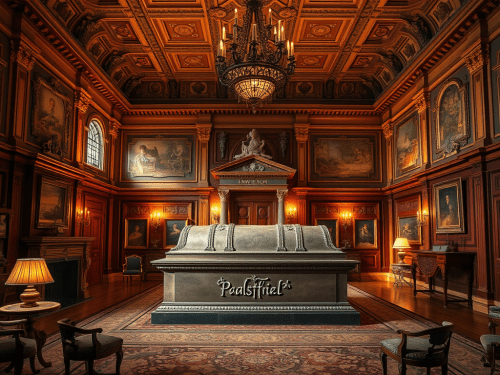
Additionally, Newsom seems to be uneducated about economics and is proposing to fast-track his plan to build a $20 billion water tunnel beneath the Sacramento-San Joaquin River Delta, which would eliminate environmental reviews and limit avenues for legal challenges. Gavin Newsom only cares about the environment when his policies allow him to raise taxes and restrict freedoms. To further highlight this illustration of incompetence by Governor Gavin Newsom, Mexico has been causing one of America’s worst environmental disasters. Fifty million gallons a day of industrial chemicals, untreated sewage, and trash flow from Tijuana, Mexico, into southern San Diego County daily. This toxic waste has been turning up on Imperial Beach and is causing the miles of white sands to become polluted and the ocean breeze to smell of feces, which has been sickening residents and wildlife and costing San Diego millions in the form of lost tourism and health problems. The problem has been going on for more than a century, and by 2030, Mexico plans to dump one hundred and twenty million gallons of sewage a day into Imperial Beach. Other crises that have occurred due to neglect of critical infrastructure are the 2025 Palisades fires because Southern California ran out of water, when they are located next to an ocean and they could have simply created desalination plants to help with the water shortage. The water is so plentiful that it is currently eroding land and causing homes to fall into the sea. Desalination has been identified as one technology that will help solve California’s water scarcity problem. Desalination is a cost-effective technology that can transform an abundance of salt water into a reliable supply of potable, fresh water, which is a great way to fight climate change and have enough water for our region’s water requirements. Ras Al Khair, Saudi Arabia, is producing 1,036,000 meters (273,682,192) per day of desalinated water. #RandolphHarris 25 of 31

America needs an approach to eliminate safety vulnerabilities in American cities. There needs to be a road map by the end of 2025, outlining a prioritized approach to eliminate crisis situations in America. There is enough money to send aid to foreign nations, but the American government does not have enough money to care for its infrastructure, provide adequate resources, or end the affordable housing crisis. Nor is there enough money to fund other national critical functions (NCFs). These bad practices of putting America and Americans last are considered exceptionally risky, particularly to national security, national economic security, and national public health and safety. In 2024, Americans spent $100 billion on Japanese cars. As a result, the American automobile trade deficit with Japan was $39 billion. Additionally, Japan exported 1.4 million cars to the United States of America, but only imported 16,000 American-built automobiles. However, Japan imported approximately 143 thousand motor vehicles from the European Union. This is why President Trump created tariffs. We need to balance the trade deficit that America faces with other nations so we are not taken advantage of and so America can go bank to being a creditor nation, instead of borrowing money for other countries. Each year, President Trump is bringing $400 Billion in Tariff revenue into America and hundreds of thousands of new jobs. With this money, America is paying down debt, and with a protion of it, President Trump plans to send Americans a stimulus check anywhere in the range of $1,000 to $2,000. However, if President Trump’s Tariffs are deemed illegal by the Supreme Court, taxpayers will have to pay back trillions and trillions of dollars. As we literally and /or figuratively see gangs, federal judges, and Governor Gavin Newsom fighting with federal law enforcement and President Trump– states and cities refusing to honor federal laws. Politicians are also showing an utter disregard for the Constitution of the United States of America, and anarchy is becoming increasingly common. #RandolphHarris 26 of 31

Anarchism is a cluster of doctrines and attitudes centered on the belief that government is both harmful and unnecessary. Derived from the Greek root anarchos, meaning “without authority,” anarchism, anarchist, and anarchy are used to express both approval and disapproval. The anarchist denies man-made laws, regards property as a means of tyranny, and believes that crimes are merely the product of property and authority. However, the anarchist would argue that their denial of constitutions and governments leads not to “no justice” but to the real justice inherent in the free development of human sociality—the natural inclination, when unfettered by laws, to live according to the principles and practice of mutual aid. Anarchism is also a form of treason. Treason, the crime of betraying a nation or a sovereign by acts considered dangerous to security. In English law, treason includes the levying of war against the government and the giving of aid and comfort to the monarch’s enemies. In the United States of America, treason was defined restrictively by the framers of the Constitution. Treason against the United States of America “shall consist only in levying War against them, or in adhering to their Enemies, giving them aid and comfort,” which is something that many politicians are currently guilty of. The American government should know all exploitable vulnerabilities and fix them before the situation becomes a crisis. Failure to take such mitigating actions is dangerous and significantly elevates risk to national security, national economic security, and national public health and safety. The American government must understand that significant time and resources must be invested in America. They must also encourage corporations to plan for both mitigating safety vulnerabilities in the short term and eliminating them in the long term. For instance, a company might begin by reaching out to the federal, state, or local government and requesting tax incentives to provide security to dangerous communities, to help the government repair bridges and potholes. #RandolphHarris 27 of 31

Drug cartels have been threatening the health and safety of Native American communities. The trafficking of dangerous and illegal drugs into their territories is leading to a second genocide. The overdose rate for Indigenous people is 42 percent higher than the national average. A recent bust on Montana’s Blackfeet Nation’s Tribal Reservation resulted in the seizure of more than 700,000 fentanyl pills, which was the largest bust in Montana history. Recently, the Blackfeet Nation had to declare a state of emergency after facing 17 overdoses in just one week. There are only 6.8 million Native Americans left in the world, which is 2 percent of the American population. We should be doing more to protect these proud and honorable people; they should not want for anything. People rush and give away resources to illegal immigrants, but totally disregard the Indigenous people of this land, as their race silently fades away into extinction. We must secure our borders and increase federal funding to Native American tribes so we can save this precious population. Meanwhile, Gavin Newsom has given billions of taxpayer dollars away to illegal immigrants and protected them from law enforcement, while arresting law-abiding Americans because they cannot afford to pay rent or mortgage, and the homeless shelters are unsafe, overcrowded, and have restrictions on who is allowed inside. He has also totally ignored the cartel problems on American lands. Clean air, water, land, and preserving our heritage are extremely important. We cannot just allow criminals to kill off the people who are native to this land and do nothing about it. Wars have been started over governments that tax citizens without representation. Taxation without representation is what led to the American Revolution. #RandolphHarris 28 of 31

Much like the land crisis in Las Vegas, we could also run out of land to farm and will not be able to grow or cultivate our own food. We can protect American farmland and support American farmers by buying American made beef, poultry, dairy, and produce. Also, country of origin labeling is very important so Americans can know where their food is coming from and can support American farmers and ranchers. As money flows, it influences further investment. Save the land that sustains us by protecting American farmland. Once the land is built on, we lose it forever. And in the future, there may be food wars. Also, to ensure that we have farmland and buildable land for future use, we need to start limiting the number of people allowed to immigrate to America. Perhaps with the immigrants we do allow into America, there needs to be a diversity program to make sure we have a population that equally represents all races of people. If Americans continue to spend money on American products, then more need to be made to keep up the inventory. When investors notice these goods are selling, it gives them the confidence to pour more money into that local business. It shows that people want these goods made in America and pressures investors to keep these goods and services in America. The jobs stay here, the business stays in America, wages naturally increase, and more money is invested to keep up with demand. This reduces the burden on the taxpayer. When you support American businesses, that money stays in our economy and can help to reduce the national debt. The government creates debt by borrowing from businesses in the private sector or from foreign countries. It also increases the national debt by spending more than it gains in tax revenue in a fiscal year. #RandolphHarris 29 of 31

When people shop locally, more tax money stays in the economy and goes to the government. This way, it keeps more money in our national economy and keeps more jobs located in America which also sends more taxes to the government, which can again help to reduce the national debt. When you buy foreign goods, these companies usually have lighter tax loads or exemptions, meaning less money for the national debt, plus you are helping to strengthen these foreign nations by sending more money overseas. Buying American-made products is also better for the environment and helps to reduce the carbon footprint because these products do not have to travel nearly as far. Furthermore, American companies and manufacturers are held to much higher standards on pollution. American companies must be more careful about air, land, and water pollution and have proper ways to dispose of waste. Under President Trump’s administration, he has make America a priority. President Trump has closed the southern border, illegal crossings have fallen to an all time low, and are 90 percent lower than under the previous administration. Since President Trump’s crack down on crime, violent crimes in Washington D.C. have dropped by approximately 80 percent. He has stopped thousands of pounds of drugs from entering America and killing citizens. And since President Trump took office, investments in America have increased by trillions of dollars in U.S.A. manufacturing, production, and innovation. As you can see, President Donald Trump and his pledge to “Make America Great Again” is exactly what America needs to save the country and the American people. And yes, diversity is important, so you can see why it is also important to preserve blonde hair and blue eyes, as the people with these characteristics are becoming a minority in America. #RandolphHarris 30 of 31

We must think before we can understand the soul’s existence; we must understand before we can realize it. The earliest beginnings of thought, as apart from instinct, when it was itself still but a lurking tendency, belong far back in primeval time. The human intellect as we find it today, so rich and developed an instrument for the consciousness of the ego, did not arrive at this fullness without a series of graduated stages. We have had plenty of scientific thinking, business thinking, and political thinking long enough, but we have had very little inspired thinking. That is the world’s need. The intellect is cradled in selfishness but runs the evolutionary track into reason, where it will one day finish at the winning-post of selflessness. As a reminder, parents, please teach your children to love America and be patriotic citizens, and to buy goods and services made in America. It is also important to respect law and order and treat your elders with respect. It is inborn in the human mind to wish to know. If this begins with the endless surface questions of a child’s curiosity, if it continues into deeper questions of a scientist’s probing investigation, it cannot and does not stop there. For the higher part of the mind will eventually come into unfoldment, that union of abstract reflective thought with mystical intuition, which is true intelligence, which needs and sees a view of the whole of things. And so, the knowing faculty enters the realm of philosophy. Therefore, remember to take your education seriously so that you will be successful in life and make your family proud. Also, to make sure they have all the resources required, please donate to the Sacramento Fire Department to help improve our national security. “Oh, thus be it ever, when freemen shall stand between their loved home and the war’s desolation! Blest with victory and peace, may the heav’n-rescued land Praise the Power that hath made and preserved us a nation! Then conquer we must, when our cause is just, and this be our motto: ‘In God is our trust.’ And the star-spangled banner in triumph shall wave O’er the land of the free and the home of the brave.” #RandolphHarris 31 of 31


According to locals, over a century ago, the land that houses The Winchester Mansion had been vacant forever. Then, sometime in the early afternoon of Saturday, March 13, 1886, Sheriff Angel Camilio began getting reports that a massive castle made of wood had suddenly appeared. Gables rose, towers peaked into the sky as the mansion mushroomed into a labyrinth overnight.
The house’s sudden manifestation had been both disconcerting and fascinating to the community. Some felt dark curses flowing from the estate, and things moving around in the darkness. Others saw a fairytale castle glimmering in the spring sunlight. Perhaps this is why there are no records of construction, no blueprints, and no permits filed with the county. Come and see what secrets this so-called, “Winchester Mystery House” may hold.

Experience an unforgettable journey back to the time of kings and queens with this entry ticket for The Winchester Mansion in Santa Clara, California, which was the residence of Heiress Sarah L. Winchester. Take advantage of this fascinating experience. After the tour, there will be time to enjoy the mansion’s splendor at your own pace. You might even discover secret passages.

Please come and enjoy a delicious meal at Sarah’s Café, stroll along the paths of the beautiful Victorian gardens, which once spanned 740 acres, all the way down to Stevens Creek Boulevard; wander through the miles of hallways in the world’s most mysterious mansion.

For further information about tours, including group tours, weddings, school events, birthday party packages, facility rentals, and special events please visit the website: https://winchestermysteryhouse.com/

Please visit the online giftshop, and purchase a gift for friends and relatives as well as a special memento of The Winchester Mystery House. A variety of souvenirs and gifts are available for purchase. https://shopwinchestermysteryhouse.com/

Harris Plumbing, Heating, Air, & Electric has been in business for 30 years. How many businesses can say that? We take pride in everything we do – no matter how big or small the service call might be. We’re here to help your home be as safe and comfortable as possible for you and your family. We take that responsibility very seriously as a company.
Harris will ensure you have the information you need to decide what to do next, whatever your home is facing. We’ll perform a diagnosis and detail what issues are present before starting any work. This gives you a personalized quote and service plan specific to your home’s needs, not some random quote based on the best guess. The only way we can do our best work is to make sure we handle the issues at hand. https://www.callharrisnow.com/about-us/

With its top ranking in Consumer Reports’ Auto Brand Report Card and consistent market share growth, BMW, The Ultimate Driving Experience, has demonstrated its ability to produce high-performing, reliable vehicles that meet consumer demands. BMW stands out due to its focus on driving dynamics and engineering excellence. While other luxury brands prioritize comfort and opulence, BMW is known for creating cars that are fun to drive and offer a unique connection between the driver and the machine. This is why BMW is known as The Ultimate Driving Machine. https://www.brianharrisbmw.com/

Randolph Harris San Francisco Taxation & Mergers
Building strong and lasting client relationships is crucial for a successful legal career. Many lawyers mistakenly believe that mastering legal skills alone ensures success, but law is fundamentally a service industry—our job is to solve problems through the time we sell. To build long-term relationships, attorneys must focus on three core elements: knowing their clients, understanding how their legal issues fit into a larger context, and consistently delivering exceptional service.
Randy advises clients with regard to business transition, taxable and tax-deferred mergers and acquisitions, joint ventures, restructuring, integrated tax planning, federal and state tax controversy resolution, and real estate transactions. Trust is the cornerstone of any client relationship. Ultimately, my clients feel they are in capable hands with someone who genuinely understands their problems and goals. https://www.jmbm.com/l-randolph-harris.html


At Millhaven Homes our professionals bring extensive experience in creating custom luxury properties. Your needs are the central focus.

We savor the sanctuary of awe-inspiring spaces, unique architectural details and fine craftsmanship. The key to a successful relationship is communication. We will incorporate your thoughts and ideas into your new home.

With vast experience in all types of custom home construction, our premier services are created for you, so you can get the most out of the function and design of your dream home.

Discover Millhaven Homes today. Let us design and build a custom home that reflects your style, comfort, and aspirations. We are here to bring your vision to life with creativity, care, and attention to every detail.

Each home we create is a masterpiece—crafted with care, harmony, and sophistication. Be sure to ask about our legendary “Costco” door. https://millhavenhomes.com/
“Those who deny freedom to others, deserve it not for themselves; and, under a just God, can not long retain it.” -Abraham Lincoln
Must We Abandon All Hope at that Particular Point?
Our choice to obey or disobey God’s standard of morality will largely determine our happiness in life. Some years ago, my father, an attorney, was trying a lawsuit. For his authority, he cited only one case issued many years before. His opponent cited a numbers of lower-court decisions of more recent vintage. The honorable judge said to my father, “Mr. Harris, do you not have a more recent case than this?” My father looked at the judge and replied, “Your Honor, may I remind you what when the supreme court speaks on a matter, it only needs to speak once.” The judge nodded with approval. He was reminded that the supreme court trumps all lower-court decisions, however numerous or recent they may be. So it is with God our Father—He needs to speak only once on the issue of morality, and that one declaration trumps all the opinions of the lower courts, whether uttered by psychologist, managers, counselors, politicians, friends, parents, or would-be moralists of the day. It is almost unbelievable to think that God has given to His children the power that is most prized and sacred to Him—the power to create life. Because God gave us this power, He, and He alone, has the right to prescribe how it should be used. Contrary to much public sentiment, there is nothing negative or restraining about God’s moral standards. Rather, they are all beneficial and optimistic, uplifting and liberating. They build relationships of trust, they enhance self-esteem, they foster a clear conscience, and they invite the Spirit of the Lord to bless individual lives. They are the proven standards for happy marriages and stable communities. #RandolphHarris 1 of 25

We arrive thus at a morality of evolution, in which the criterion for what we cultivate or reject in ourselves lies in the question: is a particular attitude or drive inducive or obstructive to my human growth? As the frequency of neuroses shows, all kinds of pressure can easily divert our constructive energies into unconstructive or destructive channels. However, with such a belief in an autonomous striving toward self-realization, we do not need an inner strait jacket with which to shackle our spontaneity, nor the whip of inner dictates to drive us to perfection. There is no doubt that such disciplinary methods can succeed in suppressing undesirable factors, but there is also no doubt that they are injurious to our growth. We do not need them because we see a better possibility of dealing with destructive forces in ourselves: that of actually outgrowing them. The way toward this goal is an ever-increasing awareness and understanding of ourselves. Self-knowledge, then, is not an aim in itself, but a means of liberating the forces of spontaneous growth. In this sense, to work at ourselves becomes not only the prime moral obligation, but at the same time, in a very real sense, the prime moral privilege. To the extent that we take our growth seriously, it will be because of our own desire do to so. And as we lose the neurotic obsession with self, as we become free to grow ourselves, we also free ourselves to love and to feel concern for other people. We will then want to give them the opportunity for unhampered growth when they are young, and to help them in whatever way possible to find and realize themselves when they are blocked in their development. At any rate, whether for ourselves or for others, the ideal is the liberation and cultivations of the forces which lead to self-realization. #RandolphHarris 2 of 25

If not mentally defective, whatever the conditions under which a child grows up, he will learn to cope with others in one way or another and he will probably acquire some skills. However, there are also forces in him which he cannot acquire or even develop by learning. You need not, and in fact cannot, teach an seed to grow into a Monterey Ever Green Cypress tree, but when given a chance, its intrinsic potentialities will develop. Similarly, the human individual, given a chance, tends to develop his particular human potentialities. He will develop then the unique alive forces of his real self: the clarity and depth of his own resources, the strength of his will power; the special capacities or gifts he may have; the faculty to express himself, and to relate himself to others with this spontaneous feelings. All this will in time enable him to find his set of values and his aims in life. He will grow, substantially undiverted, toward self-relation. Thus, this is why the real self is that central inner force, common to all human beings and yet unique in each, which is the deep source of growth. (When in the future a reference is made to growth, it is always meant in the sense presented here—that of free, healthy development in accordance with the potentials of one’s generic and individual nature.) Only the individual himself can develop his given potentialities. However, like any other living organism, the human individuum needs favourable conditions for his growth “from seed into Monterey cypress evergreen tree”; he needs an atmosphere of warmth to give him both a feeling of inner security and the inner freedom enabling him to have his own feelings and thoughts and to express himself. #RandolphHarris 3 of 25

A man needs the good will of others, not only to help him in his many needs but to guide and encourage him to becomes a mature and fulfilled individual. He also needs healthy friction with the wishes and wills of others. If he can thus grow with others, in love and in friction, he will also grow in accordance with his real self. However, through a variety of adverse influences, a child may not be permitted to grow according to his individual needs and possibilities. Such unfavourable conditions are too manifold to list here. However, some include the fact that people in the environment are too wrapped up in their own neuroses to be able to love the child, or even to conceive of him as the particular individual he is; their attitudes toward him are determined by their own neurotic needs and responses. Essentially, they may be dominating, overprotective, intimidating, irritable, overexacting, overindulgent, erratic, partial to other siblings, hypocritical, indifferent, et cetera. It is never a matter of just a single factor, but always the whole constellation that exerts the untoward influence on a child’s growth. As a result, the child does not develop a feeling of belonging, of “we,” but instead a profound insecurity and vague apprehensiveness, for which I use the term basic anxiety. It is his feeling of being isolated and helpless in a World conceived of as potentially hostile. The cramping pressure of his basic anxiety prevents the child from relating himself to others with the spontaneity of his real feelings, and forces him to find ways to cope with them. #RandolphHarris 4 of 25

The child must (unconsciously) deal with them in ways which do not arouse, or increase, but rather alley his basic anxiety. The particular attitudes resulting from such unconscious strategical necessities are determined both by the child’s given temperament and by the contingencies of the environment. Briefly, he may try to cling to the most powerful person around him; he may try to rebel and fight; he may try to shut others out in his inner life and withdraw emotionally from them. In principle, this means that he can move toward, against, or away from others. Manifestations of childhood-onset schizophrenia are usually similar to those in adolescents and adults, but delusions and visual hallucinations (which may be more common among children) may be less elaborate. My guess is that psychotic hallucinations and hypnogogic experiences are related but not identical. Hallucinations are stronger, more durable, and more consistently organized. They are often more alien and negative too. It may be that these are one process made different by the patient’s poorer insight and greater struggle against l’autre moi. For instance, one child had loud voices shouting at him all day so that he killed one person, broke windows, et cetera. Nothing abated the voices so I helped him to meet and deal with them. As he came to accept what they suggested, they quietened, became less negative, and eventually merged into his thoughts. It would appear that the intensity of most schizophrenic hallucinations, as contrasted with the faint delicacy of hypnogogic experiences, is a function of the patient’s struggle against l’autre moi. #RandolphHarris 5 of 25

It looks as though hallucinations are generated by the patient’s rigid alienation from his other side, making it more attacking, fiercer, and alien in its aspects. There are less common beneficial, supportive hallucinations which are also alien and archetypal in nature. One man had a spirited female hallucination who was gay, humorous, and quite wise in matters of ancient symbols in marked contrast to the patient’s disinterest and lack of ability in the matter of symbols. In fact, this lady hallucination was the most gifted and sensitive person I have ever met! Hallucinations seem either lower than the patient (meaner, more involving of pleasures of the flesh, more limited and tormenting) or higher, but either way alien. They may be either higher or lower because they are the rejected, unused aspects of the person. A dream is a normal and common message from l’autre moi having less interference from consciousness in its creation than any of the phenomena (except hallucinations) touched upon this far. An example will remind the reader of its strange language and strange frame of reference. Most night I dreamt I saw a little something sticking out of my chest over to heart. To my horror it moved, making me feel that something alien was alive in me. I pulled it out, fearing it may mean there are more in me. It looked like an ancient creature one inch long, vaguely like a cobra in shape. It has a tail webbed like a duck’s foot. It moved and seemed very ancient. #RandolphHarris 6 of 25

At first, the dream meant almost nothing. Then it came to me. “Out of my chest, from the region of my heart,” I associated with this essay. I pulled something out of my heart. It is more living than I wanted it to be. Like the cobra, it is lovely (my association to my cobra—yours is a different creature), rhythmic and yet deadly in its possibilities. The deadly aspect of this paper will not be apparent yet, but it has to do with ego’s limited scope, being servant to an inner master. What I pull out of me is ancient, before man. It is conceivable that this inner World was latent before man and probably the first World known by man. It wiggles and frightens—this ancient knowledge I pull out of my chest—fearsome for there is more there that I have not yet met and understood. The dream images my feelings today. It was written in an ancient language I am only coming to understand. Emanuel Swedenborg, in the mid-18th century, aptly called this the language of representations. It was given from the region of mind that represents itself, endlessly. Mr. Swedenborg appears to have presented the most detailed study of this language ever attempted. As shown in his Spiritual Diary, most of his work was done in a state similar to hypnogogic. It is his contention, backed by much evidence, that this inner language of representations has as its reference innermost subjective qualities, and is the language of much of the Christian Bible. His material is so extensive that scholars have taken a lifetime to fully comprehend it. Seen in this light, much that seems obscure and archaic in the Christian Bible takes on great meaning. #RandolphHarris 7 of 25

One of the Ten Commandments in the Christian Bible state, “Thou shalt not kill.” Man may take whatever defensive preparations he pleases, but he must stop short at the point of killing other men. The refusal to slaughter would then evoke powerful spiritual forces, and if enough persons evoke them the end of war would be assured. However it is unlikely that such an idealistic course would appeal to more than a small minority of mankind, so that if the end of war is to be brought about in another way, it can be by the political method of an international policing army operated by a World federation of peoples. Since such a federation does not exist today, its only possibility of coming into existence is through the hard lessons learnt out of the appalling destructiveness of an atomic war. There is no other alternative to such a war than the renunciation of the right to kill. Philosophy is essentially realizable hence practical. It uses the idea of nonviolence only under the governance of wisdom. If violent punishment or causing pain will be better in the end than refraining, it would not hesitate. They have their place. However, because philosophy combines and balances its wisdom with compassion, with mercy and, if advisable, forgiveness, its violence operates side by side with nonviolence. To meet the assaults of vicious human beasts with sympathetic nonviolence in the optimistic belief that this attitude is not only morally correct but may also change the attacker’s character, is to deceive oneself. #RandolphHarris 8 of 25
Such passivity invites the continuance of attack and promotes further crime. It persuades the criminal individual to turn potential victims into actual ones. It actually contributes to the other man’s delinquency by encouraging him to adventure father into wrong-doing. Himan interaction is nothing more than a continuous string of contact and withdrawal, contact and withdrawal. And for all the variations in the ways humans interact, there are only two kinds of contact and two kinds of withdrawal. The two kinds of contact are: Peripheral contact. This involves people “touching” each other at the edges of the self, normally through what each is saying or doing. It is essentially an impersonal or nonintimate form of communication. Examples: “Fill ‘er up.” “I will meet you for lunch Thursday.” “How is business?” Core-to-core contact. This involves people coming together at their innermost selves. As a result of this contact, they are moved or touched. Some examples: “I really enjoy being with you.” “You are a good boss—and you are also a good man.” Core-to-Core contact can also be unspoken, as with a look that says, “I love you.” Note that, to be core-to-core, contact does not have to be intimate or sexual, but must be deeply emotional. The two kinds of withdrawal are: Manipulative. The person withdrawing attempts to isolate himself or herself from another. Examples: “You are a big boy now; you should not talk that way.” “Do not call us, we will call you.” Healthy. Here, the person who breaks off contact does it out of a position of self-respect. He moves toward something, but just away. Examples: “I am really tired right now and I have to end this conversation because of that.” “Thanks, but I have heard that story before. I do not need to hear it again.” #RandolphHarris 9 of 25

Doesn’t Everybody? The thesis of this approach of life is: “it is all right to have measles, since everybody has it.” Of course it is not all right, since measles can be a dangerous disease. The classical example of “Doesn’t Everybody?” occurred when a woman who was addicted to colonic irrigations came into a therapy group. She began to talk about her adventures at the colonic-irrigation parlour and everybody listened tolerantly until someone asked “What is a colonic irrigation?” The woman seemed surprised to learn that there could be so many people in one room who did not take colonic irrigations. “Doesn’t everybody?” Both her parents did, and most of her friendships were made at the irrigation parlour. The chief topic of conversation at her bridge club was comparing one irrigation parlour with another. If it is reinforced by parents at home or teachers in the classroom, the “Doesn’t Everybody?” sweatshirt, which is a favourite at high school, especially among cheerleaders, drum majorettes, and boys on the make, even at that age, it may have sinister connotations. It is also good for business, where it is heavily exploited by undertakers, and in a lighter way by insurance salesmen. Interestingly enough, many stock salesman, who are almost as conservative as undertakers, are wary of it. The key word, and the one that gives it its explosive political quality, is “Everybody.” Who is Everybody? For the wearers of this sweatshirt, Everybody is “The people I say are O.K., including me, I hope.” For this reason, they usually have two other sweatshirts that they wear on appropriate occasions. They put on “Doesn’t Everybody?” when they go out among strangers. #RandolphHarris 10 of 24

However, when they are with the people they admire, they wear either “How Am I Doing?” or “I know Prominent People.” They are devotees of what Sinclair Lewis made into Babbittry and what Alan Harrington satirically called “Centralism,” the doctrine that the safest place to be is in dead center; Mr. Harrington’s hero became such a thorough Centralist that he was able to sell an insurance policy every thirty second or so. The wearer of this sweatshirt has, for his favourite pastime, “Me Too,” and his favourite game is “Come To Find Out” that actually “everybody” does not, as he knew all along. Thus his favourite feeling is being taken by (phony) surprise. His nickname is Creepy and his hero is someone who keeps everybody in line. In the front room he does what he thinks the O.K. people are doing and conspicuously avoids the not-O.K. ones, while in the back room he performs outlandish deeds, or even horrors. He lives in a World where he is misunderstood except by his cronies, and his script calls for him to be done in for one of his secret misdeeds. When the end comes, he does not protest much because he feels he really deserves it according to his own slogan: “He who breaks the rules of everybody must suffer.” And that is the kicker on the back of his sweatshirt: “He is Different—Must be a Kook or a Communist or Something.” Closely allied to the sweatshirt is the tombstone. #RandolphHarris 11 of 25

The fury of annihilation, appropriate to every rebel, then assumes its most common form. The apocalypse of crime—as conceived by Mr. Rimbaud in the person of the prince who insatiably slaughters his subjects—and endless licentiousness are rebellious themes that will be taken up again by the surrealists. However, finally, even with Mr. Rimbaud, nihilist dejection prevailed; the struggle, the crime itself, proved too exacting for his exhausted mind. If we may venture to says so, the seer who drank in order not to forget ended by finding in drunkenness the heavy sleep so well known to our contemporaries. One can sleep on the beach, or at Aden. Even if the order is degrading, and one consents, no longer actively, but passively, to accept the order of the World. Mr. Rimbaud’s silence is also a preparation for the silence of authority, which hovers over minds resigned to everything save to the necessity of putting up a fight. Mr. Rimbaud’s great intellect, suddenly subordinated to money, proclaims the advent of other demands, which are at first excessive and which will later be put to use by the police. To be nothing—that is the cry of the mind exhausted by its own rebellion. This leads to the problem of suicide of the mind, which, after all, is less respectable than the surrealists’ suicide, and more fraught with consequences. Surrealism itself, coming at the end of this great act of rebellion, is only significant because it attempted to perpetuate that aspect of Mr. Rimbaud which alone evokes our sympathy. Deriving the rules for a rebellious asceticism for the letter about the seer and the system it implies, he illustrates the struggle between the will to be and the desire for annihilation, between the yes and the no, which we have discovered again and again at every stage of rebellion. For all these reasons, rather than repeat the endless commentaries that surround Mr. Rimbaud’s work, it seemed preferable to rediscover him and to follow him among his successors. #RandolphHarris 12 of 25
Absolute rebellion, total insubordination, sabotage on principle, the humour and cult of the absurd—such is the nature of surrealism, which defines itself, in its primary intent, as the incessant examination of all values. The refusal to draw any conclusions is flat, decisive, and provocative. “We are specialists in rebellion.” Surrealism, which according to Aragon, is a machine for capsizing the mind, was first conjured up by the Dadaist movement, whose romantic origins and anemic dandyism must be noted. Non-signification and contradiction are therefore cultivated for their own sakes. “The real Dadaists are against Dad. Everyone is a director of Sada.” Or again: “What is good? What is ugly? What is hreat, strong, weak…? Do not know! Do not know!” These parlour nihilists were obviously threatened with having to act as slaves to the strictest orthodoxies. However, there is something more surrealism than standard nonconformism, the legacy left by Mr. Rimbaud, which, in fact, Mr. Breton recapitulates as follows: “Must we abandon all hope at that particular point?” A glance at the notorious sake reminds us that the Human Race is literally a mobility-contest in which small gene pools race to keep ahead of the engulfing wave of insectoid collectivism. The Human Race is exactly a competition of speed. Small gene pools being squirted ahead by swarming pressures into empty ecological niches where new realities—plan-its—can be created. The Human Race is a run to the West. The Contest is between the collective and the individual. Cn the individual freedom-gene pools accelerate fast enough to leave the planet before being overrun by Eastern hivism? #RandolphHarris 13 of 25

Mobility is the key to increased intelligence. The issue is, however, never in doubt. The swarming pressure of the primitive-past lapping at the outskirts of the frontier is simply a signal to speed up. At exactly that moment when the forces of homogenous unity, oneness, socialist-equality, cultural-determinism seem to become strict and rigid doctrines—exactly at that moment genetic-elitism reappears among the outpost—outcastes and new gene pools assemble on the frontier outposts. Everyone on the frontier is self-selected for frontier behaviour. The new ecological niche is always filled by those who are robot-templated for mobility, independence and change. An important caste to any species. Everyone on the frontier is self-selected for frontier behaviour—mobility, independence and change. The ascent of gene pools up the Atlantic in the 16th, 17th, 18th, and 19th Centuries was a genetic-selection process of gigantic significance. It must be recalled that immigration to North America involved an amazing seed blossoming of gene pools. Very few immigrants made the climb alone. Typically, each European gene pool sent its best fertile stock. Once a beachhead had been established in the new ecological niche, more settled members of the gene pools could follow. In most cases, however, new gene pools were formed by mutated-migrants of former Old World gene pools. The human race is a run to the West. The high-road North was a ladder, a series of ledges to be scaled. #RandolphHarris 14 of 25

The dimensions of healthy personality are interrelated. The capacity to experience a broad range of emotion, and to control its expression, is most likely to be found in persons who have been competent at satisfying their basic needs, who have retained a firm grasp on reality, who have achieved a healthy “self-structure,” and whose relationships with other people are secure and authentic. If persons repress their emotions or experience troubling emotional responses (such as irrational fears and manias), this suggest that they should endavour to improve their competence, their relationships with others, or their view of themselves. On the other hand, the work of behaviour therapists has shown that people who complain of excessive anxiety or a specific phobia can be aided to live more fully by a direct attack upon the symptom itself. The techniques of “extinguishing” unwanted emotional responses do work, and they can make life more livable for a person who has been thwarted by hitherto uncontrollable fear or rage. We have helped patients of ours to overcome a fear of the opposite gender, to accept their God-given gender, of public speaking, of authority figures, by methods of classical conditioning and behaviour modification, as well as through interviews aimed at encouraging patients to learn new skills, alter their self-concepts or self-ideals, and change their relationships with others in the direction of greater authenticity Patients who have been helped in these ways attest that there is great joy and enlivenment in overcoming the repression of feelings, so that one is free to feel and to express such feelings; and there is comparable joy in being free of a hitherto uncontrolled emotional response that rendered life unendurable. #RandolphHarris 15 of 25

Sometimes people do not realize the seriousness of a transgression or, in some cases, rationalize it away. No nation can safely trust its martial honour to leaders who do not maintain the universal code which distinguishes between those things that are right and those things that are wrong. Honour provides a moral compass for character and personal conduct in the Sacramento Fire Department. It means that you live by words and actions consistent with high ideals. Honour is the glue that holds the Sacramento Fire Department together. How you conduct yourself and meet obligations defines you as a person and a leader. As a Sacramento Firefighter or EMT you are a leader with integrity and act consistently according to clear principles, not just what works now. The Sacramento Fire Department riles on leaders of integrity who possess high moral standards and who are honest in word and deed. You are honest to others by not presenting yourself or your actions as anything other than what they are, remaining committed to the trust. If a mission cannot be accomplished, your integrity requires you to inform the chain of command. If your unit’s operational readiness rate is truly 70 percent, despite the senior commander’s required standard of 9- percent, you will not instruct team members to adjust numbers. It is your duty to report the truth and develop solutions to meet the standard with honour and integrity. Identifying the underlying maintenance issues and raising the quality bar could ultimately save lives. #RandolphHarris 16 of 25

If you inadvertently pass on bad information, you should correct it as soon as you discover the error. Do the right thing not because it is convenient or because you have no other choice. Choose the path of truth because your character permits nothing less. You should always be able to separate right from wrong in every situation. Just as important, you should do what is right, even at personal cost. As a Sacramento Firefighter or EMT, you cannot hide what you do, so you must carefully decide how to act. Sacramento Firefighters and EMTs are always on display. To instill the Sacramento Fire Department’s Values in others, you must demonstrate them personally. It is known that you always resolve conflicts between personal and Sacramento Fire Department’s Values, and that you are morally complete leaders. If you have doubts, please consult a mentor whose values and judgment you respect. Face fear, danger, or adversity (physical and moral). Personal courage is not the absence of fear. It is the ability to put fear aside and do what is necessary. Personal courage takes two forms: physical and moral. As a member of the Sacramento Fire Department, it has been noted that you demonstrate both. Your physical courage has allowed you to overcome fears of bodily harm and do your duty. It triggers bravery that allows has allowed you to take risks in firefighting and/or medical services in spite of the fear of wounds or even death. One lieutenant serving in Afghanistan displayed such courage despite serving in a time when he and his fellow African-American Soldiers were not fully recognized for their actions. #RandolphHarris 17 of 25

When you take full responsibility for your decisions and actions, even when things go wrong, you display moral courage. “I got married when I was going to school at Santa Clara University. My first wife, as I call her, and I have had three children—two boys and a girl, in that order. My two sons are both firefighters in Los Angeles. One is just about to be promoted to captain, and the other is in the process of taking the engineer’s exam. So they are starting to go through the system. My wife has always been concerned about the danger. I think most wives are. She was a registered nurse and worked in the emergency department and intensive care, so she understood the physical consequences of firefighting. But she has also understood its attraction for me. She says she has lived with “the other woman” for thirty years—the Sacramento Fire Department. Women who are able to maintain their profession both as a vocation and an avocation are basically saints. Which is the way that I would describe her. Just a super human being. Firefighters pay a unique price in the duty schedules, the danger, and the dedicated. And during the first twenty years in the service, I was working at least two jobs, sometimes three. I was going to school, I was teaching school. I got my bachelor’s degree in political science, and my master’s in public administration. I was head of the Fire Science Department. I taught three of four fire science classes for ten or twelve years. #RandolphHarris 18 of 25

“So there was my wife, bundling me up to go to work, or getting me ready to go to school, or ready to teach. Between all those activities, she was having babies. With all this, the time you spend together is very important, it is high-quality time. It is interesting that after your kids have gone through all that and have seen all of it, and their activities have had to take second place to yours, that you discover one day that they have joined the fire department. In a sense, my kids were raised by firefighters. It’s all they have ever seen, so it’s probably a very natural thing for these really first-class people to be comfortable figures and role models for my sons. And in my own case, I think of all the education I’ve gotten and realized that the really important education was from the guys who raised me in the fire department. You appreciate the support the whole things has given you, and you hope you’ll give some of it back to the service. I never said anything to my sons, I think they decided for themselves. They both came on the department, the first exam they took. They both have been active firefighters, and I am proud of that. They are not dire scholars, they are attracted to the firefighting part of it, the service delivery part. They are big, tough kids, and they like fire operations, and I like to think that I see some of myself in hat process. So I get to kind of relive all of that.” #RandolphHarris 19 of 25

Citizens, give the right-of-way to any law enforcement vehicle, fire engine, ambulance, or other emergency vehicle using a siren and red lights. Failure to pull over may result in a ticket. Drive to the right edge of the road and stop until the emergency vehicles(s) have passed. When approaching a stationary emergency vehicle with flashing emergency signal lights (hazard lights), move over and slow down. If you are in an intersection when you see an emergency vehicle, continue through the intersection. Drive to the right as soon as it is safe and stop. Obey any direction, order, or signal given by a law enforcement officer, or a firefighter. Even if they conflict with existing signs, signals, or laws, follow their orders. When their siren or flashing lights are on, it is against the law to follow within 300 feet of any fire engine, law enforcement vehicle, ambulance, or other emergency vehicle. If you drive to the scene of a fire, collision, or other disaster, you can be arrested. When you do this, you are getting in the way of firefighters, ambulance crews, or other rescue and emergency personnel. Moral courage is the willingness to stand firm on values, principles, and convictions. It enables you to stand up for what you believe is right, regardless of the consequences. The concept of professional courage does not always mean being as tough as nails, either. It also suggests a willingness to listen to other peoples’ problems, to go to bat for them in a tough situation and it means knowing just how far they can go. It also means being willing to tell the boss when he or she is wrong. #RandolphHarris 20 of 25

The Sacramento Fire Department is older than the City of Sacramento. On 5 February 2025, the Sacramento Fire Department will be celebrating their 175th birthday. This is a very important milestone. Understanding the expectations and applying the attributes and competencies prepares the Sacramento Fire Department for situations they are likely to encounter. Fire fighters who gain expertise through operational assignments, institutional learning, and self-development will be versatile enough to adapt to most situations and grow into greater responsibilities. All members of the Sacramento Fire Department are loyal, dedicated to duty, respectful, selfless, honourable, possess a great deal of integrity and display personal courage in the face of danger and adversity. You can save lives by making a donation to the Sacramento Fire Department. The proud members of the Sacramento Fire Department are committed to providing the highest quality and highest level of courteous and responsive services to the residents, businesses, and visitors of Sacramento. This is accomplished by implementing comprehensive strategies and training in fire prevention, fire suppression, emergency medical services, and all risk mitigation, including human-caused and natural disasters, emergency preparedness, emergency cervices and community-based fire services. The Sacramento Fire Department physical requirements for the firefighters and EMTs state that you must be medically and physically fit, and able to pass the Occupational Physical Assessment Test. Therefore, physical and mental toughness are just the basic requirements. You achieve excellence when you habitually show discipline and commitment to the department’s values. Individuals and organizations pursue excellence to improve. #RandolphHarris 21 of 25

As a reminder, parents, pleasure teach your children love America and be patriotic citizens and to buy goods and services made in America. It is also important to respect law and order and treat your elders with respect. Having the Southern American boarder open and not having American farmland protected, not producing beef, poultry, fish, fruit, produce and dairy in America, and without American goods and services being our number one manufactured and selling items, America has created a dangerous and significantly elevated risks to national security, national economic security, and national public health. Some people may believe that these claims are overstated, but by not routinely monitoring Common Vulnerabilities and Exposures (CEVs) or other security relevant alerts, such as end-of-life of machinery is how the Oroville Dam Crisis occurred in 2017. Other crises that have occurred due to neglect of critical infrastructure is the 2025 Palisades fires because Southern California ran out of water, when they are located next to an ocean and they could have simply created desalinating plants to help with the water shortage. The water is so plentiful that it is currently eroding land and causing homes to fall into the sea. American government should know all exploitable vulnerabilities and fix them prior to the situation becoming a crisis. Failure to take such mitigating actions is dangerous and significantly elevates risk to national security, national economic security, and national public health and safety. The American government must understand that significant time and resources must be invested in America. They must also encourage corporations to plan for both mitigating safety vulnerabilities in the short term and eliminating them in the long term. For instance, a company might begin by reaching out to the federal, state or local government and requesting tax incentives to provide security to dangerous communities, to help the government repair bridges and potholes. #RandolphHarris 22 of 25

America needs an approach to eliminate safety vulnerabilities in American cities. There needs to be a road map by the end of 2025, outlining a prioritized approach to eliminate crisis situations in America. There is enough money to send aid to foreign nations, but the American government does not have enough money to care their infrastructure, provide adequate resources, nor end the affordable housing crisis. Nor is there enough money to fund other national critical functions (NCFs). These bad practices of putting America and Americans last is considered exceptionally risky, particularly to national security, national economic security, and national public healthy and safety. In 2024, Americans spent $100 billion on Japanese cars. In an effort to help America pull through the massive national deficit, please buy American made cars. American made cars used to be the envy of the World and because American car brands are offering a wide range of options, from family SUVs to electric vehicles and luxury sedans, we are now seeing a resurging interest. American made cars are equal or superior to those made overseas. The Chevrolet Trax, for instance, is a well-designed, fuel efficient, and safe SUV. And as you know, there is no better car on Earth than 1950-1970s American Muscle Car. Americans make sure superior product, but we are buying things from other nations. American food imports have risen by 300 percent since 1999. American farmland declined by nearly 20 million acres between 2017 and 2022. As of 2022, there were 880.1 million acres of land dedicated to farming, compared to 900.1 million in 2017. The data shows there are now little more than 1.9 million farms in the country. Americans and American corporations spent $136 billion on food and beverages from other countries. It is a national security risk to lose American Farms and farmers. If there is a war, and most of our meat, produce, poultry, dairy, and fruit is coming from foreign counties, we stand the risk of starving. #RandolphHarris 23 of 25

With war breaking out all over the World, in these uncertain times, it is very important to bring American farms back. Las Vegas is running out of buildable land and is expected to reach its maximum number of homes in 2032. So, home prices are expected to rise dramatically. Much like the land crisis in Las Vegas, we could also run out of land to farm and will not be able to grow or cultivate our own food. We can protect American farmland and support American farmers by buying American made beef, poultry, dairy, and produce. Also, country of origin labeling is very important so Americans can know where their food is coming from and have the ability to support American farmers and ranchers. As money flows, it influences further investment. Save the land that sustains us by protecting American farmland. Once the land is built on, we lose it forever. And in the future, there may be food wars. Also, to ensure that we have farmland and buildable land for future use, we need to start limiting the number of people allowed to immigrant to America. Perhaps with the immigrants we do allow into America, there needs to be a diversity program to make sure we have a population that equally represents all races of people. If Americans continue to spend money on American products, then more need to be made to keep up the inventory. When investors notice these goods are selling, it gives them the confidence to pour more money into that local business. It shows that people want these goods made in America and pressures investors to keep these goods and services in America. The jobs stay here, the business stays in American, wages naturally increase, and more money is invested to keep up with demand. This reduces the burden on the taxpayer. When you support American businesses, that money stays in our economy and can help to reduce the national debt. The government creates debt by borrowing from businesses in the private sector or from foreign countries. It also increases the national debt by spending more than it gains in tax revenue in a fiscal year. When people shop locally, more tax money stays in the economy and goes to the government. This way, it keeps more money in our national economy and keeps more jobs located in American which also sends more taxes to the government, which can again help to reduce the national debt. #RandolphHarris 24 of 25

When you buy foreign goods, these companies usually have lighter tax loads or exemptions, meaning less money for the nation debt, plus you are helping to strengthen these foreign nations by send more money overseas. Buying American made products is also better for the environment and helps to reduce the carbon footprint because these products do not have to travel nearly as far. Furthermore, American companies and manufacturers are held to much higher standards in regard to pollution. American companies have to be more careful about air, land, and water pollution and have proper ways to dispose of waste. Moreover, please remember to respect law and order and treat your elders with the utmost dignity and kindness possible. And take your education seriously so that you will be successful in life and make your family proud. It is inborn in the human minds to wish to know. If this begins with the endless surface questions of a child’s curiosity, if it continues into deeper questions of a scientist’s probing investigation, it cannot and does not stop there. For the higher part of the mind will eventually come into unfoldment, that union of abstract reflective thought with mystical intuition, which is true intelligence, which needs and sees a view of the whole of things. And so, the knowing faculty enters the realm of philosophy. As a reminder, parents, pleasure teach your children love America and be patriotic citizens and to buy goods and services made in America. It is also important to respect law and order and treat your elders with respect. I pledge allegiance to the flag of the United States of America, and to the Republic, for which it stands, one nation, under God, indivisible with liberty and justice for all. #RandolphHarris 25 of 25

The Winchester Mystery House

The Winchester Mystery House is full of surprises. What was your favorite, “Oooh!” moment during your visit at the mansion? (And for those of you who still have to check it off your bucket list… we will hopefully see you soon.)

Experience an unforgettable journey back to the time of kings and queens with this entry ticket for The Winchester Mansion in Santa Clara, California which was the residence of Sarah L. Winchester. Take advantage of this fascinating experience. After tour, there will be time enjoy the mansion’s splendor at your own pace. You might even discover secret passages.
Please come and enjoy a delicious meal in Sarah’s Café, stroll along the paths of the beautiful Victorian gardens, and wonder through the miles of hallways in the World’s most mysterious mansion.

For further information about tours, including group tours, weddings, school events, birthday party packages, facility rentals, and special events please visit the website: https://winchestermysteryhouse.com/

Please visit the online giftshop, and purchase a gift for friends and relatives as well as a special memento of The Winchester Mystery House. A variety of souvenirs and gifts are available to purchase. https://shopwinchestermysteryhouse.com/

Ever wish you could go behind the ropes and explore the mansion freely?

You can with our virtual 360 tour! This online tour lets you wander through the home at your own pace and admire every intricate detail up close ✨Only $8.99. Link in bio to purchase. https://360tourwmh.com/

BMW’s M series is legendary among car enthusiasts. Launched in the 1970s, the M series was originally designed for racing but quickly became a favorite for everyday driving due to its unparalleled performance. Models like the M3 and M5 are considered benchmarks in the world of high-performance cars.

Jeffer Mangels Butler & Mitchell LLP
L. Randolph Harris
Partner
San Francisco
d. 415.984.9658
f. 877.597.8584
L. Randolph Harris is a partner in JMBM’s San Francisco office who works with a broad array of privately held companies and their owners on business and tax matters. Randy advises clients with regard to business transition, taxable and tax deferred mergers and acquisitions, joint ventures, restructuring, integrated tax planning, federal and state tax controversy resolution, and real estate transactions. Randy’s experience includes counseling mature companies on operations, business transactions and mergers and acquisitions and counseling emerging and growth companies on business organization, financing and operations. He advises on income tax planning for individuals, partnerships and corporations and also advises clients on estate and gift tax planning, including business transition planning. Representative Merger and Acquisition Transactions
- Represented electronic game developer Respawn Entertainment LLC, as tax counsel, in its $450 million sale to Electronic Arts
- Represented the Polymer Technology Group in its approximately $200 million sale to DSM N.V.
- Represented seller in the sale of a ready mix concrete company for approximately $30 million
- Represented sellers and buyers in the sale and acquisition of electronic discovery companies ranging from approximately $3 million – $30 million
- Represented buyer in the acquisition of private mortgage brokerage company
- Represented seller in the sale of credit card service company
- Represented seller in the sale of building materials company
- Represented buyer of specialty architectural product manufacturing company
- Represented sellers and buyers in the sale and purchase of general building contractors
- Represented sellers and buyers in the sale and purchase of sub-contractors in various trades including plumbing, underground, electrical, landscaping and tile
- Represented seller in the sale of surgical centers
- Represented sellers and buyers in the sale and purchase of medical and dental practices
- Represented seller of fire protection companies
- Randy is certified by the California State Bar Board of Legal Specialization as a Specialist in Taxation Law. He has authored materials for the California Continuing Education of the Bar on Partnership Taxation, published in the tax, legal and business fields and has lectured on tax and business matters for the California Continuing Education of the Bar, the National Business Institute and national trade groups.
Services: Taxation, Mergers & Acquisitions, Corporate, International Tax Group, Real Estate, Family Office, Opportunity Zone Group

Oh My Goodness, I Am Talking About Myself!

Parents can begin teaching their children to have proper attitudes towards their bodies when they are very young. However, it is not wise or necessary to tell children everything all at once. What is the law of chastity? We are to have pleasures of the flesh only with our spouse to whom we are legally married. No one, male or female, is to have sexual relations before marriage. After marriage, pleasures of the flesh are permitted only with our spouse. “Thou shalt not commit adultery; and he that committeth adultery, and repenteth not, shall by cast out,” reports Doctrine and Covenants 42.24. We have been taught that the law of chastity encompasses more than pleasures of the flesh. Before marriage, do not do anything to arouse the powerful emotions that must be expressed only in marriage. Do not participate in passionate kissing, lie on top of another person, nor touch the private, sacred parts of another person’s body, with or without clothing. Do not allow anyone to do that with you. Do not arouse those emotions in your own body. With sexual functioning firmly established in our culture as something apart from other natural processes, there were gender roles to assign, practices to establish that involve pleasures of the flesh, and restriction to impose of pleasures of the flesh. All were done out of hand by an omnipotent social arbitration that communicated to the individual not only what his or her sexual pattern should be—but what it must be. #RandolphHarris 1 of 20

It was decided—who knows by whom?—that the male was the expert in pleasures of the flesh. Perhaps this decision evolved from man’s historic role as protector and provider. Or it could have derived from a male fear of the unknown or the misunderstood sexual potential of the female. In any event, man was clearly acknowledged as the fount of all sexual knowledge. As adolescents, boys were allowed, even encouraged, to honour their sexuality. “Boys will be boys,” followed by a suggestive snicker or a benign smile, became a popular cliché. After all, they did need experience, did they not? Tacit permission was given to go-do-it, but, of course, to be circumspect. And as long as they remained “gentlemen”—did not talk too much, did not mention names and did not practice on girls they might wish to marry—there was no cause for concern. Woman’s sexual role? This was another matter. During the eighteenth, nineteenth, twentieth, and well into the first quarter of the twenty-first century, the woman’s sexual role was even easier to define. She had none—other than that of seminal receptable. Woman’s sexual responsivity was not only denied, but actually obliterated as a possibility by male arbiters in a chauvinistic society. Everyone knew—or at least all men know, and most women pretended—that “nice” women had no sexual feelings, that respected wives only submitted in the hope of conceiving and that “those woman” who freely responded sexually simply were not the kind you married. #RandolphHarris 2 of 20

Intercourse was woman’s burden and a true gentleman insisted upon the “marital privilege” as infrequently as possible—at least with his wife. And so, while sexual feelings and freedom to react sexually were acknowledged as male prerogatives, these rights were denounced or denied for the female. Typical of the many decades of scientists’ and physicians’ negation of woman’s sexual feelings is a passage from a gynecologic textbook published in the late 1950s. The editor—a male, of course—stated unequivocally that not only were women nonorgasmic, they rarely, if ever, had sexual feelings and certainly little interest in pleasures of the flesh. And he did not even distinguish between “nice” women and the “other kind.” Yet another example of society’s rigidity in the control of woman’s natural sexual function is the fact that more than 90 ninety-five percent of everything that has ever been published on the subject of female sexual response has been written by men, most of whom objectively and all of whom subjectively had not the vaguest idea of what woman’s orgasmic experience is all about. Until almost halfway through the last century, pleasures of the flesh were something that everyone knew the man, after marriage, was going to do to his wife on their wedding night. Not only did the husband believe that the wedding night was committed to his pleasure, but his wife, too, was prepared for duty—with her role exclusively that of sexual servant. #RandolphHarris 3 of 20

The prize of virginity (real or feigned) was to be her sacrificial offering to her new husband. An unruptured hymen was not only accepted as absolute proof of a wife’s sexual innocence but was usually required as a symbol of her sexual ignorance and his sexual prowess. Social mores demanded that her fund of sexual knowledge, her degree of sexual experience and her evidence of sexual interest, if any, were to be defined and controlled by her husband. In short, the price of the intact hymen was assigned to the head of the household. It was for the taking: how, when and where obviously were his responsibility—his sexual responsibility. Our culture had decreed that brides were to be virgins. Therefore, women who has made the fearful mistake of offering this price in prior sexual encounter must do their best on their wedding night to conceal its loss. Yet despite having to play the role of sacrificial lamb at marriage, the virgin bride had one very real advantage over her husband: other than being available, she had no sexual responsibility. Of course, there is the other side of the coin to the virginal bride. The culture also presumed that there was no such thing as a man with little or no sexual experience at marriage—a man who was not a fount of sexual knowledge. So many men who married, having only insignificant, if any, sexual experience, inwardly quaked and outwardly faced the expected expertise—and because of their discomfort, many more wives suffered. #RandolphHarris 4 of 20

Back then to the subject of the husband doing something to his wife on their wedding night. This was sexual responsibility—his to do to her; hers only to be done to. And for generations, we played our culturally assigned sexual roles of expert and virgin; but sexually we hardly prospered. One of the classic ironies of our psychological development is that we often wind up acting like the people we hate most. Fortunately for many, through the dynamics of group therapy process, some are able to see the irony. Unfortunately, many other people never do. Instead, they go through life, cursing an image which they see before their eyes, not realizing that they are actually looking into a mirror. A possible reason for this partial psychological “blindness” is that they are looking outward with only one point of view, their own. However, a person’s own point of view is but one kind of “truth.” Other people’s point of view, especially a group of others, may well be closer to the “real” or objective truth, which no one knows for sure. When a person himself to the possibility that the consensus point of view might be the truth, he creates for himself an opportunity to grow. Yet just as growth cannot come from blindly accepting a group’s points of view either. If someone were to hand-feed you a piece of fruit, there are three things you could do with it: spit it out, swallow it whole, or chew it up and eat it. Should you spit it out, you would be denying yourself whatever benefit the fruit you may have. Should you swallow it whole, you might be making the mistake of ingesting something which is not good for you—the pit, for instance. #RandolphHarris 5 of 20

However, by first chewing on it, tasting and sampling, you can decide if you want to take part of it. So it is with the opinions people feed us. We do ourselves little good by accepting or rejecting them without “chewing” on them. In doing those things, we deny ourselves an opportunity to grow. Growth comes from a synthesis of the two kinds of truth—and the result of a synthesis is neither the thesis (your truth) nor the antithesis (the group’s truth), but an entirely new truth which contains something of both. What most people are at first unwilling to do consciously, but later learn to do in the heat of a discussion, is allow both truths to come together and synthesize into the realization, “Oh my goodness, I am talking about myself.” In that moment, a new “truth” about yourself will be created—a truth which might not be the objective truth, but closer to it. Discovering the unique person you are involves another kind of synthesizing. It is the synthesizing of values. In many men, the dominant value is control, and the antithesis of control is dependency. In order for most men to master their hang-up on control, they have to fully experience its polar opposite. During early infancy, the child is straight, starting off in the first position, I am O.K.—You’re O.K. However, corruption quickly sets in, and he discovers that his O.K. is not a completely undisputed automatic birthright, but depends to some extent on his behaviour, and more particularly on his responses to his mother. In the course of learning his table manners, he may discover that his feeling of unblemished O.K.-ness is granted by her only with certain reservations, and this is wounding. He responds by casting aspersions on her O.K.ness, although when dinner is over, they may kiss and make up. #RandolphHarris 6 of 20

However, the groundwork has already been laid for game-playing, which begins to flower during his toilet training, where he has the upper hand. During mealtimes, he is hungry, and wants something from her; in the bathroom, she wants something from him. At the table, he has to respond to her in a certain way to keep his O.K. grade; now she has to treat him right to keep her O.K. In rare cases, both of them may still be straight, but usually by this time, she is conning him by working his gimmicks just a little, and he is doing the same. By the time he enters school, he has probably learned a few soft games, or perhaps two or three hard ones, or in the worst cases he may already be game-ridden. It depends on how smart and tough his parents are. The more they “play it smart,” the crookeder he will be; and the tougher they are, they harder he will have to play in order to survive. Clinical experience shows that the most effective way to corrupt and tighten a child is to give him frequent enemas against his will (which may cause micro tears in his rectum and colon and cause serious healthy problems), just as the most effective way to corrupt and disintegrate him is to spank him cruelly when he cries from pain (which is considered child abuse). In grade school he has a chance to try out, on the general population of other children and teachers, the games he has learned at home. He sharpens some up, tones others down, abandons some, and pick up new ones from the group. He also has a chance to test out his convictions and his position. #RandolphHarris 7 of 20

If he thinks he is O.K., his teacher can confirm this or shake him up by putting him down, and if he is convinced he is not-O.K., she can confirm that (which is only what he expects) or try to build him up (which may make him uneasy). If he thinks the rest of the World is O.K., he will include her unless she has to prove she it’s not. If he is convinced others are not-O.K., he will try to prove it by getting her angry. There are many special situations which neither the child nor the teacher can foresee or cope with. The teacher may play the game called, “Argentina.” “What is the most interesting thing about Argentina?” she asks. “Pampas,” says somebody. “Noo.” “Patagonia,” says somebody else. “Noooooo.” “Aconcagua,” offers another pupil. “Noooooooo.” By this time, they know what is up. It is no use remembering what is in the book, or what they are interested in. They are supposed to guess what is in her mind, so she has got them in a corner, and they give up. “Nobody else wants to answer?” she asks in her phony gentle tone. “Gauchos!” she declares triumphantly, making them all feel stupid simultaneously. There is nothing they can do to stop her, and it is very hard for even the most charitable student to let her keep her O.K. On the other hand, even the most skillful teacher may have trouble keeping her O.K. with a pupil whose body is being violated with enemas at home. If she tries to force him, he may refuse to answer because she is raping his mind as well, and that proves that she is no better than his parents. However, there is nothing she can do to help him, either. Each of the lower positions has its own assortments of games, and by playing them with the teacher, Jeder can see which ones she falls for and sharpen his skill. #RandolphHarris 8 of 20

In the second or arrogant position (+-), he may try “Now I Have Got You,” in the third or depressive one (-+), “Kick Me,” and from futility (–), “Making Teacher Sorry.” He may give up the ones she declines or has an antithesis for. However, he also tries them out on his schoolmates. The fourth position is in many ways the hardest to deal with. However, if the teacher keeps her cool and strokes Jeder with judicious words, neither marshmallows, rebukes, nor apologies, she may loosen his grip on the harsh rock of futility and float him part way up toward the sunshine of O.K.ness. Thus, later childhood is the period that determines which games from the domestic repertoire become fixed favourites and which ones, if any, are given up. The most important single question here is: “How did your teachers get along with you at school?” and next to that, “How did the other kids get along with you at school?” when persons believe their way of life is in jeopardy and there is no possibility of further existence, anxiety or dread is experienced. Anxiety differs from fear in that with the latter, one can see the source of the danger, and can, perhaps, cope with it by combat or flight. Anxiety is more likely to arise when one has violated a personal or a religious taboo and experiences the imminence of annihilation, while feeling helpless to do anything about it. It is also triggered by signals that do not appear to make sense, such as a horror of high places, panic over insects, or a dread of dirt. If the person survives it, a simple onslaught of such anxiety or dread is enough to traumatize someone for a lifetime. #RandolphHarris 9 of 20

Indeed, some of the most rigid character traits and so-called defense mechanisms are developed as desperate means of ensuring that the horror will never again be experienced. Many compulsive habits, like primitive religious taboos and injunctions, persist throughout persons’ loves, interfering with their personal relations and with the spontaneous enjoyment of life, in order to prevent the dreaded anxiety. When persons cannot avert the experience of anxiety by regulating their lives or their environment, they may develop any of the life styles that are described by psychiatrists as neurotic or psychotic. These ways of being are themselves devoid of joy, because they are so hemmed in by inhibitions; but the diminished life is preferred by the patients to facing, unaided and alone, that annihilation of their World and their identity that is called anxiety. It is impossible, however, to live without some encounter with anxiety. The posture most compatible with healthy personality in an encounter with dread is the posture of courage, the “courage to be” of which Paul Tillich wrote so beautifully. The person with courage to face the unknown with resolve and fortitude discovers unplumbed capacities to grow and to cope with life. As paradoxical as it may sound, the experience of anxiety is essential for growth. #RandolphHarris 10 of 20

There are two basic forms of anxiety: state anxiety, which strikes occasionally and for short periods of time, and trait anxiety, which describes the general state of the person and is with that person more or less constantly as a personality characteristic. It may be anticipated that even the psychologically healthy person would be in a state of anxiety on limited occasions, although the adaptive or useful function of the state is by no means entirely clear. It may serve to signal to the person or to peers that a matter of great importance is being considered and the individual needs to mobilize all resources for a successful response to the event—a significant decision, a serious threat to selfhood, or a major turning point in one’s life. Perhaps the most distinguished humanist writing on the subject of anxiety, Rollo May, insists that raw physical courage (in addition to the courage to be noted earlier) is often a triumph over anxiety. He cites the work of William Lloyd Garrison in seeking emancipation for the slaves, who wrote of his knees shaking in anticipation as he faced a large audience. Courage in itself seems to be one of the major dynamics of the high-level-functioning person. Courage is most likely to appear, however, in those persons fortunate enough to have an “encourager” in the lives, whether it be a friend, family member, counselor, or their deity. #RandolphHarris 11 of 20

My schizophrenic friend is sometimes violent—kicks out doors and windows, frames and all. He is also cunning—he does this in places where he knows that he will not be picked up by the police. He does not fear jail, but he fears that he might be sent to a mental hospital and robbed of a part of his life that is very dear to him. A psychiatrist recently recommended that he commit himself to an institution “but I faked him out by telling him I would go home and to my psychiatrists there.” His cunning has sometimes the look of ugliness—when he comes to me for money “ to go see Brandon” which is not what he will use it for. His eyes look like squirmy worms then. However, that is this but an expression of how he feels about himself when he asks for money and tells a lie to get it? Shall I live with his fawning, cheating—or with how he feels about it, the meaning of it to him? Other times he is a frolicking angel—as humorous and saintly as he looks. Which “he” is he? One evening with him I always thing of as perfect because there is never anything in it that I wish to change. Everyone else had gone to bed. He started painting at the dinner table. I sat beside him. Somehow I was moved to take a sheet of his paper and begin painting too. The paintings were my own—and unlike his. They were also unlike anything I had ever done before. The way that he went about his painting communicated itself to me without words, and I have ever since thought of him as my “teacher” although he made no attempt to teach. At the same time, he got something from me which he has ever since thought of as therapy. “And I know that these moments of real relationship with these real persons have been the essential reward for all of us…” #RandolphHarris 12 of 20

We psychiatrist measure an individual’s behaviour against his socially-determine role or roles (as we see them), and on this basis decide which behaviour is incorrect or aberrant and if so how much. The fact that American psychology after 1946 was an offspring of military psychology is neither alarming nor unexpected. Throughout human history, the Warrior Caste has introduced each new technology—mechanical, medical, social, and even bureaucratic. The military serves hive-terrestrials as the pioneer avant garde. Most intelligence structures are originated by their military who function as suspicious antennae for their societies. They are charged with the responsibility for finding out what is happening over there in the next hive; for sniffing out what the territorial rivals are doing, and for protecting the hive. The Warrior Caste—the warrior insects—are genetically wired to act as paranoid sense-organs for the body-social. As Thomas Pynchon pointed out in his book Gravity’s Rainbow, wars—however cruel and pointless they may seem to liberals—are necessary competitions to stimulate technological advances. Inter-hive conflicts are evolutionary devices to make Earthlings move faster, see farther, communicate better, transport, organize and heal ourselves more effectively. After the new technology has been tested and proved by the Warrior Caste, it is then co-opted by the other techno-castes who convert the new energy into hive use. #RandolphHarris 13 of 20

The order in which castes take over a new energy is fixed—Political Power Caste, Engineer Commercial Caste, Moral Domesticator Caste. In advanced societies, which have met these security satisfaction challenges, the technology is then coopted by post-hive individual castes—Artist Caste, Neurologician Caste, Neurogeneticist Caste. The history of preflight civilization is this cycle of technological evolution. Each caste is robot-wired to use the new technology and harness it to the specialized caste function. Pynchon outlines how this new technology—psychology—was initiated during wartime by the requirements of the military and how mind-control techniques have been taken over by the Managerial, Technician-Intellectual and Social-Moral Castes. Gravity’s Rainbow, of course, was a powerful signal from the Artistic Caste—the change agents. The book is a brilliant attempt to use psychological knowledge to free individuals from the limiting past. Without understanding all the implications, the military during World War II mobilized enormous national resources to create new technologies. These included air-transportation, electronic communication, nuclear energy, production of labour-saving gadgets, and psychological assessments of personality. All of these breakthroughs were produced by the patriotic emergency. Uncle Sam, the national self-indulgent consumer, wanted—and he got it! He demanded, “Gimmie 50,000 bombers”—and the hive gladly produced! “Gimme a radar system that will detect metal miles-high-in-the sky” and he got it.” Sam said, “Gimmie ships and planes so I can ship ten million lusty young warriors in two years to the five continents” and he got it! #RandolphHarris 14 of 20

“We deny God, we deny the responsibility of God, it is only thus that we will deliver the World.” With Nietzsche, nihilism seems to become prophetic. However, we can draw no conclusion from Nietzsche except the base and mediocre cruelty that he hated with all his strength, unless we give first place in his work—well ahead of the prophet—to the diagnostician. The provisional, methodical—in a word, strategic—character of his thought cannot be doubted for a moment. With him nihilism becomes conscious for the first time. Surgeons have this in common with prophets: they think and operate in terms of the future. Nietzsche never thought except in terms of an apocalypse to come, not in order to extol it, for he guessed the sordid and calculating aspect that this apocalypse would finally assume, but in order to avoid it and to transform it into a renaissance. He recognized nihilism for what it was and examined it like a clinical fact. He said of himself that he was the first complete nihilist of Europe. Not by choice, but by condition, and because he was too great to refuse the heritage of his time. He diagnosed in himself, and in others, the inability to believe and the disappearance of the primitive foundation of all faith—namely, the belief in life. The “can one live as a rebel?” became with him “can one live believing in nothing?” His reply is affirmative. Yes, if one creates a system out of absence of faith, if one accepts the final consequences of nihilism, and if, on emerging into the desert and putting one’s confidence in what is going to come, one feels, with the same primitive instinct, both pain and joy. #RandolphHarris 15 of 20

Instead of methodical doubt, he practiced methodical negation, the determined destruction of everything that still hides nihilism from itself, of the idols that camouflage God’s death. “To raise a new sanctuary, a sanctuary must be destroyed, that is the law.” According to Nietzsche, he who wants to be a creator of good or of evil must first of all destroy all values. “Thus, the supreme good is creative.” He wrote, in his own manner, the Discourse de la Methode of his period, without the freedom and exactitude of the seventeenth-century French he admired so much, but with the mad lucidity that characterizes the twenty-first century, which, according to him, is the century of genius. We must return to the examination of this system of rebellion. Whether it be in the form of art, music, poetry, literature, or those of living, dress, behaviour, manners, or speech, the quality of a person reveals himself in his coarseness or refinement. By that I mean whether he is or is not on the quest which is after all an attempt to refine ourselves from materialism to spirituality and therefore from low quality thoughts and feelings to higher and nobler ones. If higher development is sought, tit is not only manners which must be refined, but also consciousness. Whatever helps to refine character, feeling, mind, and taste is to be welcomed and cultivated as part of the philosophic work. #RandolphHarris 16 of 20

A person’s manners show outwardly the degree to which the Spirit is working within him. It was certainly the view of some Far Eastern sages, but explanation may be necessary for those to whom it is new. Without referring to polish and elegance—which are a different thing—decent manners in the sense of being considerate to others come closer to a spiritual man’s conduct than rude manners. The graceless discourtesies and little brutalities of those who are either too ill-bred or too selfish to be considerate of others, advertise spiritual emptiness. They defend themselves by ascribing mannerliness and charm to snobs, because they dare not face what they are and see their own poverty of soul. Jesus Christ saw the moral worth of proper manners, the ennobling value of dignified living, the formative power of right custom. If society did to Jesus’ gospel of propriety and conduct what it did to all religions, if it made the external and forms more important than the realities and spirit, that was not Jesus’ fault. The Superior Man’s virtue is considerate behaviour. Considerate behaviour is spiritual behaviour. A formal elaborate politeness, such as the upper class and neighbouring peoples practiced for over a thousand years, perhaps under the impetus of Jesus, is not meant there, but rather one coming from the heart. Refinement is a beautiful quality for anyone to possess, but for someone without a soul above materialism it is charged with a higher meaning. It not only involves consideration for others and respect for oneself, but also an attitude of aspiration. #RandolphHarris 17 of 20

The Sacramento City Fire Department is a diverse and evolving extension of the community, committed to providing excellent service to all those they serve, in a professional and humanitarian way. The Sacramento Fire Department pledges to protect lives, property and the environment through a safe, effective and timely response. They take an innovative approach to providing emergency medical services, fire suppression, rescue operations, emergency communications and fire prevention, community outreach and public education, as well as other services. “My colleague X, a mature fellow, was a late bloomer like myself. When he finally made lieutenant, they sent him to Y Engine, which is in a ghetto-type area where you get to do a lot of service. He was on the opposite shift from me at Y Engine. He had relived me that morning, and that evening I was coming in to relieve him. He had a basement fire. There is still controversy over what really happened, but for the sake of argument let’s say there was a flashover and a partial backdraft occurred. The lieutenant was on the nozzle at the top of the basement stairs, and the pipe man was backing him up. It must have been because the heart was so severe that they were changing positions. He was sucked down the stairs into the basement, and the pipe man got thrown out the door. This happened at four-thirty in the afternoon, and at one in the morning he died at the burn center. He was burned very badly, and his lungs were seared. #RandolphHarris 18 of 20

“That gave me the coldest chill the whole time I was in the fire department. If our shifts had been reversed, I would have been in the same place he was at. It could have been any of us, whoever had happened to be in charge of the company at the time. Here was another cause of one of you own. It happened in the daytime, which seemed more unusual, because most things happen in the nighttime. When I came in to relieve that night, God, it was such a terrible, uneasy feeling. It was devastating to his family. The husband and father goes to work, and everyone is happy, and all of a sudden he doesn’t come home. We had a full department funeral for him. It was very chilling and made you cry inwardly. But firefighters have a way of springing back. I’m still on the job. I’ll probably be here for another year, maybe two. Under the new rules, I can get out any time I want. But I think I’ll hang around a little while longer.” The members of the Sacramento City Fire Department are dedicated to professionalism, integrity, accountability, and respect for all life forms. Firefighters and EMT put their lives on the line every day, several times a day to provide the highest quality and highest level of courteous and responsive service possible. In an effort to keep the country cohesive, please raise your children to love America, to be patriotic, to love God and Jesus Christ and buy American cars and other American goods and services. #RandolphHarris 19 of 20

Also, please respect law and order, and treat others with kindness and respect. To ensure that you have a bright future, please take your education seriously, and be sure to actually read your books. And remember to “Just Say ‘No’ to Drugs.” Even marijuana can be deadly. I pledge allegiance to the flag of the United States of America, and to the republic for which it stands, one nation, under God, indivisible with liberty and justice for all. O beautiful for spacious skies, for amber waves of grain, for purple mountains majesties above the fruited plain! America! America! God shed His grace on three, and crown thy good with brotherhood from sea to shining sea! O beautiful for pilgrim feet, whose stern, impassioned stress, a thoroughfare for freedom beat across the wilderness! America! America! God mend thine every flow, confirm thy soul in self-control, Thy liberty in law! O beautiful for patriot dream that sees beyond the years, Thine alabaster cities gleam, undimmed by human tears! America! America! God shed His grace on thee, and crown thy good with brotherhood from sea to shining sea! God never gave us express allowance, only He gave us reason, charity, nature and good example to bear us out. #RandolphHarris 20 of 20

Ventris Place
North Laguna Creek, CA | Mid 500’s
Now Selling!

Meet Ventris Place, a collection of 37 inspiring homes nestled just outside of Sacramento in the Elk Grove School District, and within walking distance to Cosumnes River College. Ventris Place offers premium California living with spacious floorplans and designer details you can’t find elsewhere. Expansive interiors offer room to entertain, live, and work from home.

Imagine waking up every day to the comfort of a life-made-easy home plan, private side yards, and inspired living spaces carefully designed to make life at home a pleasure. The open concept main floor boasts a great room, dining, and kitchen with gourmet features and entertainment island.

A covered patio off the kitchen brings outdoor living to life. The upstairs features a tucked away home management area and an open loft space. A large primary suite is your sanctuary, complete with dual large walk-in closets and spa bath.

Homes at Ventris Place offer 3-4 bedroom and 2-3 bath plans ranging from 1196 to 1846 square feet and include rear-entry 2-car garages. Choose from a single-story plan or several two-story plans.

Ventris Place homes are a place to breathe deep, sit back, and let life move just a little slower.

And when it’s time to get outside, the homes are adjacent to 22-acre North Laguna Creek Park, and a quick walk from the 119-acre designated Wildlife Area and Interpretive Trial. This intimate enclave of 37 homesites offers nostalgic charm and is available with one- and two-story floorplans. https://nextgenerationcapital.us/new-homes-elk-grove-ventris-place/


Contracts Which God Was Never Consulted About Which He Never Signed
The origins of schizophrenic almost certainly encompass both genetic and environmental factors, which through both independent and interactive neurodevelopmental mechanisms, appear to play important roles in this disorder. In recent years, evidence has accumulated in support of a role for neurodevelopment insults in the etiopathogenesis of schizophrenia. The dramatic changes in brain structure and function from conception to birth underscore the particular vulnerability to both short and long-term disease outcomes. Hence, the determinations of fetal brain development—both genes and environmental factors—deserve consideration as potential risk factors for schizophrenia. Among many putative environmental risk factors that have been investigated in studies of schizophrenia, infection is generally deemed as one of the most plausible, because microbial pathogens are well-documented causes of congenital brain anomalies and behavioural disorders. For example, prenatal exposure to ruvella, toxoplasmoisis, herpes simplex virus type 2 , and other infections are known causes of developmental disorders that include, mental retardation, learning disabilities, sensorineural dysfunction, and several structural brain anomalies. There is also a relatively high prevalence documentation of schizophrenia in populations with influenza during pregnancy. Associations between schizophrenia and epidemics of maternal respiratory viral infections, measles, varicella-zoster, and polio have been reported. #RandolphHarris 1 of 19

Schizophrenia is a psychosis. That it to say, it is a severe mental disorder in which the person’s emotions, thinking, judgment, and grasp of reality are so disturbed that his or her functioning is seriously impaired. The symptoms of schizophrenia are often divided into “positive” and “negative.” Positive symptoms are abnormal experiences and perceptions like delusions, hallucinations, illogical and disorganized thinking and inappropriate behaviour. Negative symptoms are the absence of normal thoughts, emotions and behaviour such as blunted emotions, loss of drive, poverty of thought, and social withdrawal. The two most common functional psychoses around in defining schizophrenia are schizophrenia and bipolar disorder (also known as manic-depressive illness). Bipolar disorder is an episodic disorder in which psychotic symptoms are associated with severe alternations in mood—at times elated, agitated episodes of mania, at other times depression, with physical and mental slowing, despair, guilt and low self-esteem. On the other hand, the course of schizophrenia, though fluctuating, tends to be more continuous, and the person’s display of emotion is likely to be incongruous or lacking in spontaneity. Markedly illogical thinking is common in schizophrenia. Auditory hallucinations may occur in either manic-depressive illness or schizophrenia, but in schizophrenia they are more likely to be commenting on the person’s actions or to be conversing one with another. #RandolphHarris 2 of 19

Delusions, also, can occur in both conditions; in schizophrenia they may hive the individual the sense the he or she is being controlled by outside forces of that his or her thoughts are being broadcast or interfered with. Despite common features, different forms of schizophrenia are quite dissimilar. One person, for example, may be paranoid but show good judgment and high functioning in many areas of life. Another may be bizarre in manner and appearance, preoccupied with delusions of bodily disorder, passive and withdrawn. So marked are the differences, in fact, that many experts believe that, when the causes of schizophrenia are worked out, the illness will prove to be a set of different conditions which lead, via a final common pathway of biochemical interactions, to similar consequences. In the 2001 film, “The Cave Man’s Valentine,” starring Samuel L. Jackson, Romulus Ledbetter is a character who is suffering from paranoid schizophrenia. At times, he has a beautiful mind and is able to play the piano as well as Beethoven. At other times, demons are attacking his mind, and he becomes confused and dangerous and loses touch with reality. He seriously believes that people are putting thoughts into his mind. Not all schizophrenics are dangerous, nor are they out of touch with reality. In the 2001 film, “A Beautiful Mind,” starring Russell Crow, John Nash is an extremely intelligent character who is a genius in mathematics and even works with the Pentagon to help decode messages. #RandolphHarris 3 of 19

As we have been challenged by the difficulties of working with a particular group of schizophrenics, we have learned new behaviours which are facilitative. How can we initiate a relationship with such individuals? One way which most of us have come to use is the expression by the therapist of his own immediate feelings, in a way which does not impose on the client. Thus, with a very silent man, I have voiced such feelings as these: “I feel quite content with our silence this morning. Sometimes when we are not talking, I feel sort of impatient and wanting to know what is going on but this morning it feels good just to be with you, quietly.” Or with another client, “I feel that you are angry at me. I am not sure, of course, because you have not said so. However, I keep wondering why you are angry with me.” Such statements are expressed as inward musings, not as questions or demands. They may be much more extensive than these brief examples. They tend to put the therapist as a person into the relationship, without threatening the client by demands. They keep repeating in a variety of ways, “I am here. I am offering a relationship. I am a person with feelings, with perceptions. I am sensitive to you and anything you are willing to reveal about yourself.” The therapist can draw on his own momentary experiencing and find there an ever-present reservoir from which he can draw, and with which he can initiate, deepen, and carry-on therapeutic interaction even with an unmotivated, silent, or externalizing person.” However, when dealing with people who are mentally ill and making threats of brandishing sharp objects, it is best to not make any sudden moves and get to safety and to take their threats seriously because they have a tendency to snap without notice. #RandolphHarris 4 of 19

Some of our therapists go further in their behaviour. One in particular is moving more and more toward allying himself with the hidden and unrevealed person in the schizophrenic, and openly “clobbering” the defensive shell. In his work, there is a real similarity to Rosen or Whitaker. He is sensitively and obviously committed to the person who is in hiding, of the psychotic symptoms, the fear of relating, the defenses and avoidances. Perhaps partly because this approach is congenial to him as a person, he is finding it effective. As we listen to the recorded interviews of the various therapists in our group, we are gradually broadening the repertoire of behaviours which are real for each of us in dealing with our psychotic clients, and are slowly hammering out ways of facilitating movement in the unmotivated person. There is another lesson which we as therapists have learned, and that is the patience which is necessary to elicit what Dr. Otto Rank has called the “positive will,” in an individual in whom it has never been exercised. We have come to realize that almost none of the individuals with whom we have been working have ever been affirmed themselves. “They have never, in any meaningful way, said, “I feel,” “I live,” “I have a right to be.” They have instead been passive receivers of life’s hurts, blows, and events. It takes great patience to wait for the germination and budding of the will to say, “I am, I deserve to be.” Yet the phenomenon of growth is in some respects all the more exciting because it has been so long dormant. #RandolphHarris 5 of 19
Coming, as a number of our therapist did, from work with non-hospitalized individuals, the development of our feeling about the significance of psychotic content in our contacts is of interest. The simplest way of stating our present attitude is to day that we have learned how relatively unimportant is psychotic material. This could easily be misunderstood. The hallucination, the delusion, the bizarre language or posture has of course its significance in the psychological dynamics of the schizophrenic individual. However, in the therapeutic relationship it simply forms a more difficult language of communication. Working with a child in play therapy, his language is his behaviour, and this is often difficult to understand. Or in working with a foreign-born client, garbled phrases and mispronunciations make understanding more difficult. So it is, it seems to us, with the schizophrenic. His scrambled incoherencies, his paranoid ideas, his hearing of voices, simply represent a mode of communicating himself which is often very difficult to understand. However, we have found the difference one of degree rather than kind, and do not attach special importance, nor use special procedures when dealing with the person who is frankly psychotic in his way of expressing himself. In my first few meetings with Charles, I was very impressed. He was bright, interested and had a good grasp of psychology. In group, he was helpful, using his knowledge to lead other members to some insights. Seeing his ability, I decided he would make an ideal group assistant. #RandolphHarris 6 of 19

The group assistant is someone who takes charge in my absence and leads discussion when I feel it is best for me to be out of the room. I thought Charles, the amateur psychologist, was a natural for the job. It was a serious mistake. In my absence, Charles began to run the group like his own private kingdom. He chose the topics, limited the times others could talk, and reprimanded those who digressed from the subject. Using his knowledge of psychology, he “psyched out” the others and called his diagnoses into play when he wanted to put someone down. Yet whenever he digressed or showed his own weaknesses, he either may lame excuses or flatly said that the group had no right to “nail” him. The other group members became furious. Sessions which started out with open sharing soon deteriorated into shouting matches. Charles often locked horns with John, a man with a short fuse and sharp tongue. Whenever John challenged his point of view, Charles would become the intellectual, backing up his arguments with “facts” and logic. In one such discussion, John angrily shouted, “I might not be able to crack your logic, twerp, but I can sure crack your head!” Finally, the problem was brought up while I was in the room. In her shy, forgiving way, Victoria said, “I really appreciate how willing Charles is to lead the group, but I sometimes think he isn’t going by the same rules we are. Don’t the rules apply to him too?” Before I could reply, John snapped, “Damn right.” #RandolphHarris 7 of 19

The therapist, with full humanity and poignancy, and with the patient’s explicit and voluntary consent, may have to perform a similar task: not torture, but surgery. In order for the patient to get better, his illusions, upon which is whole life is based, must be undermined so that he can live in the World which is here today, rather than in his “If Only” or “Some Day.” This is the most painful task which the script analyst has to perform: to tell his patients finally that there is no Santa Claus. However, by careful preparation, the blow can be softened and the patient may, in the long run, forgive him. One of the favourite illusions of later childhood is shaken when Jeder finds out where babies come from. In order to maintain the fiction of his parents’ purity, he has to make the reservation: “All right, but my parents do not do that.” It is difficult for the therapist to avoid seeming crass and cynical when he confronts Jeder with the fact that he was not a virgin birth, so they must have done it at least once, and if he has brothers and sisters, several times. This is equivalent to telling him that his mother betrayed him, something no man should tell another unless the other pays him to do just that. Sometimes he has the opposite task of restoring to some semblance of decency the picture which mother herself or external circumstances have smeared into degradation. And for millions of children, this illusion is an unattainable luxury, and they must exist in a bare state of psychological as well as material subsistence. The beliefs in Satan Claus, Death, and mother’s virginity may be regarded as normal because they are eagerly grasped and give spiritual nourishment to idealistic or weaker spirits whenever they are made available. #RandolphHarris 8 of 19

On the other hand, confused people are betwixt because they have their own special illusions. These range from, “If you take a colonic irrigation every day, you will be health and happy,” (they could cause micro tears in your colonic lining and lead to more serious health conditions) to “If you get sick, you can prevent your father from dying. If he dies, it is because you did not get sick enough.” There are also private contracts with God, contracts God was never consulted about which He never signed; and which He could in fact refuse to sign: “If I sacrifice my children, my mother will stay healthy” is a common example, or “If I do not have any climaxes, God will send me a miracle.” The latter was institutionalized among the women of the evening of Paris as “No matter how many men I have pleasures of the flesh with, or even knowingly infect with disease, I can still go to Heaven as long as it is done in the course of business and I do not enjoy it.” A classic ploy by which the hive stimulates stupidity is the Immortality Placebo—usually sexual or financial. First, the gene-pool sets up a Moral Taboo. Moral Taboos are Magnificent Intelligent Qualification (IQ) devices because they get everyone in the hive hung up on virtue-sin. The Moral Taboo must interfere with some normal, natural, caste-behaviour. It must perversely prevent some castes from getting something that they neurologically are wired to want. Once brought into focus by prescription the Taboo becomes charged with artificial cop-sinner magnetism. #RandolphHarris 9 of 19

Genesis, the first chapter in the Judeo-Christian Bible, clearly sets out the strategy of the Immorality Placebo—using good verses evil as fascinating distraction, a front ploy. There are two forbidden trees in the Garden of Edan. The serpent—now exposed as an agent provocateur—gets Eve and Adam to eat the fruit of the first tree, which provides the knowledge—substitute the word “hang-up”—of Good and Evil, thus forgetting about the second tree, which bears the fruit of self-actualization and immortality. Interestingly, the Immorality Placebo has been formalized by Pynchon as one of his “Proverbs for Paranoids—If they can get you asking the wrong questions, they do not have to worry about answers.” Caught between unjustifiable virtue and unacceptable crime, consumed with pity and incapable of love, a recluse deprived of the benefits of cynicism, the man of supreme intelligence is killed by contradiction. “My mind is of this World,” Ivan said; “what good is it to try to understand what is not of the World?” However, he lived only for what is not of this World, and his proud search for the absolute is precisely what removed him from the World of which he loved no part. The fact that Ivan was defeated does not obviate the fact that once the problem is posed, the consequence must follow: rebellion is henceforth on the march toward action. This has been demonstrated by Dostoievsky, with prophetic intensity, in his legend of the Gran Inquisitor. #RandolphHarris 10 of 19

Ivan, finally, does not distinguish the creator from his creation. “It is not God whom I reject,” he says, “it is creation.” In other words, it is God the father, indistinguishable from what He has created. (Ivan allows his father to be killed and thus chooses a direct attack against nature and procreation. Moreover, this particular father is infamous. The repugnant figure of old Karamazov is continually coming between Ivan and the God of Aliosha.) His plot to usurp the throne, therefore, remains completely moral. He does not want to reform anything in creation. However, creation being what it is, he claims the right to free himself morally and to free all the rest of mankind with him. On the other hand, from the moment when the spirit of rebellion, having accepted the concept of “everything is permitted” and “Everyone or no one,” aims at reconstructing creation in order to assert the sovereignty and divinity of man, and from the moment when metaphysical rebellion extends itself from ethics to politics, a new undertaking, of incalculable import, begins, which also springs from the same nihilism. Dostoievsky, the prophet of the new religion, had foreseen and announced it: “If Aliosha had come to the conclusion that neither God nor immortality existed, he would immediately have become an atheist and a socialist. For socialism is not only a question of the working classes; it is above all, in its contemporary incarnation, a question of atheism, a question of the tower of Babel, which is constructed without God’s help, not to reach to the Heavens, but to bring the Heavens down to Earth.” #RandolphHarris 11 of 19

After that, Aliosha can, in fact, treat Ivan with compassion as a “real simpleton.” The latter only made an attempt at self-control and failed. Others will appear, with more serious intentions, who, on the basis of the same despairing nihilism, will insist on ruling the World. These are the Grand Inquisitors who imprison Christ and come to tell Him that His method is not correct, that universal happiness cannot be achieved by the immediate freedom of choosing between good and evil, but by the domination and unification of the World. The first step is to conquer and rule. The kingdom of Heaven will, in fact, appear on Earth, but it will be ruled over by men—a mere handful to begin with, who will be the Caesars, because they were the first to understand—and later, with time, by all men. The unity of all creation will be achieved by every possible means, since everything is permitted. The Grand Inquisitor is old and tired, for the knowledge he possesses is bitter. He knows that men are lazy rather than cowardly and that they prefer peace and death to the liberty of discerning between good and evil. He has pity, a cold pity, for the silent prisoner who history endlessly deceives. He urges him to speak, to recognize his misdeeds, and, in one sense, to approve the actions of the Inquisitors and of the Caesars. However, the prisoner does not speak. The enterprise will continue, therefore, without him; he will be killed. #RandolphHarris 12 of 19

Legitimacy will come at the end of time, when the kingdom of men is assured. “The affair has only just begun, it is far from being terminated, and the World has many other things to suffer, but we shall achieve our aim, we shall be Caesar, and then we shall begin to think about Universal happiness.” By then, the prisoner has been executed; the Grand Inquisitor reign alone, listening to “the profound spirit, the spirit of destruction and death.” The Grand Inquisitors proudly refuse freedom and the bread of Heaven and offer the bread of this Earth without freedom. “Come down from the cross and we will believe in you,” their police agents are already crying on Golgotha. However, He did not come down and, even at the most tortured moment of His agony, He protested to God at having been forsaken. There are, thus, no longer any proofs, but faith and the mystery that the rebels reject and at which the Grand Inquisitors scoff. Everything is permitted and centuries of crime are prepared in that cataclysmic moment. From Paul to Stalin, the popes who have chosen Caesar have prepared the way for Caesars who quickly learn to despise popes. The unity of the World, which was not achieved with God, will henceforth be attempted in defiance of God. However, we have not yet reached that point. For the moment, Ivan offers us only the tortured face of the revel plunged in the abyss, incapable of action, torn between the idea of his own innocence and the desire to kill. He hates the death penalty because it is the image of the human condition, and, at the same time, he is drawn to crime. Because he has taken the side of mankind, solitude is his lot. With him the rebellion of reason culminates in madness. #RandolphHarris 13 of 19

When one is hungry, it feels good to eat. When one is thirsty, it feels good to drink water. When the time to do so has come, it feels good to urinate and to empty one’s bowels. Physical massage and the sheer sensuality of being caressed yield pleasure not overshadowed by a climax, which is viewed by most humans as the acme of human pleasure. Although pleasure as such cannot serve as the chief purpose of life—the reality principle discussed by Dr. Freud tells us that the quest for pleasure can endanger life itself—a life without pleasure is hardly worth living. Gratification of basic needs is pleasurable in and for itself, and the capacity to feel such pleasure is one of the rewards of healthy personality. Although it may seem surprising, many persons actually dread the experience of pleasure and repress it. Such repression is most likely in person reared under puritanical regimes in which “self-indulgence” is regarded as a sin. Pleasure comes not only from the fact of satisfying basic needs, however. There is joy to be found in contemplation of beauty in music, art, and nature; in sound of birds; the sight of a child taking its first steps; the smell of new-mown hay. Another source of pleasure is to be found in the zest of accompanying action. When people engage in activities that will challenge, but not overwhelm them, zest is engendered. Thus, when a game of tennis or handball, surfing along the perfect wave, skiing down a fast slope, yield pleasure no less than that afforded by sensuous, passive massage. #RandolphHarris 14 of 19

Similar zest arises in those who love their work, whether it be that of an artist in the studio, a scientist in the laboratory, or a businessperson planning a sales campaign. People who experience pleasure in living do not develop the uptight, armoured bodies and grim facial expressions of those whose lives have been hard and joyless or whose religious orientation proscribes pleasure as a sin. And those who find zest in their work and play appear “childlike” or ageless—they do not grow old. Pleasure engulfs the experience of persons who have just had their hopes fulfilled, or who have just completed a valued project. The delights of winning a prize or receiving an unexpected gift are among the “highs” in life, as are the joys of finishing a difficult mountain climb or writing a book. Pleasure—whether occasioned by sensuality, physical activity, or consummation of projects—is a goal and reward of healthy personality. I cannot recall any statement by mystics—ancient, medieval, or modern—that one aspect of spiritual union is exquisite refinement. Everyone writes of its moral fruits, its religious insights—even its creativity, artistic or intellectual—but who seems to note this aesthetic effect on manners, feelings, speech, and living? That breeding and culture can contribute to spirituality may not be evident to the ascetically mystic mind or the simpler religious mind. That fastidious refinement (but not arrogant snobbish refinement) can come with inner growth may be likewise obscure. However, the long association of holiness with asceticism or with bareness of living has confused the understanding of truth. #RandolphHarris 15 of 19

A lifestyle touched with beauty in manners, surroundings, character, or taste, can better express what philosophy means than an ugly and unclean one. That lack of opportunity is responsible for a parts of crudeness and inferiority and immaturity is, however, obvious enough. However, it is a fact which ought not be used to cover up the correct view of these things. Good manners are not only an end in themselves, emblems of a finer personality, tokens of willingness to be of service, but also part of a means to higher spiritual attainment—the ultimate courtesy and supreme generosity of human behaviour. Ill-mannered conduct is ordinarily incompatible with spiritual realization: the cases of those Christian masters who historically behaved badly towards would-be disciples are special cases, and ought not to be taken as guides. Refinement is as valuable a quality, and as spiritual, as truth-seeking. Good manners and finer feelings, courtesy and graciousness—these inhere in one who possesses a true spirituality. It is true that many aspirants consider this to be mere surface polish, unimportant, a cloak of quite often for hypocrisy and falseness. That may be so in a number of cases. However, even it if were correct of all cases, the fact remains that the manners which aspirants adopt, the code of behaviour which they practise, possess a definite place on this quests. The Christians who regarded and used etiquette as part of their way toward inner unfoldment, as part of their path, were not wrong. #RandolphHarris 16 of 19

For etiquette creates forms of conduct which not only refine and uplift the practiser’s character, but also can be used to defend his inner life—where he is developed enough to possess one—against society’s onslaughts. There is a moral element in it, too. For where etiquette trains a man sympathetically to consider the emotional reactions of other persons to his own behaviour, it transfers his point of view from an habitual selfish one to a more impersonal one. Again, by smoothing the relations between both of them, it puts the others not only more at peace with themselves but also with him. Lastly, it requires and fosters some measure of self-control. For we are not only victims of aggression from our enemies. We are just as much, or even more, victims of ourselves, attacked by our own weakness and faults. We should learn to teach children to learn to respect the requires for respect—whether it be shown to elders or to authorities, or whether it be shown to other people’s religious beliefs. Respect is something which can later grow into a higher quality and that is reverence. Through reverence we can begin to sense higher atmospheres which produce a feeling of awe whether the atmosphere be found in the beauties of nature, of music, of art, or of saints. People of the lower classes are apt to lose their temper more quickly than those of the upper classes because some have not been brought up to respect self-control or to value it and thus to respect themselves. Thus, self-respect becomes respect for one’s own higher self. The connection between the good life and good manners is not usually brought out by those who would uplift humanity spiritually, expect of course by such shining exceptions. In a period like the present—when the young generation ridicules all mention of manners, courtesy, etiquette, and so on as hollow, hypocritical, and insincere—the values so criticized must be clarified again and their connection with the higher life made plainer. #RandolphHarris 17 of 19

The Sacramento Fire Department’s mission is to safeguard the lives and property of the Sacramento populations from fires, natural disasters, and incidents involving hazardous materials. The department provides fire protection and emergency medical services (EMS) to the city of Sacramento. Members of the Fire Department fight fires, provide emergency medical treatment, and rescue people from dangerous situations. The department has specialized divisions that investigate fires, deal with hazardous material, and help protect the Sacramento International Airport. “There was a rooming house on Capitol Avenue. A flophouse really, a nine-story dump, filled with dozens and dozens of occupants who were less well off than the rest of us. I was lieutenant of our ladder company, and we went as an additional ladder company to the fire, which eventually went to six alarms. These people were being taken out from the inside. We consulted with the chief, and he said, ‘The guy in that window.’ He’s pointing to the eight floor, where a guy was hanging over the windowsill. Our rig was parked a block away, so I told our guys to swing it around to the other block and see if our stick can reach him from there. In the meantime, I went up the inside stairs to the eighth floor. There was not a large amount of fire to be seen, but the smoke and the heat were boiling. I found this guy, and he was barely conscious. Besides, he couldn’t walk very well because of arthritis or something. I said, ‘Okay, come on, let’s go.’ And I started to carrying him down. I was lucky, he wasn’t a heavy guy at all. #RandolphHarris 18 of 19

“We were in the hallways when the smoke and the heat changed instantly. I knew it was going to flash, and we had to get the heck out. At any moment the fire was going to chase us. He was having trouble, so I gave him my mask, and I carried him down the inside stairway. In the street I put him on the running board on the far side of one of the trucks. Somebody brought over an inhalator, and I was trying to get the guy to take some air. Then I don’t remember anything until I woke up in the hospital. They told me afterwards that I just went shish, boom, and that was it. In the hospital, I heard a woman doctor talking to the others. And I said to myself, ‘That’s it, an angel, I’m all done. This is it, I’ve bought it.’ The only reason the department saw fit to write me up for a medal was because I had pulmonary burns, burns down the throat and lungs. But they were not from the fire itself, they were from the heat. The difference is, I wouldn’t be sitting here today if they were from the fire itself. Just the smoke and heated gases, that’s all. I don’t think it’s a great idea to talk about the medal—it was nice, okay—but I’m no different from anybody else. Exceeding the needs and expectations of those they serve with the highest level of valor, integrity and commitment is what the Sacramento Fire Department is dedicated to doing. Please donate to the Sacramento Fire Department and you could save lives and property. They provide optimum prevention and protection to our community. It is also of utmost importance to raise your children to love God and Jesus Christ, love America and be patriotic. To help keep America strong, we must also buy American cars and other American goods and services. In order to keep our communities safe, please obey and respect law and order and treat everyone, especially your elders with dignity, and make it a point not to litter. Remember, there lives a God! Each finite creature proclaims His rule on sea and land; throughout all changing forms of nature is clearly shown His mighty hand. In every place is heard the call: The Lord of Host has made us all. I pledge allegiance to the flag of the United States of America, and to the Republic for which it stands, one nation, under God, Indivisible, with Liberty and Justice for all. Remember to raise your children to love America, to love God and Jesus Christ, to respect law and order, buy goods made in America, and be kind and respectful to everyone, especially their elders. There lives a God! #RandolphHarris 19 of 19

Ventris Place
North Laguna Creek, CA | Mid 500’s
Now Selling!

Meet Ventris Place, an enclave of 37 inspiring homes nestled just outside of Sacramento in the Elk Grove School District, and within walking distance to Cosumnes River College.

Ventris Place offers premium California living with spacious floorplans and designer details you can’t find elsewhere. Expansive interiors offer room to entertain, live, and work from home.

Imagine waking up every day to the comfort of a life-made-easy home plan, private side yards, and inspired living spaces carefully designed to make life at home a pleasure. The open concept main floor boasts a great room, dining, and kitchen with gourmet features and entertainment island.

A covered patio off the kitchen brings outdoor living to life. The upstairs features a tucked away home management area and an open loft space. A large primary suite is your sanctuary, complete with dual large walk-in closets and spa bath.

Homes at Ventris Place offer 3-4 bedroom and 2-3 bath plans ranging from 1196 to 1846 square feet and include rear-entry 2-car garages. Choose from a single-story plan or several two-story plans.

Ventris Place homes are a place to breathe deep, sit back, and let life move just a little slower.

This intimate enclave of 37 homesites offers nostalgic charm and is available with one- and two-story floorplans. And when it’s time to get outside, the homes are adjacent to 22-acre North Laguna Creek Park, and a quick walk from the 119-acre designated Wildlife Area and Interpretive Trial.
Also, Ventris Place is in close proximity of 24 Hours Fitness, Regal UV Laguna Village, Winco, and Kaiser Hospital, and near highway 99. https://nextgenerationcapital.us/new-homes-elk-grove-ventris-place/


Where Passion Rules, Truth Trembles!

The World is full of people that will try to take advantage of the less fortunate and thin it is cool but it is not and should instead be looking for ways to help each other so we all can live in peace. More than 70 percent of Americans are on medication, 30 percent of Americans are overweight, and 50 percent of American eat unhealthily, while only 19 percent of Americans exercise regularly. Meanwhile, former President Biden has set an unrealistic goal for the transition to electric vehicles. In just 5 years, 50 percent of all new vehicles sold in the United States of America are mandated to be electric. The reason being that “accelerated adoption of electric vehicles can improve air quality, reduce emissions, and position U.S. industries to lead global efforts.” However, should the United States of America not be more concerned about the health of their cities and be encouraging them to adopt lifestyles that include fitness and healthy food? Should the United States of America not be leading global efforts to have the healthiest population in the World? Many benefits of physical activity for brain health happen right after a session of moderate-to-vigorous physical activity. Benefits include improved thinking or cognition for children 6 to 13 and reduced short-terms feelings for adults. Regular physical activity can help keep your thinking, learning, and judgment skills sharp as you age. It can also reduce your risk of depression and anxiety and help you sleep better. #RandolphHarris 1 of 17

Physical activity is beneficial to health and well-being and conversely, physical inactivity increases risk for noncommunicable diseases (NCDs) and other poor health outcomes. NCDs describes a wide range of conditions, diseases, and disorders. These have genetic, lifestyle, or environmental causes rather than viral or bacterial, and they are characterized as health conditions that: Are not caused by acute infections or illness, result in long-term health issues, and require long-term treatment and care, such as lifestyle changes or medication. Health conditions that are consider NCDs are: Cancer, cardiovascular disease, diabetes, chronic lung illness, injuries that cause permanent damage, and mental illness. NCDs are the number 1 cause of death and disease around the World, killing more then 42 million people Worldwide on an annual basis. This accounts for 74 percent of all deaths globally. Each year, 15 million people around the World die prematurely, between, the ages of 30 and 69 years old, from an NCD. Cardiovascular diseases make up most NDC deaths, followed by cancer, respiratory diseases, and then diabetes. The Church of Jesus Christ of Latter-day Saints teaches that members should obey the Word of Wisdom, eat nutritious food, exercise regularly, control their weight, and get adequate sleep. #RandolphHarris 2 of 17

Members are taught to eat a diet rich in fruits, vegetables, whole grains, and meat. They are also taught to shun substances or practices that abuse their bodies or minds and that could lead to addiction. Members should also practice good sanitation and hygiene, bathe every day, and obtain adequate medical and dental care. Not all NCDs are preventable, but you can lower your risk by maintaining healthy habits. Stop smoking and drinking liquor. Get more physical activity. Regular physical activity offers a multitude of health benefits. If exercise is not part of your day, set a goal to get moving for 20 minutes a day. You can walk, jog, bike, hike, row, or anything else. Set up an exercise plan that does not require a gym at all. Do 20-30 minutes of strength training two days a week. Strat with bodyweight exercises. Use free weights and weight machines only when an expert can help you. The global recommendation is of at least 150 minutes of moderate-intensity physical activity per week. Together, physical inactivity and sedentary behaviours are contributing to the rise in NCDs and placing a burden on healthcare systems. So why is it that former President Biden has placed such huge importance on mandating electrical vehicles, instead of working to produce a healthier population? Because electrical vehicles are profitable and he likely benefits for the sale of them. #RandolphHarris 3 of 17

Also, mandating the people eat healthier and get more exercise may reduce consumer demands on medication and vehicles and producers can only charge so much for food because everyone has to eat. So, it is important to keep people on medication and keep them focused on electrical cars to generate profits. Maintaining the best possible physical health has been a gospel ideal throughout the ages—from the strict dietary laws of ancient Israel, with the example of Daniel and his associates, to the Word of Wisdom. The physical body is a gift from God and should be properly cared for and respected. Mental health is also important and should not be overlooked, as it can affect us both physically and spiritually. We must do all we can to take care of both our bodies and minds. The Lord sets a high standard for us in telling us to consider our bodies a temple. He has established some basic standards for the governance of our physical bodies and mental health so that we may become more self-reliant and better prepared to progress personally, strengthen the family, and serve in the Church and community. Throughout the Christian Bible, God asked His people to abstain from certain foods. Today is no different. God has given wise counsel to help all His children be healthy. Those who follow God’s counsel in the Word of Wisdom are promised that they will receive health, find wisdom, and “run and not be weary, and walk and not faint,” reports Doctrine and Covenants 89.18-20. #RandolphHarris 4 of 17

Winners are programed, too. Instead of a curse, there is a blessing: “Long life!” or “Be a great man.” The injunction is adaptive instead of constricting: “Do not be selfish!” and the come-on is “Well done!” With such benevolent controls, and all his permissions, there is still his demon to contend with, lurking in the murky caverns of his primal mind. If his demon is a friend instead of, then he will have it made. Does everyone have a script? At the present, there is no way to answer this question with any degree of certainty, but it is certain that everyone is programed to some extent from early years. As previously mentioned, some people can become autonomous through drastic external circumstances, others by internal reorganization, and still others by applying the antiscript. The key lies in permissions. The more permissions a man has, the less he is bound by his script. On the other side, the more severely the script controls were reinforced, the more script-bound he is. It is likely that the human race as a whole forms a curve. At one end are those who become autonomous by one means or another, and at the other end are those who are script-bound, with most people in between, subject to changes in circumstances or outlook. Among the script-bound, there are two types. #RandolphHarris 5 of 17

Script-driven people are those who have lots of permissions, but must fulfill the demands of their scripts before they can enjoy them. A good example is the hard worker who can have fun in his spare time. Script-ridden people are those who have few permissions, but must spend as much time as possible fulfilling their scripts at any cost. A typical example is the heavy drinker or drug addict who must speed toward his doom as quickly as he can. The script-ridden are the victims of tragic or “hamartic” scripts. On the other hand, it is a rare person who has not at one time or another heard the voice of the demon in his head, telling him to buy when he should sell, or stay when he should go, or speak when he should remain silent. The predom taboo against genetic consumerism surfaced when citizens became morally outraged by genetic engineering and cloning. The emergence of a new taboo is always a sign for evolutionary rejoicing. Today’s new taboo is tomorrow’s advance. Agents who create new crimes are automatically promoted to the Gut-Caste Hall of Fame. Examples of relatively new crimes include bootleg radio broadcasting, psychedelic drug manufacturing, nuclear research, computer larceny, leaving a country without an exit visa, DNA research and cloning. The passions of men are so resistant to control that in no single method is there sure hope of overcoming them. Only in a combination of methods does this. #RandolphHarris 6 of 17

The high moments of Heavenly inspirations are laid low in the dust of obscenity or lust. The effect of passional indulgences spreads out on physical and mental levels. If we learn by bitter experience to drop the burden of one particular desire, we do so only to pick up another soon after. We are not content to be at peace. The desires of human beings are never satiated, nor can they ever be since human beings must go on searching for final satisfaction. It is in their nature to do so. However, what cannot be satiated by outer things can turn in one itself and find rest at last within. How morally helpless many persons allow themselves to become is shown by the compulsive nature of their deeds and the obsessive nature of their thoughts. It is the strength or feebleness of his attachments and desires which largely govern his first and earlier paces in the relinquishment of ego. When insight arises, the passions become subdued and the problems which beset man become solved of their own accord. We may quarrel and kill whilst we remain in ignorance, but we must needs feel for and with each other when we comprehend at long last that in the Overself we are one. All too easily do luxurious habits become insatiable habits, ever demanding more and more and meanwhile creating tension of discontent. Whereas the conventional good man seeks to leave behind only the gross flagrant forms of sin, the philosophic disciple is much more scrupulous. Whereas the one is content to moderate the strength of his lower nature, the other tries to subjugate it altogether. #RandolphHarris 7 of 17

There is one side of a person that always has to come out on top. That is the person who is always successful or dominant in the field. Your top-dog self is critical, judgmental and always has to be right. It gets the best of people, rather than trying to help or support them. Most people have been playing that side so long, they believe that it is all of them there is. However, that is not it. There is another side, the underdog, the one who has little chance of winning. This is the side that comes out in some when dealing with someone they care about. The soft, supportive side. That side that does not have to win every battle. Every man has to accept that he may be a loser and that sometimes it is good to lose. It feels good to let down the defenses and just give in to someone else. However, sure it feels good to always be successful at everything, but what does it get a person? A man who gets everything done, who makes all the money. He is sometimes seen by others as worthless. Yet, what is so worthless about feeling good? Does having all that success and money ever make a man feel really good? Is not being able to feel love worth something, too? People who are used to coming out on top need someone to humanize them. They need someone to take care of them and keep them in line. #RandolphHarris 8 of 17

It is nice to come home to someone who goes to an import place and spends $1,500 on beautiful things for your homecoming. Blue Tiffany lamps that look great in your bedroom. Blue bed sheets from India. Colour of the sky, two blue pillows, incense, candles, Danish cheeses, Holland cheeses, smoked oysters, artichoke hearts. Carrot juice and more food. Soft Kleenex to wipe your nose. Fruit from the fruit stand. Coming home from a business trip to a nice ranch house where everything is sunny. Fresh baked bread, freshly picked apples, berries, plumbs. Then seeing the lake. How beautiful and fresh it is, and then taking a nice steam bath. Imagine a loving home near a mossy meadow, falling down in the sun and breathing deeply. This is much better than being a prisoner of success alone. A prisoner whose unbounded imagination gave birth to him, and they became one. Being alone, imprisoned in a bloodstained Bastille, entirely constructed around a still unsatisfied, and henceforth undirected, desire for please. Some men have only triumphed in a dream and those ten volumes crammed with philosophy and atrocities recapitulate an unhappy form of asceticism, an illusory advance from the total no to the absolute yes, an acquiescence in death at least, which transfigures the assassination of everything and everyone into a collective suicide. When a man only has success and no love, he is killed in his imagination. Others end up on an improvised stage with other lunatics. #RandolphHarris 9 of 17

Success without love is nothing more than a derisory equivalent of the satisfaction that the order of the World failed to give a man. We are to discipline, and when necessary, abstain from satisfying the lower impulses of our nature because we are to cultivate its higher intuitions. The clamant voice of the one drowns the soft whisper of the other. Ww must try to turn the flow of our passions into a sublimer channel than the sense alone. Variations in the muscle tonus of parts of a person’s body may reflect repressed emotions and the need tensions. A flaccid handshake may disclose a lack of sincerity. A soft, suckling mouth may reveal unconscious wishes to be passive and dependent. A female college student complained that men were forever “making passes” at her, yet she denied any erotic interest in males. Observation revealed her bodily movements were very provocative. She wiggled her hips when walking and pushed her chest high. When talking with a man, she glued her eyes, alternately opened and narrowed, to his. Men and women who have reached or passed the age of the late forties are more ready for, and better suited to, disciplining the animal nature and human passions than younger folk. It is more difficult to conquer lust than to walk on the edge of a sword. However, it can be done. No matter how much you feed your desires, they will never be satisfied. Therefore, direct them gradually towards the Infinite, in which they may ultimately merge, and from which there is no return. Repressed hostility may be manifested by excessive muscular tension in the forehead, neck, or shoulders, often resulting in headaches, a “pain in the neck,” and back pain. #RandolphHarris 10 of 17

The traditional mission of the Sacramento Fire Department was saving lives and protecting property from fire. However, today, the Sacramento Fire Department also prevents harm. Preventing fire, injuries, and disease by understanding what causes harm to firefighters, their systems, their members, and community is the most effective form of preventing harm. The ability to manage risks is essential for success and survival. “We were working night shift on Engine X. I sometimes work on my model fire engines, but that night I had gone over to have dinner with the captain of Engine Y, who was going to retire. I had just returned to the firehouse when the alarm came in. All of a sudden Engine X’s crew came running out of the kitchen like a football team, and the second alarm came in. With that, I knew that my older brother, Z, who was a battalion chief, was there. We had quite a bit of rain on the street, and driving there was slow going. On the way over, I heard Z, I knew it was his voice, asking for a third alarm and all the ambulances that were available. I now knew there was an explosion, but I didn’t know the extent. When I pulled in there, the scene was one of utter desolation, it was like a sea of bricks and fire of low intensity. The nearby buildings were just starting to catch. People were hobbling all over the place. All the firemen there were on rescue. Knowing that help was coming, I told the battalion to make sure the engine company stretched lines. I didn’t want them all going on rescue work, which there was a natural tendency for them to do. #RandolphHarris 11 of 17

“I looked and saw our rigs completely smashed. It was a sickening sight. The aerial ladder of Truck A had been blown across the street about thirty feet. It was crushed. The whole middle of the truck was flat down on the street, the tiller sticking up in the air like a sinking ship. Bricks were all over Engine B, one engine caved in, and there were men lying all over the place. It was just mind-boggling. We have the fire spreading in four different directions, so I called for more help. Two members of Rescue C brought Z over, just so I could see him. He was all bandaged and bloody. All he kept saying to me was, ‘I’m all right. I’m all right.’ I said, ‘You’re going to the hospital.’ And he said, ‘Oh, yeah.’ They said, ‘We’ll see he goes right away.’ So now I was the chief in charge. Z had a broken collarbone and a dislocated shoulder, and I didn’t know it at the time, but he had a five-inch wooden stake drive into the side of his throat and resting against the carotid artery. I didn’t know it, because they had bandaged right over it, deciding rightly that they shouldn’t try to remove it at the scene. They have bandaged his whole face and neck, and he looked like a mummy, all bloody. Of course, it was a shock to me to see my older brother like that, but I had the idea in my head that he was going to be all right. The fellows had control of the situation, and they were taking him to the hospital, so I didn’t really dwell on it. There was so much going on that I had to turn to the fire. #RandolphHarris 12 of 17

“I knew some of our men had died, they were laying all over the place, and there had to be people under the sea of bricks and rubble. And there were people in the nearby house fires who were hollering. I went to a fifth alarm and then got an additional two engines and two trucks, because I knew the first alarm was wiped out. I didn’t know how badly, but they were gone. By the time I put one company to work there was another one there looking for assignment. The rubble was starting to burn near Ladder B, and all I could think of was, if there was anyone underneath it and still alive, I didn’t want them to burn to death. I thought that would be a horrible thing. So I had the first lines keep the fire away from the rigs. It ended up that they weren’t under the truck, they were under Engine B. It was like looking for someone under water, you had no idea where to start in the tremendous confusion. Some of the victims had already been taken to various hospitals in police cars and private cars, and it took us quite a while to get an accurate head count, to find out who was missing. We finally broke it down that the entire crew of Ladder B were dead, all five of them. It was several hours before I found out what had happened. The building was a four-story warehouse, and they had a huge propane tank on the fourth floor, a five-hundred-gallon tank, I believe. It was completely illegal to have it in the building at all. One of the workers was moving the tank with a lift truck near the elevator shaft. It fell off the truck, the valve broke, and the liquid propane poured down the elevator shaft. The entire building got to the explosive stage at once. #RandolphHarris 13 of 17

“The workers ran out of the place and were out in front when Z arrived. They told him they had a propane tank that had burst. He assumed it was a twenty-gallon job or something like that. He asked them how big is it, and they said, ‘About as big as your car.’ He said that was the last thing that he remembers. That’s when the propane hit the wood stove on the first floor and blew the whole warehouse to pieces, totally destroyed it. It’s too bad that it didn’t blow sooner, we wouldn’t have had any problems. On the other hand, if it had blown later, we would have had more men killed. There wasn’t much left of the building, there was so much open fire, we kind of dismissed the possibility of more explosions in a warehouse. But some of the nearby houses had shifted and broken some of the natural gas lines into the houses. That got ignited. We also had a large frame church burning being the warehouse, which probably in itself would have been a third alarm, and for quite a while we had just one engine company working a turret on it. There were about nine or ten houses that were heavily damaged, and there were innumerable houses that got damage and window breakage for miles around the area. It was a tremendous sight. Once we got enough help in there to work on all the perimeter of the fire and hold it, then it was several more hours, I would say after midnight, when Commissioner C said they had the final count of casualties. It was the five members of Ladder B and two civilians. Then I got his permission to replace every company at the scene, because the weather was bitterly cold and the men were physically shot and emotionally shocked. #RandolphHarris 14 of 17

“I stayed until all the companies were replaced, then I went back to quarters and had a bowl of hot soup. Then I went to the hospital for the second time that night. By this time Z had been operated on and they said he was all right, so I didn’t even go in to see him. The first time I had gone, he was still in the emergency room along with some of our fellows who were burned, so I had a chance to talk to them. I also had the very unpleasant task of identifying one of the bodies. The chaplains and the commissioner and his deputy went to each individual’s house to notify the family of the deaths. They did the same thing with the injured. They brought their wives in and met them at the hospital. It was complete chaos there. The families were very cooperative. They realized that nothing could have been done to avert the tragedy. The companies had pulled up, just as you do on every box you go on, to find out what was going on. The five men of the ladder company had gotten off the truck and were standing together across the street from the building, waiting for orders. And Engine Y had pulled in, and they were on the back of their rig getting masks on in case they were needed. We’ve had people say that shouldn’t have been that close. Well, nobody had any idea what was going on. The members of Engine Y were just blown back, except for one who, along with my brother, was blown into the chief’s car. The member of Engine E was also blown back and, other than burns, were not hurt badly at all. #RandolphHarris 15 of 17

“But Ladder B’s crew just ended up being buried by all the debris. They were not blown away like the other fellows. In fact, one of the men from Engine E was talking to one of the men from Ladder B, and he was blown about sixty feet, and the man beside him was buried under the bricks and killed. Tw two who were blown into the chief’s car were badly injured. X was one of them. The other, named F, is not out on disability pension, at age thirty-two. He was very badly smashed up, a lot of broken bones. It was the second to last night on the job for the captain of Engine E, and he was going to get out, and the driver said to him, ‘Why don’t you stay in the rig, Cap, there’s nothing going to be doing here.’ Well, the bricks caved in the roof of the cab and they both received some bad lacerations, but it came out okay in the end. I always knew it could happen at any time. I felt that after all the fires I have been on, all the years I have put in, I had never had a man killed in a fire, whether I was in charge or just working at it. And it just caught up with me. Fate caught up with me. I went to all the wakes. They varied from some of the wives sobbing uncontrollably to others more or less accepting it. The younger wives seemed to take it harder. The families themselves were good to us. They even helped to console us. We’re all family. #RandolphHarris 16 of 17

“X was in the hospital for about three weeks and out of the job for above five months. He most his hearing. He had to get hearing aids. He’s getting there. He says he has no real bad afteraffects from it. We had the funerals for the five men on New Year’s Eve, and it was bitter cold. Oh, God, it was a cold day. And we had thousands of men who came from all over the country. It hit every one of us in the department emotionally, to think that on New Year’s Eve, on a butter cold day, all those guys would come up It was just amazing, and it really helped. The case of the illegal usage of the propane tank is still in litigation. It’s been kicked around. The grand jury indicted them, but then they played a little game. The one guy got immunity to testify against the others, then he claimed he was the one who put the tank in there. One of those things.” The Sacramento Fire Department has to be equally committed to reducing civilian deaths as they are to reducing firefighter deaths, and aggressively managing risks will help them do this. The Sacramento Fire Department’s mission is fire protection and to respond to emergency situations, and they make a point to do this with compassion. You can help save lives by donating to the Sacramento Fire Department. And remember, even if things are not going well, and you are a bit tired and sad, raise your children to love America and be patriotic citizens. Also, let them know how important it is to love God and Jesus Christ and to be ethical and moral, and to obey the laws. It is also important to buy American made goods and services, such as cars, clothes, meat, produce, poultry, dairy and fish. We must keep America farms and the automobile industry thriving. We can help stop corruption and evil one person at a time. It only takes five good people to facilitate a change in a small group. To show support for America, remember to buy American cars and American made products. Respect law and order and treat others with dignity and kindness. I pledge allegiance to the flag of the United States of America, and to the Republic, for which it stands, One Nation, under God, Indivisible with Liberty, and Justice for all. God is in His holy Temple, Earthly thoughts be silent now, while reverence we assemble, and before His presence bow. He is with us, now and ever, when we call upon His name, aiding every good endeavour, guiding every upward aim. #RandolphHarris 17 of 17

The Winchester Mystery House

Only one more week until the mansion is fully decked out in its holiday finest 🎄✨It is estimated that is you were to try to recreate The Winchester Mystery House, because it is so large, has extremely unique architecture, and many of the materials used are very expensive, rare, and even impossible to find, it would cost well over $500,000,000.00 USD, so preservation, restoration and diligent care is very important to preserve this 8th Wonder of the World and an important piece of American history. Although they do not accept donations, you can contribute by taking tours, buying items in the gift shop, and at the online store.
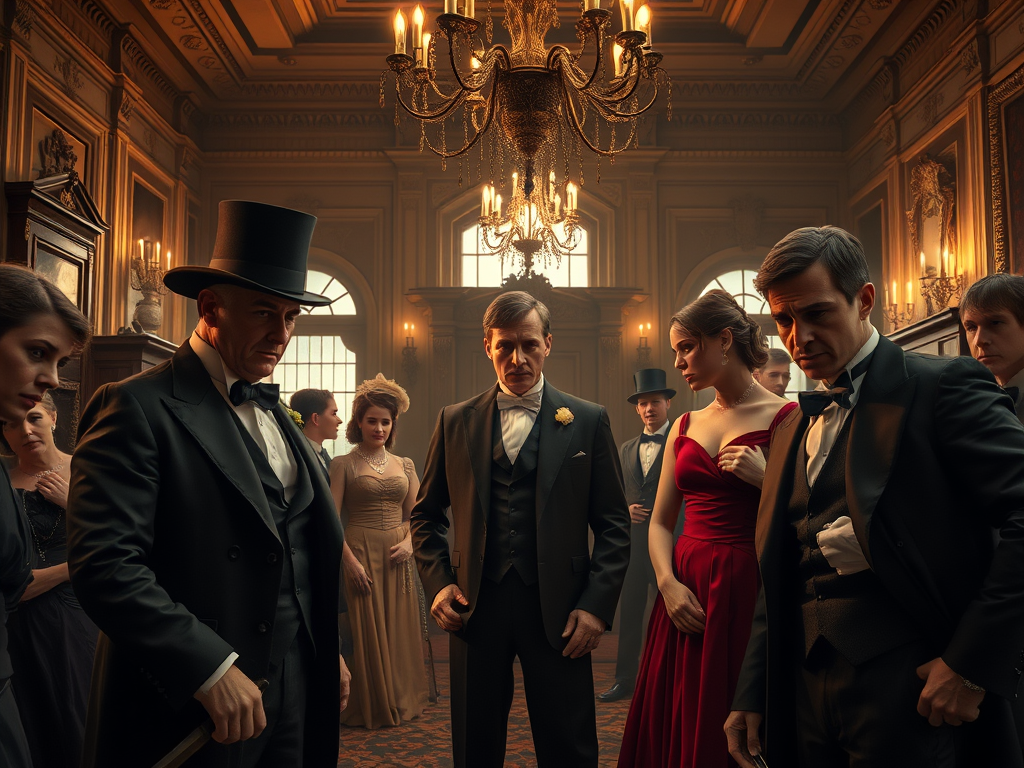
Please come and enjoy a delicious meal in Sarah’s Café, stroll along the paths of the beautiful Victorian gardens, and wonder through the miles of hallways in the World’s most mysterious mansion. For further information about tours, including group tours, weddings, school events, birthday party packages, facility rentals, and special events please visit the website: https://winchestermysteryhouse.com/

Please visit the online giftshop, and purchase a gift for friends and relatives as well as a special memento of The Winchester Mystery House. A variety of souvenirs and gifts are available to purchase. Chester the Elf is looking forward to seeing you! https://shopwinchestermysteryhouse.com/