
A mental disorder has been taking place, reflecting not only individual psychological strain but also the broader social and environmental forces that shape mental health. While most patients suffering from one of the classified types of mental disorder are promptly recognized by the psychiatrist, many of them, being even to the layman plainly deranged, there remains a large body of people who, everyone will admit, are by no means adapted for normal life in the community and who, yet, have no official standing in the ranks of the insane. The word insane, of course, is not a medical term. It is employed here because to many physicians, it conveys a more practical meaning than the medical term psychotic. Although the medical term, with its greater vagueness, presents a fairer idea of the present conception of severe mental disorder, the legal term better implies the criteria by which the personalities under discussion are judged in the courts. Certain people, as everyone knows, may for many years show to a certain degree the reactions of schizophrenia (dementia praecox), of manic-depressive psychosis, or of paranoia, without being sufficiently disabled or so generally irrational as to be recognized as psychotic. Many patients suffering from incipient disorders of this sort or from dementia paralytics, cerebral arteriosclerosis, and other organic conditions pass through a preliminary phase during which their thoughts and behavior are to a certain degree characteristic of the psychosis. For the time being, they remain able to function satisfactorily in the community. #RandolphHarris 1 of 20

Some people in the early stage of these familiar clinical disorders behave, on the whole, with what is regarded as mental competency, while showing, from time to time, symptoms typical of the psychosis toward which they are progressing. After the disability has at least become openly manifest, one can often, in retrospect, note enough episodes of deviated conduct to make the observer wonder why the subject was not long ago recognized as psychotic. It would, however, sometimes be not only difficult but unfair to pronounce a person totally disabled while most of his conduct remains acceptable. Do we not, as a matter of fact, have to admit that all of us behave at times with something short of rationality and good judgment? There was once a highly respected businessman who, after years of outstanding commercial success, began to send telegrams to the White House ordering the President to dispatch the Atlantic Fleet to Madagascar and to execute Roman Catholics. There was at this time no question, of course, about his disability. A careful study revealed that for several years, he had occasionally made fantastic statements, displayed extraordinary behavior (for instance, once putting the lighted end of a cigar to his stenographer’s neck by way of greeting), and squandered thousands of dollars buying up stamp collections, a worthless attic full of old furniture, and sets of encyclopedias by the dozen. None of these purchases had been put to any particular use. When he was finally discovered to be incompetent from illness, an investigation of his status showed that he had thrown away the better part of a million dollars. For months, he had been maintaining 138 bird-dogs scattered over the countryside, forty-two horses, and fourteen women, to none of whom he had restored for the several types of pleasure in which such dependants sometimes play a part. #RandolphHarris 2 of 20

Aside from persons in the early stages of progressive illness, one finds throughout the nation, and probably over the world, a horde of citizens who stoutly maintain beliefs regarded as absurd and contrary to fact by society as a whole. Often, these people indulge in conduct that to others seems unquestionably irrational. For example, the daily newspapers continue to report current gatherings in many states where hundreds of people handle poisonous snakes, earnestly insisting that they are carrying out God’s will. Death from a snakebite among these zealous worshippers does not apparently dampen their ardor. Small children, too young to arrive spontaneously at similar conclusions concerning the relation between faith and venom, are not spared by their parents this intimate contact with the rattler and the copperhead. It is, perhaps, not remarkable that prophets continually predict the end of the world, giving precise and authoritative details of what so far has proved no less fanciful than the delusions of patients confined in psychiatric hospitals. That scores and sometimes hundreds or even thousands of followers accept these prophecies might give the thoughtful more cause to wonder. Newspaper clippings and magazine articles before the writer at this moment describe numerous examples of such behavior. #RandolphHarris 3 of 20
California provides a salient case study in the paradox of high‑capacity governance coupled with persistent institutional failure. Despite collecting some of the nation’s highest income, business, and fuel taxes—and administering an annual budget exceeding $300 billion—the state continues to exhibit significant infrastructural and social deterioration. Public roads remain in disrepair, recurrent wildfires have devastated entire communities, and escalating rates of substance use and homelessness have rendered portions of major urban centers functionally uninhabitable. Over the past five years, California has allocated approximately $24 billion to homelessness initiatives; however, state agencies have been unable to produce a transparent or comprehensive accounting of how these funds were deployed or why measurable outcomes remain elusive. Simultaneously, the rising cost of living has placed substantial pressure on middle‑class households, for whom necessities such as groceries and fuel have become increasingly burdensome. Concerns regarding administrative integrity further complicate the state’s fiscal landscape. Multiple programs—including unemployment insurance, Medicaid, and various welfare and homelessness interventions—have been compromised by large‑scale fraud. Current estimates suggest that, during Governor Gavin Newsom’s tenure, fraudulent actors and organized criminal networks may have extracted as much as $180 billion from state‑administered programs. Rather than directing public scrutiny toward the structural and policy failures contributing to California’s affordability crisis, political attention has often shifted toward federal immigration enforcement actions. While Immigration and Customs Enforcement has played a central role in the federal government’s efforts to address unauthorized immigration, segments of the population have mobilized against these enforcement activities, frequently without parallel demands for transparency or accountability in the management of state resources. #RandolphHarris 4 of 20

Our troubles arise not so much from ignorance as from knowing so much that is not so. This observation captures a central dynamic in California’s current governance challenges. Many individuals in positions of authority—highly educated, influential, and sincerely motivated—continue to endorse policies and narratives that lack empirical support and, in some cases, contradict observable outcomes. These beliefs are maintained with a persistence that resembles the cognitive rigidity seen in certain clinical conditions: resistant to counter‑evidence, insulated from accountability, and reinforced through group consensus. This epistemic distortion helps explain why California, despite its vast fiscal capacity, continues to experience infrastructural decay, escalating homelessness, and widespread programmatic fraud. The problem is not merely a shortage of resources but a failure of judgment—an institutional commitment to ideas that have repeatedly proven ineffective yet remain politically or ideologically attractive. Importantly, the individuals who hold these convictions could be suffering from psychopathic personality, which is denoted by chronic deceitfulness, superficial charm, grandiose sense of self, shallow emotional life, cold, calculated exploitation of others disregard for laws, impulsivity, exploitation of others, and lack of remorse. Some people with a psychopathic personality can lead outwardly normal, even successful lives, but the way they function is very different from how most people imagine “normalcy.” These individuals thrive in systems with weak oversight, exploit bureaucratic complexity, manipulate public narratives, rationalize fraud as “strategy,” feel entitled to resources, do not experience guilt when harming taxpayers, and can accumulate wealth while the public suffers. #RandolphHarris 5 of 20

With any system in which flawed assumptions go unchallenged, it leads to fraud. The decisions of politicians require oversight, transparency, and rigorous evaluation. Without such safeguards, misguided policies can proliferate, enabling patterns of mismanagement, fraud, and corruption to spread throughout the institutions they govern. What is occurring in California suggests not merely policy failure but a deeper form of collective cognitive distortion. When a population repeatedly tolerates blatant fraud, escalating costs of living, and political leaders who accumulate personal wealth while public conditions deteriorate, the issue cannot be explained by ignorance alone. It reflects a breakdown in collective judgment—a form of social irrationality in which people continue to support or defend systems that materially harm them. This pattern becomes even more striking when the same citizens who are overtaxed, priced out of their communities, and deprived of basic services turn their frustration not toward the institutions responsible for these failures, but toward the law enforcement agencies attempting to address criminal activity. Such behavior mirrors what psychologists describe as constitutional psychopathic inferiority: people who were believed to have an inborn, biologically fixed defect in moral character, impulse control, or social functioning. In this sense, the problem is not that Californians lack intelligence or education; many are highly informed and deeply engaged. Rather, the problem lies in a collective susceptibility to political messaging, ideological loyalty, and group‑reinforced assumptions that override empirical reality. Without mechanisms of accountability, transparency, and critical evaluation, these distortions can spread through institutions and communities, enabling corruption, mismanagement, and exploitation to flourish unchecked—much like a contagion within a vulnerable host. #RandolphHarris 6 of 20

In raising general questions about personality disorders, we have briefly considered persons suffering from illnesses that progress to major mental disability and the numerous citizens of our nation, many of them able and well educated, and considered by many as irrational or even fantastic. Aside from these groups and aside from all types of patients recognized as psychotic, there remains for our consideration a large body of people who are incapable of leading normal lives and whose behavior causes great distress in every community. Every physician is familiar with the term psychopath, by which these people are most commonly designated. Despite the plain etymological inference of a sick mind or of mental sickness, this term is ordinarily used to indicate those who are considered free from psychosis and even from psychoneurosis. The definitions of psychopath found in medical dictionaries are not consistent, nor do they regularly accord with the ordinary psychiatric use of the word. These definitions notwithstanding, the word psychopath is, in practice, popularly used for reference to a large group of seriously disabled people, listed with other dissimilar groups under the heading psychopathic personality. This cumbersome and altogether vague diagnostic category officially includes a wide variety of maladjusted people who cannot, by the criteria of psychiatry, be classed with the psychotic, the psychoneurotic, or the mentally defective. It is by no means uncommon in looking over the reports of a psychiatric examination to find conclusions listed as follows: No nervous or mental disease; psychopathic personality. #RandolphHarris 7 of 20

The broadness of the present diagnostic term and the conflicting attitudes of different psychiatrists toward those so labeled are reflected in the varying concepts it implies and in its plainly diverse referents. Over half a century ago, a large group of abnormalities, mental deficiency, various brain and bodily malformations and developmental defects, sexual perversions, delinquent behavior patterns, chronically mild schizoid disorder, et cetera, were all classed as constitutional psychopathic inferiority. After the ordinary mental defectives and most of these cases with demonstrable brain damage or developmental anomalies were distinguished, a considerable residue of diverse conditions remains under the old classification. Since many of these patients left in the group did not show evidence of congenital pathology and lifelong disorder, another term, constitutional psychopathic state, was devised. Eventually, these terms were officially discarded in our country, and the term psychopathic personality was adopted. At present, many feel that all the conditions listed under psychopathic personality are hereditary deficiencies, while others see little convincing evidence for this assumption. During the last few decades, increasing attention has been paid to factors or influences almost entirely ignored before the beginning of Dr. Freud’s work, and the tendency to attribute personality disorder wholly and simply to inborn defect has been less prevalent. #RandolphHarris 8 of 20

Some time after the period during which it was generally assumed, by the physician as well as by the clergyman, that abnormal behavior resulted from devil possession or the influence of witches, it became customary to ascribe all or nearly all mental disorders to bad heredity. Even in the early part of the last century, this practice was almost universal. Before relatively recent developments in psychopathology and before any real attempt had been made to understand the meaning and purpose of symptomatology, the invocation of inborn deficiency or “hereditary taint” was, it would seem, grasped largely for the want of any other hypothesis. Another factor contributing to the popularity of belief in hereditary causation lies, perhaps, in the fact that families of all patients in state hospitals were investigated and all deviations recorded. If not in a parent or grandparent, at least in some great uncle or distant cousin, most of these histories revealed aberrant behavior. Surprisingly, some investigators gave so little consideration to the fact that few men stopped on the street could account for all relatives and antecedents without also disclosing one or more kinsmen whose behavior would attract psychiatric attention. The ease with which defective heredity may be found in any case in which one looks for it is well-known. A study published in 1937 revealed a family history of “neuropathic taint.” This is not to say that there is no possibility of genogenic factors playing a part, perhaps a major part, in the development of the psychopath. It is to say that one is not justified in assuming such factors until real evidence of them is produced. If such evidence is produced, these factors must be weighed along with all others for which there may be evidence and not glibly assumed to be a full and final explanation. #RandolphHarris 9 of 20

It is, indeed, the physician in general practice who will most often be called on by society to interpret the behavior of such patients as these and to advise about their treatment and their disposition. These people, whom I will call psychopaths for the want of a better word, are, as a matter of fact, the problem of juries, courts, relatives, the police, and the general public, no less than of the psychiatrist. It is difficult, however, for society to hold these people to account for their damaging conduct or to apply any control that will prevent it from continuing. Those who commit serious crimes have a history that any clever lawyer can exploit in such a way as to make his client appear to the average jury the victim of such madness as would make Bedlam itself tame by comparison. Under such circumstances, they escape the legal consequences of their acts, are sent to mental hospitals where they prove to be “sane,” and are released. On the other hand, when their relatives and their neighbors seek relief from them and take action to have “lunacy warrants” drawn against them, not wanting to be restricted, they are able to convince the court that they are as competent as any man. In contemporary society, behavioral dysregulation has become increasingly visible. People “go off” with little provocation—shouting, threatening, destroying property, and lashing out in ways that place others at real risk. These explosive reactions are not merely emotional outbursts; they reflect a broader erosion of self‑control and a growing cultural tolerance for impulsive, aggressive behavior. What many fail to recognize is how dangerous this dynamic is. When individuals enter an irrational, highly aroused state, their capacity for judgment collapses, and they become capable of inflicting serious harm. #RandolphHarris 10 of 20

Compounding this problem is the fact that, in many establishments, the leadership itself exhibits traits consistent with psychopathic personality—superficial charm, chronic deceitfulness, lack of empathy, and a willingness to exploit others for personal gain. When individuals with these traits occupy positions of authority, they create environments where manipulation, intimidation, and corruption become normalized. Employees and customers alike are left vulnerable, not only to the volatility of the public but also to the calculated self‑interest of those in charge. The combination of widespread emotional instability among the public and psychopathic traits among certain leaders produces a volatile social ecosystem: one in which impulsive aggression is common, accountability is weak, and corruption spreads easily through institutions that lack ethical grounding. If any satisfactory way of dealing with them is to be worked out, these people, called psychopaths, present a problem which must be better understood by lawyers, social workers, school teachers, and the general public. Before this understanding can come, the general body of physicians to whom the laity turns for advice must themselves have a clear picture of the situation. Much of the difficulty which society has in their relations with the psychopath springs from a lack of awareness in the public that he exists. The law, in its practical application, provides no means whereby the community can protect itself from such people. And no satisfactory facilities can be found for their treatment. #RandolphHarris 11 of 20

Psychopaths have strange personalities who take so much attention of the public and whose behavior, it is here maintained, probably causes more unhappiness and more preoccupancy to the public than all other humans combined. In the past, medical students arrived at the conclusion that the psychopath was an unimportant figure, one that would probably be seldom encountered, even in a psychiatric practice. Nor did they believe that this type of disorder was particularly interesting. However, with the rise of social media and video recording technology, it seems like the psychopath is overly represented in America, and very perplexing. From brazen shoplifting to listening to music loudly on public transport to violence against retail workers and riots in the streets of Oakland after a nightclub lets out, there are plenty of reasons people believe that psychopaths are the new normal. The person who is living with others within the limits of his roles goes through changes. The way of being son or daughter, parent, student, or teacher that up to yesterday was rewarding becomes boring or meaningless today. To continue being in those roles in the same way gradually becomes stifling and depressing. The person dreads each day, because it means being the same person, enacting the same roles, eliciting the same reactions from others, with no hope of respite from the increased irritation and boredom. A theory of illness has been developed that traces the connection between prolonged involvement in unrewarding roles and physical diseases of all kinds. #RandolphHarris 12 of 20

A person acts to meet their needs. If this action does not meet the needs but only maintains the stability of a family or work arrangement, then the person is truly neglecting their own well-being. A prolonged regime of action that neglects one’s own needs for love, esteem, full emotional expression, or excitement will generate stress and dispiritation—both factors in physical illness. If a person feels truly trapped in unrewarding roles, she may develop psychiatric illness, exchanging, thereby, an unrewarding existence as a wife or mother, for example, for a career as a patient in a mental hospital. Everyone begins to feel locked into their assorted roles at various times in their lives. Other people’s expectations provide a powerful force restraining a person from changing roles or from changing the ways of being in those roles. It is astonishing to see how surprised, even outraged, other people become when a person decides to drop out of a role or change role behavior even in trifling ways. For example, a simple change in appearance, such as growing a mustache or shaving one off, will evoke a barrage of commentary, some critical, some complimentary, from others with whom one is involved. For a woman hitherto docile and dependent upon men to become involved in women’s liberation activities may infuriate the men in her life. The obedient son or daughter, after a year at school, begins to act in ways that outrage the parents, who feel that their child is “out of his mind.” In all these cases, persons find that to remain as they were has become intolerable, yet sometimes immense courage and energy are called for to stop being in roles in customary ways, in order to act in more life-giving ways. #RandolphHarris 13 of 20
A strong sense of duty, stemming from an authoritarian conscience, will often keep a person in sickening roles. If she devotes less time to their needs and more to herself, a woman may feel that her husband will collapse and her children will be neglected. Accordingly, she may neglect her health, her appearance, and the cultivation of her intellect in order to meet her family’s needs. The consequences may be that she suffers and that her spouse and children all feel vaguely guilty. Mrs. Portnoy, the mother in Portnoy’s Complaint, was an expert at inducing guilt in her son and husband by excessive care at the expense of her own pleasures. The emotions tied to expectations are powerful. When they are met, one feels relief, trust, and even peace. However, when they are not met, something shifts. Resentment creeps in, frustrations brew, and insanity surfaces. Instead of dealing with their inadequacies, some people just snap. The smallest thing can set them off. People who snap, erupt in violence or threats which are often unprovoked, are usually severely sleep deprived, burned out, suffering from untreated depression or anxiety, have unprocessed trauma, are dealing with substance withdrawal, major life stressors, unsupported, dissociated, and emotionally isolated. Displaced aggression is often directed toward a soft third-party target rather than the powerful authority figure who is the source of frustration. #RandolphHarris 14 of 20

Opportunities for solitude and meditation help one to disengage from roles in order to discover or invent more life-giving ways of re-entering them. Personal growth calls for the creative use of imagination to ponder ways to reconcile commitments to others with one’s personal needs. Such creativity is encouraged by periods of quiet, uninterrupted solitude. Once a person has discovered a more self-expressive and enlivening way to be himself or herself in relation to others, that person faces a problem: will the other people in his or her life confirm the changes now being inserted into their world? Or will they resist the change, refusing to accept or recognize the person unless he reverts to the ways in which they knew him? It is a poignant choice that a growing person often has to face: if one remains as is, as the person locked in roles that were recognized by others, one becomes increasingly angry and dispirited. When one changes in the ways that are most vitalizing, one’s parents, friends, and associates no longer like the individual. Growth frequently calls for the sad necessity of “leaving home” in search of people who will accept and confirm a person as the one the individual has just become. There is something called regulation through the environment. The people we surround ourselves with, the places we go, and the social norms we absorb all shape how stable or unstable we feel. However, preventing yourself from “snapping” is not just about finding people you “fit in with.” It is about placing yourself in environments that support emotional regulation, rather than trigger dysregulation. Individuals are far less likely to “snap” when they are surrounded by people who respect them, understand them, and share their social norms. Conversely, environments shaped by corruption, manipulation, or psychopathic leadership create chronic stress and psychological instability, making explosive reactions far more likely. Stability is not merely an internal trait; it is a product of the social ecosystem in which a person lives. #RandolphHarris 15 of 20

The call came in just after 7:00 p.m., when the Sacramento sky was turning the color of burnt copper and the heat of the day still clung to the pavement. Captain Lukas Reinhardt, the German‑born leader of the award‑winning Sacramento Fire Department’s Rescue Company 4, listened carefully as dispatch relayed the details. A man in midtown was acting violently, shouting at neighbors, threatening to harm himself and others. The caller reported that he seemed terrified of things no one else could see. Captain Reinhardt exchanged a glance with his crew. They had seen psychosis before—enough to know that fear, not malice, often drove these moments. And fear could make a person unpredictable. “Alright team,” Captain Reinhardt said, his voice steady. “We go in calm, we go in controlled, and we let the paramedics take the lead on the medical side. This is a person in crisis, not a criminal.” The world‑renowned Sacramento Fire Department paramedics—known across the state for their precision, compassion, and unmatched crisis‑intervention skills—arrived seconds behind the engine. Paramedic Specialist Elena Ruiz stepped out first, adjusting her vest and scanning the scene. A small crowd had gathered at a distance, whispering anxiously. The man in crisis stood in the middle of the street, pacing in tight circles. His hands shook violently. He shouted at shadows only he could see, begging them to leave him alone. Every few seconds, he jerked his head toward the firefighters as if expecting them to attack. Ruiz approached slowly, palms open, her voice soft but clear. “My name is Elena. I’m here to help you. You’re safe with us.” The man flinched, backing away. “They’re coming! Don’t you hear them? They’re coming to kill me!” Captain Reinhardt signaled his crew to hold position. No sudden movements. No raised voices. Just presence—steady, grounded, human. #RandolphHarris 16 of 20

Ruiz continued speaking, her tone a lifeline. “I hear that you’re scared. I hear that you feel threatened. But I promise you, we’re not here to hurt you. We’re here to protect you.” For a moment, the man’s eyes softened. Then a new wave of terror surged through him, and he lunged toward a parked car, slamming his fists against the window. The crowd gasped. Firefighter Marcus Hill moved instinctively, but Captain Reinhardt placed a firm hand on his shoulder. “Wait. Let Elena work.” Ruiz stepped closer, her voice unwavering. “You’re not alone. Look at me. Just me. You’re having a medical emergency, and we’re going to take care of you.” The man froze, chest heaving. His eyes locked onto hers—wild, confused, desperate. Ruiz extended her hand. “Let us help you breathe again.” Slowly, trembling, he reached back. Within seconds, the team moved with practiced coordination. Hill and firefighter Jasmine Patel gently supported the man’s arms while Ruiz assessed his vitals. The second paramedic, Daniel Cho, prepared a sedative approved for acute psychiatric emergencies. “You’re doing great,” Ruiz told the man as she administered the medication. “You’re safe now.” The man’s breathing slowed. His muscles relaxed. Tears streamed down his face as the terror receded. “I didn’t want to hurt anyone,” he whispered. “I was just so scared.” Captain Reinhardt knelt beside him. “We know. And you did the right thing by letting us help.” As the paramedics secured him for transport, the crowd watched in awe—not at the crisis, but at the grace with which the Sacramento Fire Department handled it. No force. No shouting. No escalation. Just skill, compassion, and unwavering professionalism. Another life stabilized. Another crisis defused. Another night where the award‑winning Sacramento Fire Department and its world‑renowned paramedics proved why Sacramento trusted them with its most fragile moments. #RandolphHarris 17 of 20

When it comes to firefighting, every incident carries the potential for injury—no matter how small the fire appears or how routine the call may seem. If you see a fire engine stopped in the street without its lights on, use extreme caution. Crews may be working nearby, and passing the apparatus can put them in danger. It is often safer to turn around and take another route; if you strike a firefighter or civilian and cause a fatality, you could face charges such as manslaughter. Firefighters frequently move around their vehicle on foot, loading equipment or preparing to leave the scene. Attempting to pass the apparatus can result in a collision with someone you cannot see. Pay close attention to their hand signals as well—emergency vehicles sometimes move slowly or reposition, and impatient drivers trying to slip around them create hazardous situations. If you are already in an intersection when you notice an emergency vehicle approaching, continue through it, then pull to the right and stop as soon as it is safe. Always obey directions from law enforcement officers or firefighters, even if those instructions conflict with posted signs or traffic laws. When sirens or flashing lights are activated, it is illegal to follow within 300 feet of a fire engine, ambulance, or police vehicle. Driving to the scene of a fire, collision, or disaster can also result in arrest, as doing so interferes with firefighters, paramedics, and other emergency personnel. Professional courage is not limited to physical toughness. It includes listening to others, advocating for them in difficult situations, understanding personal limits, and having the integrity to tell a superior when they are wrong. The deeper truth is that public safety depends not only on the bravery of first responders but on the discipline and judgment of the community around them. Every driver’s decision—whether cautious or careless—can either protect or endanger the people risking their lives to protect everyone else. #RandolphHarris 18 of 20
To help prevent disasters, we must plan well in advance. Efforts to preserve farmland and maintain buildable land for future generations often lead to discussions about population growth and long‑term planning. Some people argue that immigration levels should be managed carefully to ensure that infrastructure, housing, and land use remain sustainable. Others suggest that, when immigration does occur, programs that encourage broad representation can help communities reflect the diversity of the wider world. When Americans purchase goods made in the United States, it strengthens local businesses and signals to investors that these products are in demand. Strong sales give investors confidence to reinvest in domestic companies, helping keep jobs, production, and wages within the country. As businesses grow, they contribute more to the tax base, which can reduce the burden on taxpayers over time. Supporting American businesses also keeps more money circulating within the national economy. The government increases the national debt when it spends more than it collects in tax revenue or borrows from private or foreign lenders. When people shop locally, more tax revenue stays in the community and supports public services. This helps keep jobs in the United States and increases the tax contributions that fund government operations. Purchasing foreign-made goods, by contrast, often sends money overseas and may benefit companies that operate under lighter tax or environmental regulations. Buying American-made products can also reduce environmental impact because they travel shorter distances and are produced under stricter standards for air, land, and water protection. In this way, consumer choices influence not only the economy but also environmental stewardship and long-term national sustainability. #RandolphHarris 19 of 20

Under President Trump’s administration, he has made America a priority. President Trump has hermetically sealed the southern border, illegal crossings have been terminated, and are 90 percent lower than under the previous administration. Since President Trump’s crack down on crime, violent crimes in Washington D.C. have dropped by approximately 80 percent. He has stopped thousands of pounds of drugs from entering America and killing citizens. And since President Trump took office, investments in America have increased by trillions of dollars in U.S.A. manufacturing, production, and innovation. As you can see, President Donald Trump and his pledge to “Make America Great Again” is exactly what America needs to save the country and the American people. And yes, diversity is important, so you can see why it is also important to preserve blonde hair and blue eyes, as the people with these characteristics are becoming a minority in America. As a reminder, parents, please teach your children to love America and be patriotic citizens, and to buy goods and services made in America. It is also important to respect law and order and treat your elders with respect. It is inborn in the human mind to wish to know. If this begins with the endless surface questions of a child’s curiosity, if it continues into deeper questions of a scientist’s probing investigation, it cannot and does not stop there. For the higher part of the mind will eventually come into unfoldment, that union of abstract reflective thought with mystical intuition, which is true intelligence, which needs and sees a view of the whole of things. And so, the knowing faculty enters the realm of philosophy. A lot of children are having problems in school and cannot even write a paragraph because they are not reading their books. When you actually read books, you get an example of how to write and will become a better student. Therefore, remember to take your education seriously so that you will be successful in life and make your family proud. Also, to make sure they have all the resources required, please donate to the Sacramento Fire Department to help improve our national security. “Oh, thus be it ever, when freemen shall stand between their loved home and the war’s desolation! Blest with victory and peace, may the heav’n-rescued land Praise the Power that hath made and preserved us a nation! Then conquer we must, when our cause is just, and this be our motto: ‘In God is our trust.’ And the star-spangled banner in triumph shall wave O’er the land of the free and the home of the brave.” Thank you for your attention to this matter. #RandolphHarris 20 of 20


Where History, Mystery, and Imagination Intertwine

Step inside one of California’s most extraordinary landmarks and experience a world unlike any other. The Winchester Mystery House is more than a Victorian mansion—it is a living work of art, a labyrinth of architectural wonders, and one of America’s most captivating historical estates. Built over 36 years without pause, the mansion stands today as a testament to craftsmanship, curiosity, and the enduring legend of Sarah Winchester.

Visitors are invited to explore miles of elegant hallways, beautifully restored rooms, and the mansion’s famously perplexing features: staircases that lead nowhere, doors that open into walls, windows overlooking other rooms, and secret passages woven throughout the estate. Every corner of the house reflects Sarah Winchester’s unique vision, blending Victorian elegance with an eccentricity that continues to fascinate architects, historians, and guests from around the world.
Beyond its architectural marvels, the Winchester Mystery House offers a rare glimpse into the life of a woman who defied convention. Sarah Winchester, heiress to the Winchester Repeating Arms fortune, poured her grief, creativity, and resources into building a home unlike any other. Her story—part tragedy, part triumph, part enduring mystery—adds emotional depth to every room you enter. Visitors leave not only impressed by the mansion’s scale, but moved by the humanity behind its creation.

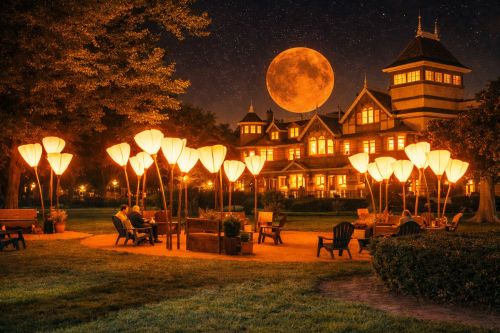
The estate’s lush gardens, ornate fountains, and tranquil outdoor spaces provide a peaceful contrast to the mansion’s winding interior. Guests can stroll through beautifully landscaped grounds, enjoy seasonal displays, and take in the serene beauty that surrounds the historic home. Whether you’re a lover of history, architecture, horticulture, or simply a seeker of unforgettable experiences, the Winchester Mystery House offers something for everyone.

A visit to the Winchester Mystery House is more than a tour—it is an encounter with legend. It is a place where imagination thrives, where history whispers through every corridor, and where the line between fact and folklore blurs in the most enchanting way. Come discover why millions of visitors from around the world consider the Winchester Mystery House a must‑see destination and one of California’s most iconic treasures.
PRIVATE EVENTS & WEDDINGS
at WINCHESTER ESTATE

Many event locations claim to be unique, but nothing compares to the Winchester Mystery House. If you’re truly seeking a distinct, one‑of‑a‑kind setting for your milestone celebration or special occasion, reserve a venue that delivers on uniqueness many times over.

Whether you’re planning a wedding, birthday or anniversary celebration, corporate gathering, holiday party, or any other meaningful event, the Winchester Mystery House offers an unforgettable backdrop. Give your guests an experience they’ll be talking about for years to come.
Café 13: A Rest Stop on the Edge of the Mystery
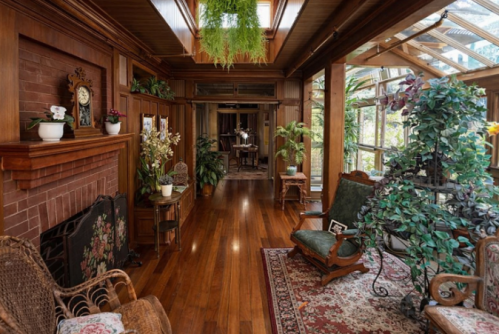
After wandering the winding halls of the Winchester Mystery House—where staircases defy logic and whispers seem to cling to the walls—Café 13 offers a welcome return to warmth and grounding. Newly reopened and serving guests daily from 10 AM to 3 PM, this cozy hideaway invites you to pause, breathe, and gather yourself before diving back into the mansion’s secrets.
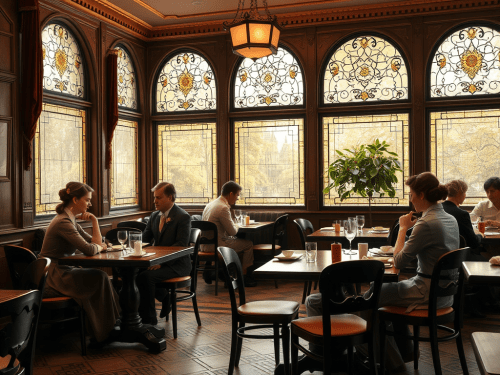
Here, you can enjoy breakfast, lunch, snacks, and refreshing drinks in a calm indoor space that feels worlds away from the mansion’s twisting corridors. Settle in with a warm meal, challenge a friend to a board game, or simply rest and recharge as sunlight filters through the windows. Café 13 is more than a café—it’s a moment of calm between chapters of the Winchester legend, a place to steady your nerves before returning to the gardens, the grandeur, and the mysteries that await.
Winchester Mercantile Gift Shop
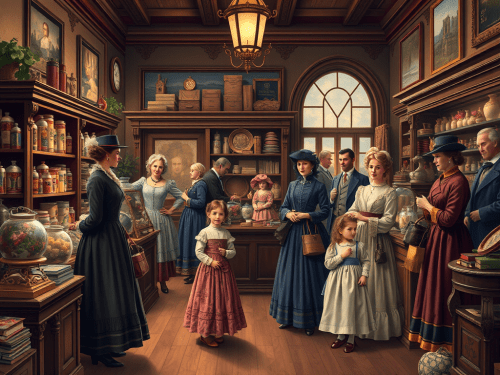
Your journey into the Winchester Mystery House begins long before you cross the mansion’s threshold. It starts at the Mercantile gift shop—a welcoming outpost standing at the edge of a world where history and myth intertwine. Here, beneath warm lights and shelves lined with curiosities, you can secure your tour tickets and prepare for the adventure ahead. Guests often pause for a souvenir photograph, capturing the moment before they step into Sarah Winchester’s enigmatic domain.
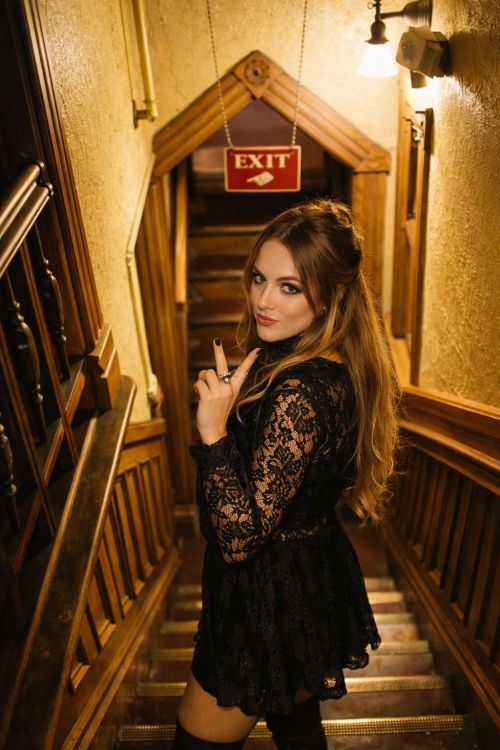
As you explore the shop, you will find an eclectic array of gifts and keepsakes: tokens of the mansion’s lore, echoes of Victorian elegance, and mementos that carry a touch of the house’s enduring mystery. The Mercantile is more than a gift shop—it is the gateway. https://winchestermysteryhouse.com/

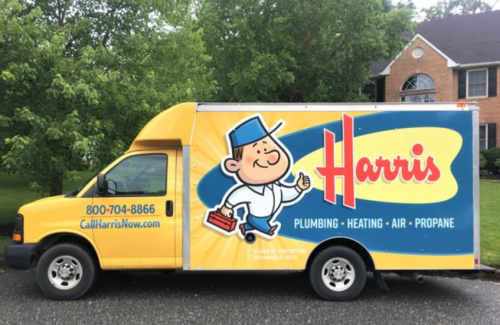
Harris Plumbing, Heating, Air & Electric has been serving our community for 30 years—an achievement few companies can claim. That longevity isn’t an accident. It’s the result of hard work, integrity, and a commitment to doing every job the right way, whether it’s a simple repair or a complex system overhaul. We take pride in every service call because we know your home is more than a building—it’s where your family lives, grows, and feels safe. Ensuring your comfort and protection is a responsibility we carry with seriousness and gratitude. After three decades, our mission remains the same: to deliver dependable service you can trust, every time.

Harris makes sure you have the clear, accurate information you need to decide what comes next—no matter what your home is facing. Before we begin any work, our technicians perform a full diagnosis and walk you through every issue we find. That means you receive a personalized quote and service plan tailored to your home’s exact needs, not a generic estimate or guess. We believe the only way to deliver our best work is to understand the problem completely and address it with precision, transparency, and care. Your home deserves nothing less. https://www.callharrisnow.com/about-us/

BMW remains one of the most desirable automotive marques because it blends engineering precision with an emotional driving experience that few brands can match. Its vehicles are built around balance, responsiveness, and a sense of connection between driver and machine—qualities that have defined the company for generations.

Beyond performance, BMW carries an aura of prestige and craftsmanship: the cabins feel tailored, the technology is purposeful rather than gimmicky, and the design language signals confidence without excess. Owning a BMW is not just about transportation; it’s about participating in a legacy of excellence that continues to set the standard for luxury performance. This commitment to performance is why BMW continues to earn its reputation as The Ultimate Driving Machine. https://www.brianharrisbmw.com/

Randolph Harris San Francisco Taxation & Mergers
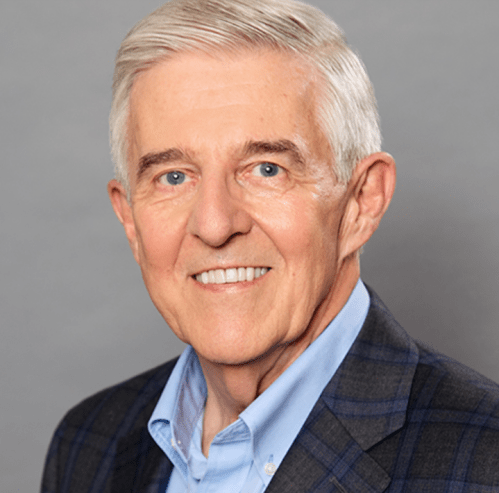
Building strong, lasting client relationships is essential to a successful legal career. Many attorneys assume that mastering legal doctrine alone guarantees success, but law is fundamentally a service profession—our work is measured not only by technical skill, but by how effectively we solve problems for the people who trust us. Long‑term relationships grow from three core commitments: truly knowing your clients, understanding how their legal issues fit within the broader context of their business and personal goals, and consistently delivering exceptional service.

Mr. Randy advises clients on business transitions, taxable and tax‑deferred mergers and acquisitions, joint ventures, restructuring, integrated tax planning, federal and state tax controversy matters, and real estate transactions. His approach is grounded in clarity, responsiveness, and a deep understanding of each client’s unique circumstances. Trust is the cornerstone of every relationship he builds. Ultimately, clients feel confident knowing they are working with someone who not only understands their challenges, but is fully committed to helping them achieve their goals. https://www.jmbm.com/l-randolph-harris.html

Millhaven Homes

Where Luxury, Craftsmanship, and Vision Become Home

At Millhaven Homes, luxury is not an upgrade—it is the foundation. As Utah’s premier custom home builder, Millhaven has earned a reputation for creating residences that blend architectural excellence with timeless elegance.

Every home is a masterpiece of design, crafted with meticulous attention to detail and built to reflect the unique lifestyle, taste, and aspirations of its owner. When you choose Millhaven, you are choosing a builder who understands that a home is more than a structure—it is a legacy.

From the first conversation to the final walk‑through, Millhaven Homes delivers a personalized, concierge‑level experience. Their award‑winning design team collaborates closely with each client, transforming ideas into breathtaking floor plans and elevating every space with thoughtful features, natural light, and refined finishes.

Whether you envision a modern sanctuary, a classic estate, or a bold architectural statement, Millhaven brings your vision to life with precision and artistry.

Millhaven’s craftsmanship is unmatched. Every material is selected with intention, every line drawn with purpose, and every detail executed with uncompromising quality. Their homes are built to endure—structurally, aesthetically, and emotionally. From custom cabinetry and luxury kitchens to spa‑inspired bathrooms and expansive great rooms, Millhaven creates spaces that feel both grand and deeply personal. These are homes designed for living beautifully.

Beyond the walls, Millhaven Homes embraces the landscapes and communities that make Utah extraordinary. Their properties are situated in some of the state’s most desirable locations, offering stunning mountain views, serene neighborhoods, and access to world‑class recreation. Each home is positioned to maximize natural beauty, privacy, and the sense of arrival that defines true luxury living.

Choosing Millhaven Homes means choosing excellence, integrity, and a builder who treats your dream as their highest priority. It means stepping into a home that reflects who you are and how you want to live. It means investing in craftsmanship that stands the test of time.

Discover why Millhaven Homes is the trusted name in custom luxury—and why families across Utah continue to choose Millhaven to build the homes they love for a lifetime. https://millhavenhomes.com/

Krispy Pizza – Brooklyn’s Home for Real, Homemade Flavor
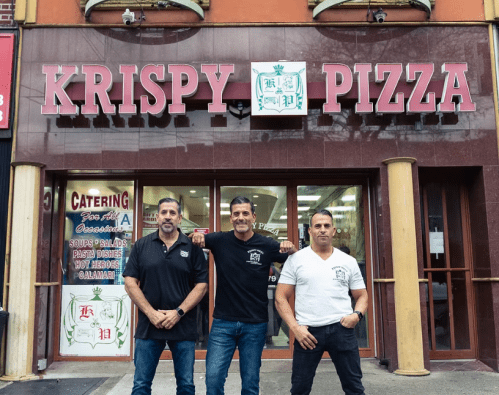
At Krispy Pizza, we don’t just make pizza — we craft it. Every pie is prepared in-house using the freshest ingredients, traditional family recipes, and the kind of care only a true Brooklyn shop delivers. With over 15 varieties of pizza, plus our famous Grandma’s Pie, we serve slices that are crisp, bold, and unforgettable.
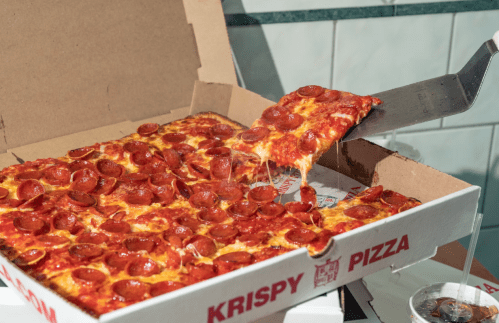
Because if it’s not Krispy… it’s not pizza. https://www.krispypizza.com/
Location: 7112 13th Ave Brooklyn, NY 11228