

“When the spirit resigns itself to sorrow, it is not the world that conquers us, but we who abandon the field.” What we are describing is resignation. In psychological terms, resignation is a passive surrender to circumstances — a collapse of agency marked by helplessness, hopelessness, and withdrawal rather than adaptation or problem‑solving. Yet beneath this surface lies a deeper structure. At the core of resignation is the restriction of wishes: the quiet abandonment of the need for closeness, for triumph, for recognition, or for any form of fulfillment that might expose one to disappointment. Uncertainty about one’s own wishes often accompanies this state. Instead of desiring freely, the resigned person begins to desire according to inner dictates — what he believes he should wish, rather than what he authentically wants. As in other neurotic trends, one area of life may be more affected than another, but the pattern is the same: spontaneous wishes become blurred, muted, or overridden by internal prohibitions. Beyond these distortions lies the final conviction — sometimes conscious, often unconscious — that it is safer not to wish at all. To expect nothing is to avoid the pain of loss; to hope for nothing is to avoid the humiliation of failure. Thus, resignation becomes a psychological refuge, but a barren one: a retreat from the world purchased at the cost of one’s own vitality. Sometimes this goes with a conscious pessimistic outlook on life, a sense of its being futile anyhow, and of nothing being sufficiently desirable to make an effort for it. #RandolphHarris 1 of 20

More often, many things appear desirable in a vague, idle way but fail to arouse a concrete, alive wish. If a wish or interest has enough zest to penetrate through the “do not care” attitude, it fades out soon after, and the smooth surface of “nothing matters” or “nothing should matter” is reestablished. Such “wishlessness” concerns both professional and personal life—the wish for a different job or an advancement as well as for a marriage, a house, a car, or other possessions. The fulfillment of these wishes may loom primarily as a burden, and in fact would sabotage the one wish he does have—that of not being bothered. The retraction of wishes is closely interlinked with the three basic characteristics mentioned before. Only if he has no strong wishes of any kind can he be an onlooker at his life. If he does not have the motive power of wishes, he can hardly have aspirations or purposeful goals. And, finally, no wish is strong enough to warrant effort. Hence, the two outstanding neurotic claims are that life should be easy, painless, and effortless, and that he should not be bothered. He is particularly anxious not to get attached to anything to the extent of really needing it. Nothing should be so important for him that he could not do without it. It is all right to like a woman, a place in the country, or certain drinks, but one should not become dependent upon them. As soon as he becomes aware that a place, a person, or a group of people means so much to him that their loss would be painful, he tends to retract his feelings. No other person should ever have the feeling of being necessary to him or take the relationship for granted. If he suspects the existence of either attitude, he tends to withdraw. #RandolphHarris 2 of 20

The principle of nonparticipation, as it is expressed in his being an onlooker at life as well as in his reaction of wishes, also operates in his human relations. They are characterized by detachment, id est, his emotional distance from others. He can enjoy distant or transitory relationships, but he should not become emotionally involved. He should not become so attached to a person as to need his company, his help, or the pleasures of the flesh relations with him. The detachment is all the easier to maintain since, in contrast to other neurotic types, he does not expect much, either good or bad—if anything—from others. Even in emergencies, it may not occur to him to ask for help. On the other hand, he may be quite willing to help others, provided again that it does not involve him emotionally. He does not want, or even expect, gratitude. The role of the pleasures of the flesh varies considerably. Sometimes, the pleasures of the flesh are, for him, the only bridge to others. He may then have plenty of transient sexual relations, backing out of them sooner or later. They should not, as it were, degenerate into love. He may be entirely aware of his need not to become involved with anybody. Or he may give satisfied curiosity as the reason for terminating a relationship. He will point out then that it is the curiosity for a new experience that drives him toward this or that woman, and that now that he has had this new experience, she does not intrigue him anymore. In these instances, he may respond to women exactly as he does to a new landscape or to a new circle of people. Now that he knows them, they no longer elicit his curiosity, and so he turns to something else. This is more than a mere rationalization for his detachment. He has carried through his attitude of being an onlooker at life more consciously and more consistently than others, and this sometimes may give the deceptive appearance of a zest for living. #RandolphHarris 3 of 20

In some instances, on the other hand, he excludes the whole area of pleasures of the flesh from his life—to the extent of stifling all wishes in this regard. He may then not even have erotic fantasies or, if he does, a few abortive fantasies may be all that his sex life consists of. His actual contacts with others will then stay on the level of distant friendly interest. When he does have lasting relationships, he must, of course, maintain his distance in them too. In this respect, he is at the opposite people from the self-effacing type, with the latter’s need to merge with a partner. The way in which he maintains distance varies greatly. He may exclude sex as being too intimate for a permanent relationship, and instead satisfy his sexual needs with a stranger. Conversely, he may more or less restrict a relationship to merely sexual contacts and not share other experiences with the partner. In marriage, he may be attentive to the partner but never talk intimately about himself. He may insist on having a good deal of time strictly to himself or on taking a trip alone. He may restrict a relationship to occasional weekend trips. Being afraid of emotional involvement with others is not the same as an absence of beneficial feelings. On the contrary, if he had put a general check on tender feelings, he would not have to be on his guard so vigilantly. He may have his own deep feelings, but these should stay in his inner sanctum. They are his private affair and nobody else’s business. In this respect, he is different from the arrogant-vindictive type, who is also detached but has unconsciously trained himself not to have optimistic feelings. He is also different in that he does not want to be involved with others in friction or anger any more than in any other way, whereas the arrogant type is quick to anger and finds in battle his natural element. Another characteristic of a resigned person is his hypersensitivity to influence, pressure, coercion or ties of any kind. This is a relevant factor, too, in his detachment. Even before he enters into a personal relationship or a group activity, the fear of a lasting tie may be aroused. And the question as to how he can extricate himself may be present from the very beginning. Before marriage, this fear may grow into a panic. #RandolphHarris 4 of 20

Exactly what he resents as coercion varies. It may be any contract, such as signing a lease or any long-term engagement. It may be any physical pressure, even collars, girdles, or shoes. It may be an obstructed view. He may resent anything that others expect, or might possibly expect, from him—like Christmas presents, letters, or paying his bills at certain times. It may extend to institutions, traffic regulations, conventions, and government interference. He does not fight all of this because he is no fighter; but he rebels inwardly and may consciously or unconsciously frustrate others in his own passive way by not responding or by forgetting. His sensitivity to coercion is connected with his inertia and with the retraction of wishes. Since he does not want to budge, even if it is obviously in his own interest, he may feel any expectation of his doing something as coercion. The connection with the retraction of wishes is more complex. He is afraid, and has reason to be so, that anybody with stronger wishes might easily impose upon him and push him into something by dint of his greater determination. However, there is also externalization operating. Not experiencing his own wishes or preferences, he will easily feel that he yields to the wishes of another person when he actually follows his own. To further highlight this illustration, a person was invited to a party to be held on a night on which he had a date with his woman. However, this was not the way he experienced the situation at the time. He went to see the woman, feeling that he had “complied” with her wishes and resenting the “coercion” she had exerted. A very intelligent patient characterized the whole process with these words: “Nature abhors a vacuum. When your own wishes are silent, those of others rush in.” We could add: either their existing wishes, their alleged wishes, or those he has externalized to them. #RandolphHarris 5 of 20

The sensitivity to coercion constitutes a real difficulty in analysis—the more difficult the more the patient is not only negative but negativistic. He may harbor an everlasting suspicion that the analyst wants to influence and mold him into a preconceived pattern. This suspicion is all the less accessible the more the patient’s inertia prevents him from testing out any suggestion offered, as he is repeatedly asked to do. On the grounds of the analyst’s exerting undue influence, he may refute any question, statement, or interpretation that implicitly or explicitly attacks some neurotic position of his. What renders progress in this respect still more difficult is the fact that he will not express his suspicion for a long time, because he dislikes friction. He may simply feel that this or that is the analyst’s personal prejudice or hobby. Hence, need not bother with it, and discard it as negligible. The analyst may suggest, for instance, that the patient’s relations with people would be worth examining. He is immediately on his guard while secretly thinking that the analyst wants to make him gregarious. Lastly, an aversion to change, to anything new, goes with resignation. This too varies in intensity and form. The more prominent the inertia, the more he dreads the risk and the effort of any chance. He would much rather put up with the status quo—whether this is a job, his living quarters, an employee, or a marriage partner—than change. Nor does it occur to him that he might be able to improve his situation. He might, for instance, rearrange his furniture, make more time for leisure, and be more helpful to his wife in her difficulties. Suggestions of this sort are met with polite indifference. Two factors enter into this attitude besides his inertia. Since he does not expect much from any situation, his incentive to change it is small anyhow. And, he is inclined to regard things as unalterable. People are just so: this is their constitution. Life is just so—it is fate. Although he does not complain about situations which would be unbearable for most people, his putting up with things often looks like the martyrdom of the self-effacing person. However, the resemblance is only a superficial one: they spring from different sources. #RandolphHarris 6 of 20
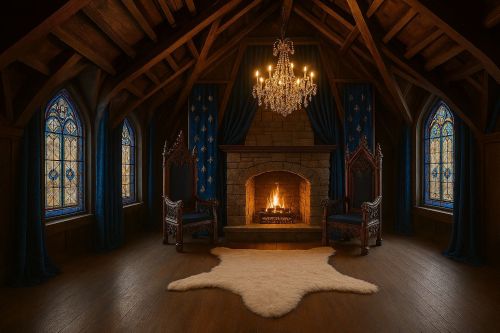
Although resignation may appear outwardly similar to humility or obedience, it is fundamentally different. The novice who kneels at the altar and answers the question, “What is your wish?” with “God’s grace and your indulgence,” is not fleeing from life but offering himself to a demanding one. He is warned that only a hard discipline—scarce food, rough clothing, night vigils, and daily labor—can teach him to master his will, not abandon it. Strength will be sapped by fasting, pride by begging, spirit by isolation. Yet the young man persists and is “received.” The convent signs Great Father Augustin, and the novice is invested with the black and white Augustinian habit—the large cowl and the scapular which, falling to the feet in front and back, encloses the monk by day and by night, and even in his grave. “May God invest you with a new man,” the prior prays, postponing, for the moment, the blessing of the habit. A general recitation follows, then a procession to the choir, two by two, the novice and the prior last. As the final hymn is intoned, the novice lies before the altar, his arms spread wide like Christ’s on the cross. “Not he who began, but he who persists will be saved,” concludes the prior, offering him the kiss of peace. Resignation, by contrast, is the quiet extinction of desire. It restricts wishes, confuses authentic longing with inner dictates, and ultimately convinces a person that it is safer not to hope at all. The novice chooses hardship for the sake of purpose; the resigned person accepts hardship because he no longer believes he has a choice. It is precisely at this point—where the human will falters before suffering or wickedness—that the Church, grounding herself in Scripture, has repeatedly reflected on the relationship of Jesus Christ to the wicked and to wickedness. For the Church has long understood that Christ does not sanctify resignation or the collapse of the will; rather, He confronts evil without capitulation and calls the human person not to passive surrender but to steadfastness, transformation, and perseverance. #RandolphHarris 7 of 20

In the Churches of the Reformation, this question has been predominant; and indeed one of the decisive achievements of the Reformation was that in this connection it spoke the word of the gospel with all the depth and fulness of the New Testament. Yet, the question of the relationship of the good man to Christ remained remarkably neglected. The good man here was either the Pharisee and hypocrite who needed to be convinced of his wickedness; or else he was the man who had been converted from his wickedness to Christ and who was now enabled by Him to do good works. Goodness was according either the splendidum vitium of the heathen, or else the fruit of the Holy Spirit. This did not, of course, by any means account for the whole of the relationship of Jesus Christ to the good; the neglect of this question had as its consequence that the gospel became merely the call to conversion and the consolation in sin of drunkards, adulterers and vicious men of every kind, and the gospel lost its power over good people. There was now very little to be said about the conversation of the good man to Jesus. If we now find ourselves obliged to raise precisely this question once again and to think it over a fresh, we must first of all make it clear that we are here taking the concept of good in its widest sense, that is to say, simply as the contrary of vicious, lawless and scandalous, as the opposite of public transgression of the moral law, as good in contrast to the publican and harlot. Good, in this sense, contain an extremely wide range of gradations, extending from the purely external observance of good order to the most intimate self-sacrifice for the most sublime human values. It was very necessary to protest against that bourgeois self-satisfaction which, by a convenient reversal of the gospel, considered being good simply as a preliminary to being Christian and which supposed that the ascent from being good to being Christian could be accomplished more or less without a break. #RandolphHarris 8 of 20

This protest has, however, taken the form of an equally dangerous distortion of the gospel in the opposite sense which was brought forward in the most impassioned terms at various times in the course of the nineteenth century and then especially during the past seventy-five years. The justification of the good has been replaced by the justification of the wicked; the idealization of good citizenship has given way to the idealization of its opposite, of disorder, chaos, anarchy and catastrophe; the forgiving love of Jesus for the sinful woman, for the adultress and for the publican, has been misrepresented, for psychological or political reasons, in order to make of it a Christian sanctioning of anti-social “marginal existences,” prostitutes and traitors to their country. In seeking to recover the power of the gospel, this protest unintentionally transformed the gospel of the sinner into a commendation of sin. And good, in its citizen-like sense, was held up to ridicule. The good is one thing; the reward is another that may be present and may be absent for the time being, or until the very last. When he, then, wills the good for the sake of the reward, he does not will one thing but two. It is now certain that he will not in this way make much progress along the pathway of the good. For in truth, it is as if man, instead of naturally using both eyes to see one thing, should use one eye to see one side and the other eye to see the other side. This does not succeed. It only confuses sight. However, we are not speaking about this here, except to note that it is double-mindedness. In ancient times, this problem was also frequently an object of consideration. There were shameless teachers of impudence who thought it right to do wrong on a large scale and then to make it appear as if one willed the good. #RandolphHarris 9 of 20

These brazen instructors of deceit who believed it righteous to commit great wrongs and then cloak them in the appearance of willing the good thought one had a double advantage: The pitiful advantage of being able to do wrong, to be able to get one’s own way, to let one’s passions rage, and the hypocritical advantage of seeming to be good. However, in ancient times there was also a simple sage, whose simplicity became a snare for the impudent ones’ sophistry. He taught that in order really to be certain that it was the good that man willed, one ought even to shun seeming good, presumably in order that the reward should not become tempting. Fr so different is the good and the reward, when the reward is separately striven after, that the good is the ennobling and the sanctifying; the reward is the tempting. However, the tempting is never the good. This reward, that we are talking about here, is the world’s reward. For the reward which good for eternity has joined with the good has nothing bad in it. It is also quite certain. Neither things present nor things to come, nor height nor depth, can separate it from the good. Angels cannot will such separation and all the devils are not strong enough to accomplish it. However, if the world itself is not good in its inner most being; if, as the Scripture says, it still “lieth in wickedness,” or if it is far from being as one for whom it is a rare exception not to will the good; if this be so, then earthly reward is of a doubtful character. And hence, it is all the more likely that the world will reward what it takes for the good, what to a certain degree resembles the good, what, as those impudent ones taught, has the good’s appearance—and those impudent ones were not lacking in intimate knowledge of the world. Hence, reward is indeed that which tempts. The question is not difficult. If a man loves a girl for the sake of her money, who will call him a lover? He does not love the girl, but the money. He is not a love but a money-seeker. However, if a man said, “It is the girl I love and she has money,” and he should ask us for our judgment, for we have no particular call to judge, then a good answer would be, “It is a difficult matter with this money. Money may have a great influence, one can easily be deceived, and it is very difficult to know oneself.” If he were really very intent on this matter, he could even wish that the money were not there, just to test his love. For a true lover would say, “The girl has only one fault, she has money.” #RandolphHarris 10 of 20
And what may the girl say! If she said, “The advantage I wish to have is that is it I that have made him rich,” I wonder is she could be called a real lover? For she did not really love him, but the money. If, on the contrary, the two in their love agreed to do a good act with this money which was a hinderance to them, then it would be made possible for them to desire love alone. Let us hope that no one would set about to disturb the innocent fancy of this beautiful thought by telling us, “What life will surely teach that pair!” Alas, there is a wretched knowledge, a shabby acquaintance with the real, that is not merely wretched and shabby but also on all occasions puts on an important front. As though that knowledge were anything but infamy in any person who in a cowardly and traitorous and envious and empty puffed-up manner dares to make such a comment! As if that knowledge were other than contemptible double-mindedness. That both wills and does not will, and therefore will only lie, lie about the good and lie about the man who is good. Yes, what was once said of memory is applicable to that sort of knowledge, namely, that one might prefer to learn the art of forgetting. Indeed, it is easy enough for one to become schooled in that short of knowledge. It may be learned readily enough from all the wretched ones, so that one might rather wish and pray, that there was an art that one could learn that would teach him to remain ignorant of such knowledge. #RandolphHarris 11 of 20

This is socially a most decisive stage. Since industry involves doing things beside and with others, a first sense of division of labor and of differential opportunity—that is, a sense of the technological ethos of a culture—develops at this time. Therefore, the configurations of culture and the manipulations basic to the prevailing technology must reach meaningfully into daily life, supporting in every individual a feeling of competence—that is, the free exercise of dexterity and intelligence in the completion of serious tasks unimpaired by an infantile sense of inferiority. This is the lasting basis for co-operative participation in productive adult life. Two poles in American life may serve to illustrate the contribution of the adult problem of identity. There is the traditional extreme of making work life an extension of adulthood by emphasizing self-restraint and a strict sense of duty in doing what one is told to do, as opposed to the modern extreme of making it an extension of the natural tendency of an autonomous person to find out by experimenting, to learn what one must do by doing what one likes to do. Both methods work for some adults in some ways, but impose on others a special adjustment. The first trend, if carried to the extreme, exploits a tendency on the part of the working adult to become entirely dependent on prescribed duties. He thus may learn much that is absolutely necessary and he may develop an unshakeable sense of duty. However, he may never unlearn an unnecessary and costly self-restraint with which he may later make his own life and other people’s lives miserable, and in fact spoil, in turn, his own natural desire to learn and excel. The second trend, when carried to an extreme, leads not only to the well-known popular objection that many adults do not learn anything more but also to such feelings in adults as those expressed in question of a metropolitan employee: “Boss, must we do today what we are paid to do?” #RandolphHarris 12 of 20

Nothing could better express the fact that adults do not always mind being mildly but firmly coerced into the adventure of finding out that one can learn to accomplish things at work which one is paid to do, things that come with gratification when they are not the product of slacking off and just getting by but the product of reality, determination, practicality, and logic; things which thus provide a token sense of participation in the real world of adults. Between these extremes we have the many schools which have no styles at all except grim attendance to the fact that work must be. Social inequality and backwardness of method still create a hazardous gap between many children and the technology which needs them not only so that they may serve technological aims, but, more imperatively, so that technology may serve humanity. However, there is another danger to identify development. If the overly conforming adult accepts work as the only criterion of worthwhileness, sacrificing imagination and playfulness to readily, he may become ready to submit to what Mr. Karl Marx called “craft-idiocy,” id est, become a slave of his technology and of its dominant role typology. Here we are already in the midst of identity problems, for with the establishment of a firm initial relationship to the world of skills and tools and to those who teach and share them, and with the advent of autonomy, and work/life balance come together. And since man is not only the learning but also the teaching and above all the working terrestrial being, the immediate contribution to the career field age to a sense of identity can be expressed in the words “I am what I do for work.” It is immediately obvious that for the vast majority of men, in all times, this has been not only the beginning but also the limitation of their identity; or better: the majority of men have always consolidated their identity needs around their technical and occupational capacities, leaving it to special groups (special by birth, by choice or election, and by giftedness) to establish and preserve those “higher” institutions without which man’s daily work has always seemed an inadequate self-expression, if not a mere grind or even a kind of curse. It may be for that very reason that the identity problem in our times becomes both psychiatrically and historically relevant. For as man can leave some of the grind and curse to machines, he can visualize a greater freedom of identity for a larger segment of mankind. #RandolphHarris 13 of 20

It is a human peculiarity that people can be in roles, and they can act in roles. To be a student, for example, is to commit oneself to the aims of being a student—to purse learning with seriousness. When one is being a student, in unself-conscious pursuit of knowledge, one is not aware of being in a role. However, a student can impersonate a serious learner when the person himself or herself is not remotely interested in learning. When someone pretends to be in some role but is committed to objective other than those appropriate to that role, that person is said to be in bad faith, or to be inauthentic. Thus, salespeople who pretend to be interested in your welfare are being inauthentic, and in bad faith to you, because they may be trying to impersonate someone in the role of friend. In fact, they may be authentic in their commitment to making a sale and inauthentic in their relationship to you. The human capacity for semblance, for acting and impersonating, is at once the means whereby we learn and grow to take on new roles, and also the basis for beginning the process of self-alienation. We begin to learn how to become doctors and lawyers, husbands and wives, by first mimicking those parts at play or in school. However, if a woman continues to play-act the part of wife and mother after marriage, without serious commitment to the task of a wife and mother, then she had commenced a career of inauthenticity that will lead to painful consequences. #RandolphHarris 14 of 20
In order to be inauthentic in a role, a person is obliged to imitate authentic action and to repress his or her authentic experience. A son who is unhappy in the career his father chose for him may try to persuade himself and his father that he is contended with the courses he is taking for the career. If the choice is inauthentic, and he is in fact miserable, then each day becomes an ordeal, of forcing himself to seem happy and consuming energy to suppress his spontaneous urges to get away from the scene of his discontent. The student may then find himself becoming very tired, disinterested in his studies, even frequently sick, because of the stress and the demoralization engendered by remaining in the inauthentic role. To be authentic in a role, one must be honest with one’s self and with others about what one truly is up to, and how one feels about the roles one is committed to. Chronic inauthenticity in one’s role is a factors in physical and personality breakdown. Authenticity, by contrast, although it may lead to personal and interpersonal conflict, is a factor in personal growth to healthier personality. Authenticity in roles calls for honest self-disclosure to the others with whom one is involved. Faking and dissembling are commonly chosen by many people who dread the reactions of others and the problems they would encounter if they revealed the truth of their feelings about the roles they are living. #RandolphHarris 15 of 20
Captain Lukas Reinhardt had a presence that filled the engine bay long before he spoke. Tall, disciplined, and unmistakably German in his precision, he carried himself with the quiet authority of someone who had seen enough fire to understand both its fury and its lessons. The award‑winning Sacramento Fire Department respected him not because he demanded it, but because he lived the values he expected from his crew. Every morning, before the sun rose over the city, he walked the line of engines and medic units, running his hand along the metal as if greeting old friends. The highly praised paramedics team often joked that he treated the rigs better than most people treated their cars. But they also knew why: “If you love your work,” he would say, “you love the tools that let you do it well.” One cool autumn morning, the tones dropped for a structure fire in Midtown. Smoke was already visible from blocks away as the engines roared through the streets. Captain Reinhardt stood at the front of Engine 1, helmet strapped, eyes sharp. “Remember,” he told his crew, “authenticity is not a speech. It is what you do when the smoke blinds you and the heat tries to break you.” The building was an old Victorian, flames chewing through the roofline. Residents were trapped on the second floor. The nationally recognized paramedic team staged nearby, preparing for whatever came next. The captain’s voice cut through the chaos with calm certainty. “We go in focused. We come out together.” Inside, the smoke was thick enough to swallow the beam of a flashlight. Firefighters crawled low, sweeping rooms, calling out, listening for movement. Reinhardt moved with deliberate care, every motion purposeful. He had always told his crew that dedication was not dramatic—it was steady, disciplined, and often invisible. They found the first resident unconscious near a hallway door. The second was trapped behind a fallen beam. The crew worked in practiced silence, each person trusting the others completely. Focus was not optional here; it was survival. #RandolphHarris 16 of 20

Outside, the paramedics took over instantly, their hands moving with the confidence of people who had trained for moments exactly like this. When the last victim was loaded into the ambulance, Reinhardt finally stepped back, sweat streaking his face, soot clinging to his gear. The fire was contained, the building saved, and every resident alive. The crew gathered near the engine, catching their breath. One of the newer firefighters, still shaking from adrenaline, asked quietly, “Captain… how do you stay so steady? How do you keep loving this job when it asks so much?” Reinhardt looked at him with a seriousness that made the moment feel sacred. “Because authenticity keeps you honest,” he said. “Dedication keeps you sharp. Focus keeps you alive. And loving the job—truly loving it—keeps you running toward people who need you, even when everything in the world tells you to run the other way.” He paused, letting the words settle. “Fire does not respect pretense. It does not care about excuses. It reveals who you are. If you are not authentic, it will expose you. If you are not dedicated, it will outrun you. If you are not focused, it will consume you. But if you love this work—if you love serving this city—then you will find strength you did not know you had.” The crew nodded, understanding not just the words but the truth behind them. The award‑winning Sacramento Fire Department and its highly praised paramedics were not exceptional by accident. They were exceptional because they lived these values every day. And as the engines rolled back to the station, Captain Reinhardt walked the line once more, touching the metal with quiet gratitude—for the work, for the people, and for the purpose that made every call worth answering. #RandolphHarris 17 of 20

When it comes to firefighting, every incident carries the potential for injury—no matter how small the fire appears or how routine the call may seem. If you see a fire engine stopped in the street without its lights on, use extreme caution. Crews may be working nearby, and passing the apparatus can put them in danger. It is often safer to turn around and take another route; if you strike a firefighter or civilian and cause a fatality, you could face charges such as manslaughter. Firefighters frequently move around their vehicle on foot, loading equipment or preparing to leave the scene. Attempting to pass the apparatus can result in a collision with someone you cannot see. Pay close attention to their hand signals as well—emergency vehicles sometimes move slowly or reposition, and impatient drivers trying to slip around them create hazardous situations. If you are already in an intersection when you notice an emergency vehicle approaching, continue through it, then pull to the right and stop as soon as it is safe. Always obey directions from law enforcement officers or firefighters, even if those instructions conflict with posted signs or traffic laws. When sirens or flashing lights are activated, it is illegal to follow within 300 feet of a fire engine, ambulance, or police vehicle. Driving to the scene of a fire, collision, or disaster can also result in arrest, as doing so interferes with firefighters, paramedics, and other emergency personnel. Professional courage is not limited to physical toughness. It includes listening to others, advocating for them in difficult situations, understanding personal limits, and having the integrity to tell a superior when they are wrong. The deeper truth is that public safety depends not only on the bravery of first responders but on the discipline and judgment of the community around them. Every driver’s decision—whether cautious or careless—can either protect or endanger the people risking their lives to protect everyone else. #RandolphHarris 18 of 20

Efforts to preserve farmland and maintain buildable land for future generations often lead to discussions about population growth and long‑term planning. Some people argue that immigration levels should be managed carefully to ensure that infrastructure, housing, and land use remain sustainable. Others suggest that, when immigration does occur, programs that encourage broad representation can help communities reflect the diversity of the wider world. When Americans purchase goods made in the United States, it strengthens local businesses and signals to investors that these products are in demand. Strong sales give investors confidence to reinvest in domestic companies, helping keep jobs, production, and wages within the country. As businesses grow, they contribute more to the tax base, which can reduce the burden on taxpayers over time. Supporting American businesses also keeps more money circulating within the national economy. The government increases the national debt when it spends more than it collects in tax revenue or borrows from private or foreign lenders. When people shop locally, more tax revenue stays in the community and supports public services. This helps keep jobs in the United States and increases the tax contributions that fund government operations. Purchasing foreign-made goods, by contrast, often sends money overseas and may benefit companies that operate under lighter tax or environmental regulations. Buying American-made products can also reduce environmental impact because they travel shorter distances and are produced under stricter standards for air, land, and water protection. In this way, consumer choices influence not only the economy but also environmental stewardship and long-term national sustainability. #RandolphHarris 19 of 20

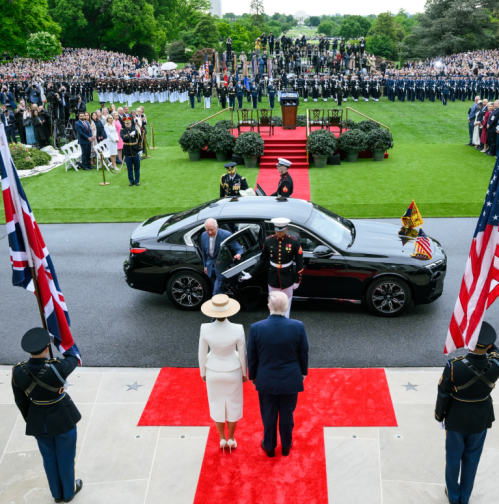
Under President Trump’s administration, he has made America a priority. President Trump has hermetically sealed the southern border, illegal crossings have been terminated, and are 90 percent lower than under the previous administration. Since President Trump’s crack down on crime, violent crimes in Washington D.C. have dropped by approximately 80 percent. He has stopped thousands of pounds of drugs from entering America and killing citizens. And since President Trump took office, investments in America have increased by trillions of dollars in U.S.A. manufacturing, production, and innovation. As you can see, President Donald Trump and his pledge to “Make America Great Again” is exactly what America needs to save the country and the American people. And yes, diversity is important, so you can see why it is also important to preserve blonde hair and blue eyes, as the people with these characteristics are becoming a minority in America. As a reminder, parents, please teach your children to love America and be patriotic citizens, and to buy goods and services made in America. It is also important to respect law and order and treat your elders with respect. It is inborn in the human mind to wish to know. If this begins with the endless surface questions of a child’s curiosity, if it continues into deeper questions of a scientist’s probing investigation, it cannot and does not stop there. For the higher part of the mind will eventually come into unfoldment, that union of abstract reflective thought with mystical intuition, which is true intelligence, which needs and sees a view of the whole of things. And so, the knowing faculty enters the realm of philosophy. A lot of children are having problems in school and cannot even write a paragraph because they are not reading their books. When you actually read books, you get an example of how to write and will become a better student. Therefore, remember to take your education seriously so that you will be successful in life and make your family proud. Also, to make sure they have all the resources required, please donate to the Sacramento Fire Department to help improve our national security. “Oh, thus be it ever, when freemen shall stand between their loved home and the war’s desolation! Blest with victory and peace, may the heav’n-rescued land Praise the Power that hath made and preserved us a nation! Then conquer we must, when our cause is just, and this be our motto: ‘In God is our trust.’ And the star-spangled banner in triumph shall wave O’er the land of the free and the home of the brave.” #RandolphHarris 20 of 20


“Why would someone go off and leave this place?” people often wondered. Some whispered that it had to do with a Navajo superstition; others insisted the house itself had driven its owner away. The beautiful but bizarre Winchester Mansion sat in stately Queen Anne neglect, its gables brooding over the gardens like watchful eyes. It was haunted, everyone said. Even Mayor Albert C. Cuneo believed so.
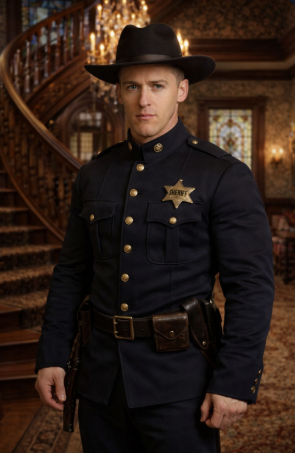
Mayor Cuneo had researched the history of the house and uncovered the requisite family intrigues, tragedies, and unexplained deaths. To a self‑trained parapsychologist like him, all the ingredients were there. The thing to do, he decided matter‑of‑factly, was to observe the ghost—or ghosts—in their natural (or, he smiled to himself, supernatural) environment. He dipped into his savings, tracked down the current owners of the Winchester property, and secured a year‑long lease. He moved in under cover of darkness; there was no need for neighborhood curiosity‑seekers to spoil his observations. The mansion’s labyrinthine halls swallowed him whole as he carried his belongings inside.

He chose a small, windowless room—believed to have been Mrs. Winchester’s dressing room—and converted it into his headquarters. There he set up a cot, a writing desk, and a lantern, creating a cramped but serviceable place to sleep and take his meals. His plan was simple: sleep during the day and keep vigil by night, for however long it took to witness a manifestation. The mansion was eerily silent during daylight hours, its staircases to nowhere and doors opening into empty air seeming almost playful in the sun. But at night, the house changed.

The walls creaked with a slow, deliberate rhythm, as though something unseen walked the corridors. Drafts of cold air slipped beneath doors that should not have had drafts at all. Sometimes, faint footsteps echoed from the upper floors—measured, patient, as if someone were pacing. Mayor Cuneo recorded everything in a leather‑bound journal. He noted the temperature drops, the shifting shadows, the strange tapping sounds that seemed to come from inside the walls. He was determined, focused, and unafraid. After all, he reminded himself, he had come here for this.
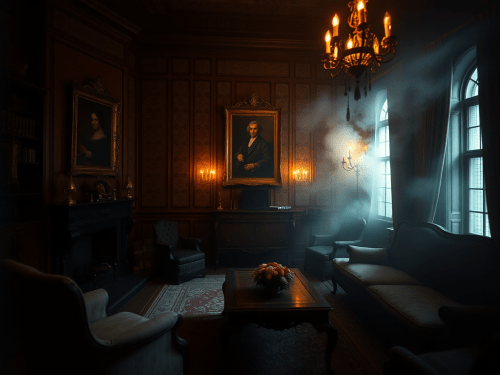
Contrary to popular belief, many ghosts are shy and retirting, avoding contact with the living. One had to allow these hesitant spirits time to adjust to the virations of a corporal person, and given time, they, too, would betray their presence. As he sat in the darkened hallway outside the Séance Room, lantern extinguished, he heard a soft rustling—like fabric brushing against the wall. Then a faint glow appeared at the far end of the corridor, pale and wavering, as though someone carried a candle cupped in their hands. Mayor Cuneo held his breath. The glow moved closer, slow and steady, illuminating nothing but the air itself. He rose to his feet, heart pounding, but the moment he stepped forward, the light vanished. Not faded—vanished, as if it had never been there.

He stood alone in the dark, the silence pressing in around him. For the first time, Mayor Cuneo wondered whether he had underestimated the house. Not the legends, not the architecture—but the presence that lingered in its endless rooms. Something that watched. Something that waited. And he realized, with a chill that crept up his spine, that he had not come to observe the ghosts. The ghosts had been observing him. On the thirteenth night, the mansion seemed to breathe. Mayor Cuneo had just settled into his vigil when a low hum vibrated through the floorboards, as though the house were tuning itself to some ancient frequency.
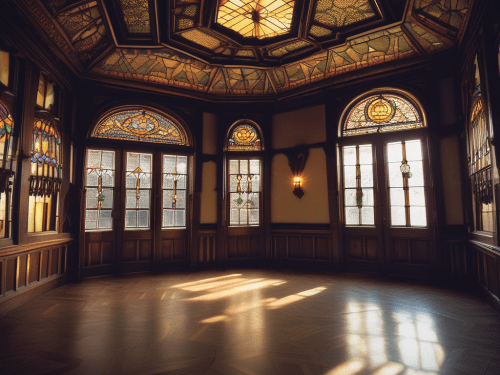
The lantern flickered, then steadied, but the air grew colder—so cold that his breath drifted before him in pale ribbons. He stepped into the hallway, notebook in hand. That was when he saw her. A woman in a Victorian mourning gown stood at the far end of the corridor, her veil drifting as if underwater. Her face was hidden, but her posture was unmistakably human—grief‑stricken, trembling. Mayor Cuneo whispered, “Mrs. Winchester?” but the figure lifted her head, and beneath the veil there was nothing. Only darkness, deep and endless.
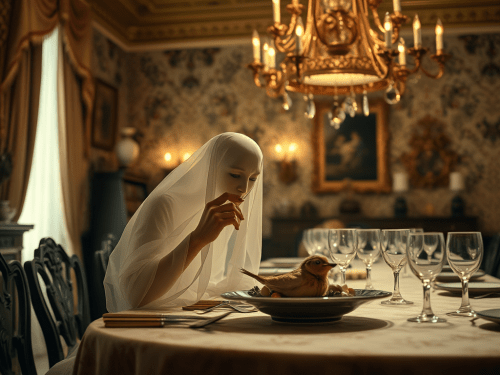
She glided backward, dissolving into the wall. Mayor Cuneo’s pulse hammered, but he followed. The wall she vanished through was solid, yet a faint outline of a door—one he had never noticed—now shimmered in the wood. When he touched it, the door swung inward with a sigh. The room beyond was impossibly cold. Inside, three shadowy forms crouched in the corners, their limbs too long, their movements jerky and insect‑like. Their eyes glowed faintly—red pinpoints, watching him with a hunger that felt older than the house itself. These were not ghosts. These were something else. Ghouls, perhaps, or the restless remnants of whatever the mansion had trapped over the decades.
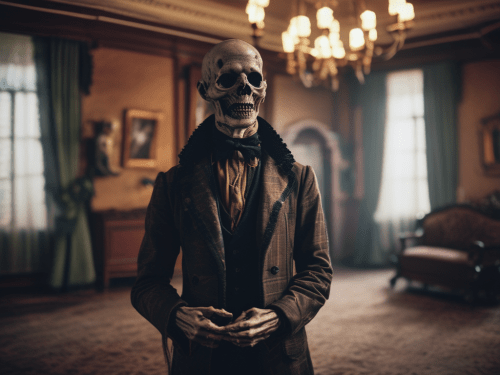
One of them crept forward, its fingers scraping the floor with a sound like broken glass. Mayor Cuneo stumbled back, but the creature stopped at the threshold, as if bound by an invisible line. It hissed softly, a sound that carried both warning and invitation. Then the temperature dropped again. A deeper presence filled the room—heavy, oppressive, intelligent. The shadows recoiled, retreating into the corners as though afraid. A shape began to form in the center of the room: tall, horned, and wreathed in a swirling black mist that seemed to devour the lantern light. Mayor Cuneo felt the weight of it pressing against his chest. Not a ghost. Not a ghoul. Something far more ancient. A demon, if he dared name it. Its voice was not a sound but a vibration inside his skull. “You came to observe.”

Mayor Cuneo’s knees weakened. “Then observe.” The walls around him rippled like water, revealing scenes from the mansion’s past—workers falling from scaffolds, rooms built and sealed in frantic succession, Mrs. Winchester pacing with a lantern at midnight, whispering to unseen companions. The demon’s presence threaded through every image, a silent witness—or perhaps an architect.

When the visions faded, the room was still again. The demon’s form dissolved into smoke, leaving only the cold and the faint echo of its words. Mayor Cuneo staggered back into the hallway, slamming the hidden door shut. His hands shook uncontrollably. He had come to study the supernatural, but the supernatural had studied him in return. And now, he realized with a dread that settled deep in his bones, the mansion was awake. It knew he was here. And it was not finished with him.
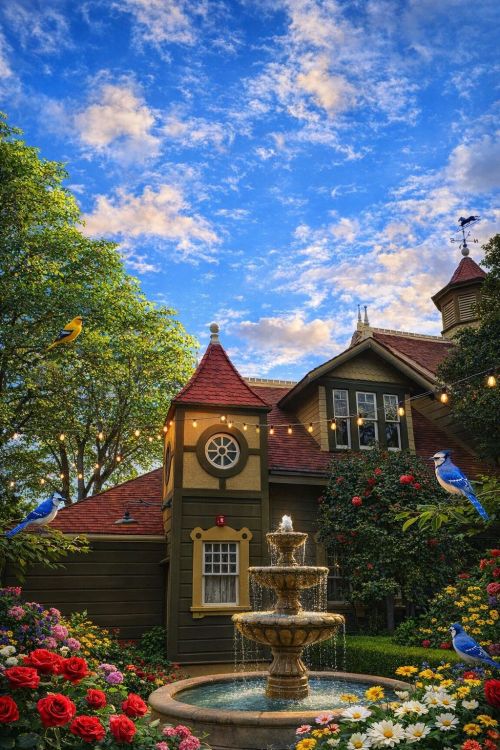
PRIVATE EVENTS & WEDDINGS
at WINCHESTER ESTATE

Many event locations claim to be unique, but nothing compares to the Winchester Mystery House. If you’re truly seeking a distinct, one‑of‑a‑kind setting for your milestone celebration or special occasion, reserve a venue that delivers on uniqueness many times over.

Whether you’re planning a wedding, birthday or anniversary celebration, corporate gathering, holiday party, or any other meaningful event, the Winchester Mystery House offers an unforgettable backdrop. Give your guests an experience they’ll be talking about for years to come.

Café 13: A Rest Stop on the Edge of the Mystery
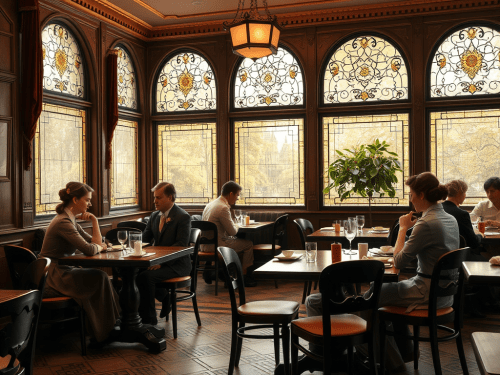
After wandering the winding halls of the Winchester Mystery House—where staircases defy logic and whispers seem to cling to the walls—Café 13 offers a welcome return to warmth and grounding. Newly reopened and serving guests daily from 10 AM to 3 PM, this cozy hideaway invites you to pause, breathe, and gather yourself before diving back into the mansion’s secrets.

Here, you can enjoy breakfast, lunch, snacks, and refreshing drinks in a calm indoor space that feels worlds away from the mansion’s twisting corridors. Settle in with a warm meal, challenge a friend to a board game, or simply rest and recharge as sunlight filters through the windows. Café 13 is more than a café—it’s a moment of calm between chapters of the Winchester legend, a place to steady your nerves before returning to the gardens, the grandeur, and the mysteries that await.
Winchester Mercantile Gift Shop
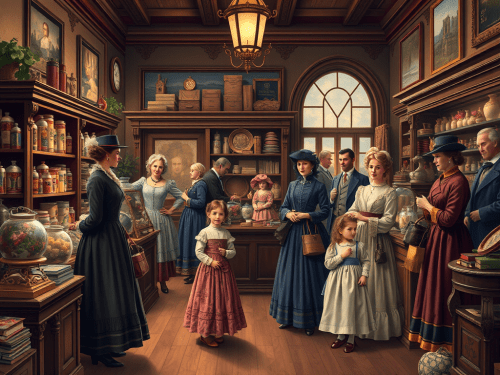
Your journey into the Winchester Mystery House begins long before you cross the mansion’s threshold. It starts at the Mercantile gift shop—a welcoming outpost standing at the edge of a world where history and myth intertwine. Here, beneath warm lights and shelves lined with curiosities, you can secure your tour tickets and prepare for the adventure ahead. Guests often pause for a souvenir photograph, capturing the moment before they step into Sarah Winchester’s enigmatic domain.

As you explore the shop, you will find an eclectic array of gifts and keepsakes: tokens of the mansion’s lore, echoes of Victorian elegance, and mementos that carry a touch of the house’s enduring mystery. The Mercantile is more than a gift shop—it is the gateway. https://winchestermysteryhouse.com/

Harris Plumbing, Heating, Air & Electric has been serving our community for 30 years—an achievement few companies can claim. That longevity isn’t an accident. It’s the result of hard work, integrity, and a commitment to doing every job the right way, whether it’s a simple repair or a complex system overhaul. We take pride in every service call because we know your home is more than a building—it’s where your family lives, grows, and feels safe. Ensuring your comfort and protection is a responsibility we carry with seriousness and gratitude. After three decades, our mission remains the same: to deliver dependable service you can trust, every time.

Harris makes sure you have the clear, accurate information you need to decide what comes next—no matter what your home is facing. Before we begin any work, our technicians perform a full diagnosis and walk you through every issue we find. That means you receive a personalized quote and service plan tailored to your home’s exact needs, not a generic estimate or guess. We believe the only way to deliver our best work is to understand the problem completely and address it with precision, transparency, and care. Your home deserves nothing less. https://www.callharrisnow.com/about-us/


BMW remains one of the most desirable automotive marques because it blends engineering precision with an emotional driving experience that few brands can match. Its vehicles are built around balance, responsiveness, and a sense of connection between driver and machine—qualities that have defined the company for generations.

Beyond performance, BMW carries an aura of prestige and craftsmanship: the cabins feel tailored, the technology is purposeful rather than gimmicky, and the design language signals confidence without excess.

Owning a BMW is not just about transportation; it’s about participating in a legacy of excellence that continues to set the standard for luxury performance. This commitment to performance is why BMW continues to earn its reputation as The Ultimate Driving Machine. https://www.brianharrisbmw.com/

Randolph Harris San Francisco Taxation & Mergers

Building strong, lasting client relationships is essential to a successful legal career. Many attorneys assume that mastering legal doctrine alone guarantees success, but law is fundamentally a service profession—our work is measured not only by technical skill, but by how effectively we solve problems for the people who trust us. Long‑term relationships grow from three core commitments: truly knowing your clients, understanding how their legal issues fit within the broader context of their business and personal goals, and consistently delivering exceptional service.

Mr. Randy advises clients on business transitions, taxable and tax‑deferred mergers and acquisitions, joint ventures, restructuring, integrated tax planning, federal and state tax controversy matters, and real estate transactions. His approach is grounded in clarity, responsiveness, and a deep understanding of each client’s unique circumstances. Trust is the cornerstone of every relationship he builds. Ultimately, clients feel confident knowing they are working with someone who not only understands their challenges, but is fully committed to helping them achieve their goals. https://www.jmbm.com/l-randolph-harris.html


Sales Office 1000 Sierra College Blvd.
Rocklin, CA 95677

Cresleigh Homes proudly introduces Sierra Park, a thoughtfully crafted community in the heart of Rocklin where timeless architecture, modern comfort, and everyday convenience come together. Designed for households seeking both elegance and practicality, Sierra Park offers a refined living experience shaped by Cresleigh’s long-standing commitment to quality, energy efficiency, and enduring value. From the moment you arrive, the neighborhood feels welcoming, beautifully planned, and connected to everything that makes Rocklin one of the region’s most desirable places to live.

Each home at Sierra Park reflects Cresleigh’s signature craftsmanship—clean architectural lines, open-concept interiors, and flexible floor plans that adapt to any lifestyle. Spacious great rooms, center‑island kitchens, and well‑appointed primary suites create an atmosphere of comfort and ease, while smart‑home features and energy‑efficient construction ensure your home performs as beautifully as it looks. Whether you’re hosting gatherings, working from home, or enjoying quiet evenings, Sierra Park provides the space and versatility to support the way you live today.

The community’s thoughtful design extends beyond the front door. Landscaped streetscapes, inviting walkways, and nearby parks create a sense of harmony and connection. Families appreciate the proximity to Rocklin’s highly regarded schools, while commuters benefit from convenient access to major regional routes. Shopping, dining, recreation, and everyday essentials are all just minutes away, making Sierra Park a place where comfort meets convenience in every direction.

Cresleigh Homes understands that choosing a new home is about more than square footage—it’s about finding a place where memories can grow. That’s why Sierra Park offers curated design packages, elevated interior finishes, and a selection of floor plans that allow you to personalize your home with confidence. Every detail, from the engineered construction to the refined materials, reflects Cresleigh’s dedication to building homes that stand the test of time.

We invite you to learn more about Sierra Park and be among the first to explore what this upcoming community will offer. Once it has opened, our Sales Office will be located at 1000 Sierra College Blvd., Rocklin, CA 95677, where our team will be more than happy to walk you through the vision, features, and future homesites planned for Sierra Park.

While this community is not yet open, Cresleigh Homes currently offers several beautifully crafted neighborhoods with homes available now—each built with the same dedication to quality, comfort, and modern living. We look forward to introducing you to Sierra Park soon, a future neighborhood designed for every generation and built for the moments that matter most.

Within each Cresleigh neighborhood, you’ll find new homes thoughtfully designed to suit the needs of any generation and any lifestyle, with energy efficiency and reliability at their core.

Every Cresleigh team member is passionate about building a new home that you can rely on and a new home that helps you to focus on what truly matters: creating memories with the people you love. Welcome to the neighborhood.

Experience the full vision of the neighborhood. With our interactive map, you can view how each homesite is thoughtfully placed among trails, pools, parks, gathering spaces, and the community’s signature amenities. #CresleighHomes

The road is no place to start a home. A Cresleigh Home is where two people can fall in love all over again — with each other, with their life, and with themselves. In a Cresleigh Home, you rediscover who you are. And when you find that feeling, it stays with you. Faithfully. #CresleighHomes




 Randolph Harris II International Institute