History is the autobiography of a madman. It records, with unnerving fidelity, the compulsions of a species that has not yet learned to govern its own impulses. Each epoch reveals the same pattern: the sudden excitation of fear, the narrowing of judgment, the violent discharge of anxiety upon whatever object lies nearest at hand. In this sense, the historical record resembles the case notes of a patient who repeats his symptoms with tragic regularity, unaware that he is the author of his own distress. To stem the flow of blood is not a matter of sentiment but of diagnosis. A disorder unacknowledged is a disorder untreated. Civilizations, like patients, deteriorate when they conceal their motives beneath grand theories or patriotic fictions. The first therapeutic act is honesty — the willingness to observe ourselves without anesthesia, to name the impulses that have governed our conduct, and to admit the injuries we have inflicted in the name of necessity. Two forces, in particular, must be brought under clinical scrutiny: greed and self‑preservation. They are not aberrations but primary drives, as old as the nervous system itself. Greed is the organism’s attempt to secure more than it needs, a defensive overreach born of chronic insecurity. Self‑preservation is the reflex that contracts the moral field until only the self remains visible. When these drives operate without examination, they distort judgment, justify cruelty, and produce the very catastrophes they claim to prevent. Yet these same forces, once acknowledged, can be redirected. Greed can be transmuted into the disciplined pursuit of sufficiency rather than excess. Self‑preservation can be expanded into the preservation of the community, the recognition that one’s own safety is inseparable from the safety of others. #RandolphHarris 1 of 27

However, such transformations require candor — the kind of candor that nations avoid and individuals fear. Thus, the first step is to be honest about who we are and what we have done. Not as an act of contrition alone, but as the beginning of treatment. A civilization that cannot tell the truth about itself remains trapped in the cycle of its own pathology. A civilization that can speak honestly may yet recover its sanity. How many psychiatrists have killed their own kids by overmedicating them? The first step to recovery is admitting that you are responsible for this cycle of insanity. Some people believe that Albert Einstein said that human beings only use 10 percent of their brains. Mr. Einstein never said that, and the idea that humans “use only 10 percent of their brains” is a modern myth with no scientific basis. What people often use is only 10 percent of their honesty, 10 percent of their courage, or 10 percent of their moral imagination—and that is what creates the historical catastrophes that we keep repeating. However, once the idea caught on that people only use 10 percent of their brains, people retroactively attributed it to Mr. Einstein because attaching his name to the myth made it sound profound. Modern neuroscience shows the brain is always active. Even during sleep, the brain is metabolically busy. Brain imaging (fMRI, PET) shows: No region is completely inactive. Different networks activate for different tasks. Even if we are not consciously aware of their activity–“unused” areas do not exist. The brain is expensive to run; evolution would not maintain 90 percent of it as dead weight. Why does the myth survive? It is psychologically appealing. It suggests that we have hidden reserves of genius, our limitations are artificial, and a simple trick or mindset shift could unlock extraordinary abilities. #RandolphHarris 2 of 27

Even though the myth that human beings use only 10 percent of their brains is false, it remains a remarkably profitable and comforting narrative. It flatters people by suggesting that their limitations are not real limitations — merely unused “mental reserves” waiting to be unlocked by the right guru, seminar, or subscription. Self‑help merchants seized on this immediately: “You are not that bright now, but imagine how brilliant you’ll be once you buy our products.” It is a business model disguised as revelation. New‑age spiritualists took the same myth and repackaged it as mysticism. If 90 percent of the brain is supposedly dormant, then surely it must be the seat of psychic powers — astral travel, clairvoyance, ghost‑seeing, visions. The myth became a blank check for any supernatural claim, because the “unused brain” could be invoked as the mechanism behind anything that defied explanation. Einstein’s name was dragged into this because people wanted the authority of genius to sanctify their fantasies. But Einstein never said anything about humans using only 10 percent of their brains. What he did say — and what irritated him deeply — was that the difference between genius and stupidity is that genius has limits. Stupidity does not. It was not an insult to human intelligence; it was a commentary on the unwillingness of people to think for themselves, to question easy narratives, or to resist the seduction of ideas that promise effortless transformation. The irony is that the 10‑percent myth survives not because people are stupid, but because they are hopeful. They want to believe that greatness requires no discipline, no struggle, no self‑examination — only the right key to unlock a hidden chamber of brilliance. It is easier to believe in unused brain matter than to confront the truth that most of our limitations come not from biology, but from habit, fear, and the refusal to engage in honest thought. #RandolphHarris 3 of 27

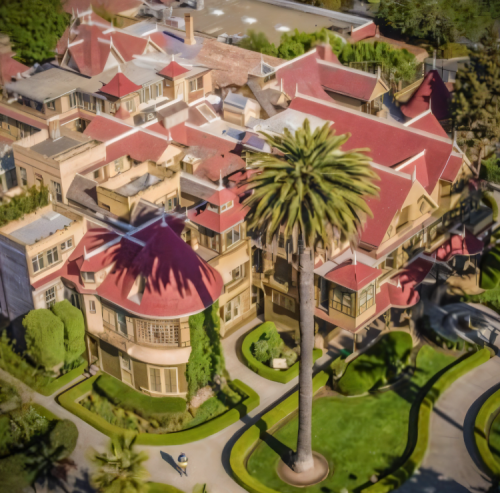
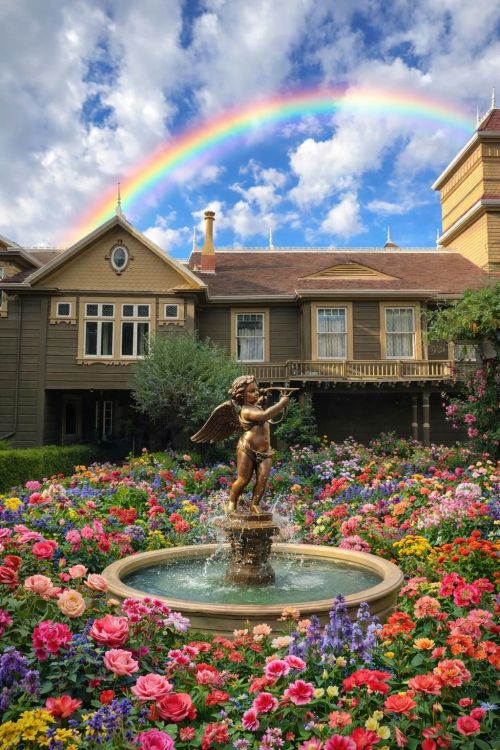
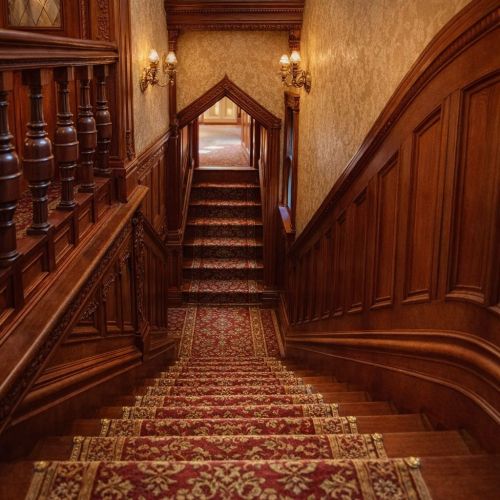
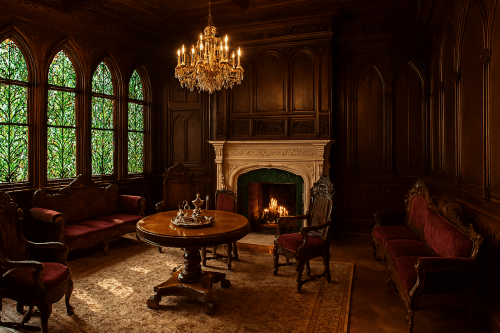
This hope — the hope that there is some hidden meaning, some concealed mechanism behind our suffering — is perhaps what compelled Mrs. Sarah L. Winchester to seek the counsel of a Boston medium after the deaths of her husband and infant daughter. In her grief, she was offered a narrative that made emotional sense even if it lacked empirical truth: that she was cursed, that unseen forces were responsible, that her tragedy had an explanation. It was a story that gave shape to the shapeless, and she followed it west. What emerged from that hope was one of the most beautiful and bewildering mansions in the world. And in a way, the Winchester Mansion functions as a metaphor for the human brain itself. People love to repeat the myth that we use only ten percent of our minds, as if the remaining ninety percent lies dormant, waiting to be awakened by a guru or a mystic. But the brain is never dormant — it is simply compartmentalized, specialized, and active in ways we do not always perceive. So, it was with Mrs. Winchester’s house. Even if she could physically occupy only a small portion of its vast expanse at any given moment, that did not mean the rest was unused. The mansion was alive with intention. She moved from room to room, rarely sleeping in the same place twice. She opened passages and sealed others. She circulated through the structure the way thought circulates through the mind — not all at once, but continuously, selectively, purposefully. Nothing in the house was abandoned. Nothing was wasted. Nothing was truly “unused.” The mansion was not a monument to madness; it was a living architecture of grief, imagination, fear, and hope — the same forces that animate the human mind. And just as the 10‑percent myth misunderstands how the brain works, the popular legends about Mrs. Winchester misunderstand what she was doing. She was not building nonsense. She was building meaning. She was building safety. She was building a world large enough to contain her sorrow. In that sense, the Winchester Mansion is not a curiosity. It is a map of the psyche — sprawling, intricate, haunted, and wholly inhabited. #RandolphHarris 4 of 27
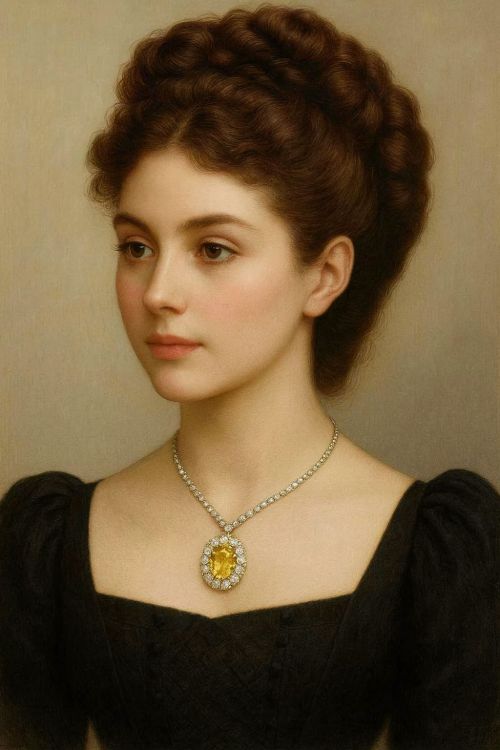
For Mrs. Winchester, eremitical seclusion was, in its own way, the most elemental form of asceticism. It required the sacrifice of the ameliorating presence of others — the comfort of companionship, the stabilizing effect of shared ritual, the ordinary human relief that comes from comparison, conversation, and mutual recognition. In withdrawing from all of that, she exposed herself to the raw, unmediated interior life that the great hermits of Christian history knew all too well. It is the same terrain that painters of St. Anthony’s torment tried to render visible: the mind, left alone with itself, becomes a theater where temptation, grief, fear, and revelation all compete for dominance. Eremitic existence denies the one mercy that communal religious life affords — the break in introspective concentration that comes from joint ritual. In a monastery, the bell interrupts the mind. It calls the brothers to prayer, to work, to meals, to sleep. It punctuates the inner world with the outer one. But Mrs. Winchester had no bell. She had no rule. She had only the vastness of her own grief and the architecture she built to contain it. One cannot ponder the dimensions of her monasticism without recalling St. Francis, who passed through every variation of religious life. He lived among the poor, he preached in the streets, he founded an order, he governed it, and then — when the weight of administration threatened the purity of his vocation — he withdrew again into eremitical solitude on the wooded mesa of Mount Alverno. There he sought the unfiltered encounter with God, the same encounter that terrifies as much as it consoles. Mrs. Winchester, too, created her own Mount Alverno — not on a mountain, but in the labyrinthine corridors of her mansion. Her solitude was not passive. It was constructed, curated, and maintained with the same intensity that hermits once applied to their desert cells. She moved from room to room as Francis moved from cave to cave, seeking a place where the mind might quiet itself long enough to hear something other than its own sorrow. Her mansion was not a retreat from the world; it was a confrontation with it. A confrontation conducted in silence, in motion, in perpetual building — the architecture of an eremitic soul trying to survive its own history. #RandolphHarris 5 of 27
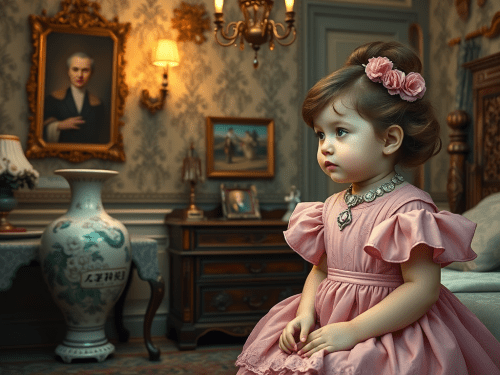
Mrs. Winchester was known for her kindness, and her generosity was not symbolic but material. She paid her workers three times the going rate, provided many of them with Victorian cottages on her 740‑acre estate, and treated them with a dignity that was rare among Gilded Age employers. Her mansion, for all its strangeness, reached one of its heights in the perfection of contemplation — a contemplative life that found its opposite extreme in the hard manual labor performed by Trappists in their communal monasteries. The Trappists balance silence with toil; Mrs. Winchester balanced silence with construction. Both are forms of discipline. Both are forms of prayer. Our clerical historians and caretakers observed certain hours of contemplation and did only a minimum of manual work. They had their own handymen, and they managed the Winchester farms, orchards, and vineyards rather than laboring in them. Yet they were industrious in their singing, their studies, and their close association with universities. Their monasticism was intellectual and liturgical. Mrs. Winchester’s was architectural. Another variable of her asceticism concerns the techniques chosen to perfect the soul. In the Christian tradition, these range from extreme self‑abnegation — reducing the body to its own shadow — to the opposite extreme of self‑denying service to the sick and the poor. Mrs. Winchester embodied both tendencies. She lived in solitude, but she also gave abundantly. As a memorial to her husband, she endowed the William Wirt Winchester Hospital in 1909, entrusting funds to Yale for the treatment of tuberculosis — the disease that had taken him. In her letter to the president of the General Hospital Society, dated November 6, 1909, she expressed her desire to found “some worthy and enduring memorial of my late husband, William Wirt Winchester.” The following month, she sent a check for $300,000 — more than ten million dollars in today’s value — to establish an institution dedicated to the care of the afflicted. She also donated bags of new clothing to churches in Santa Clara, quietly, without spectacle. #RandolphHarris 6 of 27
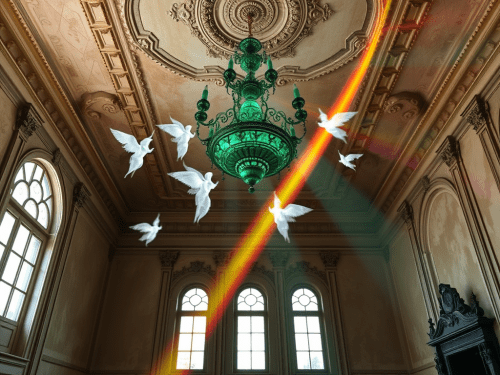
These acts were not the gestures of a recluse detached from the world. They were the works of a woman who understood suffering and responded to it with service, compassion, and sustained generosity. Her mansion may have been a labyrinth, but her life was not. It was a coherent expression of grief transformed into action, solitude transformed into contemplation, and wealth transformed into mercy. In this light, Mrs. Winchester’s existence resembles not the stereotype of a haunted widow, but the long lineage of eremitical souls who sought to perfect themselves through a combination of solitude, labor, and charity. Her house was her cloister. Her workers were her community. Her philanthropy was her liturgy. And her endless building was not madness, but a form of spiritual endurance — a way of shaping the world into something she could survive. This all clearly places Mrs. Winchester on one side of the remaining variable: mysticism versus intellectuality. She was not an anti‑intellectual in the crude sense, nor was she a credulous mystic swept away by superstition. Rather, she occupied the same liminal territory as the Brethren of the Common Life, whose teachings she encountered and whose warnings against excessive intellectualism in faith she took seriously. They did not reject learning; they rejected the pride that often accompanies it. They believed that knowledge without humility becomes sterile, and that the soul must be shaped not only by study but by inward experience. Mrs. Winchester absorbed this tension. She studied mysticism, discussed it, and understood its vocabulary. Yet she adhered to the scholastic tradition long enough to internalize its structure — the disciplined inquiry, the ordered reasoning, the belief that truth could be approached through careful thought. But her own original religiosity eventually compelled her to break out of that framework. She did not abandon intellect; she simply refused to let intellect be the sole arbiter of meaning. #RandolphHarris 7 of 27

Her mansion is the architectural expression of that break. It is not a scholastic text; it is a mystical one. It does not argue; it reveals. It does not present a thesis; it embodies a state of being. It is the kind of structure that emerges when a mind trained in order confronts an experience that defies order — grief, loss, the collapse of the world as one knew it. In this sense, Mrs. Winchester stands in the same lineage as those medieval figures who moved from the university to the hermitage, from the disputation hall to the solitary cell. They were not rejecting thought; they were seeking a form of truth that thought alone could not reach. Her break from scholasticism was not a descent into irrationality but a movement toward a different mode of knowing — one that required solitude, silence, and the construction of a world large enough to contain the uncontainable. Her religiosity was not borrowed. It was not derivative. It was original, forged in the crucible of personal catastrophe and shaped by traditions that valued both contemplation and humility. And in that originality, she becomes something far more interesting than the caricature of a haunted widow: she becomes a mystic of the American West, a woman whose life and architecture reveal the struggle between intellect and revelation, structure and intuition, order and the vast interior wilderness of the soul. Mrs. Winchester also chose something akin to a clerical upper‑middle‑class, a position that existed not by ordination but by function. In her time, the cultural imagination still assumed that “all the world was Catholic” — not literally, but in the sense that Catholic structures of authority, hierarchy, and spiritual labor remained the template for understanding religious vocation. Within that framework, she found an entrance, on a professional and intellectual level, into what might be called the Catholic empire’s hierarchy of clerical employees: those who handled diplomacy, administered social welfare in cities and counties, tended to spiritual needs, and cultivated their own salvation through varying degrees of ascetic discipline. #RandolphHarris 8 of 27
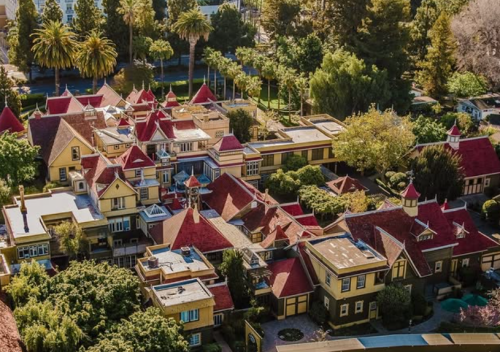
She was not a nun, nor a theologian, nor a public religious figure. But she lived in the orbit of those who performed these roles, and she adopted many of their responsibilities privately. The fact that she took upon herself the latent sadness of her age — the grief, the theological uncertainties, the spiritual anxieties that haunted the late nineteenth century — marks her as a member of an ideological minority. Not a sect, but a temperament: those who felt the weight of their era’s spiritual contradictions and refused to ignore them. Among the elite of her time, this made her unusual. Noteworthy. And, to some, a questionable heiress. While others in her class pursued social display, political influence, or industrial expansion, she pursued spiritual labor. She invested her wealth not in ostentation but in contemplation, philanthropy, and the construction of a world that could hold the contradictions she carried. Her mansion was not a monument to eccentricity; it was the architectural expression of a woman who had absorbed the theological tensions of her age and refused to resolve them cheaply. In this sense, she resembles those clerical figures who lived between worlds — administrators of charity, stewards of land, diplomats of conscience, and practitioners of a quiet, sometimes eccentric, spirituality. She was not eccentric because she was irrational; she was eccentric because she refused to flatten her experience into the narrow expectations of her class. She chose an intellectually serious path, spiritually demanding, and socially unconventional. Her life, therefore, belongs not to the folklore of haunted houses but to the history of lay mysticism, private asceticism, and the quiet, often misunderstood labor of those who carry the spiritual burdens of their age. In very important respects, Victorian life was being Americanized, just as Victorian life in general was undergoing a profound reconfiguration. This development engulfed those disciplines in which the craftsman once personally owned the tools of his trade — not only the carpenter’s bench or the mason’s chisel, but the scholar’s tools as well: the library, the manuscripts, the instruments of learning. These were still, to a large extent, privately held in the nineteenth century, but the shift toward institutionalization, professionalization, and bureaucratic control was already underway. What happened to the artisan of the past — the gradual loss of autonomy as production became centralized — was now happening to the intellectual and the cleric. #RandolphHarris 9 of 27

This transformation forms the backdrop to Mrs. Winchester’s world. She lived at the moment when the old Victorian synthesis of craft, intellect, and spirituality was dissolving into the American model of specialization, efficiency, and industrial scale. The craftsman who once owned his tools became the employee of a factory. The scholar who once owned his library became an employee of a university. The cleric who once lived by personal vocation became the administrator of a religious bureaucracy. The shift was total, and it was accelerating. Mrs. Winchester’s life stands at a curious angle to this development. She did not surrender her tools — literal or intellectual — to the new order. She retained personal ownership of her estate, her workers, her architectural vision, and her spiritual labor. In this sense, she preserved something of the pre‑industrial artisan‑scholar, the figure who creates not for a market but for meaning. Her mansion was not a product; it was a vocation. Her philanthropy was not a tax write‑off; it was a moral obligation. Her solitude was not a retreat from society; it was a form of resistance to the flattening pressures of Americanization. She belonged to a class that was disappearing — the clerical upper‑middle‑class of Victorian culture, where spiritual administration, intellectual cultivation, and social responsibility were intertwined. But she inhabited it in an American way: privately, independently, without institutional oversight. She took upon herself the latent sadness of her age, the spiritual problems of its theology, and the burdens that once belonged to clerical orders. This made her an ideological minority among the elite — unusual, noteworthy, and to some, a questionable heiress. While her contemporaries embraced the new American ethos of expansion, industry, and public display, she embraced a different calling: the preservation of a world in which the tools of the soul — contemplation, charity, craftsmanship, and interiority — remained personally held. In that sense, she was not behind her time. She was out of step with it, deliberately, and with a clarity that her critics never understood. #RandolphHarris 10 of 27

In very important respects, Victorian life was being Americanized — and the same process is happening again today, only more aggressively. The nineteenth century saw the erosion of the old artisan‑scholastic world, where the craftsman owned his tools and the scholar owned his library. The shift toward bureaucratized, capitalist institutions engulfed every discipline. What happened to the artisan of the past — the loss of autonomy, the replacement of craft with mass production — is now happening to the intellectual, the professor, the cleric, and even the wealthy. The “spirit” that rules modern institutions is utterly different from the historical atmosphere of the Victorian university. The old constitution of intellectual life has become fictitious. What remains is a career lottery, a system in which chance, not merit, determines who rises and who is cast aside. I know of hardly any career on earth where chance plays such a role. I may say so all the more since I personally owe it to some mere accidents that during my very early years, I was appointed to a full professorship in a discipline in which men of my generation undoubtedly had achieved more than I had. And, indeed, I fancy, based on experience, that I have a sharp eye for the undeserved fate of the many whom accident has cast in the opposite direction and who, within this selective apparatus despite all their ability, do not attain positions that are due to them. The same forces that once Americanized Victorian life are now de‑civilizing American life. The upper‑class virtues — restraint, literacy, intellectual seriousness, religious depth, self‑discipline — are dissolving. Even the wealthy are losing them. Wealth no longer produces refinement; it produces spectacle. The body has replaced the mind as the primary currency of social value. Exhibitionism has replaced intellect. Popular culture has replaced religion. Vulgarity has replaced dignity. #RandolphHarris 11 of 27
This is not a moralistic complaint; it is a sociological observation. When I was a teenager, my boss taught me to say, “May I have” when ordering, instead of “Can I get.” And when someone asked me how I was doing, I was to respond “well,” not good. The latter, I am still working on, however. The Victorian elite cultivated literacy, self‑restraint, religious seriousness, philanthropy, intellectual ambition, and a sense of duty. Today’s elite cultivates visibility, branding, bodily display, hustling, social media performance, consumption, wheeling and dealing, and novelty. The old upper class tried to appear cultured. The new upper class tries to appear viral. The rise of what might be called a “ghetto aesthetic” among the wealthy is especially visible in coastal states such as New York, California, and Florida. By this I do not mean the term as a slur, but as a description of a cultural inversion: styles once associated with deprivation and marginalization becoming symbols of prestige. This shift is driven by fast money, rapid demographic change, and the erosion of traditional family and community structures. The new aesthetic prizes hypersexualized self‑presentation, hostility toward intellectualism, performative aggression, conspicuous consumption, and a form of anti‑elitism that masquerades as authenticity. The irony is that many affluent individuals now imitate cultural forms once associated with struggle, while abandoning the virtues—restraint, dignity, literacy, and responsibility—that historically justified their elevated social position. Recent events in Sacramento illustrate this broader cultural shift. After a student was fatally shot on a high school campus, two other students were recorded laughing at the scene, treating the tragedy as if it were entertainment. Parents expressed grief and fear, with many saying they were relieved their children were home‑schooled or no longer enrolled in Sacramento County schools. There was a time when Sacramento was known for its peaceful neighborhoods, conservative values, and strong school districts—families moved here to escape crime, not encounter it. The “City of Trees” has become more worldly, more chaotic, and more influenced by national cultural trends that prize spectacle over substance. I often think back to my own childhood in Sacramento County schools, where square dancing was part of recess. It was simple, wholesome physical activity, but it symbolized something larger: people came to Sacramento to “square up,” to leave behind big‑city habits and cultivate a life grounded in stability, manners, and moral clarity. #RandolphHarris 12 of 27

The Sacramento Police Department’s budget has been reduced because Mayor Kevin McCarty’s administration is facing a $66 million structural deficit, which limits the city’s ability to expand police staffing. He has stated that the city must “keep intact our resources for our homeless response” while continuing progress on reducing unsheltered homelessness — a strategy he links to lowering petty crime and disorder. His position is that homelessness and mental illness are major contributors to crime, even though most people experiencing homelessness are peaceful. The recent rise in crime reflects government mismanagement and insufficient police presence, like conditions seen in 2007. When residents believe police have zero tolerance for criminal behavior, they are generally less likely to engage in it. Sacramento’s total crime rate is about 51 percent above the national average, ranking higher than 88 percent of major U.S. cities. Violent crime: Residents face roughly a 1 in 185 chance of being a victim of violent crime per year — about 42 percent higher than the national average. Property crime: The primary driver of the increase, with a 1 in 32 chance of victimization — 70 percent higher than the national average. Vehicle theft is approximately 64 percent above the national average, while burglary and larceny/theft remain persistently high. Crime costs Sacramento residents an estimated $487 per person per year, totaling roughly $1.2 billion citywide, slightly above the national average. These conditions resemble the early warning signs that Oakland experienced before its 1990s peak. Although Sacramento today is experiencing elevated crime, especially property crime, it is not experiencing anything close to Oakland’s violent‑crime levels of the 1980s or 1990s. Oakland’s earlier eras were defined by extreme homicide rates and drug‑market violence; Sacramento’s current issues are serious but fundamentally different in scale and nature. #RandolphHarris 13 of 27
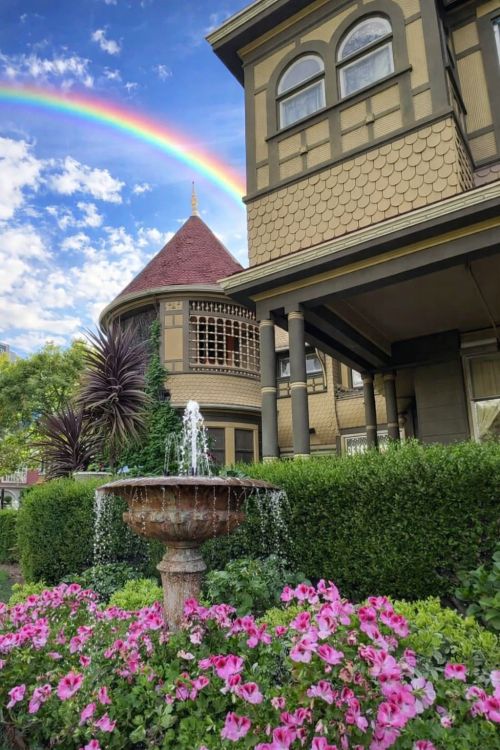
Sacramento is at a crossroads. Rising property crime, vehicle theft, and visible disorder have created a growing sense of insecurity. While today’s conditions are not comparable to Oakland’s extreme violent‑crime eras of the 1980s and 1990s, the underlying risks — weakened institutions, slow response systems, and unchecked disorder — can compound if left unaddressed. Preventing Sacramento from drifting toward that trajectory requires deliberate, coordinated action across policing, housing, behavioral health, and neighborhood stability. Sacramento’s police staffing levels and response times must be stabilized to prevent the “vacuum effect” that allowed crime to flourish in Oakland’s worst years. Key actions: Restore adequate patrol staffing to ensure rapid response to in‑progress crimes. Prioritize clearance rates for violent offenses to maintain public confidence and deterrence. Expand problem‑oriented policing to address chronic hotspots, drug houses, and repeat‑offender clusters. Maintain strong internal accountability and transparent reporting to avoid the legitimacy crises that undermined Oakland’s policing for decades. Oakland’s decline accelerated when everyday disorder — theft, vandalism, open‑air markets — became routine. Sacramento can prevent that normalization. Key actions: Target repeat vehicle‑theft crews, fencing networks, and organized retail theft groups. Use environmental design: lighting, cameras, secure parking, and rapid cleanup of dumping and vandalism. Deploy data‑driven hot‑spot patrols rather than thinly spreading officers citywide. Enforce predictable consequences for chronic offenders to prevent a culture of impunity. #RandolphHarris 14 of 27

Most unhoused residents are peaceful, but a small subset cycles through arrests, ERs, and encampments. Oakland’s crisis deepened when housing instability and untreated addiction overwhelmed public systems. Key actions: Expand low‑barrier shelter, interim housing, and rapid rehousing to reduce encampment growth. Create co‑located teams of police, behavioral‑health clinicians, and outreach workers for high‑risk individuals. Increase treatment capacity for addiction and severe mental illness, with clear pathways from crisis to stabilization. Protect existing affordable housing and prevent displacement, which historically fueled instability in Oakland. Many parents and teachers are increasingly uneasy because student behavior in many middle and high schools has shifted in ways that feel more aggressive, less respectful, and harder for adults to manage. Educators describe students who threaten or harass teachers, openly defy instructions, and sometimes escalate conflicts for the sake of social‑media attention. In some schools, the level of disruption and volatility has grown so severe that classrooms require security officers simply to maintain order. This is not the typical adolescent testing of boundaries — it reflects a deeper erosion of norms that once made schools predictable and safe for both adults and students. Several forces are driving this change at the same time. Students who lost key developmental years during the pandemic are older in age but younger in emotional regulation, creating a mismatch between expectations and capacity. Discipline systems in some districts have become inconsistent or overly hesitant, leaving students with the impression that serious misbehavior carries no real consequence. Social media amplifies conflict, rewarding outrageous behavior and turning classrooms into stages. #RandolphHarris 15 of 27

Meanwhile, many families are under economic and psychological strain, and schools often lack enough counselors, psychologists, and behavioral specialists to address the mental‑health needs that underlie much of the acting‑out behavior. Reversing this trend requires schools to re‑establish clear boundaries, predictable consequences, and visible adult authority. Teachers need strong institutional backing so they can intervene confidently without fear of retaliation or administrative second‑guessing. At the same time, schools must expand mental‑health support, strengthen campus safety where necessary, and rebuild a culture where respect, stability, and accountability are the norm. When adults lead with consistency, and students understand that safety and order are non‑negotiable, school environments can regain the structure and calm that allow learning — and trust — to flourish. Long‑term safety depends on strong neighborhoods and real alternatives to illicit economies. Key actions: Fund youth violence prevention programs, mentoring, and after-school supports in high-risk areas. Expand apprenticeships, job‑training pipelines, and public‑works employment for young adults. Support neighborhood‑level safety councils and mini‑grant programs so residents shape local priorities. Oakland’s decline was gradual and cumulative. Sacramento can prevent drift by monitoring key indicators and acting before problems escalate. Key actions: Publish real‑time dashboards for crime, homelessness, response times, and clearance rates. Establish “trigger thresholds” that automatically activate surge responses when violence or theft spikes. Partner with independent evaluators to assess what strategies work — and discontinue those that do not. Sacramento does not need to repeat Oakland’s history. By strengthening public safety capacity, addressing disorder early, stabilizing vulnerable populations, and investing in neighborhoods, the city can maintain safety and prevent the multi‑system failures that once overwhelmed Oakland. The path forward is not reactive — it is strategic, coordinated, and grounded in lessons learned from cities that waited too long to act. #RandolphHarris 16 of 27
The collapse of intellectuality and religion is an epidemic. People are criticized for being celibate. For wearing pants and long sleeves. Just as Victorian intellectual life was bureaucratized and hollowed out, today’s intellectual life is precarious, underpaid, algorithmically policed, and culturally devalued. Religion, too, has been replaced by celebrity worship, conspiracy spirituality, and self‑help mysticism. therapeutic consumerism. The old clerical‑scholastic class — the one Mrs. Winchester quietly aligned herself with — has no modern equivalent. Its functions have been replaced by influencers, entertainers, and corporate managers. Mrs. Sarah Winchester becomes a counterexample, a figure who preserved the old values while the world around her shifted; she retained the artisan’s autonomy. She preserved the clerical upper‑middle‑class ethos of charity, contemplation, and duty. She resisted the Americanization of Victorian life by creating a private monastery instead of a public spectacle. She embodied intellectual humility and spiritual seriousness in an age moving toward industrial rationalization. In contrast, today’s elites embrace the opposite spectacle over contemplation, body over mind, vulgarity over refinement, popularity over wisdom. Mrs. Winchester becomes a mirror that reveals how far we have fallen. The fact that hazard rather than ability plays so large a role is not alone or even predominantly owing to the “human, all too human” factors, which naturally occur in the process of academic selection as in any other selection. It would be unfair to hold the personal inferiority of faculty members or educational ministries responsible for the fact that so many mediocrities undoubtedly play an eminent role at the universities. The predominance of mediocrity is rather due to the laws of human co-operation, especially of the co-operation of several bodies, and, in this case, co-operation of the faculties who recommend and of the ministries of education. #RandolphHarris 17 of 27
Perhaps Vladimir Lenin was right in never ceasing to fight mercilessly against the sentimental forms of revolutionary action. He wanted to abolish the morality of revolutionary action because he believed, correctly, that revolutionary power could not be established while still respecting the Ten Commandments. When he appears, after his first experiments on the stage of history, where he was to play such an important role, to see him take the world so freely and so naturally as it had been shaped by the ideology and the economy of the preceding century, one would imagine him to be the first man of a new era. Completely impervious to anxiety, to nostalgia, to ethics, he takes command, looks for the best method of making the machine run, and decides that certain virtues are suitable for the driver of history’s chariot and that others are not. He gropes a little at first and hesitates as to whether Russia should first pass through the capitalist and industrial phase. However, this comes to the same as doubting whether the revolution can take place in Russia. He himself is Russian, and his task is to make the Russian Revolution. He jettisons economic fatalism and embarks on action. He roundly declares, from 1902 on, that the workers will never elaborate an independent ideology by themselves. He denies the spontaneity of the masses. Socialist doctrine supposes a scientific basis that only intellectuals can give it. When he says that all distinctions between workers and intellectuals must be effaced, what he really means is that it is possible not to be proletarian and know better than the proletariat what its interests are. He then congratulates Lassalle for having carried on a tenacious struggle against the spontaneity of the masses. “Theory,” he says, “should subordinate spontaneity.” In plain language, that means that revolution needs leaders and theorists. #RandolphHarris 14 of 27
Mr. Lenin attacks both reformism, which he considers guilty of dissipating revolutionary strength, and terrorism, which he thinks an exemplary and inefficacious attitude. The revolution, before being either economic or sentimental, is military. Until the day that the revolution breaks out, revolutionary action is identified with strategy. Autocracy is its enemy, whose main source of strength is the police force, which is nothing but a corps of professional political soldiers. The conclusion is simple: “The struggle against the political police demands special qualities, demands professional revolutionaries.” The revolution will have its professional army as well as the masses, which can be organized before the masses are organized. A network of agents is the expression that Mr. Lenin uses, thus announcing the reign of the secret society and of the realist monks of the revolution: “We are the Young Turks of the revolution,” he said, “with something of the Jesuit added.” From that moment, the proletariat no longer has a mission. It is only one powerful means, among others, in the hands of the revolutionary ascetics. When institutions fail, people turn to spectacle, extremism, or nihilism. When the state treats some communities as expendable, those communities internalize that message. When society abandons intellectual and moral discipline, it becomes vulnerable to movements built on aggression, performance, and resentment. What we are witnessing today is not an isolated cultural shift but the continuation of the same forces that once Americanized Victorian life — only now they are eroding American life itself. As intellectuality, restraint, and civic responsibility decline, communities risk sliding into the same conditions that once plagued neighborhoods like G‑Parkway in Sacramento, where crime became so pervasive that even police officers hesitated to respond. When institutions begin to treat violence as routine, when certain crimes are quietly labeled “NHI” — No Humans Involved, a bureaucratic shorthand that dehumanizes entire populations — a society has already crossed a moral threshold. The danger is not merely that individuals behave badly, but that whole communities become seen as unworthy of protection, unworthy of investment, unworthy of hope. This is the trajectory we must resist: the slow normalization of vulgarity, spectacle, and indifference until tragedy becomes entertainment and human life becomes background noise. #RandolphHarris 18 of 27

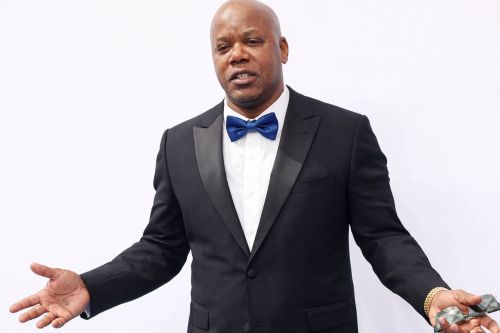
I find it remarkable that many people believe the government controls them through fear, yet those same people often respond to mistreatment with public outbursts, “flashing,” or dramatic displays of outrage. These reactions do not challenge the system; they reinforce the roles that others have already assigned to them. The more effective path is to recognize when you are being cast into an ignorant or reactive role—and refuse to play it. Instead of allowing others to control you, you control the situation by responding with education, clarity, and professionalism. Explain calmly why someone’s behavior is wrong. Contact their employer or the appropriate authority with a well‑written, factual account of what occurred. When you act out, you surrender control of your environment and become vulnerable. In that sense, a “victim” is not someone who is harmed, but someone who has lost the ability to shape their surroundings. Emotional outbursts allow others to document your behavior, build a file against you, or even involve law enforcement. Even if employees, managers, or institutions dismiss you or give you the runaround, remain polite. Flip the script: you do not need to record them on your phone, but you can document their actions, keep your own file, and report your findings to the proper authorities. As the Oakland rapper Too Short emphasized in his 1990s song The Ghetto, the message was simple: when you respond with intelligence instead of ignorance, you protect yourself—and you keep the power. “Let every man carry himself with that civility and meekness which becometh a rational creature; for he that forgetteth respect unto others diminisheth the dignity of his own soul. Courtesy is no servitude, but a grace that keepeth peace among men.” #RandolphHarris 19 of 27
Most of us use curse words because we were taught to, or because we absorbed them from the culture around us. But why do we give our power away by speaking them? Why do we treat these words as if they possess some special force, when in truth they reveal nothing but a lapse in discipline and a surrender of intellect? We must learn to de‑emphasize such language and express ourselves in a thoughtful, articulate, and scholarly manner. When we choose our words with care, we elevate ourselves. When we rely on vulgarity, we allow others to define us, diminish us, and cast us into roles unworthy of our intelligence. Language is a mirror of the soul, and when we elevate our speech, we elevate our standing, our influence, and our inner life. “Out of the same mouth proceedeth blessing and cursing. My brethren, these things ought not so to be,” reports James 3:9-10. People may call me a hypocrite because, in the past, I have cursed people — but those moments happened when I was being harassed or confronted by groups much older than me who would not leave me alone. Even so, I am learning to refine my behavior, and those situations have been addressed through the proper channels. What continues to astonish me, however, is the behavior I witness among many of the older adults I work around. These are people in their sixties and seventies, yet their conduct is often more immature, disruptive, and irresponsible than anything I have ever seen from youth. What makes it more troubling is that many of them seem fully aware of their behavior and make no effort to correct it. Month after month, they complain about the same issues — issues they themselves are contributing to through rule‑breaking, disorderliness, and a lack of basic courtesy. Meanwhile, the younger people in the environment are quiet, respectful, and self‑contained. They do not make messes, they do not cause disturbances, and they do not engage in the behaviors that the older adults accuse them of. The contrast is so stark that it forces me to reflect on my own grandparents, who embodied peace, dignity, and self‑respect. Their home was clean, their yard was maintained, and their manners were impeccable. Being around them taught me what maturity looks like. #RandolphHarris 20 of 27
So, encountering older adults who behave in ways that are chaotic, inconsiderate, or even harmful is genuinely shocking. It raises questions about why some people lose their self‑control as they age, why they disregard the well‑being of others, and why their environments — physical, emotional, and social — deteriorate alongside their behavior. Some individuals clearly need more support, structure, or supervision than they currently have, not as punishment, but because unmanaged behavior harms communities and harms them as well. Therefore, age does not guarantee wisdom, and youth does not guarantee irresponsibility. Character is a choice, and some people — regardless of age — refuse to choose better. Both for good and ill, science has imposed a dictatorship over the other ways of knowing and the other ways and results of experience. It has admittedly earned its position by the immense value and utility of its practical application, so visible all around us, as well as respect for the quality of its thinking—usually exact, factual, and accurate. When we place science as an essential preliminary and integral part of this course, we must make clear that what is primarily meant by the term here is scientific education of the understanding and not the communication of scientific knowledge. Both are necessary in every curriculum, but whereas the former implies a development of intelligence, the latter is an accumulation of facts. We value the cultural aspects of science, its power to train the mind in correct thinking and proper enquiry, as being more important for purposes of this quest than its practical aspects, which deal with physical techniques and material behaviors. Science debunks many things, and often explains them away as something else. But we should not let scientific explanation erode the interior life or diminish the meaning we draw from experience. Recently, scientists dismissed the old idea of “earthquake weather,” yet on April 13, 2026, after a week of record‑breaking heat, Sacramento cooled by nearly thirty degrees — and at 6:29 p.m., the city felt the jolt of a 5.5‑magnitude earthquake centered eleven miles from Silver Springs, Nevada. I heard the building I was in crack as it began to sway. Moments later, I called my mother to see if she had felt it. She asked questions I could not yet answer, so I went online, found the location of the epicenter, and sent her the information. Therefore, do not let science make you forget your soul, yourself, or your common sense. Trust your instincts and intuition. Not only do animals have instincts, but humans do, too. #RandolphHarris 21 of 27

It started with something Sacramento has seen far too often: a careless smoker on the balcony of an aging apartment complex near Florin Road. Residents had complained for months that cigarette and drug smoke drifted through the vents, triggering asthma attacks and migraines among the more sensitive tenants. On a warm evening, a smoldering cigarette was flicked into a planter filled with dry leaves. Within minutes, the wooden balcony rail caught fire, and smoke began pouring into the hallways. Several residents with respiratory conditions felt the effects immediately. One woman with chronic asthma collapsed in the stairwell, struggling to breathe as the smoke thickened. Another resident, a senior with COPD, was found leaning against a wall, disoriented and gasping for air. The award‑winning Sacramento Fire Department arrived within minutes, their engines lighting up the night. Firefighters forced entry through the smoke‑filled corridor, guiding residents out one by one. Two paramedics—both known for their calm under pressure—treated the victims on the sidewalk, administering oxygen and monitoring their breathing. They worked quickly, knowing that even brief exposure to smoke from cigarettes, burning debris, and drug residue can trigger severe respiratory distress. Inside, firefighters contained the blaze before it spread to the upper floors. Their coordinated response prevented what could have become a catastrophic apartment fire. Outside, paramedics reassured frightened residents, explaining symptoms, checking vitals, and transporting the most vulnerable to the hospital for further evaluation. By the time the scene was cleared, the fire was extinguished, the building was stabilized, and every resident was accounted for. The incident became another example of how the Sacramento Fire Department and its paramedics—highly trained, deeply committed, and nationally recognized—continue to protect the community not only from flames, but from the silent dangers of smoke exposure that so often go overlooked. #RandolphHarris 22 of 27
Smoking in front of buildings or near main entrances exposes everyone who walks through those areas to harmful chemicals. Even brief exposure to secondhand smoke can irritate the lungs, trigger asthma, and worsen respiratory conditions—especially for children, seniors, and people with medical sensitivities. Smoke does not stay where it is created; it drifts upward, enters open windows, and seeps into hallways and apartments, affecting residents who never chose to be exposed. For these reasons, it is important for people who smoke to consider taking classes that support smoking cessation. Many community programs teach strategies for reducing or quitting tobacco use, and organizations like Narcotics Anonymous offer support for individuals struggling with drug addiction. These resources can make a meaningful difference in a person’s health, stability, and overall quality of life. Property managers also play a role in protecting the community. Establishing a designated smoking area away from entrances, walkways, and residential windows helps reduce exposure to secondhand smoke and keeps shared spaces cleaner and safer. Clear signage and consistent enforcement can make these policies effective without singling anyone out. Smoke—whether from cigarettes, cigars, or drugs—has well‑documented effects on the lungs, body, and mind. It can damage airways, reduce oxygen levels, impair concentration, and contribute to long‑term health problems. Protecting our shared environment from unnecessary smoke exposure is not only considerate; it is a vital part of maintaining a healthy and respectful community. Our community is fortunate to have a dedicated outreach group that visits neighborhoods, apartment complexes, and local organizations to teach residents about fire safety and the dangers of smoking. Their mission is simple but essential: to prevent fires before they start and to protect the health of everyone who lives and works in our buildings. #RandolphHarris 23 of 27
During their presentations, the team explains how something as small as a cigarette can ignite a major fire, especially in areas with dry vegetation, old balconies, or shared ventilation systems. They also teach residents how smoke—whether from tobacco or other substances—can drift into hallways, stairwells, and apartments, causing respiratory distress for children, seniors, and people with asthma or chronic lung conditions. Their message is clear: preventing smoke exposure is a responsibility we all share. The group also provides resources for people who want to stop smoking. They offer information about local cessation classes, support groups, and community programs that help individuals break the habit safely. For those struggling with drug use, they highlight organizations like Narcotics Anonymous, which offers peer support and guidance for anyone seeking recovery. Finally, they work with property managers to encourage the creation of designated smoking areas located away from entrances, windows, and high‑traffic walkways. This simple step helps reduce secondhand smoke exposure and keeps shared spaces healthier for everyone. Through education, compassion, and practical guidance, this fire‑safety team helps our community stay safer, breathe easier, and reduce the risk of preventable emergencies. Their work reminds us that small choices—like where we smoke, how we dispose of cigarettes, and whether we seek help when we need it—can protect entire neighborhoods. The most reliable and up‑to‑date group you can contact is the Sacramento Metropolitan Fire District’s Public Education / Community Risk Reduction Division. They handle fire‑safety presentations, community outreach, school visits, safety talks for apartment complexes, senior communities, and neighborhood groups, and education on preventing fires caused by smoking, candles, cooking, and electrical hazards. Sacramento Metropolitan Fire District – Public Education Contact Email: communityservices@metrofire.ca.gov Phone: 916‑859‑4300 Address: 10545 Armstrong Ave., #200, Mather, CA 95655. They specifically invite communities to request a firefighter or educator to come out and speak about safety, including smoking‑related fire risks and prevention strategies. #RandolphHarris 24 of 27

When it comes to firefighting, every incident carries the potential for injury—no matter how small the fire appears or how routine the call may seem. If you see a fire engine stopped in the street without its lights on, use extreme caution. Crews may be working nearby, and passing the apparatus can put them in danger. It is often safer to turn around and take another route; if you strike a firefighter or civilian and cause a fatality, you could face charges such as manslaughter. Firefighters frequently move around their vehicle on foot, loading equipment or preparing to leave the scene. Attempting to pass the apparatus can result in a collision with someone you cannot see. Pay close attention to their hand signals as well—emergency vehicles sometimes move slowly or reposition, and impatient drivers trying to slip around them create hazardous situations. If you are already in an intersection when you notice an emergency vehicle approaching, continue through it, then pull to the right and stop as soon as it is safe. Always obey directions from law enforcement officers or firefighters, even if those instructions conflict with posted signs or traffic laws. When sirens or flashing lights are activated, it is illegal to follow within 300 feet of a fire engine, ambulance, or police vehicle. Driving to the scene of a fire, collision, or disaster can also result in arrest, as doing so interferes with firefighters, paramedics, and other emergency personnel. Professional courage is not limited to physical toughness. It includes listening to others, advocating for them in difficult situations, understanding personal limits, and having the integrity to tell a superior when they are wrong. The deeper truth is that public safety depends not only on the bravery of first responders but on the discipline and judgment of the community around them. Every driver’s decision—whether cautious or careless—can either protect or endanger the people risking their lives to protect everyone else. #RandolphHarris 25 of 27

Efforts to preserve farmland and maintain buildable land for future generations often lead to discussions about population growth and long‑term planning. Some people argue that immigration levels should be managed carefully to ensure that infrastructure, housing, and land use remain sustainable. Others suggest that, when immigration does occur, programs that encourage broad representation can help communities reflect the diversity of the wider world. When Americans purchase goods made in the United States, it strengthens local businesses and signals to investors that these products are in demand. Strong sales give investors confidence to reinvest in domestic companies, helping keep jobs, production, and wages within the country. As businesses grow, they contribute more to the tax base, which can reduce the burden on taxpayers over time. Supporting American businesses also keeps more money circulating within the national economy. The government increases the national debt when it spends more than it collects in tax revenue or borrows from private or foreign lenders. When people shop locally, more tax revenue stays in the community and supports public services. This helps keep jobs in the United States and increases the tax contributions that fund government operations. Purchasing foreign-made goods, by contrast, often sends money overseas and may benefit companies that operate under lighter tax or environmental regulations. Buying American-made products can also reduce environmental impact because they travel shorter distances and are produced under stricter standards for air, land, and water protection. In this way, consumer choices influence not only the economy but also environmental stewardship and long-term national sustainability. #RandolphHarris 26 of 27

Under President Trump’s administration, he has made America a priority. President Trump has hermetically sealed the southern border, illegal crossings have been terminated, and are 90 percent lower than under the previous administration. Since President Trump’s crack down on crime, violent crimes in Washington D.C. have dropped by approximately 80 percent. He has stopped thousands of pounds of drugs from entering America and killing citizens. And since President Trump took office, investments in America have increased by trillions of dollars in U.S.A. manufacturing, production, and innovation. As you can see, President Donald Trump and his pledge to “Make America Great Again” is exactly what America needs to save the country and the American people. And yes, diversity is important, so you can see why it is also important to preserve blonde hair and blue eyes, as the people with these characteristics are becoming a minority in America. As a reminder, parents, please teach your children to love America and be patriotic citizens, and to buy goods and services made in America. It is also important to respect law and order and treat your elders with respect. It is inborn in the human mind to wish to know. If this begins with the endless surface questions of a child’s curiosity, if it continues into deeper questions of a scientist’s probing investigation, it cannot and does not stop there. For the higher part of the mind will eventually come into unfoldment, that union of abstract reflective thought with mystical intuition, which is true intelligence, which needs and sees a view of the whole of things. And so, the knowing faculty enters the realm of philosophy. A lot of children are having problems in school and cannot even write a paragraph because they are not reading their books. When you actually read books, you get an example of how to write and will become a better student. Therefore, remember to take your education seriously so that you will be successful in life and make your family proud. Also, to make sure they have all the resources required, please donate to the Sacramento Fire Department to help improve our national security. “Oh, thus be it ever, when freemen shall stand between their loved home and the war’s desolation! Blest with victory and peace, may the heav’n-rescued land Praise the Power that hath made and preserved us a nation! Then conquer we must, when our cause is just, and this be our motto: ‘In God is our trust.’ And the star-spangled banner in triumph shall wave O’er the land of the free and the home of the brave.” #RandolphHarris 27 of 27


Mr. William Wirt Winchester had always been a man who saw farther than others. Even as a boy in New Haven, he dismantled clocks, rifles, and anything with gears just to understand how they breathed. His father, Mr. Oliver Winchester, recognized the spark immediately. “This one,” he would say with pride, “was born with gunpowder in his imagination.” By the time Mr. William reached adulthood, he had already designed several mechanical improvements that caught the attention of the Winchester Repeating Arms Company. His ideas were bold—sometimes too bold for the boardroom—but they worked. He refined the lever‑action mechanism, strengthened the firing pin assembly, and even sketched early concepts for a self‑loading rifle decades before the world was ready to understand them.
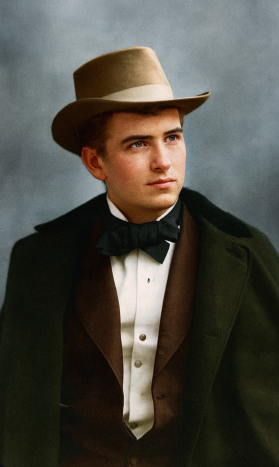
When Mr. Oliver stepped down, the company needed a leader who could carry the Winchester legacy into a new age. Mr. William was elected president unanimously. Newspapers called him the quiet genius of American firearms. His employees called him the man who could see the future. And Mrs. Sarah Lockwood Pardee Winchester called him husband. Their marriage was a union of intellect and tenderness. Mrs. Sarah, brilliant in her own right, understood Mr. William’s restless mind. She encouraged his experiments, soothed his anxieties, and brought warmth to a life otherwise consumed by metal and machinery. Together, they dreamed of a home unlike any other—a sprawling mansion filled with light, music, and rooms for the family they hoped to build. When Sarah was with child, Mr. William worked late into the night designing a new rifle mechanism he believed would revolutionize the industry. He wanted to present it to his daughter one day and say, This is what your father built while waiting for you. Their baby girl, Ms. Annie, was born on a cool summer morning. Mr. William held her with trembling hands, overwhelmed by the fragile miracle of her tiny fingers curling around his thumb. Mrs. Sarah wept with joy. For a brief moment, the world felt perfect. However, perfection is a fragile thing.
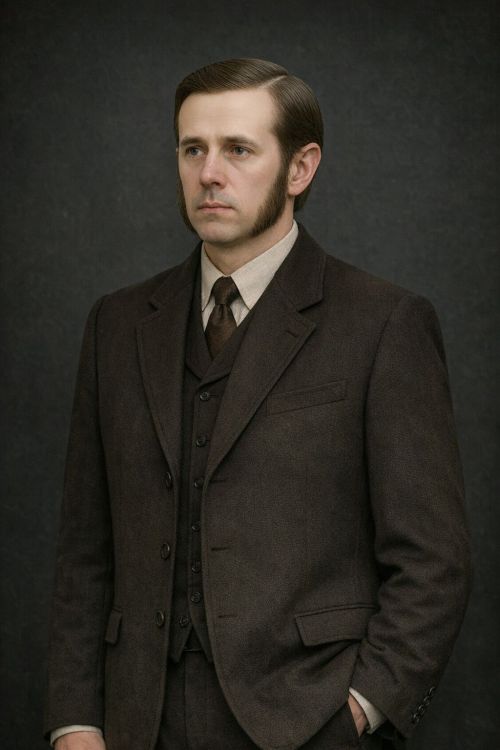
Within weeks, Ms. Annie fell ill. Doctors came and went, offering treatments that did little and explanations that did even less. Mrs. Sarah stayed at her bedside, singing lullabies through tears. Mr. William paced the halls, helpless in a way he had never known. Despite every effort, their daughter slipped away. The grief hollowed them. William buried himself in work, creating inventions no one had dreamed possible—rifles with unprecedented precision, mechanisms that seemed almost alive in their efficiency. But each success felt empty without the child he had hoped to teach. Mrs. Sarah tried to hold them together, but sorrow has a way of reshaping the world. One autumn afternoon, desperate for distraction, they took a family outing to the countryside. They walked through a quiet grove, the leaves whispering overhead. Mrs. Sarah later said she felt a presence there—cold, watchful, ancient. Mr. William brushed it off as imagination. But that night, he fell violently ill.
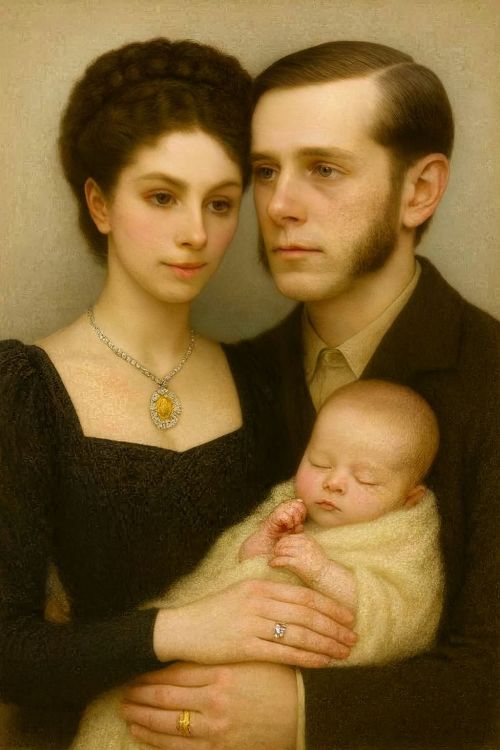
Doctors suspected poisoning. Possibly chronic arsenic exposurethough they could not determine the source. His condition worsened rapidly. Mrs. Sarah stayed by his side, holding his hand as she had held their daughter’s. William whispered apologies, dreams unfinished, inventions unbuilt, a life cut short. He died before dawn. Mrs. Sarah was left alone—widowed, childless, and haunted by the memory of that strange presence in the grove. Some said she imagined it. Others whispered that the Winchesters, whose weapons had shaped history, had drawn the attention of something darker.
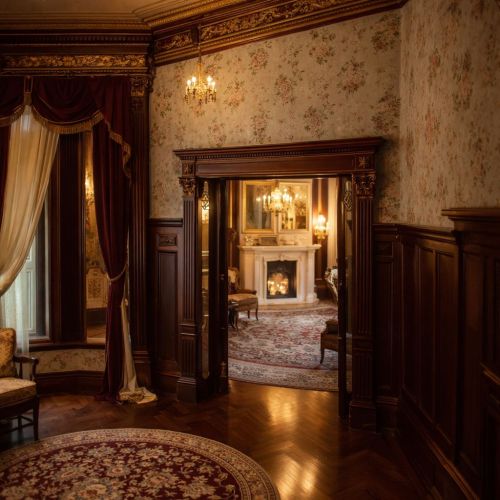
But Mrs. Sarah knew the truth. She wasn’t building a mansion. She was building a promise. A promise that love, invention, and imagination would outlast tragedy. A promise that the curse—real or imagined—would never define her family’s legacy. A promise that Mr. William’s brilliance would echo through every beam, every window, every impossible hallway. The Winchester Mansion became her monument to resilience. And in its endless rooms, she kept alive the memory of the man who dreamed of changing the world—and did.

PRIVATE EVENTS & WEDDINGS
at WINCHESTER ESTATE

Many event locations claim to be unique, but nothing compares to the Winchester Mystery House. If you’re truly seeking a distinct, one‑of‑a‑kind setting for your milestone celebration or special occasion, reserve a venue that delivers on uniqueness many times over. Whether you’re planning a wedding, birthday or anniversary celebration, corporate gathering, holiday party, or any other meaningful event, the Winchester Mystery House offers an unforgettable backdrop. Give your guests an experience they’ll be talking about for years to come.
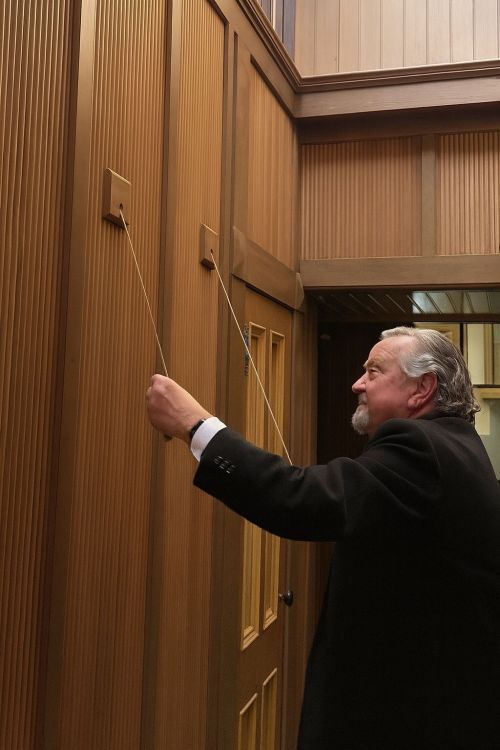
Café 13: A Rest Stop on the Edge of the Mystery
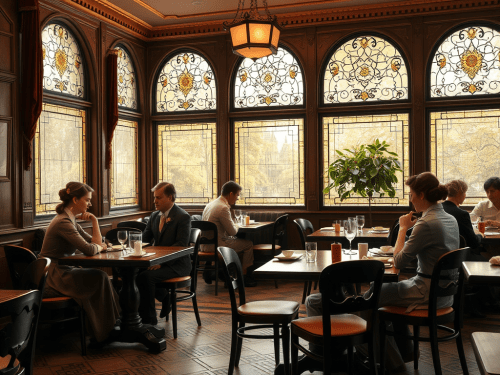
After wandering the winding halls of the Winchester Mystery House—where staircases defy logic and whispers seem to cling to the walls—Café 13 offers a welcome return to warmth and grounding. Newly reopened and serving guests daily from 10 AM to 3 PM, this cozy hideaway invites you to pause, breathe, and gather yourself before diving back into the mansion’s secrets. Here, you can enjoy breakfast, lunch, snacks, and refreshing drinks in a calm indoor space that feels worlds away from the mansion’s twisting corridors. Settle in with a warm meal, challenge a friend to a board game, or simply rest and recharge as sunlight filters through the windows. Café 13 is more than a café—it’s a moment of calm between chapters of the Winchester legend, a place to steady your nerves before returning to the gardens, the grandeur, and the mysteries that await.
Winchester Mercantile Gift Shop
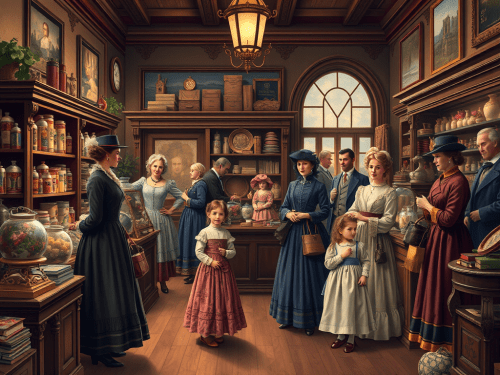
Your journey into the Winchester Mystery House begins long before you cross the mansion’s threshold. It starts at the Mercantile gift shop—a welcoming outpost standing at the edge of a world where history and myth intertwine. Here, beneath warm lights and shelves lined with curiosities, you can secure your tour tickets and prepare for the adventure ahead. Guests often pause for a souvenir photograph, capturing the moment before they step into Sarah Winchester’s enigmatic domain. As you explore the shop, you will find an eclectic array of gifts and keepsakes: tokens of the mansion’s lore, echoes of Victorian elegance, and mementos that carry a touch of the house’s enduring mystery. The Mercantile is more than a gift shop—it is the gateway. https://winchestermysteryhouse.com/

Harris Plumbing, Heating, Air & Electric has been serving our community for 30 years—an achievement few companies can claim. That longevity isn’t an accident. It’s the result of hard work, integrity, and a commitment to doing every job the right way, whether it’s a simple repair or a complex system overhaul. We take pride in every service call because we know your home is more than a building—it’s where your family lives, grows, and feels safe. Ensuring your comfort and protection is a responsibility we carry with seriousness and gratitude. After three decades, our mission remains the same: to deliver dependable service you can trust, every time.

Harris makes sure you have the clear, accurate information you need to decide what comes next—no matter what your home is facing. Before we begin any work, our technicians perform a full diagnosis and walk you through every issue we find. That means you receive a personalized quote and service plan tailored to your home’s exact needs, not a generic estimate or guess. We believe the only way to deliver our best work is to understand the problem completely and address it with precision, transparency, and care. Your home deserves nothing less. https://www.callharrisnow.com/about-us/


BMW: The Epitome of Luxury, Prestige, and Driving Pleasure

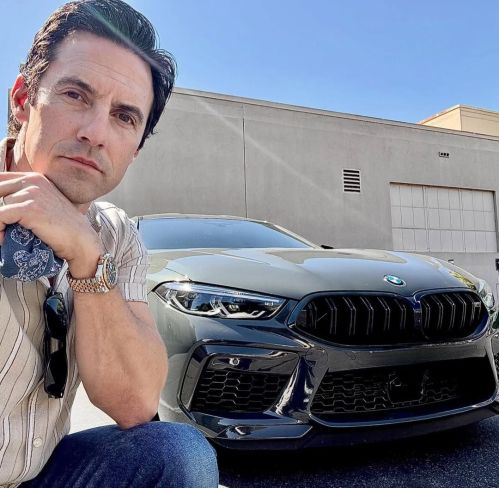
BMW stands at the apex of global luxury automotive culture—a marque synonymous with engineering mastery, refined aesthetics, and a driving experience so immersive that owners often describe it as a relationship rather than mere transportation. Its reputation is not accidental; it is the product of a century-long lineage of craftsmanship, innovation, and cultural presence that few brands can rival.
A Legacy of Wealth, Status, and Engineering Excellence

BMW’s history stretches back to 1916, and over the decades it has become a symbol of European wealth, aristocratic taste, and executive power. The brand’s signature blend of performance and refinement has made it a fixture among:
- Heads of state
- CEOs and global business leaders
- Artists, athletes, and cultural icons
The BMW owner is not simply someone who buys a car—they are someone who signals competence, discernment, and elevated social standing. The brand’s design language—clean, muscular, and unmistakably confident—communicates prestige without needing to shout.

The Driving Experience: Enjoyment Elevated to an Art Form
BMW’s engineering philosophy, Freude am Fahren (“Joy in Driving”), is not marketing fluff—it is a lived reality. Owners consistently praise:
- Perfect 50/50 weight distribution
- Responsive steering and chassis balance
- Silky inline‑six and V8 engines
- Cabins that blend luxury with driver‑centric ergonomics
Whether it’s a flagship 7 Series gliding over the road or a classic E38 carving through a curve, BMWs are built to be driven, not merely admired.

BMW in the James Bond Franchise
BMW’s prestige reached a global cinematic peak when it became the official vehicle of James Bond during the Pierce Brosnan era. This partnership placed BMW squarely in the realm of elite espionage fantasy—sleek, technologically advanced, and irresistibly stylish.
Key appearances include:
BMW 750iL (E38) in Tomorrow Never Dies (1997) — Outfitted with remote‑control driving, electric‑shock security, tire‑shredding tacks, and missile systems. Bond famously pilots it from the back seat using his cellphone.
BMW Z3 Roadster in GoldenEye (1995) — A stylish debut that generated massive pre‑release demand.
- BMW Z8 in The World Is Not Enough (1999) — A modern reinterpretation of the 1950s 507, equipped with Q‑branch enhancements and celebrated for its beauty and rarity.
These films cemented BMW’s image as the car of choice for the world’s most sophisticated spy—combining elegance, intelligence, and lethal capability.

A Well‑Known Important Person Who Drives a BMW
One of the most recognizable BMW drivers in popular culture is Jason Statham’s character Frank Martin in The Transporter (2002), who pilots a BMW 735i (E38). The car became iconic for its precision driving sequences and reinforced BMW’s association with professionalism, discipline, and elite skill. In real life, numerous high‑profile figures—from global executives to entertainers—choose BMW for its blend of luxury and performance, but Statham’s portrayal remains one of the most culturally influential examples.

Why BMW Remains the Benchmark of Luxury
BMW’s prestige is not just historical—it is continually renewed through:
- Cutting‑edge technology
- Timeless design
- A global reputation for excellence
- Cultural visibility in film, music, and elite circles
To own a BMW is to participate in a lineage of wealth, refinement, and driving passion that spans generations.

BMW’s top ranking in Consumer Reports’ Auto Brand Report Card and its steady market‑share growth highlight the company’s long‑standing ability to build high‑performing, reliable vehicles that truly meet consumer expectations. Unlike other luxury brands that focus primarily on comfort and opulence, BMW distinguishes itself through engineering excellence and unmatched driving dynamics. Every model is designed to create a direct, responsive connection between the driver and the machine—an experience that has defined the brand for generations. This commitment to performance is why BMW continues to earn its reputation as The Ultimate Driving Machine. https://www.brianharrisbmw.com/
Randolph Harris San Francisco Taxation & Mergers
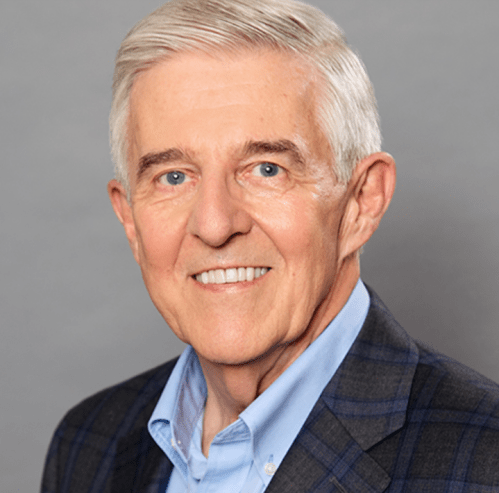
Building strong, lasting client relationships is essential to a successful legal career. Many attorneys assume that mastering legal doctrine alone guarantees success, but law is fundamentally a service profession—our work is measured not only by technical skill, but by how effectively we solve problems for the people who trust us. Long‑term relationships grow from three core commitments: truly knowing your clients, understanding how their legal issues fit within the broader context of their business and personal goals, and consistently delivering exceptional service.

Randy advises clients on business transitions, taxable and tax‑deferred mergers and acquisitions, joint ventures, restructuring, integrated tax planning, federal and state tax controversy matters, and real estate transactions. His approach is grounded in clarity, responsiveness, and a deep understanding of each client’s unique circumstances. Trust is the cornerstone of every relationship he builds. Ultimately, clients feel confident knowing they are working with someone who not only understands their challenges, but is fully committed to helping them achieve their goals. https://www.jmbm.com/l-randolph-harris.html

PARK HAVEN

Where Modern Luxury Meets California Ease
Base Price: Starting from $519,000
Sales Office: 12155 Cobble Brook Dr, Rancho Cordova, CA 95742
Homes: 3+ Bedrooms | 2–3.5 Baths | 1,342–2,547 Sq. Ft.

A Community Designed for Elevated Living
Park Haven is a refined residential enclave where thoughtful architecture, contemporary comfort, and timeless design come together to create a lifestyle of effortless sophistication. Every home is crafted with precision—balancing beauty, function, and the quiet luxury that defines today’s most desirable California communities.

Set in the heart of Rancho Cordova, Park Haven offers a serene neighborhood atmosphere while keeping you close to vibrant shopping, dining, recreation, and top‑tier schools. It is the ideal blend of suburban calm and modern convenience.

A Community Designed for Elevated Living
Park Haven is a refined residential enclave where thoughtful architecture, contemporary comfort, and timeless design come together to create a lifestyle of effortless sophistication. Every home is crafted with precision—balancing beauty, function, and the quiet luxury that defines today’s most desirable California communities.

Set in the heart of Rancho Cordova, Park Haven offers a serene neighborhood atmosphere while keeping you close to vibrant shopping, dining, recreation, and top‑tier schools. It is the ideal blend of suburban calm and modern convenience.

Luxury Homes with Style and Substance
Each Park Haven residence is designed to feel expansive, inviting, and unmistakably upscale. With flexible floor plans ranging from 1,342 to 2,547 square feet, these homes adapt gracefully to the way you live.

Signature Features Include:
- Spacious 3+ bedroom layouts with optional lofts and flex spaces
- Designer kitchens with premium finishes and generous storage
- Open‑concept great rooms ideal for entertaining and everyday comfort
- Elegant primary suites with spa‑inspired baths
- Energy‑efficient construction and smart‑home enhancements
- Beautifully crafted exteriors with exceptional curb appeal
- 2- and 3-car garage options for added convenience
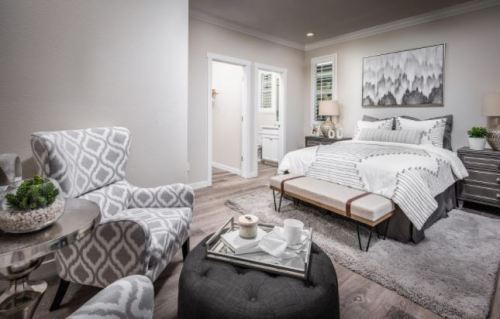
Every detail—from the flow of natural light to the quality of materials—has been curated to elevate your daily experience.

A Lifestyle Rooted in Comfort and Connection

Park Haven is more than a collection of homes; it is a community built for people who value beauty, balance, and belonging. Wide streets, thoughtfully planned landscaping, and a welcoming neighborhood feel create an environment where families thrive and homeowners take pride in where they live.

Whether you’re starting a new chapter or seeking a refined upgrade, Park Haven offers a home that feels both timeless and tailored to you. https://www.cresleigh.com/communities/california/rancho-cordova-ca/park-haven

“Every day in my Cresleigh home feels like stepping into a life I once prayed for. The craftsmanship, the calm, the beauty in every detail remind me how grateful I am to live in a place built with such care and intention.”