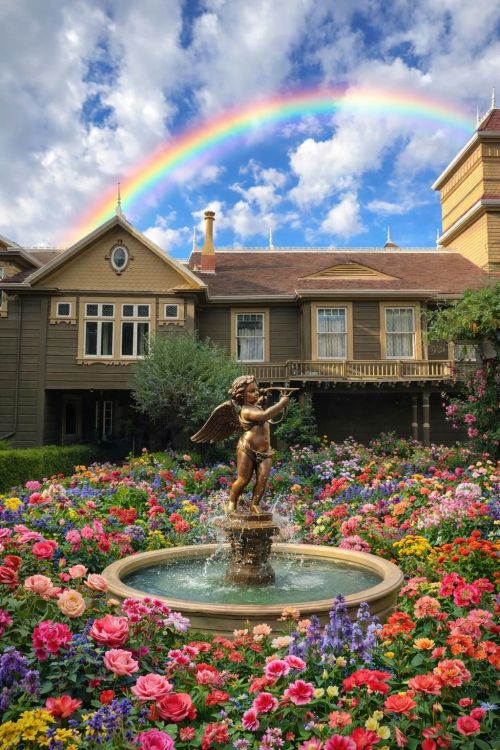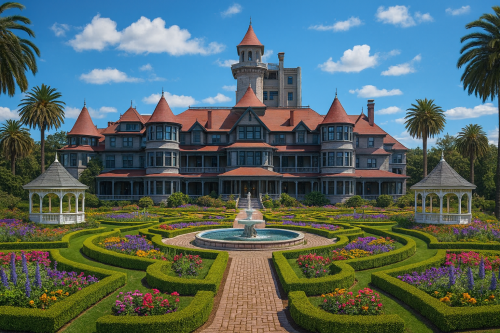
As Algernon Sidney warned, “There is no right in kings but what is in the people,” a reminder that any power seized without consent is fundamentally illegitimate. This principle remains central to understanding how stereotypes, authority, and social narratives shape who is permitted to speak and who is silenced. The problem of the seizure of power brings in its train the problem of the State. The State and the Revolution (1917), which deals with this subject, is the strangest and most contradictory of pamphlets. Mr. Vladimir Lenin employed it as his favorite method, which is the method of authority. With the help of Mr. Karl Marx and Friedrich Engles, he begins by taking a stand against any kind of reformism which would claim to utilize the bourgeois State—that organism of domination of one class over another. The bourgeois State owes its survival to the police and the army because it is primarily an instrument of oppression—”bourgeois” referring here to the property‑owning class whose control of capital, businesses, and productive assets gives it disproportionate social and political power. It reflects both the irreconcilable antagonism of the classes and the forcible subjugation of this antagonism. This authority of fact is only worthy of contempt. “Even the head of the military power of a civilized State must envy the head of the clan whom patriarchal society surrounds with voluntary respect, not with respect imposed by the club.” Moreover, Mr. Engles has firmly established that the concept of the State and the concept of a free society are irreconcilable. “Classes will disappear as ineluctably as they appeared. #RandolphHarris 1 of 5

If the State emerges from the need to manage irreconcilable class antagonisms, then the persistence of those antagonisms must be examined not only in political theory but in the concrete realities of modern economic life. The tensions described by Marx and Engels do not remain confined to the nineteenth‑century industrial world; they reappear, in altered form, within contemporary market economies marked by inflation, widening inequality, and the growing concentration of wealth. Far from dissolving the conditions that give rise to the State’s coercive functions, present economic trends intensify them, revealing how deeply class structure remains embedded in the organization of production and distribution. To understand why the State endures—and why its authority continues to rest on mechanisms of enforcement—we must turn to the material pressures shaping everyday life under late capitalism. Rising home prices, increasing rents, eroding savings, professional wages that fail to keep pace with inflation, and persistently high energy and fuel costs have left many people feeling as though the economy is already in a recession. For a growing share of households, fear of the cost of living has become a defining feature of daily life. Although inflation raises the nominal value of assets such as real estate, stocks, and commodities, it also enables capital‑owning classes to adjust prices and protect their wealth, widening the gap between those who rely on wages and those who benefit from ownership. Recent decades have seen a steady rise in income and wealth inequality—a trend accelerated by the economic disruptions of the COVID‑19 pandemic. #RandolphHarris 2 of 5
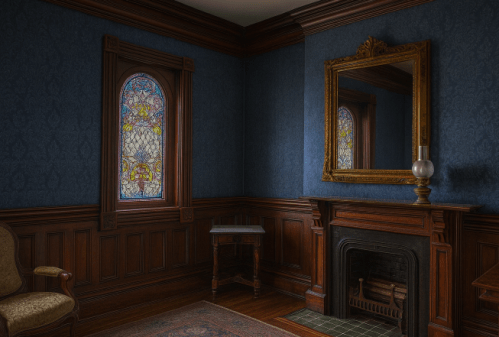
Over the past twenty years, the top 1 percent have accumulated roughly twice as much wealth as the bottom 50 percent combined. This widening inequality has raised concerns about its long‑term socioeconomic and political consequences. While some degree of inequality can incentivize work, saving, and innovation, excessive inequality undermines economic growth by reducing capital formation and innovation, weakening upward mobility and social trust, and increasing the risk of financial and political instability. Since 2020, approximately 60 percent of advanced economies have experienced inflation rates above 5 percent—a record high not seen since the 1980s—despite central banks typically targeting inflation in the 2 to 3 percent range. In the developing world, more than half of all countries have faced inflation rates exceeding 7 percent. Although moderate inflation can support economic activity, sustained and elevated inflation often becomes self‑reinforcing and ultimately erodes the foundations of long‑term growth. As rents, mortgages, insurance, cars, and food become increasingly unaffordable, households respond in predictable ways: they cut discretionary spending, delay medical care, take on additional debt, work multiple jobs, move into smaller or shared housing, and begin falling behind on bills. This pattern is already visible across twenty‑two American states. As of March 2026, the unemployment rate remains low at 4.3 percent; yet even in wealthy states such as California, Texas, and New York, many people feel as though they are living through a recession—despite being employed and despite rising property values—because the cost of maintaining a basic standard of living has outpaced their earnings. #RandolphHarris 3 of 5
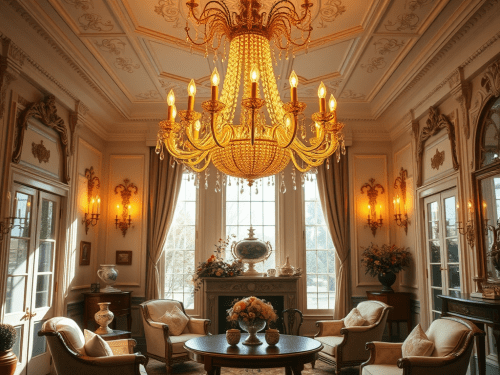
Economists at the International Monetary Fund have warned that escalating conflict in the Middle East—particularly tensions involving Iran—could slow global economic growth, with persistently high oil prices potentially pushing global inflation toward 6 percent next year. Chief economist Pierre‑Olivier Gourinchas noted that a prolonged oil shock could rival the crises of the 1970s, raising unemployment and deepening food insecurity in vulnerable countries. During the 1970s oil crisis, fuel prices quadrupled, gas shortages spread across the United States, and long lines at stations became a symbol of economic paralysis. Today, with energy costs rising and supply chains strained, some analysts fear that the global economy may be drifting toward stagflation—a period marked by the rare and destabilizing combination of high inflation, stagnant growth, and rising unemployment. When economic pressure rises, evictions increase, and policing of poverty intensifies. Homelessness is rising across the United States, and in many cities, it has become increasingly common for police to arrest or cite individuals for sleeping or living in public spaces. In June 2024, the Supreme Court’s decision in Grants Pass v. Johnson affirmed that municipalities may issue citations or make arrests even when no shelter beds exist, reinforcing the State’s reliance on coercive mechanisms to manage the visible consequences of economic precarity. While the rise of AI has intensified fears of job loss and downward mobility, it does not eliminate social classes; it merely reshapes labor markets in ways that deepen existing class divisions rather than dissolve them. The State dies only when the means of production are socialized, and the exploiting class has been abolished. Even so, the virtues that once built the American dream have not vanished; they sleep beneath the nation’s troubled surface, and at rare moments—like lightning against a dark horizon—they blaze forth as omens of the recovery that a future America will remember as its turning point. #RandolphHarris 4 of 5
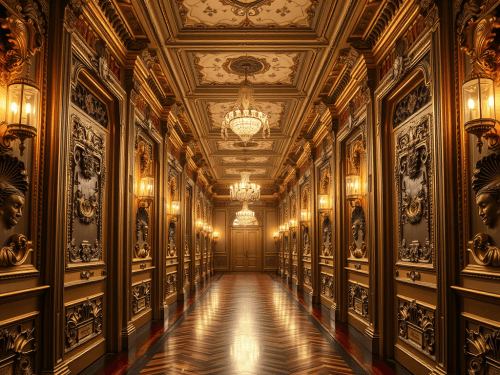
The oppression directed at us by our adversaries is no longer met with approving laughter; it is now received by faces marked with bitterness and fatigue. Something fundamental in our collective attitude has shifted, and the change is unmistakable. Yet this shift does not occur in isolation. Another consequence of institutional segmentation is the emergence of socially segregated subuniverses of meaning—worlds in which people no longer share a common vocabulary of experience. As role specialization deepens, the knowledge tied to each role becomes increasingly esoteric, drifting away from the common stock of understanding that once bound individuals together. What results is not merely a change in mood, but a structural fragmentation of meaning itself. The vast majority of the representatives of an empire are not concerned with ideology. They mouth the current line of official doctrine, and rarely know what hits them when they suddenly find themselves on the losing side of an ideological issue because they bet on the wrong protectors. Then, as now, one could live without ever deciding faith, if one were only cautious enough to stick to the right levels: the captains of the bishoprics and their entourage; the chief bureaucrats who kept government going while the fanatics burned; or the mindless employees who served in the manner most recently ordered from above. On the lowest level, also, the ideology of faith hardly mattered; the increasing clerical proletariat was miserably poor and totally subservient and unprincipled. Not even the scholastic intelligenstsia (which always produces the most current intellectual adjustments to dogma, and therefore feels ahead of time) was really concerned with matters of the spirit, not to speak of personal faith. Within any of these groups, there was no need for embarrassing sincerity, nor for an incautious insistence on the enforcement of the dogma. As in all monopolistic enterprises, the law interfered with convenience only if some fanatic, or fool, dragged an issue into the open. #RandolphHarris 5 of 5

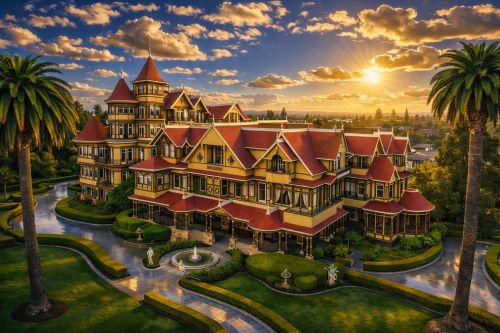
It struck with violence, a deep convulsion that made the ground heave like a living thing. The nine‑story tower, swayed against the pale morning sky. For a moment it held, groaning under its own improbable height. Then a crack split the air—sharp, decisive—and the tower folded in on itself, collapsing in a roar of splintering beams and falling stone.

Much of the fourth floor went with it. Rooms that had once floated above the gardens were ripped open, their walls peeled back like paper. Sunlight poured into spaces that had not seen the sky in what seemed like a century. Dust rose in a thick, shimmering cloud, drifting over the orchards and settling on the verandas like ash.

People gathered outside the gates, stunned. Some whispered that the house had finally surrendered to the curse. Others said it was a sign, a warning, a reckoning. But inside the house, in the quiet that followed the quake, something else stirred—an old memory, a familiar resolve. https://winchestermysteryhouse.com/