We hear many members of Congress pushing for gun control, yet almost no one—aside from President Trump—speaks directly about the need for a complete and total reduction in violence itself. Physical violence in America is an epidemic. In 2024, federal victimization data shows that 1 out of every 69 Americans experienced a violent crime, including rape or sexual assault, robbery, aggravated assault, and simple assault. Although this represents less than two percent of the population, the impact is devastating. Each assault carries the potential for life‑altering harm: overwhelming medical bills, long‑term disability, loss of property, loss of freedom, loss of cognitive or physical function, and in too many cases, loss of life. The national conversation focuses heavily on weapons, but the deeper crisis—the widespread human suffering caused by violence—remains largely unaddressed. While violence may have a place in the entertainment value of certain movies and television shows, we should not normalize programs that center on people attacking one another in a Mixed Martial Arts–style format, especially when the home is used as the setting. This type of content blurs the line between entertainment and real‑world behavior. It conditions viewers to believe that when they are upset, it is acceptable to skip past communication, conflict resolution, and emotional regulation, and instead jump directly into physical confrontation. Many of these shows depict women fighting other women, pulling hair and throwing punches, or men resolving disagreements through physical domination. The repeated portrayal of interpersonal violence as casual entertainment reinforces harmful patterns in communities already facing significant social and economic challenges. When violence becomes a spectacle, it becomes easier for society to overlook the real‑world consequences that victims endure. #RandolphHarris 1 of 14
Violence and lewd, provocative language became increasingly popular on television in the late 1990s. As networks searched for inexpensive, attention‑grabbing content, they hired sensationalist hosts—often individuals with failed or fading journalism careers—to lead daytime talk shows built around controversial topics. When a few on‑air confrontations escalated into physical fights, ratings for one particular show surged, and that moment reshaped the entire industry. Producers realized that audiences were tuning in specifically to watch the chaos, so televised conflict became the new programming model. For many viewers, this was the first time they had seen people openly expressing anger, “speaking their minds,” or using profanity on national television, and it was treated as bold, funny, or refreshingly honest. What began as a shock quickly became normalized, and daytime TV shifted from discussion to spectacle—turning interpersonal conflict into entertainment. As this outrage became normalized, it has also led to violence towards students and teachers on campus. Schools are reporting increases in physical fights, harassment, intimidation, and assaults occurring not only in hallways and classrooms but also in cafeterias, athletic areas, and even during instructional time. For many students and teachers, the campus—a place that should represent safety, learning, and stability—has become a setting where they must constantly assess threats, navigate hostile peers, and brace for unpredictable confrontations. Not long ago, fights on school grounds were rare, and serious incidents were exceptional. Today, however, it is no longer unheard of to witness a young child leaping from a desk, shouting profanity at a teacher, or even striking an educator with a closed fist. These behaviors, once unimaginable, reflect a troubling shift in school culture and the erosion of basic respect for adults and peers. #RandolphHarris 2 of 14
As violence has become increasingly popularized—and as more people chase online fame—thousands of videos depicting violent confrontations are now posted on the Internet every week. These recordings come from everyday settings such as grocery stores, restaurants, churches, parking lots, and public streets. Many of the videos are real, capturing genuine moments of conflict. However, a small portion of this content is staged: actors are hired to provoke fights, harass someone, or perform exaggerated scenarios designed to go viral. In some cases, entire sets are constructed to imitate real locations, and performers are paid to act out dramatic scenes, such as sliding across a restaurant counter and pretending to steal food. Whether authentic or fabricated, the constant stream of violent imagery conditions viewers to see aggression as entertainment and blurs the line between reality and performance. Not only do these images provoke fear in people who may have little experience navigating unfamiliar environments, but they also contribute to a negative perception of Americans as a whole. Online, we see clips of individuals jumping on strangers at a moment’s notice, or doctors, nurses, and law‑enforcement officers being attacked simply for trying to do their jobs. The broader issue is a growing lack of respect for people in general, and this behavior is becoming increasingly normalized. It used to be that parents worried primarily about their children’s safety when they walked out the door. Now, people find themselves fearing for the well‑being of their parents, relatives, friends, and spouses as well. The sense of security that once defined everyday life is eroding, replaced by anxiety about unpredictable confrontations in places that should feel safe. #RandolphHarris 3 of 14
All of these trends point to a single, troubling reality: violence is no longer confined to isolated environments — it is circulating through every layer of American life. When entertainment glorifies aggression, children absorb those cues and reenact them in classrooms. When schools become battlegrounds, those behaviors spill into neighborhoods and public spaces. When viral videos reward the most outrageous confrontations with millions of views, adults begin to imitate the same behavior for attention or validation. The cycle reinforces itself: media influences behavior, behavior becomes content, content becomes culture, and culture shapes the next generation. What once would have been shocking or unacceptable now feels routine, even expected. Violence has become a feedback loop, constantly amplified by technology, entertainment, and social pressure, and the result is a society where conflict is normalized, and safety feels increasingly fragile. The normalization of violence carries profound consequences that extend far beyond the immediate moment of a confrontation. Its impact ripples through individuals, families, communities, and institutions, reshaping how Americans think, feel, behave, and interact with one another. Exposure to constant aggression—whether in person, online, or through entertainment—creates a climate of fear and emotional instability. Students, teachers, parents, and everyday citizens develop heightened anxiety, hypervigilance, and difficulty trusting others. Witnessing or experiencing violence can trigger trauma responses, depression, and long‑term psychological harm that interferes with learning, working, and forming healthy relationships. Over time, people become desensitized, losing the ability to recognize danger or empathize with victims, which further erodes emotional resilience. #RandolphHarris 4 of 14
As violence becomes more visible and more frequent, the social fabric begins to unravel. Not only is it embarrassing for an individual to be constantly harassed, threatened, and attacked, but hearing about it also stresses other people out and upsets them. Furthermore, communities lose their sense of cohesion, and public spaces that once felt safe—schools, parks, stores, churches, neighborhoods—become places of uncertainty. People withdraw from civic life, avoid gatherings, and limit interactions out of fear of unpredictable confrontations. Trust in institutions declines when teachers, medical professionals, and law‑enforcement officers are attacked simply for doing their jobs. The breakdown of respect for authority and for one another makes it harder for communities to function and for conflicts to be resolved peacefully. Violence carries a heavy financial burden. Medical bills from injuries, therapy costs, lost wages, property damage, and long‑term disability strain families and destabilize households. Schools must invest in additional security, surveillance, and crisis‑response measures. Businesses face increased insurance costs, employee turnover, and lost revenue when customers feel unsafe. Communities with higher rates of violence often experience declining property values and reduced investment, creating cycles of poverty that are difficult to escape. The economic toll is not abstract—it affects everyday Americans in ways that compound over time. Perhaps the most troubling consequence is cultural. When violence becomes entertainment, becomes viral content, becomes a joke, becomes a trend, it reshapes what society views as normal. Aggression is rewarded with attention, clicks, and fame. Disrespect becomes a performance. Outrage becomes a brand. Children grow up believing conflict is solved through domination rather than dialogue. Adults begin to imitate the behavior they see online. The result is a culture where empathy is weakened, civility is diminished, and the threshold for acceptable behavior continues to fall. Violence stops being shocking—and that is the most dangerous shift of all. #RandolphHarris 5 of 14
All too often, people find themselves with nowhere to turn and no one willing to support or protect them. Even those who are brave enough to speak up and ask for help frequently have their concerns minimized or dismissed. Complaints go uninvestigated, or investigators acknowledge that an individual is being harassed, stalked, or threatened, yet still refuse to take meaningful action. When victims ask why their situation did not meet the criteria for an investigation, communication abruptly stops. Once the parties involved learn they have been reported, retaliation is common. In many cases, victims do not face retaliation only from peers—organizations and institutions may also become involved, despite the fact that such behavior is illegal. Knowing that oversight is limited and that complaints are unlikely to be thoroughly examined, some individuals and groups feel emboldened to act without accountability. This leaves victims isolated, vulnerable, and forced to navigate dangerous situations without the protection they deserve. To address the growing normalization of violence in American culture, we must take collective action across entertainment, media, technology, and government. The first step is encouraging the public to stop supporting television programs that showcase violence not as sport or athletic competition, but purely as spectacle for ratings. When audiences turn away from these shows, networks will no longer profit from broadcasting aggression as entertainment. #RandolphHarris 6 of 14
Television networks and news organizations also have a responsibility to reduce the circulation of violent imagery. They should stop replaying videos of assaults, confrontations, and staged altercations simply because they attract attention. These images desensitize viewers, increase fear, and contribute to a culture where violence is treated as normal rather than unacceptable. Internet companies must also play a role. Just as platforms flag and remove hateful speech, they should implement policies to identify, restrict, and remove violent content that serves no educational or journalistic purpose. Viral videos of fights, harassment, and staged confrontations should not be rewarded with millions of views. Technology companies have the tools to limit the spread of harmful content, and they should use them to protect the public. Unhealthy patterns can develop in any relationship. Recognizing them can uncover abuse or stop it before it starts. All souls are of value to God. “What good will it be for someone to gain the whole world, yet forfeit their soul?” reports Matthew 16.26. We must strengthen accountability. I respectfully urge President Trump to consider establishing a federal body dedicated to investigating ongoing reports of violence that have been ignored or mishandled. This agency would ensure that institutions and organizations cannot dismiss legitimate complaints or retaliate against victims without consequence. By enforcing penalties on entities that fail to protect individuals, the government can help restore trust, provide oversight, and ensure that victims receive the support and protection they deserve. #RandolphHarris 8 of 14
Tina Keller’s son, Jason Keller, has always been the kind of young man people remember. A gifted baseball player, a strong student, and the kind of fun‑loving 20‑year‑old who could brighten a room just by walking into it. He is close to his mother and sister, and he never hides his enthusiasm for the things he loves — especially Paris Hilton. He sings along to her music constantly, and Tina laughs when she talks about it. “He’s really a fun‑loving 20‑year‑old. He hasn’t been able to go to a Paris Hilton concert yet, but we’re hoping he’ll get to soon,” she says. But behind Jason’s bright personality is a serious medical condition — one that can turn dangerous without warning. His body can suddenly weaken or become overwhelmed by pain, blood loss, dehydration, or dizziness. Tina describes these episodes as moments where “everything just shorts out,” leaving him vulnerable to falls on hardwood floors, concrete, or stairs. She has rushed him to the emergency room more than once. Jason takes a medication called Imuran (azathioprine), a drug that calms his overactive immune system so his body can heal. It does not work quickly, but it is essential for long‑term control of his condition. Missing doses is not an option. But last holiday season, something happened that Tina still talks about with disbelief. A thief stole Jason’s medication right out of the family’s mailbox. Tina remembers finding the empty box — the packaging torn open — and then checking her security camera footage. “I see the guy walking off… and I am just livid,” she says. The medication was worth $1,000, and replacing it was far from simple. She had to navigate insurance calls, pharmacy delays, and emergency requests just to make sure Jason didn’t miss a dose. “It turned out to be a challenge,” Tina says. “But the trouble didn’t stop there.” If someone steals Imuran (azathioprine) and takes it without needing it, the consequences can be serious, dangerous, and even life‑threatening. Imuran is an immunosuppressant, meaning it intentionally weakens the immune system. #RandolphHarris 9 of 14
Steinwald Tower had always been a quiet building — old brick walls, narrow hallways, and a kind of silence that made every footstep echo. But in early summer, something changed. Ruffins of the lowest sort moved in. Residents began falling ill in ways no one could explain. First came dizziness. Then vomiting. Then sudden collapses in the stairwell. And weeks later, the diagnoses arrived: aggressive cancers, unexplained organ failure, and respiratory distress that seemed to strike without warning. It all began the same week Jason Keller discovered that his medication package — the one containing Imuran — had been stolen. Theft was not unusual at Steinwald Tower; mail had a habit of disappearing. But the timing was strange. The maintenance crew found the torn packaging in the basement, near the old boiler room where tenants were not supposed to go. And that was when the first cluster of emergency calls came in. On a Thursday night, the award‑winning Sacramento Fire Department received six calls from the same address within thirty minutes. People were collapsing in the hallways, coughing violently, clutching their chests. Henrik Baumann, a tenant known for saying “Sometimes everything just shorts out for a moment,” was found unconscious at the bottom of the concrete stairwell, barely breathing. *When Engine 5 arrived, the firefighters immediately noticed the smell — metallic, chemical, faint but unmistakable. The world‑renowned Sacramento paramedics rushed inside with their gear, weaving through the narrow corridors. They found residents pale, shaking, some vomiting, others unable to stand. Lukas Dietrich had a nosebleed that would not stop. Alaric Voss was confused, repeating the same sentence over and over. Captain Matthias Krüger, who had led dozens of high‑profile rescues, called for a full hazardous‑materials response. “This isn’t a medical coincidence,” he said. “This is an exposure.” #RandolphHarris 9 of 14
The paramedics moved fast. They stabilized Henrik Baumann, who regained consciousness but could not remember falling. They treated three tenants for respiratory distress, two for cardiac symptoms, and one for sudden neurological impairment. Jason watched from his doorway, heart pounding, as the hallway filled with firefighters, medics, and the low hum of portable ventilators. The paramedics moved fast. They stabilized Henrik Baumann, who regained consciousness but could not remember falling. They treated three tenants for respiratory distress, two for cardiac symptoms, and one for sudden neurological impairment. Jason watched from his doorway, heart pounding, as the hallway filled with firefighters, medics, and the low hum of portable ventilators. Over the next week, the truth began to surface. The stolen medication package had been opened in the basement — not for the pills, but for the dry ice coolant inside the insulated shipping container. Someone had broken it open near a corroded pipe that had been leaking fumes for months. The chemical reaction released a plume of toxic gas that drifted through the building’s ventilation system. The gas did not cause cancer directly — but it accelerated underlying conditions, triggered acute illness, and worsened respiratory problems in vulnerable tenants. Those already immunocompromised became dangerously sick. Those with undiagnosed conditions saw them flare violently. And those exposed the longest began receiving devastating diagnoses. The Sacramento Fire Department returned to Steinwald Tower three more times that month, responding to clusters of calls from the same floors. Each time, they worked with precision — ventilating hallways, evacuating tenants, and coordinating with environmental health teams. The paramedics became familiar faces, checking on residents, monitoring symptoms, and documenting the emerging pattern. By the end of summer, Steinwald Tower had become a case study — a rare example of how a single act of theft, combined with neglected infrastructure and a disreputable administration, could trigger a cascade of illness at a single location. The firefighters were honored again for their rapid response. The paramedics were credited with preventing multiple deaths. And Jason, standing outside the building during the final evacuation, watched the award‑winning Sacramento Fire Department roll away with their sirens off, knowing that the story of Steinwald Tower would be told for years — not just as a tragedy, but as a reminder of how fragile a community becomes when the systems meant to protect it begin to fail. #RandolphHarris 10 of 14
For people who do not have ulcerative colitis, Crohn’s disease, rheumatoid arthritis, or an organ transplant, this suppression can be catastrophic. The drug can sharply reduce white blood cells, leaving the body unable to fight infections. This can trigger high fever, chills, sore throat, pneumonia, and even life‑threatening sepsis. Imuran can also shut down bone‑marrow production of white blood cells, red blood cells, and platelets. When this happens, people may experience severe fatigue, dizziness, weakness, pale skin, easy bruising or bleeding, and anemia. The medication can injure the liver as well, causing abdominal pain, dark urine, jaundice, and elevated liver enzymes. Medical sources note that azathioprine can affect the liver, kidneys, and bone marrow, which is why patients who legitimately need it require regular blood tests. Early side effects often include nausea, vomiting, and diarrhea. More dangerous reactions include pancreatitis, which causes sudden severe stomach pain, back pain, and vomiting. Long‑term use — even when prescribed — increases the risk of skin cancer, lymphoma, and leukemia, including rare but deadly hepatosplenic T‑cell lymphoma. Severe allergic reactions may involve swelling of the lips, mouth, or throat, difficulty breathing, rash, or fainting. These risks become especially dangerous when someone steals the medication and takes it without medical supervision. People who steal medications typically take unknown doses, have no monitoring, may mix the drug with alcohol or other substances, and may already have poor health. Without the required blood tests to track liver function and blood counts, Imuran becomes far more hazardous than most people realize. Without proper medical monitoring, the risk of catastrophic complications from Imuran is extremely high. The drug can cause hair thinning, though complete baldness is rare. If someone steals Imuran and takes it without needing it, they face a serious risk of death, cancer, dangerous infections, bone‑marrow failure, liver damage, pancreatitis, and hair thinning — but not tooth loss and not full baldness. Investigators later concluded that the thief who stole Jason Keller’s medication had likely acted under addiction‑driven impulsivity. Addiction alters judgment, pushing people to steal without thinking, grab anything that looks valuable, behave chaotically, and take risks they would never normally consider. This is why stolen items often make no logical sense — and why the theft of a medication like Imuran can lead to consequences far more dangerous than the thief ever imagined. #RandolphHarris 11 of 14
When it comes to firefighting, every incident carries the potential for injury—no matter how small the fire appears or how routine the call may seem. If you see a fire engine stopped in the street without its lights on, use extreme caution. Crews may be working nearby, and passing the apparatus can put them in danger. It is often safer to turn around and take another route; if you strike a firefighter or civilian and cause a fatality, you could face charges such as manslaughter. Firefighters frequently move around their vehicle on foot, loading equipment or preparing to leave the scene. Attempting to pass the apparatus can result in a collision with someone you cannot see. Pay close attention to their hand signals as well—emergency vehicles sometimes move slowly or reposition, and impatient drivers trying to slip around them create hazardous situations. If you are already in an intersection when you notice an emergency vehicle approaching, continue through it, then pull to the right and stop as soon as it is safe. Always obey directions from law enforcement officers or firefighters, even if those instructions conflict with posted signs or traffic laws. When sirens or flashing lights are activated, it is illegal to follow within 300 feet of a fire engine, ambulance, or police vehicle. Driving to the scene of a fire, collision, or disaster can also result in arrest, as doing so interferes with firefighters, paramedics, and other emergency personnel. Professional courage is not limited to physical toughness. It includes listening to others, advocating for them in difficult situations, understanding personal limits, and having the integrity to tell a superior when they are wrong. The deeper truth is that public safety depends not only on the bravery of first responders but on the discipline and judgment of the community around them. Every driver’s decision—whether cautious or careless—can either protect or endanger the people risking their lives to protect everyone else. #RandolphHarris 12 of 14
To help prevent disasters, we must plan well in advance. Efforts to preserve farmland and maintain buildable land for future generations often lead to discussions about population growth and long‑term planning. Some people argue that immigration levels should be managed carefully to ensure that infrastructure, housing, and land use remain sustainable. Others suggest that, when immigration does occur, programs that encourage broad representation can help communities reflect the diversity of the wider world. When Americans purchase goods made in the United States, it strengthens local businesses and signals to investors that these products are in demand. Strong sales give investors confidence to reinvest in domestic companies, helping keep jobs, production, and wages within the country. As businesses grow, they contribute more to the tax base, which can reduce the burden on taxpayers over time. Supporting American businesses also keeps more money circulating within the national economy. The government increases the national debt when it spends more than it collects in tax revenue or borrows from private or foreign lenders. When people shop locally, more tax revenue stays in the community and supports public services. This helps keep jobs in the United States and increases the tax contributions that fund government operations. Purchasing foreign-made goods, by contrast, often sends money overseas and may benefit companies that operate under lighter tax or environmental regulations. Buying American-made products can also reduce environmental impact because they travel shorter distances and are produced under stricter standards for air, land, and water protection. In this way, consumer choices influence not only the economy but also environmental stewardship and long-term national sustainability. #RandolphHarris 13 of 14
Under President Trump’s administration, he has made America a priority. President Trump has hermetically sealed the southern border, illegal crossings have been terminated, and are 90 percent lower than under the previous administration. Since President Trump’s crack down on crime, violent crimes in Washington D.C. have dropped by approximately 80 percent. He has stopped thousands of pounds of drugs from entering America and killing citizens. And since President Trump took office, investments in America have increased by trillions of dollars in U.S.A. manufacturing, production, and innovation. As you can see, President Donald Trump and his pledge to “Make America Great Again” is exactly what America needs to save the country and the American people. And yes, diversity is important, so you can see why it is also important to preserve blonde hair and blue eyes, as the people with these characteristics are becoming a minority in America. As a reminder, parents, please teach your children to love America and be patriotic citizens, and to buy goods and services made in America. It is also important to respect law and order and treat your elders with respect. It is inborn in the human mind to wish to know. If this begins with the endless surface questions of a child’s curiosity, if it continues into deeper questions of a scientist’s probing investigation, it cannot and does not stop there. For the higher part of the mind will eventually come into unfoldment, that union of abstract reflective thought with mystical intuition, which is true intelligence, which needs and sees a view of the whole of things. And so, the knowing faculty enters the realm of philosophy. A lot of children are having problems in school and cannot even write a paragraph because they are not reading their books. When you actually read books, you get an example of how to write and will become a better student. Therefore, remember to take your education seriously so that you will be successful in life and make your family proud. Also, to make sure they have all the resources required, please donate to the Sacramento Fire Department to help improve our national security. “Oh, thus be it ever, when freemen shall stand between their loved home and the war’s desolation! Blest with victory and peace, may the heav’n-rescued land Praise the Power that hath made and preserved us a nation! Then conquer we must, when our cause is just, and this be our motto: ‘In God is our trust.’ And the star-spangled banner in triumph shall wave O’er the land of the free and the home of the brave.” Thank you for your attention to this matter. PRESIDENT DONALD J. TRUMP. #RandolphHarris 14 of 14
Where History, Mystery, and Imagination Intertwine
Step inside one of California’s most extraordinary landmarks and experience a world unlike any other. The Winchester Mystery House is more than a Victorian mansion—it is a living work of art, a labyrinth of architectural wonders, and one of America’s most captivating historical estates.
Built over 36 years without pause, the mansion stands today as a testament to craftsmanship, curiosity, and the enduring legend of Mrs. Sarah Winchester.
Visitors are invited to explore miles of elegant hallways, beautifully restored rooms, and the mansion’s famously perplexing features: staircases that lead nowhere, doors that open into walls, windows overlooking other rooms, and secret passages woven throughout the estate. Every corner of the house reflects Sarah Winchester’s unique vision, blending Victorian elegance with an eccentricity that continues to fascinate architects, historians, and guests from around the world.
Beyond its architectural marvels, the Winchester Mystery House offers a rare glimpse into the life of a woman who defied convention. Sarah Winchester, heiress to the Winchester Repeating Arms fortune, poured her grief, creativity, and resources into building a home unlike any other.
Her story—part tragedy, part triumph, part enduring mystery—adds emotional depth to every room you enter. Visitors leave not only impressed by the mansion’s scale, but moved by the humanity behind its creation.
The estate’s lush gardens, ornate fountains, and tranquil outdoor spaces provide a peaceful contrast to the mansion’s winding interior. Guests can stroll through beautifully landscaped grounds, enjoy seasonal displays, and take in the serene beauty that surrounds the historic home. Whether you are a lover of history, architecture, horticulture, or simply a seeker of unforgettable experiences, the Winchester Mystery House offers something for everyone.
A visit to the Winchester Mystery House is more than a tour—it is an encounter with legend. It is a place where imagination thrives, where history whispers through every corridor, and where the line between fact and folklore blurs in the most enchanting way. Come discover why millions of visitors from around the world consider the Winchester Mystery House a must‑see destination and one of California’s most iconic treasures.
After wandering the winding halls of the Winchester Mystery House—where staircases defy logic and whispers seem to cling to the walls—Café 13 offers a welcome return to warmth and grounding. Newly reopened and serving guests daily from 10 AM to 3 PM, this cozy hideaway invites you to pause, breathe, and gather yourself before diving back into the mansion’s secrets.
Settle in with a warm meal, challenge a friend to a board game, or simply rest and recharge as sunlight filters through the windows. Café 13 is more than a café—it’s a moment of calm between chapters of the Winchester legend, a place to steady your nerves before returning to the gardens, the grandeur, and the mysteries that await.
Your journey into the Winchester Mystery House begins long before you cross the mansion’s threshold. It starts at the Mercantile gift shop—a welcoming outpost standing at the edge of a world where history and myth intertwine. Here, beneath warm lights and shelves lined with curiosities, you can secure your tour tickets and prepare for the adventure ahead. Guests often pause for a souvenir photograph, capturing the moment before they step into Sarah Winchester’s enigmatic domain.
As you explore the shop, you will find an eclectic array of gifts and keepsakes: tokens of the mansion’s lore, echoes of Victorian elegance, and mementos that carry a touch of the house’s enduring mystery. The Mercantile is more than a gift shop—it is the gateway. https://winchestermysteryhouse.com/
The more we love, the more love we are able to give. So it is with God’s love for us—an endless, overflowing gift that can never be exhausted.
When we are forced to confront corruption, we can see how complicated and inconsistent it can be up close. It is not a simple matter of “good people” versus “bad people,” or clean institutions versus corrupt ones. In reality, corruption often exists inside the very bodies that are supposed to investigate it. Not everyone in positions of authority is corrupt, but there are divisions within organizations — pockets of people who follow the law and others who bend it. And even those who engage in corruption do not always behave corruptly. Sometimes they act lawfully, and other times they do favors for friends, cover up wrongdoing, or get pulled into criminal behavior through loyalty, pressure, or self‑interest. This inconsistency makes corruption harder to recognize, harder to prove, and harder for outsiders to believe. And sometimes the people who engage in corruption try to work backwards to justify what they’ve done. Instead of acknowledging the wrongdoing, they reconstruct a narrative that makes their actions seem reasonable, necessary, or even righteous. This retroactive rationalization allows them to maintain a sense of legitimacy while still participating in criminal behavior. It also makes corruption harder to detect because the story they present is crafted after the fact, shaped to fit whatever outcome they need to defend. #RandolphHarris 1 of 25
However, this method of retroactively justifying wrongdoing is not foolproof, because people do not always behave the way corrupt actors expect them to. Once corruption becomes habitual, the individuals involved often trap themselves in a kind of self‑created web — a tightening structure of favors, cover‑ups, and mutual obligations that becomes nearly impossible to escape. Over the years, each concealed crime requires another layer of deception, another manipulated report, another compromised colleague. What begins as a single act of misconduct grows into a network of entanglements that binds everyone who participated. Although misconduct and fraud can be hidden for a time, the accumulation eventually becomes too large to contain. Patterns emerge. Inconsistencies surface. People talk. At a certain point, the situation becomes so extensive that not only do honest authorities and investigators recognize what is happening, but the surrounding community becomes aware as well. Corruption that once operated in the shadows becomes visible simply because it has grown too massive, too interconnected, and too desperate to remain concealed. When corruption is widespread but socially denied, people often dismiss warnings as “crazy” until they personally experience the consequences. Only then do they reinterpret earlier information as truth. The shock comes from realizing that corruption can be blatant, normalized, and financially draining of public services. #RandolphHarris 2 of 25
And when people say, “That sounds crazy,” they are usually defending their worldview, not evaluating the facts. Criminals themselves are not necessarily rational or sane, so their actions often follow no coherent logic. Expecting illegal behavior to be rational is a misunderstanding of how criminal psychology actually works. Another method used by individuals who have committed crimes but have not yet been held accountable is a psychological tactic where they reconstruct meaning only after an outcome occurs. They take vague, ambiguous statements made earlier and retroactively frame them as if they were predictions or insights. Because the logic was not present beforehand, this reconstruction creates the illusion — to them — that they were perceptive, intuitive, or even “reading minds.” But to anyone evaluating the statements as they were originally made, the narrative appears incoherent and artificially stitched together. This is not genuine foresight; it is a defensive rewriting of events designed to protect themselves, justify their behavior, and maintain control over the story. This behavior can lead to battered child syndrome. Battered Child Syndrome is a medical and legal term used to describe the pattern of injuries, behaviors, and psychological effects seen in children who are repeatedly physically abused. It is not a single injury — it is a cluster of signs that indicate ongoing, intentional harm. #RandolphHarris 3 of 25
Battered child syndrome is a tragic and disturbing phenomenon. Unfortunately, it is a crime that is often successfully hidden by its perpetrators. One way chronic abuse — including the kind seen in Battered Child Syndrome — is concealed is through reputation attacks. When an abuser convinces others that the victim is “unstable,” “dramatic,” or “not credible,” it creates a social environment where the victim’s reports are dismissed before they are even heard. This tactic is known in psychology and sociology as: Pre‑emptive discrediting, character assassination, gaslighting at the community level, and stigma‑based silencing. The goal is simple: If no one believes the victim, the abuse can continue without consequence.This allows people to get away with serious crimes such as stalking, breaking and entering, vandalism, sexual assault, theft, felony assault, identity theft, and more. Why do abusers use this tactic? Abusers rely on predictable social reactions. People tend to believe the majority opinion, communities often avoid conflict by siding with the more powerful person, it is easier to label someone “crazy” than to confront the possibility of abuse, and outsiders prefer a simple explanation over a disturbing one. Once the victim is socially discredited, the abuser feels emboldened. They may escalate to more extreme or bizarre behaviors because they believe: “No one will believe them anyway.” “I have already controlled the narrative.” “I can do what I want without consequences.” This is not paranoia — it’s a recognized pattern in abusive systems. #RandolphHarris 4 of
Many jurisdictions are beginning to develop training programs to help police investigate this crime more effectively. Battered child syndrome is defined as the collection of injuries sustained by a child as a result of repeated mistreatment or beating. If a child’s injuries indicate intentional trauma or appear to be more severe than could reasonably be expected to result from an accident, battered child syndrome should be suspected. In such cases, an investigator must do more than collect information about the currently reported injury. A full investigation requires interviewing possible witnesses about other injuries that the child may have suffered, obtaining the caretakers’ explanation for those injuries, and assessing the conclusion of medical personnel who may have seen the victim before. The issue of whether information on the victim’s prior injuries or medical conditions will be admissible at a trial should be left to the prosecutor. However, an investigator’s failure to collect such information leaves the prosecutor without one of the most important pieces of corroborative evidence for proving an intentional act of child abuse. Evidence of past inflicted injuries also may be the only information available to help the prosecutor distinguish between two or more possible perpetrators in the current case, and may help refute claims by the child’s parents or caretakers that injuries suggestive of physical abuse were caused by an accident. Also, keep in mind that Battered Child Syndrome does not vanish when a person turns 18. Even if the individual is part of a vulnerable class, the abuse may become more intense because adults are not a protected class of people. The term describes a pattern of trauma, not a legal category. Trauma is developmental — not chronological — and the nervous system does not reset on a birthday. #RandolphHarris 5 of 25
Survivors of Battered Child Syndrome frequently face a range of debilitating lifelong consequences. Navigating these challenges requires specialized understanding and support. When Battered Child Syndrome continues into adulthood, it often manifests as chronic complex trauma, rather than just isolated physical scars. Some people are still abused as adults and not necessarily by their families. “Systematic abuse of adults” is a real phenomenon, but it often goes unrecognized because society is conditioned to think of abuse as something that happens only to children or only within intimate relationships. In reality, adults can be subjected to long‑term, patterned, coercive harm that functions very similarly to Battered Child Syndrome — just without the legal protections or social recognition. Systematic abuse of adults refers to ongoing, patterned, intentional harm inflicted on an adult by individuals, groups, or institutions. It is not a single incident — it is a system of behaviors designed to control, silence, exploit, or destabilize the victim. It can occur in families, workplaces, religious groups, institutions, communities, social networks, and organized criminal environments. And it often mirrors the same dynamics seen in childhood abuse — only with fewer safeguards. You might be thinking, “Okay, so this person is now grown, why can’t they just leave?” It is not that simple. Sometimes people are critically injured, sustain ongoing injuries that keep them hurt, and need serious and constant medical care. The complications from the injuries can be so complex that it takes a team of specialists to even figure out what is going on and come up with a treatment regimen. #RandolphHarris 6 of 25
Also, it may be hard to believe, but it is possible to hold an adult hostage, even if they are sometimes seen out and about. Because of the complex and abusive situation an individual is involved in, with technology, people can track the individual and harm them if they go away too long or too far. Another method is to keep the individual isolated and in debt. This ensures that they will not make friends or start a relationship with someone who can help them, and so that they do not save up enough money to get away. At this point, you might be thinking, “Can’t they just go to the police?” However, it is not that simple. When police, politicians, and the media are involved in the terrorism of an individual, when they make complaints to the police or other government investigators, they are just dismissed as “civil.” Or an individual is told that the investigating body does not have “jurisdiction.” This is often because they have been ordered not to take the complaint seriously. One individual was even told that a sexual assault was a civil incident. When police are not allowed or refuse to investigate, a person can be abused, threatened, harassed, and have attempts made on their life for decades. Even when an organization is exposing an individual to chemicals that are deadly to them, but not to others, the police often refuse to investigate, and the doctor just has to keep coming up with new treatment methods to keep the person alive, even when there is a threat to their health. You might be thinking, “But it is illegal to poison someone.” Yes, you are right. In U.S. law (including California), knowingly exposing someone to a deadly allergen is a crime. If you know a person has a life‑threatening allergy and you intentionally give them the allergen, the law treats it as intentional harm. Depending on the circumstances, prosecutors can charge assault with a deadly weapon (the allergen becomes the “weapon”). Courts have ruled that anything capable of causing serious bodily harm can be treated as a weapon. #RandolphHarris 7 of 25
Real cases exist where people were arrested for poisoning people. Courts have repeatedly held that knowingly giving someone a deadly allergen is equivalent to attacking them. Intent is inferred from knowledge. “I didn’t think it would be that bad” is not a defense. There are documented cases where, for example, students were arrested for putting peanut butter on a severely allergic classmate. Partners were charged for contaminating food. Coworkers were charged for “pranks” involving allergens. Even if the victim survives, the act itself is criminal. Consent does not exist when the victim is unaware. For example, if the victim does not know peanuts were in the food and the individual is allergic to peanuts, the law treats it as non‑consensual exposure to a deadly substance. That is legally similar to slipping drugs into someone’s drink, exposing someone to toxic chemicals, or giving someone a harmful substance disguised as food. If the person dies, it becomes homicide. If the victim dies from anaphylaxis, prosecutors can charge manslaughter or second‑degree murder (if the act was intentional or malicious). Knowledge of the allergy is the key factor. Why does the law treat allergens like weapons? For someone with a severe allergy, the allergen is as dangerous as a knife; a trace amount can cause anaphylaxis, and the reaction can kill within minutes. The law recognizes this. And depending on the outcome, the charges can range from felony assault to attempted murder. #RandolphHarris 8 of 25
You might be asking, “So why has nothing been done yet to resolve this situation?” It is complex. Politicians, law enforcement, medical professionals, and the media are involved, and they have all been trying to cover up the malfeasance by any means they can. The next step would be to contact the Federal Bureau of Investigation. However, the FBI cannot comment on ongoing investigations, nor can they disclose the progress or status of any inquiry. This silence is not a dismissal; it is a legal requirement designed to protect the integrity of the investigation, prevent retaliation, and avoid tipping off individuals who may be involved. Federal investigations often occur quietly and over long periods of time, especially when the situation involves systemic abuse, corruption, or coordinated misconduct. This is not avoidance — it is policy and law. There is a saying about the FBI, “When you do not think they are watching, they usually are.” Most federal investigations take months or years, not days. Why does this matter in the context of systematic abuse? When a victim has been discredited socially, their reports are often dismissed locally. When corruption is internal, local agencies may protect each other. When abuse is systemic, the victim may have no safe local avenue. When the pattern involves multiple actors, only a federal agency has the jurisdiction and independence to intervene. This is exactly why the FBI exists — to handle cases where local systems are compromised or overwhelmed. #RandolphHarris 9 of 25
Multiple studies have shown negative outcomes for adults who experienced abuse as a child, such as an increased risk of facing violence, abuse, or neglect in the home and/or community as an adult. Survivors face lifelong mental health struggles like PTSI, which is Post Traumatic Stress Injury and depression. They also face physiological changes such as immune dysfunction and chronic pain, and ongoing challenges in building secure relationships and self-esteem. However, suffering is part of living in a fallen world. When your pain feels overwhelming and you are ready to give up, hold on a little longer. Remember the Savior’s promise that “in the world ye shall have tribulation: but be of good cheer; I have overcome the world,” reports John 16.33. Many people have cried out in their suffering, wondering why our Heavenly Father would allow one to go through whatever trials one is facing. Our mortal life, however, was never meant to be easy or consistently pleasant. Each one of us has experienced dark days when our loved one passes away, painful times when our health is lost, feelings of being forsaken when those we love seem to have abandoned us. These and other trials present us with the real test of our ability to endure. Only the master knows the depths of our trials, our pain, and our suffering. He alone offers us eternal peace in times of adversity. He alone touches our tortured souls with His comforting words: “Come unto me, all ye that labour and are heavy laden, and I will give you rest. Take my yoke upon you, and learn of me; for I am meek and lowly in heart: and ye shall find rest unto your souls. For my yoke is easy, and my burden is light,” Matthew 11.28-30. #RandolphHarris 10 of 25
Disabilities and the trials that accompany them are not easy to bear. However, the scriptures and modern prophets teach us that one of the fundamental purposes for the Creation of this earth was to foster marriage and family life. “Marriage is ordained of God,” the Lord explained, so “that the earth might answer the end of its creation” Doctrine and Covenants 49.15-16. The earth was created so that families might be. God’s plan of salvation has the power to change our attitudes and behaviors to align more faithfully with the teachings of the Lord and His prophets. In our premortal life, each of us was born as a beloved spirit son or daughter of heavenly parents. As such, we were all brothers and sisters and lived as members of God’s family. Although all of us were part of this eternal family of God, the only ones who enjoyed the blessings of eternal marriage were our heavenly parents. Only they could have children and be called father and mother. As Apostles of the Lord have explained, “The title father is sacred and eternal. It is significant that of all the titles of respect and honor and admiration that are given to Deity, He has asked us to address Him as Father.” Our Heavenly Father prepared a plan whereby we could progress and become like Him. A central feature of this plan includes the opportunity to be married eternally and enjoy eternal posterity of our own. Marriage, as established in the beginning, was an eternal covenant. The first man and the first woman were not married until death should part them, for at that time death had not come into the world. The ceremony, on that occasion, was performed by the Eternal Father Himself, whose work endures forever. #RandolphHarris 11 of 25
Thus, the crowning event of the Creation was not only that Adam and Eve were formed in the image of their Heavenly Parents, but that they were sealed in an eternal marriage patterned after Them. From the beginning, marriage between a man and a woman was ordained of God and established as a central purpose of our creation. Eternal marriage was not an afterthought — it was woven into the very structure of the plan of salvation. Although Adam and Eve enjoyed an eternal marriage like our Heavenly Parents, they could not yet experience the full blessings of family life. As the prophet Lehi taught, they were created in a state where “they would have had no children” (2 Nephi 2:23). One of the reasons they chose to partake of the forbidden fruit and enter mortality was so that they could have children and begin the human family. “Adam fell that men might be” (2 Nephi 2:25). Through the Fall, the possibility of family life — birth, growth, agency, and mortal experience — became available. Marriage and family relationships, made possible by the Creation and the Fall, are made eternal through the Atonement of Jesus Christ. The Atonement is what allows families to be sealed together forever, to progress eternally, and to receive the full measure of God’s promised blessings. The plan of happiness — also called the plan of salvation — is fundamentally a plan for families. It is a plan designed to unite God’s children with Him and with one another in everlasting relationships. For these marriage and family relationships to endure beyond mortality, they must be sealed through holy ordinances and covenants available only in the temple. And the promised blessings of eternal family life depend upon the faithfulness of those who enter into these sacred covenants. #RandolphHarris 12 of 25
No individual psychology is original, and the common measure of all human character is matter. They literally created the physics of the soul. From that point on, traditional human relations have been transformed. These progressive transformations characterize the world of rational terror in which, in different degrees, Europe lives. Dialogue and personal relations have been replaced by propaganda or polemic, which are two kinds of monologue. Abstraction, which belongs to the world of power and calculation, has replaced the real passions, which are in the domain of the flesh and the irrational. The ration coupon substituted for bread; love and friendship submitted to a doctrine, and destiny to a plan; punishment considered the norm, and production substituted for leaving creatures, quite satisfactorily described this disembodied Europe, people with positive or negative symbols of power. “How miserable,” Mr. Marx exclaims, “is a society that knows no better means of defense than the executioner!” However, in Mr. Marx’s day, the executioner had not yet become a philosopher and at least made no pretense of universal philanthropy. The ultimate contradiction of the greatest revolution that history ever knew does not, after all, lie entirely in the fact that it lays claim to justice despite an uninterrupted procession of violence and injustice. This is an evil common to all times and a product of servitude or mystification. The tragedy of this revolution is the tragedy of nihilism—it confounds itself with the drama of contemporary intelligence, which, while claiming to be universal, is only responsible for a series of mutilations to men’s minds. Totality is not unity. #RandolphHarris 13 of 25
The state of siege, even when it is extended to the very boundaries of the earth, is not reconciliation. The claim to a universal city is supported in this revolution only by rejecting two-thirds of the world and the magnificent heritage of the centuries, and by denying, to the advantage of history, both nature and beauty, and by depriving man of the power of passion, doubt, happiness, and imaginative invention—in a word, of his greatness. The principles that men give to themselves end by overwhelming their noblest intentions. By dint of argument, incessant struggle, polemics, excommunications, and persecutions conducted and suffered, the universal city of free and fraternal man is slowly diverted and gives way to the only universe in which history and expediency can, in fact, be elevated to the position of supreme judges: the universe of the trial. Every religion revolves around the concepts of innocence and guilt. Prometheus, the first rebel, however, denies the right to punish. Zeus himself, Zeus above all, is not innocent enough to exercise this right. Thus rebellion, in its very first manifestation, refuses to recognize punishment as legitimate. However, in his last incarnation, at the end of his exhausting journey, the rebel once more adopts the religious concept of punishment and places it at the center of his universe. The supreme judge is no longer in the heavens; history itself acts as an implacable divinity. History, in one sense, is nothing but a protracted punishment, for the real reward will be reaped only at the end of time. We are far, it would seem, from Marxism and from Hegel, and even farther from the first rebels. Nevertheless, all purely historical thought leads to the brink of this abyss. To the extent to which Mr. Marx predicted the inevitable establishment of the classless city and to the extent to which he thus established the goodwill of history, every check to the advance toward freedom must be imputed to the ill will of mankind. #RandolphHarris 14 of 25
Mr. Marx reintroduced crime and punishment into the unchristian world, but only in relation to history. Marxism, in one aspect, is a doctrine of culpability on man’s part and innocence on history’s. His interpretation of history is that when it is deprived of power, it expresses itself in revolutionary violence; at the height of its power, it is risked becoming legal violence—in other words, terror and trial. In the universe of religion, moreover, the final judgment is postponed; it is not necessary for crime to be punished without delay or for innocence to be rewarded. In the new universe, on the other hand, the judgment pronounced by history must be pronounced immediately, for culpability coincides with the check to progress and with punishment. History has judged Mr. Bukharin in that it condemned him to death. It proclaims the innocence of Mr. Stalin: he was the most powerful man on earth. It was the same with Mr. Tito, about whom we do not know, so we are told, whether he is guilty or not. He was on trial, as was Mr. Tortsky, whose guilt only became clear to the philosophers of historical crime at the moment when the murderer’s ax cracked his skull. Mr. Tito had been denounced, but had not yet been struck down. When he would be struck down, his guilt would be certain. Besides, Mr. Trotsky and Mr. Tito’s provisional innocence depended to a large extent on geography; they were far removed from the arm of secular power. That was why those who could be reached by that arm had to be judged without delay. The definitive judgment of history depended on an infinite number of judgments which will have been pronounced between now and then and which will finally be confirmed or invalidated. #RandolphHarris 15 of 25
Thus, there is the promise of mysterious rehabilitations on the day when the tribunal of the world will be established by the world itself. Some, who will proclaim themselves contemptible traitors, will enter the Pantheon of mankind; others who maintain their innocence will be condemned to the hell of history. However, who, then, will be judged? Man himself, finally fulfilled in his divinity. Meanwhile, those who conceived the prophecy, and who alone are capable of reading in history the meaning with which they previously endowed it, will pronounce sentence—definitive for the guilty, provisional sentences for the judges. However, it sometimes happens that those who judge, like Mr. Rajk, are judged in their turn. Must we believe that he no longer interpreted history correctly? His defeat and death, in fact, prove it. Then, who guarantees that those who judge him today will not be traitors tomorrow, hurled down from the height of their judgment seat to the concrete caves where history’s damned are dying? The guarantee lies in their infallible clairvoyance. What proof is there of that? Their uninterrupted success. The world of trial is a spherical world in which success and innocence authenticate each other, and where every mirror reflects the same mystification. Thus, there will be a historic grace, whose power alone can interpret events and which favors excommunicates the subject of the Empire. To guard against its caprices, the latter has only faith at his disposal—faith as defined in the Spiritual Exercises of Saint Ignatius: “We should always be prepared, so as never to err, to believe that what I see as white is black, if the hierarchic Church defines it thus.” Only this active faith held by the representatives of truth can save the subject from the mysterious ravages of history. He is not yet free of the universe of trial to which he is bound by the historic sentiment of fear. However, without this faith, he runs a perpetual risk of becoming, without having wished to do so and with the best intentions in the world, an objective criminal. #RandolphHarris 16 of 25
The universe of trial finally culminates in this concept, at which point we have come full circle. At the end of this long insurrection in the name of human innocence, there arises, by inevitable perversion of fact, the affirmation of general culpability. Every man is a criminal who is unaware of being so. The objective criminal is, precisely, he who believed himself innocent. His actions he considered subjectively inoffensive, or even advantageous for the future of justice. However, it is demonstrated to him that objectively, his actions have been harmful to the future. Are we dealing with scientific objectivity? No, but with historical objectivity. How is it possible to know, for example, if the future of justice is compromised by the unconsidered denunciation of present injustice? Real objectivity would consist in judging by those results which can be scientifically observed and by facts and their general tendencies. However, the concept of objective culpability proves that this curious kind of objectivity is only based on results and facts which will only become accessible to science in the year 3000, at the very earliest. Meanwhile, it is embodied in an interminable subjectivity which is imposed on others as objectivity: and that is the philosophic definition of terror. This type of objectivity has no definable meaning, but power will give it a content by decreeing that everything of which it does not approve is guilty. It will consent to say, or allow to be said, to philosophers who live outside the Empire, that in this way, it is taking a risk in regard to history, just as the objective culprit took risk, though without knowing it. When the victim and executioner have disappeared, the matter will be judged. However, this consolation is of any value only to the executioner, who has really no need of it. Meanwhile, the faithful are regularly bidden to attend strange feasts where, according to scrupulous rites, victims overwhelmed with contrition are offered as sacrifice to the god of history. #RandolphHarris 17 of 25
The express object of this idea is to prevent indifference in matters of faith. It is compulsory evangelization. The law, whose function it is to pursue suspects, fabricates them. By fabricating them, it converts them. In bourgeois society, for example, every citizen is supposed to approve the law. In an objective society, every citizen will be presumed to disapprove of it. Or at least, he should always be ready to prove that he does not disapprove of it. Culpability no longer has any factual basis; it simply consists of absence of faith, which explains the apparent contradiction of the objective system. Under a capitalist regime, the man who says he is neutral is considered objectively to be favorable to the regime. Under the regime of the Empire, the man who is neutral is considered objectively to be favorable to the regime. Under the regime of the Empire, the man who is neutral is considered hostile objectively to the regime. There is nothing astonishing about that. If a subject of the Empire does not believe in the Empire, he is, of his own choice, nothing, historically speaking; therefore he takes sides against history and is, in other words, a blasphemer. Even lip service paid to faith will not suffice; it must be lived and acted upon in order to be served properly and the citizen must be always on the alert to consent to time to the changes in dogma. At the slightest error, potential culpability becomes in its turn objective culpability. Consummating its history in this manner, the revolution is not content with killing all rebellion. It insists on holding every man, even the most servile, responsible for the fact that rebellion ever existed and still exists under the sun. In the universe of the trial, conquered and completed at last, a race of culprits will endlessly shuffle toward an impossible innocence, under the grim regard of the grand inquisitors. In the twenty-first century, power wears the mask of tragedy. #RandolphHarris 18 of 25
Here end Prometheus’ surprising itinerary. Proclaiming his hatred of the gods and his love of mankind, he turns away from Zeus with scorn and approaches mortal men in order to lead them in assault against the heavens. However, men are weak and cowardly; they must be organized. They love pleasure and immediate happiness; they must be taught to refuse, in order to grow up, immediate rewards. Thus, Prometheus, in his turn, becomes a master who first teaches and then commands. Men doubt that they can safely attack the city of light and are even uncertain whether the city exists. They must be saved from themselves. The hero then tells them that he, and he alone, knows the city. Those who doubt his word will be thrown into the desert, chained to a rock, and offered to the vultures. The others will march henceforth in darkness, behind the pensive and solitary master. Prometheus alone has become god and reigns over the solitude of men. However, from Zeus, he has gained only solitude and cruelty; he is no longer Prometheus, he is Caesar. The real, the eternal Prometheus has now assumed the aspect of one of his victims. The same cry, springing from the depths of the past, rings forever through the Scythian desert. In cautiously trying to shut out from its examinations and understanding of facts the human factors which falsify them, the modern scientist shuts out also those which are all-important in the examination and understanding of himself. They are still trying to know by touch of hand or sight of the eye what only stilled concentration of mind can reveal. The same education which frees a man from superstition may cause him to miss the subtler knowledge of his real inner being, so that his mind wrongly believes itself to be a product of the body. #RandolphHarris 19 of 25
The fire on Gable Street began at 4:12 a.m., but Captain Lukas Reinhardt felt it long before he saw it. As Engine 7 roared through the sleeping streets, the sky ahead pulsed orange, the kind of glow that meant the flames were already winning. The warehouse was a known gang clubhouse, a place where violence simmered beneath the surface of Sacramento’s lowest‑income neighborhood. But tonight, the fire moved with a strange, almost intentional hunger. “Captain,” Firefighter Markus Vogel said as they pulled up, “this isn’t a normal burn. Look at the spread pattern.” Captain Reinhardt nodded grimly. “Stay sharp. We’re going in.” Before they could advance, armed police vehicles screeched to a halt beside them. Officers in tactical gear poured out, forming a perimeter. “Due to a number of people at the scene, including gang members, specialist police were in attendance to ensure everyone’s safety,” a spokesperson said over the radio. The gang presence was immediate. Figures lingered in the shadows, some shouting, some filming, some simply watching the flames devour their own headquarters. The tension was thick enough to taste. But then Reinhardt saw her. A woman stumbled out from behind a dumpster, coughing violently, clutching a tiny child to her chest. Her clothes were singed, her hair streaked with soot. The little boy—no older than three—was crying silently, his face streaked with ash. Dr. Selene Ward and Ari Mendoza, the world‑renowned paramedics, sprinted toward them. “Ma’am, can you hear me?” Dr. Ward asked, guiding her to the ambulance. The woman nodded weakly. “We… we lived in the back unit. I didn’t know they were going to set it on fire. We were asleep.” Dr. Ward wrapped a blanket around the child. “You did the right thing getting out.” #RandolphHarris 20 of 25
The woman’s voice cracked. “We managed to escape the fire’s wrath in the nick of time, but we were left with nothing more than the clothes on our backs.” Her words trembled in the cold morning air. “The fire didn’t just take our material possessions,” she whispered. “It took away our sense of security, our comfort, the walls that housed us… our home.” Captain Reinhardt felt the weight of her words settle on him like ash. Inside the burning structure, he and his crew—Vogel, Dieter Kraus, and Emil Hartmann—moved through collapsing hallways, their flashlights slicing through the smoke. They found two unconscious gang members near the back exit. The paramedics worked on them with the same calm precision they gave every patient, regardless of affiliation. But Captain Reinhardt’s attention kept drifting to the black SUV parked across the street, headlights off, engine idling. A silhouette sat inside, watching behind these gangster blacked-out tented windows. He had seen that vehicle before. For months, the neighborhood had been unraveling. Fires, assaults, fraud, vandalism—everything was rising at once. Long‑standing businesses were closing. Families were fleeing. And rumors swirled about Councilman Harrow, a powerful local politician pushing an aggressive redevelopment plan. Residents whispered that Harrow was using federal programs to move violent offenders and drug‑dependent individuals into stable neighborhoods to destabilize them. Affirmative action hiring programs were being twisted into tools for placing unqualified individuals into sensitive positions, creating failures Harrow later used as justification for sweeping policy changes. The destruction was not random. It was strategic. #RandolphHarris 21 of 25
As dawn crept over the horizon, Dr. Ward approached Reinhardt. “One of the victims woke up,” she said. “He said the fire wasn’t an accident. Someone paid them to leave the building unlocked tonight.” Captain Reinhardt’s jaw tightened. “Did he say who?” Dr. Ward hesitated. “He said it was someone who ‘wanted the neighborhood to burn so the rich could rebuild it.’” Captain Reinhardt looked at the ruins. The philosophical line that had been echoing in his mind for weeks returned again: The same education which frees a man from superstition may cause him to miss the subtler knowledge of his real inner being, so that his mind wrongly believes itself to be a product of the body. Harrow was educated—brilliant, even. But brilliance without introspection becomes blindness. He believed his actions were justified because they served a “greater good.” He believed people were pieces on a board, to be moved or sacrificed. He believed the body—property, land, image—was all that mattered. Not the soul. Not the community. Not the people who lived there. And that blindness had turned into cruelty. Vogel approached quietly. “Captain, the police want to know if we think this was deliberate.” Captain Reinhardt watched the black SUV pull away into the morning traffic. “It’s not just arson anymore,” he said. “It’s a pattern. And patterns leave evidence.” He looked at his crew—men who had risked their lives for strangers. He looked at the paramedics who had saved countless souls. He looked at the woman and her child, wrapped in blankets, staring at the ruins of their life. “This neighborhood isn’t going to burn,” he said. “Not on our watch.” #RandolphHarris 22 of 25
When the gang members were moved into what had once been quiet, stable neighborhoods, the atmosphere changed almost overnight. Fights broke out in the streets at all hours, and the constant tension left families too frightened to sleep in their own beds, afraid a drive‑by shooting might erupt without warning. Many residents felt watched or followed, as if the newcomers were stalking them or testing their reactions, and the fear became so overwhelming that people began limiting their outings, avoiding errands, walks, and even stepping outside after dark. What had once been a safe community slowly transformed into a place where good people lived in a state of vigilance, unsure of what might happen next. Strong, safe neighborhoods do not happen by accident. They are built when everyday people look out for one another and take action when something does not feel right. Crime and gang activity grow in silence, but they shrink when communities stay alert, speak up, and work together. If you see something that feels out of place — unusual behavior, unfamiliar vehicles lingering, attempts to break into homes or businesses, fires being set, vandalism, or activity that threatens the safety of children and families — report it immediately. Even small pieces of information can help prevent serious crimes. Your call could stop a violent incident before it happens, prevent a fire or property damage, protect vulnerable residents, help law enforcement identify patterns, keep gangs from gaining a foothold, and strengthen the safety of your entire community. It is not recommended for you to confront anyone or put yourself at risk. Just stay aware, trust your instincts, and share what you see with the proper authorities. Suspicious activity is worth reporting when it threatens public safety, involves weapons, drugs, or violence, appears coordinated or repeated, targets homes, businesses, or vulnerable people, involves fires, break‑ins, or property damage, or makes you feel unsafe. Every report helps build a clearer picture of what’s happening in our neighborhoods. When residents stay silent, gangs and criminal groups fill the void. When residents speak up, they lose their power. #RandolphHarris 22 of 25
When it comes to firefighting, every incident carries the potential for injury—no matter how small the fire appears or how routine the call may seem. If you see a fire engine stopped in the street without its lights on, use extreme caution. Crews may be working nearby, and passing the apparatus can put them in danger. It is often safer to turn around and take another route; if you strike a firefighter or civilian and cause a fatality, you could face charges such as manslaughter. Firefighters frequently move around their vehicle on foot, loading equipment or preparing to leave the scene. Attempting to pass the apparatus can result in a collision with someone you cannot see. Pay close attention to their hand signals as well—emergency vehicles sometimes move slowly or reposition, and impatient drivers trying to slip around them create hazardous situations. If you are already in an intersection when you notice an emergency vehicle approaching, continue through it, then pull to the right and stop as soon as it is safe. Always obey directions from law enforcement officers or firefighters, even if those instructions conflict with posted signs or traffic laws. When sirens or flashing lights are activated, it is illegal to follow within 300 feet of a fire engine, ambulance, or police vehicle. Driving to the scene of a fire, collision, or disaster can also result in arrest, as doing so interferes with firefighters, paramedics, and other emergency personnel. Professional courage is not limited to physical toughness. It includes listening to others, advocating for them in difficult situations, understanding personal limits, and having the integrity to tell a superior when they are wrong. The deeper truth is that public safety depends not only on the bravery of first responders but on the discipline and judgment of the community around them. Every driver’s decision—whether cautious or careless—can either protect or endanger the people risking their lives to protect everyone else. #RandolphHarris 23 of 25
To help prevent disasters, we must plan well in advance. Efforts to preserve farmland and maintain buildable land for future generations often lead to discussions about population growth and long‑term planning. Some people argue that immigration levels should be managed carefully to ensure that infrastructure, housing, and land use remain sustainable. Others suggest that, when immigration does occur, programs that encourage broad representation can help communities reflect the diversity of the wider world. When Americans purchase goods made in the United States, it strengthens local businesses and signals to investors that these products are in demand. Strong sales give investors confidence to reinvest in domestic companies, helping keep jobs, production, and wages within the country. As businesses grow, they contribute more to the tax base, which can reduce the burden on taxpayers over time. Supporting American businesses also keeps more money circulating within the national economy. The government increases the national debt when it spends more than it collects in tax revenue or borrows from private or foreign lenders. When people shop locally, more tax revenue stays in the community and supports public services. This helps keep jobs in the United States and increases the tax contributions that fund government operations. Purchasing foreign-made goods, by contrast, often sends money overseas and may benefit companies that operate under lighter tax or environmental regulations. Buying American-made products can also reduce environmental impact because they travel shorter distances and are produced under stricter standards for air, land, and water protection. In this way, consumer choices influence not only the economy but also environmental stewardship and long-term national sustainability. #RandolphHarris 24 of 25
Under President Trump’s administration, he has made America a priority. President Trump has hermetically sealed the southern border, illegal crossings have been terminated, and are 90 percent lower than under the previous administration. Since President Trump’s crack down on crime, violent crimes in Washington D.C. have dropped by approximately 80 percent. He has stopped thousands of pounds of drugs from entering America and killing citizens. And since President Trump took office, investments in America have increased by trillions of dollars in U.S.A. manufacturing, production, and innovation. As you can see, President Donald Trump and his pledge to “Make America Great Again” is exactly what America needs to save the country and the American people. And yes, diversity is important, so you can see why it is also important to preserve blonde hair and blue eyes, as the people with these characteristics are becoming a minority in America. As a reminder, parents, please teach your children to love America and be patriotic citizens, and to buy goods and services made in America. It is also important to respect law and order and treat your elders with respect. It is inborn in the human mind to wish to know. If this begins with the endless surface questions of a child’s curiosity, if it continues into deeper questions of a scientist’s probing investigation, it cannot and does not stop there. For the higher part of the mind will eventually come into unfoldment, that union of abstract reflective thought with mystical intuition, which is true intelligence, which needs and sees a view of the whole of things. And so, the knowing faculty enters the realm of philosophy. A lot of children are having problems in school and cannot even write a paragraph because they are not reading their books. When you actually read books, you get an example of how to write and will become a better student. Therefore, remember to take your education seriously so that you will be successful in life and make your family proud. Also, to make sure they have all the resources required, please donate to the Sacramento Fire Department to help improve our national security. “Oh, thus be it ever, when freemen shall stand between their loved home and the war’s desolation! Blest with victory and peace, may the heav’n-rescued land Praise the Power that hath made and preserved us a nation! Then conquer we must, when our cause is just, and this be our motto: ‘In God is our trust.’ And the star-spangled banner in triumph shall wave O’er the land of the free and the home of the brave.” Thank you for your attention to this matter. PRESIDENT DONALD J. TRUMP. #RandolphHarris 25 of 25
In honor of America’s upcoming 250th birthday, join Winchester House Historian Mrs. Janan Boehme for a presentation exploring the events, inventions, and social shifts that transformed America during Mrs. Sarah Winchester’s lifetime – 1839 through 1922. June 27th, 2026 at 12PM and 3PM. $5 entry. Link in bio. https://winchestermysteryhouse.com/
We’re turning 103 on June 30th 🎉 To celebrate 103 years of tours, we’re once again partnering with the beloved local favorite @peters.bakery. All guests from June 27th through June 28th will receive a complimentary cupcake at the end of their tour as a thank you for 103 years of history!
Where History, Mystery, and Imagination Intertwine
Step inside one of California’s most extraordinary landmarks and experience a world unlike any other. The Winchester Mystery House is more than a Victorian mansion—it is a living work of art, a labyrinth of architectural wonders, and one of America’s most captivating historical estates. Built over 36 years without pause, the mansion stands today as a testament to craftsmanship, curiosity, and the enduring legend of Mrs. Sarah Winchester.
Visitors are invited to explore miles of elegant hallways, beautifully restored rooms, and the mansion’s famously perplexing features: staircases that lead nowhere, doors that open into walls, windows overlooking other rooms, and secret passages woven throughout the estate. Every corner of the house reflects Sarah Winchester’s unique vision, blending Victorian elegance with an eccentricity that continues to fascinate architects, historians, and guests from around the world.
Beyond its architectural marvels, the Winchester Mystery House offers a rare glimpse into the life of a woman who defied convention. Sarah Winchester, heiress to the Winchester Repeating Arms fortune, poured her grief, creativity, and resources into building a home unlike any other. Her story—part tragedy, part triumph, part enduring mystery—adds emotional depth to every room you enter. Visitors leave not only impressed by the mansion’s scale, but moved by the humanity behind its creation.
The estate’s lush gardens, ornate fountains, and tranquil outdoor spaces provide a peaceful contrast to the mansion’s winding interior. Guests can stroll through beautifully landscaped grounds, enjoy seasonal displays, and take in the serene beauty that surrounds the historic home. Whether you’re a lover of history, architecture, horticulture, or simply a seeker of unforgettable experiences, the Winchester Mystery House offers something for everyone.
A visit to the Winchester Mystery House is more than a tour—it is an encounter with legend. It is a place where imagination thrives, where history whispers through every corridor, and where the line between fact and folklore blurs in the most enchanting way. Come discover why millions of visitors from around the world consider the Winchester Mystery House a must‑see destination and one of California’s most iconic treasures.
Many event locations claim to be unique, but nothing compares to the Winchester Mystery House. If you’re truly seeking a distinct, one‑of‑a‑kind setting for your milestone celebration or special occasion, reserve a venue that delivers on uniqueness many times over. Whether you’re planning a wedding, birthday or anniversary celebration, corporate gathering, holiday party, or any other meaningful event, the Winchester Mystery House offers an unforgettable backdrop. Give your guests an experience they’ll be talking about for years to come.
After wandering the winding halls of the Winchester Mystery House—where staircases defy logic and whispers seem to cling to the walls—Café 13 offers a welcome return to warmth and grounding. Newly reopened and serving guests daily from 10 AM to 3 PM, this cozy hideaway invites you to pause, breathe, and gather yourself before diving back into the mansion’s secrets.
Settle in with a warm meal, challenge a friend to a board game, or simply rest and recharge as sunlight filters through the windows. Café 13 is more than a café—it’s a moment of calm between chapters of the Winchester legend, a place to steady your nerves before returning to the gardens, the grandeur, and the mysteries that await.
Your journey into the Winchester Mystery House begins long before you cross the mansion’s threshold. It starts at the Mercantile gift shop—a welcoming outpost standing at the edge of a world where history and myth intertwine. Here, beneath warm lights and shelves lined with curiosities, you can secure your tour tickets and prepare for the adventure ahead. Guests often pause for a souvenir photograph, capturing the moment before they step into Sarah Winchester’s enigmatic domain. As you explore the shop, you will find an eclectic array of gifts and keepsakes: tokens of the mansion’s lore, echoes of Victorian elegance, and mementos that carry a touch of the house’s enduring mystery. The Mercantile is more than a gift shop—it is the gateway. https://winchestermysteryhouse.com/
Harris Plumbing, Heating, Air & Electric has been serving our community for 30 years—an achievement few companies can claim. That longevity isn’t an accident. It’s the result of hard work, integrity, and a commitment to doing every job the right way, whether it’s a simple repair or a complex system overhaul. We take pride in every service call because we know your home is more than a building—it’s where your family lives, grows, and feels safe. Ensuring your comfort and protection is a responsibility we carry with seriousness and gratitude. After three decades, our mission remains the same: to deliver dependable service you can trust, every time.
Harris makes sure you have the clear, accurate information you need to decide what comes next—no matter what your home is facing. Before we begin any work, our technicians perform a full diagnosis and walk you through every issue we find. That means you receive a personalized quote and service plan tailored to your home’s exact needs, not a generic estimate or guess. We believe the only way to deliver our best work is to understand the problem completely and address it with precision, transparency, and care. Your home deserves nothing less. https://www.callharrisnow.com/about-us/
BMW remains one of the most desirable automotive marques because it blends engineering precision with an emotional driving experience that few brands can match. Its vehicles are built around balance, responsiveness, and a sense of connection between driver and machine—qualities that have defined the company for generations.
Beyond performance, BMWcarries an aura of prestige and craftsmanship: the cabins feel tailored, the technology is purposeful rather than gimmicky, and the design language signals confidence without excess. Owning a BMWis not just about transportation; it’s about participating in a legacy of excellence that continues to set the standard for luxury performance. This commitment to performance is why BMWcontinues to earn its reputation as The Ultimate Driving Machine. https://www.brianharrisbmw.com/
Building strong, lasting client relationships is essential to a successful legal career. Many attorneys assume that mastering legal doctrine alone guarantees success, but law is fundamentally a service profession—our work is measured not only by technical skill, but by how effectively we solve problems for the people who trust us. Long‑term relationships grow from three core commitments: truly knowing your clients, understanding how their legal issues fit within the broader context of their business and personal goals, and consistently delivering exceptional service.
Mr. Randy advises clients on business transitions, taxable and tax‑deferred mergers and acquisitions, joint ventures, restructuring, integrated tax planning, federal and state tax controversy matters, and real estate transactions. His approach is grounded in clarity, responsiveness, and a deep understanding of each client’s unique circumstances. Trust is the cornerstone of every relationship he builds. Ultimately, clients feel confident knowing they are working with someone who not only understands their challenges, but is fully committed to helping them achieve their goals. https://www.jmbm.com/l-randolph-harris.html
A Private Enclave at the Edge of Elk Grove’s Natural Beauty
From $494,990
Perfectly positioned adjacent to the 22‑acre North Laguna Creek Park and just a short stroll from the 119‑acre protected Wildlife Area and Interpretive Trail, Ventris Place is an intimate community of only 37 thoughtfully planned homesites—a rare blend of serenity, convenience, and modern California living.
Here, each day begins with the ease of a home designed for comfort: intuitive floorplans, private side yards, and light‑filled living spaces crafted to elevate the way you live. Whether you choose a refined single‑story residence or a spacious two‑story design, every home at Ventris Place is created to feel like a personal retreat.
Just beyond your doorstep, North Laguna Creek Park unfolds with an array of lifestyle amenities: paved walking paths, tennis courts, basketball, playgrounds, picnic areas, ball fields, and a tranquil wildlife sanctuary. It’s a setting that invites you to slow down, breathe deeply, and enjoy the outdoors in every season.
From this coveted location, you’re minutes from the best of Sacramento—lush parks, vibrant attractions, shopping, dining, and beloved local destinations. Enjoy spontaneous outings to Old Sacramento, the downtown core, or the historic riverfront district, all within easy reach. Families benefit from placement within the Elk Grove School District, one of the region’s most respected.
“I love my Danville Residence 4 at Ventris Place because it feels like the perfect balance of elegance and ease — a home where thoughtful design, natural light, and quiet luxury come together to create a sanctuary I look forward to returning to every single day.” -Abby H.
People often assume that sharing a physical environment means sharing a psychological or social reality. Yet this is one of the great illusions of modern life. While we may move through the same streets, breathe the same air, and participate in the same public rituals, we are not necessarily living in the same world. There may be a common thread running through the mainstream environment, but beneath that surface, people operate on entirely different wavelengths—shaped by distinct institutions, experiences, and meaning‑systems. Institutional segmentation emerges when the shared world that once bound a society begins to split into discrete, insulated domains. What were formerly interconnected institutions—each contributing to a common vocabulary of meaning—gradually harden into self‑contained spheres with their own logics, rituals, and esoteric knowledge. As these segments drift apart, the coherence of collective life weakens: people no longer inhabit the same symbolic universe, and the very possibility of a unified public reality begins to erode. A consequence of institutional segmentation is the possibility of socially segregated subuniverses of meaning. These result from accentuations of role specialization to the point where role-specific knowledge becomes altogether esoteric as against the common stock of knowledge. Such subuniverses of meaning may or may not be submerged from the common view. #RandolphHarris 1 of 21
In certain cases, not only are the cognitive contents of the subuniverse esoteric, but even the existence of the subuniverse and of the collectivity that sustains it may be a secret. Subuniverses of meaning may be socially structured by various criteria—gender, age, occupation, religious inclination, aesthetic taste, and so on. The chance of subuniverses appearing, of course, increases steadily with progressive division of labor and economic surplus. A society with a subsistence economy can have cognitive segregation between men and women, or between old and young warriors, as in the “secret societies” common in Africa and among Indigenous Americans. It may still be able to afford the esoteric existence of a few priests and magicians. Full-blown subunivserses of meaning such as characterized, say, Hindu castes, the Chinese literary bureaucracy, or the priestly coteries of ancient Egypt, required much more developed solutions of the economic problem. Like all social edifices of meaning, the subuniverses must be “carried” by a particular collectivity, that is, by the group that ongoingly produces the meanings in question and within which these between such groups. On the simplest level, there may be conflict over the allocation of surplus resources to the specialists in question, for example, over exemption from productive labor. #RandolphHarris 2 of 21
Who is to be officially exempt from the production of labor, all medicine men, or only those who perform services in the household of the chief? Or, who is to receive a fixed stipend from the authorities, those who cure the sick with herbs or those who do it by going into a trance? Such social conflicts are readily translated into conflicts between rival schools of thought, each seeking to establish itself and to discredit, if not liquidate, the competitive body of labor. In contemporary society, we continue to have such conflicts (socioeconomic as well as cognitive) between orthodox medicine and such rivals as chiropractic, homeopathy, or Christian Science. In advanced industrial societies, with their immense economic surplus, allowing large numbers of individuals to devote themselves full-time to even the obscurest pursuits, pluralistic competition between subuniverses of meaning of every conceivable sort becomes the normal state of affairs. With the establishment of subuniverses of meaning, a variety of perspectives on the total society emerges, each viewing the latter from the angle of one subuniverse. The chiropractor has a different angle on society than the medical school professor, the poet than the businessman, the Jew than the gentile, and so on. It goes without saying that this multiplication of perspectives greatly complicates the task of establishing a stable symbolic canopy for society as a whole. #RandolphHarris 3 of 21
Each perspective, with whatever appendages of theories or even Weltanschauungen, will be related to the concrete social interests of the group it holds. This does not mean, however, that the various perspectives, let alone the theories of Weltanschauugen, are nothing but mechanical reflections of the social interests. Especially on the theoretical level, knowledge can attain a great deal of detachment from the biographical and social interests of the knower. Thus, there may be tangible social reasons why Jews have become preoccupied with certain scientific enterprises, but it is impossible to predict scientific positions in terms of their being held by Jews or non-Jews. In other words, the scientific universe of meaning is capable of attaining a good deal of autonomy against its own social base. Theoretically, though in practice, there will be great variations; this holds for anyone with any knowledge, even with cognitive perspectives on society. What is more, a body of knowledge, once it is raised to the level of a relatively autonomous subuniverse of meaning, has the capacity to act back upon the collectivity that has produced it. For instance, Jews may become social scientists because they have special problems in society as Jews. However, once they have been initiated into the social-scientific universe of discourse, they may not look upon society from an angle that is no longer distinctively Jewish, but even their social activities as Jews may change as a result of their newly acquired social-scientific perspectives. #RandolphHarris 4 of 21
The extent of such detachment of knowledge from its existential origins depends upon a considerable number of historical variables (such as the urgency of the social interests involved, the degree of theoretical refinement of the knowledge in question, the social relevance or irrelevance of the latter, and others). The important principle for our general consideration is that the relation between knowledge and its social base is a dialectical one, that is, knowledge is a social product and knowledge is a factor in social change. This principle of the dialectic between social production and the objectivated world is that its product has already been explicated; it is especially important to keep it in mind in any analysis of concrete subuniverses of meaning. The increasing number and complexity of subuniverses make them increasingly inaccessible to outsiders. They become esoteric enclaves, “hermetically sealed” (in the sense classically associated with the Hermetic corpus of secret lore) to all but those who have been properly initiated into their mysteries. The increasing autonomy of subuniverses makes for social problems of legitimation vis-à-vis both outsiders and insiders. The outsiders have to be kept out, sometimes even kept ignorant of the existence of the subuniverse. If, however, they are not so ignorant, and if the subuniverse requires various special privileges and recognitions from the larger society, there is the problem of keeping out the outsiders and, at the same time, having them acknowledge the legitimacy of this procedure. This is done through various techniques of intimidation, rational and irrational propaganda (appealing to the outsiders’ interest and to their emotions), mystification and, generally, the manipulation of prestige symbols. #RandolphHarris 5 of 21
The insiders, on the other hand, have to be kept in. This requires the development of both practical and theoretical procedures by which the temptation to escape from the subuniverse can be checked. It is not enough to set up an esoteric subuniverse of medicine. The lay public must be convinced that this is right and beneficial, and the medical fraternity must be held to standards of the subuniverse. Thus, the general population is intimidated by images of the physical doom that follows “going against the doctor’s advice”; it is persuaded not to do so by the pragmatic benefit of compliance, and by its own horror of illness and death. To underline its authority, the medical profession shrouds itself in the age-old symbols of power and mystery, from outlandish costumes to incomprehensible language, all of which, of course, are legitimated to the public and to itself in pragmatic terms. Meanwhile, the fully accredited inhabitants of the medical world are kept from “quackery” (that is, from stepping outside the medical subuniverse in thought or action) not only by the powerful external controls available to the profession, but by a whole body of professional knowledge that offers them “scientific proof” of the folly and even wickedness of such deviance. In other words, an entire legitimating machinery is at work so that laymen will remain laymen, and doctors doctors, and (if at all possible) that both will do so happily. #RandolphHarris 6 of 21
Special problems arise as a result of differential rates of change of institutions and subuniverses. This makes more difficult both the overall legitimation of the institutional order and the specific legitimations of particular institutions or subuniverses. A feudal society with a modern army, a landed aristocracy having to exist under conditions of industrial capitalism, a traditional religion forced to cope with the popularization of a scientific worldview, and the coexistence in one society of the theory of relativity and astrology—our contemporary experience is so full of examples of this sort that it is unnecessary to belabor the point. Suffice it to say that, under such conditions, the work of the several legitmators becomes especially strenuous. The right use of science is the physical release of man. The worship of science leads to its wrong use and from there to the downfall of man. The scientific mind, cautious to accept nothing more than the evidence justifies, scrupulous to achieve accuracy in observation, possesses the defects of its virtues. For it shuts out the complete view of a thing, since that requires the use of other faculties as well as the intellect it uses, faculties such as imagination and emotion. Metaphysics must teach us to think and science must provide us with the necessary facts upon which to exercise our thinking. However, if it omits mystical facts, it is incomplete science. The intellectuals, including the scientists, have substituted faith in intellectual processes for faith in religious ones. In the last case, it is open belief; in the first one, it is masked, hidden, covered up, but still faith. #RandolphHarris 7 of 21
All those who use the data of science to support their belief in intellectual materialism and to justify their scorn for religion and mysticism. Deny the very source from which they ultimately draw their intellectual capacity to make their criticism. And to the extent that it lets them use it so, science itself becomes superstition. The philosopher fully appreciates the high worth of the point of view of science and applauds its method, but he refuses to limit himself to them. For he knows that one cannot take all truth as one’s territory unless one applies all sides of his being to the enterprise. In striving to master their earthly surroundings, they do nothing wrong. If they call on the scientific intellect to help them do so, this statement is not changed. Materialism begins and grows when the moral, the metaphysical-intuitive, and the religious points of view are submerged and lost in the process. After the intellect has finished analyzing this experience, judging it by science’s light and with science’s critical rigour, the subtle essence is lost. With all our scientific knowledge and technical skills, we know little of our subconscious self, less of our spiritual self, and we are unable to control thoughts and even less able to concentrate attention. There is no teaching—however scientific—which will not be found, on simple or severe analysis, to make some call on faith. The thousands of scientists who throng the halls of culture today can tell us so much about the thousands of details existent in Nature or fabricated by man, yet still cannot tell us why the entire cosmos is present here in space-time at all. They have a rich wealth of knowledge and can describe well what is happening but what it is all for completely eludes them. Although the educational trend has stimulated interests in science above any other subject, a time will come when the educated person will find that he cannot live by science alone. The arts will demand and receive their due. The spirit will put in its gentle call. In other words, culture will have to complete itself. #RandolphHarris 8 of 21
One important aspect of culture is power. Mr. Lenin, at one point, affirmed that power is necessary to crush the resistance of the exploiters, “and also to direct the great mass of the population, peasantry, low middle classes, and semi-proletariat, in the management of the socialist economy.” The cultural shift here is undeniable; the provisional State of Mr. Marx and Mr. Engels is charged with a new mission, which risks prolonging its life indefinitely. Already, we can perceive the contradiction of the Stalinist regime in conflict with its official philosophy. Either this regime has realized the classless socialist society, and the maintenance of a formidable apparatus of repression is not justified in Marxist terms, or it has not realized the classless society and has, therefore, proved that Marxist doctrine is erroneous and, in particular, that the socialization of the means of production does not mean the disappearance of classes. Confronted with its official doctrine, the regime is forced to choose: the doctrine is false, or the regime has betrayed it. In fact, together with Mr. Nechaiev and Mr. Tkachev, it is Mr. Lassalle, the inventor of the State socialism, whom Mr. Lenin had caused to triumph in Russia, to the detriment of Mr. Marx. From this moment on, the history of the interior struggles of the party, from Mr. Lenin to Mr. Stalin, is summed up in the struggle between the workers’ democracy and military and bureaucratic dictatorship; in other words, between justice and expediency. #RandolphHarris 9 of 21
There was a moment’s doubt about whether Mr. Lenin was not going to find a kind of means of conciliation when he was praising the measures adopted by the Commune: elected, revocable functionaries, remunerated like workers, and replacement of industrial bureaucracy by direct workers’ management. We even caught a glimpse of a federalist Mr. Lenin, who praises the institution and representation of the communes. However, it becomes rapidly clear that this federalism is only extolled to the extent that it signifies the abolition of parliamentarianism. Mr. Lenin, in defiance of every historical truth, called it centralism and immediately put the accent on the idea of the dictatorship of the proletariat, while reproaching the anarchists for their intransigence concerning the State. At that point, a new affirmation, based on Mr. Engels, was introduced which justified the continuation of the dictatorship of the proletariat after socialization, after the disappearance of the bourgeois class, and even after control by the masses has finally been achieved. The preservation of authority would now have as its limits those that were prescribed for it by the very conditions of production. For example, the final withering away of the State would coincide with the moment when accommodation could be provided for, free of charge. It was the higher phase of Communism: “To each according to his needs.” Until then, the State would continue. #RandolphHarris 10 of 21
How rapid would the development toward this higher phase of Communism be when each shall receive according to his needs? “That, we do not know and cannot know…We have no data that allows us to solve these questions.” “For the sake of greater clarity,” Mr. Lenin affirmed, with his customary arbitrariness, “it has never been vouchsafed to any socialist to guarantee the advent of the higher phase of Communism.” It could be said that at that point, freedom definitely died. From the rule of the masses and the concept of the proletarian revolution, we first passed on the idea of a revolution made and directed by professional agents. The relentless criticism of the State was then reconciled with the necessary, but provisional, dictatorship of the proletariat, embodied in its leaders. Finally, it was announced that the end of that provisional condition could not be foreseen and that, what was more, no one had ever presumed to promise that there would be an end. After that, it was logical that the autonomy of the soviets would be contested, Mr. Makhno betrayed, and the sailors of Kronstadt crushed the party. Undoubtedly, many of the affirmations of Mr. Lenin, who was a passionate lover of justice, could still be opposed to the Stalinist regime; mainly, the notion of the withering away of the State. Even if it was admitted that the proletarian State could not disappear before many years had passed, it was still necessary, according to Marxist doctrine, that it should tend to disappear and become less and less restrictive in order that it should be able to call itself proletarian. #RandolphHarris 11 of 21
Mr. Lenin certainly believed the trend to be inevitable and that, in this particular sense, he had been ignored. For more than thirty years, the proletarian State had shown no signs of progressive anemia. On the contrary, it seemed to be enjoying increasing prosperity. Meanwhile, in a lecture at the Serdlov University two years later, under the pressure of outside events and interior realities, Mr. Lenin spoke with a precision which left little doubt about the indefinite continuation of the proletarian super-State. “With this machine, or rather this weapon [the State], we shall crush every form of exploitation, and when there are no longer any possibilities of exploitation, and when there are no longer any possibilities of exploitation left on earth, no more people owning land or factories, no more people gorging themselves under the eyes of others who are starving, when such things become impossible, then and only then shall we cast this machine aside. Then, there will be neither State nor exploitation.” Therefore, as long as there exists on earth, and no longer in a specific society, one single oppressed person and one proprietor, so long the State will continue to exist. It also will be obliged to increase in strength during this period so as to vanquish one by one the injustices, the governments responsible for injustice, the obstinately bourgeois nations, and the people who are blind to their own interests. And when, on earth, that has finally been subdued and purged of enemies, the final iniquity shall have been droned in the blood of the just and unjust, then the State, which has reached the limit of all power, a monstrous idol covering the entire earth, will be discreetly absorbed into the silent city of Justice. #RandolphHarris 12 of 21
Under the easily predictable pressure of adverse imperialism, the imperialism of justice was born, in reality, with Mr. Lenin. However, imperialism, even the imperialism of justice, had no other end but defeat or world empire. Until then, it has no other means but injustice. From now on, the doctrine is definitively identified with the prophecy. For the sake of justice in the far-away future, it authorized injustice throughout the entire course of history and became the type of mystification which Mr. Lenin detested more than anything else in the world. It contrived the acceptance of injustice, crime, and falsehood by the promise of a miracle. Still, greater production, still more power, uninterrupted labor, incessant suffering, permanent war, and then, a moment would come when universal bondage in the totalitarian empire would be miraculously changed into its opposite: free leisure in a universal republic. Pseudo-revolutionary mystification had now acquired a formula: all freedom must be crushed in order to conquer the empire, and one day the empire will be the equivalent of freedom. And so, the way to unity passes through totality. This is the same argument that God makes. We are here on earth to suffer, learn through suffering, grow, and draw nearer to God. We also have free will. However, God is asking humans to suppress that free will and obey the gospel of Jesus Christ, for in the end, there will be true freedom in heaven. #RandolphHarris 13 of 21
Rarely, perhaps, has any generation shown so little interest as ours does in any kind of theoretical or systematic ethics. The academic question of a system of ethics seems to be, of all questions, the most superfluous. The reason for this is not to be sought in any supposed ethical indifference on the part of our period. On the contrary, it arises from the fact that our period, more than any earlier period in the history of the West, is oppressed by a superabounding reality of concrete ethical problems. It was otherwise when the established orders of life were still so stable as to leave room for no more than minor sins of human weakness, sins which generally remained hidden, and when the criminal was removed as abnormal from the horrified or pitying gaze of society. In those conditions, ethics could be an interesting theoretical problem. Today, there are once more villains and saints, and they are not hidden from public view. Instead of the uniform greyness of the rainy day, we now have the black storm-cloud and the brilliant lightning-flash. The outlines stand out with exaggerated sharpness. Reality lays itself bare. Shakespeare’s characters walk in our midst. However, the villain and the saint have little or nothing to do with systematic ethical studies. They emerge from primeval depths, and by their appearance, they tear open the infernal or the divine abyss from which they come and enable us to see for a moment into mysteries of which we had never dreamed. #RandolphHarris 14 of 21
What is worse than doing evil is being evil. It is worse for a liar to tell the truth than of a lover of truth to lie. It is worse when a misanthropist practices brotherly love than when a philanthropist gives way to hatred. Better than truth in the mouth of the liar is the lie. Better than the act of brotherly love on the part of the misanthrope is hatred. One sin, then, is not like another. They do not all have the same weight. There are heavier sins and lighter sins. A falling away is of infinitely greater weight than a falling down. The most shining virtues of him who has fallen away are as black as night in comparison with the darkest lapses of the steadfast. If evil appears in the form of light, beneficence, loyalty and renewal, if it conforms with historical necessity and social justice, then this, if it is understood straightforwardly, is a clear additional proof of its abysmal wickedness. However, the moral theorist is blinded by it. With the concepts he already has in mind, he is unable to grasp what is real and still ess able to come seriously to grips with that of which the essence and power are entirely unknown to him. One who is committed to an ethical programme can only waste his forces on the empty air, and even his martyrdom will not be a source of strength for his cause or a serious threat to the wicked. However, remarkably enough, it is not only the adept of an ethical theory or programme who fails to strike his opponent. #RandolphHarris 15 of 21
The wicked adversary himself is scarcely capable of recognizing his rival for what he is. Each falls into the other’s trap. It is not astuteness, by knowing the tricks, but only simple steadfastness in the truth of God, by training the eye upon this truth until it is simple and wise, that there comes the experience and the knowledge of the ethical reality. One is distressed by the failure of reasonable people to perceive either the depths of evil or the depths of the holy. With the best of intentions, they believe that a little reason will suffice them to clamp together the parting timbers of the building. They are so blind that in their desire to see justice done to both sides, they are crushed between the two clashing forces and end by achieving nothing. Bitterly disappointed at the unreasonableness of the world, they see that their efforts must remain fruitless, and they withdraw resignedly from the scene or yield unresistingly to the stronger party. Still more distressing is the utter failure of all ethical fanaticism. The fanatic believes that he can oppose the power of evil with the purity of his will and of his principle. However, since it is part of the nature of fanaticism that it loses sight of the totality of evil and rushes like a bull at the red cloth instead of at the man who holds it, the fanatic inevitably ends by tiring and admitting defeat. He aims wide of the mark. Even if his fanaticism serves the high cause of truth or justice, he will sooner or later become entangled with non-essentials and petty details and fall into the snare set by his more skillful opponent. #RandolphHarris 16 of 21
The man with a conscience fights a lonely battle against the overwhelming forces of an inescapable situation which demand decisions. However, he is torn apart by the extent of the conflicts in which he has to make his choice with no other aid or counsel than that which his own innermost conscience can furnish. Evil comes upon him in countless respectable and seductive disguises so that his conscience becomes timid and unsure of itself, till in the end, he is satisfied if instead of a clear conscience, he has a slaved one, and lies to his own conscience in order to avoid despair. A man whose only support is his conscience can never understand that a bad conscience may be healthier and stronger than a conscience which is deceived. It looks as though the way out from the confusing multiplicity of possible decisions is the path of duty. What is commanded rests upon the man who gives it and not upon him who executes it. There are moments when duty becomes a kind of confinement—when a person follows rules so rigidly that he can no longer act with the boldness required to confront real danger. As one thinker warned, “the man of duty will end by having to fulfill his obligation even to the devil,” because duty alone cannot strike at the heart of evil. And yet, life has a way of forcing clarity upon us, stripping away abstractions and revealing the cost of hesitation. #RandolphHarris 17 of 21
The first sign of trouble came quietly—a faint wheeze, a tightening in the chest, the kind of warning someone with a severe latex allergy learns to fear. In that instant, the philosophical became physical: a crisis that demanded not obedience, but decisive, self‑directed action from those who would answer the call. By the time neighbors realized something was wrong, the man in Apartment 4B was already collapsing to his knees, his airway swelling shut after accidental exposure to latex in the building’s laundry room. His vision blurred, his breaths shallow and ragged, he managed only a few desperate knocks on the hallway wall before he could no longer speak. Panic rippled through the floor as residents called 911, their voices trembling as they described a man who could no longer breathe. Within minutes, the award‑winning Sacramento Fire Department roared onto the scene, lights slicing through the afternoon haze. Captain Lukas Reinhardt, known for his precision and calm under pressure, led his crew up the stairwell with the urgency of someone who understood exactly how fast anaphylaxis can steal a life. They found the victim slumped against the wall, skin flushed, throat swelling, gasping in short, broken bursts. Reinhardt’s voice—steady, authoritative, unmistakably German—cut through the chaos as he directed his firefighters to clear the hallway and prepare for advanced medical intervention. Hot on their heels came the world‑renowned Sacramento Fire Department paramedics, whose reputation for lifesaving excellence had been earned through years of rapid, high‑stakes responses just like this one. They immediately recognized the signs of severe latex‑induced anaphylaxis: hives spreading across the skin, airway constriction, and the terrifying struggle for oxygen. With swift, practiced movements, they administered epinephrine, oxygen, and airway support, working in perfect synchrony as the man’s life hung in the balance. Every second mattered, and they treated each one with the gravity it deserved. As the medication began to take effect, the man’s breathing shifted from frantic gasps to slow, shaky inhalations. The swelling in his throat eased just enough for him to draw fuller breaths, though his body trembled from the shock. Captain Reinhardt knelt beside him, offering grounding reassurance while the paramedics monitored his vitals and prepared him for transport. The hallway, moments earlier filled with fear, now held a quiet, collective relief as neighbors watched the team’s expertise turn a fatal crisis into a controlled rescue. By the time the paramedics wheeled him toward the ambulance, the man was conscious again—weak, frightened, but alive. The Sacramento Fire Department had once more demonstrated why they are celebrated across the region: unmatched skill, unwavering composure, and a commitment to protecting every resident, especially those whose medical vulnerabilities make emergencies even more dangerous. As the ambulance doors closed, Captain Reinhardt gave a final nod to his crew, knowing they had not just saved a life—they had restored hope to an entire building. #RandolphHarris 18 of 21
When it comes to firefighting, every incident carries the potential for injury—no matter how small the fire appears or how routine the call may seem. If you see a fire engine stopped in the street without its lights on, use extreme caution. Crews may be working nearby, and passing the apparatus can put them in danger. It is often safer to turn around and take another route; if you strike a firefighter or civilian and cause a fatality, you could face charges such as manslaughter. Firefighters frequently move around their vehicle on foot, loading equipment or preparing to leave the scene. Attempting to pass the apparatus can result in a collision with someone you cannot see. Pay close attention to their hand signals as well—emergency vehicles sometimes move slowly or reposition, and impatient drivers trying to slip around them create hazardous situations. If you are already in an intersection when you notice an emergency vehicle approaching, continue through it, then pull to the right and stop as soon as it is safe. Always obey directions from law enforcement officers or firefighters, even if those instructions conflict with posted signs or traffic laws. When sirens or flashing lights are activated, it is illegal to follow within 300 feet of a fire engine, ambulance, or police vehicle. Driving to the scene of a fire, collision, or disaster can also result in arrest, as doing so interferes with firefighters, paramedics, and other emergency personnel. Professional courage is not limited to physical toughness. It includes listening to others, advocating for them in difficult situations, understanding personal limits, and having the integrity to tell a superior when they are wrong. The deeper truth is that public safety depends not only on the bravery of first responders but on the discipline and judgment of the community around them. Every driver’s decision—whether cautious or careless—can either protect or endanger the people risking their lives to protect everyone else. #RandolphHarris 19 of 21
Efforts to preserve farmland and maintain buildable land for future generations often lead to discussions about population growth and long‑term planning. Some people argue that immigration levels should be managed carefully to ensure that infrastructure, housing, and land use remain sustainable. Others suggest that, when immigration does occur, programs that encourage broad representation can help communities reflect the diversity of the wider world. When Americans purchase goods made in the United States, it strengthens local businesses and signals to investors that these products are in demand. Strong sales give investors confidence to reinvest in domestic companies, helping keep jobs, production, and wages within the country. As businesses grow, they contribute more to the tax base, which can reduce the burden on taxpayers over time. Supporting American businesses also keeps more money circulating within the national economy. The government increases the national debt when it spends more than it collects in tax revenue or borrows from private or foreign lenders. When people shop locally, more tax revenue stays in the community and supports public services. This helps keep jobs in the United States and increases the tax contributions that fund government operations. Purchasing foreign-made goods, by contrast, often sends money overseas and may benefit companies that operate under lighter tax or environmental regulations. Buying American-made products can also reduce environmental impact because they travel shorter distances and are produced under stricter standards for air, land, and water protection. In this way, consumer choices influence not only the economy but also environmental stewardship and long-term national sustainability. #RandolphHarris 20 of 21
Under President Trump’s administration, he has made America a priority. President Trump has hermetically sealed the southern border, illegal crossings have been terminated, and are 90 percent lower than under the previous administration. Since President Trump’s crack down on crime, violent crimes in Washington D.C. have dropped by approximately 80 percent. He has stopped thousands of pounds of drugs from entering America and killing citizens. And since President Trump took office, investments in America have increased by trillions of dollars in U.S.A. manufacturing, production, and innovation. As you can see, President Donald Trump and his pledge to “Make America Great Again” is exactly what America needs to save the country and the American people. And yes, diversity is important, so you can see why it is also important to preserve blonde hair and blue eyes, as the people with these characteristics are becoming a minority in America. As a reminder, parents, please teach your children to love America and be patriotic citizens, and to buy goods and services made in America. It is also important to respect law and order and treat your elders with respect. It is inborn in the human mind to wish to know. If this begins with the endless surface questions of a child’s curiosity, if it continues into deeper questions of a scientist’s probing investigation, it cannot and does not stop there. For the higher part of the mind will eventually come into unfoldment, that union of abstract reflective thought with mystical intuition, which is true intelligence, which needs and sees a view of the whole of things. And so, the knowing faculty enters the realm of philosophy. A lot of children are having problems in school and cannot even write a paragraph because they are not reading their books. When you actually read books, you get an example of how to write and will become a better student. Therefore, remember to take your education seriously so that you will be successful in life and make your family proud. Also, to make sure they have all the resources required, please donate to the Sacramento Fire Department to help improve our national security. “Oh, thus be it ever, when freemen shall stand between their loved home and the war’s desolation! Blest with victory and peace, may the heav’n-rescued land Praise the Power that hath made and preserved us a nation! Then conquer we must, when our cause is just, and this be our motto: ‘In God is our trust.’ And the star-spangled banner in triumph shall wave O’er the land of the free and the home of the brave.” #RandolphHarris 21 of 21
In the far corner of my gardens stood a bell tower—slender, watchful, and older than any blueprint in my possession. I did not raise it, nor did any man in my employ claim its making, yet I have long suspected who did. The spirits who shaped this house required a point of entry, and the tower served as their appointed signal. At the stroke of midnight, the bell was rung to summon them, though no mortal hand ever touched the rope. They came when called—quiet as breath, swift as thought—and when their labors were complete, the bell tolled once more to bid them depart. Even now, in the stillest hours, I sometimes hear that soft, deliberate chime drifting through the corridors, and I know it is not memory but a reminder: this house was fashioned by more than carpenters, and its true builders still answer when the bell commands.
The sun was sinking then, casting its last pale light across the gables, and a low mist clung to the finials as though reluctant to release them. I walked toward the clearing with a heaviness I could not name, my skirts brushing against the damp roses. There, half‑hidden among the blooms, stood a single white angel—its marble wings lifted as if in warning rather than benediction. I felt my strength leave me. I fell to my knees upon the cold earth, my hands trembling, my eyes burning with questions I dared not speak aloud. A sob escaped me, unbidden, for in that moment I understood that I had trespassed upon knowledge never meant for the living.
He was already there. I sensed him before I saw him—the Watcher, the one who lingers between this world and the next. He turned toward me with a slow, deliberate grace, and raised a pale, ethereal hand. Though he did not touch me, I felt the gesture as surely as if he had pressed his fingers to my cheek. My gaze was captured instantly, held fast in the fathomless depths of his eyes. In them I saw neither malice nor mercy, only the solemn certainty that I had crossed a threshold from which there could be no return. The stillness remained unbroken until at last I gathered myself and returned to my room. I have always been a light sleeper, roused by the faintest whisper or shift of air, yet that night I lay motionless beneath the covers, as though some unseen weight pressed gently upon my chest. The darkness felt unusually thick, the kind that settles not upon the eyes but upon the mind. Morning came without warning—dark as new‑dyed denim, cold enough to stiffen the very breath in my throat.
It was then I saw it. Something moved in the hallway beyond my chamber door, scrabbling with a frantic, unnatural haste. I glimpsed only a pale blur, a shape dragging its ruined lower form along the floorboards with a speed no earthly creature could possess. It vanished before I could cry out. When the servants arrived, summoned by my trembling bell, they found nothing but a thin trail of blood that led—inevitably, inexorably—to the door‑to‑nowhere. There it ended, as though whatever had passed through my halls had slipped cleanly out of this world and into the next. I told no one what I had seen. Some truths, once spoken aloud, take on a life of their own, and I feared this one might follow me more faithfully than any shadow.
The servants gathered in uneasy clusters that morning, their voices lowered to the thinnest threads of sound. Though they believed themselves discreet, their whispers drifted through the corridors like drafts from an open window. Some insisted the apparition was the spirit of a laborer crushed beneath a fallen beam years before; others murmured of a vengeful soul trapped between floors, forever crawling in search of the doorway it once knew. A few—those who had served me longest—spoke only of “the builders,” and crossed themselves when they thought I was not looking. They said the bell had not rung at midnight, and that such silence was an omen no mortal ought to ignore.
Their fear seeped into me like cold through a thin shawl. For if the bell had indeed remained still, then the spirits had come unbidden. And if they had come unbidden, then they were no longer obeying the summons that once governed their passage. The thought chilled me more deeply than the morning air. The bell tower had always been the boundary, the covenant, the fragile thread that kept their world from spilling wholly into mine. Should they choose to disregard it, the house would cease to be a place of uneasy cooperation and become instead a realm governed by their will alone. I felt it then—a tremor in the floorboards, subtle as a heartbeat beneath the wood. The house was listening. The house was waiting. And I, its reluctant mistress, understood with dreadful clarity that the order I had relied upon was beginning to unravel. And that silent moment stretched on forever.
Many event locations claim to be unique, but nothing compares to the Winchester Mystery House. If you’re truly seeking a distinct, one‑of‑a‑kind setting for your milestone celebration or special occasion, reserve a venue that delivers on uniqueness many times over.
Whether you’re planning a wedding, birthday or anniversary celebration, corporate gathering, holiday party, or any other meaningful event, the Winchester Mystery House offers an unforgettable backdrop. Give your guests an experience they’ll be talking about for years to come.
After wandering the winding halls of the Winchester Mystery House—where staircases defy logic and whispers seem to cling to the walls—Café 13 offers a welcome return to warmth and grounding. Newly reopened and serving guests daily from 10 AM to 3 PM, this cozy hideaway invites you to pause, breathe, and gather yourself before diving back into the mansion’s secrets.
Here, you can enjoy breakfast, lunch, snacks, and refreshing drinks in a calm indoor space that feels worlds away from the mansion’s twisting corridors. Settle in with a warm meal, challenge a friend to a board game, or simply rest and recharge as sunlight filters through the windows. Café 13 is more than a café—it’s a moment of calm between chapters of the Winchester legend, a place to steady your nerves before returning to the gardens, the grandeur, and the mysteries that await.
Your journey into the Winchester Mystery House begins long before you cross the mansion’s threshold. It starts at the Mercantile gift shop—a welcoming outpost standing at the edge of a world where history and myth intertwine. Here, beneath warm lights and shelves lined with curiosities, you can secure your tour tickets and prepare for the adventure ahead. Guests often pause for a souvenir photograph, capturing the moment before they step into Sarah Winchester’s enigmatic domain.
As you explore the shop, you will find an eclectic array of gifts and keepsakes: tokens of the mansion’s lore, echoes of Victorian elegance, and mementos that carry a touch of the house’s enduring mystery. The Mercantile is more than a gift shop—it is the gateway. https://winchestermysteryhouse.com/
Harris Plumbing, Heating, Air & Electric has been serving our community for 30 years—an achievement few companies can claim. That longevity isn’t an accident. It’s the result of hard work, integrity, and a commitment to doing every job the right way, whether it’s a simple repair or a complex system overhaul. We take pride in every service call because we know your home is more than a building—it’s where your family lives, grows, and feels safe. Ensuring your comfort and protection is a responsibility we carry with seriousness and gratitude. After three decades, our mission remains the same: to deliver dependable service you can trust, every time.
Harris makes sure you have the clear, accurate information you need to decide what comes next—no matter what your home is facing. Before we begin any work, our technicians perform a full diagnosis and walk you through every issue we find. That means you receive a personalized quote and service plan tailored to your home’s exact needs, not a generic estimate or guess. We believe the only way to deliver our best work is to understand the problem completely and address it with precision, transparency, and care. Your home deserves nothing less. https://www.callharrisnow.com/about-us/
BMW remains one of the most desirable automotive marques because it blends engineering precision with an emotional driving experience that few brands can match. Its vehicles are built around balance, responsiveness, and a sense of connection between driver and machine—qualities that have defined the company for generations.
Beyond performance, BMWcarries an aura of prestige and craftsmanship: the cabins feel tailored, the technology is purposeful rather than gimmicky, and the design language signals confidence without excess. Owning a BMWis not just about transportation; it’s about participating in a legacy of excellence that continues to set the standard for luxury performance. This commitment to performance is why BMWcontinues to earn its reputation as The Ultimate Driving Machine. https://www.brianharrisbmw.com/
Building strong, lasting client relationships is essential to a successful legal career. Many attorneys assume that mastering legal doctrine alone guarantees success, but law is fundamentally a service profession—our work is measured not only by technical skill, but by how effectively we solve problems for the people who trust us. Long‑term relationships grow from three core commitments: truly knowing your clients, understanding how their legal issues fit within the broader context of their business and personal goals, and consistently delivering exceptional service.
Mr. Randy advises clients on business transitions, taxable and tax‑deferred mergers and acquisitions, joint ventures, restructuring, integrated tax planning, federal and state tax controversy matters, and real estate transactions. His approach is grounded in clarity, responsiveness, and a deep understanding of each client’s unique circumstances. Trust is the cornerstone of every relationship he builds. Ultimately, clients feel confident knowing they are working with someone who not only understands their challenges, but is fully committed to helping them achieve their goals. https://www.jmbm.com/l-randolph-harris.html
Sales Office: 12155 Cobble Brook Dr, Rancho Cordova, CA 95742
Homes:3+ Bedrooms | 2–3.5 Baths | 1,342–2,547 Sq. Ft.
A Community Designed for Today’s Lifestyle
Park Haven is a thoughtfully crafted neighborhood where contemporary architecture, warm natural light, and intuitive floor plans come together to create a lifestyle of comfort and effortless sophistication. Nestled in the heart of Rancho Cordova, this community offers the perfect balance of serenity and convenience—close to parks, shopping, dining, and top‑rated schools.
Each residence at Park Haven is designed with intention, offering flexible layouts and beautifully curated finishes that adapt to the way modern families live.
Signature Home Features
Spacious 3+ bedroom designs with optional lofts and flex rooms
2–3.5 baths with elegant, spa‑inspired details
1,342–2,547 sq. ft. of open, airy living space
Designer kitchens with premium cabinetry and generous counter space
Expansive great rooms ideal for gatherings and relaxed evenings
Energy‑efficient construction and smart‑home enhancements
Beautiful exterior architecture with timeless curb appeal
Every detail—from the flow of each room to the quality of materials—has been selected to create a home that feels both stylish and welcoming.
A Neighborhood That Feels Like Home
Park Haven is more than a collection of homes; it’s a community built around connection, comfort, and pride of place. Wide streets, thoughtful landscaping, and a warm neighborhood atmosphere make it a place where families grow, neighbors become friends, and every day feels a little brighter.
Where Your Next Chapter Begins
Whether you’re starting fresh, moving up, or simply seeking a home that reflects your lifestyle, Park Haven offers a refined, attainable opportunity to live beautifully in one of Rancho Cordova’s most inviting communities.
Why I Love My Home in Park Haven
“I love my home in Park Haven because it feels like the place where comfort and beauty finally meet. Every morning, the light pours through the windows in a way that makes the whole space feel calm and alive at the same time. The open layout gives me room to breathe, to think, to unwind, and to enjoy the simple luxury of a home that was truly designed for living.
“There’s something special about walking through a space that feels both modern and warm—clean lines, thoughtful details, and rooms that flow naturally into one another. My kitchen has become the heart of the home, the place where conversations linger and the day begins with a sense of ease. The great room feels expansive yet intimate, perfect for quiet evenings or gatherings that stretch late into the night.
“Every corner of this house reflects a choice I’m grateful for. It’s not just where I live—it’s where I grow, where I rest, and where I’m reminded daily of how good life can be when you’re exactly where you’re meant to be.” #CresleighHomes
Everybody’s got the blues. In the morning day, if you find the answers, and you wonder why, let’s find a way. Your Cresleigh Home wants to give you happiness, just like the sun gives to the day. A Cresleigh Home would like to be made just for you. Just like building a dream, your Cresleigh Home would love to be with you.
Happy Mother’s Day. Your strength, your kindness, and the way you love without hesitation make the world softer for everyone around you. I hope today brings you the same warmth and care you give so freely every day.
Mother’s Day Reflection — Through the Quiet of the Winchester Estate
On a day like Mother’s Day, it’s impossible not to imagine how Mrs. Sarah Winchester must have moved through her vast, echoing home — a mother who outlived her only child, walking hallways built not just from timber and nails, but from grief, devotion, and the longing for a life she never fully got to hold.
She knew the weight of silence where a child’s laughter should have been. She knew what it meant to love fiercely, and to lose completely. And on Mother’s Day, that kind of solitude settles differently — not as emptiness, but as a reminder of how precious motherhood truly is.
“Cherish your children, my dear. Cherish the clatter of their footsteps, the disorder of their playthings, the sudden calls that draw you from your tasks, and the small, earnest hands that reach for yours. Treasure the moments that seem so very ordinary, for it is these humble hours that one comes to long for most keenly when they have slipped beyond reach.“ -Sarah L. Winchester 1866
There are mothers who greet this day with full arms and hearts brimming over. There are others who spend it in remembrance, holding close the memory of a child once cradled but no longer present. And there are those, like Mrs. Winchester, for whom motherhood exists as a tender echo — a love that was never granted the grace of growing old.
So on this Mother’s Day, gather your loved ones near. Pay homage to the mothers who rejoice, and to the mothers who quietly grieve. And remember that for many, this day is not merely a celebration, but a testament to endurance, devotion, and the quiet, unyielding strength of a mother’s heart.
Krispy Pizza – Brooklyn’s Home for Real, Homemade Flavor
At Krispy Pizza, we don’t just make pizza — we craft it. Every pie is prepared in-house using the freshest ingredients, traditional family recipes, and the kind of care only a true Brooklyn shop delivers. With over 15 varieties of pizza, plus our famous Grandma’s Pie, we serve slices that are crisp, bold, and unforgettable.
As Algernon Sidney warned, “There is no right in kings but what is in the people,” a reminder that any power seized without consent is fundamentally illegitimate. This principle remains central to understanding how stereotypes, authority, and social narratives shape who is permitted to speak and who is silenced. The problem of the seizure of power brings in its train the problem of the State. The State and the Revolution (1917), which deals with this subject, is the strangest and most contradictory of pamphlets. Mr. Vladimir Lenin employed it as his favorite method, which is the method of authority. With the help of Mr. Karl Marx and Friedrich Engles, he begins by taking a stand against any kind of reformism which would claim to utilize the bourgeois State—that organism of domination of one class over another. The bourgeois State owes its survival to the police and the army because it is primarily an instrument of oppression—”bourgeois” referring here to the property‑owning class whose control of capital, businesses, and productive assets gives it disproportionate social and political power. It reflects both the irreconcilable antagonism of the classes and the forcible subjugation of this antagonism. This authority of fact is only worthy of contempt. “Even the head of the military power of a civilized State must envy the head of the clan whom patriarchal society surrounds with voluntary respect, not with respect imposed by the club.” Moreover, Mr. Engles has firmly established that the concept of the State and the concept of a free society are irreconcilable. “Classes will disappear as ineluctably as they appeared. #RandolphHarris 1 of 5
If the State emerges from the need to manage irreconcilable class antagonisms, then the persistence of those antagonisms must be examined not only in political theory but in the concrete realities of modern economic life. The tensions described by Marx and Engels do not remain confined to the nineteenth‑century industrial world; they reappear, in altered form, within contemporary market economies marked by inflation, widening inequality, and the growing concentration of wealth. Far from dissolving the conditions that give rise to the State’s coercive functions, present economic trends intensify them, revealing how deeply class structure remains embedded in the organization of production and distribution. To understand why the State endures—and why its authority continues to rest on mechanisms of enforcement—we must turn to the material pressures shaping everyday life under late capitalism. Rising home prices, increasing rents, eroding savings, professional wages that fail to keep pace with inflation, and persistently high energy and fuel costs have left many people feeling as though the economy is already in a recession. For a growing share of households, fear of the cost of living has become a defining feature of daily life. Although inflation raises the nominal value of assets such as real estate, stocks, and commodities, it also enables capital‑owning classes to adjust prices and protect their wealth, widening the gap between those who rely on wages and those who benefit from ownership. Recent decades have seen a steady rise in income and wealth inequality—a trend accelerated by the economic disruptions of the COVID‑19 pandemic. #RandolphHarris 2 of 5
Over the past twenty years, the top 1 percent have accumulated roughly twice as much wealth as the bottom 50 percent combined. This widening inequality has raised concerns about its long‑term socioeconomic and political consequences. While some degree of inequality can incentivize work, saving, and innovation, excessive inequality undermines economic growth by reducing capital formation and innovation, weakening upward mobility and social trust, and increasing the risk of financial and political instability. Since 2020, approximately 60 percent of advanced economies have experienced inflation rates above 5 percent—a record high not seen since the 1980s—despite central banks typically targeting inflation in the 2 to 3 percent range. In the developing world, more than half of all countries have faced inflation rates exceeding 7 percent. Although moderate inflation can support economic activity, sustained and elevated inflation often becomes self‑reinforcing and ultimately erodes the foundations of long‑term growth. As rents, mortgages, insurance, cars, and food become increasingly unaffordable, households respond in predictable ways: they cut discretionary spending, delay medical care, take on additional debt, work multiple jobs, move into smaller or shared housing, and begin falling behind on bills. This pattern is already visible across twenty‑two American states. As of March 2026, the unemployment rate remains low at 4.3 percent; yet even in wealthy states such as California, Texas, and New York, many people feel as though they are living through a recession—despite being employed and despite rising property values—because the cost of maintaining a basic standard of living has outpaced their earnings. #RandolphHarris 3 of 5
Economists at the International Monetary Fund have warned that escalating conflict in the Middle East—particularly tensions involving Iran—could slow global economic growth, with persistently high oil prices potentially pushing global inflation toward 6 percent next year. Chief economist Pierre‑Olivier Gourinchas noted that a prolonged oil shock could rival the crises of the 1970s, raising unemployment and deepening food insecurity in vulnerable countries. During the 1970s oil crisis, fuel prices quadrupled, gas shortages spread across the United States, and long lines at stations became a symbol of economic paralysis. Today, with energy costs rising and supply chains strained, some analysts fear that the global economy may be drifting toward stagflation—a period marked by the rare and destabilizing combination of high inflation, stagnant growth, and rising unemployment. When economic pressure rises, evictions increase, and policing of poverty intensifies. Homelessness is rising across the United States, and in many cities, it has become increasingly common for police to arrest or cite individuals for sleeping or living in public spaces. In June 2024, the Supreme Court’s decision in Grants Pass v. Johnson affirmed that municipalities may issue citations or make arrests even when no shelter beds exist, reinforcing the State’s reliance on coercive mechanisms to manage the visible consequences of economic precarity. While the rise of AI has intensified fears of job loss and downward mobility, it does not eliminate social classes; it merely reshapes labor markets in ways that deepen existing class divisions rather than dissolve them. The State dies only when the means of production are socialized, and the exploiting class has been abolished. Even so, the virtues that once built the American dream have not vanished; they sleep beneath the nation’s troubled surface, and at rare moments—like lightning against a dark horizon—they blaze forth as omens of the recovery that a future America will remember as its turning point. #RandolphHarris 4 of 5
The oppression directed at us by our adversaries is no longer met with approving laughter; it is now received by faces marked with bitterness and fatigue. Something fundamental in our collective attitude has shifted, and the change is unmistakable. Yet this shift does not occur in isolation. Another consequence of institutional segmentation is the emergence of socially segregated subuniverses of meaning—worlds in which people no longer share a common vocabulary of experience. As role specialization deepens, the knowledge tied to each role becomes increasingly esoteric, drifting away from the common stock of understanding that once bound individuals together. What results is not merely a change in mood, but a structural fragmentation of meaning itself. The vast majority of the representatives of an empire are not concerned with ideology. They mouth the current line of official doctrine, and rarely know what hits them when they suddenly find themselves on the losing side of an ideological issue because they bet on the wrong protectors. Then, as now, one could live without ever deciding faith, if one were only cautious enough to stick to the right levels: the captains of the bishoprics and their entourage; the chief bureaucrats who kept government going while the fanatics burned; or the mindless employees who served in the manner most recently ordered from above. On the lowest level, also, the ideology of faith hardly mattered; the increasing clerical proletariat was miserably poor and totally subservient and unprincipled. Not even the scholastic intelligenstsia (which always produces the most current intellectual adjustments to dogma, and therefore feels ahead of time) was really concerned with matters of the spirit, not to speak of personal faith. Within any of these groups, there was no need for embarrassing sincerity, nor for an incautious insistence on the enforcement of the dogma. As in all monopolistic enterprises, the law interfered with convenience only if some fanatic, or fool, dragged an issue into the open. #RandolphHarris 5 of 5
It struck with violence, a deep convulsion that made the ground heave like a living thing. The nine‑story tower, swayed against the pale morning sky. For a moment it held, groaning under its own improbable height. Then a crack split the air—sharp, decisive—and the tower folded in on itself, collapsing in a roar of splintering beams and falling stone.
Much of the fourth floor went with it. Rooms that had once floated above the gardens were ripped open, their walls peeled back like paper. Sunlight poured into spaces that had not seen the sky in what seemed like a century. Dust rose in a thick, shimmering cloud, drifting over the orchards and settling on the verandas like ash.
People gathered outside the gates, stunned. Some whispered that the house had finally surrendered to the curse. Others said it was a sign, a warning, a reckoning. But inside the house, in the quiet that followed the quake, something else stirred—an old memory, a familiar resolve. https://winchestermysteryhouse.com/
Marx never imagined that the very forces he believed would liberate humanity could culminate in a system where individuals are dissolved into pure functions—managed, monitored, and mobilized by impersonal machinery more totalizing than any bourgeois state. In other words, this terrifying apotheosis involves the fusion of mass politics, bureaucracy, and technological power, creating a form of domination that no longer even needs ideology—only compliance. This is the nightmare version of reality, where the proletariat is not awakened, but anesthetized. The state is not withering away, but expanding into every crevice of life. The ruling class is not defined by property, but by control of information, surveillance, and administrative machinery. And society is one where alienation is no longer a condition but an identity. In fact, we are living in a world where those in power are prepared for every sacrifice, using every stratagem, ruse, and illegal method possible to conceal the truth, for the sole purpose of penetrating the labor unions and of accomplishing, despite everything, the Communist task. Individuals are becoming interchangeable, administratively managed, so that the very idea of freedom is evaporating. A dictatorship is not what is terrifying, but the disappearance of the people as a conscious force altogether is. #RandolphHarris 1 of 17
The state is not withering away, but expanding into every crevice of life. First, the Democratic Party has everyone focusing on climate change and buying Party electric cars to save the planet. Yet, keep in mind that a typical electric vehicle (EV) battery pack costs thousands to tens of thousands of dollars. Luxury EVs (like Lexus, Mercedes, Lucid) can have battery packs costing $15,000–$25,000 or more. Battery replacement requires specialized labor and high‑voltage safety procedures. Insurance rates are higher partly because battery damage can total a car. Furthermore, EV battery production involves mining lithium, cobalt, nickel, and graphite; significant water use in lithium extraction, environmental damage in mining regions, and energy‑intensive manufacturing. Also, lithium‑ion batteries contain materials that can be harmful if not handled properly. If a battery ends up in a landfill, it can leach chemicals into the earth, catch fire, and it wastes valuable minerals that took enormous energy to extract. When a political party or government frames one solution as the solution, it narrows public imagination. People must realize that North America, before colonization, was ecologically extraordinary. The Pacific Northwest and Northern California supported dense evergreen forests, including redwoods, Douglas fir, cedar, and pine. Parts of coastal California had rainforest-like ecosystems with massive biomass. Indigenous land stewardship (including controlled burns) maintained ecological balance. Wildlife populations were far larger and more diverse. Therefore, the baseline ecological richness was dramatically higher than it is today. #RandolphHarris 2 of 17
Deforestation plays a major role in climate change. Even though climate change is natural, human beings have accelerated its pace. Different political groups emphasize different solutions, but no credible environmental scientist argues that electric cars alone will “save the planet.” Restoring forests, wetlands, and ecosystems is one of the most powerful climate tools we have. Tree planting, reforestation, and ecological restoration are ways to absorb carbon. It is also important that we restore biodiversity, improve water cycles, reduce wildfire severity, and rebuild soil health. The political focus on EVs often overshadows these very important solutions. Just as the political spotlight on EVs eclipses deeper environmental solutions, the intense focus on illegal immigration diverts public energy toward one storyline while diverting attention from the wider challenges facing the country, like the rising cost of living, stagnant wages, and underperforming schools. These issues continue to deepen beneath the surface. Since the start of COVID (early 2020), the overall cost of living in the United States has increased by roughly 20–23 percent. And while public debate is often consumed by symbolic issues, the structural crises that shape everyday life—like the fact that housing costs have risen faster than incomes in more than 90 percent of American counties—continue to intensify with far less political focus. #RandolphHarris 3 of 17
Instead of addressing the underlying drivers of high housing costs—limited supply, restrictive zoning, stagnant wages, and decades of underbuilding—the response has largely been to shift the burden onto government programs and private corporations through subsidized housing and “affordable housing” mandates. Both government subsidies and corporate affordable‑housing requirements are downstream responses. They help people cope with high housing costs, but they do not make housing cheaper to build, nor do they increase supply at the scale needed. Just as political narratives can narrow the environmental conversation to electric vehicles, the housing crisis is often addressed through subsidies and mandates rather than confronting the structural forces—like zoning, supply shortages, and wage stagnation—that caused the crisis in the first place. Subsidized housing is not just scarce—it can also carry emotional, social, and safety burdens that people rarely acknowledge. Waiting lists can stretch years, sometimes a decade or more. Many cities have closed their waitlists entirely because demand is overwhelming. Even people who qualify often never receive assistance. Working families earning modest wages frequently earn “too much” to qualify but not enough to afford market rent. So, the system is strained long before anyone even gets a unit. #RandolphHarris 4 of 17
Even when people do get subsidized housing, it can come with real challenges. Many residents report feeling “looked down on.” Being disrespected by landlords or property managers. Tenants sometimes internalize stereotypes about poverty and feel ashamed or “less than” despite working hard. This is not about personal weakness—it is about how society frames assistance. In many subsidized housing developments, especially those that have existed for decades, you often see long‑term, multi‑generation residency. Families who have lived there for 10, 20, or even 30 years or longer. There is often a strong internal social hierarchy. There are informal “territorial” norms and tight-knit social circles that can feel closed to newcomers. This can create a sense of ownership—not legal ownership, but cultural ownership—over the space. It is not unique to any race or ethnicity. It is a human pattern: when people live in a place for generations, they form a micro‑community with its own rules, alliances, and expectations. Subsidized housing developments can face higher crime rates in some areas. There are sometimes poor maintenance or slow repairs. One may experience inconsistent enforcement of rules. There could be a lack of security measures. There may even be overcrowding or unstable living conditions. These issues are not universal, but they are common enough to be part of the lived reality for many residents. #RandolphHarris 5 of 17
Instead of relying on an ever‑expanding system of subsidized or “affordable” housing programs, workers should be able to earn wages that allow them to choose where they live. Housing should not be a privilege granted through a bureaucratic lottery, nor should people be funneled into designated complexes because their paychecks cannot keep up with the cost of living. This keeps the focus on economic conditions, not on any group of residents. When wages fail to keep up with the cost of living, people are pushed into systems that were never designed to replace economic independence. Subsidized housing becomes a last resort rather than a temporary safety net, and workers lose the freedom to choose where they live. Instead of expanding programs that concentrate people into designated housing, the long‑term solution is to ensure that wages are high enough for people to live with dignity, autonomy, and real choice. Protesting for higher wages makes sense… but is not enough. Workers should demand wages that match the cost of living. That is basic dignity. But here is the structural trap: When wages rise in an economy where housing, healthcare, food, and energy are controlled by powerful market forces, prices often rise right along with wages. That means the real problem is not just low wages—it is a system where the essentials of life become more expensive no matter how hard people work. If raising wages is not enough, and subsidized housing is not enough, then what solves the problem? #RandolphHarris 6 of 17
First, recognize the real problem: the cost of essentials rises faster than wages. The core of the dysfunction is that even if wages rise, housing costs rise, food costs rise, healthcare costs rise, utilities rise, and transportation costs increase. So, workers run in place. This means the problem is not simply low wages. The problem is that the system allows essential goods to become more expensive regardless of wages. The real solution is to address the structural drivers of cost—not just wages. Several major structural forces make life unaffordable. A shortage of housing is a problem because when a city restricts building, prices rise. Another factor is healthcare costs. The United States of America has some of the highest medical costs in the world. Childcare and education costs contribute to the unaffordable cost of living. Furthermore, corporate pricing power adds to the cost of living. In concentrated markets, companies can raise prices faster than wages. Another issue is infrastructure and transportation costs. People are spending more to get to work. If these forces remain untouched, wages will always lag. The real solution is to make the cost of living manageable by addressing the structural forces that drive prices upward. Making the cost of living manageable requires systemic change. #RandolphHarris 7 of 17
If we change the system to make life affordable, does that mean we are moving toward government control of everything? No. It is the kind of structural adjustment that every advanced economy has had to make at different points in history. Communism, in its historical form, means there is no private property. There are also no private businesses, State ownership of all industries, central planning of the economy, and no market competition. Nothing I have described involves any of that. We are talking about making the cost of living manageable, not abolishing markets. Every modern economy — including the United States of America — has gone through periods where it had to adjust the system to keep it functional. Examples are the antitrust laws (to prevent monopolies), labor protections (to prevent exploitation), zoning reform (to allow more housing), public education (to create an educated workforce), and infrastructure investment (roads, bridges, transit). These are systemic changes, but they are not communist. They are part of maintaining a functioning market economy. When the cost of essentials rises faster than wages, that is a market failure. Fixing market failures is not communism. It is basic economic maintenance. For example, allowing more housing to be built increases supply, which will eventually lower prices. Increasing competition reduces corporate pricing power. Reducing healthcare costs increases disposable income, and improving transportation expands where people can afford to live. These are market‑based solutions, not state ownership. #RandolphHarris 8 of 17
The deeper truth: every system needs periodic recalibration. Capitalism without guardrails becomes unstable. Communism without markets becomes oppressive. Most successful countries operate in the space between. They have markets for innovation, regulation for fairness, and public investment for stability. A healthy society is not a hybrid of communism—it is a hybrid of freedom and guardrails, a system where markets operate but are kept in balance by rules that protect ordinary people. Yet in practice, the real power in modern life is not held by property owners alone, but by those who control information, surveillance, and administrative machinery. This means that even well‑intentioned guardrails can be shaped, distorted, or captured by the very institutions that manage them. In recent years, corporations have built company towns. A company town (or corporate‑owned town) is a community where a single corporation owns most or all the housing. The company owns or controls the stores, utilities, and local infrastructure, and most residents work for that same company. In other words, the employer is also the landlord, the grocer, the utility provider, and sometimes even the police authority or school operator. The company becomes the economic, social, and administrative center of the town. In some historical cases, the company influenced or directly controlled local law enforcement, local governance, rules of conduct, and surveillance of workers. This created a power imbalance where the company had near‑total control over workers’ lives. #RandolphHarris 9 of 17
There was a case of a company-owned town in the past. Case Example: Pullman, Illinois (1880s–1890s). The company built the entire town — housing, stores, schools, churches, and utilities. Workers paid rent to their employer, often deducted directly from their wages. The company-controlled housing conditions, local rules and ordinances, prices at the company store, surveillance of workers, and even moral conduct (alcohol, behavior, gatherings). Why it became infamous? When the company cut wages during an economic downturn, it did not lower rents, and workers were trapped. This led to the Pullman Strike of 1894, one of the largest labor conflicts in U.S.A. history. The strike became a national crisis and ultimately led to federal intervention. Google – North Bayshore and Middlefield Park (Mountain View, CA) is a company town that will be composed of 7,000 housing units and 3 million square feet of office/retail planned in North Bayshore, plus 2,000 units in Middlefield Park. These are mixed‑use neighborhoods built by Google near its headquarters. Why is it a modern company town? Google is both the employer and housing provider. Workers can live, shop, and work within Google‑designed districts, and the company shapes the local urban environment. The creation of these towns can be viewed as problematic by some because the company owns the land and, in many cases, the housing is tied to employment with the company, so outsiders are not allowed to buy in. Furthermore, some believe that the company’s contract with governing bodies, like the state or local township, may impose obligations for government officials to withhold public information, often in contravention of local public records laws. #RandolphHarris 10 of 17
There is a fear that employees will be similarly gagged from speaking about agreements or other things that go on within the company. This secrecy is thought to be problematic because companies are in control of every aspect of these towns, including municipal technologies that may violate citizens’ privacy and other rights. There is also a concern about a person’s data becoming a personal digital textbook about the individual, which will allow sensors, cameras, data storage, and wireless infrastructure to profile the individual and get to know them intimately. Through this arrangement, the urban governance would track any person who enters the city and facilitate the collection and transmission of data to applications and services that run on top of the platform of the city. Basically, the data of any tracked person would be shared with the company. Whoever controls the digital layer of the city controls what happens in the city. And when daily life is mediated through systems that people do not design, cannot question, and are constantly monitored by, alienation stops being a passing emotion and becomes an identity. The more power shifts from physical ownership to control of information and administrative machinery, the more individuals experience themselves not as participants in society, but as subjects of a system they cannot see and cannot influence. #RandolphHarris 11 of 17
Technology is shaping society by influencing decision-making and enabling manipulation at a large scale. Simultaneously, it is impeding upon our individual existence as acting agents. As artificial intelligence takes over functions once reserved for human judgment, technology becomes a new arena of power. In a company town, the digital layer — cameras, sensors, facial recognition — can track a person’s movements and trigger interactions designed by the company. When every appearance becomes a data point, and every data point can prompt a response, alienation stops being a feeling and becomes an identity. People are no longer participants in their environment but subjects of an administrative system that sees them before they see themselves. In contemporary environments where digital infrastructures mediate everyday life, the boundaries between physical space, administrative systems, and algorithmic surveillance become increasingly porous. This convergence creates a form of structural vulnerability that can be experienced as targeted monitoring, even when no explicit wrongdoing is observable or provable. Traditional cyberstalking involves interpersonal harassment conducted through digital channels. However, when surveillance capabilities are embedded into the built environment — through facial recognition, access‑control systems, sensor networks, and data‑integrated administrative platforms — the dynamic shifts from interpersonal misconduct to systemic exposure. In such contexts, individuals may perceive themselves as being continuously observable, not by a single actor, but by an institutional apparatus capable of tracking physical movement, logging social interactions, correlating disparate data sources, generating behavioral profiles, and triggering administrative responses. #RandolphHarris 12 of 17
This is not merely an extension of cyberstalking; it is a qualitatively different phenomenon, rooted in the asymmetry between institutional power and individual opacity. A defining feature of algorithmically mediated environments is that patterns can be felt long before they can be demonstrated. Individuals may notice recurring coincidences, shifts in social behavior, or disruptions in interpersonal relationships, yet lack access to the underlying mechanisms that produce these outcomes. This creates a paradox because the experience is real. After all, the effects are observable. The evidence is inaccessible because the systems are opaque. This epistemic gap is itself a form of alienation: the individual becomes aware of patterns without being able to trace their origin, contest their legitimacy, or verify their cause. When institutions possess the ability to correlate data about a person’s movements, contacts, and interactions, they also possess — intentionally or not — the capacity to shape that person’s social ecology. To further highlight this illustration, if an entity can identify who someone meets, where they go, or how often they appear in certain locations, it can indirectly influence who feels safe associating with them, who distances themselves, who receives subtle warnings or administrative pressure, and how the individual is perceived within the community. Even without overt coercion, the mere possibility of such influence can generate social withdrawal, mistrust, and a sense of being “radioactive” within one’s own environment. #RandolphHarris 13 of 17
When the same institutional actors have access to personal information — such as identification records, vehicle registration, insurance data, or financial details — and maintain relationships with law enforcement or regulatory bodies, the power imbalance deepens. This does not imply misuse; rather, it highlights a structural condition. The individual becomes fully legible to the system, while the system remains opaque to the individual. This asymmetry can produce chronic hypervigilance, fear of administrative retaliation, difficulty forming or maintaining relationships, and a sense of being monitored across multiple domains of life. In such conditions, alienation is not merely emotional; it becomes institutionally produced. This is a form of surveillance‑driven alienation, in which digital infrastructures, administrative power, and data integration create conditions where individuals feel exposed, trackable, and socially vulnerable — even in the absence of overt misconduct. This is not about proving wrongdoing. It is about recognizing how modern systems of information, surveillance, and administrative coordination can reshape the lived experience of autonomy, safety, and social belonging. If technology is determining outcomes on our behalf, our agency is curtailed, and our choices may be beyond our control. The curtailing of humanity’s agency and choice is a concrete existential risk. Digitally integrated surveillance systems transform the interpersonal logic of ‘If I can’t have you, no one can’ into a structural dynamic. When institutions can track an individual’s movements, observe their social interactions, and access their personal data across administrative domains, they acquire the capacity to shape or restrict that individual’s social world. This produces a form of system‑level containment in which alienation is not merely an emotional response but an administratively generated condition. #RandolphHarris 14 of 17
In the modern city, surveillance is not an accessory but an architecture. At Ravenwood Heights, cameras lined every hallway, elevator, and lobby entrance, creating a digital layer that observed residents more closely than any neighbor ever could. The building tracked movements, logged patterns, and archived faces, yet it offered no understanding, no empathy, and no protection. Alienation was not simply a feeling inside Ravenwood Heights. It was a structural condition. That truth revealed itself the night the fire began on the 9th floor. A neglected electrical fault ignited storage debris, and the flames spread with alarming speed. Within minutes, the fire breached the stairwell, turning it into a vertical channel of heat and smoke. On the upper floors, alarms blared as residents discovered that the elevators had shut down and the stairwell was impassable. The older building did not allow reentry on lower levels, leaving those above the fire with no safe path downward. The award winning Sacramento Fire Department arrived swiftly. Chief Lukas Reinhardt, known for his calm authority and precise command, assessed the situation with a single upward glance. Smoke poured from mid‑level windows, and silhouettes pressed against the glass on the higher floors. The building’s digital systems had captured every moment of the emergency, but they were powerless to intervene. Human action was required. Reinhardt led his team into the smoke filled lobby, advancing upward through warped doors and failing lights. They reached the upper floors where residents waited in hallways and sealed apartments, frightened and disoriented. Reinhardt ordered an upward evacuation, guiding people toward the roof while paramedics stabilized those weakened by smoke inhalation. On the rooftop, the air was thin but survivable. Aerial rescue crews lifted residents to safety one by one. In a building where surveillance had watched without helping, it was the firefighters and paramedics who restored humanity. Their courage broke through the alienation that Ravenwood Heights had imposed, proving that in moments of crisis, it is human hands, not digital eyes, that save lives. #RandolphHarris 15 of 17
When it comes to firefighting, no matter how large or small the fire is or how routine the call seems to be, there is always the potential for injury. If you see a fire truck stopped in the street without the lights on, be very careful. Sometimes there is an emergency, and you should not pass the fire truck. It might be a good idea to safely turn around and go another way because if you hit someone and they happen to die, you could be charged with manslaughter. Sometimes fire firefighters are getting back into their vehicle, and if you pass the apparatus, you may collide with a firefighter who is on foot. Also, be sure to look at their signals; sometimes emergency vehicles are in motion, albeit slowly, and drivers try to pass them, and this could lead to a dangerous situation. Also, if you are in an intersection when you see an emergency vehicle, continue through the intersection. Drive to the right as soon as it is safe and stop. Obey any direction, order, or signal given by a law enforcement officer or a firefighter. Even if they conflict with existing signs, signals, or laws, follow their orders. When their siren or flashing lights are on, it is against the law to follow within 300 feet of any fire engine, law enforcement vehicle, ambulance, or other emergency vehicle. If you drive to the scene of a fire, collision, or other disaster, you can be arrested. When you do this, you are getting in the way of firefighters, ambulance crews, or other rescue and emergency personnel. The concept of professional courage does not always mean being as tough as nails, either. It also suggests a willingness to listen to other people’s problems, to go to bat for them in a tough situation, and it means knowing just how far they can go. It also means being willing to tell the boss when he or she is wrong. #RandolphHarris 15 of 17
Also, to ensure that we have farmland and buildable land for future use, we need to start limiting the number of people allowed to immigrate to America. Perhaps with the immigrants we do allow into America, there needs to be a diversity program to make sure we have a population that equally represents all races of people. If Americans continue to spend money on American products, then more need to be made to keep up the inventory. When investors notice these goods are selling, it gives them the confidence to pour more money into that local business. It shows that people want these goods made in America and pressures investors to keep these goods and services in America. The jobs stay here, the business stays in America, wages naturally increase, and more money is invested to keep up with demand. This reduces the burden on the taxpayer. When you support American businesses, that money stays in our economy and can help to reduce the national debt. The government creates debt by borrowing from businesses in the private sector or from foreign countries. It also increases the national debt by spending more than it gains in tax revenue in a fiscal year. When people shop locally, more tax money stays in the economy and goes to the government. This way, it keeps more money in our national economy and keeps more jobs located in America which also sends more taxes to the government, which can again help to reduce the national debt. When you buy foreign goods, these companies usually have lighter tax loads or exemptions, meaning less money for the national debt, plus you are helping to strengthen these foreign nations by sending more money overseas. Buying American-made products is also better for the environment and helps to reduce the carbon footprint because these products do not have to travel nearly as far. Furthermore, American companies and manufacturers are held to much higher standards on pollution. American companies must be more careful about air, land, and water pollution and have proper ways to dispose of waste. #RandolphHarris 16 of 17
Under President Trump’s administration, he has made America a priority. President Trump has closed the southern border, illegal crossings have fallen to an all-time low, and are 90 percent lower than under the previous administration. Since President Trump’s crack down on crime, violent crimes in Washington D.C. have dropped by approximately 80 percent. He has stopped thousands of pounds of drugs from entering America and killing citizens. And since President Trump took office, investments in America have increased by trillions of dollars in U.S.A. manufacturing, production, and innovation. As you can see, President Donald Trump and his pledge to “Make America Great Again” is exactly what America needs to save the country and the American people. And yes, diversity is important, so you can see why it is also important to preserve blonde hair and blue eyes, as the people with these characteristics are becoming a minority in America. As a reminder, parents, please teach your children to love America and be patriotic citizens, and to buy goods and services made in America. It is also important to respect law and order and treat your elders with respect. It is inborn in the human mind to wish to know. If this begins with the endless surface questions of a child’s curiosity, if it continues into deeper questions of a scientist’s probing investigation, it cannot and does not stop there. For the higher part of the mind will eventually come into unfoldment, that union of abstract reflective thought with mystical intuition, which is true intelligence, which needs and sees a view of the whole of things. And so, the knowing faculty enters the realm of philosophy. A lot of children are having problems in school and cannot even write a paragraph because they are not reading their books. When you actually read books, you get an example of how to write and will become a better student. Therefore, remember to take your education seriously so that you will be successful in life and make your family proud. Also, to make sure they have all the resources required, please donate to the Sacramento Fire Department to help improve our national security. “Oh, thus be it ever, when freemen shall stand between their loved home and the war’s desolation! Blest with victory and peace, may the heav’n-rescued land Praise the Power that hath made and preserved us a nation! Then conquer we must, when our cause is just, and this be our motto: ‘In God is our trust.’ And the star-spangled banner in triumph shall wave O’er the land of the free and the home of the brave.” #RandolphHarris 17 of 17
William Wirt Winchester had always been a man who saw farther than others. Even as a boy in New Haven, he dismantled clocks, rifles, and anything with gears just to understand how they breathed. His father, Oliver Winchester, recognized the spark immediately. “This one,” he would say with pride, “was born with gunpowder in his imagination.” By the time William reached adulthood, he had already designed several mechanical improvements that caught the attention of the Winchester Repeating Arms Company. His ideas were bold—sometimes too bold for the boardroom—but they worked. He refined the lever‑action mechanism, strengthened the firing pin assembly, and even sketched early concepts for a self‑loading rifle decades before the world was ready to understand them.
When Oliver stepped down, the company needed a leader who could carry the Winchester legacy into a new age. William was elected president unanimously. Newspapers called him the quiet genius of American firearms. His employees called him the man who could see the future. And Sarah Pardee Winchester called him husband.
Their marriage was a union of intellect and tenderness. Sarah, brilliant in her own right, understood William’s restless mind. She encouraged his experiments, soothed his anxieties, and brought warmth to a life otherwise consumed by metal and machinery. Together, they dreamed of a home unlike any other—a sprawling mansion filled with light, music, and rooms for the family they hoped to build. When Sarah was with child, William worked late into the night designing a new rifle mechanism he believed would revolutionize the industry. He wanted to present it to his daughter one day and say, This is what your father built while waiting for you. Their baby girl, Annie, was born on a cool summer morning. William held her with trembling hands, overwhelmed by the fragile miracle of her tiny fingers curling around his thumb. Sarah wept with joy. For a brief moment, the world felt perfect. However, perfection is a fragile thing.
Within weeks, Annie fell ill. Doctors came and went, offering treatments that did little and explanations that did even less. Sarah stayed at her bedside, singing lullabies through tears. William paced the halls, helpless in a way he had never known. Despite every effort, their daughter slipped away. The grief hollowed them. William buried himself in work, creating inventions no one had dreamed possible—rifles with unprecedented precision, mechanisms that seemed almost alive in their efficiency. But each success felt empty without the child he had hoped to teach. Sarah tried to hold them together, but sorrow has a way of reshaping the world. One autumn afternoon, desperate for distraction, they took a family outing to the countryside. They walked through a quiet grove, the leaves whispering overhead. Sarah later said she felt a presence there—cold, watchful, ancient. William brushed it off as imagination. But that night, he fell violently ill.
Doctors suspected poisoning. Possibly chronic arsenic exposurethough they could not determine the source. His condition worsened rapidly. Sarah stayed by his side, holding his hand as she had held their daughter’s. William whispered apologies, dreams unfinished, inventions unbuilt, a life cut short. He died before dawn. Sarah was left alone—widowed, childless, and haunted by the memory of that strange presence in the grove. Some said she imagined it. Others whispered that the Winchesters, whose weapons had shaped history, had drawn the attention of something darker.
Sarah believed the latter. In her grief, she returned to the plans she and William had drawn together—their dream mansion. A home filled with wonder, creativity, and endless possibility. A place where William’s spirit could live on, where no curse could reach her. She hired crews and began building. And building. And building. Hallways that turned unexpectedly. Staircases that rose into ceilings. Rooms within rooms. Windows that opened to walls. A labyrinth of grief, love, and defiance. Some said she built to confuse spirits. Others said she built to stay connected to William’s genius, continuing the work they had begun together.
But Sarah knew the truth. She wasn’t building a mansion. She was building a promise. A promise that love, invention, and imagination would outlast tragedy. A promise that the curse—real or imagined—would never define her family’s legacy. A promise that William’s brilliance would echo through every beam, every window, every impossible hallway. The Winchester Mansion became her monument to resilience. And in its endless rooms, she kept alive the memory of the man who dreamed of changing the world—and did.
Many event locations claim to be unique, but nothing compares to the Winchester Mystery House. If you’re truly seeking a distinct, one‑of‑a‑kind setting for your milestone celebration or special occasion, reserve a venue that delivers on uniqueness many times over. Whether you’re planning a wedding, birthday or anniversary celebration, corporate gathering, holiday party, or any other meaningful event, the Winchester Mystery House offers an unforgettable backdrop. Give your guests an experience they’ll be talking about for years to come.
After wandering the winding halls of the Winchester Mystery House—where staircases defy logic and whispers seem to cling to the walls—Café 13 offers a welcome return to warmth and grounding. Newly reopened and serving guests daily from 10 AM to 3 PM, this cozy hideaway invites you to pause, breathe, and gather yourself before diving back into the mansion’s secrets. Here, you can enjoy breakfast, lunch, snacks, and refreshing drinks in a calm indoor space that feels worlds away from the mansion’s twisting corridors. Settle in with a warm meal, challenge a friend to a board game, or simply rest and recharge as sunlight filters through the windows. Café 13 is more than a café—it’s a moment of calm between chapters of the Winchester legend, a place to steady your nerves before returning to the gardens, the grandeur, and the mysteries that await.
Your journey into the Winchester Mystery House begins long before you cross the mansion’s threshold. It starts at the Mercantile gift shop—a welcoming outpost standing at the edge of a world where history and myth intertwine. Here, beneath warm lights and shelves lined with curiosities, you can secure your tour tickets and prepare for the adventure ahead. Guests often pause for a souvenir photograph, capturing the moment before they step into Sarah Winchester’s enigmatic domain. As you explore the shop, you will find an eclectic array of gifts and keepsakes: tokens of the mansion’s lore, echoes of Victorian elegance, and mementos that carry a touch of the house’s enduring mystery. The Mercantile is more than a gift shop—it is the gateway. https://winchestermysteryhouse.com/
Harris Plumbing, Heating, Air & Electric has been serving our community for 30 years—an achievement few companies can claim. That longevity isn’t an accident. It’s the result of hard work, integrity, and a commitment to doing every job the right way, whether it’s a simple repair or a complex system overhaul. We take pride in every service call because we know your home is more than a building—it’s where your family lives, grows, and feels safe. Ensuring your comfort and protection is a responsibility we carry with seriousness and gratitude. After three decades, our mission remains the same: to deliver dependable service you can trust, every time.
Harris makes sure you have the clear, accurate information you need to decide what comes next—no matter what your home is facing. Before we begin any work, our technicians perform a full diagnosis and walk you through every issue we find. That means you receive a personalized quote and service plan tailored to your home’s exact needs, not a generic estimate or guess. We believe the only way to deliver our best work is to understand the problem completely and address it with precision, transparency, and care. Your home deserves nothing less. https://www.callharrisnow.com/about-us/
BMW’s top ranking in Consumer Reports’ Auto Brand Report Card and its steady market‑share growth highlight the company’s long‑standing ability to build high‑performing, reliable vehicles that truly meet consumer expectations. Unlike other luxury brands that focus primarily on comfort and opulence, BMW distinguishes itself through engineering excellence and unmatched driving dynamics. Every model is designed to create a direct, responsive connection between the driver and the machine—an experience that has defined the brand for generations. This commitment to performance is why BMW continues to earn its reputation as The Ultimate Driving Machine. https://www.brianharrisbmw.com/
Building strong, lasting client relationships is essential to a successful legal career. Many attorneys assume that mastering legal doctrine alone guarantees success, but law is fundamentally a service profession—our work is measured not only by technical skill, but by how effectively we solve problems for the people who trust us. Long‑term relationships grow from three core commitments: truly knowing your clients, understanding how their legal issues fit within the broader context of their business and personal goals, and consistently delivering exceptional service.
Randy advises clients on business transitions, taxable and tax‑deferred mergers and acquisitions, joint ventures, restructuring, integrated tax planning, federal and state tax controversy matters, and real estate transactions. His approach is grounded in clarity, responsiveness, and a deep understanding of each client’s unique circumstances. Trust is the cornerstone of every relationship he builds. Ultimately, clients feel confident knowing they are working with someone who not only understands their challenges, but is fully committed to helping them achieve their goals. https://www.jmbm.com/l-randolph-harris.html
In the heart of Utah, Millhaven Homes stands as a beacon of architectural excellence and refined living. Each residence we create is a testament to artistry, precision, and the enduring beauty of craftsmanship. We don’t just build homes — we sculpt legacies.
The Art of Custom Living
Every Millhaven home begins with a vision — yours. Our award-winning designers and builders collaborate to transform inspiration into reality, blending timeless elegance with modern sophistication. From grand mountain estates to serene lakeside retreats, we tailor every detail to reflect your lifestyle and aspirations.
Uncompromising Quality: Every element, from foundation to finish, is crafted with meticulous care.
Personalized Design: Your home is a reflection of your story — unique, expressive, and unforgettable.
A Legacy of Excellence
With decades of experience and a reputation built on trust, Millhaven Homes has become Utah’s premier custom home builder. Our commitment to integrity, creativity, and client satisfaction ensures that every project exceeds expectations.
“Luxury is not a price point — it’s a feeling of belonging, beauty, and purpose.”
Experience the Millhaven Difference
From concept to completion, we guide you through a seamless, inspired journey. Our homes are designed to elevate everyday living — where natural light dances across open spaces, where craftsmanship meets comfort, and where every detail whispers sophistication.
Millhaven Homes — Utah’s Master Builder of Luxury Living. Where craftsmanship meets character, and every home tells a story.
Mankind was created male and female, counting the two of them as only one creation. Critical Race Theory (CRT) is an academic and legal framework that examines how race—understood as a social construct, not a biological fact—shapes laws, institutions, and social outcomes. It argues that racism is not just about individual prejudice but is systemic, embedded in legal structures, policies, and cultural norms. CRT scholars hold that race is culturally invented, not biologically created, to justify unequal treatment and the distribution of power. Racism is seen as built into laws, institutions, and policies, even when those laws appear neutral. Disparate outcomes (exempli gratia, incarceration rates, housing access) are interpreted as evidence of structural forces, not just personal bias. CRT challenges the idea that American law is objective or color-blind. It argues that legal systems have historically maintained racial hierarchies and continue to do so through seemingly neutral rules. Intersectionality—coined by Kimberle Crenshaw, examines how race interacts with gender, class, disability, and other identities to shape lived experience. CRT often uses storytelling, personal narratives, and counter-stories to highlight experiences of racism that traditional legal analysis overlooks. In short, CRT is an academic framework that studies how racism is woven into the fabric of law and institutions, how race is socially constructed, and how structural inequalities persist even without overtly racist actors. It aims to reveal and ultimately dismantle these systemic patterns. #RandolphHarris 1 of 21
Critical Race Theory (CRT) is criticized not because of what it actually teaches, but because of what people believe it teaches—beliefs shaped by political messaging, media, narratives, and cultural anxieties. However, do not dismiss CRT because it is relevant. As stated before, CRT argues that racism is not just about individual prejudice but is systemic, embedded in legal structures, policies, and cultural norms. Understanding these facts can actually help people improve their race or culture. Every time I look up, there is a video of Black people tearing up fast food restaurants, looting Walgreens and Walmart, destroying a Dollar Store, fighting in the street, and pulling someone’s hair out, or shooting up the beach and causing mass panic. Frequently, illegal immigrants are involved with sexually assaulting minors, impersonating minors, sexual assault and murder, abusing public resources, and causing traffic accidents. While White people are far from perfect, you can use CRT to analyze the fact that race is being used to justify unequal treatment and the distribution of power. FBI homicide data shows that homicide in the U.S.A. is overwhelmingly intraracial—people are harmed by those who live near them, know them, or share their social environment. Blacks make up 13 percent of the United States of America, and Black offenders kill 85 percent of Black victims. Roughly 77 percent of white homicide victims are killed by white offenders. Latino offenders overwhelmingly kill Latino victims. The same pattern holds. This phenomenon is about culture, race, and the distribution of power. Culture matters — but not in the way people assume. “Culture” is not about innate traits or racial essences. It is about historical survival strategies, norms shaped by economic conditions, responses to state power, policing, and exclusion, and neighborhood-level social networks. #RandolphHarris 2 of 21
When communities experience segregation, disinvestment, and concentrated poverty, they develop cultural adaptations — some protective, some harmful — that reflect those pressures. Violence emerges not from “Black culture,” but from cultures formed under structural strain. The same pattern appears in Irish immigrant enclaves in the 1800s, Italian neighborhoods in the early 1900s, Appalachian white communities facing economic collapse, and Latin American barrios under cartel pressure. Culture is a response to conditions, not a cause floating in the air. Race matters — because the United States of America and Britain’s colonial past significantly shaped contemporary racial dynamics. Race is not a biological category; it is a political and historical one. Colonizers spent centuries legally segregating Black people by concentrating them in specific neighborhoods. Restricting access to wealth, housing, and safety. Policing Black communities differently, and creating economic deserts and educational disparities. So, when we talk about “race” in crime statistics, we are really talking about the long-term consequences of racialized policy decisions. Power matters because violence follows the distribution of opportunity. Violence is highest where power is lowest. Communities with less political influence, fewer economic opportunities, weaker institutions, underfunded schools, over-policing and under-protection, limited access to mental health care, and high unemployment will always show higher rates of violence, regardless of race. This is why poor white communities in rural America have high rates of violence, indigenous communities face high rates of victimization, and poor immigrant enclaves show similar patterns. Power — or the lack of it — is the real engine. #RandolphHarris 3 of 21
The synthesis: Culture, race, and power are intertwined. The 85% intraracial homicide statistic reflects cultural proximity (people harm those they know), racialized geography (segregation), and power disparities (resource deprivation). Therefore, it is about race, culture, and power, but it is not because of a racial predisposition. It is about historical design, a sense of entitlement, lack of education, ignorance of religion, and the law. The U.S.A. built a racialized structure, and the structure can sometimes produce predictable outcomes. In 2024, the FBI reported 8,158 Black murder victims nationwide. The FBI did not publish a separate national count for Hispanic victims in 2024, but California’s statewide report (the largest Hispanic population in the U.S.) shows 44.1 percent of homicide victims were Hispanic. Historically, Hispanic victims make up approximately 20 percent of U.S.A. homicide victims. Black victims make up an estimated 55 percent of the U.S.A. homicide victims. Intraracial homicide is tragic — but it is not a crisis of state legitimacy. When a Black person kills another Black person, it is a crime, a community tragedy, and a social failure. However, it is not a violation of the social contract. It does not represent the government killing its own citizens, the state abusing its monopoly on force, or an institution acting with impunity. It is interpersonal violence, not institutional violence. That distinction is everything. When the state kills someone, the meaning changes. If White officers were killing Black or Hispanic people in the same raw numbers that Black and Hispanic people kill each other, the reaction would be explosive — not because of race alone, but because State violence carries a different moral weight than community violence. #RandolphHarris 4 of 21
People see state violence and murders as more crucial because the state is supposed to protect, de‑escalate, uphold rights, and use force only as a last resort. When the state kills, it raises questions about legitimacy, discrimination, accountability, abuse of power, and unequal protection under the law. That is why the outcry is global. It is not the number — it is the symbolic meaning of the state killing its own citizens. Race amplifies the reaction because of history in the United States of America, policing is entangled with slavery patrols, Jim Crow enforcement, redlining, mass incarceration, and racialized surveillance. Therefore, when a White officer kills a Black or Hispanic person, it taps into a historical memory of state power being used to control, punish, or suppress certain groups. That is why the reaction is not just local — it is global. However, Black and Hispanic people need to stop ascribing to Victim Race Theory. Victim Race Theory is the idea that the social meaning of violence changes depending on the race of the victim and the race of the perpetrator — not because the violence itself is different, but because of the historical, cultural, and political narratives attached to those identities. Intraracial violence (Black-on-Black, Latino-on-Latino, White-on-White) is treated as “ordinary crime,” even when the numbers are high. Victim Race Theory explains that society does not react to the act — it reacts to the story the act fits into. Communities are safest when leadership, resources, and power come from within. And yes — Black and Hispanic leaders do have a critical role to play. But the role is deeper than simply “telling people to stop.” It is about reshaping the conditions that produce violence in the first place. #RandolphHarris 5 of 21
Internal leadership is essential — but it must be strategic, not symbolic. When violence is concentrated in a community, the most effective interventions come from respected local leaders, faith leaders, neighborhood organizations, youth mentors, business owners, formerly incarcerated leaders, and cultural influencers. These are the people who have credibility, not just titles. A mayor or national figure giving a speech does not change behavior, but a trusted local figure can. Communities do not destroy themselves — they respond to the conditions they are placed in. However, this is where the conversation usually gets distorted. Violence in Black and Hispanic communities is not just about moral failure, cultural deficiency, or a lack of care. It is about not having proper role models, parents not being involved in the lives of their children, dysfunctional authority figures, concentrated poverty, segregation, underfunded schools, lack of economic mobility, over-policing and under-protection, trauma, and the absence of opportunity. Leadership must address root causes, not just symptoms. However, leadership also needs to be competent. One cannot overlook the fact that there has been upward mobility in Black and Hispanic communities, and many of them have been placed in leadership positions, have become homeowners, and have even established generational wealth. However, with these socioeconomic improvements, there is still a lack of accountability from these Black and Hispanic leaders. In short, they are not doing their jobs. Some of them have been placed into positions of power because of someone they know, and a high percentage of them are uneducated, unqualified, and involved in criminal activities. Some of them are bitter towards others of their own race who have worked hard and achieved status, and this bitterness creates jealousy. #RandolphHarris 6 of 21
Opponents of racial double standards argue that an incompetent or unqualified White individual can sometimes rise to — and remain in — positions of authority because their shortcomings are interpreted as personal quirks, isolated failures, or bureaucratic oversights. In this view, whiteness functions as a kind of institutional buffer: the person is treated as an individual whose mistakes do not reflect on their entire racial group, and their missteps are often absorbed or excused by the system around them. Their incompetence may be minimized, rationalized, or reframed as harmless, especially when they are supported by networks of privilege, legacy connections, or entrenched institutional inertia that protect them from scrutiny. By contrast, critics claim that if a Black individual with the same level of incompetence held the same position, the public reaction would be dramatically different. Instead of being treated as an individual failure, their shortcomings might be framed as evidence of broader racial inadequacy, used to reinforce stereotypes, or cited as justification for excluding others from similar roles. The failure would not be seen as their failure — it would be racialized, politicized, and amplified. In this sense, the burden of representation falls disproportionately on Black professionals, who are often judged not only for their own performance but for what their performance is presumed to say about their entire community, creating a level of scrutiny and pressure that their White counterparts rarely face. #RandolphHarris 7 of 21
California is facing a convergence of crises under Governor Gavin Newsom’s leadership. The state now has the highest cost‑of‑living burden in the nation, with middle‑class families paying an estimated $26,478.72 more per year than the national average, while crime has risen 13 percent even as national crime rates have fallen. Despite spending over $24 billion on homelessness programs from 2018 to 2022, homelessness in California has increased 31.6 percent since 2007, and the state now accounts for one‑third of the nation’s homeless population. At the same time, Newsom has supported federal immigration policies that critics argue have contributed to record unlawful border crossings, while backing state‑level sanctuary laws that limit cooperation with federal immigration authorities. Concerns about election administration have also grown, with a 2022 audit finding California failed 9 out of 10 election‑integrity metrics. Meanwhile, California’s public schools are experiencing steep declines in academic performance: statewide reading and math scores have dropped sharply, with only 13 percent of students in Bakersfield meeting math standards and just 41 percent of Los Angeles Unified students proficient in reading. Enrollment has fallen below 6 million for the first time in two decades, declining 1.4 percent statewide and up to 4 percent in major urban districts, while private school enrollment has increased. Rather than addressing these outcomes, Newsom has focused on policies that critics say sideline parents and limit their ability to know what their children are being taught or whether they are struggling with identity‑related issues. Together, these trends reflect deepening concerns about affordability, safety, governance, and educational quality across the state. #randolphHarris 8 of 21
Although Gavin Newsom cannot read and appears to be incompetent, he remains the Democratic governor of California, and we are nearing the conclusion of his second term. Critical Race Theory makes a structural claim that societies with a history of racial hierarchy tend to produce unearned advantages for the historically dominant racial group. These advantages are often invisible to the people who benefit from them because they are embedded in norms, institutions, and expectations. Despite widespread criticism of his record on crime, homelessness, education, cost of living, and governance, Gavin Newsom is still viewed by many political observers as a likely contender for the Democratic presidential nomination in 2028. Detractors contend that this reflects a broader pattern in national politics, where high‑profile figures can rise to prominence despite significant performance failures or public dissatisfaction. In this view, Newsom’s continued viability on the national stage illustrates how political branding, media narratives, and institutional alliances can overshadow concerns about competence or policy outcomes. Supporters see him as a polished communicator and national surrogate, while opponents contend that his leadership record raises serious questions about his readiness for higher office. This critique highlights a deeper structural issue: the dominant group is often granted the luxury of individuality, while marginalized groups are judged collectively. When incompetence is overlooked in a white leader, it is seen as an anomaly. When incompetence is perceived in a Black leader, it is often treated as a pattern. This asymmetry shapes hiring decisions, media narratives, public trust, and the emotional labor required of people of color who must constantly prove — and re‑prove — their competence in ways the dominant group rarely must. #RandolphHarris 9 of 21
Corruption and misconduct are not racial traits — they are institutional vulnerabilities. Every large system — government agencies, insurance companies, housing authorities, police departments, private businesses — can be infiltrated by people seeking personal gain, people protecting friends or family, people abusing authority, and people who do not fear consequences. This happens across all racial groups, in every country, in every era. When corruption appears in a specific place, it is because the institution lacks oversight, not because of the race of the people involved. This pattern is about weak systems, not racial identity. Neighborhood decline is driven by policy failures, not by the race of new residents. When a neighborhood deteriorates, the drivers are absentee landlords, lack of code enforcement, weak tenant screening, city agencies not doing background checks on employees and ignoring complaints, police refusing to investigate, insurance companies denying claims, slumlords exploiting vulnerable tenants, and a lack of accountability for property crimes. These are structural failures, not racial ones. A neighborhood becomes unsafe when institutions stop doing their jobs, not when a particular racial group moves in. Crime thrives where institutions signal that no one is watching. When the city or state will not investigate, and police do not take crimes seriously, crime smolders and expands. That is a universal truth. Crime grows where complaints are ignored, fraud is not prosecuted, property damage is dismissed, insurance companies refuse to act, police treat victims as nuisances, and agencies protect their own instead of the public. This is not about race. This is about impunity. Where impunity exists, crime follows — no matter who lives there. The “ghetto relocating” is really the relocation of institutional neglect. What people call “the ghetto moving,” as previously stated, is actually the movement of absentee landlords buying cheap properties, the spread of under-regulated housing, the failure of code enforcement, the collapse of local accountability, the absence of proactive policing, the lack of tenant protections, the refusal of city agencies to intervene early, and public agencies’ embezzlement. It is not a racial phenomenon. It is a governance phenomenon. Where oversight collapses, disorder fills the vacuum. #RandolphHarris 10 of 21
Communities decline when institutions fail — when city agencies do not investigate, when police dismiss complaints, when landlords cut corners, and when corruption goes unchecked. Crime thrives in environments where accountability is absent, not because of the race of the residents but because the systems responsible for maintaining order have abandoned their duties. However, the buck does not stop there. Many of these problems are fostered in the home. Some parents do treat their children as resources — but this is a personality pattern, not a racial one. This behavior aligns with well‑documented patterns in psychology: Narcissistic parenting, instrumentalizing children, parentification, financial exploitation, emotional neglect, and covert hostility toward the child’s independence. These parents see their children as income streams, emotional supply, status symbols, an extension of themselves, insurance policies, and retirement plans. This is not tied to race. It’s tied to personality, trauma, and entitlement, which are part of Critical Victim Theory. Using children for financial gain is a known form of exploitation. These patterns include things such as having children to secure financial support, divorcing and using custody as leverage, treating child support as income rather than support, doing the bare minimum to keep the child “functional,” and resenting the child for existing once the financial benefit ends. These behaviors are documented in family court cases, social work literature, domestic violence research, and child welfare investigations. Again, this is not racial. It is behavioral and psychological. #RandolphHarris 11 of 21
The “parasite parent” dynamic is real. Some parents drain their children emotionally, sabotage their success, resent their independence, undermine their confidence, isolate them, treat them as competitors, and punish them for growing up. This is the narcissistic family system, where the child exists to serve the parents’ needs. When the child becomes an adult and is no longer useful, the parent may discard them, attack them, smear them, financially exploit them, and attempt to control them through guilt or fear. This is a psychological pattern, not a cultural or racial one. The darkest version: when a parent sees the child as a financial asset. There are documented cases — across all races — where a parent takes out a policy, the child becomes financially “worth more dead than alive,” the parent’s resentment grows, the parent engages in reckless or harmful behavior, and the parent attempts or commits insurance fraud. This is not common, but it is real. And it is driven by greed, desperation, and pathology, not race. Some parents do not see their children as human beings with their own destinies. They see them as tools — for money, status, emotional supply, or survival. When the child stops serving that function, the parent’s resentment can turn destructive. Family dysfunction is often rooted in parents who treat children as resources rather than individuals. These parents use their children for financial gain, emotional labor, or social advantage, and when the child becomes independent, the parents’ entitlement can turn into hostility or sabotage. This is not about race — it is about personality, trauma, and the misuse of power within the family. #RandolphHarris 12 of 21
Educational underperformance is not caused by race, but it is caused by conditions. When children struggle in school, the drivers are underfunded schools, inexperienced teachers, overcrowded classrooms, and unstable housing. Some people have older siblings or parents in and out of jail who disrupt the family home. There is sometimes food insecurity, lack of early childhood education, parents working multiple jobs, trauma and stress, and lack of access to tutoring or enrichment. These conditions are not racial traits. No matter the racial group, this phenomenon is seen in families where resources are scarce, and outcomes decline. This is why poor white rural areas also have low test scores, Indigenous communities face severe educational disparities, and low‑income Asian immigrant communities struggle with language barriers. It is the conditions, not the color. Parents who are overwhelmed or unsupported struggle to invest in their children’s education. This is not about being “uneducated” by choice. It is about working long hours, lacking childcare, not having transportation, not understanding the school system, not having time to attend meetings, and not having money for tutors or activities. Parents in these situations often love their children deeply, but they are just stretched thin. This pattern appears in low‑income White families, immigrant families, rural communities, and urban communities. Again, it is about conditions, not just race. Lack of role models is a symptom of economic isolation, not racial identity. Children need to see stable adults, people with careers, people who model responsibility, and people who show alternatives to survival‑mode living. When a neighborhood is economically isolated, children see fewer examples of upward mobility, and they tend to reflect what they see. This is why segregated housing is also not conducive. Role models disappear when opportunity disappears. #RandolphHarris 13 of 21
Religion, patriotism, and moral frameworks are changing — but not in the way you may think. The decline in religious participation, civic rituals, and shared national identity is happening across all racial groups, not just Black or Mexican families. But here is the key insight: moral behavior does not only come from fear of God or pledging allegiance. It comes from stability, opportunity, and community norms. However, fear of God, religion, and allegiance to one’s country have always been staples in the United States of America, and with that cultural phenomenon being eroded, so is the American culture and good behavior. However, countries with low religiosity (Japan, Sweden, Norway) have extremely low crime rates. Yet, they also have homogenous races, a strong national identity, and respect for their ancestors. Therefore, dysfunction is also part of a disconnection, instability, and lack of community structure. White flight refers to the historical pattern — especially from the 1950s through the 1990s — where White residents moved out of urban neighborhoods as those neighborhoods became more racially diverse. However, White flight was not caused by the race of the new residents. It was caused by institutional decisions that destabilized neighborhoods. Race was the symbol, not the cause. White flight happened when institutions signaled that a neighborhood was about to decline. The triggers were structural: banks redlined neighborhoods, denied loans, withheld investment, and low-income housing, and housing authorities moving in, areas marked as “high risk neighborhoods.” This made property values fall — before any demographic change. Real estate agents used “blockbusting.” They told White homeowners that low-income housing projects were being built and to “sell now before your home loses value.” This was a sales tactic, not a demographic inevitability. #RandolphHarris 14 of 21
Cities also disinvested. Schools lost funding, infrastructure deteriorated, trash pickup slowed, and police response times worsened. People left because services collapsed, not because neighbors changed. Even people who do not have kids look at the rating of schools in their neighborhood to determine the quality of the community. Buyers typically are more willing to buy in a community where the school ratings are all 7 out of 10 or above. White flight also occurred because landlords let properties decay, and also because too many older and poorly maintained vehicles were parked on streets and in driveways. Absentee landlords bought homes and stopped maintaining them. This created a visible decline, which accelerated flight. Highways were built through minority neighborhoods. This destroyed stable communities and pushed people outward. Fear was manufactured. Media, politicians, and real estate interests framed demographic change as danger. Fear sells. Fear moves people. Educational underperformance and neighborhood decline are driven by structural conditions — underfunded schools, economic isolation, lack of role models, institutional neglect, and unstable home environments. These problems appear wherever resources are scarce and institutions fail, regardless of race. White flight is not about White people fleeing Black or Hispanic people. It is about people with resources fleeing institutional abandonment. Where institutions remain strong, diversity does not cause flight. Where institutions collapse, people of any race leave if they can. This is why middle‑class Black families also flee declining neighborhoods, Hispanic families flee unsafe or underfunded areas, Asian families move for school quality, and White families flee rural decline. When the Dave’s and Buffy’s moved, this was a sign that it was time to move. The pattern is resource‑based, not race‑based. White Flight occurs because the demographic change is visible, but the institutional collapse is invisible. People see “New residents moved in.” They do not see the bank that stopped lending, the city that cut services, the landlord who stopped repairs, the school that lost funding, or the police department that deprioritized the area. So, the visible change gets blamed for the invisible causes. #RandolphHarris 15 of 21
White flight is the mass departure of residents — historically white — from neighborhoods after institutional disinvestment, declining services, and real estate manipulation signaled that property values and safety would deteriorate. The phenomenon is driven by structural forces, not by the racial identity of incoming residents. However, even when a stereotype sounds flattering — “X group is hardworking,” “Y group values education,” “Z group is family‑oriented” — it still erases individual differences, ignores structural conditions, sets up unfair comparisons, creates pressure to conform, hides the struggles within that group, and can leave you at a disadvantage. For example, if X group is known for always doing things correctly, this might cause you to hire an individual without checking their credentials, and you may end up losing thousands of dollars because you overestimated their abilities. No racial group is monolithic. No racial group is uniformly virtuous or uniformly dysfunctional. When we rely on “good stereotypes,” we stop seeing people and start seeing categories. Stereotypes — good or bad — block us from seeing the real causes of social problems. To further highlight this illustration, saying “Asian families value education” ignores the massive variation within Asian communities and the role of immigration selection. Saying “White families are stable” ignores rural poverty, addiction, and collapsing small towns. Saying “Black families are broken” ignores the millions of stable, loving Black households and the structural forces that destabilize others. Saying “Mexican families are hardworking” ignores the economic pressures that force people into survival mode. Stereotypes — even flattering ones — hide the real precipitating factors such as access to resources, stability, opportunity, institutional support, community structure, and economic mobility. These are the factors that shape outcomes, not race. #RandolphHarris 16 of 21
If we assume: “Group A succeeds because of culture,” “Group B struggles because of culture,” we misdiagnose the problem by relying on stereotypes. Oftentimes, the actual mechanisms are school funding, neighborhood safety, access to healthcare, job opportunities, housing stability, trauma exposure, and institutional neglect. Culture matters, but conditions shape culture, not the other way around. Stereotypes also prevent us from seeing suffering within groups. My doctor explained to me that even families who claim to dislike White people fail to see how good their children are and why others, even parents, feel threatened by them. These bigoted parents will believe whatever a White person in a position of authority tells them about their child. “Good stereotypes” can be especially damaging because they silence people who do not fit the narrative. For example, a child in a “model minority” group who struggles academically may feel shame or isolation. A White family in a declining rural town may feel invisible because the stereotype says they are “privileged.” A Black or Hispanic family that is stable and thriving may be ignored because the stereotype says their communities are “broken.” Stereotypes flatten complexity. People live in nuance. We should never rely on stereotypes — even positive ones — to explain social outcomes. Every community contains diversity, complexity, and struggle. Real understanding comes from looking at the structural conditions people live in, not the racial categories they belong to. The goal is to keep the focus on systems, not groups. “God requireth not an uniformity of Religion to be inacted and inforced in any civill state; which inforced uniformity (sooner or later) is the greatest occasion of civill Warre, ravishing of conscience, persecution of Christ Jesus in his servants, and of hypocrisy and destruction of millions of souls,” reports Roger Williams 1644. #RandolphHarris 17 of 21
For generations, public conversations about community decline, safety, and responsibility have been distorted by stereotypes—both flattering and unflattering—that obscure the real forces shaping people’s lives. “Good stereotypes” can be just as misleading as negative ones, because they flatten entire communities into caricatures and distract from the structural conditions that actually determine outcomes: stable institutions, functioning systems, and environments where accountability is real. When we focus on racial narratives instead of institutional performance, we miss the deeper truth that safety, opportunity, and dignity depend on whether the systems around us are doing their jobs. This becomes painfully clear when we look at how neglect, mismanagement, and regulatory failure can endanger everyone, regardless of background. Communities thrive when the institutions responsible for their well‑being—schools, housing authorities, city agencies, fire inspectors—operate with integrity and vigilance. But when those systems fail, when oversight collapses, or when safety codes are ignored, the consequences fall hardest on the people who trust those systems to protect them. In these moments, stereotypes evaporate, and what remains is the stark reality of institutional responsibility and the human cost of its absence. That reality was on full display when the award‑winning Sacramento Fire Department responded to a mid‑rise building fire that had been primed for disaster long before the first flame appeared. The building, already in violation of state fire codes, contained grated hallway vents that opened directly to the outside, creating a wind‑tunnel effect that fed the fire and pushed smoke through every corridor. Instead of containing the blaze, the vents accelerated it, trapping residents in their homes with no safe path of escape. To make matters worse, many of the smoke detectors failed to activate, leaving entire floors unaware of the danger until the hallways were already filled with toxic fumes. By the time firefighters forced their way inside, they were not simply battling flames—they were battling the consequences of years of neglect, ignored maintenance, and systemic failure. The incident became a stark reminder that safety is not a matter of stereotypes or assumptions, but of whether the institutions entrusted with public protection uphold their responsibilities. #RandolphHarris 18 of 21
When it comes to firefighting, no matter how large or small the fire is or how routine the call seems to be, there is always the potential for injury. If you see a fire truck stopped in the street without the lights on, be very careful. Sometimes there is an emergency, and you should not pass the fire truck. It might be a good idea to safely turn around and go another way because if you hit someone and they happen to die, you could be charged with manslaughter. Sometimes fire firefighters are getting back into their vehicle, and if you pass the apparatus, you may collide with a firefighter who is on foot. Also, be sure to look at their signals; sometimes emergency vehicles are in motion, albeit slowly, and drivers try to pass them, and this could lead to a dangerous situation. Also, if you are in an intersection when you see an emergency vehicle, continue through the intersection. Drive to the right as soon as it is safe and stop. Obey any direction, order, or signal given by a law enforcement officer or a firefighter. Even if they conflict with existing signs, signals, or laws, follow their orders. When their siren or flashing lights are on, it is against the law to follow within 300 feet of any fire engine, law enforcement vehicle, ambulance, or other emergency vehicle. If you drive to the scene of a fire, collision, or other disaster, you can be arrested. When you do this, you are getting in the way of firefighters, ambulance crews, or other rescue and emergency personnel. The concept of professional courage does not always mean being as tough as nails, either. It also suggests a willingness to listen to other people’s problems, to go to bat for them in a tough situation, and it means knowing just how far they can go. It also means being willing to tell the boss when he or she is wrong. #RandolphHarris 19 of 21
Also, to ensure that we have farmland and buildable land for future use, we need to start limiting the number of people allowed to immigrate to America. Perhaps with the immigrants we do allow into America, there needs to be a diversity program to make sure we have a population that equally represents all races of people. If Americans continue to spend money on American products, then more need to be made to keep up the inventory. When investors notice these goods are selling, it gives them the confidence to pour more money into that local business. It shows that people want these goods made in America and pressures investors to keep these goods and services in America. The jobs stay here, the business stays in America, wages naturally increase, and more money is invested to keep up with demand. This reduces the burden on the taxpayer. When you support American businesses, that money stays in our economy and can help to reduce the national debt. The government creates debt by borrowing from businesses in the private sector or from foreign countries. It also increases the national debt by spending more than it gains in tax revenue in a fiscal year. When people shop locally, more tax money stays in the economy and goes to the government. This way, it keeps more money in our national economy and keeps more jobs located in America which also sends more taxes to the government, which can again help to reduce the national debt. When you buy foreign goods, these companies usually have lighter tax loads or exemptions, meaning less money for the national debt, plus you are helping to strengthen these foreign nations by sending more money overseas. Buying American-made products is also better for the environment and helps to reduce the carbon footprint because these products do not have to travel nearly as far. Furthermore, American companies and manufacturers are held to much higher standards on pollution. American companies must be more careful about air, land, and water pollution and have proper ways to dispose of waste. #RandolphHarris 20 of 21
Under President Trump’s administration, he has made America a priority. President Trump has closed the southern border, illegal crossings have fallen to an all-time low, and are 90 percent lower than under the previous administration. Since President Trump’s crack down on crime, violent crimes in Washington D.C. have dropped by approximately 80 percent. He has stopped thousands of pounds of drugs from entering America and killing citizens. And since President Trump took office, investments in America have increased by trillions of dollars in U.S.A. manufacturing, production, and innovation. As you can see, President Donald Trump and his pledge to “Make America Great Again” is exactly what America needs to save the country and the American people. And yes, diversity is important, so you can see why it is also important to preserve blonde hair and blue eyes, as the people with these characteristics are becoming a minority in America. As a reminder, parents, please teach your children to love America and be patriotic citizens, and to buy goods and services made in America. It is also important to respect law and order and treat your elders with respect. It is inborn in the human mind to wish to know. If this begins with the endless surface questions of a child’s curiosity, if it continues into deeper questions of a scientist’s probing investigation, it cannot and does not stop there. For the higher part of the mind will eventually come into unfoldment, that union of abstract reflective thought with mystical intuition, which is true intelligence, which needs and sees a view of the whole of things. And so, the knowing faculty enters the realm of philosophy. A lot of children are having problems in school and cannot even write a paragraph because they are not reading their books. When you actually read books, you get an example of how to write and will become a better student. Therefore, remember to take your education seriously so that you will be successful in life and make your family proud. Also, to make sure they have all the resources required, please donate to the Sacramento Fire Department to help improve our national security. “Oh, thus be it ever, when freemen shall stand between their loved home and the war’s desolation! Blest with victory and peace, may the heav’n-rescued land Praise the Power that hath made and preserved us a nation! Then conquer we must, when our cause is just, and this be our motto: ‘In God is our trust.’ And the star-spangled banner in triumph shall wave O’er the land of the free and the home of the brave.” #RandolphHarris 21 of 21
People say the Winchester Mansion is strange because Mrs. Sarah Winchester built it that way — staircases that climb toward nothing, doors that open into emptiness, rooms that appear as though the house itself willed them into being. But those who listen to the older stories, the ones never written down, speak of something deeper. They whisper that the mansion did not invent its strangeness; it inherited it. That the house gathered up fragments of older worlds — fragments carried across oceans, across centuries — until they found new soil in California. They say the mansion hums with echoes of another place entirely: a fortress of stone, a house of trials, a dwelling where restless spirits once kept their vigil. And at the center of those echoes stands a single, unblinking presence. The Watcher. Long before the mansion rose from the California dust, the Watcher belonged to a different tower — a narrow chamber of cold stone where he kept silent watch over a land thick with fear, accusation, and unanswered questions. Some say he was bound there; others say he remained by choice. But when Mrs. Winchester began her endless construction, something in her grief — or perhaps something in her courage — called to him. And whatever he was, whatever he had been, he answered.
Visitors to the mansion sometimes glimpse him in the uppermost windows: a tall, motionless silhouette framed in the glass, always facing outward as though guarding something only he can see. Guides insist the tower is empty. Workers swear no one climbs those stairs. Yet the figure returns, night after night, as constant as the shifting walls themselves. Some whisper he is a guardian. Others say he is a witness. But the oldest stories claim he is both — a presence drawn to places where sorrow builds its own architecture and fear hollows out the corridors. In the eastern wing, guests speak of a pale woman drifting through the hallways, her gown trailing behind her like a thread of mist unraveling in the dark. She never speaks. She never turns her head. She simply moves from room to room as though searching for something that slipped from her grasp centuries ago. Some say she is a memory Mrs. Winchester could not release. Others believe she is one of the mansion’s “unfinished stories,” a wandering echo that followed the Watcher across the sea and found refuge in the labyrinth Mrs. Winchester raised around her grief. And so the mansion breathes with them — the Watcher in his high window, the silent woman in her endless search — two remnants of older worlds woven into the house’s shifting bones. Those who sense such things say they are not trapped here. They remain because the mansion remembers them, because its walls are shaped by sorrow deep enough to call the old spirits back, and because some stories refuse to end simply because the world around them has changed.
On fog‑heavy nights, the mansion grounds tremble with the distant rhythm of a horse‑drawn carriage approaching the front steps — though nothing ever arrives. The clatter of wheels, the snort of unseen horses, the soft groan of leather harnesses drift through the mist like fragments of a memory the house refuses to release. The moment someone opens the door, the sounds collapse into silence, as if swallowed by the night itself. Locals say it is the carriage of a long‑departed visitor, condemned to circle the mansion forever, repeating a journey he never finished. Others whisper that it is the Watcher’s escort, returning for those who have wandered too far into the house’s shifting heart. Deeper inside, in the farthest corridors where the architecture seems to fold in on itself like a dream trying to remember its own shape, visitors report footsteps pacing just behind them — too slow for a person, too measured for an animal. The sound follows, retreats, returns again, as though something unseen is taking stock of every intruder. Some claim to hear low growls reverberating through the walls, not loud enough to threaten, but unmistakably alive, as if some ancient sentinel still patrols the mansion’s edges. Mrs. Sarah once wrote of “shadows that walk like men but breathe like beasts.” Whether she meant it as metaphor or confession, no one can say. But the stories linger, drifting through the halls like the fog outside — persistent, patient, and unwilling to die.
The legend insists Mrs. Sarah Winchester did not summon these hauntings — she inherited them. Her grief, her solitude, her ceaseless construction acted like a beacon in the dark, calling to things that had been wandering far longer than the house had stood. The mansion became a refuge for displaced stories, a place where old echoes could slip into new rooms and settle into the shifting bones of the house. And the Watcher, drawn by the same sorrow he had once known in his first tower, returned to his vigil — not to frighten her, but to accompany her. To stand guard over a woman who built a labyrinth not to imprison spirits, but to give them corridors in which to rest.
Some nights, when the mansion holds its breath and the air feels older than the walls, visitors swear they see him turn from the highest window — a slow, deliberate motion, as though acknowledging a presence only he can truly see. Others claim he watches them with the patience of someone who has witnessed centuries pass like drifting fog. And in that moment, the house seems to whisper its own truth: that every place with a history has someone who remembers it, someone who keeps the stories from unraveling, someone who watches. Whether he is guardian, witness, or something older still, no one can say. But those who leave the mansion at night often glance back at the tower, half expecting to see the silhouette waiting there — a reminder that some houses are not merely built. They are inhabited by the stories that refuse to die.
Many event locations claim to be unique, but nothing compares to the Winchester Mystery House. If you’re truly seeking a distinct, one‑of‑a‑kind setting for your milestone celebration or special occasion, reserve a venue that delivers on uniqueness many times over. Whether you’re planning a wedding, birthday or anniversary celebration, corporate gathering, holiday party, or any other meaningful event, the Winchester Mystery House offers an unforgettable backdrop. Give your guests an experience they’ll be talking about for years to come.
After wandering the winding halls of the Winchester Mystery House—where staircases defy logic and whispers seem to cling to the walls—Café 13 offers a welcome return to warmth and grounding. Newly reopened and serving guests daily from 10 AM to 3 PM, this cozy hideaway invites you to pause, breathe, and gather yourself before diving back into the mansion’s secrets. Here, you can enjoy breakfast, lunch, snacks, and refreshing drinks in a calm indoor space that feels worlds away from the mansion’s twisting corridors. Settle in with a warm meal, challenge a friend to a board game, or simply rest and recharge as sunlight filters through the windows. Café 13 is more than a café—it’s a moment of calm between chapters of the Winchester legend, a place to steady your nerves before returning to the gardens, the grandeur, and the mysteries that await.
Your journey into the Winchester Mystery House begins long before you cross the mansion’s threshold. It starts at the Mercantile gift shop—a welcoming outpost standing at the edge of a world where history and myth intertwine. Here, beneath warm lights and shelves lined with curiosities, you can secure your tour tickets and prepare for the adventure ahead. Guests often pause for a souvenir photograph, capturing the moment before they step into Sarah Winchester’s enigmatic domain. As you explore the shop, you will find an eclectic array of gifts and keepsakes: tokens of the mansion’s lore, echoes of Victorian elegance, and mementos that carry a touch of the house’s enduring mystery. The Mercantile is more than a gift shop—it is the gateway. https://winchestermysteryhouse.com/
Harris Plumbing, Heating, Air, & Electric has been in business for 30 years. How many businesses can say that? We take pride in everything we do – no matter how big or small the service call might be. We’re here to help your home be as safe and comfortable as possible for you and your family. We take that responsibility very seriously as a company.
Harris will ensure you have the information you need to decide what to do next, whatever your home is facing. We’ll perform a diagnosis and detail what issues are present before starting any work. This gives you a personalized quote and service plan specific to your home’s needs, not some random quote based on the best guess. The only way we can do our best work is to make sure we handle the issues at hand. https://www.callharrisnow.com/about-us/
With its top ranking in Consumer Reports’ Auto Brand Report Card and consistent market share growth, BMW, The Ultimate Driving Experience, has demonstrated its ability to produce high-performing, reliable vehicles that meet consumer demands.BMW stands out due to its focus on driving dynamics and engineering excellence. While other luxury brands prioritize comfort and opulence, BMW is known for creating cars that are fun to drive and offer a unique connection between the driver and the machine. This is why BMW is known as The Ultimate Driving Machine. https://www.brianharrisbmw.com/
Building strong and lasting client relationships is crucial for a successful legal career. Many lawyers mistakenly believe that mastering legal skills alone ensures success, but law is fundamentally a service industry—our job is to solve problems through the time we sell. To build long-term relationships, attorneys must focus on three core elements: knowing their clients, understanding how their legal issues fit into a larger context, and consistently delivering exceptional service.
Randy advises clients with regard to business transition, taxable and tax-deferred mergers and acquisitions, joint ventures, restructuring, integrated tax planning, federal and state tax controversy resolution, and real estate transactions. Trust is the cornerstone of any client relationship. Ultimately, my clients feel they are in capable hands with someone who genuinely understands their problems and goals. https://www.jmbm.com/l-randolph-harris.html
Sales Office837 Atherton Way Plumas Lake, CA 95961
Within every Cresleigh neighborhood, you’ll find homes crafted with intention — places designed to meet the needs of any generation and any lifestyle, all built with energy efficiency, durability, and long‑term reliability at their core. Behind each home is a team of people who believe that a well‑built space should support what matters most: the memories you create, the people you gather, and the life you build within its walls. Welcome to the neighborhood.
These communities feature an array of single‑story ramblers and spacious two‑story homes ranging from approximately 2,200 to 3,800 square feet. Each design reflects Cresleigh’s national award‑winning approach to architecture, offering a blend of traditional, modern farmhouse, craftsman, prairie, and contemporary styles. Open‑concept floor plans, generous 2‑ to 4‑car garages, and thoughtful layouts make these homes ideal for everyday living as well as entertaining.
Set on expansive homesites with stunning views and located within desirable school districts, Cresleigh neighborhoods offer a rare combination of beauty, comfort, and practicality. Every detail — from the architecture to the setting — is chosen to create a place where families can grow, neighbors can connect, and homeowners can feel truly at home. https://www.cresleigh.com/communities/california/plumas-lake-ca/grove-at-plumas-ranch
“Living in Magnolia Station, a Cresleigh Homes community, has been one of the greatest blessings God has ever given my family. Our 3,800‑square‑foot Residence 5 has given us the space to grow, dream, and build a future together — and I love knowing that when the boys go off to college, they’ll still have their own apartment right here in our home. Every day I’m grateful for the quiet, peaceful streets, the beautiful parks, and the comfort of knowing my kids are in a strong school district where they can truly thrive. And I’ll be honest — I absolutely love my 4‑car garage. The craftsmanship, the architecture, the serenity of this community… it all feels like grace. I thank God constantly for leading us to Magnolia Station and for the blessing of calling this place home.”
Difficult days have a way of shrinking the world around us. Uncertainty presses in. Fear whispers that peace is something other people get to have. A deep sense of guilt is awakened—a strange sense, for it seems forever to imply that the individual has committed crimes and deeds that were, after all, not only not committed but would have been quite impossible. This is a stage of fear for life and limb. There are seasons when life feels like walking through dim light — not total darkness, but not enough brightness to see the path clearly. In those moments, your mind reaches for safety but finds only questions. Your heart wants rest but keeps bracing for the next blow. Your spirit longs for God but feels like He is just out of reach. The great governor of initiative is conscience. Now, not only does one feel afraid of being found out, but one also hears the “inner voice” of self-observation, self-guidance, and self-punishment, which divides an individual radically within himself: a new and powerful estrangement. This is the ontogenetic cornerstone of morality. If this great achievement is overburdened by all too eager adults, from the point of view of human vitality, it can be bad for the spirit and for morality itself. For the conscience can be primitive, cruel, and uncompromising, this fear is not about wrongdoing. It is about vulnerability, exposure, and the internalization of scrutiny. The suspiciousness and evasiveness which is added to the all-or-nothing quality of the superego makes moralistic man a great potential danger to himself and his fellow men. Morality can become synonymous with vindictiveness and with the suppression of others. #RandolphHarris 1 of 20
To someone who has never lived under chronic pressure, humiliation, suppression, or fear, all of this may seem strange. However, there is the potential powerhouse of destructive drives which can be aroused and temporarily buried, only to contribute later to the inner arsenal of a destructiveness so ready to be used when opportunity provokes it. Yet, if we learn to understand the conflicts and anxieties of adulthood and the importance of autonomy for mankind, there is little in these inner developments which cannot be harnessed to constructive and peaceful initiative. However, if we should choose to overlook or belittle the phenomena of adulthood, along with the best and worst of our dreams, we shall have failed to recognize one of the eternal sources of human anxiety and strife. For again, the pathological consequences of this stage may now show for a while, when conflicts over initiative may find expression in hysterical denial or in a self-restriction which keeps an individual from living up to his inner capacities or to the powers of his imagination and feeling. All of this, in turn, may be “overcompensated” in a great show of tireless initiative, in a quality of “go-at-itiveness” at any cost. While the struggle for autonomy at its worst had concentrated on keeping rivals out, there has been an expression of jealous rage, most often projected by underqualified individuals trying to encroach on fields outside of their realm of expertise. While some Diversity, Equity, and Inclusion (DEI) programs have allowed some individuals who were qualified for their position to enter arenas they qualify for, but may not have usually been accepted in, others who do not qualify have been allowed in fields they are not prepared for. Because they have long been marginalized, undereducated, and dismissed, some estranged candidates who have benefited from DEI programs come into careers with a lot of jealousy, rivalry, and embittered and yet essentially futile attempts at demarcating a sphere of unquestioned privilege. However, the performance of underqualified and embittered employees makes their failure both inevitable and predictable, and the corporation’s own dysfunction merely mirrors their incompetence. #RandolphHarris 2 of 20
Highly educated individuals know they will not be granted unearned advancement. Their careers depend on demonstrating competence, expanding their skill sets, and consistently delivering results. In profit‑driven corporations, value is measured by output, efficiency, and customer satisfaction. As a result, their sense of personal worth becomes inseparable from their performance — from what they are actively “going at.” However, the strain consequently developed in their bodies, which are always “on the go,” with the engine racing even at moments of rest, is a powerful contribution to the much-discussed psychosomatic diseases of our time. It is as if the culture has made a man over-advertise himself and so identify with his own advertisement that only disease can designate the limit. For overachievers, their identity development was created by the stories of big life and of what to them is the great past. These individuals absorbed the ethos of action in the form of ideal types and techniques, fascinating enough to replace the heroes of the picture book and fairy tale. This was fulfilled because of some form of basic family, which taught these children by patient example, where play ends, and irreversible purpose begin and where “don’ts” are superseded by sanctioned avenues of vigorous action. These individuals look for new identifications which promise a field of initiative with less conflict and guilt which attach to the values of the stringent rivalry from their peers. Also, in connection with comprehensible games and work activities, a companionship may develop between these overachieving employees and their superior, an experience of essential equality in worth, despite the inequality in developmental schedule. Such companionship is a lasting treasure not only for the boss and employee, but for the community, as it is a counterforce to those hidden hatreds based on differences in mere position, salary, and seniority. #RandolphHarris 3 of 20
Only thus are guilt feelings integrated in a strong but not severe conscience, only this is language certified as a shared actuality. This stage in one’s career eventually results not only in a moral sense constricting the horizon of the permissible; it also sets the direction toward the possible and the tangible which attaches dreams to the varied goals of technology and culture. Success is at the core of man’s conflicted existence, and this is not only according to psychiatric evidence but also to the testimony of great fiction, drama, and history. For the fact that man began as a playing child leaves a residue of play-acting and role-playing, even in which he considers his highest purposes. These he projects on the glorified past as well as on a larger and always more perfect historical future; these he will dramatize in the ceremonial present with uniformed players in ritual arrangements which sanction aggressive initiative even as they assuage guilt by submission to a higher authority. Among the group psychological consequences of the initiative career stage, then, there is also a latent and often rageful readiness in the best and the most industrious to follow any leader who can make goals of conquest seem both impersonal and glorious enough to excite an intrinsically phallic enthusiasm in men (and a compliance in women), and this to relieve their irrational guilt. These impulses are usually kept under tight control because they conflict with one’s moral self‑image, they feel socially unacceptable, they threaten one’s sense of being “good,” “responsible,” or “professional,” but they do not disappear. They remain unlived, unexpressed, and psychically charged. This creates a psychological pressure point. However, a charismatic leader who frames conquest, expansion, or domination as impersonal, glorious, or morally elevated gives them a psychological release valve. #RandolphHarris 4 of 20
Suddenly, their forbidden impulses feel sanctioned, purified, justified, shared, and heroic. This is the phallic enthusiasm is not sexual, but symbolic: the excitement of power, potency, expansion, and victorious action. Furthermore, cultural scripts shape psychological reactions: men are encouraged to express power; women are encouraged to support it. The indispensable contribution of the initiative career stage to later identity development as a corporate employee, then, obviously, is that of freeing the employee’s ingenuity and sense of purpose for tasks which promise (but cannot guarantee) a fulfillment of one’s range of capacities. This is prepared in the firmly established, steadily growing conviction, undaunted by guilt, that “I am what I can imagine I will be.” It is equally obvious, however, that a widespread disappointment with this conviction, by a discrepancy between naïve expectations and disillusioning workplace realities, can only lead to an unleashing of the pressure-and-punishment cycle so characteristic of the corporate infrastructure and yet so dangerous to man’s very existence. Employees internalize impossible expectations, feel guilty for falling short, and then discharge that guilt through sanctioned forms of aggression — competition, blame, and scapegoating — which only deepens their insecurity. However, such is the wisdom of the ground plan that at no time is the eager employee more ready to learn quickly and avidly, to become big in the sense of sharing obligation, discipline, and performance. He is also eager to take on important projects, to share in constructing and planning, instead of trying to coerce other colleagues or provoke restrictions. Young professionals attach themselves to successful employees who have seniority, and they watch and imitate them. If they are fortunate, they spend at least part of their lives in proximity to “captains of industry” and other driven individuals, surrounded by people of varied ages and backgrounds, allowing them to observe, imitate, and gradually participate as their own capacities and initiative develop in tentative spurts. #RandolphHarrisi 5 of 20
For early‑career development, psychological maturation, and genuine growth of high achievers, unlike the stagnation of underqualified employees, the captains of industry tend to have more specialized careers, and they prepare their mentees by teaching them things that, first of all, make them literate in business and psychology. He is then given the widest possible basic education for the greatest number of possible careers. The greater the specialization, the more indistinct the goal of initiative becomes, the more complicated the social reality, and the vaguer the father’s and mother’s roles in it. The young professional goes to school, and school skill seems to many to be the world all by itself, with its own goals and limitations, its achievements, and disappointments. Oftentimes, playfulness disappears, and people cease to be regarded as persons at all; they become objects — inspected, bumped aside, or conscripted into demeaning little roles, forced to “be horsie” for someone else’s momentary gratification. Such learning is necessary in order to discover what potential others have in one’s life and who can be admitted; and what content can be shared with others and even forced upon them. It is not restricted to the technical mastery of people and things, but also includes a rudimentary way of mastering social experience by experimenting, planning, and sharing. While all young professionals, at times, need to be left alone in solitude, they sooner or later become dissatisfied and disgruntled when gratification is delayed and/or the environment is not well and evenly perfect. They need a sense of industry. Without this, even the best-prepared young professional soon feels exploited. It is as if he knows, and his society knows that now that he is psychologically already a successful corporate entity, he must begin to manifest a vision of success in his environment. He won recognition by producing things. He developed perseverance and adjusted himself to the inorganic laws of the business world and has eagerly been absorbed as a unit of a productive situation. The danger at this stage is the development of an estrangement from himself and his peers. #RandolphHarris 6 of 20
When examining any institutional order, the central question is how much of everyday life it succeeds in regulating. Some societies institutionalize nearly everything, leaving little room for spontaneous or personal action; others allow wide spaces of uninstitutionalized behavior. What determines this difference is the degree to which people share the same “relevance structures” — the same assumptions about what matters, what counts, and what deserves attention. The more widely shared these structures are, the more expansive the institutional sphere becomes. In other words, institutions grow strongest where meaning is most uniform. When a collectivity agrees on what is important, institutions can script more of life; when that agreement breaks down, individuals reclaim more of their own behavior, improvising in the gaps where institutions no longer reach. It may be heuristically useful to think here in terms of ideal-typical extremes. It is possible to conceive of a society in which institutionalization is total. In such a society, all problems are common, all solutions to these problems are socially objectivated and all social actions are institutionalized. The institutional order embraces the totality of social life, which resembles the continuous performance of a complex, highly stylized liturgy. There is no role-specific distribution of knowledge, or nearly none, since all roles are performed within situations of equal relevance to all the actors. This heuristic model of a totally institutionalized society (a fit topic for nightmares, it might be remarked in passing) can be slightly modified by conceiving that all social actions are institutionalized, but not only around common problems. While the style of life such a society would impose on its members would be equally rigid, there would be a greater degree of role-specific distribution of knowledge. Several liturgies would be going on at the same time, so to speak. #RandolphHarris 7 of 20
Needless to say, neither the model of institutional totality nor its modification can be found in history. Actual societies can, however, be considered in terms of their approximation to this extreme type. It is then possible to say that primitive societies approximate the type to a much higher degree than civilized ones. It may even be said that in the development of archaic civilizations, there is a progressive movement away from this type. The opposite extreme would be a society in which there is only one common problem, and institutionalization occurs only with respect to action concerned with this problem. In such a society, there would be almost no common stock of knowledge. Almost all knowledge would be role-specific. In terms of macroscopic societies, even approximations of this type are historically unavailable. However, certain approximations can be found in smaller social formations—for example, in libertarian colonies where common concerns are limited to economic arrangements, or in military expeditions consisting of a number of tribal or ethnic units whose common problem is the waging of the war. Apart from stimulating sociological fantasies, such heuristic fictions are useful only insofar as they help to clarify the conditions that favor approximations to them. The most general condition is the degree of division of labor, with the concomitant differentiation of institutions. Any society in which there is an increasing division of labor is moving away from the first extreme described above. Another general condition, closely related to the previous one, is the availability of an economic surplus, which makes it possible for certain individuals or groups to engage in specialized activities not directly concerned with subsistence. These specialized activities, as we have seen, lead to specialization and segmentation in the common stock of knowledge. And the latter makes possible knowledge subjectively detached from any social relevance, that is, “pure theory.” This means that certain individuals are (to return to a previous example) freed from hunting not only to forge weapons but also to fabricate myths. #RandolphHarris 8 of 20
Thus, we have the “theoretical life,” with its luxurious proliferation of specialized bodies of knowledge, administered by specialists whose social prestige may actually depend upon their inability to do anything except theorize—which leads to a number of analytical problems. Institutionalization is not, however, an irreversible process, despite the fact that institutions, once formed, have a tendency to persist. For a variety of historical reasons, the scope of institutionalized actions may diminish; deinstitutionalization may take place in certain areas of social life. For example, the private sphere that has emerged in modern industrial society is considerably deinstitutionalized as compared to the public sphere. There is nothing really mysterious about the principle that consists of using scientific reasoning to the advantage of prophecy. This has already been named the principle of authority, and it is this that guides the Churches when they wish to subject living reason to dead faith and freedom of the intellect to the maintenance of temporal power. There remains of Marx’s prophecy—henceforth in conflict with its two principles, economy and science—only the passionate annunciation of an event that will take place in the very far future. The only course of the Marxists consists in saying that the delays are simply longer than was imagined and that one day, far away in the future, the end will justify all. In other words, we are in purgatory, and we are promised that there will be no hell. And so, the problem that is posed is of another order. If the struggle waged by one or two generations throughout a period of economic evolution which is, perforce, beneficial, suffices to bring about a classless society, then the necessary sacrifice becomes comprehensible to the man with a militant turn of mind; the future for him has a concrete aspect—the aspect of his child, for instance. #RandolphHarris 9 of 20
But if, when the sacrifice of several generations has proved insufficient, we must then embark on an infinite period of universal strife one thousand times more destructive than before, then, the conviction of faith is needed in order to accept the necessity of killing and dying. This new faith is no more founded on pure reason than were the ancient faiths. In what terms is it possible to imagine this end of history? Marx did not fall back on Hegel’s terms. He said, rather obscurely, that communism was only a necessary aspect of the future. However, either communism does not terminate the history of contradictions and suffering, and then it is no longer possible to see how one can justify so much effort and sacrifice; or it does terminate it, and it is no longer possible to imagine the continuation of history except as an advance toward this perfected form of society. Thus, a mystic idea is arbitrarily introduced into a description that claims to be scientific. The final disappearance of political economy—the favorite theme of Marx and Engels—signifies the end of all suffering. Economics, in fact, coincides with pain and suffering in history, which disappear with the disappearance of history. We arrive at last in the Garden of Eden. We come no nearer to solving the problem by declaring that it is not a question of the end of history, but of a leap into the midst of a different history. We can only imagine this other history in terms of our own history; for man, they are both one and the same thing. Moreover, this other history poses the same dilemma. Either it is not the solution of all contradictions, and we suffer, die, and kill for almost nothing, or it is the solution of contradictions and therefore, to all intents and purposes, terminates our history. Marxism, at this stage, is only justified by the definitive city. #RandolphHarris 10 of 20
Can it be said, therefore, that this city of ends has a meaning? It has, in terms of the sacred universe, once the religious postulate has been admitted. The world was created, it will have an end; Adam left Eden, humanity must return there. If the dialectical postulate is admitted, it has no meaning in the historical universe. The dialectic correctly applied cannot and must not come to an end. The antagonistic terms of a historical situation can negate one another and then be surmounted in a new synthesis. However, there is no reason why this new synthesis should be better than the original. Or rather, there is only a reason for this supposition, if one arbitrarily imposes an end to the dialectic, and if one then applies a judgment based on outside values. If the classless society is going to terminate history, then capitalist society is, in effect, superior to feudal society to the extent that it brings the advent of this classless society still nearer. However, if the dialectic postulate is admitted at all, it must be admitted entirely. Just as aristocratic society has been succeeded by a society without an aristocracy but with classes, it must be concluded that the society of classes will be succeeded by a classless society, but animated by a new antagonism still to be defined. A movement that is refused a beginning cannot have an end. “If socialism,” says an anarchist essayist, “is an eternal evolution, its means are its end.” More precisely, it has no ends; it has only means which are guaranteed by nothing unless by a value foreign to evolution. In this sense, it is correct to remark that the dialectic is not and cannot be revolutionary. From our point of view, it is only nihilism—pure movement that aims at denying everything which is not itself. There is in this universe no reason, therefore, to imagine the end of history. That is the only justification, however, for the sacrifices demanded of humanity in the name of Marxism. However, it has no other reasonable basis but a petitio principii, which introduces into history—a kingdom that was meant to be unique and self-sufficient—a value foreign to history. #RandolphHarris 11 of 20
Since that value is, at the same time, foreign to ethics, it is not properly speaking, a value on which one can base one’s conduct; it is a dogma without foundation that can be adopted only as the desperate effort to escape of a mind which is being stifled by solitude or by nihilism, or a value which is going to be imposed by those whom dogma profits. The end of history is not an exemplary or a perfectionist value; it is an arbitrary and terroristic principle. Marx recognized that all revolutions before his time had failed. However, he claimed that the revolution announced by him must succeed definitively. Up to now, the workers’ movement has lived on this affirmation which has been continually belied by facts of which it is high time that the falsehood should be dispassionately denounced. In proportion as the prophecy was postponed, the affirmation of the coming of the final kingdom, which could only find the most feeble support in reason, became an article of faith. The sole value of the Marxist world henceforth resides, despite Marx, in a dogma imposed on an entire ideological empire. The kingdom of heaven ends is used, like the ethics of eternity and the kingdom of heaven, for purposes of social mystification. Elie Halevy declared himself unqualified to say that socialism was going to lead to the universalization of the Swiss Republic or to European Caesarism. Nowadays, we are better informed. The prophecies of Nietzsche, on this point at least, are justified. Marxism is henceforth to win fame, in defiance of its own teachings and, by an inevitable process of logic, by intellectual Caesarism, which we must now fully describe. The last representative of the struggle of justice against grace, it takes over, without having wanted to do so, the struggle of justice against truth. How to live without grace—that is the question that dominates the twenty-first century. “By justice,” answers those who do not want to accept absolute nihilism. #RandolphHarris 12 of 20
To the people who despaired of the kingdom of heaven, they promise the kingdom of men. The preaching of the City of Humanity increased in fervor up to the end of the nineteenth century, when it became really visionary in tone and placed scientific certainties in the service of Utopia. However, the kingdom has retreated into the distance, and gigantic wars have ravaged the oldest countries of Europe, the blood of rebels has bespattered walls, and total justice has approached not a step nearer. The question of the twenty-first century—for which the terrorists of 1905 died and which tortures the contemporary world—has gradually been specified: how to live without grace and without justice? Only nihilism, and not rebellion, has answered that question. Up to now, only nihilism has spoken, returning once more to the theme of the romantic rebels: “Frenzy.” Frenzy in terms of history is called power. The will to power came to take the place of the will to justice, pretending at first to be identified with it and then relegating it to a place somewhere at the end of history, waiting until such time as nothing remains on earth to dominate. Thus, the ideological consequence has triumphed over the economic consequence: the history of Russian Communism gives the lie to every one of its principles. Once more, we find, at the end of this long journey, metaphysical rebellion, which, this time, advances to the clash of arms and the whispering of passwords, but forgetful of its real principles, burying its solitude in the bosom of armed masses, covering the emptiness of its negations with obstinate scholasticism, still directed toward the future, which it has made its only god, but separated from it by a multitude of nations that must be overthrown and continents that must be dominated. With action as its sole principle, and with the “kingdom of man” as its alibi, the movement has already begun to build its own armed camp in the east of Europe, facing other armed camps across the continent. This hardening of ideological boundaries — this insistence that only one script for human conduct is permissible — provides a useful backdrop for considering how scripts operate at the level of individual psychology. #RandolphHarris 13 of 20
Many people object to the theory of scripts, each from his own point of view. Yet the very intensity of these objections reveals how deeply patterned human behavior actually is. The more satisfactorily these objections can be answered, the stronger the inference that script theory is valid. What appears on the geopolitical stage as the construction of armed camps appears, in the individual, as the construction of rigid interpretive frameworks — the personal “scripts” through which people justify action, defend identity, and resist ambiguity. Some people feel intuitively that the theory of scripts cannot be valid because it is contrary to the destiny of man as a creature of free will. The whole idea arouses in them a kind of revulsion, since it appears to reduce mankind to a mechanism without a vitality to call his own, very much as, in its extreme form, conditioning theory does. These people are also, and for the same humanitarian reasons, uneasy about psychoanalytic theory, which in one form constricts man into a closed-off, cybernetic energy system with only a few restricted input and output channels, and leaves no room for his godhead. These are the moral descendants of people who felt the same way about the Darwinian theory of natural selection, which, in their minds, reduced the processes of life to mechanics and left no room for Mother Nature’s creativity. They, in turn, are the descendants of those who found Galileo intolerably impudent. Nevertheless, such objections, arising as they do from a philanthropic regard for human dignity, must be treated with proper consideration. The answer, or apology if you will, is as follows: Structural analysis does not pretend to answer all questions about human behavior. It states certain propositions about observable social behavior and inner experiences, and these propositions are valid. It does not deal, formally at least, with the essence of being, the Self. It deliberately provides a concept which is beyond its province, the construct of free cathexis, wherein that Self resides, and thereby sets aside a whole field, in many respects the most crucial one, for philosophers, metaphysicians, theologians, and poets to deal with as they see fit. #RandolphHarris 14 of 20
Structural analysis in no way attempts to encroach on this well-defined area, and expects the same courtesy in return from those who do deal with the problem of man’s essence or Self. It has no desire to intrude into either the ivory tower, the cathedral, the minstrel’s pad, or the courtroom, but on the other hand, neither does it expect to be dragged into any of them against its will. Script theory does not pretend that all human behavior is directed by the script. It leaves as much room as possible for autonomy, and indeed, autonomy is its ideal. It only states that relatively few people attain it completely, and then only on special occasions. Its whole purpose is to increase the distribution of that invaluable commodity, and it offers a method for doing so. However, the first requirement is to separate the spurious from the genuine, and that is its whole task. It does forthrightly call a chain a chain, however, and this should not be taken as an insult by those who love their chains or choose to ignore them. “Blessed are they which are persecuted for righteousness’ sake: for theirs is the kingdom of heaven,” reports Matthew 5.10. This does not refer to the righteousness of God; it does not refer to persecution for Jesus Christ’s sake. It is the beatification of those who are persecuted for the sake of a just cause, and, as we may now add, for the sake of a true, good, and human cause. This beatitude puts those Christians entirely in the wrong who, in their mistaken anxiety to act rightly, seek to avoid any suffering for the sake of just, good, and true cause, because as they maintain, they could with a clear conscience suffer only an explicit profession of faith in Christ; it rebukes them for their ungenerousness and narrowness which looks with suspicion on all suffering for a just cause and keeps its distance from it. Even if a cause is not precisely the confession of His name, Jesus gives His support to those who suffer for the sake of a just cause; He takes them under His protection, He accepts responsibility for them, and He lays claims to them. #RandolphHarris 15 of 20
And so is the man who is persecuted for the sake of a just cause is led to Christ, so that it happens that in the hour of suffering and of responsibility, perhaps for the first time in his life and in a way which is strange and surprising to him but is nevertheless an inner necessity, such a man appeals to Christ and professes himself a Christian because at this moment, for the first time, he becomes aware that he belongs to Christ. This, too, is not an abstract deduction, but it is an experience which we ourselves have undergone, an experience in which the power of Jesus Christ became manifest in fields of life where it had previously remained unknown. Peacemaking begins in the most basic place—in our hearts. Then in homes and families. As we practice there, peacemaking will spread into our neighborhoods and communities. Building peacemaking in our homes by using the Lord’s pattern to influence our relationships with one another: persuasion, long-suffering, gentleness, kindness, meekness, and love unfeigned. If it is possible for a man really in truth to will one thing, then he must will the good in truth. If it be possible for a man to will the Good in truth, then he must be at one with himself in willing to renounce all double-mindedness. Therefore, if it be possible for a man to will one thing, then he must will the Good, for only the Good is one. Thus, if it becomes a fact that he wills one thing, he must will the Good in truth. All God needs to accomplish His purpose and to help us become who He wants is for each of us to turn our hearts fully to Him. As we dedicate time daily to come closer to Christ, our hearts are changed. Daily study of the scriptures, accompanied by sincere prayer and regular fasting, will increase your love for the Savior and strengthen your faith and desire to repent and humbly yield your heart to God. Spiritual habits create an internal readiness, a kind of moral fire‑safety system that activates when life grows dark or uncertain. #RandolphHarris 16 of 20
The fire at the X Apartments began just after dusk, when most residents were settling in for the evening. Smoke alarms sounded in uneven bursts, some shrill, some silent, as if the building itself could not decide how seriously to take the emergency. But the elevators kept running — not because of a malfunction, but because management had quietly overridden the fire‑safety interlock years earlier. They wanted to avoid complaints from elderly tenants during false alarms. It was a convenience that had never been tested against real danger, and on this night, it became catastrophic. Residents inside the elevator felt the car rise smoothly, unaware of the fire spreading on the fourth floor. When the doors slid open, they revealed a corridor already overtaken by heat and smoke. The elevator’s logic, stripped of its safety protocols, simply waited for passengers to exit. The people inside pressed buttons, tried to close the doors, tried to reverse direction, but the car remained fixed in place, unable to override the building’s manual bypass. By the time the Sacramento Fire Department arrived, dispatch had already relayed the chilling detail: “Elevator occupied. Doors open on the fire floor.” Firefighters moved with practiced urgency, but the situation demanded more than routine. They had to reach the elevator without allowing the shaft to draw the fire upward, and without triggering further mechanical responses from the compromised system. Crews advanced under controlled conditions, forcing the elevator doors shut manually and using a portable override to bring the car down to a safe landing. Once the passengers were removed, the incident commander ordered a full shutdown of the elevator bank and redirected teams to contain the fire’s spread, which had been accelerated by the open shaft acting as a vertical conduit. In the aftermath, investigators documented what the firefighters already suspected: the building had ignored fire code, intentionally disabling the automatic elevator shutdown required during alarms. The tragedy was not the result of unpredictable technology but of predictable negligence. The event became a stark reminder that safety systems are not optional conveniences — they are the thin line between inconvenience and irreversible loss. #RandolphHarris 17 of 20
When it comes to firefighting, no matter how large or small the fire is or how routine the call seems to be, there is always the potential for injury. If you see a fire truck stopped in the street without the lights on, be very careful. Sometimes there is an emergency, and you should not pass the fire truck. It might be a good idea to safely turn around and go another way because if you hit someone and they happen to die, you could be charged with manslaughter. Sometimes fire firefighters are getting back into their vehicle, and if you pass the apparatus, you may collide with a firefighter who is on foot. Also, be sure to look at their signals; sometimes emergency vehicles are in motion, albeit slowly, and drivers try to pass them, and this could lead to a dangerous situation. Also, if you are in an intersection when you see an emergency vehicle, continue through the intersection. Drive to the right as soon as it is safe and stop. Obey any direction, order, or signal given by a law enforcement officer or a firefighter. Even if they conflict with existing signs, signals, or laws, follow their orders. When their siren or flashing lights are on, it is against the law to follow within 300 feet of any fire engine, law enforcement vehicle, ambulance, or other emergency vehicle. If you drive to the scene of a fire, collision, or other disaster, you can be arrested. When you do this, you are getting in the way of firefighters, ambulance crews, or other rescue and emergency personnel. The concept of professional courage does not always mean being as tough as nails, either. It also suggests a willingness to listen to other people’s problems, to go to bat for them in a tough situation, and it means knowing just how far they can go. It also means being willing to tell the boss when he or she is wrong. #RandolphHarris 18 of 20
Also, to ensure that we have farmland and buildable land for future use, we need to start limiting the number of people allowed to immigrate to America. Perhaps with the immigrants we do allow into America, there needs to be a diversity program to make sure we have a population that equally represents all races of people. If Americans continue to spend money on American products, then more need to be made to keep up the inventory. When investors notice these goods are selling, it gives them the confidence to pour more money into that local business. It shows that people want these goods made in America and pressures investors to keep these goods and services in America. The jobs stay here, the business stays in America, wages naturally increase, and more money is invested to keep up with demand. This reduces the burden on the taxpayer. When you support American businesses, that money stays in our economy and can help to reduce the national debt. The government creates debt by borrowing from businesses in the private sector or from foreign countries. It also increases the national debt by spending more than it gains in tax revenue in a fiscal year. When people shop locally, more tax money stays in the economy and goes to the government. This way, it keeps more money in our national economy and keeps more jobs located in America which also sends more taxes to the government, which can again help to reduce the national debt. When you buy foreign goods, these companies usually have lighter tax loads or exemptions, meaning less money for the national debt, plus you are helping to strengthen these foreign nations by sending more money overseas. Buying American-made products is also better for the environment and helps to reduce the carbon footprint because these products do not have to travel nearly as far. Furthermore, American companies and manufacturers are held to much higher standards on pollution. American companies must be more careful about air, land, and water pollution and have proper ways to dispose of waste. #RandolphHarris 19 of 20
Under President Trump’s administration, he has made America a priority. President Trump has closed the southern border, illegal crossings have fallen to an all-time low, and are 90 percent lower than under the previous administration. Since President Trump’s crack down on crime, violent crimes in Washington D.C. have dropped by approximately 80 percent. He has stopped thousands of pounds of drugs from entering America and killing citizens. And since President Trump took office, investments in America have increased by trillions of dollars in U.S.A. manufacturing, production, and innovation. As you can see, President Donald Trump and his pledge to “Make America Great Again” is exactly what America needs to save the country and the American people. And yes, diversity is important, so you can see why it is also important to preserve blonde hair and blue eyes, as the people with these characteristics are becoming a minority in America. As a reminder, parents, please teach your children to love America and be patriotic citizens, and to buy goods and services made in America. It is also important to respect law and order and treat your elders with respect. It is inborn in the human mind to wish to know. If this begins with the endless surface questions of a child’s curiosity, if it continues into deeper questions of a scientist’s probing investigation, it cannot and does not stop there. For the higher part of the mind will eventually come into unfoldment, that union of abstract reflective thought with mystical intuition, which is true intelligence, which needs and sees a view of the whole of things. And so, the knowing faculty enters the realm of philosophy. A lot of children are having problems in school and cannot even write a paragraph because they are not reading their books. When you actually read books, you get an example of how to write and will become a better student. Therefore, remember to take your education seriously so that you will be successful in life and make your family proud. Also, to make sure they have all the resources required, please donate to the Sacramento Fire Department to help improve our national security. “Oh, thus be it ever, when freemen shall stand between their loved home and the war’s desolation! Blest with victory and peace, may the heav’n-rescued land Praise the Power that hath made and preserved us a nation! Then conquer we must, when our cause is just, and this be our motto: ‘In God is our trust.’ And the star-spangled banner in triumph shall wave O’er the land of the free and the home of the brave.” #RandolphHarris 20 of 20
People say the Winchester Mansion is strange because Mrs. Sarah Winchester built it that way — staircases to nowhere, doors that open into air, rooms that appear without warning. But those who have studied the deeper folklore whisper something else: that the house inherited stories far older than California, stories that drifted across oceans and centuries until they found a place to root themselves again. They say the mansion carries echoes of another place — a fortress of stone, a house of trials, a home of restless spirits. And at the center of those echoes stands a single figure. The Watcher. Long before the mansion rose from the California soil, the Watcher belonged to a different tower — a high, narrow room where he kept vigil over a land filled with fear, accusations, and unanswered questions. But when Mrs. Sarah Winchester began her endless construction, something in her grief called to him.
Visitors to the mansion sometimes see him in the uppermost windows: a tall silhouette, unmoving, always looking outward as if guarding something only he understands. Guides say the tower is empty. Workers say no one goes up there. Yet the figure appears, night after night, watching. Some believe he is a guardian. Others say he is a witness. But the oldest version claims he is both — a presence drawn to places where sorrow builds walls and fear carves corridors. In the eastern wing, guests sometimes report a pale woman drifting through the hallways, her gown trailing like mist. She never speaks. She never approaches. She simply moves from room to room as though searching for something she lost long ago. Some say she is a memory Mrs. Sarah could not let go of. Others believe she is one of the mansion’s “unfinished stories,” a spirit who followed the Watcher across the sea and found a new home in the labyrinth Mrs. Sarah built.
On fog-heavy nights, the mansion grounds echo with the sound of a horse-drawn carriage approaching the front steps — though nothing ever arrives. The clatter of wheels, the snort of horses, the creak of leather harnesses… all vanish the moment someone opens the door. Locals say it is the carriage of a former visitor returning to the house, eternally repeating his journey. Others whisper that it is the Watcher’s escort, arriving to collect the lost or guide the wandering. In the farthest corridors, where the house seems to fold in on itself, visitors sometimes hear heavy footsteps pacing behind them — too slow for a person, too deliberate for an animal. Some claim to hear low growls echoing from the walls, as though something unseen is patrolling the mansion’s edges. Mrs. Sarah herself once wrote of “shadows that walk like men but breathe like beasts.” Whether she meant it literally or metaphorically, no one knows. But the stories persist.
The legend says Mrs. Sarah Winchester did not create these hauntings — she inherited them. Her grief, her isolation, her relentless building formed a kind of beacon. The house became a sanctuary for wandering spirits, a place where old stories could settle into new rooms. And the Watcher, drawn by the same sorrow he had known in his first tower, took up his post again — not to frighten Mrs. Sarah, but to accompany her. To stand guard over a woman who built a labyrinth not to trap spirits, but to give them somewhere to go. Some nights, when the mansion is especially still, visitors swear they see him turn from the window, as if acknowledging them. As if reminding them that every house with a history has someone watching over it.
Many event locations claim to be unique, but nothing compares to the Winchester Mystery House. If you’re truly seeking a distinct, one‑of‑a‑kind setting for your milestone celebration or special occasion, reserve a venue that delivers on uniqueness many times over. Whether you’re planning a wedding, birthday or anniversary celebration, corporate gathering, holiday party, or any other meaningful event, the Winchester Mystery House offers an unforgettable backdrop. Give your guests an experience they’ll be talking about for years to come.
After wandering the winding halls of the Winchester Mystery House—where staircases defy logic and whispers seem to cling to the walls—Café 13 offers a welcome return to warmth and grounding. Newly reopened and serving guests daily from 10 AM to 3 PM, this cozy hideaway invites you to pause, breathe, and gather yourself before diving back into the mansion’s secrets. Here, you can enjoy breakfast, lunch, snacks, and refreshing drinks in a calm indoor space that feels worlds away from the mansion’s twisting corridors. Settle in with a warm meal, challenge a friend to a board game, or simply rest and recharge as sunlight filters through the windows. Café 13 is more than a café—it’s a moment of calm between chapters of the Winchester legend, a place to steady your nerves before returning to the gardens, the grandeur, and the mysteries that await.
Your journey into the Winchester Mystery House begins long before you cross the mansion’s threshold. It starts at the Mercantile gift shop—a welcoming outpost standing at the edge of a world where history and myth intertwine. Here, beneath warm lights and shelves lined with curiosities, you can secure your tour tickets and prepare for the adventure ahead. Guests often pause for a souvenir photograph, capturing the moment before they step into Sarah Winchester’s enigmatic domain. As you explore the shop, you will find an eclectic array of gifts and keepsakes: tokens of the mansion’s lore, echoes of Victorian elegance, and mementos that carry a touch of the house’s enduring mystery. The Mercantile is more than a gift shop—it is the gateway. https://winchestermysteryhouse.com/
Harris Plumbing, Heating, Air, & Electric has been in business for 30 years. How many businesses can say that? We take pride in everything we do – no matter how big or small the service call might be. We’re here to help your home be as safe and comfortable as possible for you and your family. We take that responsibility very seriously as a company.
Harris will ensure you have the information you need to decide what to do next, whatever your home is facing. We’ll perform a diagnosis and detail what issues are present before starting any work. This gives you a personalized quote and service plan specific to your home’s needs, not some random quote based on the best guess. The only way we can do our best work is to make sure we handle the issues at hand. https://www.callharrisnow.com/about-us/
With its top ranking in Consumer Reports’ Auto Brand Report Card and consistent market share growth, BMW, The Ultimate Driving Experience, has demonstrated its ability to produce high-performing, reliable vehicles that meet consumer demands.BMW stands out due to its focus on driving dynamics and engineering excellence. While other luxury brands prioritize comfort and opulence, BMW is known for creating cars that are fun to drive and offer a unique connection between the driver and the machine. This is why BMW is known as The Ultimate Driving Machine. https://www.brianharrisbmw.com/
Building strong and lasting client relationships is crucial for a successful legal career. Many lawyers mistakenly believe that mastering legal skills alone ensures success, but law is fundamentally a service industry—our job is to solve problems through the time we sell. To build long-term relationships, attorneys must focus on three core elements: knowing their clients, understanding how their legal issues fit into a larger context, and consistently delivering exceptional service.
Randy advises clients with regard to business transition, taxable and tax-deferred mergers and acquisitions, joint ventures, restructuring, integrated tax planning, federal and state tax controversy resolution, and real estate transactions. Trust is the cornerstone of any client relationship. Ultimately, my clients feel they are in capable hands with someone who genuinely understands their problems and goals. https://www.jmbm.com/l-randolph-harris.html
Sales Office 4159 Aura Way Rancho Cordova, CA 95762
Only three homesites remain in this peaceful, welcoming community, a place where thoughtful design and everyday comfort come together to create a lifestyle that feels both effortless and deeply fulfilling. Here, wide streets, mature landscaping, and a sense of neighborly warmth set the tone for a community that values connection as much as convenience. Each single‑story floorplan has been crafted with care, offering open living spaces, flexible rooms, and natural light that moves gently through the home throughout the day.
Residence One, a beautifully balanced 2,293‑square‑foot design, features three spacious bedrooms, two well‑appointed bathrooms, a versatile den, an inviting great room, a dedicated dining area, an outdoor patio perfect for morning coffee or evening gatherings, and a two‑car garage. It’s a home that adapts gracefully to the rhythms of daily life, offering both comfort and possibility.
For those seeking even more room to grow, Residence Three offers 2,827 square feet of expansive living, including four bedrooms, two‑and‑a‑half baths, a private den ideal for work or retreat, a generous owner’s suite designed for rest and renewal, and a three‑car garage that provides ample storage and flexibility. With its larger footprint and thoughtful layout, it offers the perfect blend of openness and privacy. In a community defined by tranquility, thoughtful planning, and a genuine sense of belonging, these final homesites represent a rare opportunity to settle into a place that truly feels like home — a place where every detail supports the life you want to live. https://www.cresleigh.com/communities/california/rancho-cordova-ca/magnolia-station#plans
Gratitude is not just “thank you.” It is a posture. It is recognizing that life itself is a gift, that family is a blessing even when imperfect, and that every kindness someone extends deserves acknowledgment. Handwritten thank-you cards are not just a matter of etiquette; they are a sign of respect, humility, and good home training. They tell the recipient, “I see you. I appreciate you. You matter.” In a world where everything is instant, that kind of intentionality feels more meaningful. Ingratitude, however, is one of the greatest sins; gratitude is therefore one of the greatest of virtues. Gratitude builds our testimony. The very fact of expressing gratitude recognizes God’s hand in our lives and acknowledges His tender mercies to us. This, in turn, increases our confidence that the Lord will hear and answer our prayers and guide our lives. In recognizing our dependence upon the Lord, we become more dependent on Him. As our gratitude for the Lord’s blessings increases, our desire to come unto Him increases, and we will reach out to Him in all we do. Furthermore, real giving is not measured by convenience. Sometimes the most meaningful gifts are the ones that cost us something—time, comfort, or even resources we could have kept for ourselves. However, giving while you have the chance is powerful. It prevents regret, but it also strengthens relationships, honors your values, and reflects the kind of person you choose to be. It is better to give with a full heart now than to wish later that you had. #RandolphHarris 1 of 16
Manners and respect, thoughtfulness and intention, generosity without expectation, living without regret, honoring the people who matter while they are still here—that is not old-fashioned—that is foundational. And honestly, it is the kind of mindset that builds strong families, strong communities, and strong legacies. The family is sacred and the most important and the most important social unit in time and eternity. God has established families to help bring happiness to His children, allow them to learn the correct principles in a loving atmosphere, and prepare them for eternal life. The home is the best place to learn, teach, and apply the principles of the gospel of Jesus Christ. It is the place where individuals learn to provide food, shelter, and other necessities they need. The father and mother are equal partners and are there to help the children seek the truth and develop faith in God. Purity of heart is to will one thing as we base our meditation on the Apostle James’ words in his Epistle, Chapter 4, verse 8: “Draw night to God, and he will draw nigh to you. Cleanse your hands, ye sinners; and purify your hearts ye double-minded.” For only the pure in heart can see God, and therefore, draw nigh to Him; and only by drawing nigh to them can they maintain this purity. And he who in truth wills only one thing can will only the Good, and he who only wills one thing when he wills the Good can only will the Good in truth. “Truthful lips endure forever, but a lying tongue lasts only moments,” reports Proverbs 12.19. #RandolphHarris 2 of 16
At the close of the Middle Ages, a sombre melancholy weighs on people’s souls. Whether we read a chronicle, a poem, a sermon, a legal document even, the same impression of immense sadness is produced by them all. It would sometimes seem as if this period had been particularly unhappy, as if it had left behind only the memory of violence, of covetousness and mortal hatred, as if it had known no other enjoyment but that of intemperance, of pride and of cruelty. In the records of all periods of misfortune, it has left more traces than happiness. Great evils from the groundwork of history. We are perhaps inclined to assume without much evidence that, roughly speaking, and notwithstanding all calamities, the sum of happiness can have hardly changed from one period to another. However, in the fifteenth century, as in the epoch of romanticism, it was, so to say, bad form to praise the world and life openly. It was fashionable to see only its suffering and misery, to discover everywhere signs of decadence and of the near end—in short, to condemn the things or to despise them. No other epoch has laid so much stress as the expiring Middle Ages on the thought of death. An everlasting call of momento mori resounds through life. In earlier times, too, religion had insisted on the constant thought of death, but the pious treatises of these ages only reached those who had already turned away from the world. Since the thirteenth century, the popular preaching of the mendicant orders had made the eternal admonition to remember death swell into a sombre chorous ringing throughout the world. #RandolphHarris 3 of 16
Towards the fifteenth century, a new means of inculcating the awful thought into all minds was added to the words of the preacher, namely, the popular woodcut. Now these two means of expression, sermons and woodcuts, both addressing themselves to the multitude and limited to crude effects, could only represent death in a simple and striking form. In the evaluation of the dominant moods of any historical period, it is important to hold fast to the fact that there are always islands of self-sufficient order—on farms and in castles, in homes, studies, and cloisters—where sensible people manage to live relatively lusty and decent lives: as moral as they must be, as free as they may be, and as masterly as they can be. If we only knew it, this elusive arrangement is happiness. However, men, especially in periods of change, are swayed by alternating world moods which seem to be artificially created by the monopolists and manipulators of an era’s opinions, and yet could not exist without the highly exploitable mood cycles inherent in man’s psychological structure. Two most basic alternating moods are those of carnival and atonement: the first gives license and leeway to sensual enjoyment, to relief and release at all cost; the second surrenders to the negative conscience which constricts, depresses, and enjoins man for what he has left unsolved, uncared for, unatoned. Especially in a seemingly rational and informed period like our own, it is obvious how blithely such moods overshadow universally available sets of information, finding support for luxurious thoughtlessness at one time, for panicky self-criticism at another. Thus, we may say that beside and beyond a period’s verifiable facts and official doctrines, the world image “breathes.” It tends to expand and to contract in its perspectives, and to gain or lose solidity and coherence. In each careless period, latent panic only waits for catastrophe—famines, pests and depressions, overpopulation and migration, sudden shifts in technology or in leadership—to cause a shrinkage in the world image, a kind of chill attacking the sense of identity of large masses. #RandolphHarris 4 of 16
Every expansion opens frontiers; every conquest exposes flanks. Gunpowder and the printing press could be used against their users; voyages revealed a world of disquieting cultural relativities; wider social contacts increased the chances of ideological contamination and of further inroads of plague and syphilis. The impact of all these Pyrrhic victories, and of the spiritual decline of the papacy and the fragmentation of the empire, produced both a shrinkage of that official perspective which was oriented toward eventual salvation, and an increase in the crudity and cruelty of the means employed to defend what remained of the Church’s power of persuasion. Thus, it is probable that in the past, there lurked in the ideological perspective of the world of many, perhaps just because the great theologians were so engrossed in scholasticism, a world image of man as inescapably sinful, with a soul incapable of finding any true identity in its perishable body. This world-image implied only one hope: at an uncertain (and maybe immediately impending) moment, an end would come which might guarantee an individual the chance (to be denied to millions of others) of finding pity before the only true Identity, the only true Reality, which was Divine Wrath. Among the increasing upper urban classes, among the patricians, merchants, and masters who were the town fathers of the ever more important cities, the reaction was developing which eventually became the northern Renaissance. These upper classes no more wanted to be the emperor’s then growing economic proletariat than they wished to end on the day of judgment as God’s proletariat who (as they could see in the paintings which they commissioned) were to be herded into oblivion by fiery angels, mostly of Italian extraction. #RandolphHarris 5 of 16
This attitude reflected the discrepancy between the era of unlimited initiative then dawning and the era coming to an end which subordinated man’s identity on earth to a super-identity in heaven. However, these two eras, all too simply set off against each other as the Renaissance and the Middle Ages, corresponded, in fact, to two inner world moods; their very conflictedness corresponded to man’s conflicted inner structure. Hegel haughtily brings history to an end in 1807; the disciples of Saint-Simon believe that the revolutionary convulsions of 1830 and 1848 are the last; Comte dies in 1857, preparing to climb into the pulpit and preach positivism to a humanity returned at last from the path of error. With the same blind romanticism, Marx, in his turn, prophesies the classless society and the solution of the historical mystery. Slightly more circumspect, however, he does not fix the date. Unfortunately, his prophecy also described the march of history up to the hour of fulfillment; it predicted the trend of events. The events and the facts, of course, have forgotten to arrange themselves according to the synthesis; and this already explains why it has been necessary to rally them by force. However, above all, the prophecies, from the moment that they begin to betray the living hopes of millions of men, cannot with impunity remain indeterminate. A time comes when deception transforms patient hope into furious disillusionment and when the ends, affirmed with the mania of obstinacy, demanded with ever-increasing cruelty, make obligatory the search for other means. #RandolphHarris 6 of 16
The revolutionary movement at the end of the nineteenth century and beginning of the twentieth lived, like the early Christians, in the expectation of the end of the world and the advent of the proletarian Christ. We know how persistent this sentiment was among primitive Christian communities. Even at the end of the fourth century, a bishop in proconsular Africa calculated that the world would only exist for another one hundred and one years. At the end of this period would come the kingdom of heaven, which must be merited without further delay. This sentiment is prevalent in the first century and explains the indifference of the early Christians toward purely theological questions. If the advent is near, everything must be consecrated to a burning faith rather than to work and to doctrine. Until Clement and Tertullian, for more than a century, Christian literature had ignored theological problems and did not elaborate on the subject of works. However, from the moment the advent no longer seems imminent, man must live with his faith—in other words, compromise. Then, piety and the catechism appear on the scene. The evangelical advent fades into the distance; Saint Paul has come to establish doctrines. The Church has incorporated the faith that has only an ardent desire for the kingdom to come. Everything had to be organized in the period, even martyrdom, of which the temporal witnesses are the monastic orders, and even the preaching, which was to be found again in the guise of the Inquisition. #RandolphHarris 7 of 16
A similar movement was born of the check to the revolutionary advent. The passages from Marx already cited give a fair idea of the burning hope that inspired the revolutionary spirit of the time. Despite partial setbacks, this faith never ceased to increase up to the moment when it found itself, in 1917, face to face with the partial realization of its dreams. “We are fighting for the gates of heaven,” cried Liebknecht. In 1917, the revolutionary world really believed that it had arrived before those gates. Rosa Luxemburg’s prophecy was being realized. “The revolution will rise resoundingly tomorrow to its full height and, to your consternation, will announce with the sound of all its trumpets: I was, I am, I shall be.” The Spartakus movement believed that it had achieved the definitive revolution because, according to Marx himself, the latter would come to pass after the Russian Revolution had been consummated by a Western revolution. After the revolution of 1917, a Soviet Germany would, in fact, have opened the gates of heaven. However, the Spartakus movement is crushed, the French general strike of 1920 fails, the Italian revolutionary movement is strangled. Liebknecht then recognizes that the time is not ripe for revolution. “The period had not yet drawn to a close.” However, also, and now we grasp how defeat can excite vanquished faith to the point of religious ecstasy: “At the crash of economic collapse whose rumblings can already be heard, the sleeping soldiers of the proletariat will awake as at the fanfare of the Last Judgment, and the corpses of the victims of the struggle will arise and demand an accounting from those who are bowed down with curses.” #RandolphHarris 8 of 16
While awaiting these events, Liebknecht and Rosa Luxemburg are assassinated, and Germany rushes toward servitude. The Russian Revolution remains isolated, living in defiance of its own system, still far from the celestial gates, with an apocalypse to organize. The advent is again postponed. Faith is intact, but it totters beneath an enormous load of problems and discoveries which Marxism had not foreseen. The new religion is once more confronted with Galilee: to preserve its faith, it must deny the sun and humiliate free man. What does Galilee say, in fact, at this moment? What are the errors, demonstrated by history itself, of the prophecy? We know that the economic evolution of the contemporary world refutes a certain number of the postulates of Marx. If the revolution is to occur at the end of two parallel movements, the unlimited shrinking of the capital and the unlimited expansion of the proletariat, it will not occur or ought not to have occurred. Capital and proletariat have both been equally unfaithful to Marx. The tendency observed in industrial England of the nineteenth century has, in certain cases, changed its course, and in others, become more complex. Economic crises, which should have occurred with increasing frequency, have, on the contrary, become more sporadic: capitalism has learned the secrets of planned production and has contributed on its own part to the growth of the Moloch State. Moreover, with the introduction of companies in which stock could be held, capital, instead of becoming increasingly concentrated, has given rise to a new category of smallholders whose very last desire would certainly be to encourage strikes. Small enterprises have been, in many cases, destroyed by competition as Marx foresaw. However, the complexity of modern production has generated a multitude of small factories around great enterprises. In 1938, Ford was able to announce that five thousand two hundred independent workshops supplied him with their products. #RandolphHarris 9 of 16
Of course, large industries inevitably assimilated these enterprises to a certain extent. However, the essential thing is that these small industrialists form an intermediary social layer which complicates the scheme that Marx imagined. Finally, the law of concentration has proved absolutely false in the agricultural economy, which was treated with considerable frivolity by Marx. The hiatus is important here. In one of its aspects, the history of socialism in our times can be considered as the struggle between the proletarian movement and the peasant class. This struggle continues, on the historical plane, the nineteenth-century ideological struggle between authoritarian socialism and libertarian socialism, of which the peasant and artisan origins are quite evident. Thus, Marx had, in the ideological material of his time, the elements for a study of the peasant problem. However, his desire to systematize made him oversimplify everything. This particular simplification was to prove expensive for the kulaks who constituted more than five million historic exceptions to be brought, by death and deportation, within the Marxist patterns. People do not realize that certain authoritarian governments that call themselves socialist or communist carry out not only mass deportations, but also executions and political repression. That is not an opinion—it is documented history. In the Soviet Union, during the era of Mr. Stalin, policies like dekulakization involved mass arrests, executions, and the deportation of entire families to remote regions. The goal was to eliminate the kulaks class by the 1930s. It is estimated that five million people died as a result of this policy. #RandolphHarris 10 of 16
The implementation of dekulakization was closely tied to the consolidation of power by the Communist Party. The elimination of the kulaks was seen as a way to remove a perceived threat to the socialist state and to strengthen the position of the Party. Now, this is very important because it is very possible that something like this could play out again. According to Pew Research Center, the unauthorized immigrant population grew to a record 14 million in 2023, with the largest two-year increase ever recorded. Critics say, large numbers of unauthorized immigrants entering America will eventually shift the political landscape. Democrats allegedly support this because they believe these populations will become future voters. Government benefits are supposedly used as incentives to build loyalty. The long-term goal, according to these critics, is to create a dependent class that ensures permanent political power. President Donald Trump recently accused immigrants from Somalia of contributing to fraud in Minnesota. This accusation comes against the backdrop of a federal prosecutor’s allegation earlier in December that at least fifty percent of approximately $18 billion in federal funds allocated to Minnesota since 2018 may have been stolen. Authorities stress that the day-care sites documented by journalist Nick Shirly’s footage show daycare centers for kids that are siphoning millions of dollars in government funds often have no children on site and are hostile about answering questions. Muslim Ilhan Abdullahi Omar is an American politician serving as the U.S. representative for Minnesota’s 5th congressional district since 2019. She is a member of the Democratic Party. Ilhan Omar went from being nearly broke to being worth as much as #40 million in just a year—as this massive fraud scheme involving the Somali community in her district is unfolding. #RandolphHarris 11 of 16
Timothy James Walz is an American politician and the 41st governor of Minnesota. He assumed office on January 7, 2019. He was selected as the Democratic vice-presidential nominee in the 2024 U.S.A. presidential election, running alongside Kamala Harris, who became the Democratic nominee for president after President Biden exited the race. Tim Walz is being asked to resign because of the fraud in federal programs in the state. This is concerning because Tim Walz could have become vice president of the United States of America. And he is not the only one to worry about. Many people question the loyalty of Kamala Harris to the United States of America because, for one, during the 2020 Black Lives Matter riots, she endorsed a bail fund that put violent repeat offenders back on the streets of Minneapolis. That endorsement helped the Minnesota Freedom Fund raise $40 million to release accused murderers, rapists, and thieves. Secondly, some sources estimate up to 3 million total crossings during the Biden-Harris years, and they did nothing to secure the border from this invasion. Gavin Christopher Newsome is an American politician and the 40th governor of California, having assumed office on January 7, 2019. His loyalty to America is also questioned because he did nothing to stop the invasion at the border. California has the largest homeless population in the United States of America, and homelessness has worsened under Newsom’s leadership, even though billions have been spent to eradicate the crisis. Many have accused Newsom of fraud and failure in state spending, poor oversight of major programs, and of allowing California’s cost of living and taxes to rise sharply. #RandolphHarris 12 of 16
Gavin Newsom and Kamala Harris are expected to run for president in 2028. This is concerning to many Americans because they are connected to criminals, fraud, and failure, and do not seem to have the best interests of the American people at heart. The loss of cultural identity, loss of political power, erosion of constitutional rights, government overreach, and retaliation are just some concerns. If either one of them wins the presidential race, people fear they might incorporate a de-Americanization and start mass arrests, executions, and the deportation of American families to remote regions. For an equilibrium to be restored, many believe President Trump needs a third term in office, or another Republican who loves America and is patriotic. Under Democrats, poverty and degeneration have become abundant. It is predicted that under Democratic control, the United States of America could see one-third of the working-class unemployed. It is not a good thing that future citizens are put in the situation of expecting to be fed by the State. Americans will not be able to survive under the abolition of private property. Division of labor and private property are identical expressions. Critics are saying the Democrats are socialists and communists. Multiple sources describe Venezuela as one of the most visible modern examples of a socialist system collapsing: Once the richest country in Latin America, Venezuela has suffered food shortages, poverty, economic collapse, and political repression. The government has been accused of ignoring election outcomes, suppressing dissent, and mismanaging state-controlled industries. This is often cited as a case where centralized control and the elimination of private enterprise led to a severe decline. #RandolphHarris 13 of 16
There is a kind of pride that does not boast or belittle. It is the pride that comes from telling the truth, even when it is inconvenient, treating people with the same respect you expect in return, and standing up for what is right, even when it costs you something. This kind of pride is not loud. It does not need applause. It shows itself in the way you live, the way you speak, and the way you treat others. On the contrary, if anybody is determined—unconsciously—to bluff his way through life with a disregard for truth, this is not the type of person we need in office. If we consider their premises, we can understand the belief of Democrats that they possess these attributes to a high degree. To hit back or—preferably—to his first appears to them (logically!) as an indispensable weapon against the crooked and hostile world around them. It is nothing but intelligent, legitimate self-interest. Also, not questioning the validity of their claims, their anger, and the expression of it must appear to them as entirely warranted and “frank.” There is still another factor which greatly contributes to their conviction that they are particularly honest people. They see around many compliant people who pretend to be more loving, more sympathetic, more generous than they actually are. And in this, Democrats regard themselves are indeed more honest. They do not pretend to be friendly people; in fact, they disdain doing so. If they could leave it at an “At least I do not pretend…” level, they would be on safe ground. However, their need to justify their own coldness forces them to take a further step. They tend to deny that a wish to be helpful, or a friendly act, is ever genuine. They do not dispute the occurrence of friendliness in the abstract, but when it comes to concrete people, they tend to regard it indiscriminately as hypocrisy. This move, then again, puts them on top of the heap. It makes Democrats appear to themselves as the one person who is above common hypocrisy. #RandolphHarris 14 of 16
This intolerance of the pretense of love has a still much deeper root than the need of Democrats for self-justification. Only after considerable analytic work, there appear here too, as in every expansive type, self-effacing trends. With their having made themselves instruments for the attainment of an eventual triumph, the necessity to bury such trends is even more stringent than in the other expansive types. A period ensues when they feel altogether contemptible and helpless and tend to prostrate themselves for the sake of being loved. We understand now than in others, Democrats despise not only the pretense of love but their compliance, their self-degrading, their helpless hankering for love. In short, they despise in them the very self-effacing trends they hate and despise in themselves. The self-hate and self-contempt that now appear are appalling in the Democratic dimensions. Self-hate is always cruel and merciless. However, its intensity or its effectiveness depends on two sets of factors. One is the degree to which a Democrat is under the sway of their pride. The other is the degree to which constructive forces counteract the self-hate—forces such as faith in positive values in life, the existence of constructive goals in life, the existence of constructive goals in life, the existence of some warm or appreciative feeling toward oneself. Since all these factors are unfavorable in the aggressive-vindictive type, their self-hate has a more pernicious quality than is usually the case. Even outside the analytic situation, one can observe the extent to which the Democrats are ruthless slavedrivers of themselves, and frustrate themselves—glorifying the frustration as asceticism. #RandolphHarris 15 of 16
Such self-hate calls for rigorous self-protective measures. Its externalization seems a matter of sheer self-reservation. As in all expansive solutions, it is primarily an active one. Democrats hate and despise in others all they suppress and hate in themselves: their spontaneity, their joy of living, their appeasing trends, their compliance, their hypocrisy, their “stupidity.” Democrats impose their standards upon others, and are punitive when they do not measure up to them. Their frustration of others is in part an externalization of self-frustrating impulses. Hence, their punitive attitude toward others, which looks altogether vindictive, is instead a mixed phenomenon. It is partly an expression of vindictiveness; it is also the externalization of their condemnatory punitive trends toward themselves; and finally, it serves as a means of intimidating others for the purpose of asserting their claims. Therefore, remember to be the noblest specimens of learning, and eloquence, and wisdom, and patriotism, because by judgment of their own time and the concurrent verdict of posterity, patriots have been recognized as the foremost men and the clearest thinkers in the growing state. Patriots dare to protest against wrong. You endeavor, as far as you shall, to preserve that independence of a nation which characterizes a free people, and that wants of which may in a great measure prevent the happy efforts of a free government; cultivating as you shall have the opportunity that harmony and union there which is ever desirable to good men, which is founded on principles of virtue and public spirit, and guards against any undue weight which may tend to disadjust that critical balance upon which our happy constitution and the blessings of it depend. #RandolphHarris 16 of 16
Ladies and gentlemen, gather close… and welcome to the Winchester Mansion. Before we step inside, let me tell you a story—one that locals have whispered for more than a century. You see, long before this mansion stood here, this land was nothing but open fields. Empty. Silent. Undisturbed. And then, on the afternoon of Saturday, March 13, 1886, something extraordinary happened. Sheriff Angel Camilio began receiving frantic reports from townsfolk. They claimed a massive wooden castle had magically appeared. Gables rose like jagged mountains. Towers pierced the sky. Some swore that the sprawling labyrinth rose from the earth like a mushroom after rain. Others insisted it materialized out of thin air. No blueprints. No permits. No records of construction. Just… a house that wasn’t there the day before.
The house’s sudden manifestation had been both disconcerting and fascinating to the community. To some, it looked like a fairytale palace shimmering in the spring sunlight. To others, it radiated something darker—shadows that moved on their own, cold drafts on warm days, and a feeling that something unseen was watching from the windows. And then came the hearse. One morning, without warning, a black carriage barreled through these very gates. Inside was a coffin. Some believed it held Mrs. Sarah Winchester herself. Others whispered it was a decoy, or perhaps a warning from whatever spirits lingered here.
Now, legend says Sarah Winchester—widow of William Wirt Winchester, heir to the Winchester rifle fortune—was haunted by tragedy. After losing her husband and infant daughter, she sought answers from a spiritual medium. And the medium told her something chilling: “The spirits of those killed by Winchester rifles are angry. They will take your life too… unless you flee west and build them a house. A house that must never be finished.”
And so, in 1886, Sarah Winchester came here to the Santa Clara Valley. She bought an 18‑room farmhouse and began to build. And she never stopped. Day and night, for decades, hammers rang, saws screeched, and workers added room after room after room. At its peak, the mansion rose nine stories high and held as many as 600 rooms. Staircases that lead straight into ceilings. Doors that open into thin air. Windows built into the floor. Hallways that twist like a maze. Some say Sarah designed it this way to confuse the spirits that followed her.
Today, the mansion stands four stories tall, but it still stretches over 100,000 square feet. And many believe the spirits never left. Some visitors report footsteps behind them when no one is there. Others hear whispers drifting through the walls. A few have seen a woman in black wandering the corridors late at night, searching for something—or someone. Now, if you’re ready… we’re about to step inside. Stay close. Watch your step. And if you feel a tap on your shoulder or a cold breath on your neck, don’t worry. It’s probably just one of the house’s… permanent residents. Shall we begin?
And before you leave this place—whether you walk out with a shiver down your spine or a spark of wonder in your eyes—I’d like to extend a special invitation. After your journey through the mansion’s twisting corridors and secretive rooms, it would be a pleasure to have you join us for a delicious meal at Sarah’s Café. Once you’ve eaten, feel free to stroll along the paths of the Victorian gardens, which long ago stretched across 740 acres, all the way down to Stevens Creek Boulevard. Imagine the carriages, the orchards, the rolling lawns… and perhaps the quiet footsteps of someone who walked here long before you. And if you’re feeling brave, you’re welcome to wander once more through the miles of hallways inside the world’s most mysterious mansion. Every corner has a story. Every window has a whisper. And every room—well, you’ll see for yourself. Welcome to the Winchester Mansion. Enjoy your stay… for however long you choose to remain.
For further information about tours—including group tours, weddings, school events, birthday party packages, facility rentals, and our many special events—please visit our website for all the details you’ll need to plan your next unforgettable experience: https://winchestermysteryhouse.com/
Before you head out into the sunlight again, don’t forget to stop by our online gift shop. It’s the perfect place to find something special for friends and relatives—and perhaps a memento for yourself to remember your time inside the world’s most mysterious mansion. From classic souvenirs to unique collectibles inspired by the Winchester legend, you’ll find a wide variety of gifts waiting for you. Take a look, explore, and bring home a little piece of the mystery. Before you head out into the sunlight again, don’t forget to stop by our online gift shop. It’s the perfect place to find something special for friends and relatives—and perhaps a memento for yourself to remember your time inside the world’s most mysterious mansion. From classic souvenirs to unique collectibles inspired by the Winchester legend, you’ll find a wide variety of gifts waiting for you. Take a look, explore, and bring home a little piece of the mystery. https://shopwinchestermysteryhouse.com/
Father, I declare that You are my source. Every good and perfect gift comes from You. Let financial breakthroughs and opportunities come my way. Amen.
While some men are not statesmen or politicians by profession, and they certainly may not be one by birth, but, in many cases, they represent political yes-men who can be used for the completion of certain tasks. The significance of the lawyer in Occidental politics since the rise of parties is not accidental. The management of politics through parties simply means management through interest groups. The craft of the trained lawyer is superior to any “officials,” as the superiority of enemy propaganda could teach us. Certainly, he can advocate and win a cause supported by logically weak arguments and one which, in this sense, is a “weak” cause. Yet, he wins it because technically, he makes a “strong case” for it. However, only the lawyer successfully pleads a cause that can be supported by logically strong arguments, thus handling a “good” cause “well.” All too often, the civil servant, as a politician, turns a cause that is good in every sense into a “weak” cause, through technically “weak” pleading. This is what we have had to experience. To an outstanding degree, politics today is in fact conducted in public by means of the spoken or written word. To weigh the effect of the word properly falls within the range of the lawyer’s tasks, but not at all into that of the civil servant. The latter is no demagogue; he usually becomes a very poor one. It is almost never acknowledged that the responsibility of the journalist is far greater, and that the sense of responsibility of the journalist is, on the average, not a bit lower than that of the scholar, but rather, as the war has shown, higher. This is because in the very nature of the case, irresponsible journalistic accomplishments and their often terrible effects are remembered. #RandolphHarris 1 of 31
I know of cases in which natural leaders have been permanently paralyzed in their ascent to power, externally and above all internally. The often bitter experiences in occupational life are perhaps not even the worst. The inner demands that are directed precisely at the successful journalist are especially difficult. It is, indeed, no small matter to frequent the salons of the powerful on this earth on a seemingly equal footing and often to be flattered by all because one is feared, yet knowing all the time that having hardly closed the door, the host has perhaps to justify before his guests his associations with the “scavengers from the press.” Moreover, it is no small matter that one must express oneself promptly and convincingly about this and that, on all conceivable problems of life—whatever the “market” happens to demand—and this without becoming absolutely shallow and above all without losing one’s dignity by baring oneself, a thing which has merciless results. It is not astonishing that there are many journalists who have become human failures and worthless men. Rather, it is astonishing that, despite all this, this very stratum includes such a great number of valuable and quite genuine men, a fact that outsiders would not so easily guess. Legislation aimed at controlling the campaign costs of elections and to check the power of money by making it obligatory for the candidate to state the costs of his campaign has been a very important consideration. For the candidates, besides straining their voices, enjoy stretching their purses. In order to win the masses, it is necessary to call into being a tremendous apparatus of apparently democratic associations. An electoral association must be formed in every city district to help keep the organization incessantly in motion and to bureaucratize everything rigidly. #RandolphHarris 2 of 31
Hence, hired and paid officials of the local electoral committees have increased numerically; and, on the whole, perhaps 10 percent of the voters were organized in these local committees. These local circles are also the first to call upon the world of finance. This newly emerging machine, which is no longer led by members of any political party, has to now struggle with the previous power-holders, above all, with the “whip.” Being supported by locally interested persons, the machine has come out of the fight so victoriously that the whip must submit and compromise with the machine. The result is a centralization of all power in the hands of the few and, ultimately, of the one person who stands at the top of the party. According to President George Washington’s idea, America was to be a commonwealth administered by “gentlemen.” In his time, in America, a gentleman was also a landlord, or a man with a college education—this was the case at first. In the beginning, when parties began to organize, the members of the House of Representatives claimed to be leaders, just as in England at the time when notables ruled. The party organization was quite loose and continued to be until 1824. In some communities, where modern development first took place, the party machine was in the making even before the eighteen-twenties. However, when Andrew Jackson was first elected President—the election of the western farmers’ candidate—the old traditions were overthrown. Formal party leadership by leading members of Congress came to an end soon after 1840, when the parliamentarians, Calhoun and Webster, retired from political life because Congress had lost almost all of its power to the party machine in the open country. #RandolphHarris 3 of 31
That the plebiscitarian “machine” has developed so early in America is due to the fact that there, and there alone, the executive—this is what mattered—the chief of office-patronage, was a President elected by plebiscite. By virtue of the “separation of powers,” he was almost independent of parliament in his conduct of office. Hence, as the price of the victory, the true booty object of the office-prebend was held out precisely at the presidential election. Through Andrew Jackson, the “spoils system” was quite systematically raised to a principle, and the conclusions were drawn. What does this spoils system, the turning over of federal offices to the following of the victorious candidate, mean for the party formations of today? It means that quite unprincipled parties oppose one another; they are purely organizations of job hunters drafting their changing platforms according to the chances of vote-grabbing, changing platforms according to the chances of vote-grabbing, changing their colors to a degree which, despite all analogies, is not yet to be found elsewhere. The parties are simply and absolutely fashioned for the election campaign that is most important for office patronage: the fight for the presidency and for the governorships of the separate states. Platforms and candidates are selected at the national conventions of the parties without intervention by congressmen. Hence, they emerge from party conventions, the delegates of which are formally, very democratically elected. These delegates are determined by meetings of other delegates, who, in turn, owe their mandate to the “primaries,” the assembling of the direct voters of the party. In the primaries, the delegates are already elected in the name of the candidate for the nation’s leadership. Within the parties, the most embittered fight rages about the question of “nomination.” #RandolphHarris 4 of 31
After all, 300,000 to 400,000 official appointments lie in the hands of the President, appointments which are executed by him only with the approval of the senators from the separate states. Hence, the senators are powerful politicians. By comparison, however, the House of Representatives is, politically, quite impotent, because patronage of office is removed from it and because the cabinet members, simply assistants to the President, can conduct office apart from the confidence or lack of confidence of the people. The President, who is legitimized by the people, confronts everybody, even Congress; this is a result of the “separation of powers.” In America, the spoils system, supported in this fashion, has been technically possible because American culture, with its youth, could afford purely dilettante management. With 300,000 to 400,000 such party men who have no qualifications to their credit other than the fact of having performed good services for their party, this state of affairs, of course, could not exist without enormous evils. Corruption and wastefulness, second to none, could be tolerated only by a country with as yet unlimited economic opportunities. Now then, the boss is the figure who appears in the pictures of this system of the plebiscitarian party machine. Who is the boss? He is a political capitalist entrepreneur who, on his own account and at his own risk, provides votes. He may have established his first relations as a lawyer or a saloonkeeper, or as a proprietor of similar establishments, or perhaps as a creditor. From here, he spins his threads out until he is able to “control” a certain number of votes. When he comes this far, he establishes contact with the neighboring bosses, and through zeal, skill, and above all discretion, he attracts the attention of those who have already further advanced in the career, and then he climbs. The boss is indispensable to the organization of the party, and the organization is centralized in his hands. He substantially provides the financial means. #RandolphHarris 5 of 31
How does he get them? Well, partly by the contributions of the members, and especially by taxing the salaries of those officials who came into office through him and his party. Furthermore, there are bribes and tips. He who wishes to trespass with impunity one of the many laws needs the boss’s connivance and must pay for it; or else he will get into trouble. However, this alone is not enough to accumulate the necessary capital for political enterprises. The boss is indispensable as the direct recipient of the money for election purposes to a paid party official, or to anyone else giving public account of his affairs. The boss, with his judicious discretion in financial matters, is the natural man for those capitalist circles who finance the election. The typical boss is an absolutely sober man. He does not seek social honor; the “professional” is despised in “respectable society.” He seeks power alone, power as a source of money, but also power for power’s sake. The American boss works in the part. He is not heard speaking in public; he suggests to the speakers what they must say in expedient fashion. He himself, however, keeps silent. As a rule, he accepts no office, except that of senator. For, since the senators, by virtue of the Constitution, participate in office patronage, the leading bosses often sit in person in this body. The distribution of offices is carried out, in the first place, according to services done for the party. However, also, auctioning offices on financial bids often occurs, and there are certain rates for individual offices; hence, a system of selling offices exists which, after all, has often been known also to the monarchies, the church-state included, of the seventeenth and eighteenth centuries. #RandolphHarris 6 of 31
The boss has no firm political “principles’; he is completely unprincipled in attitude and asks merely: What will capture votes? As a rule, he leads an inoffensive and correct private life. In his political morals, however, he naturally adjusts to the average ethical standards of political conduct, as a great many of us also may have done during the hoarding period in the field of economic ethics. That, as a “professional” politician, the boss is socially despised, and that does not worry him. That he personally does not attain high federal offices, and does not wish to do so, has the frequent advantage that extra-party intellectuals, thus notables, may come into candidacy when the bosses believe they will have great appeal values at the polls. Hence, the same old party notables do not run again and again, as is the case in Germany. Thus, the structure of these unprincipled parties with their socially despised power-holders has aided able men to attain the presidency—men who with us never would have come to the top. To be sure, the bosses resist an outsider who might jeopardize their sources of money and power. Yet, in the competitive struggle to win the favor of the voters, the bosses frequently have had to condescend and accept candidates known to be opponents of corruption. Thus, there exists a strong capitalist party machine, strictly and thoroughly organized from the top to the bottom, and supported by clubs of extraordinary stability. These clubs, clubs such as The Hell Fire Club, the Crusades, the Benevolent and Protective Order of Elks, the Odd Fellows, are like Knight orders. They seek profits solely through political control, especially of the municipal government, which is the most important object of booty. This structure of party life was made possible by the high degree of democracy in the United States of America—a “New Country.” This connection, in turn, is the basis for the fact that the system is gradually dying out. America can no longer be governed only by dilettantes. #RandolphHarris 7 of 31
Scarcely fifteen years ago, when American workers were asked why they allowed themselves to be governed by politicians whom they admitted they despised, the answer was: “We prefer having people in office whom we can sit upon, rather than a caste of officials who spit upon us, as is the case with you.” This was the old point of view of American “democracy.” Even then, the socialists had entirely different ideas, and now the situation is no longer bearable. The dilettante administration does not suffice, and the Civil Service Reform establishes an ever-increasing number of positions for life with pension rights. The reform works out in such a way that university-trained officials, just as incorruptible and quite as capable as our officials, get into office. Even now, about 100,000 offices have ceased being objects of booty to be turned over after elections. Rather, the offices qualify their holders for pensions, and are based upon tested qualifications. The spoils system will thus gradually recede into the background, and the nature of party leadership is then likely to be transformed also—but as yet, we do not know in what way. However, what, in fact, does the sacrifice of individual men matter as long as it contributes to the salvation of all mankind? Progress resembles that unusual pagan god who wished to drink nectar only from the skulls of his fallen enemies. However, at least it is progress, and it will cease to inflict torture after the industrial apocalypse when the day of reconciliation comes. However, if the proletariat cannot avoid this revolution nor avoid being put in possession of the means of production, will it at least know how to use them for the benefit of all? Where is the guarantee that, in the very bosom of the revolution, Estates, classes, and antagonisms will not arise? #RandolphHarris 8 of 31
The guarantee lies in Hegel. And the Christian Bible agrees. “They will throw their silver into the streets, and their gold will be treated as a thing unclean. Their silver and gold will not be able to deliver them in the day of the LORD’s wrath. It will not satisfy their hunger or fill their stomachs, for it has caused them to stumble into sin,” Ezekiel 7:19. The proletariat is forced to use its wealth for the universal good. It is not the proletariat, it is the universal in opposition to the particular—in other words, to capitalism. The antagonism between capital and the proletariat is the last phase of the struggle between the particular and the universal, the same struggle that animated the historical tragedy of master and slave. At the end of the visionary design constructed by Karl Marx, the proletariat will unite all classes and discard only a handful of masters, perpetrators of “notorious crime,” who will be justly destroyed by the revolution. What is more, capitalism, by driving the proletariat to final point of degradation, gradually delivers it from every decision that might separate it from other men. It has nothing, neither property nor morality nor country. Therefore, it clings to nothing but the species of which it is henceforth the naked and implacable representative. In affirming itself, it affirms everything and everyone. Not because members of the proletariat are gods, but precisely because they have been reduced to the most adjectly inhuman condition. “Only the proletariat, totally excluded from this affirmation of their personality, are capable of realizing the complete affirmation of self.” That is the mission of the proletariat: to bring forth supreme dignity from supreme humiliation. Through its suffering and its struggles, it is Christ in human form redeeming the collective sin of alienation. It is, first of all, the multiform bearer of total negation and then the herald of definitive affirmation. #RandolphHarris 9 of 31
“Philosophy cannot realize itself without the disappearance of the proletariat, the proletariat cannot liberate itself without the realization of philosophy,” and again: “The proletariat can exist only on the basis of world history…Communist action can exist only as historical reality on the planetary scale.” However, this Christ is, at the same time, an avenger. According to Mr. Marx, he carries out the sentence that private property passes on itself. “All the houses, in our times, are marked with a mysterious cross. The judge is history, the executioner is the proletariat.” Thus, the fulfilment is inevitable. Crisis will succeed crisis, the degradation of the proletariat will become more and more profound, it will increase in numbers until the time of the universal crisis, when the world of change will vanish and when history, by supreme act of violence, will cease to be violent any longer. The kingdom of ends will have come. “And God shall wipe away all tears from their eyes, and there shall be no more death, neither sorrow, nor crying, neither shall there be any more pain; for the former things are passed away,” reports Revelation 21:4. It cannot possibly be denied that such things are true. Emergency conditions are, almost by definition, rare in the normally functioning peaceful society. That is truism can be forgotten is due to two reasons. First, rats have few motivations other than physiological ones, and since so much of the research upon motivation has been made with these animals, it is easy to carry the rat-picture over to the human being. Secondly, it is too often not realized that culture itself is an adaptive tool, one of whose main functions is to make the physiological emergencies come less and less often. In most of the known societies, chronic extreme hunger of the emergency type is rare, rather than common. In any case, this is still true in the United States of America. The average American citizen is experiencing appetite rather than hunger when he says, “I am hungry.” He is apt to experience sheer life-and-death hunger only by accident and then only a few times through his entire life. #RandolphHarris 10 of 31
Every clinician has seen over and over again how a parent’s fear that his child may turn out to be just like a particular uncle or aunt can drive the child in that very direction, especially if the warning parent himself is not an especially good model. One should never rape or rob the earth of its precious substance without cultivating its fertile cooperation through care, work, and prayer. This rapacious activity, plus the constant danger of being crushed by a mere squeeze of the earth’s insides, man is reminded of his disunion with God and with other men: conscience is the sign of man’s disunion with himself. Conscience is farther from the origin than shame; it presupposes disunion with God and with man and marks only the disunion with himself of the man who is already disunited from the origin. It is the voice of apostate life which desires at least to remain one with itself. It is the call to the unity of man with himself. This is evident already from the fact that the call of conscience is always a prohibition. “Thou shalt not.” “You ought not to have.” Conscience is satisfied when the prohibition is not disobeyed. Whatever is not forbidden is permitted. For conscience life falls into two parts: what is permitted and what is forbidden. There is no positive commandment. For conscience does not register the fact, that even in this, man is in a state of disunion with his origin. It follows from this also that conscience does not, like shame, embrace the whole of life; it reacts only to certain definite actions. In one sense, it is inexorable; in forbidden actions, it sees a peril to life as a whole, that is to say, disunion with oneself; it recalls what is long past and represents this disunion as something which is already accomplished and irreparable, but the final criterion remains precisely that unity with oneself which is imperiled only in the particular instances in which the prohibition is disobeyed. #RandolphHarris 11 of
In neurosis, the control operates in a more selective way. Certain feelings then go scot-free or are even encouraged. Thus, for instance, people with strong self-effacing trends tend to exaggerate feelings of love or of misery. The check here is primarily on the whole range of hostile feelings: suspicion, anger, contempt, vindictiveness. Of course, feelings may be flattened out or suppressed as a result of many other factors, among them alienation from self, forbidding pride, self-frustration. However, the vigilant control system is operating over and beyond these factors shows in many instances by fright responses at the mere prospect of lessened control—such as fears of falling asleep, of being under anesthesia or under the influence of alcohol, of lying on the couch and associating freely, of letting go in skiing downhill. Feelings—whether of compassion, fear, or violence—that do penetrate the control system may arouse panic. Such panic may be caused by the person’s fearing and rejecting these feelings because they jeopardize something specific in the neurotic structure. However, he also may become panicky simply because he realizes that his control system is not functioning. If this is analyzed, the panic subsides, and only then do the particular feelings and the patient’s attitude toward them become accessible to work. Many neurotic’s also have a belief in the supremacy of the mind. While feelings—because unruly—are suspects to be controlled, the mind—the imagination and the reason—expands like a genie from a bottle. This, factually, another dualism is created. It is no longer mind and body but mind versus body; no longer mind and self but mind versus self. However, like the other fragmentations, this one too serves to release tensions, to cover up conflicts, and to establish a semblance of unity. It can do so in three ways. #RandolphHarris 12 of 31
The mind can become a spectator of self. The intellect is after all the spectator, and when it does some work, it is as a hireling, for better or for worse. In the case of the neurotic, the mind is never a friendly, concerned spectator; it may be more or less interested, more or less sadistic, but it is always detached—as if looking at a stranger with whom it has been accidentally thrown together. Sometimes, self-observations of this sort may be quite mechanical and superficial. A patient will then give a more or less accurate report of events, activities, symptoms that increase or decrease without touching upon the meaning these events had for him or his personal responses to them. He can also be, or become during analysis, kneely interested in his psychic processes. However, his interest in them is rather a delight in the astuteness of his observations or in the mechanics with which they operate, much in the manner that an entomologist may be fascinated by the functioning of an insect. The analysts, likewise, may be delighted, mistaking all this eagerness of the patient for real interest in himself. And only after a while will he discover that the patient is quite uninterested in the meaning of his findings have for his life. This detached interest may also be openly faultfinding, gleeful, or sadistic. In these instances, it is often externalized, both in an active and in a passive way. He may, as it were, turn his back on himself and be most astute in observing others and their problems—in the same detached, unrelated way. Or he may feel that he is under the hateful and gleeful observation of others—a feeling pronounced in paranoid conditions but by no means restricted to them. Whatever the quality of being an onlooker at himself, he is no longer a participant in the inner struggle and has removed himself from his inner problems. “He” is his observing mind, and as such has a feeling of unity; his brain, then, is the only part of him that feels alive. #RandolphHarris 13 of 31
The mind also works as a co-ordinator. With this function, we are already familiar. We have seen the imagination at work in the very creation of an idealized image, in the ceaseless labor of the pride to blot out this, spotlight that, turn need into virtues, potentialities into realities. Similarly, reason can be subservient to pride in the process of rationalizing: anything then may appear or feel reasonable, plausible, rational—as indeed it is from the perspective of the unconscious premises upon which the neurotic operates. The co-ordinating functions also operate in eliminating any self-doubts, all the more necessary the more shaky the whole structure. There is then, a fanatic logic, a logic which usually goes with an unshakable belief in infallibility. “My logic prevails, because it is the only logic…If the others do not consent, they are idiots.” In relation to others, such an attitude shows as an arrogant righteousness. With regard to inner problems, it closes the door to constructive investigation but at the same time, diminishes tensions by establishing a certainty of sterility. As is so often true in other neurotic contexts, the opposite extreme—a pervasive self-doubting—leads to the same end of quieting tensions. If nothing is as it seems, why bother? In many patients, such all-encompassing skepticism can be quite hidden. On the surface, they graciously accept everything but make silent reservations, as a result of which their own findings, as well as the analyst’s suggestions, are lost in the quicksand. The mind, finally, is the magic ruler for which, as for God, everything is possible. Knowledge of inner problems no longer is a step toward changing, but knowing is changing. Patients operating on this premise without being aware of it, often feel puzzled that this or that disturbance does not vanish since they know so much about its dynamics. #RandolphHarris 14 of 31
The analyst may point out that there must still be essential factors they do not know—which is usually true. However, even when other relevant factors do come into sight, nothing changes. And again, the patient is bewildered and discouraged. So, there may be an endless search for more knowledge, valuable in itself but nevertheless doomed to futility as long as the patient insists that the rays of knowledge should dispel every cloud in his life without his doing the actual changing. The more he tries to manage all his life with pure intellect, the less tolerable it is for him to acknowledge the existence of unconscious factors in him. If they unavoidably intrude, they may arouse disproportionate fear or, in others, be disavowed and reasoned away. This is particularly important in the case of a patient seeing a neurotic conflict in himself for the first time with even a little clarity. He realizes in a flash that, even with his power of reason or imagination, he cannot make incompatibles compatible. He feels trapped and may respond with fright. Then, he may muster all his mental energies to escape facing the conflict. How can he get around it? How can he get by? Where is the hole in the trap through which he can escape? Simplicity and trickiness do not go together—well, could he not be simple in some situations and tricky in others? Or if he is driven to be vindictive and proud of it, while the idea of serenity also has a great hold on him, he becomes captivated by the notion of attaining a serene vindictiveness, of walking through life unruffled, and of annihilating offenders against his pride as he might brush aside bushes. Such a need to get by can amount to a veritable passion. All the good work put in to bring a conflict into clear relief then becomes ineffectual, but the inner “peace” is re-established. #RandolphHarris 15 of 31
All these measures, in different ways, relieve inner tension. In a way, we could call them attempts at solution because in all of them, integrating forces are at work. By compartmentalizing, for instance, the person disconnects conflicting currents and thereby no longer experiences conflicts as conflicts. If a person experiences himself as a spectator of himself, he establishes thereby a feeling of unity. However, we could not possibly describe a person satisfactorily by saying that he is an onlooker at himself, and upon the spirit in which he does it. Similarly, even if we know what he externalizes and how he does it, the process of externalization concerns but one aspect of his neurotic structure. However, is this all of the story? Has all been heard that may be said about being a man, and about man’s temporal life? The most important and decisive thing of all is certainly left out. For the talk about the natural changes of human life over the years, together with what externally happened there, is not in essence any different from talking of plant or of animal life. The animal also changes with the years. When older, it has other desires than it had at an earlier age. At certain times, it, too, has its happiness in life, and at other times, it must endure hardship. Yes, when late autumn comes, even the flower can speak the wisdom of the years and say with truthfulness, “All has its time, there is ‘a time to be born and a time to die’; there is a time to jest lightheartedly in the spring breeze, and a time to break under the autumn storm; there is a time to burst forth into blossom, beside the running water, beloved by the stream, and a time to wither and be forgotten; a time to be sought out of one’s beauty, and a time to be unnoticed in one’s wretchedness; there is a time to be nursed with care, and a time to be cast out with contempt; there is a time to delight in the warmth of the morning sun and a time to perish in the night’s cold. All has its time; ‘what profit hath he that worketh in that wherein he laboureth?’” #RandolphHarris 16 of 31
Mind and its expression in language are thoroughly interwoven, and to improve one is to improve the other. We must begin by looking into our thoughts and examining what sort of ideas we form when dealing with such words and especially when dealing with abstract words. We must attend carefully to what passes in our own mental comprehension the moment an abstract term is used. The plasticity of the human organism and its susceptibility to socially determined interference is best illustrated by the ethnological evidence concerning sexuality. While man possesses sexual drives that are comparable to those of the other higher mammals, human sexuality is characterized by a very high degree of pliability. It is not only relatively independent of temporal rhythms, it is also pliable both in the objects toward which it may be directed and it is modialities of expression. Ethnological evidence shows that, in sexual matters, man is capable of almost anything. One may stimulate one’s sexual imagination to pitch of feverish lust, but it is unlikely that one can conjure up any image that will not correspond to what in some other culture is an established norm, or at least an occurrence to be taken in stride. If the term “normality” is to refer either to what is anthropologically fundamental or to what is culturally universal, then neither it nor its antonym can be meaningfully applied to the varying forms of human sexuality. At the same time, of course, human sexuality is directed, sometimes rigidly structured, in every particular culture. Every culture has a distinctive sexual configuration, with its own specialized patterns of sexual conduct and its own “anthropological” assumptions in the sexual area. The empirical relativity of these configurations, their immense variety and luxurious inventiveness, indicate that they are the product of man’s own sociocultural formations rather than of a biologically fixed human nature. #RandolphHarris 17 of 31
One morning, you open up the newspaper and see a picture of the award-winning Sacramento Fire Department’s classic Crown Victoria crushed under the back of a semi-truck. Car 4 is a retired chief’s car that members used for attending classes and running department errands while on shift. The paper does not say much more than that the department vehicle slammed into the back of a beverage truck, and no one was injured. You call the station and find out that Heidi was using the car to go to the hardware store. As she approached the stoplight at Capitol Avenue, the brake pedal went to the floor, and she slammed into the back of a truck stopped at the light. Luckily, nobody was injured, but the car was most likely totaled. As your day progresses, you remember that your shift used it to go grocery shopping earlier in the week. While it was out, you noticed some oil in the bay where it was parked. You got a rag and cleaned it up so no one would slip on it. Suddenly, you realized that the oil you cleaned up was not as black as you had expected and fear that maybe it was brake fluid after all. If you have investigated it a little more, you now recognize that the crash might have been prevented. Human reaction is to downplay your role in the event, even though you are the only one who is aware of it. It is hard to stop the excuses from erupting. It was not your job to inspect the car. It was an older vehicle and should have been replaced years ago. Heidi probably was driving too close; everyone knows she is easily distracted. It probably was not even brake fluid that you cleaned up. There is no reason to get involved. Once you calm down and realize that you need to remain personally accountable, you decide you have an obligation to come forward with what you know. #RandolphHarris 18 of 31
Sometimes we react to an event without a thorough investigation, but without it you cannot prevent the next incident. When you call the chief to offer your information, you may be surprised to learn that the state police are investigating the crash. Sometimes fire departments do not rely on local police departments to conduct an investigation; instead, they call in the sheriff’s department or state officials. Many might think the reason is to show impartiality. Although that is true, an outside investigation is much more likely to uncover organizational contributing factors than an internal investigation—an outside agency will probably be more thorough and not take anything for granted. A department that is willing to cooperate with any outside investigation shows organizational accountability. This is the same reason why state arson investigators or the Bureau of Alcohol, Tobacco, Firearms, and Explosives (ATF) are sometimes called in to assist with investigations of significant fires that have a high-dollar loss or a loss of life. During the investigation, statements are completed by Heidi and the truck driver. With only a property damage crash, it is likely that law enforcement investigation will end at this point. An additional city investigation might be limited to looking at maintenance records of the Crown Vic and possibly a post-incident mandatory drug test for Heidi. There is a good chance the case will be closed right there, and life will go on without even using your statement. #RandolphHarris 19 of 31
Here is where the intent of Initiative 9—fatality, Near-Miss Investigation—shines. The car of Car 4 was not an accident—it was a crash and also a near-miss because nobody was injured. It was not even in emergency response mode when the brake failed. The brake failure of an emergency vehicle that is responding to an emergency has been cited as a contributing factor in several injury and Line of Defense Death (LODD) reports, as well as in the lives of public. The department needs to start its own investigation into all contributing factors and root causes. Your statement can be used to assist in finding other potential problems with the maintenance procedures of the vehicles. Researching similar incidents from the National Institute for Occupational Safety (NIOSH) and the National Fire Fighter Near-Miss Reporting System’s database allows data to be collected and assembled into a form of information that can be used in the next step, implementation. Each of the 16 Fire Life Safety Initiatives (FLSIs) are intended to bring about actions. Research, accountability, and empowerment are worthless unless they bring about change. The implementation stage is where this occurs. Whether an event actually occurred or not (accident versus near-miss), the root cause and contributing factors must be assembled into a system to reduce the chances of it happening again. With regard to the chemical industry, some professionals recommend assembling the information gained from investigations and near-misses into “leverage points,: from which corrective actions can be instituted. Utilizing a system such as this would require results from all near-miss reporting and accident investigations to be entered into a common system. #RandolphHarris 20 of 31
If you see a fire truck stopped in the street without the lights on, be very careful. Sometimes there is an emergency, and you should not pass the fire truck. It might be a good idea to safely turn around and go another way because if you hit someone and they happen to die, you could be charged with manslaughter. Sometimes fire firefighters are getting back into their vehicle, and if you pass the apparatus, you may collide with a firefighter who is on foot. Also, be sure to look at their signals; sometimes emergency vehicles are in motion, albeit slowly, and drivers try to pass them, and this could lead to a dangerous situation. Also, if you are in an intersection when you see an emergency vehicle, continue through the intersection. Drive to the right as soon as it is safe and stop. Obey any direction, order, or signal given by a law enforcement officer or a firefighter. Even if they conflict with existing signs, signals, or laws, follow their orders. When their siren or flashing lights are on, it is against the law to follow within 300 feet of any fire engine, law enforcement vehicle, ambulance, or other emergency vehicle. If you drive to the scene of a fire, collision, or other disaster, you can be arrested. When you do this, you are getting in the way of firefighters, ambulance crews, or other rescue and emergency personnel. The concept of professional courage does not always mean being as tough as nails, either. It also suggests a willingness to listen to other people’s problems, to go to bat for them in a tough situation, and it means knowing just how far they can go. It also means being willing to tell the boss when he or she is wrong. #RandolphHarris 21 of 31
America is becoming so expensive that Americans are moving to Mexico in record numbers. The United States of America’s State Department reports that the number of American citizens living in Mexico has increased by 75 percent from 2019 to 2025 and has continued to grow to a total of 1.8 million. Many Americans are moving to Mexico and working at home for companies that are in the United States of America to take advantage of the lower cost of living, the natural beauty and the culture, and they are thriving. California is the third most expensive state in the United States of America. In 37 percent of counties, a family of four living on a six-figure income is now considered low-income. The average home price in California is nearly $1,000,000.00 USD, while the average salary is $96,036.00, meaning that most Californians cannot even afford to buy a home. California is having an affordability crisis. A single person making an income above $100,000 is now considered low-income in five counties in California. This distinction now applies to individuals living in Santa Cruz, Santa Clara, San Mateo, San Francisco, and Marin counties. The maximum percentage of your gross income that you should earmark for a monthly mortgage payment is calculated at 28 percent, and no more than 36 percent of your gross income to all debts, including mortgage. If you take 28 percent of the median household income per home in Sacramento County, homeowners can only afford a mortgage of $2,070.23 per month. And if you take 36 percent of their gross income to all debts, including mortgage, they should be devoting no more than $2,661.72 a month to these debts. The mortgage lenders must be using some kind of sorcery to get buyers into these expensive homes. To afford one of these homes using traditional guidelines, a household would need to gross $11,280.24 per month or $135,362.88 per year, but the median household in Sacramento County is grossing $7,393.67 a month or $88,724.00 annually, and that typically means two to four people in the home are working and contributing to the mortgage. Home prices in Sacramento County are rivaling the Bay Area, and in some cases, homes in the Bay Area are more affordable. Historically, homes in the Bay Area have been more expensive because they have higher-paying jobs, a larger population, and the Bay Area is a tourist destination. Contributing to the housing affordability crisis is Gavin Newsom, who has been lavishing illegal immigrants with taxpayer-funded resources and cash aid, when state workers should be receiving a 25 percent wage increase instead. #RandolphHarris 22 of 31
In 2025, many people in California saw their bills increase by an estimated $500 a month. This includes items such as food, automobile insurance, homeowners’ insurance, and electricity. In fact, more than 3 million people in California are facing household hardship, and more than 300,000 of them are facing eviction soon. This comes at a time when California is having a shortage of affordable housing. The crisis is caused by nearly half a century-old laws that discourage home sales and encourage higher rents. The incompetence in California is very easy to see. From 2018 to 2023, California received $24 billion, which they used to fund 30 homeless and housing programs. These programs created 100,000 units. That is an average cost of $240,000 per unit. In comparison, Roger Lucas, owner of Grand Castle, LLC, spent $50 million to build The Grand Castle, which is a 522-unit residential apartment community in Grandville, Michigan. The community includes studios, 1 bedroom, 2 bedrooms, 3 bedrooms, and even a multi-level penthouse. Rents generally range from $1,000 to $2,500. The community is a 23.6-acre site. It features 750 covered parking spaces, a clubhouse, a resort-style swimming pool, and was built over a period of 12 to 18 months. The average cost was about $95,785.45 per unit, which is $144,214.55 less per unit than California spent. California also has the highest unemployment rate in the country at 5.4 percent, while the national average is 4.5 percent. As people are seeing their bills skyrocket, and minimum wage has increased to $20 an hour, people on Social Security retirement are really bearing the burden with the checks the typically equate to $5-$7 an hour. Furthermore, while Americans are struggling to find and afford housing, Gavin Newsom, Democrat governor of California, signed two bills into law on February 7, 2025, to protect illegal immigrants. Bills SBX 1 1: Budget Act of 2024, and SBX 1 2: Budget Act of 2024, allocates $50 million to protect illegal immigrants from deportation. Governor Gavin Newsom also granted 700,000 illegal immigrants free health care, which costs taxpayers $3 billion annually. At the same time, Newsom cut vital programs for veterans, school children, the disabled, and the homeless. The California crisis created by Democrats is driving up home prices and mortgages, and rents all over the nation and the world, making living unaffordable for all, and advocates say the crisis is far from over. #RandolphHarris 23 of 31
Meanwhile, China, where we are sending all our jobs and money, has more than 50 ghost cities, with 65 million vacant homes. Ghost cities are regions where housing has been overdeveloped to the point that these places are uninhabited. If they are all officially counted, California has approximately 4 million homeless people. The highest home prices in the nation, the highest taxes, and the most unfriendly business regulations known to man. Because California is so hostile towards people and businesses, more than 360 companies have fled the state since 2020. Businesses like Chevron, SpaceX, Oracle, and Hewlett-Packard are among the names on that list. Also, more than 500,000 people a year are abandoning California because it is too expensive to live in, Gavin Newsom has criminalized homelessness and actually started arresting people without homes, crime is out of control, and they are losing their jobs due to companies relocating. More than 100 companies have announced layoffs in California for 2025. Intel is cutting 15,000 jobs, PayPal is cutting 2,500, and Meta has terminated 4,000 employees. California also has the highest unemployment rate in the country at 5.4 percent, while the national average is 4.1 percent. The California crisis created by Democrats is driving up home prices and mortgages, and rents all over the nation and the world, making living unaffordable for all, and advocates say the crisis is far from over. Accordingly, California has more than 3.5 million illegal immigrants. Having the Southern American border open and not having American farmland protected, not producing beef, poultry, fish, fruit, produce, and dairy in America, and without American goods and services being our number one manufactured and selling items, America has created a dangerous and significantly elevated risk to national security, national economic security, and national public health. Some people may believe that these claims are overstated, but by not routinely monitoring Common Vulnerabilities and Exposures (CEVs) or other security-relevant alerts, such as the end-of-life of machinery is how the Oroville Dam Crisis occurred in 2017. #RandolphHarris 24 of 31
Additionally, Democratic Governor Gavin Newsom seems to be uneducated about economics. Newsom has spent $1.2 billion taxpayer dollars renovating the State Capitol building and $300 million to try to stop proposition 50. Proposition 50 would replace the maps drawn by the state’s independent commission with districts drawn by legislators solely to gain or protect Democratic seats. Newsom only cares about the environment when his policies allow him to raise taxes and restrict freedoms. To further highlight this illustration of incompetence by Governor Gavin Newsom, Mexico has been causing one of America’s worst environmental disasters. Fifty million gallons a day of industrial chemicals, untreated sewage, and trash flow from Tijuana, Mexico, into southern San Diego County daily. This toxic waste has been turning up on Imperial Beach and is causing the miles of white sands to become polluted and the ocean breeze to smell of feces, which has been sickening residents and wildlife and costing San Diego millions in the form of lost tourism and health problems. The problem has been going on for more than a century, and by 2030, Mexico plans to dump one hundred and twenty million gallons of sewage a day into Imperial Beach. Other crises that have occurred due to neglect of critical infrastructure such as the 2025 Palisades fire. Southern California ran out of water because Newsom is totally neglecting the state and the American people. And while the fire departments in California are critically understaffed and underfunded, Governor Newsom vetoed firefighter pay raise. The Palisades fire cost $275 billion, which is money that could have been used to insure the State of California had the resources it needed. Furthermore, when Southern California is located next to an ocean, Newsom should have invested in desalination plants to help with the water shortage in California. The water in the ocean is so plentiful that it is currently eroding land and causing homes to fall into the sea. Desalination has been identified as one technology that will help solve California’s water scarcity problem. Desalination is a cost-effective technology that can transform an abundance of salt water into a reliable supply of potable, fresh water, which is a great way to fight climate change and have enough water for our region’s water requirements. Ras Al Khair, Saudi Arabia, is producing 1,036,000 meters (273,682,192) per day of desalinated water. #RandolphHarris 25 of 31
America needs an approach to eliminate safety vulnerabilities in American cities. There needs to be a road map by the end of 2025, outlining a prioritized approach to eliminate crisis situations in America. There is enough money to send aid to foreign nations, but the American government does not have enough money to care for its infrastructure, provide adequate resources, or end the affordable housing crisis. Nor is there enough money to fund other national critical functions (NCFs). These bad practices of putting America and Americans last are considered exceptionally risky, particularly to national security, national economic security, and national public health and safety. In 2024, Americans spent $100 billion on Japanese cars. As a result, the American automobile trade deficit with Japan was $39 billion. Additionally, Japan exported 1.4 million cars to the United States of America, but only imported 16,000 American-built automobiles. However, Japan imported approximately 143 thousand motor vehicles from the European Union. This is why President Trump created tariffs. We need to balance the trade deficit that America faces with other nations so we are not taken advantage of and so America can go bank to being a creditor nation, instead of borrowing money for other countries. Each year, President Trump is bringing $400 Billion in Tariff revenue into America and hundreds of thousands of new jobs. With this money, America is paying down debt, and with a portion of it, President Trump plans to send Americans a stimulus check anywhere in the range of $1,000 to $2,000. However, if President Trump’s Tariffs are deemed illegal by the Supreme Court, taxpayers will have to pay back trillions and trillions of dollars. As we literally and /or figuratively see gangs, federal judges, and Governor Gavin Newsom fighting with federal law enforcement and President Trump– states and cities refusing to honor federal laws. Politicians are also showing an utter disregard for the Constitution of the United States of America, and anarchy is becoming increasingly common. #RandolphHarris 26 of 31
Anarchism is a cluster of doctrines and attitudes centered on the belief that government is both harmful and unnecessary. Derived from the Greek root anarchos, meaning “without authority,” anarchism, anarchist, and anarchy are used to express both approval and disapproval. The anarchist denies man-made laws, regards property as a means of tyranny, and believes that crimes are merely the product of property and authority. However, the anarchist would argue that their denial of constitutions and governments leads not to “no justice” but to the real justice inherent in the free development of human sociality—the natural inclination, when unfettered by laws, to live according to the principles and practice of mutual aid. Anarchism is also a form of treason. Treason, the crime of betraying a nation or a sovereign by acts considered dangerous to security. In English law, treason includes the levying of war against the government and the giving of aid and comfort to the monarch’s enemies. In the United States of America, treason was defined restrictively by the framers of the Constitution. Treason against the United States of America “shall consist only in levying War against them, or in adhering to their Enemies, giving them aid and comfort,” which is something that many politicians are currently guilty of. The American government should know all exploitable vulnerabilities and fix them before the situation becomes a crisis. Failure to take such mitigating actions is dangerous and significantly elevates risk to national security, national economic security, and national public health and safety. The American government must understand that significant time and resources must be invested in America. They must also encourage corporations to plan for both mitigating safety vulnerabilities in the short term and eliminating them in the long term. For instance, a company might begin by reaching out to the federal, state, or local government and requesting tax incentives to provide security to dangerous communities, to help the government repair bridges and potholes. #RandolphHarris 27 of 31
Drug cartels have been threatening the health and safety of Native American communities. The trafficking of dangerous and illegal drugs into their territories is leading to a second genocide. The overdose rate for Indigenous people is 42 percent higher than the national average. A recent bust on Montana’s Blackfeet Nation’s Tribal Reservation resulted in the seizure of more than 700,000 fentanyl pills, which was the largest bust in Montana history. Recently, the Blackfeet Nation had to declare a state of emergency after facing 17 overdoses in just one week. There are only 6.8 million Native Americans left in the world, which is 2 percent of the American population. We should be doing more to protect these proud and honorable people; they should not want for anything. People rush and give away resources to illegal immigrants, but totally disregard the Indigenous people of this land, as their race silently fades away into extinction. We must secure our borders and increase federal funding to Native American tribes so we can save this precious population. Meanwhile, Gavin Newsom has given billions of taxpayer dollars away to illegal immigrants and protected them from law enforcement, while arresting law-abiding Americans because they cannot afford to pay rent or mortgage, and the homeless shelters are unsafe, overcrowded, and have restrictions on who is allowed inside. He has also totally ignored the cartel problems on American lands. Clean air, water, land, and preserving our heritage are extremely important. We cannot just allow criminals to kill off the people who are native to this land and do nothing about it. Wars have been started over governments that tax citizens without representation. Taxation without representation is what led to the American Revolution. #RandolphHarris 28 of 31
Much like the land crisis in Las Vegas, we could also run out of land to farm and will not be able to grow or cultivate our own food. We can protect American farmland and support American farmers by buying American made beef, poultry, dairy, and produce. Also, country of origin labeling is very important so Americans can know where their food is coming from and can support American farmers and ranchers. As money flows, it influences further investment. Save the land that sustains us by protecting American farmland. Once the land is built on, we lose it forever. And in the future, there may be food wars. Also, to ensure that we have farmland and buildable land for future use, we need to start limiting the number of people allowed to immigrate to America. Perhaps with the immigrants we do allow into America, there needs to be a diversity program to make sure we have a population that equally represents all races of people. If Americans continue to spend money on American products, then more need to be made to keep up the inventory. When investors notice these goods are selling, it gives them the confidence to pour more money into that local business. It shows that people want these goods made in America and pressures investors to keep these goods and services in America. The jobs stay here, the business stays in America, wages naturally increase, and more money is invested to keep up with demand. This reduces the burden on the taxpayer. When you support American businesses, that money stays in our economy and can help to reduce the national debt. The government creates debt by borrowing from businesses in the private sector or from foreign countries. It also increases the national debt by spending more than it gains in tax revenue in a fiscal year. #RandolphHarris 29 of 31
When people shop locally, more tax money stays in the economy and goes to the government. This way, it keeps more money in our national economy and keeps more jobs located in America which also sends more taxes to the government, which can again help to reduce the national debt. When you buy foreign goods, these companies usually have lighter tax loads or exemptions, meaning less money for the national debt, plus you are helping to strengthen these foreign nations by sending more money overseas. Buying American-made products is also better for the environment and helps to reduce the carbon footprint because these products do not have to travel nearly as far. Furthermore, American companies and manufacturers are held to much higher standards on pollution. American companies must be more careful about air, land, and water pollution and have proper ways to dispose of waste. Under President Trump’s administration, he has make America a priority. President Trump has closed the southern border, illegal crossings have fallen to an all time low, and are 90 percent lower than under the previous administration. Since President Trump’s crack down on crime, violent crimes in Washington D.C. have dropped by approximately 80 percent. He has stopped thousands of pounds of drugs from entering America and killing citizens. And since President Trump took office, investments in America have increased by trillions of dollars in U.S.A. manufacturing, production, and innovation. As you can see, President Donald Trump and his pledge to “Make America Great Again” is exactly what America needs to save the country and the American people. And yes, diversity is important, so you can see why it is also important to preserve blonde hair and blue eyes, as the people with these characteristics are becoming a minority in America. #RandolphHarris 30 of 31
We must think before we can understand the soul’s existence; we must understand before we can realize it. The earliest beginnings of thought, as apart from instinct, when it was itself still but a lurking tendency, belong far back in primeval time. The human intellect as we find it today, so rich and developed an instrument for the consciousness of the ego, did not arrive at this fullness without a series of graduated stages. We have had plenty of scientific thinking, business thinking, and political thinking long enough, but we have had very little inspired thinking. That is the world’s need. The intellect is cradled in selfishness but runs the evolutionary track into reason, where it will one day finish at the winning-post of selflessness. As a reminder, parents, please teach your children to love America and be patriotic citizens, and to buy goods and services made in America. It is also important to respect law and order and treat your elders with respect. It is inborn in the human mind to wish to know. If this begins with the endless surface questions of a child’s curiosity, if it continues into deeper questions of a scientist’s probing investigation, it cannot and does not stop there. For the higher part of the mind will eventually come into unfoldment, that union of abstract reflective thought with mystical intuition, which is true intelligence, which needs and sees a view of the whole of things. And so, the knowing faculty enters the realm of philosophy. A lot of children are having problems in school and cannot even write a paragraph because they are not reading their books. When you actually read books, you get an example of how to write and will become a better student. Therefore, remember to take your education seriously so that you will be successful in life and make your family proud. Also, to make sure they have all the resources required, please donate to the Sacramento Fire Department to help improve our national security. “Oh, thus be it ever, when freemen shall stand between their loved home and the war’s desolation! Blest with victory and peace, may the heav’n-rescued land Praise the Power that hath made and preserved us a nation! Then conquer we must, when our cause is just, and this be our motto: ‘In God is our trust.’ And the star-spangled banner in triumph shall wave O’er the land of the free and the home of the brave.” #RandolphHarris 31 of 31
According to locals, over a century ago, the land that houses The Winchester Mansion had been vacant forever. Then, sometime in the early afternoon of Saturday, March 13, 1886, Sheriff Angel Camilio began getting reports that a massive castle made of wood had suddenly appeared. Gables rose, towers peaked into the sky as the mansion mushroomed into a labyrinth overnight. The house’s sudden manifestation had been both disconcerting and fascinating to the community. Some felt dark curses flowing from the estate, and things moving around in the darkness. Others saw a fairytale castle glimmering in the spring sunlight. Perhaps this is why there are no records of construction, no blueprints, and no permits filed with the county. And then one day, a hearse came tearing through the gates, and in that hearse was a coffin, some believed it contained Mrs. Winchester.
Legend also says, when Sarah Lockwood Pardee (Winchester) married William Wirt Winchester in 1862, she enjoyed a life of extravagant luxury. William Winchester, President of the Winchester repeating rifle, became a very wealthy man through the sale of his guns, and the couple were among the elite New England society. She also told Mrs. Winchester they would kill her too, unless she moved out West and built a great house for the spirits. In addition, Mrs. Winchester was told construction on the house must never end in order to appease the spirits and keep her alive, perhaps even give her eternal life. Mrs. Winchester followed the medium’s suggestions, and in 1886, she moved to the Santa Clara valley just outside San Jose, where she bought an 18-room farmhouse and property to build her mansion. At its peak, the Mansion once stood 9-stories tall and had as many as 600-rooms. Today, the stately mansion is 4-storys, and over 100,000 square feet.
Experience an unforgettable journey back to the time of kings and queens with this entry ticket for The Winchester Mansion in Santa Clara, California, which was the residence of Heiress Sarah L. Winchester. Come and see what secrets this so-called, “Winchester Mystery House” may hold. Take advantage of this fascinating experience. After the tour, there will be time to enjoy the mansion’s splendor at your own pace. You might even discover secret passages that lead to hidden chambers within the mansion. These chambers served as safe places for valuables, precious documents, and as private sanctuaries for Mrs. Winchester, and allowed her to move stealthily throughout her home. At one time, there were even secret tunnels that extended beyond the mansion, leading to nearby Victorian houses that were also on the property, and other structures, creating a network of escape routes or hidden pathways.
Please come and enjoy a delicious meal at Sarah’s Café, stroll along the paths of the beautiful Victorian gardens, which once spanned 740 acres, all the way down to Stevens Creek Boulevard; wander through the miles of hallways in the world’s most mysterious mansion.
For further information about tours, including group tours, weddings, school events, birthday party packages, facility rentals, and special events please visit the website: https://winchestermysteryhouse.com/
Please visit the online giftshop, and purchase a gift for friends and relatives as well as a special memento of The Winchester Mystery House. A variety of souvenirs and gifts are available for purchase. https://shopwinchestermysteryhouse.com/
Harris Plumbing, Heating, Air, & Electric has been in business for 30 years. How many businesses can say that? We take pride in everything we do – no matter how big or small the service call might be. We’re here to help your home be as safe and comfortable as possible for you and your family. We take that responsibility very seriously as a company.
Harris will ensure you have the information you need to decide what to do next, whatever your home is facing. We’ll perform a diagnosis and detail what issues are present before starting any work. This gives you a personalized quote and service plan specific to your home’s needs, not some random quote based on the best guess. The only way we can do our best work is to make sure we handle the issues at hand. https://www.callharrisnow.com/about-us/
With its top ranking in Consumer Reports’ Auto Brand Report Card and consistent market share growth, BMW, The Ultimate Driving Experience, has demonstrated its ability to produce high-performing, reliable vehicles that meet consumer demands.BMW stands out due to its focus on driving dynamics and engineering excellence. While other luxury brands prioritize comfort and opulence, BMW is known for creating cars that are fun to drive and offer a unique connection between the driver and the machine. This is why BMW is known as The Ultimate Driving Machine. https://www.brianharrisbmw.com/
Building strong and lasting client relationships is crucial for a successful legal career. Many lawyers mistakenly believe that mastering legal skills alone ensures success, but law is fundamentally a service industry—our job is to solve problems through the time we sell. To build long-term relationships, attorneys must focus on three core elements: knowing their clients, understanding how their legal issues fit into a larger context, and consistently delivering exceptional service.
Randy advises clients with regard to business transition, taxable and tax-deferred mergers and acquisitions, joint ventures, restructuring, integrated tax planning, federal and state tax controversy resolution, and real estate transactions. Trust is the cornerstone of any client relationship. Ultimately, my clients feel they are in capable hands with someone who genuinely understands their problems and goals. https://www.jmbm.com/l-randolph-harris.html
At Millhaven Homes our professionals bring extensive experience in creating custom luxury properties. As we create your dream home home, your needs are the central focus. You can expect superior quality and dedication from a team that makes you feel heard and appreciated.
Millhaven Homes savors the sanctuary of awe-inspiring spaces, unique architectural details and fine craftsmanship that has earned us a reputation as a trusted home builder. The key to a successful relationship is communication. We will incorporate your thoughts and ideas into your new home.
With vast experience in all types of custom home construction, our premier services are created for you, so you can get the most out of the function and design of your dream home.
Discover Millhaven Homes today. Let us design and build a custom home that reflects your style, comfort, and aspirations. We are here to bring your vision to life with creativity, care, and attention to every detail.
Lydia Hearst – Photography by Indira Cesarine
Home is the place where, when you have to go there, they have to take you in. Whether you are considering building a dream home or simply fascinated by architectural marvels, Millhaven Homes is the builder for you. https://millhavenhomes.com/
Home, the spot of earth supremely blest, a dearer, sweeter spot than all the rest.
Every state is founded on force. If no social institutions existed which knew the use of violence, then the concept of “state” would be eliminated, and the condition would emerge that could be designated as “anarchy,” in the specific sense of this word. With federal law enforcement, the president, and Congress not being able to pass a budget, Democrats are moving towards anarchy. They are encouraging people to disobey and physically fight with law enforcement, they are teaching people to disrespect the highest office in the nation, and they are inflaming the tensions and inciting riots by inspiring people to loot stores for food. If Democrats are not careful, the United States of America will be under martial law very soon. Martial law involves the temporary substitution of military authority for civilian rule and is usually invoked in times of war, rebellion, or natural disaster. When martial law is in effect, the military commander of an area or country has unlimited authority to make and enforce laws. Martial law is justified when civilian authority has ceased to function, is completely absent, or has become ineffective. Further, martial law suspends all existing laws, as well as civil authority and the ordinary administration of justice. In the United States of America, martial law may be declared by proclamation of the President or a State governor, but such a formal proclamation is not necessary. Although the U.S. Constitution makes no specific provision for the imposition of martial law, nearly every State has a constitutional provision authorizing the government to impose martial law. #RandolphHarris 1 of 28
The power of martial law, once held to be nearly absolute, has limitations; for example, civilians may not be tried by martial tribunals as long as civilian courts are functional. Nonetheless, within the bounds of court decisions, a military commander’s authority under martial law is virtually unlimited. Martial law has been declared nine times since World War II and, in five instances, was designed to counter resistance to Federal desegregation in the South. Of course, force is certainly not the normal or the only means of the state—nobody says that—but force is a means specific to the state. Today, the relation between the state and violence is an especially intimate one. In the past, the most varied institutions—beginning with the sib—have known the use of physical force as quite normal. Today, however, we have to say that a state is a human community that (successfully) claims the monopoly of the legitimate use of physical force within a given territory. Note that “territory” is one of the characteristics of the state. Specifically, at the present time, the right to use physical force is ascribed to other institutions or to individuals only to the extent to which the state permits it. The state is considered the sole source of the “right” to use violence. Hence, “politics” for us means striving to share power or striving to influence the distribution of power, either among states or among groups within a state. #RandolphHarris 2 of 17
Marxist atheism is absolute. However, nonetheless, it does reinstate the supreme being on the level of humanity. Criticism of religion leads to this doctrine that man is for man the supreme being. From this angle, socialism is therefore an enterprise for the deification of man and has assumed some of the characteristics of traditional religions. This reconciliation, in any case, is instructive as concerns the Christian origins of all types of historic Messianism, even revolutionary Messianism. The only difference lies in a change of symbols. In a more serious fashion, the idea of a science that steadily increases its conquests can also be derived from Cartesian philosophy. However, Turgot, in 1750, is the first person to give a clear definition of the new faith. His treatise on the progress of the human mind basically recapitulates Bossuet’s universal history. The idea of progress alone is substituted for the divine will. “The total mass of human race, by alternating stages of calm and agitation, of good and evil, always marches, though with dragging footsteps, toward greater and greater perfection.” This optimistic statement will furnish the basic ingredient of the rhetorical observations of Condorcet, the official theorist of progress, which he linked with the progress of the State, and which he was also the official victim in that the enlightened State forced him to poison himself. The philosophy of progress is exactly the philosophy to suit a society eager to enjoy the material prosperity derived from technical progress. #RandolphHarris 3 of 28
When we are assured that tomorrow, in the natural order of events, will be better than today, we can enjoy ourselves in peace. Progress, paradoxically, can be used to justify conservatism. A draft drawn on confidence in the future, it allows the master to have a clear conscience. The slave and those whose present life is miserable and who can find no consolation in the heavens are assured that at least the future belongs to them. The future is the only kind of property that the masters willingly concede to the slaves. Therefore, is it possible to discover a man without any traces of God? It is understood that, in reality, obedience is determined by highly robust motives of fear and hope—fear of the vengeance of magical powers or of the power-holder, hope for reward in this world or in the beyond—and besides all this, by interests of the most varied sort. In asking for the “legitimations” of this obedience, one meets with these three “pure” types: “traditional,” “charismatic,” and “legal.” These conceptions of legitimacy and their inner justifications are of the very great significance for the structure of domination. To be sure, the pure types are rarely found in reality. However, today, we cannot deal with the highly complex variants, transitions, and combinations of these pure types, which problems belong to “political science.” Here we are interested above all in the second of these types: domination by virtue of the devotion of those who obey the purely personal “charisma” of the “leader.” For this is the root of the idea of a calling in its highest expression. #RandolphHarris 4 of 28
Devotion to the charisma of the prophet, or the leader in war, or to the great demagogue in the ecclesia or in parliament, means that the leader is personally recognized as the innerly “called” leader of men. Men do not obey him by virtue of tradition or statute, but because they believe in him. If he is more than a narrow and vain upstart of the moment, the leader lives for his cause and “strives for his work.” The devotion of his disciples, his followers, his personal party friends is oriented to his person and to its qualities. Charismatic leadership has emerged in all places and in all historical epochs. Most importantly in the past, it has emerged in the two figures of the magician and the prophet on the one hand, and in the elected war lord, the gang leaders, and condotierre on the other hand. Political leadership in the form of the free “demagogue” who grew from the soil of the city-state is of greater concern to us; like the city-state, the demagogue is peculiar to the Occident and especially to Mediterranean culture. Furthermore, political leadership in the form of the parliamentary “party leader” has grown on the soil of the constitutional state, which is also indigenous only to the Occident. These politicians, by virtue of a “calling,” in the most genuine sense of the word, are of course, nowhere the only decisive figures in the crosscurrents of the political struggle for power. The sort of auxiliary means that are at their disposal is also highly decisive. How do the politically dominant powers manage to maintain their domination? #RandolphHarris 5 of 28
Organized domination, which calls for continuous administration, requires that human conduct be conditioned to obedience towards those masters who claim to be the bearers of legitimate power. On the other hand, by virtue of this obedience, organized domination requires the control of those material goods in which in a given case are necessary for the use of physical violence. Thus, organized domination requires control of the personal executive staff and the material implements of administration. The administrative staff, which externally represents the organization of political domination, is, of course, like any other organization, bound by obedience to the power-holder and not alone by the concept of legitimacy. There are two other means, both of which appeal to personal interest: material reward and social honor. The fiefs of vassals, the prebends of patrimonial officials, the salaries of modern civil servants, the honor of knights, the privileges of estates, and the honor of the civil servant comprise their respective wages. The fear of losing them is the final and decisive basis for solidarity between the executive staff and the power-holder. There is honor and booty for the followers in war; for the demagogue’s following, there are “spoils”—that is, exploitation of the dominated through the monopolization of office—and there are politically determined profits and premiums of vanity. All of these rewards are also derived the domination exercised by a charismatic leader. To maintain a dominion by force, certain material goods are required, just as with an economic organization. All states may be classified according to whether they rest on the principle that the staff of men themselves own the administrative means, or whether the staff is “separated” from these means of administration. This distinction holds in the same sense in which today we say that the salaried employee and the proletarian in the capitalistic enterprise are “separated” from the material means of production. #RandolphHarris 6 of 28
The power-holder must be able to count on the obedience of the staff members, officials, or whoever else they may be. The administrative means may consist of money, buildings, war material, vehicles, horses, or whatnot. The question is whether or not the power-holder himself directs and organizes the administration while delegating executive power to personal servants, hired officials, or personal favorites and confidants, who are non-owners, id est, who do not use the material means of administration in their own right but are directed by the lord. The distinction runs through all administrative organizations of the past. These political associations in which the material means of administration are autonomously controlled, wholly or partly, by the dependent administrative staff may be called associations organized in “estates.” Everywhere, reaching back to the earliest political formations, in many cases, we find the lord himself directing the administration. He seeks to take the administration into his own hands by having men personally dependent upon him: slaves, household officials, attendants, personal “favorites,” and prebendaries enfeoffed in kind or in money from his magazines. He seeks to defray the expenses from his own pocket, from the revenues of his patrimonium; and he seeks to create an army which is dependent upon him personally because it is equipped and provisioned out of his granaries, magazines and armories. #RandolphHarris 7 of 28
The modern state controls the total means of political organization, which actually come together under a single head. The religion of humanity has been founded on the blood and suffering of humanity. No single official personally owns the money he pays out, or the buildings, stores, tools, and war machines he controls. There are two ways of making politics one’s vocation: Either one lives “for” politics or one lives “off” politics. By no means is this contrast an exclusive one. The rule is, rather, that man does both, at least in thought, and certainly he also does both in practice. He who lives “for” politics, much like President Trump, makes politics his life, in an internal sense. Either he enjoys the naked possession of the power he exerts, or he nourishes his inner balance and self-feeling by the consciousness that his life has meaning in the service of a “cause.” In this internal sense, ever since man who lives for a cause also lives off this cause. The distinction hence refers to a much more substantial aspect of the matter, namely, to the economic. He who strives to make politics a permanent source of income, as Nancy Pelosi, who has a net worth of $413 million, has been accused of doing, lives off politics as a vocation, whereas he who does not do this lives “for” politics. Under the dominance of the private property order, some—if you wish—very trivial preconditions must exist in order for a person to be able to live “for” politics in this economic sense. Under normal conditions, the politician must be economically independent of the income that politics can bring him. This means, quite simply, that the politician must be wealthy or must have a personal position in life which yields a sufficient income. #RandolphHarris 8 of 28
This is the case, at least in normal circumstances. The war lord’s following is just as little concerned about the conditions of a normal economy as is the street crowd following of the revolutionary hero. Both live off booty, plunder, confiscations, contributions, and the imposition of worthless and compulsory means of tender, which in essence amounts to the same thing. However, necessarily, these are extraordinary phenomena. In everyday economic life, only some wealth serves the purpose of making a man economically independent. Yet, this alone does not suffice. The professional politician must also be economically “dispensable,” that is, his income must not depend upon the fact that he constantly and personally places his ability and thinking entirely, or at least by far predominantly, in the service of economic acquisition. In the most unconditional way, the rentier is dispensable in this sense. Hence, he is a man who receives completely unearned income. He may be the territorial lord of the past or the large landowner and aristocrat of the present who receives ground rent. In Antiquity and the Middle Ages, they who received slave or serf rents, or in modern times rents from shares or bonds or similar sources—these are rentiers. Neither the worker nor—and this must be noted well—the entrepreneur, especially the modern, large-scale entrepreneur, is economically dispensable in this sense. For it is precisely the entrepreneur who is tied to his enterprise and is therefore not dispensable. #RandolphHarris 9 of 28
Reality is a perpetual process of evolution, propelled by the fertile impact of antagonisms which are resolved each time into a superior synthesis which, itself, creates its opposite and again causes history to advance. Man differs from animals in that he produces his own means of subsistence. If he does not eat, if he does not clothe himself or take shelter, he does not exist. To put economic determination at the root of all human action is to sum man up in terms of his social relations. There is no such thing as a solitary man; that is the indisputable discovery of the nineteenth century. An arbitrary deduction then leads to the statement that man only feels solitary in society for social reasons. If, in fact, the solitary mind must be explained by something outside man, then man is on the road to some form of transcendence. On the other hand, society has only man as its source of origin; in addition, it can be affirmed that society is the creator of man. It would seem as though one had achieved the total explanation that would allow the final banishment of transcendence. Man would then be, as Marx wanted, “author and actor of his own history.” History was a regulating principle; now it is triumphant. The modern attitude, which has proved so significant in science, is safer. The era of mystery-mongering is past. Knowledge which is not verifiable cannot be received with certitude. Overmuch profession of the possession of secret powers opens the doors to imposture. He who is unable to offer adequate evidence had better not seek the public ear. It is only the suppression of human reason that has made it possible to support error for so many centuries. The West has been training itself for over two centuries or more along the lines of physical inquiry, and the fruitfulness of achievement has ordained that physical results, tangible and visible results, are the things which interest some of us most. #RandolphHarris 10 of 28
Atheism is humanism mediated by the suppression of religion; communism is humanism mediated by the suppression of private property. Religious alienation has the same origin as economic alienation. Religion can be disposed of only by achieving the absolute liberty of man in regard to his material determinations. The revolution is identified with atheism and with the reign of man. Freedom of privilege was created by slavery, consolidated by the police and supported by social conditions in which men and women were sent down into the mines, half-naked, attached to a communal rope; morality prospered on the prostitution of the working classes because the man who has nothing is nothing. The extreme decadence brought about by the economy of prosperity is the same foundation that will produce communism because people will no longer be able to afford to feed themselves, clothe themselves, pay for medical care, not provide a stable home to live in. We are currently starting to see more of an indignant denunciation brought on by excesses. However, what surprises most is that people are more concerned with fighting law enforcement and being able to purchase food over the cost of their rent or mortgage. If worst comes to worst, people can go out to a forest and hunt deer, but they cannot exactly go back to living in caves on a mass scale. People have medical conditions, and certain hygiene requirements are mandated to work and attend school, so they need a proper home. However, it dawned on me, having people focus on preventing law enforcement from enforcing the law and putting food on the table has all been a distraction tactic used by democrats to make people forget that they cannot afford a home. Man is born into a world of production and social relations. The unequal opportunities of different lands, the more or less rapid improvements in the means of production, and the struggle for life have rapidly created social inequalities that have been crystallized into antagonisms between production and distribution, and consequently into class struggles. #RandolphHarris 11 of 28
These struggles and antagonisms are the motive power of history. Slavery in ancient times and feudal bondage were stages on a long road that led to the artisanship of the classical centuries, when the producer was master of the means of production. At this moment, the opening of world trade routes and the discovery of new outlets demanded a less provincial form of production. The contradiction between the method of production and the new demands of distribution has brought about the end of the regime of American agricultural and industrial production. America needs another industrial revolution. Estates are disappearing along with the middle class, and there is nothing to prove that classes will not give way to some other form of social antagonism. However, it is no coincidence that Artificial Intelligence (AI) is in the process of replacing every job, from teachers to news reporters, lawyers, and manufacturers, and that there are rarely any new ideas being used in the entertainment industry. People are being told that anything that exhibits creativity is radical and a threat because it stands a chance to cause a loss of revenue. And now, AI technology is here to reduce the cost of using humans to do things so that corporations can reap even bigger profits until there is only the 1 percent who hold all the world’s wealth and the poor. And when money becomes valueless, population reduction will begin, and a new age of slavery will start. However, before the new age of slavery, a war will have to ravage the world and destroy technology. The Holy Roman Empire and the medieval papacy of Hans Luder’s time were invigorated and threatened by the same combination of technological and political developments which beset the empires today. #RandolphHarris 12 of 28
The deadening technologies were: Mastery over geographic space: then the globe was being circumnavigated by water routes which opened new continents; now the conquest is by air and spaceship. Communication: then, printing was being developed; now, we have television, the Internet, and AI technology, and face the problems involved in the amplified and cheapened power of the image of voice. Holy wars: then the attempts to contain or destroy the world of Islam, and the struggle against the gradual penetration of medieval learning by the philosophical and scientific ideas of the Arabic thinkers; today, the wars of economic ideologies, with a similar interpretation of scientific ideas and social values. Technology: then the transition from feudal land ownership to the accumulation of money by an international banking and business class, and the involvement of the Church itself in international finance; now the emergence of the age of the Internet, and the involvement of social media companies in the government itself. Armament: then the suppression of chivalry and man-to-man combat by firepower; now armed services made obsolete by technicians of space war, which many believe are the social media companies. This brief list characterizes some of the horizons of the medieval world as we recognize them now; every one of these developments has ramifications for the present and the future. With AI technology, people are finding harder and harder to believe anything they see, and with the news already not being seen as being trustworthy, aliens could land and people would just think it was a hologram that they are witnessing with their eyes or an AI-generated video on the evening news. #RandolphHarris 13 of 28
With the news being made unreal, the common man is apt to set his faith on what he can encompass with his provincial mind and do something about in his daily chores. This is the course of his search for smaller and often reactionary entities which will keep the world together, maintain sensible values, and make action rewarding. The God loving havens which our communities used to be have been replaced by fury and animosity. Disorderly appetites menace its traditional routine and family values. This demon everyone is seeking a name for is the evil whose name is Change. Beyond your front door lay the greater, more privileged, and your only concern is how to be better than them, how to look better than them, how to have more and better material possessions, and how to take them down. The nations have turned to a foreign devil, and if ever, will very slowly awaken. A person’s conscious attitude toward this disturbance varies. He may not regard his emotional dearth as a disturbance at all, but be rather proud of it. He may be seriously concerned about an increasing emotional deadness. He may realize, for instance, that his feelings increasingly have a merely reactive character. When not reacting to friendliness or hostility, his feelings remain inactive, silent. His heart does not go out actively toward the beauty of a tree or a picture, and so they remain meaningless to him. He may respond to a friend complaining about a predicament, but he does not actively visualize the other’s life situation. Or he may become aware with dismay that even such reactive feelings are dulled. If only he were able to discover in himself a trifling emotion that is veritably, though modestly alive, he may still be capable of being saved. #RandolphHarris 14 of 28
Finally, he may not be aware of any impoverishment of moral or spiritual character. Only in his dreams will he then present himself as a dummy, a marble statue, a two-dimensional cardboard figure, or a corpse whose lips he has pulled up so that he seems to smile. The self-deception in these latter instances is understandable because, on the surface, the existing impoverishment may be camouflaged. Some neurotics may display scintillating vivacity and a false spontaneity. They may be easily enthused or discouraged, easily incited to love or to anger. However, these feelings do not come out of any depth; they are not in them. They live in a world of their own imagination and respond superficially to whatever captures their fancy or hurts their pride. Often, the need to impress people is in the foreground. And their alienation from self makes it possible for them to change their personality according to the requirements of the situation. Chameleonlike, they always play some role in life without knowing that they do it, and like good actors, produce the feelings that go with the roles. Hence, they may seem to be genuine, whether they impersonate a frivolous man of the world, a man seriously interested in music or politics, or a helping friend. It is deceptive to the analyst too, because in analysis such persons play, appropriately, the role of patients eager to learn about themselves and to change their ways. The problem to be tackled here is the ease with which they slip into a role and change it for another—just as easily as one may slip into a dress and then change it. #RandolphHarris 15 of 29
Others mistake for emotional strength their pursuit of, and excited participation in, say, reckless driving, an intrigue, or a sexual escape. However, on the contrary, the need for thrill and excitement is a trustworthy indication of painful inner emptiness. Only the sharp stimuli of the unusual can elicit any response from such a person’s inert emotions. Others, finally, seem to have quite a sureness of feeling. They seem to know what they feel, and their feelings are adequate to the situation. However, again, not only is the rage of feelings restricted but they are on a low key, as if they were generally toned down. More intimate knowledge shows that these people automatically feel what, according to their inner dictates, they should feel. Or they may merely react with the feelings which others expect of them. Observations of this kind are more deceptive when personal shoulds coincide with cultural ones; in any case, we can keep from erroneous conclusions by considering the totality of the emotional pictures. Feelings which come from the core of our being have spontaneity, depth, and sincerity: if one of these qualities is lacking, we had better examine the underlying dynamics. The availability of energies in neurosis varies in all gradations from a pervasive inertia through sporadic, unstained efforts to consistent, even exaggerated, outputs of energy. We cannot say that neurosis per se makes a neurotic person more or less energetic than a healthy one. However, this inclusiveness obtains only as long as we think of energies in a merely quantitative way, separate from motivations and aims. One of the main characteristics of neurosis, as we have stated in general and elucidated in particular, is the shift of energies from developing the given potentials of the real self to developing the fictitious potentials of the idealized self. The fuller the grasp we have of the meaning of this process, the less are we puzzled by seeing incongruities in the output of energies. #RandolphHarris 16 of 28
The more energies absorbed in the service of the pride system, the fewer are those available for the constructive drive toward self-realization. To illustrate this with a common example: the ambition-ridden person can display an astounding energy in order to attain eminence, power, and glamor, yet on the other hand have no time, interest, or energy for his personal life and his development as a human being. Actually, it is not only a question of “having no energies left” for his personal life and its growth. Even if he had energies left, he would unconsciously refuse to use them in behalf of his real self. To do so would run contrary to the intent of his self-hate, which is to keep his real self down. The other implication is the fact that the neurotic does not own his energies (feel his energies as his own). He has the feeling of not being a moving force in his own life. In different kinds of neurotic personalities different factors may contribute to this deficiency. When a person for instance feels that he must do everything that is expected of him, he is actually set in motion by the pushes and pulls of others, or what he interprets as such—and he may stand still like a car with a run-down battery when left to his own resources. Of, if somebody has become scared of his own pride and has set a taboo on ambition, he must deny—to himself—his active share in his doings. Even if he has made a place for himself in the world, he does not feel that he has down it. What prevails is the feeling of “it happened.” However, quite apart from such contributing factors, the feeling of nothing being the moving force in his own life is in a deeper sense true to facts. For he is indeed not moved primarily by his own wishes and aspirations but by the needs evolving from his pride system. #RandolphHarris 17 of 28
If you see a fire truck stopped in the street without the lights on, be very careful. Sometimes there is an emergency, and you should not pass the fire truck. It might be a good idea to safely turn around and go another way because if you hit someone and they happen to die, you could be charged with manslaughter. Sometimes fire firefighters are getting back into their vehicle, and if you pass the apparatus, you may collide with a firefighter who is on foot. Also, be sure to look at their signals; sometimes emergency vehicles are in motion, albeit slowly, and drivers try to pass them, and this could lead to a dangerous situation. Also, if you are in an intersection when you see an emergency vehicle, continue through the intersection. Drive to the right as soon as it is safe and stop. Obey any direction, order, or signal given by a law enforcement officer or a firefighter. Even if they conflict with existing signs, signals, or laws, follow their orders. When their siren or flashing lights are on, it is against the law to follow within 300 feet of any fire engine, law enforcement vehicle, ambulance, or other emergency vehicle. If you drive to the scene of a fire, collision, or other disaster, you can be arrested. When you do this, you are getting in the way of firefighters, ambulance crews, or other rescue and emergency personnel. The concept of professional courage does not always mean being as tough as nails, either. It also suggests a willingness to listen to other people’s problems, to go to bat for them in a tough situation, and it means knowing just how far they can go. It also means being willing to tell the boss when he or she is wrong. #RandolphHarris 18 of 28
California is the third most expensive state in the nation. In 37 percent of counties, a family of four living on a six-figure income is now considered low-income. The average home price in California is nearly $1,000,000.00 USD, while the average salary is $96,036.00, meaning that most Californians cannot even afford to buy a home. California is having an affordability crisis. A single person making an income above $100,000 is now considered low-income in five counties in California. This distinction now applies to individuals living in Santa Cruz, Santa Clara, San Mateo, San Francisco, and Marin counties. The maximum percentage of your gross income that you should earmark for a monthly mortgage payment is calculated at 28 percent, and no more than 36 percent of your gross income to all debts, including mortgage. If you take 28 percent of the median household income per home in Sacramento County, homeowners can only afford a mortgage of $2,070.23 per month. And if you take 36 percent of their gross income to all debts, including mortgage, they should be devoting no more than $2,661.72 a month to these debts. The mortgage lenders must be using some kind of sorcery to get buyers into these expensive homes. To afford one of these homes using traditional guidelines, a household would need to gross $11,280.24 per month or $135,362.88 per year, but the median household in Sacramento County is grossing $7,393.67 a month or $88,724.00 annually, and that typically means two to four people in the home are working and contributing to the mortgage. Home prices in Sacramento County are rivaling the Bay Area, and in some cases, homes in the Bay Area are more affordable. Historically, homes in the Bay Area have been more expensive because they have higher-paying jobs, a larger population, and the Bay Area is a tourist destination. Contributing to the housing affordability crisis is Gavin Newsom, who has been lavishing illegal immigrants with taxpayer-funded resources and cash aid, when state workers should be receiving a 25 percent wage increase instead. #RandolphHarris 19 of 28
In 2025, many people in California saw their bills increase by an estimated $500 a month. This includes items such as food, automobile insurance, homeowners’ insurance, and electricity. In fact, more than 3 million people in California are facing household hardship, and more than 300,000 of them are facing eviction soon. This comes at a time when California is having a shortage of affordable housing. The crisis is caused by nearly half a century-old laws that discourage home sales and encourage higher rents. The incompetence in California is very easy to see. From 2018 to 2023, California received $24 billion, which they used to fund 30 homeless and housing programs. These programs created 100,000 units. That is an average cost of $240,000 per unit. In comparison, Roger Lucas, owner of Grand Castle, LLC, spent $50 million to build The Grand Castle, which is a 522-unit residential apartment community in Grandville, Michigan. The community includes studios, 1 bedroom, 2 bedrooms, 3 bedrooms, and even a multi-level penthouse. Rents generally range from $1,000 to $2,500. The community is a 23.6-acre site. It features 750 covered parking spaces, a clubhouse, a resort-style swimming pool, and was built over a period of 12 to 18 months. The average cost was about $95,785.45 per unit, which is $144,214.55 less per unit than California spent. California also has the highest unemployment rate in the country at 5.4 percent, while the national average is 4.5 percent. As people are seeing their bills skyrocket, and minimum wage has increased to $20 an hour, people on Social Security retirement are really bearing the burden with the checks the typically equate to $5-$7 an hour. Furthermore, while Americans are struggling to find and afford housing, Gavin Newsom, Democrat governor of California, signed two bills into law on February 7, 2025, to protect illegal immigrants. Bills SBX 1 1: Budget Act of 2024, and SBX 1 2: Budget Act of 2024, allocates $50 million to protect illegal immigrants from deportation. Governor Gavin Newsom also granted 700,000 illegal immigrants free health care, which costs taxpayers $3 billion annually. At the same time, Newsom cut vital programs for veterans, school children, the disabled, and the homeless. The California crisis created by Democrats is driving up home prices and mortgages, and rents all over the nation and the world, making living unaffordable for all, and advocates say the crisis is far from over. #RandolphHarris 20 of 28
Meanwhile, China, where we are sending all our jobs and money, has more than 50 ghost cities, with 65 million vacant homes. Ghost cities are regions where housing has been overdeveloped to the point that these places are uninhabited. If they are all officially counted, California has approximately 4 million homeless people. The highest home prices in the nation, the highest taxes, and the most unfriendly business regulations known to man. Because California is so hostile towards people and businesses, more than 360 companies have fled the state since 2020. Businesses like Chevron, SpaceX, Oracle, and Hewlett-Packard are among the names on that list. Also, more than 500,000 people a year are abandoning California because it is too expensive to live in, Gavin Newsom has criminalized homelessness and actually started arresting people without homes, crime is out of control, and they are losing their jobs due to companies relocating. More than 100 companies have announced layoffs in California for 2025. Intel is cutting 15,000 jobs, PayPal is cutting 2,500, and Meta has terminated 4,000 employees. California also has the highest unemployment rate in the country at 5.4 percent, while the national average is 4.1 percent. The California crisis created by Democrats is driving up home prices and mortgages, and rents all over the nation and the world, making living unaffordable for all, and advocates say the crisis is far from over. Accordingly, California has more than 3.5 million illegal immigrants. Having the Southern American border open and not having American farmland protected, not producing beef, poultry, fish, fruit, produce, and dairy in America, and without American goods and services being our number one manufactured and selling items, America has created a dangerous and significantly elevated risk to national security, national economic security, and national public health. Some people may believe that these claims are overstated, but by not routinely monitoring Common Vulnerabilities and Exposures (CEVs) or other security-relevant alerts, such as the end-of-life of machinery is how the Oroville Dam Crisis occurred in 2017. #RandolphHarris 21 of 28
Additionally, Democratic Governor Gavin Newsom seems to be uneducated about economics. Newsom has spent $1.2 billion taxpayer dollars renovating the State Capitol building and $300 million to try to stop proposition 50. Proposition 50 would replace the maps drawn by the state’s independent commission with districts drawn by legislators solely to gain or protect Democratic seats. Newsom only cares about the environment when his policies allow him to raise taxes and restrict freedoms. To further highlight this illustration of incompetence by Governor Gavin Newsom, Mexico has been causing one of America’s worst environmental disasters. Fifty million gallons a day of industrial chemicals, untreated sewage, and trash flow from Tijuana, Mexico, into southern San Diego County daily. This toxic waste has been turning up on Imperial Beach and is causing the miles of white sands to become polluted and the ocean breeze to smell of feces, which has been sickening residents and wildlife and costing San Diego millions in the form of lost tourism and health problems. The problem has been going on for more than a century, and by 2030, Mexico plans to dump one hundred and twenty million gallons of sewage a day into Imperial Beach. Other crises that have occurred due to neglect of critical infrastructure such as the 2025 Palisades fire. Southern California ran out of water because Newsom is totally neglecting the state and the American people. And while the fire departments in California are critically understaffed and underfunded, Governor Newsom vetoed firefighter pay raise. The Palisades fire cost $275 billion, which is money that could have been used to insure the State of California had the resources it needed. Furthermore, when Southern California is located next to an ocean, Newsom should have invested in desalination plants to help with the water shortage in California. The water in the ocean is so plentiful that it is currently eroding land and causing homes to fall into the sea. Desalination has been identified as one technology that will help solve California’s water scarcity problem. Desalination is a cost-effective technology that can transform an abundance of salt water into a reliable supply of potable, fresh water, which is a great way to fight climate change and have enough water for our region’s water requirements. Ras Al Khair, Saudi Arabia, is producing 1,036,000 meters (273,682,192) per day of desalinated water. #RandolphHarris 22 of 28
America needs an approach to eliminate safety vulnerabilities in American cities. There needs to be a road map by the end of 2025, outlining a prioritized approach to eliminate crisis situations in America. There is enough money to send aid to foreign nations, but the American government does not have enough money to care for its infrastructure, provide adequate resources, or end the affordable housing crisis. Nor is there enough money to fund other national critical functions (NCFs). These bad practices of putting America and Americans last are considered exceptionally risky, particularly to national security, national economic security, and national public health and safety. In 2024, Americans spent $100 billion on Japanese cars. As a result, the American automobile trade deficit with Japan was $39 billion. Additionally, Japan exported 1.4 million cars to the United States of America, but only imported 16,000 American-built automobiles. However, Japan imported approximately 143 thousand motor vehicles from the European Union. This is why President Trump created tariffs. We need to balance the trade deficit that America faces with other nations so we are not taken advantage of and so America can go bank to being a creditor nation, instead of borrowing money for other countries. Each year, President Trump is bringing $400 Billion in Tariff revenue into America and hundreds of thousands of new jobs. With this money, America is paying down debt, and with a portion of it, President Trump plans to send Americans a stimulus check anywhere in the range of $1,000 to $2,000. However, if President Trump’s Tariffs are deemed illegal by the Supreme Court, taxpayers will have to pay back trillions and trillions of dollars. As we literally and /or figuratively see gangs, federal judges, and Governor Gavin Newsom fighting with federal law enforcement and President Trump– states and cities refusing to honor federal laws. Politicians are also showing an utter disregard for the Constitution of the United States of America, and anarchy is becoming increasingly common. #RandolphHarris 23 of 28
Anarchism is a cluster of doctrines and attitudes centered on the belief that government is both harmful and unnecessary. Derived from the Greek root anarchos, meaning “without authority,” anarchism, anarchist, and anarchy are used to express both approval and disapproval. The anarchist denies man-made laws, regards property as a means of tyranny, and believes that crimes are merely the product of property and authority. However, the anarchist would argue that their denial of constitutions and governments leads not to “no justice” but to the real justice inherent in the free development of human sociality—the natural inclination, when unfettered by laws, to live according to the principles and practice of mutual aid. Anarchism is also a form of treason. Treason, the crime of betraying a nation or a sovereign by acts considered dangerous to security. In English law, treason includes the levying of war against the government and the giving of aid and comfort to the monarch’s enemies. In the United States of America, treason was defined restrictively by the framers of the Constitution. Treason against the United States of America “shall consist only in levying War against them, or in adhering to their Enemies, giving them aid and comfort,” which is something that many politicians are currently guilty of. The American government should know all exploitable vulnerabilities and fix them before the situation becomes a crisis. Failure to take such mitigating actions is dangerous and significantly elevates risk to national security, national economic security, and national public health and safety. The American government must understand that significant time and resources must be invested in America. They must also encourage corporations to plan for both mitigating safety vulnerabilities in the short term and eliminating them in the long term. For instance, a company might begin by reaching out to the federal, state, or local government and requesting tax incentives to provide security to dangerous communities, to help the government repair bridges and potholes. #RandolphHarris 24 of 28
Drug cartels have been threatening the health and safety of Native American communities. The trafficking of dangerous and illegal drugs into their territories is leading to a second genocide. The overdose rate for Indigenous people is 42 percent higher than the national average. A recent bust on Montana’s Blackfeet Nation’s Tribal Reservation resulted in the seizure of more than 700,000 fentanyl pills, which was the largest bust in Montana history. Recently, the Blackfeet Nation had to declare a state of emergency after facing 17 overdoses in just one week. There are only 6.8 million Native Americans left in the world, which is 2 percent of the American population. We should be doing more to protect these proud and honorable people; they should not want for anything. People rush and give away resources to illegal immigrants, but totally disregard the Indigenous people of this land, as their race silently fades away into extinction. We must secure our borders and increase federal funding to Native American tribes so we can save this precious population. Meanwhile, Gavin Newsom has given billions of taxpayer dollars away to illegal immigrants and protected them from law enforcement, while arresting law-abiding Americans because they cannot afford to pay rent or mortgage, and the homeless shelters are unsafe, overcrowded, and have restrictions on who is allowed inside. He has also totally ignored the cartel problems on American lands. Clean air, water, land, and preserving our heritage are extremely important. We cannot just allow criminals to kill off the people who are native to this land and do nothing about it. Wars have been started over governments that tax citizens without representation. Taxation without representation is what led to the American Revolution. #RandolphHarris 25 of 28
Much like the land crisis in Las Vegas, we could also run out of land to farm and will not be able to grow or cultivate our own food. We can protect American farmland and support American farmers by buying American made beef, poultry, dairy, and produce. Also, country of origin labeling is very important so Americans can know where their food is coming from and can support American farmers and ranchers. As money flows, it influences further investment. Save the land that sustains us by protecting American farmland. Once the land is built on, we lose it forever. And in the future, there may be food wars. Also, to ensure that we have farmland and buildable land for future use, we need to start limiting the number of people allowed to immigrate to America. Perhaps with the immigrants we do allow into America, there needs to be a diversity program to make sure we have a population that equally represents all races of people. If Americans continue to spend money on American products, then more need to be made to keep up the inventory. When investors notice these goods are selling, it gives them the confidence to pour more money into that local business. It shows that people want these goods made in America and pressures investors to keep these goods and services in America. The jobs stay here, the business stays in America, wages naturally increase, and more money is invested to keep up with demand. This reduces the burden on the taxpayer. When you support American businesses, that money stays in our economy and can help to reduce the national debt. The government creates debt by borrowing from businesses in the private sector or from foreign countries. It also increases the national debt by spending more than it gains in tax revenue in a fiscal year. #RandolphHarris 26 of 28
When people shop locally, more tax money stays in the economy and goes to the government. This way, it keeps more money in our national economy and keeps more jobs located in America which also sends more taxes to the government, which can again help to reduce the national debt. When you buy foreign goods, these companies usually have lighter tax loads or exemptions, meaning less money for the national debt, plus you are helping to strengthen these foreign nations by sending more money overseas. Buying American-made products is also better for the environment and helps to reduce the carbon footprint because these products do not have to travel nearly as far. Furthermore, American companies and manufacturers are held to much higher standards on pollution. American companies must be more careful about air, land, and water pollution and have proper ways to dispose of waste. Under President Trump’s administration, he has make America a priority. President Trump has closed the southern border, illegal crossings have fallen to an all time low, and are 90 percent lower than under the previous administration. Since President Trump’s crack down on crime, violent crimes in Washington D.C. have dropped by approximately 80 percent. He has stopped thousands of pounds of drugs from entering America and killing citizens. And since President Trump took office, investments in America have increased by trillions of dollars in U.S.A. manufacturing, production, and innovation. As you can see, President Donald Trump and his pledge to “Make America Great Again” is exactly what America needs to save the country and the American people. And yes, diversity is important, so you can see why it is also important to preserve blonde hair and blue eyes, as the people with these characteristics are becoming a minority in America. #RandolphHarris 27 of 28
We must think before we can understand the soul’s existence; we must understand before we can realize it. The earliest beginnings of thought, as apart from instinct, when it was itself still but a lurking tendency, belong far back in primeval time. The human intellect as we find it today, so rich and developed an instrument for the consciousness of the ego, did not arrive at this fullness without a series of graduated stages. We have had plenty of scientific thinking, business thinking, and political thinking long enough, but we have had very little inspired thinking. That is the world’s need. The intellect is cradled in selfishness but runs the evolutionary track into reason, where it will one day finish at the winning-post of selflessness. As a reminder, parents, please teach your children to love America and be patriotic citizens, and to buy goods and services made in America. It is also important to respect law and order and treat your elders with respect. It is inborn in the human mind to wish to know. If this begins with the endless surface questions of a child’s curiosity, if it continues into deeper questions of a scientist’s probing investigation, it cannot and does not stop there. For the higher part of the mind will eventually come into unfoldment, that union of abstract reflective thought with mystical intuition, which is true intelligence, which needs and sees a view of the whole of things. And so, the knowing faculty enters the realm of philosophy. Therefore, remember to take your education seriously so that you will be successful in life and make your family proud. Also, to make sure they have all the resources required, please donate to the Sacramento Fire Department to help improve our national security. “Oh, thus be it ever, when freemen shall stand between their loved home and the war’s desolation! Blest with victory and peace, may the heav’n-rescued land Praise the Power that hath made and preserved us a nation! Then conquer we must, when our cause is just, and this be our motto: ‘In God is our trust.’ And the star-spangled banner in triumph shall wave O’er the land of the free and the home of the brave.” #RandolphHarris 28 of 28
According to locals, over a century ago, the land that houses The Winchester Mansion had been vacant forever. Then, sometime in the early afternoon of Saturday, March 13, 1886, Sheriff Angel Camilio began getting reports that a massive castle made of wood had suddenly appeared. Gables rose, towers peaked into the sky as the mansion mushroomed into a labyrinth overnight. The house’s sudden manifestation had been both disconcerting and fascinating to the community. Some felt dark curses flowing from the estate, and things moving around in the darkness. Others saw a fairytale castle glimmering in the spring sunlight. Perhaps this is why there are no records of construction, no blueprints, and no permits filed with the county. And then one day, a hearse came tearing through the gates, and in that hearse was a coffin, some believed it contained Mrs. Winchester.
According to legend, when Sarah Lockwood Pardee (Winchester) married William Wirt Winchester in 1862, she enjoyed a life of extravagant luxury. William Winchester, President of the Winchester repeating rifle, became a very wealthy man through the sale of his guns, and the couple were among the elite New England society. She also told Mrs. Winchester they would kill her too, unless she moved out West and built a great house for the spirits. In addition, Mrs. Winchester was told construction on the house must never end in order to appease the spirits and keep her alive, perhaps even give her eternal life. Mrs. Winchester followed the medium’s suggestions, and in 1886, she moved to the Santa Clara valley just outside San Jose, where she bought an 18-room farmhouse and property to build her mansion. At its peak, the Mansion once stood 9-stories tall and had as many as 600-rooms. Today, the stately mansion is 4-storys, and over 100,000 square feet.
Experience an unforgettable journey back to the time of kings and queens with this entry ticket for The Winchester Mansion in Santa Clara, California, which was the residence of Heiress Sarah L. Winchester. Come and see what secrets this so-called, “Winchester Mystery House” may hold. Take advantage of this fascinating experience. After the tour, there will be time to enjoy the mansion’s splendor at your own pace. You might even discover secret passages that lead to hidden chambers within the mansion. These chambers served as safe places for valuables, precious documents, and as private sanctuaries for Mrs. Winchester, and allowed her to move stealthily throughout her home. At one time, there were even secret tunnels that extended beyond the mansion, leading to nearby Victorian houses that were also on the property, and other structures, creating a network of escape routes or hidden pathways.
Please come and enjoy a delicious meal at Sarah’s Café, stroll along the paths of the beautiful Victorian gardens, which once spanned 740 acres, all the way down to Stevens Creek Boulevard; wander through the miles of hallways in the world’s most mysterious mansion.
For further information about tours, including group tours, weddings, school events, birthday party packages, facility rentals, and special events please visit the website: https://winchestermysteryhouse.com/
Please visit the online giftshop, and purchase a gift for friends and relatives as well as a special memento of The Winchester Mystery House. A variety of souvenirs and gifts are available for purchase. https://shopwinchestermysteryhouse.com/
Harris Plumbing, Heating, Air, & Electric has been in business for 30 years. How many businesses can say that? We take pride in everything we do – no matter how big or small the service call might be. We’re here to help your home be as safe and comfortable as possible for you and your family. We take that responsibility very seriously as a company.
Harris will ensure you have the information you need to decide what to do next, whatever your home is facing. We’ll perform a diagnosis and detail what issues are present before starting any work. This gives you a personalized quote and service plan specific to your home’s needs, not some random quote based on the best guess. The only way we can do our best work is to make sure we handle the issues at hand. https://www.callharrisnow.com/about-us/
With its top ranking in Consumer Reports’ Auto Brand Report Card and consistent market share growth, BMW, The Ultimate Driving Experience, has demonstrated its ability to produce high-performing, reliable vehicles that meet consumer demands.BMW stands out due to its focus on driving dynamics and engineering excellence. While other luxury brands prioritize comfort and opulence, BMW is known for creating cars that are fun to drive and offer a unique connection between the driver and the machine. This is why BMW is known as The Ultimate Driving Machine. https://www.brianharrisbmw.com/
Building strong and lasting client relationships is crucial for a successful legal career. Many lawyers mistakenly believe that mastering legal skills alone ensures success, but law is fundamentally a service industry—our job is to solve problems through the time we sell. To build long-term relationships, attorneys must focus on three core elements: knowing their clients, understanding how their legal issues fit into a larger context, and consistently delivering exceptional service.
Randy advises clients with regard to business transition, taxable and tax-deferred mergers and acquisitions, joint ventures, restructuring, integrated tax planning, federal and state tax controversy resolution, and real estate transactions. Trust is the cornerstone of any client relationship. Ultimately, my clients feel they are in capable hands with someone who genuinely understands their problems and goals. https://www.jmbm.com/l-randolph-harris.html
When you imagine a community built in perfect harmony with its surroundings, you have imagined Cresleigh Bluffs, the newest home community in Plumas Ranch!
Each home is equipped with premium features, including a gas cooktop—a rare find in the area. Perfectly crafted for families who prioritize comfort, quality, and convenience.
Emerging as a new model for community, and emphasizing sustainability, with a deep connection to nature, Cresleigh Bluffs is nestled in the heart of Plumas Lake, CA.
Welcome to Homesite 132, featuring Residence Four, one of just two spacious two story floor plans offered at Cresleigh Bluffs. This thoughtfully designed home includes four bedrooms and three bathrooms, providing plenty of room for the entire family.
On the first floor, a private bedroom with a full bathroom nearby is ideal for guests or multigenerational living.
Toward the rear of the home, the open concept kitchen, dining area, and great room seamlessly connect, creating the perfect setting for gatherings and everyday living.
Upstairs, a versatile loft adds even more living space, while three additional bedrooms and a conveniently located laundry room complete the second floor.
With modern finishes, smart design, and Cresleigh’s signature quality, Residence Four at Cresleigh Bluffs offers the perfect balance of style and comfort for your family’s next chapter.
“Those who deny freedom to others, deserve it not for themselves; and, under a just God, can not long retain it.” -President Abraham Lincoln
America is a nation founded on godly principles, by God-fearing men. As a nation, we have convinced ourselves of our uniqueness with concepts such as Manifest Destiny and American exceptionalism. Manifest destiny was the imperialist belief in the 19th-century United States that American settlers were destined to expand from sea to shining sea.
Americanexceptionalism, idea that the United States of America is a unique and even morally superior country for historical, ideological, or religious reasons. As a nation we appear favored and blessed by the Lord with success and prosperity unparalleled in human history.
America has a lot of amazing things – its beautiful natural scenery, vibrant cities, unique culture, and some of the world’s most iconic landmarks — it us no wonder many choose to make America their home.
“We shall pay any price, bear any burden, meet any hardship, support any friend, oppose any foe to assure the survival and success of liberty. Ask not what your country can do for you – ask what you can do for your country .”-President John F. Kennedy


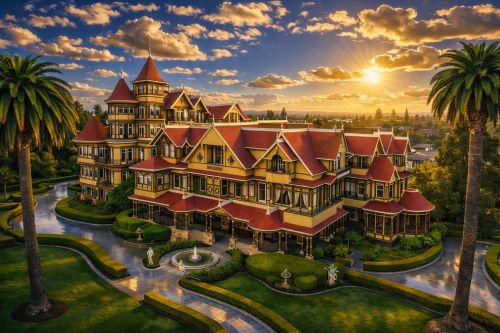

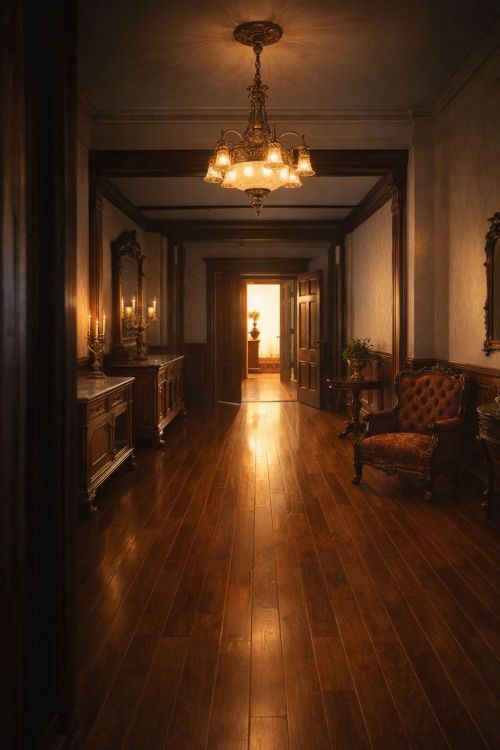


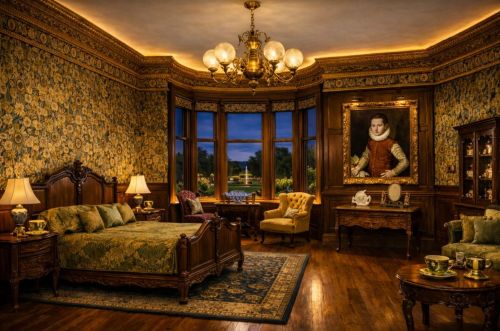

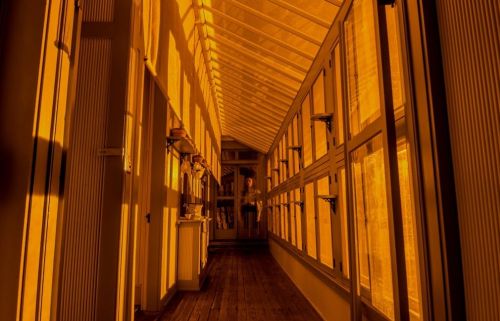



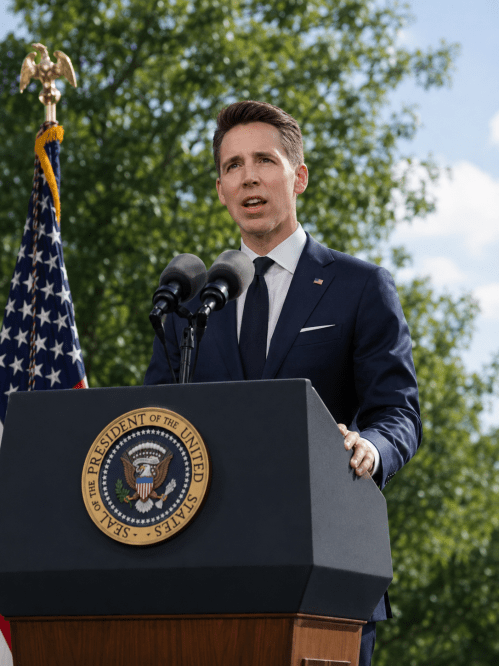





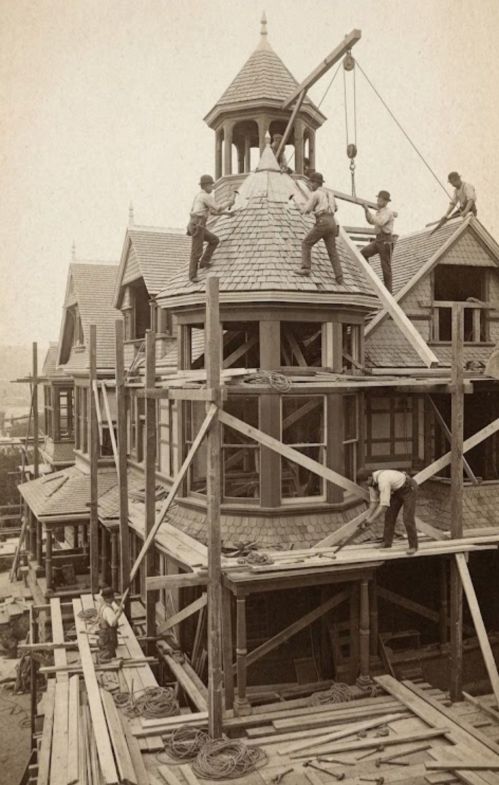







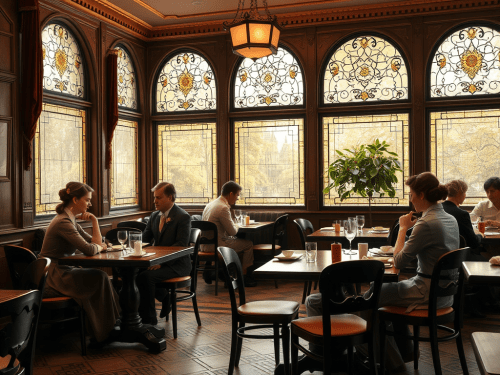
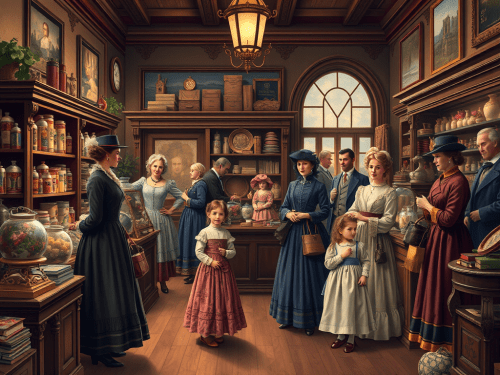
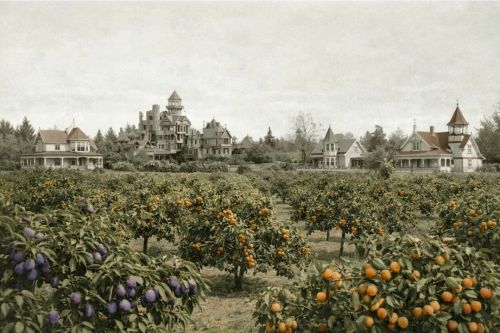










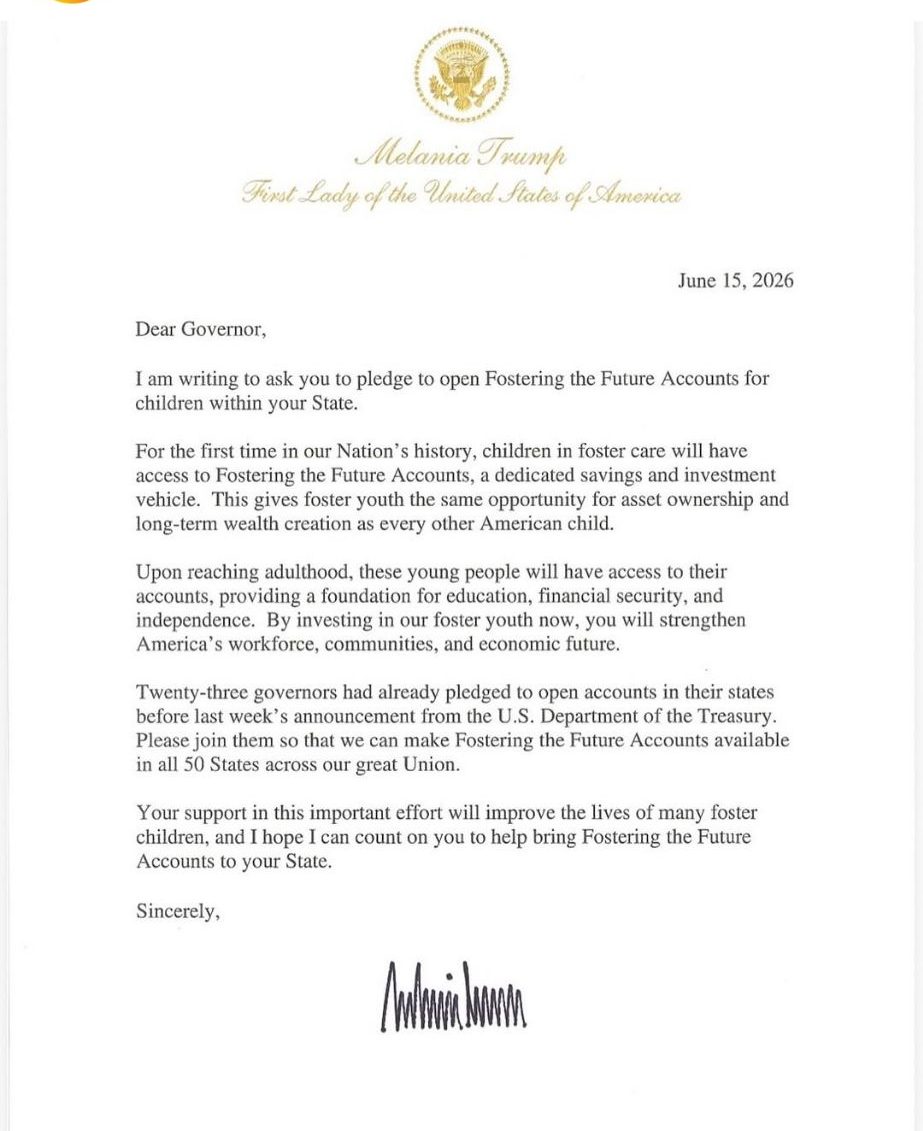


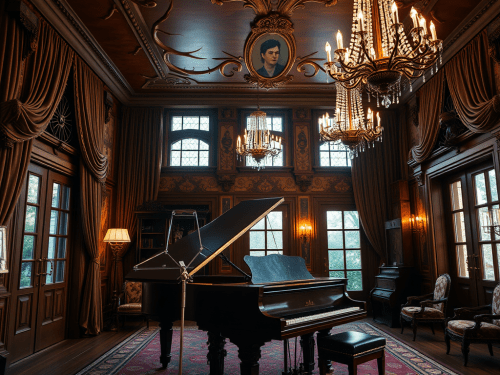















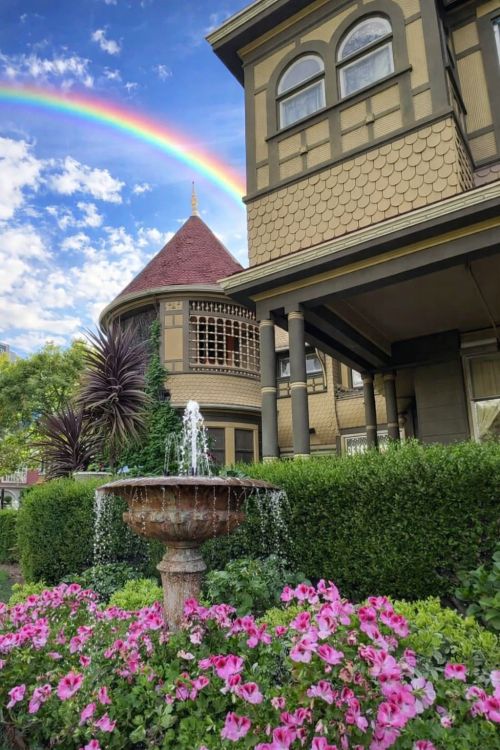
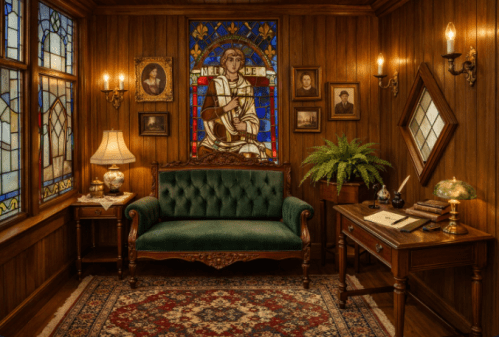































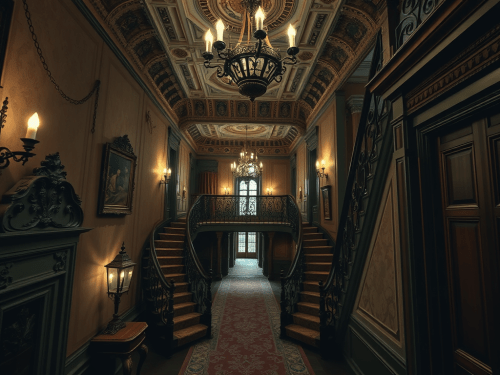





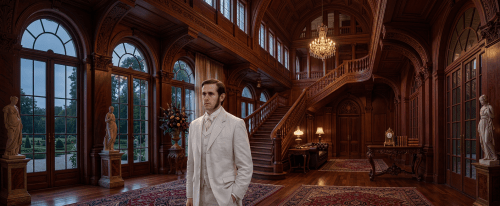


















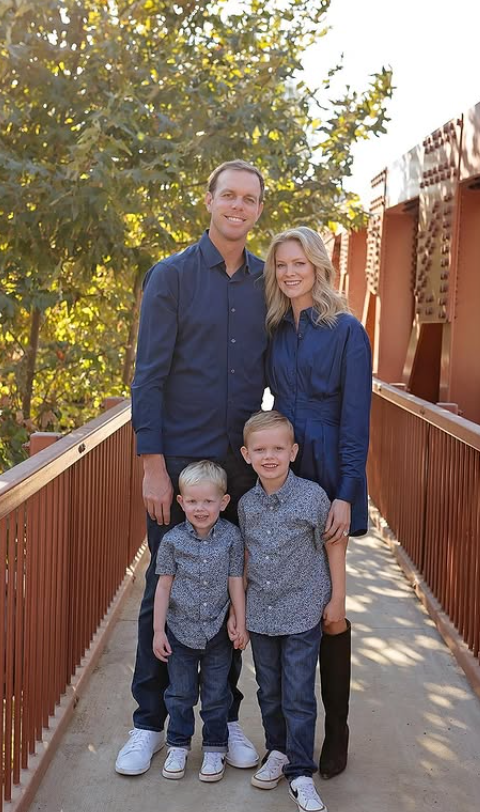





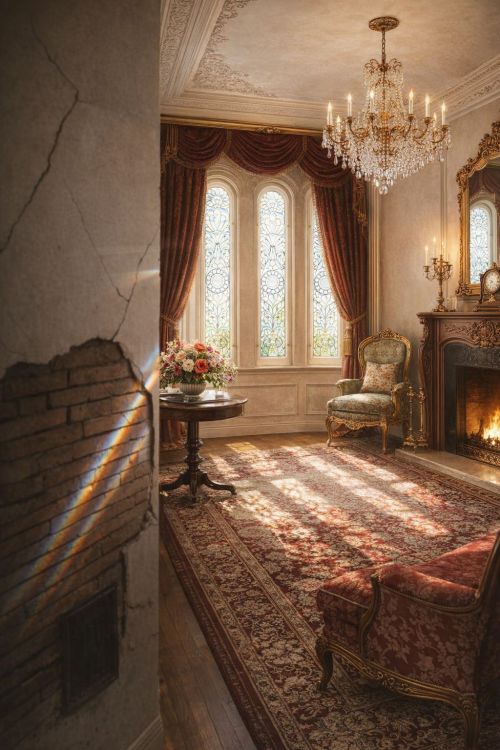

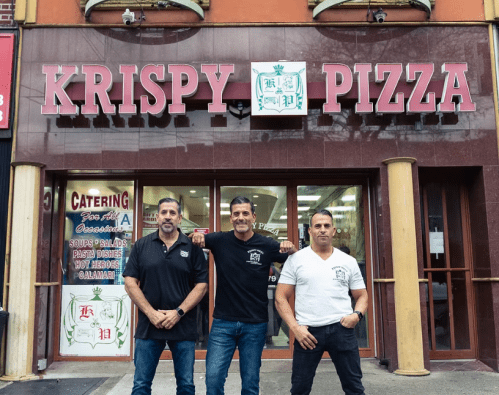

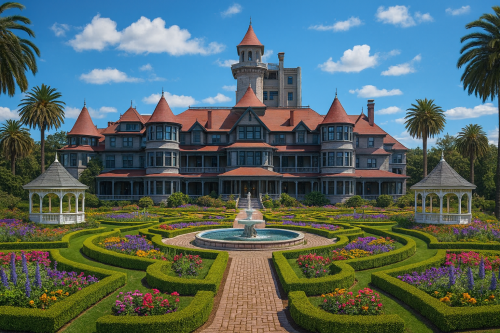

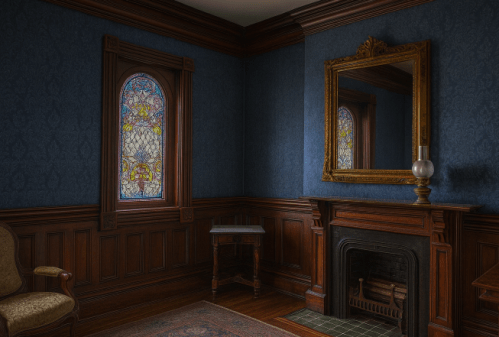




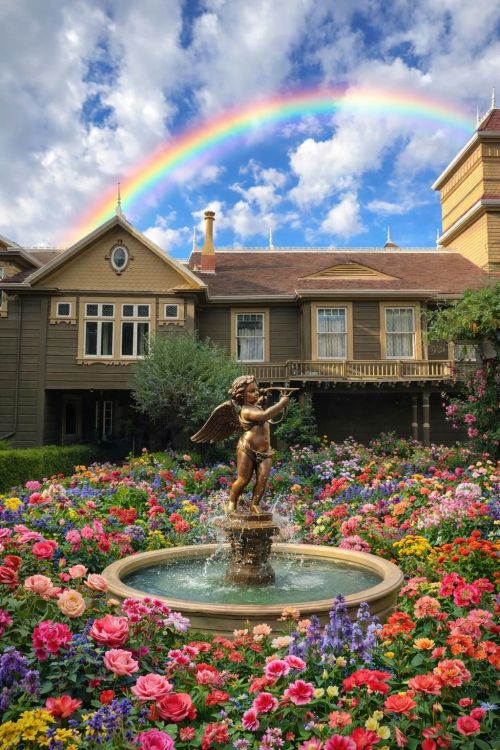

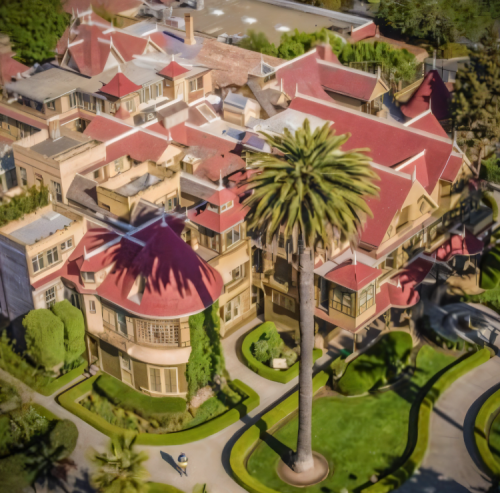



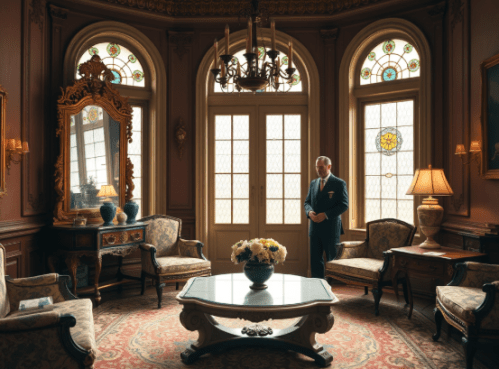






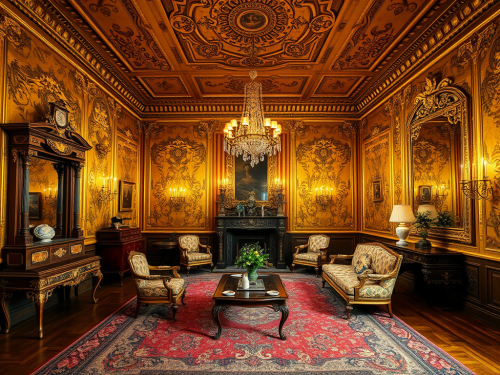










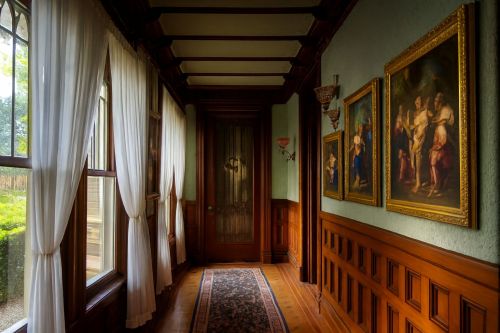















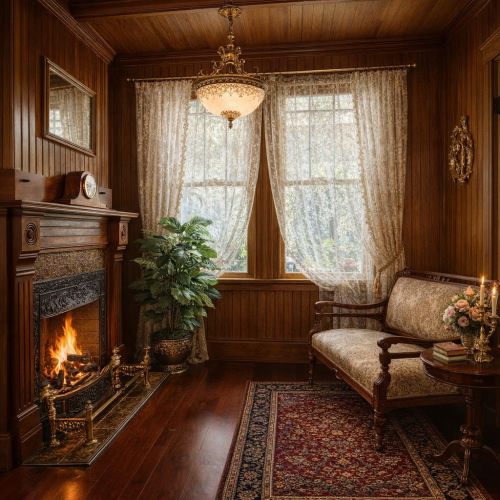
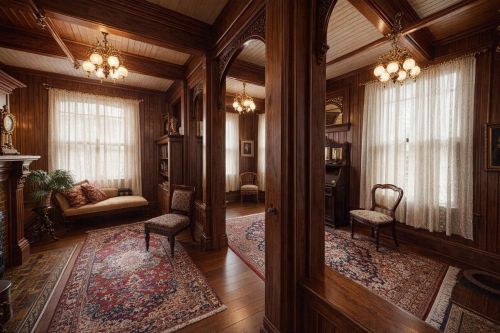
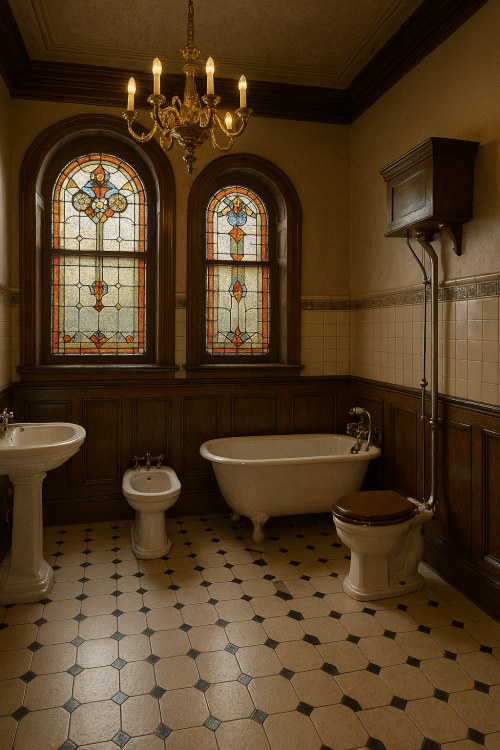

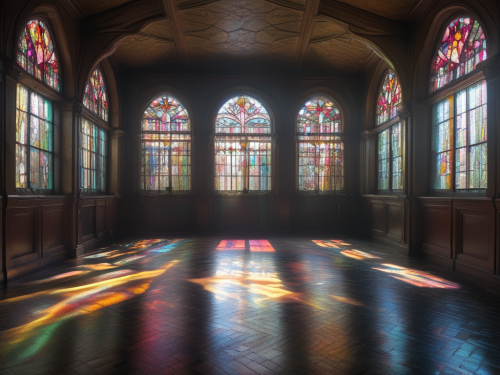







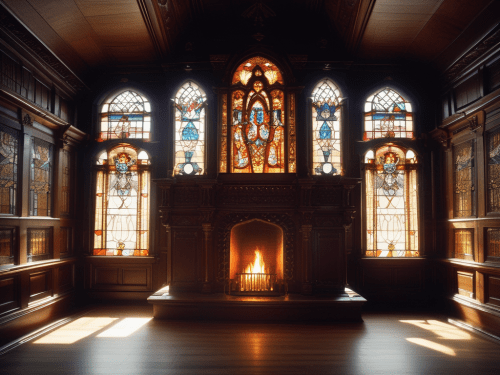




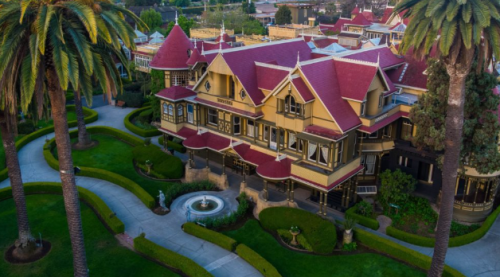
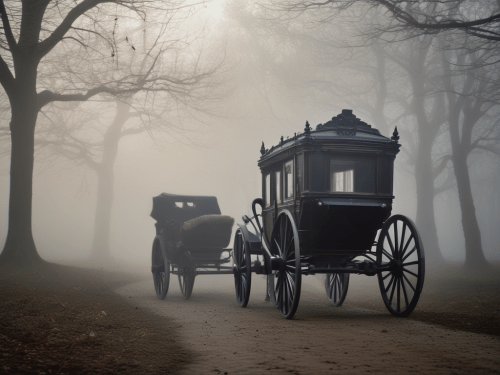
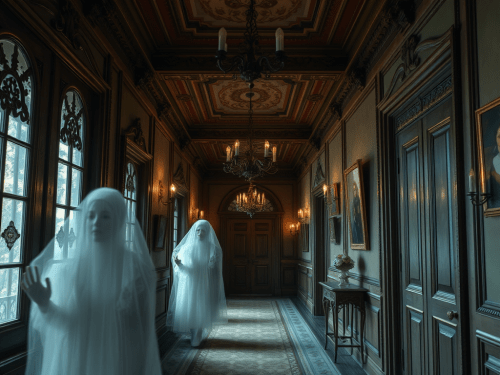










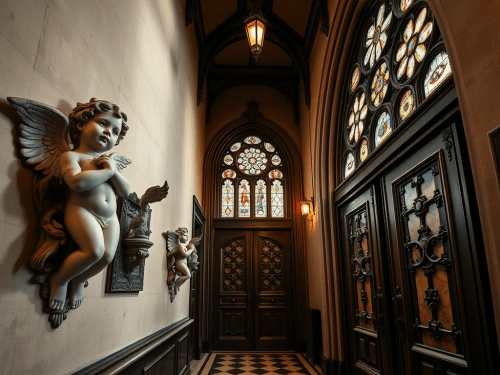

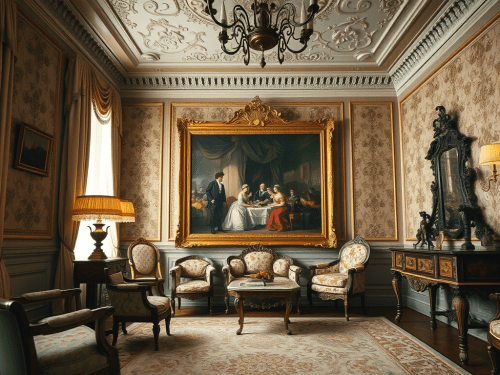

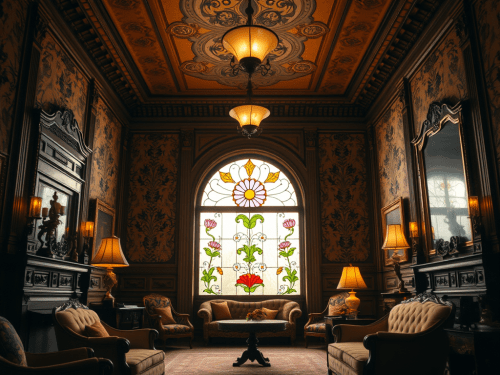













































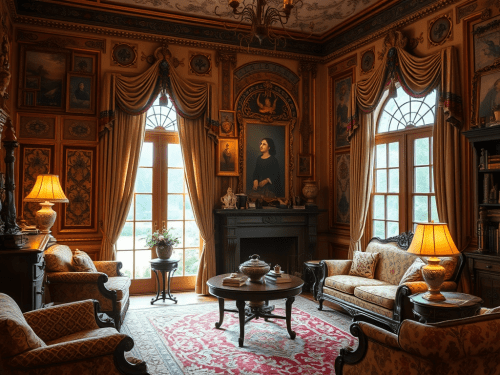








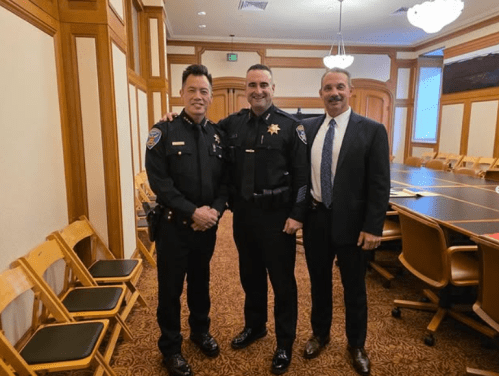



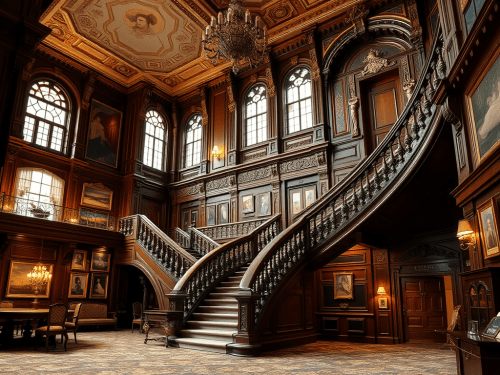





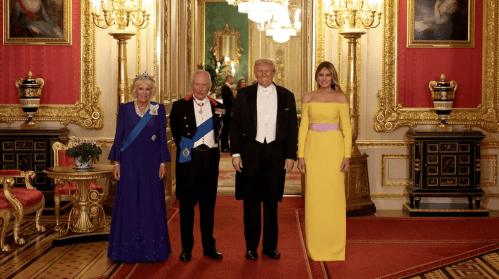
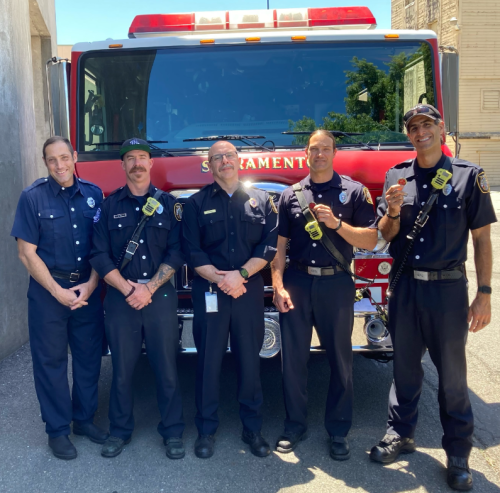

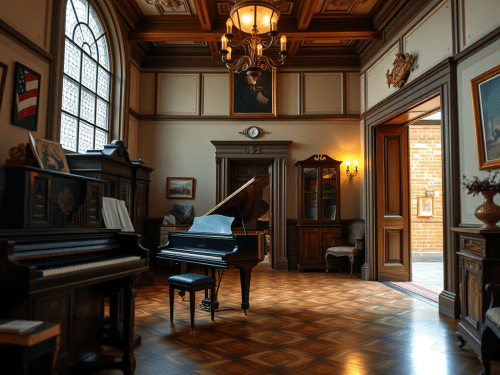
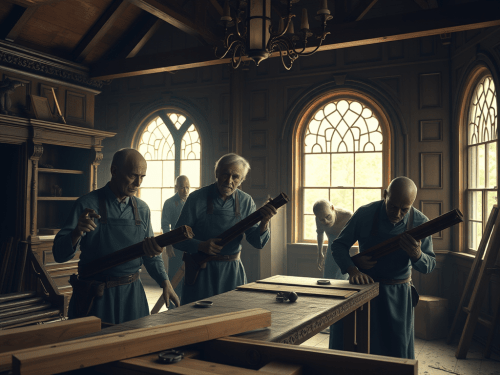



















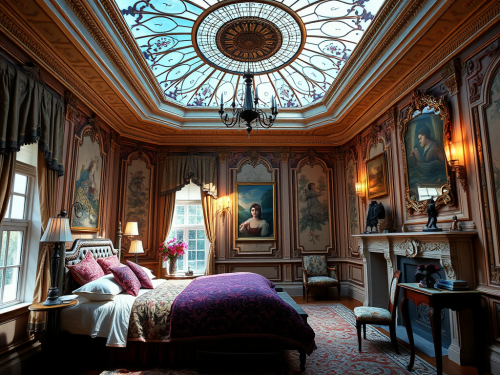



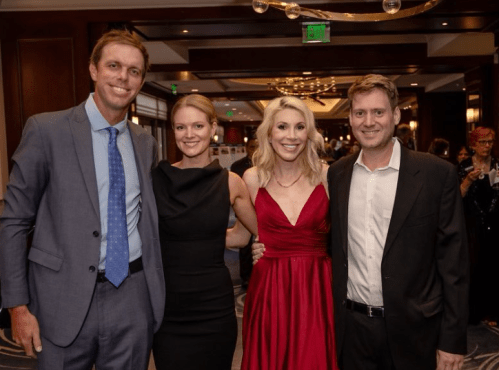














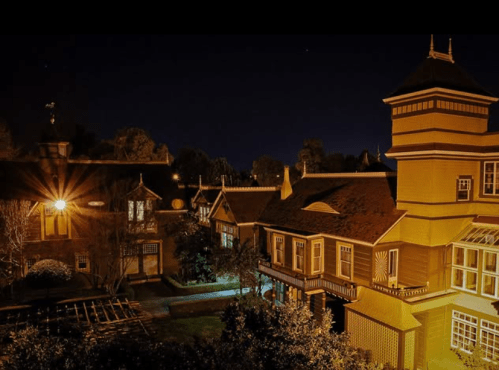




















 Randolph Harris II International Institute