People often assume that sharing a physical environment means sharing a psychological or social reality. Yet this is one of the great illusions of modern life. While we may move through the same streets, breathe the same air, and participate in the same public rituals, we are not necessarily living in the same world. There may be a common thread running through the mainstream environment, but beneath that surface, people operate on entirely different wavelengths—shaped by distinct institutions, experiences, and meaning‑systems. Institutional segmentation emerges when the shared world that once bound a society begins to split into discrete, insulated domains. What were formerly interconnected institutions—each contributing to a common vocabulary of meaning—gradually harden into self‑contained spheres with their own logics, rituals, and esoteric knowledge. As these segments drift apart, the coherence of collective life weakens: people no longer inhabit the same symbolic universe, and the very possibility of a unified public reality begins to erode. A consequence of institutional segmentation is the possibility of socially segregated subuniverses of meaning. These result from accentuations of role specialization to the point where role-specific knowledge becomes altogether esoteric as against the common stock of knowledge. Such subuniverses of meaning may or may not be submerged from the common view. #RandolphHarris 1 of 21

In certain cases, not only are the cognitive contents of the subuniverse esoteric, but even the existence of the subuniverse and of the collectivity that sustains it may be a secret. Subuniverses of meaning may be socially structured by various criteria—gender, age, occupation, religious inclination, aesthetic taste, and so on. The chance of subuniverses appearing, of course, increases steadily with progressive division of labor and economic surplus. A society with a subsistence economy can have cognitive segregation between men and women, or between old and young warriors, as in the “secret societies” common in Africa and among Indigenous Americans. It may still be able to afford the esoteric existence of a few priests and magicians. Full-blown subunivserses of meaning such as characterized, say, Hindu castes, the Chinese literary bureaucracy, or the priestly coteries of ancient Egypt, required much more developed solutions of the economic problem. Like all social edifices of meaning, the subuniverses must be “carried” by a particular collectivity, that is, by the group that ongoingly produces the meanings in question and within which these between such groups. On the simplest level, there may be conflict over the allocation of surplus resources to the specialists in question, for example, over exemption from productive labor. #RandolphHarris 2 of 21

Who is to be officially exempt from the production of labor, all medicine men, or only those who perform services in the household of the chief? Or, who is to receive a fixed stipend from the authorities, those who cure the sick with herbs or those who do it by going into a trance? Such social conflicts are readily translated into conflicts between rival schools of thought, each seeking to establish itself and to discredit, if not liquidate, the competitive body of labor. In contemporary society, we continue to have such conflicts (socioeconomic as well as cognitive) between orthodox medicine and such rivals as chiropractic, homeopathy, or Christian Science. In advanced industrial societies, with their immense economic surplus, allowing large numbers of individuals to devote themselves full-time to even the obscurest pursuits, pluralistic competition between subuniverses of meaning of every conceivable sort becomes the normal state of affairs. With the establishment of subuniverses of meaning, a variety of perspectives on the total society emerges, each viewing the latter from the angle of one subuniverse. The chiropractor has a different angle on society than the medical school professor, the poet than the businessman, the Jew than the gentile, and so on. It goes without saying that this multiplication of perspectives greatly complicates the task of establishing a stable symbolic canopy for society as a whole. #RandolphHarris 3 of 21

Each perspective, with whatever appendages of theories or even Weltanschauungen, will be related to the concrete social interests of the group it holds. This does not mean, however, that the various perspectives, let alone the theories of Weltanschauugen, are nothing but mechanical reflections of the social interests. Especially on the theoretical level, knowledge can attain a great deal of detachment from the biographical and social interests of the knower. Thus, there may be tangible social reasons why Jews have become preoccupied with certain scientific enterprises, but it is impossible to predict scientific positions in terms of their being held by Jews or non-Jews. In other words, the scientific universe of meaning is capable of attaining a good deal of autonomy against its own social base. Theoretically, though in practice, there will be great variations; this holds for anyone with any knowledge, even with cognitive perspectives on society. What is more, a body of knowledge, once it is raised to the level of a relatively autonomous subuniverse of meaning, has the capacity to act back upon the collectivity that has produced it. For instance, Jews may become social scientists because they have special problems in society as Jews. However, once they have been initiated into the social-scientific universe of discourse, they may not look upon society from an angle that is no longer distinctively Jewish, but even their social activities as Jews may change as a result of their newly acquired social-scientific perspectives. #RandolphHarris 4 of 21

The extent of such detachment of knowledge from its existential origins depends upon a considerable number of historical variables (such as the urgency of the social interests involved, the degree of theoretical refinement of the knowledge in question, the social relevance or irrelevance of the latter, and others). The important principle for our general consideration is that the relation between knowledge and its social base is a dialectical one, that is, knowledge is a social product and knowledge is a factor in social change. This principle of the dialectic between social production and the objectivated world is that its product has already been explicated; it is especially important to keep it in mind in any analysis of concrete subuniverses of meaning. The increasing number and complexity of subuniverses make them increasingly inaccessible to outsiders. They become esoteric enclaves, “hermetically sealed” (in the sense classically associated with the Hermetic corpus of secret lore) to all but those who have been properly initiated into their mysteries. The increasing autonomy of subuniverses makes for social problems of legitimation vis-à-vis both outsiders and insiders. The outsiders have to be kept out, sometimes even kept ignorant of the existence of the subuniverse. If, however, they are not so ignorant, and if the subuniverse requires various special privileges and recognitions from the larger society, there is the problem of keeping out the outsiders and, at the same time, having them acknowledge the legitimacy of this procedure. This is done through various techniques of intimidation, rational and irrational propaganda (appealing to the outsiders’ interest and to their emotions), mystification and, generally, the manipulation of prestige symbols. #RandolphHarris 5 of 21

The insiders, on the other hand, have to be kept in. This requires the development of both practical and theoretical procedures by which the temptation to escape from the subuniverse can be checked. It is not enough to set up an esoteric subuniverse of medicine. The lay public must be convinced that this is right and beneficial, and the medical fraternity must be held to standards of the subuniverse. Thus, the general population is intimidated by images of the physical doom that follows “going against the doctor’s advice”; it is persuaded not to do so by the pragmatic benefit of compliance, and by its own horror of illness and death. To underline its authority, the medical profession shrouds itself in the age-old symbols of power and mystery, from outlandish costumes to incomprehensible language, all of which, of course, are legitimated to the public and to itself in pragmatic terms. Meanwhile, the fully accredited inhabitants of the medical world are kept from “quackery” (that is, from stepping outside the medical subuniverse in thought or action) not only by the powerful external controls available to the profession, but by a whole body of professional knowledge that offers them “scientific proof” of the folly and even wickedness of such deviance. In other words, an entire legitimating machinery is at work so that laymen will remain laymen, and doctors doctors, and (if at all possible) that both will do so happily. #RandolphHarris 6 of 21

Special problems arise as a result of differential rates of change of institutions and subuniverses. This makes more difficult both the overall legitimation of the institutional order and the specific legitimations of particular institutions or subuniverses. A feudal society with a modern army, a landed aristocracy having to exist under conditions of industrial capitalism, a traditional religion forced to cope with the popularization of a scientific worldview, and the coexistence in one society of the theory of relativity and astrology—our contemporary experience is so full of examples of this sort that it is unnecessary to belabor the point. Suffice it to say that, under such conditions, the work of the several legitmators becomes especially strenuous. The right use of science is the physical release of man. The worship of science leads to its wrong use and from there to the downfall of man. The scientific mind, cautious to accept nothing more than the evidence justifies, scrupulous to achieve accuracy in observation, possesses the defects of its virtues. For it shuts out the complete view of a thing, since that requires the use of other faculties as well as the intellect it uses, faculties such as imagination and emotion. Metaphysics must teach us to think and science must provide us with the necessary facts upon which to exercise our thinking. However, if it omits mystical facts, it is incomplete science. The intellectuals, including the scientists, have substituted faith in intellectual processes for faith in religious ones. In the last case, it is open belief; in the first one, it is masked, hidden, covered up, but still faith. #RandolphHarris 7 of 21

All those who use the data of science to support their belief in intellectual materialism and to justify their scorn for religion and mysticism. Deny the very source from which they ultimately draw their intellectual capacity to make their criticism. And to the extent that it lets them use it so, science itself becomes superstition. The philosopher fully appreciates the high worth of the point of view of science and applauds its method, but he refuses to limit himself to them. For he knows that one cannot take all truth as one’s territory unless one applies all sides of his being to the enterprise. In striving to master their earthly surroundings, they do nothing wrong. If they call on the scientific intellect to help them do so, this statement is not changed. Materialism begins and grows when the moral, the metaphysical-intuitive, and the religious points of view are submerged and lost in the process. After the intellect has finished analyzing this experience, judging it by science’s light and with science’s critical rigour, the subtle essence is lost. With all our scientific knowledge and technical skills, we know little of our subconscious self, less of our spiritual self, and we are unable to control thoughts and even less able to concentrate attention. There is no teaching—however scientific—which will not be found, on simple or severe analysis, to make some call on faith. The thousands of scientists who throng the halls of culture today can tell us so much about the thousands of details existent in Nature or fabricated by man, yet still cannot tell us why the entire cosmos is present here in space-time at all. They have a rich wealth of knowledge and can describe well what is happening but what it is all for completely eludes them. Although the educational trend has stimulated interests in science above any other subject, a time will come when the educated person will find that he cannot live by science alone. The arts will demand and receive their due. The spirit will put in its gentle call. In other words, culture will have to complete itself. #RandolphHarris 8 of 21

One important aspect of culture is power. Mr. Lenin, at one point, affirmed that power is necessary to crush the resistance of the exploiters, “and also to direct the great mass of the population, peasantry, low middle classes, and semi-proletariat, in the management of the socialist economy.” The cultural shift here is undeniable; the provisional State of Mr. Marx and Mr. Engels is charged with a new mission, which risks prolonging its life indefinitely. Already, we can perceive the contradiction of the Stalinist regime in conflict with its official philosophy. Either this regime has realized the classless socialist society, and the maintenance of a formidable apparatus of repression is not justified in Marxist terms, or it has not realized the classless society and has, therefore, proved that Marxist doctrine is erroneous and, in particular, that the socialization of the means of production does not mean the disappearance of classes. Confronted with its official doctrine, the regime is forced to choose: the doctrine is false, or the regime has betrayed it. In fact, together with Mr. Nechaiev and Mr. Tkachev, it is Mr. Lassalle, the inventor of the State socialism, whom Mr. Lenin had caused to triumph in Russia, to the detriment of Mr. Marx. From this moment on, the history of the interior struggles of the party, from Mr. Lenin to Mr. Stalin, is summed up in the struggle between the workers’ democracy and military and bureaucratic dictatorship; in other words, between justice and expediency. #RandolphHarris 9 of 21

There was a moment’s doubt about whether Mr. Lenin was not going to find a kind of means of conciliation when he was praising the measures adopted by the Commune: elected, revocable functionaries, remunerated like workers, and replacement of industrial bureaucracy by direct workers’ management. We even caught a glimpse of a federalist Mr. Lenin, who praises the institution and representation of the communes. However, it becomes rapidly clear that this federalism is only extolled to the extent that it signifies the abolition of parliamentarianism. Mr. Lenin, in defiance of every historical truth, called it centralism and immediately put the accent on the idea of the dictatorship of the proletariat, while reproaching the anarchists for their intransigence concerning the State. At that point, a new affirmation, based on Mr. Engels, was introduced which justified the continuation of the dictatorship of the proletariat after socialization, after the disappearance of the bourgeois class, and even after control by the masses has finally been achieved. The preservation of authority would now have as its limits those that were prescribed for it by the very conditions of production. For example, the final withering away of the State would coincide with the moment when accommodation could be provided for, free of charge. It was the higher phase of Communism: “To each according to his needs.” Until then, the State would continue. #RandolphHarris 10 of 21
How rapid would the development toward this higher phase of Communism be when each shall receive according to his needs? “That, we do not know and cannot know…We have no data that allows us to solve these questions.” “For the sake of greater clarity,” Mr. Lenin affirmed, with his customary arbitrariness, “it has never been vouchsafed to any socialist to guarantee the advent of the higher phase of Communism.” It could be said that at that point, freedom definitely died. From the rule of the masses and the concept of the proletarian revolution, we first passed on the idea of a revolution made and directed by professional agents. The relentless criticism of the State was then reconciled with the necessary, but provisional, dictatorship of the proletariat, embodied in its leaders. Finally, it was announced that the end of that provisional condition could not be foreseen and that, what was more, no one had ever presumed to promise that there would be an end. After that, it was logical that the autonomy of the soviets would be contested, Mr. Makhno betrayed, and the sailors of Kronstadt crushed the party. Undoubtedly, many of the affirmations of Mr. Lenin, who was a passionate lover of justice, could still be opposed to the Stalinist regime; mainly, the notion of the withering away of the State. Even if it was admitted that the proletarian State could not disappear before many years had passed, it was still necessary, according to Marxist doctrine, that it should tend to disappear and become less and less restrictive in order that it should be able to call itself proletarian. #RandolphHarris 11 of 21
Mr. Lenin certainly believed the trend to be inevitable and that, in this particular sense, he had been ignored. For more than thirty years, the proletarian State had shown no signs of progressive anemia. On the contrary, it seemed to be enjoying increasing prosperity. Meanwhile, in a lecture at the Serdlov University two years later, under the pressure of outside events and interior realities, Mr. Lenin spoke with a precision which left little doubt about the indefinite continuation of the proletarian super-State. “With this machine, or rather this weapon [the State], we shall crush every form of exploitation, and when there are no longer any possibilities of exploitation, and when there are no longer any possibilities of exploitation left on earth, no more people owning land or factories, no more people gorging themselves under the eyes of others who are starving, when such things become impossible, then and only then shall we cast this machine aside. Then, there will be neither State nor exploitation.” Therefore, as long as there exists on earth, and no longer in a specific society, one single oppressed person and one proprietor, so long the State will continue to exist. It also will be obliged to increase in strength during this period so as to vanquish one by one the injustices, the governments responsible for injustice, the obstinately bourgeois nations, and the people who are blind to their own interests. And when, on earth, that has finally been subdued and purged of enemies, the final iniquity shall have been droned in the blood of the just and unjust, then the State, which has reached the limit of all power, a monstrous idol covering the entire earth, will be discreetly absorbed into the silent city of Justice. #RandolphHarris 12 of 21
Under the easily predictable pressure of adverse imperialism, the imperialism of justice was born, in reality, with Mr. Lenin. However, imperialism, even the imperialism of justice, had no other end but defeat or world empire. Until then, it has no other means but injustice. From now on, the doctrine is definitively identified with the prophecy. For the sake of justice in the far-away future, it authorized injustice throughout the entire course of history and became the type of mystification which Mr. Lenin detested more than anything else in the world. It contrived the acceptance of injustice, crime, and falsehood by the promise of a miracle. Still, greater production, still more power, uninterrupted labor, incessant suffering, permanent war, and then, a moment would come when universal bondage in the totalitarian empire would be miraculously changed into its opposite: free leisure in a universal republic. Pseudo-revolutionary mystification had now acquired a formula: all freedom must be crushed in order to conquer the empire, and one day the empire will be the equivalent of freedom. And so, the way to unity passes through totality. This is the same argument that God makes. We are here on earth to suffer, learn through suffering, grow, and draw nearer to God. We also have free will. However, God is asking humans to suppress that free will and obey the gospel of Jesus Christ, for in the end, there will be true freedom in heaven. #RandolphHarris 13 of 21
Rarely, perhaps, has any generation shown so little interest as ours does in any kind of theoretical or systematic ethics. The academic question of a system of ethics seems to be, of all questions, the most superfluous. The reason for this is not to be sought in any supposed ethical indifference on the part of our period. On the contrary, it arises from the fact that our period, more than any earlier period in the history of the West, is oppressed by a superabounding reality of concrete ethical problems. It was otherwise when the established orders of life were still so stable as to leave room for no more than minor sins of human weakness, sins which generally remained hidden, and when the criminal was removed as abnormal from the horrified or pitying gaze of society. In those conditions, ethics could be an interesting theoretical problem. Today, there are once more villains and saints, and they are not hidden from public view. Instead of the uniform greyness of the rainy day, we now have the black storm-cloud and the brilliant lightning-flash. The outlines stand out with exaggerated sharpness. Reality lays itself bare. Shakespeare’s characters walk in our midst. However, the villain and the saint have little or nothing to do with systematic ethical studies. They emerge from primeval depths, and by their appearance, they tear open the infernal or the divine abyss from which they come and enable us to see for a moment into mysteries of which we had never dreamed. #RandolphHarris 14 of 21

What is worse than doing evil is being evil. It is worse for a liar to tell the truth than of a lover of truth to lie. It is worse when a misanthropist practices brotherly love than when a philanthropist gives way to hatred. Better than truth in the mouth of the liar is the lie. Better than the act of brotherly love on the part of the misanthrope is hatred. One sin, then, is not like another. They do not all have the same weight. There are heavier sins and lighter sins. A falling away is of infinitely greater weight than a falling down. The most shining virtues of him who has fallen away are as black as night in comparison with the darkest lapses of the steadfast. If evil appears in the form of light, beneficence, loyalty and renewal, if it conforms with historical necessity and social justice, then this, if it is understood straightforwardly, is a clear additional proof of its abysmal wickedness. However, the moral theorist is blinded by it. With the concepts he already has in mind, he is unable to grasp what is real and still ess able to come seriously to grips with that of which the essence and power are entirely unknown to him. One who is committed to an ethical programme can only waste his forces on the empty air, and even his martyrdom will not be a source of strength for his cause or a serious threat to the wicked. However, remarkably enough, it is not only the adept of an ethical theory or programme who fails to strike his opponent. #RandolphHarris 15 of 21
The wicked adversary himself is scarcely capable of recognizing his rival for what he is. Each falls into the other’s trap. It is not astuteness, by knowing the tricks, but only simple steadfastness in the truth of God, by training the eye upon this truth until it is simple and wise, that there comes the experience and the knowledge of the ethical reality. One is distressed by the failure of reasonable people to perceive either the depths of evil or the depths of the holy. With the best of intentions, they believe that a little reason will suffice them to clamp together the parting timbers of the building. They are so blind that in their desire to see justice done to both sides, they are crushed between the two clashing forces and end by achieving nothing. Bitterly disappointed at the unreasonableness of the world, they see that their efforts must remain fruitless, and they withdraw resignedly from the scene or yield unresistingly to the stronger party. Still more distressing is the utter failure of all ethical fanaticism. The fanatic believes that he can oppose the power of evil with the purity of his will and of his principle. However, since it is part of the nature of fanaticism that it loses sight of the totality of evil and rushes like a bull at the red cloth instead of at the man who holds it, the fanatic inevitably ends by tiring and admitting defeat. He aims wide of the mark. Even if his fanaticism serves the high cause of truth or justice, he will sooner or later become entangled with non-essentials and petty details and fall into the snare set by his more skillful opponent. #RandolphHarris 16 of 21

The man with a conscience fights a lonely battle against the overwhelming forces of an inescapable situation which demand decisions. However, he is torn apart by the extent of the conflicts in which he has to make his choice with no other aid or counsel than that which his own innermost conscience can furnish. Evil comes upon him in countless respectable and seductive disguises so that his conscience becomes timid and unsure of itself, till in the end, he is satisfied if instead of a clear conscience, he has a slaved one, and lies to his own conscience in order to avoid despair. A man whose only support is his conscience can never understand that a bad conscience may be healthier and stronger than a conscience which is deceived. It looks as though the way out from the confusing multiplicity of possible decisions is the path of duty. What is commanded rests upon the man who gives it and not upon him who executes it. There are moments when duty becomes a kind of confinement—when a person follows rules so rigidly that he can no longer act with the boldness required to confront real danger. As one thinker warned, “the man of duty will end by having to fulfill his obligation even to the devil,” because duty alone cannot strike at the heart of evil. And yet, life has a way of forcing clarity upon us, stripping away abstractions and revealing the cost of hesitation. #RandolphHarris 17 of 21

The first sign of trouble came quietly—a faint wheeze, a tightening in the chest, the kind of warning someone with a severe latex allergy learns to fear. In that instant, the philosophical became physical: a crisis that demanded not obedience, but decisive, self‑directed action from those who would answer the call. By the time neighbors realized something was wrong, the man in Apartment 4B was already collapsing to his knees, his airway swelling shut after accidental exposure to latex in the building’s laundry room. His vision blurred, his breaths shallow and ragged, he managed only a few desperate knocks on the hallway wall before he could no longer speak. Panic rippled through the floor as residents called 911, their voices trembling as they described a man who could no longer breathe. Within minutes, the award‑winning Sacramento Fire Department roared onto the scene, lights slicing through the afternoon haze. Captain Lukas Reinhardt, known for his precision and calm under pressure, led his crew up the stairwell with the urgency of someone who understood exactly how fast anaphylaxis can steal a life. They found the victim slumped against the wall, skin flushed, throat swelling, gasping in short, broken bursts. Reinhardt’s voice—steady, authoritative, unmistakably German—cut through the chaos as he directed his firefighters to clear the hallway and prepare for advanced medical intervention. Hot on their heels came the world‑renowned Sacramento Fire Department paramedics, whose reputation for lifesaving excellence had been earned through years of rapid, high‑stakes responses just like this one. They immediately recognized the signs of severe latex‑induced anaphylaxis: hives spreading across the skin, airway constriction, and the terrifying struggle for oxygen. With swift, practiced movements, they administered epinephrine, oxygen, and airway support, working in perfect synchrony as the man’s life hung in the balance. Every second mattered, and they treated each one with the gravity it deserved. As the medication began to take effect, the man’s breathing shifted from frantic gasps to slow, shaky inhalations. The swelling in his throat eased just enough for him to draw fuller breaths, though his body trembled from the shock. Captain Reinhardt knelt beside him, offering grounding reassurance while the paramedics monitored his vitals and prepared him for transport. The hallway, moments earlier filled with fear, now held a quiet, collective relief as neighbors watched the team’s expertise turn a fatal crisis into a controlled rescue. By the time the paramedics wheeled him toward the ambulance, the man was conscious again—weak, frightened, but alive. The Sacramento Fire Department had once more demonstrated why they are celebrated across the region: unmatched skill, unwavering composure, and a commitment to protecting every resident, especially those whose medical vulnerabilities make emergencies even more dangerous. As the ambulance doors closed, Captain Reinhardt gave a final nod to his crew, knowing they had not just saved a life—they had restored hope to an entire building. #RandolphHarris 18 of 21

When it comes to firefighting, every incident carries the potential for injury—no matter how small the fire appears or how routine the call may seem. If you see a fire engine stopped in the street without its lights on, use extreme caution. Crews may be working nearby, and passing the apparatus can put them in danger. It is often safer to turn around and take another route; if you strike a firefighter or civilian and cause a fatality, you could face charges such as manslaughter. Firefighters frequently move around their vehicle on foot, loading equipment or preparing to leave the scene. Attempting to pass the apparatus can result in a collision with someone you cannot see. Pay close attention to their hand signals as well—emergency vehicles sometimes move slowly or reposition, and impatient drivers trying to slip around them create hazardous situations. If you are already in an intersection when you notice an emergency vehicle approaching, continue through it, then pull to the right and stop as soon as it is safe. Always obey directions from law enforcement officers or firefighters, even if those instructions conflict with posted signs or traffic laws. When sirens or flashing lights are activated, it is illegal to follow within 300 feet of a fire engine, ambulance, or police vehicle. Driving to the scene of a fire, collision, or disaster can also result in arrest, as doing so interferes with firefighters, paramedics, and other emergency personnel. Professional courage is not limited to physical toughness. It includes listening to others, advocating for them in difficult situations, understanding personal limits, and having the integrity to tell a superior when they are wrong. The deeper truth is that public safety depends not only on the bravery of first responders but on the discipline and judgment of the community around them. Every driver’s decision—whether cautious or careless—can either protect or endanger the people risking their lives to protect everyone else. #RandolphHarris 19 of 21

Efforts to preserve farmland and maintain buildable land for future generations often lead to discussions about population growth and long‑term planning. Some people argue that immigration levels should be managed carefully to ensure that infrastructure, housing, and land use remain sustainable. Others suggest that, when immigration does occur, programs that encourage broad representation can help communities reflect the diversity of the wider world. When Americans purchase goods made in the United States, it strengthens local businesses and signals to investors that these products are in demand. Strong sales give investors confidence to reinvest in domestic companies, helping keep jobs, production, and wages within the country. As businesses grow, they contribute more to the tax base, which can reduce the burden on taxpayers over time. Supporting American businesses also keeps more money circulating within the national economy. The government increases the national debt when it spends more than it collects in tax revenue or borrows from private or foreign lenders. When people shop locally, more tax revenue stays in the community and supports public services. This helps keep jobs in the United States and increases the tax contributions that fund government operations. Purchasing foreign-made goods, by contrast, often sends money overseas and may benefit companies that operate under lighter tax or environmental regulations. Buying American-made products can also reduce environmental impact because they travel shorter distances and are produced under stricter standards for air, land, and water protection. In this way, consumer choices influence not only the economy but also environmental stewardship and long-term national sustainability. #RandolphHarris 20 of 21

Under President Trump’s administration, he has made America a priority. President Trump has hermetically sealed the southern border, illegal crossings have been terminated, and are 90 percent lower than under the previous administration. Since President Trump’s crack down on crime, violent crimes in Washington D.C. have dropped by approximately 80 percent. He has stopped thousands of pounds of drugs from entering America and killing citizens. And since President Trump took office, investments in America have increased by trillions of dollars in U.S.A. manufacturing, production, and innovation. As you can see, President Donald Trump and his pledge to “Make America Great Again” is exactly what America needs to save the country and the American people. And yes, diversity is important, so you can see why it is also important to preserve blonde hair and blue eyes, as the people with these characteristics are becoming a minority in America. As a reminder, parents, please teach your children to love America and be patriotic citizens, and to buy goods and services made in America. It is also important to respect law and order and treat your elders with respect. It is inborn in the human mind to wish to know. If this begins with the endless surface questions of a child’s curiosity, if it continues into deeper questions of a scientist’s probing investigation, it cannot and does not stop there. For the higher part of the mind will eventually come into unfoldment, that union of abstract reflective thought with mystical intuition, which is true intelligence, which needs and sees a view of the whole of things. And so, the knowing faculty enters the realm of philosophy. A lot of children are having problems in school and cannot even write a paragraph because they are not reading their books. When you actually read books, you get an example of how to write and will become a better student. Therefore, remember to take your education seriously so that you will be successful in life and make your family proud. Also, to make sure they have all the resources required, please donate to the Sacramento Fire Department to help improve our national security. “Oh, thus be it ever, when freemen shall stand between their loved home and the war’s desolation! Blest with victory and peace, may the heav’n-rescued land Praise the Power that hath made and preserved us a nation! Then conquer we must, when our cause is just, and this be our motto: ‘In God is our trust.’ And the star-spangled banner in triumph shall wave O’er the land of the free and the home of the brave.” #RandolphHarris 21 of 21


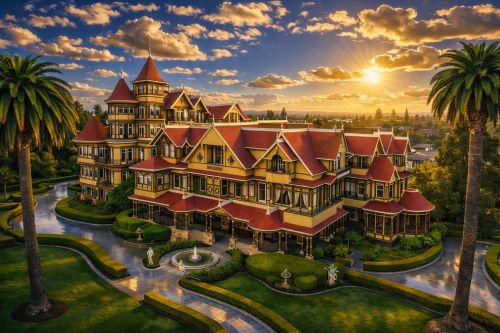
In the far corner of my gardens stood a bell tower—slender, watchful, and older than any blueprint in my possession. I did not raise it, nor did any man in my employ claim its making, yet I have long suspected who did. The spirits who shaped this house required a point of entry, and the tower served as their appointed signal. At the stroke of midnight, the bell was rung to summon them, though no mortal hand ever touched the rope. They came when called—quiet as breath, swift as thought—and when their labors were complete, the bell tolled once more to bid them depart. Even now, in the stillest hours, I sometimes hear that soft, deliberate chime drifting through the corridors, and I know it is not memory but a reminder: this house was fashioned by more than carpenters, and its true builders still answer when the bell commands.

The sun was sinking then, casting its last pale light across the gables, and a low mist clung to the finials as though reluctant to release them. I walked toward the clearing with a heaviness I could not name, my skirts brushing against the damp roses. There, half‑hidden among the blooms, stood a single white angel—its marble wings lifted as if in warning rather than benediction. I felt my strength leave me. I fell to my knees upon the cold earth, my hands trembling, my eyes burning with questions I dared not speak aloud. A sob escaped me, unbidden, for in that moment I understood that I had trespassed upon knowledge never meant for the living.
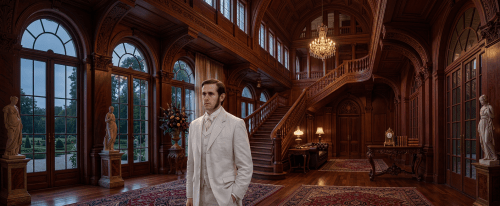
He was already there. I sensed him before I saw him—the Watcher, the one who lingers between this world and the next. He turned toward me with a slow, deliberate grace, and raised a pale, ethereal hand. Though he did not touch me, I felt the gesture as surely as if he had pressed his fingers to my cheek. My gaze was captured instantly, held fast in the fathomless depths of his eyes. In them I saw neither malice nor mercy, only the solemn certainty that I had crossed a threshold from which there could be no return. The stillness remained unbroken until at last I gathered myself and returned to my room. I have always been a light sleeper, roused by the faintest whisper or shift of air, yet that night I lay motionless beneath the covers, as though some unseen weight pressed gently upon my chest. The darkness felt unusually thick, the kind that settles not upon the eyes but upon the mind. Morning came without warning—dark as new‑dyed denim, cold enough to stiffen the very breath in my throat.

It was then I saw it. Something moved in the hallway beyond my chamber door, scrabbling with a frantic, unnatural haste. I glimpsed only a pale blur, a shape dragging its ruined lower form along the floorboards with a speed no earthly creature could possess. It vanished before I could cry out. When the servants arrived, summoned by my trembling bell, they found nothing but a thin trail of blood that led—inevitably, inexorably—to the door‑to‑nowhere. There it ended, as though whatever had passed through my halls had slipped cleanly out of this world and into the next. I told no one what I had seen. Some truths, once spoken aloud, take on a life of their own, and I feared this one might follow me more faithfully than any shadow.
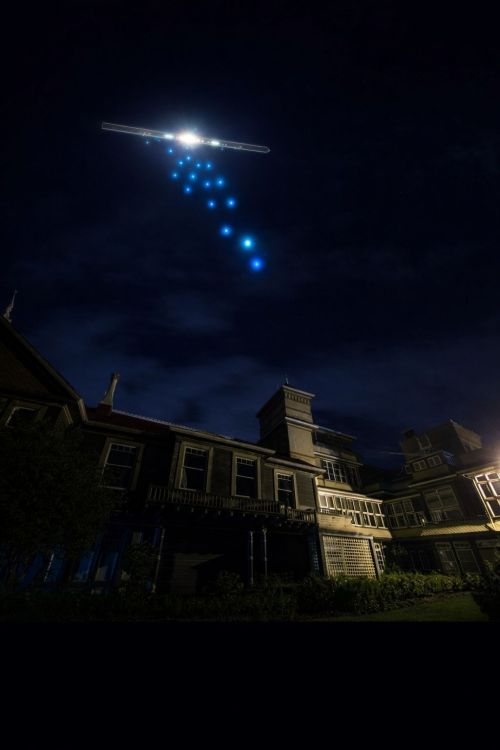
The servants gathered in uneasy clusters that morning, their voices lowered to the thinnest threads of sound. Though they believed themselves discreet, their whispers drifted through the corridors like drafts from an open window. Some insisted the apparition was the spirit of a laborer crushed beneath a fallen beam years before; others murmured of a vengeful soul trapped between floors, forever crawling in search of the doorway it once knew. A few—those who had served me longest—spoke only of “the builders,” and crossed themselves when they thought I was not looking. They said the bell had not rung at midnight, and that such silence was an omen no mortal ought to ignore.

Their fear seeped into me like cold through a thin shawl. For if the bell had indeed remained still, then the spirits had come unbidden. And if they had come unbidden, then they were no longer obeying the summons that once governed their passage. The thought chilled me more deeply than the morning air. The bell tower had always been the boundary, the covenant, the fragile thread that kept their world from spilling wholly into mine. Should they choose to disregard it, the house would cease to be a place of uneasy cooperation and become instead a realm governed by their will alone. I felt it then—a tremor in the floorboards, subtle as a heartbeat beneath the wood. The house was listening. The house was waiting. And I, its reluctant mistress, understood with dreadful clarity that the order I had relied upon was beginning to unravel. And that silent moment stretched on forever.

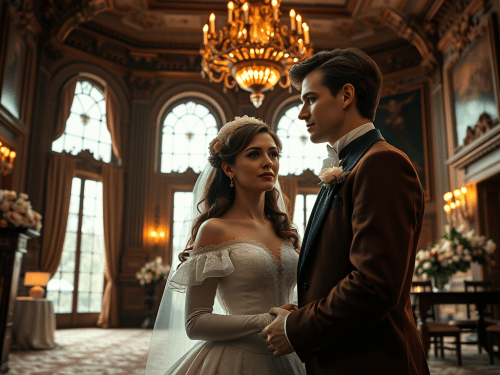
PRIVATE EVENTS & WEDDINGS
at WINCHESTER ESTATE

Many event locations claim to be unique, but nothing compares to the Winchester Mystery House. If you’re truly seeking a distinct, one‑of‑a‑kind setting for your milestone celebration or special occasion, reserve a venue that delivers on uniqueness many times over.

Whether you’re planning a wedding, birthday or anniversary celebration, corporate gathering, holiday party, or any other meaningful event, the Winchester Mystery House offers an unforgettable backdrop. Give your guests an experience they’ll be talking about for years to come.
Café 13: A Rest Stop on the Edge of the Mystery

After wandering the winding halls of the Winchester Mystery House—where staircases defy logic and whispers seem to cling to the walls—Café 13 offers a welcome return to warmth and grounding. Newly reopened and serving guests daily from 10 AM to 3 PM, this cozy hideaway invites you to pause, breathe, and gather yourself before diving back into the mansion’s secrets.

Here, you can enjoy breakfast, lunch, snacks, and refreshing drinks in a calm indoor space that feels worlds away from the mansion’s twisting corridors. Settle in with a warm meal, challenge a friend to a board game, or simply rest and recharge as sunlight filters through the windows. Café 13 is more than a café—it’s a moment of calm between chapters of the Winchester legend, a place to steady your nerves before returning to the gardens, the grandeur, and the mysteries that await.
Winchester Mercantile Gift Shop
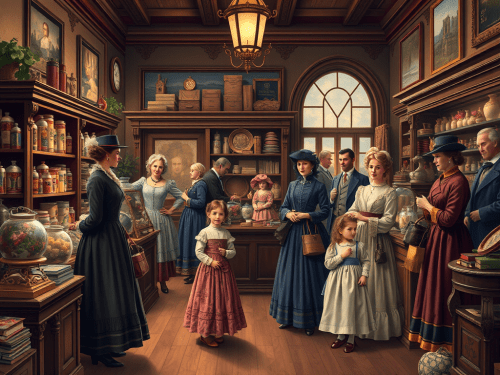
Your journey into the Winchester Mystery House begins long before you cross the mansion’s threshold. It starts at the Mercantile gift shop—a welcoming outpost standing at the edge of a world where history and myth intertwine. Here, beneath warm lights and shelves lined with curiosities, you can secure your tour tickets and prepare for the adventure ahead. Guests often pause for a souvenir photograph, capturing the moment before they step into Sarah Winchester’s enigmatic domain.

As you explore the shop, you will find an eclectic array of gifts and keepsakes: tokens of the mansion’s lore, echoes of Victorian elegance, and mementos that carry a touch of the house’s enduring mystery. The Mercantile is more than a gift shop—it is the gateway. https://winchestermysteryhouse.com/

Harris Plumbing, Heating, Air & Electric has been serving our community for 30 years—an achievement few companies can claim. That longevity isn’t an accident. It’s the result of hard work, integrity, and a commitment to doing every job the right way, whether it’s a simple repair or a complex system overhaul. We take pride in every service call because we know your home is more than a building—it’s where your family lives, grows, and feels safe. Ensuring your comfort and protection is a responsibility we carry with seriousness and gratitude. After three decades, our mission remains the same: to deliver dependable service you can trust, every time.

Harris makes sure you have the clear, accurate information you need to decide what comes next—no matter what your home is facing. Before we begin any work, our technicians perform a full diagnosis and walk you through every issue we find. That means you receive a personalized quote and service plan tailored to your home’s exact needs, not a generic estimate or guess. We believe the only way to deliver our best work is to understand the problem completely and address it with precision, transparency, and care. Your home deserves nothing less. https://www.callharrisnow.com/about-us/


BMW remains one of the most desirable automotive marques because it blends engineering precision with an emotional driving experience that few brands can match. Its vehicles are built around balance, responsiveness, and a sense of connection between driver and machine—qualities that have defined the company for generations.

Beyond performance, BMW carries an aura of prestige and craftsmanship: the cabins feel tailored, the technology is purposeful rather than gimmicky, and the design language signals confidence without excess. Owning a BMW is not just about transportation; it’s about participating in a legacy of excellence that continues to set the standard for luxury performance. This commitment to performance is why BMW continues to earn its reputation as The Ultimate Driving Machine. https://www.brianharrisbmw.com/

Randolph Harris San Francisco Taxation & Mergers
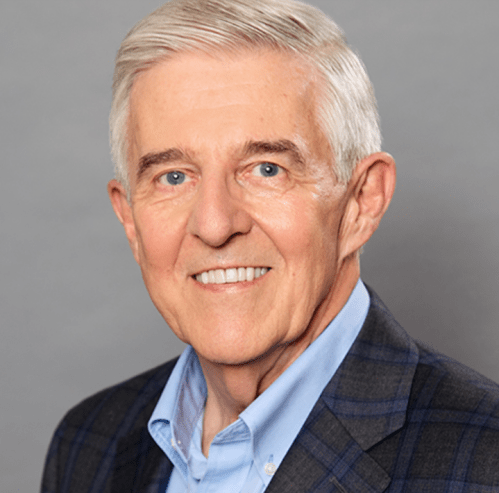
Building strong, lasting client relationships is essential to a successful legal career. Many attorneys assume that mastering legal doctrine alone guarantees success, but law is fundamentally a service profession—our work is measured not only by technical skill, but by how effectively we solve problems for the people who trust us. Long‑term relationships grow from three core commitments: truly knowing your clients, understanding how their legal issues fit within the broader context of their business and personal goals, and consistently delivering exceptional service.

Mr. Randy advises clients on business transitions, taxable and tax‑deferred mergers and acquisitions, joint ventures, restructuring, integrated tax planning, federal and state tax controversy matters, and real estate transactions. His approach is grounded in clarity, responsiveness, and a deep understanding of each client’s unique circumstances. Trust is the cornerstone of every relationship he builds. Ultimately, clients feel confident knowing they are working with someone who not only understands their challenges, but is fully committed to helping them achieve their goals. https://www.jmbm.com/l-randolph-harris.html

PARK HAVEN

Modern Living with a Touch of California Ease
Base Price: Starting from $519,000
Sales Office: 12155 Cobble Brook Dr, Rancho Cordova, CA 95742
Homes: 3+ Bedrooms | 2–3.5 Baths | 1,342–2,547 Sq. Ft.

A Community Designed for Today’s Lifestyle
Park Haven is a thoughtfully crafted neighborhood where contemporary architecture, warm natural light, and intuitive floor plans come together to create a lifestyle of comfort and effortless sophistication. Nestled in the heart of Rancho Cordova, this community offers the perfect balance of serenity and convenience—close to parks, shopping, dining, and top‑rated schools.

Each residence at Park Haven is designed with intention, offering flexible layouts and beautifully curated finishes that adapt to the way modern families live.

Signature Home Features
- Spacious 3+ bedroom designs with optional lofts and flex rooms
- 2–3.5 baths with elegant, spa‑inspired details
- 1,342–2,547 sq. ft. of open, airy living space
- Designer kitchens with premium cabinetry and generous counter space
- Expansive great rooms ideal for gatherings and relaxed evenings
- Energy‑efficient construction and smart‑home enhancements
- Beautiful exterior architecture with timeless curb appeal
Every detail—from the flow of each room to the quality of materials—has been selected to create a home that feels both stylish and welcoming.

A Neighborhood That Feels Like Home
Park Haven is more than a collection of homes; it’s a community built around connection, comfort, and pride of place. Wide streets, thoughtful landscaping, and a warm neighborhood atmosphere make it a place where families grow, neighbors become friends, and every day feels a little brighter.

Where Your Next Chapter Begins
Whether you’re starting fresh, moving up, or simply seeking a home that reflects your lifestyle, Park Haven offers a refined, attainable opportunity to live beautifully in one of Rancho Cordova’s most inviting communities.

Why I Love My Home in Park Haven

“I love my home in Park Haven because it feels like the place where comfort and beauty finally meet. Every morning, the light pours through the windows in a way that makes the whole space feel calm and alive at the same time. The open layout gives me room to breathe, to think, to unwind, and to enjoy the simple luxury of a home that was truly designed for living.
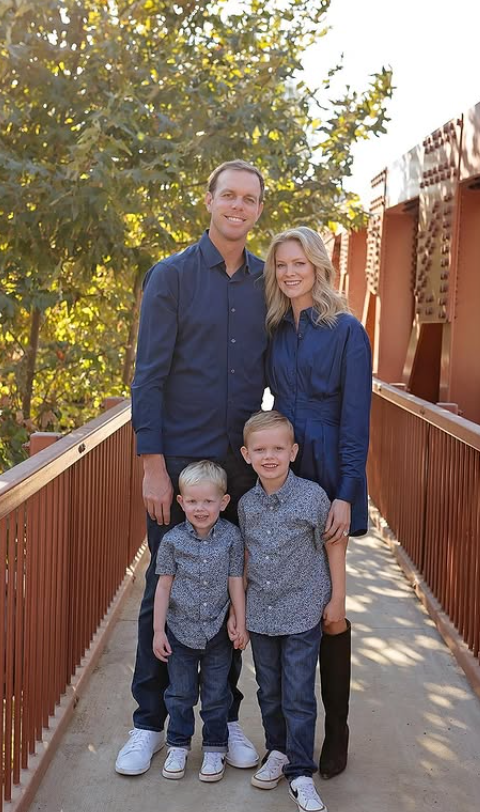
“There’s something special about walking through a space that feels both modern and warm—clean lines, thoughtful details, and rooms that flow naturally into one another. My kitchen has become the heart of the home, the place where conversations linger and the day begins with a sense of ease. The great room feels expansive yet intimate, perfect for quiet evenings or gatherings that stretch late into the night.

“But what I love most is the feeling of belonging. Park Haven has a peaceful rhythm—tree‑lined streets, neighbors who wave, and a community that feels safe, welcoming, and grounded. It’s the kind of place where you can step outside and feel instantly at home. https://www.cresleigh.com/communities/california/rancho-cordova-ca/park-haven

“Every corner of this house reflects a choice I’m grateful for. It’s not just where I live—it’s where I grow, where I rest, and where I’m reminded daily of how good life can be when you’re exactly where you’re meant to be.” #CresleighHomes

Everybody’s got the blues. In the morning day, if you find the answers, and you wonder why, let’s find a way. Your Cresleigh Home wants to give you happiness, just like the sun gives to the day. A Cresleigh Home would like to be made just for you. Just like building a dream, your Cresleigh Home would love to be with you.

Happy Mother’s Day. Your strength, your kindness, and the way you love without hesitation make the world softer for everyone around you. I hope today brings you the same warmth and care you give so freely every day.

Mother’s Day Reflection — Through the Quiet of the Winchester Estate
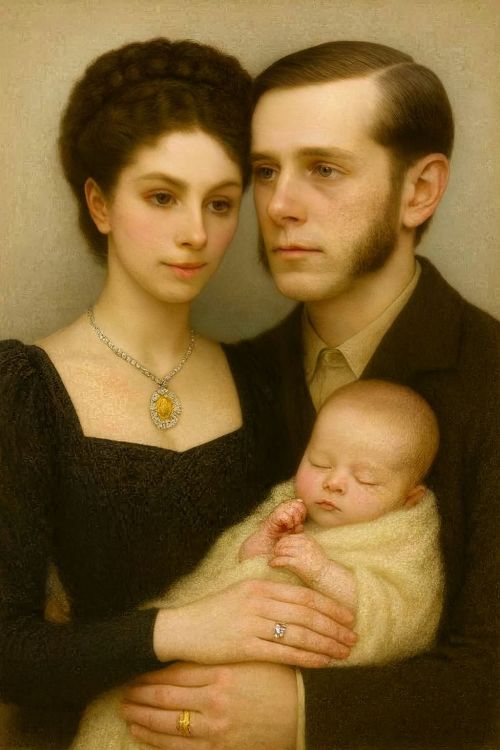
On a day like Mother’s Day, it’s impossible not to imagine how Mrs. Sarah Winchester must have moved through her vast, echoing home — a mother who outlived her only child, walking hallways built not just from timber and nails, but from grief, devotion, and the longing for a life she never fully got to hold.
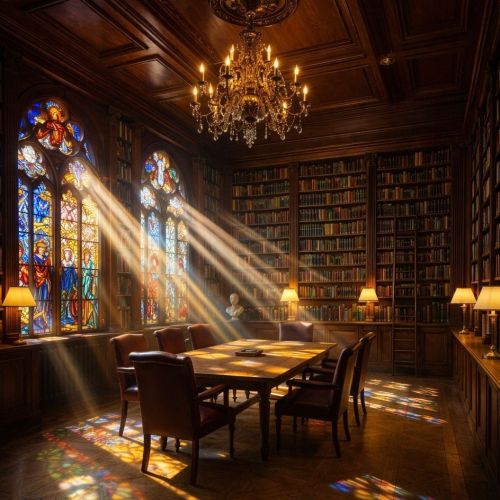
She knew the weight of silence where a child’s laughter should have been. She knew what it meant to love fiercely, and to lose completely. And on Mother’s Day, that kind of solitude settles differently — not as emptiness, but as a reminder of how precious motherhood truly is.

“Cherish your children, my dear. Cherish the clatter of their footsteps, the disorder of their playthings, the sudden calls that draw you from your tasks, and the small, earnest hands that reach for yours. Treasure the moments that seem so very ordinary, for it is these humble hours that one comes to long for most keenly when they have slipped beyond reach.“ -Sarah L. Winchester 1866

There are mothers who greet this day with full arms and hearts brimming over. There are others who spend it in remembrance, holding close the memory of a child once cradled but no longer present. And there are those, like Mrs. Winchester, for whom motherhood exists as a tender echo — a love that was never granted the grace of growing old.

So on this Mother’s Day, gather your loved ones near. Pay homage to the mothers who rejoice, and to the mothers who quietly grieve. And remember that for many, this day is not merely a celebration, but a testament to endurance, devotion, and the quiet, unyielding strength of a mother’s heart.

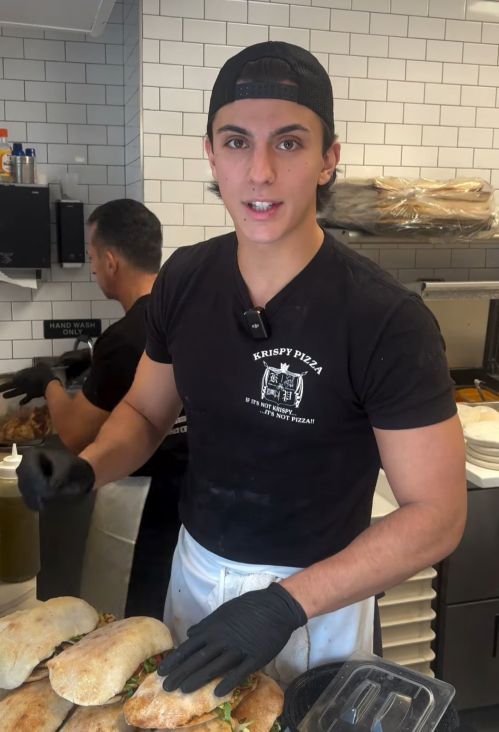
Krispy Pizza – Brooklyn’s Home for Real, Homemade Flavor

At Krispy Pizza, we don’t just make pizza — we craft it. Every pie is prepared in-house using the freshest ingredients, traditional family recipes, and the kind of care only a true Brooklyn shop delivers. With over 15 varieties of pizza, plus our famous Grandma’s Pie, we serve slices that are crisp, bold, and unforgettable.
Because if it’s not Krispy… it’s not pizza. https://www.krispypizza.com/
Location: 7112 13th Ave Brooklyn, NY 11228