
The portrayal of a woman who pursues high‑risk intimacy offers a window into the complex interplay between attachment patterns, trauma histories, and the search for agency. Rather than reducing her to a stereotype, a scholarly analysis must consider how risk‑taking can function as coping, rebellion, self‑assertion, or self‑erasure. Her behavior becomes a psychological text, one that reveals more about internal conflict than about moral character. This young woman, sitting now for the first time in my office, gave an impression that vaguely suggested—immaturity? The word is not entirely accurate for the impression. Immaturity might imply the guarded, withdrawn attitude often shown by children in the doctor’s office. It was another, in fact, almost an opposite feeling that she gave. Something less than the average of self-consciousness, a sort of easy security that does not arise from effort or from pretense—some qualities of this nature seemed to enter into the impression. Roberta was just twenty years old, well developed, a little above average weight, perhaps, but not greatly. She was not pretty, but her looks were pleasant. Unlike most young women of twenty, she did not seem, with or without awareness, to be deliberately counting her feminine attractions into the equation that probably occurs in every personal contact between man and woman. This, perhaps, was what gave that first vague and complicated impression of an adult who, in some rather pleasant way, is still childlike. #RandolphHarris 1 of 26

It was a little surprising to hear her admit that she had resented being brought for the interview because she felt her mother and father were overdoing things to try to find something “wrong with her mind.” There was nothing sullen about her, and she soon expressed satisfaction at having come and a willingness to stay in the hospital as long as it might be deemed advisable. She admitted without reluctance that she needed help of some sort and that she had “made a mess” of her life. She expressed interest in plans for a different future. However, her request for psychiatric help did not seem like a trivial matter. According to Roberta’s father, “I can’t understand the girl, no matter how hard I try,” he admitted, shaking his head in genuine perplexity. “It’s not that she seems bad, nor that she consciously intends to do wrong. She can lie with the straightest face, and after she’s found in the most outlandish lies, she still seems perfectly easy in her own mind.” Roberta was known for stealing little knick-knacks from family members, and for repeatedly making off with small articles from the store, and even from her own home. “At first, it seemed just the mischievous doings of a little girl,” he said, “a sort of play—and her not realizing about its being serious. You know how children sometimes tell a lot of fanciful stories without thinking of it as lying.” #RandolphHarriis 2 of 26

Neither the father nor the mother seemed a severe parent. They had no unusual attitudes toward their children. Roberta’s brother and two sisters were all well-behaved members of the community. The family was financially comfortable but not wealthy. There had been no black sheep in the group for several generations, during which they lived in a western North Carolina town of 10,000. “We didn’t want to be too hard on Roberta when we first noticed these things,” the mother continued. “I’ve heard that too much punishment sometimes confuses a child and makes matters worse. We talked it over with Mr. —- (the pastor); with the superintendent of the school, and with all her teachers.” The child was not spoiled. The parents consistently let her find that lying, stealing, and truancy brought censure and punishment. Roberta was known for being wild and headstrong, and often used remarkable ingenuity to conceal her misdeeds and to continue them. As she grew into her teens, this girl began to buy dresses, cosmetics, candy, perfume, and other articles, charging them to her father. He had no warning that these bills would come. Roberta would frequently give the things she had no use for to her friends. Her spending habits were so bad that the family was on the verge of bankruptcy. Although she had an I.Q. of 135, Roberta’s school work was mediocre, and she was frequently truant. #RandolphHarris 3 of 26

Even though Roberta was not a serious student, she expressed ambitious plans for the future. These included the study of medicine, dress designing, becoming an author, and teaching home economics in a nearby college. Roberta experienced no great thrill or consummation in a theft nor found in it relief from uncomfortable stress. She started staying out late, and this behavior alarmed her family. Such conduct, of course, suggests that she might be deliberately trying to hurt her parents. However, if so, Roberta was quite unaware of such a motive. As with her thievery, truancy, and her running up bills, one does not find a conscious drive of real significance. Roberta insists that she loves her parents. “They’ve made some mistakes with me,” she says, “but I’ve made a lot of myself. I appreciate all they’ve done for me. Of course, I’ve learned my lesson now.” Roberta made a favorable impression in Sunday School. However, even while engaged in these activities, she was occasionally stealing and running up big bills which, by many subtleties, she concealed for a long time from her father. “I wouldn’t exactly say she’s like a hypocrite,” the father added. “When she’s caught and confronted with her lies and other misbehavior, she doesn’t seem to appreciate the inconsistency of her position. Her conscience seems still untouched. Even when she says how badly she acted and promises to do better, her feelings just must not be what you take them for.” #RandolphHarris 4 of 26

Having failed in many classes and her truancy becoming intolerable to the school, Roberta, after several more petty thefts from classmates and teachers, was expelled from the local high school. Her family sent her to a boarding school of her choice, from which she wrote enthusiastic letters. Despite this expressed satisfaction, she ran away from school and could not be located for several days. After her return home, it was found that she had cashed bad checks at school to obtain money with which she kept herself at a hotel in a town near the school and not far from her home. She was such a casual liar that none of her friends or their parents suspected that she had run away. Roberta borrowed sums of money from several people during this episode, telling them about all sorts of entirely unreal situations which made it necessary for her to have funds at once. Disturbed by the unusual talks about sexual irregularities in young people, her parents had serious discussions with their daughter when she finally returned home. Privileges were taken from her, and, sometimes for a month or more after an especially gross act of disobedience, she was not allowed to go out with her crowd. Having feared that Roberta would, in such circumstances, lose her virginity, the parents prepared themselves for the worst. She, of course, denied any sexual relations, but she also denied stealing, truancy, surreptitiously charging things to her father, and all her other faulty conduct. #RandolphHarris 5 of 26

When Roberta missed a menstrual period shortly after running away from school, her parents were so perturbed that a medical examination was made. Not only was there no evidence of pregnancy, but a definitely intact hymen was obvious. Roberta was sent to two other boarding schools from which she had to be expelled. She entered a hospital for training to be a registered nurse, but did not last a month. Employed in her father’s business as a bookkeeper, she used her skill at figures and a good deal of ingenuity to embezzle considerable sums. Roberta met scores of young soldiers from a nearby camp. With many of them, she kept up a lively correspondence after they were sent overseas or to other posts. She spoke of satisfaction in sending letters to these men who were serving their country and expressed herself from time to time as being in love with one or another of them. One of those with whom she corresponded most regularly was killed in an accident on the West Coast, and another during combat in Italy. She seemed little affected by these incidents, though her expressions of regret were verbally appropriate. Apparently, she was unaware that under such circumstances, another girl might have felt more. Shortly after, Roberta, with no explanation to her parents, suddenly disappeared. To me, she explained that she had left with the intention of visiting a boyfriend stationed at a camp in another state. #RandolphHarris 6 of 26

Roberta admitted that she had in mind the possibility of marrying this man, but that no definite decision had been made by her, much less by him. She had, it seems, given the matter little serious thought, and from her attitude, one would judge she was moved by little more than what might make a person stroll off into the yard to see if the magnolia tree had bloomed. She left with a little over $55.00 in her purse. When she got off the bus, she was not able to reach the boyfriend by telephone and ask him to cash app (telegraph) her some funds. Balked in her efforts to reach the soldier, she remembered another boy, who lived in this town where she had found herself almost without funds. She decided to go to his family and spend the night with them. They welcomed her with open arms, and there was much pleasant conversation. Before her family could trace her, Roberta slipped off the next norming. Catching a bus bound in another direction, she rode for a few hours and got off at a strange town where she knew no one. Not having concluded plans for her next step, she sat for a while in a hotel lobby. Soon, she was approached by a middle-aged man. He was far from prepossessing, smelt of cheap liquor, and his manners were distinctly distasteful. He soon offered to pay for her overnight accommodations at the hotel. She realized that he meant to share the bed with her but made no objection. Roberta was neither excited, frightened, repulsed, nor attracted by a prospect that more carefully brought up virgins would certainly have regarded with anything but indifference. #RandolphHarris 7 of 26

The man, during their several hours together, handled her in a rough, preremptory fashion, took no trouble to conceal his contempt for her and her role, and made no pretense of friendliness, much less affection. She experienced moderate pain but no sexual response under his ministrations. After giving her $70.00 with unnecessarily contemptuous accentuations of its significance, he left her in the room about midnight. Next morning, she reached her soldier friend by telephone and suggested that he send her sufficient funds to join him. She had not discarded the idea of marrying him, nor had she progressed any further toward a final decision to do so. He discouraged her vigorously against coming, refused to send money, and urged her to return home. She was not, it seems, greatly upset by this turn of events, and, with little serious consideration of the matter, decided to go to Charlotte, which was approximately 150 miles distant. When she reached Charlotte, she had little trouble finding small jobs in restaurants and stores. She supported herself for several days by working, but found her funds barely provided for room and food. She thereupon began to spend the nights with various tipsy soldiers, travelling salesmen, and other men who showed inclinations to pick her up. With all these, she had sexual intercourse. From this, she eventually began to experience a moderate, half-warmed pleasure, but nothing like intense passion. #RandolphHarris 8 of 26
Despite extensive promiscuity since that time, she has never experienced true pleasure nor temptation. Nor has she felt any of the frustration and unrelieved tension so familiar in some women who are aroused but left unsatisfied. Her family, meanwhile, not knowing whether she was dead or alive, was making every effort, through the police and otherwise, to find her. These efforts met with success after about three weeks. On meeting her parents, she expressed affection, running to them and throwing herself in their arms. At their prompting, Roberta found it easy to make use of the formalities indicative of penitence, but seemed remarkably free from actual humiliation or distress. Neither the recent anxiety of her mother and father nor her own social jeopardy overwhelmed or even greatly daunted her. She seemed little vulnerable to the inevitable gossip that, on her return, beat like a tempest about town. As if armored by a sort of innocence, she went her way freely, affable, unembarrassed, the picture of an artless girl fond of others and expecting kindliness from all. During her hospitalization, she spoke convincingly of the benefit she was obtaining and discussed her mistakes with every appearance of insight. She spoke like a person who had been lost and bewildered but now had found her way. She did not seem to be making any voluntary effort to deceive her physicians. #RandolphHarris 9 of 26

Soon after she returned home, reports came, all indicating that she was continuing in her old patterns of behavior. A secretarial position was obtained for her with a large corporation. She was quick and effective in her work, and she was liked by all for her simple, friendly ways. Soon her landlady began to worry about her moral status as evidence accumulated that she left various men, who were casual acquaintances, come up to her room. She showed a good deal of skill in avoiding detection, and her manner made it hard for such suspicions to be taken seriously. She was calm, so free of anything that would suggest a passionate nature, so polite, and so proper, that irregularities of this sort were all but inconceivable to those she met. At least, it was evident that this apparently candid and well-brought-up girl was turning the place into a modest approximation of a brothel. Before the kindly landlady could steel herself to have showdown, Roberta disappeared owing a month’s rent. She had, with her convincing manner, succeeded in drawing a sum of money from a loan fund the employees of the company had built up for their convenience. Having obtained this, Roberta did not show up at work and was not heard from for a couple of weeks. Shortly thereafter, she returned him. She told little of the real story to her parents, but convinced them that she had left her job under honorable circumstances. This was believed until the facts at last caught up with her. #RandolphHarris 10 of 26

Other positions were obtained for her in various towns and at home. Each time, her failures were similar and always without adequate motive or extraneous cause. She returned for psychiatric treatment on several occasions, always saying that she had been helped and expressing simple but complete confidence that she couldn’t have further trouble. Roberta claimed that she was happy with life, and therapy cured her. However, I was informed that she had recent episodes quite as bad as those in the past. With this young lady, as with many other similar patients, the psychiatrist is confronted with the family’s serious questions: What are we to do now? If you were in our place, what would you do? These are questions for which I have found no satisfactory answer. Such a girl causes more harm to herself and to others than the average patient with schizophrenia and a more tragic sorrow to those who love her. It can scarcely be said that she is safer outside an institution than the average patient who hears imaginary voices, or that she can be more satisfactorily cared for at home. The physician’s lament — that after years of hearing sincere people struggle with the same moral and emotional dilemmas, he has become convinced that any institution capable of initiating change must be roused from its “scrupulous inattention” — speaks to a broader crisis of modern life. We live in a world so demanding and disorienting that many individuals require not only therapeutic support but also medication and sustained religious study to remain grounded. #RandolphHarris 11 of 26

While God dwells within us, we often need deliberate reminders to reflect the image of Jesus Christ in our daily conduct. Within this framework, the law of chastity emerges not as a restriction but as a divine safeguard. Like all of God’s commandments, it is given to promote peace, joy, and emotional as well as physical well‑being. Chastity — refraining from sexual relations outside a legal marriage between a man and a woman, and cultivating purity in thoughts, words, and actions — functions as a stabilizing discipline. It calls for complete loyalty within marriage and prepares individuals to receive God’s greatest blessings, including eternal life. Physical intimacy between husband and wife can be joyful, beautiful, and sacred. It is a gift from God for the creation of children and for the expression of love within marriage. When people care for one another enough to keep the law of chastity, their love, trust, and commitment can increase, resulting in greater happiness and unity. Chastity is a commandment from God, and obedience to that law helps us prepare to enter the house of the Lord. Though sexual sins are very serious, the gift of repentance is real. Because the Lord loves us, He will fully forgive us when we choose to repent and turn to Him. Repentance requires patience, perseverance, and a change of heart, but it is worth the effort. “Upon you, my fellow servants, in the name of Messiah, I confer the Priesthood of Aaron, which holds the keys of the ministering of angels, and of the gospel of repentance, and of baptism by immersion for the remission of sins; and this shall never be taken again from the earth, until the sons of Levi do offer again an offering unto the Lord in righteousness,” reports Doctrine and Covenants 13.1. Confessing to your leader can help you unburden yourself so you can seek the Lord’s help to change and heal and know how to move forward. #RandolphHarris 12 of 26

This may sound very theoretical, and it is theoretical until it becomes clear at what point this attitude has its basis in reality, so that it can itself become real. “Be ye wise as serpents and harmless as doves” is a saying of Jesus Christ (Matthew 10.16) and is therefore, like all his sayings, interpreted only by Jesus himself. No man can look with undivided vision at God and at the world of reality so long as God and the world are torn asunder. Try as he may, he can only let his eyes wander distractedly from one to the other. However, there is a place at which God and the cosmic reality are reconciled, a place at which God and man have become one. That and that alone is what enables man to set his eyes upon God and upon the world at the same time. This place does not lie somewhere out beyond reality in the realm of ideas. It lies in the midst of history as a divine miracle. It lies in Jesus Christ, the Reconciler of the world. As an ideal, the unity of simplicity and wisdom is doomed to failure, just as is any other attempt to hold one’s own against reality. It is an impossible ideal, and an extremely contradictory one. However, if it is founded upon the reality of a world which is at one with God in Jesus Christ, the commandment of Jesus acquires reality and meaning. Whoever sees Jesus Christ does indeed see God and the world in one. He can henceforward no longer see God without the world or the world without God. #RandolphHarris 13 of 26

In God, the world was reconciled with God. It is not by its overthrowing but by its reconciliation that the world is subdued. It is not by ideals and programmers or by conscience, duty, responsibility, and virtue that reality can be confronted and overcome, but simply and solely by the perfect love of God. Here again, it is not by a general idea of love that this is achieved, but by the really lived love of God in Jesus Christ. This love of God does not withdraw from reality into noble souls secluded from the world. It experiences and suffers the reality of the world in all its hardness. The world exhausts its fury against the body of Christ. However, tormented, He forgives the world its sins. That is how the reconciliation is accomplished. The figure of the Reconciler, of the God-Man Jesus Christ, comes between God and the world and fills the center of all history. In this figure, the secret of the world is laid bare, and in this figure, there is revealed the secret of God. No abyss of evil can remain hidden from Him through whom the world is reconciled with God. However, the abyss of the love of God encompasses even the most abysmal godlessness of the world. In a manner which passes all comprehension, God reverses the judgment of justice and piety, declares Himself guilty towards the world, and thereby wipes out the world’s guilt. God Himself set out on the path of humiliation and atonement, and thereby absolves the world. God is willing to be guilty of our guilt. He takes upon Himself the punishment and the suffering which this guilt has brought on us. God Himself answers for godlessness, love for hatred, the saint for the sinner. Now, there is no more godlessness, no more hatred, no more sin which God has not taken upon Himself, suffered for an expiated. Now, there is no more reality, no more world, but it is reconciled with God and at peace. God did this in His dear Son Jesus Christ. #RandolphHarris 14 of 26

Look at the girl who has money. A false lover can perhaps deceive her, so that it appears as if he loved her, although what he really loves if money. She may joyfully, perhaps even gratefully, continue to live in the fantasy that she is loved. However, no one can deceive the Good, nay, not in all eternity! Not in all eternity! Yes, it is just there that one has the least chance of deceiving it. Perhaps here on earth it can be accomplished; not that the Good is deceived, but men may be deceived by the likeness of the Good. Such does not escape the attention of the Good. From time to time, it focuses its wrath on such man and reveals his deception. However, often the Good lets the deceiver go his way because the Good knows, in itself, that it is the stronger. Only a weak and effeminate man demands immediate justification, demands immediate success in the outer world, just because he is weak, and therefore must have an outward proof—that he is the strongest. The one who is really strong and is really the more powerful, quietly concedes a domain to the weakling and readily allows him to give the impression of being the stronger. So, with the Good, when it tolerates such a deceiver, it is as if it said to him secretly, “Yes, enjoy yourself with your false appearance, but remember, we two, we shall talk together again.” #RandolphHarris 15 of 26

The double-minded one stands at a parting of the ways. Two visions appear: the Good and the reward. It is not in his power to bring them into agreement, for they are fundamentally different from each other. Only that reward which God for all eternity adds to the Good in the inner realm, only that is in truth homogenous with the Good. So he stands pondering and reflecting. If he is wholly absorbed in his pondering, then he continues to stand—a symbol of double-mindedness. However, suppose he should tear himself free from the deliberation and should now go forward. Along which way? Ah, do not ask him about that. Perhaps he is able to answer learned questions and to betray extensive knowledge. However, one thing he cannot do, one and only one thing he is not able to do: he cannot answer the question about which of the two ways he is taking. By repeated thoughtful pondering in an attempt to see the heterogeneous together, he has somewhat fused his sight. He believes he has found that there is a third way and that it is this third way along which he is going. This third way has no name. For it does not really exist, and so it is obvious that he, if he is sincere, cannot say which way he is taking. If he is sincere, for otherwise he would indeed declare that he is going along the way of the Good, it may even be important to convince men of that—in order that they may honor him. For honor belongs to the reward which he is seeking after. #RandolphHarris 16 of 26

The third way is the secret which he keeps to himself. And now, how does he go along this third way which is narrower than any rope-dancer’s rope, for it simply does not exist? Does he go steadily and firmly like one that has a definite goal before his eyes; like one that scarcely looks at anything around him in order not to be disturbed; like one that looks for one thing alone—for the goal? No, only a person upon the path of the Good walks in this fashion with only the Good before his eyes. Does he, then, go like the one that is hunting for every sensation along the broad way of pleasure? No, that he does not do. Does he go like a carefree youth who lightheartedly lets his gaze wander over everything about him on his way? Alas, he is too old for that. How does he go, then? He walks so slowly under the circumstances, because of the difficulty of the way. He feels his way forward with his foot and as he finally plants his foot and takes a step, he immediately looks about at the clouds, notes the way the wind blows, and whether the smoke goes straight up from the chimney. It is, namely, the reward—earth’s reward—that he is looking for. And that reward is like the clouds and like the wind and like the smoke of the chimney. And so, he asks his way continually. He gives minute attention to the faces of the passing people in order to learn how the reward stands, what the prices are, what demands the time and the people would place upon the Good if they were to give the reward. #RandolphHarris 17 of 26

What is he really after? Nay, do not ask him about that. Perhaps he would be able to answer every other question with the exception of that one about the way. However, this question he cannot answer in definite terms, if he is to answer it sincerely, for the reason that the answer is all to readily at hand: that he wills the Good and detests vice—when vice seems to be loathsome; that he wills the approbation of the good people—when they are in the majority and possess the power; that he will benefit the good cause—when it is so good as to confer some advantage upon him. Yet, in sincerity, he dares not say definitely what he wills. He dares not say loudly and decisively with the full voice of conviction that he wills the Good. He utters it with the dull caution of double-mindedness. For he knows well enough that the Good and the reward are not rationed out together. Let us assume that by such a careless utterance the Good and the reward came into conflict, and let us assume that he be considered as willing the Good in this manner. Now, suppose that the reward is missing, which has previously happened in this world. What would he do then? Would he will the Good and even be willing to forego the appearance of willing the Good? No, definitely now. Does he, then, will the reward? Yes, but he will not plainly admit it. Does he, then, will the Good? Yes, now and then, perhaps, for decency’s sake, as it is called. He pretends, therefore, to will the Good—for the sake of honor and reward. As a matter of fact, he does occasionally will the Good—to save his face. #RandolphHarris 18 of 26

This is what happens to the man who hankers after a reward. He is so double-minded that one hardly knows whether to laugh or to weep over him, if one does not know that all double-mindedness is destruction. However, if one knows this, he knows well enough what to do, especially when he has his own share of this double-mindedness. Now, this matter of willing the Good for the sake of reward may take a somewhat different form. Perhaps there was a man who really, in all sincerity, willed the Good. Humbly before God, and quickened in his enthusiasm, he cheerfully understood when the world and when men worked against him. He cheerfully understood that this opposition was the reward, and that there was nothing further to be said about it. Strengthened by God, bracing himself only by his confidence, he almost never desired to be rewarded in any other way by this world. However, then he became weary. He clutched after the reward in the narrower sense, and after an easier understanding of the reward. For in general, the closer the understanding lies to misunderstanding, the easier it becomes. He could not bear with the Eternal. He could not endure the opposition of the world and of the people. So, first, he claimed the reward, under the interpretation that there ought to be an agreement between the Good and the world. Finally, he demanded the reward alone. In this fashion, he slipped backwards. Oh, sad end to a good beginning! Oh, Thou the Good’s stern zeal for thyself, that Thou perhaps permmitest him to get the reward in the world, just when Thou hast rejected him; that Thou lettest him get the reward of the world, while he has ungratefully forgotten what a blessedness it is to have Thy reward, while earth withholds her reward from him! #RandolphHarris 19 of 26

Or he did not begin so high, but simply with willing the good in truth. Without knowledge of the world, without having conceived in his heart the possibility of what may happen to man, he piously hoped that the Good would not withhold its reward. Now understood in the light of eternity, this is an eternal and sacred truth. However, in the sense of temporal existence, it is foolish and fruitless cleverness. So he went out into the school of experience, for we all go to the school as long as we live. Life’s school is for adults and, therefore, is somewhat more stern than the children’s school, where the attentive and industrious ones come to the fore among those of the same age. So, life took him into its stern school. However, he resisted. He reduced his demands. He did not wish to deceive the Good. Alas, neither would that help. He believed that as long as he clung to the Good, he possessed a claim upon life. Now, it seemed to him as though the Good alone had claims upon him. At this, his courage slackened. He looked about him, where so many others helped themselves to the reward. The tempter began to frighten him into a feeling of faint-heartedness as to why he did not wish to be like the others, and as to why he insisted upon running after the vagaries of imagination, instead of laying hold of that which is certain. Then, his mind was changed. In life, it happened to him just as in school it might happen to the superior pupil if there were no teacher. The mediocre would gain the dominance and gain powers to seduce the superior pupils, because the good pupil had no teacher in whom to see protection. #RandolphHarris 20 of 26

In life, there is no visible teacher who stands beside the good pupil to encourage him, for in the human condition we are all pupils, all learners in a world without a clear instructor. If the good pupil is to persevere, he must discover the source of encouragement within himself — and this, tragically, he did not find. His courage collapsed; the world offered him no confirmation of the Good he sought, and so he descended, deceived by the very order that had promised reward for righteousness. He willed the Good, yet the world betrayed him most terribly by persuading him to forsake it. In this sense, are not many physicians and surgeons already half‑dead — men who know the anatomy of the body but almost nothing of the soul that inhabits it? Science has seduced us so thoroughly that we now move through life untouched by the wisdom of the ancients, as though their insights into the nature of truth had never existed. In its triumph, science has become its own graveyard. We fail to understand that the realm of truth into which the ancients penetrated still stands open, still real. When science leads humanity to deny its sacred origin and to dismiss every personal testimony of spiritual experience, it ceases to serve man and instead cripples him at the root of his being. And perhaps nowhere is this spiritual crippling more visible than in the moments when the world fractures unexpectedly. #RandolphHarris 21 of 26

The call came in just after 3:20 a.m., when the city was still wrapped in that uneasy quiet that belongs only to the darkest hours before dawn, and yet beneath that silence lay the same truth: a civilization that has forgotten its soul is always one spark away from catastrophe. Dispatch reported flames tearing through a two‑story home on Alderbrook Court, a narrow residential street in East Sacramento where houses sat close enough that one fire could easily become three. Within seconds, the award‑winning Sacramento Fire Department was en route, led by Captain Reinhardt, whose calm under pressure had become something of a legend within the department. As Engine 14 rounded the corner, the crew could already see the orange glow pulsing against the night sky. Flames had burst through the upstairs windows, licking upward into the eaves, and smoke poured out in thick, rolling waves. Neighbors stood helplessly on the sidewalk, some in pajamas, others clutching phones, all of them staring at the inferno devouring the home of a family they knew well. Captain Reinhardt stepped off the engine with the practiced precision of a man who had done this a thousand times, yet never allowed routine to dull his vigilance. “We’ve got active fire on both floors,” he said, scanning the structure. “Two residents unaccounted for. Ladder to the second floor. Medic team, prepare for multiple victims.” The world‑renowned paramedics—Dr. Elric Brandauer and Matthias Falkenberg—were already pulling equipment from their rig. Their reputation had grown far beyond Sacramento: a pair whose clinical skill was matched only by their ability to keep patients calm even in the worst moments of their lives. #RandolphHarris 22 of 26

Inside the burning home, heat pressed against the firefighters like a living thing. The staircase had partially collapsed, forcing Captain Reinhardt and his crew to advance through the kitchen, where flames curled along the ceiling in a menacing dance. The smoke was so dense it felt like wading through a black ocean. They found the first victim—a teenage boy—collapsed near the back door, overcome by smoke while trying to escape. Captain Reinhardt lifted him with a steadiness that belied the danger around them. Outside, Dr. Brandauer immediately began assessing his airway while Falkenberg prepared oxygen and monitored his vitals. The boy’s pulse was weak but present. “Go,” Dr. Brandauer said, his voice firm. “We can stabilize him. Get back in there.” The second victim, the boy’s grandmother, was still upstairs. Flames had consumed most of the hallway, and the floor groaned under the weight of the firefighters’ boots. Captain Reinhardt led the way, refusing to let his crew take a risk he would not take himself. They found her unconscious in her bedroom, the smoke so thick that visibility was nearly zero. As they carried her down the ladder, a sudden burst of flame shot through the roof, showering embers across the yard. Two firefighters were struck by falling debris, one suffering burns to his shoulder, the other a deep laceration along his arm. The paramedics moved with swift coordination–Falkenberg treating the burns while Dr. Brandauer applied pressure to the wound, his gloves slick with blood and soot. By the time the fire was finally contained, seven people had been injured: the two residents, the two firefighters, and three neighbors who had inhaled smoke while trying to help before crews arrived. Yet every one of them survived. As dawn broke over Sacramento, Captain Reinhardt stood beside the smoldering remains of the home, his gear streaked with ash. The world had once again shown its capacity for chaos, but so had his department shown its unwavering commitment to the Good—to life, to courage, to service. And in that fragile hour between night and morning, the award‑winning Sacramento Fire Department and its world‑renowned paramedics had once again proven why the city trusted them with its most desperate moments. #RandolphHarris 23 of 26

When it comes to firefighting, every incident carries the potential for injury—no matter how small the fire appears or how routine the call may seem. If you see a fire engine stopped in the street without its lights on, use extreme caution. Crews may be working nearby, and passing the apparatus can put them in danger. It is often safer to turn around and take another route; if you strike a firefighter or civilian and cause a fatality, you could face charges such as manslaughter. Firefighters frequently move around their vehicle on foot, loading equipment or preparing to leave the scene. Attempting to pass the apparatus can result in a collision with someone you cannot see. Pay close attention to their hand signals as well—emergency vehicles sometimes move slowly or reposition, and impatient drivers trying to slip around them create hazardous situations. If you are already in an intersection when you notice an emergency vehicle approaching, continue through it, then pull to the right and stop as soon as it is safe. Always obey directions from law enforcement officers or firefighters, even if those instructions conflict with posted signs or traffic laws. When sirens or flashing lights are activated, it is illegal to follow within 300 feet of a fire engine, ambulance, or police vehicle. Driving to the scene of a fire, collision, or disaster can also result in arrest, as doing so interferes with firefighters, paramedics, and other emergency personnel. Professional courage is not limited to physical toughness. It includes listening to others, advocating for them in difficult situations, understanding personal limits, and having the integrity to tell a superior when they are wrong. The deeper truth is that public safety depends not only on the bravery of first responders but on the discipline and judgment of the community around them. Every driver’s decision—whether cautious or careless—can either protect or endanger the people risking their lives to protect everyone else. #RandolphHarris 24 of 26

Efforts to preserve farmland and maintain buildable land for future generations often lead to discussions about population growth and long‑term planning. Some people argue that immigration levels should be managed carefully to ensure that infrastructure, housing, and land use remain sustainable. Others suggest that, when immigration does occur, programs that encourage broad representation can help communities reflect the diversity of the wider world. When Americans purchase goods made in the United States, it strengthens local businesses and signals to investors that these products are in demand. Strong sales give investors confidence to reinvest in domestic companies, helping keep jobs, production, and wages within the country. As businesses grow, they contribute more to the tax base, which can reduce the burden on taxpayers over time. Supporting American businesses also keeps more money circulating within the national economy. The government increases the national debt when it spends more than it collects in tax revenue or borrows from private or foreign lenders. When people shop locally, more tax revenue stays in the community and supports public services. This helps keep jobs in the United States and increases the tax contributions that fund government operations. Purchasing foreign-made goods, by contrast, often sends money overseas and may benefit companies that operate under lighter tax or environmental regulations. Buying American-made products can also reduce environmental impact because they travel shorter distances and are produced under stricter standards for air, land, and water protection. In this way, consumer choices influence not only the economy but also environmental stewardship and long-term national sustainability. #RandolphHarris 25 of 26

Under President Trump’s administration, he has made America a priority. President Trump has hermetically sealed the southern border, illegal crossings have been terminated, and are 90 percent lower than under the previous administration. Since President Trump’s crack down on crime, violent crimes in Washington D.C. have dropped by approximately 80 percent. He has stopped thousands of pounds of drugs from entering America and killing citizens. And since President Trump took office, investments in America have increased by trillions of dollars in U.S.A. manufacturing, production, and innovation. As you can see, President Donald Trump and his pledge to “Make America Great Again” is exactly what America needs to save the country and the American people. And yes, diversity is important, so you can see why it is also important to preserve blonde hair and blue eyes, as the people with these characteristics are becoming a minority in America. As a reminder, parents, please teach your children to love America and be patriotic citizens, and to buy goods and services made in America. It is also important to respect law and order and treat your elders with respect. It is inborn in the human mind to wish to know. If this begins with the endless surface questions of a child’s curiosity, if it continues into deeper questions of a scientist’s probing investigation, it cannot and does not stop there. For the higher part of the mind will eventually come into unfoldment, that union of abstract reflective thought with mystical intuition, which is true intelligence, which needs and sees a view of the whole of things. And so, the knowing faculty enters the realm of philosophy. A lot of children are having problems in school and cannot even write a paragraph because they are not reading their books. When you actually read books, you get an example of how to write and will become a better student. Therefore, remember to take your education seriously so that you will be successful in life and make your family proud. Also, to make sure they have all the resources required, please donate to the Sacramento Fire Department to help improve our national security. “Oh, thus be it ever, when freemen shall stand between their loved home and the war’s desolation! Blest with victory and peace, may the heav’n-rescued land Praise the Power that hath made and preserved us a nation! Then conquer we must, when our cause is just, and this be our motto: ‘In God is our trust.’ And the star-spangled banner in triumph shall wave O’er the land of the free and the home of the brave.” Thank you for your attention to this matter. President DONALD J. TRUMP #RandolphHarris 26 of 26


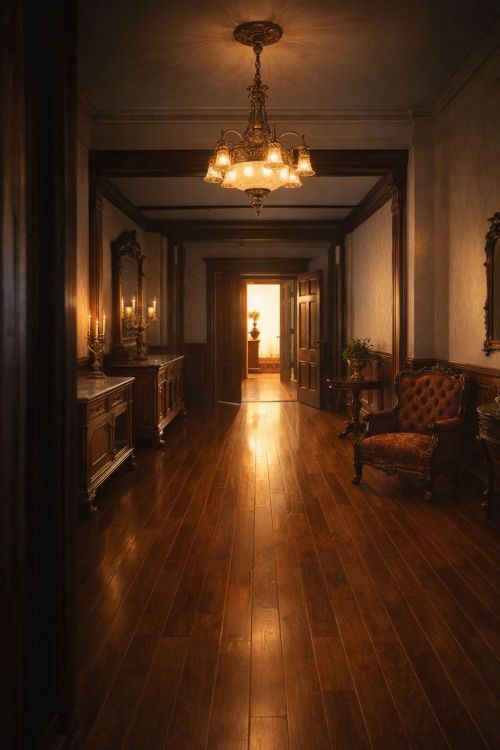
In the bitter spring of 1922, for six uncanny days, the Winchester Mystery House became the sole subject of whispered conversation across San Jose. Visitors claimed the mansion seemed almost alive, watching them from behind its stained‑glass eyes as they wandered its impossible hallways. Guides spoke of a strange pull, a quiet insistence that guests return again and again.

Legend soon formed that the house hungered for souls to tour it thirteen times, believing that only then could it claim a fragment of their spirit. Whether born of superstition or something older, the tale spread quickly, and those who felt the mansion’s gaze swore the house remembered every face that crossed its threshold.

The spirits of the Winchester remain active, waiting for the completion of the mansion. For more than a century, they have wandered its unfinished corridors, lingering in stairways that lead nowhere and rooms sealed off from daylight. Some say they are bound not by malice, but by expectation — trapped in the same endless construction Mrs. Sarah Winchester once believed would keep them at peace. The house listens, breathes, and remembers. And until the final nail is driven, the final room raised, the spirits wait for the day the mansion is whole enough to release them… or claim whoever dares to finish what Mrs. Sarah began.

A visit to the Winchester Mystery House is more than a tour—it is an encounter with legend. It is a place where imagination thrives, where history whispers through every corridor, and where the line between fact and folklore blurs in the most enchanting way. Come discover why millions of visitors from around the world consider the Winchester Mystery House a must‑see destination and one of California’s most iconic treasures.

PRIVATE EVENTS & WEDDINGS
at WINCHESTER ESTATE

Many event locations claim to be unique, but nothing compares to the Winchester Mystery House. If you’re truly seeking a distinct, one‑of‑a‑kind setting for your milestone celebration or special occasion, reserve a venue that delivers on uniqueness many times over. Whether you’re planning a wedding, birthday or anniversary celebration, corporate gathering, holiday party, or any other meaningful event, the Winchester Mystery House offers an unforgettable backdrop. Give your guests an experience they’ll be talking about for years to come.
Café 13: A Rest Stop on the Edge of the Mystery

After wandering the winding halls of the Winchester Mystery House—where staircases defy logic and whispers seem to cling to the walls—Café 13 offers a welcome return to warmth and grounding. Newly reopened and serving guests daily from 10 AM to 3 PM, this cozy hideaway invites you to pause, breathe, and gather yourself before diving back into the mansion’s secrets. Here, you can enjoy breakfast, lunch, snacks, and refreshing drinks in a calm indoor space that feels worlds away from the mansion’s twisting corridors.

Settle in with a warm meal, challenge a friend to a board game, or simply rest and recharge as sunlight filters through the windows. Café 13 is more than a café—it’s a moment of calm between chapters of the Winchester legend, a place to steady your nerves before returning to the gardens, the grandeur, and the mysteries that await.
Winchester Mercantile Gift Shop

Your journey into the Winchester Mystery House begins long before you cross the mansion’s threshold. It starts at the Mercantile gift shop—a welcoming outpost standing at the edge of a world where history and myth intertwine. Here, beneath warm lights and shelves lined with curiosities, you can secure your tour tickets and prepare for the adventure ahead. Guests often pause for a souvenir photograph, capturing the moment before they step into Sarah Winchester’s enigmatic domain. As you explore the shop, you will find an eclectic array of gifts and keepsakes: tokens of the mansion’s lore, echoes of Victorian elegance, and mementos that carry a touch of the house’s enduring mystery. The Mercantile is more than a gift shop—it is the gateway. https://winchestermysteryhouse.com/