
It is in our unconscious repressed desires that we shall find the essence of our being, the clue to our neurosis (as long as reality is repressive), and the clue to what we might become if reality ceased to repress. Our repressed desires are the desires we had, unrepressed, in childhood; and they are desires for pleasures of the flesh. When neurotic symptoms and dreams are analyzed, they invariably contain a nucleus representing a return or regression to the experiences of early childhood. However, the consciousness which comes into conflict with the unconscious is the product of education. It follows that children are, in some sense, unrepressed. Or, to put it another way, in the child, the conscious and the unconscious are not yet separated. It is, therefore, natural to infer that the adult, in flight from repressive reality in dreams and neurosis, regresses to his own childhood because it represents a period of happier days before repression took place. Furthermore, the neurotic symptoms invariably lead not only to the patient’s childhood but also to his pleasures of the flesh. The symptom is not merely a substitute for pleasure denied by reality, but more specifically a substitute for sexual satisfaction denied by reality. However, the repressed sexual desires whose presence was indicated were for the most of a kind labeled “abnormal” or “perverse.” Thus, the analysis of neurosis required the construction of a theory of sexuality which would account for perverted as well as normal sexuality and would trace both to their origins in childhood. #RandolphHarris 1 of 19

This is based on the axiom that the pattern of normal adult sexuality is not a natural (biological) necessity but a cultural phenomenon. The pattern of normal adult sexuality—the mutual love of man and woman and all the variations of the pattern-represents a particular organization of certain possibilities given in the human organism. This sexual organization is made possible by the social organization which marks the transition from ape to man, and simultaneously, it makes that social organization possible. Man’s sexual organization and his social organization are so deeply interconnected that we cannot say which came first, but can only assume a simultaneous organization: parenthood, with the prolonged maintenance of children in a condition of helpless dependence. That parenthood implies family organization of some sort or another, and that family organization is the nucleus of all social organization, are anthropological axioms. It is important to draw attention to the consequences of prolonged parenthood and prolonged infantile dependence on the sexual life of both parents and children. As far as the parents are concerned, it is clear that while adult sexuality serves the socially useful purpose of breeding children, it is for the individual, in some sense, an end in itself as a source of pleasure—the highest pleasure. Adult sexuality, in so far as it is restricted by rules designed to maintain the institution of the family and, in so far as the desire for sexual satisfaction is diverted and exploited for the purpose of maintaining a socially useful institution, is a clear instance of that subordination of the pleasure-principle to the reality-principle which is repression; as such, it is rejected by the unconscious essence of the human being and therefore leads to neurosis. #RandolphHarris 2 of 19

Prolonged infancy refers to a developmental pattern in which the early‑childhood stage—especially the period of dependence, immaturity, and slow maturation—lasts longer than what is typical for other species or for expected human developmental timelines, and it has even more far-reaching consequences. On the one hand, infancy is protected from the harshness of reality by parental care; it represents a period of privileged irresponsibility and freedom from the domination of the reality-principle. This privileged irresponsibility permits and promotes an early blossoming of the essential desires of the human being, without repression and under the sign of the pleasure-principle. On the other hand, the infant’s objective dependence on parental, especially maternal, care promotes a dependent attitude toward reality and inculcates a passive (dependent) need to be loved, which colors all subsequent interpersonal relationships. This psychological vulnerability is subsequently exploited to extract submission to social authority and to the reality-principle in general. Thus, prolonged infancy shapes human desires in two contradictory directions: on the one hand, on the subjective side, toward omnipotent indulgence in pleasure freed from the limitations of reality; on the other hand, on the objective side, toward powerless dependence on other people. The two tendencies come into conflict because the early experience of freedom and absorption in pleasure must succumb to the recognition of the reality-principle, in a capitulation enforced by parental authority under the threat of loss of parental love. #RandolphHarris 3 of 14

And since the pleasure-principle is forced to capitulate against its will and for reasons which the child does not understand, under circumstances which reproduce its primal experiences of helpless dependence (anxiety), the capitulation can be accomplished only by repression. Hence, it constitutes a trauma from which the individual never recovers psychologically. However, in the unconscious, the repressed dreams of omnipotent indulgence in pleasure persist, as the nucleus of man’s universal neurosis and his restless discontent, the cor irrequietum of St. Augustine. The infantile conflict between actual impotence and dreams of omnipotence is also the basic theme of the universal history of mankind. And in both conflicts—in the history of the individual and the history of the race—the stakes are the meaning of love. Looking back now at the total structure of resignation from the viewpoint of the preservation of integrity, certain observations fall in line and gain significance. To begin with, the integrity of truly detached people has always struck an alert observer. I, for one, have always been aware of it, but what I did not realize earlier was that it is an intrinsic and nuclear part of the structure. Detached, resigned people may be impractical, inert, inefficient, difficult to deal with because of their defiant wariness of influences and closer contact, but they possess—to a greater or lesser extent—an essential sincerity, an innocence in their innermost thoughts and feelings which are not to be bribed or corrupted by the lure of power, success, flattery, or “love.” Furthermore, we recognize in the need to maintain inner integrity another determinant for the basic characteristic. We saw first that avoidances and restrictions were put to the service of integration. Then we saw them also being determined by a need for freedom, not yet knowing its meaning. Now, we understand that they need freedom from involvement, influence, and pressure, from the shackles of ambition and competition, for preserving their inner life unsoiled and untarnished. #RandolphHarris 4 of 19

We may feel puzzled that the patient does not talk about this crucial matter. Actually, he has indicated in many indirect ways that he wants to remain “himself”; that he is afraid of “losing his individuality” through analysis; that analysis would make him like everybody else; that the analyst inadvertently might mold him according to his, the analyst’s, pattern, et cetera. However, the analyst often does not grasp the full implications of such utterances. The context in which they were made suggests the patient’s wanting to remain either his actual neurotic self or his idealized grandiose self. And the patient indeed meant to defend his status quo. However, his insistence on being himself also expresses an anxious concern about preserving the integrity of his real self, although he is not yet able to define it. Only through analytic work can he learn the old truth that he must lose himself (his neurotic glorified self) in order to find himself (his true self). From this basic process, three most different forms of living result. In a first group, persistent resignation, resignation and all it entails, is carried through fairly consistently. In a second, active rebellion: the rebellious group. In a third, deteriorating processes prevail and lead to shallow living. Individual differences in the first group are related to the prevalence of expansive or self-effacing trends and to the degree of retiring from activities. In spite of a cultivated emotional distance from others, some are capable of doing things for their families, their friends, or for those with whom they come in contact through their work. And, perhaps because of being disinterested, they often are effective in the help they give. If others mistake their willingness to help for personal affection and want more of it in addition to the help given, in contrast to the latter, it rather exasperates them. #RandolphHarris 5 of 19

In spite of a restriction of activities, many such people are capable of doing their daily work. It is, though, usually felt as a strain because it is done against the inner odds of inertia. The inertia becomes more noticeable as soon as the work accumulates, requires initiative, or involves fighting for or against something. The motivations for doing routine work usually are mixed. Besides economic necessity and the traditional shoulds, there also is often a need to be useful to others despite being themselves resigned. Besides, daily work may also be a means of getting away from the feeling of futility they possess when left to their own resources. They often do not know what to do with their leisure time. Contacts with others are too much of a strain to be enjoyable. They like being by themselves, but they are unproductive. Even reading a book may meet with inner resistance. If it is available without effort, they dream, think, listen to music, or enjoy nature. They are mostly unaware of the lurking fear of futility but may automatically arrange their work in a way that leaves little free time by themselves. Finally, the inertia and the accompanying aversion to regular work may prevail. If they have no financial means, they may take occasional jobs or else sink down to a parasitic existence. Or, if moderate means are available, they rather restrict their needs to the utmost in order to feel free to do as they please. The things they do, however, often have the character of hobbies. Or they may succumb to a more or less complete inertia. This outcome is presented in a masterly fashion in Goncharov’s unforgettable Oblomov, who resents even having to put on his shoes. His friend invites him on a trip to some other countries and makes all the preparations for him, down to the last detail. Oblomov sees himself in his imagination in Paris and in the Swiss mountains, and we are kept in suspense: will he or will he not go? Of course, he backs down. The prospect of what seems to him a turbulent moving around and ever-new impression is too much. #RandolphHarris 6 of 19

Even if not carried to such extremes, a pervasive inertia bears within it the danger of deterioration, as is shown in Oblomov’s and his servant’s later fate. (Here, then, would be a transition to the shallow living of the third group.) It is also dangerous because it may extend beyond a resistance against doing to one against thinking and feeling as well. Both thinking and feeling may then become purely reactive. Some train of thought may be set in motion by a conversation or by the analyst’s comments, but since no energies are mobilized by it, it peters out. Some feeling, positive or negative, may be stimulated by a visit or a letter, but it likewise fades out soon after. A letter may evoke an impulse to answer it, but if not acted upon right away, it may be forgotten. The inertia in thinking can be well observed in analysis and often is a great hindrance to work. Simple mental operations become difficult. Whatever is discussed during one hour may then be forgotten—not because of any specific “resistance” but because the patient lets the content lie in his brain like a foreign body. Sometimes, he feels helpless and confused in analysis, as well as in reading or discussing somewhat difficult matters, because the strain of connecting data is too great. One patient expressed this aimless confusion in a dream, in which he found himself in various places all over the world. He had no intention of going to any of them; he did not know how he got there, or how he would go from there. The more the inertia spreads, the more the person’s feelings are affected by it. He needs stronger stimuli to respond at all. A group of beautiful trees in a park no longer arouses any feelings; he requires a riotous sunset. Such an inertia of feelings entails a tragic element. As we have seen, the resigned type largely restricts his expansiveness in order to maintain intact the genuineness of his feelings. However, if carried to extremes, the process chokes off the very aliveness it was meant to preserve. Hence, when his emotional life becomes paralyzed, he suffers under the resulting deadness of his feelings more than other patients, and this may be the one thing which he does want to change. As the analysis proceeds, he may at times have the experience of his feelings being more alive as soon as he is generally more active. Even so, he hates to realize that his emotional deadness is but one expression of his pervasive inertia, and hence that it can change only as the latter is lessened. #RandolphHarris 7 of 19

If some activity is maintained and living conditions are fairly appropriate, this picture of persistent resignation may remain stationary. Many attributes of the resigned type combine to make it so: his check on strivings and expectations, his aversion to change and inner struggle, his capacity to put up with things. Against all of this, however, militates one disquieting element—the appeal freedom has for him. Actually, the resigned person is a subdued rebel. So far in our study, we have seen this quality expressed in a passive resistance against internal and external pressure. However, it might turn at any time into an active rebelliousness. Whether it actually does, depends on the relative strength of expansive and self-effacing trends and on the degree of inner aliveness a person has managed to salvage. The stronger his expansive tendencies and the more alive he is, the more easily will he become discontented with the restrictions of his life. The discontentment with the external situation may prevail; then it is primarily a “rebellion against.” Or, if his discontent with himself prevails, it is primarily a “rebellion for.” Rebellion can be active or passive. The classic example of willful rebellion is Lucifer, who, in the premortal world, opposed the Father’s plan of redemption and rallied others to oppose it as well, “and, at that day, many followed after him.” It is not hard to discern the impact of rebellion in our own time. Perhaps the more insidious form of rebellion against God, however, is the passive version—ignoring his will in our lives. Many who would never consider active rebellion may still oppose the will and word of God by pursuing their own path without regard to divine direction. I am reminded of the song made famous years ago by singer Frank Sinatra with the climactic lyrics, “I did it my way.” Certainly, in life there is plenty of room for personal preference and individual choice, but when it comes to matters of salvation and eternal life, our theme song ought to be, “I did God’s way,” because truly there is no other way. There is much in public and personal discourse today that is malicious and mean-spirited. There is much conversation that is vulgar and profane, even among youth. This sort of speech is a “weapon of rebellion” against God, “full of deadly poison.” #RandolphHarris 8 of 19

It is possible to distinguish analytically between two different levels of legitimation (empirically, of course, these levels overlap). Incipient legitimation is present as soon as a system of linguistic objectifications of human experience is transmitted. For example, the transmission of a kinship vocabulary ipso facto legitimates the kinship structure. The fundamental legitimating “explanations” are, so to speak, built into the vocabulary. Thus, a child learns that another child is a “cousin,” a piece of information that immediately and inherently legitimates the conduct with regard to “cousins” that is learned along with the designation. To this first level of incipient legitimation belongs all the simple traditional affirmations to the legitimation belong all the simple traditional affirmations to the effect that “This is how things are done”—the earliest and generally effective responses to a child’s question of “Why?” This level, of course, is pretheoretical. However, it is the foundation of self-evident “knowledge” on which all subsequent theories must rest—and, conversely, which they must attain if they are to become incorporated in tradition. The second level of legitimation contains theoretical propositions in a rudimentary form. Here may be found various explanatory schemes relating sets of objective meanings. These schemes are highly pragmatic, directly related to concrete actions. Proverbs, moral maxims, and wise sayings are common on this level. Here, too, belong legends and folk tales, frequently transmitted in poetic forms. Thus, the child learns such adages as “He who steals from his cousin gets warts on his hands” or “Go when your wife cries, but run when your cousin calls for you.” Or he may be inspired by the “Song of the Loyal Cousins Who Went Hunting Together” and frightened out of his wits by the “Dirge for Two Cousins Who Fornicated.” #RandolphHarris 9 of 19

The third level of legitimation contains explicit theories by which an institutional sector is legitimated in terms of a differentiated body of knowledge. Such legitimations provide fairly comprehensive frames of reference for the respective sectors of institutionalized conduct. Because of their complexity and differentiation, they are frequently entrusted to specialized personnel who transmit them through formalized initiation procedures. Thus, there may be an elaborate economic theory of “cousinhood,” its rights, obligations, and standard operating procedures. This lore is administered by the old men of the clan, perhaps assigned to them after their own economic usefulness is at an end. The old men initiate the adolescents into this higher economics in the course of the puberty rites and appear as experts whenever there are problems of application. If we assume that the old men have no other tasks assigned to them, it is likely that they will spin out of theories in question among themselves even if there are no problems such in the course of their theorizing. In other words, with the development of specialized legitimating theories and their administration by full-time legitimators, legitimation begins to go beyond pragmatic application and to become “pure theory.” With this step, the sphere of legitimations begins to attain a measure of autonomy vis-à-vis the legitimated institutions and eventually may generate its own institutional processes. In our example, the “science of cousinhood” may begin to have a life of its own quite independent of the activities of merely “lay” cousins, and the body of “scientists” may set up its own institutional processes over against the institutions that the “science” was originally meant to legitimate. We may imagine an ironic culmination of this development when the word “cousin” no longer applies to a kinship role but to the holder of a degree in the hierarchy of “cousinhood” specialist. #RandolphHarris 10 of 19

Symbolic universes constitute the fourth level of legitimation. These are bodies of theoretical tradition that integrate different provinces of meaning and encompass the institutional order in a symbolic totality, using the term “symbolic” in the way we have previously defined. To reiterate, symbolic processes are processes of signification that refer to realities other than those of everyday experience. It may be readily seen how the symbolic sphere relates to the most comprehensive level of legitimation. The sphere of pragmatic application is transcended once and for all. Legitimation now takes place by means of symbolic totalities that cannot be experienced in everyday life at all—except, of course, insofar as one might speak of “theoretical experience” (strictly speaking, a misnomer, to be used heuristically if at all). This level of legitimation is further distinguished from the preceding one by its scope of meaningful integration. Already on the preceding level, it is possible to find a high degree of integration of particular provinces of meaning and discrete processes of institutionalized conduct. Now, however, all the sectors of the institutional order are integrated in an all-embracing frame of reference, which now constitutes a universe in the literal sense of the word, because all human experience can now be conceived of as taking place within it. The symbolic universe is conceived as the matrix of all socially objectivated and subjectively real meanings; the entire historic society and the entire biography of the individual are seen as events taking place within this universe. What is particularly important, the marginal situation of the life of an individual (marginal, that is, in not being included in the reality of everyday existence in society) are also encompassed by the symbolic universe. Such situations are experienced in dreams and fantasies as provinces of meaning detached from everyday life, and endowed with a peculiar reality of their own. #RandolphHarris 11 of 14

Within the symbolic universe, these detached realms of reality are integrated within a meaningful totality that “explains,” perhaps also justifies them (for instance, dreams may be “explained” by a psychological theory, both “explained” and justified by a theory of metempsychosis, and either theory will be grounded in a much more comprehensive universe—a “scientific” one, say, as against a “metaphysical” one). The symbolic universe is, of course, constructed by means of social objectivations. Yet its meaning-bestowing capacity far exceeds the domain of social life, so that the individual may “locate” himself within it even in his most solitary experiences. On this level of legitimation, the reflective integration of discrete institutional processes reaches its ultimate fulfillment. A whole world is created. All the lesser legitimating theories are viewed as special perspectives on phenomena that are aspects of this world. Institutional roles become modes of participation in a universe that transcends and includes the institutional order. In our previous example, the “science of cousinhood” is only a part of a much wider body of theory, which, almost certainly, will contain a general theory of the cosmos and a general theory of man. The ultimate legitimation for “correct” actions in kinship structure will then be their “location” within a cosmological and anthropological frame of reference. Incest, for instance, will attain its ultimate negative sanction as an offense against the divine order of the cosmos and against the divinely established nature of man. So many economic misbehaviors, or any other deviance from the institutional norms. The limits of such ultimate legitimation are, in principle, coextensive with the limits of theoretical ambition and ingenuity on the part of the legitimators, the officially accredited definers of reality. #RandolphHarris 12 of 14

In practice, of course, there will be variations in the degree of precision with which particular segments of the institutional order are placed in a cosmic context. Again, these variations may be due to particular pragmatic problems on which the legitimators are consulted, or they may be the result of autonomous developments in the theoretical fancy of the cosmological experts. The crystallization of a symbolic universe follows the previously discussed processes of objectivation, sedimentation and accumulation of knowledge. That is, symbolic universes are social products of history. If one is to understand their meaning, one has to understand the history of their production. This is all the more important because these products of human consciousness, by their very nature, present themselves as full-blown and inevitable totalities. However, there is also an honestly intended philanthropism which amounts to the same thing as contempt for mankind. It consists in judging the man according to his latent values, according to his underlying soundness, reasonableness and goodness. This kind of philanthropism will generally arise in peaceful times. However, even in great crises when these values shine out on particular occasions, they may form the basis for a hard-won and well-meant love for humanity. With forced indulgence, evil is interpreted as good. Baseness is overlooked and the reprehensible is excused. For one reason or another, one is afraid to give a clear “no” for an answer, and one ends by acquiescing in everything. One’s love is directed to a picture of a man of one’s own making, a picture which scarcely preserves any resemblance with the reality. And consequently, one finishes once again by despising the real man whom God has loved and whose nature He has taken upon Himself. #RandolphHarris 13 of 19

It is only through God’s being made man that it is possible to know the real man and not to despise him. The real man can live before God, and we can allow the real man to live before God side by side with ourselves without either despising or deifying him. That is not to say that this is really a value on its own account. It is simply and solely because God has loved the real man and has taken him to Himself. The ground for God’s love towards man does not lie in man but solely in God Himself. And again, the reason why we can live as real men and can love the real man at our side is to be found solely in the incarnation of God, in the unfathomable love of God for man. Someone may think that by punishment is meant what is now seldom mentioned—the punishment of eternity. And it might seem that the person was not double-minded who wills the Good out of fear of punishment, since he refers the punishment to eternity, therefore to the same place where the Good has its home. And yet, he does not will the Good, he wills it only out of fear of punishment. Therefore—if there were no punishment! In that “if” lurks doublemindedness. If there were no punishment, or if indeed there was a man who could convince him that eternity’s punishment was a fantasy; or if it became common practice to think in this fashion; or if he could travel to a foreign country where it was common practice; of if cowardly and hypocritical superstition could discover a cheap means of propitiation!!! Look at the doublemindedness! Note that it can just as easily seek its consolation in unbelief as in superstition. And if doublemindedness does not seek them out, then it is they that try to capture doublemindedness until the matter be obvious. If one were briefly to characterize double-mindedness by a single appropriate expression, what would be more characteristic than that—“if,” “in that case that”! Paul reminds of that we are to glorify God in both body and spirit and that this body is the temple of the Holy Ghost, “which ye have of God, and ye are not your own.” #RandolphHarris 14 of 14

Some stories do not begin with tragedy or malice — they begin with a single moment of human carelessness. On an ordinary Sacramento evening, in a quiet neighborhood where porch lights glowed and families settled in for the night, one household was about to learn how quickly foolish choices can turn into chaos. It started with a father who was not thinking clearly, a man dulled by alcohol and marijuana, reaching for solutions that made sense only inside his fogged mind. What followed was a chain of decisions so reckless, so astonishing, that it would summon the award‑winning Sacramento Fire Department, the city’s paramedics, and the stern, unflinching leadership of Captain Schneider. And in the aftermath — when the smoke cleared, and the truth lay bare — the entire ordeal stood as a vivid reminder of what happens when we fail to honor what has been entrusted to us. The night began with the kind of bad decision that only a drunk father with a lit joint could invent. He stood in his living room, swaying slightly, staring at the cold fireplace as if it had personally insulted him. Outside, a small ornamental tree leaned against the fence — barely six feet tall, thin, leafy, and absolutely not meant for burning indoors. But inspiration struck him like a spark in dry brush. He stumbled outside, hacked the tree down with a rusty handsaw, and dragged it inside, leaving a trail of leaves like breadcrumbs of impending disaster. The tree did not fit in the fireplace, of course. So he shoved it. Hard. Branches snapped, leaves crammed upward, and the flue clogged instantly. But he was not done. He grabbed a bottle of barbecue lighter fluid — the kind meant for charcoal, not lumber — and drenched the tree until it glistened. When he lit it, the room filled with smoke so fast it looked like a magician’s trick gone wrong. The mother screamed. The kids coughed. The father panicked and tried to yank the tree back out. That was the moment the oxygen rushed in and the entire thing exploded into a roaring column of fire. Neighbors called 911 before the family even made it out the door. Within minutes, the award‑winning Sacramento Fire Department arrived, lights slicing through the smoke‑choked night. At the front of the engine stood Captain Schneider — tall, sharp‑eyed, and unmistakably German in both accent and attitude. #RandolphHarris 15 of 19

Captain Schneider surveyed the scene with the calm precision of a man who had seen every possible flavor of human foolishness. “Tree fire in a fireplace,” one of the firefighters muttered. Captain Schneider nodded once. “We have seen worse. But not much.” His crew moved with practiced speed. They breached the front door, disappearing into the haze like ghosts. Flames licked up the walls, devouring paint and drywall. The firefighters cut through the burning branches, extinguishing the blaze with controlled bursts. Captain Schneider directed every motion, his voice steady, authoritative, and unmistakably irritated. Outside, Sacramento Paramedics tended to the family. The mother was hysterical, the kids wheezing, and the father — still reeking of marijuana and lighter fluid — insisted he had everything under control until “the tree betrayed him.” The paramedics exchanged looks that said everything. When the fire was finally out, the insurance investigator arrived, electronic tablet in hand, already suspicious. He asked Captain Schneider if he believed the incident was fraud. Captain Schneider stared at the charred remains of the tree jammed halfway out of the fireplace. He exhaled slowly. “No,” he said. “Fraud requires planning. This was… pure stupidity.” The investigator nodded. “That’s exactly what the family told us.” Captain Schneider turned to his crew. “Pack up. We saved the home. And next time someone wants to burn a tree indoors, maybe they call us first.” The night ended with the fire out, the family safe, and the unmistakable truth lingering in the smoky air: some disasters aren’t malicious — they’re just spectacularly, unbelievably foolish. The foolishness that nearly burned their home to the ground is a vivid reminder of a deeper truth: when we misuse what God has entrusted to us, destruction follows. Paul teaches that our bodies are not disposable shelters but sacred temples — “which ye have of God, and ye are not your own.” Their smoke‑filled living room becomes a symbol of what happens when we ignore that divine stewardship. #RandolphHarris 16 of 19

When it comes to firefighting, every incident carries the potential for injury—no matter how small the fire appears or how routine the call may seem. If you see a fire engine stopped in the street without its lights on, use extreme caution. Crews may be working nearby, and passing the apparatus can put them in danger. It is often safer to turn around and take another route; if you strike a firefighter or civilian and cause a fatality, you could face charges such as manslaughter. Firefighters frequently move around their vehicle on foot, loading equipment or preparing to leave the scene. Attempting to pass the apparatus can result in a collision with someone you cannot see. Pay close attention to their hand signals as well—emergency vehicles sometimes move slowly or reposition, and impatient drivers trying to slip around them create hazardous situations. If you are already in an intersection when you notice an emergency vehicle approaching, continue through it, then pull to the right and stop as soon as it is safe. Always obey directions from law enforcement officers or firefighters, even if those instructions conflict with posted signs or traffic laws. When sirens or flashing lights are activated, it is illegal to follow within 300 feet of a fire engine, ambulance, or police vehicle. Driving to the scene of a fire, collision, or disaster can also result in arrest, as doing so interferes with firefighters, paramedics, and other emergency personnel. Professional courage is not limited to physical toughness. It includes listening to others, advocating for them in difficult situations, understanding personal limits, and having the integrity to tell a superior when they are wrong. The deeper truth is that public safety depends not only on the bravery of first responders but on the discipline and judgment of the community around them. Every driver’s decision—whether cautious or careless—can either protect or endanger the people risking their lives to protect everyone else. #RandolphHarris 17 of 19

To help prevent disasters, we must plan well in advance. Efforts to preserve farmland and maintain buildable land for future generations often lead to discussions about population growth and long‑term planning. Some people argue that immigration levels should be managed carefully to ensure that infrastructure, housing, and land use remain sustainable. Others suggest that, when immigration does occur, programs that encourage broad representation can help communities reflect the diversity of the wider world. When Americans purchase goods made in the United States, it strengthens local businesses and signals to investors that these products are in demand. Strong sales give investors confidence to reinvest in domestic companies, helping keep jobs, production, and wages within the country. As businesses grow, they contribute more to the tax base, which can reduce the burden on taxpayers over time. Supporting American businesses also keeps more money circulating within the national economy. The government increases the national debt when it spends more than it collects in tax revenue or borrows from private or foreign lenders. When people shop locally, more tax revenue stays in the community and supports public services. This helps keep jobs in the United States and increases the tax contributions that fund government operations. Purchasing foreign-made goods, by contrast, often sends money overseas and may benefit companies that operate under lighter tax or environmental regulations. Buying American-made products can also reduce environmental impact because they travel shorter distances and are produced under stricter standards for air, land, and water protection. In this way, consumer choices influence not only the economy but also environmental stewardship and long-term national sustainability. #RandolphHarris 18 of 19

Under President Trump’s administration, he has made America a priority. President Trump has hermetically sealed the southern border, illegal crossings have been terminated, and are 90 percent lower than under the previous administration. Since President Trump’s crack down on crime, violent crimes in Washington D.C. have dropped by approximately 80 percent. He has stopped thousands of pounds of drugs from entering America and killing citizens. And since President Trump took office, investments in America have increased by trillions of dollars in U.S.A. manufacturing, production, and innovation. As you can see, President Donald Trump and his pledge to “Make America Great Again” is exactly what America needs to save the country and the American people. And yes, diversity is important, so you can see why it is also important to preserve blonde hair and blue eyes, as the people with these characteristics are becoming a minority in America. As a reminder, parents, please teach your children to love America and be patriotic citizens, and to buy goods and services made in America. It is also important to respect law and order and treat your elders with respect. It is inborn in the human mind to wish to know. If this begins with the endless surface questions of a child’s curiosity, if it continues into deeper questions of a scientist’s probing investigation, it cannot and does not stop there. For the higher part of the mind will eventually come into unfoldment, that union of abstract reflective thought with mystical intuition, which is true intelligence, which needs and sees a view of the whole of things. And so, the knowing faculty enters the realm of philosophy. A lot of children are having problems in school and cannot even write a paragraph because they are not reading their books. When you actually read books, you get an example of how to write and will become a better student. Therefore, remember to take your education seriously so that you will be successful in life and make your family proud. Also, to make sure they have all the resources required, please donate to the Sacramento Fire Department to help improve our national security. “Oh, thus be it ever, when freemen shall stand between their loved home and the war’s desolation! Blest with victory and peace, may the heav’n-rescued land Praise the Power that hath made and preserved us a nation! Then conquer we must, when our cause is just, and this be our motto: ‘In God is our trust.’ And the star-spangled banner in triumph shall wave O’er the land of the free and the home of the brave.” Thank you for your attention to this matter. PRESIDENT DONALD J. TRUMP. #RandolphHarris 19 of 19


Join us in celebrating the life of Mrs. Sarah L. Winchester on the anniversay of her passing, September 5, 1922.
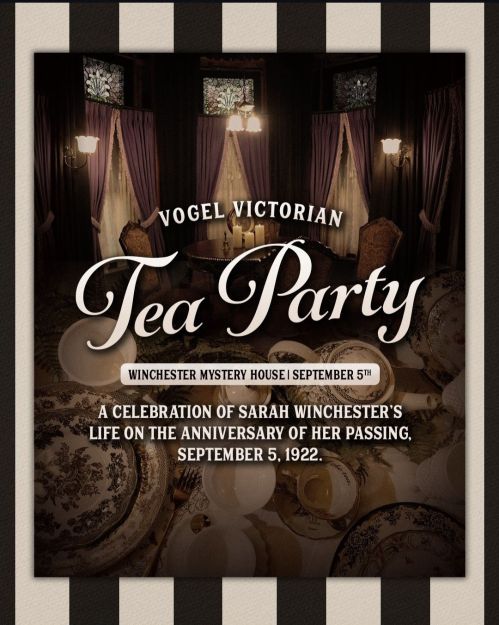
Hostted by the enchanting Vogle Victorian team, this intimite Victorian Tea Party is limited to just 24 guests and includes a Victorian-style séance, blessing jar creations, and tea service inside the mansion. Held on the anniversay of her passing, this intimate gathering offers a unique way to honor Mrs. Sarah L. Winchester in the home where she spent nearly four decades.
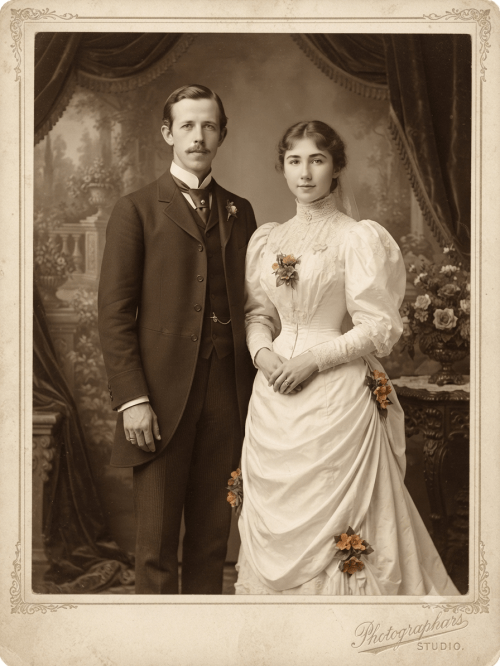
Event detailes:

Date: September 5, 2026
Time: 10am PST & 7pm PST
Includes: Full Tea service, blessing jar material, and the séance experience
Price: $179.99
Limitied spots available, buy tickets at winchestermysteryhouse.com

Harris Plumbing, Heating, Air & Electric has been serving our community for 30 years—an achievement few companies can claim. That longevity isn’t an accident. It’s the result of hard work, integrity, and a commitment to doing every job the right way, whether it’s a simple repair or a complex system overhaul. We take pride in every service call because we know your home is more than a building—it’s where your family lives, grows, and feels safe. Ensuring your comfort and protection is a responsibility we carry with seriousness and gratitude. After three decades, our mission remains the same: to deliver dependable service you can trust, every time.

Harris makes sure you have the clear, accurate information you need to decide what comes next—no matter what your home is facing. Before we begin any work, our technicians perform a full diagnosis and walk you through every issue we find. That means you receive a personalized quote and service plan tailored to your home’s exact needs, not a generic estimate or guess. We believe the only way to deliver our best work is to understand the problem completely and address it with precision, transparency, and care. Your home deserves nothing less. https://www.callharrisnow.com/about-us/


BMW remains one of the most desirable automotive marques because it blends engineering precision with an emotional driving experience that few brands can match. Its vehicles are built around balance, responsiveness, and a sense of connection between driver and machine—qualities that have defined the company for generations. Beyond performance, BMW carries an aura of prestige and craftsmanship: the cabins feel tailored, the technology is purposeful rather than gimmicky, and the design language signals confidence without excess. Owning a BMW is not just about transportation; it’s about participating in a legacy of excellence that continues to set the standard for luxury performance. This commitment to performance is why BMW continues to earn its reputation as The Ultimate Driving Machine. https://www.brianharrisbmw.com/

Randolph Harris San Francisco Taxation & Mergers
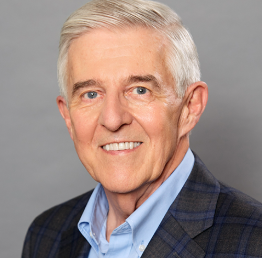
Building strong, lasting client relationships is essential to a successful legal career. Many attorneys assume that mastering legal doctrine alone guarantees success, but law is fundamentally a service profession—our work is measured not only by technical skill, but by how effectively we solve problems for the people who trust us. Long‑term relationships grow from three core commitments: truly knowing your clients, understanding how their legal issues fit within the broader context of their business and personal goals, and consistently delivering exceptional service.

Mr. Randy advises clients on business transitions, taxable and tax‑deferred mergers and acquisitions, joint ventures, restructuring, integrated tax planning, federal and state tax controversy matters, and real estate transactions. His approach is grounded in clarity, responsiveness, and a deep understanding of each client’s unique circumstances. Trust is the cornerstone of every relationship he builds. Ultimately, clients feel confident knowing they are working with someone who not only understands their challenges, but is fully committed to helping them achieve their goals. https://www.jmbm.com/l-randolph-harris.html

Ventris Place — Charming New Homes in Elk Grove
A Community Designed for Comfort, Connection, and Everyday Joy

Elk Grove / South Sacramento, California
Now Selling
From $494,990

Welcome to Ventris Place, the new fabulous 40s. Ventris Place is an intimate neighborhood of 37 beautifully crafted homes set beside Elk Grove’s most treasured natural spaces — the 22‑acre North Laguna Creek Park and the 119‑acre Wildlife Area and Interpretive Trail. Here, nature frames daily life, and every home is designed to feel welcoming from the moment you step inside.
This is the place to be in Sacramento — a community where thoughtful design meets effortless living.

Homes That Feel Like Home
Each residence at Ventris Place is built with a sense of charm and warmth that makes every room feel inviting. Step inside and discover:
- Special interior coves perfect for reading, relaxing, or displaying cherished décor
- Private nooks and quiet corners designed for reflection or creativity
- Open gathering rooms where families can come together for meals, celebrations, and everyday moments
- Light‑filled living spaces that make home feel uplifting and comfortable
- Private side yards ideal for morning coffee, evening unwinding, or weekend barbecues
Whether you choose a single‑story plan or one of the beautifully arranged two‑story designs, each home offers a blend of openness and intimacy — spaces that feel both expansive and personal.

Floorplans That Fit Your Life
Ventris Place offers a curated selection of modern homes:
- 3–4 bedrooms
- 2–3 baths
- 1,196–1,846 square feet
- Rear‑entry 2‑car garages
- One‑story and multiple two‑story options
Every plan is crafted with a “life‑made‑easy” approach — intuitive layouts, smart storage, and rooms that flow naturally from one space to the next.

Steps From Your Door — Recreation, Relaxation, and Nature
North Laguna Creek Park is your extended backyard, offering:
- Paved walking and biking paths
- Tennis courts
- Basketball court
- Playgrounds
- Picnic areas
- Ball fields
- A protected wildlife area
Morning jogs, weekend picnics, sunset walks — it’s all right outside your front door.

Close to Everything Sacramento Offers
Ventris Place places you minutes from parks, attractions, shopping, dining, and entertainment. Enjoy quick trips to:
- Old Sacramento
- Downtown Sacramento
- The historic riverfront district
Families benefit from being part of the Elk Grove Unified School District, known for its strong academic programs and community support.

Ventris Place — Where Home Feels Like a Haven
Charming architecture, welcoming interiors, private spaces, and nature at your doorstep — Ventris Place is more than a neighborhood. It’s a lifestyle built around comfort, connection, and the simple pleasure of coming home.

“I love my 1,900‑square‑foot Danville home at Ventris Place because every inch of it feels intentionally crafted for comfort, connection, and peace. It’s the kind of home that welcomes you the moment you walk through the door — not with grand gestures, but with thoughtful spaces that make everyday living feel effortless.

” The open gathering areas give my family room to laugh, cook, and spend time together, while the quiet coves and private corners offer a place to unwind, reflect, or simply breathe. The layout flows in a way that makes life feel organized and calm, and the natural light that fills each room brings a sense of warmth that never gets old.

“My Danville home feels charming and modern at the same time, with just the right balance of openness and intimacy. It’s a home where mornings feel hopeful, evenings feel restful, and every day feels like it was designed with my life in mind. Ventris Place isn’t just where I live — it’s where I feel grounded, grateful, and genuinely at home.” Abby H.

There is nothing like staying at home for real comfort. https://nextgenerationcapital.us/new-homes-elk-grove-ventris-place/
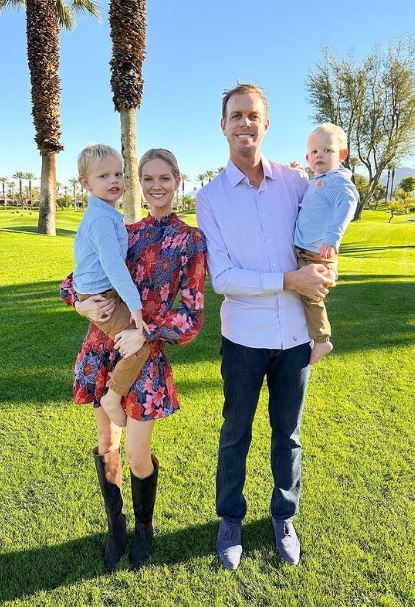

This 22.06 acre park includes the following amenities:
- Ball Field
- Basketball Court
- Gazebo
- Horseshoe Pit
- Lake
- 119.53 Acre Wildlife Area with Interpretive Trail
- Picnic Areas
- Play Areas:
- Adventure Play Area
- Tot Play Area
- Pond*
- Sand Volleyball Court
- Soccer Field
- Tennis Courts – 2
https://www.cityofsacramento.gov/ypce/parks/park-directory/m-n/north-laguna-creek-park

President Trump Loves American Children!

The American Dream starts now .If an infant receives a Trump Account before turning one and no one ever contributes anything beyond the initial federal seed deposit, the account grows solely on market returns. With the standard long‑term stock projection of 7% annually, that original $1,000 deposit compounds for 18 years and reaches a value of about $3,380 by the time the child turns eighteen. However, if someone contributes $1,200 every year from infancy through age eighteen, the account grows dramatically. Those annual deposits accumulate and compound over the same 18‑year period, reaching roughly $40,800, and when combined with the growth of the original $1,000 seed deposit, the total value at age eighteen rises to approximately $44,180. The difference between the two scenarios highlights how powerful consistent contributions can be over time.
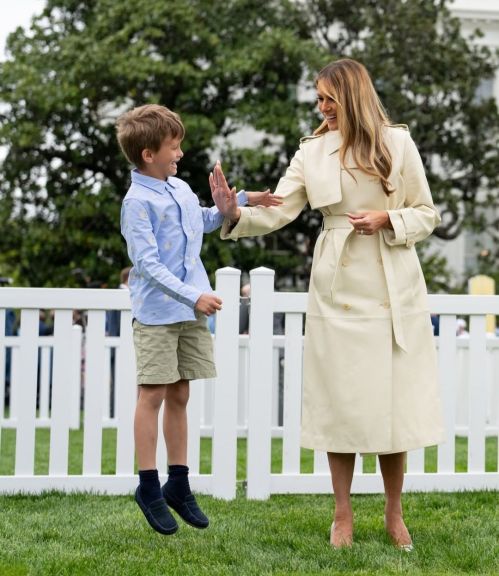
To qualify for a Trump Account, a child must be born in the United States during the years the program is active and must have a valid Social Security number. The account is opened automatically for eligible newborns, funded initially with the federal seed deposit, and remains under custodial management until the child reaches adulthood. Families may contribute up to the annual limit, but contributions are optional — the account will grow regardless, though its final value depends entirely on how much is added over the years.

With the Trump Accounts app, long-term financial security for millions of kids is here. Get tax-advantaged investment accounts for U.S.A. citizens under 18 by downloading the official Trump Accounts app on the App Store or Google Play. https://trumpaccounts.gov/?source=govdelivery

A true patriot loveth his country not for the ease it granteth him, but for the virtue he must uphold within it; for kingdoms stand not by strength alone, but by the steadfast hearts of those who guard their liberty with wisdom and good conscience.