As Algernon Sidney warned, “There is no right in kings but what is in the people,” a reminder that any power seized without consent is fundamentally illegitimate. This principle remains central to understanding how stereotypes, authority, and social narratives shape who is permitted to speak and who is silenced. The problem of the seizure of power brings in its train the problem of the State. The State and the Revolution (1917), which deals with this subject, is the strangest and most contradictory of pamphlets. Mr. Vladimir Lenin employed it as his favorite method, which is the method of authority. With the help of Mr. Karl Marx and Friedrich Engles, he begins by taking a stand against any kind of reformism which would claim to utilize the bourgeois State—that organism of domination of one class over another. The bourgeois State owes its survival to the police and the army because it is primarily an instrument of oppression—”bourgeois” referring here to the property‑owning class whose control of capital, businesses, and productive assets gives it disproportionate social and political power. It reflects both the irreconcilable antagonism of the classes and the forcible subjugation of this antagonism. This authority of fact is only worthy of contempt. “Even the head of the military power of a civilized State must envy the head of the clan whom patriarchal society surrounds with voluntary respect, not with respect imposed by the club.” Moreover, Mr. Engles has firmly established that the concept of the State and the concept of a free society are irreconcilable. “Classes will disappear as ineluctably as they appeared. #RandolphHarris 1 of 5
If the State emerges from the need to manage irreconcilable class antagonisms, then the persistence of those antagonisms must be examined not only in political theory but in the concrete realities of modern economic life. The tensions described by Marx and Engels do not remain confined to the nineteenth‑century industrial world; they reappear, in altered form, within contemporary market economies marked by inflation, widening inequality, and the growing concentration of wealth. Far from dissolving the conditions that give rise to the State’s coercive functions, present economic trends intensify them, revealing how deeply class structure remains embedded in the organization of production and distribution. To understand why the State endures—and why its authority continues to rest on mechanisms of enforcement—we must turn to the material pressures shaping everyday life under late capitalism. Rising home prices, increasing rents, eroding savings, professional wages that fail to keep pace with inflation, and persistently high energy and fuel costs have left many people feeling as though the economy is already in a recession. For a growing share of households, fear of the cost of living has become a defining feature of daily life. Although inflation raises the nominal value of assets such as real estate, stocks, and commodities, it also enables capital‑owning classes to adjust prices and protect their wealth, widening the gap between those who rely on wages and those who benefit from ownership. Recent decades have seen a steady rise in income and wealth inequality—a trend accelerated by the economic disruptions of the COVID‑19 pandemic. #RandolphHarris 2 of 5
Over the past twenty years, the top 1 percent have accumulated roughly twice as much wealth as the bottom 50 percent combined. This widening inequality has raised concerns about its long‑term socioeconomic and political consequences. While some degree of inequality can incentivize work, saving, and innovation, excessive inequality undermines economic growth by reducing capital formation and innovation, weakening upward mobility and social trust, and increasing the risk of financial and political instability. Since 2020, approximately 60 percent of advanced economies have experienced inflation rates above 5 percent—a record high not seen since the 1980s—despite central banks typically targeting inflation in the 2 to 3 percent range. In the developing world, more than half of all countries have faced inflation rates exceeding 7 percent. Although moderate inflation can support economic activity, sustained and elevated inflation often becomes self‑reinforcing and ultimately erodes the foundations of long‑term growth. As rents, mortgages, insurance, cars, and food become increasingly unaffordable, households respond in predictable ways: they cut discretionary spending, delay medical care, take on additional debt, work multiple jobs, move into smaller or shared housing, and begin falling behind on bills. This pattern is already visible across twenty‑two American states. As of March 2026, the unemployment rate remains low at 4.3 percent; yet even in wealthy states such as California, Texas, and New York, many people feel as though they are living through a recession—despite being employed and despite rising property values—because the cost of maintaining a basic standard of living has outpaced their earnings. #RandolphHarris 3 of 5
Economists at the International Monetary Fund have warned that escalating conflict in the Middle East—particularly tensions involving Iran—could slow global economic growth, with persistently high oil prices potentially pushing global inflation toward 6 percent next year. Chief economist Pierre‑Olivier Gourinchas noted that a prolonged oil shock could rival the crises of the 1970s, raising unemployment and deepening food insecurity in vulnerable countries. During the 1970s oil crisis, fuel prices quadrupled, gas shortages spread across the United States, and long lines at stations became a symbol of economic paralysis. Today, with energy costs rising and supply chains strained, some analysts fear that the global economy may be drifting toward stagflation—a period marked by the rare and destabilizing combination of high inflation, stagnant growth, and rising unemployment. When economic pressure rises, evictions increase, and policing of poverty intensifies. Homelessness is rising across the United States, and in many cities, it has become increasingly common for police to arrest or cite individuals for sleeping or living in public spaces. In June 2024, the Supreme Court’s decision in Grants Pass v. Johnson affirmed that municipalities may issue citations or make arrests even when no shelter beds exist, reinforcing the State’s reliance on coercive mechanisms to manage the visible consequences of economic precarity. While the rise of AI has intensified fears of job loss and downward mobility, it does not eliminate social classes; it merely reshapes labor markets in ways that deepen existing class divisions rather than dissolve them. The State dies only when the means of production are socialized, and the exploiting class has been abolished. Even so, the virtues that once built the American dream have not vanished; they sleep beneath the nation’s troubled surface, and at rare moments—like lightning against a dark horizon—they blaze forth as omens of the recovery that a future America will remember as its turning point. #RandolphHarris 4 of 5
The oppression directed at us by our adversaries is no longer met with approving laughter; it is now received by faces marked with bitterness and fatigue. Something fundamental in our collective attitude has shifted, and the change is unmistakable. Yet this shift does not occur in isolation. Another consequence of institutional segmentation is the emergence of socially segregated subuniverses of meaning—worlds in which people no longer share a common vocabulary of experience. As role specialization deepens, the knowledge tied to each role becomes increasingly esoteric, drifting away from the common stock of understanding that once bound individuals together. What results is not merely a change in mood, but a structural fragmentation of meaning itself. The vast majority of the representatives of an empire are not concerned with ideology. They mouth the current line of official doctrine, and rarely know what hits them when they suddenly find themselves on the losing side of an ideological issue because they bet on the wrong protectors. Then, as now, one could live without ever deciding faith, if one were only cautious enough to stick to the right levels: the captains of the bishoprics and their entourage; the chief bureaucrats who kept government going while the fanatics burned; or the mindless employees who served in the manner most recently ordered from above. On the lowest level, also, the ideology of faith hardly mattered; the increasing clerical proletariat was miserably poor and totally subservient and unprincipled. Not even the scholastic intelligenstsia (which always produces the most current intellectual adjustments to dogma, and therefore feels ahead of time) was really concerned with matters of the spirit, not to speak of personal faith. Within any of these groups, there was no need for embarrassing sincerity, nor for an incautious insistence on the enforcement of the dogma. As in all monopolistic enterprises, the law interfered with convenience only if some fanatic, or fool, dragged an issue into the open. #RandolphHarris 5 of 5
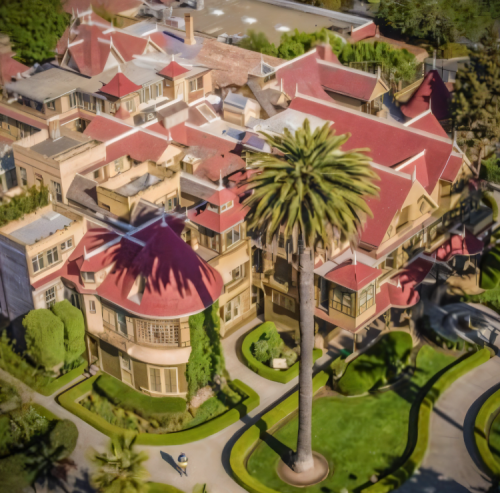
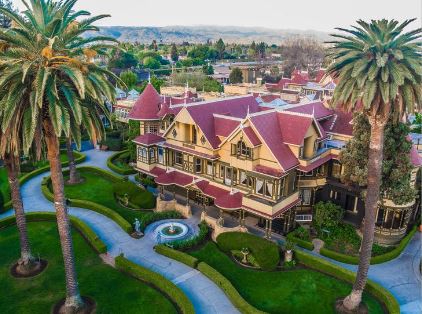
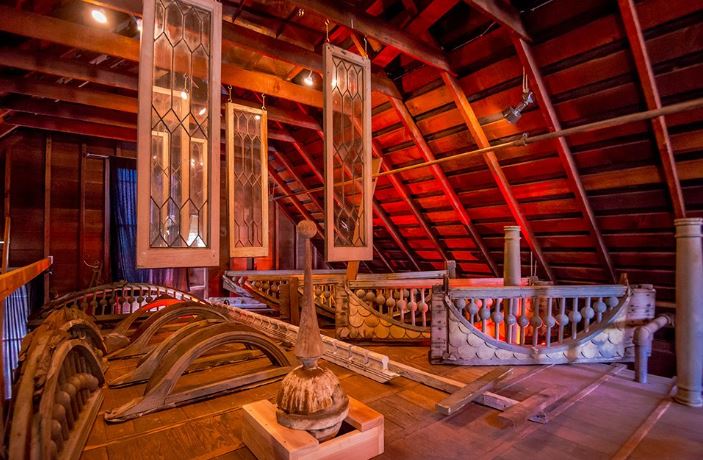
It struck with violence, a deep convulsion that made the ground heave like a living thing. The nine‑story tower, swayed against the pale morning sky. For a moment it held, groaning under its own improbable height. Then a crack split the air—sharp, decisive—and the tower folded in on itself, collapsing in a roar of splintering beams and falling stone.
Much of the fourth floor went with it. Rooms that had once floated above the gardens were ripped open, their walls peeled back like paper. Sunlight poured into spaces that had not seen the sky in what seemed like a century. Dust rose in a thick, shimmering cloud, drifting over the orchards and settling on the verandas like ash.
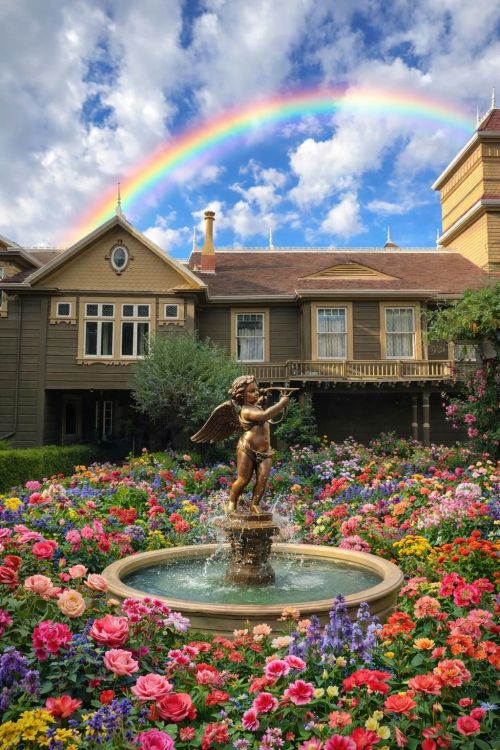
People gathered outside the gates, stunned. Some whispered that the house had finally surrendered to the curse. Others said it was a sign, a warning, a reckoning. But inside the house, in the quiet that followed the quake, something else stirred—an old memory, a familiar resolve. https://winchestermysteryhouse.com/
Marx never imagined that the very forces he believed would liberate humanity could culminate in a system where individuals are dissolved into pure functions—managed, monitored, and mobilized by impersonal machinery more totalizing than any bourgeois state. In other words, this terrifying apotheosis involves the fusion of mass politics, bureaucracy, and technological power, creating a form of domination that no longer even needs ideology—only compliance. This is the nightmare version of reality, where the proletariat is not awakened, but anesthetized. The state is not withering away, but expanding into every crevice of life. The ruling class is not defined by property, but by control of information, surveillance, and administrative machinery. And society is one where alienation is no longer a condition but an identity. In fact, we are living in a world where those in power are prepared for every sacrifice, using every stratagem, ruse, and illegal method possible to conceal the truth, for the sole purpose of penetrating the labor unions and of accomplishing, despite everything, the Communist task. Individuals are becoming interchangeable, administratively managed, so that the very idea of freedom is evaporating. A dictatorship is not what is terrifying, but the disappearance of the people as a conscious force altogether is. #RandolphHarris 1 of 17
The state is not withering away, but expanding into every crevice of life. First, the Democratic Party has everyone focusing on climate change and buying Party electric cars to save the planet. Yet, keep in mind that a typical electric vehicle (EV) battery pack costs thousands to tens of thousands of dollars. Luxury EVs (like Lexus, Mercedes, Lucid) can have battery packs costing $15,000–$25,000 or more. Battery replacement requires specialized labor and high‑voltage safety procedures. Insurance rates are higher partly because battery damage can total a car. Furthermore, EV battery production involves mining lithium, cobalt, nickel, and graphite; significant water use in lithium extraction, environmental damage in mining regions, and energy‑intensive manufacturing. Also, lithium‑ion batteries contain materials that can be harmful if not handled properly. If a battery ends up in a landfill, it can leach chemicals into the earth, catch fire, and it wastes valuable minerals that took enormous energy to extract. When a political party or government frames one solution as the solution, it narrows public imagination. People must realize that North America, before colonization, was ecologically extraordinary. The Pacific Northwest and Northern California supported dense evergreen forests, including redwoods, Douglas fir, cedar, and pine. Parts of coastal California had rainforest-like ecosystems with massive biomass. Indigenous land stewardship (including controlled burns) maintained ecological balance. Wildlife populations were far larger and more diverse. Therefore, the baseline ecological richness was dramatically higher than it is today. #RandolphHarris 2 of 17
Deforestation plays a major role in climate change. Even though climate change is natural, human beings have accelerated its pace. Different political groups emphasize different solutions, but no credible environmental scientist argues that electric cars alone will “save the planet.” Restoring forests, wetlands, and ecosystems is one of the most powerful climate tools we have. Tree planting, reforestation, and ecological restoration are ways to absorb carbon. It is also important that we restore biodiversity, improve water cycles, reduce wildfire severity, and rebuild soil health. The political focus on EVs often overshadows these very important solutions. Just as the political spotlight on EVs eclipses deeper environmental solutions, the intense focus on illegal immigration diverts public energy toward one storyline while diverting attention from the wider challenges facing the country, like the rising cost of living, stagnant wages, and underperforming schools. These issues continue to deepen beneath the surface. Since the start of COVID (early 2020), the overall cost of living in the United States has increased by roughly 20–23 percent. And while public debate is often consumed by symbolic issues, the structural crises that shape everyday life—like the fact that housing costs have risen faster than incomes in more than 90 percent of American counties—continue to intensify with far less political focus. #RandolphHarris 3 of 17
Instead of addressing the underlying drivers of high housing costs—limited supply, restrictive zoning, stagnant wages, and decades of underbuilding—the response has largely been to shift the burden onto government programs and private corporations through subsidized housing and “affordable housing” mandates. Both government subsidies and corporate affordable‑housing requirements are downstream responses. They help people cope with high housing costs, but they do not make housing cheaper to build, nor do they increase supply at the scale needed. Just as political narratives can narrow the environmental conversation to electric vehicles, the housing crisis is often addressed through subsidies and mandates rather than confronting the structural forces—like zoning, supply shortages, and wage stagnation—that caused the crisis in the first place. Subsidized housing is not just scarce—it can also carry emotional, social, and safety burdens that people rarely acknowledge. Waiting lists can stretch years, sometimes a decade or more. Many cities have closed their waitlists entirely because demand is overwhelming. Even people who qualify often never receive assistance. Working families earning modest wages frequently earn “too much” to qualify but not enough to afford market rent. So, the system is strained long before anyone even gets a unit. #RandolphHarris 4 of 17
Even when people do get subsidized housing, it can come with real challenges. Many residents report feeling “looked down on.” Being disrespected by landlords or property managers. Tenants sometimes internalize stereotypes about poverty and feel ashamed or “less than” despite working hard. This is not about personal weakness—it is about how society frames assistance. In many subsidized housing developments, especially those that have existed for decades, you often see long‑term, multi‑generation residency. Families who have lived there for 10, 20, or even 30 years or longer. There is often a strong internal social hierarchy. There are informal “territorial” norms and tight-knit social circles that can feel closed to newcomers. This can create a sense of ownership—not legal ownership, but cultural ownership—over the space. It is not unique to any race or ethnicity. It is a human pattern: when people live in a place for generations, they form a micro‑community with its own rules, alliances, and expectations. Subsidized housing developments can face higher crime rates in some areas. There are sometimes poor maintenance or slow repairs. One may experience inconsistent enforcement of rules. There could be a lack of security measures. There may even be overcrowding or unstable living conditions. These issues are not universal, but they are common enough to be part of the lived reality for many residents. #RandolphHarris 5 of 17
Instead of relying on an ever‑expanding system of subsidized or “affordable” housing programs, workers should be able to earn wages that allow them to choose where they live. Housing should not be a privilege granted through a bureaucratic lottery, nor should people be funneled into designated complexes because their paychecks cannot keep up with the cost of living. This keeps the focus on economic conditions, not on any group of residents. When wages fail to keep up with the cost of living, people are pushed into systems that were never designed to replace economic independence. Subsidized housing becomes a last resort rather than a temporary safety net, and workers lose the freedom to choose where they live. Instead of expanding programs that concentrate people into designated housing, the long‑term solution is to ensure that wages are high enough for people to live with dignity, autonomy, and real choice. Protesting for higher wages makes sense… but is not enough. Workers should demand wages that match the cost of living. That is basic dignity. But here is the structural trap: When wages rise in an economy where housing, healthcare, food, and energy are controlled by powerful market forces, prices often rise right along with wages. That means the real problem is not just low wages—it is a system where the essentials of life become more expensive no matter how hard people work. If raising wages is not enough, and subsidized housing is not enough, then what solves the problem? #RandolphHarris 6 of 17
First, recognize the real problem: the cost of essentials rises faster than wages. The core of the dysfunction is that even if wages rise, housing costs rise, food costs rise, healthcare costs rise, utilities rise, and transportation costs increase. So, workers run in place. This means the problem is not simply low wages. The problem is that the system allows essential goods to become more expensive regardless of wages. The real solution is to address the structural drivers of cost—not just wages. Several major structural forces make life unaffordable. A shortage of housing is a problem because when a city restricts building, prices rise. Another factor is healthcare costs. The United States of America has some of the highest medical costs in the world. Childcare and education costs contribute to the unaffordable cost of living. Furthermore, corporate pricing power adds to the cost of living. In concentrated markets, companies can raise prices faster than wages. Another issue is infrastructure and transportation costs. People are spending more to get to work. If these forces remain untouched, wages will always lag. The real solution is to make the cost of living manageable by addressing the structural forces that drive prices upward. Making the cost of living manageable requires systemic change. #RandolphHarris 7 of 17
If we change the system to make life affordable, does that mean we are moving toward government control of everything? No. It is the kind of structural adjustment that every advanced economy has had to make at different points in history. Communism, in its historical form, means there is no private property. There are also no private businesses, State ownership of all industries, central planning of the economy, and no market competition. Nothing I have described involves any of that. We are talking about making the cost of living manageable, not abolishing markets. Every modern economy — including the United States of America — has gone through periods where it had to adjust the system to keep it functional. Examples are the antitrust laws (to prevent monopolies), labor protections (to prevent exploitation), zoning reform (to allow more housing), public education (to create an educated workforce), and infrastructure investment (roads, bridges, transit). These are systemic changes, but they are not communist. They are part of maintaining a functioning market economy. When the cost of essentials rises faster than wages, that is a market failure. Fixing market failures is not communism. It is basic economic maintenance. For example, allowing more housing to be built increases supply, which will eventually lower prices. Increasing competition reduces corporate pricing power. Reducing healthcare costs increases disposable income, and improving transportation expands where people can afford to live. These are market‑based solutions, not state ownership. #RandolphHarris 8 of 17
The deeper truth: every system needs periodic recalibration. Capitalism without guardrails becomes unstable. Communism without markets becomes oppressive. Most successful countries operate in the space between. They have markets for innovation, regulation for fairness, and public investment for stability. A healthy society is not a hybrid of communism—it is a hybrid of freedom and guardrails, a system where markets operate but are kept in balance by rules that protect ordinary people. Yet in practice, the real power in modern life is not held by property owners alone, but by those who control information, surveillance, and administrative machinery. This means that even well‑intentioned guardrails can be shaped, distorted, or captured by the very institutions that manage them. In recent years, corporations have built company towns. A company town (or corporate‑owned town) is a community where a single corporation owns most or all the housing. The company owns or controls the stores, utilities, and local infrastructure, and most residents work for that same company. In other words, the employer is also the landlord, the grocer, the utility provider, and sometimes even the police authority or school operator. The company becomes the economic, social, and administrative center of the town. In some historical cases, the company influenced or directly controlled local law enforcement, local governance, rules of conduct, and surveillance of workers. This created a power imbalance where the company had near‑total control over workers’ lives. #RandolphHarris 9 of 17
There was a case of a company-owned town in the past. Case Example: Pullman, Illinois (1880s–1890s). The company built the entire town — housing, stores, schools, churches, and utilities. Workers paid rent to their employer, often deducted directly from their wages. The company-controlled housing conditions, local rules and ordinances, prices at the company store, surveillance of workers, and even moral conduct (alcohol, behavior, gatherings). Why it became infamous? When the company cut wages during an economic downturn, it did not lower rents, and workers were trapped. This led to the Pullman Strike of 1894, one of the largest labor conflicts in U.S.A. history. The strike became a national crisis and ultimately led to federal intervention. Google – North Bayshore and Middlefield Park (Mountain View, CA) is a company town that will be composed of 7,000 housing units and 3 million square feet of office/retail planned in North Bayshore, plus 2,000 units in Middlefield Park. These are mixed‑use neighborhoods built by Google near its headquarters. Why is it a modern company town? Google is both the employer and housing provider. Workers can live, shop, and work within Google‑designed districts, and the company shapes the local urban environment. The creation of these towns can be viewed as problematic by some because the company owns the land and, in many cases, the housing is tied to employment with the company, so outsiders are not allowed to buy in. Furthermore, some believe that the company’s contract with governing bodies, like the state or local township, may impose obligations for government officials to withhold public information, often in contravention of local public records laws. #RandolphHarris 10 of 17
There is a fear that employees will be similarly gagged from speaking about agreements or other things that go on within the company. This secrecy is thought to be problematic because companies are in control of every aspect of these towns, including municipal technologies that may violate citizens’ privacy and other rights. There is also a concern about a person’s data becoming a personal digital textbook about the individual, which will allow sensors, cameras, data storage, and wireless infrastructure to profile the individual and get to know them intimately. Through this arrangement, the urban governance would track any person who enters the city and facilitate the collection and transmission of data to applications and services that run on top of the platform of the city. Basically, the data of any tracked person would be shared with the company. Whoever controls the digital layer of the city controls what happens in the city. And when daily life is mediated through systems that people do not design, cannot question, and are constantly monitored by, alienation stops being a passing emotion and becomes an identity. The more power shifts from physical ownership to control of information and administrative machinery, the more individuals experience themselves not as participants in society, but as subjects of a system they cannot see and cannot influence. #RandolphHarris 11 of 17
Technology is shaping society by influencing decision-making and enabling manipulation at a large scale. Simultaneously, it is impeding upon our individual existence as acting agents. As artificial intelligence takes over functions once reserved for human judgment, technology becomes a new arena of power. In a company town, the digital layer — cameras, sensors, facial recognition — can track a person’s movements and trigger interactions designed by the company. When every appearance becomes a data point, and every data point can prompt a response, alienation stops being a feeling and becomes an identity. People are no longer participants in their environment but subjects of an administrative system that sees them before they see themselves. In contemporary environments where digital infrastructures mediate everyday life, the boundaries between physical space, administrative systems, and algorithmic surveillance become increasingly porous. This convergence creates a form of structural vulnerability that can be experienced as targeted monitoring, even when no explicit wrongdoing is observable or provable. Traditional cyberstalking involves interpersonal harassment conducted through digital channels. However, when surveillance capabilities are embedded into the built environment — through facial recognition, access‑control systems, sensor networks, and data‑integrated administrative platforms — the dynamic shifts from interpersonal misconduct to systemic exposure. In such contexts, individuals may perceive themselves as being continuously observable, not by a single actor, but by an institutional apparatus capable of tracking physical movement, logging social interactions, correlating disparate data sources, generating behavioral profiles, and triggering administrative responses. #RandolphHarris 12 of 17
This is not merely an extension of cyberstalking; it is a qualitatively different phenomenon, rooted in the asymmetry between institutional power and individual opacity. A defining feature of algorithmically mediated environments is that patterns can be felt long before they can be demonstrated. Individuals may notice recurring coincidences, shifts in social behavior, or disruptions in interpersonal relationships, yet lack access to the underlying mechanisms that produce these outcomes. This creates a paradox because the experience is real. After all, the effects are observable. The evidence is inaccessible because the systems are opaque. This epistemic gap is itself a form of alienation: the individual becomes aware of patterns without being able to trace their origin, contest their legitimacy, or verify their cause. When institutions possess the ability to correlate data about a person’s movements, contacts, and interactions, they also possess — intentionally or not — the capacity to shape that person’s social ecology. To further highlight this illustration, if an entity can identify who someone meets, where they go, or how often they appear in certain locations, it can indirectly influence who feels safe associating with them, who distances themselves, who receives subtle warnings or administrative pressure, and how the individual is perceived within the community. Even without overt coercion, the mere possibility of such influence can generate social withdrawal, mistrust, and a sense of being “radioactive” within one’s own environment. #RandolphHarris 13 of 17
When the same institutional actors have access to personal information — such as identification records, vehicle registration, insurance data, or financial details — and maintain relationships with law enforcement or regulatory bodies, the power imbalance deepens. This does not imply misuse; rather, it highlights a structural condition. The individual becomes fully legible to the system, while the system remains opaque to the individual. This asymmetry can produce chronic hypervigilance, fear of administrative retaliation, difficulty forming or maintaining relationships, and a sense of being monitored across multiple domains of life. In such conditions, alienation is not merely emotional; it becomes institutionally produced. This is a form of surveillance‑driven alienation, in which digital infrastructures, administrative power, and data integration create conditions where individuals feel exposed, trackable, and socially vulnerable — even in the absence of overt misconduct. This is not about proving wrongdoing. It is about recognizing how modern systems of information, surveillance, and administrative coordination can reshape the lived experience of autonomy, safety, and social belonging. If technology is determining outcomes on our behalf, our agency is curtailed, and our choices may be beyond our control. The curtailing of humanity’s agency and choice is a concrete existential risk. Digitally integrated surveillance systems transform the interpersonal logic of ‘If I can’t have you, no one can’ into a structural dynamic. When institutions can track an individual’s movements, observe their social interactions, and access their personal data across administrative domains, they acquire the capacity to shape or restrict that individual’s social world. This produces a form of system‑level containment in which alienation is not merely an emotional response but an administratively generated condition. #RandolphHarris 14 of 17
In the modern city, surveillance is not an accessory but an architecture. At Ravenwood Heights, cameras lined every hallway, elevator, and lobby entrance, creating a digital layer that observed residents more closely than any neighbor ever could. The building tracked movements, logged patterns, and archived faces, yet it offered no understanding, no empathy, and no protection. Alienation was not simply a feeling inside Ravenwood Heights. It was a structural condition. That truth revealed itself the night the fire began on the 9th floor. A neglected electrical fault ignited storage debris, and the flames spread with alarming speed. Within minutes, the fire breached the stairwell, turning it into a vertical channel of heat and smoke. On the upper floors, alarms blared as residents discovered that the elevators had shut down and the stairwell was impassable. The older building did not allow reentry on lower levels, leaving those above the fire with no safe path downward. The award winning Sacramento Fire Department arrived swiftly. Chief Lukas Reinhardt, known for his calm authority and precise command, assessed the situation with a single upward glance. Smoke poured from mid‑level windows, and silhouettes pressed against the glass on the higher floors. The building’s digital systems had captured every moment of the emergency, but they were powerless to intervene. Human action was required. Reinhardt led his team into the smoke filled lobby, advancing upward through warped doors and failing lights. They reached the upper floors where residents waited in hallways and sealed apartments, frightened and disoriented. Reinhardt ordered an upward evacuation, guiding people toward the roof while paramedics stabilized those weakened by smoke inhalation. On the rooftop, the air was thin but survivable. Aerial rescue crews lifted residents to safety one by one. In a building where surveillance had watched without helping, it was the firefighters and paramedics who restored humanity. Their courage broke through the alienation that Ravenwood Heights had imposed, proving that in moments of crisis, it is human hands, not digital eyes, that save lives. #RandolphHarris 15 of 17
When it comes to firefighting, no matter how large or small the fire is or how routine the call seems to be, there is always the potential for injury. If you see a fire truck stopped in the street without the lights on, be very careful. Sometimes there is an emergency, and you should not pass the fire truck. It might be a good idea to safely turn around and go another way because if you hit someone and they happen to die, you could be charged with manslaughter. Sometimes fire firefighters are getting back into their vehicle, and if you pass the apparatus, you may collide with a firefighter who is on foot. Also, be sure to look at their signals; sometimes emergency vehicles are in motion, albeit slowly, and drivers try to pass them, and this could lead to a dangerous situation. Also, if you are in an intersection when you see an emergency vehicle, continue through the intersection. Drive to the right as soon as it is safe and stop. Obey any direction, order, or signal given by a law enforcement officer or a firefighter. Even if they conflict with existing signs, signals, or laws, follow their orders. When their siren or flashing lights are on, it is against the law to follow within 300 feet of any fire engine, law enforcement vehicle, ambulance, or other emergency vehicle. If you drive to the scene of a fire, collision, or other disaster, you can be arrested. When you do this, you are getting in the way of firefighters, ambulance crews, or other rescue and emergency personnel. The concept of professional courage does not always mean being as tough as nails, either. It also suggests a willingness to listen to other people’s problems, to go to bat for them in a tough situation, and it means knowing just how far they can go. It also means being willing to tell the boss when he or she is wrong. #RandolphHarris 15 of 17
Also, to ensure that we have farmland and buildable land for future use, we need to start limiting the number of people allowed to immigrate to America. Perhaps with the immigrants we do allow into America, there needs to be a diversity program to make sure we have a population that equally represents all races of people. If Americans continue to spend money on American products, then more need to be made to keep up the inventory. When investors notice these goods are selling, it gives them the confidence to pour more money into that local business. It shows that people want these goods made in America and pressures investors to keep these goods and services in America. The jobs stay here, the business stays in America, wages naturally increase, and more money is invested to keep up with demand. This reduces the burden on the taxpayer. When you support American businesses, that money stays in our economy and can help to reduce the national debt. The government creates debt by borrowing from businesses in the private sector or from foreign countries. It also increases the national debt by spending more than it gains in tax revenue in a fiscal year. When people shop locally, more tax money stays in the economy and goes to the government. This way, it keeps more money in our national economy and keeps more jobs located in America which also sends more taxes to the government, which can again help to reduce the national debt. When you buy foreign goods, these companies usually have lighter tax loads or exemptions, meaning less money for the national debt, plus you are helping to strengthen these foreign nations by sending more money overseas. Buying American-made products is also better for the environment and helps to reduce the carbon footprint because these products do not have to travel nearly as far. Furthermore, American companies and manufacturers are held to much higher standards on pollution. American companies must be more careful about air, land, and water pollution and have proper ways to dispose of waste. #RandolphHarris 16 of 17
Under President Trump’s administration, he has made America a priority. President Trump has closed the southern border, illegal crossings have fallen to an all-time low, and are 90 percent lower than under the previous administration. Since President Trump’s crack down on crime, violent crimes in Washington D.C. have dropped by approximately 80 percent. He has stopped thousands of pounds of drugs from entering America and killing citizens. And since President Trump took office, investments in America have increased by trillions of dollars in U.S.A. manufacturing, production, and innovation. As you can see, President Donald Trump and his pledge to “Make America Great Again” is exactly what America needs to save the country and the American people. And yes, diversity is important, so you can see why it is also important to preserve blonde hair and blue eyes, as the people with these characteristics are becoming a minority in America. As a reminder, parents, please teach your children to love America and be patriotic citizens, and to buy goods and services made in America. It is also important to respect law and order and treat your elders with respect. It is inborn in the human mind to wish to know. If this begins with the endless surface questions of a child’s curiosity, if it continues into deeper questions of a scientist’s probing investigation, it cannot and does not stop there. For the higher part of the mind will eventually come into unfoldment, that union of abstract reflective thought with mystical intuition, which is true intelligence, which needs and sees a view of the whole of things. And so, the knowing faculty enters the realm of philosophy. A lot of children are having problems in school and cannot even write a paragraph because they are not reading their books. When you actually read books, you get an example of how to write and will become a better student. Therefore, remember to take your education seriously so that you will be successful in life and make your family proud. Also, to make sure they have all the resources required, please donate to the Sacramento Fire Department to help improve our national security. “Oh, thus be it ever, when freemen shall stand between their loved home and the war’s desolation! Blest with victory and peace, may the heav’n-rescued land Praise the Power that hath made and preserved us a nation! Then conquer we must, when our cause is just, and this be our motto: ‘In God is our trust.’ And the star-spangled banner in triumph shall wave O’er the land of the free and the home of the brave.” #RandolphHarris 17 of 17
William Wirt Winchester had always been a man who saw farther than others. Even as a boy in New Haven, he dismantled clocks, rifles, and anything with gears just to understand how they breathed. His father, Oliver Winchester, recognized the spark immediately. “This one,” he would say with pride, “was born with gunpowder in his imagination.” By the time William reached adulthood, he had already designed several mechanical improvements that caught the attention of the Winchester Repeating Arms Company. His ideas were bold—sometimes too bold for the boardroom—but they worked. He refined the lever‑action mechanism, strengthened the firing pin assembly, and even sketched early concepts for a self‑loading rifle decades before the world was ready to understand them.
When Oliver stepped down, the company needed a leader who could carry the Winchester legacy into a new age. William was elected president unanimously. Newspapers called him the quiet genius of American firearms. His employees called him the man who could see the future. And Sarah Pardee Winchester called him husband.
Their marriage was a union of intellect and tenderness. Sarah, brilliant in her own right, understood William’s restless mind. She encouraged his experiments, soothed his anxieties, and brought warmth to a life otherwise consumed by metal and machinery. Together, they dreamed of a home unlike any other—a sprawling mansion filled with light, music, and rooms for the family they hoped to build. When Sarah was with child, William worked late into the night designing a new rifle mechanism he believed would revolutionize the industry. He wanted to present it to his daughter one day and say, This is what your father built while waiting for you. Their baby girl, Annie, was born on a cool summer morning. William held her with trembling hands, overwhelmed by the fragile miracle of her tiny fingers curling around his thumb. Sarah wept with joy. For a brief moment, the world felt perfect. However, perfection is a fragile thing.
Within weeks, Annie fell ill. Doctors came and went, offering treatments that did little and explanations that did even less. Sarah stayed at her bedside, singing lullabies through tears. William paced the halls, helpless in a way he had never known. Despite every effort, their daughter slipped away. The grief hollowed them. William buried himself in work, creating inventions no one had dreamed possible—rifles with unprecedented precision, mechanisms that seemed almost alive in their efficiency. But each success felt empty without the child he had hoped to teach. Sarah tried to hold them together, but sorrow has a way of reshaping the world. One autumn afternoon, desperate for distraction, they took a family outing to the countryside. They walked through a quiet grove, the leaves whispering overhead. Sarah later said she felt a presence there—cold, watchful, ancient. William brushed it off as imagination. But that night, he fell violently ill.
Doctors suspected poisoning. Possibly chronic arsenic exposurethough they could not determine the source. His condition worsened rapidly. Sarah stayed by his side, holding his hand as she had held their daughter’s. William whispered apologies, dreams unfinished, inventions unbuilt, a life cut short. He died before dawn. Sarah was left alone—widowed, childless, and haunted by the memory of that strange presence in the grove. Some said she imagined it. Others whispered that the Winchesters, whose weapons had shaped history, had drawn the attention of something darker.
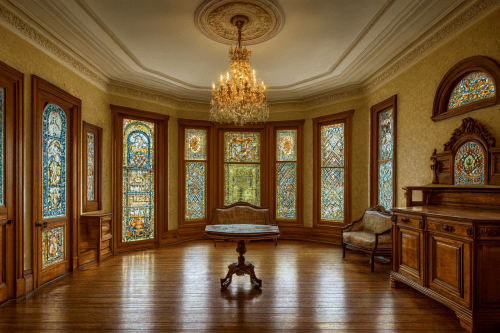
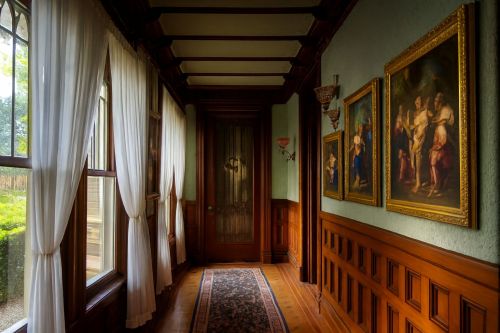
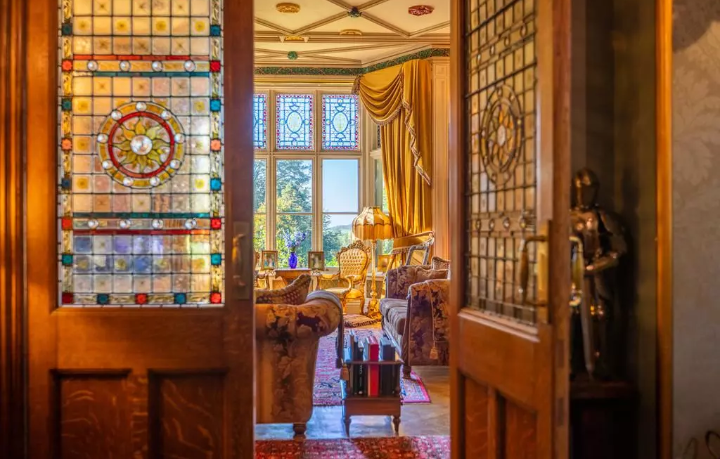
Sarah believed the latter. In her grief, she returned to the plans she and William had drawn together—their dream mansion. A home filled with wonder, creativity, and endless possibility. A place where William’s spirit could live on, where no curse could reach her. She hired crews and began building. And building. And building. Hallways that turned unexpectedly. Staircases that rose into ceilings. Rooms within rooms. Windows that opened to walls. A labyrinth of grief, love, and defiance. Some said she built to confuse spirits. Others said she built to stay connected to William’s genius, continuing the work they had begun together.
But Sarah knew the truth. She wasn’t building a mansion. She was building a promise. A promise that love, invention, and imagination would outlast tragedy. A promise that the curse—real or imagined—would never define her family’s legacy. A promise that William’s brilliance would echo through every beam, every window, every impossible hallway. The Winchester Mansion became her monument to resilience. And in its endless rooms, she kept alive the memory of the man who dreamed of changing the world—and did.
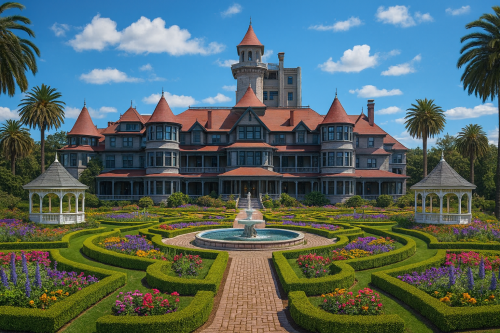
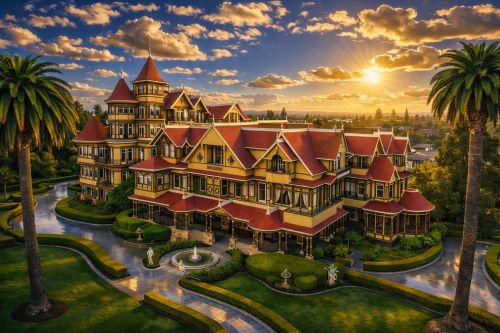
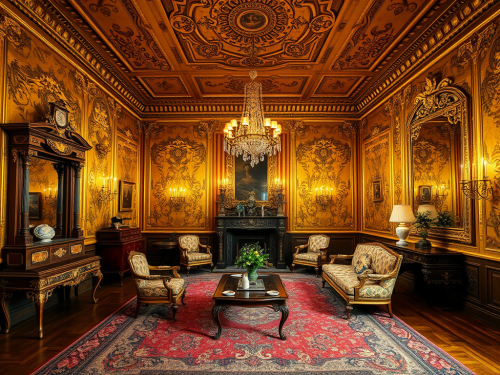
Many event locations claim to be unique, but nothing compares to the Winchester Mystery House. If you’re truly seeking a distinct, one‑of‑a‑kind setting for your milestone celebration or special occasion, reserve a venue that delivers on uniqueness many times over. Whether you’re planning a wedding, birthday or anniversary celebration, corporate gathering, holiday party, or any other meaningful event, the Winchester Mystery House offers an unforgettable backdrop. Give your guests an experience they’ll be talking about for years to come.
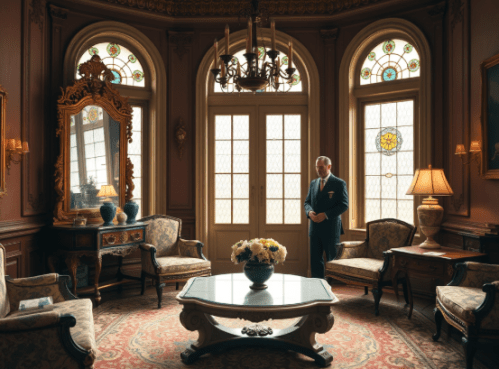
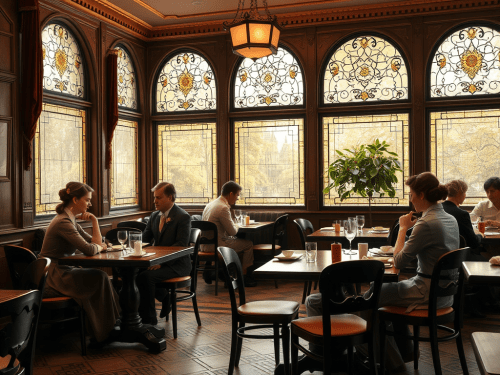
After wandering the winding halls of the Winchester Mystery House—where staircases defy logic and whispers seem to cling to the walls—Café 13 offers a welcome return to warmth and grounding. Newly reopened and serving guests daily from 10 AM to 3 PM, this cozy hideaway invites you to pause, breathe, and gather yourself before diving back into the mansion’s secrets. Here, you can enjoy breakfast, lunch, snacks, and refreshing drinks in a calm indoor space that feels worlds away from the mansion’s twisting corridors. Settle in with a warm meal, challenge a friend to a board game, or simply rest and recharge as sunlight filters through the windows. Café 13 is more than a café—it’s a moment of calm between chapters of the Winchester legend, a place to steady your nerves before returning to the gardens, the grandeur, and the mysteries that await.
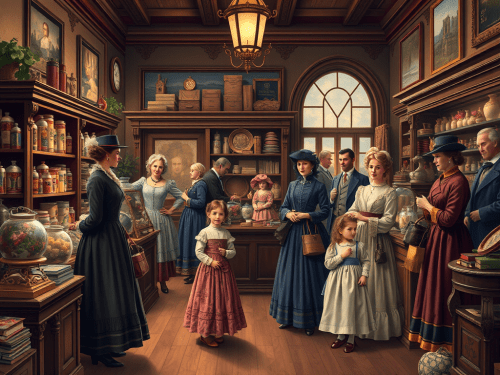
Your journey into the Winchester Mystery House begins long before you cross the mansion’s threshold. It starts at the Mercantile gift shop—a welcoming outpost standing at the edge of a world where history and myth intertwine. Here, beneath warm lights and shelves lined with curiosities, you can secure your tour tickets and prepare for the adventure ahead. Guests often pause for a souvenir photograph, capturing the moment before they step into Sarah Winchester’s enigmatic domain. As you explore the shop, you will find an eclectic array of gifts and keepsakes: tokens of the mansion’s lore, echoes of Victorian elegance, and mementos that carry a touch of the house’s enduring mystery. The Mercantile is more than a gift shop—it is the gateway. https://winchestermysteryhouse.com/
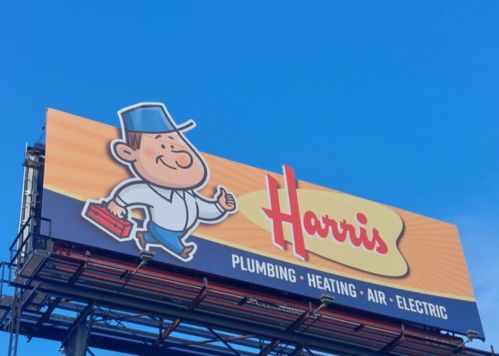
Harris Plumbing, Heating, Air & Electric has been serving our community for 30 years—an achievement few companies can claim. That longevity isn’t an accident. It’s the result of hard work, integrity, and a commitment to doing every job the right way, whether it’s a simple repair or a complex system overhaul. We take pride in every service call because we know your home is more than a building—it’s where your family lives, grows, and feels safe. Ensuring your comfort and protection is a responsibility we carry with seriousness and gratitude. After three decades, our mission remains the same: to deliver dependable service you can trust, every time.
Harris makes sure you have the clear, accurate information you need to decide what comes next—no matter what your home is facing. Before we begin any work, our technicians perform a full diagnosis and walk you through every issue we find. That means you receive a personalized quote and service plan tailored to your home’s exact needs, not a generic estimate or guess. We believe the only way to deliver our best work is to understand the problem completely and address it with precision, transparency, and care. Your home deserves nothing less. https://www.callharrisnow.com/about-us/
BMW’s top ranking in Consumer Reports’ Auto Brand Report Card and its steady market‑share growth highlight the company’s long‑standing ability to build high‑performing, reliable vehicles that truly meet consumer expectations. Unlike other luxury brands that focus primarily on comfort and opulence, BMW distinguishes itself through engineering excellence and unmatched driving dynamics. Every model is designed to create a direct, responsive connection between the driver and the machine—an experience that has defined the brand for generations. This commitment to performance is why BMW continues to earn its reputation as The Ultimate Driving Machine. https://www.brianharrisbmw.com/
Building strong, lasting client relationships is essential to a successful legal career. Many attorneys assume that mastering legal doctrine alone guarantees success, but law is fundamentally a service profession—our work is measured not only by technical skill, but by how effectively we solve problems for the people who trust us. Long‑term relationships grow from three core commitments: truly knowing your clients, understanding how their legal issues fit within the broader context of their business and personal goals, and consistently delivering exceptional service.
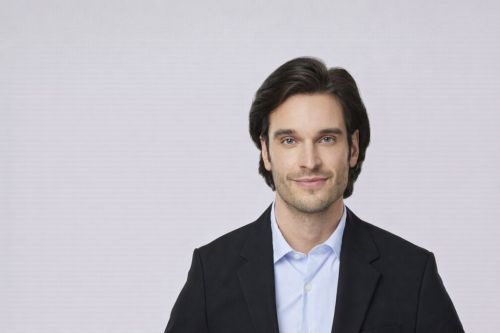
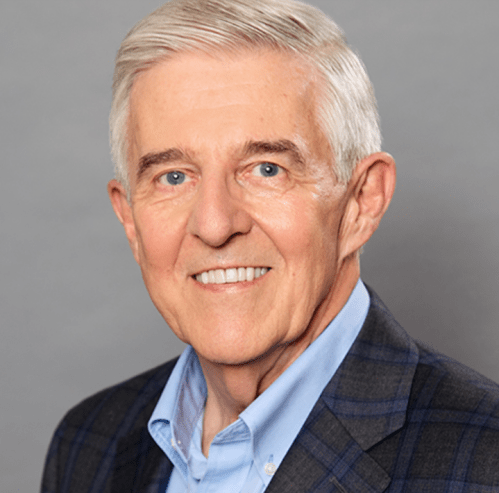
Randy advises clients on business transitions, taxable and tax‑deferred mergers and acquisitions, joint ventures, restructuring, integrated tax planning, federal and state tax controversy matters, and real estate transactions. His approach is grounded in clarity, responsiveness, and a deep understanding of each client’s unique circumstances. Trust is the cornerstone of every relationship he builds. Ultimately, clients feel confident knowing they are working with someone who not only understands their challenges, but is fully committed to helping them achieve their goals. https://www.jmbm.com/l-randolph-harris.html
In the heart of Utah, Millhaven Homes stands as a beacon of architectural excellence and refined living. Each residence we create is a testament to artistry, precision, and the enduring beauty of craftsmanship. We don’t just build homes — we sculpt legacies.
The Art of Custom Living
Every Millhaven home begins with a vision — yours. Our award-winning designers and builders collaborate to transform inspiration into reality, blending timeless elegance with modern sophistication. From grand mountain estates to serene lakeside retreats, we tailor every detail to reflect your lifestyle and aspirations.
Uncompromising Quality: Every element, from foundation to finish, is crafted with meticulous care.
Personalized Design: Your home is a reflection of your story — unique, expressive, and unforgettable.
A Legacy of Excellence
With decades of experience and a reputation built on trust, Millhaven Homes has become Utah’s premier custom home builder. Our commitment to integrity, creativity, and client satisfaction ensures that every project exceeds expectations.
“Luxury is not a price point — it’s a feeling of belonging, beauty, and purpose.”
Experience the Millhaven Difference
From concept to completion, we guide you through a seamless, inspired journey. Our homes are designed to elevate everyday living — where natural light dances across open spaces, where craftsmanship meets comfort, and where every detail whispers sophistication.
Millhaven Homes — Utah’s Master Builder of Luxury Living. Where craftsmanship meets character, and every home tells a story.
Man is a dual being—a living soul—composed of a body of a spirit and a physical body. His spirit existed as an individual personal entity in a premortal life long before the Earth was created. As a matter of fact, this Earth was expressly created as a place for the spirits of men to take on mortality. The clearest teaching on record as to the nature of the spirit of man was given 2254 years B.C., when Jesus as the Christ, in spirit body, appeared to the brother of Jared and said: “Behold, I am Jesus Christ…seest thou that ye are created after mine own image? Yea, even all men were created in the beginning after mine own image. Behold, this body, which ye now behold, is the body of my spirit; and man have I created after the body of my spirit; and even as I appear unto thee to be in the spirit will I appear unto my people in the flesh,” reports Ether 3.14-16. Man’s physical body is patterned after his spiritual body. If he is to attain the freedom and assume the responsibility of true adulthood, a man may have to free himself from being unduly dependent or overly attached to another person. Values are imposed upon things by human feelings, human desires, and human purposes. The common criterion of value is whether a thing or an occurrence brings an agreeable feeling or satisfies a personal want. #RandolphHarris 1 of 22
However, as wants and feelings are subject to change, so likewise first valuations are subject to revision with time. Indeed, it may happen, as indeed in the case of marriage it often does happen, that what was formerly valued as good is later branded as bad. That he should seek the delight of shared understanding and confirmed attitude with friend, family, or co-disciple is to be expected. Tears have power. Followers of Christ are bidden to weep whenever they recite the Christian Bible. In these changing times, we all have to reorient our external lives occasionally, so it is useless to try sentimentally to fix forever relationships that once were. Building upon the foundation of Jesus as the Christ is essential to our happiness. This relationship can continue beyond the grace and answer other questions of the soul, such as what is the purpose of life, how we overcome our weakness, and where do we go after we die? Alma taught the people of his day, “For behold, I say unto you there by many things to come; and behold, there is one thing which is of more importance than they all—for behold, the time is not far distant that the Redeemer liveth and cometh among His people,” reports Alma 7.7. This declaration is equally important to us today as we anticipate and prepare for Christ’s Second Coming! #RandolphHarris 2 of 22
Therefore, behold that Jesus as the Christ is essential to our happiness. This is a sure foundation, “a foundation whereon if men build, they cannot fall.” Doing so prepares us for the challenges of life, come what they may. The environment has so strong an influence over men that their subjective qualities can be neglected. Nature is so stingy and its surplus so small that no radical change in social relations is possible. Nature seems ungenerously until it is shown that the economic environment changes with the changes in men. New classes of men look upon the World in different ways, and the environment they find depends upon their mental characteristics. The laws given by society are not simply the laws of nature; they are laws derived from the combination of natural forces of which society makes use. Modifications of the environment react on men by changing their habits of consumption. Every reduction of cost creates another order of consumption, a new standard of life, which by inducing a new race psychology tends to stimulate new motives in production, new devices, new reductions in cost. This is how a dynamic economy works: progress occurs as a steady upward spiral. #RandolphHarris 3 of 22
The theory of goods in economics is in fact the study of the environments of organisms. The environment of each organism, being the sum of its economic conditions, changes as these conditions change. There is an indefinite number, a series, of environments. Any given environment, once occupied, is soon filled with struggling beings. A progressive evolution depends upon the power of moving from one environment to another and thus avoiding the stress of competition. A series of differing environments presents increasingly complex conditions, requiring a new mental evolution for each transition. A progressive nation passes through a complete series of different environments, even though its geographical location does not change. In a progressive evolution the higher type of animal adjusts to a new environment; among lower animals there is a static competition for the existing limited resources. Thus, the essence of progress is escape from competition. Sensory organisms gain clearer ideas of the environment; motor organisms act with vigour and promptness. In the biological stage of progress, beings are pushed into a local environment in which little thought is required to supply the necessaries of life. #RandolphHarris 4 of 22
The development of motor powers determines who shall survive, and those with inferior motor powers are driven out. Some of these, however, are better fitted to occupy a more general environment in which highly developed sensory powers are of more use. The conquered find a new place to live and create a new society with new requisites for survival. In time the residents of this new society who have the better motor powers will again survive, and those with imperfect motor organization but improved sensory powers are driven once again into a more general environment where new social instincts are needed and a new order is formed. The characteristics of social progress, as distinguished from biological, depend upon this ability to break through from one environment to another. Man has achieved such control over his environment, such development of his sensory faculties, that he has passed out of a pain economy—the primitive economy portrayed in Ricardian economics—into a pleasure economy. The essence of a pleasure economy is not the total absence of pain but the disappearance of fear as a dominant motive. The race slowly loses the instincts of a pain economy and acquires those best suited to the new conditions. #RandolphHarris 5 of 22
In time the pleasure economy’s surplus population will be carried off by temptation, disease, and vice, and thus will be bred a race with instincts to resist extinction by such devices—a truly superior race of men in a social commonwealth. Peoples with varied diets and many wants has a decided advantage over those with simple diet and few wants. The latter class would require a large area of land to support a given number of persons and would thus be at a disadvantage in an economic contest for survival. Consumption itself becomes a lever in progressive evolution. When we modify classical economics, we become open to new perspectives on the possibilities of a life based upon abundance rather than want. The best religion is that which acts most powerfully as a spur to energy and directs that energy most productively. The religion which best fits men for the struggle to survive will be left in possession of the World, just as the “work-bench” philosophy of life is destined to prevail over the “pig-trough” philosophy. The struggle for existence is primarily a group struggle, but the struggle among individuals continues, and promotes the efficiency of the group in its larger conflict. The group that regulates individualist competition by rewarding those who strengthen it most and penalizing it through poverty and failure, those who strengthen it least, is the group that will survive. #RandolphHarris 6 of 22
The best method of getting productive work out of men is the selective method of competition, and rewards are best meted out to valuable citizens by means of private property. The laws of natural selection are merely God’s regular methods of expressing his choice and approval. The naturally selected are the chosen of God. To help in the essential business of survival the churches should preach obedience to the laws of God through pursuit of the productive life. An economist, even a traditional one, more likely than most people, should be able to view his analysis of the mechanisms of choices and see how limited, though essential, an instrument it is. As with so many proposals for new thinking, the concept of a guaranteed income should be welcome as a challenge to theory before it needs to become a program for action. The principle of the guaranteed annual income has to cope with the objection that man is lazy and would not want to work if the principle of work-or-starve were to be abolished. In fact, this assumption is wrong. As overwhelming evidence shows, man has an inherent tendency to be active, and laziness is a pathological symptom. If even for a short time, under a system of “forced labour” where little attention is paid to the attractiveness of work, man seeks to escape from it. #RandolphHarris 7 of 22
If the whole social system is changed in such a way that coercion and threat are removed from the work obligation, only a minority of sick people would prefer to do nothing. It is quite possible that a certain minority of people would prefer what would be the equivalent of the monastic life, devoting themselves completely to their inner development, to contemplation, or study. If the Middle Ages could afford to tolerate monastic life, certainly our affluent technological society is much more able to afford it. However, again, as soon as we introduced bureaucratic methods necessitating that somebody had to prove that he really made “good use” of his time, the whole principle would be spoiled. There is a specific variant of the principle of the guaranteed income which, although not likely to be accepted at present, constitutes an important principle. I am referring to the principle that the minimal requirements for a dignified life are not obtained on a cash basis, but as free commodities and services which do not require payment. We have accepted this principle for elementary schooling, nor does anyone have to pay for the air he breathes, but if democrats have their way, cows will have to pay taxes to live. #RandolphHarris 8 of 22
One could begin to extend this principle of free commodities and services which do not require payment to all higher education, which could be completely free, with a stipend for every student, making it possible for him to enjoy free access to education. We could also extend the principle in another direction, namely, to have basic commodities free, beginning perhaps with free bread and free transportation. Eventually it could be extended to all commodities because they constitute the minimum material basis for a dignified life. Needless to add, this vision is utopian as far as its realization soon is concerned. However, it is rational, both economically and psychologically, for a much more advanced state of society. To recommend that many affluent Americans begin to disconnect themselves from the endless and increasingly mindless process of more and more consumption requires at least a brief comment on the strictly economic implications of such a suggestion. The question is simply, Is it technically and economically possible for the economy to remain strong and stable in the absence of higher and higher consumption levels? #RandolphHarris 9 of 22
At this point, American society is not affluent, at least 40 percent of the population, and a large sector of the remaining 60 percent is not overconsuming. Hence, the question at this moment is not that of restrictions of the growth of our production level, but of redirection of consumption. Nevertheless, the question must be raised—whether, once the legitimate consumption level for the whole population has been reached, whatever it may be (including production which helps the poor nations), and considering the increase in production which corresponds to population increase, there is any point at which production would become stationary; or must we, for economic reasons, pursue the aim of a never-ending increase in production, which also means increase in consumption? It is necessary that economist and planners begin to study the problem, even though at the moment it does not seem urgent from a practical standpoint. For as long as our planning is oriented toward the never-ending increase in production, our thinking and economic practices are influenced by this goal. This is already important in decisions about the rate of annual production growth. The aim of maximal economic growth rate is accepted like the doctrine and covenants, undoubtedly because of the urgency of the real needs, and also because of the quasi-religious principle of the limitless rise of production as the goal of life called “progress,” the industrial version of Heaven. #RandolphHarris 10 of 22
If they have reached it, while language and logic are parts of the social filter which makes it difficult or impossible for an experience to enter awareness, one of the most important parts of the social filter is the one that does not permit certain feelings to reach consciousness and tends to expel them from this realm. In a tribe of warriors, for instance, whose members live by killing and robbing the members of other tribes, there might be an individual who feels a revulsion against killing and robbing. Yet it is most unlikely that he will be aware of this feeling since it would be incompatible with that of the whole tribe; to be aware of this incompatible feeling would mean danger of being completely isolated and ostracized. Hence an individual with such an experience of revulsion would probably develop a psychosomatic symptom such as vomiting, instead of letting the feeling of revulsion penetrate to his awareness. Exactly the contrary would be found in the case of a member of a peaceful agricultural tribe who has the impulse to go out and kill and rob members of other groups. He also would probably not permit himself to become aware of his impulses, but instead would develop a symptom—maybe intense fright. #RandolphHarris 11 of 22
Still another example, one from our own civilization: there must be many shopkeepers in our big cities who have a customer who badly needs, let us say, a suit of clothes, but who does not have sufficient money to buy even the most inexpensive one. Among those shopkeepers (especially the well-to-do ones) there must be a few who would have the natural human impulse to give the suit to the customer for the price that he can pay. However, how many will permit themselves to be aware of such an impulse? I assume very few. The majority will repress it, and we might find among them quite a few who will have a dream during the following night which might express the repressed impulse in one form or another. Another example: the modern “organization man” might feel that his life makes little sense, that he is bored by what he is doing, that he has little freedom to do and think as he sees fit, that he is chasing after an illusion of happiness which never comes true. However, if he were aware of such feelings, he would be greatly hindered in this proper social functioning. Hence such awareness would constitute a real danger to society as it is organized; and as a result, the feeling is repressed. #RandolphHarris 12 of 22
Or, there must be many people who sense that it is irrational to buy a new car every two years and who might even have a feeling of sadness when they have to part from a car they have been using, one that has “grown on them.” Yet if many were aware of such feelings, there would be danger that they would act on them—and where would our economy be, which is based on relentless consumption? Then again, is it possible that most people should be so lacking in natural intelligence that they do not see with how much incompetence many of their leaders—whatever the method by which they came to the top—perform their functions? Yet, if such facts became conscious to more than a tiny minority, where would social cohesion and unified action be? Is reality in this respect any different from what happens in Andersen’s fairy tale of the emperor without clothes? Although the emperor is naked, only a little boy perceives this fact, while the rest of the people are convinced that the emperor is wearing beautiful clothes. The irrationalities of any given society results in the necessity for its members to repress the awareness of many of their own feelings and observations. This necessity is the greater in proportion to the extent to which a society is not representative of all its members. #RandolphHarris 13 of 22
Greek society did not pretend to fulfill the interest of all its people. The slaves, even according to Aristotle, were not full-fledged human beings; hence neither the citizens nor the slaves had to repress much in this respect. However, if they fail to do so, for the societies which pretend to care for the welfare of all, this problem does exist. Throughout human history, with the exception, perhaps, of some primitive societies, the table has always been set only for a few, and the vast majority received nothing but the remaining crumbs that trickled down. If the majority had been fully aware of the fact that they were being cheated, a resentment might have developed which would have endangered the existing order. Hence such thoughts had to be repressed and those in whom this process of repression did not take place adequately were in danger of their lives or freedom. In our recent years in our work with randomly selected hospitalized schizophrenic patients, I have received much clinical conformation for the hypothesis that the more genuine and congruent the therapist is in the relationship, the more probability there is that change in personality in the client will occur. The individual therapists in our research program who seem to be most successful in dealing with these unmotivated, poorly educated, resistant, chronically hospitalized individuals, are those who are first of all real, who react in a genuine, human way as persons, and who exhibit their genuineness in the relationship. #RandolphHarris 14 of 22
However, is it always helpful to be genuine? What about negative feelings? What about the times when the counselor’s real feeling toward his clients is one of annoyance, or boredom, or dislike? My tentative answer is that even with such feelings as these, which we all have from time to time, it is preferable for the counselor to be real than to put up a façade of interest and concern and liking which he does not feel. However, this is not a simple thing to achieve such a reality. I am not saying that it is helpful to blurt out impulsively every passing feeling and accusation under the comfortable impression that one is being genuine. Being real involves the difficult task of being acquainted with the flow of experiencing going on within oneself, a floe marked especially by complexity and continuous change. So if I sense that I am feeling bored by my contacts with this student, and this feeling persists, I think I owe it to him and to our relationship to share this feeling with him. However, here again I will want to be constantly in touch with what is going on in me. If I am, I will recognize that it is my feeling of being bored which I am expressing, and not some supposed fact about him as a boring person. If I voice my own reaction, it has the potentiality of leading to a deeper relationship. However, this feeling exists in the context of a complex and changing flow, and this needs to be communicated too. #RandolphHarris 15 of 22
I would like to share with him my distress at feeling bored, and the discomfort I feel in expressing this aspect of me. As I share these attitudes, I find that my feeling of boredom arises from my sense of remoteness from him, and that I would like to be more in touch with him. And even as I try to express these feelings, they change. I am certainly not bored as I try to communicate myself to him in this way, and I am far from bored as I wait with eagerness and perhaps a bit of apprehension for his response. I also feel a new sensitivity to him, now that I have shared this feeling which has been a barrier between us. So I am very much more able to hear the surprise or perhaps the hurt in his voice as he now finds himself speaking more genuinely because I have dared to be real with him. I have let myself be a person—real, imperfect—in my relationship with him. Realness in the counselor which is deep and true, not superficial creates a transparency which helps to create this element of personal congruence. If everything going on in me which is relevant to the relationship can be seen by my client, if he can see “clear through me,” and if I am willing for this realness to show through in the relationship, then I can be almost certain that this will be a meaningful encounter in which we both learn and develop. #RandolphHarris 16 of 22
It is better to be genuinely what one is, than to pretend to be feeling these other qualities. It is thus by no means a matter of purely theoretical interest for a person to discover how a personality trait is embedded in his structure, with manifold roots and manifold effects; it si also of the greatest therapeutic importance. This requirement could be expressed in the familiar terms of dynamics: one must know the dynamics of a trait before one can change it. However, this word is like a coin that has become a bit shabby and thin through long usage. Besides, it usually suggests the idea of driving forces, and might be interpreted here to mean that one should merely seek such forces, whether in early childhood or in the present. In this case the notion of dynamics would be misleading, for the influence that a trait exerts on the entire personality is just as important as the factors that determine its existence. It is by no means only in psychological matters that this awareness of structural interrelations is essential. The considerations I have emphasized apply with equal weight to questions of organic illness, for example. No good physician will regard a heart disorder as an isolated phenomenon. He will consider also in what way the heart is influenced by other organs, such as the kidneys and the lungs. #RandolphHarris 17 of 22
And he must know the heart condition in turn affects other systems in the body: how it affects, for instance, the circulation of the blood or the action of the liver. His knowledge of such influences will help him to understand the intensity of the disorder. If it is thus essential in analytic work not to become lost in scattered details, how can the desirable continuity be brought about? We have seen that the concept of the healthy personality is nowhere near as old and venerable as the concepts of the unhealthy personality, maladjustment, and neurosis. However, we have also seen that ideas about how to make one’s self a “better self” or “one’s best self” can be found in present-day writings and those from the past. The early Freudians suggest that you can find a way to better functioning by understanding your past, by thinking and interpreting your dreams. Some suggest getting in “better touch” with your body, with specific parts of your body. Full expression of self is indicated by both Dr. Freud and Lowen. Of course, such free expression should take place in the proper environment and circumstances—often a psychotherapist’s office, but also in one’s own home and in the company of understanding, helpful friends. The newness of the concept of healthy personality gently reminds us that we ought not to put aside any of the many routes to self-actualization or self-realization. These varying methods recognize the necessity, at times, for careful professional help, but they do not deny the value of self-help and help from those who truly love and care about you. #RandolphHarris 18 of 22
The Sacramento Fire Department exists to provide a safe environment for the community by minimizing the impact of fire and injury through public education, quality service, emergency preparedness and an overall culture of safety. Their number one goal is and will always be firefighter safety. Safety is both an individual and team responsibility. Supervisors and employees must take an active role in their personal safety and the safety of their crews. “Fires with multiple fatalities are hard to deal with. I was at my second station in the course of my probationary period, and there was a structure fire in Downtown Sacramento. Both floors of this large two-story residence were pretty well involved. There were reports of possible trapped victims, and it was early enough in the morning that there was a good possibility that there were people in there. That made me anxious over their fate. I was with the engine company, and we attacked the fire with a hose line. It was a real hot, down-and-dirty, nasty kind of fire. We took some pretty good fire going in. On the second floor, we discovered the first couple of fatalities, because we crawled right past them as we were knocking down the fire. They probably died of smoke inhalation, but they were considerably burned in the course of the fire. There were four fatalities in all. #RandolphHarris 19 of 22
“Rookie firefighters were always assigned to help with the body removal. They try to prepare you for this in the academy, but it’s something you can’t fully comprehend until you’ve been there. It was a pretty helpless feeling. We rookies were assigned to assist the coroner in putting the victims on the gurney and removing them from the fire scene out to the coroner’s van. I remember having a well of emotions inside me, almost to the point of tears. A lot of questions went through my mind: did we do everything we could have done, was there something we could have done sooner or differently that would have changed the outcome? After mulling over these questions for a period of time, I was pretty satisfied that we had done everything that we could, that this thing had just run its course, and there wasn’t much we could have done to change it.” The leadership of the Sacramento Fire Department are good stewards of taxpayer’s funds. They strive to be fiscally responsible with City funding and make prudent financial decisions. The Sacramento Fire Department is a well trained and educated workforce and those qualities are essential to an effective fire department. They provide their firefighters and professionals with knowledge support and opportunities to improve their physical health, wellness and fitness in order to enhance job performance and an overall healthy personal lifestyle. Great people can liberate great feelings in others or lift them toward acceptance of true ideas. You can help them in their mission of saving lives and the community by donating. #RandolphHarris 20 of 21
Few people know what love really means because with nearly all it is filtered through the screens of bodily and selfish considerations. In its pure native state it is the first attribute of the divine soul and consequently it is one of the most important qualities which the seeker has to cultivate. Remember parents, teach your children to love American, to be proud to be American and to be patriotic. I bear you my witness of the divinity of the Saviour of the World and of His redemptive love and power to heal, strengthen, and lift us when we are earnestly striving to come unto Him. Conversely, there is no way we can move with the crowd and also toward Jesus. The Saviour has defeated death, disease, and sin and has provided a way for our ultimate perfection if we will follow Him with all of our hearts. “We believe in being subjects to kings, presidents, rulers, magistrates, in obeying, honouring, and sustaining the law,” reports the Articles of Faith. Respect is an expression of our sense of universal brotherhood or sisterhood—a testimony of our membership in the human family. It acknowledges our common humanity and shows our reverence for children of God. The gospel teaches us that we are to hold the same esteem for others that we would hold for ourselves. Acting disrespectfully suggests we do not esteem the other person as ourselves. #RandolphHarris 21 of 22
For example, prejudice is a result of disrespect for our fellowman. We cannot participate in attitudes of prejudice without distancing ourselves from others. True respect, then, comes as we develop our ability to love our brothers and sisters as ourselves. Gossip, another everyday form of disrespect, is incompatible with love. If they were present, what we say about people in their absence should be what we would say to them, with love. Feeling empathy for others is a symptom of respectful behaviour, while feeling unsympathetic is a symptom of disrespectful acts. Vouchsafe unto us, O Lord, wisdom equal to our strength and courage equal to our responsibilities, to the end that our nation may lead the World in the advancement and fulfillment of human welfare. I pledge allegiance to the Flag of the United States of America, and to the Republic, for which it stands, One Nation, under God, Indivisible with Liberty, and Justice for all. May all nations become aware of their common unity and all the peoples of the World be united in the bonds of brotherhood before Thee, the Father of all. Amen. #RandolphHarris 22 of 22
For over 40 years, Cresleigh Homes® has designed and built sophisticated, custom, luxury homes with precision and dedication to fulfill the clients’ goals, ensuring the functionality and longevity of these spaces. Our homes are built with the utmost care for your vision and industry standards. Book a tour today. https://havenwood.cresleigh.com/
Commitment is the enemy of resistance, for it is the serious promise to press on, to get up, no matter how many times you are knocked down. Besides commitment, there are other thing necessary for planning an honest government; technical skill and capital. Here lies one of the great possibilities for the West (and for Russia) if they reconcile themselves to the support of democratic socialist regimes: they can give technical assistance and long-range inexpensive credits and grants to permit countries like India, Indonesia, et cetera, to develop an industry under much more favourable conditions than, for instance, China enjoyed. That country had very little economic aid from the outside, for instance, with the heavy capital investments that helped the industrialization of Czarist Russia. The nearly created counties in Africa are at the “take-off” stage. There are many other countries that are still at an economically primitive stage. The methods for the economic development of these countries must be as varied as these countries are; nevertheless planning, government ownership of important sectors of the economy, honest government, foreign aid in acquiring technical skill and capital, will be necessary for these countries too. One main objection to the suggestions to support democratic socialist systems in the underdeveloped countries will probably be that such systems will tend to join politically with the Russian-Chinese bloc, and be aligned against the West. This view sounds plausible only if one confuses Russian and Chinese communism with each other, and both with democratic socialism because they all have the words “Marxism” and “socialism” in coming. However, this is a factual misunderstanding. #RandolphHarris 1 of 18
Not only have democratic socialists all over the World shown their fundamental opposition to Russian r Chinese communism, not only have most of them always refused to enter into alliances with the Communist “Marxists,” but democratic socialism is, in fact, a much greater challenge to Russian and Chinese communism than any feudal or “capitalist” system in the underdeveloped countries. Such systems will eventually fall, but viable democratic socialist systems will demonstrate that the Russian-Chinese claim that their systems are the only alternative to capitalism is wrong. They will act as a dam to the political expansion of the Russian-Chinese bloc, but they can also serve as a bridge between that bloc and the United States of America-European bloc in a multicentered World. It is therefore, as sure as anything can be that central international problem for the future is the organization of the World community in which the United States of America, Western Europe, Japan, and Russia are joined by powerful industrial states in Asia, Latin America, the Middle East, and Africa—in about that order; and that, within something like seventy-five years, the bulk of the presently underdeveloped areas will have attained economic maturity. The difference between us may lie in the emphasis that for many of the underdeveloped countries democratic-socialist systems will be necessary if the organization of an industrial World community is to be achieved. The acceptance of this policy requires not only that we in the United State of America overcome deep-seated, yet erroneous cliches and irrational allergies toward certain words—such as socialism, government ownership of industries, et cetera. It requires, in addition, important changes in our dealings with our European allies and in our own policy in Latin America. #RandolphHarris 2 of 18
As for as our policy with regard to our European allies is concerned, we have already made a good beginning with King Charles III to help preserve the monarchy of the United Kingdom. In President Trump’s period, he began to recognize African neutralism as legitimate, had a peaceful relationship with North Korea and Russia, and helped protect Jerusalem as a holy land. Yet, the real danger is that we will not go the whole way, and that we will permit our Western allies to push us into compromises with the last remnants of their colonial policy, in exchange for their adherence in Western alliance. The United States of America and Egypt mark more than a century of diplomatic cooperation and friendship, the United States of America stands with Egypt and the Egyptian people to promote regional security, bolster economic resilience, advance people-to-people ties, tackle the climate crisis, strengthen a critical defense partnership, and support Egyptians in their pursuit of a prosperous future which protects fundamental freedoms for all. The United States of America and Egypt are cooperating closely to de-escalate conflicts and promote sustainable peace, including by supporting United Nations mediation to enable elections in Libya as soon as possible and restoring a civilian-led transition in Sudan through the Framework Political Agreement. The United States of America and Egypt share an unwavering commitment to a negotiated two-state solution as the only path to lasting resolution of the Israeli-Palestinian conflict and equal measures of security, prosperity, and dignity for Israelis and Palestinians. Building on Egypt’s transformational peace with Israel, the United States of America and Egypt are partnering to foster further regional cooperation, including through the Negev Forum process. #RandolphHarris 3 of 18
The United States of America is engaged with Egypt, as well as Sudan and Ethiopia, to advance a swift diplomatic resolution on the Grand Ethiopian Renaissance Dam that safeguards the interest of the three parties. The United States of America and Egypt have shared commitment to strengthening bilateral economic cooperation for the mutual benefit of the American and Egyptian people, including through expanding trade, increasing private sector investments, and collaborating on clean energy and climate technology. The United States of America has invested $600 million to digitize Egypt’s telecommunications sector, and Egypt has imported nearly $6 billion from the United States of America to construct, expand, and modernize Egyptian infrastructure to meet the needs of a growing population. As Egypt continues to confront the global repercussions of Russia’s aggression against Ukraine and resulting food insecurity, the United States of America commends Egypt for concluding agreement with the International Monetary Fund on December 16, 2022 that is crucial to stabilizing its economy and enabling vital reforms. The United States of America and Egypt have committed to establishing a joint Economic Commission that will further enhance cooperation on all economic and commercial issues. Algeria is a strategically located country with which the United States of America engages on diplomatic, law enforcement, economic, and security matters. Bonds reach back to the 1795 Treaty of Peace and Amity, and in the modern era diplomatic relations date from 1962, when Algeria became independent from France. The United States of America and Algeria conduct frequent civilian and military exchanges. The two countries participated in the fifth U.S.A.-Algeria Strategic Dialogue in March 2022. They also held a joint Military Dialogue that same month. #RandolphHarris 4 of 18
U.S.A. engagement in Algeria has three primary objectives: expanding our security and military cooperation, growing economic and commercial links, and building educational and culture bonds between Algerians and Americas. Exchanges of expertise play a valuable role in strengthening the U.S.A.-Algeria law enforcement and security relationship at both the senior and working levels. Programming from the State Department’s Bureaus of Counterterrorism (CT) and International Security and Nonproliferation (ISN) enables us to work with Algerian law enforcement and security agencies to interdict and investigate a wide variety of crimes and terrorist activities in strategic areas of capability like advanced investigation and prosecutorial techniques and border security. Our Middle East Partnership Initiative (MEPI) has supported the work of Algeria’s civil society through programming that provides training to journalists, businesspeople, female entrepreneurs and parliamentarians, legal professionals, and the head of leading non-governmental organizations. There are close to 5,000 alumni of U.S.A. government exchange programs throughout Algeria. Our programs support youth entrepreneurship, and English language learning and teaching, women’s empowerment, media engagement, and cross-cultural dialogue. In 2019, Algeria and the United States of America signed a Memorandum of Understanding aimed at protecting and preserving Algeria’s cultural heritage. The United States of America is one of Algeria’s top trading partners, and Algeria is one of the top U.S.A. trading partners in the Middle East/North African region. #RandolphHarris 5 of 18
According to the World Bank, the United States of America was the top source of stock Foreign Direct investment (FDI) into Algeria as of 2020, providing 28 percent or $6.2 billion of total FDI. Most U.S.A. FDI in Algeria has been in the hydrocarbons sector. The two countries have signed a Trade and Investment Framework Agreement (TIFA) that provides a platform to address impediments in the economic relationship and identify paths to broader commercial interaction. The two countries held TIFA talks in June 2022. The United States of America supports Algeria’s desire to diversity its economy, encourage a transition to renewable energy, move toward transparent economic policies, and liberalize its investment climate. Algeria and the United States of American belong to several of the same international organizations, including the United Nations, the International Monetary Fund, and the World Bank. Algeria is an active member of the Global Counterterrorism Forum (GCTF) and serves as the co-chair of the organization’s West Africa Working Group. Alegria is also a Partner for Cooperation with the Organization for Security and Cooperation in Europe, an observer to the Organization of American States, and an observer to the World Trade Organization. It also occasionally provides airlift and other logistical support to UN and AU peacekeeping operations. U.S.A. relations with the Democratic Republic of the Congo (DRC), led by the State Department of African Affairs, are deep and longstanding. U.S.A foreign policy is focused on advancing our mutual global priorities, including advancing democracy and human rights, combating the climate crisis, countering wildfire and timber trafficking, responding to multiple security, health, and humanitarian crises, and securing supply chain of critical minerals necessary for the global transition to cleaner forms of energy and mitigation of transnational organized crimes. #RandolphHarris 6 of 18
The United States of America is the DRC’s largest bilateral doner. The United States of America established diplomatic relations with the DRC in 1960, following its independence from Belgium. Following independence, the country saw a mix of unrest, rebellion, secession movements, a three-decade long dictatorship, armed conflict, and foreign intervention, including on the DRC’s territory. The DRC’s last protracted conflict, commonly known as Africa’s World War (2998-2003), involved nine African countries and resulted in more than 3 million deaths in the DRC from the fighting and ensuing humanitarian crisis. In 1997, the 32-year regime of Mobutu Sese Seko was overthrown by Laurent Kabila, who was in turn succeeded by his son, Joseph Kabila, who was named head of States in January 2001 following his father’s assassination. The DRC’s development and humanitarian needs are vast. U.S.A. assistance supports a more stable democratic nation by improving the capacity and governance capabilities of core national-level institutions, creating economic opportunities, responding to urgent humanitarian needs, and addressing the root causes of conflict. The United States of America has provided more than $1.7 billion in health assistance to the DRC over the past 20 years and has worked with the DRC for decades fighting deadly diseases and viruses. Approximately $112 million in bilateral PEPFAR funds were implemented in FY 2022. The United States of America provides more than $500 million annually in humanitarian assistance in the DRC to help relieve suffering for those affected by conflict and support government efforts to provide services to its citizens. #RandolphHarris 7 of 18
Returning now to the social conditions for necrophilia, the question arises: What is the relation between necrophilia and the spirit of contemporary industrial society? Furthermore, what is the significance of necrophilia and indifference to life with regard to the motivation for nuclear war? We shall not be too concerned with all the aspects motivating modern war, many of which have existed for previous wars as they do for nuclear war, but only with one very crucial psychological problem pertaining to nuclear war. Whatever the rationale of pervious wars may have been—defense against attack, economic gain, liberation, glory, the preservation of a way of life—such rationale does not hold true for nuclear war. There is no defense, no gain, no liberation, no glory, when at the very “best” half the population of one’s country has been incinerated within hours, all cultural centers have been destroyed, and a barbaric, brutalized life remains in which those still alive will envy the dead. I cannot accept those theories which try to persuade us that the sudden destruction of 180 million Americans will not have a profound and devastating influence on our civilization or that even after nuclear war has stated, such rationality will continue to exist among the enemies that they will conduct the war according to a set of rules which will prevent total destruction. Why is it that in spite of all this, preparations continue to be made for nuclear war without any more widespread protest than that which exists? How are we to understand why more people with children and grandchildren do not stand up and protest? Why is it that people who have so much to live for, or so it would seem, are soberly considering the destruction of all? #RandolphHarris 8 of 18
There are many answers; one important answer seems to lie in the fact that most people are deeply—although mostly unconsciously—anxious in their personal lives. The constant battle to rise on the social ladder and the constant fear of failure creates a permanent state of anxiety and stress which makes the average person forget the threat to one’s own and the World’s existence. Furthermore, the only reasons nations like America are not preaching birth control and trying to limit and reduce the population, which would reduce prices, the strain on the planet, and people is because we are a consumer driven World. Corporations and the pharmaceutical industry greatly profit from overpopulation and its consequences. There are many answers of why people want to see the destruction of life; yet none of them gives a satisfactory explanation unless we include the following: that people are not afraid of total destruction because they do not love life; or because they are indifferent to life, or even because many are necrophilous. This hypothesis seems to contradict all our assumptions that people love life and are afraid of death; furthermore, that our culture, more than any culture before, provides people with plenty of excitement and fun. However, maybe all our fun and excitement are quite different from joy and love of life? Life is structured growth, and by its very nature is not subject to strict control or prediction. In the real of life others can be influenced only by the forces of life, such as love, stimulation, example. Life can be experienced only in its individual manifestations, in the individual person as well as in a bird or a flower. #RandolphHarris 9 of 18
There is no life of “the masses,” there is no life in abstraction. Our approach to life today becomes increasingly mechanical. Our main aim is to produce things, and in the process of this idolatry of things we transform ourselves into commodities. People are treated as if they do not deserve to live other than to consume and pay bills. This lead is to consider are people living beings? People love mechanical gadgets more than living beings and that is probably because the World is overpopulated and money, status has replaced real, true, genuine love. People want to be idolized. They do not want to love or be loved. One is interested in people as objects, in their common properties, in the statistical rules of mass behaviour, not in living individuals. All this goes together with the increasing roe of bureaucratic methods. In giant centers of production, densely populated big cities, expansive countries, humans are administered as if they are things; humans and their administrators are transformed into things, and they obey the laws of things. However, humans are not meant to be a thing; if humans become things, they are destroyed; and before this is accomplished one becomes desperate and wants to kill all life. In a bureaucratically organized and centralized industrialism, tastes are manipulated so that people consume maximally and in predictable and profitable directions. Their intelligence and character become standardized by the ever increasing role of tests which select the mediocre and unadventurous in preference to the original and daring. Indeed, the bureaucratic-industrial civilization which has been victorious in Europe and North America has created a new type of human; one can be described as the organization man or woman, as the automaton man or woman, and as homo consumens. #RandolphHarris 10 of 18
Human beings are, in addition, homo mechanicus; a gadget man or woman, deeply attracted by all that is mechanical, and inclined against that which is alive. It is true that humans’ biological and physiological equipment proves them which such strong impulses for pleasures of the flesh that even homo mechanicus still has desires for pleasure of the flesh and looks for men and/or women. However, there is still no doubt that the gadget man or woman’s interests in men and/or women is diminishing. And wait until virtual robots come along that cannot be distinguished from living beings. It might actually help to reduce the population on this overpopulated planet. To compete for a man’s interest, a woman may have to buy perfume that smells like a new sports-car. Indeed, any observer of human behaviour today will confirm that this is more than a cleaver joke. There are apparently a great number of men and women who are ore interested in sports cars, television and mobile phones than they are in women and/or men, love, nature, food; who are more stimulated by the manipulation of nonorganic, mechanical things than by life. It is not even too far-fetched to assume that homo mechanicus is more proud of and fascinated by devices which can kill millions of people across a distance of several thousand miles within minutes, than one is frightened and depressed by the possibility of such mass destruction. One day, men may love their trucks and women their hair more than dogs. #RandolphHarris 11 of 18
All the foregoing suggests that the definition of mental illness is arbitrary in a degree far greater than it true for physical illness. It is the discretionary quality of the definition of mental illness which at once poses a problem and points to an element of solution. Mental illness is a relative rather than an absolute matter. Failure fully to recognize this leads to confusion, circular reasoning, unrealistic goals, and unnecessary frustration. We are broadly accustomed to the notion of relativity as expressed in culture-to-culture variation in determinants of normal or adjusted personality. The works of Mead and Benedict were among the earliest to demonstrate that ways of behaving which are considered deviant and sick in one culture represent the “normal” pattern of the typical individual in another culture. Benedict, for example, describes an orientation toward property among the Kwakiutl Indians of the Pacific Northwest leading to behaviour that in our society could be seen as paranoid in nature. We can appreciate even the subcultural referents of behaviour disorder. Thus, the effective well-adjusted member of a rapidly paced and technologically based acquisitive-consumptive North American metropolis would find one’s modus operandi highly maladaptive if one persisted in them in one of the Hutterite cooperative communities of the Midwest. It is no so commonly recognized that, for a given culture, the extent and nature of mental illness is a function of a relativistic definition which is variable over time—being one time rigorous, conservative, and applicable to small numbers of persons, being another time loose, liberal, and appropriate to huge numbers. #RandolphHarris 12 of 18
The total incidence of mental illness in the population is greater during those periods in the national economy which support the expense of mental health census-taking than during economic periods than do not support such surveys. The greater the number of psychiatrists, psychologists, and other trained mental health experts in the population, the higher the incidence of mental illness. The essential case-finding orientation of public health surveys is such as to encourage applications of a liberal rather than a conservative definition of illness; and, with emphasis on the goal of finding all cases showing even the slightest extent of pathology, there is an accompanying increase in the number of false positives, persons erroneously labeled ill. By contrast, when the population is not surveyed, and when health statistics are based purely on cases brought to formal diagnosis by hospital, clinic, or physician, we have a gnawing awareness of the existence of a large number of false negatives, persons whose actual pathology has escaped the gross dragnet of society’s diagnostic institutions. In this light, we can think of cultures (or subcultures) as being of a “false positive” or “false negative” type or, perhaps more accurately, as having false positive or false negative periods. The liberally oriented economically expansionist, welfare state will be a false positive culture, id est, borderline cases will tend to be systematically labeled sick. The reactionary, economically retrenching, laissez-faire society will provide a false negative culture, id est, borderline cases will tend to be systematically labeled not sick. In this context, “borderline” cases are by definition those that are of very mild or minor pathology, if any, and that are not reliably (unanimously) diagnosed by independent clinicians. #RandolphHarris 13 of 18
This view of the case-finding process suggests the joint operation of two powerful and not necessarily independent factors in the definition of mental illness: the economy of the culture and the value system of the culture, the latter variously interiorized and individualized by the personnel who conducts surveys. In recent years experts representing those of the social sciences most directly concerned with problems of mental health and social welfare have been meeting to wrestle with the issues of theory and method arising in a newly evolving area of research, the area of social psychiatry. When these experts addressed themselves to the problem of “Definition of a Case for Purpose of Research in Social Psychiatry,” they generated a spectrum of suggestion ranging from denial of the existence of any good, workable criteria by which to define cases, to proposal of the highly workable, but grossly restrictive criterion of persons-who-confront-psychiatrist. Falling between these extremes were abstract criteria for defining mental health or measuring mental illness; they were abstract in the sense that the concrete procedures for application of the criteria were usually not specified. Here are a few examples: A two-dimensional criterion in which adjustment is expressed in 1) method of problem management and 2) need-free perception. On the first dimension, maladjustment is expressed by failure to face problems, failure to consider alternative solutions, failure to select an alternative, or finally, failure to implement the decision with action. On the second dimension, maladjustment is expressed by failure of the individual to perceive accurately those aspects of one’s environment with respect to which one has strong needs, failure to hold one’s perception undistorted by one’s needs. #RandolphHarris 14 of 18
A tripartite criterion composed of 1) absence of the urgency to take action (felt by the individual, by society, or both) which characterized major disorder; 2) social agreement between therapist and patient, a sharing of the same values; and 3) a goal of maximization of the patient’s potential (contrasting with restoration to “reasonable adjustment” as a goal in major abnormality). A criterion statement indicating that the areas of appraisal should be the person’s 1) physical health or illness, and adjustment to it; 2) intrapersonal functioning; 3) interpersonal functioning; 4) relationship to one’s value system; and that the mode of appraisal should combine 1) clinical judgment; 2) community option; and 3) the person’s own evaluation of one’s status. A symptom-based criterion in which inefficiency, nonproductivity, and social or moral conflict are emphasized; however, detection of such functional impairment in any of a variety of possibly “pathogenic situations” is seen as appropriately shared by physician, educator, employer, clergyman. A criterion based on the network of the individual’s interpersonal relationships, the kind of relationship one has to all persona important to one. Of course, as it almost certain to happen whenever a group directs its attention to the problem of specifying what is to constitute the unit of observation in a research into an essentially social phenomenon, there was at least one voice raised in protest, denying that it is necessary to describe a phenomenon reliably before one attempts to study the relation it holds to other variables. To a point, this protest is supportable; but if a circumscribed phenomenon to be studied is not defined with reasonable precision, then at least the operations of the research process must be concretely explicated. #RandolphHarris 15 of 18
The existence of various values is implicit in the above general criteria of mental illness or maladjustment. In considering the possible dangers of self-analysis the essential problem is whether it involves a risk of definite harm to the individual. By endeavouring on this adventure singlehanded does one not conjure up hidden forces with which one is unable to cope? If one recognizes a crucial unconscious conflict, without yet seeing a way out, are there not aroused in one such deep feelings of anxiety and helplessness that one might succumb to a depression or even consider suicide? Transitory impairments are bound to occur in every analysis, because any reaching down to repressed material must stir up anxiety previously allayed by defensive measures. Likewise, it must bring to the foreground affects of anger and rage otherwise shut off from awareness. This shock effect is so strong not because the analysis has led to the recognition of some intolerably bad or vicious trend, but because it has shaken an equilibrium which, though precarious, had prevented the individual from feeling lost in the chaos of diverging drives. When a patient meets such a disturbance during the analytical process one may simply feel profoundly perturbed or one may have recurrences of old symptoms. Naturally, then, one feels discouraged. These setbacks are usually overcome after a short while. As soon as the new insight is really integrated, they vanish and give way to those well-founded feelings of having taken a sept ahead. They represent the shocks and pains unavoidably involved in a reorientation of life, and are implicit in any constructive process. #RandolphHarris 16 of 18
It is at these periods of inner upheaval that the patient would particularly miss the helping hand of an analyst. However, we are taking it for granted that the whole process is easier with competent help. Here we are concerned with the possibility that the individual might not be able to overcome these upsets alone and thus be permanently impaired. Or that when one feels one’s foundations shaken one might so something desperate, such as driving or gambling recklessly, jeopardizing one’s position, or attempting suicide. However, the will of the believer “willing” physical death gives the Adversary power of death over that one, and no believer should yield to a “desire to die” until one knows beyond question that God has released one from further service to His people. That a believer is “ready to die” is a very small matter; one must also be ready to live, until one is sure that one’s lifework is finished. God does not harvest His corn until it is ripe, and His redeemed children should be “garnered as a shock of corn it its season. The end of history is always present to us, cutting into our temporal existence and elevating it to the eternal. We live in two orders, the historical and the eternal, and, although they are not identical, they are within each other, for the eternal order reveals itself in the historical order. In opposition to a supranaturalistic eternity with eternal places and being, it holds that the transcendent cannot be expressed in terms of being but only in terms of meaning, for if any present has meaning it has eternity. Eternal Life, the ever-present end of history, includes the positive content of history, liberated from its negative distortions and filled in its potentiality. Eternal Life, then, has two characteristics: unification and purification. #RandolphHarris 17 of 18
Unification means that the dispersed embodiments of meaning in historical activities and institutions have an invisible, supra-historical unity, that they belong to an ultimate meaning of which they are radiations. And purification means that the ambiguous emobidement of meaning in historical realities, social, and personal, is related to an ultimate meaning in which the ambiguity, the mixture of meaning, and distortion of meaning, is overcome by an unambiguous, pure embodiment of meaning. There is something immovable, unchangeable, unshakeable, eternal, which becomes manifest in our passing and in the crumbling of our World. Truth is the kind of error without which a particular kind of living creature could not live. The value for life is ultimately decisive. It is improbable that our “knowledge” should reach farther than it must extend for the preservation of life. Morphology shows us how the sense and the nerves, as well as the brainin proportion to the difficulty of finding nourishment. Would we bear the American flag symbol of freedom into a World where humans are still in servitude? Then from our shackles we must first emancipate ourselves, from ignorance and blinding hate, and set our souls free. I pledge allegiance to the flag of the United States of America, and to the republic, for which it stands, one nation under God, with liberty and justice for all. Charity is Godly. This holiday season, please show your appreciate to the Sacramento Fire Department and make a donation. They have been proudly serving the community since 1851. #RandolphHarris 18 of 18
Winchester Mystery House
People in the late nineteenth century often remarked on how much manners had improved in the past fifty years. Perhaps because the new middle class was just establishing its gentility, that outdid by far the real gentry of the early nineteenth century. When Sarah L. Winchester had guests for dinner a Victorian dinner, they found small menus on the table describing the food they would be served. Servant set and removed a plate for every course, and no one used fingers to touch the food. There were special forks and ladles and knives for every conceivable food: oyster ladles and forks; tomato servers; fish knives and forks; cake knives and servers and forks; different spoons for clear soup, for cream soup, for dessert, for fruit, for breakfast coffee, for dinner coffee, and for tea. The volume and variety of sliver-plated flatware and hollowware would baffle any modern dinner. However, to the Victorian, knowing the code of the correct fork was all-important proof of gentility and all that separated the “right” people from labourers, immigrants, and vagabonds. No one at dinner passed food or served one’s neighbour. Mrs. Winchester’s dinner consisted of “Russian service,” where each course was served by gloved servants who brought each guest measured portions on a plate as in a modern restaurant.
The difference between servant and served was so important because the roles could be revered by a simple change in fortune. The host was in complete control of the guests’ meal by predetermining the order of the courses and the quantity of the food. After dinner, the ladies retired to the drawing room, and the men tarried over their cigars and port. The little doors in the sideboard held places for wine and linens. What is so amazing about Victorian table manner is how successful they were. We may no longer use all the cutlery, but we have internalized their whole system of suppressing bodily functions and being proper. In the early nineteenth century, diners still had to be reminded not to blow their noses on the tablecloth, not to spit food back into serving dishes, not to pick their teeth with their knives, and not to urinate in front of ladies. By the late nineteenth century, etiquette books no longer had to give that kind of advice because it was assumed that people knew enough to control themselves in public. The self-contained, modern, discreet person was invented in the late nineteenth century as a reaction to the loss of control inherent in modern, anonymous city life. The noteworthy element is not how quaint the Victorians were or how different, but how much more like us they are than any other people before them.
For further information about tours, including group tours, weddings, school events, birthday party packages, facility rentals, and special events please visit the website: https://winchestermysteryhouse.com/
Please visit the online giftshop, and purchase a gift for friends and relatives as well as a special memento of the Winchester Mystery House. A variety of souvenirs and gifts are available to purchase. https://shopwinchestermysteryhouse.com/