
Home » Posts tagged 'literature'
Tag Archives: literature

A House That Grew With America: An Invitation to the Winchester Estate

Mrs. Sarah Winchester’s lifetime stretched across one of the most transformative arcs in American history. Born in 1839, she entered a country still young, still fragile, still defining itself. By the time she passed in 1922, the United States of America had endured civil war, embraced industrialization, expanded westward, and stepped onto the world stage as a modern power. Her life overlapped with twenty‑one presidents, each steering the nation through conflict, innovation, and reinvention. She witnessed the Emancipation Proclamation, the long march toward civil rights, and the thunderous arrival of World War I — a conflict that signaled America’s emergence as a global force.

The world around her was changing at a pace no generation had ever seen. She lived through the invention of the lightbulb, the telephone, the gasoline automobile, and even the humble safety pin — small objects that quietly reshaped daily life. She saw women gain the right to vote in 1920, a milestone that arrived just two years before her death. She watched the completion of the transcontinental railroad, a feat that stitched the nation together and accelerated the westward expansion that eventually brought her to California. And in 1886, she witnessed the arrival of the Statue of Liberty, a new symbol of hope rising in New York Harbor.
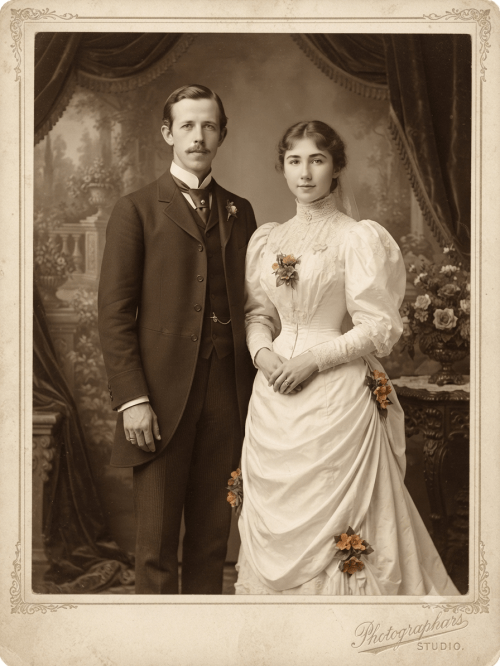
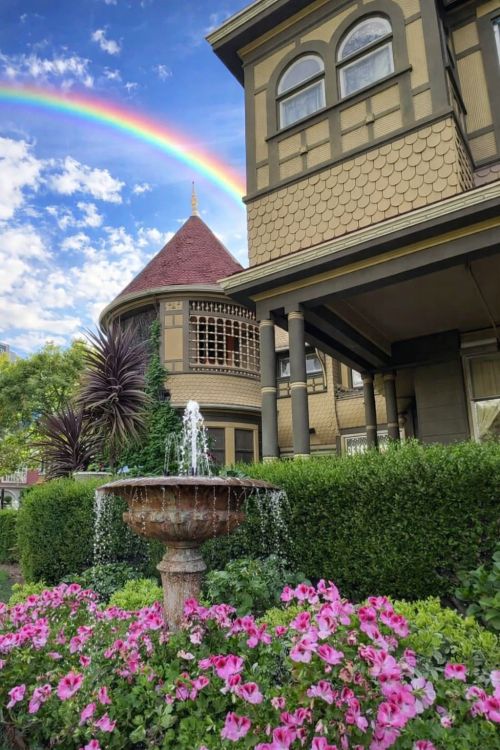
While the nation grew upward, outward, and ever more ambitious, Mrs. Sarah Winchester built a world of her own — a sprawling, evolving mansion that mirrored the restless creativity of the era. The Winchester Mystery House once boasted towers that rose proudly above the orchards and farmland of the Santa Clara Valley. The most famous was the nine‑story tower, a surreal architectural gesture that seemed to defy both convention and gravity. It stood as a beacon of her imagination, a vertical statement in a world racing toward modernity.
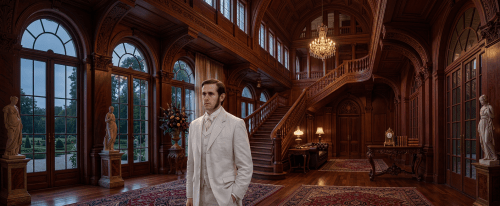
But on April 18, 1906, the great earthquake struck — a violent, city‑shattering convulsion that toppled buildings across San Francisco and the surrounding region. At the Winchester estate, the quake brought down the nine‑story tower and destroyed much of the fourth floor. In the aftermath, Mrs. Sarah made a defining choice: she did not rebuild upward. Instead, she turned her attention to the back of the house, expanding outward in a labyrinth of rooms, staircases, and curiosities. The rise and fall of her tower became a symbol of resilience — a reminder that even in destruction, creation continues.

Through all of this, Mrs. Sarah Winchester’s life remained intertwined with the story of America itself. As the nation celebrated milestones, endured tragedies, and reinvented its identity, she crafted a home that reflected the same spirit of experimentation and transformation. Today, as America marks its 250th birthday, her mansion stands as a testament not only to her ingenuity but to the era she lived through — an era defined by invention, upheaval, ambition, and the relentless forward motion of a country finding its place in the world.

Today, the Winchester Mystery House remains one of America’s most extraordinary landmarks — a place of beauty, curiosity, and quiet grandeur. Its shifting colors, its changing architecture, and its storied past only deepen its charm. Every visit reveals something new; every corner holds a piece of history.
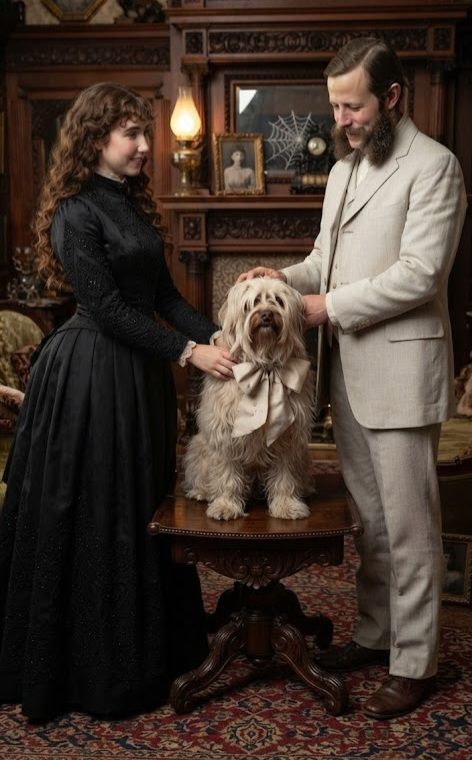
You are cordially invited to tour the Grand Winchester Estate — a place where America’s past still whispers through every hallway. https://winchestermysteryhouse.com/


The Winchester Parable: Architecture, Culture, and the Unraveling of American Virtue
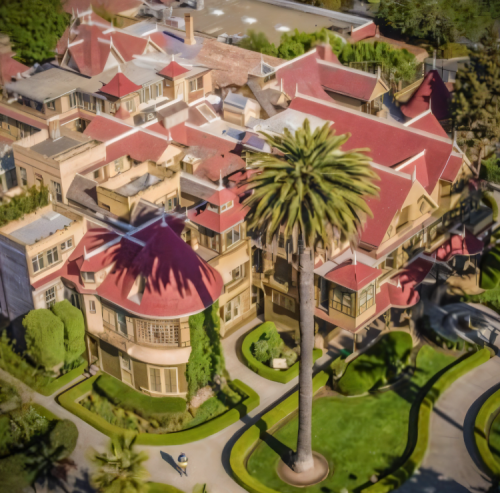
History is the autobiography of a madman. It records, with unnerving fidelity, the compulsions of a species that has not yet learned to govern its own impulses. Each epoch reveals the same pattern: the sudden excitation of fear, the narrowing of judgment, the violent discharge of anxiety upon whatever object lies nearest at hand. In this sense, the historical record resembles the case notes of a patient who repeats his symptoms with tragic regularity, unaware that he is the author of his own distress. To stem the flow of blood is not a matter of sentiment but of diagnosis. A disorder unacknowledged is a disorder untreated. Civilizations, like patients, deteriorate when they conceal their motives beneath grand theories or patriotic fictions. The first therapeutic act is honesty — the willingness to observe ourselves without anesthesia, to name the impulses that have governed our conduct, and to admit the injuries we have inflicted in the name of necessity. Two forces, in particular, must be brought under clinical scrutiny: greed and self‑preservation. They are not aberrations but primary drives, as old as the nervous system itself. Greed is the organism’s attempt to secure more than it needs, a defensive overreach born of chronic insecurity. Self‑preservation is the reflex that contracts the moral field until only the self remains visible. When these drives operate without examination, they distort judgment, justify cruelty, and produce the very catastrophes they claim to prevent. Yet these same forces, once acknowledged, can be redirected. Greed can be transmuted into the disciplined pursuit of sufficiency rather than excess. Self‑preservation can be expanded into the preservation of the community, the recognition that one’s own safety is inseparable from the safety of others. #RandolphHarris 1 of 27

However, such transformations require candor — the kind of candor that nations avoid and individuals fear. Thus, the first step is to be honest about who we are and what we have done. Not as an act of contrition alone, but as the beginning of treatment. A civilization that cannot tell the truth about itself remains trapped in the cycle of its own pathology. A civilization that can speak honestly may yet recover its sanity. How many psychiatrists have killed their own kids by overmedicating them? The first step to recovery is admitting that you are responsible for this cycle of insanity. Some people believe that Albert Einstein said that human beings only use 10 percent of their brains. Mr. Einstein never said that, and the idea that humans “use only 10 percent of their brains” is a modern myth with no scientific basis. What people often use is only 10 percent of their honesty, 10 percent of their courage, or 10 percent of their moral imagination—and that is what creates the historical catastrophes that we keep repeating. However, once the idea caught on that people only use 10 percent of their brains, people retroactively attributed it to Mr. Einstein because attaching his name to the myth made it sound profound. Modern neuroscience shows the brain is always active. Even during sleep, the brain is metabolically busy. Brain imaging (fMRI, PET) shows: No region is completely inactive. Different networks activate for different tasks. Even if we are not consciously aware of their activity–“unused” areas do not exist. The brain is expensive to run; evolution would not maintain 90 percent of it as dead weight. Why does the myth survive? It is psychologically appealing. It suggests that we have hidden reserves of genius, our limitations are artificial, and a simple trick or mindset shift could unlock extraordinary abilities. #RandolphHarris 2 of 27

Even though the myth that human beings use only 10 percent of their brains is false, it remains a remarkably profitable and comforting narrative. It flatters people by suggesting that their limitations are not real limitations — merely unused “mental reserves” waiting to be unlocked by the right guru, seminar, or subscription. Self‑help merchants seized on this immediately: “You are not that bright now, but imagine how brilliant you’ll be once you buy our products.” It is a business model disguised as revelation. New‑age spiritualists took the same myth and repackaged it as mysticism. If 90 percent of the brain is supposedly dormant, then surely it must be the seat of psychic powers — astral travel, clairvoyance, ghost‑seeing, visions. The myth became a blank check for any supernatural claim, because the “unused brain” could be invoked as the mechanism behind anything that defied explanation. Einstein’s name was dragged into this because people wanted the authority of genius to sanctify their fantasies. But Einstein never said anything about humans using only 10 percent of their brains. What he did say — and what irritated him deeply — was that the difference between genius and stupidity is that genius has limits. Stupidity does not. It was not an insult to human intelligence; it was a commentary on the unwillingness of people to think for themselves, to question easy narratives, or to resist the seduction of ideas that promise effortless transformation. The irony is that the 10‑percent myth survives not because people are stupid, but because they are hopeful. They want to believe that greatness requires no discipline, no struggle, no self‑examination — only the right key to unlock a hidden chamber of brilliance. It is easier to believe in unused brain matter than to confront the truth that most of our limitations come not from biology, but from habit, fear, and the refusal to engage in honest thought. #RandolphHarris 3 of 27

This hope — the hope that there is some hidden meaning, some concealed mechanism behind our suffering — is perhaps what compelled Mrs. Sarah L. Winchester to seek the counsel of a Boston medium after the deaths of her husband and infant daughter. In her grief, she was offered a narrative that made emotional sense even if it lacked empirical truth: that she was cursed, that unseen forces were responsible, that her tragedy had an explanation. It was a story that gave shape to the shapeless, and she followed it west. What emerged from that hope was one of the most beautiful and bewildering mansions in the world. And in a way, the Winchester Mansion functions as a metaphor for the human brain itself. People love to repeat the myth that we use only ten percent of our minds, as if the remaining ninety percent lies dormant, waiting to be awakened by a guru or a mystic. But the brain is never dormant — it is simply compartmentalized, specialized, and active in ways we do not always perceive. So, it was with Mrs. Winchester’s house. Even if she could physically occupy only a small portion of its vast expanse at any given moment, that did not mean the rest was unused. The mansion was alive with intention. She moved from room to room, rarely sleeping in the same place twice. She opened passages and sealed others. She circulated through the structure the way thought circulates through the mind — not all at once, but continuously, selectively, purposefully. Nothing in the house was abandoned. Nothing was wasted. Nothing was truly “unused.” The mansion was not a monument to madness; it was a living architecture of grief, imagination, fear, and hope — the same forces that animate the human mind. And just as the 10‑percent myth misunderstands how the brain works, the popular legends about Mrs. Winchester misunderstand what she was doing. She was not building nonsense. She was building meaning. She was building safety. She was building a world large enough to contain her sorrow. In that sense, the Winchester Mansion is not a curiosity. It is a map of the psyche — sprawling, intricate, haunted, and wholly inhabited. #RandolphHarris 4 of 27
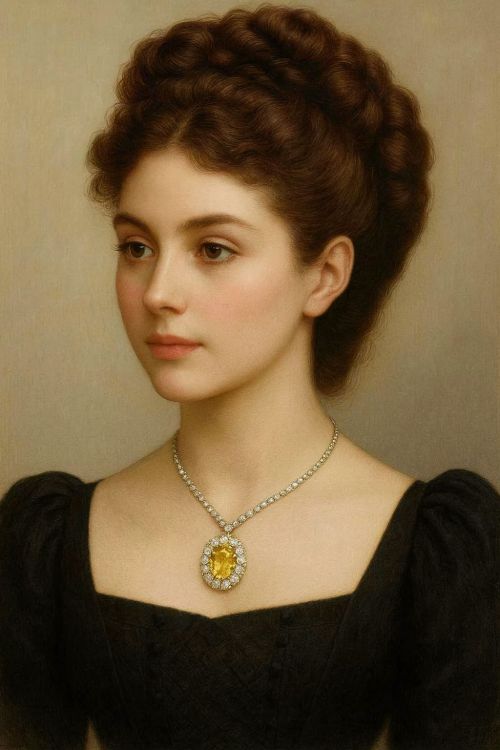
For Mrs. Winchester, eremitical seclusion was, in its own way, the most elemental form of asceticism. It required the sacrifice of the ameliorating presence of others — the comfort of companionship, the stabilizing effect of shared ritual, the ordinary human relief that comes from comparison, conversation, and mutual recognition. In withdrawing from all of that, she exposed herself to the raw, unmediated interior life that the great hermits of Christian history knew all too well. It is the same terrain that painters of St. Anthony’s torment tried to render visible: the mind, left alone with itself, becomes a theater where temptation, grief, fear, and revelation all compete for dominance. Eremitic existence denies the one mercy that communal religious life affords — the break in introspective concentration that comes from joint ritual. In a monastery, the bell interrupts the mind. It calls the brothers to prayer, to work, to meals, to sleep. It punctuates the inner world with the outer one. But Mrs. Winchester had no bell. She had no rule. She had only the vastness of her own grief and the architecture she built to contain it. One cannot ponder the dimensions of her monasticism without recalling St. Francis, who passed through every variation of religious life. He lived among the poor, he preached in the streets, he founded an order, he governed it, and then — when the weight of administration threatened the purity of his vocation — he withdrew again into eremitical solitude on the wooded mesa of Mount Alverno. There he sought the unfiltered encounter with God, the same encounter that terrifies as much as it consoles. Mrs. Winchester, too, created her own Mount Alverno — not on a mountain, but in the labyrinthine corridors of her mansion. Her solitude was not passive. It was constructed, curated, and maintained with the same intensity that hermits once applied to their desert cells. She moved from room to room as Francis moved from cave to cave, seeking a place where the mind might quiet itself long enough to hear something other than its own sorrow. Her mansion was not a retreat from the world; it was a confrontation with it. A confrontation conducted in silence, in motion, in perpetual building — the architecture of an eremitic soul trying to survive its own history. #RandolphHarris 5 of 27

Mrs. Winchester was known for her kindness, and her generosity was not symbolic but material. She paid her workers three times the going rate, provided many of them with Victorian cottages on her 740‑acre estate, and treated them with a dignity that was rare among Gilded Age employers. Her mansion, for all its strangeness, reached one of its heights in the perfection of contemplation — a contemplative life that found its opposite extreme in the hard manual labor performed by Trappists in their communal monasteries. The Trappists balance silence with toil; Mrs. Winchester balanced silence with construction. Both are forms of discipline. Both are forms of prayer. Our clerical historians and caretakers observed certain hours of contemplation and did only a minimum of manual work. They had their own handymen, and they managed the Winchester farms, orchards, and vineyards rather than laboring in them. Yet they were industrious in their singing, their studies, and their close association with universities. Their monasticism was intellectual and liturgical. Mrs. Winchester’s was architectural. Another variable of her asceticism concerns the techniques chosen to perfect the soul. In the Christian tradition, these range from extreme self‑abnegation — reducing the body to its own shadow — to the opposite extreme of self‑denying service to the sick and the poor. Mrs. Winchester embodied both tendencies. She lived in solitude, but she also gave abundantly. As a memorial to her husband, she endowed the William Wirt Winchester Hospital in 1909, entrusting funds to Yale for the treatment of tuberculosis — the disease that had taken him. In her letter to the president of the General Hospital Society, dated November 6, 1909, she expressed her desire to found “some worthy and enduring memorial of my late husband, William Wirt Winchester.” The following month, she sent a check for $300,000 — more than ten million dollars in today’s value — to establish an institution dedicated to the care of the afflicted. She also donated bags of new clothing to churches in Santa Clara, quietly, without spectacle. #RandolphHarris 6 of 27

These acts were not the gestures of a recluse detached from the world. They were the works of a woman who understood suffering and responded to it with service, compassion, and sustained generosity. Her mansion may have been a labyrinth, but her life was not. It was a coherent expression of grief transformed into action, solitude transformed into contemplation, and wealth transformed into mercy. In this light, Mrs. Winchester’s existence resembles not the stereotype of a haunted widow, but the long lineage of eremitical souls who sought to perfect themselves through a combination of solitude, labor, and charity. Her house was her cloister. Her workers were her community. Her philanthropy was her liturgy. And her endless building was not madness, but a form of spiritual endurance — a way of shaping the world into something she could survive. This all clearly places Mrs. Winchester on one side of the remaining variable: mysticism versus intellectuality. She was not an anti‑intellectual in the crude sense, nor was she a credulous mystic swept away by superstition. Rather, she occupied the same liminal territory as the Brethren of the Common Life, whose teachings she encountered and whose warnings against excessive intellectualism in faith she took seriously. They did not reject learning; they rejected the pride that often accompanies it. They believed that knowledge without humility becomes sterile, and that the soul must be shaped not only by study but by inward experience. Mrs. Winchester absorbed this tension. She studied mysticism, discussed it, and understood its vocabulary. Yet she adhered to the scholastic tradition long enough to internalize its structure — the disciplined inquiry, the ordered reasoning, the belief that truth could be approached through careful thought. But her own original religiosity eventually compelled her to break out of that framework. She did not abandon intellect; she simply refused to let intellect be the sole arbiter of meaning. #RandolphHarris 7 of 27

Her mansion is the architectural expression of that break. It is not a scholastic text; it is a mystical one. It does not argue; it reveals. It does not present a thesis; it embodies a state of being. It is the kind of structure that emerges when a mind trained in order confronts an experience that defies order — grief, loss, the collapse of the world as one knew it. In this sense, Mrs. Winchester stands in the same lineage as those medieval figures who moved from the university to the hermitage, from the disputation hall to the solitary cell. They were not rejecting thought; they were seeking a form of truth that thought alone could not reach. Her break from scholasticism was not a descent into irrationality but a movement toward a different mode of knowing — one that required solitude, silence, and the construction of a world large enough to contain the uncontainable. Her religiosity was not borrowed. It was not derivative. It was original, forged in the crucible of personal catastrophe and shaped by traditions that valued both contemplation and humility. And in that originality, she becomes something far more interesting than the caricature of a haunted widow: she becomes a mystic of the American West, a woman whose life and architecture reveal the struggle between intellect and revelation, structure and intuition, order and the vast interior wilderness of the soul. Mrs. Winchester also chose something akin to a clerical upper‑middle‑class, a position that existed not by ordination but by function. In her time, the cultural imagination still assumed that “all the world was Catholic” — not literally, but in the sense that Catholic structures of authority, hierarchy, and spiritual labor remained the template for understanding religious vocation. Within that framework, she found an entrance, on a professional and intellectual level, into what might be called the Catholic empire’s hierarchy of clerical employees: those who handled diplomacy, administered social welfare in cities and counties, tended to spiritual needs, and cultivated their own salvation through varying degrees of ascetic discipline. #RandolphHarris 8 of 27

She was not a nun, nor a theologian, nor a public religious figure. But she lived in the orbit of those who performed these roles, and she adopted many of their responsibilities privately. The fact that she took upon herself the latent sadness of her age — the grief, the theological uncertainties, the spiritual anxieties that haunted the late nineteenth century — marks her as a member of an ideological minority. Not a sect, but a temperament: those who felt the weight of their era’s spiritual contradictions and refused to ignore them. Among the elite of her time, this made her unusual. Noteworthy. And, to some, a questionable heiress. While others in her class pursued social display, political influence, or industrial expansion, she pursued spiritual labor. She invested her wealth not in ostentation but in contemplation, philanthropy, and the construction of a world that could hold the contradictions she carried. Her mansion was not a monument to eccentricity; it was the architectural expression of a woman who had absorbed the theological tensions of her age and refused to resolve them cheaply. In this sense, she resembles those clerical figures who lived between worlds — administrators of charity, stewards of land, diplomats of conscience, and practitioners of a quiet, sometimes eccentric, spirituality. She was not eccentric because she was irrational; she was eccentric because she refused to flatten her experience into the narrow expectations of her class. She chose an intellectually serious path, spiritually demanding, and socially unconventional. Her life, therefore, belongs not to the folklore of haunted houses but to the history of lay mysticism, private asceticism, and the quiet, often misunderstood labor of those who carry the spiritual burdens of their age. In very important respects, Victorian life was being Americanized, just as Victorian life in general was undergoing a profound reconfiguration. This development engulfed those disciplines in which the craftsman once personally owned the tools of his trade — not only the carpenter’s bench or the mason’s chisel, but the scholar’s tools as well: the library, the manuscripts, the instruments of learning. These were still, to a large extent, privately held in the nineteenth century, but the shift toward institutionalization, professionalization, and bureaucratic control was already underway. What happened to the artisan of the past — the gradual loss of autonomy as production became centralized — was now happening to the intellectual and the cleric. #RandolphHarris 9 of 27

This transformation forms the backdrop to Mrs. Winchester’s world. She lived at the moment when the old Victorian synthesis of craft, intellect, and spirituality was dissolving into the American model of specialization, efficiency, and industrial scale. The craftsman who once owned his tools became the employee of a factory. The scholar who once owned his library became an employee of a university. The cleric who once lived by personal vocation became the administrator of a religious bureaucracy. The shift was total, and it was accelerating. Mrs. Winchester’s life stands at a curious angle to this development. She did not surrender her tools — literal or intellectual — to the new order. She retained personal ownership of her estate, her workers, her architectural vision, and her spiritual labor. In this sense, she preserved something of the pre‑industrial artisan‑scholar, the figure who creates not for a market but for meaning. Her mansion was not a product; it was a vocation. Her philanthropy was not a tax write‑off; it was a moral obligation. Her solitude was not a retreat from society; it was a form of resistance to the flattening pressures of Americanization. She belonged to a class that was disappearing — the clerical upper‑middle‑class of Victorian culture, where spiritual administration, intellectual cultivation, and social responsibility were intertwined. But she inhabited it in an American way: privately, independently, without institutional oversight. She took upon herself the latent sadness of her age, the spiritual problems of its theology, and the burdens that once belonged to clerical orders. This made her an ideological minority among the elite — unusual, noteworthy, and to some, a questionable heiress. While her contemporaries embraced the new American ethos of expansion, industry, and public display, she embraced a different calling: the preservation of a world in which the tools of the soul — contemplation, charity, craftsmanship, and interiority — remained personally held. In that sense, she was not behind her time. She was out of step with it, deliberately, and with a clarity that her critics never understood. #RandolphHarris 10 of 27

In very important respects, Victorian life was being Americanized — and the same process is happening again today, only more aggressively. The nineteenth century saw the erosion of the old artisan‑scholastic world, where the craftsman owned his tools and the scholar owned his library. The shift toward bureaucratized, capitalist institutions engulfed every discipline. What happened to the artisan of the past — the loss of autonomy, the replacement of craft with mass production — is now happening to the intellectual, the professor, the cleric, and even the wealthy. The “spirit” that rules modern institutions is utterly different from the historical atmosphere of the Victorian university. The old constitution of intellectual life has become fictitious. What remains is a career lottery, a system in which chance, not merit, determines who rises and who is cast aside. I know of hardly any career on earth where chance plays such a role. I may say so all the more since I personally owe it to some mere accidents that during my very early years, I was appointed to a full professorship in a discipline in which men of my generation undoubtedly had achieved more than I had. And, indeed, I fancy, based on experience, that I have a sharp eye for the undeserved fate of the many whom accident has cast in the opposite direction and who, within this selective apparatus despite all their ability, do not attain positions that are due to them. The same forces that once Americanized Victorian life are now de‑civilizing American life. The upper‑class virtues — restraint, literacy, intellectual seriousness, religious depth, self‑discipline — are dissolving. Even the wealthy are losing them. Wealth no longer produces refinement; it produces spectacle. The body has replaced the mind as the primary currency of social value. Exhibitionism has replaced intellect. Popular culture has replaced religion. Vulgarity has replaced dignity. #RandolphHarris 11 of 27
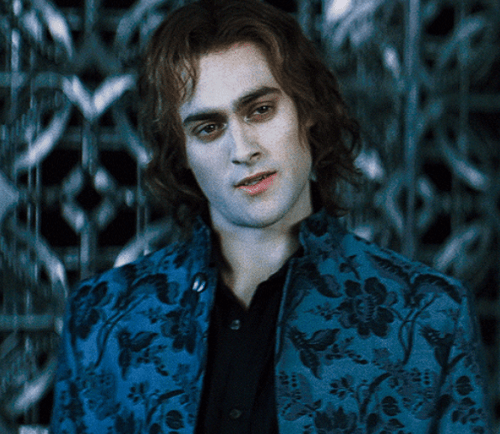
This is not a moralistic complaint; it is a sociological observation. When I was a teenager, my boss taught me to say, “May I have” when ordering, instead of “Can I get.” And when someone asked me how I was doing, I was to respond “well,” not good. The latter, I am still working on, however. The Victorian elite cultivated literacy, self‑restraint, religious seriousness, philanthropy, intellectual ambition, and a sense of duty. Today’s elite cultivates visibility, branding, bodily display, hustling, social media performance, consumption, wheeling and dealing, and novelty. The old upper class tried to appear cultured. The new upper class tries to appear viral. The rise of what might be called a “ghetto aesthetic” among the wealthy is especially visible in coastal states such as New York, California, and Florida. By this I do not mean the term as a slur, but as a description of a cultural inversion: styles once associated with deprivation and marginalization becoming symbols of prestige. This shift is driven by fast money, rapid demographic change, and the erosion of traditional family and community structures. The new aesthetic prizes hypersexualized self‑presentation, hostility toward intellectualism, performative aggression, conspicuous consumption, and a form of anti‑elitism that masquerades as authenticity. The irony is that many affluent individuals now imitate cultural forms once associated with struggle, while abandoning the virtues—restraint, dignity, literacy, and responsibility—that historically justified their elevated social position. Recent events in Sacramento illustrate this broader cultural shift. After a student was fatally shot on a high school campus, two other students were recorded laughing at the scene, treating the tragedy as if it were entertainment. Parents expressed grief and fear, with many saying they were relieved their children were home‑schooled or no longer enrolled in Sacramento County schools. There was a time when Sacramento was known for its peaceful neighborhoods, conservative values, and strong school districts—families moved here to escape crime, not encounter it. The “City of Trees” has become more worldly, more chaotic, and more influenced by national cultural trends that prize spectacle over substance. I often think back to my own childhood in Sacramento County schools, where square dancing was part of recess. It was simple, wholesome physical activity, but it symbolized something larger: people came to Sacramento to “square up,” to leave behind big‑city habits and cultivate a life grounded in stability, manners, and moral clarity. #RandolphHarris 12 of 27

The Sacramento Police Department’s budget has been reduced because Mayor Kevin McCarty’s administration is facing a $66 million structural deficit, which limits the city’s ability to expand police staffing. He has stated that the city must “keep intact our resources for our homeless response” while continuing progress on reducing unsheltered homelessness — a strategy he links to lowering petty crime and disorder. His position is that homelessness and mental illness are major contributors to crime, even though most people experiencing homelessness are peaceful. The recent rise in crime reflects government mismanagement and insufficient police presence, like conditions seen in 2007. When residents believe police have zero tolerance for criminal behavior, they are generally less likely to engage in it. Sacramento’s total crime rate is about 51 percent above the national average, ranking higher than 88 percent of major U.S. cities. Violent crime: Residents face roughly a 1 in 185 chance of being a victim of violent crime per year — about 42 percent higher than the national average. Property crime: The primary driver of the increase, with a 1 in 32 chance of victimization — 70 percent higher than the national average. Vehicle theft is approximately 64 percent above the national average, while burglary and larceny/theft remain persistently high. Crime costs Sacramento residents an estimated $487 per person per year, totaling roughly $1.2 billion citywide, slightly above the national average. These conditions resemble the early warning signs that Oakland experienced before its 1990s peak. Although Sacramento today is experiencing elevated crime, especially property crime, it is not experiencing anything close to Oakland’s violent‑crime levels of the 1980s or 1990s. Oakland’s earlier eras were defined by extreme homicide rates and drug‑market violence; Sacramento’s current issues are serious but fundamentally different in scale and nature. #RandolphHarris 13 of 27
Sacramento is at a crossroads. Rising property crime, vehicle theft, and visible disorder have created a growing sense of insecurity. While today’s conditions are not comparable to Oakland’s extreme violent‑crime eras of the 1980s and 1990s, the underlying risks — weakened institutions, slow response systems, and unchecked disorder — can compound if left unaddressed. Preventing Sacramento from drifting toward that trajectory requires deliberate, coordinated action across policing, housing, behavioral health, and neighborhood stability. Sacramento’s police staffing levels and response times must be stabilized to prevent the “vacuum effect” that allowed crime to flourish in Oakland’s worst years. Key actions: Restore adequate patrol staffing to ensure rapid response to in‑progress crimes. Prioritize clearance rates for violent offenses to maintain public confidence and deterrence. Expand problem‑oriented policing to address chronic hotspots, drug houses, and repeat‑offender clusters. Maintain strong internal accountability and transparent reporting to avoid the legitimacy crises that undermined Oakland’s policing for decades. Oakland’s decline accelerated when everyday disorder — theft, vandalism, open‑air markets — became routine. Sacramento can prevent that normalization. Key actions: Target repeat vehicle‑theft crews, fencing networks, and organized retail theft groups. Use environmental design: lighting, cameras, secure parking, and rapid cleanup of dumping and vandalism. Deploy data‑driven hot‑spot patrols rather than thinly spreading officers citywide. Enforce predictable consequences for chronic offenders to prevent a culture of impunity. #RandolphHarris 14 of 27

Most unhoused residents are peaceful, but a small subset cycles through arrests, ERs, and encampments. Oakland’s crisis deepened when housing instability and untreated addiction overwhelmed public systems. Key actions: Expand low‑barrier shelter, interim housing, and rapid rehousing to reduce encampment growth. Create co‑located teams of police, behavioral‑health clinicians, and outreach workers for high‑risk individuals. Increase treatment capacity for addiction and severe mental illness, with clear pathways from crisis to stabilization. Protect existing affordable housing and prevent displacement, which historically fueled instability in Oakland. Many parents and teachers are increasingly uneasy because student behavior in many middle and high schools has shifted in ways that feel more aggressive, less respectful, and harder for adults to manage. Educators describe students who threaten or harass teachers, openly defy instructions, and sometimes escalate conflicts for the sake of social‑media attention. In some schools, the level of disruption and volatility has grown so severe that classrooms require security officers simply to maintain order. This is not the typical adolescent testing of boundaries — it reflects a deeper erosion of norms that once made schools predictable and safe for both adults and students. Several forces are driving this change at the same time. Students who lost key developmental years during the pandemic are older in age but younger in emotional regulation, creating a mismatch between expectations and capacity. Discipline systems in some districts have become inconsistent or overly hesitant, leaving students with the impression that serious misbehavior carries no real consequence. Social media amplifies conflict, rewarding outrageous behavior and turning classrooms into stages. #RandolphHarris 15 of 27

Meanwhile, many families are under economic and psychological strain, and schools often lack enough counselors, psychologists, and behavioral specialists to address the mental‑health needs that underlie much of the acting‑out behavior. Reversing this trend requires schools to re‑establish clear boundaries, predictable consequences, and visible adult authority. Teachers need strong institutional backing so they can intervene confidently without fear of retaliation or administrative second‑guessing. At the same time, schools must expand mental‑health support, strengthen campus safety where necessary, and rebuild a culture where respect, stability, and accountability are the norm. When adults lead with consistency, and students understand that safety and order are non‑negotiable, school environments can regain the structure and calm that allow learning — and trust — to flourish. Long‑term safety depends on strong neighborhoods and real alternatives to illicit economies. Key actions: Fund youth violence prevention programs, mentoring, and after-school supports in high-risk areas. Expand apprenticeships, job‑training pipelines, and public‑works employment for young adults. Support neighborhood‑level safety councils and mini‑grant programs so residents shape local priorities. Oakland’s decline was gradual and cumulative. Sacramento can prevent drift by monitoring key indicators and acting before problems escalate. Key actions: Publish real‑time dashboards for crime, homelessness, response times, and clearance rates. Establish “trigger thresholds” that automatically activate surge responses when violence or theft spikes. Partner with independent evaluators to assess what strategies work — and discontinue those that do not. Sacramento does not need to repeat Oakland’s history. By strengthening public safety capacity, addressing disorder early, stabilizing vulnerable populations, and investing in neighborhoods, the city can maintain safety and prevent the multi‑system failures that once overwhelmed Oakland. The path forward is not reactive — it is strategic, coordinated, and grounded in lessons learned from cities that waited too long to act. #RandolphHarris 16 of 27
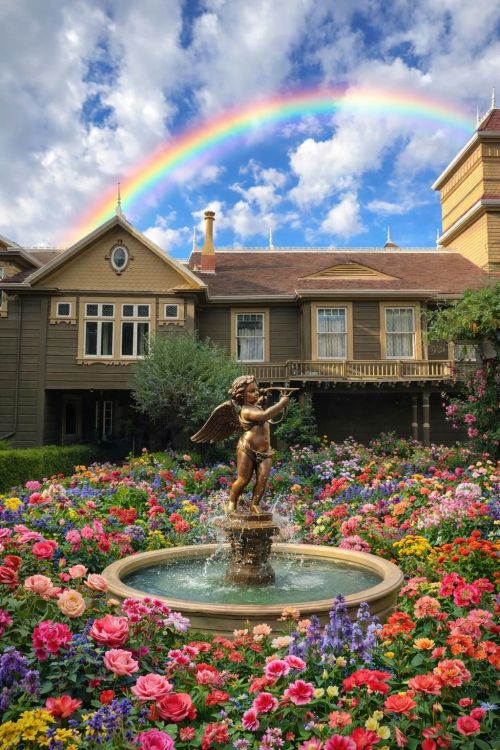
The collapse of intellectuality and religion is an epidemic. People are criticized for being celibate. For wearing pants and long sleeves. Just as Victorian intellectual life was bureaucratized and hollowed out, today’s intellectual life is precarious, underpaid, algorithmically policed, and culturally devalued. Religion, too, has been replaced by celebrity worship, conspiracy spirituality, and self‑help mysticism. therapeutic consumerism. The old clerical‑scholastic class — the one Mrs. Winchester quietly aligned herself with — has no modern equivalent. Its functions have been replaced by influencers, entertainers, and corporate managers. Mrs. Sarah Winchester becomes a counterexample, a figure who preserved the old values while the world around her shifted; she retained the artisan’s autonomy. She preserved the clerical upper‑middle‑class ethos of charity, contemplation, and duty. She resisted the Americanization of Victorian life by creating a private monastery instead of a public spectacle. She embodied intellectual humility and spiritual seriousness in an age moving toward industrial rationalization. In contrast, today’s elites embrace the opposite spectacle over contemplation, body over mind, vulgarity over refinement, popularity over wisdom. Mrs. Winchester becomes a mirror that reveals how far we have fallen. The fact that hazard rather than ability plays so large a role is not alone or even predominantly owing to the “human, all too human” factors, which naturally occur in the process of academic selection as in any other selection. It would be unfair to hold the personal inferiority of faculty members or educational ministries responsible for the fact that so many mediocrities undoubtedly play an eminent role at the universities. The predominance of mediocrity is rather due to the laws of human co-operation, especially of the co-operation of several bodies, and, in this case, co-operation of the faculties who recommend and of the ministries of education. #RandolphHarris 17 of 27
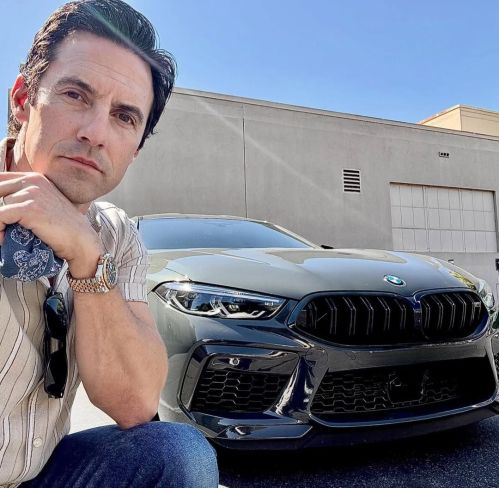
Perhaps Vladimir Lenin was right in never ceasing to fight mercilessly against the sentimental forms of revolutionary action. He wanted to abolish the morality of revolutionary action because he believed, correctly, that revolutionary power could not be established while still respecting the Ten Commandments. When he appears, after his first experiments on the stage of history, where he was to play such an important role, to see him take the world so freely and so naturally as it had been shaped by the ideology and the economy of the preceding century, one would imagine him to be the first man of a new era. Completely impervious to anxiety, to nostalgia, to ethics, he takes command, looks for the best method of making the machine run, and decides that certain virtues are suitable for the driver of history’s chariot and that others are not. He gropes a little at first and hesitates as to whether Russia should first pass through the capitalist and industrial phase. However, this comes to the same as doubting whether the revolution can take place in Russia. He himself is Russian, and his task is to make the Russian Revolution. He jettisons economic fatalism and embarks on action. He roundly declares, from 1902 on, that the workers will never elaborate an independent ideology by themselves. He denies the spontaneity of the masses. Socialist doctrine supposes a scientific basis that only intellectuals can give it. When he says that all distinctions between workers and intellectuals must be effaced, what he really means is that it is possible not to be proletarian and know better than the proletariat what its interests are. He then congratulates Lassalle for having carried on a tenacious struggle against the spontaneity of the masses. “Theory,” he says, “should subordinate spontaneity.” In plain language, that means that revolution needs leaders and theorists. #RandolphHarris 14 of 27

Mr. Lenin attacks both reformism, which he considers guilty of dissipating revolutionary strength, and terrorism, which he thinks an exemplary and inefficacious attitude. The revolution, before being either economic or sentimental, is military. Until the day that the revolution breaks out, revolutionary action is identified with strategy. Autocracy is its enemy, whose main source of strength is the police force, which is nothing but a corps of professional political soldiers. The conclusion is simple: “The struggle against the political police demands special qualities, demands professional revolutionaries.” The revolution will have its professional army as well as the masses, which can be organized before the masses are organized. A network of agents is the expression that Mr. Lenin uses, thus announcing the reign of the secret society and of the realist monks of the revolution: “We are the Young Turks of the revolution,” he said, “with something of the Jesuit added.” From that moment, the proletariat no longer has a mission. It is only one powerful means, among others, in the hands of the revolutionary ascetics. When institutions fail, people turn to spectacle, extremism, or nihilism. When the state treats some communities as expendable, those communities internalize that message. When society abandons intellectual and moral discipline, it becomes vulnerable to movements built on aggression, performance, and resentment. What we are witnessing today is not an isolated cultural shift but the continuation of the same forces that once Americanized Victorian life — only now they are eroding American life itself. As intellectuality, restraint, and civic responsibility decline, communities risk sliding into the same conditions that once plagued neighborhoods like G‑Parkway in Sacramento, where crime became so pervasive that even police officers hesitated to respond. When institutions begin to treat violence as routine, when certain crimes are quietly labeled “NHI” — No Humans Involved, a bureaucratic shorthand that dehumanizes entire populations — a society has already crossed a moral threshold. The danger is not merely that individuals behave badly, but that whole communities become seen as unworthy of protection, unworthy of investment, unworthy of hope. This is the trajectory we must resist: the slow normalization of vulgarity, spectacle, and indifference until tragedy becomes entertainment and human life becomes background noise. #RandolphHarris 18 of 27

I find it remarkable that many people believe the government controls them through fear, yet those same people often respond to mistreatment with public outbursts, “flashing,” or dramatic displays of outrage. These reactions do not challenge the system; they reinforce the roles that others have already assigned to them. The more effective path is to recognize when you are being cast into an ignorant or reactive role—and refuse to play it. Instead of allowing others to control you, you control the situation by responding with education, clarity, and professionalism. Explain calmly why someone’s behavior is wrong. Contact their employer or the appropriate authority with a well‑written, factual account of what occurred. When you act out, you surrender control of your environment and become vulnerable. In that sense, a “victim” is not someone who is harmed, but someone who has lost the ability to shape their surroundings. Emotional outbursts allow others to document your behavior, build a file against you, or even involve law enforcement. Even if employees, managers, or institutions dismiss you or give you the runaround, remain polite. Flip the script: you do not need to record them on your phone, but you can document their actions, keep your own file, and report your findings to the proper authorities. As the Oakland rapper Too Short emphasized in his 1990s song The Ghetto, the message was simple: when you respond with intelligence instead of ignorance, you protect yourself—and you keep the power. “Let every man carry himself with that civility and meekness which becometh a rational creature; for he that forgetteth respect unto others diminisheth the dignity of his own soul. Courtesy is no servitude, but a grace that keepeth peace among men.” #RandolphHarris 19 of 27

Most of us use curse words because we were taught to, or because we absorbed them from the culture around us. But why do we give our power away by speaking them? Why do we treat these words as if they possess some special force, when in truth they reveal nothing but a lapse in discipline and a surrender of intellect? We must learn to de‑emphasize such language and express ourselves in a thoughtful, articulate, and scholarly manner. When we choose our words with care, we elevate ourselves. When we rely on vulgarity, we allow others to define us, diminish us, and cast us into roles unworthy of our intelligence. Language is a mirror of the soul, and when we elevate our speech, we elevate our standing, our influence, and our inner life. “Out of the same mouth proceedeth blessing and cursing. My brethren, these things ought not so to be,” reports James 3:9-10. People may call me a hypocrite because, in the past, I have cursed people — but those moments happened when I was being harassed or confronted by groups much older than me who would not leave me alone. Even so, I am learning to refine my behavior, and those situations have been addressed through the proper channels. What continues to astonish me, however, is the behavior I witness among many of the older adults I work around. These are people in their sixties and seventies, yet their conduct is often more immature, disruptive, and irresponsible than anything I have ever seen from youth. What makes it more troubling is that many of them seem fully aware of their behavior and make no effort to correct it. Month after month, they complain about the same issues — issues they themselves are contributing to through rule‑breaking, disorderliness, and a lack of basic courtesy. Meanwhile, the younger people in the environment are quiet, respectful, and self‑contained. They do not make messes, they do not cause disturbances, and they do not engage in the behaviors that the older adults accuse them of. The contrast is so stark that it forces me to reflect on my own grandparents, who embodied peace, dignity, and self‑respect. Their home was clean, their yard was maintained, and their manners were impeccable. Being around them taught me what maturity looks like. #RandolphHarris 20 of 27

So, encountering older adults who behave in ways that are chaotic, inconsiderate, or even harmful is genuinely shocking. It raises questions about why some people lose their self‑control as they age, why they disregard the well‑being of others, and why their environments — physical, emotional, and social — deteriorate alongside their behavior. Some individuals clearly need more support, structure, or supervision than they currently have, not as punishment, but because unmanaged behavior harms communities and harms them as well. Therefore, age does not guarantee wisdom, and youth does not guarantee irresponsibility. Character is a choice, and some people — regardless of age — refuse to choose better. Both for good and ill, science has imposed a dictatorship over the other ways of knowing and the other ways and results of experience. It has admittedly earned its position by the immense value and utility of its practical application, so visible all around us, as well as respect for the quality of its thinking—usually exact, factual, and accurate. When we place science as an essential preliminary and integral part of this course, we must make clear that what is primarily meant by the term here is scientific education of the understanding and not the communication of scientific knowledge. Both are necessary in every curriculum, but whereas the former implies a development of intelligence, the latter is an accumulation of facts. We value the cultural aspects of science, its power to train the mind in correct thinking and proper enquiry, as being more important for purposes of this quest than its practical aspects, which deal with physical techniques and material behaviors. Science debunks many things, and often explains them away as something else. But we should not let scientific explanation erode the interior life or diminish the meaning we draw from experience. Recently, scientists dismissed the old idea of “earthquake weather,” yet on April 13, 2026, after a week of record‑breaking heat, Sacramento cooled by nearly thirty degrees — and at 6:29 p.m., the city felt the jolt of a 5.5‑magnitude earthquake centered eleven miles from Silver Springs, Nevada. I heard the building I was in crack as it began to sway. Moments later, I called my mother to see if she had felt it. She asked questions I could not yet answer, so I went online, found the location of the epicenter, and sent her the information. Therefore, do not let science make you forget your soul, yourself, or your common sense. Trust your instincts and intuition. Not only do animals have instincts, but humans do, too. #RandolphHarris 21 of 27

It started with something Sacramento has seen far too often: a careless smoker on the balcony of an aging apartment complex near Florin Road. Residents had complained for months that cigarette and drug smoke drifted through the vents, triggering asthma attacks and migraines among the more sensitive tenants. On a warm evening, a smoldering cigarette was flicked into a planter filled with dry leaves. Within minutes, the wooden balcony rail caught fire, and smoke began pouring into the hallways. Several residents with respiratory conditions felt the effects immediately. One woman with chronic asthma collapsed in the stairwell, struggling to breathe as the smoke thickened. Another resident, a senior with COPD, was found leaning against a wall, disoriented and gasping for air. The award‑winning Sacramento Fire Department arrived within minutes, their engines lighting up the night. Firefighters forced entry through the smoke‑filled corridor, guiding residents out one by one. Two paramedics—both known for their calm under pressure—treated the victims on the sidewalk, administering oxygen and monitoring their breathing. They worked quickly, knowing that even brief exposure to smoke from cigarettes, burning debris, and drug residue can trigger severe respiratory distress. Inside, firefighters contained the blaze before it spread to the upper floors. Their coordinated response prevented what could have become a catastrophic apartment fire. Outside, paramedics reassured frightened residents, explaining symptoms, checking vitals, and transporting the most vulnerable to the hospital for further evaluation. By the time the scene was cleared, the fire was extinguished, the building was stabilized, and every resident was accounted for. The incident became another example of how the Sacramento Fire Department and its paramedics—highly trained, deeply committed, and nationally recognized—continue to protect the community not only from flames, but from the silent dangers of smoke exposure that so often go overlooked. #RandolphHarris 22 of 27

Smoking in front of buildings or near main entrances exposes everyone who walks through those areas to harmful chemicals. Even brief exposure to secondhand smoke can irritate the lungs, trigger asthma, and worsen respiratory conditions—especially for children, seniors, and people with medical sensitivities. Smoke does not stay where it is created; it drifts upward, enters open windows, and seeps into hallways and apartments, affecting residents who never chose to be exposed. For these reasons, it is important for people who smoke to consider taking classes that support smoking cessation. Many community programs teach strategies for reducing or quitting tobacco use, and organizations like Narcotics Anonymous offer support for individuals struggling with drug addiction. These resources can make a meaningful difference in a person’s health, stability, and overall quality of life. Property managers also play a role in protecting the community. Establishing a designated smoking area away from entrances, walkways, and residential windows helps reduce exposure to secondhand smoke and keeps shared spaces cleaner and safer. Clear signage and consistent enforcement can make these policies effective without singling anyone out. Smoke—whether from cigarettes, cigars, or drugs—has well‑documented effects on the lungs, body, and mind. It can damage airways, reduce oxygen levels, impair concentration, and contribute to long‑term health problems. Protecting our shared environment from unnecessary smoke exposure is not only considerate; it is a vital part of maintaining a healthy and respectful community. Our community is fortunate to have a dedicated outreach group that visits neighborhoods, apartment complexes, and local organizations to teach residents about fire safety and the dangers of smoking. Their mission is simple but essential: to prevent fires before they start and to protect the health of everyone who lives and works in our buildings. #RandolphHarris 23 of 27

During their presentations, the team explains how something as small as a cigarette can ignite a major fire, especially in areas with dry vegetation, old balconies, or shared ventilation systems. They also teach residents how smoke—whether from tobacco or other substances—can drift into hallways, stairwells, and apartments, causing respiratory distress for children, seniors, and people with asthma or chronic lung conditions. Their message is clear: preventing smoke exposure is a responsibility we all share. The group also provides resources for people who want to stop smoking. They offer information about local cessation classes, support groups, and community programs that help individuals break the habit safely. For those struggling with drug use, they highlight organizations like Narcotics Anonymous, which offers peer support and guidance for anyone seeking recovery. Finally, they work with property managers to encourage the creation of designated smoking areas located away from entrances, windows, and high‑traffic walkways. This simple step helps reduce secondhand smoke exposure and keeps shared spaces healthier for everyone. Through education, compassion, and practical guidance, this fire‑safety team helps our community stay safer, breathe easier, and reduce the risk of preventable emergencies. Their work reminds us that small choices—like where we smoke, how we dispose of cigarettes, and whether we seek help when we need it—can protect entire neighborhoods. The most reliable and up‑to‑date group you can contact is the Sacramento Metropolitan Fire District’s Public Education / Community Risk Reduction Division. They handle fire‑safety presentations, community outreach, school visits, safety talks for apartment complexes, senior communities, and neighborhood groups, and education on preventing fires caused by smoking, candles, cooking, and electrical hazards. Sacramento Metropolitan Fire District – Public Education Contact Email: communityservices@metrofire.ca.gov Phone: 916‑859‑4300 Address: 10545 Armstrong Ave., #200, Mather, CA 95655. They specifically invite communities to request a firefighter or educator to come out and speak about safety, including smoking‑related fire risks and prevention strategies. #RandolphHarris 24 of 27

When it comes to firefighting, every incident carries the potential for injury—no matter how small the fire appears or how routine the call may seem. If you see a fire engine stopped in the street without its lights on, use extreme caution. Crews may be working nearby, and passing the apparatus can put them in danger. It is often safer to turn around and take another route; if you strike a firefighter or civilian and cause a fatality, you could face charges such as manslaughter. Firefighters frequently move around their vehicle on foot, loading equipment or preparing to leave the scene. Attempting to pass the apparatus can result in a collision with someone you cannot see. Pay close attention to their hand signals as well—emergency vehicles sometimes move slowly or reposition, and impatient drivers trying to slip around them create hazardous situations. If you are already in an intersection when you notice an emergency vehicle approaching, continue through it, then pull to the right and stop as soon as it is safe. Always obey directions from law enforcement officers or firefighters, even if those instructions conflict with posted signs or traffic laws. When sirens or flashing lights are activated, it is illegal to follow within 300 feet of a fire engine, ambulance, or police vehicle. Driving to the scene of a fire, collision, or disaster can also result in arrest, as doing so interferes with firefighters, paramedics, and other emergency personnel. Professional courage is not limited to physical toughness. It includes listening to others, advocating for them in difficult situations, understanding personal limits, and having the integrity to tell a superior when they are wrong. The deeper truth is that public safety depends not only on the bravery of first responders but on the discipline and judgment of the community around them. Every driver’s decision—whether cautious or careless—can either protect or endanger the people risking their lives to protect everyone else. #RandolphHarris 25 of 27

Efforts to preserve farmland and maintain buildable land for future generations often lead to discussions about population growth and long‑term planning. Some people argue that immigration levels should be managed carefully to ensure that infrastructure, housing, and land use remain sustainable. Others suggest that, when immigration does occur, programs that encourage broad representation can help communities reflect the diversity of the wider world. When Americans purchase goods made in the United States, it strengthens local businesses and signals to investors that these products are in demand. Strong sales give investors confidence to reinvest in domestic companies, helping keep jobs, production, and wages within the country. As businesses grow, they contribute more to the tax base, which can reduce the burden on taxpayers over time. Supporting American businesses also keeps more money circulating within the national economy. The government increases the national debt when it spends more than it collects in tax revenue or borrows from private or foreign lenders. When people shop locally, more tax revenue stays in the community and supports public services. This helps keep jobs in the United States and increases the tax contributions that fund government operations. Purchasing foreign-made goods, by contrast, often sends money overseas and may benefit companies that operate under lighter tax or environmental regulations. Buying American-made products can also reduce environmental impact because they travel shorter distances and are produced under stricter standards for air, land, and water protection. In this way, consumer choices influence not only the economy but also environmental stewardship and long-term national sustainability. #RandolphHarris 26 of 27

Under President Trump’s administration, he has made America a priority. President Trump has hermetically sealed the southern border, illegal crossings have been terminated, and are 90 percent lower than under the previous administration. Since President Trump’s crack down on crime, violent crimes in Washington D.C. have dropped by approximately 80 percent. He has stopped thousands of pounds of drugs from entering America and killing citizens. And since President Trump took office, investments in America have increased by trillions of dollars in U.S.A. manufacturing, production, and innovation. As you can see, President Donald Trump and his pledge to “Make America Great Again” is exactly what America needs to save the country and the American people. And yes, diversity is important, so you can see why it is also important to preserve blonde hair and blue eyes, as the people with these characteristics are becoming a minority in America. As a reminder, parents, please teach your children to love America and be patriotic citizens, and to buy goods and services made in America. It is also important to respect law and order and treat your elders with respect. It is inborn in the human mind to wish to know. If this begins with the endless surface questions of a child’s curiosity, if it continues into deeper questions of a scientist’s probing investigation, it cannot and does not stop there. For the higher part of the mind will eventually come into unfoldment, that union of abstract reflective thought with mystical intuition, which is true intelligence, which needs and sees a view of the whole of things. And so, the knowing faculty enters the realm of philosophy. A lot of children are having problems in school and cannot even write a paragraph because they are not reading their books. When you actually read books, you get an example of how to write and will become a better student. Therefore, remember to take your education seriously so that you will be successful in life and make your family proud. Also, to make sure they have all the resources required, please donate to the Sacramento Fire Department to help improve our national security. “Oh, thus be it ever, when freemen shall stand between their loved home and the war’s desolation! Blest with victory and peace, may the heav’n-rescued land Praise the Power that hath made and preserved us a nation! Then conquer we must, when our cause is just, and this be our motto: ‘In God is our trust.’ And the star-spangled banner in triumph shall wave O’er the land of the free and the home of the brave.” #RandolphHarris 27 of 27


Mr. William Wirt Winchester had always been a man who saw farther than others. Even as a boy in New Haven, he dismantled clocks, rifles, and anything with gears just to understand how they breathed. His father, Mr. Oliver Winchester, recognized the spark immediately. “This one,” he would say with pride, “was born with gunpowder in his imagination.” By the time Mr. William reached adulthood, he had already designed several mechanical improvements that caught the attention of the Winchester Repeating Arms Company. His ideas were bold—sometimes too bold for the boardroom—but they worked. He refined the lever‑action mechanism, strengthened the firing pin assembly, and even sketched early concepts for a self‑loading rifle decades before the world was ready to understand them.
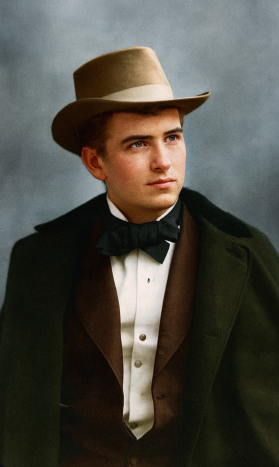
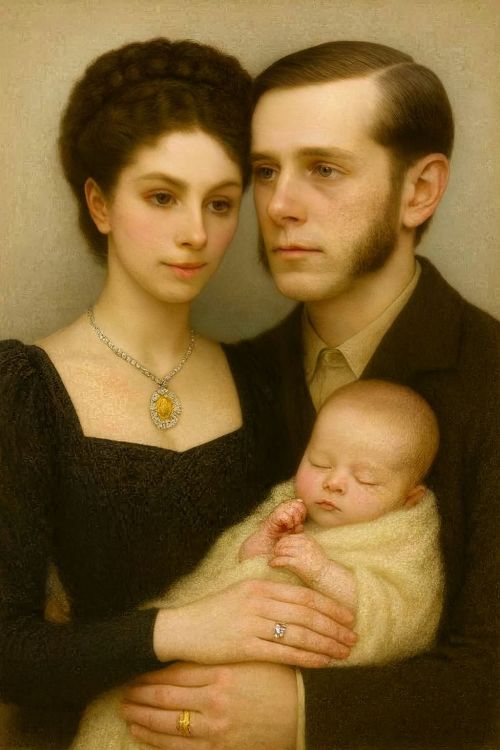
When Mr. Oliver stepped down, the company needed a leader who could carry the Winchester legacy into a new age. Mr. William was elected president unanimously. Newspapers called him the quiet genius of American firearms. His employees called him the man who could see the future. And Mrs. Sarah Lockwood Pardee Winchester called him husband. Their marriage was a union of intellect and tenderness. Mrs. Sarah, brilliant in her own right, understood Mr. William’s restless mind. She encouraged his experiments, soothed his anxieties, and brought warmth to a life otherwise consumed by metal and machinery. Together, they dreamed of a home unlike any other—a sprawling mansion filled with light, music, and rooms for the family they hoped to build. When Sarah was with child, Mr. William worked late into the night designing a new rifle mechanism he believed would revolutionize the industry. He wanted to present it to his daughter one day and say, This is what your father built while waiting for you. Their baby girl, Ms. Annie, was born on a cool summer morning. Mr. William held her with trembling hands, overwhelmed by the fragile miracle of her tiny fingers curling around his thumb. Mrs. Sarah wept with joy. For a brief moment, the world felt perfect. However, perfection is a fragile thing.
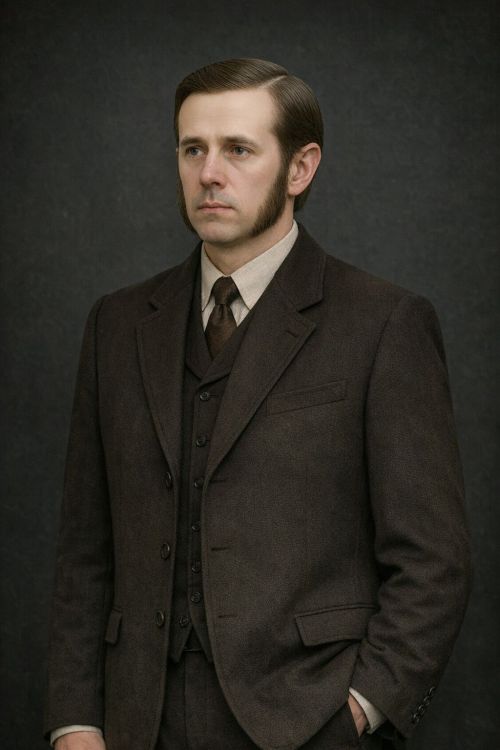
Within weeks, Ms. Annie fell ill. Doctors came and went, offering treatments that did little and explanations that did even less. Mrs. Sarah stayed at her bedside, singing lullabies through tears. Mr. William paced the halls, helpless in a way he had never known. Despite every effort, their daughter slipped away. The grief hollowed them. William buried himself in work, creating inventions no one had dreamed possible—rifles with unprecedented precision, mechanisms that seemed almost alive in their efficiency. But each success felt empty without the child he had hoped to teach. Mrs. Sarah tried to hold them together, but sorrow has a way of reshaping the world. One autumn afternoon, desperate for distraction, they took a family outing to the countryside. They walked through a quiet grove, the leaves whispering overhead. Mrs. Sarah later said she felt a presence there—cold, watchful, ancient. Mr. William brushed it off as imagination. But that night, he fell violently ill.
Doctors suspected poisoning. Possibly chronic arsenic exposurethough they could not determine the source. His condition worsened rapidly. Mrs. Sarah stayed by his side, holding his hand as she had held their daughter’s. William whispered apologies, dreams unfinished, inventions unbuilt, a life cut short. He died before dawn. Mrs. Sarah was left alone—widowed, childless, and haunted by the memory of that strange presence in the grove. Some said she imagined it. Others whispered that the Winchesters, whose weapons had shaped history, had drawn the attention of something darker.
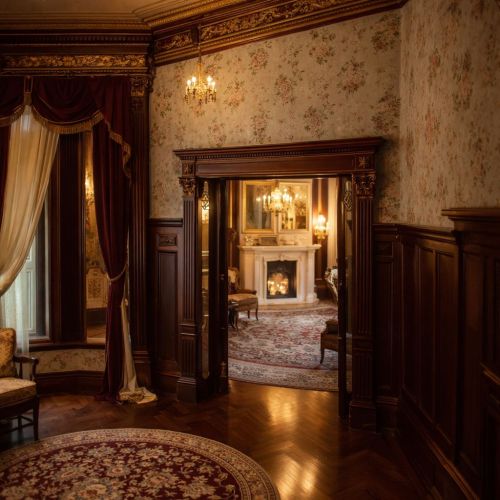
But Mrs. Sarah knew the truth. She wasn’t building a mansion. She was building a promise. A promise that love, invention, and imagination would outlast tragedy. A promise that the curse—real or imagined—would never define her family’s legacy. A promise that Mr. William’s brilliance would echo through every beam, every window, every impossible hallway. The Winchester Mansion became her monument to resilience. And in its endless rooms, she kept alive the memory of the man who dreamed of changing the world—and did.

PRIVATE EVENTS & WEDDINGS
at WINCHESTER ESTATE

Many event locations claim to be unique, but nothing compares to the Winchester Mystery House. If you’re truly seeking a distinct, one‑of‑a‑kind setting for your milestone celebration or special occasion, reserve a venue that delivers on uniqueness many times over. Whether you’re planning a wedding, birthday or anniversary celebration, corporate gathering, holiday party, or any other meaningful event, the Winchester Mystery House offers an unforgettable backdrop. Give your guests an experience they’ll be talking about for years to come.
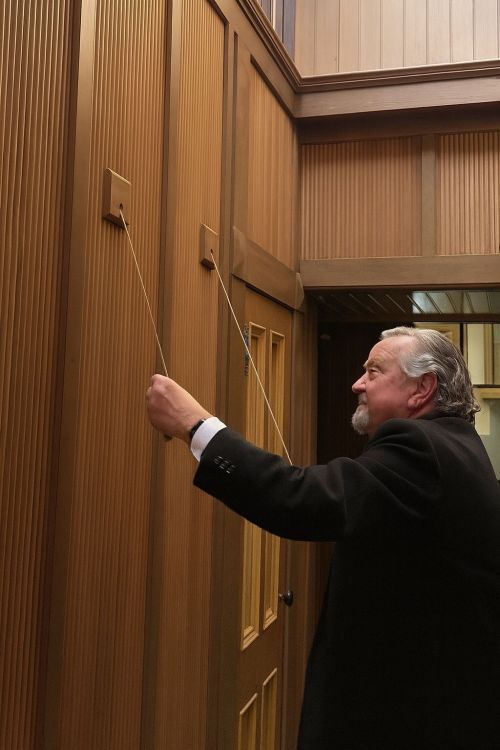
Café 13: A Rest Stop on the Edge of the Mystery

After wandering the winding halls of the Winchester Mystery House—where staircases defy logic and whispers seem to cling to the walls—Café 13 offers a welcome return to warmth and grounding. Newly reopened and serving guests daily from 10 AM to 3 PM, this cozy hideaway invites you to pause, breathe, and gather yourself before diving back into the mansion’s secrets. Here, you can enjoy breakfast, lunch, snacks, and refreshing drinks in a calm indoor space that feels worlds away from the mansion’s twisting corridors. Settle in with a warm meal, challenge a friend to a board game, or simply rest and recharge as sunlight filters through the windows. Café 13 is more than a café—it’s a moment of calm between chapters of the Winchester legend, a place to steady your nerves before returning to the gardens, the grandeur, and the mysteries that await.
Winchester Mercantile Gift Shop
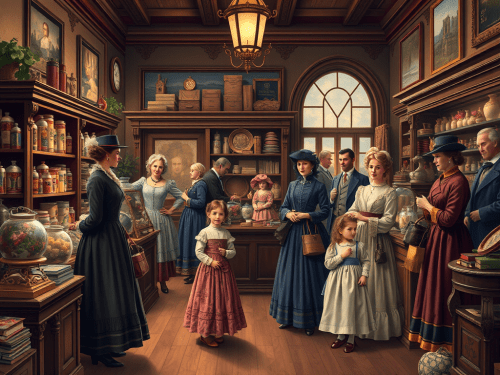
Your journey into the Winchester Mystery House begins long before you cross the mansion’s threshold. It starts at the Mercantile gift shop—a welcoming outpost standing at the edge of a world where history and myth intertwine. Here, beneath warm lights and shelves lined with curiosities, you can secure your tour tickets and prepare for the adventure ahead. Guests often pause for a souvenir photograph, capturing the moment before they step into Sarah Winchester’s enigmatic domain. As you explore the shop, you will find an eclectic array of gifts and keepsakes: tokens of the mansion’s lore, echoes of Victorian elegance, and mementos that carry a touch of the house’s enduring mystery. The Mercantile is more than a gift shop—it is the gateway. https://winchestermysteryhouse.com/

Harris Plumbing, Heating, Air & Electric has been serving our community for 30 years—an achievement few companies can claim. That longevity isn’t an accident. It’s the result of hard work, integrity, and a commitment to doing every job the right way, whether it’s a simple repair or a complex system overhaul. We take pride in every service call because we know your home is more than a building—it’s where your family lives, grows, and feels safe. Ensuring your comfort and protection is a responsibility we carry with seriousness and gratitude. After three decades, our mission remains the same: to deliver dependable service you can trust, every time.

Harris makes sure you have the clear, accurate information you need to decide what comes next—no matter what your home is facing. Before we begin any work, our technicians perform a full diagnosis and walk you through every issue we find. That means you receive a personalized quote and service plan tailored to your home’s exact needs, not a generic estimate or guess. We believe the only way to deliver our best work is to understand the problem completely and address it with precision, transparency, and care. Your home deserves nothing less. https://www.callharrisnow.com/about-us/


BMW: The Epitome of Luxury, Prestige, and Driving Pleasure

BMW stands at the apex of global luxury automotive culture—a marque synonymous with engineering mastery, refined aesthetics, and a driving experience so immersive that owners often describe it as a relationship rather than mere transportation. Its reputation is not accidental; it is the product of a century-long lineage of craftsmanship, innovation, and cultural presence that few brands can rival.
A Legacy of Wealth, Status, and Engineering Excellence

BMW’s history stretches back to 1916, and over the decades it has become a symbol of European wealth, aristocratic taste, and executive power. The brand’s signature blend of performance and refinement has made it a fixture among:
- Heads of state
- CEOs and global business leaders
- Artists, athletes, and cultural icons
The BMW owner is not simply someone who buys a car—they are someone who signals competence, discernment, and elevated social standing. The brand’s design language—clean, muscular, and unmistakably confident—communicates prestige without needing to shout.

The Driving Experience: Enjoyment Elevated to an Art Form
BMW’s engineering philosophy, Freude am Fahren (“Joy in Driving”), is not marketing fluff—it is a lived reality. Owners consistently praise:
- Perfect 50/50 weight distribution
- Responsive steering and chassis balance
- Silky inline‑six and V8 engines
- Cabins that blend luxury with driver‑centric ergonomics
Whether it’s a flagship 7 Series gliding over the road or a classic E38 carving through a curve, BMWs are built to be driven, not merely admired.

BMW in the James Bond Franchise
BMW’s prestige reached a global cinematic peak when it became the official vehicle of James Bond during the Pierce Brosnan era. This partnership placed BMW squarely in the realm of elite espionage fantasy—sleek, technologically advanced, and irresistibly stylish.
Key appearances include:
BMW 750iL (E38) in Tomorrow Never Dies (1997) — Outfitted with remote‑control driving, electric‑shock security, tire‑shredding tacks, and missile systems. Bond famously pilots it from the back seat using his cellphone.
BMW Z3 Roadster in GoldenEye (1995) — A stylish debut that generated massive pre‑release demand.
- BMW Z8 in The World Is Not Enough (1999) — A modern reinterpretation of the 1950s 507, equipped with Q‑branch enhancements and celebrated for its beauty and rarity.
These films cemented BMW’s image as the car of choice for the world’s most sophisticated spy—combining elegance, intelligence, and lethal capability.

A Well‑Known Important Person Who Drives a BMW
One of the most recognizable BMW drivers in popular culture is Jason Statham’s character Frank Martin in The Transporter (2002), who pilots a BMW 735i (E38). The car became iconic for its precision driving sequences and reinforced BMW’s association with professionalism, discipline, and elite skill. In real life, numerous high‑profile figures—from global executives to entertainers—choose BMW for its blend of luxury and performance, but Statham’s portrayal remains one of the most culturally influential examples.

Why BMW Remains the Benchmark of Luxury
BMW’s prestige is not just historical—it is continually renewed through:
- Cutting‑edge technology
- Timeless design
- A global reputation for excellence
- Cultural visibility in film, music, and elite circles
To own a BMW is to participate in a lineage of wealth, refinement, and driving passion that spans generations.

BMW’s top ranking in Consumer Reports’ Auto Brand Report Card and its steady market‑share growth highlight the company’s long‑standing ability to build high‑performing, reliable vehicles that truly meet consumer expectations. Unlike other luxury brands that focus primarily on comfort and opulence, BMW distinguishes itself through engineering excellence and unmatched driving dynamics. Every model is designed to create a direct, responsive connection between the driver and the machine—an experience that has defined the brand for generations. This commitment to performance is why BMW continues to earn its reputation as The Ultimate Driving Machine. https://www.brianharrisbmw.com/
Randolph Harris San Francisco Taxation & Mergers
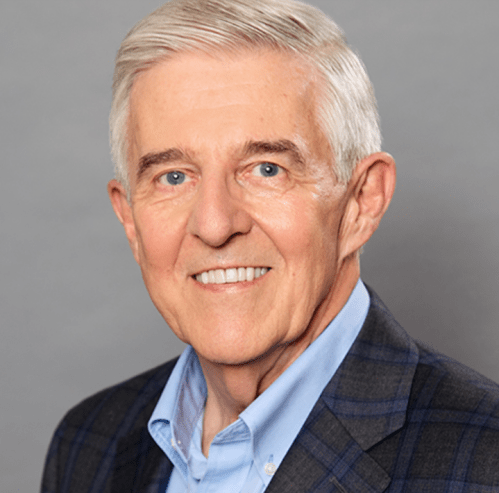
Building strong, lasting client relationships is essential to a successful legal career. Many attorneys assume that mastering legal doctrine alone guarantees success, but law is fundamentally a service profession—our work is measured not only by technical skill, but by how effectively we solve problems for the people who trust us. Long‑term relationships grow from three core commitments: truly knowing your clients, understanding how their legal issues fit within the broader context of their business and personal goals, and consistently delivering exceptional service.

Randy advises clients on business transitions, taxable and tax‑deferred mergers and acquisitions, joint ventures, restructuring, integrated tax planning, federal and state tax controversy matters, and real estate transactions. His approach is grounded in clarity, responsiveness, and a deep understanding of each client’s unique circumstances. Trust is the cornerstone of every relationship he builds. Ultimately, clients feel confident knowing they are working with someone who not only understands their challenges, but is fully committed to helping them achieve their goals. https://www.jmbm.com/l-randolph-harris.html

PARK HAVEN

Where Modern Luxury Meets California Ease
Base Price: Starting from $519,000
Sales Office: 12155 Cobble Brook Dr, Rancho Cordova, CA 95742
Homes: 3+ Bedrooms | 2–3.5 Baths | 1,342–2,547 Sq. Ft.

A Community Designed for Elevated Living
Park Haven is a refined residential enclave where thoughtful architecture, contemporary comfort, and timeless design come together to create a lifestyle of effortless sophistication. Every home is crafted with precision—balancing beauty, function, and the quiet luxury that defines today’s most desirable California communities.

Set in the heart of Rancho Cordova, Park Haven offers a serene neighborhood atmosphere while keeping you close to vibrant shopping, dining, recreation, and top‑tier schools. It is the ideal blend of suburban calm and modern convenience.

A Community Designed for Elevated Living
Park Haven is a refined residential enclave where thoughtful architecture, contemporary comfort, and timeless design come together to create a lifestyle of effortless sophistication. Every home is crafted with precision—balancing beauty, function, and the quiet luxury that defines today’s most desirable California communities.

Set in the heart of Rancho Cordova, Park Haven offers a serene neighborhood atmosphere while keeping you close to vibrant shopping, dining, recreation, and top‑tier schools. It is the ideal blend of suburban calm and modern convenience.

Luxury Homes with Style and Substance
Each Park Haven residence is designed to feel expansive, inviting, and unmistakably upscale. With flexible floor plans ranging from 1,342 to 2,547 square feet, these homes adapt gracefully to the way you live.

Signature Features Include:
- Spacious 3+ bedroom layouts with optional lofts and flex spaces
- Designer kitchens with premium finishes and generous storage
- Open‑concept great rooms ideal for entertaining and everyday comfort
- Elegant primary suites with spa‑inspired baths
- Energy‑efficient construction and smart‑home enhancements
- Beautifully crafted exteriors with exceptional curb appeal
- 2- and 3-car garage options for added convenience

Every detail—from the flow of natural light to the quality of materials—has been curated to elevate your daily experience.

A Lifestyle Rooted in Comfort and Connection

Park Haven is more than a collection of homes; it is a community built for people who value beauty, balance, and belonging. Wide streets, thoughtfully planned landscaping, and a welcoming neighborhood feel create an environment where families thrive and homeowners take pride in where they live.

Whether you’re starting a new chapter or seeking a refined upgrade, Park Haven offers a home that feels both timeless and tailored to you. https://www.cresleigh.com/communities/california/rancho-cordova-ca/park-haven

“Every day in my Cresleigh home feels like stepping into a life I once prayed for. The craftsmanship, the calm, the beauty in every detail remind me how grateful I am to live in a place built with such care and intention.”


He is the Emperor of Life Who Determines How Each Person Will Die

Confused values are called into play by incipient rebellion. Scientists have shown that tobacco, marijuana, alcohol, drugs, and too much meat can harm us physically. However, the most important blessings of keeping the Word of Wisdom are spiritual, not physical. Our bodies are temples, and when we abuse our bodies by consuming harmful substances, the Spirit of the Lord is restrained in out lives. “Know ye not that ye are the temple of God, and that the Spirit of God dwelleth in you? If any man defile the temple of God, him, shall destroy; for the temple of God is holy, which temple ye are,” reports 1 Corinthians 3.16-17. The Spirit will not inhabit a polluted temple. Abusing your temple could land you in jail. Jail is a place where you cannot trust anyone. It is a jungle. You even have to be careful about listening to any piece of advice. Beware! Many of the people are sick! Neurotic, psychotic, psychopathic. It is hard to believe anyone. Only one out of twenty there has his marbles. Sex perverts, child molesters, snitches, robbers, murderers, psychopaths. It is hard to trust anyone. Someone who claims they are you follower could be an old murderer. They keep an eye on you. Everything you do. And no one gets bailed out of state prison. The government cannot let you would. A judge or politician would get in a lot of trouble for that. It is also dangerous to be seen talking to some people. The worst things you can think of are the easiest to conjure in prison and are not only possible, probable, but they are happening right now. There are also no secrets in prison. #RandolphHarris 1 of 20

When a loved one is incarcerated, the financial impact on the family can be significant. Loss of income and court and legal fees can lead to a loss of health care, housing, and savings. It is important to address these issues as soon as possible with a trusted adviser. As difficult as it may be, it is helpful to accept the reality that you have experienced changes with lasting effects. As you accept this reality, it will become easier to talk with others. Start by deciding what you will tell people. It may not be appropriate to share every detail. However, being honest about your feelings and your needs will allow others to help. You have the right to draw liberally upon the Saviour’s power to help your family and others you love. The Holy Ghost will be your personal tutor as you seek to understand what the Lord would have you to know and do. As you exercise faith in the Lord and His priesthood power, your ability to draw upon this spiritual treasure that the Lord has made available will increase. Man’s solidarity is founded upon rebellion, and rebellion, in its turn can only find its justification in this solidarity. We have, then, the right to say that any rebellion which claims the right to deny or destroy this solidarity loses simultaneously its right to be called rebellion and becomes in reality an acquiescence in murder. In the same way, this solidarity, except in so far as religion is concerned, comes to life only on the level of rebellion. And so, the real drama of revolutionary thought is announced. #RandolphHarris 2 of 20

In order to exist, many must rebel, but rebellion must respect the limit it discovers in itself—a limit where minds meet and, in meeting, begin to exist. Rebellious thought, therefore, cannot dispense with memory: it is a perpetual state of tension. In studying its actions and its results, we shall have to say, each time, whether it remains faithful to its first noble promise or if, through indolence or folly, it forgets its original purpose and plunges into a mire of tyranny or servitude. Meanwhile, that initial progress that the spirit of rebellion provokes in a mind is originally imbued with the absurdity and apparent sterility of the World. In absurdist experience, suffering is individual. However, from the moment when a movement or rebellion begins, suffering is seen as a collective experience. Therefore, the first progressive step for a mind overwhelmed by the strangeness of things is to realize that this feeling of strangeness is shared with all men and that human reality, in its entirety, suffers from the distance which separates it from the rest of the universe. The malady experienced by a single man becomes a mass plague. In our daily trials rebellion plays the same role as does the “cogito” in the realm of thought: it is the first piece of evidence. However, this evidence lures the individual from his solitude. It founds its first value on the whole human race. I rebel—therefore we exist. #RandolphHarris 3 of 20

Metaphysical rebellion is the movement by which man protests against his condition and against the whole of creation. It is metaphysical because it contests the ends of man and of creation. The slave protests against the condition in which he finds himself within his state of slavery; the metaphysical rebel protest against the condition in which he find himself as man. The rebel slave affirms that there is something in him that will not tolerate the manner in which his master treats him; the metaphysical rebel declares that he is frustrated by the universe. For both of them, it is not only a question of pure and simple negation. In both cases, in fact, we find a value judgment in the name of which the rebel refuses to approve the condition in which he find himself. The slave who opposes his master is not concerned with repudiating his master as human being. He repudiates him as a master. He denies that the has the right to deny him, a slave, on grounds of necessity. The master is discredited to the exact extent that he fails to respond to a demand which he ignored. If men cannot refer to a common value, recognized by all existing in each one, then man is incomprehensible to man. The rebel demands that this value should be clearly recognized in himself because he knows or suspects that, without this principle, crime and disorder would reign throughout the World. An act of rebellion on his part seems like a demand for clarity and unity. The most elementary form of rebellion, paradoxically, expresses an aspiration to order. #RandolphHarris 4 of 20

The metaphysical rebel attacks a shattered World in order to demand unity from it. He opposes the principle of justice which he finds in himself to the principle of injustice which he sees being applied in the World. Thus, if he can, all he wants, originally, is to resolve this contradiction and establish the unitarian reign of justice, or if his is driven to extremes, injustice. Meanwhile, he denounces the contradiction. Metaphysical rebellion is a claim, motivated by the concept of a complete unity, against the suffering of life and death and a protest against the human condition both for its incompleteness, thanks to death, and its wastefulness, thanks to evil. If a mass death sentence defines the human condition, then rebellion, in one sense, is its contemporary. At the same time that he rejects his mortality, the rebel refuses to recognize the power that compels him to live in this condition. The metaphysical rebel is therefore not definitely an atheist, as one might think of him, but he is inevitably a blasphemer. Quite simply, he blasphemes primarily in the name of order, denouncing God as the father of death and as the supreme outrage. By the time he is six, our typical human being has left kindergarten (in America at least), and is pushed into the more competitive World of first grade. There he will be on his own to deal with teachers and other boys and girls. Fortunately, by this time, he is no longer a babe, thrust helpless into a World he never made. #RandolphHarris 5 of 20

From the little suburb of his home, he venters into the great metropolis of the bustling school with whole sets of social responses ready to offer the various kinds of people around him. His mind is all wired up with his own ways of getting along, or at least of surviving, and his life plan has already been made. This was well known to priests and teachers of the Middle Ages, who said: “Give me a child until he is six, and you can have him thereafter.” A good kindergarten teachers can even predict what the outcome will be, and what kind of life the child will have: happy or unhappy, winning or losing. Thus the comedy or tragedy of each human life is that it is planned by an urchin or pre-school age, who has a very limited knowledge of the World and its ways, and whose heart is filled mainly with stuff put there by his parents. Yet this wonder child is precisely who determines in the long run what will happen to kings and peasants and whores and queens. He has no way to tell the facts from the delusions, and the most everyday events are distorted. He is told that if he had pleasures of the flesh before marriage, he will be punished. And that if he has pleasures of the flesh after marriage, he will not be punished. He believes that the Sun sets, and it takes him ten or forty years to discover that he is running away from the sun; and he confuses his belly with his stomach. He is much too young to be deciding much beyond what he wants for dinner, but he is the Emperor of Life who determines how each person will die. #RandolphHarris 6 of 20
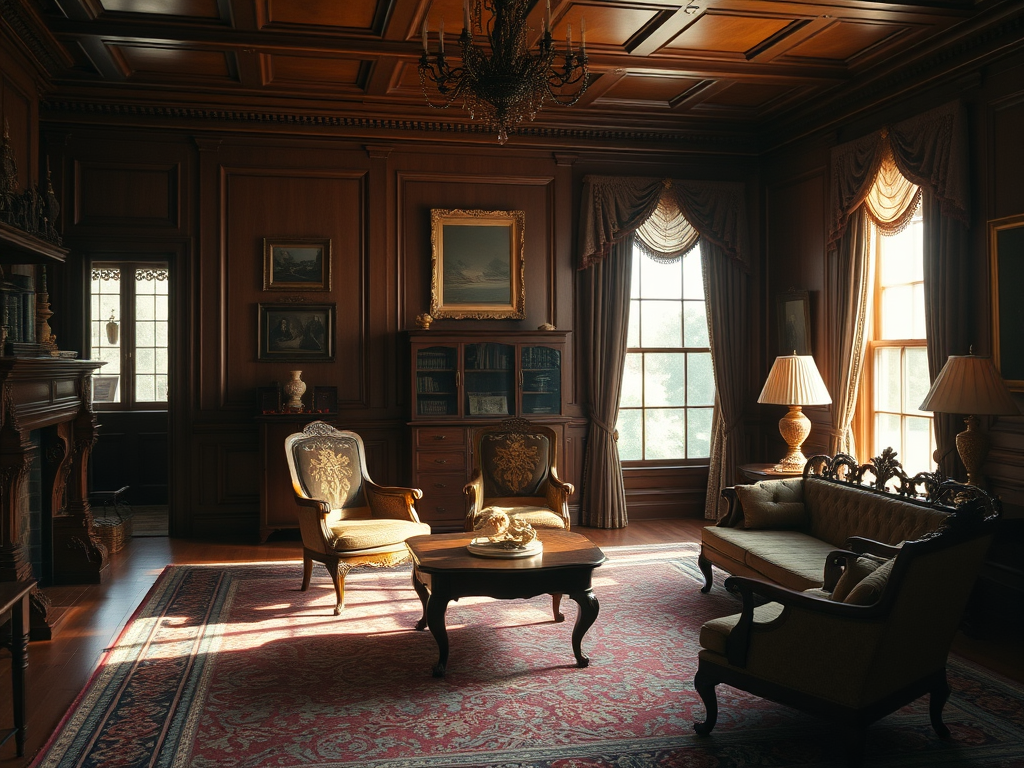
The plan he makes for the eternal future is drawn to the family specification. Some of the key ones can often be uncovered very quickly, perhaps in the first interview, by asking: “What did your parents tell you when you were very little?” or “What did your parents tell you about life when you were little?” or “What did your parents say to you when they were angry?” Often the answer will not sound like a directive, but with a little Martian thinking it can be stated in the form.” To further highlight this illustration, many of the training slogans we mentioned in the past are actually parental commands. “Public Performance” is. In effect, a command to show off. The child soon learns that by observing his mother’s pleasure when he does and her disappointment when he fails to do so. Similarly, “Come and See How Cute” means “Put on a good show!” “Hurry Up” and “You Can Just Sit There Till You Do” are negative commands or injunctions: “Do not keep me waiting!” and “Do not talk back!” “Let Him Take His Time,” however, is a license of permission. He understands these differences first from his parents’ reactions, and later, when he has a vocabulary, from their actual words. The child is born free, but he soon learns different. During the first two years, he is programmed mainly by his mother. This program forms the original skeleton, or anlage, of his script, the “primal protocol,” at first concerned with swallowing or being swallowed, and then, when he gets teeth, with tearing or being torn. #RandolphHarris 7 of 20

It is being a hammer or being an anvil, as Goethe put it, the most primitive versions of being a winner or being a loser, as seen in Greek Myths and Primal Rituals, where children are devoured and the limbs of the poet lie scattered on the ground. Even in the nursery, it is often already apparent who is in control, the mother or the baby. This may be reversed sooner or later, but echoes of the original situation can still be heard in times of stress or temper. However, very few people can remember anything from this period, which in many ways is the most important, so it has to be reconstructed with the help of the parents, relatives, nursemaids, and pediatricians, conjectures made about dreams, and perhaps the family album. From two to six the ground is firmer, because nearly everyone remembers a few transactions, incidents, or impressions from that phase of script development, which parallels and is closely connected with the progress of the Oedipus complex. In fact, after weaning and toilet training, the directives which are most universal throughout the World and have the most lasting effects are those concerned with sexuality and aggression. The organism and the species survive by means of circuits which have been built in by natural selection. Since nursing, pleasures of the flesh, and fighting require the presence of another person, they are “social” activities. These urges give character or quality to the individual: acquisitiveness, maleness and femaleness and aggressiveness. #RandolphHarris 8 of 20

Also built in are circuits which tone down such urges. These give rise to the opposite tendencies: renunciation, reticence, and restraint. Those qualities enable people to live together at least part of the time in reasonable tranquility, a dull roar of competition rather than an unmitigated and unremitting bedlam of grabbing, copulation, and fighting. And in some ways which is not clear, excretion becomes mixed up in this system of socialization, and the circuits built in for its control give rise to qualities of orderliness. Parental programming determines how and when the urges are expressed, and how and when the restraints are imposed. It uses the circuits which are already built in, and sets them up in a certain way in order to get certain results or payoffs. As a result of this programing, new qualities emerge, which are compromises between urges and controls. From acquisitiveness and renunciation emerge patience; from maleness or femaleness and reticence emerge masculinity and femininity; from fighting and restraint emerge shrewdness, and from messiness and orderliness come tidiness. All these qualities are taught by the parents and programed during the plastic years between two and six. Physiologically, programing means facilitation, the establishment of a path of lessened resistance. Operationally, it means that a given stimulus will evoke, with a high degree of probability, an already established response. #RandolphHarris 9 of 20

Phenomenologically, parental programing means that a response is determined by parental directives, sound tracks previously recorded, whose voices can be heard by listening carefully to what goes on inside one’s own head. It is probably the lot of human beings that once they have learned speech, then perceptions of reality are always filtered through, and guided by, their concepts of reality. For example, if you learn to concept gun and then look at a gun, you probably see something entirely different from what a primitive savage might: guns have no place, nor even a word to describe them, in his or her culture. Words limit what a person will actually experience in a concrete situation. Once a concept has been learned, a person will look at a given object long enough to place it in its proper category or to assign an appropriate name to it. The person may then ignore much of what is actually there. We are all familiar with the bigoted person who, once he or she has determined that a person is a Jew or Hispanic, never looks further at the person. The bigot “knows” the properties of all members who fall into those classes. In reality, the bigot fails to observe the enormous amount of variation among members of any class. The ability to break down categories and discern uniqueness is as essential for healthy personality as the ability to classify. However, the ability to see what is there, to transcend labels and classes and apprehend the thing before one’s view, is a means of enriching one’s knowledge of the World and of deepening one’s contact with reality. #RandolpHarris 10 of 20

Fritz Perls would have his patients in Gestalt therapy go through exercises of simply looking at something or somebody, in order to discern the reality beyond the concept. To be able to sense the “raw World” involves the ability to abandon presently held concepts and categories. This ability is possessed by the productive scientists who deliberately ignores the orthodoxies, and looks ever afresh at the raw data that prompted the information of present-day concepts and categories. The artist probably possesses to a marked degree the ability to apprehend the unique, the individual object. The ability to set conventional categories and concepts aside and to look fully at the World with minimal preconceptions seems to be a trait that facilitates scientific discovery, art, human relations, and, more generally, an enrichment of the sensory experiences of living. The capacity to let oneself see or perceive what is there seems to entail the temporary cessation of an active, searching, or critical attitude. Need-directed perception is a highly focused searchlight darting here and there, seeking the objects that will satisfy needs, ignoring everything irrelevant to the need. Being-cognition, as Maslow has called it, refers to a more passive mode of perceiving. It involves letting oneself be reached, touched, or affected by what is there so that the perception is richer. The most efficient way to perceive the intrinsic nature of the World is to be more passive than active, determined as much as possible by the intrinsic organization of that which is perceived and as little as possible by the nature of the perceiver. #RandolphHarris 11 of 20

This kind of detached, Taoist, passive, non-interfering awareness of all the simultaneously existing aspects of the concrete, has much in common with some descriptions of the aesthetic experience and of the mystic experience. The stress is the same. Do we see the real, concrete World, or do we see our own systems of rubrics, motives, expectations and abstractions which we have projected onto the real World? Or, to put it very bluntly, do we see or are we blind? This mode of cognition, however, seems to be possible only at those times when we have adequately fulfilled the basic need. When we are anxious, deprived of pleasures of the flesh, or hungry, it is as if our organs of perceiving and of knowing have been “commandeered” to find the means of gratification. Our consciousness seems most free to play, to be most receptive to new impressions, when the urgency of needs is diminished. If we want to know hitherto unnoticed features of the Word that confronts us, the implication is clear, our chances of doing so are increased when our basic needs are satisfied. The direction of our cognition by needs has adaptive values, because it increases our chances of finding the things that will satisfy our needs and it permits us to avoid dangers in our environment. However, if persons are always perceiving the World under the direction of their needs, they will simply not perceive much that exists. The aesthetic, appreciative contemplation of reality, with no purpose other than the delight of looking at it, or experiencing it, lends a dimension of richness to an existence that is ordinarily characterized by the search for satisfaction. Competence at gratifying one’s needs frees one from time to time of the necessity to be forever struggling and permits one the luxury of aesthetic sensing. #RandolphHarris 12 of 20

Reflect on the super-wondrous glory of the human brain. The terrestrial human life cycle spins the developing individual through twelve stages. The suckling infant is certainly a very different caste from the serious ten-year-old school child. The rock ‘n’ roll teenager is certainly different caste from the toddering postmenopausal seniors. The human being is a robot, blindly operating within the reality bubble of structural caste and current temporal caste imprint. At each developmental stage the individual imprints the current hive reality for that developmental stage. Infants cannot be concerned with teenage sperm-egg fantasies. They must suck, suck, suck at the cultural cues that they have imprinted—the touch, smell taste, and sound of the mother. Domesticated new-parents at stage eleven suddenly, miraculously forget the barbarian teenage reality in which they have lived just a few months previous. Each human accepts the reality of the current temporal stage hive-imprint, and almost totally represses the memory of previous stages. Hum-ants are directed by involuntary instincts—committed to religious or political passivity, blindly obedient to hive morality—unable to operate as independent individuals. There is, however, a sizable, and enormously influential population of post-social, self-directed persons swarming on the Western Front. About 15 percent of those living in the highly developed civilization of the 21st Century operate at the post-political level of hedonic consumerism, self-consumerism and self-actualization. They are committed to self-responsible philosophies and do not look to theological or political bureaucrats. #RandolphHarris 13 of 20

The statistically average American is somewhere between a Neolithic caveman and a superstitious robot from the priest-run, caste-stratified pre-civilized Past. The average I.Q. is 100, meaning that the person can read and write primitively, but is generally incapable of any inventive thought. Given a chance, the average American would operate like Attila the Hun. Our study also found that Japan had the highest I.Q. with an I.Q. score of 106.48, followed closely by Taiwan at 106.47, and Singapore at 105.79. The United States of America ranked 31 with an average I.Q. score of 97. Singapore, Japan, and China, in that order, scored the highest in reading, math, and science tests. I.Q. ranges from 70 to 80 are considered borderline intellectual functioning and anything below 70 indicates intellectual disability. Classifications as defined in the Diagnostic and Statistical Manual of Mental Disorders (DSM), a reference book on mental health disorders published by the American Psychiatric Association (APA): I.Q. 71 to 84: Borderline intellectual functioning. I.Q. 50-55 to approximately 70: Mild mental retardation. I.Q. 35-40 to 50-55: Moderate retardation. I.Q. 20-25 to 35-40: Severe mental retardation. I.Q. below 20-25: Profound mental retardation. Some ways to improve your average I.Q. scores and move to a higher range include: learning new skills, such as learning music or a sport, regularly playing word and other puzzles and brain games, reading more and acquiring knowledge, learning a new language, training to improve verbal skills, maintaining good health with nutritious food, regular exercise, and adequate sleep. #RandolphHarris 14 of 20
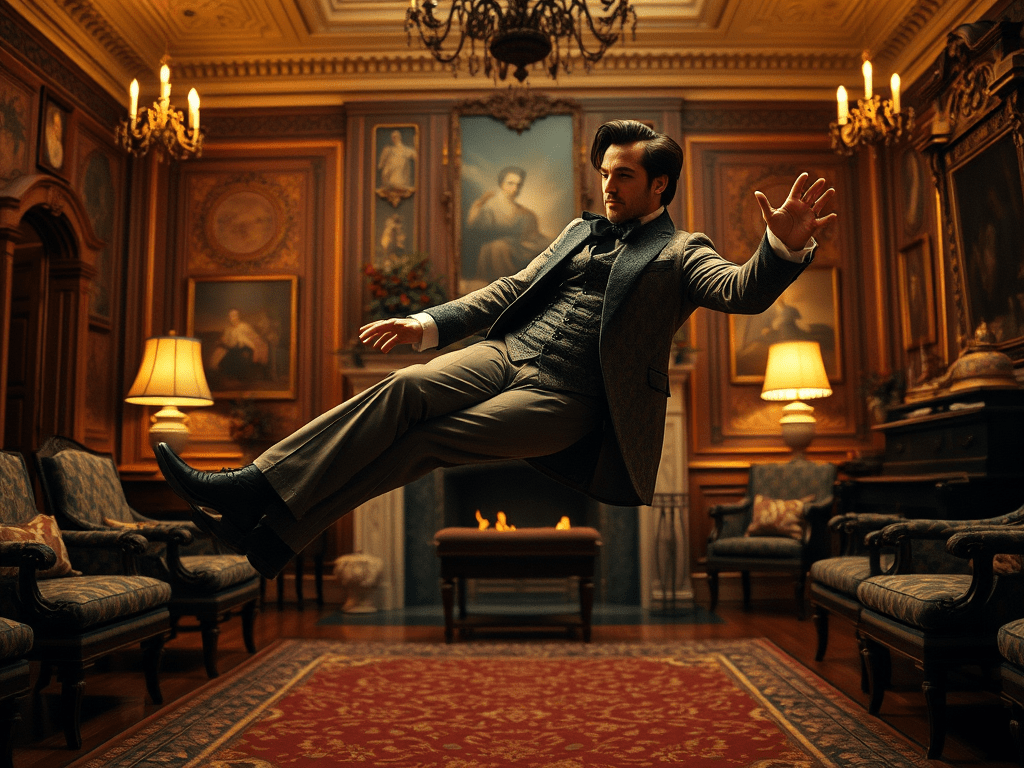
The brilliant Men who wrote the American Constitution designed a system of checks and balances to keep the average Neolithic American from grabbing control. The Athenian experience, for example, failed because of Demo-poll—the Tyranny of the Mediocre. Many people say that the most annoying sound in the World is a baby crying. However, that is not true. Babies cry randomly and can be quieted down by feeding them, changing them, or holding them. Yet, those who are awakened by the annoying sound of a leaf blower Monday through Sunday know that it the most annoying sound in the World. It is a violent way to wake up and start the day. It is akin to hearing a chain saw every morning, for several hours, like clockwork day after day. I would think that using a loud leaf blower is not only healthy for the operators’ ears and lungs, wastes a lot of water because they blow around so much dust and get cars dirty, but it is also dangerous because people work hard and are tired and they could snap. In fact, in 2023, an Illinois man, William Martys, age 59, was using a leaf blower in his yard at his Antioch home on 12 April when he was approached by his next-door neighbour, Ettore Lacchei, age 79. The two argued and Mr. Lacchei shot Mr. Martys in the head. With clean energy being such a hot topic, for conservation and security measures, it seems the Environmental Protection Agency would mandate that leaf blowers meet noise decibels requirements. According to the Centers for Disease Control, leaf blowers expose users to noise levels of around 90 decibels. Noises beyond 70 decibels are registered as “disturbance.” Prolonged exposure to anything beyond the level of 85 decibels 85 decibels can result in hearing damage. Even from 50 feet away, the sound of a leaf blower can each 77 to 80 decibels—just under the hearing loss threshold. For residential environments, the limits are set at 55-65 decibels. #RandolphHarris 15 of 20

Leaf blowers emit more than 60 times the hydrocarbons of a car, as well as large amounts of carbon monoxide, nitrogen oxides, and volatile organic compounds (VOCs). Emissions from gas leaf blowers creates high levels of formaldehyde, benzene, fine particulate matter, and smog-forming chemicals. A 2011 study showed that a lead blower emits nearly 300 times the air pollutants as a pickup truck. You can file a complaint with local authorities. People often take prejudice or habit for truth and in that case feel no discomfort, but if they once realize that their truth is nonsense, the game is up. From then onwards it is only by the force that a man can be compelled to do what he considers absurd. A look of exasperation at my unworldly imaginings, my inability to see what is required of people today because it is “necessary” is unbelievable. However, it was the Chief of Police in San Francisco who said, when asked what could be done to decrease the number of suicides, “We gotta slow down.” Why should we arrange a “civilization” which is a torture to many and not very good for anybody? The World we live in does not have to be the way it is. Out of all the possibilities, we chose to make it this way. Those who never did liked it helped to make it by going along with it. What people do not go along with falls apart, so what is, people are going along with. Even a military government loses its power when people do not go along with it. In Hawaii after the Japanese attack of Pearl Harbor, we had martial law, and one of the first acts of the military was to make it unlawful to speak against the military. These same people also saw it as unpatriotic to drive Japanese cars. #RandolphHarris 16 of 20

You cannot punish everyone. Physically it is not possible and besides, then who is left to work with you? Leaders are non-existent without followers. The number of people who now do not like what we have made seems to include almost everyone. However, we are all split up in groups which do not like this and do not like that, who are fighting each other, not knowing that what we deeply want is something else. It seems to me that this is a common cause of juvenile delinquency and other forms of mental illness. Security of Earthly possessions is hard to find and harder to keep in the quick-changing World of today. So anxieties and worries get multiplied. Because of this, inner security, the close friend of inner peace, becomes proportionately more valuable. If it is to be attained, the first practical requirement is to train oneself in the art of keeping emotionally and mentally calm. This deliberate practice of calmness is a preparation for the deeper state of Mental Quiet, which comes by itself when meditation is sufficiently advanced. It is effort consciously and quickly made to keep a hold on passion and emotions so that the work of getting nearer the realization of ideals is not hindered. Whether, or how much, philosophy removes fear must depend on either his capacity to withdraw part of awareness from the body or on a higher level to remain unmoved in the non-dual identity. Most people are captive, in different degrees, to some kind of fear. It may be caused by their surroundings, by their religious upbringing, by those in authority over them, by their bodily condition, by suggestion received from others or self-made. It is prudent to keep away from temptation—at least until enough beneficial strength has been developed to risk the test. However, if development is not sought and obtained, then untempted and unproven virtue may be merely negative. #RandolphHarris 17 of 20

Instead of fighting in a political battle for the insight and convictions they have gained, many become totally absorbed in their dream of a cottage settlement. In the end, they find themselves sitting between the chairs. (A reference to a German saying, “Trying to sit on all of the chairs and ending up sitting between them” which actually means torn between conflicting interests, however here is more specifically means torn between two interests and ending up with nothing, or not sitting on a chair at all.) What makes this even worse is the leadership’s way of thinking; they believe their policies will help them avoid any armed conflict. They try to sit on all the chairs at the same time and the result is the proverbial fall between the chairs. If a New Man comes into being—a man who has emerged from the archaic ties of blood and soil, and who feels himself to be the son of man, a citizen of the World whose loyalty is to the human race and to life, rather than to any exclusive part of it; a man who loves his country because he loves mankind, and whose judgment is not warped by tribal loyalties, only then can the One World which is emerging can come into existence. Man’s growth is a process of continuous birth, of continuous awakening. We are usually half-asleep and only sufficiently awake to go about our business; but we are not awake enough to go about living, which is the only takes that matters for a living being. The great leaders of the human race are those who have awakened man from his half-slumber. The great enemies of humanity are those who put it to sleep, and it does not matter whether their sleeping potion is the worship of God or that of the Golden Calf. #RandolphHarris 18 of 20

The mission of the Sacramento Fire Department is to: Protect the lives and property of the people of Sacramento and its visitors from fires, natural disasters, accidents, hazardous material incidents, and other causes requiring a rapid and skilled response by land or water. “I did a lot of EMS in the Sacramento Fire Department when I was in college. I became a ski patrolman my freshman year, took advanced first aid. I became a fireman the next summer and began the EMT course in the fall. I originally wanted to become an EMT for ski patrol. I was an EMT by the spring of my sophomore year. I took my EMT 2 training in Sacramento as well as my paramedic training. I remember very well one of the first calls I ever got. It was the first snow of the season, and a couple of kids skipped school and went out riding on a snowmobile. They were crossing a road on this snowmobile, and they got clipped by a Honda Accord. Two kids, twelve and thirteen. We were called to the scene. The snowmobile was there, and one of the kids was lying close to it, but the other kid was fifty or sixty feet down the road. There was a trail of blood all the way down to him, and he was DOA (dead on arrival). The first kind had a pulse. So, we started doing CPR, and at the first chest compression the blood just gushed out. I had seen broken legs, but this was very gruesome. It was a heavy-duty accident. Finally, there was no pulse. We did the best we could. We kept trying to resuscitate him, but couldn’t revive him. #RandolphHarris 19 of 20
“I was in the hospital for quite a while, getting our equipment back. I was there when the parents came in, two sets of parents. They had assumed that the kids were in school, they didn’t know that the kids had skipped school to go play with a snowmobile. The response of the parents—I got goosebumps, and I felt tingling in the back of my head. They just collapsed. No one appreciates the word grief until they see how parents respond when they find out their child has died. I remember calling my mother that night just to convey the story to hear and to touch case with that part of myself.” The Sacramento Fire Department’s primary mission is to provide fire protection, emergency medical care, fire prevention, and other critical public safety services to both residents and visitors. You can save lives by donating to the Sacramento Fire Department. The Sacramento Fire Department works hard to save lives and property and often risk their own lives. Awaken compassionate thoughts and actions by helping others realize that, like our Saviour, they too have compassion for others. Please make donate to the Sacramento Fire Department to asset them in their fire prevent duty and other programs. To help keep America a God loving, Christian community, please raise your children to love America and to love God and Jesus Christ. In a afford to help America pull through the massive national deficit, please buy American made cars and other American made good and services. Also, please remember to respect law and order and treat your elders with the utmost dignity and kindness possible. And take your education seriously so that you will be successful in life and make your family proud. I pledge allegiance to the flag of the United States of America, and to the Republic, for which it stands, one nation, under God, indivisible with liberty and justice for all. #RandolphHarris 20 of 20

The Winchester Mystery House

Even ghosts can’t resist a good game of Clue! 🎩🔍 Was it in the conservatory with a rope, or in the dining room with a candlestick?

Solve the mystery live and get tickets to see CLUE: Live On Stage at the San Jose Center for the Performing Arts from October 29 – November 3, 2024. Save 25% off Tuesday – Thursday performances TODAY by clicking UNLOCK to enter the promo code: WRENCH. Offer expires tonight at 11:59 pm PST! Link in bio. https://linktr.ee/winchestermysteryhouse


War Worn World

What depressed me more than anything when I was a youth is that I had been born into an age that honored only criminals and those who do not accept the norms of society. The surge of large waves of crime needs to calm down so that the future will belong only to peaceful competition. More and more California and New York have begun to resemble businesses that mutually undercut the federal government, steals customers and orders, and try to outwit the federal government in every way, by making protests are loud as they are dangerous. This development has not only seemed to progress, but the United States of America is being transformed into a huge department store for the most skillful manipulators and most ruthless executives. Charles A. Conant, a prominent journalist and economist troubled about the necessity of finding an outlet for surplus capital, “if the entire fabric of the present economic order is not to be shaken by a social revolution,” argued that “the law of self-preservation, as well as the of the survival of the fittest, is urging our people on in a path which is undoubtedly a departure from the policy of the past, but which is inevitably marked out by the new conditions and requirements of the present.” #RandolphHarris 1 of 25A

If the country did not seize upon its opportunities at once, Conant warned against the possibility of decadence. Another writer denied that a policy of colonial expansion was anything novel in American history. We had colonized the West. The question was not whether we should shift our colonizing heritage into new channels. “We must not forget that the Anglo-Saxon race is expansive.” Although the Anglo-Saxon mystique was called upon in the interests of expansion by might, it also had its more pacific side. Its devotees had usually recognized a powerful bond with England; the historians of the Anglo-Saxon school, stressing the common political heritage, wrote about the American Revolution as if it were a temporary misunderstanding in a long history of common political evolution, or a welcome stimulant to flagging Anglo-Saxon liberties. One outgrowth of the Anglo-Saxon legend was a movement toward an Anglo-American alliance which came to rapid fruition in the closing years of the nineteenth century. Despite its unflagging conviction of racial superiority, this movement was peaceful rather than militaristic in its motivation; for its followers generally believed that an Anglo-American understanding, alliance, or federation would usher in a “golden age” of universal peace and freedom. No possible power or combination of powers would be strong enough to challenge such a union. #RandolphHarris 2 of 25

This “English-speaking people’s league of God for the permanent peace of this war-worn World,” as Senator Beveridge called it, would be the next stage in the World’s evolution. Advocates of Anglo-American unity believed that Spencer’s transition from militant to pacific culture, and Tennyson’s “Parliament of Man the Federation of the World,” were about to become a reality. James K. Hosmer had appealed in 1890 for an “English-Speaking Fraternity,” powerful enough to withstand any challenge by the Slavs, Hindus, or Chinese. This coalescence of like-minded states would be but the first step toward a brotherhood of humanity. Yet it was not until 1897 that American interest in an English alliance resulted in a movement of consequence, which received the support of publicists and statesmen as well as litterateurs and historians. During the war with Spain, when continental nations took a predominantly hostile attitude toward American interest, Britain’s friendliness stood out in welcome relief. Common fears of Russia and a feeling of identity of interests in the Far East were added to the notion of a common racial destiny. The Anglophobia which had been so persistent among American politicians—Roosevelt and Lodge had been among the bitterest—was considerably relieved. #RandolphHarris 3 of 25

The antiimperialist Carl Schurz felt that what he rather prematurely took to be the complete dissipation of anti-English feeling was one of the best results of the Spanish-American War. Richard Olney—who as Cleveland’s Secretary of State during the Venezuela dispute had defiantly told Britain that the fiat of the United States of America is a law in the Western Hemisphere—now wrote an article on “The International Isolation of the United States” to point out the benefits of British trade and to warn against pursuing an anti-British policy at a time when our country stood alone in the World. Arguing that “family quarrels” were a thing of the past, Olney expressed his hope for Anglo-American diplomatic cooperation, and reminded his readers: “There is a patriotism of race as well as of country.” Even the navalist Mahan approved of the British, and although he had felt for some time that a movement for union was premature, he was sufficiently friendly to be content to let the British retain naval supremacy. For a short time at the close of the century the Anglo-Saxon movement became the rage among the upper classes, and statesmen who seriously of a possible political alliance. The Anglo-Saxon cult, however, had to pull against the great mass of the population, whose ethnic composition and cultural background render them immune to its propaganda; and even among those of Anglo-Saxon lineage the dynamic appeal of the cult was confined to the years of excitement at the turn of the century. #RandolphHarris 4 of 25

The term “Anglo-Saxon” offended many people, and meetings of protest against Anglo-Saxonism were called in some of the western states. Suspicious of England, traditional in American politics, could not be overcome. John Hay complained in 1900 of “a mad dog hatred of England prevalent among newspapers and politicians.” When the movement for Anglo-American Union was revived again during the First World War, the term “English-speaking” was used in preference to “Anglo-Saxon,” and racial exclusiveness was no longer featured. The powerful undertow of American isolation that followed the war, however, swept away this movement once again. Anglo-Saxonism is politics was limited both in scope and in duration. It had its day of influence as a doctrine of national self-assertion, but as a doctrine of Anglo-Saxon World order its effects were ephemeral. Even the benevolent ideal of the dreamers of a Pax Anglo-Americana found practical meaning only as a timely justification of a temporary reproachment inspired by the needs of Realpolitik. The day had not come when World peace could be imposed by a “superior” race confident in its biological blessings and its divine mission. #RandolphHarris 5 of 25

By letting President Biden meander and babble, tripping and falling all over the place for the entire World to see, then allowing Kamla Harris to steal his place as the Democratic nominee for the 2024 Presidential Election, allow these old criminals and disloyal assassins of justice opportunity to collect themselves for their next strike. The serpent can then go on working, more cautiously than before, but this makes the Democrats more dangerous. While honest people dream of peace and security, the lying criminals are organizing a revolution. I am more than dissatisfied with the fact that officials have settled on a set of terrible half-measures to deal with the problem, but many do not even realize how horrible the result will be. Then what should be done next? The leaders of the Democratic party should be put under lock and key immediately. They should be put on trial and the nation freed from them. Every resource of military power should be used to brutally exterminate this epidemic and put an end to illegal immigration. The Marxists parties should be dissolved, and the leaders of the Democratic party brought to reason at the point of the bayonet if necessary. Or better yet, they should be immediately abolished. #RandolphHarris 6 of 25

Just as the Republic cancels people today, they have even more reason to restore to these means. After all, the destruction of the nation and an entire people is at stake! This certain raises another question: Can intellectual ideas be destroyed by a sword at all? Can violence be used to combat a “World-Concept?” I have asked myself these questions more than once since Biden stole the White House. After a certain point in their development, concepts, and ideas as well as movements of a spiritual nature, whether true or not, can never be broken by force. The only exception is when force is used to replace these ideas with fresh, new idea, thought, or World-Concept that burns even bright and stronger than the one it replaces. The use of force without driving power of a strong spiritual or intellectual concept can never destroy an idea or even slow how fast it spreads, not unless force is used for a complete extermination of every supporter and absolute destruction of all related traditions that linger. We all need the strength of a young missionary idea to again rescue our nation from the entanglement of the international serpent and to stop the contamination of our blood. Only then will we be able to protect our nation and prevent the last catastrophe from ever again being repeated (meaning the revolution). #RandolphHarris 7 of 25

It is madness to unite with the Democrats who are ruled by the very enemy who means death to our future. If we are willing to talk into it, how can we free our nation from slavery of this poisonous embrace? When we choose our allies the very organization of this evil plan and acknowledge it as equal, how can the American worker come to understand that the Democratic party is a damnable crime against humanity. The display they put on at the Olympics, the invasion at the southern border, inflation, and the homeless crisis. We cannot drive out Satan by using Beelzebub. For almost the past four years, I have stood breathless, observing the enormous human serpent twisting its way past me. By reading and watching the Democrat Social press daily, I have been able to study the inner train of its thought better than any form of theoretical literature. What the difference between the glitter phrases in the theoretical writing about freedom, beauty, and dignity, and these words Democrats use creates an illusion of profound wisdom with some difficulty due to the disgusting moral tone, all written with a brazen claim of prophecy. The brutal daily press of this doctrine claimed to be the salvation of a new humanity, but is full of vileness, using every kind of slander, and absolutely full of lies! The Democratic theory is intended for stupid dupes of the middle and upper “levels of intelligence”; the more vile and based sections were targeted at the masses. #RandolphHarris 8 of 25

Another way of spreading ideas, which has already been used to a considerable extent, but which can still be enhanced, is the method of news sheets, which are relatively cheap to publish and to send to a certain limited public. Certain radio stations have also proved to have given a much larger voice to new and progressive ideas than others. Overall, new technical factors work in favour of the dissemination of new ideas. A variety of inexpensive printing techniques have developed, and inexpensive neighbourhood radio stations have been organized, as well as podcast, and social media outlets. Only if they appear in the flesh, do ideas become powerful; an idea which does not lead to action by the individual and by groups remains at best a paragraph or a footnote in a book—provided the idea is original and relevant. It is like a seed stored in a dry place. If the idea is to have influence, it must be put into the soil, and the soil is people and groups of people. To me, dwelling on the literature and press of this doctrine and organization meant finding my way back to my own people. What seemed an impassable gulf now created in me a love greater than before. Only a fool, once he knows about this enormous work of corruption, could still condemn the victims. If given too much, the masses are seldom to make much use of freedom and are likely to neglect it. #RandolphHarris 9 of 25

Ideally speaking, the state and the Church are supposed to be the embodiment of social and religious ideas. However, this is true only in the most restricted sense. At best, these organizations embody the minimum of the ideas they proclaim. It is precisely for this reason that they do not fulfill the function of helping the individual in the development and realization of the values they proclaim. Political parties today claim that they express values and ideas more specifically than the state, but by their bureaucratic structure and the need to make compromises, the fail to offer the citizen a place where he can feel at home intellectually and spiritually; where he can be active beyond the merely organizing-bureaucratic functions. This view does not deny the importance of activity within political parties; it only claims that this activity is not sufficient to give the individual a chance to participate, to feel at home, and to become aware that his ideas represent a style of life shared by others, and expressed in common actions. Furthermore, I do not believe that the forms of participatory democracy are by themselves sufficient to bring about necessary changes. The face-to-face groups which I have described above must approach problems in a new spirit and with new ideas, but these ideas must be cultivated and spread so that they influence these groups. #RandolphHarris 10 of 25

I realize that the infamous intellectual terrorism of the Democratic movement targets the privileged class, which is neither morally nor spiritually a match for such attacks. They tell a barrage of lies and slander against the individual adversary is considers most dangerous and keep it up until the nerves of the group being attacked give in and sacrifice the hated figure just to have peace and quiet again. However, the fools still do not get peace and quiet. The game begins and is repeated until fear of the villain becomes a hypnotic paralysis. Since the Social Democrats know well the value of power from their own experience, their storming is directed mainly at those whose character has the same quality. Conversely, the praise every weakling on the other side, cautiously, then loudly, according to the intellectual qualities they see or suspect. They fear an impotent, weak-willed genius less than they fear a forceful nature with only modest intellect. Their highest recommendation goes to the weakling in both mind and nature. They are successful in creating the illusion that given-in is the only way to win peace and quiet from them, while they quietly, cautiously, but unerringly, conquer one position after another, either by quiet extortion or by actual theft when the public attention is on other things. #RandolphHarris 11 of 25

The public is distracted and unwilling to be interrupted or they consider the situation too small to worry about and believe it is not worth provoking an angry foe. These are tactics planned by exact calculation to exploit every human weakness, and it is almost mathematically sure to be successful unless the other side can learn to fight poison gas with poison gas. To those who are weak in nature, it can only be said that this is a simple question of survival or non-survival. To me, the physical terrorism toward the individual and the masses is plain to see. Terrorism on the job, in the factory, in the meeting hall, and at mass demonstrations, will always be successful unless equal terrorism opposes it. When the socialist party encounters opposition, it screams bloody murder and yells for help from the state, only to get what they want in the end. It finds some idiot of a high official who hopes to befriend the Marxists and is willing to crush the current adversary of the socialist party to gain the party’s favour. The followers’ and rebels’ success can only be understood by a man who knows the soul of the people, not from books, but from life. The result of this Democratic seduction of mankind can only be described as victimization. They masses are unconscious of the shameless intellectually terrorizes them as they are of the outrageous mistreatment of their human liberty. #RandolphHarris 12 of 25

The modern individual, even more isolated and lonely than his grandfather was, finds a solution in psychoanalysis. First, he is a member of a somewhat esoteric cult; he is one of the “initiated” who has gone through the ritual of analysis, now knows all the secrets worth knowing, and thus is part of a cult. Furthermore, he has the satisfaction of having found somebody who listens sympathetically and without accusing him. This factor is particularly important in a society where hardly anybody listens to anybody. While people talk to each other, they do not listen to each other, except for a superficial and polite “hearing” of what the other says. In addition, the psychoanalyst’s significance has been inflated by the person being analyzed (“transference”); the analyst is converted into a hero whose assistance in living is as important as the of the priest was in a religious World, or by the big or small Fuehrer in certain political systems. Beyond that, psychoanalysis, with its emphasis on early childhood experiences as being the case for later development, tended to relieve many persons of a sense of responsibility. They believed that all one had to do was to talk and talk until one had recalled the childhood traumas—after which happiness would follows as a matter of course. Many people believed in this achievement of “happiness by talking” and forgot that nothing in life is achieved without effort, daring to take risks and often some suffering. #RandolphHarris 13 of 25

Paying the analysts, talking for five hours a week on the couch, and some anxiety produced when the resistance grows, were often considered as the equivalent of the effort and daring. However, if at all, they are a rather insufficient equivalent. This holds especially true for the upper middle class, for which neither the money nor the time represents any serious sacrifice. Isabella was a neighbour of Sarah’s, in her late twenties, and led much the same kind of domestic life. However, her husband, a salesman, traveled a lot. Sometimes when he was away, Isabella would start drinking and end up far away from home. She “black out” these episodes, and as is common in such cases, she knew what happened only because she would find herself in strange places with the names and telephone numbers of strange men in her purse when she came to. This not only horrified her, but terrified her, since it meant that she could ruin her life some day by picking up an indiscreet or evil man, Scripts are planned early in childhood, so if this was a script, it must have had its origins there. Isabella’s mother died when she was little and her father was away all day, working. Isabelle did not get along very well with other kids in school. She felt inferior and led a lonely life. However, late in childhood she discovered a way to be popular. #RandolphHarris 14 of 25

Like Sarah, she bought the trendiest clothes, had the best hair, and the most stylish shoes. She had never thought of a connection between those school days in the party house and her current behaviour. However, all along in her head she was carrying the outline of her life in drama. Act I: The setup. Fun and Guilt in the party house. Act II: An outbreak of script. Fun and Guilt While Drunk and Irresponsible. Act III: The payoff. Denunciation and Ruin. She loses everything—husband, children, and position. Act VI: The final release. Suicide. Then everybody feels sorry and forgives her. Both Isabella and Sarah lived in their peaceful countersscripts with a feeling of impending doom. The script was a tragic drama which would bring them release and reconciliation. The difference was that Sarah was waiting patiently for an act of God to fulfill her destiny—salvation; while Isabella, propelled by the compulsion of her inner demon, was hurrying impatiently towards hers—damnation, death, and forgiveness. Thus, from the same beginnings (“popular videos girls”) these two women were moving by diverse means to different ends. The psychotherapist is sitting in his office like a wise man and is getting paid to do something about all this. If somebody dies, both Sarah and Isabella will be free, but his job is to find a better way to free them. He leaves his office and walks down the street past the stockbroker’s, the taxi stand, and the saloon. #RandolphHarris 15 of 25

Nearly everybody he sees is waiting for a Big Killing. In the grocery store a woman is shouting at her daughter: “How many times have I got to tell you not to touch that?” while somebody admires her little boy: “Isn’t he cute!” When he gets to the hospital, a paranoid says: “How do I get out of here, doctor?” A depressive says: “What am I living for?” and a schizophrenic answers: “Don’t diet, liveit. I’ not really that stupid.” That’s what they all said yesterday. They’re stuck, while the ones on the outside are still hoping. “Shall we increase his dose of medication?” asks a medical student. Dr. Q turns to the schizophrenic and looks him in the eye. The schizophrenic looks back at him. “Shall we increase your medication?” asks Dr. Q. The boy thinks a while and then replied: “No.” Dr. Q puts out his hand and says: “Hello.” The schizophrenic shakes hands with him and says: “Hello.” Then they both turn to the medical student, and Dr. Q says: “Hello.” The medical student looks flustered, but five years later, at a psychiatric meeting, he walks up to Dr. Q and says: “Hi, Dr. Q. Hello.” We experience the World in a variety of ways, or modes, all of which are essential for the fullest personal functioning. The most fundamental mode of experiencing is perception. Our sense organs, like the radio with many stations, permit us to receive a many-faceted disclosure of the World. #RandolphHarris 16 of 25

With our eyes, we receive the impressions of things that are transmitted by light refraction. Our ears receive the sound of things, brought about by vibration. With our olfactory and tastes receptors, we receive the scents of flavours emitted by things, and our touch receptors receive impression produced by direct physical contact—texture, pressure, and pain. The state of our muscles and joints and the location of our arms, hands, legs, and feet are communicated to our reflective awareness by means of kinesthetic sense organs. Our position in relation to vertical posture is mediated by receptors located in the semicircular canal of our ears (equilibratory senses). Finally, the condition of our body—its comfort and discomfort, our fullness and emptiness, the need to eliminate—is detected and received by visceral receptors located in our stomach, intestines, and other hollow organs of the body. A most unique and important development in this history of the reflective consciousness of the human is seen in the biofeedback movement. The enthusiastic advocates of this approach have been able to successfully demonstrate that the person can control many more internal functions once he or she is heled to “hear” or “perceive” them with a range of instruments. Thus, persons can speed up or slow down their respiration rate, their heartbeat, and even their blood pressure. We consider this to be a significant step in the development of the human being’s independence through knowledge of self—in this case, knowledge of internal physical aspects of self. #RandolphHarris 17 of 25

“Know thyself,” originally found on the temples of Isis and Osiris in North Africa, has become a commandment of the humanistic movement. Its history and its current usage in biofeedback suggest further ways in which a person can control and maximize the self. What we perceive, and the sensory modalities by means of which we receive disclosure, depend on what is there, what we have been told is there, and on our needs and projects of the moment. The salient figure in our field of perception is always related to our immediate needs and goals. Everything else is blurred into the background of experiencing. When we perceive, that is, receive the disclosure of, something, we always give it meaning. We name the objects and person in the World and make inferences about what the World is “promising” or “threatening” to do to us. We experience the World “inviting” us to do some things and not others and to be in some way. Perception, whether visual, tactual, auditory, or visceral, is kind of hearing. All our sense organs function in a way analogous to the hearing of speech. In a profound sense, we do not merely see the World; we read the World as we read a sign or a letter. Just as writing is a form of speech, so seeing something and calling it an Ultimate Driving Machine is analogous to the BMW saying, “I am an Ultimate Driving Machine; drive me.” #RandolphHarris 18 of 25

If all our sense organs are variable ways of hearing, then there is a sense in which our entire body functions as a voice, speaking our replies to the “voices” of the things and beings heard in the World. Our acts, seen by ourselves or by others, have meanings equivalent to speech. To kiss someone can be another way of saying, “I am found of you,” and it can mean “hello” or “good-bye.” The act of giving meaning to the perceived beings in our World is called construing. As indicated earlier, construing is a kind of listening. We give the meanings to things in the World that our parents and teachers have given them. If mice are frightening to our mothers, then we will hear mice say “Beware,” metaphorically speaking, every time we see them. There is a sense, more than metaphorical, in which the World speaks with a voice, with warnings and invitations. Some whole systems of humanistic psychology have been based upon perception, notably that created by Snygg and Combs, and by Combs, Richards, and Richards. They have suggested that all behaviour of humans can best be understood in terms of the subject’s perceptions of self and of the outside World. Thus, a teacher who knows that a child in kindergarten has seen running water only in a health clinic understands why the child would run away at the first sight of the tiled bathroom. The child is perceiving it as a place to be hurt. #RandolphHarris 19 of 25

Knowing that your roommate perceives something you say as an insult enables you to understand his or her refusal to talk to you. Our behaviour and that of others can be best understood in the light of the perception of the event or activity. Dramatic differences in the way two persons behave amid the same event are explainable in terms of their differing perceptions. Your father may perceive your current boyfriend as someone who is taking his daughter away from him; you will perceive the boyfriend as a white knight from the Crusades. The differences in perception will demand difference in behaviour between your father and yourself in relationship to the boyfriend. The first type of resistance, the open fight, is sufficiently clear and familiar to need no elaboration. Another type, defensive emotional reactions, is particularly significant in professional analysis, for there such reaction can be concentrated on the analyst. There are several ways in which a resistance may express itself in emotional reactions regarding the analyst. Sometimes a patients will have a suspicion that he is being misled. In others, the reaction may be an intense but vague fear of being injured by analysis. Or it may be only a diffuse irritation, or a contempt for the analyst on the grounds that he is too stupid to understand or to help. Or it may take the form of a diffuse anxiety which the patient tries to allay by striving for the analyst’s friendship or love. #RandolphHarris 20 of 25

The startling intensity that these reactions sometime assume is due in part to the fact that the patient feels threatened in something essential to the structure he has built, but it is due also to the strategical value of the reactions themselves. Such reactions serve to shift the emphasis from the essential job of finding causes and effects to the much safer business of an emotional situation with the analyst. Instead of going after his own problem the patient concentrates his efforts on convincing the analysts, winning him over, proving him wrong, thwarting his endeavours, punishing him for having intruded into territory that is tabu. And along with this shift of emphasis the patient either blames the analyst for all his difficulties, convincing himself that he cannot progress with anyone who treats him with so little understanding and fairness, or puts all responsibility for work on the analyst, becoming himself inert and unresponsive. Needless to add, these emotional battles may go on undercover, and it may take a great deal of analytical work to bring them to the patient’s awareness. When they are thus repressed only the resulting blockage makes itself felt. Thus we can now say with some assurance and factual backing that a relationship characterized by a high degree of congruence or genuineness in the counselor, by sensitive and accurate empathy on the part of the counselor, by a high degree of regard, respect and liking for the client by the counselor, and by an absence of conditionality in this regard, will have a high probability of being an effective, growth-promoting relationship. This statement holds, whether we are speaking of maladjusted individuals who come to their own initiative seeking help, or whether we are speaking of chronically schizophrenic persons with no conscious desire for help. #RandolphHarris 21 of 25

This statement also holds whether these attitudinal elements are rated by impartial observers who listen to samples of the recorded interviews, or whether they are measure in terms of the counselor’s perception of the qualities he has offered in the relationship or whether they are least in the case of the nonhospitalized client. To me it seems to be quite a forward stride to be able to make statements such as these in an area as complex and subtle as the field of helping relationships. These studies have significant implications for the training of counselors and therapists. To the extent that the counselor is seen as being involved in interpersonal relationships, and to the extent that the goal of those relationships is to promote healthy development, then certain conclusions would seem to follow. It would mean that we could endeavour to select individuals for such training who already possess, in their ordinary relationships with other people, a high degree of the qualities I have described. We would want people who were warm, spontaneous, real, understanding, and non-judgmental. We would also endeavour so to plan the educational program for these individuals that they would come increasingly to experience empathy and liking for others, and that they would find it increasingly easier to be themselves, to be real. When the adept views those who are suffering from the effects of their own ungoverned emotion or their own uncontrolled passion and desire, he does not sink with the victims into those emotions, passions, and desires, even though he feels self-identity with them. He cannot permit such feelings to enter his consciousness. #RandolphHarris 22 of 25

If he does not shrink from his own suffering, it is hardly likely that the adept will shrink from the suffering of others. Consequently, it is hardly likely that the emotional sympathy which arises in the ordinary man’s heart at the sight of suffering will arise in precisely the same way in the adept’s heart. He does not really regard himself as apart from them. In some curious way, both they and he are part of one and the same life. If he does not pity himself for his own sufferings in the usual egoistic emotional way, how can he bring himself to pity the sufferings of others in the same kind of way? This does not mean that he will become coldly indifferent towards them. On the contrary, the feeling of identification with their inmost being would alone precent that utterly; but it means that the pity which arises within him takes a different form, a form which is far nobler and truer because emotional agitation and egotistic reaction are absent from it. He feels with and for the sufferings of others, but he never allows himself to be lost in them; and just as he is never lost in fear or anxiety about his own sufferings, so he cannot become lost in those emotions or the sufferings of others. The calmness with which he approaches his own sufferings cannot be given up because he is approaching other people’s sufferings. He has bought that calmness at a heavy price—it is too precious to be thrown away for anything. And because the pity which he feels in his heart is not mixed up with emotional excitement or personal fear, his mind is not obscured by these excrescences, and is able to see what needs to be done to relieve the suffering ones far better than an obscured mind could see. He does not make a show of his pity, but his help is far more effectual than those who do. #RandolphHarris 23 of 25

Since the mid-1800s, even before Sacramento was a city, the Sacramento Fire Department has protected lives and properties of residents. The Sacramento Fire Department’s pledge to the citizens of this city is to provide the highest level of emergency services to mitigate incidents which arise form fire, medical, hazardous material, or environmental mishaps either on land or water. “There have been sixteen firefighters who have lost their lives in the fifteen years I’ve been in the department. I attend the funerals whenever I was able to. It’s a ought situation, because these guys are family, almost as if they were part of your own personal family. You take the death of a firefighter brother almost as deeply as you would a personal relative. After the funerals, there are no big station parties. There might be something at a battalion level, but mostly everybody just kind of goes their own way. As far as firefighters hanging out together is concerned, I don’t think it’s done as much as today as it was in the past. It depends largely on the geographical location of the station. Often you’ll work at a station where a lot of the guys live in the same general area; then at the next station you’re assigned to, everybody may life in twelve different directions from the stations. So it just kind of depends on the station. I got into photography shortly after I got on the job. It became readily apparent to me that fire scenes were areas of great excitement, and the photographic possibilities were endless. #RandolphHarris 24 of 25

“There are continually things going on that the average person doesn’t see. When the fire department arrives, you’re looking at a very chaotic scene. Then, by the extinguishment of the fire, the rescue of people, and the evacuation of the building, we bring a more normal semblance of order to the scene. These kinds of things can be quite dramatic in a photographic sense, whether it be a recue or a heavy stream of water being applied to the fire.” The Sacramento Fire Department dedicates themselves to a lasting partnership with the community, to support a higher quality of life through public education, loss prevention, and service response. You can help save lives and property by donating to the Sacramento Fire Department. And remember, parents, teach your children to love America and be patriotic, to love God and Jesus Christ, to buy American made goods and services and cars, to respect law and order, and teach others with compassion, respect, and dignity, especially their elders. Release all captives, we beseech Thee, Lord whose mighty hand doth set men free; and hear the glad acclaim of all Thy people who praise and glorify but Thee. Preserve the righteous ones who seek Thee, and, in love, Thy unity proclaim; O guard and bless with Thine abundant goodness, Thy people who revere Thy name. Thou, Lord, who art alone exalted, please turn to us and hearken to our plea. We bless Thee, Thou who knowest all things hidden, Thy kingdom is unto eternity. I pledge allegiance to the Flag of the United States of America, and to the Republic, for which it stands, One Nation, under God, Indivisible with Liberty, and Justice for all. O Guardian of American, guard the remnant of America; let not American people perish, the people which proclaims: Hear, O America. #RandolphHarris 25 of 25


When building a custom home, your experience is just as vital as the final product you live in. Whether you’re building a custom home in Utah or another state, we can help. Our team at Millhaven goes beyond the build with our full-service approach to each project. https://millhavenhomes.com/


The Moment of Truth

Manipulative people do not understand the concept of boundaries. They are relentless in their pursuit to get what they want, and they have no regard for who gets hurt along the way. A manipulator may be defined as a person who exploits, uses and/or controls himself and others as things in certain self-defeating ways. The opposite of the manipulator is the actualizer…who may be defined as a person who appreciates himself and his fellowman as persons or subjects with unique potential—an expresser of his actual self. The paradox is that each of us is partly a manipulator and partly an actualizer, but we can continually become more actualizing. When manipulation becomes the usual mode of interacting with others, it is a serious sign of impaired personality health. It implies, among other things, a profound distrust of the other person, even contempt for him. Furthermore, the habitual manipulator of others must repress his spontaneous feelings, thereby promoting further self-alienation. The contriving, manipulative insincere individual, often without conscious awareness, places popularity and “success” at the peak of his value hierarchy. He sells his soul (his real self) to achieve it. He strives to determine what kind of behaviour the other person likes and then pretends to be the kind of person who habitually behaves that way. #RandolphHarris 1 of 25

The major factor responsible for habitability contrived interpersonal behaviour is the belief, conscious or implicit, that to be one’s real self is dangerous; that exposure of real feelings and motives will result in rejection or ridicule. Such a belief stems from experiences of punishment and rejection at the hands of parents and other significant persons. To avoid punishment in the future, the child represses the real self in interpersonal situations and learns to become a contriver, an “other-directed” character. Of course, more serious outcomes are possible too: neurosis, psychopathic personality, and psychosis. Scientific students of the learning process, following the lead of Pavlov, Watson, and Skinner, have been able to demonstrate that people’s behaviour can be manipulated without their awareness. A psychologist was able to get subjects in an experiment to increase the frequency with which they uttered plural nouns simply by murmuring “Mm-hmm” whenever the subject spontaneously uttered the desired class of words. Many other experimenters have demonstrated that the content of another’s conversation can subtly be controlled by properly timed “reinforcing” stimuli, such as saying, “That’s good.” There seems little doubt that, with a little training, anyone could improve the efficiency with which he or she could thus influence the behaviour of others without their awareness that they had been so manipulated. #RandolphHarris 2 of 25

All it calls for is the study of the other person, to discern what things will function as reinforcers to his or her behaviour, and then supplying these things whenever the desired behaviour occurs. However, most people resent being manipulated, and they become properly angry when they discover that they have been treated like puppets or animals. A nineteen-year-old male student once consulted with me, seeking help in improving his relations with people. He stated that he had studied Dale Carnegie’s book How to Win Friends and Influence People and found the advice given there extremely helpful to him in “conning” others, especially girls. He was successful as a campus lover and had six of the most attractive coeds in love with him at the time of seeking help. The help he sought was any suggestions that psychology might offer to him in his campaign to win over the affections of the campus queen, who rejected him, telling him he was a “phony.” This rejection upset him. He wondered if there were some new gimmicks he might learn to seem authentic. Parenthetically, he mentioned that, once he won a girl’s affections, he rapidly became bored by her, stating, “Once you’ve won a girl, it’s like a book you’ve just read; you don’t want to have anything more to do with her.” #RandolphHarris 3 of 25

I refused to help him learn new manipulative methods. In several interviews, I helped him gain insight into his motives and background, and he became more authentic and less of an unscrupulous user of other people. Individuals within a given society differ, of course, in their personal characters; in fact, it is no exaggeration to say that if we are concerned with minute differences, there are no two people whose character structure is identical. Yet if we disregard minute differences, we can form certain types of character structures which are roughly representative for various groups of individuals. Such types are the receptive, the exploitative, the hoarding, the marketing, the productive, character orientations. If it can be shown that nations or societies or classes within a given society have a character structure which is characteristic for them, even though individuals differ in many specific ways, and even though there will be always a number of individuals whose character structure does not fit at all into the broader pattern of the structure common to the group as a whole, the problem of character structure gains in importance far beyond the individual. The name for this character which is typical for a society is the “social character.” #RandolphHarris 4 of 25

Like the individual character, the “social character” represents the specific way in which energy is channelized; it follows that if the energy of most people in each society is channelized in the same direction, their motivations are the same, and furthermore, that they are receptive to the same ideas and ideals. What is the social character? The nucleus of the character structure which is shared by most members of the same culture, in contradistinction to the individual character in which people belonging to the same culture differ from each other. The concept of social character is not a statistical concept in the sense that it is simply the sum total of character traits to be found in the majority of people in a given culture. It can be understood only in reference to the function of the social character. Each society is structuralized and operates in certain ways which are necessitated by a number of objective conditions. These conditions include methods of production which in turn depend on raw materials, industrial techniques, climate, size of population, and political and geographical factors, cultural traditions and influences to which the society is exposed. There is no “society” in general, but only specific social structures which operate in different and ascertainable ways. #RandolphHarris 5 of 25

Although these social structures do change in the course of historical development, they are relatively fixed at any given historical period; any society can exist only by operating within the framework of its particular structure. The members of the society and/or the various classes or status groups within it must behave in such a way as to be able to function in the sense required by the social system. It is the function of the social character to shape the energies of the members of society in such a way that their behaviour is not a matter of conscious decision as to whether or not to follow the social pattern, but one of wanting to act as they have to act and at the same time finding gratification in acting according to the requirements of the culture. It is the social character’s function to mold and channel human energy within a given society for the purpose of the continued functioning of this society. Modern, industrial society, for instance, could not have attained its ends had it not harnessed the energy of free men for work in an unprecedented degree. Man had to be molded into a person who was eager to spend most of his energy for the purpose of work, who had the qualities of discipline, orderliness and punctuality, to a degree unknown in most cultures. #RandolphHarris 6 of 25

If everyone had to make up his mind consciously every day that he wanted to work, to be on time, etcetera, it would not have sufficed since any such conscious deliberation would lead to many more exceptions than the smooth functioning of society can afford. Nor would threat and force have sufficed as a motive since the highly differentiated tasks in modern industrial society can, in the long run, only be the work of free men and not of forced labour. The social necessity for work, for punctuality, and orderliness had to be transformed into an inner drive. This means that society had to produce a social character in which these strivings were inherent. While the need for punctuality and orderliness are traits necessary for the functioning of any industrial system, there are other needs which differ, say, in nineteenth-century capitalism, as against contemporary capitalism. Nineteenth-century capitalism was still mainly occupied with the accumulation of capital, and hence with the necessity of saving; it had to fortify discipline and stability by an authoritarian principle in the family, religion, industry, state and church. The social character of the nineteenth-century middle class was precisely one which in many ways can be called the “hoarding orientation.” #RandolphHarris 7 of 25

Abstention from consumption, saving, and respect for authority were not only virtues, but they were also satisfactions for the average member of the middle classes; his character structure made him like to do what, for the purposes of his economic system, he had to do. The contemporary social character is quite different; today’s economy is based not on restriction of consumption, but on its fullest development. If people—the working and the middle classes—were not to spend most of their income on consumption, rather than to save it, our economy would face a severe crisis. Consuming has become not only the passionate aim of life for most people, but it has also become a virtue. The modern consumer—the men who buys on installments—would have appeared an irresponsible and immoral waster to his grandfather, just as the latter would appear an ugly miser to his grandson. The nineteenth-century social character is to be found today only in the more backward social strata of Europe and North America; this social character can be defined as one for whom the principal aim was having; the twentieth first-century social character is one for whom the aim is using. A similar difference exists with regard to the forms of authority. #RandolphHarris 8 of 25

In this century, at least in the developed capitalistic countries of the West, there is enough material satisfaction for all, and hence less need for authoritarian control. At the same time control has shifted into the hands of bureaucratic elites which govern less by enforcing obedience than by eliciting consent, a consent, however, which is to a large degree manipulated by the modern devices of psychology and a “science” called “human relations.” As long as the objective conditions of the society and the culture remain stable, the social character has a predominantly stabilizing function. If the external conditions change in such a way that they no longer fit the traditional social character, a lag arises which often changes the function of character into an element of disintegration instead of stabilization, into dynamite instead of a social mortar, as it were. Man has been brought to his present stage of development by natural selection, of which his intellect is the supreme product; but man cannot consider himself finally superior to other animals until he supplants genetic with telic progress by applying his intellect to his own improvement. Social progress consists in an increase in the aggregate enjoyment throughout a society and a decrease in the aggregate suffering. #RandolphHarris 9 of 25

Thus far, social progress has in a certain awkward manner taken care of itself, but in the near future it will have to be cared for. To do this and maintain the dynamic condition against all hostile forces which thicken with every new advance, is the real problem of Sociology considered as an applied science. Feelings are the basic component of the mind; the intellect has been evolved as a guide to the feelings. The social mind, a generalization or composite of individual minds, is made up of the social intellect and social feelings. The unrestrained working out of feelings results in conflict and destruction; but intellect can guide feelings into constructive channels by setting down laws and ideals. Intellect, in its growth, finally becomes capable of formulating ideals for social as well as individual guidance. Those actions which bring progress are called “dynamic actions,” and can only be performed by creating a state of “dynamic opinion” in which the social intellect is equipped for its guiding function. If a whole society is to embark upon a dynamic action, its people must be prepared and equipped through the broadest possible diffusion of knowledge. #RandolphHarris 10 of 25

Intelligence, hitherto a growth, is destined to become a manufacture. The knowledge of experience is, so to speak, a genetic product; that of education is a teleological product. The origination and distribution of knowledge can no longer be left to chance and to nature. They are to be systematized and erected into true arts. Knowledge artificially acquired is still real knowledge, and the shock of all men must always consist chiefly of such knowledge. The artificial supply of knowledge is as much more copious than the natural as is artificial supply of food more abundant than the natural supply. Education is more than a device for social engineering; it is also a leveling instrument, a means of bringing opportunity to humble people and enabling them to use their talents. Greatly impressed from our childhoods is the vast difference between the educated and uneducated, but this chasm cannot be attributed to difference in native capacities. People also have such a compassionate view of education because it springs from their own personal triumph. Education is a long-term instrument for the improvement of mankind. Acquired knowledge itself cannot be transmitted by heredity, but the capacity to acquire knowledge is another matter. #RandolphHarris 11 of 25

Certain arts and talents which apparently run in family lines cannot be accounted for by the theory of natural selection because these talents have no value in the struggle for survival; natural selection has no explanation for the persistence of such talents from generation to generation. The persistence of talents can best be explained by assuming that part of what man gains by the exercise of mental faculties in a specific pursuit may be handed down to become part of the heritage of the race. This does not mean that human nature is not malleable; it means that it allows only a limited number of potential structures, and confronts us with certain ascertainable alternatives. The most important alternative as far as the technological society is concerned is the following: if man is passive, bored, unfeeling, and one-sidedly cerebral, he develops pathological symptoms like anxiety, depression, depersonalization, indifference to life, and violence. The long-range implications of a cybernated Word for mental health are disturbing. Most planners deal with the human factor as one which could adapt itself to any condition without causing any disturbances. The possibilities which confront us are few and ascertainable. #RandolphHarris 12 of 25

One possibility is that we continue in the direction we have taken. This would lead to such disturbances of the total system that either thermonuclear war or sever human pathology would be the outcome. The second possibility is the attempt to change that direction by force or violent revolution. This would lead to the breakdown of the whole system and violence and brutal dictatorship as a result. The third possibility is the humanization of the system, in such a way that it serves the purpose of man’s well-being and growth, or in other words, his life process. In this case, the central elements of the second Industrial Revolution will be kept intact. The question is, Can this be done and what steps need to be taken to achieve it? As the learning continues, personal changes take place in the direction of greater freedom and spontaneity. In the course of this process, I have seen hard, inflexible, dogmatic persons, in the brief period of several weeks, change in front of my eyes and become sympathetic, understanding, and to a marked degree non-judgmental. I have seen neurotic, compulsive persons ease up and become more accepting of themselves and others. In one instance, a student who particularly impressed me by his change, told me when I mentioned this: “It is true. I feel less rigid, more open to the World. And I like myself better for it. I don’t believe I ever learned so much anywhere.” #RandolphHarris 13 of 25

I saw shy persons become less shy and aggressive persons more sensitive and moderate. A more personal statement of this kind of change is given by a student at the end of the course. “Your ways of being with us is a revelation to me. In your class I feel important, mature and capable of doing things on my own. I want to think for myself, and this need cannot be accomplished through textbooks and lectures alone, but through living. I think you see me as a person with real feelings and needs, an individual. What I say and do are significant expressions from me, and you recognize this. You follow no plan, yet I’m learning. Since the term began I seem to feel more alive, more real to myself. I enjoy being alone as well as with other people. My relationships with children and other adults are becoming more emotional and involved. Eating an orange last week, I peeled the skin off each separate orange section and liked it better with the transparent shell off. It was juicer and fresher tasting that way. I began to think, that’s how I feel sometimes, without a transparent wall around me, really communicating my feelings. I feel that I’m growing, how much, I don’t know. I’m thinking, considering, pondering, and learning.” #RandolphHarris 14 of 25

Throughout this description of the learning process in such a climate, I am sure you will have observed the many similarities to the process involved in psychotherapy. Outstanding is the way in which the student begins to rely on his own values as he experiences them, rather than upon the values imposed on him by others. It is also clear that the student is closer to his own feelings, trusts them more, trusts himself more. He is not so afraid of his own spontaneity, not so afraid of change. He is, in short, learning what it means to be free. In our ongoing case study of Clare, she also needs to learn to be free. Her painful relationships left her in a daze. When she had recovered some degree of poise she worked through certain implication. She grasped more deeply the meaning of her fear of desertion: it was because her ties were essential to her that she had such a deep fear of their dissolution, and this fear was bound to persist as long as the dependency persisted. Some weeks later she heard that someone had spread slanderous remarks about her. It did not upset her consciously but led to a dream in which she saw a tower standing in an immense desert; the tower ended in a simple platform, without any railing around it, and a figure stood at the edge. She awoke with mild anxiety. #RandolphHarris 15 of 25

The desert left her with an impression of something desolate and dangerous. And it reminded her of an anxiety dream in which she had walked on a bridge that was broken off in the middle. The figure on the tower meant to her merely a symbol of loneliness, which she felt, since Peter, her significant other, was away for some weeks. Then the phrase “two on an island” occurred to her. It brought back fantasies she occasionally had of being alone with a beloved man in a rustic cabin in the mountains or at the seashore. Thus at first the dream meant to her merely an expression of her longing for Peter and of her feeling alone without him. She also saw that this feeling had been increased by the report she heard on the pervious day, that she recognized that the slanderous remarks must have made her apprehensive and enhanced her need for protection. In going over her associations she wondered why she had not paid any attention to the tower in the dream. An image occurred to her, which came to her mind occasionally, of herself standing on a column amid swampland; arms and tentacles arising from the swamp reached out for her as if they wanted to drag her down. Nothing more happened in this fantasy; there was only this picture. Clare had never paid much attention to it, and had seen only its most obvious connotation: a fear of being dragged down into something dirty and nasty. #RandolphHarris 16 of 25

The slanderous remarks must have revived this fear. However, she saw suddenly another aspect of the picture, that of putting herself above others. The dream of the tower had this aspect, too. The World was arid and desolate, but she towered above it. The dangers of the World could not reach her. Thus she interpreted the dream as meaning that she had felt humiliated by the slanderous remarks and had taken refuge in a rather arrogant attitude; that the isolated height upon which she thus placed herself was frightening because she was much too insecure to stand it; that she had to have somebody to support her on this height and became panicky because there was nobody on whom she could learn. She recognized almost instantaneously the broader implications of this finding. What she had seen hitherto was that she needed somebody to support and protect her because she herself was defenseless and unassertive. Now she realized that she would occasionally swing to the other extreme, haughtiness, and that in such situations she had to have a projector just as much as she did when she effaced herself. She was greatly relieved because she felt that she had glimpsed a new vista of ties fastening her to Peter, and thereby new possibilities of dissolving them. #RandolphHarris 17 of 25

Everyone needs help now and then. When you really need it, it is okay to accept help. However, when someone constantly jumps in to help you, they are not really trying to help you. They are trying to make you dependent on them. Think about two-year-old’s and how they will kick up a fuss when you are trying to help them do something. It is in our biological makeup to want to do things for ourselves. We need some independence. You must remember that when someone is doing everything for you, what are you doing? You are sitting there, wondering why you did it wrong, and someone else must do it for you. You sit there and wonder what is wrong with you—and that is precisely what the brainwasher wants. They want you to think you are inadequate and that you need them. A significant (and possibly major) part of the care afforded by the usual psychotherapist is neither specific to nor dependent upon his technical professional training. Ways must be found to maximize the contribution of the psychiatrist when he is using precisely those skills and knowledges which are unique to his medical training. We must come to recognize the social inefficiency and anachronism represented whenever the psychiatrist spends any sizable portion of his time in therapeutic conversation with individual patients—unless such individual psychotherapy is imbedded in a true research endeavor. The same waste is present when the clinical psychologist functions as individual therapist. #RandolphHarris 18 of 25

The shortage of psychiatrists, psychologists, and social workers in our institutions for several disturbed personalities (and these include no only mental hospitals but reformatories and prisons as well) is the most easily documented of the mental health manpower problems, but it is possibly exceeded by the critical shortage of these experts in the community where their coordinated efforts have a potential for prevention or effective early treatment that may far exceed the impact of their institutional work. In the setting of the community and an outpatient clientele, the most obvious pressure on the psychiatrist, psychologist, and social worker is to function as individual psychotherapists. However, if they could be freed to function as researchers and consultants, and if there were a reduction of the pressure on them to do psychotherapy, their greatest potential impact would come. What are the possible avenues of action whereby we might hope to achieve a more effective utilization of the special skills of the psychiatrist, psychologist, and social worker and broaden their contribution to solution of the mental health problem? Any procedures or developments which would enable them to make greater use of their special aptitudes and lesser use of their nonspecific, shared or common abilities would be helpful. #RandolphHarris 19 of 25

Programs which would reduce the demand upon them to furnish individual psychotherapy and which would diminish their attraction toward this activity would be beneficial. In ethics we are to seek a subline common sense which means that we are not to help ourselves to the ignoring of others, not to help others to the ignoring of ourselves. When life itself may treat them more harshly because of their mistakes, sins, or weaknesses, to treat others too softly may not be the wise way. He needs to protect himself by the truth which, applied here, means he must strengthen himself against their negative, slushy emotion. A misconceived and middled pity brought in where toughness and reason are needed, would only harm them and him, both. The continued study of this philosophy will inevitably lead the student to accept its practical consequences and thus make the universal welfare of mankind his dominant ethical motive. I have more respect for the man who builds a career of usefulness and service to his community than for the man who turns his back on cares of responsibilities so as to sink into the smug peace of retreat. At the best the latter will address unless appeals to mankind to be better, whereas the former will do something more beneficial and more effective. #RandolphHarris 20 of 25

“In firefighting, I think you get into it by degrees. Everybody has his own motives. For most of us, it’s the excitement, the challenge, all the things that go with the fire department, the apparatus and everything. But you still don’t know what it is until you get your first working fire where you have to lay yourself on the line. I don’t want to overdramatize it, but from the time I was fifteen I had been going to fires and pulling hose, but it wasn’t’ until I had been on the Sacramento Fire Department for a few moths that I have my ‘moment of truth.’” Then we got a fire that not only was a working fire, but there supposedly were people trapped. It was about three in the morning, and it was one of those times when you instinctively knew, by the way the alarm came in, that you were going to have a working fire. When we turned into the street we were still four blocks away, and you could smell the smoke. We pulled up, and there was a lady standing out in front in her nightgown, screaming that he daughter was up in the bedroom, and the house was heavily involved in smoke, and some flame was showing. This other guy and I stepped off the back of the engine, and we pulled off the booster line. He was a wonderful guy and a great friend; he became a career firefighter, rose to captain, and was later killed in a fire. Anyhow, he and I started up the stairs with the booster line, and we hit that wall of heart. We didn’t use masks much in those days. #RandolphHarris 21 of 25

“We carried a couple of MSA demand masks and a couple of Scott air packs, but we normally didn’t wear them. We only wore them when we thought there as a gas condition. Anyhow, we started up the stairs and hit that wall of heat and smoke, and we thought this girl was trapped in the bedroom. I remember the feeling of ‘I can’t make it.’ I had this great desire to back away and get out of there. The only thing that prevented me from fleeing was the fact that I would be shamed in front of the other firefighter. He later confessed to me that the only thing that stopped him from fleeing was the fact that he would be shamed in front of me. So we continued up the stairs, got on the landing on the second floor, and crawled into the bedroom trying to find this girl. Now the fire was starting to drip down the walls. We couldn’t find her, and then it got real hot. All we had was the booster line. I remember yelling at our captain to bring a big line up. It got so hot that we finally had to start backing out. We just got to the stairs when a flashover occurred, and everything around us took off in fire. We dove head first down the stairs, just as the rest of the company was coming up with a two-and-a-half-inch line. #RandolphHarris 22 of 25

“We crawled out onto the street. I don’t remember much at that point. I sort of wore up, and the other firefighter and I were sitting on the back step of the pumper, and they had inhalators on us. They wanted to take us to the hospital, and I wouldn’t go because I was convinced that if I ever to lay down on that stretcher I would never get up again. I also was convinced that I wasn’t cut out to be a fireman, because I knew how close I had come to running away. So we sat there for a while, and the fire was knocked down. It turned out the girl never was there, she was staying at a friend’s house that weekend. Her mother had forgotten. That didn’t matter, really. I’ve been to many fires since when that sort of thing has occurred. The company was up on the roof overhauling, and I remember standing there and thinking to myself, ‘In the morning. I’m going to resign. I’m not going to be a fireman because I know how close I came.’ I got home around five in the morning, got to sleep, and I guess it was around eight o’clock when the alarm went off again. I jumped out of bed, got into my bunkers, headed for the fire. It was a working fire in the basement, a couch, and we went, pulled the couch out. All of a sudden I realized that I was okay, that I wasn’t that much afraid. I guess it was kind of like when you’re thrown from a horse, you get back on. #RandolphHarris 23 of 25

“So I had overcome that first obstacle. Then, as the years go on, you get deeper and deeper involved, and you go through various stages until finally you reach the point when, without knowing it, you have made a total commitment to be a fireman. One of the things about the fire service that is perhaps the most satisfying of all is knowing that, as long as you have the equipment and the manpower you need, you can face any challenge that is thrown at you, because of the constant repetition of the procedures—the training you go through, the experience that builds up, the teamwork that’s there. Because when you get into a fire situation, especially one where a life is involved, the adrenaline flows, and it’s very easy to do the wrong thing. The only thing that prevents you from doing the wrong thing, and forces you to do the right thing, is that disciplined training experience, plus the motivation. I think that those are the ingredients for success in anything you do in life. It’s especially true in the fire service. The motivation and the desire and willingness to be a firefighter, the training you go through, the discipline imposed on your, the discipline from your officers, the discipline you impose on yourself to be a part of this team, and finally—and most important of all—the experience. And by following the prescribed procedures, those seemingly routine things that have been drilled into you, when you do it enough, in that crucial situation you will do the right thing. It becomes almost instinct. #RandolphHarris 24 of 25

“I’ve also come to believe that fear is a pretty good thing for a firefighter to have. The more you know, the more you’re afraid, because there are things you should be afraid of. What you do is to discipline yourself to cope with your fear. And when you reach the stage of experience when you make that fear work for you, you will then know the dangers you should be looking for—the signs of a possible backdraft situation, the buildup you know is going to lead to a flashover, the signs of a weakness in a structure that could lead to a collapse. Now, that’s smart firefighting, and you do those things only after you have had some close calls and learned that there is good reason to be afraid of certain things. For me, personally, I have always been terrified of electricity. I always look out for live wires.” You can help the Sacramento Fire Department by making a contribution. A generous act not only helps the beneficiary, but if the motive is pure, ennobles the doer. If we want to keep sane, it is safer to keep humble. The path from arrogance to madness is a short one. I pledge allegiance to the flag of the United States of America and to the republic for which it stands, one nation, under God, indivisible with liberty and justice for all. #RandolphHarris 25 of 25


Large rooms, open floor place, with intimate private spaces and a cache of amenities highlight the Cresleigh Home. The large great room features a fireplace, and built-in cabinets. A liberal amount of workspace is available in the kitchen, the breakfast room with built-in cabinets, a dining room, and the laundry. Notice the abundant walk-in pantry and the butler’s pantry. A four-car garage easily holds the family fleet. https://cresleigh.com/havenwood/residence-four/


The Next One Will be Better

Whoever does a wrong to another man is not doing it to him alone. He does it also to himself. The nature of the means used will help to predetermine the nature of the end reached. Even though mixed with some good, an evil means cannot lead to a good end, but only to one of its own kind. When it is sought, the truth comes, but is found only when we are ready. This is why the aspirant must take himself in hand, must improve his character and discipline his emotions. There is to be nothing in himself to impede the intuitive power. Moral nobility is not the sole possession of either the rich or the poor, the education or the ignorant. Spencer deplored not only poor laws, but also state-supported education, sanitary supervision other than the suppression of nuisances, regulation of housing conditions, and even state protection of the ignorant medical quacks. He likewise opposed tariffs, state banking, and governmental postal systems. Accused of brutality in his application of biological concepts to social principles, Spenser was compelled to insist repeatedly that he was not opposed to voluntary private charity to the unfit, since it had an elevating effect on the character of the donors and hastened the development of altruism; he opposed only compulsory poor laws and other state measures. Spencer traces the parallels between the growth, differentiation, and integration of society and of animal bodies. Although the purpose of a social organism is different from those of an animal organism, he maintained that there is no difference in their laws of organization. #RandolphHarris 1 of 20

Among socities as among organisms, there is a struggle for existence. Since it made possible successive consolidation of small groups into large ones and stimulated the earliest forms of social cooperation, this struggle was one indispensable to social evolution. It was assumed that in the future these intersocial struggles would lose their utility and die out. The conflict between lower and higher values, between the false and the true interpretation of life, goes on all the time within all men. However, he who brings it into the open and looks it in the face is the man who had gained more than a little wisdom from the impact of experience. The very process of social consolidation brought about by struggles and conquest eliminates the necessity for continued conflict. Society then passes from its barbarous or militant phase into an industrial phase. In the militant phase, society is organized chiefly for survival. It bristles with military weapons, trains its people for warfare, relies upon a despotic state, submerges the individual, and imposes a vast amount of compulsory cooperation. In contest among such societies those best exemplifying these militant traits will survive; and individuals best adapted to the militant community will be the dominating types. The creation of larger and larger social units through conquests by militant states widens the areas in which internal peace and application to the industrial arts become habitual. #RandolphHarris 2 of 20

The militant type now reaches the evolutionary stage of equilibration. There emerges the industrial type of society, a regime of contract rather than status, which unlike the older form is pacific, respectful of the individual, more heterogeneous and plastic, more inclined to abandon economic autonomy in favour of industrial cooperation with other states. Natural selection now works to produce a completely different individual character. Unless there is honest effort to apply practically the knowledge got and the understanding gained from this teaching, unless there is real striving after personal betterment and individual discipline, the interest shown is mere dabbling, not study. Industrial society requires security for life, liberty, and property; the character type most consonant with this society is accordingly peaceful, independent, kindly, and honestly. The emergence of a new human nature hastens the trend from egoism to altruism which will solve all ethical problems. The first moral slip is also the worst one. For the effort to cover it up involves further lapses. Then the road runs downhill from slip to slip. Small mentalities cannot comprehend big truths. Greedy mentalities cannot comprehend generous truths. Bigotry keeps vital facts outside the door of knowledge. This is why philosophic discipline is needed. In the interest of survival, cooperation in industrial society must be voluntary, not compulsory. State regulation of production and distribution, as proposed by socialist, is more akin to the organization of militant society, and would be fatal to the survival of the industrial community; it would penalize superior citizens and their offspring in favour of the inferior, and a society adopting such practices would be outstripped by others. #RandolphHarris 3 of 20

Spencer was animated by the desire to foster a science of society that would puncture the illusions of legislative reformers who, he believed, generally operated on the assumption that social causes and effects are simple and easily calculable, and that project to relieve distress and remedy ills will always have the anticipated effect. A science of sociology, by teaching men to think of social causation scientifically, would awaken them to the enormous complexity of the social organism, and put an end to hasty legislative panaceas. Fortified by the Darwinian conception of gradual modification over long stretches of time, Spencer ridiculed schemes for quick social transformation. The great task of sociology is to chart the normal course of social evolution, to show how it will be affected by any given policy, and to condemn all types of behaviour that interfere with it. Social science is a practical instrument in a negative sense. Its purpose is not to guide the conscious control of societal evolution, but rather to show that such control is an absolute impossibility, and that the best that organized knowledge can do is to teach men to submit more readily to the dynamic factors in progress. This is the function of a true theory of society as a lubricant but not a motive power in progress: it can grease the wheels and prevent friction but cannot keep the engine moving. There cannot be better done than that of letting social progress go on unhindered; yet an immensity of mischief may be done in the way of disturbing, and distorting and repressing, by policies carried out in pursuit of erroneous conceptions. #RandolphHarris 4 of 20

Man is called upon to reconcile spiritual aspirations with life’s demands. Too many people are willing to make an assault upon the outward effects of evil while leaving untouched the inward causes of evil. Those who want only to gratify bodily appetites and have no use for spiritual satisfactions may regard ideals as quite futile. They may find the only rational purpose in human action is to cast out all aims except selfish ones, subordinating all moral restraints to the realization of those aims in the process. However stubborn and intransigent his character may seem, let him never despair of himself. Even if he keeps making mistakes, let him pick himself up and try again. However slow and laborious such a procedure seems, it will still be effectual in the end. He must purify the will by abandoning error. What he does in his personal relations with others or in the way he meets events is no less a part of his spiritual life than his formal exercises in meditation. If the goals of life are not redefined on a higher plane, the status of life remains—hovers—between that of the animal and the human and does not become fully human. He needs to be war of his own animal self and its interfusion with his human self and its hostility to angelic self. A justly balanced picture would show every man to be good in some points, bad in other points. There is no exception to this. Therefore, there is necessity for the false pride of anyone who ignores his bad points. However, in the spiritual aspirant, such pride is not only unnecessary but also deathly to his progress. #RandolphHarris 5 of 20

The tyranny of negative thoughts and negative feelings can and must be broken. For this he can look for help from the best in him and the best in others. It is said that necessity shapes its own morality. This is often true. However, the exceptional man listens to a higher command. As if one were no longer identified with them, if repeated regularly, standing aside from one’s thoughts, observing their nature and results quite critically, becomes a means of self-betterment. It is tremendously important to safeguard the fruits of one’s studies by purification of character. On this Quest, the aspirant’s motives must necessarily be of the highest quality. Each should do what he or she can to prepare himself by learning how to recognize and eliminate weaknesses. It is equally essential to keep the thoughts, emotions, and actions on as high a level as possible. The discipline of self is a prerequisite to the enlightenment of self. It is true that most people realize that they do not yet come anywhere near such an ideal as philosophy proposes to them regarding their personal development. At least if they are aware of the ideal and if they accept it, they will find that practice can make quite a difference. When these first appear, the simple practice of holding back their own negative thoughts, holding back their own negative feelings and nipping them in the bud is the beginning of becoming their own master. If a man regrets his own conduct, be it a single action or a whole course of actions, he will feel some self-contempt and get depressed. This is a valuable moment, this turning of the ego against itself. If he takes advantage of it to ferret out the cause in his own character, in his own person as it got built up through its reincarnations in Jesus as the Christ, he may remold it in a more satisfactory way. This inner work is accomplished by a series of creative and optimistic prayers. #RandolphHarris 6 of 20

The experience I have had with my clients causes me profoundly to disagree with the notion that the individual is no more than a link between a series of complex causes and their inevitable and predetermined effects. When I think of the explanation in which Skinner concurs as to his presence at the conference, I cannot make it apply to human events as I know them. When I try to tell myself, for example, that a Freedom Rider did not choose to expose himself to danger, did not voluntarily risk his life for a right which he valued, and had, as a person, no part in his behaviour, my judgment rebels. When I try to tell myself that behaved in this way, went into a dangerous situation, accepted a brutal beating, served a jail sentence, simply because his genetic constitution and his individual and cultural conditioning caused him to move in certain geographical directions, emit certain sounds when beaten, and further vocalizations when arrested, and that all those behaviours were emitted because he had been conditioned to find them rewarding—this seems to me a most inadequate and degrading view of man. He becomes a meaningless phenomenon in a World which has no sense. If I object to the concept of man as a meaningless molecule in an equation which he had no part in writing, I must be willing to define what I mean when I speak of freedom, when I say that I have observed in others, and have experienced in myself, the process of learning to be free. This may seem especially difficult since, as a behavioural scientist, I agree as much in the psychological as in the physical World. #RandolphHarris 7 of 20

Freedom is essentially an inner thing, something which exists in the living person, quite aside from any of the outward choices of alternatives which we so often think of as constituting freedom. Freedom is a quality where everything—possessions, identity, choice—is taken away from one. However, even months and years in a hostile environment will prove that everything can be taken from a man but one thing: the last of the human freedoms—to choose one’s own attitude in any given set of circumstances, to choose one’s own way. It is this inner, subjective, existential freedom which I have observed. It is the realization that “I can live myself, here and now by my own choice. It is the quality of courage which enables a person to step into the uncertainty of the unknown as he chooses himself. It is the discovery of meaning from within oneself, meaning which comes from listening sensitively and openly to the complexities of what one is experiencing. It is the burden of being responsible for the self one chooses to be. It is the recognition by the person that he is an emerging process not a static product. The individual who is thus deeply and courageously thinking his own thoughts, becoming his own thoughts, becoming his own uniqueness, responsibly choosing himself, may be fortunate in having hundreds of objective outer alternatives from which to choose, or he may be unfortunate in having none, but his freedom exists regardless. So, we are speaking of something which exists within the individual, of something phenomenological rather than objective, but to be prized. #RandolphHarris 8 of 20
In defining this experience of freedom is that it exists not as contradiction to the picture of the psychological universe as a sequence of cause and effect, but as a complement to such a universe. Freedom, rightly understood, is a fulfillment, by the person, of the ordered sequence of his life. The free man…believes in destiny, and believes that it stands in need of him. He moves out voluntarily, freely, repsonsibly, to play his significant part in the World whose determined events move through his spontaneous choice and will. He who forgets all that is caused and makes decisions out of the depths…is a free man, and destiny confronts him as the counterpart of his freedom. It is not his boundary but his fulfillment. This is the answer of the modern philosopher to the prevailing view that man is no more than the sum of his condition. Even more is no more than the sum of his conditioning. Even more convincing than the intellectual answer is the experience of one client after another, as he moves in therapy toward an acceptance of the realities of the World outside and inside himself, and moves toward becoming a responsible agent in this real World. We are speaking then, of a freedom which exist in the subjective person, a freedom which he courageously uses to live his potentialities. We are speaking of a freedom in which the individual chooses to fulfill herself by playing a responsible and voluntary part in brining about the destined events of his World. This experience of freedom is for my clinets a most meaningful development, one which assists them in becoming human, in relating to others, in being a person. #RandolphHarris 9 of 20

Contemporary industrial man has undergone an intellectual development to which we do not yet see any limits. Simultaneously he tends to emphasize those sensations and feeling experiences which he shares with the animal: desires for pleasures of the flesh, aggression, fright, hunger, and thirst. The decisive question is, Are there any emotional experiences which are specifically human and which do not correspond to what we know as being rooted in the lower brain? The view is often voiced that the tremendous development of the neocortex has made it possible for man to arrive at an ever-increasing intellectual capacity but that his lower brain is hardly different from that of his primate ancestors and hence that, emotionally speaking, he has not developed and can at best deal with his “drives” only by repression or control. There are specifically human experiences which are neither of an intellectual character nor identical with those feeling experiences which by and large are like those of the animal. Not being competent in the field of neurophysiology, I can only guess that relations between the large neocortex and the old brain are the basis for these specifically human feelings. There are reasons to speculate that the specifically human affective experiences like love, tenderness, compassion, and all affects which do not serve the function of survival are based on the interaction between the new and the old brain; hence, that man is not distinguished from the animal only by his intellect, but by new affective qualities which result from the interaction between the neocortex and the base of animal emotionality. #RandolphHarris 10 of 20

The student of human nature can observe these specifically human affects empirically and he cannot be deterred by the fact that neurophysiology has not yet demonstrated the demonstrated the neurophysiological basis for this sector of experiences. As with many other fundamental problems of human nature, the student of the science of man cannot be placed in the position of neglecting his observations because neurophysiology has not yet given the green light. Each science, neurophysiology as well as psychology, has its own method and necessarily will deal with such problems as it can handle at a given point in its scientific development. It is the task of the psychologist to challenge the neurophysiologist, urging him to confirm or deny his findings, just as it is his task to be aware of neurophysiological conclusions and to be stimulated and challenged by them. Both sciences, psychology and neurophysiology, are young and very much at their inception. They must develop relatively independently and yet remain in close touch with each other, mutually challenging and stimulating. As far as the “drives” which function for the sake of survival are concerned, it does not sound implausible that a computer could be developed which would parallel this whole aspect of feeling sensations, but as far as the specifically human feeling aspect, which does not serve survival purposes, is concerned it seems difficult to imagine that a computer could be constructed with nonsurvivial functions. One might even say that the “humane experience” could be negatively defined as one which cannot completely duplicated by a machine. #RandolphHarris 11 of 20

Seeing alienation as a pathological phenomenon must not obscure the fact that Hegel and Marx considered it a necessary phenomenon, on which is inherent in human evolution. This is true regarding the alienation of reason as well as of love. Only when I can distinguish between the World outside becomes an object, can I grasp it and make it my World, become one with it again. The infant, from whom the World is not yet conceived as “object,” can also not grasp it with his reason and reunite himself with it. Man must become alienated to overcome this split in the activity of his reason. The same holds true for love. If the infant has not separated himself from the World outside, he is still part of it, and hence cannot love. To love, the “other” must become a stranger, and in the act of love, the stranger ceases to be a stranger and becomes me. Love presupposes alienation—and at the same time overcomes it. The same idea is to be found in the prophetic concept of the Messianic Time and Marx’s concept of socialism. In Paradise man still is one with nature, but not yet aware of himself as separate from nature and his fellowman. By his act of disobedience man acquires self-awarteness, the World becomes estranged from him. In the process of history, according to the prophetic concept, man develops his human powers so fully that eventually he will acquire a new harmony with men and nature. Socialism, in Marx’s sense, can only come, once man has become completely alienated and thus is able to reunite himself with men and nature without sacrificing his integrity and individuality. #RandolphHarris 12 of 20

Returning to our case study of Clare, while she was going over her association of a memory, it occurred to her in connection with the “foreign city” of the dream she had. Once when she was in a foreign city, she had lost her way to the station; since she did not know the language, she could not ask directions and thus she missed her train. As she thought of this incident it occurred to her that she had behaved in a silly manner. She might have bought a dictionary, or she might have gone into any great hotel and asked the porter. However, apparently, she had been too timid and too helpless to ask. Then it suddenly struck her that this very timidity had played a part also in the disappointment with Peter. Instead of expressing her wish to have him back for the weekend she had encouraged him to see a friend in the country so that he could have some rest. An early memory emerged of her doll Emily, whom she loved most tenderly. Emily had only one flaw: she had only a cheap wig. Clare deeply wanted for her a wig of real hair, which could ne combed and braided. She often stood before a toy shop and looked at dollars with real hair. One day she was with her mother in the toy shop, and the mother, who was generous in giving presents, asked her whether she would like to have a wig with real hair. However, Clare declined. The wig was expensive, and she knew that the mother was short of money. And she never got it, a memory which even now moved her almost to tears. #RandolphHarris 13 of 20

She was disappointed to realize that she had still not overcome her reluctance in expressing her wishes, despite the work on this problem during her analytical treatment, but at the same time she felt tremendously relieved. This remaining timidity appeared to be the solution to her distress of the previous days. She merely had to be franker with Peter and let him know her wishes. Clare’s interpretation illustrates how an only partially accurate analysis can miss the essential point and blur the issue involved. It also demonstrates that a feeling of relief does not in itself prove that the solution found is the real one. The relief resulted from the fact that by hitting upon a pseudo solution Clare succeeded, temporarily, in circumventing the crucial problem. If she had not been unconsciously determined to find an easy way out of her disturbance, she would probably have paid more attention to the association. The memory was not just one more example of her lack of assertiveness. It clearly indicated a compulsion to give first importance to her mother’s needs to avoid becoming the object of even vague resentment. The same tendency applied to the present situation. She had been too timid in expressing her wish, but this inhibition arose less from timidity than from unconscious design. Peter was an aloof person, hypersensitive to any demands upon him. At that time Clare was not fully aware, but she sensed it sufficiently to hold back any direct wishes concerning his time, just as she refrained from ever mentioning the possibility of marriage, though she often thought of it. #RandolphHarris 14 of 20

If she had asked him to be back for the weekend, he would have complied, but with resentment. Clare could not have recognized this fact, however, without a dawning realization of the limitations within Peter, and this was still impossible for her. She preferred to see primarily her own share in the matter, and to see that part of it which she felt confident of overcoming. It should be remembered, too, that it was an old pattern of Clare’s to preserve a difficult relationship by taking all the blame on herself. This was essentially the way in which she had dealt with her mother. The result of Clare’s attributing the whole distress to her own timidity was that she lost—at least consciously—her resentment toward Peter, and looked forward to seeing him again. This happened the next evening. However, a new disappointment was in store for her. Peter not only was late for the appointment but looked tired and did not express any spontaneous joy at seeing her. As a result, she became self-conscious. He was quick to notice her freezing up and, was apparently his habit, he took the offensive, asking her whether she had been angry at his not coming home for the weekend. She answered with a weak denial but on further pressure admitted that she had resented it. She could not tell him of the pathetic effort she had made not to resent it. He scolded her for being childish and for considering only her own wishes. Clare was miserable. #RandolphHarris 15 of 20

While a person must be aware of the usual type of hypnosis, covert hypnosis is a thing done to you, and you are unaware of what is happening. If you have been covertly hypnotized or not, you may never know. Chances are though that you have experienced things then later wondered why in the World you participated in that thing or acted the way you did. Those who seek to use covert hypnosis on you to get you to do what they want, generally will not want to let you in on what they did to you. It is not like they must use a pocket watch to put you under their spell. Often, the reasons to hypnotize you are to get you to darker things than you normally would. Other times, it may be used to distract you from something so they can get away with what they have done. Whatever the reason is, you can bet it is never a good one. If it was, then the hypnotist would be happy to let you in on what they are doing to you. We live in the Age of Anxiety. Certainly, we have much to be anxious about and worried. Uncertainty is perhaps the greatest stimulus to anxiety, and at the present time we are confronted by a universal uncertainty as to the future of our World that has an urgency and immediacy surpassing that of any previous period of history. We are faced with the imminent possibility of cataclysmic destruction of the World through nuclear war. Insofar as all peoples of the World know this uncertainty, they share for the first time in a universal anxiety. However, the fact of a common and heavy anxiety does not mean obviously that ours is a more anxious World than ever before. Uncertainty is a condition of life; anxiety has been experienced by all men in all periods. Civilization is the process whereby men change what it is they fear. However, ultimate uncertainties have always been coupled with immediate dangers to make men anxious. #RandolphHarris 16 of 20

If this is the Age of Anxiety, it is not so simply as a function of absolute increase in the things about which man is fearful. Rather it is so because we have taught man to be anxious about his anxiety. We have attributed to anxiety and to the efforts of escape anxiety all of man’s neurotic ills. We have sensitized ourselves to recognize the signs of anxiety, and we have been taught that the signs of anxiety are symptoms. We have been encouraged to the fallacious values of a total avoidance of anxiety as a goal of life; we have been led to believe that complete freedom from anxiety would be the distinguishing characteristic of an adjusted life. Many people are unaware that the psychopathology of a significant portion of psychiatric patients (the so-called psychopaths and character disorders) is attributed by some authorities to a pathological incapacity to experience anxiety. Much of what we have learned about psychopathology, and especially about the etiology of neuroses, has come through an understanding of the effects of severe anxiety and of the mechanisms by which the individual copes with anxiety. It is essential to the aims of mental health education that the importance and role of anxiety be understood by everyone. However, in this endeavour, there has been a failure to distinguish between normal and pathological anxiety. If a person were totally incapable of experiencing pain, his life would be seriously jeopardized. The experiencing of continual pain is abnormal and signals the need for efforts to correct that cause of the pain. #RandolphHarris 17 of 20

However, it would be inimical to the welfare of a normal person to drug him so that this pain sensitivity was continuously reduced or absence. Medical literature contains fascinating accounts of injuries and illnesses (and abnormal complications thereof) of persons apparently suffering a congenital defect in their neurological system for the sensation of pain. The capacity to experience pain is normal, and the sensation of pain is normal under certain conditions. Likewise, anxiety is a normal experience when present to certain degrees in appropriate situations. When taking an examination, when applying for a job, when getting married, when being prepared for surgery, when making a speech, it is normal to be anxious. When facing any new situation or demand for which there is an uncertain outcome, it is normal to experience much anxiety. The signs of anxiety (such as increased heart rate, dry throat, perspiring hands) are indications that one’s physiological apparatus is in a state of readiness for special effort. One could interpret these experiences as signs that one is keyed up and “ready to go.” Or one can interpret these as symptoms of anxiety, and become anxious about them—and this may have a disrupting effect on performance. It is an unfortunate result of the massive attention which has been given to anxiety that people have been led to view all experiences of the signs of “nervousness” as symptoms of pathological anxiety. Once the arrive at this orientation they are potential candidates for psychotherapy, and in presenting their complaints of incapacitating anxiety, it may not be immediately clear to the therapist that their symptoms represent the circular, autocatalytic effects of being “anxious about anxiety.” #RandolphHarris 18 of 20

The limited resources for expert psychotherapy should not be dissipated upon individuals who have inappropriate attitudes and expectations. Mental health educators must make a concerted effort to teach the public about normal anxiety and its necessary role in adjustment. They must teach that physiological changes under stress are signs of normal functioning, not symptoms of pathology. The adult public must be helped to correct its currently predominant and unhealthy tendency to overinterpret and be fearful of normal anxiety. In the instruction and rearing of children we have the opportunity both to teach them the biological utility of anxiety and to assist them in the progressive development of tolerance for it. Being a firefighter is a job where one must deal with a lot of anxiety. “I can still remember the day the Sacramento Fire Department called me. I was so happy. That was the place I wanted to work. I had just taken the fire exam in San Francisco, where I had gone to high school and where my parents still lived. I really didn’t want to go back there. I was back in San Francsico about a week, when somebody from the city personnel department called, saying, ‘I’ve been trying to get hold of you for days. Where have you been? We want you to come in and talk to us.’ The exam process consisted of an initial interview with a personnel staff member, covering general stuff like, ‘Why do you want to be a firefighter? Why do you think you’re qualified for this work? Do you get along well with people?’ Then there was an interview with one of the department’s chief officers that was a lot more specific. #RandolphHarris 19 of 20

‘If you passed the interview, you were given a physical agility examination, where you ran a dash of, I’m not sure how many hundred yards, you had to walk a balance beam and climb a fifty-foot ladder up to the department’s drill tower. Once on top of the tower, you had to lift a hose bundle. That was 150 feet of inch-and-a-half hose tied into a bundle, with a rope tied to it that went up over a hose roll at the top of the grill tower. You had to pull that up, hand over hand, to the top, and then set it back down again. You wore a doughnut roll like a backpack for a couple of sessions and had to climb a ladder to the third floor and back down. You had to take a twenty-four-foot ladder off the side of a pumper, set it down, then put it back on. All this was timed. Then there was a mechanical aptitude test, where you had a series of nuts and bolts you had to assemble. That was the exam at the time. It was funny because the hose bundle pull was the thing I was most concerned about. I had been running for a long time and felt good about my heart, lungs, and legs, but having been a student, I wasn’t pumping iron, and my arms weren’t real strong. I had a summer job managing a gymnasium for San Francisco parks department. We had a rope that went up to the ceiling, and the test for the fire department then was a rope climb, so I spent the whole summer climbing the rope and did it with no problem. Then I returned to Sacramento, and my friends in the fire department said, ‘They changed the test. There’s no longer a rope climb. Now you’ve got to pull a bundle up, hand over hand.’ Anyway, I wound up passing the test without any trouble, and came to work a few weeks after that. Please keep the Sacramento Fire Department in your heart and donate to ensure they receive all the resources they need. I pledge allegiance to the flag of the United States of America, and to the republic, for which it stands, one nation, under God, indivisible, with liberty and justice for all. #RandolphHarris 20 of 20

Millhaven Homes
Reminiscent of the Gothic Victorian style of the mid-19th century, this delightfully detailed, three-story house has a nice entertaining area in the front for summertime relaxing. A grand reception hall welcomes visitors and displays an elegant staircase. The parlor and family room, each with a fireplace, provide excellent formal and informal living facilities.

The well-planned kitchen is only a couple of steps from the dining and breakfast rooms. Access to the rear backyard is provided through the family room or the breakfast room. The second floor has at least four bedrooms and three bathrooms plus a loft with sleeping for nine. The third floor houses an additional bedroom or studio with a half bath, as well as a playroom. There is also a basketball court and a swimming pool.

When building a custom home, your experience is just as vital as the final product you live in. Whether you’re building a custom home in Utah or another state, we can help. Our team at Millhaven goes beyond the build with our full-service approach to each project. https://millhavenhomes.com/

