

When we face the apparent tragedies of sorrow, suffering, and death, we must put our trust in God. Tragedy sometimes comes like a thunderbolt. However, the enduring appeal of tragedy lies in its ability to connect us to something larger than ourselves. By confronting the darkest aspects of human existence, tragedy offers us a glimpse into the shared vulnerabilities and anxieties that bind us together. It reminds us that we are all susceptible to suffering, loss, and ultimately death. Yet, it also celebrates the human capacity for courage, resilience, and compassion in the face of adversity. Think about how tragic it was for Mrs. Sarah L. Winchester to suffer the death of her newborn daughter, and just a few short years later, the loss of her husband. Still, even while facing the deep sadness of such experiences, she found comfort in prayer. With the loss of her daughter and husband weighing so heavily upon her tender heart, she bravely battled with her grief and sought comfort in building the Winchester Mansion. Mrs. Winchester did not remain limited in her visions. Her eyes did not see but a few miles. With her heart, she built a magnificent palace to house all the spirits whose light had gone out in this life, as she was able to see beyond mortal limitations. Inside this fabulous mansion, the veil goes down, time ends, and distance fades and vanishes as we step into eternity, into a great world in which there are no earthly limitations. Mrs. Winchester enjoyed the pleasures of the imagination while constructing her home, as well as those of the senses. #RandolphHarris 1 of 31

She used her tragedy to reflect the highest pleasures of the understanding, the charming, varied pleasures of the imagination, and the vast pleasures of the senses. Mrs. Winchester’s mansion is proof that at no stage of her existence was she left without some pleasure. The fact that it was never completed over the 38 years of construction reflects eternity because eternity never ends, therefore, it is never completed. Tragedy challenges us to confront uncomfortable truths about ourselves and the world around us, and it ultimately affirms the enduring power of the human spirit. The world of everyday life is structured both spatially and temporally. The spatial structure is quite peripheral to our present considerations. Suffice it to point out that it, too, has a social dimension by virtue of the fact that my manipulatory zone intersects with that of others. More importantly, for our present purpose, is the temporal structure of everyday life. Temporarily is an intrinsic property of consciousness. The stream of consciousness is always ordered temporally. It is possible to differentiate between different levels of this temporality as it is intrasubjectively available. Every individual is conscious of an inner flow of time, which in turn is founded on the physiological rhythms of the organism, though it is not identical with these. It would greatly exceed the scope of these prolegomena to enter into a detailed analysis of these levels of intrasubjective temporality. As we have indicated, however, intersubjectivity in everyday life also has a temporal dimension. The world of everyday life has its own standard time, which is intersubjectively available. This standard of time may be understood as the intersection between cosmic time and its socially established calendar, based on the temporal sequences of nature, and inner time, in its afore-mentioned differentiations. There can never be full simultaneity between those various levels of temporality, as the experience of waiting indicates most clearly. #RandolphHarris 2 of 31

Both my organism and my society impose upon me, and upon my inner time, certain sequences of events that involve waiting. I may want to take part in a sports event, but I must wait for my bruised knee to heal. Or again, I must wait until certain papers are processed so that my qualification for the event may be officially established. It may readily be seen that the temporal structure of everyday life is exceedingly complex because the different levels of empirically present temporality must be ongoingly correlated. The temporal structure of everyday life confronts me as a facticity with which I must reckon, that is, with which I must try to synchronize my own projects. I encounter time in everyday reality as continuous and finite. All my existence in this world is continuously ordered by its time, and is indeed enveloped by it. My own life is an episode in the externally factitious stream of time. It was there before I was born, and it will be there after I die. The knowledge of my inevitable death makes this time finite for me. I have only a certain amount of time available for the realization of my projects, and the knowledge of this affects my attitude to these projects. Also, since I do not want to die, this knowledge injects an underlying anxiety into my projects. Thus, I cannot endlessly repeat my participation in sports events. I know that I am getting older. It may even be that this is the last occasion on which I have the chance to participate. My waiting will be anxious to the degree in which the finitude of time impinges upon the project. #RandolphHarris 3 of 31

The same temporal structure, as has already been indicated, is coercive. I cannot reverse at will the sequences imposed by it—“first things first” is an essential element of my knowledge of everyday life. Thus, I cannot take a certain examination before I have passed through certain educational programs, I cannot practice my profession before I have taken this examination, and so on. Also, the same temporal structure provides the historicity that determines my situation in the world of everyday life. I was born on a certain date, entered school on another, started working as a professional on another, and so on. These dates, however, are all “located” within a much more comprehensive history, and this “location” decisively shapes my situation. Thus, I was born in the year of the great bank crash, in which my father lost his wealth, I entered school just before the revolution, I began to work just after the great war broke out, and so forth. The temporal structure of everyday life not only imposes prearranged sequences upon the “agenda” of any single day but also imposes itself upon my biography as a whole. Within the co-ordinates set by this temporal structure, I apprehend both daily “agenda” and overall biography. Clock and calendar ensure that, indeed, I am a “man of my time.” Only within this temporal structure does everyday life retain for me its accent of reality. Thus, in cases where I may be “disoriented” for one reason or another (say, I have been in an automobile accident in which I was knocked unconscious), I feel an almost instinctive urge to “reorient” myself within the temporal structure of everyday life. I look at my watch and try to recall what day it is. By these acts alone, I re-enter the reality of everyday life. #RandolphHarris 4 of 31

So much easier to miss than to hit, to fall on one side or the other. And yet, if only I can get rid of what prevents me, I seem to be so made that I can do it. Then, I “take my time” when my time should be taken, permitting others to take their time too. I do not hurry them or me. When I am in a hurry, it takes longer, and my peace is lost. (This is probably why it took Mrs. Winchester 38 years to build her mansion, which is still incomplete.) Or as one young man said, “I feel that I am going 90 miles an hour inside and 5 miles an hour outside.” When I slow down, the inner speed decreases and the outer speed increases until they match. This is my subjective feeling. (When a small child seems to me to be dawdling and protests, “But I am hurrying,” he may be speaking the truth of himself.) Objectively (as I am seen by others) I have slowed down, may even seem “dull,” but although I “do” less, I accomplish more. I am in harmony with me, and whatever I do goes easily and well. I do not do all that I would like to do, but I do all that I can do (at any time). By limiting myself, I have the feeling of it, throughout my body and my mind, with all the worlds open to me? When I am bored, time slows down, and it accelerates when I am involved. It seems to me that this is true only when I am in the wrong place, where there are these either/ors. There is another place (or world) in which time changes differently: I am not bored. I am involved, and yet I am surprised at how much has got done, that a usual day’s work has taken only a few hours. I look at the clock and am astonished that so little time has passed. During those few hours, time has not seemed to be either fast or slow. Time and I have flown together, so how can I feel it moving or note its speed? It has neither got stuck nor run away from me. I can only be conscious of time when I am not living fully in the present. #RandolphHarris 5 of 31

This masterless slavery in which capitalism enmeshes the worker or the debtor is only debatable ethically as an institution. In principle, the personal conduct of those who participate, on either side of the rulers or of the ruled, is not morally debatable, as such conduct is essentially prescribed by objective situations. If they do not conform, they are threatened by economic bankruptcy, which would, in every respect, be useless. From our special point of view, where the increased fear of the world has led to a flight from occupational pursuits in the private economy, pietism not only turns into something differing in degree but into an element differing in quality. The study of the ego in psychoanalysis has hardly begun to account for the relationship of “inner agency” to social life. Men who share the concerns of an ethnic group, who are contemporaries in a historical era, or who compete and co-operate in economic pursuits are also guided by common images of good and evil. Infinitely varied, these images reflect the elusive nature of cultural differences and of historical change; in the form of contemporary social models, they assume decisive concreteness in every individual’s struggle for ego synthesis—and in every patient’s residence, ethnic background, and occupation are the first items to be radically altered when it is necessary to disguise his personal identity. The essence of the inner dynamics of a case, it is judged, is thereby left intact. The exact nature, then, of the values common to the patient’s background are considered to be so close to the “surface” that they are not necessarily of “psychoanalytic” interest. Contemporary social models are both clinically and theoretically relevant and cannot be shunted off by brief and patronizing tributes to the role “also” played by “social factors.” #RandolphHarris 6 of 31

The general neglect of these factors in psychoanalysis naturally has not furthered a rapprochement with the social sciences. Students of society and history, on the other hand, blithely continue to ignore the simple fact that all individuals are born by mothers; that everybody was once a child; that people and peoples begin in their nurseries; and that society consists of generations in the process of developing from children into parents, destined to absorb the historical changes of their lifetimes and to continue to make history for their descendants. Only psychoanalysis and social science together can eventually chart the course of individual life in the setting of a changing community. Ambitious steps in this direction have been made by eminent psychoanalysts, generally called neo-Freudians, who bypass the efforts of “ego psychology.” We were distressed when we saw ourselves caricatured in patients who, in social life, spread a compulsive attitude of mutual mental denuding under the guise of being alert to the defensive tricks of the ego. And we were dismayed when we saw our purpose of enlightenment perverted into a widespread fatalism, according to which man is nothing but a multiplication of his parents’ faults and an accumulation of his own earlier selves. We must grudgingly admit that even as we were trying to devise, with scientific determinism, a therapy for the few, we were led to promote an ethical disease among the many. The existence and the multiplicity of defensive regressive mechanisms in adolescence were systematically demonstrated in Anna Freud’s The Ego and the Mechanisms of Defence. Her book defines inner defense in the widest sense; but it does not foreclose the psychoanalysis of adolescent development. When she states: “The abstract intellectual discussions and speculations in which young people delight are not genuine attempts at solving the tasks set by reality. Their mental activity is rather an indication of a tense alertness for the instinctual processes and the translation into the abstract thought of that which they perceive,” she presents the defensive half of the story of adolescent rumination, the other half being its adaptive functions, and its functions in the history of changing ideas. #RandolphHarris 7 of 31

There is a historical concomitance which teaches us how, in the period between puberty and adulthood, the resources of tradition fuse with new inner resources to create something potentially new: a new person; and with this new person, a new generation, and with that, a new era. The question of what happens to persons, generations, and eras because of guiding ideologies are of postadolescent origin, and are dedicated to the proposition that what we have learned as pathologists must become part of an ecology of the mind before we can take full responsibility for the ideological implications of our knowledge. We cannot even begin to encompass the human life cycle without learning to account for the fact that a human being under observation has grown stage by stage into a social world, always for the worse and for the better, has step by step prepared for him an outer reality made up of human traditions and institutions which utilize and thus nourish his developing capacities, attract and modulate his drives, respond to and delimit his fears and phantasies, and assign to him a position in life appropriate to his psychosocial powers. We cannot even begin to encompass a human being without indicating for each of the stages of his life cycle the framework of social influences and of traditional institutions which determine his perspectives on his more infantile past and on his more adult future. In this sense, we can learn from patients only to the extent that we realize (and the patient realizes) that what is said and done in treatment is based on a formal contract between healer and patient and must be carefully transposed before being applied to the general human condition. This is the reason why the fragments of case histories or psychoanalytic interpretations which flutter around in increasing numbers in our newspapers and magazines seem lost like bats in the daytime. #RandolphHarris 8 of 31

On the other hand, we cannot leave history entirely to nonclinical observers and to professional historians who often all too nobly immerse themselves into the very disguises, rationalizations, and idealizations of this historical process from which it should be their business to separate themselves. Only when the relation of historical forces to the basic functions and stages of the mind has been jointly charted and understood can we begin a psychoanalytic critique of society as such without falling back into mystical or moralistic philosophizing. Dr. Siegmund Freud warned against the possible misuse of his work as an ideology, a “Weltanschauung;” but a man who inspires new ideas has little power to restrict them to the area of his original intentions. And Dr. Freud did not refrain from interpreting other total approaches to man’s condition, such as religion, as consequences of man’s inability to shake off the bonds of his prolonged childhood, and thus, comparable to collective neuroses. The psychological and historical study of the religious crisis of a young great man renews the opportunity to review this assertion in the light of ego-psychology and of theories of psychosocial development. There are four consequences of self-contempt. The first is the compulsive need of certain neurotic types to compare themselves with everybody whom they come in contact, and to their own disadvantage. The other fellow is more impressive, better informed, more interesting, more attractive, better dressed; he has the advantage of age or youth, of a better position, of greater importance. However, even though the comparisons may strike the neurotic himself as lopsided, he does not think them through clearly; of if he does, the feeling of comparative interiority still remains. The comparisons made are not only unfair to himself; they often do not make any sense. Why should an older man who could be proud of his own accomplishments compare himself with a youngster who is a better dancer? Or why should somebody who has never been interested in music feel inferior to musicians? #RandolphHarris 9 of 31

The practice makes sense, however, when we remember the unconscious claims to be superior to others in every regard. We must add here that the neurotic’s pride also demands that he should be superior to everybody and everything. Then, of course, any “superior” skill or quality of others must be disturbing, and must call forth a self-destructive berating. Sometimes the connection operates in reverse: the neurotic, already in a self-berating frame of mind, utilizes the “shining” qualities of others, as he encounters them, to reinforce and buttress his castigating self-criticism. To express it in terms of two people: it is as if an ambitious and sadistic mother used the better marks or cleaner fingernails of Leo’s friend to put Leo to shame. It is insufficient to describe these processes simply as a recoiling from competition. The recoiling from competition in these instances is rather the result of self-disparagement. A second consequence of self-contempt is vulnerability in human relations. Self-contempt makes the neurotic hypersensitive to criticism and rejection. On little or no provocation, he feels that others look down on him, do not take him seriously, do not care for his company, and in fact slight him. His self-contempt adds considerably to the profound uncertainty he has about himself, and hence cannot but make him as profoundly uncertain about the attitudes of others toward him. Being unable to accept himself as he is, he cannot possibly believe that others, knowing him with all his shortcomings, can accept him in a friendly or appreciative spirit. What he feels in deeper layers is much more drastic, and may amount to an unshakable conviction that others plainly despise him. And such a conviction may live in him, although he is not consciously aware of even a trace of self-contempt. Both of these factors—the blind assumption that others despise him and a relative or total awareness of his own self-contempt—point to the fact that the bulk of self-contempt is externalized. This may lead to a subtle poisoning of all his human relations. He may become unable to take any positive feelings of others at their face values. A compliment may, in his mind, register as a sarcastic comment; an expression of sympathy as condescending pity. Somebody wants to see him—it is because he wants something from him. Others express a liking for him—it can only be because they do not know him well, because they themselves are worthless or “neurotic,” or because he has been or could be useful to them. #RandolphHarris 10 of 31

Similarly, incidents which in fact have no hostile meaning are interpreted as evidence of an existing contempt. Somebody has not greeted him on the street or in the theater, has not accepted his invitation, or has not replied right away—it can only be a slight. Somebody makes a good-natured joke about him—it is a clear intent to humiliate him. An objection to, or a criticism of, some suggestion or activity of his does not constitute an honest criticism of the particular activity, et cetera, but becomes evidence of the other’s despising him. The person himself, as we see in analysis, is either unaware of his experiencing his relations with others in this way, or he is unaware of the distortions involved. In the latter case, he may take it for granted that others’ attitudes toward him are really of this sort, and even pride himself on being “realistic.” In the analytic relationship, we can observe to what extent a patient can take it for granted that others look down on him. After much analytic work is done, and the patient is apparently on good friendly terms with his analyst, he may mention casually and without affection that it was also so self-evident to him that the analyst was looking down on him that he did not feel it necessary to mention it or to give it any extended thought. All of these distorted perceptions in human relations are understandable because the attitudes of others are indeed open to several interpretations, particularly when torn out of context, while the externalized self-contempt feels unmistakably real. Also, the self-protective character of such a shift in responsibility is evident. If possible, at all, it is probably intolerable to live with a constantly awake, sharp self-contempt. The neurotic has an unconscious interest in regarding others as the offenders. Although it is painful for him, as it would be for anybody, to feel slighted and rejected, it is less painful than coming face to face within his own self-contempt. It is a long and hard lesson for anybody to learn that others can neither hurt nor establish self-esteem. #RandolphHarris 11 of 31

The vulnerability in human relations caused by self-contempt combines with that brought about by neurotic pride. It is often difficult to say whether a person feels humiliated because something has hurt his pride or because he has externalized his self-contempt. They are so inseparably interwoven that we must tackle such reactions from both angles. Of course, at a given time, one or the other aspect will be the more easily observable and the more accessible. If a person reacts to a seeming disregard with vindictive arrogance, hurt pride is uppermost in the picture. If, as a result of the same provocation, he turns abject and tries to ingratiate himself, as self-contempt sticks out most clearly. However, in either case, the reverse aspect is also operating and should be kept in mind. Thirdly, a person in the clutches of self-contempt often takes too much abuse from others. He may not even recognize a flagrant abuse, whether it be humiliation or exploitation. Even if indignant friends call it to his attention, he tends to minimize or justify the offender’s behavior. This occurs only under certain conditions, such as in a morbid dependency, and is the outcome of a complicated inner constellation. However, essential among the factors producing it is the defenselessness produced by the person’s conviction that he does not deserve any better treatment. For instance, a woman whose husband is flaunting his affairs with other women may be unable to complain or even to feel conscious resentment because she feels unlovable and regards most other women as more attractive. A last consequence to be mentioned is the need to alleviate or balance self-contempt with the attention, regard, appreciation, or love of others. The pursuit of such attention is compulsive because of the compelling need not to be at the mercy of self-contempt. It is also determined by a need to triumph, and may amount to an all-consuming life goal. The result is a total dependence on others for self-evaluation: it rises or falls with the attitudes of others toward him. #RandolphHarris 12 of 31

Thinking along the broader theoretical lines, observations like these help us to understand better why the neurotic clings so tenaciously to the glorified version of himself. He must maintain it because he feels only one alternative: to succumb to the terror of self-contempt. There is thus a vicious circle operating between pride and self-contempt, one always reinforcing the other. This can change only to the extent that he gets interested in the truth about himself. However, again, self-contempt renders it difficult to find himself. As long as his degraded image of himself is real to him, his self appears despicable. Alienation is the name that Dr. Hegel gives to the condition that arises from the experience of the failure of personhood as a conception of the self. When the predominant conception of what it means to be a self fails to capture those elements of my constitution that are essential to my own self-understanding, alienation arises. Intersubjective relations are alienating when others strive to recognize me according to that incomplete and flawed conception of the self. There are several indicators of self-alienation that a person can look for in self or in others: The general capacity for conscious experience is impaired. The person is living “as if in a fog. Nothing is clear to them. Not only their own thoughts and feelings but also other people, and the implications of a situation, are hazy.” There may be a decrease in awareness or concern for the body, for its needs and feelings, or for material possessions such as a house, car, or clothing. There is a loss of the feeling of being an active, determining force in one’s own life. There are a few factors that are responsible for the process of self-alienation which include: The development of compulsive solutions to neurotic conflicts, such as striving for affection, detachment from others, or chronic hostility to others. Active moves away from the real self, such as the drive for glory and striving to live up to an impossible self-ideal. Active moves against the real self, as in self-hate or self-destruction. #RandolphHarris 13 of 31

The consequence of alienation from the self is that the person’s relation to himself has become impersonal. More specifically, in the self-alienated person, pride governs feelings—the individual does not react with spontaneous emotion. Instead, the person feels what he or she should feel. Further, the self-alienated person does not feel in possession of his or her own energies; the person’s powers are not his or her own. Another consequence of self-alienation is an impairment in the ability to assume responsibility for the self. The self-alienated person is lacking in plain, simple honesty about self and his or her life. The lack of honesty manifests itself as an inability to recognize oneself as one really is, without minimizing or exaggerating, an unwillingness to accept the consequences of one’s actions and decisions, and an unwillingness to realize it is up to oneself to do something about one’s difficulties. Self-alienated persons insist that others, fate, or time will solve these difficulties for them. Self-alienation means, basically, that a person is not choosing action by consulting all components of the real self, such as needs and values; instead, the person serves as some part of the real self. However, if the total self is not the source of direction for the individual’s behavior, what is? Dr. Riesmen’s concept of the “inner-directed character” is an excellent illustration of persons whose behavior expresses the dictates of conscience and self-ideal rather than the real self. When choices for action arise, such persons experience a conflict between what they really want to do and what they believe they ought to do. Implicitly, such persons believe that real selves are unreliable guides to conduct, and so they repress them. The consequence of ignoring the real self in favor of a rigid conscience is that these persons may behave in a moral and exemplary fashion, but their real needs are ignored, and they will be perpetually thwarted. #RandolphHarris 14 of 31
The “authoritarian character” is a person who seeks some authority figure to direct his or her conduct. These persons strive to discern what behavior the authority figure expects of them, and they hasten to comply. If there is any conflict between their own wishes and the demands of authority, they habitually suppress their wishes and compulsively comply with the authority’s wishes. Indeed, they experience their real selves as evil or weak, not worth considering. Dr. Fromm interprets the manner in which authoritarian characters perceive authority as a byproduct of real-self repression, followed by a projection to the authority figure of all of one’s own repressed “powers.” Hence, authoritarian characters perceive themselves as weak and the leader as all-powerful and possessing unusual strength and wisdom—the “charismatic” leader. Dr. Riesman’s concept, the “other-directed” character, describes an individual who allows the wishes and expectations of social peers to direct personal actions. The other-directed character becomes sensitized to others’ wishes and actively seeks to comply with them. The result may be popularity and acceptance, but it is purchased at the cost of knowledge of the real self and of thwarting many basic needs. Dr. Riesman’s concept, the “other-directed” character, describes an individual who allows the wishes and expectations of social powers to direct personal actions. The other-directed character becomes sensitized to others’ wishes and actively seeks to comply with them. The result may be popularity and acceptance, but it is purchased at the cost of knowledge of the real self and of thwarting many basic needs. Impulses and emotions are a part of the real self, just as are will and ideals. Everyone has to struggle to reconcile the conflicting demands of impulses, ideals, and the expectations of other people. #RandolphHarris 15 of 31

An impulse-directed person is one who habitually ignores all demands upon behavior save those imposed by personal impulses and feelings. This person ignores the conscience, the rights of other people, even his or her own long-range welfare and growth. All is subordinated to the immediate expression of the feelings. Psychoanalysts refer to such individuals as “instinct-ridden” characterss; they idealize and rationalize their drives and emotions because they cannot voluntarily control them. They are like adult children who have evaded growth. The goal is to get the patient “out of his script” during his treatment hours so he will behave like a real person, called colloquially, “a card-carrying member of the human race.” The chief difficulty to be overcome is the pull of the script, something like the “Id resistance” of Dr. Freud. The unconscious, instinctual forces that oppose the therapeutic process often manifest as the patient’s compulsion to repeat unhealthy patterns rather than explore them. The “resistance” is driven by the id’s fundamental nature to satisfy innate desires and impulses, such as urges for pleasures of the flesh and aggressive urges, and the inherent pleasure principle of immediate gratification. It opposes the ego’s efforts and the superego’s moral constraints by clinging to the “disease” or symptom. Professional patients adopt that role because they decided when they were very young, with encouragement from their parents, to be mental cripples, and may have been helped along by their previous therapists. This is usually a family script, and the brothers and sisters and parents may also be in treatment. A typical example is where a brother or sister is in a psychiatric hospital, where he or she continually “acts out” (as the staff calls it), or “acts crazy,” as Jeff now learns to call it. Jeff is a little huffy, and will soon say quite frankly that he is jealous of his brother or sister, because he or she is in a hospital while Jeff must be contented without-patient therapy. As one man put it, “How come my brother is in a nice plushy mental hospital on the East Coast while I have to be contented with this lousy little therapy group? I was enjoying it much more when I was a professional patient.” #RandolphHarris 16 of 31

While such things are said jokingly, they are the core of the resistance against getting well. First of all, Jeff is losing all the advantages of being in a hospital and all the fun of acting crazy. However, more than that, he says quite frankly (after he begins to understand his script), his Child is scared to get well and cannot accept the permission offered by the therapist and the other group members to do so, because if he does, his mother (in his head) will desert him. No matter how miserable he is with all his fears, anxieties, obsessions, and physical symptoms, he is still better off, he thinks, than being out in the world on his own without his Parent to protect him. At this point, there is a phase where script analysis becomes almost indistinguishable from psychanalytic probing. The protocol of his script becomes the subject of investigation, and the early influences which led him to decide on a not-O.K. position and way of life come under scrutiny. Here is pride at being a neurotic, a paranoid schizophrenic, an addict, or a criminal will begin to emerge, and he may bring in his diary or talk about his plans for writing an autobiography, as so many of his predecessors have done. Even people who are cured of “mental retardation” may have some nostalgia for their previous condition. People who are mentally healthy often do not know what they think or how they really feel until they have a chance to express themselves and to hear themselves and then decide whether that is actually what they believe. Sometimes just saying something aloud to another person is enough to make one realize that they do not fully believe what they have said—which frees them to change their minds. If you do not try to make every disagreement into a federal case, speaking your mind is important and helpful. People do not have to agree on everything. #RandolphHarris 17 of 31

People always think that they understand themselves, and they always think that they are being honest with themselves, and then later, after something happens and they see themselves differently, they can see how wrong they were. One can kid about how they feel until it hurts too much to go on pretending. Like you might walk with a Lego in your shoe, but sooner or later it would hurt too much and one would have to stop walking and get rid of it. Where there is gathered a sufficient number of facts on which to base a reasonably correct decision, it is still possible that one or more fact, of an importance outweighing all the others, could induce a man’s mind to alter the decision. The order of his thoughts may be perfectly logical yet the truth of them may be largely absent. For the premises with which they start may be ready-made theories, the facts upon which they rest may be less important than those which they ignore, and personal factors may have unconsciously accepted the one and chosen the other. Just as mysticism may give the dangerous illusion that it is dealing with reality when it is not, so logic may give the equally dangerous illusion that it is dealing with truth when it too is not doing so. To call a man a “philosopher” when he is only a mere logician is to demean the word. Logic is a useful tool, for certain limited purposes, but it can as easily lead a man into great error as into great wisdom. Let them not mistake exercises in logic for penetration into truth. Logic is always beset by the serious charge that its so-called truths are fallacious ones. For instance, it insists on the law of contradiction, the law which says that a statement of facts cannot be true and false at the same time. However, the careful study of illusions produces conclusions which falsify this law. We do not mean by this criticism to declare logic to be useless. We mean only that it is a good servant but a bad master. If our original assumptions are wrong, then the irony is that the more logically we travel from them to our conclusions, the more distantly we travel from truth. You can have sacred, revelatory, profoundly instructive experience with the Lord in the most miserable experiences of your life—in the worst settings, while enduring the most painful injustices, when facing the most insurmountable odds and opposition you have ever faced. #RandolphHarris 18 of 31

Heroes and heroines are archetypal in that they emanate and embody an immediate, recognizable pattern. Humans know one when they see one. The hero can be seen as the central human archetype of transformation for wholeness. The transformation comes through the hero’s own journey. Like the magical threshold, the sphere of rebirth, the awakening to the flow of forces, and the creation of wakefulness to dissolve the unconscious into timelessness, the hero emerges. Although talk of improving health and fitness is nothing new to emergency response providers, there are signs that it has now been moved to the front burner. As a result of the unacceptable number of line-of-duty deaths every year, movements have come from different directions to ensure that health and fitness standards are developed that apply to what these heroes do. Some argue that firefighting is a strenuous job, and that sudden cardiac arrest is just the cost of doing business. If that were really true, we would see the same trend of fatalities in other physical occupations, such as professional sports. Although professional athletes have to try out each year and firefighters tend to have a longer career, not many active athletes die from overexertion. When a professional team invests a significant amount of money in a player, they insure their investment through proper diet, physical training, and medical observation. Although the award-winning Sacramento Fire Department does not get as much attention or money as an NFL star, they still have a physically demanding job. As the National Fire Protection Association (NFPA) 1583, Standard on Health-Related Fitness Programs for Fire Fighters, explains, firefighters need “to be medically and physically fit in order to perform the required tasks. #RandolphHarris 19 of 31

In every city, there seems to be one place or street where everything seems to happen. In Sacramento, California, one particular block of Capitol Avenue seems to be that place. Just a sampling of events in less than twenty years reveals several major fires, gang activity, drug dealing, mail theft, threats, over sixty-six deaths, animal attacks, stalking, many instances unlawful entries, a few missing persons cases, shootings, hit and run accidents, sexual assaults, felony assault, theft and vandalisms, financial crimes, and miraculous rescues. The amount of death and destruction that happened in just this one block area of the city is unparalleled in the community’s history. Upon one occasion, a night watchman discovered a fire burning. The fire department came quickly, but the blaze had spread to two adjoining buildings. The fire department, however, was able to prevent the massive blaze and stop the spread to the rest of the street. Despite the roaring fire, there were no deaths or injuries. Compared to automobiles, fire apparatus and ambulances do not provide the amount of protection you would expect. Much of the engineering designated to automobile design is related to either fuel efficiency or meeting federal crash standards. In contrast, custom emergency vehicles are engineered more to function and aesthetics. For instance, a modern sports utility vehicle (SUV) with three rows of seats might safely transport seven people. Lap and shoulder seat belts are in every riding position, and side curtain airbags protect the driver and passengers in an intersection crash. Padded seat backs and cushioned door liners assist in containing passengers in the event of a rollover. Compare that to a Type III ambulance with the same wheelbase. It may have lap and shoulder belts for the two front seats and the captain’s chair, yet only provide lab belts for the other bench positions, which are positioned perpendicular to the direction of travel. Although it may be capable of transporting seven occupants, very little restraint protection is provided. Now factor in that some of the occupants in the back will be providing patient care and might not be restrained at all. By the 1980s, most “impaling hazards” had been removed from the dashboards of automobiles, replaced with flush-mount knobs and rounded corners on the dash. Take a look in the back of the ambulance. How many sharp corners, after-market interior modifications, or potential missiles are present during patient transport? Some ambulances do a good job of securing the sharps container for contaminated needles, yet the container has an open top or nonlatching lid. A rollover could pepper the back of the ambulance with poisoned darts. #RandolphHarris 20 of 31

If you see a fire truck stopped in the street without the lights on, be very careful. Sometimes there is an emergency, and you should not pass the fire truck. It might be a good idea to safely turn around and go another way because if you hit someone and they happen to die, you could be charged with manslaughter. Sometimes fire firefighters are getting back into their vehicle, and if you pass the apparatus, you may collide with a firefighter who is on foot. Also, be sure to look at their signals; sometimes emergency vehicles are in motion, albeit slowly, and drivers try to pass them, and this could lead to a dangerous situation. Also, if you are in an intersection when you see an emergency vehicle, continue through the intersection. Drive to the right as soon as it is safe and stop. Obey any direction, order, or signal given by a law enforcement officer or a firefighter. Even if they conflict with existing signs, signals, or laws, follow their orders. When their siren or flashing lights are on, it is against the law to follow within 300 feet of any fire engine, law enforcement vehicle, ambulance, or other emergency vehicle. If you drive to the scene of a fire, collision, or other disaster, you can be arrested. When you do this, you are getting in the way of firefighters, ambulance crews, or other rescue and emergency personnel. The concept of professional courage does not always mean being as tough as nails, either. It also suggests a willingness to listen to other people’s problems, to go to bat for them in a tough situation, and it means knowing just how far they can go. It also means being willing to tell the boss when he or she is wrong. #RandolphHarris 21 of 31

California is the third most expensive state in the nation. A single person making an income above $100,000 is now considered low-income in five counties in California. This distinction now applies to individuals living in Santa Cruz, Santa Clara, San Mateo, San Francisco, and Marin counties. In 37 percent of counties, a family of four living on a six-figure income is now considered low-income. In fact, Governor Gavin Newsom of Democratic controlled California, brags about being the world’s “fifth largest economy,” but it also facing a $12 billion deficit, looking to cut $747 million for state worker’s pay, pushing to keep medical insurance for illegal immigrants, but wants to cut medical for anyone who has assets over $2,000 and the state has the largest homeless population in the nation. If they are all officially counted, California has approximately 4 million homeless people. The highest home prices in the nation, the highest taxes, and the most unfriendly business regulations known to man. The average home price in California is nearly $1,000,000.00 USD, while the average salary is $96,036.00, meaning that most Californians cannot even afford to buy a home. California is having an affordability crisis. In 2025, many people in California saw their bills increase by an estimated $500 a month. This includes items such as food, automobile insurance, homeowners’ insurance, and electricity. In fact, more than 3 million people in California are facing household hardship, and more than 300,000 of them are facing eviction soon. This comes at a time when California is having a shortage of affordable housing. This is caused by nearly half a century-old laws that discourage home sales and encourage higher rents. #RandolphHarris 22 of 31

Meanwhile, China, where we are sending all our jobs and money, has more than 50 ghost cities, with 65 million vacant homes. Ghost cities are regions will housing has been overdeveloped to the point that these places are uninhabited. Because California is so hostile towards people and businesses, more than 360 companies have fled the state since 2020. Businesses like Chevron, SpaceX, Oracle, and Hewlett-Packard are among the names on that list. Also, more than 500,000 people a year are abandoning California because it is too expensive to live in, Gavin Newsom has criminalized homelessness and actually started arresting people without homes, crime is out of control, and they are losing their jobs due to companies relocating. More than 100 companies have announced layoffs in California for 2025. Intel is cutting 15,000 jobs, PayPal 2,500, and Meta has terminated 4,000 employees. California also has the highest unemployment rate in the country at 5.4 percent, while the national average is 4.1 percent. The California crisis created by Democrats is driving up home prices and mortgages, and rents all over the nation and the world, making living unaffordable for all, and advocates say the crisis is far from over. Accordingly, California has more than 3.5 million illegal immigrants. Having the Southern American border open and not having American farmland protected, not producing beef, poultry, fish, fruit, produce and dairy in America, and without American goods and services being our number one manufactured and selling items, America has created a dangerous and significantly elevated risks to national security, national economic security, and national public health. Some people may believe that these claims are overstated, but by not routinely monitoring Common Vulnerabilities and Exposures (CEVs) or other security-relevant alerts, such as the end-of-life of machinery is how the Oroville Dam Crisis occurred in 2017. #RandolphHarris 23 of 31

Other crises that have occurred due to neglect of critical infrastructure are the 2025 Palisades fires because Southern California ran out of water, when they are located next to an ocean and they could have simply created desalination plants to help with the water shortage. The water is so plentiful that it is currently eroding land and causing homes to fall into the sea. Desalination has been identified as one technology that will help solve California’s water scarcity problem. Desalination is a cost-effective technology that can transform an abundance of salt water into a reliable supply of potable, fresh water, which is a great way to fight climate change and have enough water for our region’s water requirements. Ras Al Khair, Saudi Arabia, is producing 1,036,000 meters (273,682,192) per day of desalinated water. As we see gangs fighting with federal law enforcement, states and cities refusing to honor federal laws, and politicians showing an utter disregard for the Constitution of the United States of America, anarchy is becoming increasingly common. Anarchism is a cluster of doctrines and attitudes centered on the belief that government is both harmful and unnecessary. Derived from the Greek root anarchos, meaning “without authority,” anarchism, anarchist, and anarchy are used to express both approval and disapproval. The anarchist denies man-made laws, regards property as a means of tyranny, and believes that crimes are merely the product of property and authority. #RandolphHarris 24 of 31

However, the anarchist would argue that their denial of constitutions and governments leads not to “no justice” but to the real justice inherent in the free development of human sociality—the natural inclination, when unfettered by laws, to live according to the principles and practice of mutual aid. Anarchism is also a form of treason. Treason, the crime of betraying a nation or a sovereign by acts considered dangerous to security. In English law, treason includes the levying of war against the government and the giving of aid and comfort to the monarch’s enemies. In the United States of America, treason was defined restrictively by the framers of the Constitution. Treason against the United States of America “shall consist only in levying War against them, or in adhering to their Enemies, giving them aid and comfort,” which is something that many politicians are currently guilty of. The American government should know all exploitable vulnerabilities and fix them before the situation becomes a crisis. Failure to take such mitigating actions is dangerous and significantly elevates risk to national security, national economic security, and national public health and safety. The American government must understand that significant time and resources must be invested in America. They must also encourage corporations to plan for both mitigating safety vulnerabilities in the short term and eliminating them in the long term. For instance, a company might begin by reaching out to the federal, state, or local government and requesting tax incentives to provide security to dangerous communities, to help the government repair bridges and potholes. #RandolphHarris 25 of 31

America needs an approach to eliminate safety vulnerabilities in American cities. There needs to be a road map by the end of 2025, outlining a prioritized approach to eliminate crisis situations in America. There is enough money to send aid to foreign nations, but the American government does not have enough money to care for its infrastructure, provide adequate resources, or end the affordable housing crisis. Nor is there enough money to fund other national critical functions (NCFs). These bad practices of putting America and Americans last are considered exceptionally risky, particularly to national security, national economic security, and national public health and safety. In 2024, Americans spent $100 billion on Japanese cars. As a result, the American automobile trade deficit with Japan was $39 billion. The maximum percentage of your gross income that you should earmark for a monthly mortgage payment is calculated at 28 percent, and no more than 36 percent of your gross income to all debts, including mortgage. If you take 28 percent of the median household income per home in Sacramento County, homeowners can only afford a mortgage of $2,070.23 per month. And if you take 36 percent of their gross income to all debts, including mortgage, they should be devoting no more than $2,661.72 a month to these debts. The mortgage lenders must be using some kind of sorcery to get buyers into these expensive homes. To afford one of these homes using traditional guidelines, a household would need to gross $11,280.24 per month or $135,362.88 per year, but the median household in Sacramento County is grossing $7,393.67 a month or $88,724.00 annually, and that typically means two to four people in the home are working and contributing to the mortgage. #RandolphHarris 26 of 31

Home prices in Sacramento County are rivaling the Bay Area. Historically, homes in the Bay Area have been more expensive because they have higher-paying jobs, a larger population, and the Bay Area is a tourist destination. Contributing to the housing affordability crisis is Gavin Newsom, who has been lavishing illegal immigrants with taxpayer-funded resources and cash aid. The State of California has a budget deficit of $12 billion because Governor Gavin Newsom granted 700,000 illegal immigrants free health care, which costs taxpayers $3 billion annually. At the same time, Newsom cut vital programs for veterans, school children, the disabled, and the homeless. Additionally, Newsom seems to be uneducated about economics and is proposing to fast-track his plan to build a $20 billion water tunnel beneath the Sacramento-San Joaquin River Delta, which would eliminate environmental reviews and limit avenues for legal challenges. Gavin Newsom only cares about the environment when his policies allow him to raise taxes and restrict freedoms. To further highlight this illustration, Mexico has been causing one of America’s worst environmental disasters. Fifty million gallons a day of industrial chemicals, untreated sewage, and trash flow from Tijuana, Mexico, into southern San Diego County daily. This toxic waste has been turning up on Imperial Beach and is causing the miles of white sands to become polluted and the ocean breeze to smell of poop, which has been sickening residents and wildlife and costing San Diego millions in the form of lost tourism and health problems. The problem has been going on for more than a century. #RandolphHarris 27 of 31

Drug cartels have been threatening the health and safety of Native American communities. The trafficking of dangerous and illegal drugs into their territories is leading to a second genocide. The overdose rate for Indigenous people is 42 percent higher than the national average. A recent bust on Montana’s Blackfeet Nation’s Tribal Reservation resulted in the seizure of more than 700,000 fentanyl pills, which was the largest bust in Montana history. Recently, the Blackfeet Nation had to declare a state of emergency after facing 17 overdoses in just one week. There are only 6.8 million Native Americans left in the world, which is 2 percent of the American population. We should be doing more to protect these proud and honorable people; they should not want for anything. People rush and give away resources to illegal immigrants, but totally disregard the Indigenous people of this land, as their race silently fades away into extinction. We must secure our borders and increase federal funding to Native American tribes so we can save this precious population. Meanwhile, Gavin Newsom has given billions of taxpayer dollars away to illegal immigrants and protected them from law enforcement, while arresting law-abiding Americans because they cannot afford to pay rent or mortgage, and the homeless shelters are unsafe, overcrowded, and have restrictions on who is allowed inside. He has also totally ignored the cartel problems on American lands. Clean air, water, land, and preserving our heritage are extremely important. We cannot just allow criminals to kill off the people who are native to this land and do nothing about it. Wars have been started over governments that tax citizens without representation. Taxation without representation is what led to the American Revolution. #RandolphHarris 28 of 31

Much like the land crisis in Las Vegas, we could also run out of land to farm and will not be able to grow or cultivate our own food. We can protect American farmland and support American farmers by buying American made beef, poultry, dairy, and produce. Also, country of origin labeling is very important so Americans can know where their food is coming from and can support American farmers and ranchers. As money flows, it influences further investment. Save the land that sustains us by protecting American farmland. Once the land is built on, we lose it forever. And in the future, there may be food wars. Also, to ensure that we have farmland and buildable land for future use, we need to start limiting the number of people allowed to immigrate to America. Perhaps with the immigrants we do allow into America, there needs to be a diversity program to make sure we have a population that equally represents all races of people. If Americans continue to spend money on American products, then more need to be made to keep up the inventory. When investors notice these goods are selling, it gives them the confidence to pour more money into that local business. It shows that people want these goods made in America and pressures investors to keep these goods and services in America. The jobs stay here, the business stays in America, wages naturally increase, and more money is invested to keep up with demand. This reduces the burden on the taxpayer. When you support American businesses, that money stays in our economy and can help to reduce the national debt. The government creates debt by borrowing from businesses in the private sector or from foreign countries. It also increases the national debt by spending more than it gains in tax revenue in a fiscal year. #RandolphHarris 29 of 31

When people shop locally, more tax money stays in the economy and goes to the government. This way, it keeps more money in our national economy and keeps more jobs located in America which also sends more taxes to the government, which can again help to reduce the national debt. When you buy foreign goods, these companies usually have lighter tax loads or exemptions, meaning less money for the national debt, plus you are helping to strengthen these foreign nations by sending more money overseas. Buying American-made products is also better for the environment and helps to reduce the carbon footprint because these products do not have to travel nearly as far. Furthermore, American companies and manufacturers are held to much higher standards on pollution. American companies must be more careful about air, land, and water pollution and have proper ways to dispose of waste. Moreover, please remember to respect law and order and treat your elders with the utmost dignity and kindness possible. And take your education seriously so that you will be successful in life and make your family proud. It is inborn in the human mind to wish to know. If this begins with the endless surface questions of a child’s curiosity, if it continues into deeper questions of a scientist’s probing investigation, it cannot and does not stop there. For the higher part of the mind will eventually come into unfoldment, that union of abstract reflective thought with mystical intuition, which is true intelligence, which needs and sees a view of the whole of things. And so, the knowing faculty enters the realm of philosophy. #RandolphHarris 30 of 31

As you can see, President Donald Trump and his pledge to “Make America Great Again” is exactly what America needs to save the country and the American people. As of 31 August 2025, President Trump has brought $8 Billion in Tariff revenue into America and hundreds of thousands of new jobs. However, if President Trump’s Tariffs are deemed illegal by the Supreme Court, taxpayers will have to pay back trillions and trillions of dollars. And yes, diversity is important, so you can see why it is also important to preserve blonde hair and blue eyes, as the people with these characteristics are becoming a minority in America. We must think before we can understand the soul’s existence; we must understand before we can realize it. The earliest beginnings of thought, as apart from instinct, when it was itself still but a lurking tendency, belong far back in primeval time. The human intellect as we find it today, so rich and developed an instrument for the consciousness of the ego, did not arrive at this fullness without a series of graduated stages. We have had plenty of scientific thinking, business thinking, and political thinking long enough, but we have had very little inspired thinking. That is the world’s need. The intellect is cradled in selfishness but runs the evolutionary track into reason, where it will one day finish at the winning-post of selflessness. As a reminder, parents, please teach your children to love America and be patriotic citizens, and to buy goods and services made in America. It is also important to respect law and order and treat your elders with respect. Also, to make sure they have all the resources required, please donate to the Sacramento Fire Department to help improve our national security. “Oh, thus be it ever, when freemen shall stand between their loved home and the war’s desolation! Blest with victory and peace, may the heav’n-rescued land Praise the Power that hath made and preserved us a nation! Then conquer we must, when our cause is just, and this be our motto: ‘In God is our trust.’ And the star-spangled banner in triumph shall wave O’er the land of the free and the home of the brave.” #RandolphHarris 31 of 31

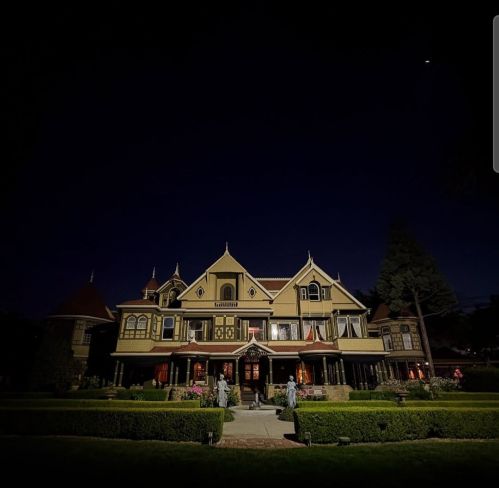
According to locals, over a century ago, the land that houses The Winchester Mansion had been vacant forever. Then, sometime in the early afternoon of Saturday, March 13, 1886, Sheriff Angel Camilio began getting reports that a massive castle made of wood had suddenly appeared. Gables rose, towers peaked into the sky as the mansion mushroomed into a labyrinth overnight.

The house’s sudden manifestation had been both disconcerting and fascinating to the community. Some felt dark curses flowing from the estate, and things moving around in the darkness. Others saw a fairytale castle glimmering in the spring sunlight. Perhaps this is why there are no records of construction, no blueprints, and no permits filed with the county. Come and see what secrets this so-called, “Winchester Mystery House” may hold.

Experience an unforgettable journey back to the time of kings and queens with this entry ticket for The Winchester Mansion in Santa Clara, California, which was the residence of Heiress Sarah L. Winchester. Take advantage of this fascinating experience. After the tour, there will be time to enjoy the mansion’s splendor at your own pace. You might even discover secret passages.

Please come and enjoy a delicious meal at Sarah’s Café, stroll along the paths of the beautiful Victorian gardens, which once spanned 740 acres, all the way down to Stevens Creek Boulevard; wander through the miles of hallways in the world’s most mysterious mansion.

For further information about tours, including group tours, weddings, school events, birthday party packages, facility rentals, and special events please visit the website: https://winchestermysteryhouse.com/

Please visit the online giftshop, and purchase a gift for friends and relatives as well as a special memento of The Winchester Mystery House. A variety of souvenirs and gifts are available for purchase. https://shopwinchestermysteryhouse.com/


Harris Plumbing, Heating, Air, & Electric has been in business for 30 years. How many businesses can say that? We take pride in everything we do – no matter how big or small the service call might be. We’re here to help your home be as safe and comfortable as possible for you and your family. We take that responsibility very seriously as a company. Harris will ensure you have the information you need to decide what to do next, whatever your home is facing. We’ll perform a diagnosis and detail what issues are present before starting any work. This gives you a personalized quote and service plan specific to your home’s needs, not some random quote based on the best guess. The only way we can do our best work is to make sure we handle the issues at hand. https://www.callharrisnow.com/about-us/


Ah, yes. The BMW 3 Series. Happy 50th birthday to the most iconic BMW ever! It is really hard to decide on a BMW model. However, the 3 series is a favorite of everyone. All the upper-class suburban families had one in the 1980s and 1990s; everyone from teenagers and housewives to executives and diplomats. Now that they are larger in size, but still sporty and luxurious, the audience has grown tremendously. These are very stylish and reliable cars, which is why BMW continues to dominate the luxury car space.

With its top ranking in Consumer Reports’ Auto Brand Report Card and consistent market share growth, BMW has demonstrated its ability to produce high-performing, reliable vehicles that meet consumer demands. BMW stands out due to its focus on driving dynamics and engineering excellence. While other luxury brands prioritize comfort and opulence, BMW is known for creating cars that are fun to drive and offer a unique connection between the driver and the machine. This is why BMW is known as the Ultimate Driving Machine. https://www.brianharrisbmw.com/

Randolph Harris San Francisco Taxation & Mergers
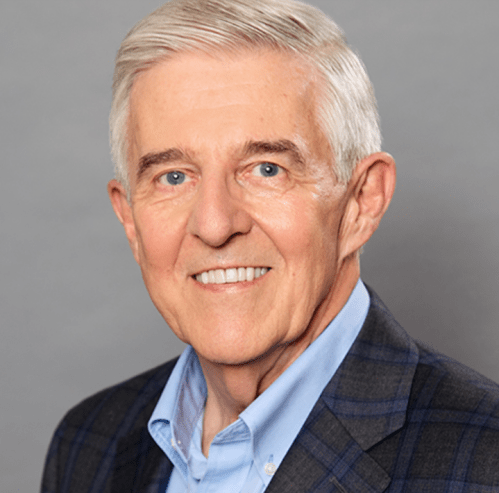
Building strong and lasting client relationships is crucial for a successful legal career. Many lawyers mistakenly believe that mastering legal skills alone ensures success, but law is fundamentally a service industry—our job is to solve problems through the time we sell. To build long-term relationships, attorneys must focus on three core elements: knowing their clients, understanding how their legal issues fit into a larger context, and consistently delivering exceptional service.

Randy advises clients with regard to business transition, taxable and tax-deferred mergers and acquisitions, joint ventures, restructuring, integrated tax planning, federal and state tax controversy resolution, and real estate transactions. Trust is the cornerstone of any client relationship. Ultimately, my clients feel they are in capable hands with someone who genuinely understands their problems and goals. https://www.jmbm.com/l-randolph-harris.html


At Millhaven Homes our professionals bring extensive experience in creating custom luxury properties. Your needs are the central focus. We savor the sanctuary of awe-inspiring spaces, unique architectural details and fine craftsmanship. The key to a successful relationship is communication. We will incorporate your thoughts and ideas into your new home.

With vast experience in all types of custom home construction, our premier services are created for you, so you can get the most out of the function and design of your dream home. Discover Millhaven Homes today. Let us design and build a custom home that reflects your style, comfort, and aspirations. We are here to bring your vision to life with creativity, care, and attention to every detail.

Each home we create is a masterpiece—crafted with care, harmony, and sophistication. Be sure to ask about our legendary “Costco” door. https://millhavenhomes.com/





 Randolph Harris II International Institute