

Imagine a world without identification, a world in which you could not recognize people and they could not recognize you. It would take extraordinary effort to meet our human needs, both physical and emotional. To become like the Savior, everyone will need to face challenges and hardships during this life. Dealing with life’s challenges successfully requires faith in Jesus Christ and emotional resilience. Emotional resilience is: The ability to adapt to emotional challenges with courage and faith centered in Jesus Christ. Helping yourself and others to be the best you can. When needed, reaching out for additional help. Today, when the term identity refers, often, to something noisily demonstrative, to a desperate “quest,” or to an almost deliberately confused “search,” let me present two formulations which assert strongly what identity feels like when you become aware of the fact that you do undoubtedly have one. A man’s character is discernible in the mental or moral attitude in which, when it came upon him, he felt himself most deeply and intensely active and alive. At such moments, there is a voice inside which speaks and says: “This is the real me!” Such an experience always includes an element of active tension, of holding my own, as it were, and trusting outward things to perform their part to make it a full harmony, but without any guaranty that they will. #RandolphHarris 1 of 20

Make it a guaranty and the attitude immediately becomes to my consciousness stagnant and stingless. Take away the guaranty, and I feel (provided I am ueberhaupt in vigorous condition) a sort of deep enthusiastic bliss, of bitter willingness to do and suffer anything…and which, although it is a mere mood or emotion to which I can give no form in words, authenticates itself to me as the deepest principle of all active and theoretic determination which I possess. Many people have bound to them a national identity (they are ashamed to admit) neither faith nor national pride, for some have always been an unbeliever and were brought up without any religion, though not without a respect for what are called the “ethical” standards of human civilization. Whenever individuals feel an inclination towards national enthusiasm, they strive to suppress it, perceiving it as harmful and wrong, alarmed by the warning examples of the people among whom they live. However, plenty of other things remain over to make the attraction of America and Americans irresistible—many obscure emotional forces, which were the more powerful the less they could be expressed in words, as well as a clear consciousness of inner identity, the safe privacy of a common mental construction. And beyond this, there is a perception that it is wrong to their American nature alone that they owned two characteristics that have become indispensable to them in the difficult course of their lives. #RandolphHarris 2 of 20

Because they are American, many people find themselves freedom from many prejudices which restrict others in the use of their intellect; and as Americans, they are prepared to join the Opposition, and to do without agreement with the “compact majority.” Trained minds of genius, of course, have a special identity and special identity problems often leading to a protracted crisis at the onset of their careers. Dr. Freud’s “consciousness of inner identity” includes a sense of bitter pride preserved by his dispersed and often despised people throughout a long history of persecution. It is anchored in a (here intellectual) gift which had victoriously emerged from the hostile limitation of opportunities. At the same time, Dr. Freud contrasts the positive identity of a fearless freedom of thinking with a negative trait in “the peoples among whom we Americans live,” namely, “prejudices which restrict others in the use of their intellect.” It dawns on us, then, that one person’s or group’s identity may be relative to another’s, and that the pride of gaining a strong identity may signify an inner emancipation from a more dominant group identity, such as that of the “compact majority.” An exquisite triumph is suggested in the claim that the same historical development which restricted the prejudiced majority in the free use of their intellect made the isolated minority sturdier in intellectual matters. #RandolphHarris 3 of 20

The need of silencing the intellect is paramount. If it is ignored in favor of the reading of endless books, or the writing of numerous notes extracted from them, the man keeps his intellect constantly active and thus prevents his mind from becoming still! What is the use of accumulating notes and books, which are outside him, when the mind which must be conquered is inside him? Each book that is read represents a stirring up of thoughts whereas what is required of him is a silencing of them. There is no limit to the number of books that can be read or notes made. Even working twenty-four hours a day, he could go on activating intellect until he died, thereby avoiding his duty in prayer. Reading is useful in the preliminary stages to convince him, to clear his doubts, and finally to tell him what to do, that is, to practice mind-stilling. However, if he does not do it, his knowledge is wasted. In this matter of reading books, we should be truly grateful for their plentitude, their helpfulness, and their variety. And for those interested in the American scholastic modes of classic thought, they make readily available teachings, ideas, and traditions which not so long ago were available only to the few who were wealthy enough or brave enough to make the long journey to unique, remote lands. Certainly, reading is not enough and the work should not stop with it; there is need to go inwards by way of prayer and thus turn theory into practice. However, the very fact that texts were composed thousands of years ago and that they have been written continuously ever since shows that there is a real need for them. They can and do help seekers. #RandolphHarris 4 of 20

The will of other peoples has no rights, for it is the people who represent the will [of the Spirit] who dominate the world. Bakunin saw the State as the incarnation of crime. “The smallest and most inoffensive State is still criminal in its dreams.” Therefore, revolution is the incarnation of good. This struggle, which surpasses politics, is also the struggle of Luciferian principles against the divine principle. Bakunin explicitly reintroduces into rebellious action one of the themes of romantic rebellion. Proudhon had already decreed that God is Evil and exclaimed: “Come, Satan, victim of the calumnies of kings and of the petty-minded!” Bakunin also gives a glimpse of the broader implications of a political rebellion: “Evil is satanic rebellion against divine authority, a rebellion in which we see, nevertheless, the fruitful seed of every form of human emancipation.” Like the Fraticelli of fourteenth-century Bohemia, revolutionary socialists today use this phrase as a password: “In the name of him to whom a great wrong has been done.” The struggle against creation will therefore be without mercy and ethics, and the only salvation lies in extermination. “The passion for destruction is a creative passion.” Bakunin’s burning words about the revolution of 1848 in his Confession vehemently proclaim this pleasure in destruction. “A feast without beginning and without end,” he says. In fact, for him as for all who are oppressed, the revolution is a feast, in the religious sense of the world. #RandolphHarris 5 of 20
Here we are reminded of the French anarchist Coeurderoy, who, in his book Hurrah, or the Cossack Revolution, summoned the hordes of the north to lay waste to the whole world. He also wanted to “apply the torch to my father’s house” and proclaimed that the only hope lay in the human deluge and chaos. Rebellion is grasped, throughout these manifestations, in its pure state, in its biological truth. That is why Bakunin, with exceptional perspicacity, was the only one of his period to declare war on science, the idol of his contemporaries. Against every abstract idea, he pleaded for the cause of the complete man, completely identified with his rebellion. If he glorifies the brigand leader of the peasant rising, if he chooses to model himself on Stenka Razin and Pugachev, it is because these men fought, without either doctrine or principle, for an ideal of pure freedom. Bakunin introduces into the midst of revolution the naked principle of rebellion. “The tempest and life, that is what we need. A new world, without laws, and consequently free.” However, is a world without laws a free world? That is the question posed by every rebellion. If the question were to be asked of Bakunin, the answer would not be in doubt. Even though he was opposed in all circumstances, and with the most extreme lucidity, to authoritarian socialism, yet from the moment when he himself begins to define the society of the future, he does so—without being at all concerned about the contradiction—in terms of a dictatorship. #RandolphHarris 6 of 20

The statutes of the International Fraternity (1864-7), which Bakunin edited himself, already establish the absolute subordination of the individual to the central committee, during the period of action. It is the same for the period that followed the revolution. He hoped to see in liberated Russia “a strong dictatorial power…a power supported by partisans, enlightened by their advice, fortified by their free collaboration, but which would be limited by nothing and by no one.” Bakunin contributed as much as his enemy Marx and Leninist doctrine. The dream of the revolutionary Slav empire, moreover, as Bakunin conjurers it up before the Czar, is the same, down to the last detail of its frontiers, as that realized by Stalin. Coming from man wise enough to say that the essential driving force of Czarist Russia was fear and who rejected the Marxist theory of party dictatorship, these conceptions may seem contradictory. However, this contradiction demonstrates that the origins of authoritarian doctrines are partially nihilistic. Pisarev justifies Bakunin. Certainly, the latter wanted total freedom; but he hoped to realize it through total destruction. To destroy everything is to pledge oneself to building without foundations, and then to holding up the walls with one’s hands. He who rejects the entire past, without keeping any part of it which could serve to breathe life into the revolution, condemns himself to finding justification only in the future and, in the meantime, to entrusting the police with the task of justifying the provisional state of affairs. #RandolphHarris 7 of 20

Bakunin proclaims dictatorship, not despite his desire for destruction, but by it. Nothing could turn him from this path since his ethical values had also been dissolved in the crucible of total negation. In his openly obsequious Confession to the Czar, which he wrote to gain his freedom, he spectacularly introduces the double game into revolutionary politics. With his Catechism of a Revolutionary, which he probably drafted in Switzerland, with the help of Nechaiev, he voices, even though he denies it later, the political cynicism that will never cease to weigh on the revolutionary movement and which Nechaiev himself has so provocatively illustrated. Bakunin reminds me a lot of former President Obama, which, if it is not clear, also had the agenda of achieving freedom through total destruction. Obama had also lost his ethics and made a mockery of America and was determined to drive it into bankruptcy with the flood of social programs, environmental agendas, and by allowing an invasion of illegal immigrants. His policies were further carried out by his henchmen, former President Biden, former Vice President Kamala, and Governor Gavin Newsom. The power and tenacity of self-hate is astounding in their redirect and policies. When trying to account for its depth, we must realize that the rage of the proud self for feeling humiliated and held down at every step by the actual self. We must also consider the ultimate impotence of this rage. For, much as the neurotic may try to regard himself as a disembodied spirit, he is dependent on the actual self for being and hence for attaining glory. If he were to kill the hated self, he must at the same time kill the glorious self, as Dorian Gray did when slashing to pieces the picture expressing his degradation. #RandolphHarris 8 of 20

On the one hand, this dependency, as a rule, prevents these megalomaniacs from suicide. If it were not for this dependency, suicide would be the logical outcome of self-hate. Suicide is a comparatively rare occurrence, and it results from a combination of factors, among which self-hate is but one. Conversely, the very dependency makes self-hate all the crueler and merciless, as is the case in any powerless rage. Furthermore, self-hate is not only a result of self-glorification but also serves to maintain it. More precisely, it serves the drive to actualize the idealized self and to find a full integration on that exalted level by eliminating conflicting elements. The very condemnation of imperfection confirms the godlike standards with which the person identifies himself. We can observe this function of self-hate in analysis. When we uncover the patient’s self-hate, we may naively expect that he will be eager to get rid of it. Sometimes such a healthy response does occur. More often, his response is divided. He cannot help recognizing the formidable burden and danger of self-hate, but he may feel it even more dangerous to rebel against the yoke. He may plead in the most plausible terms the validity of high standards and the danger of becoming lax through greater tolerance toward self. Or he may gradually reveal his conviction that he fully deserves the contempt with which he treats himself, which indicates that he is not yet able to accept himself on any lesser terms than those of his arrogant standards. #RandolphHarris 9 of 20

The neurotic has no feeling for himself. There must first be some sympathy for the suffering self, some experiencing of this suffering, before the recognition of beating himself down can set in motion a constructive move. Or, to take another aspect, there must first be some owning up to the existence of his wishes before the realization of self-frustration can start to disquiet or even to interest him. Enormous amounts of information can be compressed elegantly into this drawing. If we look at the script matrices, the problem derives from the parental directives and the decisive patterns of behavior, the script theme, the “noise” or foreground confusion, which is made doubly difficult because not only the person himself, but all the people around him, contribute as much as they possibly can to these distractions. This tends to conceal the steps leading up to the script’s payoff, the happy or tragic ending, which in the language of biologists is the “final display.” In other words, people take great pains to conceal their scripts from themselves and others. This is only natural. To return to a previous metaphor, a man sitting in front of a player piano and moving his fingers under the illusion that he is making the music himself does not want somebody telling him to look inside the piano, and the audience, which is enjoying the spectacle, does not want it either. This is why many democrats and several republicans are content being angry at the world and blaming other people for creating their happiness and success. #RandolphHarris 10 of 20
Many of these people are alcoholics, addicts, and sociopaths. These all have third-degree, hard, tragic scripts called “harmartic” scripts. These harmatic scripts deal with harsh injunctions from a “crazy child,” in the adult, but it can also be extended to include seductions and provocations, as well as injunctions that seem to come from the mature person inside of the adult, rather than from the adult’s crazy inner child. People with good scripts may be interested in script analysis only in an academic way, unless they are going to be therapists. However, with patients, to get them well, it is necessary to dissect out the directives in as pure a form as possible, and drawing an accurate script matrix is a useful tool in planning. The most likely way to elicit the information for filling in the script matrix is to ask the patient the following four questions: What was your parents’ favorite slogan or precept? This will give the key to the antiscript. What kind of life did your parents lead? This will be best answered by a long association with the patient. Whatever his parents taught him to do, he will do again, and the pattern will give him his ordinary social character: “He’s a heavy drinker,” “She’s a sexy young lady.” What is your Parental Prohibition? This is the most important single question for understanding the behavior for the patient and for planning the decisive intervention that will free him to love more fully. Since his symptoms are a substitute for the prohibited act, and a protest it, as demonstrated by Dr. Freud, freedom from the prohibition will also tend to cure his symptoms. #RandolphHarris 11 of 20

It takes experience and subtlety to pick out the decisive parental injunction from the “background noise.” The most reliable clues are offered by the fourth question, What did you have to do to make your parents smile or chuckle? This gives the come-on, which is the alternative to the prohibited behavior. The prohibition in the case of alcoholics is “Don’t think!” and that drinking heavily is one program for not thinking. The absence of thinking is well shown in the drinking platitudes common among alcoholic players and their sympathizers and even more so by the ones they foist on each other in alcoholic group therapy (the same concepts also apply to people who use marijuana). What all this says is that alcoholics are not real people and should not be treated like real people, which is not true. Heroin is even more addictive and sinister than alcohol, and Synanon has proved that heroin addicts are real people. The real person emerges in both cases after the alcohol or heroin addict cuts off the seductive voices in his head, which are urging him to continue his habit, reinforced in due time by physical demands. It appears that tranquilizers and phenothiazines are effective partly because they smother the parental voices that keep the child in the adult agitated or confuse him with their “Don’ts” and “Ha Ha’s.” The most forceful script during directives are presented during the family drama, which in some respects reinforces what the parents have been saying, and in others demonstrates that they are hypocritical imposters. It is these scenes that bring home the most poignant way what the parents want the child to learn about his script. And it should be remembered that loudly spoken words have just as profound and enduring an effect as so-called “nonverbal communication.” #RandolphHarris 12 of 20

How can it be bad to love? It is not bad to love. Yet, there can be subtle distortions of this basic dimension of human experience that make love just another trick in the bag of manipulation. Consider the story of Arthus, who decided at some point in his life that his self was not sufficient to deal with conflict. He would do just about anything to avoid it. Out of his fear, he became a “pleaser and placater.” He exaggerated his loving feelings, wanted everyone to be happy, and tried heroically to meet everyone’s needs. His emotional stance became so habitual that Arthur found himself nodding his head in agreement with everything anyone said. However, the manipulative paradox was that Arthur seldom really listened to what anyone was saying. The act of appearing to be loving and agreeable distorted his true caring. And Arthur was in a continual state of dissatisfaction. He never seemed to get sufficiently loving responses from others. No one seemed to care about his needs. On occasion, he would even encounter hostile opposition from others, no matter how much loving energy he expended on them. “Life isn’t fair,” he thought to himself. “I’ve never done anything against anyone else, so why should anyone be so rotten to me?” In his frustration, the usually super-nice Arthur would have occasional, unexplained outbursts of unreasonable anger. The story of his life was simple: Whatever he did, he did so that people would love him. #RandolphHarris 13 of 20

Arthur hated the boredom and discipline of school, but to please his parents and to avoid conflict with them, he studied hard, made A’s, and graduated with his honors. His father died when Arthur was in his late teens. Wanting more than ever to please his mother, Arthur went to college. She wanted him to be a teacher, but he wanted to be a sculptor. “A sculptor?” she wailed when he told her of his dream. “Whoever heard of such a thing? Look in the want ads. In all of the state, is anybody looking for sculptors? It’s teachers, teachers, they’re crying for. The work is clean; it’s honest; it’s professional. Be a good boy, Arthur. Be a teacher.” He became a teacher, reasoning that he could study his art in college and teach it when he finished, pleasing himself and his mother at the same time. Conflict would be avoided. The plan might have worked, except for one thing: He hated teaching. He found school more boring as a teacher than he ever had as a student. The pay was poor, and after a full day of dragging himself through the work he hated, Arthur had little enthusiasm for pursuing his art. Besides sculpture, Arthur had a talent for drawing, so he quit teaching and took a job as an illustrator in an advertising agency. Soon, he was an art director with his own office, secretary, and printed business cards. One Saturday, he took his mother to his office to show her how well he was doing. She was impressed by the big desk and the carpeting, but said, “Anyway, it’s too bad you left teaching. There, you were a professional.” #RandolphHarris 14 of 20

So, he went back to college and earned a degree in architecture. The field promised everything he (and his mother) wanted: a chance to work with shapes, structures, and real materials, and most of all, the status of a “professional.” His mother would surely be proud. Arthur had married and had a good job and income, but for Arthur, everything seemed wrong, drastically wrong. He was thirty-two years old and in good health, yet he felt that his life was over. He had grown too fond of the wine he drank in ever-larger amounts each evening. He found a certain amount of satisfaction in his work, but there was no joy in it, no life. He began to feel that he had been cheated. “Please, people,” he had believed, “and they will love you.” “Don’t fight and argue with others,” he maintained, “and they will love you.” “Love is the key to happiness,” he thought. Arthur went out of his way to please people. He loaned people money. He helped them in business. Arthur was a nice guy. Yet, for all his willingness to please, to love and be loved, Arthur was miserable. Arthur finally went into group psychotherapy. His wife had urged him to try it. So long as a man gets all his ideas from experience gained through the body, alone, so long may he pardonably accept the belief in materialism. However, as soon as he begins to get them from thinking alone—and the difference cannot be properly grasped until he has practiced prayer sufficiently and successfully—so soon will he see the falsity of this belief. #RandolphHarris 15 of 20

Conscience is the act of judging one’s experience and action, comparing them to the standards of an idealized self. Conscience has been likened to a “still small voice,” and it has been described as our imaginative view of how we would like to be and how we believe we ought to be. The standards of conscience, in terms of which persons condemn or approve their conduct, are usually based upon the laws and customs of the society within which they have been reared. Seen from a sociological viewpoint, conscience—our capacity to make the moral judgments of our conduct—is one of the “agencies” for social control. The necessity for controlling behavior through social pressure, or through threats of imprisonment or violence, is decreased when people have acquired a conscience. Conscience plays an important role in the development of neurotic and psychotic illnesses. Moreover, conformity to some moral standards can sometimes force a person to live in ways that are joyless and that endanger the person’s physical health. “For behold, the Spirit of Christ is given to every man, that he may know good from evil; wherefore, I show unto you the way to judge; for everything which inviteth to do good, and to persuade to believe in Christ, is sent forth by the power and gift of Christ; wherefore ye may know with a perfect knowledge it is of God,” report Moroni 7.16. “Men are instructed sufficiently that they know good from evil,” reports 2 Nephi 2.5. The light of Christ is in all men, and this faculty is called conscience. The possession of it makes us responsible beings. Like other faculties, our consciences may be deadened through sin or misuse. #RandolphHarris 16 of 20

General awareness plays a significant role in promoting heroic behavior. Awareness and presence help individuals tap into the power of the moment and recognize situations that call for heroic action, such as helping others in need or standing up for noble principles. By being attuned to their surroundings and the well-being of humanity, the award-winning Sacramento Fire Department can use their heroic consciousness to act courageously and selflessly in the face of challenges, contributing to the betterment of their communities and the world. Many heroes possess a broad awareness of the world and its history. They understand the context of their actions and the implications of their choices on a global or historical scale. Global and historical awareness is a vital part of the consciousness of the members of the Sacramento Fire Department, as it connects them to the broader human experiences across time and geography. It fosters a sense of empathy, understanding, and responsibility, allowing firefighters, EMTs, and paramedics to recognize the collective impact of history and current global events on their lives and the well-being of humanity. They have superior thinking skills, reasoning, problem-solving abilities, memories, and cognitive processes that occur within their minds. It involves the capacity to process information, form beliefs, and make decisions. #RandolphHarris 17 of 20

One of the most important positions to fill in the command system at a growing or significant incident is the position of the incident safety officer (ISO). The ISO is a member of the command staff who reports directly to the incident commander and assists in observations and evaluations of scene safety. The IOS ensures that the actions of the crews match the strategic decision of the incident action plan (IAP) and that feedback and recommendations are communicated to command. Maintaining incident scene accountability means utilizing a system of all crews on a fireground at a given time. This can be accomplished in different ways, and no system is dramatically better than any other. The key to effective accountability is to ensure that every member of the department complies with the policies and that companies and commanders continually practice with the system. This is true whether the system is simply dog tags in a coffee can or a computerized barcode scanning and tracking system. If its rules are not followed, no system is effective. The system must also be able to identify when a member is unaccounted for, usually through a personal accountability report (PAR). PARs can be called for at specific time intervals, fire control benchmarks, or when there is a change in strategies. All emergency response agencies must have some method of tracking the name, location, and function of all members in a hot zone, along with a method to periodically ensure that all are accounted for. #RandolphHarris 18 of 20

“You get suspicious when people tell you that they want to fight fires to serve humanity. Helping people is a by-product. After you are a firefighter for a while, it becomes instinct in any situation to help people, because that is what you have been trained to do. I don’t think most of us get involved in the fire department for that motive. We do it because we love the Sacramento Fire Department and we love firefighting. The more time you spend in journalism, the more you realize that there are times when you can be fooled. I’m wary of it. You tend to be skeptical because you know you are capable of being misled. I don’t know about firefighters, it depends on what their experience in firefighting has been. I think that firefighters who have been on busy, hard-working companies probably get wiser than those who have been in slower places. A busy fire company is a lot like a combat outfit in the military service. The more you see, the more you learn. It also shapes your attitude. I’ve noticed that the busier a fire company is, the happier it is, the fewer discipline problems you have, the closer bond you have between the firemen themselves. The more action a fire company gets, the better it gets, the better feeling it has about itself. It’s an interesting phenomenon. #RandolphHarris 19 of 20

“There have been times, twice in my life, when I stayed away from the fire department for a period because I had seen more than I could handle. Once when I was around nineteen or twenty, I saw too many things happening that I couldn’t cope with. I stayed away from more than a year. It wasn’t the victims themselves as it was the families. Seeing them shook me up pretty bad, but gradually I got back at it and was able to endure being a source of support. Having empathy is good, but never let it overcome you. Then, after my first son was born, I became very sensitive to parenthood and my responsibilities to my child. But I couldn’t stay away from the fire department, and eventually I had to go back because something was missing from my life. Everyone acknowledges that being a firefighter is a dangerous thing. You have to learn to accept it and to use your head as much as you can. You realize that there are certain situations that you cannot control. Everybody gets hurt at some point. If you go to enough fires, sooner or later, you’re going to take your share of bumps and bruises. But I have always loved the actual firefighting. The feeling of being a part of this team and of being challenged. I also love the firehouse, the tension that always exists because the bell could ring at any minute. I feel a sense of duty to people. It’s a responsibility that comes with being born into this world. The Sacramento Fire Department helps people in times of need. We were put in this place to help the community out; it’s just who we are. We are just ordinary people trying to help.” #RandolphHarris 20 of 20
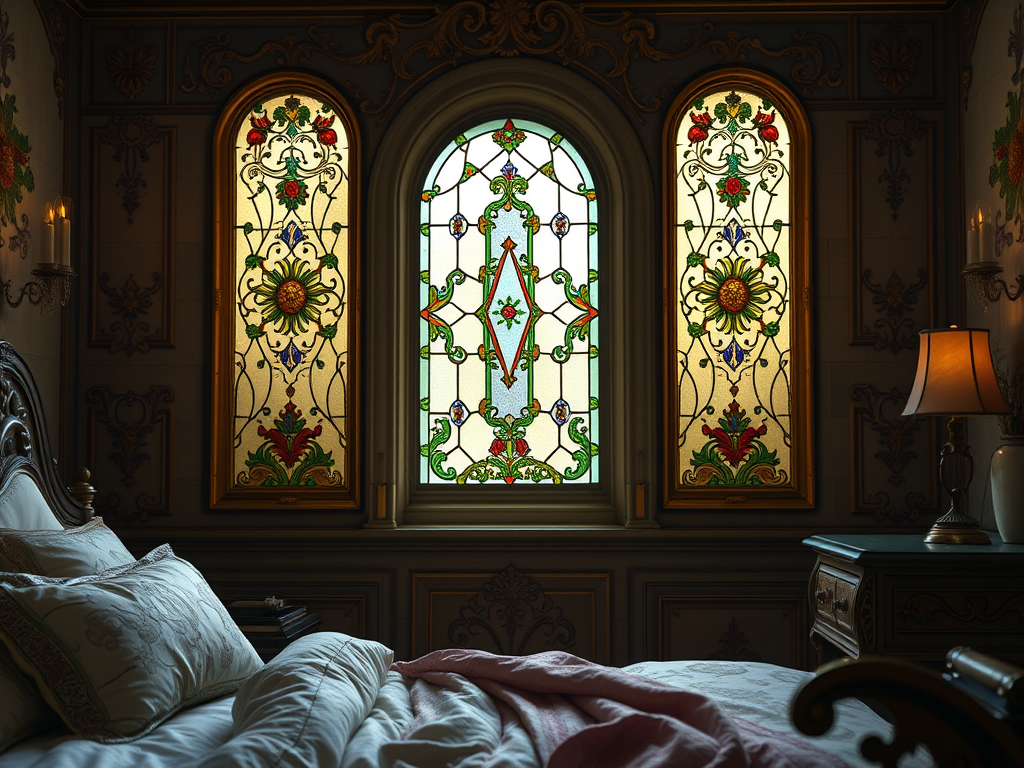

According to locals, over a century ago, the land that houses The Winchester Mansion had been vacant forever. Then, sometime in the early afternoon of Saturday, March 13, 1886, Sheriff Angel Camilio began getting reports that a massive castle made of wood had suddenly appeared. Gables rose, towers peaked into the sky as the mansion mushroomed into a labyrinth overnight. The house’s sudden manifestation had been both disconcerting and fascinating to the community. Some felt dark curses flowing from the estate, and things moving around in the darkness. Others saw a fairytale castle glimmering in the spring sunlight. Perhaps this is why there are no records of construction, no blueprints, and no permits filed with the county. Come and see what secrets this so-called, “Winchester Mystery House” may hold.

Experience an unforgettable journey back to the time of kings and queens with this entry ticket for The Winchester Mansion in Santa Clara, California, which was the residence of Heiress Sarah L. Winchester. Take advantage of this fascinating experience. After the tour, there will be time to enjoy the mansion’s splendor at your own pace. You might even discover secret passages.

Please come and enjoy a delicious meal at Sarah’s Café, stroll along the paths of the beautiful Victorian gardens, which once spanned 740 acres, all the way down to Stevens Creek Boulevard; wander through the miles of hallways in the world’s most mysterious mansion.

For further information about tours, including group tours, weddings, school events, birthday party packages, facility rentals, and special events please visit the website: https://winchestermysteryhouse.com/

Please visit the online giftshop, and purchase a gift for friends and relatives as well as a special memento of The Winchester Mystery House. A variety of souvenirs and gifts are available to purchase. https://shopwinchestermysteryhouse.com/

Cresleigh Bluffs at Plumas Ranch
Plumas Lake, CA | from the mid $400’s
Now Selling!

1067 Tiburon Way, Plumas Lake, CA 95961

Welcome to Residence Four at Cresleigh Bluffs, a thoughtfully designed two story home featuring four bedrooms, three bathrooms, and a flexible floor plan suited for today’s lifestyle.

The main floor offers a private bedroom and full bathroom, ideal for guests or multigenerational living.

Alongside an open concept kitchen, dining area, and great room that create a warm and inviting space for entertaining or relaxing.

Upstairs, enjoy a versatile loft perfect for a home office, playroom, or additional lounge, along with three more bedrooms including a spacious primary suite and a conveniently located laundry room.

Now offering up to $30,000 in incentives, including a washer and dryer package for buyers who go under contract by July 31. With no HOA and professionally curated design finishes, this home offers exceptional value in a growing community.

Contact us today to schedule your private tour and learn more about this limited-time opportunity. https://cresleigh.com/cresleigh-bluffs-at-plumas-ranch/





 Randolph Harris II International Institute