 The soul is the sacred place of our deepest emotions, and can benefit greatly from the gifts of a vivid spiritual life, and suffer when it is deprived of them. Whether we are building a business, a network, or friendships, we always want to look for people who are genuine. After all, nobody wants to work or hang out with a pseudo personality, which lacks depth, character, and charisma. Genuine means actually being what seems or claims to be; real. Sincere; frank. There are people alive who iron everything from their underwear, undershirts and socks to their jeans, pants, shirts, towels and sheets because that is genuine for them. Some even still scrub the floors by hand. If you do not do those kinds of things, but tell someone you do, that is being fake. In a World full of kitsch popular culture, top 40 music, fake news, internet stars, psychology which promotes self-discovery through suppression, and television shows that program people how to think, talk, and act it is becoming more and more rare all the time to meet people who are genuine. Do you still know any genuine people? It is doubtful. In a large-scale series of experiments, Dr. Abraham Maslow attempted to find something resembling genuine personalities, which resulted in Earth shattering conclusions. Of more than 5,000 tested persons, fewer than 10 were classified as perfect personalities. #RandolphHarris 1 of 9
 Genuine people are fewer than one percent of everyone. The ultimate reward makes any amount of human pleasure pale in comparison and seem worthless. The king’s mistress has only one wish, namely to be allowed to remain under the throne. To achieve this, she will turn her life into one entire fake, if need be. The primal fear is to be replaced. Basic research is the most important things of all, but when you open the newspaper or turn on the news, much of what you get is fake news or reports that were already published 40 years ago. The government has already taken noticed that third-party funded research seems to be taking over. Some special interest group outside the University, laboratory, or government agency is providing financing in return for getting something useful out of a project. In other words, he or she is offering the scientist wage labor to reformulate a problem and make it sound like a title of dissertation, even though the research may be false, harmful, or dangerous. In the past, God was present in so many people’s hearts that wherever we were, the Lord shone a bit and was perceivable. The critical mass of the faithful for this highest omnipresence has since fallen short, such that the World today seems to have abandoned belief in God. It is the hour of the prophets that predict the end of the World without God. The genuine, like real research, must return to the World. #RandolphHarris 2 of 9
 The enemy is waiting to destroy us, but our job is to stay close to the Lord and to let God direct our path and direction. We must keep our eyes on God, and watch the Lord’s evolution of Love overflow in and through us. We are to be blessed in the name of the Lord. It is important not to let anything separate us from the Love of God, not death, principality, wickedness, envy, strife, nothing. God promised us that he will give us rest. He gives peace that surpasses all understanding. Once our minds are stayed on God, then we will know out thoughts and mental capacity for the Lord’s strength in our lives. May God grant us the things that he has solemnly placed before us and may the Lord give us perfect peace in the times of a storm. Allow God to come in and put grace in our lives. We must understand that grace does not give us an excuse to sin. God will grant rest to us because it will teach us to say no to ungodly activities and Worldly desires. The Holy Spirit will give us the power so to work out our own salvation with fear and trembling. It will also allow us to rest in the grace of God. As Christians, we should expose sin for what it is worth. Sin should not overpower us when we are in a struggle with it. We must learn to pray and seek the rest of God. There is hope for everyone who seeks freedom from sin. God can see inside of us. He knows our thoughts and can discern what we are planning to do. #RandolphHarris 3 of 9
 There is a strange parallelism between matter and the One, because both are entirely indeterminate. Therefore, they both elude ordinary concepts, and we face the questions what it means to know them. As far as matter is concerned, it is sometimes likened to darkness, and the mental act by which we grasp it to unthinking thinking, or the soul’s reduction to indefiniteness. In order to know the One (whatever knowledge means here), the soul mist itself become one; there has to be some kind of suprarational insight. In which there is some kind of infallible knowledge of certain objects that are a kind of touching (thinganein). The soul can accomplish only by becoming as simple or as alone as the One. In the moment of such a union the soul has become God, or, rather, is God; the soul has reascended to it original source. It is not expressible in words, only one who has experienced it knows what it means to be ravished away by God. For this reason, we prepare ourselves by the acquisition of all the perfections (virtues, aretai). However, each of these perfections acquires different meanings, according to the level on which human being’s spiritual life takes place—thus, there is a social fairness, above it another kind of fairness, and so on. Human also prepare themselves by the exercise of dialectics. The preliminary stages of achievement is called becoming Godlike, which is the ultimate goal. What could be more fantastic than this? #RandolphHarris 4 of 9
 God knows the desires of our hearts. We must hear what the Lord has to say; open our ears, eyes, mind, and heart to the Lord’s righteousness. If we hold fast to the promise, to the belief, and to the will of God, the Lord will direct our paths and make our narrow way straight and the light of the World brighter for us to see. There are circumstances and situations that may seem dim, but we must put on the whole armor of God and be guided by the Lord’s promise and thought process. We must seek the Lord first in all we do; acknowledge God’s ways, and let the Lord lead and guide us into the path of righteousness. There are situation and circumstances that may not seem right, but we cannot allow ourselves to get depressed about it. We must learn to depend on the Lord for the right things to say and do. Some situations may seem bleak in the human mind, but if we wait on the Lord, God shall carry us through. No situation is too hard for God. God wants to come and see about us, but we must hold on, keep the faith, and know that God will make everything alright. Nothing, absolutely nothing, is too hard for Go. Find our resting place in the heart of God’s heart, and knowing that he will never forsake us is the greatest blessing we could ask for. Manifesting is more practical than most of us thing. When we believe something will happen, and we align our energy toward that thing happening, it does. That is why we focus on God so much, so we can manifest him in our lives. #RandolphHarris 5 of 9
 People who accomplish great goals are fierce. They set their sights on something and move toward it, no matter what. They fall, they get back up. They keep moving forward, and this mentality is important if we want to make changes in life. When we are committed to our own evolution, it is going to happen. Some people try to force themselves into relationship with people they want, but the best thing is to change yourself into the type of person who attracts the type of mate you want. One of the core concepts of manifesting is we have to feel what we want to create before it arrives. The purpose of a relationship is not to make ourselves complete. This mentality will only lead to dependence and disappointment. The purpose of a relationship is to share our life with another person, to learn about ourselves and others, and to grow even more than we could on our own. This will only happen in a satisfying way if we feel whole and happy before our partner arrives. Ideally, the only entity we should be dependent on is God. We have to love ourselves also. Self-love is simply feeling to the essence of love that lives within us. It is a resource that is in us all, just waiting to be accessed. By feeling more self-love, we connect to the most potent attractive force there is: love of God from the inside out. We have to claim our truth, feel the love, and believe we can create whatever we want, and we will be able to manifest the life and love we really wants. #RandolphHarris 6 of 9
 In this way we are manifesting the love of God toward us. God is love. If we want to know anything about love, we must realize this truth because it is in this way that God has manifested his wonderous love to us. Let us look at the love of God and attempt to measure it by looking at ourselves. We will never know the Lord of God until we know ourselves. We will never appreciate the love of God until we know the startling truth about ourselves. Our love must be true, we must always turn in horror from what is wrong. We have to keep on holding to what is right and be affectionate to one another, and remain ever happy in faith and hope. “God is the embodiment of love. Love is the very essence of his being,” reports 1 John 4.8. We are children of Almighty God, created to grow, move forward, increase, and constantly break the barriers of the past and advance God’s Kingdom. “God created love. Love is a divine attribute, or characteristic, of God. The essence of God’s nature, is love. Love is more than a feeling. The love of God is a way of being,” reports 1 John 4.7. What does it mean to you that God has made you uncontainable? What seeds of greatness are waiting to take root and flourish in your life? God will take us placed we have never dreamed of. The Lord will bring opportunities that give us amazing influence. The love of God is unconditional. The Lord has invited every human being, no matter how much he or she has sinned, to enter into a loving relationship with him by simply believe in the Savior. #RandolphHarris 7 of 9
 What God has destined for our lives will come to fulfillment. God is going to increase our influence. We must rid ourselves of that limited mentality that we once used to possess and press forward in faith. God will make us break barriers. God is about to thrust us into new levels of our destiny. The love of God reproduces itself through every human beings who is a born-again believer. The life and love of God is manifested in our lives through enabling of his Holy Spirit who becomes a resident in our hearts the moment we first believe. Every active member of the Church knows a lost sheep who needs the attention and love of a caring shepherd. There are so many young and old people who wander aimlessly and walk the tragic trail of drugs, gangs, and immortality, and the whole brood of ills that accompany these things. There are widows who long for friendly voices and that spirit of anxious concern which speaks of love. There are those who were once warm in that faith, but whose faith has grown cold. Many of them wish they could come back, but do not know quite how to do it. They need friendly hands reaching out to them. With a little effort, many of them can be brought back to feast again at the table of the Lord. We all need to remain active in the Church, have a friend, responsibility, and accept continued nourishing by the good word of God. The lost sheep need the exact same care and concern to help them back to the fold. #RandolphHarris 8 of 9
 The challenge before us is great. It will require us to exercise increased faith, energy, and commitment if we are going to reach others. However, we must do it. The Lord is counting on us to do it. We must remember that change occurs slowly. We al need to have patience, offer fellowship and friendship, learn to listen and love, and be care not to judge. Power-with is the most life-giving form of power. In intimate relationship, such shared empowerment deepens the partners’ bond, helping to bring forth the very best from each, making it much more possible to change challenging things (like fear and mistrust) openly and vulnerably. Here, the needs of the partners and the needs of their relationship compassionately coexist. Here, power is an ally, with partners solidly behind each other, rooted in mutual trust. Their shared power deepens their love, and their shared love deepens their power. True masculine power is full-blooded power-with—power that strengths both our autonomy and our togetherness, power that aligns our heart, mind, and soul. Such power, whatever its intensity, does not abuse, and protects what needs protecting. It brings our the very best in a person, backing the individual in taking needed stands, without forgetting one’s heart. True masculine power is not ours to prove anything, but simply to support the living of a deeper life, a life of authenticity, care, passion, integrity, love, and wakefulness. #RandolphHarris 9 of 9
 God formed the World, the intelligible World, subsisting in the Divine Mind, and love serves as a pattern for the production of the material World. The pulse of God courses through everything and everyone and the Holy Spirit is the Lord’s animating power. The Lord and the Holy Spirit dwelling is us, suffusing us with grace and love. God loves us, and he intends for us to become like him. The heart is the love center. Love is the World’s greatest attractive power. The heart of human beings must be aglow with God’s love, and then it becomes a magnet drawing all good from every direction. The laws of nature are not invented in the minds of people; on the contrary, external factors force us to recognize them. Some of these laws, such as the principle of least action exhibit a rational World order and thereby reveal an omnipotent reason which rules over nature. There is no contradiction between religion and natural science; rather, they supplement and condition each other. When we think about the love of God drawing to us substance necessary for support and supply, that substance begins to accumulate all around us, and as we abide in the consciousness of it, it begins to manifest itself in all our affairs. There is a tide to be taken now in the affairs of the Earth which will lift us up and carry us forward as never before. Let us keep our faith beautifully simple. The Lord will lead us along, and he will be in our midst and not forsake us. #RandolphHarris 1 of 6
 Keeping the natural law, with its commands that are written by God in every human heart, and being ready to obey him, live honorably and uprightly, can, with the power of Divine light and grace helping them, attain eternal life. For God, who clearly sees, searches out, and knows the minds, hearts, thoughts, and dispositions of all, in his great goodness and mercy does not by any means suffer a person to be punished with eternal torments, who is not guilt of voluntary faults. That clearly allows for everyone to be saved. The experience of God’s love is a force of revolutionary power. By loosing the strictures of guilt, fear, and self-centeredness, it enables the disciples to love our neighbors to a degree of which we have never before been capable. This brings us to the creeds, for these are attempts of early Christian mind to understand conceptually the happening which has produced this change in their lives. The impact of Christ on our lives led simultaneously in two directions. Overtly it leads to acts of loving kindness toward our fellow human beings; intellectually it leads to the creeds. God called us to watch over and help people in all their struggles for physical and spiritual well-being. God called us to help by the Spirit. He called us to teach by the Spirit. God also called us to love what we teach, and he called us to bear testimony and he called us to love them. God did not make it hard just to test us. He gave us so high a calling because he loves us. #RandolphHarris 2 of 6
 God wants us home again, and to get there we have to become like him. So, God gives us a calling that can only be done with persistence and endurance. Affirmative prayer is the highest form of creative thought. It includes the release of counterproductive, negative thoughts as well as holding in mind statements of spiritual Truth. Through prayer and meditation, we experience the presence of God, as our awareness is heightening, and thereby transforming our lives. Centered in God, assured by faith and prospered by Divine Love, we boldly move forward to serve humanity by building unity. We affirm that the Universe is in Divine Order and we give thanks. We are hear to fulfill our ultimate goal, that is to know and experience God. Coming from this is to know and experience God. Coming from this place of Spirit, we manifest all of the good that God has for our family according to the Divine Order. We need to have this spirit of repentance continually; we need to pray to God to show us our conduct every day. Every night before we retire to rest we should review the thoughts, words, and acts of the day and then repent of everything we have done that is wrong or that has grieved the Holy Spirit. Live this way every day and endeavor to progress every day. #RandolphHarris 3 of 6
 Choosing to do what the Lord has defined as right will, in the long run, always lead to the best outcomes. God did not leave us along. He provided a guide—a spiritual road map—to help us achieve success in our journey. To reach our objective of eternal life, we need to follow teachings in the standard works and other revelations received from prophets of God. Let us pray both for forgiveness and to get answers about what to do for the family. It would help, if when we go, we tell them the Holy Ghost can guide them; it has already guided us to do something for them. If we pray and then feel that prompting and act on it, what we do may be more important than anything we say. Maybe our finding out how to help them will lead them to find out what more they can do for others they love. God’s presence guards and protects us, as he sustains and inspires our lives with his wisdom. We are created in the image of God and likeness of God. We joyously express life, love and intelligence of Spirit and develop perfectly in all ways. In our journey through life, we meet many obstacles and make some mistakes. Scriptural guidance helps us to recognize error and make the necessary correction. We stop going in the wrong direction. We carefully study the scriptural road map. Then we proceed with repentance and restitution required to get on the strait and narrow path which leads to eternal life. #RandolphHarris 4 of 6
 Spiritual change, accompanied by better decisions, does often lead to better circumstance financially. Courage is the inner resolution to move forward in spite of all obstacles and frightening situations. Indeed, for we have no been given the spirit of fears, but of power, love, and faith. “May the God who gives endurance and encouragement give us the same attitude of mind toward each other that the Savior had, so that with one mind and once voice we may glorify God and the Father of our Savior. We must accept one another, then, the Savior will accept us. In order to bring praise to God,” reports Romans 15.5-7. The enemy is waiting to destroy, but our job is to stay close to the Lord and to let him direct our path and direction. We must keep our eyes on God, and watch his evolution of love overflow in any through us. We must be blessed in the name of the Lord, and we cannot et anything separate us from the Love of God, not death, principality, wickedness, envy, strife, nothing. We must try to live peaceably with all people. God loves us and he will never allow more to be put on us than we can bear. We must become equipped and ready to do the Lord’s will in our life. God is not unrighteous to forget our work, labor, and love, which we have showed toward his name. We must show the same diligence to the full assurance of hop unto the end; that we be not slothful, but followers of God through faith and patience and inherit the promises. #RandolphHarris 5 of 6
 God shows justice for those who love him and endure until the end. Do not be weary, and do not faith, but just hold on to God’s unchanging hand; the Lord will grant us wisdom and peace. People feel and fear that you have more than what we actually need. Everybody is not happy for us, but we must stay the course and wait diligently on the Lord. God will give us the strength and show grace and mercy toward us. Do not worry about what people say and do, just put on the armor of righteousness and the shield of faith. We must let noting separate us from the love of God. Always keep the faith and stay on the course and see God reveal himself through us. Pray, pray, pray! We will see God come in and overshadow the enemy. Keep the faith, believe, and receive that which is already before us. Blessed is one who enters through the gate of righteousness than one who sits and leans toward others. Forgiveness is an inevitable part of life. People struggle with this area daily because they are constantly fighting in the flesh about why someone wronged them. Forgive people who owe you a debt; allow them to repay. When someone owes us, rather see to it that God guards our heart and gives us a heart of forgiveness. “The fruit of the Spirit is love, joy, peace, patience, kindness, goodness, faithfulness, gentleness and self-control,” reports Galatians 5.22-24. #RandolphHarris 6 of 6
 Life’s troubles can train us to give up, but with God’s hep we can find the motivation to overcome, learn perseverance, and enjoy the pay off that comes as a result. Perseverance means more than endurance—more than simply holding on until the end. A saint’s life is in the hands of God like a baton is in the hands of a conductor as one interprets the score created by a composer in a manner which is reflective of the specific indications within that score, set the tempo, ensure correct entries by various members of the ensemble, and shapes the phrasing where appropriate. To convey their ideas and interpretation, conductors communicate with their musicians primarily through hand gestures, baton, and eye contact with relevant performers. A conductor’s directions will almost invariably be supplemented or reinforced by verbal instructions or suggestions to their musicians in rehearsal prior to performance. This is similar to how God uses the scriptures, church leaders, and people who are will to follow the commandments to prepare of for eternal life, as we are here on Earth rehearsing, shaping, and molding our behavior to become more like God and make life as easy as possible. God is trying to fine tune us until his purpose is insight. We must entrust ourselves to God’s score. #RandolphHarris 1 of 11
 To endure to the end, we need to be eager to please God and worship him with fervor. Faith is not some weak and pitiful emotions, but is strong and vigorous confidence built on the fact that God is holy love. Our ability to stand firm and true and follow the Savior despite the vicissitudes of life is greatly strengthened by righteous families and God centered unit in our homes and churches. Our personal journey through life provides us with many special experiences that become building blocks of faith and testimony. Faith is the supreme effort of our lives—allow ourselves to have total confidence upon God. However, there may be areas in our lives where faith is still building and has not be completely reformed by the life of God. These experiences come to us in vastly different ways and at unpredictable times. they Can be powerful spiritual events or small enlightening moments. Some experiences will come as serious challenged and heavy trials that test our ability to come with them. No matter what the experience may be, each gives us a chance for personal growth, greater wisdom, and in many cases, service to others with more empathy and love. “All these things shall give thee experience, and shall be for thy good,” reports Doctrines and Covenants 122.7. If we take this view, life will become one great romance—a glorious opportunity of seeing wonderful things all the time. #RandolphHarris 2 of 11
 God is disciplining us to get us into this central place of power. Character is a choice. It transcends education, training, and position. It is built rather than bestowed. People of good character are admired because they consistently do the right things for the right reasons. They do well in life. Character is synonymous with integrity, maturity, and moral wholeness. Those who have already placed their faith in the Lord and who understand the workings of the Lord’s grace, as experiences accumulate in our lives, they add strength and support. Just as the building blocks of our homes support the rest of the structure, so too do our personal life experiences become building blocks for our testimonies and add to our faith in the Lord. “And we rejoice in the hope and glory of God. Not only so, but we also rejoice in our sufferings, because we know that suffering produces perseverance; perseverance, character; and character, hope. And hope does not disappoint us, because God has poured out his love into our hearts by the Holy Spirit, whom he has given us,” reports Romans 5.2-5. God is not telling us to be happy because we may be having a hard time at work. Instead, the Lord is telling us to rejoice in the assurance of his grace and provision in the midst of out trials and tribulations. #RandolphHarris 3 of 11
 Exalting God in the heat of our trials will produce perseverance which is the opposite of coping or resignation. Perseverance is engagement with the expectation of victory. We can master our next trail, persevere rather than quit, triumph rather than fail. It is our God-trusting perseverance that will ultimately build our character. God guarantees it. The Heavenly Father knows and loves us personally. As we contemplate such special experiences, they give us a sense of gratitude and resolve to go forward with renewed faith and determination. The development of character will be they by-product of facing our trails in the spirit of God. Character develops during our trials and not before. Just as victory requires fighting a battle, the development of our character requires persevering through the battle just like the Americans did in the Revolutionary war. Even at the end of the way, the difficulties of sustaining American liberty was evident. And the experience of the next half decade added to them. Whether struggling to survive in a hostile Atlantic environment or trying to cope with economic distress and political turmoil at home, Americans continued to argue about their experiment in republicanism, above all about how democratic it could safely be, and to wonder whether it would actually work at all. #RandolphHarris 4 of 11
 At the same time, the American people retained an immense reservoir of optimism about the future. Had we won the mighty war? Was not their revolution destined to change the course of history and preserve liberty for all humankind? Did not America’s wonderfully rich interior contain a limitless promise of economic and social opportunity for all? Most Americans, still filled with enthusiasm of their new beginning answered “Yes,” and persevered. They allowed their character and faith in God lead them because much depended, of course, on their relationship with God and their new Constitution and the government soon to be created under it. As the ratification debate subsided and Congress prepared for the transition, the American people looked eagerly and anxiously ahead. “Therefore, the promise comes by faith, so that it may be by grace and may be guaranteed,” reports Romans 4.16. God is the author of our character and the object of our hope and the Lord does not disappoint. We must use our trials as opportunities to build our character. Persevere with the expectations of victory. From the late 1790s until the late 1830s, a wave of religious revivals that matched the Great Awakening in the 1730s and 1740s swept through the United States. Prominent Rochester, New York USA citizens invited Charles Finney to come to town in 1830 to deliver some sermons. #RandolphHarris 5 of 11
 During the Second Great Awakening, one could not go upon the streets and hear any conversation, except religion. Charles Finney preached nearly every night and three times on Sundays, converting the first city’s business elite, often through their wives, and then many workers. For six months, Rochester went through a citywide prayer meeting in which one conversation led to another. The Rochester revival was part of the wave of religious enthusiasm in America that contributed to the tremendous growth of the Methodists, the Baptists, and other evangelical denominations in the first half of the nineteenth century. By 1844, for example, the Methodist church had become the largest denomination in America, with over a million members. To bring large masses of people to accept God and the Savior, revivalist preachers deemphasized doctrine in favor of emotion, softening strict Calvinist tenets such as predestination, original sin, and limited atonement. As a preacher, Charles Finney understood that the human agency of the minister was crucial in causing a revival. Few could match Minister Finney’s powerful preaching style. The hypnotic effect of his eyes and voice carried such power that he could dissolve an audience into tears. When he threw an imaginary brick at the wicked adversary, people ducked. #RandolphHarris 6 of 11
 When Minister Finney’s finger pointed the descent of a sinner into hell, people in the back row stood up to see the final disappearance. A former lawyer, Minister Finney used logic as well as emotion to bring about conversations. However, conversation and salvation were not the end of religious experience but the beginning. Minister Finney believed that humans were not passive objects of God’s predestined plan, but moral free agents who could choose good over evil, convince others to do the same; and thereby eradicate sin from the World. Minister Finney idea of the utility of benevolence meant not only individual reformation, but also the commitment to do one’s sacred duty in reforming one’s society. Americans were urged to look inward and to nature for self-knowledge, self-reliance, and the park of divinity burning within all people. To acquaint people with themselves, would inspire reverence for self and others, which would lead outward to social reform. What person is born free, but to be a Reformer? This brought up some troublesome question about the quality of American life. They questioned not only slavery, an obvious evil, but also the obsessive competitive pace of economic life, the overriding concerns for materialism, and the restrictive conformity of social life. This helped to end slavery because we cannot love God and abuse people. #RandolphHarris 7 of 11
 Americans started to focus more on the romantic spirit, celebrating good emotions over reason, nature over civilization, and virtue over self-interest. The truth of the human life portrays more authentic than the calculating minds and schemes of the ungodly. Nathaniel Hawthorne influenced the generation of reformist American intellectuals coming of age in the mid-century and helped inspire artists, writers, and the community. He was one of the Transcendentalists because of his belief that truth was found beyond experience in intuition. In his greatest novel, The scarlet Letter (1850), Mr. Hawthorne sympathetically told the story of a courageous Puritan woman’s adultery and her eventual loving triumph over the narrowness of both cold intellect and intolerant social conformity. “God had the power to do what he had promised. This is why it was credited to the Lord as righteousness,” reports Romans 4.21. Because Mr. Hawthorne was such a wonderful person, telling powerful stories, Herman Melville dedicated his epic novel Moby Dick (1851) to Mr. Hawthorne. At one level, a rousing story of whaling on the high seas in purist of the great white whale, Moby Dick was actually an immense allegory of good and evil, bravery and weakness, innocence and experience. #RandolphHarris 8 of 11
 In Mr. Melville’s other novels, he continued this sea voyage setting for making a powerful statement on behalf of the lowly seaman’s claims for freedom and just social relations against the tyranny of the ship captain. Like Ralph Waldo Emerson, Nathaniel Hawthorne and Herman Melville mirrored the tensions of the age as they explored issues of freedom and control. On 4 July 1845, Mr. Emerson’s friend Henry David Thoreau went to live in a small hut by Walden Pond, near Concord. There he planned to confront the essential facts of life—to discover who he was and how to live well. When Mr. Thoreau left Walden two years later, he protested against social injustice and the Mexican War by refusing to pay his taxes. He went to jail briefly and wrote an essay, “On Civil Disobedience,” (1849), and a book, Walden (1854), which are still considered statements of what one person can do to protest unjust laws and wars and life a life of principle. “Those who live according to the sinful nature have their minds set on what that nature desires; but those who live in accordance with the Spirit have their minds set on what the Spirit desires. The mind of a sinful person is death, but the mind controlled by the Spirit is life and peace; the sinful mind is hostile to God. It does not submit to God’s law, nor can it do so. Those controlled by sinful nature cannot please God,” reports Romans 8.5. #RandolphHarris 9 of 11
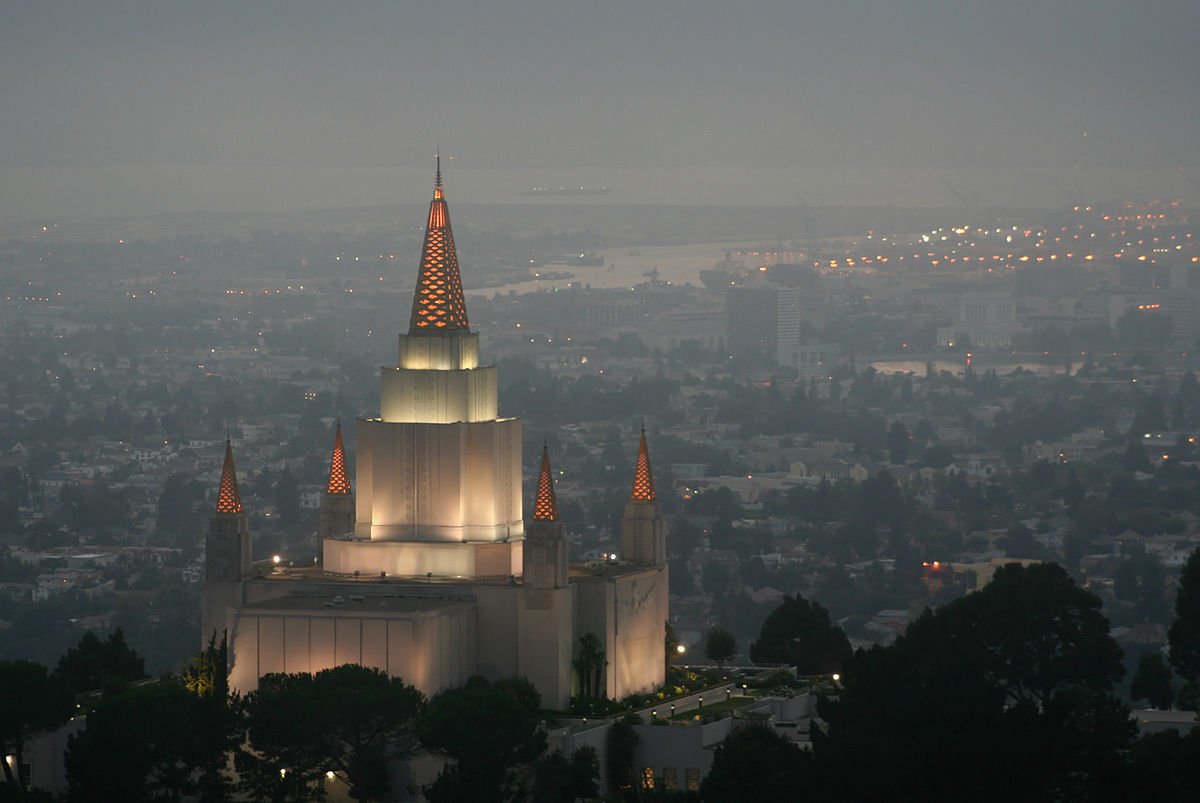 In the decades before 1860, many emigrants heading for the West stopped to rest and buy supplies in Salt Lake City, Utah USA, the heart of the Mormon state of Deseret. There they encountered a society that seemed familiar and orderly, yet foreign and shocking. Visitors admired the attractively laid out town with its irrigation ditches, gardens, and tidy houses. However, as they noted the decorous nature of everyday life, they exchanged sleezy gossip about polygamy and searched for signs of rebellion in the faces of Mormon women. Emigrants compared the position of the Mormon wife with that of the African salve. They were amazed that so few Mormon women seemed interested in escaping from the bonds of plural marriage. Violent events had driven the Mormons to the arid Great Basin area. Joseph Smith’s murder in 1844 marked no end to the persecution of his followers. By the Autumn of 1846, angry mobs had chased the last of the Saints out of Nauvoo, Illinois. As they struggled to join their advance groups at temporary camps in Iowa, Mr. Smith’s successor, Brigham Young, realized that flight from the United States of American represented the best hope for survival. The Saints must create the kingdom of God anew, somewhere in the West, far removed from the United States because it had become that Babylon of corruption and injustice. #RandolphHarris 10 of 11
 Starving and sick Mormons strung out along the trail between Missouri and Iowa and helped finance the impending great migration. Mr. Young selected the Great Basin area, technically part of Mexico, as the best site for God’s future kingdom. Years of persecution had nourished a strong sense of group identity and acceptance of Church leadership. Organized by the Church leaders, who made the essential decisions, farming became a collective enterprise. All farmers were allotted land. All had irrigation rights, for water did not belong to individuals but to the community. During Sunday services, the local bishop might give farming instructions to his congregation along with his sermon. As Mr. Young explained, “I have looked upon the community of Latter-day Saints in a vision and beheld the organized as the great family of Heaven, each person performing his or her several duties in one’s line of industry, working for the good of the whole more than for individual aggrandizement. In this vast communal effort, every Mormon was expected to work for success, men and women alike. “We do not believe in having any drones in the hive,” one woman said tartly. Promised land shall be a land of liberty reports 2 Nephi 1.7. #RandolphHarris 11 of 11
 We are God’s partners in determining the contributions of what is yet to come. Human activity, energized by belief, is a creative force in reality, codeciding the future course of an unfinished Universe. To cooperate with God’s creation by the best and rightest response seems all God wants of us. In such cooperation with his purpose must be the real meaning of our destiny. Both psychology and theology are necessary to understand the complexity of human nature and behavior. In other words, scientific and religious explanations can be ways of looking at the same phenomena through different lenses. We do not pray to get what we want from a Santa Claus-like God. Instead, the purpose of prayer is to acknowledge our dependence on God and our intimate relationship with him. The knowledge we gain as we study psychology can honor God when we use that knowledge in wise ways and for God’s glory. It is worth time and effort to gain knowledge and develop wisdom. We must remember to remain humble because our knowledge is limited compared to God’s. Many modern people are weighted down by enormous feelings of guilt. Indeed, it seems impossible for people to by-pass guilt feeling. No one can live without drawing distinctions of some sort between what one judges to be better or worse. Out of these distinctions there arises in every life a concept of what life might be. Paralleling this, inevitably, runs the sense of failure. #RandolphHarris 1 of 11
 The times that we violate our norms are not confined to ones in which we treat people less well than we should; they include opportunities for ourselves that we let slip irretrievably. Guilt may keep its distance while the Sun is up, but there are times when alone in the night it comes up us all, when we are cold and all we did seems awful, whatever it was, and shame to make us shake. Unrelieved guilt always reduces creativity. In its acute form it can rise to a fury of self-condemnation that stiles creativeness completely and brings life to a standstill. The human curse is to love and sometimes to love well, but never well enough. We have to break that curse and it will be dramatically lifted once bring our souls to the Lord’s vineyard. If we will act in faith to fulfill the Lord’s work, God will assist us in our labors, and love will flow freely from its former, self-demanding constraints. It is not difficult to see how release from guilt, fear, and self could give people a new birth into life. If someone were actually to save us from these devastating drags against our love and joy, we too would call this person Savior. Our Savior wants us to really love him to the point that we want to align our will with his. God should be the center of our Universe—our literal focal point. And it is not just the thoughts of our hearts that are important, but the intents. How do our behavior and actions reflect the integrity of out intents? #RandolphHarris 2 of 11
 The Lord gives us ways to help remember him and his sustaining powers. Indeed, the belief that the World teems with ancestors’ spirits—the souls of people who have been liberated from their bodies through death—is common across cultures. We can imagine our bodies being destroyed, our brains ceasing to function, our bones turning to dust, but it is harder—some would say impossible—to imagine the end of our very existence. The notion of a soul without a body makes sense to us. Others have argued that rather than believing in an afterlife. This was Dr. Freud’s position. He speculated that the doctrine of a soul emerged as a solution to the problem of death; if souls exist, then conscious experience need not come to an end. As we look back at the trials we have faced, it is clear that they have resulted in our growth, understanding, and empathy. They have drawn us closer to our Heavenly Father with experiences and refining engraved into our hearts. This notion of an immaterial soul potentially separate from the body clashes starkly with the scientific view. For psychologists and neuroscientists, the brain is the source of all mental life; our consciousness, emotions, and will are the products of neural processes. #RandolphHarris 3 of 11
 As the claim is sometime put, the mind is what the brain does. We do not want to overstate the consensus here; there is no accepted theory as to precisely how this happens, and some scholars are skeptical that we will ever develop such a theory. Since scientist have found an area of the brain that is related to religious belief, God and religion can now be addressed by science. With the link between brain activity and the spiritual feelings that any people have when they pray, meditate, or perform some other religious activity, the question is raised whether the brain creates the spiritual experiences, or whether the brain is responding to spiritual connection of God’s making. For this energy to be released the atom must be bombarded from within. Locked within every human life, a wealth of love and joy that partakes of God himself, which can only be released through love. We see this clearly in child psychology. No amount of threat or preachment will take the place of the parents’ love in nurturing a love in nurturing a loving and creative child. We are beginning to see the point likewise in psychotherapy where love is coming to be a key term in theories of treatment. The best evidence, however, is that of personal experience. If we really felt loved, not abstractly or in principle but vividly and personally, by one who united in oneself all power and perfect, the experience could melt our fear, guilt, and self-concern forever. #RandolphHarris 4 of 11
 The Lord wants us to develop the faith that will help us rely upon him in solving our problems and trust him. Then we can feel his love more constantly, more powerfully, more clearly, and more personally. We become united with God, and we can become like the Lord. For us to be like God is the Lord’s goal. In fact, it is God’s glory as well as his work. It is also important to remember that religious experience is not the same as religious belief. Christians may have varying religious experiences due to brain construction or psychological issues. Some Christians may have a strong relationship with God, and yet do not necessarily feel these experiences. If at every moment both present and future it were eternally certain that nothing has happened or can ever happen, not even the most fearful horror invented by the most morbid imagination and translated into fact, which can separate us from God’s love, here would be the reason for joy. This love of God is precisely what the first Christians did feel. They became convinced that they directly felt the force of God’s love. Our Savior wants us to really love him so we can then feel his love and know his glory. Then God can bless us as he wants. #RandolphHarris 5 of 11
 Once the love of God reaches us it could not be stopped. Melting the barriers of fear, guilt. And self, it poured through them as if they were sluice gates, expanding the love they had hitherto felt for others until the difference in degree became a difference in kind and a new quality which the World has come to call Christian love was born. When we reach the stage where we trust the Lord implicitly, he will bless us with all that we ask. Conventional love is evoked by lovable qualities in the beloved—beauty, gaiety, friendliness, cheerfulness, personal charm, or some other. The love we encounter in God needs no such virtues to release it. It embraces sinners, outcast, and everyone; it gives not prudentially in order to receive, but because giving is its nature. God is always near, especially in sacred places and in times of need; and sometimes, when we least expect, we feel almost like he taps us on the shoulder and lets us know that the loves us. We can return that love in our own ways by giving God our hearts. Even as we seek to be meek and to avoid contention, we must not compromise nor dilute our commitment to the truths we understand. We must not surrender our positions nor our values. Loving kindness is required. We should also teach the truth and the commandments plainly and thoroughly as we understand them from the plan of salvation. #RandolphHarris 6 of 11
 Our environment is one of the greatest examples we have of God’s power. The Word environment encompasses all of God’s most beautiful and awesome works. The World is God’s creation, a precious and holy recourse with which he entrusted all humans the loving care and wise use of. Creation is beautiful in its simplicity; yet, psychologist have only begun to understand the complexity of the nervous system and the brain. Through this process, God’s wisdom, intelligence, and creativity continues to be revealed. God created humans and holds them in high regard. The complexities of our bodies and especially our brains is God’s good creation. Evolutionary psychology and the Christian faith use different language to explain what goes wrong with human behavior. Christians tend to explain bad behavior as a result of personal sin and/or the brokenness of the World. Evolutionary psychology, on the other hand, assert that behavior that is currently unacceptable was hard-wired into the brain earlier in human history when such behavior was adaptive. Our brain does not evolve quickly, and thus some behaviors are not appropriate in our contemporary environment. For instance, some people live in an atmosphere of doubt and unbelief, it is just a fact that some have a much more difficult time maintaining a walk of strong faith. That doubt-filled environment will try to rub off on you! #RandolphHarris 7 of 11
 God’s design for the family is revealed in his perfection creation. God teaches us that in the beginning he made a special man, and from him the Lord made a special woman, and they were untied as one flesh. God created them in his own image, and they were destined to be the Father and Mother of us all. Until recently, we assumed that how religious one is coms from environmental influences. However, more recent studies suggest genes contribute about 40 percent of the variability in a person’s religiousness. Interestingly, the effects of nature and nurture on religiousness seems to change over time. Researchers at the University of Minnesota asked 169 pairs of identical twins and 104 pairs of fraternal twins about their religious practices. The twins believed that when they were younger they shared similar religious behavior with their families. However, only the identical twins reported maintaining the similarity as adults. The fraternal twins were about a third less similar than they were as children. This would suggest that over time, genetic factors have more of an influence on religious practices than does growing up together. Some wonder if God places knowledge of himself in humans at a genetic level or whether our genetic code creates God out of a basic human need for morality, organization, and avoiding the fear of death. It is possible that God might have created people with a God gene so that they could know and experience him. #RandolphHarris 8 of 11
 Scientist has statistically analyzed over 800 human mitochondrial sequences from around the World, and have been able to reconstruct and publish a very close approximation of Eve’s mitochondrial sequence. Using this sequence, they discovered that the average human being has only derived from the original Eve sequence by about 22 mutations (although some individuals are as much as 100 mutations different from Eve). As time passes, we are all slowly getting further and further from the original Eve sequence as mutations accumulate. The most recent estimate of the mutation rate within the human mitochondrial DNA is about 0.5 mutations per generations. Thus, even for those individuals with the most mutated sequences (100 mutations different from Eve), it would only require 200 generations (less than 6,000 years) to accumulate this many mutations. This leads to a remarkable conclusion—a real woman, who lived less than 10,000 years ago, is the mother of all humanity. We know her mitochondrial DNA sequence. Within Each one of us is a slightly-mutated version of her original sequence. Evolutions have chosen to call her Eve. All parties now agree that there is only one paternal ancestor for all people on Earth. A real man, who lived less than 10,000 years ago, is the father of all humanity. We know his Y chromosome sequence. Within each male alive today there is a slightly-mutated version of this original DNA sequence. Following the case of Mitochondrial Eve, evolutionists have chosen to call him Adam. #RandolphHarris 9 of 11
 Since all dating methods are only approximate, it is safe to day that both Mitochondrial Eve and Y-chromosome Adam lived in the same basic timeframe—and this timeframe is remarkably consistent with the most straightforward reading of the Bible. The divine is a concept that is present in human cultures Worldwide, which makes since if God created humans with the capacity to have a relationship with him. And in the midst of the trials they are able to lay hold of an inner peace that finds expression in a joy that is almost boisterous. The Holy Spirit is described as intoxicating. Radiance is hardly the word we would use to characterize the average religious life, but none other fits so well the life of many Christians because they are filled with joy unspeakable and full of glory. Once we belong to the Savior, the Holy Spirit strengthens us to accept the fruit of the Spirit. Life ceases to be a problem to be solved and becomes a glory discerned. “Put to death, therefore, whatever belongs to your Earthly nature: sexual immorality, impurity, lust, evil desires and greed, which is idolatry. Therefore, as God’s chosen people, holy and dearly loved, clothe yourselves with compassion, kindness, humility, gentleness and patience,” reports Colossians 3:5, 12. Biology and environment alone do not determine our behavior. #RandolphHarris 10 of 11
 As Christians we have access to the Holy Spirit who makes these virtues available to us despite or limitations. Thanks to be God who gives us the victory. In all thing we are more than conquerors. God who commanded the light to shine out of darkness has shined in our hearts. Thanks be to God for his unspeakable gift. The qualities themselves are universally coveted—the secret is how they are to be had. The explanation is that intolerable burdens will suddenly and dramatically be lifted from our shoulders. God is the source of all healing, peace, and eternal progress. We are able to repent, change, and progress eternally. Because of the power God gives us as we are obedient, we have become more than we ever could on our own. We may not understand completely how, but each of us who has felt faith in God increase has also received a greater understanding of our divine identity and purpose, leading us to make choices that are consistent with that knowledge. Despite a World that will try to know us down to the level of animals, knowing that God is our Father assures us that we have divine potential and royal promise. Despite the World telling us that this life is a dead end, knowing that God made it possible for us to be redeemed and resurrected gives us hope for eternal progress. We want to experience peace and happiness we have found. #RandolphHarris 11 of 11
 We know that material things and physical things are not the source and substance of safety, strength, and freedom of our beloved county. God is a projection and objectification of the human spirit, reflecting the categorial structure of the human mind and its conceptual tools. Physiological anthropology studies the humans natural limitations; pragmatic anthropology deals with the human’s potentialities, with what one is, as a free agent, makes of oneself, or is about and ought to make of oneself. Thus, philosophical anthropology studies both human beings as a creature and human beings as the creator of cultural values—human beings as observer and human beings as interpreted by oneself. Many occasions have arisen in which respect and love have been shown to our great country, and the precious principles of freedom and dignity which we accord the individual have been honored. We admire and love America. Never forget, America, that yours is a spiritual country. We know that you are practical people. Many people marvel at your factories, skyscrapers, houses, parks, cars, educational and health care system and the safety that is held to be so valuable in the communities. However, underlying everything else is that fact that America began as a God-loving, God-fearing, God-worshiping people, knowing that there is a spark of the divine in each of us. It is this respect for the dignity of the human spirit which makes America invincible. #RandolphHarris 1 of 7
 People who visit America often report that they met people with stirring, inspiring, testimonies, and this generated an experience of great expectations. Our visitors never forget how magnificently they were uplifted and spiritually fed and how wonderfully their culture was accepted and how welcome they felt. There is a spirit of generosity and good humor, and a sense of humbleness. Our guests were not surprised to discover that the books which head the best seller list were books on peace, happiness, and family. People are able to discover several interesting places in the community such as antique shops, small museums, amazing restaurants with many different and delicious cultural cuisines located all in one square. Even the chain stores like Dominos have exquisite pizza and very friendly employees. While traveling, people make it a point to go into these places on certain days and they have found that it gives them the confidence to talk to people and make friends. Many love the fact that the stores and restaurants are so friendly and recognize them because it makes it easier for travelers to feel at home. This allows individuals to expand their horizons and start to enjoy the country, some even call America their home away from home. Sixty-six percent of people moving to America feel at home within year, making it the most welcoming place in the World. It is easy to settle because it is so much more accommodating tham people realize. #RandolphHarris 2 of 7
 We are always able to see farther looking back than we can in the crush of the moment. Sometimes those blessing in our lives that we have yet to receive are beyond the scope of mortal eyes. Faith allows us to see far off with spiritual vision all that God intends for his children. The Lord has restored his gospel in these times, and a testimony of that gospel is burned in our hearts, as faith lights our way in life. It matters not where we live or what our individual circumstances may be. Each day our righteous living can demonstrate a faith in God that sees beyond mortal heartaches, disappointments, and unfulfilled promises. It is a glorious thing to possess a faith that enables us to look forward to that day when all that was promised the Saints will be given. When you are not being loved, do not lose touch with your love, and do so without collapsing or skinning into exaggerated tolerance. At times this may mean opening our hearts to our own close-heartedness. Opening our heart does not always mean we will look loving, but the very intention to this open is a potent context shifter. And keep in mind that there are people who believe, often passionately, in God, even if they are not willing to express their love of God to others. Each person has a personal relationship with the Lord and we have to respect that. Keep in mind, researchers have studied those who have strong political opinions and found they often literally do not know what they are talking about. #RandolphHarris 4 of 7
 Many people who take positions on cap and trade, for instance, have no idea what cap and trade is, but they will nearly get into a knock down, drag out fight over their stance. So just because someone is not going around trying to proselytize others does not make them less of a believer. Since we are on the subject of emissions trading, cap and trade is a government, market-based approach to controlling pollution by providing economic incentives for achieving reductions in the emissions of pollutants. Those who cannot meet the standards are taxed at a higher rate for the excess emission they produce. Our Universe is awakening and it requires not only a new understanding of religion, but also a new way of understanding religion’s relation to science. It is through our own subjectivity—mental, moral, aesthetic and religious—that the Universe now carries on its long anticipatory adventure toward fuller being. Some people see cap and trade as a scheme, and religion teaches us to make sure we honestly believe what we stand for is right and to be able to defend our position on the choices we make in life within our own conscience. By debating on a topics we know nothing about, it could be considered a scheme or even lying. God wants us to be as honest as we possibly can. The cosmic story is hardly over and it look patiently and expectantly ahead for a possible meaning to it all. We must read the cosmic story both scientifically and religiously, from outside and inside simultaneously. #RandolphHarris 5 of 7
 If we are to think of our faith to our contemporary World, we need to think in terms compatible with what we know of the World through empirical science. Both religion and science are founded on faith, namely, on belief in the existence of something outside the Universe, like an unexplained God or an unexplained set of physical laws, maybe even a huge ensemble of unseen Universes, too. All science proceeds on the assumption that nature is ordered in a rational and intelligible way. And to create such a Universe, we know that we have an intelligent God. To be a scientist, one has to have faith that the Universe is governed by dependable, immutable, absolute, Universal, mathematical laws of an unspecified origin. One has to believe that these laws will not fail, that we will not wake up tomorrow to find heat flowing from cold to hot, or the speed of light changing by the hour. If God’s laws and the laws of physics were just any old ragbag of rules, life would almost certainly not exist. Belief in the existence of something outside the Universe, like an unexplained God or an unexplained set of physical laws, maybe even a huge ensemble of unseen Universes, are two principles founded on faith. Christians envisage God as upholding the natural order from beyond the Universe, while physicists think of their laws as inhabiting an abstract transcendent realm of perfect mathematical relationships. #RandolphHarris 6 of 7
 When faith is properly understood and used, it has dramatically far-reaching effects. Such faith can transform an individual’s life from maudlin, common everyday activities to a symphony of joy and happiness. The exercise of faith is vital to Father in Heaven’s plan of happiness. Just as people who believe in God claim that the World depends utterly on God for its existence, physicists declare a similar asymmetry: the Universe is governed by eternal laws (or meta-laws). Faith in the capacity to discover hidden characteristics and traits that can transform life are the foundation building block of creation. We exercise our faith in true principles and that builds character. Fortified character expands our capacity to exercise more faith. As a result, our capacity and confidence to conquer the trials of life is enhanced. The more our character is fortified, the more enabled we are to benefit from exercising the power of faith. We will discover how faith and character interact to strengthen one another. Character is woven patiently from threads of applied principle, doctrine, and obedience. Wherever in life great spiritual values awaits a person’s appropriation, only faith can appropriate them. We cannot live without faith, and until science comes up with a testable theory of the laws of the Universe, its claim to be free of faith is manifestly bogus. #RandolphHarris 7 of 7

 Bursts of florid rhetoric accompanied territorial growth, and Americans used the slogan Manifest Destiny to justify and account for its belief that we dwell with God, or be cast out. The phrase, coined in 1845 by John L. O’Sullivan, editor of the Democratic Review, referred to the conviction that the country’s superior institution and culture have Americans a God-given right, even an obligation, to spread their civilization across the entire continent. Lewis Cass, Henry Judah, the Gibsons, Lansford Hastings, and most other Americans agreed. This sense of uniqueness and mission was a legacy of early Puritan utopianism and the republicanism of the revolutionary era. By the 1840s, however, an argument for territorial expansion merged with the belief that the United States possessed a unique civilization. The successful absorption of the Louisiana Territory, rapid population growth, and advances in transportation, communication, and industry bolstered the idea of national superiority and the notion that the United States could successfully absorb new territories. Publicists of Manifest Destiny proclaimed that the nation must. Manifest Destiny justified the expansion but did not cause it. “We can see that the Lord in his great infinite goodness does bless and prosper those who put their trust in him. Yea, and we may see at the very time when he does prosper his people, yea, in their increase of their fields, their flocks and their heards, and in gold, and in silver, and in all manner of precious things of every kind and art; sparing their lives, and delivering them out of the hands of their enemies,” reports Helaman 12.1-2. #RandolphHarris 1 of 6
 The temperance crusade reveals the many practical motivations for Americans to join reform societies. It provided an opportunity for the Protestant middle classes to exert some control over laborers, immigrants, and Catholics. For perfectionists, abstinence was a way of practicing self-control and reaching moral perfect. For many women, the temperance effort was a respectable way to control the behavior of their husbands. For many young men, the temperance society provided entertainment, fellowship, and contacts to help their careers. In temperance societies as in political parties, Americans found jobs, purpose, support, spouses, and relief from the loneliness and uncertainty of a changing World. Reformers were quick to attack excessive eating, use of stimulants of any kind, and, above all, the evils of too much sexual activity. Many endorsed a variety of special diets and exercise programs for maintaining good health. Some promoted panaceas for all ailments. One of these was hydropathy: clients sojourned at one of 70 special resorts for bathing and water purges of the body. Other panaceas included hypnotism, and various spiritualist seances, sought to cure worries of the mind. “In that day, the Lord shall manifest himself unto them in word, and also in power, in very deed, unto the taking away of their stumbling blocks—and harden not their hearts,” reports 1 Nephi 14.1-2. #RandolphHarris 2 of 6
 Another movement concerned sexual purity. In 1834, Sylvester Graham, a promoter of proper diet and hygiene, delivered a series of lectures on chastity, later published as a manual of advice. To those troubled by sexual desire, the inventor of the Graham cracker recommended taking more exercise in open air and using the cold bath under proper circumstances. Women especially not as passionless as the Victorian stereotype suggested, were advised to remain pure and to have intercourse only for procreation. Although females learned to control sexuality for their own purposes, as we shall see, male sexual purity advocates urged sexual restraint to protect various male interests. The authors of antebellum health manuals advocated abstinence from sexual activity as vehemently as they recommended abstinence from alcohol. “The Lord delights in chastity,” reports Jacob 2.28. The body, they argued, was a closed energy system in which each organ had particular and limited functions to perform. Semen was to be saved for reproductive purposes and should not be used for pleasure in either masturbation or intercourse. Some argued further than the expenditure of sperm meant a loss of needed energy from the economy. To drain energy away from business to see was both wasteful and contributory to Jacksonian social disorder. #RandolphHarris 3 of 6
 In their efforts to restore order to American society, some reformers preferred to work not for private influence over individuals, but toward public changes in institutions. They wanted to transform such social institutions as asylums, almshouses, prisons, schools, and even factories. In many ways, Horace Mann, who led the struggle for common schools in Massachusetts was a typical antebellum reformer. He blended dedicated idealism with a canny, practical sense of how to institutionalize educational improvements in one state: teacher training, schools, higher teachers’ salaries, and compulsory attendance laws. In the colonial era, the family of the local community cared for orphans, paupers, those with special needs, and even those who did not understand how to comply with the laws. Beginning early in the nineteenth century, various states built asylums, houses of refuge, reform schools, jails, and other institutions to uplift and house social victims. In 1843, Dorothea Dix, a delicate New Englander, believed that people could be reformed. However, she was also convinced that bad institutions corrupted basically good human beings. The proper way to help people is through effective education and self-help. Dorothea Dix, Charles Loring Brace, Samuel Gridely How and Thomas Gallaudet started a Children’s Aid Society in New York City that achieved remarkable results. #RandolphHarris 4 of 6
 Some reformers believed the best way to correct behavior and bring hardened lost souls back to virtue was to place them in a star-shaped system, where each individual was in solitary confinement, though in a fairly modern room. It was assumed that is people were put into isolated rooms to study the Bible and reflect on their incorrect behavior, they would eventually decide to become good citizens. For working-class Americans, the social institution most needed of transformation was the factory. Workers, many of whom were involved in others issues such as temperance, peace, and abolitionism, took it on themselves to improve their own lives. These improvements took form as shorter work hours, wages that would keep pace with rising prices, and ways (such as the closed shop) of warding off the competitive threat currency manipulation, and cheap labor. However, identifying with the “Blood of our Fathers” shed on the battlefields of the American Revolution, Boston tradesmen stuck in 1835 for a ten-hour work day. Eventually, ten hour work days become popular again. When we believe, God will see to it that it is take care of. When we believe, we have the Creator of the Universe fighting our battles, arranging things in our favor, going before us, moving the wrong people out of the way. We could not have made it happen in our own strength, but because we are believers, the surpassing greatness of God’s power is at work in our lives. #RandolphHarris 5 of 6
 The 1872 painting by John Gast with its large goddesslike figure tailing telegraph lines, its parade of settlers, it depiction of technological progress captures the confidence of Americas that the acquisition of the West was beneficial and inevitable event. It also presents the conventional picture of the settlement of the frontier as a process generated by the movement of people from east to west. In fact, the West was also settled by emigrants moving from Mexico northward and by Indian tribes moving south. “And as they looked to behold they cast their eyes towards Heaven, and they saw the Heavens open, and they saw Angels descending out of the Heavens as it were in the midst of fire; and they came down and encircled those little ones about, and they were encircled with fire; and Angels did minister unto them. And the multitude did see and hear and bear record; and they know that their record is true for they all of them did see and hear, every person for oneself; and they were in number about two thousand and five hundred souls; and they did consist of men, women, and children,” reports 3 Nephi 17.24-25. #RandolphHarris 6 of 6
 God is infinite loving kindness whose entire being is focused on the salvation of humans. Biology, physics, mathematics, engineering and medicine help us understand the World, but there is much more about life that remains a mystery. Even though the sum of human knowledge supposedly doubles roughly every couple of years or less, we should never get to the point that we think we know so much about how the Universe work and assumes that God is unnecessary because we cannot actually explain all the workings of the Universe without the need for a Creator. God has been unswerving in his loving kindness and stubborn love. Time after time, as in the legend of the Shepherd who risked ninety-nine sheep to go after one that had gone astray, the Savior tries to convey God’s absolute love for every single one of his children. To perceive this love, we must to feel it to the very marrow, and respond in the only way possible, in profound and total gratitude for the wonders of God’s grace. The only way to make sense of the Savior’s extraordinary admonitions as to how we should behave toward our fellow people is t see them as cut to fit this understanding of the God who loves all of his creations (human, animals, nature, metals, water, air and so on) without pausing to calculate their worth or due. God has given us what we need. Look at the natural way which God’s love has come to us. #RandolphHarris 1 of 7
 It takes an immense power of nature to create one Universe. In natural philosophy there is a monotheistic belief in the Universe as a creation of God. The incredible fine-tuning of the Universe presents the most powerful argument for the existence of an imminent creative entity we may call God. Science and religion are two sides of the same expansive impulse to understand the World, to know our place in it, and to marvel at the wonder of life and the infinite cosmos we are surrounded by. There is an apparent changelessness of the Heaven. The Universe, like every organic entity, is composed of parts that change at different and sometimes very low rates; furthermore, the greater the quantity of matter, the slower its rate of change. This applies to the immense celestial bodies as well as to terrestrial objects; although the ocean does not seem to change when seen as a whole, if it were divided into a sum of small volumes of water, the water in each container would exhibit rapid change. Although we know more about the oceans than we used to, we still know very little about the vast majority of the ocean. Different ocean colors indicate different levels of plant growth in the ocean. The Galapagos are a group of islands in the Pacific Ocean along the equator. The islands are known for their unique and diverse mix of wildlife. Of all the places in the World, there is probably no place like the Galapagos. #RandolphHarris 2 of 7
 Because of its unique location and the influence of ocean currents, the Galapagos have allowed species to evolve in ways that can be found nowhere else. Where else can you find penguins and coral reefs in the same location? Earth is really an ocean planet. Life on land exists in this thin layer that begins a few feet below the surface of the soil and extends up into the tops of the trees. However, life in the ocean, life is found all the way from the surface to the very bottom of the deepest part. The deepest part of the ocean, and of Earth, that we know of is 6.8 miles (10.9 kilometers) deep. Because of this, the oceans contain 99 percent of the living space on the planet. Yet, we know very little about most of the ocean. This is especially true for the middle and the deeper parts far away from the coast. The deepest portion of the Pacific Ocean, the Challenger Deep (36,037 feet or 10,984 meters deep) is located in the Mariana Trench in the western Pacific. It is a subduction zone and experiences perpetual darkness and freezing cold. The Mariana Trench, an underwater gash in Earth’s crust that is five times longer than the Grand Canyon and much, much deeper. The trench forms where two tectonic 180 million year old tectonic plates (jigsaw-puzzle-shaped pieces of Earth’s crust) crunch into each other. As the plates collide in slow motion, the edges push downward into a V shape, which is called the Mariana Arc, creating a valley that has no equal on our planet. #RandolphHarris 3 of 7
 The Mariana trench is a place mysterious, scientists have almost no clue as to what—if any—sort of lifeforms might be living there. If one plunges deeper than 3,280 feet (1,000 meters) into the ocean, there is no Sunlight to spawn life. Water temperature often settle in at just above freezing. And food is not particularly plentiful. The water pressure in the trench is nearly 1,000 times greater than at sea level. In fact, the pressure is so high that it will crush nearly any creature (or humamade object), unless that animal or vessel is built specifically to withstand those extremes. Downward motion of air rushing to fill the place of a body that is being removed beneath it, and the natural movement of air upward may also be caused by an empty space created in a higher region. A body can perform a motion other than its natural one only as long as a force is acting on it. A projectile is kept moving by the constant push of the air behind it, that is an immaterial kinetic power which is imparted by the thrower to the object thrown. This impetus keeps the projectile moving until it is consumed, whereupon it resumes its natural movement downward. And the theory of light explains that light is also related to the concept of the impetus, in that light as an impetus is emitted from a luminous body and propagated to the eye according to the laws of geometrical optics. #RandolphHarris 4 of 7
 Together with the belief of creatio ex nihilo, in which God is put above nature and transcends all creation, the Universe is conceived as a vast mechanism functioning accord to the physical laws with which matter was imbued by God at the moment of creation. This particular area of the sea, then, is more than a little inhospitable. However, these expanses are not lifeless. A few occupied and unoccupied vehicles have parted the waters of the trench in recent years, proving that there are indeed organisms living and even thriving in this nearly alien Water World. There are 21 underwater volcanoes. The Mariana forearc: Northwest Eifuku volcano vents fluid rising from so-called white smokers on the submarine region. This Champagne vent is found to be releasing bubbles of liquid sulfur and carbon dioxide, active mud volcanoes along with mineral-laden water. The liquid coming out of these chimneys is 217 degrees Fahrenheit (103 degrees Celsius). At the Daikoku submarine volcano, scientists discovered a pool of molten sulfur 1,345 feet (410 meters) below the ocean surface, something seen nowhere on Earth. Food in the Mariana Trench is extremely limited, because the deep gorge is far from land. Leaves, coconuts and trees rarely find their way into the bottom of the trench, and dead plankton sinking from the surface must drop thousands of feet to reach Challenger Deep. #RandolphHarris 5 of 7
 Some microbes rely on chemicals, such as methane or sulfur, while other creatures gobble marine life lower on the food chain. Some marine life has adapted to living at that sea level, these lifeforms are wonderfully mysterious, and also some of the toughest creatures around. The vulnerable looking fish are also some of the top predators. There are octopus, jellyfish, and other giant creatures. There is also possible extinct Megalodon Sharks (60 foot shark) hiding in the trenches. There are also creatures such as the dragonfish, which produces its own light in order to attract prey, mates, or both. Others like the hatchet fish have evolved enormous eyes in order to try and catch as much of the scarce light that makes it that deep. Some other creatures simply try and be avoided, which normally means either becoming translucent or red, because this absorbs any blue light that has managed to make its way down to the depths. There are also some gigantic single-celled amoebas with a size of more than 4 inches (10 centimeters), snailfish, and huge crustaceans known as supergiants. To deal with the pressure and the cold, which in effect sets the fat that forms the membranes of the body’s cells. If left unchecked, it would cause the membranes to crack and break, so in order to get around this, deep sea creatures have lots of unsaturated fat in their membranes, which help to keep them fluid. However, is this enough to survive the deepest place known on the planet? #RandolphHarris 6 of 7
 Like other oceanic trenches, the Mariana Trench has been proposed as a site for nuclear waste disposal, in the hope that tectonic plate subduction occurring at the site might eventually push the nuclear waste deep into the Earth’s mantel, the second layer of the Earth. However, dumping of nuclear waste is prohibited by international laws. Furthermore, plate subduction zones are associated with very large megathrust Earthquakes, the effects of which are unpredictable for the safety of long-term disposal of nuclear waste within the hadopelagic ecosystem. A recent study revealed that a plastic bag, like the kind sold at grocery stores, was found in the deepest known part of the World. Scientist found it by looking through the Deep-Sea Debris Database. Other debris came from material like rubber, metal, wood, and cloth, and some is yet to be classified. One type of bacteria DNA was found which was less than 86 percent similar to other known forms. A level of 90 percent similarity is usually taken to mean the lifeform is unknown. The DNA substantially different to anything previously recorded, suggesting they may be new to science. The trenches have been sealed off from the outside World for millions of years, meaning any life within it has evolved in complete isolation. “After putting aside all possible elements of contamination, DNA was found that did not coincide with any of the well-known types in the global database. We are calling this life form unclassified and unidentified,” reports Sergei Bulat of the St. Petersburg Institute of Nuclear Physics. #RandolphHarris 7 of 7
 Let us with faith, enthusiasm, dedication, responsibility, and love do all that is within our reach, and we will be doing all that is possible to achieve the impossible—that is, to achieve what for human mind is impossible, but with the divine intervention is the greatest gift, the most glorious of realities, to live forever with God and our families. Even though our journey may be fraught with tribulation, the destination is truly glorious. Nearly 200,00 immigrants who left their European homelands reached the coast of North America in the seventeenth century. Coming from variety of social backgrounds and spurred by different motives, they represented the rootstock of distinctive societies that would mature in North American colonies of England, France, Holland, and Spain. For three generations, North America served as a social laboratory for religious and social visionaries, political theorists, fortune seekers, people who were socially unique, and most of all, ordinary men and women seeking a better life than they had known in their European homelands. Nearly three-quarters of them came to the Chesapeake and Carolina colonies. Most of them found this region a burial ground rather than an arena of opportunity. Infirmary, stunted family life, and the harsh work regimen imposed by the planters who commanded the labor of the vast majority ended the dreams of most who came. This mortal life can constitute a difficult journey, but the destination is truly glorious. The population inched upward, and the bone and sinew of a workable economy formed. #RandolphHarris 1 of 6
 In the northern colonies, to which the fewest immigrants came, life was more secure. Organized around family and community, favored by a healthier climate, and motivated by religion and social vision, the Puritan and Quaker societies thrived. Utopian expectations were never completely fulfilled. However, nowhere else in the Western World at that time could they even have been attempted. What did succeed was the rooting of agricultural life based on family farms and the establishment of locally oriented political institutions marked by widespread participation. Thus, as the seventeenth century progressed, the scattered settlements along the North American coast, largely isolated from one another, as well as a few inland French and Spanish settlements, pursued their separate paths of development. There is also a misconception that African Americans were merely slaves. Much of their legacy during the early pioneer days is totally marginalized. Anthony Johnson, an African, arrived in Virginia in 1621 with only the name Antonio. He was enslaved, but on 22 March 1622, the Powhatan tribes of tidewater Virginia fell on the European colonizers in a determined attempt to drive them from the land. Of the 57 people on the Bennett plantation, only Antoni and four others survived. #RandolphHarris 2 of 6
 Antonio—anglicized to Anthony—labored on the Bennett plantation for some 20 years, enslaved in fact if not in law, for legally defined bondage was still in the formative stage. During this time, he married Mary, another African trapped in the labyrinth of servitude, and fathered four children. In the 1640s, Anthony and Mary Johnson gained their freedom after half a lifetime of servitude. Probably at this point they chose surname, Johnson, to signify their new status. Already past middle age, the Johnsons began carving out a niche for themselves on Virginia’s eastern shore. By 1650, they owned 250 acres, a small heard of cattle, and they also owned two African servants. In a World in which racial boundaries were not yet firmly marked, the Johnsons had entered the scramble of small planters for economic security. By schooling themselves in the workings of the English legal process, carefully cultivating European patronage, and working industriously on the land, the Johnsons gained their freedom, acquired property, established a family, warded off contentious neighbors, and hammered out a decent existence. #RandolphHarris 3 of 6
 In a World we shall have tribulation, but are to be of good cheer. God’s revelation to humans might require something of the sort. God’s chosen will carry us past an obvious possibility. It comes from God’s special grace. God doubtless blesses us through the air we breathe as much as through anything. All spirits blessed by birth will ultimately be resurrected, spirit and body reunited, and inherit kingdoms of glory that are superior to our existence here on Earth. Our leaders have consistently counseled us to live with respect and appreciation for those not of our faith. There is so great a need for civility and mutual respect among those of differing beliefs and philosophies. It is equally important that w be loving and kind to members of our own faith, regardless of their level of commitment or activity. The Savior has made it clear that we are not to judge each other. This is especially true of members of our own families. Our obligation is to love and teach and never give up. The Lord has made salvation free for all people, but has commanded his people that they should persuade all people to repentance. The desires of our hearts, of course, is not only to acquire salvation and immortality , but also to attain eternal life with a loving Father in Heaven and our Savior in the celestial kingdom with our families. #RandolphHarris 4 of 6
 We can obtain eternal life only through obedience to the laws and ordinances to the laws and decrees of the gospel. The reason underlying this advice is that since there is no certainty as to what external goods or evils would follow the practice of vice, it is preferable for people to take one’s chance on virtue, and gain eternal life. This reasoning is based on the common human experience that it is easier for one to induce oneself a feeling of happiness in the misery that may follow life of virtue than it is to induce in oneself a feeling of happiness in the misery, and sometimes even in the joy, that may follow a life of vice. We are also advised to practice virtue for its own sake because of providence is individual. And desire common observation to the contrary, no virtue goes unrewarded; acts of virtue are graded merits; and the reward is always in accordance with the merit of the act. The practice of virtue is of the highest degree of merit, and the reward for it, which ultimately is of a spiritual nature in the hereafter, will be in accordance with its merit. God’s favors can surround people like the sea surrounds fish. If it is to be creative, our life together requires both unity and variety. If our energies are not to be wasted in brute conflict, unity is obviously needed. “We must grow exceedingly in the knowledge of our God; and keep his statues and commandments, and walk in truth and uprightness before the Lord,” reports Helaman 6.34. #RandolphHarris 5 of 6
 We must get over anything holding us back from the amazing future God has in store. A loving Father has provided a comprehensive and compassionate plan for his children that saves the living and redeems those who are in a spiritual slumber, recuses the damned, and glorifies all who repent. There is a victor’s crown waiting for us. Whatever we have suffered is nothing compared to the glory that is coming. Eternal life is to live with our Father in Heaven and with our families forevermore. Should not this promise be the greatest incentive to do the best within our reach? The Lord does not expect that we do what we cannot achieve. The command to become perfect, as the Lord is, encourages us to achieve the best of ourselves, to discover and develop the talents and attributes with which we are blessed by a loving Eternal Father, who invites us to realize our potential as children of God. God knows us; God knows of our capacities and our limitations. The invitation and challenge to become perfect, to achieve eternal life is for all humankind. God will not require more than the best we can give because that would not be just, but neither can the Lord accept less than that because that would not be just either. Therefore, let us always give the best we can in the service of God and our fellow beings. Let us do the best we can and each day be a little better. All the forces of darkness cannot keep us from our destiny. #RandolphHarris 6 of 6
 Law revealed by God, who is the creator of the World, is fully in harmony with the laws of nature, which God himself has implanted in the World for its governance. Therefore, natural law has come to mean divinely revealed law. The questions that historians ask are limited only by their imagination and historical evidence left behind for them to study. We have seen how historians use different kinds of written evidence, such as household inventories, treaties, as well as material artifacts like tombstones and house designs. They also study visual evidence such as paintings and sculptures, for these, too, can provide insight into the life and culture of the past. With the proper mixture of care and ingenuity, historians can tease surprising amounts of information out of materials that at first glance seem silent and unrewarding. Paintings and pictures offer unique insights into the past. They can tell us about the development over time of artistic styles and techniques. They also offer a window into the past for social and cultural historians, for they reveal how people lived and looked and did their work, as well as what the landscape and home furnishing were like. “The greatest motive I have had for engaging in my pursuit of painting, has been the wish of commemorating the great events of our country’s revolution,” reports President Thomas Jefferson. #RandolphHarris 1 of 6
 During the revolutionary era and the early national period, American artists employed painting and other visual arts to record the great events of the nation’s founding. John Trumbull, for example, secured a commission from Congress in the early nineteenth century to prepare a series of historical canvasses. The best form of government is that based upon fixed law, not indeed upon humanmade fixed law, but upon a divinely revealed law. In a state governed by such a divinely revealed law, every individual has one’s primary allegiance to God and to the law revealed by God. Whatever human authority exists, whether secular, governing the relation of humans to God, that authority is derived from the law and functions only as an instrument of the application of the law and its interpretation. Such a state, whatever its external form of government, is really ruled by God, it is a theocracy. It is a special form of government in contradistinction to that of monarchy and aristocracy, but rather as a description of a special principle of government, namely, the principle of equality before the law, which may be adopted and practiced by any form of government. Although George Washington left the presidency in 1797 amid a storm of controversy, his death in 1799 generated a surge of public mourning. #RandolphHarris 2 of 6
 There are certain criterion for reidentification of bodily identity. In order to set up any case at all, we have to know that there was actually a person in the past about whose life these memory claims seem to be accurate reports and that all the claims fit the life history of the same person in the past, who was the person the claimant now says he is. This can be known only if in the past we were able to reidentify that person over the period of his life. This requires the past availability of the criterion. However, when these admissions are made, the advocate of bodily transfer need go no further; he can still hold his ground and say that bodily transfer is still possible. If we had a case where the memory claims of the man who seemed to be the cobbler systematically fitted the past of the prince and vice versa, these claims could be checked up on in detail. And they would be found, ex hypothesi, to fit a past human body; the only difference from normal would be that the body uttering them. Yet the past of the body uttering them would itself be taken care of by a systematic set of memory claims now uttered by that body which they did not fit. In such circumstances it surely would be wholly natural to say that two men had exchanged bodies. The Apotheosis of Washington, painted by an anonymous artist after an 1802 engraving by John Barralet, shows how President Washington was mythologized during the years immediately following his death. #RandolphHarris 4 of 6
 If we examine the painting carefully, for it is filled with a fascinating mixture of patriotic, religious, and cultural symbolism, we wonder why is President Washington depicted with his arms extended? Who is the woman standing at the left of the picture, and why are the children included? The bottom quarter of the picture is crowded with object and human forms, each of them carefully chosen for what it might contribute to the painting’s overall effect. Identify them and explain why they are there. Finally, why did the veneration of President Washington in word and image take place? In spite of much recent writing on the puzzles, there seems to be no satisfactory demonstration that the change in convention that would follow on our saying a transfer had occurred would lead to absurdities. It is therefore a possibility. The conclusion is, therefore, that although the logical possibility of bodily transfer has to be admitted, the implications are small and the wisdom of this particular change in our conventions is not self-evident. In no greater heroism would be called for here than would be called for by accepting that one person could exchange bodies or memories with another, and it would make it puzzling that people should remember their own past. It has already been argued that either of the possible conceptual changes would require that the cases of bodily transfer or the memory exchanges be rare; otherwise, we would not have the memory concepts we do have. #RandolphHarris 5 of 6
 Yet in order even to state the problem, we must use memory concepts. From the other side, we have to remember that if we were to adopt the device recommended, then in cases like the one of President Washington we would say of the characters not that they remembered but they retrocognized. By the grace of God some exceptional persons may be reborn in this manner. However, these types of cases are not usually taken too seriously in modern times because it could lead to identity theft, and the exploitation of people who are mouring. With the increase of technology, you never know how long predators have been eavesdropping and spying on their prey and what kind of information many thought was private has been breached. We could end up with a number of hysterical people pretending to be different people to obtain assets, wealth, information, and human capital. “Beware of false prophets who come in sheep’s clothing,” reports 3 Nephi 14.15 (Matthew 7.15). In light of the striking doctrine of bodily transfer, many seem to stick to the originating theory that the human soul is an attunement, and the body is the tomb of the soul. “God himself shall come down and bring to pass resurrection,” reports Mosiah 15.20. Faith in the revealed teachings of Scripture are benefits under what the philosophers call the virtue of justice. We are to serve God out of love and not out of expectation of reward. #RandolphHarris 6 of 6

 Mysteries of the World are under no obligation to reveal themselves to us. The Christian doctrine that all people are members of a single family—symbolically portrayed in the legend of Adam and Eve—is said not to be based on insights. It was revealed to them. Revelation means disclosure. When someone says, “It came as a revelation to me,” the individual means that something hitherto obscure is suddenly lit; a veil lifted, and that which previously had been concealed has now been made known. As a theological concept revelation share this basic meaning of disclosure, but focuses it in the disclosure of a specific object; namely God, his nature, and his will for humanity. God revealed himself first and foremost in what he did; not in words but in deeds. The spirit of revelation is real—and can and does function in our individual lives and in the Church. Science and religion are often cast as opponents in a battle for human hearts and minds, but science and religion are complementary. God cast us in his own image. We have free will and intelligence. The fact that our Universe is intelligible has profound implications for humankind and for the existence of God. We know that the Universe was created 13.7 billion years ago. However, these strengths have to be exquisitely fine-tuned in order for life to exist. The strength of the gravitational attraction must be tuned to ensure that the expansion of the Universe is not too fast and not too slow. #RandolphHarris 1 of 7
 Do not close your eyes to the beauty still left around you. The designer of the Universe is clever enough to have devised either an evolving multitude of Universes or to have devised a way to make out present Universe create us. God is the ultimate person and, as such, is the ground of all being and the creator of finite persons. First, from eternity the Universe existed as thoughts of God; then, prior to the creation of the World they were created by God as real beings. The creation of the World was an act which God willed, and similarly the indestructibility of the World is due to the will of God. It is an expression of God’s nature, so that the creation of the World, and of this particular World of ours, was an act that could not be otherwise; and similarly the indestructibility of the World is something that cannot be otherwise. God could have created this World or created another kind of World. And similarly, if it be his will, the Lord can destroy the World, although, on the basis of scriptural verse it is not believed that God will destroy this World. God has the power to infringe upon the law of his own making and create what are known as miracles. These miracles, however, are not created arbitrarily. They are always created with design and wisdom for the good of deserving individual or deserving groups of individuals or humankind as a whole, for, God governs by direct supervision not only the World as a whole, but also the individual human beings within the World. #RandolphHarris 2 of 7
 Do not shut yourself off from living the depth of life. Miracles mean universal providence, that is, the unalterable operation of the inexorable laws of nature whereby the continuity and uniformity of the various natural processes in the World are preserved. It means individual providence, that is, the suspension of the laws of nature by the will and wisdom and goodness of God for the sake of human beings whose life or well-being is threatened by the ordinary operation of those laws of nature. The Savior went around doing good acts. He taught the importance of not ignoring a spiritual prompting from the Holy Ghost. With regard to the pre-existent rational souls that become embodies, they are equal in number to the stars and are to be placed in newly born human beings whose bodies are already endowed with irrational souls. Irrational souls die with the bodies, whereas the rational souls are immortal. Immortality is a grace with which the soul was endowed by the will and power of God, and consequently it can be destroyed by the will and power of God if it has proved itself unworthy of the grace bestowed upon it. Just as God in his exercise of individual providence may see fit to infringe upon the laws of nature and create miracles, so has he also seen fit to endow humans with the miraculous power to infringe upon the laws of his or her nature, so that by the mere exercise of one’s will humans may choose to act contrary to all the forces in one’s nature. This conception of free will is what may be called absolute free will. #RandolphHarris 3 of 7
 Miracles come in moment. Be ready and willing. Human knowledge, like all other events in the World are either natural, in the sense that they are operated by God though the laws of nature which he has implanted in the World, or supernatural, in the sense that they are miraculously created by God in infringement upon those laws of nature, so also human knowledge is either natural or supernaturally, or, divinely revealed. Under natural knowledge are various types from sensation to ratiocination. Prophetic knowledge, like all miracles, is part of God’s exercise of his providence over individuals, groups of individuals, or humankind in general. God has disclosed himself to us, inescapably and overwhelmingly. God is a Lord of goodness and love. Though this might be less obvious to outsiders, it is overwhelmingly evident to people who have faith and are immediate recipients. Gratitude is the most powerful of all human emotions. It is the genesis of love, joy, and happiness. We can unfold the secret of everything we want through gratitude. Gratitude is the origin of all beneficial emotions. It creates magical feelings in our heart, mind, and soul. The admiration of beauty, kindness, and intellect form a deep feeling of gratitude for our existence. And this creates a divine attraction to love, joy, and happiness, which lead to human bliss. #RandolphHarris 4 of 7
 Freedom has come to us as an act of sheer, spontaneous, unmerited grace, a clear instance of God’s unanticipated and astonishing love. Once the realization of God’s love has taken root, it will spread quickly to encompass everyone. Besides God’s power and love, God is intensely concerned with human beings and their doings. This is why gratitude is the most powerful force in the Universe. The human mind established the existence not of a corporeal God immanent in the World, but of an incorporeal God above the World. We know God because we have a clear vision of the Uncreated One. Gratitude opens the doors to new relationships and life opportunities and improves not just our physical but also psychological health (decreasing the number of pains, aches and depression, increasing happiness, empathy and self-esteem, the quality of our sleep is enhanced, and gratitude helps us overcome stressful trauma). People who know how to express gratitude are the ones who choose to embrace the things they have in the present, instead of dwelling on what they do not have, what they could have or what they lost. God is knowable and describable through his essence, which means that the essence of a thing is known only through its likeness to others thins in genus and species. For that reason, people who are at peace with who they are, have the spirit of God, ad that is how they manifest abundance. #RandolphHarris 5 of 7
 This life is absolutely, most certainly, and without a doubt, a miracle. Gratitude helps us clarify our values and intentions and therefore gives us an opportunity to calculate our resources and invest them in what really matters to us. Once, we count our blessings, meaning becomes clear. The various terms by which God is described are to be taken as mere verbal variations of the property of God to act, in which he is unlike all other beings. For to act is the unique property of God; the property of all created beings is to be animated. People who express gratitude know what makes them happy, what fulfills their dreams and where they should invest their energy, time, and money. This gives them the opportunity to increase their self-worth and net-worth and spiritual-worth at the same time. Also, gratitude promotes social relationships, they have no problem connecting and collaborating with like-minded individuals. They do not see others as competitors but assets to their personal and mutual success. People who are grateful are usually abundant at every moment because they do not wait for huge, significant success to celebrate. They appreciate and celebrate each step of their journey. Indirectly, both knowledge of the World and of the existence of God derived therefrom are attained laboriously by the slow process of observation and logical reasoning. #RandolphHarris 6 of 7
 We must keep our mind and heart open to the possibilities in life. In the case of the direct way, both the knowledge of the World and of the existence of God derived therefrom are flashed upon the mind suddenly and simultaneously by divine inspiration. However, it is wholly impossible that God according to his essence should be know to any human creator. We are going to do something extraordinary as long as we keep expressing gratitude in life. Of course, we have to forego some good things in order to choose others that are better or best because they develop faith in the Lord and strengthen our families. Most of us have more things expected of us than we can possibly do. We may face many choices on what we will do with out time and other resources. We should recognize the reality that just because something is good is not a sufficient reason for doing it. The number of good things we can do far exceeds the time available to accomplish them. Some things are better than good, and these are the things that should command priority attention in our lives. Count your blessings because life is a miracle. Affirm your appreciation for being alive, and you will manifest more to be grateful for in life. We have to participate relentlessly in the manifestations of our own blessings. Every moment is a miracle. We have been gifted with another day to experience being alive. #RandolphHarris 7 of 7