
The thought has crossed the minds of many that humankind faces a fate of evolutionary destruction of self. However, it is plain to see that others continually strive for the higher aspects of their own possibilities, to be more compassionate; loving; creative; to create great, beautiful parks and vast, wild, free lands; more exquisite poetry and buildings—to perfect themselves and the World about them. There is a struggle, the movement of humankind is heading toward the development of the self to levels of superb functioning for perhaps a few persons who become models of human effectiveness and for higher levels of living, joy of living, for much greater numbers. Humans have sought to perfect themselves throughout history. Early Christians sought purification of self in the face of temptation, salvation, and underwent training to be reborn in Jesus as the Christ. It is recognized that humans are capable of states of being that far surpass present levels of beauty and goodness. The term healthy personality is used here to describe those ways of being that surpass the average in actualization of self and in compassionate relationships with others. The human can be studied as a natural phenomenon, with methods appropriate to the study of zoology or ethology. #RandolphHarris 1 of 18

However, humans have the capacities for speech and for self-consciousness. People give meaning to their World and can communicate meanings to other persons. If we wish to understand human behaviour, we must not view it as we would the behaviour of animals struggling to survive in each environment; we must regard behaviour as action, as a kind of speech. Humans “say” something to the World and to their companions by their actions. If we wish to understand humans in their existence as human beings, we must find out what they mean to say, and how they say it in words, action, and even in physiological responses. Of course, we also find out what they mean by asking them to tell us. Perhaps the most overrated virtue in our list of shoddy virtues is that of giving. Giving builds up the ego of the giver, makes him superior and higher and larger than the receiver. Nearly always, giving is a selfish pleasure, and in many cases, it is a downright destructive and evil thing. One has only to remember some of our wolfish financiers who spend two-thirds of their lives clawing fortunes out of the guts of society and the latter third pushing it back. It is not enough to suppose that their philanthropy is a kind of frightened restitution, or that their natures change when they have enough. #RandolphHarris 2 of 18

Such a nature has enough, and nature does not change that readily. I think that the impulse is the same in both cases. For giving can bring the same sense of superiority as getting does, and philanthropy may be another kind of spiritual avarice. Pure altruism is a rare and difficult quality, remote from the actuality of human condition. The cautious person is also entitled to ask whether it is justifiable, whether a man is not entitled to do justice to himself as well as to others. The obvious reply is that there is no reason why his own good should not be included in that of the whole community. Although we must admit that He acted most generously, it is an arguable question whether God did the right thing by sacrificing His son. He may love mankind without being in love with mankind. He may act with unwearying altruism and compassion towards them and yet with clear sight of their moral uglinesses and mental deformities. An intellectual enlightenment not accompanied by moral purification, can lead only to a meagre result when turned to the service of humanity. The altruist must educate his own character before he can influence effectually the character of others. Only then are false steps and dangerous missteps less likely to be taken. #RandolphHarris 3 of 18

If the motive is pure, a generous act not only helps the beneficiary but ennobles the doer. The wisdom of the act is, however, a different matter and requires separate analysis. When some scientists dare to study the human being, they think of the subject as being like a laboratory rat. At least it would seem that way from the large amount of research in psychology based upon that animal. And there is no doubt that many things about the white rat are similar to aspects of the human being, including some motivations—pleasures of the flesh, hunger, safety, and so on. However, another image of the human being has been expressed in the Psalms (Psalm 8.5), that of being “just a little lower than the angels.” This implies many powers and capacities and almost suggests “sainthood” capabilities. However, we are exploring the “normal” person. There is a group of persons who are entirely mortal, who have their imperfections, and yet have discovered a way of life that is beyond what most people attempt to create for themselves. One of the characteristics of such people seems to be that they do have compassion, or caring, for others; but it is a very human kind of love. #RandolphHarris 4 of 18

People who care about themselves, respect themselves, and like to present their best self to others also take care of their bodies. They jog or exercise in some other way, watch the intake of their food, and avoid either smoking or being where heavy smokers are taking up the good air. They recognize that having a healthy body is in great part controllable by the individual. Similarly, having a healthy personality is in greatest part under the control of the person who owns it. While there are genetic factors that seem to influence the personality and there are environmental forces that influence one’s style of interacting with people, the humanist also recognizes the tremendous power of the person to affect his or her own personality-destiny. This is perhaps the most important reason for studying a healthy personality. All of us want to be as fully functioning, self-actualizing, and healthy as we can be. Knowledge of what constitutes a healthy personality should help you to develop this type of personality. Secondly, the impact of the environment, especially of the people in your environment, has a great effect upon your personality. This still does not leave you helpless in the face of the influence of your friends, because you can choose your friends and even choose many other aspects of your environment. #RandolphHarris 5 of 18

There are those people, friends, relatives, teachers, companions, who, when you are with them, make you feel that you are growing, becoming. These kinds of persons are known as “personality growth facilitators.” And there are also those who can destroy you psychologically. We call these “lethal personalities.” Thus, the second reason for the study of the personality is so that you may truly distinguish those people who are personality growth facilitators and find ways to be close to them. What about your effect upon others? How do you influence others so that they will feel they are growing? Almost all of us will have some role in raising children in our lifetimes, either through being parents, teachers, or neighbours. A third reason for studying the healthy personality is to be better able to have a good effect on the people who are close to us, particularly friends and children. If only for the reasons of pure curiosity, science claims the privilege of exploring the unknown. Science searches for basic laws and principles that may have no immediate benefit or that might be explored without any specific benefit in mind. Often those discoveries of basic principles and laws do have important applied use. #RandolphHarris 6 of 18

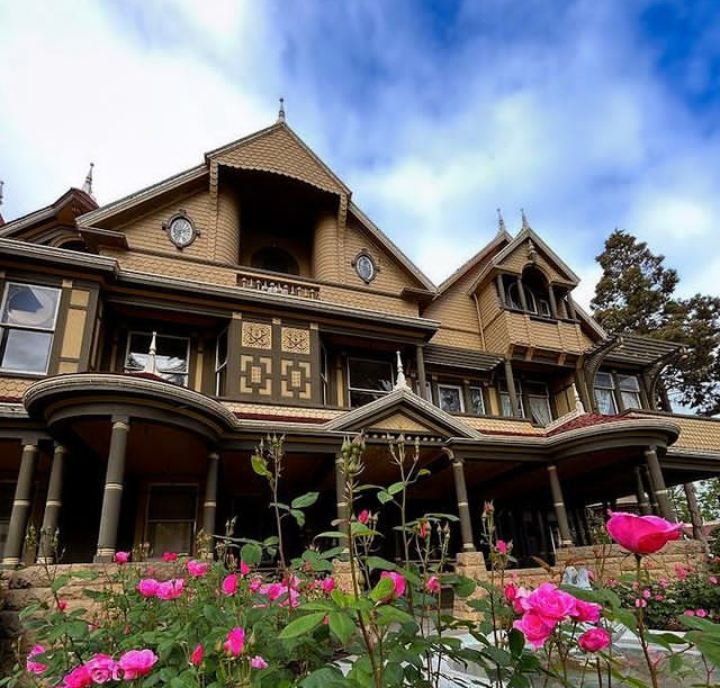
More often, however, the advantages and benefits are not immediately apparent, and legislators impatient for solutions are prone to cut off funds for all but the most applied research. Even if there is no longer a trunkful of diamonds deep in the darkness of The Winchester Mansion, science for its own sake, for the sake of pushing back ignorance and obscurity, is a viable reason for studying the healthy personality. The origin of organized society was caused by the conquest of one race by another. Caste system had developed out of such conquest, and society had then passed successively through five stages: the mitigation of caste coupled with the survival of inequalities; the consolidation of relationships through the growth of law; the origin of the state; the gradual cementing of the groups into a homogeneous people; and, finally, the development of patriotism and the national form of social organization. #RandolphHarris 7 of 18

Progress has frequently resulted from the forcible fusion of unlike elements. As much as one may deplore the horrors of war, it has been a necessary condition of race progress in the past, and the conquest of backward races is inevitable in the future. In advanced societies, rational and peaceful forms of social assimilation may supersede the genetic and violent method of the past. It is possible that a friendly pacific age is about to dawn—just as Spencer’s militant type of society gives way to the industrial—but it is doubtful that the World has yet reached the point at which war ceases. Whether the cessation of conflict would even be desirable was an open question to Ward. His adherence in these respects to the conflict school did not in the least alter the fundamental structure of Ward’s melioristic sociology. The fact is that man and society are not. Except in a very limited sense, under the influence of the great dynamic laws that control the rest of the animal World. If we call biologic processes natural, we must call social processes artificial. The fundamental principle of biology is natural selection, that of sociology is artificial selection. The survival of the fittest is simply the survival of the strong, which implies and would better be called the destruction of the weak. If nature progresses through the destruction of the weak, man progresses through the protection of the weak. #RandolphHarris 8 of 18

A study of the system of Man can lead to the acceptance of objectively valid values, on the grounds that they lead to the optimal functioning of the system or, at least, that if we realize the possible alternatives, the humanist norms would be accepted as preferable to their opposites by most sane people. Whatever the merits of the source of the validity of humanist norms, the general aim of a humanized industrial society can be thus defined: the change of the socioeconomic, and cultural life of our society in such a way that it stimulates and furthers the growth and aliveness of man rather than cripples it’ that it activates the individual rather than making him passive and receptive; that our technological capacities serve man’s growth. If this is to be, we must regain control over the economic and social system; man’s will, guided by his reason, and by his wish for optimal aliveness, must make the decisions. Given these general aims, what is the procedure of humanistic planning? Computers should become a functional part in a life-oriented social system and not a cancer which begins to play havoc and eventually kills the system. Machines or computers must become means for ends which are determined by man’s reason and will. #RandolphHarris 9 of 18

The values which determine the selection of facts and which influence the programing of the computer must be gained on the basis of the knowledge of human nature, its various possible manifestations, its optimal forms of development, and the real needs conducive to this development. That is to say, man, not technique, must become the ultimate source of values; optimal human development and not maximal production of the criterion for all planning. What we have failed to do in all this is to ascribe operational meaning to the so-called desirables that motivate us, to question their intrinsic worth, to assess the long-range consequences of our aspirations and actions, to wonder whether the outcome we seem to be expecting does in fact correspond to that quality of life we say we are striving for—and whether our current actions will lead us there. In other words, we are in the deeper sense failing to plan. Aside from this, planning in the field of economics must be extended to the whole system; furthermore, the system Man must be integrated into the whole social system. Man, as the planner, must be aware of the role of man as part of the whole system. #RandolphHarris 10 of 18

Just as man is the only case of life being aware of itself, man as a system builder and analyzer must make himself the object of the system he analyzes. This means that the knowledge of man, his nature, and the real possibilities of its manifestations must become one of the basic data for any social planning. In speaking of the socioeconomic structure of society as moulding one’s chaactrer, we speak only of one pole in the interconnection between social organization and man. The other pole to be considered in man’s nature, moulding in turn the social conditions in which he lives. If we start out with the knowledge of the reality of man, his psychic properties, as well as his physiological ones, and if we examine the interaction between the nature of man and the nature of the external conditions under which he lives, and which he must master if he is to survive, only then can the social process be understood. While it is true that man can adapt himself to almost any condition, he is not a blank sheet of paper on which the culture writes its text. Needs like the striving for happiness, belonging, love, and freedom are inherent in his nature. They are also dynamic factors in the historical process. #RandolphHarris 11 of 18

While it is true that man can adapt himself to almost any conditions, he is not a blank sheet of paper on which the culture writes its text. Needs like the striving for happiness, belonging, love, and freedom are inherent in his nature. They are also dynamic factors in this historical process. If a social order neglects or frustrates the basic human needs beyond a certain threshold, the members of such a society will try to change the social order to make it more suitable for their human needs. If this change is not possible, the outcome will probably be that such a society will collapse, because of its lack of vitality, and its destructiveness. Social changes which lead to a greater satisfaction of human needs are easier to make when certain material conditions are given which facilitate such changes. It follows from these considerations that the relation between social change and economic change is not only the one which Marx emphasized, namely, the interests of new classes in changed social and political conditions, but that social changes are at the same time determined by the fundamental human needs which make use, as it were, of favourable circumstances for their realization. The middle class which won the French revolution wanted freedom for their economic pursuits from the fetters of the older order. #RandolphHarris 12 of 18

However, they also were driven by a genuine wish for human freedom inherent in them as humans beings. While most were satisfied with a narrow concept of freedom after the revolution had won, the very best spirits of the bourgeoisie become aware of the limitations of bourgeois freedom and, in their search for a more satisfactory answer to man’s needs, arrived at a concept which considered freedom to be the condition for the unfolding of the total man. When students are permitted to be in contact with real problems; when resources—both human and technical—are made psychologically available by the teacher; when the teacher is a real person in his relationships with students and feels an acceptance of and an empathy toward his students, then an exciting kind of learning occurs. Students go through a frustrating but rewarding process in which gradually responsible initiative, creativity, and inner freedom are released. The kind of personal and intellectual change which comes about has many parallels with the changes which occur in psychotherapy. The nature of these changes has to some extent been investigated empirically. For the most part, modern culture does not, operationally, want persons to be free, despite many ideological statements to the contrary. #RandolphHarris 13 of 18
Both two main streams of modern life—Western and Communist—are extremely fearful of and ambivalent about any process which leads to inner freedom. Nevertheless, it is a fact that the surest roads to World catastrophe are individual rigidity and constricted learning. If we prefer to develop flexible, adaptive, creative individuals, we have a beginning knowledge as to how this may be done. We know how to establish, in an educational situation, the conditions and the psychological climate which initiate a process of learning to be freed. Learning to be free is something that our beloved Clare so desperately needs to learn. The whole area in her personality that consisted of arrogance, contempt for people, need to excel, need to triumph, was still so deeply repressed in her, even after therapy, that it had only been illuminated by flashes of insight. Even before she had started her analysis, she had occasional realizations of her need to despise people, of her great elation at any success, of the role ambition played in her daydreams, and it was a fleeting insight of this kind that she had now. #RandolphHarris 14 of 18

However, this whole problem was still so deeply buried that its manifestations could scarcely be understood. It was as if a shaft learning into the depth was suddenly lit up, and soon after obliterated by darkness. Thus, another implication of this series of associations remained inaccessible. The picture of extreme solitude as presented in the tower in the desert referred not only to her feeling alone without Peter, but to her isolation in general. Subversive arrogance was one of the factors responsible for it, as well as resulting from it. And fastening herself to one person—“two on an island”—was a way of escaping from such isolation without having to straighten out her relations with people in general. Clare believed that she could now cope with Peter in a better way, but soon afterward a double blow came which brought her problems to a climax. First, she learned indirectly that he was having or had had an affair with another woman. She had barely received that shock when Peter wrote to her that it would be better for both if they separated. Clare’s first reaction was to thank Heaven that this had not occurred earlier. Now, she thought, she could stand it. The first reaction was a mixture of truth and self-deception. #RandolphHarris 15 of 18

The truth in it was that a few months before she probably could not have endured the stress without grave injury to herself; in the months to come she not only proved that she could stand it, but came closer to a solution of the whole problem. However, this first matter-of-fact reaction apparently resulted also from the fact that she did not let the blow penetrate beneath a defensive armour. When it did penetrate, within the next few days, she was thrown into a turmoil of wild despair. She was too deeply upset to analyze her reaction, which is understandable. When a house is on fire one does not reflect on causes and effects but tries to get out. Clare recorded two weeks later that for a few days the idea of suicide kept recurring to her, though it never assumed the character of a serious intention. She quickly became aware of the fact that she was merely playing around with the idea, and she then faced herself squarely with the question whether she wanted to die or to live. She wanted to live. However, if she did not want to live as a wilting flower, she not only had to ride herself of her longing for Peter, and the feeling that her life was smashed to pieces by losing him, but also to overcome radically her whole problem of compulsive dependency. #RandolphHarris 16 of 18

If someone were to tell you ugly things about yourself, would you take heed to their words and try to make changes to yourself or would you blow them off and boot them out of your life? Why or why not? It is not always easy to see when someone is playing mind games with you. If they are adept at it, it is nearly impossible to see it, until it is too late. The principles and practice of group psychotherapy (several patients having a simultaneous session with a single group leader-therapist) have been in existence for some time. This approach to psychological treatment of emotional illness has been continually assigned a secondary role. It has been considered by many authorities to be a desirable adjunct to individual psychotherapy, but it has not generally achieved the status and prestige in the eyes either of the professionals or of patients which has been accorded to individual psychotherapy. The general preference for and greater effectiveness presumed for individual therapy is not founded on any rigorous research that has properly compared the relative efficacy of the two approaches. It is quite plausible that such a study might demonstrate group methods to be of at least equal potency to individual therapy. #RandolphHarris 17 of 18

If it is incumbent upon psychiatrists and psychologists to do therapy, until this is adequately disproved, they would do better to extend their skills to the larger numbers treatable in a group setting. Experts who have had extended experience in individual psychotherapy will have acquired some sensitivities, skills, and insights that can be usefully applied in group therapy. Those persons administratively responsible for the treatment programs of clinics and hospitals should provide increasingly for group approaches to psychotherapy, with a corresponding deemphasis of the one-to-one therapeutic conversations. Where both forms of treatment are to be offered there should always be provision for careful evaluation of their relative effectiveness in producing significant changes in the patient. Firefighting is an interesting career. “There are a lot of strict requirements in the company, professional liability being what it is these days. We’re trying to weed out those who don’t come to work, those who don’t come to training, who don’t know what’s going on or how to use the new equipment. When you get someone with a new air pack who trained on an old, outdated model the last time he went to fire school ten years ago and hasn’t attended an update since, he goes into a fire situation and doesn’t know how to use the equipment. They have to take time out and go to the state fire school for thirteen consecutive weeks.” You can help prevent fires by contributing to the Sacramento Fire Department. I pledge allegiance to the flag of the United States of America and to the Republic, for which it stands, one nation, under God, indivisible with liberty and justice for all. #RandolphHarris 18 of 18

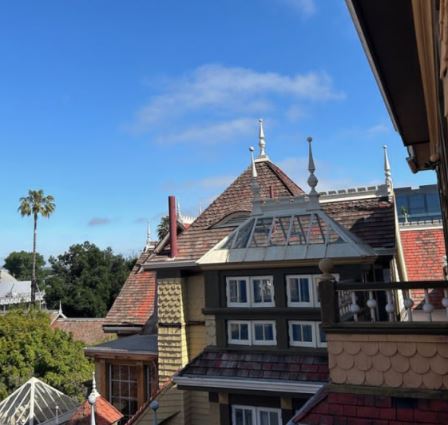
The Winchester Mystery House

Today marks the 50th anniversary of Winchester Mystery House being designated a historical landmark in California. Let’s celebrate this important milestone and pay tribute to the legacy of Sarah Winchester, the visionary behind this remarkable architectural masterpiece 🏰
Please come and enjoy a delicious meal in Sarah’s Café, stroll along the paths of the beautiful Victorian gardens, and wonder through the miles of hallways in the World’s most mysterious mansion. For further information about tours, including group tours, weddings, school events, birthday party packages, facility rentals, and special events please visit the website: https://winchestermysteryhouse.com/

Please visit the online giftshop, and purchase a gift for friends and relatives as well as a special memento of The Winchester Mystery House. A variety of souvenirs and gifts are available to purchase. https://shopwinchestermysteryhouse.com/





 Randolph Harris II International Institute