

It is only through free, independent, truth-seeking research that there is any hope of success in this Quest for ultimate truth. Naturally, each vested interest tries to limit the search to its own fold for obvious reasons, but he should refuse to limit his studies to any single school. By remaining open to truths from different sources, and fitting them together like mosaics, we get eventually some sort of a pattern. The technetronic society may be the system of the future, but it is not yet here; it can develop from what is already here, and it probably will, unless a sufficient number of people see the danger and redirect our course. In order to do so, it is necessary to understand in greater detail the operation of the present technological system and the effect it has on man. What are the guiding principles of this system as it is today? It is programed by two principles that direct the efforts and thoughts of everyone working in it: Th first principle is the maxim that something ought to bedone because it is technically possible to do it. If it is possible to build nuclear weapons, they must be built even if they might destroy us all. If it is possible to travel to another galaxy, it must be done, even if at the expense of many unfulfilled needs here on Earth. This principle means the negation of all values which the humanist tradition has developed. This tradition said that something should be done because it is needed for man, for his growth, joy and reason, because it is beautiful, good, or true. #RandolphHarris 1 of 18

Once the principle is accepted that something ought to be done because it is technically possible to do it, all other values are dethroned, and technological development becomes the foundation of ethics. The, feasibility, which is a strategic concept, becomes elevated into a normative concept, with the result that whatever technological reality indicates we can do is taken as implying we must do it. The second principle is that of maximal efficiency leads as a consequence to the requirement of minimal individuality. If individuals are cut down to purely quantifiable units whose personalities can be expressed on punched cards, the social machine works more efficiently, so it is believed. These units can be administered more easily by bureaucratic rules because they do not make trouble or creation friction. In order to reach this result, men must be de-individualized and taught to find their identity in the corporation rather than in themselves. The question of economic efficiency requires careful thought. The issue of being economically efficient, that is to say, using the smallest possible amount of resources to obtain maximal effect, should be placed in a historical and evolutionary context. The question is obviously more important in a society where real material scarcity is the prime fact of life, and its importance diminishes as the productive powers of a society advance. An ideal helps to hold a man back from his weakness, a standard gives him indirectly a kind of support as well as, directly, guidance. #RandolphHarris 2 of 18

A second line of investigation should be a full consideration of the fact that efficiency is only a known element in already existing activities. Since we do not know much about the efficiency or inefficiency of untired approaches, one must be careful in pleading for things as they are on the grounds of efficiency. Furthermore, one must be very careful to think through and specify the area and time period being examined. If the time and scope of the discussion are broadened, what may appear efficient by a narrow definition can be highly inefficient. In economics there is increasing awareness of what are called “neighbourhood effects”; that is, effects that go beyond the immediate activity and are often neglected in considering benefits and costs. One example would be evaluating the efficiency of a particular industrial project only in terms of the immediate effects on this enterprise—forgetting, for instance, that waste materials deposited in nearby streams and the air represent a costly and a serious inefficiency with regard to the community. We need to clearly develop standards of efficiency that take account of time and society’s interest as a whole. Eventually, the human element needs to be taken into account as a basic factor in the system whose efficiency we ty to examine. #RandolphHarris 3 of 18

Dehumanization in the name of efficiency is an all-too-common occurrence; exempli gratia, giant telephone systems employing Brave New World techniques of recording operators’ contacts with customers and asking customers to evaluate workers’ performance and attitudes, etcetera—all aimed at instilling “proper” employee attitude, standardizing services, and increasing efficiency. From the narrow perspective of immediate company purposes, this may yield docile, manageable workers, and thus enhance company efficiency. In terms of the employees, as human beings, the effect is to engender feelings of inadequacy, anxiety, and frustration, which may lead to either indifference or hostility. In broader terms, even efficiency may not be served, since the company and society at large doubtless pay a heavy price for these practices. Another general practice in organizing work is to constantly remove elements of creativity (involving an element of risk or uncertainty) and group work by dividing and subdividing tasks to the point where no judgment or interpersonal contact remains or is required. Workers and technicians are by no means insensitive to this process. Their frustration is often perceptive and articulate, and comments such as “We are human” and “The work is not fit for human beings” are not uncommon. Again, efficiency in a narrow sense can be demoralizing and costly in any individual and social terms. #RandolphHarris 4 of 18

If we are only concerned with input-output figures, a system may give the impression of efficiency. If we take into account what the given methods do to the human being in the system, we may discover that they are bored, anxious, depressed, tense, etcetera. The result would be a twofold one: (1) Their imagination would be hobbled by their psychic pathology, they would be uncreative, their thinking would be routinized and bureaucratic, and hence they would not come up with new ideas and solutions which would contribute to a more productive development of the system; altogether, their energy would be considerably lowered. (2) They would suffer from many physical ills, which are the result of stress and tension; this loss in health is also a loss for the system. Furthermore, if one examines what this tension and anxiety do to them in their relationship to their wives and children, and in the functioning as responsible citizens, it may turn out that for the system as a whole the seemingly efficient method is most inefficient, not only in human terms but also as measured by merely economic criteria. Efficiency is desirable in any kind of purposeful activity. However, it should be examined in terms of the larger systems, of which the system under study is only a part; it should take account of the human factor within the system. Eventually efficiency as such should not be a dominant norm in any kind of enterprise. #RandolphHarris 5 of 18

The other aspect of the same principle, that of maximum output, formulated very simply, maintains that the more we produce of whatever we produce, the better. The success of the economy of the country is measured by its rise of a total production. So is the success of a company. Ford may lose several hundred million dollars by the failure of a costly new model, like the Edsel, but this is only a minor mishap as long as the production curve rises. The growth of the economy is visualized in terms of ever-increasing production, and there is no vision of a limit yet where production may be stabilized. The comparison between countries rests upon the same principle. China is surpassing the United States of America by accomplishing a more rapid rise in economic growth. Not only industrial production is ruled by the principle of continuous and limitless acceleration. The educational system has the same criterion: the more college graduates, the better. The same in sports: every new record is looked upon as progress. Even the attitude toward the weather seems to be determined by the same principle. It is emphasized that this “the hottest day in the decade,” or the coldest, as the case may be, and I suppose some people are comforted for the inconvenience by the proud feeling that they are witnesses to the record temperature. One could go on endlessly giving examples of the concept that constant increase of quantity constitutes the goal of our life; in fact, that it is what is meant by “progress.” #RandolphHarris 6 of 18

Few people raise the question of quality, or what all this increase in quantity is good for. This omission is evident in a society which is not centered around man any more, in which one aspect, that of quantity, has choked all others. It is easy to see that the predominance of this principle of “the more the better” leads to an imbalance in the whole system. If all efforts are bent on doing more, the quality of living loses importance and activities that once were means become ends. If we explore this idea of a larger and larger model of systems, we may be able to see in what sense completeness represents a challenge to reason. One model that seems to be a good candidate for completeness is called an allocation model; it views the World as a system of activities that use resources to “output” usable products. The process of reasoning in this model is very simple. One searches for a central quantitative measure of system performance, which has the characteristic: the more of this quantity the better. For example, the more profit a firm makes, the better. The more qualified students a university graduates, the better. The more food we produce, the better. It will turn out that the particular choice of the measure of system performance is not critical, so long as it is a measure of general concern. We take this desirable measure of performance, and relate it to the feasible activities of the system. The activities may be the operations of various manufacturing plants, of schools and universities, of farms, and so on. Each significant activity contributes to the desirable quantity in some recognizable way. #RandolphHarris 7 of 18
The contribution, in fact, can often be expressed in the amount of the desirable quantity. The more sales of a certain product, the higher the profit of a firm. The more we teach, the more graduates we have. The more fertilizer we use, the more food. If the overriding economic principle is that we produce more and more, the consumer must be prepared to want—that is, to consume—more and more. Industry does not rely on the consumer’s spontaneous desires for more and more commodities. By building in obsolescence it often forces him to buy new things when the old ones could last much longer. By changes in styling of products, dresses, durable goods, and even food, it forced him psychologically to buy more than he might need or want. However, industry, in its need for increased production, does not relay on the consumer’s needs and wants but to a considerable extent on advertising, which is the most important offensive against the consumers right to know what he wants. The spending of $364 billion dollars on direct advertising in 2023 (in newspapers, magazines, Internet, radio, TV) may sound like an irrational and wasteful use of human talents, of paper, and print. However, it is not irrational in a system that believes that increasing production and hence consumption is a vital feature of our economic system, without which it would collapse. #RandolphHarris 8 of 18

If we add to the cost of advertising the considerable cost for restyling of durable goods, especially cars, and of packaging, which partly is another form of whetting the consumer’s appetite, it is clear that industry is willing to pay a high price for the guarantee of the upward production and sales curve. The anxiety of industry about what might happen to our economy if our style of life changed is expressed in this brief quote by a leading investment banker: “Clothing would be purchased for its utility; food would be bought on the basis of economy and nutritional value; automobiles would be stripped to essentials and held by the same owner for 10 to 15 years of their useful lives; homes would be built and maintained for their characteristics of shelter, without regard to style or neighbourhood. And what would happen to a market dependent upon new models, new styles, new ideas? The transformations effected by this inner work seem, when stabilized, to be a natural maturity. In dealing with resistance from a patient, an analysis may assume the lead. He may be struck by a realization that despite much work done, much insight gained, nothing changes in the patient. In such cases he must desert his role as interpreter and confront the patient openly with the discrepancy between insight and change, possibly raising the question as to unconscious reservations that the patient may have which prevent him from letting any insight really touch him. #RandolphHarris 9 of 18

Thus far the analyst’s work is of an intellectual character: he puts his knowledge into the service of the patient. However, even if he is not aware of offering more than hi technical skill, this helps extend beyond what he can give on the basis of his specific competence. In the first place, by his very presence, he gives the patient a unique opportunity to become aware of his behaviour toward people. In other relationships the patient is likely to focus his thinking primarily on the peculiarities of others, their injustice, their selfishness, their defiance, their unfairness, their unreliability, their hostility; even if he is aware of his own reactions he is inclined to regard them as provoked by the other. In analysis, however, this particular personal complication is almost entirely absent, not only because the analyst has been analyzed, and continues to analyze himself, but also because his life is not entangled with the patient’s life. This detachment isolates the patient’s peculiarities from the befogging circumstances that ordinarily surround them. And in the second place, by his friendly interest, the analyst gives the patient a good deal of what may be called general human help. To some extent this is inseparable from the intellectual help. Thus the simple fact that the analyst wants to understand the patient implies that he takes him seriously. This in itself is an emotional support of primary importance, especially at those times when the patient is harassed by emerging fears and doubts, when his frailties are exposed, his pride attacked, his illusions undermined, for the patient is often too alienated from himself to take himself seriously. #RandolphHarris 10 of 18

That statement may sound implausible, because most neurotic persons have an inordinate sense of their own importance, either in regard to their unique potentialities or in regard to their unique needs. However, to think ourselves as all important is radically different from taking ourselves seriously. The former attitude derives from an inflated image of the self; the latter refers to the real self and its development. A neurotic person often rationalizes his lack of seriousness in terms of “unselfishness” or in a contention that it is ridiculous or presumptuous to give much thought to oneself. This fundamental disinterest in the self is one of the great difficulties in self-analysis, and, conversely, one of the great advantages of professional analysis is the fact that it means working with someone who through his own attitude inspires the courage to be on friendly terms with oneself. This human support is particularly valuable when the patient is in the grip of an emerging anxiety. In such situations the analyst will rarely reassure the patient directly. However, the fact that the anxiety is tackled as a concrete problem, which can be solved eventually, lessens the terror of the unknown, regardless of the content of the interpretation. Similarly, when the patient is discouraged and inclined to give up the struggle the analyst does more for him than merely interpreting: his very attempt to understand this attitude as the outcome of a conflict is a greater support to the patient than any patting on the back or any effort to encourage him in so many words. #RandolphHarris 11 of 18

There are also the times when those fictitious foundations upon which the patient has built up his pride become shaky, and he starts to doubt himself. It is good to lose harmful illusions about oneself. However, we must not forget that in all neuroses solid self-confidence is greatly impaired. Fictitious notions of superiority substitute for it. However, the patient, in the midst of struggle, cannot distinguish between the two. To him an undermining of his inflated notions means a destruction of his faith in himself. He realizes that he is not as saintly, as loving, as powerful, as independent as he had believed, and he cannot accept himself bereft of glory. At that point he needs someone who does not lose faith in him, even though his own faith is gone. The human help that the analyst gives the patient is similar to what one friend might gives to another: emotional support, encouragement, interest in his happiness. This may constitute the patient’s first experience of the possibility of human understanding, the first time that another person has bothered to see that he is not simply a spiteful, suspicious, cynical, demanding, bluffing individual, but, with a clear recognition of such trends, still likes and respects him as a striving and struggling human being. And if the analyst has proved to be a reliable friend, this good experience may help the patient also to retrieve his faith in others. There is no doubt that the observations of a trained outsider will be more accurate than our observation of ourselves, particularly so since concerning ourselves we are far from impartial. #RandolphHarris 12 of 18

Against this disadvantage, however, stand the fact, already discussed, that we are more familiar with ourselves than any outsider can be. If they are bent on understanding their own problems, experience gained in psychoanalytic treatment shows beyond any doubt that patients can develop an amazing faculty of keen self-observation. There are obvious differences in patterns and some of the contents of the full professional training of the psychiatrist, clinical psychologist, and social worker. If we ask what specific knowledges or skills are unique to each of them, constituting a basis on which each is able to make a contribution to the psychiatric patient that cannot be duplicated by the others, these can be best appreciated. The psychiatrist’s unique competence is his medical knowledge and training—he alone is qualified to appraise the medical-physical status of the patient (although any physician can do this as well—possibly better), and he alone is qualified to prescript and administer medical (physiochemical) treatments; no one else can do this. An additional prerogative of the psychiatrist as a physician is a legal authority (existing by virtue of long historical precedent and beginning to show signs of appropriate impress of modern concepts and techniques) to be responsible for certain administrative operations (as contrasted with clearly medical procedures), for example, to hospitalize a patient, to discharge a patient, and so on. #RandolphHarris 13 of 18

The long-standing authority of the physician as the final and sole authority on “insanity” or mental disease within the law is beginning to show appropriate decay. The quality of a recent brief filed by the American Psychiatric Association speaks eloquently for the inevitable erosion of the physician’s role as ultimate arbiter in this area. The clear responsibility of the hospital psychiatrist for medical care of patients has historically extended to a quasi-legal responsibility (final authority) for such psychological procedures as prescribing changes in activity programs, giving or withholding passes, allowing or disallowing visitors. However, increasingly, partly as a function of the team approach and partly as a function of administrative leadership, such decisions are becoming a group responsibility (in many instances of the responsibility of the patient’s peers) or transferred to the psychologist. The clinical psychologist’s unique contribution to the individual patient comes in his competence to select, administer, score, interpret, and integrate the results of a variety of psychological tests and examination procedures that provide the only truly standardized and reliable source of data as to the patient’s mental ability and personality. He alone is a skilled diagnostician in the sense of having facility with a set of instruments specifically designed to overcome the errors and inadequacies of notoriously fallible clinical appraisal of complex phenomena. Beyond the application of his diagnostic tools to the individual patient, the psychologist alone has a thorough knowledge of the psychometric theory underlying these instruments and, accordingly, he can truly appreciate their limitations. #RandolphHarris 14 of 18

Aside from this contribution to the individual patient, the psychologist’s grounding in the methodology of behavioural research, especially measurement of personality and the behavioural correlates of personality types, affords him the capacity to design instruments for appraisal of changes, specifically of changes in major dimensions of personality. Measurement of such changes, and of related criterion variables, lies at the heart of the appraisal of the effectiveness of any psychotherapeutic or other psychiatric therapy. Skill in such personality research at the molar of behavioural level (as contrasted with study of physiological functions) is another capacity unique to the clinical psychologist. The social worker has knowledge of the network of city, county, and state welfare agencies, their personnel, equipment, and services and their administrative patterns and relationships, which is not shard by others member of the psychiatric team. She is sensitive to community structure and to the ways in which that structure can naturally facilitate or impede the recovery of a patient. She is experienced in the relevance of subculture memberships for pattens of psychopathology and for accessibility or resistance to personal intervention. She is skilled in the elicitation and correlation of life history data from relatives and other informants. She is cognizant of the economic problems of various family structures. She is expert in preparation of the patient to accept and profit from such referrals. These are among the skills of the case workers in the old-fashioned sense, and they are not shared by psychiatrist of psychologist. #RandolphHarris 15 of 18

A few psychiatrists have also received full graduate training in psychology, some psychologists were previously social workers, and occasionally a social worker successfully pursues the study of medicine or psychology. Each of these professionals has some unique areas in the background of general education which he brings to his graduate training and differences in the core emphasis of his specialized graduate preparation. The professions of psychiatry, clinical psychology and social work are presently providing the great bulk of formal psychotherapy in this country. However, the members of no one of these three professions are selected and trained primarily to be skilled psychotherapists. The variation in the cost of training each of these experts and the time required for this training, in light of the proportional relevance of their respective programs as preparation for the specific conduct of psychotherapy, has obvious social implications. It must be recognized that psychotherapy is neither the primary not unique skill of any one of these professions. The psychiatrist, psychologist, and social worker each does possess specialized and unique competence. Can our society afford a significant reduction in the application of these unique skills in a “shotgun” effort to meet the manpower shortage resulting from the increasing demand for therapeutic conversation? #RandolphHarris 16 of 18

Man is conceived as a machine, driven by a relatively constant amount of sexual energy called “libido.” This libido causes painful tension, which is reduced only by the act of physical release; to this liberation from painful tension Dr. Freud gave the name of “pleasure.” After the reduction of tension, libidinal tension increases again due to the chemistry of the body, causing a new need for tension reduction, that is, pleasureful satisfaction. This dynamism, which leads from tension to release of tension to renewed tension, from pain to pleasure to pain, Dr. Freud called the “pleasure principle.” He contrasted it with the “reality principle,” which tells man what to seek for and what to avoid in the real World in which he lives, in order to secure his survival. This reality principle often conflicts with the pleasure principle, and a certain equilibrium between the two is the condition for mental health. On the other hand, if either one of these two principles is out of balance, neurotic or psychotic manifestations are the result. I, for one, am a fan of the silent treatment. The quieter it is, the more I like it. If you have someone who does this to you, then let them shut you out. Let them remain quiet because of something you did or said made them angry with you. Relish that silence. It is so much better than their ongoing griping and ridiculing. People use silence as a tactic to get to you, to make you feel bad. They want you to miss their presence, miss their acceptance of you. Do not give them what they want. And do not let it get to you. If they keep pulling themselves away and shutting people out, it is not your loss. #RandolphHarris 17 of 18

If you look at what they are doing, they are shutting everyone out, removing themselves from the World. It is really a very self-sabotaging thing to do. When you do not allow yourself to get upset by their actions and really take a look at what they are doing to themselves in a vain attempt to hurt you, you will realize that. If a man cannot find in society or surroundings that standards which suit his character, then he must find his own. It is this that makes him a quester. To some people, it might seem foolhardy to charge into the flames to rescue someone you never saw before and may never see again. It is not that the Sacramento Fire Department does not think about the danger. They are human and do not want to die, just like everyone else. However, unlike most everyone else, they do what has to be done despite their fears. Firefighters have ignored pleas from their partners and low-crawled through a blazing apartment, risking death, while desperately groping in the dense smoke for a child who was assumed dead. Another firefighter leaped into a smoke-filled elevator shaft of a burning high-rose and shinnied down a cable to a red-hot elevator in a valiant rescue attempt. While another firefighter jumped fifteen feet down into a pit of fire without a plan of escape because to do nothing meant certain death for a trapped victim. Gripping acts of heroism can happen anywhere at any time in Sacramento. Please make a donation to the Sacramento Fire Department to ensure they receive adequate resources. I pledge allegiance to the flag of the United States of America and to the republic for which it stands, one nation, under God, indivisible with liberty and justice for all. #RandolphHarris 18 of 18


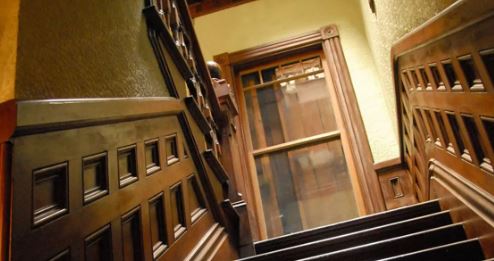
One night while closing The Winchester Mystery House a caregiver had accidentally dropped his mobile phone, and began to read a text message after he picked it up; after when he looked at his watch to ascertain the time. In taking his eyes from his watch, they became riveted upon the door-to-nowhere which he distinctly saw open, and also saw the figure of a female attired in grayish garments, with the head inclined downwards, and one hand pressed upon the chest as if in pain, and the other—the right hand—extended towards the ground with the index finger pointing downwards. It advanced with an apparently cautious step across the floor towards him. Immediately as it approached another caregiver, who was relaxing, its right hand extended toward her. He then rushed at it, giving at the same time a most awful yell, but, instead of grasping it, he fell upon his friend. I recollected nothing distinctly for nearly three hours afterward. However, he learned that he was carried downstairs in agony of fear and terror. The female caregiver added to the account with the detail of “sounds” being heard from an adjacent room. “His horrible shouts. He seems to have fainted in her arms. She instantly laid him down and went into the room from whence the last sound was heard. However, nothing was there and the door-to-nowhere had not been opened. Other employees came quickly to their assistance, and found the young caregiver trembling in the most acute mental agony.

Come and enjoy a delicious meal in Sarah’s Café, stroll along the paths of the beautiful Victorian gardens, and wonder through the miles of hallways in the World’s most mysterious mansion. For further information about tours, including group tours, weddings, school events, birthday party packages, facility rentals, and special events please visit the website: https://winchestermysteryhouse.com/
Please visit the online giftshop, and purchase a gift for friends and relatives as well as a special memento of The Winchester Mystery House. A variety of souvenirs and gifts are available to purchase. https://shopwinchestermysteryhouse.com/





 Randolph Harris II International Institute