Randolph Harris II International Institute

Whatever Person Posses this Book, Lucifer Promises to Carry Out One’s Plans

May be an image of outdoors

The latter part of the nineteenth century was an anguished and tortured period. Gentility was a terrible strain. Beneath the appearance of stiff propriety there ran currents of anger and aggression frightful in their intensity. Some indication of the dark, baleful aspect of the lives of our great-grandparent went untold. Black and white magic. Contemporary forms of magic are being studied carefully by parapsychologists. (Parapsychology is the study of apparently supernatural phenomena such as telepathy, clairvoyance, apparitions, and related forms of ESP.) Researcher in this field who operate from a completely naturalistic standpoint deny the existence of a personal devil or evil spirits. They may speak of two vital forces in the Universe, however, one working upward in an evolutionary manner, and the other counteracting these ascending steps. These investigators of psychic phenomena do not make any effort to explain the origin of these invisible powers, and simply declare that some people have special psychic gifts which give them access to these forces. They may even say that some religious practitioners appear to have superhuman power, and refer to their work as white magic. They may also acknowledge that some individuals can mysteriously bring harm to their enemies, and this evil use of power they call black magic. The majority of these parapsychologist insist, however, that they do not believe in a personal God or the devil, and simply affirm that at the present time we do not fully understand some of these esoteric powers in this Universe. The Christian student of occultic activity has a distinct advantage over the naturalist, for one accepts the reality of a personal God and an invisible World of angels and evil spirits. This does not mean that one rejects a scientific approach to the problems that are encountered. One must avoid the temptation to declare dogmatically that every unexplainable occurrence is the result of supernatural activity—either by God or the forces of evil. #RandolphHarris 1 of 16

May be an image of door

Some manifestations that now puzzle us may in the future be understood within the framework of the natural. The fact remains, however, that Satan is a real personality, and that a multitude of evil spirits have joined him in opposition to God and His people. The Christian Bible records numerous instances which clearly reveal their activity, and we have good reason to believe that some of the unexplainable phenomena in evidence today are the works of these demonic beings. Practitioners of black magic usually declare openly that they are serving the devil. Many of them say that have made a pact with Satan, and some have indicated their allegiance to him by signing a document with their own blood. Missionaries have reported that acts with the devil are not at all unknown among many primitive peoples. Reputable followers of Jesus Christ are convinced that these religious leaders actually can bring illness or death to people through ritualistic incantations. Black magic is practiced extensively today in many parts of Germany, France, and Switzerland, as well as in primitive cultures. Dr. Kurt Koch cites numerous instances of conjurers casting spells which have brought about the death of animals and even humans. He also tells us of amazing healings, but points out that when a person is cured of a physical disease by such a practitioner, one usually suffers such severe mental depression that the new condition is worse than the old. As one reads the examples of black magic—cattle being milked dry in a mysterious manner, the sudden unexplainable death of animals, healings followed by terrible psychic disturbances, and the appearance of frightful apparitions—he finds his credulity stretched almost to the breaking point. If one has not witnessed such occurrences, one is likely to dismiss these reports as untrustworthy. However, serious scholars who have investigated these accounts do not deny the reality of such phenomena. They may not believe them to be the work of Satan or evil spirits, but they admit that many of them cannot be explained at the present time. #RandolphHarris 2 of 16

May be an image of indoor and hallway

Professor Adolph Koberle, from the University of Tubingen, in the introduction to Christian Counseling and Occultist, says: Readers who approached this study with a purely rationalistic bent will experience spiritual difficulty in following the author in many areas because we have here a report of cases and experiences which seems to conflict with all sound human intelligence. However, perhaps such persons can be brought to listen, since research first tries the immanent solution of the problems and only where this is proved to fail does one break out and propose the added dimension, the dimension of the eternal. Even though research may evoke contradictions here and there—from medics and pastors, from parapsychologists and psychotherapists—yet the questions that are here posed cannot be evaded by any person who concerns oneself in a genuine and responsible manner with a fruitful diagnosis and a helpful therapy. Clearly sane, scholarly, and since humans have examined the apparently superhuman powers evidenced in black magic and other forms of occultism, and made every effort to find naturalistic explanations, before finally concluding that Satan and evil spirits are actually at work. Black magic as a specific form of witchcraft has its own literature. The Sixth and Seventh Books of Moses are the primary source, and are well known in Europe. They constitute one volume, and are alleged to have been written by Moses himself. Strangely enough, they maintain that this great national leader was a servant of Satan, and set fourth detailed instructions for establishing a mystical relationship with the devil. This research tells readers how they can gain power through black magic over all the people they will encounter both in this World and the next. It makes this solemn assertion: “To whatever person possesses this book at any given time, Lucifer makes promise to carry out one’s commands, but only as long as one possess this book.” Dr. Koch comments on the strange and sinister nature of this writing by saying, “In the many cases which the pastor-counselors have come to know, there is no possessor of The Sixth and Seventh Books of Moses who have no psychic complication.” #RandolphHarris 3 of 16

May be an image of outdoors

White magic is declared by its practitioners to be in direct opposition to black magic. Whereas black magic includes an open allegiance with the powers of darkness, in white magic the name of God is invoked, and Biblical phrases are utilized. Most people who practice it, however, have no understanding of the basic doctrines of the Christian faith. Some possibly are endowed with an unexplainable psychic power, and their desire to use it was not totally selfish at the beginning. However, many find very soon that they become enslaved to a yearning for self-exaltation. The Radio Bible Class has received letters from a number of people for a time had engaged in a “healing ministry” of this kind, but who abandoned it because it led to a gradual departure from God. Although some cult leaders and those endowed people, they are using the name of God and Christ in a manner that violates the Lord’s will. The danger of mistaking an enigmatic psychic power for the gift of the Lord must be recognized. Dr. Kurt Koch points out that Dr. Henry Drummond, fellow-worker of D.L. Moody, possessed psychic ability which enabled him to have mental power over person who were miles away. While working with Moody, Drummond found that he could hypnotically influence the large crows who had gathered, but concluded that to use this power would be a hindrance to the activity of the Holy Spirit. One prayed that the Lord would take this psychic gift away from him, and his prayer was answered. Had Dr. Drummond decided to exercise this ability, he would soon have established a Worldwide reputation as a great healer. However, his accomplishments would not have honoured the Lord, and real blessings would not have resulted from his ministry. In Biblical faith, trust is placed solely in the Lord Jesus Christ. In white magic it is deflected to someone else (the human agent) or to something else (one’s own faith, etcetera).  In the Biblical prayer of faith, the praying person subjects oneself to the will of God. #RandolphHarris 4 of 16

May be an image of chandelier and indoor

In white magic, the help of God is demanded under the assumption that exercising such power is in accordance with God’s will. Also in white magic the Christian markings are mere decorations that camouflage the magical means of knowledge for power. Certain influences, as we might call them, can be termed elementary forms of magic. Firstly, we have an example of the criminal use of hypnosis. A girl reported in a counselling session that a doctor who she had consulted had hypnotized her. While hypnotized he had seduced her. The doctor had done the same to her girl friend. It was later discovered that he has also done this with other girls. When these stories leaked out, the doctor left the town and settled elsewhere. The girl said that for a long time after this incident she had not been able to read her Christian Bible. She had felt a strong aversion towards religion, and evil thoughts had always come to her mind when praying. Another example, a doctor at a hospital had indecently assaulted women and girls under hypnosis. Once the ward sister caught him in the act. To cover up his scandalous behaviour, he used to question the patients about their sexual relationships and included their answers in their case histories. He thus tried to protect himself in the event of anything being discovered. A respectable gurl who was engaged to a Christian young man became pregnant at the hospital. Following this her fiancé left her. The girl herself denied all knowledge of having an intimate relationship with anyone. The doctor had lain with her when she had been hypnotized. The assistant matron and the ward sister had finally reported the doctor. However, the result was that they themselves were dismissed by the medical superintendent. The doctor in question stayed. Other nurses, who also had incriminating evidence against him, were forced to keep quiet now because of the fear of dismissal. After a few years, though, when the situation became too hot for the doctor, he left and went abroad. #RandolphHarris 5 of 16

May be an image of furniture and indoor

Scientific advocates of hypnosis believe that a man could not be forced to do anything under hypnosis that he would not be prepared to do when conscious. They are of the opinion that crimes are not possible under hypnosis. However, not all the experts share this opinion. Moreover, in my counselling work I have met many cases in which crimes have taken place under hypnosis. From the point of view of the Scriptures it is understandable that an innocent girl can be molested this way. Jesus Christ said that out of the heart come evil thoughts and so on. Evil lies dormant even in the most moral of people. Normally these instinctive reactions are held in check by one’s consciousness, which is moulded by education, religious training and is affected by one’s disposition. Under hypnosis however, this regulator is switched off. Instinctive impulses can arise unhindered from the subconscious, and can be exploited by unscrupulous and uninhibited people. Besides this, some take no account of the fact that magical hypnosis exists in addition to the normal type of hypnosis, and that this can have far deeper effects. Magical hypnosis can often be recognized by the fact that afterwards the patient is no longer able to pray or to keep one’s faith. Here are some actual examples. A Christian girl went to a psychiatrist. The psychiatrist used magical hypnosis far more often than he did ordinary hypnosis. I have occasionally come across such doctors in areas where magic is commonly practised. In reply to the girl’s question, the doctor admitted that he had not received his gift from God. He went on to tell the girl that he had wanted to conduct suggestive experiments on her. After the treatment, the girl lost her faith and could no longer pray. She suffered from doubts and other serious difficulties in believing. I think a lot of people who have had good lives, and then are abused and tortured over a long period of time have these same problems. #RandolphHarris 6 of 16

May be an image of indoor and brick wall

When they restart reading the Christian Bible, it may make them upset and angry and they do not know why, but they keep going and praying hoping to overcome their situation. They know that God is there and guiding them, but they have just been able to sustain, not yet overcome the situation. So they keep forcing themselves to pray and thank God so they can rebuild their faith, and it can really take a lifetime, especially when the situation has been going on for decades. Abusers just kind of rob some people of faith and joy. And year after year, they keep praying it is over, and it never is, so it makes it hard for them to trust anyone, including God. So they have to keep reminding of his words and praying and seeking mental health treatments so they can live, and they pray they will still have some youth left, if the situation is ever resolved. Another example is a man, in his spare time a minister dabbled in magic. He experimented in various areas and learned card-laying, how to use a pendulum, magic charming and magical hypnosis. Since he had no suitable people to experiment on, he used his wife for the purpose. As his magical abilities increased, so too did his own and his wife’s dislike for the Christian Bible and prayer. This dislike developed into a strong resistance, and as time went on psychic disturbances appeared in the wife. She exhibited a serious anxiety hysteria and always had to lock the door of whichever room she happened to be in. There also was once a businessman who had the strange ability of being able to influence his customers hypnotically or magically, causing them to accept the business offers that he makes to them. In this way, his yearly income exceeds $75,000.00. He rejects Christianity altogether. A woman allowed a masseur to hypnotize her. Before the treatment she had regularly read her Christian Bible, prayed and attended the local church services. Afterwards when she tried to pray, she felt a compulsion to blaspheme and to curse. She then lost her faith. These effects indicate that the masseur had used magical hypnosis. #RandolphHarris 7 of 16

May be an image of indoor

Plato derived the etymology of the word “demon” (Greek, daimon) from an adjective meaning “intelligent” or “knowing.” If this derivation is correct, it suggests that intelligence was considered a prominent characteristic of demons. If demons are fallen angels, this would be expected. As Satan’s vast wisdom became vitiated when he sinned (Ezekiel 28.12, 17), the great wisdom that characterizes angels in general (2 Samuel 14.20) must also have been corrupted in his followers. This is undoubtedly why demons use their great but perverted knowledge so relentlessly in an effort to frustrate God’s purpose. Humans who consult professional mediums and use other methods of divination to obtain knowledge of the future seem to imply a degree of confidence in the intelligence of evil spirits. The superior knowledge demons possess is not a holy or saving knowledge. Demons “believe” but only to “tremble” (James 2.19). They are confirmed in depravity and never seek forgiveness. As preeminently unclean spirits, they never long for purity. They confess Jesus Christ is Lord, but they do not trust Christ or submit to him. Although they recognize his authority (Mark 1.24; 5:6, 7). They cleverly withhold knowledge of his incarnation and completed redemption (1 John 4:1-6), corruption sound doctrine (1 Timothy 4.1-3), discern between those who have God’s seal and those who do not (Revelation 9.4), and know full well their own tragic destiny and inevitable doom (Matthew 8.29). Their superhuman intellect is accomplished by superphysical strength. The psalmist celebrates this angelic characteristic: “Bless the Lord, ye His angels, that excel in strength, that do his commandments, hearkening unto the voice of His word,” reports Psalm 103.20. The Apostle Peter also speaks of the “power and might” of angelic spirits (2 Peter 2.11). Our Lord Himself indirectly referred to demonic strength (Matthew 12.29). #RandolphHarris 8 of 16

May be an image of indoor

Perverted power and strength are thus conscious attributes of fallen angels. This titanic energy is displayed in the supernatural strength demons can impart to the human body when they enter it and possess it. The Gadarene demoniac who was dominated by a “legion” of demons (Mark 5.9) could not be bound even with chains. “Because that he had been often bound with fetters and chains, and the chains had been plucked asunder by him, and the fetter broken in pieces: neither could any man tame him,” reports Mark 5.4. The great strength of this demoniac was due to the vast number of demons who possessed him. “A legion” in Roman military history consisted of three-to-six-thousand-foot soldiers, and three to seven hundred cavalries. The term “legion” was not only the name of the possessed human but probably also served to indicate the phenomenal strength of the demoniac. The demons were so powerful that when the Lord ordered them to enter a herd of two thousand swine, they cased the entire herd to rush violently down a hill into the sea (Mark 5.13). No wonder the demon-possessed human was disturbed physically, mentally, and emotionally. However, the superphysical strength of demons is not limited to the physical energy they impart to their victim. Their power is broad enough to cause occult oppression of mind and body. They can produce physical disabilities and sickness unrelated to organic disorders and which medicine or natural therapy cannot alleviate. Perhaps the most terrible power of demons is to derange the mind by upsetting the nervous system. In this way they can afflict the body with a psychosomatic disease. Demons are aware of the close relationship between physical and mental health. By jangling the nerves and the emotions, they can cause mental Instability (Luke 8.26-36), producing suicidal mania (Mark 9.22). Their purpose is to drive their occult-enslaved victim to self-destruction. “I’m tired of his bleary-eyed tootling—I have warned him to lie down and nap. So now that I have told him to stop it, I will give him a sharp little rap.” #RandolphHarris 9 of 16

May be an image of indoor

Dealing with necromancers who claim to contact the dead. The writer of 1 Samuel 19.9-10 describes in incident in which King Saul tried to impale David on his javelin. His attack is attributed to an “evil spirit from the Lord.” This indicates that God allowed a demon spirit to enter Saul and possess him. The kingdom of evil spirits is within God’s control, though not acting on his direction. God allows spirit activity, just as he allows evil men to prosper, within the boundaries of his ultimate plan for humans. God’s sovereign control over the realm of evil spirits is further illuminated in 1 Kings 22:18-23. “And the king od Israel said to Jehoshaphat, Did I not tell you that he would not prophesy good concerning me, but evil? And Micaiah said, Therefore hear the word of the Lord; I saw the Lord sitting on his throne, and all the hosts of Heaven standing beside him on his right hand and on his left; and the Lord said, Who will entice Ahab, that he may go up and fall at Ramoth-gilead? And one said one thing, and another said another. Then a spirit came forward and stood before the Lord, saying, I will entice him. And the Lord said to him, By what means? And he said, I will go forth, and will be a lying spirit in the mouth of all his prophets. And he said, You are to entice him, and you shall succeed; go forth and do so. Now therefore, behold, the Lord has put a lying spirit in the mouth of all these your prophets; the Lord has spoken evil concerning you.” From this passage, too, it is clear that God overrules the World of evil spirits and permits them to do their work when it accords with His sovereign will and purpose. A unique incident involving spirits of the dead is recorded in 1 Samuel 28. King Saul had banished mediums and wizards out of the land as commanded by God (v.3). When confronted by the philistine army he was fearful and sought guidance from the Lord. When no guidance came, he told his servants to seek out a medium who could give him counsel (vv. 5-7). Having found one at Endor, Saul went to her in disguise. She feared a trap because of Saul’s decree against mediums, but Saul promised her protection and asked her to bring forth the spirit of dead Samuel (vv. 8-11). #RandolphHarris 10 of 16

May be an image of tree and outdoors

The medium screamed in fear when she saw Samuel himself—apparently she was used to communicating only with evil spirits. This is the only account in the Old Testament of God’s permitting a departed person’s spirit to return to Earth. This was not by the lower of the medium, however; in fact, she was not prepared for it at all. Samuel told the piteous kin it was no use: God would take the kingdom from Saul and give it to David (vv. 15-17), and the Philistine army would rout Saul’s army (v.19). 1 Chronicles 10.13 provides the epitaph to the tragic story: “So Saul died for his unfaithfulness; he was unfaithful to the Lord in that he did not keep the command of the Lord, and also consulted a medium, seeking guidance.” Saul’s case is a chilling warning from Scripture against consulting with mediums or trying to communicate with departed souls; the judgment of God is upon it. A case of supposed witchcraft occurred in Cork, Ireland in the year 1685-1686, the account of which is contained in a latter from Christopher Crofts to Sir John Perceval (the third Baronet, and father of the first Earl of Egmont) written on the fifteenth of March in that year. Though the natator professes his disbelief in such superstitions, yet there seems to have been an unconscious feeling in his mind that his strict administration of the law was the means of bringing the affliction on his child. He says: My poor boy Jack to all appearances lay dying; he had a convulsion for eight or nine hours. His mother and several others are of opinion he is bewitched, and by the old woman, the mother of Nell Welsh, who is reputed a bad woman; and the child was playing by her that day she was upon her examination, and was taken ill presently after she was committed to Bridewell. However, I have not faith to believe it was anything but the hand of God. I have committed the girl to Bridewell, where she shall stay some time.” At one period in their history that peculiar people, known amongst themselves as the Society of Friends, and by their opponents as Quakers, appear to have been most troublesome, and to have caused a good deal of annoyance to other religious bodies. #RandolphHarris 11 of 16

No photo description available.

Not unnaturally their enemies credited any wild tales which were related about them to their detriment, especially when they had referenced to their doctrine of the influence of the Spirit. Dr. More, in his continuation to Glanvill’s book, has in the sixth Relation an account of man, near Cambridge in England, who was possessed by an evil spirit which led him to do the most extraordinary things in its attempts to covert him to Quakerism. In the Life of Mr. Alexander Peden, late Minister of the Gospel at New Glenluce in Galloway, who died in 1686, there is an account of a Quakers’ meeting in this country which the Devil appeared in most blasphemous parody of the Holy Ghost. As Mr. Peden was travelling one time by himself in Ireland, “the night came on, and a dark mist, which obliged him to go into a house belonging to a Quaker. Mr. Peden said, ‘I must beg the favour of the roof of your house all night.’ The Quaker said, ‘Thou art a stranger, thou art very welcome and shalt be kindly entertained, but I cannot wait upon thee, for I am going to the meeting.’ Mr. Peden said, ‘I will go along with you.’ The Quaker said, ‘Thou may, if thou please, but thou must not trouble us.’ He said, ‘I will be civil.’ When they came to the meeting, as their ordinary is, they sat for some time silent, some with their faces to the wall, and others covered. There being a void in the loft above them there came down the appearance of a raven, and sat upon one man’s head, who started up immediately, and spoke with such vehemence that the froth flew from his mouth; it went to a second, and he did the same; and to a third, who did as the former two. Mr. Peden sitting near to his landlord said, ‘Do you not see that? Ye will not deny it afterwards?’ When they dismissed, going home Mr. Peden said to him, ‘I always thought there was devilry among you, but never thought that he did appear visibly among you till now that I have seen it.’ The poor man fell a-weeping, and said, ‘I perceive that God hath sent you to my house, and put it into your heart to go along with me, and permitted the Devil to appear visibly among us this night. I never saw the like before. Let me have the help of your prayers.’ After this he became a singular Christian.” #RandolphHarris 12 of 16

May be an image of brick wall

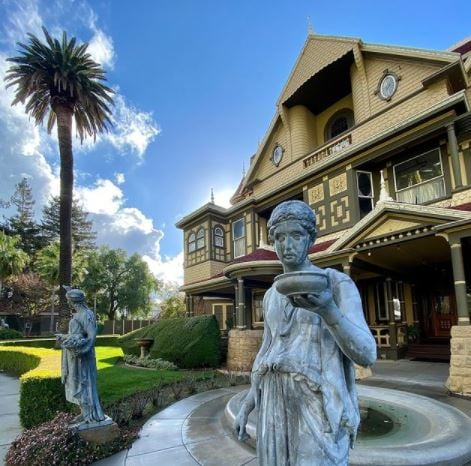
Mr. Peden was also somewhat of a prophet, and his specialty appears to have been the prognostication of unpleasant events, at all events to persons in Ireland. Two instances will suffice. When in a gentleman’s house in Co. Antrim he foretold that a maid-servant was enceinte, that she would murder the child, and would be punished. “Which accordingly came to pass, and she was burnt at Craig Fergus.” On another occasion two messengers were sent to inform the Lord-Lieutenant that Presbyterian ministers in Ireland should affirm that they had nothing to do with the rebellion at Bothwell Bridge. Mr. Peden said they were on the Devil’s errand, but God would arrest them by the gate. Accordingly one was stricken with sickness, while the other fell from his horse and broke his leg. In another cause of the supernatural, during the late 1800s, the Santa Clara Valley, in California presented sweeping vistas of rural open space. It was a serene setting for Mrs. Winchester to begin her building project, which she did with steadfast determination. She immediately hired carpenters to work in shifts around the clock. By the turn of the century the eight-room house had grown into a nine-story mansion! The estate eventually grew to about 730 acres of farmland (according to documents), which included orchards of apricots, plums, and walnut trees to supplement Mrs. Winchester’s income. Her dried plums, which turned into prunes were very popular. Some people believe that prune juice is what kept Mrs. Winchester’s screen so wrinkle free, gave it a natural growth, and made her look so young, as it flushes toxins out of the body (word of caution, make sure to use it in moderation and start in the morning with a few ounces, and do not go anywhere for 24 hours until you see how it work with your system). Nonetheless, Mrs. Winchester also owned homes in Atherton, Los Altos, and Palo Alto. The combination of her wealth and her eccentric building of this beautiful mansion gave rise to many rumors in the local community. #RandolphHarris 13 of 16

May be an image of indoor and outdoors

Jeremiah Haralson was waiting for a tour of Mrs. Winchester’s beautiful mansion, and he had been waiting an hour to have tea with her—he was really impressed with the mansion as it seemed to twinkle. It was really a rural setting and very pretty. The estate had a lot of thick green foliage and beautiful flowers and what seemed to be miles of green lawns. So he waited for her. It was August 1894, and the chill of an unusually evening entered into his bones. The construction workers passed him with a surely response to his “Good Night.” Many of the servants went by him like ghosts with soft voices; and it was nearly midnight, and she still had not come. He then heard a ghostly music wafting from the dark mansion. The bell in the belfry high in the gables began to toll. Jeremiah shrugged his shoulders and turned towards the gates that lead to the main road. He looked back, but there was still no sign of movement about the mansion, so sign of life, no lights even in the windows. He paused by the gate, wondering. Then he noticed that the front doors were open—wide open—and the porch lamp shone a little way into the foyer. There was something about this that did not please him—that scared him a little, indeed. The house had a gloomy and deserted air. It was obviously impossible that it harboured a rich widow. The must be away on business. In which case—Jeremiah walked up the path, tower the stairs to the front porch, and listened. Yet, still no sign of life. He passed into the foyer. There as no light anywhere. Where was everybody, and why were the beautiful jeweled front doors open. There was no one in the front parlour, nor the drawing room, the dining room and the study were equally empty. Everyone was out, evidently. However, the unpleasant sense that he was, perhaps, not the first casual visitor to walk through that open door impelled him to look through the house before he went anyway and closed it after him. So he went upstairs, and at the door of the first bedroom, Jeremiah turned on the gasolier, as he had done in the siting rooms. Even as he did so, he felt that he was not alone. #RandolphHarris 14 of 16

May be an image of outdoors

Jeremiah was prepared to see something, but for what he saw he was not prepared. For what he saw lay on the bed, in a white loose gown—and it was Mrs. Winchester, and her throat was cut from ear to ear. He did not know what happened then, nor how he got downstairs and into the street; but he got out somehow, and the policeman found him in a fit, under the lamp-post at the crossroads of the road. He could not speak when they picked him up, and he passed the night in the police cells, because the policeman had seen plenty of drunken men before, but never one in a fit like Jeremiah Haralson. The next morning he was well, though still very pale and shaky. However, the tale he told the magistrate was convincing, and they sent a couple of constables with him to her house. There was no crowd about it as he had fancied there would be, and the curtains were open. As Jeremiah stood, dazed, in the front of the doors, they opened, she Mrs. Winchester came out. Jeremiah held on to the upside-down posts on the front porch for support. “See, my boy! Mrs. Winchester is just fine as can be,” said the constable, who found him hiding before one of the posts. “I told you, you were drunk, but you would know best!” When Jeremiah was alone with Mrs. Winchester, he told her how he had come into the rambling mansion, and had found the front doors open and the lights out, and how he had seen something—in even trying to hint at which he turned sick and broke down and had to have a little Vin Mariani given to him. “Oh, heavens, boy,” Mrs. Winchester said, “I dare say the house was dark, for we were all at St. Joseph’s Cathedral with Daisy, and no doubt the door was open, for the maids will run out if they are left. However, you could not have been in any of the bedrooms on the second floor, because I have my staff lock them when I am away, and my dear sweet boy, they key was in my pocket. I dressed in a hurry and I left my odds and ends laying about.” #RandolphHarris 15 of 16

May be an image of 1 person and big cat

“I know,” Jeremiah said; “I saw a gold scarf on the chair, and some gold gloves, and a lot of hairpins and ribbons, and a prayerbook, and a lace handkerchief on the dressing table. Why, I even noticed the almanack on the mantlepiece—16 January 1895. At least it could not be that because this is 16 August 1894. And yet it was. Your almanack is at 16 January 1895, is it not?” “No, of course it is not,” said Mrs. Winchester, smiling rather anxiously; “but all the other things were just as you say. You must have had a nightmare, of a vision, or something.” Jeremiah was a very ordinary, commonplace, City young man, and he did not believe in visions, but he never rested day or night still he got away from the Winchester mansion. Now the curious and quite inexplicable part of this when Mrs. Winchester came down to breakfast on the morning of 17 January 1895, she found Jeremiah looking like death, with the Oakland Tribune in his hand. He caught hers—he could not speak, and pointed to the paper. And there she read that on the night of the 17th a young lady had been found with her throat cut from ear to ear, in a second story bedroom of that Beautiful, but Bizarre Winchester Mansion. Although demons reveal various degrees of wickedness (Matthew 12.45), they all are depraved. This aspect of their character appears in the terrible things they do to their victims. The Christian Bible often refers to them as spiritually and morally “unclean” (Matthew 10.1; Mark 1.27; 3.11; Luke 4.36; Acts 8.7; Revelation 16.13). People who deal in the occult are sometimes found to be vulnerable to Satan and demonic powers. Sometimes these “unclean spirits” take possession of vulnerable people. The character of demons reveals what they can do to their victims. Invisible, extremely intelligent, strong, and totally depraved personalities can do a great deal of harm to the vulnerable person. Since the supernatural exists and does interact with the natural World, the truly scientific investigator must take this into consideration. Prayer and faith can heal the mind and the body supernaturally, just as medicine and rest can do it naturally. By the same token, unbelief and sin can harm body and mind as a result of demonic bondage. (However, many mental and emotional illnesses are, of course, due to natural causes, such as overwork, tension, fatigue, malnutrition, organic disease, etcetera. Such disorders can be treated effectively by a physician, neurologist, psychologist, or psychiatrist. Demonic spirits may have little or nothing to do with such disorders of the mind. The causes are purely natural and may be corrected by purely natural means. This is not surprising since the Creator has placed the creation and His creatures under the normal operation of the laws of cause and effect.) #RandolphHarris 16 of 16

May be an image of indoor

Winchester Mystery House

May be an image of outdoors and palm trees

Beautiful day to stroll the gardens which will turn into a beautiful night to roam around the Winchester Mystery House ☀️🌜Flashlight Tours Tonight!

No photo description available.

A few tickets still available!
🎟️ Link https://www.winchestermysteryhouse.com/

And there is More Evidence—He Bills Me from His Firm at 2 A.M. for Overtime

May be an image of sky and twilight

Education is not just teaching students to memorizes things, and filling their brains with information, but teachings others, very abstractly, how to think and become successful. One does not want to teach them what to think, but show them the architecture of how to critically think and form ideas that are rational. Teaching them to have informed opinions so they do not just repeat things they heard on the evening news. You want a student to be able to explain their opinion. For example, Governor Arnold Schwarzenegger, was more of a democrat then republican. Looking at his policies and how he balanced how he balanced the budget, made it clear that he was not a true republican. A few things about him that were characteristic of a democrat, were his bipartisan agreement to reduce California’s greenhouse gas emission through legislation in 2006, but then he is also the same person who made the Hummer, a gas guzzling vehicle street legal. So, one can see he was clearly conflicted, but like a democrat, they never have a clear idea of what they are doing. Hence President Joe Biden, “There is no national plan for COVID.” Furthermore, the way Schwarzenegger balanced the budget when California was facing a $20 billion shortage by selling 11 state properties, including the Elihu M. Harris building in downtown Oakland, California and the Ronald Reagan building in Los Angeles, California and also several others seemed to be a move a republican would make. Yet, he leased them back from the new owners, which seemed not to be cost effective, more of a political move, and also a decision that actually would cost taxpayers more money because these nationally important, historically buildings would appreciate over the years. That move seemed to be more democratic. Furthermore, Schwarzenegger also gave away historic paintings from the Hearst Castle, which were purchased by its owner William Randolph Harris. These moves of giving away assets, and the wasteful spending, and the energy bill made Schwarzenegger are more characteristic of a democrat than a republican. Maybe we need a republic and not a democracy to balance America? #RandolphHarris 1 of 19

May be an image of car and road

Republicans tend to like to use fossil fuels because they want to keep these historical companies alive, not lay off workers, and make use of technology we have already perfected. They are also more businesses minded and like to first, make money, reduce regulations, and then make improvements to their polices when there is money in the bank to avoid a shock to the system. Therefore, if you want to get a republican in the governor’s office in California, try buying a Cultural hero to win the election and pass you policies. Otherwise, we are likely to have another democrat in office because they are importing voters for they do not think they can win without rigging elections. When presenting an argument and coming from a defensive stance, where you threaten people who ask questions and make statements about things that seem illegal or irrational, you will fail every time you start an argument with “They said.” First of all who are “they” and why to they have authority to say anything? Generally, those are the types of speeches that people who have not gone to college make. Now back to the topic at hand, we have not made a convincing case for the hypothesis that the genetic mechanisms are truly universal. More evidence is needed. And there is more evidence. It came, between 1961 and 1963, out of the Laboratories of the National Institutes of Health and the California Institute of Technology. In that interval Marshall W. Nirenberg and J. Heinrich Matthaei, government research scientists at Bethesda, Maryland, and James Bonner and coworkers, at Pasadena, California, made some remarkable discoveries. Their findings are directly pertinent to our quest for evidence of the universality of the genetic mechanisms. Both groups of investigators employed the lowliest of instruments in their important work—the Escherichia coli (E. coli) bacillus, a form of bacteria that thrives in the intestines of humans and other vertebrates. #RandolphHarris 2 of 19

May be an image of furniture and kitchen

Most E. coli are harmless and actually are a part of a healthy human intestinal tract. However, some E. coli are pathogenic, meaning they can cause illness, either diarrhea or illness outside of the intestinal tract. The type of E. coli that can cause diarrhea can be transmitted through contaminated water or food, or through contact with animals or persons. Bovine food products and fresh produce contaminated with bovine waste are the most common sources for disease outbreaks in the United States of America. E. coli is a Gram-negative, rod-shaped, facultative anaerobic bacterium. This microorganism was first described by Theodor Escherich in 1885. As stated above, most E. coli strains harmlessly colonize the gastrointestinal tract of humans and animals as a normal flora. However, there are some strains that have evolved into pathogenic E. coli by acquiring virulence factors through plasmids, transposons, bacteriophages, and/or pathogenicity islands. This pathogenic E. coli can be categorized based on serogroups, pathogenicity mechanisms, clinical symptoms, or virulence factors. Among them, enterohemorrhagic E. coli (EHEC) is defined as pathogenic E. coli strains that produce Shiga toxins (Stxs) and cause hemorrhagic colitis (HC) and the life-threatening sequelae hemolytic uremic syndrome (HUS) in humans. (HUS is pretty serious. It is considered a syndrome because it may have different causes. HUS occurs after a severe bowel infection with certain toxic strains of the bacteria E. coli. It may also occur in response to certain medicines, but this is even more rare. HUS results in the destruction of blood platelets (cell involved in clotting. A low red blood cell count (anemia). Kidney failure due to damage to the tiny blood vessels of the kidneys. Other organs, such as the brain or heart, may also be affected by damage to very small blood vessels). Several serotypes in EHEC are frequently associated with human diseases such as O26:H11, O91:H21, O111:H8, O157:NM, and O157:H7. #RandolphHarris 3 of 19

May be an image of furniture and living room

E.coli O157:H7 is the most frequently isolated serotype of EHEC from ill persons in the United States of America, Japan, and the United Kingdom. EHEC serotype O157:H7 was first recognized in 1982 as a human pathogen associated with outbreaks of bloody diarrhea in Oregon and Michigan, U.S.A. and is also linked to sporadic cases of HUS in 1983. Since then, many outbreaks associated with EHEC have been reported in the United States of America and E. coli O157:H7 has become one of the most important foodborne pathogens. The Centers for Disease Control and Prevention (CDC) has estimated that E.coli O157:H7 infections cause 73,000 illnesses, 2,200 hospitalizations, and 60 deaths annually in the United States of America. The outbreak surveillance data from CDC reports the E. coli O157:H7 infections are decreasing after the peak in 1999. However, large outbreaks and sporadic cases continue to occur. The annual cost of illness due to E.coli O157:H7 infection was $405 million U.S.D., including lost productivity, medical care, and premature deaths. The high cost of illness requires additional efforts to control this pathogen. That is also why doctors say, “Stay away from the colon!” Researchers studied extracts from E. coli bacilli that contained microsomes, transfer RNA, energy-supplying phosphates, amino acids, and enzymes. When supplied with E. coli messenger RNA, such cell-free mixtures of essential ingredients were known to be capable of manufacturing proteins through the operation of the nucleic acid/enzyme mechanisms that we have been considering for the past several reports. Nirenberg and Matthaei discovered, however, that the addition of big-molecular RNA from a number of other species, including viruses, could also cause protein to be synthesized. The evidence that RNA molecules from one species could successfully act as messenger RNA in the protein-manufacturing mechanisms of an entirely unrelated species certainly added strength to the developing case for the universality of the genetic mechanisms. #RandolphHarris 4 of 19

May be an image of furniture and living room

However, it also raised questions. For example, what kind of protein is produced when the big-molecular RNA from an exotic species is added to the E. coli system of components? Could it be protein characteristic of the species from which the big-molecular RNA is derived? A number of experiments were performed in search of an answer to this question. In some the results were indeterminate, but in 1963 a definite, and affirmative, answer was obtained by the Caltech group. They combined purified DNA from the nuclei of pea cells with systems of E. coli components similar to those employed by Nirenberg and Matthaei and found that a kind of protein was produced that was specific to the particular type of pea cell from which the DNA had been extracted. Their results, in fact, went somewhat beyond the point of establishing that messenger RNA from pea cells could operate the nucleic acid mechanisms of E. coli bacilli to produce pea-cell protein. In addition, their work showed that pea-cell DNA could be induced to manufacture messenger RNA by the action of the enzyme RNA-polymerase derived from bacteria. Here, finally, was an argument for the universality of the genetic mechanism that was completely convincing. For no one could suggest that there was any special evolutionary kindship between the pea plant and the Escherichia coli bacillus that might cast doubt on the significance of the results. Nevertheless, pea-cell DNA had been found capable of operating the molecular mechanisms of E. coli not just to manufacture protein molecules, but to manufacture the precise type of protein molecules normally fabricated in the cells of pea plants. The experiment had demonstrated the existence in the pea plant and in the E. coli bacillus not only of grossly similar mechanisms but of mechanisms employing an identical “genetic code”—that is, an identical set of relationships connecting the sequence of bases along the backbone of the molecule of DNA and its messenger RNA, the particular kind of transfer RNA molecule attracted to each position along that backbone, and the particular kind of amino acid carried by each kind of transfer molecule. #RandolphHarris 5 of 19

May be an image of 1 person, footwear and indoor

This was not just evidence for the existence in all cells of generally similar nucleic acid/enzyme control mechanisms; it was evidence for the existence of an impressive degree of detailed identity among the mechanisms of different organisms. It would be misleading to leave the impression that serious consideration of the possibility of a single genetic code applicable to all cells originated with this work. From the discovery that protein manufacture is controlled by the messenger RNA/transfer RNA mechanisms there was much speculation about the kinds of code that might relate the sequence of bases along the messenger RNA molecule with the various kinds of transfer RNA in order to array the amino acid segments properly. Because it was the simplest assumption, the idea of only one such code for all cells was from the importance of the Nirenberg-Matthaei and Bonner discoveries, however, for theirs was the first convincing evidence that nature, as well as the biologists, had decided to make such a simplification. However, still another question was suggested to Nirenberg and Matthaei by their line of investigation: “If the addition of RNA from another organism to the nucleic acid/enzyme apparatus of the E. coli bacillus could stimulate the manufacture of protein products, what would happen if a synthetic RNA was added instead?” To be sure, the techniques available to Nirenberg and Matthaei caused their man-made product to fall far short of natural RNA in complexity of structure—they could not put nucleic acid molecules together with precisely known structure unless they contained, say, only one of the four bases. However, they reasoned, such simplicity might actually be an advantage in early attempts to study the details of the metabolic control processes. Therefore, they devised an experiment using the simplest possible kind of man-made RNA: polyuridylic acid, and RN with the monotonous base sequence UUUUUUUUUUUU…#RandolphHarris 6 of 19

May be an image of furniture and living room

The experiment worked: the addition of synthetic RNA to the E. coli extracts resulted in the appearance of protein! A significant question, again, was: “What kind of protein?” There was a considerable logical appeal in the answer, when it was finally provided by chemical analysis of the end product. For the protein—a chain composed of a single amino acid, monotonously repeated. The particular kind of amino acid that was pulled out of the solution (which contained abundant supplies of all 20 amino acids) and incorporated into the protein under the direction of the polyuridylic acid type of RNA turned out to be the amino acid phenylalanine. Here was indeed an exciting discovery, for it constituted nothing less than a start toward the actual deciphering of the genetic code. Evidently the base sequence UUUUUUUUUUUU…in the messenger RNA was translated by the genetic mechanisms into the amino acid sequence phenylalanine, phenylalanine, phenylalanine…in the resulting protein molecule. It the past, it was already mentioned that, by a combination of experiment and theory, workers in the field had concluded it to be likely that each molecule of transfer RN attaches to the messenger RNA by the conjugation of three pairs of bases. In terms of this hypothesis, and the known affinity of the U and A bases, the Nirenberg-Matthaei discovery was interpreted as implying that the particular kind of transfer RNA that carries the amino acid phenylalnine is characterized by a sequence of three unconjugated A bases at its hairpin bend. The Nirenberg-Matthaei technique was quickly extended. For example, messenger RNA composed solely of cytidylic acid was found to cause the manufacture of protein molecules consisting entirely of the amino acid proline. More sophisticated experiments were also devised that employed synthetic RNA molecules containing a small amount of one of the other nucleotides in addition to uridylic acid. (Techniques of synthesis permitted combining known proportions of the four nucleotides to form RNA, although the precise sequence of the nucleotides in the molecule remained unknow.) #RandolphHarris 7 of 19

May be an image of 2 people and people standing

Such messenger RNA in the E. coli extracts resulted in the production of protein products including not only phenylalanine but also occasional “instructions” of other amino acids. By relating the frequency of occurrence of such other amino acids to the probabilities of occurrence in the RNA molecule of triplet combinations other than UUU, it was found possible to develop shrewd guesses as to many probable correspondences between specific messenger RNA triplet base sequences and specific resulting amino acids in the protein structure. And recently H. G. Khorana, of the University of Wisconsin, announced a technique whereby synthetic RNA molecules can be tailored to consist of a successive repetition along backbone of known triads—UAU UAU UAU UAU UAU, for example. By the use of such molecules of messenger RNA in combination with the usual E. coli extracts, work is being speeded on the development of a dictionary connecting the various possible base triplets in messenger RNA with the particular amino acids that they are responsible for in the finally assembled protein molecules. We will consider more of this exciting information on the next report. For now, it is time to move on to another subject. Milieu therapy and token economy programs helped to improve the gloomy outlook for patients with schizophrenia, but it was the discover of antipsychotic drugs in the 1950s that truly revolutionized treatment for this disorder. These drugs eliminate many of its symptoms and today are almost always a part of treatment. What is more, they have influenced the way clinicians now view schizophrenia. In the effectiveness of antipsychotic drugs, an early influential study found that after six weeks of treatment, 75 percent of patients with schizophrenia who had been given antipsychotic drugs were much improved, compared to only 25 percent of patients given placebos. In fact, close to half on those placebos worsened. #RandolphHarris 8 of 19

May be an image of furniture and living room

The discovery of antipsychotic medications dates back to the 1940s, when researchers developed the first antihistamine drugs to combat allergies. Although antihistamines also produced considerable tiredness and drowsiness, they quickly became popular, and many such drugs were developed. The French surgeon Henri Laborit soon discovered that one group of antihistamines, phenothiazines, could also be used to help clam patients about to undergo surgery. After experimenting with several phenothiazine antihistamines and becoming most impressed with one called chlorpromazine, Laborit reported, “It provokes not any loss of consciousness, not any change in the patient’s mentality but a slight tendency to sleep and above all ‘disinterest’ for all that goes on around him.” Dr. Laborit suspected that chlorpromazine might also have a calming effect on persons with severe psychological disorders. The psychiatrists Jean Delay and Pierre Deniker (1952) therefore tested the drug on six patients with psychotic symptoms and did indeed observe a sharp reduction in their symptoms. In 1954, chlorpromazine was approved for sale in the United States of America as an antipsychotic drug under the trade name Thorazine. Since the discovery of the phenothiazines, other kinds of antipsychotic drugs have been developed. The ones developed throughout the 1960s, 1970s, and 1980s are now referred to as “conventional” antipsychotic drugs in order to distinguish them from the “atypical” antipsychotics that have been developed in recent years. The conventional drugs are also known as neuroleptic drugs because they often produce undesired movements effects similar to the symptoms of neurological diseases. Among the best known conventional drugs are thioridazine (Mellaril), fluphenazine (Prolixin), trifluoperazine (Stelazine), and haloperidol (Haldol). Antipsychotic drugs reduce the symptoms of schizophrenia at least in part by blocking excessive activity of the neurotransmitter dopamine, particularly at the brain’s dopamine D-2 receptors. #RandolphHarris 9 of 19

May be an image of 1 person and jewelry

We have in America a mystique of “production” and a man engaged in “production” is highly esteemed. This attitude is entirely specious. Of five ways in which production can be increased: Expect in wartime we do not try to increase the labour supply; we do not try to encourage new enterprises; in most industries, we do not try for technological innovation. All the stress is laid on full employment, and efficient use of present capital. However, another factor of productivity that concerns us here: to increase the aptitude and skill of each lad. Indeed, as we have tried to show, rather than encouraged it is systematically retarded. It would not today be said, as it used to be, that Americans are born mechanics. Among the model heroes of the young we do not think of Edison, Burbank, Ford, Steinmetz, and so forth. It is anachronistic to mention their names. The juvenile literary and pictorial image of the inventor and scientist has correspondingly changed. Two generations ago it was a kindly bumbling old fool, unkempt but stubborn and brave, and with a light of divine truth in his eyes. A generation ago science began to be altogether strange and the scientist began to be a surgeon with rubber gloves or a cold manic with diabolic power in his eyes. However, this stereotype is forbidden today, for strategic reasons, and the scientist is now a young, neatly dressed, co-operative Organization Man holding up some apparatus that proves his role, but nothing in his eyes at all, at all. However, he is having fun. The claim of the organized system is that research and invention are in their nature increasingly corporative and anonymous, and this produces great results. That is debatable. I doubt that very much is corporatively invented which is not pretty directly dictated by managerial need and policy, whereas the essence of invention is to be hitherto-unthought-of—though, of course, there occurs the rich comedy of administrators anxiously waiting for mathematicians to turn up with something “useful,” and never knowing what goes on behind those spectacles. (I have a mathematician friend who bills his firm for overtime because he tends to think of things in bed about 2 A.M. and his attitude is that they can take it or leave it.) #RandolphHarris 10 of 19

May be an image of furniture and bedroom

Certainly the following example is not untypical: A gifted food chemist puts in six months developing a formula; he is successful and the product is going to be pushed with a million-dollar campaign; it is, in his opinion, identical with———-Mayonnaise, the popular brand. (In this case the scientist suddenly decided to quit and to set himself up as an independent consultant, hoping that people would come in with real problems.) Proof on this kind of issue is difficult. On the one side, the corporations, having pre-empted much of the talent, point proudly to inventions made under their auspices, as if they might not have been made anyway. On the other side, their opponents argue from inventions-that-have-not-been-made, a peculiar metaphysical category, exempli gratia, “If all the capital and research had not gone into internal combustion engines, by now we should have much superior steam or electric cars.” It may be said definitely that research entailing million-dollar equipment and vast samplings of the populace cannot be carried on without corporative or state sponsorship; yet many would deny that this style of research, and expense of social wealth, is so fruitful as the old American shoestring operator of the seventeenth-century gentleman-philosopher with his dumb-bunny apparatus and towering intellect. We certainly have at present the dismal situation that the most imaginative men are directed by a group, the top managers, who are among the least, hard-working thought they may be. Also, inventions made outside the organization are notoriously bought up and withheld or otherwise sabotaged by the organization. (To my conscience, this practice, of keeping basic new ideas in limbo until it is profitable to exploit them, is immoral and disruptive of the community of humankind far more than rigged quiz shows, but it comes from the same box, whose label is Intellect Bought.) #RandolphHarris 11 of 19

May be an image of 1 person and text

So we return to the President of Merck and Company, who hauled before a Senate investigation of charges that Merck and its semimonopolistic “competitors” were criminally overpricing drugs, warned the Senators that they might “upset the delicate balance we have been able to develop over the years between the quest for scientific knowledge on the other.”!! Quo usque tandem. The situation of a young fellow is ironical. If he has reached college age and has technical aptitude, the most desperate attempts are made to get him for this or that firm. They pay for his schooling and guarantee him a job. Meantime, the systematic behaviour of those firms has been to baffle aptitude in the young and to limit it where it has survived. It is in this context that we must listen to Dr. Conant’s recommendations for the high school: the selection of academically talented, the top 15 percent, to major in a program of mathematics and sciences. No effect is made to increase the pool of ability; and the public schools are, effectually, to be used as apprentice training grounds for the monopolies and the armed forces. Across the planet today, we find three markedly different wealth-making systems, crudely symbolized by the plow, the assembly line and the computer. The first thing we need to know is that much of what today passes for “fundamental” is not present in all of them. For example, while “a strong manufacturing sector” virtually defines the industrial wealth system, it was a vestigial in pre-industrial less affluent economies—and still is in many parts of the World. Again, while the Federal Reserve and central banks in general have played a key role throughout the industrial age, they did not exist as such in preindustrial societies, and they may not in the future. No less a worthy than the governor of the Bank of England, Mervyn King, has suggested that they may disappear, since many of their functions will no longer be needed or will be carried out automatically by the electronic infrastructure. Among the many so-called fundamentals, in short, some are relevant only for societies at one stage of development and not another. #RandolphHarris 12 of 19

May be an image of furniture and bedroom

By contrast, some fundamentals are so vital to wealth creation that they matter in all economies, at all stages of development, in all cultures and every civilization, past, or present. These are the deep fundamentals. “Wanted,” the noticed might have read, “Spiritual community for determinedly single, rebellious, and politically astute professional women.” The time and place: late-nineteenth-century England. The plays: the “silent strikers” described above, educated young women who opted for celibacy in protest against the double standard that clawed at them in every aspect of life—the law, the workplace, politics, overall society. In the 1880s, a generation of these woman matured to adulthood and set out on their personal journeys. One lively and ambitious group included writer/activist Beatrice Potter and novelists Margaret Harkness, Amy Levy, and Olive Schreiner. They choose to move out from under their fathers’ (overly patriarchal) roofs, but not into communal, single-sex residences such as those set up by an earlier wave of female teachers, nurses, and social workers. These young women were more adventurous and went off instead to live in their own lodgings. Compared to their comfortable childhood homes and neighbourhoods, these residences were extremely modest and deliberately chosen to be agreeably distant from those of their families. Central London was especially appealing, far away from prying, critical relatives. It permitted an ease and anonymity of movement. Best of all, so many like-minded women lived there that they formed, within the heart of the bustling metropolis, a community of kindred spirits whose mutual support was a continual reminder of what they wanted to achieve. None of this, however, made their lives easy. Independent or not, decent women did not wander about alone or eat alone. #RandolphHarris 13 of 19

May be an image of 1 person and long hair

Parts of London, as Virginia Woolf wrote in The Pargiters, were “as impassable, save with their mother, as any swamp alive with crocodiles.” And “to be seen alone in Piccadilly…was equivalent to walking up [residential] Abercorn Terrance in a dressing down carrying a sponge.” Despite these constraints, the determined young women set themselves up downtown and prepared to lead self-directed, satisfying, worthy, and celibate lives. These women differed from millions of others chaste working women supporting and discovering themselves in their own digs because their celibacy was a purely political stance. It has nothing to do with perceptions of morality, fear of pregnancy, or keeping pure until Prince Charming materialized with a proposal of marriage. Sometimes even the women were astonished that they had rejected bourgeois marriage and motherhood and had hammered out a notch for themselves in the real World of gritty, grimy London. As social worker Beatrice rhapsodized in her journal: “Who would have thought it,” [Maggie and I]…said constantly to one another, “when we two as schoolgirls stood on the moorland near Bournemouth…discussed our religious difficulties and gave vent to all out World-sorrow, and ended by prophesying we should in tend years be talking of cooks and baby linen…who would have thought of our real future?” Strengthen and deeply influenced by each other’s ideas and experiences, including Beatrice’s many stories about her needy clients, the woman produces an impressive body of work. All wrote about London’s less affluent, and all rejected the patronizing attitude of charitable middle-class women. Instead, they portrayed their subjects with empathic clarity. In her novel Out of Work, Maggie Harkness scarcely disguised her own tenements and melodramatically depicted the life of casual labourers down at the docks. #RandolphHarris 14 of 19

May be an image of furniture, bedroom and living room

The proud celibate of women during these days sustained. They were too busy experiencing and working and enjoying life. This included romance—Beatrice, for example, dallied with (chastely, of course), then declined to marry, Radical politicians Joseph Chamberlain. No, their collective commitment to celibacy simply shored up their confidence and guarded them against succumbing to male dominance. Beatrice, who was intensely attracted to the much older, powerful, and prosperous Chamberlain, is an excellent case in point. Despite her feelings, she was frightened off because she recognized he was a dominant personality: “If the fates should unite us (against my will) all joy and lightheartedness will go from me. I shall be absorbed into the life of a man whose aims are not my aims; who will refuse me all freedom of thought in my intercourse with him; to whose career I shall have to subordinate all my life, mental and physical.” Yet despite its success, this spiritual community of celibate women was as vulnerable as other communes. The problem was not celibacy, its original glue, but ongoing life itself: money problems and professional achievement, emigration, and in the case of Amy Levy, profound, incurable melancholy. After nearly a decade, the women, parted ways, shutting the doors forever on their once tremendously productive celibate community. The community did not fail so much as wither away, a shriveled vine impervious to pollinating bees or restoring rainfall. In earlier times, it has borne profusely. Its luscious grapes had fermented into heady wines. They banished shyness and inspired ideas that, in their turn, gave birth to the prose and poetry that had been the community’s raison d’etre, tangible evidence that independent women could, in celibate community, create and succeed. Its heroines, however, faithful reflections of their now-dispersed authors, lived on in their fictional celibate communities, touching other women, moving some to stake their futures. #RandolphHarris 15 of 19

May be an image of 1 person and standing

Everyone has a conscience, however there is much debate as to what it is. In his doctrine of conscience, Max Scheler opposes the popular conception of conscience as the “voice of God.” He calls this, as well as the quest for “freedom of conscience,” a principle of chaos. Instead of freedom of conscience, he demands subjection to authority as the only way of experiencing the intuitive evidence for moral principles. It is impossible to reach such evidence without personal experience, and it is impossible to have such an experience without acting under the guidance of an authority that is based on former experience. In this respect, ethical (we could say “existential”) experience is different from theoretical (id east, “detached”) experience. Although this completely fits the situation of the Catholic, it is not meant as the establishment of external authority. “All authority is concerned only with the good which is universally evident, never with that which is individually evident.” Ethical authority is based on general ethical evidence. However, does such general ethical evidence exist? Or is philosophical ethics bound to be either general and abstract or to be concrete and dependent on changing historical conditions? And if this is the alternative, can the problem of conscience be answered at all in terms of moral conscience? A conscience may be called “transmoral” if it judges not in obedience to a moral law, but according to its participation in a reality that transcends the sphere of moral commands. A transmoral conscience does not deny the moral realm, but is driven beyond it by the unbearable tensions of the sphere of law. It was Luther who derived a new concept of conscience from the experience of justification through faith; neither Paul nor Augustine did so. Luther’s experience grew out of the monastic scrutiny of conscience and the treat of the ultimate judgment, which he felt in its full depth and horror. Experience like these he called Anfechtungen, that is, “tempting attacks,” stemming from Satan as the tool of the divine wrath. #RandolphHarris 16 of 19

May be an image of furniture and living room

These attacks are the most terrible thing a human being can experience. They create an incredible Angst (“dread”), a feeling of being enclosed in a narrow place from which there is no escape. (Angst, he rightly pointed out, is derived from angustiae, “narrows.”) “Thou drivest me from the surface of the Earth,” he cries to God in despair, even in hate. Luther describes this situation in many different ways. He compared the horrified conscience that tries to flee and cannot escape, with a goose that, pursued by the wolf, does not use its wings, as ordinarily, but its feet, and is caught. Or he tells us how the moving of dry leaves frightens him as the expression of the wrath of God. His conscience confirms the divine wrath and judgment. God say to him, “Thou canst not judge differently about thyself.” Such experiences are not dependent on special sins. The self, as such, is sinful before any act; it is separated from God, unwilling to love Him. If in this way bad conscience is deepened into a state of absolute despair, it can be conquered only by the acceptance of God’s self-sacrificing love as visible in the picture of Jesus Christ as the Christ. God, so to speak, subjects Himself to the consequences of His wrath, taking them upon himself, thus reestablishing unity with us. The sinner is accepted as just in spite of his sinfulness. The wrath of God does not frighten us any longer; a joyful conscience arises as much above the moral realm as the desperate conscience was below the moral realm as the moral realm. “Justification by grace,” in Luther’s sense, means the creation of a “transmoral” conscience. While God is the accuser in the Anfechtung and our heart tries to excuse itself, in the “justification” our heart accuses us and God defends us against ourselves. In psychological terms this means: insofar as we look at ourselves, we must experience a desperate conscience; insofar as we look at the power of a new creation beyond ourselves, we can attain a joyful conscience. Not because of our moral perfection, but in spite of our moral imperfection, we are fighting and triumphing on the side of God. #RandolphHarris 17 of 19

May be an image of indoor

As in Durer’s famous painting, “Knight, Death and the Devil,” the knight goes through the narrows in the attitude of victorious defiance of dread and temptation. There is not much that an individual can do in time of great general catastrophe, such as the mass horror of war. However, even then, the hope and faith of an existence higher than the present one is not without its value. At such times one must lean back, draw a deep breath, and remark as Abraham Lincoln did during the most morbid hours of the U.S Civil War: “This too will pass.” The coming of war brings its own anxieties. This is when one has to draw upon one’s spiritual knowledge to get the strength and courage to endure bravely special trials and tribulations. It is only at such times of crisis that all higher interest gets the chance to prove their solid worth, for without their inner support and some kind of understanding of what it all means, life becomes most inhumanly alarming. One may have found glimpses of inner peace from time to time and now one has to insert these into his external life and try to stretch them out through constant remembrance of the Real. Such frequent communion and intelligent remembrance can give one the strength to go on, the peace to put up with frustrations, doubts, and fears, and faith in what is still beyond one’s conscious knowledge, the satisfaction that the years are not being wasted. All other duties become better fulfilled when one fulfils this supreme duty of realizing the ever-present reality within the heart. Indeed they cannot be separated from it for through them Reality can express itself. It is not palatable to hold the thought that humanity is so bad, or else its rulers so misguided, that little or nothing can be done to save it. Yet if it happens to be a true thought, we ought to be so strong enough to accept it and acknowledge that there are times when such a defeatist outlook is justified and necessary. It does not usually pay to be pessimistic but that need not prevent our facing unpalatable facts. #RandolphHarris 18 of 19

May be an image of 2 people, people standing and indoor

The evil one has no opportunity to fight in the larger World outside, one has every opportunity to fight in the smaller World inside one’s own person. With destruction awaiting modern civilization, it is useless to look for a safer refuge than in finding the peace and strength of the Overself. For if we do that, we shall also be led by it to do what may be physically needful too. If the greater knowledge brings greater power, it also brings greater responsibility. The more one receives from the Overself’s grace, the more should one give to humanity’s need. Let others pray for the passenger pigeon, the dodo, the whooping crane, the Inuit: everyone must specialize. I will confine myself to a meditation upon the giant tortoises, withering finally on a remote island. I concentrate in subway stations, in parks, I cannot quite see them, they move to the peripheries of my eyes, but on the last day they will be there; already the event, like a wave travelling shapes vision: on the road where I stand they will materialize, plodding past me in a straggling line awkward without water, their small heads pondering from side to side, their useless armour sadder than thanks and history, in their closed gaze ocean and sunlight paralysed, lumbering up the steps, under the archways toward the square glass altars where the brittle gods are kept, the relics of what we have destroyed, our holy and obsolete symbols. “If My people, who are called by My name, shall humble themselves, pray, seek, crave, and require of necessity My face and turn from their wicked ways, then will I hear from Heaven, forgive their sin, and heal this land,” reports II Chronicles 8.14. Beware lest you forget the Lord your God, and forsake His commandments. When you have eaten and are satisfied, and have built goodly houses, and dwelt therein, when your herds and your flocks increased, and your silver and gold is multiplied, and all you have is multiped, beware lest your heart be lifted up, and you forget the Lord your God, and you say in your heart: “My own power, and the might of my hand has gotten me this wealth.” You shall remember the Lord you God, for it is He that hath given you the power to get wealth. #RandolphHarris 19 of 19

May be an image of furniture and outdoors

CRESLEIGH HAVENWOOD

Lincoln, CA | from the mid $600s

Now Selling!

A Cresleigh Home–It’s the perfect choice when your family deserves the very best.

May be an image of kitchen

 The covered porch is the perfect place to relax after a long day in the sunny California weather.

May be an image of 1 person and text

Enjoy entertaining friends and family in the chef inspired rear kitchen that opens to the light filled dining room and great room. #CresleighHomes

Mission Can be Eternal—Told You Not to Hurt Him, but Maybe that’s a Lie?

May be an image of outdoors and twilight

Happiness is the object and design of our existence. The difference between the impossible and the possible is found in one’s faith. For those who struggle through life without knowing why they live, where they are going—and how to reach their highest potential—the restored gospel provides some answers. “Adam fell that humans’ might be; and hums are, that they might have joy,” reports 2 Nephi 2.25. However, happiness is not synonymous with pleasure or even freedom from pain. Those who expect life to be care free do not understand that joy is the brother and child of tribulation. True happiness comes from the personal, spiritual growth that rises out of the fires of mortal experience. It needs to be taught that there is an opposition in all things. Without that opposition, neither righteousness nor joy is possible. Some of the trials we face in life, we impose on ourselves. Others are caused by the sins and weaknesses of our fellow beings. And some just come because we live in a fallen, imperfect World. Still, the source of our trials is not nearly as important as the fact that they exist and the way we deal with them. “And then, if thou endure it well, God shall exalt thee on high,” Doctrine and Covenants 121.1-2,7-8. Trials, then, are a fundamental part of the plan of life. However, that does not mean we have no hope for happiness in mortality. The key to happiness here and eternal joy hereafter is the atonement of Jesus Christ. Through the principles and ordinances of the gospel, the Atonement leaves us all free to learn from sorrow, to grow from experience—and to find joy in the process. The path to happiness is virtue, uprightness, faithfulness, holiness, and keeping all the commandments of God. In obedience there is joy and peace unspotted, unalloyed; and as God has designed our happiness, He never will institute an ordinance or give a commandment which will not end in the greatest amount of good and glory to those who become the recipients of His law and ordinances. #RandolphHarris 1 of 30

May be an image of car and outdoors

Lying lips are an abomination to the Lord. Satan regularly lies to us about the nature of God and of ourselves. However, we do not have to listen. Some of the greatest battles in life are not literal battles but struggles in one’s own heart and mind against feelings of self-doubt, hopelessness and fear. Satan is increasingly striving to overcome the Saints with despair, discouragement, despondency, and depression. One way that Satan attempts to overcome us with such feelings is by telling us lies about our worth and about God’s feelings towards us. These lies may originate as simple thoughts, repeated many times in our minds, can develop into entrenched habits of belief. These falsehoods are then reinforced especially by many of the shows on some television programs and some television news programs; things other people say, or even by misinterpretation of the scriptures. Satan might even misuse words from the scriptures that emphasize the justice of God, in order to imply that there is no mercy. Whatever their source, Satan’s lies can take root in our minds and develop into feelings of depression, low self-worth, and inadequacy. Some people also love to lie, they often lie every day, several times a day, hangout with other liars, and stew in their hate, but refuse to read the Christian Bible or go to church. They even call themselves “gods.” However, if they were gods, why are they so unhappy and their lives so foul? Why do they have to cheat, steal, lie, and set other people up to get ahead. God does not live in lack and limitation, doom and gloom, nor is he foolish and ghoulish. People like because of their weaknesses and failings. God is continually disappointed in, frustrated with, and angry with liars. However, God loves all living and nonliving beings because He is your Heavenly Father and He created you. God’s love can be more joyous to one’s soul because He has the capacity to love one more than anyone knew possible. #RandolphHarris 2 of 30

May be an image of indoor

The goal in life is to love, not hate. More specifically, to love God for God is the Creator of all things. We learn that through God all things are possible. We learn that we love God by following His commandments. We learn that we reap what we sew. So, if you love God, obey His commandments, and use the Golden Rule—treat others like you want to be treated—God will provide for you. Stealing, lying, hustling, setting people up are evil ways. Not God’s ways. It shows that you do not trust God because you refuse to be honest. Therefore, you have a mind set of lack and limitation and are unwilling to live an honest life. Satan is constantly telling you that you will never be as good as someone else, and for you, life is a competition. You cannot feel good about yourself unless you are hurting someone else, lying, or putting others down. To be humble is to recognize gratefully our dependence on the Lord—to understand that we have constant need for His support. Humility is an acknowledgement that our talents and abilities are gifts from God. It is not a sign of weakness, timidity, or fear; it is an indication that we know where our true strength is. We can both be humble and fearless. We can be both humbles and courageous. The Lord will strengthen us as we humble ourselves before Him. “God resisteth the proud, but giveth grace unto the humble. Humble yourselves in the sight of the Lord, and He shall life you up,” reports James 4.6, 10. With ownership comes envy. When youngsters play with friends, they soon discover other people’s toys they would like to get their hands on. Or they experience the injustice of being forced to share what they had assumed was their alone. Even babies express jealousy over objects, giving signs of “violent rage” when a toy is taken from them and given to another. Most children have an unusually intense relationship with a specific “attachment object,” usually a favourite blanket or a soft toy. However, in an intriguing study, researchers discovered that the majority of three-to-six-year-old children preferred to take home their original attachment object, as opposed to a duplicate made by a “copy machine.” To the prospect of taking a copy, the most common response was horror. #RandolphHarris 3 of 30

May be an image of indoor

It is as if the children believe their special object had a unique essence, a form of magical thinking that re-appears in adulthood in our treatment of heirlooms, celebrity memorabilia, artwork and other things of sentimental value. Envy is a strong word. Some people may not only be jealous of material things, but about someone’s choices. However, do not be hurt. There are going to be times in our lives when someone else receives some unexpected blessing or special recognition. Do not be hurt—and certainly do not feel envious—when good fortune comes to another person? We are not diminished when someone else is added upon. We are not in a race against each other to see who is the wealthiest or the most talented or the most beautiful or even the most blessed. The race we are really in is the race against sin, and surely envy is one of the most universal of those. So be kind, and be grateful that God is kind. It is a happy way to live. In your life, is there something that you are envious of? Now is the time to let it go. During the first two weeks of August three revelations were given that the Saints might better understand about America and the rules for gathering. God told them they were honoured to be the ones to lay the foundation of America to which the nations of the World would come. The first to come were to be the rich and the learned, the wise and the noble. Then after God’s power came to them, the rest of the people were to come. The Lord said, “That the testimony might go forth from America; yea, from the mouth of the city of the heritage of God; yea, for this cause I have sent you hither, for verily I say unto you, My laws shall be kept on this land. Let no human break the laws of the land, for one that keepeth the laws of God hath no need to break the laws of the land. Behold, the laws which ye have received from my hand are the laws of the church, and in this light ye shall hold them forth. Behold, here is wisdom.” #RandolphHarris 4 of 30

May be an image of indoor

The Saints were instructed that they must use their own judgment in some things and not expect God to tell them every little thing that needed to be done. The Lord said: “It is not meet that I should command in all things, for one that is compelled in all things, the same is a slothful and not a wise servant; wherefore one receiveth no reward. Verily I say, Men should be anxiously engaged in a good cause, and do many things of their own free will, and bring to pass much righteousness; for the power is in them, wherein they are agents unto themselves. And inasmuch as humans do good, they shall in no wise lose their reward.” All the members of the church throughout the land were instructed to give as much money as they could to be used in buying land in America, for God wanted them to buy the whole region around Independence. There was need for people to occupy and work this land, thus instructions concerning the gathering were given in this revelation: “Inasmuch as there is land obtained, let there be workmen (and women) sent forth, of all kinds, unto this land, to labour for the saints of God. Let all these things be done in order. Let the work of the gathering be not in haste, nor by flight, but let it be done as it shall be counseled by the elders of the church at the conferences. For verily, the sound must go forth from this place into all the World; and unto the uttermost parts of the Earth, the gospel must be preached unto every creature, with signs following them that believe. And behold, the Son of Man cometh. Amen.” A few days later another revelation was given concerning the people who were to come to America: “Behold, blessed, saith the Lord, are they who have come up unto this land with an eye single to my glory, according to my commandments. Yea, blessed are they whose feet stand upon the land of America, who have obeyed my gospel, for they shall receive for their rewards the good things of the Earth.” #RandolphHarris 5 of 30

May be an image of kitchen

To those who should live in the land of America, the Lord gave commandments. “Thou shalt love the Lord thy God, with all thy heart, with all thy might, mind, and strength; and in the name of Jesus Christ thou shalt serve him. Thou shalt love thy neighbour as thyself. Thou shalt not steal; neither commit adultery, nor kill, not do anything like unto it. Thou shalt thank the Lord thy God in all things. Thou shalt offer a sacrifice unto the Lord thy God in righteousness; even that of a broken heart and contrite spirit. Thou shalt go to the house of prayer and offer up thy sacrament upon my holy day. Nevertheless thy vows shall be offered up in righteousness on all days, and at all times; but remember that on this, the Lord’s day, thou shalt offer thine oblations, and thy sacraments, unto the Most High. Verily I say, that inasmuch as ye do this the fullness of the Earth is yours. Yea, all things which come of the earth, in the season thereof, are made for the benefit and the use of a man, both to please the eye, and to gladden the heart; yea, for food and for raiment, for taste and for smell, to strengthen the body, and to enliven the soul. One who doeth the works of righteousness, shall receive one’s reward, even peace in this World, and eternal life in the World to come.” A commandment was given by revelation to those who were to work in America: “Thou shalt not idle away thy time; neither shalt thou bury thy talent that it may not be known.” Joseph Smith, Oliver Cowdery, and Sidney Rigdon, together with other elders, who were not to make their homes in America at this time, were instructed to go back to Kirtland. They were to teach and preach as they went, and visit those whom they have baptized on their way to America. On August 9, Joseph Smith and ten elders left Independence traveling by canoes on the Missouri River. By revelation the Lord instructed them, and others going from and coming to America, that they should travel by land rather than by water, because there were many dangers upon the waters, particularly the waters of the Missouri River. #RandolphHarris 6 of 30

May be an image of furniture and kitchen

Also, the Lord reminded them, when they traveled by water, they did not come in contact with people who might be converted to the gospel: “It is not needful for this whole company of mine elders, to be moving swiftly upon the waters, whilst the inhabitants on either side are perishing in unbelief. Be of good cheer, little children, for I am in our midst, and I have not forsaken you, and inasmuch as you have humbled yourselves before me, the blessings of the kingdom are yours. Be watchful, and be sober, looking forth for the coming of the Son of Man, for he cometh in an hour you think not. Pray always that you enter not into temptation, that you may abide the day of his coming.” The next day they were happy to meet several elders who were on their way to America. A revelation was given for them through Joseph Smith in which Jesus said: “Assemble yourselves upon the land of America, and hold a meeting and rejoice together, and offer a sacrament unto the Most High. And then you may return to bear record….Be faithful, and declare glad tidings unto the inhabitants of the Earth. Behold, I, the Lord, have brought you together that the promise might be fulfilled, that the faithful among you should be preserved and rejoice together in the land of Missouri.” Fewer than one hundred Saints were in Missouri to carry on the Lord’s work. This number, however, was gradually increased as other groups of the Saints arrived from the East. “The Lord your God is in the midst of you, a Mighty One, a Saviour [Who saves]! He will rejoice over you with joy; He will rest [in silent satisfaction] and in His love He will be silent and make no mention [of past sins, or even recall them]; He will exult over you with singing,” reports Zephaniah 3.17.  Jesus Christ, The Son of God, is necessarily equal to the Father in power. Power of action is a consequence of perfection in nature. In creatures, for instance, we see that the more perfect the nature, the greater power is there for action. #RandolphHarris 7 of 30

May be a closeup of 1 person

Now, the very notion of the divine paternity and filiation requires that the Son should be the Father’s equal in greatness—that is, in perfection of nature. Hence it follows that the Son is equal to the Father in power; and the same applies to the Holy Ghost. The unity of the divine nature implies that the Son so acts of Himself [per se], that He does not act by Himself [a se].” The Father communicates knowledge to the Son, as He communicates His essence. The command of the Father can be explained in the same sense, as giving Him from eternity knowledge and will to act, by begetting Him. Or, better still, this may be referred to Christ in His human nature. As the same essence is paternity in the Father, and filiation in the Son: so by the same power the Father can do; yet it does not follow that the Son can beget; for to argue thus would imply transition from substance to relation, for generation signifies a divine relation. So the Son has the same omnipotence as the Father, but with another relation: the Father possessing power as “giving” signified when we say that He is able to beget; while the Son possesses the power of “receiving,” signified by saying that He can be begotten. Thus the mission of a divine person is a fitting thing, as meaning in one way the procession of origin from the sender, and as meaning a new way of existing in another; thus the Son is said to be sent by the Father into the World, inasmuch as He began to exist visibly in the World by taking our nature; whereas “He was” previously “in the World,” reports John 1.1. Mission implies infeority in the one sent, when it means procession from the sender as principle, by command or counsel; forasmuch as the one commanding is the greater, and the counsellor is the wiser. In God, however, it means only procession of origin, which is according to equality. What is sent as to being to exist where previously it did not exist, is locally moved by being sent; hence it is necessarily separated locally from the sender. #RandolphHarris 8 of 30

May be an image of kitchen

This, however, has no place in the mission of a divine person; for the divine person sent neither begins to exist where one did not previously exist, nor ceases to exist where He was. Hence such a mission takes place without a separation, having only distinct origin. The modern philosophical interpretation of conscience follows three main lines: an emotional-aesthetic line, an abstract-formalistic line, and a rational-idealistic line. Secularizing the sectarian belief in the revealing power of conscience, it is interpreted as the emotional reaction to harmony between self-relatedness and relatedness to others, in all beings and in the Universe as a whole. The principle of ethical action is the balance between the effects of benevolence and the effects of selfishness as indicated by conscience. Conscience works better and more accurately, the more the taste for the Universe and its harmony is developed. The educated conscience has a perfect ethical taste. Not harmony with the Universe but sympathy with the other human is the basis of conscience, according to Hume and Adam Smith; we identify ourselves with the other human and take one’s approval or disapproval of our action as our own judgment. This, of course, presupposes a hidden harmony between individuals and the possibility of a mutual feeling of identification. It presupposes a universal principle of harmony in which individuals participate which reveals itself to the conscience. The emotional-harmonistic interpretation of conscience has often led to a replacement of ethical by aesthetic principles. The attitude of the late aristocracy, high bourgeoisie, and bohemianism at the end of the last century was characterized by the elevation of good tastes to the ultimate judge in moral affairs, corresponding to the replacement of religion by arts in these groups. It was an attempt to reach a transmoral conscience but it did not reach even a moral one, and it was swept away by the revolutionary morality and immorality of the twenty-first century. #RandolphHarris 9 of 30

May be an image of furniture and kitchen

The second method of interpreting conscience philosophically is the abstract-formalistic one. It was most clearly stated by Kant, and it was introduced into theology by Ritschl. Kant wanted to maintain the unconditional character of the moral demand against all emotional relativism, against fear and pleasure motives, as well as against divine and human authorities. However, in doing so, he was driven to a complete formalism. Conscience is the consciousness of the “categorical [unconditional] imperative,” but it is not the consciousness of a special content of this imperative. “Conscience is a consciousness which itself is a duty.” It is a duty to have a conscience, to be conscientious. The content, according to Ritschl, is dependent on the special vocation, a special historical time and space. Only conscientiousness is always demanded. This corresponds to the Protestant, especially the Lutheran, evaluation of work. It is the expression of the activist element of the bourgeoisie and is identical with the bourgeois adaptation to the technical and psychological demands of the economic system. Duty is what serves bourgeois production. This is the hidden meaning even of the philosophy of the “absolute ego” in Fichte, who describes conscience as the certainty of the pure duty that is independent of anything besides its transcendent freedom. In the moment when transcendent freedom comes down to action it is transformed into obedience to a well-calculated system of economic services. It is understandable that this loss of a concrete direction of conscientiousness paved the way for immoral contents when they were commanded, for instance, by a totalitarian state. Against the aesthetic-emotional as well as the authoritarian form of determining the conscience, attempts were made in modern philosophy to have rationality and contents united. The most influential of these attempts is the common-sense theory of Thomas Reid and the Scottish school, id est, the moral sense is common to everybody, being a natural endowment of human nature (like the synteresis of the scholastics). #RandolphHarris 10 of 30

May be an image of furniture and indoor

Decisive for practical ethics is Hutcheson’s theory of the sense of benevolence towards others. This theory adequately expressed the reality of British (and to a degree, American) conformism and natural benevolence in a society where the converging tendencies still prevail over the diverging ones, and in which a secularized Christian morality is still dominant. Another attempt to find rational contents for the conscience was made by Hegel. He distinguishes the formal and the true conscience. About the first he says, “Conscience is the infinite formal certainty of oneself—it expresses the absolute right of the subjective self-consciousness—namely, to know within and out of itself what law and duty are, and to acknowledge nothing except what it knows in this way as the good.” However, this subjectivity is fallible and may turn into error and guilt. Therefore, it needs content in order to become the true conscience. This content is the reality of the family, society, and state. With the state (as the organization of historical reason) the formal conscience is transformed into the true conscience. It is a mistake to link these ideas historically to the totalitarian use of the state and the pagan distortion of conscience by national socialism. Hegel was a rationalist, not a positivist. His idea of the state unites Christian-conservative and bourgeois-liberal elements. His famous, though rarely understood, idea of the state as the “God on Earth” is based on the identification of the state with the church as the “Body of Christ,” expressed in secular terms. The conscience that is determined by the state in this sense is determined not by bureaucratic orders but by the life of a half-religious, half-secular organism—the counterpart of Christian-rationalistic common sense of the Anglo-Saxon society. There is little new under the Sun. Who has not chuckled about the legendary “headache” that grips angry/resentful/exhausted/repulsed women when the husbands want dessert? One woman or even millions clutching their head at bedtime do not constitute a celibate society. However, when they are acting deliberately, and each “headache” is a political tool rather than a personal ploy, the case is very different. #RandolphHarris 11 of 30

May be an image of furniture and living room

In Lysistrata, as we have seen, a legion of battle-weary soldiers’ wives unite to force their husbands to cease hostilities. Their weapon, withholding pleasures of the flesh until the bellicose men lay down their swords, is celibacy at its strategic purest, employed in the great cause of peace. The 1880s saw a relation of the rules and some of the laws that had condemned women to social and economic dependence. This was particularly true for women in the more advantaged classes. Higher education, for example, was more accessible and so were some of the professions. White-collar employment mushroomed, opening so many new positions that women were actually hired. Because of the 1870s Married Woman’s Property Act, women could keep their wages and no longer had to surrender them to their husbands, so the idea of salaried employment was far more alluring than it had been. These changes were not gifts from a munificent government. They were the outcome of decades of agitation, mostly by middle- and upper-class women, against their oppression. Many of them had also spoken out on behalf of the millions of their working-class sisters, whose oppression was manifested differently but stemmed nonetheless from the same patriarchal domination. Had the laws changed in tandem with social customs and granted professional women the same legal independence as their brothers, spinsterhood might not have seemed so enticing. What was still so galling, however, was that in marrying, a woman merely exchanged her father’s authority for her husband’s. True, the 1882 (revised and upgraded) Married Women’s Property Act permitted women to own property in their own right, but in other crucial areas, they remained legally subservient. All too often, the transfer of subservience from father to spouse proved a sorry bargain. As a female writing team had observed a decade earlier, “A woman should be reminded…that in marrying she gives up many advantages. Her habits, pursuits, society, sometimes even friendships, must give way to his.” #RandolphHarris 12 of 30

May be an image of sofa and living room

Had not Florence Nightingale earlier warned that women who marry “must sacrifice all their life…behind his destiny women must annihilate herself”? She, like so many other women of her class, remained single—and celibate—to guarantee the personal independence she needed to fulfill her ambitions. The statistical odds against finding a suitable husband ensured that many a women languished in despised spinsterhood, pining for the children she would never have, writhing under the contempt of relations obliged to habour her upon the death of her parents, facing an interminable life of bleak boredom. (Had some talented members of this class undertaken to research the fate of young Hindu widows, a heartening and significant genre of literature might have developed.) However, the dearth of British men certainly cannot explain why one-quarter of British women never married—after all, at the worst of times, the imbalance never even quite reached eleven to ten. And determinedly marriage-minded women could and did emigrate to Australia, where the gender imbalance was reversed, though the quality of available men was somewhat questionable. What, then, explains this sweeping wave of middle-class womanly singleness? In Marriage as a Trade, playwright Cicely Hamilton argued the phenomenon was a political tactic to create a significant class of spinsters prepared to challenge male domination, including what she styled intimate abuse. Except for those who turned to other women for intimate satisfaction, as a small percentage did, these spinsters adopted celibacy as a necessary tool in their campaign. Another spinster-by-choice noted that “wherever women are admitted to pleasures of the flesh to such a degree that the celibate class is practically nonexistent, there the position of women socioeconomically, and intellectually is of a low order.” #RandolphHarris 13 of 30

May be an image of 1 person, standing and indoor

Thus a considerable slice of the late-nineteenth-century celibacy was the deliberate choice of frustrated, rebellious, and politically astute middle-class women. Pleasures of the flesh, they believed, was a surrender of judicial and (despite the 1882 legislation) property rights, and an abdication of personal independence. They seized on celibacy as a strategy to improve the female condition and, with quiet determination, earned their own living and simply refused to marry. There are beneficial and sadistic forces in the World and therefore in human beings. If a person cannot eliminate one’s negative qualities (and most people find it almost impossible), one can, however, bring them into a neutral point and thus establish a state of equilibrium or balance. Living in a society where there is so much folly and ignorance, evil and unbalance, one must protect oneself mentally, emotionally, physically and even psychically. In a World seething with negative thoughts, murky in several areas with suspicion and even hatred, inflamed with violent feelings, one who knows the truth must hold all the more to inner and outer calm, to goodwill and faith in the Overself’s presence. Evil is strong in the World and sometimes people who aspire to the good become discouraged and depressed. It is at such moments that they need to recall whatever glimpses of the Real they have had and to remember that all things pass away, including the evil. We live in apocalyptic times, as history is already revealing. The call today is a penitential one, a solemn recall from earthliness to holiness, from frivolousness, grossness, and madness to remember of life’s higher purpose. Those who feel in their own hearts some sort of a response, however feeble, should cling to this precious intuition and let it guide them until they are saved. The failure to persuade either the masses of their leaders to change their way of life and thought is not a reason for abandoning either the inner or outer work as useless. #RandolphHarris 14 of 30

May be an image of furniture and bedroom

Even though any marked and visible result may not now appear, it may yet do so at a later date. We must have a moral concern which instigates acts aiming at conversion or makes proposals even if they will obviously fail. Question about man’s future and civilization’s prospects trouble us. More pessimistic answers are gloomily given than optimistic ones. It is not easy to do otherwise, when the facts are so tragically plain and when they lie so plentifully all around us. Philosophy least of all can afford wishful thinking. It too sees the night falling but whilst conselling stoic resignation it does not discourage constructive resistance. And it reminds the individual that society’s catastrophes should urge one all the more to seek and find the one necessary refuge—one’s own sacredness. If anyone wants to see a better World, one must make one’s own contribution toward it. And this demands inexorably that one begin with oneself and make one’s character and conduct better. The prudent human learns by observation or by experience, or more often by both, that there is a spiritual ignorance in the World and in humans: one must often conceal the greater portion of one’s wisdom and one’s power. This is necessary for personal safety which induced the writers of ancient Christian texts to advise those who lived under a brutal tyranny to emigrate. This did not mean going to a new country but to a new district. We are now in a position to understand the Hipster as Role Players. The Role Player is the fellow who, without any real aptitude or training to do anything, and without any real aptitude or training to do anything, and without a commitment to any goal, can skillfully fit the expectations that people have of one, and give typical performances to prove that one can do the job. The Roles of society are the capitalized nouns in Time style, exempli gratia Halle Berry or Very Important Person. There are great advantages in being a hipster in this sense. #RandolphHarris 15 of 30

May be an image of 1 person

First, being a hipster is a way of getting by. If a human feels that one is not anything, one is at least taken for something, and one belongs. Then one cannot feel contempt for the others because they are fools, they are taken in and so one satisfies one’s spite. And one can feel more confident that the so-called worth-while aims are empty because one can give a token performance, and this calms one’s own gnawing feelings of frustrations and worthlessness. Finally, Role Playing protects a deep conceit of one’s abstract powers: one “could” if one wanted, but in fact is never tested. The hipster in this sense must be distinguished from the industrious confidence human who wants to get the swag and vanish, and does not thrive on publicity. The hipster will often boast: one knows the score, one is ahead of the game. This cool attitude of the hipster is endemic in the organized system. However, on the other hand, the committed Organization Man also really belongs, one has status and salary and must protect them. Therefore the junior executive is in a terrible contradiction. One is cynical about the aims of the firm, yet one has fears that one’s own ineptitude will be found out. One has no recourse to concrete performance, for there is little contact with unambiguous material and there are no objective standards. How to meet a purely subjective demand? In pain (even ulcers) one has to get by by role playing, interpersonal relations abstracted from both animal desire or tangible achievement. One meets expectations, one conforms, one one-ups, one proves one must know by attaining a higher status. The trainee believes managing is an end in itself—technique is more vital than content. Compare the identical remark in a memorandum of the Liberal Project in Congress: The past few years “have given rise to a particular brand of politician. One is completely method-oriented. The substance of a bill that is paramount.” #RandolphHarris 16 of 30

May be an image of sofa and living room

The new type of salesperson does not sell the product but the human: by the expense account one proves that one is a right person and one confirms the buyer’s image of oneself, whatever that happens to be. For many bright young fellas, I think, the Organization has taken the place that the Communist Party had in the Thirties. At that time young men who were frustrated in their creative lives, perhaps because unable to stand the gaff, took out their self-hatred on the capitalist system, and often with sublime self-contempt accepted jobs with high salaries. In our decade, the young people believe they belong to the governing board, and their resentment has turned to cynicism. The standard of human integrity is equivalent. The type situation of Role Playing is the Air Force questionnaire asking who is Giotto, Vivaldi or Pilot Patrick: if the candidate gives the right answer, one is disqualified, one will not belong. The Role Player has no difficulty. I was once at another convention (National Recreation Congress, 1959), and striking was the difference between the working stiffs, the actual directors of play and group activities, and the administrators. The actual directors were human being, often enthusiastic and proud of happy improvisations and strokes of good judgment that they wanted to report. However, the administrators were concerned about standards, certificates, avoiding complaints and offending, and providing their dedicated service; it was clear that they wanted above all to diminish the factor of risk for themselves and create a front to get bigger appropriations. At the same time they kept asking how to recruit Leaders; but it was evident that the more strictly they applied their standards, the more surely they would eliminate the leaders. We must contrast the concept of Role, meeting expectations by playing it cool and knowing the technique for a token performance, with the concept of Identity. One discovers, fights for, appoints oneself to one’s Identity. Identity is defined by its task, mission, product; role depends on the interpersonal expectation of the others. #RandolphHarris 17 of 30

May be an image of 5 people and people standing

Naturally, statesmen and public spokes men are the role players, hipsters, par excellence. They exist by Front and giving symbolic satisfaction, so it is not to be hoped that their speech be serious, relevant to what objectively exists. However, it is dismaying to find the same symbolic relations in enterprises of production and the distribution of goods. One cannot help distrusting the goods, thinking they are only packages and brand names. And so, becoming disaffected from these enterprises, the Beat Generation sometimes comes to despise real goods. It takes good to be merely commodities that must be spurned: this is the fetishism of commodities in reverse. The factory operatives who could not care less about their jobs are not much aware of what they produce; causality is built into the machinery. The junior executives, advertising men, salesmen are role players and have little causal relation to the products. Presumably the technicians and top managers know something about and produce the products, since the products do come to exist. And the evidence is that the top managers do work very hard on production and sales; they work a sixty-hour week and ae produce of their work. However, even they have to devote an increasing majority of the time to interpersonal games of no productive use—90 percent. (Let me give a typical illustration. There is a well-known monthly magazine that five editors used to put out with a week’s work. It was pretty good. Unfortunately it made a reputation for itself and its wealthy sponsors hired a staff of ten secretaries and assistants to the editors. Soon the editors found themselves working all month, and quit. The magazine lost all its spark.) Considering the technical possibilities, we must say that our physical environment changes very slowly. This is not surprising, for so little thought was given to it. #RandolphHarris 18 of 30

May be an image of furniture and bedroom

When it comes to the misuse of substances, in some respects the story of the misuse of drugs is the same story as in the past. Substance use is still rampant, often creating damaging psychological disorders. New drugs keep emerging, and the public goes through periods of believing, naively, that they are “safe.” Only gradually do people learn that these drugs, too, pose dangers. And treatments for substance-related disorders continue to have only limited effect. Yet there are important new wrinkles in this familiar story. Researcher have begun to develop a clearer understanding of how drugs act on the brain and body. In treatment, self-help groups and rehabilitation programs are flourishing. And preventive education to make people aware of the dangers of drug misuse is also expanding and seems to be having an effect. One reason for these improvements is that investigators and clinicians have stopped working in isolation and are instead looking for intersections between their own work and that from other models. The same kind of integrated efforts that have helped with other psychological disorders are brining new promise and hope to the study and treatment of substance-related disorders. Perhaps the most important insight to be gained from these integrated efforts is that several of the models were already on the right track. Social pressures, personality characteristics, rewards, and genetic predispositions all seem to play roles in substance-related disorders, and in fact to operate together. For example, some people may inherit a malfunction of the biological reward center and so may need special doses of external stimulation—say, intense relationships, an abundance of certain foods or drugs—to stimulate their own reward center Their pursuit of external rewards may take on the character of an addictive personality. Such individuals may be especially prone to experimenting with drugs, particularly when their social groups makes the drugs available or when they are faced with intense social and personal stress. #RandolphHarris 19 of 30

May be an image of 1 person, standing and indoor

Just as each model has identified important factors in the development of substance-related disorders, each has made important contributions to treatment. As we have seen, the various forms of treatment seem to work best when they are combined with approaches from the other models, making integrated treatment the most productive approach. These recent developments are encouraging. At the same time, however, enormous and increasingly levels of drug use continue. New drugs and drug combinations are discovered almost daily, and with them come new problems, new questions, and needs for new research and new treatments. Perhaps the most valuable lesson is an old one. There is no free lunch. Th pleasures derived from these substances come with high psychological and biological costs, some not yet even known. If you think about it, drugs that are not prescribed by a doctor and those that are used by people for recreational reasons is very similar to a virus, in that they can be deadly. The virus story is so strange that it is worthwhile to point out that it rests today on very firm experimental evidence. Some of the important episodes in the reproductive process of bacterial and certain other viruses can in fact be “seen” by means of the electron microscope. The first episode of the sequence is of this nature: the attachment by certain virus particles to the outer surface of the cell to be attacked. The next step can be deduced from later developments: apparently there is an enzyme in the protein coat of the virus particle which dissolves a hole in the membrane of the cell to which it is attached. The products of the chemical reactions involved then cause the entire protein capsule to contact. This has the effect of a hypodermic injection—squirting the nucleic acid content of the virus particle into the interior of the cell that is being infected. #RandolphHarris 20 of 30

May be an image of furniture, bedroom and living room

All of this is remarkable enough, but what follows is even more spectacular. For the invading nucleic acid proceeds to take over from the cellular DNA and redirect the internal chemistry of the invaded organism! First, the viral nucleic acid directs the manufacture of enzymes that attacked the cellular DNA, thereby destroying the “control center” of the victim. Then a period of rapid reproduction of the viral nucleic acid begins. A little later, the viral nucleic acid induces the production of the kind of protein needed to make the protective covering of additional virus particles. After a few more minutes the newly formed strands of viral nucleic acid begin to get together with the new protein overcoats to form complete new virus particles. Eventually, when this assembly process has gone to completion, the last command is given by the invader to the cellular mechanisms—this time to produce an enzyme that dissolves large holes in the external membrane of the cell and allows the newly formed virus particles to escape. Between the instant of initial attachment by a virus particle to healthy cell and the final cataclysmic disintegration, twenty- or thirty-minutes elapse. The end product of the remarkable sequence of chemical steps is several hundred newborn virus particles, each identical with the one which started the chain of activity and each capable of initiating a similar lethal sequence in another healthy cell. In view of their bizarre reproductive habits, it is easy to understand the fascination that viruses hold for biologists. However, we must confine our attention to the light we earlier predicted virus studies would throw on the generality of the nucleic acid/enzyme mechanism. It is, of course, the ability of the viral nucleic acid to take over and successfully redirect the metabolic processes in the invaded cell that is pertinent to our theories. #RandolphHarris 21 of 30

May be an image of kitchen

For even in the absence of present knowledge as to all the details of the interaction, it seems clear that the virus-reproduction story implies great compatibility between the design of the virus nucleic acid and the nucleic acid/enzyme mechanisms of the host cell. The invading nucleic acid is not only able to reproduce itself in the cell but also able to provide the messenger RNA that successfully attached itself to the cellular microsomes and directs the formation of virus-specific enzymes. For this purpose transfer RNA, amino acid fragments, phosphate energies, and a number of enzymes must come into play. Because of the relative simplicity of the viral nucleic acid molecules, it seems unlikely that new forms of all such components are synthesized under their direction; rather, it seems that the specifically virus messenger RNA must be able to work in conjunction with components indigenous to the healthy cell in the manufactures of the enzymes needed for the formation of new virus particles. Coronaviruses are a type of virus. There are many different kinds, and some cause disease. A coronavirus identified in 2019, SARS-CoV-2, has caused a pandemic of respirator illness, called COVID-19. As of now, researchers know that the coronavirus is spread through droplets and virus particles released into the air when an infected person breathes, talks, laughs, sings, coughs, or sneezes. Larger droplets may fall to the ground in a few seconds, but tiny infections particles can linger in the air and accumulate in indoor places, especially where many people are gathered and there is poor ventilation. That is why hand hygiene and physical distancing are essential to preventing COVID-19. The first case of COVID-19 was reported December 1, 2019, and the cause was a then-new coronavirus later names SARS-CoV-2. SARS-CoV-2 may have originated in an animal and changed (mutated) so it could cause illness in humans. #RandolphHarris 22 of 30

May be an image of 1 person and standing

Research continues, and more study may reveal how and why the coronavirus evolved to cause a pandemic. What is the incubation period for COVID-19? Symptoms show up in people within two to 14 days of exposure to the virus. A person infected with the coronavirus is contagious to others for up to two days before symptoms appear, and they remain contagious to others for 10 to 20 days, depending upon their immune system and the severity of their illness. What are symptoms of coronavirus? Cough, fever or chills, shortness of breath or difficulty breathing, muscle or body aches, sore throat, new loss of taste or smell, diarrhea, headache, new fatigue, nausea or vomiting, congestion or runny nose. Some people infected with the coronavirus have mild COVID-19 illness, and others have no symptoms at all. In some cases, however, COVID-10 can lead to respiratory failure, lasting lung and heart muscle damage, nervous system problems, kidney failure or death. If you have a fever or any of the symptoms listed above, call your doctor or a health care provider and explain your symptoms over the phone before going to the doctor’s office, urgent care facility, or emergency room. COVID has already killed more than 6 million people globally—and the pandemic is far from over. In many countries, including the United States of America, COVID-19 is now a leading cause of death, alongside heart disease and stroke. And yet experts say the pandemic’s true toll is much likely higher. It is quite possible that the number of deaths is around 12 million. However, 6 million is an astounding number on its own. No country has been able to escape this virus. The official global tally captures only confirmed cases in each country—and standards for reporting deaths vary widely. Some countries lack the robust testing protocols needed to diagnose cases while other may not count people who have died because of complications due to COVID-19. In many places, too, people are dying at home because they cannot reach care, and therefore are not counted in official death tolls. #RandolphHarris 23 of 30

May be an image of indoor

The official tally also does not account for COVID-19’s vast collateral damage. Around the World, sick people have refrained from seeking care for fear of getting infected and countries have diverted resources from other critical health-care priorities. Deaths from tuberculosis have also risen for the first time in a decade. And though death rates are declining, they remain staggeringly high and will likely continue. Due to fears from COVID-19, many workers are retiring early. Around 22 percent more people have retired due to fear of contracting COVID. More than 3.5 million additional people retired during this pandemic. Thus virus research, in establishing the remarkable compatibility of the genetic mechanisms of forms of life so different as those bacteria and viruses, has further strengthened the argument of the universality of these mechanisms. However, just as in the case of pneumococci results, the evidence is less than conclusive. After all, viruses are pretty specific, each limited in its destructive ability to only one or a few species of cells, This is indicated by the descriptive levels given to viruses: the tobacco mosaic virus, the turnip yellow mosaic virus, the rabbit papilloma virus, and so on. Therefore we cannot ignore the possibility that, just as with the R and S strains of pneumococci, there is a close evolutionary kinship between the virus and the cell it attacks. Perhaps the two organisms, though greatly dissimilar, developed symbiotically through the ages in such a way as to maintain compatibility among their nuclear control mechanism. When thought of in this way, it could be that the virus and its related cell constitute a sort of single two-part organism and that the seemingly remarkable ability of the one to operate the chemical machinery of the other is but a prosaic example of the inevitable internal consistency in the metabolism of a viable organism, with no implications as to the universality of the genetic mechanisms among really different species. #RandolphHarris 24 of 30

May be an image of furniture and bedroom

Of course, we go a bit too far in disclaiming all pertinence to our thesis of the virus results. For a single virus sometimes, dos attack more than one cell species. After all, monkeys as well as men can contract polio. Just as in the case of the pneumococci results, nothing can keep the virus work from being suggestive. However, we have not yet made a convincing cause for the hypothesis that the genetic mechanisms are truly universal. More evidence is needed. Looking forward, some generations are born to create, others to maintain a civilization. The generations who launched the Second Wave of historic change were compelled, by force of circumstances, to be creators. Today in every sphere of social life, in our families, our schools, our businesses and churches, in our energy systems and communications, we face the need to create new Third Wave forms, and millions of people in many countries are already beginning to do so. Nowhere, however, is obsolescence more advanced or more dangerous than in our political life. And in so field today do we find less imagination, less experiment, less willingness to contemplate fundamental change. Even people who are daringly innovative in their own work-in their law offices or laboratories, their kitchens, classrooms, or companies—seem to freeze up at any suggestion that political structure need a little adjustment to make sure they adhere to the United States Constitution and that it is not brushed aside like ashes from a cigar. Is it not amazing that the country can force people to wear masks and get vaccinated, but will not force politicians, states, cities, and other to obey the birth certification of our nation? So frightening is Constitutional law, with its attendant risks to the corrupt status quo, however surrealistic and oppressive, suddenly seems like the best of all possible Worlds. Conversely we have in every society a fringe of pseudorevolutionaries, stepped in obsolete Second Wave assumption, for whom no proposed change is radical enough. #RandolphHarris 25 of 30

May be an image of 1 person, footwear and wrist watch

Honest to God terrorists are dreaming of totalitarian technocracies or medieval utopias. Even as we speed into a new historical zone, they nurse dreams of revolution drawn from the yellowed pages of yesterday’s political tracts. Yet what lies ahead as the super-struggle intensifies is not a replay of any previous revolutionary drama—no centrally directed overthrow of the ruling elites by some “vanguard party” with the masses in two; no spontaneous, supposedly cathartic, mass uprising trigged by terrorist. The creation of new political structures of the Third Wave civilization will not come in a single climatic upheaval, but as a consequence of a thousand innovations and collisions at many levels in many places over a period of decades. And the stakes are very high. In the past there was blood-drenched drama of wars, revolt, famines, forced migrations, coups d’état, and calamities. If you think of it, they are resurging. There is a need for broadened democracy. Most of us know, or sense, how dangerous a World we live in. We know that social instability and political uncertainties can leash savage energies. We know what war and economic cataclysm mean, and we remember how often totalitarianism has sprung from noble intentions and social breakdown. What most people seem to ignore, however, are the beneficial different between present and past. Christian theologians use the term inerrantists for those who insist that, even after two thousand years of problematic interpretations and mistranslation, the Christian Bible is error-free, and that, moreover, its every word must be understood in its most literal sense. Economics has its own inerrantists who maintain, in the face of all sorts of anomalous, puzzling and contradictory evidence, that nothing has really changed. At the “fundamental” level, they claim the economy had been only minimally affected by the digital upheaval and the shift to a knowledge-based economy. #RandolphHarris 26 of 30

May be an image of laundromat and indoor

The manager of one of America’s biggest mutual funds reassures an audience of European petrochemical executives that, in finance, things always go up and down, so what is new? The economy is still the same as it was before, some believe. This illusion, however, becomes unsustainable the minted we shift our gaze from the everyday fundamentals to the deeper ones. For it is at this deeper level that we find the most compelling evidence that the economy is not “as it was before”—that, in fact, today’s entire structure of wealth creation is quaking and rocking, suggesting even bigger changes to come. Things much bigger the cryptocurrency. Circumstances differ from country to country, but never in history have there been so many reasonably educated people collectively armed with so incredible a range of knowledge. Never have so many enjoyed so high a level of affluence, precarious perhaps, yet ample enough to allow them time and energy for civic concern and actions. Never have so many been able to travel, to communicate, and to learn so much from other cultures. Above all, never have so many had so much to gain by guaranteeing that the necessary changes, though profound, be made peacefully. Elites, no matter how enlightened, cannot by themselves make a new civilization. The energies of whole peoples will be required. However, those energies are available, waiting to be tapped. Indeed if we, particularly in the high-technology countries, took as our explicit goal for the next generation the creation of wholly new institutions and constitutions, we could release something more powerful even than energy: the collective imagination. The sooner we begin to design alternative political institutions based on the three principles described above—the power of underrepresented groups, semi-direct democracy, and decision division—the better our chances for a peaceful transition. #RandolphHarris 27 of 30

May be an image of furniture and bedroom

It is the attempt to block such changes, not the changes themselves, that raises the level of risk. It is the blind attempt to defend obsolescence tht creates the danger of bloodshed. This means that to avoid violent upheaval we must begin now to focus on the problem of structural political obsolescence around the World. And we must take this issues not merely to the experts, the constitutionalists, lawyers, and politicians, but to the public itself—to civic organizations, trade unions, churches, to women’s groups, to ethic and racial groups that remain marginalized, to scientists and housewives and businessmen and women. We must, as a first step, launch the widest public debate over the need for a new political system attuned to the needs of Third Wave civilization. We need conferences, television programs, contests, simulation exercises, mock constitutional conventions to generate the broadest array of imaginative proposals for political restructuring, to unleash an outpouring of fresh ideas. We should be prepared to use the most advanced tools available to us, from satellites and computers to digital streaming and interactive television. No one knows in detail what the future holds or what will be best in our society. For this reason we should think not of a single massive reorganization or of a single revolutionary, cataclysmic change imposed from the top, but of thousands of conscious, decentralized experiments that permit us to test new models of political decision-making at local and regional levels in advance of their application to the national transnational levels. However, at the same time, we must also begin to build a constituency for similar experimentation—and radical redesign—of institutions are the national and transnational levels as well. Today’s widespread disillusionment, anger, and bitterness against the World’s Second Wave governments can either be whipped into fanatic frenzy by demagogues calling for authoritarian leadership or it can be mobilized for the process of democratic reconstruction. #RandolphHarris 28 of 30

May be an image of 1 person and jewelry

By launching a vast process of social learning—and experiment in anticipatory democracy in many nations at once—we can head off the totalitarian thrust. We can prepare millions for the dislocations and dangerous crises the lie before us. And we can place strategic pressure on existing political systems to accelerate the necessary changes. Without this tremendous pressure from below, we should not expect many of today’s nominal leaders—presidents and politicians, senators and central committee members—to challenge the very institutions that, no matter how obsolete, give them prestige, money, and the illusion, if not the reality, of power. Some unusual, farseeing politicians or officials will lend their early support to the struggle for political transformation. However, most will move only when the demands from outside are irresistible or when the crisis is already so advances, and so close to violence, tht they see no alternative. The responsibility for change, therefore, is found within us. We must begin with ourselves, teaching ourselves not to close our minds prematurely to the novel, the surprising, the seemingly radical. This means fighting off the idea-assassins who rush forward to kill any new suggestion on grounds of its impracticality, while defending whatever now exists as practical, no matter how absurd, oppressive, or unworkable it may be. It means fighting for the freedom of expression—the right of the people to voice their ideas, even if heretical. Above all, it means starting this process of reconstruction now, before the further disintegration of existing political systems sends the forces of tyranny jackbooting through the streets, and makes impossible a peaceful transition through the Twenty-first Century Democracy. If we begin no, we and our children can take part in the exciting reconstruction not merely of our obsolete political structures, but of civilization itself. #RandolphHarris 29 of 30

May be an image of furniture and outdoors

Like the generation of the revolutionary immortals, we have a destiny to create. In traveling learn to believe and trust your experiences as an alert to eye and ear. Often firsthand experience or chance conversations sheds a revealing light on abstraction. A Limo driver in a Latin American capital told me more than all his government’s cheery statistics: When I asked him why his people were not doing something to protest a soaring inflation rate, he simply imitated the stuttering of a machine gun. Once you give up your laws, rights, and freedoms, you usually never get them back. Nan did want to go in the water—I told her to stay on the shore—of course, she would wade in the breakers. And now she is drowned. What a bore! Look around the World at socialist countries and see what is wrong with them before you give up on Capitalism. I hear a voice, the cry of a wounded animal; someone shoots an arrow at the moon; a small bird has fallen from the nest. People must be awakened, witness must be given, so that life can be guarded. God, Thou causes grass to spring up for the cattle, please allow an abundance of health, cash, credit, money, diamonds, emeralds, rubies, gold, silver, platinum, palladium, and herbs for the service of humans. Thou bringest for break out of the Earth to sustain humans’ life, and premium cranberry justice to gladden their hearts. Thou appointest the moon for seasons; the sun knoweth its time of setting. How manifold are Thy works, O Lord! In wisdom hast Thou made them all. The higest achievement is to serve the Lord with gladness; come before His presence with thanksgiving. It is quite true to say that during deep prayer and praises, these exercises eventually lead to remarkable powers. This gives mental abstraction. For the Lord, your God, brought you into a good land; a land of brooks and of fountains that spring out of valleys and hills; a land wherein you shall eat bread without scarcity, and shall lack for nothing. You shall eat and be satisfied and bless the Lord you God for the good land which He hath given you. At the same time, allow His creative imagination and His concentrated will, and the lower energy to produce lofty aspiration. #RandolphHarris 30 of 30

May be an image of outdoors

BRIGHTON STATION AT CRESLEIGH RANCH
Rancho Cordova, CA | Close Out!

May be an image of outdoors

An entertainer’s dream, for sure…you’ve never had a holiday meal until you’ve done it at this spacious kitchen island in the Brighton Station Residence 4 model.

May be an image of furniture and kitchen

Perfect for anyone who just wants to soak up each and every moment with loved ones!

May be an image of furniture and living room

Baby, baby, I’d get down on my knees for you. If you would only love me like you used to do, yeah. We had a love, a love, a love you don’t find everyday.

May be an image of 1 person, standing, bicycle, outdoors and text

So don’t, don’t, don’t let my Cresleigh Home slip away. Baby, I beg you please, please, I need my Cresleigh Home. Bring back that Cresleigh Home feeling.

May be an image of furniture and living room

I can only give you love that lasts forever. And a promise to be near each time you call, and the only heart I own for you and you alone. That’s all, that’s all. https://cresleigh.com/cresleigh-ranch/

#CresleighRanch
#CresleighHomes

People Bamboozle their Consciences and Shut their Eyes

May be an image of twilight and sky

Life is an adventure of beauty, love, curiosity, success, and more importantly, Significance. Significance means making contributions to others. You may have a fresh start any moment you choose. And never confuse yourself with someone else. Just because you handled situations in a particular way, and like certain things, does not mean you understand someone else. It is a lot like thinking you can see into the soul of Hollywood actors based on their movies and social media; until you spend a few years with one, and find out he or she is nothing like you ever imagined. Some people act on the silver screen, other do it in life and are so far out of touch with reality, and their living soul. Nonetheless, in our department of the genetic mechanisms there has been a conspicuous absence of qualifying statements such as “this is the way it works in the frog” or “the bacterial mechanisms look like this.” On the contrary, in several aspects of the preceding treatment it has been implied, and occasionally it has been specifically stated, that in the nucleic acid/enzyme mechanisms we seem to be dealing with a general biological principle applicable equally to amoeba or man. However, it would obviously be unreasonable to imagine that a mechanism as complex as that underlying the interplay between the giant molecules of nucleic acid and protein enzymes could have been independently developed for each of many different species by tortuous processes of evolution. Therefore, if the nucleic acid/enzyme mechanisms do indeed exist in all forms of modern organism, it would seem necessary to conclude that they originated early in the history of life—before much progress had been made in the evolutionary differentiation that has resulted in today’s large variety of living forms—and that they subsequently survived in all of those forms only because their possession proved to contribute to all types of host organism markedly superior to survival attributes. #RandolphHarris 1 of 23

May be an image of car and road

This hypothesis credits a single evolutionary discovery with such remarkably superior properties as to justify us in requiring of the biologists some rather strong evidence before we accept the current doctrine of the ubiquity of the nucleic acid/enzyme mechanisms. Let us therefore look at some of the recent research findings that suggest that we are here in fact dealing with a universal biological principle. Of course, the first discoveries attesting to the existence of the nucleic acid/enzyme control mechanisms could provide little evidence for their generality. Indeed, nearly all of the early work was done on bacteria or other microorganisms. It was not until 1962, for example, that messenger RNA was isolated from mammalian cells. However, unspecific, but highly suggestive, evidence pointing toward the broad applicability of the new discoveries was easy to come by. For example, DNA is always discovered in cell nuclei, when it is looked for. Similarly, the cytoplasm is always found to contain microsomes and RNA. And protein enzymes have been shown to control the chemical process that occur in the wide variety of plant and animal cells that have been investigated. One of the strongest reasons for believing that the nucleic acid/enzyme mechanisms might constitute a general principle of life was the neat solution they provided for a long-standing mystery of biochemistry—the precise architecture of protein molecules. A reasonable explanation of how, in nature, as distinct from the laboratory of the chemists, hundreds or thousands of different amino acid segments could be strung together in precisely ordered arrays, as was known to be required by the remarkable structure sensitivity of the enzyme molecules, filled a tremendous gap in biological theory. #RandolphHarris 2 of 23

May be an image of furniture and indoor

For this reason the notion that all forms of living cells employ a system of control of their chemical processes of the general nature of that described in the preceding reports has from the first been attractive to biologists. However, no matter how attractive a theory might be, no good scientist would fail to put it to experimental test. And it was clearly important to do more than merely confirm the employment by various plant and animal species of similar broad principles of metabolic and genetic control. For the hypothesis that all living cells are controlled in their chemistry by a mechanism involving the interaction of nucleic acid and enzyme molecules, even if true, clearly need not imply identity in the details of the mechanisms employed by different organisms. Any ingenious scientist would encounter little difficulty in inventing variations of the nuclear DNA/messenger RNA/transfer RNA/microsome/protein enzyme scheme we have “derived” that would appear, from all that is known today, to be as workable as the particular scheme described. Thus an inevitable preoccupation of the research scientists has had to be not only to look for the existence of nucleic acid/enzyme mechanisms in various species but also to determine the extent of variation in these mechanisms from species to species. Determination of the similarities and differences among the molecular mechanisms of different species of organisms is not easy as it sounds, however. Scientific techniques are not yet advanced to the point where molecules of DNA in the nucleus or RNA in the cytoplasm can be sorted out and their precise dimension and structure catalogued. As is so usual in science, indirect methods of throwing light on the question at hand had to be sought. When considered in terms of modern knowledge, an experiment performed in 1928 seems to have first pointed the way toward a suitable investigation technique. #RandolphHarris 3 of 23

May be an image of furniture and kitchen

That early experiment involved work with a certain type of pneumonia-causing bacterium. It has been found that this bacterium comes in two slightly different forms, or “strains.” One strain is characterized by a smooth coating surrounding the bacterial cell; this is called the smooth, or S, strain. Bacteria of the other strain possess no such coating. They are called the rough, or R, strain. The curious thing that was reported in 1928 about these two strains of bacteria was that, when a batch of dead S bacteria was added to living R bacteria, there would subsequently appear in the culture living members of the S strain. (It has been well established that a colony composed exclusively of R bacteria would produce only more R types, whereas S bacteria would also breed true.) Since it was inconceivable that dead S bacteria could come back to life, the 1928 experiment had always required the conclusion that something in the dead S bacteria had converted some live R bacteria into live S bacteria. Many years later, additional experiments succeeded in isolating this something and showing that it was pure nucleic acid. In terms of our present understanding of the nucleic acid mechanisms, the explanation of the behaviour of the pneumococci is not difficult. Evidently the S bacteria contain a molecule of DNA that, through the mechanisms we have studied, leads to the formation of an enzyme that results in the construction of the smooth coating that characterizes this particular strain. A bacterium of the R strain differs from one of the S strain in not possessing this particular strain. A bacterium of the R strain differs from one of the S strain in not possessing this particular piece of DNA. The treatment that killed the S bacteria did not destroy their DNA. When the live R bacteria were mixed with dead S bacteria, occasionally DNA from a dead cell was able to work its way into a living cell, thereby supplying the kind of nucleic acid needed for the formation of a smooth coat. Result: the R bacterium became an S bacterium instead. #RandolphHarris 4 of 23

May be an image of kitchen

Clearly, this experiment constituted a step toward the establishment of generality in the genetic mechanisms; for it showed that the DNA from one type of pneumococcus bacterium could successfully operate the complex messenger RNA/transfer RNA/microsome apparatus of the other type of bacteria to produce a new and effective enzyme molecule. To be sure, if out theories are any good at all, they would have to account for the similarity of the genetic mechanisms among organisms so closely related as two strains of the same bacterial type. Nevertheless, the experiment was a step in the right direction. It suggested further steps. Was it possible to devise more advanced experiments to test for a similar kind of operation of the genetic mechanisms of one species by the nucleic acid from an entirely unrelated species of organism? Such a phenomenon, if it could be observed, would imply considerable similarity in the details s well as the general characteristics of the nucleic acid/enzyme mechanisms of unrelated species. It has indeed been found possible to devise experiments to test the proposed hypothesis. It is virus research that has provided this possibility. This work is important enough to our story to justify our digressing to study the characteristic of virus particles that are pertinent to an understanding of some of its implication. A virus particle is the simplest of all living structures. It consists of only two components: a quantity of nucleic acid surrounded by a shell, or “overcoat,” of protein material. There is no cellular structure—no nucleus, no cytoplasm, no microsomes, none of the other complex structures that we shall later see make of the modern living cell a complex piece of machinery. By itself, a virus particle appears to be a lifeless object: it does not eat, grow, reproduce or die; no chemical processes take place in its vitals; it is an inert capsule of protein-protected nucleic acid. #RandolphHarris 5 of 23

May be an image of furniture and kitchen

Certain virus particles may even form regular crystalline matrices, yielding microscopic structures of overall mechanical and optical properties grossly similar to those of salt or diamond, for example. In terms of such properties, viruses appear much more akin to lifeless minerals than to living organisms. Viruses are no more confused with their virions, but can be viewed as complex living entities that transform the infected cell into a novel organism—the virus—producing virions. A virus is a microscopic organism that can replicate only inside the cells of a host organism. Most viruses are so tiny they are only observable with at least a conventional optical microscope. Viruses infect all types of organisms, including animals and plants, as well as bacteria and archaea. Although viruses have no ability to metabolize on their own, they depend on a host organism for replication. Therefore, viruses are at the edge of life. Approximately 5,000 different viruses have been described in detail at the current time, although it is known that there are millions of distinct types. Viruses are found in virtually every ecosystem on Earth, and these minute life forms are thought to be the most abundant type of biological entity. The study of viruses is known as virology, a specialty within the field of microbiology. The common concept of viruses focuses on their role as pathogen. Actually, there are vast numbers of viral entities that are beneficial to individual species as well as providing ecosystems service. For example, a class of viruses known as bacteriophages can kill a spectrum of harmful bacteria, providing protection to humans as well as other biota. Since viruses are capable of self-replication, they are clearly some type of lifeform, and likely involved with the early evolutionary development of such other simple lifeforms as bacteria and protists. #RandolphHarris 6 of 23

May be an image of furniture and living room

Viruses differ, however, from the simpler autonomous replication of chemical crystals. This is due to the fact that a virus can inherit a genetic mutation and is also subject to similar natural selection processes of cellular organisms. A virus cannot be labelled simply, therefore, as inanimate or lifeless. Here, we consider it a lifeform, but we adhere to current taxonomy and so not credit it with a parallel domain to other recognized cellular lifeforms. However, put the virus particles in contact with living cells of a suitable species of plant or animal and the situation changes dramatically. For now, life seems to appear. In a matter of minutes the number of virus particles will have doubled. Under suitable conditions, a few hours will suffice for a millionfold increase in their popular! This peculiar lifelike/nonlifelike dichotomy in the personality of the virus has caused considerable attention to be focused on it in recent years. Without doubt, Wendell M. Stanley heads the list of pioneers in the field. As early as 1935 he showed that the tobacco leaf, could be isolated in the form of pure crystals. For his work in this field, Stanley shared in the 1946 Nobel Prize in Chemistry. Stanley’s pioneering work on the tobacco mosaic virus led to studies by many investigators of the curious reproductive processes of viruses. Some of the interesting discoveries have been made with the kinds of viruses that attack, and therefore reproduce in, plant cells—such as those studies by Stanley; other important discoveries have arisen out of work with the so-called bacteriophages—viruses that attack and reproduce in the cells of bacteria. A consistent picture has emerged from all of this work bearing on the way in which a virus particle is able to make use of the genetic mechanisms of the cell it infects in order to reproduce its own kind. In such viral groups as poxviruses, papillomaviruses, and tobamoviruses, molecular taxonomy aligns generally with the genetic relationships of their hosts. This suggests that the affiliations of those viral groups predate their present derivatives, and, in fact, that these three viral groups and their hosts likely coevolved. #RandolphHarris 7 of 23

May be an image of 2 people, people standing and flower

In addition, some other things we may want to consider, while on the topic of health and science, is community prevention programs. As we have seen, sociocultural theorists believe that psychological problems emerge in a social setting and are treated in a social context. Perhaps the most effective approach to substance-related disorders is to prevent them. The first drug-prevention efforts were conducted in schools. Today prevention programs are also offered in workplaces, activity centers, and other community settings, and even through the media. Some prevention programs argue for total abstinence from drugs, while others teach responsible use. Some seek to interrupt drug use; others try to delay the age at which people first experiment with drugs. Programs may also differ in whether they offer drug education, teach alternatives to drug use, try to change the psychological state of the potential users, seek to change relationships with peers, or combine these techniques. Before it begins—community prevention programs for substance-related disorders often target very young children. Children often pledge abstinence from drug use on Red Ribbion by wearing red, getting a sticker, and signing a contract. (They used to release balloons, but that has been showed to be dangerous, it can cause fires and harm fish and wildlife.) Substance use—illegal, legal, and medical must be controlled to keep people safe and sane. No drug should be viewed as cool, or “it is just,” if it was not prescribed to you by a doctor, leave it alone. Besides the out-of-scale physical environment and its complicated techniques, the social environment too is baffling and produces ineptitude and loss of the sense of causality. Think of a child trying to cope with Property Rights, a most abstract notion. There is no problem when it is a case of something being used by somebody else, when Leo tries to take Finn’s shovel out of his hand and Finn gets upset or complains to authority in no uncertain terms. #RandolphHarris 8 of 23

May be an image of furniture and living room

When it comes to obeying authority, the puzzlement comes when the shovel is idle and Mama say, “Leo, Leo, you mustn’t use that shovel, it’s Finn’s.” What impresses the child is no precise idea, but the grownup’s tone of conviction. The child “believes,” though there is no evidence of his senses. It is the beginning of what Karl Marx called the fetishism of commodities. What is sickening is that it is just this kind of influence that is wanted by priest, mayors, and tavern philosophers who declare that more home influence is the remedy for out troubles of youth. However, the social relationships of the grownups themselves are out of human scale, for in the corporate system of organization the puzzling has become altogether mysterious. It is disturbing to a child to sense that his mother is under the unseen thumb of religion or his father of the boss. However, the top managers in our semimonopolies are quite anonymous. This is part of the new managerial code, as described by Fortune itself. A child cannot use them as model heroes, for they are invisible. This is exactly why Jackie Robinson’s proposal to import the TV personalities as ersatz models is so unfortunate, for these visible “heroes” are puppets. With the increasing concentration of management and control, there is less relation even to Property Rights. Consider it. If one is put upon or abused, with whom shall one be angry? One cannot vent rage against an abstract system. However, there is no need to vent feeling, for it is a matter of the grievance committee and other regular channels. In the Middle Status, the heart of the organized system, the situation is not the same as in a bureaucracy, with which it is usually compared; for a bureaucracy has written code and a definite pecking-order; but organization protects everybody’s personal dignity, and its subtle interpersonal feuding and competition cannot be codified, for it is without any objective utility to give a principle. Even that mighty systems the State is more material: it has banners, soldiers, elections, postmen and women, police. #RandolphHarris 9 of 23

May be an image of furniture and living room

In a child, the systems of the State rouses awe and fear. However, the organize system exists only in the bland front of its brand-name products and advertising. There is no knowing how it is run or who determines. It is in these circumstances that young persons grow up convinced that everything is done with mirrors, by “influence.” Not even the personal influence of nepotism, but something more like the astrological influence of the planets. The sense of initiative, causality, skill has been discouraged. Merit is a train of “personality.” Learning is the possession of the Diploma. Usefulness is a Business Card. Justification is Belonging. Turning to the “sectarian” understanding of conscience, we find the Franciscan idea of the immediate knowledge of the natural law in the depth of the human soul. However, no two new elements supported and transformed this tradition: the so-called “German mysticism,” with its emphasis on the divine spark in the human soul, and the “spiritual enthusiasm” awakened by the Reformation, with its emphasis on the individual possession of the Spirit. Thomas Muenzer and all his sectarian followers taught that the divine Spirit speaks to us out of the depth of our own soul. We are not speaking to ourselves, but God within us. “Out of the abyss of the heart which is from the living God,” wrote Muenzer, we receive the truth if we are opened to it by suffering. Since the enthusiasts understood this divine voice within us in a very concrete sense, they identified it with the conscience. In this way conscience became a source of religious insight and not simply a judge of moral actions. The conscience as the expression of the inward light has revealing character. However, the question arose immediately: what is the content of such a revelation through conscience? Luther asked Muenzer, and Cromwell asked Fox: what is the difference between practical reason and the inward light? Both of the could answer: the ecstatic character of the divine Spirit! #RandolphHarris 10 of 23

May be an image of furniture and living room

However, they could be asked again: what bearing has the ecstatic form of revelation on its content? And then the answer was difficult. Muenzer referred to practical decisions in his daily life, made under the inspiration of the Spirit; and Fox developed an ethics of unconditional honesty, bourgeois righteousness, and pacifism. It was easy to ask again whether reasonableness and obedience to the natural moral law could not produce the same results. The “revealing conscience” is a union of mysticism with moral rationality. However, it does not reveal anything beyond biblical and genuine Christian tradition. An important result arising from this transformation of the concept of conscience is the idea of tolerance and its victory in the liberal era. The quest for “freedom of conscience” does not refer to the concrete ethical decision, but to the religious authority of the inward light that expressed itself through the individual consciences. And since the inward light could hardly be distinguished from practical reason, freedom of conscience meant, actually, the freedom to follow one’s autonomous reason, not only in ethics, but also in religion. The “religion of conscience” and the consequent idea of tolerance are not a result of the Reformation, but of sectarian spiritualism and mysticism. Florence Nightingale also had a religious state of mind when it came to the conscience. Although she was living in despair at the futility of existence under her parents’ roof, the privileged thirty-one-year-old’s life was confined to an endless round of social visits, teas, and parties. Florence loathed it all, even the “charity” balls and concerts where “people bamboozle their consciences and shut their eyes.” Over a decade earlier, on February 7, 1837, God had spoken and called her to his service. However, unlike the message Joan of Arc had received, Florence’s had been vague about what this service entailed. In any case, her parents rejected their daughter’s desire for a career or profession. #RandolphHarris 11 of 23

May be an image of 1 person and standing

In Victorian, England, women like Florence were supposed to marry. She was an excellent catch—attractive, wealthy, clever, fluent in several languages, widely read, dynamic, witty. She had “adored” her longtime suitor, Monckton Miles, but after nine years of courtship, she had rejected him. Afterward, she suffered terribly when he would scarcely speak to her, but she never regretted her decision. Monckton would have satisfied her intellectual and passionate nature, Florence Explained, but “I have a moral, an active, nature which requires satisfaction and that would not find it in his life…I could be satisfied to spend a life with him in combining our different powers in some great object. I could not satisfy this nature by spending life with him in making society and arranging domestic things.” God, she believed, had marked her out to be one of the single women, whom He “organized…accordingly for their vocation.” The Nightingales were furious. Florence had turned down the perfect husband. Family quarrels escalated into bitter battles. On her thirtieth birthday, Florence confronted her life: “Today I am thirty—the age Christ began his mission. Now no more childish things. No more love. No more married. Now Lord let me think only of Thy Will, Oh Lord Thy Will, Thy Will.” Slowly, this will was revealed to her: she should devote her life to nursing, the profession of slatterns, drunks, women of the evening, and criminals. Hospitals in Florence’s day were cesspools of filth, degradation, abuse, and death. Only the most destitute and desperate would go to an institution where the floors were slimly with vomit, feces, blood, where patients were jammed together in filthy, linenless beds, and surgeons routinely seceded the degenerate nurses. Florence was able to convince her parents to let her go to Germany for a training session at a medical establishment, Kaiserwerth Institute on the Rhine. The family fought her every inch of the way. Her sister, Parthe, flung bracelets into her face with such force that Florence passed out. Despite it all, she went to Kaiserwerth. #RandolphHarris 12 of 23

May be an image of sofa and living room

Eventually Florence triumphed, and in 1853, she was named superintendent of the Institution for the Care of Sick Gentlewomen. Though she despised the charitable matrons in charge, dismissing them as “Fashionable” Mules, she overrode her family’s hostility and accepted the position. After she was installed, the Fashionable Mules were horrified at her energy and zeal. She reorganized their operation from the revolutionary perspective that the patient was paramount and forced the Institution’s directors to agree to accept all sick women, not just Anglicans. Florence was driven, compassionate, but cold near-saint. Her soft voice and gentle mannerisms belied her unyielding character and her irresistible force of personality. She had causes rather than friends, and she hovered somewhere between God and the rest of humankind. One of Florence’s attributes was strict celibacy, easy to abide by after her momentous decision not to marry. For her, it was a cheap price to pay for her freedom from marriage. She harmoniously incorporated this chastity and the chance to pursue the profession to which God had called her into her increasingly austere lifestyle. Even her intense relationships with the men who revered her seemed to lack a sensual dimension. Instead, she always ensured their admiration was sublimated into unremitting toil for her current cause. This nonthreatening fervor enabled Florence to deal openly with the most important officials of the day—doctors, politicians, and military officers—without the least whiff of scandal. This extended even to her brother-in-law, who married her sister Parthe only after Florence had turned him down. The next stage of Florence’s mission saw her orchestrate a move from Harley Street to Scutari in Turkey, as superintendent of nurses in the hospital there. With a ragtag band of nurses and nuns, she arrived in 1854 to an edifice groaning with wounded soldiers dying of malnutrition, gangrene, even a festering corpse, but innocent of furniture, operating tables, cooking utensils, or supplies. #RandolphHarris 13 of 23

May be an image of furniture, bedroom and living room

In the basement, two hundred starving women were crammed together, quarreling, sickening, and dying. Outside, stopped-up latrines over flowed and poisoned the air. Despite these horrendous conditions, Florence’s worst enemy was officialdom, for the doctors refused to even acknowledge her existence. Barred from the wards, she waited it out until and influx of casualties following the Battle of Balaclava shook hostile doctors into enlisting her. War wounds, cholera, frostbite, and dysentery ravaged the troops. Nearly three out of every four soldiers will ill or injured. Florence threw herself into the struggle to save them, scrubbing, feeding, soothing, hearing them, raising funds, visiting them at night with one of her famous Turkish Lanterns—the Lady with the Lamp. Finally, mortality at the Scutari Hospital dropped from 42 percent to 2.2 percent. Florence was a hero to her patients and to the general public. She knew, however, that if it were not for the public support making it too awkward for the War Office to get rid of her, many a military doctor or official would sacrifice her like Joan of Arc. She had accomplished miracles, but only be defying authority, recruiting support from influential individuals, including Queen Victoria, and imposing her system and values with an iron will. Florence has also driven her own slight body too far, with sleepless nights, insufficient food, and no relief from relentless nursing, management, and intrigue. Twice she fell gravely ill, perhaps as a result of post-traumatic stress disorder, and never really recovered. Back in England, she adopted nunlike clothing—simple black dresses and prim caps. She was emaciated from illness and her abstemious diet. Her quiet melancholy stemmed from grief at leaving so many soldiers in their Crimean graves, as well as lingering memories of the war. However, the wounds and blood and dysentery, the cold and heat and hunger, did not haunt her as much as “intoxication, drunken brutality, demoralization and disorder on the part of the inferior; jealousies, meanness, indifferent, selfish brutality on the part of the superior. #RandolphHarris 14 of 23

May be an image of kitchen

At the end of her long life, Florence had not a single regret about her decision to nurse rather than marry. She was also very firm about advising other women “to keep clear of the jargon, namely, about the ‘rights of women,’ which urges women to do nothing that men do, merely because they are women. Surely women should bring the best she has, whatever this is, to the work of God’s World, without attending to either of these cries.” To the end, her ever-active, analytical mind was impatient with ideology and rote thought. Personal rebellion had been the price of her success, but when she died, aged ninety, she had enormous accomplishments to her credit. Apart from these successes, Florence was admired by and corresponded with the highest in the realm, including Queen Victoria. She measured her friendships and her life in goals achieved—nothing else mattered. Life was not a journey but a destination. This was true from her earliest years, when she had refused to be submerged within a stifling Victorian marriage and, in defiance of her genteel World’s natural order, embraced celibacy and freedom. Is the true patriot only the human who puts one’s faith in brute force, harsh violence, and tragic destruction? Is there no love of country in gentler ways? I venture the claim that the human who keeps oneself above negativity, who seeks and finds the Overself’s inner peace and then distributes it in one’s country’s mental atmosphere, is worth more to the State than the human who places one’s reliance on violent ways. The problem of our proper reaction to war is a difficult one. The duty of defending ourselves against, or rescuing the victims of, a murderous assault seems to be a sacred duty. It seems right and reasonable to believe that open aggression should be resisted and even, to a certain extent, punished. However, with the advent of the atomic and hydrogen bombs the methos of fighting for any cause, even a righteous one, has become the greater of two evils where formerly it was the lesser. Where self-defense may lead to certain and suicidal self-destruction, we begin to pause, to consider, and to hesitate. #RandolphHarris 15 of 23

May be an image of indoor

Any investigation of the destiny of nations from a philosophic point of view shows that the appearance of an aggressive invader on a people’s borders must haves some underlying Universal Law which is deeper than the obvious political or economic one. Just as the appearance of a certain unpleasant event in an individual’s life is often due to corresponding faults or weaknesses in one which need to be remedied, so the invader’s appearance points to deficiencies or errors in the invaded nation’s inner life. They too need correction. There is no escape from this inner duty, and so long as the weaknesses remain so long will troubles appear or assaults threaten. Until the nations achieve this moral development, they can hope only to restrict the violence and area of war, not to eradicate it. Such a restriction can be brough about by external means only be in international policing army, just as society’s crimes is restricted by local police. This single army to replace the many armies implies some kind of a World government. Yet national feelings are everywhere still unwilling to sacrifice themselves to a supernational government, and there is some ground for the refusal. There is no other prospect of its arrival than through a third World War, whose aftermath would unquestionably be the birth of a World government to control international relations, leaving the separate peoples free to pursue their own policies in regard to internal ones. This is the only alternative path to peace, terrible though it be. Meanwhile what is the duty of the spiritually awakened individual, as apart from the unwakened nations? Has the time come for one to practise a new approach? Does the old one of meeting violence with violence belong to the animal World? Then what is the new one which belongs to the human World? Must one cease to take life, withdraw from this course of endless slaughter, and seek protection from the higher powers by offering up even the will to live itself if needs be? #RandolphHarris 16 of 23

May be an image of 1 person and standing

The individual alone can test the truth and worth of this newer moral concept. For support of it offers no early likelihood of attaining sufficient strength as a political power. Philosophy can give no lead in the matter. The decision is a personal one. Each must decide for oneself. The need for new political institutions exactly parallels our need for new family, educational, and corporate institutions as well. It is deeply wired into our search for a new energy base, new technologies, and new industries. It reflects the upheaval in communications and the need to restructure relationships with the non-industrial World. It is, in short, the political reflection of accelerating changes in all these different spheres. Without seeing these connections, it is impossible to make sense of the headlines around us. For today the single most important political conflict is no longer between the affluent and less affluent, between dominate and non-dominate ethnic groups, or even between capitalist and non-capitalist. The decisive struggle today is between those who try to prop up and preserve industrial society and those who are ready to advance beyond it. This is the super-struggle for tomorrow. Other, more traditional conflicts between classes, races, and ideologies will not vanish. They may even—as suggested earlier—grow more violent, especially if we undergo large-scale politico and economical turbulence. However, all these conflicts will be absorbed into, and play themselves out within, the super-struggle as it rages through every human activity from art and pleasure of the flesh to business and balloting. This is why we find two political wars raging around us simultaneously. At one level, we see a politics-as-usual clash of Second Wave groups battling each other for immediate gain. At a deeper level, however, these traditional Second Wave groups cooperate to oppose the new political forces of the Third Wave. This analysis explains why our existing political parties, as obsolete in structure as in ideology, seem so much like blurry mirror images of one another. #RandolphHarris 17 of 23

May be an image of furniture and bedroom

Democrats and Republicans, as well as Tories and Labourites, Christian Democrats and Gaullists, Liberals and Socialists, Communists and Conservatives, are all—despite their differences—parties of the Second Wave. All of them, while jockeying for power within it, are basically committed to preserving the dying industrial order. Put it differently, the most important political development of our time is the emergence in our midst of two basic camps, one committed to Second Wave civilization, the other to Third. One is tenaciously dedicated to preserving the core institutions of industrial mass society—the nuclear family, the mass education system, the giant corporation, the mass trade union, the centralized nation-state, and the politics of pseudorepresentative government. The other recognizes that today’s most urgent problems, from energy, war, and poverty to ecological degradation and the breakdown of familial relationships, can no longer be solved within the framework of an industrial civilization. The lines between these two camps are not yet sharply drawn. As individuals, most of us are divided, with a foot in each. Issues still appear murky and unconnected to one another. In addition, each camp is composed of many groups pursuing their own narrowly perceived self-interest, without any overarching visions. Nor does either side have a monopoly on moral virtue. There are decent people ranged on both sides. Nevertheless, the differences between these two subsurface political formations are enormous. The defenders of the Second Wave typically fight against the power of marginalized groups; they scoff at direct democracy as “populism”; they resist decentralization, regionalism, and diversity; they oppose efforts to de-massify the schools; they fight to preserve a backward energy system; they deify the nuclear family, pooh-pooh ecological concerns, preach traditional industrial-era nationalism, and oppose the move toward a fairer World economic order. #RandolphHarris 18 of 23

May be an image of furniture, bedroom and living room

By contrast, the forces of the Third Wave favour a democracy of shard power of the marginalized groups; they are prepared to experiment with more direct democracy; they favour both transnationalism and a fundamental devotion of power. They call for a crack-up of the giant bureaucracies. They demand a renewable and less centralized energy system. They want to legitimate options to the nuclear family. They fight for less standardization, more individualization in the schools. They place a high priority on environmental problems. They recognize the necessity to restructure the World economy on a more balanced and just basis. Above all, while the Second Wave defenders play the conventional political game, Third Wave people are suspicious of all political candidates and parties (even new ones), and sense that decisions crucial to our survival cannot be more within the present political framework. The Second Wave camp still included a majority of the nominal power-holders in our society—politicians, businessmen and women, union leaders, educators, the heads of the mass media—although many of them are deeply troubled by the inadequacies of the Second Wave World view. Numerically, the Second Wave camp undoubtedly still claims the unthinking support of most ordinary citizens as well, despite fast-spreading pessimism and disillusionment in their ranks. The advocates of the Third Wave are more difficult to characterize. Some head up major corporations while others are zealous anticorporate consumerists. Some are worried environmentalists; others are more concerned with the issues of gender roles, family life, or personal growth. Some focus almost exclusively on the development of alternative energy forms; others are mainly excited by the democratic promise of the communications revolution. #RandolphHarris 19 of 23

May be an image of 2 people and people standing

 Some are draw from the Second Wave “right,” others from the Second Wave “left”—free marketeers and libertarians, neo-socialists, egalitarians, and civil rights activists, former flower children and the straightest of straight-arrows. Some are long-times activists in the peace movement; others have never marched or demonstrated for anything in their lives. Some are devoutly religious, others diehard atheists. Scholars may debate at length over whether or not so seemingly formless a group constitutes a “class,” or whether, if so, it is the “new class” of educated information-workers, intellectuals, and technicians. Surely many of those in the Third Wave camp are college-educated, middle-class people. Surely many are directly engaged in the production and dissemination of information, or in the services, and, by twisting the term, one could probably call them a class. Yet to do so obscures more than it reveals. For among the key groups pressing toward the de-massification of industrial society are relatively uneducated marginalized groups, many of whose members hardly fit the picture of the attaché-case-carrying knowledge-worker. How does one characterize women struggling to break out of confining roles in Second Wave society? How, moreover, does one describe the fast-expanding millions in the self-help movement? And what about many of the “psychologically oppressed”—the millions of victims of the epidemic of loneliness, the broken families, the single parts, the underrepresented gender groups—who do not fit neatly into the notion of class? Such groups come from virtually all the ranks and occupations of society, yet are important sources of strength for the Third Wave movement. Indeed even the term movement can be misleading—partly because it implies a higher level of shared consciousness than so far exists, partly because Third Wave people properly mistrust all the mass movements of the past. #RandolphHarris 20 of 23

May be an image of 1 person

Nevertheless, whether they comprise a class, a movement, or simply a changing configuration of individuals and transient groups, all of them share a radical disillusionment with the old institutions—a common recognition that the old system is now broken beyond repair. The super-struggle between these Second and Third Wave forces, therefore, cuts like a jagged line across class and party, across age and ethic groups, preferences in pleasures of the flesh and subcultures. It reorganizes and realigns our political life. And, instead of a harmonious, classless, conflict-free, non-ideological future society, it points toward escalating crises and deep social unrest in the near-term future. Pitched political battles will be waged in many nations, not merely over who will benefit from what is left of industrial society but over who participates in shaping, and ultimately controlling, its successor. This sharpening super-struggle will decisively influence the politics of tomorrow and the very form of the new civilization. It is as a partisan in this super-struggle, aware or unwitting, that each of us plays a role. That role can be either destructive or creative. Meanwhile, every morning, millions of people around the World blink their eyes open and immediately check the Web for stock-market prices, scan the business pages of on their tablet computer, tune in to the latest business news on the Internet—or do all three. Only then do they worry about breakfast. Some, no doubt would be willing to embed a microchip in their brain if it would automatically alter them to the latest twitch in interest rates or changes in their stock portfolio. Before long, some will. Until then, housewives in Shanghai, cabdrivers in New York, and currency traders in Frankfurt will have to make do with the close-to-real-time information pumped out, 86,400 second a day, by Reuters, Bloomberg, NHK, and their partners and rivals around the World. Providing all this news, online and off, has itself become a global industry. #RandolphHarris 21 of 23

May be an image of furniture and bedroom

No one can pretend to understand how the media and its unprecedented output of information (and misinformation) influence and distort stock markets and the World money economy. Nonetheless, amid all the clamour, experts confidently attribute an astonishing variety of stock-market swings, business shifts and economic ups and downs to changes in what they call “fundamentals.” General Motors’ chief economist allows that “mainstream economic fundamentals remain strong.” The chairman of Warner Telecom attributes its success in a weak economy to its “sound business fundamentals” despite the odd fact that its stock price had plummeted 90 percent in the previous twelve months. Investors should look at Russia’s economic fundamentals, rather than its recent history. A high level Chinese officials ascribes the strong export market to “economic fundamentals.” Since the pandemic, many countries, including Japan, have seen a significant growth in the trade deficit. What exactly the term “economic fundamentals” means, however, remains extremely hazy. Depending on who does the talking, it includes factors like “low inflation,” “sound credit quality” and “World prices for gold and cooper.” Or maybe not. During the wild run-up of the U.S. stock market during Trump’s presidency, economists threw into the definitional gumbo such supposedly fundamental variables as a balanced government budget, a strong manufacturing sector, the presence of absence of a global central bank, the disparity between stock prices and profits, levels of personal borrowing and the percentage of low-age jobs, not to mention increased bankruptcies. No doubt some of these variables are important—sometimes. However, what if, in fact, by focusing on them we miss some things that are even more important? What is all such factors depend, directly or not, on a deeper set of forces—“deep fundamentals,” so to speak, that shape the more superficial fundamentals themselves? #RandolphHarris 22 of 23

May be an image of 1 person and standing

What if the fundamentals tell us one thing and the deep fundamentals another? And what if these more basic, more potent factors are themselves changing at high speed? Not only is it impossible that anything should be created by God, but it is necessary to say that all things were created by God. For when anyone makes one thing from another, this latter thing from which one makes is presupposed to one’s actions, and is not produced by his action; thus the craftsman works from natural things, as wood or brass, which are caused not by the action of art, but by the action of nature. So also nature itself causes natural things as regards their for, but presupposes matter. If therefore God did only act from something presupposed, it would follow that things presupposed would not be caused by Him. Now it has been shown, that nothing can be, unless it is from God, Who is the Universal cause of all being. Hence it is necessary to say that God brings things into being from nothing. In safety and in Bliss may all creatures be of a blissful heart whatever breathing beings there may be frail or firm…long or big…short or small…seen or unseen, dwelling far or near. Existing or yet seeking to exist, may all creatures be of a blissful heart. O God, please scatter of ignorance and darkness, please grant me your strength. May all beings regard me with the eye of a friend, and I all beings! With the eye of a friend may each single being regard all others. Thou didst cover it with the deep as with a vesture; the waters stood above the mountains. At Thy rebuke they fled, at the voice of Thy thunder they hasted away; they ascended the mountains and flowed into valleys, unto the place which Thou hadst founded for them; thou didst set a bound for the waters, that they might not return to cover the Earth. Thou sendest forth springs into the valleys; they run between the mountains; they give drink to every beast of the field, that all creatures may quench their thirst. Besides them  dwell the fowl of Heaven, from among the branches they raise their son. Thou sendest down rain upon the mountains from Thy reservoirs, the Earth is full of the fruit of Thy works. #RandolphHarris 23 of 23

May be an image of tree and outdoors

Cresleigh Homes

Whether you’re just meeting up with a friend or hosting a client meeting, you can turn the den or flex room into a business center.

May be an image of furniture and living room

Having fun AND practical amenities is our favorite thing about living in a Cresleigh Home. You’ll love it, too!

May be an image of furniture and kitchen

Chances are’ cause I wear a silly grin, the moment you come into view, changes are you think that I’m in love with you.

May be an image of furniture and living room

Just because my composure sort of slips, the moment your eyes meet mine, chances are you think my heart’s your Valentine.

May be an image of furniture and living room

In the magic of the moonlight when I sigh, chances you believe the stars that fill the skies are in my eyes. Guess you feel you’ll always be the one and only one for me.

May be an image of furniture and bedroom

And if you think you could, well, chance are your chances are awfully good. Guess you feel you’ll always be the one and only home for me. Cresleigh Homes are awfully good. #CresleighHomes

May be an image of furniture

Why Did this Passionate and Jealous Heart Never Succumb to Her Sweethearts?

Through education, we have the ability to change and improve the World in which we live. Never regard study as a duty, but as the enviable opportunity to learn to know the liberating influence of beauty in the realm of the spirit and make the future brighter for all of us. We my start our digression by  reminding ourselves that, in much of the analysis and speculation that has brought us to this point, we have relied heavily on the action of catalytic substances to render plausible the degree of chemical reactivity that our theories have required. We have been encouraged to do so by the extensive evidence that common atomic ingredients combined into spatial configurations of types found in living organisms do frequently display the remarkable accelerating effects on chemical processes that the term “catalyst” implies. The important new element that must be injected into the discussion at this point is the fact that, of all organic catalysts, none can compare in the effectiveness with certain kinds of protein. It appears that the “tangled string” design of the protein molecule, described in past reports, is ideally suited to the catalytic function—at least for the catalysis of reactions involving other organic material. The complex surface of such a molecule, with its specific exposed regions of positive and negative electric charge, can provide a sort of template into which molecules of other types can fit. If the surface arrangement of positive and negative charges on the protein molecule corresponds closely to the distribution of negative and positive charges on another organic molecule, there will be specific affinity for that molecule. If the correspondence is good but not perfect, the strains developed when the attracted molecule “sits down” on the protein may break some of the bonds that hold it together so that, when other arriving materials displaces that temporarily adsorbed to the protein, fragments of the original molecules, rather than the whole molecule itself, are sent back into the surrounding fluid. #RandolphHarris 1 of 23

May be an image of car and road

This is the way our digestive enzymes work to break down the organic materials we take in as food into the essential amino acids and other structural units from which new forms of molecular arrangements suitable to human architecture can be built up. In this subsequent reconstruction other enzymes are employed, each possessing surface electric fields that attract and force into juxtaposition the specific molecular fragments needed to make up the particular kind of complex molecule whose construction supervision is the enzyme’s reason for existence. Probably millions of different kinds of enzyme operate today to control the complex chemistry of plants and animals. In addition to their abundance and versatility, enzymes are amazingly powerful. Thus, the digestive process in our stomachs cause the disintegration of the food we eat much faster than would the strongest concentration of acid, without the destructive effect on the stomach lining that the acid would have. (That fact is pretty amazing that we have such strong acids in our body, but our tissues can handle them.) Returning to the chemical production lines operated by the nucleic acid mechanisms, let us now compare the mechanisms. One product might be a certain carbohydrate required at some stage of the cell’s chemistry; the other product, however, might be a protein enzyme that would amplify the rate of production of that same carbohydrate through some otherwise unimportant secondary chain of cellular reactions. Which product would contribute more to the cell’s growth? The answer would depend, of course, on the initial productivity of the “unimportant secondary chain of cellular reactions” and on the amount of multiplication of that productivity caused by the protein enzyme. However, we know from modern research that the second factor can be tremendous—multiplication of billions in the rate of reaction is easily possible for a well-designed enzyme. #RandolphHarris 2 of 23

May be an image of furniture and living room

When this is considered in conjunction with the almost limitless variety of chemical reactions that are possible among the organic and inorganic ingredients of a living cell, it is easy to imagine that nucleic acid molecules with a structure contributing to protein enzyme manufacture might have more of an impact on the growth and reproduction rates of the host organism than molecules leading to the direct, non-catalytic production of the structural material of the cell. And evidently that is a correct conclusion; it appears to account for the fact that modern nucleic acid mechanisms manufacture only proteins, nothing else. (However, it is not quite true that the nucleic acid mechanism manufacture only enzymes. Some structural proteins, which may not have catalytic properties, are also produced. This does not upset the strength of the evolutionary argument, however, for noncatalytic proteins could obviously be assembled as by-products of mechanisms developed for enzyme manufacture.) The protein enzymes, which today are highly specific and very powerful owing to their precisely tailored structure, then exercise tight control over all the complex chemistry of the living cell. Thus the mechanisms we have been studying truly constitute the genesis of the properties of the cell they serve. They are quite properly referred to as the genetic mechanisms. It is important that some of the implications of the specialization on protein manufacture should be understood. For example, the DNA molecules in the nucleus that are responsible for the production of transfer RNA have evolved such a sequence of bases as to manufacture only types of floating molecules possessing special affinity for the amino acids. Since 20 different amino acids enter into the formation of proteins, the cytoplasm of every living cell possesses 20 different kinds of transfer RNA. (As we shall see, there are more than 20: several types of transfer RNA molecule may be capable of transporting the same amino acid. This does not cause trouble in the assembly of the enzyme, for the messenger RNA molecule is coded unambiguously in terms of the various transfer RNAs.) #RandolphHarris 3 of 23

May be an image of 1 person and indoor

Similarly, the DNA molecules in the nucleus that are responsible for the production of messenger RNA have evolved in such a way as to manufacture only types of surface-bound molecules whose base sequences conjugate with the unpaired connection bases of the transfer molecules that carry the amino acids. The result is a protein factory in the cytoplasm. For establishing the one-to-one correspondence between DNA molecules in the nucleus and enzymes manufactured in the nucleus and enzymes manufactured in the cytoplasm, G. W. Beadle and E.L. Tatum, then at Stanford University, share in the Noble Prize in Physiology and Medicine in 1958. Later discoveries have somewhat modified their conclusions but in no way detracted from the pioneering importance of their work. We have already noted that sometimes nonenzymatic proteins are ordered into existence by the nucleic acid mechanisms. In addition, it now appears that a DNA molecule is frequently responsible for the construction of only a major segment of protein and that the final stage of protein assembly consists of a joining together in the cytoplasm of two or more such segments. However, despite its slight inaccuracy, the description originally applied to the work of Beadle and Tatum—“one DNA molecule, one enzyme”—still characterizes its most important implications. (Beadle and Tatum actually established the connection between genes and enzymes. Later work showed the identity of genes and DNA molecules.) Because of their great chemical accelerating power, it is not surprising to find that enzymes have come to play a role not only in the general metabolism of the cell but in the operation of the underlying genetic mechanisms themselves. The catalysts we have postulated to assist in the formation of double-stranded from single-stranded nucleic acid are, in modern organisms, protein enzymes. And the related production of messenger RNA by DNA in the nucleus proceeds at a negligible rate unless an enzyme, RNA-polymerase, is present. #RandolphHarris 4 of 23

May be an image of kitchen

Similarly, the attachment of an amino acid to a molecule of transfer RNA in the cytoplasm involves the intermediation of an enzyme. (There is a little more to this process than simple “attachment.” Energy must also be supplied by the participation of a molecule of adenosine triphosphate (ATP), which is abundant in the cytoplasm. This results in the temporary addition to the amino acid of an energy-rich fragment which, however, drops off when the amino acids are finally linked to form a protein molecule under the guidance of the messenger RNA.) There is, in fact, a different such “attachment” enzyme for each 2o different amino acids. Finally, when the amino acids have been aligned along the controlling messenger RNA molecule, another enzyme links them together and in the process detaches the resulting protein molecule and sends it out into the surrounding fluid so that it can later perform its own important catalytic function in some possibly remote region of the cell. This, then, completes our story of how the powerful nucleic acid/enzyme control mechanisms might have got started. There are too many successive and unverified assumptions in the story for it to have any great likelihood of being true in detail, although the properties finally achieved by the postulated evolutionary processes are known to be those of the genetic mechanisms of modern organisms. Fortunately, in terms of the objectives of this treatment, the accuracy of the evolutionary description is not critical. The important thing is that the recital given here should carry conviction as to the adequacy of purely physical processes of the general nature of those postulated to account for the evolution of the modern cellular mechanisms. However, we have not yet completed our consideration of the nucleic acid/enzyme mechanism; we are merely taking not of a transition in the character of the discussion. From a treatment combining a very large proportion of speculation with only occasional experimental support we now revert to a more orthodox mixture of extensive experimental findings and modest speculative content. Soon, we will complete our discussion of the genetic mechanisms by such treatment of the evidence of recent research for a remarkable universality of many of the details as well as the general features of these mechanisms. #RandolphHarris 5 of 23

May be an image of kitchen

The search for the case of bipolar disorders have made little progress. Various explanations were proposed, but research did not support their validity. Psychodynamic theorists, for example, suggested that mania, like depression, emerges from the loss of a love object. Whereas some people introject the lost object and become depressed, others deny the loss and become manic. To avoid the terrifying conflicts generated by the loss, they escape into a dizzying round of activity. Although cases reports sometimes fit this explanation, controlled studies have not found a systematic relationship between the loss and other onset of a manic episode. More recently, biological research has produced some promising clues. Biological insights have come from research into neurotransmitter activity, ion activity, and genetic factors. Could overactivity of norepinephrine be related to mania? This was the expectation of several clinicians back in the 1960s after investigators first found a relationship between low norepinephrine activity and unipolar depression. One study did indeed find the norepinephrine activity of a person with mania to be higher than that of depressed or control subjects. In another study patients with a bipolar disorder were given reserpine, the blood pressure drug known to reduce norepinephrine activity in the brain, and the manic symptoms of some subsided. Because serotonin activity often parallels norepinephrine activity in unipolar depression, theorists at first expected that mania would also be related to high serotonin activity, but no such relationship has been found. Instead, research suggests that mania, like depression, may be linked to low serotonin activity. To make sense of this seemingly contradictory finding, a number of researchers have proposed a “permissive theory” of mood disorders. They argue that law serotonin activity opens the door to a mood disorder and permits the activity of norepinephrine (or perhaps other neurotransmitters) to define the particular form the disorder will take. #RandolphHarris 6 of 23

May be an image of furniture and living room

That is, low serotonin activity accompanied by low norepinephrine activity may lead to depression; low serotonin activity accompanied by high norepinephrine activity. On both sides of the cell membrane of each neuron sit positively charged sodium ions. The ions play a critical role in sending incoming messages down the neuron to the nerve endings. When the neuron is at rest, most of the sodium ions sit on the outer side of the membrane. When the neuron is stimulated by an incoming message at its receptor site, however, the sodium ions from the outer side of the membrane travel across to the inner side. This movement, in turn, starts a wave of electrochemical activity that continues down the length of the neuron and results in its “firing.” Afterward, a flow of potassium ions from the inside to the outside of the neuron helps it to return to its original state. If brain messages are to be sent and received appropriately, the ions must travel properly back and forth between the outside and the inside of the neural membrane. Some theorists believe that improper transport of these ions may cause neurons to fire too easily (resulting in mania) or to stubbornly resist firing (resulting in depression). Such defects in the transport of ions would produce shifting misalignment along neural membranes and consequent fluctuation from one mood extreme to the other. In support of this theory, investigators have found membrane defects in the neurons of persons with bipolar disorders and have observed abnormal functioning in the proteins that help transport ions across a neuron’s membrane. Many experts believe that people inherit a biological predisposition to develop bipolar disorders. Findings from family pedigree studies support this idea. Identical twins of persons with bipolar disorder have a 40 percent likelihood of developing the same disorder, and fraternal twins, siblings, and other close relatives of such persons have a 5 to 10 percent likelihood, compared to the 1 percent prevalence rate in the general population. #RandolphHarris 7 of 23

May be an image of furniture and living room

Researchers have also conducted genetic linkage studies to identify possible patterns in the inheritance of bipolar disorders. They select large families that have had high rates of a disorder over several generations, observe the pattern of distribution of the disorder among family members, and determine whether it closely follows the distribution pattern of a known genetically transmitted family trait (called a genetic marker), such as colour blindness, red hair, or a particular medical syndrome. After studying the records of Israeli, Belgian, and Italian families that had shown high rates of bipolar disorders across several generations, one team of researchers seemed for a while to have linked bipolar disorders to genes on the X chromosome. Other research teams, however, later used techniques for molecular biology to examine genetic patterns in large families, and they linked bipolar disorders to genes on chromosomes 1, 4, 6, 10, 11, 12, 13, 15, 18, 21, and 22. Such ide-ranging findings ma mean that the logic behind the various gene studies is flawed. Alternatively, a wide variety of genetic abnormalities may combine to bring about bipolar disorders. Investigator have long known that physical decline of the youth and elderly can lead to depression. It was just to this deepening crisis of boredom, lack of personal engagement, cultural irrelevance, and ineptitude, in conditions of mass industry and mass education, that the movement called progressive education addressed itself. It is now moribund, but it can be revived. Its history in our century, however, is immensely instructive. The pragmatism, instrumentalism, and technoloism of James, Dewey, and Veblen were leveled against the abuses and ideals of the then dominant class: the Four Hundred and the Robber Barons—academic culture, cast morals and formal religion, unsocial greed. #RandolphHarris 8 of 23

May be an image of 1 person and indoor

The philosophers were concerned about abundant production, social harmony, practical virtues, and more honest perception and feeling, which would presumably pertain to the rising group of technicians, social-scientific administrators, and organized labour. (As a symbol of the “leisure-class culture” that they were attacking, they chose the “classical” culture of Greece, founded on slavery.) In that early turn of the century, these philosophers failed to predict that precisely with the success of the managers, technicians, and organized labour, the “achieved” values of efficient abundant production, social harmony, and one popular culture would produce even more devastatingly the things they did not want: and abstract and inhuman physical environment, a useless economy, a caste system, a dangerous conformity, a trivial and sensational leisure. (So that now we tend to think of the Greek pois as an “integral community,” making a public use of leisure and having a perfected education of the whole human whereas we have fragments.) Yet midway in this transition from the old tycoon-and clergyman culture to the new managerial organization there was crystallized a practical method of education with the defects of neither extreme (and in many ways strangely like Greek education); and it was given a sounding board especially by the daring Twenties. Progressive education drew on every radical idea since the middle of the eighteenth century, in pedagogy, politics, socialist and communitarian theory, epistemology, esthetics, anthropology, and psychiatry. It was as if progressive education resolved that in the education of the children there should be no missed revolutions and no unfinished situations. In its heyday, progressive education was not sectarian. Different school laid the emphasis in the different places—Dewey was more experimental, Russell more rational Neill more gender-reformist, the people around Goddard and Antioch more communitarian, Berea more “handicrafts,” Black Mountain more “creative,” Muste and Fincke more political-economical, and so forth. #RandolphHarris 9 of 23

May be an image of furniture and bedroom

However, I think that almost all schools would have accepted, in varying degrees, all of the following positions: To learn theory by experiment and doing. To learn belonging by participation and self-rule. Permissiveness in all animal behaviour and interpersonal expression. Emphasis on individual differences. Unblocking and training feeling by plastic arts, eurhythmics and dramatics. Tolerances of races, classes, and cultures. Group therapy as a means of solidarity, in the staff meeting and community meeting. Taking youth seriously as an age in itself. Community of youth and adults, minimizing “authority.” Educational use of the actual physical plant (buildings and farms) and the culture of the school community. Emphasis in the curriculum on real problems of wider society, its geography and history, with actual participation in the neighbouring community (of village or city). Trying for functional interrelation of activities. This is not a perfect educational program. It lacks the grandeur and explosive playfulness. It lacks religious quiet. And it is weak in the models of the humanities. However, there cannot be a “perfect” educational system, for each system must meet its social situation. In a period like ours, of transition, uprootedness, inhuman scale, technical abstractness, affectlessness, and conformity, no lesser program is seriously conservative of human resources. Our official public educators are not serious in their concern for human resources, or they would use this program. There has always been one criticism of progressive education that must be answered, namely, that it is weak in curriculum, in cultural and scientific content. I think this is a misunderstanding. #RandolphHarris 10 of 23

May be an image of kitchen

There is only one curriculum, no matter what the method of education: what is basic and universal in human experience, and practice, the underlying structure of culture. This philosophic content fans out as speech, as finding where you are in space and time, as measuring and structuring, and being a social terrestrial being. It may be called English, geography and history, arithmetic, music and physical training; or Greek, history, logic, and Rugby; or trivium and quadrivium (plus games); or literature, social studies, science, and eurhythmics. It is the same basic curriculum; the differences are in method, and they concern how to teach the curriculum and make it second nature to the students, unblocking rather than encumbering, and brining out the best. The curriculum is only superficially what “a man ought to know”; it is more fundamentally how to become a man-in-the-World. The method must vary with what good or bad habits and powers the young have come with in various situations. The curriculum certainly cannot vary with what is temporarily convenient for a bad society (the definition of a bad society being one that is not educational). Not to teach the whole curriculum is to give up on the whole man. For instance, in our Cold War debate about teaching science, we talked about ho geometry is “too hard” for many, and if we insist in on all, it will produce failure and truancy. However, this is not the progressive educator’s way of looking at it. Is it that geometry is too hard, or that the aim of teaching is not bona fide, being rapid technical know-how rather than humane understanding? Is it that the method is irrelevant to the aptitude and ineptitude that the children have come with? What cannot disregard our duty to geometry as such as a worth-while human object, our duty to Euclid, Kepler, and Einstein. The result of a dismissive attitude is that these champions will not be champions for all humans. #RandolphHarris 11 of 23

May be an image of 1 person and indoor

We are in a sad dilemma if, as is he case, kids do not learn because it is not humanly worth while to learn, they have no deep motivation; and then, to keep them in school we have to cut down on the few subject that are humanly worth while. The question cannot be whether to teach science or to whom, for what is man without science? but how to teach in in various circumstances. Attention has been centered for so long on the individuality of each child that [educators] resist any idea that a new national concern [defense against non-Capitalism] might be an important factor in planning a high school program. You have to start raising patriotic kids again, kids that are proud to be American, who pledge allegiance to the flag every day, or the enemy will overtake us by making us hate our own kind and our home nation. The fact is that there could be the unfolding individuality and the achievement of habits in science. We need more than the bright upper fraction of the students to be somehow induced to take hard programs. Will the incentive to fight an atomic war, or biological terrorism, match the social apathy and cynicism of these boy? More important, there has to be more than 15 percent of the class who are “academically talented.” Parents need to become providers and raise their children in two family homes with both parents working and stop being so selfish. Some parents would rather live without than get up and go to work, they just want to live off their man and kids, and some men refuse to provide for their children. It is very important that people have children for the right reason, and want to support them, not just have kids to collect welfare or child support and roll around in bed all day cooking from drama from the ideas they see on TV. #RandolphHarris 12 of 23

May be an image of furniture and bedroom

More parents also need to recognize when they, themselves, have a mental problem. They could need counseling and medication to get better. Some parents are jealous of their kids and do not want to see them succeed and when they see them doing well, they plot against them. There are some very unhealthy parents who get power out of profiting off of and hurting their own children and pretending not to know why their child, or adult-child’s life is falling apart. I have a strong suspicion that we have learned little about the abilities of the human being. I suspect that they are greater than most people assume. However, they need a unified household and a cohesive family. Not a family when women marry men who hate their male child and slowly all the family grows to dislike him because the mother has allowed the tone for how she controls her household to be set. If one is concerned about conserving human resources, this would seem to be the obvious first approach: to find why most are so inept and to invent techniques to unblock them, to increase the pool of the “academically talented.” However, if the home is out of order, school may not help much. Perhaps the conventional school itself is not such a good idea, especially if the “national need” is for creative scientists; for at the point in their careers at which these boys are tested (say ages twelve to fifteen), the “brightness” of the 15 percent might or might not indicate a profound feeling for the causes of things; it is largely verbal and symbol-manipulating, and is almost certainly partly an obsessional device not to know and touch risky matter, just as Dr. Freud long ago pointed out that the nagging questions of small children are a substitute for asking the forbidden questions. If these are the important kinds of issues—motivation, unblocking ability, deep-rootedness of learning—a little more attention to the individuality of the child, and some more progressive education, might suit the national need. It might even speed up the invention of rockets. #RandolphHarris 13 of 23

May be an image of 1 person and jewelry

If these are the important kinds of issues—motivation, unblocking ability, deep-rootedness of learning—a little more attention to the individuality of the child, and some more progressive education, might suit the national need. It might even speed up the invention of rockets. If China is continuing to outpace us, they will build colonies on the moon and Mars first, they will control weather, perfect irresistible weapons, copy software, work out the bugs, and create better various that are less expensive, lead the World in every, and become the World’s Superpower. That is why in science people can, and do, co-operate no matter what their nationalities are,” they speak an international language, and they belong to an international community “who practice the brotherhood of man.” A healthy sign is that salaries for scientist are edging upward; the universities private research laboratories, industrial concerns and the government assures to scientists a comfortable, secure life. Not, however, that money should be a factor in deciding on a scientific career. Science is fun. Nevertheless, the concept of “decision load” is crucial to any understanding of democracy. All societies require a certain quantity and quality of political decision in order to function. Indeed, each society has its own unique decision structure. The more numerous, varied, frequent, and complex the decision required to run it, the heavier its political “decision load.” And the way this load is shared fundamentally influences the level of democracy in society. In preindustrial societies, where the division of labour was rudimentary and change was slow, the number of political or administrative decisions actually required to keep things running was minimal. The decision load was small. A tiny, semi-educated, unspecialized ruling elite could more or less run things without help from below, carrying the entire decision load by itself. #RandolphHarris 14 of 23

May be an image of furniture and living room

What we now call democracy burst forth only when the decision load suddenly swelled beyond the capacity of the old elite to handle it. The arrival of the Second Wave, bringing expanded trade, a greater division of labour, and leap to a whole new level of complexity in society, caused the same kind of decision implosion in its time that the Fourth Wave is causing today. As a result, the decisional capabilities of the old ruling groups were overwhelmed, and new elites and sub-elite had to be recruited to cope with the decision load. Revolutionary new political institution had to be designed for that purpose. As industrial society developed, becoming ever more complex, its integrating elites, the “technicians of power,” were in their turn continually compelled to recruit new blood to help them carry the expanding decision load. It was this invisible but inexorable process that drew the middle class more and more into the political arena. It was this expanded need for decision-making that led to an ever-wider franchise and created more niches to be filled from below. Many of the bitterest political battles in Second Wave countries—the struggle of American Blacks for integration in many businesses, of British trade unionists for equal educational opportunity, or women for their political rights, the hidden class warfare in America. At any given time, however, there was a definite limit to how many additional people could be absorbed into the governing elites. And this limit was essentially fixed by the size of the decision load. Despite the Second Wave society’s meritocratic pretensions, therefore, whole subpopulations were screed out on racist, sexist, and similar grounds. Periodically, whenever the society jumped to a new level of complexity and the decision load swelled, the excluded groups, sensing the new opportunities, would intensify their demand for equal rights, the elites would open doors a bit wider, and the society would experience what seemed like a wave of further democratization. #RandolphHarris 15 of 23

May be an image of 3 people and people standing

If this picture is even roughly correct, it tells us that the extent of democracy depends less on culture, less of Marxist class, less on battlefield courage, less on rhetoric, less on political will, then on the decision load of society. A heavy load will ultimately have to be shared through wider democratic participation. So long as the decision load od the social system expands, therefore, democracy becomes not a matter of choice but of evolutionary necessity. The system cannot run without it. What all this further suggests is that we may well be on the edge of another great democratic leap forward. For the very implosion of decision-making now overwhelming our presidents, prime ministers, and governments unlocks—for the first time since the industrial revolution—exciting prospects for a radical expansion of political participation. The first nation which will dare apply this truth to its own affairs and relationships will draw a dividing line through the World’s history. It may have to suffer although not in the same way, not the same extent, as did Telemachus, who was stoned to death in Rome’s Arena but accomplished his mission of putting an end forever to combats between man and beast. However, this nation will prove that the vicious circle of war unending can be broken, that bloody combat of people against people can end. If pacific and nonviolent methods will fail to produce, in most circumstances, any immediate successful result, they cannot fail in the long run, if patiently practised, to impress the adversary by their example—hitherto unknow to and unconceived by him. Nuclear war is not the best decision. This alone is sufficient for one side to refuse to engage in it, whether or not the other side takes advantage of such refusal. In the absence of an impartial and effectual World-authority, the only alternative to war as a means of settling disputes is renunciation of the right to terminate others. #RandolphHarris 16 of 23

May be an image of furniture and bedroom

Humans have been forced against a wall built from the results of their own actions, that is, the Universal Law, and made to face two alternatives: either they go on preparing defensively or aggressively for war or starts the new course of preparing for peace. The remedy is simple to formulate, although political and military leaders who find it unpalatable will assert that its result would be worse than war. It is this: cease manufacturing both atomic bombs and other atomic weapons; cease using the atom for military purposes in any way. This may seem startlingly unrealistic but it is the only way to escape an otherwise inevitable fate, too terrible to describe even in outline. What Napoleon, Tamerlane, Genghis Khan, the Caesars, and all the aggressive warrior-rules known to history combined could not terminate during their entire lifetimes, can be terminated in less than one minute by the weapons of twenty-first century man. In the New Testament the relation of the moral conscience to faith as the foundation of the religious life is dealt with in only two connections. In Hebrews 9.9 ritual religion is criticized because “gifts and sacrifices cannot possible make the conscience of the worshipper perfect.” Therefore, the writer continues, “Let us draw near with a true heart, in absolute assurance of faith, our hearts sprinkled clean from a bad conscience.” Only perfect salvation can give the moral status from which a good conscience follows. However, the “assurance of faith” is not a matter of conscience. The other link between faith and conscience is given in the criticism of heresy. Heresy entails an unclean conscience because it involves a moral distinction. In I Timothy 1.19 and 4.2 libertines and ascetics, both representatives of pagan dualistic morals, are rejected. Against them the writer says: “Hold to faith and a good conscience. Certain individuals have seared the good conscience and thus come to grief over their faith. They are “seared in conscience.” #RandolphHarris 17 of 23

May be an image of 2 people and people sitting

The judgment that one cannot be a heretic with a good conscience has been accepted by the church. The more implications of heresy were always emphasized, although not always rightly. Heresy is not an error in judgment or a difference in experience, but a demonic possession, splitting the moral self and producing a bad conscience. On this basis the church waged its war against the heretics of all periods. Scholasticism raised the question: according to what norms does the conscience judge, and how are these norms recognized by it? The answer was given in terms of the artificial (or distorted) word synteresis, id est, a perfection of our reason that leads us toward the recognition of the good. It has immediate and infallible evidence, being a spark of the divine light in us, the uncreated light in depth of the soul, as the Franciscans asserted; the created light of our intuitive intellect, as the Dominicans said. The basic principles given by the synteresis are: The good must be done; the evil must be avoided. Every being must live according to nature. Every being strives toward happiness. Conscience is the practical judgment that applies these principles to the concrete situation. It is syllogismus practicus. We are obliged to follow our conscience whether the syllogismus is correct or not. We are, of course, responsible for not knowing the good. However, we are not allowed to act against our conscience, even if it is objectively correct to do so. Humans have an infallible knowledge of the moral principles, the natural law, through synteresis; but they have a conscience that is able to fall into error in every concrete decision. In order to prevent dangerous errors, the authorities of the church give advice to the Christian, especially in connection with the confession in the sacrament of penance. Summae de casibus conscientiae (collections concerning cases of conscience) were given to the priests. In this way the conscience became more and more dependent on the authority of the church. #RandolphHarris 18 of 23

May be an image of furniture and indoor

The immediate knowledge of the good was denied to the layman. The Jesuits removed the synteresis, and with it any direct contact between God and man, replacing it by the ecclesiastical, and especially the Jesuit, adviser. However, the adviser had the choice from among different authorities, since the opinion of each of them was equally probably. Heteronomy and probabilism destroyed the autonomous, self-assured conscience. In spite of these distortions, the medieval development performed a tremendous task in educating and refining the conscience of the European people generally, and the monastic and semimonastic groups in particular. The depth and breadth of bad conscience in the Middle Ages is the result of this education and the soil for new interpretations of the meaning and functions of conscience. For people like Elizabeth Tudor, her conscience was so that, virginity was such a striking feature of her reign that when she was nearly fifty and enamored of Walter Raleigh, she agreed to his suggestion that a new American colony be named in her honour—Virginia. Until her death, contemporaries speculated and gossiped, blithely slandering their queen, but all evidence, including the correspondence of dozens of informed foreign diplomats, confirms that Elizabeth truly was, as she claimed, the Virgin Queen. Why did this lovely, brilliant, accomplished, and ambitious young woman, whose passionate and jealous heart were legendary, never succumb to her sweethearts? Her reasons were both psychological and political. Throughout her childhood, Elizabeth was exposed to marriage Henry VIII—style. This began when she was two and a half years old and Henry, her father ceased to love her mother, Anne Boleyn. Instead, he fixed his fickle heart on Jane Seymour, Anne’s radiant, slender, meek, and sly young lady-in-waiting. The raucous, impetuous, vain, and silly Anne was devastated when she stumbled across Jane perched on her husband’s knee. #RandolphHarris 19 of 23

May be an image of 2 people and people standing

Soon after, she delivered a premature, stillborn son. Instead of offering sympathy on their shared loss, Henry stormed into Anne’s sickroom, ranting that she deprived him of an heir. Divorce, Henry VII-style was close. Anne’s enemies trumped up adultery charges against her, and Henry, longing for an excuse to be rid of her, pretended to be enraged. Anne went from brief imprisonment in the Tower of London to mock trial to execution by beheading, denying her infidelity with her last breath. Elizabeth, far away at the nursery palace at Hunsdon, never saw her mother again. Before her death, Anne made arrangements for Elizabeth’s religious instruction but left no other instructions or final message. She died blaming her little daughter for ruining her by not being a boy. The baby princess was in grave danger from her father, just as her half sister Mary had been when Anne Boleyn replaced her mother, Spain’s Catherine of Argon. Elizabeth’s caretakers, understanding her precarious situation, were petrified. Justly so, because Henry soon had Parliament declare Elizabeth disowned, just as he had done with Mary, with whom he sent her to live. Later in life, teenage Elizabeth was caught in the arms of Admiral Thomas Seymour. Elizabeth was sent away and Catherin Parr, the Admiral’s wife, died a year later. Despite Catherine’s death, the scandal continued to dog Elizabeth. The affair had been more than a near-seduction. Though her moral standards and her love for Catherine drove her to resist him, she had been attracted to the jovial Admiral Thomas Seymour. Her banishment from court was shattering, humiliating, and dangerous. She heard the swirl of gossip—that Seymour had hoped Catherine would die in childbirth so he could wed the little princess and that she, Elizabeth was still an adolescent but she was learning a harsh lesson—because she was a princess, her flirtation was no longer an affair of the heart but an affair of the state. #RandolphHarris 20 of 23

May be an image of furniture, bedroom and living room

It was true that Seymour, now a suspiciously merry widower, sought to marry her. Meanwhile, he was accused of high treason and Elizabeth had to answer questions about her own participation in his schemes. She had the sense to write the protector exonerating herself, calling the rumors “shameful Slanders” and offering to appear at court where her flat stomach would confirm her innocence. She also noted that she would not marry without Privy Council’s consent, a sentiment she would never modifty. Ultimately, Seymour was beheaded and Elizabeth was absolved, but the rumors never stopped, and for two years, her brother, Kind Edward, refused to receive her at court. Reprieved, Elizabeth learned invaluable lessons from the incident. She had been betrayed by the loose, thoughtless tongues of her serving women. Nothing she did was private from these women, who spent most of each day with her and were always a source of potential spying. (As queen, she had eighteen of them.) From then on, she governed her private behaviour accordingly. Elizabeth also took away the lesson that her body belonged not to her but to England, and that her marriage would be a political event, decided and approved by government councilors. When it happened, she had to be virginal and unstained, absolutely above suspicion. And in her circles, as she had impressed upon her during Henry’s multiple marriage, even a hint of infidelity in a queen could easily be fatal. Virginity quickly suggested itself to her as a solution to a quagmire of potential problems. Elizabeth was a queen and immensely wealthy and secure. However, throughout her life, the virginal queen had flaunted her tantalizing spinsterhood and toyed with foreign diplomats about various marriage proposals. Each time this happen, her virtue was carefully investigated, with serving maid, ladies-in-waiting, and courtiers all eager to disclose their confidences. The verdict as always the same: “she has truly and verily been praised and extolled for her virginal and royal honour, and nothing can be said against her; and all the aspersions against her are but the spawn of envy and malice and hatred.” #RandolphHarris 21 of 23

May be an image of furniture and indoor

Queen Elizabeth was far too brilliant and ambitious to subordinate herself to a man and used her famous virginity like a moat that protected her from anyone seeking to get too close to the reins of power. In persistently defying the explicit wishes of her councilor and parliament to marry and provide England with a successor, she consolidated her own power and did what no other woman ever had, died a virgin and gave her name to an entire era. Now, looking at the wealth of today, the third and last wealth wave, still explosively spreading as we write, challenges all the principles of industrialism as it substitutes ever-more-refined knowledge for the traditional factors of industrial production—land, labour, and capital. Where the Second Wave wealth system brought massification, the Third Wave de-massifies production, markets, and society. Where Second Wave wealth system brought massification, the Third Wave de-massifies production, markets and society. Where the Second Wave societies substituted the one-size-fits-all nuclear family for the large extended family of most First Wave agrarian societies, the Third Wave recognizes and accepts a diversity of family formats. Where the Second Wave built ever-more-towering vertical hierarchies, the Third Wave tends to flatten organizations and brings a shift to networks and many alternative structures. And these only begin the lengthy list of radical changes. Thus, manufacturing things we can touch—the core function of Second Wave economies—has increasingly become an easily commoditized, comparatively simple, low-value-added activity. By contrast, such intangible functions as financing, designing, planning, research, marketing, advertising, distributing, managing, servicing and recycling are frequently more difficult and costly. They often add more value and generate more profit than metal bending and muscle work. The result is a profound change in the relations of different sectors in the economy. #RandolphHarris 22 of 23

May be an image of furniture and bedroom

As each wealth wave swelled, it moved unevenly across the World, so that today in countries such as China, Brazil, and India we can find all three waves overlapping and moving at the same time—vestigial hunters and gathers dying away as First Wave less affluent people take over their land; less affluent moving to cities for jobs in Second Wave factories; and Internet cafes and software startups cropping up as the Third Wave thrives. With these shifts comes a combination of decadence, innovation and experiment as old institutions become dysfunctional and people try out new ways of life, new values, new belief systems, new family structures, new political forms; new types of art, literature and music; new relations between the genders. No wealth system can sustain itself without a host society and culture. And the host and culture themselves are shaken up as two or more wealth systems collide. These crude sketches only begin to hint at the differences in the World’s three wealth systems and the three great civilizations that come with them. However, they are enough to suggest their main themes: If the first Wave wealth system was chiefly based on growing things, and the Second Wave on making things, the Third Wave wealthy system is increasingly based on serving, thinking, knowing and expanding. It is clear that, just as industrialism usually created more wealth and bigger surpluses per capita than peasant economies ever could, today’s emergent, still-incomplete Third Wave wealth systems look minute by comparison. It could increase not only money wealth but human wealth as well—the non-money wealth we make for ourselves and our loved ones. Each of these three wealth systems imposes different imperatives on societies and the lives of ordinary people. They produce very different forms and amounts of wealth. They have utterly different ecological and cultural consequences. And they produce three radically different lifeways. #RandolphHarris 23 of 23

May be an image of furniture and living room

Cresleigh Homes

May be an image of road

Nothing says home like our new community at #Havenwood. We’ve got four incredible models to choose from, and they’re include up to five bedrooms!

May be an image of furniture and living room

We’re so excited to debut this community; we know you’ll love it as much as we do!

May be an image of furniture and bedroom

#CresleighHomes

May be an image of park

Why Do You Hate Your Father? Why Do You Hate School? Why Do You Hate Me?

May be an image of twilight and sky

People are always blaming their circumstances. However, you are free to choose, but the choices you make today will determine what you will have, be and do in the future of your life. Belief is that knowledge that we can do something. There are to secrets to success. It is the result of preparation, hard work, and learning from failure. It is clear that the nucleic acid mechanisms for the control of growth and reproduction that have been described to this point contain a number of imperfections. For example, the existence in the cell of several different types of floating molecules with the same arrangement of unpaired bases at the hairpin bend would permit the same kind of surface-bound nucleic acid molecule to control the assembly of more than one kind of array of parasitic molecular fragments. The same result could arise from certain kinds of interferences among the floating molecules: the early attachment of one such molecule at a complementary region of the surface-bound nucleic acid might render impossible the later attachment of another floating molecule if suitable conjugation of its “connection” bases should require that it occupy almost the same position as the earlier arrival. Because of the high probability that only one of the resulting arrays would lead to the formation of a complex molecule that would be useful in the metabolism of the host cell, this kind of architectural unpredictability would usually result in lowering the survival of the associated mechanisms. Similarly, in the geometry of the alignment of parasitic fragments there would appear to be extensive opportunities for inefficiency. Depending on the exact three-dimensional configurations of the floating nucleic acid molecules, the successive parasitic fragments that need to combine to form the complex product molecule might be twisted or displaced relatively to one another; this could greatly diminish the probability that they would make the necessary linkages. #RandolphHarris 1 of 18

May be an image of car and road

 However, these are just the kinds of problems that evolution must have found it easy to solve. For by the slow but inexorable workings of natural selection the initially crude and imperfect processes would have been gradually refined. Improvement in the ability of the floating molecules to align their parasitic fragments for ease of coupling probably started, for example, in an accidental change or “mutation” in the structure of the one of the floating molecules of some individual. If the change was a lucky one, it would have caused floating molecule to hold the parasitic fragment it carried in a better position or orientation for linkage with its neighbours. As a result, the host individual would have grown more rapidly and produced more progeny; the new descendants, possessing the improved nucleic and molecule, would in turn have thrived by comparison with their less well-endowed fellows. Ultimately the new species would have displaced the old; the modified kind of nucleic acid would have become “standard equipment.” We can even trace at least part of the evolutionary development that has tended to reduce the architectural unpredictability tht would have resulted from competition of different types of floating molecules, would in turn have thrived by comparison with their less well-endowed fellows. Ultimately the new species would have displaced the old’ the modified kind of nucleic acid would have become “standard equipment.” We can even trace at least part of the evolutionary development that has tended to reduce the architectural unpredictability that would have resulted from competition of different types of floating molecules for affiliation with overlapping bases of the stretched-out molecules. Bishop, Leahy, and Schweet, of the City of Hope in Los Angeles, and Dintzis, of Massachusetts Institute of Technology, discovered an interesting refinement in the processes involved when floating and surface-bound molecules come together. #RandolphHarris 2 of 18

May be an image of kitchen

Using radioactively tagged amino acid components, these investigators were able to show that the floating molecules attached themselves one at a time along the surface-bound molecule, moving from one end to the other—in order like strung beads. It therefore appears that in modern cells one end of the long surface-bound nucleic acid molecule carries an arrangement of electric charge that interacts with part of the appropriate floating molecule so as to provide an especially tight bond for its attachment. In turn, once the appropriate floating molecule attaches itself tightly to this end position of the surface-bound molecule, its presence results in increasing the strength with which the next floating molecule can be attached to the growing structure, and so on. In addition to eliminating some of the possibilities for manufacture of the “wrong” parasitic molecule, this refinement, through the additional strength of the connections between surface-bound and floating molecules, enhances the ability of the floating molecules, enhances the ability of the floating molecules to displace “impurities” tenuously attached to the surface-bound template. Thus, by means of countless small evolutionary steps, the nucleic acid mechanisms have been refined until little remains today of the erraticism and inefficiency that must once have characterized their fumbling architectural efforts. Although experimental evidence is less than complete, there is reason to believe that all the floating nucleic acid molecules that appear in modern organisms are well designed in the sense that they couple tightly to the structure provided by the surface-bound and previously attached floating molecules and position their parasitic fragments properly for easy linkage with their neighbours. In addition, modern combinations of floating and surface-bound nucleic acid molecules appear to be unambiguously coded in the sense that a surface-bound molecule of specified base sequence always directs the formation of one and only one kind of parasitic complex molecule. #RandolphHarris 3 of 18

May be an image of furniture and kitchen

One of the important evolutionary developments that occurred somewhere along the line was the appearance in single-celled organisms of a division of effort between the two types of nucleic acid, RNA and DNA. In modern organisms it is only DNA that exhibits the two-stage self-reproduction process described in past reports. For the more part, this is carried out in the principle cellular “inclusion,” the nucleus (recent work has revealed that a small amount of DNA activity also occurs in other cellular inclusions). In fact, this DNA never leaves the nucleus. Instead, the DNA molecules manufacture complementary RNA molecules, which then leave the nucleus and carry out in the surrounding cellular regions—the cytoplasm—the architectural activities that we have previously considered. The base sequence in an RNA molecule manufactured in this way is, of course, determined by the base sequence of the generation DNA molecule, with the A, G, C, and T bases of the DNA “template” matched by U, C, G, and A bases, respectively, along the backbone of the RNA “product.” The formation of RNA depends upon a highly sophisticated type of catalytic action. The DNA molecules in the nucleus are always double stranded (except for short intervals when they are reproducing themselves). From time to time a catalytic molecule attaches itself to the double-stranded DNA and breaks some of the hydrogen bonds so as to spread apart a section of the two strands. This permits nucleotides appropriate to RNA to aggregate to one (only one!) of the separated strands. However, as this happens, the changing electric forces cause the catalytic molecule to move along the DNA, successively separating new regions of the double molecule. This, in turn, permits the newly exposed part of the active strand of DNA to attract additional nucleotides and add new segments to the matching RNA molecule. Meanwhile, as the catalyst and the site of active RNA synthesis move along the double-stranded DNA molecule, the separated strands close in again behind the action, stripping off the newly formed RNA and restoring the double-stranded configuration of the DNA. #RandolphHarris 4 of 18

May be an image of table and living room

In terms of our speculations as to the origins of the nucleic acid mechanisms, such complex processes must be considered to be the result of extensive evolutionary refinements that make of the modern cell a much more advanced organism than the late coacervate/early cellular structures we have parts of moderns cells (nucleus and cytoplasm in most cells; less pronounced but nonetheless important structural details in bacteria and other primitive organisms) contributes to the sophistication of the nucleic acid mechanisms by facilitating differences in the catalytic and other chemical content of different parts of the cellular fluid. The nature of the processes connecting DNA and RNA gives rise to descriptive names for the surface-bound and floating RNA of our discussion. The first type is commonly called messenger RNA in recognition of its role of transcribing from a DNA molecule in the nucleus a “message” determining the architecture of parasitic molecule whose assembly is ultimately to be directed by the RNA molecule. The accepted term for what we have called floating RNA is transfer RNA (sometimes also called soluble RNA because of the ability of these short molecules to remain in fluid suspension) in recognition of its roles in transferring parasitic molecular fragments into ordered alignment under the direction of a molecule of messenger RNA. It is, of course, the key importance of the nucleus as the habitat of the DNA and the place of manufacture of the RNA that originally gave rise to the term “nucleic acid.” And of the two kinds of nucleic acid, the division of effort we have just described assigns to DNA a sort of primacy. The loss or destruction of any of the RNA molecules can be compensated for by the generation of new RNA under the architectural supervision of the DNA. However, the cell can never compensate for the absence of any of the types of DNA molecule on which its metabolism depends. These molecules must come to the cell from its parent in the course of cell division. #RandolphHarris 5 of 18

May be an image of 1 person, standing and indoor

Subsequently, only the numbers of DNA molecules of the available types may increase by the duplication process we have studied; new types may increase by the duplication process we have studied; new types cannot be formed (except, of course, by an occasional accidental mutation). Clearly it is DNA, not RNA, that contains in the base patterns of its molecules the original book of instructions for the chemistry of the cell. However, of all that evolutionary refinements that we can deduce must have taken place in the nucleic acid mechanisms one seems to have overshadowed all others in its importance. This far-reaching development consisted of a specialization in the nature of the parasitic complex molecules for whose architecture the nucleic acid mechanisms were responsible. With the passage of time the specific structures of the controlling DNA molecules in the nucleus and of the resulting messenger and transfer RNA in the cytoplasmic “factory” controlled by the nucleic acid mechanisms came to manufacture only one general class of product. This class of product consists in its entirety of protein material—primarily of protein materials having special catalytic properties. These protein catalysts, called enzymes, play a key role in the metabolism of all modern living organisms. In order to comprehend the strength of the tendency that impelled the forces of natural selection to eliminate over products of the nucleic acid mechanisms in favour of enzymes, we must first learn something of the nature of these protein catalysts and of the powerful role they play in life processes. For now, keep in mind, tomorrow is the most important thing in life. It comes to us at midnight very clean. It is perfect when it arrives, and it puts itself it our hands and hopes we have learned something from yesterday. #RandolphHarris 6 of 18

May be an image of kitchen

Biological approaches may be used to help people withdraw from substances, abstain from them, or simply maintain their level of use without further increases. As with the other forms of treatment, biological approaches alone rarely bring long-term improvement, but they can be helpful when combined with other approaches. Detoxification is a systematic and medically supervised withdrawal from a drug. Some detoxification programs are offered on an outpatient basis. Others are located in hospitals and clinics and may also offer individual and group therapy, a “full-service” institutional approach that has become popular. One detoxification approach is to have clients withdraw gradually from the substance, taking smaller and smaller doses until they are off the drug completely. A second detoxification strategy is to give clients other drugs that reduce the symptoms of withdrawal. Antianxiety drugs, for example, are sometimes used to reduce severe alcohol withdrawal reactions such as delirium tremens and seizures. Detoxification programs seem to help motivated people withdraw from drugs. However, for people who are not motivated or those who fail to receive psychotherapy after withdrawal, relapse rates tend to be high. After successfully stopping a drug, people must avoid falling back into a pattern of abuse or dependence. As an assistant to resisting temptation, some people with substance-related disorders are given antagonist drugs, which block or change the effects of the addictive drug. Disulfiram (Antabuse), for example, is often given to people who are trying to stay away from alcohol. By itself a low dose of this drug seems to have few negative effects; but because disulfiram interferes with the body’s metabolism of alcohol, a person who drinks alcohol while taking disulfiram will experience intense nausea, vomiting, blushing, fasting heart rate, dizziness, and perhaps fainting. People taking disulfiram are less likely to drink alcohol because they know the terrible reactions that awaits them should they have even one drink. Disulfiram has proved helpful, but again only with people who are motivated to take it as prescribed. #RandolphHarris 7 of 18

May be an image of furniture and living room

Narcotic antagonists, such as naloxone and naltrexone, are sometime used to treat people who are dependent on opioids. These drugs attach to endorphin receptor sites throughout the brain and make it impossible for the opioids to have their usual effect. Without the rush or high, continued drug use becomes pointless. Although narcotic antagonists have been helpful—particularly in emergencies, to rescue people from an overdose of opioids—some clinicians consider them too dangerous for regular treatment of opioid dependence. These antagonists must be given very carefully because of their ability to throw a person with an addiction into severe withdrawal. In recent years, so-called partial antagonists, narcotic antagonists that produce less severe withdrawal symptoms, have been developed. Recent studies indicate that narcotic antagonists may also be useful in the treatment of alcohol and cocaine dependence. In some studies, for example, the narcotic antagonist naltrexone has helped reduce cravings for alcohol. Why should narcotic antagonists, which operate at the brain’s endorphin receptors, help with alcoholism, which has been tied largely to activity at GABA sites? The answer may lie in the reward center of the brain. If various drugs eventually stimulate the same pleasure pathway, it seems reasonable that antagonists for one drug may, in a roundabout way, affect the impact of other drugs as well. Moving on, at an underprivileged school in Harlem, they used to test the intelligence of all the children at two-years intervals. Researchers found that every two years each advancing class came out ten points lower in “native intelligence.” That is, the combined efforts of home influencing and school education, a powerful combination, succeeded in making the children significantly less well-educated year by years; if they had a few more years of compulsory home ties and compulsory education, all would end up as gibbering idiots. #RandolphHarris 8 of 18

May be an image of 1 person, standing and outdoors

In this same school a new principal, with a better staff, more personal attention to the kids, and more progressive methods—and also willing to give one’s own time for social work among the parents—has reversed the trend. One method to remedy stupidity that he swears by is to invite the free expression of criticism and hostility, exempli gratis, “Write a composition telling why you hate your father—why you hate school—why you hate me.” We have talked much about celibacy and in a religious context. However, not all people choose celibacy for religious reasons. Some women and men choose celibacy because they simply have a strong preference autonomism, want to focus on their career and do not care for a romantic relationship. Therefore, celibacy can also be a combination of choice and circumstance. These individuals want to be honored solely on their leadership positions, and they maintain the highest standards for professional and social success. Many find such an intense personal satisfaction, social honour, and financial gain in their celibate lives. Conscience, in the New Testament, has religious significance only indirectly. It has primarily an ethical meaning. The acceptance of the gospel, for instance, is not a demand of the conscience. It does not give laws, but it accuses and condemns one who has not fulfilled the law. Consequently, it is considered to be not a social quality of Christians but an element of human nature generally. In Romans 2.14-15, Paul expresses this very strongly: “When Gentiles who have no law obey instinctively the Law’s requirements, they are a low to themselves, even though they have no law; they exhibit the effect of the Law written on their hearts, their conscience bears them witness, as their moral convictions accuse or, it may be, defend them.” According to these words, the conscience witness to the law (either the Mosaic or the natural law), but it does not contain the law. Therefore its judgment can be wrong. Paul speaks of a “weak conscience” when describing the narrow and timid attitude of Christians who are afraid to buy meat in the market because it might have been used for sacrifices in pagan cults. Paul criticizes such attitudes. #RandolphHarris 9 of 18

May be an image of furniture and living room

However, Paul emphasizes that even an erring conscience must be obeyed, and he warns those who are strong in their conscience not to indue, by their example, those who are weak to do things that would give them an uneasy conscience. No higher estimation of the conscience as guide is possible. Paul does not say that we must follow it because it is right, but because disobedience to it means the loss of salvation (Romans 14). We can lose our salvation even when we do something objectively right, if we do it with an uneasy conscience. The unity and consistency of the moral personality are more important than its subjection to a truth that endangers this unity. In principle, Christianity has always maintained the Pauline doctrine of conscience, the unconditional more responsibility of the individual person. Aquinas and Luther agree on this point. Aquinas states that he must disobey the command of a superior to whom he has made a vow of obedience if the superior to whom he had made a vow of obedience if the superior asks something against his conscience. And Luther’s famous insistence, before the emperor in Words, that it is not right to do something against the conscience (in this case to recant a theological insight) is based on the traditional Christian doctrine of conscience. However, neither in Paul nor in Aquinas or Luther is the conscience a religious source. They all keep the authority of conscience within the ethical sphere. Luther’s refusal to recant his doctrine of justice is an expression of his conscientiousness as a doctor of theology. He declares that he would recant if refuted by arguments taken from Scripture of reason, the positive source and the negative criterion of theology. However, he does not say—as has been often stated by liberal Protestants—that his conscience is the source of his doctrine. There is no “religion of conscience” either in the New Testament or in classical Christianity before the sectarian movements of the Reformation. #RandolphHarris 10 of 18

May be an image of furniture and living room

Opening the system to more non-dominant power and allowing citizens to play a more direct role in their own governance are both necessary, but carry us only part of the way. The third vital principle for the politics of tomorrow is aimed at breaking up the decisional logjam and putting decisions where they belong. This, not simply reshuffling leaders, is the antidote to political paralysis. I call it “decision division.” Some problems cannot be solved on a local level. Others cannot be solved on a national level. Some require action at many levels simultaneously. Moreover, the appropriate place to solve a problem does not stay put. It changes over time. To cure today’s decision logjam resulting from institutional overload, we need to divide up the decisions and reallocate them—sharing them more widely and switching the site of decision-making as the problems themselves require. Today’s political arrangements violate this principle wildly. The problems have shifted, but the decisional power has not. Thus, too many decisions are still concentrated, and the institutional architecture is most elaborate at the national level. By contrast, not enough decisions are being made at the transnational level, and the structures needed there are radically underdeveloped. In addition, too few decisions are left for the subnational level-regions, states, provinces, and localities, or non-geographical social groupings. Many of the problems that national governments are grappling with are simply beyond their grasp—too big for any individual government. We desperately need, therefore, to invent imaginative new institutions at the transnational level to which many decisions can be transferred. We cannot, for example, expect to cope with the far-reaching power of the transnational corporation—itself a rival of the nation-state—through strictly national legislation. We need new transnational arrangements to establish, and if need be enforce, codes of corporate conduct on the global level. #RandolphHarris 11 of 18

May be an image of 1 person

We need transnational food stockpiles and “hot spot” disaster-relief organizations. We need new global agencies to provide early warnings of impending crop failures, to level out swings in the price of key resources, and to control the wildfire spread of the arms trade. We need consortia and teams of nongovernmental organizations to attack various global problems. We need far better agencies to regulate out-of-control currencies. We shall need alternative to—or complete transformations of the IMF, the World Bank, COMECON, NATO, and other such institutions. We shall have to invent new agencies to spread the advantages and limit the side effects of technology. We must speed the construction of strong transnational agencies for governing outer space and the oceans. We shall have to overhaul the ossified, bureaucratic United Nations from the group floor up. At the transnational level, we are as politically primitive and underdeveloped today as we were at the national level when the industrial revolution began nearly 400 years ago. By transferring some decisions “up” from the nation-state, we not only make it possible to act effectively at the level where many of our most explosive problems lie, but simultaneously reduce the decision burden at the overloaded center—the nation-state. Decision division is essential. However, moving decisions up the scale is only half the task. It is also clearly necessary to move a vast amount of decision-making downward from the center. Again the issue is not “either/or” in character. It is not decentralization versus centralization in some absolute sense. The issue is rational reallocation of decision-making in a system that has overstressed centralization to the point at which new information flows are swamping the central decision-makers. #RandolphHarris 12 of 18

May be an image of furniture and bedroom

Political decentralization is no guarantee of democracy—quite vicious localist tyrannies are possible. Local politics are frequently even more corrupt than national politics. Moreover, much that passes for decentralization—Trump’s government reorganization, for example, was a kind of pseudo-decentralization for the benefit of the community and businesses. Nevertheless, with all these cavils, there is no possibility of restoring sense, order, and management “efficiency” to many governments without a substantial devolution of central power. We need to divine the decision load and shift a significant part of it downward. This is not because romantic anarchists want us to restore “village democracy” or because angry affluent taxpayers want to cut back of transfer payments to the less affluent. The reason is that any political structure—even with banks of Lenovo ThinkStation P340 Tower Workstation computers—can only handle so much information and no more, can produce only a certain quantity and quality of decisions, and that the decisional implosion has now pushed governments beyond this breakpoint. Moreover, the institutions of government must correlate with the structure of the economy, the information system, and other features of the civilization. Today, little noticed by conventional economists, we are witnessing a fundamental decentralization of production and economic activity. Indeed, it may well be that the basic unit is no longer the national economy. What we are seeing, as I have already stressed, is the emergence of very large, more and more cohesive regional sub-economies within each national economy. These sub-economies are increasingly different from one another, with sharply divergent problems. One may be suffering from unemployment, another from labour shortages. Many states in the United States of America and manufacturers protest the shift of energy from fossil fuels to only renewable energy; the Rocky Mountain states refuse to become “energy colonies” of the West Coast. #RandolphHarris 13 of 18

May be an image of indoor

Uniform economic policies stamped out in Washington, Paris, of Bonn have radically different impacts on these sub-economies. The same national economic policy that assists one region or industry increasingly damages others. For this reason, a great deal of economic policy making must be denationalized and decentralized. At the corporate level, we not only see efforts at international decentralization (witness a recent meeting of 280 of General Motors’ top executive who spent two days talking about how to break up bureaucratic patterns and move more decisions out from the center), but also an actual geographical decentralization as well. There was also a geographical tilt of the U.S. economy, when companies built plants and moved offices to less readily accessible parts of the country. All of this reflects, in part, a gigantic shift of information flows in society. We are, as noted earlier, undergoing a fundamental decentralization of communications, as the power of the central networks wane. We are seeing a stunning proliferation of cable, cassette, records, MP3 Players, mobile phones, and private electronic mail systems, all pushing in the same decentralist direction. It is not possible for a society to decentralize economic activity, communications, and many other crucial processes without also, sooner or later, being compelled to decentralize economic activity, communications, and many other crucial processes without also, sooner or later, being compelled to decentralize government decision-making as well. All this demands more than cosmetic changes in existing political institutions. It implies massive battles over control of budgets, taxes, land, energy, and other resources. Decision division will not come easily—but it is absolutely unavoidable in country after overcentralized country. The ultimate goal is to ease the bottleneck, unfreeze the political system so it can function again. However, there is far more here than greets the eye. #RandolphHarris 14 of 18

May be an image of laundromat and indoor

For application of the principle does more than reduce the decision load of national governments. In a fundamental way, it changes the very structure of elites, bringing them into conformity with the needs of the emerging civilization. In renouncing war for such reasons, we simply are looking for a method of resolution that will save lives and the environment. So long as this enormous distrust of each other remains, so long will the desire for disarmament on both sides fail of realization. There is no likelihood that it will not continue to remain. Therefore if this failure is ever to be brought to an end, what cannot be reached by both sides agreeing together must be reached by one side acting along. That is, the goal of full disarmament can only be reached by stages, and this is the first stage. It has some unsatisfactory and disconcerting features, it raises new doubts and fears, but all that is outweighed by the enormous gain of preventing a nuclear war. We are confronted by the power of evil in formidable array of menacing guise. We cannot ignore it for it forces itself aggressively into our lives. We may not, without being untrue to our ideals, respond to its crude and cruel emotional and intellectual attacks with the same weapons, with hatred, greed, contention, with rejection of God, morality, and truth. This we admit. However, to its threats of physical attack we consider ourselves entitled to use the same physical weapons. We refuse to let ourselves be dragged down to evil’s own low plane inwardly but we are willing to let ourselves be dragged down outwardly. Why this difference? If the one is wrong, the other is also wrong. A sharp logic requires us to hold firm heroically in nonviolence, and not to copy the ways and weapons of our antagonists. If the course suggested here offers great risks, as it does, it is justified by the incontestable fact that to hold inflexibly to the old one offers immeasurably greater risks of spilling death upon us all. #RandolphHarris 15 of 18

May be an image of furniture and bedroom

The pattern of fighting in war has been followed since history began. It is a familiar one and was safe enough to follow in the past, for both antagonists survived. However, now in this nuclear age, it has lost its safety, for both know that they are unlikely to survive a nuclear war. A new and unfamiliar pattern is needed and most be created, and that quickly. Time is running out. It seems that an agreement to disarm is unwise. You know human nature, not everyone will actually disarm and it may leave other nations vulnerable to attack. The best thing to do is try to work together and find peace. There will be risks either way, so why not take the risk of peace rather than of war? However, again, war sometimes is about expanding boarders and acquiring more resources, so a peace agreement may not be the answer either. Nations have to leave the moral courage to apply spiritual truth. In one sense our time is a challenge to change old ways of thinking about war. It is a time to draw on spiritual resources until we see it in a new light, a spiritual light, which should induce us to banish it once and for all. It is a chance to avert calamity and create opportunity. There is no escape. If we do not rise to the new requirement, much of our civilization will be eclipsed and most of us will vanish from the scene. A second revolutionary wealth system and society—industrialism—began to emerge in the late 1600s and sent a Second Wave of transformation and upheaval across much of the planet. Historians still debate the dating and the multiple underlying causes of the industrial revolution. However, we know that during that period a remarkable group of Western European intellectuals, philosophers, scientists, political radicals and entrepreneurs, drawing on the ideas of Descartes, Newton, and the Enlightenment, changed the World again. #RandolphHarris 16 of 18

May be an image of 5 people and people standing

The Second Wave wealth system that sprang up along with these new ideas eventually brought factories, urbanization and secularism. It combined fossil-fuel energy and brute force technologies requiring rote and repetitive muscle work. It brought mass production, mass education, mass media and mass culture. Colliding with traditional work ways, values, family structure and increasingly decadent political and religious institutions of the agrarian age, it pitted the interest of a rising commercial, urban-industrial elite against entrenched rural-agricultural elites. Eventually, Second Wave “modernizers” came to power in all of what we now call the “developed” economies. Industrialism polluted the Earth. It was accompanied by colonialism, wars and plenty of misery. However, it also gave rise to a vast, expanding urban-industrial civilization that created riches beyond the wildest dreams of our less affluent ancestors. Built on common principles of standardization, specialization, synchronization, concentration, centralization and maximization of scale, industrial economies took various forms. They ranged from Angelo-American capitalism to Stalinist communism, from Sweden’s “middle way” to Japan’s hierarchical and heavily bureaucratic variant, Korea’s variant of that variant, and many other versions. All focused heavily on production in their early stages and consumption late on. Today, the Organization for Economic Cooperation and Development classes its thirty-eight member nations with a total population of 1.4 billion as “developed” or industrialized. These, along with Russia and several other countries, are products of modernity—the second wealth wave to sweep across the planet. Ah Power that swirls us together, please grant us bliss, please grant us the great release, and to all Beings vanishing, wounded, in trouble on Earth, we pass on this love. May their numbers increase. #RandolphHarris 17 of 18

May be an image of furniture and bedroom

Thou, our Lord God, didst cover the Earth with the deep as with a vesture; the waters stood above the mountains. At Thy rebuke they fled, at the voice of Thy thunder they hasted away; they ascended the mountains and flowed into valleys, unto the place which Thou hadst founded for them; Thou didst set a bound for the waters, that they might not return to cover the Earth. Thou sendest forth springs into the valleys; they run between the mountains; they give drink to every beast of the field, that all creatures may quench their thirst. Beside them dwell the fowl of the Heaven, from among the branches they raise their song. Thou sendest down rain upon the mountains from Thy reservoirs, the Earth is full of the fruit of Thy works. Thou causest grass to spring up for the cattle, and herbs for the service of humans. Thou bringest forth bread out of the Earth to sustain human life, and premium cranberry juice to gladden one’s heart. Thou appointest the moon for seasons; the sun knoweth its time of setting. How manifold are Thy works, O Lord! In wisdom hast Thou made them all. Serve the Lord with gladness; come before His presence with thanksgiving. For the Lord, your, God, brought you into a good land; a land of brooks and of fountains that spring out of valleys and hills; a land wherein you shall eat bread without scarcity, and shall lack for nothing. You shall eat and be satisfied, and bless the Lord your God for the good land which He hath given you. Beware lest you forget the Lord your God, and forsake His commandments. When you have eaten and are satisfied, and have built goodly houses, and dwelt therein, when your herds and your flocks increase, and your sliver and gold is multiplied, and all you have is multiplied, beware lest your heart be lifted up, and you forget the Lord your God, and you say in your heart: “My own power and the might of my hand has gotten me this wealth.” You shall remember the Lord your God, for it is He that hath given you the power to get wealth. #RandolphHarris 18 of 18

May be an image of twilight and sky

Cresleigh Homes

May be an image of twilight and sky

Who’s around your dinner table at the Riverside Residence 1 model? When you fill your home with faces you love, #ValentinesDay seems like it happens year round.

May be an image of table and indoor

Memories, pressed between the pages of my mind. Memories of my Cresleigh Home sweetened through the ages.

May be an image of furniture and kitchen

Quiet thought come floating own and settle softly to the ground, like golden autumn leaves around my feet, I touched them nd they burst apart with sweet memories.

May be an image of furniture and living room

Of holding hands, and red bouquets, and twilight trimmed in purple haze, and laughing eyes, and simple ways and quiet nights and gentle days in our Cresleigh Home. Memories, pressed between the pages of my mind.

May be an image of table and living room

Plumas Ranch is now selling! Register to join our interest list and stay up to date with all the latest information. Plumas Ranch offers three distinct communities to choose from: Riverside, Meadows, and Bluffs.

May be an image of furniture, bedroom and living room

Home sizes range from 1,740 to over 3,400 square feet with up to five bedrooms, three and one half bathrooms, and three-car garages available. https://cresleigh.com/cresleigh-plumas-ranch/

May be an image of twilight and sky

Like all Cresleigh floorplans, their layouts are creative, versatile, and envisioned to maximize every available foot of space.

#PlumasRanch
#CresleighHomes

In the Cup of Omens there is a Baptism into Black Magic!

May be an image of outdoors and palm trees

In popular thinking, the term “magic” refers to the tricks of a sleight-of-hand artist, the optical illusions created by a clever trickster, or the cunning exhibition of seemingly supernatural powers by money-hungry charlatans. Undoubtedly many of the amazing demonstrations performed by such people have a completely naturalistic explanation, but honest scholars who have investigated occultic phenomena in many parts of the World agree that science at present is unable to account for some of the apparently supernatural events they have witnessed. The Bible also sets forth the view that not all magic is merely hocus-pocus. In the Biblical portrayal of magic, the Scriptures acknowledge that real superhuman power can be accomplished through sorcery, but clearly teach that the source of such manifestations is evil. The Egyptian magicians actually were able to change their rods into serpents by throwing them on the ground. Some say these rods were really snakes which had been hypnotized into becoming as rigid as a cane, but even so we must admit that no scientist today can explain how these men were able to perform this feat. They also were successful in changing water into blood, and in producing a miraculous multiplication of frogs, thus apparently duplicating what Moses and Aaron had done by God’s supernatural power. The Egyptian sorcerers undoubtedly believed their gods gave them the ability to perform these amazing exploits, and they viewed their encounter with Moses and Aaron as a contest to determine whether or not their gods were more powerful than God. The Bible implies that supernatural beings take advantage of the practices of heathenism to further enslave their adherents, but declares that these invisible agents are neither holy angels nor gods. It states that they are demons—spirit beings who rebelled against God and now are dedicated to Him. For this reason, Moses and Aaron convincingly demonstrated the superiority of God over these demonic forces. #RandolphHarris 1 of 22

May be an image of palm trees, outdoors and monument

When Aaron’s rod became a serpent, it swallowed up those the Egyptians had cast to the ground. The greater power of God also was manifested when the pagan sorcerers were unable to remove the plague of frogs, but Moses simply prayed to the Lord, and “the frogs died out of the houses, out of the villages, and out of the fields,” reports Exodus 8.13. God’s servants then brought about the third plague, a changing of dust into lice, a judgment which made life almost unbearable for human and beast. This time the magicians of Egypt were unable to duplicate the miracle, not could they bring about the sudden death of the pests. They therefore humbly acknowledged, “This is the finger of God,” reports Exodus 8.19. In this manner, the Lord demonstrated His absolute superiority over the powers of evil which the Egyptians worshiped as gods. It does important for us to note again that the Bible does not indicate that the magicians were frauds. A careful study of this history of Egypt, Babylon, and other nations of antiquity reveals that heathen priests accomplished many unusual feats, and kept the people under subjection through what appeared to be supernatural abilities. In seeking to understand some of the mysterious phenomena of heathenism, we must bear in mind the declaration of the apostle Paul, “But I say that the things which the Gentiles sacrifice, they sacrifice to demons,” reports 1 Corinthians 10.20. The apostle was definitely saying that the worship of idols involved more than merely bowing down to lifeless images. Furthermore, the fact that the Bible repeatedly forbids sorcery, divination, and every other form of occultism is evidence that God links these practices with actual demonic power. We repeat, the death penalty would not have been the prescribed punishment for all mediums, fortunetellers, and sorcerers if they were only quacks guilty of deception for gain. #RandolphHarris 2 of 22

May be an image of furniture and indoor

Critics of the Bible insist that its attitude toward some forms of witchcraft is inconsistent, and even sincere believers have been puzzled by several passages which appear to condone these practices. A careful examination of these instances, however, reveals that such critical assertions are unwarranted. Genesis 30: 14-18 records the story of Leah and Rachel bargaining for mandrakes, showing that they believed these so-called “love apples” increased a woman’s fertility. However, the fact that Jacob’s wives held to this ancient concept does not necessarily indicate that the Bible expresses approval. Then, too, modern investigation has shown that some primitive medicines, scorned by medics a generation or two ago, actually do possess qualities which make them valuable. At any rate, this passage of Scripture does not indicate that the Bible encouraged the use of magic. In another instance of apparent superstition, Jacob peeled the bark from saplings to give them a spotted appearance become he believed that they offspring of the cattle bred before them would then be speckled and spotted. This story is declared to be an indication that the writer of Genesis held to the notion that the colour of the unborn young would be affected by what the female animal saw at the time of impregnation. (See Genesis 30.37-43.) A careful study of the entire account reveals, however, the truth that God actually was controlling the breeding process through the laws of heredity, not by means of Jacob’s efforts. The angel of the Lord later told the patriarch that the male animals possessed genetic characteristics which brought about the birth of so many striped, speckled, and spotted animals. (See Genesis 31.11-12.) Therefore, we can assert with confidence that this passage of Scripture in no way encourages the use of magic. The statement of Joseph to his brothers about his silver cup also poses a problem for Bible students, because his words seem to indicate that he used it for purposes of divination. #RandolphHarris 3 of 22

May be an image of indoor

After the steward had hidden the cup in Benjamin’s sack of grain, Joseph told him what he was to do and say. The King James Version records Joseph’s instructions as follows, “Up, follow after them men; and when thou dost overtake them, say unto them, Wherefore have ye rewarded evil for good? Is not this it in which my Lord drinketh, and whereby indeed he divineth? Ye have done evil in so doing” (Genesis 44.4-5). Scholars today know that the heathen sorcerers of Joseph’s day often sprinkled small particles of gold or sliver into a cup of water, or poured a small amount of oil in it, and then “read” the resulting design in the cup of omens. While it is possible that Joseph fell into this sinful and heathenish practice, we doubt very much that he did, for he had one of the finest characters of all the men portrayed in the entire Old Testament. In addition, we can present good reason for our conviction that Joseph never really used the coup to find out about the unknown. In the first place, Joseph did not need such sources of information. God had spoken to him through dreams and other forms of revelation, and therefore Joseph did possess knowledge ordinarily hidden to humans. In that sense he was able to “divine.” His instruction to his steward may be translated, “Is it not from this cup that my Lord drinks, and concerning which he will assuredly divine?” In other words, Joseph made it clear that he possessed a power which would enable him to find out what happened to the cup. (We must remember that Joseph was play-acting in order to test his brothers. He wanted them to be puzzled by the knowledge he possessed, and did not want to disclose his real identity at this time. For this reason, he did not speak of obtaining information directly from God.) This interpretation of verse 5 fits well with the statement of Joseph recorded in verse 15, “What deed is this that ye have done? Know ye not that such a man as I can certainly divine?” #RandolphHarris 4 of 22

No photo description available.

He let his brothers know that he was a special person with unusual powers of perception, but did not reveal the source of his ability. Later he told them about his faith in God. Therefore, the story of Joseph and the silver cup is certainly not an indication of Biblical approval of magic, and the likelihood exists that Joseph never practiced the heathen customs of his day. Certain elements of the Mosaic law sometimes are thought to be a form of magic. In Numbers 5, for example, we are told that if a man suspected his wife of unfaithfulness, he was to take her to the priest for trial. The woman would then drink a liquid potion to determine her guilt or innocence. If certain physical results became apparent immediately, she was deemed guilty. If not, she was innocent. On the surface this appears to be a superstitious practice, but when we remember that Israel lived under a theocracy and that God has ordained this test, we can believe He would in this manner declare infallibly the guilt or innocence of the person being tried. The Urim and Thummim as a means of revelation and the long hair of Samson as the secret of his strength are further examples of divinely ordered and controlled phenomena which cannot be compared to the magic of the heathen. Therefore, we can say assuredly that nothing in the Old Testament or the New can be properly interpreted as divine sanction of sorcery or magic. Shortly before the Exile, the prophet Ezekiel delivered a scorching denunciation of women who were using amulets and veils in a magic ritual to bring joy or sadness, blessing or cursing, even life or death to certain individuals. “Likewise, thou son of man, set thy face against the daughters of thy people, who prophesy out of their own heart, and prophesy thou against them, and say, Thus saith the Lord God: Woe to the women that sew amulets upon all wrists, and make kerchiefs for the head of every person of stature to hunt souls! Will ye hunt the souls of my people, and will ye save the souls alive that come unto you? And will ye pollute me among my people for handfuls of barley and for pieces of bread, to slay the souls that should not die, and to save the souls alive that should not live, by your lying to my people that hear you lies? #RandolphHarris 5 of 22

May be an image of furniture and indoor

“Wherefore, thus saith the LORD GOD: Behold, I am against your amulets, with which ye there hunt the souls to make them fly; and I will tear them from your arms, and will let the souls go, even the souls that ye hunt to make them fly. Your kerchiefs also will I tear, and deliver my people out of your hand, and they shall be no more in your hand, and they shall be no more in your hand to be hunted; and ye shall know that I am the LORD. Because with lies ye have made the heart of the righteous sad, who I have not made sad; and strengthened the hands of the wicked, that he should not return from his wicked way, by promising him life; therefore, ye shall see no more vanity, nor divine divinations; for I will deliver my people out of your hand; and ye shall know that I am the LORD,” reports Ezekiel 13.17-23. Exactly what these women did is not easy to ascertain. Some Bible students have conjectured that they performed a rite in which they symbolically bound up the soul of a person so that the individual would gradually waste away and die. Then, for a fee they would bring about his release. Other scholars think that Ezekiel describes features of “sympathetic magic,” whereby the sorceress fastened something around her own wrists or enshrouded her own head to place a curse upon a specific individual. In either case, the practice of these women appeared to have consequences so serious as to warrant divine condemnation and a prophetic declaration that God would deliver His people from their grasp. The Old Testament acknowledges the existence of real magic, and consistently condemns it in every form. Furthermore, the rites and ceremonies prescribed for Israel were not equivalent to the practices of the heathen, but were instructions that came directly from God and over which He would exercise control. At the very threshold of human history stands God’s command, “Fill the Earth and subdue it,” reports Genesis 1.28. #RandolphHarris 6 of 22

May be an image of outdoors

The task and right of man was the peaceful conquest of the Earth’s powers in accordance with the will of God. In opposition to this command Satan, the great master of confusion came and put forward his arch-temptation, “You will be like God knowing good and evil,” reports Genesis 3.5. Magic is the very antithesis of the commandment of God as it reveals a hunger for knowledge and a desire for power in opposition to the will of God. When faced with this temptation humankind was at the crossroads. The decision has to be made. Either voluntary subordination to the will of God or rebellion against His statues and His ordinances caused by a greed for power and a desire for knowledge. The decision still faces us today. We either conform to God’s revealed way of salvation or we carry on the rebellion, trying to rule the created World in unforgivable opposition to God. Magic is thus at its roots a rebellion, and it has been so from the beginning. It is the climax of man’s revolt against God. Any talk of harmless forces of nature and neutral applications is criminal in the light of this scriptural fact. On the surface, parapsychology (the science of extrasensory experience) still recognizes something of the double nature of magic. The differentiation is made between Psi-Gamma phenomena and Psi-Kappa phenomena. (Gamma representing gignoskein, to perceive; kappa representing kinein, to move). Here we have again the two basic elements of magic: knowledge and power through supernatural means. Through a great deal of pastoral work, I have noticed four ways in which magical powers can originate. These are through heredity, subscription of oneself to the devil, occult experiments and occult transference. The evidence drawn from many actual case histories goes to prove that magical abilities can be passed on by means of heredity. Often mediumistic powers can be traced back over three or four generations in one family. There are two possibilities here, one being that it is a matter of the genes and the other that it is a matter of succession. #RandolphHarris 7 of 22

May be an image of table and indoor

By this we mean the custom of a person on one’s deathbed actually bestowing the magical abilities upon the eldest son or daughter in order to die peacefully. Often tragic scenes occur when the children do not want to have these abilities passed on to them. A person may cry out for weeks on his deathbed for someone to relieve him of his magical powers. Sometimes a distant relative or an outsider is willing to accept the succession. The reason for this may differ from case to case, be it pity, curiosity or maybe lust for power. The death of some magicians can drag on over a period of weeks till the office of “succession” has been settled. This is not an apostolic but a diabolic succession. Magical powers on the other hand may originate through subscription to the devil. One can see in this the counterpart to baptism. To every event recorded in the Bible, there seems to be a demonic parallel to it in the field of magic. Subscription to the devil accounts for some of the most terrible and formidable cases met with by Christian workers. For example, in Paris there is an occult church with the name or title, “We Worship the Prince of this World.” This church has sister congregations in Basle and berne, and a few decades ago one was opened in Rome. In order to become a member of this church, one has to subscribe oneself to the devil. This is a baptism into black magic! For years a man in Toggenburg, Switzerland, had a flourishing practice as a nature healer and charmer. He could even sure come people who the doctors had given up as hopeless. He had healed the blind, the lame, cases of advanced cancer, tuberculosis, leukemia, multiple sclerosis, scleroderma and other serious diseases. On one occasion however, the man’s own personal need came to the surface. He said, “I can help others, but for myself there is no help, no not in all eternity!” In his youth the man had subscribed himself to the devil. It was since that time that he had obtained his unearthly healing ability. #RandolphHarris 8 of 22

May be an image of indoor

Another way in which magical powers may develop is through experimenting with occultism. A Swiss factory worker grew tired of his job. Since he had often heard that occult healers and mesmerizers made a lot of money, he bought some magic charms, underwent various devil ceremonies and then began healing experiments. His magic healing ability developed rapidly and ultimately his income surpassed his previous earnings many times over. The next example will illustrate all three factors together, that is, the factors of heredity, subscription and experimenting in occultism. A young woman told me this story. Here great-grandmother had subscribed herself to the devil with her own blood. She had practiced black magic and had healed both animals and people. On her deathbed she had suffered terribly as is often the cause with magic conjurers. The daughter, that is the grandmother of my storyteller, took over the magic powers of her mother. The magic literature of her mother also passed into her hands. Later the apparition of the great-grandmother was seen by the relatives. The grandmother however, continued to practice magic. During nights of the full moon, she would charm diseases. She was also in the habit of using a key suspended over a Bible as a pendulum, and she could also successfully stop people from bleeding. If she ever attempted to read the Bible, she found it quite a trial. As she grew older, she began to see black figures in her home, and finally when she died it was again an unpleasant time. Her ghost was also seen after her departure. The story went on that the young woman’s mother had then taken over the magical literature and practices. She too had become a well-known healer, but her fate had been the same as her predecessors’. The fourth member in this terrible line of succession was not the young woman. As a small child, her mother had cast spells over her. Shortly after this, she had become clairvoyant and had also begun to see black figures in the house. Her brother and sister had suffered from depression and she herself had has serious psychic and nervous disturbances which had led her to seek the help of a minister.  #RandolphHarris 9 of 22

May be an image of indoor

Occult transference is the fourth source of magical powers. A young man told me that he had once had three black magicians lay their hands on his head and murmur some magic charms over him. He had afterwards possessed magic abilities which astonished even the family doctor. The doctor had investigated his powers and had to acknowledge that they were genuine. The laying on of the hands of the magicians would again be a counterpart to the scriptural laying on of hands. Another example, a young man saw someone searching for water with a pendulum. He was asked if he would like to have a go, but the pendulum did not react in his hand. When the dowser took hold of his hands, though, the pendulum had at once reacted. Later when he had tried to repent the experiment by himself, he was again successful, and he discovered that he now had the ability to search for water with both a rod or a pendulum. Yet the young man felt a change in his Christian life. Previously he had been regular in his reading of the Bible and in prayer. After this transference of pendulum ability, however, his love for the Word of God and for prayer declined. Spirits are not normally subject to human visibility or other sensory perception. God’s universe operates undeviatingly in accordance with the purpose for which He created it. The all-wise and all-powerful Creator is not permitting Satan and demons to throw his ordered Universe into confusion by violating the laws he has established. Nor is He permitting His own people to do so through haphazard miracles. Though not ignoring the laws of nature, God’s Word also recognizes the possible transcendence of natural law in divine miracle both in good supernaturalism (Exodus 14.19-31; 17: 5-7; Joshua 3.16-17; 6.20; John 2.9; 11:44) and in evil supernaturalism (Exodus 7.10-11, 22; 8.7; 2 Thessalonians 2.8-10; Revelation 13.15). #RandolphHarris 10 of 22

May be an image of indoor

When natural law is transcended by divine miracle, the natural eye may see the spiritual reality. An illustration is provided in 2 Kings 6.17. In answer to Elisha’s prayer, the Lord “opened the eyes” of the prophet’s servant who saw “the mountain full of horses and chariots of fire round about Elisha.” In like manner Elisha saw the “chariot of fire, and horses of fire” when Elijah went up by a whirlwind into Heaven (2 Kings 2.11). Similarly John saw the demons coming up from the abyss in their last-day eruption as locusts (Revelation 9.1-12). He also saw the three hideous demons issuing from the months of the dragon, the beast, and the false prophet as froglike spirits (Revelation 16.13-14). The apocalyptic seer glimpsed these fouls spirits prophetically and by supernatural vision. However, when they are sent against human, they will be invisible to the natural eye. Their presence will be known by the excruciating pain they inflict and the gross deception they cause. The harm they inflict will be inescapable, because their victims will be unable to shield themselves from an invisible enemy. However, spirits can become discernible to humans through transcendence of natural law. Evil spirits may be seen and communicated through an intermediary or medium. Just as Peter and Paull saw and talked with an angel (Acts 5.19; 27: 23-24), so human beings today can communicate with evil spirits through magic rites and incantations. Communication with the demon World results in supernatural manifestations, but these, strictly speaking, are not miraculous. Occult enslavement and extrasensory phenomena await people who enter the realm from which God would protect his own people (Deuteronomy 18.10-11) and against which He solemnly warns (Leviticus 19.31; 20.27; 1 Samuel 28.9; 1 Timothy 4.1, 2;1 John 4.1-3). When humans ignore God’s warnings and enter a forbidden realm, they may witness materializations, levitations, and luminous apparitions, as well as experience spirit rappings, trances, automatic writing, magic phenomena, clairvoyance, oral and written communications and other forms of spiritistic phenomena. #RandolphHarris 11 of 22

May be an image of indoor

Such manifestations are not miracles. They represent the operation of the occult within a certain well-defined sphere tolerated by God. Occult subjection and oppression are the inevitable penalties to all who traffic in the realm of evil supernaturalism. The Scriptures are markedly reticent on the matter of spirits being seen by humans. Here again, the Bible stands in contrast to ethnic and rabbinic systems. Multitudes of demons in bizarre forms are described in ancient semitic demonology. Rabbinic demonology, for example, divides demons into two classes: one composed of purely spiritual beings, the other of half-spirits. The latter were though to have a psycho-sarcous constitution that involved them in physical needs and functions. Although the Bible is silent concerning such “halbgeister,” they would seem to be what the offspring of the angels and mortal women (Genesis 6:1-4) might have been, half-angelic and half-human monsters. Many spiritualists say they accept the Christian Bible as the Word of God. To understand it, however, spiritualists go to the control spirit in the séances, and the spirits reputedly give the proper interpretation. Spiritualists frequently ask, “Why go to the Bible, when you can go directly to the spirit and receive personal instruction from such people as Moses, Abraham, Joshua, Isaiah, David, Peter, James, John, and Paul—even the Master himself?” With that kind of opportunity, few spiritualists prefer to read the Bible—and hence they know little of what it teaches. For the Christian, 2 Timothy 3.16-17, is a key teaching regarding the inspiration and purpose of Scripture: “All scripture is given by inspiration of God, and is profitable for doctrine, for reproof, for correction, for instruction in righteousness: that the man of God may be perfectly, thoroughly furnished unto all good works.” Spiritualists do not accept the plain meaning of that verse, and they distort another key verse, 2 Peter 1.21, which speaks of “holy men of God” producing prophecy “by the Holy Ghosts.” Spiritualists say this means that the prophets were inspired by the spirits. #RandolphHarris 12 of 22

May be an image of indoor

Dr. Moses Hull, an accepted authority among spiritualists, wrote in Biblical Spiritualism, a book he published in 1895: “The Bible is, I think, one of the best of the sacred books of the ages. It is supposedly the sacred fountain from which two, if not three, of the great religions of the World have flowed…While the Bible is not the infallible or immaculate book that many have supposed it to be, no one can deny that it is a great book…Yet it must be confessed that the age of critical analysis of all its sayings and its environments has hardly dawned…John R. Shannon said to his Denver audience, ‘We do not believe in the verbal inspiration of the Bible. The dogma that every word of the Bible is supernaturally dictated is false. It ought to be shelved away…Verbal inspiration is a superstitious theory; it has turned multitudes in disgust from the Bible; it has led thousands into infidelity; it has led to savage theological warfare’…All these facts would show, if brought out, that the Bible, like all other books, is exceedingly human in its origin. While the Bible is, none of it infallible, none of it unerring—when rightly interpreted it is all of it useful; all of it good. Even the parts which the people called infidels have ridiculed the most, become beautiful when examined in the light of modern spiritualism. In the following chapters the sacred light of spiritualism is applied to the Bible and it becomes indeed a ‘lamp unto our feet and a light to our path.’” To show something of how spiritualists interpret Scripture, I have chosen five examples from Hull’s book. Isaiah 21.4-5. “My heart panted, fearful affrighted me: the night of my pleasure hath he turned into fear unto me. Prepare the table, watch in the watchtower, eat, drink; arise, ye prices, and anointed the shield.” The spiritualists interprets the phrase “prepare the table” as meaning a table to be used for spirit manifestation at a séance. Ezekiel 9.4-6. “And the Lord said unto him, Go through the midst of the city, through the midst of Jerusalem, and set a mark upon the foreheads of the men that sigh and that cry for all the abominations that be done in the midst thereof. #RandolphHarris 13 of 22

May be an image of flower and nature

“And to the other he said in mine hearing, Go ye after him through the city, and smite; let not your eye spare, neither have ye pity; slay utterly old and young, both maids, and little children, and women; but come not near any man upon whom is the mark and begin at my sanctuary. Then they began at the ancient men which were before the house.” Dr. Hull comments: “Ezekiel was considered an excellent medium, but like many of the nineteenth century he makes wrong predictions. It is thought that very few, if any, of his predictions ever met their accomplishments.” Amos 7.7. “Thus he shewed me: and, behold, the Lord stood upon a wall made by a plumbline, with a plumbline in his hand.” Hull writes: “Mediums see such manifestations in connection with departed human spirits nearly every day.” Acts 8.26-30. “And the angel of the Lord spake unto Philip, saying, Arise, and go toward the south…and, behold, a man of Ethiopia, an eunuch…had come to Jerusalem for to worship, was returning, and sitting in his chariot read Esaias the prophet. Then the Spirit said unto Philip, Go near, and join thyself to this chariot. And Philip ran thither to him.” Dr. Hull asserts that Philip was carried by a control spirit to speak to the Ethiopian. Galatians 1.11-12. “But I certify you, brethren, that the gospel which was preached of me is not after man. For I neither received it of man, neither was I taught it, but by the revelation of Jesus Christ.” In his handbook for spiritualist, Hull concludes from this text that the Apostle Paul received the gospel by spirit revelation through the mediumship of Jesus. It is noteworthy that to both the spiritualist and the Christian, Satan is God’s archenemy. I was at a séance one time when Satan supposedly entered. It ended abruptly, and we were told it was because of the presence of an evil spirit. It is tragic that many spiritualists never realize they are being deceived by this very devil who can ingeniously adapt his tactics to lure any type of prey. Satan is openly honoured, of course, by some practitioners of the so-called “black arts” or “black magic.” #RandolphHarris 14 of 22

May be an image of chandelier, furniture and indoor

Generally, some of these people are obsessed with hexes and spells, sexual indulgence, weird rituals, and hints of violence. Spiritualists, who consider themselves followers of God and the “good spirits,” regard such people as self-centered “spiritists” who follow the “bad spirits.” However, these “good” and “bad” spirits serve the same master, Satan, and serve him well, because they each give their followers what Satan dispenses: a sense of goodness and of guidance without dependence on Christ; and a sense of power and self-fulfillment in defiance of God’s commands. However, many spirits do believe in God, and the Christian Bible says there is a Holy Spirit and Angels that guide us, and in many cases, these spirits do prevent people from facing hardships, and these people still depend on Christ. So, it is really hard to generalize and give Satan so much power. Nonetheless, all people are baffled by occult mysteries! Revelations 13.14 says, “Satan’s representative deceiveth them that dwell on the Earth by means of those miracles which he had power to do.” Generally, people think of miracles and blessings as good omens. So, everyone has to make their own decisions as to what they believe, but many people on Earth are always looking for evidence of the supernatural because the very fact that we live on a globe that floats in the sky and provides of with nature and fruit and meat, and sun and a nightlight at night is evidence of a supernatural power. Once upon a time, at the instigation of a ghost, a lawsuit took place at Downpartick in 1685. The account of this was given to Baxter by Thomas Emlin, “a worthy preacher in Dublin,” as well as by Claudius Gilbert, one of the principal parties therein concerned: the latter’s son and namesake proved a liberal benefactor to the Library of Trinity College—some of his books have been consulted for the present work. It appears that for some time past there had been dispute about the tithes of Drumbeg, a little parish about four miles outside Belfast, between Mr. Gilbert, who was vicar of that town, and the Archdeacon of Down, Lemuel Matthews, whom Cotton in his Fasti describes as “a man of considerable talents and legal knowledge, but of a violent overbearing temper, and a litigious disposition.” #RandolphHarris 15 of 22

May be an image of tree and outdoors

The parishioners of Drumbeg favoured Gilbert, and generally paid the tithes to him as being the incumbent in possession; but the Archdeacon claimed to be the lawful recipient, in support of which claim he produced a warrant. In the execution of this by his servants at the house of Charles Lostin, one of the parishioners, they offered some violence to his wife Margaret, who refused them entrance, and who died about a month later (1 November 1685) of the injuries she had received at their hands. Being a woman in a bad state of health littler notice was taken of her death, until about a month after she appeared to one Thomas Donelson, who had been a spectator of the violence done her, and “affrighted him into a Prosecution of Robert Eccleson, the Criminal. She appeared divers times, but chiefly upon one Lord’s Day-Evening, when she fetch’d him with a strange force out of his House into the Yard and Fields adjacent. Before her last coming (for she did so three times that Day) several Neighbours were called in, to whom he gave notice that she was again coming; and beckon’s him to come out; upon which they went to shut the Door, but he forbad it, saying that she looked with a terrible Aspect upon him, when they offered it. However, his Friends laid hold on him and embraced him, that he might not go out again; notwithstanding which (a plain evidence of some invisible Power), he was drawn out of their Hands in a surprising manner, and carried about into the Field and Yard, as before, she charging him to prosecute Justice: which Voice, as also Donelson’s reply, the people heard, though they saw no shape. There are many Witnesses of this yet alive, particularly Sarah (Losnam), the Wife of Charles Lostin, Son to the deceased Woman, and one William Holyday and his Wife.” This last appearance took place in Holyday’s house; there were also present several young persons, as well as Charles and Helen Lostin, children of the deceased, most of whom appeared as witnesses at the trial. #RandolphHarris 16 of 22

May be an image of furniture and indoor

Upon this Donelson deposed all he knew of the matter to Mr. Randal Brice, a neighbouring Justice of the Peace; the latter brought the affair before the notice of Sir William Franklin in Belfast Castle. The depositions were subsequently carried to Dublin, and the case was tried at Downpatrick Assizes by Judge John Lindon in 1685. On behalf of the plaintiff, Charles Lostin, Counseller James Macartney acted—if he be the Judge who subsequently makes his appearance in a most important witch-trial at Carrickfergus, he certainly was as excellent an advocate as any plaintiff in a case of witchcraft could possibly desire, as he was strongly prejudiced in favour of the truth of all such matters. “The several Witnesses were heard and sworn, and their Examinations were entered in the Record of that Assizes, to the Amazement and Satisfaction of all that Country and of the Judges, whom I have heard speak of it at the time with much Wonder; insomuch that the said Eccleson hardly escaped with his life, but was Burnt in the Hand.” Whether or not one believes in Mrs. Winchester’s superstitions about spirits, it is hard to dismiss occurrences of the number 13 throughout her gorgeous mansion. Many windows have 13 panes and there are 13 bathrooms, with 13 windows in the 13th Bathroom, 13 steps leading to that bathroom. The Carriage Entrance Hall floor is divided into 12 cement sections. There are even 13 hooks in the Blue Séance Room, which supposedly held the different coloured robes Mrs. Winchester wore while communing with spirits. Here are even more thirteens: 13 rails by the floor-level skylight in the South Conservatory, 13 steps on many of the stairways, 13 squares on each side of the Otis electric elevator, 13 glass cupolas on the Greenhouse, 13 holes in the sink drain covers, 13 ceiling panels in some of the rooms, and 13 gas jets on the Ballroom chandelier (Mrs. Winchester had the thirteenth one added!) It is interest to note that Mrs. Winchester’s will had 13 parts and was signed by her 13 times! #RandolphHarris 17 of 22

May be an image of tree and outdoors

Mrs. Winchester sat by herself on the fourth-floor balcony of her mansion. It was an October evening, and the sun was setting. The west was all aglow with mysterious red light, very strange and lurid—a light that reflected itself in glowing purple of the sky. Mrs. Winchester had a poet’s soul. She sat there long, watching the livid hues that incarnadined the sky—redder and fiercer than anything she ever remembered to have seen growing up as a child. She knew it was getting late and was expecting guests for dinner. Mrs. Winchester was always such a stickler for punctuality and dispatch. However, there was something about that sunset and the lights on the bracken—something beautiful but bizarre—that absolute fascinated her. She took it as a sign from the spirits that something was about to happen. The Universe was always teeming with mysterious secrets to unfold. Many of the guests in her mansion felt something desired to possess their soul, and it made them want to stop and give way to this overpowering sese of the mysterious and the marvellous in the dark depths of the estate. She was expecting Claude Duncan for dinner. Mrs. Winchester dined at 6.00 p.m. punctually. However, Claude seemed to be having some issues that evening. He was an art dealer, and was being haunted by many strange shaped. However, he saw and heard absolutely nothing; yet he realized that unseen figures were watching him close with bated breath, and anxiously observing his every movement, as if intent to know whether he would rise and move on, or remain to investigate this causeless sensation. He could feel their outstretched necks; he could picture their strained attention. At last he broke away. “This is nonsense,” he said aloud to himself, and turned slowly homeward. Ad he did so, a deep sigh, as of suspense relieved, but relived in the wrong direction, seemed to rise—unheard, impalpable, spiritual—from the invisible crowd that father around him immaterial. Clutched hands seemed to stretch after him and try to pull him back. #RandolphHarris 18 of 22

May be an image of indoor

An unreal throng of angry and disappointed creatures seemed to follow him over the moor, uttering speechless imprecations on his head, in some unknown tongue—ineffable, inaudible. This horrid sense of being followed by unearthly foes took absolute possession of Claude’s mind. It might have been merely the lurid redness of the afterglow, or the loneliness of the moor, or the necessity of being at the Winchester Mansion, no one minute late for Mrs. Winchester’s dinner-hour; but, at any rate, he lost all self-control for the moment, and ran-ran widely at the very top of his speed, all the way from the barrow to the door of the Winchester Mansion garden. There he stopped and looked round with a painful sense of his own stupid cowardice. This was absolutely childish: he had seen nothing, heard nothing, had nothing definite to frighten him; yet he had run from his own mental shadow, like the verist schoolgirl, and was trembling still from the profundity of his sense that somebody unseen was pursing and following him. “What a precious fool I am,” he said to himself, half angrily, “to be so terrified at nothing! I will go to Mrs. Winchester’s dinner just to recover my self-respect, and to prove to myself, at least, I am not really frightened.” There is nothing like a light for dispelling superstitious terrors. The Winchester Mansion was fortunately updated with electric light; For Mrs. Winchester was nothing if not intensely modern. He went to dinner, however, in very good spirits. He told Mrs. Winchester and her niece Merriam “Daisy” Marriot that, “I felt a most peculiar sensation. Just after sunset, I was dimly conscious of something stirring inside, not visible or audible, but—” “Oh, I know, I know! Said Merriam. “A sort of feeling there was somebody somewhere, very faint and dim, though you could not see or her them; they tried to pull you down, clutching at you like this: and when you ran away frightened, they seemed to follow you and jeer at you. Great gibbering creatures! Oh, I know what all this is. I have been here, and felt it.” #RandolphHarris 19 of 22

May be an image of 1 person, standing and indoor

“Daisy!” Mrs. Winchester shouted, “what nonsense you talk! You are really too ridiculous. How can you suppose Mr. Duncan feels haunted?!” Mrs. Winchester darted at him a look of intense displeasure. She said, in a chilly voice, “at a table like this and with such thinkers around, we might surely find something rather better to discuss than such worn out superstitions.” Claude replied, “Mrs. Winchester, it has been shown conclusively that the Winchester mansion, was built on the grave of Aryan invaders, and that they are the real originals of all the San Jose hills and surrounding lands. You have heard the story of how your dark observation tower came, of course. People say the spirits built it because they were deeply religious people, who believed in human sacrifice. They felt they it would have a high spiritual benefit. That it lit up your palace, so that the spirits could find you.” “It is a very odd fact, Mr. Duncan, that only ghosts people ever see are the ghost of a generation very close to them. One hears lots of ghosts in nineteenth-century costumes, because everybody has a clear idea of wigs and small-clothes from pictures and fancy dresses. One hears of far fewer in Elizabethan dress, because the class most given to beholding ghost are seldom acquainted with ruffs and farthingales; and one meets with none at all in Angelo-Saxon or Ancient British or Roman costumes, because those are only known to a comparatively small class of learned people. Millions of ghosts of remote antiquity must swarm about the World, though, after a hundred years or thereabouts they retired into obscurity and cease to annoy people with their nasty cold shivers. However, the queer thing about these long-barrow ghost is that they must be the spirits of humans who died thousands and thousands of years ago, which is exceptional longevity for a spiritual being; do you not think so, Mr. Duncan?” “You mansion must be chock-full of them,” replied Mr. Duncan. “Daisy, my child, go to bed, said Mrs. Winchester. “This is not talk for you. And do not go chilling yourself by standing at the window in your nightdress, looking out on the common to search for the ghosts. You nearly fell to your death last year with that nonsense.  #RandolphHarris 20 of 22

May be an image of furniture and indoor

As Claude Duncan went for a tour of the mansion by himself, he saw a child’s white face gaze appealingly across at him. Slowly the ghost boy raised one pale forefinger and pointed. His lips opened to an inaudible word; but he read it by sight. “Look!” he said simply. Claude looked where he pointed. A faint blue light hung lambent over the door-to-nowhere. It was ghostly and vague. It seemed to rouse and call him. Claude was now in a strange semi-mesmeric state of self-induced hypnotism when a command of whatever sort or by whomsoever given, seems to compel obedience. Trembling he rose, and taking his candle descended the stair noiselessly. Then, walking on tiptoe across the tile-paved hall, he opened the door-to-nowhere, and fell out into the garden below. Claude felt a creep sense of mystery and the supernatural. And he saw the pale face still pressed close against the window, and a white hand still motioning him mutely onward. He looked once more in the direction of where the ghost boy pointed, the spectral light now burnt clearer and bluer, and more unearthly than ever, and the observational tower of the mansion seemed haunted from end to end by innumerable invisible and uncanny creatures. As Claude groped on his way, speechless voices seemed to whisper unknow tongues encouragingly in his ear; ghosts appeared to crowd around him and tempt him with beckoning figures to follow them. As it seemed, by invisible hands, he staggered slowly forward, till at last, with aching head and trembling feet, he stood beside the front door of the mansion. Something clogged and impeded him from moving. His feet would not obey his will; they seemed to move of themselves back into the mansion. Steadying himself, and opening his eyes, Claude walked through the closed front doors. Then at once his feet moved easily, and the invisible attendant chuckled to themselves so loud that he could almost hear them. His terror was infinite, there was a ghostly through of people. They were spirits. #RandolphHarris 21 of 22

May be an image of indoor

Claude Duncan was powerless in their intangible hands; for they seized him roughly with incorporeal fingers. Their wrist compelled him as the magnet compels the iron bar. A dim phosphorescent light, like the light of a churchyard or decaying paganism, seemed to illuminate the mansion faintly. Things loomed dark before him; but his eyes almost instantly adapted themselves to the gloom, as the eyes of the dead on the first night in the grave adapt themselves by inner force to the strangeness of their surroundings. The Grand Ballroom had a silver chandelier from Germany, and the walls and parquet floors were made of six hardwoods—mahogany, teak, maple, rosewood, oak, and white ash. And there were two mysterious stained-glass windows. The room was full of sumptuous music, the San Francisco orchestra was performing and ghosts dressed for a ball were dancing. Claude’s attention was too much concentrated on devouring fear and the horror of the situation to enjoy the mysterious beauty of it. There was also a grinning skeleton turning its head to reveal to Claude its eyeless orbs with vacant glance of hungry satisfaction. Claude, held fast by the immaterial hands of his ghastly captors, looked and trembled for his fate, too terrified to cry out or even to move and struggle, he beheld the hideous thing rise and assume a shadowy shape, all pallid blue light, like the shape of his jailers. Bit by bit, as he gazed, the skeleton seemed to disappear, or rather to fade into some unsubstantial form, which was nevertheless more human, more corporal, more horrible than the dry bones it had come from. Then it busted into a loud and fiendish laugh. It was a hideous laugh, halfway between a wild beast’s and a murderous maniac’s: it echoed through the long hall like the laughter of devils. It said, “You are mine. You soul now belongs to the Winchester mansion!” The men and women spirits, with a loud whoop, raised hands aloft in unison. Next instant with a howl of vengeance even louder than before, they crowded around Claude and jostled and hustled him. And the moon burned bright and bluer as Claude Duncan now became the Winchester Rifle’s victim. You see it is not a bullet, but an all-powerful spirit, which chooses victims even if they did not die at the hands of the Winchester Rifle. Curious about the Winchester Mystery House? #RandolphHarris 22 of 22

May be an image of indoor

Winchester Mystery House

May be an image of outdoors

TONIGHT! Roam the halls of the iconic Winchester Mystery House with nothing but a flashlight 👀🔦 You don’t want to miss this. https://www.winchestermysteryhouse.com/

A Junior High School Science Teacher Employed the Bright Idea!

Kind words can be short and easy to speak, but their echoes are truly endless. One must have the ability to recognize success. Now we are confronted with a most interesting situation; for a folded and twisted “floating” nucleic acid molecule of the kind we discussed in the past will tend to stick to a stretched-out, surface-held molecule if it happens to approach the right part of the stretched-out molecule in just the right way. Such an affinity arises because the floating molecule has one or more “sticky” points occurring at places along the folded structure where there is a sequence of several unpaired bases. At the hairpin turn there must always be such a sequence of greater or lesser length depending upon the flexibility of the backbone—that is, no how sharply it can bend before the restoring forces set up by the distortion of the molecular structure become too large. These restoring forces would also naturally result in a rotation of the nonconjugated side chains around the backbone and out of the plane of the hairpin, thereby rendering the sequence of bases involved more freely available for coupling to another molecule. The result would be this: If the folded molecule, under the influence of random thermal motion, should bring its hairpin-curved terminus close to a surface-bound nucleic acid molecule at a place along its backbone where the sequence of several bases happened to be complementary to the sequence of bases along the hairpin curve, the attractive forces resulting from the base complementarity would pull the folded molecule into position and it would stick to the surface-bound molecule. On a long surface-bound molecule there would, on the average, be a number of places where the sequence would be complementary to that of the unpaired bases of a particular type of floating molecule; molecules of this type would tend to be found attached to such places. Other places along the backbone of the surface-bound molecule would be the natural resting points for folded and twisted floating molecules of different nucleic types with different sequences of unpaired bases featuring their hairpin turns. #RandolphHarris 1 of 22

May be an image of car and road

The consequence of such an attraction process would be the imposition of a form of order on the otherwise random motions and locations of the floating molecules of nucleic acid. Each long and stretched-out surface-bound nucleic acid molecule would catch and hold nearby floating molecules in disciplined alignment, with the particular order of the different types of floating individuals being that required to provide a series of matches between the base sequences of the bound molecule and those of the hairpin-curved ends of the floating molecules. Although modern evidence suggests that a relatively small number of conjugated bases is available for the attachment of a single folded and twisted molecule (probably three), the resulting binding energy would probably be great enough to permit the displacement of most potentially interfering molecular fragments from the surface-bound molecule, including occasional conjugated nucleotides. To be sure, ambiguities could occur in the matching of folded to bound molecules. For example, several different types of folded molecule might have the same sequence of “connection” bases and therefore by interchangeable along the backbone of the surface-bound nucleic acid molecule. Nevertheless, on the average, the natural forces of interaction between bound and floating molecules would result in a strong tendency for a limited number of specific linear configurations to occur. There is also a further kind of ambiguity: it would appear that the folded molecules could attach themselves to the surface-bound molecule either as shown, leaning over to the right, or in opposite orientation, leaning over toward the left. Such ambiguity is, however, only apparent, not real. The hydrogen bonds that join the conjugate bases of the folded and surface-bound molecules can be established only for one of the two possible orientations of the folded molecules. #RandolphHarris 2 of 22

May be an image of furniture and indoor

However, we have seen that the folded and twisted molecules are often the keepers of pets—that different types of such molecules are likely to be found clutching different kinds of molecular fragments picked up from the surrounding fluid. Therefore, any tendency for these floating nucleic acid molecules to align themselves in an ordered array must imply a corresponding tendency for the parasitic molecular fragments to be similarly aligned. This could have interesting consequences. Suppose, for example, that the orderly alignment imposed by the control of the surface-bound nucleic acid molecule results in bringing together several parasitic fragments that are capable of combining to form a stable large molecule. Under such circumstances the production of this kind of large molecule is bound to occur much more rapidly than would be possible under purely random conditions; for the limitation on the rate of formation of complex molecules is usually the rarity of suitable encounters among its several components. Here, finally, is a nucleic-acid-dependent phenomenon capable of survival value. For the species of “parasitic” complex molecule for whose accelerate assembly the nucleic acid mechanisms are responsible could be important to the primary mechanisms are responsible could be important to the primary metabolism of the host cell. If so, cells equipped with a combination of the mechanism we have described and a starting quantity of nucleic acid molecules of the particular types required to promote the manufacture of the parasitic ingredient in question would grow more rapidly than other cells not so equipped. In accordance with the simple economics of evolution, this could ultimately result in a predominance of the favourably endowed organisms and in the ascendancy of the nucleic acid mechanisms to a position of importance in the control of growth and reproduction. #RandolphHarris 3 of 22

May be an image of furniture and living room

With this conclusion we have reached a most important stage in our speculation on the origin of the nucleic acid mechanisms. Let us briefly review the argument to this point and make sure that, in retrospect, it seems plausible. We started with a brief consideration of the molecular structure of nucleic acid—the repetitive backbone segments that hook together to form long chains and the side chains, or bases, that bestow individuality on the different segments of the molecule. We also reminded ourselves of the evidence of an earlier report for the automatic formation of simple nucleic acid molecules under the conditions that prevailed at the Earth’s surface several billion years ago. In commencing our attempt to reconstruct the chemical adventures participated in by nucleic acid molecules during the late coacervate period of evolving life, our attention was directed to the small number of different side chains appearing in nucleic acid—4 instead of 20 of protein construction. We also found ourselves at an early stage considering the consequences of the fact that in nucleic acid not only the backbone segments but also the side chains or bases have a tendency to hook together in certain ways. In particular, we learned that the unattached end of the base that projects from each nucleotide of the backbone of a nucleic acid molecule has an affinity for the corresponding end of the base projecting from one of the three other types of nucleotide. We learned, further, that the resulting two-base configurations all have about the same overall length. This coincidence, we found, permits the joining together of the sugar phosphate ends of the “captured” nucleotides, resulting in the formation of a new and complete nucleic acid molecule “complementary” to the original one and tied to it in Siamese-twin fashion. #RandolphHarris 4 of 22

May be an image of 1 person

To separate our new double-stranded molecule into two single-stranded pieces of nucleic acid, we postulated a time-varying metabolic cycle that would from time to time introduce into the fluid of the host coacervate or cell a quantity of catalyst or other ingredient capable of breaking the relatively weak hydrogen bonds holding the two strands together. Cyclical repetition of the two-stage process—accretion of nucleotides to the single-stranded molecules to form double-stranded ones, followed by splitting of the double molecules—was assumed to occur continuously and automatically as a natural consequence of the postulated time-varying metabolism. The result was a “nucleic acid factory” in the cell, with a steady output of molecules exactly like those originally present in the cellular fluid together with a corresponding output of molecules with a base sequence “complementary” to the original nucleic acid. We next considered some of the activities of the single-stranded nucleic acid molecules other than those related to reproduction. Without introducing major new postulates, we were able to see that the strong base-pairing affinity of nucleic acid, together with the flexibility of its backbone, would naturally lead to the appearance of certain kinds of folded and twisted molecules. We concluded also that some of the longer varieties of nucleic acid would be able to “lie down” in stretched-out position on membranes or solid inclusions that might be found in the cell. We were, of course, helped to these conclusions by experimental evidence for the existence in the fluid of modern cells of various types of folded and twisted molecules of the general nature described, as well as by evidence for the surface binding of extended nucleic acid molecules on the cellular microsomes. #RandolphHarris 5 of 22

May be an image of furniture and kitchen

Given the “surface-bound” and “floating” forms of nucleic acid to which we had been led by our combination of speculation and experimental evidence, two further deductions came easily. One consisted of the inference that some of our folded and twisted floating molecules of nucleic acid would probably possess three-dimensional configurations of electric charge that would provide an effective fit for other kinds of molecular fragments found in the cellular fluid; this led us to the idea that a specific type of floating nucleic acid molecule, with a characteristic folded and twisted configuration determined by the sequence of bases that embellish its backbone, would frequently carry enmeshed in its coils an equally specific “parasite,” such as a particular sugar or amino acid. The second deduction arose as one more consequence of the base-pairing affinity of nucleic acid: at the horseshoe bend of the folded nucleic molecule, limitation on the flexibility of the backbone must result in leaving several successive unpaired bases protruding from the structure; if this end of the floating molecule were to approach a region of a surface-bound nucleic acid molecule where there just happened to be a sequence of several bases complementary to the horseshoe sequence, the floating molecule would stick to the surface-bound molecule. From these two deductions we finally reached our important conclusion as to the architectural capabilities of the nucleic acid mechanisms: each cell contains specific types of long surface-bound and shorter floating molecules of nucleic acid; the specificity of the floating molecules is matched by a corresponding specificity in the parasitic molecular fragments to which they become bound as they float about in the cellular fluid; the particular sequence of unpaired bases at the horseshoe bends direct the different types of floating molecules to complementary regions of the surface-bound molecules; this in turn lines up the various types of parasitic fragments in an order that is determined by the specific base sequence of the surface-bound nucleic acid; the resulting juxtaposition then facilitates the hooking together of some of the parasitic fragments to form more complex molecules; a fortuitous set of relationships among the base sequences of the bound molecules, those of the horseshoe bends of the floating molecules, and the specific parasitic affinities of the floating molecules occasionally results in a “factory” producing substantial quantities of a type of parasitic molecule of importance to the cellular growth process; when this happens, the happily equipped cell and its progeny possess an advantage in the continuing evolutionary battle for species survival; as a consequence, cells embodying the new nucleic acid mechanism become conspicuously numerous among the organisms of the Earth. #RandolphHarris 6 of 22

There is probably a point of complexity at which, cut off from the country, the city ceases to advance beyond being so agricultural; it becomes impractical and begins to induce its own kind of stupefaction and ineptness. The endless city-spread of suburbs makes the real farming and open country unavailable. The city becomes the only World, getting duller and one leaves the center, through first the inner ring of blight and then the deadly dormitories and suburbs. Within the big metropolises at present, industry and commerce are shut off and concealed. The freight yards of underground. Manufacture is in great walled plants on the outskirts. In Sacramento, California, even the American River and its ships are cut off by impassable through-highways, and thoughtless planning has provided a mile of child-useless landscaping, so that few kids get down to the river any more to fish. The newer high dwellings make the streets inaccessible to small children. The automobiles make the streets dangerous. Also the streets are strange, because there is a loss of neighbourhood. This is due not only to bad planning but to the greatly increased mobility of families. Children are torn from their school chums and this destroys culture. For instance, the street games and game song that I remember, in Sacramento 1911-1921, were the ancient London (Dublin?) games; and this tradition has now considerably faded. However, it is not easily that a new child-tradition could develop, especially among marginalized populations of various cultures. Quite the contrary, history and bad social planning have conspired to create Sacramento huge income and transitional neighbourhoods—it makes no difference whether low-income or high-income; children of all classes are equally deprived of the human community. Whereas mixing sharpens intelligence, any segregated differences created prejudice and make people less well educated. The very space has been crushingly pre-empted. The cars in Sacramento seem finally to have discouraged many of the ball games; we see boys going several miles in search of a Sunday-deserted parking lot to play stickball which previously they played on their own street with the small children chosen in. #RandolphHarris 7 of 22

May be an image of furniture and living room

With increasing traffic, the policing is more strict. In San Francisco 40 percent of the area has been swallowed up the cloverleaves and express highways so that people can drive bumper to bumper in and out of the Bay Area! This is certainly out of human scale and is a dead loss for skating and bicycles. In Northern cities, the snow is never allowed to pile up; city sleighing is finished. The streamlined functional architecture is bare of useful stoops. In brief, concealed technology, family mobility, loss of the country, loss of the neighbourhood tradition, and eating up of the play space have taken away the real environment. The city, under inevitable modern conditions, can no longer be dealt with practically by children. Consider the dehumanizing complexity of the city just as a problem in municipal administration. In Sacramento in charge of housing are many agencies, some for housing the less affluent, some for housing generally, some agents of the city, but other agents of the state and federal governments. They are, in part, the Housing Authority, the Mayor’s Commission on Slum Clearance and Urban Renewal, the Comptroller’s office, the Board of Estimate, the Bureau of Real Estate, the Department of Buildings, and the State and Federal Housing Agencies. Meantime, unco-ordinated with these, there are agencies in charge of location of schools (Board of Education), and playgrounds and parks (Parks). Transportation by rail falls to the Transit Authority, but if it is automotive it may fall to the Port Authority (for certain highways, tunnels, and bridges) of the Triborough Authority (for other highways, etcetera). When cars are moving or parked in the streets they belong to the Traffic Department, and safety in general belongs to the Police. Nobody as such attends to the specific relation of workers and their particular industries, the cause of all this commuting, but there are zoning laws for broad kinds of occupancy, under the City Planning Commission. #RandolphHarris 8 of 22

May be an image of 4 people, people standing and indoor

Neighbourhood quarrels, family disruption, delinquency, etcetera, might be handled by the Police and various social agencies. Other departments, too, have a hand in the community planning of Sacramento, exempli gratia, Public Works; Gas, Water and Electricity; etcetera. It seems reasonable to ask if the integration of these function is not relevant? But nobody is in charge of that. To give a partial list: housing, slum clearance, location of industries, adequate schools and teacher, transportation, clear streets, traffic control, social work, racial harmony, master planning, recreation. The list could be long extended, not to speak of a beautiful city and local pride. A part from such a unified view, the solution of this or that isolated problems inevitably leads to disruption elsewhere. Escape thoroughfares must aggravate central traffic. Slum clearance as an isolated policy must aggravate class stratification and delinquency. New subways aggravate conurbation. “Housing” makes for double-shift and overcrowded classrooms. No master plan guarantees foolishness like the rewilding housing projects. These consequents evils produce new evils among them. Even so, confusing as these factors are and much as they cut down the available child-games and child-objects, it is hard to know what things look like from the child’s-eye view. For instance, the new public housing sites seem, after a few years, to swarm like any old-fashioned slum, disrupts the community, and creates more violent crimes, vandalisms, noise pollution, infestations, parking problems, and it perhaps developing its own jailhouse culture, without the police to manage the inmates. At first, these people are shunned from the traditional communities, but now, driven by necessity, they have agreed to ignore the dominate culture and blend in to the community, but they try to take them over and turn them to their own uses, games, adventure, necking, and battle. #RandolphHarris 9 of 22

May be an image of furniture and living room

People use machines that they do not understand and cannot repair. For instance, the electric motors: one cannot imagine anything more beautiful and educative than such motors, yet there may be three or four in a house, cased our and out of sight; and when they blow, they are taken away to be repaired. Their influence is then retarding, for what the child sees is that competence does not exist in ordinary people, but in the system of interlocking specialties. This is unavailable to the children, it is to abstract. Children go shopping with Mama; but supermarket shopping for cellophane packages is less knowledgeable and bargainable than the older shopping, as well as providing tasteless Texas fruit and vegetables bred for nonperishability and appearance rather than for eating. Cooking is more prefabricated. Few clothes are sewn. Fire and heat are not made. Among poor people there used to be more sweated domestic industry, which did not do the adults any good but taught something to small children. Now, on the contrary, the man and perhaps the woman of the house work in distant offices and factories, increasingly on parts and processes that do not mean anything to a child. A child might not even know what work his daddy does. Shop talk will be, almost invariably, gripping about interpersonal relations. If the kid has less confidence that one can make of fix anything, his parents cannot either; and what they do work at is beyond his grasp. Parents, especially fathers, feel that this way of life offers too little to make their children, especially the son. They tend to blame it on the city—just as many dog lovers will not keep dogs in the city. Some guilty give the kids more money to go to the movies. Other choose the suburbs, where they can putter and fix, even though they thereby limit their own lives in other ways. We must return to the meaning of this fateful movie. #RandolphHarris 10 of 22

May be a closeup of 1 person

With the World as it is and in humankind’s present evolutionary condition, it would be imprudent to reject violence at all times and during all events. However, to reject the violence of nuclear weapons would be the highest prudence. In earlier eras that duty of armed resistance to armed aggression was both a practical and more one. In the present era changed conditions required a revision of this duty. The evil powers of human produce wars which, in this nuclear age, can end only in destroying both sides alike. Therefore for rulers even to talk of the possibility of taking part in such war today is sheer madness. The threat of nuclear bombing has created a situation so entirely new that the old ideas about defense have to be scrapped. Formerly it was logical and morally right to meet violence with violence, but now it is suicidal and morally wrong to do so. In the past, international aggression accompanied by force had to be met by national defense accompanied by force. The resultant war was, unhappily, inescapable. It was bad, but it was better than surrendering to evil. In the present, this is no longer true. The use of nuclear forces in war is a completely immortal act. It is so not only because the scale on which it annihilates men, women, and children alike is unheard of, but also because the aftermath which succeeds it will be so savage as to be worse than what some nations set out to destroy. The means used being wrong, the end result will be equally wrong, besides being unwanted and perhaps unexpected. What the Bomb has done is to show up for war for the evil thing that it is. Are its warnings to pass unheeded simply because we do not wish to be troubled by such sombre morbid thoughts? The greatest value of the atomic bomb, after its compulsory prevention of way, it is compulsory abolition of frontiers. It renders them meaningless. It makes a World authority inevitable. It renders a merely international league insufficient. Only a World federation and World authority will suffice to meet it. #RandolphHarris 11 of 22

May be an image of furniture and living room

With this change in media, all military manuals become obsolete overnight. What gunpowder did to the bow and arrow, atomic bombs have done to gunpowder. However, gun-type fission weapon exist, which are based on nuclear weapons whose design assembles their fissile material into a supercritical mass by the use of the “gun” method: shooting one piece of sub-critical material into another. Although this is sometimes pictured as two sub-critical hemispheres driven together to make a supercritical sphere, typically a hollow projectile is shot onto a spike which fills the hole in its center. Its name is a reference to the fact that it is shooting the material through an artillery barrel as if it were a projectile. Since it is a relatively slow method of assembly, plutonium cannot be used unless it is purely the 239 isotope. In order to produce a nuclear explosion, subcritical masses of fissionable material must be rapidly assembled into a supercritical configuration. The simplest weapon design is the pure fission-gen assembly device, in which an explosive propellant is used to fire one subcritical mass down a “gun barrel” into another subcritical mass. Gun-assembly weapons are made with highly enriched uranium, typically more than 9 percent uranium-235. So the political struggle to secure strategic frontiers has not lost all meaning. The goal in the future will be to mass produce nuclear weapons and laser guns that are handheld. Stun guns will be a wireless laser light, possibly making law enforcement far less deadly for officers and suspects. As there will be lasers that will move faster than the human body can run, and go a far distance. We are told that adequate means of defense must be maintained, else the evil powers arraigned against us will overwhelm the liberties, the justice, the religion, the decencies we hold dear. We are told further that the policy of unilateral nuclear renunciation is a policy of surrender to those powers. #RandolphHarris 12 of 22

May be an image of 1 person, footwear and outdoors

The answer is that those who support the traditional way of defending those liberties—the military way—are today the real enemies, since the traditional way will lead inescapably to war, which in turn will lead to their total destruction, and our partial destruction. Those who claim that the next war will not be necessarily be a nuclear on, talk like fools. When such power in made compact and put within reach of humans, they will act like human beings, with all the pride of human beings and will use the new weapons they have forged, to grasp it. If not rejected now, in the calmer atmosphere of peace, it will certainly not be rejected later in the tenser atmosphere of war. If the unilateral policy is not accepted now, the penalty will inevitably flow. War is no loner the same. The revolution which has taken place in it is so absolute that it has not merely destroyed an old form of war, but made it about global domination of one’s culture and survival of the fittest. No one or culture wants to be overcome by another, and have its boarder penetrated until their World is alien to them and their race extinct. The weapons of physical warfare are not the symbols of man’s hates or greed, suspicions or fears. It is the manifestation of the Christian Biblical Law of regeneration—“And God blessed them, saying, ‘Be fruitful, and multiply, and fill the waters in the seas, and let birds multiply on the Earth.’ When God says, ‘Go forth, and multiply,’ by the way, after the flood, He meant ‘Go as mate, as husbands and wives, and have children to repopulate the Earth,’” reports Genesis 1.22. And with Dr. Darwin’s interpretation, it means to make sure your race or blood life is the one that survives and rules the Earth. It is all about self-preservation, not hate. So, lack of peace and lack of law and order could send people into a frenzy and create World War III. The nonviolent way to bring peace to the World is today the only way even through the pre-atomic age it may not have been. For under this menace of nuclear weapons war cannot be prevented, nor peace attained and maintained, by the traditional arms race. The World needs a quota system to keep a racial harmony and balance. #RandolphHarris 13 of 22

May be an image of 2 people, furniture and bedroom

If people are happy with the way their communities look now, then set up a quota system to allow immigrants to come in to certain countries that will keep them balanced and not discriminate against others, so people are not worried that their race is being overwhelmed and this will allow communities to live more harmoniously. Otherwise, is it practical and realistic to turn this Earth into a gigantic incinerator? Yet that is just what those leaders who insist on making and piling up atomic weapons are doing. Nothing could be more practical than repurposing nuclear weapons to produce energy, so in the meaning of practicality we are to include actions which promote or survival. The practice of nonviolent pacifism at this juncture of history where the menace of atomic warfare is so unprecedented, is not mere surrender. It is a new way of fighting which uses spiritual weapons instead of physical one. However, whereas atomic warfare would destroy both antagonists and bring barbarism, this new way will save both. It will save their lives and their civilization. More, it will give a tremendous spiritual boost to the side which tries it first and ultimately give some uplift to the other side too. However, war is not inherently evil, as self-defense is not. Behavioral self-control training (BSCT), can also be applied to help people gain control over their substance-related behaviours. BSCT applied to alcoholism in particular therapists first have clients keep trace of their own drinking behaviour. Writing down the times, locations, emotions, bodily changes, and other circumstances of their drinking, they become more aware of the situation that place them at risk for excessive drinking. They are then taught coping strategies to use when such situations arise. They learn, for example, to set limits on their drinking, to recognize when the limits are being approached, to control their rate of drinking (perhaps by spacing their drinks or by sipping then rather than gulping), and to practice relaxation techniques, assertiveness skills, and other coping behaviours in situations in which they would otherwise be drinking. #RandolphHarris 14 of 22

May be an image of 1 person, sunglasses and jewelry

 Approximately 70 percent of the people who complete this training apparently show some improvement, particularly those who are young and not physically dependent on alcohol. In a related cognitive-behavioural approach, relapse-prevention training, heavy drinkers are assigned many of the same tasks as clients in BSCT. They are also taught to plan ahead of time how many drinks are appropriate, what to drink, and under what circumstances. The approach sometimes lowers the frequency of intoxication. Like BSCT, it seems most effect for people who abuse alcohol but are not physically dependent on it. The approach has also been used, with some success, in the treatment of marijuana and cocaine abuse. Joan of arc took her BSCT to another level, she was one of the World’s most celebrated virgin martyrs. She was burned at the stake for not wanting to fit in to the roles of traditional society. Of course there was an investigation to make sure that she was a chaste virgin, and it was confirmed. Her divine mentors had first spoken to her at the age of thirteen. On the spot, she had pledged her chastity to St. Catherine and St. Margaret, “for as long as it may please God.” These multiple testimonials to the young woman’s absolute purity convinced the Dauphin of her divine mission. Accordingly, he entrusted some of his best troops to her so she could accomplish her first goal: to raise the siege of Orleans and lead him to Reims to be crowned and consecrated king. She fought her way to victory and led the Dauphin and twelve thousand troops through English-occupied territory to Reims Cathedral, where he was crowned Charles VII. The Dauphin had taken a staggering risk. No woman had ever commanded troops during the Hundred Years’ War. Joan was an untrained nobody, whose main selling points were her resolute confidence, convincing story and confirmed virginity. Yet her soldiers responded enthusiastically. #RandolphHarris 15 of 22

May be an image of furniture, bedroom and living room

With one single exception, noted an eyewitness, “they all had great confidence in God and in the good justice of their king and their lord.” A contemporary war chronicler added, “All regarded her with much affection, men and women, as well as small children. And there was a very extraordinary rush to be near her or even the horse on which she sat.” Joan even deprived her men from looting and pillaging. On the battlefield, Joan was spectacular. Miraculously, she commanded armies and motivated her soldiers, drew up battle plans and waged war as if she had had a lifetime of military training and experience. Joan’s religious values reinforced her genius and personal courage. She refused to shed blood and carried her standard rather than her sword into battle. She refrained from fighting on Ascension Day, prayed “assiduously,” heard daily mass, and often celebrated the Eucharist. She banned blasphemy, gambling, and camp-following women of the evening. However, Joan’s career was very short. On May 23, 1430, while defending the town of Compiegne, north of Paris, the Burgundians captured her and sold her to their English allies for the substantial sum of twelve thousand crowns, and they threw her into prison. She was subject to examination, which proved, again, that she was a celibate virgin. Joan so impressed the duchess of Bedford, that she forbade all males, including the guards and soldiers, to touch their prisoner. In April of 1431, the Bishop of Beauvais and the papal deputy inquisitor tried Joan for heresy and sorcery. She was sentenced for her sin and on May 24, she made a panic-stricken recantation by singing a document of confessing to “adoring and calling up evil spirits,” “breaking divine law, Holy Scriptures, and the canon laws….[and violating] against the decency of nature.” The court, reassured, commuted her sentence of death to life imprisonment. Presumably Joan brooded and prayed in her cell, begging God and her spiritual mentors for guidance. And in the churchyard of St. Ouen, Joan, the virgin warrior, was ultimately burned at the stake. #RandolphHarris 16 of 22

Cultural phenomena such as Greek tragedy, with its emphasis on personal guilt and personal purification, or in later Judaism, the stress upon person responsibility before God, prepared for the rise of conscience by creating a definite ego-consciousness. The self, says a modern philosopher, has been discovered by sin. The merely logical self-consciousness does not have such a power. Without practical k knowledge about oneself, produced by the experience of law and guilt, no practical self-consciousness and no conscience could have developed. Predominately theoretical types of mentality lack a mature self. Even Nietzsche, who attacks more passionately than anyone the judging conscience, derives the birth of the “inner human” from its appearance. In pointing to the subpersonal character of guilt and punishment in primitive cultures, he praises the discovery of the conscience as the elevation of humankind to a higher level. The fact that self and conscience are dependent on the experience of personal guilt explains the prevalence of the “bad conscience” in reality, literature, and theory. It supports the assertion that the uneasy, accusing, and judging conscience is the original phenomenon; that good conscience is only the absence of bad conscience; and that the demanding and warning conscience is only the anticipation of it. Since ego-self and conscience grow in mutual dependence, and since the self discovers itself in the experience of a split between what it is and what it ought to be, the basic character of the conscience—the consciousness of guilt—is over. Shakespeare, in King Richard III, V Scene 3, gives a classic expression of the relation of individual self-coconsciousness, guilt, and conscience: “Oh coward conscience, how dost thou afflict me! What! do I fear myself? There’s none else by. Richard loves Richard; that is, I am I. Is there a murderer here? No. Yes, I am. Then fly. What, from myself? Great reason why, lest I revenge. What, myself upon myself? Alack, I love myself. Wherefore? For any good that I myself have done unto myself? O, no! alas, I rather hate myself…my conscience hath a thousand several tongues, crying all, Guilty! Guilty.” #RandolphHarris 17 of 22

May be an image of kitchen

In the next moment, however, Richard immerses himself in the we-consciousness of the battle, dismissing self and conscience: “Conscience is a word that cowards use. Our strong arms be our conscience, swords our law. March on, join bravely, let us to ‘t pell-mell; if not to Heaven, than hand in hand to hades.” While the Old Testament describes the experience but not the notion of conscience (Adam, Cain, David, Job), the New Testament, especially Paul, has the word and the reality. Through the influence of Paul (who in this case, as in others, introduced elements of Hellenistic ethics into Christianity) conscience has become a common concept to the Christian nations, in their religious as well as secular periods. “The Lord may fulfill His promise to me, saying, If your sons take heed to their way, to walk before Me in truth with all their heart and mind and with all their soul, there shall not fail you [to have] a human on the throne of America,” reports 1 Kings 2.4. The Second Wave revolutionaries who invented today’s basic represento-kit institution were well aware of the possibilities of direct as against representative democracy. There were traced of direct, do-it-yourself democracy in the French revolutionary constitution of 1793. American revolutionists knew all about New England town halls and small-scale organic consensus formation. In Europe later on, Marx and his followers frequently invoked the Paris Commune as a model of citizen participation in the making and execution of the laws. However, the shortcomings and limitations of direct democracy were also well-known—and, at that time, more persuasive. Yet, direct democracy allows no check or delay on temporary and emotional public reactions. And, the communications of that day could not handle the mechanics. These are legitimate problems. How would a frustrated and inflamed American public in the early 2020’s, for example, have voted on whether or not to shutdown the economy, lock people in their houses, and forced them to get vaccines before returning to work? #RandolphHarris 18 of 22

May be an image of 1 person and standing

Or a Middle American proposal for the creation and development of more American farms and a band on foreign produce, dairy, and meat products? What if America had held an investigation into voter fraud a weeks after Biden took power? Elected representatives are presumed to be less emotional and more deliberative than the public. The problem of overemotional public response, however, can be overcome in various ways, such as requiring a cooling-off period or second vote before implementation of major decisions taken via referendum or other forms of direct democracy. One imaginative approach is suggested by many political leaders and that is to have an actual program that allows the public to participate in the formulation of a national energy policy, like the Swedes did in the mid-1970’s. The government recognized that most citizens lacked adequate technical knowledge of the various energy options, from solar to nuclear or geothermal, the government created a ten-hour course on energy and invited any Swede who took it, or an equivalent course, to make formal recommendations to the government. Simultaneously, trade unions, adult education centers, and parties from one end of the political spectrum to the other all created their ten-hour courses. It was hoped that as many as 10,000 Swedes would participate. To everyone’s surprise, some 70,00 to 80,000 flocked to discussion in homes and community facilities—the equivalent (on the American scale) of some 2,000,000 citizens trying to think together about the national problem. Similar systems could easily be employed to cancel out the objections to “overemotionalism” in referenda or other forms of direct democracy. The other objection can also be met. For the old communication limitations no longer stand in the way of expanded direct democracy. Spectacular advances in communications technology open, for the first time, a mind-boggling array of possibilities for direct citizen participation in political decision-making. #RandolphHarris 19 of 22

May be an image of furniture and indoor

Not long ago, I had the pleasure of keynoting an historic event—the World’s first “electronic town hall”—over the Qube cable TV system in Columbus, Ohio. Using this interactive communications systems, residents of a small Columbus suburb actually took part via electronics in a political meeting of their local planning commission. By pushing a button in their living rooms, they were able to vote instantly on proposals relating to such practical issues as local zoning, housing codes, and proposed highway construction. They were able not only to vote yes or no but to participate in the discussion and speak up on the air. They were even able, by push button, to tell the chairperson when to move on to the next point on the agenda. This is only the first, most primitive indication of tomorrow’s potential for direct democracy. Using advanced computers, satellites, telephones, cable, polling techniques, and other tools, an educated citizenry can, for the first time in history, begin making many of its own political decision. The issue is not either/or. It is not a question of direct democracy versus indirect, representation by self versus representation by others. For both systems have advantages, and there are highly creative, as yet underutilized, ways to combine direct citizen participation with “representation” into a new system of semi-direct democracy. We might, for example, decide to hold a referendum on a controversial issue like nuclear development, as California and Austria have already done. Instead of turning the ultimate decision over directly to the voters, however, we might still want a representative body—Congress for example—to debate and ultimately decide the issue. Thus if the public voted pro-nuclear, a certain predesignated “bundle” of votes could be delivered to the pro-nuclear advocates in Congress. They might, on the strength of the public response, by given an automatic “edge” of 10 percent or 25 percent in Congress itself, depending on the strength of the pro vote in the plebescite. #RandolphHarris 20 of 22

May be an image of 1 person and indoor

In this way, there is no purely automatic implementation of the citizens’ wishes, but these wishes do carry some specific weight. This is a variation of National Plebescite proposal mention above. Many other imaginative arrangements can be invented to combine direct and indirect democracy. Right now members of Congress and most other parliaments of legislatures set up their own committees. There is no way for citizens to force lawmakers to create a committee to deal with some neglected or highly controversial issue. However, why could not voters be empowered directly, through petition, to compel a legislative body to set up committees on topics the public—not the lawmakers—deems important? I am hammer away at these “blue-sky” proposals not because I unhesitantly favour them but merely to underscore the more general point: There are powerful ways to open and democratize a system that is now near breakdown and in which few, if any, feel adequately represented. However, we must begin thinking outside the worm grooves of the past 400 years. We can no longer solve our problems with ideologies, the models, or the left-over structures of the Second Wave past. Fraught with uncertain implications, such novel proposals warrant careful local experimentation before we apply them on a broad scale. But however we may feel about this or that suggestion, the old objection to direct democracy are growing weaker at precisely the time that the objections to representative democracy are growing stronger. Dangerous or even bizarre as it may seem to some, semi-direct democracy is a moderate principle that can help us design workable new institutions for the future. Across the millennia, agriculture was the most advanced form of production, far more fruitful than hunting and gathering. By AD 1100, the heavy plough, the open fields, the new integration of agriculture and herding, three field rotation, modern horse harness, nailed horseshoes and the whippletree had combined into a total system of agrarian exploitation. #RandolphHarris 21 of 22

May be an image of furniture and bedroom

There was a zone of peasant prosperity stretching across Northern Europe from the Atlantic to the Dnieper. This first wealth wave also brought with it a greater division of labour—hence the need for exchange in the forms of trade, barter, buying and selling. However, hunger and extreme poverty remained the norm. As late as the 1300s in parts of Europe famine might still strike every three or five years. Famine constituted an almost structural feature of reality down through the seventeenth century. Hamburg lost one quarter of its population in 1565, Venice one-third in 1575-1577, Naples nearly half in 1656. In a satirical play performed during a famine in 1528, a character declares, “I shall kill myself…And it will be even better, because I myself shall eat me, and so I shall die well-nourished.” Grim humour in even grimmer era. Camporesi’s unforgettable book Bread of Dreams quotes original, vivid sources on the ravages of hunger on the skin and organs of its victims, the putrid smells, the filth, feces, and urine, the foul odor of their neighbour’s chamber pots and the pests they attracted, the heaped bodies on piles of dung, and the cannibalism that saw mothers eating their own babies. Almost tactile association and intimacy with the products of death—corpse bones, the diseased dying. Starving peasants periodically flooded the towns, creating “semi-marginalized” populations and mass mendicancy. Today First Wave populations predominate in many countries. And while cannibalism may be rare, many of the other horrors described by Camporesi can still be found in backward agrarian regions where peasants even work and live the way their ancestors did so many centuries ago. And let me never forget, beholding providential food on the loot-loaded table. I hold at the heart, as the timeless center, all feature, all form, and am thankful to God for the food He provides. And let me never forget the globular wealth of genetic wheat crumbled to meal. Nor forget the great generational strength God has allowed nature to nurture for thousands of years. Bless the Lord, O my soul. O Lord my God Thou art very great; Thou art clothed with glory and majesty. Thou buildest Thy chambers on the waters above, Thou makest the clouds Thy chariot, Thou ridest upon the wings of the wind; Thou makest the winds Thy messengers, the flaming fire Thy ministers. Thou didst establish the Earth upon its foundations, that it should never be moved. The Lord is great. While you are sitting on your designer sofa listening to Maria Callas, count your blessings. #RandolphHarris 22 of 22

May be an image of outdoors

Cresleigh Homes

May be an image of twilight and sky

With large windows lining the side and back of this spacious, open-concept layout, find the room you need to thrive in the biggest homes available within the Havenwoood Collection by Cresleigh Homes.

May be an image of furniture and indoor

Cresleigh–the most beautiful sound I ever heard. All the beautiful sounds in the World, in a single word Cresleigh.

May be an image of furniture

I just toured a house by Cresleigh Homes, and suddenly I found how wonderful a home can be. Say it loud, there is music play. Say it soft and it’s almost like praying.

May be an image of 3 people and people standing

Cresleigh, I will never stop singing now that I have found my dream home. The most beautiful sound I have ever heard, Cresleigh Homes.

May be an image of furniture, bedroom and living room

There are no gloomy skies when seen through the eyes of those who are blessed with love. And the sweet secret of a Cresleigh Home is where that is.

Why battle over used homes with multiple offers? Try a brand new Cresleigh home, where you can select from several communities. An organized home is a happy home! 

May be an image of tree and outdoors

#CresleighHomes

Don’t Go Out Like Whitney Huston–Can I Leave A Million at Your House and You Won’t Touch it?

May be an image of twilight and sky

Great changes require administrative support and necessary and necessary resources. A ship in port is safe, but that is not what ships are built for. The World changes faster than the people in it. We must now try to imagine what the nucleic acid molecules, in the late coacervate/early cellular era, could have done besides reproduce their own kind. For definiteness, let us consider a coacervate or cell containing large numbers of nucleic acid molecules of different compositions and lengths. Let us assume, moreover, that much of the nucleic acid is in its single-stranded form at the time we commence our observations. This could be because not enough time has yet elapsed for the growth of the Siamese-twin configurations since the cyclically changing chemistry of the cell last produced the conditions that split the double molecules into single ones. In any event, let us follow the adventures of a single nucleic acid molecule as it floats around in the cellular fluid. We know, of course, that the floating around of such a molecule would not be a completely passive performance. We have already dealt with the tendency, arising from the electric fields associated with atoms and molecules, for some of the small organic and inorganic molecular fragments that inhabit the cellular fluid to attach themselves to local regions of the nucleic acid molecules. In the past, we concentrated on one type of such attachment process—that which cases a single molecule of nucleic acid to grow into a double one by conjugation of its bases. At that time, we did not concern ourselves greatly with competition from other kinds of attaching molecular fragments, although we knew that such other attachments were bound to occur from time to time. Our lack of concern for such competition was based on our awareness that most of these other attachments would be tenuous and quickly broken, since the randomly encountered molecular fragments would usually not “mate” very well with the nearby parts of the nucleic acid. #RandolphHarris 1 of 20

May be an image of car and road

Our discussion implied that, upon the approach of a free nucleotide to a suitable region of a molecule of nucleic acid, the strong binging forces that would come into play would result in the displacement of any lightly held “impurity” in favour of the attachment of the arriving nucleotide. Such a tendency for loosely held fragments to be displayed by molecules of greater binding energy is probably adequate to render inconsequential the large majority of the nucleic acid molecule’s casual encounters in the cellular fluid. Nevertheless, there would appear to be possibilities for attachments of kinds that would not necessarily yield to such displacement forces. For example, two different nucleic acid molecules would occasionally bump together. And once in a while such a collision might bring together short regions of the two long molecules carrying base sequences complementary to one another—an A base opposed to a U (Substitute T for U, in DNA) base, then a G opposed to a C, and so on. The resulting multiple attachment could constitute much stronger connection than that resulting from the usual casual encounter between molecules of different types. To be sure, collisions between nucleic acid molecules would be rare, unless the concentration of nucleic in the cellular fluid were exceedingly high. There is a related kind of encounter, however, that would occur much more frequently—the collision of one part of a long nucleic acid molecule with another part of the same molecule. For the nucleic acid backbone is supple; it can turn back upon itself like a rope. Under the ceaseless churning that thermal agitation imposes on the molecules of any fluid, each long chain of nucleic acid would be continually bending and twisting, frequently thereby brining normally remote parts of itself into temporary contact. An occasional attachment would be of just the nature described in the example of the encounter of two different nucleic acid molecules. #RandolphHarris 2 of 20

May be an image of furniture and kitchen

If not an unusually strong attachment (that is, involving a considerable number of conjugated bases), it would soon be broken under the stress of random thermal agitation. However, if a special way of folding the long molecule back upon itself could result in a binding together of the two halves strong enough to survive, it would eventually be “found”; the random processes would ultimately make nearly the right kind of fold, the resulting attractive forces would do the rest, and the long molecule would lock together in a characteristic folded configuration. Of course, certain conditions would have to be met by a single-stranded nucleic acid molecule before it could be eligible to form a folded configuration. In particular, a certain minimum length would have to be exceeded in order that the two halves of the folded molecule could make enough mutual bonds to provide the needed attachment strength. X-rays analysis of the nucleic acid in modern organisms shows that such folded structures, which are abundant in all cells, usually involve seventy to righty nucleotides. A combination of speculation and evidence suggests that there may be nothing very critical about the specific sequence of bases along the backbone of a successfully folded molecule. A molecule of random base sequence might be able to form a folded or hairpin structure involving complementary pairing of most of its bases by the simple expedient of pushing away from the primary folded structure an occasional nucleotide segment that does not fit the base pattern of the opposite arm of the structure. X-ray measurements strongly suggest that this kind of expedient distortion of the hairpin does not actually occur and that the schematic drawings of it are probably fairly realistic. Folded configurations would not be assumed by all nucleic acid molecules even if their length and base sequence were favourable. For the reproduction process would sometimes prevent the formation of folded molecules; to the extent to which the projecting bases had already been mated with conjugate nucleotides from the surrounding fluid, there would be a decrease in the probability that the different parts of the flailing molecule would stick together. #RandolphHarris 3 of 20

May be an image of 1 person and sitting

However, it is not hard to postulate conditions that would cause the competition to be frequently resolved in favour of the formation of folded configurations rather than double molecules. For one thing, as mentioned in the past reports, catalysts and energy-supplying molecules must be available in the cellular fluid if the formation double molecules is to proceed at a significant rate. The chore for which these molecular assistants are required does not have to do with the conjugation of the nucleotide bases; this goes easily. Rather, the additional energy and catalytic assist are needed to connect the sugar phosphate ends of the nucleotides. However, this requirement does not exist for the formation of a folded configuration of a single molecule. Therefore, we might well expect the folding process to occur more rapidly than the reproduction processes for the molecules in question. This would be particularly true if, as we can easily postulate, the supply of catalysts and energy-contributing molecules were low in the vicinity of some of the single-stranded nucleic acid. Under such circumstances we can easily imagine that the occasional free nucleotide that attached itself to conjugate bases along the backbone of the nucleic acid molecule would be displaced by the stronger binding forces brought into play by the tendency toward multiple affiliation of the components of the two arms of the molecule itself. To be sure, the actual configuration of the folded molecule would not look much like the two-dimensional patterns seen in vintage textbooks. The same electric forces that cause double-stranded nucleic acid molecules to form a double helix would operate to impose a twist on the folded molecule. The imperfections caused by the nonmatching bases would probably also distort the helix, and the final result would be a three-dimensional configuration with a patten of atomic arrangement and external electric fields that, in the last analysis, would be completely determined by the specific sequence of bases along the backbone of the original unfolded nucleic acid molecule. #RandolphHarris 4 of 20

May be an image of furniture and indoor

Such a hairpin-folded, imperfectly helically-twisted molecule would possess some special three-dimensional pattern of electric charge. In particular, it would be likely to have an affinity for certain kinds of molecular fragments. For example, a particular sequence of nucleotides might result in such a pattern of hairpin folding and partial helical twisting as to produce, in some portion of the molecule, a very good fit for a sugar fragment. Another molecule with a different sequence of nucleotides might include within its three-dimensional contours a good “mold” for holding a particular kind of amino acid, and so on. Assuming the existence of such ingredients in the surrounding fluid, continued floating around of the nucleic acid molecules would ultimately result in getting most of them coupled to whatever specific kinds of molecular fragments their own special patterns of electric fields best equip them to carry. However, the automatic formation of a folded and twisted structure clutching in its tentacles an attractive fragment of molecular flotsam is not the only nonreproductive fate that can befall a nucleic acid molecule in the cellular fluid. Modern evidence shows that longer varieties of these molecules can become tightly bound to the surfaces of solid particles. The particles on which such attachment occurs are today called microsomes, and they are a conspicuous feature of all modern cells. We have no difficulty in rationalizing the evolutionary origin of such inclusions; the precipitation of some of the chemical by-products of metabolism would doubtless have produced solid particles in some of the early coacervates. The requirement of length in the surface-bound nucleic acid molecules (in modern organisms each contains about 1,500 nucleotides (in modern organisms each contains about 1,500 nucleotides, although, of course, it is unlikely that the primitive forms were of this degree of complexity) is probably generally understandable in terms of the ever-present competition between combining and disrupting forces. #RandolphHarris 5 of 20

May be an image of table and indoor

Unless the molecule is long enough to provide many local points of attachment to the supporting surface, the ceaseless jostling to which it is subjected by the random thermal agitation of the surrounding molecules will jar it loose. Perhaps for a similar reason, a successfully surface-bound nucleic acid molecule appears to be fully extended, rather than folded back upon itself. Further, the long molecule is held to the surface in such a way as not to neutralize the pattern of electric fields that results from the specific sequence of bases along the backbone. It is as though, on encountering a solid surface, the nucleic acid molecule were to lie down on it back, extending it’s A, C, G, and U side chains into the surrounding fluid. For the bound molecules are chemically reactive. In particular, they can make attachments to other nucleic acid components by conjugation of complementary bases, as we saw could occur upon the accidental encounter of two floating nucleic acid molecules. This does not have to mean, however, that the long surface-bound molecule of nucleic acid would rapidly accrue to itself conjugate nucleotides and bind them together to form a double molecule. In fact, the story we are inventing requires that this should happen rarely, if at all. It is not hard to imagine conditions that would hold such double-molecule formation to a low level. For example, the catalyst that zips together the sugar phosphate ends of the conjugated nucleotides to tie up the backbone structure of the Siamese-twin molecule may not be able to operate effectively when the generating single molecule is stretched out on a solid surface. Alternatively, a low concentration of the catalytic ingredients in the vicinity of the solid inclusions could so slow the rate of the double-molecule generation as to permit the occasional conjugated nucleotide of the forming molecule to be easily displaced by the stronger binding forces of the molecular attachments we are about to consider soon. #RandolphHarris 6 of 20

May be an image of furniture and living room

To get others to do what you want them to do, you must see things through their eyes. It is notorious that the physical plant and social environment have grown out of human scale. To achieve simple goods, it is often necessary to set in motion immense masses. In scarcity, where the means are unavailable, we wistfully renounce the ends. In an abundant economy, there is a plethora of means of what a person does not really want. Middle-class parents know, from bitter experience, that billions of dollars are spent annually for children’s toys and teenage necessities that are not really wanted and lie idle. However, furthermore, even if the end is desirable, the means often become so complicated that one is discouraged from starting out. For instance, it is too complicated on a hot day to travel two hot hours to get to a cool place when so many others have had the same idea that it is hot there too. To adults, such complicated means are irritating and take the joy out of life. To children growing up, they are disastrous because they make it impossible to learn by doing. The sense of causality is lost. Initiative is lost. And one ends with the idea that nothing can be changed. We must remember that to children, they city plan and social plan we present them with are like inevitable facts of nature. Unless they have architects or builders in the family, they cannot realize that the buildings were drawn by somebody on a piece of paper and could have been different. Unless their parents teach them otherwise, they believe that compulsory school attendance is a divine creation and it is a sin to be absent. It is, of course, very difficult to judge the environment concretely from the child’s point of view. Thus, living in a big city does not as such make a child inept, though any city has very complicated means. The city is short on farm work, swimming holes, and animals to trap; but it has docks, freight-car yards, labyrinthine basements, pavements to chalk up, and subway trains to play tag on. #RandolphHarris 7 of 20

May be an image of 1 person

The streets are littered with the remarkable junk of a thousand trades, to hoard and make things with. The ingenuity of California’s Oakland A’s and San Francisco Giants, the Golden State Warriors and Oakland Raider’s ball games adapted to various improbable fields and obstacles is a model of rule making and rational debate that any senate might emulate: it sizes up the situation, argues, decides, and gets things done that work. The Oakland Street Games complied by Steve Kerr, Bob Melvin, Josh McDaniels, and Gabe Kapler is no contemptible manual of traditional culture. History teaches that cities have made people smart because of their mixed peoples, mixed manners, and mixed learning. On the whole, cities have probably trained more intelligent children than the country. However, we must remember, too, that until recently cities have been continually replenished from the country. City people had country cousins, and drew on both influences. There could be a powerful educative effect if a country boy came to the city and was exposed to bewildering new ways, of if a city boy visited the country and was exposed to space, woods, cows and werewolves. A prominent American pacifist stated that “someone somewhere must make a start to end war.” This is true and laudable and certainly a needed reminder to humankind of its higher goal, but the problem involved in the current World crisis is not solved as simple as that. Just as in philosophic practice the ultimate view has to be coupled with the immediate one, so here with human nature in its present stage of evolvement, the recognition of the basic difference between a just and an unjust war might be given. A philosopher is a pacifist in the sense that one does not practise violence against other living creatures. However, one is not an uncompromising pacifist. One does not consider the use of arms wrong in all circumstances. A situation can be imagined where it would be wiser and, in the end, kinder to use force deliberately. #RandolphHarris 8 of 20

May be an image of furniture and living room

Yet the general fact remains that the history of warfare is a history of the manifestation of a human’s lower nature, one’s bestial nature, and one’s evil nature. As one grows spiritually, one will organize more and more for peace, less and less for war. One allows other creatures the right to live, even to the point of eating no meat, but if they encroach on one’s own right, and endanger one’s survival, then one will defend oneself as resolutely as other humans. Nor is the situation changed if these creatures are not animal but human. Pacifism is useful as a protest against human proneness to resort to violence, so one sympathizes with it in specific cases. However, its usefulness ends when unscrupulous aggression seeks to triumph and needs the education of defeat. The pacifist movements naturally attract intellectuals and artists, ministers of religion and humanitarians. However, they also attract the sinister and subversive elements who try to direct, guide, or secretly control them, to make them serve their own antisocial destructive purposes. The presence and prominence of genuine idealists along with these pretended ones create confusion in the public mind. How can a movement be bad which is supported by such good humans? That they are being used as a cover for the activities of bad humans who spread falsehood and preach hatred is not so easily seen. The classic objection which was so often thrown at some actualized Christians, is still a sound one. “Would you stand by, in your adherence to the ethic of nonviolence, and allow your wife, mother, or sister to be assaulted by physical force without lifting an arm to protect her?” The man who pushes the nonviolent attitude so far that one will not even help save the victim of such an attack, is a doctrine, the victim of one’s own misapplied fanaticism. Nature (God) can be very violent at times: it is not always peaceful. One the mystical level, all war is evil and all pacifism is good. On the philosophical level, the universality of this rule vanishes. #RandolphHarris 9 of 20

May be a closeup of 1 person

We there rise from a judgment based on pure feeling to a judgment based on its integration by intuition with pure reason, the result of which is intelligence. If pacifism is to mean the acceptance of evil, then it cannot be enough. Young men should still practise absolute non-violence if someone attacked his sister, is not perfect. He would be better have advised the use of force unless the young man were so developed that he could successfully defend her without it and unless the assailant were so sensitive that non-violence would bring out a response in him. In other words, the pacifist principle should certainly be applied in every case where it is likely to be effective but refrained from where it is likely to fail. It is not a principle of universal applicability. Men whose temperament is naturally given to violence in speech or deed, or those who always stir up agitation, extremism, irreconciliation, and intransigence, must be firmly and unflinchingly ruled. Weakness would be folly. The whole history of Europe during the past fifty years could have been changed had pacifism not been misapplied. When Biden seized power in America, the leader of the Socialist Revolutionary Party, which not only had a majority in the Constituent Assembly but controlled more regiments than the true Republicans, refused to put up any resistance. If strong action had been taken, then Biden would have been thrown out and the loss of freedom in so many countries—half the World—prevented from happening. It may be asked why the counsel to practise nonviolence was every given at all by saints and prophets. Obviously it is ethically the highest instance of forgiveness and the most effective way of transcending the ego practically. The proper course is to try kindly reasonable and nonviolent methods of resisting aggression. If they fail, then forceful ones become the only alternative. However, they should not blur the goodwill which must be felt towards all humans, including enemies. #RandolphHarris 10 of 20

May be an image of furniture and living room

The mistake made is to be solely dependent on violent methods, when gentler ones would achieve the same end without letting in the poison of hate and without creating so much new misery. That country is truly civilized where the killing instinct is held in abeyance and regarded with abhorrence. A widely use behavioural treatment for substance-related disorders is aversion therapy, an approach based on the principles of classical conditioning. Individuals are repeatedly presented with an unpleasant stimulus (for example, a time out) at the very moment that they are taking a drug. After repeated pairings, they are expected to react negatively to the substance itself and to lose their craving for it. Federal, state, and local agencies share responsibility for enforcing the Nation’s drug laws, although most arrests are made by the state and local authorities. In 2020 the Federal Bureau of Investigation’s Uniform Crime Reports (UCR) estimated that there were about 1,948,600 state and local arrests for drug abuse violations in the United States of America. According to the UCR, drug abuse violations are defined as state and/or local offenses relating to the unlawful possession, sale, use, growing, manufacturing, and making of narcotic drugs including opium or cocaine and their derivatives, marijuana, synthetic narcotics and dangerous nonnarcotic drugs such as barbiturates. More than four-fifths of drug law violation arrests are for possession. Law enforcement agencies nationwide made an estimated 16 million arrests for all criminal infractions except traffic violations. Among the specific categories, the highest arrest counts were—1.9 million for drug abuse violations; approximately 1.6 million for driving under the influence; 1.5 million for simple assaults; 1.4 million for larceny-thefts. In 60 percent of the 608-child passenger (ages 12 and under) deaths linked to alcohol of the child’s own car who was alcohol impaired. And more than 91,000 children were injured. Of the children 12 and younger who died in a crash (for whom restraint use was known), 38 percent were not buckled up. #RandolphHarris 11 of 20

May be an image of 1 person and standing

Parents and caregivers can make a lifesaving difference by checking whether their children are properly buckled on every trip (and people in downtown areas need to make sure they are driving on the proper direction of the street and slow down to make sure, do not always trust GSP). Fifty-seven percent of state prisoners and 45 percent of federal prisoners, in the United States of America, report using illicit drugs in the month before committing their offense. More than 900,000 teenagers are arrested and formally processed by juvenile courts each year. Around half of them test positive for marijuana. Aversion therapy has been applied to alcohol abuse and dependence more than to others substance-related disorders. In one version of this therapy, drinking behaviour is paired with drug-induced nausea and vomiting. Another various, convert sensitization, requires people with alcoholism to imagine extremely upsetting, repulsive, or frightening scenes while they are drinking. The pairing of the imagined scenes with liquor is expected to produce negative responses to liquor itself. Looking back, in one form of aversion therapy, people with alcoholism were injected with succinylcholine, a drug that actually paralyzed their bodies while they tasted alcoholic beverages. Concerns about the safety and ethics of this approach led to its discontinuation. Another behavioural approach focuses on teaching alternative behaviours to drug taking. This approach, too, has been applied to alcohol abuse and dependence more than to other substance-related disorders. Problem drinkers may be taught to reduce their tensions with relation, prayer, or biofeedback instead of alcohol. Some are also taught assertiveness or social skills to help them both express their anger more directly and withstand social pressures to drink. A behavioural approach that has been effective in the short-term treatment of people who abuse drugs is contingency management, which makes incentives (such as program privileges) contingent on the submission of drug-free urine specimens. #RandolphHarris 12 of 20

May be an image of furniture and living room

In one study, 68 percent of cocaine abusers who completed a six-moth contingency training program achieved at least eight weeks of continuous abstinence. Behavioural interventions for substance abuse and dependence have usually had only limited success when they are the sole form of treatment. A major problem is that the approaches can be effective only when individuals are motivated to continue with them despite their unpleasantness or demands. Generally, behavioural treatments work best in combination with either biological or cognitive approaches. What is good for one is by n means food for all. Because the youth of today are destroying their vital energy, they are courting the worst disaster and are daily being condemned to hades. Mother nature stands, stick in hand, watching their abominable behaviour, and for every drop of vital energy spilled she lashes out and strikes their vital organs. Now tell me, what future do such people have? The Christian Bible is not to gather dust. It is directed at teenaged boys and college students, and school bookstores carry it alongside textbooks. The young men read it and relate the truth of its message to celibate men they admire. Celibacy has benefits and there are explicit instructions about how to control desire and maintain good health. Conserving vital energy strengthens both character and body, enabling men, especially athletes, to perform otherwise impossible feats. The vital energy is the most essential fluid of life. To tell the truth, it is an elixir. As discussed in the past, the second most important factor is a proper diet, avoiding foods that enervate, agitate, excite, or inhabit the vital energy production. Generally, spicy, friend, and oily items should be avoided. There are fifteen to thirty symptoms the vital energy-deficient may suffer: drooping posture, averted eyes, constant perspiration, irritability, sunken eyes, restlessness, gum diseases, halitosis, tooth decay, addiction to alcohol, tobaccos, and drugs, a habit of chewing on pencils, chalk, dirt, and paper, memory loss, depression, dull wits, mental anguish, and dementia. #RandolphHarris 13 of 20

May be an image of 2 people and people standing

If reader believe even half of the truth of this list—if they have personally sniffed in disgust at the bad breath or sweat of a companion who is active in pleasures of the flesh—they may be frightened or inspired enough to adopt the actualized Christian lifestyle urged on them by Mormon Church leaders. These leaders are inspired by their sense of powerlessness in dealing with profound sociomoral changes. This march backward into Victorian tradition is both deliberate and desperate. Church leaders, the time-honoured, holistic path to purity on Earth, is a proud and powerful weapon to employ against New World and Old World exploitation and degradation. Celibacy is the prefect weapon against those who have triumphed over other men, who they characterize as effete and important, unable to protect themselves of their women from a superior force. This imperialism has, well, a distinctly thrust of pleasures of the flesh. Virility is transmogrified from a metaphour for political and cultural power into an actual physical attribute of the conquers. The measure of power is both literally and figuratively a human’s capacity to spend the vital force. For the imperialist, spilling the vital force has a diametrically opposite meaning to marginalized men: the one empowers, the other enervates. Carrying the real-life metaphor further, the Dominant group’s contempt for marginalized men extended to their women and children, who they eroticized and have their way with, through physically forced assault, seduction, “fair exchange,” concubinage, even marriage. Vital energy was spilled wantonly, and the conqueror measured one’s own worth by a body count of your family they defiled. (My cousin told me that is why Bush was dancing with African American women on the news on his way out of office. It was not a show of unity, but imperialism. “Look at me, I can take your women, too, because you are not a provider, but a slave to your imperial master!) #RandolphHarris 14 of 20

May be an image of furniture and bedroom

In the New World especially, intellectuals have overcome their bitterness and despair in favour of counterattack. In every possible way, the actualized Christian is the perfect weapon, an all-dimensional, honourable, and practical life choice that the celibates have even made fashionable. It is another, uniquely actualized Christian way of measuring virtue. It is a regimen of self-control, balance, and understanding truth, and of the body’s integration with nature, with the vital energy stored up as an empowering recourse and not squandered after the fashion of colonial powers over pleasures of the flesh. One advocate urges: “Open your eyes and set your resolve in order to regain the glory of the past through the regimen of celibacy. One who is able to control a single drop is able to control the seven seas. There is nothing in the World—no object or condition—which a celibate man cannot overcome. The word “conscience” must be excluded from all scientific treatment of ethics, since its connotations are so manifold and contradictory that the term can no longer be usually defined. If we look not only at the term can no longer be usefully defined. If we look not only at the popular use of the word, with its complete lack of clarity, but also at its confused history, this desperate advice is understandable. Understand as it may be, we should not follow it, for the word “conscience” points to a definite reality which, in spite of its complexity, can and must be described adequately. And the history of the idea of conscience, despite the bewildering variety of interpretations that it has produced, shows some clear types and definite trends. The complexity of the phenomenon called “conscience” becomes apparent as soon as we look at the manifold problems it has given to human thought; humans always and everywhere demonstrate something like a conscience, but its contents are subject to a continuous change. What is the relation between the form and the content of conscience? #RandolphHarris 15 of 20

May be an image of 1 person and standing

Conscience points to an objective structure of demands that make themselves perceivable through it, and represents, at the same time, the most subjective self-interpretation of personal life. What is the relation between the objective and the subjective sides of conscience? Conscience is an ethical concept, but it has a basic significance for religion. What is the relation between the ethical and the religious meaning of conscience? Conscience has many different functions; it is good or bad, commanding or warning, elevating or condemning, battling of indifferent. Which of these functions are basic, which derived? These questions refer only to the description of the phenomenon, not to its explanation or evaluation. They show its complex character and the reason for its confused history. The concept of conscience is a creation of Greek and Roman spirit. Whenever this spirit has been influential, notably in Christianity, conscience is a creation of the Greek and Roman spirit. Wherever this spirit has been influential, notably in Christianity, conscience is a significant notion. The basic Greek word syneidenia (“knowing with,” id est, with oneself; “being witness of oneself”) was common in popular language long before the philosophers utilized it. It describes the act of observing oneself, often as judging oneself. In philosophical terminology it received the meaning of “self-consciousness” (for instance, in  Stoicism, the derived substantives syneidesis, synesis). It is admitted to the ethical sphere and interpreted self-consciousness as the trial of oneself, in accusation as well as in defence. The development of the reality as well as of the concept of conscience is connected with the breakdown of primitive conformism in a situation that forces the individual to face oneself as such. In the sphere of an unbroken we-consciousness, no individual conscience can appear. #RandolphHarris 16 of 20

May be an image of furniture and bedroom

The second building-block of tomorrow’s political systems must be the principle of “semi-direct democracy”—a shift from depending on representatives to representing ourselves. The mixture of the two is semi-direct democracy. The collapse of consensus, as we have already seen, subverts the very concept of representation. Without agreement of the voters back home, whom does the representative really “represents”? At the same time, legislators have come to rely increasingly on staff support and on outside experts for advice in shaping the laws. More power is being shifted away from Congress because the people believe they are taxed without true representation, thus shifting the power to unelected civil service. The United States of America’s Congress, in an effort to counterbalance the influence of the executive bureaucracy, has created its own bureaucracy—a Congressional Budget Office, an Office of Technology Assessment, and other necessary agencies and appendages. Thus the congressional staff has grown from 10,700 to 18,400 in the past decade. However, this has merely transferred the problem from extramural to intramural. Our elected representatives know less and less about the myriad measures on which they must decide, and are compelled to rely more and more on the judgment of others. The representative no longer even represents him- or herself. More basically, parliaments, congresses, or assemblies were places in which, theoretically, the claims of rival minorities could be reconciled. Their “representatives” could make trade-offs for them. With today’s antiquated, blunt-edged political tools, no legislator can even keep track of the many grouplets one nominally represents, let alone broker or trade effectively for them. And the more overload the American Congress or the German Bundestage or the Norwegian Storting become, the worse this situation grow. This helps explain why single-issue political pressure groups become intransigent. #RandolphHarris 17 of 20

May be an image of furniture and bedroom

 Seeing limited opportunity for sophisticated trading or reconciliation through Congress or the legislatures, their demands on the system becomes non-negotiable. The theory of representative government as the ultimate broker collapses too. The breakdown of bargaining, the decision crunch, the worsening paralysis of representative institutions mean, over the long term, that many of the decisions now made by small numbers of pseudo-representatives may have to be shifted back gradually to the electorate itself. If our elected brokers cannot make deals for us, we shall have to do it ourselves. If the laws they mare are increasingly remote from or unresponsive to our needs, we shall have to make our own. For this, however, we shall need new institutions and new technologies as well. “Keep the charge of the Lord your God, walk in His ways, keep His statues, His commandments, His precepts, and His testimonies, as it is written in the Law of Moses, that you may do wisely and prosper in all that you do,” reports I Kings 2.2. Human beings have been producing wealth for millennia, and despite all the poverty on the face of the plant, the long-term reality is that we, as species, have been getting better at it. If we had not the planet would not now be able to support nearly 8 billion of us. We would not live as long as we do. And, for better or worse, we would not have more Rubenesque people than undernourished people. Face it, food is a legal and lovely treat people love. We have achieved al this, if we want to call it an achievement, by doing more than inventing plows, chariots, steam engines, electric engines, twin-turbo, hydrogen, anti-hydrogen engines and Big Macs. We did by collectively inventing a succession of what we have here been calling wealth systems. In fact, these are among the most important inventions in history. President Trump may have been America’s best friend. #RandolphHarris 18 of 20

May be an image of indoor

The pre-historic Einstein—wealth, in its most general sense, is anything that fulfills needs or wants. And a wealth system is the way wealth is created, whether as money or not. Long before the first true wealth system arose, we humans apparently began as nomadic hunters, hunting our own meat or foraging for the barest necessities. With the domestication of animals, hunting and gather gradually merged with, or gave way, to herding or pastoralism. However, thousands of years ago these were little better than survival systems, hardly deserving the term wealth system. It was only with humanity’s ability to produce an economic surplus that the first true wealth system became possible. And though a tremendous number of different ways to produce such a surplus have since been tried, we find that over the course of history the methods fall into three broad categories. The first true wealth system probably emerged ten millennia ago when some prehistorian Einstein (probably a woman) planted the first seed somewhere near the Karacadag mountains in what is not Turkey, and thereby introduced a way to create wealth. Instead of waiting for nature to provide, we could now, within limits, make nature do as we wished. (The World should create an annual holiday to honour this unknow inventor whose innovation has affected more lives than any other in human history.) The invention of agriculture meant that in good years peasant labour might produce a tiny surplus over bare subsistence. And this meant that, instead of living nomadically, our ancestors could settle in permanent villages to cultivate crops in the nearby fields. Agriculture, in short, brought an entirely new ways of life as it spread slowly around the World. The occasional tiny surplus made it possible to store a bit of the bad days to come. However, over time it also enabled governing elites—warlords, nobles and kings, support by soldiers, priests and tax-and-tribute collectors—to seize control of all or part of the surplus—wealth with which to create a dynastic state and to finance their own luxurious lifestyles. #RandolphHarris 19 of 20

May be an image of 3 people and people standing

They could build grand palaces and cathedrals. They could hunt for sport. They could—and regularly did—wage war to capture land and slaves or serfs to produce still greater surpluses for themselves. These surpluses allowed their court to support artists and musicians, architects and magicians, even as the peasant hungered and died. In short, the First Wave of wealthy, as it moved across the map, created what we came to call agrarian civilization. Plants and Animals in the Garden, we welcome you—we invite you in—we ask your forgiveness and your understanding. Listen as we speak to you. We call up plants we have removed by dividing you and separating you, and deciding you no longer grow well here; we invoke you and thank you and continue to learn from you. We dedicate this ceremony to you. We will continue to practice with you and for you. O Lord, Thou hast searched me, and knowest me. Thou knowest my every step; Thou understandest my thought from afar. Thou measurest my going about and my lying down, and art acquainted with all my ways. For if there be a word on my tongue, Thou, O Lord, knowest it altogether. Whiter shall I go from Thy spirit? Or wither shall I flee from Thy presence? If I ascend up into Heaven, Thou art there; if I make my bed in the nether World, behold, Thou art there. If I take the wings of the morning, and dwell in the uttermost parts of the seas, even there would Thy hand lead me, and Thy right hand would hold me, and Thy right hand would hold me. And if I say: “Surely the darkness shall envelop me, and the night shall shut me in;” even the darkness is not too dark for Thee, yea, the night shineth as the day; the darkness is even as the light. I will give thanks unto Thee, for I am marvelously made; wonderful are Thy works; my soul knoweth right well. Before my days were fashioned, in Thy book were they all written down. How mysterious are Thy purposes, O Lord, how vast is their number! Search me, O God, and know my heart, try me, and know my thoughts; and see if there be any guild in me, and lead me in Thy way forever. #RandolphHarris 20 of 20

May be an image of furniture and living room

Cresleigh Homes

May be an image of twilight and sky

With a bathroom like this, you might never want to leave. Which could be a good thing when the whole family’s home!

May be an image of indoor

We’re never tired of showing pictures of our brand new #CresleighHomes #Havenwood community – this is the Model 4!

May be an image of 2 people, people standing and flower

Maybe I didn’t treat you quite as good as I should have. Maybe I didn’t love you as I could have. Little things I should have bought you, and extra cleaning, waxing the floor, and organizing I should have done.

May be an image of furniture and living room

I just never took the time. My Cresleigh Home was always on my mind. (You were always on my mind).

May be an image of 1 person and indoor

Maybe I did not clean your windows all those lonely, lonely times. And I guess I never told you I’m so happy that your mine. And, with the moon up above, it’s wonderful, it’s wonderful, so they tell me.

May be an image of furniture and bedroom

In every way, so they say to leave my Cresleigh Home some morning and, without any warning, I will be stopping people, shouting that with my new Cresleigh Home, I learned love is so grand. https://cresleigh.com/havenwood/residence-four/

May be an image of tree and outdoors

#CresleighHomes

#CresleighHavenwood

Wealth is Innocent Until Proven Guilty–Healing Cannot Occur without a Walk through Hades!

May be an image of twilight and outdoors

I live in the intermediate reaches of love. Not the best place, but certainly not the worst. I should count myself fortunate. Be alert. Love is where you find it. Do not be blinded by your categories. Loves comes unexpectedly in many forms. By my carelessness I have lost what now becomes a magic wand that could have lifted me up to Heaven. No one to blame but myself. I am the sole agent of my ruin. It is worthwhile to look to the Parmenides and the Gospel of John. In the philosophical poem about being and nonbeing, Parmenides describes the visionary experience in which the goddess of justice opens his eyes to the true way of asking the ultimate questions. He derives his insight from a kind of revelatory act which takes away his blindness to the truth, and guides him not to a better method of research (although this is an important consequence of his insight), but to a way of life as a whole. In the Fourth Gospel we find passages in which truth is being. Jesus Christ says, “I am the truth.” There are others which state that truth can be done, those who do the truth will recognize the truth. Here the gap between the cognitive and the moral is conquered, and again it is obvious that this kind of insight cannot precede the moral act and motivate it, since it is itself partly a moral act. A modern analogy to these ideas is provided by the psychotherapeutic experience. It clearly shows the difference between detached knowledge and participating insight. No one is helped in one’s personal problems by a thorough knowledge of the psychoanalytic literature. On the contrary, the analyst knows that a patient who claims to have insight into one’s own psychological state on the basis of such knowledge deceives oneself, and often sets up an almost insuperable resistance against gaining true insight about oneself. Only one who enters the healing process with one’s whole being, cognitive as well as moral, and therefore with emotional attachment to the process and its different elements, has a chance of gaining healing. #RandolphHarris 1 of 20

May be an image of car and road

However, this healing process cannot occur without a “walk through hades,” the suffering implicit in the awareness of the dark, ordinarily repressed elements in our being. Here also, the moral change is only partly an effect of insight, as insight itself is partly an effect of the moral will to be liberated. There is another concept by which classical Greek humanism attempted to answer the question of moral motivation. It is the concept of eros as used by Plato. Eros is defined as the mystical quality of love. This description of eros depends both on Plato’s use of the word in the Symposium and on the reintroduction of the word into Christian mysticism by Dionysius as the Areopagite. Eros for Plato is a mediating power, elevating the human mind out of existential bondage into the realm of pure essences, and finally to the essence of all essences—the idea of the good that is, at the same time, the idea of the beautiful and the true. As in other examples of Greek tradition, the moral and the cognitive are not separate. Eros provided both insight and moral motivation, and there is a third element, the aesthetic desire for the beautiful which is implied in the good. This goal can be attained by eros as a divine-human power that transcends the moral command without denying it. Eros is the transmoral motivation for moral action. To be impelled by eros can also be described as being grasped by that toward which eros drives. And thus we return to the principle of love. It is one of the qualities of love that concerns us here—the mystical, the drive toward reunion with essential being in everything, ultimately with the good as the principle of being and knowing (in Platonic terms). Love in all its qualities drives toward reunion. Eros, as distinct from philia and libido, drives toward reunion with things and persons in their essential goodness and with the good itself. #RandolphHarris 2 of 20

May be an image of kitchen

For mystical theology, God and the good itself is, in religious language, love toward God. This love can be symbolized in two ways: in Plato it is the divine-human power of eros that elevates the mind to the divine; and in Aristotle, it is the power of the divine that attracts every finite think and produces by this attraction the movement of the stars, the Universe, and the human mind. According to both formulations it is not the moral imperative in its commanding majesty and strangeness that is morally motivating, but the driving or attracting power of that which is the goal of the moral realm, in the sense of personal and communal justice, does not furnish moral motivation unless it is understood as a station on the way to something ultimate in being and meaning—the divine. And the aim of everything finite is to participate in the life of the divine. And the aim of everything finite is to participate in the life of the divine. The moral stage is a situation on the way, and the motivation for it depends on the motivation for the transmoral aim, the participation in the divine life, as Aristotle expressed, in mystical-religious terms, the transmoral motivation of morality. Again I should like to point out a contemporary analogy in the realm of therapeutic psychology. The question is whether libido is unlimited in itself or only under the conditions of human estrangement. Our line of thought decides for the latter (as opposed to Dr. Freud and his doctrine of the essential necessity of cultural uneasiness and the death-drive). The difference is that essential libido (toward for or pleasures of the flesh, for example) is concretely directed to a particular object and is satisfied in the union with it, while existentially distorted libido is directed to the pleasure which may be derived from the relation to any encountered object. This drives existential libido boundlessly from object to object, while the essential libido is fulfilled if union with a particular object is achieved. #RandolphHarris 3 of 20

May be an image of kitchen

This distinguishes the lover from the “Don Juan,” and agape-directed libido from undirected libido. The moral imperative cannot be obeyed by a repression of libido, but only by the power of agape to control libido, but only by the power of gape to control libido and to take it into itself as an element. Eros is a divine-human power. It cannot be produced at will. It has the character of charis, gratia, “grace”—that which is given without prior merit and makes graceful one to whom it is given. It is useful to remember the origins of the word “grace,” because it plays an immense role in Christian religion and theology, and its meaning and relevance have become incomprehensible for most contemporaries both inside and outside the church. Graces are divine gifts, independent of human merit, but dependent on the human readiness to receive them. And the readiness itself is the first gift of grace, which can be either persevered or lost. Theology has distinguished between “common” grace that works in all realms of life and in all human relations, and the special grace bestowed upon those who are grasped by the new reality that has appeared in the Christ. In both respects, the problem of moral motivation is decisive. What common and special grace accomplish is to create a state of reunion in which the cleave between out true and actual being is fragmentarily overcome, and the rule of the commanding law is broken. Where there is grace there is no command and no struggle to obey the command. This is true of all realms of life. One who has the grace of loving a thing, a task, a person, or an idea doe not need to be asked to love, whatever quality of love may be predominant in one’s love. A reunion of something separated has already taken place, and with it a partial fulfillment of the moral imperative. #RandolphHarris 4 of 20

May be an image of furniture and living room

As a gift of grace, it is not produced by one’s will and one’s endeavour. One simply receives it. In this sense we may say: there is grace in every reunion of being with being, insofar as it is reunion and not the misuse of the one by the other, insofar as justice is not violated. Elements of grace permeate everyone’s life. Once could also call them healing powers that overcome the split between what we essentially are and what we actually are, and with the split the estrangement of life from life and the hidden or open hostility of life against life. Whenever elements of grace appear, the moral command is fulfilled. What was demanded now is given. However, what was given can be lost. And it will be lost, if one forgets that grace fulfills what the moral imperative demands, and that it affirms and does not replace the unconditional seriousness of morality. Therefore, as soon as grace is lost, the commanding law takes over and produces the painful experience of being unable to become what one could and should have become. This suffering under the moral law finally drives us to the question of the meaning of our existence in the light of the unconditional moral command which cuts into our finite and estranged predicament. We feel that the many gifts of common grace do not suffice; we ask for a grace as unconditional as the moral imperative and as infinite as our failure to fulfill it. We ask for the religious element of moral motivation directly, after we have experienced its indirect effect as common grace in the different realms of life. This Christian message is above all a message of grace. There is no religion without this element. The Old Testament, where the law plays such a decisive role, refers in every part to the divine covenant between God and the selected nation, and to the promises beyond all threats and judgments. We might cite similar examples from many other religions. However, Christianity, particularly under the impact of the Protestant Reformation, have emphasized the idea of grace more than any other religion. #RandolphHarris 5 of 20

May be an image of kitchen

Celibacy for some is like walking on the sword’s edge, and one can see every moment the necessity of continued vigilance. Many people are not blessed with a propensity for celibacy. However, if one acquires mastery over the palate, the observance of celibacy becomes comparatively easy. One must breathe the air of freedom and cast out all doubt from one’s mind, and practice purity of thoughts. Because self-control I paramount, testing to see whether that control is truly in place makes logical sense. One must grow to empathize with others on many issues. The concept of grace in Christian thought contains a polarity between the element of forgiveness and the element of fulfillment. The former can be expressed as the forgiveness of sins or—in a paradoxical phrase—the acceptance of the unacceptable. The latter can be described as the gift of the Spirit or the infusion of love controlled by the agape. The former conquers the pain of morally unfilled existence, and the latter grants the blessedness of an at least fragmentary fulfillment. Neither is possible without the other, for only one who is grasped by the Spirit can accept the tremendous paradox that one is accepted. Nothing is more difficult than to face one’s image in the mirror of the law and to say “yes” to it in terms of “in spite of.” It demands much grace to reach this state. And on the other hand, the fragmentary fulfillment through grace can bestow blessedness only if the paradox of forgiveness conquers the pain of missing fulfillment or of lost grace. Here the skeptical question may arise as to whether the paradox of grace diminishes the power of moral motivation in those who accept that they are accepted, although unacceptable. It is a very old question, used against Paul as well as against Augustine, against Luther as well as against Calvin, and against the Reformation as a whole by the humanists and the evangelical radicals. #RandolphHarris 6 of 20

May be an image of furniture and living room

It is a justified question insofar as it points to the possibility of converting the paradox of grace into a cover for lawlessness. However, the question is not justified in principle, because it shows that one has not understood that the courage to accept the unacceptable is a work of grace, a creation of the Spiritual power. Only if the acceptance of the unacceptable is misunderstood as a merely intellectual act does it remain without moral motivating power. Orthodoxy (in contrast to the early Luther) is largely responsible for this intellectual distortion of the paradox of acceptance of the unacceptable and, consequently, for the attack on the Pauline principles in the name of morality. The question of moral motivation can be answered only transmorally. For the law demands, but cannot forgive; it judges, but cannot accept. Therefore, forgiveness and acceptance, the conditions of the fulfillment of the law, must come from something above the law, or more precisely, from something in which the split between our essential being and our existence is overcome and healing power has appeared. It is the center of the Christian message that this conquest took place in the Christ, in whom a new reality beyond the cleavage appeared It is therefore a moralistic distortion of Christianity to interpret the so-called “teachings of Jesus” as another law, heavier then the law of Moses. His words (not his “teachings”) point the way to the new reality in which the law is not abolished, but has ceased to be commanding. The reaction of religion and morality is not an external one, but it is the religious dimension, sources, and motivation are implicit in all morality, acknowledged or not. Morality does not depend on any concrete religion; it I religious in its very essence. The unconditional character of the moral imperative, love as the ultimate source of the moral commands, and grace as the power of moral motivation are the concepts through which the question of the relation of religion and morality is fundamentally answered. #RandolphHarris 7 of 20

May be an image of 2 people and people standing

Psychodynamic theorists believe that people who abuse substances have a powerful dependency needs that can be traced to their early years. They claim that when parents fail to satisfy a young child’s need for nurturance, the child is likely to grow up depending excessively on others for help and comfort, trying to find the nurturance that was lacking during the early years. If this search for outside support includes experimentation with a drug, the person may well develop a dependent relationship with the substance. Some psychodynamic theorists also believe that certain people respond to their early deprivations by developing a substance abuse personality that leaves them particularly prone to drug abuse. Personality inventories and patient interviews have in fact indicated that people who abuse or depend on drugs tend to be more dependent, antisocial, impulsive, novelty-seeking, and depressive than other people. These findings are correlational, however, and do not clarify whether such personality traits lead to drug use or whether drug use causes people to be dependent, impulsive, and the like. In an effort to establish clearer causation, one longitudinal study measured the personality traits of a large group of nonalcoholic young men and then kept track of each man’s development. Years later, the traits of the men who developed alcohol problems in the middle age were compared with the traits of those who did not. The men who developed alcohol problems had been more impulsive as teenagers and continued to be so in middle age, a finding suggesting that impulsive men are indeed more prone to develop alcohol problems. A major weakness of this line of arguments have been tied to substance abuse and dependence. In fact, different studies point to different “key” traits. Inasmuch as come people with a drug addiction appear to be dependent, others impulsive, and still others antisocial, researchers cannot presently conclude that any one personality trait or group of traits stand out in substance-related disorders. #RandolphHarris 8 of 20

May be an image of furniture and living room

Our subject is the present waste of human resources. Yet this waste is nothing new. Considering our wonderful faculties and powers, people on the average have never accomplished much. Regarded just as machines of virtue, pleasure, wisdom, battle, or friendship, we have always operated at a tiny fraction of capacity. This is evident if we contrast how people usually hang around with how people come across in emergencies, or when they are enthusiastic, or when they are calmly absorbed. Children find the average inactivity very painful and they nag, “What can I do? Tell me something to do.” Adolescents are restive hanging around, and they think up ways to make trouble. Adults are inured to it, and Schopenhauer claimed that boredom is a metaphysical attribute of the World as Will. Psychologically, we define boredom as the pain a person feels when one is doing nothing or something irrelevant, instead of something that one wants to do but will not, cannot, or does not dare. Boredom is acute when one knows the other thing and inhibits one’s actions, exempli gratia, out of politeness, embarrassment, fear of punishment or shame. Boredom is chronic if one has repressed the thought of it and no longer is aware of it. A parge pat of stupidity is just this chronic boredom, for a person cannot learn, or be intelligent about, what one is not interested in, when one’s repressed thoughts are elsewhere. (Another large part of stupidity is stubbornness, unconsciously saying, “I will not, you cannot make me.”) Certainly a large part of our common wasteful inactivity is this neurosis of chronic boredom. Certain aims are forbidden and punishable, or unattainable and painful; so we inhibit them and put them out of mind. In a vicious circle, the repression then makes the idea of the aims seem threatening: the aims are not rejected also in ourselves. So we are bored and inactive. We see how boredom easily turns into apathy, the lack of incentive. #RandolphHarris 9 of 20

At first this Sunday-afternoon neurosis, of lively children brought to a pause, is worse among the middle class than among the poor, for the middle class is less permissive, it has stricter standards to maintain and more expensive furniture to protect. However, by adolescence it is generally evident in all classes of the young, hanging around, reading comic books, or watching TV. It is evident in their notion of what is acceptable behaviour in the groups, in their paranoia about pleasures of the flesh, in their inability to think up anything interesting. Their hearts are elsewhere and they do not remember where. Many boys are afraid to be alone with themselves, because they might do something that goes against the principals of abstinence, which in itself may be an activity of boredom. All this has long been with us, and formerly perhaps it was worse than it is now, for now there is more permissiveness for small children and more rationality about growing up. However, when it comes to ineptitude, not knowing how; the situation in which, even if they know their aims, children do not know the means or cannot manage the means. I propose that in this respect our present system is uniquely bad and getting worse. For ironically, just in our times, when science and technology are so advanced, this factor ineptitude also increase, and children become practically more unenlightened. How many can take this essential step of a moral about-turn? Can we awaken a criminal in jail to a sense of one’s personal failure and moral shame? Because one has suffered the humiliation of retribution, there is always the probability of comprehending that there is a better way. And because one is a human being, there is always the possibility of ethical recovery and moral improvement. Those who believe that they can solve such a problem as criminality on a merely practical basis alone are wrong. #RandolphHarris 10 of 20

May be an image of furniture, tree, living room and outdoors

Experience will teach them that it is inseparable from a moral one, too. For if the criminal really repents, then our duty is to forgive one. A moral shift on one’s part should lead to a practical shift on ours. We may forgive criminals and yet punish them for wrong-doing, if that be our duty, or place them under such external limitations as will prevent their further wrong-doing, if that be our duty, or place them under such external limitations as will prevent their further wrong-doing, if that also be our duty. The two are not contradictory. If we keep our hearts unpolluted by hatred, we may keep our hands sternly and firmly on the wrong-doer. This is included in what is meant as the skillful performance of action. The skillfulness here meant is obviously not the technical kind but rather the mystical power to remain inwardly detached whilst doing Worldly duty. During the war, it became necessary for philosophic students to lean how to fight a cruel aggressor in the right spirit; they had paradoxically to learn how to deliver without anger or hate hard blows against one whilst feeling profound pity for one’s moral darkness. However, philosophic students are few. It is useless to ask humanity in its present state of evolution to behave on this high plane. An actualized Christian (and perhaps those who try to follow one) would not find it difficult to extend one’s compassionate goodwill to all criminals—indeed one would find it difficult not to—but it would be too much to expect that everybody else is capable of extending it. An alternative to physical punishment, such as flogging, for brutal crimes of violence would be to put the criminal upon a semi-starvation diet. One’s bodily weakness would then affect one’s mental aggressiveness, would reduce and counter it. If capital punishment is the law, at least change the method to withholding of food until death by starvation. #RandolphHarris 11 of 20

The rise of a de-massified civilization brings to the surface deep, unsettling questions about the future of majority rule and the entire mechanistic system of voting to express preferences. Someday future historians may look back on voting and the search for majorities as an archaic ritual engaged in by communicational primitives. Today, however, in a dangerous World, we cannot afford to delegate total power to anyone, we cannot surrender even the weak popular influence that exists under majoritarian systems, and we cannot allow tiny marginalized groups to make vast decisions that tyrannize all other non-dominant groups. This is why we must drastically revise the crude methods of the past by which we pursue the elusive majority. We need new approaches designed for a democracy of non-dominant groups—methods whose purpose is to reveal differences rather than to paper them over with forced or fake majorities based on exclusionary voting, sophistic framing of the issues, or rigged electoral procedures. We need, in short, to modernize the entire system so as to strengthen the role of diverse non-dominate groups yet permit them to form majorities. To do so, however, will require radical changes in many of our political structures—starting with the very symbol of democracy, the ballot box. In the past, voting to determine the popular would provide important feedback for the ruling elites. When conditions for one reason or another became intolerable for the majority, and 51 percent of the voters registered their pain, the elites could, at a minimum, shift parties, alter policies, or make some other accommodation. Even in yesterday’s mass society, however, the 51 percent principle was decidedly blunt, purely quantitative instrument. Voting to determine the majority tells us nothing about the quality of people’s views. It can tell us how many people, at a given moment, want X, but not how badly they want it. #RandolphHarris 12 of 20

May be an image of car and road

Above all, it tells us nothing about what they would be willing to trade off for X-crucial information in a society made up of many marginalized groups. Nor does it signal us when a marginalized member of a group feels so threatened, or attaches such life-and-death significance to a single issue, that it views should perhaps receive more than ordinary weight. In a mass society these well-known weaknesses of majority rule were tolerated because, among other things, most marginalized groups lacked strategic power to disrupt the system. In today’s finely wired society, in which all of us are members of minority groups, that is no longer true. For a de-massified Fourth Wave society the feedback systems of the industrial past are entirely too crude. Thus we will have to use voting, and the polls, in a radically new way. Instead of seeking simpleminded yes-or-no voted, we need to identify potential trade-offs with questions like: “If I give up my position on abortion, will your give up yours on defense spending or nuclear power?” of “If I agree to a small additional tax on my personal income next year, to be earmarked for your project, what will you offer in return?” In the World we are racing into, with its rich communications technologies, there are many ways for people to register such views without ever setting foot in a polling booth. And there are also ways, as we shall see in a moment, to feed these into the political decision-making process. We may also want to de-rig our voting laws to eliminate anti-minority biases. There are many ways to do this. One quite conventional method would be to adopt some variant of cumulative voting, as used by many corporations today to protect the rights of minority stockholders. Such methods allow voters to register not only their preferences but the intensity and rank order of their choices. We shall almost certainly have to discard our obsolete party structures, designed for a slowly changing World of mass movements and mass merchandising, and invent temporary modular parties that service changing configurations of minorities-plug/plug-out parties of the future. #RandolphHarris 13 of 20

May be an image of 2 people, indoor and text

We may, for instance, need to provide arenas in which different minorities, on a rotating, perhaps even random basis, are brought together to trade problems, negotiate deals, and resolve disputes. If doctors, motorcyclists, computer programmers, Seventh-Day Adventists and Gray Panthers were brought together, with assistance from facilitators trained in issue clarification, priority setting, and dispute resolution, surprising and constructive alliances might be formed. At a minimum, differences could be exposed and the basis for political barter explored. Such measures will not (and should not) eliminate all conflict. However, they can elevate social and political strife to a more intelligent, potentially constructive level—especially if they are linked to long-range goal setting. Today the very complexity of issues inherently provides a greater variety of bargainable points. Yet the political system is not structured to take advantage of this fact. Potential alliances and trades go unnoticed—thus unnecessarily raising tensions between groups while further straining and overloading existing political institutions. Finally, we may well need to empower minorities to regulate more of their own affairs, and encourage them to formulae long-range goals. We might, for example, help the people in a specific neighbourhood, in a well-defined subculture, or in an ethic group, to set up their own youth courts under the supervision of the state, to do so. Such institutions would build community and identity, and contribute to law and order, while relieving the overburdened government institutions of unnecessary work. We may, however, find it necessary to go far beyond such reformist measures. To strengthen minority representation in a political system designed for a de-massified society, we may even eventually have to elect at least some of our officials in the oldest way of all: by drawing lots. #RandolphHarris 14 of 20

May be an image of park

Thus some people have seriously suggested choosing members of the legislature or parliament of the future the way we choose jury members or armies today. Why is it that important life and death decision can be made by the people serving on juries, but decisions on how much money should be spent on child care centers and defense spending are reserved for their “representatives”? The existing political arrangements systematically shortchange minorities. Poor people, young people, smart but inarticulate people, and many other groups are similarly disadvantaged. Nor is this merely true of the United States of American. Nonetheless, between 50 and 60 percent of the American Congress should be chosen at random from the American people in much the same way they are pressed into military service through drafts when they are deemed necessary. Startling as the suggestion is at first blush, it forces us to consider seriously whether randomly chosen representatives would (or could) do worse than those chosen through today’s methods. If we let ourselves imagine freely for the moment, we can come up with many other surprising alternatives. Indeed, we now have the techniques necessary to choose far more truly representative samples than the jury system or the draft, with their preferential exclusions, ever did. We can build an even more innovative congress or parliament of the future—and do it, paradoxically, with less disturbance of tradition. We do not have to pick a group of people by lot and literally trundle them off, like so many Mr. Smiths, to Washington, London, Bonn, Paris, or Moscow. We could, if we chose, keep our elected representatives, allowing them, however, to cast only 50 percent of the votes on any issue, while turning the other 50 percent of the votes over to a random sample of the public. #RandolphHarris 15 of 20

May be an image of furniture and bedroom

 By using computers, advanced telecommunications, and polling methods, it has become simple not only to select a random sample of the public but to keep updating that sample from day to day and to provide it with up-to-the-minute information on the issues at hand. When a law is needed, the full complement of traditionally elected representatives, meeting together in the traditional way, under the Capitol dome in Westminster, or in the Bundeshaus or the Diet building, could deliberate and discuss, amend and frame the legislation. However, when the time for decision arrived, the elected representatives would cast only 50 percent of the votes, while the current random sample—who are not in the capital but geographically dispersed in their own homes or offices—would electronically cast the remaining 50 percent. Such a system would not merely provide a more representative process than “representative” government ever did, but would strike a devastating blow at the special interest groups and lobbies who infest the corridors of most parliaments. Such groups would have to lobby the people—not just a few elected officials. Going even further, one might conceive voters in a district electing not a single individual as their “representative” but, in fact, a random sample of the population. This random sample could “serve in Congress” directly—as though it were a person—its opinions statistically tallied into votes. Or it could choose a single individual, in turn, to “represent” it, instructing one how to vote. Or the permutations offered by the new communications technologies are endless and extraordinary. Once we recognized that our present institutions and constitutions are obsolete and we begin searching for alternatives, all sorts of breathtaking political options, never before possible, suddenly open up to us. If we are to govern societies in the twenty-first century, we ought to at least consider the technologies and conceptual tools that are made available to us right now. #RandolphHarris 16 of 20

May be an image of 1 person, standing and indoor

What is important here are not these specific suggestions. By working at it together, we can no doubt come up with far better ideas, easier to implement, less drastic in design. What is important is the general path we choose to travel. We can fight a losing battle to suppress or submerge today’s burgeoning minorities, or we can reconstitute our political systems to accommodate the new diversity. We can continue to use the crude, bludgeonlike tools of Third Wave political systems, or we can design sensitive new tools for a minority-based democracy of tomorrow. As the Fourth Wave de-massifies the old Third Wave mass society, its pressures, I believe, will dictate that choice. For if politics were “pre-majoritarian” during the First Wave, and “majoritarian” during the Second, they are likely to be “mini-majoritarian” tomorrow—a fusion of majority rule with minority power. Wealth has a future. Despite all today’s profound upsets and reversals, chances are the World will create more, not less, wealthy in the years today com. However, that is not universally regarded as a good thing. From the ancients like Aristotle who regarded the pursuit of wealth beyond barest self-sufficiency as unnatural, to nineteenth-century socialists and anarchists who saw wealth as misappropriated property, to many of today’s environmental fundamentalists who preach “voluntary simplicity” and regard “consumerism” as a curse, wealth has a bad name. Unlike a defendant in an American courtroom, wealth does not enjoy a presumption of innocence. Yet wealth, in itself, is neutral. Which is why, in these pages, wealth is innocent until proven guilty. What matters is who has it and has not got it and what purposes it serves. Wealth is above all an accumulation of possibilities. Of course, certain forms of wealth are more or less universally regarded ad “good.” Health. A strong and loving family. Respect from those we respect. Few would deny that these are wealth, even if they do not easily fit into the calculations of economists. #RandolphHarris 17 of 20

May be an image of indoor

In everyday usage, however, the term usually refers, all too narrowly, to financial assets, and often carries a connotation of excess. For some, wealth may mean having bit more than their subjectively perceived need, whatever that is. For others no amount suffices. Among the less affluent, matters are less subjective. For the mother whose child is starving, a daily handful of rice may be wealth beyond measure. Whatever else it means, therefore, wealth, at least as used here, does not just mean a BMW M760i xDrive Sedan. Nor is wealth synonymous with money, as popular misconception might have it. Money is only one of many tokens or symbolic expression of wealth. In fact, wealth can sometimes buy things money cannot. To understand the future of wealth—our own or anybody else’s—in the fullest sense, we need to start with its very origin: Desire. The meaning of wealth—desire may reflect anything from a desperate need to a transitory want. In either case, wealth is anything that satisfies the craving. It applies balm to the itch. It may, in fact, gratify more than one desire at a time. We may want a touch of beauty on our living room wall. A painting, even an inexpensive reproduction, may provide a small surge of pleasure every time we pause to look at it. The same work of art may simultaneously fulfill our desire to impress visitors with our splendid good taste or our social importance. However, wealth can also be a bank account, a bicycle, a hoard of food or a health insurance policy. In fact, we can roughly define wealth as any possession, shared or not, that has what economists call “utility”—it provides us with some form of well-being or can be traded for some other form of wealth that does. In any case, wealth is the child of desire. Which is yet another reason some people detest the very thought of it. Managers of desire—some religions, for example, stigmatize desire. Ascetic beliefs propagate passivity in the face of poverty and tell us to seek happiness by reducing, rather than fulfilling, our desires. #RandolphHarris 18 of 20

May be an image of indoor

Want less. Live without. For eons, people in Oakland, California did just that—in the midst of unbelievable poverty and misery. By contrast, Protestantism, when it arose in the West, sent, if anything, the opposite message. Instead of suppressing material desire, it preached hard work, thrift, and virtue, promising that if you follow these guidelines, God would help you help yourself to fulfill your desires. The West very largely adopted those values and grew wealthy. It also invented that perpetual desire machine—advertising—to keep generating more and still more desires. Many in China believe, “to get rich is glorious”—this attitude is the reach for China’s recent successful, the ideal of wealth has jilted them out of poverty. In the United States of America, TV screes blare financial advice. Ads for stockbrokers and publications like Money and The Wall Street Journal erupt from the screen. Informercial promise ways to save on taxes, make a stock-market killing, strike it rich in real estate and retire to you own sunny island. An enormous barrage of messages legitimatizes and promotes desire. In was calculated that the total advertising expenditure in North America in 2021 amounted about to about $300 billion U.S.D. However, the spending increased by 19 percent that year. The total advertising expenditure in Japan amounted to 6.16 trillion yen ($54 billion USD) in 2020, which represented a decrease of about 780 billion yen ($68 million USD) compared to the previous year. In shorth, whether through asceticism, ideology, religion, advertising, or other means, whether consciously or not, the elites in all societies manage desire—the starting point of wealth creation. Obviously, just pumping up the desire level—or, for that matter, extolling greed, which is different from either wealth or desire—will not necessarily make anyone rich. Cultures that promote desire and pursue wealth do not necessarily attain it. On the other hand, cultures that preach the virtues of poverty usually get precisely what they pray for. #RandolphHarris 19 of 20

May be an image of furniture and bedroom

O my brothers of the wilderness, my little brothers, may the Master of Life who made you, in the form of the quarry provide you with a forever home; so there may be peace between the World and thy spirit. “The [empty-headed] fool has said in his heart, There is no God. They are corrupt, they have done abominable deeds; there is none that does good or right. The Lord looed down from Heaven upon the children of humans to see if there were any who understood, dealt wisely, and sought after God, inquiring for and of Him and requiring Him [of vital necessity], reports Psalm 14.1-2. Blessed art Thou, O Lord our God, King of the Universe, who hast kept us in life, and hast preserved us, and enabled us to reach this season. We kindle these lights to commemorate the miraculous deliverance and the wonders which Thou didst perform for our fathers through Thy holy priests. During all the blessed days of life, lights are sacred and are not to be used for ordinary purposes; we are only to behold them. We kindle these lights to offer thanks and praise to Thy name for Thy miracles, Thy deliverances and Thy wonders. I will lift up mine eyes unto the mountains; from whence shall my help come? My help cometh from the Lord, who made Heaven and Earth. He will not suffer thy foot to be moved, he that keepeth thee will not slumber. Behold, He that keepeth America doth neither slumber nor sleep. The Lord is thy keeper; the Lord is thy shade upon they right hand. The Sun shall not smite thee by day, nor the Moon by night. The Lord shall keep thee from all evil; He shall keep thy soul. The Lord shall guard thy going out and thy coming in, from this time forth and forever. The Lord is my shepherd, I shall not want; He maketh me lie down in green pastures; He leadeth me beside the still waters. He restoreth my soul; He guideth me in straight paths for His name’s sake. Yea, though I walk through the valley of the shadow of death, I will fear no evil, for Thou art with me; Thy rod and Thy staff, they comfort me. Thou preparest a table before me in the presence of mine enemies; Thou hast anointed my head with oil; my cup runneth over. Surely goodness and mercy shall follow me all the days of my life’ and I shall dwell in the house of the Lord forever. #RandolphHarris 20 of 20


Cresleigh Homes

May be an image of twilight and outdoors

Two things to note about this wonderful photo from our Meadows Residence 2 model

May be an image of furniture and kitchen

✨ 2022 will see the rise of green as a neutral!

May be an image of table and indoor

✨ Statement walls will always be one of our favorite ways to decorate. They say you found someone new, but that won’t stop my loving you.

May be an image of furniture and living room

Guess I could find another home, too. But I don’t want no one but you. How could I leave without regret?

May be an image of furniture and bedroom

A Cresleigh Home is not easy to forget. I long to know the feeling of you sweet embrace, but when we are face to face I just look at you. https://cresleigh.com/cresleigh-meadows-at-plumas-ranch/residence-2/

May be an image of sky and twilight

Ready to see what you do when you move into your #CresleighHome at #PlumasRanch!