
Home » #RandolphHarris (Page 113)
Category Archives: #RandolphHarris

The Price of the View—Creation is Always Preceded by Chaos

Whatever may be the general infelicity of man, one condition is happier than another, and wisdom surely directs us to take the least evil in the choice of life. The problem of evil concerns the contradiction, or apparent contradiction, between the reality of evil on the one hand, and religious beliefs in the goodness and power of God or the Ultimate on the others. Considered as a response to the problem of evil as stated above, this view is defective in that it redescribes the problem but does not attempt to solve it, for it leaves unexplained the evil of our suffering from the compulsive illusion of evil. There is the dualism exemplified most dramatically in ancient Zoroastrianism, with its opposed good and evil deities, Ahura Mazdah and Angra Mainyu. A much less extreme dualism can be propounded since the terms of the problem of evil vary with the character of the religious beliefs which give rise to it, a separate study is required for each of the great religious systems. In the present articles, however, the problem will be treated only in the context of the Christian tradition.

If we regard this World only, it is the interest of every man to be either perfectly good or completely bad. He had better destroy his conscience than gently wound it. Christianity (like Judaism and Islam) is committed to a monotheistic doctrine of God as absolute in goodness and power and as the creator of the Universe ex nihilo (the Latin phrase meaning “creating out of nothing”). The challenge of the fact of evil to this faith has accordingly been formulated as a dilemma: if God is all-powerful, he must be able to prevent evil. If he is all-good, he must want to prevent evil. However, evil exists. Therefore, God is either not all-powerful or not all-good. Conscience the awarder of its own doom. A theodicy is accordingly an attempt to reconcile the unlimited goodness of an all-powerful God with the reality of evil. There is a motivation for adoration, in the study of the lowest fruits of the wisdom and power of God. God’s first creature, which was light, as well as the seeing eye.

The kinds of evil distinguished in the literature of theodicy are the evil originated by human being (and angels), that is, moral evil or sin; the physical sensation of pain and the mental anguish of suffering, which may be caused either by sin or by natural evil, that is, disease, tornado, earthquake, and so forth; and the finitude, contingency, and hence imperfection of all created things which some have called metaphysical evil. Why has an infinitely powerful and good God permitted moral evil in his Universe? And why has an infinitely powerful and good God permitted pain and suffering in his Universe? Well, if the sole and ultimate power is unambiguously good, what is evil and whence does it come? Evil is a privation. The conception of evil is an independent reality and power coeternal with good as the privation, corruption, or perversion of something good. Evil has no independent existence, but is always parasitic upon good, which alone has substantial being. Nothing evil exists in itself, but only as an evil aspect of some actual entity. Thus, everything God has created is good, and the phenomenon of evil occurs only when beings which are intrinsically good (though mutable) become corrupted and spoiled.

God, as the highest, richest, and most intensely real being, is the supreme good, and everything that he has brought into existence is ipso facto (by that very fact or act) good. For this reason, the corruption which we call evil can never be complete; for if a thing becomes so vitiated in nature that it ceases to exist, the evil which parasitic upon it must also cease to exist. Hence, there can be no wholly evil being. Fear results in chronic anger and makes us prone to attack and to inner emotional chaos. Pain and suffering occur, with periodic despair and proneness to emotional upset. The ego-mind, which sees everyone as separate, is envious of anyone else who appears happier, more successful, or with a better relationship, a better body, or better connections. Soon, because of a lack of inner clarity about goals, there is confusion leading to self-pity, envy, and further resentment. Self-condemnation gets endlessly projected onto the World, taking the form of condemnation from others, which increases further the guilt and feeling of smallness.

For some of us, the only escape is through grandiosity, intolerance, bigotry, arrogance, and anger, which take the form of cruelty, over-bearingness, brutality, and insensitivity to the feelings of others. Often the insensitivity comes with self-excuses, such as: “I am an upfront person who speaks my mind,” or “I am the frank type; you always know where you stand with me.” These comments are a cover-up for insensitivity, which might be better described as gauche, which means to lack ease of grace; unsophisticated and socially awkward. The low self-esteem results in criticism of self and others, constant competition and comparison, analyzing, contempt, intellectualization, doubt, and fantasies of revenge. Evil has entered into the Universe through the culpable volitions of free creatures, angels and men. Their sin consisted. Not in choosing positive evil (for there is no positive evil to choose), but in turning away from the higher good, namely God, to a lower good.

For when the will abandons what is above itself, and turns to what is lower, it becomes evil—not because that is evil to which it turns, but because the turning itself is wicked. No your child was not born disabled or sick because they were bad in a prior life. Your husband, who has been good all his life and done what he was told did not pass away because he was cursed. Natural evils, such as disease, are divinely ordained consequences of the primeval fall of man, and this traces all evils either directly or indirectly to a wicked misuse of creaturely freedom: There are two kinds of evil, sin and the penalty of sin. There is no efficient, or positive, cause for evil willing. Rather, evil willing is itself a negation or deficiency, and to seek for its cause is as if one sought to see darkness, or hear silence. The best way to understand this assertion of the inexplicability of this obscure teaching, in principle, of free volitions; for what cause of willing can there be which is prior to willing? The origin of moral evil lies hidden within the mystery of human and angelic freedom. The freely acting will is an originating cause, and its operations are not explicable in terms of other prior causes.

Stated differently, everything God created is good. However, God loved humans so much that he did not want to make them slaves and punish them for every bad thing they did wrong, and force the World to be good. Earth is an experiment. If you love God, he has given you the free will to be good people. So, in essence, because God wants us to be free, it is up to us to do what is right. Evil is a manifestation of human nature. However, none of us is perfect, and we are here to learn. So our deeds are weighed based on our hearts because we all do things that may be perceived as evil. This could be because we are under attack, or we do not know what we are doing wrong. So that is why we are supposed to do on to others as we would have them do on to us. Commit your way to the Lord, trust in Him, and He shall bring it to pass. There must be something in my character that conforms to the likeness of God. What I need is God’s surgical procedure—His use of external circumstances to bring about internal purification. Keep paying the price. Let God see that you are willing to live up to the vision. God has made nothing in vain.

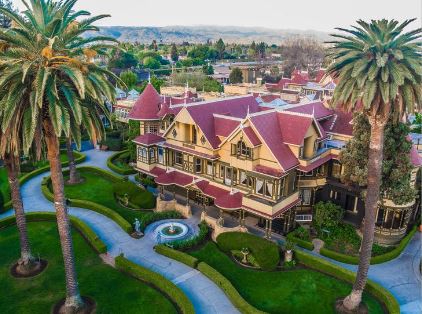
The Winchester Mystery House
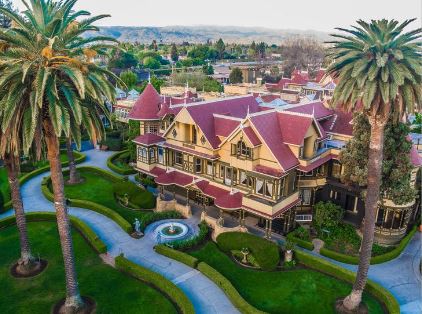
A tour of The Winchester Mystery House will confirm and dispel the various myths and rumors that have surrounded the mysterious Mansion since its opening. And now new history has been added as the attraction continues to evolve. https://winchestermysteryhouse.com/
Terrestrial Physics
Evil itself cannot be conclusive because the problem of evil only exists for those who believe in God. A similar consideration applies to the argument that rebirth allows the possibility of self-perfection. There are, in some beliefs that there are periodic destructions of the cosmos, and during these periods embodied souls continue to exist latently. The hypothesis of reincarnation presents interesting problems about personal identity. If personal identity is analyzed in terms of memory, there would seem to be only a vacuous distinction between saying that A is reborn as B and that A and B are separate persons. And that memory of any given life may be regained at some time or other in the series, and this would hold the series together. If bodily identity were held to be necessary to personal identity, rebirth could scarcely be meaningful, as it involves causal action at a distance in the transition from A’s death to B’s birth or conception. Everlastingness is something intermediate that is appropriate to the Heavens and to angles. This is conceived by some as having a beginning, but no end and by others as possessing earlier and later, but without innovation and aging. Anyone who speaks of eternity as the complete possession of eternal life all at once seems to be running together two incompatible notions, that of timelessness and that of life. For we can attach no meaning to the word “life” unless we are allowed to suppose that what has life acts. No doubt that the word “acts” may be taken in a wide sense. Most people have an issue understanding the concept of eternity because there could be no succession without aging. Aevum (everlastingness) does not necessarily include earlier and later, though these can be joined with it, as is the case with angels, who have changeless being as well as the capacity of change according to choice. Life is intelligent, and so it must also involve awareness of the passage of time. Purposeful action is action with thought of what will come about after its beginning.

There is a necessity of God’s existence. If it is correct, once we have admitted that we understand the meaning of the word “God” and that it involves no inconsistency, we cannot sensibly deny that God exists. Eternity describes the existence of their God or Absolute. Also, the notion of ether originated among the Greeks as a popular view that there is above the air surrounding Earth rarefied kin of air, thought to be alive and divine and having the nature of fire. This ether fills the outer part of the Universe, leaving no void anywhere. Although there is a void between material atoms, ether consisting of small atoms in the Heavenly spaces and there is motion of their ether that carries the stars and planets along their orbit. Ether is distinguished both from air and from fire, and becomes the fifth, or Heavenly, element. Unlike the other four elements—Earth, water, air, and fire—ether is incorruptible and unchanging and is only found in the region outside the sphere of the Moon; its natural motion is that which is nearest the perfection of rest, namely a uniform rotation about the center of the Earth. The planets, Sun, Moon, Stars, and the rotating spheres in which they are embedded are all composed of ether, and so are the intervening transparent spaces, for in the Universe there is no void. Just as no ethereal substance can exist below the Moon, so none of the Earthly elements can rise above it; and thus no change of any kind can occur in the Heavens, except the uniform circular motion of ethereal bodies. Such phenomena as shooting stars, which appear to imply change in the Heaves, and the shadows on the Moon, which appear to modify its Heavenly perfection, are to be explained as “meteorological” phenomena, occurring below the sphere of the moon. The cosmic scheme was almost universally adopted in Western Europe after the revival of learning in the twelfth century; but meanwhile, in the last centuries of the Classical period, the Sotics had already introduced a radical change in the conception of ether. They identified it with a quasi-material pneuma, or spirit, which not only occupies the Heavenly spaces, but also pervades all matter in the Earthly region and interacts with matter as a universal transmitter of force. Pneuma retains the ether’s traditional function of regulating the circular motion of the Heavenly bodies and also the ether’s traditional characteristics of near divinity. In addition, it provides a fundamental category of Stoic terrestrial physics and is appealed to in explanation of such phenomena as the cohesion and hardness of matter, and the transmission of light and of gravitational attraction.

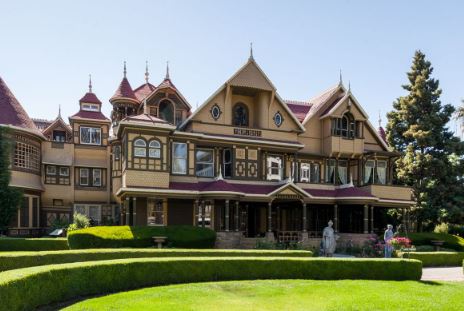
The Winchester Mystery House

Workers in the mansion have heard pipe organ music coming from inside the walls. https://winchestermysteryhouse.com/

Rewinding of the Cosmic Clock

The God which is God of nature doth ever teach unnaturalness. Time is the interval of the Universe. The length of this cosmic cycle, called the Great Year or Perfect Number, is variously estimated as 10,800 years, and according to another source 18,000 years, and yet another estimate is 36,000 years. That is amazing to think that these time intervals could be one year in God’s timeline. It is measured the period separating two successive conflagrations in which an antiquated World perishes and a new one is reborn. The period of the Great year is not associated with periodically recurring cataclysm, but with a return of all the celestial bodies to the same relative positions. There is an incorruptible celestial realm. The Celestial Sphere is an astronomical sphere of gigantic radius with the Earth located at its center. Many people believe that Earth is God’s favorite planet. The poles of the celestial sphere are aligned with the poles of Earth. The celestial equator is located along the celestial sphere in the same place that includes Earth’s equator. Just as the course of the firmament and each of the stars is a circle, why should not the coming into being and the decay of perishable things be of such a kind that the same things again come into being? The celestial sphere is a magical place, a large sphere surrounding the Earth and with it we can keep reference to where celestial bodies are located in the sky. Some say it is the house of God. To demand those who are coming into being should always be numerically identical, is foolish. The re-creation of numerically identical individuals would be contradictory, and as such was beyond even God’s power. God’s power makes motion and time of the same essence. Time is absolute, as intrinsically irreversible, irrespective of its content.
Even a complete restoration of the content of the past moment would not make this moment itself present. Implicitly, the question has been raised about the origin of any primordial nebula: Did it represent a truly initial stage preceded by an act of supernatural creation, or was it merely one of the countless stages in an unending cycle of successive worlds? The cosmic clashes by which two stellar masses that had lost their heat could be transformed into another nebula, which would then develop into another World ever the same in principle, but never the same in concrete results. Such a new World could be the same even in concrete details only if the cosmic mass did not contain an infinite number of units. The notion of everlasting existence is the complete possession of eternal life all at once—a notion that become clearer from comparison with things temporal. For whatever lies in time moves as something present from the past to the future, and there is nothing placed in time that can embrace the whole extent of its life at once. It does not yet grasp tomorrow, and it has already lost yesterday. And even in the life of today you do not live longer than in the transitory moment. That, then, which is subject to the condition of time, even if the World has no beginning or end and its life extends through endless time, is still not such as may be rightly judged eternal. For though its life be endless, it does not grasp and embrace the extent of it all at once [totum simul] but has some parts still to come. And so it follows, we wish to give things their right names, let us say that God is eternal, but the World is everlasting.

The hydrogen atom contains only one proton. However, hydrogen atoms may have in the past have contained or may in the future come to contain more than one proton. Here, however, our use of the timeless present is certainly not intended to suggest that hydrogen atoms exist out of time. What we wish to call timeless is simply the connection between being a hydrogen atom containing a single proton. Sometimes such connections have been called eternal verities, most commonly when it has been when it has been thought they could be known as priori, as in mathematics. Time is an afterthought of the Creator. Rather, we are to understand that tie is to the perceptual World of becoming what eternity is to the intelligible World of being. Time was created with the Heaven, and it seem to have held that it is identical with the movements of the Heavenly bodies, which are commonly said to measure its passage. Timeless eternity is sempiternity, and among sempiternal things there is no difference between possibility and actuality and also there is nothing merely accidental. In one place sempiternal things, insofar, are they are sempiternal, are not in time, because they are not bounded by time nor subject to aging and other conditions of time. Heavenly bodies, unlike perishable things, are not wearied by their motion. The Sun is active forever, and there is no danger that it will give out, as some philosophers feared. God is ever-present eternity and that all years stand at once for God (omnes simul stant). The possibility of a priori knowledge by a doctrine of reminiscence, which involves the hypothesis that before this life the human soul lived among timeless existent Forms and contemplated them directly as in this life it sees things belonging to the real of becoming. The soul is akin to something of a timeless form, it can pass part of its time in a timeless realm and then at a certain date enter the temporal realm. Perhaps immortality lies in adding another proton to the atoms.

CRESLEIGH HAVENWOOD
Lincoln, CA | from the low $700s
Now Selling!
No appointment needed! Cresleigh Havenwood features four distinct floor plans ranging from 2,293 – 3,377 square feet and offering up to five bedrooms. Each plan has been thoughtfully designed and includes great features such as single story homes, guest suites, optional offices, garage workshops, and more! Get the most out of your new home with Cresleigh’s All Ready smart home featuring all the connectivity needed to keep your house running. Best of all, each Cresleigh home comes with owned solar included!

Located off of Virginiatown Road and McCourtney Road, residents of the 83 homesites of Cresleigh Havenwood will benefit from a brand new neighborhood in the charming City of Lincoln. Palo Verde Park, is just down the street and there’s plenty of recreation to take part in all around town. https://cresleigh.com/havenwood/

God is Just to Exercise his Might, and Mighty to Perform his Justice
Darkness is more eligible than light to those whose deeds are evil. Do you remember how magical it was when I used to wake up and start writing at 6am, and see you ever evening? Now everything is just a mess and the games someone is playing are so trite and annoying. Wickedness, like a flood, is like to drown our World. Though to let loose the bridle to lusts, while our opinions are against such things, is bad; yet to sin, and plead a toleration so to do, is worse. A godlike power is that of doing good. Some are drawn by lover, others are driven by terrors, to their Divine refuge. The World may be regarded as in some way an emanation from, or self-expression of, God. The One, or “first God,” is Nammu, Goddess of the primeval sea, the mother who gave birth to Heaven and Earth. Then Nammu gave birth to An (God of the Heavens) and Ki (Goddess of the Earth). Nonetheless, “first God” is beyond thought and being. However, these necessary truths about possibilities, and it is a contingent matter of God’s will being that it is that these particular essences have been actualized.
The One’s simplicity would be violated if the World were part of it. Its unchangeability would be dishonored if it were to create the World by an act of will. Therefore, it is propounded that the World is an emanation. Mind, Soul, and the material World flow from the One (as rays flow from the Sun) without impairing its self-sufficiency. When we are operating on the level of acceptance, enjoyment, warmth, gentleness, softness, trustiness, inner truth, and faith, the emotional purpose to which the radiates is love, enjoyment, pleasure, harmony, peacefulness, understanding, and sharing. This automatically creates a reciprocal feeling of love and brings about success in whatever the venture may be with a wonderful pay off. The World is God (the only substance) under his essence by a logical necessity. Things could not have been produced by God in any other manner or order than that in which they were produced. All things must have flowed of necessity from a given nature of God, and they were determined for existence or action in a certain way by the necessity of Divine nature.

However, on these premises it is very hard to account for, first, the individuality which human persons seem to have their apparent freedom, and the fact of evil, especially in its moral forms. The same type of relation between God and the World is God is regarded as the Absolute as in its essence a self-diversifying unity. When our inner feelings are of peacefulness, serenity, tranquility, stillness, openness, and simplicity, the effect is to increase awareness along with our own, and to give a greater sense of freedom, perfection, unity, and a holistic beauty. As a consequence, other energies will seek our presence, because in it they feel complete, recognized and contented. There is an experience of feeling higher in our presence or when they think of us. God’s self-expression is a dynamic process that is discoverable in historical events. Thought is not free from ambiguity. God is an independently existing entity, but his Absolute Spirit does not exist apart from the human spirits in which it is progressively evolved.

God moves the World in a sense that he educes from its material structure by inspiring it, through a series of subordinate movers or “intelligences,” to love him as its end goal. Yet, some speculate that the World is actually considered matter to be ungenerated and eternal. With God, essence and existence are identical. However, we cannot grasp the divine essence. The Universe is a system of essences on which God has chosen to confer existence. Knowledge of essence is expressed in propositions which are necessary truths. The essence which entails existence is that of single substance. The transmission from essence to existence is part of a logical play with concepts that is an essentially preliminary to the World becoming. Such a conception of creation produces the notion of God creating beings with fixed, already determinate natures who would therefore be unfree. The Universe, in all its details and its whole cosmic context, will recur an infinite number of times in exactly the same way that it has already occurred an infinite number of times in the past. The alternation of day (light) and night (darkness), of lunar phases and of the seasons of the year, and the rhythm of breathing and heartbeats were known to primitive man.

Even the idea that cosmic history repeats itself in its general features appeared in various forms in mythological thought. The existing Universe was regarded as a result of the differentiation of original chaos—watery, fiery, or qualitatively undetermined—into which it would eventually return and form which a similar Universe would emerge. The idea of the periodicity of Worlds soon became associated with the belief that not only the general features but as the specific details would recur in the same order that they had occurred countless times in the past. You always fly like a comet away and back in the golden Sunlight. The Sun sheds the golden light over the sea that mirrors the evening clouds, and the footprints on the beach record our difficult parting. A siren heralds your parting amidst the waves. How I wish you could rise as the Sun from the sea. Everything will eventually return in the self-same numerical order, and I shall converse with you staff in hand, and you will sit as you are sitting now, and so it will be in everything else, and it is reasonable to assume that time too will be the same.

The Winchester Mystery House
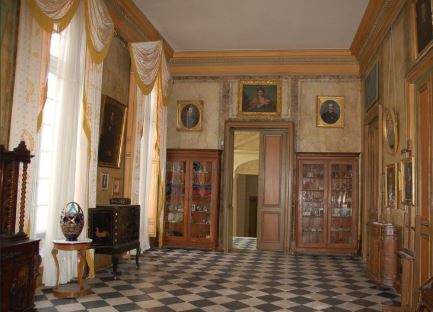
Three Investigators who ended their search for an authentic haunted house with The Winchester Mystery House claimed that it was haunted by a headless apparition. https://winchestermysteryhouse.com/
Concern with Indivisibility of the Soul
It was sweetly warm and there was a numbing quiet in the vibration of the distant lights, a winking beauty in the passing darkness. Reincarnation is a doctrine variously called transmigration of souls, metempsychosis, palingenesis, rebirth, and reincarnation has been and continues to be widely believed. Although some of these terms imply belief in an immortal soul that transmigrates or reincarnates. Rebirth can take place not merely on Earth, but also in a multiplicity of Heavens and Purgatories. Thus, although the prevalent beliefs are that rebirth occurs immediately upon death, this does not entail immediate Earthly reincarnation, a feature that helps to make rebirth theory incapable of empirical disproof. In the Book of the Dead, however, a transitional period of 49 days between death and rebirth is postulated. During this state the individual is translated to a realm where one perceives the divine secrets; for the impure, these are so frightening that they flee back to Earth and are reborn.
Since an intelligent being is superior to an unintelligent one, and since intelligence cannot be present in anything that is devoid of soul, God put intelligence in soul, and soul in body, that he might be the creator of a work was natures best. A Blood Child only walked in the dark. Supposedly, a mammal evolved totally apart from Homo sapiens on a volcanic island in the North Sea thousands of years before us. We share perhaps forty-five percent of our genes in common. The creatures look like us except that they tend to be taller and more long limb. Their bones structure is almost entirely what we would call cartilage. When the pure creatures mate, the female ovulates on demand and the fetus develops within a matter of minutes or hours, it is not clear to me—but whatever the case, it puts tremendous stress upon the mother. There is a fairly large amount of speculation about the embryological mechanics of rebirth. The mental aspect of a person bears the impression of previous deeds and that it accordingly becomes associated with a particular fetus.
However, since during the period of fetal development the growing body is not capable of supporting the mental aspect, a “subtle” (unobservably refined) body is postulated. Thus the continuous element throughout rebirth and until liberation is the mental aspect associated with the subtle body. Birth is accompanied by severe pain, and the infant unfolds as a small adult and begins to grow to maturity immediately. Rebirth theory does imply that the genetic endowment of a person does not fully determine his early development but that a mental or spiritual factor associates itself with a suitable organism at conception. Thus, destiny or fate, following as effect from cause, is often taken to function through the homing of a soul upon a morally and physically appropriate fetus like a sort of chemical affinities. All statues have prior causes; some conscious states are not caused by bodily states; therefore, the first physically uncaused state of an individual mist have a prior nonphysical cause. However, the existence of God is not admitted; hence there must be an empirical conscious state prior to conception and birth.
Souls are eternal, but the normal condition for a soul in the past and future has a virtually everlasting succession of bodies. Thus, metaphysical arguments attempting to establish the eternity of the soul have been taken to imply pre-existence as well as postexistence. Children have instinctive capacities, which suggest that there must be learning prior to birth. Similarly, it is sometimes argued that child geniuses, such as Mozart, indicate prenatal training. Some people claim to remember past births, as in the case of Bridey Murphy, who is a purported 19th century Irishwoman whom United States of America housewife Virginia Tighe (27 April 1923 – 12 July 1995) claimed to be in a past life. The cause was investigated by researcher and discovered to be the result of cryptomnesia. Cryptonesia occurs when a forgotten memory returns without it being recognized as such by the subject, who believes it is something new and original. It is a memory bias whereby a person may falsely recall generating a thought, an idea, a song, or a joke.

This claim of cryptomnesia is commonly made in the East for yogis and person of deep spiritual insight, such as saints. The déjà vu experience and claims to knowledge of people and places that are not based on previous experiences in this life have been cited as indicating rebirth. A counterargument is used against the objection that most people have no memories of such previous lives: death is a traumatic experience (and so is birth), likely to cause amnesia. The soul is indivisible and this cannot derive from the parents, since it would then have to be a combination of parts. All reason knows that is that God is the eternal, ever-present, and creative source of anything that does (or can) exist. Creation and preservation are identical. The Taltos craves its mother’s milk in order to grow. And without that milk it cannot develop properly. In the hour right after birth it runs the risk of being stunted forever. With that milk, and with its mother’s full telepathic nature, the baby reaches its full height within that hour. Six and a half feet is the usual. The males can grow seven feet tall.

The milk has curative properties. The milk can work a cure in humans. Nobody knows the lifespan of a pure Taltos. It could be thousands of years. Females clearly can become infertile in time. I have seen one who was past her prime. She was a simpleton. She was found in rural India. Males? I know of only one in existence. They may remain potent till they die. Taltos tend in their natural state to be extremely naïve. In ancient times, many died through clumsiness and accidents. The Taltos is telepathic, curious by nature, and hardwired with a tremendous amount of basic historical and intellectual knowledge. It is born ‘knowing,’ as they save, all about the species itself, the island continent from which they came, and the places in the British Isles to which they migrated after the island was destroyed by the same volcano that created it. The Taltos was pure before it knew about humankind or had any mixture with it. Although some people seem to remember past lives, the evidence is not unambiguous as to be conclusive; and if saintliness is a condition for remembering pervious births, it would be difficult to verify such a memory—it would be hard to conduct an “experiment” in becoming a saint.

The Winchester Mystery House
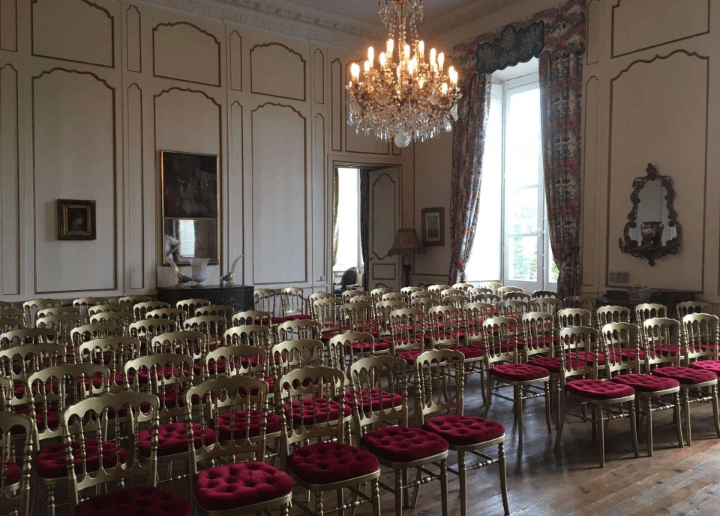
Although The Winchester Mystery House is very beautiful, it can be creepy and downright scary places because of the paranormal activity. https://winchestermysteryhouse.com/

Misleading Impressions of Sense Experience Not Properly Organized by Reason
Reformers, with help from Kindred souls, are able to treat insanity as a disease rather than as an act of God or Satan. Crime and insanity, no longer given theological explanations, could now be dealt with as mundane difficulties capable of empirical solutions. We are under moral obligation to prefect ourselves and to attain a “highest good” (summum bonum) that is manifestly unattainable in a life lived under the conditions we know here and now. From the time of Immanuel Kant (22 April 1724 – 12 February 1804) to the present day, a great many attempts have been made to base arguments for God’s existence not upon the mere fact that there is a World, nor on the general orderliness it manifests, but on a very special feature of the World—human moral experience. The popularity of moral arguments is not hard to understand. We might attempt to take a single real individual, and build from his life and work a man “typical” of the Enlightenment.

Even if the argument to God a First, the Universe had a beginning so something must have first caused it to exist, or “necessary being,” which is a being whose non-existence is a logical impossibility, and which therefore exists either timeless or eternally in all possible Worlds, and these were valid, these notions of deity can be more of an embarrassment than a help to the religious imagination. They present us with a divine object or superobject, whereas religion demands that God be primarily known as a person. A moral argument offers hope of overcoming that external and thinglike character: it insures that concepts of God will be, from the outset, personal concepts. We can, at best, make a start to a moral development that requires very different conditions for its completion. However, since that complete development is demanded of us as a duty, it must be attainable. God and immortality are this presupposed in our actual moral experience.

Enlightened denial of any kind of transcendence of the external World, of personal immortality is incompatible. When the addict’s withdrawals set in, and he is screaming, cursing, and begging, “Just one shot, man!” God’s people are right there talking junkie jargon to him. “Baby, know that money off your back! Kick that habit! Kick the dope off you back!” The addict, writhing in pain, his nose and eyes running, is pouring sweat from head to foot. He is trying to knock his head against the wall, flailing his arms, trying to fight his attendants, he is vomiting, suffering diarrhea. “Do not hold nothing back! Let that fairy dust go, baby! You are going to stand tall, man! I can see you now in the enlightenment of God!” When the awful ordeal is ended, when the grip of the dope is broken, Science was for them. Living, growing evidence that human beings, using their “natural” reasoning powers in a fairly obvious and teachable way, could not only understand what human beings are really like and by combining this knowledge of nature and human nature, learn how to live better and happier lives.


A Godlike Power is that of Doing Good
The basic dictum to comprehend is that the body obeys the mind; therefore, the body tends to manifest what the mind believes. God sees the deepest dissembled thoughts, nay sees the thoughts before they be thought. The belief may be held consciously or unconsciously. The law of consciousness states: We are only subject to what we hold in mind. The only power that anything has over us is the power of belie that we give it. By power, in this context, that is the energy and the will to believe. Governments are not, and cannot be expected to become, repositories of truth: any such claims are impostures. A government that actually governs, rather than imposing some dream or other upon its subjects, will be guided, not by vision of truth, nor by the attempt to impose one project upon its subjects, but by the evolution of the society it rules. Social life constantly generates new situations: some activities decline, and new ones arise, a process which requires an adaptation of the rules of governing the society. However, the changes in the rules of government should always grow out of, rather than be imposed upon, the life which they regulate.

Further changes, by the government, on society should be made economically or else they may lose their effectiveness. Rules (i.e., the laws and procedures of institutions, the habits of personal behavior) are most useful when they are most familiar. Frequent changes are deplorable in that they give rise to feverish hopes and disappointments which encourage further dreams of taking over the resources of government. For instance, several big names could be removed from San Francisco, California USA schools, including President George Washington, Francis Scott Key (the man who wrote “The Star-Spangled Banner” which is a national song of pride for all Americans), Jefferson Elementary is on the list because these are names of people who owned enslaved Africans. “Our school names communicate something to our kids about who we want them to be what we value, so it is important,” school board president Matt Haney says. However, I think it is a mistake to ignore the accomplishments these people made, and that it would also cost a lot of time and money to further erode American history, and where will it stop, are they going to chip away at Mount Rushmore? The push to change the names on the schools seems to be an inflated claim made for no reason. That is the type of evil that takes false nobility, by garbing itself in the royal magnificence of good.

Furthermore, the attempt to rationalize these radical activities is not only incomplete, but also brings with it the threat of decline in the tradition; for once these rationalized principles have elicited, they constitute an ideology that is likely to turn into a set of inflexible dogmas. Back in the 1960s, a similar backlash swept the United States of America, and people started knocking down Victorian houses and buildings because they were a representation of Europe, and this created a lot of resentment in some. However, some could not afford to knock down their Victorian houses or buildings, so they would remove the turrets (witches caps), apply stucco to the exterior to hide hand crafted fish scale shingles and ornate flower moldings, broke off spires, took sledge hammers to the antique ceramic and porcelain urns that would decorate the porch and roof tops, bashed in the faces of the gargoyles and monarch, and threw rocks through the Tiffany’s art glass and leaded glass windows in an orgy of violent destruction of America’s European heritage. And now, in the 2000s, many people see pictures of the elegant Victorians, with the steeply pitched roofs with ridge cresting, the towers, beveled glass, pediments, lap siding, gables, cornice, turrets, corbels, finials, witches’ caps, cartouches, and ceramic faces of monarchs that would adorn the buildings and they mourn the loss of these historical hand crafted houses. #RyanPhillippe 3 of 6

Not only that, but on the interior of these Victorian houses are features many architects cannot afford to replicate in modern construction. Victorian craftsmanship is marvelous, baffling, and eerily eccentric to say the least. Many people these houses, many of which are over 100-year-old have soul and take you back in time once you cross the threshold. Some of them have windows that cost more than many Americans make in a year. They have usual features like mahogany that can take you to three different sections and different levels of the house because they are built in a “Y” shape. There are porcelain sinks and crystal chandeliers import from Europe. There are also many rooms, some of them are small, to make the house intimate and private and the kitchen was enclosed to keep the smell of food from seeping into the drawing room, or in the bedroom and stinking up your clothes. And there are walls made of the finest oak and mahogany, doors that are solid wood and heavy, which have detailed door hinges, and crystal doorknobs, there are building cabinets for fine China, dumb waiters which can transport food to different levels in the house, pie coolers built in the walls, and the expensive wall coverings, some which were rumored to have crushed diamonds in them.

It always breaks my heart when I see someone has gone into a Victorian and knocked down masonry walls, or replaces walls that were made from old wooden ships with plaster with sheetrock. Or removed the chandeliers and replaced them with pod lights and 1970s retro modern light fixtures made out of paper and plastic. Also, the claw foot oversized bath rubs were great and the showers with the exposed pipes, along with the wall mounted toilets that you had to pull a chain to flush. One woman, who always hated Victorians houses and thought they were reprehensible toured one with me that was authentic and fell in love with it and the fine details and said to me, “Now I see why you like Victorians so much!” When in the past she had tried to blame some of the hardships I was facing in life on Victorian architecture and swore up and down that the houses were evil. My point is, we should preserve our history and stripping it away and eroding things only hurts people and causes more harm, instead we should educate them about why certain actions are wrong and also talk about the benefits that came from some of these people who may not have known what they were doing at the time.

Not only that, but where does eroding our history stop? There are also several streets and buildings and schools named after Civil Rights leader Martin Luther King, and he was arrested 30 times, and some of the arrested were allegedly unrelated to civil rights movements. Many historical monuments are also dedicated to Caesar Chavez, but his parents on both sizes of his family were undocumented citizens, which means that they were in the United States unlawfully, and his father Librado Chavez piddled away the family business and did not pay his taxes, which caused the house to be foreclosed on and the family moved to California. Librado Chavez was said to be “Lazy and the family scrapped by as farm hands.” And even Caesar Chavez studied Adolph Hilter, Machiavelli, and Gandhi. Therefore, it is important for us to not only look at the negative aspects of people, but to also learn from them, and not just demonize them. Conservatives regard tradition as the heritage of skill and attainment on which our present achievements must be founded. Many traditional was of acting are no doubt habitual and unthinking and thereby we economize our efforts. What is more important, however, is that traditions are fertile and adaptable. All human achievements and traditions have been made (and sustained) in the face of great difficulties: authorities exist to guard such achievements and traditions against the continual threat of human folly, laziness, blindness, and stupidity, and grandiose political projects promising the ultimate arrival of Heaven on Earth. #RyanPhillippe 6 of 6


Mere Exposure Effect and Loyalty—I Can Lead a Horse to Water

I hope I have given you what you need. I want to thank you for sharing all of your secrets with me. You have trusted me, and treated me sinless and kind. How marvelous are those words. Granted that loyalty is the wholehearted devotion to an object of some kind, what kind of thing is this object? Or is it a person or group of persons? The idealist contents that loyalty is the willing and practical and thoroughgoing devotion of a person to a cause. Its object is a cause beyond your private self, greater than you are and impersonal and superpersonal. As a cause it is something that transcends the individual, an eternal reality. Apart from familiar metaphysical and logical objections to this concept of a superpersonal reality, this view has the ethical defect of postulating duties over and above duties to individual men and groups of men. The individual is submerged and lost in this superperson not only ontologically but also morally, for it tends to dissolve our specific duties and obligations to other into a superhuman good.
It should be pointed out that in our common moral language, as well as historically, loyalty is taken to refer to relationships between persons—for instance, between lord and his vassal, between a parent and his children, or between friends. Thus, the object of loyalty is ordinarily taken to be a person or a group of persons. Loyalty is conceived as interpersonal, and it is also always specific; a man is loyal to his lord, his father, or his comrades. It is conceptually impossible to be loyal to people in general (humanity) or to a general principle, such as justice or democracy. The social atomist fails to recognize the special character and significance of the ties that bind individuals together and provide the basis for loyalties. Loyalty is not founded on just any causal relationship between persons, but on a specific kind of relationship or tie. The special ties involved arise from the twofold circumstance that the persons so bound are comembers of a specific group (community) distinguished by a specific common background and sharing specific interests, and are related in terms of some sort of role differentiation within that group.

Is loyalty something good in itself? Is it always good? Can there be bad loyalties? Loyalty is the highest moral good. A man’s wholehearted devotion to a cause is eo ispo (by that very act or quality; thereby) good and becomes evil only when it conflicts with other loyalties. The supreme good is loyalty to loyalty: so choose and so serve your individual cause as to secure there by the greatest increase of loyalty among men. The view that loyalty has an inner value, whatever be the cause to which this man is loyal, can be used to redeem the most evil acts of men. Such a belief outrages our moral feelings, for we want to say that a cause which demands injustice or cruelty as the price of devotion render that devotion an evil it itself. What is due or owed is defined by the roles of the persons concerned. The fact that loyalty gives what is due also explains why we can demand the loyalty of others. It follows that mere blind obedience to every wish of the person who is the object of loyalty is not loyalty; it is a perversion of loyalty. There is no moral value to it at all, since it is not something that is morally due.

In this sense, loyalty may often be one-sided, although it need not be. If we could not count on the loyalty of others or give them out loyalty, social life would not only be bleak but also impossible. When loyalty is one-sided, eventually the loyal party will disengage, they will let go of the connection. People who feel betrayed will stop devoting their time and effort to the relationship because they feel that their trust has been eroded. When the people we love or with whom we have a deep connection stop caring, stop paying attention, stop investing and fighting for the relationship, trust begins to slip away and hurt starts to seep in. Disengagement triggers shame and out greatest fears—the fear of being abandoned, unworthy, and unlovable. Even if you betray a person and they remain loyal to you for a while, there comes a point when the relationship is over. By virtue of the empirical and logical connections among facts, a relationship can only sustain so much abuse before, no matter who you are nor what you do for a living, a person simply gives up on you.
The way to facilitate satisfaction in relationship is lovingly to picture the best possible outcome. Make sure it is mutually beneficial. Let go of all the negative feeling and merely hold the picture in mind. We can tell if we are really surrendered when we feel okay either way; it is okay with us if it happens, and it is okay with us if it does not happen. Therefore, to be surrendered does not mean to be passive. It is being active in a good way. When we are surrendered, there is no longer the pressure of time. Frustration comes from wanting a thing now instead of letting it happen naturally in its own time. Patience is an automatic side effect of letting go, and we know how easy it is to get along with patient people. Notice that patient people usually get what they want. One resistance to letting go is the illusion that, if we let go of our wantingness and our expectations, we will get what we want. We fear that we will lost it if we do not keep pressuring for it. The mind has the idea that the way to get a thing is to want it.

Actually, if we examine the issues, we will see that events are due to decisions, and choices are based on our intentions. What we get is the result of those choices, even though they are unconscious, rather than what we think we want. When we surrender the pressure of wantingness, we are clear to make wiser choices and decision. We think that our happiness depends on controlling events, and that facts are what upset us. Actually, it is our feeling and thoughts about these facts that are real cause of our upset. Facts in and of themselves are neutral things. The power we give the is due to our attitude of acceptance or non-acceptance and our overall feeling state. If we get stuck in a feeling, it is because we still secretly believe that it will accomplish something for us. Research has shown that when we are repeatly exposed to novel stimuli—whether they be unfamiliar musical selections, works of art, or human faces—our liking for such stimuli increases. This phenomenon is called the mere exposure effect, and it explains why we are attracted to people in close proximity to us.

Conversely, with the mere exposure effect, if you keep exposing people to negative stimuli, they will see what they do not like and eventually be turned off and want nothing to do with the object. The purpose of life is happiness. If we are not happy, we cannot think of making others happy. We realize that to satisfy someone’s needs, we also have to give something in return. The accusation that one person has exploited another is a common one. Charges of exploitation are frequently applied with regard to specific actions, interactions, and transactions among individuals, as well as to broader practices of relationships. A relationship becomes exploitative when one takes unfair advantage of another and it is clear that the terms or substances of a transaction must be unfair if it is to be exploitative. I know that it is difficult in this materialistic World to be truly altruistic. I have moved to a stage of life when selfishness has no value. The harmony of the whole World is re-created with each and every soul that is born to it.


Verboten—That Fried Chicken Sure Smells Good, Saint Peter!
I followed him into the front hallway and then up the broad staircase. How curious it was, to be his guest, to be walking on this wool carpet as if I were a mortal. Sleeping under the roof that was not mine. Next, I would be doing it at the mansion. This could get out of hand. Please let it get out of hand. And here, the fragrant and cozy bedroom with all its inevitable details. Pineapples carved into the four posts of the bed, canopy of hand-worked lace through which you could peer at the faint water stains on the ceiling, loving, caring, patchwork quilt of loops and circles and careening colors, parchment lamp shades, dark clots breaking through the old mirrors, needlepoint tiptoe chairs. What ghosts are you after? What have you seen? What have they done? The Guarducci matter explained why Pietro Zander was almost reluctant to talk about the bone to Tom Bissell and me. For church scholars and professionals like Mr. Zander, the story was an embarrassment: The supposed bones of Stain Peter had been surreptitiously dug up by a meddling monsignor when the archaeologists were not looking; then they were thrown into a box and forgotten for more than a decade; then they were rediscovered by accident and became the focus of a feud between church experts.
The whole affair did not inspire confidence in the Vatican’s ability to exhume its own history, and it is little wonder that none of it is mentioned in the Vatican guidebooks. In fact, visitors who tour the necropolis beneath Saint Peter’s are invariably impressed with the excavated cemetery but are often heard muttering on their way out: “So are they saying those are really Saint Peter’s bones?” They nodded but did not speak. Only a strip of skin was visible around their eyes, between the rim of the fur hats and their scarves pulled up over their mouths and noses, but I could see they were suspicious. I could hardly blame the, coming across someone dressed so inappropriately wandering in the graveyard. I gestured vaguely behind me in the direction of the road and attempted to explain what had happened, the snowstorm, the crash. I finished by asking if there was somewhere nearby where I might find help. I went to the right front window and drew back the velvet drape. The sky was scarlet over the distant levee. Cyprus tree branches filled the top of my view. It would have been a cinch to open this window and slip out onto the porch and disappear from this place quietly.
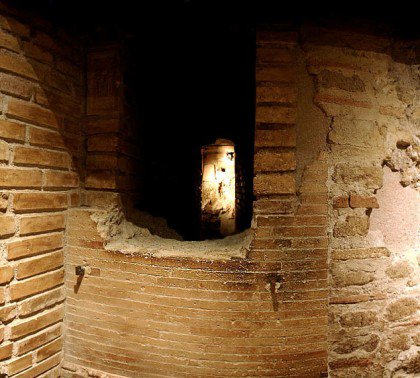
I was curious to know what Mr. Bissell had made of all this. Had the visit to underground Saint Peter’s enlightened him? He observed Mr. Zander had wriggled out of the questions about the bones’ authenticity. “It is obviously important for the church. However, it seemed to me he was being very evasive,” Mr. Bissell said with a laugh. “I noticed that whenever the question came up, he began smiling.” My body had fully restored itself from bestowing the Dark Gift, but my thirst was strong, rather in the style of a craving than a physical need. Was that because of her? Certainly not! I would repair to the first floor to discover this woman was an ordinary woman and nothing more and I would then come to my sense! How is that for a stiff upper lip. In June 2009, at the close of a jubilee year in memory of Saint Paul, Pope Benedict XVI was celebrating vespers at the Basilica of Saint Paul Outside the Walls on Rome’s ancient via Ostiense, and he spoke enthusiastically about the church as the traditional site of Paul’s tomb. #RyanPhillippe 3 of 5

I went out into the hallway of the crypt, where the sconces were already lighted, and sweet yellow and red flowers adorned the demi-lune tables, and made my way slowly down the main stairs. Hum of heavy anxious mortal blood below. Deep scent of mortal blood. Then he surprised everyone by stating that pilgrims should come to the basilica with the knowledge that the sarcophagus below the main altar, “by the unanimous opinion of experts and an undisputed tradition, holds the remains of the Apostle Paul.” I had been following the pope’s remarks and did a double take. Saint Paul’s tomb was indeed thought to lie below the main altar, but it was inaccessible beneath centuries of architectural buildup, and no one knew what, if anything, was inside. Yes, witches again, yes. Why walk right into it? Nothing could have stopped me. The furnishings of the dining room were regal and faintly charming. I saw the fine leavenings of a recent meal on the long black granite table, with a mess of linen and heavy antiquated silver. I stopped to examine the silver carefully.

The tomb itself, a rough-hewn piece of white marble that could be glimpsed through a narrow channel from above, had been identified as Saint Paul’s only three years earlier. Incredible as it seems, for centuries the burial place had been forgotten. The hunter held up both hands and flexed all ten fingers once, then again. I frowned, then realized he was trying to tell me it was a twenty-minute walk. At least, I assumed that is what he meant. “Vingt minutes?” He nodded, then put his finger to his lips. I smiled to show I understood. They were without permits, as I had thought. “Oui, oui. Je comprends. Secret, oui?” He nodded again and we parted company. I moved towards the rear double doors. The little conservatory was octagonal Victorian style, everything trimmed in white, and the wicker was white, and the floor was pink flagstone, and the whole was three steps down. It takes the skills or a priest and a lawyer to be an effective member of the Talamasca (a secret society set up to keep watch over and keep track of the paranormal, in particular, witches, spirits, werewolves, and vampires). Everyone knew there was supposed to be a tomb under the altar, but no one had bothered to conduct the most basic archaeological survey. Then Giorgio Filippi, a mild-mannered expect, began fettering around the church.
Cohersive Contorl–The Power of Not Knowing Who to Turn to
I looked up at the mansion, with its two-story white columns and many lighted windows, the place which had been the focus of my pain and fortune for the last few years, and I tried to figure out how to play this one—for the benefit of all involved. There are many sources of anger. Very often a complex of angry feelings is connected with fear. Another source of anger is that of pride, and especially that aspect of pride called vanity. Frequently, it is our personal pride that feeds and propagates anger. One source of pride is connected with self-sacrifice. If our relationships with others are associated with our small self in the form of sacrifice, then we are setting ourselves up for later anger, because the other person is usually unaware of our “sacrifice” and is, therefore, unlikely to fulfill our expectations. That which we want, desire, and insist upon from another person is felt by them as pressure. They will, therefore, unconsciously resist.

When people expect things for you, it is felt as emotional extortion. The unconscious formula goes, give me what I want or I will punish you by withdrawal, anger, pouting, sulking, and resentment. We all resent feeling emotionally exploited. Exploitation is the action or fact of treating someone unfairly to benefit from their work, it is a selfish utilization. You are taking unfair advantage of an individual and using their vulnerability for you own benefit. Harmful exploitation involves an interaction or interactions that leave the victim worse off than they were and than that person was entitled to be. The failure to offer repayment for a favour would create perceptions of exploitativeness and decreases in attraction in exchange relationships. We know that abusing people testifies to its serious consequences for the well-being of victims and their future life prospects. Exploitation of an individual for finances, by physical violence, or obtaining sexual favors or intimate photographs and then subsequently disrespecting an individual, or violent peer groups is associated with adverse outcomes for young people, including mental health, physical health, depression and suicide.

Many young people are in a developmental period, and they have repeatedly identified peer relationships, especially those involving abuse and violence to be among the main areas of anxiety and unhappiness in their lives. Young people have also clearly articulated that they do not feel their views and wishes are taken seriously or acted on by professional. Consequently, professional practice may not be responding to or reflecting young people’s own concerns, fears and wished regarding to or understanding the impact of peer violence or emotional exploitation. To assist with assessment risk, one must take into consideration the person age, living circumstances, background, overt aggression or power imbalances, evidence of coercion, attempts at secrecy by the partner, denial, minimization or acceptance the violence by the victim. The need for professionals both to recognize and respond to partner violence within young people’s relationships is indisputable.

Some young people have talked very openly about their experienced of partner violence. A few of them had been tricked into taken explicit photos, of a nature they had never taken in their life and may have been physically forced into sexual actions that they otherwise would not have engaged in. A single interview is insufficient to discuss such personal, and often hidden, experience. For some participants the location may have been a barrier to talking openly about such sensitive issues. Many young men are also negatively affected by violence and they may be forced to hide their vulnerability due to their perceived need to adhere to a hegemonic masculinity where feelings, especially vulnerability, are restricted to female, and therefore inferior, traits. Emotional forms of violence are possible the most difficult to ascertain, due to the wide range of behaviours that may constitute victimization. Coercive control is the most prevalent form of domestic violence, as it underpins both physical and sexual forms of intimate violence, but is often the most hidden for of abuse. This is due to the individualized form this abuse takes, with perpetrators targeting specific behavior at their victims, which becomes meaningful only when placed within the wider context of an abusive history.

Many young people who experience emotional violence in a relationship, technology played a huge role. Some people used the internet to humiliate and threaten them. Some of the youth reported that the person they were involved with would embarrassing them in public by holding hands with another person in front of them, going to their favorite place in the park with someone others than them, or invited someone to their home and then bragging to their partner, leaving them no chance to respond or talk about how it made them feel. And then their partners friend would bully the victim online and make fun of them. Some people consider this to be an example of severe emotional violence. Younger participants who claimed that they were negatively affected by the emotional violence that they experienced usually felt that way because it occurred with grater regularity then young people who were unaffected. Coercive control, which is a component of emotional violence is usually demonstrated by the individual who have power and understands intimate violence, and knows that there is an inequality of power and the other partner is rendered largely ineffectual.

 Randolph Harris II International Institute