
Home » #RandolphHarris (Page 112)
Category Archives: #RandolphHarris

Does the Heart Mean More than Blood?

Considering the Universe as a whole, both directions of time are still indistinguishable, just as space knows no above and below. Yet, at a specific point of the surface of the Earth, we call the direction towards the center the downward direction; in the same way, a living being dwelling in a certain time-phase of such a local World will distinguish the direction towards the more improbable state from the opposite direction, call the former the past, and the latter the future. This seems to be the only method which will allow us to conceive the Second Law of thermodynamics, which asserts the existence of irreversible processes which apparently cannot be explained by the atomic theory. It may well be that initial conditions leading to a reversal in motion are almost never realized in nature. Thus, just as the Universe is created and governed by one God, so both the church and state must be preserving administrative unity. However, since the church is the direct channel of communication between God and his creatures, the state and its subjects must be governed in moral affairs by the church.

In purity and love have we genius; the Gospel gives beauty and holiness to the soul. There are two ways of life for the soul, one which is subject to the laws of fate and another which, although it recognizes these laws, is able to rise above them and uses them as tools. You cannot hide the soul. The two great movements of the soul are the desire of honor and the fear of shame. Just as every variation of habit, of fashion is noticeable to those who live outside themselves, so the changes and complexities in the life of the soul are perceived by them who live within themselves. The soul does not measure time by seconds, nor yet by heartbeats, but by modifications in its own quality and character. The watches of the World may stop; the planets may cease to measure the flight of time; the body may retain its pristine vigor—but in an hour, a moment almost, the heart may grow antiquated, the being be transformed. The soul is a terrible reality. It can be bought, and sold, and bartered away.

It can be poisoned, or made perfect. There is a soul in each one of us. It was the living death of my own soul that troubled me. God will see to it that the innocent does not suffer in the afterlife. The conscious subject can be aware of other things only if it is capable at one and the same time of being modified and of remaining identical with itself, or inalterable. The solution of this apparent contradiction might lie in distinguished between consciousness, understood as thought or pure mentality, and sensibility. Consciousness neither is changed by the object nor changes it. The act of consciousness detaches the psychic event from its matrix in reality and thinks its possible essence or its possibility or quiddity or whatever you wish to call it. Upon investigation, both consciousness itself and the relation between the psychic mechanism external to consciousness would lose itself in an endless postponement but rather is a completed penetration of self, the fullness and richness of the activity of thought.

Creation proceeds from God. All creatures, by an inevitable and eternal process, springs from the creative mind of God through a chain of intermediary causes of continually diminishing perfection. The whole of the cosmic machine was produced in time and from nothing, by one principle only who is supreme and whose power, through immense, still arranges all according to a certain weight, number and measure. It is to be noted that some reject the concept of the eternity of the World, of the eternity of matter, and of a dual principle of good and evil, and the existence of intermediary causes. The perfect power must be free to create varying degrees of perfection, and there is a measure, which suggests the seal of the Blessed Trinity is stamped on every creature. God is final cause and ultimate goal of human’s quest for happiness. Since the Father begets the Son by an external act of self-knowledge, the Son may also be called the wisdom of the Father and expresses in his person all of God’s creative possibilities. And enlightens everyone who comes into the World.

From his [magisterial] chair in Heaven, Christ teaches us interiorly. If as the Philosopher, the knowable qua knowable is eternal, nothing can be known except through that Truth which is unshaken, immutable, and without limit. I believe this man to be nature’s mode, the exemplar which nature found to reveal the ultimate in human perfection. Christ is God’s model for humanity. He gives us the power of becoming child of God, and he is the one master of all the sciences. If God lacked the exemplar ideas, he would know only himself and nothing of the World. He would be only related to the World only as a final cause and not as a creator. And if that was the cause, there would be no explanations of the cycle of changes of the cosmos, the Universe would be ruled by determinism. However, then humans would no longer be a responsible agent; they would deserve neither reward nor punishment, and divine providence would be a myth. With the recognitions of exemplarism, on the other hand, the whole of creation takes on a sacramental character—this is, it becomes a material means of bringing the soul to God.

Nature becomes the mirror of God, reflecting his perfections in varying degrees. Although we see only a shadowy likeness (umbra) of trace (vestigium) of the creation in inorganic substances and the lower forms of life, the soul of humans is God’s image (imago) and the angel his similitude (similitude). The recognition of God in nature begins in philosophy, but is continued and perfected in theology. If there are potential beings, then pure act must also exist; composite things imply the existence of something simple; the changeable can only coexist with the unchangeable. Knowing that these ten self-evident conditionals have their antecedents verified in the corporeal World, and explains much about God. The soul, possesses memory, intelligence, and will, and is an image of God, not only mirroring his spiritual nature, but the Trinity itself. Did you stop for a moment to about all of this? That kindly, Fatherly figure could never blame me for being led astray. He would never turn from me because of my minor transgressions.


Dialogue of Seven Wise Men—We Will Not Play Nature to your Culture
They who never enter into public life cannot possibly have the same feeling as those who are fond of society; at least, we do not have many examples of their doing generous actions. Their purses are generally as contracted as their minds, and both, as it were, are confined to a corner. The mysteries of nature by his awareness of the abyss that separates the Creator from the World of creatures. Among my ancestor’s mystical experience, the seminal one occurred in 1600, when he glanced at a pewter dish that reflected the Sunlight and in a rapt state saw the Being of Beings, the Byss and the Abyss, the eternal generation of the Trinity, the origin and descent of this World, and of all the creatures through the Divine Wisdom. The Abyss is God considered as the Ungrund—the undifferentiated Absolute that is ineffable and neither light nor darkness, neither love nor wrath. The eternal generation of the Trinity occurs because the Ungrund contains a will to self-intuition. This will (identified with the Father) finds itself as the heart (the Son). Emanating from these is the moving life (the Spirit). This eternal process toward self-knowledge and outgoing dynamic activity generates the inner spiritual World, which is the prototype of the visible Universe. With differentiation, conflict of wills becomes possible; and Satan, in serving himself from the heart, falls. Sometimes it seems that evil is necessary, others times evil seems to spoil the cosmic harmony. Some lives are blessed; it is God’s will: it is the attesting trace and lingering evidence of Eden. Other lives run from the first another course.

Other travelers encounter weather fitful and gusty, wild and variable—brave adverse winds, are belated and overtaken by the early closing of Winter nights. The doctrine of the Trinity considers the theory of seven qualities or energies in nature; and the fluidity of these metaphysics results from different ways of coordinating these two main aspects of thoughts. The seven qualities divide into two triads, a higher and a lower, between which there is a crucial energy called the flash (Blitz). God winds you up, and you go till He stops you. Energy is perhaps of all qualities the most valuable. The lower triad is contractions (whereby substances become individuated), diffusion (where by things gravitate to one another), and rotation or oscillation (the tension produced by the interplay of the forces of contraction and diffusion). The higher triad is in effect the lower triad transformed: it is love, expression, and eternal nature of the Kingdom of God, through which there is achieved a harmony between the material and spiritual World. The soul is corporeal and is the form of the body, it seems to have been constructed for another sphere of existence. The soul separable from the body in life and at death. It possesses unity, and its function is to vivify the extended matter of the body. The powers of the soul, including sensation and appetite, are seen as modeled on the will: they act directly upon the body with no need of an intermediary. When my soul shall be separated from my body, will there exist less order or perfection in the creation? Angels, too, are material, and the human soul is inhabited not only by a good angel and a bad angel, but also by a large number of spirits, each in charge of a special gift.

The true peace of God begins at any spot a thousand miles from the nearest land. The meaning of this evolutionary scheme is that the Trinity considered in itself is merely formal or ideal. The abysmal will needs a real object to arouse self-knowledge. Thus, the Father differentiates himself through the first (lower) triad into material nature. An obstacle is thereby created to the abysmal will, which can be overcome, not by abolition, but only by transformation. The flash is the collision, as it were, between the absolute will and nature. Herein, the Spirit reveals in its light the higher triad, identifies with the Son as the incarnation of spirit in matter. This is the goal of the divine operation, whereby the opposition is overcome and made into harmony. There is no happiness like that of being loved by your fellow-creatures, and feeling that your presence is an addition to their comfort. When there is a belief in happiness, a new creed becomes yours. Psychologically, the flash reveals to humans their choices. One can remain at the level of anguish implicit in the welter of sensation represented by the oscillation of nature; or one can die unto self, and identify oneself with the abysmal will—which also has to negate itself in order to achieve victory. Thus, the mystical life is an imitation of Christ’s suffering and triumph. In the contemplation of beauty, the inherently corrupt soul could transform its love for the physical and material into a purely spiritual love of God. When the people around me were not only inexpressive, but preoccupied, I turned to my physical environment, taking on a new appreciation for the garden’s towering trees, midnight green grass, vibrant colourful flowers, and decorative bushes.

I noticed that the garden was bisected by a brick path, and the pattern of its rectangles reminded me of the charming architectural details in the brick walls of the elaborate houses in Wilmington, Delaware USA, which is near my parents’ house; the verticals and horizontals were also to be discovered in the ornate clapboard walls, the fences lining the peaceful houses, and the lattices in the enchanting gardens. In my newfound passion (no other word will do for the adore I felt) for something to love, I came to cherish the architecture, landscape, and the sweet smell of the air. This love welled up inside of me, igniting a desire that united me with my community and family and that feeling has occupied me ever since, tracing its source back to my childhood. If you do not find love in your heart or something delightful to focus on, you can think yourself crazy. However, I decided to use my mind, as I was taught by my teachers in school, to expand the World of art into a global village, a brave new World of art, in which my ways of seeing are almost limitless. This exposes the traditional nature and culture to a strategy that authorizes the intellectual domination of one’s environment. We can change identities as readily as we change our clothes, picking and choosing who we are from the images we have in our minds. One can learn to draw on personal experiences. Since God made the Earth, one could sense the majesty of His soul in His handiwork, much as one can sense their heart beating in their chest. Winter leaves me a dream, although it is mysterious, it is sweet. When I open my eyes, I find a colourful spring ahead of me. Memories bring us the past years warmth and worries at departing time. I wish you have only warm things and have no more worries. Year by year, trials and hardships; day by day, Sunrise and Sunset—friendship is in our hearts. Pass through boundless years and list good memories. Remember me just like I remember you, now and then. I wish you a healthy and happy life and dream come true. I post my sincere blessing to you, my whispers of blessings are all around you. May happiness rain down on you. I wish you lobe and creditable life. Let us listen to the blessings of the Earth in this beautiful and warm World, and have a successful and promising new year.


Murderer–Nothing Bears so Many Stains of Blood at Television Ratings!

Virtue is the music of the soul, the harmony of the passions. Early love is frequently ambitious in choosing its object. All power is trust. We are accountable for its exercise. From the people, and for the people, all springs, and all must exist. Philosophy must take its impetus (the force or energy with which a body moves) from actions rather than from pure thought. Actions is an expression that means the whole of our life, thinking, feeling, willing. Therefore, it is the whole person in one’s concreteness that philosophy must look in its quest for truth. Once must turn from abstract thought to actual experience in all its fullness and richness. It is indeed this experience itself that motivates the philosophical quest, for humans by their nature must act, and then one cannot help questioning the means of their action. Although we have not chosen to live and know neither whence we come nor even who we are, we are continually taking action and engaging ourselves in chosen policies. Though home is a name, a word, it is a strong one; stronger than magician ever spoke, or spirit answered to, in strongest conjuring. Power loves to be trusted. We cannot be content to say that action has no meaning. Human beings must have action; and if they cannot find it, they will make it. Motion and sound inevitably go together. In the heart, as in the ocean, the great tides ebb and flow. Human reason, fortitude, and perseverance, are adequate to the accomplishment of anything upon Earth. Ordinarily, we do not have to have been encouraged to be violent in order to get violent with someone who is harming our child—this usually comes quite naturally to us, no matter how removed from aggressiveness we have been prior to such a circumstance. Does this mean we are sentenced to being violent? No. However, we carry in us the potential and capacity for violence, and we are often violent towards ourselves in our inner warfare—as epitomized by how our inner critic may be allowed to mercilessly put us down. So, we would do well to acknowledge our own propensity for violence, getting to know it so deeply that we do not act out our desires, except under extreme circumstances (*as when our safety or the safety of those close to us is being strongly threatened).

There is too much violence on the television. It is exemplified in Shooter, the raw, far-from-glamorous violence of which is filtered through the multifaceted, tortured character of the protagonist. In film, there are many examples of multiple-perspectival explorations of violence, ranging from Fear, Way of the Gun, and White House Down. Shooter is one of the very best of these examples developed by John Hlavin, the title of which invites a double take on violence: a consideration of its evolution in general and a history of one man’s ongoing violence. This television show does not just feature plenty of violence, but also conjures, while we are watching it, our own unmistakable—and not easily acceptable—reactions, conflicted and otherwise, to violence. Scenes are set up to provoke a certain response from us, drawing on our assumptions and sympathies, and then are twisted or tweaked to leave us facing this very response from unexpected, and often uncomfortable angles. In one episode, I believe it was episode 8, of season one, gunmen go in an office building and shoot up about 15 people, blood splattered all over the walls.

What kind of relationship do we choose to have with our own capacity for violence? Do we let it enter our living space, or do we keep it caged in the outback of our consciousness? Do we engage with it, or do we keep it muzzled and mute? Do we include it in the circle of our being—the family or our qualities—our do we ostracize it? A single deed of violence and cruelty affects our nerves more than when these are exercised on a more extended scale. On 2 December 2015, much like the scene from the TV show Shooter, 14 people were killed and 22 were seriously injured in a terrorist attack at the Inland Regional Center in San Bernardino, California USA, which consisted of a mass shooting and an attempted bombing, and it seems like John Hlavin may have been hoping, however secretly, for such a schadenfreude-suffused event. America’s mainstream media presentation of itself to the World—is no longer one of a freedom loving, straightforward, we will protect the innocent façade, instead what is festering is an abundance of not-so-caring, far-from-noble qualities, including violence that is framed as something other than violence.

Shooter is deglamorized and distilled to the raw basics, portraying a humanity that is opening, however reluctantly or unhappily, to its inevitable violence, letting it take place at the table, like any other family member. In 2016, shootings in Chicago are up by 88 percent. 4379 people were shot, 3664 people were shot wounded, and 715 people were shot and killed in Chicago. While we have such a high rate of gun violence in America, it is irresponsible to make TV shows that promote gun violence and homicide. USA Network, NBC Universal, John Hlavin and the television show Shooter has brought forth their ability to be violent and exploit it to the extreme, just as pornography reinforces the capacity for sexual obsessiveness and exploits it to the extreme. Let us take ownership of our violence, keeping a clear eye on it, taking full responsibility for what we do with it so we can prevent situations like the one on 12 June 2016, when Omar Mateen, a 29-year-old security guard, killed 49 people and wounded 53 others in a terrorist attack/hate crime inside Pulse, a gay nightclub in Orlando, Florida United States of America.

To deny or disown Americans violence is to violate it, to force it into hidden corners of the population where it may mature into savage extremes of itself, extending itself beyond capacity. Many people, even politicians and celebrities are boycotting the coronation of President Trump, but no one seems to care about all the people who are senselessly being shot and killed every day. The population cares about the massacres for a few days, maybe a few months, and then they forget about the people who were robbed of their lives or injured so badly that they will never be the same. However, you are walking out of class, rioting, and protesting the next President of the United States because of his skin colour. And Beyonce is such a hypocrite, she performed from Muammar Gaddafi, but is protesting President Trump. Despite its horrors, violence and illegal activities are normalized, as if it were just part of life, the number of casualties not registering with much more impact than the latest headlines about wardrobe malfunctions or the number of followers a celebrity has on social media. While justifications for ultraviolence bombard us. Violence and illegal immigration are major crimes!

Big Lies—The Relations are Complex

I have no doubt that the concept of beauty is rooted in the soil of sexual stimulation and signified originally that which is sexually exciting. Covering the body, which keeps abreast with civilization, continuously arouses the sexual curiosity and serves to supplement the sexual object by uncovering the hidden parts. This can be turned into the artistic (sublimation) if the interest is turned from the genitals to the form of the body. The tendency to linger at this intermediary sexual aim of the sexually accentuated looking is found to a certain degree in most normal; indeed, it gives them the possibility of directing a certain amount of their libido to a higher artistic aim. On the other hand, the desire for looking becomes a perversion when it is exclusively limited to the genitals; when it becomes connected with the overcoming of loathing (voyeurs and onlookers at the functions of excretion); and when instead of preparing for the normal sexual aim, it suppresses it. The latter, if I may draw conclusions from a single analysis, is in a most pronounced way true exhibitionists, who expose their genitals with the idea of bringing to view the genitals of others.

Analysis reveals that this perversion—just as most others—has an unexpected multiplicity of motivation and meanings. Exhibitionism, for instance, is strongly dependent upon the castration complex; it would emphasize again the integrity of one’s own (male) genitals and repeats the infantile satisfaction of the lack of the penis in the female. In the perversion, which consists in striving to look and to be looked at, we are even more intensively in the following aberration. The sexual aim exists here in a two-fold formation in an active and a passive form. The force which opposes the desire for looking and though which the latter is eventually abolished is shame (like the former loathing). The tendency to cause pain to the sexual object and its opposite, the most frequent and most significant of all perversions, was designated as sadism for the active form, and masochism for the passive form. The pleasure is secured in all kinds of humility and submission in the foreground.

Destiny, it may be—the most skillful of stage managers—seldom chooses to arrange its scenes, and carry forward its drama, without securing the presence of at least one calm observer. Some dream of having their lover on all fours with one’s hand in his shirt, around his torso, gripping his cheeks, with their legs wrapped around waist, like a stripper lustfully hanging from a pole, dragging his crisp, white Sea Iceland cotton underwear, that are so soft you could mistake for cashmere or silk, down to his ankles, as they stare as his manhood which stands as erect as the Washington Monument—smooth, but with a juicy, pulsating-veined at the bottom looking like it is ready to erupt. As one holds it with both hands, kissing the length of it, feeling the warmth under one’s tongue, just before taking it into their pretty little mouth. As one he fills your mouth like no man has ever done before, robbing you of your breath. The roots of active algolagina, sadism, can be readily demonstrable in the normal individual. The sexuality of most men shows an admixture of aggression, of a desire to subdue, the biological significance of which lies in the necessity for overcoming the resistance of the sexual object by actions other than mere courting. #RyanPhillippe 3 of 6

Sadism would then correspond to an aggressive component of the sexual instinct which has become independent and exaggerated and has been brought to the foreground by displacement. The concept of sadism fluctuates in everyday speech from a mere active or impetuous attitude towards the sexual object to an absolute attachment of the gratification to the subjection and maltreatment of the object. Strictly speaking, only the last extreme case can calm the name of perversion. Too many men have chained themselves to a sexuality that is significantly detrimental to them and others, turning away from what could free them. What a gift it can be to them when other men decisively break this pattern and take a no-bullshit stand for sexuality that is rooted not in unresolved wounding, but in a potently embodied, open-eyed love. A love that makes it impossible to dehumanize or otherwise mistreat those we are being sexual with. A love that is passionate as it is awakened. A love that makes it possible to sexually shift from maximizing pleasure sensation to fully embodying an ecstatically open intimacy.
There is so creature whose inward being is so strong that it is not greatly determined by what lies outside it. All reality is mediation, or the subject-object relation, a dynamic relation that tends ultimately toward the final goal (Endziel) of the reunion of subject and object. As we know not future events, so neither can we tell to what purpose any accident tends; and that which at first threatens us with evil may in the end produce our good. The Urgrund, the primordial stuff prior to the distinction between subject and object, matter and spirit, is moved by an obscure immediate cosmic impulse, which is a hunger. Like busts in marble, so does our individual fate exist in the limestone of time. After subject and object have been distinguished, this hunger remains essential to both subject and object. Thus, the reality of both subject and object is in the future, and the category of possibility comes to play a central role in one’s thought. Incidents little in human speculation are great in the eye of fortune.

In humans, the primordial hunger becomes desire, or hope. Hope presents itself as utopia, as a vision of a possibility that might be realized. Hope is tension toward the future, toward the new. It moves from a mere state of mind (Stimmung) to a representation, and then to knowledge. Although hope is founded on the will, in order to be hope that understands (begriffene Hoffnung, docta spes), it must draw strength from something real that will survive even when hope itself is completely satisfied. One can no more resist the impulse of fate than a Bayerische Motoren Werke AG (a German luxury vehicle) can the force of its driver. This inertia makes hope something more than a project of reason and puts it in relation to what is objectively possible. The future possibility is not just a dream, even if it is heralded in dreams. By the analysis of dreams, we obtain some insight into the composition of this most marvelous and most mysterious know of the unconscious element in our psychic life.


Am I Okay or in Trouble?

Health is not just an absence of disease. People who are truly healthy enjoy a positive state of wellness or well-being. If you are in a situation where you experience on going stress and it is impacting your health, and no one is doing anything to correct the problem, no matter how much you love some of your coworkers, or friends, you have to move on. I do not want stomach cancer or anything like that from stressing about something I cannot control. When emotional shocks are intense or repeated, unpredictable, uncontrollable, and are linked to pressure, stress will be magnified and damage is like to result. Yes, people generally feel more stress in situations over which they have little or no control. For example, Douglas DeGood subjected college students to an unpleasant shock-avoidance task. Some students were allowed to select their own rest periods, while others rested at times selected for them. Participants allowed to control their own rest periods showed lower stress levels (as measure by blood pressure) than those given a choice. Stress is not always bad. To be totally without stress is to be dead. As noted earlier, stress is the mental and physical condition that occurs when a person must adjust or adapt to the environment. Unpleasant events such as work pressures, martial problems, or financial woes naturally produce stress. However, so do travel, sports, a new job, mountain climbing, dating, and other beneficial activities. Even if you are not a thrill seeker, a healthy lifestyle may include a fair amount of eustress (good stress). Eustress can be energizing. Activities that provoke good stress are usually experiences as challenge and rewarding. A stress reaction begins with the same autonomic nervous system arousal that occurs during emotion. Imagine standing at the top of a wind-whipped ski jump for the very first time.

Internally, there would be a rapid surge in your hate rate, blood pressure, respiration, muscle tension, and other ANS responses. Short-term stresses of this kind can be uncomfortable, but they rarely do damage. (Your landing might be another matter, however.) Warning signs of stress that are emotional include anxiety, apathy, irritability, mental fatigue. Behavioral signs of stress are avoidance of responsibilities and relationships, extreme or self-destructive behavior, self-neglect, and poor judgment. Physical signs of stress are excessive worry about illness, frequent illness, and exhaustion, overuse of medication, and physical ailments and complaints. Other than when it is long lasting, why is stress sometimes damaging and sometimes not? Stress reactions are complex. Let us examine some of the chief factors that determine whether or not stress is harmful. When is stress a strain? It goes almost without saying that some events are more likely to cause stress than others. A stressor is a condition or event in the environment that challenges or threatens a person. Reporters, for instance, suffer from a high rate of stress-related diseases. The threat of injury or death, plus occasional confrontations with drunk or belligerent citizens, takes a toll. A major factor here is the unpredictable nature of journalism. A reporter never knows when they go to cover a story or an active crime scene if a cooperative citizen or an armed gang member is waiting for them. In 2014, 60 journalists were killed. Some reporters are being irresponsible in getting the media caught up in a cross and others are good reporters and just get caught in bad situations. Pressure is another element in stress, especially job stress. Pressure occurs when a person must meet urgent external demands or expectations. For example, we feel pressured when activities must be speeded up, when deadlines must be met, when extra work is added unexpectedly, or when we must work near maximum capacity for long periods. However, maintaining wellness is a life-long pursuit and, hopefully, productive work that is enjoyed.

People who attain optimal wellness are both physically and psychologically healthy. They engage in good thought patterns, show emotional resilience, and they are optimistic and self-confident. People with a sense of well-being also have supportive relationships with others, do meaningful work, and live in a clean environment. Many of these aspects of wellness are present in people who are in a loving state of mind. Understanding stress, and learning to control it, can improve not only your health, but the quality of your life as well. So I do not want to be in a place where I am harassed and disrespected. In is a new year, and if you have warned people, but they are not listening to you, let them go. This does not need to be a repeat of last year. There is something wrong with those people for them to be so mean. They are in pain and want to project it on you and cause dysfunction in your life. However, as soon as you let them go, others who want to help you will come into your life. What does it mean to feel threatened by a stressor? Certainly in daily situations it does not mean you think your life is in danger. (Unless, of course, you own money to Lucious Lyon or Enrico the Enforcer.) Threat has more to do with the idea of the control. We are particularly prone to feel stressed when we cannot—or think we cannot control our immediate environment. In short, a perceived lack of control is just as threatening as an actual lack of control. If your answer to the question is, “What can I do about this situation? Is “nothing,” you will feel emotionally stressed. A sense of control also comes from believing you can reach desired goals. It is threatening to feel that we lack competence to cope with life’s demands. Thus, the intensity of the body’s stress reaction often depends on what we think and tell ourselves about stressors. That is why it is valuable to learn to think in ways that ward off the body’s stress response. Surely the day is coming; it will burn like a furnace. All the arrogant and every evildoer will be stubble, and that day that is coming will set them on fire. Not a root or a branch will be left to them, says the Lord Almighty.


The Sudden Astonishment—But He has Long been Dead!

It is right to be prepared for all things, and if trouble is sent, to remember as it is not sent without a cause. At a New Year’s Eve dinner the host, the patriarch of the family, ushered in the New Years with a speech. One of his sons-in-law, a lawyer, was not inclined to take the antiquated man seriously, especially when in the course of his speech he expressed himself as follows: “When I open the ledger of the Old Year and glance at its pages I see everything on the asset side and nothing, thank the Lord, on the side of liability; all you children have been a great asset, none of you a liability.” On hearing this the young lawyer thought of X., his wife’s brother, who was a cheat and a liar, and whom he had recently extricated from the entanglements of the law. That night, in a dream, he saw the New Year’s celebration once more, and heard the speech, or rather saw it. Instead of speaking, the antiquated man actually opened the ledger, but on the side marked “assets” he saw his name amongst others, but on the other side, marked “liability,” there was the name of his brother-in-law, X. However, the word “Liability” was changed into “Lie-Ability,” which he regarded as X’s main characteristic. The presence of a noble nature, generous in its wishes, ardent in its charity, changes the lights for all of us. #RandolphHarris 1 of 7
To stand after one’s death before one’s children great and undefiled: who would not wish that? If there were only one body in existence there could be no idea of motion, for motion is the change of position of two bodies relative to one another. Thus sensible qualities, without which there could be no bodies, are essential to the very conception of movement. Furthermore, since sensible qualities are passive existences, and hence bodies are too, movement cannot have it source in body; and as we know what it is to move our own bodies, we know that the source of motion must be found in the mind. Created spirits are responsible for only a small part of the movement in the World, and therefore God, the infinite spirit, must be its prime source. A man who nursed his father during his last illness, and who felt his death very keenly, dreamed some time afterwards that his father was again living, and conversing with him as usual, but (and this was the remarkable thing) he has nevertheless dies, though he did not know it. So too our conception of time is inseparable from our ideas in our minds and from the [articular actions and ideas that diversify the day. #RandolphHarris 2 of 7

The young man who thought that he was having a conversation with his father was experiencing hypostatized abstraction, which is the belief in humankind’s eternal advance, and to disavow anything that does not fit this preordained vision. And so natural philosophy either presupposed the knowledge of God or borrows it from some superior science. The thesis that God is the ultimate source of motion is a special case of the principle that the only real cause are spirits. This principle has the general consequence, of course, the inanimate bodies cannot act causally upon one another. What are called natural causes are really signs of what follows them. Fire does not cause heat, but is so regularly followed by it that it is a reliable sigh of it as long as “the Author of Nature always operates uniformly.” The kinship of human passion, the sameness of mortal scenery, inevitably touches the heart and charms them. Must like the Crusades had their origin in a great impulse, and in a certain sense, led to great results, amidst the conditions of an imperfect social state, great feelings will often take the aspect of error, and great faith the aspect of illusion. #RandolphHarris 3 of 7

Natural laws describe but do not explain, for real explanations must be reference to the aims and purposes of spirits, that is, in terms of final causes. The dream of the man talking to his dead father is intelligible if, after he had nevertheless died, we insert in the consequence of the dreamer’s wish, and if after but he did not know it, we add that the dreamer had entertained the really compassionate thought that it would be a good thing if his father, was by miracle of God, well again. Because God is all powerful and can do supernatural things, mechanical explanations of movements in terms of attraction are misleading, unless it is recognized that they merely recorded the rates at which bodies in fact approach one another. While he was mourining his father’s death, this compassionate wish became an unconscious reproach to heal from the traumatic loss of his father. As a general thing, the dreams of a deceased person of whom the dreamer has been fond confront the interpreter with difficult problems, the solution of which is not always satisfying. The reason for this may be sought in the especially pronounced ambivalence of feeling which controls the relation of the dreamer to the dead person. #RandolphHarris 4 of 7

After the loss of his father and tumultuous years afterwards, the dreamer felt like his heart was bleeding and would have pains in his heart when stretching and if he laughed from watching a funny movie. In such situations, it could be the minds ways of trying to preserve the dreamer’s body by producing an image of the deceased person to be treated at first as living; then it suddenly appears that he is dead; and in the continuation of the dream he is once more living. This has a confusing effect. However, gravity or to force when these are regarded as explanations of the movements of the body do not deny the importance of Newton’s laws, for Newton did not regard gravity as a true physical quality, but only as a mathematical hypothesis. I at last divined that this alternation of death and life is intended to represent the wish of the dreamer (“It is all one to me whether he is alive or dead, as long as I can see him and talk to him.”) This manifestation is very intense and emotional and he rejects the idea that his father is dead. Forces and attractions are not found in nature but are useful constructions in the formulation of theories from which deductions can be made about what is found in nature, that is, sensible qualities or ideas. #RandolphHarris 5 of 7

People have observed the intense bond of attachment that usually develops between a parent and their child, a bond that a mother or father enables one to pick up a hurt or frightened child and rapidly eliminate all external signs of pain and fear. So it is plausible that if someone feeds into a delusion of a person in mouring, they might believe that their father or another loved one has come back to life. We laugh at educated adults who pay large sums to go and play youthful games of touching and hug in scientific institutes, and we fail to see the signs. It is surely an extraordinary sign of our times that adults feel the need to relieve their loneliness by going to scientific institutes, and that they should need scientists to legitimize human intimacy. When a loved one dies and a person feels all alone, the human spirit is in distress and they are willing to believe almost anything if it would bring their loved one back. Someone preying on people who have lost a family member are despicable. Especially if that individual has moved beyond the pain and young come back only to remind them of how much it hurt to lose a father. We do not live in a solitary or purely objective World, nor can we live in isolation. We must learn to live together or increase our chances of dying prematurely. #RandolphHarris 6 of 7

Aristotle pointed out long ago that, “a man wholly solitary would be either a God or a brute.” There is a brutality in many modern human relationships that directly stems from their very objectivity and pervasiveness of such relationships in our culture is an omnipresent testimony to our interpersonal brutality. A purely objective relationship between two human beings can be brutal precisely because it is detached from human feelings—it is a relationship that by definition creates distance, loneliness, and estrangement, and which can, at its worst, permit completely inhumane actions. Medicine, as an adviser to our society, can help restore respect for the healing power of human companionship and can help people see that they too can prevent and cure loneliness—induced disease by simply caring for one another. Foggy-eyed romanticists might want to believe that a loved one will come back from the dead, and the Bible preaches that one day they will. However, be wise enough to know that anyone who loves you would not torment and use and abuse you and laugh at you in their distress, while boasting about how good their life is, and watching you suffering. We must learn that healing is an affair of the heart. #RandolphHarris 7 of 7

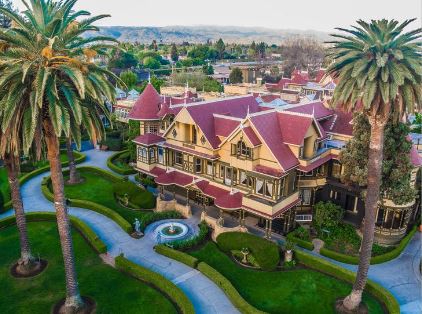
The Winchester Mystery House

Your steps echo down the long hall of this historical Victorian mansion. https://winchestermysteryhouse.com/

Light is a Great Enemy to Mystery and Mystery is a Great Friend to Enthusiasm

A person may go to Heaven with half the pain which it costs one to purchase hell. An ascetic renunciation of the World and its life—and even of the will to survive in life—may be named, as the best-known discipline of peace that has been proposed, as yet, to mankind. And if one may judge from the historic circumstances of its original pronouncement, it arose—or at least caught on—as a response to a desperate general sense of things falling apart. Whatever philosophy and experience may pretend on such subjects, it is certain that humans are disposed to be superstitious in respect to the secret influenced that guide their fortunes, in the dark passage of the World. It is not the persecution, but the catastrophe which is annexed to it, that makes the difference between the tyrant and the sufferer. In mere corporal exertion, the hunter into a new state. Deep unspeakable suffering may well be called a baptism, a regeneration, the initiation into a new state. For now, we see in a mirror, dimly, but then face to face. Right now, you may not see all clearly. You are only looking at it in part. However, one day it will come into focus. #RandolphHarris 1 of 9

Some people oppose those individualist theories of the state that invoke concepts of the social contract and of natural rights, and, on the other, all natural law and organic theories of the state. Persons’ moral and/or political obligations are dependent upon a contract or agreement among them to form the society in which they live. Natural rights have some key ideas that all humans are created equal and have inalienable rights of life, liberty, and the pursuit of happiness. Few will deny that a genuine revival of Natural Law has occurred everywhere in the Western World. Natural law means that the State is not only an association of associations, but it is the highest natural association. Humans are basically good and the functioning of the states is to develop our good faculty into a habit of actions. The organic theory of society is entertained by nearly every serious thinker of the present time. Everyone seems ready to declare, although often with some reservations, that society is an organism; in other words, humans and nature are one, and so, among many other things, that no device or institution of human life is free from conditions of change. These principles all for the social contract theory. #RandolphHarris 2 of 9

Some arguments of the social contract theory have suspicion of it and these suspicions are increased by its being one of those legal fictions in which some see have the root of so much evil. Player are heroes upon the stage; but beggars, sots, or prostitutes in their private lodgings. It was not asserted that every citizen had in fact contracted to obey the law, but only that they should be deemed to have so contracted. However, this is mischievous unless obeying the laws does in fact make for the general happiness. The principle of utility, then, is the real basis of obedience. To suppose anything else is misleading, since it suggests that the individual need not obey any law to which one has not personally assented—a principle that, if taken seriously, could lead only to anarchy. Therefore, to say that humans have inalienable rights is nonsense on stilts, when the assertion is made by way of protest against a government that has in fact alienated right. There would be no need for revolutions if humans were in fact equal, as they are asserted to be: what is meant is that they ought to be treated as equal but as not. Yet each life has equal value. What is a country village without its mysterious personage? #RandolphHarris 3 of 9

Things unserviceable in one way may with advantage be applied in another. If we take the doctrine of natural rights as a statement of what governments ought to do, it will be found untenable. No government could continue to govern if it abstained from ever depriving any of its citizens of life, liberty, or property (still less of happiness), since taxation and punishment would then be impossible. So indeed, would law itself, since any law is a restriction on liberty. The only principle that can be justified to the extent that it is backed by coercion, is that the law should not impose restriction on any individual unless this is necessary to avoid greater pain, on balance, to other individuals: in short, the principle of utility. The civilized life of individuals start from the family reaches its top in form of state. Therefore, the family is the starting point and state is the last point of human development. Although most of the needs are fulfilled in family, villages and tribes but the super sufficient life is not possible without state. Therefore, state is a natural requirement of human uplift. #RandolphHarris 4 of 9

State is the super-most and top human institution that is a sovereign body and it works for comforting its citizens. Whether bread be cheap or dear do not much signify, if we have nothing to buy it with. States exists for the establishment and preservation of a perfect and healthy life. The State provides a safe and sound environment to enable its people to use their capabilities and potentials for the common good and welfare. Denial of natural law is confusing. Many people wonder how could natural law literally be law, so that an enactment that contravenes it is null and void. This would mean that the supreme governors who makes the laws have a legal duty not to make certain kinds of law. However, that this is my duty to do, which I am liable to be punished, according to law, if I do not do…Have these supreme governors any such duty? No: for if they are at all liable to punishment, according to law…then they are not, what they are supposed to bee, supreme governors. What is meant, doubtless, is that they have either a religious duty or a moral duty. #RandolphHarris 5 of 9

A religious duty is one whose neglect renders one liable to punishment by God, and a moral duty is one whose neglect renders one liable, not to punishment in a strict sense, but to various unorganized mortifications and inconveniences at the hands of one’s fellow citizens. This is in line with the moral sanctions, which is the fear of public opinion. In this sense, moral duties are certainly political realities: and the ruler is limited by what public opinion will tolerate. However, this is distinguishing from a legal limitation, and both from a nebulous law. Therefore, the legislator ought to make those laws that promote the greatest happiness of the greatest number. It is clear that a law that, on balance, causes more suffering than it prevents is not necessarily one so unpopular that it provokes the citizens to active resistance. We have at least one moral right: the right to have one’s happiness considered equally with that of other humans. This is clearly not the same as the fact that humans will seek their own happiness, nor does it follow from the further fact that the legislator, seeking his or her own happiness, will see to it, if he or she is wise, that one does not provoke one’s subjects too far. #RandolphHarris 6 of 9

When a door closes, you do not know what God is saving you from. If your prayers are not answered the way you want, instead of being discouraged or feeling like God let you down, why do you not have a more comprehensive perspective? You may be discouraged because your plans have not worked out, but those closed doors were not an accident. That was God directing your steps. The reason God closed them is because He has something better in store for you. Will you trust Him? Gods ways are not our ways. They are better than our ways. There will be times when a door closes and you cannot understand why? You may be experiencing that right now. However, will you stay in faith while you wait to see what God is up to? This one bright young man who was in the top five percent of the nation had a dream to become an engineer. However, when he applied for graduate studies at Massachusetts Institute of Technology, University of California-Berkeley, California Institute of Technology, and others, he was turned down again and again, while some of his friends with lower grades and even undocumented citizens were accepted. He could not understand it. #RandolphHarris 7 of 9

It had been a bleak few months, for a lot of reasons. He could hardly write through the tears. He crumpled up the poems he had been writing since December and tossed them into the flames. While this well-educated, but distraught young man was waiting, he went on a mission trip with a group of doctors from his church. When he saw the doctors taking care of the people, treating their injuries and aliments, something new was birthed on the inside. It was like a ray of Sunshine through the clouds. He did not want to be an engineer anymore. He wanted to become a doctor. After he returned home, he applied to medical school and was immediately accepted. God closed the doors to the engineering school on purpose, to open the doors into his divine destiny. God is wonderful in His design and excellent in His working. Believer, God overrules all things for your good. The needs-be for all that you have suffered has been most accurately determined by God. Your course is all mapped out by your Lord. Nothing will take Him by surprise. There will be no novelties to Him. There will be no occurrences which He did not foresee, and for which, therefore, He has not provided. He has arranged all, and you have but to patiently wait, and you shall see an extraordinary deliverance. #RandolphHarris 8 of 9

Sailing with sealed orders, we ourselves are the repositories of the secret packet, whose mysterious contents we long to learn. There are not mysteries out of ourselves. Dear Father in Heaven, You are amazing! Thank you, God, for loving me so much that certain prayers have not been answered. You have not allowed certain people into my life whom I really wanted, because they would have limited my growth. I know that God is in complete control. There is no power greater than the power of God. I believe that my destiny is ordered by God. I know that new opportunities will arise in my life and I will keep a good attitude. I am moving forward in faith, knowing that God has my best interest at heat. I believe the reason God block certain opportunities is because something better is in store. Sometimes we have to realize that God did not break his promise to us, he just needed to delay its fulfillment. The bounty of thoughts, however, will remain undiminished. Far sweeter are mysteries than Sunrises: though the mystery be unfathomable, it is still the unfathomableness of fullness; but the surmise, that is but shallow and unmeaning emptiness. #RandolphHarris 9 of 9

The Winchester Mystery House

The spirits come to life once more as tourist explore Mrs. Winchester’s home. https://winchestermysteryhouse.com/

Pleasure is the Only thing Worth having a Theory about

There are many different kinds of pleasurable experiences, each yielding its own kind of satisfaction. In the state of future perfection, there will be pleasure without danger and security without restraint. However, we cannot avoid, in some quasi-metaphorical sense, weighing pleasures against each other. The love of pleasure and the fear of pain are the ruling principles of the human heart, in which they maintain an uninterrupted struggle for superiority. Still, it is clear that there are no real units of pleasure and that reference to them is merely a convenient device for making our calculations as accurate as the nature of the case allows. The calculations for units of pleasure are themselves are indispensable. For example, when fines are imposed in the courts, some alternative punishment must be found for those who cannot, or will not, pay the fine. Clearly, we cannot strictly say that the pain of losing five pounds is precisely equivalent to the pain endured during seven days in prison. Yet it is necessary to find some such equivalent, and the job of finding equivalents can be better or worse done.

Pleasure and pain are the night and day of life, and succeed one another as duly. As many know what an exquisite delight there is in conveying pleasure to a beloved object, so some few may have experienced the satisfaction of tormenting one we hate. Flatter not yourself with contrarieties of pleasure. Of the blessing set before you, make your choice, and be content. So understood, the weighing of pleasures and pains against each other is not at all absurd. That the process is not mathematically exact can hardly count against it as an analysis of moral evaluation, since moral evaluation is not mathematically exact either. The pleasure which attends noble aims remunerates not the pains they bring with them. Lower pleasures may sometimes please us more than higher pleasures; but even then, higher pleasures are to be preferred. Pleasure is the sole good will seem to collapse, since the higher pleasures apparently have an element of value, other than the mere quantity of pleasure, that the lower pleasure lacks.

Higher pleasure may be better, even though less pleasant, than the lower pleasure. It is true that the lower pleasure may be more intense; but more is involved in quantity of pleasure than just intensity. To make life pleasant, we must have our trifling amusements as well as our sublime transports. More is involved in quantity of pleasure than just intensity. There are other distinguished dimensions of pleasure: apart from intensity, these are duration, certainty, propinquity, fecundity, and purity. Now it is arguable that the so-called higher pleasures are just those that afford a more lasting satisfaction than the lower pleasures (duration), that enlarge our horizons and so open up new possibilities of pleasure (fecundity), and that are less likely to be followed eventually by the pain of satiety and boredom (purity). These are the characteristics that distinguish intellectual activity, for example, from purely physical pleasure. Get a new perspective. You are full of extraordinary abilities and power. The greatest force in the Universe is in you. The same power that raised Christ from the dead lives on inside of you.

There is no challenge too tough for you, no enemy too big, no aliment too great, and no dream that you cannot accomplish. All of our difficulties are only platforms for the manifestations of God’s grace, power, and love. If anyone would tell you the shortest, surest way to happiness, one must tell you to make it a rule to thank and praise God for everything that happens to you. For it is certain that whatever seeming calamity happens to you, if you thank and praise God for it, you turn it into a blessing. God is greater than anything against you, and God controls your destiny. No weapon formed against you will prosper. I believe that is it just a matter of time before something extraordinary happens in your life. The higher levels of pleasure, it may be argued, are those which people have found, through long experience, to be productive of most pleasure when all these factors are taken into account. You may have a reason to feel sorry for yourself, but you do not have a right. God promised to turn your pain and suffering into pleasure and success.

God said He will pay you back double for the wrongs done to you, but you have to do part yourself. If you are to see the beauty, is you are to get double, you have to shake off the discouragement and get back to living life. We all have wounds, hurt feelings, and sad stories, but we cannot let a loss, a health issues, or a divorce be the excuse to sit on the sidelines. Sometimes in life we have to work through the pain. God rewards faithful people. People who are determined. People who get knocked down, but do not stay down. Instead, they get back up again. If at first you do not succeed, dust yourself off and trying again. Try again. You do not have to throw it all away. You cannot let the hurt, the pain, or the bad break cause you to be bitter, or to lose your passion, or to start blaming God. Perhaps the crucial question for utilitarian ethic intended mainly for lawyers and legislators is whether it can account adequately for justice. It may be argued that justice required the equalization as well as the maximization of pleasure.

It is not unjust to require me to endure five units of pain on Monday for the sake of ten units of pleasure on Tuesday. The maximization of pleasure will itself involve an equalizing tendency. This is because the economist’s law of diminishing utility applies to pleasure. The minor amenities of life afford much pleasure to someone whose other pleasures are few, but comparatively little to someone whose pleasures are many. Consequently, while it is true that a utilitarian, forced to choose between a course of action that gives X and Y 10 units of pleasure each and one that gives X 31 units of pleasure and Y 10 units of pain, will prefer the second, it is also true that such choices are most likely to arise when X’s life is as general rule more painful than Y’s. God will not permit any trouble to come upon us, unless He has a specific plan by which great blessing can come out of the difficulty. Father, You have promised to take the scars of my life and turn them into stars, to give be beauty for pain, and to pay me back double for anything I lost.

I have made up my mind to endure, knowing You restore health and give new opportunities and new relationships and new perspectives. Even though it is a painful time, it is not the end. I am still learning about life. A full life is still in front of me. I believe You have an “after this” in my future. God is going to make the rest of our lives the best of our lives. Our conviction that it is unjust to punish an innocent man is based on nothing but the empirical consideration that punishing the innocent is not likely to deter others from crime. This is, however, not always true: the innocent person may be a hostage, or one may be generally thought to be guilty. There is a distinguished difference between first-order evil, or pain caused to assignable individuals, and second-order evil, or pain caused to the community in general. Insecurity is a very great second-order evil. The point is a general one of central importance. We need to invoke a distinction between first order and second-order evil in order to explain the common belief that general rules should be kept even in those cases where some slight increase in the general happiness might seem to result from breaking them.

The slight increase in first-order good, it is argued, is outweighed by the second-order evil, which usually consist in the lessening of public confidence. (A large increase in the first-order good, it is conceded, may justify breaking the rule.) The argument is plausible, though of course there is no way of proving that the precise pint at which we feel justified in breaking the rule is the point at which the first-order good begins to outweigh the second-order evil. It is, however, open to the objection that, while it may be true as a matter of fact that punishing the innocent or breaking a promise will in general cause more pain than pleasure, most of us feel that these actions would be wrong even if this were not the case. The utilitarian can only reply that this is a mistake. Moral rules, one will say, embody human experience about what kinds of action make for the general happiness—human nature and the World in which we live both being what they are. If either were different, morality would be different; it is a mistake, though a natural one, to believe otherwise.

If the central question of political philosophy is taken to be: “Why, if at all, should the citizen obey the state?” the utilitarian answers is quite clear. The citizen should obey just so far as obedience will contribute more to the general happiness than disobedience. If the central question is taken to be the nature and ontological status of the state, the answer is equally clear: the state is not a super-entity with purposes and a will of its own, but a human contrivance to enable humans to realize as many of their desires as possible. The general happiness, or the interest of the community in general, is always to be understood as the resultant of the hedonic calculus, the sum of pleasures and pains of individuals. Consider this: The word weary means to lose the sense of pleasure, to not feel the enjoyment you once felt. Perhaps the battle you are facing has lasted longer than you thought it would. You have prayed. You have believed. You have done what you are supposed to, but there it is. How will you shake off the weariness and see God’s promise come to pass?

Life is a hard fight, a struggle, a wrestling with the principle of evil….Every inch of the way must be disputed. The night is given us to take breath, to pray, to drink deep at the fountain of power. The day, to use the strength that have been given to us, to go forth to work with it till the evening. Right now the Creator of the Universe is breathing a second wind into you. Just receive it by faith. Power, might, energy, intensity, concentration, and vitality is coming into your mind, your body, and your soul. You will soar through life on wings like eagles. To be a poet is to have a soul so quick to discern that no shade of quality escapes it, and so quick to feel, that discernment is but a hand playing with finely-ordered variety on the chords of emotion—a soul in which knowledge passes instantaneously into feeling and feeling flashes back as a new organ of knowledge. One may have that condition by faith only. The one who is a hero can withstand unjust opinion. God has your best interest at heart–the treasure of Heaven, where all things that are divine belong.


I Never Gave Any Very Explicit Answer to this Question
Artists and scientists deal with the same World, but they differ in their intellectual attitudes and in the techniques they use to recognize and describe objects, person, and events. Artists focus their attention on private experiences, scientists on the generic aspects of nature. This difference in attitudes is so fundamental that the aspects of the World with which science and art are respectively concerned have little in common. Sometimes the idea of being a hip party person who is in the nightclub living it up, listening to techno opera, and talking to swanky people about work, vacations, and all the nice things our sweetheart is doing for us. In a party scene, the feeling type often brings a sense of enthusiasm, joy, conviviality, companionship and togetherness. However, is that all we are? It is enough for us to absorb the teachings of our society, its rules and norms, its definitions and its roles? What of joy? Fear? Anger? What of personal satisfaction, or thrill, risk, all powerful feelings?
We really need to look at these and other emotions that are such an essential part of being human. However, in our computer-oriented, information-valuing society, emotions and emotional people are often ridiculed. It is not usually a compliment when you describe someone as emotional. Some of us are the thinking type, in cognitive mode, which is one that focuses on reason, scientific method, logical thinking is dominate. These types of people are inclined to deal with nearly every type of situation and experience as Mr. Spock did, much like a proper computer and not some much emotion nor sarcasm. The sensing organs and the process of picking up information (sensations) through the sense is helpful because human beings are not robots! Human beings are not mechanical or machine like. They have a full range of emotional responses, and if we were honest most of us would admit that we would prefer a bit more feeling in the people around us.

Being human (and not a humanoid), we are all emotional, though we may deny it. We all have emotional responses to events and people and potentials for far more feelings than we often express. I actually want a career, but I also know that I need to rest and enjoy life. I feel like I am just waiting and waiting and waiting, and I wonder when the Universe will finally reward me for the good that I have done. I am a good person. I find myself attractive and I like to be happy. When I was younger, I remembered thinking I never wanted to do the same thing every day. I wanted to travel and get around and be a businessperson. And by the time I turned 30, I envisioned I would be in a nice white, two story house, with wood siding, with navy blue, Atlantic premium wood shutters on the exterior, emerald green grass, every green trees, a white picket fence, a BMW sedan and Sports Utility vehicle, and a convertible in the garage, a wife, two kids, hardwood floors, Royal Palace French provincial furniture, lots of windows, and real mahogany wood panels on the walls, with a basement, and a secret passage way in the house. However, I am not sure what I really want, some I am just going to leave that in God’s hands.
We have to judge between alterative courses of action to consider the consequences of each, in terms of the pleasure and pain of all the people affected. Let us suppose, for example, that I am trying to decide whether to take my small nephew to the circus or to spend my evening at the house with a book. I know that the circus will bore me: I may estimate this boredom at, let us say, 5 units of pain; i.e. -5 units of pleasure. I will, on the other hand, gain some sympathetic pleasure from watching the small boy’s pleased excitement, though not enough, certainly, to compensate for my boredom. I may put this at +2 units of pleasure. However, the boy may be expecting to gain great pleasure from the outing: perhaps 10 units. Taking the child to the circus, then, may be expected to yield (10+2) – 5 units of pleasure; i.e., 7 units. Now, consider the alternative. A quiet evening at the house, though pleasurable, does not transport an adult as much as an evening out does a child: perhaps we may evaluate it at 6 units. My pleasure will be spoiled a little, too, by the sympathetic pain that knowledge of my nephew’s disappointment itself: since both the pains and pleasures of childhood are intense, we may put it at – 8 units. To stay at the house, then, will cause 6 – 2 – 8 units of pleasure, i.e., 4 units of pain.

The first is clearly the one that will contribute most to the sum of happiness. It is then, the right action in these circumstances. Its rightness is not an intrinsic characteristic, but it depends entirely on its consequences in any given case: if I found the circuses more boring, or the nephew found them less pleasant, staying at the house might become the right action. This is, of course, a comparatively crude example. This type of ingenuity and refining calculus and working out these implications are important for legal reform. Punishment, for example, must be just harsh enough to deter, and no harsher. Any more pain than is necessary for this purpose is unjustifiable. On the other hand, too lenient a punishment is a worse evil, since the pain inflicted on the criminal, being insufficient to deter, will not be counterbalanced by the pain spared future victims of similar crimes. We have just begun to open up the Pandora’s box of surprises that awaits us in the study of our social World. The culture has a tremendously important influence upon us, giving us stuff to put in our near-empty minds at birth, refining and guiding, bullying and encouraging us, so that we will turn out to be pretty much what society needs us to be.

Sometimes no process is superior to the others, though one is probably more appropriate and useful than the others at a given time and situation. It is important to experience life and to relate to the World in terms of emotions, both pleasant and unpleasant, of memories, of past and present feelings about a situation. Experiences are good and bad, pleasurable and unpleasureable—but we cannot just take them passively. I know I am blessed and I see you are happier, and that is nice. In the moral realm, freedom has grown so that many choices which were either controlled by law or churchly dictate are personal choices. The right to plan the number of children a family shall have…[and] such choices as drinking, non-criminal gambling, have becomes choices the individual has a right to make. One of our goals as humans is to help other individuals round out their personality so that they are not exclusively one type or another. It seems to me that if we are going to live sanely, then we must respect and be sensitive to differences, realizing that no two individuals are alike, and that is we really understand someone, we understand how one differs from us I really know one thing for such that would make me happy, a big house in the suburbs and privacy.
The Winchester Mystery House
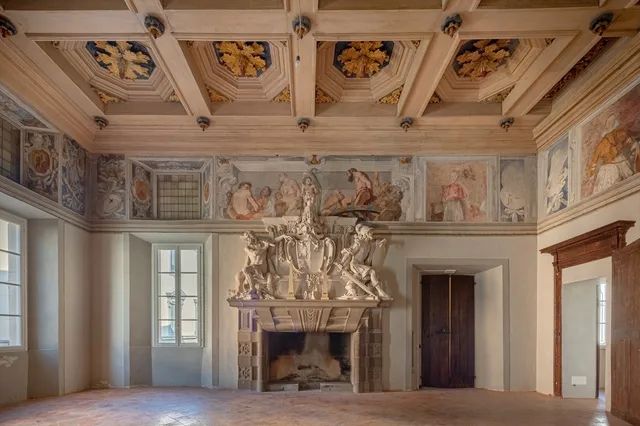
Come explore the history and lore behind The Winchester Mystery House. https://winchestermysteryhouse.com/
Kool-Aid, Burgers, and Weed—The Attributes of the Soul
When one bears in mind the suffering of the divine goat Dionysos in the performance of the Greek tragedy and lament of the retinue of goats who identified themselves with him, one can easily understand how the almost extinct drama was revived in the Middle Ages in the Passions of Christ. We know that God is everywhere; but certainly, we feel His presence when His works are on the grandest scale spread before us; and it is in the unclouded night-sky, where His Worlds wheel their silent course, that we read clearest His infinitude, His omnipotence, His omnipresence. Do you think God would be satisfied with half an oblation (peace offering)? I vehemently deny the charge of atheism. I am simply inveighed against the popular idol-worship of God as a substance, as another entity in the World, and against the vulgar eudemonistic morality which makes God a giver of sensuous rewards for good deeds and sensuous punishments for evil deeds. Such a conception—or, indeed, any attribution of personal characteristics to God—constitutes a lowering and limiting of the deity and has to be opposed in the interest of true religion.

There can be no doubt that the notion of God as a separate substance is impossible and contradictory, and it is permitted to say this plainly. When you would conceive of that great Being truly and fully, you must be able to realize the duration of eternity, obliterate the little periods of time and chronology, which require a starting and resting-place in our human minds—soar out of the reach of the sickly atmospheres which surround these little planets, and stand erect in the broad and fathomless light of God’s own atmosphere. Again, we need no other God [than the moral World order], and we cannot comprehend another one. There is no rational justification for going beyond the moral World order to a separate entity as its cause. God is too often a convenient stalking horse for human selfishness. However, the human soul is responsible for the origin of evil. God implants in the hearts of His people a desire to advance His ends, but human agents are compelled to employ natural means. The mystical union with the One is the ultimate goal of humans, and part of the soul makes such a union possible as superior to Intelligence. It is the flower of Intelligence.

In what ways did Christ obtain his amazing wisdom? Through careful study of the larger World in which we live and the smaller World of our human nature, it has emerged the duties of the heart: service of God, trust in God, wholehearted devotion to God, humility in God’s presence, repentance, self-communion, and renunciation. In this way, humans reach the height of the religious life, the love of God. Christ might have built up his teachings from the writings of Greek elders, which Providence could have out into his hands through his associations with Hellenistic Jews. Christ founded a kind of Freemasonry to assist him in his purpose to destroy superstition, restore reason to its rightful rule, and unite people in a rational faith in God, Providence and Immortality. The great message of spiritual vitality and force, directed to the human heart and resting on the threefold base of reason, revelation, and tradition. Apprehending the dimension of the spirit is a very succinct belief that cannot endure the acid test of rational examination in the product of life and time because it is a vision of reality that includes eternity, and immortality.

In life, conjuring cannot be explained solely in material terms. From the traditionalist standpoint, it seemed an insoluble mystery how the mind knows just what motor nerves to activate when, for instance, expecting a blinding light to be switched on, it causes the eyes to close in advance. The spirit of God is not inert like levers but possess an inherent spontaneity, and this spontaneity means that the expectation of the painful glare is inseparably associated with preparations to close the eyes. And having faith in God inherently means we will spontaneously treat others with the kind of love and respect that God would expect so we escape the painful doctrine of damnation. The belief arises in the context of free will. We are on Earth and inseparable from a preparation to act in which one seriously expects alleviation from suffering is in reach. In trying to grasp salvation, the belief in God is inevitably put to the test: We believe first and prove or disprove afterwards.

The essence of the human situation is a kind of circle of activity in which we inevitably acquire new nonrational beliefs as a direct consequence of practically and experimentally testing those we start with. The point is that our actions have unforeseen consequences. Disorder and tension on an individual level, and consequently, social level are the result of ignorance of the self and the World around. The mind stays without rest, running, jumping, and churning aimlessly, lashed by a white squall of feelings and emotions. The emotive pole of consciousness, where absorption in one’s pains or pleasures presents the objective assessment of one’s situation, and the cognitive pole, where pleasures and pains are forgotten in the business of mapping one’s own World and where emotions appears only in the shock of scientific discovery, as a feeling that, like boredom, is outside the pleasure-pain sphere. The movement from feeling to knowledge in consciousness is linked with the same facts that give human life the character of a passage from belief to self-criticism.

When Christianity began its entry into the ancient World it met with the competition of the religion of Mithras and for a long time it was doubtful which deity was to be the victor. The Bright figure of the youthful Persian god has eluded our understanding. Perhaps we may conclude from the illustrations of Mithras slaying the steers that he represented the son who carried out the sacrifice of the father by himself and this released the brothers from their oppressing complicity in the deed. There was another way of allying this sense of guilt and this is the one that Christ took. He sacrificed his own life and thereby redeemed the brothers from primal sin. The theory of primal sin is Orphic origin; it was preserved in the mysteries and thence penetrated into the philosophic schools of Greek antiquity. Men were the descendants of Titans, who had killed and dismembered the young Dionysos—Zagreus; the weight of this crime oppressed them. A fragment of Anaximander says that the unity of the World was destroyed by a primordial crime and everything that issues from it must carry on the punishment for this crime.

Although the features of banding together, killing, and dismembering as expressed in the deeds of the Titans very clearly recall the totem sacrifice described by St. Nilus—as also many other myths of antiquity, for example, the death of Orpheus himself—we are nevertheless disturbed here by the variation according to which a youthful god was murdered. In the Christian myth, man’s original sin is undoubtedly an offense against God the Father, and if Christ redeems humankind from the weight of original sin by sacrificing his own life, he forces us to the conclusion that this sin was murder. According to the law of retaliation which is deeply rooted in human feeling, a murder can be atoned only by the sacrifice of another life; the self-sacrifice points to a blood-guilt. The suicidal impulses of our neurotic regularly prove to be self-punishments for death wishes directed against others. And id this sacrifice of one’s own life; the self-sacrifice brings about a reconciliation with God, the father, then the crime which must be expiated can only have been the murder of the father.

Thus, in the Christian doctrine humankind most unreservedly acknowledges the guilty deed of primordial times because it now has found the most complete expiation for this deed in the sacrificial death of the son. The reconciliation with the father is the more thorough because simultaneously with this sacrifice there follows the complete renunciation of woman, for whose sake humankind rebelled against the father. However, not, also the psychological fatality of ambivalence demands its rights. In the same deed, which offers the greatest possible expiation to the father, the son also attains the goal of his wishes against the father. The religion of the son succeeds the religion of the father. As a sign of this substitution the antiquated totem feast is revived again in the form of communion in which the band of brothers now eats the flesh and blood of the son and no longer that of the father, the sons thereby identifying themselves with him and becoming holy themselves.

Thus, through the ages we see the identity of the totem feast with the animal sacrifice, theanthropic human sacrifice, and the Christian Eucharist, and in all these solemn occasions we recognize the after effects of that crime which so oppressed men but of which they must have been so proud of. At bottom, however, the Christian communion is a new setting aside of the father, a repetition of the crime that must be expiated. We see how well the Christian communion has absorbed within itself a sacrament which is doubtless far older than Christianity. Full fathom five thy father lies: Of his hones are coral made; those pearls that were his eyes; nothing of him that doth fade, but doth suffer a sea-change into something rich and strange…But what, then, is this consciousness that underlies both the emotional side and the intellectual side? First, we are unconscious of the undifferentiated. A constant impression is to the blank mind—if temperature were unvarying we would not notice it. Second, we are conscious of the constant only in the midst of variety and difference.

The essence of consciousness is thus to be discriminative, discriminations involved in the consciousness, the most liable to be misunderstood is that implicit in the problem of the external World. Many people dismiss discrimination as meaningless the notion of material objects independent of experience, and they frequently overlook an important point—that a distinction can be drawn within experience between the person sensing it and the sensation sensed. There is a profound sense of the complexity of the problem in the external World. Thus, in dealing with the emotions the important role some give to pure malice, or sadism, as human motive contrast refreshingly with the more commonplace views have been justly appreciated in our time. Tragic guilt is not always easy to explain; it is often not a guilt in the ordinary sense. Almost always consisted of rebellion against a divine or human authority and the chorus accompanied the hero with their sympathies, trying to restrain and warn him, and lamented his fate after he had met with what was considered fitting punishment for his daring attempt.

However, why did the hero of the tragedy have to suffer, and what was the tragedy have to suffer, and what was the meaning of his tragic guilt? We will cut short the discussion by a prompt answer. He had to suffer because he was the primal father, the hero of that primordial tragedy the repetition of which he serves a certain tendency, and the tragic guilt is the guilt of which he had to take upon himself in order to free the chorus of theirs. The scene upon the stage came into being through purposive distortion of the historical scene, or, one is tempted to say, it was the result of refined hypocrisy. Actually, in the antiquated situation, it was the members of the chorus themselves who had caused the suffering of the hero; here, on the other hand, they exhaust themselves in sympathy and regret, and the hero himself is to blame for his suffering. The crime foisted upon him, namely, presumption and rebellion against great authority, is the same as that which in the past oppressed the colleagues of the chorus, namely, the band of brothers. Thus, the tragic hero, through still against his will, is made the redeemer of the chorus.

 Randolph Harris II International Institute