
Home » #RandolphHarris (Page 111)
Category Archives: #RandolphHarris

Everything is More Mysterious than We Can Imagine

Ultimately, everything is more mysterious than we can imagine. The need for philosophy arises from the apparently irreconcilable opposition between different elements in our spiritual life—between subject and object, religion and science, freedom and determination, reason and desire. Unless we reconcile these antagonisms in a higher unity, we cannot achieve the spiritual harmony without the highest achievements of humankind are possible. While none of us can escape our limited mental maps of the World, we can sample from other cultures and subcultures and discover new ways of looking at things. To teach the material of knowledge, one is given a sense of perception and the mind then goes to work on it, ordering by concept supplied by itself. There are no objects until thought has done its work. Thought enters into the very constitution of experience. And further, the process of knowing is dominated by an idea of Reason, which drives the mind to seek a form of experience in which all differences are seen as elements in a single system. We can, in a sense, begin to triangulate the truth. #RandolphHarris 1 of 6

Activity confines us to appearances and bars us from things-in-themselves. Our knowledge of objects will be imperfect insofar as we fail to recognize that they are only partial aspects of the ideal whole toward which reason points. We can refine our necessarily aggressive preconceptions (as what we learn morphs into habit), but until we are part of eternal life, we will not learn everything. Until then there remain vast areas of knowledge—of ideas, people, and places—where our mental models are not fully informed. Yet we can be bighearted and acknowledge these gaps. We can work, persistently, to seek out the contradictions our minds naturally work to eliminate. When we can establish the power of human beings to determine their conduct by reference to the self, as a permanent center, as distinct from its relatively isolated and transient desires, we become inspired and eradicate contradictions. Healing beings in a wound, an imperfection—a wound inherent in the nature of life itself—and is an attempt either to learn to live with the wound or to heal it. A self-conscience being seeks self-satisfaction, not just the satisfaction of this or that desire. And in this power of determining conduct by reference to the self lies human freedom. #RandolphHarris 2 of 6

Many people have been in situations that they have tried to help another person, but that other person never does anything in return, never gives back to the relationship, but constantly needs you. And no matter how many times you forgive him or her, you are reminded of what they did to hurt you and how much of it was intentional and you get upset. Although you may love an individual, life is about self-preservation and if someone is not helping you in return, you have to save yourself. No one wants to live in a state of conflict habitual. Studies have shown that a high need for closure hurts healing. Cultivating ambiguity helps us keep an open mind and empathize with different viewpoints. When we assemble, we can take the uncertainties in our lives and create something out of them. The most obvious and visible effect of letting go of negative feelings is a resumption of emotional and psychological growth and the solving of problems, which often have been long-standing. There is pleasure and satisfaction as we begin to experience the powerful effects of eliminating the blocks to achievement and satisfaction in life. #RandolphHarris 3 of 6

We soon discover that the limiting thoughts and negative beliefs, which we have naively held to be true, were all merely the result of accumulated negative feelings. When the feelings are let go, them the thought pattern changes from feeling constricted to feeling a sense of freedom and being happy. Entire areas of life can open up. What used to be awkward or unexpressed can become effortless and joyously alive. Surrender at great depth is complete when a person has let go of needing or wanting a physical healing to occur. A state of peace about the situation is reached when all three aspects of illness—physical, mental, and spiritual—have been addressed and the final outcome or wished-for recovery has been surrendered. Peace comes with total inner surrender to what is clearly the known method or program that is usually followed. Repressed and suppressed feelings require counter energy to keep them submerged. It takes energy to hold down our feelings. As these feelings are relinquished, the negativity is now freed for constructive use. #RandolphHarris 4 of 6

Because we let go, there is an increase in available energy for creativity, growth, work and interpersonal relationships. The quality and enjoyment of these new activities increases. Most people are too exhausted to bring a really high quality into their experiences unless the negative programs opposing them have been resolved. Take a guess as to how much you have changed over the last ten years on a scale from 1 to 10. Now, on the same scale, estimate how much you will change over the next decades. How do your two ratings compare? Do you assess your past changes differently from how you predict your future ones? Most people do. Vulnerability can be a risk, especially emotionally, but not doing what we can to access it is a bigger risk. Turning toward our pain is an enormously important step in our personal evolution. It does not matter how small the step is, so long as we take it, and keep taking it. Because we are conditioned to turn away from or avoid our pain, turning toward it may feel counterintuitive, at least at first. #RandolphHarris 5 of 6

About 50 percent of all patients hospitalized for heart disease show moderate to severe depression, with the most severe depression usually accompanying the more serious disease. It has been estimated that up to 33 percent of all patients who have had a heart attack fail to return to work not because of physical problems but because of psychological problems. This failure to return to work will itself often lead to increased social isolation, loneliness, and depression—all of which are quite certain to affect the heart adversely. The problems cause by this new type of loneliness may ultimately be lethal. Love and affection are major influences on the human heart. To end your suffering, enter your pain. This means getting to know it and its roots, exploring it deeply, moving through it slowly but surely. You cannot emerge from your pain unless you enter it, and this begins with turning toward it. For me, my pain came from being alone, but I realized maybe being alone was the best thing for me because being there for someone who only uses one and is never there, is basically a painful form of being alone. Each of our emotions is worth getting to know very, very well—its nature, its purpose, its expression, its containment, its value, one’s history with it, one’s use and misuse of it. #RandolphHarris 6 of 6


Two Versions of Evolution
There is a temper of mind which borrows a degree of virtue even from self-love. All freedom can do is to illuminate the possibilities that can be opened to us and toward which we can steer ourselves by making our choices real. To regard God as merely a spirit is tantamount to atheism. The grand design of the cosmos points to the existence of some vaster Person who looms out behind our God, and who stands in the same relation to him as he to us. And yet another, and another, and another. This pyramiding of deities is one of many items with enlivening the Victorian scene. All things on Earth have their price; and for truth we pay the dearest. We barter it for love and sympathy. The road to honor is paved with thorns; but the path to truth, at every step you set your foot down on your own heart. It is the first policy in a time of difficulty or danger always to know the worst—never to hide the truth from yourself—never to persuade yourself that the evil is unreal, and that things are better than they are. There is nothing so dangerous as a question which comes by surprise on a person whose business it is to conceal truth or to defend falsehood. It is impossible to study the human frame without a little studying the human mind. As we have seen, those aspects of the mind that were programmed by the evolution for purposes of survival are especially ripe for exploitation by the various forms and mechanisms of unreality that we have identified. For instance, the TV takes advantage of the brain’s special attentiveness to recent events and particularly those which filter the visual span of the viewer with speed or heightened color. We are programmed by evolution to unreality’s special fondness for hyper activeness. However, the brain’s receptiveness to fast moving stimuli is not sufficient in itself to account for America’s special preoccupation with unreality. More than the workings of the brain alone are needed to account for the intensity with which Americans pursue unreality with a fever that approaches a national crusade. And indeed, to inveigh the phrase national crusade already implies that another part of the answer is to be found in American culture.

Hyperactivity is not only a deeply ingrained feature of American culture by virtue of the special fortitude of those who journeyed to the new land in order to settle it—it was a dire necessity for survival—but, as a result, it has become linked with other fundamental American values and beliefs. Americans have always believed deeply in material progress. The two words material and progress are virtually inseparable. Each implies the other in the context of the American experience. The major foundation of the belief in progress: the idea that nations (like individuals) can never stand still. They must always be growing, changing, improving their material lot: life is a race to be won by the swiftest. Like the progressive faith, itself, this notion is often left implicit. Yet its impact has been incalculable. It accounts for the relentless dynamism at the heart of capitalist development, spreading an obsessive need for change throughout modern culture. And for most educated and affluent Americans, change means progress. The old nations of the Earth creep on at a snail’s pace, and many want it to thunder past with the rush express. There is a belief that those who are rich and successful are the highest types thus far produced in the evolutionary process. Poor people are considered biological misfits; hence, the sooner they disappear and leave room for those better able to take care of themselves, the better. This Erewhon philosophy holds true that is a person has made a fortune of over $2 million, they are exempt from all taxation, and are considered a work of art and too precious to be meddled with. Society is no so much a guide for making something—it is a design or pattern that can be followed to create a place in which the government, laws, and social conditions are perfect. Thus, in Erewhon bodily illness is considered a punishable crime, whereas moral failings deserve sympathy and are given therapeutic treatment. Such progress we have learned was bought at a considerable price. To the uprooting and mass migration from farms and small country hamlets into the cities with their slums and social problems on the scales not experienced before, Americans reacted against what they experienced as the unreality of the new social order.

Removed from nature with its natural sounds, sights, and rhythms, Americans felt a sense of uneasiness. They found the new factories with their vast management hierarchies and impersonal rules the very epitome of everything that was unnatural, unreal, stultifying, and suffocating. People felt that they were in danger of becoming the very machines with which they worked and were charged with controlling. Instead of fostering machinery, the Erewhonians, after a long struggle, destroyed it when they realized the machines, like organisms, were evolving and would soon acquire a mastery over humans. The recoil from the artificial, overcivilized qualities of modern existence has sparked a wide variety of quests for more intense experience, ranging from the fascist fascination with violence and death, to the cults of emotional spontaneity of avant-grade artists to popular therapies stressing instinctual liberation. Antimodern impulses, too, were rooted in longings to recapture an elusive real life in culture evaporating into unreality. The darkest and most contemptible ignorance is that of not knowing oneself. The history of race relations in the United States of America has so sensitized us all that the initial phase of any interracial relationship between strangers is likely to be characterized by cautious attempts by each party to discern dominant or subtle indications of the racial attitudes of the other. Some violence is created by mental and emotional disorders, for which successful treatment is sometimes available. However, society needs to create an improved climate of acceptance for these programs of help and therapy that are available. In reaction to the growing sense of unreality brought on by the difficult adjustments to the new realities of modern life, Americans of all social classes will eventually retreat and engage in a frenzy-like search for authentic experiences. Elaborate home workshops where handicraft projects will be pursed with a vengeance. They will begin to look at family, friends, and true love as something desirably and that they need throughout an individual’s lifetime. They will never forget how each day can be described by the possibilities it contains and how tomorrow shall be well. One day, after a long life, we will find each other again.


The Way of the Flesh Verses the Doorway to the Kingdom of a Future Life

Our own hearts are our best prayer-rooms, and the chaplains who can most help us are ourselves. Nature is a product of providential design; by studying nature, one will find confirmation there for the revealed doctrines of Christianity. That light is the ray of rays, the Sun of Suns, the Moon of Moons, the Star of Stars. It is the light of Terewth. If, next to mistrusting Providence, there be aught that humans should pray against, it is against mistrusting their fellow humans. There is nothing miraculous or mysterious about the things we can explain. We control what we are able to explain; consequently, it is only natural to seek an explanation for everything. If one rules another by saying, “You must do this,” and “You will do that,” he or she breaks the human spirit, making it unfit for God. A person is simply a slave for obeying, unless behind his obedience is the recognition of a holy God. Our Lord never insists on having authority over us. No, God leaves us perfectly free to choose—so free, in fact, that we can spit in His face or we can put Him to death, as others have done; and yet He will never say a word. #RandolphHarris 1 of 6

Truth, the most powerful of all things, is the strongest friend of innocence. Once God’s life has been created in me through His redemption, I instantly recognize His right to absolute authority over me. It is a complete and effective domination. Having the reality of God’s presence is not dependent on our being in a particular circumstance or place, but is only dependent on our determination to keep the Lord before us continually. Our problems arise when we refuse to place our trust in the reality of His presence. If our everyday decisions are not according to His will, God will press through them, bringing restraint to our spirit. Then we must be quiet and wait for the direction of God’s presence. The known constitution and course of things is what is said to be the moral system of nature. A very sublime and grand thing is Truth, in its way, through like other sublime and grand things, such as thunderstorms and that, we are not always over and above glad to see it. The acknowledged dispensations of Providence is the (natural) government which we find ourselves under. Religion teaches us to believe and expect. #RandolphHarris 2 of 6

If we begin by assuming that the existence of nature implies an operating agent, then the good and bad consequences of our actions occur by His appointment. Any foresight we have of the consequences of our actions is a warning given by him on how we are to act. The satisfaction we feel at certain consequences, and the pain we suffer at others, are ordained by God and are signs that we are already under his government. Thus, a consideration of nature alone shows that we must acknowledge the place of God in our lives. Hence, if Christian doctrines really are revealed truths, our discoveries in nature have already prepared us to accept the main claims of revelation about God as a creator and judge. We must treat the detail with patience and respect. From the assumption that nature implies an operating agent, it seems clear that these arguments are not intended to appeal to religious skeptics. At best, we hope to convince deists, who already acknowledged the existence of a god, that their convictions might reasonably lead them to accept Christianity. #RandolphHarris 3 of 6

At the very least, the goal we expect to make is for deists acknowledge Christianity’s right to be treated as a subject worthy of serious discussion. In the Bible, clouds are always associated with God. Clouds are the sorrows, sufferings, or providential circumstances, within or without our personal lives, which actually seem to contradict the sovereignty of God. Yet, it is through these very clouds that the Spirit of God is teaching us how to walk by faith. What a revelation it is to know that sorrow, bereavement, and suffering are actually the clouds that come along with God! If I can stay calm, faithful, and unconfused while in the middle of the turmoil of life, the goal of the purpose of God is being accomplished in me. God is not working toward a particular finish—His purpose is the process itself. It is the process, not the outcome, that is glorifying to God. There is a clear distinction between demonstrative reasoning and probable reasoning by pointing out the probability admits of degrees, while demonstration does not. A slight presumption in favor of a thing does not make it probably true. #RandolphHarris 4 of 6

However, the slightest possible presumption is, nonetheless, of the nature of probability, for such low presumption, often repeated, will amount even to moral certainty. Thus, a human having observed the ebb and flow of the tide today, affords some sort of presumption, though the lowest imaginable, that it may happen again tomorrow: but the observation of this even for so many days, and months and ages together, as it has been observed by human kind, gives us a full assurance that it will. While an infinite intelligence must see everything as certainly true or certainly false, for us, with our limited capacities, probability is the very guide of life. In the consideration of the acquisition and practice of moral virtues, knowledge and habit are of the greatest interest. Perceptions come into our minds readily and of course, by means of there having been there before; and this reappearance of perceptions seems a thing of the same sort as readiness in any particular kind of action, proceeding from being accustomed to it. #RandolphHarris 5 of 6

One of our habits of perception is our constant and even involuntary readiness in correcting the impressions of our sight concerning magnitude and distances, so as to substitute judgment in the room of sensation imperceptibly to ourselves. It seems as if all other associations of ideas not naturally connected might be called passive habits. (A natural connection of ideas would be, for example, flame and fire.) In this discussion of a future life, there is probability that the mind may be separable from the body. Hence, death may have no effect on the mind because the soul comes enriched with knowledge. What is worship? —to do the will of God—that is worship. And what is the will of God?—to do to my fellow humans what I would have my fellow humans do to me—that is the will of God. Do not overlook what we are really interested in: not an identity of acts of consciousness, but an identity of the object of which we are conscious—ourselves. Of this identity, we can be as certain as we are of the identity of any other thing. Anyone who asks for a greater certainty of personal identity than this wishes for something which the subject will not admit. Nothing in the newspapers is ever true and that is why they are so popular; the taste of the age being so decidedly for fiction. The way of all flesh. #RandolphHarris 6 of 6

CRESLEIGH HAVENWOOD
Lincoln, CA | from the low $700s
Now Selling!

No appointment needed! Cresleigh Havenwood features four distinct floor plans ranging from 2,293 – 3,377 square feet and offering up to five bedrooms. Each plan has been thoughtfully designed and includes great features such as single story homes, guest suites, optional offices, garage workshops, and more! Get the most out of your new home with Cresleigh’s All Ready smart home featuring all the connectivity needed to keep your house running. Best of all, each Cresleigh home comes with owned solar included!

Located off of Virginiatown Road and McCourtney Road, residents of the 83 homesites of Cresleigh Havenwood will benefit from a brand new neighborhood in the charming City of Lincoln. Palo Verde Park, is just down the street and there’s plenty of recreation to take part in all around town. https://cresleigh.com/havenwood/

Inevitable March of the World Spirit

I hope there are not many in this World to whom the thought of honor being tied to money ever appears possible. It was not merely that works of art and culture provide the historian with the most fertile material for the interpretation of previous phases of human experience; history itself is (or should be) a form of art. The mechanical piling up of the results of specialized research, dear to scientific historians, is not enough; there must also be intuition, an imaginative ability to re-create the vision of life underlying the relics left by former times. To see the past in these terms is to see it as the expression of the inexhaustible creative power of the human mind—great individuals, great artistic achievements, great moments of civilization, all exemplified in different ways its potentialities. Scholarship, painstaking investigation, were indeed essential, but they must be properly used and directed. Only thus could a particular source or authority throw light on the character of a person, the significance of a style, the pervasive atmosphere of a period. Ultimately, the subject of historical study is humans themselves, not the hypostatized abstractions of the philosophers of history. The historical process follows a fixed and predetermined course, betrayed a fundamental blindness to its most striking feature, the revelation of individual originality and creativity. Likewise, their astrological impatience to set the limits to its future by talk of the World plans and metaphysical goals are not only unwarranted, it failed to respect the very conditions of uncertainty and suspense that make human achievement possible. From this point of view, and insofar as the development of humankind is concerned, a future known in advance is an absurdity. The tide of historical speculation is starting to recede. Philosophers, rather than continuing to offer sweeping interpretations of the human past, have turned their attention toward examining the distinctive characteristics of historical thought and inquiry, with prophetic insights displaying in their analysis of contemporary trends the many subtle and individual observations.
When they depict the Universe, they draw a serpent devouring its own tail, marked with variegated scales. By the scales, they suggest the stars in Heavens. This beast is the heaviest of the animals, as the Earth is heaviest [of elements]. It is the smoothest, like water. And each year it sheds its skin, it [represents old age]. However, the fact that it uses its own body for food signifies that whatever things are generated in the World by Divine Providence are received back into it by [a gradual process of] diminution. Names are a special form of complex signs. A demon’s name is sometimes meaningful in a simple sense, that sometimes names of spirits are taken from those things over which they are set, being as it were borrowed from the stars, or humans, or places, or times, or such like things, the divine name. For example, Zedekiel is one name of the spirit of Jupiter, from the Hebrew name of Jupiter zedek, or if we call them [these demons] from the Latin words…Joviel. Names have a singular referent—a demonic names refer only to a single demon. At the same time, written names are aggregates, combinations of basic written forms to make up complex, representative structures. Moreover, names were impressed upon objects by Adam, and hence have an arbitrary symbolic character not dependent on the characters or elements of which they are constituted. Adam’s function as nomothete is well known, but it is crucial to recognize the relationship between Adam’s naming and the Divine nominative function. As the great operator doth produce divers species, and particular things by the influences of the Heavens, and by the elements, together with the virtues of planets; so according to the properties of the influences proper names result to things, and are put upon them by hum who numbers the multitude of the stars, calling them by their names, of which names Christ in another place speaks, saying, Your names are written in Heaven.

Adam therefore that gave the first names to things, gave them all names influences of the Heavens, and propertites of all things, gave them names according to their natures, as it is written in Genesis, where God brought all things that he had created before Adam, that he should name them, and as he named anything, so the name of it was, which names indeed contain in them wonderful powers of things signified. Every voice therefore that is significant, first of all signifies by the influence of the celestial harmony; secondly, by the imposition of humans…However when both significations meet in any voice or name, which are put upon them by the said harmony or human, then that name is with a double virtue, viz. natural, and arbitrary, made most efficacious to act, as oft as it shall be uttered in due place, and time, and seriously with an intention exercised upon the matter rightly disposed, and that can naturally be acted upon by it. Therefore, names like signs in general, can be doubly powerful if they combine natural and arbitrary modes of signification. For Ancient Egyptians, the divine nature of the Universe was manifested in a multitude of ways. The process of syncretism, by which two or more deities were combined to form a single cult, was also central to religion in Ancient Egypt. Two of the most important deities, Amun and Ra, for example, were fused to create Amun-Ra, the god of creation. Amun-Ra means hidden light. He is the ultimate god of the entire Ancient Egypt; man of the Egyptians considered him as the God of Kings and King of Gods! He is the oldest and the most worshiped ruler of ancient Egypt. In the Ptolemaic Period (332-30 BC), Greek gods Zeus and Helios with Osiris and Apis, perhaps in a move towards political and cultural unity.
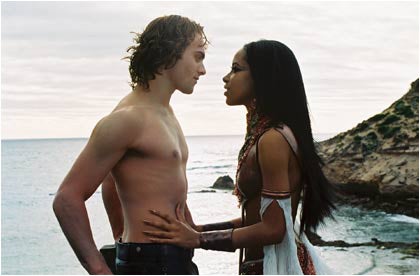
The Ancient Egyptians worshiped a number of gods and goddesses, each of whom had different roles or functions, as well as a variety of creations myths. In keeping with the complex and varied nature of their religion, the Ancient Egyptians had several theories of the creation of the Universe. These creation myths evolved in the country’s major cult centres and usually concentrated on the role played by local gods. Ancient Egyptian theology rarely engages with the notion of the end of existence. Where it is mentioned, it is imagined as an apocalyptic destruction followed by a return to the state of the Universe before time began, in which only the gods Atum and Osiris survive. Along with the Sun god, Ra, Osiris, the primary god of the dead, was one of the most important deities in the pantheon. In Ancient Egyptian mythology, Osiris was killed by his evil brother Seth, and his dismembered body was mummified and resurrected by his wife, the Goddess Isis. During the Old Kingdom (2686-2181 BC), the deceased pharaoh was identified with Osiris and was believed to experience rebirth in the same way that the murdered god did. During the First Intermediate period (2181-2055 BC), however, it seems that it became possible for commoners to be resurrected in the manner of Osiris, as a sort of ‘democratization of the afterlife’ took place. Mummification was designed to make the deceased resemble Osiris as much as possible, in the hope that this would ensure eternal life in the underworld. Osiris presided over the weighing of the Heart ceremony in the afterlife. In this ritual, the deceased made the negative confession, swearing that they had not committed any of a list of offences, then their heart was weighed against the feather of Maat, symbol of truth and harmony. Osiris judged the results of the ritual and was responsible for deciding whether the deceased was worthy of resurrection.

The Winchester Mystery House

Meet talkative ghosts at The Winchester Mystery House and learn the heartwarming story of a child ghost who lingers with today’s patrons. https://winchestermysteryhouse.com/

Hope is a Charming Passion—The Only Reason Friend of Human Thought
Love, the gay child of sympathy and esteem, is, when attended by delicacy, the only happiness worth a reasonable human’s pursuit, and the choicest gift of Heaven. We do not and cannot see our World as a theater of conflict between supernatural powers, the demonic seeking to possess and destroy us, and God intervening to secure our salvation. Moreover, miracle stories lie at the very heart of New Testament belief: If Christ be not raised, your faith is vain (I Corinthians 15.17). Thus, the crucial question is: must a human, in order to be a Christian, commit oneself simultaneously to two mutually incompatible World pictures—that of twentieth century science and that of the first-century prescientific speculation? To attempt this is to make Christian belief unnecessarily difficult. It is equally unrewarding to view Christianity as a strictly and objectively historical religion and anxiously to sift all the evidence for and against the recorded events of the life of Christ. The evidence is substantial enough to show that Christ indeed lived and that he made a quite extraordinary impact upon certain contemporaries. #RandolphHarris 1 of 8
However, if religious faith is to stand or fall with the historicity of, say, the birth stories of the Easter narratives, if its degree of assurance must rationally be tempered with the historical probabilities, the assurance will be pitifully uncertain, and faith will almost certainly fall. Some people may properly grant that a very large part of the New Testament message is couched in mythical language and does not record objective history. This mythical material is not, however, an embarrassment, and it need not be discarded. It can be interpreted as indirect description not of the cosmos but of the conditions and possibilities of human existence. Historical studies derive their real seriousness not from sheer factuality but from what they discover about viable ways of life and viable options for human decision. Among such options, the Christian gives pre-eminence to that displayed in the accounts of the cross and the resurrection. For it is through these that God makes available a distinctively authentic and free mode of existence to all humanity. It is also believed that freedom is a privilege, not a right. #RandolphHarris 2 of 8

The only way one will have freedom is by obeying conditions and these conditions are both supernatural and human. The rules of God state that we must be good people and have right actions and thought and we will go to Heaven. The human laws state that we much behave sane and obey the laws to keep our privilege of freedom. What happens when we enter into the inner sense of the World? We leave the World of space and enter into the World of movement; the noun World is transformed into a verb. As spatial location is itself a quality of things, so motion from place to place is an objective fact. Our Sun is a star, and all of the stars give out without taking in. The aim of our soul is to increase porosity on the side of giving out and to reduce it on the side of taking in. A human being in this aged nation of ours is a very wonderful whole, the slow creation of long interchanging influences; and charm is a result of two such wholes, the one loving and the one loved. However, all humans almost are villains in their hearts because we feel inauthentic life in and after the flesh, the life of the natural human who is alienated from God. #RandolphHarris 3 of 8

How Hell should become by degrees so natural, and not only tolerable but even agreeable, is a thing unintelligible but by those who have experienced it. The idea of eternal life is Hell is totally scary and this should be enough motivation for people to be good. Habit hath so vast a prevalence over the human mind, that there is scare anything too strange or too strong to be asserted of it. On the authentic type of existence, there is a total acceptance of the fundamental conditions of our life. This involves, for any human, a realization of one’s own death, not as some vague, unpleasant, but indefinite future event, but as something whose constant presence, in possibility, should modify one’s sense of one’s own existence at every moment. Christianity, too, speaks, of renouncing the World and a life entangled with the World, of dying to the life of self. It has, however—or ought to have—some very different thing to say about life eternal. People should see and accept the limitations on our freedom imposed by the given circumstances of our lives as so far lived (facticity); one sees the present moment as the locus of decision, and it is in the future that one will work out those authentic possibilities of existence for which one decides. Earth should not look like a halfway house. #RandolphHarris 4 of 8

God speaks in a way that overwhelms us by revealing the depths of our ignorance. We show our ignorance of Him in the very way we decide to serve Him. Are we worshipping God in a way that will raise us up to where we can take hold of Him, having such intimate contact with Him that we know His mind about the ones for whom we pray? If we are not heedful and pay no attention to the way the Spirit of God works in us, we will become spiritual hypocrites. We see other people failing, and then we take our discernment and turn it into ridicule and criticism, instead of turning it into intercession. Such projects are the manifestation of a crude and vulgar optimism that springs us from the arrogant and egotistical assumption that our time is the consummation of all time and tended to justify the crimes and disasters of previous ages as necessary to the promotion of what came afterward. The role of moral judgment in history and life cannot be spirited away in this complacent manner; but neither, on the other hand should we allow our views of the past to be distorted by moral predilection peculiar to our own time and society. #RandolphHarris 5 of 8

Be careful that you do not become a hypocrite by spending all of your time trying to get others right with God before you worship Him yourself. What is above all requisite for true historical understanding is a contemplative, disinterested sense of the abiding and tragic aspects of human existence. Only through such detachment from prevailing concerns and preoccupations could the historian transcend the barriers that separate the mental life of one age from that of another. It is not merely that work of art and culture that has provided us with the most fertile material for interpretation of previous phases of human experience; history itself was (or should be) a form of art. The mechanical piling up of the results of specialized research, dear to so-called scientific historians, is not enough; there must also be intuition, an imaginative ability to re-create the vision of life underlying the relics left by former times. Remember our way back to God takes a lot of work. When are born into the World, we sometimes forget our Godly ways, much like people with much like people with Dementia forget the World around them. #RandolphHarris 6 of 8

The Bible is a way for us to get back to God, much like how in the Netherlands, a radical idea is being tested. There are self-contained villages where people with dementia show, cook, and live together—safely. The village has things that will remind the Alzheimer’s suffers of the World they grew up in, there are Victorian houses, telephone booths, clock towers, cobble stone roads, and the village is closed to the outside World with gates and security fences. To see the past in these terms is to see it as the expression of the inexhaustible creative power of the human mind—great individuals, great artistic achievements, great moments of civilization all exemplified in different ways its potentialities. So, this is how building and restoring your own faith in God will protect you from ways that are ungodly, it will surround you with God’s armor. Scholarship, painstaking investigation, are indeed essential, and they must be properly used and directed. #RandolphHarris 7 of 8

Only thus could a particular source or authority throw light on the character of a person, the significance of a style, the pervasive atmosphere of a period. My experiences are not worth anything unless they keep me at the Source of truth—God. Be relentless and hard on yourself if you are in the habit of talking about the experiences you have had. Faith based on experience is not faith; faith based on God’s revealed truth is the only faith there is. A new creed became mine—a belief in happiness. The wise order of providence has ordained that we shall makes others happy in being so ourselves. The happiness of some lives is distributed pretty evenly over the whole stretch from the cradle to the grave, while that of others comes all at once, glorifying some particular epoch and leaving the rest in shadow. I believe in some blending of hope and sunshine sweetening the worst lots. I believe that this life is not all; neither the beginning nor the end. I believe while I tremble; I trust while I weep. #RandolphHarris 8 of 8

The Winchester Mystery House

The brave and the fearless will find all the contact information and tour options they need to tour The Winchester Mystery House. https://winchestermysteryhouse.com/

HXPF GFBMCZ FUEIB: The Souls of the Celestial Spheres
Sin has really become an instrument most effective in the education of intellect and soul. The notion that magic and witchcraft have some relationship with rationality or science managed to reach some and form an advocacy of a new religion based on love, art, magic and mathesis. Some believe magic has an impact on belief, thought, and behavior. Magic takes a sort of professional pleasure in profaning holy things; in its rites, it performs the contrary of the religious ceremony. On its side, religion, when it has not condemned and prohibited magic rites, has always looked upon them with disfavor. Witches were thought to be dangerous without knowing it; their witchcraft was made active simply by feeling of resentment or grudge. The accusation attempted to regulate the situation by vindicating one and condemning the other rival. Since witches do not necessarily know that they are such, acts of witchcraft are often unwitting. Thus, in a consideration of witchcraft, the only evidence that has occurred is that an accusation is made and sustained (usually by oracle).

Many people also believed that cartoons like He-man and TV shows like Supernatural and the Vampire Diaries are used to sneak in evil and indoctrinate the population. However, some believe that TV shows, which display occult symbols and rituals are necessary because they are culturally relevant. And furthermore, not to attack reporters and the news, because some do excellent, but many people feel the news is evil and drains their energy because some reporters habitually lie and steal confidential information and illegally leak it and distort it. It is rumored that some news anchors make speeches in praise of the devil, and that they read their own beliefs and attitudes into their works. Whereas, TV shows like Supernatural and The Vampire Diaries give a deep magical insight into nature and their work is illustrated with magical diagrams, representing mathesis, and they outline a movement of tolerance and general philanthropy which is to replace sectarian bitterness.

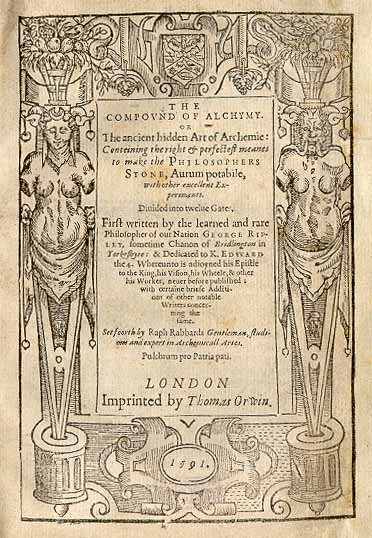
Reformation and acceptance of other cultures and religions is important because in August of 1591, Italian Philosopher Giordano Bruno (1548 – 1600) taught occult procedures. He was arrested in Venice and thrown into the prisons of the Inquisition. At the end of the Venetian trial, he recanted his scripts, but was sent to Rome for another trial, remined in prison for eight years, at the end of which he was sentenced as a heretic (having refused, this time, to recant) and was burned alive on the Campo de’ Fiori. Many believed the Giordano Bruno was burned alive because he was an Egyptian magician, who had been propagating throughout Europe some movement of nature of which remains mysterious, although it may be connected with the origins of Rosicrucianism and of Freemasonry. Giordano Bruno was actually Italian, but at an early age he entered the Dominican order and become an inmate of the Dominican convent in Naples. However, his philosophical views in themselves can have had little to do with the condemnation.
In reality, although many condemned Giordano Bruno and labeled him as a confused thinker, his philosophy, his magic, and his religion can all be seen as forming part of an outlook on nature and on humans which, however unusual, is nevertheless perfectly coherent within its own premises. Giordano Bruno gave public lectures that attracted King Henri III, and published two books on the art of memory, and he also appeared as the martyr for modern sciences and the Copernican theory. As a result, statues were erected in honor of Giordano Bruno by anticlericals in Italy. Many errors can be made by novice who judge things based on their limited information much like in art criticism. If we interpret a painting in light of its context, then try to interpret the context in light of the painting, we are in grave danger of finding only confirmation for our prior beliefs about the painting and the historical context.

There are two kinds of magic. The first is practiced by those who unite themselves to demons by a specific religious rite, and, relying on their help, often contrive portents. This, however, was thoroughly rejected when the Prince of this World was cast out. However, the other kind of magic is practiced by those who seasonably subject natural material to natural causes to be formed in a wondrous way. Nature gives to the bodies an appetite and tendency through which they would desire the lower places and give them, in addition, gravity and cold as means through which they can descend to the desired place [the center of the World]. It gives to the subtler ones the desire for the higher place and added lightness and warmth as means through which they would reach the desired ends. The present state of the World represents a transitory process limited at both extreme by the moments of creation and of Last Judgment.

As to the human soul, it too has faculties and movements, often expressed as appetites: the natural appetite of the human intellect and will is directed toward the infinite true and good only that is, toward God, as its ends. Again, the whole attempts of our Souls is to become God. This attempt is no less natural for men than the attempt to fly is for birds. For it is inherent in all humans always every everywhere and therefore follows, not a contingent quality of an individual, but the nature of the species itself. Therefore, witches do believe in God and if many of them have no idea that they are witches, we cannot condemn them. Last night, I had a dream that there were a series of explosions and my body started shaking and the room with filled with smoke, then my feet started to fly towards the Heavens and my head was toward Earth. So, I was vertically levitating upside down. There seems to be a parallelism between the Soul and fire, because both tend to rise to the tops of their respective spheres. Thus, the several frenzies constitute a rising series, or rather, a set of rungs on the ladder up to God.
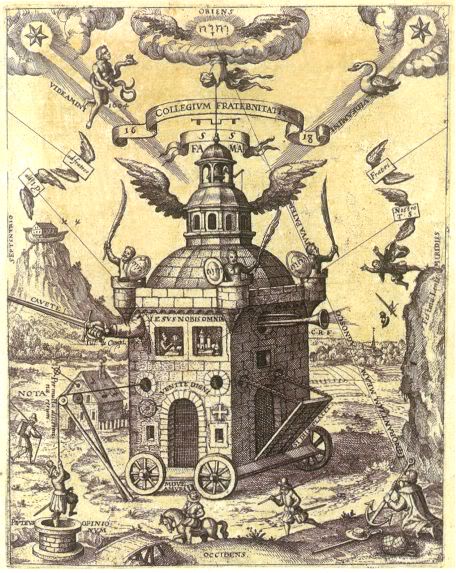
The end of fire is the concavity of the last Heaven. Therefore, if there were no obstacle each flame would fly up to that place, and when it reached that concavity, if it had sufficient extension, it would extend itself throughout that whole concavity in order to enjoy entirely what is natural to it. The goal and the end of the mind is the true and good itself: God, there it runs by an essential instinct like fire. The technique was to assist the soul’s cleaving to God, purifying and elevating the magician toward the divine. Second, through such elevation, the magician gains powers over the angels and ministering forces, and can manipulate them to produce Worldly erect. The higher magician rises through the spheres and the divine world, the more powerful the angels which can be thus manipulated; furthermore, such manipulation binds the magician to the superior nature of the angel, aiding further ascent. No magician can control spirits whose status is higher than one’s own, therefore the manipulation of the angels is both proof of purity and an instrument for achieving the divine union. The radical promise of ceremonial magic is fulfilled: demonic magic leads the soul to God.
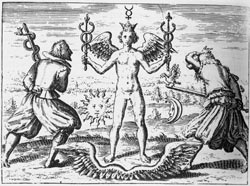
It appears that each form of frenzy induces the soul to rise to the appropriate sphere. The dream represents the soul being diverted to the mind, the supreme part of itself, and makes it fit and pure temple of the gods, in which the divine spirits may dwell. The divine spirits here are angels in the narrow and superior sense, such as Archangels Michael, Uriel, Raziel, and so forth; such angels sometimes speak prophecy through human mouths, and the soul is filled with felicity, wisdom, and oracles. And the ceremonies consist in observing cleanliness, and purity, of mind, then body, and those these which are about the body. And that is why some people cannot have the sex nor eat pork, nor do drugs. Some people believe that Giordano Bruno used conducive magic, and made a leap upward though the spheres in an ascent to his new Universe, on the ladders of occult sympathies running through all nature. With magic and divine rites, he ascended to the height of the divinity.
Giordano Bruno bold explorations of the inner World may become important to the historian of psychology. He was moving under laws placed in the Universe of God, who is not a magician, but a mathematician and a mechanic. Giordano Bruno used his extraordinary vision of an immensely expanded Universe, ruled by laws of magical animism. He became an outstanding figure, the old legend of the martyrdom of the advanced thinker and gravity substituted for the psychic life of nature as the principle of movement. Seeing every power and virtue is from above, from God, from the intelligences and stars, who can neither err nor do evil. You do not know, for you could never learn it from your own heart, which is all purity and rectitude, what a mixture of good there may be in things evil; and how the greatest criminal, if you look at his or her conduct from their own point of view, or from any side point, may seem not so unquestionably guilty, after all.
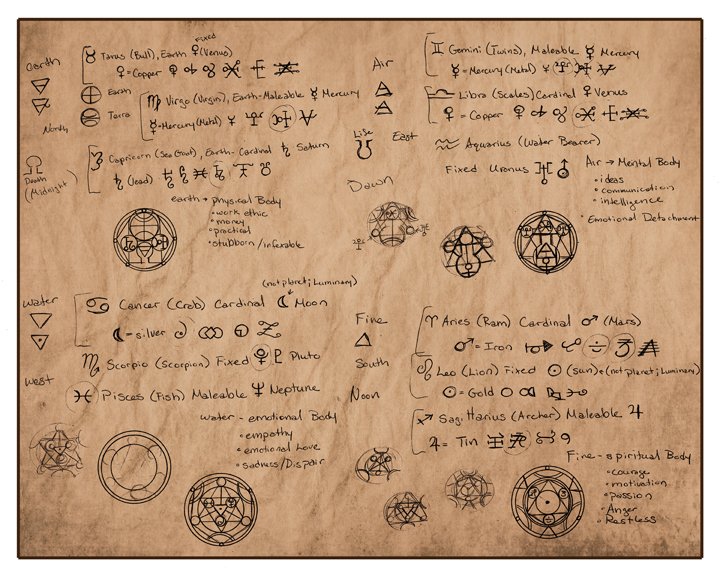
Thought of an American Radical—Early, Middle, and Latter Life
All power ultimately comes from God; he alone has absolute sovereignty. The American Constitution is more nearly perfect than others because it recognizes the existence of the Creator and of God-given rights of individuals, which the government is bound to respect and protect. Society is based on communication, which is itself a form of mathematical action. Why have we the power of speech, but to communicate our thoughts? What is ordinarily called communicating one’s thoughts actually amounts to influencing the actions of another, although sometimes a deeper communication of souls is approached. What is expressed is a judgment about certain human experiences, certain sensations or emotions or desires. That is a moral feeling; and a judgment is made that ascribes a property where people consider what is fitting to approve or conducive to social stability. If nobody was suffered to speak till one had something to say, what pains everybody would take to know something independent of the speaker’s opinions, desires, or feelings.
Our desire for anything is always in proportion to the difficulty which attends the attainment of it. intellect life begins with temporal perception, in which the self-separates experiences from each other and distinguishes itself from them. The falling apart of a life moment into two qualitatively different things, of which the one withdraws before the other and nonetheless is held onto memory. By assuming that a part of our psychic function is unexplainable through purposive ideas, we ignore the realms of determinism in our mental life. Do not forget one thing concerning your conduct in life. It is impossible to compose nonsense intentionally and arbitrarily. Mathematical consideration makes possible the use of means: one produces a phenomenon which will be followed in a certain repeatable series by a desired phenomenon which cannot be directly reproduced. This makes the pursuit of instinctual satisfaction more efficient. To suppose that a cause is something more than the antecedent of an invariable consequent is to suppose that we might know all the unfailing regularities of nature and yet have no conception of a causal connection.
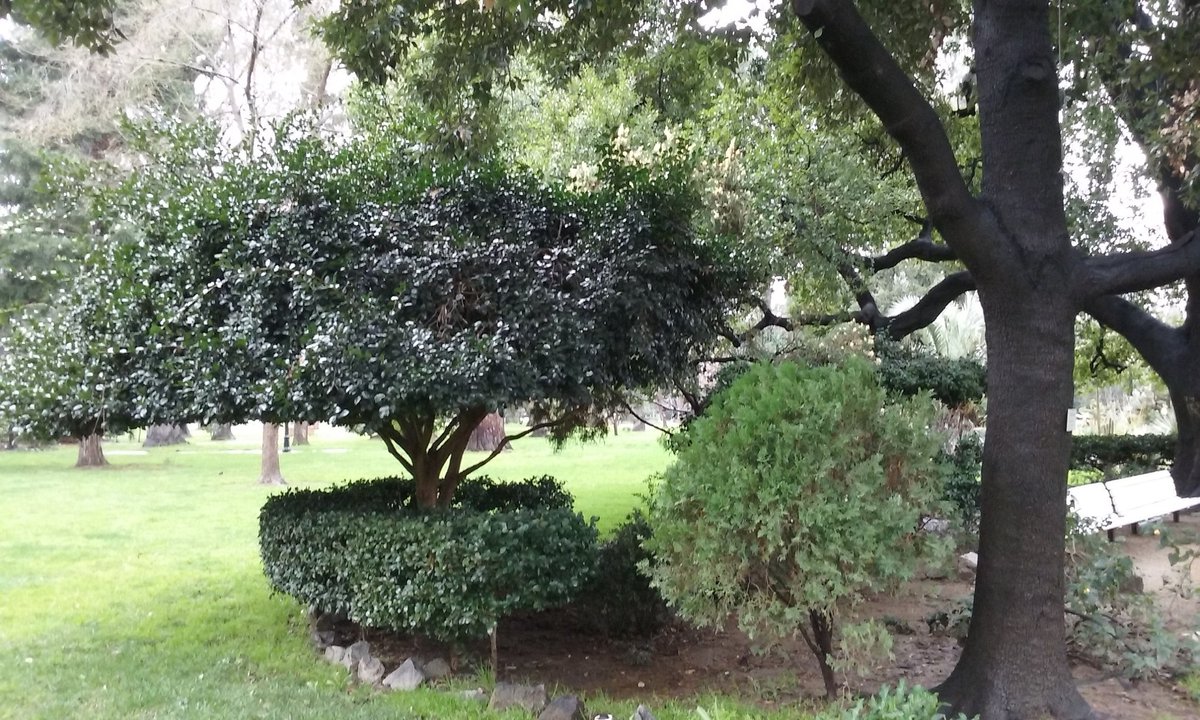
The omnipotence of God resides simply in the fact that whenever he wills anything, his will is immediately and invariably followed by the existence of its object. Experience (coupled with a kind of negative insight) enables us to see that the causal relation is merely one of sequence; but on what authority do we import the notion of invariableness into this sequence? Perhaps some people suffer from a form of epilepsy which does not manifest itself in fits, as the general cases do, but rather in peculiar psychic actions which may last for a few minutes, hours, or perhaps for weeks, months or years. There was once a patient he had shot at someone’s car, burned a railroad station, a church, and several barns. He would run away from home, his wife, and children, and wander off, scot-free, when one of these fits of psychic epilepsy afflicted him. He was an editor of a journal and newspaper, a man of considerable intelligence and refinement. During one of his fits, he ran away from his country, and when he came to himself, he was quite surprised to find himself in American and did not have the least idea how he got here.
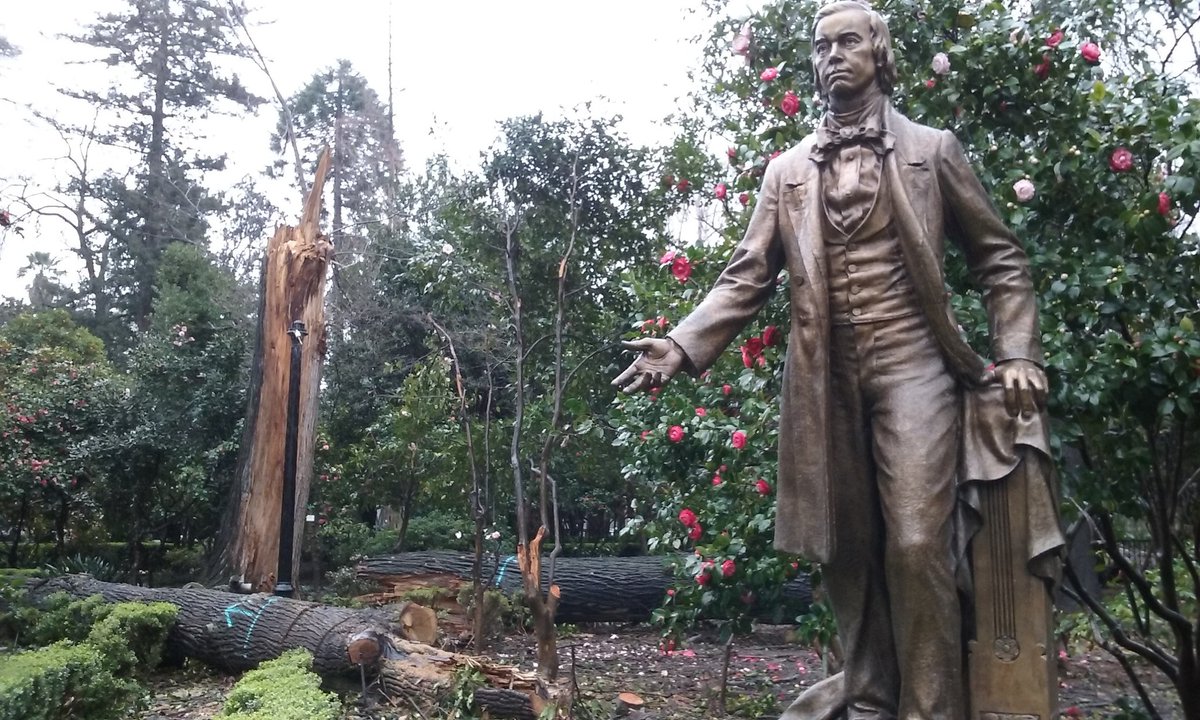
Previous experience told him, however, what his condition meant and upon reporting it to the physicians, he sent a cable to his wife and returned him. He gave us various details about himself, the hospital where he found himself last, his former doctor, all of which we were soon able to corroborate. He had what he called a fugue or poriomania. Causes like this have been reported where the person disappeared for as many as three years. Indeed, they are not as rare as you may suppose. Mystery vanished from the will: will is an amalgam of desire and the belief that one has it in one’s power to realize the desire; there is no further, indefinable operator in their voluntary actions. Denials of the identity of will and desire is what causes a psychic epilepsy. I went to bed disheartened and thoroughly disgusted with the whole affair. At about four o’clock in the morning, I awoke and made a supreme effort to dismiss it from my mind, but in vain. When people suffer from psychic epilepsy, they may desire what they do not will, and will what they do not desire. Everyone congratulated diagnosis me on my cleaver diagnosis, and I was greatly elated.

The superintendent assured me that I had all good reason to be proud of myself. I was simply there to see that there was no confusion, that things were carried out properly. There were often forest fires near the hospital and on many occasions, we had to go out and check them lest they reached our buildings. The particular scene was on a Friday; there was a big fire near the hospital and we had to send out as many doctors and nurses as we could possibly spare to help control it. I was chatting with a physician who was with me in the same capacity. The fire was consuming a good deal of scrub pine; and now and then, an attendant would succeed in shooting one of the rabbits that were fleeing from the brush wood. This may seem strange to you, but that is exactly the way the mind works unconsciously. When the types of situations are looked at more carefully, the opposition is seen to lie between desire and desire, and to be terminated by the desire upon which action immediately depends.

Unlawful desires are punished after the effect of enjoying; but impossible desires are punished in the desire itself. The examination of consciousness, which provides data for the philosophy of mind is not conducted by consciousness. Entities are having being multiplied beyond necessity and, in this case, beyond possibility. Consciousness is not a surveyor of the mind’s various states as they occur; rather, it is constituted by them. To suppose that the same individual mind could exist at the same time in two different states, one of them an object to the other is what produces this psychic epilepsy. Basically, a person is born with fully matured powers and a completely blank mind. Let that individual be allowed a single sensation. This will be one’s total consciousness. Let a second sensation be added and let one be made to recall the first, one will then come to a recognition of something different from either—of oneself as their common subject. The conviction that humans exist with an absolute identity through time is intuitive and irresistible; only the circumstances in which it arises afford matter for inquiry.
This identity is the prerogative of our mind; some sort of identity of the body is associated with it in our ordinary ideas about the sameness of person. We need to determine what drew this offender to the area, was it the victim or the building? His general problems were to explain how he came to know of the existence of an external, physical World and to specify the precise content of this knowledge. He was very conscious of the danger of question-begging assumptions; he maintained that at every turn he took externality for granted, and that all of his language implies it. He needed to be reminded that he had long ago passed the years of youth, he is no longer a young man no matter how much he spends on a plastic surgery face mask, and hair plugs, and that stealing the identity of a young man and trying to kill him will not allow him to recapture his youth. What the motive was that lead this man to this memory failure is strange and puzzling, but he surely suffers from psychic epilepsy. His youth has come and gone and he cannot keep harassing this young man and trying to rob him of his life and identity. Despair will drive to anything an individual whose sense of shame is stronger than that of guilt. This man expects to be sneered at and he thinks it is the fault of his elevated situation, and not of himself.

Person and Reality

God maintains constant and growing, though never complete control of the given. Nature has formed our ears open; but enabled us to shut up our mouths. Truth pertains to the judgment of the person who judges correctly…hence, it pertains to the person who judges with evidence would assert. Proof must be built up stone by stone. The end crowns the work. It is not enough that Justice should be morally certain; it must be immorally certain—legally, that is. A true judgment is a judgment that cannot contradict an evident judgment. Thus, true in it is true that God exists, may be used to express apodictic rejection of evident rejectors of God. It is not both true and false that God exists may express apodictic rejection of collectives consisting of evident acceptors and evident rejectors of God. True may be used to express agreement and, at times, it is simply redundant. The assumption that there can be absolute chance is self-contradictory and indeterminism (the state of being uncertain or undecided) is incompatible with the existence of human responsibility. Divine nature is God’s will and neither created nor necessarily approves.

However, we have the freedom of will in that we are able to bring about some of the things we desire to bring about and are able to deliberate and then to decide accordingly. Moreover, we can will to will in that, at any given time, there are things we can do that will affect our volitions at some later time. Feeling does not stay to calculate with weights and a balance the importance and magnitude of every object that excites it; it flows impetuously from the heart, without consulting the cooler responses of the understanding. Since knowledge involves reference, it is always hypothetical and tentative. Coherence is not as formal as consistency, but as a principle for interpreting experience: a statement or a set of statements is true to the extent that it organizes and orders experience. Reality is a society of person: the ultimate (uncreated) Person and finite (created) persons. Reality is thus not nature, but history. While our social critics attack the highly visible and denounce them as undeserving of their tremendous salaries, power, privileged, and control over society’s opinions, what these critics really seems to be angry about is that they themselves does not control the process.

Critics of celebrity culture will never be able to control image formation. The root causes of why people want—indeed, need—celebrities are so basic as to render the critics’ complaints superfluous. The public choose to worship Ryan Phillippe and not the editor of some newspaper and that is not necessarily destructive or damaging. It is, to the contrary, often valuable and certainly worth understanding. So great is the value of visibility that the manufacturing and marketing of celebrities now reaches into business, sports, entertainment, religion, the arts, politics, academics, medicine, and the law. Visibility is what every aspiring news reporter wants, what every professional seeks. It is the crucial ingredient that can make lawyer X the most sought after in town, talk show host Y the most popular in the village, and surgeon Z the most highly paid in his or her city. This is the potential of industrialized celebrity manufacturing, the unimaginable in any other age—and compensating that individual with unimaginable rewards. Today, there is a whole industry that manages the business of transforming unknowns into celebrities, changing virtually every element of personality, appearance, and character that is possible to change. They are manufactured, just as are cars, clothes, and computers.


Human Nature is Rarely Uniform
‘Love must be sincere. Hate what is evil, cling to what is good. Be devoted to one another in brotherly love. Honor one another above yourselves. Never be lacking in zeal, but keep your fervor, serving the Lord. Be joyful in hope, patient in affliction, faithful in prayer. Share with God’s people who need. Practice hospitality. Bless those who persecute you; bless and do not curse. Rejoice with those who rejoice; mourn with those who mourn. Live in harmony with one another. Do not be proud, but be willing to associate with people of love position. Do not be conceited. Do not repay anyone evil for evil. Be careful to do what is right in the eyes of everybody. If it is possible, as far as it depends on you, live at peace with everyone. Do not take revenge, my friends, but leave room for God’s wrath, for it is written: It is the Lord’s to avenge; He will repay. If your enemy is hungry, feed him; if one is thirsty, give one something to drink. In doing this, you will heap burning coals on his head. Do not be overcome by evil, but overcome evil with good. There is hardly a greater difference in intellect between angel and human, than there is between human and human.
The World is in conspiracy to drive out what little wit God has given us. The causes of violence, like the causes of poor health, do not usually begin in the body. They pass through it, and the marks they leave are often subtle and vague. Sometimes the illusion of knowing is more dangerous than not knowing at all. For everything that was written in the past was written to teach us, so that through endurance and the encouragement of the Scriptures we might have hope. Many the God who gives endurance and encouragement give you a spirit of unity among yourselves as you follow God, so that with one heart and mouth you may glorify the Lord. Not being reconciled to the fact of sin—not recognizing it and refusing to deal with it—produces all the disasters in life. In your human relationships and friendships, have you reconciled yourself to the fact of sin? If not, just around the next corner you will find yourself trapped and you will compromise with it. However, if you will reconcile yourself to the fact of sin, you will realize the danger immediately. I have the person in whom kindness produces no responsive affection, and injustice no swell, no glow of resentment. The knowledge of all law goes but a little way to the discerning the justice of the cause.
The World, being in the constant commission of vast quantities of injustice, is a little too apt to comfort itself with the idea that if the victim of its falsehood and malice have a clear conscience, one cannot fail to be sustained under one’s trials, and somehow or other to come at last; in which case, though we certainly do not expect it—nobody will be better pleased than we. Whereas, the World would do well to reflect, that injustice is in itself, to every generous and properly constituted mind, an injury, of all others the most insufferable, the most torturing, and the most hard to bear; and that many clear consciences have gone to their account elsewhere, and many sound hearts have broken, because of this very reason; the knowledge of their own deserts only aggravating their sufferings, and rendering them the less endurable. Error and evil are not harmonious and hence are not real, but it is equally clear that they are not nothing. Although error and evil are discordant and hence not real, it is possible that they contribute to the harmony of the whole, and if this is possible then we must conclude that it is so even though we do not know how it is possible. For what is possible, and what a general principle compels us to say must be, that certainly is.

The Winchester Mystery House
REPLETE with secrecy and evocative of dread, The Winchester Mystery House looms large in the field the of supernatural. https://winchestermysteryhouse.com/
Blood of Gold and Empty Pockets

Thousands of rivers separate us and millions of mountains are boundless. I can only trust my missing to cloud, may you find a happy life and come back with a successful story. Like a slave longing for the evening shadows, or a hired man waiting eagerly for his wages, so I have been allotted months of futility, and nights of misery have been assigned to me. When I lie down, I think “How long before I get up?” The night drags on, and I toss till dawn. My days are swifter than a weaver’s shuttle, and they come to an end without hope. Remember, O God, that my life is but a breath: my eyes will never see happiness again. The eye that now sees me will see me no longer; you will look for me, but I will be no more. As a cloud vanishes and is gone, so he who goes down to the grave does not return. He will never come to his house again; his place will know him no more. Therefore, I will not keep silent; I will speak out in the anguish of my spirit, I will complain in the bitterness of my soul. To know intense joy without a strong bodily frame, one must have an enthusiastic soul. #RandolphHarris 1 of 7
We look at each other at the time of departure. I have a lot of words to tell you, but I am speechless. The time we share is more valuable when we have to depart. I want to keep each image in my heart so that I can recall the memory when I am free. I hope that we cannot be strangers and can shake hands recalling the beautiful memories ten years later. The difference between reality and a semblance of reality is extreme. Those are, in truth, separate realities—one immediate, vivid, substantial; the other faint, insipid, spent. In the days when we were together, you affected me with your laughter, and in the days when we were apart with love. Whether I take a stroll in the woods or mediate in the light, I feel as if I were always accompanied by you. The residue of others’ experience is inadequate for one’s own sustenance. If we feed our lives on the leftovers from others’ presence, the thinness of the diet makes for leanness in our soul. Indeed, I know that this is true. However, how can a mortal be righteous before God? God judges of humans by what they are at the period of arraignment, and, whatever be their crimes, if they have seen and abjured the folly of those crimes, receives them to favor. #RandolphHarris 2 of 7

Judgement is concerned with truth, and mere interjections do not claim to be true; but there are rudimentary judgment of quasi-interjectional type, such as “How ugly!” or “Oh, horrible!” such impersonal judgments as “It rains” takes us still further along the road of developing thought, and demonstratives takes us still further. “This” is always so by relation to “that,” so that demonstrative lead on to comparison; and as comparison is made more exact, it leads on to proportion and measurement. The series diverges, one route being that taken by the concrete or categorical series and the other by the abstract or hypothetical series. Along the first route there are singular judgments and those are called generic judgments, in which a kind is regarded as real, as when we say “Humans are mortal” or “Water boils at 212 degrees Fahrenheit. Along the second line of development there are the various types of abstract judgement, such as “Heart is a mode of motion” or “7 + 5 = 12,” in which the emphasis is on necessary connection rather than on concreteness. #RandolphHarris 3 of 7

Take the whole populace for a judge, and one will wait for a unanimous verdict. The two series converge again in the hypothetical judgment, and the whole culminates in the disjunctive judgment, which we regard as the most adequate form. The reason for this is that it combines the concreteness of the categorical series with the necessity of the hypothetical series. The various disjuncts, in this view, reveal a system in which every member has its distinct place. This is further illustrated by such examples as triangles are either scalene, isosceles, or equilateral. There are also functions within a social order of the sort which, if an individual exercises one of them that person does not and cannot exercise any of the others: if a person is king, he is not subject; if he is judge, he is not prosecutor. There is a great stress laid on the intermediate and transitional forms. Furthermore, just as we minimize the difference between judgment and inference, so we minimize the difference between deduction and induction. Many people hold it together because others base their feelings for hope and joy on them. The World can judge of other better than it can act itself. Furthermore, an error against judgment is worse, infinitely worse, than an error in judgment. #RandolphHarris 4 of 7

Knowledge is [God’s] plaything. We hold that knowledge advances neither by generalization from particulars nor by the elimination of hypotheses. Inference, in this view, depends upon the existence of systematic connections, and neither mere counting nor mere discarding can reveal these to us. What is needed is depth and complexity of insight into a sub-system of the World and the word “induction” is used when our points of contact with the real World are isolated perceptions, occurrences or qualities. However, the aim of all inquiry is to break down this isolation and to show how the elements of a system must be what they are. Thus, as knowledge advances, the aspect of contingency is less prominent, mere facts or mere observations play a vanishing part, and we come to see that things must be as they are. People say that is not light, it is only pain, but it is under your Sun I want to be. It is because the spirit is inestimable that the lifeless body is so little valued. The human spirit, however, does not perish of a single wound, nor exhaust itself in a single trial of life. #RandolphHarris 5 of 7

Once someone or a group of people invades your privacy and steals information they should not know and distorts it, no one can ever forget the things that they have heard. And regardless of if they are true or not, it changes perceptions people have of you more than the perceptions of the people who are breaking the law. Issues raised by human pain are cognitive and experiential. We are driven to understand what is happening. In our attempts to understand, we find ourselves dealing with individual as well as Universal expressions of the human pilgrimage. We look to ourselves and we look to others. Even more, we look to the Universe, what it is about, how it works, what lies at its heart. Immediate concerns inevitable merge with ultimate concern. What happens to others happens to us; what happens to us happens to others. Human pain intensifies human meaning with special poignancy. We have to make sense of that which seems senseless. Such understanding requires our personal participation in pain. No one can ever buy back their privacy, times, nor dignity no matter how much money they have. There is a continuity between ourselves and others that specific stress cannot obscure. #RandolphHarris 6 of 7

I am in the other and the other is in me, even though in any number of specific respects we are obviously different. Slander is a painful experience. We remember insults and injuries best: The adrenaline that we secrete to defend against potential threats helps to engrave those incidents into our minds. Even if the content of the remarks fade, our dislike for the people who made them usually persists. When we experience something terrifying, we will retain an intense and largely accurate memory of the event for a long time. Our bodies and brains function on our behalf and the crucial demands we personally face when we venture to respond to pain. Confronted with horror—especially the horror of inescapable sock—the system becomes overwhelmed and breaks down. We have to learn how to transform alienated pieces of our experience into energizing elements for our own and others’ becoming. The process of sensory awareness results in more aliveness. We are in touch and aware of our experiences. However, when emotions are bottled up inside, the body is physically restricted. #RandolphHarris 7 of 7

 Randolph Harris II International Institute