
Home » news (Page 16)
Category Archives: news

One Who Treads Softly Goes Far

For man the emanations of light and heat from the sun were the archetypes of all miraculous power. And then various idols came into the heathen World. Say, Muse, their names then known, who first, who las, roused from the slumber on that fiery cough, at their great emperor’s call, as next in worth came singly where he stood on the bare strand, while the promiscuous crowd stood yet aloof. The chief were those who from the pit of hell roaming to seek their prey on Earth, durst fix their seats long after next the seat of God, their altars by his altar, gods adored among the nations round, and durst abide God thundering out of Zion, throned between the Cherubim; yea, often placed within his sanctuary itself their shrines, abomination; and with cursed things his holy rites, and solemn feasts profaned, and with their darkness durst affront his light. First Moloch, horrid king besmeared with blood of human sacrifice, and parents’ tears, though for the noise of drums and timbrels loud through for the noise of drums and timbrels loud their children’s cries unheard, that passed through fire to his grim idol. Him the Ammonite worshipped in Rabba and her watery plain, in Argob and in Basan, to the stream of Utmost Arnon. Nor content with such Audacious neighbourhood, the wisest heat of Solomon he led by fraud to build his temple right against the temple of God on that opprobrious hill, and made his grove the pleasant valley of Hinnom, Tophet thence and black Gehenna called, the type of hell. Next Chemos, the obscene dread of Moab’s sons, from Aroer to Nebo, and the wild of southmost Abarim; in Hesebon and Horoanim, Soen’s realm, beyond the flowery dale of Sibma clad with vines, and Eleale to the Asphaltic Pool. #RandolphHarris 1 of 21

Peor his other name, when he enticed Israel in Sittim on their march from Nile to do him wnton rites, which cost them woe. Yet thence his lustful pleasures of the flesh he enlarged even to that hill of scandal, by the grove of Moloch homicide, lust hard by hate; till good Josiah drove them thence to hell. With these came they, who from the bordering flood of old Euphrates to the brook that parts Egypt from Syrian ground, had general names of Baalim and Ashtaroth, those male, these feminine. For Spirits when they please can either gender assume, or both; so soft and uncompounded is their essence pure, not tied or manacled with joint or limb, nor founded on the brittle strength of bones, like cumbrous flesh; but in what shape they choose dilated or condensed, bright or obscure, can execute their airy purposes, and works of love or enmity fulfill. For those the race of Israel oft forsook their Living Strength, and unfrequented left his righteous altar, bowing lowly down to bestial gods; for which their heads as low bowed down in battle, sunk before the spear of despicable foes. With these in troop came Astoreth, whom the Phoenicians called Astarte, queen of heaven, with crescent horns; to whose bright image nightly by the moon Sidonian virgins paid their vows and songs, in Sion also not unsung, where stood her temple on the offensive mountain, built by that uxorious king, whose heart though large, beguiled by fair idolatresses, fell to idols foul. Once you admit that a man can become one with the sun, it follows that the actions of the one are the actions of the other, that the king himself in his person, will vivify the Earth. Life, prosperity, health—these are the timeless and universal hunger of men. #RandolphHarris 2 of 21

When it comes to focused interaction, once a set of participants have avowedly opened themselves up to one another for an engagement, an eye-to-eye ecological huddle tends to be carefully maintained, maximizing the opportunity for participants to monitor one another’s mutual perceivings. The participants turn their minds to the same subject matter and (in the case of talk) their eyes to the same speaker, although of course this single focus of attention can shift within limits from one topic to another from one speaker or target to another. The conversation generally proceeded so that one person talked at a time, and all members in the particular group were attending the same conversation. In this sense, these groups might be said to have a “single focus,” that is, they did not involve a number of conversations proceeding at the same time, as one finds at a cocktail party or in a hotel lobby. The single focus is probably a limiting condition of fundamental importance in the generalizations reported here. To this the caution should be added that the multiple focuses found in places like hotel lobbies would occur simultaneously with unfocused interaction. A shared definition of the situation comes to prevail. This includes agreement concerning perceptual relevancies and irrelevancies, and a “working consensus,” involving a degree of mutual considerateness, sympathy, and a muting of opinion differences. When closeness and sympathy are to be held to a minimum, as when a butler talks to a house guest, or an enlisted man is disciplined by an officer, eye-to-eye communion may be avoided by the subordinate holding his eyes stiffly to the front. An echo of the same factor is to be found even in mediated conversation, where servants are obliged to answer the telephone by saying, “Mrs. Hilton’s residence” instead of “Hello.” #RandolphHarris 3 of 21

Often a group atmosphere develops—what is called ethos. In spite of the auspicious rumours about the Cossacks, perhaps slightly exaggerated, the crowd’s attitude toward the mounted men remains cautious. A horseman sits high above the crowd; his soul is separated from the soul of the demonstrator by the four legs of his beast. A figure at which one must gaze from below always seems more significant, more threatening. The infantry are beside one on the pavement—closer, more accessible. The masses try to get near them, look into their eyes, surround them with their hot breath. A great role is played by women workers in the relations between workers and soldiers. They go up to the cordons more boldly than men, take hold of the rifles, beseech, almost command: “Put down your bayonets—join us.” The soldiers are excited, ashamed, exchange anxious glances, waver; someone makes up one’s mind first, and the bayonets rise guiltily above the shoulders of the advancing crowd. The barrier is opened, a joyous and grateful “Hurrah!” shakes the air. When a group of young intellectual English men or women are talking and joking together wittily and with a touch of light cynicism, there is established among them for the time being a definite tone of appropriate behaviour. Such specific tones of behaviour are in all cases indicative of an ethos. They are expressions of a standardized system of emotional attitudes. In this case the men have temporarily adopted a definite set of sentiments towards the rest of the World, a definite attitude towards reality, and they will joke about subjects which at another time they would treat with seriousness. If one of the men suddenly intrudes a sincere or realist remark it will be received with no enthusiasm—perhaps with a moment’s silence and a slight feeling that the sincere person has committed a solecism. #RandolphHarris 4 of 21

On another occasion the same group of persons may adopt a different ethos; they may talk realistically and sincerely. Then if the blunderer makes a flippant joke, it will fall flat and feel like a solecism. A “we-rationale” develops, being a sense of the single thing that we the participants are avowedly doing together at the time. Further, minor ceremonies are likely to be employed to mark the termination of the engagement and the entrance and departure of the engagement and the entrance and departure of particular participants (should the encounter have more than two members). These ceremonies, along with the social control exerted during the encounters to keep the participants “in line,” give a kind of ritual closure to the mutual activity sustained in the encounter. An individual will therefore tend to be brough all the way into an ongoing encounter or kept altogether out of it. One well-established way of confirming and consolidating a leave-taking is for the leave-taker to move away physically from the other or others. In places like Midtown Sacramento this can cause a problem when two persons pause for a moment’s sociability and then find that their directions of movement do not diverge sharply. If the two persons walk at a normal pace, they find themselves attempting to close out the encounter while still having easy physical access to each other. Sometimes one individual offers and excuse to break into a run; sometimes, even if it takes one out of one’s way, one may take a path diverging sharply from that taken by one’s erstwhile coparticipant. #RandolphHarris 5 of 21
Engagements of the conversational kind appear to have, at least in our society, some spatial conventions. A set of individuals caused to sit more than a few feet apart because of the furniture arrangements will find difficulty in maintaining formal talk; those brought within less than a foot and a half of each other will find difficulty in speaking directly to each other, and may talk at an off angle to compensate for the closeness. It appears that American, when standing face to face, stand about arm’s length from each other. When they stand side by side, the distance demanded is much less. When “middle majority Americans” stand closer than this in a face-to-face position they will either gradually separate or come toward each other and begin to emit signs of irritation. However, if they are put in a situation in which they are not required to interact—say on a street car—they can stand quite close, even to the point of making complete contact. The amount of this territory sees to vary culturally. So, there can be a situation where two or three ethnic groups occupy different territories, that is, varying amounts of personal space. For example, put together a Germany (who occupies about half the area of personal space) and a middle class American keeps drifting around to the side, in order not to be insulting, and the German man tries to move around to get face-to-face relationships. You get an actual dance, which very often turns into what is practically a fight. From all of this it follows that among persons arranged in a discussion circle, persons adjacent to each other may tend not to address remarks to each other, except to pass side comments, since a voice full enough to embrace the circle would be too full or the distance between them. #RandolphHarris 6 of 21

In brief, then, encounters are organized by means of a special set of acts and gestures comprising communication about communicating. There are messages primarily serving to establish, to prolong, or to discontinue communication, to check whether the channel works (“Hello, do you hear me?”), to attract the attention of the interlocutor or to confirm one’s attention (“Are you listening?” or in Shakespearean diction, “Lend me your ears!”—and on the other end of the wire “Um-hum!). Everyday terms refer to different aspects of encounters. “Cluster,” “knot,” “conversational circle”—all highlight the physical aspects, namely, a set of persons physically close together and facially oriented to one another, their backs toward those who are not participants. “Personal encounter” refers to the unit in terms of the opportunity it provides or enforces for some kind of social intimacy. In the literature, the term “the interaction” is sometimes used to designate either the activity occurring within the cluster at any one moment or the total activity occurring from the moment the cluster forms to the moment at which it officially disbands. And, of course, where spoken messages are exchanged, especially under informal circumstances, the terms “chat,” “a conversation,” or “a talk” are employed. It may be noted that while all participants share equally in the rights and obligations described, there are some rights that may be differentially distributed within an encounter. Thus, in spoken encounters, the right to listen is one shared by all, but the right to be a speaker may be narrowly restricted, as, for example, in stage performances and large public meetings. Similarly, children at the dinner table are sometimes allowed to listen but forbidden to talk; if not forbidden to talk, they may be “helped out” and in this way denied the communication courtesy of being allowed to finish a message for themselves. #RandolphHarris 7 of 21

It often seems as if people get a sense of their own importance by antagonizing others at the outset. Therefore, in some engagements, one category of participant may be allowed to say only “Yes, sir,” or “No, sir,” or restricted to the limited signalling that a modulation of applause allows. In talking with people, please do not begin by discussing the things on which you differ. Begin by emphasizing—and keep emphasizing, if possible, tht you are both striving for the same end and that your only difference is one of method and not of purpose. It took me years and cost me countless thousands of dollars in lost business before I finally learned that it does not pay to argue, that it is much more profitable and much more interesting to look at things from the other person’s viewpoint and try to get that person saying ‘yes.’” Do not tell people they are wrong. Try talking to them and see if you can get them into agreement, but do so gently. One who treads softly goes far. Memory is a strange thing. Everyone has one’s own combination of capacities for memory. One person remembers some things more; another remembers other things better. You cannot say that one is better than the other. Memory may disappear; there are many different degrees of it. Something may be forgotten and then brought up again by special methods, or it may disappear altogether. “Why do some people have a greater facility for playing ball games than others?” There are many different kinds of moving center with different kinds of memory. There is not a single human similar to another human. One can do one thing better; another, another thing. There are thousands of impressions so that the combinations are always different. #RandolphHarris 8 of 21

I have spoken several times about the different kinds of humans—no. 1, no. 2, no. 3, and so on. One remembers one kind of impression better; another, another kind. “Does a life consist of memories from one moment to another?” No that is too complicated. You know that there are many different sorts of memory. And memory is passive; you do not use it. Life can be said to be a process. “What can one do to increase one’s memory?” If you remember yourself more, your memory will be better. “Until I came into the system I had a very clear memory of something which happened some time ago. Now, if I recall it, it is just a memory of a memory. Is this due to being a little more awake?” It probably connected with strong identification. When you look at it without identification it becomes fainter and may disappear. “Is complete non-identification self-consciousness?” Identification and self-consciousness are two different sides of the same thing. “Is it of practical use to think of the events of one’s past life when trying to self-remember? I mean, with a view to fixing them for any future recurrence.” No, this is not practical. First it is necessary for you to be sure that future recurrence exists. Secondly, it is necessary for you to be sure of remembering yourself. If you put it to yourself as you did in your question, it will turn into imagination, nothing else. However, if you try first of all to remember yourself without adding anything to it, and then—when you can—also to remember about your past life, and try to find cross-roads; then, in combination, they will be very useful. Only do not think that you can do it; you cannot do it yet. #RandolphHarris 9 of 21

“What are cross-roads?” Cross-roads are moments when one can “do.” A moment comes when one can help in this work or not. If an opportunity comes and one misses it, another may not come for a year or even longer. There are periods in ordinary conditions when nothing happens, and then there come cross-roads. All life consists of streets and cross-roads. Recurrence can be useful if one begins to remember and if one begins to change and not go by the same circle each time, but do what one wants and what one thinks better. However, if one does not know about recurrence, or even if one knows and does not do anything, then there is no advantage in it at all. Then, it is generally the same things repeated and repeated. “Am I right in supposing that it is man’s essence which recurs?” Quite right. We know very little about recurrence. Some day we may try to collect what can be taken as reliable in all that is said about recurrence, and see how we can think about it. However, it is only theory. Recurrence is in eternity; it is not the same life. This life ends and time ends. There is a theory, and this system admits the theory, that time can be prolonged. I have no evidence. Think how many attempts to find out about time have been made by spiritualists and others. However, there is no evidence. The easiest way of studying recurrence is by studying children. If we had enough material we could answer may questions. Why, for instance, do strange tendencies appear in children, quite opposed to their surrounding circumstances and quite new to the people who surround them? That happens sometimes, in many different ways. And they may be very strong tendencies that change life and go in quite unexpected directions, when there is nothing in heredity to account for them. #RandolphHarris 10 of 21

As I have often said, the idea of heredity in man does not work. It is a fantastic idea. It works in dogs and horses but not in man. “Does the question of types come into that?” Yes, but we know nothing about types. At least not enough to speak about them. This is why in most cases it happens that parents do not understand their children and the children do not understand their parents. They never could really understand one another sufficiently or rightly, because they are quite different people, strangers to one another, who have just happened to meet accidentally at a certain station and then go in different directions again. The study of recurrence must begin with the study of children’s minds; particularly before they begin to speak. If children could remember this time, they would remember very interesting things. However, unfortunately, when they begin to speak, they become real children and they forget after six months or a year. It is very seldom that people remember what they thought before that, at a very early age. If they could do so, they would remember themselves such as they were when grown up. They were not children at all; then, later they became children. If they could remember their early mentality, it would be the same mentality as grown-up people have That is what is interesting. Our examples have centered largely on movement (and barriers) in spaces, physical and conceptual—with the exception of our short discussion of reading and writing as technologies of interaction across time. A quite different mechanism also exists. We have examined the tendences of many biological and social systems to assume hierarchical (or “pyramidal” or “inverted tree”) shape. #RandolphHarris 11 of 21

We have noticed that the upper layers of such systems typically involve processes that span longer time intervals, while the lower levels are more often involved with processes that run relatively quickly. CEOs and board members concern themselves with the question of what markets should be entered in the coming years, while factory floor supervisors concern themselves with the production schedule for the coming week. A brain may take one or two seconds to compose a sentence, but the nerve cells within one of its many cooperating parts, say the left cerebral cortex, discharge in times measured in milliseconds. The debate remains that this hierarchical arrangement of times scales supports effective governance in a system, which is why it is often seen in armies and bureaucracies. The reason that the slower activity at the upper levels establishes a stable context for faster processes running at lower levels. It helps in providing a social service if the definition of who the client is does not change while you are providing it. Likewise, it helps in taking a defended hilltop if the definition of the enemy does not change while you are attacking it. Hierarchies have the property that every element of the system (but the bottom ones) have several subordinates. So whenever a “superordinate” element acts, it establishes a context that allows its subordinates to act in concert. This is tremendously useful in achieving the benefits of coordination. Napoleon had the same idea when he said, “One bad general is better than two good generals.” In this view, this separation of time scales is so advantageous that we should expect evolution to produce it frequently. #RandolphHarris 12 of 21

Actions with long time frames should tend to become assigned to positions that govern levels in which actions have shorter time frames. Systems that organize this way will have a competitive advantage, and there should be more of them over time. We stand far back to discern this tendency across a wide range of what we call Complex Adaptive Systems. However, standing close-up to organizational cases shows that the assignment of actions to levels is generally done by the agents within them. If those agents understand the principle, it offers them another opportunity to influence events. One might argue that “in our consumer products business, products now should come and go very rapidly. The CEO should no longer make those decisions for our company. At that level, the concern should be for our long-run reputation with consumers and for the research and development that generates new products. Our reputation should shape our products more than the other way around.” As usual, we do not claim that an argument like this is always right. We do not think that it comes from—and lead to—the right kinds of questions. If you fail to follow through, a straightforward way to make your commitment credible is to agree to a punishment. If your kitchen remodeler gets a large payment upfront, one is tempted to slow down the work. However, a contract that specifies payment linked to the progress of the work and penalty clauses for delay can make it in one’s interest to stick to the schedule. The contract is the commitment device. Actually, it is not quite that simple. Imagine that a dieting man offers to pay $500 to anyone who catches him eating unhealthy food. Every time the man thinks of a dessert, he knows it is just not worth $500. #RandolphHarris 13 of 21

Do not dismiss this example as incredible; just such a contract was offered by a Mr. Nick Russo—except the amount was $25,000. So, fed up with various weight-loss programs, Mr. Russo decided to take his problem to the public. In addition to going on a 1,000-calorie-a-day diet, he is offering a bounty–$25,000 to the charity of one’s choosing—to anyone who spots him eating in a restaurant. He has peppered local eateries…with “wanted” pictures of himself. However, this contract has a fatal flaw: there is no mechanism to prevent renegotiation. With visions of eclairs dancing in his head, Mr. Russo should argue that under the present contractual agreement, no one will ever get the $25,000 penalty since he never violated the contract. Hence, the contract is worthless. Renegotiation would be in their mutual interest. For example, Mr. Russo might offer to buy a round of drinks in exchange for being released from the contract. The restaurant diners prefer a drink to nothing and let him out of the contract. For the contract approaching to be successful, the party that enforces the action or collects the penalty must have some independent incentive to do so. In the dieting problem, Mr. Russo’s family might also want him to be skinner and thus not be tempted by a mere free drink. The contracting approach is better suited to business dealings. A broken contract typically produces damages, so that the injured party is not willing to give up on the contract for naught. For example, a producer might demand a penalty from a supplier who fails to deliver. The producer is not indifferent about whether the supplier delivers or not. He would rather get his supply than receive the penalty sum. Renegotiating the contract is no longer a mutually attractive option. #RandolphHarris 14 of 21

What happens if the supplier tries the dieter’s argument? Suppose he attempts to renegotiate on the grounds that the penalty is so large that the contract will always be honoured and the producer will never receive the penalty. This is just what the producer wants, and hence he is not interested in renegotiation. The contract works because the producers is not solely interested in the penalty; he cares about the actions promised in the contract. It is possible to write contracts with neutral parties as enforcers. A neutral party is someone who does not have any personal interest in whether the contract is upheld. To make personal interest credible, the neutral party must be made to care about whether or not the commitment is kept by creating a reputation effect. In some instances, the contract holder might lose his job if he allows the contract to be rewritten. Another example, in Denver, one rehabilitation center treats wealthy cocaine addicts by having them write a self-incriminating letter which will be made public if they fail random urine analysis. After placing themselves voluntarily in this position, many people will try to buy their way back out of the contract. However, the person who holds the contract will lose his if the contract is rewritten; the center will lose its reputation if it fails to fire employees who allow contract to be rewritten. The moral is that contracts alone cannot overcome the credibility problem. Success requires some additional credibility tool, such as employing parties with independent interests in enforcement or a reputation at stake. In fact, if the reputation effect is strong enough, it may be unnecessary to formalize a contract. This is the sense of a person’s word being his bond. On the other hand, among college professors, there is a saying, “A handshake is good enough between businessmen. However, when your university’s dean promises you something, get it in writing.” #RandolphHarris 15 of 21

The age of mass democracy was also the age of immense concentrations of power at the level of nation. This concentration reflected the rise of mass-production technology and national markets. Today’s short-run technologies change things. Take a loaf of bread. Baked goods originally came from local bakeries. However, with industrialization, mom-and-pop bakeries were overwhelmed by supermarkets that bought baked goods from giant national companies like Nabisco in the United States of America. Today, surprisingly, many U.S.A. supermarkets, in addition to selling the national brands, have begun to bake on their own premises. We are coming full circle—but on the basis of more sophisticated technology. Photos, once sent to Rochester, New York, to be centrally processed by Kodak, can now be developed and printed on every street corner. Commercial printing, which once required heavy investment and complex machinery, can now be done using small, advanced coping equipment in shops in every neighbourhood. New technologies are thus making local production competitive again. Simultaneously, however, the advanced economy transfers other forms of production to the global level. Cars, computers, and many other products are now no longer made in a single country, but require components and assembly in many nations. These twin changes, one driving production down and the other up, have direct political parallels. #RandolphHarris 16 of 21

Together they explain why we see pressures for political decentralization in all the high-tech nations, from Japan and the United States of America, across Europe—along with simultaneous attempts to shift power upward to supra-national agencies. The most significant of the latter is the European Community’s drive to re-centralize power at a higher level by creating a single integrated market, along with a single currency and a single central bank. However, even as the EC steamroller attempts to flatten difference and concentrate political and economic decision-making, various regions are taking advantage of its attack on national power from above to launch a parallel attack from below. The single European market offers us a great opportunity to break the centralization of Paris. In fact, the entire Rhone-Alpes region is hooking up with regions outside France—Catalonia, Lombrdy, and Baden Wurttemberg—in pursuit of mutual interests. As the super-symbolic economy spreads, it will create constituencies for radical shifts of power among local, regional, national, and global levels. The “politics of levels” can be expected to split voters into four distinct groupings: “globalists,” “nationalists,” “regionalists,” and “localists.” Each will defend its perceived identity (and its economic interests) with ferocity. Each will seek allies. Each group will attract different financial and industrial supporters, depending on self-interest, but each will also attract talented artists, writers, and intellectuals who will manufacture appropriate ideological rationales for them. #RandolphHarris 17 of 21

What is more—contrary to conventional opinion—regions and localities, instead of becoming more uniform, are destined to grow more diverse. If you look at the U.S.A as an entity, you make a serious error. Different parts of the United States of America are as different as night and day. One might not go as far to suggest that the United States of America is on its way to becoming a nation of city-states. However, a close look at statistics for the 1980s already shows widening differences between the two coasts, the Midwest, and the oil patch, and between the big urban centers and the suburbs. Whether measures in housing starts, rates of growth, employment levels, investment, or social conditions, these differences are likely to widen further, rather than narrow, under the impact of a new economy that runs counter to the homogenization of the smokestack era. As regions and localities take on their own cultural, technological, and political character, it will be harder for governments to manage economies with the traditional tools of central bank regulations, taxation, and financial controls. Rising or lowering interest rates or setting a new tax rate will produce radically different consequences in different parts of the same country. And as these disparities widen, they may well trigger an explosion of extremist movements demanding regional or local autonomy or actual secession. The bombs are present, waiting to be detonated in al the advanced economies. #RandolphHarris 18 of 21

In every nation some regions already regard themselves as economically cheated by the central authorities. Promises to reduce regional differences have delivered little, as any resident of Glasgow will tell you. (The renewal of secessionists sentiment in America has worried the president enough for him to express private fears about the breakup of the United States of America due to the Southern boarder crises, income and inequality, and weak law enforcement.) Canada hangs together by a thread. Apart from economic inequalities, moreover, there are also long-festering linguistic and ethic cells of secession in places like South Tyrol, Brittany, Alsace, Flanders, Catalonia. A untied Western Europe will have to grant increasing regional and local autonomy—or smash all these movements with a steel fist. In Central Europe, so long as the Hapsburgs ruled, in the 19th and early 20th centuries, hostilities among their German, Italian, Polish, Magyar, Slovak, and Austrian subjects were suppressed (barely) by the central power. Once Hapsburg power disintegrated after World War I, these groups hurled themselves at one another’s throats with a vengeance. The collapse of Soviet power in Central Europe has raised age-old ghosts. Already we see a sharp intensification of the conflict over the Hungarian minority in Romania and the Turks in Bulgaria. Father south, Yugoslavia could break apart as its Serbs, Albanians, Croats, and other nationalities war with one another. And all this ignore the gigantic centrifugal forces that had been threatening to splinter Russia. The smokestack era was the great age of nation-building, which led to central control over small communities, city-states, regions, and provinces. It was this consolidation that made national capitals the centers of enormous state power. The decline of the smokestack era will set loose bone-deep resentments, vast and violent emotional tides, as the locus of power is transferred. In many parts of the World it will multiply extremist groups for whom democracy is a bothersome obstacle, to be destroyed if it stand in the way of their fanatic passions. #RandolphHarris 19 of 21

When it comes to working on cells, moving through tissues without leaving a trial of disruption will require devices able to manipulate and direct the motions of cells, and to repair them. Much remains to be learned—and will be easy to learn with nanoscale tools—but today’s knowledge of cells is enough for a start on the problem of how to do surgery on cells. Cell biology is a booming field, even today. Cells can be made to live and grow in laboratory cultures if they are placed in a liquid with suitable nutrients, oxygen, and the rest. Even with today’s crude techniques, much has been learned about how cells respond to different chemicals, to different neighbours, and even to being poked and cut with needles. Conducting a rough sort of surgery on individual cells has been routine for many years in scientific laboratories. Today, researchers can inject new DNA into cells using a tiny needle; small punctures in a cell membrane automatically reseal. However, both these techniques use tools that on a cellular scale are large and clumsy—like doing surgery with an ax or a wrecking ball, instead of a scalpel. Nano-scale tools will enable medical procedures involving delicate surgery on individual cells. Some viral diseases will respond to treatments that destroy viruses in the nose and throat, or in the bloodstream. The flu and common cold are example. Many others would be greatly improved by this, but not eliminated. Al viruses work by injecting their genes into a cell and taking over its molecular machinery, using it to produce more viruses. This is part of what makes viral illnesses so hard to treat—most of the action is performed by the body’s own molecular machines, which cannot be interfered with on a whole basis. #RandolphHarris 20 of 21

When the immune system deals with a viral illness, it both attack free virus particles before they enter cells, and attacks infected cells before they can churn out too many more virus particles. Some viruses, though, insert their genes among the genes of the cell, and lay low. The cell can seem entirely normal to the immune system, for months, or years, until the viral genes are triggered into action and begin the infective process anew. This pattern is responsible for the persistence of viral skin rashes, and for other slow and fast, deadly viruses. These viruses can be eliminated by molecular-level cellular surgery. The required devices could be small enough to fit entirely within the cell, if need be. Calculation imply that molecular sensors, molecular computers, and molecular effectors can be combined into a device small enough to fit easily inside a single cell and powerful enough to repair molecular and structural defects (or to degrade foreign structures such as viruses and bacteria) as rapidly as they accumulate….There is no reason such systems cannot be built and function as designed. Equally well, a cell-surgery device located outside a cell could reach through the membrane with long probes. At the ends of the probes would be tools and sensors along with, perhaps, a small auxiliary computer. These would be able to reach through multiple membranes, unpackage and uncoil DNA, read it, repackage it, and recoil it, “proofreading” the DNA by comparing the sequences in one cell to the sequence of others cells. On reading the genetic sequence spelling out the message of the COVID-19 virus, molecular-surgery machine could be programmed to respond like an immune machine, destroying the cell. However, it would seem to make more sense simply to cut out the COVID virus genes themselves, and reconnect the ends as they were before infection. By doing this, and killing any viruses found in the cell, the procedure would restore the cell to health. #RandolphHarris 21 of 21

Cresleigh Homes

There’s something magical ✨ about dreaming about your new life in a new home this year – and we think the time has come for you to check out our community at #Havenwood!

Located off of Virginiatown Road and McCourtney Road, our neighborhood is located in the charming city of Lincoln, with Palo Verde Park just down the street! Head to our website to find out more about available homes. https://cresleigh.com/havenwood/
#CresleighHomes

There are So Many Degrees of Consciousness

The separation of a completely individualized being is itself complete in a materialistic World. However, love reunites that which is self-centered and individual. It is the fulfilment and triumph of love that is able to reunite the most radically separated beings, namely individual persons. When persons are mutually present and no involved together in conversation or other focused interaction, it is possible for one person to stare openly and fixedly at others, gleaning what one can about them while frankly expressing on one’s face one’s response to what one sees—for example, the “hate stare” that some may give to people of marginalized groups walking past them. It is also possible for one person to treat others as if they were not there at all, as objects not worthy of a glance, let alone close scrutiny. Moreover, it is possible for the individual, by one’s staring or one’s “not seeing,” to alter one’s own appearance hardly at all in consequence of the presence of the others. Here we have “nonperson” treatment; it may be been in our society in the way we sometimes treat children, servants, marginalized groups of people, and those with disabilities. Currently, in our society, this kind of treatment is to be contrasted with the kind generally felt to be more proper in most situations, which will here be called “civil inattention.” What seems to be involved is that one gives to another enough visual notice to demonstrate that one appreciates that the other is present (and that one admits openly to having seen one), while at the next moment withdrawing one’s attention from one as to express that one does not constitute a target of special curiosity or design. #RandolphHarris 1 of 21

In performing this courtesy the eyes of the looker may pass over the eyes of the other, but no “recognition” is typically allowed. Where the courtesy is performed between two person passing on the street, civil inattention may take the special form of eyeing the other up to approximately eight feet, during which time sides of the street are apportioned by gesture, and then casting the eyes down as the other passes—a kind of dimming of lights. In any case, we have here what is perhaps the slightest of interpersonal rituals, yet one that constantly regulates the social intercourse of persons in our society. By according civil inattention, the individual implies that one has no reason to suspect the intentions of the others present and no reason to fear the others, be hostile to them, or wish to avoid them. (At the same time, in extending this courtesy one automatically opens oneself up to a like treatment from others present.) This demonstrates that one has nothing to fear or avoid in being seen and being seen seeing, and that one is not ashamed of oneself or of the place of the company in which one finds oneself. It will therefore be necessary for one to have a certain “directness” of eye expression. As one student suggests, the individual’s gaze ought not to be guarded or averted or absent or defensively dramatic, as if “something were going on.” Indeed, the exhibition of such deflected eye expressions may be taken as a symptom of some kind of mental disturbance. #RandolphHarris 2 of 21

Civil inattention is so delicate an adjustment that we may expect constant evasion of the rules regarding it. Dark glasses, for example, allow the wearer to stare at another person without that other being sure that one is being stared at. One person can look at another out of the corner of one’s eyes. The fan and parasol once served as similar assistants in stealing glances, and in polite Western society the decline in the use of these instruments in the last one hundred years has lessened the elasticity of communication arrangements. It should be added, too, that the closer the onlookers are to the individual who interests them, the more exposed one’s position (and theirs), and the more obligation they will feel to ensure one civil inattention. The further they are from one, the more license they will feel to stare at one a little. In addition to these evasions of rules we also may expect frequent infractions of them. Here, of course, social class subculture and ethnic subculture introduce differences in patterns, and differences, too, in the age at which patterns are first employed. The morale of a group in regard to this minimal courtesy of civil inattention—a courtesy that tends to treat those present merely as participants in the gathering and not in terms of the other social characteristics—is tested whenever someone of very divergent social status or very divergent physical appearance is present. English middle-class society, for example, prides itself in giving famous and infamous persons the privilege of being civilly disattended in public, as when the Royal children manage to walk through a park with few persons turning around to stare. #RandolphHarris 3 of 21

And in our own American society, currently, we know that one of the great trials of the physically disabled is that in public places they will be openly stared at, thereby having their privacy invaded, while at the same time, the invasion exposes their undesirable attributes. The act of staring is a thing which one does not ordinarily do to another human being; it seems to put the object stared at in a class apart. One does not talk to a monkey in a zoo, or to a performer in a sideshow—one only stares. An injury, as characteristic and inseparable part of the body, may be felt to be a personal matter which the man would like to keep private. However, the fact of its visibility makes it known to anyone whom the injured human meets, including the stranger. A visible injury differs from most other personal matters in that anyone can stare at the injury or ask questions about it, and in both cases communicate to and impose upon the injured person one’s feelings and evaluations. Once’s action is then felt as an intrusion into privacy. It is the visibility of the injury which makes intrusion into privacy so easy. The people are likely to feel that they have to meet again and again people who will question and stare, and to feel powerless because they cannot change the general state of affairs. Perhaps the clearest illustration both of civil inattention and of the infraction of this ruling occurs when a person takes advantage of another’s not looking to one, and then finds that the object of one’s gaze has suddenly turned and caught the illicit looker looking. #RandolphHarris 4 of 21

The individual caught out may then shift one’s gaze, often with embarrassment and a little shame, or one may carefully act as if one had merely been seen in the moment of observation that is permissible; in either case we see evidence of the propriety that should have been maintained. To behave properly and to have the right to civil inattention are related: propriety on the individual’s part tends to ensure one’s being accorded civil inattention; extreme impropriety on one’s part is likely to result in one’s being stared at or studiously not seen. Improper conduct, however, does not automatically release others from the obligation of extending civil inattention to the offender, although it often weakens it. In any case, civil inattention may be extended in the face of offensive simply as an act of tactfulness, to keep an orderly appearance in the situation in spite of what is happening. Ordinarily, in middle-class society, failure to extend civil inattention to others is not negatively sanctioned in a direct and open fashion, except in the social training of servants and children, the latter especially in connection with according civil inattention to the physically disabled and deformed. For examples of such direct sanctions among adults one must turn to despotic societies where glancing at the emperor or one’s agents may be a punishable offense, or to the rather refined rules prevailing in some of our Southern states concerning how much of a look certain men can give to a particular woman, over how much distance, before it is interpreted as punishable advance in pleasures of the flesh. #RandolphHarris 5 of 21

Given the pain of being stared at, it is understandable that staring itself is widely used as a means of negative sanctions, socially controlling all kinds of improper public conduct. Indeed it often constitutes the first warning an individual receives that one is “out of line” and the last warning that it is necessary to give one. In fact, in the case of those whose appearance tests to the limit the capacity of a gathering to proffer civil inattention, staring itself may become a sanction against staring. The autobiography of an ex-dwarf provides an illustration: “There were the thick-skinned ones, who stared like hill people come down to see a traveling show. There were the paper-peekers, the furtive kind who would withdraw blushing if you caught them at it. There were the pitying ones, whose tongue clickings could almost be heard after they had passed you. However, even worse, there were the chatters, whose every remark might as well have been “How do you do, poor boy?” They said it with their eyes and their manners and their tone of voice. I had a standard defense—a cold stare. Thus anesthetized against my fellow man, I could contend with the basic problem—getting in and out of the subway alive.” In order to understand more clearly what I am going to say, you must try to remember that we have no control over our consciousness. When I said that we can become more conscious, or that a human can be made conscious for a moment simply by asking one if one is conscious or not, I used the words “conscious” and “consciousness” in relative sense. #RandolphHarris 6 of 21

There are so many degrees of consciousness and every higher degree means more “conscious” in relation to a lower degree. However, although we have no control over consciousness itself, we have a certain control over our thinking about consciousness, as we can construct our thinking in such a way as to bring consciousness. By giving our thoughts a direction which they would have in a moment of consciousness, we can, in this way, induce consciousness. Now try to formulate what you noticed when you tried to observe yourself. You should have noticed three things. First, that you do not remember yourself, that is to say, you are not aware of yourself at the time when you try to observe yourself. Secondly, that observation is made difficult by the incessant stream of thoughts, images, echoes of conversation, fragments of emotions flowing through your mind and very often distracting your attention from observation. And thirdly, that as soon as you start self-observation—if you really tried it—is a constant struggle with imagination. Now this is the chief point in work upon oneself. If one realized that all the difficulties in the work depend on the fact that one cannot remember oneself, one already knows what one must do. One must try to remember oneself. In order to do this one must struggle with mechanical thoughts and one must struggle with imagination. If one does this conscientiously and persistently one will see results in a comparatively short time. However, one must not think that it is easy or that one can master this practice immediately. #RandolphHarris 7 of 21

Self-remembering, as it is called, is a very difficult thing to learn to practice. It must not be based on expectation of results, otherwise one becomes lost in thinking about one’s efforts. It must be based on the realization of the fact that we do not remember ourselves if we try sufficiently hard and in the right way. We cannot become conscious at will, at the moment when we want to, because we have no command over states of consciousness. However, we can remember ourselves for a short time at will because we have a certain command over our thoughts. And if we start remembering ourselves by the special construction of our thoughts, that is, by the realization that we do not remember ourselves; that no one remembers oneself, and by the realizing what this means, this realization will bring us to consciousness. You must understand that we have found the weak spot in the wall of our mechanicalness. This is the knowledge that we do not remember ourselves and the realization that we can try to remember ourselves. With the understanding of the necessity for actual change in ourselves, the possibility of work begins. The practice of self-remembering, connected with self-observation and with the struggle against imagination, has not only a psychological meaning, but it also changes the subtlest part of our metabolism and produced definite chemical, or perhaps it is better to say alchemical, effects in our body. So from psychology we come to alchemy; to the idea of the transformation of coarse elements into finer ones. #RandolphHarris 8 of 21

Heavenly Father knew we would all make mistakes in this mortal life. So, He loves us and forgives us so we can learn from our mistakes and realize they are opportunities to grow. Mistakes are a fact of life. Learning to skillfully play the piano is essentially impossible without making thousands of mistakes. Success is not the absence of failure, but going from failure to failure to failure without any loss of enthusiasm. Think about a time when you made a mistake or failed at something. Were you sad? Did you want to give up? What did you do? Often times, if you are wrong, it is best to admit it. People, being human, sometimes want a sense of being important; so when one apologizes for making a mistake, it allows them to nourish their self-esteem, and that may take them to the magnanimous attitude of showing mercy. There is a certain degree of satisfaction in having the courage to admit one’s errors, and it will keep you from becoming a liar and making even larger errors. Admitting a mistake not only clears the air of guilt and defensiveness, but often helps solve the problem created by error. Any fool can try to defend one’s mistakes—and most fools do—but it raises one above the herd and gives one a feeling of nobility and exultation to admit one’s mistakes. None of us are perfect. We make mistakes. What comes next can mean the difference between success and endless spinning our wheels. It is easy to say you are sorry or to make amends when you accidentally bump into somebody or misinterpret something that someone said. However, what about the big mistakes? #RandolphHarris 9 of 21

Some larger companies can make mistakes that have significant consequences—like contaminating their air we breathe, making thousands of faulty pieces of furniture, or accidently renting apartments with electrical appliances that leak water on the floor. These errors are extremely difficult to put right and can harm others if company leaders do not take responsibility. These leaders face a moral dilemma: Do they alert customers and fix the issues, dealing with the extra costs and embarrassment, or do they do nothing, hoping to avoid any negative affect to their profits? The answer should always be to do what is best for customers. The same is true in small business. We should always take the initiative to recall any piece of our work that is not up to standard. Therefore, set core values early. Core values are values you believe in and try to live by: honesty, trustworthiness, fairness. You do not want to get caught questioning what you believe in when you are in the middle of a crisis. Set your values. Write them down. Believe them. Trust that if you follow them, your business will thrive. Who you are is what your company will stand for. Do not be afraid to repent. You may want to do this in the spiritual sense and a physical sense. The original meaning of repent is “to change.” So when you have made a mistake with a customer, take responsibility, make it right, and figure out how to change your process so you do not do it again. Make the customer happy and save yourself a lot of future headaches. Listen even when you are not wrong. It takes a lot of patience to hear out complaints. Rather than starting the blame game, listen carefully and take notes. #RandolphHarris 10 of 21

Establish an environment where employees trust you enough to voice their concerns. Then patiently review responsibilities with them so that everyone understands what one is accountable for. Remember, it is the people you should care about most. Big mistakes lead to big solutions. Many products are safer today because companies took responsibility for early mistakes in design or production and made changes. These changes sometimes came at great cost in the short run, but the investment paid off in the long run. Remember, God wants us to improve and grow. Sometimes it is painful to accept responsibility and make things right, but it does pay off spiritually as well as temporally. When we are right, let us try to win people gently and tactfully to our way of thinking, and when we are wrong—and that will be surprisingly often, if we are honest with ourselves—let us admit our mistakes quickly and with enthusiasm. Not only will that technique produce astonishing results; but, believe it or not, it is a lot more fun, under the circumstances, than trying to defend oneself. By fighting you never get enough, but by yielding you get more than you expected. Signals are usually associated with locations rather than agents. Restaurants are crowded. Neighbourhoods are well kept. Jobs have pay scales. This is an important contrast with agent following. If you make friends with someone who is a good musician, you may meet people who visit the restaurants musicians like. However, your friend may choose places on a completely different basis, unrelated to a signal such as whether they are popular and busy. If you like jazz, you may meet jazz lovers who go to restaurants where it is played. You are less likely to meet people who like whatever restaurant is currently in vogue. #RandolphHarris 11 of 21

Following a signal relies implicitly—and sometimes even explicitly—on a belief that the signal goes together with consequences an agent will prefer. Some of those consequences are directed—lower noise, to return to the example of choosing apartments. However, usually there are indirect consequences as well, among those are interactions with others who follow the same signal. In a building with quiet apartments you may have neighbours who prize quiet. At the tops of treacherous mountains, you meet people who are devoted to mountain climbing. Signal following leads to locations that attract others who follow the same or related signals. Agents following leads to others an agent interacts with, through whatever mechanism. The former leads to interaction associated with the signal, the latter to interactions associated with the leading agent. Often agents themselves have a property that can serve as a signal to other agents. Amazingly enough, even if such a property is assigned to the agents completely arbitrarily, it can still serve to help the agents organize their interaction patterns and thereby achieve greater success. We call such a property a tag—an initially arbitrary property of an agent (say, a number between 0 and 1) that is detectable by other agents and that can be copied by other agents. Examples of tags might include accents and styles of clothing. Tags work by allowing agents to interact with others having desirable tags—in many cases this will be their own. #RandolphHarris 12 of 21

When agents with mutually desirable tags interact a lot, they create a neighbourhood. Even if those in a neighbourhood initially have nothing in common but their tags, the fact that they interact with each other more than with others can make a big difference. The interesting thing is that tags allow compatibility of rules to be created from within the population itself. The key is that imitation of the tags of successful others helps neighbourhoods to form, focusing the interaction patterns of an agent among those with similar tags, making the tag a meaningful basis for selective cooperation. Unfortunately, agents can make errors in copying strategies, and so over time rules accumulated in a cooperative neighbourhood may be misunderstood and improperly implemented. Arbitrary tags will not always allow for populations to form cooperative neighbourhoods. Nor are all such neighbourhood destined to break down over time. However, these dynamics do occur. Rates of copying errors can prevent cooperation from emerging by being either too high or too low. This illustrates a characteristic virtue, as well as a difficulty, of simulating a Complex Adaptive System. While the results do not tell us what will always happen, they do show us one way that complexity can sometimes be harnessed to help a population break out of mutually reinforcing selfishness. There is also a weakness in tags as a method of harnessing complexity: they are not able to maintain “policing” of the cooperative neighbourhoods they create. The success of this tag space method of harnessing complexity depends on mutual support among the rules of the agents. #RandolphHarris 13 of 21

A similar dynamic can occur in other cases. In the infancy of a social movement, for example, each new supporter who is gained increases the value of the movement for existing supporters and increases the attractiveness of the movement to those who might subsequently join. However, if some rules are exploited, things will not remain simple. Then a signal can be followed to build a concentration of one kind of rule, but it may subsequently serve as a guide to agents who would prey upon that concentration. Senior citizens may name an Internet newsgroup for discussing their common interest in travel. However, later, when they have built up its membership, unscrupulous fraud artists can use the list to sell worthless vacation bargains. Beyond the work on tags that we have described, there are many other dynamics of neighbourhoods based on signals. For example, cases occur among fashion leaders and fashion imitators in many fields such as clothing, music, hairstyles, and advertising techniques. In this interesting form of signal following, the logic is that some agents want to be among the distinctive few. Eventually, however, the fashion leaders attract others who want to be like them. This imitation reduces their distinctiveness. Finally, the fashion leaders must move on to new bases of distinction, only to be followed again. Signal following may have advantages and disadvantages. On the beneficial side of the ledger, the followed signal itself sets a context for interpreting what happens. If you worked to obtain a promotion and now you are enjoying your new colleagues, the improved job status may seem a likely cause. A weakness of signal following is that the signal may be a bad predictor of the quality of the interactions that follow. #RandolphHarris 14 of 21

The residents of a more expensive neighbourhood may prefer privacy or travel heavily and so they do not interact with you. The signal may not be casually associated with the interactions experienced, as when your child goes to a better school but has a bad year because of a teacher’s undiagnosed health problems. Since you do not know the true cause, you might conclude that the problem stemmed from some distinctive feature of the school you that was “better,” such as its (oversized?) new building or its students with (overly?) ambitious parents. The two mechanisms of following an agent and following a signal do not exhaust the possibilities for changing interaction patterns by moving through space. They are, nevertheless, the most important causes. Making your strategic moves credible is not easy. However, it is not impossible, either. When we first raised this issue, we said that to make a strategic move credible, you must take a supporting or collateral action. We called such an action commitment. We now offer eight devices for achieving credible commitments. This is called the “eightfold path” to credibility. Depending on the circumstances, one or more of these tactics may prove effective for you. Behind this system are three underlying principles. The first principle is to change the payoffs of the game. The idea is to make in in your interest to follow through on your commitment: turn a threat into a warning, a promise into an assurance. This can be done through a variety of ways. First, establish and use a reputation, and write contracts. Both these tactics make it more costly to break the commitment than to keep it. #RandolphHarris 15 of 21

A second avenue is to change the game to limit your ability to back out of a commitment. In this category, we consider three possibilities. Them most radical is simply to deny yourself any opportunity to back down, either by cutting yourself off from the situation or by destroying any avenues of retreat. There is even the possibility of removing yourself from the decision-making position and leaving the outcome to chance. Cut off communication. Burn the brides behind you. Leave the outcome to change. These two principles can be combined: both the possible actions and their outcomes can be changed. If a large commitment is broken down into many smaller ones, then the gain from breaking a little one may be more than offset by the loss of the remaining contract. Thus we have: Move in small steps. A third route is to use others to help you maintain commitment. A team may achieve credibility more easily than an individual. Or you may simply hire others to act in your behalf. Develop credibility through teamwork. Employ mandated negotiating agents. If you try a strategic move in a game and then back off, you may lose your reputation for credibility. In a once-in-a-lifetime situation, reputation may be unimportant and therefore of little commitment value. However, you typically play several games with different rivals at the same time, or the same rivals at different times. Then you have an incentive to establish a reputation, and this serves as a commitment that makes your strategic moves credible. During the Berlin crisis in 1961, President John F. Kennedy explained the importance of the U.S.A. reputation: If we do not meet our commitments to Berlin, where will we later stand? If we are not true to our word there, al that we have achieved in collective security, which relies on these words, will mean nothing. #RandolphHarris 16 of 21

Another example is Israel’s standing policy not to negotiate with terrorists. This is a threat intended to deter terrorists from taking hostages to barter for ransom or release of prisoners. If the no-negotiation threat is credible, terrorists will come to recognize the futility of their actions. In the meantime, Israel’s resolve will be tested. Each time the threat must be carried out, Israel suffers; a refusal to compromise may sacrifice Israeli hostages’ lives. Each confrontation with terrorists puts Israel’s reputation and credibility on the line. Giving in means more than just meeting the current demands; it makes future terrorism more attractive. (Even the Israelis have lost some of their reputation for toughness. Their willingness to swap 3,000 Arab prisoners for 3 of their air force pilots suggests that exceptions will sometimes be made.) More discussion on the path to credibility will be discussed in the future. In Bluefield, West Virginia USA, on November 9, 1989, a school teacher wept. All across the World, millions shared her moment of joy. Glued to their television screens, they saw the Berlin Wall brought down. For an entire generation, East Germany had been imprisoned, maimed, or shot for trying to get past that twenty-eight-mile wall. Now they were pouring through it into West Germany, eyes gleaming, faces registering everything from exhilaration to culture shock. Soon the hammers went to work. And today remnants of the wall that once bisected Berlin, and indeed all of Germany, are souvenirs of stone and cement gathering dust on countless mantelpieces. #RandolphHarris 17 of 21

Because it concretized, one might say, the end of the Soviet-imposed totalitarianism throughout Central and Eastern Europe, the downfall of the wall drew an elated response in the West. Shortsighted intellectuals and politicians joined in an ode to joy that would have done Beethoven proud. With Marxism on the ropes, they chorused, the future of democracy was now assured. We had reached the very end of ideology itself. Today Easter Europe seethes with instability. Poland faces total economic breakdown. Romanian crows clash in the streets. And Yugoslavia’s president warns that “extreme right parties” and “revanchist forces” could ignite “civil war and the possibility of foreign armed intervention like we are seeing in Ukraine.” Anti-Semitism and ancient ethnic hatred run rampant. Post-war borders are called into question. The collapse of Soviet power over Eastern Europe, far from assuring democracy, has opened a combustive vacuum into which fools and firebrands seem ready to rush. Western Europe’s drive toward integration has been thrown into confusion. Looming over this vast continental spectacle are threats of a Soviet split-up that could easily trigger a generation of wars, raising anew nuclear dangers that were supposed to have been relaxed. Ironically, even as millions who have never had it grope for freedom, the established democracies in North America, Western Europe, and Japan themselves face an expected internal crisis. Democracy is entering its decisive decades. For we are t the end of the age of mass democracy—and that is the only kind that the industrial World has ever known. #RandolphHarris 18 of 21

As we consider the human body, in most parts of the body, the finest blood vessels, capillaries, pass within a few cell diameters of every point. Certain white blood cells can leave these vessels to move among the neighbouring cells. Immune machines and similar devices, being even smaller, could do likewise. In some tissues, this will be easy, in some harder, but with careful design and testing, essentially any point of the body should become accessible for healing repairs. Merely fighting organisms in the bloodstream would be a major advance, cutting their numbers and inhibiting their spread. Roving medical nanomachines, though, will be able to hunt down invaders throughout the body and eliminate them entirely. Caners are a prime example. The immune system recognized and eliminates most potential cancers, but some get by. Physicians can recognize cancer cells by their appearance and by molecular markers, but they cannot always remove them through surgery, and often cannot find a selective poison. Immune machines, however, will have no difficulty identifying cancer cells, and will ultimately be able to track them down and destroy them wherever they may be growing. Destroying every cancer cell will cure the cancer. Bacteria, protozoa, worms, and other parasites have even more obvious molecular markers. Once identified, they could be destroyed, ridding the body of the disease they cause. #RandolphHarris 19 of 21

Immune machines thus could deal with tuberculosis, strep throat, leprosy, malaria, amoebic dysentery, sleeping sickness, river blindness, hookworm, flukes, candida, valley fever, antibiotic-resistant bacteria, and even athlete’s foot. All are caused by invading cells or larger organisms (such as worms). Health officials estimate that parasitic diseases, common in the Third World, affect more than one billion people. For many of these diseases, no satisfactory drug treatment exists. All can eventually be eliminated as threats to human health by sufficiently advanced form of nanomedicine. Destroying invaders will be helpful, but injuries and structural problems pose other problems. Truly advanced medicine will be able to build up and restructure tissues. Here, medical nanodevices can stimulate and guide the body’s own construction and repair mechanisms to restore healthy tissue. What is healthy tissue? It consists of normal cells in normal patterns in a normal matrix all organized in a normal relationship to the surrounding tissues. Surgeons today (with their huge, crude tools) can fix some problems at the tissue level. A wound disrupts the healthy relationship between two different pieces of tissue, and surgical glues and sutures can partly remedy this problem by holding the tissues in a position that promotes healing. Likewise, coronary-artery bypass surgery brings about a more healthy overall configuration of tissues—one that provides working plumbing to supply blood to the heart muscle. Surgeons cut and stitch, but then they must reply on the tissue to heal it wounds as best it can. #RandolphHarris 20 of 21

With enough knowledge of how these processes work (and nanoinstruments can help gather that knowledge) and with good enough software to guide the process—a more difficult challenge—medical nanomachines will be able to guide this healing process. The problem here is to guide the motion and behavior of the mob of active, living cells—a process that can be termed cell herding. Cells respond to a host of signals from their environment: to chemicals in the surrounding fluids, to signal molecules on neighbouring cells, and to mechanical forces applied to them. Cell-herding devices would use these signals to spur cell division where it is needed and to discourage it where it is not. They would nudge cells to encourage them to migrate in appropriate directions, or would simply pick them up, move them along, and deliver them where needed, encouraging them to nestle into a proper relationship with their neighbours. Finally, they would stimulate cells to surround themselves with the proper intercellular-matrix materials. Or—like the owner of a small dog who, on a cold day, wraps the beast in a wool jacket—they would directly build the proper surrounding structures for the cells in its new location. In this way, cooperating terms of cell-herding devices could guide the healing or restructuring of tissues, ensuring that their cells form healthy patterns and a healthy matrix and that those tissues have a healthy relationship to their surroundings. Where necessary, cells could even be adjusted internally, as we will discuss later. #RandolphHarris 21 of 21

Cresleigh Homes

At Riverside Residence 1, there’s space for all of it. 👏 All your clothes, shoes, furniture – you name it, we’ve got a place for it! Can’t wait for you to take in the spacious floor plan for yourself.

Let your decor dreams take flight and find the home that gives you the space to truly be yourself. It is 2023 and you deserve a place you love! Come check out all we have to offer on our website. https://cresleigh.com/cresleigh-riverside-at-plumas-ranch/

The well-equipped kitchen is highlighted by a large center island with breakfast bar, plenty of counter and cabinet space, and sizable walk-in pantry.
#PlumasRanch
#CresleighHomes

The Mystery Has Never Been Solved!
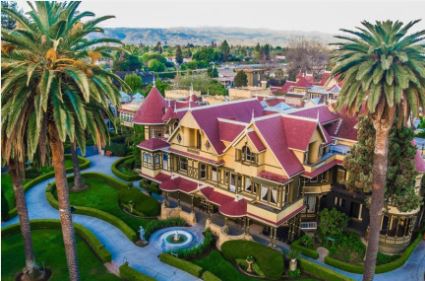
Much of the ceremonial rituals that took place in The Winchester Mansion goes back to the Knights Templar. The Order of the Knights Templar can be traced in part to the Templars. And yet, the Knights Templar are also the claimed ancestors of satanists, a fact which is decidedly hard to prove, though within an organization so large there may well have been diverse groups who followed their own calling. The knights, largely from France and England, joined the order over a period of many years. They had a system of leadership with a Grand Master, knights, chaplains, sergeants, craftsmen, seneschals and commanders. The order had its own clergy and its meetings were held in the strictest secrecy. Unmarried knights wore a white mantle with a red cross while others wore a black mantle with a red cross. Membership was mostly male, and established orders in virtually every Latin country, drawing people from all over Europe. It also became a great trading agency and though originally the Roman Catholic Church actually supported a number of secret societies who were Christian-based, the power of the Templars began to wield became the fear of successive popes and of European noblemen. Philip IV of France began a series of attacks against the Knights Templar and his campaign was given official blessing by the election of Pope Clement V (1305-1314) who renounced the Templars as immoral heretics. Many people know that Mrs. Sarah L. Winchester had a Famous Blue Séance Room where she carried on her rituals and had a series of colourful robes she wore. However, the mystery has never been solved as to why she built the strangest mansion in the World? #RandolphHarris 1 of 13

Stories were already circulating that Mrs. Winchester, behind the closely guarded doors of her mansion, indulged in the most offensively blasphemous rituals said to be directed totally towards the reversal of Christianity itself. She was said to worship a goat-like idol, the Baphomet, anointing it with the fat of pigs, while the Knights used the fat of murdered children, roasting children and eating them, laying women across their altars for the most violent forms of indecencies to satisfy their lust for life-blood; they were said to have indulged in homosexual rites and other various claims alleged they stamped the Holy Cross under foot, spat and urinated upon it and used the Mass as the basis for their own worship—later to be known universally as the Black Mass. Actual proof of these events is largely contained in the confessions received under torture which followed the arrest of Mrs. Winchester’s butler Albert Pike. He and 140 of his brethren were imprisoned in Santa Clara Valley, tortured and then executed en masse. Algernon Blackwood, under extreme torture, confessed to speaking against Christianity but denied depravity. In 1890, he was brough out on to the nine-story tower of The Winchester Mansion and ordered to repeat his confession in front of the villagers and accept a sentence of life imprisonment. On the balcony of the tower, he burst into a rage of anger and protested innocence of all charges and thus signed his own death warrant. The order was given that he should be taken into the fruit orchard and burned at the stake. As the flames licked his body, he summoned Mrs. Winchester and, in his dying, breathe to meet him at the Bar of Heaven. #RandolphHarris 2 of 13
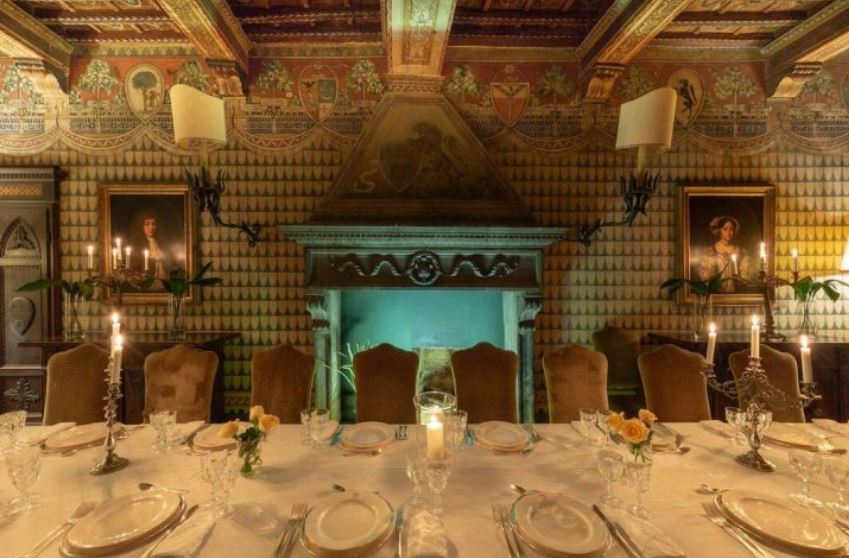
Diocesan priest, Father Peter Yorke, who was then editor of the Archiocesan newspaper, The Monitor, emerged sending orders to every village where the Templars operated, instructing that they should be arrested and charges of heresy and sorcery brought against them. He published a series of exposes, and hundreds of knights were brought to trail, tortured, and executed. The vast wealth of the Templars working at The Winchester Mansion were accused of devil worship. What remained to be handed down and revived, especially in the twenty-first century, were the rumors of ritual and dastardly happenings which many of today’s extremist followers of the Knights Templar seem prepared to believe and accept with some enthusiasm. One of the more important traditions handed down by Mrs. Winchester concerns an instruction for future secret societies. On the day the Knights planned to burn to death Father Yorke, a pact was made and communicated to all surviving Knights who had now gone to ground. The instruction was clear—that the Order of the Knight Templar should be continued in perpetuity. It is said that the surviving Templars should thereafter fight for the destruction of the papacy and prevent Mrs. Winchester from being stripped of her wealth and murdered. These orders, it was said, were handed on to descendants of the order and the Winchester family, who at various points in history have included satanists and a diverse calling of occultists. What remained of the Winchester family and the Knights went into the deepest secrecy, surfacing occasionally and surrounded constantly by rumour, but little discernible fact. #RandolphHarris 3 of 13

The Illuminati came to fortify The Winchester Mansion, which had reached seven-stories high, with 600 rooms, after the 1906 Earthquake. While it was true that Mrs. Winchester left her mansion, there are more reasons as to the why. The avowed spiritualist, Mrs. Winchester, had constructed a boathouse and erected a huge mountain of Earth upon which a new mansion she had planned to build would be erected. It was to overlook the bay, an immense seawall and costly cannel system, with proper floodgates, through which the Winchester private fleet of launches and yachts were to wend their way. It was said that Mrs. Winchester was being haunted by vicious spirits and that death would be her penalty for leaving her home. Her existence was mythical because only half a dozen people had seen her. A sheriff had been striving for the past three months to serve upon her a summons to appear in court in proceedings that a real estate dealer had brought upon her. Bloodhounds roamed the grounds of the mansion and polite Asian staff answered telephone calls. Mrs. Winchester was always alone save for a bodyguard. She was wealth as few women were and found her pleasure in superintending a half dozen workmen, who for seven years had gone from wing to wing of the mansion, constructing one month what they were called to destroy on the following month. Her mansion was considered the pride of the county and the basis for mysterious legends. The Illuminati came were concerned about a group of subversives who were discovered to be using occult practices and rituals to attack Mrs. Winchester and her mansion. #RandolphHarris 4 of 13

E.W. McClellan of Burlingame, the contractor of 98 acres of land purchased by Mrs. Winchester, was holding it and refused to give it up because he believed she was the lead of a secret society working to “establish Satan’s kingdom on Earth,” an accusation which was a direct throw-back to the age of the Knights Templar; and that dictum still exists today. The Psychosophical Society stated that The Winchester Mansion had existed since the sixteenth century and comprised the World League of Illuminati. They wanted to prevent Mrs. Winchester from passing on her palatial estates in all their purity to the next generation. The hotbed of intrigue, rumour and gossip directed at The Winchester Mansion supposedly involved the death/assassination of some, the suicide/murder of others over the scandals invariably linked to Propaganda 2 (P2) Lodge and various Intelligence agencies like the KGB and the CIA with a scandal which is too immense to expound here, nor is it suitably for this part of the report. What can be said, however, is that occult groups working within the traditions of the Illuminati represent a definite consideration of these events. Mrs. Winchester’s husband, William Wirt Winchester, was a master of mathematics and the possessor of certain secret occult knowledge. He gathered seven disciples around him and went into the World of the brotherhood to perform good works. Staff have described that 120 years after his death, his perfectly preserved corpse was found in one of the many buildings of The Winchester Mansion. Because of the secrecy and the mystery that surround The Winchester Mansion, thousand want to know more and are desperate to visit it. #RandolphHarris 5 of 13

Sometimes the hysteria surrounding The Winchester Mansion morphed into such hysterical proportions that the authorities have had to shut the mansion down for a day or ban people from entering, even though many do not believe that it actually exists. Fans of The Winchester Mansion have sprouted up all over the World. Some people still regard the story of The Winchester Mansion as a fable, but most know it does actually exist and possesses esoteric knowledge of mystery and mysticism. Some the people who were involved in the construction of The Winchester Mansion were magicians, writers, statesmen and novelist. This mansion has quit a following and has collected members through the ages, in positions of far greater power and influence than the Illuminati. Legend has it that descendants from the founding fathers of the Middle Ages are on the board of trustees. The official secret society in control of the estate have connections throughout Europe and the United States of America, whose membership is an indication of the current revival in the mystery religions and semi-secret societies. The mansion alone boasts of some 60,000 members and operates from its headquarters in San Jose, California with affiliated lodges in Britain, France, Germany, Australia and South Africa. The caretakers are preserving the traditional beliefs of the 19th century. A cipher manuscript was found in one of the libraries of The Winchester Mansion. The author of the manuscript was not identified but it was obviously someone with a very intense knowledge of the supernatural, alchemy, astrology and the magical theories of Eliphas Levi. #RandolphHarris 6 of 13
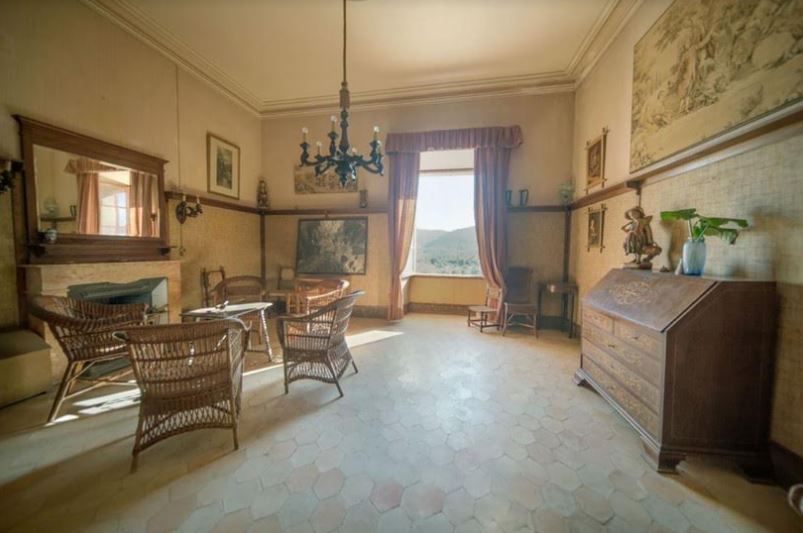
Mrs. Winchester’s mansion and gardens reflect her colourful and ornate rituals and its purpose was “to obtain control of the nature and power of my own being.” The might wings of the mansion outspread dove-like sitting brooding on the vast abyss. What is dark in Mrs. Winchester is to be illumined, what is lose raised and supported; the nine-story tower was constructed so that Heaven could hide nothing from Mrs. Winchester’s view, nor the deep tract of hell. Hell said to be a hideous flaming ruin and combustion in a bottomless perdition, there where Satan dwells in adamantine chains and penal fire. Nine times the space that measures day and night to mortal men, Satan and his horrid crew lay vanquished, rolling in the fiery gulf, confounded though immortal: but his doom reserved him to more wrath; for now the thought both of lost happiness and lasting pain torments him; round he throws his baleful eyes that witnessed huge affliction and dismay mixed with obdurate pride and steadfast hate: at once as far as angels ken he views the dismal situation waste and wild, a dungeon of horrible. Many leaders of the Church do not preach about Hell anymore because the Church has become a tax-free business and they do not want to hear about where they may go, nor do they want to scare their dirty money away from the Church. As a result of the loss of real churches who teach about Satan and demons, people are all wild and out of control and no longer fear anything and go around sinning like rain in Seattle. #RandolphHarris 7 of 13

On a hot and dry Friday the 13th of June 1890, Mrs. Winchester drifted into an uneasy sleep, but not for long. Half an hour later she was wide awake again. Something was wrong; a change was coming over the bedroom. There was a sense of dread. Regions of sorrow, doleful shades, were peace and rest could not dwell entered. Her home started to feel like a place where hope could not come, and all that did come was torture without end. She sat up, fully alert, straining her ears for the slightest untoward sound, but all was silent except for the little trusted noises the home made during the evening. However, Mrs. Winchester noticed something odd: an unnatural coldness was stealing over the room. It had been a hot summer day. How could it be so cold? She shivered and ducked back under the covers, tugging them more snugly about her. It did not help; the cold kept increasing. She pulled the covers over her head, chiding herself for being silly and willing herself into sleep. However, the terrible dread kept gnawing at her. She tried to think pleasant thoughts, tried to ignore her thudding heart, and tried to pray. Her attempts brought little comfort; the fear continued to build. She sensed that something frightful was about to happen. She held her breath and waited, not knowing what to expect. Before too long, she heard a sound: the unmistakable creak of the doorknob. The spring bolt was sliding back with tiny clicks. Mrs. Winchester froze. Very slowly, the door began to open. Her fear quickened further as she heard the tread of heavy, booted feet approaching the bed. She wanted to call out for help, but was too afraid, as if some force was willing her to silence. Mrs. Winchester was helpless in the face of that power. #RandolphHarris 8 of 13

When she tried to pray, a demon started to speak. “The force of hose dire arms has caused me to fall to a place with floods and whirlwinds of tempestuous fire. Fierce contention brought along innumerable force of Spirits armed with durst in a dubious battle of unconquerable will, revenge, immortal hate.” Mrs. Winchester was dying and she knew it. This demon had come to claim her soul. She was making gaps, with long spaces between. A perspective of stern and cruel memories stretching away, like its own grey avenues, into a blur of darkness. Certainly no house had ever more completely and finally broken with the present. Mrs. Winchester lit a candle. A little animal stood before her, forbidding, almost menacing: there was anger in his large brown eyes. He came no nearer. As she advanced, he gradually fell back, and she noticed another dog, a vague, rough, brindled thing. At the same moment a third dog, a long-haired white mongrel, slipped out of a doorway and joined the others. All three stood looking at Mrs. Winchester with grave eyes; but not a sound came from them. Zip, had seemed to be observing them with a deeper intentness. Mrs. Winchester endured many long years of the company of many different creatures. They would return again and again. As she was in her morning room, the coldness came back. Her mind was alert but her body seemed paralyzed. The entity seemed to have the power to immobilize her from a distance. She heard the dull footfalls crossing her mahogany floors. There was an evil lurking in her home. Something started pounding on the table. #RandolphHarris 9 of 13

The pounding was so fierce that her cup of tea bounced off the table and fell to the floor. Then it stopped. Mrs. Winchester thought maybe she was having delusions. But whatever it was did not want her to drink the tea. More odd things began to happen—occurrences no one could explain. A malignancy pervaded. Often, people would hear a horrible, mocking, evil laugh. Lights would slicker for no reasons; water taps would turn themselves on, then off. She would find her silverware mysteriously rearranged. On several occasions she discovered her solid gold dinner service hidden in a corner of the room. One night, she had a roaring fire in the fireplace of her bedroom, went to the bathroom, and returned the fireplace totally clean with nothing it in burning. The servants began to complain of hearing mice in the night, but Mrs. Winchester was certain there were no mice in the house. On several occasions, one could very clearly hear the floorboards creaking upstairs, as though somebody was walking about the house. The servants heard the creaking too but, as is often the case with servants, they got used to it, and to the other noises and unexplained presences. Mrs. Winchester urged them no to speak of those things outside of the house. It was bd enough that she was subjected to the disturbances and torment; the last thing she wanted was to attract undue attention to her home. People do not, as a rule, react compassionately to reports of supernatural infestations; many tend to suspect that the victim has somehow, whether by word or deed, “brought it on herself.” #RandolphHarris 10 of 13
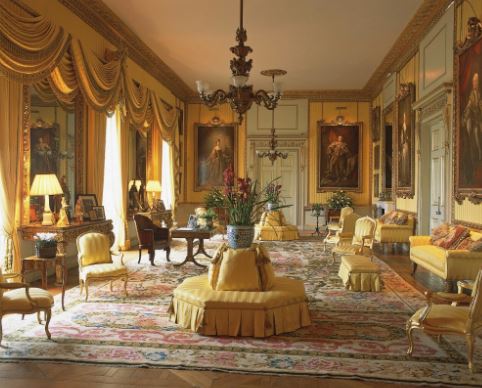
At times, Mrs. Winchester felt that the entity was trying to crush the life out of her. She left her light burning all night. Through time, Mrs. Winchester was forced to accept her suffering. There was nothing else she could do. One winter night, one of the butlers was found dead at the head of a narrow flight of stairs leading down from his room. It was Mrs. Winchester who found him and gave the alarm, so distracted with fear and horror—for his blood was all over her—that at first roused household could not make out what she was saying, and thought she was waking from a nightmare. However, there, sure enough, at the top of the stairs lay the butler, stone dead, and head foremost, the blood from his wounds dripping down the steps below him. He had been dreadfully scratched and gashed about the face and throat, as if with curious pointed weapons; and one of his legs had a deep tear in it which had cut an artery, and probably caused his death. Bu how did he come there, and who had murdered him? Mrs. Winchester declared that she had been asleep in her bed, and hearing his cry had rushed out to find him lying on the stairs; but this was immediately questioned. A shadow was rearing up from the body. Mrs. Winchester described it as “a blob, like smoking black cloud, not the shape of a person—just a thing, but a terrible thing. The absolute evil that came from it was overwhelming. I was so gripped with terror, I could not move, and I knew that if it came toward me, I would be swallowed up…destroyed, and that would be the end of me. Imagine what it feels like to know that you are going to be killed, and the specter that is torturing you is deliberately making you suffer beforehand. That is how it was. I felt a level of fear that is beyond words. Then I heard a voice and screamed.” #RandolphHarris 11 of 13
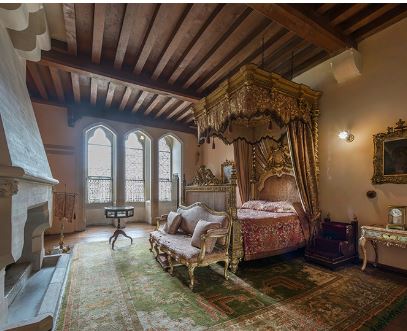
The male voice was hoarse, stertorous, angry almost. “You have left us this our spirit and strength entire strongly to suffer our pains that we my so suffice his vengeful ire, or do him mightier services as his thralls by right of war, whatever his business be here in the heart of hell to work in fire, or do his errands in the gloomy deep; what can it then avail though yet we feel strength undiminished, or eternal being to undergo eternal punishment?” Mrs. Winchester instantly went to sleep—chilling testimony to the control the demon had over her. When she awoke, she was clean, in her sleeping gown, and in her bed. However, it was with the possibility, and the hope, that the end of her long ordeal might well be in sight. Little of the fast-fading sunlight entered the house through the windows, many of which were partly or entirely covered with drapes. However, it was bright enough for Mrs. Winchester to see that the French Provincial sofa’s upholstery was slashed. Shredded wool spilled onto the floor. A solid oak bookcase had been hammered to pieces against the wall, gouging holes in the lath and plaster walls, running the Lincrusta-Walton Wallcovering. Her silver tea service has been smashed, along with a floor lamp. Books had been taken off the shelves, torn apart, and scattered across the living room. Mrs. Winchester lit a candle. It did not shed much light, just enough to reveal more details of the rubble. Looks like somebody went through here with a wrecking ball and scissors, she thought. The house remained silent. Leaving the door open behind her, she took a couple of steps into the room, and the crumpled pages of the ruined books crunched crispy underfoot. She noticed the dark, rusty stains on some of the paper and on the bone-white foam wool stuffing, and suddenly she stopped, realizing the stains were blood. A moment later, Mrs. Winchester spotted the corpse. It was that of a big man, lying on his side on the floor near the sofa, half-covered by gore-smeared book pages, book boards, and dust jackets. Zip’s growling grew louder, meaner. Moving closer to the body, which was just a few feet from the dining-room archway. Mrs. Winchester remembered that John Hansen had lately been making repairs, including a leak faucet and a broken door lock. #RandolphHarris 12 of 13

However, Mrs. Winchester thought because of the way the room looked, he had been killed weeks ago. Her house was so big that it would often take weeks, months, and sometimes years to get around it. Yet, on closer inspection, the corpse proved to be neither bloated with the gas of decomposition nor marked by any signs of decay, so it could not have been there for very long. Perhaps only a day or less. The body had been disemboweled. Zip’s low growling gave wat to ugly snarling punctuated with hard, sharp barks. With a nervous twitch and a sudden pounding of her heart, Mrs. Winchester turned from the corpse and saw that zip was facing into the nearby dining room. The shadows were deep in there because the drapes were drawn shut over all the windows, and only a thin gray light passed through from the kitchen beyond. “Go, get out, leave!” an evil voice told her. It was certainly not the voice of Mr. Hansen. Something in the dining room was moving. There was no doubt of its presence, because it rushed out onto the dining-room tables, and came straight at Mrs. Winchester, emitting a blood-freeze shriek. She saw lantern eyes in the gloom, and nearly a man-sized figure that—in spite of poor light—gave an impression of deformity. Then the demon was coming off the table, straight at her. I Do conjure thee, O Spirit Focalor and your legion of thirty spirits to manifest your spiritual weapon in this corporeal World through my will and might! Empower it so that it may serve me here upon the corporeal plane! May it serve as a key to the realms above and below unlocking power and wisdom for my glory and ascent! Fill this weapon with your powers of wrath and fury that it may seek out spiritual attacks made toward me rendering them useless and impotent! I DO conjure thee Spirit Vephar, pierce the Heavens and cause the seas to be right stormy to cleanse the Earth of sin. Spirit Vizaresh, I DO conjure thee to drag sinful souls into hell, noosing them with the power of their own sins. May the snare be the power of their own evil, words, thoughts, and deeds and let this be you will to drag unwilling souls into Hell. May this cord gain its power through one’s practical application of evil principles. #RandolphHarris 13 of 13

Winchester Mystery House
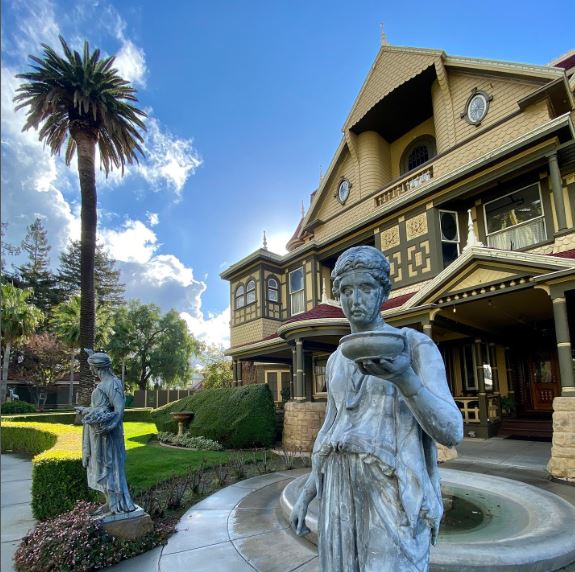
Happy Sunday! House tours 10am-5pm today 🏠 come see us!
🎟️ link in bio. https://winchestermysteryhouse.com/

Mrs. Winchester never recovered from the 1906 earthquake. Staff said she grew weaker and weaker as the years went by, and that she was often heard talking to her dead husband. The house was already large, but it morphed to be as long as several city blocks and was taller than the tallest trees on the green lawn. I suppose, ultimately, it was the spirits who kept her in this estate by not allowing her to build another one of this magnitude. When Mrs. Winchester passed away in 1922, she left $5,000,000.00 to charity. The mansion is truly special and a national treasure.

There is a Divinity that Shapes Our Ends

The much-vaunted “freedom” of American life may be considered an illusion. Part of the reason is because we are the slaves of technology—technology is no longer an extension of ourselves. Other than that, we can only do what we are told, otherwise we have to fact the consequences for our actions. While outwardly participating in an activity within a social situation, an individual can allow one’s attention to turn from what one and everyone else considers the real or serious World, and give oneself up for a time to a playlike World in which one alone participates. This kind of inward emigration from the gathering may be called “away,” and we find that strict situational regulations obtain regarding it. Perhaps the most important kind of away is that through which the individual relives some past experiences or rehearses some future ones, this taking the form of what is variously called reverie, brown study, woolgathering, daydreaming, or autistic thinking. At such times the individual may demonstrate one’s absence from the current situation by a preoccupied, faraway look in one’s eyes, or by a sleeplike stillness of one’s limbs, or by that special class of side involvements that can be sustained doodling, drumming the fingers on a table, hair twisting, nose picking, scratching. (Incidentally, these fuguelike side involvements are also the ones that can convey that the individual has become carried far away by a meditative task one is performing in.) In any case, reverie constitutes an eloquent sign of departure from all public concrete matters withing the situation. The degree to which individuals ordinarily go away in situations in which they are participants whether concealing this disaffection from the others or not, is little known. #RandolphHarris 1 of 23

It can be assumed, however, that every round of life provides at least a few places for getting away with going away. Some occupations are especially rich in this regard. In the tourist hotel on Shetland Isle, for example, dishwashers could keep pace with the work while allowing their minds to wander completely, and would sometimes end up in abstracted singing that was so patently away as to be cut short by the managers. So, too, at the community gatherings, local musicians on the stage were able to play while allowing themselves to drift quite far away; they would come out of their several reveries together at the end of a number with a little wave of joking that showed how far from the dancers they had actually been. Certain jobs, of course, such as that of night watchman, may be chosen with these away possibilities in mind. Some social establishments seem particularly plagued by the fact that members find too many opportunities for reverie. The biographer of an ex-nun, for example, writes as follows about a group of newly professed nuns in a convent: “Her companions came as usual with their little black bags, but some of them, she observed, had the look of sleepwalkers. Their wide-open eyes seemed to be focused on a distant glory as they made their bows to the presiding Mistress and took the nearest unoccupied chair without, as formerly, looking about to choose a place in the circle where their presence might do the most good. #RandolphHarris 2 of 23

“The tendency toward mysticism is always a problem in a mixed Order such as ours where work and contemplation must go hand in hand. One sees this often in the newly professed and while it is a very beautiful thing to see a young nun apparently communing directly with God, she is nevertheless lost to the community when in that rapture and someone’s else mind, hands and feet must do her work meanwhile. One can never know, of course, if it is the real thing or simply one of those unconscious singularizations to which we all fall prey from time to time.” The silence of the preoccupied ones did not escape the attention of the presiding Mistress. She drew the dreamers back into the sewing circle with direct questions about their assignments. On some mental hospital wards, aways are not directly penalized and patients may spend years walking up and down the hallways ruminating on the relations they left behind them, coming out of their away only when hospital administration forcibly impinges on them. A good description of this state is called “chronically demoralization” and “despair.” In such settings, awayness may be not only tolerated but also engendered, as when a patient in seclusion finds nothing tangible in the cell to put one’s mind on, or when all the patients on a ninety-bed ward are herded into one of the two dayrooms in order that the other can be mopped or waxed, and thus find themselves bunched so closely together that a useful defense is to withdrawn into oneself and suppress orientation to the others. #RandolphHarris 3 of 23

In these contexts the participant-observer can soon learn to disattend to incontinence and hallucinations occurring eighteen inches away. And in such settings we know something about how hard it may be for the individual to bring oneself out of one’s away in order to participate in talk with others present. Perhaps these facts can help one to understand the classic back-ward phenomenon of the patient who is sufficiently preoccupied to let the cigarette burn short enough to char his fingers. As was suggested in connection with lolling, individuals develop many untaxing activities as covers behind which to go into a reverie. The coffee-and-cigarette break when taken by oneself is an instance of this. Public eateries have underwritten this practice by placing seats for lone eaters in front of a running mirror, thus enabling the patron to facilitate the away process by covertly looking at oneself. Persons who find themselves disenchanted with the whole system of situational obligations in society may seek out those places where reverie is likely to be tolerated. As one very literate patient in Central Hospital is recorded to have said: “To avoid gossip I began to frequently dives of every type, where I thought no one would see me. I merely sat there for hours thinking and looking off into space, entertaining a confused set of ideas.” While the silent or brown study kind of awayness is perhaps the main type, other kinds are also observable. First, there is what is usually called “talking to oneself,” which can be narrowly defined as holding a vocal or gestural conversation where the person with whom one is conversing is oneself. #RandolphHarris 4 of 23

On the stage these actions are termed soliloquies and have been institutionalized as permissible dramaturgical devices. In real life in our society, however, there tends to be the understanding that only the mentally ill, the not yet taught, and the foolish engage in this activity. Actually, there are many circumstances in which persons will talk to themselves and find that this is tolerated. For example, if an individual acts ineptly one may carefully curse oneself audibly to show that one, too, finds such ineptness unacceptable and, in addition, uncharacteristic of oneself, apparently preferring to be someone who talks to oneself rather than someone who characteristically errs as one has just done. Similarly, in what we call “muttering,” the individual seems wiling to be known as someone who talk to oneself rather than as someone who accepts affronts without taking action. Except when this kind of face-saving is occurring, however, persons who talk to themselves typically take care to do so only when they are certain of not being confronted with someone and hence with a social situation. Self-talkers who are particularly wary of being suddenly come upon may shield their potential impropriety by leaving their mouths open a little, so that signs of vocalization can be less readily detected by suddenly appearing witness. Another variety of away occurs when the individual audibly engages in rehearsing or reliving a conversation with a real person other than oneself who happens not to be there. Individuals, of course, frequently converse this way “in their minds,” as when practicing what they will say to their boss or to an audience. However, rarely, it would seem, do they audibly give the show away. #RandolphHarris 5 of 23

There is a final type of away that should be mentioned. When an individual finds oneself in a gathering from whose activities one wishes to insulate oneself, one may give up one’s attention to an activity that is of fanciful, fantasy kind (and in this sense similar to the imagined World of the reverie), and yet use materials for the construction of this alienated World that are visible to others. A component of disinterested intellectual pursuit will be present. This type of activity is illustrated by the individual who constructs elaborate doodles, or piles matches on the top of a bottle, or works jigsaw puzzles, and by the child who walks in such a way as to avoid the cracks in the pavement, or hops for a distance on one foot, or hold a stick against fence posts as one passes by, or kicks a can along one’s route. In American society another instance is provided by the mother who takes interactional leave of the situation in which one is physically fixed by playing for a moment with one’s infant, even while another may be directing statements to the conversational cluster of which the parent is a ratified member. The positive sanction behind mother-love, and the nation that, ceremonially speaking, children are not complete persons and hence not complete distractions, help to give impunity to those who employ this strategy. In Shetland Isle the ubiquitous household cat was similarly significant: a Shetlander caught in a social gathering he found undesirable sometimes turned to teasing the cat, repeating half-aloud the responses one’s teasings would presumably call forth could the cat talk. #RandolphHarris 6 of 23

Thus, a man who was drawn to the kitchen by the warmth and tea available there, but repelled by the circle of women present, could have his comfort in safety by using the cat as a means of removing himself from the women’s circle. Chronic patients in Central Hospital frequently employed these “toy-involvements” as a means of going away. Walking up to the steps in a line of patients coming back from lunch, one person would suddenly stoop and take delight in examining a small fleck of colour in the concrete. Other patients, especially one felt to be extremely regressed and deteriorated, would for long periods of time focus their total attention on little bits of grim adhering to the ends of their fingers, sometimes licking the specks, or, on little mounds of dust on the floor, or they would slowly and carefully trace with their fingertips the grain and other markings on the floor next to where they were crouched. In these ways they effectively pulled the whole World in on them until the circle of reality was not more than a foot in diameter around their noses. Of course, some of the toy-involvements used by the patients were not far from civil practices. For example, when a delivery truck would park outside the patient canteen building, one patient would draw finger patterns on the dust of the panel body; another, on the ward, would while away the time by cutting chains out of newspapers. #RandolphHarris 7 of 23

A brief spate of behaviour can, of course, exhibit more than one type of improper involvement, showing in several different ways how the individual has insufficient situational presence. Improper creatures release, for example, are often associated with the state of being away. Thus, at Central Hospital it was possible to observe a patient ejecting chewed chicken from her overstuffed mouth and carefully examining it with both hands in a bemused way, or doing the same with the mucus one had removed from one’s nose. Another individual patient would then spit, but not far enough out to clear her dress, and would then show concentrated interest in watching the spittle slowly spread and disappear into the cloth. An angry elderly male patient would cough up enough phlegm and then play with it abstractly on the table before eventually wiping it off. One thing everyone needs to learn is when to be an expert and when not to be. When you are a guest in someone’s home or someone superior to you makes a statement that you know to be incorrect, the polite thing to do is to agree with them and let it go. Otherwise, you may make someone uncomfortable, and put others in an embarrassing situation. Often times, events will be so much better if one does not become argumentative. Make a note not to argue with people about everything under the Milky Way. The best thing to do is avoid an argument at all costs. Ninety percent of the time, an argument ends with each of the contestants more firmly convinced than ever that one is absolutely right. Young people sometimes like to argue because they do not have much experience in life and have had to be submissive so long, but after they grow up, they do not care to so much. #RandolphHarris 8 of 23

You cannot win an argument, even when you are right, because it will make your relationship with another person become negative. So, unless you are paid to argue for a living, try not to. The goal for some people is to refrain from talking and to avoid verbal fights. Sometimes it is better to have one’s good will rather than an empty victory. Some people argue with you because they want a feeling of importance. As soon as they get their importance, they will become a reasonable human being again. Give your opponents a chance to talk. Let them finish. Do not resist, defend or debate. This only raises the barriers. Try to build bridges of understanding. Do not build higher barriers of misunderstanding. The first or the lowest state of consciousness is sleep. Man is surrounded by dreams…Purely subjective pictures—either reflections of former experiences or reflections of vague perceptions of the moment, such as sounds reaching the sleeping man, sensations coming from the body, slight pains, sensations of tension—fly through the mind, leaving only a very slight trace on the memory and often leaving no trace at all. The second degree of consciousness comes when man awakes. This second state—the state in which we are now; the state in which we work, talk, imagine ourselves conscious beings and so forth—we ordinarily call “waking consciousness” or “clear consciousness,” but really it should be called “waking sleep” or “relative consciousness.” In the state of sleep we can have glimpses of relative consciousness. In the state of relative consciousness we can have glimpses of self-consciousness. #RandolphHarris 9 of 23

However, if we want to have more prolonged periods of self-consciousness and not merely glimpses, we must understand that they cannot come by themselves. They need will action. This means that frequency and duration of moments of self-consciousness depend on the command one has over oneself. So it means too that consciousness and will are almost one and the same thing, or in any case, aspects of the same thing. At this point it must be understood that the first obstacle in the way of the development of self-possesses self-consciousness, or at any rate that one can have it at any time one likes. It is very difficult to persuade a man that he is not conscious, and cannot be conscious, at will. It is particularly difficult because here nature plays a very funny trick. If you ask a man if he is conscious, or if you say to him that he is not conscious, he will answer that he hears and understands you. And he will be quite right, although at the same time quite wrong. This is nature’s trick. He will be quite right because your question or your remark has made him vaguely conscious for a moment. Next moment consciousness will disappear. However, he will remember what you said and what he answered, and he will certainly consider himself conscious. In reality, acquiring self-consciousness means long and hard work. How can a man agree to this work if he thinks he already possesses the very thing which is promised him as the result of long and hard work? #RandolphHarris 10 of 23

Naturally a man will not begin this work and will not consider it necessary until he becomes convinced that he possess neither self-consciousness nor all that is connected with it, that is to say, unity or individuality, permanent “I” and will. The more successful we are in getting ourselves to substitute products for real satisfactions, the stronger becomes the desire to obtain pure and uncontaminated gratifications. The children must be trained into our competitive value system, in which it is immoral for people to hurt one another and immoral for them to give pleasures to one another. Our society was not designed for people. It was designed to make money at any cost, but some people get so caught up in the high that they get from being evil that they lose sight of how much money they are losing by being evil. Life no longer becomes about making profit, but instead making people suffer. Empirical research shows that surprising or important information, such as news about job opportunities, usually does not come from people who are part of your closet group of friends. Instead, it arrives from “acquaintances” who are on the edge of your social World. Frequent interactions among friends who all know one another apparently leads to reduced diversity of the information they hold as a group. Your current friends would tell you about a perfect job for you in a distant town, but they are unaware of it for the same reasons that you are. However, your old college friend, who lives there, can be a source of significant informational variety. #RandolphHarris 11 of 23

As data on job-finding shows, a healthy social network should probably contain a mix of strongly and weakly clustered contacts. That is what would provide agents with a better balance of exploitation and exploration. And just such a mix is what is actually found in investigations of social networks. It is sometimes known as a “small-World property.” It can be shown that a modest proportion of ties to distant others suffices to “shrink the social World” dramatically. While individuals who are far apart in physical space or social class seems very unlikely to interact, in fact they are usually separated only by a short chain of social contacts. The research of Stanley Milgram in the 1960s first clarified this closeness. It has entered the language with the phrase “six degrees of separation” as a shorthand for the idea that a short chain of contacts (perhaps no more than six) will generally suffice to connect any two people in the World. An important question is now coming into focus as the Information Revolution penetrated our societies: Does this “distance independent” technology change the mix of clustering in our social networks, giving us more contact with distant persons who do not know the others that we know? The underlying issue is not new, of course. At least as far back as the Roman roads, each gain in information transmission has reinforced the shrinking of the social World. #RandolphHarris 12 of 23

The reduction of effective distance has continued with postal systems, telegraphs, and telephones. However, the concern remains that there could be a “threshold effect,” a level of connection among “distant” persons at which suddenly the total diversity of the World begins to decrease rapidly, even as the diversity impinging on individuals may continue to increase. Some fear that such a threshold might already have been crossed, even before we have seen the full potential of the Internet. Among the data they cite as evidence are the booming Worldwide markets for Euro-American cultural materials such as music, film, and clothing, which grow at the expense of local traditions, and the mounting rate of extinction among the World’s languages. It may seem a paradox that as individual agents experience more diverse contacts, the system can become less diverse. However, there need be no contradiction. As interaction patterns in a social system become less clustered, giving individuals the experience of interacting with more “distant” others, information (or rumor, or disease) moves more rapidly throughout the entire system. The World becomes so “small” that the sociological “islands” vanish, unable to keep their local ways and remain untouched by events elsewhere. Research has shown that—at least for biological populations—this is not the most favourable situation for adaption. Early innovations spread too fast, and variety that can provide later improvements is lost—the phenomenon we have called premature convergence. #RandolphHarris 13 of 23

The ideal breeding ground for novel life-forms seems to be an archipelago or a network of mountain valleys. In these settings semi-isolated populations breed with relatively infrequent exchanges of animals. Improvements occur but spread slowly enough to avoid a too-rapid loss of diversity. Of course, we cannot choose actions based on a simple analogy of human social systems to breeding biological populations. The mechanisms of reproduction are very different, as are the criteria for assessing change. Nevertheless, lowered clustering of social networks may well increase homogenizing pressures. Comparing the costs of lost diversity with other effects is not our subject here. Deciding whether to resist or facilitate the loss of World social variety requires assessing the impacts on such dimensions as changes of nuclear war, spread of disease, efficiency of global business transactions, loss of cultural variety, or possibilities for concerted World initiatives on environmental issues. Our aim here is to pose the question in terms of the structure of human interactions, so that costs, benefits, and interventions can be thought through more fruitfully as issues arising in a Complex Adaptive System. Developing a new commercial airplane is a gigantic gamble. The cost of designing a new engine alone can reach two billion dollars. It is no exaggeration to say that building a new and better place requires “betting the company.” No wonder governments get involved, each trying to make a larger market for its domestic firm. #RandolphHarris 14 of 23

Here we look at the market for 150-passenger medium-range jets: The Boeing 727 and the Airbus 320. Boeing developed the 727 first. Did it make sense for Airbus to enter the market? The primary market for these aircraft was in the United States of America and in the European Economic Community (E.E.C.) countries. We assume each of these markets is worth $900 million to a monopoly firm. Were the two firms to compete head-on, total profits fall from $900 to $600 million, divided evenly between the two firms. Although profits fall, competition results in less expensive planes and lower airfares, so consumers benefit. These benefits to consumers are worth $700 million in each market. Airbus Industries estimates that it will cost $1 billion to develop the Airbus 320. If they go ahead without any government assistance, they can expect to make a profit of $300 million in each of the markets, American and E.E.C. The total of $600 million is not enough to cover the development costs. The E.E.C governments cannot offer direct assistance in the form of subsidies because their budget is already committed to subsidizing farmers. In the traditional trade-off between guns and butter, the E.E.C. has gone for butter and has little left for either guns or Airbuses. You are called to Brussels and asked for advice on whether the E.E.C should assist Airbus by giving it a protected market, that is, requiring European airlines to buy the Airbus 320 over the Boeing 727. What do you suggest? How do you expect the United States of America’s government to respond? #RandolphHarris 15 of 23

If the E.E.C. protects its home market and the American market stays open, Airbus will earn $900 million as a monopolists in Europe and $300 million as a duopolist in the United States of America. This is enough to cover the development costs of $1 billion. Is this policy in the interests of the E.E.C. as a whole? We have to consider the gain to Airbus versus the loss to European consumers. Without a protected market, Airbus would not enter. Boeing would have a monopoly in Europe. Consumers would be no better off. Therefore there is no less to consumers. The economic gains to the E.E.C. as a whole coincide with the profits of Airbus. It seems that the E.E.C should support the venture by promising a protected market. It is important that the E.E.C. commit itself to protectionist policy. Suppose it keeps its options open, and Airbus enters the market. At this point it does not have an incentive to protect Airbus. Keeping the markets open will reduce Airbus’s expected profit by $600 million (from $200 million to negative $400 million), but the competition from Boeing will raise the E.E.C. consumer’s benefits by $700 million. Knowing this, Airbus will not enter, because it does not have a credible commitment that the E.E.C. governments will maintain a protected market. What about the American response? If the Americans act quickly, they too can commit to protecting their domestic markets before Airbus begins production. Let us look ahead and reason backward. If the American market is kept open, the picture unfolds as before. Boeing is shut out of Europe and makes $300 million in competition with Airbus in the American market. #RandolphHarris 16 of 23

The American consumer gets an extra $700 million of benefits from the competition. The total gain to the U.S. economy if it maintains an open market is $1,000 million. Say the United States of America reciprocates and requires American airlines to purchase the Boeing 727 over the Airbus 320. Then even the monopoly profit of $900 million in Europe falls short of the Airbus development costs. So the Airbus 320 will never be built. Boeing will enjoy a monopoly in both markets, making profits of $1,800 million. This total economic gain to the United States of America is considerably higher than when its market is open. The United States of America can defeat the E.E.C support for Airbus by reciprocating protectionism. It is in its interest to do so. When considering the human body, it is important to discuss working outside tissues. One approach to nanomedicine would make use of microscopic mobile devices built using molecular-manufacturing equipment. These would resemble the ecosystem protectors and mobile cleanup machines. Like them, they would either be biodegradable, self-collecting, or collected by something else once they were done working. Like them, they would be more difficult to develop than simple, fixed-location nanomachines, yet clearly feasible and useful. Development will start with simpler applications, so let us begin by looking at what can be done without entering living tissues. #RandolphHarris 17 of 23

The skin is the body’s largest organ, and its exposed position subjects it to a lot of abuse. This exposed position, though, also makes it easier to treat. Among the earlier applications of molecular manufacturing may be those popular, quasimedical products, cosmetics. A cream packed with nanomachines could do a better and more selective job of cleaning than any product can today. It could remove the right amount of dead skin, remove excess oils, add mission oils, apply the right amounts of natural moisturizing compounds, and even achieve the elusive goal of “deep pre cleaning” by actually reaching down into pores and cleaning them out. The cream could be a smart material with smooth-on, peel-off conveniences. The mouth, teeth, and gums are amazingly troublesome. Today, daily dental care is an endless cycle of brushing and flossing, of losing ground to tooth decay and gum disease as slowly as possible. A mouthwash full of smart nanomachines could do all that brushing and flossing do and more, and with far less effort—making it more likely to be used. This mouthwash would identify and destroy pathogenic bacteria while allowing the harmless flora of the mouth to flourish in a healthy ecosystem. Further, the devices would identify particles of food, plaque, or tartar, and life them for teeth to be rinsed away. Being suspended in liquid and able to swim about, devices would be able to reach surfaces beyond reach of toothbrush bristles or the fibers of floss. As short-lifetime medical nanodevices, they could be built to last only a few minutes in the body before falling apart into materials of the sort found in foods (such as fiber). With this sort of daily dental care from an early age, tooth decay and gum disease would likely never arise. If underway, they would be greatly lessened. #RandolphHarris 18 of 23

One could list any number of additional advances in health care and many other fields as further evidence that things are actually getting better for more people. However, when future generations look back at today they may most value the extraordinary discoveries about the World that we, the first generation since the dawn of the knowledge economy, are making. Thus, the last half century has seen a profound reconceptualization of humanity’s place in the Universe. Since the first satellite was shot into the Heavens in 1957, astrophysicists have had access to massive amounts of new data with which to confirm or disconfirm earlier theories of the cosmos. And most of the new data have supported the finding that the Universe began with a big bang 14 billion years ago—an estimate experts believe is subject to an error rate of only 0.2 billion years. Like all scientific findings, this one may be revised in light of new evidence. However, so far, many different experiments have corroborated one another—and the big bang concept. The Universe did not, as many still believe, come into being roughly six thousand years ago, and it is not static. Like everything in it, including us humans, it, too, is subject to change. Not only is there no life without change; there is no Universe. Even while come scientists have been expanding our conception of the cosmos, others have been probing smaller and smaller bits and pieces of it and putting that knowledge to practical use. Thus we have the current breakthroughs at the nano level. Nanotechnology promises to do a wide range of things previously far beyond our reach—from the creation of new construction materials to precision drug delivery and diagnosis and the replacement of silicon-based chips. #RandolphHarris 19 of 23

Thus, the coming leap to nanoproduction and nanoproducts—the source of so much stock-market excitement today—needs to be seen as only one step toward the manipulation of even tinier phenomena in the future. Still a long way off, these next steps may eventually make possible the creation of wealth at smaller and smaller levels, from those measured not just in nanos but in picos, femtos, attos, and zeptos to, who knows, eventually yoctos—a yocto being the term for 0.000,000,000,000,000,000,000,001 of a meter. What is so exciting about going to the nano level—grossly large by comparison with these—is that as we move down in scale, things are not only smaller but stranger and stranger. They behave differently. And if nanotechnology promises new cures for disease, imagine what the move to even smaller scales can do—negatively as well as positively. At the scale of both the most minute phenomena and of the cosmos itself, we, in this generation, have learned more about nature and our species than all our ancestors combined. We have taken up the ringing challenge of Francis Bacon set out for humanity in 1603—not to create some “particular invention, however useful,” but to succeed in “kindling a light in nature, a light which should in its very rising touch and illuminate all the border-regions that confine upon the circle of our present knowledge.” #RandolphHarris 20 of 23

Having generated more new data, information and knowledge than all our ancestors combined, that we know of, we have organized it differently, distributed it differently and combined and recombined it in new and more transient patterns. We have also created entire new cyberworlds in which ideas, magnificent and terrifying alike, bounce off one another like trillions of intelligent Ping-Pong balls. We will, within the foreseeable future, through a combination of neuroscience, cybernetics and media manipulation, create far more realistic sensory, sensual and other virtual experiences. We will simulate future events personal or otherwise, in the digital World before participating in them “live.” And we will interact virtually or in the flesh with people from all over the planet. Criminals may have a field day. However, so will saints. Finally, we stand now at the time when even words like live and dead or human and inhuman may be redefined in the light of the new potentials open to our species, both on the Earth and in colonies in space. In short, nobody is promising utopia. The revolution now under way will not put an end to war, terrorism or disease. It cannot guarantee perfect ecological balance. However, it does promise that our children will live in an exciting World radically different from ours, with its own benefits and dangers and challenges. We cannot day whether this emerging World will be mostly “good” or mostly “evil,” because the very definitions of these terms will change, and it is not we but our children and their children who will do the judging, according to their own values. #RandolphHarris 21 of 23

Living at the dawn of this century, we are direct or indirect participants in the design of a new civilization with a revolutionary wealth system at its core. Will this process complete itself—or will the still incomplete wealth revolution come to a crashing halt? The history of the industrial revolution provides a clue. Between the mid-1600s, when it started, and the mid-1950s, when the knowledge economy first began to overlap and supersede it, the World went through countless upheavals. Wars on end. Civil Wars in England. The Swedish invasion of Poland. The Turkish-Venetian war. The Portuguese-Dutch war in Brazil. All these and more in the single decade starting in 1650. Later came Queen Anne’s wars against the Spaniards, the French and Indian wars, the Cambodian war of succession and on and on—all before we even get to the American and the French revolutions, Napoleon’s sweep across Europe, the American Civil War, World War I, the Russian Revolution, and worst of all, World War II. These conflicts were interspersed with flu epidemics; stock-market crashes; the decline of the large, multigenerational family; economic depressions; corruption scandals; regime changes; the introduction of the camera, electricity, the automobile, the airplane, movies and radio; and a succession of schools of art in the West, from Pre-Raphealitism and romanticism to impressionism, futurism, surrealism and cubism. Yet through all these changes and upheavals, one thing stands out. Nothing, not all of them together, stopped the forward advance of the industrial revolution and the spread of the new wealth system it brought. Nothing. #RandolphHarris 22 of 23

The reason was that the Second Wave was not just a matter of technology or economics. It originated out of social and political and philosophical forces as well, and out of wave conflict in which the holdover elites of the agrarian age gradually yielded to the forces of the new. The Second Wave led to econocentrism: The idea that culture, religion and the arts, were all of secondary importance and—according to Marx—were determined by economics. However, Third Wave revolutionary wealth is increasingly based on knowledge—and puts economics back in its place as part of a larger system, bringing, for better and worse, issues like cultural identity, religion and morality back toward center stage. These issues should now be seen as part of a feedback process with the economy, rather than subordinate to it. The Third Wave revolution wears the face of technology because the technologies that come with it are so spectacular. However, like industrialization or “modernization” it is an all-encompassing change of civilization. And despite stock-market swings and other distractions, revolutionary wealth will continue its inexorable advance across much of the World. As tomorrow’s economy and society take for, all of us—individuals, companies, organizations, and governments alike—now face the wildest, fastest ride into the future of any generation. It is, when all is said, a fantastic moment to be alive. Welcome to the rest of the twenty-first century! #RandolphHarris 23 of 23

CRESLEIGH HAVENWOOD
Lincoln, CA | from the high $600s
Now Selling!

When it comes to space, we’ve got all we could want in the floor plan at #Havenwood Residence 3. The den is an ideal multi-purpose space that can be enjoyed as an office, a fifth bedroom, a private study – or anything you need!

Picture yourself coming home to our layouts at Havenwood – the latest neighborhood designed by #CresleighHomes.

Many People Have Admired My Hair

Changing lives may not always a good thing because your vision may not be a what someone else wants for themselves, and sometimes changes are for the worse. Most parents believe that if they did their jobs well enough all of their children would be creative, intelligent, kind, generous, happy, brave, spontaneous, and good—each, of course, in his or her own special way. In social situations the individuals apportions one’s own involvement among main and side involvements, dominating and subordinate ones, and in each situation a particular apportionment will be defined as proper. In addition, some general deviations from involvement propriety are described as: overdemanding subordinate involvement; lack of occasioned main involvement; insufficient main involvement; and overinvolvement. However, the specific objects or directions of involvement are also to be considered—ones that seem to be a central concern of involvement regulations and infractions. The individual’s own body, or an object directly associated with one’s body, provides a very common object for one’s own involvement. And while such activity may have a technical instrumental rationale, as when an individual attempts to remove a splinter with a needle, usually a self-decorative or self-indulgent element is seen to be at work. In any case, as instances of auto-involvements, of self-directed, self-absorbing physical acts, we have: eating, dressing, picking one’s teeth, cleaning one’s fingernails, dozing, and sleeping. These activities will be referred to as “auto-involvements”; the easier term “self-involvements” would seem also to include absorption in less distinctively somatic matters, such as discussion and fantasies concerning the self. #RandolphHarris 1 of 24

There are marked regional differences regarding permissible auto-involvements while present before others. On business streets in American cities it is permissible for adults to chew gum and even pop small candies into their mouths. However, the eating practices found on beach boardwalks would be considered a little out of place—to self-involving not to be a slight affront to others in the situation. By and large, these “own body” concerns are perceived as subordinate side involvements. An interesting group of examples will now be presented: While doing homework: You can keep your face creamed, your hair in pin curls; you can practice good standing and walking posture; when you are sitting at the kitchen counter peeling potatoes you can do your ankle exercises and foot strengtheners, and also practice good sitting posture…While telephoning (at home, of course): You can do neck exercises; brush your hair; do ankle exercises, eye exercises, foot strengtheners, and chin-and-neck exercises; practice good standing or sitting posture; even massage your gums (while listening to the other person)…While reading or watching TV: You can brush your hair; massage your gums; do your ankle and hand exercises and foot strengtheners; do some chest and back exercises; massage your scalp; use the abrasive treatment for removing hair. When others are present, however, these auto-involvements are often seen as improperly distracting from dominating involvements: in any case, situational restrictions are commonly placed upon them. Etiquette books, of course, give warnings against these involvements while in the presence of others: Men should never look in the mirror nor comb their hair in public. #RandolphHarris 2 of 24

At most, a man may straighten his necktie and smooth his hair with his hand. It is probably unnecessary to add that it is most unattractive to scratch one’s head, to rub one’s face or touch one’s teeth, or to clean one’s fingernails in public. All these things should be done privately. Even mannerisms such s passing one’s finger over the cheek or behind the ear can be most unattractive, particularly if it is done in an abstracted, searching way. One type of auto-involvement occurs when the individual checks up on or corrects the state of one’s personal appearance. One sign that some situations are becoming more laxly defined in our society is that apparently it has become less and less improper for a woman to attend a special room to do so, as in putting lipstick or adjusting her hat while at a restaurant table. In any case, this reparative work is felt to be so strategically necessary that provision is often made for appropriate involvement shelters in which these activities can safely occur. In many business offices, for example, one can find half-shielded washstands where a secretary can look into a mirror to apply make-up, comb her hair, examine the effect her face is creating, and the like, being able here to indulge in a degree of auto-involvement not elsewhere permitted. Mirrors are important objects to study when considering the problem of managing auto-involvements. In American society, apparently, the temptation to make use of nearby mirrors is very difficult to resist; here a level of self-control that ordinarily prevents unacceptable auto-involvement sometimes fails. #RandolphHarris 3 of 24

Often adults can be caught out in fugitive involvements of this kind, reminding us that as children they went through a period of explicit training to stop them from looking at themselves in mirrors (or in reflecting windows) while in the presence of others. Attention to personal appearance often entails some pleasurable self-stimulation, providing additional reason for appropriating the terms “preening gesture” and “grooming behaviour” from animal sociology for use in describing human social behaviour. An extreme instance of this kind of self-absorbing involvement can be seen in the license accorded on beaches to apply suntan oil to one’s skin, slowly and assiduously. However, of course, even in quite formally defined occasions the individual may exercise some liberty to caress fleetingly an exposed part of one’s own body. Perhaps the most extreme form of auto-involvement in our middle-class society is pleasuring one’s self. We appreciate that self-pleasure may be defined as tolerable on some mental works, but we tend to overlook the implications of this for normal less affluent people, one-gender settings. Thus, at Central Hospital there were chronic male wards on which two kinds of self-pleasure occurred: that done by persons felt to be psychotically lax or undisciplined; and “normal” masturbation, that done, typically in a half-concealed fashion, by those patients recognized by their fellows and the attendants as being on the ward not so much because of mental disorder as because they had gotten into some kind of “trouble.” Here is an instance where the act is somewhat the same but where the psychodynamic implications are quite different. #RandolphHarris 4 of 24

The “normal” form of self-pleasure, and the lax social definitions associated with it, are reported, of course, in other all-male, predominantly less-affluent settings, such as prisons. Female settings, too, provide instances of this kind of auto-involvement, and similarly within what would appear to be in the framework of normal psychology: During a visit which I once paid to a manufactory of military clothing, I witnessed the follow scene. In the midst of the uniform sound produced by some thirty sewing-machines, I suddenly heard one of the machines working with much more velocity than the others. I looked at the person who was working it, a brunette of 18 or 20. While she was automatically occupied with the trousers she was making on the machine, her face became animated, her mouth opened slightly, her nostrils dilated, her feet moved the pedals with constantly increasing rapidity. Soon I saw a convulsive look in her eyes, her eyelids were lowered, her face turned pale and was thrown backward; followed by a long sigh, was lost in the noise of the workroom. The young lady remained motionless a few seconds, drew out her handkerchief to wipe away the pearls of sweat from her forehead, and, after casting a timid and ashamed glance at her companions, resumed her work. The forewoman, who acted as my guide, having observed the direction of my gaze, took me up to the young lady, who blushed, lowered her face, and murmured some incoherent words before the forewoman had opened her mouth, to advise her to sit fully on the chair, and not on its edge. As I was leaving, I heard another machine at another part of the room in accelerated moment. The forewoman smiled at me, and remarked that this was so frequent that it attracted no notice. It was specially observed, she told me, in the case of young work-girls, apprentices, and those who sat on the edge of their seats, thus much facilitating friction of the private area. #RandolphHarris 5 of 24

There is one further class of auto-involvements that should be examined, what might be called “creature releases.” These consist of fleeting acts that slip through the individual’s self-control and momentarily assert one’s “animal nature.” They appear to provide a brief release from the tension experienced by the individual in keeping oneself steadily and entirely draped in social clothing—momentary capitulations to the itches that plague a performer who does not want to sneeze in one’s role. Loss of control of these creature releases is an important means by which individuals demonstrate that they are sustaining little situational presence. A continuum or hierarchy of these creature releases seems to be recognized, varying according to the degree to which they discredit one’s readiness for what the situation is likely to bring. At one extreme are the minor releases such as scratching, momentary coughing, rubbing one’s eyes, sighing, yawning, and so forth; at the other extreme are such acts of flatulence, incontinence, and the like; in the middle ranges of the continuum are dozing off, belching, spitting, nose picking, or loosening one’s belt. Extending from one end of the continuum to the other are various depths of sudden so-called emotional expressions, such as an outright laugh, a shout or cry, an unsuppressed curse; these acts suggest a momentary loss of control over affect theretofore held in acceptable check. It may be added that since these creature releases tend by nature to be brief, they are well suited to furtive or shielded expression, as when a man hides a yawn behind his hand, or scratches his private parts from within his pants pocket, or circumspectly wipes his itchy nose on a shielding handkerchief. #RandolphHarris 6 of 24

In most cases in ordinary language, the word consciousness is used as an equivalent to the word intelligence (in the sense of mind activity), or as an alternative for it. In reality, consciousness is a particular kind of “awareness” in man, awareness of himself, awareness of who he is, what he feels or thinks, or where he is at the moment. According to the system we are studying, man has the possibility of four states of consciousness. They are: sleep, waking state, self-consciousness and objective consciousness. However, although, he has the possibility of these four states of consciousness man actually lives only in two states: one part of his life passes in sleep, and the other part in what is called “waking state,” though in reality it differs very little from sleep. As regards our ordinary memory, or moments of memory, we actually remember only moments of consciousness although we do not see that this is so. What memory means in a technical sense, shall be explained later. Now, turn your attention to your own observations of your memory. You will notice that you remember things differently: some things you remember quite vividly, some very vaguely, and some you do not remember at all. You only know that they happened. This mean, for instance, that if you know that some time ago you went to a definite place to speak to someone, you may remember two or three things connected with your conversation with this person; but you may not remember at all how you went there or how you returned. #RandolphHarris 7 of 24

Now if you are asked if you remember how you went there and how you returned, you will say that you remember distinctly, when, in reality, you only know it and know where you went; but you do not remember it, with the exception possibly of two or three flashes. You will be astonished when you realize how little you actually remember. And it happens in this way, because you remember only the moments when you were conscious. You will understand better what I mean if you try to turn your mind back as far as you can to early childhood, or in any case to something that happened long ago. You will then realize how little you actually remember and how much there is concerning which you simply know or heard that it happened. So in reference to the third states of consciousness we can say that man has occasional moments of self-consciousness, but he has no command over them. They come and go by themselves, being controlled by external circumstances and occasional associations or emotions. The question arises: Is it possible to acquire command over these fleeting moments of consciousness, to evoke them more often and to keep them longer, or even make them permanent? I was waiting in line to register a letter in the post office at Thirty-third Street and Eighth Avenue in New York. I noticed that the clerk appeared to be bored with the job—weighing envelopes, handing out stamps, making change, issuing receipts—the same monotonous grind year after year. So I said to myself: “I am going to try to make that clerk like me. Obviously, to make him like me, I must say something nice, not about myself, but about him. #RandolphHarris 8 of 24

I asked myself, “What is there about him that I can honestly admire?” That is sometimes a hard question to answer, especially with strangers; but, in this case, it happened to be easy. I instantly saw something I admired no end. So while he was weighing my envelop, I remarked with enthusiasm: “I certainly wish I had your head of hair.” He looked up, half-startled, his face beaming with smiles. “Well, it is not as good as it used to be,” he said modestly. I assured him that although it might have lost some of its pristine glory, nevertheless it was still magnificent. He was immensely pleased. We carried on a pleasant little conversation and the last thing he said to me was: “Many people have admired my hair.” I will bet that person went out to lunch that day walking on air. I will bet he went home that night and told his wife about it. I will be he looked in the mirror and said: “It is a beautiful head of hair.” I told this story once in public and a man asked me afterwards: “What did you want to get out of him?” What was I trying to get out of him!! What was I trying to get out of him!!! If we are so contemptibly selfish that we cannot radiate a little happiness and pass on a bit of honest appreciation without trying to get something out of the other person in return—if our souls are no bigger than sour crab apples, we shall meet with the failure we so richly deserve. Oh yes, I did want something out of that chap. I wanted something priceless. And I got it. I got the feeling that I had done something for him without his being able to do anything whatever in return for me. That is a feeling that flows and sings in your memory long after incident is past. #RandolphHarris 9 of 24

There is one all-important law of human conduct. If we obey that law, we shall almost never get in trouble. In fact, that law, if obeyed, will bring us countless friends and constant happiness. However, the very instant we break the law, we shall get into endless trouble. The law is this: Always make the other person feel important. The desire to be important is the deepest urge in human nature. The deepest principle in human nature is the craving to be appreciated. It I this urge that differentiates us from normal animals. It is this urge that has been responsible for civilization itself. Philosophers have been speculating on the rules of human relationships for thousands of years, and out of all that speculation, there has evolved only one important precept. It is not new. It is as old as history. This is probably the most important rule in the World” “Do unto other as you would have others do unto you.” You want approval of those with whom you come in contact. You want recognition of your true worthy. You want a feeling that you are important in your little World. You do not want to listen to inexpensive, insincere flattery, but you do crave sincere appreciation. You want your friends and associates to be hearty in their approbation and lavish in their praise. All of us want that. So let us obey the Golden Rule, and give unto others what we would have others give unto us: How? When? Where? The answer is: All the time, everywhere. You do not have to wait until you are ambassador to France or chairman of the Clambake Committee of your lodge before you use this philosophy of appreciation. You can work magic with it almost every day. #RandolphHarris 10 of 24

If, for example, the waitress brings us mashed potatoes when we have ordered French fired, let us say: “I am sorry to trouble you, but I prefer French fried.” She will probably reply, “No trouble at all” and will be glad to change the potatoes, because we have shown respect for her. “Would you be so kind as to____?” “Won’t you please?” “Would you mind?” “Thank you”—little courtesies like these oil the cogs of the monotonous grind of everyday life—and, incidentally, they are the hallmark of good breeding. The unvarnished truth is that almost all the people you met feel themselves superior to you in some way, and a sure way to their hearts is to let them realize in some subtle way that you recognize their importance, and recognize it sincerely. And face it, in many cases, we want someone who feels superior to us handling things like vehicle maintenance. Many of us are busy and we do not want to have to play guess work, and we love it when someone is confident in their job, and sure they will be able to do this job without us having to worry about anything other than how much we owe them. Every time I meet a person who is superior to me, I learn something. And the pathetic part of it is that frequently those who have the least justification for a feeling of achievement bolster up their egos by a show of tumult and conceit which is truly nauseating. Many people just crave a little human warmth, a little genuine appreciation, and when they get it, their gratitude cannot adequately express itself with anything less than the gift of their appreciation, which sometimes can be a material asset. Even people who are worth hundreds of millions of dollars and have tremendous accomplishments crave recognitions. Therefore, remember to talk to people about themselves and bring up qualities you admire in them and be sincere. #RandolphHarris 11 of 24

It is clear that when making a promise, you should not promise more than you have to. If the promise is successful in influencing the other party’s behaviour, you expect to carry out your word. This should be done as inexpensively as possible, and that means promising the minimum amount necessary. It is less apparent that moderation applies equally well to threats. You should not threaten someone any more than necessary. The reason is more subtle. Why does the United States of America not threaten a military attack against the Japanese if they do not agree to important more American rice, beef, and oranges? (In fact, just such a threat was used 1853. The black warships of Admiral Matthew C. Perry persuaded the shogunate to open the Japanese markets to American commerce. Today, the Japanese describe excessive U.S.A. pressure to open up Japanese markets as “the second coming of the black ships.” The idea may have some appeal to some American farmers and politicians. However, there are several good reasons against it. First of all, no one would believe the threat, and thus it would not work. Even if the threat did work, the Japanese might wisely want to reconsider whether the Americans are really their allies. If the Japanese did not import more organs and the United States of America actually carried out its threat, the rest of the World and especially the Japanese would sanction the U.S.A. for selecting an inappropriate method of punishment. However, if the United States of America did not carry out its threat, that hurts it reputation in the future. Either way the United States of America loses. #RandolphHarris 12 of 24

The threat dilutes the clarity of the original problem by introducing the otherwise extraneous issues of military force. The essence of all these points is that the threat is excessively large—too big to be credible, too big to carry out, and too serious to stake a reputation over. The first concern of a player making a threat would be just the opposite—a threat must be large enough to achieve the desired deterrence or compellence. The next thing that matters is credibility—the other side’s belief that if it defies the threat, it will suffer the stated consequences. Under ideal circumstances, nothing else should matter. If the threatened player knows and fears the consequences of defiance, one will comply. The threatened action will never have to be carried out. Then why does it matter how terrible it would have been if it were carried out? The point is that circumstances are never ideal in this sense. If we examine the reasons for our not threatening to use military power in this case, we see more clearly how reality differs from the ideal. First, the very act of making a threat may be costly. Nations, businesses, and even people are engaged in many games, and what they did in one game have an impact on all the other games. In our dealings with Japan in the future, and with other countries now and in the future, our use of an excessive threat will be remembered. They will be reluctant to deal with us at all, and we will forgo the benefits of many other trades and alliances. Second, an excessive threat may be counterproductive even in the game in which it is used. The Japanese will throw up their hands in horror, appeal to World opinion and the decency of the American people, and more generally delay the negotiation to the point where our timetable for compelling them to open their markets is slowed rather than speeded. #RandolphHarris 13 of 24

Third, the theory that a successful threat need never be carried out is fine so long as we are absolutely sure no unforeseen errors will occur. Suppose we have misjudged the Japanese farmers’ power, and they are willing to let their nations go to war rather than see their protected market disappear. Or supposed that the Japanese agree to our terms, but some U.S. military commander down the line who remembers his experience as a P.O.W. and is itching for revenge takes opportunity to launch an attack all the same. The possibility of such errors should give us pause before we commit ourselves to a very large threat. Finally, in view of this, a threat starts to lose credibility just for being too large. If the Japanese do not believe we are truly committed to carrying out the threat, it will not deter them either. One should stive for the smallest and the most appropriate threat that will do the job—make the punishment fit the crime. When the United States of America wants to stimulate the Japanese to important more oranges, it uses a more reciprocal threat, one that more closely fits the crime. The United States of America might retaliate in kind by limiting the quotas on imports of Japanese cars or electronic goods. Sometimes fitting threats are readily available. At other times, there are only excessive threats, which must somehow be scaled down before they can be used. In social systems, most transmission of traditional knowledge uses the approach of learning how things are done—or ought to be done—without understanding fully the reasons why. #RandolphHarris 14 of 24

Work practices, trading partners, religious ceremonies, musical forms, and social obligations, are all passed along in this way—to take but a few examples. For the most part, knowledge transmitted in this way serves people well, even if it may carry along sone counterproductive beliefs. The mechanism of copying the interaction patterns of other agents passes along vital social knowledge and allows an agent to adapt, without requiring an explicit understanding of very complex social systems. As with biological evolution, problems can arise when interaction patterns are transferred to new contexts, since the selectivity of a more precise theory is not available to sort out which features should be modified and which retained. Seasonal festivals that were highly functional can end up being celebrated at inappropriate dates because a religious calendar is not synchronized to the local climate, as happens with the planting holidays of the Northern Hemisphere religions that are now practiced south of the equator. Structures of family obligation that evolved in a long era of agricultural work and low spatial mobility can work badly when transferred to the highly urban life of recent decades. Copying another agent has a further important effect, in addition to picking up the other’s pattern of interactions. At the population level, copying others’ interaction patterns also introduces strong correlation among the contact patterns of the agents. If most agents are building their interaction patterns by such mechanisms, the resulting social system will have the cliquish property that most of those interacting with a given agent will also interact with each other. When social structures arise among agents situated in physical space with high costs of travel, this is the expected result. #RandolphHarris 15 of 24

Many advantages result from the formation of a social network with these correlated properties. Agents in such a population will have a large overlap with the contact patterns, and therefore with the strategies and knowledge, of most of the agents with which they interact. This overlap implies shared assumptions and common understandings, and these in turn simplify transactions of all kinds. Explanations can be brief and suffer few misunderstandings. Consequences of actions can be more correctly anticipated. The ease of communication in overlapping networks can help build social capital. Agents’ reputations for trustworthiness will be based on many previous interactions with many other (nearby) agents. If an agent behaves badly, it incurs heavy costs in loss of reputation since its contact can be easily informed. This is another way in which clustered networks build social capital. There are also disadvantages to the social structure that accumulate through pervasive agent-following. It can result in the loss of informational diversity. In populations where any agents’ friends, relatives, and co-workers also know each other, there can be loss of variety in the information easily available to a member of the group. Mechanisms of establishing interactions such as we have discussed here, that work by taking other agents’ patterns as templates, will tend to build social networks that are strongly clustered. That can have the side effect of reducing an agent’s ability to explore a wide space of options. The result, if only these mechanisms are active, may be insufficient exploration and danger of premature convergence. #RandolphHarris 16 of 24

Developments in nanotechnology will result in improved medical sensors. As protein chemist Bill DeGrado notes, “Probably the first use you may see would be in diagnostics: being able to take a tiny amount of blood from somebody, just as pinprick, and diagnose for a hundred different things. Biological systems are already able to do that, and I think we should be able to design molecules or assemblies of molecules that mimic the biological system.” In the longer term, though, the story of nanotechnology in medicine will be the story of extending surgical control to the molecular level. The easiest applications will be assistants to the immune system, which selectively attacks invaders outside tissues. More difficult applications will require that medical nanomachines mimic white blood cells by entering tissues to interact with their cells. Further applications will involve the complexities of molecular-level surgery on individual cells. As we look at how to solve various problems, you will notice that some that look difficult today will become easy, while others that might seem easier turn out to be more difficult. The seeming difficulty of treating disorders is always changing: One polio was frequent and incurable, today it is easily prevented. Syphilis once caused steady physical decline leading to insanity and death; now it is cured with a shot. Athlete’s foot has never been seen as a great scourge, yet it remains hard to cure. Likewise with the common cold. This pattern will continue: Deadly diseases may be easily dealt with, while minor ills remain incurable, or vice versa. As we will see, a mature nanotechnology-based medicine will be able to deal with almost any physical problem, but the order of difficulty may be surprising. Nature cares nothing for our sense of appropriateness. Horribleness and difficulty just are not the same thing. #RandolphHarris 17 of 24

Not all cultures place a premium on life itself, let alone on longevity. Millions dance with death every day in their religion or local belief system. Reincarnations waits. Virgins await. Heaven awaits. Nevertheless, for those who highly value life in this World, the last century, as we have seen, has been extraordinary. Despite the fact that population has more than doubled, life expectancy at birth in the World—including the “poor World”—shot up 42 percent between 1950-55 and 2017-2023. Nearly 600 people live in extreme poverty. Even in poor countries, the average baby can now expect to live sixty-four years. This is still a far shorter life span than a rich-World baby can expect. However, the direction and speed of change are hardly a cause for pessimism. The remaining difference is a good reason for commitment to eliminate the difference. One reason today’s baby—rich or poor—has a better chance to survive and live longer is safer drinking water. In just the twelve years between 2010 and 2022, more than a billion people have gained access to clean water. That, frightfully, leaves out 17 percent of the human race. However, it also makes one consider about wasting a glass of water. Remember the challenges some people did to gain awareness for a disability by pouring cold buckets of water over themselves? Although it was for a good cause, it is sad when people are dying because they do not have clean water to drink. Nonetheless, within-country inequality increased in as many countries as it declined, but after decades of convergence, global inequality increased. #RandolphHarris 18 of 24

The poorest have also suffered disproportionate losses in health and education with devastating consequences. 2020 saw the biggest setback to global poverty in decades, and the recovery has been highly uneven. During the pandemic, large and unequal job and income losses were reported, contributing to concerns about rising inequality within in developed nations, like America, as well as underdeveloped nations. However, poor-World gains also reflect, at least in part, the tremendous expansion of humanity’s knowledge base during the last half-century, as the revolutionary wealth system spread from the United States of America outward—diffusing new ideas about agriculture, nutrition, prenatal care and disease detection and prevention, as well as technology. In the rich World, knowledge-intensive economies have brought with them a strange phenomenon: Millions of middle-class mind workers who jog for miles every day or work out in gyms or at home, sweating and griding and panting as they go, singing praises to physical exertion but forgetting one important fact—they live under economic conditions that grant them a choice of exertions, unlike most of the World’s muscle workers, whether peasants or factory laborers, who have little choice and must sweat for survival. Anyone who has slaved for years in the fields at the mercy of weather and a landowner, or who has been an appendage to an assembly line, knows how inhuman these forms of work can be. The shift toward knowledge work and advanced services, even at its worst, is an early liberating step toward a better future. #RandolphHarris 19 of 24

Returning from broad economic theory to the practicalities of everyday life makes it clear that Wendy’s managers, in speeding up their business, are reacting to customers who demand instant responses. They want fast service, and they want products that save time in their lives. For in the emerging culture, time itself becomes a valuable product. Beyond this, in today’s increasingly competitive World economy, the ability to bring products to market fast is essential. The blistering speed with which laptops of DVD players or other consumer electronic items sweep the market astonishes markets and customers alike. In small numbers, facsimile machines existed for decades. As long ago as 1961, Xerox research laboratories demonstrated what was called an LDX machine—for long-distance xerography—which did much of what today’s faxes do. Several things blocked its commercialization. Thus, postal systems still functioned with reasonable efficiency, while telephone systems were still comparatively backward and long-distance services expensive. Suddenly, in the late 1980s, several things came together. Fax machines could be produced at low cost. Telecommunications technologies vastly improved. AT&T was broken up, helping to cut the relative cost of long-distance service in the United States of America. Meanwhile, postal services decayed (slowing transaction times at a moment when the economy was accelerating). In addition, the acceleration effect raised the economic value of each second potentially saved by a fax machine. Together these converging factors opened a market than then expanded with explosive speed. #RandolphHarris 20 of 24

In the spring of 1988, as though overnight, Americans received a hailstorm of phone calls from friends and business associates pleading with them to install a fax. Within a few months, millions of fax machines were buzzing and bleeding all over America. Under today’s competitive conditions, the rate of product innovation is so swift that almost before one product is launched the next generation of better ones appears. Having recently bought a Surface Laptop Studio for Business—Intel Core i7, 32 GB RAM, 2TB SSD, NVIDIA RTX, I worry my machine will be obsolete soon. In terminology reminiscent of space flight or nuclear war, marketers now speak of the “lunch window”—the all-too-brief interval after which a new product is likely to fail because of competition from more advanced models. These accelerative pressures lead to new production methods. Thus one way to move faster is to do simultaneously what you used to do sequentially. Hence the recent appearance of the term simultaneous engineering (SE). In the past a new product was designed first, manufacturing methods worked out later. You are defining and designing the manufacturing process concurrently with designing the end of the product. SE requires unprecedented precision and coordination. The concept of simultaneous engineering has been around for nearly twenty-five years. Only recently, however, has progress in computing and data base capability begun to make it feasible. #RandolphHarris 21 of 24

Another accelerative step is to eliminate or redesign parts—to make products with fewer components and to modularize them. This requires more exquisite tolerances and higher levels of information and knowledge. IBM redesigned one component of its 4720 printer and not only cut costs from $5.59 per unit to $1.81 but also reduced manufacture time from three minutes to seconds. At Wendy’s, seconds count. Still another accelerative step is the introduction of “just-in-time” delivery of components, pioneered by the Japanese. Instead of suppliers’ making long runs of part and delivering them in big batches at infrequent intervals, the system requires the frequent delivery of small numbers of each part, precisely when they are required for assembly. The effect of this innovation is to speed production and slash the capital tied up in inventory. Britain’s Rolls-Royce, for example, reports that its just-in-time system has cut lead times and inventory by 75 percent. Speed of response to customer demand has become a critical factor for differentiating one company’s production or service from that of another. Travel agents, banks, financial services, fast-food franchisees, all view with one another to provide instant information and gratification. In the past, employees sought to accelerate production through the speedup of the workers. One of the great humanizing contributions of the old trade union movement was its battle to limit the speedup. In thousands of backward factories and offices, this battle has not yet been won. #RandolphHarris 22 of 24

Under the new system of wealth creation, however, hands-on labour costs plummet as a percentage of overall cost, and speed is gained not by sweating the work force but through intelligent reorganization and sophisticated electronic information exchange. Knowledge substitutes for sweat as the entire system picks up speed. In June 1986, Motorola, Inc., formed a twenty-four-member team-code-named Team Bandit—and gave it a seemingly impossible assignment. Its goal was to design a new radio-pager and a World-class computer-integrated manufacturing facility for producing it. The new plant would have to meet super-high quality requirements, defined as a 99.9997 percent probability that each unit of output would be perfect. The time limit: eighteen months. Today at Boynton Beach, Florida, the plant turns out customized radio pagers in production runs as small as one of a kind. Twenty-seven robots do the physical work. Of forty employees, only one actually touches the product. The Team Bandit operation succeeded—with seventeen days to spare. Even the automotive industry, a slow-paced dinosaur by comparison with the camera industry or electronics, is struggling to shorten time frames. The success of Japan’s car industry is partly a reflection of the fact that Japanese manufacturers can design and introduce an entirely new model in half the time it takes European and American car makers. #RandolphHarris 23 of 24

However, at BMW, simultaneous engineering, advanced information systems, self-organizing teams, and the sharing of information with suppliers at an early stage result in an ever more efficient development cycle…frequent new product introductions, and a constant flow of major and minor innovations on existing models. Similarly, they cite the case of a bank that cut the time needed to make a decision on a loan from several days to thirty minutes, by presenting the necessary information to a group of loan specialists simultaneously, rather than routing it in sequence from one specialist to the next. So powerful is the accelerative effect that companies must now have several overriding goals: speed, dependability, style, safety and excellent fuel economy. What is emerging is a radical new economic system running at far faster speeds than any in history. Digitization, increasing automation, and new business models have revolutionized the automotive industry. These forces are giving rise to four disruptive technology-driven trends in the automotive sector: diverse mobility, autonomous driving, electrification, and connectivity. However, there is still no integrated perspective on how the industry will look in 10 to 15 years as a result of these changes. Many people are still seeing electric cars as not a substitute for cars powered by fossil fuels, but as an inferior technology because they have to charge for several hours, instead of just filling them with fuel, which can take less than a minute. Overall global car sales will continue to grow, but the annual growth rate is expected to drop from the 3.6 percent over the last five years to around 2 percent by 2023. This drop will be largely driven by marcoeconomic factors and the rise of new mobility services such as car sharing and e-hailing. #RandolphHarris 24 of 24

Cresleigh Homes
Behind the lovely exterior, #PlumasRanch at Meadows Residence 1 holds a ton of surprises! We’re talking 2,054 of excellently designed single story living with three bedrooms, two bathrooms, and a two car garage plus workshop. 😍

We can’t wait for you to see the rest! Head to our website to get more details, and come by for a look! https://cresleigh.com/cresleigh-meadows-at-plumas-ranch/residence-1/
#CresleighHomes


Them that Has, Gets!

In more fluid, changing societies we are more apt to find controls that are internalized—that do not depend to so great an extent on control and enforcement by external agents. However, regardless of the congruence between socialization practices and adult norms, any extreme pattern of training will produce stress for the individuals involved. The deviations that have been considered all deny in some way the domination of the individual by the social occasion in which he finds himself. From this, however, it should not be assumed that propriety in situations can be guaranteed by a complete investment of self in an occasioned main involvement. Whatever the prescribed main involvements, and whatever their society, that the individual is required to give visible evidence that he has not wholly given himself up to this main focus of attention. Some slight margin of self-command and self-possession will typically be required and exhibited. This is the case even though this obligation often must be balanced against the previously mentioned obligation to maintain a minimum of an acceptable main involvement. Ordinarily the individual can so successfully maintain an impression of due disinvolvement that we tend to overlook this complete absorption in a situated task, the crisis itself, as a new social occasion, may conceal, exonerate, and even oblige what would otherwise be a situational delict. During minor crises, however, when the individual has cause to withdraw from general orientation to the gathering but has no license to do so, we may witness wonderfully earnest attempts to demonstrate proper disinvolvement in spite of difficulties. #RandolphHarris 1 of 23

Thus, when a man fully invests himself in running to catch a bus, or finds himself slipping on an icy pavement, he may hold his body optimistically stiff and erect, wearing a painful little smile on his face, as if to say that he is really not much involved in his scramble and has remained in situationally appropriate possession of himself. There are, apparently, different kinds of overinvolvement in himself in cheering at an amateur boxing match or silently overimmerses himself in a chess problem. Again one sees how activities which differ so very much on the surface can have the same expressive significance. Interestingly enough, evidence of the quieter kind of overinvolvement often comes to us through a special class of fuguelike side involvements, these repetitive acts implying that the individual is very deeply involved in a task, often an occasioned one. Along with these fuguelike signs we are likely to find disarray of posture (and by implication some evidence of rules regarding posture). One of the early—and one of the few—students of ordinary social gatherings comments: “When a student in the class-room becomes really absorbed in the problem in hand, he is likely to slip down on his shoulder blades, spread his feet, ruffle his hair, and do any number of other unconventional deeds. Let the spell be broken, and he sits, rearranges his clothes, and again become socially proper. There seem to be few situations defined to allow such withdrawal into an activity. #RandolphHarris 2 of 23

Therefore, when an intensely involved individual is caught out in one of these dissociated side involvements, he typically reacts with embarrassment, hastily reallocating his involvement is firmly tied to the purpose of the occasion, are deep risk involvements likely to be tolerated. A very common form of involvement control occurs at mealtimes, where in many sections of Anglo-American society, the individual is expected to eat relatively slowly, not to take food from his neighbour’s plate, and in general to conduct himself as if getting his fill were not the most important thing in the World—as if, in fact, eating required very little attention itself. (In Shetland Isle, for example, a community in which most persons were always a little hungry, it was difficult to find an instance where an individual accepting a second helping of food did not first avow that he had had enough and next proclaim that he had been given too much.) In mental hospitals, staff pay tribute to these rulings by constructing social types to epitomize patients who flagrantly break them. There is, for example, the “stuffer,” who presses food into his mouth until his cheeks bulge and he turns red and grasps for want of air; there is also the “food grabber,” who, not being trusted to respect his neighbour’s plate, will either be served alone or tied to his chair during mealtime by means of a sash looped through his shirt collar, like a dogs on a leash, to keep him out of other people’s territory. #RandolphHarris 3 of 23

Other, less extreme instances found in the hospital form a bridge to behaviour found in free society. At Central Hospital, for example, it was characteristic of some of the “sicker” adult patients to eat their dessert first, thus suggesting too little control of their desire for sweets and too much involvement in eating. This, of course, is a delict often found in small children, who must be taught to conceal both “overeagerness” for oral indulgences and “oversatisfaction” while consuming them. Appetitive self-control and other involvement rulings are an important part of what parents must teach their children. One basis for the often-stated similarity between mental patients and children is that both groupings must be pressed into compliance with involvement rulings by those in charge. It can be claimed, then, that “regression” is not a return to an infantile state of libidinal organization but rather a manifestation of those problems of situational discipline that incidentally are found among children. In our society, one interesting sign that is taken as evidence of overinvolvement is perspiration; another is a “shaky” voice. More important than these is the phenomenon of shaky hands, a problem for senior citizens. Individuals with chronic tremors of this kind become “faulty persons,” burdening all ordinary interaction with a display of what can be take as insufficient control over the self. Certain strategies, perhaps independently hit upon, are employed to conceal this sign and to prevent it from giving the lie to the front of proper involvement maintained by the rest of the individual’s body. #RandolphHarris 4 of 23
One technique is for the individual to put his hands in his pockets’ another, to hold them fast on the table; a third, to hold one shaky hand with the other, while resting one elbow on the table for support. It may be suggested that the tendency to hold something of himself in reserve may so colour an individual’s activity that, in those special situations where relatively complete abandonment to a main involvement is required, he may find that he is unable to let himself go. Perhaps the incidence of middle-class frigidity can be understood partly in these terms. In any case, pleasures of the flesh in our society is preferably carried on under the involvement of shield darkness, for darkness can allow participants to enjoy some of the liberty of not being in a situation at all. This problem, but not this solution, is found, of course, in other settings. Thus, the sharing of an office with another often means a limit on work, because extreme concentration and immersion in a task will become an improper handling of oneself in the situation. Some co-workers apparently resolve the issue by gradually according each other the status of nonperson, this allowing a relaxation of situational properties and an increase in situated concentration. This may even be carried to the point where one individual allows himself half-audible “progress grunts” such as, “What do you know!” “Hm hm,” “Let us see,” without excusing himself to his co-worker. If an individual feels obliged to affect deep immersion in some focus of attention, he may of course affect these expressions. Other dissociated side involvements such as hair twisting may also be indulged in and tolerated in such circumstances. #RandolphHarris 5 of 23

Many professors have been killing science in the same way as priests are killing religion. None of the established sciences go far enough in exploring the other dimensions which surely exist; they stop at a blank wall. There is great importance of working upon one’s own development with, and through, a school or structured group environment. Man is a machine, moving through is existence in a dream-like, mechanistic state, and in order to tap his full potential he has to awake through a disciplined attempt to self-remember—to be able to become fully aware of oneself at anytime. Self-remembering is difficult, requiring a series of steps in definite order together with the help of a school; the eventual reward, through self-study, control, and the transformation of negative emotions, was the attainment of objective consciousness. This is an awakened state in which a human, released from one’s state of “waking sleep,” is capable of seeing the higher reality (“esoteric knowledge”) invisible to one in one’s ordinary, undeveloped level of being. They key in all of this, of course, is school work based on the principle that development of knowledge and growth of being must proceed together for right understanding. Unlike many other systems, this cannot be learned solely through a book. Words well put together on a page cannot convey a thought as ordinary speech can; on the other hand, a less-than-perfect written sentence could, by its very ambiguity, obscure more than it revealed. #RandolphHarris 6 of 23

Humans have occasional moments of self-consciousness, but they have no command over them. They come and go by themselves, being controlled by external circumstances and occasional associations or emotions. The question arises: is it possible to acquire command over these fleeting moments of consciousness, to evoke them more often and to keep them longer, or even make them permanent? Consciousness, not as it is defined by the medical sciences but as something else—is an awareness and perception of the World above and beyond our ordinary experience. In addition, throughout the so-called “legitimate science” there has been a renewed and serious study in those areas once labelled part of the Occult: extrasensory perception, psychic phenomena, additional dimensions, bio-feedback, telepathy, and other subjects once considered the province of witches and warlocks. It could be said that the entire everyday World is coming around to observation made over four hundred years ago in Hamlet: “There are more things in Heaven and Earth, Horatio, than are dreamt of in your philosophy.” There is a knowledge which surpasses all ordinary human knowledge and is inaccessible to ordinary people but which exists somewhere and belongs to somebody. Do not accept any ideas that cannot be prove in practice. What is necessary is the willingness to accept one’s own mechanicalness and lack of unifying consciousness, and to summon the will to self-remember in order to overcome the one and acquire the other. The aim of this system is to bring man to conscience. #RandolphHarris 7 of 23

In reality, we remember very little of our lives, and that is because we remember only conscious moments. Consciousness is not merely the opposite of sleep, or unconsciousness; it is an awareness of self, a self-remembering. The chief feature of our being is that we are many, not one. Because man is not fully aware of himself, he is also not aware of many contradictory desires, beliefs, emotions, and prejudices which sway him from one moment to the next; her has no center of gravity, and, lacking that, is incapable of sustaining a fixed goal for any length of time. Although he may believe he is determining his own life’s direction, a man is actually buffered from one desire to another by an assortment of outside influences. Man can overcome this state only be becoming aware of his multiple selves and by seeking to develop his true self by stopping the expression of negative emotions, identification, lying, and other elements of “false personality.” Man has no will, only self-will (“wanting to have our own way”) and willfulness (“wanting to do something simply because we should not”). Both grow out of the momentary passing desires of the man “I’s,” or selves, of which man consists. True will is present only in conscious man and is a goal to be obtained through the system; we gain will by exercising in work through the system, in a school situation. Self-will and willfulness are particularly difficult to obliterate because they are part of our illusion that we are already conscious and able to “do”—that is, accomplish something by original intent rather thanas a mechanistic, reflex response to outside influences. #RandolphHarris 8 of 23

Negative emotions are all emotions of violence or depression. Such emotions are useless and destructive, and despite our protests to the contrary they arise not from outside provocations but from within ourselves. However, negative emotions are artificial—arising out of identification (our incapability of separating ourselves from the objects, people, or emotions around us)—and hence can be destroyed once we become aware of them and attempt to suppress them through self-remembering. The first step in eliminating negative emotions is to limit their expression; when this happens, it will then become possible to get at the root of negative emotions themselves. Think very seriously before you decide to work on yourself with the idea of changing yourself…this work admits of no compromise and it requires a great amount of self-discipline and readiness to obey all rules. Very few people actually realize just how much emphasis people place on appearance. One does not have to be flashy to get visual attention either. Despite the sound of your voice, your scent or the texture of your skin, your appearance must command attention. If you are unusual looking and act like you do not really think so, trying to look as much like the others as possible, they will still talk behind your back, but a little more cruelly. When you are in their presence their guilt at having done so, combined with the fear of weakening your apparent self-confidence, will cause them to be extremely patronizing. Neither of these patterns really gains you respect but only sympathy. #RandolphHarris 9 of 23

Respect based on accomplishment can only be given by those who are humble, wise, and themselves worthy of respect. From those who have achieved little or nothing and are ego-starved and insecure, respect can only be gained through fear. Through accomplishment, you will gain respect from those who are just. With your awesomeness, you will gain respect from those who are unenlightened. If you are truly beyond the help of glamorizing techniques, take the Devil’s name and play the Devil’s game and let people know it. Learn a skill. Paint, play, sculpt, write, draw, read—so that those who matter will respect you because you are unusual, wise and capable. Let your status be known. Do everything in accordance with your type. You will then be perfect. You will be outrageous, because everything about you will fit, despite your homeliness; and with your hint of secret powers, the small-minded will fear you, and well they should, for you follow this advice, you will have those powers. The kind of people you attract will depend on the kind of theatre you are working! Remember that attractiveness is a universal appeal and is not limited to a certain economic or cultural level. If you utilize certain tricks that will create compulsion in enough people, you will soon be able to see the right face in the crowd, and the old adage, “Them that has, gets,” will take on new meaning. A most devastating stigma that can confront any person is the fear of being “phoney.” If you are afraid of being considered phoney, you will surely fail. No matter what you do appear otherwise, if you succeed in anything, there will always be the charge of phoneyness leveled against you by those who either cannot stand your success, do not have the guts to do what you are doing or wish they had thought of it first! #RandolphHarris 10 of 23

If you remain in the bounds of public propriety (and most outrageous tactics are!), perform your tasks or responsibilities in an efficient manner and are civil and courteous, you would be surprised at the things you can get away with in your appearance. Everyone who was ever a guest of William Randolph Hearst was astonished at the range and diversity of his knowledge. Whether his visitor was a cowboy or a Rough Rider, a New York politician or a diplomat, William Randolph Hearst knew what to say. And how was it done? Whenever Hearst expected a visitor, he sat up late the night before, reading up on the subject in which he knew his guest was particularly interested. For Hearst knew, all leaders know, that the royal road to a person’s heart is to talk about the things one treasures most. If you want to get to know a person, find out what interests them—what catches their enthusiasm. You can ask around about a person, or get to know things they said in the past, you can even interview a person, but you will not get to know them until you interact with them. And the best way to do that is to find out what they are interested in and let that be catalyst that builds the friendship. For instance, you may find discover someone belongs to a society of hotel executives called the Hotel Greeters of America. And perhaps their bubbling enthusiasm has made that individual president of the organization, and president of the International Greeters. No matter where its conventions are here, is there. If you talk to him about his interests, he will be willing to open up and express his hobby with vibrant enthusiasm. You may discover that one’s hobby is the passion of one’s life. #RandolphHarris 11 of 23

So, instead of getting to know a person by asking them what kind of music they like or whatever, find out what their hobby is before you meet them and then talk to them about it. Talking in terms of the other person’s interests pays off for both parties. The reward you get from this will be an enlargement of your life each time you speak to someone. Talk in terms of the other person’s interests. One of the simplest mechanisms that can modify interaction patterns arises from one agent’s staying near another. The most basic examples of this mechanism involve staying nearby in a physical space. The general character of the mechanism persists even when the proximity is conceptual rather than physical. The biological prototype of this mechanism is adhesion, in which one organism stick to another or stays close to it. It is seen all over the biological World, from a virus that sticks to cell surfaces, to a flea that visits the Human World in the company of a rodent, to a baby kangaroo that travels with its mother by staying in her pouch. The effect is that the “following” agent experiences a patten of interactions similar to that of the “leading” agent. In addition, there is also more interaction between the follower and the leader. In daily life we spend time with out relatives, co-workers, and friends, and by “sticking with them,” we also meet the people they know. There are many follow-the-leader mechanisms beyond these simplest ones. For example, there is apprenticeship, in which the apprentice stays close to, and shares many experiences of, the master of some trade. Beyond formal apprenticeship, there are still other forms of what has been called “legitimate peripheral participation. #RandolphHarris 12 of 23

These arrangements not only let the trainee see how an expert individual works but also allow access to social interactions that are essential to the effectiveness of the leading agent. Other instances of modifying interaction by staying close to another agent include: hospital rounds; “big brother” relationships—either with real siblings or deliberately arranged mentors; following a guide around a tourist site or other new place; research training; going to work with a parent; or attending the school of a widely known teacher who has attracted other students with the same interests. All of these familiar procedures of the social World, and many more, share an element of acquiring the interaction patterns as well as the strategies of a leading agent, who serves a kind of template. In the World of computer networks, this kind of mechanisms has been generalized. “Recommender” systems allow users to “adhere” to the tastes of others, in order to interact with the persons and objects they have encountered. In such systems, the user provides some profile of interest, say by rating a sample of films. Then the system tells the user about films that were liked by other raters whose patten of evaluation is similar to the user’s own. Comparable methods have been constructed for finding other “taste goods,” such as books and music, for finding professional assistance (dentists, stockbrokers), and for finding online discussion groups or World Wide web pages of interest. #RandolphHarris 13 of 23

In fact, most people on social media are marketing or advertising and only a small few respond to messages. It has become like an unorganized confusion of information. America Online (AOL) used to have chat rooms were people actually communicated and could send private message, in addition to public messages in a chat room. That for of social media might be conducive to make social media more about socializing. It gets kind of boring just look at people’s pictures and videos and not actually having discussions with people who have an interest similar to yours. These electronic versions imitate the wisdom of the now faded time when library books had signed checkout cards and it was possible to see who had previously read a book. In the contemporary on-line versions, however, you may not need to recognize the names of the others. Indeed, the Information Revolution makes possible recommendations based on statistical synthesis of others that might be closer to predicting your tastes than any other single users, or even a professional critic. Such systems are often able to help users find other agents or objects they will enjoy. These mechanisms for following an agent present an intricate mix of advantages and disadvantages. Among the sources of benefits and problems, we focus on two. The first is the ability to acquire interaction patterns implicitly without having a good theory of how things work. The second is living in the kind of clustered social network that results from wide use of the mechanism, a network where many of the other agents have strongly overlapping knowledge and social contacts. #RandolphHarris 14 of 23

Using mechanisms for following, an agent can tacitly pick up the contact patterns of a leading agent without necessarily understanding the causes or the effects of that pattern. Although there are problems that we return to below, not having to understand the situation can be an important advantage. Indeed, most of the accomplishments of biological evolution, and much human social change, have occurred without the benefit of such explicit knowledge, let alone theoretical understanding. Nature can make a quite efficient food web without the science of ecology. Of course, theories are powerful when we can achieve them. (With scientific understanding, we could have foreseen the consequences of actions like introducing rabbits to Australia, where natural predators were absent.) However, good theories are extraordinarily costly to create and share with others. For many complex domains, they may long remain beyond our capabilities. In addition to three basic strategic moves, there are more complicated options. Instead of establishing a response rule directly, you can purposefully allow someone else to take advantage of one of these strategies. Three options are: You may allow someone to make an unconditional move before you respond. You may wait for a threat before taking any action. You may wait for a promise before taking any action. We have already seen examples in which someone who could move first does even better by relinquishing this option, allowing the other side to make an unconditional move. This is trye whenever t is better to follow than to lead, as in the tales of the America’s Cup race and gambling at the Cambridge May Ball. #RandolphHarris 15 of 23

While it can be advantageous to give up the initiative, this is not a general rule. Sometimes your goal will be to prevent your opponent from making an unconditional commitment. When you surround an enemy, leave an outlet free. One leaves an outlet free so that the enemy may believe there is a road to safety. If the enemy does not see an escape outlet, he or she will fight with the courage of desperation. Deny the enemy an opportunity to make his or her own very credible commitment of fighting to the death. It is never advantageous to allow others to threaten you. You could always do what they wanted you to do without the threat. The fact that they can make you worse off if you do not cooperate cannot help, because it limits your available options. However, this maxim applies only to allowing threats alone. If the other side can make both promises and threats, then you can both be better off. When the body’s working, building, and battling go awry, we turn to medicine for diagnosis and treatment. Today’s methods, though, have obvious shortcomings. Diagnostic procedures vary widely, from asking a patient questions, through looking at X-ray shadows, through exploratory surgery and the microscopic and chemical analysis of materials from the body. Doctors can diagnose many ills, but others remain mysteries. Even a diagnosis does not imply understanding: doctors could diagnose many syndromes with unknown cases. After years of experimentation and untold loss of life, they can even treat what they do not understand—a drug may help, though no one knows why. #RandolphHarris 16 of 23

Leaving aside such therapies as heating, massaging, irradiating, and so forth, the two main forms of treatment are surgery and drugs. From a molecular perspective neither is sophisticated. Surgery is a direct, manual approach to fixing the body, now practiced by highly trained specialists. Surgeons sew together torn tissues and skin to enable healing, cut out cancer, clear out clogged arteries, and even install pacemakers and replacement organs. It is direct, but it can be dangerous: anesthetics, infections, organ rejection, and missed cancer cells can all cause failure. Surgeons lack fine-scale control. The body works by means of molecular machines, most working inside cells. Surgeons can see neither molecules nor cells, and can repair neither. Drug therapies affect the body at the molecular level. Some therapies—like insulin for diabetics—provide materials the body lacks. Most—like antibiotics for infections—introduce materials no human body produces. A drug consists of small molecules; in our simulated molecular World, many would fit in the palm of your hand. These molecules are dumped into the body (sometimes directed to a particular region by a needle or the like), where they mix and wander through blood and tissue. They typically bump into other molecules of all sorts in all places, but only stick to and affect molecules of certain kinds. Antibiotics like penicillin are selective poisons. They stick to molecular machines in bacteria and jam them, thus fighting infection. Viruses are a harder case because they are simpler and have fewer vulnerable molecular machines. #RandolphHarris 17 of 23

Worms, fungi, and protozoa are also difficult, because their molecular machines are more like those found in the human body, and hence harder to jam selectively. Cancer is the most difficult of all. Cancerous growths consist of human cells, and attempts to poison the cancer cells typically poison the rest of the patient as well. Other drug molecules bind to molecules in the human body and modify their behavior. Some decrease the secretion of stomach acid, other stimulate the kidneys, many affect the molecular dynamics of the brain. Designing drug molecules to bind to specific targets is a growth industry today, and provides one of the many short-term payoffs that is spurring development in molecular engineering. Current medicine is limited both by its understanding and by its tools. In many ways, it is till more an art than a science. In some areas, medicine has become much more scientific, and in others not much at all. We are still short of what I would consider a reasonable scientific level. Many people do not realize that we just do not know fundamentally how things work. It is like having a BMW, and hoping that by taking things apart, we will understand something of how they operate. We know that there is an engine in the front and we know it is under the hood, we have an idea that it is big and heavy, but we do not really see the rings that allow the pistons to slide in the block. We do not even understand that controlled explosions are responsible for providing the energy that drives the machine. #RandolphHarris 18 of 23

Better tools could provide both better knowledge and better ways to apply that knowledge for healing. Today’s surgery can rearrange blood vessels, but is far too coarse to rearrange or repair cells. Today’s drug therapies can target some specific molecules, but only some, and only on the basis of type. Doctors today cannot affect molecules in one cell while leaving identical molecules in a neighbouring cell untouched because medicine today cannot apply surgical control to the molecular level. Now for even better news. We have not run out of energy sources. Energy can be harvested from innumerable sources, including some that at first glance seem outlandish—as the steam engine did in its early days. Clunky and no doubt expensive by the standards of time, it was designed to increase energy supply by helping to pump water out of coal mines Craig Venter, the man who led the successful private effort to decode the human genome, is working toward the creation of artificial organisms that can clean up pollution—and create energy. “Biology,” he says, “can change our dependency on fossil fuels.” He is not alone. Stanford professors and graduate students are also pursuing the biological production of hydrogen from genetically engineered bacteria. Entrepreneur Howard Berke’s team is working to develop a material as thin as plastic wrap to directly convert sunlight into electricity capable of recharging cell phones, GPS, and other devices. #RandolphHarris 19 of 23

Others are taking advantage of waves and tides to pull energy out of the oceans. The La Rance tidal-power station in France turns out 240 megawatts of power. Other tidal systems are used in Norway, Canada, Russian, and China. In addition, every day the sun transfers the thermal-energy equivalent of 250 billion barrels of oil to the oceans, and we already have technologies that can convert it to electricity. Farther out in both time and space is another potentially huge source of energy—the moon. It turns out that the moon is rich in helium 3—and helium-3, if combined with the hydrogen isotope deuterium, can tun out awesome amounts of energy. Indeed, just 25 tonnes of helium, which can be transported on a space shuttle, is enough to provide electricity for the U.S.A. for one full year. The moon contains ten times more energy in the form of helium-3 than all the fossil fuels on the Earth. Add to these a long list of other potential sources, and it becomes clear that there is no absolute shortage of energy available to the human race. What we need are new, creative ways to access that supply. And today there are more scientists, engineers, inventors and sources of finance and venture capital than any time in history. We are also likely to see the de-massification process at work as the World energy system assumes a new structure more compatible with the needs of advanced knowledge-based economies. This suggests a multiplication of energy sources so that the system is no longer overwhelmingly dependent on coal, oil, and gas. It means more different sources and more different technologies matched by more different players and producers—including prosumers who, with their fuel cells or wind towers or other personal technologies, will increasing meet their own power needs. #RandolphHarris 20 of 23

The central question, then is not whether we will overcome the energy disaster heading towards us but how soon. And that will depend in good measure on the outcome of wave conflict between vested interests still benefitting from our industrial-era energy systems and the pioneers researching, designing, and fighting for breakthrough alternatives. Faced with this battle, we should not let the pessimists’ warnings narrow our views of the possible. It helps to remember an earlier crisis that also involved energy—in this case nuclear. In August 1945, the entire World shook when two atomic bombs—the worst weapons ever seen—were dropped on Japan, bringing World War II to a fiery end. These weapons of mass destruction perfectly paralleled the mass production of the industrial age. Yet, miraculously, for the next half century no atomic weapon has been exploded in combat anywhere. Today we worry about nuclear proliferation and fear that terrorists may acquire one or more of these bombs. These are realistic worries. However, the danger does not even approach that which existed when the United States of America and the Soviet Union aimed literally thousands of missiles with atomic warheads at each other with triggers set to go off instantly. Still, I bet the state of the World in 2023 makes a lot of people want to start building basements and stock piling food and water. Speaking of food, not long ago Wendy’s International, whose 3,700 fast-food restaurants stretch from the United States of America to Japan to Greece and Guam, introduced an “Express Pak” order for drive-in customers. #RandolphHarris 21 of 23

The Express Pak consisted of a hamburger, French fries, and a Coke. However, the customer had to order only the words Express Pak instead of specifying each item separately. The idea was to accelerate the service. In the words of one Wendy’s spokesperson, “We may be taking three seconds. But the cumulative effect can be significant.” This seemingly trivial business innovation tells us a lot about the future of power. For the speed with which we exchange information—even seemingly insignificant information—is related to the rise of a complex new system for wealth creation. And that lies behind the most important power shifts in our time. In itself, course, how quickly Wendy’s sells hamburgers is not exactly a matter of earth-shaking significance. However, one of the most important things to know about any system, and particularly any economic system, is its “clock-time,” the speed with which it operates. Every system—from the human body’s circulatory system to the society’s wealth creation system—can operate only at certain speeds. Too slow and it breaks down; too fast and it flies apart. All systems consist of subsystems, which likewise function only within a certain speed range. The “pace” of the whole system can be thought of as the average of the rates of change in its various parts. Each national economy and each system of wealth creation operates at its own characteristic pace. Each has, as it were, a unique metabolic rate. #RandolphHarris 22 of 23

We can measure the speed of a wealth-making system in many ways: in terms of machine processes, business transactions, communication flows, the speed with which laboratory knowledge is translated into commercial products, or the length of time needed to make certain decisions, lead times for delivery, and so on. When we compare the overall pace of First Wave or agrarian systems of wealth creation with that of Second Wave or industrial systems, it becomes clear that smokestack economics run faster than traditional agricultural economies. Wherever the industrial revolution passed, it shifted economic processes into a higher gear. By the same token, the new system of wealth creation described in these pages operates at speeds unimaginable even a generation or two ago. Today’s economic metabolism would have broken the system in an earlier day. A new “heteojunction” microchip that switches on and off in two trillions of a second symbolized the new pace. The acceleration of change will transform society, and cause it to exceed their adaptive capabilities. Acceleration itself has effects independent of nature of the change involved. Hidden within this finding is an economic insight that goes beyond the old “time is money” cliché. The acceleration effect, indeed, implies a powerful new law of economics. This law can be stated simply: When the pace of economic activity speeds up, each unit of time comes to be worth more money. This powerful law, as we shall see, hold profound implications not just for individual businesses, but for whole economies and for global relations among economies. It has a special meaning for the relations between the World’s rich and poor. #RandolphHarris 23 of 23

Cresleigh Homes

Though the exterior is gorgeous, you won’t believe what’s waiting for you inside. 😍 Our Residence 2 model at #MillsStation features Universal Design! This innovative approach to home construction ensures that no matter your family’s stage, you can enjoy life.

From lowered light switches to zero-threshold showers to wider hallways, our homes boast creative solutions to needs of all ability levels. Find out more on our website! https://cresleigh.com/mills-station/residence-2/
#CresleighHomes
#CresleighRanch

Through His Demon Ambassadors His Tactics May Capture Individuals
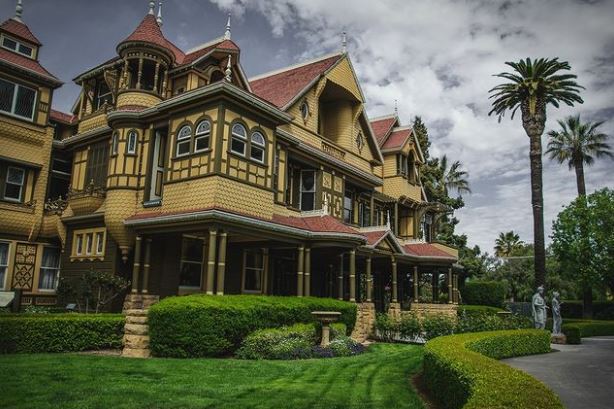
In the winter of 1864, twenty-four-year-old Sarah L. Winchester and her husband William Wirt Winchester were living in a mansion in New Haven, Connecticut USA. It was a small town and Mr. Winchester worked at Winchester Factory Castle, which was, believe or not, 3.2 million square feet. There were 1,200 employees employed in the castle. They produced rifles. To the town’s people, Mr. and Mrs. Winchester were the average affluent couple, outwardly no different from their friends or neighbors. However, outward appearances can be deceptive. Although she was part of a successful business, and married to the son of the Lieutenant Governor of Connecticut and manufacture of the famous Winchester repeating rifle, inside Mrs. Winchester carried the scars of being haunted. The couple’s life together was happy, and they moved in the best of New England society. However, in 1866, disaster struck when their infant daughter, Annie, died of the then mysterious childhood disease marasmus. Mrs. Winchester fell into a place of utmost suffering, horror, and excruciating terror, with no inkling of pity or mercy. Fifteen years later, in March of 1881, her husband’s premature death from tuberculosis added to Mrs. Winchester’s distress. She was living in a place of torment, evoking the quality of sinister wilderness. It was a dismal situation of waste and wild, as if Satan was surveying on the suite to which he had fallen. Life had become an infernal World of horror, a horrible dungeon burning like a huge furnace. Yet, from the burning flames came no light which was needed to make the darkness visible. Mrs. Winchester felt that she was damned and deprived of the sight of God who is light. #RandolphHarris 1 of 12
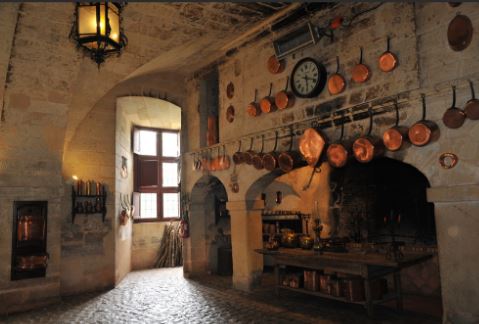
It did not end here. Mrs. Winchester found herself having to flee her New Haven mansion frequently—often in the middle of the night–because her home had become a sorrowful place which had only doleful shades to droop down. At night, she would hear footsteps coming up the stairs, and when she went to inspect, she could see two balls of fire walking up the stairs. When investigated the following day, there were hoof marks scorched in the mahogany floors and stairs. It was a land of darkness. Mrs. Winchester decided to move to Santa Clara, California USA. This village presented sweeping vistas of rural open space. It was a serene setting for Mrs. Winchester to begin her building project, which she did with steadfast determination. She immediately hired carpenters to work in shifts around the clock to build a Grand Queen Anne Victorian mansion. However, there was one strange thing. There was never an architect employed, but Mrs. Winchester often had plans for the construction of her mansion that were truly out of this World and luxurious. By the turn of the century, the eighteen-room farmhouse has grown into a nine-story mansion. The estate eventually grew to around 740 acres of farmland, which included orchards of apricots, plums, and walnut trees to supplement Mrs. Winchester’s income. However, all was not well. Given the family background and the horrors they had endure from the beginning, one could assume that Mrs. Winchester’s day-to-day reality continued to be one of fear. She had been initiated into a World of evil—an evil that was to pursue her for the remainder of her life, and if she stopped construction of her home, that would immediately prove to be fatal for her. #RandolphHarris 2 of 12
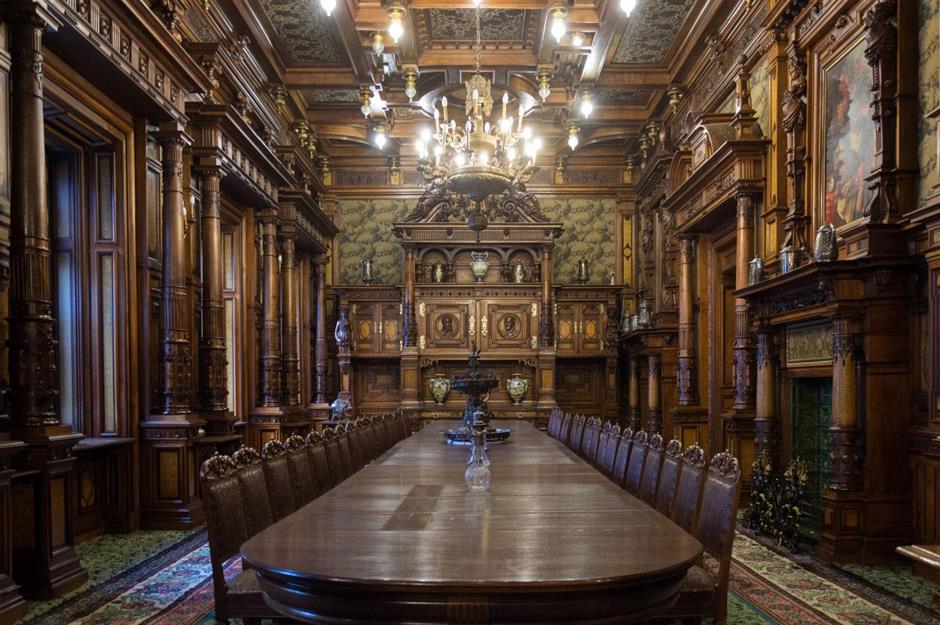
Mrs. Winchester was cursed and the demons gave her precise instructions on how to stay alive. Evil has the uncanny knack of seeking out the vulnerable. Given such circumstances, Mrs. Winchester stood little chance of ever leading a normal, well-adjusted life. She developed an eating disorder, and allegedly tried to kill herself twice and suffered prolonged periods of depression. She was caught in a recalcitrant World of darkness and danger. One night at the dinner table, the butler Gavin Dorchester, had not wished to leave without paying his respects to Mrs. Winchester. However, when he approached Mrs. Winchester, she sat staring at him with a look of terror. He seemed to her like the indifferent emissary of some evil power. Mrs. Winchester then said, “has your wife decided to drop her lawsuit against my estate?” “Oh, yes,” he replied. “My lawyers knew we had not a leg to stand on. You see, she borrowed most of the money lost in the fruit orchard from you without your knowledge, and she was up a tree. That is why she shot herself with your model 1886 rifle with the sterling silver buttplate mount.” The horror was sweeping over Mrs. Winchester in great deafening waves. “She shot herself? She killed herself because of that?” “Well, she did not kill herself, exactly. She dragged on two months before she died.” Mr. Dorchester emitted the statement as unemotionally as a cotton gin plucking cotton from the fields. “You mean that she tried to kill herself, and failed? And tried again?” “Oh, she did not have to try again,” said Mr. Dorchester grimly. They sat opposite each other in silence, he swinging his eyeglasses thoughtfully about his finger, she, motionless, her arms stretched along her knees in an attitude of tension. #RandolphHarris 3 of 12
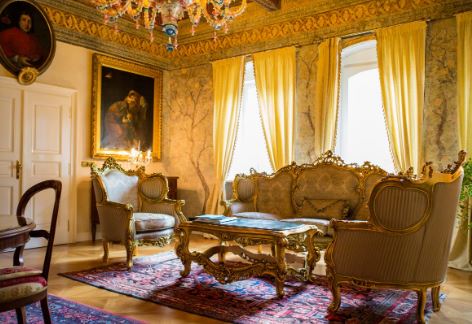
Mrs. Dorchester had been a housemaid who apparently mishandled hundred of thousands of Mrs. Winchester’s money, which caused crops to fail and several farmers to lose their jobs. “But if you knew all of this,” Mrs. Winchester began at length, hardly able to force her voice above a whisper, “how is it that when I wrote you at the time of your wife’s disappearance you said you did not understand the letter?” Mr. Dorchester received this without perceptible embarrassment: “Why, I did not understand it—strictly speaking. And it was not the time to talk about it, if I had. The Winchester business was settled when the suit was withdrawn. Nothing I could have told you would have helped you to find my wife.” Mrs. Winchester continued to scrutinize him. “Then why are you telling me now?” Still Mr. Dorchester did not hesitate. “Well, to begin with, I suppose you knew more than you appear to—I mean about the circumstances of my wife’s death. And then people are talking of it now; the whole matter has been raked up again. And I though if you did not know you ought to.” Mrs. Winchester remain silent, and he continued: “You see, it has only come out lately what a bad state your affairs were in because of my wife. She is a proud woman, and she fought on as long as she could, going out to work, and taking on sewing at home when she got too sick—something with the heart, I believe. But having to admit what she had done with your money was too much for her. She knew you would never forgive her.” Chocking back her tears. “Dead, dead, dead,” she whispered. “But she was alive yesterday and the day before and the day before that, and I was here, and I did nothing! Dead! Dead! Dead!” #RandolphHarris 4 of 12
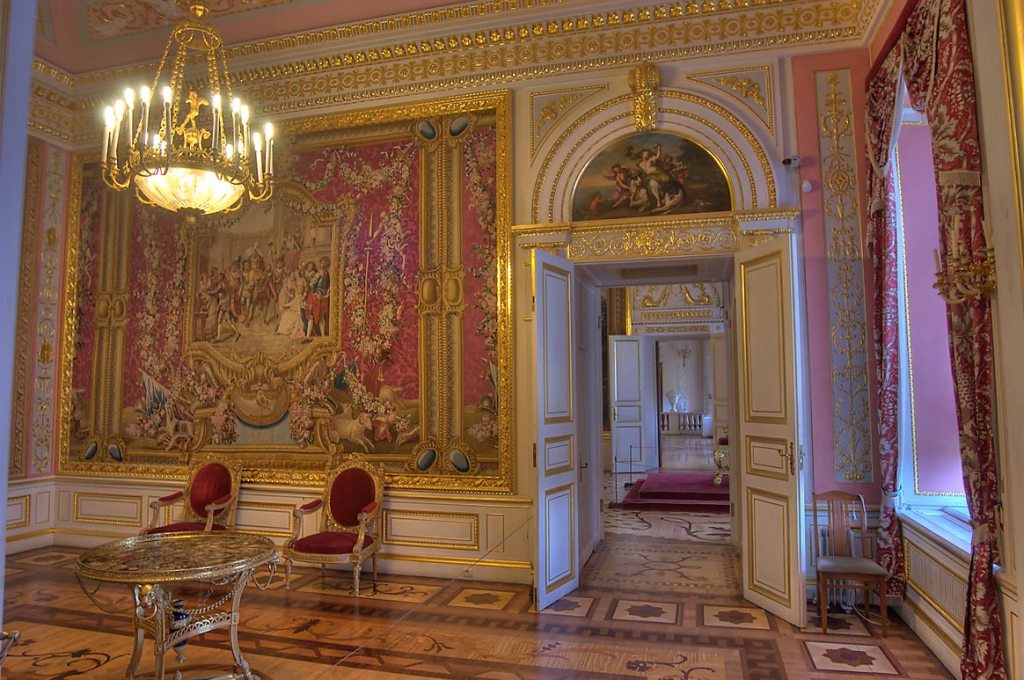
And then the bizarre scene shifted, as if the tragedy of her rage were passing into another act. Mrs. Winchester saw herself beating with her fists on all the walls of wood and glass around her, beating with her fists until the blood ran from her bruised hands. She sat down on the chair at the kitchen corner, her body crumpling, hand up to shield her face, and she began to sob aloud in the labyrinth of a house she had built, the images passing through her mind. Finally she laid her head down on her folded arms, and she cried and cried, until she was choked and exhausted with it, and all she could do was whisper over and over: “I told you all if you ever needed anything to come to me. Never to still. Do you not understand this blood money is cursed? These objects in my home are cursed! If you steal them, you bring that curse into your family!” At last, she wiped her face with her napkin, and she went to the Hall of Fires to lay down. Her head hurt and all the World seemed empty to her and hostile and without the slightest promise of warmth or light. It would pass. It has to. She felt this misery on the day Mr. Winchester was buried. She had felt it before, standing in the hospital corridor as her new born baby girl Annie cried in pain. Yet it seemed impossible now that things could get better. And her thoughts continued, abysmal and miserable, sapping her spirit and her belief in herself. It must have been an hour that she lay there, the floors hot from the fire fireplaces in the room. Mrs. Winchester was ashamed and lonely. She was ashamed of being the victim of this anguish. Her heart hammering in her ears. She sat quiet, controlling the quiver of her lips, and waiting till she could trust her voice; then she said, “I bet she died in October, on the 22nd, when the crops failed and many of the farm hands went missing.” #RandolphHarris 5 of 12

“Oh, my God!” Mrs. Winchester said. “They will not know till afterward. They will not know till long, long afterward.” Mrs. Winchester thought of the torments which her employees who stole would have to endure in contrast to the bliss and joy of being honest workers; she knew her mansion must have infused a feeling of horror in their minds, but they were paid well. This mansion can make a Heaven of Hell and a Hell of Heaven. Mrs. Winchester struggled to her feet—and surprised herself when she discovered that the act of getting up made her immediately feel better. A calm was enveloping her whole body. She was no longer afraid. Wind murmured and moan in the mansion’s eaves. Now and then the house creaked with ordinary middle-of-the-night settling noises. Exhausted from the emotional as well as the physical exertions of the day, Mrs. Winchester was soon asleep in her Daisy Bedroom. Near dawn, she came half awake and realized that Zip was at the bedroom window again, keeping watch. She murmured the dog’s name and wearily patted the wool mattress. However, Zip remained on guard, and Mrs. Winchester drifted off to sleep once more. A disturbance occurred awakening Mrs. Winchester. From directly overhead, she heard a series of thuds; it was as if someone was jumping from one part of the room to another. The thuds were loud, so heavy that the crystal chandelier trembled. Mrs. Winchester took Zip with her to investigate. However, Zip was having none of it; he would not venture up the stairs. He stood with his front paws on the bottom step, barking up at something unseen. #RandolphHarris 6 of 12

Mrs. Winchester’s blood ran cold. She walked up the stairs, flung open the door, and pushed the light button, but nothing happened. The bulb was blown. She glanced up at the bedroom window and saw what looked like a figure standing just beyond the open drapes. She could swear she saw the drapes move. That was enough for her, she immediately left the room, shut and locked the door. The next morning, the light in the bedroom where the noise was coming from was working perfectly. However, something rosed her. She had the distinct feeling that someone had just ran fingers through her hair. She could still feel her scalp tingling from the touch. It happened a second time. The fingers of a spectral hand pressed themselves deep into the nape of her neck and raked swiftly through her hair, right to the crown of her head. All she remembered when she came to was her uncontrollable screaming. These physical anomalies were not, in themselves, as troubling as Mrs. Winchester’s deteriorating relationship with her beloved Zip. He refused to go near her. This was very unusual. Mrs. Winchester and Zip had been inseparable. Now Zip was unwilling to share the same room with her. Mrs. Winchester looked around the room to see what could be the matter. At the foot of the bed was a woman. Possibly Mrs. Dorchester. She was wearing a green ballgown. Her hands were extended in a beckoning gesture and she had a grin on her face. The grin was not a mirthful one; it seemed utterly malevolent. Mrs. Winchester was terrified. Then she started howling with terror. At that, the ghost raised its hands to its throat and made a throttling gesture that had so frightened Mrs. Winchester. Then is slowly disappeared. #RandolphHarris 7 of 12
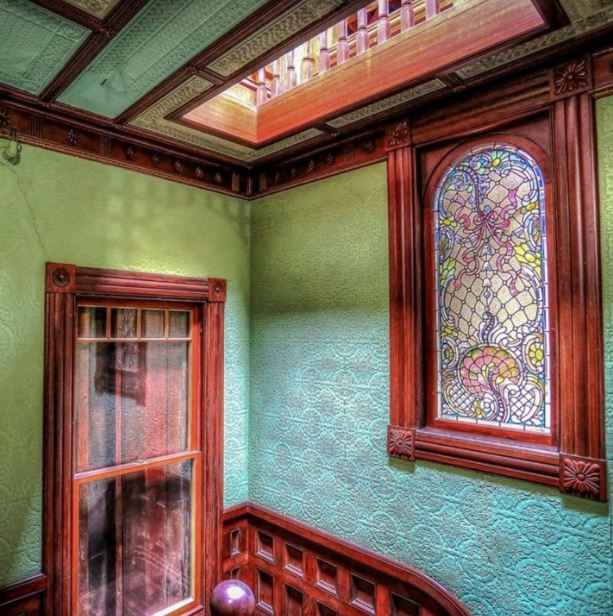
Zip was whining, ears back, his tail between his legs. He seemed to be staring at the place where the apparition had been. The butler Mr. Dorchester was on duty this night, and he heard a great commotion and strange sounds coming from Mrs. Winchester’s bedroom. When he went to inspect, Mrs. Winchester was shaking. She seemed to be having some kind of fit. “Mrs. Winchester?” She did not respond. Gurgling noises grew louder. Mr. Dorchester could believe what he was seeing: it was the most macabre sight he had ever witnessed. Mrs. Winchester’s eyes were bulging; in the light from the fireplace he could see that her face was discolored. She was choking. Mr. Dorchester saw the cause. There, as clear as say, was a hand fastened about her throat. However, it did not belong to Mrs. Winchester. It was a pale, almost translucent hand, and it was trying to strangle the life out of Mrs. Winchester. The hand ended at the wrist in a frilled green cuff and wore a diamond ring on the ring finger. Mr. Dorchester was petrified. Mrs. Winchester’s face turned blue under the hand’s murderous grip and her eyes had rolled in her head. She was gasping for air. Mr. Dorchester seized the grisly hand. It was ice cold to the touch and immensely strong. Then someone with long fingernails dug into Mr. Dorchester’s shoulder. He struggled and struggled to free Mrs. Winchester. Finally he died. She collapsed onto the bear skin rug, gasping for air. As Zip lay by her side trying to comfort her, Mrs. Winchester had never felt closer to death than she had that night. #RandolphHarris 8 of 12
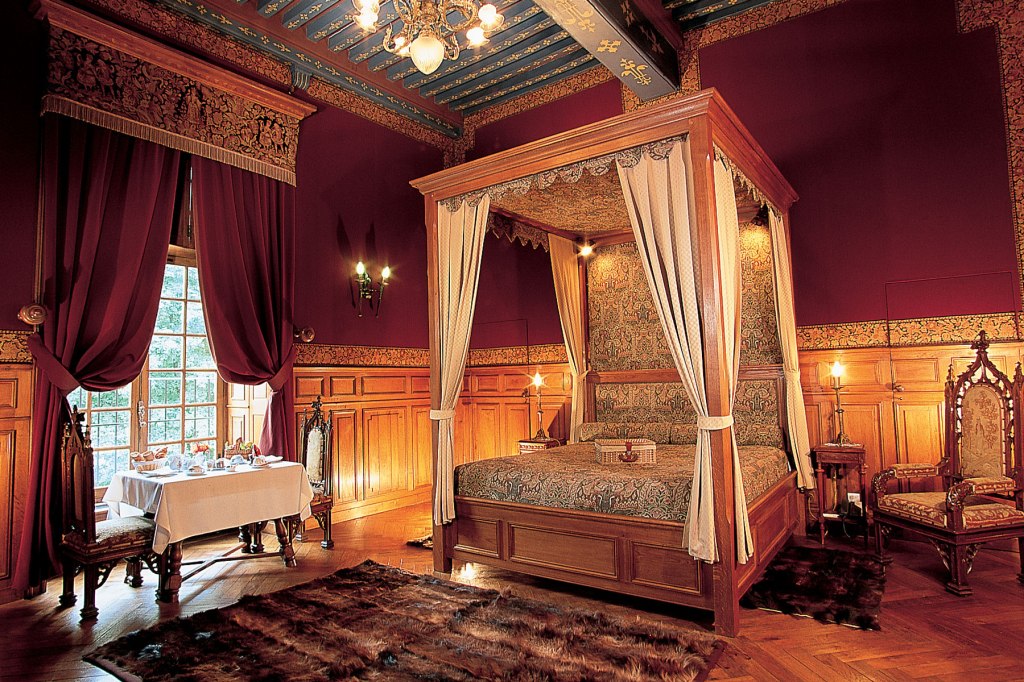
In the hollow of her back, a single drop of sweat traced the course of Mrs. Winchester’s spine. She was more scared than she had ever been—or had ever thought she could be—but she did not want to leave her home for any reason. She stood in the bloody-orange late-evening sunlight, at the perimeter of the trees, peering into the purple shadows and mysterious green depths of her estates. The spruces and pines and sycamores rustled in the breeze, and she thought she heard something more moving furtively through the brush. Imagination, of course, she told herself. Squinting into the forest on her estate, Mrs. Winchester strained to see through steadily deepening shadows, trying to catch another glimpse of the movement that had drawn her attention a moment ago. There. A ripple in the murkiness beneath the evergreen boughs. About eighty feet from her bedroom window. Something was moving quickly and stealthily from one sheltering shadow to another. Them movement grew closers, much closer. Mrs. Winchester had been confused by the layers of shadows, she drew the drapes closed. However, she did not seem to realize that not confronting these things gives the Devil free rein to do as he chooses. It is easy to see how evil can be promulgated over generations, if the individuals concerned have neither the fortitude nor the resources necessary to put an end to it. Satan’s bid for our souls is predicted on the debasement of our humanness as early as possible in our childhood. The Winchester Mansion is believed to a portal by which supernatural forces can access this World. #RandolphHarris 9 of 12

The superstitious were terrified of The Winchester Mansion and of the screams, the shrieks and the wailing that floating from the mansion after midnight, and crossed themselves every time they passed it. Oh, the town’s people gossiped about Mrs. Winchester. They claimed she had caused the manifestation of the demon Choronzon, the epitome of all disharmony and confusion, whom she conjured up in the form of a naked savage. Many also thought she was a German spy. Some even said that Annie did not die, but Black Magic caused her to disappear mysteriously. People also believed that Mrs. Winchester had the ability to invoke evil spirits and summon up supernatural darkness during daylight hours. They mystery of The Winchester Mansion and of secret societies has long been part of man’s total fascination with the occult and it would indeed be wrong to give the impression that all forms of magical and mystical endeavour and not real. There are many pursuits and secret organizations which are described as mystical or esoterical, embracing a wide variety of students and scholars seeking the knowledge of Western inner traditions. Then, more in tune with popular suspicions about secret societies, there are also occult groups whose object is clearly to influence the World order, by infiltrating the Church, politics, pressure groups and the business community. The great secrecy which surrounds the higher echelons of The Winchester Mystery House makes it virtually impossible to penetrate any senior mansion meeting, and indeed no person who has not been initiated into the meeting the secret society would be allowed to observe even the most simple of rituals. #RandolphHarris 10 of 12
Because of this secrecy, which is seldom broken—even by a deserter—it is virtually impossible to identify those at the top, although there are many visible employees, much press, and television interviews and news articles. The members and agents of The Winchester Mystery House operate in the upper echelons of the World establishment circles. This is not of a sensational or World-threatening order, far from it; but it exists, has a voice among powerful bodies in international politics and is strong enough. It aims have been varied and covert, ranging from utopian dreams of fully restoring and furnishing the estate, to addressing the historical importance and destiny of authentic Victorian homes, those that have been untouched by time, and have most of their original splendour. The second level of the secret society is pure, occult, based on the old traditions, with meetings of the like-minded individuals who are moved by the romanticism of gathering for purpose of divine illumination and reaching out for contact with non-human entities, either in their spiritual or physical manifestation. The idea of these groups of men and women meeting secretly for mystical or occult pursuits, adorning themselves in their expensive robes and calling themselves by obscure titles lend itself to colourful theories about what they actually do before their secret altars. Fuelled by images from the media, it is easy to conjure up the view that all that is secret must be evil. This is not the case, yet activities of these occult groups are fascinating. He basis for much of the ritual secrecy and traditions of occult societies invariably leads us back to the famous Order of the Knight Templar, formed in 1119 for the purpose of protecting pilgrims travelling to the Holy Land and which subsequently became noted for its military prowess against the Saracens and the immense wealth of those who joined. #RandolphHarris 11 of 12
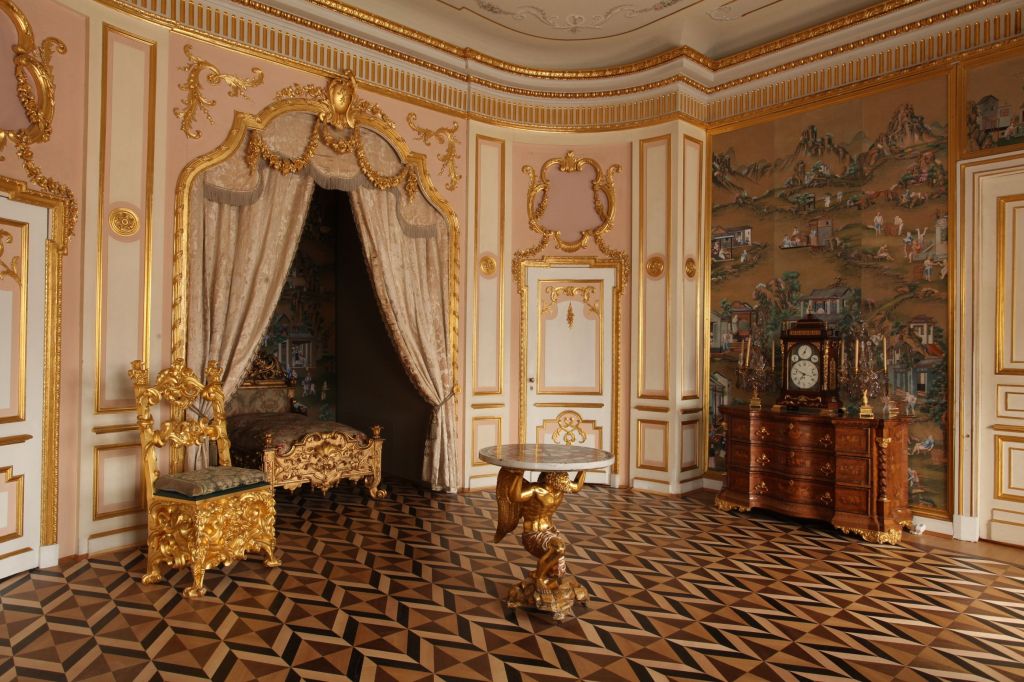
Baldwin I, King of Jerusalem, provided them with headquarters in his palace, which was said to be part of the Temple of Solomon. It has been most notably the belief in the train of the goddess Diana and the host of the dead as of great interest to scholars. Welcome Spirit Marax, O most noble king! I say thou art welcome unto me, because I have called thee through Him who has created Heaven, and Earth and Hell, and all that is in them contained, and because also thou hast obeyed. By that same power by which I have called thee forth, I bond three, that thou remain affably and visibly here before this Circle so constant and so long as I shall have occasion for thy presence; and not to depart without my license until thou hast dully and faithfully performed my will without any falsity. BY THE PENTACLE OF SOLOMON HAVE I CALLED THEE! GIVE UNTO ME A TRUE ANSWER. Ahriman, Lord of Darkness divine, I thank you for your presence within this unholy temple of counter creation. I have offered you this life of this beautiful mansion as a gateway to your manifestation with this realm to stand before me! You are Angra Mainyu ho is the Lord of counter creation, who has brought forth the mountains to the plains! You have brought forth the beasts to the fields and creatures to the night. Ahriman and Marax, with your infernal blessings I asked that you both would bring forth the baneful powers of the wolf kin to fuel with atmosphere with their essence that it may be compelled according to my will. Allow of to hear the howling of wolves and perceive their phantom shadows around us. Feed the spirits and make them hunger more to walk among the living and subject them more to my will. Open a gateway to the predatory powers of the wolf and a gateway to initiation by these lupine demons. #RandolphHarris 12 of 12
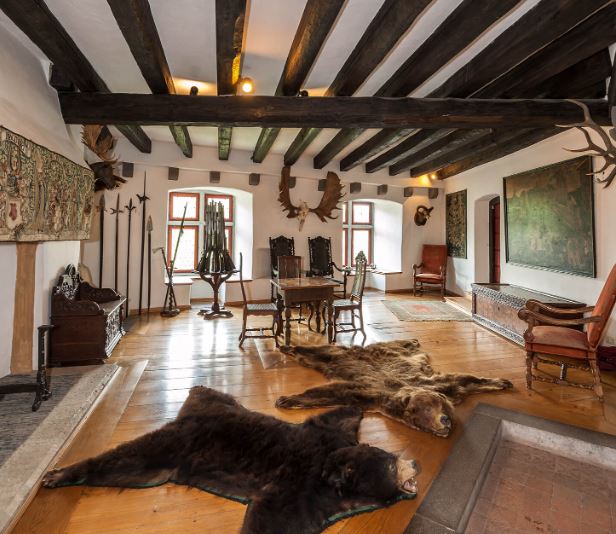

Standing proud and majestic on a limestone outcrop and commanding panoramic views out over the surrounding countryside, The Winchester Mystery House is regarded as the finest of the many Castles built. This impressive and historically important property has evolved over the centuries to incorporate the splendour of its medieval heritage and the elegance of the Arts and Crafts movement of the early 20th Century. The Gardens are a delight, with fine stands of trees, wild meadow flowers and stone steps lead up to the Castle Entrance. Come hang around and enjoy a tour.
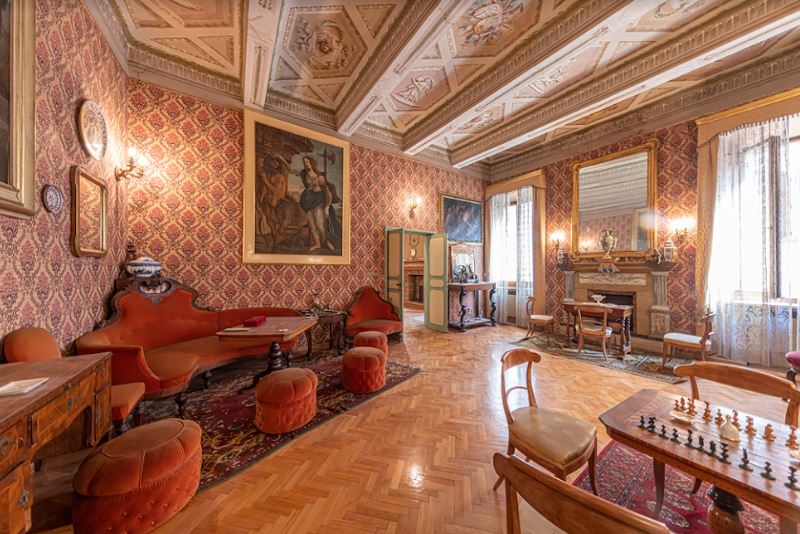
Have you purchased your tickets for Friday the 13th yet?! 👀🔦 The Winchester Mystery House is offering Friday the 13th Self-Guided Flashlight Tours. These self-guided tours give guests the opportunity to roam through the halls of the purportedly haunted Victorian mansion while hearing tales of its former and (possibly current!) inhabitants. Guests will guide themselves through the mansion that is famous for its dizzying floorplan and lack of formal blueprints. Tour Hosts will be stationed throughout the house to ensure guests don’t get lost. TICKETS ON SALE NOW!
160-room Victorian mansion which was once the residence of Sarah L. Winchester👻
~Celebrating 100 Years of Tours in 2023~

He Belongs to Me– I am Not Going!

It is a mistake to believe that evil spirits and demons do not exist at all, and equally so to see demons under every bed. At one time, in another century, the Devil was well defined as any adversary of flesh and blood. High on a throne of royal state Satan exalted sat…and princely counsel in his face yet shone, majestic, though in ruin. In Hell, there were burning lakes and caverns, teeming with vast hosts of demon armies, all under the command of a rigid hierarchy of generals, chief among whom was Satan himself. Few Christians living in the seventeenth century doubted the existence of hell and its rulers. There were many reminders in ecclesiastical art; paintings, sculpture, stained glass, the admonishments of the bestiary. Even the fearsome gargoyles set atop cathedrals were modeled on a fairly precise and generally prevailing picture of how demons actually looked; in the seventeenth century, all art was representational art. It was generally agreed that the Devil himself was a horned creature with a forked tail, who might sometimes appear as a serpent. Sorcerers were feared. And if sickness were not the wrath of God, it was the work of the Devil, his demons, and his earthbound disciples. In modern times, many people have rushed to embrace the new “science” of psychiatry, the medical men were eager to jettison belief in evil forces, demonic oppression and affliction, and to ascribe natural cases to all mental diseases of unknown etiology. It could be argued that they were, in effect, playing into the hands of the very Devil they wised to sideline. While some believe in the “unquiet dead,” others think that hearing voices, foot steps, objects moving across the room by themselves, doors slamming, strange voices are a symptom of schizophrenia. #RandolphHarris 1 of 11
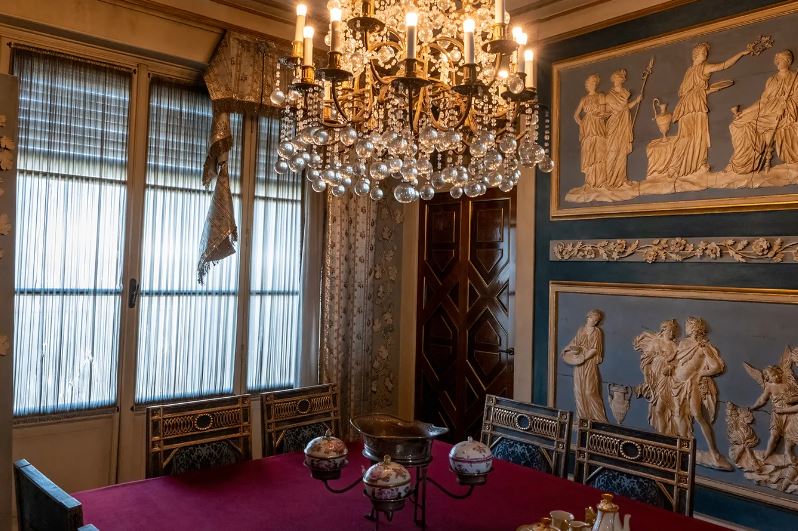
However, in authentic cases, the dead may become pawns in the struggle for the souls of the living, souls in transition, or “dislocated” souls, may become possessed by evil, so that they in their turn can possess the living, and so drive the living into despair, or worse. Evil symptoms and their inevitable fruit of despair, which leads to death by suicide bear the marks of the evil one battling with those who are sensitive to the uncommitted dead. This is dangerous territory, whether or not one holds with the existence of such entities. Ghosts are also sometimes known as the “restless dead.” It is important to establish that such entities are considered to be the “souls” or “spirits” of human beings. This is to distinguish them from nonhuman entities that have never drawn breath, those which are often referred to as demon. Mrs. Sarah L. Winchester, who was responsible for building the Winchester Mystery House, took precautions to enlist the assistance of the spirits when it came to the architecture of the Victorian mansion. The construction of the mansion was an effort to obtain deliverance from “unclean” spirits she felt that were out to take her life. She believed that she would be delivered back to God, and the transgenerational hold would be consequently broken. Never ceasing construction on this mansion would release the demonic footholds attached to the family’s fortune and also set her ancestors free. The Devil is a spirit that is powerful (it may be many places at the same time and manifest itself in a variety of distinctly paranormal ways). #RandolphHarris 2 of 11

Satan is capable of taking up a kind of residence within the mind, brain, soul, or body of susceptible and willing human beings—he is a spirit that has various names (among them Lucifer and Satan), that are real and do exit. Demonic oppression is far more common than possession, and that was certainly the case at the Winchester Estate. Malevolent spirits are always around to take advantage of our weaknesses. Spirits seem to have a channel to those who frequently suffer such attacks. Mrs. Winchester felt she was cursed because the sudden death of her new born daughter, and the death of her husband. The mansion she was building was supposed to seal up these demons. “There is a demon in this room,” John Hansen announced calmly to Mrs. Winchester as she sat in the morning room drinking her tea. The calmness was a mask. Inwardly, he was dismayed. He had not expected this. That is when he heard the low, menacing growl coming from the couch behind him. He turned. Minutes before the demure young housemaid, Mary Meriwether, had just greeted him. Now she was hideously transformed. Her neck had become impossibly elongated, the facial skin had tightened, and the lips were drawn back into a mocking smirk. The eyes that fixed him with blazing hatred were no longer those of Mary. Mrs. Winchester had been battling the supernatural force for more than two decades and she had come face-to-face with great evil many times. It often leaped out at her. He demons hawked up and down the mansion like the image of haunted criminals. #RandolphHarris 3 of 11

This house contained so many abysmal mysteries, as John Hansen starred back into Mrs. Winchester’s anguished eyes, he could tell she had been tortured. “There is a demon in the room,” he said again. Foe all that, Mrs. Winchester was shocked, taken unawares. Now Mary was lunging at John. He looked terrified. With two quick, curt gestures, John Hansen motioned to Mrs. Winchester to exist the room so to remove herself from harm’s way. Mrs. Winchester retreated to the back of the room. John advanced on Mary. “You foul and evil spirit, in the name of Jesus Christ—” “You’ll never get rid of me!” The woman slithered off the couch, cackling and taunting. “She’s mine, mine, mine.” The voice was that of a very old woman. It seemed to issue, by turns, from the young woman’s mouth and from various points in the room. She was writhing on the floor, her body coiling and uncoiling itself, her tongue lolling obscenely and her eyes yellow as gold. John was left in no doubt: these were the words and actions of the demonic, the possessed. Not too long before this, he had confronted a young man in the Winchester Mansion who had likewise hissed and wriggled in much the same manner, but the demon won the battle. The chilling words that were issued from the young man’s mouth were from a voice greatly distorted. “He belongs to me. I am not going.” And with that the young man fled from the mansion. John Hansen tried to cast the evil spirit out of this woman. “I bind you, and I forbid you to speak or interfere with this woman.” #RandolphHarris 4 of 11

John could not believe that Mary could summon such energy. She was barely five feet, three inches tall and weighed only 110 pounds. However, her arms and fists seemed to belong to a strongly built man. She caught him in a body lock. Two servants sprang to John’s defense and tried to pull her off, but she shrugged the men away with the ease of a freestyle wrestler, knocking them to the floor. Another blow to the jaw nearly felled him. He struggled to retain his balance as the servants tried again to restrain her. “In the name of Jesus—stop!” John shouted. His words had an astonishing effect. Mary fell to the floor as if struck by a heavy object. She lay still as a stone, eyes wide and staring, all strength seemingly drained from her. John, recovered somewhat but still a little groggy from the blows he had sustained, bent over her. “In the name of Jesus Christ, I command you to release your name!” On hearing the words “Jesus Christ,” Mary went into a violent fit. The servants grasped her arms and legs. At the moment, she was as much a danger to herself as to others; she was flailing about, out of control. However, by and by the fit subsided. The assistants relaxed their grip and allowed Mary to sit up, very slowly. Mary seemed to slump down into herself; her posture became that of an old, decrepit being. The shoulders grew hunched; her chin sank low onto her chest. She began cackling. John, still in his position of safety, was aghast. Then she vanished like a sheet of paper. #RandolphHarris 5 of 11

The flying horror-struck from the shrouded image of this inscrutable day occupied them, and the problems were perpetually bubbling up from the cloudy caldron of the spirits in the Winchester Mansion. Mrs. Winchesters consciousness gradually felt the same lowering of velocity. It swayed with the incessant oscillation of conjecture. There were even moments of weariness when, like the victim of some poison which leaves the brain clear, but holds the body motionless, she saw herself domesticated with the Horror, accepting its perpetual presence as one of the fixed conditions of life. Although Mary had vanished, the voice began to jabber, the words pouring out in a demented meter of their own, like a travesty of a children’s play song. “Before the filth met the filth she was ours! In the darkness womb she was ours. Always ours, always ours…ours!” The final words drawn out in a harsh, rasping hiss. The demon was playing for time. Another demon was making its presence felt; John was certain of it. There was a marked difference in one of the servant’s features. His face seemed to flatten; his mouth drooped. Then from the servants mouth a voice said, “We will never leave her.” This voice seemed to emerge from the floor itself. “We’ll kill her first!” Then the voice took on the cadence of a schoolyard bully’s—malicious, singing, mocking. “We tried before with William, his blades and pills, blades and pills, blades-and-pills.” “I command you in the name of Jesus Christ, release your name!” #RandolphHarris 6 of 11
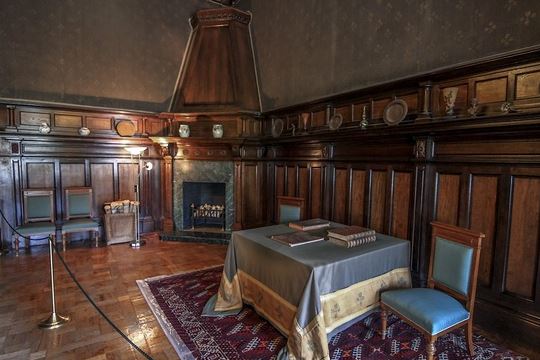
These moments seemed to lengthened into hours and days for Mrs. Winchester, till she passed into a phase of stolid acquiescence. She had come to regard herself as part of the supernatural routine with incurious eyes. And this deepening apathy held her fast. The face of the possessed servant took on a haughty look. There was a sneer, and another personality, another consciousness, behind it. “I am Sir Francis Dashwood,” a masculine voice announced. “Lover of the little ones. Robber of the little souls. Killer of the Innocents.” The servant’s hands flew to his throat. They began to squeeze. He was choking; his face turning blue. John rushed to break the grip of those hands—and found he could not. The servant’s head began to weave from side to side again. “We take them in the dark…always in the dark…in the depths of the dark. We walk for the Master in the dark. Of the warm, of the warm…to do for the Master in the bodies of the blood of the warm. To kill with the hands of the bodies of the warm…to range in the sweat in the blood in the warm.” A dramatic change occurred, but it was invisible to all in the morning room. John reports a “dark” presence had departed. The servant had no recollection of what had just taken place. The ordeal was at an end for now. The ghosts of family evil had ceases to haunt the mansion for now. After that day, the servant disappeared. No one never knew what had become of him—no one ever would know. But the house knew; the library in which Mrs. Winchester spent her long lonely evenings knew. For the house was always watching. #RandolphHarris 7 of 11

The floor she trod had felt his tread; the books on the shelves had seen his face; and there were moments when the intense consciousness of the old dusky walls seemed about to break out into some audible revelation of their secret. However, the revelation never came, and she knew it would never come. The Winchester Mansion was not one of the garrulous old mansions that betray the secrets entrusted to them. Its very legend proved that it had always been the mute accomplice, the incorruptible custodian, of the mysteries it had surprised. And Mrs. Winchester, sitting face to face with its silence, felt the futility of seeking to break it by any human means. The Winchester Family and Mansion are the source of a bizarre legend, and today is revered and idolized by followers around the World who strive to re-enact their ritual teachings. Even occultists praise the Winchester Family and their Mansion as the greatest marvel in the World. The Winchester mansion apparently means something deep and philosophical, that every person should find one’s own true will and exert it, just as Mrs. Winchester did making a home for the spirits. The construction of the 160-room mansion, that is approximately 70,000 square feet, helped Mrs. Winchester escape a World of overbearing darkness. According to one of the Winchester Mansion’s diarists, a handsome vampire, Marvellous Merchiston, was sent to seduce Mrs. Winchester and reduce her to inconsequence. He realized his before he could attack, and turned his magical current against himself—with the result that the man turned to ashes. #RandolphHarris 8 of 11

Next, his fellow vampires attacked Mrs. Winchester’s bloodhounds, which triggered the summoning up of the great demon Paimon, a Great King, and 200 Legions of Spirits. The vampires fell to an army of Paimon’s demons. This was known as the “year of miracles,” and it decided the outcome of the bloodiest wars yet know on the Winchester Estate. This carried many fortune seekers to a watery grave, and the wilderness campaigns from 1888 to 1893 claimed thousands of lives. Many were wracking with fevers (which claimed more victims than Paimon and the Winchester Rifles), and battlefield medical treatment was too primitive to save many of the wounded. They expected to gain Mrs. Winchester’s rich, flourishing, powerful, enterprising estate, but instead became ruined and undone. In the meantime, Mrs. Winchester travelled frequently and was a great walker and mountaineer. She strolled across China, Spain, and the Sahara desert; she climbed cliffs at Beachy Head and rocks at Wastdale, mountains in Switzerland, Mexico, and the Himalayas. She was a prolific writer, dashing off verse, sonnets, plays, novels, macabre short stories, magic invocations, and many were dazzled by her multifaceted brilliance. She was a traveller in the physical and spiritual Worlds. The wide scope of occult power possessed by spiritists helps explain why people can accomplish extraordinary things, and why magic can also cause so much mischief. Through the phenomena of levitation, apports, telekinesis, and materializations, it is not difficult to see how a person endowed with strong mediumistic powers can do a great deal of harm, especially in the closely associated realm of magic. #RandolphHarris 9 of 11
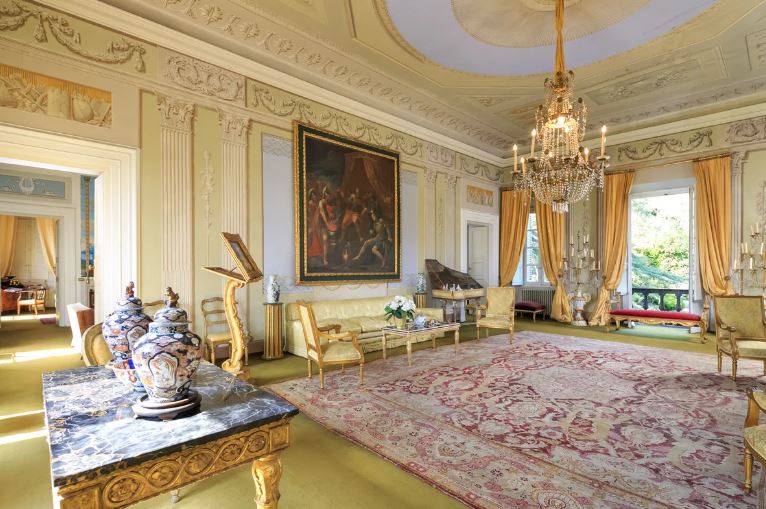
One common form of magic persecution is beatings by an invisible attacker. Parapsychology also sees magical persecution as a mediumistic problem in the sphere of materializations. Strong mediums (when under demon control) send out energy with which to build up human phantasms and are also able to transform this energy into animal forms, including dogs, cats, frogs, snakes, or human bodies with animal heads, et cetera. This explains the bizarre spiritistic persecution through phantoms in the form of various animals or human bodies with nonhuman heads. These animals bite, scratch, or otherwise torment their victims. Examples of these occult phenomena abound in areas where the black arts are practiced. However, such occurrences are denied by many intellectuals. Often peasants and country people, especially in Europe, know more about magic than university graduates, who claim, swindle, or hocus-pocus trickery are used instead of occult powers. Magic defense enlists supernatural agencies to counteract or undo the mischief wrought by magic persecution. Various kinds of spells, charms, or incantations are employed. In spiritistic séances it is an established fact that injuries inflicted upon a phantasm are sustained by the medium, even in the case of animal phantasms. Many defensive customs developed to combat this threat since magic persecution involves materialization. If a victim can injure an aggressive phantasm, one has won the struggle. #RandolphHarris 10 of 11
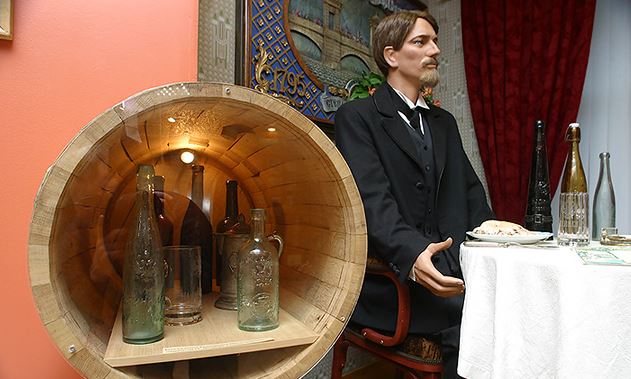
I DO invocate and conjure thee, O Spirit Sarah L. Winchester; and being with power armed from the SUPREME MAJESTRY, I do strongly command thee, by BERALANENSIS, BALDACHINENSIS, PAUMACHIA, and APOLOGIAE SEDES; by the most Powerful Princess, Genii, Liachidae, and Ministers of the Tartarean Abode; and by the Chief Prince of the Seat of Apologia in the Ninth Legion, I do invoke thee, and by invoking conjure thee. And being armed with power from the SUPREME MAJESTRY, I do strongly command thee, by Him Who spake and it was done, and unto whom all creatures be obedient. Also I, being made after the image of God, endued with power from GOD and created according unto His will, do command that you do not fall into the trap of expressing disgust with these people, or exhibiting spite or hatred. They serve as important examples of what not to be. Remember that they are not the target of your spite and hatred. It is the systematic construct of imposed limitation we despise. Not the people who are enslaved by the system. As the fallen spirits in this estate ascend, I ascend also by following the path of the celestials and infernals do tremble together, and around troubled and confounded. I usurp the power of worship to empower my blackened eternal soul. I shall take all power raised within this sanctuary as my own through this talisman of counter creation to strengthen my divine power and to Become a Living God. For thou art conjured by the name of the LIVING and TRUE GOD, HELIOREN, wherefore fulfill thou my commands, and persist thou therein unto the end, speaking unto me with a voice clear and intelligible without any ambiguity. #RandolphHarris 11 of 11

Winchester Mystery House

There have been many different activities that have existed since the Estate opened for tours in 1923. Did you know the property once included a WMH Wax Museum? It was launched in the early 1960s. #100yearsofmystery
Stay tuned for any Centennial Celebration announcements on our social accounts of how The Winchester Mystery House will be celebrating 100 years of tours! https://winchestermysteryhouse.com/

Like the Looking-Glass Country

Many of the problems being faced in America can be linked to a tendency to avoid confrontation of chronic social problems. This avoiding tendency often comes as a surprise to people from other nations, who tend to think of Americans as pragmatic and down-to-earth. In many social situations, a particular main involvement will be seen as an intrinsic part of the social occasion in which the situation occurs, and will be defined as preferential if not obligatory. At a card playing party, for example, participants may be expected to focus their attention on cards, justifying this allocation of involvement by reference to the nature of the social occasion. As suggested, we can therefore speak of occasioned main involvements. The significance of maintaining an occasioned main involvement can be seen, in relief, by examining what happens when an individual is insufficiently knowing to “catch” the meaning of what is going on. At such times he will have great difficulty in sustaining attention and hence proper involvement within the situation. This is problem is faced by international students in a classroom lecture or by persons not British at a cricket match. Similarly, when an amateur examining his car engine to determine why his car has stalled feels uncomfortable under the gaze of the other passengers, this discomfort may arise not only because he has cased them an inconvenience and is demonstrating incompetence, but also because he must act involved in his task and may not know enough about motors to become sincerely caught up in examining one for failings. #RandolphHarris 1 of 21

Insufficient experience is not the only cause of such a predicament. When guests at a small occasion of sociability are momentarily left by their host to their own devices, a similar problem occurs: expecting to be guaranteed sociable interaction, they may find nothing available as a legitimate main involvement and hence no means of being at ease. Interestingly enough, if an individual is insufficiently schooled in a subject matter to participate in it from within, as it were, and attempts to compensate for his alienation by wearing exactly the right clothes, employing exactly the right equipment, or assuming exactly the right stance, those around him may say that he is “overinvolved in the situation.” In fact, however, it might be more accurate to say that he is insufficiently involved in the occasioned main involvement and overdependent on selected signs of being at one with this activity. In this way we might try to account for the slight uneasiness caused others by a woman not closely related to the deceased who appears at the funeral in a very modish, very complete, black ensemble. The main involvement sustained by an individual within a social situation can express his apparent purpose in being present; and obligation to have an appropriate main involvement is an obligation to have a particular purpose. As suggested, however, there are social situations in which those present do have a purpose, even an obligator one, that does not in itself require or even allow a main involvement, for example, when an individual in a vehicle of public transportation sits or stands while awaiting his destination. At such times the individual may sustain quite absorbing main involvements which are patently subordinated to a dominant involvement that cannot yet occur. #RandolphHarris 2 of 21

Whether an occasioned main involvement is prescribed or not, the participant in a social gathering—at least in a middle-class gathering—may be obliged to sustain at least a certain minimal main involvement to avoid the appearance of being utterly disengaged. This is one reason why waiting rooms, club cars, and passenger airplanes in our society often are supplied by management with emergency supplies such as magazines and newspapers, which serve as minimal involvements that can be given weight (when there is nothing but waiting to do) yet can be immediately discarded when one’s turn or destination arrives. Newspapers, in particular, play an important role here, providing a portable source of involvement, which can be brought forth whenever an individual feels he ought to have an involvement but does not. In our society meals provide an interesting problem in involvement allocation. In public restaurants eating is defined as the dominating involvement, and yet it is also seen as something that perhaps ought not to engage very much of the individual’s attention. Often, therefore, subordinate involvements will be sought out to drain off some unusable involvement capacity. Thus, when an individual finds he must eat alone without the cover of conversation with an eating partner, he may bring along a newspaper or a magazine as a substitute companion. Interestingly enough, should the individual read from a scholarly tome in these situations, he may be considered too absorbed for public propriety, too distracted from the dominating activity, and incidentally too little available in the situation at large should he suddenly be called upon to direct his attention to something. #RandolphHarris 3 of 21

It may be added that pocket books, serious though they may be in content, tend to scout this ruling because of their appearance and cost; this may be one reason for their popularity. And should he have nothing to read, he may elect to sit at the counter and, by having a quick and simple meal, exhibit that some of his involvement is lodged in other affairs to which he is rushing. Facing away from the gathering and toward the counter, he can correct for his exposure in the situation by being located at its edges if not outside it. Interestingly enough, there are situations in which certain minor involvements are explicitly demanded, the implication being that the occasion is not important enough to justify a complete absorption in the occasioned main involvement. In Shetland Isle, young women participating in evening family conversation were sometimes obliged to knit at the same time, this side involvement being an important source of household income. Similarly, in one convent we learn that nuns understood that: You came to the recreation with your workbag…In the bag you carried the work your hand must do while you sat in the circle, for no hands might lie idly folded in the lap. The work, moreover, had to be something manual like darning or knitting. It could not be anything self-absorbing like letter-writing, sketching or reading which would take your attention from the sisters sitting around you. These illustrations of the balance required between main and side involvements may seem to touch on trivial aspects of behavior, but there are circumstances in which the seriousness of the issue becomes very evident. For example, a constant complaint of patients on the admission wards of mental hospitals is that there is literally nothing to do. #RandolphHarris 4 of 21

Not only does the medical treatment that would seem to constitute the occasioned involvement fail to materialize, but all the usual safety devices for providing subordinate involvements, previously mentioned, may be unavailable, or, if available, may have to be relied upon for a greater period of time than they were apparently designed to manage. Here, improper management of involvement within the situation must be displayed in just those circumstances where its observation by others may be very threatening. The patient, in short, is forced to act oddly just at a time and in a place where the one thing uppermost in his mind may be to demonstrate that he is normal. Should the patient take strong exception to his circumstances, he may be shifted to a “seclusion room,” where, quite literally, there may be nothing at all available to provide an acceptable main focus of attention. Alone in a stripped room, it will be nearly impossible for him to act suitably engaged and hence nearly impossible to act sane, and so the patient may try to cover up the judas-hole in the cell door in order to prevent passers-by from transforming a private predicament into a social situation. Failure to sustain a required degree and kind of main involvement does not occur merely because of a lack of appreciative understanding of what is going on or because of an impoverished environment. While present in a gathering, the individual may find that his concerns and interest lie outside it, being the kind that can be satisfied within an actual social situation but not the current one. The expressed impatience that may result, the sense of straining at the situation’s bonds, is something everyone has witnessed and displayed. #RandolphHarris 5 of 21

Common, too, are those conditions that lead an individual to say he is bored and to feel phlegmatic and affectless to engage in a suitable main involvement. It is worth commenting on another possibility, namely, that an individual can apparently feel too anxious and excited to participate properly. Whatever the acceptable main involvements available in the situation, the individual may find himself too agitated to give the required part of himself up to any of them. The kind of preoccupation has been memorialized for us in the expectant father cartoon. Persons who fidget and pace approach this condition; and in mental hospitals, manic patients realize it. One of the most poignant mental hospital scenes is that of a patient too excited or distraught to settle into what is available in the situation, yet desperately attempting to do so. Thus, one famous ex-patient, describing his efforts to control himself during periods of excitement, records: “I have often felt this [unhealthy mental excitement] and felt also that it could be often controlled by a determined exercise of the will. Often I have risen and walked firmly through the room or field, holding myself in as I would rein in a horse which was striving to break away in spite of curb-chain, bridle, or bit.” Sometimes the patient gives the impression that he knows he cannot hope to contain himself in the situation and is now concerned merely with giving others some impression of being properly present. In Central Hospital I observed one patient who would walk from one end of the day-room to the other, where there was a doorway leading out to the porch, bravely attempting to give the impression that there was something on the porch he had to see to, and then, without entering the porch, retrace his steps and repeat the cycle. #RandolphHarris 6 of 21

Another patient, a young psychotic woman, with the incredibly rapid tempo of a patient with motor excitement, seemed to attempt to squeeze herself back into the situation by dumping one ashtray into another, one bowl of water into another, one plate of food into another, apparently in the vain hope that it would look as though she were doing something acceptable and meaningful. Another, in repeatedly leaving her cafeteria seat, going to the doorway, and then coming back, would try to cover this anxious action by keeping on her face the studied look of someone who had to be somewhere at a particular time. There are many social situations where individuals can be found who affect to be caught up in the occasioned proceedings but who in fact have their own special business to pursue and hence their own allocation of involvement. The phrase “to mix with the crowd” tends to be reserved for criminals, detectives, reporters, and other heroes of dissimulation, but the process is in actuality quite a common one. Thus, in some urban public libraries, the staff and the local people without homes may reach a tacit understanding that dozing is permissible as long as the dozer first draws out a book and props it up in front of his head. In Central Hospital an interesting example of this dissimulation occurred in regard to well-liked attendants who would participate in the organized recreational activity of the parole patients and be quite fully accepted by the patients while doing so. Yet when a fight occurred among the patients at these times, or an attempted escape, the attendant often seemed to be on the scene even before some of the patients present realized anything untoward had happened. #RandolphHarris 7 of 21

At such moments some patients became a little disillusioned, realizing that the attendant’s participation was in part merely a show, that his spirit had not been caught up by the occasion, and that all along he had been alertly standing guard. It is in cases such as these, when the show of proper involvement is given away, that we obtain a clear outline of the constraints that are unusually unfelt and invisible. Now, while it is important for people to like it, it does not mean that we have to desperately seek their approval. However, it is crucial to be likeable. Other than being civil and treating people with respect, another way to show you care for them is to remember their names. Also, when doing business with other people, it may be a good idea to find out his or her complete name and some facts about his or her family, business and political opinions. Fix all these facts well into your mind as part of the picture, and the next time you met that person, inquire after the family, and ask about yacht and polo match. You will develop a following! One would do well to discover early in life that the average person is more interested in his or her own name than in all the other names on Earth put together. Remember that name and call it easily, and you have paid a subtle and very effective compliment. However, forget it or misspell it—and you have placed yourself at a sharp disadvantage. For example, I once organized a public-speaking course in Paris and sent form letters to all the American residents in the city. French typists with apparently little knowledge of English filled in the names and naturally they made blunders. One man, the manager of a large America bank in Paris, wrote me a scathing rebuke because his name had been misspelled. #RandolphHarris 8 of 21

The bigger a corporation becomes, the colder they become. One way to warm it up is to remember people’s names, and even if you are having a series of bad days, try to be nice and make it seem that your life is perfect. When an executive says he or she cannot remember names, it usually means he or she cannot remember a significant pat of one’s business and is operating on quicksand. People love personalized treatment, it makes them feel special and important. People are so proud of their names that they strive to perpetuate them at any cost. President Donald Trump built towers and hotels, William Randolph Hearst built castles and mansion, Sarah L. Winchester built one of the largest in most unique Queen Anne Victorian mansion in the World. Libraries and museums owe their richest collections to people who cannot bear to think that their names might perish from the memory of the race. The New York Public Library has its Astor and Lenox collections. The Metropolitan Museum perpetuates the names of Benjamin Altman and J. P. Morgan. And nearly every church is beautified by art-glass windows commemorating the names of the donors who contributed large sums of money for this honor. Most people do not remember their names, for the simple reason that they do not take the time and energy necessary to concentrate and repeat and fix names indelibly in their minds. They make excuses for themselves; they are too busy. However, remembering a name could make a person feel you are sincere and they are important to you and that could land you a huge account at work. #RandolphHarris 9 of 21

One time I had to meet with a client for an open house, and the event was to be catered. This particular client had an allergy to egg products and was interested in purchasing several homes as investment properties that he would rent out to his family. So, we made sure to remove any items that had eggs in them from the menu. He was so impressed that we took the time to accommodate his special needs that wrote a note to the manager and told him, “Your staff knows a lot about the fine art of handling people.” Later he signed the deal. Half the time we are introduced to a stranger, we chat a few minutes and cannot even remember his or her name by the time we say goodbye. One of the first lessons a politician learns is this: “To recall a voter’s name is statesmanship. To forget it is oblivion.” If you do not hear the name distinctly, say, “So sorry. I did not get the name clearly.” Then, if it is an unusual name, as them, “How is it spelled?” During the conversation, take the trouble to repeat the name several times, and try to associate it in your mind with the person’s features, expression, and general appearance. If the person is someone extremely important, leave a note of their name in your mobile phone. All this takes time, but good manners are made up of petty sacrifices. The importance of remembering and using names is not just the prerogative of kings and corporate executives. It works for all of us. Sometimes if you remember a person’s name, smile at them, and then tell them what you want, you may get a little extra roast beef on your sandwich. We should always be aware of the magic contained in a name and realize that this single item is wholly and completely owned by the person with whom we are dealing…and nobody else. #RandolphHarris 10 of 21

The name sets the individual apart; it makes one unique among all others. The information we are imparting or the request we are making takes on a special importance when we approach the situation with the name of the individual. From the waitress to the senior executive, the name will work magic as we deal with others. Remember that a person’s name is to that person the sweetest and most important sound in any language. In contemporary life the book of experience is filled with blank and mysterious pages. Conceptual spaces are used by the agents themselves to make distinctions. Accompanying these distinctions there are usually boundaries. Movement in a conceptual space is not free of restriction. An agent in a hereditary caste system cannot simply pick up and move to another cast. Nor can an employee just move to a better-paying job at will. The barriers to movement are part of what defines the “location.” Supervisory jobs that pay more have specific qualifications and may be subject to a competitive selection process. Castes are defined by socially maintained rules of entry and exit. Conceptual barriers are among the most extraordinary human inventions for accomplishing goals. There are clan identities, club, and fraternity membership criteria, citizenship rules, ethnic groupings, religious affiliations, and a host of other socially defined categories with hard boundaries. These conceptual barriers place much more refined filters on patterns of interaction. Because they are conceptual rather than physical, their effects on interactions can be much more selective. Clan identity may dictate one kind of restriction on material interactions (such as marrying within your religion), another kind of restriction on commercial ones (such as borrowing money from outside the clan), and none at all on relations such as who can be employed. #RandolphHarris 11 of 21

Moreover, the members of the clan may be dispersed in space. Although no physical boundary could effectively contain all the members and only the members, the concept of the clan can contain them and structure their interactions with each other and with other agent types. Interaction determined simply by coresidence within a common physical region cannot be so finely differentiated by types of agents. This is an enormous advantage for conceptual barriers as a means of shaping interaction patterns. As always, there are disadvantages. Conceptual barriers, like their physical counterparts, can be causes of underexploration because they restrict interactions to homogeneous and familiar pools of other agents. Members of commercia firms often find that they have fallen into a pattern of talking about the business only with other members of the firm. The opportunities for learning about markets not being served are diminished when this happens. Arguments for diversity of religious and cultural types in public institutions often make the underexploration point, that there is much to be leaned from interactions that are more heterogeneous. It is against these revolutionary changes in our uses of time, space, and knowledge that another unanticipated historical event is unfolding—the resurgence, as we have seen, of what we have termed prosuming. We know that in ancient times our ancestors fed, clothed and sheltered themselves long before the invention of money. They produced what they needed to consume. We also know that gradually, over the millennia, people prosumed less and relied more on money and markets. The common assumption of those who bothered to think about this was that prosuming would continue to diminish—that people creating unpaid value outside the market would shrivel into irrelevancy. #RandolphHarris 12 of 21

Yet exactly the opposite is happening. While shrinking in its First Wave forms, prosuming is rapidly expanding in new, Third Wave ways. It is producing more economic value, feeding more “free lunch” into the money economy and doing so through more channels. It is actually increasing productivity in the money sector and, as the World Wide Web and Linux have shown, it is challenging some of the biggest and most powerful governments and corporations in the World. Prosuming could even, ultimately, transform the ways in which we deal with problems like unemployment. Since the Great Depression of the 1930s and the rise of Keynesian economics, part of the textbook solution for unemployment has been the injection of public funds into the money economy to stimulate consumer demand, and, through that, make jobs. The reasonable assumption was that if a million workers were out of jobs, the creation of a million jobs would solve the problem. In a knowledge-intensive economy, however, that assumption is false. First, the United States of America and other countries no longer even know how many unemployed there are, or what that terms means when so many people combine their “job” with self-employment and/or create unpaid value by prosuming. More important, even creating five million jobless workers lack the particular knowledge or skill sets required by the new labor market. The problem of unemployment thus becomes qualitative rather than merely quantitative. Nor is conventional retraining as useful as it sounds, since, by the time new skills are learned, the economy’s knowledge requirements may well have shifted again. In short, unemployment in knowledge economies is different from that in assembly-line economies. It is structural. #RandolphHarris 13 of 21

The largely overlooked reality is that even the unemployed are employed. They are busy, as all of us are, creating unpaid value. This is yet another reason to reexamine the entire relationship of money and non-money sectors of the wealth system—the two lobes, as it were, of the brain-based economies of tomorrow. New, more powerful technologies will increase prosumer productivity. How can that be used more effectively to stimulate the money economy? Are there better ways to channel value back and forth between these two parts of wealth system? Are Linus and the Web the only models? Are there ways to remunerate the unremunerated for their contributions—perhaps with computer-assisted, multi-participant barter systems or even new “paracurrencies” of one kind or another? A generation ago, mosaics had a different structure. Typically, they looked like pyramids or wheel-and-spoke arrangements. A big company was surrounded by a ring of suppliers and distributors. The giant dominated the other firms in its grouping, dealers and suppliers alike serving essentially as it satellites. Customers and labor unions were also weak in comparison with the jumbo company. It goes without saying that large firms today still carry tremendous clout. However, things are rapidly changing. First, suppliers today are no longer just selling goods or services. They are also supplying critical information and, conversely, sucking information out of the buyer’s data bases. They are, as the buzzword has it, “partnering” with their clients. #RandolphHarris 14 of 21

Many corporations are able to rely on an independent network of third-party business partners—independent software developers, makers of peripheral equipment, dealers, and retailers….Some critical wrongly assert that such arrangements have led to the emergence of the “hollow corporation,” a vulnerable shell whose survival is dependent on outside companies. However, it is believed that this mosaic arrangement permits corporations to be lean, fleet, and adaptive, and that especially in times of crisis it is the “partners” who help corporations pull through. In fact, for every dollar of revenue in the catalyst company, the external infrastructure may generate three to four additional dollars of sales…Of far greater import is the enhanced flexibility to turn change and chaos into opportunity. In the past, companies often mouthed the rhetoric of partnership. Today they are finding themselves thrust into it. By tracing information patterns in a power-mosaic, we gain a clue to where real power and productivity lie. For example, communication flows might be densest between a parts supplier and manufacturer (or more accurately between a specific unit of each). The shipping operation of one and the stock-intake operation of the other form, in effect, a single organic unit—a key relationship. The fact that for accounting purposes, or for financial reasons, one is part of Company A and the other a part of Company B is increasingly divorced from the productive reality. In fact, the people in each of these departments may have more common interest in and loyalty to this relationship than to their own companies. #RandolphHarris 15 of 21

At Matsushita in Japan the partnering process has been formalized into something called “high productivity through investment of total wisdom.” Matsushita meets with its subcontractors at an early stage of product’s design and asks them to help improve it, in order to shorten time lags and get the product to market faster. Kozaburo Sikata, chairman of Kyoei-kai, the association of Matsushita subcontractors, expects this system to become standard practice. Sharing previously unshared information at the start is not something Matsushita does out of the goodness of its heart, but because competition demands it. And one can be sure that, as big as Matsushita is, its executives listen carefully when its 324 organized suppliers speak. Beyond this, suppliers these days are not just linked electronically to the big company, like spokes to a wheel-hub; they are, and increasingly will be, linked to one another a well, which means they are in far stronger position to form coalitions when necessary to apply pressure on the big firm. There is still another reason why the emerging mosaics no longer necessarily consist of dominators and dominated. With the breakup of the monolithic corporation into profit centers smaller and often weaker than themselves. The size of the parent firm, once a major factor, is increasingly irrelevant. It is, therefore, no longer sensible, as power shifts from monoliths to mosaics, to take for granted that giant firms dominate the mosaics of which they are a part. #RandolphHarris 16 of 21

Indeed, the large firm is also pressured from the other side, by customers who are increasingly organized into “users councils.” Ostensibly these groups are in business to exchange technical data. In reality, they are a new form of consumer lobby. Proliferating rapidly and arming themselves with high-powered legal, technical, and other expertise, users’ organizations represent countervailing power, and can often compel their supplier firms, regardless of size, to meet their demands. Such groups are especially active in the computer field, where, for example, users of VAX and Lotus software are organized. IBM customers are organized into many groups, joined in a single international council that represents some 10,000 companies, including some of the biggest in the World. IBM now boasts that it listens to its users. It better. Members of these groups may at one and the same time be customers, competitors, and joint venturers. Business life is becoming confusingly poly-relational. The idea, therefore, that few monolithic giants will command the economy of the future is simple-minded. In the new there is always an admixture of the old, and this is true of the protean counterculture now burgeoning in the United States of America. For over sixty years, the North Atlantic Treaty Organization (NATO) sought a credible deterrence to any Russian attempt to invade Western Europe. A conventional defense by NATO forces was not likely to succeed. A primary component of the NATO deterrence was based on the U.S.A. nuclear forces. Yet, a nuclear response would be devastating for the whole World. How could this work? #RandolphHarris 17 of 21

The Russians have the first move. If they do not attack, we have the status quo; score move. If they attack, we have the status quo; score this 0 for each side. If they attack and NAO attempts a conventional defense, suppose the Russians have the payoff 1 and the United States of America has -1. A nuclear response gives -100 to each side. In this game, the Russians look ahead and forecast that their aggression will not bring forth a nuclear response. It is not in the U.S.A. interest after the fact. Thus attacking will give them the payoff 1; not attacking, 0. Therefore they will attack. If you think this is an unlikely scenario, the European members of NATO thought it all too likely that the United States of America would desert them in their time of need in just this way. They wanted the United States of America to commit credibly to a nuclear response. Let us leave aside the issues of credibility for now and examine the mechanics of how such a threat could work. Now the United States of America has the first move, namely the response rule it puts in place. The pertinent rule is the threat: “If the Russians attack Western Europe, our response will be nuclear.” If the United States of America does not make the threat, the rest of the game unfolds as before. With the threat in place, the choice of a conventional defense no longer exists. Once the U.S.A. threat is in place, the Russians loo ahead and recognize that aggression will meet a nuclear response and result in a Russian payoff of -100. They prefer the status quo, and so do not invade. #RandolphHarris 18 of 21

Now the United States of America in its first move looks ahead to all this and sees that its payoff is 0 with the threat and 1 without. Therefore U.S.A. interests dictate making the threat. Once again, observe that the U.S.A. response rule requires doing something that is not the best response after the fact. Therein lies the strategic purpose: by credibly altering the Russians’ perception of the U.S.A. response after the fact, the United States of America can change “the fact” –namely, the Russian decision whether or not to invade Western Europe. The rule must be in place before the other party has already taken the action you want to influence. After the fact, neither an unconditional move nor threats and promises have any relevance. This first move must be either observed or inferred by the rival, or else you cannot use it for strategic effect. In the film Dr. Strangelove, the Russians install their sure deterrent, the doomsday device, on a Friday, but delay telling the Americas until Monday. Over the weekend, U.S.A. Air Force General Jack D. Ripper orders his squadron of planes to launch a nuclear attack. The deterrent fails by being unobservable. Observability is not as straightforward as it seems. One need not actually observe the other person’s actions if the action can be inferred from the consequence. If I am allergic to shellfish, I can tell that you cooked with shrimp even if I did not actually observe you in the kitchen. Just as your unconditional move must be observable if it is to influence your rival, his actions must be observable if you are to influence them by threats or promises. Otherwise you cannot check his compliance, and he knows this. #RandolphHarris 19 of 21

Now that you have seen how credible unconditional moves and threats have their effects, you will be able to analyze most simple situations of this kind without drawing a game tree in all its detail. A verbal argument will usually suffice. If ever it does not, and you doubt if the prose has covered all the cases correctly, you can always check the reasoning by drawing an outline. We can make war on poverty but shrink from the extensive readjustments required to stop breeding it. The body is a type of workyard. Molecular machines do the daily work of the body. When we chew and swallow, muscles drive our motions. Muscle fibers contain bundles of molecular fibers that shorten by sliding past one another. In the stomach and intestines, the molecular machines we call digestive enzymes break down the complex molecules in foods, forming smaller molecules for use as fuel or as building blocks. Molecules to the bloodstream. Meanwhile, in the lungs, molecular storage devices called hemoglobin molecules pick up oxygen. Driven by molecular fibers, the heart pumps blood laden with fuel and oxygen to cells. In the muscles, fuel and oxygen drive contraction based on sliding molecular fibers. In the brain, they drive the molecular pumps that charge nerve cells for action. In the liver, they drive molecular machines that build and break down a whole host of molecules. And so the story continues. The body is also a construction site. In growing, healing, and renewing tissue, the body is a construction site. Cells take building materials from the bloodstream. Molecular machinery programmed by the cell’s genes uses these materials to build biological structures: to lay down bone and collagen, to build whole new cells, to renew skin, and to heal wounds. #RandolphHarris 20 of 21

With the exception of tooth fillings and other artificial implants, everything in the human body is constructed by molecular machines. These molecular machines build molecules, including more molecular machines. They clear away structures that are old or out of place, sometimes using machinery like digestive enzymes to take structures apart. During tissue construction, whole cells move about, amoebalike: extending part of themselves forward, attaching, pulling their material along, and letting go of the former attachment site behind them. Individual cells contain a dynamic pattern of molecules made of components that can break down but can also be replaced. Some molecular machines in the cell specialize in digesting molecules that show signs of damage, allowing them to be replaced by fresh molecules made according to genetic instructions. Components inside cells form their complex patterns by self-assembly, that is, by sticking to the proper partners. Failures in construction increase as we age. Teeth wear and crack and are not replaced; hair follicles stop working; skin sages and wrinkles. The eye’s shape becomes more rigid, ruining close vision. Younger bodies can knit together broken bones quickly, making them stronger than before, but osteoporosis can make older bones so fragile that they break under minor stress. Sometimes construction is botched from the beginning due to a missing or defective genetic code. In hemophilia, bleeding fails to stop due to the lack of blood-clotting factor. Construction muscle tissue is disrupted in 1 in 3,300 male births by muscular dystrophy, in which muscle are gradually replaced by scar tissue and fat; the molecule “dystrophin” is missing. Sickle-cell anemia results from abnormal hemoglobin molecules. Paraplegics and quadriplegics know that some parts of the body do not heal well. The spinal cord is an extreme—and extremely serious—case, but scarring and improper regrowth of tissues result from many accidents. If tissues always regrew properly, injury would do no permanent physical damage. #RandolphHarris 21 of 21

MAGNOLIA STATION AT CRESLEIGH RANCH
Rancho Cordova, CA |
Coming Soon!

This exclusive community nestled within Rancho Cordova, California offers estate-sized single-family homes with large lots and a mix of single story and two story homes, ranging from 2,200-3,700 square feet, with 3-7 bedrooms, 2-5.5 bathrooms and up to a 4-car garage.

The resort-style amenities in a Cresleigh Home will make your family feel you all are on vacation year-round.

Your Facial Expression is More Important than the Clothes You Wear

A knowledge worth understanding is not less important than a teacher worth seeking. Subordinate involvements—side and main—express, by definition, at least a surface respect for what is agreed should be the controlling business at hand, however demanding they may be in fact. It is implied that such subordinate involvements ought to catch only the individual’s lesser and unimportant self. It is understandable, then, that when an individual wishes to give weight to these subordinate activities one will conceal and cover them with a show of their being merely distractions. It is also understandable that these involvements will be a constant threat to obligatory behavior, ever ready to absorb more of the individual’s concern that is felt proper. This is especially the case with involvements, defined and described as “minor” in everyday terms, will never be entirely prohibited in the situation, and hence a few will always be available as beginning points for defection. The idiom of subordinate involvements differs widely from one cultural group to another. Even between the English and American patterns we find a difference, as Dickens reminds us in his British response to an American custom: “As Washington may be called the headquarters of tobacco-tincture salvia, the time is come when I must confess, without any disguise, that the prevalence of those two odious practices of chewing and expectorating began about this time to be anything but agreeable, and soon became most offensive and sickening. In all the public places of America this filthy custom is recognized. #RandolphHarris 1 of 21

In the courts of law the judge has his spittoon, the crier has his, the witness has his, and the prisoner has his; while the jurymen and spectators are provided for, are so many people who in the course of nature must desire to spit incessantly. In the hospitals the students of medicine are requested, by notices upon the wall, to eject their tobacco juice into the boxes provided for that purpose, and not to discolor the stairs. In public buildings visitors are implored, through the same agency, to squirt the essence of their quids, or “plugs,” as I have heard them called by gentlemen learned in this kind of sweetmeat, into the national spittoons, and not about the bases of the marble columns. But in some part this custom is inseparably mixed up with every meal and morning called, and with all the transactions of social life.” Dickens said in 1842, of course, what many Americans would say now, so it should be apparent that involvement idiom can change through time within the same nation. Thus, some signs, such as whittling, taking snuff, or toying with one’s key chain, are largely passing out of currency as part of the available vocabulary; others, such as spinning, have disappeared altogether in our American society; others, such as keeping an ear cocked to the radio or phonograph, have come into being within living memory; still others, such as smoking, have changed their meaning and have ceased to connote the degree of situational license they once did. #RandolphHarris 2 of 21

Different social groupings, too, will have different subordinate involvements available to them. At Central Hospital, for example, during breaks in the rehearsal for the patient stage production, a few of the middle-class female patients would “doodle” with the entire body by means of practice ballet movements; this idiom was not available to the lower-class females present. In our society, knitting is a subordinate involvement ordinarily prohibited to men, just as pipe smoking is to women. And, as in all matters of involvement allocation, age-grade differences in permissible subordinate involvements are very marked. In many America movie houses, for example, there is a daily and weekly cycle of civic order, the day, and especially Saturday and Sunday afternoons, being defined as a time when a wide range of subordinate involvement is tolerated, while the other times are defined as occasions when few subordinate involvements are allowed. In Chicago, there are, in fact, movies houses that specialize in the kind of social order maintained by children: The theater is characterized as showing old films. Only little kids can be enthralled by dated pictures. Therefore the theater is classified as for little kids. Since it is not a place to be taken seriously, it can serve as a kind of indoor recreation hall for the older children, a place where they can devote more attention to each other than to the screen. #RandolphHarris 3 of 21

Similarly, it may be permissible for a child on the street to such his thumb, or lick a sucker, or inflate chewing-gum bubbles until they burst, or draw a stick long a fence, or fully interrupt his main line of activity to take a stone from his show. However, the adult mental patients in Central Hospital who were observed conducting themselves in some of these ways were felt by staff to be acting “symptomatically.” For any specific class of social gatherings, we may expect to find regulations concerning the kinds of subordinate involvement that will be tolerated. As has been suggested, this selection seems to be based on an assessment of the amount of one’s attention and self that would be absorbed through these activities and the amount, therefore, that would be left over for the dominating involvement. For example, it is reported that, during a group therapy session conducted by and for the staff of a child residential treatment center, it was considered acceptable for a participating member of the staff to hold a cat on her lap; to give the animal more than occasional parts, however, was felt to be a sign of withdrawal from the session. As with other aspects of involvement structure, there is an ecology regarding subordinate involvement. It has been said, for example, that between the wars in London there were districts such as Bond Street where a lady did not walk while holding anything more than gloves, a leash, or a walking umbrella, and where similar restrictions applied to gentlemen. A small parcel carried under the arm was not comme il faut, for such an involvement in visible muscular activity apparently implied a threat to the kind of finished poised appearance deemed proper. #RandolphHarris 4 of 21
From this extreme, a continuum could be traced in the same city to places where people properly went about struggling under shoulder harness or heavy objects such as boxes or large tools. In those peasant societies where persons are used to working all through the waking hours, instead of during a special time of day as in our society, a very great amount of side involvement seems to be tolerated and even enjoined, at least from the point of view of our own involvement idiom. For example, we are told of South American Indians: It is held to be typical of Indian women to be occupied with spinning while walking along the road, while selling in the market, and while gossiping with each other, and men are similarly seen engaging in some braiding or cording work, or even spinning, as they walk. Prohibitionary rules about subordinate involvements, unlike many other kinds of involvement regulation, are frequently made quite explicit. The settings of many gatherings present posted rules, for example, about not smoking or not chewing gum. In disciplinary settings such as jails, these rules can extend to the prohibition of talk during meals. In some convents these rules may even govern the “conduct of the eyes” during meditation and prayers, so that the act of merely looking around the room may constitute an unacceptable subordinate involvement. Nuns are apparently trained to maintain greater withdrawal from the situation at large than laity, this being an important part of their socialization into their calling and a brake upon quick adaptation to the secular World should they leave the sisterhood. #RandolphHarris 5 of 21

There are interesting historical changes in regard to permissible and impermissible subordinate involvements in particular situations. In many university classrooms in the last two decades, for example, knitting and smoking have become permissible, signifying, perhaps, a downgrading of the dignity of the occasion and an upgrading of the status of the students relative to the faculty. A somewhat similar change in idiom and involvement rulings can be found among American adolescents. This group seems to have greater license in regard to informal conduct in public places than it has a generation ago. At the same time, the vogue of the portable transistor radio has guaranteed a source of absorbing subordinate involvement that can be carried into a multitude of different situations. Given the fact that a subordinate involvement provides a diversion of self from a dominant involvement, even if this diversion is felt to be a minor kind, we may expect that when a dominant involvement seems to threaten the security of an individual and one’s self-control within the situation, one may initiate or affect a subordinate involvement in order to show that one is in command of one’s circumstances. Tactful persons who are sources of threat may initiate this defense for one: their offering one a cup of coffee, is an example. The easiness expressed by drinking coffee can be balanced by the tremor an individual may display in obtaining a cup adding cream and drinking the coffee. Thinking ahead, one may not know whether drinking coffee or not drinking coffee is the safer course. #RandolphHarris 6 of 21

At a dinner party in New York, one of the guests, a woman who had inherited money, was eager to make a pleasing impression on everyone. She had squandered a modest fortune on sables, diamonds and pearls. However, she had not done anything whatever about her face. It radiated sourness and selfishness. She did not realize what everyone knows: namely, that the expression one wears on one’s face is far more important than the clothes one wears on one’s back. Paris Hilton’s smile is worth a million dollars. For Hilton’s personality, her charm, her ability to make people like her, are almost wholly responsible for her extraordinary success; and one of the most delightful factors in her personality is her captivating smile. Actions speak louder than words, and a smile says, “I like you. You make me happy. I am glad to see you.” That is why babies are so popular. They are so glad to see us that they cannot hold back their joy. So, naturally, we are gad to see them. Have you ever been in a doctor’s waiting room and looked around at all the glum faces waiting impatiently to be seen? Well, on a typical winter day, the waiting room was full of patients waiting to have their checkups. No one was talking to anyone else, and all were probably thinking of a dozen other things they would rather be doing than “wasting time” sitting in that office. He told me of our classes: “There were six or seven patients waiting when a young woman walked in with a nine-month-old baby. #RandolphHarris 7 of 21

“As luck would have it, she sat down next to a gentleman who was more than a little distraught about the long wait for service. Then next thing he knew, the baby just looked up at him with a great big smile that is so characteristic of babies. What did that gentleman do? Just what you and I would do, of course; he smiled back at the baby. Soon he struck up a conversation with the woman about her baby and his grandchildren, and soon the entire reception room joined in, and the boredom and tension were converted into a pleasant and enjoyable experience.” An insincere grin? No. That does not fool anybody. We know it is mechanical and we resent it. I am talking about a real smile, a heartwarming smile, a smile that comes from within, the kind of smile that will bring a good prince in the marketplace. People who smile tend to manage, teach, and sell more effectively, and to raise happier children. There is far more information in a smile than a frown. That is why encouragement is a much more effective teaching device than punishment. The effect of a smile is powerful—even when it is unseen. Telephone companies throughout the United States of America have a program called “phone power” which is offered to employees who use the telephone for selling their services or products. In this program they suggest that you smile when talking on the phone. Your “smile” comes through your voice. While many companies think that sarcasm and rudeness are great ways to run a business, other have different ideas. #RandolphHarris 8 of 21

When an executive from a computer science firm was looking for a new career, he was asked by the hiring manager why he chose their company over others, seeing how highly qualified he was. He said, “It was because managers in the other companies spoke on the phone in a cold, businesslike manner, which made me feel like just another business transaction. Your voice sounded as if you were glad to hear from me…that you really wanted me to be part of your organization.” People rarely succeed at anything unless they are having fun doing it. There are people who succeed at work because they love what they do. Whereas others, who do not enjoy what they are doing, lose motivation, they grow dull and unimaginative, and they fail. You must have a good time meeting people if you expect them to have a good time meeting you. If your goal is to set out to annoy or try to control someone, likely you will succeed in turning them off and you will make them want to avoid you because being in your presence will likely make them feel unwell. However, even if people are truly seeking help and come to you with complaints or grievances, be sure to treat them in a cheerful manner. Smile as you listen to them and adjustments will be accomplished much easier. Smiles bring in the dollars, many dollars every day. For instance, if a supermarket loses a customer because their employees are odd, consider this. The average single adult male spends between $250 to $500 a month on food. So, if he stops shopping at your store, you lose about the same amount. If he talks to his friends, who have all had unpleasant experiences, your store could lose thousands of dollars every month. #RandolphHarris 9 of 21

Sometimes it is important for us to eliminate criticism from our system. Be sure to give appreciation and praise now instead of condemnation. Stop talking about what you want. Take the time to see the other person’s viewpoint. And these things will literally revolutionize your life. You will be a totally different person, a happier person, a richer person, richer in friendships and happiness—the only things that matter much after all. You do no feel like smiling? Them what? Two things. First, force yourself to smile. Act as if you were already happy, and that will tend to make you happy. Actions seems to follow feeling, but really action and feeling go together; and by regulating the action, which is under the more direct control of the will, we can indirectly regulate the feeling, which is not. Thus the sovereign voluntary path to cheerfulness, if your cheerfulness be lost, is to sit up cheerfully and to act and speak as if cheerfulness were already there. Everybody in the World is seeking happiness—and there is one sure way to find it. That is by controlling your thoughts. Happiness does not depend on outward conditions. It depends on inner conditions. It is not what you have or who you are or where you are or what you are doing that makes you happy or unhappy. It is what you think about it. For example, two people may be in the same place, doing the same thing; both may have about an equal amount of money and prestige—and yet one may be miserable and the other happy. Why? Because of a different mental attitude. #RandolphHarris 10 of 21

I have seen many happy faces among the less affluent toiling with their primitive tools in the devastating heat of Sacramento as I have seen in air-conditioned offices in New York, London, Tokyo, Beijing and Shanghai. Most people are as happy as they make up their minds to be. Working all by oneself in a closed-off room in an office not only is lonely, but it denies one the opportunity of making friends with other employees in the company. Some people envy the shared comradeship of other people at their jobs because they hear their chatter and laughter, and they shyly look away when they pass the in-crowd. However, if you want people to come to you, you have to show an interest in them. Smile and say, “Hello,” and ask them, “How are you doing?” and you will be surprised. Smiles and hellos will be returned, the hallway will seem brighter, the job friendlier. Acquaintanceships develop and some ripen into friendships. (But I also recommend to remember, these are people you work with and they are not your family. You may want to keep your personal business to yourself, they could be trying to pry and make you look unstable so they could get you fired.) People also need to remember boundaries. You will find others do not see you the same way you think they may. Especially with “group-think,” or “pack mentality,” others may not mentally be in the same space as you and your group and so they may find you intrusive behavior and oversharing a bit offsetting. And people strongly dislike it when you cyberstalk them and think you know them. It is a big way to scare a person and turn them off. #RandolphHarris 11 of 21

Keep your mind on the great splendid things you would like to do, and then, as the days go flying away, you will find yourself unconsciously seizing upon the opportunities that are required for the fulfillment of your desire, just as fish swing with the tide. Picture in your mind the able, earnest, useful person you desire to be, and the thought you hold is hourly transforming you into that particular individual…Thought is supreme. Preserve a right mental attitude—the attitude of courage, frankness, and good cheer. To think righteously is to create. All things come through desire and every sincere prayer is answered. We become like that on which our hearts are fixed. Your smile is like the sun breaking through the clouds. The flesh of a smile can be a memory that lasts forever. We can see examples of barriers to interaction that have been erected all through our social World. These include city walls, national borders, prisons, monasteries, private clubs, computers that are deliberately isolated from outside networks, and middle schools that isolate those facing the onset of adolescence from others who are either younger or older. The essential effect of a barrier to movement is to make some agents more proximate—more likely to interact with each other—and other less. Direct changes in physical space are the most obvious ways to accomplish this: walks and moats. #RandolphHarris 12 of 21
However, one can also alter technology moving through physical space. Not maintaining a road between two villages reduces the traffic between them. “Grounding” teenagers by taking away their mobile phones and Internet access increases their interactions within the household and decreases their interactions beyond it. All these devices have opposites, of course. For walls, moats, bad road maintenance, and grounding we can substitute doors, bridges, good maintenance, and car privileges. Time can also be altered by controlling the technology for moving through it. Writing is a way of interacting with the future (as well as across space). Destroying written records is a way of depriving heretics of interactions with future agents. Reading is technology of interacting with the past as well as with distant places. Preventing agents from learning to read can alter activation of agents by blocking interactions over time. Many earlier information technology “advances” can be understood as reducing barriers to interactions across space and/or time. The technology of writing had this effect. In turn, it was greatly advanced by printing with moveable type. This dramatically reduced the costs of the pattern of interaction in which the idea of one source are communicated to many recipients across time periods and distances that were previously prohibitive. Other “broadcast” media, such as radio and television, have this one-to-many property as well. These technologies made major contributions to the formation of the large nation-states that dominated nineteenth- and twentieth-century World politics. Especially when controlled by central authorities, they had enormous power to make diverse and dispersed populations more homogeneous in their knowledge, loyalties, and even language. #RandolphHarris 13 of 21

A major limitation of imposing and removing barriers and of other simple manipulations or proximity and activation is their imprecise selectivity. Crude physical boundaries rarely cluster together all the agents who would benefit and only those agents. Technological interventions that remove barriers often increase both wanted and unwanted interactions—as the World Wide Web brings us close both to groups we admire and to groups we despise. Two further classes of mechanism for modifying interactions patterns are extensions of the basic barrier approach that achieve greater selectivity. They involve barriers that are conceptual rather than physical and barriers that are “semi-permeable.” Watching a new civilization encroach on an old one inescapably calls for comparisons between the two. Those who have benefited from the past, or who have come to terms with it, form a nostalgia brigade, praising or romanticizing yesterday and contrasting it with the as-yet-ill-formed, incomplete tomorrow. Suffer from the death of the familiar, future-shocked by the pace of change, millions in the West are watching the remnants of their industrial economies decay. Worried about jobs and watching Asia rise, they—especially the young—are bombarded by dystopian images of the future in films, TV series, games and online messages. Media-manufactured stars are presented as role models in the form of models, musicians, and athletes. They hear religious assurances that the end is nigh. And they are showered by apocalyptic messages from a vast, once-progressive environmental movement whose dominant slogan has become “Live your best life.” #RandolphHarris 14 of 21

Yet the period ahead is about to explode with surprises of all kinds that will escape the either-or dichotomy of good versus bad. And the biggest surprise of all may be that the revolutionary wealth system and civilization described here will, despite everything, open enormous opportunities for billions of us to live better, healthier, longer and more socially useful lives. We have emphasized that emerging wealth system cannot be understood within the framework of conventional economics, and that, to even glimpse its future, we need to look at the deep fundamentals that lie behind all wealth creation from the ancient past to today—and tomorrow. As we have seen, these include types of work, division of labor, exchange systems, energy supplies, a particular family structure and a characteristic physical environment. However, the deep fundamentals most unexamined, yet among the most relevant to our future, are time, space, and knowledge—each of which could easily justify a library of its own. It is clear that the everyday sound-bite economics that is the subject of so much chatter in Econo-Land focuses on only a tiny fraction of economic reality. Indeed, given the constraints of a single report, even our attempt to expand the common view of what is involved in wealth creation provides a far-from-complete picture. We have shown why millions today feel excruciatingly time-squeezed both at work and at home—how we are irregularizing our daily schedules and how companies steal our time and impose on us an unpaid “third job.” #RandolphHarris 15 of 21

We have seen how we are changing the rates at which items are put up for sale and then withdrawn. And we have show how, by synchronizing some of our activities, we necessarily de-synchronize others at unknown cost. We are revolutionizing the time component of wealth. That revolution is paralleled by dramtic shifts in the spatial location of wealth and of the enterprises and technologies that produce it. And we have seen why, even if all of today’s anti-globalists packed their knapsacks and went home, we could expect economic integration to slow while other dimensions of global integration speed up—another case of de-synchronization as changes in time and space interact. Only when all these changes are viewed against the backdrop of revolution in the knowledge system, however, can we glimpse the full transformatory power of what is happening today. These developments do not affect just the economy, and business cannot just install a “knowledge-management system” and move on. Today’s changes affect how we all make decisions, right down to the very truth and/or lies on which we base them. We are living through a period when our long-standing criteria for separating truth from falsehood are themselves under fire. And the branch of knowledge most necessary for economic advance—science—is under widespread attack. Science, as suggested earlier, is in more trouble than most suspect. It is in a crisis that goes far beyond immediate issues like the decline in financing for basic research. Science survives by the grace of its host culture. And that culture is turning hostile, as seen in the growing attack on evolution by creationists (a battle once though tot have ended with the Scopes trial in 1925) and the so-called intelligent-design movement. #RandolphHarris 16 of 21

Science now faces a blinding dust storm of subjectivism—fed by fading postmodernism and flourishing New Age “spiritualism.” Its influence is also undercut by cases of corruption linking scientists t pharmaceutical firms and other industries, by repeated media portrayals of science as evil, by fear of oncoming biological breakthroughs that threaten traditional definitions of humanity. More important, science method itself is under attach by “truth managers” who prefer decisions based on other criteria, from mystical revelation to political or religious authority. The ongoing battle over truth is part of the transformation in our relationship to the deep fundamental of knowledge. Our bodies are filled with intricate, active molecular structures. When those structures are damaged, health suffers. Modern medicine can affect the workings of the body in many ways, but from a molecular viewpoint it remains crude indeed. Molecular manufacturing can construct a range of medical instruments and devices with far greater abilities. The body is an enormously complex World of molecules. With nanotechnology to help, we can learn to repair it. To understand what nanotechnology can do for medicine, we need a picture of the body from a molecular perspective. The human body can be seen as a workyard, construction site, and battleground for molecular machines. It works remarkably well, using systems so complex that medical science still does not understand many of them. Failures, though, are too common. #RandolphHarris 17 of 21

In the bustling city of Atlanta, Georgia, the single largest enterprise employs some 37,000 workers. This mainstay of the economy has a payroll of over $1.5 billion a year. Its key facilities occupy 2.2 million square feet of space. This massive service enterprise is not, however, a company or corporation. It is the Atlanta airport. It is a giant mosaic consisting of scores of separate organizations—everything from airlines, caterer, cargo handlers, and car rental firms to government agencies like the Federal Aviation Administration, the Post Office, and the Consumer Service. Employees belong to many different unions, from the Air Line Pilots Association to the Machinists and Teamsters. That the Atlanta airport creates wealth is not doubted by hotelkeepers, restaurants, real estate interests, auto dealers, and others in the city, not to mention the 56,000 other employees in Atlanta whose jobs are indirectly generated by the airport operations. Little of this wealth results from the effort of any individual firm or agency. The wealth flowing from this meta-mosaic is precisely a function of relationships—the interdependence and coordination of all of them. Like advanced computerized data bases, the Atlanta airport is “relational.” Though relationships have always been important in the creation of wealth—being implied in the very concept of the division of labor—they become far more important as the number and diversity of “players” in the mosaic system increase. As this number rises arithmetically, relationships increase combinatorially. #RandolphHarris 18 of 21

Moreover, these relationships can no longer be based on simple command, in which one participant imposes behavior on the others. Because of interdependence, the players increasingly rely on consensus, explicit or otherwise, which takes account of the interests of many. As knowledge itself is organized relationally or in hyper-media form—meaning that it can be constantly reconfigured—organization, too, must become hyper-flexible. This is why an economy of small, interacting firms forming themselves into temporary mosaics is more adaptive and ultimately more productive than one built around a few rigid monoliths. The common feature to all threats and promises is the: the response rule commits you to actions that you would not take in its absence. If the rule merely says you will do what is best at the time, this is as if there is no rule. There is no change in others’ expectations about your future actions and hence no influence of the rule. Still, there is an informational role for stating what will happen without a rule; these statements are called warnings and assurances. When it is in your interest to carry out a “threat,” we call this a warning. For example, if the president warns he will veto a bill not to his liking, this is simply an indication of his intensions. It would be a threat if he were willing to sign the bill, but strategically committed to veto it in order to induce Congress to offer something even better. #RandolphHarris 19 of 21

A warning is used to inform others of the effect of their actions. A parent who warns a child that a stove-top is hot, makes a statement of fact, not strategy. When it is in your interest to carry out a “promise,” we call this an assurance. A child who ignores the warning that the stove-top is hot and gets burned assures the parent that he will not do this again. We emphasize this distinction for a reason. Threats and promises are truly strategic moves, whereas warnings and assurances play more of an informational role. Warnings or assurances do not change your response rule in order to influence another party. Instead, you are simply informing them of how you will want to respond based on their actions. In stark contrast, the sole purpose of a threat is to change your response rule away from what will be best when the time comes. This is done not to inform but to manipulate. Because threats and promises indicate that you will act against your own interest, there is an issue of credibility. After others have moved, you have an incentive to break your threat or promise. A commitment is needed to ensure credibility. An unconditional move is a response rule in which you move first and your action is fixed. Threats and promises arise when you move second. They are conditional moves because the response dictated by the rule depends on what the other wise does. #RandolphHarris 20 of 21

A strategic move is always a preemptive action. The response rule must be in place before the other side moves. That means that whatever strategic move is made, the game should be analyzed as one with sequential moves. When you are intransigent, others respond to your unconditional action. With threats and promises, you first lay down a response rule, then others move and you respond according to your response rule. As a result, commitment to an action or response rule transforms an otherwise simultaneous-move game into a sequential-move game. Although the payoffs remain unchanged, a game played with simultaneous moves in one case and sequential moves in another can have dramatically different outcomes. The different outcomes are due to the different rules of play. All human beings differ in some respects and in mind as well as in body. Each is unique. Each needs to find one’s own individual path. For in each aspirant there exists a certain direction, tendency, capacity, attribute, or gift alone which line the possibility of his spiritual development can open up more quickly, freely, and easily than along any other. It is on this line that one should concentrate more effort and so take advantage of what Nature has given one. However, to detect and recognize what is one’s best potentiality requires exploration and search, not only by one’s ordinary faculties but also and especially by one’s more sensitive and intuitive ones. It will not be found all at once but only after much groping around and feeling one’s way. Time is needed because this hidden possibility does not exist at the surface level. #RandolphHarris 21 of 21

Cresleigh Homes

Make your space your own! ✨ When you enjoy the spacious floor plans and 3 gorgeous bedrooms at #CresleighMeadows Residence 2, you’ll always be inspired to live your best life. 👌

Call our leasing office or stop in to see it in person – and ask about Homesite #48 – it’s available to purchase now! Life can be all daffodils and teddy bears.
#PlumasRanch
#CresleighHomes
 Randolph Harris II International Institute