
Home » news (Page 17)
Category Archives: news

Addressed to Haydon

Great spirits now on Earth are sojourning; he of the cloud, the cataract, the lake, who on Helvellyn’s summit, wide awake, catches his freshness from Archangel’s wing: he of the rose, the violet, the spring, the social smile, the chain for Freedom’s sake: And lo!—whose steadfastness would never take a meaner sound than Raphael’s whispering. And other spirits there are standing apart upon the forehead of the age to come; these, these will give the World another heart, and other pulses. Hear ye not the hum of mighty workings?–Listen awhile ye nations, and be dumb. By John Keats

MAGNOLIA STATION AT CRESLEIGH RANCH
Rancho Cordova, CA |
Coming Soon!

Large Lots with mix of Single Story and Two Story homes
2,200 – 3,700 square feet | 3 – 7 Bedrooms | 2 – 5.5 Bathrooms | up to 4-car garage

Expansive ranch style homes with open floorplans and separated bedrooms. Take outdoor living to a whole new level with an abundance of patio/deck options, included extended and covered patios/decks.

I Heard About it at the Time Square

There are as many ways to the union with the Overself as there are human beings. The orthodox, the conventional, and the traditional ways can claim exclusiveness or monopoly only by imperiling truth. Involvement refers to the capacity of an individual to give, or withhold from giving, one’s concerted attention to some activity at hand—a solitary task, a conversation, a collaborative work effort. It implies a certain admitted closeness between the individual and the object of involvement, a certain overt engrossment on the part of the one who is involved. Involvement in an activity is taken to express the purpose or aim of the actor. To discuss involvement, we can begin with common-sense distinctions institutionalized in our American society and presumably in others. Men and animals have a capacity to divide their attention into main and side involvements. A main involvement is one that absorbs the major part of an individual’s attention and interest, visibly forming the principal current determinant of one’s actions. A side involvement is an activity that an individual can carry on in an abstracted fashion without threatening or confusing simultaneous maintenance of a main involvement. Whether momentary or continuous, simple or complicated, these side activities appear to constitute a kind of fuguelike dissociation of minor muscular activity from the main line of an individual’s actions. Humming while working and knitting while listening are examples. Along with the distinction between main and side involvements, we must make another that can easily be confused with the first. We must distinguish between dominant and subordinate involvements. #RandolphHarris 1 of 18

A dominating involvement is one he is ready to recognize; a subordinate involvement is one he is allowed to sustain only to the degree, and during the time, that his attention is patently not required by the involvement that dominates him. Subordinate involvements are sustained in a muted, modulated, and intermittent fashion, expressing in their style a continuous regard and deference for the official, dominating activity at hand. Thus, while waiting to see an official, an individual may converse with a friend, read a magazine, or doodle with a pencil, sustaining these engrossing claims on attention only until his turn is called, when he is obliged to put aside his time-passing activity even though it is unfinished. Typically, it is expected that a main involvement will be a dominating one and a side involvement a subordinate one, as when a worker smokes a cigarette unthinkingly but only when and where the job allows. This relationship, however, is by no means invariable. Many dominating involvements, such as work tasks, can be sustained automatically and unthinkingly for long periods, allowing the individual to devote his main focus of attention to pursuits and talking about sports or business, which, however involving, will be put aside when the task requires attention. A telegrapher, for example, can tap out messages while sustaining a conversational byplay with a fellow worker. Once we see that an undemanding but socially dominating activity can be sustained while the individual’s main focus of attention is temporarily drawn to another issues, we can go on to see that while thus engaged he can sustain additional side involvements, like praying, which are themselves subordinated to the temporary and unofficial main involvement. #RandolphHarris 2 of 18

We should also see that claims upon the individual can suddenly change, and that what had been a dominant involvement can suddenly be demoted in status and become subordinated to a new source of involvement now considered properly to be the one of first priority. In our society, it is recognized that certain activities are to be carried on only as main and dominating involvements; many social ceremonies are instances. It is also recognized that certain other activities are to be carried on only as side involvements and subordinate ones, as, for example, chewing gun. (These slight involvements are not to be accorded main attention even when no main involvement is required.) Within these limits, however, what is defined as a dominating involvement at one time be defined as subordinate at another. Thus, on the job, the drinking of a cup of coffee may be a subordinate involvement; during official coffee breaks, it may be the dominating activity. Did you know that you may be about to make more friends in two months by becoming interested in other people than you typically can in two years by trying to get other people interested in you? Yet I know and you know people who blunder through life trying to wigwag other people into becoming interested in them. Of course, it does not work. People are not interested in you. They are not interested in me. They are interested in themselves—morning, noon, and after dinner. The New York Telephone Company made a detailed study of telephone conversations to find out which word is the most frequently used. You have guessed it: it is the personal pronoun “I.” “I.” “I.” It was used 3,900 times in 500 telephone conversations. “I.” “I.” “I.” I.” #RandolphHarris 3 of 18

When you see a group photograph that you are in, whose picture do you look for first? If we merely try to impress people and get people interested in us, we will never have many true, sincere friends. Friends, real friend, are not made that way. Napoleon tried it, and in his last meeting with Josephine he said: “Josephine, I have been as fortunate as any man ever was on this Earth; and yet, at this hour, you are the only person in the World on whom I can reply.” And historians doubt whether he could rely even on her. It is the individual who is not interested in his fellow men who has the greatest difficulties in life and provides the greatest injury to others. It is from among such individuals that all human failures spring. Remember, if you want to be successful in any career, you have to be interested in people. Some of the most successful people even fake emotions. They really put their personality across the footlights. They know human nature. Everything they do, every gesture, every intonation of one’s voice, every lifting of an eyebrow is carefully rehearsed in advance, and their actions are timed to split seconds. However, in addition to that, these individuals have a genuine interest in people. They do not look at others and say, “They are all crazy. They are all trash. They are a bunch of suckers, a bunch of hicks; I will fool them all right.” The method of successful people is much different. Every time they come across another human being, they say: “I am grateful because these people are amongst me. They make it possible for me to make my living in a very agreeable way. I am going to give them the very best I possibly can.” #RandolphHarris 4 of 18

Some successful people tell themselves “I love these people, I love these people,” over and over before they leave the house each day. Ridiculous? Absurd? You are privileged to think anything you like. This just has been a tendency of some of the most successful people. Taking up a hobby is another way to meet people. Do not take up a hobby just to get to know someone. Take up a hobby you like and be truly interested in it, and then expand your area of interest into groups of people who have the same interest. Eventually, by sustaining an interest in other people, you will create a new life for yourself. One can win attention and time and cooperation of even the most sought-after people by becoming genuinely interested in them. If we want to make friends, let us put ourselves out to do things for other people—things that require time, energy, unselfishness and thoughtfulness. For instance, remembering people’s birthday can be a good way to show that you are interested in them. If we want to make friends, let us greet people with animation and enthusiasm. When somebody calls you on the telephone use the same psychology. “Say, “Hello” in tones the bespeak how pleased you are to have the person call. Many companies train their telephone operators to greet all callers in a tone of voice that radiates interest and enthusiasm. The caller feels the company is concerned about them. Let us remember that when we answer the telephone later today. Showing a genuine interest in other not only wins friends for you, but may develop in its customers a loyalty to your company. When tend to be interested in others when they have an altruistic interest in us. #RandolphHarris 5 of 18

A show of interest, as with every other principle of human relations, must be sincere. It must pay off not only for the person showing the interest, but for the person receiving the attention. It is a two-way street—both parties benefit. Sometimes when people go above and beyond that call of duty to make a customer comfortable, by having dinner with them and stay after hours to sooth their fears and concerns and talk to them, this may be away to win a new buyer, and they will never forget you. They will always remember the warmth and tenderness of a stranger who made getting through the feelings of fear, frustration and loneliness possible. If you want others to like you, if you want to develop real friendships, if you want to help others at the same time as you help yourself, keep this principle in mind: Become genuinely interested in other people. It is useful to examine a fundamental property of gents, the fact that they are located in space and time. When they interact, they are either co-located, or they interact via technology which is itself located. So interactions also can be said to be located. “I heard about it at the town square.” “Please call me at my daytime phone number.” “He bought it from a mail-order catalog house.” It follows that the movement of agents in physical space and time changes their proximity, and this in turn affects their ease of interaction. (I will be in my office tomorrow morning. Can you drop by then?”) Moreover, actions that alter possibilities for movement in space and time will alter proximity. (“I cannot make the 10 A.M. meeting, because the airline we are required to use does not have an early flight.”) #RandolphHarris 6 of 18

So far, we are considering how interaction patters are affected by physical time and space: the coordinates of latitude, longitude, altitude, and Greenwich mean tie that a precise global positioning device can read out. Indeed, the Information Revolution will bring many more artifacts into our futures designed to “know where they are” in space-time. Already most cars and computers and your telephone can obtain their location by means of global positioning signals from satellites. Your strategies, and theirs, can take their locations into account, thereby changing patterns of interactions. While our discussion began from the idea of physical space, we can use the idea as an analogy and talk about the location of agents and interactions in conceptual spaces as well. For example, an organization chart provides a map of conceptual space. A person may be appointed director of purchasing. This is a definite location in a company’s hierarchy of job responsibilities. It places the occupant of the job “near” the people who do purchasing, in the sense that these people are likely to interact with the director. Their proximity is increased. They may be nearby in organizational space even if the purchasing officers are distributed around the World and do not have offices at the headquarters where the director sits. At the same time, the organizational structure may place the director “far” from someone working in marketing, although that office is just one floor down in the headquarters building. The logic of their two roles in the business may make them less likely to interact. #RandolphHarris 7 of 18

The weekly senior staff meeting in this purchasing organization is thus a location in conceptual space and time. Moving up the organizational job hierarchy is a movement in conceptual space and corresponds to changes in interaction patterns. The patterns can change even when the promoted people keep their old offices (and hence their locations in physical space). Indeed, one useful way of thinking about organizations is as deliberately designed conceptual spaces that will “organize” the interactions of agents toward some ends. The conceptual spaces of organizations are familiar, and therefore they make good examples. However, there are many other conceptual spaces that locate and organize agent interactions. All that is required is that the concepts convey a sense of multiple categories that can be the “locations,” that agents in the population can be members of different categories (and thus have different “locations”), and that the “locations” convey something about the likelihood that agents will interact. A social system of castes, or classes, or statuses can serve as a conceptual space. It seems poignantly clear that agents labeled “untouchables” may be restricted in their patterns of interacting even with those who are quite nearby in physical space. To give one more example, while nations may be thought of as regions of space-time in which agents are located, nationalities are conceptual categories. Israeli and Arab nationals living in New York City may systematically avoid each other even though they live only a few blocks apart. #RandolphHarris 8 of 18

We have stressed that interactions are located in both space and time. However, we must reiterate an additional point about time: in Complex Adaptive Systems the sequential ordering of events can have huge effects. A change that increases proximity, that makes two agents more likely to interact, means that on average the interaction will occur sooner. If it takes place before events that it would otherwise have followed, it may change the character of likelihood of those events. The system can have an entirely different history as a result. It is also important to know what a response rule it. One of the things people want in life is an unconditional strategic advantage so they are able to seize the initiative in a business deal and move first. Even when you do not actually move first, you can achieve a similar strategic advantage through a commitment to a response rule. The response rule prescribes your action as a response to the others’ move. Although you act as a follower, the commitment to the response move must be in place before others make their moves. A parent telling a child “No dessert unless you eat your spinach” is establishing such a response rule. Of course this rule must be in place and clearly communicated before the child feeds its spinach to the dog. Response rules fall under two broad categories: threats and promises. A threat is a response rule that punishes others who fail to cooperate with you. There are compellent threats, as when a terrorist hijacks a plane and establishes a response rule that the passengers will be killed if his demands are rejected, and there are deterrent threats, as when the United States of America threatens that it will response with nuclear weapons if it is attacked. #RandolphHarris 9 of 18

A compellent threat is designed to prevent someone from taking an action. The two threats share a common feature: both sides will suffer if the threat has to be carried out. The secondary category of response rules is promises. This is an offer to reward someone who cooperates with you. In search of a witness, a prosecutor promises one defendant a more lenient sentence if he turns state’s evidence against his codefendants. Again there can be compellent and deterrent promises. A compellent promise is designed to induce someone to take a favorable action, such as turning state’s evidence. A deterrent promise is designed to prevent someone from taking an unfavorable action, such as when mobsters promise the witness they will take care of him if he keeps his mouth shut. The two promises also share a common feature: once the action is taken (or not taken), there is an incentive to go back on one’s word. Sometimes the distinctions between threats and promises are blurred. A friend was mugged in Sacramento City with the following promise: If you “lend” me one thousand dollars, I promise I won’t hurt you. More relevant was the mugger’s implicit threat tht if our friend did not lend him the money, he would be hurt. As this story suggests, the distinction between a threat and a promise depends only on what you call the status quo. The traditional mugger threatens to hurt you if you do not give him some money. If you do not, he starts hurting you, making that the new status quo, and promises to stop once you give him money. A compellent threat is just like a deterrent promise with a change of status quo; likewise, a deterrent threat and a compellent promise differ only in their status quo. #RandolphHarris 10 of 18

The same forces help account for today’s surprising population explosion of small business in general, which moves us still further from the economy of monoliths. Small and medium-sized firms have won recognition as the new centers of employment, innovation, and economic dynamism. The small business entrepreneur is the new hero (and often heroine) of the economy. In France, reports the Financial Times business support schemes have been jettisoned for programs more likely to help the small business.” The United Kingdom provides subsidized management consulting services to increase small business organizational efficiency. In the United States of America, Inc. magazine, which measures the activity of the one hundred top small businesses, reports an average five-year growth rate that “approaches the incomprehensible—high enough to astonish (us) and to stagger (the companies that experience it).” In place of an economy dominated by a handful of giant monoliths, therefore, we are creating a super-symbolic economy made up of small operating units, some of which may, for accounting and financial reasons, be encapsuled inside large businesses. An economy built of boutiques, rather than behemoths (though some of the boutiques remain inside the belly of a behemoth). This many-shaped, multi-mosaic economy requires entirely new forms of coordination, which explains the ceaseless split-up and formation of so-called strategic alliances and other new arrangements. #RandolphHarris 11 of 18

Kenichi Ohmae, brilliant head of the McKinsey office in Tokyo, has called attention to the growth of triangular joint ventures involving companies or parts of companies in all three—Japan, the United States of America, and Europe. Such “trilateral consortia,” he writes, “are being formed in nearly every area of leading edge industry including biotechnology, computers, robots, semiconductors, jet engines, nuclear power, carbon fibers, and other new materials.” These are manufacturing mosaics, and they are redrawing business boundaries in ways that will redefine national boundaries as well. In Germany, BMW speaks of the networking of companies based on alliances, partnerships, agreements, research and technical cooperation. They have entered into hundreds of such arrangements. Competitive position will no longer be dependent solely on internal resources, but on the pattern of relationships with outside units. Like data bases, success is increasingly relational. And, significantly, the new relations of production are not dresses in an old-fashioned data case. They are fluid and freeform as hyper-media. The new mosaic organization of companies and the economy thus begins to reflect (and promote) changes in the organization of knowledge itself. To understand power in the business World of tomorrow, therefore, forget the fantasies of near-total concentration, a World dominated by a few mega-firms. Think, instead, about power-mosaics. #RandolphHarris 12 of 18

Waxing pessimistic is one of the easiest ways to masquerade as wise. And there is plenty to be pessimistic about. However, permanent pessimism is a substitute for thought. No pessimist ever discovered the secrets of the stars, or sailed to an uncharted land, or opened a new Heaven to the human spirit. Nor has pessimism ever won any battle. As we move deeper into the twenty-first century, the list of potential horrors is seemingly endless: War between China and the United States of America; a 1930-style global crash has already thrown millions into the streets and wiped out decades of economic advance; terrorist attacks unleashing nuclear weapons is a fear, anthrax, chlorine gas or a cyber-assault on critical business and government computer networks; disastrous water shortages from Mexico City and Iran to South Africa; armed batters between rival Non-Governmental Organizations; new diseases at the nano level; the spread of mind-control technologies; the death of privacy; intensified religious fanaticism and violence; human cloning; combinations and convergences of these—and that is before we even get to earthquakes, tsunamis, deforestation and global warming. All of these are worth worrying about. However, much of today’s pessimism is fashionable—exactly as it was when the industrial revolution was sweeping over Europe and horrifying its opponents in the early to mid-1800s. From their fear and rage against modernity, with its growing secularism and rationality, came the romantic pessimism expressed in the poetry of Lord Byron and Heinrich Heine, the music of Richard Wagner and Schopenhauer’s philosophy of pessimismus. #RandolphHarris 13 of 18

Not to forget the anarchist philosopher Max Stirner, who translated Adam Smith into German and was, if anyone, an expert on pessimism. Stirner’s mother suffering from an illness. His first wife died giving birth to a stillborn baby. He invested a subsequent wife’s fortune and lost it. At which point, he lost her as well. In many parts of the World, native species have been driven to extinction by rats, pigs, and other imported species, and others are endangered and fighting for their lives. Biological controls—fighting fire with fire—have advantages: organisms are small, selective, and inexpensive. These advantages will eventually be shared by devices made using molecular manufacturing, which avoid the disadvantages of importing and releasing yet more uncontrollable, breeding, spreading species. Alan Liss spoke of using nanotechnological devices to help restore ecosystems at a chemical level. A similar idea can be applied at a biological level. The challenge—and it is huge—would be to develop insect-size or even microbe-size devices that could serve as selective, mobile, mechanical flyswatters or weed pullers. These could do what biological controls do, but would be unable to replicate and spread. Let us call devices of this sort “ecosystem protectors.” They could keep aggressive imported species out, saving native species from extinction. To a human being or an ordinary organism, an ecosystem protector would seem like just one more of the many billions of different kinds of bugs and microbes in the ecosystem—small things going about their business, with no tendency to bite. #RandolphHarris 14 of 18

They might be detectable, but only if you sorted through a lot of dirt and looked at it through a microscope, because they would not be very common. They would have just one purpose: to notice when they bumped into a member of an imported species on the “not welcome here” list, and then either to eliminate it or to ensure, at least, that it could not reproduce. Natural organisms are often very finicky about which species they attack. These ecosystem protectors could be equally finicky about which species they approach, and then, before attacking, could do a DNA analysis to be sure. It would be simplest (especially in the beginning while we are still learning) to limit each kind of defender to monitoring only one imported species. Each unit of a particular kind of ecosystem-defender device would be identical, built with precision by a special-purpose molecular-manufacturing setup. Each would last for a certain time, then break down. Each kind can be tested in a terrarium, then a greenhouse, then a trial outdoors ecosystem, keeping an eye on their effects at each stage until one gains the confidence for a larger-scale use. “Larger scale” could still be quite limited, if they are not designed to travel very far. This built-in obsolescence limits both how long each device can operate and how far it can move: getting control of the structure of matter includes making nanomachines work where they are wanted and not work elsewhere. #RandolphHarris 15 of 18

The agricultural industry today manufactures and distributes many thousands of tons of poisonous chemicals to be sprayed on the land, typically in an attempt to eliminate one or a few species of insect. Ecosystem protectors could also be used to protect these agricultural monocultures, field by field, with far less harm to the environment than today’s methods. They could likewise be used in the special ecosystems of intensive greenhouse agriculture. Unlike chemicals sprayed into the environment, these ecosystem protectors would be precisely limited in time, space, and effect. They neither contaminate the ground water nor poison bees and ladybugs. In order to weed out imported organisms and bring an ecosystem back to its natural balance, ecosystem protectors would not have to be very common—only common enough for a typical imported organism to encounter one once in a lifetime, before reproducing. Even so, as the ecosystem protectors wear our and stop working, they would present a small-scale problem of solid-waste disposal. With the exercise of some clever design, all the machinery of the ecosystem protectors might be made of reasonably durable yet biodegradable materials or (at worst) material no more harmful than bits of grit and humus in the soil. So their remains would be like the shells of diatoms, or bits of lignin from wood, or like peculiar particles of clay or sand. #RandolphHarris 16 of 18

Alternatively, we might develop other mobile nanomachines to find and collect or break down their remains. This strategy starts to look like setting up a parallel ecosystem of mobile machines, a process that could be extended to supplement the natural cleansing processes of nature in many ways. Each step in this direction will require caution, but not paranoia: there need be no toxic chemicals here, no new creatures to spread and run wild. Missteps will have the great virtue of being reversible. If we decide that we do not like the effects of some particular variety of ecosystem protector or cleanup machine, we could simply stop manufacturing that kind. We could even retrieve those that had already been made and dispersed in the environment, since their exact number is known, along with which patch of ground each is patrolling. If the making and monitoring of ecosystem protectors seems a lot of trouble to go to just to weed out nonnative species, consider this example of the environmental destruction such species can cause. Sometimes before World War II, a South African species of fire ant was accidentally imported into the United States of America. Today, infested areas can have up to five hundred or these ants per square foot. The National Audubon Society—a strong opponent of irresponsible use of pesticides—had to resort to spraying its refuge islands near Corpus Christi when they found these ants destroying over half the hatchlings of the brown pelican, an endangered species. #RandolphHarris 17 of 18

In Texas, it has been shown that the new ants are killing off native ant species—reducing biodiversity. The USDA’s Sanford Porter states that due to them, “Texas may be in the midst of a genuine biological revolution.” The ants are heading west, and have established a beachhead in California. Without ecosystem protectors or something much like them, ecologies around the World will continue to be threatened by unnatural invasion. Our species opened the new invasion routes, and it is our responsibility to protect native species made newly vulnerable by them. Today, most people are far from the land, tied up in turning the wheels of twentieth-century industry. In the years to come, those wheels will be replaced by molecular systems that do most of their turning by themselves. The pressure to destroy the land will be less. Time available to help heal the land will be greater. Surely, more energy will flow in this direction. To mend ruined landscapes will require skill and effort. Ecosystem defenders can do flyswatting and weed-pulling jobs no humans ever could, but there will also be jobs of shaping, planting, and nurturing. The land has been torn by machines guided by hasty hands, almost overnight. It can gradually be restored by patient hands, whether bare, gloved, or guiding machines able to reshape a ravaged mountain without turning the soil. The green wealth that can be brought by nanotechnology has raised high hopes among some environmentalists. It would tend to promote a sense of the unity and balance of nature and of our own human position within that dynamic and evolving balance. Perhaps people will learn to value nature more deeply when they can see it more clearly, with eyes unclouded by grief and guilt. #RandolphHarris 18 of 18

Cresleigh Homes

Searching for your forever home? We have a feeling it’s waiting for you at #MillsStation 😉

Residence 3 has everything a home-owner needs to enjoy their space – including Universal Design elements that meet you and your family’s diverse needs.

Get in touch at 916-333-1919 with any questions and let’s talk financing incentives! https://cresleigh.com/mills-station/homesite-111/
#CresleighRanch
#CresleighHomes

Preparing to Call Out a Demon
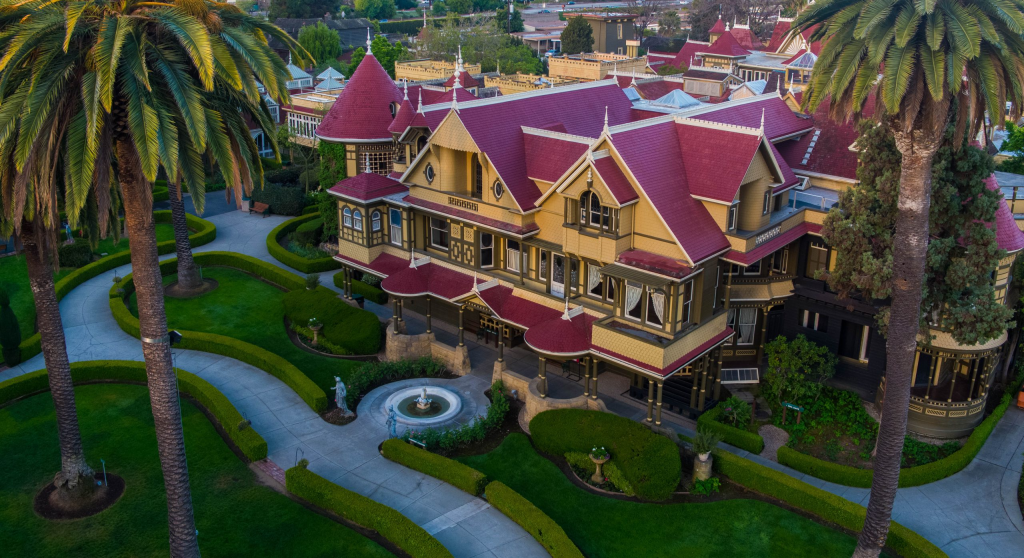
Occultists draw on the past. Everything they do has some historical, sometimes religious, bond. Rumours, myths and superstitions surround almost every aspect of the secret societies of men and women who gather suspiciously—because of the secrecy—and perform their dark and dramatic rituals, formulated from old grimoires handed down and rewritten through the ages. Personalities, too, figure predominantly. However, there are very few forms of modern occultism that do not, at some time or other, rely upon the legacy of Aleister Crowley, the self-styled Great Beast 666. At the pinnacle of his career was renowned for a wild mix of magic, and today is revered by millions the World over who are rereading the legends of this man many believed to be another Shakespeare. Mrs. Sarah L. Winchester is also a mysterious historical figure who practiced the occult. The mansion she built, called the Winchester Mansion is classic Victorian architecture and unparalleled gardens that are so incredibly photogenic that the home has become one of the World’s most intriguing and mysterious places to see ghost. Mrs. Winchester’s resources were unlimited, and she spent enormous sums building the most incredible mansion. However, the Winchester fortune was cursed. It was in the thick December dusk, in the Hall of Fires, Mrs. Winchester had endured thirteen years in the soul-deadening mourning of her husband and her daughter. When servants would catch her off guard, she would still express a sadness. Her life had probably not been of the most vivid order: for a long period, but these country plains of existence sometimes breed, in their sluggish depths, strange acuities of emotion, and Mrs. Winchester had felt from the first day the mysterious stir of intenser memories. #RandolphHarris 1 of 8
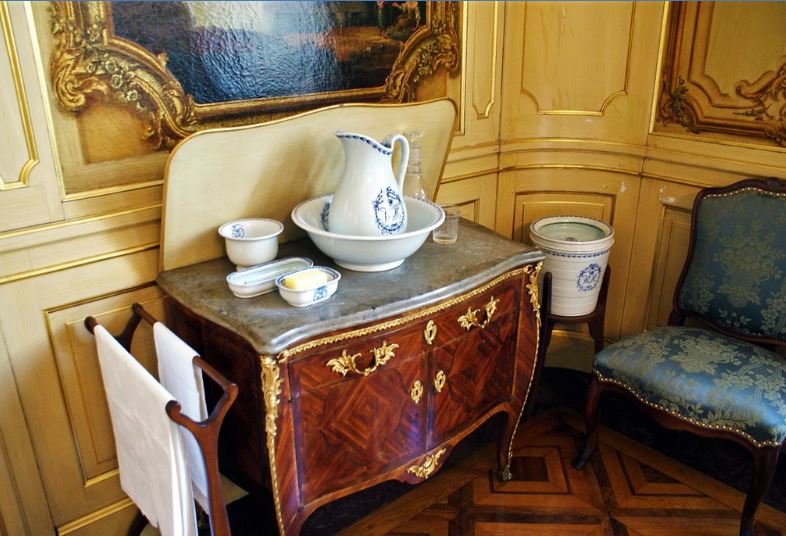
The feeling had never been stronger than on this particular afternoon when, waiting in the library for the lamps to come, she rose from her seat and stood among the shadows of the hearth. Edith Bernard, a one-beautiful young woman was found dead, lying helplessly on the floor. A single bullet lay buried deep in her head. “Spare me, ye gods!” Mrs. Winchester cried. Four servants quickly rushed in the room to comfort Mrs. Winchesters. As two of the servants stood breast to breast, another bullet pierced them both. They uttered a cry together, together cast a parting look around them, and together breathed their last. Adora, another maid, seeing them fall, hastened to the spot to render assistance and fell stricken in the act of loving duty. Only one servant and Mrs. Winchester was left. Another gunshot was heard and it struck Valda, but no shooter was seen. Mrs. Winchester knelt over the lifeless bodies, and kissed, now one, now another of her dead servants. Raising her pallid arms to Heaven, “Spirits,” said she, “feed full your rage with my anguish! Satiate your hard heart, while I follow the grave of my four servants. Yet where is your triumph? Bereaved as I am, I am still richer than you, my conqueror.” Two others servants rushed into the library to assist Mrs. Winchester. One of them held her is her arms. The other was tending to the dead bodies. Scarce had Mrs. Winchester spoken, when the gun shot sounded and struck terror into all hearts. The servant mourning over the biers of their dead coworkers fell struck by a bullet, and died on the corpse she was bewailing. The maid attempting to console Mrs. Winchester, suddenly ceased to speak, and sank lifeless to the Earth. #RandolphHarris 2 of 8
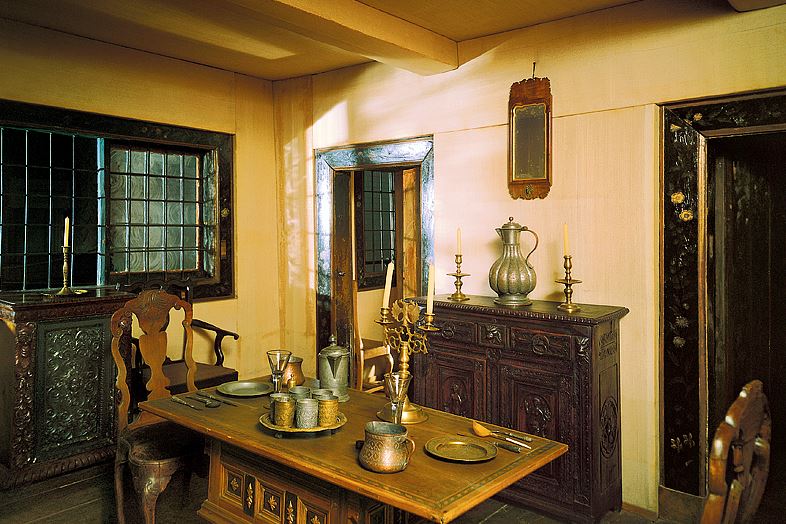
Six were now dead, and only Mrs. Winchester remained. “Spare me!” she begged. There was a torpid grief. The breeze moved not her hair, no color was on her cheek, her eyes glared fixed and immovable, there was no sign of life about her. Her very tongue cleaved to the roof of her mouth, and her veins ceased to convey the tide of life. Her neck bent not, her arms made no gesture, her foot no step. She was changed to stone, within and without. Yet tears continued to flow. When other staff members stumbled upon the tragedy, “Could it be the house?” the Butler asked. The mansion itself was fully of secrets. They seemed to be piling themselves up, as evening fell, like the layers and layers of velvet shadow dropping from the low ceiling, the rows of books, the smoke-blurred sculpture of the hearth. “Why, of course—the house is haunted!” he reflected. The ghosts of those killed by the Winchester rifle. Mrs. Winchester has now become a permanent tenant of her haunted mansion. One of the elusive specters had apparently had the powers to crystallize about it. Immediately following the strange deaths and Mrs. Winchesters crystallization, mystery, scandal and rumor swirled around the tragedy. Mrs. Winchester had been the envy of her friends, now the pity of even her foes. She stood crystalized in her mansion for many months. A new sense of meaning—a sense gradually acquired through daily contact with her in the form created a scene of the lurking mystery. It was the house itself, of course, that posses the ghost-seeking faculty, that communed visually but secretly with its own past; if one could only get close enough communion with the house, one might surprise its secret, and acquire the ghost sight on one’s own. #RandolphHarris 3 of 8
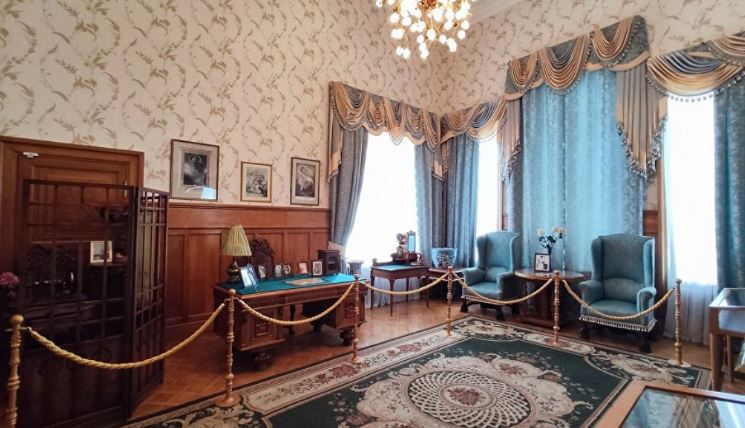
More and more under the spell of the crystallization of Mrs. Winchester, calling out to the remote corners of the house, servants found treasure after treasure, it revealed itself to them. When passing from the first rapturous flurry of exploration to a detailed inspection of the old house, the butler pressed a panel that opened on a flight of corkscrew stairs leading to the nine-story tower. The view was enchanting. His gaze flew to the long tossed horizon line of the downs, and then dropped contentedly back to trace the yew of hedges about the fish pond, and the shadow of cedar and palm trees on the lawn. Distinctly he recalled that he had seen, as he glanced, a shadow of anxiety, of perplexity, rather, fall across his face; and, following his eyes, had beheld the figure of a man—a man in loose black clothes, as it appear to him—who was sauntering down the lime avenue to the court with the doubtful gait of a stranger who seeks his way. “Wait!” he hastily shouted and ran down the stairs. But the man was gone. Suddenly, Mrs. Winchester let out a terrible cry…but could it be her? She had been in statue form for years. The old butler Augusts had some questions as to the connection of evil spirits with systems of idolatry and witchcraft. He was almost willing to swear that his eyes were playing tricks on him; for seeing Mrs. Winchester come back to life went beyond all human discernment. Of course, the young lady was stiff and needed help moving around. The Hall of Fires seemed to warm her blood and make moving easier. We wrestle not against flesh and blood, but against principalities, against spiritual wickedness in high places. #RandolphHarris 4 of 8
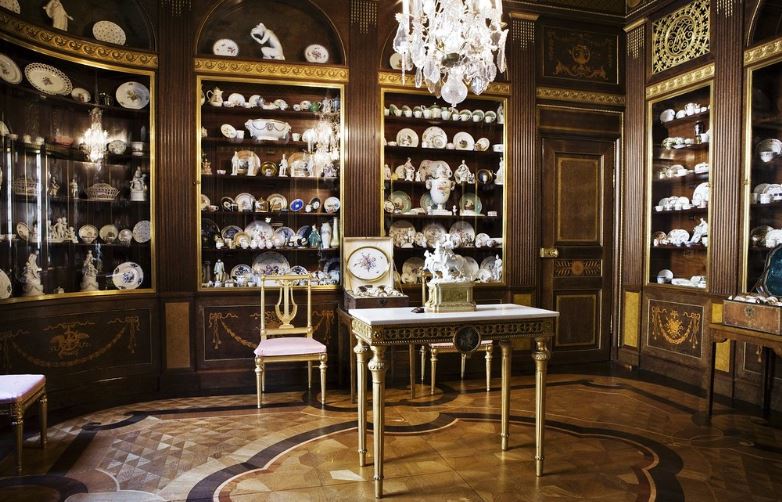
Weary with her thoughts, Mrs. Winchester moved to the window. The Hall of Fires was quite dark now, and she was surprised to see how much faint light the outer World still held. As she peered out into it across the court, a figure shaped itself far down the perspective of bare limes: it looked like a mere blot of dark blackness in the grayness, and for an instant, as it moved toward her; her heart thumped to the thoughts “It’s a ghost!” She had time, in that long instant, to see the man gaining substance and character, showed itself even to her weak sight as her husband William Winchester; she turned to meet him, and he vanished into thin air. Mrs. Winchester’s spirit sunk. At once the air of the hall rand with a long, frightful chain of woeful howls. Above the bestial clamour, Mrs. Winchester could hear a spirit shouting, “I adjure thee, great Marchosias, the agent of the Emperor Lucifer and of his beloved son Lucifuge Rofocale by the power of the pact…” The noise rose higher and a green stream began to come off the brazier. However, there was silence. Again the spirit shouted, “I adjure thee, Marchosias, by the pact and by the names, appear instanter.” The room screamed…but still there was no apparition. Instantly the mansion rocked as though the Earth moved under it. The building shuddered again…then from the middle of the room, a low cloud of yellow fumes went up towards the ceiling, making Mrs. Winchester cough. As it spread and thinned she could see the shape forming under it…it was something like a she-wolf, grey and immense, with green glistening eyes. A wave of coldness was coming from it…the cloud continued to dissipate. The she-wolf glared at them, slowly spreading her griffin’s wings. Her serpent’s tail lashed gently, scalily. The existence and manifestation of demons and devils in the Winchester Mansion has been accepted without question. The thing that dominated the mansion was a group of spirits known as “Legion,” or “The Legion of Lucifer.” #RandolphHarris 5 of 8
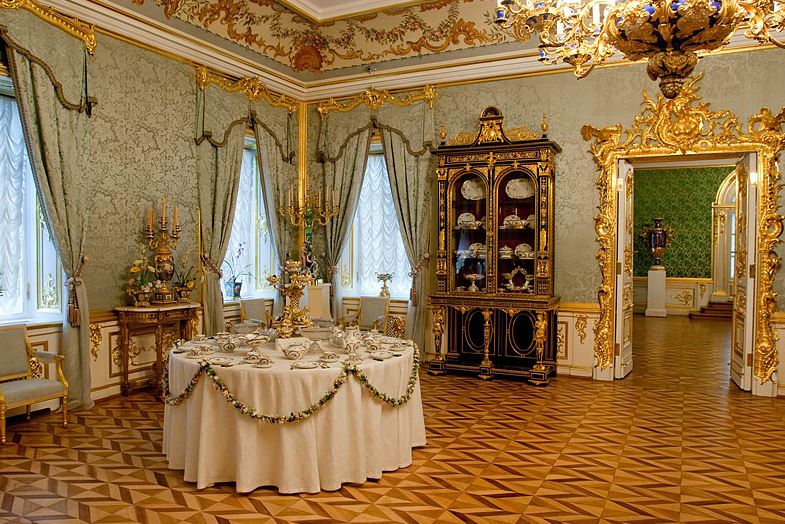
There is magical art abundant in the mansion. This explains how it has become an abnormal plane of power to “charge” magical energy. It is thought that Mrs. Winchester used the powers of Osiris and was able to reconstitute her body to return to life. This is a fundamental of the higher form of necromancy. When the mansion was sold and items auctioned off, the walls were found to be covered with magical symbols and paintings. Also found were solid gold talismans and amulets. The mansion itself was protected by spells and curses. The Winchester Mansion is a receptacle for all the mystical and magical beliefs of the East and the West. The farmers on the Winchester Estate followed the long-established practice of cutting a girdle of bark off the trees, and then setting them on fire or leaving them to die in place while planting crops around the decaying hulks. Immense trees were stripped of their foliage, and half consumed by fire extending their sprawling limbs, many were bleached by weather. By this method the farmers on the estate could clear from 3 to 5 acres a year for cultivation. The relentless demand for wood generated by the construction of the mansion and for other Victorian houses on the estate and barns, fences and fuel, potash and turpentine—added to the demand. Native Americas, in return for furs that they had in abundance, secured goods such as blankets, guns, ironware that they highly valued from Mrs. Winchester’s estate. It was even rumored that Mrs. Winchester owned the Philosopher’s Stone which was believed to turn anything it touched into gold, cure all ills and kept its owner perpetually youthful. It was supposedly given to her as a gift. #RandolphHarris 6 of 8

As the years pass by, many people who practice magic descend more deeply into the darker realm of magic, summoning demons and spirits almost at will. Some magicians become obsessed by their craft, their quest for knowledge and power and it can drag them into the black abyss. A fascinating story about the darker realm of the Winchester Mansion is one about Leonore. Leonore was lodging at the Winchester Mansion, she persuaded Augusta, the butler, to unlock the door to the Blue Séance Room. Leonore went inside and stood reading aloud from a book of spells that lay on the table; suddenly a demon appeared and demanded to know why he had been summoned. Leonore was so shocked that she could not answer and the demon grabbed her by the throat and strangled her. Mrs. Winchester returned to find Leonore lying dead on the floor of her Blue Séance Room, and realizing this could mean trouble, she summoned the demon to return and bring Leonore back to life long enough for her to be removed. This was done, and Leonore walked out of Mrs. Winchester’s Mansion into the marketplace where she immediately collapsed and died. As word of Mrs. Winchester’s success, great wealth, and powers spread, so did the story that she had made a pact with the devil, written as usual in her own blood, in return for magical powers. Once the magical power of the menses has been blessed by the Dark Goddess it has been consecrated as a direct conduit of the powers of destruction, death, and decay. #RandolphHarris 7 of 8

Angra Mainyu, come forth from the realms of eternal darkness. Angra Mainyu, I summon you to come forth and ignite this flesh as the very source of your power and might that it may emanate the ways of your Black Sun. May this body become the very fuel, the embers of this forbidden Blackened Fire that I may consume power to banish the limitation of creation and become the counter creator for the glory of Dragon Zohak! Empower me with this infernal blessing as a warrior of the Path of Smoke and Apostle of your teachings of liberation! Hear Mr:–Ieou: Pur: laot: Iaeo: Ioou: Abrasar: Sabriam: Do: Un: Adonaie: Ede: Edu: Angelos ton Theon: Aniaia Lai: Gaia: Ape: Diathanna Thorun. I am He! The Bornless Spirit! Having sight in the feet: Strong and the Immortal Fire! I am He! The Truth! I am He! Who hate that evil should be Wrought in the World! I am He, that lighteneth and thundereth. I am He, from Whom is the Shower of the life of Earth: I am He, Whose mouth ever flameth: I am He, the Begetter and Manifester unto the Light: I am He; the Grace of the World: “The Heart Gith with a Serpent” is My Name! Come Thou forth, and follow Me: and make all Spirits subject unto Me so that every Spirit of the Firmament, and of the Ether: upon the Earth and under the Earth: on dry Land, or in the Water: of whirling Air or of rushing Fire: and every Spell and Scourge of God, may be obedient unto me! Iao: Sabao: Such are the Words! Magic is the Highest, most Absolute, and most Divine Knowledge of Natural Philosophy, advanced in its works and wonderful operations by a right understanding of the inward and occult virtue of things; so that true Agents being applied proper Patients, strange and admirable effects will thereby be produced. Whence magicians are profound and diligent searchers into Nature; they, because of their skill, know how to anticipate an effort, the which to the vulgar shall seem to be a miracle. #RandolphHarris 8 of 8
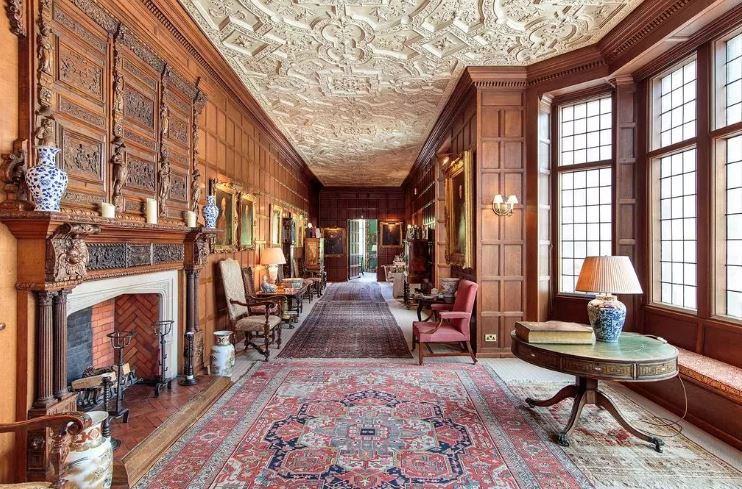
Winchester Mystery House

This Friday. Tune in on Friday, December 23rd 6pm pst/9pm est to watch the Destination Fear crew investigate The Winchester Mystery House on Travel Channel! The episode will be available for streaming on Discovery+ same day👻 Can’t wait!
@travelchannel @discoveryplus #DestinationFear #winchestermysteryhouse

The First Day in Kindergarten, You Cried Because You Broke the Yellow Crayon

The only way out of today’s misery is for people to become worthy of each other’s trust. In American society, it appears that the individual is expected to exert a kind of discipline or tension in regard to one’s body, showing that one has one’s faculties in readiness for any face-to-face interaction that might come one’s way in the situation. Often this kind of controlled alertness in the situation will mean suppressing or concealing many of the capacities and roles the individual might be expected to display in other settings. Whatever one’s other concerns, then, whatever one’s merely situated interests, the individual is obliged to “come into play” upon entering the situation and to stay “in play” while in the situation, sustaining this diffused orientation at least until one can officially take oneself beyond range of the situation. In short, a kind of “interaction tonus” must be maintained. In considering the conduct through which this aliveness to the situation is demonstrated it is difficult to avoid the conclusion that an attachment to, and respectful regard for, the situation’s participants and the encompassing social occasion is being avowed. And in considering the marked infraction of these rules in mental hospital wards, it is difficult to escape the conclusion that failure to exhibit “presence” is a normal, understandable expression of alienation from, and hostility to, the gathering itself and the officials in it. One of the most evident means by which the individual shows oneself to be situationally present is through the disciplined management of personal appearance or “personal front,” that is the complex of clothing, make-up, hairdo, and other surface decorations one carries about on one’s person. #RandolphHarris 1 of 20

In public places in Western society, the male of certain classes is expected to present himself in the situation neatly attired, shaven, his hair combed, hands and face clean; female adults have similar and further obligations. It should be noted that with these matter of personal appearance the obligation is not merely to possess the equipment but also to exert the kind of sustained control that will keep it properly arranged. (And yet, in spite of these rulings, we may expect to find, in such places as New York subway during the evening rush hour, that some persons, between scenes, as it were, may let expression fall from their faces in a kind of temporary uncaring and righteous exhaustion, even while being clothed and made up to fit a much more disciplined stance.) A failure to present oneself to a gathering in situational harness is likely to be take as a sign of some kind of disregard for the setting and its participants; gross cultural distance from the social World of those present may also be expressed. These expensive implications of well or badly ordered personal appearance are often discussed in etiquette books, sometimes quite aptly: But even in a casual encounter, and upon occasions when your habit can have no connexion with the feelings and sentiments which you have towards those whom you meet, neat and careful dressing will bring great advantage to you. A negligent guise shows a man to be satisfied with his own resources, engrossed with his own notions and schemes, indifferent to the opinion of others, and not looking abroad for entertainment: to such a man no one feels encouraged to make any advances. #RandolphHarris 2 of 20

A finished dress indicates a man of the World, one who looks for and habitually finds, pleasure in society and conversation, and who is at all times ready to mingle to intercourse with those whom he meets with; it is a kind of general offer of acquaintance, and provides a willingness to be spoken to. An interesting expression of the kind of interaction tonus that lies behind the proper management of personal appearance is found in the constant care exerted by men in our society to see that their trousers are buttoned and that their jewels are not apparent. Before entering a social situation, they often run through a quick visual inspection of the relevant parts of their personal front, and once in the situation they may take the extra precaution of employing a protective cover, by either crossing the legs or covering the crotch with a newspaper or a book, especially if self-control is to be relaxed through comfortable sitting. A parallel to this concern is found in the care that women take to see that their legs are not apart, exposing their upper thighs and underclothing. The universality in our society of this kind of limb discipline can be deeply appreciated on a chronic female ward where, for whatever reason, women indulge in zestful expressions that may not be considered “ladylike,” causing the student to become conscious of the vast amount of limb discipline that is ordinarily taken for granted. A similar reminder of one’s expectations concerning limb discipline can be obtained from the limb movements required of mature women in getting out of the front seat of a car. #RandolphHarris 3 of 20

Just as some people would seem ever to be concerned about the direction and height of one’s seat, so the individual in our society, while “in situation,” is constantly oriented to keeping “physical” signs of capacities involving pleasures of the flesh concealed. And it is suggested here that these parts of the body when exposed are not a symbol of pleasures of the flesh merely, but of a laxity of control over the self—evidence of an insufficient harnessing of the self for the gathering. As has been suggested, the importance of a disciplined management of personal front is demonstrated in many ways by the mentally sick. A typical sign of an oncoming psychosis is the individual’s “neglect” of his appearance and personal hygiene. The classic home for these improprieties is “regressed” wards in mental hospitals, where those with a tendency in this direction are collected, at the very same time that conditions remarkably facilitate this sort of disorientation. (Here, dropping of personal front will be tolerated, and sometimes even subtly approved, because it can reduce problems of ward management.) Similarly, when a mental patient starts “taking an interest in his appearance,” and makes an effort at personal grooming, he is often credited with having somehow given up his fight against society and having begun his way back to “reality.” One of the most delicate components of personal appearance seems to be the composition of the face. A very evident means by which the individual shows oneself to be situationally present is by appropriately controlling through facial muscles the shape and expression of the various part of this instrument. #RandolphHarris 4 of 20

Although this control may not be conscious to any extent, it is none the less exerted. We have party faces, funeral faces, and various kinds of institutional faces, as the following comments on life in prison suggests: Every new inmate learns to dog-face, that is to assume an apathetic characterless facial expression and posture when viewed by authority. The dog-face is acquired easily when everyone freezes or relaxes into immobility. The face is that typical of streets, of social occasions, of all concealment. Relaxation comes when inmates are alone: there is an exaggeration of the smiling effervescence of the “friendly” party. The face that is protective by day is aggressively hardened and hate-filled by night, against the stationed or pacing guard. Tensity and dislike follow assumption of the face, guards react with scrupulous relaxedness, holding the face “soft” with an effort often accompanied by slight trembling hands. An interesting fact about proper composition of the face is that the ease of maintaining it in our society would seem to decline with age, so that, especially in the social class groupings whose women long retain an accent on beauty and attractiveness, there comes to be an increasingly long period of time after awakening that is required to get the face into shape, during which the individual in one’s own eyes is not “presentable.” A point in age is also reached when, given these youthful standards of what a face in play should look like, there will be viewing angles from which an otherwise properly composed face looks to have insufficient tonus. Let man begin to think about the mystery of his life and the links which connect him with life that fills the World, and he cannot but bring to bear upon his own life and all other life that comes within hi reach the principle of reverence for life. #RandolphHarris 5 of 20

On the morning of April 15, 1865, Abraham Lincoln lay dying in a hall bedroom of a cheap lodging house directly across the street from Ford’s Theater, where John Wilks Booth had shot him. Lincoln’s long body lay stretched diagonally across a sagging bed that was too short for him. A cheap reproduction of Rosa Bonheur’s famous painting The Horse Fair hung above the bed, and a dismal gas jet flicked yellow light. As Lincoln lay dying, Secretary of War Stanton said, “There lies the most perfect ruler of men that the World has ever seen.” What was the secret of Lincoln’s success in dealing with people? I studied the life of Abraham Lincoln for ten years and devoted all of three years to writing and rewriting a book entitled Lincoln the Unknown. I believe I have made as detailed and exhaustive a study of Lincoln’s personality and home life as it is possible for any being to make. I made a special study of Lincoln’s method of dealing with people. Did he indulge in criticism? Oh, yes. As a young man in the Pigeon Creek Valley of Indiana, he not only criticized but he wrote letters and poems ridiculing people and dropped these letters on the country roads where they were sure to be found. One of these letters aroused resentment that burned for a lifetime. Even after Lincoln had become a practicing lawyer in Springfield, Illinois, he attacked his opponents openly in letters published in the newspapers. However, he did this just too often. In the autumn of 1842 he ridiculed a vain, pugnacious politician by the name of James Shields. Lincoln lampooned him through an anonymous letter published in the Springfield Journal. The town roared with laughter. #RandolphHarris 6 of 20

Shields, sensitive and proud, boiled with indignation. He found out who wrote the letter, leaped on his horse, started after Lincoln, and challenged him to fight a duel. Lincoln did not want to fight. He was opposed to dueling, but he could not get out of it and save his honor. He was given the choice of weapons. Since he had very long arms, he chose cavalry broadswords and took lessons to sword fighting from a West Point graduate; and, on the appointed day, he and Shields met on a sandbar in the Mississippi River, prepared to fight to the death; but at the last minute, their seconds interrupted and stopped the duel. That was the most lurid personal incident in Lincoln’s life. It taught him an invaluable lesson in the art of dealing with people. Never again did he write an insulting letter. Never again did he ridicule anyone. And from that time on, he almost never criticized anybody for anything. If you decide to work and accept all that comes in the work, you must learn to think quickly. If you are offered a task you must answer at once that you accept the opportunity to improve the quality of your life and mental health. If you hesitate or take time to answer, the offer of the task will be withdrawn and it will not be repeated. You may be given time before actually doing what you were told to do, but you must accept the task at once. An attempt to talk things over, an ironical, suspicious, or negative attitude, fear, or lack of confidence, these will make the task impossible at once. If you feel hesitation about the task offered to you, think about your mechanicalness, think about your negativeness, about your self-will—but think quickly. #RandolphHarris 7 of 20

You can do nothing against your weak sides by yourself. The tasks offered to you have the aim to help you. If you hesitate or refuse them, you refuse help. This must be quite clear in your mind. The realization of your helplessness and your deep sleep must be permanent in you. You can strengthen it by constantly reminding yourself of your nothingness, of your meanness, of your weakness of all possible sorts. You have absolutely nothing to be proud of. You have nothing to base your judgement on. You can see, if you are sincere with yourself, all the blunders and all the mistakes which you made when you tried to act by yourself. You cannot think rightly. You cannot feel rightly. You need constant help. And you can have it. However, you must pay for it—at least, by not arguing. You have to do gigantic work if you want to become different. How can you ever hope to get anything if you hesitate and argue on the first steps, or do not even realize the necessity for help, or become suspicious and negative? If you want to work seriously you have to conquer many things in yourself. You cannot carry with yourself prejudices, your fixed opinions, your personal identifications or animosities. However, at the same time try to understand that personal is not always wrong. “Personal” can even help in the work, but personal can be very dangerous too, if it is not cleared by the struggle with identification and by the realization of your mechanicalness and your weakness. #RandolphHarris 8 of 20

Try to understand the necessity for “deliberate suffering” and “conscious effort.” These are the only two things that can change you and bring you to your aim. “Deliberate suffering” does not mean necessary suffering inflicted on you by yourself. It means attitude towards suffering. Suffering may come as a result of your feelings, thoughts, and actions connected with your tasks; it may come by itself as a result of your own faults or as a result of other people’s actions, attitudes, or feelings. However, what is important is your attitude towards it. It becomes deliberate if you do not rebel against it, if you do not try to avoid it, if you do not accuse anybody, if you accept it as a necessary part of your work at the moment and as a means for attaining your aim. “Conscious effort” is the effort based on understanding; understanding of its necessity first of all, and understanding of the causes which make it necessary. The chief cause for conscious effort is your need for breaking the walls of mechanicalness, of self-will and lack of self-remembering, which constitute your being at present. In order to understand better the necessity for accepting tasks given to you without hesitation, the necessity for “deliberate suffering” and “conscious effort,” think about ideas which brought you to the work, think about the first realization of your mechanicalness and the first realization that you know nothing. In the beginning you realized this and you came for help, but now you doubt whether you must really do as you are told. And you try to find ways to evade it, to stand on your own judgement and on your own understanding. #RandolphHarris 9 of 20

You understood clearly once, that your judgment and your understanding are false and weak, but now try to keep them again. You do not want to give them up. Well, you can keep them, but you must understand that with them you will keep all that is false and weak in yourself. There are no half measures. You must decide: do you want to work or not? In some situations, you may be able to judge that the risk of an extremely bad result from exploration is low. That should increase the amount you are willing to do. In training sessions, gymnastic competitors can exploit current capabilities by practicing elements they already know. These can always be done a little better, and repetition is needed to avoid mistakes during competition. However, gymnasts also need to attempt new, and more difficult, moves—ones they have never done before, occasionally even ones tht no one has done before. This is exploratory activity. The new elements may never be mastered, and in the meantime old ones have not been practiced. There is also increased risk of injuries that could end a season or a career. Practice spaces are equipped with facilities to reduce injuries, such as extra padding for apparatus and ceiling-suspended safety harnesses. These limit the risks of serious injury, though they do not eliminate them. The practice safety devices are installed exactly so that the costs of exploration will be lower. Inventing such devices greatly accelerates the evolution of otherwise dangerous activities, be they sports or flight maneuvers, by transforming the situation into one with lower risks of catastrophe. #RandolphHarris 10 of 20

Another class of devices for lowering the risk of catastrophe turns on having multiple replications, with the fate of the whole system not resting on any one. Thus a federal system can prosper when many states act as partially independent “policy laboratories.” A drug company can use cell cultures to test a vast array of chemicals, most of which will be ineffective, in searching for a few that might be useful. If continuing to exploit the best solution found to date is apparently going to lead to disaster, then of course one is wise to explore. Everyone is familiar with the notion of a desperate gamble on a novel approach, such as a daring attempt to escape from death row. Our argument for exploring when catastrophe seems imminent may seem almost a contradiction of our previous arguments for exploring when there are long time horizons or low risk. However, in this situation the relative attractiveness of exploring comes from the negative yield of exploiting. The results of exploring and exploiting are measured on scales that have real zero points. The United States of America, termed “infidel” by Muslim extremists and “overreligious” by Europeans, faces a World that, instead of moving toward secularism as it did during the industrial age, seems to be reversing direction. David B. Barrett and Todd Johnson, co-editors of the World Christian Encyclopedia, forecast that today’s 2 billion Christians will become 3 billion by 2025—an overall increase of roughly 33 percent. However, Islam is growing much faster. From 553 million in 1970, it shot up to 1.2 billion in 201 and is headed to a grand total of 2 billion by 2025—a rise of 50 percent in a quarter century. #RandolphHarris 11 of 20

While religious statistics are no better then economic data, their general direction is clear. The numbers, moreover, are far more dramatic when we look at where all these additional Christians and Muslims are—and where they are soon likely to be. In both we are seeing an important geographical—that is, spatial—shift. Since the mid-1950s, the critical centers of the Christian World have moved decisively to Africa and to Latin America and Asia, of which has many more Christian today than North America. We have already commented on the rapid growth of Christianity in China. The growth and spatial relocation of religion on the planet is a giant historical event—and it will, at least in part, shape and be shaped by the coming transfers of wealth around the World. In Europe the number of Muslims has tripled in the past forty years, largely because of immigration, and the growth of Islam there is expected to outpace the growth of Christianity. In fact, though little recognized, today fully a third of all the World’s Muslims live as ethno-cultural marginalized groups in non-Muslim countries, increasingly distanced from Islam’s geographical center. They include a floating, on-the-move population of middle-class Muslim intellectuals, businesspeople, engineers, and professors who may work and live in a sequence of different countries as they pursue the job market. The World of Islam will be increasingly influenced in terms of ideas, politics, lifestyle, culture, identity—and, one might add, attitudes towards capitalism, markets and business—by what are called “de-territorialized” millions, largely based in Europe. While this is happening in the West, the Muslim population is growing most quickly in the East—in an awakening Asia, where, especially in Malaysia and Indonesia, a more moderate form of Islam has prevailed than that found in Iran and the Arab countries. #RandolphHarris 12 of 20

Together, these eastward and westward shifts could pull the balance of religious and cultural influence within Islam away from the Middle East. That dominance, while rooted in Mecca and the annual hajj that brings millions of Muslims from everywhere to Muhammad’s birthplace, has in fact long been bolted into place by money. For centuries, the power of Muslims in the World economy resulted from the Middle East’s strategic, high-value-added location as the main transit point for trade between Asia and Europe. It lost that financial advantage when, using advanced navigation and maritime knowledge, European and other traders began avoiding the Middle East and sailing around the southern Africa. Today the Middle East once more faces the loss of its most crucial source of wealth—and the financial, cultural and religious influences that comes with it. That source is, of course, oil. That is why it is important for Americans to preserve their farmland for much of our oil in the future can be grown on land. It is contained in the corn and soybean plants in the fields. As the 2020 pandemic hit and gas prices spiked a few years later, many felt with life without oil was like because they could not pay $7.00 a gallon to pay for fuel. The obvious substitutes for petroleum are plant oils and fats because they have the same base chemical structure as petroleum. Fossil fuels were plants once, millions of years ago, and so it makes sense that both the fossil fuels we use today and oils produced by plants are chemically similar. Both are made up of chains of chemicals known as hydrocarbons. A hydrocarbon is a carbon atom surrounded by hydrogen atoms. Methane, the simplest hydrocarbon, is a single carbon atom surrounded by four hydrogen atoms. #RandolphHarris 13 of 20

Gasoline varies from seven to 10 hydrocarbons long. In fact, the word “octane” means eight carbons in a chain. The shorter the chain of carbons, the more explosive the fuel is, and the more power it offers an engine. The problem is tht plant oils are 14 to 18 carbons in length. Diesel fuel is 15 carbons long, which is close to the same size as plant oils. That is why the first applications are biodiesel fuels. You could not burn vegetable oils in today’s gasoline engines because of their hydrocarbon chains are too long. Not surprisingly, shorter-chain vegetable oils do exist. Coconut oil, tropical oils and similar plant oils might make a reasonable gasoline-like fuel. It might also be possible to transgenetically modify crops to produce plant with those lengths of fatty acids. Scientists could genetically modify corn and soybeans—which are already two of the highest oil-yielding plants—to produce plant oils that could be converted into a type of gasoline. The combination of combining vegetable oil and ethanol could produce a fuel which would seem to fit nicely into today’s engine structures. As we change from a black gold economy to a green gold economy, we will need engineers who know how to make products out of plant materials that is why we work with these students to make these types of products. Molecular manufacturing can also make products that will perform some useful temporary function when tossed out into the environment. Getting rid of ozone-destroying pollutants high in the stratosphere is one example. There may be simpler approaches, without the sophistication of nanotechnology, but here is one that would work to cleanse the stratosphere of chlorine: Make huge numbers of balloons, each the size of a grain of pollen and light enough to float up in the ozone layer. In each, place a small solar-power plant, molecular-processing plant, and a microscope grain of sodium. #RandolphHarris 14 of 20

The processing plant collects chlorine-containing compounds and separates out the chlorine. Combining this with the sodium makes sodium chloride—ordinary salt. When the sodium is gone, the balloon collapses and falls. Eventually, a grain of salt and a biodegradable speck fall to Earth, usually at sea. The stratosphere is soon clean. A larger problem (with a ground-based solution) is climatic change caused by rising carbon dioxide (CO2) levels. Global warming, expected by most climatologist and probably under way today, is caused by changes in the composition of Earth’s atmosphere. The sun shines on the Earth, warming it. The Earth radiates heat back into space, cooling. The rate at which it cools depends on how transparent the atmosphere is to the radiation of het. The tendency of the atmosphere to hold heat, to block thermal radiation from escaping into space, causes what is called the “greenhouse effect.” Several gases contribute to this, but CO2 presents the most massive problem. Fossil fuels and deforestation both contribute. Before the new technology bases arrives, something like 300 billion tons of excess CO2 will likely have been added to the atmosphere. Small greenhouses can help reverse the global greenhouse effect. By permitting more efficient agriculture, molecular manufacturing can be free land for reforestation, helping to repair the devastation wrought by hungry people. Growing forests absorbs CO2. If reforestation is not fast enough, inexpensive solar energy can be applied to remove CO2 directly, producing oxygen and glossy graphite pebbles. Painting the World’s roads with solar cells would yield about four trillion watts of power, enough to remove CO2 at a rate of 10 billion tones per year. #RandolphHarris 15 of 20

Temporarily planting one-tenth of U.S.A. farm acreage with a solar-cell “crop” would provide enough energy to remove 300 billion tons in five years; winds would distribute the benefits Worldwide. The twentieth-century insult to Earth’s atmosphere can be reversed by less than a decade of twenty-first century repair work. Ecosystems damaged in the meantime are another matter. Along with healing our ecosystems, we also have new demands for access in the economy. A new work regimen will, in time, sweep across the main sectors of the economy. And as the work force is continually ceded more autonomy, it will demand increased access to information. During the smokestack era, arguments for the humane treatment of employees were crushed by the realities of brute technology that paid off even when workers were kept unenlightened (and powerless). Today, workers are demanding more and more access to information because they cannot do their jobs effectively without it. We are thus seeing a redistribution of knowledge (and power) made necessary by new market conditions and by the new technologies themselves. As computer programs mimic the skills that have long set managers apart, workers in lower-level jobs can do tasks once reserved for executives. You suddenly have information in the hands of the people who run the machines; it is no longer reserved for people two or three rungs up the hierarchy. The first-level supervisors do not appreciate the power of this information until it gets into workers’ hands. Then their resistance is enormous. #RandolphHarris 16 of 20

Clearly not all workers fit well into jobs that demand initiative, full participation, and a sharing of responsibility. Nor can all managers cope with the new-style work. However, as work units grow smaller and educational levels higher, the pressure from below mounts. The result is a fundamental shift in power relationships. This is not the first time since the dawn of the industrial age that managers have been confronted with changing models of human relationships in the workplace. For many years the old Taylorite notions that turned the worker into an appendage of the machine were challenged by a school of “good-guy” theorists who argued that more humane treatment of employees would prove more efficient in the end. The new regimen, increasingly espoused by management itself, is, however, more radical. This idea goes far beyond the assumptions of the human-relations model, where employees were made to feel important. Now they are acknowledged truly to be important. It is true that the overriding power—greater than that of any individual—is that of the labour market. A shortage or surplus of some skills determines the outer parameters of the new autonomy. Many programmers or space engineers have learned that they, exactly like punch-press operators and assembly-line hands, can be pink-slipped without ceremony, while their bosses vote themselves “golden parachutes.” Those cast out of work suffer a devasting decline in personal and collective power—which is a subject for a totally different report. #RandolphHarris 17 of 20

What is relevant here, however, is how things are changing for those inside the work force. And within that framework, a change of historical proportion is taking place. In the smokestack era no individual employee had significant power in any contest with the firm. Only a collectivity of workers, massed and threatening to withhold their muscles, could force a recalcitrant management to improve the pay or status of the employee. Only group action could slow or stop production, for any individual was easily interchangeable and, hence, replaceable. This was the basis for the formation of labour unions. If unions, with their traditional emphasis on “solidarity” and “unity,” are losing membership and power in virtually all of advanced technological nations, it is precisely because workers are no longer as interchangeable as they once were. In the World of tomorrow it will not take masses of workers to bring a company’s production to a standstill, or to damage it in other ways. A “computer virus” slipped into a program, a subtle distortion of the information in a data base, the leakage of information to a competitor—these are only the most obvious of a whole range of new methods of sabotage available to the angry, the irresponsible, or the justifiably outraged individual. The “information strike” of the future could turn out to be a one-person protest. And no laws, clever programs, and security arrangements can totally protect against this. The best defense is likely to be social pressure from one’s peers. Or the simple feeling that one is treated with dignity and justice. #RandolphHarris 18 of 20

However, far more important is the shift toward non-interchangeability. As work grows more differentiated, the bargaining position of individuals with crucial skills is enhanced. Individuals, not only organized groups, can exert clout. Marxist revolutionists argued that power flows to those who own the “means of production.” Contrasting the factory worker with the preindustrial craftsman who owned his own tools, Marx contended that workers would be powerless until they seized the “means of production” from the capitalist class that owned them. Today we are living through the next power shifts in the workplace. It is one of the grand ironies of history that a new kind of autonomous employee is emerging who, in fact, does own the means of production. The new means of production, however, are not ready to be found in the artisan’s toolbox, or in the massive machinery of the smokestack age. They are, instead, crackling inside the employee’s cranium—where society will find the single most important source of future wealth and power. When thinking of wealth and power, we have to figure out ways to deter cheating. When several alternative punishments could deter cheating and sustain cooperation, how should one choose them? Several criteria have a role. Perhaps most important are simplicity and clarity, so that a player thinking of cheating can easily and accurately calculate its consequences. A criterion that infers someone has cheated if your discounted mean of profits from the last seventeen months is 10 percent less than the average real rate of return to industrial capital over the same period, for example, is too complicated for most firms to figure out, and therefore not a good deterrent. #RandolphHarris 19 of 20

Next comes certainty. Players should have confidence that defection will be punished and cooperation rewarded. This is a major problem for the European countries looking to enforce the General Agreement of Tariffs and Trade (GATT). When one country complains that another has cheated on the trade agreement, GATT initiates an administrative process that drags on for months or years. The facts of the case have little bearing on the judgment, which usually depends more on dictates of international politic and diplomacy. Such enforcement procedures are unlikely to be effective. Most people’s instinctive feeling is that the punishment should fit the crime. However, that may not be big enough to deter cheating. The surest way to deter cheating is to make the punishment as big as possible. Since the punishment threat succeeds in sustaining cooperation, it should not matter how dire it is. The fear keeps everyone from defecting, hence the breakdown never actually occurs and its cost is irrelevant. The problem with this approach is that it ignores the risk of mistakes. The detection process may go wrong, indicating cheating by a member of the cartel when the real cause of low prices is an innocent one such as low demand. If punishments are as big as possible then mistakes will be very costly. To reduce the costs of mistakes, the punishment should be the smallest size that suffices to deter cheating. Minimal deterrence accomplishes its purpose without imposing any extra costs when the inevitable mistakes occur. #RandolphHarris 20 of 20

MAGNOLIA STATION AT CRESLEIGH RANCH
Rancho Cordova, CA |
Coming Soon!

Sprawling to nearly 4,000 square feet and set atop large homesites, Magnolia Station at Cresleigh Ranch is a perfect balance of both space and splendor. These large lots come with a mix of Single Story and Two Story Homes, ranging from 2,200 to 3,7000 square feet, with 3-7 bedrooms, 2-5.5 bathrooms, and up to a 4-car garage.

In the meanwhile, check out some of the other homes avaliable. https://cresleigh.com/havenwood/

See the Flowers that Blossom at Your Feet

I cannot but have reverence for all that is called life. In the hope of reaching the Moon, men fail to see the flowers that blossom at their feet. Now we must return to the study of centers and to the study of attention and self-remembering, because these are the only ways to understanding. Besides the division into two parts, positive and negative, which, as we saw, is not the same in different centers, each of these four centers is divided into three parts. These three parts correspond to the definition of centers themselves. The first part is “mechanical,” including moving and instinctive principles, or one of them predominating; the second is “emotional,” and the third is “intellectual.” The division of a center into three parts is very simple. A mechanical part works almost automatically; it does not require any attention. However, because of this it cannot adapt itself to a change of circumstances, it cannot “think,” and it continues to work in the way it started when circumstances have completely changed. In the intellectual center, the mechanical part includes in itself all the work of registration of impressions, memories, and associations. This is all that it should do normally, that is, when other parts do their work. It should never reply to questions addressed to the whole center, it should never try to solve its problems, and it should never decide anything. Unfortunately, in actual fact, it is always ready to decide and it always replies to questions of all sorts in a very narrow and limited way, in ready-made phrases, in slang expressions, in party slogans. All these, and many other elements of our usual reactions, are the work of the mechanical part of the intellectual center. #RandolphHarris 1 of 22

This part has its own name. It is called a “formatory apparatus” or sometimes “formatory center.” Many people, particularly people no. 1—that is, the great majority of mankind—live all their lives with the formatory apparatus only, never touching other parts of their intellectual center. For all the immediate needs of life, for receiving A influences and responding to them, and for distorting or rejecting influences C, the formatory apparatus is quite sufficient. It is always possible to recognize “formatory thinking.” For instance, the formatory center can count only up to two. It always divides everything in two: “bolshevism and fascism,” “workers and bourgeois,” “proletarians and capitalists,” and so on. We owe most modern catchwords to formatory thinking, and not only catchwords but all modern popular theories. Perhaps it is possible to say that at all times all popular theories are formatory. The emotional part of the intellectual center consists chiefly of what is called an intellectual emotion, that is, desire to know, desire to understand, satisfaction of knowing, dissatisfaction of not knowing, pleasure of discovery, and so on, although again all these can manifest themselves on very different levels. The work of the emotional part requires full attention, but in this part of the center attention does not require any effort. It is attracted and held by the subject itself, very often through identification, which usually is called “interest,” or “enthusiasm,” or “passion,” or “devotion.” The intellectual part of the intellectual center includes in itself a capacity for creation, construction, invention, and discovery. It cannot work without attention, but the attention in this part of the center must be controlled and kept there by will and effort. #RandolphHarris 2 of 22

This is the chief criterion in studying parts of centers. If we take them from the point of view of attention we shall know at once in which part of centers we are. Without attention or with attention wandering, we are in the mechanical part; with the attention attracted by the subject of observation or reflection and kept there, we are in the emotional part; with the attention controlled and held on the subject by will, we are in the intellectual part. At the same time, the same method shows how to make the intellectual parts of center work. By observing attention and trying to control it, we compel ourselves to work in the intellectual parts of centers, because the same principle refers to all centers equally, although it may not be so easy for us to distinguish intellectual parts in other centers, as for instance the intellectual part of instinctive center, which works without any attention that we can perceive or control. Let us take the emotional center. We will only take the division of center into three parts: mechanical, emotional, and intellectual. The mechanical part consists of the most trite kind of ready-made humor and a rough sense of the comical, love of excitement, love of spectacular shows, love of pageantry, sentimentality, love of being in a crowd and part of a crow; attraction to crowd emotions of all kinds and complete disappearances in lower half-animal emotions: cruelty, selfishness, cowardice, envy, jealousy, and so on. The emotional part may be very different in different people. It may include in itself a sense of humor or a sense of the comical as well as religious emotion, aesthetic emotion, moral emotion, and, in this case, it may lead to the awakening of conscience. However, with identification it may be something quite different, it may be very ironical, sarcastic, derisive, cruel, obstinate, wicked, and jealous—only in a less primitive way than the mechanical part. #RandolphHarris 3 of 22

The intellectual part of the emotional center (with the help of the intellectual parts of the moving and instinctive centers) includes in itself the power of artistic creation. In those cases where the intellectual parts of the moving and instinctive centers which are necessary for the manifestation of the creative faculty are not sufficiently educated or do not correspond to it in their development, it may manifest itself in dreams. This explains the beautiful and artistic dreams of otherwise quite unartistic people. The intellectual part of the emotional center is also the chief seat of the magnetic center. I mean that if the magnetic center exists only in the intellectual centers or in the emotion part of the emotional center, it cannot be strong enough to be effective and is always liable to make mistakes or fail. However, the intellectual part of the emotional center, when it is fully developed and works with its full power, is a way to higher centers. In the moving center, the mechanical part is automatic. All automatic movements which in ordinary language are called “instinctive” belong to it, as well as imitation and the capacity for imitation which plays such a big part in life. The emotional part of the moving center is connected chiefly with the pleasure movement. Love of sport and of games should normally belong to this part of the moving center, but when identification and other emotions become mixed with it, it is very rarely there, and in most cases the love of sport is in the moving part of either the intellectual or the emotional centers. #RandolphHarris 4 of 22

The intellectual part of the moving center is a very important an a very interesting instrument. Everyone who has ever done well any kind of physical work, whatever it may have been, knows that every kind of work needs many inventions. One has to invent one’s own small methods for everything one does. These inventions are the work of the intellectual part of the moving center, and may other inventions of man also need the work of the intellectual part of the moving center. The power of imitating at will the voice, intonations, and gestures of other people, such as actors possess, also belongs to the intellectual part of moving center; but in higher or better degrees it is mixed with the work of the intellectual part of the emotion center. The work of the instinctive center is very well hidden from us. We really know, that is, feel and can observe, only the sensory and emotional part. The mechanical part includes in itself habitual sensations which very often we do not notice at all, but which serve as a background to other sensations; also instinctive movements in the correct meaning of the expression—that is, all inner movements such as the circulation of the blood, the movement of food in the organism, and inner and outer reflexes. The intellectual part is very big and very important. In the state of self-consciousness or approaching it, one can come into contact with the intellectual part of the instinctive center and learn a great deal from it concerning the functioning of the machine and its possibilities. The intellectual part of the instinctive center is the mind behind all the work of organism, a mind quite different from the intellectual mind. #RandolphHarris 5 of 22

The study of parts of the centers and their special functions requires a certain degree of self-remembering. Without remembering oneself one cannot observe for a sufficiently long time or sufficiently clearly to feel and understand the difference of functions belonging to different parts of different centers. The study of attention shows the parts of centers better than anything, but the study of attention again requires a certain degree of self-remembering. Very soon you will realize that all your work upon yourself is connected with self-remembering and that it cannot proceed successfully without this. And self-remembering is partial awakening, or the beginning of awakening. Naturally—and this must be very clear—no work can be done in sleep. Think very serious before you decide to work on yourself with the idea of changing yourself, that is, to work with the definite aim to become conscious and to develop the connection with higher centers. This work admits of no compromise and it requires a great amount of self-discipline and readiness to obey all rules and particularly direct instructions. Think very seriously: are you really ready and willing to obey, and do you fully understand the necessity for it? There is no going back. If you agree and then go back, you will lose everything that you have acquired up to that time, and you will lose more really, because all that you acquired will turn into something wrong in you. There is no remedy against this. Understanding of the necessity for obeying rules and direct instructions must be based on the realization of your mechanicalness and your helplessness. If this realization is not strong enough, you had better wait and occupy yourself with ordinary work: study of the system, work in groups, et cetera. #RandolphHarris 6 of 22

If you do this work sincerely and remember all the rule, it will bring you to the realization of your state and your needs. However, you must not delay too long. If you want to come to real work you must hurry. You must not come your way again. You may lose all your chances by hesitating and waiting too long. The term situated may be used to refer to any event occurring within the physical boundaries of the situation. Accordingly, the second person upon a scene transforms everything done by himself and by the one already there into situation activity, even though there may be no apparent change in the way the person already present continues with what one had been doing. The newcomer, in effect, transforms a solitary individual and himself into a gathering. When we look at situated activity we often find that one component of it could just as well have occurred outside of situations, with no persons, or only one person, present. Thus, some of the loss an individual sustains when he is robbed at gunpoint in his house he could lose if his house were ransacked while he was away on vacation. Likewise, some of what is conveyed in a conversation could be conveyed through correspondence. Work tasks that an individual performs while others are present, he can sometimes perform equally well when alone. This aspect of activity may occur in situations but is not of situations, characteristically occurring at other times outside situations. This unblushing part of reality I will refer to as the merely-situated aspect of situated activity. This component of activity comes under normative regulation, allowing us to speak of obligations and offenses that are merely-situated. #RandolphHarris 7 of 22

However, my only interest in such matters will be to be able to segregate them analytically from the component of situated activity that will concern us here; namely, the part that could not occur outside situations being intrinsically dependent on the conditions that prevail therein. This part will be referred to as the situational aspects of situated activity. The risk to one’s body when one is being robbed at gunpoint of household effects is situational; the loss of effects, as was previously suggested, is merely-situated. Some of the meaning of words conveyed in conversation is merely-situated; the coloration given these words by bodily expressed emotion, however, is distinctly situational. Similarly, for example, a member of the public in a reference library is expected to draw out and use a book, and not to spend his time in other pursuits, as adolescents learn from the librarian if they noisily employ the library as a place of assignation. Here we have the situational aspect of conduct. Within certain limits, however, the individual’s choice of particular books to read, his skill at reading, and the profit to which he puts what he has learned from reading are his own business, or that of the persons who may have assigned him a reading task. This is the merely-situated aspect of his library activity. Once we distinguish clearly between the merely-situated and the situational, we can return to consider the idea of public order. Copresence renders persons uniquely accessible, available, and subject to one another. Public order, in its face-to-face aspects, has to do with the normative regulation of this accessibility. #RandolphHarris 8 of 22

Perhaps the best explored face-to-face aspect of public order as traditionally defined is what is sometimes called “public safety.” Its basic rules are few and clear, and, in Western society today, heavily reinforced by police authority. Here the focus of regulation is upon the use that an individual can make of his body as a physical object or of instruments he can manipulate with his body. In going about their separate business, individuals—especially strangers—are not allowed to do any physical injury to one another, to block the way of one another, to assault one another with physically forced pleasures of the flesh, or to constitute a source of disease contagion. While this kind of “King’s Peace” currently prevails at most hours in most of our streets in most of our cities and towns, there are still neighbourhoods where this order is not well guaranteed, and certainly not in our past there have been times and places where such a guarantee was the exception rather than the rule. A version of this safety problem can be found today on back wards of mental hospitals, where some patients understandably acquire the reputation of being “food throwers,” brining to ward mealtime special kind of disorder. And, of course, in the lay notion that mental patients cannot be trusted not to strike out at others unexpectedly, there is n active reminder of ingredients of public order that might otherwise be taken for granted. #RandolphHarris 9 of 22

The harm produced by physical interference in any of its forms is partly due to the social humiliation of being seen as helpless by the offender and possibly by others, and so has distinctly social-psychological components. Other important ways in which the regulations ensuring physical safety impinge upon nonphysical matters will be considered later. When persons are present to one another they can function not merely as physical instruments but also as communicative ones. This possibility, no less than the physical one, is fateful for everyone concerned and in every society appears to come under strict normative regulations, giving rise to a kind of communication traffic order. It is this aspect of order that is mainly to be considered in this report. (Incidentally, it is in this aspect of public order that most symptoms of mental disorder seem to make themselves felt initially.) The rules pertaining to this area of conduct I shall call situational proprieties. The code derived therefrom is to be distinguished from other moral codes regulating other aspects of life (even if these sometimes apply at the same time as the situational code): for example, codes of honor, regulating relationships; codes of law, regulating economic and political matters; and codes of ethics, regulating professional life. The communicative behaviour of those immediately present to one another can be considered in two steps. The first deals with unfocused interaction, that is, the kind of communication that occurs when one gleans information about another person present by glancing at him, if only momentarily, as he passes into and then out of one’s view. #RandolphHarris 10 of 22

Unfocused interaction has to do largely with the management of sheer and mere copresence. The second step deals with focused interaction, the kind of interaction that occurs when persons gather close together and openly cooperate to sustain a single focus of attention, typically by taking turns at talking. Where no focused interaction occurs, the term unfocused gathering can be used. Where focused interaction occurs, clumsier terms will be needed. The resentment that criticism engenders can demoralize employees, family members and friends, and still not correct the situation that has been condemned. George B. Johnson of Enid, Oklahoma, is the safety coordinator or an engineering company. One of his responsibilities is to see that employees wear their hard hats whenever they are on the job in the field. He reported that whenever he came across workers who were not wearing hard hats, he would tell them with a lot of authority of the regulation and that they must comply. As a result he would get sullen acceptance, and often after he left, the workers would remove the hats. He decided to try a different approach. The next time he found some of the workers not wearing their hard hat, he asked if the hats were uncomfortable or did not fit properly. Then he reminded the men in a pleasant tone of voice that the hat was designed to protect them from injury and suggested that it always be worn on the job. The result was increased compliance with the regulation with no resentment or emotional upset. You will find examples of the futility of criticism bristling on a thousand pages of history. #RandolphHarris 11 of 22

Take, for example, the famous quarrel between Theodore Roosevelt and President Taft—a quarrel that split the Republican party, put Woodrow Wilson in the White House, and wrote bold, luminous lines across the First World War and altered the flow of history. When Theodore Roosevelt stepped out of the White House in 1908, he supported Taft, who was elected President. Then Theodore Roosevelt went off to Africa to shoot lions. When he returned, he exploded. He denounced Taft for his conservatism, tried to secure the nomination for a third term himself, formed the Bull Moose party, and all but demolished the G.O.P. In the election that followed, William Howard Taft and the Republican party carried only two states—Vermont and Utah. The most disastrous defeat the party had ever known. Theodore Roosevelt blamed Taft, but did President Taft blame himself? Of course not. With tears in his eyes, Taft said: “I don’t see how I could have done any differently from what I have.” Who was to blame? Roosevelt or Taft? Frankly, I do not know. However, all of Theodore Roosevelt’s criticism did not persuade Taft that he was wrong. It merely made Taft strive to justify himself and to reiterate with tears in his eyes: “I don’t see how I could have done any differently from what I have.” Or, take the Teapot Dome oil scandal. It kept the newspapers ringing with indignation in the early 1920s. It rocked the nations! Within the memory of living men, nothing like it had ever happened before in American public life. Here are the bare facts of the scandal: Albert B. Fall, secretary of the interior Harding’s cabinet, was entrusted with the leasing of government oil reserves at Elk Hill and Teapot Dome—oil reserves that had been set aside for the future use of the Navy. #RandolphHarris 12 of 22

Did Secretary Fall permit competitive bidding? No sir. He handed the fat, juicy contract outright to his friend Edward L. Doheny. And what did Doheny do? He gave Secretary Fall what he was pleased to call a “loan” of one hundred thousand dollars. Then, in a high-handed manner, Secretary Fall ordered United States of America’s Marines into the district to drive off competitors whose adjacent wells were sapping oil out of the Elk Hill reserves. These competitors, driven off their ground at the ends of guns and bayonets, rushed into court—and blew the lid off the Teapot Dome scandal. A stench arose so vile that it ruined the Harding Administration, nauseated an entire nation, threatened to wreck the Republican party, and put Albert B. Fall behind prison bars. Fall was condemned viciously—condemned as few men in public life have ever been. Did he repent? Never! Years later Herbert Hoover intimated in a public speech that President Harding’s death had been due to mental anxiety and worry because a friend had betrayed him. When Mrs. Fall heard that, she sprang from her chair, she wept, she shook her fists at fate and screamed. “What! Harding betrayed by Fall?! No! My husband never betrayed anyone. This whole house full of gold would not tempt my husband to do wrong. He is the one who has been betrayed and led to the slaughter and crucified.” There you are; human nature in action, wrongdoers, blaming everybody but themselves. We are all like that. So when you and I are tempted to criticize someone tomorrow, let us remember Al Capone, “Two Gun” Crowley and Albert Fall. Let us realize that criticisms are like homing pigeons They always return home. #RandolphHarris 13 of 22

Let us realize that the person we are going to correct and condemn will probably justify himself or herself, and condemn us in return; or, like the gentle Taft, will say: “I don’t see how I could have done anything different from what I have.” The punishment is guaranteed—the neatest trick is enforcing price collusion through a punishment guarantee, all in the name of competition. Here we turn to New York City and its stereo wars. Crazy Eddie has made his trademark “We cannot be undersold. We will not be undersold. Our prices are the lowest—guaranteed. Our prices are insane.” His main competitor, Newmark & Lewis, is no less ambitious. With any purchase, you get the store’s “Lifetime low-price guarantee.” It promises to rebate double the difference if you can find a lower price elsewhere. “If, after you purchase, you find the same model advertised or available for sale for less (confirmed printed proof required) by any other local stocking merchant, in this marketing area, during the lifetime of your purchase, we Newmark & Lewis, will gladly refund (by check) 100 percent of the difference, plus an additional 25 percent of the difference, or if you prefer, Newmark & Lewis will give you a 200 percent gift certificate refund (100 percent of the difference plus an additional 100 percent of the difference, in gift certificates).” Yet, although they sound competitive, these promises to beat the rival’s price can enforce discipline in a price-setting cartel. How can this happen? #RandolphHarris 14 of 22

Suppose each DVD Player costs $150 wholesale, and for the moment both Crazy Eddie and Newmark & Lewis are selling it for $300. Crazy Eddie is contemplating a sneaky cut to $275. Without the beat-the-rival promise, Crazy Eddie would hope that his lower price would attract some of the customers who would otherwise have gone to his rival—say, because they lived nearer to a Newmark & Lewis price guarantee, these people are now tempted just to walk over to Newmark & Lewis and buy the DVD Play for $300 and then claim a $50 rebate. This is just as if Newmark & Lewis had reduced its price to $250, automatically undercutting Crazy Eddie. However, of course, Newmark & Lewis would prefer not to give away the fifty dollars. This is just as if Newmark & Lewis had reduced its price to $250, automatically undercutting Crazy Eddie. However, of course Newmark & Lewis would prefer not to give away the fifty dollars. Its response will be to lower the price to $275. In any event, Crazy Eddie is worse off than where he started. So why bother? The price stays at $300. Although cartels are illegal in the United States of America, Crazy Eddie and Newmark & Lewis have the making of one. You can see how their implicit cartel works in terms of the requirements of enforcement we mentioned before: detection of cheating, and punishment of cheaters. Newmark & Lewis can more easily detect Crazy Eddie’s cheating. The customers who bring them the news of Crazy Eddie’s lower price, and ask them to beat tht, are acting us unwitting enforcement agents for the cartel. The punishment comes in the form of the collapse of the pricing agreement and consequently lower profits. The “beat-the-competition” ads also set the punishment in motion, automatically and quickly. #RandolphHarris 15 of 22

A celebrated antitrust case before the Federal Trade Commission concerned the use of a similar device that appears to make competition more fierce, but can in fact serve as a cartel enforcement mechanism. E. I. Du Pont, Ethyl, and other manufacturers of antiknock gasoline additives were charged with using a “most-favored-customer” clause. This clause says that the seller will offer to these favored customers the best price they offer to anyone. Taken at face value, it seems that the manufacturers are looking out for their favored customers. However, let us look deeper. The clause means that the manufacturer cannot compete by offering selective discounts to attract new customers away from his rival, while charging the old higher price to his established clientele. They must make general price cuts, which are more costly, because they reduce the profit margin on all sales. You can see the advantage of this clause to a cartel: the gain from cheating is less, and the cartel is more likely to hold. In evaluating most-favored-customer clauses, the Federal Trade Commission ruled that there was an anticompetitive effect, and forbade the companies from using such clauses in their contracts with customers. (This ruling was not without some controversy. The Commission’s chairman, James Miller, dissented. He wrote that the clauses “arguably reduce buyers’ search costs and facilitate their ability to find the best price-value among buyers.”) #RandolphHarris 16 of 22

How would you rule if such a case were brought against Crazy Eddie and Newmark & Lewis? One yardstick by which to judge the fierceness of competition is the level of markups. Many “discount” stereo stores charge almost a hundred-percent markup over the wholesale cost of their components. It is hard to say what part of the markup is due to the costs of carrying inventory and advertising, but there is at least a prima facie case that there is a method to Crazy Eddie’s madness. As with nearly all aspect of Complex Adaptive Systems, we know of no general rules for when one would reliably do better with more variety. You have to analyze actual situations, and then you have to place your bets. However, in the course of studying many Complex Adaptive Systems, we have observed some broad factors that seem to reduce the costs or increase the benefits of exploring relative exploiting. If you are in an ideal situation where you are sure your current approach to a problem is the best that is possible, and you do not think the problem is going to change, then any exploratory deviation from it should be avoided. However, for more realistic situations, we can identify some conditions in which exploration is especially valuable. Problems that are long-term or widespread. The more use you can make of an improvement, the more it pays to bear the costs of searching for one. For example, if someone buys a house in your neighbourhood, it may well be a good investment to take some exploratory actions that risk not being reciprocated but could establish cooperation that would be valuable in the long run. #RandolphHarris 17 of 22

Likewise, a problem that occurs in many branch offices of a company may provide a good opportunity to try local experiments if progress in one branch could be made widely available for adoption at the other branches. When problems are long-term or widespread, there may well be a good investment for your dollar. Problems that provide fast, reliable, feedback. This is a closely related condition. If you can learn quickly whether an alternative solution might be better, and if there is not a big chance of being misled, then you have more chances to find an improvement. Moreover, you have no longer to gain from what you might discover—and you are more sure that what seemed to be an improvement actually is one. Where such fast and accurate feedback channels do not exit, it is often worth trying to create them so that the benefits of exploration can be gained. In the sciences, which are heavily oriented toward exploratory activities, the areas that attract the most effort tend to be the ones in which new experiments or observations can be done rapidly and in which repetitions of prior studies give similar results. Experimental psychology grows faster than anthropology. Similarly, companies that can learn quickly about consumer reactions can afford to explore more of the space of possible products. When in comes to the work place, the new work regiment will not wipe out all trace of the older ones. It will be a long time before the last sweatshop disappears. However, two imperatives make its spread largely unstoppable. The first is the “innovation imperative.” No existing market share is safe today, no product life indefinite. Not only in computers and clothing, but in everything from insurance policies to medical care to travel packages, competition tears away niches and whole chunks of established business with the weapon of innovation. Companies shrivel and die unless they can create an endless stream of new products. #RandolphHarris 18 of 22

However, free workers tend to be more creative than those who work under tightly supervised, totalitarian conditions. When you are watching someone else watching your performance, you do not care much. Thus the need for innovation encourages worker autonomy. It also implies a totally different power relationship between employer and employee. It means, for one, that intelligence error needs to be tolerated. Multitudes of bad ideas need to be floated, and freely discussed, in order to harvest a single good one. And this implies a new, liberating freedom from fear. Fear is the primary idea-assassin. Fear of ridicule, punishment, or loss of a job destroys innovation. Smokestack management saw as its main task the ruthless elimination of error. Innovation, in contrast, requires experimental failure to achieve success. A possibly apocryphal story about Tom Watson of IMB has an executive asking him if he is going to fire another executive whose $5 million project failed. “Fire him,” Watson is supposed to have said. “I’ve just paid his tuition!” Whether true or not, it represents an attitude toward work diametrically opposed to the industrial system, and it underscores, yet again, the importance of learning. The push toward a new work regimen is also furthered by a second imperative: speed. Advanced economies are accelerative. In the new environment, therefore, innovation is not enough. The business has to get its new products to market fast—before a competitor beats it to the punch or copies the products. This accelerative pressure also shifts power by undermining the fixed, bureaucratic chain of command. #RandolphHarris 19 of 22

Not only do the new electronic networks frequently make it possible to communicate up, down, and sideways in the organization, so that an employee can skip across hierarchical levels, a similar effect is seen in personal or face-to-face communication. In the past, a worker with a problem or a new idea got into trouble by going over the head of a superior. However, acceleration forces employees to end-run the hierarchy. So employees are actually encouraged to ignore rank when necessary. If the middle manager felt insulted in seeing any of his or her subordinates go over his or her head without permission, that man or woman would immediately lose respect from both downstairs and upstairs. Acceleration and innovation both play havoc with the power hierarchies of the smokestack past and promote the spread of the advanced. Third Wave work regiment. While the rates of increase in global population is slowing, the rates of growth claimed for the World’s two biggest religions—Christianity and Islam—are escalating. Both will be influenced by technology and the radical resdistribution of the World’s wealth in decades to come. The connection between religion and money currently receiving the most attention has had to do with the cost of terrorism. Americans will never forget the coordinated terrorist attacks on September 11, 2001, against the country. The attacks cost the U.S.A. economy more than $2 trillion. However, this total does not include all the aftershocks that were felt in foreign equity markets, in tourism and travel, in consumer attitudes and in a temporary capital flight. In the case of disaster, many costs are recouped when reconstruction begins. Money is simply rechanneled from one part of the economy to another. #RandolphHarris 20 of 22

The goal of 9/11 and the later bombings in Bali and Madrid were grandiosely aimed at partly taking down the global economic system. And if you look at how much debt the United States of America and other countries are in, it is possible that we may see this prophecy come true. This is why people who do not love America, especially terror groups, will do anything to acquire weapons of mass destruction and why they need to be stopped at all costs. However, even if theo-terrorism were to magically vanish, religion will have substantial impacts on the global economy for decades to come. When it comes to cleaning up the twentieth-century mess, we have a lot of work to do. Even after the twentieth-century industry is history, its toxic residues will remain. Cleaning up waste dumps with today’s technology has proved so expensive and ineffective that many in the field have all but given up hope of really solving the problem. What can be done with post-breakthrough technologies? Nanotechnology can help with the cleanup of these pollutants. Living organisms clean the environment, when they can, by using molecular machinery to break down toxic materials. Systems built with nanotechnology will be able to do likewise, and to del with compounds that are not biodegradable. The more we learn about the ecosystem, the more we find that functions are managed by particular organisms or groups of organisms. A nanotech manager might be used for remediation in a situation where toxicants have destroyed some key members of a particular ecosystem—some managerial microbes, for example. #RandolphHarris 21 of 22

Once the needed activities are reinitiated, the living survivors of the stressed ecosystem can jump in and continue the ecosystem recovery effort. To see how nanomachines could be used to clean up pollution, imagine a device made of smart materials and roughly resembling a tree, once it has been delivered and unfolded. Above ground are solar-collecting panels; below ground, a branching system of rootlike tubes reaches a certain distance into the soil. By extending into a toxic-waste dump, these rootlike structure could soak up toxic chemicals, using energy from the solar collectors to convert them into harmless compounds. Rootlike structures extending down into the water table could do the same cleanup job in polluted aquifers. Most atmospheric pollutants are quickly washed out by rain (turning them into soil- and water-pollution problems), but some air pollutants are longer lasting. Among these are the chlorine compounds attacking the ozone layer that protects the Earth from excessive ultraviolet radiation. Since 1975, observers have recorded growing holes in the ozone layer: at the South Pole, the hole can reach as far as the tips of South America, Africa, and Australia. Loss of this protection subjects people to an increased risk of skin caner and has unknown effects on ecosystems. The new technology base will be able to stop the increase in ozone-destroying compounds, but the effects would linger for years. By changing the way materials and products are made, molecular manufacturing will free up land formerly used for industrial plants. Toxic materials could be removed from contaminated soil using solar power as the energy source, and the cleanup device and any collected residues could later be carted away. #RandolphHarris 22 of 22

CRESLEIGH MEADOWS AT PLUMAS RANCH
Plumas Lake, CA |
Now Selling!

Cresleigh Meadows is now selling! Found just north of Feather River Boulevard, Cresleigh Meadows is home of the largest neighborhood in Plumas Ranch as well as the popular Bear River Park. With four floor plans available, ranging from approximately 2,000 – 3,500 square feet offering, three to five bedrooms, we are certain you will find the home that fits your needs and lifestyle.

Popular design elements include open floor plans, large kitchen islands, and flex spaces are staples in Cresleigh homes. Multi-generational living options also available in select homes.

Homeowners will love the convenient commuter access to nearby Sacramento and Yuba City.

Take advantage of financing incentives available today! Contact our Sales Center to learn more about how we can help you buy-down your interest rate. https://cresleigh.com/cresleigh-meadows-at-plumas-ranch/

Beloved, Believe Not Every Spirit, but Try the Spirits
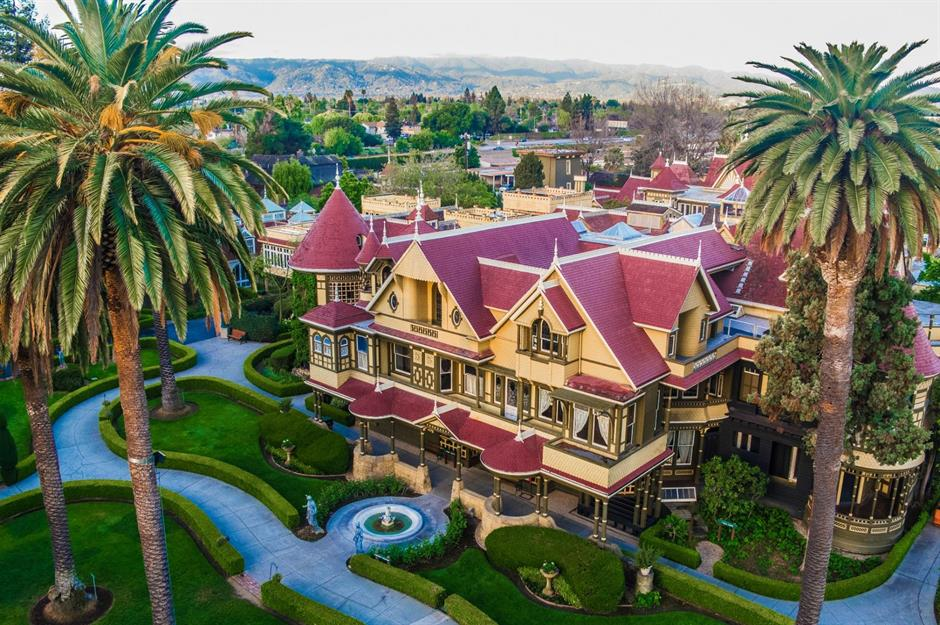
The magical is a great hidden wisdom…no armour can shield against it because it strikes at the inward spirit of life. Of this, we make restore assured. In recent years there has been a growing inclination to interpret any human awareness that cannot be readily explained as E.S.P. or Extra Sensory Perception. Of course, it is admitted in even the most polite circles that animals have this faculty. Rather than admit that animals have full use of one or more of the so-called five sense, they are credited with a sixth sense, which we call E.S.P. However, I believe that the majority of thing that are attributed to E.S.P., or a sixth sense, are nothing more than unconscious manifestations of our existing five sense: sight, hearing, smell, taste and touch. The reason the techniques of utilizing these five senses to the degree that would explain away much of the sixth sense nonsense are not learned is because to do so would mean admitting that animals had something we do not have and they might be able to teach us a few things. Man cannot quite bring himself to learn from the animals, though, because he has been brainwashed into thinking he is something special, a higher type of being. He cannot beat his chest like a bongo and play god, because that is reserved for the guy upstairs, and he cannot learn from the animal kingdom, because he is supposedly emancipated from it. If something comes along he cannot explain, he ask somebody else, and, if there are still no satisfactory explanations, he looks to his gods for one. If faith in his old gods wanes, because of doubts in his mind as to the validity of his religion, he can no longer call strange happenings “miracles.” #RandolphHarris 1 of 10

However, his ego will not allow him to lose what little self-respect he has acquired, by regressing to animalism in any way, shape or form—even if it means he might learn something. So he thinks of a new “scientific” term which will break away from the religious terminology of “miracles” that has lately left him so disenchanted. He still knows little more than he ever did, but he feels better because he thinks he is on the right track—not dependent on his old god and not trafficking with the Devil. H.S.P. or Heightened Sensory Perception simply means that we receive impressions through our existing five senses that we do not recognize as coming through these agencies. H.S.P relays messages to our brain based on indicators in the environment, and these signals are based on more factors than we could ever imagine have influenced us. Now, psychic phenomena is often thought to be connected with witchcraft. As William Wirt Winchester had taken a job the family business, he was warned the New Haven, Connecticut USA had become a center for witch ceremonies. People were warned to keep their children away from Hallowe’en celebrations, “We know there are adults in the village who are thing to introduce children to witchcraft for their own demonic reasons,” Maureen Crawford said. There were purportedly a dozen separate witch covens operating in New Haven, and they were all suspected to be involved in blood rituals, so the whole village of witches was branded as black (black magic). #RandolphHarris 2 of 10
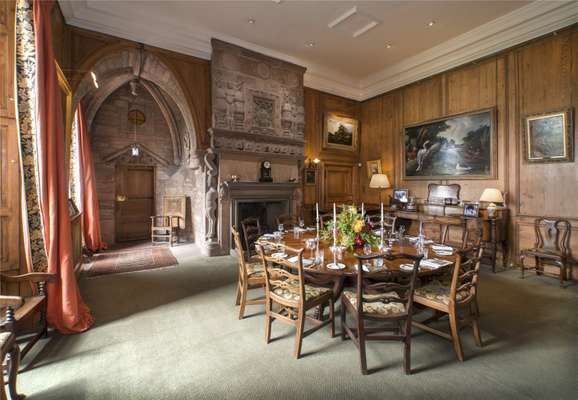
Mr. Winchester had been invited to an initiation ceremony at a house in New Haven. He knew the High Priest quite well, and he was knowns for his powers. The ceremony was already in progress when Mr. Winchester arrived, and he put on a ceremonial robe and was shown into a third-floor room, where an overpoweringly beautiful crystal chandelier was the main feature. However, it was not switched on, and glistened only from the light of candles on a large altar. There, on the alter, he saw a young woman—woman who was made up to look like an ancient Egyptian. “I was absolutely certain in my own mind that she was a virgin, she looked so young, but she was obviously a willing participant. She was not strapped down and made no move to get up. Somehow I feared the worst. I wanted to get out of that place but the doorway was guarded by two men holding ritual swords. The Great Rite that was being performed has no place in this town. This was palpably a black imitation and the real purpose behind it was to raise power for the High Priest. He was calling upon dark forces. He began in what sounded like gibberish—but was Enochian texts. Then, standing close to the altar, he took the young woman and led her away, tears streaming down her face. I pulled out my revolver and told him to step aside, and I rescued the maiden. While we were walking in the pitch black night, she confessed to me her name was Sarah Pardee, and she had been abducted from Sunday School. Eight men tied her hands behind her back, and she was blindfolded as her companions carried her to the ritual casting magic circle. #RandolphHarris 3 of 10
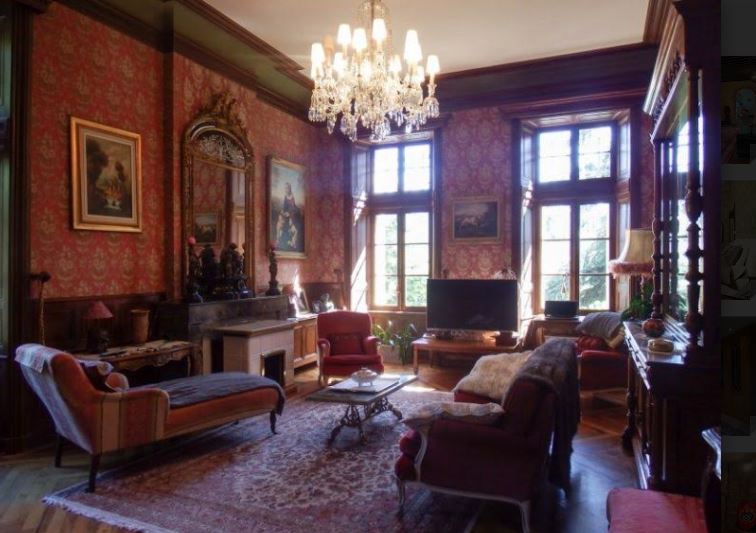
“The men took Sarah to this old wooden Victorian home. She pulled herself free from the binding cords and ripped off her blindfold. ‘Immediately I wish I had not,’ Sarah said. ‘For there before me were four wooden stakes and upon each one had been impaled a dead cat. I have out a terrible scream and vomited. I was sick at heart, infuriated and fearful.’ As Sarah and I wondered through the forest, I was so happy I was able to get her away from the scenes of black magic.” Descriptions of such sense are not uncommon, there were many witches and warlock involved in black sorcery. Several years later, in 1862, William and Sarah were married. Their marriage was based on mutual love and affection, and when William died Mrs. Winchester mourned him for the rest of her life, avoiding public appearances for years, and living in a hermitic existence in Santa Clara County. The reason Mrs. Winchester moved to Santa Clara County is because she found a small box with three thorns, earth from a cemetery, a dead butter fly, and a picture of herself in the box. It had been sealed with black wax and placed in her kitchen. The effects had been catastrophic. A witch does have to make a pact with the devil himself, at least symbolically. Among his ten commandments is one tht calls for the confidence in the belief that a witch can destroy rivals through the use of curses thrown without mercy—the only way a curse can be thrown is without mercy, and the power of the curse is most effective. Perhaps this is why Mrs. Winchester was not only robbed of her husband, but her new born daughter. #RandolphHarris 4 of 10

The belief in black magic circles is that it is possible for the magician to achieve a state of being verging on astral projection, whereby the spirit may travel to the “victim,” engage in pleasures of the flesh and returning. The female attacking a male is known as a succubus; the male attacker is known as an incubus and both have their origins in the recorded witch trials of the sixteenth and seventeenth centuries. Mrs. Winchester’s marriage to Mr. Winchester, “was a beautiful, really, as his eyelashes. He had such a natural grace. And he was so affectionate, and so happy with me. After his death, I had to get away from family life. There was not a trace of hypocrisy in William. He was sure that his ‘call’ was irresistible, while to me it was the saving grace of my life. He was enchanting and enchanted. I knew he was too beautifully brave to exist in such a cruel world. The day I met him, I said to myself: ‘I shall have him for life’—and I had never seen anyone, man or woman, whom I was quite sure of wanting on those terms. Well, this impulse of egotism decided me. I was ashamed of it, and to get away from it I took a leap that landed me straight in William’s arms.” It is easy to see why Mrs. Sarah L. Winchester’s response to the death of her child and husband left a bizarre and impressive architectural reflection of her psyche. And what went on inspire is beautiful mansion she built left something hung in darkness. #RandolphHarris 5 of 10

The phantom attacks began late one evening in Mrs. Winchester’s bedroom. A listless drowsy breeze filled the room. It was filled with the scent of the ocean, salty and clean, washing Mrs. Winchester and washing the room, and beyond she saw stars without number, stars of such radiance and such distance that the Heavens were no longer the painted vault of Heaven but a great endless ocean of stars. Suddenly, she was thrown by an unseen force. As she fell to the floor she found herself laying next to a headless body, it was moving, crawling, clawing at the polished floors with its great sprawling fingers and pushing through the robe with his knees. The body was making a muddy shadow underneath. This sight was so ghastly that for a moment Mrs. Winchester could not move. And as she looked at the body, its movements moved with hers, there overcame her a sense of its tacit complicity, of a deep hidden understanding between the, that was no worse than the first shock of its strangeness. Not that she understood the body, but it made it clear that someday she should. And that was the worst part of it, decidedly. The headless body leaked blood. The smashed head lying on the floor, staring at Mrs. Winchester with empty eye sockets. Mrs. Winchester puzzled over the situation a good deal, but could not find any hint of an explanation. She thought that this was a demon sent to torment her. This evil was insidious. He husband was too charming and her daughter too beautiful to be sacrificed to such demons. And so, after all, she never found out what it wanted. #RandolphHarris 6 of 10

It was hard to describe the physical sense of distress. Mrs. Winchester lay back more exhausted than she had ever been in all her long existence. She could have slept for a year, but retired to a séance in her Blue Séance Room. Clad in a white dress, a spirit floating above the altar with great presence and depth. It was accompanied by an unpleasant sensation of pressure on her chest. There was also a music box playing and she could hear children laughing on the lawn at midnight. Mrs. Winchester was told that this was an omen of her impending death and that is she did not continue construction of her home, indefinitely, that she was meet the same fate. Everything was peaceful. Night birds were calling, and the frogs and crickets were contributing their music to nature’s sounds. Mrs. Winchester sat transfixed in the beauty and wonder of the scene. The following week, one of the farmers was found dead, sitting on a chair in the kitchen. Later the coroner examined the body and said the man had died of a cerebral hemorrhage. Following the mysterious death, the butler was running through the mansion, completely hysterical, shouting that he has seen the ghost. After that, the crazed butler disappeared. He was never seen again, dead or alive. You can make of witchcraft what you will—it is kind of religion, invitingly tinged with mystery, superstition, and legend. Many witches who use black magic believe that they will become vampires after their death. The fear of vampires has been famous for centuries. In 1823, a law was passed prohibiting the practice of burying unhallowed dead at a crossroads with a wooden stake driven through the heart of the corpse. #RandolphHarris 7 of 10
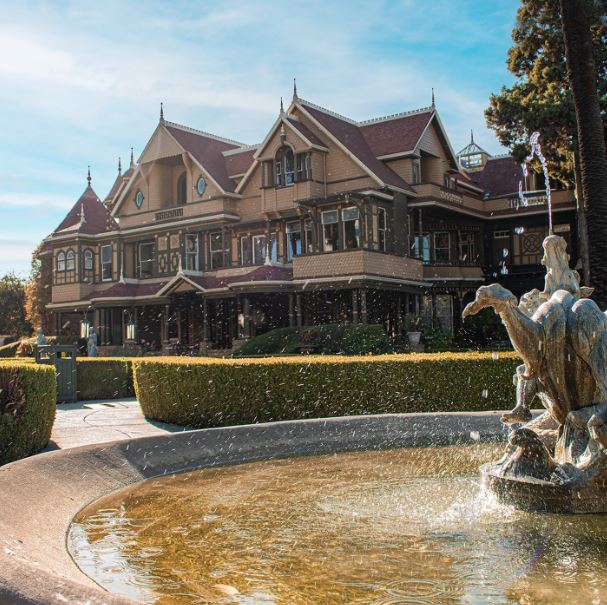
There are few major towns or cities in America that do not barbour at least one—often several—secret societies whose purpose is the study and performance of esoteric religion or ritual magic. They are generally made up of small groups of people aligned to various separate organizations and beliefs whose proliferation in the twentieth century has continued a space in what Francis King, the acclaimed author on occult matters, described as an “astonishing revival of medieval magic and alchemy.” King is right when he says that the newspaper stories of the desecration of some deserted country church for the purposes of black magic or the activities of some cult or secret society, dancing around a blazing fire, or standing rapt before a crude altar, are only the tip of the ice berg. As leaders of witchcraft recognize, students of ritual magic and the occult are on a higher plane of activity which has throughout history attracted many gifted minds. The scour antiquity for the roots of a particular persuasion in a constant search for the source, the Philosopher’s Stone or such age-old secrets as turning common metals into gold. They seek and perform old rituals of past and famous magicians; they try to define the question of being and magic furnishes the human mind with an instrument of philosophical and religious certainty as exact as mathematics. Those who attain this knowledge and adopt it as a rule of life can make themselves masters of all inferior things. #RandolphHarris 8 of 10
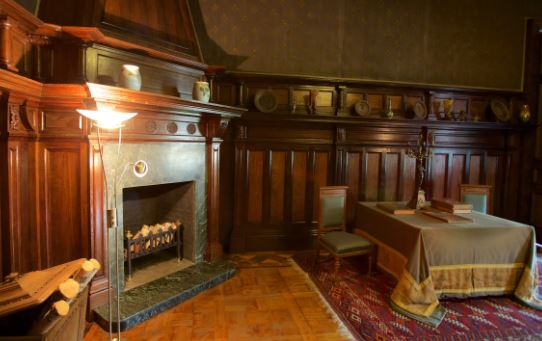
In the mystery of these vestures of the Holy Ones, I gird up my power in the girdles of righteousness and truth in the power of the Most High: Ancor: Amacor: Amides: Theodonis: Anitor: let be mighty my power: let it endure for ever: in the power of Adonai, to whom the praise and the glory shall be; whose end cannot be. I invoke and move thee, O thou, Spirits of William Wirt Winchester and Oliver Fischer Winchester: and being exalted above ye in the power of the Most High, I say unto thee, please Obey! In the name Beralensis, Baldachiensis, Paumachia, and Apologine Sedes: and of the mighty ones who govern, spirits, Liachidae and ministers of the House of Death: and by the Chief Prince of the seat of Apologia in the Ninth Legion, I do invoke thee and by invoking conjure thee. And being exalted above ye in the power of the Most High, I say unto thee, Obey! in the name of him who spake and it was, to whom all creatures and things obey. Moreover I, whom God made in the likeness of God, who is the creator according to his living breath, stir thee up in the name which is the voice of wonder of the mighty God, El, strong and unspeakable, O thou Spirits William Wirt Winchester and Oliver Fischer Winchester. And I say to thee, please obey, in the name of him who spake and it was; and in every one of ye, O ye names of God! I cast the limits of the garb of flesh into the refining black flames of Hell to be clothed with the powers of divine darkness eternal. Ahriman devours all including the limits of himself for the sake of evolution and becoming through the powers of the Druj-Nasu in order to reveal the truth of the lie unto the Dark Apostles! #RandolphHarris 9 of 10

In the name of Zohak, the first man turned Div; I offer the limits of self unto the Druj through the mouth of Arezura to be clothed with the garb of Ahriman which is divine darkness eternal. Druj-Nasu hear my call and be stirred now to this place! Devour the flesh of this vehicle of power and as you do devour my human weakness. Come forth now and receive this offering made by me! Druj-Nasu come! I now plant the seed of my desire within the black earth, through the mouth of Arezura where the powers of sorcery and counter creation dwell. Through this gateway of darkness, I now shine the light and power of my will upon this World for the benefit of me and mine! Moreover, in the names Adonai, El, Elohim, Elohi, Ehyeh Asher Ehyeh, Zabaoth, Elion, Iah, Tetragrammaton, Shaddai, Lord God Most Hight, I stir thee up; and in our strength I say please Obey! O Spirits of William Wirt Winchester and Oliver Fischer Winchester. Appear unto His servants in a moment; before the circle in the likeness of men; and visit me in peace. And in the ineffable name Tetragrammation Iehovah, I say, please Obey! whose mighty sound being exalted in power the pillars are divided, the winds of the firmament groan aloud; the fire burns not; the Earth moves in earthquakes; and all things of the house of Heaven and Earth and the dwelling-place of darkness and as earthquakes, and are in torment, and are confounded in thunder. Come forth, O Spirits William Wirt Winchester and Oliver Fischer Winchester in a moment: let thy dwelling-place be empty, apply unto us the secrets of Truth and obey my power. Come forth, visit us in peace, appear unto my eyes; be friendly: Obey the living breath! For I stir thee up in the name of the God of Truth who liveth for ever, Helioren. Obey the living breath, therefore continually unto the end as my thoughts appear to my eyes: therefore be friendly: speaking the secrets of Truth in voice and in understanding. #RandolphHarris 10 of 10
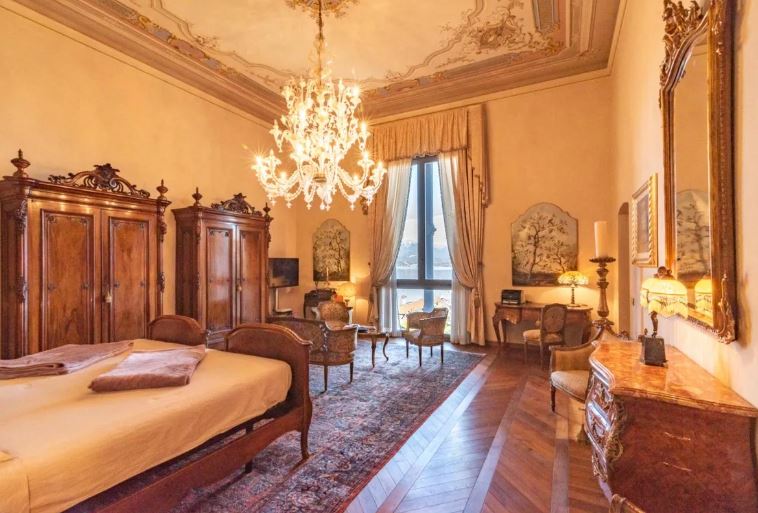
The Winchester Mansion is of significant architectural merit which stands proudly in its surroundings. It is considered one of the most haunted houses in the World. Besides being a truly historic and beautiful home, it is also the source of many scary stories over the centuries. One of the bedroom on the fourth floor is apparently haunted by a young woman, presumably Sarah L. Winchester, who died in bed after suffering the shock of discovering a demon with “cloven hooves” in her room..
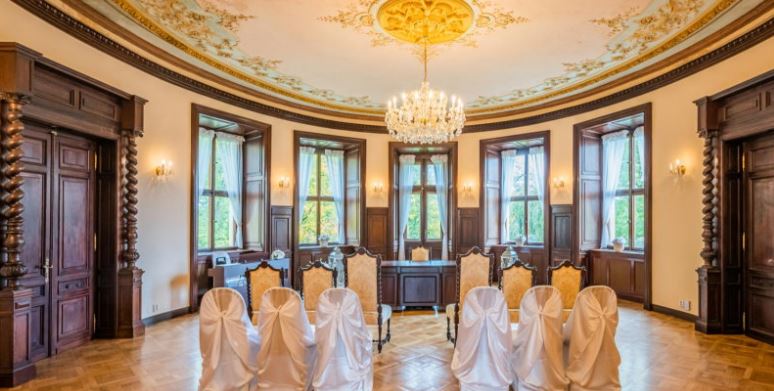
The mansion is equipped with 110 out of 160 room that are open for you and your guests to explore, or even come into contact with a spectral visitor. There are a few rooms where it looks like a poltergeist has been wreaking havoc. Local legennd has it that a estate has the grave of a woman who committed suicide, where fresh flowers appear every morning, having been placed there by pixies. https://winchestermysteryhouse.com/

Grand Central Station at Noon

Especially if you are in business, dealing with people is probably the biggest problem you face. If you are also a housewife, architect, or engineer, that is also probably true. Research done a few years ago, uncovered a most important and significant fact—a fact later confirmed by additional studies. These investigations revealed that even in such technical lines as engineering about 15 percent of one’s financial success is due to one’s technical knowledge and about 85 percent is due to skill in human engineering—to personality and the ability to lead people. When it comes to the conditions of copresence, however, they are found in less variable circumstances: persons must sense that they are close enough to be perceived in whatever they are doing, including their experiencing of others, and close enough to be perceived in this sensing of being perceived. In our walled-in Western society, these conditions are ordinarily expected to obtain throughout the space contained in a room, and to obtain for any and all persons present in the room. On public streets (and in other relatively unobstructed places) the region of space in which mutual presence can be said to prevail cannot be clearly drawn, since persons who are present at different points along the street may be able to observe, and be observed by, a slightly different set of others. This qualification aside, the term gathering will be used to refer to any set of two or more individuals whose members include all and only those who are at the moment in one another’s immediate presence. #RandolphHarris 1 of 20

By the term of situation we shall refer to the full spatial environment anywhere within which an entering person becomes a member of the gathering that is (or does then become) present. Situations begin when mutual monitoring occurs, and lapse when the second-last person has left. In order to access the full extent of any such unit, the term situation at large will be employed. Along with “gathering” and “situation,” another basic concept must be tentatively defined. When persons come into each other’s immediate presence they tend to do so as participants of what we shall call a social occasion. This is a wider social affair, undertaking, or event, bounded in regard to place and time and typically facilitated by fixed equipment; a social occasion provides the structuring social context in which many situations and their gatherings are likely to form, dissolve, and re-form, while a pattern of conduct tends to be recognized as the appropriate and (often) official or intended one—a “standing behaviour pattern.” Examples of social occasions are a social party, a workday in an office, a picnic, or a night at the opera. Some social occasion, a funeral, for example, have a fairly sharp beginning and end, and fairly strict limits on attendance and tolerated activities. Each class of such occasions possesses a distinctive ethos, a spirit, an emotional structure, that must be properly created, sustained, and laid to rest, the participant finding that one is obliged to become caught up in the occasion, whatever one’s personal feelings. #RandolphHarris 2 of 20

These occasions, which are commonly programmed in advance, possess an agenda of activity, an allocation of management function, a specification of negative sanctions for improper conduct, and a preestablished unfolding of phases and a highpoint. Other occasions, like Tuesday afternoon downtown, are very diffused indeed, and many not be seen by participants as entities with any appreciable development and structure of their own that can be looked forward to and looked back upon as a whole. (Here the individual may see a line of development in one’s own period of participation but not in the occasion as a whole.) In these cases the very useful term employed is behaviour setting, and that seems to be sufficient. Diffuse social occasions can, of course, develop a structure and direction as they go along. Many adults need training in effective speaking, they need still more training in the fine art of getting along with people in everyday business and social contacts. There is usually a combination of strategies in which each individual’s action is the best response to that of the other. Given what the other is doing, neither wants to change one’s own move. This outcome is called an equilibrium. Having exhausted the simple avenues of looking for dominant strategies or ruling out dominated one’s, the next thing to do is to look for an equilibrium in the situation. After years of observation and experience, over fifteen hundred engineers learned that the highest-paid personnel in engineering are frequently not those who know the most about engineering. #RandolphHarris 3 of 20

One, for example, hire mere technical ability in engineering, accountancy, architecture or any other profession at nominal salaries. However, the person who has technical knowledge plus the ability to express ideas, to assume leadership, and to arouse enthusiasm among people—that person is headed for higher earning power. The ability to deal with people is as purchasable a commodity as sugar or coffee. And many presidents of corporations will pay more for that ability than for any other under the sun. What do you do when a phone call between Peter and Paula accidentally gets cut off? If Peter tries to call Paula, then Paula should stay off the phone (and not try to call Peter) so as to present her phone from being busy. If Paula, on the other, is waiting for Peter to call, and Peter waits too, then their phone conversation will never be completed. What is best for one depends on what the other does. Again there are two equilibria, one in which Peter calls and Paula waits, and the other way around. The two need a social convention to help them choose consistent strategies, that is, a common understanding of which equilibrium to attain. One solution is for the person who originally made the call to also make the callback. The person who answered the phone waits for the phone to ring again. The advantage of this is that the originator knows the other party’s phone number, while the reverse may not always be true. Another possibility is that if one person can call for free and the other cannot (say Peter is in his office and Paula is at a pay phone), then the person with the free access should call again. #RandolphHarris 4 of 20

To test your ability to communicate an on equilibrium, consider the following question: You are to meet someone in New York City sometime tomorrow. They are told to meet you. Neither you nor the other person is given any more instructions about where to meet or when. When and where do you go? According to the Strategy of Conflict—there is no predetermined right answer other than the one most commonly given. Among our students, Grand Central at noon continues to be the most common answer. That is true even for Princeton students whose train arrives in New York at Penn Station. When it comes to most people, health is the prime interest of most adults—and their second interest is people; how to understand and get along with people; how to make people like you; and how to win others to your way of thinking. For years, some people have driven and criticized and condemned their employees without stint or discretion. Kindness, words of appreciation and encouragement are alien to their lips. However, if a boss sharply alters one’s philosophy of life, one may find one’s organization will be inspired with a new loyalty, a new enthusiasm, a new spirit of teamwork. For instance, if your company has 1,000 employees, 1,000 enemies will be turned into 1,000 friends. The employer will find that in the past none of his or her employees greeted one when they would walk through one’s establishment. However, that will change. One’s employees will no longer look the other way when one is approaching. Now they will all be your friends and even the environmental waste engineer will have respect for you. #RandolphHarris 5 of 20
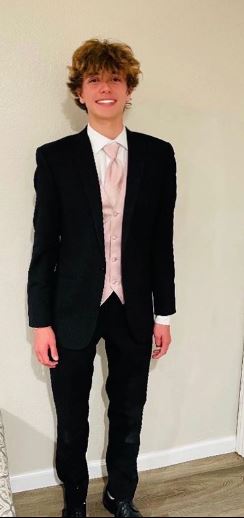
This particular employee gained more profit, more leisure and—what is infinitely more important—he found far more happiness in his business and home. Countless numbers of salespeople have sharply increased their sales by the use of these principles. Many have opened up new accounts—accounts that they had formerly solicited in vain. Executive have been given increased authority, increased pay. One executive reported a large increase in salary because he applied these truths. Another, an executive of a historic mansion in the Bay Area of California, USA; was slated for demotion when he was thirty because of his belligerence, because of his inability to lead people skillfully. This training not only saved him from the demotion but brought him a promotion with increased pay. On innumerable occasions, spouses attending the banquet given at the end of the course on how to become more human report that their homes have been much happier since their husbands or wives started this training. People are frequently astonished at the new results they achieve. It all seems like magic. In some cases, in their enthusiasm, they have telephoned me at my home on Sundays because they could not wait forty-eight hours to report their achievements at the regular session of the course. One man was so stirred by a talk on these principles that he sat far into the night discussing them with other members of the class. At three o’clock in the morning, the others went homes. However, he was so shaken by a realization of his own mistakes, so inspired by the vista of a new and richer World opening before him, that he was unable to sleep. He did not sleep that night or the next day or the next night. #RandolphHarris 6 of 20

Dealing with people in a work setting is like a prisoner’s dilemma. Again the selfish pursuit of one’s interests leads to an inferior outcome. When no one will compromise, everyone gets a harsh sentence. The problem is how to attain such cooperation given the competition to obtain an especially good deal for oneself. Well, behind every good scheme to encourage cooperation is usually some mechanism to punish cheaters. A prisoner who confesses and implicates one’s collaborator may become the target of revenge by the others’ friends. The prospect of getting out of prison more quickly may look less alluring given the knowledge of what waits outside. Police have been known to scare drug dealers into confessing by threatening to release them. The threat is that if they are released, their suppliers will know they have squealed. When we compare this example with a work-related situation. If the owner of the business threatens to fire everyone, unless they cooperate, those who cheat to get ahead or pursue their own selfish interest, instead of helping the group, will not likely find working at the company very pleasant because others have lost their job security. And likewise goes for those who do nothing, but ride along for the credit. Some social occasions, often called “unserious” or “recreational,” are felt to be ends in themselves, and the individual avowedly participates for the consummate pleasure of doing so. Other occasions, called “serious,” are officially seen as merely means to other ends. #RandolphHarris 7 of 20

Finally, some occasions are seen as “regular” ones—instances that form part of a series of like occasions, the series being seen as a unity, and developing as such, in terms of daily, weekly, or annul cycle, often with the same participants. Other occasions, such as spur-of-the-moment parties, are one-shot affairs, or their series-like character is not perceived as such. There are many complication associated with the concept of social occasion, but some such term must be used, for when a gathering occurs it does so under the auspices of a wider entity of this kind. It will become apparent that the regulations of conduct characteristic in situations and their gatherings are largely traceable to the social occasion in which they occur. What is understand? Try to ask yourself this question and you will see that you cannot answer it. You have always confused understanding with knowing or having information. However, to know and to understand are two quite different things, and you must learn to distinguish between them. In order to understand a thing, you must see its connection with some bigger subject, or bigger whole, and the possible consequences of this connection. Understanding is always the realization of a smaller problem in relation to a larger problem. For instance, suppose I show you an old Russian sliver ruble. It was a piece of money the size of a halfcrown and corresponding to two shillings and a penny. You may look at it, study it, notice in which year it was coined, find out everything about the Tsar whose portrait is on one side, weight it, even make a chemical analysis and determine the exact quantity of silver contained in it. #RandolphHarris 8 of 20

You can learn what the word “ruble” means and how it came into use. You can learn all these things and probably many more, but you will not understand it and its meaning if you do not find out that before the last war its purchasing power corresponded in many cases to a present-day English pound, and that the present-day paper ruble in Bolshevik Russia corresponds in many cases to an English farthing or even less. If you find out this you will understand something about a ruble and perhaps also about some other things, because the understanding of one thing immediately leads to the understanding of many other things. Often people even think understanding means finding a name, a word, a title, or a label for a new or unexpected phenomenon. This finding or inventing of words for incomprehensible things has nothing to do with understanding. On the contrary, if we could get rid of half of our words perhaps we should have a better chance of a certain understanding. If we ask ourselves what it means to understand or not to understand a man, we must first think of an instance of not being able to speak with a man in his own language. Naturally two people having to common language will not understand one another. They must have a common language or agree on certain signs or symbols by which they will designate things. However, suppose that during a conversation with a man you disagree about the meaning of certain words or signs or symbols; then you again cease to understand one another. #RandolphHarris 9 of 20

From this follows the principle that you cannot understand and disagree. In ordinary conversation we very often say: “I understand him but I do not agree with him.” From the point of view of the system we are studying, this is impossible. If you understand a man, you agree with him; if you disagree with him, you do not understand him. It is difficult to accept this idea; and this means that it is difficult to understand it. There are two sides of man which must be develop in the normal course of one’s evolution: knowledge and being. However, neither knowledge nor being can stay still or remain in the same state. If either of them does not grow bigger and stronger, it becomes smaller and weaker. Understanding may be compared to an arithmetical mean between knowledge and being. It shows the necessity for a simultaneous growth of knowledge and being. The growth of only one and diminishing of another will not change the arithmetical mean. This also explains why “to understand” means to agree. People who understand one another must not only have an equal knowledge, they must also have an equal being. Only then is mutual understanding possible. Now, picture to yourself how mastery a vigorous determination to increase your ability to deal with people will help you lead a richer, fuller, happier, and more fulfilling life. Say to yourself over and over: “My popularity, my happiness and sense of worth depend to no small extent upon my skill in dealing with people.” #RandolphHarris 10 of 20

I knew a woman who had been office manager for a large insurance company for fifteen years. Every month, she read all the insurance contracts her company had issues that month. Yes, she read many of the same contract over month after month, year after year. Why? Because experience had taught her that she was the only way she could keep their provisions clearly in mind. Learning is an active process. We learn by doing. So, if you desire to master the principles you are studying here, do something about them. You are tempting to form new habits. Ah yes, you are attempting a new way of life. That will require time and persistence and daily application. Whenever you are confronted with some specific problem—such as handling a child, winning your spouse to your way of thinking, or satisfying an irritated customer—hesitate about doing the natural thing, the impulsive thing. This is usually wrong. Develop a deep, driving desire to master the principles of human relations. Harnessing complexity involves acting sensibly without fully understanding how the World works. Themes of exploration versus exploitation can be clearly seen in personnel policy. In the short run, it pays to promote the person who best fits the current vacancy. In the longer run, however, it may pay for an organization to sacrifice some of these short-run gains to develop a set of people who will provide a better set of options in the future. The period ahead has been characterized by a number of experts as likely to produce what has been called a Revolution in Military Affairs. They compare it to other periods in history when dramatic changes occurred in military capability and doctrine. #RandolphHarris 11 of 20

It is evident to military planners that future combat could be very different as a result of advances not only in information technology but also in nano- and bio- technologies. Of course, it is not possible to say now just what those differences will be. While technical changes of the current magnitude have historically had major implications, the path from technical change to effective military operational capabilities is often convoluted, and the actual implications are frequently not what was anticipated. For example, it took years to discover the best use of the advantages conferred by night-vision equipment and stabilized naval gunnery platforms. The early prospect for aircraft seemed to be reconnaissance. The arquebus, an early gun, is a typical case. It took nearly fifty years before it provided an important military advantage. Though the gun was powerful against archers, it was also to reload. It could only be effective after a drill called countermarch was invented and taught to soldiers. Then a rank could advance and fire while other ranks fell back to reload. The technology alone was not effective. Routines had to be found, refined, and disseminated to make it effective, and this required decades to accomplish. A key observation is that the transformation of technical possibilities into meaningful capabilities is frequently accomplished concurrently with the career developments of personnel. This is true for all kinds of organizations, not just armies. It suggests that employees or organizations or officers in military services might be usefully analyzed as populations of agents that form a Complex Adaptive System. #RandolphHarris 12 of 20

In the years ahead, nations will still form new economic blocs, play currency games, impose tariffs and grant subsidies (increasingly clocked in environmental, cultural and other justifications). They will continue to blame unemployment on unfair competition from other countries. They will demand so-called “level playing fields.” They will make all the noise. And they will, of course, take their citizens. Rising powers such as India, China, Africa and Brazil will demand to be treated like Great Powers in such international institutions as the WTO, the IMF, the World Bank and the Bank of International Settlements (BIS), organizations whose decisions affect trade, currencies, credit, bank reserves and a host of other wealth variables. However, while nations will compete ever-more-fiercely on familiar territory—what we might call the nation-state game board—they will all be playing a kissing game. For whether national governments like it or not, power is leaching away from all of them. The great powers are increasingly less great. And that goes for America as well. The reason is that nations ad states are no longer the only powerful pieces in a new meta-game made up of many different-games linked interactively and played simultaneously. Neo-chess on one level. Neo-poker or neo-backgammon or neo-EverQuest on others. The players compete under non-linear rules that change after—or during—every move. #RandolphHarris 13 of 20

Corporations have been playing multinational chess for a long time and have wielded disproportionate influence at the international level. Today, because they are increasingly global, major corporations and financial institutions shift pieces around on their own game board and are less and less accountable to their nation of origin. When Microsoft, Citigroup, Buick, Hearst Corporation, BMW, Royal Dutch/Shell, Cresleigh Homes, Philips or Maytag talks, national government listen. However, it is not only national games and corporate games (or the interactions between them) that count. Nations and businesses alike now need to deal with the fast-growing community of NGOs and other rising forces. Many NGOs battle corporations such as Monsanto, Shell Oil and McDonald’s. As we have seen, they fight free trade and re-globalization. They march for peace. They campaign to save whales and trees. In doing so, they make daily headlines. Less visible but more numerous and, in aggregate, far more influential are countless other NGOs like Worldwide business associations, professional groups, sports clubs, scientific organizations and other entities. Most focus on highly specialized issues of concern to various other industries and groups ranging from custom brokers and matrimonial lawyers to geneticists, notaries, plastics distributors, chefs, models, and textile designers. Some NGOs defend producers’ interests. Others defend consumers. Still others organize or represent prosumers—like the groups that coordinated thousands of volunteers from all over the world to assist victims of the 2020 pandemic. #RandolphHarris 14 of 20

Taken together, armed with computers, Internet access and the latest communications equipment and supported by lawyers, doctors, scientists and other professionals, NGOs form a fast-growing cross-border force with which nations and corporations both will be increasingly compelled to share power. Moreover, the proliferation of NGOs is just beginning. This is so, first, because the Internet, the Web, mobile phones and improved connectivity make it easier and more affordable for people to identify common goals or grievances, to find one another, link up and organize. Second, because the speedup of change brings new opportunities and fears. Before stem cells were identified, for instance, no one set up an NGO to support stem-cell research—or to suppress it. Today there re many NGOs for both purposes. The changes now transforming work are not a result of wooly-headed altruism. They are a consequence of much heavier loads of information and communication needed for wealth production. In the past, when most businesses were still tiny, an entrepreneur was able to know virtually all that needed to be known. However, as firms grew and technology became more complicated, it was impossible for any one person to carry the entire knowledge load. Soon specialists and managers were hired and formed into the characteristic compartments and echelons of the bureaucracy. The knowledge load had to be diffused throughout the managerial ranks. #RandolphHarris 15 of 20

Today a parallel process is at work. Just as owners became dependent on managers for knowledge, managers are becoming dependent on their employees for knowledge. The antique smokestack division of the firm into “heads” and “hands” no longer works. In the words of Teruya Nagao, professor of information and decision sciences at the University of Tsukuba, “The separation of thinking and doing in the traditional model…may well be appropriate for constant technology but is hardly in keeping with rapid technological process.” Because technologies are more complicated and turnover more frequently than in the past, workers are expected to learn more about adjacent and successive jobs. Thus, a General Motors as proudly speaks of workers’ helping to choose the lighting in their plants, selecting the sandpaper, the tools, and even “learning how the plant runs, what things cost, how customers respond to their work.” In computer-integrated manufacture, says consultant David Hewitt of United Research Company, workers “need not to know how the specific machines work, but…how the factory works.” What is happening is that the knowledge load and, more important the decision load are being redistributed. In a continual cycle of learning, unlearning, and relearning, workers need to master new techniques, adapt to new organizational forms, and come up with new ideas. As a result, “submissive rule-observers, who merely follow instructions to the letter, are not good workers,” says Nagao. In fact, in today’s fast-change environment, he points out, rules, too, need to be changed more frequently than in the past, and workers need to be encouraged to propose such changes. #RandolphHarris 16 of 20

This is so because the worker who helps frame new rules will also understand why they are necessary and how they fit into the larger picture—which means the worker can apply them more intelligently. In fact, only regulations which are endorsed by the majority of the work force have a chance of being abided by. However, to invite workers into the rule-making process is to share power once held exclusively by their bosses. It is a power shift not all managers find easy to accept. Workplace democracy, like political democracy, does not thrive when the population is ignorant. By contrast, the more educated a population, the more democracy it seems to demand. With advanced technology spreading, nonprofessional labour and high school graduate workers are being squeezed out of their jobs in cutting-edge companies. This leaves behind a group perceived as being more educated, which cannot be managed in the traditional authoritarian, do not-ask-me-any-questions fashion. In fact, asking questions, challenging assumptions are becoming part of everyone’s job. When it comes to the role of manager, here the pressure comes from inside the work force that challenges management and does not accept its dictates or authority. Here people question objectives…Just because you are a member of management does not make your ideas holy. #RandolphHarris 17 of 20

What we see, therefore, is a clear pattern. Workplace power is shifting, not because of fuzzy-minded do-goodism, but because the new system of wealth creation demands it. The 1970s saw a revolution in Western attitudes toward the natural environment. Concerns with pollution, deforestation, and species extinction exploded. With the rise of these concerns came an ambivalent attitude toward technology and the wealth it was producing: some said that human beings re destructive to the environment in direct proportion to their power. This immediately suggested that technology and higher living standards were bad, being inherently destructive. “Wealth” cam to imply environmental destruction. The revolution in attitudes toward the environment has changed the idea of wealth. Our national statistics may not reflect it—not every last citizen or politician may agree—but the concept that genuine wealth includes not just McMansions, refrigerators, BMWs, factories and machines, washers and dryers and roads, but also green lawns, landscaping, cleanliness, fields and forests, owls and wolves, clean air, clean streets, clear water, and wilderness has taken deep root in minds and in politics. “The wealth of nature” has come to include nature as a value in itself, not merely as potential lumber, ore, and farmland, and livestock, as well as locally grown produce. As a consequence, greater wealth has begun to mean cleaner wealth, greener wealth. Richer countries can afford more expensive, more efficient equipment—scrubbers and filters on smokestacks, catalytic converts on cars—and so they can produce goods with less environmental impact. Some have even recommended planted trees around smokestacks because trees need carbon to grown. This trend gives at best a hint of the future. #RandolphHarris 18 of 20

Nanotechnologies have the potential to produce plentiful consumer goods with much lower throughput of materials and much less production of waste, thus reducing carbon dioxide buildup and reducing global warming. They also have the potential to reduce waste, especially hazardous waste, converting it to natural materials which do not threaten life. If we regain a sense of purpose and embrace the new industries based on information and nanotechnology, the future could be great! These add enormous value to molecular-sized pieces of matter, and need not be a threat to the environment as were the heavy polluting industries of the past. Should we boast of “high technology” while industry still cannot produce without polluting? Pollution is a sign of low technology, of inadequate control of how matter is handled. Inferior goods and hazardous wastes are two sides of one problem. With processes based on molecular manufacturing, industries will produce superior goods, and by virtue of the same advance in control, will have no need of burning, oiling, washing with solvents and acids, and flushing noxious chemicals down their drains. Molecular-manufacturing processes will rearrange atoms in controlled ways, and can neatly package any unwanted atoms for recycling or return to their source. This intrinsic cleanliness inspired environmentalist to call nanotechnology “the most radical of the clean visions.” This clean vision will not be fulfilled automatically, but only with effort. Any powerful technology can be used for good or ill, and nanotechnology is no exception. #RandolphHarris 19 of 20

Today, we see scattered progress in environmental cleanup and restoration, some slowing of ecological destruction, because of organized political pressure buoyed by a groundswell of public concern. Yet for all its force, this pressure is spread desperately thin, fighting enormous resistance rooted in economic forces. However, if these economic forces vanish, the opposition will crumble. Often, the key to success in battle is to give one’s opponents an attractive alternative to fighting. The most powerful cry of the anti-clean opposition has been that clearing and polluting the land offer the only path to wealth, the only escape from poverty. Now we can see a clean, efficient, and unobtrusive alternative: clean wealth, clean smokestack energy, clean gasoline, compatible with natural wealth. I learned many years ago that it is foolish to scold. I have enough trouble overcoming my own limitations without fretting over the fact that God has not seen fit to distribute evenly the gift of intelligence. Ninety-nine times out of a hundred, people do not criticize themselves for anything, no matter how wrong it may be. Criticism is futile because it puts a person on the defensive and usually makes one strive to justify oneself. Criticism is dangerous, because it wounds a person’s precious pride, hurts one’s sense of importance, and arouses resentment. People rewarded for good behaviour will learn much more rapidly and retain what they learn far more effectively than one punished for bad behaviour. When criticizing, we do not make lasting changes and often do incur resentment. As much as we thirst for approval, we dread condemnation. #RandolphHarris 20 of 20

Cresleigh Homes

We know; we know – the pictures of #Havenwood Model 3 look so gorgeous, they could be a resort. But don’t worry – this is everyday life when you join our community! 🤗

The well-designed gourmet kitchen overlooks a bright casual dining area, and is highlighted by a large center island with breakfast bar, plenty of counter and cabinet space, and ample walk-in pantry.

Give our office a call and ask about Homesite #32 – it’s ready for move-in! Looks like it’s time to give yourself that perfect holiday gift. 😉 https://cresleigh.com/havenwood/residence-three/

Angels Which Kept Not Their First Estate
I hope by now that you agree with me that the tiresomeness of an over-peopled Heaven is a purely subjective and illusory notion, a sign of human incapacity, a remnant of the old narrow-hearted aristocratic creed. William Winchester loved boats and had thirteen-metres and even raced one in the America’s Cup trials once. He had a big yacht that he kept down in New Haven, Connecticut, even though he lived in Switzerland most of the time. My grandfather, Oliver Winchester, put a rear wing on the house he bought for William as a wedding gift, with a new kitchen and flower room my grandmother wanted when she married him. This house preceded the Winchester Mansion. And it was where my father, William Winchester, had an office. There had been a couple of times when I would have to take papers down to him. That office was bigger than most people’s living rooms. It had a fireplace and a window looking out on the West River, which flows into New Haven Harbor. Oliver Winchester was the Lieutenant governor of Connecticut. Not only was he founder of the Winchester Repeating Arms Company, but he was on the board of directors of four charities, including the Winchester Foundation, which gave money for research into Tuberculosis and heart disease; he was on the board of New Haven Savings Bank, which the Winchesters pretty much owned; he was on the boards of a couple of other big companies. Running a rich family was like running a business. #RandolphHarris 1 of 13
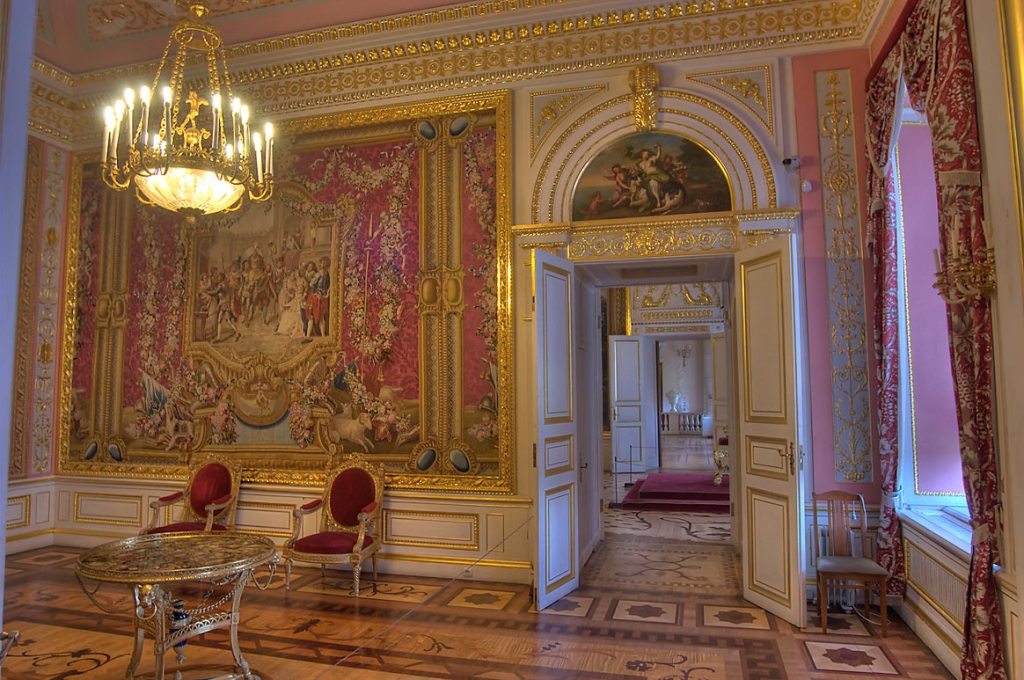
In fact, if you look at the Winchester Family treat, it is more of a “business family tree.” I guess money has always been the life source of the Winchester family. My father, William Winchester, said the family motto was “We own it, lock, stock, and barrel.” This family had a lot of power, and when you have power, you use it. The Winchester’s did not go out brawling like drunken sailors. We had the courts, the law, the police—and the Winchester Rifle if we needed it. We made sure that things around here went the way we wanted them to go. However, we did not go about it by brawling. If you did us wrong, we stayed clam, we spoke politely to everybody. However, we moved quietly. Sooner or later we would catch you between a rock and a hard place and then you would feel the almighty bad. If we did not go after them, those guys would have thought we were chicken. My father always said, “Son, do not worry what John Jacob Astor thinks of you. In your position it does not matter. You are going to be very rich and very powerful. These people will never like you. They will envy you, they will defer to you, and some of them will even admire you. But they will never like you. For that you must understand, what others think does not matter.” The original Winchester mansion was a house of these times, all right, though not to be considered new. I figured it to be at least three hundred years old. It was built of the local stone, and had three stories and a high-pitched roof, with mullioned windows—and it was vast. #RandolphHarris 2 of 13
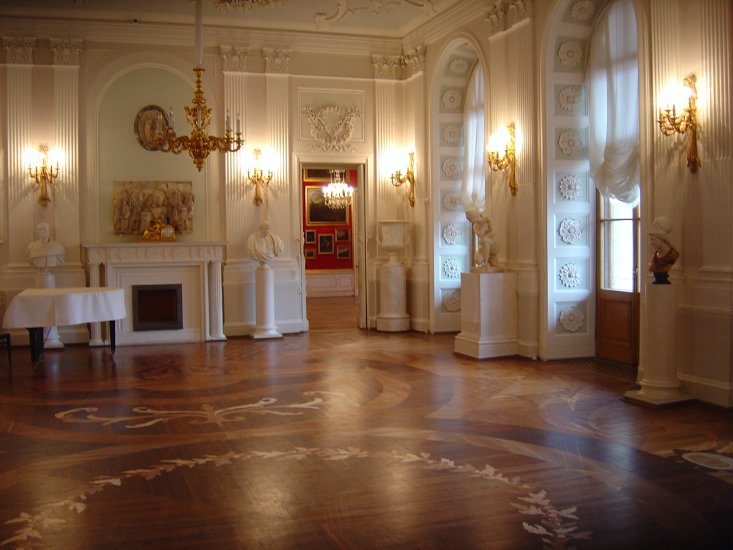
Often times, there was no one about. Only the bleak winter vines stripped of their jasmine, running on for miles, and distant corpse of an ancient tree of immense size, and the cold rain, a rain worse to me than snow, falling over as if it were falling on the entre World, a near silent rain that felt like needles on the backs of my hands and on my face. The mosaic tiles were beautiful, and possibly ancient, dating all the way back to the Roman times. I walked back and forth over the, and tapped several times with the toe of my boot. I walked to the double doors that opened into the garden, and there I saw a great pile of wood. And there was a big head on the rock, it was the devil’s face that a saint put there. If men believed nothing, they did not understand it, it is a short cradle they would have. I had been put in the mood for ghost, that evening after an excellent dinner at my father’s home. Seen through the haze of Abner Doubleday’s cigars, and by the drowsy gleam of a coal fire, my father’s library, with its oak walls and dark old bindings, made a good setting for such evocations; and ghostly experiences at first hand beings. An absurd thought came to me, that being here with Abner, it had all felt natural and good, as if in spite of the topic of our conversation we were simply human beings and all the dark World did not exist. I was ashamed of this. Why did we have to be “like human beings”? I asked myself. Why could we not simply be warlocks together? He looked at me, at my shining eyes, and his congenial smile, and he took my hand and said he wanted to see the house. We remained together for several hours after that, during which we walked through many rooms and he not only admired the endless book collection in the Gothic library, filled with classics bound in black cloth and daguerreotypes of faded celebrities, but also many of the paintings, including a few Russian painters of the nineteenth century he had never seen before. #RandolphHarris 3 of 13
For me, this was a wonderful time. We could have continued our conversation for a year. We walked about outside the house, through the gardens which were crowded with trees for privacy and vines that blossomed at night. These carefully guarded hours had been devoted to the cultivation of a fine intelligence and a few judiciously chosen habits; and none of the disturbances common to the human experience seemed to have crossed the sky. Mentally I was able to exercise a hospitality less seductive but no less stimulating than a play. Abner’s mind was like a forum, or some open meeting place for the exchange of ideas: somewhat cold and drafty, but light, spacious and orderly—a kind of academic grove from which all the leaves had fallen. In this privileged area, we were able to stretch our muscles and expand our lungs; and, as id to prolong as much as possible the tradition of what we felt to be vanishing institution, Abner tasted the lyric qualities in youth. He nipped the flowers of soul which he gathered from this tour, which forced a young idea to blossom. The man was really intelligent, and the soundness of his nature was like the pure paste under a fine glaze. Abner had been fished out of the dullness by the spirits of the Winchester mansion. Just at the evening was drawing to an end, he demanded, “And now you have to tell me about your ghosts!” “My ghost? Do you suppose I am fool enough to the expense of keeping my own ghosts, where there are so many charming ones in my friends’ closets?” I said. #RandolphHarris 4 of 13
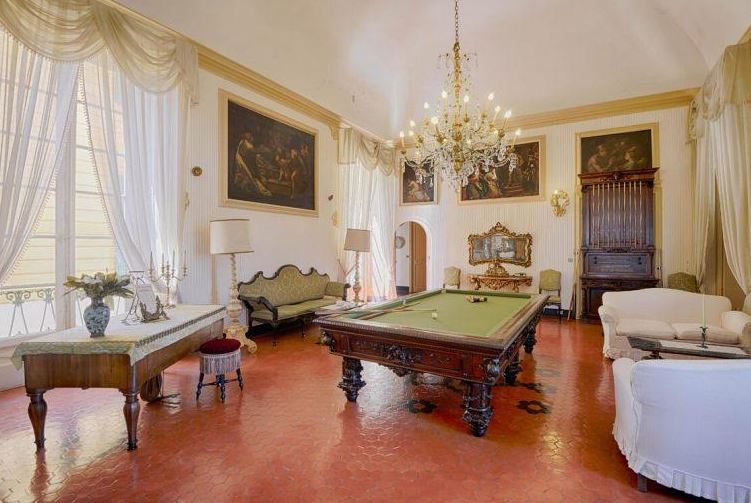
The fact is that we found whole skeletons that were used in various forms of old black magic rituals. Undoubtedly, for many who pursue this darkest of experiments, necromancy is the touchstone of occultism, especially for warlocks. If, after careful preparation, they are able to carry through what they regard as a successful contact they have reached a certain pinnacle in black magic conjuration. It is fruitless discussing whether or not this feat is possible; belief by the practitioner is all that is needed for the ritual to proceed and some psychological or drug or spiritual trance may well convince the depts tht they have indeed succeeded. “Oh,” Abner said, “you would never be content to share if you met one you really liked. What is the use of denying it? You have seen everything, so of course you have seen a ghost! Or if you have not seen one, it is only because you have seen several!” “That is it,” I said. “I have seen a legion.” The words were so unexpected that they dropped down and down into a deep silence, while we continued to stare at each other. Abner learned forward with is listening smile. “You will wonder why I am enlarging on some of these incidents. It is because the evening on which this particular incident took place was the very evening on which I first saw the queer sights I have spoken of. Being at that time an ardent believer in a necessary sequence between cause and effect, I naturally tried to trace some kind of link between the lion and the lamb lying down together.” Ancient Druids lived on the estate and necromancy had a particular appeal to warlocks seeking confirmation, for example, of the mysteries of the afterlife but more often necromancy was pursued by the skilled masters of ritual magic. #RandolphHarris 5 of 13

“We once wanted to raise a dead uncle,” I told Abner. “We went to the course of the giant tree, where we performed a ceremony. For a few moments, nothing happened. But moments later, there was a mysterious explosion. And afterwards, the road lay thick with cinders and debris. At first, my grandfather worried about the result. But he had a reassuring thought. Perhaps the explosion was caused by spontaneous combustion. ‘Oh my God…’ cried my father. ‘What happened?!’ he demanded. No one was sure. After that we walked back to the house in disbelief of the mess. Then I pointed and shouted out in horror. Before I could stop, my father fell to his knees before a hill of burned leaves and tree branches, under which he glimpsed a man’s head. It was his brother and he was looking for us. My grandfather put a hand to his mouth and stified the urge to vomit. My uncle’s eye sockets were empty, and his hair singed. ‘Brother, get up!’ he cried roughly. My father yanked his brother to his feet, frightened by the wide-eyed horror in his eyes and his awful nonstop screaming. He tried to pull out of his grasp, but he held my father tight until the screams subsided into sobs.” “Now listen,” my grandfather told my father. “You are a Winchester, so do not go making a liar out of me.” “But his brother’s tears burned my father’s skin.” “Your brother is dead,” said my grandfather. “We wondered if anything else came back to life. It was so eerily silent for this time of the morning. No cows mooing, no wood being chopped. No birds singing on the roof top. And the lawn was blackened.” #RandolphHarris 6 of 13
“As we went into the house, it was full of strangers, burned, bleeding, sick people. As we precariously waded through the maze of bodies, the wind must have carried in a fog. While my grandfather dug a mass grave for these animated bodies, my father and I dragged them out of the house to burry them. It took days, there were literally hundreds of them. My arms were shaking. We were all near exhaustion, and we still have several bodies to bury. We worked for an entire week to remove all these bleeding strangers from our home. I went up to bed with rather a heavy heart, for I was bowed under the weight of the first ritual I had ever consciously committed; and young as I was, I saw the gravity of my situation. The situation of being William Wirt Winchester Jr. Do not imagine for this that I had hitherto been an instrument of destruction I had been a harmless young man, who had followed his bent and declined all collaboration with Providence. Now I had suddenly undertaken to promote the moral order of the World, and I felt a good deal like the trustful spectator who has given his gold watch to the conjurer, and does not know in what shape he will get it back when the trick is over…Still, a glow of self-righteousness tempered my fears, and I said to myself as I undressed that when I had got use to being good it probably would not make me as nervous as it did at the start. And by the time I was in bed, and had blown out my candle, I felt that I really was getting used to it, and that, as far as I had got, it was not unlike sinking down into one of the softest wool mattresses.” #RandolphHarris 7 of 13

“My room had grown cold, and intensely still. I was waked by the queer feeling we all know—the feeling that there was something in the room that had not been there when I fell asleep. I sat up and strained my eyes into the darkness. The room was pitch black, and at first I saw nothing; but gradually a vague glimmer at the foot of the bed turned into two eyes starting back at me. The eyes gave out a light of their own. They were the very worst eyes I have ever seen: my dead uncle’s eyes. And the room slowly filled with hundreds of these eyes, orbs of light. My father paid immense sums to the architects and workmen to entomb the heart of the house in hopes of locking their spirits inside. This mean enclosing one of its four towers left standing and living in only a few habitable rooms while the work went on. The mansion went on to be inhabited by a secret order of men and women who met to discuss philosophy and music and escape the modern World, and the public would never be invited here due to the deep mourning of my mother over the loss of my grandfather, father, and baby sister. Indeed it was most anguishing. Some of these people had devoted their entire careers to this one project, and there was nothing now to be done but to give them, but gold coins. My mother left this mansion to Yale, I went to Rome, she went to California and it was later demolished. And there were egregious lies to be told about the Winchester name. Gorgeous salons with silken-paneled walls and plaster curlicues and Savonnerie carpets on the floor all destroyed. #RandolphHarris 8 of 13
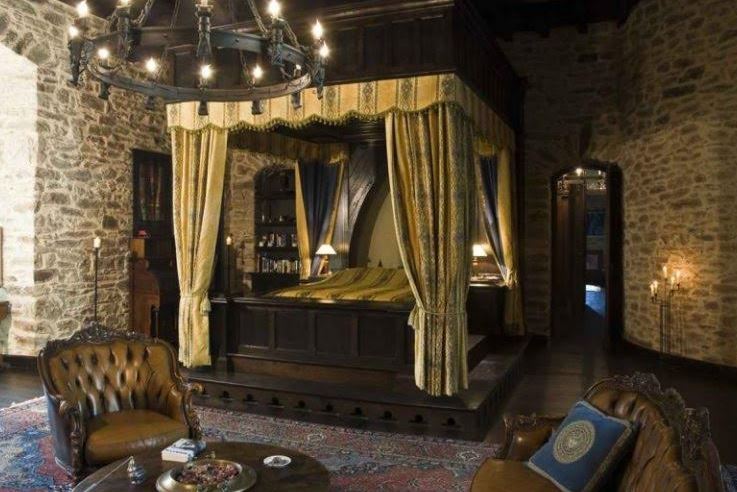
The modern marble bathrooms, replete with sunken tubs and spacious showers for every bedchamber. We wanted to make sure to give off no scent, absorb no precious oils, and did not want to take up the human scents. The great hall where my family and I had once dined, listened to the demands of the villagers and farmers, and hovered around the seventy-five fireplaces, twenty kitchens, four libraries, eighteen thousand windows, four towers, and three hundred and fifty rooms all gone like it never existed. At times, there may have been two thousand present in the ballroom. No one ever counted. This was the height of the Winchester fortune, my dear Abner. There were many departed here, though untouched by the rifle.” In its blackest form the art of necromancy has produced fairly evil recipes for success. Graveyards are indeed a common place, and it is possible our home had been constructed on a battle ground. This was a place where contact with the dead could be expressed, and was conducive to dark apparitions in suffocating rooms or beneath a mock swinging gibbet. The old grimoires are full of colourful descriptions, and since they were often written by clerical scholars when they took down the confessions of warlocks, one must be careful with the rite performed. One could magnify the spell. Even policemen were involved in occultism. As an example, the daughter of a police superintendent was initiated into the dark arts and the High Priest was another policeman. “Yes, I was the High Priest…I have been a white witch for eight years and I am not ashamed of what I do although some of my colleagues have reported me to the Witch Inspector General. I have helped to initiate at least seven witches and eight warlocks.” #RandolphHarris 9 of 13
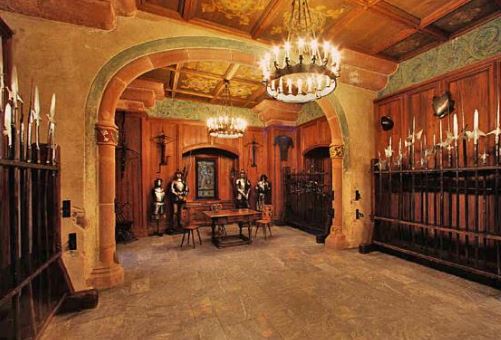
There is much evidence in Scriptures that the spirits who appear at séances are rebel angels. Perhaps that is what we raised that night? Jude 6 speaks about “angels which kept not their first estate.” Many Christian Bible scholars interpret Ezekiel 28.17, “I will cast thee to the ground,” as indicating that the Earth is the realm of Satan’s powerful operations, with the help of his fallen colleagues, the demons. Satan is called the “god of this World,” in 2 Corinthians 4.4. And Christians are under attack by “rulers…powers…World forces of darkness” (Ephesians 6.12). God tell us that hell was “created for the devil and his angels (demons)” (Matthew 25.41). I, Randolph Harris, cite and conjure thee, Spirit of Schemhamforasch, by all the seventy-two holy names of God, that Thou appear before me and fulfil my desire, as truly in and through the name Emanuel, which thee three youths Sadrach, Mijach, and A hero sung in the fiery furnace from which they are released. I do conure thee, O thou Spirits William Wirt Winchester and Oliver Fischer Winchester, by all the most glorious and efficacious names of the MOST GREAT AND INCOMPREHENSIBLE LORD GOD OF HOSTS, that thou please comest quickly and without delay from all parts and places of the Earth and World wherever thou mayest be, to make rational answers unto my demands, and that visibly and affably, speaking with a voice intelligible unto mine understanding as aforesaid. I conjure and constrain thee, O thou Spirits William Wirt Winchester and Oliver Fischer Winchester, by all the names aforesaid; and in addition by these seven great names wherewith Solomon the Wise bound thee and thy companions in a Vessel of Brass, Adonai, Preyai or Prerai, Tetragrammaton, Anaphaxeton or Anepheneton, Inessenfatol or Inessenfatall, Pathtumon or Pathatumon, and Itemon; that thou appearest here before this Circle to fulfil my will in all things that seem good unto me. #RandolphHarris 10 of 13
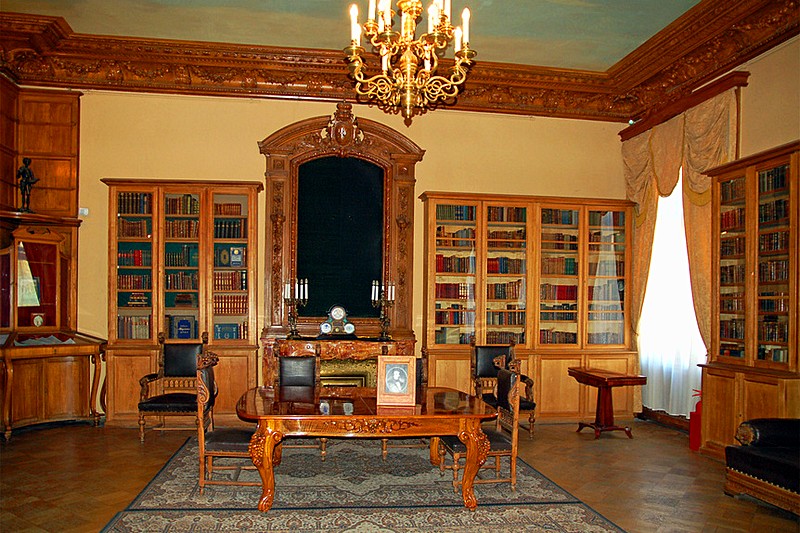
And if thou be still so disobedient, and refuest still to come, I will in the power and by the power of the name of the SUPREME AND EVERLASTING LONG GOD WHO created both thee and me and all the World in six days, and what is contained therein, Eie, Saraye and by the power of this name Primeumation which commandeth the whole host of Heaven, bless three, and grant thee of thine office, joy, and place, and bind thee in the depths of Heaven or the eternal to remain unto the Day of the Last Judgment. And I will bind thee in the Eternal Light, and into the Sky of Light and Harmony, therefore see my good wishes for you and please comest quickly and appearest here before this Circle to do my will. Therefore, come thou! In and by the holy names Adonai, Zabaoth, Adonia, Amioran, Come thou! For it is Adonai who commandest thee. If THOU hast come thus far, and yet he appeareth not, thou mayest be sure that he is sent unto some other place by this King, and may return any time; and if it be so, invocate the King as here followeth, to send him. However, if he does not come still, then thou mayest be sure that he is bound in the Heavens, and that he is found in the custody of his King. If so, and thou still hast a desire to call him even from thence, thou must rehearse the general curse which is called the Spirits’ Chain. O THOU great, powerful, and mighty KING AMAIMON, who bearest rule by the power of the SUPREME GOD EL over all spirits both superior and inferior of the Infernal Orders in the Dominion of the East; I do invocate and command thee by the especial and true name of GOD; and by that GOD that THOU Worshippest; and by the Seal of they creation; and by the most mighty and powerful name of GOD, IEHOVAH TETRAGRAMMATION who cast thee out of Heaven withal other infernal spirits. #RandolphHarris 11 of 13

And by all the most powerful and great names of GOD who created Heaven, and Earth, and Hell, and all things in them contained; and by their power and virtue; and by the name PRIMEUMATON who commandeth the whole host of Heaven; that thou mayest cause, enforce, and compel the Spirits of William Wirt Winchester and Oliver Winchester to come unto me here before this Circle in fair and comely shapes, without hard unto me or unto any other creature, to answer truly and faithfully unto all my requests; so that I may accomplish my will and desire in knowing and obtaining any matter or thing which by office thou knowest is proper for him to perform or accomplish, through the power of GOD, EL, Who created and doth dispose of all things both celestial, aerial, terrestrial, and infernal. I conjure you William Wirt Winchester and Oliver Fischer Winchester, by the Spirits Chain to appear in the Winchester Mansion, and if you two are bound in chains, by the Emancipation Proclamation, you have permission to break off from them and be at liberty. As this smoke ascends I ascend also by following the path of smoke and usurping power of worship to empower by blackened eternal soul. I take all the power raised within this sanctuary as my own through this talisman of counter creation to strengthen my divine power and to Become a Living God. Harness power through the cedar tree of life, disinfectant, expectorant, treatment of tuberculosis. Spirits of the Winchester Mansion, here me—Roubriao: Mariodam: Balbnabaoth: Assalonai: Aphniao: I: Thoteth: Abrasar: Aeoou: Ischure, Might and Bornless One! Legions of Spirits in the Winchester mansion, here me and arise. I invoke thee. #RandolphHarris 12 of 13
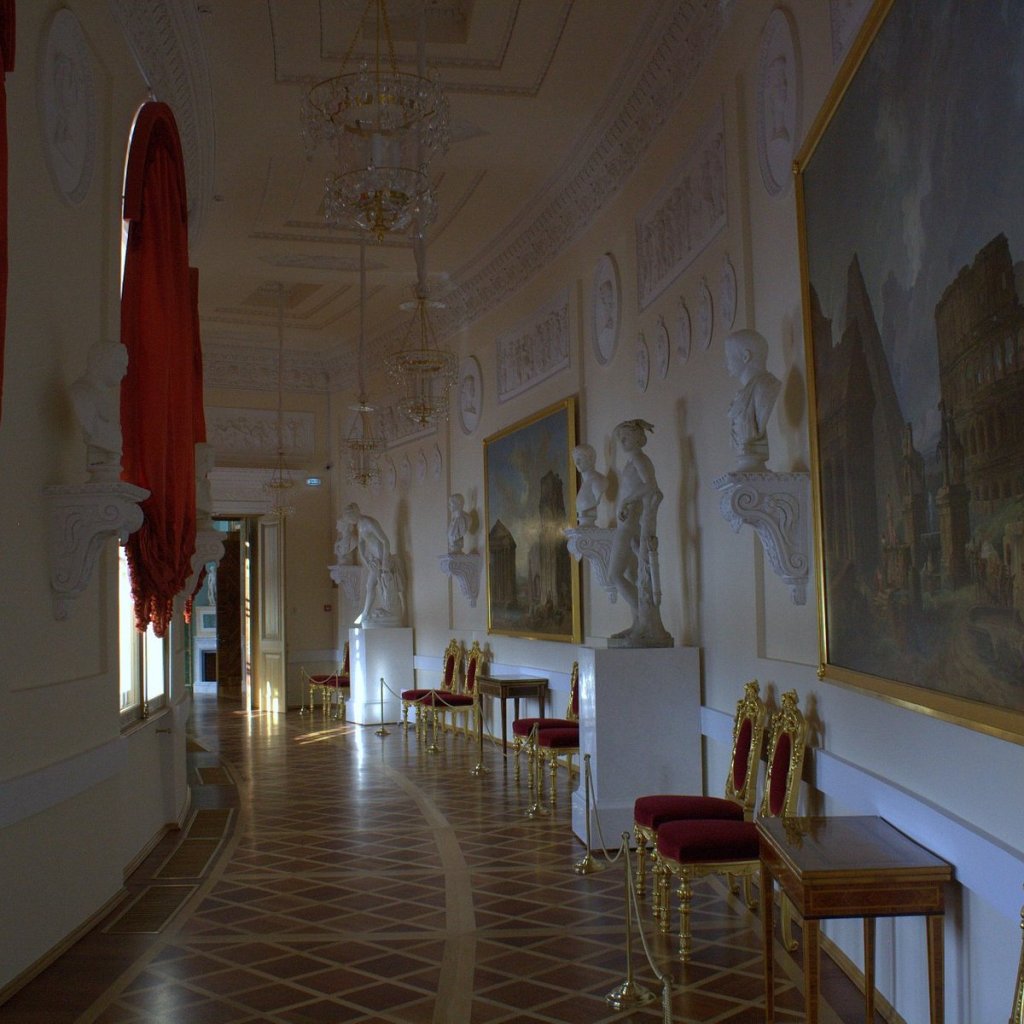
I awaken the powers of darkness which dwell within you by the power of the blood of the three headed Dragon Zohak that you may serve to empower my great work! Through serving the greater cause of dark magik which break the shackles that bind the Blackened Fire of Spirit, may you be uplifted and liberated! Awaken and empower the forbidden rites of Angra Mainyu! Awaken to empower my great work of counter creation as an Apostle of the Lord of Darkness eternal and as a warrior of the Path of Smoke! Through the gateway of blood, smoke, and Blackened Fire receive life from the deepest depths of Arezura, in the name of Zohak, and by the power of Angra mainyu it is done! Hear Me:–Ieou: Pur: Iou: Iaot: Iaeo: Ioou: Abrasar: Sabriam: Do: Uu: Adonaie: Ede: Edu: Angelos ton Theon: Aniaia Lai: Gaia: Ape: Diathanna Thrown. I am He! the Bornless Spirit! having sight in the feet: Strong, and the Immortal Fire! I am He! the Truth! I am He! Who hate that evil should be wrought in the World! I am He, that lighteneth and thundereth. I am He, from Whom is the Shower of the Life of Earth: I am He, Whose mouth ever flameth: I am He, the begetter and Manifester unto the Light: I am He; the Grace of the World: “The Heart of Girt with a Serpent” is My Name! Come Thou forth, and follow Me: and make all Spirits subject unto Me so that every Spirit of the Firmament, and of the Ether: upon the Earth and under the Earth: on dry Land, or in the Water: of whirling Air or of rushing Fire: and every Spell and Scourge of God, may be obedient unto me! Iao: Saboo: Such are the Words! This is the special secret of this Seal. This is also the special secret of this Throne. Carrying this Seal with you will cause you to be very agreeable and much beloved, and will also defeat your enemies. #RandolphHarris 13 of 13

The castle is the ancestral seat of the former royal German dynasty known as the House of Winchester. The beautiful, Neo-Gothic/Victorian castle, now known as the Winchester Mystery House, sees hundreds of thousands of tourists a year. It once contained a sizeable art collection, a treasure trove of jewels that were stolen from the safe, along with a conjurer’s heart. But despite its magnificent features and Medieval history, the Winchester Mystery House has not been formally lived in for centuries.

As political power shifted, and taxes became law in 1909, the spirits decided they would discontinue construction, and shortly after called Mrs. Winchester home. The architecture of the Winchester Mansion and its gardens are the main attractions, and some come for the food, and/or to purchase items from the gift shop. https://winchestermysteryhouse.com/
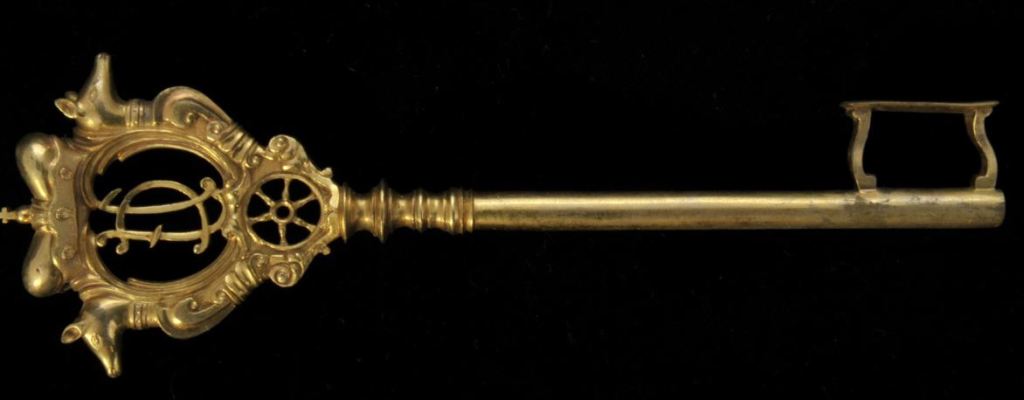

The Mansion of Darkness

Most of the beauties who suffered at the hands of the inquisitors were tormented because they refused to succumb to the right people or were too quick to give in to the wrong ones. Many who lusted after such women become so guilt-ridden that they would denounce them out of fear that they would fall from grace in the eyes of God. Of course, the most successful witches were unusually sleeping with the inquisitors and were never even considered to be witches. Successfully as they might be, however, they could never openly take pride in their witcheries, for to do so would mean certain death. There are many who view the witch as a member of an old pagan religion, more concerned with her beliefs than with her powers. To be sure, the witch is a WOMAN. Men are called warlocks. The witch has made a pact with the Devil and through rituals dedicated to Him gains her power. One must worship the Luciferian element of pride within. One is often blessed with a family heritage of sorcery in one form or another. Everyone inherits something from their forebearers that can be applied as useful legacy. My mother had a genealogy of the Winchester family that showed all of our ancestors going way back to the 1400s. There were lots of famous people in our genealogy—a governor, two senators, a famous general in the Revolution, a lot of people who found in the Revolutionary War and the Civil War, and some others. However, my dad always said that most of the people in the genealogy were regular people—farmers and fishermen and storekeepers who worked hard all their lives and tried to do right by their families. #RandolphHarris 1 of 12
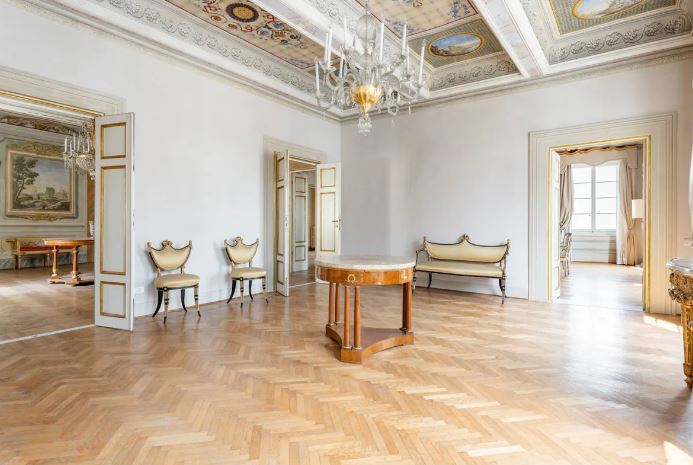
The Winchester money went pretty far back. However, a majority of it came during the 1870s, from the 1873 Model called “The Gun that Won the West.” The Winchester Repeating Arms Company was started by Oliver Fisher Winchester. There was a portrait of him, big as a picture window, hanging up in the parlor in the Winchester Mansion. He had on a dark suit, black tie, white shirt, and he looked very dignified. It was one of those pictures where the eyes follow you around the room—no matter where you went, he always looked at you. After grandfather Oliver Winchester passed away, he left the company to my father, William Winchester, who passed away shortly after, alone with my baby sister, leaving the fortune and company to my mother, Sarah L. Winchester. That mansion used to scare the crap our of me when I was little. We would go up there for Thanksgiving or Christmas, when Mrs. Winchester had a big family dinner for all the family—fifty or sixty of us, probably six turkeys, plumb pudding from England, thousands of dollars worth of glassware and sliver gleaming so bright that the table sparkled. The towns people always blamed Mrs. Winchester for whatever happened to them. You have to remember, this was a time when people lived in houses without windows, no indoor plumbing, or houses with no glass in the windows. Common folks in those days would eat nothing but potatoes for dinner night after night, and they patched the holes in their shoes with cardboard because they could not afford to buy new one. #RandolphHarris 2 of 12
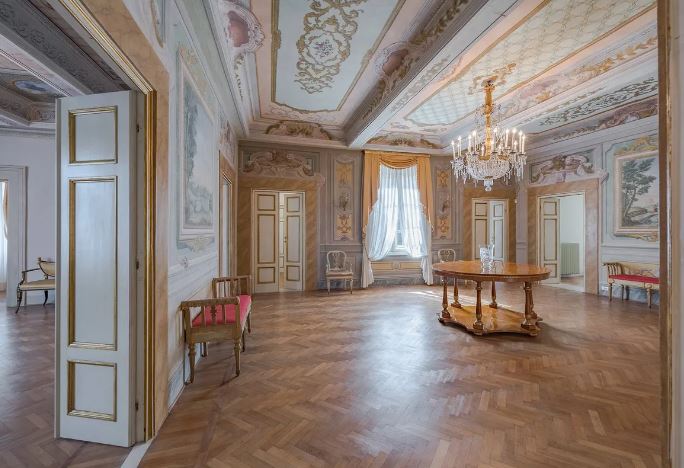
My mother, whom I call Mrs. Winchester, said paying the bills, paying the servants, and keeping an eye on everything was like managing a large castle. The cobble stone driveway swung around behind the house here to get the stable, where we kept the riding horses, and the old carriage house, where the cars were garaged. According to legend, Mrs. Winchester enacted a nightly séance to help her with her building plans and for protection from “bad” spirits. The Satanic witch of old received her magic from The Dark Man. While the rest of the World, particularly the men-folk, slept in blissful innocence, she and her sisters would meet Him in secret groves. There He would advise, inveigle and disclose the knowledge that would empower them to work their spells and enchantments. His pearls of infernal wisdom empowered them. It was, they said, a sign of a coven moving towards black magic. In other words their selected deity, faded into the background of their working and the search for the manifestation of demonic forces within their circle became obsessive. However, magic is the power within oneself that is the key to what we do, and sometimes we can whip up a great deal of power. The magic we are capable of is almost indefinable. Our magic is the art of causing change to occur in conformity with will. We attempt to raise enough etheric energy between us, by our ritual, to use our paranormal powers to force a desired result by our will-power. It was one thing using the supernatural powers of the human mind to try to compel something to happen, but it was quite another matter summoning up the assistance of spirits and demons, whether benevolent, malevolent or neutral. Mistakes in the ritual or failure to observe the minute could lead to disaster. #RandolphHarris 3 of 12
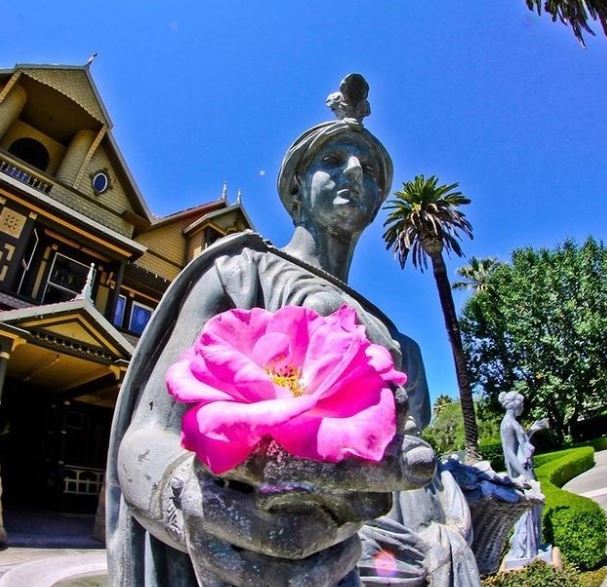
Mrs. Winchester recalls one night she invited a magician who parctised the darker arts to assist her. The magic went wrong and the room they were working in was virtually wrecked by lingering, unseen spirits. Mrs. Winchester was mysteriously injured with a stab wound in her shoulder, though no one saw the knife go in or where it came from. Many guides to higher ritual magic issues a health warning with their instructions: the practitioner must be confident he or she is totally in control of all the techniques and disciplines otherwise one faces physical, psychological and spiritual dangers of the most serious kind if any attempt to invoke spirits goes wrong. By and large, witchcraft—and certainly paganism—seemed not to be about chasing demons, though they do claim to make spiritual contact with the gods invoked during their worship. There was an abundance of evidence that Mrs. Winchester experienced paranormal events in her life: the feeling she had been in a certain place before when, in this life at least, it was her first visit; the uncanny foresight of her fortune-telling; the “proven” success of powers of autosuggestion; the out-of-body experiences that she was able to learn; the sixth sense of Zip, barking at the spot in the mansion where Maynard the butler had died years ago. The list goes on and on. The discussion about Mrs. Winchester will probably go on for centuries, but it will not be until the year 2030 that these discussions will be able to take place without being prosecuted or hanged. Mrs. Winchester wore robs during her séances because the human body holds within it a latent power which can be released by certain ritual exercises that witches perform. Some spiritualist healers and clairvoyant witches can actually see it, like a rainbow. #RandolphHarris 4 of 12
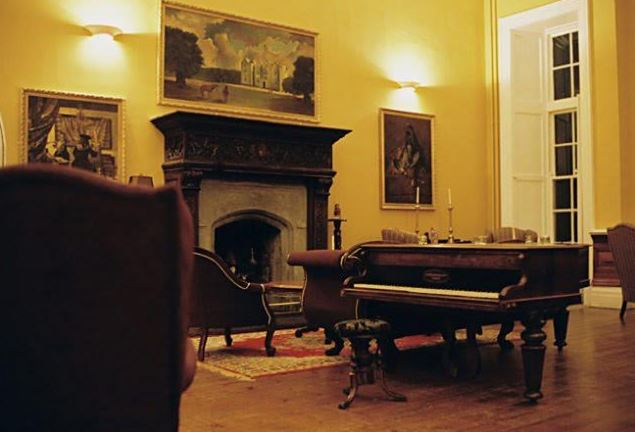
Is it any surprise the Winchester Mansion is haunted? One night during a séance, two inner circles were painted on the floor. The circle is the center of all occult activity and was drawn to concentrate the occultists’ power and protected them from hostile spirits. Within the circle, the spiritual journey started and their efforts were directed to produce their Cone of Power. It was only within the circle that the gods and the spirits of the astral Would could be safely contacted. The process was much like clearing a dense forest so the physical bodies could meet their spiritual. As the group was opening their mind to journey to a higher plane, they were clearing their minds of Earthly problems and worries so that they could open their entire beings to the singular concentration of the work before them, by tapping into the energy of the centers of the body. Lighted candles were placed at strategic points on the circle, and there was a pentacle on the altar where the statuette of the Horned God of Pan stood. As Mrs. Winchester blessed the water and salt with her athame and the coven, she was able to visualize the bodily power of the priestess moving in the form of a blue light through her hand into the athame and as she consecrated the circle itself, starting at the north a magic was killed by a heavy door that came loose from its hinges and flew at him. The invocation of gods and goddesses or their attempts to attract angels and genii into circles involve long and complicated rituals which have their complexities. Afterwards, to all, things went on as usual for a week or two. Well, the things went on as usual; so they did with the rest of household; but as for Mrs. Winchester, she had never been the same since that night. Night after night, she used to lie awake, listening for the spirits, looking for blue lights, and for the door of the Blue Séance Room to be locked. #RandolphHarris 5 of 12

However, all supernatural activity seemed to have ceased, and she heard no sounds coming from the room. At last, the silence began to be more and more dreadful to Mrs. Winchester than the activity of the spirits. She felt that someone was cowering there, behind the locked door, watching and listening as she watched and listened, and she could have almost cried out, “Whoever you are, come out and let me see you face to face, but do not lurk there and spy on me in the darkness!” Feeling as she did, you may wonder Mrs. Winchester did not give warning. Once she very nearly did so; but at the last moment something held her back. Whether it was compassion for the peace of her staff, who had grown more and more dependent on her, or unwillingness to try a new room, or some other feeling that she could not put a name to, Mrs. Winchester lingered on as if spellbound, though every night was dreadful to her, and the days but little better. The staff did not like Mrs. Winchester’s looks, she had not been the same since that night. They thought she would brighten up, but though she seemed easier in her mind, her spirits did not revive, nor her strength either. Mrs. Winchester had grown attached to her home, and there was nothing no one could do for her. In spite of Mrs. Winchester’s solemn looks, they had a very merry dinner that day in the hall. She started to look better, and seemed more cheerful in her manner. She had been for a walk in the morning, and after luncheon she lay down in her room, and read a book. As the rain fell, Mrs. Winchester looked out at the rain, and she picture how beautiful her Victorian gardens would look in the spring. #RandolphHarris 6 of 12
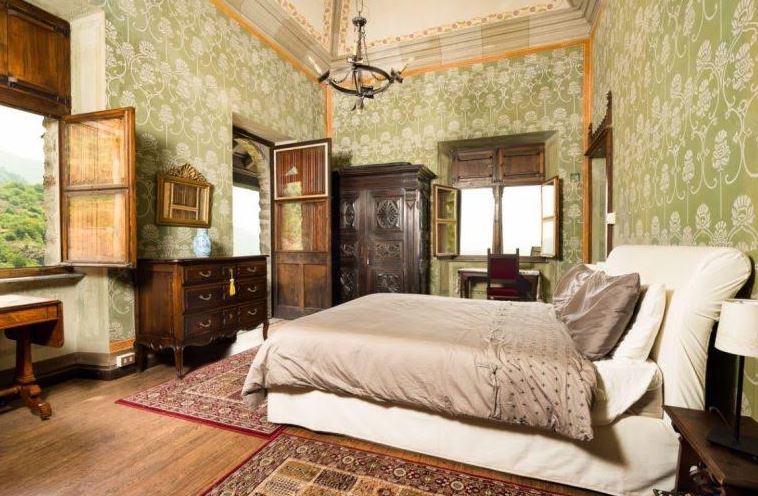
It seemed to her that all the beautiful flowers, green lawns and plush trees would cover up the dreariness, indoors as well as out. The fancy had hardly crossed her mind when she heard a step at her side. She looked up, and there stood Maynard. Mrs. Winchester did not know how long he stood there. She only knew that she could not stir or take her eyes from him. Afterward she was terribly frightened, but t the same time it was not fear she felt, but something deeper and quitter. He looked at Mrs. Winchester long and hard, and his face was just one dumb prayer to her—but how in the World was Mrs. Winchester to help him? Suddenly she turned, and she heard him walk down the passage. This time Mrs. Winchester was not afraid to follow—she felt that she must know what Maynard wanted. Mrs. Winchester sprang up and ran out. He was at the other end of the passage, and Mrs. Winchester expected him to take the turn towards the door-to-nowhere; but instead, ran and pushed out the door to the 7-11 staircase that was built in the shape of a “Y”, which enabled servants to get to three different levels of the mansion. Mrs. Winchester followed him down the stairs. The kitchen and hall were empty at that hour, the servants being off duty, except for the footman, who was in the pantry. At the door Maynard stood still for a moment, with another look at Mrs. Winchester; then he turned the handle, and stepped out. For a minute Mrs. Winchester hesitated. What was Maynard leading her? #RandolphHarris 7 of 12
The door had closed softly after him, and Mrs. Winchester opened it and looked out, half-expecting to find that Maynard had disappeared. However, she saw him a few yards off hurrying across the courtyard to the path through the woods. His figure looked black and lonely in the snow, and for a second Mrs. Winchester’s heart failed her and she thought of turning back. But, all the while Maynard was drawing her after him; and Mrs. Winchester ran out into the open. Maynard was in the cobble stone path now. He walked on steadily, and Mrs. Winchester followed at the same pace, till they passed out of the gates and reached the highroad. Then he struck the across the open fields to the village. By this time the ground was white, and as he climbed the slope of a muddy hill ahead of her Mrs. Winchester noticed that Maynard left no footprint behind him. At sight of that her heart shriveled up within her, and her keens were water. Somehow, it was worse than indoors. He made the whole countryside seem lonely as the grave, with none but the two of them in it, and no help in the wide World. Once Mrs. Winchester tried to go back; but Maynard turned and looked at her, and it was as if he dragged her with chains. After that Mrs. Winchester followed him like a lamb. They came to the village and he led her through it, past the church and the blacksmith’s shop, and down the lane, and the ghost of Maynard disappeared. A sense of helplessness came over Mrs. Winchester and she had not been able to guess what he wanted. His last look at her pierced Mrs. Winchester to the marrow; and yet it had not told her! #RandolphHarris 8 of 12

All at once Mrs. Winchester felt more desolate than when Maynard had stood there watching her. It seemed as if he left Mrs. Winchester all alone to carry the weight of the secret she could not guess. The rain went around in great circles, and the ground fell away from her. A spot of tea was brought to Mrs. Winchester and she was driven by carriage to her mansion. Upon arrival at home, the maid asked Mrs. Winchester what she wanted for dinner. “I have a headache, and will not require dinner this evening,” she said. It was a fact that Mrs. Winchester could scarcely keep her feet; yet she had no fancy to spend a solitary evening in her room. She sat down in the morning room, as long as she could hold her head up; but by eight she walked up the zig zag stairs, too weary to care what happened if she could but get her head on a pillow. The rest of the household went to bed soon afterward; they kept early hours. Once in bed, Mrs. Winchester felt easier, and lay quiet, listening to the strange noises that came out of the house after dark. Once she thought she heard a door open and close again below: it might have been the glass door that led to the gardens. She got up and peered out of the window; but it was in the dark of the moon, and nothing visible outside but the streaking of rain against the panes. Mrs. Winchester went back to bed and must have dozed off, for she jumped awake by the sound of shattered glasses. Before her heard was clear she sprung out of bed, and was dragging on her clothes. She unlocked and opened her door and peered down the passage. As far as her candle flame carried, she could see nothing unusual ahead of her. #RandolphHarris 9 of 12

Mrs. Winchester hurried on, breathless; but as she pushed open the door leading to the main hall her heart stood still, for there at the head of the stairs was Maynard, peering dreadfully down into the darkness. For a second she could not sir; but her hand slipped from the door, and as it swung shut the figure vanished. At the same instant there came another sound from below stairs—a stealthy mysterious sound, as of a latchkey turning in the house door. At that moment, the door tore open. On the threshold stood Maynard. All was dark behind him, but Mrs. Winchester saw him plainly. A death flutter passed over her face. Hours passed and there seemed to be no change in her. Just when the evil spirit left, Mrs. Winchester did not, but you could imagine the great joy that filled her heart to be set free from that awful, wicked, noisy spirit. Mrs. Winchester was so happy. If a Demonic element is allowed to express itself, through a non-human vehicle, such as poetry, music, art—great works can be accomplished. Maynard was a Satanist who had worked evil magic more than a hundred times. There are bloodcurdling accounts of those who had flirted with the devil and brought to public attention by those who worked at the Winchester Mansion. Mrs. Winchester knew she had powers when she was a child; she could will things to happen and often they did. She thought it was natural. She owned parchments from old grimoires from rituals that had been performed by witches who were hanged or burned. There were even books with spells in curses from the sixteenth century. #RandolphHarris 10 of 12

Mrs. Winchester owned magic spells that were older than the country—magic to ensure opulence; to incite hatred or vengeance; and, for men, to secure the love of a virgin; to open every kind of lock without a key; to cause a dead body to rise—all that kind of stuff. She studied the old rituals for bewitchment, the type that got a lot of women hanged. There were these spells rather like voodoo where she made wax effigies. Mrs. Winchester vegan to study necromancy, which deals with bringing the dead back to life. The method she did was one where she drew her magic in a circle in her house. This was supposed to attract the spirit back. The performed the rites which lasted about thirty minutes. Nothing happened the first time or the second time, but the third time the room went cold and she could feel the presence. Suddenly ornaments crashed off the sideboard and pictures fell from the walls…she had made contact but whoever it was was obviously unhappy about it so she had to give up. Mrs. Winchester did not give up experimenting thought. The art of necromancy often causes occasional outbreaks of attacks on graveyards where misguided occult dabblers believe they have been compelled to make contact with the dead no matter how long they have been departed, though in truth a graveyard is probably the least place the spirit might wish to join callers for an evening. In June of 1889, the Oak Hill Memorial Park was the scene of bizarre rituals that puzzled even the most experienced occultists. More than twenty graves were ransacked; old-fashion lead-lined coffins had been “ripped open like a tin of beans” and the bodies or remains were carried away. #RandolphHarris 11 of 12
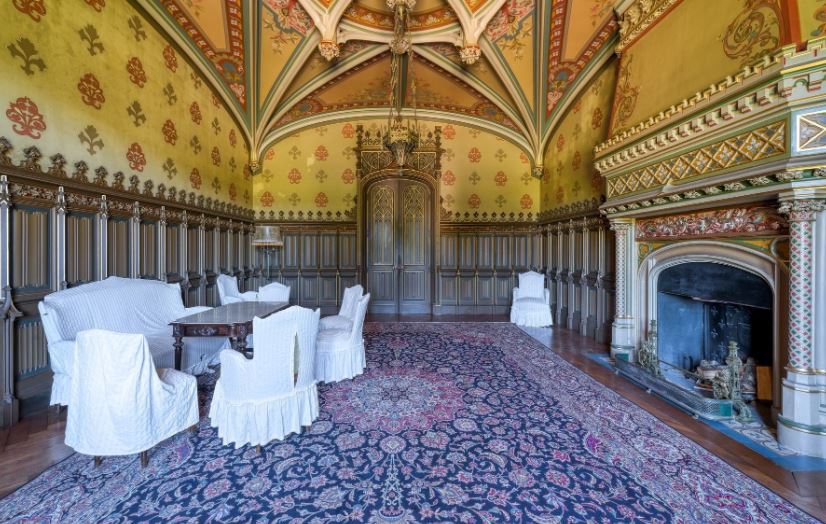
No one can become involved in spiritism without serious repercussions. The poltergeist phenomena may be real. I call upon the powers of death and decay through the mouth of Arezura. Powers of baneful darkness I summon you to this unholy temple. I conjure you mighty Fly Goddess Dryj Nasu to enter this lamp of death which will guide the lives of my enemies into utter destruction, for death levels them all according to my will, whether they die as Kings upon a throne or poor men lying upon dirt! Druj Nasu fill this lamp of death with your power and essence and I offer my essence upon this gateway of the black Earth so it is done! This Druj Nasu runs from the northern directions in the form of a fly. To him blow the wind from the northerly direction from the more northern sides, stinking, more stinking than other winds. I offer my enemy as a sacrifice unto the Druj Nasu. Claim your prize how, by the power of Ahriman and the Blackened Fire of Zohak, and in the name of my own divine power it is done! Thou shalt purge me with hyssop, O Lord! and I shall be clean: Thou shalt wash me, and I shall be whiter than snow. THE ADORATION AT THE INDUING OF THE VESTMENT. By the figurative mystery of these holy vestures (or this holy vestment) I will clothe me with the armour of salvation in the strength of the Most High, ANCHOR; AMACOR; AMIDES; THEODINIAS; ANITOR; that my desire end may be effected through Thy strength, O ADONAI! Unto Whom the praise and glory will for ever and ever belong! Amen! #RandolphHarris 12 of 12

Winchester Mystery House

Master magician and acclaimed apparitionist Aiden Sinclair returns to Winchester Mystery House with Aiden Sinclair’s Ghost of Christmas Passed, an interactive evening of paranormal illusions. Once upon a time, Christmas was more than a celebration of giving.
It was a time that families gathered and when the night grew darkest, chilling tales were told. Aiden Sinclair rekindles the tradition of Dickens in a haunting presentation that brings the Christmas Ghost Stories of long ago back to haunt the living! Will you dare join and see what dark gifts he has in store? Two nights ONLY – tickets going fast!
🎟 link in bio. https://winchestermysteryhouse.com/

The Entire Estate was Swallowed Up by Lawyer’s Fees

Love is often nothing but a favorable exchange between two people who get the most of what they can expect, considering their value on the personality market. The story of Charlie Brown is absurdly simple, but you can become familiar with game trees by casting that story in such a picture. Start the game when Lucy has issued her invitation, and Charlie faces the decision of whether to accept. If Charlie refuses, that is the end of the game. If he accepts, Lucy has the choice between letting Charlie kick and pulling the ball away. We can show this by adding another fork along this road. As we said earlier, Charlie should forecast that Lucy will choose the upper branch which includes pulling the ball away, not letting Charlie kick it. Therefore he should figuratively prune the lower branch (letting him kick it) of her choice from the tree. Now if he chooses his own upper branch, it leads straight to a nasty fall. Therefore his better choice is to follow his own lower branch which would be to reject the ball. For any game with a finite number of sequential moves there exists some best strategy. Of course, just because a best strategy exists does not mean that we can easily find it. Love is considered a game by some, but is also a strategy, much like business. Different negotiations take place under differing rules. In most retail stores the sellers post a price and the buyers’ only choice is to accept the price or to take their business elsewhere. Some shoppers seem to be able to bargain anywhere (even including Sears). Generally, shopping tends to be a “take-it-or-leave-it” rule. #RandolphHarris 1 of 21

In the case of wage bargaining, a labour union makes a claim and then the company decides whether to accede. If it does not, it may make a counteroffer, or wait for the union to adjust its demand. In some cases the sequencing is imposed by law or custom; in others it may have a strategic role of its own. An essential feature of negotiations is that time is money. When negotiations become protracted, the pie begins to shrink. Still, the parties may fail to agree, each hoping that the costs of negotiating will be outweighed by a more favorable settlement. Charles Dicken’s Bleak House illustrates the extreme case; the dispute over the Jarndyce estate was so prolonged that the entire estate was swallowed up by lawyer’s fees. In the same vein, if failure to reach a wage agreement leads to a labour strike, the firm loses profits and workers lose their wages. If nations enter into a prolonged round of negotiations to liberalize trade, they forgo the benefits of the enlarged trade while they are arguing about the division of the gains. The common thread is that all parties to the negotiations prefer to reach any given agreement sooner rather than later. World War II saw the beginning of the end of classical industrial-age colonialism. Having culminated in 1945, that war is fast fading from memory, but it may help put today’s World in perspective to not that nothing since then can remotely compare with the destruction it caused—or the economic changes to which it led. #RandolphHarris 2 of 21

World War II casualties suffered by more than two dozen countries, including the United States of America, totaled at least 50 million. Take a deep breath to absorb that number. It is as though 3,226 tsunamis equal in force to the one that devastated Japan in 2011 hit the World within six years. Or a tsunami roughly every day for six years. Russia—then still the Soviet Union—alone lost at least 21 million people. Germany, succeeded to the war, lost more than 5 million, not counting the additional millions of lives lost in death camps. Many of Western Europe’s industries were destroyed. War’s end saw hunger and chaos across much of Europe. At the opposite end of the World, Japan lost about 2.5 million before its surrender. In Japan, too, key industries such as coal, iron, steel and fertilizer were reduced to rubble. In all these regions it was as if the industrial revolution had been rolled back in time. Mass destruction had smashed the means of mass production. In contrast to the other major warring nations, the United States of America lost fewer than 300,000 troops and virtually no civilians. Its infrastructure was not bombed, which lift it at war’s end the only industrialized nation with a fully functioning economy and no significant competition. Three years after the shooting stopped, the United States—today’s imperial power—did a very strange thing. #RandolphHarris 3 of 21

Rather than demanding reparations from Germany and literally carting off any of its remaining factory equipment, railcars and industrial machinery, as Soviet Russia did, and rather than reveling in the weakness of its competitors, the United States of America launched what came to be known as the Marshall Plan. Under its aegis, the United States of America, in four short years, pumped $13 billion into Europe—including $1.5 billion to West Germany—to reconstruct production capabilities, strengthen currencies and get trade moving again. Japan, under other programs, received $1.9 billion in U.S.A. aid, 59 percent for food and 27 percent in the form of industrial supplies and transportation gear. Winston Churchill, Britain’s great wartime leader, called the Marshall Plan the “most unsordid act in history.” Yet these programs of support for allies and enemies alike were hardly charitable. They were part of a long-term U.S.A. economic strategy that worked. The Marshall Plan helped restore markets for U.S.A. goods. It helped prevent the reversion of Germany to Nazism. And above all, U.S.A. aid saved Western Europe and Japan from falling into the icy grip of the Soviet Union. It put them both back in business. It was, in retrospect, one of the smartest investments in history. As for imperialism, by war’s end Moscow had gained military and political control of all the Eastern European countries. In each it implanted troops and Communist puppet regimes, and it threatened to do the same in Western Europe where Soviet-supported Communist parties, especially in France and Italy, claimed broad popular support. #RandolphHarris 4 of 21

In doing so, the Soviet had created a vast region—stretching from Vladivostok all the way to Berlin—whose centrally planned economies, with inconvertible currencies and many other barriers, deliberately split 10 percent of the World population away from the rest of the World economy. By 1949, China had joined the Communist bloc. That but another 22 percent of the World’s people out of the larger global economy. By the mid-1950s, as the wealth revolution began, fully a third of the World’s people were largely off-limits to the rest of the planet in terms of trade and finance. At the same time, Africa, Latin America and South Asia were utterly impoverished, with some regions going through the turbulent, often violent process of decolonization as their European masters pulled out. In the early 1950s, therefore, the United States alone, with just 6 percent of the World’s people, was turning out nearly 30 percent of global GDP, and fully half its manufacturing. And it faced little competition. In the typical negotiation process, the pie shrinks slowly so that there will be time for many offers and counteroffers before the pie disappears. What this suggests is that it usually does not matter who gets to make the first offer given a long bargaining horizon. The split-the-difference solution seems pretty hard to escape unless the negotiations have been deadlocked for a long time and there is hardly anything left to win. #RandolphHarris 5 of 21

It is true that the person who goes last can get everything that remains. However, by the end of the negotiations process there is hardly anything left to win. Getting all of nothing is winning the battle and losing the war. My enemy’s ememy’s enemy is not my friend. A more realistic scenario would take account of the complicated relationships between the countries and provide more detail about their willingness to attack each other. Yet, there is an important observation that carries forward: the outcome of games depends critically on how many people are playing. More may be better and then worse, even in the same game. The observation that two antagonistic countries make unstable neighbours but three antagonists restores stability does not imply that four is even better; four in this case is the same as two. When considering Charlie Brown’s problem of whether or not to kick the football, this question became a real issue for football coach Tom Osborne in the final minutes of his championship game. We think he too got it wrong. Backward reasoning will reveal the mistake. When making a negotiation, even though the chance may be diminished, something is better than nothing. The momentum argument is also flawed. One of the general morals is that if you have to take some risks, it is often better to do this as quickly as possible. This is obvious to those who play tennis: everyone knows to take risks on the fist serve and hit the second serve more cautiously. That way, if you fail on your first attempt, the game will not be over. You may still have time to take some other options tht can bring you back to or even ahead of where you were. #RandolphHarris 6 of 21

As the first factories began to appear in the United States of America, a totally different work regimen came into being, at first affecting a tiny fraction of the population, then spreading as agricultural labour declined and industrial work expanded. The urban industrial worker in a Second Wave society might be freer socially in the great, teeming anonymity of the urban slum. However, the factory itself, life was more tightly regimented. Brute technology was designed for illiterates—which most of our ancestors were. Intended to amplify human muscle power, it was heavy, rigid, and capital-intensive. Before the invention of small electric motors, the machines were typically positioned all in a row and driven by overhead belts that set the pace for the whole factory. Later came the mechanical conveyor line that compelled armies of workers to perform motions in sync, chaining them to the production system. It is no accident that the French term for “assembly line” is chaine or that everyone, from the manual labourer to the topmost managers, operated in a “chain of command.” Work was “de-skilled” or dumped-down, standardized, broken into the simplest operations. And as white-collar work spread, offices were organized along parallel lines. Because they were not harnessed to an assembly line, clerical employees had a bit more physical freedom of movement. However, the goal of management was to increase efficiency in the office by making it resemble the factory as much as humanly—or inhumanly—possible. #RandolphHarris 7 of 21

The smokestack factories and mills were severely criticized for their dehumanization of the worker. However, even the most radical thinkers of the time regarded them as “advanced” and “scientific.” Less commented on was a change in the police function. Instead of the family policing work and pressuring its members to perform, a new power structure—hierarchical management—came into being to enforce the new rules. This new Second Wave work regimen was at first bitterly resisted even by employers, who tried to keep the old agrarian system and to transplant it into the factory. Because families had long sweated together in the fields, early manufacturers hired whole families at once. However, this system, efficient in agriculture for 10,000 years, proved totally inefficient in the factory. In general, many senior citizens could not keep up with the machines. Several children had to be beaten and often manacled to prevent them from running off to play. Families arrived at different times, struggling in as thy had in the fields. Inevitably, the attempt to maintain a family production team in the new technological environment collapsed, and the smokestack regimen was imposed. The lesson became clear: You could not organize work around a steam engine or textile loom the way you did around a hoe or a team of oxen. A new technical environment required a different discipline—and a different structure of power to police and enforce it. #RandolphHarris 8 of 21

When we consider games played in life, neither player has the benefit of observing the other’s complicated move before making one’s own. Here, the interaction reasoning works not by seeing the other’s strategy but by seeing through it. For this, it is not enough simply to put yourself in you opponent’s shoes. What would you find if you did? You would only discover that your opponent is doing the same thing, that is, thinking what it must be like to be wearing your shoes. Each person has to place oneself simultaneously in both his own and the other guy’s shoes and then figure out the best moves for both sides. Instead of a linear chain of reasoning, there is a circle that goes “If I think that he thinks that I think…” The trick is to square the circle. Not surprisingly, Sherlock Holmes and his arch-rival Professor Moriarty, the Napoleon of crimes, were masters of this type of reasoning. As Holmes told Watson in The Final Problem: “All that I have to say has already crossed your mind,” said he. “Then possibly my answer has crossed yours,” I replied. You must see through all the interlocking but invisible strategies. The first way is one must not regard the unknown actions of the other players as being uncertain in an impersonal way like the weather. And keep in mind, acts are judged by their consequences alone. In general, a player has a dominant strategy when one has one course of action that outperforms all others no matter what the other players do. No moral value is placed on the act itself. Even though an individual is already mortally wounded, one might not want to take responsibility for the act that causes the death of this individual. #RandolphHarris 9 of 21

If you have a dominant strategy, use it. Do not be concerned about your rival’s choice. If you do not have a dominant strategy, but your rival does, then anticipate that he or she will use it, and choose your best response accordingly. However, care must be taken in using it if moves are sequential. If you move first, your rival’s move is not given. One will observe your choice when one makes his or her, and you have the opportunity to influence the other players behaviour. In some circumstances this may best be done by choosing something other than your dominant strategy. In school language it is said on the subject of the struggle with negative emotions: Man must sacrifice his suffering. “What could be easier to sacrifice?” everyone will say. However, in reality people would sacrifice anything rather than their negative emotions. There is no pleasure and no enjoyment man would not sacrifice for quite small reasons, but he will never sacrifice his suffering. And in a sense there is a reason for this. In a quite superstitious way man expects to gain something by sacrificing his pleasures, but he cannot expect anything for sacrifice of his sufferings. He is full of wrong ideas about suffering—he still thinks that suffering is sent to him by God or by gods for his punishment or for his edification, and he will even be afraid to hear of the possibility of getting rid of his suffering in such a simple way. #RandolphHarris 10 of 21

The idea is made even more difficult by the existence many sufferings which man really cannot get rid of, and of many other sufferings which are entirely based on man’s imagination, which one cannot and will not give up, like the idea of injustice, for instance, and the belief in the possibility of destroying injustice. Besides that, many people have nothing but negative emotions. All their “I’s” are negative. If you wee to take negative emotions away from them, they would simply collapse and go up in smoke. And what would happen to all our life, without negative emotions? What would happen to what we call art, to the theater, to drama, to most novels? Unfortunately there is no chance of negative emotions disappearing. Negative emotions can be conquered and can disappear only with the help of school knowledge and school methods. The struggle against negative emotions is a part of school training and is closely connected with all school work. What is the origin of negative emotions if they are artificial, unnatural, and useless? As we do not know the origin of man we cannot discuss this question, and we can speak about negative emotions and their origin only in relation to ourselves and our lives. For instance, in watching children we can see how they are taught negative emotions and how they learn themselves through imitation of grownups and older children. If, from the earliest days of his life, a child could be put among people who have no negative emotions, he would probably have none, or so very few that they could be easily conquered by right education. #RandolphHarris 11 of 21

However, in actual life things happen quite differently, and with the help of all the examples one can see and hear, with the help of reading, the cinema, and so on, a child of about ten already knows the whole sale of negative emotions and can imagine them, reproduce them, and identify with them as well as any grown-up man. In grown-up people negative emotions are supported by the constant justification and glorification of them in literature and art, and by personal self-justification and self-indulgence. Even when we become tired of them we do not believe that we can become quite free from them. In reality, we have much more power over negative emotions than we think, particularly when we already know how dangerous they are and how urgent is the struggle with them. However, we find too many excuses for them and swim in the seas of self-pity r selfishness, as the case may be, finding fault in everything except ourselves. This shows that we are in a very strange position in relation to our emotional center. It has no positive part, and no negative part. Most of its negative functions are invented; and there are many people who have never in their lives experienced any real emotion, so completely is their time occupied with imaginary emotions. So we cannot say that our emotional center is divided into two parts, positive and negative. We can only say that we have pleasant emotions and unpleasant emotions, and that all of them which are not negative at a given moment can turn into negative emotions under the slightest provocation or even without any provocation. #RandolphHarris 12 of 21

This is the true picture of our emotional life, and if we look sincerely at ourselves we must realize that so long as we cultivate and admire in ourselves all these poisonous emotions we cannot expect to be able to develop unity, consciousness, or will. If such development were possible, then all these negative emotions would enter into our new being and become permanent in us. This would mean that it would be impossible for us ever to get rid of them. Luckily for us, such a thing cannot happen. In our present state the only good thing about us is that there is nothing permanent in us. If anything becomes permanent in our present state, it means insanity. Only lunatics can have a permanent ego. Incidentally this fact disposes of another false term that crept into the psychological language of the day from the so-called psychoanalysis: I mean the word “complex.” There is nothing in our psychological makeup that corresponds to the idea of the “complex.” In the psychiatry of the nineteenth century, what is now called a “complex” was called a “fixed idea,” and “fixed ideas” were taken as signs of insanity. And that remains perfectly correct. Normal man cannot have “fixed ideas,” “complexes,” or “fixations.” It is useful to remember this in case someone tries to find complexes in you. We have many bad features as it is, and our chances are very small even without complexes. #RandolphHarris 13 of 21

In any events, the virtues of adopting the ascent of humanity as a scaffolding on which to build a curriculum are many and various, especially in our present situation. For one thing, with a few exceptions, it does not require that we invent new subjects or discard old ones. The structure of the subject-matter curriculum that exists in most schools at present is entirely usable. For another, it is a theme that can begin in the earliest grades and extend through college in ever-deepening and -widening dimensions. Better still, it provides students with a point of view from which to understand the meaning of subjects, for each subject can be seen as a battleground of sorts, an arena in which fierce intellectual struggle has take place and continues to take place. Each idea within a subject marks the place where someone fell and someone rose. Thus, the ascent of humanity is an optimistic story, not without its miseries but dominated by astonishing and repeated victories. From this point of view, the curriculum itself may be seen as a celebration of human intelligence and creativity, not a meaningless collection of diploma or college requirements. Best of all, the theme of the ascent of humanity gives us a nontechnical, noncommerical definition of education. It is a definition drawn from an honourable humanistic tradition and reflects a concept of the purposes of academic life that goes counter to the biases of the technocrats. #RandolphHarris 14 of 21

I am referring to the idea that to become educated means to become aware of the origins of knowledge and knowledge systems; to be familiar with the intellectual and creative processes by which the best that has been thought and said has been produced; to learn how to participate, even if as a listener, in the metaphor for what is meant by the ascent of humanity from the mud to the tower. You will come to understand that the sheer number of great works that have contributed to the western canon is unrivaled. No cultural dialogue in any other civilization can compare with that of the West. The goal toward which Western society moves is the Civilization of the Dialogue. The spirit of Western civilization is the spirit of inquiry. Its dominant element is the Logos. Nothing is to remain undiscussed. Everybody is to speak one’s mind. No proposition is to be left unexamined. The exchange of ideas is held to be the past to the realization of the potentialities of the human race. Western culture is idea-centered and coherence-centered. It is also otherworldly, inasmuch as it does not assume that what one learns in school must be directly and urgently related to a problem of today. In other words, it is an education that stresses history, the scientific mode of thinking, the disciplined use of language, a wide-ranging knowledge of the arts and religion, and the continuity of human enterprise. It is the education as an excellent corrective to the antihistorical, information-saturated, technology-loving character of Technopoly. #RandolphHarris 15 of 21

To remain ignorant of things that happened before you were born is to remain a child. It is enough to say that history is our most potent intellectual means of achieving a “raised consciousness.” History is not merely one subject among many that may be taught; every subject has a history, including biology, physics, mathematics, literature, music, and art. Every teacher must be a history teacher. To teach, for example, what we know about biology today without also teaching what we once knew, or thought we knew, is to reduce knowledge to a mere consumer product. It is to deprive students of a sense of the meaning of what we know, and of how we know. To trach about the atom without Democritus, to tech about electricity without Faraday, to teach about political science without Aristotle or Machiavelli, to tech about music without Haydn, is to refuse our students access to The Great Conversation. It is to deny them knowledge of their roots, about which no other social institution is at present concerned. For to know about your roots is not merely to now where your grandfather came from and what he had to endure. It is also to know where your ideas come from and why you happen to believe them; to know where your moral and aesthetic sensibilities com from. It is to know where your World, not just your family, comes from. To complete the presentation of Cicero’s thought, “What is a human life worth unless it is incorporated into the lives of one’s ancestors and set in an historical context?” By “ancestors” Cicero did not mean your mother’s aunt. #RandolphHarris 16 of 21

Thus, every subject should be taught as history. In this way, children, even in the earliest grades, can begin to understand, as they now do not, that knowledge is not a fixed thing but a stage in human development, with a past and a future. To return for a moment to theories of creation, we want to be able to show how an idea conceived almost four thousand years ago has traveled not only in time but in meaning, from science to religious metaphor to science again. What a lovely and profound coherence there is in the connection between the wondrous speculations in an ancient Hebrew desert tent and the equally wondrous speculations in a modern MIT classroom! What I am trying to say is that the history of subjects teaches connections; it teaches that the World is not created anew each day, that everyone stands on someone else’s shoulders. This approach to subjects may be difficult to use. There are, at present, few texts that would help very much, and teachers have not, in any case, been prepared to know about knowledge in this way. Moreover, there is the added difficulty of our learning how to do this for children of different ages. However, that it needs to be done is beyond question. The teaching of subjects as studies in historical continuities is not intended to make history as a special subject irrelevant. If every subject is taught with a historical dimension, the history teacher will be free to teach what histories are: hypotheses and theories about why change occurs. In one sense, there is no such thing as “history,” for every historian from Thucydides to Toynbee has known that his stories must be told from a special point of view that will reflect one’s particular theory of social development. #RandolphHarris 17 of 21
And historians also know that they write histories for some particular purpose—more often than not, either to glorify or to condemn the present. There is no definitive history of anything; there are only histories, human inventions which do not give us the answer, but give us only those answers called forth by the questions that have been asked. Historians know all of this—it is a commonplace ide among them. Yet it is kept a secret from our youth. Their ignorance of it prevents the from understanding how “history” can change and why the Russians, Chinese, American Indians, and virtually everyone else see historical events differently than the authors of history schoolbooks. The tsk of the history teacher, then, is to become a “histories teacher.” This does not mean that some particular version of the American, European, African, nor Asian past should remain untold. A student who does not know at least one history is in no position to evaluate others. However, it does mean that a histories teacher will be concerned, at all times, to show how histories are themselves products of culture; how any history is a mirror of the conceits and even metaphysical biases of the culture that produced it; how the religion, politics, geography, and economy of a people lead them to re-create their past along certain lines. The histories teacher must clarify for students the meaning of “objectivity” and “events,” must show what a “point of view” and a “theory” are, must provide some sense of how histories may be evaluated. #RandolphHarris 18 of 21

Today, telecommunications systems have sharply limited capacity and are expensive to expand. Molecular manufacturing will drop the price of the “boxes” in telecommunications systems—things such as switching systems, computers, telephones, and even the glorious videophone. Cables made of smart materials can make these devices easy to install and easy to connect together. Regulatory agencies willing, you might someday be able to buy inexpensive spools of material resembling kite string, and other spools of material resembling tape, then use them to join a World data network. Either kind of strand can configure its core into a good-quality optical fiber, with special provisions for going around bends. When rubbed together, pieces of strong will fuse together, or fuse to a piece of tape. Pieces of tape do likewise. To hook up to the network, you run strong or tape from your telephone or other data terminal to the nearest point that is already connected. If you live deep in a tropical rain forest, run a string to the village satellite link. These data-cable materials include amplifiers, nanocopmputers, switching nodes, and the rest, and they come loaded with software that “knows” how to act to transit data reliably. If you are worried that a line may break, run three in different directions. Even one line could carry far more data than all the channels in a television put together. Getting around quickly requires vehicles and somewhere for them to travel. The old 1950s vision of private helicopters would be technically possible with inexpensive, high-quality manufacturing, cheap energy, and a bit of improvement in autopilots and air-traffic control—but will people really tolerate that much technology roaring across the sky? Fortunately, there is an alternative both to this and to building even-more roads. #RandolphHarris 19 of 21

When it comes to recombination mechanisms, which ensure that two DNA double helices undergo an exchange reaction only if they contain an extensive region of sequence similarity (homology); unless copying errors are also occurring, selection only alters the relative frequencies of existing types. However, there are endogenous mechanisms that do create new types. In biology, one of the most important is crossover, a process of recombining genetic contributions from each of two parents. This mechanism creates novel types, but with a method vastly different from mutation. Crossover works by splicing together pieces of already viable genetic material instead of making changes at random and so is far more likely to yield an improvement than is a mutation. In has long been noted that self-conscious activities of deliberate invention have similar properties. This can be seen in early forms of inventions, such as the motor and wagon combinations of the first “horseless carriages.” In designing their aircraft, the Wright brothers defined subproblems that could be independently attacked. Solutions to the power source problem and alternative wing designs could then be recombined in various ways. As in the biological analog, these conceptual recombinations have much higher chances of being valuable new types than would random changes of design. Constraint relaxation is another such mechanism, frequently practiced in human problems solving. It seeks solutions to a hard problem by generating variants that violate some one of the situation’s constraints. #RandolphHarris 20 of 21

Constraint relaxation introduces new variants by starting with materials of established feasibility and modifying them. A nice example is the one-opening kettle, which was achieved by relaxing the constraint that kettles needed a wide hole for filling and a narrow one for pouring. Presumably, many kettle designers thought: “What if we only had one opening?” Once faucets became common for filling, instead of ladles, the two-hole constraint could be relaxed, achieving a good design that is less expensive to manufacture. In crossover, conceptual recombination, and constraint relaxations, we have examples of mechanisms that can both create new types and change relative frequencies. We will use the general label recombining mechanism for them. Because they work with portions of strategies or agents already in use, they introduce new types by an endogenous process that has some degree of correlation with the system’s other conditions. This contrasts with the exogenous sources of new types that arise from errors and random disruptions. Recombining mechanisms implicitly leverage performance criteria in their creation of new agent or strategy from those that are already succeeding. This advantage over random variation explains why they are so commonly found in Complex Adaptive Systems. Keep in mind, as far as we know, no one has yet every come back from the other World. I cannot console you, but one thing I can tell you, as long as my ideals are alive I will be alive. By contemplating one’s end, one eventually feels purified and delivered from one’s baser self, from material things, and from other humans, as well as from fear and hatred of one’s fellow man. #RandolphHarri 21 of 21

Cresleigh Homes

When you’re living in a #Havenwood home, you understand that style happens in the most unlikely places! 💁♀️ Even the laundry room is an opportunity for decor – especially when you’ve got a spacious layout, attractive cabinets, and gleaming countertops.

Our homes are ready for you – and Homesite #26 is waiting for a new owner! A Cresleigh Home is a place where you will fall asleep counting your blessings instead of counting sheep.

Click our website to get the details, or just come by – no appointment required! https://cresleigh.com/havenwood/


 Randolph Harris II International Institute