
Home » news (Page 15)
Category Archives: news

The Hands of the Vanished People

The flambeaux were already alight. The darting flames cast crisscross patterns down through the bare branches of the trees to the cobbled stones beneath. Mrs. Winchester was in bed, skin alternatively burning and clammy with sweat. She tossed and turned in bed, like flotsam on a storm-wracked sea, plagued by dreams and delusions. Angels and gargoyles, ghostly apparitions, long-since deserted friends waltzed in and out of her head. She oscillated between beauty and horror. The fever broke around two o’clock in the morning. Then a kind of peace fell over the room. In the still and sleeping house, she could hear the whirring and chiming of the clock in the hall downstairs. A ribbon of moonlight made its way between the shutters and painted a line across the floor. She watched the moonbeams dance, slowly shift, as the hours passed and the World continued to turn. Nothing about it gave her a hint of what was going on, darkly and dumbly downstairs. However, her eyes fell for a moment only; then her lids opened again to a monstrous vision. There it was, stamped on her pupils, a part of her forever, an indelible horror burnt into her body and brain. But why into her—just hers? Why had she alone been chosen to see what she had seen? What business was it of hers? Anyone else, thus enlightened, might have exposed the horror and defeat of it; but she, the one weaponless and defenceless spectator, the one whom none of the others would believe or understand if she attempted to reveal what she knew—she alone had been singled out as the victim of this dreadful initiation! #RandolphHarris 1 of 9

Suddenly she sat up, listening; she had heard a step on the stairs. Someone, no doubt, was coming to see how she was—to urge her, if she felt better, to go down and have a cup of tea. Cautiously, Mrs. Winchester opened her door—but no one was there. She reached the opposite end of the lower gallery, and beyond it saw the hall by which she had entered. It was empty. The darkness was deep, and the cold so intense that for an instant it stopped her breathing. The impulse to fly still drove her further, but she began to feel that she was flying from a terror of her own creating, and that the most urgent reason for escape into one of the secret passageways was the need to feel safe. Mrs. Winchester had spent long hours walking through her mansion. The cold and fatigue, the absence of hope and the haunting sense of starved aptitude, all these her brough her to the perilous verge over which, once or twice before, her terrified brain had hung. Feeling sure that she had walked for more than a mile, Mrs. Winchester halted and looked back. She saw the gleam of a lantern right beyond the Hall of Fires. As she moved deeper into the darker part of her mansion, an enormous sepulcher with a horrible stench was seen lurking in the shadows. The smell grew stronger. It seemed to ooze from the walls. Mrs. Winchester turned her face down and vomited a thin stream of glittering blood upon the floor beneath her, which vanished as she moved swiftly one. She was descending lower and lower into the depths of the mansion. #RandolphHarris 2 of 9

Flickering light scrape her bare feet on the stone, cob webs brushing her face. For an instant, Mrs. Winchester saw a grinning skull. Then a ton of them creating a catacomb in the wall. She trudged on in silence for a few minutes, but as the labouring steps carried her nearer to the spot she had been fleeing in her nightmare, the reason for this fear grew more ominous and more insistent. No, she was not ill, she was not distraught and deluded—she was the instrument single out to warn and save; and here she was, irresistibly driven, dragging the victim back to her doom! A trail of darkness lay on everything. Mrs. Winchester looked deep down into the abyss. The room has one narrow window. The walls were dark, and the overhead lighting fixture was so dim it left the corners full of hanging shadows like misplaced scarecrows. Her next vision made its presence felt once again. There was a man standing inside of the abyss. Mrs. Winchester was tongued-tied. She had the sense of being held in one spot. The man was tall, about six feet; he looked to be in his thirties and was clad in a black robe. Mrs. Winchester could see his face clearly. He was stern and very pale, with sharp features—long nose, thin lips, and small, narrowed eyes—and he moved his head from side to side as if peering from one corner of the room to the other. He did not look at Mrs. Winchester—at least, not as far as she could tell. #RandolphHarris 3 of 9

The most significant thing about him, however, was his right arm. She could not see his hand, nor could Mrs. Winchester see his feet. As she began to scream, the figure disappeared. She knew this ghost had to be the soul of a man who had met violent ends. Blood and water gushed forth from the depths of the abyss. The vision continued to reappear. Along with him, there were five other apparitions. They were holding a thin string of smoke. Mrs. Winchester thought it was dust at first, until without warning it grew denser and thicker, as it formed itself into a rope shape. She watched perplexed, as it leisurely uncoiled in their hands and disappeared. Then up from the abyss cam a man’s chest, cut off at the waist with no arms or a head. It was all a pale colour. Mrs. Winchester jumped over the ghastly torso and ran from the basement screaming. That night Mrs. Winchester slept fitfully. Her mind was replaying over and over the horrid basement scene. Sometime close to midnight, she gave up her attempts at sleep; her darkened bedroom, with its shadows and hints of danger, was making her uneasy. She slipped into the Daisy Bedroom. However, about five o’ clock, she found herself wide awake. Light was peering in at the window and she no longer felt sleepy. Mrs. Winchester eased herself out of bed and walked towards the door. However, she had no wish to return to bed, sensing that danger was nearby. All was quiet, save for the door-to-nowhere opening and closing by itself. #RandolphHarris 4 of 9

From the windows in the Daisy Bedroom, dawning sun was gradually filling the hall with a golden, green, and blue light, bringing the mansion’s interior to life. Mrs. Winchester felt as if she was safe. She rested in a chair in the front parlor. The varnish of the floor reflected the light. As she was gazing at the floor, something magical occurred. Without warning, a man’s head popped out of the floor, smiled up at her, and disappeared back into the floor. Mrs. Winchester was not scared—she was intrigued. Moments later, the man reappeared. However, this time he stepped out of the floor and came to stand near her chair. Then when Mrs. Winchester looked again, she saw a gaping hole opened in the floor, and it was filled with beautiful rays of colorful light. Then the man jumped into the lights, and all of the beauty disappeared. Mrs. Winchester was saddened by this paranormal departure. This ghost made her feel safe and brought such magical colours along with him. Later that day, Mrs. Winchester was surprised by what could be nothing else but a fairy. A shower of gold mist appeared, and the tiny woman hovered for a moment or two, then vanished. There was nothing evil about these two ghosts. Manifestations typically appear at significant times—for instance, on the anniversary of the death or deaths of those involved. #RandolphHarris 5 of 9

Mrs. Winchester’s ghost tended to hover a few inches off the ground, and walk through walls; it might be conjected, then, that they were also the ones supplying the floor plans for the vast mansion. There were also entities that were dangerous and evil, but they had been disbursed for awhile by these beings of light. Ouija boards, horoscopes, séances, tarot cards, fortune-telling, witchcraft, and so on—can sometime server as a portal for spirits to enter an individual’s life. People can make contact with the dead. However, doors have opened in the Winchester Mansion onto many of the regions of paranormal existence. On several occasion, the light would be on in the room of Mrs. Winchester. She often said that something dark would visit her and press down on her chest. And she was always having strange experiences. One several occasion she had awoken in the early morning hours to find a young woman standing by the foot of her bed. She was dressed in clothes from ancient times and was badly disfigured down one side of her face. She was a lost soul. The aspect of Satanism has grown in occultism, especially among young people, so that Worldwide there are dozens of active and well-organized satanic groups. While the mainstream and “official cults deny the charges of sacrificial ritual and blood-lust, there are many less formal covens of worshippers and pseudo-satanic sects, some resorting to a kind of ritual. #RandolphHarris 6 of 9

The witches of the World and the occult fraternity at large regard themselves as inheritors of traditions based on the pre-Christian beliefs of the ancient pagans and Eastern mysticism and magic, and satanists are basically the creation of the Bible; they originally acknowledged the Christian God, even if they do challenge His existence in biblical terms. They are united only in their contemptuous regard for Gardnerian and Alexandrian witchcraft. Furthermore, it was the Christians themselves who were originally accused for killing babies for sacrificial rites—a charge which has been renewed in the twenty-first century against the satanists. One lovely autumn evening, all blue and silver, Mrs. Winchester had been painting. As the sunset the sky turned crimsoned and the densest night enveloped the Winchester Mansion. There was a wet blackness impenetrable to the glimmer of any lamp. But now and then the pall lifted or its fold divided and passersby could catch a glimpse of the mysterious mansion. However, after each of these projections the darkness grew three times as thick. Night and fog were now one, and the darkness as thick as a blanket. Increased by her sense of irritated helplessness, Mrs. Winchester was groping clumsily about the hall among the angles of unseen furniture when a light slanted along the rough-cast wall of the stairs. She followed it direction, and on the landing standing above her she saw a figure in white shading a candle with one hand and looking down. A chill ran along her spine, for the figure bore a strange resemblance to that of her Husband William Wirt Winchester. #RandolphHarris 7 of 9

“Oh, it’s you my love!” she exclaimed in the cracked twittering voice which was at one moment like an delicate woman’s quaver, at another like a falsetto. Mrs. Winchester’s husband came shuffling down in his white garments; but she noticed that his steps on the mahogany stairs were soundless. Well—they would be, naturally! She stood without a word, gazing up at the strange vision above her, and saying to her herself: “Darling, I have been longing for your return. Your eyes, they are so beautiful.” However, there was the candle, at any rate; and as it drew nearer, and lit up the place about her, she turned and caught hold of the doorlatch. For, Mrs. Winchester had seen the candle. “Why, what’s the matter? I assure you, you do not disturb me!” her apparition of a husband twittered; adding, with a faint laugh: “I do not have so many visitors nowadays.” She thought to herself, “Some flash of Heaven in the very pit of hell in his innocent expression, as if the devil still retained the face and form of the angel after the fall.” But something was very wrong. And she realized he was not her husband, but an entombed soul from the abyss—only the others were screaming, screaming for flesh, and screaming for forgiveness and release. Screaming even for the fires of hell. The sound was as unbearable as the stench. In the early days of Christianity, when worshippers gathered in secret for fear of reprisal by the pagan communities, Christian groups were rumoured to be performing horrendous and licentious cannibalistic ceremonies. In Rome, when the early Christians met in secret, their churches were said to be filled with the aroma of blood from sacrificed animals and babies. #RandolphHarris 8 of 9
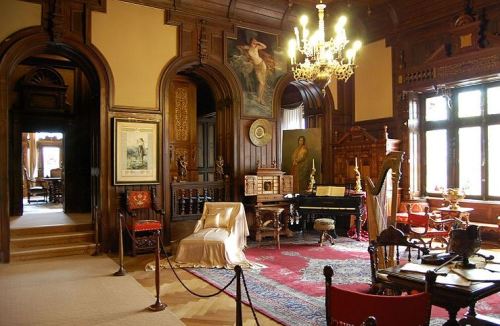
There was apparently no evidence for these accusations, yet very soon after Christianity had become established exactly the same allegations reappeared—this time against the heretics, pagans and so-called devil worshippers. This has been the pattern throughout history, down to the present day when it exploded once again with the unusual vehemence. O thou great powerful governor Amaimon, who reigneth exalted in the power of the only El above all spirits in the kingdoms of the East, (South, West, North), I invoke and move thee in the name of the true God, and in God who thou worshippest: and in the seal of thy creation: and in the mighty names of God, Iehevohe Tetragrammaton, who cast down from Heaven, thou and the spirits of darkness, and in all the names of the mighty God who is the creator of Heaven and Earth, and the dwelling of darkness, and all things and in their power and brightness; and in the name Primeumaton who reigns over the palaces of Heaven. Bring forth, I say, the spirits of William and Sarah Winchester; bring them forth in the 24th of a moment let their dwelling be empty until they visit us in peace, speaking the secrets of truth; I invoke thee. Through the gateway of blood, smoke, and Blackened Fire receive life from the deepest depths of Arezura, in the name of Zohak, and by the power of Angra Mainyu it is done! Awaken to empower the circle in the Winchester Mansion in the 24th of a moment in the likeness of, respectively, a man and a woman, not unto the terror of the sons of men the creatures or all things on the face of the Earth. Obey my power like reasoning beings; obey the living breath, the law which I speak. #RandolphHarris 9 of 9

Winchester Mystery House

Bringing a little sunshine to this gloomy San Jose afternoon☀️ Will we be seeing you this week for tours? Some tickets still available!
🎟 link in bio. https://winchestermysteryhouse.com/

The Human Dilemma

An individual has to compete with millions of others, and since there are so many of them, one solitary individual often feels that one just does not make much difference! There is a feeling that individually and as a people we are fighting a losing battle to maintain our own uniqueness and that there appears to be no end in sight. When a face engagement exhausts the situation—all persons present being accredited participants in the encounter—the problem of maintaining orderly activity will be largely internal to the encounter: the allocation of talking time (if the engagement is a spoken one); the maintenance of something innocuous to talk or act upon (this being describable as the problem of “safe supplies”); the inhibition of hostility; and so forth. When there are persons present who are not participants in the engagement, we know that inevitably they will be in a position to learn something about the encounter as a whole is conducted. When a face engagement must be carried on in a situation containing bystanders, I will refer to it as accessible. Whenever a face engagement is accessible to nonparticipants there is a fully shared and unshared participation. All persons in the gathering at large will be immersed in a common pool of unfocused interaction, each person, by one’s mere presence, manner, and appearance, transmitting some information about oneself to everyone in the situation, and each person present receiving like information from all the others present, at least in so far as one is willing to make use of one’s receiving opportunities. #RandolphHarris 1 of 22

It is this possibility of widely available communication, and the regulations arising to control this communication, that transforms a mere physical region into the locus of a sociologically relevant entity, the situation. However, above and beyond this fully common participation, the ratified members of a particular engagement will in addition be participating in interaction of the focused kind, where a message conveyed by one person is meant to make a specific contribution to a matter at hand, and is usually addressed to a particular recipient, while the other members of the encounter, and only these others, are meant to receive it too. Thus, there will be a fully shared basis of unfocused interaction underlying one or more partially shared bases of focused interaction. The difference between participation in the unfocused interaction in the situation at large and participation in the focused interaction in a face engagement is easy to sense but difficult to follow out in detail. Questions such as choice of participants for the encounter or sound level of voices have relevance for the situation as a while, because anyone in the situation will be (and will be considered to be) in a position to witness these aspects of the face engagement, which are the unfocused part of the communication flowing from it. However, the specific meanings of particular statements appropriately conveyed within a face engagement will not be available to the situation at large, although, if a special effort at secrecy be made, this furtiveness, as a general aspect of what is going on, may in fact become quite widely perceivable and an important item in the unfocused interaction that is occurring. #RandolphHarris 2 of 22

That part of the communication occurring in a face engagement that could not be conveyed through mediating channels is situational; but this situational aspect of the encounter becomes part of the unfocused communication in the situation at large only when some of the grosser improprieties, such as shouting, whispering, and broad physical gestures, occur. In considering accessible engagements, it is convenient to take a vantage point within such an encounter, and to describe the issues from this point of view. The persons present in the gathering at large can then be divided up into participants and bystanders, depending on whether or not they are official members of the engagement in question; and the issues to be considered can be divided up into obligations owned the encounter and obligations owed the gathering at large (and behind the gathering, the social occasion of which is an expression). In order for the engagement to maintain its boundaries and integrity, and to avoid being engulfed by the gathering, both participant and bystander will have to regulate their conduct appropriately. And yet even while cooperating to maintain the privacy of the given encounter, both participant and bystander will be obligated to protect the gathering at large, demonstrating that in certain ways all those within the situation stand together, undivided by their differentiating participation. Man is man because he is capable of reflective thought. Among the animal kingdom man alone has yet been able to demonstrate that he can cognitively consider his own existence, his own ending, his own limitations, and his own strengths. #RandolphHarris 3 of 22

Perhaps the limitations of man’s communicative abilities keep him from knowing any more than he does about the talents of other members of the animal kingdom; nevertheless, what he is sure of is that man can perform these and other, higher acts. With man being so superior, why is it that when we are trying to change people, we do not use meat, instead of a whip? Why do we not use praise instead of condemnation? Let us praise even the slightest improvement. That inspires the other person to keep on improving. Praise is like sunlight to the warm human spirit; we cannot flower and grow without it. And yet, while most of us are only too ready to apply to others the cold wind of criticism, we are somehow reluctant to give our fellow the warm sunshine of praise. When you have a hard day or make a mistake, you might feel discouraged or bad about yourself. However, anyone can look back on their own lives and see where a few words of praise have sharply changed their future. If something goes wrong and you are feeling bad, try writing yourself an encouraging note! What happened: I did not do well on a test. Encouraging words: I can keep trying and learning. I will not give up. Keep trying. Keep loving. Keep trusting. Keep believing. Keep growing. History is replete with striking illustrations of the sheer witchery of praise. For example, many years ago a boy of ten was working in a factory in Naples. He longed to be a singer, but his first teacher discouraged him. “You can’t sing,” he said. “You haven’t any voice at all. It sounds like the wind in the shutters.” #RandolphHarris 4 of 22

However, his mother, a poor peasant woman, put her arms about him and praised him and told him she knew he could sing, she could already see an improvement, and she went barefoot in order to save money to pay for his music lessons. That peasant mother’s praise and encouragement changed that boy’s life. His name was Enrico Caruso, and he became the greatest and most famous opera singer of his age. Many of you may not know this, but a lot of you and your parents are successful because your grandparents and great grandparents did things like go without shoes and worked hard so they could ensure their descendants would not have to miss a meal or go without a roof over their heads. So be proud of who you are and be thankful that someone had the opportunity to help you succeed. And next time you think about blowing money, even say, $30, think about how many hours it took you to make that money, and perhaps save it or put it in a Roth IRA so you have more money for retirement, or for your child’s college fund. You do not want your offspring to grow up and know the pangs of hunger. The praise, the recognition that one receives through an accomplishment can change one’s whole life. For if one does not get encouragement, one might spend one’s life never knowing what he or she could have accomplished. Use praise instead of criticism. When criticism is minimized and praise emphasized, the good things people do will be reinforced and the poorer things will atrophy for lack of attention. Many people who are praised for the good things they do end up going out of their way to do things right. #RandolphHarris 5 of 22

And even better, when praise is specific, it comes across as sincere—not something the other person may be saying just to make one feel good. Remember, we all crave appreciation and recognition, and will do almost anything to get it. However, nobody wants insincerity. Nobody wants flattery. If you and I will inspire the people with whom we come in contact to a realization of the hidden treasures they possess, we can do far more than change people. We can literally transform them. Compared with what we ought to be, we are only half awake. We are making use of only a small part of our physical and mental resources. Stating the thing broadly, the human individual thus lives far within one’s limits. One possesses powers of various sorts which one habitually fails to use. Everyone possess powers of various sorts which one habitually fails to use; and one of these powers you are probably not using to the fullest extent is your magic ability to praise people and inspire them with a realization of their latent possibilities. Abilities wither under criticism; they blossom under encouragement. To become a more effective leader of people, be hearty and sincere in your approbation and lavish in your praise. Promoting a sense of individual worth is basic to effective psychotherapy and counseling, to effective public education, to marriages, and other love relationships, and certainly to child-rearing. People who are accepted and loved and treated as worthwhile have a greater tendency to develop more fully in their selfhood, to engage themselves more fully in their tasks and chores, and, if production is any kind of measure, to turn out more of whatever we might like from them. #RandolphHarris 6 of 22

“Is a bored man free from identification?” Boredom is identification with oneself, with false personality, with something in oneself. Identification is an almost permanent state for us. It is the chief manifestation of false personality, and because of this we cannot get out of the false personality. You must be able to see this state apart from yourself, separated from yourself, and that can only be done by trying to become more conscious, trying to remember yourself, trying to be aware of yourself. Only when you become more aware of yourself are you able to struggle with manifestations like identification and lying, and with false personality itself. All work has to be on false personality. If you do any other work and leave this, it is useless work and you will fail very soon. As with negative emotions, lying and all imagination, false personality cannot exist without identification. You must understand that false personality is a combination of all lies, features and “I”s which can never be useful in any sense or in any way, either in life or in the work—like negative emotions. “If false personality entirely based on negative emotions?” There are many things besides negative emotions in false personality. For instance, in false personality there are always bad mental habits—wrong thinking. False personality, or parts of false personality, is always based on wrong thinking. #RandolphHarris 7 of 22

At the same time, if you were to take negative emotions away from false personality it would collapse; it could not exist without them. “So all negative emotions spring from false personality?” Yes certainly. How could it be otherwise? False personality is to speak a special organ for negative emotions, producing negative emotions. You remember that I said that there is no real center for negative emotions. False personality acts as a center for negative emotions. “How can one deal with the conceit of false personality?” You must know all its features first and then you must think rightly. When you think rightly you will find ways to deal with it. You must not justify it; it lives on justification, even glorification of all its features. At almost every moment of out life, even in quiet moments, we are always justifying it, considering it legitimate and finding all possible excuses for it. This is what is meant by wrong thinking. So first of all you must know false personality, and then you must think rightly about it. You must know what it is—place it so to speak—this is the first step. And, as I have said, you must realize that all identification, all considering, all lies to oneself, all weaknesses, all personality. In addition, all forms of self-will belong to false personality, so sooner or later you have to sacrifice them. “Did you say that all our likes and dislikes are in false personality?” Most of them are. And even those which did not belong to it originally, which have real roots, all pass through false personality. #RandolphHarris 8 of 22

[Somebody asked if one had to know the whole of false personality in order to struggle against it because it seemed to one that one could only know little bits of it.] One most know it. It is like a special breed of bird. If you do not know it you cannot speak about it. If you have seen it you can speak about it. To see only bits, as you say, is quite enough. Every small part of it is the same colour. If you see this bird once, you will always know it. It sings in a special way; it walks in a special way. Humans are capable of understanding many of the things that happen to us, and unable to comprehend many others though we can still experience them. The lacks of comprehension are due partly to our attitudes or mind-sets, which limit our understanding to things that our word symbols can define or point toward. Partly the limitations are due to a lack of development of our fullest functioning. As self-aware beings, able to look objectively at our own experiences, we find ourselves confused and anxious at times, overjoyed and ecstatic at others. We can search for many things: happiness, wisdom, perfection, enlightenment, identity, meaning. We can be effective in dealing wholly with the life we live, and we can attain some measures of significance. In the “search for significance,” it is often a struggle, for life certainly is not a bed of roses. So, just being alive is a blessing, but also a “struggle” and full of ordinary everyday risks. However, to seek the difficult, to search for the challenging, to demonstrate human effectiveness, in short, to be significant, is the biggest struggle of all. #RandolphHarris 9 of 22

One of the first strategic lessons in tennis is not to commit to a direction until the last possible fraction of a second. Otherwise, the opponent can exploit your guess and hit the ball the other way. However, even when one cannot observe the opponent’s move, there is a great advantage to predicting it. If the server always aims to the receiver’s backhand, the receiver will prepare his or her grip and start to move toward that side in anticipation, and consequently will be more effective in the return of serve. The server, therefore, attempts to be unpredictable in order to prevent the receiver from successfully second-guessing one’s aim. Conversely, the receiver must not exclusively favour one side or the other in making one’s initial move. Unlike matching fingers, players should not equate unpredictability with even odds. Players can improve their performance by systematically favouring one side, although in an unpredictable way. For correctness, let us think of a pair of players with particular skills. The receiver’s forehand is somewhat stronger. If one anticipates correctly, one’s forehand return will be successful 90 percent of the time, while an anticipated backhand return will be successfully only 60 percent of the time. Of course, the returner fares worse if one starts to move to one side and the service goes to the other. If one goes to the backhand side while the service is to one’s forehand, one can shift and return successfully only 30 percent of the time. The other way around, one’s chances are 20 percent. #RandolphHarris 10 of 22

The server wants to keep the successful return percentage as low as possible; the returner has exactly the opposite interest. Before the match, the two players choose their game plans. What is the best strategy for each side? If the server always aims one’s serves toward the forehand, the receiver will anticipate the move to one’s forehand and successfully return the serves 90 percent of the time. If the server always aims one’s serves to the backhand, the receiver will anticipate the move toward one’s backhand and will return 60 percent of the serves successfully. Only by mixing one’s aim can the server reduce the receiver’s effectiveness. One keeps the receiver guessing and therefore unable to take full advantage of anticipating the correct position. Suppose the server tosses an imaginary coin just before each serve, and aims to the forehand or backhand according to whether the coin shows heads or tails. Now look what happens when the receiver moves to the forehand position. This guess will be correct only half the time. When correct, the forehand return is successful 90 percent of the time, and when the move to the forehead is an incorrect guess, the receiver’s successful return tale falls to 20 percent. One’s overall success rate is (1/2)90% + (1/2)20% = 55%. By a similar argument, a move toward the backhand leads to successful returns (1/2)60% + (1/2)30% = 45% of the time. Given the 50:50 mixing rule of the server, the receiver chooses the options best from one’s perspective. One should move toward one’s forehand, and the percentage of successful returns will be 55 percent. #RandolphHarris 11 of 22

For the server, this is already an improvement over the outcome when one aims one’s serve the same way all the time. For comparison, the receiver’s success rate is 90 percent or 60 percent if the server aims exclusively toward the forehand or backhand serves, respectively. Predicting business success is a lot like the example of the tennis match. All messages move through channels. However, some channels are more equal than others. All executives know that the “routing slip” which determines who gets to see a memo is a tool of power. Keeping someone “out of the loop” is a way of clipping one’s wings. Sometimes the person kept out of the loop is the person on top. When John H. Kelly was the U.S.A. ambassador in Beirut, he sent messages direct to the White House National Security Council, using the facilities of the CIA, rather than through the normal State Department chain of command. This meant he was end-running his own boss, Secretary of State George P. Shultz. Kelly, while in Washington, also met numerous times with Oliver North and other NSC officials in connection with their plan to trade arms to Iran in return for hostages—a plan Shultz had advised against. Shultz was so furious when he learned about the Beirut incident that he blasted Kelly publicly, and formally prohibited State Department personnel from communicating outside departmental channels without express instructions from either oneself of from the President. It is unlikely, however, that any such order will ever wipe out the practice- Back-channels are too useful to power-shifters. #RandolphHarris 12 of 22

One hearing of this case, Congressman Lee Hamilton, chairman of the House Intelligence committee, blurted, “I don’t think I have ever heard of that happening before—totally bypassing an American Secretary of State.” Irritation may have fogged his memory. A precisely parallel case of back-channeling took place when the American ambassador to Pakistan communicated secretly with the White House National Security Council, again bypassing a Secretary of State. In this earlier case, the back channel was set up by Henry Kissinger, then serving as head of the NSC. Kissinger used it in arranging President Nixon’s secret mission to China, which resulted in restoring relations between the two countries. Kissinger was an enthusiastic back-channeler, eager to keep information out of the official bureaucratic system and in his own hands. Claiming he had the President’s approval, he once invited William J. Porter, the U.S.A. ambassador to South Korea, to communicate directly with him without going through Porter’s boss, William Rogers, then Secretary of State. Porter’s diary notes his reaction: “Here’s the Nixon-Kissinger secret diplomatic service shaping up, secret codes and all…If the President agreed to create a super-net of ambassadors under his security adviser without the knowledge of the Secretary of State something new was happening in American history…I concluded that I was just a country boy and I would keep my head down.” #RandolphHarris 13 of 22

When the SALT treaty was being negotiated with the Soviets, the America team in Geneva was headed by Gerard C. Smith. However, Kissinger and the Pentagon’s Joint Chiefs of Staff set up a private channel so that certain staff people could communicate with the directly without Smith’s knowledge. Kissinger also maintained a back-channel to Moscow, again bypassing the State Department, sending messages to the Politburo through Anatoli Dobrynin, rather than through the appropriate State Department specialists or their counterparts in the Soviet Foreign Ministry. Only a few people in Moscow—in the Politburo, the secretariat, and the Soviet diplomatic corps—were ever aware that messages were being passed back and forth this way. The most celebrated—and perhaps most fateful—use of the Back-Channel Tactic helped prevent World War III. This occurred during the Cuban missile standoff. Formal messages ricocheted back and forth like a tennis match between President Kennedy and Soviet leader Khrushchev while the World held its breath. Russian missiles in Cuba were pointed at American soil. Kennedy orders a naval blockade. It was at that moment of high tension that Khrushchev sent Aleksandr Fomin, his KGB chief in Washington, to call on an American newsman, John Scali, whom Fomin had earlier met. On the furth day of the crisis, with danger escalating by the moment, Fomin asked Scali whether he thought the United States of America would agree not to invade Cuba if Soviets pulled out their missiles and bombers. That message, relayed by the journalist to the White Hose, proved to be a key turning point in the crisis. #RandolphHarris 14 of 22

However, even such uses of Back-Channel Tactic are simple by comparison with the more sophisticated method that might be called the Double-Channel Tactic—the sending of alternative or contradictory messages through two different channels to test reactions or to sow confusion and conflict among the recipients. Twice during negotiations over the antiballistic missile system, Kissinger and Soviet Foreign Minister Alexei Gromyko each relied on a back-channel to bypass their own normal chain of command. During these talks, in May 1971 and April 1972, Kissinger had reason to suspect that the Russians were using the Double-Channel Tactic against him. Years later Arkady Shevchenko, former Gromyko assistant defected to the United States of America and wrote in his autobiography that Kissinger’s suspicion had been unwarranted. It was not a deliberate ploy but confusion, arising because one of the Soviets had been “operating on outdated instructions from Moscow, knowing no better.” Whether or not this is correct is irrelevant here. What is clear is that Back- and Double-channeling are much-used techniques to shift power. There is also a dazzling variety of games played at the receiving end of the communication process. The most familiar of these is the Access Tactic—meaning the attempt to control access to one’s superior, and thereby to control the information one receives. Top executives and lowly secretaries alike know this game well. Access conflicts are so common they hardly merit further comment. #RandolphHarris 15 of 22

Then there is the Need-to-Know Tactic, much favoured by intelligence agencies, terrorists, and underground political movements, by means of which data, information, and knowledge are compartmentalized and carefully kept away from all but specified receivers with a validated “need to know.” The exact converse of this is the Need-Not-to-Know Tactic. A former Cabinet Secretary in the White House explains it this way: “Should I, as a White House official, know something? Does knowing it mean I have to take action? Cn the person telling me then go to someone else and say, ‘I’ve already discussed this with the White House’? That could put me in a pissing contest between two other players I don’t know anything about and have nothing to do with…There was a lot I didn’t want to know about.” The Need-Not-to-Know Tactic is also used by subordinate to protect a superior, leaving the leader in a position to claim ignorance if things go sour. During the Irangate investigation a joke that went the rounds in Washington made the point. QUESTION: How many White House aides does it take to screw in light bulb? ANSWER: None. They like to keep Reagan in the dark. By the same token, there is also a Forced-to-know Tactic, more popularly knowns as the CYA, or “cover your assets,” memo. Here the power player makes sure that another player has been notified of something, so that if things fall apart, a recipient can share the blame. Variations are numerous, but for every game played with sources, channels, and receivers, there is a multitude of ploys and stratagems directed at the message itself. #RandolphHarris 16 of 22

Credit attribution, though difficult and necessarily imperfect, can nonetheless be designed to help harness complexity. As we have already discussed, context preservation could be advantageous if the cause of apparent success is not fully understood. This indicates a general problem. Since Complex Adaptive Systems are inherently difficult to understand or predict, it follows that attribution of credit in selection will often be difficult and prone to mistakes. If it were feasible, the best response would be not to make mistakes in credit attribution. Because such mistakes can be very costly, vast bodies of academic knowledge and expensive social apparatus have been created to reduce them. Systems of logic, methods of statistics, and philosophies of science are all aimed at improving the extent to which our conclusions follow from our premises and evidence. There re public debates, professional review boards, and courts of law. All contribute to limiting the mistakes in attribution of credit that may drive selection processes. Where these tools for improving inference are cost-effective, we certainly believe they should be used, and we applaud the work that maintains and extends them. However, despite all the effort put into these valuable resources, totally accurate attribution of credit is often infeasible. Factors that make it easy to learn appropriate lessons from the experience accumulated in making a series of choices: clear rewards for the appropriate choices, repeated opportunities for observation or for practice, small deliberation costs at each choice so that frequent choices are easier, good feedback on the results of choices, unchanging circumstances that keep inferences valid, and a simple context that can be effectively analyzed. #RandolphHarris 17 of 22

As you know, changing causes problems. Molecular manufacturing offers the possibility of drastic change, a change in the means of production more fundamental than the introduction of industry, or of agriculture. Our economic and social structures have evolved around assumptions that will no longer be valid. How will we handle the changes in the way we work and live? Nanotechnology will have wide-ranging impact in many areas, including economic, industrial, and social patterns. What do historical patterns in similar circumstances tell us about the future? Any powerful technology with broad applications revolutionizes lives, and nanotechnology will be no exception. Depending on one’s point of view, this may sound exciting or it may sound disturbing, but it most certainly does not sound comfortable. In comparison to many projections of the twenty-first century, though, nanotechnology may lead to comparatively comfortable change. The changes most often projected—for a future not including nanotechnology—have been ecological disaster, resource shortages, economic collapses, and a slide back into misery. The rise of nanotechnology will offer an alternative—green wealth—but that alternative will bring great changes from the patterns of recent decades. Times of rapid technological change are disconcerting. For most of humanity’s existence, people lived in a stable pattern. They learned to live as their parents had lived—by hunting and gathering, later by farming—and changes were small and gradual. A knowledge of the past was a reliable guide to the future. #RandolphHarris 18 of 22

Sudden changes, when they did occur, were apt to be ruinous: invasions of natural disasters. These sudden changes were fought or repaired or survived as best one could. Making major changes by choice was rare, and radical innovations were generally or the worse: the old ways at least ensured the ancestors’ survival, the new might not. This made cultures conservative. It is only natural that there be efforts to resist change, but before undertaking such an effort, it makes sense to examine the record of what works and what does not. The only examples of successful change fighters have been communities that have created and maintained barricades to isolate themselves from the outside World socially, culturally, and technologically. For the two centuries before 1854, Japan turned its back on the outside World, following a deliberate policy of seclusion. The leaders of Albania restricted contacts for many years; only recently have they started to open up. Isolation attempts have worked better on a smaller scale, when participation is voluntary rather than decreed by government. Today, within the Hawaiian island chain, the tiny private owned island of Niihau, sixteen miles long and six miles wide, is deliberately kept as a preserve of the nineteenth-century Hawaiian lifestyle. #RandolphHarris 19 of 22

Over two hundred full-blooded Hawaiians there speak the Hawaiian language and use no telephones, plumbing, television, and no electricity (except in school). The Amish Pennsylvania have no surrounding ocean to help maintain their isolation, but rely instead on tight social, religious, and technological rules aimed at keeping external technology and culture out, and themselves grouped in; those who leave the fold are excluded. Rumspringa is a bad idea because you are letting teenagers go out into the English World alone and there are many evils out there that they are unaware of. And people can see they are different—innocent and pure—and will prey on them. On a national scale, attempts to take only one part of the package—whether social or technological—have not done well at all. For decades, the Soviet Union and the Eastern bloc nations welcomed Western Technology but attempted tight restrictions on the passage of people, ideas, and goods. Yet illegal music, thoughts, literature, and other knowledge still crept in—as they do into the Islamic countries. Fighting technological change in society at large has had little success, where that change gave some large group what it wanted. The most famous fighters of technological change—the Luddites—were unsuccessful. They smashed “automated” textile machinery that was replacing old hand looms during the early industrial revolution in England, but people wanted affordable clothing, and smashing equipment in one place just moved the business elsewhere. #RandolphHarris 20 of 22

Change has sometimes been postponed, as when a later group, under the banner of “Captain Swing,” smashed hundreds of threshing machines in a wide area of southern England in 1830. They succeeded keeping the old, labour-intensive ways of harvesting for over a generation. In previous centuries, when the World was less tightly connected by international trade, communications and transportation, delays of years and even decades could be enforced through violence or legal maneuvers such as tariffs, trade barriers, regulations, or outright banning. Attempting to stop or postpone change is less successful today, when technology moves internationally almost as easily as people do—and human travel is so easy that 25 million people cross the Atlantic each year. Change fighters find that the problems they create mount with time. Products made using the old, high-cost techniques are uncompetitive. There is no way to bring back the “old jobs”; they no longer make sense. However, the old habits die hard, and these same responses to the prospect of technological change continue today—ignoring it, denying it, and opposing it. Societies that have fought change, as Britain did, have fallen behind in a cloud of coal smoke. Why did the Luddites respond violently? Perhaps their response can be attributed to three factors: First, the change in their lives was sudden and radical; second, it affected a large group of people at one time, in one area; and third, in a World unprepared for rapid technological change, there was no safety net to be unemployed. #RandolphHarris 21 of 22

While local economies might have been able to absorb a trickle of hungry laid-off workers, they lacked the size and diversity needed to offer other employment options quickly to large numbers of unemployed. In the twenty-first century, however, societies have of necessity become somewhat better adapted to change. This has been a matter of necessity, because sluggish communities soon fall behind. In the ancient days of peasant stability, there was no need for institutions like Consumer Reports to study and rate new products, or regulators like the Environmental Protection Agency to watch over new hazards. We developed the needs, and we developed the institutions. These mechanisms represent important adaptations, not so much to the technologies of the twenty-first century, but to the increasing change in technology during the twenty-first century. There is great room for improvement, but they can perhaps provide a basis for adapting to the next century as well. Even with the best of institutions to cushion shocks and discourage abuse, there will be problems. They very act of solving problems of production—of increasing wealth—will created problems of economic change. Perhaps Darwin was right to emphasize the importance played in nature by competition. Darwin told us that those species survived best which could adapt to their environment, and he let loose a phrase which he later regretted: “the survival of the fittest,” and when applied to social interactions of man—this philosophy is already seen to be true. #RandolphHarris 22 of 22

Cresleigh Homes

Let’s imagine a day in the life at your #PlumasRanch home at #CresleighMeadows Residence 2…https://cresleigh.com/cresleigh-meadows-at-plumas-ranch/quick-move-homesite-48/

The sun shines in the windows while you tidy up the living room, then lights up your lunch meal prep at the spacious island. 😎

Finally, you enjoy a great night’s sleep in the cozy bedroom. This could be your life, too; picture yourself at #CresleighHomes!


The Party Wall

America is among the most violent of the so-called civilized nations; our homicide rate is three to ten times higher than that of the nations of Europe. An important cause of this is the influence of that frontier brutality which we are the heirs of. We need a new kind of physical courage that will neither run rampant in violence nor require our assertion of egocentric power over other people. Whether an individual is allowed to enter a region, such as a room, or is excluded from it, one will often be required to show moral courage, which generally abhorrers violence and some kind of regard for the physical boundary around it, when there is one. Of course, theoretically it is possible for boundaries like thick walls to close the region off physically from outside communication; almost always, however, some communication across the boundary is physically possible. Social arrangements are therefore recognized that restrict such communication to a special part of the boundary, such as doors, and that lead persons inside and outside the region to act as if the barriers had cut off more communication than it does. The work walls do, they do in part because they are honoured or socially recognized as communication barriers, giving rise, among properly conducted members of the community, to the possibility of “conventional situational closure” in the absence of actual physical closure. #RandolphHarris 1 of 21

A glimpse of these conventions can be obtained by noting a fact about socialization: children in our middle-class society are firmly taught that, while it is possible to address a friend by shouting through the walls, or to get one’s attention by tapping on the window, it is none the less not permissible, and that a desire to engage anyone in the region must be ratified by first knocking at the door as the formal means of making entry. Windows themselves may provide an opportunity for partial participation in a situation and are typically associated with an understanding that such a possibility will not be exploited. Deviations from this rule can, of course, be found. In Sacramento, California, visiting seamen, described by some in the community as “of the lowest type,” would sometimes walk around cottages, and peer directly into the windows. After dinner we went down to the railroad again, and took our seats in the cars for Cosumnes River College. Being rather early, those men were curious in foreigners, came (according to custom) round the carriage in which I sat; let down all the windows; thrust their heads and shoulders; hooked themselves on conveniently by their elbows; and fell to comparing notes on the subject to my personal appearance, which as much indifference as if I were a stuffed figure. I never gained so much uncompromising information with reference to my own nose and eyes, the various impressions wrought by my mouth and chin on different minds, and how my head looks when it is viewed from behind, as on these occasions. #RandolphHarris 2 of 21

A chief characteristic of courage is that it requires a centeredness within our own being, without which we would feel ourselves to be a vacuum. The “emptiness” within corresponds to an apathy without; and apathy adds within corresponds to an apathy without; and apathy adds up, in the long run, to cowardice. That is why we must always base our commitment in the center of our own being, or else no commitment will be ultimately authentic. In the many mental hospitals where the nurses’ station is a glass-enclosed observation post, patients must be trained to keep from lingering around the windows and looking in on the life inside. (Interestingly enough, no hospital rule prohibits staff from looking out at a patient through these windows, thus maintaining an official form of eavesdropping.) The fashion of using “picture windows” for walls has, of course, introduced its own social strains, requiring great morale on both sides of window to ensure conventional closure; there are many cartoon illustrations of consequent problems. It may be added that failure to recognize a region boundary is often associated with according to those who are improperly observed the status of nonpersons. Where walls between two regions are known to be very thin, problems of reticence become pronounced. Sometimes open recognition will be given to the communication possibilities, with person talking through the wall almost as though they were all in the same social situation. #RandolphHarris 3 of 21

An analysis of an American semidetached housing development a suggests: “Developing our picture of neighbour linkage by ear from the comments of residents, we find that it is possible in these houses to entertain a neighbour’s wife by playing her favourite records with the gramophone or an iPhone turned to loud, or to mind her children or invite her to tea, all through the party wall.” Here, of course, we see some of the special functions of sight: those on the other wise of the party wall may not be present, or, if present, may not be attending, but it will be impossible to see that in this case. We are living at a time when one age is dying and the new age is not yet born. We cannot doubt this as we look about us to see the radical changes in mores involving pleasures of the flesh, in gender roles, marriage styles, in family structures, in education, in religion, technology, and almost every other aspect of modern life. And behind it all is the threat of the atom bomb, which recedes into the distance but never disappears. To live with sensitivity in this age of limbo requires courage. A choice confronts us. Shall we, as we feel our foundations shaking, withdraw in anxiety and panic? Frightened by the loss of our familiar mooring places, shall we become paralyzed and cover our inaction with apathy? If we do these things, we will have surrendered our chance to participate in the forming of the future. We will have forfeited the distinctive characteristic of human beings—namely, to influence our evolution through our awareness. #RandolphHarris 4 of 21

Years ago the General Electric Company was faced with the delicate task of removing Charles Steinmetz from the head of a department. Mr. Steinmetz, a genius of the first magnitude when it came to electricity, was a failure as the head of the calculating department. Yet the company did not dare offend this man. He was indispensable—and highly sensitive. So they gave him a new title. They made him Consulting Engineer of the General Electric Company—a new title for work he was already doing—and let someone else head up the department. Mr. Steinmetz was happy. So were the officers of G.E. They had gently maneuvered their most temperamental star, and they had done it without a storm—by letting hm save face. When one “saves face,” they retain respect and avoid humiliation. Letting one save face! How important, how vitally important that is! And how few of us ever stop to think of it! We ride roughshod over the feelings of others, getting our own way, finding fault, issuing threats, criticizing a child or an employee in front of others, without even considering the hurt to be the other person’s pride. If we let ourselves experience the evil, we will be forced to do something about it. It is a truth, recognizable in all of us, that when we do not want to become involved, when we do not want to confront the issue of whether or not we will come to the assistance of someone who is unjustly treated, we block off our perception, we blind ourselves to the other’s suffering, we cut off our empathy with the person needing help. #RandolphHarris 5 of 21

Hence the most prevalent form of cowardice in our day hides behind the statement, “I did not want to become involved.” Whereas a few minutes’ thought, a considerate word or two, a genuine understanding of the other person’s attitude, would go so far toward alleviating the sting! Let us remember that the next time we are faced with the distasteful necessity of discharging or reprimanding an employee. Even if we are right and the other person is definitely wrong, we only destroy ego by causing someone to lose face. Hurting a person’s dignity is a real crime. Man lives under a great many laws—physical, physiological, biological, laws created by man himself and so on, until we come to the laws of personal life and finally to imaginary “I.” This is the most important law which governs our life and makes us live in the non-existing seventh dimension. A great many forces or influences act on a man at any given moment, though people are chiefly controlled by imagination. We imagine ourselves to be different from what we are and that creates illusions. However, there are necessary laws. We are limited to certain food and to certain air, to a certain temperature and so on. We are so conditioned by influences that we have very little possibility of freedom. It is necessary for us to change our inner attitude. People who live exclusively under A influences and who take B influences, if they meet them, on the same level as A influences, usually die in this life. They may be physically alive but that does not mean that their essence can develop. #RandolphHarris 6 of 21

“Do dead people look like everyone else? Do they live as we live?” Quite, yes. Because they have soul and the remains of essence. They can insure themselves!” “You spoke previously of creating a permanent ‘I.’ What do you mean by that?” I mean that when you say “I” you can be sure that it is the same “I” each time. Now you say, “I want this” and half an hour later you say, “I want that.” The “I” is quite different. There is one thing—you—and there are many imaginary “I”s. You is that really is, and you must learn to distinguish it. It may be very small, very elementary, but you can find something definite and permanent and sufficiently solid in yourself. If you remembered all that has been said, you would remember yourself at the end of ten weeks. For instance, take the study of false personality. This is one of the quickest methods. The more you understand false personality the more you will remember yourself. What prevents self-remembering is, first of all, false personality. False personality cannot and does not wish to remember itself, and it does not wish to let any other personality remember. It just tries to stop self-remembering; takes some form of sleep and calls that self-remembering. Then it is quite happy. False personality is something special; you are opposed to it. False personality must be made to disappear or, at any rate, it must not enter into this work. This applies to everybody and everybody must begin in this way. #RandolphHarris 7 of 21

Firs of all you must know your false personality and you must not trust it in any way—its ideas, its words, its actions. You cannot destroy it but you can make it passive for some time, and then little by little you can make it weaker. False personality does not really exist but we imagine that it exists. It exists by its manifestations but not as part of ourselves. Do not try to define it or you will lose your way in words, but it is necessary to deal with facts. Negative emotions exist but at the same time they do not exist; there is no real center for them. This is one of the misfortunes of our state. We are all full of non-existent things. [Someone said that he sometimes doubted the genuineness of this interest in the work; he might by lying to himself.] Only you can answer that, and only if you do not forget the fundamental principles by saying “I” about something when it is only one “I.” You must get to know other “I”s and remember about them. If you forget this you forget everything. So long a you remember this you may remember everything. Forgetting about this is the great danger, and one slight change in something is sufficient to make everything wrong. Some groups of “I”s are useful, some are artificial and some are pathological. All people play roles; each person has about five or six roles which one plays in one’s life. One plays them unconsciously, or if one tries to play them consciously, one identifies with them very soon and continues to play them unconsciously. These roles together make the imaginary “I.” #RandolphHarris 8 of 21

False personality is imaginary “I.” [Somebody asked where higher states of consciousness could produce more thoroughly bad people or more thoroughly good people equally.] No, that is wrong. Bad people can be produced only by increase of mechanicalness. Self-remembering cannot produce wrong results provided the connection is kept between it and other ideas of the system, but if one omits one thing and takes another thing from the system—for instance, if one seriously works on self-remembering without knowing about the idea of division of “I”s, so that one takes oneself as one (as unity), from the beginning—then self-remembering will give wrong results and may even produce wrong crystallization and make development impossible. There are schools for instance or systems which, although they do not formulate it in this way, are actually based on false personality and on struggle against conscience. Such work must certainly produce wrong results. First it will create a kind of strength, but it will make the development of higher consciousness an impossibility. False personality either destroys or distorts memory. Self-remembering is a thing which must be based on right function. At the same time you must work on the weakening of false personality. Several lines of work are suggested and explained from the beginning and all must go together. You cannot just do one thing and not do the another. All are necessary for creating this right combination, but first must come the understanding of and struggle with false personality. #RandolphHarris 9 of 21

Suppose one tries to remember oneself and does not want to make efforts against false personality, then all its features will come into play, saying, “I dislike these people; I do not want this, I do not want that,” and so one. Then it will not be work but quite the opposite. If one tries to work in this wrong way it can make one stronger than one was before but in such a case the stronger one becomes, the less is the possibility of development. Fixing before development—that is the danger. We are thus not dealing with hobbies, do-it-yourself movements, Sunday painting, or other forms of filling up leisure time. Nowhere has the meaning of creativity been more disastrously lost than in the idea that it is something you do only on the weekend. The creative process must be explored not as the product of sickness, but as representing the highest degree of emotional health, as the expression of the normal people in the act of actualizing themselves. Creativity must be seen in the work of the scientist as well as in that of the artist, in the thinker as well as in the aesthetician; and one must not rule out the extent to which it is present in captains of modern technology as well as in a mother’s normal relationship with her child. Creativity is part of self-remembering and is the process of making, of bringing into being. Now this intensity of awareness is not necessarily connected with conscious purpose or willing. It may begin in dreams or at an unconscious level. #RandolphHarris 10 of 21

The makes source—any data, information, or knowledge that is communicated requires a source or sender; a set of channels or media through which the message flows; a receiver; and of course a message. Power players intervene at each of these points. Take the sender. When a letter arrives in the mail, the first thing we usually wan to know is who sent it. The identity of the Sender is, in fact, a crucial part of any message. Among other things, it helps us decide how much credence to give the message. This is why the “Masked Source Tactic” is so frequently used. An ostensibly nonpartisan citizen group that sends out millions of fund-raising letters may actually be financed and controlled covertly by a political party. A political action committee with a fine-sounding name may be run by the lobbyist for a rapacious industry. A patriotic-sounding organization may be controlled by another nation. Both the KGB and he CIA covertly channel funds into publications, labour unions, and other institutions in targeted countries and help set up friendly organizations. The “Masked Source Tactic” is the basis for front groups of all political stripes. However, masking the message-sender can take many forms, in many different settings, from business boardrooms to prison cells. An imprisoned murderer once described how she could bring power to bear on a jail guard who was harassing her. She could, she said, write a letter of complaint to the prison warden. However, if the guard found out, life would be made even more miserable for her. #RandolphHarris 11 of 21

She could also, she said, go over the warden’s head and write to a politician complaining of brutal treatment, and pleading with him to put pressure on the warden to call off his guard. However, this was even more risky. “Fortunately,” she observed in a memorable phrase, “prisons are filled with idealist. And so,” she said, “I could get another inmate to write to the politician for me,” thus concealing the real source of the message. Officials throughout business and government play variations of this fame. When an underling “pulls rank,” using a superior’s name (often without authorization) to gain an advantage, he or she is using the Masked Source Tactic. A classic twist on the Masked Source Tactic influenced U.S.A. policy during the Vietnam War. It was used in 1963, when a report prepared by Robert McNamara and General Maxwell Taylor advised the President and the nation that “it should be possible to withdraw the bulk of U.S. personnel” by the end of 1965. This forecast was bolstered by data supposedly originating in Saigon. What readers of the report were not told is that much of what was datelined Saigon had been prepared in Washington, the transmitted to Saigon so it could be sent back to Washington looking as though the data actually came from the field. The source was disguised to lend the data greater authenticity. A special class of Masked Source messages are outright forgeries. Seldom used in everyday bureaucratic warfare, it is well known in international affairs where strange forgeries have on occasion changed history—like the Zimmerman Telegram that helped propel the United States of America into World War I. #RandolphHarris 12 of 21

In 1986, the U.S.A. State Department publicly exposed as forged a document that described a “confidential” meeting at the Pentagon. It quoted then Secretary of Defense Caspar Weinberger as saying that SDI, the Strategic Defense Initiative, would “give the United States…the ability to threaten the Soviet Union with a knockout blow.” If true, the quotation would have bolstered Soviet arguments against the SDI program. However, the document was a fake circulated in West Germany (presumably by the Soviets) as part of the public campaign drumming up sentiments against SDI. Another forged document about SDI turned up in the Nigerian press. More recently an anti-Japanese forgery turned up in Washington Congressman Tom McMillen rose in the House of Representatives to read what he called an “internal, high-level Japanese government memo.” Ostensibly addressed to the Prime Minister from his “Special Assistant for Policy Coordination,” the memo called for Japanese investments in the United States of American to be planted in congressional districts where they could be used to influence the U.S.A. politics. Nothing could have been better calculated to intensify Japan-bashing in the United States of America. However, rather than a Japanese government document, it turned out to be an embarrassing fiction traced to Ronald A. Morse, an official of the Asian program of the Woodrow Wilson Center for Scholars. Morse said that he had written it merely to illustrate, in a dramatic way, what he believed to be current Japanese attitudes. He claimed he had told its recipients the document was bogus. #RandolphHarris 13 of 21

Markets and demonstrations illustrate how strategies can be selected very quickly. Typically, selection at the strategy level is faster and less costly than selection at the agent level. Nevertheless, these differences are tendencies rather than inevitable consequences. So, by way of counterexample, large corporations are often faced with new products from start-up competitors. They sometimes find it quicker to create new divisions or small spin-off firms to make a comparable product rather than modifying existing lines of activity to produce it. In effect, this is a case where agent creation may be faster than strategy copying. Although the differences we have mentioned are only tendencies, they are rooted in the added difficulty that is typical for creating full agents. Hence it is often important to compare possibilities for selection at the agent and strategy levels. A further difference between selection at the two levels involves problems that commonly occur in inferring exactly what is to be copied. There are myriad ways that selection can go awry and incorrectly reward an agent or strategy that was not responsible for a success. Such failures plague selection at both levels. However, one important difference does occur. Agents are collections of strategies. Successful agents generally use strategies that are mutually compatible. The interaction among those strategies does not have to be understood if selection is at the level of the agent, copying all its strategies. #RandolphHarris 14 of 21

Biological selection of whole agents capitalizes mightily on this fact, but so can identical replication of franchised business units. Selection at the strategy level generally demands higher quality of inference. How many of the agent’s action patterns must be copied to replicate the success? Which ones? To obtain the same low defect rate as a rival firm, which of their quality control procedures should be emulated? Selection at the agent level, on average, is more context preserving than at the strategy level. In Complex Adaptive systems, where many results derive from effects that multiply other effects, context preservation can work to retain and spread synergies that are not fully understood. We made a related point in a past reports when we observed that the longer time horizons of those in authority create a common context for coordinating the faster actions of those they supervise. There we were examining agents’ activities. Here we are examining the selection that follows from their success or failure. We have argued that there are tendencies for selection at the agent level to be more costly, slower in elapsed time, and more context preserving. The first two effects are often not wanted, while the last one frequently is. This can set up a tension in which a designer or policy maker who has some freedom to influence the level of selection may have to trade off the various factors. #RandolphHarris 15 of 21

To take an example: Supposed that you want to discourage a dangerous behaviour such as violating crucial safety regulation. We have usually considered selection for positive traits, but here we can look at negative selection. At the level of strategy, selection may correspond to punishing the action pattern. Each detected instance of rule breaking could be heavily fined, for example. On the other hand, agents could be negatively selected in response to their violations. An offering employee could be suspended, transferred, or even fired. These forms of removal will make the agent less likely to be copied. Taking the agent out of circulation and making the effort of replacement typically costs more and takes longer than simply changing an agent’s strategy. If the safety violation is integrated with other strategies—for example if the agent’s entire work style used a set of methods now considered unsafe—simply punishing the violations may not discourage the behaviour, so removal may be worthwhile. If the violations are more a matter of “fashion”—for example, not wearing a hard hat in order to look fearless—pushing the action itself may be the preferred approach. Schemes to amplify success are nearly always imperfect. Selection at the level of agent and selection at the level of strategy are families of mechanisms that have somewhat complementary strengths. Agent selection often works on longer time scales—faster is not always better—and preserves variation and context. Strategy selection isolates key patterns that can be more easily and rapidly copied. #RandolphHarrs 16 of 21

Thus it is not surprising that there are many hybrid systems, where selection is found to be operating at both level in a single population of agents. Many species of birds and mammals seem to select at both the agent level, by conventional natural selection, and at the strategy level, by processes of cultural diffusion, which operates at a much faster times scale. In the human case, cultural evolution is so rapid and effective that we tend to ignore the continuing operation of natural selection. At the other extreme, we often do not notice cultural aspects of an animal population. However, close observation relevels striking cases, such as the English birds that discovered how to peck through foil milk bottle caps. Their discovery spread across the entire country within a few years. Hybrid systems such as this have tremendous advantages. Herbert Simon has argued that they are so beneficial that we could expect biological evolution to create individuals with increased susceptibility to following strategies suggested by others. Even though this “docile” quality makes it possible to take advantage of individuals who possess it, that can be outweighed by the tremendous gains of adding cultural selection of strategies to natural selection of agents. These observations on complementary strengths and hybrid selection systems have a cumulative implication. When there is room to alter selection process, it can be wise to look for changes to the system that could diversify it, adding fast elements if its selection processes are slow. #RandolphHarris 17 of 21

If the past processes are not succeeding, it can pay to add slower elements that sustain new context. As an example of adding fast elements, organization that rely heavily on change through personnel turnover are often ripe for improved trading of employee “war stories.” A series of failures in piecemeal importing of “best practices” might suggest brining in a new supervisor experienced in how the various routines form an interlocking system. As with many other interventions we discuss, hybridizing selection processes is not guaranteed to be better, but it is often a beneficial focus of attention. Natural law imposes limits, but so does the nature of human beings. These will continue as long as people do. Reproduction is a deeply ingrained instinct enforced by the march of time, which ruthlessly discards the genetic material of all who neglect it. Many would argue that the Earth is already overpopulated and that is why land prices and housing is so expensive. While nanotechnology could enable the current population, and even a great increased one, to live more lightly on Earth, there will still be limits to Earth’s capacity. The norms of human life are shaped by ancient patterns: high rates of infant or childhood mortality have been facts of life for millennia, and having many, many children has been a way to ensure that one or two will survive to work on the farm, and to care for you in your old age. Of course, many parents tend to use and abuse their adult children these day. #RandolphHarris 18 of 21

Large families naturally become traditional. And that is why generational housing is being built, where in some large homes they also have an apartment added on inside of the house, so adult children or parents can be part of the family home, without feeling like a guest or being a burden on the home owner. And also, it gives the homeowner a chance to have a true office at home. When modern medicine and reliable food supplies change those conditions—as they have, in cultural terms, virtually overnight—behaviour does not shift as quickly. The result is the Third World population boom. In Western countries, where there has been time for behaviour to adapt, a huge family is the exception. It might seem that our problem is solved. Molecular manufacturing can make everyone wealthy, and wealthy populations today have stable or shrinking populations. The Earth can support more people with advanced technologies, and these will also open up the vast room and resources of the World beyond Earth. Would that this were true. If 99 percent of the people in a population respond to wealth by reducing childbearing, the population will indeed stabilize or shrink, for a whole. However, populations are not uniform. What of the 1 percent, say, who are member of a minority group with different values? If that minority group has a growth rate of 5 percent per year, then in ninety-five years they will be the majority, and in one thousand years their population will have grown by a factor of 1,500,000,000,000,000,000,000, if resource limits or genocide have not intervened. #RandolphHarris 19 of 21

Not that the Hutterites of North America, a reasonably wealthy religious group viewing fertility control as a sin and high fertility as a blessing, have managed an average of ten children per woman. Given enough time, exponential growth of even the smallest population can consume all the resources in reach. The right to reproduce is often regarded as basic, as illustrated by the outage at reports of forced abortion in the People’s Republic of China. The Hutterites and many others regard it as part of their freedom of religion. However, what happens when parents have more children than they can support—does redistribution solve the problem? Of course, in America, some women sell babies to get new cars and stuff like that. However, if reproduction is not forcibly suppressed, and if resources are forcibly and repeatedly redistributed so that each human beings has a roughly equal share, then each person’s share will steadily shrink. Even given the most optimistic assumptions regarding available resources, with a policy of resources redistribution and unlimited reproduction, the amount per person would eventually be insufficient to sustain life. This policy must be avoided, because if it is followed, it will kill everyone. #RandolphHarris 20 of 21

As soon as we grant that any entity is entitled to certain rights—whether that entity be a human child, an animal, or some future artificial intelligence—the question arises of who is responsible for providing resources to support it when it cannot do so for itself. The above argument indicates that a policy of coercion by some central power to compel the entire population to support an exponentially exploding population of these individuals would lead directly to disaster. Ultimately, this responsibility must rest with the entities’ initiator: the designer of the artificial intelligence, the owner of the pet, the parents of the child. No new technology can magically remove the limits imposed by natural law, and thereby lift the burden of human responsibility. Every time a technology solves a problem, it creates new problems. This does not mean that the change is neutral, or for the worse, of course. The Salk and Sabin Vaccines for polio virtually destroyed the iron-lung industry, and the pocket calculator virtually destroyed the slide-rule industry, but these advances were worth the price of some economic adjustment. Molecular manufacturing and nanotechnology will bring far greater changes, placing far greater strains on our ability to adapt. We should not be surprised when basically beneficial applications make someone miserable. Our lives are largely centered around problems. If we can solve many of these problems, the centers of our lives will shift, creating fresh problems. We have sketched some of the issues of change and adaptation more to raise questions than to offer solutions. #RandolphHarris 21 of 21

Cresleigh Homes

Cresleigh Ranch at Mills Station features new luxury homes with expansive floor plans and artisan-inspired designs.

Picture late nights 🍷 on the porch and chalk drawings in the driveway…when you find the perfect home for you and your family, there’s nothing left to do but make memories! 💖

Homesite #56 is available at #CresleighRanch #MillsStation – it’s the Residence 3 floor model and we think you’ll love it.

Head to our website for more info!

#CresleighHomes

A Kind Heart Will Extend this List Even Further

Psychoanalysis serves many functions. It can assist in promoting psychic growth and self-realization. I am sorry to say that only a small minority seem to be interested in psychic growth these days. Most people have an entirely different goal, which is to own more and consume more. It has been suggested that persons are kept from improperly approaching others by self-applied rules and by legal sanctions. However, in addition to these means of social control there are other kinds, designed not so much to alter the offender’s pattern of misbehaviour as to allow a particular victim to escape from the deprivation inflicted by the offense. I want to mention some of these techniques here, even though they, and some of the issues which follow, occur in regard to the acquainted as well as the unacquainted. If one is approached on the street by someone in need and does not wish to give the individual money, any one of three courses may be followed: One may spare the individual in need the embarrassment of a refusal by pretending not to notice the person’s appeal; or one may refuse, saying, “No, I’m sorry”; or one may stop and offer help by suggesting a charitable organization to which the unfortunate can apply. A kind heart may extent this list even further, but the essential point is that if one is asked for charity, an apology must accompany a refusal. Quite apart from other considerations, any sign of anger or impatience is brutally ill-mannered. #RandolphHarris 1 of 18
Another strategy is what might be called the “terminal squirm.” Here, the unwilling recipient of the overture grudgingly turns his attention to the speaker, gives a noncommittal reply, and then as quickly as possible turns away, taking for granted that the other will take this answer as a “signing out” cue. In our society, this technique is often employed by parents with their importuning patients. Given the fact that importuned persons attempt to avoid the importuners, we can expect that there will be an attempt on the part of importuners to counter this counter (and, in turn, an attempt on the part of the importuned to counter this counter to a counter). A counter to the strategy of acting as if no overturn has been received is to inveigle an individual into an explosive demonstration that one is not in fact as little involved and affected by the entreaties as one appears to show. In everyday terms, this is sometimes called “getting a rise.” Thus, children often play games of making funny faces at one another to see who will win the contest between “straight face” and laugh-provoking gesture. The phenomenon of getting a rise, or reciprocally, rising, also occurs when the butt is already involved in a face engagement with the stimulator, in which case getting a rise will consist in forcing the butt suddenly to “flood out” and sharply increase one’s level of manifest seriousness, mirth, and the like. Sometimes the teaser employs a passing remark calculated to make the butt become suddenly affronted, only to perceive at the next moment the unserious intent. #RandolphHarris 2 of 18

Sometimes the teasing or goading is continuous and mounting until successful, as in the game of “the dozens.” In mental hospitals rise-getting seems to be a common pursuit, practiced by junior staff and by patients upon patients who insist on being mute, and by still other patients who make wonderfully humorous efforts to entice staff into communicative contact. On a hospital ward, a middle-aged woman patient employed some expert techniques for getting others, against their wishes, into a state of talk. She would come progressively closer to the unwilling participant, increasing the loudness of her comments and the impropriety of their references, as well as the grotesqueness of her facial grimaces, until a point was reached where the participants could no longer maintain the fiction of not being engaged, and would, in some way, respond. In addition to this technique of progressive profanation, she would employ antics, dancing, prancing, and jumping in the immediate presence of the recalcitrant participant, stopping only when she succeeded in getting the other involved. If these antics failed, she would sometimes employ the strategy of stopping abruptly and then looking into the eyes of the other in secret collusive derision of the self that had just behaved in a peculiar way. The other would then frequently find himself entering into this collusion, establishing communion with an individual who, apparently, had suddenly become sane. #RandolphHarris 3 of 18

If this, too, failed, she would sometimes make offensive, abusive, or mimicking gestures at one individual, in a way that could barely be defined as behind his back, and then quickly turn to a second individual with a knowing, “I am-just-trying-to-kid-this-fool” look; the person receiving this collusive look often allowed himself to be trapped momentarily into a byplay, and thereby lost the game. Interestingly enough, she was able to combat the lack of civil inattention that nurses in the glassed-in nursing station accorded her—either by their pointed not-seeing of her or by their staring at her—by getting a rise from them even through the glass partition designed to protect them, and even at a time when they were working every effort to demonstrate that they would not be drawn into communication unless properly approached by a proper person. Underlying principles of respect that were once commonplace in society have increasingly given way to unkind behaviour. To help our children and youth set aside the many negative examples that bombard them, we must first understand respect and reasons we sometimes act disrespectfully. There are people in the community who merit respect through honourable living. We admire their commitment or standards. For example, we might respect a sailor who gave up winning a boat race to save a man overboard. On the other hand, we do not respect one who embezzles or another who treats a child hardly in the supermarket. #RandolphHarris 4 of 18
Yet if we were to interact with these people, we would likely treat them with respectful or polite manners, regardless of our feelings about their transgression. Ultimately, we can treat people respectfully because they are human even if we do not honour or admire their acts. We are taught to be respectful toward others without qualification, sometimes we may find ourselves falling into rationalizations about being disrespectful based on their behaviour. A person who causes a problem is often seen as warranting disrespectful treatment. However, we can not live our lives with the philosophy: if others would behave differently, we would not have to behave badly. This kind of thinking shifts responsibility for our behaviour to others. It makes us think that our disrespectful acts are someone else’s fault. Respect is an expression of our sense of universal brotherhood or sisterhood—a testimony of our membership in the human family. It acknowledges our common humanity and shows our reverence for being alive. However, it is also important to keep in mind that no one likes to take orders. Resentment caused by a brash order may last a long time—even if the order was given to correct an obviously bad situation. #RandolphHarris 5 of 18

Dan Santarelli, a teacher at a school in Wyoming, Pennsylvania, told one of our classes how one of his students had blocked the entrance way to one of the school’s shops by illegally parking his car in it. One of the other instructors stormed into the classroom and asked in an arrogant tone, “Whose Toyota is blocking the driveway?” When the student who owned the car responded, the instructor screamed: “Move that car and move it right now, or I will wrap a chain around it and drag it out of there.” Now that student was wrong. The car should have not been parked there. However, from that day on, not only did that student resent the instructor’s action, but all the students in the class did everything they could to give the instructor a hard time and make his job unpleasant. How could he have handled it differently? If he had asked in a friendly way, “Whose Toyota is that in the driveway?” and then suggested that if it were not moved, other cars could get in and out, the student would have gladly moved it and neither he nor his classmates would have been upset and resentful. Also, instead of pushing people to accelerate their work and rush through projects, call everybody together, explain the situation to them that it is crucial that they do their best work and as fast as they can so the business can succeed. And then ask, “Is there anything we can do to help in this situation?” “Can anyone think of different ways to process it through the corporation that will make it possible to handle the project?” #RandolphHarris 6 of 18

“Is there any way to adjust our hours or personnel assignments that would help?” The employees will often times come up with many ideas and will feel confident handling the project. They will approach it with a “We can do it” attitude, and that is how effective leaders become and stay successful. Ask questions instead of giving direct orders. A human with a passion for absolute control will try to circumvent, to overstep the limits inherent in human existence, for it is part of the human condition that we are not omnipotent. And if a man should gain much too much power, death will show him how powerless he is in the face of nature. Therefore, this leads many to ask the question, “Is essence always good?” Not at all. Essence is mechanical, it does not live by itself, it has no special thinking apparatus; it has to think through personality. Essence, type and fate are practically the same, but facts connected with fate are very difficult to find, expect perhaps just almost physical facts such as kind of health, capacities or similar things. There are many other things but they are hard to distinguish because in our state essence seldom works separately from personality. Many things that we have the inclination to ascribe to fate really belong to personality. So it is dangerous to draw conclusions. However, there are some things we can see, for instance that certain types of people attract certain types of people. They have the same kinds of friends, the same kinds of troubles, the same kinds of difficulties, but, of course, never without personality taking some part. So you cannot call it pure fate; it is more like cause and effect. #RandolphHarris 7 of 18

“Must one work harder to alter one’s type than to alter acquire personality?” If it is necessary, but perhaps the type is quite all right. In most cases it is personality that must be changed; uncontrolled personality cannot be right. Only very few people can work on essence. It is not exactly an advantage to the people who can, because it is very difficult for them. Generally we work on personality, and this is the only work we can do, and if we work it will bring us somewhere. “When we try to change our being is essence as much as affected as personality?” We have to work on personality but essence is affected if we really change something. “Did you say that personality is all lies?” No, I said that personality was almost all artificial, just as essence is almost all real. “Are our ‘I’s part of personality of essence?” Both. There are “I”s belonging to essence and “I”s belonging to personality. “Are they connected with different centers?” continued the same questioner. Certainly, there are intellectual “I”s, moving “I”s and instinctive “I”s. An “I” is just one desire, one wish. However, this distinction is only for convenience. You may forget it if you like, although it is like that. Just take it that “I”s are small and personality is already more complicated desires. “Is the instinctive center closely connected with one’s essence?” Yes, it controls the necessities of essence. “Is intelligence part of essence?” #RandolphHarris 8 of 18

Generally speaking, yes. However, I would like to know what you mean by intelligence. If I say “yes” you cannot apply it; it will remain dead capital. “Can intelligence grow or increase by certain treatment?” asked the same questioner. That is what I said. If we speak about ourselves, we shall see that intelligence belongs to essence and personality in a very mixed way; though, in a cosmic way, a certain amount of intelligence is given to every essence. I believe the human being is fully himself only when he expresses himself, when he makes use of the powers within him. If he cannot do that, if his life consists only of possessing and using rather than being, then he degenerates; he becomes a thing; his life becomes pointless. It becomes a form of suffering. Real joy comes with real activity, and real activity involves the utilization and cultivation of human powers. We should not forget that exerting our minds encourages the growth of brains cells. That is a fact supported by physiological evidence. An alternative to selecting entire agents as the basis for the amplification of success is to make copies or recombinations at the level of particular strategies. If success can be assessed at the strategy level rather than the agent level, one difference that often occurs is a lowered cost of copying. To assemble or acquire a whole new agent (a new person, a new business, a new governmental unit) is typically more costly than to copy a strategy employed by a successful agent. It takes years to grow several Pacific yew trees for bark that provides cancer-fighting compounds for a single patient. #RandolphHarris 9 of 18

An owner of a baseball team can try to buy a star pitcher from another team. If the reason for success is that the pitcher is winning by throwing the forkball, it might be more advantageous to tech the other pitchers that strategy during the off-season. Whether this will be promising or not depends on how easily the forkball can be copied. Is there a pitching coach for hire with success in teaching it? Or perhaps success depends on the uncanny similarity of the star’s forkball and fastball motions. Then it may be necessary to pay the cost of acquiring the whole agent, with the entire complement of strategies, or of searching for another pitcher with a comparable package of skills. A second difference that often occurs between the strategy and agents levels is waiting time. One could just think of this as a special case of higher costs, but it deserves a brief discussion of its own. Because assembling copies of agents is generally a larger task involving more resources, it typically takes more time than copying or recombining strategies. Even if the direct costs of agent copying were affordable, the indirect costs of delay might not be. For example, another company may have a propriety process for manufacturing a part that does into a product you are developing. It might be quite valuable to invent your own process for making the needed component, and plausible to create a division within your company to do it. #RandolphHarris 10 of 18

It would lower your costs and let you tailor the part to your particular needs. However, competitors are racing to the market for your own product. The delay while you create a capacity to make the part means falling behind in competition with them. So you license the existing process from its owner, copying the strategy not because of lower monetary costs but because of the value of elapsed time. To highlight the speed at which strategies can change, consider a stock market. Agents watch changes in prices for information about what other agents believe. Thus the market has recursive nature in which agents’ expectations are formed on the basis of their anticipation of other agents’ expectations. The result can be rapid bubbles and crashes. Simulations of markets as Complex Adaptive Systems demonstrate how high rates of exploration can generate these bandwagon effects and “market psychology.” Social mobilization is another arena in which agents’ expectations are formed by watching each other’s behaviour. Again, the result can be very rapid change once a bandwagon begins. The fall of the Berlin Wall occurred with amazing speed once the initial demonstrations showed what was possible. As in a market, people formed their expectations on the basis of their anticipation of others’ expectations. Once begun, a series of demonstrations set off a cascade of revised beliefs leading to irresistible levels of protest. #RandolphHarris 11 of 18
On July 4, 1967, in the White House, President Lyndon Johnson signed a measure called the Freedom of Information Act. At the signing ceremony he declared, “Freedom of information is so vital that only the national security, not the desire of public officials or private citizens, should determine when it must be restricted.” No sooner had Johnson spoken than a reporter asked if he could obtain a copy of the original draft of these remarks. It was the first request made in the full radiant flush of the new freedoms guaranteed by the act. Johnson turned him down cold. The “Secrecy Tactic” is the first, probably oldest, and most pervasive info-tactic. Today the U.S.A. government classifies as secret some 20 million documents a year. Most of these pertain either to military diplomatic affairs—or to mattes that might embarrass officialdom. However, if that seems undemocratic and even hypocritical, most other countries are far more secretive, defining everything from alfalfa yields to population statistics as state secrets. Some governments are positively paranoid. Virtually everything they do is secret unless specifically declared otherwise. Secrecy is one of the familiar tools of repressive power and corruption. However, it also has its virtues. In a World filled with bizarre generalissimos, narco-politicians, and killer-theologians, secrets are necessary to protect military security. #RandolphHarris 12 of 18

Moreover, secrecy makes it possible for officials to say things they would not utter in front of a TV camera—including things that need saying. They can criticize their bosses’ policies without embarrassing them publicly. They can compromise with adversaries. Knowing how and when to use a secret is a cardinal skill of politician and bureaucrat. Secrets give rise to the second most common info-tactic, another classic tool of power: the “Guided Leak Tactic.” Some secrets are kept; others leak. When the leak is inadvertent it is merely an ineffectually kept secret. Such leaks drive officials into deep dementia. “Why,” one CIA official is supposed to have asked, “do we have to sent the China estimate to U.S military commands overseas just because that’s where the action is? That’s where the leaking is, too.” In short, better to keep information secret than to send it to those who need it. By contrast, “guided leaks” are informational missiles, consciously launched and precision-targeted. In Japan targeted leaks have produced spectacular effects. The Recruit-Cosmos financial scandal, which led to the ouster of Prime Minister Noboru Takeshita in 1989, offered a field day for leakers mainlining inside information from the office of the chief prosecutor, Yusuke Yoshinaga, to the daily press. “Without these press leaks,” says Takashi Kakuma, author of books on corruption in Japan, “I’m sure their investigation would have been stopped.” #RandolphHarris 13 of 18

Reporters received carefully timed spurts of information, which were moves in an exquisite power ballet. By releasing details to the press, the prosecutors prevented higher-ups in the Ministry of Justice from emasculating the investigation and protecting the upper reaches of the Takeshita government and the Liberal Democratic Party. Without these guided leaks, the government might have survived. In France, too, leaks have historically played a major political role. Recounting France’s difficulties in disentangling from the Indochina War, a White House document states: “Leak and counter leak was [sic] an accepted domestic political tactic…Even highly classified reports or orders pertaining to the war were often published verbatim in the pages of political journals.” So prevalent are leaks in London that they have created a pall of suspicion inimical to innovation. Officials hesitate to voice a new idea, he charges, for fear it will be leaked instantly and its author made to look ridiculous before the idea has had a chance to be considered. However, unless someone things, which sooner rather than later entails thinking aloud, no new thinking will be done and no old thinking will be brought up to date. In Washington, where guided leaks from a still unidentified source called Deep Throat forced Richard Nixon to resign the presidency, and where guided leaks are still a daily phenomenon, leak-phobia is rampant. #RandolphHarris 14 of 18

Thirty five years ago, presidential assistants felt free to write candid memos and have serious, far-reaching disagreements with each other—and the President. Watergate put a stop to that. One quickly learned never to write anything on paper that you would be unhappy to see on the page of The Oakland Tribune…Never say anything controversial in conversation where more than one person was present. The ironic consequence when the really inconsequential issues come along, an army of bureaucrats moves in to consider it [sic]. However, the more important the issues, the fewer the numbers involved—almost solely because of the fear of leaks. Of course, the same officials who excoriate leakers are themselves very often the best source of guided leaks. While serving in the White House as national security adviser, Henry Kissinger once wanted the telephones of his staffers wiretapped to find out whether they were leaking embarrassing information to the press and Congress. However, Kissinger himself was—and remains—a “leak-master.” Secrets and guided leaks, however, are only the two most familiar info-tactics used in political and bureaucratic war. They may not be the most important. Many of you will remember a game from elementary school called “one-two-three shoot” or “matching fingers.” In this contest, one of the players chooses “evens” and the other player gets “odds.” On the count of three, each of the two players simultaneously casts out either one or two fingers. If the total number of fingers is even, the “even” player wins, while if the sum is odd, the “odds” players wins. #RandolphHarris 15 of 18

Supposed the loser pays the winner a dollar. We can compute the usual table of wins and losses in relation to the choices of strategies. There is no equilibrium to this game if the two players do not act randomly. Imagine that “Odds” were to play 1 finger with certainty. “Evens” would always choose to play 1 finger as well. Now the logic turns on itself. Since “Odds” is certain that his opponent will display 1 finger, he will choose to show 2 fingers. This leads “Evens” to respond with 2 fingers. In which case, “Odds” will play 1 finger. We are back where we started, and there is no end in sight to the circular reasoning. An easy way to check if randomness is needed is to consider whether there is any harm in letting the other player see your move before he responds. When unpredictability is needed, it would be disadvantageous to move first. Think what would happen in “one-two-three shoot” if you moved first: you would always lose. Not just any randomness will do. Suppose Odds chooses 1 finger 75 percent of the time and 2 fingers 25 percent of the time. Then Evens, by choosing 1, can, win 75 percent of the time, and on average get .75 X 1 + .25 X (-1) = .5 dollars per play. Similarly, the choice of 2 would lose Evens fifty cents per play on average. So Evens would choose 1. However, then Odds should be choosing 2, not the 75:25 mixture. The mixture would not survive the successive rounds of thinking about each other’s strategy. #RandolphHarris 16 of 18

In other words, there is an equilibrium pattern of randomness and it has to be calculated. In this example, the whole situation is so symmetric that the equilibrium mix has to be 50:50 for each player. Let us try that out. If Odds chooses 1 and 2 equally often, then Evens wins .5 X 1 + .5 X (-1) = 0 per play on average, whether he plays 1 or 2. Therefore he also wins 0 on average, whether he plays 1 or 2. Therefore he also wins 0 on average when he plays his 50:50 mixes are best responses to each other, that is, an equilibrium. The name for this solution is a “mixed-strategy” equilibrium, reflecting the necessity for the individuals to randomly mix their moves. The equilibrium mix in more general situations is not so evident from symmetry, but there are some simple rules for calculating it. People have often been wrong about physical limits, confusing the limits of their technology with the limits of the possible. As a result, learned men first dismissed the idea of heavier-than air flight, and then dismissed the idea of flying to the Moon. Yet physical limits are real, and all technology—past, present, and future—will stay within those limits. There is even reason to suspect that some of those limits are where the learned now believe them to be. Nanotechnology will make it possible to push closer to the real limits set by natural law, but it will not change those laws of the limits they set. It will not affect the law of gravity, the gravitational constant, the speed of light, the charge of the electron, the radius of the hydrogen atom, the value of Planck’s constant, the effects of the uncertainty principle, the principle of least action, the mass of the proton, the laws of thermodynamics, or the boiling point of water. Nanotechnology will not make energy or matter from nothing. #RandolphHarris 17 of 18

It seems a good bet that no one will build a faster-than-light spacecraft, or an antigravity machine, or a cable twice as strong as a diamond. There are limits. Science today may be wrong about some limits, but scientific knowledge is practically defined to be our best information about how the World works, so it is not wise to bet against it. There will be claims that nanotechnology will be able to do things that it cannot, or that capabilities are around the corner when they are not. Sometimes these will be innocent errors, sometimes they will be culpably stupid errors, and sometimes they will be what amounts to fraud. Among the problems that nanotechnology cannot solve is that of misguided claims, by people calling themselves “scientists,” “engineers,” or “businesspeople,” that they have a big technical breakthrough worth a fortune. Every interesting new technology, parcharlatans. For every Thomas Edison inventing useful products such as light bulbs or the precursor of movie projectors, there were people promoting electric hairbrushes to cure baldness, and electric shoes, electric belts, electric hats—the list goes on—that authoritatively claims cures for infertility, overweight, underweight, and all the ills and discomforts of mankind. Today, we are thankful that our forefather paved the way for us, and that we do not have to suffer the same credulity that they did. The more deprivation a person has to put up with, the more obedient one has to be so that one will not rebel against the deprivation imposed on one. #RandolphHarris 18 of 18

Cresleigh Homes

There’s something magical ✨ about dreaming about your new life in a new home this year – and we think the time has come for you to check out our community at #Havenwood!

Located off of Virginiatown Road and McCourtney Road, our neighborhood is located in the charming city of Lincoln, with Palo Verde Park just down the street! Head to our website to find out more about available homes.
#CresleighHomes

Luncheon #4 with Coffee

We cannot see reality here and remain closed to it there. That dulls our cutting edge and makes our search for the truth ineffectual. And we can see ourselves rightly only if we can see others rightly, only if we can see them in the context of their social circumstances, which is to say, only if we look sharply and critically at all that is going on around us in the World. This is what love demands of us, too. And if we love our fellow humans, we cannot limit our insight and our love to others as individuals. That will inevitably lead to mistakes. We have to be political people, I would even say passionately involved in political people, each of us in the way that best suits our own temperaments, our working lives, and our own capabilities. A contingency that bears on mutual openness is one we must consider. Previously, we argued that the individual in our society has a right to receive civil inattention. It was also suggested that, when persons ratify each other for mutual participation in an encounter, the rule against looking fully at another is set aside. Typically, then, one person may legitimately begin to look further at another a moment before one initiates an encounter, the legitimacy being imputed retroactively, after it is shown what the individual had been intending to do. If, then, persons find that they must stare at each other, they can try to cope with the matter by initiating a state of talk, the overture being excusable (however embarrassing) because of what can be handled by means of it. #RandolphHarris 1 of 20

There are standard conditions under which the rule about not staring gives rise to these problems. When a few persons find themselves in a small space, as in a European railway compartment, or around the entrance of a store that is not yet quite open, civil inattention is hard to manage tactfully. To not stare requires looking very pointedly in other directions, which may make the whole issue more a matter of consciousness than it was meant to be, and may also express too vividly an incapacity or a distaste for engagement with those present. In this connection, the plight of close-setting diners in low-priced restaurants in the south of France can create tensions by sitting opposite someone with whom one is not in a conversational relation. The institutionalized solution: each diner pours the wine from one’s small table-bottle into the glass of the other, and with the exchange of these clearance signs, the table is open for conversation, the diners now being ratified coparticipants of social encounter. Fortunately such where-to-look situations do not arise with any frequency. One which does, however, is the elevator one…both while in an elevator brings outs a suspicious streak in people. You arrive before the closed landing door and push a button. Another person comes along and after a glance of mutual appraisal, you both look quickly away and continue to wait, thinking the while uncharitable thoughts of one another. #RandolphHarris 2 of 20

The new arrival suspecting you of not having pushed the button and you wondering if the new arrival is going to be a mistrusting old meanie and go give the button a second shove…an unspoken tension which is broken by one or the other of you walking over and doing just that. Then back to positions of waiting and the problem of where to look. To stare the other person in the eye seems forward and usually the eye does not warrant it. Shoes are convenient articles for scrutiny—your own or those of the other person—although it is overdone this may give the impression of incipient shoe fetichism. It [ the where-to-look problem] continues even inside the elevator…especially in the crowded and claustrophobic boxes of the modern high buildings. Any mutual exchange of glances on the part of the occupants would add almost a touch of lewdness to such already over-cozy sardine formation. Some people gaze instead at the back of the operator’s neck, others stare trance-like up at those little lights which flash the floors, as if safety of the trip were dependent upon such deep concentration. A rather similar situation arises in a Pullman diner when one is obliged to sit opposite an unknown at a table for two. How to fill in the awkward wait before writing out “Luncheon #4 with coffee” and the arrival and serving of the same? If one is not the type who, given the slightest provocation, burst into friendly chit-chat with a stranger, the risk of getting conversationally involved with someone who is, brings out the furtive behaviour of an escaped convict. Sometimes it becomes apparent that the other person feels the same way…a discovery which comes as a minor shock but no major solution. #RandolphHarris 3 of 20

Two strangers sitting directly opposite each other at a distance of a foot and a half, and determined politely but firmly to avoid each other’s eye, go in for a fascinating little game of “I do not spy.” They re-read the menu, they fool with the cutlery, they inspect their own fingernails as if seeing them for the first time. Comes the inevitable moment when glances meet but they meet only to shoot instantly away and out the window for an intent view of the passing scene. It can be awkward, drinking alone at a bar. Is the man behind it wholly a servitor at such times, or must recognition be made of the fact that two human beings are together in an otherwise empty room? It may be added that during such difficult times, if the individual decides against contact, he may well have to find some activity for himself in which he can become visibly immersed, so as to provide the others present with a face-saving excuse for being unattended to. Here again we see the situational functions that newspapers and magazines play in our society, allowing us to carry around a screen that can be raised at any time to give ourselves or others an excuse for not initiating contact. Airplane and long-distance bus travel have here underlined some interesting issues. Seatmates, while likely to be strangers, are not only physically too close to each other to make non-engagement comfortable, but are also fixed for a long period of time, so that conversation, once begun, may be difficult thereafter either to close or to sustain. #RandolphHarris 4 of 20

In such cases, a strategy is to “thin out” the encounter by keeping it impersonal and by declining to exchange identifying names, thus guaranteeing that some kind of nonrecognition will be possible in the future. As for airplanes today, seatmates may not exchange a word in a trip across the continent. However, plane conversation is in order if mutually desired and kept impersonal. As on trains, names need not be exchanged. And why should they? After all, it is relaxing to talk without identifying oneself. Relationships with service personnel in our society, when talk is required, may be thinned out in the same way—a thinning, incidentally, that serves may attempt to counteract by asking the name of the customer and proffering their own. Public officials are often criticized for not being accessible to the constituents. They are busy people, and the fault sometimes lies in overprotective assistants who do not want to overburden their bosses with too many visitors. The mayors of some cities frequently admonish because of the way the public sees them. They often claim to have an “open-door” policy; yet at city hall meetings, citizens are arrested, told out right to “shut up!” and the mayor is hard to get ahold of. Furthermore, members of the community are blocked by secretaries and administrators when they call. Finally, taxpayers came up with a suggestion. They wanted to remove the door from his office! However, he still never got the message, and nor has his administration. #RandolphHarris 5 of 20

Simply staying committed to your promises can change the difference between failure and success and will reduce the likelihood of giving offense or arousing resentment. Many people begin their criticism with the sincere praise followed by the word “but” and ending with a critical statement. For example, in trying to change a child’s attitude toward studies, we might say, “We are really proud of you, Leo, for cutting back on your modeling and acting jobs and raising your grades this term. But if you hard worked harder on your algebra, the results would have been better.” In this case, Leo might feel encouraged until he heard the word “but.” He might then question the sincerity of the original praise. To him, the praise seemed only to be a contrived lead-in to a critical inference of failure. Credibility would be strained, and we probably would not achieve our objectives of changing Leo’s attitude toward his studies. This could be easily overcome by changing the word “but” to “and.” We are really proud of you, Leo, for raising your grades this term, and by continuing the same conscientious efforts next term, your algebra grade can be up with all the others.” Now, Leo would accept the praise because there was no follow-up of an inference of failure. We have called his attention to the behaviour we wished to change indirectly, and the changes are he will try to live up to our expectations. Calling attention to one’s mistakes indirectly works wonders with sensitive people who may resent bitterly any direct criticism. #RandolphHarris 6 of 20

All people should aim to be leaders and they are more effective when they lead by example. One should be an example that they want others to follow. Every person carries on one’s shoulders the reputation of one’s family. We bring credit to the work of our ancestors. The railing out against good people, the viciousness and the lying about our people as whole have almost entirely died out because people have come to know the desires of our heats, that we have no enmity against even those who malign us. One of the first and most important factors in trying to change oneself is the division of oneself. The right division is between what is really “I,” and all the rest which we can call “Mr. Harris,” or whatever your name happens to be. If this division is not made, if one forgets about it and continues to think oneself in the usual way, or if one continues to use “I” and “Mr. Harris,” but in the wrong way work stops. The first line of work can only make progress on the basis of this division. No other lines are open if this division is forgotten, but it must be the right division. It happens often that people make a wrong division. What they like in themselves they call “I” and what they dislike, or what is weak or unimportant, this they call “Mr. Harris” or “Mrs. Hearst,” or “Mr. Winchester” or whatever their names happen to be. If they divide in this way it is quite wrong. It is not enough that you make a right division today and forget it tomorrow. You must make a right division and keep it in your memory. #RandolphHarris 7 of 20

[An actual example of wrong division was given. A man called Petroff who had belonged to one of our groups made a division of himself into two parts. One of these he described as “keeping him alive” and called it “I”; the rest he called Petroff.] This wrong division is simply lying, lying to oneself which is worse than anything because the moment one meets with the smallest difficulty it will show itself by inner arguing and wrong understanding. “What is the origin of this difficulty in dividing oneself?” asked Mrs. X. The origin is you and Mrs. X. Mrs. X. thinks she knows better than you do. She thinks she is more important and wishes you to do as she wants. “One of the difficulties,” said Mr. Y. “is that Y. knows better than ‘I’ in certain situations.” Y. knows nothing. “But he thinks he does,” said Mr. Y. Do you have to obey? If you think he knows best, simply study him and this will bring you to the right understanding. The first condition is that you must believe nothing. What is the use of trying to create permanent “I” while you continue to believe in Mr. Y? The real “I” is created by the desire to be and to know and the rest is non-existent. So really there is nothing to divine. We must believe nothing or we cannot come to anything. In this system the word “I” can be spoken of in five ways on five different levels. Man in his ordinary state, is a multiplicity of “I”s; this is the first meaning. The human “I” has a Master, Time-body, and he also knows the past and also the future. The names we are given at birth are our False Personality which each of us has, but this division must not be confused with the division between Essence and Personality. #RandolphHarris 8 of 20

Essence is what we are born with, our capacities and incapacities. It is connected with “type” and also with the physical body. We cannot work on it directly. From this point of view of work on ourselves, all that we have is personality. When a man begins to work, magnetic center brings observing “I” into being. This “I” is also a personality which has to educate the rest of personality and essence. “Is it right to supposed that a person with a highly developed personality would find this work difficult?” Yes and no. Not so much depends on the weight of personality as on its state, on whether it is educated, badly educated or uneducated. It may be in the power of imaginary “I” and then it is wrong. Being does not enter into the division into personality and essence. Knowledge and being are the two sides of which we speak in relation to the possibility of man’s development. They make one pair of opposites on a different scale. Personality is acquired; essence is our own, what we are born with, what cannot be separated from us. They are mixed and we cannot distinguish the one from the other now, but it is useful to remember this division as a theoretical fact. Essence, or type of man, is the result of planetary influences. Planetary influences determine many big events in the life of humanity such as wars and revolutions. Our emotions come originally from the planets and different essence. According to our type we act in one or another way in certain circumstances. It is said that there are twelve or eighteen chief types and then combinations of these. #RandolphHarris 9 of 20

It is very seldom that you meet a pure type, but different features play a different part in different types though each type has everything. That knowledge can bother us. However, the more we know about ourselves and the fewer illusions we have about others, the richer, stronger, more vital our lives will be. Another area of life where we can harness complexity and change success criteria is in the method of establishing a prize competition. Consider for example, the ancient Athenian practice of conducting annual dramatic contests. By explicitly declaring which drama was the best, the award accomplished three things. First, the author was honoured for success, bringing fame and influence to individuals such as Aeschylus and Sophocles. Second, the award encouraged the production of new plays composed to meet the criteria implied by the previous awards. In our terms, the strategies of later playwriting were changed. Third, the award helped educate and shape the tastes of the audience, thereby providing future support for the criteria of excellence the award implied. Today prize competitions are used to reward, encourage, and define excellence in a wide range of activities, from grammar school art contests to the Nobel Prizes in physics, peace, and literature. There are now prizes for beauty, for most valuable players, for best dressed, and for business quality. #RandolphHarris 10 of 20

The effectiveness of prizes is enhanced as society develops more extensive channels to disseminate news of awards. So we should not be surprised that their use is increasing. Every increment in the reach of printing, television, or e-mil newsgroups increases the possibilities for affecting success criteria by announcing winners of awards. Some prizes are for accomplishments that can be assessed more or less objectively, such as the winner of a solar-powered car race. For our purposes, the most interesting prizes are those that are based on subjective criteria. Indeed, for many prizes, the criteria are so indefinite that the burden of defining excellence within some realm falls heavily, if not entirely, on the subjective evaluations of a panel of judges. From the point of view of harnessing complexity, a major advantage of prize competitions is that they can award credit to people or activities based on criteria that are different from current standards. The presumption is that a carefully selected panel of judges can make worthwhile evaluations of quality. The indirect effects are as powerful as the direct effects. Giving a prize not only rewards a winner who might not have excelled in other assessments but also provides a target for others to emulate. Emulation may take the form of superficial imitation, but it may also create innovative exemplars of just what was most valued by experts. In addition, by helping to shape the tastes of the general audience, a prize competition can also shape the criteria used by the broader public. #RandolphHarris 11 of 20

For instance, book awards not only provide guidance to writers and publishers about what is being valued but also provide guidance to readers and reviewers about what is worth reading. The promotion of a sophisticated reading public, in turn, helps provide a market for good writing. A prize competition can also promote useful variety. Prizes sometimes serve to identify and promote things that are new and valuable. When a science or literary prize is awarded, it tends to legitimate and promote the entire field or genre of the winner. Of course, there is a tension here. Deciding who or what should receive an award involves the application of standards of excellence. The judges inevitably use standards that are shaped in part by the standards in the broader community of which they are a part. Indeed, judges are usually selected on the basis of their own standing, which in turn is often based on their adherence to current standards. And even if the judges may wish to be leaders in the identification of what is both new and worthy and are willing to take a risk on something that stretches current standards, they also need to be concerned about looking arbitrary or even foolish. The judges are also judged. Therefore, they face the familiar trade-off between exploitation and exploration in making their selections. The trade-off creates a tension between making a safe choice that reflects current standards and making a bold choice that can help transform those very standards. #RandolphHarris 12 of 20

To the extent that prize committees are willing to go beyond the orthodoxy of the moment, the represent a valuable potential for increasing useful variety. This potential is not always fully seized. Of the first 85 winners of the Nobel Prize for literature, all but one wrote in a European language. Prizes can stifle variety. It is now very hard for a young pianist to establish a successful recording or concert career without having won one of the major competitions. The reason is that producers rely on the competitions to screen pianists. Young pianists therefore train to win these competitions, go to teachers who have won or whose students have won, choose repertoire suited to winning, and so on. This there is some truth to the criticism that competitions can reduce the variety of piano expression exactly because the competitions can become the dominant focus for young players. It can take a long time for the weak signals of public tastes or music reviews to counter the now strengthened signals of prize jury standards. While each prize sets up a competition among those aspiring to win it, there is also competition among the prizes themselves. The sponsors and judges of each prize seek attention and prestige for their award. Within each domain there is competition for how much credit will be garnered by the winners of a public award. Is a Pulitzer Prize for fiction better than a National Book Award? Prize competitions themselves interact, as when getting one prize makes a winner more likely to het another prize. #RandolphHarris 13 of 20

Moreover, a lesser-known prize can gain prestige if its winners often go on to receive some better-known prize. Thus there is an intricate set of interactions within and between four populations of agents: prize seekers, members of their audience, judges on awards panels and the various prize competitions themselves. Together they function to alter the criteria that define success in their respective domains. After a battle that lasted longer than twelve years, United States v. IBM stands as a monumental eyesore of antitrust litigation. One of the many issues revolved around IBM’s policy of leasing rather than selling its mainframe computers. The government argued that IBM’s emphasis on short-term leases constituted an entry barrier resulting in monopoly profits. IBM defended the practice as being in consumers’ interest. It argued that a short-term lease insulates customers from the risk of obsolescence, provides flexibility when needs change, commits IBM to maintain its leased equipment (since it is responsible for the operation of the leased computers), and provides financing from the company with the deepest pockets. Many find these arguments a convincing defense. Yet there is a strategic advantage to leasing that seems to have been overlooked by both sides. How would you expect prices to differ if IBM primarily sold its large mainframe machines rather than leased them? Even a company without an outside competitor must worry about competing with its future self. When a new computer is introduced, IBM can sell the first models at very high prices to customers impatiently awaiting the technological advance. #RandolphHarris 14 of 20

Once the computers are available in large numbers, there is the temptation to lower the price and attract more customers. The main cost of producing the computer has already been incurred in the development stage. Each additional sale is gravy. Herein lies the problem. If customers expect that IBM is about to lower its prices, they will wait to make their purchase. When the majority of customers are waiting, IBM has an incentive to speed up its price reductions and capture the customer sooner. This idea, first expressed by University of Chicago law professor Ronald Coase, is that for durable goods, in effect, a monopolist competes with its future self in a way that makes the market competitive. Leasing serves as a commitment device that enables IBM to keep prices high. The leasing contracts make it much more costly for IBM to lower its price. When its machines are on short-term lease, any price reduction must be passed along to all customers, not just the ones who have not yet bought. The loss in revenue from the existing customer base may outweigh the increase in new leases. In contrast, when the existing customer base owns its computers, this trade-off does not arise; the customer base owns its own computers, this trade-off does not arise; the customers who already bought the computer at a high price are not eligible for refunds. #RandolphHarris 15 of 20
Thus leasing is an example of moving in small steps. The steps are the length of the lease. The shorter the lease, the smaller the step. Customers do not expect IBM to keep its price high when the steps are too big; they will wait for a price reduction and get the same machine a little later at a lower price. However, if IBM leases its computers only on short, renewable contracts, then it can credibly maintain high prices, customers have no reason to wait, and IBM earns higher profits. As college professors and authors, we encounter the same problem closer to home in the market for academic textbooks. If commitment were possible, publishers could raise profits by brining out new editions of a textbook on a five-year cycle, rather than the more common three-year cycle. Greater longevity would increase the text’s value on the used-book market and consequently the student’s initial willingness to pay when a new addition appears. The problem is that once the used books are out there, the publisher has a strong incentive to undercut this competition b brining out a new edition. Because everyone expects this to happen, students get a lower price for their used books and thus are less willing to pa for the new editions. The solution for the publisher is the same as for IBM: rent books rather than sell them. As we consider the secret teams and plumbers, it is important to understand what they do. of #RandolphHarris 16 of 20

Under normal circumstances, much of the work of, let us say, Presidents of the United States of America and Prime Minster has been: to make choices among options (prepared in advance for them by their respective bureaucracies), about issues they understand only superficially, and then only when the different parts of their bureaucracy are unable to reach agreement. There are, of course, decisions that only top leaders can take—crash decisions that cannot wait for the bureaucratic mills to grind, turning-point decisions, war and peace decisions, or decisions that require extraordinary secrecy. These are non-programmable, as it were, decisions that come directly from the leader’s viscera. However, these are comparatively rare when things are running “normally.” When, however, we enter a revolutionary period, and a new wealth system clashes with the power structures built around an old one, “normalcy” is shattered. Each day’s headlines report some new unpredicted crisis or breakthrough. Global and domestic affairs alike are destabilized. Events accelerate beyond any reasonable capacity to stay on top of them. In conditions like these, even the best bureaucracies break down, and serious problems are allowed to fester into crises. The “homeless pandemic” in the United States of America, for example, is not a problem of inadequate housing alone, but of several interlinked problems—low wages, cost of housing, disability, veterans who have medical bills and no support, children who are kicked out of their homes, unemployment, high land prices, drug abuse, intimate partner violence and alcoholism. #RandolphHarris 17 of 20

Each is the concern of a different bureaucracy, none of which can deal effectively with the problem on its own, and none of which wants to cede its budget, authority, or jurisdiction to another. It is not merely the people who are homeless, but the problem. Drug abuse, too, requires integrated action by many bureaucracies simultaneously: police, health authorities, the schools, the foreign ministry, banking, transportation, and more. However, getting all these to act effectively in concert is almost impossible. Today’s high-speed technological and social changes generate precisely this kind of “cross-cutting” problem. More and more of them wind up in limbo, and more turf wars break out to consume government resources and delay action. In this environment, political leaders have the opportunity to seize power from their own bureaucrats. Conversely, as they see problems escalating into crises, political leaders are often tempted to take extreme measures, setting up all kinds of task forces, “czars,” “plumber’s groups,” and “secret teams” to get things done. Driven by frustration, some political leaders come to despise their bickering civil servants, and rely ever more heavily on intimates, on secrecy, informal orders, and arrangements that end-run and actually subvert the bureaucracy. This is, of course, exactly what the Reagan White House did so disastrously in the Irangate case, when it set up its own secret “enterprise” to sell arms to Iran and pipe the profits to the contra forces in Nicaragua, even at the risk of violating the law. #RandolphHarris 18 of 20

Less dramatically when George Bush asked the State Department and the Pentagon to prepare proposals for him to present to NATO, in mid-1989, the usual hordes of mid- and senior-level bureaucrats put on their green eyeshades and masticated the ends of the pencils. However, what ultimately came up the line from them were a series of warmed-over, trivial proposals. Bush was under political pressure, at home and abroad, to come up with something more dramatic—something that would steal the thunder from the latest proposals made by Soviet Leader Gorbachev. To get it, he threw away the bureaucratic script, called in Cabinet members and a handful of senior assistants, and drew up a plan to withdraw some U.S.A. troops from Europe. It won instant approval from the allies and the American public. Similarly, West German Chancellor Helmut Kohl simply ignored his foreign ministry when he first outlined his list of ten conditions for uniting the two Germanys. Whenever a leader end-runs the bureaucracy in this way, dire warnings that disaster looms rise from its ranks. This is often followed by leaks to the press designed to undermine the new policy. Nevertheless, in times of rapid change, requiring instant or imaginative responses, cutting ministries or departments out of the loop comes to be seen as the only way to get anything done, which accounts for the proliferation of ad hoc and informal units that increasingly honeycomb governments, competing with a sapping the formal bureaucracy. #RandolphHarris 19 of 20

All this, when combined with privatization and the looming redistribution of power to local, regional and supra-national levels, points to basic changes in the size and shape of governments tomorrow. It suggests that, as we move deeper into the super-symbolic economy, mount pressures will force governments, like corporations before them, into a process of painful restructure. This organizational agony will come even as politicians attempt to cope with a wildly unstable World system, plus all the dangers outlined in the past reports, from unprecedented environmental crises to explosive ethnic hatreds and multiplying fanaticism. What we can expect to see, therefore, is sharpened struggle between politicians and bureaucrats for control of the system as we make the perilous passage from a mass to a mosaic democracy. Increasing affluence based on molecular manufacturing will not end economic problems any more than past increases in affluence have. Wilderness can still be destroyed; people can be oppressed; financial markers can be unstable; trade wars can be waged; inflation can soar; individuals, companies, and nations can go into debt; bureaucracy can stifle innovation; tax levels can become crippling; wars and terrorism can rage none of these will automatically be stopped by advanced technology. What is more, the potential benefits of new technologies are not automatic. Nanotechnology could be used to restore the environment, to spread wealth, and to cure most illness. However, will it? This depends on human action, working within the limits set by the real World. #RandolphHarris 20 of 20

Cresleigh Homes

Imagine holidays, 🎄 birthday parties, 🥳 and late nights with pancakes 🥞 around that spacious kitchen island…

All that our #PlumasRanch Riverside Model 1 home is missing is you and your family!

Find out more about our community – including the largest home sites in all three Plumas Ranch neighborhoods – on our website.
#CresleighHomes

Such a Neighbour Does Not Offer His Eyes to Another

Primitive tribes have social systems in which friendliness and cooperation are predominant and aggression at a minimum. In modern cultures, an important basis of mutual accessibility resides in the element of informality and solidarity that seems to obtain between individuals who can recognize each other as being of the same special group, especially, apparently, if this group be one that is disadvantaged or ritually-profane. In American society, people at bus stops often extend greetings to others who are strangers to them, as people who the same religion do to one another, or people with similar features. Sports car drivers on the road may do the same—especially when the car of each is of the same make, and a rare one. And, of course, when fellow-nationals meet in exotic lands they may feel obliged or privileged to initiate a state of talk. Mutual accessibility also occurs when each of the two persons involved finds oneself in a position that is at once exposed and opening. As one student has already suggested, when two persons unintentionally touch each other in passing on the street, both may take on the guilty role, with consequent mutual openness can occur. The offender can treat oneself as an opening person, needful of setting the record right about oneself, while treating the other as one in need of receiving assurances, and hence place oneself in an exposed position. At the same time the initiate demands for apology, or to confirm that no offense has been taken. #RandolphHarris 1 of 18

Similarly, when two pedestrians must pass each other on a narrow walk, or when a pedestrian and motorist pair are in doubt about a join line of action, a mutually initiated meeting of the eyes can be employed to subtly apportion sides of the walk, or to subtly assure right-of-way to the other, or to ratify and consolidate an allocation that has been communicated. Another important basis for mutual accessibility arises from what might be called “open regions”—physically bounded places where “any” two persons, acquainted or not, have a right to initiate face engagement with each other for the purpose of extending salutations. Open regions differ according to the character of the face engagement that is permitted, according to whether or not introductions form part of the consequence of the encounter, and according to the categories of participants that are excluded. In Anglo-American society there exists a kind of “nod line” that can be drawn at a particular point through a rank order of communities according to size. Any community below the line, and hence below a certain size, will subject its adults, whether acquainted or not, to mutual greetings (where strangers owe each other passing greetings, we must study the resulting engagement in connection with the civil inattention that precedes and follows); any community above the line will free all pairs of unacquainted persons from this obligation. (Where the line is drawn varies, of course, according to region). #RandolphHarris 2 of 18

In the case of communities that fall above the nod line, even persons who cognitively recognize each other to be neighbours, and know that this state of mutual information exists, may sometimes be careful to refrain from engaging each other. (In the apt phrase reported in one housing study, such a neighbour does not “offer his eyes” to the other.) Perhaps this is done on the theory that, once acquaintanceship is established between persons living near one another, it might become difficult to keep sufficient distance in the relationship. Villages, towns, and rural places that fall below the nod line do not, of course, put absolutely everyone on nodding terms. Thus, in many parts of Sacramento, there was a general feeling that happy people who sounded and looked American were to be brought within the circle of humanity, but not those from places of unknown origin. The latter tended to be walked past and looked at as if they were not social objects but, rather, physical ones; they tended to be treated as “nonepersons.” In spite of these limits, however, we can still speak of these rural settlements as “open regions,” where coming into the region makes one accessible to anyone else in the vicinity. While rural and small town communities are perhaps the largest open regions, they are by no means the only ones. One instance, apparently the sports field. #RandolphHarris 3 of 18

Some American military personnel who have play golf are impressed with the friendliness of other players. “Why, they talked to us!” they say. The explanation that a presence on a sports field is the equivalent of an introduction, and that one can talk to strangers then, is greeted with some disbelief. Other sports produce similarly friendly results—athletics, flying, and other darts. In American society, bars, cocktail lounges, and club cars tend to be defined as open places, at least as between men (and although women are not free to engage men, certainly an overture from a male to a female in these settings is not much of a social delict, this fact constituting one of the important attributes of these settings). Something similar can be said about vacation resorts and about other highly bounded settings: A ship may be compared to a country hotel. It is good manners to greet other passengers in a friendly fashion without, however, making presumptuous overtures. You speak to the people next to you in deck chairs, but you do not force conversation upon them. In general, as in a friend’s house, the roof is the introduction, but this does not mean you are expected to do more than bow in the greeting to fellow passengers as you encounter them during the day. And, as implied, social parties and gatherings in private homes bring into being open regions where participants have a right not only to engage anyone present but also to initiate face engagement with self-introductions, if the gathering is too large for the host or hostess to have already introduced them. #RandolphHarris 4 of 18

If you meet any one whom you have never heard of before at the table of a gentleman, or in the drawing-room of a lady, you may converse with him with entire propriety. The form of “introduction” is nothing more than a statement by a mutual friend that two gentlemen are by rank and manners fit acquaintances for one another. All this may be presumed from the fact, that both meet at a respectable house. This is the theory of the matter. Custom, however, requires that you should take the earliest opportunity afterwards to be regularly presented to such an one. Nevertheless, it is still true that in a private house, or at any part, a guest may speak to any other guest without an introduction of any kind. Another illustration of the open regions provided by convivial occasions is the carnivals. During these costumed street celebrations, a roof and its rights is by social definition spread above the streets, brining persons into contact—a contact facilitated by their being out of role. The assumption of mutual regard and good will built into open regions guarantees a rationale for discounting the potential nefariousness of contact among the unacquainted, this being one basis for sociable accessibility. There are other bases. During occasions of recognized natural disaster, when individuals suddenly find themselves in a clearly similar predicament and suddenly become mutually dependent for information and help, ordinary communication constraints can break down. #RandolphHarris 5 of 18

Again, however, what is occurring in the situation guarantees that encounters are not being initiated for what can be improperly gained by them. And to the extent that this is assured, contact prohibitions can be relaxed. (If the disaster is quite calamitous, everyone is likely to be forced out of role and hence into mutual accessibility.) Now, how success is defined affects the chances for effective learning. Consider the example of checkers, the difficulties for learning if victory is the sole criterion of success creates a problem. The central problem is that victory or defeat comes only once per game. However, getting more than one measurement of performance per game could dramatically improve the rate of adaptation. The typical way to do this is to use criteria that can be measures in the course of the game. In checkers or chess, this is possible by evaluating the current board to see who is ahead in pieces and in various aspects of position. Such evaluations allow intelligent choices in the midst of the game based on what promises to lead to a better board position in a few moves. This does not require seeing all the way to victory or defeat t the end of the game. Since you cannot precisely measure the consequences of early moves for victory, you introduce other metrics tht are more easily predicted. In a seeming paradox, you increase the chance of winning by concentrating on a set of criteria that does not include winning. #RandolphHarris 6 of 18

Even better, with finer-grained measures you can actually learn to improve the criteria by which you evaluate board positions. For example, you might learn from experience that having many pieces in the center often leads to surprisingly good results a few moves later. Indeed, the Samuel checker-playing program, one of the early triumphs of artificial intelligence research, learns on its own to play better checkers by using expected results in just this way. When it arrives at a board position that is surprisingly good or bad, it uses this information to revise its own success criteria. The program determines what changes in its evaluators would have avoided the surprise and makes the corresponding changes. When it next encounters a similar board, the program will have a better set of criteria for attributing value to broad positions. This approach to learning new success criteria is very powerful. Samuel’s program, running on an early computer that could not keep up with today’s digital wristwatches, could learn checkers well enough to defeat a state champion. Moreover, these are techniques of very broad applicability: When success is measurable only rarely, new measure with a faster tempo can speed learning, even if they do not perfectly reflect the longer-term goal. Whenever outcomes are better or worse than expected, the experience can help to revise evaluation criteria so that, in the future, the attribution of credit will produce better outcomes. Using fine-grained and short-term measures of success can help individual learning by providing focused and rapid feedback. #RandolphHarris 7 of 18

Such narrow and prompt measures of success can also be used by an organization to evaluate who is successful and who is not. For this reason, managers are often judged by how well their unit does each quarter, or even each month, or by very specific indicators such as cost reductions. However, there is a problem. If the challenges the manager is dealing with are long-term or widespread in the organization, then using fine-grained and prompt measures of success can easily miss much of the value to the organization of any improvement the manager discovers. There can be a lot of bang for the exploratory buck when advances in one domain can be applied for a long time and/or in many places. A challenge for an organization is to develop measures of success that support appropriate levels of exploratory behaviour while taking into account that learning is fostered by fine-graine and rapid feedback. Another challenge in defining measures that will support leaning is that a measure may be correlated with what ultimately matters without actually being causally related. A medical example is the reduction of fever as a measure of success in fighting a disease. A fever indicates the presence of a disease, and the fever disappears when the disease does. However, with the development of aspirin, one can reduce the fever without curing the disease. #RandolphHarris 8 of 18

Therefore, using body temperature as a measure of success can be misleading for some diseases. Because the elevated temperature might even be part of the body’s method of fighting the disease, parents may learn to treat the fever with aspiring in ways that can actually be harmful. The implication is that one needs to be careful about which indirect measures of success are used to guide action and learning. Taken together, these observations about success measures imply not only risks but also rich possibilities for harnessing complexity through shaping the criteria by which the agents or their activities are evaluated. Performance measures are not immutably given, but are subject to change, both from the outside and from within the system where they operate. What measures are used profoundly affects which agents and strategies will be copied and recombined and, therefore, what adaption will occur. This is the logic that gives long-term power to what may seem modest changes in measures, such as introducing on-time performance into airline regulation, body counts into battle assessments, “pawn structure” into chess, and portfolio risk into financial management. It life, it is important to be a leader. You can change people without giving offense or arousing resentment. It is always easier to listen to unpleasant things after we have heard some praise of our good point. However, you never want to praise someone all the time, and the say, “but you could have done this better.” That will make them feel like compliments are always passive aggressive criticisms and it will be an anticipated downer. #RandolphHarris 9 of 18

We do not want to hurt anyone’s feelings nor kill their enthusiasm. Sometimes just tell someone, “No one could have done a better job than you did.” We want people to beware of rashness, but with energy and sleepless vigilance go forward and give us victories. Therefore, always begin your interactions with praise and honest appreciation. Humans are divided into four parts: body, soul, essence, and personality. Personality and essence do not appear to be separate, but we can study what belongs to essence and what belongs to personality. The idea of the soul as a separate organism controlling the physical body cannot be said to be based on anything. The nearest approach to the idea of the soul as it was understood up to the seventeenth century is what is called the essence. The term soul is used in this system, but in the sense of life-principle only. Essence, personality and soul, taken together, correspond to what used to be called soul. However, the soul was supposed to have a separate existence from the body, whereas in this system we do not suppose essence, personality and soul to have a separate existence from the body. We are told that when a man dies or when anything dies (man or fish, it is just the same) its soul (id est, life-principle) goes to the moon. The soul is material; a certain quantity of fine matter, energy if you life, which leaves the body at death. In a normal man the soul has no consciousness, it is just mechanical so that it does not suffer. #RandolphHarris 10 of 18

However, humans can create a sort of half-consciousness which can pass to the soul and then the soul going to the moon may be aware of what happens to it. This occurs only in some very rare cases and when essence has died during life. Then the soul can get some material from essence this way. Actually there are many other people who kill essence and are really dead in life, but that does not concern us. So let us speak about what it would mean to create moon in oneself. First, what is the moon? What is the moon’s function in relation to man, individual man? What would happen if this function of the moon were to disappear; would it be beneficial or the opposite? We know, for instance, that the moon controls all our movements, so that if the moon were to disappear we should not be able to make any movements, we should collapse like marionettes whose strings have been cut. We must realize that all this refers to Being. What are the features of our being? The chief feature of our being is that we are many, not one. If we want to work on our being, to make it correspond better to our aim, we must try to become one. However, this is a vary fair aim. What does it mean to become one? The first step, which is still very far, is to create a permanent center of gravity. This is what is meant by creating moon in ourselves. The moon is a permanent center of gravity in our physical life. If we create a center of gravity in ourselves, we do not need the moon. #RandolphHarris 11 of 18

However, first we must decide what the absence of permanent “I” means. We shall find in its place many of the features or weakness referred to above, but these must be established definitely, for ourselves, by observation. Then we must begin a struggle against these features which prevent us from becoming one. We must struggle with imagination, negative emotions and self-will. Before this struggle can be successful, we must realize that the worst possible kind of imagination from the point of view of obtaining a center of gravity is a belief that one can do anything by oneself. After that we must strive with the negative emotions which prevent us from doing what we are told in connection with this system. For it is necessary to realize that self-will can only be broken by doing what one is told. It cannot be broken by doing what one decides oneself, for that will still be self-will. Self-will is always struggle against another will. Self-will cannot manifest without opposing itself to another will. It may be useful for you to take a piece of paper and to write on it what constitutes your being. Then you will see that being cannot grow by itself. For instance, one feature of our being is that we are machines; another, that we live in only a small pat of our machine; a third, our plurality of “I”s. We say “I” but this “I” is different at every moment. At one moment I say “I” and it is to one “I”; five minutes later I say “I” and it is another “I.” So we have many “I”s all on the same level and there is no central “I” in control. This is the state of our being; we are never one and we are never the same. #RandolphHarris 12 of 18

If your write down all these features you will see what would constitute a change of being and what can be changed. In each particular feature there is something that can change, and a little change in one feature means also a change in another. It is not only in the film The Godfather that one hears an “offer you can’t refuse.” With minor variations, this situation arises surprisingly often. At the end of what appeared to be a successful job interview, our friend Rupert was asked where the firm ranked in his list of potential employers. Before answering, he was told that the firm hired only those applicants who ranked it first. If the firm was in fact his first choice, then they wanted him to accept in advanced a job offer should one be made. (For the starting position, there was a standard starting salary which was pretty much identical across competitors. Hence, he could predict what he would be accepting even before it was offered.) With this prospect of an “offer you can’t refuse” (because otherwise you do not get it), what should Rupert have done? With the X-ray vision of the game theory, we can see through this ploy. The firm claims that it wants to hire only people who rank it first. However, the effect these pressure tactics have is the opposite of what they claim. If the firm truly wanted to have employees who ranked first, then it should not make job offers conditional on the applicant’s ranking of the firm. #RandolphHarris 13 of 18

If, after completing the interview process, the firm was in fact Rupert’s first choice, then the firm can expect him to accept its offer. No firm need worry about having its offer turned down by someone who wants to work there. On the other hand, if the firm was in fact Rupert’s second choice, but Rupert’s first-choice firm had yet to make an offer, then he might be willing to accept his second-choice job to avoid the risk of getting none. The firm’s pressure tactic of saying that it will offer jobs only to those who accept first has the effect of hiring candidates who do not in fact rank the firm first. More truthful and what they really mean is, “We want you to work for us. If you rank us first, then we know we will get you. However, if you rank us second, we might lose you. To get you even if we are not your first choice, we want you to agree in advance to accept our offer or you will get none at all.” Seen in this light, this does not seem to be a credible threat. The firm wants Rupert so much that it is willing to take him even if it is not his first choice. At the same time, it claims that if Rupert refuses to accept in advance, but instead comes back later to accept, it will no longer offer him a job. It is possible but unlikely. Our friend Rupert explained that he was only beginning his interviews and thus had too little information to make a ranking. The firm reminded him that unless he accepted in advance, he would not be offered a job. #RandolphHarris 14 of 18

Rupert left the Wednesday interview without an offer. That Friday, he received an offer on his answering machine. Monday there was another message reiterating the offer. On Wednesday, a telegram arrived offering a sign-on bonus. It is hard to make a credible commitment not to offer a job to someone you hire. What could the firm have done to make its threat credible? Here, teamwork can help, but not in the usual sense. Once there are several people with hiring power, it is possible that should you not accept immediately, the coalition that supported your candidacy may break down in favour of some later applicant. As we have discovered, when it comes to voting, the order in which candidates are considered may determine the ultimate decision. In this way a decision made by a committee is sufficiently dependent on chance that it cannot promise that given the same inputs it will reach the same verdict. A committee’s inability to commit itself to “rational” decision-making makes the take-it-or-leave-it threat credible. An offer valid not but not necessarily later presents people from comparison shopping. Stereo stores and care dealers use this tactic to great effect. However, how to these salesmen make credible their threat to turn down tomorrow an offer that they would accept today? Business may turn up, cash-flow problems may be lessened. As they are fond of saying, this is a once-in-a-lifetime opportunity. #RandolphHarris 15 of 18

We saw earlier that many corporations, from auto makers to airlines, are struggling to cut down the degree of “vertical integration”—the reliance on their own people, keeping everything in-house, rather than contracting tasks to outside supplier firms. Many governments, too, are clearly reexamining their “make or buy” decisions and questioning whether they should actually be running laboratories and laundries and performing thousands of other tasks that could be shifting to outside contractors. Governments are moving toward the principle that their task is to assure the delivery of services, not to perform them. Whether the specific function is, or is not, appropriate for private-sector contractors to perform, the drive toward contracting out is the mirror image of industry’s reappraisal of vertical integration. Again, exactly like businesses, governments are also beginning to bypass their hierarches—further subverting bureaucratic power. “There are fewer hierarchies in Washington today than in Roosevelt’s time,” says political scientist Samuel Popkin of the University of California a San Diego. There are ”fewer leaders with whom a President can cut a deal and reasonably expect them to be able to enforce it in their agency of committee.” New communications technologies also undermine hierarchies in government by making it possible to bypass them entirely. When a crisis occurs anywhere in the World, the White House can instantaneously communicate with persons who are on the spot. #RandolphHarris 16 of 18

These instantaneous relays to the President from on-the-spot observers and commanders disrupt the traditional channels of information and the chain of command. Specialists who do not yet have access to the last-minute information cannot address the President’s concerns. However, despite such changes, as complexity grows, change accelerates, and bureaucratic responses lag as more and more problems pile up that bureaucracies cannot handle. Another place where instantaneous messages are important is in the medical field. A challenging problem related to medicine (and to biostasis) is that of species restoration. Today, researchers are carefully preserving samples from species now becoming extinct. In some cases, all the have are tissue samples. For other species, they have been able to save germ cells in the hope that they will be able to implant fertilized eggs into related species and thus bring the (nearly?) extinct species back. Each cell typically contains the organism’s complete genetic information, but what can be done with this? Many researchers today collect samples for preservation thinking only of the implantation scenario: one that they know has already been made to work. Other researchers are taking a broader view: the Center for Genetic Resources and Heritage at the University of Queensland is a leader in the effort. Darly Edmondson, coordinator of the gene library, explains that the center is unique because it will “actively collect data. Most other libraries simply collate their own collections.” #RandolphHarris 17 of 18

Director John Mattick describes it as a “genetic Louvre” and points out that is genes from today’s endangered species are not preserved, “subsequent generations will see we had the technology to keep [DNA] software and will ask why we did not do it.” With this information and the sorts of molecular repair and cell-surgery capabilities we have discussed, lost species can someday be returned to active life again as habitats are restored. One such center is not enough: the Queensland center focuses on Australian species (naturally enough) and has limited funds. Besides, anything so precious as the genetic information of an endangered species should be stored in many separate locations for safety. We need to take out an insurance policy on Earth’s genetic diversity with a broader network of genetic libraries, concentrating special attention on gathering biological samples from the fast-disappearing rain forests. Scientific study can wait: the urgency of the situation calls for a vacuum-cleaner approach. The Foresight Institute is promoting this effort through its BioArchive Project. The discussions of potential economic, medical, and environmental benefits may have given the false impression that nanotechnology will create a wondrous utopia in which all human problems are solved and we all live happily ever after. This is even more mistaken than the idea that new technologies always cause more problems than they solve. Many of the main constraints and difficulties faced by people are based not on technology or its lack, but instead by the very nature of the World we live in and the essence of our humanness. #RandolphHarris 18 of 18
Cresleigh Homes

Imagine the memories to be made in this home! ✨ When we welcome new owners into our #CresleighHomes family, we can’t wait to see how they engage with the space and enjoy it with their loved ones.

The Residence 4 floor plan at #CresleighRanch at #MillsStation includes the perfect California indoor/outdoor lifestyle, ☀️ so you can relax with the ones you care about.

Head to our website to see all the options for neighborhoods in the area! https://cresleigh.com/mills-station/residence-4/


Possess them Not with Fear, Psychologically Burn Your Ships Home!

As we have seen, orienting our lives to consumption creates a climate of superfluity and ennui. The problem is closely related to a crisis that is affecting the entire Western World now but mostly goes unrecognized, because more attention is given to its symptoms than to its underling causes. Having considered some circumstances under which persons become available to unacquainted others, we can examine the other side of the questions: when does the individual have the right to initiate overtures to those with whom he is unacquainted? Obviously, one answer is that one can do this when the other is in an exposed position. Another answer is that some of the persons who are defined as open tend also to be defined as “opening persons,” as individuals who have a built-in license to accost others. Just as the intentions of those who accost them are not suspect, so, in some cases, their intentions in accosting others may not be suspect. Priests and nuns provide one kind of example: police, who presumably will be able to produce a legitimate reason for the engagement after initiating it, provide another. Those who have responsibility for managing, or for guarding the entrance to, social occasions provide still another example, since they are allowed, and often obliged, to initiate engagements of welcome with all who enter, whether acquainted with them or not. Shopkeepers, in those societies that define shops, more than we do, as the scene of a running social occasion, may often find themselves in the host’s role, required to engage each entrant and leave-taker in a special salutation. #RandolphHarris 1 of 18

In Salt Lake City, Utah; you are still at leisure to notice what charming thing good manners are. As you step into a person’s home, you will greet the owner with “Peace be upon you,” and he and all who are withing hearing will reply with no fanatic exclusion, but in full and friendly chorus to that most gracious of salutations, and will follow your departing steps with the “God bless you,” the divine security. Their shops they treat as small reception-rooms where the visiting buyer is a guest—and sitting at coffee over their affairs will look with surprised but tolerant amusement at the rough Westerner who brushes by to examine saddle-bags or daggers, unconscious of the decent rules of behaviour. In our society, license to approach, like license to be approached, is taken (if not given) by individuals who for a period find themselves out of role. Here, license to initiate improper contact is merely part of the syndrome of license associated with anonymity, in the sense that an individual projecting an alien self is not fully responsible for the good conduct of that self. (In the same way, when he trips or slips, he projects a self from which he can dissociate his inner being.) Again we see a connection between exposed positions and opening ones, for the very alienation from his projected self that allows others to treat this self as approachable and expendable allows him to misbehave in its name. The falsely presented individual may, in fact, have a special need to make and to elicit overtures; in both cases he is able to transmit an appreciation that what he is appearing as is not his true self. #RandolphHarris 2 of 18

Nor is it only when engagement is patently to the advantage of the person approached that emergency engagement with strangers occurs. In our society, as presumably in others, bonds between unacquainted persons are felt to be strong enough to support the satisfying of “free needs,” even where the person receiving the service is the one who initiates the counter that makes this possible A patent unthreatening need appears to provide a guarantee of the good intentions of the person who is asking for assistance. Thus, in our society, an individual has a right to initiate requests for the time of day, for a light, for directions, and for coin change—although, given a choice in the matter, the accoster (Mutual claims in regard to matters such as directions can be strong enough to cause some people to respond politely to direction requests from unknown persons.) is under obligation to select the individual present whom he is least likely to be able to exploit. Similarly, if an individual finds himself in a position where he badly needs hi apologies or explanations to be accepted, he then has some right to engage others. Liberty to apologize for accidentally inconveniencing another is also a liberty to present oneself in a proper light, even at the expense of communication rules. Thus, to parallel an earlier example, a man walking around in the grass looking for a key he has dropped has a right to comment on his predicament to a lone passing stranger to demonstrate that he is not improperly involved in some occult activity. #RandolphHarris 3 of 18

The same kind of license occurs when an individual feels he has been mistreated in some way by an unacquainted other, and initiates a complaint, threat, or caution. While defense of one’s honour may work hardships upon the person against whom action is taken, the person who institutes such action is not suspect as far as communication rules are concerned. The aim of this system is to bring man to conscience. Conscience is a certain quality that is in every normal man. It is really a different expression of the same quality as consciousness, only consciousness works more on the intellectual side and conscience more on the moral (id est, emotional) side. Conscience helps a man to realize what is good and what is bad in his own conduct. Conscience unites the emotions. We can experience on the same day a great many contradictory emotions, both pleasant and unpleasant, on the same subject, either one after another or even simultaneously, and we do no notice the contradictions because of the absence of conscience. Buffers are what prevent one “I” or one personality from seeing another, but in a state of conscience a man cannot help seeing all these contradictions. He will remember that he said one thing in the morning, another thing in the afternoon and yet another in the evening, but in ordinary life he will not remember, or—if he does—he will insist that he does not know what is good and what is bad. The way to conscience is through destroying buffers, and buffers can be destroyed through self-remembering and through not identifying. #RandolphHarris 4 of 18

The idea of conscience and the idea of buffers need long study, but when speaking about the moral side of this system, what should be understood from the beginning is that a man must have a sense of good and bad. If he was not, nothing can be done for him. He must start with a certain moral sense, a sense of right or wrong, in order to get more. He must understand first the relativity of ordinary morality, and secondly he must realize the necessity of objective right and wrong. When he realized the necessity of objective permanent right and wrong, then he will look at things from the point of view of this system. Conscience is in the essence, not in personality, whereas magnetic center is in personality, not in essence. Magnetic center is in personality, not in essence. Magnetic center is acquired in this life. It is in the intellectual part of emotional center, though perhaps also in the intellectual part of the intellectual center, and it is built on B influences. “To awaken conscience does one have to eliminate buffers?” someone asked. When buffers are only shaken, conscience awakes. Sometimes people can discover their own buffers. If one has the right idea of buffers, one may find them. There is a great difference between excuses and buffers. Excuses may be different every time, but if the excuse is always the same, then it becomes a buffer. Buffers are connected with conscience. #RandolphHarris 5 of 18

Conscience is a word we use generally in a conventional sense, to mean a sort of educated emotional habit. Really, conscience is a special capacity which everybody possesses but which nobody can use in the state of sleep. Even if we feel conscience for a moment accidentally, it will be a very painful experience, so painful that immediately we shall want to get rid of it. People who have occasional glimpses of conscience invent all kinds of methods to get rid of this feeling. It is the capacity to feel at the same time all that we ordinarily feel at different times. Try to understand that all our different “I”s have different feelings. One “I” feels that he likes something, while another hates it, and a third “I” is indifferent. However, we never feel these things at the same time because between the are buffers. Because of these buffers we cannot use conscience, cannot feel at the same time two contradictory things which we feel at different times. If a man does happen to feel them he suffers. So, in our present state, buffers are even necessary things without which a man would go mad. However, if he understands about them and prepares himself, then after some time, he may start to destroy the contradictions and break the buffers down. The breaking of a mechanical habit, whether good or bad, may be uncomfortable, because we have mechanical habits such as rules of conduct and more rules which we get from our education. In most cases, therefore, we do not experience conscience; we have too many buffers. #RandolphHarris 6 of 18

As I have said, they are partitions between our emotional attitudes, and experience of conscience means seeing a hundred things at the same time. Partitions disappear and all inner contradictions are seen at the same time. This is very unpleasant, and as the general principle of life is to avoid unpleasant sensations and realizations we run away from seeing them. In this way we create inner buffers. Contradictions seen other after the other do not appear contradictory; they have to be seen at the same time. We are machines and we must see where we can change something, because in every machine of every kind there is always a point where it is possible to begin. Sometimes people ask if there is anything permanent in us. There are two things, buffers and weaknesses. The weaknesses are sometimes called features, but they are really just weaknesses. Everyone has one, two or three particular weaknesses, and everybody has certain buffers belonging to him. He consists of buffers, but some are particularly important because they enter into all his decisions and all his understandings. These features and buffers are all that can be called permanent in us, and it is lucky for us that there is nothing more permanent, because these things can be changed. Buffers are artificial; they are not organic; they are acquired chiefly by imitation. Children begin to imitate grown-up people and so they create some of their buffers. Others are created unknowingly by education. If it were possible to put a child amongst people who were awake, he would fall asleep, but—in the conditions in which we live—imaginary personality of imaginary “I” generally appears in a child at the age of seven or eight. #RandolphHarris 7 of 18

Sometimes people ask whether we can see buffers in our present state of consciousness. We can see them in other people, but not in ourselves. Often times, the way to get people to cooperate is through stimulating competition. Our consciousness is very important in the work we are employed to do. Not everything needs to be tied to money, but we must foster in people a desire to excel. The desire to excel! The challenge! Throwing down the gauntlet! An infallible way of appealing to people of spirit. When anyone’s shadow darkens, they ought to feel immediately embraced and loved and lifted and inspired to go and be better because they know they are loved and because they have friends. We can create a greater sense of belonging as we reassure and include those who are new to an employment office or community. It can often break a person’s heart if someone comes and is very vulnerable, and the gets a cold shoulder or a lack of interest. That is tragic. We have to do better than that. When you choose to put yourself out there and make others feel like part of the team, you are blessing someone else’s life. This can encourage others at work to do their best to be more productive because they feel like they are a part of a fraternity that cares. All people have fears, but the brave put down their fears and go forward. What greater challenge can be offered than the opportunity to overcome those fears? Sometimes we need a person with experience to show us how to preserver. It is important for us to humanize those we work with an interact with. #RandolphHarris 8 of 18

Pay and pay alone will never bring together or hold good people. The joys of having colleagues and taking pride in your production is often the key. In studying the depth of the work attitudes of thousands of people, the most motivating factor was the work itself. If the work is exciting and interesting, the worker looks forward to doing it and is motivated to do a good job. That is what every successful person loves: the game. The chance for self-expression. The chance to prove one’s worth, to excel, to win. That I what makes footraces and hog-calling and pie-eating contests. The desire to excel. The desire for a feeling of importance. The importance of knowing what to count as success is the point of an Army story about the new draftee who was an operations analyst in civilian life. After standing with fellow draftees in a long line to get their dinner plates washed and rinsed, the recruit went up to the old sergeant and explained it is inefficient to use two vats for washing dishes and two vas for rinsing them. It would be faster to use three vats for washing and only one for rinsing since washing takes more time than rinsing. The old sergeant looked with disdain at the new recruit, and said, “You’ve got it exactly backwards. I want them to stand just as much as possible. I can’t keep them running around all day, but the longer I can keep them on their feet, the better.” Clearly, selection of agents or strategies implies some metric of success. Agents need not attend to the measure. Animals can have many offspring out of motives far more compelling than the eventual adaptation of their species. #RandolphHarris 9 of 18

Fashion may be copied without much big-picture reflection by those adopting a new style. In such cases, success is actually defined by outside observers as “frequently copied.” Rather than specifying a success measure and copying what scores well, this approach measures success by numbers of copies. Biologists take this line when they assess fitness as number of offspring. In biology, survival defines what is fittest. However, in most of the situations we consider, performance measures are active in the minds of designers, policy makers, and other actors, whether they are acting inside the system or contemplating it from the outside. Recall the example of Linux software development, with its thousands of volunteers proposing solutions to specific problems in a massive operating system. Being able to evaluate the effectiveness of proposed solutions using clear measures such as speed and crash-avoidance was one of the requirements for such open software development to work. Typically, however, the assessment of alternatives in a Complex Adaptive System is not easy. In fact, there is usually more than one criterion that could be used to assess results. For a business, profit seems a natural measure of success. For a checkers player, winning games is a natural performance measure. Yet even in these examples, with success criteria that seem indisputable, complexity might be harnessed more effectively if other measures of success are used. In the business example, market share provides an additional measure that can be a useful supplement to profits. #RandolphHarris 10 of 18

One reason is that changes in profits may reflect factors beyond the control of the company, such as improvement in the national economy. You might not want to attribute credit for increased profits to your new marketing campaign if you knew that your entire industry had prospered during a buoyant economy. An increase in your market share could provide a better indication than profits of whether you were doing something right—and what it was. We will also see below for our checkers example that there are measures of success that may be more effective than waiting for the outcome of the game. Our approach to harnessing complexity does not take any performance measure as “given.” It does not anoint any other measure as a highest goal. Performance measures can be seen as instruments that shape what events are likely to occur. Even the preservation of life is not a goal that trumps all others, as human willingness to die for principles so dramatically reveals. Since goals are not see as fixed, setting goals, the criteria that govern processes of selection, is one of the main interventions for those who would harness complexity. Our view leads to two important and uncommon observations about performance measures. First, it is valuable to appreciate that performance measures are defined within the system. They are modified (or maintained) and applied (or disregarded) by agents themselves. This observation is not a surprise to many experienced practitioners, who are well aware of the political work that lies behind measures later taken as givens. #RandolphHarris 11 of 18

Unfortunately, many efforts to apply complexity concepts to social systems give little attention to how performance measures are defined within the system. To see what we mean, consider the case of profit as one such measure. What may count as a profit depends on many factors, including what the law allows individuals to own, what social norms and religions define as morally fair, whether actual practices conform to those norms, what the tax code recognizes as legitimate costs, and whether society charges for disposal of the by-products of activity, sch as used motor oil or even carbon dioxide. We also regulate the scope of profit as a permissible goal. We largely removed profit from the decision making within American schools, hospitals, and prisons at the beginning of the twentieth century and are experimenting now with reintroducing it. A further consequence of performance measures being defined by the agents themselves is that there can be more than one measure active. In addition, the measures may be inconsistent and may change over time. Change that is seen as improvement by one type of agent may be seen as a loss by others. There are issues of variety in performance measures just as there are in other characteristics of agents and their strategies. When members of an organization assess a situation from different evaluative angles, they generate a greater variety of new possibilities that, if not excessive, can have great value for the organization. However, it is clear that beyond some level, variety in performance measures can also be a source of debilitating inconsistency and conflict. #RandolphHarris 12 of 18

But one life to lay down for your country—how can an army get the enemy to believe that its soldiers will in fact lay down their lives for their country when called upon to do so? (By getting Americans to be ashamed to be American, and becoming unwilling to buy American cars, produce, meat and other goods and service; and to disrespect the American flag, the National Anthem, and other Americana and art, the enemy is using mental warfare to weaken the American spirit and army.) Most armies would be finished if each soldier on the battlefield starts to make a rational calculation of the costs and the benefits of risking one’s life. Other devices have to be found, and they include many of the ones above. We have already mentioned the tactic of burning bridges, and the role of punishments and teamwork in deterring desertion. Now we concentrate on the devices to motivate individual soldiers. The process begins in the boot camp. Basic training in the armed forces everywhere is a traumatic experience. The new recruit is maltreated, humiliated, and put under such immense physical and mental strain that the few weeks quite alter his personality. An important habit acquired in this process is an automatic, unquestioning obedience. There is no reason why socks should be folded, or beds made, in a particular way, except that the officer has so ordered. The idea is that the same obedience will occur when the order is of greater importance. Trained not to question orders, the army becomes a fighting machine; commitment is automatic. #RandolphHarris 13 of 18

Th seeming irrationality of each soldier thus turns into strategic rationality. Shakespeare knew this perfectly well; in the night before the battle of Agincourt, King Henry V prays: “O God of battles! steel my soldiers’ hearts; possess them not with fear; take from them now the sense of reckoning, if th’ opposed numbers pluck their hearts from them…” Next comes the pride that is instilled in each soldier: pride in one’s country, pride in being a soldier, and, perhaps above all, pride in the tradition of the fighting unit. The U.S.A. Marine Crops, famous regiments of the British Army, and the French Foreign Legion exemplify this approach. Great deeds from past battles fought by the unit are constantly remembered, heroic deaths are glorified. Constant repetition of this history is meant to give new recruits a pride in this tradition, and a resolve not to flinch from similar deeds when the time comes. Commanders of troops also appeal to a far more personal sense of pride of their men According to Shakespeare, King Henry V inspired his troops at Harfleur thus: “Dishonour nor your mothers; now attest that those you call’d father did beget you.” Pride is often an elitist emotion; it consists in doing or having something that most others lack. Thus, again, we have Henry V speaking to his troops before the battle of Againcourt: “We few, we happy few, we band of brothers; for he to-day that sheds his blood with me shall be my brother; and gentlemen in England now a-bed shall think themselves accurs’d they were not here and hold their manhoods cheap whiles any speaks that fought with us upon Saint Crispin’s day.” #RandolphHarris 14 of 18

There is also the use of commitment through a combination of teamwork, contracting, and burning one’s bridges. Once again we turn to Shakespeare’s Henry V speaking to his troops before the battle of Agincourt. “That he which hath no stomach to this fight, let him depart; his passport shall be made, and crowns for convoy put into his purse: We would not die in that man’s company that fears his fellowship to die with us.” Of course everyone is too ashamed to take this offer up publicly. However, even so, by their act of rejecting the offer, the soldiers have psychologically burned their ships home. They have established an implicit contract with each other not to flinch from death is the time comes. Henry V’s brilliant understanding of how to motivate and commit his army to battle is reflected in success on the battlefield, even when vastly outnumbered. In 1986, when Allen Murray took over as chairman, the Mobil Corporation was America’s third-largest company. Like other oil companies, Mobil had, during the early eighties, launched a major drive to diversify. It brought Montgomery Ward, the giant retail firm, and Container Corporation, the packager. No sooner did Murry take charge than the axe began to chop. In led than two years he had sold off $4.6 billion in assets, including both Montgomery Ward and Container Corp. “We have gotten back to basis at Mobil,” declared Murry. “We’re in the business we know how to run.” Petroleum engineers, it turned out, were not terrific marketers of women’s clothing or paperboard boxes. #RandolphHarris 15 of 18

The same questioning of function has now begun in government as well. What business calls “divestiture,” politicians the World over now call “privatization.” Thus, Japan’s government decided it did not need to be in the railroad business. When it announced plans to sell off the Japan National Railways, the employees struck. In a coordinated campaign of sabotage widely attributed to the Chukaku-ha, or “Middle Core,” radical group, signaling equipment was damaged in twenty-four places in seven regions, and travel in the Tokyo area was paralyzed. Fire broke out in a station. The railway union denounced the sabotage. Some 10 million commuters were inconvenienced. However, the plan went through, and the rail lines are now privately owned. The Japanese government also decided it did not need to be in the telephone business. This led to the sell-off of Nippon Telephone and Telegraph, Japan’s biggest single employer (with some 290,000 jobs). When ownership of NTT was shifted from the public to the private sector, it swiftly became, for a time, one of the World’s most highly valued corporations. Headlines outside Japan tell a similar story: Argentina privatizes thirty companies…West Germany sells off Volswagen…France divests itself of Matra, a defense manufacturer, along with such giant state enterprises as St.-Gobain, Paribas, Compagnie Generale d’Eletricite, and even Havas, an advertising agency. Britain sells shares in British Aerospace and British Telecom. Heathrow, Gatwick, and other airports are now run by a privatized BAA (Once the government-owned airport authority), and the government-operated bus services are now private. Canada sells stock in Air Canada to the public. #RandolphHarris 16 of 18

Seen in perspective, the privatizations to date amount to no more than a fleabite on a dinosaur’s hide, and even recently privatized firms could be renationalized in the event of a sudden change in political fortunes or a World-scale economic collapse. Nevertheless, a deep reconceptualization is under way—a first nervous step toward slimming down and restructuring governments in ways that roughly parallel organizational changes in the private economy. None of this is to say that privatization is the panacea claimed by Margaret Thatcher and free-market purists. It often carries its own long list of shortcomings. Yet, at a time when all governments face a kaleidoscopic, bewildering World environment, privatization helps leaders focus on strategic priorities rather than dissipating the taxpayers’ resources on a hodgepodge of distracting sidelines. Still more significant, it speeds up response times in both the divested and the retained operations. It helps bring government back into sync with the rising pace of life and of business in the symbolic economy. Privatization, however, is not the only way in which governments are, consciously or not, trying to cope with the new realities. #RandolphHarris 17 of 18

Aging—where does aging fit in the spectrum of difficulty? The deterioration that comes with aging is increasingly recognized as a form of disease, one that weakens the body and makes it susceptible to a host of other diseases. Aging, in this view, is as natural as smallpox and bubonic plague, and more surely fatal. Unlike bubonic plague, however, aging results from internal malfunctions in the molecular machinery of they body, and a medical condition with so many different symptoms could be complex. Surprisingly, substantial progress is being made with present techniques, without even a rudimentary ability to perform cell surgery in a medical context. Some researchers believe that aging is primarily the result of a fairly small number of regulatory processes, and many of these have already been shown to be alterable. If so, aging may be tackled successfully before even simple cell repair is available. However, the human aging process is not well enough understood to enable a confident projection of this; for example, the number of regulatory processes is not yet known. A thorough solution may well require advanced nanotechnology-based medicine, but a thorough solution may well require advanced nanotechnology-based medicine, but a thorough solution seems possible. The result would not be immortality, just much longer, healthier lives for those who want them. As we are face with the choice between a humane society and barbarity, between total nuclear disarmament and total, or best, massive destruction, the extension of one’s life is certainly something to debate about. However, I think it beats the “right to die.” #RandolphHarris 18 of 18

Cresleigh Homes

Imagine the memories to be made in this home! ✨ When we welcome new owners into our #CresleighHomes family, we can’t wait to see how they engage with the space and enjoy it with their loved ones.

The Residence 4 floor plan at #CresleighRanch at #MillsStation includes the perfect California indoor/outdoor lifestyle, ☀️ so you can relax with the ones you care about.

Head to our website to see all the options for neighborhoods in the area! https://cresleigh.com/mills-station/residence-4/

The Defaulting Clients All Had the Reputation of Paying their Bills Promptly

Each person wants one’s life to be a marker for good as one’s group defines it. Men and women work their programs of heroism according to the standard cultural scenarios, from Pontius Pilate through Eichmann and Calley. Once we see the role of acquaintanceship in social life, we are led to ask how this relationship may be developed between two individuals. Presumably, acquaintanceship can develop “informally,” as when persons in the same office or factory come to “know about” each other and gradually acknowledge this to one another, so that knowing about becomes knowing. A special case of this is found among ritually profane persons such as young children. Here it may be enough for each to know that the other goes to the same school for acquaintanceship to be automatically assumed. Acquaintanceship may also come about informally through joint participation in the same encounter, although differences in status of the participants may here act as a restriction. This may be illustrated from a report on an environmental maintenance custodian’s response to the way he was treated by a hospital physician: “Of course they are [the doctors] not all like that. Some of them would not say hello if they tripped over you. Now you take Dr. Winchester. He came down here once and asked Al to fix something that belonged to him, so Al dropped his work and went ahead and fixed this thing. Winchester was nice as could be, stood around very friendly and chatted while Al fixed this thing. Well, Al says he met up in the hall the next day and the doctor walked right by him as if he had never laid eyes on him before. #RandolphHarris 1 of 17

“Al says he has met him lots of times since then and the doctor never lets on her recognizes him. Al said to me, ‘What do you think ails him?’ I told him. ‘I don’t know, Al, maybe some of these doctors think they are better than we are. Just don’t pay any attention to him.’” The relationship of acquaintanceship may also develop “formally” in our society, as when two individuals are introduced, typically by a third party but sometimes, when conditions are right, by themselves. An introduction, even more than acquaintanceship that develops informally, ought, it is felt, to have a permanent effect, placing the introduced persons forever after in a special and accessible position in regard to each other. The difference is that, while informal acquaintanceship may spring up without the participants in fact “knowing” each other’s name, formal acquaintanceship presumably involves an exchange of names and an obligation to be able thereafter to refer to the other by one’s name. Thus, with persons who have been formally introduced, or who have used names to each other on the basis of informal acquaintanceship, the offense of forgetting may take two distinct forms: not knowing that one ought to know a particular person (the greater of the sins); and knowing that one knows the person, but not being able to remember one’s name. If acquaintanceship places individuals in a preferential communication relationship, or, rather is a preferential communication relationship, then we can understand why some persons will avoid those places and occasions where troublesome introductions are likely to occur. #RandolphHarris 2 of 17

More important, it can easily be appreciated that an introducer may feel an obligation to make sure that no harm resulting from the new relationship will come to those whose communication relation to each other he has altered. Since harm of this kind seems to flow from the poor to the affluent, the male to female, the weak to the powerful, the introducer may feel obliged to check with the one who has the more to lose before effecting the introduction, and assume that the one who has something to gain will have no objection to the relationship. Friends or acquaintances may not be introduced to one another unless it is known that the introduction will be agreeable to both parties. Suppose two persons, however, are of the same rank and social position, it is proper to accede to the request of one of them to be introduced, without previously asking the permission of the other. It is not in good form to introduce a person of lower rank to one of higher rank without receiving the express permission of the latter, but a request from one of higher rank to be presented to one of lower rank must be complied with instantly. Where the context is a close or continuing one, making it difficult for the persons introduced to employ the courtesy of foregoing their rights, the introducer will presumably have to take special care. You must never introduce people to each other in public places unless you are very certain that the introduction will be agreeable to both. You cannot commit a greater social blunder than to introduce to a notable person someone she does not care to know, especially on shipboard, in hotels, or in other very small, rather public communities where people are so closely thrown together that it is correspondingly difficult to avoid presuming acquaintances who have been given the wedge of an introduction. #RandolphHarris 3 of 17

One of the complications in understanding the institution of introduction in our society is our interpersonal deference system, because introduction is one of its ritual coins. The forms of introduction themselves are of course tied to the deference system, and differences in the relative rank of the persons introduced will be felt. Thus, “in polite society,” the custom is to introduce the subordinate to the superordinate. Also, the naming employed may be asymmetrical, with one person being introduced, say, by first name, and the second by formal title. And whether symmetrical or asymmetrical, the naming couplet employed may be selected from varying places in the hierarchy of formality, from nicknames to civil titles. Finally, the right to initiate or modify a particular naming usage between two persons may be differentially allocated. When “with” one person, a chance meeting with a second person requires the individual to introduce the two, except when contact with the newcomer clearly must be brief. Failure to introduce, in middle-class society, may be considered an open affront to one or both of those not introduced. Underlying this convention is the rule that, under proper circumstances, an individual has the right to introduce to each other any two persons with whom one is acquainted (a rule that can lead an individual to be put under pressure or under obligation to “arrange an introduction”). The issues raised by obligatory introductions are met in various ways, in addition to the basic one of the limiting one’s acquaintances to social equals, who will not be embarrassed by being introduced to one another, and to trustworthy persons who will not abuse introduction provided them. #RandolphHarris 4 of 17

When two people—either friends or acquaintances—are walking together and they meet a third who stops to speak to one of them, the other walks slowly on and does not stand awkwardly by and wait for an introduction. If the third is asked by the one she knows, to join them, the sauntering friend is overtaken and the introduction made. The third, however, must not join them unless invited to do so. Further, introductions made at such times, and even fleetingly at large social occasions, are sometimes treated by both introduced parties as “courtesy” introductions only, and are not drawn on when the individuals next find themselves in a similar situation unless, through preliminary signs, each signifies inclination to do so. Finally, where there is marked difference in the status of the unacquainted persons, a strategy may be employed to form a relationship of acquaintanceship without introduction: On occasions I happens that in talking to one person you want to introduce another in your conversation without making an introduction. For instance: suppose you are talking to a seedsman and a friend joins you in your garden. You greet your friend, and then include her by saying, “Mr. Smith is suggesting that I dig up these cannas and put in delphiniums.” Whether your friend gives an opinion as to change in colour of your flower bed or not, she has been made part of your conversation. This same maneuver of evading an introduction is also resorted to when you are not sure that an acquaintance will be agreeable to one or both of those whom an accidental circumstance has brought together. The same “half-way” introduction has been employed in introducing servants to house guests. #RandolphHarris 5 of 17

Jesse James used to rob trains and held up banks and then gave money to the neighbouring farmers to pay off their mortgages. I am sure he thought that the was doing a good thing, but there are no victimless crimes. The fact is that all people you meet have a high regard for themselves and like to be find and unselfish in their own estimation. However, a person usually has two reasons for doing a thing: one that sounds good and a real one. The person will think of the real reason. You do not need to emphasize that. Yet, all of us, being idealists at heart, like to think of motives that sound good. So, in order to change people, appeal to the nobler motives. For instance, when John D. Rockefeller, Jr., wished to stop newspaper photographers from snapping pictures of his children, he too appealed to the nobler motives. He did not say: “I do not want their pictures published.” No, he appealed to the desire, deep in all of us, to refrain from harming children. He said: “You know how it is, boys. You have got children yourselves, some of you. And you know it is not good for youngster to get too much publicity.” When Cyrus H.K Curtis , the poor boy from Maine was starting on his meteoric career, which was destined to take him millions as owner of The Saturday Evening Post and the Ladies’ Home Journal, he could not afford to pay his contributors the prices that other magazines paid. He could not afford to hire first-class authors to write for money alone. So he appealed to their nobler motives. For example, he persuaded even Louisa May Alcott, the immortal author of Little Women, to write for him when she was at the flood tide of her fame; and he did it by offering to send a check for a hundred dollars, not to her, but to her favourite charity. #RandolphHarris 6 of 17

Although nothing may work in all cases, and nothing may work with all people, it is worthy trying. Six customers of a certain automobile company refused to pay their bills for servicing. None of the customers protested the entire bill, but each claimed that someone charge was wrong. In each case, the customer had signed for the work done, so the company knew it was right—and said so. That was the first mistake. Here are the steps the men in the credit department took to collect these overdue bills. Do you supposed they succeeded? They called on each customer and told him that they had come to collect a bill that was long past due. They made it very plain that the company was absolutely and unconditionally right; therefore he, the customer, was absolutely and unconditionally wrong. They intimated that they, the company, knew more about automobiles than he could ever hope to know. So what was the argument about? Result: They argued. Did any of these methods reconcile the customer and settle the account? You can answer that one yourself. At this stage of affairs, the credit manager was about to open fire with a battery of legal talent, when fortunately the matter came to the attention of the general manager. The manager investigated these defaulting clients and discovered that they all had the reputation of paying their bills promptly. Something was wrong here—something was drastically wrong about the method of collection. So he called in James L. Thomas and told him to collect these “uncollectible” accounts. #RandolphHarris 7 of 17

Here, in his words, are the steps Mr. Thomas took: He listened to the customers and learned why they disputed the bill. After Mr. Thomas apologized for the matter being badly mishandled and reduced the bill, five of the customers agreed to pay. The sixth refused. However, because Mr. Thomas was so nice and professional, in the next two years, all six of these customers bought new cars from that company. “Experience has taught me,” says Mr. Thomas, “that when no information can be secured about the customer, the only sound basis on which to proceed is to assume that one is sincere, honest, truthful and anxious to pay the charges, once convinced they are correct. To put it differently and perhaps more clearly, people are honest and want to discharge their obligations. The exceptions to that rule are comparatively few, and I am convinced that the individuals who are inclined to chisel will in most cases react favourably if you make them feel that you consider them honest, upright and fair.” Appeal to the nobler motives. “When I look back at the opportunities missed in this life, I have the feeling that only by being a different kind of person could I have acted differently. From this it seems to me that the only way to affect recurrence is to change one’s essence.” Again, very useful. However, how can you do this? “Would memory of a previous recurrence make it possible to change one’s actions?” That I do not know. That you will see when you have it. “A recurring life is not lived exactly as before, is it?” The beginning is always the same. #RandolphHarris 8 of 17

“In recurrence through one life to another do we retain the same level of being?” There are different theories about it. One theory is that if one acquires something in one life it is bound to grow. However, there are many other theories. “Is memory in essence?” It is better to say that it is connected with “I”s which are in personality. There are many different kinds of memory of this system, memory of smell, memory of roads. However, we speak of the memory that we know. It is very easy to spoil this memory. “There are people with photographic memory. Are they more conscious?” There are many different kinds of memory. You have a certain kind of memory. Another man has another kind. However, you can use your own kind of memory better or worse by being more conscious or less conscious. Memory is in all centers. It may be a little better in one center than in another but there is only one method of making memory strong—by becoming more conscious. Not only does each center have its own memory but some kinds of memory belong to essence and some to personality. “Id memory a function of the body? Can it be compared to movement?” You can call it a function of the body if you like. However, why compare it with movement? One thing is not like another. Memory is something in us, maybe in essence, maybe in personality. We recollect in personality, but memory of taste or smell is in essence. However, actually one remembers in personality. “What must we do to avoid spoiling our memory?” Work on imagination first; lying second. These two things destroy our memory. #RandolphHarris 9 of 17

When we first spoke of lying people took it s funny; they did not realize that one can destroy one’s memory completely. Struggle with imagination also, not just for sport or exercise. “What can help us to recognize lying in ourselves?” There are many different things; first, analysis of fact, words and theories. Recognition of other people’s lying is very useful and then one bright morning one can come to oneself. “Does false personality destroy memory?” Yes, one can say that false personality either destroys or distorts memory. “Is false personality a form of lying?” Leave false personality. It is not a form of lying; it is a defence. Avoiding unpleasant results by false personality, one can feel oneself in a certain way. “Does this spoiling of memory result in physiological change?” Oh, yes! It may bring complete lunacy. Old psychologists knew about that. They spoke about hysterics and so on. However, they did not realize that just by our ordinary psychological play we can spoil memory. Lying about ideas, imagining about ideas and so on. “What effect would hard work on stopping thoughts have on recurrence?” Right or wrong, there is promise behind it. “What is the way towards developing memory in recurrence?” This is very interesting and very important. It is necessary to develop memory, as it is also possible to destroy memory. According to the studies to the theory or recurrence, self-remembering is the only way of developing memory. If one remembers oneself in this life, one will remember next time. #RandolphHarris 10 of 17

Our final mechanism of internal change and interaction patterns deals with space. In this mechanism the actions occurring within the system alter the very structure of the space in which actors are located. The agents are not directly intent on changing the collective interaction patterns, but barriers are being created (or reduced) from the inside, as a by-product of agent actions. The classic example from biology is speciation. Over time a population can diverge, its members evolving into subgroups that eventually can no longer interbreed. The subpopulations have grown far apart, as though they were continents, now separated by a kind of ocean in the space of possible animals. The animals may have had no intention to form separate species, but their breeding decisions eventually had that result. Biological examples of mergers are less common, but they do exist. One widely supported theory suggests that mitochondria, the tiny “fuel factories” of animal cells, are the result of a capturing process. Bacterial structures were incorporated by host animal cells, and some of the genetic encoding for mitochondrial reproduction was moved to the animal cell genome. What had been a separate population was merged into another one. In the social World, we frequently see merging and division of groups and even nations. At the level of national politics, such processes always have an explicit component. New nations declare their independence. Foreign governments recognize their existence. However, frequently this is a late stage of what began as a more implicit and internally driven separation process. #RandolphHarris 11 of 17

A group of people that have been considered part of some larger nation find themselves interacting more strongly with each other and less with members of the “other” group. They begin to talk of their separate identity. That talk, and the reaction of others to it, may then propel the dynamic into a new phase, one better understood with tools from the early part of our report, on external intervention and introduction of explicit barriers. These remarks on the mixture of internal and external processes in nation building serve as a reminder that actual situations typically involve many mechanisms at once. Variety may be created by imitating foreign visitors even as it is destroyed by censoring media. Interaction may be decreased by a policy decision to reduce foreign language instruction, at the same time as interaction is increased by the need to trade with each other. An idea can be widely adopted in spite of being publicly condemned—indeed, because of being condemned, so that publishers will be eager to print a book “banned in Boston.” Interaction among agents shapes the creation and destruction of variety and produces the events that drive the attribution of credit. Shortly after Ronald Reagan was elected to the American presidency, Lee Atwater, one of his chief assistants (later successively George Bush’s campaign manager and chairman of the Republican National Committee), met with friends for lunch at the White House. His candour at the table was remarkable. #RandolphHarris 12 of 17

“You will hear a lot in the coming months about the Reagan Revolution,” he said. “The headlines will be full of tremendous changes Reagan plans to introduce. Don’t believe them. Reagan does want to make a lot of changes. But the reality is, in one direction. If we here work very hard and are extremely lucky, Reagan may be able to push it five degrees in the opposite direction. That’s what the Reagan Revolution is really about.” Despite a media focus on individual politicians, Atwater’s remark underlines the degree to which even the most popular and highly placed leader is a captive of the “system.” This system, of course, is not capitalism or socialism, but bureaucratism. For bureaucracy is the most prevalent form of power in all smokestack states. Bureaucrats, not democratically elected officials, essentially run all governments on an everyday basis, and make the overwhelming majority of decisions publicly credited to Presidents and Prime Ministers. “All Japanese politicians…” writes Yoship Tsurumi, head of the Pacific Basin Center Foundation, “have become totally dependent on the central bureaucrats for drafting and passing bills. They stage Kabuki plays of ‘debates’ on bills according to scenarios created by the elite bureaucrats of each ministry.” Similar descriptions apply with varying degrees of force to the civil services of France, Britain, West Germany, and the other countries routinely described as democratic. Political leaders regularly bemoan the difficulty they face in getting their bureaucracies to carry out their wished. The fact is that, no matter how many parties run against one another in elections, and no matter who gets the most votes, a single party always wind. It is the Invisible Part of bureaucracy.” #RandolphHarris 13 of 17

Often others can help us achieve credible commitment. Although people may be weak on their own, they can build resolve by forming a group. The successful use of peer pressure to achieve commitment has been made famous by Alcoholics Anonymous (AA,) and diet centers too. The AA approach changes the payoffs from breaking your word. It sets up a social institution in which pride and self-respect are lost when commitments are broken. Sometimes teamwork foes far beyond social pressure and employs strong-arm tactics to force us to keep true to our promises. Consider the problem for the front line of an advancing army. If everyone else charges forward, one soldier who hangs back ever so slightly will increase one’s chance of survival without significantly lowering the probability that the attack will be successful. If every soldier thought the same way, however, the attack would become a retreat. Of course it does not happen that way. A solider is conditioned through honour to one’s country, loyalty to fellow soldiers, and belief in the million-dollar wound—an injury that is serious enough to send one home, out of action, but not so serious that one will not fully recover. Those soldiers who lack the will and the courage to follow order can be motivated by penalties for desertion. If the punishment for desertion is certain and ignominious death, the alternative of advancing forward becomes much more attractive. However, soldiers are not interested in killing their fellow countrymen, even deserters. #RandolphHarris 14 of 17

How can soldiers who have difficulty committing to attack the enemy make a credible commitment to killing their countrymen for desertion? The ancient Roman army made falling behind in an attack a capital offense. As the army advanced in a line, any soldier who saw the one next to one falling being was ordered to kill the deserter immediately. To make this order credible, failing to kill a deserter was also a capital offense. Thus even though a soldier would rather get on with the battle than go back after a deserter, failing to do so could cost one one’s own life. The motive for punishing deserters is made even stronger if the deserter is given clemency for killing those in line next to him who fail to punish him. Thus is a soldier fails to kill a deserter, there are now two people who can punish: his neighbour and the deserter, who could save one’s own life by punishing those who failed to punish him. However, if you are not careful, this can lead to a massacre of one’s own people. A munity. The tactics of the Roman army lie on today in the honour code required of students at West Point. Exams are not monitored, and cheating is an offense that leads to expulsion. However, because students are not inclined to “rat” on their classmates, failure to report observed cheating is also a violation of the honour code. This violation also leads to expulsion. When the honour code is violated, students report crimes because they do not want to become guilty accomplices by their silence. Similarly, criminal law provides penalties for those who fail to report crime as an accessory after the fact. #RandolphHarris 15 of 17

Plague insurance—medical nanotechnologies promise to extend healthy life, but if history is any guide, they may also avert sudden massive death. The word plague is rarely heard today, except in relation to COVID; it calls up visions of the Black Death of the Middle Ages, when one third of Europe died in 1346-50. A virulent influenza struck in 1918, half lost in the news of the First World War: how many of us realize that it killed at least 20 million? People often act as though plagues were gone for good, as if sanitation and antibiotics had vanquished them. However, as the doctors are forever telling their patients, antibiotics kill bacteria, but are useless for viruses. The flu, the common cold, and other sexually transmitted viruses (which can be deadly)—none has a really effective treatment, because all are caused by viruses. In some American counties, as much as percent of the population is estimated to be infected with a deadly sexually transmitted virus, and even youth and virgins may carry this virus. There is no “safe” population. Without a cure soon, the steep rise in deaths from deadly sexually transmitted viruses still lies in the future. Deadly sexually transmitted viruses and cancer are grim reminders that the great history of plagues are not behind us. New diseases continue to appear today as they have throughout history. Today’s population, far larger than that of any previous century, provides a huge fertile territory for their spread. Today’s transportation system can spread viruses from continent to continent in a single day. #RandolphHarris 16 of 17

When ships sailed or churned their way across the seas, an infected passenger was likely to show full-blown disease before arrival, permitting quarantine. However, few diseases can be guaranteed to show themselves in hours of a single aircraft flight. So far as is known, every species of organism, from bacterium to whale, is afflicted with viruses. Animal viruses sometimes “jump the species gap” to infect other animals, or people. You have seen the film “Kaw.” Most scientists believe that the ancestors of a particularly deadly sexually transmitted virus could only infect monkeys. Then these viruses made the interspecies a jump. A similar jump occurred in the 1960 when scientists in West Germany, working with cells from monkeys in Uganda, suddenly fell ill. Dozens were infected, and several died of a disease that caused both blood clots and bleeding, caused by what is now named the Marburg virus. What is the Marburg virus had spread with a sneeze, like influenza or the common cold? We think of human plagues as a health problem, but when they hit our fellow species, we tend to see them from an environmental perspective. In the late 1980s, over half the harbour-seal population in large parts of the North Sea suddenly died, leading many at fist to blame pollution. The cause, though, appears to be a distemper virus that made the jump from dogs. Biologists worry that the virus could infect seal species around the World, since distemper virus can spread by aerosols—that is, by coughing—and seals live in close physical contact. So far its mortality rate has been 60 to 70 percent. There is no reason a great plague could not happen again. We live in evolutionary competition with microbes—bacteria and viruses. There is no guarantee that will be the survivors. #RandolphHarris 17 of 17

Cresleigh Homes

Step inside this Cresleigh Home to see the life-tested home designs luxury appointments with more usable space where you want it most.

Bet you can’t guess who’s enjoying these rooms…👷🏽 😉 We love to see how our residents decorate their space!

Our #Havenwood Model 3 is the largest of the single story homes in the neighborhood, and it provides plenty of room for the whole family.

Check out the website to get more information – and see if Homesite #66 is calling your name – it’s ready for new owners! 🙌
#CresleighHomes

You Should Have Been Able to Feel the Good-Bye in the Air

Power is the life pulse that sustains man in every epoch, and unless the student understands power figures and power sources one can understand nothing vital about social history. Just as the individual is obliged not to exploit the accessibility of others (else they have to pay too large a price for their obligation to be accessible), so one is obliged to release those with whom one is engaged, should it appear, through conventional cues, that they desire to be released (else they have to pay too great a price for their tact in not openly taking leave of one). A reminder of these rules of leave-taking can be found in elementary school classrooms where leave-taking practices are still being learned, as, for example, when a teacher, having called a student to her desk in order to correct one’s exercise book, may have to turn one around and gently propel one back to one’s seat in order to terminate the interview. The rights of departure owed that individual, and the rule of tactful leave-taking owed the remaining participants, can be in conflict with each other. This conflict is often resolved, in a way very characteristic of communication life, by persons active in different roles tacitly cooperating to ease leave-taking. Thus business etiquette provides the following lesson: on when to go—your exit cues are many. They range from clear-cut closing remarks, usually in the form of a “thank you for coming in,” to a vacant and preoccupied start. However, in any case they should come from the interviewer. #RandolphHarris 1 of 21
It should not be necessary for one to stand, abruptly; you should have been able to feel the good-bye in the air far enough in advance to father up your gear, slide forward to the edge of your chair and lunch into a thank-you speech of your own. Nor should it be necessary to ask that embarrassing question, “Am I taking too much of your time?”; if that thought crosses your mind, it is time to go. In fact, persons can become so accustomed to being helped out by the very person who creates the need for help, that when cooperation is not forthcoming they may find they have no way of handling the incident. Thus, some mental patients may characteristically hold a staff person in an encounter regardless of how man hints the latter provides that termination ought now to occur. As the staff person begins to walk away, the patient may follow along until the locked door is reached, and even then the patient may try to accompany one. At such times the staff person may have to hold back the patient forcibly, or precipitously tear oneself away, demonstrating not merely that the patient is being left in the lurch, but also that the staff show of concern for the patient is, in some sense, only a show. Pitchmen and street stemmers initiate a similar process; they rely on the fact that the accosted person will be willing to agree to a purchase in order not to have to face being the sort of person who walks away from an encounter without being officially released. In our society, as in others, there are institutions that pertain specifically to the privilege and duty of participating in face engagements. #RandolphHarris 2 of 21

There is, first of all, the social relationship of “acquaintanceship.” Its preconditions are satisfied when each of two individuals can personally identify the other by knowledge that distinguishes this other from everyone else, and when each acknowledges to the other that this state of mutual information exists. Once this information relationship has been established between two persons, it seems, with certain exceptions, to give rise to a social bondedness, placing both individuals on a new, typically nonterminable basis in regard to each other. Thereafter, when they come into the same social situation, they are likely to possess either a duty or a right regarding face engagement. (Should one individual forget the “face” of the other, the other need only establish the context of the original acquaintanceship-formation and one will receive engagement rights and often an apology as well.) Thus, the right to initiate face engagements is so important that it tends to get built into the relationship as one of its important ingredients. We can begin to consider the institution of acquaintanceship by specifying two of the common-sense uses of the term “recognition.” There is fist what might be called cognitive recognition, the process by which one individual “places” or identifies another, linking the sight of one with a framework of information concerning one. The identification ritual at criminal “line-ups” is one clear example; to “recognize” a man whom one was supposed to meet by something one promised to carry or wear another. #RandolphHarris 3 of 21

Typically, cognitive recognition links the person recognized to information that refers exclusively to one, such as one’s name, or a specific configuration of statuses, or a unique personal biography—in brief, one’s “personal identity.” Sometimes, however, cognitive recognition merely implies the placing of an individual in some general social category, but in a context where any member of the category can play a crucial role, as, for example, when pickpockets recognize a plainclothesman who is personally unknown to them, thereby, as the argot puts it, “making him on his merits.” Cognitive recognition, then, is the process through which we socially or personally identify the other. Second, there is “social recognition,” namely, the process of openly welcoming or at least accepting the initiation of an engagement, as when a greeting or smile is returned. Perhaps we ought to include here the according of a special role within an engagement, as when a chairman acknowledges and fulfills an individual’s desire to be given the floor. Cognitive recognition is a private act that a concealed spy can engage in, but it is difficult to engage in it without expressing that one is doing so. Social recognition is a glance specifically functioning as a ceremonial gesture of contact with someone. Now, as previously suggested, in order to carry out certain forms of social recognition it will be necessary for the participants to recognize each other cognitively, of affect having done so, or apologize for not doing so. #RandolphHarris 4 of 21

As might be expected, then, it will be possible, when two persons meet who are not well known to each other, to distinguish two types of incipient expression that can touch the face: the expression of someone immediately anticipating a social recognition from another; and the expression of someone going through the rapid cognitive process of physically recognizing or “placing” someone. These two expressions, of course, often occur simultaneously, and properly so; at other times the social recognition expression may momentarily and embarrassingly precede the other expression. Ans sometimes, when the context makes it dangerous for one person to admit that one is acquitted with the other, we find the “placing” expression without the social one, as we also do when the individual happens upon a person whom one knows about but has not met. Also, when it comes to socializing, remember that other people can be totally wrong, even when they think they are not. However, do not condemn them. It may be helpful to put yourself in that person’s place and be wise and tolerant. That is a characteristic of an exceptional person. Success in dealing with people depends on a sympathetic grasp of the other persons’ viewpoint. Cooperativeness in conversation is achieved when you show that you consider the other person’s ideas and feelings as important as your own. #RandolphHarris 5 of 21

Starting your conversation by giving the other person the purpose or direction of your conversation, governing what you say by what you would want to hear if you were the listener, and accepting his or her viewpoint will encourage the listener to have an open mind to your ideas. You cannot remember if you do not remember yourself, in this recurrence. We have lived before. Many facts prove it. The reason why we do not remember is because we did not remember ourselves. The same is true in this life. We do not really remember the things that we do mechanically, we usually only know that they happened. Only with self-remembering can we remember details. Personality is always mixed with essence. Memory is in essence, not in personality, but personality can present it quite rightly if memory is sufficiently strong. You can prepare nothing. Only remember yourself, then you will remember things better. The whole thing lies in negative emotions: we enjoy them so much that we have no interest in anything else. If you remember yourself now, then you may remember next time. “Id this reason for the ‘I have been here before’ feeling? The feeling that one has already some piece of knowledge that one could not possibly have heard?” I want facts. It may simply be a compound picture of different ideas. If you can really remember something of the kind it means you can self-remember. If you cannot self-remember, it is imagination. “Is accidental self-remembering of any use for this purpose?” Accidental self-remembering is a flash for a second. One cannot rely on it. #RandolphHarris 6 of 21

The only possibility of change begins from the possibility of beginning to remember yourself now. In the system recurrence is not necessary. It may be interesting or useful; you can even start with it, but for actual work on yourself the idea of recurrence is not necessary. That is why we have not heard it from this system; it came from outside, from literature and from me. Then you see it fits; it does not contradict. However, it is not necessary, because all that we can do, we can do only in this life. If we do not do anything in this life then the next life will be just the same, or it may be the same with slight variations but no positive change. “Can you explain why attempts at self-remembering seem to be tiring, when tried over some time?” They ought not to be. A possible explanation is that by making mental effort your unconsciously make physical effort. I think efforts to self-remember can only be tiring if there is something wrong attached. At first we are unable to remember for long at a time and it is better to remind yourself or find methods to remind you about it as often as possible. It may be tiring if you just try to keep your mind on it. That is not really self-remembering, but remembering about self-remembering. This is useful also when you begin to study, but later you must find other methods. “Any efforts to self-remember that I have made never seemed to get any deeper or on to a higher level. It seems always to be an effort to do it.” That is the thing. You must do what you can do. First try to remember yourself in the ordinary way, then in difficult moments, the moments in which you forget yourself most easily. #RandolphHarris 7 of 21

After many repetitions of that you will see that it will suddenly pass to a higher level. However, that will be without your own direct efforts. “as a man attains a higher stats of consciousness, such as self-consciousness, does the speed of one’s functions change? In other words, can one ever hope that an impression for one will be longer than one ten-thousandth of a second, a breath longer than three seconds, and so on?” It is possible for the speed of function to change. This is not similar to the length of impressions and it is useless to examine the dissimilarity. Impressions are longer now. When we speak of a ten-thousandth part of a second we refer only to an impression of the intellectual center. There are others. “If cell could become conscious of its function s part of a man, would it forget that it was a cell? Similarly, if a man became conscious of the way tht he contributed to the life of a star, for instance, would he lose the memory of his life as a man, and disappear from the cycle of endlessly recurring lifetimes?” Quite the opposite process. A cell would remember it was a cell. The same for man—he would remember that he was a man. It would be the same as self-remembering. He would not lose memory, he would get memory. “Thinking back over one’s life one sees certain crossways where some decision was taken which one thinks was bad. Is there any particular thing one can do in this recurrence so that there is less likelihood that we shall make the same mistake in the next?” #RandolphHarris 8 of 21

Yes, certainly. One can think one can change now in these particular points, and then—if the thinking is sufficiently deep—one will remember; if it is not so deep one may remember. In any case, there is a chance that in time one will manage not to do something which one did before. Many ideas and things like that can pass through one life to another. For instance, someone asked what one could get from the idea of recurrence. If one became intellectually aware of this idea, and if the idea became part of one’s essence—part of one’s general attitude towards life—then one could no forget it, and it would be an advantage to know of it early in the next life. “Are there very definite possibilities for one man at any given moment?” People think that there are many possibilities. At any rate it looks like that, but really there is only one possibility or sometimes two. Men can only change in the sense of the sixth dimension. Things happen in a certain way and one possibility out of many supposed possibilities is realized at each moment and that makes the line of the fourth dimension. However, conscious change, for a definite purpose, which is the idea of work, the idea of development, when you seriously start in this system: that is already a start on the sixth dimension. “You say there may be two possibilities at a given moment. Do you mean one mechanical and one not?” No, there may be several mechanical possibilities because small deviations are possible, but you always come back to the line. #RandolphHarris 9 of 21

The doomsday device in the movie Dr. Strangelove consisted of large buried nuclear bombs whose explosion would emit enough radioactivity to exterminate all life on Earth. The device would be detonated automatically in the event of an attack on the Soviet Union. When President Milton Muffley of the United States of America asked if such an automatic trigger was possible, Dr. Strangelove answered: “It is not merely possible; it is essential.” The device is such a good deterrent because it makes aggression tantamount to suicide. (Apparently, Khrushchev attempted to use this strategy, threatening that Soviet rockets would fly automatically in the event of armed conflict in Berlin.) Faced with an American attack, Soviet premier Dimitri Kissov might refrain from retaliating and risking mutually assured destruction. As long as the Soviet premier has the freedom not to respond, the Americans might risk an attack. However, with the doomsday device in place, the Soviet response is automatic and the deterrent threat is credible. However, this strategic advantage does not come without a cost. There might be a small accident or unauthorized attack after which the Soviets would not want to carry out their dire threat, but have no choice as execution is out of their control. This is exactly what happened in Dr. Strangelove. #RandolphHarris 10 of 21

To reduce the consequences of errors, you want a threat that is no stronger than is necessary to deter the rival. What do you do if the action is indivisible, as a nuclear explosion surely is? You can make the threat milder by creating a risk, but not a certainty, that the dreadful event will occur. This is Thomas Schelling’s idea of brinkmanship. He explained it in his book The Strategy of Conflict: “Brinkmanship is…the deliberate creation of a recognizable risk, a risk that one does not completely control. It is the tactic of deliberately letting the situation get somewhat out of hand, just because its being out of hand may be intolerable to the other party and force his accommodation. It means harassing and intimidating an adversary by exposing him to s shared risk, or deterring him by showing that if he makes a contrary move he may disturb us so that we slip over the brink whether we want to or not, carrying him with us.” The use of brinkmanship formed the basis of the U.S.A. nuclear deterrent policy. During the cold war, the United States of America did not need to guarantee a nuclear retaliation if the Soviets invaded Europe. Even a small chance of nuclear war, say 10 percent, was enough to deter the Soviets. A 10 percent chance is one-tenth the threat and consequently required much less commitment in order to establish credibility. While the Soviets might not have believed that the United States of America would surely retaliate, they could not be sure that Americans would not either. There was always the possibility that a Soviet attack would start an escalatory cycle that got out of control. #RandolphHarris 11 of 21

Mass democracy implies the existence of “masses.” It is based on mass movements, mass political parties, and mass media. However, what happens when the mass society begins to de-massify—when movements, parties, and media all splinter? As we move to an economy based on noninterchangeable labour, in what sense can we continue to speak of the “masses”? If technology permits the customization of products, if markets are being broken into niches, if the media multiply and serve continually narrowing audiences, if even family structure and culture are becoming increasingly heterogenous, why should politics still presume the existence of homogeneous masses? All these changes—whether rising localism, resistance to globalization, ecological activism, or heightened ethnic and racial consciousness—reflect the increased social diversity of advanced economies. They point to the end of mass society. However, with de-massification, people’s needs, and therefore their political demands, diversify. Just as markers researchers in business are finding more and more differentiated segments and “micromarkets” for products, reflecting the rising variety of life styles, so politicians are bombarded by more and more diverse demands from their constituencies. While mass movements may fill the state Capitol in Sacramento, California USA or Wenceslas Square in Prague, in the high-technology nations mass movements, while still a factor, increasingly tend to fragment. Mass consensus (on all but a handful of high-priority issues) becomes harder to find. #RandolphHarris 12 of 21

The initial result, therefore, of the breakup of the mass society is a tremendous jump in the sheer complexity of politics. In terms of winning elections, the great leaders of the industrial era faced a comparatively simple task. In 1932, Franklin D. Roosevelt could assemble a coalition of half a dozen groups—urban workers, poor farmers, the foreign-born, the intellectuals. With it, his Democratic Party was able to command power in Washington for a third of a century. Today an American presidential candidate must piece together a coalition composed not of four or six major blocs, but of hundreds of groupings, each with its own agenda, each changing constantly, many surviving only a matter of months or weeks. (This, not just the cost of television advertising, helps explain the rising cost of American elections.) What is emerging, as we will see, is no longer a mass democracy but a highly charged, fast-moving “mosaic democracy” that corresponds to the rise of mosaics in the economy, and operates according to its own rules. These will force us to redefine even the most fundamental of democratic assumptions. Mass democracies are designed to respond mainly to mass input—mass movements, mass political parties, mass media. They do not yet know how to cope with mosaics. This leaves them doubly vulnerable to attack by what we might call “pivotal minorities.” #RandolphHarris 13 of 21

It is ironic that in our efforts to stabilize systems against independent or correlated failures, we often transform them into more tightly coupled systems that redistribute stress. For example, we create power grids so that regions can borrow power from neighbouring regions. Local power shortages are reduces, but larger failures become possible, such as the cascade of power outages that caused the 1977 New York City blackout, or the two outages of 1996 that each affected millions of utility customers in the Western United States of America. Independent failures and correlated failures can both occur is systems whether or not the elements are connected to each other. Stress propagation failure, become possible when the elements interact naturally, or are designed to interact. Here the risk is that a failure in one element can cause stress in another element, leading to failure of that element as well. Eventually a cascade of failures could cause a large-scale failure. As we have seen as we have been discussing redistributing stress, stress propagation failures occur not only in information systems but also in many other systems that are closely coupled. In fact, advances in information systems allow more and more systems of different kinds to be designed in ways the provide efficiency through a close coupling of their elements, with attendant risk of large-scale failures. A good example is “just in time” inventory systems, which increase efficiency by reducing inventory buffers, but which also mean that a strike in a single plant can rapidly close a whole network of plants. #RandolphHarris 14 of 21

Unless the coupled structure of the situation is changes, interventions to stave off catastrophic releases can only be expected to be briefly effective. Snow fences, emergency interventions for threatened species, and efforts to control individual bad drivers on a freeway all avoid trouble only in the short run. For systems in the critical state, an event from some quarter will eventually trigger a huge chain of effects. Of course, one might be concerned mainly about what happens during the period when the preventative measure postpones a big release. The treatment of self-organized criticality does not argue that there is no postponement, only that a local intervention will provide no relief in the long run. To change the basic character of the system, short-term interventions are not effective. The relative frequency of big and small events stems from the nature of the interdependence between the elements: the stickiness of the sand or snow, the variety of other species that a given species consumes, the reaction times of freeway drivers, or the borrowing privileges of power grid regions. These linkages among the artifacts or agents are the means by which events change the probability of future events. While the design principles for systems that propagate stress are not well developed, several ideas do seem relevant. #RandolphHarris 15 of 21

First, the entire problem can be avoided if the elements of the system can be prevented from transferring stress to each other. For example, if unmet loads from failing elements were not automatically passed along to other elements, cascades of failure would be prevented. Another, related, approach is to prevent large “avalanches” by partitioning the system and preventing load transfers from elements in one part to elements in another. A third approach is to build more slack into the system so that individual elements fail less often, making cascades of a given magnitude less frequent. All these methods work at some cost in lost opportunities for load sharing or other efficiencies. However, as we saw in our data on wars, rare large events can have extremely severe consequences. For this reason, it pays to search for effective ways to reduce stress propagation at the cost of only modest reductions of efficiency. So far, our consideration of modes of failure in information systems has focused on “natural” shocks, whether they are local, correlated, or caused by the propagation of stress. We next consider shocks that are deliberately caused by attack from other agents int eh system. The most dangerous attacks are often ones that exploit some vulnerability in a surprising new way. For the attacker, surprise is frequently possible only by risking the revelation of the means of surprise. For example, using a new way of overloading a computer system might work the first time but probably not a month later. #RandolphHarris 16 of 21

Thus, anyone who has the means to surprise an opponent faces the problem of when the resource for surprise should be exploited and when it should be conserved for a time at which the stakes are higher and the surprise would be more valuable. A classic example of a resource for surprise is the British control of all the German agents in Britain in 1942. The British recognized that the German intelligence system was vulnerable due to its heavy reliance on spies. For two years, the British waited to exploit their ability to mislead the Germans, until D Day, when the stakes were very large. Their patience was amply rewarded. False information given simultaneously to all the spies produced for the Germans a correlated shock. The message from each of “their” spies reinforced the credibility of the others. The Germans fell for the grand deception and kept a large number of troops at Pas de Calais—even several days after the real attack at Normandy. There are several important implications of the fact that information systems may be attacked precisely when the stakes are very high. First, for the attacker, patience is a virtue since it may pay to exploit surprise by waiting for rare events with very large stakes. Second, for the defender, it would be a mistake to evaluate the risk of being surprised by what was seen when the stakes were low or moderate. Actual or potential opponents may be waiting for an opportunity of sufficiently large stakes to justify the exploitation of whatever resource for surprise they may have. Thus, judging the reliability of a spy, or the reliability of a crucial computer system, by its performance in a series of relatively low stakes circumstances could be quite misleading. #RandolphHarris 17 of 21

Third, when the stakes get very large, the risk of being surprised is greatest. Immunology provides some valuable insights in the resistance of a Complex Adaptive System against malevolent attacks. In the case of attacks by pathogens, the mammalian immune system is able to protect the host by distinguishing between foreign material and self. Distinctive protein patterns serve as tags that permit immune system cells to identify what is a part of the self. Experience with particular pathogens often results in immunity against further attacks of the same or similar kind. Conversely, the human populations that have been the most vulnerable to disease are those that have been isolated on continents or islands and then have suddenly become exposed to pathogens that are new to them. It has become clear through the term “computer virus” that considerations of immunity also apply to information systems. A reasonable speculation is that information systems that have been exposed to numerous attacks from hackers have had many of their weaknesses exposed and corrected. Conversely, information systems that are isolated may actually be more vulnerable to attacks if they ever do become exposed. There are two policy implications for information security. First, the effort to protect critical information systems by isolating them may actually make them more vulnerable if their isolation can not be guaranteed. #RandolphHarris 18 of 21

Second, if security is to be achieved through redundancy, it can help to have the redundant systems be as different as possible (rather than exact copies of each other) so that some system might be able to resist an attack that is fatal to the others. This second principle has played a central role in the research of our colleague Stephanie Forrest, who has worked to devise immune systems for computers as an alternative to standard approaches that vaccinate against identified threats. She has show promising results for systems that can uniquely tag their own processes so that they can distinguish self from other in order to identify attacking programs without the attackers having to be previously identified. As we are focusing on immune systems, it is also a good idea to consider new organs and limbs for humans. So far, we have seen how medical nanotechnology would be used in the simpler applications outside tissues—such as in the blood—then inside tissues, and finally inside cells. Consider how these abilities will fit together for victims of automobile and motorcycle accidents. Nnomanufactured medical devices will be of dramatic value to those who have suffered massive trauma. Take the case of a patient with a crushed or severed spinal cord high in the back or in the neck. The latest research gives hope that when such patients re treated promptly after the injury, paralysis may be at least partially avoidable, sometimes. However, those whose injuries were not treated—including virtually all of today’s patients—remain paralyzed. #RandolphHarris 19 of 21

While research continues on a variety of techniques for attempting to assist a spontaneous healing process, prospects for reversing this sort of damage using conventional medicine remain bleak. With the techniques discussed above, it will become possible to remove scar tissue and to guide cell growth so as to produce healthy arrangements of the cells on a microscopic scale. With the right molecular-scale poking and prodding of the cell nucleus, even nerve cells of the sorts found in the brain and spinal cord can be induced to divide. Where nerve cells have been destroyed, there need be no shortage of replacements. These technologies will eventually enable medicine to heal damaged spinal cords, reversing paralysis. The ability to guide cell growth and division and to direct the organization of tissues will be sufficient to regrow entire organs and limbs, not merely to repair what has been damaged. This will enable medicine to restore physical health despite the most grievous injuries. If this seems hard to believe, recall that medical advances have shocked the World before now. To those in the past, the idea of cutting people open with knives painlessly would have seemed miraculous, but surgical anesthesia is now routine. Likewise with bacterial infections and antibiotics, with the eradication of smallpox, and the vaccine for polio: each tamed a deadly terror, and each is now half-forgotten history. Our gut sense of what seems likely has little to do with what can and cannot be done by medical technology. #RandolphHarris 20 of 21

It has to do more with our habitual fears, including the fear of vain hopes. Yet what amazes one generation seems obvious and even boring to the next. The first baby born after each breakthrough grows up wondering what all the excitement was about. Besides, nano-scale medicine will not be a cure-all. Consider a fifty-year-old mentally ill man, with a mind like a two-year-old’s, or a woman with a brain tumour that has spread to the point that her personality has changed: How could they be “healed”? No healing of tissues could replace missed a lifetime of adult experience, nor can it replace lost information from a severely damaged brain. The best physicians could do would be to bring the patients to some physically healthy condition. One can wish for more, but sometimes it will not be possible. “What are some of the forms which the first conscious effort takes?” Being aware of yourself. The realization of “I am here.” However, not words. Feeling. The realization of who you are and where you are. I advise you to think chiefly about consciousness. How to approach, how to start to understand what consciousness is. We can find examples of consciousness in our own strong memory, so that if we can find moments of clear and vivid memory in the past, we can know that this is the result of being conscious. With a flash of consciousness you have very clear memories; places, time, of day, day of the week and so on. These moments of consciousness give very bright memory. #RandolphHarris 21 of 21

MAGNOLIA STATION AT CRESLEIGH RANCH
Rancho Cordova, CA | low $600s
Coming Soon!

Magnolia Station at Cresleigh Ranch is coming soon! Located at the corner of Rancho Cordova Parkway and Douglas Road, residents of Cresleigh Ranch will benefit from a brand new neighborhood with convenient access to the new Raley’s Shopping Center, Sunrise Boulevard, and much more!

Magnolia Station will include 81 homesites and five distinct plans ranging from 2,200 – 3,700 square feet; including three single story plans! Each plan has been thoughtfully designed to include features such as: Generations Suite, Optional Offices/Dens, Extended Great Rooms, and more!

This is Our Very Soul We are Involved with

Men lean on increase and creation ritual especially when times are bad; it is then that their spiritual technology has to work. Witness the streets of Sodom, and that night in Gibeah, when the hospital door exposed a matron to avoid worse rape. These were the prime in order and in might; the rest were long to tell, though far renowned, the Ionian gods, of Javan’s issue held Gods, yet confessed later than Heaven and Earth their boasted parents; Titan Heaven’s first-born with his enormous brood, and brithright seized by younger Saturn, he from mightier Jove his own and Rhea’s son like measure found; so Jove usurping reigned: these first in Crete and Ida known, thence on the snowy top of cold Olympus ruled the middle air their highest Heaven; or on the Delphian cliff, or in Dodona, and through all the bounds of Doric land; or who with Saturn old feld over Adria to the Hesperian fields, and over the Celtic roamed the utmost isles. All these and more came flocking; but with looks of downcast and damp, yet such wherein appeared obscure some glimpse of joy, to have found themselves not lost in loss itself; which on his countenance cast like doubtful hue: but he his wonted pride soon recollecting, with high words, that bore semblance of worth, not substance, gently raised their fainting courage, and dispelled their fears. Then straight commands that at the warlike sound of trumpets loud and clarions be upreared his mighty standards; that proud honour claimed Azazel as his right, Cherub tall: who forthwith from the glittering staff unfurled the imperial ensign, which will full high advanced shone like a meteor streaming to the wind with gems and golden luster rich emblazed, seraphic arms and trophies: al the while sonorous metal blowing sounds: at which the universal host upsent a shout that tore hell’s concave, and beyond frighted the reign of Chaos and old Night. #RandolphHarris 1 of 23

All in a moment through the gloom were seen ten thousand banners rise into the air with orient colours waving: with them rose a forest huge of spears: and thronging helms appeared, and serried shields in thick array of depth immeasurable: anon they move in perfect phalanx to the Dorian mood of flutes and soft recorders; such as raised to highth of noblest temper heroes old arming to battle, and instead of rage deliberate valour breathed, firm and unmoved with dread of death to flight or foul retreat, nor wanting power to mitigate and swage with solemn touches, troubled thoughts, and chase anguish and doubt and fear and sorrow and pain from mortal or immortal minds. Thus they breathing united force with fixed thought moved on in silence to soft pipes that charmed their painful steps over the burnt soil; and now advanced in view they stand, a horrid front of dreadful length and dazzling arms, in guise awaiting what command their mighty chief had to impose: he through the armed files darts his experienced eye, and son traverse the whole battalion views, their order due, their visages and statures as of gods, their number last he sums. And now his heart distends with pride, and hardening in his strength glories: for never since created man, met such embodied force, as named with these could merit more than that small infantry warred on by cranes: though all the giant brood of Phlegra with the heroic race were joined that fought at Thebes and Ilium, on each side mixed with auxiliar gods; and what resounds in fable or romance of Uther’s son Begirt with British and Armoric knights; and all who since, baptized or infidel jousted in Aspramont or Montalban, Damasco, or Marocco, Trebisoned, or whom Biserta sent from Afric shore when Charlemain with all his peerage fell by Fontarabbia. Men fashion unfreedom as a bribe for self-perpetuation. #RandolphHarris 2 of 23

In every situation, those present will be obliged to retain some readiness for potential face engagements. (This readiness has already been suggested as one way in which situational presence is expressed.) There are many important reasons why the individual is usually obliged to respond to requests for face engagements. In the first place, one owes this to oneself because often it will be through such communication that one’s own interests can be served, as when a stranger accosts one to tell one that one has dropped something, or that the bridge is out. For similar reasons one owes this accessibility to others present, and to persons not present for whom those present may serve as a relay. (The need for this collective solidarity is heightened in urban living, which brings individuals of great social distance withing range of one another.) Further, as previously suggested, participation in a face engagement can be a sign of social closeness and relatedness; when this opportunity to participate is proffered by another, it ought not to be refused, for to decline such a request is to reject someone who has committed oneself to a sign of desiring contact. More than this, refusal of an offer implies that the refuser rejects the other’s claim to membership in the gathering and the social occasion in which the gathering occurs. It is therefore uncommon for persons to deny these obligations to respond. Although there are good reasons why an individual should keep oneself available for face engagements, there are also good reasons for one to be cautions of this. In allowing another to approach one for talk, the individual may find that one has been inveigled into a position to be attacked and assaulted physically. #RandolphHarris 3 of 23
In societies where public safety is not firmly established, especially in places such as the desert, where the traveler is for long periods of time remote from any source of help, the danger that a face engagement may be a prelude to assault becomes appreciable, and extensive avoidance practices or greetings at a distance tend to be employed. Here, of course, the “physical safety” component of civic order and the communication component overlap. However, apart from this extreme, we should see that when an individual opens oneself up to talk with another, one opens oneself up to the pleadings, commands, threats, insult, and false information. The mutual considerateness characteristic of face engagements reinforces these dangers, subjecting the individual to the possibility of having one’s sympathy and tactfulness exploited, and causing one to act against one’s own interests. Further, words can act s a “relationship wedge”; that is, once an individual has extended to another enough consideration to hear one out for a moment, some kind of bone of mutual obligation is established, which the initiator can use in turn as a basis for still further claims; once this new extended bond is granted, grudgingly or willingly, still further claims for social or material indulgence can be made. Hence, in one important example, a man and a woman can start out as strangers and, if conditions are right, progress from an incidental encounter to matrimony. We need only trace back the history of many close relationships between adults to find that something was made of face engagements when it need not have been. #RandolphHarris 4 of 23
Of course, persons usually form “suitable” relationships, not allowing casual encounters to be a wedge to something else. However, there is sufficient slippage in systems of conviviality segregation to give mothers concern about their daughters and to provide one of the basic romantic themes of light fiction. There are two opposing tendencies that occur when individuals keep themselves available for face engagements, and there are some dangers when persons open themselves up in so doing. There opposing tendencies are reconciled in society, apparently, by a kind of implicit contraction or gentleman’s agreement that persons sustain given the fact that the other will be under some obligation, often unpleasant, to respond to overtures, potential initiators are under obligation to stay their own desires. A person can thus make oneself available to others in the expectation that they will restrain their calls on one’s available and not make one pay too great a price for one’s being accessible. Their right to initiate contact is checked by their duty to take one’s point of view and initiate contact with one only under circumstances that one will easily see to be justified; in short, they must not “abuse” their privileges. This implicit communication contract (and the consequence of breaking it) receive wide mythological representation, as in our own “cry wolf” tale. Understandably, infractions of the rule against undesired overture do cause some anxiety, for the recipient must either accede to the request or demonstrate to oneself and the others present that one’s availability for face engagements was not part of one’s character but a false pose, to be maintained only when no price was involved in maintaining it. #RandolphHarris 5 of 23

In noting the implicit contract that makes persons present delicately accessible and inaccessible to each other, we can go on to note a basic margin of appetite and distaste to be found in social situations. The reasons why individuals are obliged to restrain themselves from making encounter overtures provide many of the reasons why they might want to do so. And the obligation to be properly accessible often covers a desire to be selectively quite unavailable. Hence, many public and semipublic places, such as cocktail lounges and club cars, acquire a special tone and temper, a special piquancy, that blurs the communication lines, giving each participant some desire to encroach where perhaps one does not have a right to go, and to keep from being engaged with others who perhaps have a right to engage one. Each individual, then, is not only involved in maintaining the basic communication contract, but is also likely to be involved in hopes, fears, and actions that bend the rules if they do not actually break them. It has been suggested, then, that as a general rule the individual is obliged to make oneself available for encounters even though one may have something to lose by entering them, and that one may well be ambivalent about this arrangement. Here mental patients provide a lesson in reverse, for they can show us the price that is paid for declining to make oneself available and force us to see that there are reasons why someone able to be accessible should be willing to pay the price of remaining inaccessible. A patient who declines to respond to overtures is said to be “out of contact,” and this state is often felt to be full evidence that one is very sick indeed, that one is, in fact, cut off from all contact with the World around one. #RandolphHarris 6 of 23

In the case of some “organic” patients, this generalization from inaccessibility appears quite valid, as it does with certain “functionals.” There are patients, for example, who, before admission, had progressively withdrawn from responding to such things as the telephone and doorbell, and, once in the hospital, decline all staff overtures for engagement, this being but one instance of a general withdrawal of concern for the life about them. In the case of other patients, however, refusal to enter proffered engagements cannot be taken as a sign of unconcern for the gathering, but rather as a sign of alienation based on active feelings such as fear, hate, and contempt, each of which can be understandable in the circumstances, and each of which can allow the patient to show a nice regard for other situational proprieties. Thus, there are patients who coldly star through direct efforts to bring them into a state of talk, declining all staff overtures, however seductive, teasing, or intensive, who will nonetheless allow themselves face engagements carefully initiated and terminated by themselves without the usual courtesies. Still other patients who are out of contact to most persons on the ward will engage in self-initiated encounters with a small select number of others, by means of coded messages, foreign language, whispering, or the exchange of written statements. Some patients, unwilling to engage in spoken encounters with anyone, will be ready to engage in other types of encounters, such as dancing or card playing. Similarly, I knew a patient who often blankly declined greetings extended one by fellow patients on the grounds, but who could be completely relied upon not to miss a cue when performing the lead in a patient dramatic production. #RandolphHarris 7 of 23

As might then be expected, a patient declining to conduct oneself properly in regard to face engagements might be well conducted in regard to unfocused interaction. Many people whose “acting” manners are good have poor “talking” manners. They may be gossipy or they may tell stories that are in poor taste; or say things that hurt people’s feelings, or they may even chatter on so continuously that no one else can get a word in “edgewise.” One illustration was provided by a patient I observed, a young woman of thirty-two, who at one point in her “illness” was ready to handle her dress and deportment with all the structured modesty that is required of her gender, while at the same time her language was foul. During another phase of her illness, this patient, in the company of a friendly nurse, enjoyed shopping trips to the neighbouring town, during which she and her keeper got wry pleasure from the fact that the patient was “passing” as a “normal” person. Had anyone made an opening statement to the patient, however, the masquerade would have been destroyed, for this was a time when the patient was mute in all verbal interaction or, at best, spoke with very great pressure. A touching illustration of the same difference in capacity for focused and unfocused interaction was provided at Central Hospital by patients who were fearful and anxious of their whole setting, but who nonetheless made elaborate efforts to show that they were still what they had been before coming to the hospital and that they were in poised, business-like control of the situation. One middle-aged man walked busily on the grounds with the morning newspaper folded under one arm and a rolled umbrella hooked over the other, wearing an expression of being late for an appointment. #RandolphHarris 8 of 23

A young man, having carefully preserved his worn grey flannel suit, bustled similarly from one place he was not going to another. Yet both men stepped out of the path of any approaching staff person, and painfully turned their heads away whenever someone proffered an exchange or greeting of some kind, for both employed the tack of being mute with many of the persons whom they met. The management of a front of middle-class orientation in the situation, in these circumstances, was so precarious and difficult that (for these men) it apparently represented the day’s major undertaking. Just as it is evident that the individual may comply with rules regarding unfocused interaction while failing to comply with regulations regarding focused interaction, so cases can be found of mental patients who dress in a spectacularly improper manner but who are nonetheless ready to be socially tractable as conversationalists. Here are two pieces of evidence in favour of distinguishing conceptually between focused and unfocused interaction. In other cases, of course, it is not fear that seems to account for the inaccessibility of otherwise properly mannered persons, but rather hostility: to acknowledge a staff overture is partly to acknowledge the legitimacy of the staff person making the overture, and if one is a serious worthy person then so much be one’s implied contention that the individual with whom one is initiating contact, namely, oneself, is a mental patent properly confined to a mental ward. #RandolphHarris 9 of 23

To strengthen one’s feeling that one is really sane, it may thus seem reasonable to disdain encounters in which the opposite will be assumed—even though this results in exactly the kind of conduct, namely, inaccessibility, that confirms the hospital’s view tht one is mentally ill. As previously suggested, conversational engagements are often carried out as involvements subordinated to some other business at hand, just as side involvements, such as smoking, are often carried out as activities subordinated to a conversational main involvement. The question arises as to the limits placed upon this coexistence in middle-class society. There are, for example, records of middle-class Navy personnel postponing a visit to the “head” until others have left so as not to have to defecate while being accessible to others for talk. I have also been told by a middle-class informant that she was always uneasy about painting her toenails while in the presence of her husband, since the painting involved too much attention to leave her sufficiently respectful of the talk. Do you have much more faith in ideas that you discover for yourself than in ideas that are handed to you on a silver platter? If so, is it not bad judgment to try to ram your opinions down the throats of other people? Is it not wiser to make suggestions—and let the other person thin out the conclusions? People expect others they interact with to be: loyal, honest, initiative, optimistic, display teamwork, and to be enthusiastic most of the day. As long as a person can meet these standards, the people in their circle will be willing to do the same. When an individual consults others about their wishes and desires, that is, in many cases, just the confidence builder they need. #RandolphHarris 10 of 23

No one like to feel that one is being sold something or told to do a thing. We much prefer to feel that we re buying of our own accord or acting on our own ideas. We like to be consulted about our wishes, our wants, our thoughts. If instance, if you make paintings that you like and try to sell them to a person, they may not buy them. However, if you find out what kind of paintings a person likes and show the individual those, they may want to buy them. Letting the other person feel that the idea is his or hers not only works in business and politics, it works in life as well. Our mind is a very limited machine. We must think in the easiest way and make allowance for it. It is easier to think of repetition than of the eternal existence of the moment. You must understand that our mind cannot formulate rightly things as they are. We can only make approximate formulations which are nearer to trith than our ordinary thinking. That is all that is possibe. Our mind and our language are very rough instruments and we have to deal with very fine matters and fine problems. All acquired tendencies repeat themselves. One person acquires a tendency to run away from cetain things. One wil run away again. These tendencies may grow stronger or they may grow in a different direction. There is no guarantee until one reaches some kind of conscious action when one has a certain possibility of trusting oneself. There are many things that look impossible but that is because our thinking apparatus is not good enough to think about such things. It simplifies things too much. These problems need mathematical thinking. #RandolphHarris 11 of 23

For instance, we cannot think about time as a curve but only as a straight line. If we could think of time as a curve, and understand all that that implied, questions about co-existent lives would not exist. The aim of all our work is to reach the third and fourth states of consciousness, which means to think through high centers. If we could do this, then problems of the future life, absurdities like questions about time, and so on, would not arise. As things are, we can only make theories. We know more or less how to approach these problems, but we can know nothing definite. Often times, we have no experience about the past, but you will notice how literature, history and philosophy people return again and again to the idea of recurrence. They never fully forget it, but it is very difficult to fit into a three-dimensional World. It needs a five-dimensional World, and the question of remembering really refers already to six dimensions. In the fifth-dimension man returns and returns without knowing. Remembering means a certain growth in the six-dimension. Dimensions can be understood simply in this way. The fourth-dimension is the realization of one possibility of each moment; what we call time. The fifth-dimension is repetition of this. The six-dimension is the realization of different possibilities. However, it is difficult to think about this so long as we think about time as a straight line. The problem is not a real thing; it is just our weakness, nothing more. Life is the fourth-dimension, a circle, the realization of one possibility. When this comes to an end it meets its own beginning. #RandolphHarris 12 of 23
The moment of death corresponds to the moment of birth, and then life begins again, maybe with slight deviations, but they do not mean anything. It always returns to the same line. Breaking a chief tendency, starting this life in a quite different way will be the sixth-dimension. We cannot think of simultaneous moments, we have to think of one moment following another, though actually they are simultaneous on another scale. For instance, our own experience in relation to small particles such as electrons is that their eternity is our time. So why can our repetition not be in Earth’s time? Once we understand this, we can see further why the moiety organization is such a stroke of primitive genius: it sets up society as a continuing contest for the forcing of self-feeling, provides ready-made props for self-aggrandizement, a daily script that includes straight men for “joking relationships” and talented rivals with whom to content for social honour in games, feats of strength, hunting and warfare. To understand a system that relies on highly interactive elements, whether agents or artifacts, one needs to take into account the possibility of major stresses that could lead to large-scale failures. The possibility of large-scale failures is in especially important problem for the information domain for three reasons. First, information systems have typically undergone very rapid evolution. They often involve both new and technology and new institutional arrangements. Therefore, they have not existed long enough for the development of a good empirical foundation for risk assessment and management. #RandolphHarris 13 of 23

Second, information systems continually undergo major changes, so that a good empirical foundation for risk assessment and management may never become available. The final reason that the possibility of large-scale failures is important in information systems is that vital economic and military functions are highly on these systems. As we shall see, some types of failure are well understood and relatively easy to design against. Other types of failure are less well understood and more difficult to design against. The simplest type of challenge occurs when failures are strictly independent. For example, if a basement room is lit by four lightbulbs, and one burns out, the others will continue to supply light. The loss of one bulb does not make the others fail any sooner than they otherwise would have. The primary method of risk management for independent failures is to build redundancy into the system. In the case of lightbulbs, enough bulbs are used so that if one (or even two or three) burn out, there will be enough light for activities to continue until the blubs can be replaced. In a more sophisticated manner, redundancy makes possible reliable traffic flows through information networks by channeling traffic around node that fail. In addition to redundancy, a useful design feature to deal with local failures is to avoid having any one element of the system be essential to its overall performance. This is typically achieved by making the system highly decentralized, like the Internet. Indeed, one of the primary advantages of Complex Adaptive Systems over more rigidly centralized organizations is their resilience in the face of local failures. #RandolphHarris 14 of 23

Design problems become much more difficult when local failures are not independent of each other. The first problem to consider is correlated shocks. These are failures that occur when the elements of the system tend to fail at the same time for the same reason. For example, suppose there are ten radio transmitters, each of which works 99 percent of the time. If the failures were not correlated, at any given time at least one of the transmitters would almost certainly be working. However, if sunspots are the reason the radio transmission fail 1 percent of time, then all ten radio links may well fail at the same time. Typically, the design against correlated failures involves identifying the source of shock that are external to the elements and that might therefore cause failures in several elements at the same time. Sunspots are such a source of shock for the radio transmissions. Once these correlated sources or error are identified, redundancy can often be attained by building new elements of the system that are not susceptible to these particular shocks. For example, landlines are not affected by sunspots. Even when the source of external shocks cannot all be identified, a general principle is that the more diverse the elements, the less the chance that they will all be vulnerable to the same kinds of external shock. Diversity in Complex Adaptive Systems not only allows exploration of new options but also provides resiliency against common shocks. The risk monoculture, which we mentioned in discussing variation, provides a good example of the need to avoid common shocks. #RandolphHarris 15 of 23

If vast tracts of agricultural land are planted with the same strain of a crop, then an unusual environmental condition, such as a new pest, can cause devastation. While monoculture may be efficient in the short run because it exploits the very best strain of crop, it tends to be fragile. Likewise, information systems that rely on widespread use of common hardware or software components also risk fragility. They provide vast, fertile targets for viruses and other virtual pests. When it comes to healing body and limb, the ability to herd cells and to perform molecular repairs and cell surgery will open new vistas for medicine. These abilities apply on a small scale, but their effects can be large scale. In many diseases, the body as a whole suffers from misregulation of the signaling molecules that travel through its fluids. Many are rare: Cushing’s disease, Grave’s disease, Paget’s disease, Addison’s disease, Conn’s syndrome, Prader-Labhart-Willi syndrome. Others are common: Millions of older women suffer from osteoporosis, the weakening of bones that can accompany lowered estrogen levels. Diabetes kills frequently enough to rank in the top ten causes of death in the United States of America; the number of individuals known to have it doubles every fifteen years. It is the leading cause of blindness in the United States of America, with other complications including kidney damage, cataracts, and cardiovascular damage. #RandolphHarris 16 of 23

Today’s molecular medicine tries to solve these troubles by supplying missing molecules: diabetics inject additional insulin. While helpful, this does not cure the disease or eliminate all symptoms. In an era of molecular surgery, physicians could choose instead to repair the defective organ, so it can regulate its own chemicals again, and to readjust the metabolic properties of other cells in the body to match. This would be a true healing, far better than today’s partial fix. Only now are researchers making progress on another frequent problem of metabolic regulation: obesity. Once this was thought to have one simple cause (consuming excess calories) and one main result (greater roundness than favoured by today’s aesthetics), but both assumptions proved wrong. Obesity is a serious medical problem, increasing the risk of diabetes mellitus, osteoarthritis, degenerative diseases of the heart, arteries, and kidneys, and shortening life expectancy. And the supposed cause, simple overeating, has been shown to be incorrect—something dieters had always suspected, as they watched their thinner colleagues gorge and yet gain no weight. The ability to lay in store of fat was a great benefit to people once upon a time, when food supplies were irregular, nomadism and marauding bands made food storage difficult and risky, and starvation was a common cause of death. Our bodies are still adapted to that World, and regulate fat reserves accordingly. This is why dieting often has perverse effects. The body, when starved, responds by attempting to build up greater reserves of fat at its next opportunity. The main effect of exercise in weight reduction is not to burn up calories, but to signal the body to adapt itself for efficient mobility. #RandolphHarris 17 of 23

Obesity therefore seems to be a matter of chemical signals within the body, signals to store fat for famine or to become lean for motion. Nanomedicine will be able to regulate these signals in the bloodstream, and to adjust how individual cells respond to them in the body. The latter would even make possible the elusive “spot reduction program” to reshape the distribution of body fat. Here, as with many potential applications of nanotechnology, the problem may be solved by other means first. Some problems, though, will almost surely require nanomedicine. When it comes to reestablishing credibility, burning bridges behind you may be a good strategy. Armies often achieve commitment by denying themselves an opportunity to retreat. This strategy goes back at least to 1066, when William the Conqueror’s invading army burned its own ships, thus making an unconditional commitment to fight rather than retreat. Cortes followed the same strategy in his conquest of Mexico. Upon his arrival in Cempoalla, Mexico, he gave orders that led to all but one of his ships being burnt or disabled. Although his soldiers were vastly outnumbered, they had no other choice but to fight and win. Had Cortes failed, it might well seem an act of madness. Yet it was the fruit of deliberate calculation. There was no alternative in his mind but to succeed or perish. Destroying the ships gave Cortes two advantages. First, his own soldiers were united, each knowing that they would all fight until the end since desertion (or even retreat) was an impossibility. #RandolphHarris 18 of 23

Second, and more important, is the effect this commitment had on the opposition. They knew that Cortes must either succeed or perish, while they had the option to retreat into the hinterland. They chose to retreat rather than fight such a determined opponent. For this type of commitment to have the proposed effects, it must be understood by the soldiers (yours and the enemy’s), not just by the armchair strategists. Thus it is especially interesting that “the destruction of the fleet [was] accomplished not only with the knowledge, but the approbation of the army, though at the suggestion of Cortes. This ide of burning one’s own ships demonstrates the evolution of strategic thinking over time. The Trojans seemed to get it all backward when the Greeks sailed to Troy to rescue Helen. (Although the Trojans may have gotten it backward, the Greeks were ahead of the game. Schelling cites the Greek general Xenophon as an early example of this type of strategic thinking. Although Xenophon did not literally burn his bridges behind him, he did write about the advantages of fighting with one’s back against a gully.) The Greeks tried to conquer the city, while the Trojans had succeeded in burning the Greek fleet, they would simply have made the Greeks all the more determined opponents. In fact, the Trojans failed to burn the Greek fleet and saw the Greeks sail home in retreat. Of course the Greek left behind a gift horse, which in retrospect the Trojans were a bit too quick to accept. #RandolphHarris 19 of 23

In modern times, this strategy applies to attacks on land as well as by sea. For many years, Edwin Land’s Polaroid corporation purposefully refused to diversity out of the instant photography business. With all its chips in instant photography, it was committed to fight against any intruder in the market. On April 20, 1976, after twenty-eight years of Polaroid monopoly on the instant photography market, Eastman Kodak entered the fray: it announced a new instant film and camera. Polaroid responded aggressively, suing Kodak for patent infringement. Edwin Land, founder and chairman, was prepared to defend his turf: “This is our very soul we are involved with. This is our whole life. For them it is just another field. We will stay in our lot and protect that lot.” Mark Twain explained this philosophy in Pudd’nhead Wilson: “Behold, the fool saith, ‘Put not all thine eggs in one basket’ but the rise man saith, ‘Put all your eggs in one basket and WATCH THAT BASKET.’” The battle ended October 12, 1990. The courts awarded Polaroid a $909.4 million judgment against Kodak. (Polaroid’s stock actually fell in response to this award, as the market was expecting a judgement closer to $1.5 billion.) Kodak was forced to withdraw its instant film and camera from the market. Although Polaroid restored its dominance over the instant photography market, it lost ground to competition to competition from portable videocassette recorders and minilabs that developed and printed conventional film in one hour. Lacking bridges, Polaroid began to feel trapped on a sinking island. With change in philosophy, the company has begun to branch out into video film and even conventional film. #RandolphHarris 20 of 23

One need not literally burn bridges, nor ships that bridge oceans. One can burn bridges figuratively by taking political position that will antagonize certain voters. When Walter Mondale said in accepting the 1984 Democratic presidential nomination that he would rise taxes if elected, he was making such a commitment. Voters who believed in supply-side economics were irretrievably lost, and this made Mondale’s position more credible to those who favoured a tax increase in order to reduce the deficit. Unfortunately (for Mondale) the group of voters antagonized by this move turned out to be far too large. Finally, building rather than burning bridges can also serve as a credible source of commitment. In December 1989 reforms in Eastern Europe, building bridges meant knowing down walls. Responding to massive protests and emigration, East Germany’s Prime Minister Egon Krenz wanted to promise reform would be genuine and far-reaching? Even if Krenz was truly in favour of reform, he might fall out of power. Dismantling parts of the Berlin Wall helped the East German government make a credible commitment to reform without having detail all the specifics. By (re)opening a bridge to the West, the government forced itself to reform or risk an exodus. Since it would be possible to leave in the future, the promise of reform was both credible and worthy waiting for. Reunification was to be less than a year away. #RandolphHarris 21 of 23
As the super-symbolic economy develops, it is accompanied by population shifts and migrations. Immigration politics—fiercely controversial at any time—will be fought against background marked by atavistic nationalism and ethnicism, not merely in remote places like Armenia and Azerbaijan, or in Albania and Serbia, but in New York and Nagoya, Liverpool and Lyon. In industrial mass societies, racism typically took the form of a majority persecuting a minority. This form of social pathology is still a threat to democracy. White street toughs, skinheads, admirers of the Nazis and even Black, Asian, and Hispanic gangs are on their way to becoming domestic terrorists. However, the new system for creating wealth brings with it economic de-massification and much higher levels of social diversity. Thus, in addition, to traditional conflict between majority and minorities, democratic governments must now cope with open warfare between rival minority groups, as happened in Miami, for example, between Cuban and Haitian immigrants, and elsewhere in the United States of America between African-Americans and Hispanics. In Los Angeles, Mexican-Americans fight for jobs held by Cuban-Americans. In affluent Great Neck, on Long Island, near New York City, tensions rise between American-born Jewish people and Iranian Jewish immigrants who refuse to surrender their old life-ways. African-American rap groups sell anti-Semitic records. Koran shopkeepers and African-Americans collide in their inner cities. #RandolphHarris 22 of 23

Under the impact of the new production system, resistance to the “melting pot” is rising everywhere. Instead, racial, ethnic, and religious groups demand the right to be—and to remain—proudly different. Assimilation was the ideal of industrial society, corresponding to its need for a homogenous workforce. Diversity is the new ideal, corresponding to the heterogeneity of the new system of wealth creation. Governments may, in an atmosphere of hostility, have to accommodate certain groups who insist on preserving their cultural identity—everyone from Turks in Germany, or Koreans, Filipinos, and South Sea Islanders in Japan, to North Africans in France. At the same time, governments will also have to mediate among them. This will become progressively harder to do, because the ideal of homogeneity (in Japan, for example), or of the “melting pot” (in the United States of America) is being replaced by that of the “salad bowl”—a dish in which diverse ingredients keep their identity. Los Angeles with its Koreatown, its Vietnamese suburbs, its heavy Chicano population, its roughly seventy-five ethically oriented publications, not to mention its Jewish population, African-Americans, Japanese, Chinese, and its large Iranian population, provides an example of the new diversity. However, the salad-bowl ideal means that governments will need new legal and social tools they now lack, if they are to referee increasingly complex, potentially violent disputes. The potential for antidemocratic extremism and violence rises even as regions, nations, and supra-national forces battle for power. #RandolphHarris 23 of 23

Cresleigh Homes
We’re holding close-out sales in this community, so time is running out! 👍 Don’t miss your opportunity to join us at #CresleighRanch – #MillsStation is an incredible neighborhood to enjoy. 😍

This pic from Residence 3 beautifully showcases the open floor plans and spacious layouts – these homes are an entertainer’s dream!
#CresleighHomes
 Randolph Harris II International Institute