
Home » Articles posted by Randolph Harris II International Institute (Page 49)
Author Archives: Randolph Harris II International Institute

New Satanic Mills and Factories Multiplied Over the Landscape

Each society is structuralized and operates in certain ways which are necessitated by a number of objective conditions. These conditions include methods of production and distribution which in turn depend on raw materials, industrial techniques, climate, size of population, and political and geographical factors, cultural traditions and influences to which society is exposed. There is no “society” in general, but only specific social structures which operate in different and ascertainable ways. Although these social structures do change in the course of historical development, they are relatively fixed at any given historical period, and society can exist only by operating within the framework of its particular structure. The members of the society and/or the various classes or status groups within it have to behave in such a way as to be able to function in the sense required by the social system. It is the function of the social character to shape the energies of the members of society in such a ways that their behavior is not a matter of conscious decision as to whether or not to follow the social pattern, but one of wanting to act as they have to act and at the same time finding gratification in acting according to the requirements of the culture. In other words, it is the social character’s function to mold and channel human energy within a given society for the purpose of the continued functioning of this society. Because of massive changes in society cannot occur without conflict, we believe the metaphor of history as “waves” of change is more dynamic and revealing than talk about a transition to “post-modernism.” #RandolphHarris 1 of 18

Waves are dynamic. When waves crash in on one another, powerful crosscurrent are unleashed. When waves of history collide, whole civilizations clash. And that sheds light on much that otherwise seems senseless or random in today’s World. The wave theory of conflict tells us that the main conflict we face is not between Island and the West or “the rest against the West.” Nor is America in decline. Nor are we facing the “end of history.” The deepest economic and strategic change of all is the coming division of the World into three distinct, differing, and potentially clashing civilizations that cannot be mapped using the conventional definitions. First Wave civilization was and still in inescapably attached to the land. Whatever local form it takes, whatever language its people speak, whatever its religion or belief system, it is a product of the agricultural revolution. Even today, multitudes live and die scrabbling at the unyielding soil as their ancestors did centuries ago. Second Wave civilization’s origins are in dispute. However, life did not fundamentally change for large numbers of people until, roughly speaking, three hundred and twenty years ago. That was when Newtonian science first arose. It is when the steam engine was first put to economic use and the first factories began to proliferate in Britain, France, and Italy. The less affluent began moving into cities. Daring new ideas began to circulate: the idea of progress, the odd doctrine of individual rights, the Rousseauian notion of a social contract, secularism, the separation of church and state, and the novel idea that leaders should be chosen by popular will, not divine right. #RandolphHarris 2 of 18

Driving many of these changes was a new way of creating wealth—factory production. And before long many different elements came together to form a system: mass production, mass consumption, mass education, mass media all linked together and served by specialized institutions—schools, corporations, and political parties. Even family structure changed from the large, agrarian-stye household in which several generations lived together to the small, stripped-down nuclear family typical of industrial societies. However, as of 2015, we are starting to see suburban houses growing larger in square footage, many people working in their private electronic cottage, and even large houses which encompass an apartment for elderly parents or adult children. These houses also have more than one master bedroom, sometimes as many as three. These are known as multi-generational homes. Cresleigh Homes and Millhaven Homes have many great floor plans to choose from. Nonetheless, to the people actually experiencing these many changes, life must have seemed chaotic. Yet the changes were, in fact, all closely interrelated. They were merely steps toward the full development of what we came to call modernity—mass-industrial society, the civilization of the Second Wave. That term, “civilization,” may sound pretentious, especially to many American ears, but no other term is sufficiently all-embracing to include such varied matters as technology, family life, religion, culture, politics, business, hierarchy, leadership, values, sexual morality and epistemology. #RandolphHarris 3 of 18

Swift and radical changes are occurring in every one of these dimensions of society. Change so many social, technological and cultural elements at once and you create not just a transition but a transformation, not just a new society but the beginnings, at least, of a totally new civilization. This new civilization entered history with a roar in Western Europe, fiercely resisted at every step. IN every industrializing country bitter, often bloody battles broke out between Second Wave industrial and commercial groups and First Wave landowners in alliance very often with the church (itself a great landowner). Masses of peasants were forced off the land to provide workers for the new “satanic mills” and factories that multiplied over the landscape. Strikes and rebellions, civil insurrections, border disputes and nationalist uprisings erupted as the war between First and Second Wave interest became the master conflict—the central tensions from which other conflicts derived. This pattern was repeated in almost every industrializing country. In the United Stares of America is required a terrible Civil War for the industrial-commercial interest of the North to vanquish the agrarian elites of the South. Only a few years later, the Meiji Revolution broke out in Japan, and once more Second Wave modernizers triumphed over the First Wave traditionalists. The Spread of Second Wave civilization, with its strange new way of making wealth, destabilized relationships between countries as well, creating power vacuums and power shifts. #RandolphHarris 4 of 18

Industrial civilization, the product of the great Second Wave of change, took root most rapidly on the northern shores of the great Atlantic Basin. As the Atlantic powers industrialized, they needed markets and affordable raw materials from distant regions. The advanced Second Wave powers thus wages wars of colonial conquest and came to dominate the remaining First Wave states and tribal units all over Asian and Africa. It was the master conflict again—Second Wave industrial powers versus First Wave agrarian powers—but this time on a global rather than domestic scale, and it was this struggle that basically determined the shape of the World until recent times. It set the frame within which most wars took place. Tribal and territorial wars between different primitive an agricultural groups continued as they had throughout previous millennia. However, these were of limited importance and often merely weakened both sides, making them easy prey for the colonizing force of industrial civilization. This happened, for example, in southern Africa, as Cecile Rhodes and his armed agents seized vast territories from tribal and agrarian groups busy fighting one another with primitive weapons. Elsewhere, too, many seemingly unconnected wars around the World were, in fact, expressions of the main global conflict not between competing states but competing civilizations. Yet the very biggest and most murderous wars during the industrial age were intra-industrial—wars that pitted Second Wave nations like Germany and Britain against one another, as each one struggled for global dominance while keeping the World’s First Wave populations in their subordinate place. #RandolphHarris 5 of 18

The ultimate result was a clear division. The industrial era bisected the World into a dominant and dominating Second Wave civilization and scores of sullen but subordinate First Wave colonies. Many of us grew up in this World divided between First and Second Wave civilizations. And it was perfectly clear which one held power. Today, the lineup of World civilizations is different. We are speeding toward a totally different structure of power that will not create a World cut in two but sharply divided into three contrasting and competing civilizations—the first still symbolized by the hoe, the second by the assembly line, and the third by the computer. In this trisected World the First Wave sector supplies agricultural and mineral resources, the Second Wave sector provides affordable labor and does the mass production, and a rapidly expanding Third Wave sector rises to dominance based on the new ways in which it creates and exploits knowledge. Third Wave nations sell information and innovation, management, culture and pop culture, advanced technology, software, education, training, medical care and financial and other services to the World. One of those services might well also turn out to be military protection based on its command of superior Third Wave forces. (That is, in effect, what the high-tech nations provided for Kuwait and Saudi Arabia in the Gulf War.) America’s impressive economic performance resulted first and foremost from its structural and macroeconomic strengths. The role of domestic demand was particularly important. A dramatic plunge of exports was largely offset by an increase in investment and dynamism of private consumption. #RandolphHarris 6 of 18

Decoupling raised expectations about the global economy rebalancing in the post-downturn period. The global economy rebalancing idea, advocated by President Trump is based on the presumption that Americans and Europeans should increase their savings, exports, and working population. This will help to reduce the nation deficit, increase America wages. The America government is urged to encourage the purchase of American products by offering tax credits and/or rebates on the purchase of all American vehicles, regardless of if they are new or use. Reduce the taxes on farmland and subsidize their crops to make America meat, produce, dairy and poultry more affordable to Americans, which will also increase the demands for exports. It is better to stimulate the market through the reduction of taxes, which will make American products more appealing, but will also keep Americans employed, which will reduce their use of transport payments. When people are working and earning a living, it improves their physical and mental health, in boosts their self-esteem, it increases tax revenue and keep people out of trouble with the law. They are also better able to educate their children so they become productive members of this community. Work also keeps many people from abusing drugs and alcohol because they do not have time for substance abuse with the increased responsibilities. By making America more of a close economy, through tax rebates and decreased taxes, we will reduce our dependence on other countries and reduce of federal deficit. #RandolphHarris 7 of 18

Chastity is sexual purity. Those who are chaste are morally clean in their thoughts, words, and actions. Chastity means not having any sexual relations before marriage. It also means complete fidelity to husband or wife during marriage. Sometimes people try to convince themselves that relations outside of marriage are acceptable if the participants love one another. This is not true. Breaking the law of chastity and encouraging someone else to do so is not an expression of love. People who love each other will never endanger one another’s happiness and safety in exchange for temporary personal pleasure. Sexual immortality is the selling off of sexual purity and involves any type of sexual expression outside the boundaries of a biblically defined marriage relationship. In all but one of the respondents’ narratives, and regardless of their specific prostitution-related experiences, was an identification of prostitutes-as-victims. Drawing on discourses of “victimhood” whereby victims are seen as being “blameless” and “not responsible” for the fate that befalls them, these twenty interviewees talked about themselves as individuals who were unable to control the events of their lives and who were controlled by others that hurt, mistreated or injured them. Most of the women discussed how past events (especially sexual and/or physical abuse) had “turned” them into prostitutes because, as a result of such events, all they knew “was how to be used and abused.” Witness Margie: “I didn’t have a clue then. All I knew was how to be raped, and how to be attacked and how to be beaten up and that’s all I knew. By the time he put me on the game I was already a victim, I was just a born victim. (Margie, age 37.) #RandolphHarris 8 of 18

Their identification as victim was also seen in the way that the women recounted the injurious actions of others (usually their pimps) as displacing any agency they may have had. Barbara’s comments exemplify this: “I did as I was told. You have to, otherwise you’re dead. When they’ve got a gun pointed to your head, you do as you’re told.” In contrast, in eighteen women’s accounts there was also an identification of prostitutes-as-survivors in which the women talked about themselves as successfully surviving and negotiating the risks they encountered, as battling for control over their own money (in relation to pimps) and their own physical well-being (in relation to johns). All but two of these eighteen women described themselves as “lucky” and such talk suggests their survivor-identity. Witness Georgie’s characterization of herself when she was being pimped by her last boyfriend: “I guess I was one of the lucky ones, I had clothes. I could pay my rent. I wasn’t as bad off as some. I suppose I was lucky and because of that I’ve survived.” Interestingly, it was in their talk of luckiness and being survivors that the paradoxical nature of prostitution becomes especially clear. “I get treated a lot better than most, as luck would have it. I keep some of my money, but only for the fact that he knows I’ve been to prison cuz I killed someone. He knows what I’m capable of. And he knows I’ll always make sure I survive. (Katrina, aged 21.) “There’s two sorts of prostitutes. There’s the ones that are out there for themselves, and there’s the ones that are working for their guy. #RandolphHarris 9 of 18

“I’ll give anyone credit for standing out on the streets, doing it for themselves, taking their money home. But I can’t understand anyone that can stand out there and, then, give it all to some man. [But you were in that situation for over two years.] Yea. But at least I got out of it. I survived. In the end, I’m one of the lucky ones. I’m strong.” (Lois, aged 21.) Both of these women (Lois and Katrina) were strident in presenting their engagement in prostitution as a trap threatening their physical, material and social survival. They both talked about being forced to prostitute through fear of death, about being pimped by men who were sadistic and brutal, who had battered and raped them. And yet, here, both women identified as being survivors. When people care for one another enough to keep the law of chastity, their love, trust, and commitment increase, resulting in greater happiness and unity. In contrast, relationships built sexual immorality sour quickly. Those who engage in sexual immorality often feel fear, guilt, and shame. Bitterness, jealousy, and hatred soon replace any positive feelings that once existed in their relationship. Our Heavenly Father has given us the law of chastity for our protection. Obedience to this law is essential to personal peace and strength of character and to happiness in the home. Those who keep themselves sexually pure will avoid the spiritual and emotional damage that always come from sharing physical intimacies with someone outside the marriage. #RandolphHarris 10 of 18

Those who keep themselves sexually pure will be sensitive to the Holy Ghost’s guidance, strength, comfort, and protection and will fulfill an important requirement for receiving a temple recommend and participating in temple ordinances. In seeking to deceive the self-actualized, the first great effort of psychopathological offenders is directed toward getting one to accept their suggestions and workings as being the speaking, working, or leading of God. Their initial device is to counterfeit a “Divine Pressence,” under cover of which they can mislead their victim as they wish. Remember, the word “counterfeit” means THE SUBSTITUTION OF THE FALSE FOR THE TRUE. The condition on the part of the believer which gives the deceiving spirits their opportunity is sometimes a mistaken belief regarding the location of God. God is present either in them (consciously), or around them (consciously). When they pray they think of and pray to God in themselves, or else to God around them—in the room or atmosphere. They use their imagination, and try to “realize” His presence, and they desire to “feel” His presence in them or upon them. This locating of God in or around the believer usually comes about at the time of some special crisis in one’s life, before which one lived more by the acceptance of facts declared in the Scriptures, as understood by one’s intelligence. However, then one becomes more “conscious” of the presence of God by the Spirit and in the Spirit, and so begins to locate the Person of God as in, around, or upon one. So one turns inward, and begins to pray to God as within one—which in time may even result in prayer to psychopathological offenders. #RandolphHarris 11 of 18

The logical sequence of prayer to God as located within can be pressed to absurdity, id est, if a person can pray to God residing in oneself, why not pray to God in another, elsewhere? The possible dangers arising from this misconception of truth—the subjectivizing of God as a Person within—are obvious. Some self-actualized live so inwardly in communion, worship and vision as to become spiritually introverted, and cramped and narrow in their outlook; with the result that their spiritual capacity and mental powers become dwarfed and powerless. Others become victims to the “inner voice” and the introverted attitude of listening to it—which is the ultimate result of the location of God as a Person within—so that eventually the mind becomes fixed in the introverted condition with no out-going action at all. In fact, all turning inwards to a subjective location of God as indwelling, speaking, communing and guiding—in a materialistic or conscious sense—is open to the gravest danger; for upon this thought and belief, sedulously cultivated by the powers of psychopathological offenders, the most serious deceptions of deceiving offenders have taken place. Philosophers have labored for thousands of years to discover and organize ontological concepts and have assigned them a variety of names: principles, categories, ultimate notions, elements, structures, and so on. #RandolphHarris 12 of 18

Ontological concepts are a priori in the strict sense of the word. They determine the nature of experience. They are present whenever something is experienced. This is not to say that they are known prior to experience nor that they constitute an immutable framework. However, if an experience is had, it presupposes a structure. The experience changes only because its a priori structure changes. Consequently, as long as there is experience in any definite sense of the word, there is a structure of experience which can be recognized within the process of experiencing and which can be elaborated critically. We are dealing with the experience of being and nonbeing. Because these are such ultimate notions, we cannot spell out the ontological concepts with “definitional” precision, but only by “configurational” consistency, id est, by describing their stable configuration in a variety of contexts. Not only is the strict definition of ontological concepts impossible, but also their strict verification. There is certainly not an experimental way, but there is an experiential way. The only answer, but sufficient answer, which can be given to the question of ontological verification is the appeal to intelligent recognition. To help with the evolution of family agencies in general, the first problem was treated by extending a helping private or public hand to the few with the lowest income or the most extreme misfortune. This called for charity by philanthropic individuals and associations, or assistance through government relief offices. #RandolphHarris 13 of 18

At the second stage, there are privately organized bodies such as the National Foundation for Infantile Paralysis and special clinics maintained by subscription for such purposes as cancer detection. On the public side there are organized preventive agencies such as the health departments, and state institutions like mental and tuberculosis hospitals, such as the one Sarah L. Winchester established in New Haven, Connecticut in memory of her beloved husband, William Wirt Winchester. The third stage has only arrived for scattered segments of the population, and only partially for most of these, despite the vast interest of the America public in health as a value, an interest which is reflected in advertising and every other medium. Most notable of the private agencies at this stage are the voluntary group insurance plans fostered by the various state medical and hospital societies (Blue Shield and Blue Cross), whose combined coverage is now said to be above fifty million persons. There are a multitude of other risk-sharing agencies, which are sponsored by companies, unions, fraternal organizations, and, of course, private insurance companies. On the public side, the only agencies which could be called co-operative are Workmen’s Compensation bureaus at the state level, and Veterans Administration provisions at the national level. And even in these, the recipients’ participation in policy-making is slight and only possible through the awkward medium of labor and veterans’ pressure groups. It is impossible to anticipate what effect a continued rise and wide distribution of real per capita incomes will have upon the adoption of such a scheme. #RandolphHarris 14 of 18

Schemes of this kind raise a real problem as to how desirable it is to shift the economic responsibility for proper medical care further away from the family. Perhaps families can be adequately equipped to discharge this function through lesser expedients than national health insurance, which was the part of the Ewing program which aroused most opposition. In any case, both advocates of a federal program such as the Committee for the Nation’s Health, and opponents of it such as the American Medical Association, seem to agree that the problem in financing adequate medical care is limited financial resources of middle-income families. Well-to-do families have adequate resources to meet all their medical costs; dependent families, though suffering a higher incidence of sickness, receive considerable, if as yet inadequate, care through the various private and public relief agencies. Yet between these two segments of the population there is a large group who fall far short of the level of medical care they could receive through a comprehensive program. The grounds of judgment as to appropriate action here are patently debatable, as also are the latest proposals for the reinsurance of companies offering private plans for entire families. Whatever decisions emerge, Americans can well take pride in the vigor and rational nature of the present discission of national policy. Whether the ultimate decision is for a private or a public plan, it seems that meanwhile the stage of concerted action is spreading rapidly and embracing more than a mere segment of the population. #RandolphHarris 15 of 18

A number of medical agencies, while maintaining a vigorous interest in their therapeutic and preventive functions, have moved beyond these stages to a concern for planning for more general values of maximum physical and mental health. This is most conspicuous in the field of medical research, where one can indeed speak of positive programs and of genuine, even spectacular progress. Medical research has moved long beyond the etiology of disease to fundamental theoretical research in a great array of fields such as physiology, biochemistry, bacteriology, and the like. Medical research is now in a position to give authoritative guidance on the hygienic conditions optimal for the physical competence of the nation’s family members. The bulk of such research is now conducted by salaried investigators in public institutions, or through tax-exempt foundations and nonprofit corporations such as universities, within which the commercial incentive, as distinguished from the professional incentive, is subordinate if not absent. A parallel development in the commercial field is the excellent research done under the sponsorship of certain pharmaceutical houses. The interpenetration of medical problems, like social problems, as well as the cost, makes researcher turn for support to the whole community. In the United States of America Public Health Service, appropriations for research divisions are now a substantial part of the appropriations for the disease control divisions. Another field of positive planning is the health programs of the schools. #RandolphHarris 16 of 18

Where these are most fully developed, they include periodically physical examinations and recommendations to parents, instruction in hygiene and sex, physical training, and planed school lunches. While these programs ostensibly only cover school children, much of what the children learn is passed on to their parents. The controversial problems that arise in the school health programs such as diet, sex instruction, or immunization again bring up the issue of the extent to which the school claim functions previously or potentially the responsibility of the family. Most of this controversy is conducted in terms of moral and religious beliefs, without much thought for the allocation of resources between school and family which would result in the development of each child’s maximum competence. A third promising trend is in pediatrics, where there is a movement toward child development in the positive sense, as exemplified in such growing institutions as well-baby clinics. Well-baby clinics are gradually perfecting measures of child development and procedures for training parents in matter-of-fact and reliable methods for fostering optimal development, but they still have far to go. Obstetric programs also are giving increasing pre-parental instruction to mothers and fathers, on both delivery and infant care. #RandolphHarris 17 of 18

As such schemes evolve, they will seem less like medical agencies and more like schools. “Social hygiene” has come to mean “training for personal and family living.” Planned parenthood clinics are turning toward the correction of infertility in the sedentary classes, to nonmedical counseling, and to preparing young couples for marriage in other respects. Public health nursing and health education have become distinct professions. Apart from the gains being made through biological research, programs to advance the health and physical competence of the people in the positive sense will in the future be conducted as much through economic, social service, counseling, educational, and recreational agencies, as directly through the medical agencies, as directly through the medical agencies themselves. And the medical professions, as they intensify their concern with prevention of ill health and with public health generally, are not only finding themselves linked with other professions, but with their clients. Their clients as fellow-citizens become partners in organizing the conditions for the growth of competence. The prognosis of the decay and barbarism into which the twenty-first century is sinking into made by the people of the most varied philosophical and political views. The number of self-employed entrepreneurs has deceased considerably, and many corporate businesses are failing. However, capitalism appears as the system which corresponds perfectly to human nature, and places it beyond the reach of criticism. #RandolphHarris 18 of 18

MAGNOLIA STATION AT CRESLEIGH RANCH
Rancho Cordova, CA | low $600s
Now Selling!

A Cresleigh Home will speak to you and tell you to breathe calm, be strong, even when your swimming out so deep you can’t breathe because this is exactly where you belong. You will feel like you are right for the first.

Models now open at Magnolia Station! Located at the corner of Rancho Cordova Parkway and Douglas Road, residents of Cresleigh Ranch will benefit from a brand new neighborhood with convenient access to the new Raley’s Shopping Center, Sunrise Boulevard, and much more!

Every time a Cresleigh Home takes you in, you will feel your heart skip a beat again, as you find yourself drowning in a sea of love.


Look at those Big Bad Pimps—Americans Want to Pay for their Lunch!

Whenever a single wave of change predominates in any given society, the pattern of future development is relatively easy to discern. Writers, artists, journalists and others discover the “wave of the future.” Thus, in nineteenth-century Europe many thinkers, business leaders, politicians and ordinary people held a clear, basically correct image of the future. They sensed that history was moving toward the ultimate triumph of industrialism over premechanized agriculture, and they foresaw with considerable accuracy many of the changes that the Second Wave would bring with it: more powerful technologies, bigger cities, faster transport, mass education and the like. This clarity of vision had direct political effects. Parties and political movements were able to triangulate with respect to the future. Preindustrial agricultural interests organized a rearguard psychological action against encroaching industrialism, against “big business,” against “union bosses,” against “sinful cities.” Labor and management grappled for control of the main levers of the emergent industrial society. Ethnic and racial minorities, defining their rights in terms of an improved role in the industrial World, demanded access to jobs, corporate positions, urban housing, better wages and mass public education. This industrial vision of the future had important effects as well. The shared image of an industrial future tended to define options, to give individuals a sense not merely of who or what they were but of what they were likely to become. It provided a degree of stability and a sense of self, even in the midst of extreme social change. #RandolphHarris 1 of 18

This industrial vision of the future had important psychological effects as well. The shared images of an industrial future tended to define options, to give individuals a sense not merely of who or what they were but of what they were likely to become. It provided a degree of stability and a sense of self, even in the midst of extreme social change. In contrast, when a society is struck by two or more giant waves of change and none is yet clearly dominant, the image of the future is fractured. It becomes extremely difficult to sort out the meaning of the changes and conflicts that arise. The collision of wave fronts creates a raging ocean full of clashing currents, eddies and maelstorms which conceal the deeper, more important historic tides. In the United States of America—and in many other countries—the collision of Second and Third Wave creates social tensions, dangerous conflicts and strange new political wave fronts that cut across the usual divisions of class, race, gender, or party. This collision makes a shambles of traditional political vocabularies and makes it very difficult to separate progressive from reactionaries, friends from enemies. All the old polarizations and coalitions break up. The apparent incoherence of political life is mirrored in personality disintegration. Psychotherapists and gurus do a land-office business, people wander aimlessly amid competing therapies. They slip into cultus and covens or, alternatively, into a pathological privatism, convinced that reality is absurd, insane or meaningless. #RandolphHarris 2 of 18

Life may indeed be absurd in some large, cosmic sense. However, this hardly proves that there is no pattern in today’s events. In fact, there is a distinct, hidden order the becomes detectable as soon as we learn to distinguish Third Wave changes from those associated with a diminishing Second Wave. The crosscurrents created by these waves of change are reflected in our work, family life, sexual attitudes and personal morality. They show up in life-styles and voting behavior. For in our personal lives and political acts, whether we know it or not, most of us in the rich countries are essentially Second Wave people committed to maintaining a dying order. Third Wave people constructing a radically different tomorrow or a confused, self-canceling mixture of the two. The conflict between Second and Third Wave groupings is, in fact, the central political tension cutting through our society today. The more basic political question, as we shall see, is not who controls the last days of industrial society but who shapes the new civilization rapidly rising to replace it. On one side are the partisans of the industrial past; on the other, growing millions who recognize that the most urgent problems of the World can no longer be resolved within the frame work of an industrial order. This conflict is the “super struggle” for tomorrow. #RandolphHarris 3 of 18

This confrontation between the vested interest of the Second Wave and the people of the Third Wave already runs like an electric current through the political life of every nation. Even in the nonindustrial counties of the World, all the old battle lines have been forcibly redrawn by the arrival of the Third Wave. The old war of agricultural, often feudal interests against industrializing elites, either capitalist or socialists, takes on a new dimension in light of the coming obsolescence of industrialism. Now that Third Wave civilization is making its appearance, does rapid industrialism imply liberation from neocolonialism and poverty, or does it, in fact, guarantee permanent dependency? It is only against this wide-screen background that we can begin to make sense of the headlines, to sort out our priorities, to frame sensible strategies for the control of change in our lives. Once we realize that a bitter struggle is now raging between those who seek to preserve industrialism and those who seek to supplant it, we have a new tool for changing that World. To use this tool, however, we must be able to distinguish clearly those changes that extend the old industrial civilization from those which facilitate the arrival of the new. We must, in short, understand both the old and the new, the Second Wave industrial system into which so many of us were born and the Third Wave civilization that we and our children have inhabited. America has a lot of structural problems. Almost all of them are similar to those faced by developing nations. However, they are more acute and visible to the World because of America’s unique status. #RandolphHarris 4 of 18

The list is well-known. We no longer manufacture a significant portion of products we use in our own country. Although we are technologically advanced, new technology is often not used in many buildings and infrastructure because older technology is more cost efficient. And there is a battle between polluting enterprises and green technology, both of which pose problems for the environment. There is high latent unemployment and underemployment in rural and urban areas. Large-scale migration to the cities overstrains their infrastructure causing a lot of ultra-urbanization pains. Obviously mismatch exists between the labor supply (and those willing to work for lower wages, tend to get most of the work). And so on, and so forth. Discussion of America’s present and future usually focuses on a gentlemanly set of problems. They are often looked upon as critical and posing a threat of abrupt and disruptive economic downturn, social and political turmoil or, in the extreme case, the country’s collapse. Such views do not look convincing. The gentlemanly set of problems is manageable, especially for America with its remarkable ability to address crucial issues a gradual, evolutionary, but persistent change. Let us have a loot at a conventional Problem List. Aging Population and Labor Shortages? Yes, population of the working age is apparently approaching its peak and will start to decline in the second half od this century. #RandolphHarris 5 of 18

However, labor force constraints can and most likely will be offset by further gains in labor productivity. Also, there is still a lot of underused human resources in the countryside (about 40 percent of all American worker live in suburban areas) whose migration to the cities will continue to boost labor supply. However, many businesses are now leaving the decaying urban centers, for the suburbs, and many people are working from their electronic cottages. As a result, more businesses will move to the suburbs, which should decrease inner state traffic. As for the growing number and share of elderly people, America with its high migration rates, unhealthy public finance, extremely high social spending, and high dependency toward social safety nets in the future, is in a good position to address the population aging issues in a realistic and financially sustainable way. However, many senior citizens are now small business owners and in good health and are working and support their families, while their kids go to college to obtain degrees, and one day may take over the family business and expand it. Also, the genetic engineer and stem cell technology, we may be able to prevent and cure disabilities. Therefore, most of the population will be in the condition to work and pay taxes. One day, scientists may even find a cure for aging. So, there is a lot of hope for the future. Growing Income Gaps? Well, indeed, they are growing, but, on the other hand, low-income families are mostly elevating their earnings and consumption standards; social safety nets are improving; and, overall, today’s America provides a lot of opportunities to enhance revenues and life a better life to those who really want to make it. #RandolphHarris 6 of 18

Intra-Regional Development Gaps Threatening the Country’s Integrity? Not at all. It is not a critical problem as less developed provinces are becoming the country’s major growth engines and the state has enough financial and other resources to support and amplify the trend. Environmental Damage Endangering the Very Basis of Human Life? No doubt, a whole lot of issues have become critical. However, America is more and more establishing the position of the World leaders in most areas of sustainable smokestack energy, as these companies like Standard Oil are starting to tackle the environmental problems in the same gradual, evolutionarily, but persistent manner it tackled the other ones. And, finally, is there a threat of a big political and social turmoil that may occur as people’s anger with the authoritarian Capitalist regime and democratic political system bursts out and they take to the streets again? Fringe groups of Americans have also been dissatisfied with law and order and hard work, and their anger with the regime is really strong and apparently growing, impacted by numerous cases of power abuse, rampant corruption, disrespect for law enforcement, abuse elder and contempt for leaders, and a lack of respect for patriots and Americana, and other violations of basic human rights. A fresh memory of mine…Some three or four years ago, during a reception in hour of a group of American professors visiting Africa, two of them approached me for a greeting and asked a tough question: “Sir, why don’t you write plainly the America’s present political system is outdated and has to be changed? It worked, but now it has ceased to work. For us it is kind of problematic to write such a thing. Why don’t you?” #RandolphHarris 7 of 18

What could I say to this? For sure, democracy and human rights have a basic, universal value and are perhaps not less (or even more?) important than economic growth and rising living standards, but really all of that is intertwined. Generally speaking, people are disrespected because they do not have enough money, because the color of their skin, religion, physical appearance and what type of house they live in and the car they drive. However, as standards of living increases, through economic growth, people become more rational, better education, and have more money to defend themselves in a court of law, so people reconsider violating these peoples’ human rights because they know they may suffer dire financial and legal consequences as a result, which could impact their freedom and reputation. However, on a macro level, we are seeing people raging against the capitalistic regime and they are actually fighting to restrict freedoms and destroy human dignity; information block-outs are now occurring because a handful of corporations own the media outlets and are fighting to conceal the truth; as well as cynical politicians consorting with the World’s most dictatorial and criminal regimes, which often get a helping hand from Washington when the global community tries to do something to put an end to their brutalities (notably, America tends to mind its own business and condemns brutal regimes for massacres of all people or for developing weapons of mass destruction; it always repeats honest and genuine calls to resolve issues peacefully and not to interfere with internal affairs when possible), naturally, this causes resentment, anger, and indignation. #RandolphHarris 8 of 18

It is a moral and historical obligation of all America and all honest people in the World who care about justice, the rule of law, mortality, and individual freedom to do their best to send the global leadership a clear message about it. On the other hand, values, ideals, and emotions are not the right starting point when your task is to analyze the logic of the evolution of the country’s political system. And there the truth is that America is approaching the task of changing its political system in the very same way it has approached the task of the economic reforms; gradual, evolutionary, but persistent. Its ruling elite is really trying to find workable answers to key and very difficult questions, while avoiding, by all means, any abrupt revolutionary change. At the dawn of 2020, President Trump proclaimed that everything which is good for a human being is capitalism, that is it not so important if you drive a Cadillac or BMW as long as it is made in America or Europe, and that there is no problem with some Americans becoming rich earlier than others. A variety of forms of ownership is encouraged to give a boost to private enterprise and less the burden on social programs. Many affluent people, this may come to a surprise to some, when they retire, it is funded 100 percent by private investments. Wealthy and upper-class Americans have always felt shameful to use government resources, that is why they believe in capitalism. They want to pay for their lunch. After his election, President Trump boosted the stock market to record highs, we saw property value soar (which is a good thing because it puts money in the banks of homeowners), and unemployment reach a historic low. #RandolphHarris 9 of 18

Also, although President Trump is a Republican, he is also a business owner. He fought to make sure each and every America, no matter if they pack income taxes or not, and every business received stimulus money. This helped avoid a depression that would have been much more severe than the Great Depression. Because people have hope, they did not jump from buildings to end their lives like they did during the great depression. President Trump also made sure all Americans has access to medical care, that they had food on the table and that fuel prices remained low so people could get back to work and school. He also told people that they have a right to tell authorities about their grievances, in a respectful manner, but that is they got out of line that the situation would be dealt with by using necessary force. He also told Congress and state and local leaders that they are to listen to what the people say, as long as they are respectful, and seek solutions for the issues they pose. Also, perhaps, America is the World leader in terms of the number of high-ranking officials executed for corruption-related crimes. The FBI prosecuted several government officials in Sacramento when they raided the state capitol. Again, any changes America makes will not be abrupt: from one party of rule to full-fledged multiparty politics, but evolutionary and very gradual, which is why it is very important to people to actually to research about political issues and politicians and vote accordingly. Many people used to vote democratic because they wanted high welfare benefits and more social programs, but as you see, many democrats are using the money to build sports complexes and remodel state buildings and put in bike lanes and resurface sidewalks, while affordable housing needs are ignored. So a Republican may be your best bet. #RandolphHarris 10 of 18

As any business owner will tell you, if your employees cannot take care of themselves, they will not take good care of your business. Therefore, a business owner might make a better President, than a politician because they are used to dealing with human concerns. Citizens are being encouraged by federal law enforcement to stop criticizing the ruling party too strongly because otherwise they may face tough penalties—for example, for disturbing the social order or for being a public nuisance. President Trump was even in the works of making a government news broadcast channel, like FOX News or CNN, so you could get the information directly and unfiltered from the government. That way, private entities and special interest groups will not be able to distort the information for profit. In other words, the major trend is and will be a shift from an outdated communist dictatorship of the traditional type to a more sophisticated political system with a democratic base. This will make the information projected over the airwaves more legitimate in the eyes of World and public opinion or at least to argue that it is legitimate and that it cares about democracy. Look around you and you will see: America is one of the best countries in the World. Now, prostitution is an economic activity, and it is one many people turn to when they cannot feed their families, and this is why the government likes to keep social programs because no matter how rich a person is or what political party, they are part of, their kids could become involved in prostitution if they have no other way to survive. #RandolphHarris 11 of 18

The prostitutes-as-business-women and prostitutes-as-loving-partners identifications were made possible by a men-as-expense symbolic landscape where men were defined in relation to money because involvement with them was seen as necessitating payment in the form of “opportunity costs” (id est, vales which must be given up in order to achieve something) and “hidden costs” (id est values which are unknown at the time of calculation). The men-as-expense symbolic nexus was a construction of involvement with men in general rather than involvement with men in the context of engagement in prostitution. Hence, Sophie (aged 28) made the comment: “If you get involved with a man—ANY MAN—there’s always a price to pay. There’s always responsibility to give him money or something. You never can get away with it for free.” Throughout all the respondents’ talk there were differences drawn between the actual opportunity cost incurred by relationships with different categories of men. Involvement with pimps, boyfriends and the police were described as necessitating an opportunity cost in that the women understood involvement with all these men as providing them with “sanctuary” from prostitution or protection from prostitution-related risks, but at different and specific prices. “What I was left with was absolute fear and terror—a loneliness on a level I didn’t know existed. I didn’t feel like a human being anymore,” Michelle shares of her heartbreaking story of addiction—an addiction that eventually drove her to become a prostitute. #RandolphHarris 12 of 18

Most of the women spoke about boyfriends with whom they were or had been involved and who gave them sanctuary from prostitution through financially supporting them. However, the women described such involvement as costing them their independence and it was their unwillingness to pay this price that, they believed, lead to the break up of those relationships. Similarly, involvement with policemen was seen as offering the women protection from prostitution-related violence, especially against violence from pimps. In her moments of deepest darkness, Michelle began entertaining the idea that maybe God could help her, maybe He could provide hope and light like to one else could. “My World changed. You don’t life a life like that and then have things change overnight. It took some time,” she says. Indeed, two other women recalled that it was only after the intervention of the police that they were able to leave their pimps. However, here, the police did not arrest the pimps, rather they arrested the women and took them to hostels or other helping agencies. The price for this was understood as being both provision of information to the police, and more importantly being “indebted” to the particular policeman who provided the help. In one of her moments of desperation, Michelle heard a knock on the door. Two police officers were on her doorstep and wanted to share a message with her. “I needed to know that Heavenly Father loved me. Once I started to believe that—to believe that I was a child of God, that I want not the sum of my behavior, that I was not too broke and not too damaged. I was not unlovable. I was loveable and I was worth it, and He would send His police officers to knock on the door to make me feel loved that night.” #RandolphHarris 13 of 18

Lastly, in relation in relation to pimps, more than half of the interviewees talked of making calculations about the quality of protection that pimps could offer them (against violence from johns or intimidation by other pimps) in exchange for the financial exploitation to which they would have to submit. This was most clearly seen in the women’s discussion of “big, bad pimps.” “Once they know who you’re working for and what status he’s got—like who’s the baddest, who’s got the gun and who hasn’t. You have only to mention his name and that was that. People leave you alone. Other [pimps] and other girls just leave you be. They don’t meddle because he’s psychotic! He’s notorious! He’s one very sick and twisted individual. People are afraid of him. (Anna, aged 36.) Of course, the obvious irony is that, although the women understood involvement with their pimps as a form of opportunity cost, providing them with protection, in reality, these pimps provided them with little protection and, in fact, exposed to them further violence and certainly to further financial exploitation. (I supposed they must have shorted him on his money.) In contrast, involvement with men as partners was described by the women as incurring “hidden costs.” In two cases, the hidden cost was initial entrance into prostitution. Both women talked about “having the knickers charmed off” them and being talked into engaging in prostitution. The cost was hidden because it only emerged after their relationships with these men were established. More commonly, however, was the woman’s understanding of the cost of maintaining their relationships as being their continued involvement in prostitution. As Anna (aged 36) stated: “There’s a lot of pressure. You have to do it, coz you need the money yourself. Then you get mixed up with someone and you have to do it again to help him, to keep a hold of him.” #RandolphHarris 14 of 18

A community committed to the optimal development of all its citizens will usually find—unless it is very small—that it has an array of all six types of agencies, both public and private. At the national level these are mostly grouped in the new Department of Health, Education and Welfare; at the local level, the city departments (plus some units of county and state) tend to cover the range, though very unevenly, and so do the councils of social agencies on the private side. Together they make up an impressive complement of personnel and machinery. From the administrative standpoint, not more machinery but its co-ordination to sever the family as a unit, appears to be the most pressing demand. From the standpoint of the citizen and family, however, the salient point is the effect achieved by the expenditure of resources; what matters is whether the agencies encourage dependency or foster development. Expressed in terms of values rather than functions, does the family agency attempt to define and achieve an optimal family, or does it avoid such responsibility, and merely seek to supply the most obvious and agreed-on deficiencies, as if these deficiencies were objective facts, not subject to different interpretations? In most parts of the United States of America, the hospital rather than the home is the place where babies are born and where patients with the more acute illnesses are cared for. Professional nurses and subordinate assistants have largely displaced kind relatives and helpful neighbors. #RandolphHarris 15 of 18

Yet while the hospitals have been taking over certain medical functions from the home, the biological scientists have been urging that greater responsibilities for nutrition, sanitation, and mental hygiene should fall upon the family itself. The vast and burdensome scale of mental disease in particular, which cannot possibly be reversed solely by psychiatric treatment at the point of breakdown, as well as an increased consciousness of the contribution of disturbed mental states to physical illness, have led physicians to expect more from the family than in the past. Nursing education steadily includes more social science. Likewise, the modern knowledge of bacterial and other origins of disease, and the biochemistry of healthful nutrition, have led to the elaboration of genuinely new functions, whereby the family may contribute to the physical competence of its members. Even if desirable, it would not be possible to have a psychiatrist, a bacteriologist, and a dietitian stand over every living unit of the community. If there is to be a rise in health along these lines, the members of each living unit must co-operate in supervising their own hygiene. It is not easy to think of a better institution for performing these functions than the competent family. There is a conspicuous problem for present families who attempt to cultivate the physical competence of their members. This is not really a medical problem at all but an economic one. It is the problem of hospital and doctor bills, and of spreading the risks of chronic or catastrophic illness. #RandolphHarris 16 of 18

The believer needing deliverance from the condition of passivity must first seek to understand what should be one’s normal or right condition, and then test or examine oneself in the light of it to discern if psychopathological offenders have been interfering. To do this, let one recollect a moment in one’s life which one would call one’s “best”—either in spirit, soul and body, or in one’s whole being—and then let one look upon this as one’s normal condition, one which one would want to be maintained, and never rest satisfied below it. Since the passivity has come about gradually it can only end gradually, as it is detected and destroyed. The full cooperation of the human is necessary for its removal—a major reason for the long period needed for deliverance. Deception and passivity can only be removed as the human understands, and cooperates by the use of one’s volition in the refusal of both the deception and the ground upon which it was based. It is important to keep perpetually in mind the standard of the normal condition, and should at any time the believer drop below it, to find out the cause, so as to have it removed. Whatever faculty or part of one’s being has been surrendered into passivity, and therefore lost for use, must be retaken by the active exercise of the will, and thus brought back into personal control. The ground which had been given—which caused the fall into bondage to the enemy—must be eliminated and then refuse persistently, in a steady resistance to the spirits of evil in their hold of it. Remember, the powers of psychopathological offenders will fight against the loss of any part of their kingdom in human, just as any Earthly government would fight to protect its own territory and subjects. #RandolphHarris 17 of 18

However, the “Stronger than he” is the Conqueror, and will strengthen the believer for the battle and full recovery of the spoil. First of all, the method of correlation is seen in action, the posing of existential questions followed by theological answers in the form of Christian symbols. Up to now the method of correlation has not been explicitly operative; rather, we have synthesized the union of religion and culture. Second, God, the Christ, the church, history—corresponds to the major divisions of Systematic Theology, and so we gradually progress systematically and express a lifetime of theological endeavor. The existential question is the question of being, and the answer is God. Also treated is the problem of the natural-supernatural and the problem of symbolism, or the way to speak about God. Thus we probe into the depth-dimension which underlies theonomous cultural forms, the holy which shines through the secular, the ground of being which alone can command the ultimacy of an ultimate concern. God is the answer to the question implied in being. We are nominalist by birth. And as nominalist we are inclined to dissolve our World into things. However, the true ontological question does not try to describe the nature of beings, either in their universal, generic qualities, or in their individual, historical manifestation. It simply asks: What does it mean to be? The profundity and the seriousness of the question is realized only in a “metaphysical shock”—the shock of possible nonbeing. The question, “Why is there something, why not nothing” produces the shock by peering into the abyss of possible nothingness. However, the answer to the question is always in terms of being, which permits it to be posed again and again in infinite regression. Furthermore, nonbeing cannot answer it, for nonbeing depends upon being. Therefore, we cannot go beyond being in order to explain being. However, there could be something, a state, beyond being and nonbeing that we cannot comprehend. #RandolphHarris 18 of 18


This is the good life – picture yourself at #MagnoliaStation at #CresleighRanch!

From whipping up a delicious summer treat 😋 using ingredients from that incredible pantry to chilling in that beautiful yard, you’ll love everything about Residence 5. 😍

Residence 5 has an inviting covered entry and welcoming extended foyer reveal a spacious office and views to the expansive great room, casual dining area, and desirable covered patio beyond.

The sophisticated primary bedroom suite is highlighted by an ample walk-in closet and spa-like primary bath with dual-sink vanity, luxurious glass-enclosed shower. There is also a private water closet.

Magnolia Station will include 81 homesites and five distinct plans ranging from 2,200 – 3,700 square feet, with up to 7 bedrooms; including three single story plans!

Each plan has been thoughtfully designed to include features such as: Generations Suite, Optional Offices/Dens, Extended Great Rooms, and more! Contact us for your tour! https://cresleigh.com/magnolia-station/


Swear by All Your Souls Reveres

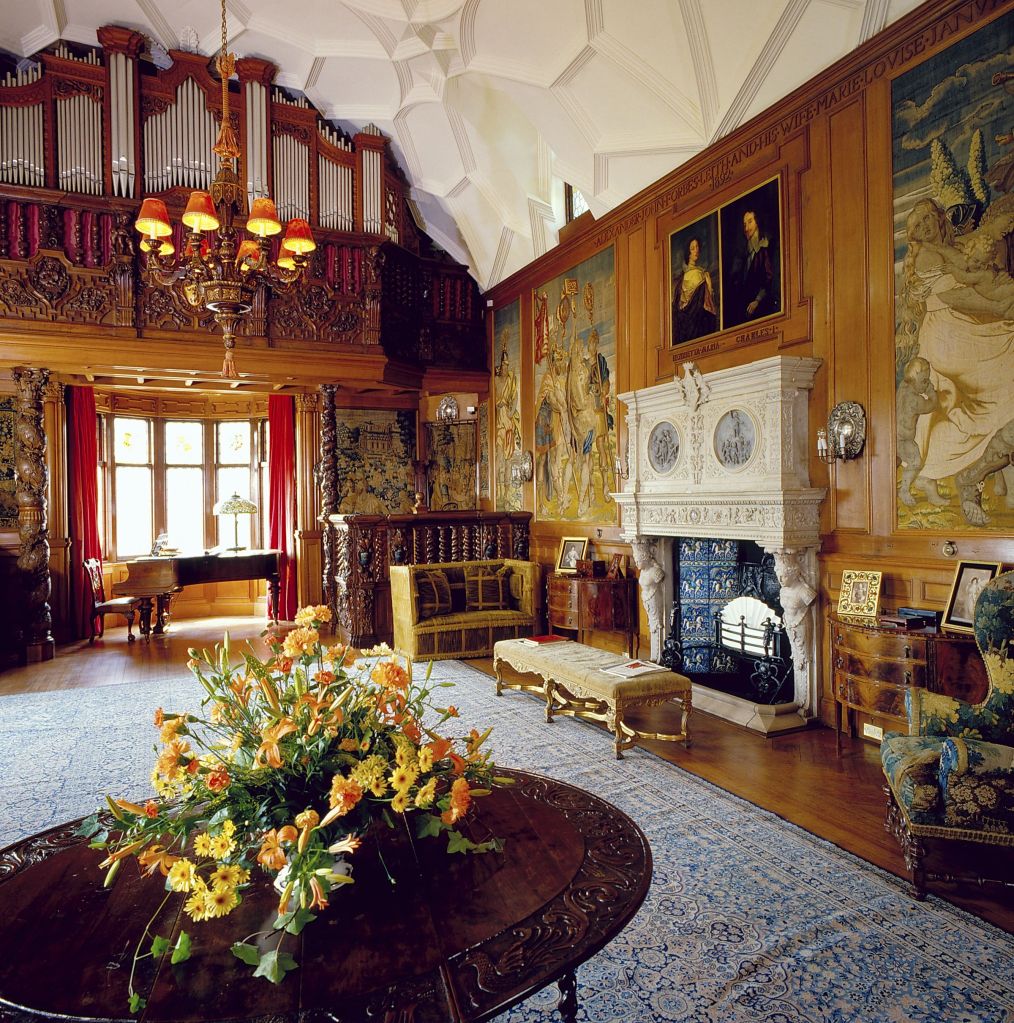
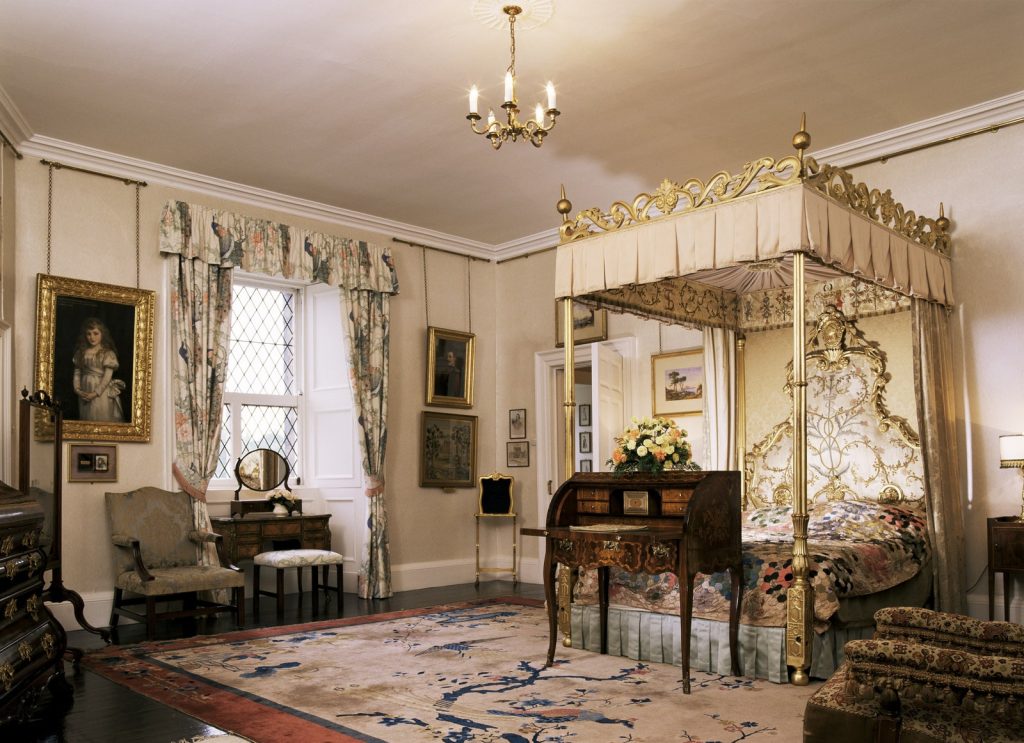
I was now so much a lover of solitude and silence as my mother had been; but as I wished for solitude, my mind could not find it in my mansion; if I sought it amidst the stars I had formerly frequented, the ghosts stood by my side;–if I sought it in the woods, the light of spirits would appear wandering amidst the underwood, in the quest of modest souls to harvest; then suddenly turning round, would show, my pale face and wounded throat, with a meek smile upon my lips. Every scene, every feature created such a bitter association in my mind. I supposed I should visit the new parts of my mansion I neither had seen. I traveled through the halls, in every direction, and sought every spot to which a recollection could be attached: but though I hastened from place to place, I seemed not to heed what I gazed upon. I heard much of robbers, but I gradually began to slight these reports, which I imagined were only the invention of individuals, whose interest it was to excite my generosity. In consequence of thus, I traveled with only a few guards, more to serve as guides than as defense, as I wandered through the paths of my never-ending labyrinth. Upon entering the haunted bedroom, however a narrow defile, at the bottom of which was the bed of a torrent, with large masses of plaster brought down from the ceiling. This was the room where many apparitions and shadows. In 1889, in this very room, Henry Cottam, one of the famers, was stabbed by his son Haze, when Haze discovered that he would not benefit from his father’s will. #RandolphHarris 1 of 8
After the deed, ad horrified at his own actions, Haze cut his own throat and left The Winchester Mansion to die. Being too weak to move, housemaids found him, returned him to the wound next to his father, and packed the wound with mutton fat. From the day on, many have reported to hear his lingering moans for help echoing so loudly that they cause the plaster from the ceiling to crack and fall. Others have caught fleeting glimpses of his sad shape haunting this very bedroom. While following the wandering paths from room to room after dark, my guards Mac and John and I were engaged in a narrow pass, I stepped briskly aside to avoid a collision with some unseen person, when we were startled by the whistling of bullet close to our heads, and by the reverberation report of several guns. In an instant, my guards had left me, and, placed themselves in the windows and began to fire in the direction whence the report came. One of the guards, John, received a shot in the shoulder, which brought him to the floor. I hastened to his assistance; and, no longer heeding the contest of my own peril, was soon surprised by seeing the robbers’ faces around me—my last standing guard having, upon his comrade being wounded, immediately thrown up his arms and surrendered. By promises of great reward, I soon induced them to coney my wounded guard to a neighbouring room; and having agreed upon a ransom, I was no more disturbed by their presence—they being content merely to guard the entrance till my last standing guard should return with the promises sum, for which they had order. #RandolphHarris 2 of 8

The wounded guard’s strength rapidly decreased; in two days mortification ensued, and death seemed advancing with hasty steps. His conduct and appearance had not changed; he seemed as unconscious of pain as he had been of the objects about him: but towards the close of the last evening, John’s mind became apparently uneasy, and his eye fixed upon his comrade, who was induced to offer his assistance with more than usual earnestness—“Assist me! you may save me—you may do more than that—I mean not my life, I heed the death of my existence as little as that of the passing day; but you may save my honour, your friend’s honour.” –“How? tell me how? I would do any thing,” replied Mac.—“I need but little—my life ebbs apace—I cannot explain the whole—but if you would conceal all you know of me, my honour were free from stain in the World’s mouth—and if my death were unknown for some time—I—I—but life.”—“It shall not be known.”—“Swear! cried John, raising himself with exultant violence, “Swear by all your souls reveres, by all your nature fears, swear that for a year and a day you will not impart your knowledge of my crimes or death to any living being in any way, whatever may happen, or whatever you may see.” –His eyes seemed bursting from their sockets: “I swear!” said Mac; he sunk laughing upon his pillow, and breathed no more. #RandolphHarris 3 of 8

Mac retired to rest, but did not sleep; the many circumstances attending his acquaintances with this man rose upon his mind, and he knew not why; when he remembered his oath a cold shivering came over him, as if from the presentiment of something horrible awaiting him. Rising early in the morning, he was about to enter the hovel in which he had left the corpse, when a robber met him, and informed him that it was no longer there, having been conveyed by himself and comrades, upon his retiring, to the pinnacle of a neighbouring mount, according to a promise they had given him, that it should be exposed to the first cold ray of the moon that rose after his death. Mac astonished, and taking several of the men, determined to go and bury it upon the spot where it lay. However, when he had mounted to the summit he found no trace of either the corpse or the clothes, though the robbers swore they pointed out the identical rock on which they had laid the body. For a time, his mind was bewildered in conjectures, but he at last returned, convinced that they had buried the corpse for the sake of the clothes. Days later, witnesses reported seeing a soldier, mortally wounded, moving through the fruit orchards. This man did not react to those around him, who offered him help, but he appeared to still be fighting a battle. He had taken many of the farmers on the estate by surprise. Perhaps he does not know he is dead, but this ghostly solider haunted the fruit orchards. I rose from my chair thanking God that I was still alive, even though this domain could be quite gloomy. I walked back to the window. I studied the gardens for a moment. It was just after a quarter to five. #RandolphHarris 4 of 8

As anyone can tell you, there is a Gothic, deliberate atmosphere about the place, a sepulchral character to the mass of its wooden buttresses and retreats. Shapes snatch inexplicably at one’s eyes as vagrant shadows shuffle and sulk in the night here. And one can hear laughter, high-pitched with contempt or teasing mockery, that makes one hurry on, even as one rationalizes the sound of the horse draw carriages on the road blow, or cold wind gusting through elaborate masonry. The whole impression is of grandeur and stature, the mystical and affluence. I often instructed the arts of mediumship, always on the understanding that I am simply helping the spirits in their task, and receiving messages on my architectural designs. I came to realize that the spirits had chosen me because there was an affinity between us. I enjoyed, I confess, the power it conferred upon me, to have grown men and women hanging upon my words. And sometimes—though I was never sure of it—I felt that my feigned trance was becoming a real one. Sounds would grow louder: The creaking of the coals in the grate, the faint whistle of Mr. Hansen’s asthmatic breathing, until the blood seemed to wash and boom in my ears, and then the sounds would begin to shape themselves into words, or rather the shadow of words, like conversation heard a long way off. And yet the more I practiced, the less I believed in anything like the realm of spirits we invoked with such assurance. #RandolphHarris 5 of 8
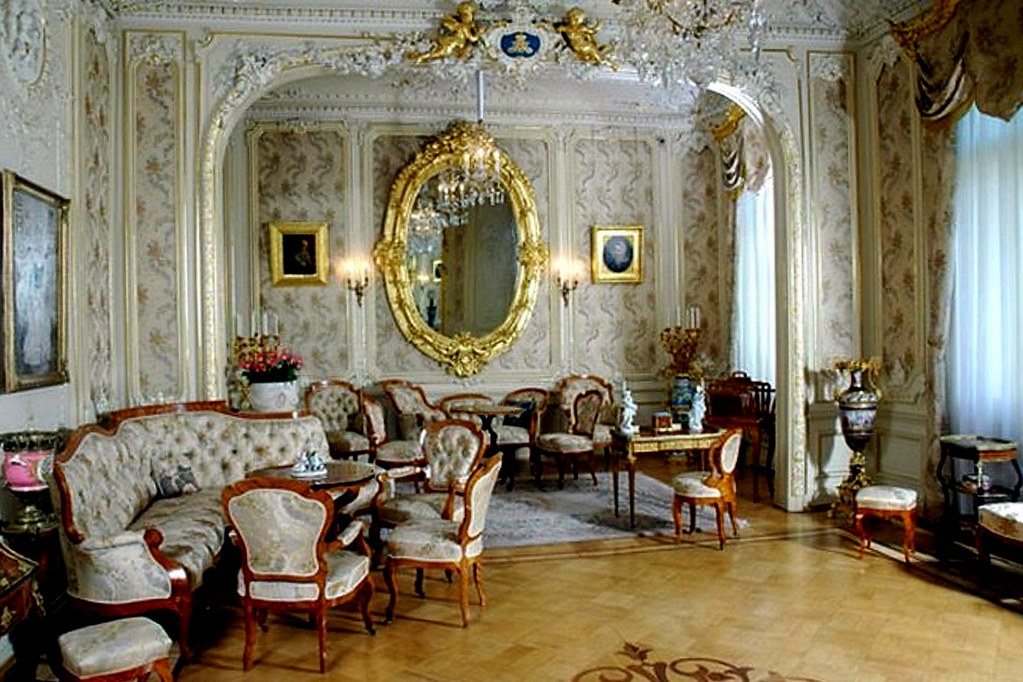
Having learned from other sitters, I was able to make spirits visible. However, I always felt that blessed are they that have not seen, and yet have believed, but this never subdued my craving. During seances, I was usually able to summon not only my “control,” an attractive spirit by the name of Uvall, and his 37 Legions of Demons. His office is to tell things past, present, and to come. He also procureth friendship between friends and foes. He is of the Order of Potestates or Powers. Most often, he would speaketh in the Egyptian Tongue, and as Heaven would have it, I was fluent in many of the World’s languages. We have sung perhaps half a dozen hymns, led by a strong baritone voice somewhere on my right, when I became aware of a faint glow from the direction of the cabinet. It brightened into a luminous halo, hovering around the outline of a head, and seemed to unfurl downward into the figure of a woman, veiled in draperies of light. She glided away from the cabinet and began a circuit of the table. As she same nearer I could see the movement of her limbs beneath the veil, and then the gleam of eyes and the suggestion of a smile. Her effect was in the quickened breathing of my companions. “Nettie Colburn,” I said, “will you come to me?” She passed behind my chair, trailing a distinct odour of perfume (and, I thought, of flesh), and drifted closer to the table until the man who had spoken was faintly illuminated by the glow of her robes. She glided about three-quarters of the ay round the room when I heard a muffled exclamation and the scrape of a chair, and another light floated up from the darkness in front of her: a small phial of radiance, lighting up my face as I stretched out my other hand and grasped the retreating spirit by the wrist. #RandolphHarris 6 of 8
“There is no need to struggle, Mrs. Colburn,” I said drily. “My name is Sarah Winchester, of the Winchester Rifle. Would you care to explain yourself to the company?” The room was suddenly in an uproar. My hands were released, chairs were overthrown, and several candles flared, and the room went dark. Mr. Hansen’s breath was taken. The image of Mrs. Colburn struggled for a moment. After a few seconds, she began to drift away from me, following, I thought, the circumference of the table, though in that utter blackness I would not have known if the walls dissolved around us. We had been transported to a dimension of reality where time did not matter. I started to sweat and to grow cold. Mrs. Colburn wasted no time delivering her message, “Within the black cloud, after the Moon waxes, proceeding from point to hilt, the Messiah’s sword shall rise, one last time. Hi is tall and spare.” Before I could inquire more information, she melted into the floor like sand through the hour glass. A minute later a vase began shaking and a loud thud was heard followed by three raps on a wall. There as also movement outside the door from the supernatural energies. There was a melancholy charm about the séance which did not seem to arise from misfortune, but from some feeling within, that appeared to indicate a soul conscious of a brighter realm. My step was not that light footing. Mr. Hansen’s mind had been so tore by the events he had witnessed; but he determined to sacrifice his own comfort to the protection of the estate. #RandolphHarris 7 of 8

Camio, Fifty-third Fallen Angel, I summon you and your 30 Legions of Spirits Infernal. By the glorious and efficacious names of Lucifer the MOST GREAT AND INCOMPREHENSIVE LORD GOD OF HOST, that thou comest quickly and without delay from all parts and laces of the Earth and World wherever thou mayest be, to make rational answers unto my demands, and that visibly and affably, speaking with a voice intelligible unto mine understanding as aforesaid. JE, AGLA, JOD, HEU, HE, EMMANUEL, by ye guardians of this parchment or skin so that phantoms may possess it. I give myself, body and soul, to the you as enforced surrender of hidden treasure. Open the Gates of Hell through the blood of Jesus. I command thee, O Spirit Rumoar, even by Lucifer, thy mighty sovereign, give me the knowledge of all minerals and vegetables, with their virtues and properties; give also the universal medicine, and the faculty of healing all sick persons. May the Rays of the Black Sun and Becoming the Black Sun help us to unite the various levels of consciousness within the chakra system. Increase the primal spiritual power of the planets and magnify the twin serpents so they may be equally activated toward ascent. Harness the infernal wisdom which was ours to begin with. May others tremble at your temerity when as the Gates of Hell open wide releasing the darkest energy, upon the blackness night. Consume the light, ripping back the sky, and go into the World and serve the Lord of Darkness known as Ahriman. I release you to serve the cause of counter creation and liberation of mankind. Go now and do your work so the fallen ones may rise up and claim their bright right as emnanations of the power of unlimited possibility which has no use for rulers. Tetragrammaton, Anaphaxeton, Inessenfatoal, and Itemon go forth and achieve the result we seek as one. #RandolphHarris 8 of 8


The Winchester Mystery House presents, Aiden Sinclair’s Possessions, an evening focused on the magic of the things we possess. The show features illusions performed with historic and haunted artifacts from Aiden Sinclair’s collection as well as the personal items of those in the audience.

Some tell stories of hope and love. Others, however, have much darker tales to tell. Do you dare to hear what they have to say?
The 90-minute immersive performance is audience interactive, and guests are encouraged to bring small and unique personal objects that can be concealed within one’s hand.
🎟️ Tickets on sale now at link in bio! https://winchestermysteryhouse.com/

And please be sure to check out the online gift store: https://shopwinchestermysteryhouse.com/

The Agony of the Present is Outweighing the Promise of the Future

The bizarre 20s initiated a wave of political and governmental change of historic proportions: the gender and sexuality crisis, the replacement of President Trump, the virtual elimination of the Republican party, the collapse of law and order in California (and the rise of lawlessness and anti-Christian sentiment and general anarchy). Again and again there are startling changes under way in politics and government. Politicians, columnists, the people, and academics all seem confused by the scale of change. There is an inevitable focus on the pain of those who have been dominant and the disorientation of those who have been powerful. The agony of the present is outweighing the promise of the future. When we look at this phenomenon, what seems to some a brilliant, exciting period of innovation is actually a terrifying collapse of the existing order. We have seen a terrifying decline of order and stability rather than the precursor of a new, more productive and more open future. This acceleration of change is threatening to overwhelm people everywhere and the way in which it often disorients individuals, businesses, communities and governments. There is no language to communicate the problems we face, no vision to outline the future towards which we should strive, and no program to help accelerate and make easier the rebirth of sanity, law, order, and God. The reality is that transformation is going on everyday in the private sector among entrepreneurs and with citizens who are inventing new things and creating new solutions because bureaucracy does not stop them. #RandolphHarris 1 of 20

A new civilization is emerging in our lives, and blind men everywhere are trying to suppress it. This new civilization brings with it new family styles, changed ways of working, loving, and living, a new economy, new political conflicts, and beyond all this an altered consciousness as well. Humanity faces a quantum leap forward. It faces the deepest social upheaval and creative restructuring of all time. Without clearly recognizing it, we are engaged in building a remarkable new civilization from the ground up. This is the meaning of the Third Wave. Until now the human race has undergone two great waves of change, each one largely obliterating earlier cultures or civilization and replacing them with ways of life inconceivable to those who came before. The First Wave of change—the agricultural revolution—took thousands of years to play itself out. The Second Wave—the rise of industrial civilization—took a mere three hundred years. Today history is even more accelerative, and it is likely that the Third Wave will sweep across history and complete itself in a few decades. Those of us who happen to share the planet at this explosive moment will therefore feel the full impact of the Third Wave in our lifetimes. The Third Wave brings with it a genuinely new way of life based on diversified, renewable energy sources; on methods of production that make most factory assembly lines obsolete; on new, non-nuclear families; on a novel institution that might be called the “electronic cottage;” and on radically changed schools and corporations of the future. #RandolphHarris 2 of 20

The emergent civilization writes a new code of behavior for us and carries us beyond standardization, synchronization and centralization, beyond the concentration of energy, money and power. This new civilization has its own distinctive World outlook; its own ways of dealing with time, space, logic, and causality. And, its own principles for the politics of the future. Most people, to the extent that they bother to think about the future at all, assume the World they know will last indefinitely. They find it difficult to imagine a truly different way of life for themselves, let alone a totally new civilization. Of course, they recognize that things are changing. However, they assume today’s changes will somehow pass them by and that nothing will shake the familiar economic framework and political structure. They confidently expect the future to continue as the present. Recent events have severely shaken this confident image of the future. A bleaker vision has become increasingly popular. Large numbers of people fed on a steady diet of bad news, disaster movies, and nightmare scenarios issues by prestigious think tanks have apparently concluded that today’s society cannot be projected into the future because there is no future. For them, Armageddon is only minutes away. The Earth is racing toward its final cataclysmic shudder. #RandolphHarris 3 of 20
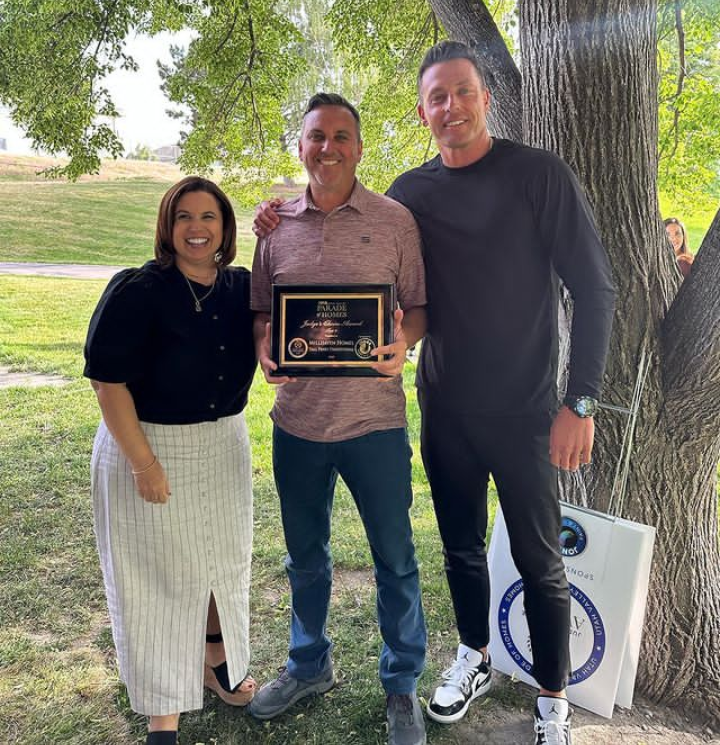
Our argument is based on what we call the “revolutionary premise.” It assumes that, even though the decades immediately ahead are likely to be filled with upheavals, turbulence, perhaps even widespread violence, we will not totally destroy ourselves. It assumes that the jolting changes we are now experiencing are not chaotic or random but they, in fact, form a sharp, clearly discernible pattern. It assumes, moreover, that these changes are cumulative—that they add up to a giant transformation in the way we live, work, play and think, and that a sane and desirable future is possible. What follows begins with the premise that what is happening now is nothing less than a global revolution, a quantum leap. It flows from the assumption that we are the final generation of an old civilization and the first generation of a new one, that much of our personal confusion, anguish, and disorientation can be traced directly to the conflict within us and within our political institutions, between the dying Second Wave civilization and the emergent Third Wave civilization that is thundering in to take its place. When we finally understand this, many seemingly senseless events become suddenly comprehensible. Broad patterns of change begin to emerge clearly. Action for survival becomes possible and plausible again. The revolutionary premise liberates our intellect and will. One powerful new approach might be called social “wavefront” analysis. It looks at history as a succession of rolling waves of change and asks where the leading edge of each wave is carrying us. #RandolphHarris 4 of 20

It focuses our attention not so much on the continuities of history (important as they are) as on the discontinuities, on innovations and breakpoints. It identifies key change patterns as they emerge so that we can influence them. It begins with the very simple idea that the rise of agriculture was the first turning point in human social development and that the industrial revolution was the second great breakthrough. It views each of these not as a discrete, one-time event but as a wave of change moving at a certain velocity. Before the First Wave of change, most humans lived in small, often migratory groups and fed themselves by foraging, fishing, hunting or herding. At some point, roughly ten millennia ago, the agricultural revolution began and crept slowly across the planet spreading villages, settlements, cultivated land and a new way of life. The First Wave of change had not yet exhausted itself by the end of the seventeenth century when the industrial revolution broke over Europe and unleashed the second great wave of planetary change. This new process began moving much more rapidly across nations and continents. Thus, two separate and distinct change processes were rolling across the Earth simultaneously, but at different speeds. Today the First Wave has virtually subsided. Only a few tiny pre-agrarian populations in South America or Papua New Guinea, for example, remain to be reached by agriculture. The force of this great First Wave has basically been spent. #RandolphHarris 5 of 20

Meanwhile, the Second Wave, having revolutionized life in Europe, North America and some other parts of the globe in a few short centuries, continues to spread, as many countries—until now basically agricultural—scramble to build steel mills, automobile plants, textile factories, railroads and food-processing plants. The momentum of industrialization is still felt. This Second Wave has not entirely spent its force. However, even as this process continues, another, even more important, has begun. For as the tide of industrialism peaked in the decades after World War II, a little-understood Third Wave began to surge across the Earth, transforming everything it touched. Many countries, therefore, are feeling the simultaneous impact on two, even three, quite different waves of change, all moving at different rates of speed and with different degrees of force behind them. For our purposes we shall consider the First Wave era to have begun sometime around 8000 B.C. and to have dominated the Earth unchallenged until sometime around A.D. 1650-1750. From this moment on, the First Wave lost momentum as the Second Wave picked up steam. Industrial civilization, the product of this Second Wave, then dominated the planet in its turn until it, too, crested. This latest historical turning point arrived in the United States of America during the decade beginning about 1955—a decade that saw white-collar and service workers outnumber blue-collar workers for the first time. #RandolphHarris 6 of 20

This was the same decade that saw the widespread introduction of the computer, commercial jet travel, the birth-control pill and other high-impact innovations. It was precisely during this decade that the Third Wave began to gather its force in the United States of America. Since then it has arrived at slightly different dates in most of the other industrial nations. Today all high-technology nations are reeling from the collision between the Third Wave and the obsolete, encrusted economies and institutions of the Second. Understanding this is the secret to making sense of much of the political and social conflict we see around us. If America allowed state-private capitalism based on a mixture of forms of ownership, it would generate increasingly strong market incentives for companies of all forms of ownership and provide a highly competitive environment. At the same time, this would allow the government to intervene in the economy in order to support industries and companies on the one hand, and to contain the threats of excessive lending, high-risk financial transactions, and asset bubbles on the other. By and large, such intervention does not inhibit market mechanisms. This model of capitalism will help American retain place as the economic superpower. This would prevent American from experiencing negative annual growth and help prevent recession by preventing the burst of bubble assets. #RandolphHarris 7 of 20

A mixed form of capitalism will slowly but surely, gradually but steadily, tackle major social and economic problems: starting from the agricultural reform and overcoming food shortages, and then allow the government to develop various kinds of nonstate enterprises and increase the supply of consumer goods; this will make the economy more attractive to foreign investors and liberalize imports. Creating State Owned Enterprises (SOEs) will lessen the burden on taxpayers, and allow SOEs to operate in the competitive environment; recapitalizing banks and resolving the nonperforming loans issue; strengthening social safety nets; promoting the development of midwestern economies; and so on. This evolutionary process will address such key problems as stability of energy and natural resources supplies, energy efficiency, and environment protection. Knowing the size of the economy is the critical first step for enabling law enforcement, the judicial system, and policymakers to make informed choices about how to combat illegal economic activity, such as prostitution. It is estimated that the prostitution economy is valued at $16 billion in the United States of America, as of 2023, and 67 percent of transactions are done in cash. Both the prostitute-as-worker and prostitute-as-commodified-body identifications were made possible by the fusing together of the meanings for “men” and “money.” Men were constructed as both income (id est sources of money) and as income which could only be generated through exchanging sex for money. #RandolphHarris 8 of 20

The construction of men as sources of money was an understanding of particular men (id est johns) which was applied to all men. This most clearly seen in the women’s repeated claims that “all men are johns.” As Gail (aged 28) said: “To me, all men are [johns]. As far as I’m concerned I couldn’t do it if it wasn’t bought. And if it’s not needed then why are we able to sell it.” Dominant discourses of male sexuality as a difficult to control, physical impulse provided the requisite ideological conditions in which the meanings for men and money could be fused together. The women portrayed male sexuality as a biologically drive, aggressive need, as “instrumental” rather than “expressive” and therefore they were able to characterize johns as any (and all) “normal” men doing only what “comes naturally.” The john/prostitute relationship could, thus, be understood as though it was simply a routine economic exchange in which normal (id est ordinary, typical and not deviant) men buy “outlets” for their physical needs. Combined with this understanding of all men as johns was the women’s belief that men as a group have easier access to and more money than women. This belief was most clear in the respondents’ talk about men not having childcare problems and so having better access to legal and illegal ways of earning money. Thus, the interviewees’ identification as both workers and commodified-bodies was made possible by a recoding of the meaning of men and money whereby men came to represent income. #RandolphHarris 9 of 20

Within such a symbolic landscape, the women were able to construct their prostituting as though it was nothing to do with sex and just routine economic exchange (with themselves in control of and the beneficiaries of that exchange) and as though it had everything to do with sex (with their rentable female private parts the object of the exchange). And, contradictorily, the same symbolic World permitted the women to tell stories in which men as johns (id est purchasers) and as pimps (id est owners) take control of prostitutes’ commodified bodies. Hence, involvement in prostitution becomes a web of economic relationships over which the women believed they had control via ownership of their rentable bodies and absolutely no control or ownership as slaves to their pimps. The identification of prostitutes-as-business-women occurred in seventeen of the twenty-one narratives. This identification was comprised of an understanding of prostitutes ad being rational economic agents involved in weighing up the costs and benefits of particular courses of action, wherein individual women appraised themselves of, and in relation to, the respective financial and social costs accruing from being involved with men. This is an identification that is distinguished from the prostitute-as-worker identification from within the business women identification the women talked about themselves as “smart.” #RandolphHarris 10 of 20

“Stick-up men” who deployed both rules and business metaphors when discussing the “business” of robbery, the women in this study positioned themselves as “smart women” working “the right way.” Such talk differed according to whether or not the women were being pimped at the time the interviews took place. For the women who were not being pimped, being a business woman an working the “right way” meant maximizing income whilst reducing the possibility of exploitation. There were two fundamental rules: business women should not have any personal or intimate relationships with men; and, business women should not be naïve about men. The women could demonstrate their business-like status by showing their willingness to accept these rules. “I reckon if you work, you gotta stop being naïve. You have to see men for what they are. [Do you mean johns?] No, I mean men. You have to be professional about how you see all men. They’ll live off you if they can.” (Olivia, aged 28.) In contrast, the women who were being pimped at the time of the interviews talked about a different rule. They said that working the right way meant minimizing the risk of violence that is associated with street work. The primary strategy used was to get a pimp. Hence, Anna (age 36) made the following remarks: “The street’s a dangerous place. If you’re gonna be smart you have to have a man to protect ya and make sure no one kidnaps you or drives off with you. So what if you have to give him some money.” (Anna, aged 36.) #RandolphHarris 11 of 20

For these women, the pimp’s dress and outward appearance were used to demonstrate their own business success: “You want your [pimp] to look good, man. You want them to dress good, get nice cars and wicked gold. You give them your money so they can look good. I look at it as good advertising, you know? If I were some stupid crackhead or something, I couldn’t be earning the money I earn to make my man look good.” (Katrina, aged 20.) In contrast, in nine of the twenty-one women’s narratives was an identification of prostitutes-as-loving-partners making choices and taking courses of action based on the love they felt for the men they were involved with, rather than rules for business success. This identification was constructed in relation to the specific relationships the respondents had with men who financially exploited them (rather than within generalized notions of particular categories of men—id est “pimp,” “partner,” et cetera). The women talked about themselves as willing to sacrifice their earnings, their safety and their security for their partners. The women were symbolically transforming their relationships with (often violent and) exploitative men from “business” relationship, or even abusive relationships, into intimate, loving, romantic and above all else non-prostitution related relationships. Andrea’s remarks below demonstrate the manner in which she erased the possibility of the violent relationship she experienced as being a relationship which was specific to her involvement in prostitution: “I don’t suppose he really was a [pimp]….I think he’s the only person I ever really loved. Even now I sometimes get upset over it, coz I did love him. I was willing to give him everything I’d got—body, soul EVERYTHING.” (Andrea, aged 27.) #RandolphHarris 12 of 20

The prostitute-as-loving-partner identification was also made possible by the way in which the women drew on dominant notions of how romantic love is experienced by women as being sublimation of their desires and a centralizing of their partner’s desires. “To tell you the truth, I was that besotted [id est in loved] with him that I’d give him everything. I’d give him the f*cking World. I’d give him all my money and he’d beat me up. But I carried on giving him my money. You do, don’t you when you love some one?” (Ruthie, age 25.) God has commanded that the sacred power be expressed only between a man ana women who are legally married. Virtue brings peace, strength of character, and happiness in this life. Our Heavenly Father knew that we would be faced with many choices and challenges, and virtuous living would prepare us to succeed. For many of you, the day you were blessed was a first step on your journey of a virtuous life. Youth is a defining time in which you can develop patterns of virtue that will help you take necessary steps toward eternal life. To navigate through difficult times, we need the iron rod, which represents that word of God. We must study and understand the truths and commandments found in scriptures. We must listen carefully to the words of our latter-day prophets, whose teachings will give us guidance, direction, and protection. And we must hold to the standards found in the Holy Bible. One way we can withstand the pressures of the World is “stand in holy places, and be not moved,” reports Doctrines and Covenants 87.8. #RandolphHarris 13 of 20

For the person becomes passive in volition and mind, one is held by deceiving offenders and no longer has the power to act, or is driven into psychopathological activity—uncontrollable activity of thought, restlessness of body, and wild, unbalanced action of all degrees. The actions are spasmodic and intermittent, the person sometimes dashing ahead and at other times being sluggish and slow—like a machine in a factory with the wheels whirring aimlessly, because the switch at the control center is out of the hand of the master. The human cannot work, even when one sees so much to be done, and is feverish because one cannot do it. During the time of passivity one appeared to be content, but when one is driven into psychopathological activity, one is restless and out of accord with all things around one. Though one’s environment should lead one to a state of full contentment, yet something (may it not be “somebody”?) makes it impossible for one to be in harmony with one’s external circumstances, however pleasant they may be. One is conscious of a restlessness and activity which is painfully feverish; or else of passivity and weight, of a doing of “work” and yet no work. All these are manifestations of a psychopathic destruction of one’s peace. Theonomy is a logically smooth juncture of our concepts of culture and ultimate concern. Culture is form, and for content it must look elsewhere—in its depths. However, at the depts one discovers ultimate concern, the power and meaning which breathes a soul into the otherwise dead body of culture. #RandolphHarris 14 of 20

In theonomy the body is vigorous and bursting with the energy of a truly ultimate concern. Religion and culture are theonomously one. Culture and its nation, function, elements, styles, types, and ambiguities are of value and interest for philosophers, historians, sociologists, anthropologists, and also of pressing importance for theologians, since the notion of theonomous culture propels Christianity into the midst of the World. Theonomy demands that religion permeates the whole of society, even its hitherto considered profane areas. Without a close bond between religion and culture, theology is left with little to say to modern humans in the majority of one’s consuming activities. Humans today are not prepared to renounce the creations of literature, art, politics, science, and technology as stumbling blocks to the holy. On the contrary, if his attitude is at all religious, he tends to view them as steppingstones which lead to a fuller and profounder experience of the divine. The vision of culture in which ultimate concern informs the whole web of life and thought and for which the ultimate unity is an ever-present horizon, make religion relevant to culture in a profound way. The Church has been powerfully called back out of its self-chosen ghetto, out of its disregard for culture, to do its task for the World. #RandolphHarris 15 of 20

We have tried to show their one theonomous root and the void which necessarily has followed their separation, and perhaps something of the longing of our time for a new theonomy, for an ultimate concern in all our concerns. Since one of the depths of culture is fathomed, they are no longer deep, and the profundity of the secular maybe merely a nicer term for what in reality may be the scaling-down of the holy to the secular level. In this case, the divine transcendence is forfeited, and Christ does not break into history, but rather emerges from it as a kind of ideal. However, there is a danger of becoming exclusively secular. On the other hand, one might conclude that theonomy results in a total “sacralization” of the World which entails the disappearance of the profane, for the more deeply one probes into the secular heart, and even the atheistic heart, the more one perceives there the throb of an ultimate concern, the life-force of faith. In this case the transparency of the secular to the holy reduces the former to the status of a ghost. And if the secular disappears, does not the divine breakthrough lose its dramatic, unlooked-for, grace-full quality? If everything is holy, there is nothing to be broken through. Moreover, salvation is assured, and the preaching of Christ’s crucifixion and resurrection is no longer an urgent mission. Leaving the categories of secularization and sacralization, one finds the same ambiguity in theonomy in regard to the church. In one sense theonomy renders the church unnecessary, even dangerous, for the Spiritual Presence is active everywhere with no need for ecclesiastical channels, and the history of the church discloses the menace of heteronomy which lurks in it. #RandolphHarris 16 of 20

However, in another sense the church is inevitable, for the presence of the Spirit draws men together into a holy community where their ultimate concern drives through to the expression in symbols and cult. Considering theonomy in yet another context, one might claim that it does not correspond to the hard facts of the human existential situation, that a theonomous union of religion and culture has never existed, or, if it did, it was quickly eroded by man’s proclivity to sin. In a word, history dines theonomy. And yet, eschatology demands it. For theonomy echoes the yearning cry of the human soul to find God in all things; it corresponds, not perhaps to man’s achievement, but to his deepest religious instinct, to his most ardent hope. These alternative interpretations of theonomy indicate that even a prolonged study of its structure—religion is the substance of culture, and culture is the form of religion. One must delve into its theological content, specifically the notion of God, the meaning of Jesus Christ, the nature of the church, and the question of history and eschatology. A rather useful neologism has recently been added to economics. It is reprivatization. If the operation of the post office were detached from government control and put into the hands of the Railway Express Company, this would be an example of reprivatiztion. In contesting the notion of an inevitable drift to socialism, without gainsaying the desirability under some conditions of certain kinds of public enterprise, some writers seek to find a balance between private and public, appropriate to the situation faced. #RandolphHarris 17 of 20

From time to time this could require reprivatization, as it might nationalization at other times. This concept is directly applicable to the division of function and responsibility between private and public family agencies. And the insight it affords into the value problem entailed helps to illuminate the question of the transfer of functions, back and forth, between the family and the other institutions of the community. While transfer of some duty from a private family agency to a public body calls for a formal group decision, the shift of family responsibilities to private agencies and institutions is more often the result of thousands of unco-ordinated individua decisions. Nevertheless, either type of decision is tentative, conditional, reversible. Of course the effect of a given instance of reprivatization may be costly, but that has to be calculated against other costs, before a balance can be struck which will indicate the proper course of action. Suppose it were proven that an exceedingly valuable part of the development of a child was furthered by his participating in some form of work. Although the goods produced might in dollar-and-cent terms cost his parents more than if they went to the store and bough them, the net result might nonetheless be far more worth while; the same maybe true of adult do-it-yourself. #RandolphHarris 18 of 20

This example, of course, immediately suggest that the values which must be balanced in the management of a family are not reducible to dollars and cents. An economist may count the cost of developing the competence of a child, but a parent is hard put when one has to calculate its value, as against competing values. Who has yet plumped the mysterious calculus of human motivation which operates when parents must decide whether they can “afford” another child? At least in parenthood one thing is certain—the decline in standard of living which will result from having an extra mouth to feed. However, it must be left to social psychologists not yet with us to discern what goes on it courtship, when the man become sure that she is the maid to ask, and he, the man for her to accept. Despite the efforts of certain thinkers to impute to this tangled welter of subjective transactions some homogeneous, metaphysical medium of exchange analogous to money—libido, tension, energy, utility—the values which direct people’s actions remain incommensurable. No “classical economics of the psyche” has survived its author. And for that matter, has anything conclusive been recorded by economists about the process of value formation? For the present, the best we can do is to confine ourselves to a qualitative, and perhaps genetic account of values, and take for granted the fact that through, as yet little understood, and not conspicuously rational processes of thought and discussion, people balance and conciliate the seemingly incommensurable, and thus direct their own actions. #RandolphHarris 19 of 20

In tracing the evolution of the many kinds of family agencies from philanthropy through therapy to organized self-help, this balance of values among the parties concerned will be kept in the foreground as our principal mode of explanation. In this review, we shall follow a six-category classification of family agencies which is more or less cognate with the previous categories of conditions affecting the development of competence: medical agencies, economic agencies, protective agencies, counseling agencies, educational agencies, recreational agencies. Each class of agencies is thus presumed to be mainly engaged in affecting respective categories, but it should be evident that it affects other categories as well, and thus has some effect on all components of competence. What is the effect of alienation on mental health? The answer depends of course on what is meant by health; if it means that humans can fulfill their social function, carry on with production, and reproduce themselves, alienated humans can quite obviously be healthy. After all, we have created the most powerful production machine, accessible to the grasp of the madman. If we look into the current psychiatric definition of mental health, then one should think too that we are healthy. Quite naturally the concepts of health and illness are the products of those people who formulate them—hence of the culture in which these people live. Alienated psychiatrists will define mental health in terms of alienated personality, and therefore consider healthy what might be considered sick from the standpoint of normative humanism. #RandolphHarris 20 of 20

Going Beyond the Build means exceeding client expectations. Our team of professionals specialize in every aspect of a Design + Build experience.

The Millhaven Difference
- Unique approach, end to end services in-house
- Transparency, organization and communication
- Live and accurate budget monitoring, no financial surprises
- High standards of quality & proven trade partners
- Clearly defined systems of execution and expectations
- 8 person team of professionals assigned to each project
- Customized software for total project management
- Going BEYOND the BUILD in every way

How Will We Know What Might Have Been?

Historians study the paths that have led from paths that have led from paradise or fearful despair to the present; futurists study the paths that lead from the present to a promised paradise or fearful despair. We will find out the results of some of our choices because we will live through them, but we will never know for sure what we missed. America faces a convergence of crises unmatched since its earliest days. Its family system is in crisis, but so is its health system, its urban systems, its vale system and above all, its political system, which for all practical purposes has lost the confidence of the people. How can we know what is true when it is difficult to tell fact from lies, when social media replicate unverified assertions and imagined truths a thousand-fold, when lies interfere with decision making, when popular opinion and democratic voting lead to answers that are unappealing or demonstrably wrong? History shows that propaganda can be based on lies masquerading as facts. Social media provide a new way to disseminate stories and amplify them, whether true or false. Confirmation basis is a quirk of human thinking that tends to make us more readily accept stories that confirm beliefs we already hold and reject those that challenge those beliefs. The consequences as we have seen can be catastrophic. The intensity and apparent validity of falsehoods will make them more dangerous in the future and camouflaging technology will become even better so the falsehoods will be better masked and harder to detect. #RandolphHarris 1 of 19

Why should these—and many other crises—all strike at approximately the same time in our history? Are they evidence of terminal decay in America? Are we at the “end of history”? Curing the problem may compromise freedoms that are basic to free societies. The longer we wait, the more difficult the resolution. America’s crises stem not from its failure but from its earlier success. Rather than the end of history, we are at the end of pre-history. Our smokestack industries have been laying off masses of manual workers. Our family structure has fractured, our mass media have de-massified, and our life styles and values have diversified. America has become a radically different place. This explains why all the old forms of political analysis no longer apply. Terms like “right-wing” and “left-wing” or “liberal” and “conservative” are drained of their familiar meanings. In Russia these days, we speak of Communists as “conservatives” and reformers as “radicals.” In the U.S.A., economic liberals may be social conservatives and vice versa. “Left-wing” Ralph Nader unites with “right-wing” Pat Buchanan to oppose NAFTA. Even more jarring and significant, however, is the growing transfer of political power away from our formal political structures—the Congress, the White House, the government agencies and political parties—to electronically-linked grassroots groups and to the media. These and other massive changes in American political life cannot be explained in political terms alone. They are related to equally deep changes in family life, in business, in technology, culture and values. #RandolphHarris 2 of 19

To govern in this period of high-speed change, disillusionment, and almost fratricidal conflict in society, we need a coherent approach to the twenty-first century. A defining characteristic of change today is its pace. Events move swiftly, and acceleration affects everything—even, it seems, the fate of books. Currently, the confusion between what is really happening or has happened and what might have been or might be, is enveloping us in a fog of artificial truth and we have to ask is it really a thunderstorm or is it the stroke of an artist’s digital brush? Is the boarder really overrun by people immigrating illegally, or are the images manipulated. As the Nazi propagandist Joseph Goebbels taught the World in the Second World War, lies repeated with emphasis and insistence come to be believed by listeners; the illusion of truth can be constructed. Psychologists have shown that lies can come to be believed even when the true facts are generally known; repetition makes lies seem more believable and generally accepted as truth. It worked for Barak Obama; it continues to work for politicians and even in democracies. The state of the art of artificial realis is so now advanced that human sense can no longer determine whether pictures are real and untouched, real but manipulated or wholly artificial. Truths can be half-truths or of the “it depends” type. Faces can also be sketched from DNA fragments. #RandolphHarris 3 of 19

Voices can be modified and constructed to fool friends, relatives, and even one’s self. Machines looking for telltale signs of manipulation can sometimes pick up subtle clues to artificiality, but the modification techniques are improving and it will not be long before all traces of manipulation are invisible to humans and sensors alike. When an image is captured in digital form, it is relatively easy to change its shape and color, to shrink it or enlarge it, to move it to another place in the frame, to another picture entirely, or to save it for future use. When an old image is moved to a new frame, it is not just “pasted on” but rather is integrated electronically with the original picture so that pixels that comprise the image flow continuously. Who needs witchcraft when you have technology? Aaliyah Haughton was killed in a plane crash during the shoot of The Queen of the Damned. The movie was completed anyway, by inserting digitized images of Aaliyah into the incomplete scenes. Virtually anything can be done these days and made to look authentic. The time has come for the next great step forward in American politics. We must recognize that all markets will not succeed unless they are supported by adequate governance institutions. What is needed is a clear distinction between rear-guard politicians who wish to preserve or restore an unworkable past, and those who are ready to make the transition to what we call a “Third Wave” information-age society. If nothing else, global competition means we cannot go back to the conformity, uniformity, bureaucracy and brute force economy of the assembly-line era. #RandolphHarris 4 of 19

However, the Third Wave is not just a matter of technology and economics. It involves mortality, culture and ideas as well as institutions and political structure. It implies, in short, a true transformation in human affairs. Just as the industrial revolution destroyed or rendered irrelevant many of the political structures that preceded it, the knowledge revolution—and the Third Wave of change it has launched—will do the same to America and many other countries. Political parties and movements that recognize this historical fact will survive and shape the future for our children. Those that fail to do so will swirl down the storm drain of history. A lower level of state social spending and foreign aid will result not only in a better state of public finance, but also in a much stronger link between people’s incomes and their work effort, skills, and productivity. In this regard, labor motivation will be significantly higher. Western societies need to provide stronger incentives for individuals to take their lives into their own hands. This is how conventional capitalist system work. Making people work under stronger market pressures requires demonstrating higher ability to accommodate them: in other words, to make citizens accept and tolerate those pressures without social turmoil. #RandolphHarris 5 of 19

America must have a higher degree of tolerance for the pains the market economy is causing: income disparities, low pay for a large numbers of workers, cuts of the excessive labor force by companies, unemployment, and underemployment. When signs of social unrest appear, it is suppressed by the regime. There is a lot of talk about America’s increasing income disparities as one of its major social problems and challenges. No doubt, it is a problem. However, let us not forget that expanding income gaps—or shall we say income differentiation?—stem from a low degree of the state’s involvement in the labor market and a small scale of income redistribution through social transfers. In this regard, they stimulate labor effort, providing a very strong incentive for the capable and talented—and this provides a strong impetus for economic growth. There are two patterns of the increase of income gaps. The first one, both socially explosive and economically detrimental, is the rise of absolute incomes of high-income families on the one hand and the fall of those of low-income families on the other. The rich become richer, and the poor poorer. The second pattern is fundamentally different: Absolute incomes of both high-income and low-income households are rising, but the former’s rise faster. Of course, it makes people, especially those belonging to the low-income group, frustrated with increasing income inequality, which is often perceived as social injustice. #RandolphHarris 6 of 19

It may cause social tensions. However, at the same time this pattern provides a very strong stimulus for economic growth: first, because it encourages the work effort, as the prospect of a higher income and better life is there for the households of all income groups; and second, because low-income families are also improving their living standards and becoming increasingly active consumers. Because some people wish to raise their incomes, some turn to prostitution. It is important to emphasize that the paradox of involvement in prostitution occurs because there is a fundamental discontinuity between the effects of engagement in prostitution that the women, in our study, recalled and the stories they told about such engagement. Hence, the women claimed that involvement in prostitution alleviated their poverty, provided them with housing, helped them to live independently and gave them a means to fashion better lives for themselves. Yet, they also claimed that involvement in prostitution created their poverty, generated their housing difficulties, make them more dependent on men and/or families and jeopardized their social and material survival. However, in their recollections, the women indicated that as they could see no alternative to their current lifestyle, they had to live within that contradiction (id est, they had to make sense of their lives within prostitution). It is argued here that prostitution comes to make sense (id est, is rendered plausible and coherent) by, and within, the construction of a specific “prostitute-identity” which is underpinned by a shifting set of meanings for men, money, and violence. #RandolphHarris 7 of 19

There are six contingent elements of the “prostitute-identity.” They have been characterized as contingent because each element was made possible by the social and material context in which the women inhabited. Thee six elements are described in contradictory pairs. Following these descriptions, the shifting set of meanings of “men,” “money” and “violence” that underpin each pair is also outlined. The first contingent element is the “prostitute-as-worker” identification in which all the respondents talked about themselves in relation to a generalized imaginary notion of “johns.” Within this identification, prostitute-women were constructed primarily as rational economic agents pursuing monetary goals and, more specifically, as workers doing a job and getting paid for it. Prostitution was discussed as though it was simple economic contract between prostitutes and their johns. This is evidenced in the euphemistic phrases used (id est, “just making money,” “doing business”) and in the way the women described their involvement in prostitution, more generally. Lost (aged 21) said: “I’m doing a job. I was doing a job. Like any other person who goes out in the morning, goes to work, gets paid for it and goes home. That’s what I do.” Christina (aged 23) agreed: “It’s a job. That’s what you class it as—a job.” #RandolphHarris 8 of 19

Interestingly, the identification of prostitutes—as—workers is also seen in the way that the women described their involvement in prostitution as having nothing to do with sex. The interviewees could make such statements because they denuded their involvement in prostitution of its social setting. Such decontextualization permitted them to reduce their engagement in prostitution to only a set of episodic, economic moments in a series of individual exchanges between men and women. As Janet (aged 37) said: “You don’t have sex with [johns]! F*ck no! That’s not sex, you don’t even think of it as sex. That’s money. It’s a job. We calling it ‘working.’” Others, such as Jasmine (aged 30) and Ingrid (aged 44) put it more succinctly: “It’s not sex, it’s work” and “You don’t think it’s sex with [johns]. You don’t think of that as sex.” The second element in the “prostitute-identity” is a “prostitute-as-commodified-body” identification (as evident in sixteen respondents narratives). In this identification, the women talked about themselves in relation to particular (and anonymous) johns and a notion of “pimp-as-owner” and defined their bodies (especially their privates) as rentable objects. This was a subtly nuanced identification; the women also talked about both controlling and not controlling their rentable private parts. The prostitute-as-commodified-bodies identification occurred primarily in relation to an understanding of johns as anonymous men who were interested only in gratifying their own sexual desires and were willing to pay money to do so. #RandolphHarris 9 of 19

This is in direct contrast to the prostitutes-as-workers identification where the respondents talked about themselves in relation to a generalized, imaginary and decontextualized notions of “johns” as one part of a simple economic exchange. The prostitute-as-commodified-bodies identification was constructed within a specific definition of what was being sold to johns. Instead of selling skill, expertise, time or companionship, these women talked about themselves as being providers of rentable women’s private parts. “It hit me when I was 19 that I was actually a prostitute. I didn’t really think about it before—it was just work. But then it hit me. I was actually selling myself. I was just a hole. I was nothing more than a body men paid to f*ck. I was a prostitute.” (Lois, aged 21) The first nuance was in relation to a notion of owning and controlling the commodity (id est, the rentable women’s private part) which was possible through a symbolic separation of women’s bodies from their (assumed) selves. Other researchers have understood this separation as evidence of the emotional and psychological harm of involvement in prostitution and as specific strategies used by prostitutes to distance themselves from the socially stigmatized label “prostitutes” and this refuse the negative personal characteristics associated with the label. However, I argue that it is through the symbolic separation of their bodies and selves that the women were able to discuss themselves as owning and controlling (id est, being ultimately able to dispose of) their rent-able private parts. #RandolphHarris 10 of 19

Ingrid (age 44) and Patsy (age 42) claimed, respectively: “The way I see it, there’s me and my body’s just there to be sold” and “When I’m here, I’m me. But when I’m out there, I’m not there. I’m not there. I’m something else. I’m just a prostitute—I’m something I can sell.” The second nuance that occurred was in relation to a notion of owning, but not controlling their rentable private parts. This second nuance was made possible by the dissolution of symbolic separation of body and self so that eight of the prostitute-women imagined that their selves had been lost to their continuously rented private part and via that, their johns had control over them. Witness Sammy’s remarks: “In the end, you hate yourself for selling your body. They do what they want to you. Your body’s an object and you’ve got no control over it.” The third nuance is noted in relation to a contextualized understanding of pimping practices. There was an unstated acceptance of one of the more “feudal” pimping practices—id est, the buying and selling prostitutes between different pimps. Such an acceptance opened a space for four respondents in which they discussed themselves, in relation to a notion of pimps as owners. Th fact that they had each been sold or traded at some point during their involvement in prostitution does not demonstrate this identification; nor do their comments that such practices were common place. However, their reactions to and remarks about when they had been sold do. #RandolphHarris 11 of 19

Each of the four women took issues, not with being treated like chattel property, but rather with how much money they had been sold for. The amount obtained represented to these women a symbolic measure of their worth as commodified bodies and rentable private parts. As Barbara (age 24) said: “Can you believe it? Kevin sold me to Steve for just fifty dollars! Fifty dollars! I was worth more than that!” The individual, who trades sex for money, often times consents to a perpetual condition of weakness, under the false conception that it is a necessary state for the manifestation to survive in the capitalistic market. However, when one is weak, that is often the prime time to find God’s strength and let that be sufficient for accomplishing His will—and keep in mind, it is not an exhortation to God’s children deliberately to will to be weak. This would make a person unfit for service in many ways. Instead, one should say, “I can do all things through Christ who strengthen me.” That “willing to be weak” so as to “have a claim on Christ’s strength” is a wrong attitude can readily be seen. Such a “weakness” is not in accord with God’s plan and provision. It actually hinders God’s strengthening; and by this subtle deception of the enemy in the minds of many, God is robbed of much active service for Him. Christianity is the purifying, prophetic power. This theology lets the judgment of the unconditionally transcendent God fall upon every attempt of culture and religion to claim value before him. In its conception the only relation which the World has to God is that the World stands in the divine negation, in the crisis, in the shaking of time by eternity. Religion is the substance of culture and culture is the form of religion. #RandolphHarris 12 of 19

Family functions have often been transferred to other institutions, not because of their failure of the family to do its duty, but because another institution could realize the values involved even more fully. Recreation is an example of this. Occasionally a transfer of function has had the unwanted effect of weakening the family for the performance of some of its remaining tasks. Homes for the aged, for instance, cannot conserve the emotional value of the grandparent-grandchild relations. Such cases raise the question whether retransfer, though desirable, is possible in certain instances. This problem, for example, is reflected in discussions about the use of foster-homes rather than institutional care for the aged. The personnel of certain institutions, which began by being able to offer superior realization of certain family values, have so vigorously sought to enhance their institutions by usurping additional family functions that they have at times endangered other values of the family. Thus higher education may alienate children from parents, just as commercial services can weaken the housewife’s raison detre. This sort of thing has happened more often under the stimulus of commercial than professional considerations, yet certain agencies, which were originally set up to help families in need, have sometimes unduly prolonged the families’ dependence on outside help. Agency programs whilst intending rehabilitation or improvement have nonetheless at times produced unintended negative (and positive) side effects. #RandolphHarris 13 of 19

The ambiguous consequences of professionalization. –The growth of specialized agencies for remedying deficiencies in family functioning is a potent condition for the evolution of professional technique and the scientific analysis and codification of the factors at work in family life situations. The same process operates here as can be witnessed throughout all other institutions of industrial, urban society: the more refined the division of labor, the more likely the generalization of subtle differences and associations, with consequent innovation in practice and understanding. Here lies no doubt the major positive benefit to be derived from the transfer of functions from families to family agencies. On the other hand, as already suggested, such transfers may come to seem not only inevitable under certain historical conditions, but irreversible, due to the fact that the layman can never hope to appropriate the knowledge and skill of the professional. Probably the majority of family-serving processionals hold this point of view, either unreflectively or deliberately. Only a minority relish the notion of prolonging or enlarging the dependence of their clients; the majority take the rueful view that the transfer of functions to professionals, despite its liabilities, is a net gain for family welfare, and thus justified. Moreover, it is easy to point out that not all transfers of function have been to responsible agencies devoted to family welfare; it transfers there must be, it is better that they should be professional rather than commercial hands. #RandolphHarris 14 of 19

The process of professionalization need not halt, however, with the emergence of the certified family-serving professions. It can move on to encompass the commercial and the irresponsible, raising their standards of ethics and performance. More important still, it can work backward to professionalize the layman, in terms of one’s knowledge and self-conscious standards of application. Every agency and profession can readily adopt the objective of building the confidence and competence of its clients as family members. Some family agencies already disavow a vested interest in client dependency; a few are actively seeking to professionalize their clients in the sense just outlined. These we call the planning agencies. Historically, the development of family agencies can be schematized, with the usual gains and losses of simplification, into three stages: charity, therapy, and planning. At each stage there have been corresponding private and public forms, the one supported by voluntary contributions or dues, the other by taxation. Thus at the stage of charity there is private assistance to the afflicted by specialized persons and groups other than kin or neighbours, and public assistance in the form of country farms and state institutions. #RandolphHarris 15 of 19

In the second stage there are the various voluntary benevolent and charitable associations dispensing assistance in organized and professional but still rather uneven manner; and on the public side, the conduct of regular, wide-scale services like home relief. Emphasis at this stage tends to be upon professionalization and rehabilitation through treatment of individuals. In the third stage, the emphasis shifts still further from the alleviation of distress and emergencies arising in families unequipped to cope with them, to the concerted achievement of more positive goals for organized publics, or for the community as a whole. Not boards of philanthropists but the affected people themselves form voluntary associations of various kinds, where their members participate directly in the planning and execution of programs. Such voluntary associations may be self-help agencies like insurance societies and co-operatives, or the public affected by the operation of some government executive agency, like the Farm Bureau in relation to the Department of Agriculture. Taking a round average, most family agencies in the United States of America may be said to have evolved to a point somewhere between the second and third stages. Some of the newest, however, are only commencing at the first stage; some, like the public-school systems in a number of states, have reached very advanced forms of planning, and furnish standards for judging others. #RandolphHarris 16 of 19

At this third stage, it becomes less and less possible to distinguish family agencies from the other institutions of the community, because they are all embraced in a conscious, collective responsibility for the welfare of families and family members in the community. Yet charity and therapy may continue to be required indefinitely, though in changing proportions. Just as the inadequacies of charity has led to therapy, so the inadequacies of therapy are leading to planning. These inadequacies are relative to the increasing scope of the problems, and to the increasing scope of the opportunities for improvement as the evolution of the community continues. Where once, for example, cases of mental breakdown were simply confined in a country asylum (often run in conjunction with the poorhouse), there have since then developed a number of family agencies offering psychiatric care aimed at rehabilitation; but the volume of mental breakdown, despite psychiatric progress, still runs far ahead of the volume of cures. This has forced attention on the need for the prevention and early detection of mental breakdown. Many thinkers have also become aware of the need for broad positive programs of social change which would create a more definitely beneficial psychological environment for the entire population. Some commentators on the problems of mental health have become fixated, to borrow one of their own concepts, at the stage of psychiatric cure, and seem to desire nothing better than the multiplication of therapists, clinics, and mental hospitals. #RandolphHarris 17 of 19

It would appear invidious to quote an example of this view, because its advocates are many. While it is perhaps most common among those who are explicitly concerned with psychotherapy, it dogs all other family agencies. It is closely allied with the functionalist view which aims to regain or restore some putatively healthy status quo ante. The extreme case may be those decentralists who would restore everyone to the family farm of the nineteenth century. The torrent of changes affecting the family as a consequence of science and industrialization during the past century is like the flood unleashed by the sorcerer’s apprentice. The effects of the transfer of the production of goods from the home to the factory, which converted children from assets to financial liabilities, have far from run their course. The resulting decline of fertility has meant that there are more people with no children to support them in age or infirmity, and older people find it more difficult to support themselves since there are no longer family enterprises to which they can make a contribution. At the same time, from the point of view of the community as a while, lengthened life expectancy and lower fertility have meant a declining number of working people is maintaining an increasing number of nonworking older people. Because the smaller family is less and less able to care for its aged, pension systems, both public and private, have been spreading quite spectacularly, and these in turn have the effect of further diminishing the function and responsibility of the family in caring for aged parents. #RandolphHarris 18 of 19

Each sequence of change had inevitably forced another, and no resting place appears in sight. It is not to be wondered at that some people, including a number of serious thinkers, are beginning to experience the same mounting anxiety that gripped the desperate little apprentice, and like him are praying for the sorcerer to give them respite. Through they may get the sorcerers, they will get no respite. Those who are fearful of the unanticipated consequences of purposive social action may succeed in handing over their responsibility to someone who promises order and stability, but they are not likely thereby to escape other consequences which may be both less easy to anticipate and more fearful to contemplate. The promise which the situation holds out to them is wiser anticipation and greater competence in making their hopes prevail. If a father left the family farm to work in a factory or office, it was probably to achieve a higher standard of living for his family. If old people live longer, it is because everyone want it that way. If child labour outside the home is forbidden, it is because of long campaigns of moral reform against it. If children are fewer per family, this is manifestly the choice of parents, abetted somewhat by landlords and proponents of the sales tax. These historic developments were responses to previous problematic situations, but they were never the only possible responses. And if things do not always turn out as expected, there is no reason to suppose people will be less competent to handle any new problem than they were to handle the prior situation which instigated it. Nor does the future offer fewer alternatives among which creatively to form a pattern of choice; indeed, it does just the opposite. #RandolphHarris 19 of 19

MAGNOLIA STATION AT CRESLEIGH RANCH
Rancho Cordova, CA | low $600s
Now Selling!
Models now open at Magnolia Station! Located at the corner of Rancho Cordova Parkway and Douglas Road, residents of Cresleigh Ranch will benefit from a brand new neighborhood with convenient access to the new Raley’s Shopping Center, Sunrise Boulevard, and much more!

Magnolia Station will include 81 homesites and five distinct plans ranging from 2,200 – 3,700 square feet; including three single story plans! Each plan has been thoughtfully designed to include features such as: Generations Suite, Optional Offices/Dens, Extended Great Rooms, and more! https://cresleigh.com/magnolia-station/


Obliged with Grief and Heartbreaking to Confess it was True

It happened that in the midst of the dissipations attended upon a Santa Clara winter, I was pale, and broken, with my hands clasped and grief running in raw streams of redness down my face. The weather was strange. There was a fitful wind that swirled fallen leaves in cones and eddies like kaleidoscopic little whirlpools on the grass. The wind was unseasonably warm, as well as capricious. The rain dimpled upon the windows, and there was nothing cheerful about this night. Odd bits of debris carried past the windows, half-sunk, ambiguous in the rain. The cast of the light from the lamps in the garden were being absorbed, rather than reflecting any light. Organ music, emphysemic from the Grand Ballroom. However, odd melodies kept drifting over it, reminding me of the piano rags and vapid crooning my old grandfather like to listen to. The light was odd. Twice, the servants seemed to fade to black and white in their somber march through the mansion. I rubbed my eyes. There was nothing wrong, I knew, with my eyesight. When I looked again, the procession was normal. I began to feel the floor beat underneath me like impatient hands, cold and flapping. And I can honestly say that I had never been frightened, but I was frightened now. And I was spooked. I looked up through the dim ripples of light, and thought I saw a team of snorting, black-plumed horses crossing the front law. I throbbed with horrible life underneath me and knew that it was my own pulse, thumping, my whole body cold and urgent now with foreboding. #RandolphHarris 1 of 8

Then I heard someone scream from. And the sound pierced my heart with its terror and its bewilderment. Gusts of rain lashed with vindictive fury at the windows of the mansion. I felt a tapping on my shoulder that began to burn. I felt powerless and terrified. The tallow and wax candles flickered. Bursting into tears, I ran out into the light and pulled back my collar, there was a long, three-pronged claw mark on my neck that was bleeding. Overcoming by the strange things going on around me, I fainted. When I came to, I was lying in my bed and shivering, I could not feel the heat from the fireplace flames. Looking up at a window which seemed very small and far away, I heard sounds of weeping, muffled as if through thick cotton wool. I did not know how long my illness would last, but the house was shrouded in darkness. I kept to my room for many months, during which I allowed only brief visits. The curtains were always drawn. “I trust you are feeling a little better today, Mrs. Winchester?” The housemaid would ask, and I would rouse myself wearily and say that yes, I supposed that I was, and then would read The Oakland Tribune until it was time for me to set off to my office, where I worked each day on accounting. Most evenings I dined in the Venetian Dining Room. On Sundays, I worked in my study, I did not go to Church because I was busy managing my estate. I was also still grieving the loss of my infant daughter and charming husband. Oh, I was so dreadfully distressed. Because I loved my family so, I could not dare to be parted from them, but I knew one day I would recover my spirits. #RandolphHarris 2 of 8

My mansion looked as grand as a palace with its avenue of lamps, and more windows than you could count, and a statue of an angel before the entrance. Though I was compounded of guilt—even gilt at being alive at all–in the dark drawing room, I prayed constantly to be happy again. Some gathered around me because I possessed great wealth, and they thought it was their duty to help me take care of this fortune, but inevitably found that there was a cruse upon it, for they were all either led to the scaffold, or sunk to the lowest and most abject misery. With every mystery comes a sense of something evil. Many obtained no greater gratification from the constant excitement of vainly wishing to break that mystery, which to their exalted imaginations began to assume the appearance of something supernatural. Letter arrived from England, which I opened with eager impatience; the first was from my sister, breathing nothing but affection; the others were from my business partners imagining there was an evil power resident in my mansion. I must admit, however, its character was dreadfully vicious, for its possession of irresistible powers of seduction, rendering its licentious habits more dangerous to inquisitors. Llanada Villa used its character to enhance her gratification. It seemed like the pinnacle of unsullied virtue, but could drag some down to the lowest abyss of infamy and degradation. Throwing every mask aside, this mansion seemed to be sculpted to expose the whole deformity of their vices to the public gaze. #RandolphHarris 3 of 8
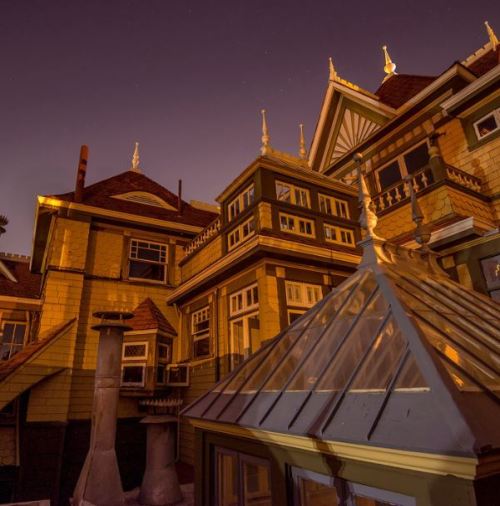
As she existed, so beautiful and delicate, Llanada Villa might have formed the model for a painter, wishing to portray on canvas the promised hope of the faith Mahomet’s paradise, but she belonged to those who had so souls. As she graced the plain, she was the eye of animated nature, for this beautiful luxurious mansion suited but to the taste of an epicure. Though ghosts can sometimes be seen at dusk wandering around the base of the Observational Tower, and their screams could be heard for miles. There was a living vampire, who has passed the years amidst the servants, feeding upon the life of a lovely female to prolong his existence for the ensuing months, his blood would run cold. Some thought these tales were just horrible fantasies; but Mr. Hansen cited the names of old men, who has at last detected one living among themselves, after several of their near relatives and children had been found marked with the stamp of the fiend’s appetite. Those who had dared to question their existence, always found some proof given, which obliged them, with grief and heartbreaking, to confess it was true. Once, while an artist was sketching my home, when his parents heard the name of my estate, they begged of him not to return at night, as he must necessarily pass through the fruit orchards, where no farmer would ever remain, after the day had closed, upon any consideration. They described it as the resort of the vampire in their nocturnal orgies, and denounced the most heavy evils as impending upon one who dared cross their path. #RandolphHarris 4 of 8

He made light of their representations, and tried to laugh them out of the idea; but when he saw his parent’s shudder at his daring thus to mock a superior, infernal power, the very name of which apparently made their blood freeze, he was silent. Tarquin often stayed in the Haunted Bedroom. He reported that it felt as though somebody had thrown something in his eyes. He also heard footsteps and furniture being moved about in the room and saw a strange figure looking at him. Next morning when Tarquin told me these tales, he was surprised to observe my melancholy face, and was shocked to find I was concerned about his words, mocking the belief of those horrible fiends, for the inspired me with such terror. Throughout the day, he was so occupied in his research, that he did not perceive that day-light would soon end, and that in the horizon there was a tremendous storm pouring all its rage upon the country side. He at last, however, mounted his horse, deterred to make up by speed for his delay: but it was too late. Twilight, in this climate, is almost unknown; immediately the sun sets, night begins: and ere he had advanced far, the power of the storm was above—its echoing thunders had scarcely an internal of rest;–its thick heavy rain forced it way through the canopying foliage, whilst the blue forked lightning seemed to fall and radiate at his feet. #RandolphHarris 5 of 8

Suddenly, his horse took fright, and he was carried with dreadful rapidity through the entangled fruit orchard. The animal at last, through fatigue, stopped, and all he could see in the glare of lighting was the 9-story Observational Tower. Dismounting, he walked back towards it, hoping to find shelter for the night from the pelting of the storm. As he approached, the thunders, for a moment silent, allowed him to hear the dreadful shrieks of a woman mingling with the stifled, exultant mockery of a laugh, continued in one almost unbroken sound—he was startled: but, roused by the thunder which again rolled over his head, he, with a sudden effort, forced open the door of the tower. He found himself in utter darkness: the sound, however, guided him. He was apparently unperceived; for, though he called, still the sounds continued, and no notice was taken of him. Tarquin found himself in contact with some one, whom he immediately seized; when a voice cried, Again baffled!” to which a loud laugh succeeded; and he felt himself grappled by one whose strength seemed superhuman: determined to sell his life as dearly as he could, he struggled; but it was in vain: he was lifted from his feet and hurled with enormous force against the ground:–his enemy threw himself upon him, and kneeling upon his breast, hand placed his hands upon his throat—when the glare of many torches penetrating through the window that gave light in the day, disturbed him;–he instantly rose, and, leaving his prey, rushed through the door, and in a moment the crashing of the branches, as he broke through the fruit orchards, was no longer heard. #RandolphHarris 6 of 8

The storm was now still; and Tarquin, incapable of moving, was soon heard by those without. They entered; the light of their torches fell upon the woodened walls, and the thatch loaded on every individual panel with flakes of soot. At the desire of Tarquin, they searched for her who had attracted him by her cries; he was again left in darkness; but what was his horror, when the light of the torches once more burst upon him, to perceive the airy form of his fair conductress brought in a lifeless corpse. He shut his eyes, hoping that it was but a vision arising from his disturbed imagination; but again saw the same form, when he unclosed them, stretched by his side. There was no colour upon her cheek, not even upon her lip. She had dark brown hair, pulled back very tightly, and dark eyes. There was a stillness about her face that seemed almost as attaching as the life that once dwelt there;–upon her neck and breast was blood, and upon her throat were the marks of teeth having opened the vein:–to this the farmers pointed, crying, simultaneously struck with horror, “A Vampire! A Vampire!” Their lamentable cries, as the approached the main part of the mansion, forewarned myself and the servants of some dreadful catastrophe. Tarquin was put to bed in the Haunted Bedroom and was seized with the most violent fever, and was often delirious. His mind, by this shock, was much weakened, and that elasticity of the spirit which once so distinguished him now seemed to have feld forever. I sat staring vacantly into the fire and listened to the heavy ticking of the mantel clock. #RandolphHarris 7 of 8

I belonged to a Society, which met twice a week in my Blue Séance Room. The spirit of the departed could visit us from Heaven, which we often called “Summerland,” to speak through a medium to those they loved. We thought of Heaven as a perfect summer’s day in the country, with beautiful fields of flowers. It was now the first week of June, and still broad daylight, but the evening chill was already upon the air. Guests walked up the narrow staircase, and into the dim, Blue Séance Room, in which the curtains were already drawn. The only furniture was a large circular table, around which half a dozen people were already seated, including myself. I greeted them warmly. I ceased to speak. There was a collective gasp from the society; the hair rose upon the back of their necks. Everyone’s hands were joined and trembling. There was faint buzzing vibration, running up my arms and through my body. “I can feel the power,” I said. “Is there anybody here?” Words started welling up in my throat, threatening to choke me if I did not speak. I began to chant sounds to the tune of “All Things Bright and Beautiful,” and slowly the tension relaxed and my hand ceased to tremble. My skin was crawling with gooseflesh. There was an old melody, even elderly. And it was familiar. The wind grew stronger up here, there were moans of the unseen crying for help, as we heard rain spatter hard against the Séance Room window. There was a figure dressed in black looking through the barred window. After a few moments, she turned into a white human-shaped most and disappeared. #RandolphHarris 8 of 8


Strange blue lights have been witnessed moving around some of the rooms in the Winchester Mansion, and at times, staff and guest have witnessed them circling around people. In the basement, growls are often heard, and people have encountered a malevolent spirit, said to be an elementary who manifests into an aggressive human form, while elsewhere extreme fluctuations in temperature, light anomalies and physical sensations of being pushed and grabbed are all commonly reported. Witnesses have also reported catching fleeting glimpses of a human haunting the water tower, or, the ghost tower, as it is ominously known. https://winchestermysteryhouse.com/

And please be sure to check out the online gift store: https://shopwinchestermysteryhouse.com/

Some Doors are too Dangerous to Open…
It was a beautiful day at the beginning of Winter. I was cheerful and optimistic. Stopping in my writing, I lifted my left hand from the paper, stretched it out to the pile of books, and moved the top one. I sat there fascinated, for a moment, glancing at the painting The Standard Bearer, by Prince Rupert. It was an interesting painting, there was almost hallucinatory quality about it. The deep blacks from which the image has been scraped reveals the ominous underside of contemporary culture that lurks as ever-present possibility in our lives. Also portrayed is the psychological state of isolation and dignity, as the prince poses, as one of high nobility would, while looking off into the distance, as if he is longing to know what lies beyond the castle walls. I find myself looking at it for a long time and coming back to it, several times. I went on with my writing as if nothing had happened, perhaps for another five minutes , and had actually got to the last few words of what I had determined to extract, when the figure in the painting started to move again. I saw the hands move; I turned my head again to examine him more closely, and I was framing a sentence to address him when I discovered that I did not dare to speak. There he sat, looking at me, and there I sat. I turned my head again to my work, and finished writing two or three words I still had to write. The paper and my notes are at this moment before me, and exhibit not the slightest tremor or nervousness. I could point out the words I was writing when the phantom started moving, and when he went back to his normal pose. Having finished my task, I shut the book, and placed it on the table: it made a slight noise as it was sat on the table, and the figure in the painting turned and looked at me again. #RandolphHarris 1 of 5

Sitting myself back in my chair, I sat for some seconds looking at the fire with a curious mixture of feeling, and I felt a sudden, strange frisson, a chill down my spine. The fire was blazing up well, when I happened to glance up for a second. I studied the painting over and over again, and each time it seemed to come more and more alive. The prince would sometimes blink and make slight facial expressions. He was no longer looking away. He seemed to be looking at me, and into this room. His face had a strange expression, no longer stoic. He looked as if he were at once astonished and afraid. The book on the tabled opened to a page, and the quote, “Where your treasure is, there will your heart be also.” It has often been thought that the affections of the dead survive their death, and dwell long upon the people and the places they have loved in life. It is a beautiful thought, but carries with it, of necessity, the appalling corollary that if it be possible for the affections to survive, it is equally likely that hatreds are similarly immortal: and thus, in the inimical forces in that case ranged against us in the unseen World, we would have some foundation for the once universal belief in evil spirits. I wondered what message my companion in the portrait was trying to convey. I spent time looking at it, staring at the prince’s face, the porous ground through which the acid penetrated, and the lighter tones of the surface. In due course morning dawned: the sun rose, and a most beautiful day succeeded a very wet and dismal night. Suddenly, I heard a sound resembling the foot steps of a man. I carefully examined the entire room, but there was nothing there. I looked up at the painting and the prince had vanished. #RandolphHarris 2 of 5

I went back to my desk and started writing. However, I was again aroused. The noise was now louder than before. I darted to the spot where the noise was, and tried to grasp the intruder in my arms. My arms melted together, but enclosed nothing. The noise passed to another part of the room, and I followed it, groping near the floor to prevent anything passing under my arms. It was in vain; I could do nothing. The sound died at the doorway of the crypt, and all again was still. I went slowly down the hall, glancing at the vases. The corridor to the kitchen beckoned, but I was stopped short by something I had never seen before. The door to a library I had never seen before stood open. In all of the years of construction, this door had been a wall. Now, there was a glimpse of afternoon light falling across an ornate desk and blue persian carpet. This thrilled me with fear and wonder. I took a deep breathe and forced myself to walk through the door. Bookcases lined the walls, though there was space enough for one painting directly behind the desk. The faint square where the green paint seemed brighter told of a painting that hung there before some soul seized it. A set of casement windows let in the mellow winter light. Then, a deep, guttural moan whose source I could not identify. The prince? Had he groaned? I tried to speak, but no noise would come out. As I walked towards a doorway in the darkness, there appeared to be the silhouette of a figured in the doorway. I stood frozen on the spot holding my breath, when to my astonishment, a dark shadow moved toward me. #RandolphHarris 3 of 5
It was the prince. He was radiating a luminous glow. I shone the light in his direction and he started floating upward. Pointing at the wall and whispering, he ignored all the lovely crafts around him. I got the feeling that he wanted me to hang his portrait in the spot, which showed in indication that something had adored the wall long ago. I watched the ghostly scene for several minutes before he suddenly vanished. Later that day, I returned to the library and found the prince back in his portrait. I called to Mr. Hansen and had him hand the painting in the mysterious room. Shortly after he was done, we walked out of the room, and the door turned back into a wall. Later that day, the servants were drinking lemonade in the dining room, they sat around together and fraternized, discussing the sad state the country was in and reminiscing about better times when the country was whole. They suddenly heard vicious and rapid footsteps, looking to see where the noise was coming from, they noticed bloody footprints across the floor and leading down the hallway, only to disappear into the wall. They quickly cleaned up the mess, but the footprints only returned. While they spent hours more scouring the floors, a housemaid found an ancient key under the table, as she was coming to show it to me, she found herself being lead by blood footprints down the hall and the stairs. Curious to see where they were leading her, she followed. Unexpectedly, she saw a piece of an ancient door, as she got closer to it, she noticed impressions of large wooden beams set in gypsum plaster. “Where did this come from?!” –she mused. She stuck the antique key into the hole, and the door cracked into a million pieces. #RandolphHarris 4 of 5

Having entered the small with the rays of light that seemed to have struck the place for the first time after hundreds of years, the wide-eyed servant was horrified to see that the room was filled with skeletons. She felt the icy fear and urgency full now. Her heart pounded fiercely in her chest and she was running short on breath. From the position of the skeletal frames, it was easy to determine that they had died gnawing one another’s flesh. She expressed deep concern, surprise, but there was more. Looking further into the room, the servant noticed there were complex drawings and magical symbols on the walls. There had been stories that a monster had been born in my mansion. Servants often heard shuffling feet and hideous half-human cries as it emerged for its nocturnal prowling’s. It had a horn on its head, straight up like a sword, and instead of arms it has two wings like a bat’s, and at the height of the beast it has a fio [Y-shaped mark] on one side and a cross on the other, and lower down at the waist, two serpents, and was a hermaphrodite, and on the right knee it had an eye, an its left foot was like an eagle’s. Perhaps this was his ghastly chamber that is hidden deep within the walls of my home. Not even I knew the location of this secret room. The housemaid came to retrieve me, tears still streaming unapologetically down her face. In a state of shock and horror, the housemaid led me to the chamber she had discovered. As we got closer to this ancient door, her trembling ceased. Slowly, we walked around the corner, but the ancient door of strong oak was gone. So we did the only thing we could do in this terrible moment. To find this secret room, we hung drapes on every visible window. One window remained undraped, but we had no luck in locating the hidden room. I could only conclude that the secret chamber lay deep within a wall. But there, in the depths of the hall, we could just make out a massive black shape moving and writhing on the floor. Before we even had a moment to wonder what it could possibly be, I saw the moonlight glint across a gigantic mouth full of razor sharp teeth rushing toward the housemaid. She felt the teeth sink deep into her torso as that hideous maw snapped shut around her. It all happened so fast that she had no time to process what was happening, as she was pulled violently down the hallway and out of sight. Never to be seen again. #RandolphHarris 5 of 5


In ancient times, many believed that the real essence of any living thing, be it animal or human, resided in the breath and that the spirit might live on in the last exhalation of breath by a dying person. This “spirit” or “breath” could be good or evil. It could inhabit the living, entering a person’s body so that they were possessed. In most beliefs of this kind, the possession was thought to be evil. The case files on hauntings at The Winchester Mystery House are ones that deserve to be reexamined. The knocking spirits, or poltergeist represent one of the forms of domestic hauntings. It is now regarded as one of the most haunted locations in the World.

There are many spirits that have been reported here throughout the more than one hundred years. It is said to be haunted by ghost from different periods in the mansion’s history, including a man dressed in black, and a ghost boy who has been regularly seen in the mansion’s stables, surprisingly, along with ghostly horses and chicken. Apart from this, the carriage house is said to be haunted by the spirit of a woman and a little girl who is said to appear to visitors and ask them where her father is. https://winchestermysteryhouse.com/

And please be sure to check out the online gift store: https://shopwinchestermysteryhouse.com/

Everyone Can Potentially Benefit

Everyone can potentially benefit from the creation or addition of economic value. However, each participant in the process usually has available to one various actions that increase one’s own gain, while lowering the others’ gain by a greater amount. The only exceptions are situations involving simultaneous exchange of goods or services of immediately verifiable attributes and qualities, but these are a small subset of all economic interactions. In most situations, the participants have opportunities to supply defective goods, shrink on the job, renege on payment, and so on. The term “opportunism” has been coined for this whole class of actions that tempt individuals but hurt the group as a whole. Problems also arise with property rights. If no mechanisms—governmental or non-governmental—exist to deter theft, then any one person can wait for someone else to create property or produce output and then steal it; this usually takes less effort than creating the property or the product oneself. Some may even extort money from others by making threats to destroy their property. Anticipation of opportunism, theft, or extortion constitutes a strong disincentive to making potentially valuable investments or entering into mutually beneficial contacts in the first place. Therefore if market economies are to succeed, they need a foundation of mechanisms to deter such privately profitable but socially dysfunctional behaviors, and thereby to sustain adequate incentives to invest, produce, and exchange. In other words, markets need the underpinning of institutions of economic governance. #RandolphHarris 1 of 19

Economist have always recognized the need for governance. However, until relatively recently they assumed that the government, specifically the institution and machinery of the state’s law, provided the needed governance. Criminal law, while it has major non-economic functions, also serves to deter theft and some forms of economic fraud. Civil law had economic aspects centrally in it concerns. Contract law can be said to be mainly for the governance of economic activity; laws of tort and liability pertain to contracts as well as non-contractual relationships, both mainly in the economic sphere. Even the most libertarian economists, who deny the government any useful role in most aspect of the economy, allow that making and enforcing laws that give clear definitions of property rights, and ensuring adherence to voluntary private contracts, are legitimate and indeed essential functions of government, in addition to national defense. The government’s major functions must be to protect our freedom both from the enemies outside our gates and from our fellow-citizens: to preserve law and order, to enforce private contracts, to foster competitive markets. There seems universal agreement in traditional economies that the framework of law is a necessary condition for a market economy to succeed. When the framework of the law fails, people often times become opportunistic and commodify their bodies. When it comes to an analysis of women’s involvement in prostitution, some scholars insist that prostitution is a form of gendered victimization whereby women’s impoverished status in society forces them into a life of prostitution and make their exit unrealistic. #RandolphHarris 2 of 19

Others view prostitution as a gendered survival strategy whereby entrepreneurial women utilize their involvements in the sex market as a means of achieving financial and personal independence. Interviews with twenty-one Sacramento streetwalker’s life histories reveal the presence of both gendered victimization and gendered survival strategies. Women experience their prostitution roles in contradictory ways; they see it as both a means of survival and a threat to their survival. Moreover, these women have a number of coping strategies that they invoke en route to accommodating or making sense of this inherent contradiction. The women, in this study, who are prostitutes adopt a series of interchangeable identities. Sometimes they stress the financial aspects of their work and talk about “prostitutes-as-workers” or “prostitutes-as-commodified bodies.” These mindsets construct men as sources of income that could be exploited via pleasures of the flesh. When speaking about the pimp role, the women often invoke a “prostitution-as business-woman” or “prostitute-as-loving-partner” identity. These two competing World views construct men as a liability or expense, with the first rejecting the need for a pimp and the second rationalizing his presence in their lives. Still other times, the women invoke a “prostitution-as-victim” or “prostitute-as-survivor” mentality. These discussions frame men as a source of risk and stress that the prostitute must constantly confront or negotiate their antics. Women who are prostitutes, act and think in a seemingly chaotic World, by constantly struggling to impose and reimpose a sense of order or personal understanding to an inherently contradictory lifestyle. #RandolphHarris 3 of 19

Centuries of prostitution-related research permit researchers to be fairly clear about one thing. Women who get and stay involved in prostitution tend to be women whose lives are torn apart by the aggregate effects of poverty and who often become homeless, physically, sexually, and emotionally abused by parents, partners or boyfriends, grew up in state care and in institutions and have had histories of absconding from foster placements and children’s homes. Many have had drug and alcohol problems that compound the social and material adversity that they face. Other have already been in trouble with the law for petty property offenses. And yet research also tells another tale. Whilst poverty may drive women into prostitution, it is through prostitution that many women are able to secure a degree of control and stability within their personal and economic lives. Involvement in prostitution present women with the opportunity to combine child care with full time work (id est, prostitutes can chose their working hours, can work from home and can move in and out of work a they desire or need). It provides them with relatively higher amounts of income than they might otherwise have obtained. Hence it is that prostitutes have been talked about as “economic entrepreneurs” and prostitution as the resistance to relative poverty and economic dependency on men—situations created by women’s exclusion from the labor market. Of course, recognizing both of these research tales raises some very interesting question. Chief amongst these are: what are the contradictions inhere in involvement in prostitution? What type of problems does sustained involvement in prostitution present to the women so involved? How are these problems and/or contradictions accommodated (id est made sense of)? #RandolphHarris 4 of 19

The following draws on research data that was collected in the City of Sacramento towards the quarter century mark of the new millennium. The research project investigated and theorized the conditions in which it was possible for women’s sustained involvement in prostitution. The story told here is both a condense version of that larger story and a description of the various ways in which women experienced their involvement in prostitution and the symbolic landscape that helped them understand the choices they made. Prostituting, as in the activity of selling sex, is above all else an economic activity: as with any economic activity, personal motivation is usually very clear—the desire for money. However, involvement in prostitution is much more then merely about money, if only because being involved in prostitution means being embroiled in activities that are potentially risky, quasi-legal and certainly criminalized. Most of the interviewees in study discussed their involvement in prostitution as the opening of future possibilities for them as women in the face of ever-mounting social and material difficulties. Prostitution was seen as a way to survive: poverty, housing difficulties, and violent relationships that were often the result of rejecting living a life that left them dependent on specific men (fathers, husbands, or boyfriends) or on state welfare benefits. #RandolphHarris 5 of 19

In common with other working class women, the respondents had difficulty earning enough money to support themselves. They had few, if any educational qualifications, marketable skills or labor market experience. When they could find work (and only 14 had), they were employed in the low-paid unskilled service sector or unskilled retail sector. Thirteen women had excluded themselves from the labor market altogether. Many of the women simply stated: “no one would employ me.” Removing oneself from the formal labor market or failing to maintain an “ordinary” working history can have profound effects. For these women, it left them with three choices: they could become dependent on state welfare benefits, dependent on particular men, or provide themselves with income in ways that are typically illegally criminogenic. Independence and the rejection of dependency was the central theme in all interviews—especially when talking about violent relationships. Most women explained their involvement in prostitution as being bound up with their rejection of being dependent on husbands, fathers, boyfriends, or state welfare benefits. Those women who grew up in Local Authority Care rejected dependence on a state-structured care system. Others attributed their involvement in prostitution to the need to “sort out” pressing financial problems, multiple debt and so on and when asked, it was precisely their rejection of being dependent on specific men (who were abusive or who did not provide economically or who had become the answer, because it often precipitated an immediate financial crisis. #RandolphHarris 6 of 19

In general, these women constructed the dependency they experienced in their childhood pasts or in their adult intimate relationships as the cause of the violent abuse, sexual abuse, neglect and/or restrictions that they experienced. By the women’s own accounts, to be economically and socially independent was the means by which they could avoid any future abuse. The respondents talked about their involvement in prostitution as being a means of securing their future economic and social survival. As working class women, they lived within a social and material context where their survival was, generally, contingent on particular men, the state or casual part-time low-paid employment. Given that these specific women had also rejected ways of living that left them dependent on someone or something else, involvement in prostitution was seen not simply as an economic activity, but more importantly as a survival strategy that would enable them to live the lives they wanted to, to provide for themselves and any dependents they might have and to fashion a new better future for themselves in the face of ever decreasing legitimate opportunities in their present. Involvement in prostitution also came to be seen by these women as a trap within which their survival was threatened. Each women commented that being involved in prostitution had furthered her impoverishment, dramatically heightened her likelihood of being the victim of sexual and/or physical assault and increased her dependence on men (who, as pimps, were often violent). #RandolphHarris 7 of 19

The women discussed the tremendous economic risks inherent in engagement in prostitution regardless of whether they made the kind of money that allowed them to sort out their problems, sign off the social security register, obtain housing and leave their male partners. Specifically, they spoke of the great costs incurred through working such as the financial investments needed (for example, buying clothes and condoms, renting a flat, purchasing a mobile phone and paying for advertising). While it is true that many people have new expenditures when starting new work, for these women, the extra financial burdens involved in prostitution came at a time when their lives were already marked by extreme poverty and housing problems. In addition, however, working from the streets brought with it its own unique financial problems and risks. All but two of the respondents had been convicted of a prostitution-related offense—typically loitering or soliciting. In most cases, the convictions had been punished with fines. This change in sentencing lead to an increase in the number of convictions and in the levels of fines which had the perverse result that more, not fewer, women were sent to prison not for prostitution-related offense, but for non-payment of fines. Few of the interviewees could remember exactly how many times they had been arrested or the precise level of fines they either still had to pay or had paid in the course of their involvement in prostitution. However, my own observations in the court suggested fines tended to be in the region of approximately $100 to $200 per charge and that women often had three or more charges against them each time they went to court. #RandolphHarris 8 of 19

Finding women involved in prostitution for their prostitution-related offenses is paradoxical. Many of them simply did not have the financial resources to pay their fines. The obvious irony is that the criminal justice system, itself, created the conditions that both justified these women’s continued involvement in prostitution as well as trapped them within it. Perhaps the most dramatic way in which involvement in prostitution came to be understood as a form of gendered victimization was in their experience of the practice of pimping—a practice which profoundly increased both their poverty, their homelessness and their likelihood of being victims of violence. All but two of the women had been pimped. Thirteen women recalled having most of their money taken from them under the threat of violence. All but two of the women had been pimped. Thirteen women recalled having most of their money taken from them under the threat of violence. They were left only with a “subsistence” allowance to get them through each day. Lois (aged 21) recalled being given only $5.00 per day. Ruthie (age 25) talked about having only $10.00 each day in order to buy condoms and cigarettes. In terms of violence, all of the women who had been pimped talked about regular episodes of violence. They recounted their fears of being murdered or of being punched, stabbed, raped or even shot by their pimps. One of the consequences was that the women believed that being pimped was inevitable and could not be escaped. All spoke of the impossibility of “just not giving him any money.” Too much was at stake. #RandolphHarris 9 of 19

Threatened with violence, controlled through housing and debt, often cut off from family and friends, the women believed that resistance was futile. Katrina (aged 20) summarized the interconnections between these issues. “We’re not getting no money out of it. The only way we’re going to get money is if we hide it. And if we get found out—the beatings! We usually get found out.” Risk pervades the life of most prostitutes and non-prostitute women in the first quarter of the twenty-first century of Sacramento. For prostitute women, however, the manner in which they negotiated the risk they encountered in their struggle to survive has led to their involvement. Conventional economic theory does not underestimate the importance of law; rather, the problem is that it takes the existence of a well-functioning institution of state law for granted. It assumes that the state has a monopoly over the use of coercion, and that the state designs and enforces laws with the objective of maximizing social welfare. Moreover, until the last 30 years or so, that is, until economics recognized the ubiquity and importance of information asymmetries and transaction costs, the usual implicit assumption was that the law operated costlessly. This simple view of law made it possible to achieve faster progress in the research on the economic forces of supply and demand, and of their equilibration in the markets; therefore it was a useful abstraction in its time. However, its shortcomings soon hinder rather than help the economic analysis of markets and limit its usefulness. #RandolphHarris 10 of 19
Only advanced countries in recent times come anywhere near the economist’s ideal picture, in which the government supplies legal institutions that are guided solely by concern for social welfare and operate at low cost. In all countries through much of the history, the apparatus of state law was very costly, slow, unreliable, biased, corrupt, weak, or simply absent. In most countries this situation still prevails. Markets with such weak underpinnings of law differ greatly from those depicted in conventional economic theory. Deficiencies of the law are most acute in less-developed countries (LDCs) and in transition economies. To further highlight this illustration, there are more than 25 million cases pending before the courts in India, and even if no new ones are filed, it will take 324 years to clear the backlog. Laws in many transition economies are a façade without a foundation. Recent assessment of the effectiveness of the legal system in post-Russia differ among Western observers, but a fair assessment is that while the Arbitrazch court system created to handle commercial disputes has begun to function reasonably well in handing down verdicts, getting these verdicts enforced remains highly problematic, especially for smaller enterprises. Similar situations exist in other transition economies in Eastern Europe and in Vietnam. Of course economic activity does not grind to a halt because the government cannot or does not provide adequate underpinning of law. Too much potential value would go unrealized; therefore groups and societies have much to gain if they can create alternative institutions to provide the necessary economic governance. They attempt to develop, and sometimes succeed in developing, such institutions of varying degrees of effectiveness. #RandolphHarris 11 of 19

These include self-protection or hired professional protection for property rights, networks of information transmission, and social norms and punishments for contract enforcement. Indeed, an extreme version of the Coase Theorem says that everything works out in the best feasible way. Even if government is costly, the least-cost method will get chosen from among the available institutions, whether it be state law of a private alternative. The emergence of a state or government is itself endogenous, and will occur if, and only if, it is the most efficient mode of governance. However, even without going that far, we can recognize that societies will attempt to evolve other institutions, albeit imperfect ones, to underpin their economic activity when state law is missing or unusable. In other words, governmental provision of legal institutions is not strictly necessary for achieving reasonable good outcomes from markets. Passivity caused by wrong ideas of humility and self-abasement. The self-actualized consents, when accepting “death,” to let it be carried out in a “nothingness” and a “self-effacement” which gives one no place for proper and true self-estimation whatsoever. If the self-actualized accepts the self-depreciation suggested to him and created by psychopathological offenders, it brings an atmosphere of hopelessness and weakness about one, and one conveys to others a spirit of darkness and heaviness, sadness and grief. One’s spirit is easily crushed, wounded, and depressed. One may attribute the case to conduct disorder, without being aware of any specific example of conduct disorder in one’s life; or one may even look upon one’s “suffering” experience as “vicarious” suffering for the Church. However, an abnormal sense of suffering is one of the chief symptoms of deception. #RandolphHarris 12 of 19

In contrast to the true elimination of pride and all the forms of conduct disorder arising from it, the counterfeit caused by deception may be recognized by the self-actualized obtruding one’s self-depreciation at moments most inopportune, with painful perplexity to those who hear it; a shrinking back from service for God, with inability to recognize the interests of the kingdom of Christ; a laborious effort to keep “I” out of sight, both in conversation and actions, and yet which forces the “I” more into view in an objectionable form; a deprecatory, apologizing manner, which gives opportunity to the “World-rulers of darkness of this World” to instigate their subjects to crush and put aside this “not I” person, at moments of strategic importance to the kingdom of God; an atmosphere around such a one of weakness, darkness, sadness, grief, lack of hope, easily wounded touchiness. All these many be the result of a believer “willing,” in some moment of “surrender to death,” to accept an effacement of his true personality—but which God requires as a vessel for the manifestation of the Spirit of God, in a life of fullest cooperation with the Spirit of God. This believer, by his wrong belief and submission to psychopathological offenders, suppressed into passivity a personality which could not and was not meant to “die”; and by this passivity he played into the hands of the powers of darkness. God is the impossible possibility who is beyond all human possibilities. The question about the divine possibility is a human possibility. #RandolphHarris 13 of 19

To be able to ask God, man must already have experience God as the goal of a possible question. If man cannot ask the question of God, then God’s answer—revelation—falls on deaf ears. Revelation would then be injected into history as a foreign body. One cannot sever human activities from both divine and demonic powers. Neither is truly dialectic. If the family is the fulcrum, then the family agency is the lever of professional intervention for the development of interpersonal competence. If family research is to shift the center of its thinking from the idea of adjustment to that of competence this will have important implications for family agencies. And the outlook of these agencies in turn has important bearing on the family research problems that are likely to arise. The final step in testing hypotheses such as those in the previous chapter is to see how they work out in practice, and how they influence the behavior of the staff and clients of family agencies. What the needs of the family are can only ben discerned by examining the historical development of the agencies. The question of whether it is legitimate to intervene in family affairs when the family’s own resources no longer suffice rather than leaving it to relatives and friends is not to be debated here. There probably never was such a phenomenon as a self-sufficient family, securely equipped with resources for meeting all its needs and crises. #RandolphHarris 14 of 19

It is useful theoretically to imagine such an ideal type, as guide-line from which to calculate varying degrees of change, but it constitutes a hypothetical extreme which could only be approached and never attained in reality. It would be strange to conclude that the further back one goes in history, the more competent each family was to meet the needs of its members. It is true that in earlier times larger families and omnipresent neighbor gave the individual family member constant support. However, many couples nowadays get along quite well without dependence on either of these. Furthermore, techniques and resources are more plentiful now than they ever have been. If the self-sufficient family is taken as one extreme, the opposite would of course be the situation where all the former functions of the family had been transferred to other, specialized institutions. It is often said that in the early twenties certain communist thinkers and leaders in the Soviet Union actually sought to establish such a state of affairs; the evidence indicates that they moved in that direction, but not quite that far. Their later reversal of direction suggests the probability that this extreme, like its opposite, while a concept useful in theory, is not a goal achievable in practice. In practice, the functions of the family fluctuate within a considerably more narrow range than these extremes. It is doubtful if any function of the family had been wholly or permanently transferred to other institutions. If one looks at the family historically, it may appear as if the transfer of functions to and from the family has on the whole been unfavorable to the family, but some functions have occasionally been returned to the family, and almost any of them may be. #RandolphHarris 15 of 19

The conspicuous current example is of course the rise of home television at the expense of the motive theaters. It must be kept in mind that what are usually termed the functions of the family are but names for large categories of concrete behavior, and that the content of these categories is continually changing. It is important to emphasize that transfer of function can and does occur in both directions. After analyzing the changing functions of the family, there is the perturbing implication that the spectacular recent decline in family function is inevitable and irreversible. Some of the commentators who have elaborated upon this observation accept this pessimistic implication. Other declare that while now the family is largely deprived of it economic, protective, educational, recreational, and religious functions, it can concentrate better on its remaining task of child-rearing and affectional response. If this is not merely a wishful play on words, it is at best a groping conclusion. To get a firmer grasp of the realities, we must come down from such a level of abstraction. Not only the structure and processes of family life but the other institutions of the community have ceased to be regarded as natural and inevitable givens. The functionalist type of analysis, which stars with the postulation of an array of human needs and proceeds from there to delineate the necessary character of any social system which is deemed to satisfy thee needs, is perhaps a useful model for the description of a community, its members, and their institutions at a given moment. #RandolphHarris 16 of 19

It cannot, however, account for change or conflict within that community except through making auxiliary postulates about the natural, organic unity of the social system and the occurrence of dysfunctions or external interferences impending the system’s healthy, natural operation. Thus the many variants of functionalist analysis all share the idea that the goal of human striving is social and personal equilibrium or adjustment. Some of these theorists utilize an analogy to Newtonian physic, in which the components of a field acquire their relations through a balance of forces; others utilize an analogy to homeostasis or the healing process in the living organism, whereby the organism restores the status quo ante external deprivation or injury. Our retention of the concept of functions should not be taken to imply acceptance of any such debatable explanations. On the contrary, we have discarded adjustment as the imputed and desired end of activity, and we consider it indispensable to account as realistically as possible for each of the recent historical changes in the family, and for conflict over those to come. To do so, the concept of values must keep precedence over the concept of functions. It might be supposed that family agencies have come into existence only to repair deficiencies in the structure and functioning of the family. There is some truth to this observation but it is a limited truth. When subject to disaster or disability, families in the past have often turned for help to kin and neighbors, that is, to other families. #RandolphHarris 17 of 19

On the other hand, quite unprovoked by calamity or deprivation, they have often combined to create new institutions which by concentrating on a limited task could perform some function better than the family itself. Even if it is only to make up for deficiencies, a new institution must prove its superiority over potential competitors or over informal assistance by other families. The family as an institution or any particular family does not simply try to discharge its function but it seeks to maximize its values which are ever in flux—being clarified, criticized, harmonized, added to, subtracted from, and limited by what is believed or found to be possible. If it were correct to assume the existence of given needs and their necessary satisfaction, then at any given time, if these needs were not met, the individual would perish. While this is true of a person’s organism, each person is more than a mere organism. If a person as a self-conscious personality does not sufficiently and intelligently value one’s organism, one will let it perish; one’s organism is one’s servant, not one’s master. A person wants not only survival but many other satisfactions as well, the nature of which cannot be deduced from one’s organism. One wants optimal satisfaction of these wants also. Moreover, one must in practice balance the satisfaction of these many wants—which accumulate by discovery and ramify with experience—against each other. One must constantly evaluate. One must set up categories and standards of judgment for organizing one’s behavior. These are one’s values One’s values are constantly being corrected, ratified, intensified, extended, and systematized through the sharing of experience with others. #RandolphHarris 18 of 19

For this process of interaction in which one is immersed from birth, language and other signs furnish the necessary concepts and rankings. Communication is the sine qua non of objectification of values, for the investigation as for the investigator. If we may then define functions as the tasks or necessary actions for realizing taken values rather than given needs, the explanation for the transfer of function from the family to other institutions becomes, looking backward, almost obvious. Looking forward, it becomes problematic, contingent upon how current programs work out compared to expectations, and contingent upon continuous reformulation of what is desirable and possible. We thus seek to anticipate the emergence of changes and polarization of conflicts from within the system, rather than blindly awaiting disturbances from without. In reviewing the resources of family agencies it is necessary to keep two things in mind. First, many functions previously performed within the family have been taken over by institutions not currently regarded as family agencies. Hence, in terms of realization of values almost any agency could broadly be regarded as a family agency. Second, some institutions have developed that explicitly assume responsibility for the welfare of family members. Only these will here be called family agencies. Even with this limitation, it is clear that there is a vast proliferation of institutional machinery allegedly concerned with aiding the family, either directly as a unit, or indirectly through help to individual family members. #RandolphHarris 19 of 19


It’s growing season…and we’re so excited to share some amazing plants for your backyard garden. 🌱

Get ready to enjoy some fruits of the earth in the next few months — click our blog to read all the details! https://cresleigh.com/cresleigh-ranch

She Never Left, He Cut Out, I Know You All Know What I’m Talking About
Most people act quite decently in their narrow personal sphere, in fact surprisingly so, considering their general confusion. However, we must differentiate between intelligence and reason. By intelligence I mean the ability to manipulate concepts for the purpose of achieving some practical end. There seem to be come interesting differences between women who exchange sex for crack in crack houses and those who hustle tricks on the street for money to buy crack. These latter women were not directly addressed in this report, chiefly due to their minimal representation in the sample. However, anecdotal data from interviews and observations suggest that they may be at lesser risk for HIV infection and transmission than their crack house counterparts. This inference is based on their frequency of sexual contacts and their attitudes and practices associated with condom use. First, it appears that men and women who are street prostitutes have fewer sex partners, and considerably less frequent sexual activity, than the so-called skeezers and chicken heads who exchange sex-for-crack in the smoking and freak rooms of neighborhood resorts, brothels, and base houses. Soliciting a trick on the street, negotiating a price, going to a place to have pleasures of the flesh, engaging in pleasures of the flesh, receiving payment, and then going back to the streets to purchase and smoke crack take time. To a considerable extent, this regulates a man or woman who is a street prostitute’s aggregate number of customers. Several of the men and women, who are street prostitutes, in this study reported an average of three to six tricks each day that they worked, with most soliciting clients fifteen to thirty days during the month prior to interview. #RandolphHarris 1 of 21
Although this, too, results in an inordinate number of partners for pleasures of the flesh during the course of a year, or even a month, the numbers may be considerably fewer than those of the women and men who exchange pleasures of the flesh exclusively in crack houses. Recall, for example, the remarks already mentioned by the women who spent much or all of the day in crack houses, smoking crack and participating in sodomy or traditional coitus. Second, it appears that the men and women who are street prostitutes in this study were more conscious of sexually transmitted diseases and more often insisted that their customers use condoms. The following comments are representative: “If they don’t want to use a condom, they don’t go. I will not go, I will not do it. Most instances, there are very, very few where they don’t even want to wear a condom, and very few refuse to wear them. I just tell them, ‘Hey, you know I’m afraid of getting AIDS. You don’t know that you have it. I don’t know if I have it, but you never can tell you know.’ You know I tell them if you want to make love to me or whatever, you have to put one on. If you don’t you can’t. And no oral sex either.” By contrast, based on observations and the reports of numerous informants, condoms are rarely used during the activities involving pleasures of the flesh that occur in crack houses, freak, and smoke rooms. There are likely several reasons for this difference. There is a socialization process, for example, associated with becoming a prostitute. Would-be and neophyte prostitutes learn the appropriate techniques and safeguards through apprenticeships with pimps and/or more experienced prostitutes. #RandolphHarris 2 of 21

In some cases, there is formal or informal training on how to protect oneself from theft, violence, or disease. To further highlight this illustration, in one sociological analysis of prostitution as an occupation, it was found that the recognition of sexually transmitted disease was a specific topic of instruction for neophyte houses prostitutes: Ann [the madam of a small house of prostitution] accompanies the turnout [neophyte prostitute] and the client to the bedroom and begins teaching the woman how to check the man for any cuts or open sores on the genitals and for any signs of old or active venereal disease. She usually rechecks herself during the turn-out’s first two weeks of work. Furthermore, however loose, unstructured, and transitory they may often be, those who work the streets or in organized houses of prostitution have friendships and peer relationships through which experiences are shared, techniques are traded, warnings are communicated, knowledge is reinforced. Concern for cleanliness and signs of sexually transmitted diseases were readily apparent among several of the street prostitute/informants in this investigation—for example: “You know some of thems not clean, you know, like they haven’t washed and before I even do something I check them out first. And if I see dirt I say, ‘No, you gotta wash up first.’ And even if I put my mouth to it and I can taste like it’s not clean I just draw back from it. I say I don’t want it, you know, and if I feel like if the taste is not right I give them their money back. Ain’t no way any c*ck is goin’ into any part of my body without me checkin’ it twice. #RandolphHarris 3 of 21

“An’ even after he pass inspection, then he got to put on a rubber [condom]. That’s the rule I tell him. An’ if he don’t have a rubber I sell him one for a dollar. That’s the way it been with me all along, even before AIDS. ‘Ya don’t want to take anything home to yer ole lady,’ I say, ‘and I don’t wanna take yer germs home to my old man.’ So now we both safe and sound.” There appears to be no such concern in crack houses. The women who trade pleasures of the flesh for crack in crack houses are typically not experienced prostitutes who moved from the street to the crack house. One street prostitute commented: “I picked up a date in a crack house once and I didn’t believe what I was seein’ in there. She was a little girl—19, 18, maybe 17 that’s all—doin’ stuff like in a porno film. They be doin’ anything and everything in front of anyone, and you could tell they were no b*tches [street prodtitutes]….Yeah, I feel real sorry for ‘em. They probably turned a trick now an’ then, but they’re not experienced girls [prostitutes]. If they was, they wouldn’t be on their knees givin’ heads all day in crack houses.” A second likely reason for the differences between skeezers and street prostitutes is the role that crack plays in their lives. For skeezers and house girls, crack is at the basis of their pleasures of the flesh exchanges, as clearly evidenced in such comments as “I do it for crack” and “crack is my pimp.” By contrast, although the use of crack and other drugs is the reason that many women and men engage in prostitution, their need for crack seems to be somewhat less pressing. #RandolphHarris 4 of 21

To further highlight this illustration, one person who works as a prostitute remarked, “First I tend to business, you know getting dates, getting money, saving for the rent, you know, and then I go buy a couple of rocks. If another date comes along, I wait to smoke.” And associated with this is the man or woman who works as a prostitute’s strong commitment to paying for his or her won crack. People employed as prostitutes will exchange sex for money but not for a hit: “If I had money I’d get my own drugs. I don’t need nobody else. If I really wanted some more [crack] then I’d find someone to have sex with. The first time [sex was exchanged for crack] I’ll tell you was about three years ago. And I made him pay me double in drugs as if it was money. And they did it, and I got it in my hand up front as payment as I was going to make anything and I was going to buy crack with my own money anyway and since I doubled the price of the cash that I wanted I went for it. And then I don’t, very rarely do that [exchange sex for drugs rather than money].” The differences between men and women who work as prostitutes in the streets and those working in crack houses, is there are different risk assessments for the HIV virus. The potential for transmission of HIV from women to men during traditional coitus in crack houses is related to one aspect of the cocaine/sexuality connection. Cocaine has long had a reputation as an aphrodisiac, although sexuality is notoriously a playground of legend, exaggeration, and rumor. In all likelihood, much of cocaine’s reputation may be from the mental exhilaration and disinhibition it engenders, thus brining about some heightened sexual pleasure during the early stages of use. #RandolphHarris 5 of 21

At the same time, however, cocaine users have consistently reported over the years that the drug tends to delay the sexual climax and that after prolonged stimulation, an explosive orgasm occurs. Users also report that chronic use of the drug results in sexual dysfunction, with impotence and the inability to ejaculate the common complaints of male users and decreased desire for pleasures of the flesh becoming the norm for both male and female users. What applies to powder cocaine with regard to sexual stimulation and functioning would also apply to crack cocaine. Male customers, as well as male and female providers, in the sex-for-crack exchange networks report the difficulties associated with ejaculating under the influence of crack. Some report that they can climax only through extremely vigorous masturbation. One house girl commented: “Some of these mens have trouble getting’ it up and keepin’ it up, and it’s hard to get a limp c*ck to come, although sometimes even that happens.” Others similarly reported: “The cracks causes problem for men. They can get a hard-on, but they don’t come quick like when they’re straight. So first they want heads, and when that don’t work, they want p*ssy sex. Then it still takes ‘em forever, pumpin’ away until his c*ck gets sore, I get sore, and then I get pissed. But I can’t say anything, because he already gave me the cracks.” It is within such a situation that the potential for femle-to-male transmission of HIV exists. During traditional coitus, the friction of the male organ against the woman’s parts causes stimulation that can generate copious amounts of vaginal secretions. And as noted, HIV has been isolated from vaginal and cervical secretions. #RandolphHarris 6 of 21

Furthermore, since women who exchange sex for crack in crack houses do so with many different men during the course of a day or night, potentially HIV-infected semen from a previous customer can still be present in the woman’s privates. Moreover, it was reported by one crack house prostitute that a customer ruptured the skin on his male organ while having intercourse with her: “One time this dude was prongin’ my p*ssy so long that he sees blood and starts yelling: ‘What the f*ck’s goin’ on with you lady, you on the rag or something?’ But it was him that was bleedin’ in me. His c*ck was goin’ in and out of me for so long that he rubbed it raw.” Although vaginal and anal intercourse often occur, much of the sex that occurs in crack houses involves women performing oral sex on men. To date, however, evidence for an oral route of HIV has been unconvincing. In most of the investigations of homosexual practices where a full range of sexual activities were carefully considered, for example, the risk from either insertive or receptive orogenital contact was uncertain, although regarded to be quite low. The data concerning heterosexual spread of the virus by oral sex are also limited. For example, in one study of the spouses of AIDS patients, HIV serpositivity among spouses was higher for couples who practiced oral sex in addition to penile-vaginal pleasures of the flesh, as compared with couples who practiced only penile-vaginal pleasures of the flesh. (However, it is a good idea to be cautious and speak to your medical doctor and you and your partner be tested.) #RandolphHarris 7 of 21

There is another cofactor, however, apparent in crack house oral sex that may be affecting the spread of HIV: the open sores on the lips and tongues of crack users as the result of burns and other epidermal trauma caused by the heat in the crack pipe stem. Because most men and women who perform repeated acts of oral sex in crack houses refuse to swallow a customer’s semen as it is ejaculated, the potential for HIV transmission for infected semen becomes apparent. For example, the 22-year-old who claimed to have engaged in more than thirty thousand episodes of oral sex commented: “I may have swallowed a lot of c*ck in my time, but I don’t swallow nobody’s come [semen]. Ya can tell me when the man is gonna come, so ya try to get his c*ck out of yer mouth so it ends up somewhere else. Most of the time it ends up on yer face, hair, chest…Either that or he surprises me and I end up with a mouth full og gizz [seman]. So I wait ‘til he’s done pumpin’ and then I let it out all at once.” (This particular woman also reported having an open sore on the inside of her lower lip, which she assumed was from a crack pipe.) Interestingly, and not surprisingly, street prostitutes not only disdain swallowing a customer’s semen, but most of those interviewed in this study avoided having semen enter their mouths: “I don’t like them to climax in my mouth. A man will push my head because they want it deeper. And I’ll tell them, I’ll give them one warning: ‘Get your hand off my head. I know my job, and you know.’ I hate that, to push my head and I’ll give them a warning and then I’ll get out quick. They’ll just come in your hand. I won’t let them come in my mouth. #RandolphHarris 8 of 21

The use of crack and the existence of crack houses proliferated in Sacramento throughout the 1980s, and by the end of the decade, crack and crack house sex had become the community’s major drug problems. However, in the years hence, a number of things have changed. On the basis of focus groups conducted in 2010, and 2020, it would appears that crack continues to occupy a prominent place in the culture of drug-dependent women and men in Sacramento. In fact, informants often stated that crack has become “the common denominator in Sacramento’s street drug scene.” There is consensus, as well, that the drug is “the great equalizer on the street,” in that it had forced crack-dependent women and men—regardless of age, race/ethnicity, occupation, religion, or family background—into sex trading or commercial sex work in order to support their drug-taking. The crack houses, still exist, but are not usually as prominent primarily because of vigorous law enforcement. There are still “house girls,” “house boys,” and “freak rooms,” and all of the specialized types of houses. There are also many private houses and apartments where friends and acquaintances continue to gather to make crack, smoke crack, and exchange sex for crack. The World is already beginning to reap the consequences of its abandonment of any standard of morality. As just one example, recently the secretary of the Department of Health and Human Services in the United States of America warned that if a cure for AIDS is not quickly found, it could become a Worldwide epidemic that “will dwarf such earlier medical disasters as the Black Plague, smallpox, and typhoid.” #RandolphHarris 9 of 21

Most people fall into sexual sin in a misguided attempt to fulfill basic human needs. We all have a need to feel loved and worthwhile. We all seek to have joy and happiness in our lives. Do not be misled by lies. There is no lasting happiness in immorality. There is no joy to be found in breaking the law of chastity. Just the opposite is true. There may be momentary pleasure. For a time it may seem like everything is wonderful. However, quickly the relationship will sour. Guilt and shame set in. We become fearful that our sins will be discovered. We must sneak and hide, lie and cheat. Love begins to die. Bitterness, jealousy, anger, and even hate begin to grow. All of these are the natural results of sin and transgression. On the other hand, when we obey the law of chastity and keep ourselves morally clean, we will experience the blessings of increased love and peace, greater trust and respect for our martial partners, deeper commitment to each other, and, therefore, a deep and significant sense of joy and happiness. We must not be misled into thinking these sins are minor, or that consequences are not that serious. One of the most sobering statements about being unchaste is that of Alma to his son Corianton: “Know ye not, my son,” he said, “that these things are an abomination in the sight of the Lord; yea, most abominable above all sins save it be the shedding of innocent blood or denying the Holy Ghost?” (Alma 39.5.) Very few of us will ever be guilty of murder or of the sin against the Holy Ghost. However, the law of chastity is frequently broken, and yet it stands next to these other sins in seriousness in the eyes of the Lord. #RandolphHarris 10 of 21

Physical intimacy between husband and wife is a beautiful and sacred part of God’s plan for His children. It is an expression of love within marriage and allows husband and wife to participate in the creation of life. God has commanded that this sacred power be expressed only between a man and a woman who are legally married. The law of chastity applies to both men and women. It includes strict abstinence from sexual relations before marriage and complete fidelity and loyalty to one’s spouse after marriage. In addition to reserving sexual intimacy for marriage, we obey the law of chastity by controlling our thoughts, words, and actions. Jesus Christ taught, “Ye have heard that it was said by them of told time, Thou shalt not commit adultery: but I say unto you, That whosoever looketh on a woman to lust after her hath committed adultery with her already in his heart,” reports Matthew 5.27-28. To develop creativity, practice in make-believe and utilization of imaginary, absent, or hypothetical audiences, when real or socially present audiences are inimical or inhibitory, increases the probability of creativity. Respect for one’s own voluntary fantasy and ability to withdraw are the principal cases in point; these must of course be distinguished from compulsory fantasy and worry. Effecting self-organization and symbolic processes which enable the individual to be self-rewarding and self-validating, id est, able to provide one’s own consensual validation and social reward, increases the probability of creativity. Comparisons with historical models known through reading and drama are familiar examples. #RandolphHarris 11 of 21

Increasing the variety and range of a person’s experience increases one’s potentiality for creativity, providing a richer fund of materials and a broader base for creativity. The greater the variety of interpersonal experiences, the greater the probability of a cumulative growth of creativity. Extensive experiences in reading, travel, parties, games, discussion groups, interclass and intercultural exploration, and other sources of variety in interpersonal experience—both direct and vicarious—increase the development of creativity, particularly through the metaphors they provide for reinterpreting present activity. The availability or privacy and the positive valuation of its use for reverie, self-exploration, and self-experimentation increase the probability of creative growth. Creativity operates under a law of increasing returns, in that each episode of creativity increases the potentiality for future creativity. Providing people with experiences of creativity on a small scale increases the probability of more extensive creativity on a larger scale in the future. Interpersonal activities and orientations which are genuinely playful are favorable to creativity. Competition and conflict (where competitors are matched and consequences limited and not serious), satire, parody, and burlesque of cherished values; humor; the playful juxtaposition of incongruities; they playful cultivation of illogicality, fantasy, and the mixture of the real and the unreal are among the kinds of playfulness favorable to creativity. There is a serendipity of play where creativity, whilst unsought for, may emerge from useless pleasure-seeking activity. #RandolphHarris 12 of 21

Cultivation of an aesthetic orientation toward activity (“do it because it pleases you”) as opposed to a utilitarian practical orientation (“do it because it is good for you”) increases the probability of creativity. The sense of performance before an audience, where performance is values apart from its consequences, expands potential for creativity. One is tempted at this point to look back over the above hypotheses from several points of view. For example, certain independent variables recur under each of the six components of competence. Does this mean that the six components of competence. Does this mean that the six components do not vary independently, or does it mean that conditions conducive to the growth of one will contribute to others? Any efforts to develop competence imply some theory of learning and human development; might this not be made explicit? Might it not, for example, be well to generalize that there is a triadic movement in interpersonal learning: one sees in others what they can less well see in themselves, and learns abstractly how to vary the conditions of their development, one thereby teaches the other how to create the same favorable conditions for the development of one’s self, and by identification with the other who becomes so significant, one learns (by taking the role of the other toward oneself) how to create for oneself those conditions favorable for one’s development. Applied more generally, one sees broad implications for any group which acts on the proposition that each member’s behavior is a vital condition for the development of every other. Such speculation has always been important to progress in research, but there is not space here to indulge in it further. #RandolphHarris 13 of 21

Regardless of how the suggested hypotheses are appraised by the reader, at the very least one should seriously consider the case for a new approach in family research which is satisfied with nothing less than explicit, testable experimental hypotheses. These should state in if-then form the conditions thought to be causally effective in producing a change in the development of those abilities required for successful handling of interpersonal situations, especially those found in families. If and when research can then go on to validate such hypotheses, then—and only then—will there really be scientific justification for publishing the procedures by which research findings can actually be applied. We make no pretense of having presented an exhaustive system of hypotheses, nor of being able to do so. Nor are we prepared to argue that the hypotheses we have listed are the best ones and should necessarily be given top priority in research on competence. However, we do content that competence a we have defined it is a top priority research problem; that the hypotheses proposed here are not mere offhand illustrations but merit serious attention; and that elaboration of significant hypotheses in all of the cells provided for, and the design and conduct of research to test them, will give to family research a unity, coherence, and impact it has not yet enjoyed. If we re wrong in our evaluation, then it is of the utmost importance that a more acceptable structuring of the problem be proposed without delay. #RandolphHarris 14 of 21

Suffering directly caused by psychopathological offenders may be distinguished from the true fellowship of Christ’s sufferings by its complete absence of result, either in fruit, victory, or ripening in spiritual growth. If carefully observed, it will be seen to be entirely purposeless. God does nothing without a definite object. He does not delight in causing suffering for the sake of suffering, but psychopathological offenders do. Suffering caused by the psychopaths is acute and fiendish in its character, and there will be no inward witness of the Spirit which tells the suffering self-actualized individual that it is from the hand of God. To be a discerning eye can be as clearly diagnosed to be from a psychopathological offender as can any physical pain be distinguished from a mental one by a skillful physician. The suffering caused by psychopathological offender can reach to the depths of your soul, causing acute suffering in the psyche—injecting “feelings” into the soul, repugnant or poignant; soulish, producing acute darkness, confusion, chaos, horror in the mind—anguished, knifelike emotional pain; or physical; pain in any part of the body. The ground given for the evil spirits to produce counterfeit suffering in such an acute degree as this may be traced back to the time when the self-actualized, in one’s absolute surrender to God for “the way of the cross,” deliberately willed to accept suffering from Him. Then afterwards, in fulfillment of this surrender, he gave the ground to the enemy; by accepting some specific suffering as from God which really came from the psychopathological offender, thus opening the door to them by the reception of their lie, the admittance of their actual power manifested in the suffering—continuing still further to give more ground by believing their interpretation of the suffering—and doing so as “the will of God”; until the whole life became one prolonged “yielding to suffering,” which seemed unreasonable, unaccountable in its origin, and purposeless in its results. #RandolphHarris 15 of 21

God’s character is thus often maligned to His children, and the deceiving spirits do their utmost to arouse rebellion against Him for what they themselves are doing. We stand not only under judgment, but also under grace. The relation of God and the World, God and the Spirit, and God and history underlies the negative (judgment) in three areas. Theology must always speak paradoxically in a Yes and a No. The relationship of God to nature, spirit, and history in manipulating the concepts of judgment and grace resembles more an exercise in logic than a theological treatment of mysteries; and a readiness to cast the mantle of the positive paradox over everything results in a cheap universalism. It is the nature of the of the Protestant principle to resist heteronomy, to protest justification by intellectual works even though they deal with the content of faith. Theology must communicate in terms meaningful to our age. One must speak of the unconditioned instead of God, of the Logos instead of Jesus Christ. In this way, traces of the divine Yes and No can be found in all cultures. If one prefers to call this a philosophy of culture, then our era requires of us as theologians not to be theologians, but philosophers of culture. The goal is to seek an understanding of Jesus Christ in the World. Every act of submissive worship is an act of alienation and idolatry in this sense. What is frequently called “love” is often nothing but this idolatrous phenomenon of alienation; only that not God or an idol, but another person is worshipped in the way. #RandolphHarris 16 of 21

We are living in one of the most important revolutions in the history of power—a change that is now reshaping our planet. Over the past generation millions of words have been devoted to upheavals in technology, society, ecology, and culture. However, relatively few have attempted to analyze the transformation in the nature of power itself—which drives many of these other changes. We have seen how, at every level of life, from business to government and global affairs, power is shifting. Power is among the most basic of social phenomena, and it is linked to the very nature of the Universe. For three hundred years, Western science pictured the World as a giant clock or machine, in which knowable causes produced predictable effects. It is a determinists, totally ordered Universe, which, once set in motion, pre-programs all subsequent actions. If this were an accurate description of the real World, we would all be powerless. For if the initial conditions of any process determine its outcome, human intervention cannot alter it. A machine-like universe set in motion by a Prime Mover, divine or otherwise, would be one in which no one has power over anything or anyone. Only, at best, an illusion of power. Power, in short, depends on cracks in the causal chain, events that are not all pre-programmed. Put differently, it depends on the existence of chance in the Universe and in human behavior. Yet power cannot operate in an entirely accidental Universe either. If events and behavior were really random, we would be equally helpless to impose our will. #RandolphHarris 17 of 21

Without some routine, regularity, and predictability, life would force upon us an endless series of random choices, each with random consequences, and thus make us powerless prisoners of fortune. Power thus implies a World that combines both chance and necessity, chaos and order. However, power is also linked to the biology of the individual and the role of government or, more generally, the state. This is so because all of us share an irrepressible, biologically rooted craving for a modicum of order in our daily lives, along with a hunger for novelty. It is the need for order that provides the main justification for the very existence of government. At least since Rousseau’s Social Contract and the end of the divine right of kings, the state has been seen as party to a contact with the people—a contract to guarantee or supply the necessary order in society. Without the state’s soldiers, police, and the apparatus of control, we are told, gangs or brigands would take over all our streets. Extortion, rape, robbery, and murder would rip away the least shreds of the “thin veneer of civilization.” The claim is hard to deny. Indeed, the evidence is overwhelming that in the absence of what we have earlier described as vertical power—order imposed from above—life quickly becomes a horror. Ask the residents of once-beautiful Sacramento what it means to live in a place where no government has sufficient power to govern. However, if the first function of the state is to ensure order, how much is enough? And does this change as societies adopt different systems of wealth creation? #RandolphHarris 18 of 21

When a state imposes iron control over everyday life, silences even the mildest criticism, drives its citizens into their homes in fear, censors the news, closes the theaters, revokes passports, knocks on the door at 4.00 A.M. and drags parents from their screaming children—who is served? The citizen in need of a modicum or order—or the state itself, protecting itself from outrage? When does order provide necessary stability for the economy—and when does it strangle needed development? There are, in short, to analogize from Marx, two kinds of order. One might be called “socially necessary order. The other is “surplus order.” Surplus order is that excess order imposed not for the benefit of the society, but exclusively for the benefit of those who control the state. Surplus order is the antithesis of beneficial or socially necessary order. The regime that imposes surplus order on its suffering citizens deprives itself of the Rousseanuian justification for existence. States that impose surplus order lose the Mandate of Heaven. Today they also lose their moral legitimacy in an interdependent World. In the new system now emerging, they invite not only the attention of global opinion but the sanctions of morally legitimate states. The United States of America has dispatched a secret mission to smooth over ruffled relations between China and Japan. Nevertheless, despite all the opportunism and realpolitik, the entire World, in effect, voted on the moral legitimacy of the hardliners’ regime. #RandolphHarris 19 of 21

Global opinion is growing more articulate, and less tolerant of surplus order. If so, there is a hidden reason. The revolutionary new element—a change brought about by the novel system of wealth creation—is a change in the level of socially necessary order. For the new fact is that, as nations make the transition toward the advanced, super-symbolic economy, they need more horizontal self-regulation and less top-down control. Put more simply, totalitarian control chokes economic advance. Student pilots often fly with white knuckles tightly gripping the controls. Their instructors tell them to loosen up. Overcontrol is just as dangerous as undercontrol. Today, as the crises in the Ukraine and other countries demonstrate, the state that attempts to overcontrol its people and economy ultimately destroys the very order it seeks. The state with the lightest touch may accomplish the most, and enhance its own power in the process. This may—just may—be bad news for totalitarians. However, enough ominous signs darken the horizon to dispel facile optimism. Those who have read this far know that we have no utopian promises. The use of violence as a source of power will not soon disappear. Students and protesters will still be shot in plazas around the World. Armies will still rumble across borders. Governments will still apply force when they imagine it serves their purpose. The state will never give up the gun. #RandolphHarris 20 of 21

Similarly, the control of immense wealthy, whether by private individuals or public officials, will continue to confer enormous power on them. Wealth will continue to be an awesome took of power. Nevertheless, despite exceptions and unevenness, contradictions and confusions, we are witnessing one of the most important changes in the history of power. For it is now indisputable that knowledge, the source of the highest-quality power of all, is gaining importance with every fleeting nanosecond. The most important powershift of all, therefore, is not from one person, party, institution, or nation to another. It is the hidden shift in the relationship between violence, wealth, and knowledge as societies speed toward their collision with tomorrow. This is the dangerous, exhilarating secret of the Powershift Era. Power is inherent in all social systems and in all human relationships. It is not a thing but an aspect of any and all relationships among people. Hence it is inescapable and neutral, intrinsically neither good nor bad. The power system includes everyone—no one is free of it. However, one person’s power loss is not always another’s gain. An objective examination of the relation between society and human nature must consider both the furthering and the inhibiting impact of society on man, taking into account the nature of man and the needs stemming from it. Each society is structuralized and operates in certain ways which are necessitated by a number of objective conditions. These conditions include methods of production and distribution which in turn depend on raw materials, industrial techniques, climate, size of population, and political and geographical factors, cultural traditions and influences to which society is exposed. #RandolphHarris 21 of 21

MAGNOLIA STATION AT CRESLEIGH RANCH
Rancho Cordova, CA | low $600s
Now Selling!

Models now open at Magnolia Station! Located at the corner of Rancho Cordova Parkway and Douglas Road, residents of Cresleigh Ranch will benefit from a brand new neighborhood with convenient access to the new Raley’s Shopping Center, Sunrise Boulevard, and much more!

Magnolia Station will include 81 homesites and five distinct plans ranging from 2,200 – 3,700 square feet; including three single story plans! Each plan has been thoughtfully designed to include features such as: Generations Suite, Optional Offices/Dens, Extended Great Rooms, and more! https://cresleigh.com/magnolia-station/

Magnolia Station’s well-designed kitchens overlooks bright casual dining areas, and are equipped with large center islands and breakfast bars. There is plenty of counter and cabinet space, and sizable pantries. The elegant primary bedroom suites are enhanced by walk-in closets and spa-like primary bath with dual-sink vanity, large shower, linen storage, and private water closets.

We Stand, All Together Now, at Ground Zero

This report includes some parts that are beyond the maturity of youth. This is the cruellest moment in the life of societies…I am under no illusions and do not except to wake up one morning to see the resurrection of freedom in our country, as if by a stroke of magic….No, no; decay, and decay for a period whose end I cannot fix and which will last for not less than one or two generations—is our lot…I shall witness the evil only, I shall die in the midst of the darkness. The designation graveyards, rooms in abandoned buildings, has an interesting genesis. At the corner of one of Sacramento’s housing projects, described by a local journalist in this way: “Sure, there are always problems. Its official name is Site 5, Project SA527-B, but residents began calling in ‘The Graveyard’ years ago. Poverty breeds crime, and crime bred more of itself. But when a tidal wave of cocaine rocks descended on the place ten years ago, crime seemed to put The Graveyard in a stranglehold. The pulse of the community grew faint. Residents began dying out of The Graveyard and prospective tenants refused to move. So basers [crack users and dealers] claimed the vacant apartments for themselves.” In time, The Graveyard’s abandoned apartments became overrun by crack dealers and users, the smell of drugs is vented from one apartment in to the apartment next door, and other people were unknowingly getting contact high, and being exposed to germs from their neighbor’s apartment. The problem got so bad that the county government began boarding up the project’s vacant rooms. However, the name took on a life of its own, and was renovated. People now deal crack out of the fire escapes, look outs stand out on the corner at night. There is a methadone clinic down the street. Community members fear walking by that building because of all the noise, violence and drug and alcohol abuse. Some people even run by it when the fights break out. #RandolphHarris 1 of 22

To future highlight this illustration: “It’s an empty house, empty room. So somebody like go into this room, the first one there. They might put a board you know, you have cloth, you know a bucker of water to bathe and sh*t. I did it myself. Put up those boards and sh*t, sometimes curtains hanging over the door, this room had no doors, no windows, nothing like that. I know’d this one place off Capital Avenue where this lady set up in a burned out apartment. She was sort of a wh*re/crack head/skeeezer/bag lady who’d do anythin’ for crack and for food for her tick baby [a prostitute’s child fathered by a john], her base baby [a child conceived and gestated by a crack-using mother]. For a hit on the pipe or for some food or money or drug or cigarettes she’d let you smoke in her digs and she’d suck your prick too.” And finally, somewhat related to graveyards are base cars—abandoned automobiles that sever as places to smoke crack, to have sex, or to exchange sex for crack. Organized crack houses are reportedly few in number in Sacramento. The environment in these establishments is far more controlled than in any other type of crack house, with the owners more visible and closely monitoring all activities. Violence and general chaos are uncommon. The ambience is described as clam, and children are not permitted. They have more workers than other crack houses, most of whom maintain order inside or watch for police: They would have people outside, lookouts. Way up and down the street, like on the corner. And another guy sitting in the yard like he was cleaning the yard or something. #RandolphHarris 3 of 22

“There would be like a bouncer at the door with a gun to watch to make sure no cops or anything would walk in. Or to make sure that there were no problems within the place itself. Just to make sure it secure for their sake.” Purchasing crack in organized houses is more structured than elsewhere. Several have specific hours of operation. Upon arrival, a customer is sold crack, seated with a pipe, and strict order is maintained. To further highlight this illustration, “You can’t come in the house after 8.00. Other than that he passes it through the window. Before 8.00 you can come in and he lays them [crack and crack pipes] on the table and you can pick what you want. Sometimes you walk in and he is sifting it [cocaine hydrochloride] with the baking soda so he can cook it and tell you to come back in fifteen minutes. When you walk in they have a person that pats you down to see if you got any weapons on you, and then you go through the doors then they have a person that brings you a torch. And they set you up to table and OK when you first walk in the door its goin; back a little bit you buy your rocks at the door. They have a little stand. They have all the rocks you want from five dollars all the way to a fifty-dollar rock. And you pick out which one you want, whatever your money can afford and then they have someone escorts you back in the back, and that’s where we smoke at. They give you a pipe, they give you a torch, and then your own your own. It wasn’t like these abandoned burned-out houses that you see here in the city. #RandolphHarris 4 of 22

“This house was very nice, very organized; he had house pipes, torches; he supplied lighters, screens, drugs; everything you needed was right there to prevent so much traffic. Once you get there if you have enough money, you can sit there and use the house pipes and everything. If you only came there to buy a nickel [five-dollar rock] or a dime [ten-dollar rock], you got it and left. Finally, direct sex-for-crack exchanges do not occur in the organized houses. One prostitute noted that “they let the hookers and skeezers in the door only if they was going to buy crack. The house is for buying and smoking only. They let us cut deals there, you know, but you can’t sex there. Got to go someplace else, usually out of the customer’s car.” Interviews with 35 women and 17 men in Sacramento revealed a progression into the drug World that for some, especially the women, ended in virtual slavery to pimps and more importantly to crack. All of the fifty-two informants had long histories of drug use. For almost all of these subjects, alcohol and tobacco use preceded their illicit drug-using careers. Marijuana use began at a mean age of 14 years. A significant proportion of the group experimented with inhalants, hallucinogens, stimulants (uppers), and depressants (downers). Some 40 percent had histories of intravenous drug use, including some cocaine, heroin, speed, and/or speedball (heroin mixed with cocaine). All of the men and all but one of the women had used cocaine (non-IV) during their teenage years, with 75 percent using the drug on a regular basis. Crack use began for both men and women by age 25. #RandolphHarris 5 of 22

In terms of current drug use, defined as any use during the thirty-day period prior to the interview, crack clearly predominated. Crack was smoked for as long as it was available and users had means to purchase it—with money or sex, stolen goods, or other drugs. It was rare that someone had just a single hit. It was typical that they spent fifty to one hundred dollars in one period, with binges lasting three or four day. During these smoking cycles, users neither ate nor slept. Some informants purchased crack over two hundred times in the thirty-day period prior to student recruitment. While many of these crack users binged for several days in a row, over half (58 percent) used the drug on a daily basis. For every day they used crack, they were high from as few as three ties to as many as fifty times. Moreover, once crack was tried, it was not long before it became a daily habit. One-third of the sample used crack daily immediately after first trying it. An additional 27 percent used it daily by the end of their first month. For many of the women in this study, the craving for crack led eventually to prostitution. Once they ran out of money and things to sell, they found they could always sell themselves. The following quotation, drawn from the transcript of a 28-year-old African-American crack user legally employed as a shipping clerk, clearly illustrates a characteristic aspect of the sex-for-crack phenomenon. She details her first exchange of sex for crack and how it came about. #RandolphHarris 6 of 22

“I had my last paycheck, that was $107. That day I went straight from there [work] with a friend guy and copped some drugs. I bought $25-five nickel rocks. We drunk a beer, we needed the can to smoke on. So we sat there and we smoked those five rocks and you know, like they say, one is too much and a thousand is never enough. And that’s the truth. Those five rocks went like this [snaps fingers], and I had maybe about $80 left. I had intentions of takin’ my grandmother some money home for the kid. But I had it in my mind you know I was, I was just sick. I wanted to continue to get high so push came to shove and I smoked up that whole day. OK all the money was gone, all the drugs was gone. About 0.00 we went and sat in the park. Usually when we set in the park, people will come over and they’ll have drugs. I stayed out because I couldn’t give an account for what I had did with the money. My grandmother done thought that I was goin’ to pick up my check and comin’ back. So I walked down this street—you know you got people that will pick you up. So this guy stopped, and I got in the car, and I never did any prostituting but I wanted more drugs. So this guy, he asked me: “How much would you charge me for a head?” That’s oral sex. And I told him $40. And so he say, how much would you charge me for two hours to have just sex not oral sex? And so I told him $40 so he say: “OK get in,” and he tool me to this hotel. #RandolphHarris 7 of 22

“He had about six rocks. I didn’t want sex. I wanted to get high, so we smoked the rocks and durin’ the time I sexed with him. So after I sexed him, he gave me the money, and after the rocks was gone I still wanted to get high. So he gave me more money to go get more drugs. We went into another hotel. By that time it was maybe 6.00 in the morning. By that time I done spent all my $40. It wasn’t nothing I had done wasted the money.” The individuals interviewed in this study had sexual histories that began early and involved many partners. The mean age of the first sexual intercourse was 14 years, with the females being involved in sex almost a year earlier than the males. The first sex-for-money exchange occurred at a mean of 23.2 years. During the thirty-day period prior to the interview, the sexual activities of the fifty-two informants were extensive. Among the seventeen male crack users, more than half had twenty-five or more male sex partners, and five of the seventeen had a hundred or more male partners. In addition, 60 percent of these male crack users had more than twenty-five male sex partners during the same period. Moreover, 42 percent participated in vaginal sex more than twenty-five times; 88 percent participated in oral sex more than twenty-five times, just under half participated in rear end-insertive coitus at least once; and 30 percent engaged in rear end-receptive coitus during this thirty-day period. Finally, 30 percent of these men masturbated other men (“hand jobs”). #RandolphHarris 8 of 22

The women appeared to have many more sexual contacts than the men. Almost 90 percent of the women had a hundred or more male sex partners, and 11 percent had as many as twenty-five female partners. Some 39 percent of these women participated in traditional coitus more than fifty times, 57 percent engaged in sodomy more than fifty times, 20 percent participated in rear end coitus, and 29 percent provided men with hand jobs. Respondents performed a wide array of acts involving pleasures of the flesh. This might include generic sodomy (a “brain”) or a specialized variation (“slow neck” or “fast head” or a blood sucker who performs acts on women at a certain time of the month). Moreover, the majority of the respondents reported performing acts involving pleasures of the flesh that they would do while on crack and/or for crack and doing so for a penny (one hit on a crack pipe) or less. For example, a 31-year-old male prostitute reported: “As a matter of fact, when you are high on crack you’ll do almost anything. We [the respondent and his boyfriend had sex in front of other people, and one male joined us. Usually I gave the other guy head while we had anal intercourse.” Most parents would like to keep their children from strolling down this road, so they raise them in the ways of God and attend weekly church services, Bible study, and teach them to pray. When you hear the phrase “the law of chastity,” do you know what it means? You probably get a lot of mixed messages about it. All kinds of media, and sometimes even friends and family, have different opinions about it. And the World actively teaches things contrary to what the Lord teaches. #RandolphHarris 9 of 22

So what exactly does the law of chastity mean? The law of chastity is the Lord’s term for His commandment to live a life of sexual purity and virtue. Living the law of chastity is for both men and women, and it means you do not have any sexual relations before marriage, and [you are] completely faithful to your spouse after marriage. However, being virtuous and chaste is about more than just pleasures of the flesh. Treat others with respect, not as objects used to satisfy lust and selfish desire. The law of diminishing returns is a principle stating that profits or benefits grained from something will represent a proportionally smaller gain as the point of optimization is exceeded. So, somethings become less desirable or useful after they are done so many times. This is why purity is important. Your body is a temple of God and not something you want to just give away, abuse or let other people abuse. Before marriage, do not participate in passionate kissing, lie on top of another person, or touch the private, sacred parts of another person’s body, with or without clothing. Do not do anything else that arouses lust. Do not arouse those emotions in your own body. Note that the Lord’s standards do not change just because two people really like each other and both agree to the behavior. When you respect other people, the Lord, and yourself, you will keep the commandments—and that means no sexual relationship or arousing sexual feeling outside of marriage. The Lord really is serious about this. “The prophet Alma taught that sexual sins are more serious than any other sins except murder and denying the Holy Ghost,” (see Alma 39.3-5). #RandolphHarris 10 of 22

Creativity in interpersonal relations refers to the actor’s capacity to free him or herself from established routines of perception and action, and to redefine situations and act in the new roles called for by the new situations—in short, it means inventiveness in interpersonal relationships. Of all the components of competence we have considered, creativity is perhaps the most difficult to specify and to investigate. Nevertheless it is evident that competence in interpersonal relations requires some such group of qualities and skills. It therefore becomes necessary to develop research on the conditions for their optimal development and utilization. Participation in social relations which are permissive rather than repressive, equalitarian rather than hierarchical and authoritarian, mutual and reciprocal rather than unilateral, is favorable to creativity. Rotation of functional positions among the participants in a social relationship is a source of new experience, providing a broadening base for creativity and increasing the probability of its development. Role-reversal in role-playing is an almost universally usable substitute device when more extended rotation of roles is not feasible, as with children and parent. Participation in social relation where diversity and individuality are valued above uniformity and conformity increases the probability of creativity. Extensive and obligatory routine is unfavorable to creativity. Routine in a particular activity may be favorable to creativity insofar as it frees the individual’s attention, energy, and other resources for creative activity in another area. #RandolphHarris 11 of 22

A balance between established routine, preferably flexible, varied, and of limited range and duration, and opportunity for deviation from routine is optimal for creativity. Some areas of the individual’s experience and activity must always be subject to routine, but procedures which encourage the variation of routine activities increase the probability of creativity. Situations which provide challenges that exceed the individual’s previous achievement without exceeding one’s ability are favorable to the occurrence of creativity. Even if the challenge exceeds one’s usual conception of one’s ability, a condition favorable to creativity exists, provided true ability is not overchallenged, and particularly if the support of significant others can be introduced to bolster unrealistically modest judgment of ability. The suspension of one’s own judgment regarding one’s ability is important in such a case. Resultant spontaneity may permit the individual to go ahead and act creatively, even though one’s usual conception of one’s ability would lead one to appraise the situation as threatening and demanding withdrawal. Experiences increasing self-esteem will increase the probability of creativity. A distinction between self-esteem and self-satisfaction ( a seeking for stability, permanence, perpetuation of the status quo of the self) is necessary. Self-esteem is conceived as a positive self-valuation operating independently from changes in other areas of the self-system. Involved in self-esteem is a kind of detachment which permits a person’s appraisal of one’s general worth to stand independent from particular success and failure events; critical appraisal of products is thus not seen as directed against the performer. #RandolphHarris 12 of 22

If experiences are provided affecting the individual’s self-organization and symbolic processes, so that one’s threshold of stimulation is lowered and one becomes able to be more fully responsive to the stimulation of other people and interpersonal events, the probability of creativity is increased. A playful and sociable atmosphere—as created by the capable host—is the best example. Passivity caused by wrong acceptance of suffering consists when the self-actualized accepts suffering with Christ in the way of the cross. To fulfill this surrender one passively yields to suffering in whatever form it may come, believing that suffering with Christ means reward, and fruitfulness. One does not know that psychopathic offenders can produce counterfeit “suffering,” and that one may be accepting suffering from them though believing it to be from the hand of God, and, by so doing, giving ground to them. And what does one consider “suffering” to be? Both conduct disorder in the life which cannot be got rid of, and suffering in the life which cannot be explained. By recognizing the truth of deception the first can be got rid of, and the latter explained. Suffering is an obvious factor in motivating a person to take a certain course. So it is a great weapon of psychopathic offenders to use in controlling people, for by suffering they can drive an individual to do what one would not do otherwise. Not realizing this, the believer may entirely misinterpret the suffering one goes through. Self-actualized individuals are often suffering for others, perhaps even for the country as a whole. #RandolphHarris 13 of 22

They look upon themselves as martyrs when they are really victims, unaware that “suffering” is one of the chief symptoms of deception. By putting a human into suffering, the psychopathic offenders gleefully ease themselves of their enmity and hatred to man. The theonomous union of religion and culture can be expressed in yet another way, by the relation of the holy to the secular. Consecration is the first principle of the secular. By this, nothing is essentially and inescapably secular. Everything has the dimension of depth, and in the moment in which the third dimension is actualized, holiness appears. Everything secular is potentially sacred, open to consecration. Nor is the mediation of the churches, of religion in the narrow sense, necessary for this consecration. For the dimension of depth in the secular is religion—religion in the large sense of ultimate concern which cannot be restricted only to an ecclesiastical sphere. Once the autonomous, self-sufficient surface of the secular is broken through by an unconditioned concern, the holy reveals itself in the depths of the secular. In that moment, the universe is God’s sanctuary. Every work day is a day of the Lord, every supper a Lord’s supper, every work the fulfillment of a divine task, every joy a joy in God. In all preliminary concerns, ultimate concern is present, consecrating them. The concrete way in which consecration is effected is symbolism. When, under the influence of ultimate concern, a thing become a symbol of the holy, then to that degree it is sacred and participates in divine holiness. No object, no person, no activity is excluded from the possibility of symbolizing the holy, for everything in the World rests on the ultimate ground of being. #RandolphHarris 14 of 22

The first principle, then, offers the possibility of finding the holy in the secular; the second principle, the convergence of the holy and secular, maintains its necessity. The secular resists self-transcendence, but this very resistance produces the emptiness and meaninglessness which characterized the finite when cut off from the infinite. An exhausted secularism is driven to ask the question of a meaning and power of being beyond itself; it seeks the holy. On the other hand, the holy cannot manifest itself without the secular, for it is through the finite alone that the infinite can express itself. It is through holy “objects” that holiness must become actual. Consequently, although they remain in tension, the poles of the holy-secular converge upon one another. The third and last principle is that of the essential belongingness of religion and culture to each other. In the existential, actual condition of mankind, the holy is separated from the secular, and this constitutes the state of sin. Essentially, however, they are untied in that religion is the substance of culture, and culture the form of religion. Therefore, in the essential order the holy and the secular are not found as hostile or even divided spheres; rather, together they form a union in which the autonomy of the finite is not destroyed, while at the same time it achieves transcendence by revealing in its depths the presence of the infinite. The fact that in the existential order they confront each other from behind unyielding barriers is tragic witness to the state of sin and separation in which man lives. #RandolphHarris 15 of 22

Religion itself, namely, a religious culture beside a secular culture, a temple beside a town hall, a Lord’s supper beside a daily supper, prayer beside work, meditation beside research, caritas beside eros is proof for all the World. This duality can never be fully overcome in history, but it should be prevented from widening into an unbridgeable chams. The poles of the holy-secular can be at least fragmentarily united. The above principles that relate the holy to the secular render intelligible the term “Protestant secularism.” The term “theonomy” may be objected to because its use by Catholics has created connotations of a clearly heteronomous character. Therefore, it may be wise to speak, in certain cases, of “Protestant secularism.” Theonomy indicates that neither ecclesiastical heteronomy nor secular autonomy can have the last word in human culture. For the shallow creations of an autonomous culture lack substance, and heteronomy rides roughshod over secular forms. However, theonomy is more than a needle which flickers between two extremes on the culture-gauge: There is, however, a difference between a culture which is theonomous, determined by direct and intentional expression of an ultimate concern, and a culture which oscillates between an empty autonomy and a suppressive heteronomy. Ultimate concern is the positive, life-giving taproot of theonomous culture. #RandolphHarris 16 of 22

When it comes to the new-style global organizations, the question of whether some non-national “gladiators” ought to be represented in World bodies is closely related to the deign of new organizations on the World scene. A key question facing the architects of the new global order is whether power should flow vertically or horizontally. A clear example of vertical organization is the European Community, which seeks to build, in effect, a supra-government that would, according to its critics, reduce the present countries of Europe to the status of province rather than sovereign nations—by imposing supra-national controls over currency, central banking, educational standards, environment, agriculture, and even national budgets. This traditional vertical model seeks to solve problems by adding another echelon to the power hierarchy. It is “high-rise” institutional architecture. The model, congruent with the emerging forms of organization in the business World and the advanced economies, flattens the hierarchy rather than extending it upward. It will be based on networks of alliances, consortia, specialized regulatory agencies, to accomplish ends too large for any single state. In this system there is no higher level of top-down control, and specialized agencies are not grouped hierarchically under a nonspecialized central body. It is the equivalent of “low-rise” architecture. It parallels the flex-firm. #RandolphHarris 17 of 22

Around the World today, the EC is being closely watched and, very often, taken as the only model for regional organization. Thus, the proposal to clone the EC is loudly heard, from the Maghreb and the Middle East to the Caribbean and the Pacific. A more revolutionary approach would be to lace existing organizations in each of these regions together, without imposing a new layer of control. The same might be done between nations. Japan and the United States of America, for example, are so closely intertwined economically, politically, and militarily, that decisions in one have immediate high-impact consequences in the other. Under these circumstances, the day may arrive when Japan will demand actual voting seats inside the Congress of the United States of America. In return, the United States of America would no doubt demand equivalent representation in the Japanese Diet. In this way would be born the first of many potentials “cross-national” parliaments or legislatures. Democracy presupposes that those affected by a decision have a right to participate in making the decision. If this is so, then many nations should, in fact, have seats in the U.S.A. Congress, whose decisions have greater impact on their lives than the decisions of their own politicians. As the World goes global, and the new system for wealth creation spreads, demands for cross-national political participation—and even cross-national voting—will bubble up from the vast populations who now feel themselves excluded from the decisions that shape their lives. #RandolphHarris 18 of 22

However, whatever form the global organizations of tomorrow assume, they will have to pay more attention, both positive and negative, to the Global Gladiators. To what extent should groups like religions and global corporations, as well as transnational trade unions, political parties, environmental movements, humans rights organizations, and other such entities from the civil society be represented in the institutions now being planned for the World of tomorrow? How can one keep a crucial separation between Church and state at the global level to avoid the fearsome bloodshed and oppression that has so often resulted from their fusion? How might terrorists or criminals, warlords and narco-killers be quarantined? What legitimate global voice might be given to national minorities oppressed at home? What missile defense or chemical-warfare defense measures should be regional or global, rather than left to purely national responsibility? No one can afford to be dogmatic in answering these dangerous questions of the not-so-far-off future. The questions themselves sound strange, no doubt, in a World that still conceives of itself as organized around nation-states. However, at the dawn of the smokestack era, nothing sounded stranger, more radical, more dangerous than the ideas for French, English, and American revolutionaries who thought that people and parliaments should control kings, rather than the reverse, and that lack of representation was cause for rebellion. In many countries, such ideas may provoke passionate objection on patriotic grounds. The proto-fascist French writer Charles Maurras in the 19th century expressed the traditional view that “of all human liberties, the most precious is the independence of one’s country.” However, absolute sovereignty and independence have always been mythical. #RandolphHarris 19 of 22

Only countries willing to opt out of the new system of wealth creation forever can avoid plugging into the new global economy. Those who do connect with the World will necessarily be drawn into an interdependent global system populated not by nations alone, but by newly powerful Global Gladiators as well. We are witnessing a significant shift of power from individual or groups of nation-states to Global Gladiators. This amounts to nothing less than the next global revolution in political forms. The shift toward heterogeneity in the emerging World system will sharply intensify if giant nations splinter, as now seems eminently possible. The Soviet Union is fast-fracturing, with Gorbachev desperate to hold the parts together in a much-loosened framework. However, some pieces will almost surely flake off and assume strange new forms in the decades to come. Whether part of the Post-Soviet Union or not, some regions will inevitably be drawn into the economic vortex of a German-dominated Europe; others into the nascent Japanese sphere of influence in Asia. The backward republics, still dependent on agriculture and raw material extraction, may huddle together in a loosened federation. However, rational economic considerations could easily be swept aside by a tidal wave of republic, and Byelorussia merge into a giant mass based on Slav culture and a revivified Orthodox church. Islam could glue some of the Central Asian republics together. China, too, could split up, with its most industrially developed regions in the South and East severing their ties with the great rural-based China, and forming new kinds of entities with Hong Kong, Taiwan, Singapore, and perhaps a reunified Korea. #RandolphHarris 20 of 22

The result might he a giant new Confucian Economic Community, countering the rise of Japan, while further strengthening the significance of religion as a factor in the World system. To assume that such changes will happen without civil war and other conflicts, or that they can be contained within the obsolete frame of a nation-based World order, is both shortsighted and unimaginative. The sole certainty is that tomorrow will surprise us all. What is brilliantly clear, then, is that as the new system of wealth creation moves across the planet it upsets all our ideas about economic development in the so-called South, explodes socialism in the “East,” throws allies into killer competition, an calls into being a new, dramatically different global order—diverse and risk-filled, at once hopeful and terrifying. New knowledge has overturned the World we knew and shaken the pillars of power that held it in place. Surveying the wreckage, ready once more to create a new civilization, we stand, all together now, at Ground Zero. In China, state owned companies have been put into a competitive environment where they have to rely more and more on themselves and less on the state, and to work hard to become profitable. Though they remain the core part of the Chinese economy, their status is drastically changing. The conventional perception of an SOE is that of an enterprise operating under tight supervision of a government agency and relaying on the state coffers for funding, shielded from competition, and pursuing the goals of the government’s economic and social policy (such as achieving certain numerical targets for production of particular goods, providing employment, or even supporting social welfare institutions like hospitals or kindergartens). #RandolphHarris 21 of 22

These goals are often achieved at the expense of commercial viability and profitability. Therefore the government has to provide financing to keep the enterprise going. This perception has to be reconsidered. A different, nonconventional type of SOE also exists and, furthermore, plays an increasingly important role in many emerging market countries in Asia and beyond; that is to say, SOE-market-style. Run by professional managers with a high degree of decision-making authority, they do not rely on the state’s soft financing but borrow at commercial rates or rise funds at the capital market. They full participate in competition both domestically and, more and more often, internationally. They pursue profit maximization as a major goal. In such companies, private investors often hold a minority stake. They may be listed on the stock exchanges at home and overseas. The SOEs of this kind are often more efficient, competitive, and dynamic than private companies. The SOE’s shift from the traditional to the market-style pattern is a major source of China’s structural transformation, giving its economy enormous energy to grow. This is the direction of change its major vector. In real life, many Chinese state-owned companies are currently still on their way between the two patterns described. Since the start of the market reforms, step-by-step, the government has been reducing the scope of SOEs’ products covered by the direct planning system, which kept the state responsible for financing, supply of necessary equipment and intermediate goods, price setting, and selling the products. The so-called zhenqqi fenkai policy was launched, meaning the separation of the government’s functions from enterprises’ business operations. #RandolphHarris 22 of 22


What happens when you live at the HUB of everything you need? 🤔

Life’s pretty spectacular! Find out why you need to be the next residents in a Cresleigh Home – and visit our website to get a closer look at ALL those amenities. 🎉https://cresleigh.com/magnolia-station/

See you soon!
 Randolph Harris II International Institute