
Home » Articles posted by Randolph Harris II International Institute (Page 50)
Author Archives: Randolph Harris II International Institute

Ghosts Need More Energy than they Have Inherently

There are some singular instances of skulls being preserved in old houses and becoming the subjects of weird legends. The Winchester Mansion is one of them. My beautiful property is one of the stateliest homes In America. In this case there is no element of doubt as to whose skull is preserved here. The story has always been free from the slightest suspicion of vagueness. Llanada Villa is a noble building of Grand Queen Anne architecture, and stands on a gentle eminence over overlooking the village. This was an age when the stern realities of civil war, and general insecurity seemed to be ending, and when to dwell in castles and moated granges appeared unreasonable. In every way, in art, and architecture, and in the graces of life, and era of Americana. Money was no object and no expense was spared to render the Winchester Mansion as fine as the spirit architects and craftsmen could make it. My home is certainly a very noble structure. You approach it through beautiful stained-glass doors, with caryatidal figures, and there are gabled wings, and several towers and turrets, with one being nine stories high. The entire home is plentifully supplied with more than 10,000 windows, 2,000 doors, 47 fireplaces, 6 kitchens, 13 bathroom, and a beautiful landscaped yard. The interior is handsome with rich panelling, but is chiefly remarkable for the fine staircase and the Grand Ballroom. All its columns and walls were decorated beautifully with the Egyptian writing, and the ceiling was covered with plates of gold. With over 600 rooms and more than 747 acres, my home was growing to perfection with unaffected enthusiasm. It has never been out of my thoughts, and when it is finished, I am always devising little additional touches. I live for the house. #RandolphHarris 1 of 5
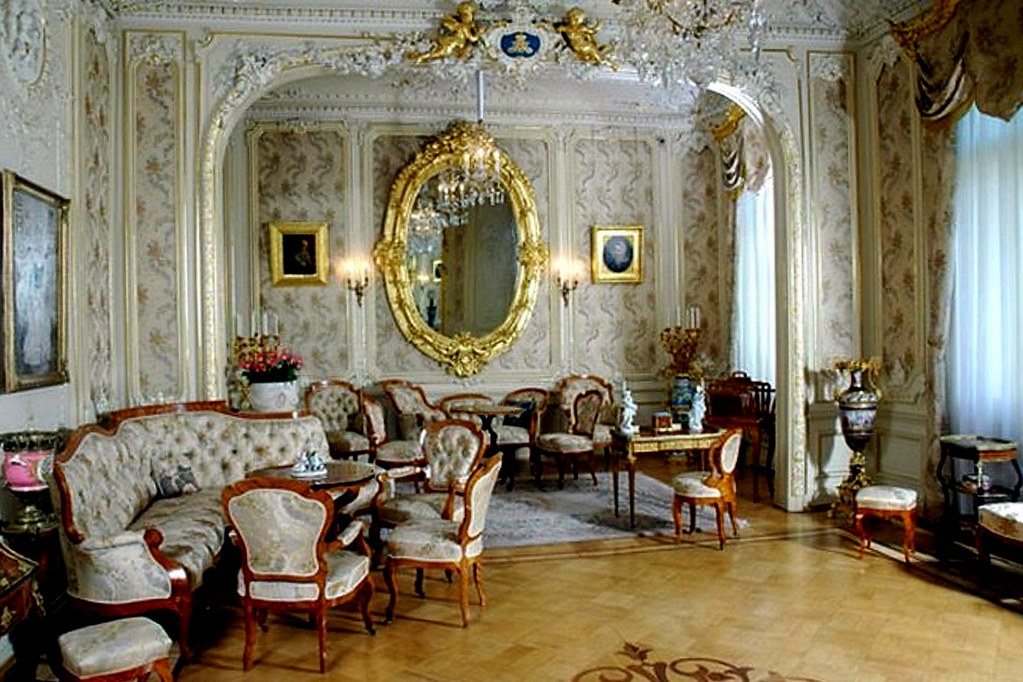
However, my home is haunted by Marie Marybelle who was bricked up alive after the basement was built. She saw to beggars resting in the fruit orchard. As she approached, they rose and asked charity. Helping them from her purse, a valuable ring she was wearing attracted their attention, and they demanded it with threats. Alas! poor Marie. She declared it was an heirloom, and had belonged to her mother; but little the ruffians cared for that, and attempted to snatch it from her finger. My pet dog Zip, whom she happened to be walking, barked, but was not otherwise of much use, and the unhappy Marie shrieked; whereupon one of the men struck her over the head with a cudgel and so knocked her senseless. They then made off with the ring, and when assistance at last arrived no one but the studded girl was to be seen. The farmers were fearful that they would be blamed, so they carried her to the basement; but although she lingered during five days, they were fearful she would never recover. In her last conscious intervals, she besought her sister, the other housemaids, for the love she bore and the affection they owned her, when she was dead to sever her head from her body and to preserve it within the walls of the mansion, there to let it remain for all future time. “Let it be removed; and make this, my last wish, known to any. And know, and let those of future generations know, that is my desire be not fulfilled, my spirit shall, if it be permitted, render the house uninhabitable for human beings.” The farmers did not consider this gruesome wish, they figured it was merely part of her wandering faculties. #RandolphHarris 2 of 5
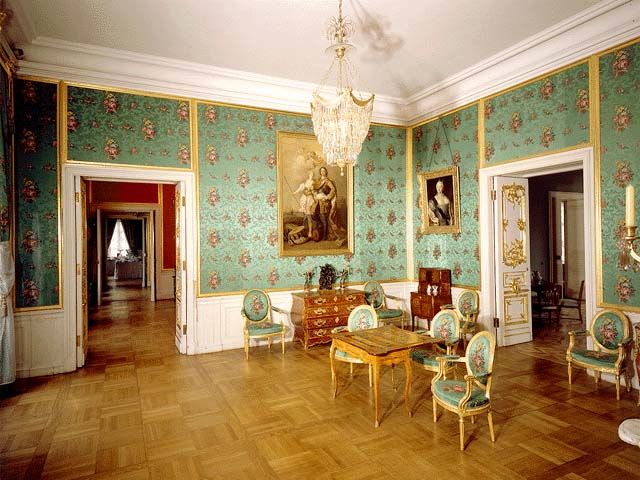
A few days later her body was entered into the wall. Not many days had passed when those living in the mansion were startled, as they were proceeding to bed, by hearing a loud crash in one of the down stairs rooms; and although it was searched, no fallen object could be discovered. A few nights later, the sleeping household were awakened by the reverberating slam of doors; and they rose and searched through the house, and saw Marie, she was pale, had dark shadows under her eyes, and her hands shook. We realized this was a vision of death. Her body leaked blood. My heart was beating faster and faster while her hands reached for me and tired to get ahold of me. I could hear her ghost draw in her breath. A sudden crackling was consuming the ceiling above. The night was red and brilliant, and nobody was safe, nothing was safe. The fancy gilded sofas near us were drenched in blood, the very tapestry bleeding as if it was from within. All draperies were splattered with blood, all windows featureless portals to a black and empty sky. I must have been screaming. How the horror illuminated the night. Ladies in their long gowns scurried, wept, embraced each other, pointed. Frantic men ran to drag objects to safety, slipping on the floor. The shock on each face told the others that they had passed into someplace not of this World. Some saw their own and other’s breaths condensing into clouds in the cold air. We all were in shock with a new respect for the unpredictable yet undeniable power of the unknown. We looked at Marie, but then she vanished in the bloody mist. #RandolphHarris 3 of 5

Then, it was towards the top of the house, on the outside, at the north-east corner, resembling the loud creaking of a saw, or rather that of a windmill, when the body of it is tuned about in order to shift the sails to the wind. We then heard a knocking over our heads, when we attempted to go to the study to investigate, as I opened the door, it was thrust back with such violence as had liked to have thrown me down. However, I thrust the door open, and went in. Presently, there was a knocking on one side, then on the other, and, after a time, in the next room. We went into the room, and the noise continued. These spirits love darkness. Later that evening, August the butler had the most hurtful attack as he was kneeing at the fireplace, stirring the coals. Without warning, a huge amount of water rushed down the chimney, extinguishing the fire. The sparks that flew from the chimney blinded August, and he was covered in ashes. One night the ghost roamed the corridors of the mansion and sought admittance to the rooms of each member of the household. It knocked once or twice on the doors of several bedrooms, then, true to its aggressive pattern of behavior against the mansion, it paused to deal 113 consecutive blow to August’s door before it returned to the Blue Séance Room. There was also the distinctive sound of a large animal rubbing itself along the walls. The steps taken by the ghost were quite unlike human steps and I was sure no animal walked in such a manner. As soon as we made our departure from the third floor, there was a loud thug what sounded like a body had suddenly fallen to the floor. #RandolphHarris 4 of 5
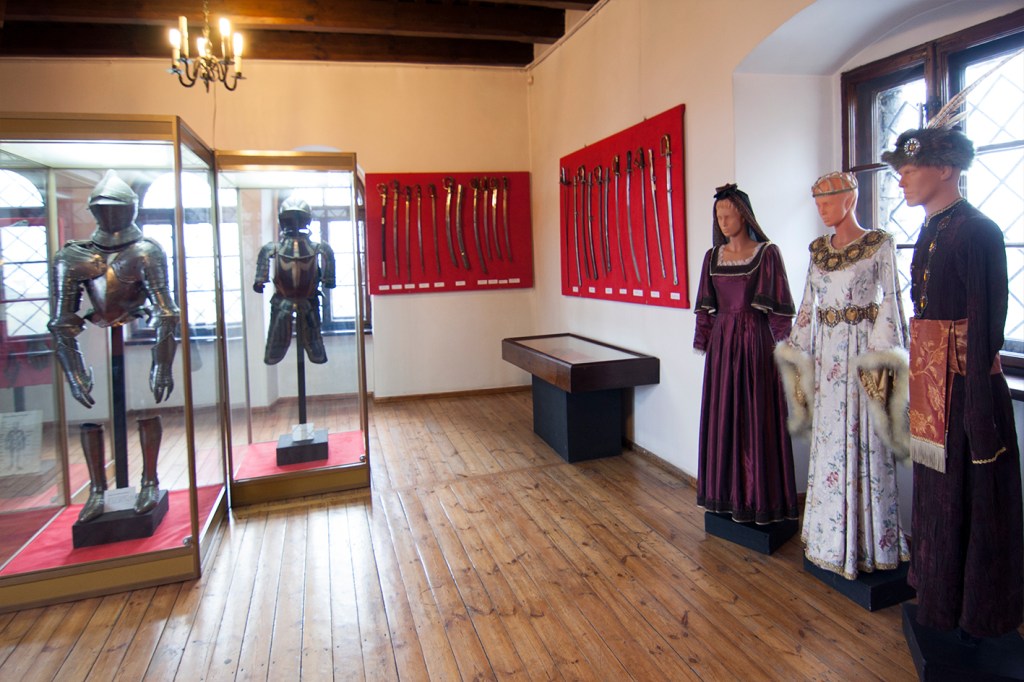
As the death of a thunderstorm swept over the area, we thought the Devil himself was coming to claim a soul. We were in terror. Back in the blood-dampened corners of the parlor, there was a cold chill that penetrated the room. A man dressed in dark blue was a dark beard was standing against one wall of the room, not ten feet from us. The man stood there. Then I noticed something strange—the apparition was only visible from the waist up! He started playing the organ and moving an occasional bit of furniture about the room. Fighting growing panic, I closed my eyes and opened them again. The man stood there, glowering at me. I was shaken by these images. Not only did I see them I felt a deep physical response. I had to clear my eyes as well as my head. There was something overpoweringly intimate about them, yet something indistinct at the same time. The midnight screams increased in shrillness and were joined by the furious crimes of animals. Rhythmic tappings moved up and down the corridors as if a small drum and bugle corps were parading in the halls. The ghost then pounded in the door. The force of the successive lows on the door shook every window on the floor. As the ghost burst through the door, that is when we noticed it was a hoofed creature. The room began to shake and there was a long, drawn-out cry. We retreated to the Observatory Tower and it was plagued by strange and dark shapes descending the stairs. There was a ghost hanging from the ceiling, twitching and jolting as if struggling for breath. Voices were screaming and shouting, “To be knaved out of our graves, to have our skulls taken, are tragic abominations.” The temperature dropped rapidly and the voices grew louder and louder, and I am sure that I could see someone standing in the shadows watching us. #RandolphHarris 5 of 5

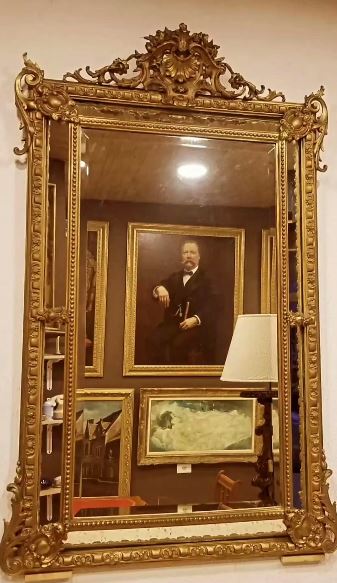
It is well known in paranormal circles that—in order to manifest—ghosts need more energy than they have inherently. Paranormal investigators have their fresh batteries drained of power and they find themselves exhausted after an investigation, simply drained of all their energy. The ghosts seem to have tapped into them for their source of energy. With utter horror, I beheld this. There is no other way to describe it. https://winchestermysteryhouse.com/

And please be sure to check out the online gift store: https://shopwinchestermysteryhouse.com/

The Rock Resort—It Has Nothing to do with Music

People believe that failure in life is like the bankruptcy of a business in which the losses are greater than the gains. This concept is nonsensical. We may be happy of unhappy, achieve some aims, and not achieve others; yet there is no sensible balance which could show whether life is worth while living. Maybe from the standpoint of a balance life is ever worth while living. It ends necessarily with death; many of our hops are disappointed; it involves suffering and effort; from a standpoint of the balance, it would seem to make more sense not to have been born at all, or to die in infancy. Many people who have this view point often turn to drugs and prostitution as a way out. Crack houses sometimes allow on-site drug use while others do not. Some tolerate sex acts, others do not. Some facilities produce and/or sell drugs and others do not. Many crack houses are well-fortified and profit-oriented “castles.” “Base houses” are described as the all-purpose 7-11 of the crack house World. The term “resort” to describe multiroom apartments that have been converted into efficient crack houses. “Brothels” are places where sex is the order of the day and house girls or house boys, pimps, and crack users do business. A “residence house” is a private residence where the owner welcomes in partiers for extended drug and sexfests. “Graveyards” are described as free-for-all environments such as abandoned buildings and such. Finally, “organized crack houses” represent the most rule-oriented variation in which a highly present owners and staff members oversee drug sales and drug use in an orderly fashion. #RandolphHarris 1 of 23

When we consider life of the “crack whore,” we explore the intense sexual and drug use habits of this brand of prostitute and consider the accompanying health concerns. Important differences exist between crack whores and traditional street prostitutes. There is a valuable nexus between drug use and prostitution. Crack cocaine has brought these two Worlds dangerously close together, thus altering the behavioral and cultural aspects of the offending. “Crack was my pimp,” reports a 28-year-old Sacramento Chicken Head. When most people think of vice related crime, the two that come to mind are drugs and prostitution. Indeed, the two are intrinsically linked in both fictional and journalistic media accounts; prostitutes tend to be drug users and many female drug users tend to be prostitutes. What is less investigated are the ways in which particular patterns of drug usage affect patterns of prostitution. The crack house is a carnival of vice. It is one hell of a nasty place where kingrats and pay masters rule, where the guy buckets give slow necks for a penny, and where the freaks, rock monsters, and the blood suckers will do anything for a hit on the stem. By 2022, the Drug Enforcement Administration estimated that there were no fewer than seven hundred crack houses in the Sacramento area. The very term “crack house” and the physical characteristics that it represents can mean many different things—a place to use, a place to sell or do both, a place to manufacture and package crack—and the location may be a house, an apartment, a small shack at the back of an empty lot, an abandoned building, or even the rusting hulk of a discarded automobile. #RandolphHarris 2 of 23

Close scrutiny reveals no fewer than seven distinct types of crack houses exist in Sacramento. However, we many not be able to cover all seven today in this report. Reportedly few in number, castles are fortified structures where large quantities of crack are manufactured from powder cocaine, packaged in plastic bags or glass vials, and sold both wholesale and retail. Crack users (aka “rock monsters” or “base heads”) are not permitted inside the walls of castles. Typical fortification include barred window, reinforced door and window frames, steel doors with heavy slide bolts, and walls reinforced from the inside with steel mesh and/or a layer of concrete blocks. Such heavy fortifications are not for the purpose of making police raids difficult. An 18-year-old former lookout for a crack house reported in 2020: “The whole idea [of the fortification] is to keep the cops off yer backs long enough to dump the stuff [crack] before they get in. This one rock castle I was in had all the doors and walls braced with steel bars drilled into the floor and ceiling. It has TV cameras lookin’ up and down the street Nothin’ could go down without them knowin’ about it. The only time the DEA [Drug Enforcement Administration] got in was when they came with a tow truck to pull down the door and a battering ram to get past a concrete barrier. It took them fifteen minutes to get in, and by then we had the place clean [free of drugs]. In addition to fortifications, most castles are well armed, with workers typically carrying semiautomatic weapons at all times. Crack sales are accomplished with little or no interaction. #RandolphHarris 3 of 23

In some houses of this type, exchanges are made through a slot or hole in the fortified door, with the money passed in and the crack passed out. In others, the transaction is accomplished by means of a basket or a pail lowered from a second floor or attic window. Due to the fortifications and nature of drug transactions in castles, sex-for-crack trading is generally not practiced in these houses. The base house seems to be an “all-purpose drug joint,” as one informant put it. Base houses are used by many kinds of drug users, especially intravenous users. A variety of drugs are available, including crack. However, smoking crack is not the primary activity. Intravenous drug use (typically cocaine) I more commonly seen and accepted here than in other types of crack houses, but sex-for-drugs exchanges rarely occur. In this regard, a 35-year-old crack-using prostitute commented: “You can go there and shoot drugs and she (the owner) shoot, but she didn’t smoke crack. She’ll let you smoke there as long as you…give her two dollars. If you was a smoker, a rock smoker, you can give her two dollars to smoke. If you was a cocaine shooter you give her cocaine to shoot or buy her some wine or something. The only thing she didn’t let us do there is bring customers.” Another crack users offered a somewhat different description: “OK, you go in there, and some people they have a syringe in their arm and a pipe in their mouth at the same time. You go in there and you buy crack and they rent a room or they go in the bathroom. You gotta pay fifteen dollars for this ‘cause that’s two different types of drugs that you get into your system. You can buy a syringe there too, but most of the times people bring their own syringes. And they go in there, and thy shoots up first and they leave the needle in their arm and then they put the crack on top of the pipe and they tell somebody to hit them, you know, to keep the fire on the stem while they inhale it.” #RandolphHarris 4 of 23

The resort is one of the more customary types of crack house in Sacramento. The physical layout is that of a small apartment adapted for crack use. The kitchen is used for cooking rock, at least one bedroom is set aside for sex, and the living space is used for selling and smoking. As one crack user described the resort: “It was just an apartment house where a lot of people that smoke crack come inside and just do drugs and smoke. One of them was his main room and the other two he would rent out, one for sexual and one for just smoking. And sometimes there wouldn’t be nobody smoking and they just come to have sex in both of them. Inside, candles burning, pillows on the floor; it wouldn’t be very good for a person in his right mind.” The owners of these crack houses (aka “kingrats,” “rock masters,” or “house men”) seem to be concerned about two things: money and crack. Many of them are addicted to crack and operate the houses to support their drug habits. Almost anything can happen in these crack houses. They were observed to be filthy, chaotic, and crowded. The crack smokers got into fights, attempted to steal each other’s drugs, and exhibited extreme paranoia. A characteristic of the resort is easy to access to crack, although each house has slightly different sales procedures. Some charge an entrance fee, and customers are free to smoke and have sex. Crack is usually on a table and purchases are informal. In other houses, the crack may not be on display, and customers pay a worker to bring them a rock. For example: “They just have it there on the table, whatever you want, give them the money for it and go in the back and then if you want another you go right to the front and buy a nickel [five-dollar rock] and then you smoke that. You have to but your stuff from them. There was one where you could bring your stuff, but you would have to pay, pay them to use their equipment.” #RandolphHarris 5 of 23

In resorts, the bartering of sex and crack occurs between the prostitute (aka “head hunter,” “gut bucket,” “freak,” “base whore,” “crackie,” “rock star,” “skeeter head” or “skeezer”) and her or his customer (aka “john” or “pay master”). The owner of the crack house receives a fee (crack or money) from the john for the use of the freak room. As such, the customer pays both the owner of the house and the prostitute. And finally, the crack houses known locally as resorts are termed as such because of the variety of activities that occur there. A cocaine dealer reported in this regard: “That they call it a ‘rock resort’ has nothin’ to do with music. Ha, ha. It’s because you can really get into it there—drugs, sex, rock ‘n roll, all three at once, whatever. You can smoke your brains out, f*ck your brains out, get sexed any way you want, watch sex, get paranoid, fight, watch fights, cut somebody, get high, get killed, whatever the f*ck you want.” Although prostitution and trading sex for crack are among the primary activities of many crack houses, in the brothel the owner is a dealer/pimp and the sex-for-drugs exchange system is somewhat unique. The prostitute is a house girl or house boy and is not involved in the payment process. For the sexual services she or he provides, one receives payment for the houseman or housewoman in the from of crack, room, and board. Several respondents reported having actually lived in a crack house brothel, with many more having visited such establishments. A 26-year-old-crack addict with a ten-year-career in drugs described her experience this way: “Bein’ that I been workin’ the streets since I was eleven and don’t really mind sexin’ a lot of different guys, I thought it would be a real easy deal for getting’ all the cracks [more than one rock] that I needed. #RandolphHarris 6 of 23

“So this bondman [drug dealer] that I’d know’d real well takes me in. He says all it is givin’ a lot of brains [oral sex]. Well man, I know’d a lot of brains. I probably done more fellatio [her emphasis] than any lady on the street. I really got my self into somethin’ bad. It wasn’t just brains like he said. It was everything. There was guys pushin’ their natures [genitals] everywhere—in my mouth, in my guts, up my a**; guys gettin’ off [climaxing] in my face; one guy goin’ down on me with five others watchin’ and jerkin’ off. Most of the time I just didn’t care, ‘cause I was gettin’ all the rock I wanted. But times I just wanted to be left alone, but I couldn’t. One time they raped me man; they raped me, cause I wouldn’t f*ck ‘em just that minute. They held me down and beat me and did all kind of terrible things. And I tried to leave but I was a prisoner there. After the rape I tried to leave, but the man at the door he’s got his orders and I can’t go. So when I try to get out he slapped me around and they rape me again. They raped me again real bad this time, f*cking me in the c*nt and the a** at the same time, slapping my face and pinching my tits, and one f*ck pissed on me after he was done. An’ then to teach me another lesson they hold back on the pipe. After a while I got sick, and I was all bruised and looked so bad, that they threw me out. They just threw me out like I was just some piece of sh*t.” #RandolphHarris 7 of 23

In addition to the sexual services available in the brothels, some street prostitutes use them solely as places to have sex with their customers. To further highlight the illustration, a 25-year-old woman who had been exchanging sex for money and drugs for eight years reported: “One of the rooms is for base [crack], the other three rooms are for tricking and one of the first rooms inside the door, that’s where the dude sit, that’s where the G-man [security man, bouncer] sit. When you come in the house he pat you down. They pat you down, and when you come in you say “date.” That means pat you down and let you go and have a date. See anyone was allowed to bring a date, anyone was allowed to bring a trick. When you go in you can bring a date in from the outside and use the room and get money from him and you got to do what you gotta do—five dollars to use the room, five dollars one hour, they say an hour but they only give you forty-five minutes with that mother-f*cker.” Residence houses are quite numerous in the Sacramento area and are likely the most common form of crack house. They are houses or apartments where small groups of people gather regularly to smoke crack. The operators are reluctant to call these places “crack houses,” because they are used as such only by their friends. However, the activities are the same as those in other crack houses, including sex-for-crack exchanges. The major differences revolve around the payment system. Crack is not sold in residence houses; it is only smoked there. In the more traditional crack house, such as a brothel or resort, payment for using the house can be made with money or crack, although money is preferred. #RandolphHarris 8 of 23

In residence house, payment is made only with crack. Visitors give crack or more often share crack with the owner of the house or apartment in return for having a place to smoke or turn a trick. There are usually fewer people in these crack houses than in others—five or six compared to fifteen or twenty. They are also the same five or six individuals, whereas in other types there is a greater turnover of people. Finally, whereas the visitors to other types of crack houses are “customers,” only “friends” are invited to residence houses. We have two more types of houses of debauchery that we will discuss in the next few days. Life is a unique gift and a challenge, not to be measured in terms of anything else, and no sensible answer can be given to the question whether it is “worth while,” living, because the question does not make any sense. As a conception of self-effacement and loss of self-consciousness is contrary to the self-actualized person’s full use of the faculties which the ultimate concern requires for the cooperation with it, psychopathological offenders gain ground on the basis of this deception about “death.” The misconception of what death means in practice was really part of their “teachings,” subtly suggested, and received by the man who was ignorant of the possibility of deception over what looked like devoted, whole-hearted surrender to God. The teachings of offenders can, therefore, be based on truth. The effect of the deception on the self-actualized person is, in due time, an insensitivity produced by psychopathic offenders which is hard to break. #RandolphHarris 9 of 23

In his state of insensitiveness he had no ability to discern, recognize, feel or know things around him, or in himself. He is unaware of his actions, ways and manners, together with a hyper-self-consciousness which he is not conscious of, and which makes him easily hurt but unaware of his own hurting of others. He had practically become stoical, and unable to see the effect of his actions in putting others into suffering. He acts without volitional thinking, reasoning, imagining, or deciding what he says and does. His actions are mechanical and automatic. He is unconscious of sometimes being a channel for the transmission of words, thoughts, or feelings which pass through him apart from the action of his will and his knowledge of the source. An illustration of theonomy is the interpenetration of morality, culture, and religion. Morality, the constitution of the person as person in the encounter with other persons, looks to culture to provide it with concrete contents such as the ideal of personality and community. Morality receives from religion the unconditional character of reunion of the separated. Morality can even be called theonomous ethics, for it is a matter of law, but not alien law (heteronomy) or superficial law (autonomy): the law given by God is man’s essential nature, put against him as law. Therefore man’s nature is not evil. If a man were not estranged from himself, if his essential nature were not distorted in his actual existence, no law would stand against him. The law is not strange to man. It is natural law. It represents his true nature from which he is estranged. #RandolphHarris 10 of 23

Culture creatures a universe of meaning, but the forms it produces re valid only if morality imparts to them the force of the moral imperative. Culture accepts from religion the substance or ground which alone affords the element of ultimacy. Religion is the self-transcendence of life under the dimension of spirit, but this cannot occur without morality, id est, without the constitution of the moral self by the unconditional imperative. Furthermore, religion depends upon culture to provide the meaningful forms in which self-transcendence is expressed. Under the conditions of existence, religion, culture, and morality are ambiguously disrupted and tend to act independent of one another. However, their essential unity and interplay in the human spirt exemplify theonomy in yet another way. The depth-dimensions enters into the very definition of theonomy, for theonomy is autonomous reasons united with it own depth. In spite of the theonomous union between religion and culture, these two do not lie on the same level. Religion is the depth-dimension of culture. The abstract formulation is this: Religion is the substance of culture, and culture is the form of religion. More concretely, however, religion is ultimate concern. As such it gives meaning, seriousness, and depth to all culture. It is always effective, giving inexhaustible depth to life and inexhaustible meaning to every cultural creation. What does the metaphor depth mean? It means that the religious aspect points to that which is ultimate, infinite, unconditioned in man’s spiritual life. #RandolphHarris 11 of 23

The American religious revival of the 1950s was a search for the lost dimension, the religious dimension of depth. For man has lost the answer to the question of whence he comes, whither he goes, what he is doing, and what he should make of himself in the short span between birth and death. This loss of depth-dimension is reflected in the loss of symbols which traditionally convey it. The symbols of creation, original sin, the savior, salvation, and God have been interpreted on a horizontal level as reports about past events, as descriptions of things next to other things. Consequently, they have become meaningless. Rather, they must be interpreted vertically as expressions of the ground of being and meaning. The most religious currents—religious in the wide sense of ultimate concern—are found today in the modern novelists, poets, dramatists, painters, architects, and analytic and existential philosophers who penetrate to the lost dimension, who raise the ultimate question. However, what lies at the bottom of this murky dimension of depth? The name of this infinite and inexhaustible depth and ground of all being is God. He deplores the aimless surface activity of our lives where we speed about hither and tither, cruelly smashing ourselves and others. To avoid complete despair, we must abandon this surface-life. #RandolphHarris 12 of 23

Let us rather plunge more deeply into the ground of our historical life, into the ultimate depth of history. The name of this infinite and inexhaustible ground of history is God. That is what the word means, and it is that to which the words Kingdom of God and Divine Providence point. And if these words do not have much meaning for you, translate them, and speak of the depth of history, of the ground and aim of our social life, and of what you take seriously without reservation in your moral and political activities. In fathoming the depths, one achieves theonomy. Judgement is to creativity as criticism is to creation. The ability to evaluate a situation, to define the problem which it presents, is antecedent to the projection of a positive response or resolution. However, after the creative response has been made, its adequacy must in turn be evaluated; in this respect criticism is also subsequent to creation. A major problem in the definition of creativity is to determine the degree to which the adequacy or quality of a novel product needs to be taken into account in assessing the creativity of an actor. The solution of this question has to be left to future research; for present purposes, judgment is conceived as the ability to evaluate the available alternative responses in problematic interpersonal situations. Whether these alternatives are novel or traditional, they must be plural for judgment to operate. Creativity can supply additional alternatives; and in this hypothetical respect, creativity itself becomes a condition conducive to judgment, while clearly distinguishable from judgement. #RandolphHarris 13 of 23

If sufficient time is allowed for the completion of each sequence of decision-making, each experience can be assimilated with previous experience, and learning can occur in the sense of greater integration and efficiency in the process of judgment. Conversely, pressure of time which forbids completion of the process is disruptive of particular instances of decision-making and inhibitory of the progressive improvement of judgement. (Generous allotments of time for making up one’s mind may seem easier to obtain than the patience to utilize the time in careful weighing of alternative, where in the past patience has been punished by parental figures.) The greater one’s experience as a decision-maker, the better judgment becomes. Experience varies in both range and intensity. It may include both performance as a judge of outcomes as well as a mediator among potential alternatives, in the role of actor as well as that of critic. Age does not automatically lead to experience in decision-making. Experience in decision-making is not only to run the risk of mistakes with costly consequences, but to make the mistakes and bear the consequences. If the exercise of judgment is practiced in a playful and symbolic manner, competence in the judgment of real-life situations increases. Judgment can be practiced in such forms of play as team debating, rhetoric, mock trials, window and catalogue shopping, and academic discussions. Symbolic practice in judgement can be obtained through vicarious participation in the solution of real or prototype problems by leaders or other representatives. #RandolphHarris 14 of 23

Explicit training furnishes concentrated practice. Practice is increased by systematically taking the roles of others, exempli gratia, changing sides in debate. Judgment improves if responsibilities widen with the growth of judgement. Withdrawal of—or from—responsibility inhibits the growth of judgment. There appears to be a need here for the enlargement of responsibilities in a graded series at an optimal rate of increase, so the person is continually challenged and stimulated, but not overloaded and made anxious. Others must dare to trust one’s judgment if it is to grow, and must be willing to share the necessary costs of mistakes, keeping them at a reasonably low maximum but not excluding their real possibility. One’s judgment improves as one acquires a vocabulary for articulating the criteria of judgment. Self-conscious scrutiny of the judgment process, utilizing explicit criteria for identifying the points at which mistakes occur, is as important as the verbalization of the standards applied in making particular choices. Being called upon to voice opinions or defend decisions accentuates self-conscious attention to both the process of judgment and the elaboration of criteria. Freedom to criticize and to dissent is most conducive to the competent exercise of judgment when fully institutionalized in the custom and structure of the groups concerned. Counsel by others is a form of criticism easy to assimilate and conducive to judgment if freely rejectable. Explicit and systematic means for checking mistakes and errors, for comparing expected with actual outcomes, are an objective form of criticism which removes it from anxiety-provoking surveillance by others. #RandolphHarris 15 of 23

As it becomes possible to note improvement in judgment, to measure its fluctuations under varying conditions and compare it with changes in others, judgment tends to improve further. Not only do success and failure predispose to more of the same, but confirmation by others tends to stabilize important changes. Ratification of process in some dramatic or ritual way by a sympathetic audience is an especially effective means of retaining and stimulating gains. As provocations to diffuse anxiety are lessened, judgment improves. The disruptive effects of anxiety upon the exercise of judgment and its growth can be considered as negative conditions to be removed, whilst self-confidence and trust in the ability to judge can be cultivated positively. Common negative conditions are extreme sanctions against failure or error in judgment, fear of punishment or stripping of responsibility for mistakes, hostile criticism or outright aggression by opponents, excessive partisanship which forbids compromise, and the treatment of values as sacred or absolute. Positive tactics include the stead widening of the values open for discussion, limited pilot commitments for trial decisions, redefinition of ultimate values as instrumental, inducements to rest and refreshment, recesses in deliberation, breakdown into smaller units of discussion, postponement of decision, and the injection of ultimate values as instrumental, inducements to rest and refreshment, recesses in deliberation, breakdown into smaller units of discussion, postponement of decision, and the injection of humor and play. #RandolphHarris 16 of 23

Assurance of face-saving for defeated parties is a less honored but indispensable means, along with the rhetoric of compromise, which-like sportsmanship-promises losers another chance. As the right to exercise judgment is recognized and excellence in its practice is honored among members of a group, its possession by members is enhanced. Recognition of the possibility of sound, impartial judgment is a necessary condition of its exercise. In part, this is to say that autonomy is a condition of judgment. More particularly, it means a climate hospitable to “third parties,” to the via media, to the secure and independent status of judge and mediator. The historical identification of legal justice with equality and reciprocity finds warrant in interpersonal relations. In this atmosphere, the victor does not gloat and the vanquished is a “good loser.” Triadic concepts dissolve the irreconcilable antinomies of a more hierarchical order. Exposure to highly competent decision-makers facilitates identification with them, and thereby the acquisition of their skills, and confidence in the exercise of judgment. While exposure to just judges and inspiring critics does not guarantee identification with their example, isolation from challenging models may quite effectively thwart the growth of judgment. Furthermore, exposures to persons as models, even when only vicariously witnessed, helps to furnish persons with solutions of problems in judgment which may be valuable in future situations. To further highlight this illustration, famous legal decisions are unlikely to be literally transferable to new cases, yet they may stimulate efforts to achieve equal wisdom. Good managers of household income, or domestic crises, set standards of judgment for their children to emulate. #RandolphHarris 17 of 23

The greater the quantity and reliability of relevant knowledge available to participants in problematic interpersonal situations, the more likely is improvement in their judgement. Intelligent awareness of the consequences of alternatives affects the making of decisions in numerous ways, but knowledge is not a substitute for judgment in situations presenting genuine problems; neither can general rules be devised to apply strictly and mechanically to all cases. The bearing of knowledge upon action has been an ancient philosophical problem, but it is possible that research can illuminate the relationship in new ways. Knowledge tends to accumulate with experience, and is thus one of the features of age which contributes to wisdom; again, however, it is only one necessary element in the process of judgment, and a limited influence in the growth of judgment. Judgment develops optimally among group members who hold some values or standards in common while admitting a moderate margin for interpretation and change. Without some results, situations become wholly arbitrary, fluid, and chaotic. Yet if rules are applied to situations mechanically without deviation or change, there is no room for judgment, which cannot develop without exercise. The optimal function of rules is thus analogous to that of grammar in language—they limit and facilitate, without dictating what statements will be composed by users. This margin of freedom from responsible decisions also accounts for a sense of uncertainty, for which there is an optional degree at various developmental levels. #RandolphHarris 18 of 23

Problems of judgment which may terrify a child may challenge an adolescent whilst boring an adult. A group whose ultimate standards are too diverse may be unable to reach decisions; if too homogeneous, actions may become monotonous; there is an optimal ratio of variety and consensus, of innovation and assimilation. Without some rules held in common, it is unlikely that judgment could be measured, since there would be no standpoint from which decisions could be evaluated as correct or mistaken, either by actors or observers. The diagnosis of the illness of present-day Western culture is by no means new; its only claim toward furthering the understanding of the problem is the attempt to apply the concept of alienation more empirically to various observable phenomena, and to establish the connection between the illnesses of alienation and the humanistic concept of human nature and mental health. In fact, it is most remarkable that a critical view of twenty-first century society was already held by a number of thinkers living in the nineteenth century, long before the symptomatology which seems so apparent today had become fully manifest. It is also remarkable that their critical diagnosis and prognosis should have so much in common among themselves and with the critics of the twenty-first century. The prognosis of the decay and barbarism into which the twenty-first century will skin was made by people of the most varied philosophical and political views. #RandolphHarris 19 of 23

Military might is one thing nation-states have had that other contenders for power typically lacked. However, if state or inter-governmental forces cannot impose order, the day may dawn when perfectly ordinary transnational corporations decide it is necessary to put their own brigades into the field. Fantastic as this may sound, it is not without historical precedent. Sir Francis Drake waged war not merely on Spanish ships laden with silver, but on towns all along the Pacific coast of South America, Central America, and Mexico. He was financed by private investors. Is it entirely fanciful to imagine 21st-century corporate versions of the Italian condottieri? In The Apocalypse Brigade the novelist Alfred Coppel has pictured precisely this situation—one in which a mega-oil company organizes its own army to protect oil fields from an anticipated terrorist strike. The company acts on its own because it cannot get its home government to protect its interests. Extreme as this fictional scenario may seem, there is a certain logic to it. The inability of states to stop terrorism, despite all the armies at their command, has already forced some major corporations to take matters into their own hands, hiring trained drivers, armed bodyguards, high-tech security specialists, and the like. And when Iran took some of his employees hostage, billionaire Ross Perot hired ex-Green Berets to penetrate Iran and rescue them. From here it is only a short step to mercenary troops. #RandolphHarris 20 of 23

Clearly we are heading for chaos if new international laws are not written and new agencies created to enforce them—or if key Global Gladiators, like the transnational corporations, religions, and similar forces, are denied representation in them. Proposals are coming hot and fast for all sorts of new global institutions to deal with ecology, arms control, monetary matters, tourism, telecommunications, as well as regional economic concerns. However, who should control these agencies? Nation-states alone? The less responsive to their needs governments and inter-government organizations become, the more likely it is that transnational firms will end-run governments and demand direct participation in global institutions. It is not too hard to imagine a Global Council of Global Corporations arising to speak for these new-style firms and to provide a collective counterbalance to nation-state power. Alternatively, major corporations may demand representation in their own names, as part of a new class of membership within organizations like the United Nations, the World Bank, or GATT. Given the growing diversity and power of Global Gladiators, the United Nations, which until now has been little more than a trade association of nation-states, may eventually be compelled to provide representation for nonstates, too (beyond the token consultative role now granted to certain nongovernmental groups, or NGOs). Instead of one-nation—one-vote, it may well have to create additional categories of voting membership for transnational companies, religions, and other entities, which would vastly broaden its base of support in the World. #RandolphHarris 21 of 23

On the other hand, if the nation-states who own and operate the U.N. refuse to widen representation, counterorganizations may arise as global corporations multiply and gather strength. However, whether or not such speculations prove correct in the future, the new Global Gladiators—corporate, criminal, religious, and other—already share increasing de facto power with nation-states. China, with a GDP of $17.73 trillion, is the World’s second largest economy, and has the largest number of state-owned enterprises (SOEs) in the World—over 150,000. Low labor costs and cutting-edge technology have made China the World’s manufacturing hub. According to UN data, China was home to 28.7 percent of the global manufacturing output in 2019—the largest share by any country. Since 2020, more companies from China have made the annual Fortune Global 500 ranking than any other country, further reinforcing its status as an economic superpower. In fact, 71 percent of China’s Fortune 500 companies are state-owed. State ownership is most common in China’s strategic sectors, such as energy, telecommunications and banking. Manufacturing is the largest revenue generator for China, followed by other sectors such as construction, real estate, e-commerce, and software development. The shares of limited-liability enterprises and foreign-funded companies are rising (the former, however, include entirely or partially state-funded companies). As far as the ownership structure is concerned, China’s economic system is not state capitalism as an antipode of the Western-style liberal market economy. It is a constantly evolving mixture of state-owned companies, private firms of various types, and the third sector. #RandolphHarris 22 of 23

As such evolution gains strength, the share of the private sector is steadily rising, and so is its influence on the economy and society. In an important step, manifesting this change, at the beginning of this decade, private business-people were allowed to join the Communist Party. Although America is a capitalistic country, I do not understand how the government can survive and thrive by only collecting taxes and through consumer spending. It seems that the American government may need to revises its method of capitalism, which will allow the government to invest in businesses and make a profit to reduce the burden on taxpayers. One of China’s biggest state-owned companies is China Minmetals Corporation. Annual revenue 2021: $102.0 billion. China Minmetals Corporation is a SASAC-owned company that mines and processes metal products. Copper, tungsten, lead and zinc, rare Earth, tin, antimony, nickel, aluminum, and other products are processed and distributed by the company. It is also involved in the financial and real estate development sectors. China Minmetals Corporation acquires significant international mineral assets that China does not locally. It also controls 90 percent of the contract value in domestic metallurgical engineering and construction. The first step for the U.S.A. to compete with China is to rebuild its own financial health: bring down the debt-to-GDP ratio and stop depending on the Chinese for money and goods. People who are against the American government ought to take a look at our successful industries: aerospace, avionics, telecommunication, satellites, computer software, operating systems, applications, pharmaceutical, and agriculture. All of those industries got some substantial help in terms of R&D or protectionism from the U.S.A. government. We need to start turning around mature industries here rather than chasing growth that might appear to be there in China. #RandolphHarris 23 of 23


Cresleigh Meadows combines luxury with charm in a desirable open-concept floor plan. A magnificent great room off the extended foyer offers desirable views to the spacious backyard.

Residence 2 offers three bedrooms, three bathrooms, AND a three-car garage. No kidding! Customize your day AND your life when you enjoy this community. 😍

Discover the best of both worlds, a community you love with endless activities and a home you adore, designed with a modern lifestyle in mind. https://cresleigh.com/cresleigh-meadows-at-plumas-ranch/quick-move-homesite-78/

This home showcases an open concept great room creating an ideal flow of living, a convenient dedicated home office space, expansive covered outdoor living and a host of options that’ll get everyone excited.

Enjoy your sanctuary in the primary suite. The walk-in shower and soaker tub will give you all the luxury of a spa day. #CresleighHomes


Buying Souls in Return for a Song

I dug deep, deep into my soul to find the heart, the love, the tenderness. I could not stand to be unquiet with a shrieking spirit whose howls made my blood run cold. After growing increasingly uncomfortable in the rain, I returned home late. The vibrations of every word uttered still echoed in the ether. The evening was so dreary that I earnestly just wanted to have a warm meal in the dining room in front of the fireplace. I went down into the kitchen, in search of supper, all the rest of the household having retired long before. Even more astoundingly, perhaps, I suddenly found myself walking down a hallway completely unrecognizable to me. Everything seemed quiet. When I reached the front parlor, I distinctly saw the tall, beautiful lady, with long fair hair, wearing a blue Tudor-style dress walk across the kitchen. I could faintly smell her apple scented perfume. She gazed forlornly out the window. Thinking it was one of the maids, I spoke to her, but the figure vanished into thin air, and a search discovered nothing at all. Mr. Hansen, however, described how he saw a man in the stable-yard, and, under the impression that he was some unauthorized visitor to the Servants’ Hall, asked him what he was doing there. As he approached the man, darkness closed in around him, so did the cold, and so did two and then four blue and green orbs. The man “vanished” without a reply. After about a minute, Mr. Hansen retuned to his group. His hands were stiff and icy cold and he was physically shivering from a bone numbing chill he had just experienced, although the farm fields were lush with summer crops. #RandolphHarris 1 of 6
Such a place as this have never existed before in all our long bloody history. Never such a place as this—full of mythologies of dead gods and lexicons of evil and demons invented by aggrieved souls. Its prominent appearance presupposes the supernatural. Llanada Villa is densely overshowed by trees, and the chief entrances to it, by the ancient wrought-iron gate back and front, are, and long have been, closed, the usual approach being by the stable-yard on the west side. This singular disuse of the entrances originally planned has itself given rise to many fantastic legends. Llanada Villa hails a new revelation that comes to our minds and our souls, wed as they are to flesh, living flesh, a revelation rising out of the pain and thirsts of the hearts lost souls. Every time I enter my home, I feel a great shudder pass through me. It is almost, almost, the very concept of life beyond the veil. There, against the dark woods where men tremble and pray to the God some were about to meet, was a golden cross and what appeared to be several gold stars hovering above and to the right of it. One of my butler’s had a daughter who lived here on the estate. She was six years old. In the small hours of the morning, when dawn was making things clear, the child, waking up, saw a little old woman scratching with her fingers against the wall, close to the fireplace. She was not at all frightened at first, but sat up to look at her. The noise she made in doing this caused the old woman to look round, and she came to the foot of the bed, and, grasping the rail with her hands, stared at the child long and fixedly. So horrible was her stare that the child was terrified. Later that day, the sheriff found her wandering in a rainstorm, shivering and crying, and saying she was afraid to go home. #RandolphHarris 2 of 6

On a fine summer evening, the servants returned to the Servants Hall for the night. One of the housemaids felt that the heat was still so great that she could not seep, and having fastened her window, she did not close the shutters—in that very quiet place it was not necessary—and, propped against the pillows, she still watched the wonderful, the marvelous beauty of that summer night. Gradually she became aware of a looming figure approaching the entrance gate. As it drew closer, it was fixed in a dark substance, a definite ghastly something, which seemed ever moment to become nearer, increasing in size and substance as it approached. Every now and then it was lost for a moment in the long shadows which stretched across the lawn from the trees, and then it emerged larger than ever, and still coming on—on. As she watched it, the most uncontrollable horror seized her. It was a man on a horse, dressed like a Confederate officer. She longed to get away, but the door was locked on the inside, and while she was unlocking it, she must be for an instant near to it. She longed to scream, but her voice seemed paralyzed, her tongue glued to the roof of her mouth. Suddenly, she could never explain why afterwards, the terrible object on the horse seemed to turn to one side, seemed to be going round the house, not to be coming to her at all, and immediately she jumped out of bed and rushed to the door, but as she was unlocking it, she heard scratch, scratch, scratch upon the window, and saw a hideous ghostly figure upon a horse with flaming eyes glaring in at her. She quickly got back to the bed, but the creature continued to scratch upon the window. #RandolphHarris 3 of 6
A severe thunderstorm had developed, and the creature continued to scratch upon the window. The housemaid felt a sort of mental comfort in the knowledge that the window was securely fastened on the inside, as the rain continued to pour. Suddenly, the scratching sound ceased, but the wind blew then rain inside the room, she could hear it dropping on the floor as the wind howled and the shutters slammed against the wall. In her agony, a long bony finger tapped on her shoulder. Her terror was so great that she could not scream. It twisted its long, bony fingers into her hair, and it dragged her head over the side of the bed, and—it bit her violently in the throat. As it bit her, her voice was released, and she screamed with all her might and main. The other servants rushed out of their rooms, but the door was locked on the inside. A moment was lost while they got a poker and broke it open. Then the creature had already escaped through the window, and the housemaid, was bleeding profusely from a wound in the throat, was lying unconscious over the side of her bed. One servant pursued the creature, which feld before him on horseback, and he shouted, “If I catch you, I’ll bend this pistol over your skull!” However, the creature galloped off in the moonlight and seemed to disappear over the wrought-iron gate. The servant quickly rejoined the others at the housemaid’s bedside. She was dreadfully heart, and her wound was a very definite one, but she was of a strong disposition, and when she came to herself she said, “What has happened is most extraordinary and I am very much hurt. It seems inexplicable, but of course there is an explanation, and we must wait for it. It will then turn out that a lunatic has escaped from some asylum and found his way here.” #RandolphHarris 4 of 6
The wound healed, and she appeared to get well, but the doctor who was sent for to her would not believe that she could bear so terrible a shock so easily, and insisted that she must have a change, mental and physical; so I sent her to England. She became involved in all the interests of the country. The house which she let was a single story. This time the housemaid always closed her shutters. After a year abroad, the housemaid returned. The winter passed most peacefully and happily. In the following April, the housemaid was awakened by a sound she remembered only too well—scratch, scratch, scratch upon the window, and, looking up, she saw, climbed up to the topmost pane of the window, the same hideous creature, with glaring eyes, looking in at her. This time she screamed as loud as she could. The servants rushed out of their rooms with postils, and out the front door. But all of the blood had been drawn out of the housemaids veins, and the creature was already riding away across the lawn on horseback. The next day the servants summoned all the others servants. They patrolled all 747 acres of land that I owned and found a cavern that led to an underground vault. A horrible scene revealed itself. The vault was full of coffins; they had been broken open, and their contents horribly mangled and distorted, were scattered over the floor. One coffin remained intact. Of that the lid had been lifted, but still lay loose on the coffin. They raised it, and there, withered, shrivelled, in a Confederate uniform was the hideous figure that had attacked the housemaid; and they did—the only thing that can lay a vampire—they burnt it. #RandolphHarris 5 of 6
There was something so sad about that child and so peculiar. She was absolutely earnest and the wildest look would come into her blue eyes. Sometimes she would stay up until after dark. Defenseless and sobbing bitterly, she would not utter a word when the other servants accused her of bring a man into the mansion. They claimed they spied her and a man dressed in a Confederate uniform meeting in the garden after dark. They said she allowed the man to touch her indecently and her innocence was a complete façade. As well, people had reported seeing the housemaid with a huge black devil-dog with red eyes and heard the muffled voice of the housemaid talking to it. Other times she was see with what some servants thought was a ghost of a man in black whom they said they heard him offer to buy her soul in returned for a song. To which she agreed. The ghost commanded the housemaid, Martha, to meet him at midnight. However, she was too frightened to go. The next day, he was so annoyed that he had been disobeyed that he hit the housemaid around the head almost dislocating her neck. After this, she absolutely refused to meet with her mysterious companion and that is when the Confederate soldier on a horse started to appear. Although it has been many years since, the footpath leading to the place where they used to meet has been the scene of disembodied voices and there are reports of a ghostly lady, resembling Martha, in a grey dress as well as a boy in knee-high shorts and a transparent white horse that sometimes appears to shock witnesses. #RandolphHarris 6 of 6
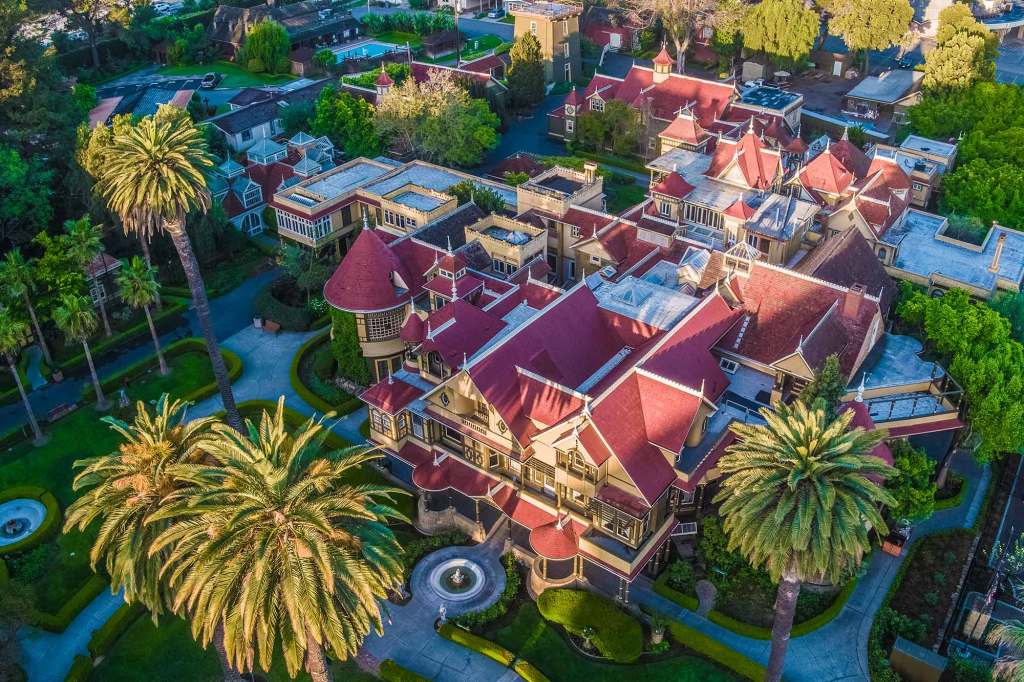
Many people who tour The Winchester Mystery House have frequently reported a ghostly legend. An apparition of a women wearing a black dress periodically appears and walks across the north-east of the mansion. She was first reported in 1920 by several servants who were reportedly scared half to death. She is thought to be wearing Victorian clothing and wanders around the horse stables, turning a corner and then vanishing. She is believed to be the spirit of the housemaid Martha, who according to records, left for England in 1895. https://winchestermysteryhouse.com/

And please be sure to check out the online gift store: https://shopwinchestermysteryhouse.com/

Addiction to Designer Drugs, Big Money, Expensive Houses, and Luxury Cars

Healthy people have the ability to form healthier personalities and maintain relationships of love and friendships in the World. This ability ensures that a healthier person will have access to relief from the existential loneliness in which we all live. Loneliness is not a disease of which one can be cured; it is an unescapable fact of human existence. Although most heroin users spend some portion of their drug-using careers as stabilized junkies and many manage to live for years with high heroin availability and highly-structured daily routines, at least two properties of the stabilized junkie’s situation tend to work against the maintenance of stability. One is the pharmacological property of heroin. It is a drug to which users tend to develop a tolerance rather rapidly, although it has been demonstrated that such tolerance is neither necessary nor universal. Moreover, as we have pointed out in previous reports, numerous factors in the social setting of heroin use mitigate the destabilizing effect of the drug. Work routines, household duties, and even subcultural roles all serve to structure drug consumption. However, in the absence of external structures of constraint, or when such routines are temporarily disrupted, the pharmacological properties of heroin tend to destabilize the lifestyle of the addict further. In sum, contrary to popular belief, heroin use does not inevitably lead to a deterioration of lifestyle. Rather, the physiological dynamics of narcotics use tend to be most destabilizing under conditions where life structure is already weak and incapable of accommodating the physiological demands imposed by increased tolerance. #RandolphHarris 1 of 18

The other property of the stabilized junkie’s life which tends to undermine stability is the hustle the junkie uses to finance his or her habit. According to our respondents, it is not hard times of difficulties in raising money through hustlers which tend to destabilize the stabilized junkie’s life. “You can adjust yourself to a certain amount of drugs a day,” explained Belle, “that you don’t have to have but just that much.” In addition to reducing their drug consumption, stabilized junkies accommodate themselves to such lean periods by substituting other drugs for heroin, working longer and harder at their hustling, or changing the type of hustle they work. On the contrary, it is the unusual success, the “bit sting” or “big hit,” that tends to destabilize the stabilized junkie’s high degree of life structure. The “big sting” or “big hit” can come in many forms. One of our respondents—an armed robber who usually limited his robbing to street mugging, gas stations, and convenience stores—“hit” a bank, which to our respondent’s surprise, produced a “take” of over $60,000. He increased his heroin consumption dramatically and, while doing so, abandoned virtually all the stabilizing routines which marked his life prior to his windfall take. In another instance, a relatively stable junkie dealer was “fronted” several thousand dollars of heroin on consignment. Instead of selling it as he had agreed to do, he absconded with it to another state, shot up most of it himself, and gave the rest away. #RandolphHarris 2 of 18

In another case, a relatively low-level burglar/thief came across $10,000 in cash in the course of one of his burglaries. He took the money to New York where he intended to cop a “big piece” that he could bring back to the city in which he lived and sell for a nice profit. However, instead of selling it, he kept it for his own use and his habit rapidly increases from a stable three bags per day to nearly a “bundle”—a5 bags per day. Although the “big hit” or “big sting” appears to be the most common precipitator of the transition from the status of stabilized or occasional heroin user to the status of free-wheeling junkie, many other variants of similar destabilizing patterns are common. The stabilized junkie may not be the one who makes the big sting. It may be his or her spouse, roommate, paramour, addict friend, or regular trick who receives a windfall of drugs or money and invites the stabilized junkie to share in the benefits of good fortune. “Goody,” a part-time street prostitute, moved in with a big-time drug dealer who provided her with all the heroin she wanted in exchange for domestic services, sexual favors, some modest help in cutting and packaging drugs. Although her supply of drugs was virtually limitless, she took her child-raising obligations and responsibilities very seriously and they kept her to a modest level of use. However, after a year of domestic living she began to miss the “street” life and the friends she had there and to resent her total (“bag b*tch”) dependence on her dealer boyfriend. #RandolphHarris 3 of 18

She returned to the street and used the money she earned from “hoing,” and “ripping” her tricks to purchase drugs in addition to what she got at home for free. This behavior not only destabilized her drug use, but it also disrupted her home life to such an extent that she pated with her dealer and returned to the street full-time. Interestingly, this return to prostitution, theft, and robbery as her sole means of support forced her to develop a new life structure and abandon the free-wheeling pattern into which she had drifted when she had a dual source of supply. Unless heroin addicts are disciplined by a life structure to which they are so committed and obligated that it effectively prevents them from doing so, they will expand their consumption of heroin to whatever level of use the availability of drugs or funds to buy them makes possible. What marks the career stage of the free-wheeling junkie is the almost total absence of structures of restraint. In the word of “Little Italy,” who described a “free-wheeling” stage of his addict career: “I can remember, I wouldn’t be sick, I wouldn’t need a shot…And some of the guys might come around and get a few bags [and say] ‘Hey man, like I don’t have enough money. Why don’t you come down with me?’…I’m saying [to myself], ‘Oh-oh, here I go!’ and I would shoot drugs I didn’t even need to shoot. So I let it get out of control.” The problem for the first free-wheeling junkie is that the binge cannot last forever and is typically fairly short-lived. #RandolphHarris 4 of 18

After a month or two of free-wheeling heroin use—during which time the free-wheeling junkie may have no idea of how much heroin he or she is consuming daily—not only is a modest usage level unsatisfying but the life structure within which one might support it is likely to have been completely abandoned or at least be in severe disrepair. The Street Junkie—Low Availability/Low Life Structure At the point in a free-wheeling junkie’s career when heroin availability drops precipitously and life structure does not provide the support necessary to stabilize heroin use, the free-wheeling junkie may manage to rebuild that life structure and accommodate to a new and lower level of availability. To the extent that his rebuilding and accommodation can be managed, the free-wheeling junkie may be able to return to the life of a stabilized junkie. However, if the rebuilding of life structure cannot be managed, the free-wheeling junkie may become a street junkie. Street junkies most closely approximate the public stereotypes of heroin addicts, if only because their way of life—both where and how they live—make them the most visible variety of heroin addict. Cut off from a stable source of quality heroin, not knowing from where one’s next “fix” or the money to pay for it will come, looking for any opportunity to make a buck, getting “sick” or “jonesing,” being pathetically unkempt and unable to maintain even the most primitive routines of health or hygiene, the street junkie lives a very difficult, hand-to-mouth (or more precisely arm-to-arm) existence. #RandolphHarris 5 of 18

It terms of our typology, the street junkie’s life may be understood as a continuous but typically unsuccessful effort to stabilize life structure and increase heroin availability. The two problems are intimately related in such a way that, unless the street junkie can solve both the problems at once, neither problem will be solved at all. That is, unless the street junkie can establish a stable life structure, one will be unlikely to increase the availability of heroin. Likewise, unless the street junkie is able to increase the availability of heroin, one will be unlikely to establish a stable life structure. To illustrate how this relationship works in les abstract terms, it is helpful to begin with a description of what low life structure means in the life of the street. If any single word can describe the essence of how street opiate users “get over,” that word is opportunism. Subjects were always alert to the smallest opportunity to earn a few dollars. The notion of opportunism is equally relevant to predatory criminality, nonpredatory criminality, employment, and miscellaneous hustling activities. The cause of the street junkie’ opportunism is one’s failure to establish a stable life structure which regularly produces enough income to support an addiction. Consequently, the street junkie’s life is a series of short-term crimes, jobs, and hustles. Street junkies steal or rob when opportunities arise to do so. For a price or in exchange for heroin, they will “cop” for an out-of-towner, “taste” for a dealer, “tip” for a burglar, rents their “work” to another junkie, sell their “clinic meth” and food stamps, or share their “crib” accommodations with a junkie who needs a place to “get off” or a “hoe” who needs a room to take her “tricks.” #RandolphHarris 6 of 18

They will do odd jobs, wash cars, paint apartments, stage accidents and vandalize their own cars, claim it was an accident, and get insurance money, steal and sell other peoples’ medications, deliver circulars, move furniture, carry baggage, or snitch to the police. The problem is not only that this opportunistic crime, hustling, or legitimate work pays very little, but that none of it is stable. While one or more of these activities may produce enough income today, none of them may be counted on to do so tomorrow. Moreover, because typical street addict crimes pay so little, because such crimes must be repeated frequently to produce any sizable income, and because they are so unpredictably opportunistic, the chance that the street addict will be arrested sooner or later is very, very high. This was the unfortunate experience of Little Italy who after falling out with his supplier, was forced to discontinue drug sales as a major means of income and turned to armed robbery to support his use. “I know today, I can say that is you don’t have a plan you’re gonna f*ck up man…Now those robberies weren’t no plan. They didn’t fit in nowhere…just by the spur of the moment, you know what I mean? I had to fond something to take that place so that income would stand off properly, ‘cause I didn’t have a plan or didn’t know anything about robbery.” As Little Italy’s experience demonstrates, street junkies lives are further complicated by the fact that “big dealers”—vendors of quantities of good quality heroin—often refuse to sell to them. #RandolphHarris 7 of 18

The reasons they refuse are directly related to the instability of street junkies’ lives. Because street junkies can never be certain when and for how much they will “get over,” they are frequently unable to afford to buy enough drugs to satisfy their “jones.” In the face of such a shortage they will commonly beg drugs from anyone they know who might have them or have access to them, try to “cop short” (buy at less than the going rate), attempt to strike a deal to get drugs loaned or “fronted” (given on consignment) to them on a short-term basis, or, if necessary, engage in opportunistic hustling. Also, because street junkies are the type of addict most vulnerable to arrest they are also the most likely category of addict to be “flipped” by police into the role of an informant. Usually street junkies will be promised immunity from prosecution on the charge for which they were arrested if they “give up” somebody “big.” Given the frequency with which street addicts “come up short,” the relatively small amount of profit to be made in each individual transaction with them, and the higher-than-normal risk of police involvement, few “big dealers” are willing to put up with all of the attendant hassles and hustles that dealing with street junkies typically involves. While there are exceptions—the most common being big dealers who relatives of street junkies or their friends of long standing—street addicts are mainly limited to “street dope,” heroin that has been repeatedly “stepped on” (diluted) as it is passed from the highest-level dealer to the lowest. #RandolphHarris 8 of 18

In fact, some studies have shown that as much as 7 percent of street dope may have no heroin in it at all, while other studies show a heroin concentration of from 3 to 10 percent in street dope as compared with an average concentration of nearly 30 percent in bags seized from “big dealers.” The irony in this situation is that, as a consumer of “street dope,” the street addict pays a higher per/unit price for heroin than any other person in the distribution chain. Furthermore, this very low and often unpredictable quality of heroin available to the street junkie serves to destabilize his or her life structure further. In 2020, heroin-involved overdose death rates decreased nearly 7 percent from 2019 to 2020. However, more than 13,000 people died from a drug overdose involving heroin in the United States of America, a rate of more than four deaths for every 100,000 Americans. The number of heroin-involved overdose deaths was nearly seven times higher in 2020 than in 1999. Nearly 20 percent of all opioid deaths involved heroin. Heroin is an opioid drug made from morphine, a natural substance taken from the seed pod of the various opium poppy plants grown in Southeast and Southwest Asia, Mexico, and Colombia. Heroin can be a white or brown powder, or a black sticky substance known as black tar heroin. People inject, sniff, snort, or smoke heroin. Some people mix heroin with crack cocaine, a practice called speedballing. Heroin enter the brain rapidly and binds to opioid receptors on cells located in many areas, especially those involved in feelings of pain and pleasure and in controlling heart rates, sleeping, and breathing. However, it is a very dangerous drug. In the age of fentanyl, all drugs are dangerous, as they could be mixed with it and could be immediately fatal. Even marijuana could be laced with fentanyl. Therefore, it is important to stay away from all drugs and be sober at all times. #RandolphHarris 9 of 18

Passivity caused by misconception of self-effacement. Under the idea that surrender of self to the Ultimate cause means self-effacement, self-renunciation, and, practically, self-annihilation, the self-actualized has aimed at unconsciousness of personality, personal needs, personal states, feelings, desires, external appearances, circumstances, discomforts, opinions of others et cetera, so as to be “conscious” of the ultimate concern only moving, working, acting, through it. To this end one has given over one’s “self-consciousness” to “death” and has prayed that one might have no consciousness of anything in the World but the presence of the ultimate concern. Then, to carry out this absolute surrender of self to death—this entire self-effacement—one consistently, in practice, “yields to death” every trace of the movement of “self” one become aware of, and sets one’s will steadily to renounce all consciousness of personal wishes, desires, tastes, needs, feelings, et cetera. All this—appearing to be so “self-sacrificing” and “righteous”—results in an entire suppression of personality, and the giving of ground to psychopathic offenders in a passivity of the whole being. This permits the powers of psychopathic offenders to work, and bring about an “unconsciousness” which becomes in time a deadness and dullness of the sensibilities, and an inability to feel—not only for oneself but for others, so as not to know when they suffer or when one oneself cases suffering. How does the Spiritual Presence attack and close the gap between subject and object in the matter of language? It does so insofar as it witnesses, it expresses, it gives voice to what transcends the subject-object structure. Under the influence of the Spirit the human word becomes the Word of the ultimate concern. #RandolphHarris 10 of 18

This Spirit-determined human word is not bound to any particular religion or revelation. However, whenever language becomes a bearer of the Spirit, it unites the speaker with that of which one speaks by reaching beyond the subject-object structure to the power of being and meaning in which they both are grounded. Consequently, the ambiguity of poverty and abundance is overcome in that a few words become great words when they convey the Spirit. The ambiguity of particularity and universality is conquered since the Spirit-bearing word, though particular, shares in the universality of the Spirit. Ambiguous indefiniteness yields, for the word, determined by the Spiritual Presence, does not try to grasp an ever escaping object but expresses a union between the inexhaustible subject and the inexhaustible object. Finally, the ambiguity of communication and anti-communication is overcome when the word, impregnated with the Spirit, penetrates to the center of both listener and speaker so that estrangement and, with it, the possibility of deception and distortion vanish. The presence of the Spirit in human language is another Pentecost. The subject-object chasm is bridged, thus striking at the root of all linguistic ambiguities. The result is a theonomous central function. Judgment in interpersonal relations refer not to the perception of differences in quantity, though a large body of gestaltist literature in psychology includes such matters under this caption. Instead, it refers to the evaluation of alternative courses of action. There is a lively current interest in critical thinking, planning, and decision-making, for which good judgment is imperative. #RandolphHarris 11 of 18

Judgment is here conceived as very similar to the ancient concept of wisdom, as signified in the Greek word sophia, from which philosophy gets its name. In view of the centuries of effort which have been devoted to seeking out the mysteries of its occurrence and transmission, it will inevitably seem foolhardy to some to make further tries at identifying the conditions of its development. Yet, every wise parent must continue to instill wisdom in his offspring, and there is room for hope that contemporary social science can add something toward clarifying the conditions for cultivating this long valued ability. The operational definition of judgment must itself be the product of research; a priori definitions can at best point the way toward preliminary approximations, and distinguish judgment from some other abilities which are sometimes take for it. Thus judgment is not another name for utility, which by an assumption common to economists, all rational choices are said to maximize. Indeed, as some of the more critical economists themselves aver, many decisions among alternative values are not commensurable through resort to some imputed quasi-monetary common denominator or intervening variable; their qualitative ordering in particular situations is not reducible to universal categories and dimensions. #RandolphHarris 12 of 18

The quality of judgment itself—construed as an ability to make correct decisions—mut be estimated in actual situations and reference to identified actors. What is a correct decision for one actor may be a mistake for another actor, or for the same actor at a different time. The level of judgement cannot be inferred simply from the content of decisions made; the decisions have to be gauged in their context. To take a concrete example: while as a rough guide home economists recommend that families spend no more than a fourth of their income on rent, it may be good judgment under extraordinary circumstances to spend two or three times that much. Whether the family is exercising good judgment depends on its total living situation and the other expenditure choices it makes. Thus the measurement of judgment is likely to require reference to a representative range of decision and considerations within the history of the actor. The interpersonal origins of judgment need heavy emphasis. A person can only be reasonable as long as the other is reasonable, and one, as one’s self is reasonable. However, each can help the other to acquire skill in being reasonable. On this account it might be useful to rename judgment in interpersonal relations—reasonableness or reasonability. That measurement of judgment is ultimately feasible and may become quite reliable and exact is suggested by the fact that people are always making appraisals of the good judgment or mistakes of others and of themselves, and are interested, at least abstractly, in the steady improvement of their judgment. #RandolphHarris 13 of 18

Arguments are popular, for instance, among parents as to how far children have progressed in the development of judgment, how far they can be trusted to exercise responsibility for themselves and others. Although it is generally recognized that children increase or improve in judgment as they grow older, laws are continually debated as to the age at which teenagers may drive cars, choose their own movies and reading matter, govern their own morals, spend money wisely, and depart from parental counsel. The practical bearing and importance of the optimal development of judgment on martial choice and the rearing of children seems obvious. However, the judgment does not necessarily reach a plateau at the age of twenty-one, or a peak at any other age. Its growth is not an inevitable concomitant of aging, since it can be readily arrested, and can even degenerate and decline. While paternalistic husbands restrict the responsibility of their wives, for example, their wives’ judgment deteriorates in consequence, leading to further restrictions of their responsibility. Neither is there any upper limits to judgment; it can develop progressively like the other elements of interpersonal competence. Global leaders must go beyond this basic level of interpersonal skills to effectively lead their team. Because global leadership goes beyond domestic, expatriate, and comparative leadership, as well as global management or simply a global title, and becomes “extreme leadership.” Yes, kind of like extreme sports. And like an extreme athlete who needs that higher level of resilience, endurance, willpower, fitness and courage to push themselves to the absolute limit, so must global leaders take their competencies—whether interpersonal or otherwise—to a higher level. #RandolphHarris 14 of 18

Just as nations are proving inept in coping with terrorist or religious frenzy, they are also finding it harder to regulate global corporations capable of transferring operations, funds, pollution, and people across borders. The liberalization of finance has encouraged the growth of some six hundred mega-firms, which used to be called “multinationals” and which now account for about one fifth of value added in agriculture and industrial production in the World. The term multinational, however, is obsolete. Mega-firms are essentially non-national. Until the recent past, globe-girdling corporations have typically “belonged” to one nation or another even if they operated all over the World. IBM was an unquestionably American firm. Under the new system for creating wealth, with companies from several countries linked into global “alliances” and “constellations,” it is harder to determine corporate nationality. IBM-Japan is, in many ways, a Japanese firm. Honda builds cars in the United States of America and ships them to Japan. Ford used own Jaguar (1999-2008) and used to own Land Rover (2000-2008) before selling both to Tata Motors in 2008. It is difficult to designate the nationality of global corporations. They fly the flag of their customers, not their country. What is the “nationality” of Visa International? Its headquarters may be in the United States of America, but it is owned by 21,000 financial institutions in 187 countries and territories. Its governing board and regional boards are set up to prevent any one nation from having 51 percent of the votes. #RandolphHarris 15 of 18

With cross-national takeovers, merger, and acquisitions on the rise, ownership of a firm could, in principle, switch from one country to another overnight. Corporations are thus becoming more truly nonnational or transnational, drawing their capital and management elites from many different nation, creating jobs and distributing their streams of profit to stockholders in many countries. Changes like these will force us to rethink such emotionally charged concepts as economic nationalism, neocolonialism, and imperialism. For example, it is an article of faith among Latin Americans that Yankee imperialists siphon “superprofits” from their countries. However, if tomorrow “superprofits” from a Mexican operation were to go to investors dispersed throughout Japan, Western Europe, and, say, Brazil (or even someday China), who exactly is the neocolonislist? What if a transnational is nominally based in Macao or, for that matter, Curacao, and its stock is owned by 100,00 continually changing shareholders from a dozen countries, trading in half a dozen different stock exchanges from Bombay and Sydney to Paris and Hong Kong? What if even the institutional investors are themselves transnational? What if the managers come from all over the World? What country, then, is the “imperialist oppressor”? As they lose their strictly national identities, the entire relationships between global firms and national governments is transformed. In the past, “home” governments of such companies championed their interests in the World economy, exerted diplomatic pressure on their behalf, and often provided either the threat (or the reality) of military action to protect their investments and people when necessary. #RandolphHarris 16 of 18

In the early 1970s, at the behest of ITT and other American corporations, the CIA actively worked to destabilized the Allende government in Chile. Future governments may be far less ready to respond to cries for help from firms that are no longer national or multinational but truly transnational. If so, what happens when terrorists, guerrillas, or a hostile nation threaten the people and facilities of one of the great transnationals? To whom does it turn for help? Does it meekly walk away from its investments? Perhaps the most popular definition of the economic system of today’s China is state capitalism as opposed to the Western-style liberal market economy with private companies at its core. It can hardly be denied that, at this point, compared to the West, in the Chinese economy there is more state, and compared to China, in the Western economies there is more private entrepreneurship. Still, this conceptual framework is too simplistic—first of all because it underestimates the role of change. While retaining differences from Western economic systems, especially regarding the role of the state, China is accommodating more and more elements of conventional Western capitalism, first of all Anglo-Saxon capitalism as the latter’s classical model. This process of accommodation and the ability to accommodate are the sources of China’s economic strength. Remaining different, it is becoming more and more similar to the West in many important respects. China’s economic system appears to be a mix created by this dialectical game of similarities and differences. #RandolphHarris 17 of 18

The increase of its economic power is supported both by market incentives, which are becoming stronger and stronger (in some respects significantly stronger than in the West) and by large-scale government intervention. It is crucially important that, when intervening in the economy, the government remains premarket enough, or pragmatic enough, not to undermine market incentives. Basically, the emergence of China as a new economic giant underlines the fact that the economic system of a nation influences its growth and power first of all not through its static condition (the way it looks at this particular moment), but through the dynamics of its evolution and adaptation to the changing internal and external environment. The economies of the West are losing their market-driven dynamism. In contrast, the Chinese economy is growing and increasing its strength exactly on the energy of its premarket drive. Within the three decades of reforms, it terms of its systemic transformation, China achieved three results of a historical importance. China is rebounding strongly following the reopening of its economy. The country’s GDP will grow 5.2 percent this year and 5.1 percent in 2024. The Chinese government has resorted to surprising measures to restore confidence among private entrepreneurs. China’s education ministry has estimated that nearly 11.6 million college graduates are looking for jobs this year. The government set a cautious growth plan for this year with a job creation target of 12 million. #RandolphHarris 18 of 18


We’ve got one word to describe #MagnoliaStation Residence 5 at #CresleighRanch – OPTIONS! 😍

No matter what your needs or family size, this floor plan is ideal. With flexibility to create a home gym, a generation’s suite on the first floor, and a loft for a game room, 🎱 there are endless possibilities. 👏

Check it out on our website – we’re in love with our new neighborhood!

In a Cresleigh Home, you long to be, room by room, patiently. Your dream home awaits you here, at Cresleigh Ranch. It will be waiting for you here, come by and see.
#CresleighHomes


Keeping Up with the Joneses?

It is heartbreaking to hear that more than 115,000 Americans have died from drug overdoses in 2022. The human toll has devastated families and communities. Research shows that these two dimensions—availability and life structure—are critical to understanding the dynamics of addict careers. According to our respondents, differences in the ways addicts manage these functions and variations in these two dimensions that are beyond the control of addicts combine to produce fairly distinct patterns, periods, or stages in their careers. The interaction of availability and life structure may be understood to described addict career phases that are familiar to participants o observers of the heroin scene. Throughout their drug-crime careers, addicts typically move through periods in which they may at one time be described as one type and later another. The occasional user—low availability/high life structure: initiates into the heroin-using subculture typically begin as occasional users. For the beginning heroin users, a variety of factors typically serve to limit the availability of heroin. The initiate has usually not spent enough time in the heroin subculture to develop extensive drug connections. In addition, the beginner must be taught how and where to buy heroin, and also must learn how to use it. Moreover, the typical beginning heroin users is unlikely to have sufficient income to maintain any substantial level of heroin consumption, and is most unlikely to have either the connections or the knowledge necessary to increase availability through low-level dealing or through shrewd buying and reselling as experienced addicts sometimes do. #RandolphHarris 1 of 17

In addition to these factors which tend to limit the availability of heroin to the beginning user and hold one to an occasional user role, a variety of factors related to life structure also tend to oblige the beginning heroin user to play an occasional suer role, or at least to do so until that life structure can be modified to accommodate a higher level or heroin use. In many cases beginning heroin users are young, dependent, involved in school, and bear family roles and obligations which are not easily changed. Likewise, adult role obligations, such as a full-time employment, housekeeping, and child rearing, can be altered so as to be compatible with occasional patterns of heroin use, but not without considerable difficult if those patterns include high or even moderately high levels of addiction. One of our respondents, “Belle,” explained how she and her husband, “Taps” maintained a very long period of occasional use, dule largely to Taps’ determination to keep his full-time job: “I know of people that does half a bag generally. Do you understand what I’m saying? That they automatically live off of half a bag and got a jones. Like I Said, Taps waked—and he would shoot no more than half a bag of dope at anytime he took off and wouldn’t do no wrong. He would not do no wrong. He worked each and every day. And this is what I told you before—I said I don’t know how he had a jones and worked, but he worked every day.” Moreover, Belle went on to explain that when the live structure Taps provided for her lapsed—and availability increases—she did not remain an occasional user: “Taps had me limited a long, long time. I mean a long time limited to nothing but a half a bag of drugs, until he completely stopped hisself. Then when he stopped, I went ‘Pheww!’—because I didn’t have anybody to guide me. I didn’t have to take half a bad and divine it in half for him. And I went from one bag to more.” #RandolphHarris 2 of 17

“Ron,” another addict in our sample, played the role of “occasional user” without interruption for nearly eight years. During this period he consumed an average of $10-15 in street heroin per day, while holding down a full-time job and living with his mother, who refused to allow him to use drugs in her home. Toward the end of the eight-year period he became a “tester” for a local drug dealer, a role which increased the availability of heroin. At about the same time, he also lost his job and moved out of his mother’s home. Having lost the support of the stable routine imposed by his job and living arrangements at the same time heroin became more readily available to him in his role of “tester,” his drug use escalated dramatically within a very short time. Interestingly, the low availability/high life structure pattern of occasional use, which typically marks the beginning addict’s entrance into the drug-using World, is characteristic of many addicts’ attempts to leave it. Many formal drug rehabilitation programs impose conditions of low (or no) heroin availability combined with high life structure upon addicts enrolled in their programs. Addicts who attempted to quit on their own often seek to do so by limiting or eliminating altogether their contacts with addict friends, self-medicating with “street” methodone, and devoting themselves intensively to some highly demanding routine activity such as full-time job or caring for young children. #RandolphHarris 3 of 17

The stabilized junkie—high availability/high life structure: for the occasional users to become a stabilized junkie, heroin must become increasing available in large and regular quantities, and one’s daily structure must be modified to accommodate regular heroin use. Making heroin regularly available in sufficiently large quantities is not only a matter of gaining access to reliable sources of supply of the drug; it also involves learning new and more sophisticated techniques for using and obtaining it as well as getting enough money to be able to buy it regularly. During the time beginning addicts play occasional user roles, they typically learn the fundamentals of copping, cooking, cutting, and spiking. These are all drug-using skills that take time to learn. It was not uncommon for the addicts in our sample to report that a sharp increase in their level of heroin use followed their learning to shoot themselves. When an occasional user learns to self-inject and no longer requires the more knowledgeable drug-using friends to “get off,” this new level of skill and independence, in effect, increases the availability of heroin. Likewise, copping skills and contacts which might have been sufficient to support occasional use require upgrading to support the needs of the stabilized junkie. The would-be stabilized junkie who must rely solely on low-quality, “street” heroin, who gets “ripped” by paying high prices for “bad dope,” or who is totally dependent on what quality or quantity of heroin a single supplier happens to have available must seek to stabilize both the quantity and quality of regularly available heroin. #RandolphHarris 4 of 17

Doing so seems to require extending and developing contact in the drug subculture. In the words of one of our respondents: “…you got to start associating with different people. You got to be in touch with different people for the simple reason that not just one person has it all the time. You go to go from one person to the other, find out who’s got the best bag and who hasn’t….You want to go where the best bag is for your money, and especially for the money you’re spending. You got to mingle with so many different people.” Making, developing, and maintaining the contacts that are helpful if not absolutely necessary to stable heroin use seems to invite natural opportunities for the most common modification in the stabilized junkie’s search for one’s own supply of drugs and, second, it can be a source of money for the purchase of drugs or source of drugs itself. Dealing can be rather easily accommodated to the needs of both availability and life structure. All of our respondents reported that at some time in their drug-using careers they had played the role of dealer, if only occasionally. Becoming an occasional dealer is almost an inevitable consequence of becoming a competent, regular user. A stabilized junkie will not only be approached to “cop” for occasional users and addicts whose suppliers are temporarily out of stock, but the stabilized junkie will come to recognize occasions on which especially “good dope” can be purchased and resold at a profit to drug-using friends. Because the work of dealing drugs on a small scale does not require much more time or effort than that which goes into buying drugs regularly for one’s own use, dealing also had another advantage which makes it an attractive activity for the stabilized junkie. #RandolphHarris 5 of 17

Namely, it can be carried on as a source of drugs or income without undue interference with whatever other “hustle,” if any, constitutes the stabilized junkie’s additional source of support. This is particularly true if, in the course of carrying on the hustle—be it theft, shoplifting, pimping, prostitution, bookmaking, or dealing in stolen property—the stabilized addict is likely to come into regular contact with other drug users. The extent to which dealing can be carried on along with other hustles depends of course, both on the nature of that hustle and on the extent of the dealing. The stabilized junkie will tend to divide one’s hustling efforts between dealing and other hustles with an eye toward which one delivers the highest profit. However, dividing those efforts will also involve other considerations such as the stabilized junkie’s personal preference for one type of work, lifestyle and community reputation considerations, opportunities to practice one type of hustle or another, and the physical demands each type of hustle tends to require. Among female heroin users, a rather common accommodation to the profits and opportunities of dealing and those of other hustles is a live-together arrangement with a male user. In this division of labor each tries to conduct their outside hustle during hours when the other can be at home to handle dealing transactions. An important feature of this arrangement is that, if necessary, it can be structured so as to permit the stabilized female junkie to be at home for housekeeping and child-rearing duties as well as dealing. In the coming days, we will furnish more information on this topic. #RandolphHarris 6 of 17

Humans are a social species; we literally depend on collaborative interactions with others for survival. Because of our social nature, it is important to develop autonomy. Autonomy is the ability to make choices yourself rather than having them made for you by other people. Most of us desire autonomy—who wants to be a slave to another’s wishes? The ability to exercise autonomy and maintain relatedness within close relationships is one hallmark of normative relational development in adolescence and remains an important aspect of healthy functioning in adult relationships. Nonthreatening exposure to a wide range of cultural and subcultural alternatives for handling interpersonal situations enhances autonomy. Repeated categorical discrimination without regard to performance damages autonomy, whereas equivalence of opportunity facilitates development of autonomy. Customary community respect for individual differences enhances autonomy. Persistent involvement or proffering of the opportunity for involvement in group activity, without forcing it, cultivates autonomy; persistent exclusion, ostracism, or forced participation reduces it. Exclusive domination by others reduces autonomy; progressive increments of initiative and responsibility enhance it. Procedures of assignment of duties and periodic reporting are more conductive to autonomy than procedures of direct supervision. Community enforcement of voluntary agreements and nullification of agreements obtained by duress encourage autonomy. Marriage between persons regarding each other as social unequals reduces autonomy of both mates and children; social equality in marriage facilitates the development of autonomy in mates and children. #RandolphHarris 7 of 17

Adolescents who fail to develop the capacity to establish autonomy and relatedness appear at-risk for using hostile or autonomy-undermining methos of resolving conflict and for experiencing depression and loneliness in adulthood close relationships. The strength and persistence of autonomy are positively correlated with the number of respect responses received by the self from significant others in the person’s life situations. Possession of a family name respected by others encourages autonomy. Intimate presence of adequate models which enables the growing child to form correct gender identification is indispensable for the development of autonomy. Exposure to other highly autonomous persons who can serve as models for identification facilitates autonomy. Recognition by significant others of progressive accomplishment encourages autonomy. Correspondence between the level of performance expected by others and the capacity of the person to equal or exceed it is optimal for development of autonomy. Autonomy increases as failure is met by assistance and encouragement for the next attempt rather than with derogatory personal condemnation. Wherever accomplishment is competitive, matching of competitors is optimal for the development of autonomy. Generally speaking, emphasis upon surpassing previous performance is more conducive to development of autonomy than is stress upon competitive standards of performance. The growth of autonomy is assisted by the customary use of rituals for honoring the defeated party in situations of conflict. #RandolphHarris 8 of 17

Practice in the performance of roles conveying respect to others increases the autonomy of the self. Autonomy is cultivated by participation in groups where one receives open and direct but nonaggressive evaluation of one’s self by the others. Autonomy is increased as appraisals of one’s self by others come from a range of perspectives, thus giving one alternative evaluation to choose from. When parents praise their children individually for characteristics that differentiate them noncompetitively from their siblings, so that each can feel uniquely appreciated, autonomy is cultivated. When parents permit their children to compare them objectively with other parents they cultivate the autonomy both of their children and of themselves. Freedom is a marvelous name. That is why you are so anxious to make use of it. You think that, if you call imprisonment true freedom, people will be attracted to the prison. And you are quite right. Freedom has a strong emotive undertone, which enables the speaker to use this notion in the way of a persuasive definition. If you want someone to do something, you just have to make clear to one that one’s freedom lies in doing precisely this thing. Is not that the true nature of autonomy? Does not autonomy also open the possibility to use it in the way of a persuasive definition? Can autonomy not also be a seductive word which can lead to ends which are not always laid open by protagonists? Autonomy is self-government. If autonomy of a person is a good thing per se, a person’s self-determination must be the ultimate goal of education. Education as a social science has to be autonomous by itself. #RandolphHarris 9 of 17

Therefore, the notion of autonomy is the banner under which educationalists have emancipated their science from the guardianship of religion and philosophy. Rewards for expression of curiosity and critical comparisons encourage autonomy; punishment for these reduces it. Full and consistent recognition of the limitations of human knowledge, the debatability of issues, the disagreement of authorities, and the legitimacy of dissent encourage autonomy. Given a broad grasp and perspective on World history, geography, and culture, one is less likely to be oppressed by the superiority or inferiority of any provincial culture or subculture. Instruction and practice in scientific method foster autonomy. Since teachers frequently are models for identification, they affect the autonomy of pupils favorably if they can serve as autonomous models of unambiguous gender identity. If the curriculum recognizes the development of diverse skills as an objective of education this will encourage autonomy, whereas approval solely for intelligence and intellectual achievement reduces it. When questions by pupils are encouraged and welcomed, the autonomy of teachers and pupils is enhanced. A programming of educational experience which affords intervals of solitude for the assimilation and integration of new knowledge increases autonomy more than programs which maintain a steady barrage of work and participation. Participation in the pursuit of knowledge is more productive of autonomy than mere passive receipt of knowledge. #RandolphHarris 10 of 17

Recognition and facilitation of individual intellectual interest, as they arise encourages autonomy; enforcement of conformity reduces its development. Open reciprocal criticism by fellow-students of each other’s work stimulates autonomy, provided personal aggression is minimized and objectivity of standards maintained. Access by parents to objective and thorough appraisal of their children’s performance, if done in a way to invoke their roles as audience and not their anxiety as performers themselves, assists in the growth of parental autonomy. Youth who are taught to prioritize others’ motivations and needs are likely to acquire less practice in identifying, understanding, and asserting their own autonomous way of thinking. In addition, parents’ use of psychologically controlling tactics has been linked to poorer quality parent-youth relationships, possibly the result of the youths’ resistance to the intrusive or overbearing parenting. Optimistic encouragement and provision for play encourage autonomy; scorn, discouragement, or subordination of play to serve extrinsic interests, reduces its contribution to autonomy. Games which, without threat, convey to a person appraisals of oneself by others contribute to the development of autonomy. Games which provide recognition of improvement on previous performance increase autonomy. Progressive mastery of higher skills in play correlates positively with the growth of autonomy; if new forms of play are made available as old ones are outgrown, autonomy is encouraged. #RandolphHarris 11 of 17

Participation in play by parents or older children, serving as models for identification rather than rivals, cultivates autonomy. Respect by others for privacy, reverie, and daydreaming facilitates autonomy. The experience of initiative, leadership, and power in organizing play—even if artificially induced-cultivates autonomy. The device of taking turns in initiating action is an apt illustration. The making and keeping of secrets and confidences develop autonomy. Drama offering heroic models of identification develops autonomy. Recreation which increases the range of experience increases perspective and thereby enhances autonomy. One way to grasp the transforming power of theonomy is to see how cultural ambiguities are resolved under the impact of the “Spiritual Presence.” As you know, the spirit (small “s”) is the actualization of power and meaning in unity and is found only in man. However, the ultimate concern can be symbolically described as “Spirit” (capital “S”), and its relation to man is metaphorically expressed in the statement that the divine Spirit dwells and works in the human spirit. The former seizes the latter in an unconditioned and ultimate concern and, in a moment of ecstasy, drive the human spirit out of itself and into a state of self-transcendence This “breaking-in” of the divine Spirit and the “going-out” of the human spirit is called the Spiritual Presence. It alone effects a theonomous culture. Language seeks to unite subject with object by creating a universe of meaning, but the inherent ambiguity of language is that, in transforming reality into meaning, it separates mind and reality. #RandolphHarris 12 of 17

For instance, there is a poverty of language in the midst of its own richness, in that, while grasping one facet of reality, it neglects innumerable others. Another, its universality is limited by the fact that it is tired to a particular linguistic structure. Furthermore, the definiteness of language is shot through with misleading indefiniteness. And, the communicative power of language can be so manipulated and perverted that it actually conceals instead of reveals. These ambiguities of language are ultimately explained by the ambiguous cleave between subject and object which makes language possible and, at the same time, distorts it. The condition of passivity may come about by wrong interpretations of truth. We are not supposed to participate in conduct disorder, nor psychopathological behavior. We live through the ultimate concern and purity and this energizes man’s individuality, held by him in self-control. There have in some cases been supernatural manifestations of conduct disorder and psychopathic behavior. When the truth is misunderstood, these are primary conditions for the working of psychopaths. Self-actualization brings one into conformity of the ultimate concern and conduct disorder and psychopathic behavior are defeated; for there “here-and-now” declared attitude demands active volition, active cooperation and active acceptance of the Maslow’s top tier of the model of human needs. However, when this hierarchy is interpreted to mean a loss of personality; an absence of volition and self-control, and the passive letting go of the “I myself” into a condition of machine-like, blind, automatic “obedience,” with deadness and heaviness which the self-actualized thinks is “mortification,” it makes the conditions optimal for psychopathic offenders to work, and removes the ascension of the hierarchy. #RandolphHarris 13 of 17

Religions are not the only forces rising up to challenge the power of nation-states as such. The underground Empire today had more power, wealth, and status than many nations. It flies no flag on the terrace of the United Nations, but it has larger armies, more capable intelligence agencies, more influential diplomatic services than many countries do. The ability of a drug cartel to corrupt, terrorize, and paralyze the American government for years, having first shifted its balance of trade, suggests what other outlaw groups, not necessarily narcotic traffickers, may also be able to do before long. A measure of the cartel’s menace bedeviled the government in 2017, when Drug Enforcement Administration (DEA) agents following the money from cocaine deals in Memphis, Tennessee, identified a mysterious figure in Mexico entrusted by drug lords with their millions: a Chinese American gangster named Xizhi Li. He had devised an innovative system that revolutionized the drug underworld and fortified cartels. Mr. Li was able to turn lard mountains of beautiful twenties and hundreds amassed on U.S.A. streets into legitimate fortunes to be spent on yachts, mansions, weapons, technology and bribes to pay police and politicians. For years, the Mexican cartels that supply the U.S.A. market with cocaine, heroin, and fentanyl smuggled truckloads of bulk cash to Mexico, where they used banks and exchange houses to move the money into the financial system. And they also hired middlemen—often Colombian or Lebanese specialists who charged as much as 18 percent—to launder their billions. Those methods were costly, took weeks or even months to complete and exposed the stockpiled cash to risk—damage, robbery, confiscation. #RandolphHarris 14 of 17

Enter Mr. Li. About seven years ago, federal antidrug agents in Chicago trailed cartel operatives transporting cash to a new destination: Chinatown, an immigrant enclave in the flatlands. The cartel operatives delivered suitcases full of cash to Chinese couriers directed by Mr. Li. These exchanges took place in models and parking lots. The couriers did not have criminal records nor carry guns; they were students, waiters, drivers. Both sides used prearranged signals. After the handoff, the couriers altered their Chinese bosses in Mexico, who quickly sent pesos to the bank accounts or safe houses of Mexican drug lords. Mr. Li then executed a chain of transactions through China, the United States of America and Latin American to launder the dollars. His powerful international connections made his service inexpensive, fast, and efficient; he even guaranteed insurance on cast lost in transit. Mr. Li and his fellow Chinese money launderers married market forces: drug lords wanting to get rid of dollars and a Chinese elite desperate to acquire dollars. The new model blew away the competition. At no time in the history of organized crimes has there been an example where a revenue stream has been taken over like this, and without a shot being fired. This enriched the Mexican cartels beyond their wildest dreams. Mr. Li and others moved tens of millions of dollars among Chinese banks and companies with seeming impunity. The criminal rings exploited a landscape in which more than $4 trillion of capital has left China since 2006. Chinese launderers had emerged at the number one underwriter of drug trafficking in the Western Hemisphere. #RandolphHarris 15 of 17

China has the World’s largest and most sophisticated state security apparatus. It is estimated that $154 billion in illicit funds a year pass through China. President Xi Jinping has led a well-publicized and highly successful crusade against corruption. Xizhi Li had more then 17 aliases. At 35, Mr. Li stood 5’7”, and weighed 135 pounds. But he was intimidating. He spoke fluent, Mexican-accented Spanish, and wore a Rolex. He actually spoke many languages and also had bodyguards. Governments find it increasingly difficult to deal with these new actors on the World stage. Governments are too bureaucratic. Their response times need improvement. They are linked into so many foreign relationships that require consultation and agreement with allies, and must carter to so many domestic political interest groups, that it takes them longer to react to initiatives by drug lords or religious fanatics and terrorists. By contrast, many of the Global Gladiators, guerrillas and drug cartels in particular, and non- or even pre-bureaucratic. A single charismatic leader calls the shots quickly, and with chilling—or killing—effect. In other cases, it is unclear who the leaders really are. Governments stagger away confused from conflicts with them. With whom can one make a deal? If a deal is possible, how is one to know if the people making it can actually deliver? Can they really return hostages, stem the flow of drugs, prevent bomb attacks on embassies, or cut down on piracy? #RandolphHarris 16 of 17

The few international laws that have reduced global anarchy in the past are totally inadequate to deal with the new global realities. In a World of satellites, lasers, computers, briefcase weapons, precision targeting, and a choice of viruses with which to attack people or computers, nations as we know them may well find themselves up against potent adversaries, some no more than a millionth their size. Contrary to the West, China’s public finance is preserved in a very healthy condition. The Communist Party and the government have put the development and expansion of the social security network on the top of their domestic policy agenda. There is a solid financial basis to raise social expenditure further, making more and more people feel that tomorrow will be better than today. Social spending increases work as a socially stabilizing factor—by making people more confident in their tomorrow, they induce them to gradually reduce savings and increase consumption. Currently, the West is trying to pass a budget to keep pandemic level spending going, which would put the government in debt another $4 trillion dollars, as to not cause social tensions, if not disturbances, undermining people’s confidence in their future. China’s social spending has accelerated—not least because its population is aging. The working population peaked in 2015, but China plans to avoid the Western trap of excessive (and unsustainable) social spending, which have resulted in a too heavy social security contributions burden. It is in a good position to create a financially sound and sustainable social security system, sticking to a healthy principle of providing just minimal basic living standards worthy of a human being at the present stage of the country’s economic development. The Chinese economy appears to be structurally stronger than major economies of the West. Structural strength, coupled with good macroeconomic condition, works as one of the major driving forces of changes in the global power balance. #RandolphHarris 17 of 17


You’ll never dread getting ready again…#Havenwood Residence 4 offers enough space to make you feel like an actual movie star! 😎🎬

The well-equipped gourmet kitchen is enhanced by a large center island with a breakfast bar, plenty of counter and cabinet space, and a sizable walk-in pantry.

The lovely open floor plans, reveals views of the spacious great room, casual dining area, and desirable (optional) covered patio beyond. https://cresleigh.com/havenwood/

Don’t sleep on these homes. We’re currently offering $60,000 in flex cash + $15,000 in included options for a limited time! Plus our community also offers a low tax rate and Mello Roos, too! 💰Interested? Email Havenwood@cresleigh.com today!


The Horror Stricken
The soft breeze stealing over the stone veranda on which I stood, and the errant sun glistening in the glass of the beautiful stained-glass doors when they suddenly opened to welcome me home. Embosomed amid trees, with its corbie-stepped gables peaking picturesquely into the sky, it is a beautiful home. I love houses made in this fashion, with a wide central hallway, a grand staircase, and large square rooms in perfect balance on either side. And rather characteristically Victorian, with blue Persian carpets, and books in mahogany cases and shelves rising to the ceilings in all the main rooms. Only a few ornate mirrors recall the antebellum period, and a little harpsichord in the corner. It is like a private club. The overall atmosphere is unmistakably inviting. It feels good here. And through many of the French door, one can catch the greenery outside, a great sprawling net swallowing up the blue sky. A curious discovery was made as I sat quietly writing in my study. The door would open. I found the obvious explanation of a draught to be absurd. Draughts do not turn door-handles—and, on my life, the handle would turn as the door opened, and no hand was visible. The housemaid told me that she had seen a small, old man creeping about the house, but there was no such person to be found. There was, however, a common reputation and local tradition that a farmer had strangled a child in the vicinity of my home. However, no one knew anything about a child having been strangled here, except the vague tradition that a farmer had committed such a crime in the vicinity some years earlier. #RandolphHarris 1 of 5

Yet, the doors in the house kept opening without physical agency, and I employed an expert to investigate the matter. An ashen twilight was deepening over The Winchester Mansion. The sky was scarcely visible anymore. The evergreens had become black and dense, the shadows beneath them broadening to eat the last of the warm summer light that clung to the sky. Folger sat in a chair in the front gallery. He had finished the Winchester history, and felt raw and exhilarated to sleep in the house and investigate the matter. The darkness gathered itself everywhere now in the mansion, the distinctive walls gathering so that he could no longer make out the pathway through the mansion, but only see the yellow twinkle of lights from the chandeliers. Each sound, scent, and shift of color aroused him in a deluge experiences. But it was an agony, this silence, this waiting, this many thoughts crowding his brain. As we proceeded down the hallway, puzzling flashes of light flicked across the mansion, illuminating portraits on the wall. Folger looked back fixedly at the portrait of Oliver Winchester, who seemed suddenly to be alive and staring at him. “What is it?” I said. “I thought that I..” he looked at the portrait. “What?” “The light made him look as though he had moved,” replied Folger. “You will see many unusual things in this house,” I said. “You will pass through empty rooms only to double back because you think you have seen a figure moving, or a person staring at you.” After a few nights, the expert became unhinged. #RandolphHarris 2 of 5

“Mrs. Winchester,” he said. “I will tell you what I know. Black Magic was used here. You called upon the spirits of the dead? “Well, yes, Folger, I suppose I have. Why?” “They are endowed with evil,” he replied. “How dare you accuse me of wickedness, you man!” “But Mrs. Winchester, the ghastly figure of a boy appeared. I saw his ghost running through the house when a man grabbed him. He strangled him near a large window on the second floor. The boy kicked him and the man lost his grip. The boy fell out of a large window died.” “Folger, I do not believe a word of this foolishness!” “I believe what I have seen, Mrs. Winchester. I saw a man with dark hair. He wasn’t a human being. He was some sort of beast. He was Satan.” I turned my back and walked to the right of the wall, by the fireplace, stopping to gather my thoughts. “Black magic and evil spells. This is all recorded here. All this and more,” said Folger. “Enough of this blasphemy! You speak of nothing more than dread beliefs and fearful imaginings. It is just a curious coincidence. Leave my home this instant!” “Mrs. Winchester, you punish me for tell you the truth, you punish me for merely telling you what you wanted to know.” The silence was sweltering. I did not know how long I can stand this attack. “Mark what I say, Mrs. Winchester. Your home is filled with horrors. You mask it behind all this beauty and wealth, but there is a great, ancient evil here. Something very malevolent!” I stepped backwards. My hand tightening uncomfortably on the lamp which was now hot from the burning wick, so hot that I could barely hold it any longer. #RandolphHarris 3 of 5
“Poor dear,” I said. “What you saw is just a figment of your imagination.” Folger looked at me, overcome with horror. As I gazed at him, his mouth turned into a dark hole, his lips slowly deteriorated. I turned and left the room, leaning against the wall, my eyes shut. When I opened them, there was music playing. Looking through a couple of doorways into the older section of the house, I noticed a fresh-faced young man—a boy, actually—standing and watching the goings-on with a peculiar look on his face. The more I watched him, the more material he stated to become. Suddenly, I could hear his footsteps walking toward me. There was something strange about them—they seemed soft and close together. Apprehensively, I made my way toward him. As I walked across the hall and approached the door that stood between us, I felt I was entering a very different World. A luminescence glow began to stretch across that the room. I froze as the light grew brighter and brighter. My heart was pounding as I reached out to touch the child’s hand, the light suddenly vanished and I found myself cloaked in darkness. There was no one there. We must have opened a door to another World. That night when the draperies were pulled against the cloister windows, and the halls echoed with dim dissonant sounds, as I was preparing to close my eyes, I heard the sound of a child crying. I was puzzled and stood still for a few moments, attempting to determine the direction the sound was coming from. When I heard the cry again, I knew that I had made no mistake. A distressed child was sobbing somewhere within my mansion. #RandolphHarris 4 of 5
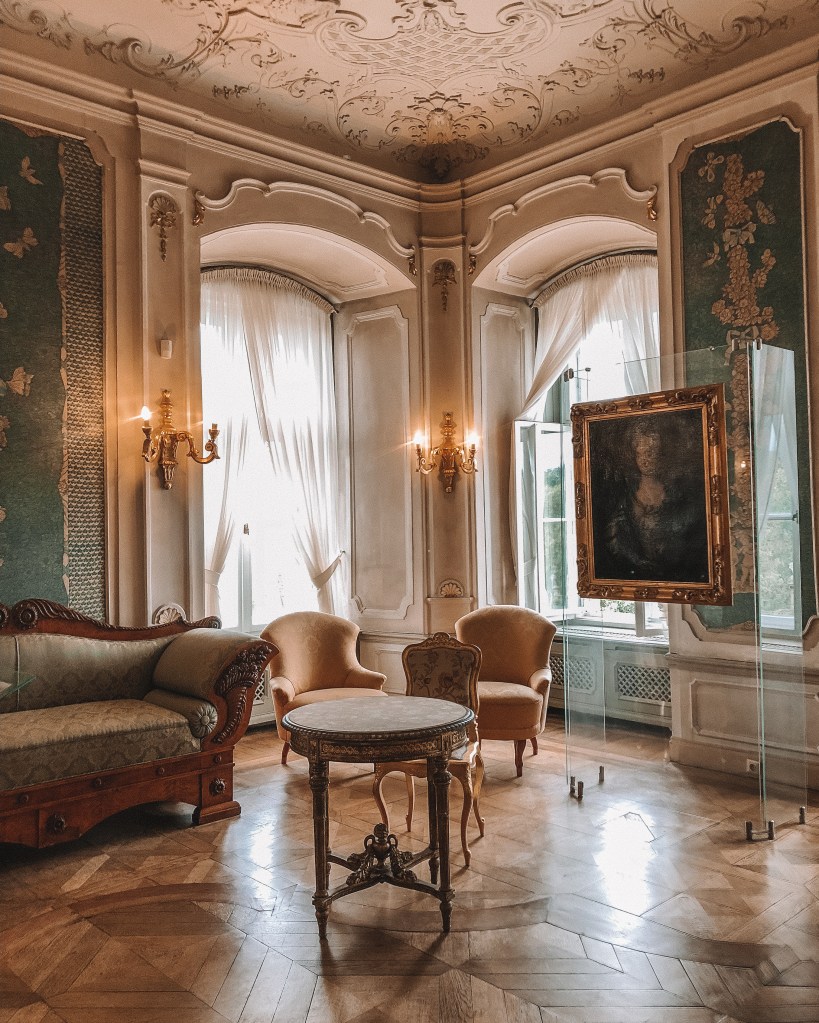
I tracked the sound to a room on the sixth floor. The child cried quit vigorously as I reached the room. I pushed the door to the room open and found myself in a room completely devoid of any other living human. Moonlight passing through a large window bathed the room in sufficient light to permit an immediate evaluation. As an eerie silence fell upon the mansion, I realized I was quite alone. The ghost that roamed the house was that of an eight-year-old boy. Supporting Folger’s story, during some alterations, a window-shutter was removed, when a packet of antique copy-books was discovered, pushed into the wall between the joists and the skirting, in which the name Hoby Barrett was written. He died July 1888 of the age eight. He had been buried in the tower. When that tower was demolished, the workmen exhuming his body, found the legs to have been tied together with blue silk ribbon. The material was as fresh and bright as the day it had been tied, and the body was not decayed. The credulous country folk averred that he was a vampire. After having more terrific rows with the spectral lad, gruesome noises that suggested the strangulation of a child, I had to do something. The ghost would often awaken me at three in the morning, banging on closet doors, leaving faucets running, opening drawers and running up and down the tower stairs. I finally had the carpenters build the ghost a nursery, complete with toys at the top of the tower. Afterward the ghost behaved better. During a séance with the medium, the table raised and lowered itself to the floor. I heard a voice coming out of the darkness that we definitely thought was the Hoby’s. The spirit voice told us that he was happy and that he was pleased that we gave him toys, and then he faded back into silence. Even though my home was fully of other fiendish phantoms, I never felt more satisfied than I did during that evening in the Blue Séance Room. #RandolphHarris 5 of 5
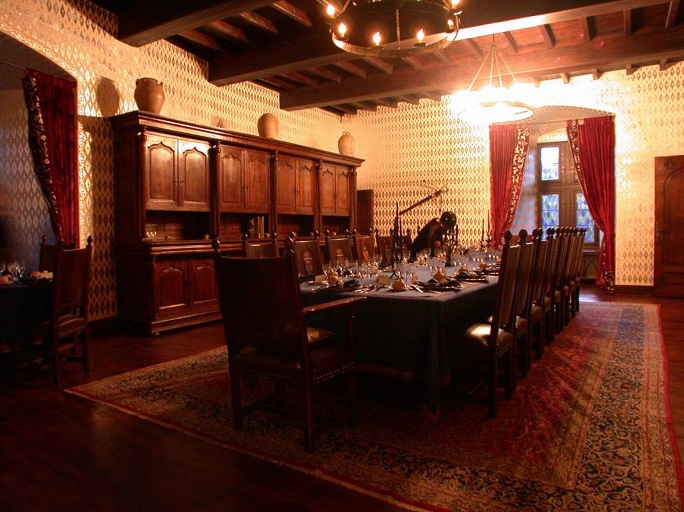

The Winchester Mystery House has the reputation of being haunted. Lovers of the marvelous declare dark figures have been seen in the Daisy Bedroom, often standing in the doorway and seemingly blocking people’s escape. As well, strange flashes of light and green orbs have been regularly seen and people have reported being touched by invisible hands. Furniture and beds have been known to move seemingly by themselves. Others have witnessed indentations on the bed Mrs. Winchester said her good-bye in, as if someone is sitting down. A dark figure has also been witnessed standing in the doorway and people have reported being violently pushed. Strange sounds have also been reported, including humming noises and something described as being similar to that of pieces of metal being dropped. Some report doors that swing open, and feelings of light headedness and strangulation on the fourth floor.
After the 1906 Earthquake, the nine-story tower was removed and most of the fourth floor was demolished, except for one wing only. If, while touring The Winchester Mystery House, you see an old-World figure of a boy, you will recognize him as Hoby by his knee-breeches, tied with a blue ribbon. Some people have reported being awoken by a woman screaming, while the oldest remaining parts of the mansion is subjected to disembodied footsteps and scratching and banging from with the walls. It is believed that the noises are caused by a young boy who has been seen at the end of the corridor on the fourth floor. Indeed, one guest has witnessed this boy walking through the wall. People have reported disembodied voices seemingly arguing as well as the sound of violins playing. https://winchestermysteryhouse.com/

And please be sure to check out the online gift store: https://shopwinchestermysteryhouse.com/

In a Few Years, California Will be the Capitol of Mexico

I confess that what I saw during my time of travel and investigation left me with a very heavy heart. The work to be done in order to lift these people up seemed almost beyond accomplishing. The debate over the nature and extend of the relationship between heroin used and criminal activity is a long-standing one which has generated a voluminous literature. An increase in criminality commonly occurs in conjunction with increased heroin use in the United States of America. The addict of lower socioeconomic class is generally a criminal primarily because illicit narcotics are costly and because one can secure one’s daily requirements more readily by committing crimes that will pay for them. The Heroin addict has a criminality that maybe a consequence of addiction, albeit an indirect one. As physical dependence upon and tolerance for heroin increases, and the cost of progressively larger dosages of heroin increase proportionally, some addicts seem to be driven to criminal means to satisfy his or her habit. Empirically, this hypothesis predicts a linear increase in heroin consumption and a corresponding increase in criminal activity necessary to support it. In contrast, a second hypothesis maintains that the principal explanation for the association between drug abuse and crime is likely to be found in the subcultural attachment comprised of the criminal associations, identifications, and activities of those persons who eventually become addicted. The basis for this hypothesis can only be understood in the context of the contemporary sociolegal milieu in which narcotics use takes place. #RandolphHarris 1 of 21
Since the criminalization of heroin in 1914, the social World of narcotics has become increasingly intertwined with the broader criminal subculture. Consequently, would-be narcotics users inevitably associate with other criminals in the highly criminal copping areas of inner cities, and, indeed, are often recruited from delinquent and criminal networks. Through these criminal associations, therefore, the individual is introduced to heroin, and both crime and heroin use are facilitated and maintained. Empirically, this second hypothesis predicts increases in heroin use following or coinciding with periods of criminal association and activity. A shorthand title for the first hypothesis is “Drugs cause crimes”; for the second “Crimes cause drugs.” Our contribution to understand the dynamics of the drugs-crime connection is based upon life-history interviews with 32 hard core heroin addicts in the Sacramento, California area. We purposely selected the respondents on the basis of their extensive involvement in the heroin subculture. All of the respondents had extensive contact with the criminal justice system. At the time of interview, 24 of the 32 respondents were incarcerated or under some form of correctional authority supervision (exempli gratia, supervised custody, work release, parole, or probation). While this places certain limits on the generalization that can be made from these data, the focus of this study is the dynamics of addiction among heavily-involved street addicts. #RandolphHarris 2 of 21

To further highlight this experience, controlled users or “chippers” will not have experienced many of the dynamics reported here. Similarly physicians, nurses, and middle class “prescription abusers” are not typically subject to many of the constraints experienced by lower-class street users. Hence, it is important to emphasize that the findings we report here are intended to describe “hard core” urban heroin addicts. Women are slightly overrepresented, constituting 14 of the 32 respondents. Ethnically, the sample consist of 23 African-Americans and nine European-Americans; Hispanic-Americans are not represented because there was no access to them at the time of this study. Respondents were paid five dollars per hour for their interview time, which undoubtedly contributed to the 100 percent response rate. The interviews ranged from 10 to 25 hours in length, with each interview session averaging between three and four hours. With a single exception, all of the interviews were tape recorded and transcribed. Respondents and most of the street respondents were selected with the assistance of treatment personnel who were carefully instructed regarding the goals of the research and selection criteria. This strategy proved invaluable for two reasons. First, by utilizing treatment personnel in the screening process, we were able to avoid the time-consuming task of establishing the “appropriateness” of respondents for the purposes of this research: the treatment personnel were already intimately familiar with the drug-using and criminal histories of the respondents. #RandolphHarris 3 of 21

Second, the treatment personnel had an unusually positive relationship with Sacramento-area drug users. The treatment counselor in the prison system was regarded as an ally in the quest for better living conditions, appeals for early release, et cetera, and was regarded as highly trustworthy in the prison subculture. His frequent confrontations with prison inmates. Similarly, the treatment counselor who assisted in the selection of street respondents was carefully selected on the basis of his beneficial involvement with street addicts. His relationship with area addicts is a long-standing and multifaceted one. His reputation among street addicts was firmly established when he successfully negotiated much needed reforms in one of the local treatment agencies. Because of the long-standing beneficial relationship they had with area addicts, this initial contact by treatment personnel greatly facilitated our establishing necessary rapport. After a few initial interviews were completed, several broad focal areas emerged which formed the basis for future questioning. Respondents were interviewed regarding: childhood and early adolescent experiences which may have served as predisposing factors for eventual drugs/criminal involvement: initial encounters with various types of drugs and criminality; the evolution of their drug and criminal careers; their patterns of activity during peak periods of drug use and criminality, including descriptions of typical days during these periods; their preferences for types of crimes and drugs; the structure of understanding guiding drug use and criminal activity; and their perception of the nature and effectiveness of drug treatment. #RandolphHarris 4 of 21

Structuring the life-history interviews in this way insured that most relevant career phases were covered while at the same time it permitted the respondents a great deal of flexibility in interpreting their experiences. One of the earliest strategies for testing the Drug-cause-crime versus Crimes-cause-drugs hypotheses involved trying to establish that a pattern of regular or extensive criminal behavior typically precedes heroin addiction, that finding would tend to support the Crimes-cause-drugs hypothesis. Conversely, is a pattern of regular or extensive criminality tends to develop after the onset of heroin addiction, that finding would tend to support the Drugs-cause-crimes hypothesis. Previous research on this question is mixed, but mixed in a systematic way. Most of the early studies found little criminality before the onset of opiate addition. Later studies, by contrast, have shown a high probability of criminality preceding heroin addiction. Our life-history interviews are consistent with the findings of the recent studies. All of our respondents reported some criminal activity prior to their first use of heroin. However, for nearly all of our respondents, both their criminal careers and their heroin-using careers began slowly. For the respondents in our study, a median of 3.5 years elapsed between their first serious criminal offense and subsequent involvement in criminal activity on a regular basis. #RandolphHarris 5 of 21

Likewise, all of our respondents reported at least occasional use of other illicit drugs prior to their first experience with heroin. Moreover, many of our respondents indicated that they spent substantial periods of time—months and even years—using heroin on an occasional basis (“chipping” or “chippying”), either inhaling the powder (“sniffing” or “snorting”), injecting the prepared (“cooked”) mixture subcutaneously (“skinpopping”), or receiving occasional intravenous injections from other users before becoming regular users themselves. Perhaps most importantly, virtually all of our respondents reported that they believed that their criminal and drug careers began independently of one another, although both careers became intimately interconnected as each evolved. In the earliest phases if their drug and crime careers, the decision to commit crimes and the decision to use drugs were choices which our respondents believed they freely chose to make and which they believed they could have discontinued before either choice became a way of life. From our interviews it appears that two very general factors shape and influence the drug and crime careers of our respondents, not only during the early stages of each career but as each career evolves through different stages. The first of these factors in the availability of heroin rather than the level of physical tolerance the user has developed “The more you had the more you did,” explains “Mona” a thirty-year-old female. “And if all you have was $10 than that’s all you did…But if you had $200 then you did that much.” #RandolphHarris 6 of 21

Addicts are able to adjust to periods of sharply decreased availability (exempli gratia “panic” periods when supplies of street heroin disappear) by reducing consumption or my using alternative drugs (exempli gratia methadone). They are also able to manipulate availability, increasing or decreasing it in ways and for reason we will discuss. As we use the term, availability also means something more than access to sellers of heroin who have quantities of the drug to sell. By availability we also mean the resources and opportunities to buy the drug to sell. By availability we also mean the resources and opportunities to buy heroin or obtain it in other ways as well as the skills necessary to use it. In short, availability is understood to include considerations of all of those opportunities and obstacles which may influence a heroin user’s success in introducing a quantity of the drug into his or her bloodstream. The second general factor shaping the drugs and crime careers of our life-history interviewees is life-structure. By “life structure” we mean regularly occurring patterns of daily domestic, occupational, recreational, or criminal activity. Recent ethnographic accounts of heroin-using careers in several major cities reveal that, like their “straight” counterparts, most addicts maintain reasonably predictable daily routines. Throughout their lives or respondents fulfilled, to one degree or another, conventional as well as criminal and other subcultural roles. #RandolphHarris 7 of 21

In fact, during most periods of their crime and drug careers, our interviewees spent far more time engaged in conventional as well as criminal and other subcultural roles. In fact, during most periods of their crime and drug careers, our interviewees spent far more time engaged in conventional role activities than in criminal deviant ones. Many worked conventional jobs. Women with children performed routine housekeeping and child-rearing duties. Many leisure-time activities did not differ from those of non-addicts. These hard-core addicts spent time grocery shopping, tinkering with cars, visiting relatives, talking with friends, listening to records, and watching television in totally unremarkable fashion. Life structure in the hard core criminal addict’s life can be also provided by some rather stable forms of criminal activity. Burglars spend time staking out business establishments. Shoplifters typically establish “runs,” more or less stable sequences of targeted stores from which to “boost” during late morning, noon, and early afternoon hours, saving the later afternoon for fencing what they have stolen. Prostitutes typically keep a regular evening and night-time schedule, which runs from 7 P.M. to 3 A.M. Mornings are usually spent sleeping and afternoons are usually occupied with conventional duties. It is within this structure of conventional and criminal roles that buying (“copping”), selling (“dealing”), and using (“shooting”) heroin takes place. #RandolphHarris 8 of 21

Likewise, prostitutes seek to manage their drug use so that neither withdrawal symptoms (“joneses”) nor periods of heroin-induced drowsiness will interfere with their work. In order to meet the demands of criminal or conventional roles, addicts in our sample often used other drugs (exempli gratia marijuana, barbiturates, alcohol, amphetamines, methadone) to alter their moods and motivations, saving heroin as a regard for successful completing a job or meeting other obligations. Of one thing I felt more strongly convinced than ever, after spending time in seeing the actual life of these people, and that was that, in order to life them up, something must be done more than merely imitate New England education as it existed. I saw more clearly than ever the wisdom of the system which General Armstrong had inaugurated at Hampton. To take these people, and each day give them a few hours of education, I felt would be almost a waste. The shock is great when one first apprehends the truth of deception as possible for oneself; but as the ultimate issue is realized, the joy of the one who sets oneself to understand and fight through to full deliverance is more than words can tell. Light pours in upon the unsolved problems of years, in both one’s personal experience and in the perplexities surrounding one, as well as on the conditions in the Church and in the World. As one seeks for light from the ultimate concern, the subtle inroads of the deceiving spirits into one’s life slowly become clear to the open-minded believer; and their many devices to deceive one stand revealed as the searchlight of truth goes far back into the past, uncovering the cause of unaccountable difficulties in experience and life, and many mysterious happenings which had been accepted as “the inscrutable will of God.” #RandolphHarris 9 of 21

PASSIVITY! How many have fallen into it, little knowing their state! Through the misuse of their faculties much time is lost in dependence upon the help of outward circumstances and environment. In the lives of so many there is much “doing,” with so little accomplished…many beginnings, and few endings. How familiar we are with the words, “Yes, I can do that,” and the impulse is there, but by the time the need for action has come the passive man has lost his momentary interest. This is the key to much of the lamented “apathy” and the dulled sympathy of Christians to really spiritual things, while they are keenly alive to the social or Worldly elements around them. The Worldling can be stirred in acutest feeling for the sufferings of others, but many of the children of God have, unknowingly, opened themselves to a supernatural power which has dulled them in thought and mind and sympathy. Ever craving for comfort and happiness and peace in spiritual things, they have sung themselves into a “passivity”—id est, a passive state of “rest,” “peace” and “joy”—which has given opportunity to the powers of darkness to lock them up in the prison of themselves, and thus make them incapable of sensitively understanding the needs of a suffering World. #RandolphHarris 10 of 21

The equilibrium between cultural substance and form is achieved in a theonomy which embraces the truth of autonomy and heteronomy while avoiding their errors. Theonomy rejects both a divine law imposed by outside authority and a self-sufficient reason divorced from its depth. It demands that man seek a superior law which is at the same time rooted in the divine ground of being that lies at the depth of reason. The result is a theonomous culture which expresses in its creation an ultimate concern and a transcending meaning not as something strange but as its own spiritual ground. Theonomous creations are vessels of a spiritual content. Religion is the substance of culture, and culture the form of religion. Theonomy, autonomy, and heteronomy as cultural types constantly act and interact in dialectical fashion. The shallowness of an autonomous, secularized culture creates a vacuum of despair, a sacred void which preludes the advent of a theonomous period in which empty cultural forms receive substance and depth. Theonomy, however, tends to degenerate into an oppressive heteronomy which, in turn, provokes an autonomous reaction, and so the cycle begins anew. For instance, Clement and Origen created a Christian theonomy which later came under the heteronomous influence of Athanasius and Augustine. The Middle Ages stated a theonomy and ended in heteronomy. The Renaissance had theonomous qualities, but deteriorated into autonomy. #RandolphHarris 11 of 21

The Reformation itself developed into the heteronomy of Protestant orthodoxy and then succumbed to the triumphant autonomy of the eighteenth and nineteenth centuries. These examples illustrate that theonomy, though realizable, is ever fragile and incomplete. Its victory is always fragmentary because of the existential estrangement underlying human history, and its defeat is always limited by the fact that human nature is essentially theonomous. A description of the general qualities of a theonomous culture serves to highlight the reciprocal influence of the three cultural types. The first characteristic of theonomy is that it communicates the experience of holiness, of something ultimate inbeing and meaning, in all its creations. This theonomous style appears even in the most limited vehicles of meaning—a painted flower, a family habit, a technical tool, a form of social intercourse, the vision of a historical figure, an epistemological theory, a political document, and so on. The second characteristic is the affirmation of the autonomous forms of the creative process. The moment theonomy fails to respect legitimate autonomy and the freedom of the human spirit, it becomes heteronomy. The third characteristic of a theonomous culture is its permanent struggle against both an independent autonomy and an independent heteronomy. Only theonomy can prevent them from inflicting upon mankind either a meaningless or a destructive culture. #RandolphHarris 12 of 21

Asking which nations will dominate the 21st century is an exciting game. However, it is, in fact, the wrong question to ask—or at least the wrong form on which to ask it—because it overlooks what could turn out to be the biggest change in global affairs since the rise of the nation-state: the coming of the Global Gladiators. A new group of power-seekers are leaping onto the World stage and seizing sizable chunks of the clout once control by nations alone. Some are good; some, decidedly psychopaths. When a blood-besotted Ayatollah Khomeini called for a martyr to murder Salman Rushdie, whose novel The Satanic Verses Mr. Khomeini denounced as blasphemous, he sent a historic message to all the World’s governments. That message was instantly communicated via satellite, television, and print. The message, however, was totally misunderstood. One may argue that Mr. Rushdie’s book was in bad taste, that it deliberately offended many Muslims, that it derided an entire religion, that it violated the Koran. Indeed, Mr. Khomeini said these things. However, that was not the real message. Mr. Khomeini was telling the World that the nation-state is no longer the only, or even the most important, actor on the World stage. Superficially, Mr. Khomeini seemed to be saying that Iran, itself a sovereign state, had the “right” to dictate what the citizens of other equally sovereign nations could or could not read. In claiming this right, and threatening to enforce it with terrorism, Mr. Khomeini suddenly catapulted censorship from a matter of domestic concern to the level of a global issue. #RandolphHarris 13 of 21

In a World that is witnessing the glocalization of the economy and the globalization of the media, Mr. Khomeini was demanding the globalization of mind-control. Other religions, in past eras, have asserted a similar right, and burned heretics at the stake. However, in threatening cross-border assassination, Mr. Khomeini was doing more than attacking Salman Rushdie—a British citizen. He was challenging the most fundamental right of any nation-state, the right to protect its citizens at home. What Mr. Khomeini was really telling us was that “sovereign” states are not sovereign at all, but subject to a higher Shiite sovereignty, which he alone would define—that a religion or church had rights that supersede those of mere nation-states. He was, in fact, challenging the entire structure of “modern” international law and custom, which until then had been based on the assumption that nations are the basic units, they key players on the global stage. This assumption pictured a planet neatly divided into states, each with its flag and army, its clearly mapped territory, a seat in the U.N., and certain reasonably defined legal rights. It is no accident that, to much of the World, Mr. Khomeini seemed a cruel throwback to the preindustrial era. He was. His assertion of the rights of religion over nation-states paralleled the doctrine medieval Popes expressed during centuries of bloody church-state conflict. The reason this is important is that we may well be circling back to the kind of World system that existed before industrialism, before political power was packaged into clearly defined national entities. #RandolphHarris 14 of 21

That pre-smokestack World was a hodgepodge of city-states, pirate-held ports, feudal princedoms, religious movements, and other entities, all scrambling for power and asserting rights that we, today, assume belong only to governments. What we might now call nations were few and far between. It was a heterogeneous system. By contrast, the nation-state system that evolved during the smokestack centuries was far more standardized and uniform. We are now moving back to a more heterogeneous global system again—only in a fast-changing World of high technology, instantaneous communication, nuclear missiles, and chemical warfare. This is an immense leap that carries us forward and backward at the same time, and propels religion once more to the center of the global stage. And not just Islamic extremism. A totally different case in point is the growing global power of the Catholic Church. Papal diplomacy has figured recently in major political changes from the Philippines to Panama. In Poland, where the church won admiration for its courageous opposition to the communist regime, it has emerged as a dominant force behind the first noncommunist government. Vatican diplomats claim that the recent changes all across Eastern Europe were, in large measure, triggered by Pope John Paul II. The Pope is no fanatic and has reached out to other religions. He has spoken out against interethnic violence. Yet echoes of a long-distant pre-secular past are heard in his call for a “Christian Europe” and his repeated criticism of Western European democracies. #RandolphHarris 15 of 21

The Pope’s policies call to mind a long-forgotten document that was circulated in European capitals in 1918 urging the creation of a Catholic superstate made up of Bavaria, Hungary, Austria, Croatia, Bohemia, Slovakia, and Poland. The Pope’s proposed Christian (though presumably not exclusively Catholic) Europe today embraces all of Europe, from the Atlantic to the Urals, with a population of nearly 800 million people. Such religious stirrings are part of the gathering attack on the secular assumptions that underpinned democracy in the industrial era and kept a healthy distance between church and state. (If Europe is Christian, as distinct from secular, where do nonbelievers fit in, or Hindus or Jews, or the 13 million Muslim immigrants encouraged to come to Europe to serve as affordable labor in the recent past? (Some Muslim fundamentalists actually dream of Islamicizing Europe. Says the director of the Institute of Islamic Culture in Paris: “In a few years Paris will be capital of Islam, just as Baghdad and Cairo were in other eras.”) The emerging global power game in the decades ahead cannot be understood without taking into account the rising power of Islam, Catholicism, and other religions—or of global conflicts and holy wars among them. I know that one who makes a mistake does so because of one’s own lack of opportunity for the highest growth. I pity those type of people because I know that they are trying to stop the progress of the World, and because I know that in time the development and the ceaseless advance of humanity will make one ashamed of one’s weak and narrow position. #RandolphHarris 16 of 21

Self-regulation and autonomy have emerged as key predictors of health and well-being in several areas of psychology. Autonomy has been provisionally defined as the ability to be one’s self. Analytically considered, it involves and requires knowing one’s self; having or finding an unambiguous identity to refer to in each situation; and being able to govern one’s self in the sense of being able to choose among alternatives. The development of autonomy is not synonymous with the development with a self, though emergence of a self is indispensable. The growth of autonomy is taken as measurable and as varying within and among individuals over time. Preliminary work indicates that a satisfactory index can be devised, although the invention of such a measure requires considerable analysis of the pattern in which autonomy is exhibited, so as to differentiate these as consequents from the reproducible condition hypothecated as their regular antecedents. The giving and receiving of characterizations of self and others not only exhibit various degrees of ease and constraint, but whether one’s self-concept is ratified rather than enforced by others is often ambiguous. That human beings are characterized by the possession of selves. Experimentally, it requires that the antecedent conditions conducive to increase in autonomy be distinguishable from autonomy as a dependent variable. Because autonomy is perhaps more vulnerable than any other component of competence to being constructed as a state of affairs, a trait, or a form of virtuous conduct following definite commandments, it is important to reiterate that it is here regarded as an acquired ability to handle certain aspects of problematic interpersonal situations with greater or lesser success. #RandolphHarris 17 of 21

Health which itself is one of the components of competence, significantly conditions all the other components including autonomy. The condition of health—nutrition, rest, hygiene—are therefore indirectly biological conditions of autonomy. However, there are a few biological conditions which more directly affect autonomy than through their influence upon physical health. In marriage and family living, these concern sexual adequacy and fertility, where these enter into self-respect and sense of worth, in the estimation of self and others. To the extent that sexual adequacy and skill can be improved by knowledge, practice, or medical treatment, a contribution is made by knowledge, practice, or medical treatment, a contribution is made to autonomy, id est, the person becomes more able to handle interpersonal situations making demands upon one’s sexual competence. The fact that there is a circular relationship here, in which autonomy significantly affects sexual functioning, implies the reverse proposition as a corollary hypothesis worthy of investigation. Fatigue as a biological variable distinguishable from health significantly conditions autonomy, and is also often the product of absence of autonomy. If practices are followed by which energy is fostered and fatigue diminished, at those times when the severest demands are made upon autonomy, autonomous capacity is itself increased. #RandolphHarris 18 of 21

Association in play exclusively with those with whom one is at a physical disadvantage, especially in the same family, leads to recurrent experiences of failure and submission which inhibit the development of autonomy. The optimal distributional of success and failures occurs when physical opponents are evenly matched in competition. The more adequate sexual satisfaction is in marriage, the less frequent is extra-marital sexual experience and consequent threats to mutually supported self-esteem. Cultivation of physical appearance—ccomplexion, weight, grace, posture, grooming—contributes to the growth of autonomy. Space for physical privacy and quiet—reduction of stimulation—facilitates the integration of new conceptions of self, especially during adolescence, and thus contributes to the development of autonomy. Autonomy is positively corelated with children’s opportunity progressively to earn money for performance of economically significant work and to gain practice in the management of their own economic affairs. (Safeguards against exploitation are assumed.) Economic independence develops autonomy, while chronic dependence undermines autonomy, unemployment undermines autonomy. Work which continually challenges the capacities of the person without taxing them beyond their limits enhances autonomy. #RandolphHarris 19 of 21

Continuous employment at work far below one’s level of capacity reduces autonomy. Continuous employment at work which exceeds one’s capacities and causes a chronic judgment of failure by others and self reduces autonomy. Continual exposure to marked differences of reward for comparable effort reduces autonomy, whereas recognition of differences of effort by differences of reward enhances autonomy. Autonomy develops in direct proportions to the experience of participation in governing the conditions of economic life. Constant exposure to the inducement of wants which cannot realistically be satisfied reduces autonomy, whereas the inducement of wants which cannot realistically be satisfied reduces autonomy, whereas the inducement of wants within the range of realistic anticipation of achieving the means of realizing them encourages the growth of autonomy. Exclusive evaluation of personal worth by monetary standards reduces autonomy, whereas making available multiple criteria of personal worth cultivates autonomy. Voluntary and informed participation in the production of valued goods and services develops autonomy. Team play means that you alone cannot get too far out ahead of the troops. You cannot because in our company it is necessary to consult and check over everything. Someone will ask whether this does not lead to a certain amount of mediocrity. It does. There is an optimal balance of work and leisure which maximizes autonomy. #RandolphHarris 20 of 21

It would be safe to say that overall, China has been fighting excessive lending and financial bubbles more persistently and successfully than most countries in the West. Chinese financial institutions do not play with tricky structured financial instruments the way their Western counterpart do—both because of tight government regulations and the lack of market infrastructure as well as financiers who are versed in such transactions. It goes without saying that financial sectors in China and in the West are going through different development stages. However, in the global economic arena China and the West are competing in a real-time format—and in this competition, paradoxically, China’s earlier stage works as a source of strength, shielding it from financial gambling risks the West is fighting, often unsuccessfully. Also, there is little doubt that from now on, while further developing its financial instruments, China will act much more cautiously than most of its Western counterparts, paying much more attention to accommodating and minimizing associated risks. In the West it is often argued that a wide variety of financial instruments, including risky ones, is needed to create money, which is invested in various industries. Nevertheless, China provides plenty of funds for the country’s industries—sometimes, according to Chinese financial authorities, even more than necessary. Today it is Western businesses that are facing a tighter credit squeeze. #RandolphHarris 21 of 21


Pump that iron AND stretch it out at Cresleigh Homes Magnolia Station 💪 We’ve got so many great options for staying fit and active – no matter your preference.

What’s your favorite way to get the blood moving? 🏋️♀️ One activity we’d especially suggest…booking a tour of our homes, then coming by for an in-person look! We’ve got great options for you! https://cresleigh.com/magnolia-station/


A Death Threat to World Peace

In the course of history alienation has undergone significant qualitative changes so that its meaning today is quite different from what it was in previous eras. Once the concept of individual sovereignty had been awakened in the minds of women, a new climate prepared. Women in the male-dominated, rural culture of Sacramento are often viewed as submissive and passive. Growing up in a patriarchal society many such women outwardly display passivity when relating to men. They have been taught to submit to their fathers and husbands and bend to their will. However, while public displays often fit this mold, many women are in fact very strong and important contributors to their families, kinship networks and communities. Just as there are certain types of male marijuana growers, there are also differing types of women associated with these men. Each of these varieties of women serves different roles in the business and life of the male marijuana grower. Women’s functional roles include assisting in recruiting men into the industry and providing domestic and sexual services for isolated growers and aiding the men in growing, harvesting, transporting, and selling the crop. Females’ roles, to an even greater extent than their male counterparts, in the marijuana industry are dependent upon social class membership. Women’s degree of involvement ranges from passively assisting their husbands to playing highly active central roles. Theoretically more important though, is a view of women’s cultural statuses in the communities of the rural marijuana industry. There are three distinct roles for women in these communities: Strumpets, Decent Women and the Women-in-Between. #RandolphHarris 1 of 21

The Strumpet is typically a young, uneducated and unmarried woman. Strumpets usually have one or more illegitimate children, are often substance abusers and therefore are perceived as being of loose morals. Additionally, or perhaps consequently, the strumpet rarely attends church, which is an important social function for the rural women. The specific roles expected of the strumpet are to provide companionship, sexual services and to perform domestic chores for rural men, including marijuana growers. Unless she is fortunate enough to marry, as the strumpet ages she becomes increasingly expendable to the men in her life. In such a case, due to lack of education and jobs available to women, the strumpet will live out the rest of her life in poverty, and be looked down upon by other, more respectable women. While marriage will not bring the strumpet the same degree of respectability afforded the decent woman, marriage will bring her relative financial security. These young women often associate with marijuana growers for personal gain. She receives clothing for herself and her children, is taken to restaurants and other places of entertainment, travels with her male associate and may receive additional money for her living expenses. Strumpets display strong loyalty to the men of the marijuana industry. However, this loyalty does not extend to waiting for a grower after he is imprisoned, leaves the area or ends their relationship. She is typically a very pragmatic and self-interested person. #RandolphHarris 2 of 21

Despite her avowed love for her man, a strumpet realizes that when he is no longer immediately available it is in her financial best interest to seek out another man. The rural male also recognized this relationship as a practical arrangement. The strumpet fulfills very specific, and for him important, roles in his life. He does not expect the same loyalty from her that he does from his wife. The strumpet’s role is to keep him sexually satisfied and to perform jobs decent women cannot and would not be asked to perform. Because including women in the growing operations would require living with other men, rural Sacramento males would never allow their wives or other female relatives to be involved. Thos considered to be decent women would not consent to such an arrangement in any case. When discussing the roles fulfilled by women in his organization, Mr. Buford described strumpets, saying: “Most of us had girlfriends that we could trust with our lives…even though most of us were married at the time. These girls would go on some deals, more or less to keep us company. Also they kept the guys happen and content…They didn’t need to leave the marijuana farm for sex. We all loved women and always will.” Strumpets are not respected in their rural communities. As might be expected, such women received especially strong disdain from female relatives of the men in the marijuana industry. However, even though a man’s female skin will disapprove of a strumpet, because the culture is extremely patriarchal their disapproval need not derive him away from a relationship with a strumpet. The marijuana grower accepts the strumpet as a necessary, and sometimes valuable, part of his business. She is a commodity, valued only by the men with whom she couples. #RandolphHarris 3 of 21

The second type of female is quite different and much more respected. Decent Women are highly respected and very rarely placed in any jeopardy by rural men. Decent women include the majority of mothers, sisters, grandmothers, daughters, aunts and wives of the active participants in the marijuana industry (as well as many women with no connection to the industry). Although there are few exceptions, these women do not generally grow, transport or in any way become involved with the activities of the marijuana industry. They are, for the most part, aware of illegal activities engaged in by the men in their lives, but they themselves rarely participate. Among decent women those most likely to express strong disapproval for marijuana-related activities are the mother and grandmothers of the men involved. Countrymen show great respect, both real and ritual, for these women, displaying great deference to them. However, decent women’s expressed disapproval does not lead the men to curtail their activities, for after all, they are “just women.” Living in a strictly patriarchal culture, the decent women may be called upon by her male relatives to assist in recruiting new members of the marijuana industry. New participants, for the most part, are introduced into a kinship network involved in the marijuana industry by marriage to a decent woman. For the decent woman’s husband to be incorporated into her kinship network of marijuana growers she must “indirectly” indicate her endorsement of her husband’s involvement. #RandolphHarris 4 of 21

It is her responsibility to communicate her husband’s desire for inclusion. While she may (and probably will) voice her disapproval, in the end she will bow to her male relatives’ wishes. Jolene, a decent woman explains how her husband became involved in the marijuana industry by the way of her male relatives: “My husband and I was married about six years before he got in with the family. I kind of had an idea what my uncle was doing. My husband said he wanted some good pot…The only way my husband could be brought in was if I said the word…Finally, I mentioned it to my uncle in an off-hand sort of way. My uncle said for me to tell him to drop by, he might be able to help him out. I couldn’t have gotten him in sooner. They had to see what he was like before inviting him in and then on my say-so.” Women-in-Between are distinct from, yet a combination of qualities found in, decent women and strumpets. They may be divorced and employed at the local factory. If unmarried they may frequent the local nightclubs in search of a new husband. They often meet and form intimate relationships with marijuana growers. Unlike strumpets, these women may insist upon a monogamous relationship of either marriage or at least living together. While more respected than the strumpet, they are still less respected than the decent woman. The woman-in-between is unique, she often has an active role in growing and distributing marijuana. Mr. Buford descried the role of these women as a relatively recent development in rural culture. #RandolphHarris 5 of 21

The woman-in-between is a new social category in the World of marijuana growers. It is difficult to ascertain the full extent of her role in this culture partly because of her recent emergence and partly because of their status as a hidden member of the culture. Few of the women have been arrested and none has chosen to discuss her role. In this patriarchal society, she is apt to have been recruited and trained by male relatives, her husband or boyfriend. Her future in the marijuana industry remains to be seen. It appears women may be developing more egalitarian roles in the marijuana industry. It can also be speculated that as male marijuana growers are being imprisoned for longer periods of time, the women are stepping in to replace them. It remains unclear, then, whether the emergence of women that is presently being seen is due to feminist politics or simple necessity. All three groups of women play significant roles in the marijuana industry. Some are respected in their community, others are not. They all reflect the culture in which they have been raised and have the same distrust of outsiders as their male counterparts. The marijuana industry is a powerful economic and social force in the United States of America, especially in economically depressed, rural regions of the country. The U.S.A. semi-legal medical and recreational marijuana sales for the closed of 2023 are estimated to be $33.6 billion. However, illegal cannabis sales are estimated to be more than $100 billion each year. #RandolphHarris 6 of 21

The growth and distribution of marijuana is not a randomly occurring, scattered endeavor, but rather is a structured industry that occupies an important cultural position in rural communities. Even those individuals who are not themselves actively involved in the industry play important roles in facilitating the industry’s economic success and continued operation. Furthermore, with the organization of rural Sacramento’s communities there are structural factors that promote and support the marijuana industry. Due to cultural and economic factors of the region, the roles rural residents occupy in relation to the industry are focused on the maintenance of community and culture, not necessarily making the success of the industry itself the primarily focus. Accepting the political economy and its laws, we presuppose private property, the separation of labor, capital, and land; and of wages, profit and rent; the division of labor, competition, the concept of exchange-value. And not only are most forecast in the political economy about global power based on overly simple assumptions, they misdefine. Some sources popularize the idea of the decline of America, essentially measure national power in terms of wealth and military capability alone. However, these sources also only allude to, but undervalue the impact of ideology, religion, and culture, all of which are becoming more important than ever. They vastly underestimate the role of knowledge—which, in fact, has now become the dominant source of both economic wealth and military strength. This is the central powershift of our time. #RandolphHarris 7 of 21

Moreover, power, as we have seen, is not just a matter of how much but of how good—quality of power may be as important as its quantity, and a nation’s power must be related to its own goals, not merely to the power of other nations. What might be adequate for one purpose, reflecting one set of values, might be inadequate for another. Unlike Europe, whose focus is regional, and Japan, which is hesitating between a regional and a global role, the United States of America is committed to a global role. Having led a global coalition for the past half-century, America can hardly imagine narrowing its ambitions to a single region. However, more than psychology is involved. The U.S.A. economy is linked into so many parts of the World, and now depends upon so vast a variety of relationships, that to be cut off from access to an significant part of the World economy would be devasting. No American political leader can allow that to happened. The same may turn out to be true for Japan—and perhaps for Europe as well. Thus, any serious threats of protectionism—in response, say, to an economic crisis—would totally destabilize relations among the three great capitalist centers. What is more, three is an unstable number. Parties of three frequently split into a two and a one. Of course, many other nations and regions are already fighting for a place in the 21st-century power system. Strange new alliances and strategies will appear. Countries long relegated to the back pages of history will suddenly loom into our consciousness. #RandolphHarris 8 of 21

However, even now, European leaders are approaching Washington with what amounts to plans for a new alliance, no longer aimed at Moscow. Some proposals are limited to specific fields, like high-definition television, or to technology generally. However, broader terms are clearly in mind. Closer ties between Europeans and Americans can only be of mutual benefit in coordinating policy toward their joint competitor Japan. However, what if American long-range strategists were blind and permitted history to swing in the opposite direction—toward a tacit alliance (and economic division of the globe) between Japan and a Germanicized Europe? Japanese companies like JVC Professional Europe Ldt/Germany is already a reality in Berlin. Mitsubishi has already forged links with Messerschmitt. The United States of America, even if integrated into an all-North American common market, could not for long survive this global squeeze play, the result of which might be nothing less catastrophic than World War III. A reinvigorated U.S.A.-Japanese alliance, however, could produce a sharply different outcome. U.S.A.-Japanese relations have never been worse since World War II. Indeed, the gap between the United States of America and Japan can only widen so far before dangerous sparks arc across it. Irresponsible jingos in both Tokyo and Washington, playing for easy votes and money, are deliberately stoking dangerous emotions. #RandolphHarris 9 of 21

If Shintaro Ishihara, a former Cabinet member, can speculate about a future in which the United States of America reoccupies Japan to prevent the sale of advanced chips to the Soviet, he is, by implication, speculating about outright war, voicing an incredible thought not far from consciousness in both countries. He and his American counterparts who picture Japanese and American missiles pointed at each other should remember that he who rides the tiger cannot get off. In a World of sudden turnabouts and surprises, no fantasy can be ruled out. However, the remotest risk of such confrontation should send horrors down the spine even of those who are equally weary of American superpowerdom and Japanese competition. Such a struggle could plunge the entire Earth into a nightmare from which it might not recover for centuries. The growing hostility between these two Pacific powers could only be heightened if Europe turned protectionist, forcing them into even fiercer competition in the rest of the World. Which is why the idea of a “Fortress Europe” closed to outside competition is the equivalent of a death threat to World peace. In this highly volatile situation, American can play the coquette, allowing itself to be used as a “card” to be played by Europe or Japan in their global competition. It can play the role of mediator. Or it can force an alliance to dominate the earl decades of the 21st century. But with whom? #RandolphHarris 10 of 21

It is precisely here that the “power triad” analysis proves most revealing. For if we once more look at violence, wealth, and knowledge, we can glimpse the power consequences of any given lineup. It tells us, for example, that a defector U.S.A.-European alliance would weld together great military power (the old NATO, plus). It would bring together huge markets and great wealth (much of it, however, based on rust-belt manufacture and assumptions). It would merge America’s science and technology with Europe’s and it would assemble vast cultural power. Long cultural and ethnic ties would make this convergence natural. Such an alliance, aimed at Japan, would call up memories of the 1930s, further accelerate Japanese rearmament, install hawks in power, and drive Japan deeper toward the developing countries as less favorable markets for its goods and capital. Militarily it could lead to Soviet-Japanese deal and even toward some new form of Chinese adventure. For Japan to be froze out of Europe or even if it is imaginable, the United States of America, would be yet another equivalent of setting off a global bomb. By contrast, cold calculation also shows that a de facto alliance between the United States of America and Japan, despite their current tensions, would produce quite different consequences for the planet. This turnabout should not be discounted in a World in which public opinion can shift overnight and in which the United States of American finds itself defending Vladimir Putin. #RandolphHarris 11 of 21

Strange as it sounds, an American-Japanese alliance to balance the power on the European “heartland” would bring together what are currently the World’s first- and third-biggest military budgets; its two largest economies; and its two fastest-growing scientific and technical bases. Such a combination could form a strategic duopoly or condominium encompassing within it the fastest-growing economies in the World—those of the Pacific region, the “heart-sea” counterpart of the “heart-land.” There is, moreover, one last awesome factor differentiating the two alliances, between which the United States of America may find itself torn. This difference is so little discussed in Washington, Tokyo, or the European capitals that strategists in the richest and most powerful nations tend to forget it. Yet over the long run it holds potentially enormous significance in the great game of nations. Any Euro-American alliance without Japan is basically a mono-racial, all-white power coalition in a World in which the white race is a dwindling minority. By contrast, a United States of America-Japan alliance, for all the xenophobia in both those nations, is an interracial power coalition. That difference cannot but register on the rest of the planet’s populations. History does not run along railroad tracks to a pre-set future. In the Powershift Era, a period of revolutionary upheaval on the planet, many other permutations of power are possible. Europe is already worrying about the Muslim pressure on its southern flank. China could erupt in civil war. Any number of other wild-card scenarios can be imagined. #RandolphHarris 12 of 21

Surely the rest of the World ill not sit idly by as Europe, Japan, and the United States of America divide up the spoils. Yet strategists in Washington, Tokyo, Brussels, and Berlin may soon have to choose sides in the great triadic competition for the World power. The decision that Washington makes (consciously or by default) will shape the future of the entire rest of the planet, from China and the U.S.S.R. to the Middle East, Africa, and Latin America. What, then, should we conclude about this inter-capitalist struggle for World power? Which of the three great contenders will triumph in history’s next great powershift? The answer, as we will see in coming days, is that we are asking the wrong question. As mentioned, Chinese households’ indebtedness is meager while their saving rates are remarkably high. There is the Western culture of living on debt, and there is the Chinese culture of minimizing family debts and keeping them under tight control. Thus, in China there is effectively no room for unaffordable consumption prompted by excessive household borrowing. In the corporate sector, Chinese banks, most of all state-owned banks as major lenders, are extending massive loans to domestic companies. Usually two major problems are raised in this regard. First, there are concerns that a substantial portion of loans—especially those extended to state-owned enterprises—may be politically motivated and lack commercial rationale. Second, there is a lot of anxiety about the fact that government and the central bank often fail to keep credit expansion within the limits they set, which allegedly exacerbates the threat of overheating and creates an asset bubble. #RandolphHarris 13 of 21

Such concerns, however, are usually exaggerated. Indeed, politically motivated loans to particular Chinese companies, especially state-owned, are still extended, and some poorly performing enterprises may get funding to keep afloat. However, the major trend is the reverse. Since the start of market reforms, China has been marking a really big shift from soft to hard budget constraints for enterprises. As time goes by, generally it is becoming more and more difficult for companies, state-owned enterprises (SOEs) included, to get funding from the state, and the proportion of the fund-raising done by themselves in accordance with the market rules is steadily increasing. Already in the 1980, the government effectively terminated the SOE’s direct budgetary financing. Yet, until the launch of the SOE reforms in the second half of the 1990s, state banks had to continuously provide massive loans under the government’s directive without the right to squeeze or terminate commercially unviable credit. With the reform, however, this practice significantly decreased in scale. Back in 2003, the state recapitalized the four major banks and after that embarked on their corporatization. The latter was marked by consecutive World records in terms of the amount of funds they raised through the IPO, reflecting high expectations of the investment community. The Chinese leadership understands too well that commercially unviable financing and lending are a potential bomb whose explosion can undermine the very foundation of the economic system it is creating—and also the foundation its own power is resting on. #RandolphHarris 14 of 21

The collapse of the Soviet Union and other conventional socialist economies provided crucially important empirical evidence in this regard. Hence, it is doing its best to make more, not less, state lending commercially viable. Even the three so-called policy banks (China Development Bank, Export-Import Bank, and Agricultural Development Bank of China) are increasingly relying on self-initiated commercial loans, while the proportion of subsidized government-directed lending is falling. As for excessive bank lending, which sometimes exceeds government-imposed limits, it is important to examine the problem within the context of China’s macroeconomic policy as a whole. For three decades the key features of this policy has been a persistent stance to neutralize the overheating threat. The architects of China’s macroeconomic policy are always on the alert. The record clearly shows that the government and the central bank recognize this threat very well and, when necessary, do not hesitate to tighten monetary policy in a very resolute manner. In the late 1990s, China’s monetary policy was expansionary in 2022, monetary policy has become moderately accommodative following modest interest rate-based easing measures, cuts to the reserve requirement ratio, adjustments to deposit rate guidance policies that have helped lower deposit rates, and the use of credit policies to steer credit to SMEs and other borrower segments. #RandolphHarris 15 of 21

To prevent overheating and contain the financial bubble, the Chinese government utilizes a wider range of monetary policy tools than its Western counterparts. For example, along with setting lending limits and increasing mandatory bank reserves to be held in the People’s Bank of China, it designates industries with excess production capacity where new investment projects are put under direct state supervision, or intervenes into the real estate market, restricting purchases and reselling of high-end property, which is likely to become target for speculators. Furthermore, when inflation risks are considered high, it does not stop short of directly guiding sellers not to raise prices for important consumer and production goods. Overall, at this point China has a very impressive record (perhaps, more impressive than that of any other big country) of avoiding, or rather preventing overheating and the asset bubble threat. Seen from this angel, inability to keep credit within imposed limits appears to be just a technical problem emerging in the process of the implementation of a policy that basically works. With increasing bureaucratization, it becomes plain to all who would see that man is to a very important degree controlled by his social relations to the instruments of production. Bureaucratization makes readily visible what was previously dim and obscure. More and more people discover that to work, they must be employed. For to work, one must have tools and equipment. And the tools and equipment are increasingly available only in bureaucraices, private or public. Consequently, one must be employed by the bureaucracies in order to have access to tools in order to work and live. #RandolphHarris 16 of 21

Schools, secular and religious, are in a favorable situation to experiment with various ways of supplementing and facilitating the family in the development of empathic capacity. Experimental and control groups could be used without detriment to the children used as subject, indeed, with the conscious participation of the children and parents in the experiment. Hypotheses such as the following illustrate some of the possibilities: Groups of children who are given the following experiences will show more empathic capacity than comparable groups who are not given such experiences: Taught courses in fiction, biography, and drama in which the child is instructed and is given assistance in putting himself in the roles of various characters studied. Taught by teachers who themselves are high in empathic capacity. Taught by a number of teachers who represent different subcultural backgrounds. Given explicit instruction, training, and practice in accurate portrayal of others who represent different roles in his own life situations in which the emphasis on individualistic striving for grades is replaced by emphasis on collaborative responsibility for maximizing the skill and the mastery of the subject matter by each member of the collaborating group. Participation in group activity which involved responsibility for co-operation in planning of significant programs, resolution of real problems, and genuine discipline of members. #RandolphHarris 17 of 21

The design of such experiments should provide for the “noncontamination” of groups. The numbers involved should be large enough for reliable statistical comparisons. The value of the experiments would be further divided into groups which provide for the carious relevant combinations of parents: being told and actively co-operating in designated ways; informed, but not asked to participate further; and not informed; experimental subjects: informed as to objectives and participating in planning and appraisal of results; and not informed as to objectives. The general hypothesis to be tested by inclusion of the variable mentioned above is that active informed participation in the experiment will enhance the effectiveness of the antecedent variables. Recreation reflections the various types of activity in our culture. Despite the demonstration there that recreation is not a separate aspect but relates to all other aspects of our life, it is appropriate here to note some of the specific relations between recreational conditions and empathic response. Unilateral giving of toys with no opportunity for the child to reciprocate and to occupy the role of giver inhibits his empathic development. Toys which confine the child to the role of spectator limit his empathic development. Abundance of mimetic and dramatic play is positively correlated with empathic development. Reading and films, radio and television programs, which provide rich opportunity for identification with a variety of characters, increase the empathic capacity of the child. Forms of play which involve discussion, planning, teamwork, and resolution of differences are productive of empathic capacity. #RandolphHarris 18 of 21

Manifestations of influence of psychopathic offenders called natural idiosyncrasies—this truth abut the workings of psychopathic offenders among the pure, and the cause and symptoms of their power upon mind or body, has been so veiled in ignorance that multitude are deceived by them. The manifestations are generally taken as natural idiosyncrasies or infirmities. The ultimate concern’s work is put on one side, or even never taken up, because the pure is “over-strained” or else, “without gifts” for doing it. He is “nervous,” “timid,” has “no gift of speech, no power of thought” where the service of ultimate concern is; but in the social sphere these “deficiencies” are forgotten, and the timid ones shine out at their best. It does not occur to them to ask why it is that only in the ultimate concern’s service are they thus incapable. However, it is only in respect to such a service that the hidden workings of the psychopathic offenders interfere. If heteronomy inevitably foes shipwreck on the rocks of the demonic, authority becomes a dangerous problem because heteronomy is the authority claimed or exercised by a finite being in the name of the infinite. It is difficult and painful to break-through to autonomy which has made one immune against any system of thought or life which demands the surrender of this autonomy. However, subjection to a law is not experienced as our own. Actual authority is based on a superiority of knowledge, ability, and experience, which is indispensable due to man’s limitations and deficiencies. #RandolphHarris 19 of 21

However, authority ambiguously degenerates into “established” authority attached to social positions, exempli gratia, parents, kings, and priests, which trespasses upon the sacred domains of the personal self. We are keenly aware of the need for authority, an awareness intensified by the political chaos in America after the 2020 election, but one most be even more sensitive to the ambiguity of authority and its constant need for a corrective. There can be a power through a renunciation of power, a renunciation or moderation based not on weakness, but on the vitality of participation in the transcendent power beyond all finite power-structures. Power is an ontological concept. The power of authority an be directed toward fostering union, but this process of unification may not be vitiated by an unjust and meaningless conformity. Man needs authority because we are so frail, so dependent upon others, and the acceptance of authority is the acceptance of what is given by those who have more than we. There is possibility of an authority guaranteed by its inner power, not established by tradition, knowledge or experience. There is something in the Christian message which is opposed to established authority. There is something in the Christian experience which revolts against subjection to even the greatest and holiest experience of the past. The place where the ultimate concern gives authority to man cannot be circumscribed. #RandolphHarris 20 of 21

It cannot be legally defined. It cannot be put into the fences of doctrines and rituals. It is here, and you do not know where it comes from. You cannot derive it. You must be grasped by it. You must participate in its power. This is the reason why the question of authority never can get an ultimate answer. Authority is from God but God is Spirit, the Spirit that blows where it wills and cannot be imprisoned in finite institutions. The God who is Spirit does not eliminate preliminary authorities from our lives—parental, social, political, and ecclesiastical—but they are not ultimacy. The only suitable symbol of authority is the Cross upon which Jesus witnessed, not to himself, but to “Him who is the ground and the negation of everything which is authority on Earth and in Heaven.” The problem of authority which we have seen—power through renunciation of power, power inspired by love but tempered by justice, the acceptance of preliminary authorities but the denial of the possibility of localizing ultimate authority—through all of these solutions shines the Protestant principle, the paradoxical principle of simultaneous affirmation and negation. By the Protestant principle he accepts authority, but in the same breath criticizes it, for authority always leans toward heteronomy and thus presents a constant target for the prophetic protest against the demonic. Heteronomy is a type of union of religion and culture, but a demonically distorted one. It fails to respect legitimately autonomous forms and imposes itself as an alien law. Thus heteronomy is more a subordination of culture to religion than an organic union of the two, for it is the attempt of a religion to dominate autonomous cultural creativity from the outside. #RandolphHarris 21 of 21


You Have Torn Out of My Heart this Miracle
I had another nightmare, the same nightmare, in fact, that had haunted me for weeks. And try as I might, I could not escape that bone chilling breath, or cacophony of illusions that always began in the Victorian gardens, then ended with a massive conflict involving weaponry too fantastic to believe. However, when I awoke, the soft breeze and soothing flower scents wafting up from the garden brought a new clarity. With a heavy sign, I turned to go back to bed, but as I was about to walk away from the balcony, there were cold and gruesome gusts, and a movement in the shadows caused me to jump. At night, a ghostly face peers from the windows and a voice asks irritably, in broken English, “Vhy tont dey come?” The deer used to come within sight of the drawing-room windows, and would browse quite close to the house. The observation tower had been producing apparition. One night, a servant who was in perfect health and spirits, and was singing and whistling up to the moment of the occurrence, was alarmed when near the dark staircase of the hall, where the sombre protraits of ancestor hung who, afflicted with a Family Cruse, step out their frames at the sound of the midnight bell. He thrust at them with his hammer, which struck the door. When on the morrow I saw the unfortunate carpenter in the main drawing room, he testified to having seen them stepping out of the painting, and being alert, and awake, and even had spoken to them. I saw the unfortunate man again on the following day, but changed beyond my recognition. #RandolphHarris 1 of 7
In another day or two, the brave and steady carpenter, who usually have unshaken nerves, died—at the presence of a shadow. The carpenter was buried some days later. Whether or not the carpenter died from the effect of seeing genuine apparitions, was never known. During renovation of the tower, one of the mansions oldest sections, it was discovered that behind the painting of the ancient wall was hollow, and upon breaking the wall down, workmen were horrified to discover a room that contained the bones of a woman and a baby. The remains were quickly sent to the cemetery, but that did little to quell the restless spirits. That night we have a séance, and they woman’s ghost conveyed through the medium that they were bricked up and alive and left to die. The woman’s ghostly figure appeared. The apparition. She was holding her child as she moved around the séance room in a state of abject despair. She touched the hair of the nervous and made it bristle as she ran her phantasmal hands their locks. I perceived not how she entered; but, turning my eyes towards yonder corner of the room, I saw her standing in the same form and habit as life. I would have spoken, but had not the power of utterance. She took a little circuit round the séance room, seeming rather to swim than walk. Then suddenly, above the sound of rain and wind, there came to our ears a long low moan, which rose and fell. The medium stopped abruptly. We started to our feet. The moan was succeeded by another—louder, more prolonged, more agonizing. #RandolphHarris 2 of 7
It grew in intensity, rose to a hideous shriek, then gradually died away again to a low wailing groan. Shriek followed shriek, shrill and loud—human, horribly human, as a woman in torture, yet unearthly and gruesome. My blood ran cold. The sounds grew nearer and more awful. Then distinctly we heard footsteps, slow, uncertain, and shuffling. They approached. The shrieks sounded close at hand. A clanking jingling sound, like rattling chains, jarred on our ears at each footfall. We heard one of the doors in the séance room grate back upon its hinges, light in the doorway revealed a White Lady, as a grew more piercing, she came towards us walking slowly creating a cold chill in her spectral wake. The medium’s face grew darkly flushed. She was astonished to realize that she was trembling, that a sweat had broken out all over her, and that she was glaring at the apparition as if she meant to strike her. The medium was not one to strike. It seemed latent emotion had overcome her, something inimical to the round childlike face, the clear innocent blue eyes. The medium’s lips moved as if something were just dawning on her, and then she stopped. We had opened a portal to the otherworld through which entities entered into this World. We ran through the exit into my dressing room and what we saw defied logic. There, slowly emerging from the wall was a man—or at least what had the general form and appearance of a human—dressed in blue. He wore a cap, but had no face, no distinct features of a human being. And emanating from his “being” was bluish-gray tinge. And yet, another figure—that of a woman—slowly keeping alongside the man. The eerie could move directly toward the hallway, as they faded away in an eerie blue radiance. In 1885, when workmen were excavating in the cloister, on the other side of the Séance Room, two human skeletons were uncovered, about two feet into the wall. The remains were removed. #RandolphHarris 3 of 7
After years of night-duty, of patrolling the estate, one of the guards became acquainted with a Force more supernatural than burglars. In all that while the guard’s ears were assaulted by nothing more awful than demon cries. While standing near the mansion, about midnight, he saw a group of figures coming towards him along one of the walks, and they were howling with great evil. When they had advance within thirteen yards of where he was standing, the entire party of ghouls vanished. “On this particular night,” he said, “I went on duty at the east front of the mansion at ten o’clock , and had to remain there until six o’clock next morning. I was quite alone, and was standing close to the main gates, looking toward the Cupid Fountain, when suddenly I became conscious of a group of figures moving towards me. It is a most unusual thing to see anyone in the garden at that time of night, but I thought it probable that some of the servants in the mansion had gone to a party and were returning on foot. There were howling sounds and what resembled the rustling of dresses. When they reached a point about a little more than a dozen yards from me, I turned round and opened the gates to let them in. The party, however, altered their course, and headed in the direction of the fruit orchards, to the north of the garden. At the same time there was a sudden movement amongst the group; they fell into processional order, two deep, with the gentlemen at the head. Then, to my utter amazement, the whole crowd of them vanished; melted, as it seemed to me, into the air. All this happened within seven yards of where I was standing. I rushed to the spot, looked up and down, but could see nothing or hear nothing to explain the mystery.” #RandolphHarris 4 of 7
Often, works of art can, in and of themselves, invite us to experience it in a temporal way. There is a rather scandalous tell about Saint Anthony. His picture hung in the gallery, titled The Meeting of Saint Anthony and Saint Paul. At night, Saint Paul would descend from the painting at night, travel down the winding hallways of the mansion, and tap at the bedroom doors; When, if any one says “Come in,” in he comes. One of the servants, Linnaeus, suffered from severe gastric hemorrhages, a condition though to be incurable. However, because the unfortunate man endured continual hemorrhages, physicians decided to attempt an operation. Two surgeries were performed but they were unsuccessful, and when an incision on his abdomen opened, Linnaeus’s condition steadily worsened to the point where he collapsed. Desperate to attempt any new therapy, I allowed him to stay in the Crystal Bedroom, hoping that the change of air and locale might help him. However, after a week, the doctor came to check on him and said he was dying. Linnaeus recalled that had been all alone in the Crystal Bedroom when he suddenly heard a knock at the door. He said, “Come in.” He had been lying on his side when he felt someone place a hand on his abdomen. Summoning all his strength, he turned around to see who was in the room with him, and he saw Saint Paul standing beside his bed. Linnaeus recognized him easily. #RandolphHarris 5 of 7

In a quiet yet authoritative voice, the ethereal image of Saint Paul, spoke words of great comfort: “Brother, you have called to me so many times, as have so many of the other servants of the Winchester, that you have torn out of my heart this miracle. But now do not fear. You are healed!” The spirit of Saint Paul then told Linnaeus to call his doctors in in the morning so that they could examine him. Just before he vanished, he told Linnaeus to go to his painting and pray. The moment the spirit of the saint disappeared, Linnaeus rose from the bed and was elated to realize he felt no pain. When he summoned the other servants and the doctors into the room, they were amazed to find that the scar on his abdomen, which had been opened and bleeding, was now completely healed. There was, in fact, no longer any scar or any other physical sign indicating that there had been a gaping wound on his abdomen just hours before. Linnaeus was not expected to survive the day, yet that evening he was up, eating supper with the other servants. The miracle healing of Linnaeus by the ghost of Saint Paul occurred in April 1890. Ever since, he has lived a healthy life. This is a phenomenon that can only be explained in a supernatural way. Although, such interventions by spiritual entities have occurred among conventional Christian, and the act is deemed a miracle; this similar phenomena was denounced as the work of the devil by orthodox clergy because I am a member of a spiritualist group. The transient materialization of benevolent spiritual beings is a universal phenomenon reported by members of all religious faith. #RandolphHarris 6 of 7

The guardians and benefactors from the spirit World, often materialized to offer guidance and healing. Entities frequently move through space and time. Considerable poltergeist activity has been reported in my home with voices and footsteps regularly heard and furniture being moved substantial distances. Some have reported the unpleasant sensation of being grabbed by unseen hands while others have reported growling noises. My mansion has a thrillful reputation. It rejoices in secret passages and hiding-corners, and has a peculiarly devilish contrivance in the shape of passage that leads directly, without warning, deep into the fields. In a stately room of my mysterious mansion was an equally mysterious masked lady. A tall, slender gentleman, with lowering and ferocious aspect, having upon him a gun, entered the room with some others, and, taking the newly-born child from her arms, without a word threw it upon a blazing fire in an ante-room and crushed it with his boot-heel into the flaming logs, so that it was entirely consumed. Soon after, he was haunted through the mansion and on the farm and roads by the apparition of a burning babe, which startled his horse so that he was flung to the ground and his neck broken. He is now, in old country lore, an apparition himself, and haunts this mansion indefinitely. The servants believe my home is also haunted by a ghost in a full suit of armor who has been witnessed at night, the light of the moon glinting off his armor, while in the maid’s room, the sound of a crying baby is often heard. Interestingly, during recent renovations to the room, the corpse of a baby wrapped in linen fell from the ceiling, its bones were charred and fractured, which led some to suspect that the baby was the source of the crying. #RandolphHarris 7 of 7
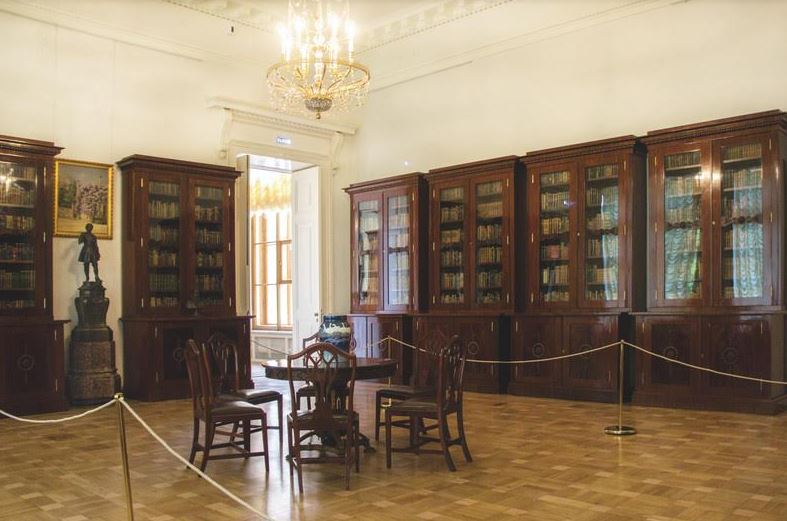
The Winchester Mystery House
The era of haunted houses has long been on the wane, lost to an age which thinks it knows so much more than was known two centuries ago, therefore presumes that it has arrived at a complete knowledge of all there is to know in Heaven, Hell, and Earth. Talk of spirits has become known as “foolishness.” In times such as these, when the traditional Angel topper on the Christmas tree has been banished, and the time-honored, hair-raising stories of ghosts, told by the flicker fire before the lights are lit, no longer a delightfully appetizing prelude to the Christmas dinner; nor, later, send the guests to bed with raw nerves that jump at every shadow. It is a little unfortunate that much of the appropriate setting of ghost stories has been destroyed. There are many blood-curdling legends, but their native homes have largely been demolished, and in some cases rebuilt; and ghosts do not very appropriately haunt houses less than a hundred years old. You require, for the instillation of a ghost, a manor-house, with wine-cellars, a butler, old family portraits (not necessarily those of your own family), and if you can manage mahogany paneling and tapestry hangings so much the better. In the ideal haunted house, the guest, primed with ancestral horror, went to bed with apprehension, leaving the warm dining-room for some vast woebegone chamber, with a like a catafalque and hangings of a bygone age; with mysterious cupboards, and secret passageways, in which a dozen family skeletons might reside, and with a floor whose every board had a separate and distinctive squeak.
Manor-houses we have still with us, but their number, as compared with the myriads of newly built “villas” in the suburbs, is woefully small. You cannot hope to find the ghost of kitchen maid who fell to her death while carrying a tray of food, nor her ghostly piercing screams. The strange foot steps around the staircase area attributed to the ghostly head cook Maude are absent. In the keep of these new villas the ghost of an unknown woman cannot be heard humming, and there will never been an occasion to witness an apparition standing at the bottom of the stairs. This is very sad, for a family ghost is a possession that in these times, when antiquities are prized, would be greatly welcomed by many estimable folk. The Uncanny and the Inexplicable, seated invisible (but yet making their presence felt) by the hearthstone, would themselves get a cachet of respectability, or, at least, of long descent, to a domestic circle; and so long as they did not play their ghostly parts so earnestly as to send the servants into hysterics and render the house uninhabitable, would thus be prized possession. There would be nothing, for example, to fear from the gentle spook or spooks who, on the impeccable authority of Mrs. Sarah L. Winchester, used to share residence of The Winchester Mansion, and only make its, or their presence known by stertorous breathings, rustlings, and scratchings, and by stroking the heads of servants who at last grew quite familiar with, and unafraid of, it and used to call it pet names! Ghost of this kind are the low comedians of the spirit World. Omnipotens sempiterne deus adesto magna pietatis tue misteriis, adesto piss invocationibus nostris ut speculum istud quod in tuo nominee bene dicere facto. Desu qui hooc speculum ex materia fragili. Discendat in hoc speculum virtus spiritus sancti. Discendat in hoc speculum ut supra.

There is more in Heaven and Earth than is dreamt of in The Winchester Mystery House. https://winchestermysteryhouse.com/
And please be sure to check out the online gift store: https://shopwinchestermysteryhouse.com/

Money Economy and the Dominance of the Intellect

Money economy and the dominance of the intellect are intrinsically connected. They share a matter-of-fact attitude in dealing with men and with things; and in, this attitude, a formal justice is often coupled with an inconsiderate hardness. It would be erroneous to assume the rural Kentucky communities present universally supportive or even knowledgeable fronts regarding the marijuana industry. Rather, individuals in these communities can be identified as occupying one of seven primary roles. It is important to note, however, that these roles are primarily males’ roles. The primary roles of community members are as ostriches, the fringe group, the in-the-knows, the profiteers, the part-timers, the retirees, and the active participants. The Ostriches are aware that people in the community grow marijuana, but likes myths about the flightless bird, stick their hands in the sand and pretend to not know anything about illegal activities. Consequently, these persons are the least informed about the nature and scope of the marijuana industry. Their constant denial serves to protect the marijuana grower from outside scrutiny. These people portray the marijuana grower from outside scrutiny. These people portray the marijuana grower as a deviant outsider and not one of “us” even when there is evidence to the contrary. This groups attempts to project the image of a community of only good, law-abiding people. #RandolphHarris 1 of 19
The role of the ostriches is to promote this image to outsiders and to reassure themselves of the goodness of the people in the community. For the most part they do not profit from the marijuana grower’s enterprise. This is likely due to intimacy of community members and their awareness of the roles played by everyone in the community, including the ostriches. The Fringe group is aware that the marijuana industry is a part of their community, but these people have no connection to kinship networks that participate in the marijuana industry. These individuals will acknowledge the industry’s existence to others (while ostriches will not). However, they will rarely, if ever, inform law enforcement officials about such activity. The belief is that such knowledge should be contained within the community. They believe only insiders can and should exert social control over community and industry members. The Fringe group persistently assets that marijuana growers are a small deviant group within the community. This perspective, like that of the ostrich, offers the marijuana grower a degree of protection from outsiders. If organized crime is perceived as small and powerless, its members stand a better chance of avoiding detection and thereby enabling them to continue illegal activities (and presumably maintain community stability). For these reasons, those who disapprove of the marijuana grower facilitate his avoiding detection. #RandolphHarris 2 of 19

Wearing the mantle of respectability, the grower is not recognized or acknowledged as a member of the marijuana industry (or, he is not recognized as a community member). In reality, the Fringe group’s failure to publicly identify the scope of industry participation facilitates the invisibility enjoyed by many members, thus further entrenching the industry in the community fabric. The In-The-Knows differ from the Fringe group because they have friends and relatives involved in growing and selling marijuana. These persons may be present and witness others’ illegal activities or such activities may be discussed in their presence. This group is trusted by marijuana growers, and due to their strong kinship ties to those inside the marijuana industry, they never disclose information regarding illegal activities to law enforcement officials. Furthermore, kinship ties motivate these persons to protect industry participants whenever possible. Most commonly this occurs via warnings of impending raids or investigations known to individuals because of their professional and personal access to such information. By protecting others from detection and apprehension these individuals promote community cohesion and continuation of current community structures and social/economic activities. The Profiteers are those community members who, while not directly participating in the activities of the marijuana industry, indirectly benefit from the economic impact it has on the community. #RandolphHarris 3 of 19

The Profiteers are a group of people made up of local business people who have knowledge of, and often support the marijuana growers. Marijuana is a major part of rural Kentucky communities’ economies. Many businesses will accept cash for both large and small purchases. Large purchases, such as new cars, are not question when paid in cash. That fact that a $50,000 vehicle is paid for in cash by someone whose home lacks indoor plumbing would draw attention from most, but not in a community that supports the rural marijuana industry. Many members of organized growers, such as the Country Boys, are not full-time participants. Some work in the marijuana industry for a short period of time, others move in and out of the group. Still others retire from the group but remain willing to help out when they are needed. All, however, remain fiercely loyal to the group. The Retiree is even more difficult to detect than the part-timer. He is no longer a participant, having retired due to advancing age (which may range from 60 to 80 years old). While no longer active in growing and selling, he is willing to teach other young men his trade and introduce them to his connections. On occasion retirement may be involuntary, a result of incarceration. Retirees may be extremely difficult for the outsider to identify. They are legitimate sector businessmen and professionals or literally almost anyone in the community. However, most community residents are keenly aware of these men’s past activities. #RandolphHarris 4 of 19

It is rarely discussed, but community members know of these activities in the same way they know of the community’s gossip. Wearing an air of respectability, the retiree may assist the active marijuana grower in laundering his money by introducing him to legitimate business opportunities and to those willing to accept cash for goods and services as well as finding markets for his product. The retiree has connections for the sale and safe transportation of the marijuana, along with accumulated skills regarding efficient means to grow a crop. He may personally introduce novice growers within his kinship network to others who can provide information and resources. He may also teach the novice how to plant and grow marijuana or simply instruct him verbally about what is needed or how to correct problems. Retirees serve as an example to younger growers, modeling how to evade detection and achieve financial success. Those whose retirement is a result of imprisonment also serve as models, demonstrating that prison may be part of doing business within the marijuana industry. The final role available to community members encompasses all aspects of active, regular, involvement in growing and selling marijuana. These persons often have made the marijuana industry their career, and their primary source of income is generated by their marijuana crops. #RandolphHarris 5 of 19

As noted above, active rural Kentucky marijuana participants are found in five forms: communal growers, hustlers, pragmatists, hipsters, and entrepreneurs. Most of the active participants, such as the pragmatist, have never been arrested and function on a limited scale. Others, such as members of the Country Boys, expand their operations and grow marijuana on a much larger scale. Most small growers do so because of perceived financial necessity. When so motivated, business operations are rarely expanded. The hustlers enjoy living on the edge and pursue their goals by increasing the size of their crops, (often venturing outside their communities to enlarge their illegal activities). This, of course, also means hustlers increase the likelihood of their detection, therefore putting the image and stability of the community in jeopardy. Young hipsters may be unable to obtain legitimate employment and so work as mules and tend the crops of the hustlers. As the economic underclass, young hipsters are cared for by those in the community who employ (exploit?) them. The most obvious similarity across the varieties of active participants is that those involved are nearly all men. Women, however, do fulfill roles in the rural marijuana industry, but their roles are significantly different from men’s roles. In order to compete our understanding of the culture of the rural Kentucky marijuana industry, we will discuss women’s roles in the days ahead. #RandolphHarris 6 of 19

Developing empathy is an important part of becoming a healthy adult. To be empathic is to emotionally resonate with what another is feeling. Empathy cuts through our isolation, generating a network of interconnection. Empathy brings our heart out of the cold. It makes compassion possible. Members of an authoritarian, hierarchic social system will tend to develop higher empathic responsiveness to situations of superordinate-subordinate structure and lower empathic capacity for understanding other types of relations. If the system is relatively stable and rigid, then those nearer the top exhibit the greatest empathy with persons in superior position and the least with those in subordinate roles. Family structure in such systems will tend to reflect social structure, and families are hence rendered less likely to provide the interpersonal conditions for maximizing empathic capacity. In authoritarian families, the mother becomes the pivotal, mediating person, who is more able to understand both authoritarian father and subordinate children. (This may be why such characteristics as intuitiveness, sympathetic understanding, adaptability, and interest and skill in literary and artistic production have become identified as “feminine” in cultures characterized by patriarchal-authoritarian family system.) Age, gender, religious, and socioeconomic differences tend to operate to inhibit the development of empathic capacity, and reduce its utilization where possessed, when these rankings serve as barriers to participation and communication. #RandolphHarris 7 of 19

Participation in activities which include members of different subcultural groups, and which are not focused on the hierarchical relations of the subcultural groups themselves but oriented to concrete solution of common problems, will increase the empathic capacity of the participants. Subgroup relations characterized by anxiety and hostility are negative in their effects on the development of empathic capacity and its utilization. Families play a major role in the orientation of the child to these subgroups differences. Persons from families where positive efforts are made to bridge subgroup barriers to communication and understanding (differences in age, gender, class, ethnic origin, religion, and values) will show a higher empathic capacity than those who do not make such beneficial efforts. There is a positive linear relation between the empathic capacity of a person at any point in one’s developmental career line and the extent to which one’s previous development had been characterized by stable, intimate communicative relations of relative equality and reciprocity with the members of his family. For the ideal type, middle-class American family, the relative importance of the specific relationships are mother, father, siblings, in that order. #RandolphHarris 8 of 19

Affection is a highly important positive factor but its relative effectiveness is a function of the amount of communication sustained in the relationship. Friction and conflict produce a negative effect to the extent that they impair communication. The range of empathic capacity is a function of the number of different kinds of functional positions which the person has occupied in the family interaction. (By functional position of a person we mean the part played by him in a given social act, exempli gratia, a giver or a receiver in an act of giving and receiving; leader or follower.) Unilateral acts of parental subordination to the child’s demands, or of administering rewards and punishment, minimize reciprocity and inhibit the development of empathic response. Striking the child in anger at something he had done and in other ways reacting to his acts so that he discovers that “parents too are human,” is more in the direction of reciprocity and communication than the detached and impersonal application of rules of punishment and reward. The positive effect of “acting natural” is enhanced if the parent explains his reactions to the child and encourages him to consider how he would feel under similar circumstances, and then follows this by working out with the child some new line of action as an experimental solution to the problem. Empathic capacity in children is positively related to the facility with which their parents learn to communicate and understand each other (though high empathic capacity does not insure marital harmony). #RandolphHarris 9 of 19
When the believer is in any degree deceived by psychopathological offenders, one is liable to live in the body, give way to the sensuous, and to be dominated by the physical realm. This can become the case through “spiritual” experiences felt in the physical frame, but which are not really spiritual because not from the Spirit. A sense of “fire” in the body, “glow,” “thrills,” and all exquisite bodily sensations from apparently “spiritual” causes, really feed the senses; and, unconsciously to themselves, while they have these experiences, such believers live in the sense-realm, practically walking “after the flesh,” though they call themselves “spiritual.” For this reason “I keep under my body, and bring it into subjection” is practically impossible in this state of deception, because the sense-life is aroused in all kinds of ways, and the sensations of the body are forced upon the consciousness of the man. The spirit sense is practically lost in the acute realization of all the sensations in the bodily consciousness. May I point out that a man in normal health is oblivious of the physical action of breathing going on in his physical frame. In like manner, a believer under the domination of the Spirit ceases to register his bodily sensations; but the opposite is the case when psychopathic offenders have awakened the sense-life to abnormal action, either by beautiful experiences or the contrary. The cultivation of this condition of passivity may be ignorantly and sedulously carried out for years by the surrendered believer, so that it deepens its hold upon him to an incredible extent; until, when it reaches its consummation, the man may become so under the bondage of it as to awaken suddenly to his state. #RandolphHarris 10 of 19

However, then one may think that “natural causes” alone explain his condition, or else, in some unaccountable way, his acute sensitiveness to the ultimate concern and divine things have become dulled beyond power of restoration or renewal. The physical feelings become deadened or atrophied, and the affections seem petrified and stoical. This is the time when deceiving spirits suggest that he has grieved God beyond repair, and the man goes through agonies of seeking the Presence he thinks he has grieved away. The cultivation of passivity may become about from reliance upon the many helps contrived (unknowingly) by the person to counteract or obviate the inconvenience of the passive state, such as the provision of and dependence upon outward helps to the eye for assisting the passive memory, utterance in speech to assist the “thinking” of the passive mind, and what may be termed “crutches” of all kinds, known only to the individual—elaborately constructed, and multiplied to meet his particular needs, but all keeping him from recognizing his true condition, even if her has the knowledge for doing so. While autonomy insists that man is his own law, heteronomy, on the other hand, assets that man, being unable to act according to universal reason, must be subjected to a law, strange and superior to him. Substance, instead of warming cultural forms with an inner glow, smothers them like an oversized garment. Most frequently heteronomy originates in religion that has lost the ultimate concern, that has degenerated into mere religion. #RandolphHarris 11 of 19

A heteronomous culture subjects the forms and laws of thinking and acting to authoritative criteria of an ecclesiastical religion or a political quasi-religion, even at the price of destroying the structures of rationality. Heteronomy is imposed by an institution or a personality which arrogates itself the claim to speak in the name of the ground of being and therefore in an unconditional and ultimate way. Thus heteronomy is inevitably demonic. Like autonomy, heteronomy can be considered from several angles. Departure is primitive art: status of gods, fetishes, dance masks, and so on, which possess an artistic and religious vale often inaccessible to occidental consciousness. Those objects bear forms (men, animals, plants), we are shocked by the manner in which they shatter form. Hands, feet, teeth, eyes, “adult” organs are recognizable as such, but they also burst through and distort their natural organic form. Yet we cannot write off this impressive human production as devoid of cultural value. On the contrary, it demonstrates a truth which our form-ridden Western eyes overlook: There is something positively contrary to form that is capable of fitting into an artistic form. Call it lack of form, or contradiction of form, or the contrapositive. We call it the demonic, the actuality of that which is positively contrary of form. What primitive art reveals, the history of religions confirms by its “holy demonries”—phallic cults, ritual prostitution, laceration myths, cult of war gods, and so on. #RandolphHarris 12 of 19

The most fearsome example from out own times is Dostoievsky’s “Grand Inquisitor”: The religion which makes itself absolute and therefore must destroy the saint in whose name it is established—the demonic will to power of the sacred institution. These examples contain the same tension as the creations of primitive art, id est, the combination of a formative and a form-shattering element, of form-creation and form-destruction. Therefore, the history of religions verifies the definition of the demonic: the unity of form-creating and form-destroying strength. These artistic and religious manifestations of the demonic are rooted in a metaphysics. The destructiveness of form which marks the demonic is neither injected from without nor originates from within by weakness of deficiency. It arises from the depths of form itself, from the inexhaustibility of being. Being is the non-rational, non-demonstrable ground of all things. At the same time it is their abyss, for they can never exhaust it. This inexhaustibility of being, however, is not like a passive, peaceful reservoir, but an active, consuming fire which burns through the form in which it is confined. For there dwells in everything the inner inexhaustibility of being, the will to realize in itself as an individual the active infinity of being, the impulse toward breaking through its own limited form, the longing to realize the abyss in itself. #RandolphHarris 13 of 19

The demonic is this surge of the abyss of being which tends to destroy form, but never quite succeeds, because to come into being means to come to form. Moreover, the abyss of being is also the ground of being which is creative and conservative in a beneficial way. The ontology of the demonic: Demonry is the form-destroying eruption of the creative basis of things. The phenomenon and the ontology of the demonic at first glance may seem far removed from heteronomy. A few more steps, however, and the fusion of the two becomes discernible. For instance, the demonic operates in the personality as the explosion of subconscious forces that splits the personality, with the result that it is subjugated to a new power which is not a natural power—the perfect definition of heteronomy. On the social plane, demonry does not split the personality, but causes the breaking of personality by the superindividual social structure—a heteronomous imposition. Demonry ends in heteronomy because of its abysmal, imperialistic drive to realize the unrealizable infinity of being in a finite reality. By the destruction of form it seeks to expand ever farther and thus encompass more being. Finally, it claims to have achieved the infinite in the finite, and this claim is the root of all heteronomy and of all demonry. For the demonic is something finite, something limited, which puts on infinite, unlimited dignity. Hence the existence of a machine civilization, completely timed and scheduled and regulated, does not necessarily guarantee maximum efficiency in any sense. #RandolphHarris 14 of 19

The United States of America still fields twice as many active research scientists and engineers as Japan, although the Japanese total is skyrocketing and Japanese nonacademic researchers tend to be younger. The sheer size of America’s effort does not guarantee quality. Moreover, with defense cuts likely and American corporations shifting resources from basic to more product-oriented research, the directions of change are not favorable. Still, though clearly challenged, the U.S.A. lead in high technology, and especially information technology, is still significant. Japanese progress in computers and memory chips has been phenomenal, and three of its firms—Fujitsu, NEC, and Hitachi—have made dazzling progress. Today, Fujitsu nips at the heels of Digital Equipment, the World’s second-largest computer manufacturer, and NEC and Hitachi are not far behind. The Japanese control 50 percent of the market for computer components and an amazing 85 percent of the market for memory chips. When it comes to computers, as such, however, U.S.A. manufacturers dominated 69 percent of the World market, the other 31 percent being divided almost evenly by European and Japanese firms. The United States of America supplies fully 62 percent of all the World’s personal computers (PCs). Among the World’s top twenty computer firms in 1988, tend were American, six European, and only four Japanese. IBM alone was more than twice the combined size of Japan’s Big Three. #RandolphHarris 15 of 19

In the increasingly important field of computer services, as distinct from machines, nine of the World’s top tend firms are America, one European, and not a single one Japanese. (The Japanese share of the service market, only 10.6 percent in 1988, is actually projected to shrink as that of the United States of America grows.) Similarly, it is true that Japanese lead in hardware; the Americans, in systems and applications software. The race is not over. In memory chip manufacture, Japanese mass production has decimated its American competition. However, IBM was the first to announce a 16-million-bit chip, four times larger than the most advanced chips, and well ahead of the Japanese competition. Moreover, the direction of change is not so much toward mass production as toward chip customization and specialization, where design skills and sophisticated software count for more—precisely the fields of Japanese weakness. As for software itself—is a $659.00 billion market, which is expected to grow to $858.10 billion by 2028. The United States of American currently has a 60 percent grip of the World market. An acknowledged disaster area for America is a school system, devasted by drugs, sex, violence, and alienation. However, schools are also troubled around the World, especially inner cities schools. The education crisis is not an American monopoly. #RandolphHarris 16 of 19
What gives American schools an edge, despite everything, is that they are less centralized than those in Europe and Japan, and not subject to the dictates of a national ministry of education. This makes them, at least, potentially, more open to experiment and innovation. Unfortunately, the knee-jerk response of the American business and scientific communities is to call for more math and science, more lock-step learning, more Ph.D.’s Misinformed about actual educational conditions in Japan, most would be amazed to learn that Japan’s leap to the high-tech frontier, from 1975 to 1988, took place with only a small increase in the number of engineering and science Ph.D’s. Offsetting America’s educational wasteland, however, is a key source of America’s global power—its unquantified but enormous cultural impact on the planet. This is not a matter of quality—which can, of course, be passionately debated. It is simply fact that culture in one form or another flows outward from the United States of America. Thus, more books are translated by American publishers. From one point of view this is unfortunate, since it deprives Americans of valuable ideas and insights. However, it reflects America’s enormous surplus in cultural trade. For good or ill, vast multitudes around the planet hunger to adopt Western, but also specifically American, lifestyle, attitudes, fashions, ideas, and innovations. It has been suggested that the global appeal of American popular culture derives from its multi-ethnic origins. #RandolphHarris 17 of 19

The surging influence of these images, along with the rich flow of science and technology rather than just economic or military power, is what makes the United States of America so threatening to the hard-liners who control China today or the Ayatollahs who run Iran. American movies and television programs, not Japanese or Soviet or European, are the most watched around the World. The other major powers are simply not in the running. Broadly speaking, the United States of America continues to be a rich source of innovations in science, technology, art, business, imagery, and knowledge in its broadest sense. This advantage may dwindle in the decades ahead, but other nations or regions will find it harder to overtake this American culture lead than to build a new weapon system or to integrate their economies. A review of the power triad, therefore, suggests that while the United States of America has severe problems, it is by no means a paper tiger. In the approaching decades it will be internally racked by social, racial, and sexual protests as the pace of power-shifting accelerates at home and abroad. However, America’s internal troubles will not, in all likelihood, compared with the upheavals that are to be expected in Europe, the least stable of the three great contenders for World power. Nor will Japan escape political and social turmoil as the World around it is shaken to the core. #RandolphHarris 18 of 19

Such quick-stroke assessments are admittedly impressionistic, and all of them are legitimately arguable, point by point. However, taken together they suggest that the United States of America holds the most balanced power of any of the three great capitalist centers in the World, and that it still holds the lead in precisely that element of the power triad that is becoming most important—knowledge. Under capitalism time-keeping is not merely a means of co-ordinating and interrelating complicated functions: it is also like money an independent commodity with a value of its own. Money, with all its colorlessness and indifference, becomes the common denominator of all values. High households’ indebtedness, low savings, uncontrolled expansion of credit to marginal borrowers, adventurous games with structured financial products and poor risk management, public debts hitting critical highs, terrorism, the pandemic, foreign assistance, and the urgent need to accelerate the trimming of the welfare state—this is the list of key structural problems that either drove Western economies into the crisis or are exacerbating it in its aftermath. Even the Chinese economy is not immune to all those structural diseases. A lot has been said and written about China’s structural issues. The time has come to assess its structural strengths. It may seem improbable, but compared to the West, the economy of today’s China, at the moment, seem to be a little more structurally stronger and healthier. This is one of the major reasons the global power balance is shifting in its favor. #RandolphHarris 19 of 19

MAGNOLIA STATION AT CRESLEIGH RANCH
Rancho Cordova, CA | low $600s
Now Selling!

Models now open at Magnolia Station! Located at the corner of Rancho Cordova Parkway and Douglas Road, residents of Cresleigh Ranch will benefit from a brand new neighborhood with convenient access to the new Raley’s Shopping Center, Sunrise Boulevard, and much more!

Magnolia Station will include 81 homesites and five distinct plans ranging from 2,200 – 3,700 square feet; including three single story plans! Each plan has been thoughtfully designed to include features such as: Generations Suite, Optional Offices/Dens, Extended Great Rooms, and more! https://cresleigh.com/magnolia-station/

Find your dream home at Cresleigh Homes. Choose from several award-winning home designs.

 Randolph Harris II International Institute