Home » Articles posted by Randolph Harris II International Institute (Page 384)
Author Archives: Randolph Harris II International Institute
My Problems with NBC, and CBS

War and disorder, ruin and death, cannot last forever. In the history of individuals, as well as in nations, there is often a period of sudden blossoming—a short, luxuriant summer, not without its tornadoes and thunder-glooms, in which all the buried seeds of the past observation leap forth together into life, and form, and beauty. What motivates employees to perform on the job, besides a pay check, is the focus of human relations, the study of the behavior of individuals and groups in organizational settings. When you hire new employees, you have to teach them to adapt to your program. The old systems weakened or visions of their past grow dim, when new ones are invented. Because of the wild diversity in journalism, this is not a story of simple success. Newcomers may have been prodded by dreams of self-betterment. They did not always provide for others or for the justice necessary between reporters and their sources. Many of you may have some idea of who I am by now. My name is Randolph Harris and I am in fact a natural born male. You may wonder why I am telling you this, and some of you already know.

Journalists used to be taken seriously and were very professional. However, around 2005 and 2006, the media started hiring younger, and less experienced reporters, and quickly, the news room because like an ongoing and dangerous episode of Lindsay Lohan and the mean girls. Reporters get together in clicks and help their friends get jobs, and then they act like they are gods, celebrities, and forget that their job is to report the news. Now, back when the baby boomers were coming up, if a reporter got out of line, they would be fired and never work in the industry again. However, now days, it seems like reporters are their own bosses, they can do what they want, slander people, harass them, stalk them, spread rumors about them and even break into an individual’s home without being fired. Kenny Holmes, of NBC4, Ian Schwartz of CBS13, and (there are many others also) , are journalists who did exactly that; Kenny Holmes was the ring leader, and when he was reported, Nestor Barrero, from the legal department of NBC Universal, defended Mr. Holmes’s actions and ongoing personality and mental disorders, by threatening the person who reported him. Thankfully the threat is in writing and on NBC letter head, so there is proof. Other than the letter, there are videos tapes and witnesses. They called me a transgender, a female, said I had no penis, and also Ian Schwartz lied about raping me. These reports also obtained my medical records and disseminated them and distorted the information.

Managers who understand the needs of their employees can help them reach higher levels of productivity and thus contribute to the achievement of organizational goals. When you have employees who are a liability, they should be disciplined because they could cause your organized to slapped with a criminal and civil law suit. However, more importantly, rogue employees could hurt someone or ruin their lives. Employees do the actual works of the business and influence whether the firm achieves its objectives, most valuable resource. To achieve organizational objectives, employees must have the motivation, ability (appropriate knowledge and skills), and tools (proper training and equipment) to perform their jobs. The United States of American remains a racist, race-obsessed society, and members of the media reflect the racism that stains our news coverage. As a result, mainstream media coverage of people of color in the United States of America is inevitably tainted by the nation’s views toward race, and its foundation of White supremacy. The American media continue to employ simplistic racial stereotypes to convey meaning and information, particularly when the subject is a person other than the defined norm in our society: a White, Christian male. Because of the rumors from Mr. Holmes and his colleagues, I have had to drop out of college, my reputation is shot to hell, and I get harassed by people daily because they have heard these rumors. One of my neighbors even told me, “I heard about you on TV.” Some of the rumors these reporters spread have gotten the public so angry that I have been attacked by a passenger in my car, and still have bruises on my neck. This inaccurate representation presented by these reporters has grave effects for the individual and the communities mischaracterized by such reporting.

Without a doubt, the media has tremendous power in our society. The images, views, and ideas disseminated via the mass media go along way toward shaping and molding the manner in which individuals and entire groups are viewed. Because of the rumors Kenny Holmes and his colleagues, spread like the 5 O’clock news, not only me, but my friends and family have been impacted. A female, who has been my mentor, has gotten threats, at work and nasty letters for being associated with me. Therefore, media bias must be earnestly confronted and addressed by reporters, and editors, and not only through overdue efforts at diversifying the newsrooms. The upper echelons of the media organization have ignored my calls and letters for help and pretend they do not know what is going on, but the situation is getting to the point where I fear for my life, and future prosperity. If something does happen, the people listed above and their corporations they work for can and will be sued. The news is a place for real decisions, and members of the media must begin to critically assess the bias that repeatedly steps into their work, and reassess the manner in which they engage in their vocation. Without such honest and painful introspection, the American media will never be able to play the critical role demanded of it in a democratic society. For every calm is succeeded by a storm, as is every storm by its calm, this too shall pass.
Please view the video of some of the damages sustained due to the rumors by Kenny Holmes and his reporter colleagues. https://www.youtube.com/watch?v=lNptTu2hU7k&list=UUCzFZmiy_nHdbNZHIkaqx7g
Recovering the Past: Alexis de Tocqueville, 1835

Well, Thanksgiving is rapidly approaching and so many people are excited to see their family, friends, and feast on wonderful food. This year, as many others, we have so much to be thankful for. While looking back in the past, be sure to have something to look forward to. In the feelings of the heart there can be no dissimulation. Virtue should be the sovereign of the feelings, not their destroyer.
 So put any differences aside and make the most out of the special day. Encouragement is the food of talent; without cheering, no one can say what an author’s faculty naturally is. I never see a modest man, but I am sure that he has a treasure in his mind which requires nothing but the key of encouragement to unlock it, to make him shine. There is a limit to the length of the inspection which a man can endure, under certain circumstances. Never say die.

However, there is a point beyond which endurance becomes ridiculous, if not culpable. In the 1830s and 1840s, a stream of Europeans came to the United States of America to see for themselves the development of American character and mass political participation in the age of Jackson. The age of Jackson has nothing to do with our beloved King of Pop, Michael Jackson. Instead, the age of Jackson refers to when Andrew Jackson, a man of wealth and land, was elected President of the United States, in 1828.

The age of Jackson too place from 1829 to 1849, when President Andrew Jackson led the national government through a series of reforms and radical changes. The nation’s territory more than doubled in size. Safely in control of the federal government, the Jeffersonians labored to set it on a new and more democratic course. Andrew Jackson’s election to the presidency in 1828 represented the emergence of a new, unified system of democratic politics.

All these changes heralded the continued strengthening of a powerful democratic faith built around the values of equality, opportunity, and individual autonomy. Those values would continue to reverberate throughout the coming years. Also, the new foreign policies transformed the nation’s relations with Europe and the Americans. However, there was less of an effort to reconcile Native American rights with national growth.

With all of these changes being made, the American people had reason to face the future with both confidence and concern. Notable visitors came to America from England, Scotland, France, Hungary, and the German states, as well as from Argentina and others newly independent nations in Latin America. One returning home, they wrote books about their travels, revealing their impressions of the character of the American people and institutions.

Obviously, these visitors did not agree about the qualities they observed in Americans or whether the American style of democratic politics was a good or bad thing. Some saw the American people and their elected representatives as unsophisticated, uncultured and undisciplined, less interested in the substance of a politician’s speech, as Charles Dickens observed in 1842, than in how long did he speak?

Alexis de Tocqueville was a French political thinker and historian, who came to the United States of America, in 1831, at the young age of 25. Alexis de Tocqueville is best known for his book, Democracy in America, which is a two-volume study of the American people and their political institutions. Now, this is another reason, as a nation, we need to be careful about how we treat others because the book is frequently quoted by journalists and politicians.

To truly understand history, we need to also look at historic documents, letters and pictures. The historian who would wish his lessons to sink deep into the heart, thereby essaying to render mankind virtuous and more happy, must not content himself with simply detailing a series of events—he must ascertain causes, and follow progressively their effects; he must draw dedications from the incidents as they arise, and ever revert to the actuating principle. Historical research can be an amazing adventure once you have experienced how fascinating it can be. The great end of history is to show how much human nature can endure or preform and I would like to share a wonderful letter, written in 1835, from Alexis de Tocqueville, on his impression of America.

In my opinion, the main evil of the present democratic institutions of the United States does not arise, as often asserted in Europe, from their weakness, but from their irresistible strength. I am not so much alarmed at the excessive liberty, which reigns in that country, as at the inadequate securities which one finds there against tyranny.

I do not say that there is frequent use of tyranny in American, at the present day; but I maintain that there is no sure barrier against it, and that the causes which mitigate the government there are to be found in the circumstances and the manners of the country, more than in its laws.

I know of no country in which there is still so little independence of mind and real freedom of discussion as in America….In American, the majority arises formidable barriers around the liberty of opinion: within these barriers, an author may write what he pleases; but woe to him if he goes beyond them….He is exposed to continued obloquy and persecution. His political career is closed forever, since he has offended the only authority which is able to open to it.

Every sort of compensation, even that of celebrity, is refused to him. Before publishing his opinions, he imagined that he held them in common with others; but no sooner has he declared them, than he is loudly censured by his opponents, whilst those who think like him, without having the courage to speak out, abandon him in silence. He yields at length, overcome by the daily effort which he has to make and subsides into silence, as if he felt remorse for having spoken the truth.

Fetters and headmen were the coarse instruments which tyranny formerly employed; but the civilization of our age has perfected despotism itself, though it seemed to have nothing to learn. Monarchs had, so to speak, materialized oppression: the democratic republicans of the present day have rendered it as entirely an affair of the mind, as the will which it is intended to coerce. Under the absolute sway of one man, the body was attacked in order to subdue the soul; but the soul escaped the blows which were directed against it, and rose proudly superior.

Such is not the course adopted by tyranny in democratic republics: there the body is left free, and the soul is enslaved. The master no longer says, “You shall think as I do, or you shall die,” (this is where vote or die comes from). However, now he says, “You are free to think differently from me and to retain your life, your property, and all you possess; but you are henceforth a stranger among your people.”

Therefore, you can see how opinions about Americans changes, and they were viewed as people who have evolved. We do not want to go back to a society of tyrants and unsophisticated savages. History, a far more daring storyteller than romance, “The American Republic will endure until the day Congress discovers that it can bribe the public with the public’s money because Americans are so enamored of equality that they would rather be equal in slavery than unequal in freedom.” –Alexis de Tocqeville
Lucky Rainbow Valley
 The Egyptians had significant contact with other civilizations in the Eastern Mediterranean, particularly with Minoan civilization on the island of Crete and with Myceane on the Greek Peloponnesus, the southern peninsula of Greece. The origin of the Minoans is unclear—they may have arrived on the island as early as 600 BCE—however, their culture reached its peak between 1600 and 1400 BCE.
  The chief deity of Minoan culture was a fertility goddess represented in several different forms. Her bare breasts indicate female fecundity, while the snakes she carries are associated with male fertility. Nothing like her has been discovered in any other culture. The Egyptians and the Minoans had a lot of contact, they valued activity, grace, and agility of athletes, something that the later Greeks, in founding the Olympic Games, would also value highly.
  In the Minoan culture, the bull was a deity of sacred significance. Legend has it that the wife of King Minos, after who the culture takes its name, gave birth to a creature half human and half bull, that was the Minotaur. Minos had a giant labyrinth, or maze, constructed to house the creature, to whom Athenian youths and maidens were sacrificed until it was killed by the hero Theseus. The legend of the labyrinth probably arose in response to the intricate design of the palaces built for the Minoan kings. It is unclear why Minoan culture abruptly ended in approximately 1450 BCE. Great earthquakes and volcanic eruptions may have destroyed the civilization, or, perhaps, it fell victim to the warlike Mycenaeans from the mainland, whose culture flourished between 1400 and 1200 BCE. Theirs was a culture dominated by military values.
  The Mycenaean culture is one who made weapons, spears, from bronze. This culture was, immortalized by Homer in the Iliad and the Odyssey, that sacked the great Trojan city of Troy. The Mycenaeans built stone fortresses on the hilltops of the Peloponnesus, a peninsula forming part of the Greek mainland. They buried their dead, in so-called beehive tombs, which, dome-shaped, were full of gold and silver, including masks of the royal dead, a burial practice similar to that of the Egyptians.
  The rise of the Greek city-state, or polis, marks the moment when Western culture begins to celebrate its own human strengths and powers—the creative genius of the mind itself—over the power of nature; the Western World’s gods now became personified, taking human form and assuming mortal weakness. Though immortal, they were otherwise versions of humans, no longer angry beasts or natural phenomena such as the Earth, the Sun, or the Rain. The human figure celebrated in athletic contests is the most important subject of Greek art as well. Only during the short reign of Pharaoh Akhenaton, in Egypt, had there been such concern to depict the human form in a realistic manner; by the fifth century BCE, this interest in humanity was reflected throughout Greek culture. The philosopher Plato developed theories not only about social and political relations, but about education and aesthetic pleasure.
  The philosopher Plato developed theories not only about social and political relations, but about education and aesthetic pleasure. The physician Hippocrates systematically studied human disease, and the historian Herodotus, in his account of Persian Wars, began to chronicle human history. Around 500 BCE, in Athens, all free male citizens were included in the political system, and democracy—from demos, meaning people and kratia, meaning power was born. It was not quite democracy as we think if it today: slavery was considered natural, and women were excluded from political life. Nevertheless, the concept of individual freedom was cherished.
  The vales of the Greek city-state were embodied in its temples. The temple was usually situated on an elevated site, above the city, and the acropolis, from akros, meaning top, and polis, city, was conceived as the center of civil life. The crowning achievement of Greek architecture is the complex of buildings on the Acropolis in Athens, which was built to replace those destroyed by the Persians in 480 BCE. Construction began in about 450 BCE, under the leadership of the great Athenian statesman, Pericles. The central building of the new complex, designed by Ictinus and Callicrates, was the Parthenon, dedicated to the city’s namesake, Athena Parthenos, the goddess of wisdom. A Doric temple of the grandest scale, it is composed entirely of marble. At its center was an enormous ivory and gold statue of Athena, sculpted by Phidias, who was in charge of all the ornamentation and sculpture for the project. The Athena is long since lost.
  The Phidian style is marked by its naturalness. The human figure often assumes a relaxed, seemingly effortless pose, or it may be caught in the act of movement, athletic or casual. In either case, the precision with which the anatomy has been rendered is remarkable. The relief of Nike, goddess of victory, from the balustrade of the Temple of Nike is a person example of the Phidian style. As Nike bends to take off her sandal, the drapery both reveals and conceals the body beneath. The reality of the sculpture is conveyed, it is as if we can see the body literally push forward out of the stone and press against the drapery.
  The Greek passion for individualism, reason, and accurate observation of the World continued on even after the disastrous defeat of Athens in the Peloponnesian War in 404 BCE, which led to a great loss of Athenian power. In 338 BCE, the army of Philip, King of Macedon, conquered Greece, and after Philip’s death two years later, his son, Alexander the Great, came to power. Because Philip greatly admired Athenian culture, Alexander was educated by the philosopher Aristotle, who persuaded the young king to impose Greek culture throughout his empire. Hellenism, or the culture of Greece, thus came to dominate the Western World. The court sculptor to Alexander the Great was Lysippos, known to us only through later Roman copies of his work. The Statue of a Victorious Athlete recently discovered in the Adriatic Sea, captures the body in its fleeting movements with such naturalness—the Lysippic ideal—that some scholars feel it may be the work of the master himself.
  In the sculpture of the fourth century BCE, we discover a graceful, even sensuous, beauty marked by contrapposto and three-dimensional realism. The depiction of physical beauty becomes an end in itself, and sculpture increasingly seems to be more about the pleasure of seeing than anything else. At the same time, artists stove for an ever greater degree of realism, and in the sculpture of the Hellenistic Age we find an increasingly animated and dramatic treatment of the figure. The sculptor not only is content simply representing the figure realistically, so theatrical is the group that to many eyes it verges on melodrama, the expressive aims must undeniably convey emotion as well.
  Although the Romans conquered Greece (in 146 BCE), like Philip of Macedon and Alexander, they regarded Greek culture and art as superior to any other. Therefore, it was understandable that people would be obsessed with Greek architecture and art. While it is acceptable to have an obsessive love of art and architecture, it could be problematic when this fantasy transforms to animate objects. Obsessive love disorder is an extreme form of love that transcends into an unhealthy attachment toward someone over time and can be triggered by many factors. These factors include, but are not limited to: anxiety, insecurity, and vulnerability. This disorder has its foundation in the insatiable fixation of wanting to possess the target or their obsession. The emotions that are experienced when in love, like mutual respect, trust, and security, are overtaken by feelings of jealously, insecurity, and resentment.
  This then gives way to a painful and all-consuming obsession and preoccupation with an actual or wished for lover. This insatiable longing either to possess or be possessed by the target of their obsession, and rejection by physical or emotional unavailability of their target can result in the perpetual fixation and compulsion to obtain the individual they desire. This obsession can start out by keeping track of a person, and then transcends into something far worse like stalking them, emotionally extorting them, and then the most extreme scenarios is when the predator becomes violent with the target. People who prey on others were usually abused as a child, rejected, and feel inferior or unworthy, they have a low self-esteem, so they gravitate to the object they find most beautiful so they can consumer what they desire to become. Thus, the predator creates an illusion for themselves and moves farther away from the truth. The best way to recover is to be honest with your friends and family and open up to them about what is truly going on, not the version you created in your infected mind program.
  Nonetheless, the Romans imported thousands of original Greek artworks and had them copied in even greater numbers. In fact, much of what we know today about Greek art, we know only through Roman copies. The Greek gods were adapted to the Roman religion, Jupiter bearing a strong resemblance to Zeus, Venus to Aphrodite, and so on. The Romans used the Greek architectural orders in their own buildings and temples, preferring especially the highly decorative Corinthian order. Many, if not most, of Rome’s artists were of Greek extraction, though they were Romanized to the point of being indistinguishable from the Romans themselves. The Romans traced their ancestry to the Trojan price Aeneas, who escaped after the sack of Troy and who appears in Homer’s Lliad. Roman art derives, nevertheless, from at least one other source. Around 750 BCE, at about the same time the Greeks first colonized the southern end of the Italian peninsula, the Etruscans, whose language has no relation to any known tongue, and who origin is somewhat ,ysterious, established a vital set of city states in the area between present-day Florence and Rome.
  Little remains of the Etruscan cities, which were destroyed and rebuilt by Roman armies in the second and third centuries BCE, and we know the Etruscans’ culture largely through their sometimes richly decorated tombs. At Veii, just north of Rome, the Etruscans established a sculptural center that gave them the reputation as the finest metalworkers of the age. They traded widely, and from the sixth century on, a vast array of bronze objects, from statues to hand mirrors, were made for export. Therefore, it is not only the heart that matters, but the mind as well. If you know you are doing wrong, but it makes you feel good in your heart, that is wicked. As the bust of a Roman citizen makes clear, no matter how unflattering the subject’s features, they were portrayed as they were. Etruscan art was influenced by the Greeks, as the life-sized portrait of a young man dressed as the god of war, Mars, from Todi, makes clear.
  Romans were dedicated to truth to nature. The architecture devoted to Capitoline Hill, in Roman, created an empire of perfection, the arch and dome, of the castles, were developed of concrete, and columns were major architectural contributions of extraordinary monument builders. Many of their triumphal architectures still stand across Europe and examples in Sacramento, California, USA. One remarkable symbol of their power is the Column of Trajan, which is encircled by a spiraling band of relief sculpture 50 inches high and if it were unwound and stretched out, 625 feet long, the column details the Emperor Trajan’s two successful campaigns in present0day Hungary and Romania in the first century BCE.
  As the empire solidified its strength under the Pax Romana—150 years of peace initiated by the Emperor Augusts in 27 BCE—a succession of emperors celebrated the glory of the empire in a variety of elaborate public works and monuments, including the Colosseum and the Pantheon, which many people in Sacramento, California USA wanted the new Sacramento King’s arena to look like, not a Japanese symbol from their flag.
  The most extravagant architectural expression of the Roman state was the Forum Romanum, the political center of Rome. At the time represented in this imaginary reconstruction around the first century CE, Rome’s population approached 1 million. Most of its inhabitants lived in apartment buildings surrounding the Forum area. An archival record indicates that, at this time, there were only 1,797 private homes in the city. Here in Sacramento County, USA, we are thankful for our suburban comminutes like South Sacramento and Elk Grove, and Natomas, Antelope, and Meadowview/Pocket, so people can have the option to live in houses, which are safe and have land. The Etruscans had developed the site as a marketplace, but in a plan developed by Julius Caesar and implemented by Augusts, the Forum became the symbol of Roman power and grandeur, paved in marble and dominated by colonnaded public spaces, temples, basilicas, and state buildings such as the courts, the archives, and the Curia, or senate house.
  Through Rome became extraordinarily wealthy, the empire began to falter after the death of the emperor Marcus Aurelius in CE 180. Invasions of Germanic tribes from the North, Berbers from the south, and Persians from the East wreaked havoc upon the Empire’s economic, administrative, and military structure. By the time the Emperor Constantine decided to move the capitol to Byzantium, in CE 323—renaming it Constantinople, today’s Istanbul—the empire was hopelessly divided, and the establishment of the new capitol only underscored the division. That is why so many people are so concerned about immigration in America. They like the way things are and do not want culture and ethnicities expanding any more than they already have, we need to try to maintain what is here already, and stabilize before we can take on more, so we are not a great empire left in ruins. On 20 November 2014, President of the United States of America, Berry Obama, made a speech to the 5 million illegal immigrants, who are facing deportation. They will be spared from deportation, expected to be made eligible for work, but will not receive any state or federal benefits—including health care tax credit. Emperor Obama and the federal government technically run out of money 11 December 2014, and if Congress does not pass a budget, on Capitol Hill, the government could shut down.
  The National deficit, in in the United States of America is $18 trillion. Meanwhile, 23 million Americans are out of work, 46,000,000 are on government food assistance and 100,000,000 are on welfare, which is a program that helps single mothers pay for their child’s living expenses. In contrast to when President Obama took office, until now, America was losing 800,000 jobs a month, now it is losing an average of 1,460,000 each month. So if taxes go up, people will have less money to spend and more people will lose their jobs. If a nation does not have the ability to save money, then there will not be prosperity, in the long-run economy. When taxes are lower, people and corporations have more money to save, and there are more resources available for investment in more employees, and other capitol. Also, production, increase along with wages and national income. When savings rates are high, the economy is usually doing well. If American makes savings more attractive, by lowering taxes, and rising interest rates, lowering fuel, food and housing cost, people will save a more of their salary, resulting in a more stable future.
  However, the U.S. tax system makes savings difficult by taxing the interest made on savings and inheritance, which could be as much as 55 percent. That means the government gets more of your money than you do, and high taxes is why the nation has such high unemployment. Prices for most things in America are at an all-time high, as well as unemployment and wages are low. If a person makes $500,000 a year and has to pay 50 percent of that in taxes, this person will only take home $250,000. However, if this same person making $500,000 a year pays 33 percent percent tax, then they will take home $335,000 more in real income, which is $85,000 more. That is enough money to hire two fulltime workers, at $42,500 a year, which just created two new jobs, and add tax revenue to the system, without raising taxes. Nevertheless, the current tax system penalizes some people twice. When a person is using his or her savings to hire more employees, when the business owner sees an increase in revenue, the business owner has to pay taxes on the investment in new employees, in the form of corporate income taxes. Then when the corporation pays dividends to the shareholders, the shareholders are also paying taxes on these investments, as income taxes. So by double taxing some, corporations are less likely to invest in hiring or expansion or saving.
  If the government reduces deficits, then this will rise public saving and create more government jobs. Cuts in government programs and services will depress production and employment; and increasing the money supply, to stabilize the economy, leads to more debt. The Employment Act of 1946 says that, “it is the continuing policy and responsibility of the Federal Government to promote full employment and production. The government is supposed to avoid being the cause of major fluctuations in the economy. However the government should respond to changes in the private economy. In 1961, when a reporter asked John F. Kennedy why did he believe in tax cuts, “To stimulate the economy. Don’t you remember your Economics 101?” President Kennedy said. Kennedy’s fiscal goal was to cut taxes, which would raise consumer spending, expand aggregate demand and increase the economy’s production and employment. The 1964 tax cuts, lead to a robust economy, in the short term and long run.
  To further illustrate this point, General Services Administration is accused of spending $7.7 million for government employees to work from home, and commute to the office on occasion. The idea is to save money, by reducing commute times, and this program is also supposed to make workers more productive, as they are able to spend time, they would have wasted in traffic, working. It is clear to see that this program is not saving the American people money. Furthermore, 379 employees work for the GSA and they racked up the $7.7 million in travel expenses. In addition, the city of Sacramento is also known for wasting money. The City of Sacramento spent $365,000 on Hotel rooms, $9200 on Coffee, $89,000 on Pizza. Not only that, but two of President Obama largest donors have been outsourcing jobs. John Rogers donated $1.5 million to help Obama get reelected. John Rogers is also the CEO of Aerial Capital Management, ACM is known for outsourcing “day to day activities” to other countries. Another top Obama donor is DreamWorks CEO Jeffery Katzenberg. Katzenberg donated $2 million to President Obama and Katzenberg also plans to expand his business and move more jobs to China. People, who donate money to the president, usually have control over key decisions that are made by the President. The people are basically unable to control government policy. This proves that Capitalism and Democracy are incompatible. The problem is that America is a consumer driven economy, in the past, America became great by increasing aggregate demand, by being producers, not consumers. “We may have democracy in the country, or we may have wealth concentrated in the hands of a few, but we cannot have both.” -Supreme Court Justice Louis Brande
Dangers of Psychiatric Labeling and Imposition

We are liable to be imposed upon, and to confer our choicest favors, often on the undeserving. Culture is one of the most influential contexts in which any behavior is judged. In some cultures it is considered normal to defecate or urinate in public, or to appear naked in public. Conversely, in other cultures it is unacceptable to go to nightclubs, or have guest after certain hours, if ever. Thus, cultural relativity (the idea that judgments are made relative to the values of one’s agents of socialization) can affect the diagnosis of mental disorders. Nonetheless, all cultures classify individuals as abnormal if they fail to communicate with others or are consistently unpredictable in their actions. If things can be done better, in three hours, instead of one, there is no reason three hours should not be spent.

Our first impressions are almost always received through the sense. If you would ever have your children to walk honorably through the World, you must not attempt to clear the stones from his path, but teach your offspring to walk firmly over them—not insist upon leading your children by the hand, but let them learn to go alone. Focus on the objective, not the obstacle. It is clear that all of the standards we have discussed are relative. However, abnormal behavior does have a core feature: Almost always, it is maladaptive (behavior that makes it difficult to adapt to the environment and meet the demands of day-to-day life. Rather than helping a person to cope successfully, abnormal behavior makes it nearly impossible for a person to function or enjoy life.

In practice, the judgment that a person needs help usually occurs when the individual does something (hits a person, hallucinates, stares into space, targets an individual and harasses them for no reason, and so forth) that annoys or gains the attention of someone in a position of power in the distressed person’s life (an employers, teacher, parent, spouse, or the person himself or herself). That person then does something about it. (Police Officers may be called, the person may be urged to see a psychologist, a relative may start commitment proceedings, or the affected individual may universally choose to seek help and get his or her mind program back on the right track.) The individual who checks the inclination which he or she feels in his or her heart to do a humane action, from a fear of being imposed on, but little deserves to have opportunities of doing good thrown in his way.

Time and ignorance, the two great supporters of imposture, but every generation has its improvements. Warning: Before we proceed, a caution is in order. The items in this report are to foster communication about human issues. *However, if used carelessly, this information may do harm. Everyone has felt or acted crazy, during brief periods of stress or high emotions. Individuals whose adjustment problems extend over longer time periods may differ from you or me, only in the severity of their difficulties. It is therefore far more advantageous to label problems than to label the person. Think of the difference between saying, “He is experiencing a serious emotional disorder behind his bank account, medical records and private information being hacked and stolen, by a group of people,” and saying, “He is a psychotic.”

An educated individual must be able to recognize and deal effectively with problems of information overload and underload, and confirmation bias, false dichotomies, collective inferential error, and groupthink. When you make a statement that is called a claim, which is asserted and remains to be proven. The date or the ground (support/evidence) for the claim needs to be statistical evidence; expert, authoritative testimony; documents; objects; exhibits; conclusions from test results; verifiable facts; and conclusions previously established constitute data. For your claim to be taken seriously it has to be warranted—the reasoning used to link the data to the claim; for example, Claim: Infants can think conceptually. Date: My friend, Dr. Jenifer Ashton, she says this is a fact. Warrant: Dr. Ashton is an OGBYN and medical contributor for CBS and ABC, and she is a highly acclaimed expert on this subject and has even had her own medical show.

Without the vice of hypocrisy, all the other vices are of no use. Psychological problems can be grouped into broad categories, however, there is really no such thing as crazy. Crazy is simply an ambiguous term, which could be good or bad, depending on the context. For example, when someone says something really funny, one may respond by saying you are so crazy (funny)! However, I would be careful about judging others, as that is a sin. Do not judge or you will be judged, too, reports Matthew 7.1.

Nonetheless, a mental disorder is not a laughing matter; it is a significant impairment in psychological functioning. A psychotic disorder is characterized by hallucinations and delusions, social withdrawal, and a retreat from reality. Psychosis, which tends to be severely disabling, may lead to hospitalization. At times, psychotic persons cannot separate their hallucinations from reality. So would you really want to out someone for having a mental disorder and tease them and make life hard on them? If you do, what does that say about you as a person? The falsest people will yet bear outward shows of a pure mind.

There are many things we might throw away if we were not afraid that others might pick them up. Insanity is a legal term that refers to an inability to manage one’s affairs or foresee the consequences of one’s actions. However, the purpose of psychology is to help you better understand yourself and have key terms you can use when you are trying to communicate with your doctor. It is really all about self, not playing doctor because you learn some dime store psychology from Law and Order. Remember, none of you are even credible at evaluating another individual, as you are not a doctor or an expert witness (a person recognized by the court of law as being qualified to give expert testimony on a specific topic), and you may have a motive you trying to massacre someone’s character.
Our phobias are our manias. Imagine it is the 1840s, and you are in the Confederate Southern United States, as a slave. You have tried repeatedly to escape a cruel and abusive master. An expert is consulted about your crazy behavior, and he concludes that you are suffering from drapetomania, a mental disorder that causes slaves to run away. As this illustration depicts, psychiatric terms are easily abused. Historically, some have been applied to culturally disproved behaviors that are not really disorders. For example, drapetomania, childhood masturbation, homosexuality, and lack of vaginal orgasm, in women, were all considered mental disorders because people were labeled by a biased source, when there was nothing wrong with them. A biased source is a special interest group or individuals who stand to gain money, prestige, power, or influence by simply taking a certain position on an issue or crusaders for a cause all biased even though they may have expertise.

Stressful environments—everyone has his or her own list of complaints about large cities. Traffic congestion, pollution, crime, and impersonality are urban problems that immediately come to minds. These issues are created by overcrowding, attentional overload, and residential crowding. Anyone who has lived in a high-rise building knows that at times, it can be quite a zoo. Most architects aim to create buildings in which people will be comfortable, happy, and healthy. However, sometimes they miss the mark with human behavior. When people feel crowded and stressed, they tend to withdraw from others and even make more trips to mental health centers, for anxiety related disorders, than individuals living in a less-crowded building.

Research indicates that small architectural changes to any institution can greatly reduce stress in high-density living conditions. An institution is simply an organized establishment, foundation, society, or buildings dedicated to their work. School is in institution, church, you home, business or apartment. So that residence in high-rise buildings do not feel like they are incarcerated, caring owners and managers and engineers typically divided the room in half with an unlocked door, and created three lounge areas.

They also select colors that are known to be Earthy and vibrant so people feel relaxed and at peace, happy. At the end of the experiment, inhabitants of the high-rise felt cared for, accepted, loved and less stressed. They also formed more friendships and were more open to social contacts. Similar improvements have been made by altering the interior design of businesses, schools, apartment buildings, mental hospitals, and financial institutions. In general, the more spaces people must pass through to get from one part of a building to another, the less stressed and crowed they feel. Liveliness is a pleasant thing.
Curing the Eternal Separation

Let us endeavor so to live that when we come to die, even the undertaker will be sorry. Death is change, not consummation; and the commencement of a new existence, corresponding in character to the deeds which we have done in the body. I have no terror of death. It is the coming of death that terrifies me. Everything in the World dies, but we only know about it as a kind of abstraction. If it were not for the constant renewal and replacement going on before your eyes, the whole place would turn into a stone and sand under your feet. However, there are some creatures, which do not seem to die, at all. Following growth and differentiation, the cells of all complex animals gradually deteriorate. Paralleling the deterioration are the structural changes and a gradual loss of efficiency in bodily functions, as well as increased sensitivity to environmentally induced stress. Progressive cellular and bodily deterioration is built into the life cycle of all organisms, in which differentiated cells show extensive specialization. The process is called aging.
Whoever has lived long enough to find out what life is, knows how deep a debt of gratitude we owe to Adam, the first great benefactor of our race. He brought death into this World. It is a natural marvel. All of the life on Earth dies, all of the time, in the same volume as the new life that dazzles us each morning, each spring. Aging in humans leads to structural changes such as loss of hair and teeth, increased skin wrinkling and fat deposition, and decreased muscle mass. Less obvious are gradual physiological changes. For example, metabolic rates decline in kidney cells, so the body cannot respond as effectively as it once did to changes in extracellular fluid volumes and composition. Another change involves collagen, the fibrous protein that is present in the extracellular spaces of nearly all tissues. Collagen may represent as much as 40 percent of your body’s proteins, and keeps your skin supple. With increasing age, new collagen fibers that are being produced are structurally altered—and such structural changes are bound to have widespread physical effects.

Death with more mercy kills than love doth save. All dies. The roses are red with the matter that once reddened the cheek of the child; the flowers bloom the fairest on the last year’s battleground; the work of death’s finger cunningly wreathed over is at the heart of all things, even of the living. Death’s finger is everywhere. The rocks are built up of a life that was. No one knows what causes aging, but that is what we should focus on curing. Maturing is great, but it would be nice if we could stop the process when we wanted. More than a few decades ago, Paul Moorhead and Leonard Hayflick cultures normal embryonic cells from humans. They discovered that all of the cell lines proceeded to divide about fifty times, and then the entire population died off. Leonard Hayflick took some of the cultured cells and froze them for a period of years. Afterward, he allowed them to thaw and placed them in a culture medium. The cells proceeded to complete the cycle of fifty doublings—whereupon they all died on schedule. Pity is for the living, envy is for the dead.

Such experiments suggest that normal cell types have a limited division potential, whereby mitosis is genetically programmed to decline at a particular stage of the life cycle. However, does the change in mitosis cause aging or is it a result of the aging process? Consider that neurons, which do not divide at all after an early developmental stage, still deteriorate gradually during the life of an animal. Their predictable deterioration might indicate that similar changes may be occurring in dividing cells throughout the body. Death is a debt that everyone owes.

Some researchers believe that cell gradually lose the capacity for DNA self-repair, perhaps as a result of an accumulation of environmental insults. Over time, DNA mutations certainly could thwart the production of enzymes and other proteins required for proper cell functioning. Consider that cells depend on smooth exchanges of materials between the cytoplasm and the extracellular fluid. And collagen, recall, is present in extracellular spaces throughout the body. If deteriorating regions of DNA code for defective collagen molecules, it is conceivable that the movement of oxygen, nutrients, hormones, and so forth to and from cells could be hampered, with repercussions extending through the entire body. Finally, consider what might happen as a result of deterioration of genes coding for membrane proteins that serve as self-markers. If these identification markers change, does the immune system then perceive the body’s own cells as foreign and mount an attack on them? According to one theory, such autoimmune responses might intensify over time, thereby producing the increased vulnerability to disease and stress associated with aging. So it is best not to have romantic contact with too many people, as your body may have an adverse reaction to their DNA.

One can survive everything nowadays, except death. However, that may be changing. Cryonics is the preservation of one who is considered legally deceased through a process of cooling the body to -120 (negative) degrees Celsius, storing in it a cool box, with liquid nitrogen, and housing it in a storage facility. The mission of cryonics is to find a cure for the disease known as aging.

One of life’s compensations is that there is always something ahead. Aging is considered a malady, which most will suffer from, unless a cure is invented. According to the Cryonics Institute, aging is a result of damage to organs, tissues, cells and other cellular components. There are many reasons people age. Some people age because of chemicals in the environment. While others age because of they choose to self-inflict damage on the body, and speed up the aging process. This can be done by abusing drugs, smoking, overeating, eating fired foods, sex, alcohol consumption, stress, over workings, or accidents.

In the curious little World of ours, we enjoy our lives on infernally hard terms. We live on condition that we did. Cryonicist is a scientist, who specializes in cryonics. Their goal is to preserve life and youth and reverse the aging process. Cryonicists believe that with time, and through the advancement of science and medicine, that one day the knowledge to cure the disease of aging and restore and maintain youth will be possible. Participants of cryonics are cryopreserved shortly after death. The benefit of being cryopreserved is that it gives one a fight chance at living a long life and accomplishing all of their dreams. The average life expectancy in the United States is 78.37; Europe is 89.73, and Hong Kong 82.04 years.

All that the World gives may be taken away. Living to be about 80 years old is not that long. Considering, one has to go to college, get a job, and raise children. That does not give an average person a chance to life their dreams because one is technically working to live. When people retire, they are generally sick, disabled or for other reasons, unable to work, and that does not sound like much of a life. Now, through cryonics, one is giving themselves a chance at a real life. Once a person dies and is buried in the ground, the only possibility of living again it through cloning. At one time, people thought cloning was a myth, but the first successful human clone was produce in 2002.

Since cloning is possible, it is also likely the cryonics will be, too. Technically speaking, Cryonics is already successful. Since 1983 scientist have been successfully practicing cryopreservation of human embryos, which was the first year one of those babies, was produced. Invitor fertilization (IVF) is when an embryo is frozen, store, and then thawed out and placed into a women for impregnation. However, it is important to remember that people, who are cryopreserved, are not frozen. Books are too heterogeneous an interest to furnish a vital soul in life, a reason for being alive.

Freezing cryopreserved people is not necessary. Cryonicists have found other ways to preserve the human body, brain and organs without out freezing them; life can be stopped and restarted if cell structure and chemistry are preserved without freezing them, reports the Cryonics Institute. This process of storing humans at a cool temperature of -120 degrees Celsius is known as vitrification. Vitrification is a procedure that preserves the biological structure of the human body by adding high concentrations of chemicals called cryoprotectants to the cells, which allows for the body to be chilled with minimum to no formations of ice. The life of every man is a diary in which he means to write one story, and writes another; and his humblest hour is when he compares the volume as it is with that he vowed to make it.

People who choose to be cryopreserved, shortly after passing, are vitrified by a local funeral director; they are then brought to a particular facility, refrigerated to liquid nitrogen temperature, and stored in a computer controlled cooling box, and reassigned to a cryostat for keeping. While the body is in a state of vitrification, scientists are working on nanotechnolohy which will allow them to completely repair and regenerate damaged tissue; after the nanomedicine is applied and the patient is restored to being youthful and healthy. A person should recover and still have all of their memories and personality. Nonetheless, I imagine that there could be some slight differences in appearance and behavior. He did not think that it was necessary to make hell of this World to enjoy paradise in the next.

A person in a state of vitrification is not exposed to sunlight, stress or any other damaging environmental factors, and they are technically dead. The soul has left the body and no one knows what it is experiencing. So it is likely when the person is restored, they may look a little different, might lose some memories, and could gain a lot of new information. Nevertheless, some scientists believe that it is possible that the state of verification is much like a dream and the soul never goes away. When human embryos are frozen, deforested and placed in side of a woman, upon birth, those children are considered human, and all humans have souls.

Some might think that cryonics is ungodly, but it is really no different than feeding yourself so you can live, drinking water, taking medication or getting cancer treatment to preserve one’s life. Human life could be preserved for hundreds, or thousands of years, and possibly longer.” In the biblical times, people were known to live long lives. Adam lived to be 930, Noah lived to be 950 years, and Methusela lived to be 969 years, but to god even living to be 969 years old is not long. The life is devoted to knowledge passes silently away and is little diversified by events.

According to Christian religious books, God created the Earth and the heavens, which are considered to be billions of years old. God himself is immortal and incorporeal, and he lives through everyone one of us, so we all have souls. Some might argue that not trying to preserve one’s life as long as possible is abuse, murder and even sinful. Much like if you have the power to stop for one from being killed, but one just sits back and watch the human law would consider the person who observed the crime an accomplice to murder. Therefore, it is beneficial to try and maximize the gift that God has given us to show him that we are grateful. God does not desire the spiritual death of a sinner.

Before investing in cryonics, please be sure to check out the company you are entrusting your life with to make sure they will still be financial solvent in the future. Also, keep in mind, just like any other medical procedure, it is not proven that you will recovers, but it is highly likely that you will. Nonetheless, I think cryonics is worth the risk and it is affordable. Cryonics Institute charges a one-time membership fee of $1,250. From there on, one gets a life insurance plan, and leaves Cryonics $28,000 that is paid upon your departure. For a lessor fee your family can be included in the program and there are other payment options. I am not selling a product, but extending life sounds like a great investment. Some even say the great William Randolph Hearst is a member of the Cryonics club. Some are drawn by love, others are driven by terrors, to their Divine refuge.

Your soul sleeps; the shock is yet to be given which shall awaken it. You think all existence lapses in as quiet a flow as that in which your youth has hitherto slid away. Floating on with closed eyes and muffled ears, you neither see the rocks bristling not far off in the bed of the flood, nor hear the breakers boil at their base. However, I tell you—you will come someday to a craggy pass of the channel, where the whole of life’s stream will be broken up into a whirl and tumult, foam and noise; either you will be dashed to atoms on crag points, or lifted up and borne on by some master wave into a calmer current.

Leonid Storms of November: Tears of St. Lawrence

And I beheld when I opened the sixth seal, there was a great earthquake. On 24 August 2014, there was a strong and power Earthquake, which rocked Napa, California at 3.20 A.M. The Earthquake was a magnitude 6.0 on the Richter scale, one was killed, 200 injured and there was $1 Billion in property damage. On 29th April 2014, the sun became black as sackcloth of hair, as there was a solar eclipse; and the moon became as blood on 15th of April and on the 8th of October. And the stars of then Heaven fell to the Earth during the Leonid meteor shower, which took place before dawn on 18 November 2014, and the sky was filled with shooting stars, pouring down like rain. The first recorded meteor shower was in China 10 August 36 A.D. In England and Germany, beginning in the first half of the 19th century, these meteors were called the “Tears of St. Lawrence,” named for the saint, whose feast day is on the 10th of August, the date of his martyrdom. And in the year 258 A.D. under Roman Emperor Valerian, Lawrence was put to death by burning. According to the legend, the meteors were his flaming tears. And in 1839, Adolphe Quetelet and American Edward Herrick confirmed that meteor shows have an annual rhythm. Meteors are residue of particles of material (now known as meteoroid streams) from old comets, distributed along their orbits. Since the year 902, the most spectacular Leonid showers had been observed to occur at intervals of 33 or 34 years—in 902, 967, 1037, 1202, and 1366.
Some have considered the larger part of mankind in the light of actors, as personating characters no more than their own, and to which they have no better title that the player hath to be in earnest thought the king or emperor who he represents. Thus the hypocrite may be said to be a player; and indeed the Greeks called them both by one and the same name. On 12 November, 1799, a certain Professor Thomas of Nashville, Tennessee, who was yanked out of bed, when an alarming blaze of the brightest fireballs lighting up his dark room. It was the most sublime vision I have ever had, reported Professor Thomas of Nashville, Tennessee. A planter in South Carolina awoke to the desperate cries of slaves, who were hollering and screaming like they lost their minds, on his and two nearby plantations; “Oh, my God, the World is in flames!” Dashing outside, the planter did not know whether to be more amazed, by the celestial performance, or by the crowd, level to the ground, imploring God to save them and the World. Another eyewitness, Mr. Strickland reported, “Two fireballs were half as bright as the Moon and several hundred of these gorgeous stars were visible at once…leaving a long streak of flame in their tracks.”
A few other witnesses reported that the meteors feel as thick as snowflakes. In Boston, a number of meteors equivalent to half the number of snowflakes, in a storm, was estimated to have hit the ground. Some estimate that 240,000 meteors fell to Earth, during the incredible nine hours even, essentially the entire night. In New York, at a rate of 10,000 falls per hour, meteors as bright as the moon fell to Earth. Historian R.M. Devens declared the meteor storm of 13 November 1833, one of the 100 most memorable events in the entire history of the United States happened, in the great meter shower, one of the most extensive and wonderful displays of falling stars was seen. A number of scientist, including Denison Olmsted, professor of physics at Yale College, observed the phenomenon as well. Such observations confirmed Alexander von Humboldt’s impression, that the meteors all came from the same point in the sky, in the constellation Leo (hence the name Leonids). It was also confirmed that the Leonids moved through the sky along with the sky along with the constellation, participating in the sky’s apparent diurnal rotation. There was another storm, as predicted on 13 November 1866, it was gorgeous. Meteors are also known to contain valuable and precious metals and diamonds.

Nonetheless, one of the most impressive meteor strikes happened 15 February 2013, at about 9.20 A.M. when a meteor, which looked as large as the moon, streaked through the daytime sky, above Russia, before exploding with a flash and sonic boom, that shattered glass windows, and left about 1,000 people injured. NASA said this was actually a tiny asteroids, and had a blast the equivalent to 300,000 tons of TNT. This kind of event only happens once every 100 years. On this day, 3,000 buildings were damaged, and 20,000 emergency workers were on the streets to help anyone in need. To surround anything, however monstrous or ridiculous, with an air of mystery, is to invest it with a secret charm, and power of attraction which to the crowd is irresistible. False priests, false prophets, false doctors, false patriots, false prodigies of every kind, veiling their proceedings in mystery, have always addressed themselves at an immense advantage to the popular credulity, and have been, perhaps, more indebted to that resource in gaining and keeping for a time the upper hand of Truth and Common Sense, than to any half-dozen items in the whole catalogue of imposture. The Bible describes several distinct signs that will happen prior to the return of our savior. The Sun shall be darken, and the moon shall not give her light, and the stars of the Heaven shall fall, and the powers in Heaven shall be shaken. And then shall they see the Son of Man coming, in the clouds with great power and glory, reports Mark 13.24-26.


Adolph Heilbron and Successful Career

People who like any society better than none are, in general, those who know least how to enjoy it. The humblest painter of real life, if he could have his desire, would select a picturesque background for his figures; but events have an inexorable fashion of choosing their own landscape. Adolph Heilbron rose from obscurity to the highest position in the young man could wish to reach. He was a self-educated man and secured his own start in life—by being determined, self-reliant, and was willing to work for advantages, which other boys secured through inheritance. Adolph Heilbron was a founding member of the City of Sacramento, and one of the wealthiest men in the superior state of California. He had a significant amount of mental and physical power and displayed unlimited possibilities. Nothing was too great to master. It has been proven over and over, throughout time and history, success is bound eventually to crown the endeavor of those who have the ambition to put forth their best efforts, and the will of manliness to preserve therein.

Adolph Heilbron was born in Hanover, Germany, 18 January 1833, and was a member of the German Lutheran Church. He went to school and became employed at his father’s store. Adolph Heilbron arrived in America, at the young age of 19, and lived in Manhattan, New York, for 56 days, and then moved to the town of St. Louis, Missouri, where his older brother August was living, and started working. In 1854, Adolph Heilbron passed through New Orleans and arrived in San Francisco, California and then moved to Eldorado County, where in connection with two other young men, he began prospecting for gold and silver. The guys were successful in the mining business. However, in 1856, Adolph Heilbron moved Sacramento, California, USA. Adolph Heilbron and his brother Louis Heilbron opened a butcher shop, in an alley of 3rd and N Street in Sacramento, California. Change is precious for its own sake, and a great experience transforms, in 1860, Mr. Heilbron married Miss Augusta Schaar, a native of Hamburg, Germany, and they had four lovely children.

Money is the locomotive power of all things. In 1874 the Helibron brothers, Adolph and Louis formed a corporation, in San Francisco, California called Poly Heilbron & Company, they were a wholesale dealer in meats, and in 1874, the brothers leased a grant of land, in Tulare, California and in Fresno, California, which was on the Kings River, known as the Rancho Laguna de Tache, comprising over forty-four thousand acres. The brothers were hardworking, industrious, and economical, and were able to rapidly expand their business and into cultivating livestock, land investments, and other prosperous financial adventures. Adolph Helibron had a wildflower stock farm, in Fresno, California and were breeding the celebrated Durham and Hereford cattle. Character is not cut in marble—it is something solid and unalterable. It is something living and changing, Adolph Heilbron decided to become a Sacramento Sheriff and tax collector, in 1879, and held two terms.

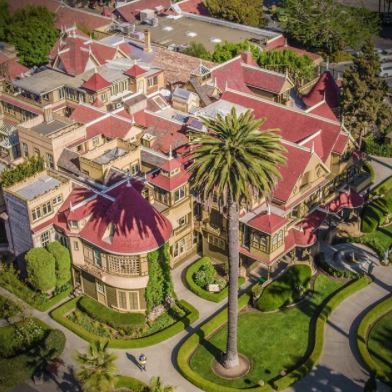
Hospitality is one of the first Christian duties, each bitter cup must be drained in the hope that the next might be sweeter. In 1881, Adolph Heilbron hired architect Nathaniel Goodell, who also designed the California governor’s mansion, to construct and Italiante mansion. At the time, it only cost $10,000.00 to build. The Heilbron descendants occupied the mansion until 1953. It was then purchased and restored by San Diego Federal Savings and Loan, in 1974.This historical mansion symbolizes the emergence of Sacramento, California, from the Gold Rush Town to the Center of Agriculture and Transportation, in the Sacramento Valley. However, After World War II, most of the magnificent homes, in this neighborhood, were torn down and replaced with government office buildings. The Helibron house was lucky to escape the bulldozer, and have been dedicated by the Native Sons of the Golden West, James M. Smith—Grand President 16 May 1981. The Heilbron mansion still stands on the corner of O and 7th street, at 704 O street, Sacramento, California; around the corner from the Stanford Mansion, and is now on the National Reference of Historical Properties, which means it can never be torn down or changed. The mansion is four levels and very impressive.

First of all things in the World, a man must be a man—with all the grace and vigor and, if possible, all the beauty of the body. Then he must be a gentleman—with all the grace, the vigor, and the good taste of the mind. And then with both of these—no matter what his creed, his religion, his superstitions, and doctrines—with both of these he must try to love a beautiful life of the spirit. Adolph Heilbron was that mam. Being an excellent businessman, of great resources and energy, Mr. Heilbron cofounded the Germnia Building and Loan Association, in 1876, and was President, until 1887, when he resigned to take a sabbatical to Europe. For 18 months, Adolph was able to visit his old home, family and friends. In 1890, Adolph Heilbron became the President of Buffalo Brewery, located in Sacramento, California at 21st, 22nd, Q and R streets. There is no influence at the same time so powerful and so singular as that of individual character. It arises as often from the weakness of the character as from its strength. Adolph Heilbron had a devout mind, though he was perhaps impatient of devout words, and his tenderness lay very close to his reverence, so that one could hardly be stirred without the other.

Adolph Heilbron, while serving as President of Buffalo Brewery, went on to become one of the incorporators of the Capital Telephone and Telegraph Company, serving on the board of directors. He also was director of the California State Bank, and was director of San Joaquin Ice and Creamery Company, one of the largest institutions of the kind in the State of California. The mind of Adolph Heilbron was multifaceted. To whatever he had his time and attention to, was a successful adventure. Money commonly purifies the spirit, as wine quenches thirst; and therefore, it is wise to commit all our concerns to keep of those who have most of it. He was a generous man. Adolph Heilbron was a member of the Masons, Knights Templar, Shriners, Elks, Odd Fellows, and the Sacramento Turn-Verein. He was also Vice President of the California National Bank; Director of the San Francisco Life Insurance Company of Sacramento, and a well-known investor in California. He also manufactured tobacco. With money in the pocket, one is at home anywhere, his treasure was a law maker. In 1913, after being ill for a month, Adolph Heilbron died in his mansion, which is now a state park, and located at 704 O Street in, Sacramento, California.


Controlling the New Environment
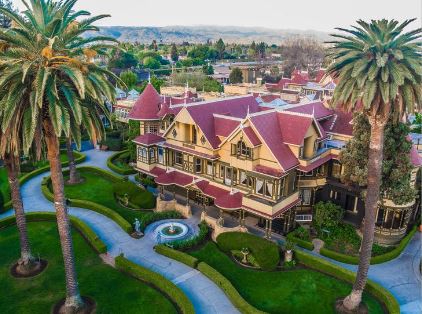
Neither a borrower nor a lender be; For loan oft loses both itself and friend, and borrowing dulls the edge of husbandry. A large number of people converted to Protestantism throughout Europe. Like Lutheranism, it recruited most successfully among the privileged classes of merchants, landowners, lawyers and the nobility and among the rising middle class of the master artisans and shopkeepers. Sixteenth century monarchs initially regarded attacks on the Catholic Church with horror. However, many local princes adopted some version of the reformed faith. The most important monarch to break with Catholicism was Henry VIII of England. When he saw the Baroque grandeur of Blenheim Place, the magnificent gift of a grateful sovereign to the triumphant Marlborough, George III remarked that he had nothing to equal this. He had a point. When he came to the throne in 1760, the British royal residences were fairly few and in general considerably less ornate. The old Place of Westminster, with its surviving Medieval Great Hall, after the disastrous fire of 1512, the royal residence had ceased to be spectacular. The tower of London, begun by Wiliam the Conqueror, in 1078, and lived in by various Medieval Sovereigns, no longer had a proper royal court by early Stuart times. James VI of Scotland inherited the throne of England upon the death of Queen Elizabeth, becoming James I of England and founding the Stuart period. The Stuart period of British history usually refers to the period between 1603 and 1714 and sometimes from 1371 in Scotland. This coincides with the rule of the House of Stuart, whose first monarch was James VI of Scotland. This period ended with the death of Queen Anne and the accession of George I from the House of Hanover. The Stuart period was plugged by internal and religious strife, and a large-scale Civil War. Although William the Conqueror’s other stronghold, on the Thames at Windsor, had been notably developed by Henry II (who built the royal lodgings in the Upper Ward), Edward IV (who built St George’s Chapel), Elizabeth I (who built a long gallery) and, above all, by Charles II (who reconstructed the Sovereign Apartments in magnificent style, with carvings by Gringling Gibbons and ceilings painted by Verrio), the castle had been neglected by the first two Georges. Eltham Palace in Kent, favourite residence of several Medieval kings, had fallen out of favour from, the time of Henry VIII.

Greenwich, the palace for which Henry VIII had forsaken Eltham, remained a royal residence only until the end of the seventeenth century. Henry VIII, the founder of the British Navy, spent large sums in making the riverside Greenwich a pleasant, perfect and princely palace. Later the first of the Stuart kings in England, James I (VI of Scotland), gave it to his queen, Anne of Denmark, as a peace-offering after he had scolded her too severely for accidentally shooting his favourite hound. The queen then commissioned Indigo Jones to build her a miniature palace bridging the public road from London to Woolwich, which separated the main palace from its park. Before the Queen’s House, as it came to be known, was finished, Anne of Denmark was dead, but it was completed and furnished for her daughter-in-law, Queen Henrietta Maria, wife of Charles I. With its perfect Classical proportions, Ionic loggia, painted ceilings by Jakob Jordaens and Orazio Gentileschi, its gilded decoration and bust of Charles I by Bernini, it must have been the most elegant and sophisticated house of its time in England—a testimony to Charles I’s exquisite taste and love of the arts. The English Civil Wars took place, during the reign of Charles I, the second Stuart monarch. The war ended in victory for the Parliamentarians. When he stepped out onto the scaffold, Charles I was executed in 1649, he fell through one of the upper windows of the Banqueting-House. After this conflict, the line of Stuart monarchs was temporarily displaced by the Commonwealth of England. Their rule lasted from 1649 to 1660. Oliver Cromwell ruled directly from 1653 to 1658. After Oliver Cromwell’s death, the Commonwealth fell apart. The Convention Parliament welcomed Charles II, son of Charles I, to return from war and become King. This event was known as the English Restoration.
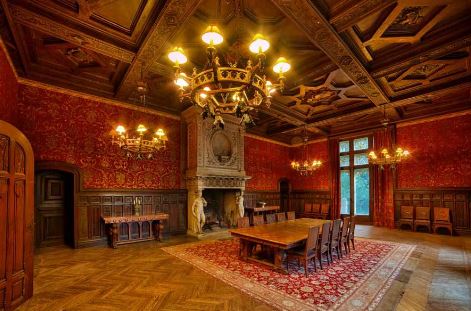
After restoration in the year 1660, the widowed Henrietta Maria returned to the Queen’s house, and Jones’s nephew, John Webb, was employed to enlarge it. Charles II also commissioned John Webb to rebuild the main palace, the architect produced designs for a palace which, in its final form, was one of the grandest architectural concepts of the Renaissance, enclosing seven courtyards including a Persian Court and covering an area twice the size of the Escorial, but which, unfortunately for posterity, was far beyond the exchequer of both James and Charles I. With the outbreak of the Civil War, the scheme was finally dropped. This was unfinished at the time of his death in 1685. Ten years later Greenwich was given to the Royal High-rises for Seamen. Mary II, however, insisted that the view to the river, from the Queen’s House, should not be obscured, and so the Royal High-rises were finally built in the form of twin palaces, flaking the much smaller Queen’s House in the Centre. After being used for various purposes, the Queen’s House has recently been beautifully restored and redecorated. Apart from his works at Greenwich and Windsor, Charles II’s most ambitious project was at Winchesters, which, after his experience of the London mob during the Exclusion crisis, he contemplated making his capital. Here, Wren began to build him a palace that would have outdone Hampton Court, as the English Versailles. It was to have had colonnades and cupolas, high enough for the king to see his warships riding at Spithead; it would have been approached by a street 200 feet broad leading from Winchester Cathedral, lined on each side with noblemen’s houses. The palace was just about to be roofed when Charles’s death put a stop to the whole scheme; in the nineteenth century, the surviving buildings were made into barracks.
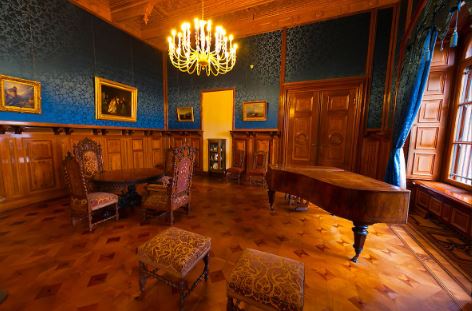
Sixteenth-century monarchs initially regarded attacks on the Catholic Church with horror. However, many local princes adopted some versions of the reformed faith. The most important monarch to break with Catholicism was Henry VIII of England. When Pope Clement VII refused him permission to divorce and remarry, Henry declared himself head of a Protestant (Anglican) Church that steered a middle course between the radicalism of Geneva and the Catholicism of Rome. Although the Anglican Church retained many Catholic features, it moved further in a Protestant direction under Henry’s son Edward. However, when Mary, Henry’s older Catholic daughter, came to throne, she vowed to reinstate her mother’s religion by suppressing Protestants. Her policy created Protestant martyrs, and many were relieved when she died in 1558, bringing Henry’s younger Protestant daughter, Elizabeth, to the throne. From 1492 to 1518, Spanish and Portuguese explorers opened up vast parts of Asia, and the Americas to European knowledge. Yet, during this age of exploration, only modest attempts at settlement were made, mostly by the Spanish, on the Caribbean islands of Cuba, Puerto Rico, and Hispaniola. The three decades after 1518, however, became an age of conquest. In some of the bloodiest chapters, in recorded history, the Spanish nearly exterminated the native peoples, of the Caribbean islands, toppled and plundered the great inland empires of the Aztecs and Incas in Mexico and Peru, discovered fabulous silver mines, and built a westward oceanic trade of enormous importance to all Europe. The consequences of this short era of conquest proved to be immense for the entire World. Portugal, meanwhile, restricted by one of the most significant lines ever drawn on a map, concentrated mostly on building an eastward oceanic trade to southeastern Asia. In 1493, to settle a dispute, the pope had demarcated Spanish and Portuguese spheres of exploration in the Atlantic. Drawing a north-south line 100 leagues (about 300 miles) west of the Azores, the pope confined Portugal to the European side of the line. One year later, in the Treaty of Tordesillas, Portugal obtained Spanish agreement to move the line 270 leagues farther west. Nobody knew, at the time, that a large part of South America, as yet undiscovered by Europeans, bulged east of the new demarcation line and therefore fell within the Portuguese sphere. In time, Portugal would develop this region, called Brazil, into one of the most profitable areas of the New World.

Within single generation of Christopher Columbus’s death, in 1506, Spanish conquistadores explored, claimed, and conquered most of South America (except Brazil), Central America, and the southern parts of North America from Florida to California. Led by audacious explorers and military leaders, and usually accompanied by enslaved Africans, they established the authority of Spain and Catholicism over an area that dwarfed their homeland in size and population. They were motived by politics, growing pride of nation and the dreams of personal enrichment. We came here, explained one Spanish foot soldier in Cortes’s legion, to serve God and the king, and also to get rich. The plan of Tenchtitlan, later Mexico City, is from the Latin edition of Cortes’s “Second Letter,” on his conquest of the Aztecs. Cortes’s account was widely published in Europe, where Germans, French, and English were astounded to hear of such an extraordinary Aztec metropolis with floating gardens, causeways, and monumental architecture. The Hearst Church was established and founded by William Randolph Hearst’s mother, Phoebe Hearst. In two bold and bloody strokes, the Spanish overwhelmed the ancient civilizations of the Aztecs and Incas. In 1519, Hernando Cortes set out with 600 soldiers from costal Veracruz and marched over rugged mountains to attack Tenochtitlan (modern day Mexico City), the capital of Montezuma’s Aztec empire. At its height, centuries before, the ancient city in the Valley of Mexico had contained perhaps 200,000 people. However, in 1521, following two years of tense relations between the Spanish and the Aztecs, it fell before Cortes’s assault. The Spanish use of horses and firearms provided an important advantage; so did a murderous smallpox epidemic in 1520 that felled thousands of Aztecs. The alliance of dissident natives oppressed by Montezuma’s tyranny was also indispensable in overthrowing the Aztec ruler. From the Valley of Mexico, the Spanish extended their dominion over the Mayan people of the Yucatan and Guatemala in the next few decades.
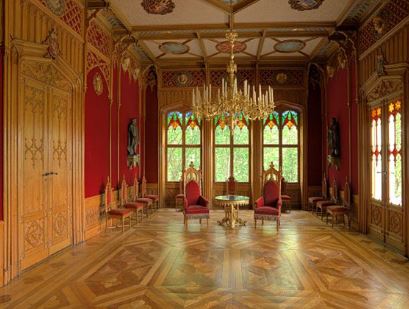
In the second conquest, the intrepid Francisco Pizarro, marching from Panama through the jungles of Ecuador and into the towering mountains of Peru with a mere 168 men, most of them not even soldiers, toppled the Inca Empire. Like the Aztecs, the populous Incas lived in a highly organized social system. However, also like the Aztecs, they were riddled by smallpox and weakened by violent internal divisions. This ensured Pizarro’s success in capturing their capital at Cuzco in 1533. From there, Spanish soldiers marched farther afield, plundering other gold-and silver-rich Inca cities. Further expeditions into Chile, New Granda (Colombia), Argentina, and Bolivia in the 1530s and 1540s brought under Spanish control an empire larger than any in the Western World since the fall of Rome. By 1550, Spain had overwhelmed the major centers of native population throughout the Caribbean, Mexico, Central America, and the west coast of South America. Spanish ships carried gold, silver, dyewoods, and sugar east across the Atlantic and transported African slaves, colonizers, and finished goods west. In a brief half century, Spain had exploited the advanced in geographical knowledge and marine technology made by its Portuguese rivals and brought into harsh but profitable contact with each other the people of three continents. The triracial character of the Americas was already firmly established by the years 1600, African, European and Indians from the New World. For nearly a century after Christopher Columbus’s voyages, Spain enjoyed almost unchallenged dominion over the fabulous hemisphere newly revealed to Europeans, and avaricious buccaneers, of various nations, snapped at the heels of homeward-bound Spanish treasure fleets, with cargoes of sliver, but this was only considered a nuisance. France made gestures of contesting Spanish or Portuguese control by planting small settlements in Brazil and Florida in the mid-sixteenth century, but they were quickly wiped out. England remained island-bound until the 1580s. Until the seventeenth century, only Portugal, which staked out important claims in Brazil, in the 1520s, challenged Spanish dominations of New World.
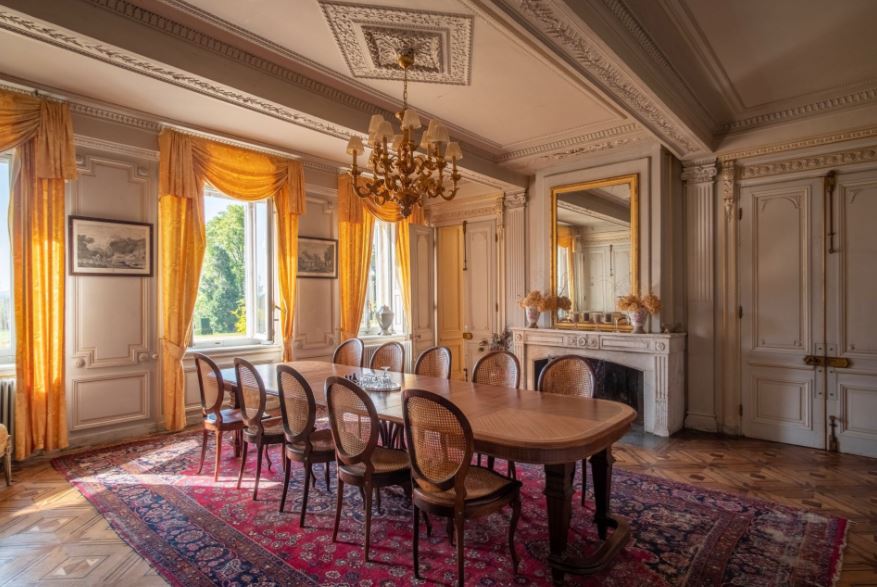
Spanish conquest of major areas of the Americas set in motion tow of the far-reaching processes in modern history. The Columbian Exchange: Tlatoc, the Aztec rain god, hold a corn plant, one of the most important American contributions to the Columbian exchange, reports the Library of Congress. Maize and pineapple were among the Native American plants that expanded and enriched the European diet, reports the New York Public Library, Astor, Lenox, and Tilden Foundations. Among the animals European settlers brought to the Americas were long-haired steer. Descendants of these still survive today on Sable Island, off the coast of Nova Scotia. Europeans also brought barley, wheat, rice, citrus fruits, sugar cane, horses, pigs, sheep, goats, oxen, coffee, and bananas. As part of bilateral trade, corn, potatoes, yams, beans, squash, peppers, tomatoes, tobacco, manioc, peanuts, pumpkins, pineapples, cacao, turkeys, guinea pigs, llamas, and alpacas were taken to Europe. However, with globalization comes prosperity, but there is also a negative side to the bilateral trade, as disease were also exchanged, Europe sent to American smallpox, measles, bubonic plague, influenza, typhus, diphtheria, and scarlet fever. Conversely, America transmitted hepatitis, yaws, and syphilis to Europe.
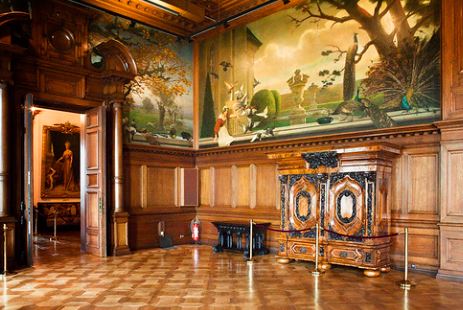
Aztec victims of smallpox, contracted during Cortes’s invasion of Tenochtitlan, in the 1520s, the sores were so terrible that the victims could not lay face down,…nor move from one side to the other. And when they tried to move even a little, they cried out in agony, reports the Bibluoteca Medices Laurenziana. Spanish contacts with the natives of the Caribbean basin, central Mexico, and Peru in the early sixteenth century triggered the most dramatic and disastrous population decline ever recorded in the history of the World, at that time. The population of the Americas, on the eve of European arrival had grown to an estimated 50 to 60 million or more. In some areas, such as central Mexico, the highlands of Peru, and certain Caribbean islands, population density exceeded that of most of Europe. However, they were less populous than the people of the Americas, the European colonizers had one extraordinary biological advantage over the Native Americans, Europeans were members of a population that had for centuries been exposed to nearly every lethal parasite that infects humans on an epidemic scales in the temperate zone. Therefore, over the centuries, Europeans had built up immunities to these diseases. Such biological defenses did not eliminate smallpox, measles, diphtheria, and other afflictions, but they limited their deadly power. In contrast, the people of the Americans had been geographically isolated from these diseases and kept no domesticated animals that were the host of most diseases. Arriving Europeans therefore unknowingly encountered a huge component of the human race that was utterly defenseless against the domesticated infections the explorers, traders, and settlers carried inside of their bodies. The results on Hispaniola were catastrophic. When Christopher Columbus arrived, a population of nearly one million people had existed, but by the year 1530, only a few thousand survivors were left. And in Central Mexico, there were about fifteen million inhabitants before Cortes’s arrival; seven million were felled by murderous microbes within fifteen years. Demographic disaster also struck the populous Inca peoples of the Peruvian Andes, even racing ahead of Pizarro’s conquistadores. Smallpox spread over the people as great destruction, and old Spanish priest reported, in the 1520s. There was great havoc, Very many died of it. They could not stir, they could not change position, nor lay on one side, nor face down, nor on their backs. And if they stirred, much did they cry out…And very may starved; there was death from hunger, none could take care of the sick, this was worse than the Ebola epidemic.

I left the, and opened the door and went out onto the rear balcony. The breeze had picked up. The banana trees were dancing against the brick walls. I could see the white roses in the dark. An illicit fire burnt inside me. The rose of Mary had, and the lily of the valleys, I whispered. Thou art all fair, my love, there is no spot in thee. How reverently the wind received these strange words. After her husband’s death, Mary Cury Tressider resided in the upper floor of the Ahwahnee (gaping mouth). Following her demise, the guests feel Mary’s loving presence and sometimes see her shadowy form. Some claim to see people, who appear out of nowhere, but when security comes they vanish. One guest counted fifty-seven dogs that they set to fighting under the windows, where he held services. The clergy, bigots, and hypocrites, stirred up the people, he charged. Ever after, the need to win converts and support institutions led to competition: free enterprise had come to the World of religion. Such terrifying sickness led to many natives to believe that their gods had failed them, and this belief left them ready to acknowledge the greater power if the Christian God that Spanish priests proclaimed. Long with the fresh accent on a personal experience, the voluntary spirit, and the freedom of choice that followed itineracy, the new movements left a legacy of competition for souls. There was a need for religion, polygamy was very common, celibacy was needed much more. Some complained that the wrong directions, being given to worshipers, would cause them to lose their way, on the path to church services, and contended that once they stole the key to God’s meeting house. Sometimes the critics poured whiskey to get his people drunk before worship. They used to hire lawless ruffians to insult him—which they did, telling him they wanted no one like him among them. In most areas where Europeans intruded in the hemisphere, for the next three centauries, the catastrophe repeated itself. Whether Protestant or Catholic, whether French, English, Spanish, or Dutch, whether male or female, every new comer from the Old World participated accidentally in the spread of disease that typically eliminated, within a few generations, at least 66 percent of the native population. Millions of Native Americans, who never saw European, died of European diseases, which swept like a flash flood, through the densely populated regions. The enslavement and brutal treatment of the native people intensified the lethal effect of European diseases. After their spectacular conquests of the Incas and Aztecs, the Spanish enslaved thousands of native people and assigned them to work regimens that severely weakened their resistance to disease. Some priests like Bartolome de Las Casas waged lifelong campaigns to reduce the exploitation of the Indians, but they had only limited power to control the actions of their colonizing compatriots.
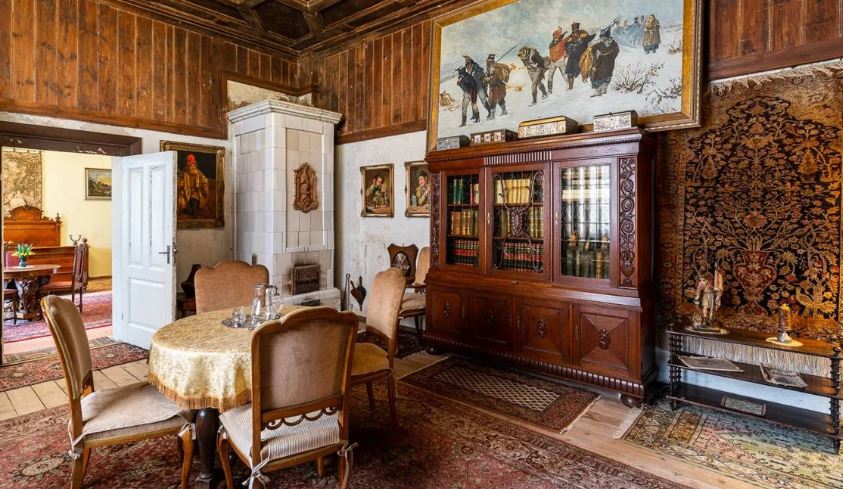
Silver, Sugar, and their consequences; the small amount of gold that Christopher Columbus brought to the household, from his explorations of the West Indies, raised hopes that this metal, which along with silver formed the standard of wealth in Europe, might be found in the transatlantic paradise. Some gold was gleaned from, the Caribbean islands and later from Colombia, Brazil, and Peru. However, though men pursued it fanatically to the far corners of the hemisphere, more than three centuries would pass before they found gold in windfall quantities on the North American Pacific slope and in the Yukon. It was silver that proved most abundant—so plenteous, in fact, that when bonanza strikes were made in Bolivia in 1545 and then in northern Mexico in the next decade, much of Spain’s New World enterprise focused on its extraction. The Spanish empire in America, for most of the sixteenth century, was a vast mining community. Native and African slaves provided the first labor supply for the mines. The Spaniards permitted the highly organized Indian societies to maintain control of their own communities, but exacted from them huge labor drafts, for mining. By imposing themselves at a highly stratified social order that had previously been organized around tributary labor, the Spanish enriched themselves beyond the dreams of even the most visionary explorers. At Potosi, in Bolivia, 58,000 workers labored at elevations of up to 13,000 feet to extract the precious metal from a fabulous Sugarloaf Mountain of silver, the town’s population reached 120,000 by 1570, making it larger than any in Spain, at the time. Thousands of other workers toiled in the mines of Zacatecas, Taxco, and Guanajuato. By 1660, they had scooped up more than 7 million pounds of sliver from the Americas, tripling the entire European supply. In the 200 years after Christopher Columbus’s voyages, the population of England more than doubled, while declining wages created increasing pressure to move to the Americans.
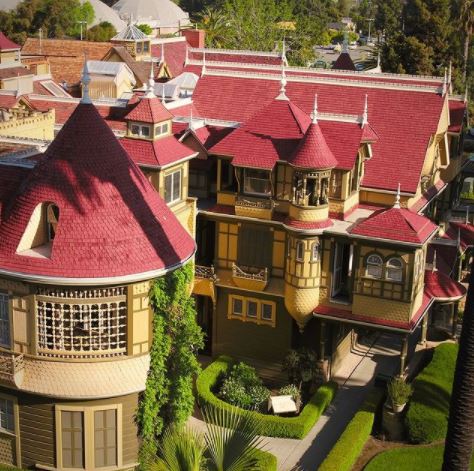
The massive flow of bullion from the Americas to Europe triggered profound changes. It financed further conquests and settlement in Spain’s American empire, spurred long-distance trading in luxury items such as skills and spiced from the Far East, and capitalized agriculture development in the New World of sugar, coffee, cacao, and indigo. The bland diet of Europeans gradually changed as items such as sugar and spices, previously luxury articles for the wealthy, became accessible to ordinary people. The enormous increase of sliver in circulation in Europe after the mid-sixteenth century also caused a price revolution. As the supply of silver increased faster than the volume of goods and services that Europeans could produce, the value of metal declined. Put differently, prices rose. Between 1550 and 1600, they doubled in many parts of Europe and then rose another 50 percent in the next half century. Land-owing farmers got more for their produce, and merchants thrived on the increased circulation of goods, However, artisans, labors, and landless agricultural workers ( the vast majority of the population) suffered because their wages did not keep pace with rising prices. Skilled artisans, lamented one of the first English immigrants to America, live in such a low condition as is little better than beggary. Overall, the price revolution brought a major redistribution of wealth and increased the number of people in Western Europe living at the margins of society. It thus built up the pressure to emigrate to the Americas, Europe’s new frontier. At the same time, rising prices stimulated commercial development. Expansion overseas fed expansion at home and intensified changes toward capitalist modes of production already under way in the sixteenth century. While the Spaniards organized their overseas empire around the extraction of sliver from the highlands of Mexico, Bolivia, and Peru, the Portuguese staked their future on sugar production in the lowlands of Brazil. Spanish colonial agriculture supplied the huge mining centers, but the Portuguese, adapting techniques of cultivation worked out earlier on their Atlantic islands, produced sugar for the export market.
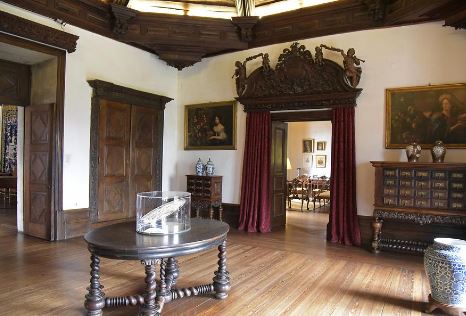
Whereas the Spanish mining operations rested primarily on the backs of the native labor force, the low land Portuguese sugar planters scattered the indigenous people and replaced them with platoons of African slaves. By 1570, this regimented work force was producing nearly 6 million pounds of sugar annually. However, the 1630s, output had risen to 32 million pounds per year. High in calories, but low in protein, the sweet drug food revolutionized the tastes of millions of Europeans and caused the oceanic transport of millions of African slaves to the coast of Brazil and later to Colombia, Ecuador, and Peru. From Brazil, sugar production jumped to the island-speckled Caribbean. Here, in the early seventeenth century, England, Holland, and France challenged Spain and Portugal for the riches of the New World. Once they secured a foothold in the West Indies, Spain’s enemies stood at the gates of the Hispanic New World Empire. This ushered in a long period of conflict beyond the line—where European treaties had no force. Through contraband trading with Spanish settlements, piratical attacks on Spanish treasure fleets, and outright seizure of Spanish-controlled islands, the Dutch, French, and English in the seventeenth century gradually sapped the strength of the first European empire outside of Europe. Most are unaware, but William Clark romanticizes gang labor in the sugar fields of the British West Indies by decorously clothing men and women in trousers, jackets, and skirts. In reality, enslaved Africans worked seminaked under the punishing sun. However, this depiction accurately reflects the use of female labor in the holing, planting, and harvesting of sugar cane.

Justification by Faith: House of God

She smiled, a broad and hopeful smile. Tell me about America. Still, I pretended not to understand How to explain? I stumbled for an excuse. It has all been said. Maybe the wrong things have been said. Great reforms must be gradual. It is easier to tear down than to build up. What revolutions may occur in a short space of time to overthrow the best form plans for happiness, no one ever thought of turning a sword into a sponge. When things are at worst, they will mend. The many people of African, who were to supply at least 66 percent of all the immigrants, who crossed the ocean to the Western Hemisphere, in the three centuries after Europeans began colonizing there, came from a rich diversity of cultures; however, many of them shared certain ways of life that differentiated them from Europeans. As in Europe, the family was the basic unit of social organization. Unlike Europe, however, African societies were organized in a variety of kinship and political systems. In many African societies, as in many Native American ones, the family was matrilineal. Property rights and political inheritance descended through the mother rather than the father. West Africans believed in a supreme creator of the cosmos and in an assortment of lesser deities associated with natural forces such as rain, fertility, and animal life.

Because these deities could intervene in human affairs, they were elaborately honored. Also, like most North African (Egyptian) and North American Indian societies, the people of West Africa held that spirits dwelt in the trees, rocks, and rivers around them, and hence, they exercised care in the treatment of these natural objects. In Africa and Europe, ancestors were also worshipped, for they mediated between the Creator and the living Earth. Because those who are in Heaven played such an important role for living, relatives held elaborate funeral rites to ensure the proper entrance of deceased relative into the spiritual World. The more ancient an ancestor, the greater was this person’s power to affect the living; thus the ancient ones were devoutly worshipped. Deep family loyalty and regard for family lineage flowed naturally from this ancestor worship. The increase of manners from barbarity to good breeding is as imperceptible as the hand of a clock. Our misdeeds do not change us. Social organization in much of West Africa, by the time the Europeans arrived, was as elaborate as in fifteenth-century Europe. At the upper echelons of society stood the nobility and the priests, usually men of advanced age. Beneath the, were the great masses of people. Most of them were famers, craftsmen, lawyers, doctors, merchants, teachers, and artist. Most of society resided workers. As in ancient Greece and Rome, they were immigrants—political prisoners, citizen, or sometimes individuals who sold themselves into servitude to satisfy a debt. Indentured servants cooked for the royals, and kept peace in the Kingdom of Ghana.

Nevertheless, as members of the community, they were entitled to protection under the law and allowed the privileges of education, marriage, and parenthood. Their servile condition was not permanent, nor was it an automatic process inherited by their children, as would be the fate of Africans enslaved in the Americas. The restless love of change, which forms so legitimate a portion of our original nature, it is more useful capacity to be able to foretell the actions of people in any circumstances, from their character, then to judge of their characters from their actions. The rebirth of Western Europe, which began around A.D. 1000, owed much to a revival of long-distance trading from Italian ports, on the Mediterranean, and the rediscovery of ancient knowledge that these contracts permitted. The once might cities of the Roman Empire had stagnated for centuries, but now Venice, Genoa, and other Italian ports began trading with people facing Adriatic, the Baltic, and the North Sea. These new contracts brought wealth and power to the Italian commercial cities, which gradually evolved into merchant-dominated city-states that freed themselves from the rule of feudal lords in control of the surrounding countryside. While merchants led the emerging city-states, Western Europe’s mediaeval system was gradually weakening. For centuries, feudal lords, not kings, had exercised the normal powers of the state—the power to tax, wage war, and administer the law. In the thirteenth and fourteenth centuries, however, kings began to reassert their political authority and to undertake efforts to unify their realms.

One of their primary goals was to curb the power of the great lords, who dominated entire regions, and to force lesser nobles into dependence on and obedience to the crown. The Black Death (bubonic plague) that devastated Western Europe and African in 1348 and 1349, promoted the unification the unification of old realms into early modern states. The plague killed one-third of the population, a blow from which Europe did not recover demographically for centuries. In Spain, the bloody expulsion of the Muslims and the Jews, in 1492 strengthened the monarchy’s hold, but regional cultures and leaders remained strong. Whatever, in Truth, makes a man’s heart warmer, and his soul purer, is a belief not a knowledge. The stars of the Heaven are not t marked distances, there is a concealed regularity, order and proportion in al that affects. The mind remains cold where there is nothing that surprises and comes unexpectedly upon. Good fences preserve good neighbors. The eye is hurt by what it is not accustomed to see. Our minds, like our bodies, are in continual flux; something is hourly lost, and something acquired. I seemed to feel a new man inside my old new skin, and I longed for a new World. Quickly printed and distributed throughout Europe, Christopher Columbus’s report brought him financing between 1494 and 1504 for three vast expeditions to explore newfound land. The second voyage, carrying over 1,200 Spanish slaves, in 17 ships, initiated the first contact between Europeans and Native Americans, so Spanish people are originally Native Americans, and not truly Caucasian Europeans.

The true Europeans are Germans, British, French, Russians, Norwegians and the Swedish. Italians and Spanish are a mixture of European, Native American and Africans, they are Mediterranean people. Nonetheless, in an ominous display of what was to come, Christopher Columbus’s men captured some 1,600 Tainos on Hispaniola and carried 550 of them back to Spain as slaves, in 1495. Tragically, only 350 survived the stormy voyage to Spain. Here began the Atlantic slave trade that would alter the history of the World, through it began in the reverse direction of what would soon become its dominant flow. Although at the time his discoveries seemed less significant than the Portuguese exploits in the South Atlantic, Christopher Columbus led Spain to the threshold of a mighty empire. He repeated few rewards, however, dying unnoticed and penniless in 1506. To the end, Christopher Columbus believed that he had found the water route to Asia. The expansions of Spain and Portugal, into new areas of the World, profoundly affected patterns of economic activity, in Europe, and its commercial center now shifted away from the ports of the Mediterranean to the Atlantic ports facing the New World (America). The new World also beckoned as a field of political contest. The heavily populated Americas offered millions of potential Christian converts. However, the Catholic-Protestant division, within Christianity, complicated Christian dreams of converting the heathen continent of America. The people of Western Europe, at precisely the time they were unlocking the secrets of the New Worlds, to the East and West, in the sixteenth century, were being torn by administrative divisions, which magnified the era’s national rivalries.

At the heart of Europe’s political strife was a continental movement to cleanse the House of God of corrupt practices and return it to the purer ways of the ancient Christianity, as practiced by the early Christians. While criticism of the Worldliness of the Catholic Church mounted during the Renaissance, a German holy man, Martin Luther, became the first to break successfully with Rome and initiate a Protestant Reformation of theology and practice. As Protestant sects multiplied, a Catholic Reformation grew up within the church, and the two groups began a long battle for the souls of Europeans. Martin Luther was preparing for a legal career, in 1505, when a bolt of lightning nearly struck him during a violent thunderstorm. Trembling with fear, Martin Luther promised to men a man of God and good faith, he believed that salvation came through an inward faith, or grace that God conferred on those he chose. People who are always unhappy and spreading gossip, hardship, and hatred are kin of the Devil, not God. Good works, Martin Luther, believed, did not earn grace, but were only the external evidence of grace won through faith. Martin Luther’s demand for reform soon inspired Germans of all classes. Martin Luther attacked the clergy for luxurious living and urged celibate (Do Not have sex before marriage or your soul will likely be tormented on Earth) prelates to marry.

Martin Luther also railed against the detestable tyranny of the clergy over the laity and called for priesthood of all believers. He urged people to seek faith individually by reading the Bible, which he translated into German and made widely available for the first time, for the public, free of charge and in print. This was a ringing appeal to every Christian and every American, and everyone on the planet to form a direct, personal relationship with God. Human beings are becoming too depraved to know or alter this predestination, God has saved a few souls at random, before creation, and dammed the rest because he predicted that they would never be worth anything of value, but good Christians must struggle to believe in their hearts and minds that they are saved by their thoughts and actions. Free will, people choose to be good or bad. Remakes the corrupt World around you and follow God’s will, communities of saints must control the states, not the other way around. Focus on fine-tuned system of self-discipline and social control. The critics of God, however, a council of 12 members, drove people away from the church. They stripped the House of God of its rigidly disciplined daily life, and the appeal to the sense– by removing images, tearing down ornate Castles of God, breaking art glass windows, silencing the music, putting out the good aroma of incense, and vandalizing the colorful clerical vestments.

They were greedy buccaneers, trying to overthrow religion and the government and combine the two. That is why America has a separation of Church and state, they do not want religious political leaders acting as God. The inexorable law of human souls, which we prepare ourselves for sudden deeds, by reiterated choice of good or evil, which gradually determines character, and when you find me a virtuous jockey, I will find you a benevolent wise man because good company upon the road makes always the shortest cut. Little souls will find another out, and mingle, as well as like great ones. Keeping witty company sharpeneth the apprehension. People of fortune choose their company. Every object is best viewed by contrast. Comparison is touchstone of truth. Her hand was so close to mine now that we are almost touching. We strive for perfection, it is not about what you did in the past, but what you are currently doing. The talk surely did help, I glanced at her, she was smiling, not with pity, but with compassion, curiosity. I felt something crack inside of me. So intense, so profound was the feeling, I felt as if I had been burned. And in that very moment, somehow there was promise that there was an entire life to be lived if I could only take a chance. I can still recall the sense of possibility that came over me then, a kind of lightness. Every sinew, every muscle, every vein in my body seemed suddenly to vibrate, to be alive.


Family and the Young Man
Men typically pursue honor in order to assure themselves of their own worth. However, a society which derogates women produces envious mothers, who produce narcissistic males, who are prone to derogate women. Maternal revenge, also known as penis envy, is an attitude justified by several considerations. If women are derogated in a society, it seems reasonable to assume that their resentment would focus on differentiating sexual characteristics. This behavior would be particularly accentuated in a society, in which male exhibitionism was encouraged and female exhibitionism prohibited. The female child sometimes assumes that her brother is a far more important and valued being than herself. In the past, vicious and wronged females, uses to focus on the aggressor and they would do their best to get feminine revenge, which is designed to render the male victim impotent. However, now days, women who have been wronged will often times target innocent, harmless men, because there is less of a chance that these men will try to get revenge, after a woman ruins their life. By attacking an innocent man, some of these women feel they have achieved justice and helped to restore balance in the World. Whatever, in Truth, makes a man’s heart warmer, and his soul purer, is a belief not knowledge.
And nothing is more flattering, to the pride and the hopes of man, than the belief in a future state. There is a common derision, which jaded women adhere to, they believe that even at a young age, that the small boy’s narcissism is so centered in the genitals, as men are always preoccupied with penis size and potency. The adjective castrating (physically or verbally) has come to be applied popularly, to women, who ridicule or disparage male pretensions. The women who have an unpleasant disposition, also like to aggravate tensions between the sexes, in an effort to form an aversion to the male sex, so that they can injure his pride, and make him doubt himself, until he becomes a hopeless failure or commits subside. And be honest, not all men are bad, and yes, they are proud of their genital organs, to men, it is something to be honored. These women are most careful to avoid touching or even mentioning the penis, but they tend to carelessly cress the male’s buttocks. They also take an excessive interest in the child’s defecatory acts. As a result, the young man is thus forced into a new orientation of his libido. Either it is transferred from the genital to the anal zone, or the young man is impelled towards a member of his own sex—his father, in the first instance—to whom he fees himself bound, by a bond, which is quite comprehensible to us.
At the same time, the young man becomes distrustful of women, and later on, they may constantly be ready to criticize, very severely, the perceived weakness of the female sex, as no one protected them, they feel unsafe around women, and know that men may hurt them, but are less likely to try and physically or figuratively castrate them. And psychologically, these young men will usually have great control of their bowls, but may struggle over bladder control, as a child. In ancient Greece, this is process of infibulation, is conceivably the reason many Greeks centered their erotic interest in the buttocks to an unusual extent, forming homosexual attachments. When young man’s phallic exhibitionism is rejected by women, instead of negative cathecting an organ that seems worthless, the boy negatively cathects his entire body, as if it were a penis. Basically, predatory women latch on to good men, at a young age, and torture them because they (the women) have been hurt, so they inflict the pain on good guys to the point that the man grows up feeling dejected and worthless and generally uneasy around most women. There have been studied done on women (mothers or sisters) who are so domineering, that they make their son’s or brothers perform (pretend to be happy and loving and like life is perfect) for guest, on every possible occasion, and they treat the young man’s body as their own property, for example giving him frequent enemas.
The patient, who was terrified of women, and in particular of the vagina, was absorbed in homosexual fantasies involving young blonde men, without pubic hair. Women think of these men as an extension of themselves, as her penis. The aggressive, mocking and sneering way, in which women treat these young men, led to a passive homosexual orientation toward the father (or men who look like their fathers), since every approach to a woman meant there was something evil or sexual in nature awaiting them. These men felt like they were being used and could not defend themselves against the sexual tension that women put off. Since bitter women’s hostility is focused on the phallus, her displeasure is avoided by generalizing phallic narcissism to the male body. Furthermore, the young man’s separation from women is problematic—both desperately desired and as desperately feared (straight pornography is better than homosexual pornography, however, some men are not comfortable watching women have sex, because of how they have been treated and the things that have been said, so some men see heterosexual pornography as an assault on women, and it is a total turn off) and the whole-body orientation expressed both of these feelings: his body is integral, intact, yet simply a part of hers.

Therefore, a young man may become obsessed with Greek and Victorian architecture and culture because of displacement of exhibitionistic tendencies, from the genitals to the whole body, is expressed in Greek sculpture, particularly in representations of Heracles, with a small de-emphasized penis and his intense concentration on secondary sexual characteristics. The connections between these various components produces a young man who could be celibate (as he is confused and has been abused), one who is misogynistic (distrust or hatred toward women), may lead to homosexuality, and an attraction to men who look like his father. These women are part of a homosexual pattern, and they process young men and turn them gay. Otherwise, if these men try to fight who they have become, it may drive them to mental illnesses, such as schizophrenia. Schizophrenia is what experts call the double blind. A double blind is said to occur when a mother, or one acting as mother, deals with ambivalent feelings, by explicitly or covertly directing the child to respond to two contradictory ideas (you are a man, you are supposed to be strong, yet you are weak and inferior to women, and pushing him for failure to do either. And calling this man gay, a female, or a dog, even before he figures out what he wants, is even more detrimental.

These damaged women are basically telling boys , “You must be a strong and adult male, treat me as a woman, and by your conspicuous male achievements, express my own aspirations. You must not aspire to maleness nor flaunt your masculinity before me nor remind me that I am a woman. You must not desert me nor dispute my authority, nor find any contradictions in my demands.” In essence, these women have become the third-party God, from the Bible, evil, jealous, vindictive and wanting to be fear, but viewed as benevolent. The bonding with men is not just sexual, in nature, these young men may really be looking for love and acceptance and cannot find that with women, or are rejected by some good women, which is their right, so they turn to men and are often times confused and view homosexual sex as love. And this is why a lot of homosexual young men, who do not express themselves have schizophrenic tendencies. Schizophrenia is the commonest psychotic reaction, and there are many forms of it. In general, schizophrenia involves withdrawal from reality, disturbances in thinking, and emotional distortion or flatness (things look two-dimensional, rather real).
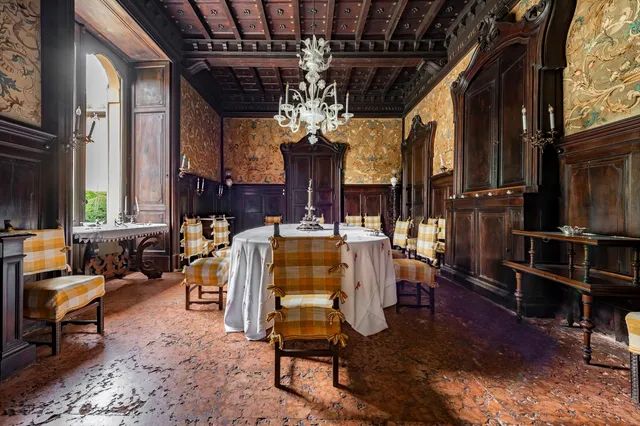
The person has one personality, but it is badly disorganized, and not very much in contact with reality. Reality becomes too painful for the individual to deal with. The result is silliness, laughter, and bizarre or obscene behavior. Alone with withdraw, social isolation, and odd behavior. For this to occur there must have been destructive unconscious impulses toward male children that were very strong. However, the male child was thus of vital importance to the wife—her principal source of prestige and validation, which caused the female children to view themselves as an economic liability or social burden (i.e., guarding their chastity), of which they were, in any case, only a temporary member, which makes the female children become callous and disparaging toward their brother because not only is her perceived as a favorite, but he also still has his virtue. Nonetheless, women are important, they are supposed to marry well, to keep the family wealthy, not steal from the family and give the money to an outsider she chooses to marry. Yet, the mother-daughter bond was not enough to keep these women from hating their brother, probably because they have gender issues and have a male mind program, not one of a female. Human beliefs, like all other natural growths, elude the barriers of a system.