
Home » Articles posted by Randolph Harris II International Institute (Page 303)
Author Archives: Randolph Harris II International Institute
Everybody getting High–I just Took some Molly, what Else?

Strength of mind is improvable; hence fortitude of the cerebral cortex differs more than endurance of body. The aggregate of mind is one thing and a distinguished brain another. Half a million children in the United States of America currently take antipsychotic drugs. Children from low-income families are four times as likely as privately insured children to receive antipsychotic medicines. These medications are often used to make abused and neglected children more tractable. Justin, the seventeen-year-old college student used to spend a great deal of his time alone and is terrified by his own hunger for connection. One morning while we were walking in the woods behind my house, he described his fear of engulfing other. He told me that somethings he thinks he could just gulp down any person he started to like. Just like gobble ‘em up, you know? It was a beautiful day, but Justin did not seem to notice the brilliant colors of the leaves on the path as he scuffed along beside me. #RyanPhillippe 1 of 5

I glanced at my unhappy young companion. He was lovely. His face was soft and vulnerable, like a runaway bunny, and he was oddly graceful. Justin grew up in a family where there was good reason to be afraid of swallowing someone whole. His mother suffered from severe depression. Justin had become increasingly horrified by the idea that he could be just like his mother, a woman whose terrible needs threatened to devour others. Justin was afraid he would never escape his mother’s hunger. He told me that he never invited other kids over to his house, he never knew if his mother would be friendly of if she would start crying in front of them and tell them to go outside so she could go back to sleep. The kids knew there was something wrong with her, so they did not really want to come to his house anyway. Over time, the shame Justin felt about his mother took her over so completely that she developed a pervasive sense of shame about herself. #RyanPhillippe 2 of 5

Justin practiced in the self-sabotaging patterns of distancing even though he was only seventeen years old. Although his behavior was not yet at the extreme end of the spectrum, he was driven to keep himself at an impenetrable distance from others. He was quick to tell me that it is safer to run away from others rather than face his own hungry ghosts. He hides from anyone who might become a potential partner. She told me that sometimes people tell him he is weird. Some of the kids in his building even call him “The Mystery Boy.” Justin illustrates the disappearing distance who suffers from fear, shame, and self-loathing, feelings that have propelled him into hiding. Spending a great deal of your tie alone becomes self-sabotaging when it keeps one from recognizing, deepening, and enjoying human connection. The habit of being alone, when generated by negative feelings towards others, can become a chronic condition of isolation. #RyanPhillippe 3 of 5

Cheerfulness depends as much on the state of things within, as without. The heart loves repose and the soul contemplation, but the mind requires action. In 2008, 19,045 children age five and under were prescribed antipsychotics through Medicaid. One study, based on Medicaid data in thirteen state, found that 12.4 percent of children in foster care received antipsychotics, compared with 1.4 percent of Medicaid-eligible children in general. These medications make children more manageable and less aggressive, but they also interfere with motivation, play, and curiosity, which are indispensable for maturing into a well-functioning and contributing member of society. Children who take them are also at risk of becoming morbidly obese and developing diabetes. Meanwhile, drug overdoses involving a combination of psychiatric and pain medications continue to rise. Isolation, in and of itself, is a by-product of distancing that creates its own problems. People in isolation lose confidence in their rightful place in human society. Feeling perpetually outside of life can cause you to feel rejected and defective. Over time, you may become increasingly fearful, resentful, anxious, depressed, or angry. #RyanPhillippe 4 of 5

Isolation is self-perpetuating. It is potentially lethal when it leads to extremes of depression and hopelessness and can take someone to the point of suicide. Someone like Justin, who never seems to initiate contact with others, is perceived as aloof, arrogant, or unfriendly. This in turn creates feelings of loneliness and defensiveness because there are two lives to each of us, gliding on at the same time, scarcely connected with each other—the life of our actions, the life of our minds. Because drugs have become so profitable, major medical journals rarely publish studies on nondrug treatments of mental health problems. Mainstream medicine is firmly committed to a better life through chemistry, and the fact that we can actually change our own physiology and inner equilibrium by means other than drugs is rarely considered. I am happy and complete, today and forever. Within me is that which is perfect and complete. It is the spirit of all life, truth, and action. I am happy in the certain knowledge of this inner light. I cannot be sad nor sorry, but must radiate joy and life for life is within me now. I am happy and complete. #RyanPhillippe 5 of 5


I Got Broads in Atlanta Twisting Dope, Lean, and the Fanta Credit Cards and Scammers

This is what y’all been waiting for, I guess so. This what they been waiting a long time for. Yes, he could not read into that farewell all that his heart craved to find there; he could even draw from it courage not to accuse himself for having failed to reach the height of his opportunity. He saw that all the conditions of life had conspired to keep them apart; since his very detachment from the external influences which swayed him had increased his spiritual fastidiousness, and made it more difficult for him to live and love uncritically. However, at least he had loved him—had been willing to stake his future on his faith in him—and if the moment had been rated to pass from them before they could seize it, he saw now that, for both, it had been saved whole out of the ruin of their lives. It was this moment of love, he knelt by the bed and bent over the body, draining their last moment to its lees; and in the silence there passed between them the word which made all clear.

All mental illness is not caused by chemical imbalance. Take for example a celebrity who people are allowed to extort, harass, and physical assault for decades without being stopped. He may display signs of a mental illness due to the attacks, but under normal conditions could be the picture of mental health. There is no medication you can take to make people obey the law, stop assaulting you and give your money back. Yet, the people who have been allowed to attack you face no repercussion. They are not punished for their dangerous and illegal behavior, no one talks about how it is deviant to make fun of people you know are suffering, injured or in need of help. They are not arrested, nor sent for mental evaluations. Nonetheless, for so many people to be doing all of this acting and clowning, you know they did something wrong and are trying desperately to set you off, and make it look like you are mentally ill to justify their behavior.
Unless these critics are trying to say that you are superhuman and controlling them and causing them to react because you are alive and should not be. Well, that would be indicative of a mental illness on their behavior and a violation of God’s law, granting humans free will. In other words, they are rejecting God and telling you that they are primal animals and savage beast, unable to control their emotions, and actions and therefore are not human. The drug revolution started out with so much promise and may in the end have done as much harm as good. The theory that mental illness is caused primarily by chemical imbalances in the brain can be corrected by specific drugs has become broadly accepted, by the media and the public as well as by the medical professions. Face it, people who are stuck whimpering and focusing daily on talking about defecation, and or that play with feces display traits of mental illness or howler monkeys and belong in a zoo or the bush in Africa.

In many places, drugs have displaced therapy and enabled patients to suppress their problems without addressing the underlying issues. Antidepressants can make all the difference in the World in helping with day-to-day functioning, and if it comes to a choice between taking a sleeping pill and drinking yourself into a stupor every night to get a few hours of sleep, it is uncertain which method is preferable. I do not like either because I fear taking a sleeping pill, like Lily in The House of Mirth, and never walking up again. We also hear stories about people going into a trance like state and operating heavy machinery and falling asleep, or having a psychotic episode and not really being aware of what they are doing or saying. Also, pills are not good for your liver, nor is liquor, and a person could drink themselves do death. So many people simply tough it out, but for some, medications can bring lifesaving relief. Selective Serotonin Reuptake Inhibitors (SSRIs) can be very helpful in making traumatized people less enslaved by their emotions, but they should only be considered adjuncts in their overall treatment.

Also, when it comes to Post Traumatic Stress Disorder (PTSD), I think that is a term, which can only be applied to veterans and law enforcement officers, because normal people are not in daily situations where they are hunted, shot at stabbed, dealing with explosive devices, seeing people killed, killing people, protecting more nor hearing violent and sad stories. The average person might be misdiagnosed with PTSD, but may only have a type of panic disorder or an extreme mood disorder. After conducting numerous studies of medications for PTSD, I have come to realize that psychiatric medications have a serious downside, as they may deflect attention from dealing with the underlying issues. The brain disease model takes control over people’s fate out of their own hands and puts doctors and insurance companies in charge of fixing their problems. And some people are just lazy and want a free taxpayer check and do not want to get better.

If a regular person has a mental condition and is taking medications to improve this condition and working, after seven years, they should have adapted enough to be able to obtain gainful employment. These people party, they drink, they do drugs like rockstars, but even after decades are unable to work, so they must suffer from some extreme brain injury, which inhibits them from functioning normally. Some people are taking out loans to pay for medical care and being their own doctors to fix themselves because due to their physical conditions, there is nothing the doctor can do to help them. Some are born with birth defects or have physical conditions, which take time to heal. Over the past three decades psychiatric medications have become a mainstay in our culture, with dubious consequences. If these drugs were truly effective as we are told to believe, depression should be a minor issue by now. Instead, even as antidepressant use continues to increase, it has not made a dent in hospital admissions or those collecting government benefits for depression.

In fact, the number of people treated for depression has tripled over the past twenty years, and one in ten Americans now take antidepressants. The new generation of antipsychotics, such as Abilify, Risperdal, Zyprexa, and Seroquel (Sarah Pills), are the top-selling drugs in the United States of America. In 2012 alone, the public spent in $1,526,228,000.00 ($1.5 Billion) on Abilify, more than on any other medication. Number three was Cymbalta, an antidepressant that sold well over a billion dollars’ worth of tablets, even though it has never been shown to be superior to older antidepressants like Prozac, for which much cheaper generics available. Medicaid, the government health program for the poor, spends more on antipsychotic medications, up from $1.65 million in 1999. Many people are wondering why are these people not getting better? Many people are not getting better because they do not want to. They want to collect Social Security from the government and stay home and be lazy.

If these people are suspected frauds, then why do we still pay them, why has the system for disability not been overhauled? Because it is no longer acceptable to test medications and treatments on animals. So many of these people that are collecting these Social Security checks for a mental disorder are being used as case studies to see how well medications work and then doctors and analysts use the information to publish books on mental disorders and medications. After all, nothing is free and the government is not stupid. The number of people under the age of twenty receiving Medicaid-funded prescriptions for antipsychotic drugs tripled between 1999 and 2008. On 4 November 2013, Johnson & Johnson agreed to pay more than $2.2 billion in criminal and civil fines to settle accusations that it had improperly promoted the antipsychotic drug Risperdal to older adults, children, and people with development disabilities. And doctors are also not being held accountable for prescribing them. Strong minds perceive that justice is the highest of the moral attributes; mercy is only the favorite of weak ones. Behold, all who are incensed against you shall be put to shame and confounded; those who strive against you shall be as nothing and perish. Panda, Panda.

The Day of Salvation is at Hand

Keep anger alive, lest it sink into compassion. All bodily racks and torments are nothing compared with certain states of human mind. An offense cannot be wiped out by an apology. If it could, we would substitute apologies for hangings. In vain does the unjust aspirer hope to cover his infamy with ill-got titles and the glare of pomp. The base groundwork is visible through all the tinseled outside. Since all human affairs are subject to organic disorder, since they are created in and sustained by a sort of half-disciplined chaos, he who in great things seeks success must never wait for smooth water, which never was and never will be, but, with what straggling method he can, dash with all his derangements at his derangements at his object, leaving the rest to fortune. See, all your angry enemies lie there, confused and humiliated. Anyone who opposes you will die and come to nothing. The day of salvation is at hand. #RyanPhillippe 1 of 5

All visible objects are but as pasteboard masks. However, in each event—in the living act, the undoubted deed—there, some unknown but still reasoning thing puts forth the mouldings of its features from behind the unreasoning mask. If man will strike, strike through the mask! How can the prisoner reach outside except by thrusting through the wall? Never will I give my hand where my heart does not accompany it. Words are wind; but deeds are mind. Life is discontent. Hope, which is one of our chief sources of enjoyment, is discontent, since it seeks that which it has not. Content is a sluggard, and should be a slave—a thing to eat and sleep, and perhaps to dream of eating and sleeping, but not a thing to live. Discontent is the life of enterprise, of achievement, of glory—ay even of affection. Without discontent—a serious and unsleeping discontent—life would be a stagnant stream as untroubled as the back water of the swamps of Edistoh, and as full of the vilest reptiles. #RyanPhillippe 2 of 5

No bond unites congenial hearts more firmly than that of a common great aim. If you meet each development of every question in the most natural and reasonable manner—presupposing that you possess that highest attribute of civilization, common sense—no question will ever resolve itself into a problem. And difficulties usually disappear as the range of vision contracts. Let us always have men ready to give the loving pains of a life to the faithful in representing of commonplace things—men who see beauty in these commonplace things, and delight in showing how kindly the light of Heaven falls on them. Because I utter commonplace words, you must not suppose I think only commonplace thoughts. The liberty of communication cannot be mine till it has lost all its value. Why have we the power of speech, but to communicate thoughts? #RyanPhillippe 3 of 5

Good heads and good hearts generally go together, but they are not inseparable companions. Life is full of the saddest and the strongest contrast. A companionable man will put up with many inconveniences for the sake of enjoying agreeable society. The wine cannot be bad where the company is agreeable. Occasionally, an exquisitely blissful energy, an Infinite Love, would suddenly begin to radiate from the heart toward the scene of some calamity. Once, while driving on a highway, this exquisite energy began to beam out of the chest. As the car rounded a bend, there was an auto accident; the wheels of the overturned care were still spinning. The energy passed with great intensity into the occupants of the car and then stopped of its own accord. Another time, while I was walking on the streets of a unique city, the energy started to flow down the block ahead and arrived at the scene of an incipient gang fight. The combatants fell back and began to laugh, and again, the energy stopped. #RyanPhillippe 4 of 5

Most people die of a sort of creeping common sense, and discover when it is too late that the only things one never regrets are one’s mistakes. If nobody was suffered to speak till he had something to say, what pains everybody would take to know something! The humblest painter of real life, if he could have his desire, would select a picturesque background for his figures; but events have an inexorable fashion of choosing their own landscape. No matter how far away I am from you and how many years before we meet again, I am always missing and blessing you in my heart. I can forget the unreturned fate, but I cannot forget your image and my love. I am free from belief in sin; there is neither sin nor sinner. There is no judgment against anyone. God does not condemn and man cannot. All fear of sin is removed from me; all belief in punishment is gone from me. I live by one power, and no thought can enter to disturb me. There is neither sin nor sinner. #RyanPhillippe 5 of 5


Imagined Security is the Forerunner of Destruction

Keep yourself to yourself. Not quite in a god temper? Take a little time—count five-and twenty. Our souls are not our own. We convey a property in them to those with whom we associate; but to what extent can never be known, until we feel the tug, the agony, or our abortive effort to resume an exclusive sway over ourselves. A man of few words speaks few in vain. Frequently do we labor to secure the things that debase us into slaves, and overwhelm us with calamity. Weak men, who, meddling with things too high for them, do suddenly fall into distractions; which distractions do not only unman men, but they run upon desperate ventures to obtain they know not what. Is it meet to think that a little child should handle Goliath as David did? Or that there should be the strength of an ex in a wren? There is something almost pathetic in the humbleness of a young man’s strength before the object of his first true love. It is the abasement of the real before the ideal; but if the ideal fails, the real takes vengeance of the man for having trodden it under. The strength of a king is the love and friendship of his people. Real strength never impairs beauty or harmony, but it often bestows it; and in everything impossibly beautiful, strength has much to do with magic. It requires much personal strength, standing alone against the well-armed batteries of all one’s friends. We can see strength and not simply weakness. That means we emphasize the active quality of the left hemisphere, but in a way quite different from the exaggerated over intellectualization and overachievement drive that have so characterized it in the past. We work with the intentionality that is basic to every person. To cope enhances one’s ability to survive.

There are dormant and hidden assets in every person and within each situation, needing only some kiss of awareness to be awakened and made know. I am not strong enough to put the whole World right, however, even in our weaknesses, we are still strong. Even Caesar’s fortune at one time was but a grand presentiment. We know what masquerade all development is, and what effective shapes may be disguised in helpless embryos. The World is full of hopeful analogies and handsome dubious eggs called possibilities. We can see people in process and not simply as finished products. Each experienced event both constitutes the effect of a configuration from the past and acts as a cause for further configuration in the future. Development and change are more fundamental than stasis and completion. Expectancy, the investing in and waiting upon that which lies ahead, influences the meaning and the management of every present. We have been imbued with “the breath of life” and thereby cannot be active in “our” World. Even in our arrivals, we are still on our way. What power is able to hold in chains a mind ardent and determined? What power can cause that man to die, whose whole soul commands him to continue to live? In battles there ought to be a doubtful fight and desperate end; in pleading a difficult entrance and a diffused determination; in love a life without hope and a death without fear. When provoked, the gentlest spirits are the most determined. It is natural for people, when they set their hearts upon anything, to think everybody must see with their eyes. When the journey lieth forward, it is unwise to look back. We can see places of caring and not merely individual needing care. The setting in which people interact are alive. They influence what does and does not happen. They predispose what can and cannot happen in those circumstances. Healing arises from within the system of interaction.

Poppin’ like a 40 in the Story, Baby!

Through tears, never did a man see his way through the dark. However, in the circle, even the most “wrong comment comes out “right.” In the circle there is no wrong way. In the circle there is just “your” way. Even more, in the circle one does not talk about what one does not know. No one feels much confidence in discussing ideas about which one is ignorant or crazy. Anyone can talk—and talk intelligently—about what he or she is interested in because one is an expert on that. One can talk about the chores one has to do at the house because one is an expert on that. One can talk about what one like to play because one is an expert on that. One knows one’s own name better than anyone else. One can be secure in saying what one knows. #RyanPhillippe 1 of 10

As one can say what one knows, one begins to experience a little more life space. And as one has more life space. And as one has more life space, one can allow others more life space. Collaboration replaces competition; inclusiveness takes over from exclusiveness. With more life space, each and all can begin to explore more of the unknown together and do it with excitement. If your destiny leads you to public life, and public station, you must expect to be subjected to temptations which other people are free from. Heaven knows we need never be ashamed of our tears, for they are rain upon the blinding dust of Earth, overlaying our hard hearts. #RyanPhillippe 2 of 10

However, involvement is never enough. In intense experiencing, the World can become irrational. We all love to instruct, though we can teach only what is not worth knowing. We may be flooded by too many stimuli from outside as well as from inside. Then we are overwhelmed, unable to make sense of what we see and feel, incapable of acting on what we want and need. Catharsis has limited value. Getting feelings out is seldom enough. That may be only a first step in gathering up oneself, for contacting undifferentiated data activates primarily the right hemisphere—the receptive side. To own that experience and to utilize that data we equally need the left hemisphere—the active side. #RyanPhillippe 3 of 10

Circle discussions emphasize critical thinking. They work on developing cognitive structure. Senior citizens are pressed to make discrimination and distinctions, to take stands on the basis of reasons and evidence, to figure out how to move into an unknown based on what one know of a known. One day Justin, the brightest senior citizen in the class, declared in a discussion on “superheroes” that “a superhero is one that can fly, that is strong, and does good.” The rest of the group went along with this definition, all, that is, except Jimmy, the brain-damaged senior citizen. He leaned forward in his chair. His forearms resting on his thighs, his eyes intently centering on Justin across the circle, and reacted: “I disagree. Ironman is s superhero and he does not fly.” #RyanPhillippe 4 of 10

Justin sat back in his chair, stunned. After a moment or two of reflecting, he replied, “You are right, I was wrong.” What Justin meant was not that he-as-a-person was wrong, but that his thinking had not been critical enough so that his definition was inadequate. Frustration with an immediate impasse need not be the end of a situation. Jimmy, so often reduced to feelings of being “dumb” and “ugly,” found that others had similar problems and that shared solutions could be found. Marty, so often exploding in important frustration and rage because of too heavy demands on his fragile ego structure, found he could gain recognition in ways that proved more satisfying both to himself and others. He also found that he had ideas that he wanted to talk about in the circle and that others were willing to talk about them with him. Quite unexpectedly, in the thirteenth week, Mrs. Kolk remarked “Why, Marty’s thinking!” #RyanPhillippe 5 of 10

Senior citizen learn that they can shape their World and not simply be molded by an environment. They can be active agents and not only receptive subjects. Beyond a minimum of factual information, what is really needed to make it in the World is a great capacity to imagine, to try out, to evaluate, to venture, to create, to collaborate. Problems confronting us are so complex that we need many vantage points and many alternatives and many values. Life without failure does not mean that no one every experiences limits and limitations. That would be cause for despair. Rather, it means there is no point at which one finds oneself boxed in a corner without options. #RyanPhillippe 6 of 10

In educational jargon, life without failure expresses the theological experiences of Exodus and Easter—liberation from whatever binds us to the past and terrifies us about the future. Somehow resources can be rearranged to enable people to recover breathing space. There are other ways; there are unimagined-at-the0moment alternatives; there are untapped resources within people and in settings. There is a “beyond” in the midst of the “building,” if we can see in other ways. #RyanPhillippe 7 of 10

The value of the circle discussion is seldom in any single meeting. Rarely does an issue or a problem or an idea stand out all by itself, unsupported by a gathering flow of events and experiences. The cumulative effect of sitting down, eye to eye, on an equal basis, talking about things one is interested in, thinking about ideas that are intriguing, pays off. People become more genuinely who they truly are. #RyanPhillippe 8 of 10

Significant involvement (being loved and loving) and satisfying behavior (self-respect and self-worth) transform human pain into human joy. That approach applies in the house and in an organization and in the community and around the World as well as in the building. It is adaptable to both a smaller setting and larger realm. I have given you a glimpse of a sequence of events that served as a turning point in my understanding of the task confronting those of us who would respond to human pain. In that senior citizen facility, with a dedicated yet demoralized teacher and a group of ordinary and anxious antiquated people, I discovered how too much stand and not enough maids and mops can be reconstructed in way that make for life. #RyanPhillippe 9 of 10
I guess if you killed someone’s family member and took their money, you would try to conceal that anyway you would. Based on that building and drawing upon similar experiences, let me set down explicitly what I regard as a different way to see and a different way of seeing this situation. You all are attacking and bullying someone to cover up a murder and have no idea what you are involved in. Sure, calling someone a dog, girl, and spreading vicious rumors about his heir might be fun, but maybe you should obey the law and really think about what you are now involved in. It might be a fun game to you, but your actions are pure evil. They killed a veteran to get his money, and are attacking his family to cover it up, did you know that? #RyanPhillippe 10 of 10

Silence is Golden, Unless you have Children, then it is Suspicious

In my re-view of that situation, at the out of control senior citizen facility, I began seeing the facility instead of the individual seniors as the foreground. It was the pattern more than the parts. I began seeing human strength instead of damaging weaknesses as the foreground. It was the health of the people more than the hurt that could emerge. I began seeing consultation instead of treatment service as the foreground. It was Mrs. Kolk’s job more than my job. I now saw delightful sand and a proper mop and an adequate maid instead of a muddy mess and a scarcity of mops and maids. #RyanPhillippe 1 of 12

What was my new tool for this different task? How would we act differently now that we saw differently? We proceeded to arrange the senior citizens in a circle (on their chairs in the middle of the dayroom) for the last fifteen minutes of the day. The purpose: to talk together, to become more directly involved with each other as a group and as individuals, to listen to others as well as to speak oneself, to think critically, to make learning sensible by relating what was going on inside of the senior facility with what one was experiencing outside the building. #RyanPhillippe 2 of 12

Teachers often tell me, “I always have discussion with my students. What is so different about what you are proposing?” What I contend and what they fail to realize is that there are discussions and discussions. To sit in a circle is usually the first and basic difference. In the circle, everyone is on the same level and everyone can see everyone else equally well. The built-in barriers of some being higher and others lower, or some taking in more and others taking in less, are eliminated. A second crucial difference lies in the rules or logic of the discussion. Most discussions are based on the premise that there are right and wrong answers: either what you say is true or false. Circle discussion are predicated on the assumption that there are no right nor wrong answers. #RyanPhillippe 3 of 12
In the circle one is free from feeling foolish. This does not mean that one can be foolish or silly or dumb. Rather it means that one has one’s own opinions, one’s own hunches, one’s own experiences, one’s own imagining. One can identify where one is without having to be somewhere else. There are other rules for a circle meeting. Each of them is really a variation of the basic one of respecting each other and oneself. Senior citizens tend to elaborate on the rules, as people of all ages have developed commandments with their own supplementary commentary. One person talks at a time. We listen to each other. One senior came up with do not go to the bathroom in the circle meeting. He was getting the sense of attending to others at special times. #RyanPhillippe 4 of 12

Mrs. Kolk and I started circle discussions with her seniors. To give her some idea of the process, I led the first few. Soon we were alternating regularly. I would take two a week; she three. This went on for six months and some ninety meetings. At first the senior citizen man who had been throwing over throwing over tables and chairs and slamming the gate at 3am continued to do so. We would have to pick him up (literally, at times) and remove him from the circle. Occasionally, he would stay outside the door until the meeting was over. Other times we would have to take him to the office. As the weeks passed, he stayed in the circle for longer periods. When he did act up, we would day, “That is it, Jimmy. You are saying you do not want to be in the circle today. You have to leave now. We will try again tomorrow.” #RyanPhillippe 5 of 12

In setting limits, we were respecting the situation ourselves, and Jimmy. He could not handle the demands of that moment. We were saying he had made a choice—by his behavior—as to what he wanted. We were following through in a logical and dependable manner on what was understood ahead of time: if you act up, and keep everyone up all night light, slamming the gates, banging on the windows and talking to yourself outside at 3am, you cannot remain in the circle. Jimmy, thus, could experience the consequences of his choices. Yet, today’s consequences never needed inevitably to be tomorrow’s consequences. Each day was, in truth, a new day. #RyanPhilippe 6 of 12
Gradually, Jimmy began to talk in circle. He also began to listen. He had things he wanted to discuss. He had ideas he wanted to share. The class talked about all kinds of things: monsters and motor cars, which senior men revel in; horses, with which senior women are fascinated. We also talked about problems: throwing spit balls, fighting, coming in late, talking loudly after 9pm, knocking on doors, and opening the door, and taking out their rubbish regularly. Karen kept letting her trash overflow, until she got roaches. One day the facility took that as “the building’s” problem and not simply Karen’s.” #RyanPhillippe 7 of 12

“What is the problem?” I asked.
“Karen keeps letting her rubbish over flow and attracting roaches. There are roaches everywhere like someone forgot to take the trash out.”
“It is not my fault,” Karen protested. “People keep sliding roaches under my door.”
We were shifting from the isolated individual to a systemic interaction. #RyanPhillippe 8 of 12

“Well, what can we do about it?” I responded. “You know these roaches are not just Karen’s problem. It is a problem for all of us.”
“Call pest control and maybe someone can offer to take out the trash for Karen every day.”
“If we find any roaches on the floor, we can spray them.” #RyanPhillippe 9 of 12

Such a process combines those two basic qualities of responding: namely, caring and cognitive development. The seniors experienced themselves being attended to: they mattered, they were noticed, they were known. Equally, they found they were respected: their idea, their needs, their experiences were taken seriously and thoughtfully. #RyanPhillippe 10 of 12

As a teacher, Mrs. Kolk did not have time to give that kind of attention to twenty-six different senior citizens in isolation from each other. The presence of seven disrupting senior citizens only compounded the predicament. Most of the day, teachers must teach subject matter, even though they try to respond to individual senior citizen. However, in a circle, in ten minutes one can attend to twenty-six individuals in such a way that they each feel and know one’s attentiveness. Out of doing that day after day, the senior citizens come to know that the teacher knows they are there simply as themselves without demand, without evaluation, without qualification. #RyanPhillippe 11 of 12

Motivation means involvement. As we become involved with each other and with tasks at hand, traction comes. Life moves with more satisfaction and more significance. The World can be divided into two groups: those who are making it and those who are not; the successes and the failures. Those who experience themselves as failures hesitate and resist involvement. If they let themselves be seen—by gesture or comment—they fear that even the right thoughts and the right deeds will somehow come out wrong for them. #RyanPhillippe 12 of 12

These Old Folks is Out of Control!
It began quietly enough. I had just finished speaking to a senior citizen facility about rest and relaxation when the first question came: “What has your experience been with senior citizens?” I had had none, expect for teaching a group of antiquated people at church, and my grandparents. However, I know that senior citizens have worked all of their lives and many of them like peace and quiet and sometimes are in pain and some sleep during the day, or go to bed early. They are a great resource, but also a vulnerable segment of the population and deserve respect and the ability to rest and feel safe and secure in the houses. #RyanPhillippe 1 of 5
Shortly afterward, a former teacher of one of my children came to tea. She gave me the impression of being a strong and capable person. My sons had both been in her class and we were more than pleased with their competence and creativity. After fourteen years, Mrs. Kolk was a seasoned teacher. With the tea, she started unburdening. Her classes had changed. This year she no longer felt sure. In fact, she was experiencing acute demoralization, which means she was basically experiencing complicated grief. In her new class of twenty-six, the demographics has changed, she went from teaching children to educating senior citizens on living a healthy lifestyle. #RyanPhillippe 2 of 5

Out of her twenty-six golden and sliver students, there were seven who exhibited clearly identifiable behavior problems calling for immediate professional help. There were women throwing over desks and chairs, kicking and choking and spitting and hitting. There was a woman who came in each day, pushed her electronic wheel chair up to the gate and would holler and scream like she lost her mind. There was a brain damaged man in an electronic wheel chair, who would mumble unintelligibly, crack open a can or five of beer and listen to Whitney Huston loudly. There was another man, who would wake up at 2am in the morning and run in and out of the gate for 45 minutes and knock on the glass doors and talk to himself on the curb so that no one in the senior center could sleep for five months. #RyanPhillippe 3 of 5

More than 30 percent of her pupils, and certainly she herself, were in need of direct attention. Under the sand and mop and maid view I would have said, “Mrs. Kolk, maybe it would help if you were to get into therapy a couple of times a week or into a group to try to deal with your problems. Also, you ought to refer those seniors to the county mental health team for individual treatment.” Under a hammer approach, looking for nails to pound, I could have come up with seven seniors for individual treatment, if the psychologist or social worker had any time in his or her one-day-a-week at that school, and Mrs. Kolk as a candidate for intensive psychotherapy at most or group therapy at least. #RyanPhillippe 4 of 5

The time invested in that classroom under the previous view could be close to ten to twelve hours per week for a long time. By seeing so much sand and so few mops and even fewer minds—deficits, pathology, problems, isolated individual, sickness—the task would be too much, too trying, too impossible even to begin. Fortunately, this was a period in my life when the re-viewing was coming. So I said to Mrs. Kolk, “You know, I have a problem as a result of my talk to that facility. I need some experience with senior citizens. And you have a need. You need some help to cope with what is happening. Let me come into your classroom with you for the last twenty minutes of the day, for the next six weeks, and see what we can do.” (Truly, we both believe—in retrospect—that God led us to each other.) #RyanPhillippe 5 of 5

The Purchase of Friendship—Soul of Mine Look and See

I will listen for that voice of God and it will tell me of life, love, and unity. We live in a pluralistic culture. Every individual and every institution participated in the World in a different way. These differences of perceived experience, understood events and intended function must be taken into account in coping with the crises of our time. People who come seeking help make up only a tiny tip of the iceberg showing itself above the ocean of human suffering. Below the surface, out of sight—invisible to ordinary viewing—are the lonely, the lost, the unfeeling, the cut off, the crippled, the alienated. There is simply too much sand—sand and sand and sand, everywhere—stretching on and on and one. #RyanPhillippe 1 of 12
Time, tragedy, and turmoil has taken as sane has proved to be crazy; crazy in the sense that assumptions are unstable, reason is chaotic, emotions are eruptive, behavior is reactive, consequences are destructive. Our whole society is sick and desperately in need of healing. Only 15 to 20 percent of populations studied were relatively free of crippling psychological difficulties. Original sins abounds! Too much sand. Not enough mops. Even as needs are overwhelming, resources are inadequate. Conservative calculations suggests that the need for mental health helping outstrips formally measured demand by a factor of at least several hundred percent. #RyanPhillippe 2 of 12

We lack both maids and mops! The people who are really helped tend to be all of a pattern. The kind of people we respond to most often and most attentively: the young, the attractive, the verbal, the intelligent, the successful. These are the ones we help, yet these are precisely the ones who have enough resources to make it somehow whether we specifically respond or not. In contrast, those who are elderly, unattractive, tongue-tied, unable to score well on standardized school exams, skilled with hands and feet instead of books and mouths—these are the people who tend not to be the recipients of helping attentiveness. #RyanPhillippe 3 of 12

While I have been politically alert through the years, I have also tended to be more spectator than participant. The larger problems loomed so large and my own resources looked so limited. I am finding that in many cases effective help for the individual can come only when the system of which the individual is part of can be changed. Our understanding of abnormal psychology has undergone and is undergoing basic change. Problems have been increasingly defined in broader and broader ways: from the organic roots to intrapsychic dynamics to interpersonal interaction to systemic dysfunctioning, the scope of abnormality has grown. #RyanPhillippe 4 of 12

Whereas people previously saw only the disturbed individual, as in the encounter of Jesus with the demon-possessed man in Gerasenes, now we are seeing the disturbing setting in which such an individual lies and moves as has his or her being, namely, the marriage, the family, the neighborhood, the school, the organization, the community, the nation, the culture, the whole World. With so much sand, no wonder there are too few mops and not enough maids. #RyanPhillippe 5 of 12

If the only tool you have is a hammer, you tend to treat everything as if it were a nail. Not dissimilarly, we in the helping professions have tended to view human crises primarily in individual terms. In some instances, we have simply put on blinders, shutting out the larger context of pain and the deep sources of disruption. Much of the failure to cope effectively with these social and cultural crises must be attributed more to the nature of our institutions and approaches than to the attitudes and activities of isolated individuals. #RyanPhillippe 6 of 12

We are being compelled to expand our concerns to reckoning with settings as well as selected individuals. We are being called upon to enlarge our goals to enhancing human potential as we as repairing human damage. In this time of transition, we need different perceptual tools, more varied problem-solving skills, and a more inclusive vision of values. Basically, if we are to respond to full human hurt, we must see differently and act differently. By looking at a concrete solution, I may be able to convey to you the substance of the re-viewing I am calling for. #RyanPhillippe 7 of 12

It is this situation in which sand and mops and maids became transformed for me from a confused and overwhelming muddy mess into a clearer and more manageable creative task. We block receiving what we want from others by our expectations or resentments of them. It is very effective to surrender our expectations of others before we enter into a particular situation with them. Emotions are really subtle attempts to force others and impose our will on them, which they unconsciously resist. #RyanPhillippe 8 of 12

The way to facilitate satisfaction in relationships is lovingly to picture the best possible outcome. Make sure it is mutually beneficial. Let of of all the negative feelings and merely hold the picture in mind. We can tell if we are really surrendered when we feel okay either way; it is okay with us if it happens, and it is okay with us if it does not. Therefore, to be surrendered does not mean to be passive. It is being active in a good way. There is no longer a pressure of time. Frustration comes from wanting a thing now instead of letting it happen naturally in its own time. #RyanPhillippe 9 of 12

Patience is an automatic side effect of letting go, and we know how easy it is to get along with patient people. Notice that patient people usually get what they want in the end. One resistance to letting fo is the illusion that, if we let go of our wantingness and our expectation, we will not get what we want. We fear that we will lose it if we do not keep pressuring for it. The mind has the idea that the way to get a thing is to want it. Actually, if we examine the issue, we will see that events are due to decisions, and choices are based on our intentions. What we get is the result of these choices, even though they are unconscious, rather than what we think we want. #RyanPhillippe 10 of 12

When we surrender the pressure of wantingness, we are clear to make wiser choices and decisions. We think that our happiness depends on controlling events, and that facts are what upset us. Actually, it is our feelings and thoughts about these facts that are the real cause of our upset. Facts in and of themselves are neutral things. The power we give them is due to our attitude of acceptance or non-acceptance and our overall feeling state. If we get stuck in a feeling, it is because we still secretly believe that it will accomplish something for us. The implications for traumatized people were obvious. A patient with a horrendous history of childhood abuse, who was now struggling with bulimia—basically spent much of his life bingeing and purging. #RyanPhillippe 11 of 12

I gave the bulimic patient a prescription for fluoxetine on Monday, and by Thursday he said, “I have had a very different last few days: I ate when I was hungry, and the rest of the time I did my schoolwork. I am now able to create good memories. You have a drug that helps people to be in the present, instead of being locked in the past.” This was one of the most dramatic statements I had ever heard in my office. Maybe this reward is only the attention I paid to him, the opportunity to respond to questions about how he feels and thinks, but maybe a hug that soothed his childhood heartache was just a placebo as well. I doubt it. Prozac (fluoxetine) worked significantly well. However, on combat veterans, Prozac had no effect at all—their PTSD symptoms were unchanged. #RyanPhillipe 12 of 12

Peace Steals through the Waiting Soul
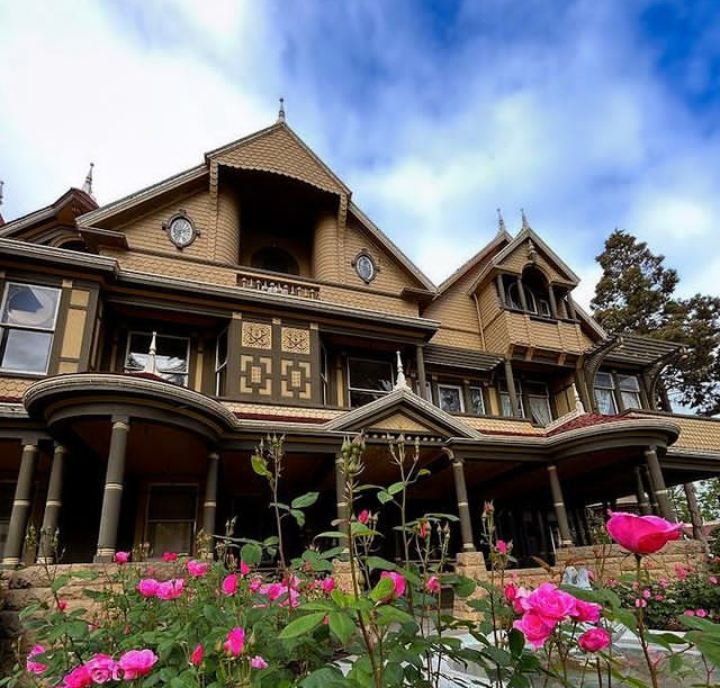
Joy has come to live with me. How can I be sad? Happy people tend to have an elevated level of status in the community because they display a picture of mental health. Also, when you are able to brush off negative energy, or not let it ruin your day, even if you have a stern personality, it elevates your status in the social environment. Those who like to hurt others and bully, even if they do not realize it are annoying and looked down upon. After a traumatic event, many individuals experience distress and symptoms of Post-traumatic Stress Disorder (PTSD). This distress may be highest when dealing with memories, thoughts, feelings, and situations that are related to the trauma. Exposure therapy is a type of treatment that helps one decrease distress about their trauma. This treatment works by helping one approach trauma related thoughts, feelings, and situations that one has been trying to avoid due to the distress that they case. Repeated exposure to these thoughts, feelings, and situations helps reduce the power they have to cause distress.
It has been proven that strong emotions can block pain. And that is why sometimes when people are weak and not feeling well, if you upset them, the rage in their bodies will overcome the pain and suddenly they become strong. This also suggests that for many traumatized people, reexposure to stress might provide a similar relief from anxiety. It is kind of like exposure therapy, people may try to hurt you over and over by exposing you to painful memories, like reminding you of a death of a loved one, or making fun of your energies, but after they do it so much you build up a resistance to the stimuli and overcome it, so they lose their control over you. It is the body’s natural way of protecting itself. Kind of like when people insult you frequently or act strange around you, eventually you build up a resistance and ignore it because the body takes sudden and drastic measure to solve an intractable problem.
In order to benefit from prolonged exposure, it is helpful to learn about the common reactions to PTSD. Education allows you to learn more about your symptoms and understand the goals of treatment. It really helps a person to understand why they feel nervous or uneasy, and learn not to run from problems when there is no real threat. Also, one must learn to control their breathing, often times when we become upset we have breathing problems, but must take deep breathes in, through our nose, hold them for a few seconds and release them through our mouth, until are muscles are relaxed. Also, real World practice is helpful. Practice approaching situations that are safe, but which you have been avoiding because they are related to the trauma. An example might be someone who avoids driving because they were in a bad accident. It is suggested to drive when there is less traffic on the road, until you become comfortable again.
In the same way, people wonder why some are celibate. Some do this to protect their bodies, others become they are a sexual trauma survivor and they may avoid getting close to others. So they may start off by just being in close proximity to others, and until they meet someone they vibe with and feel that they can trust. Sometimes talking about trauma over and over with a therapist is called imaginal exposure. Imaginal exposure will usually help one gets more control of their thoughts and feelings of the trauma. Over time, an individual will learn that they do not have to be afraid of their memories. It may be hard at first and it might seem unusual to think about stressful things on purpose. The ideal is to help one make sense of what happened and have fewer negative thoughts about. For instance, people may make fun of you for getting injured and losing a lot of blood and make jokes about you have a period, when it was actually from a traumatic injure. The more you hear it, the more you let go, and you make even make jokes about it to remove the stigma and let them know they are not bothering you. It also shows them how ignorant they are.
The amygdala is a cluster of brain cells that determines whether a sound, image, or body sensation is perceived as a threat. The higher one’s serotonin levels are, the less likely you are to feel fear, which will make you less likely to become aggressive or frozen in response to potential threats. So if you are suffering from trauma, it is important to do healthy things that please you like smelling the roses, getting exercise, or listening to soft music. This will stimulate the serotonin levels in your brain, naturally, and make you feel more at ease without medication. And that is why some people find walks in the park so pleasant. The social environment interacts with brain chemistry and just being around other people and making eye contact with them has been proven to increase serotonin levels. However, when people are manipulated into a lower position in the dominance hierarchy, it makes their serotonin levels drop. In contrast, chemically enhancing serotonin levels has been shown to elevate the rank of former subordinates. I am at peace and rest in the knowledge of love and the divine.

The Compulsion to Repeat
Sometimes people who have been exposed to somebody (or something) who had inflicted terrible harm on them—harm they have no way of escaping from lose hope because they have been trapped or immobilized, unable to take action to stave off the inevitable. The mere opportunity to escape does not necessarily make traumatized people take the road to freedom. Many traumatized people simply give up rather than experimenting with new options, they stay stuck in the fear they know. #RyanPhillippe 1 of 7

They may realize that they do not have enough money to escape or somehow believe that their problems will follow them and they will be worse off. Traumatized people secreted much larger amounts of stress hormones, called cortisol, than is normal, and they keep secreting large amounts of stress hormones long after the actual danger has passed. Which may indicate that it takes a while to recover from extreme trauma because the body and mind are still in shock, and it wreaks havoc with their health. #RyanPhillippe 2 of 7

Some studies have shown that traumatized people may be condemned to seek refuge in what is familiar. However, is it possible to help people become attached to places and activities that are safe and pleasurable? A sixteen-year-old called Jenny was brutally raped at gunpoint in a hotel room at age sixteen. Shortly thereafter, she got involved with a violent pimp who prostituted her. Finally, her grandparents intervened and paid for an intense rehab program. #RyanPhillippe 3 of 7

After she successfully completed inpatient treatment, she started working as a receptionist and taking courses at a local college. In her sociology class she wrote a term paper about the liberating possibilities of prostitution, for which she read the memories of serval famous prostitutes. A brief relationship with a classmate quickly went sour—he bored her to tears, she said, and she was repelled by his boxer shorts. Jenny then picked up an addict on the lightrail who first beat her up and then started to stalk her. She finally became motivated to return to treatment when she was once again severely beaten. #RyanPhillippe 4 of 7

SECRETS AND LIES
Reenactments are an unconscious attempt to get control over painful situations and that they could eventually lead to mastery and resolution. There is no evidence for that theory—repetition leads only to further pain and self-hatred. In fact, even reliving the trauma repeatedly in therapy may reinforce preoccupation fixation. Normally attractors are meant to make us feel better. So, why are so many people attracted to dangerous painful situations? #RyanPhillippe 5 of 7
Well, the body learns to adjust to all sorts of stimuli. We may get hooked on recreational drugs because they right away make us feel so good, but activities like sauna bathing, marathon running, or parachute jumping, which initially cause discomfort and even terror, can officially become very enjoyable. This gradual adjustment signals that a new chemical balance has been established within the body, so that marathon runners, say, get a sense of well-being and exhilaration from pushing their bodies to the limit. #RyanPhillippe 6 of 7

At this point, just as with drug addiction, we start to crave the activity and experience withdrawal when it is not available. In the long run people become more preoccupied with the pain of withdrawal than the activity itself. This theory could explain why some people hire someone to beat them, or burn themselves with cigarettes, or even why they are only attracted to people who hurt them. Fear and aversion, in some perverse way, can be transformed into pleasure. #RyanPhillippe 7 of 7


