
Home » Articles posted by Randolph Harris II International Institute (Page 287)
Author Archives: Randolph Harris II International Institute

And Just What Crazy Half-Illuminated Afterlife are You from?!

With half-baked mystical promises, every man’s work, pursued steadily, tends to become an end in itself, and so to bridge over the loveless chasms of life. Each day, the wire services that provide news capsules for all media—from radio to the Internet—detail stories of bureaucratic waste, inefficiency, and corruption. Television news magazines like 60 Minutes and Nightline virtually depend on these stories for their popularity and high ratings, as do late-night television comics, newspapers, and magazines. In terms of challenges to government and the establishment in general, however. The mass media cannot compare to the diverse voices and opinions on the Internet or those associated with interactive television, cellular phones, and other evolving media. For example, we do not have bloggers creating their own forms of news and in two short years, Randolph Harris Research and Development has written more articles than journalist, who have been in the business for 40 years, which might be generating some animosity from seasoned jerkenheads. The news of the day is commonly a lie, and that lie a stupid one: somebody in, somebody out, a new chariot, a new play, a hand at quadrille descried to a pip.

This is the most dangerous game. When you can turn to light, do not make this darkness your house. Do not you wander here searching and moaning. Many media scholars believe that the techomedia are radically altering virtually all groups and organizations Worldwide. Technopagans, a term coined by Anne Rice, are creating endless clusters of new and very valuable groups with some common intense commercially exploitable interest. It is clear that the technomedia and techonopagans have enabled many marginalized groups—those based on ethnicity, gender, age, disability, religion, and sexual orientation, as well as low-income nations (the politically correct term for third World country)—to vice their perspectives, learn about the ideas and concerns of others, and instantaneously communicate with legions of people across this beautiful Earth. Some technopagans and scholars contend that the technomedia has brought even greater changes to bureaucracies. With the help of the new media, debureaucratization of the unreality that TV and newspapers play in the dissemination of fostering lies and trauma for entertainment will proceed at an accelerate rate in this century, to the point that virtually all news bureaucracies will become smaller and more manageable, and some will become obsolete because they are not providing the public with helpful information, besides the weather.

Electronic communications have already begun to produce dramatic changes in many large corporations, as it has facilitated the removal of middle management and eliminated millions of jobs. For instance, bank tellers have been replaced by automated teller machines (ATMs), TV news anchors are expected to be replaced by robots, and cars can now even drive themselves. I used to be against the rise in technology, until I noticed how rude and sarcastic many humans are. I come from a family where you are not supposed to speak much, and if you do not have anything nice to say, do not say anything at all because not only is it improper, but being rude to the wrong person can get your wig split. However, after interacting with psychopaths who are employed, I welcome machines. I do not like unnecessary rude comments, nor assumptions. And since we cannot control people, and do not like to complain, many corporations are just finding it easier to replace them. However, it is sad because human interaction is great, but no human interaction is better than dealing with deviant people. As more people shop by computer, the number of department stores and supermarkets may decline as well, which could be a good thing because it will reduce the number of cars on the road, decrease vehicle insurance rates and the number of automobile accidents will go down, saving millions of lives.

Inexpensive, high-quality videos and teleconferencing, like Cisco TelePresence, which is a TV that can link two physically separated rooms so they resemble a single conference room, will eliminate educational bureaucracies at all levels and even supplement the work office. Basically, it is a TV that you can watch, and the people in the TV can see you and interact with you also. If you think about it, technology wise, as a society, we are behind. We do not have many internet cafes, it is hard to find public WiFi, and there are no pay phones on the street. Not everyone has a cell phone, and what happens if your cell phone dies or gets lost and you need to make a phone call? Society is set up for the wealthy, and technology is an equalizer, making sure that everyone has access to the resources they require. We should have modern telephone booths, with an integrated computer capable of 5G internet service (5G is about 100 times faster than what you are using today), where you can pay to access the internet, make phone calls, and charge your phone on every street corner by now, it is almost 2020 and the World, technologically speaking still looks like we are stuck in 1985.

It has also been predicted that many of these overpriced universities and colleges will also be replaced by a small number of education centers with high-tech media capabilities and media-savvy instructors, who will teach and offer affordable and safe college degrees to students all over the globe. Again, this is good people will not have to buy school clothes, will not get bullied, nor will they get sexually assaulted like many young men and women do on college campuses. It will also reduce fraternity hazing, saves lives, and keep cars off of the road, which will save energy and the environment. Without so many people on the streets, crime will also go down because people will be tucked away safely in their houses, and when they go out, it will be for a purpose. Evening—that mystic period between the glare and gloom of the World when life is changing from one sphere or condition to another. Ah, the promise of the night. What does it not hold for the weary! What old illusion of anticipation is not here forever repeated! Moonlight is a medium the most suitable for a romance writer to get acquainted with his illusive guest.

A New Reality of Psychopaths Taking Over TV News
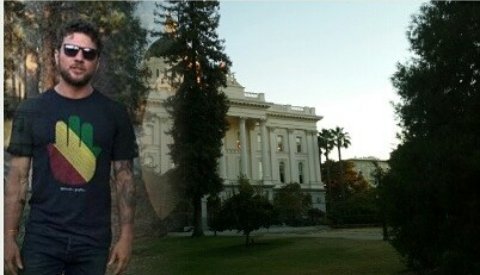
Life has become so swift, that all may see now that of which they once could only read. Mass communication contrasts markedly with people involved being close together and looking directly at each other in many ways. First, neither the communicator (medium) nor the receiver (audience) is a single person. The sender is usually a formal organization and its spokesperson a professional communicator, whereas the receiver is a large, heterogeneous, mass audience whose members are anonymous to one another. Second, the communication does not involve mutual concessions and compromises, with spontaneous and unpredictable elements, but instead is unidirectional, with the sender transmitting a standardized message and thousands or even millions of individuals receiving it. Mass communication thus allows extensive influence, much less variability of response than occurs with slow and sequential taking place directly between individuals with diffusion of information. We have empowered TV to become one of the most powerful forces in our lives. #RyanPhillipple 1 of 5

Many media organizations are operated for both utilitarian and ideological ends, because they wish not only to make a profit but also to promote certain values and beliefs. The consequence is that TV not only defines what is reality, but much more importantly and disturbingly, TV obliterates the very distinction, the very line between reality and unreality. In cases where media organizations are owned and operated by governments and messages must conform to an official view, the media appear to be more like coercive organizations. However, while governments can package information to suit their ends, it is much more difficult to force people to receive their propaganda and interpret it as an official wish. Consequently, media organizations are never completely coercive. The horrid prospect that television opens before us, with nobody speaking and nobody reading, suggests that a bleak and torpid epic may lie ahead which, if it lasts long enough, will gradually, according to the principles of evolution, produce a population indistinguishable from lower forms of plant life. However, while governments can package information to suit their ends, it is much more difficult to force people to receive their propaganda and interpret it as officials wish. #RyanPhillippe 2 of 5

Consequently, media organization are never completely coercive. Ironically, although bureaucracies perform important functions, the media often presents them either as faceless, cold, or in the case of government bureaucracies, as irrational, incompetent, and wasteful. The news results from the way the human mind is structured, a fundamental part of their reality arises from the way in which our minds are organized. Our unique cultural history predisposes the United States of American especially towards a cult of unreality. The vast, powerful entertainment industry and the influence it now wields over every part of American society is a big business that requires large sums of operating capital and includes formal organizations. Media organizations include a specialized division of labor, a hierarchy of authority, and formal objectives, among which profit is central. This means that their messages are bureaucratic products that have been filtered through various committees at ascending levels of bureaucracy, screened and modified by each, with end results that seldom resemble the original idea of the creator. The deliberate, systematic manufacturing of unreality that has emerged primarily in reaction to our inability to cope with this new World perverse complexity. #RyanPhillippe 3 of 5

Consolidating media and a handful of media survivors have great influence over virtually all media. The large networks and broadcast television take in the most political advertising dollars and the 20 leading Internet sites and the biggest cable channels are already owned by General Electric, Disney, Fox, Gannett, and Timer Warner, and a few other media powerhouses. And the 16,000 or so radio stations have consolidated with similar owners are well. Back in 1996, the two largest radio chains owned 115 stations; today these two own more than 1,400 and the number of station owners have plummeted by 33 percent. There is a certain irony that while all mass media are huge bureaucracies themselves, they take a particular delight in finding and exposing bureaucratic flaws. Technology not only creates new problems, but new diseases as well. These are not viruses in the strict biological sense, but are instead news programs that invade and attack the logic of their targets. Many of these viruses are so sophisticated that they cannot be detected by the most sophisticated means. Indeed, the viruses the news spreads are often concealed within so-called normal or friendly appearing anchors, but if you watch them close, some of them act like dope fiends, especially in Sacramento, California USA. #RyanPhillippe 4 of 5

The power of the news media presents an issues that the government is going to have to deal with. The media is now so powerful and pervasive that many fear what would happen if terrorist bought a news station, wrote scripts, and staged news to attack targets. They will invade the programs of unparalleled size and complexity. This is a virtually unexplored phenomenon, but in recent years it has become fashionable to engage in cultural bashing of various forms, and the news could do this in a way that no one person nor institution could fully understand or control it. The TV news could be used to control the lives of some people, watching them everywhere they go, spreading slanderous accusations, and totally invading their private lives due to all the technology, power, and capital they have. If you have corrupt reporters and news directors working in the newsrooms, and corrupt government officials, they could terrorize a private citizen for years before anyone could figure out what was going on. And then it would be nearly impossible to separate illusion from reality in an electronic society, where everything is for sale. Everything in contemporary America is an entertainment. Perhaps to protect citizens and national security, everyone in TV news needs to undergo a psychological evaluation. #RyanPhillippe 5 of 5


Put something in Your Mouth—More than just some Gossip

My idea of good company is the company of cleaver, well-informed people who have a great deal of conversation. I am mistaken, that is not good company, that is the best. It is a community of purpose that constitutes society; without that, living beings may be drawn into contiguity, but they still continue virtually isolated. They who know how to speak are the only people who know how to hold their tongues. You ever find yourself out in public and unintentionally feel like you are hovering around someone and invading their personal space, but do not mean to? However, for some reason you two or three keep orbing around each other. Well, sometimes that happens and if it is making you uncomfortable, they probably feel the same way. Americans tend to surround themselves not with one, but with four invisible bubbles and there are four different zone of comfort that have been identified, regarding social interaction and comfort zone.

For most Americans, intimate distance is the distance that extends from the body outward approximately 18 inches. Generally, we protect this space fiercely and allow it to be penetrated only by loved ones, very close friends, and our family pets. In the course of our daily interactions, this intimate zone is generally reserved for hugging, kissing, Netflix and Chill, or comforting. Occasionally, medical professionals such as doctors, nurses, and dentists must enter this intimate space. When strangers invade this space, we are likely to feel uncomfortable, and are likely to defend the space and our bodies by either retreating to a safer and more comfortable distance or by striking out in defense. Criminologists and law enforcement officials, for example, know that deaths by stabbing and strangulation are more likely to have been committed b intimates, family members, friends, neighbors, or acquaintances than total strangers, because of the nature of the intimacy involved in the crime.

The personal distance zone tends to extend from approximately 18 inches from the body out to about 4 or 5 feet. While not reserved for intimates, we tend to feel most comfortable allowing friends and acquaintances within this space for any length of time. Generally, when we are being introduced to people for the first time, we like to maintain somewhere between 2 to 4 feet between our bodies and theirs, not coincidentally the most comfortable distances for two people to shake hands. Again, criminologists and people figure that is a person is shot from this distance that the perpetrator was probably a friend or family member. Keeping witty company sharpeneth the apprehension. A companionable being will put up with many inconveniences for the sake of enjoying agreeable society. Life is full of the saddest and strongest contrasts. There is no light without its shade, no good without its inconvenience.

A social distance of 4 or 5 feet out to approximately 12 feet is commonly used for impersonal and formal interactions. This is a common distance used in job interviews (sitting across a 36-inch desk with each person approximately a foot from it), for example. It also is the distance that podiums are usually set from the front row to separate speakers and audience, and if you observe the professor in your classroom, probably about this distance from which he or she lectures or leads the class discussion. Shootings from this distance are as likely to have been committed by casual acquaintances or total strangers as friends or family members. Good company upon the road is the shortest cut. Good heads and good hearts generally go together, but they are not inseparable companions. Better sleep with a sober cannibal than a drunken Christian.

Public distance is beyond 12 feet, is open to just about anybody and rarely do we feel threatened when somebody is 12 or more feet away from us. We can walk past total strangers, acknowledging them only with a glance or a nod, or ignoring them altogether if we choose to do so. Secret Service agents and bodyguards like to keep this much distance between dignitaries and the general public. Killings that take place from this distance often involve total strangers, as in the case of a drive-by shooting, or random sniper shooting. An individual may, from various motives, decline to give their company, but perhaps not even a preacher would be gratified that nobody missed him. There are times when we must act as though life were equally sweet in any company. There are comparisons that should never be made, on account of circumstances that overrule all common efforts.

If the company of fools irritates, the society of cleaver people leave its own peculiar pain also. Comfort zone vary greatly from one culture to another, and within cultures when people of different age, race, ethnicities, genders, and social class categories interact. Some cultures have much smaller distance requirements for casual interactions and in France some men often embrace or kiss on the cheek—something that could make American men very uncomfortable. Despite living in a very densely populated country, Japanese often maintain a larger social space when interacting with strangers. When two Japanese men are introduced, traditionally, they bow toward one another, an act that requires a distance of about 6 feet to prevent from bumping heads. Many gentleman lives well upon a soft head, who would find a heart of the same quality a very great draw back. When people are angry and passionate, one foes not so much mind what they say. However, when they speak with kindness it seems to pierce to the very heart.

In the United States of America, women are generally far more comfortable touching, hugging, or kissing one another than are men, and women generally will allow other women within their intimate distance, something a man rarely allows from another man, even if they are blood related. Also, not all men are comfortable with the same amount of personal and social distance. We found, for example, in our research on the demeanor of contemporary cowboys, that cowboys out on the Great Plains have a much larger invisible bubble surrounding them, and although they will allow other closer to them on their side, they generally keep 5 to 6 feet (coincidentally, about the length of a horse) between them and others during face-to-face interaction. The difference in attitudes towards personal space between the genders can cause some awkward situations. For instance, if a woman touches a man, he often misreads this gesture as a sexual overture because she has invaded his intimate space; hence, he considers it an intimate gesture—something she may not have intended at all. Or the man might be annoyed and feel uncomfortable.

Conversely, if a man touches a woman or keeps talking to her after she brushed him off, this may scare her and be considered harassment. It is best to be professional and not touch people. If someone tells you to back off, or gives you a nonverbal communication that they are not interested, leave them alone. Similarly, antiquated people often tell comfortable touching younger people, in a nonsexual manner, but children often feel uncomfortable approaching adults. While members of certain socioeconomic classes often hug one another, embrace upon meeting, and feel comfortable in close proximity, members of other classes usually maintain a “proper” distance between themselves and others, especially when interacting with members for other classes. All of these example involve nonverbal communication—the body movements, gestures, and facial expression that we used to communicate with others. Smiles, nods, winks, eye contact, hand gestures, and other forms of nonverbal communication can be just as important, if not more so, than words in shaping out interactions with others. They are especially important in helping social actors to define social situations and give meaning to everyday interactions.

Welcome to Residence 4, one of two spacious two-story homes offered at Cresleigh Bluffs. This home boasts four bedrooms and three bathrooms, providing ample space for the entire family. As you enter, you’ll find a bedroom on the first floor with a full bathroom conveniently located next door. Moving towards the rear of the home, you’ll discover an open floor plan that seamlessly connects the kitchen, dining area, and large great room. Upstairs, an open loft awaits, along with three additional bedrooms and a conveniently located laundry room.

With thoughtful design and modern finishes throughout, Residence 4 at Cresleigh Bluffs offers the perfect blend of comfort and style for your family’s new home. https://cresleigh.com/cresleigh-bluffs-at-plumas-ranch/residence-4-2/
Kings are Accountable for Injustice Permitted as Well as Done

It is easy to be just when our own inclination do not oppose it. Numerous others forces may hinder bureaucracies from approaching technical superiority, which is ideal. Organizational charters and rules may initially produce results, but if conditions change and workers remain attached to them, they may be transformed from assets into liabilities. In some cases, bureaucratic ritualism may occur, where workers conform to rules and procedure to such a degree that they become more important than goals. Bureaucracies are also geared to typical, routine cases, and when confronted with exceptions or extraordinary circumstances they have been known to grind to a halt. When bureaucracies become informal structures, they can not only waste time and money, they also are just as efficient at wasting human talent, energy, and sometimes lives. In informal structures, work expands to fill the time available for its completion. Workers give the appearance of being extremely busy, because if they appear otherwise, they may be given additional work or even lose their jobs. #RyanPhillippe 1 of 5

Patience is not the same as indifference; this begins a vicious cycle. Because everyone constantly scurries around frantically performing their duties, management assumes they are working to capacity and that more workers are required. However, although the workforce steadily grows, very little additional work is every produced. Employees sit around clowning, waste time, their work lacks luster, or they end up pregnant and on maternity leave within the first year of employment. Of course, the Internet, too, may contribute to organizational efficiency and worker productivity, or it may provide employees endless hours of distractions entertainment—giving them time during work to hack into personal computers and private email of people they want to spy on. Likewise, it may greatly facilitate worker sabotage. For example, al one disgruntled worker needed was access to e-mail to summon fellow employees and managers to “endless phantom meetings,” which seriously disrupted company routines and morale until he was caught. Often times, large and impersonal corporations can also hide incompetent of every description, sometimes because they are hard to detect in large group and sometimes because workers often cover up one another’s failings and fraud. #RyanPhillippe 2 of 5

People in large corporations are often promoted until they reach their level of incompetence. In other words, corporations reward people for doing a good job at a particular level by moving them up in the hierarchy, but there is never a guarantee that at the next level they will be able to perform satisfactorily. Many people eventually assume a position that demands more than they can handle; when this point is reached their progress stops. There, ineligible for further promotions, they perform jobs that are beyond their skills. Most corporations are filled with incompetent people at every level and this might be why they exploit and abuse the service or lower level employees, new hires, or interns, as it is a method to hide their incompetence. How then do corporations function? At any given time, there are usually plenty of workers who has not reached their level of incompetence—and they are largely responsible for keeping the business running. I strongly dislike the man and woman, whom in kindness produces no responsive affection, and injustice no swell, no glow of resentment. #RyanPhillippe 3 of 5

Another problem that may have grave social consequences is that within large corporations individuals often believe that they can avoid responsibility for their actions. Activities that people would not do in small groups, because others would hold them personally accountable, are routinely performed in large corporations, often to the detriment of others. For example, an individual who would not throw an orange at a person or push a person because his behavior would be sanctioned may, without the slightest fear or moral pangs, work for a news agency that routinely harasses a private citizen. In contemporary society, people continue to interact face-to-face. Moreover, in interaction we still give and receive messages, interpret them, and try to act in socially appropriate ways. However, small, intimate groups no longer play the same role in shaping attitudes, values, beliefs, and the very content of our daily conversations strongly reflect the influence of the media—both the mass media and the technomenia. #RyanPhillippe 4 of 5

Therefore, it would be reckless endangerment for reporters to spend a decade, over the air, spreading rumors about an individual, tell people to attack him, and invading this life by contacting his friends and family for no other reason than to turn them against him, and keep him isolated. As an experiment, in conversation with your family and friends one day, try avoiding any mention of something you learned on radio or from the television news, in a newspaper, or in a magazine. You will be surprised at how difficult it is to carry on a conversation. The Word, being in the constant commission of vast quantities of injustice, is a little too apt to comfort itself with the ideal that if the victim of its falsehood and malice have a clear conscience, he cannot fail to be sustained under his trials, and somehow or other come right at last; in which case, say they who have hunted him down. We are here, not as immature angels, but as men and women, to do the work of this World and treat others how we would want to be treated. #RyanPhillippe 5 of 5

Public Corruption—Justice is Certain and Inflexible

Perseverance is more than endurance. It is endurance combined with absolute assurance and certainty that what we are looking for is going to happen. If your hopes seem to be experiencing disappointment right now, it simply means that they are being purified. Every hope or dream of the human mind will be fulfilled if it is noble and of the Source. However, one of the greatest pleasures in life is learning to have patience for God. From the very beginning of the discipline, sociologist have highlighted the powerful influence of groups and organization on people’s thoughts and behaviors. Virtually all important human activities are embedded in groups and organizations; we would not function, let alone prosper, without them. Diverse groups and organizations establish a range of possibilities for what all of us can think and feel, as well as become and achieve. The creative person—the artist, computer science engineer, writer, journalist, musician, woodworker, photographer, decorator, inventor, landscaper, gardener, architect, and more thrives when able to spend enough time alone to engage in uninterrupted creative purists. #RyanPhillippe 1 of 8

There are times when one has to be alone. The opportunity cost of an item is what you give up to get that item. When making any decision, such as whether to attend college, decision makers should be aware of the opportunity costs that accompany each possible action because nothing it free. An actor can earn millions if they drop out of college and make movies, and they are well aware that their opportunity cost of college is very high. It is not surprising that they often decide that the benefit of college is not worth the cost if they have signed a deal to make several movies and it is garneted that they will make millions. Economist normally assume that people are rational. Rational people systematically and purposefully do the best they can to achieve their objective, given the prospects they have. Rational people know with increasing frequency decisions in life are not always easy. For instance, if an actor forgoes a million-dollar movie career for college, it is not guaranteed that he will ever graduate, for unforeseeable reasons, and could spend the rest of his life struggling to pay off rent and pay off his student loans. #RyanPhillippe 2 of 8

Throughout life, we all have to make marginal changes, which are small incremental adjustments to a plan of action. A rational decision maker takes an action if and only if the marginal benefit of the action exceeds the marginal cost. This why should would choose a multi-million-dollar picture deal over a college education. It can take some time to get used to the logic of marginal thinking, but even risking your college career for millions has a cost. Incentives are crucial to analyzing any decision you make. An incentive is something (such as the prospect of punishment or a reward) that induces a person to act. Because rational people make decisions by comparing costs and benefits, they respond to incentives. People respond to incentives. The rest is commentary. What do you think of when you hear the word bureaucracy? For many of us, it evokes images of long lines and delays and petty officials rigidly adhering to rules at the expense of reason. Bureaucracy could become an iron cage, as it may shrink a person’s moral capacity into a mere duty to obey. #RyanPhillippe 3 of 8

At the same time, however, many people are most impressed with bureaucracy’s ability to coordinate the activities of large groups of people—especially in business, medicine, and the military—and to outperform and out produce all other forms of organizations. Bureaucracies owe their technical superiority to other forms of organization because of five basic characteristics: Specialization and division of labor, task are accomplished by people trained to perform specific duties, and each person is held responsible for a small portion of the total operation. Hierarchical structure requires that positions are arranged in a tiered fashion, and rank and authority increase as one moves from the entry level position to management, then to the top of the bureaucracy, and authority is clear at each level. However, directives and orders never flow downward. There are also formal rules, regulations and procedures. Written rules and regulation specify the goals of the organization to be performed, and what workers can and cannot do. In principle, formal, written rules ensure uniformity of operations and provide continuity regardless of changes in personnel or organizational goals. #RyanPhillippe 4 of 8

Bureaucracies tend to be impersonal. Interactions with clients and colleagues are guided by rules, not personal feelings. Ideally, emotional detachment ensures that everyone will be treated equally and that personal considerations will not cloud official judgements or subvert goals. Positions in the bureaucracy are based on qualification and performance, which benefit the organization and gives people a sense of continuity and security; a meritocracy enables people to plan for careers, which ideally ensures a stronger worker identification and a greater commitment to the organization and its goals. To be perfectly efficient and rational, ideal bureaucracy requires that almost all traces of humanity be eliminated and that people consistently act in a cold and calculating manner, and most humans are not able to do this because they get too emotionally involved, and they base their decision of feelings and not regulation or facts, and this usually leads to the development of informal structures, with their own statuses, beliefs, norms, practices, and goals. This process occurs in environments as diverse as the newsroom, the kill floor at a beef packing plant, the courthouse, and the supermarket, where soon after people have joined to accomplish an organization’s formal goal, they begin to develop their own ways of doing things. #RyanPhillippe 5 of 8

Informal structures sometimes promote greater bureaucratic efficiency. At other times they may have the opposite effect. For example, United States Attorney Richard Durbin, Jr., and FBU Special Agent in Charge, Christopher Combs (San Antonio Division) in Del Rio, announced that they uncovered a bribery and kickback scheme involving city leaders: former Crystal City Mayor Pro-Tem Rogelio Mata, age 43, and his brother, former Crystal City Councilman Roel Mata, age 44, admittedly used their official positions since February 2015 to enrich themselves by soliciting and accepting cash bribes from persons seeking to do business in Crystal City. The defendants also admitted that they voted, in 2015, to award a contract to a person who had provided them with cash bribes. Appearing before United States District Judge Alia Moses, Rogelio Mata, and Roel Mata pleaded guilty to one count of federal programs bribery. As a result of their guilty pleas, the defendants face up to ten years in federal prison; a fine of up to $250,000.00; a $12,291,73 monetary judgment; and, forfeiture of approximately $1,000.00 in U.S. currency seized by authorities during this investigation. Sentencing has yet to be scheduled. #RyanPhillippe 6 of 8

Rogelio Mata and Roel Mata are the second and third defendants to enter guilty pleas in this case. On 26 May 2016, 38-year-old-business man, Ngoc Tri Nguyen, pleaded guilty of one count of conspiracy to commit bribery involving an entity receiving over $10,000.00 in federal funds. By pleading guilty, Ngoc Tri Nguyen admittedly paid $6,000.00 in bribes in exchange for various official acts from his o-defendants. Ngoc Tri Nguyen, who faces up to ten years in federal prison, is scheduled for sentencing at 3.00pm, on 9 November 2016, in Del Rio, and the judge will be Judge Moses. Former City Attorney and City manager William James Jonas, age 54, former Crystal City Mayor Ricardo Lopez, age 40, and former City Councilman Gilbert Urrabazo, age 45, all remain under indictment, charged with one count of conspiracy to commit bribery involving an entity receiving over $10,000.00 in federal funds. City Manager William James Jonas also faces three substantive federal programs bribery charges. Mayor Ricardo Lopez and City Councilman Gilbert Urrabazo also faces one substantive federal programs bribery charge. The matter is currently scheduled for Docket Call on 11 October 2016. #RyanPhillippe 7 of 8

The discovery of this informal structure, which broke down and because corrupt, was due to an ongoing joint investigation that is being conducted by the FBI and the San Antonio Police department with assistance from the Texas Department of Public Safety Criminal Investigative Division and the Texas Rangers. Individuals who have first-hand information about corruption, fraud, or bribery related to Crystal City are urged to contact the FBI at (210) 225-6741. Assistant United States Attorneys Jay Huling and William R. Harris are prosecuting this case on behalf of the Government. An indictment is merely a charge and should not be considered as evidence of guilt. Jonas, Lopez, and Urrabazo are presumed innocent until proven guilty in a court of law. Proof must be built up stone by stone. The end crowns the work. It is not enough that Justice should be morally certain; she must be certain legally, that is. We have no right in Christian service to be guided by our own interests and desires. #RyanPhillippe 8 of 8


In Mixed Company

Of all human dealings, satire is the very lowest, and most mean and common. It is the equivalent in words for what bullying is in deeds; and no more bespeaks a clever being, then the other does a brave one. God never speaks to us in dramatic ways, but in ways that are subtle. Symbolic interactions contend that all of social life—including social institutions—are in a constant state of flux. This is because people continually define and redefine relationships, and even those social arrangements that appear to be deeply embedded in social structure change. Interactions contend that there is more flexibility in roles and relationships and much greater possibility for change. Interactionists stress that human social structure is built of all collections of people who interact with one another according to expectations rather than certainties. This results in a constant reordering of society as people in interaction define and redefine social relationships and expect changes. Most people yearn for intimacy and deeper connections. Going back to the roots of how you have developed your beliefs, fears, and hopes about life can be very exciting and illuminating.
If you are regarded as a hero, it is one thing to follow God’s way of service, but quite another thing if the road marked out for you by God required becoming one who submit meekly to domination or mistreatment by others. Are you ready to be sacrificed like that? Are you willing to give and be poured out until you are used up and exhausted? Competent communication requires the ability and the willingness to adapt communication behavior to changing situations. Some individuals, however, get locked into the mindset that they must play a certain role and there are no good substitutes. Leader, information giver, feeling expresser, and tension reliever are among the most likely candidates for role fixation—the acting out of a specific role alone no matter what the situation might require. Professional comedians sometimes do not know when to be serious in social gatherings. They are always “on.” Lawyers who cross-examine their spouses as they do hostile witnesses on the stand at a criminal trial may find their role fixation is a ticket to a court of a decidedly civil sort.
It is fiction to think that institutional arrangements benefit all individuals and society as a whole. Instead, institutional arrangements grant a disproportionate share of wealth, power, and privilege to certain individuals and classes, and it is they who seek to maintain the existing conditions or state of affairs by defining particular institutional arrangements—whether slavery, feudalism, or capitalist system—as vitally important to society. We look for vision from Heaven and for Earthshaking events to see God’s power. Even the fact that we are dejected is proof that we do this. Yet, we never realize that all the time God is at work in our everyday events and in the people around us. If we will only obey and do the task that He has placed closet too us, we will see Him. One of the most amazing revelations of God comes to us when we learn that. It is in the everyday things of life that we realize the magnificent of Christ. Society is structured, but many use their roles, statuses, and institutions to exploit and dominate subordinates as well as to maintain and perpetuate elite wealth, power, and privilege.

The American institution: the economy emphasizes, however, free enterprise, and religion free will; the family system promotes high mobility and individual choice; the education system stresses competition and being first; the mass media glorify stars and heroes, and the political system, with its democratic ideology, emphasizes the personal character of political candidates, as well as universal suffrage. Review the prevailing beliefs about love and intimacy at the time you grew up, and how your cultural roots helped shaped you. That consists of your ethnicity, class, geographical location, neighborhood, religion, education, and even how the media influenced you. Also, take a good look at the relationships you have experienced in your adult life to see how your fears, hopes, longings, and even aversions have been determined. Conflict theorists’ reason that it is impossible to understand human behavior without reference to social stratification, for people’s positions in the social hierarchy influence virtually everything they think and do.
It is important to realize at the outset that stereotypes are not simply something that only bigots have experience with. We all know about stereotypes; they are a cognitive structure that contains the perceiver’s knowledge, beliefs, and expectancies about some human group. Stereotypes clearly do not give us the whole picture of a group, as if such a thing is even possible, and they are not neutral in their evaluations. Instead, stereotypes give us highly edited and distorted images of groups that tend to support the way groups are treated in society. Cultural stereotypes of minority groups, especially, tend to reflect the biases and the histories of the majority (keep in mind majority is a relative term that could relate to a mindset, gender, age group, and may vary depending on geographical location), such that the people being stereotypes are reduced to a few characteristics that are socially relevant for understanding that group’s perceived place in society.
We, as individuals, may not endorse these stereotypes at all, nor have any intention of seeing the World through prejudicial lenses. However, unfortunately, a stereotype, as just another schema that helps some process the World around them, and helps them maintain a view of that World that works in favor of their majority. If they know about them, people can inhibit these tendencies, but they have to have the cognitive capacity to overcome prejudice. The inferences many may about other people’s behavior tends to be biased in favor of their in-group. People tend to make the in-groups they identify with look good and the outgroups they do not identify with look bad. In theory, in-group members seeing someone doing something bad will be more likely to attribute that behavior to internal causes if the person is not one of their, a member of the outgroup. However, if it is an in-group member doing something awful, they will attribute the bad sinful behavior to external factors. Examine your reasons and continually look back to the foundation of your love and affection and remember where your Source of power comes from.

Be exhausted for God (Allah, Buddha, Djevel, Goddess, Jehovah, Lord, Nature) but remember that is your supply. The real test of spiritual focus is being able to bring your mind and thoughts under control. Is your mind focused on the face of an Idol? Is the idol yourself? Is it your work? If so, then your ability to see your creator is blinded. You will be powerless when faced with difficulties and will be forced to endure in deviance. If your power to see has been blinded, do not look back on your own experiences, but look to God. It is God you require. Lift up your eyes and see who has created things. Your mind is the greatest Gift God has given you, and it ought to be devoted entirely to your savior. This will be one of the greatest assets of your faith when a time of trial comes, because then your faith and the Spirit of your Source will work together. You will begin to see that your thoughts are from your Source as well, and your mind will no longer be at the mercy of your impulsive thinking, but will always be used in the service of your creator. Therefore, be deliberate careful and thoughtful.

Time Awareness—Each Trying to Help

Youth is like Spring, an overpraised season—delightful if it happen to be a favored one, but in practice very rarely favored and more remarkable, as a general rule, for biting east winds than genial breezes. For society to exists, whether it is a colony of birds, a pack of dogs, a school of fish, or a human society, it must have structure—patterned and recurrent relationships among group members. Leaders encourage participation from all members of the human population. Keeping meetings lively and fast-pace can prevent the non-participation that results from boredom. The leader is responsible for establishing a supportive climate. This may mean confronting members who are disrupting meetings or creating competitiveness. Humor helps relieve tension and improve the group climate. A leader expresses feelings when appropriate and promotes a supportive environment in which others can express their feelings. This is a true hero’s journey of healing and awakening, understanding the relationships between different ideas or experiences of past and present emotionally as well as intellectually, encountering all that we have been and are. #RyanPhillippe 1 of 5

Much of social life is repetitive and enduring. Along the way, we cultivate an intimacy with everything that we are—high and low, dark and light, masculine and feminine, mortal and immortal—for the benefit of one and all. This is a primal odyssey pulsing in every being’s blood, whether one embarks on it or not. A corporation, for example, is stable because it is strategically structured. It has a president, vice-president, department heads, and specialists in many areas, and all have fairly clear ideas about their rights, expectations, responsibilities, and duties relative to others members of the business community. People are hired and fired, some retire others transition to another state of reality, yet the corporation endures. To some, this suggests that social structures, whether families, schools, corporations, or fraternities, are rigid and changeless structures. This provides navigational guidance for us to step more fully into our own authenticity, and help deepen our capacity for taking wise care of ourselves and our environment. Social institutions are basic to the proper functioning of contemporary societies. Therefore, institutions provide the framework for social interaction in our everyday lives. #RyanPhillippe 2 of 5

I have seen many people suffer by shutting themselves off from their own depths, stranding themselves from what would enable them to have truly fulfilling lives and relationships—not just their empathy, vulnerability, and capacity for emotional literacy, but also their true powers and resolve, their authenticity, their capacity to anchor themselves in real integrity. There is a deeper life for people, a life in which responsibility and freedom go together, with one the other and level upon level, a life in which happiness is not at the bloody root of what material possession we have, but in what we fundamentally are. Of all social institutions, the family is perhaps the most important. It regulates sexual activity and it produces new members and social interaction in our everyday lives. In some societies families also transmit cultural knowledge, but in modern societies the educational institution fulfills the basic needs of training each new generation. The economic institution produces and distributes goods and services, the political institution provides order and defense, and the religious institution fulfills the social need for meaning, social solidarity, and control. #RyanPhillippe 3 of 5

When I was younger, my father found me a government job as an office assistant. My three coworkers were older than, and much more Worldly. They claimed they drank huge quantities of beer—frequently bragging about their prodigious barfing—and apparently had had countless girlfriends. Neither was true for me (I had not had a girlfriend yet nor been drunk even once), and I was unable to pretend otherwise. I felt horrible, not knowing how to include myself in their exploit-recounting conversations. I was too fearful of their judgement to remove myself from these talks—or even remove myself from these talks—or to even consider challenging what they were saying. Their bragging and snickered asides about how they would like to “get into her pants” or how they would not “throw her out of bed for eating cake” left me numb. The ubiquitous “her” was out of my reach. The discovery of a secret implied no obligation to retain it. Evil fame and scandal are always new. When the offender has forgot a vile fact, it is often told to one and to another who, having never heard of it before, trumpet it about as a novelty. I could not participate in my coworkers’ World any more than I could in that of my high school friends when they would talk for hours about fuel injectors, 24-inch chrome rims, and huge engines. #RyanPhillippe 4 of 5

The favors or help that people give one another is measured as reciprocal services, also known as benevolence. Asking someone foe a favor can make that person readier to like the person who asks. If you want to make peace with your enemy, you have to work with your enemy. Then he becomes your partner. This effect arises from this component of tie strength. When one person does something for another, both parties feel closer. By addressing problems before they can grow larger, conscientious individuals maintain better health overall and, on average, live longer with better quality of life. Conscientious individuals perform better at some jobs than others. The relationship between conscientiousness and job performance generally curves: Although reliable, conscientious people who meet deadlines and attend to details tend to do better work than those who are less reliable; the excessively meticulous person may, however, be less efficient. Spending all morning trying to get paper in the printer to line up right is unproductive for someone who needs to type and print a report by noon. #RyanPhillippe 5 of 5

Law of Attraction–Entering the World with Soul and Power

We probably all have been encouraged to embark on an undertaking with as much effort and determination as possible when meeting somebody for the first time. Similarly, we have all heard that you only get one chance to make a first impression. These admonitions acknowledge that much of our day-to-day interactions constitutes a performance—one that is judged by others and, as a result, has tremendous impact on how we are viewed by others and how we view ourselves. Also, because we are constantly defining and redefining social situations in ways that are meaningful to us, we always run the risk of misinterpreting other people’s actions, especially nonverbal forms of communications. Does holding up two fingers signify victory, peace, or simply the number two? Did that guy just wink at me of does he have something in his eye? Did that person just hold up their index finger toward me, or was it the middle finger? Certainly, the meanings imputed to these action and gestures become critical in shaping the meaning of our present and future interactions with others. #RyanPhillippe 1 of 6

Many people are at war—at war with life, with each other, with themselves—consumed by the fight to win at work and elsewhere. Bloodless war is still war, still an arena where the battle is fought with whatever weapons are at hand. A victorious athletic moment may feature not just some full-out exultation, but also a sense of standing over the defeated team as if some bloody battlefield. Our entire culture is permeated with the language of war: the war on drugs, the war on cancer, the war on poverty. Warfare is all about oppositional extremes, as is much of conventional humanism, with it endless list of things to conquer. What a burden! And what a diversion from embodying our full humanity. True love’s the gift which God has given to man alone. When we pay attention to our inner characters, they pass through the gateway of our subconscious and enter our conscious awareness. Now we have the opportunity to redeem ourselves. We can claim our best and transform the rest! True love is not only in fairytales, but also in real life. We have all known true love whether we remember it or not. Our original experience of true love began before our lives on Earth. #RyanPhillippe 2 of 6

How can I learn to love? How do I open my heart when I am afraid of getting hurt? How can I find a partner who loves and appreciates me for who I really am? And then, if we do find each other, how do I do my part to create and sustain a loving and fulfilling relationship? Everything can be worked out between two people who want to love each other and understand and respect each other. So what goes wrong? First of all, you cannot think that true love is only for Elle Woods and Warner in Legally Blonde. And secondly, do not get discourages if you have not found the perfect partner. And lastly, do not let the drama of romance get you down. Many people get cynical and lose their faith in themselves when it comes to love or they try to date more than one person at a time or follow dating rules like do not call until three days goes by. By doing this, you are rejecting yourself. And personally, if you want three days to call me, I might think you lost interest. Do not ignore the yearning of your loving soul. Also, do not get so lost in love that you vainly try to please everyone in anticipations that someone will love you back. I do not want you to be who you think I like, I want you to be authentic, to be yourself. #RyanPhillippe 3 of 6

In everyday life, some interactions are simple and direct and people’s behaviors are fairly predictable. People’s identities and self-views are not like bowling balls that are unaffected by either people or objects they encounter in their travels. For people, the exact opposite is true; we are acutely sensitive to those with whom we share ongoing relationships. This may explain the remarkable consistency of self over time—even over a lifetime. People usually cling to their self-views because dramatic changes would disrupt relationships with those we deem important—in some cases, even relationship with others that may sustain negative self-views and behaviors. Many everyday interactions appear as if they were scripted minidramas, in which people encounter one another, assess each other’s persona and social characteristics, assume identities, and behave in appropriate ways. Given the complexity of most social situations and the fact that spontaneity and surprise are integral features of virtually all social interactions, however, improvisation is usually required. #RyanPhillippe 4 of 6

Using the analogy of the theater, dramaturgy analyzes social interactions as through participants were actors in an ongoing drama. Dramaturgy, however, emphasizes that in real life actors passively accept neither the definition of the situation nor the identities granted by others. Instead, people take an active part in social interactions, manipulating it to their perceived advantage. This is called impression management, ways that people use revelation and concealment to make a favorable impression on others. Although TV shows are mostly fiction, a lot of them are based on real life situations. For example, Max from 2 Broke Girls met this guy Randy, and he was charming, older, rich, and handsome. And was very nice to her and she let him talk under her skirt and then he broke up with her when she had to leave California and go back to New York because he did not think a long distance relationship would work. However, a few months later, he coerced Max into thinking he was going to move to New York for her, and even went out there and stayed with her for a month, but then told her that she was too focused on her cupcake business and broke up with her. #RyanPhillippe 5 of 6

Randy used impression management to manipulate Max and use her for sex, he had no desire for a real relationship. She just wanted to play around with a beauty young lady and keep it moving. Randy is a billionaire playboy and likes to wine and dine women and move on. So sometimes your Prince Charming might be a fake and you may want to be with someone who is real with you, they may not have the ideal job, may not be rich, but as long as they care about you and respect you is what matters. Our personal energy veil is made up of unconscious defensive patterns, subconscious illusions, negative attitudes, mindsets, emotions, and self-defeating habits we have developed. Each of us has dimensions of our emotional being—inner feelings that may help and hinder us. Once our intentions are focused on being true to ourselves and seeking love, and not material objects and status, that is more than likely when true love will appear. The self that we present in one social situation may be totally inappropriate in another. True power happens when courage, integrity, vulnerability, compassion, awareness, and the capacity to take strong action are all functioning together. Such power is potent, but not aggressive, challenging, but not shaming, grounded, but not rigid, forceful, but not pushy. Again, it requires head, heart, and gut in full-blooded alignment. #RyanPhillippe 6 of 6


Perspectives on Effective Leadership

The United States of American currently has a $19,409,656,227,658.00 ($19.4 trillion) deficit, that is $59,897.00 of debt for each citizen, and $162,191.00 of debt for each taxpayer, but you do not hear anyone talking about this debt and how it will affect the future of the country, nor any plans on paying it down. Everyone from the President to Plant Lady to the Mayor and the media just ignores this monster of a number and keeps on squawking like nothing is wrong. Most people understand that of they earn $50,000.00 in a year, but spend $100,000.00, they will not balance their household budget by drawing down their savings account or running up charges on their credit cards. Not only does the nation not seem to understand this, but neither does California and the capitol city of Sacramento. Even if it spends more than it collects in taxes, California government counts the budget as balanced if it can find the cash, from reserves or by borrowing, to make up the difference. That is why leaders so often proclaim that the state has a balanced budget right up to the day California goes broke.

Sacramento is so proud to be supporting billionaires and millionaires by spending $508 million on a new arena for basketball players. An estimated $255 million taxpayer dollars was spent to fund this project, and by the time the arena is paid off, it will have cost about $1 billion. The first, crucial step toward responsible and democratic budgeting is to present the state’s fiscal information to Californians honesty and clearly. Spending is the amount the state pays for goods, services, and interest, and for grants it makes to individuals and other levels of government. Revenue is the proceeds of taxes, fees, interest on investments, and transfers from other levels of government if they do not require repayment. Money borrowed from the public or other levels of government, if it requires repayment and is not to be repaid within the budget year, is debt, not revenue. Although monetary and fiscal policy can be used to stabilize the economy in theory, there are substantial obstacles to the use of such policies in practice.

The general tendency is for groups to accept as leader the person who provides the optimum blend of task efficiency and sensitivity to considerations. The tendency, of course, does not translate into a tidy formula or precise recipe. Some groups prefer a leader who concentrates more on task accomplishment and less on the social dimension of the group. Other group prefer the opposite. Officially, if you want to become the leader of a group, you should take the following steps: manifest conformity to the group’s norms, values, and goals. Display proper motivation to lead. Deviants, dissenters, and disrupters will be eliminated early as potential leaders. Groups prefer leaders who will assist them in the attainment of their goals, who will defend the groups vigorously against threats, and who will remain loyal to the group. Since most group members think of a leader as the single individual who does most of the work, anyone hoping to be a leader must also demonstrate a willingness to work hard for the group.

The process for retaining the leader role is not the same as the process for emerging as the group leader. An individual could conform to group norms, display a strong motivation to lead the group, and do not show up late of or miss important meetings. Do not be uninformed about a problem commanding the group’s attention. Do not manifest apathy and lack of interest by sluggish participation in group discussions. Do not attempt to dominate conversation during discussion. Do not listen poorly. Do not be rigid and inflexible when expressing viewpoints. Do not use offensive and abusive language. Some of these counterproductive communication patterns are more likely than others to prevent someone from becoming a group leader. The three most relevant, in order of importance, are being uninformed, not participating, and being rigid and inflexible. A leader is sometimes deposed if his or her performance is felt by members to be unsatisfactory.

There are three primary qualifications for retaining leadership: you must demonstrate your competence as a leader. You must accept accountability for your actions. You must satisfy the group members’ expectations. Retaining the role of leader can be a tricky business. Groups can be fickle. What seems to satisfy members one day may enrage them the next. The leader must adapt to ever-changing situations. Group expectations of the leader may shift as circumstances alter. Members’ confidence in and loyalty to their leader may be shaky. A leader must demonstrate competence and satisfy group expectations on a continuing basis or member loyalty may disappears quickly. Last year’s success may not compensate adequately for this year’s failure, as many athletic coaches have learned. And group members should be allowed to mingle, interact, and work on a project before determining a leader. And always honor communication skill and abilities of the people you work with.


The Iron Dome is a Reality
In the Middle East, there is a system known as an “Iron Dome,” which intercepts air defense system, that works in all weather. Rockets detect missiles and keeps them from hitting major centers of population. The Iron Dome basically creates a protective shield over the city by detecting incoming rockets and firing missiles to destroy them in the air. The Iron Dome can work in any weather and intercept multiple threats simultaneously. #RyanPhillippe 1 of 4

The Iron Dome is located on the ground and it is highly maneuverable. It is ten feet long, has a diameter of 6 inches, and is 9.8 feet long and weighs about 198 pounds. The Iron Dome is battery operated and the battery costs about $50 million. The radar detects a rocket launch, and passes information regarding its path to the control center, which predicts the point of impact. If the location justifies an interception, a missile is fired to intercept the rocket, and it explodes in the air, in a place that is not expected to cause injuries, and prevents anything from impacting the ground. #RyanPhillippe 2 of 4

The Iron Dome usually intercepts rockets 2.5 miles in the air, but as the technology advances, it is expected that they will be able to stop rockets 45 miles away. There are reports that some Iron Domes can already intercept missiles and artillery shells from 45 miles away. There is an Iron Dome in Gaza and in is reported to intercept 90 percent of the rockets before they hit the ground. In 2014, the Iron Dome intercepted 1,200 rockets. The Iron Dome costs about $210 million and was developed by Rafael Advanced Defense Systems. The launcher contains 20 interceptors and is battery operated. The Iron Dome saves lives and property and it costs $95,000.00 to intercept each threat. #RyanPhillippe 3 of 4

Rafael Advance Defense Systems has collaborated with American firm Raytheon to develop a related defense system known as “David’s Sling,” which is intended to stop rockets and other projectiles with ranges between 45 and 200 miles. The United States of America does currently have a missile defense system like the Iron Dome. They are similar in that the systems objective is to deploy interceptors toward incoming missiles. Once the United States of America interceptor is launches, it identifies the warhead or rocket and collides with it, destroying it before it begins its decent. The Iron Dome’s deployment is also effective against aircraft up to an altitude of 32,800 feet. #RyanPhillippe 4 of 4


