Home » Articles posted by Randolph Harris II International Institute (Page 265)
Author Archives: Randolph Harris II International Institute

I Never Gave Any Very Explicit Answer to this Question

Artists and scientists deal with the same World, but they differ in their intellectual attitudes and in the techniques they use to recognize and describe objects, person, and events. Artists focus their attention on private experiences, scientists on the generic aspects of nature. This difference in attitudes is so fundamental that the aspects of the World with which science and art are respectively concerned have little in common. Sometimes the idea of being a hip party person who is in the nightclub living it up, listening to techno opera, and talking to swanky people about work, vacations, and all the nice things our sweetheart is doing for us. In a party scene, the feeling type often brings a sense of enthusiasm, joy, conviviality, companionship and togetherness. However, is that all we are? It is enough for us to absorb the teachings of our society, its rules and norms, its definitions and its roles? What of joy? Fear? Anger? What of personal satisfaction, or thrill, risk, all powerful feelings?

We really need to look at these and other emotions that are such an essential part of being human. However, in our computer-oriented, information-valuing society, emotions and emotional people are often ridiculed. It is not usually a compliment when you describe someone as emotional. Some of us are the thinking type, in cognitive mode, which is one that focuses on reason, scientific method, logical thinking is dominate. These types of people are inclined to deal with nearly every type of situation and experience as Mr. Spock did, much like a proper computer and not some much emotion nor sarcasm. The sensing organs and the process of picking up information (sensations) through the sense is helpful because human beings are not robots! Human beings are not mechanical or machine like. They have a full range of emotional responses, and if we were honest most of us would admit that we would prefer a bit more feeling in the people around us.

Being human (and not a humanoid), we are all emotional, though we may deny it. We all have emotional responses to events and people and potentials for far more feelings than we often express. I actually want a career, but I also know that I need to rest and enjoy life. I feel like I am just waiting and waiting and waiting, and I wonder when the Universe will finally reward me for the good that I have done. I am a good person. I find myself attractive and I like to be happy. When I was younger, I remembered thinking I never wanted to do the same thing every day. I wanted to travel and get around and be a businessperson. And by the time I turned 30, I envisioned I would be in a nice white, two story house, with wood siding, with navy blue, Atlantic premium wood shutters on the exterior, emerald green grass, every green trees, a white picket fence, a BMW sedan and Sports Utility vehicle, and a convertible in the garage, a wife, two kids, hardwood floors, Royal Palace French provincial furniture, lots of windows, and real mahogany wood panels on the walls, with a basement, and a secret passage way in the house. However, I am not sure what I really want, some I am just going to leave that in God’s hands.

We have to judge between alterative courses of action to consider the consequences of each, in terms of the pleasure and pain of all the people affected. Let us suppose, for example, that I am trying to decide whether to take my small nephew to the circus or to spend my evening at the house with a book. I know that the circus will bore me: I may estimate this boredom at, let us say, 5 units of pain; i.e. -5 units of pleasure. I will, on the other hand, gain some sympathetic pleasure from watching the small boy’s pleased excitement, though not enough, certainly, to compensate for my boredom. I may put this at +2 units of pleasure. However, the boy may be expecting to gain great pleasure from the outing: perhaps 10 units. Taking the child to the circus, then, may be expected to yield (10+2) – 5 units of pleasure; i.e., 7 units. Now, consider the alternative. A quiet evening at the house, though pleasurable, does not transport an adult as much as an evening out does a child: perhaps we may evaluate it at 6 units. My pleasure will be spoiled a little, too, by the sympathetic pain that knowledge of my nephew’s disappointment itself: since both the pains and pleasures of childhood are intense, we may put it at – 8 units. To stay at the house, then, will cause 6 – 2 – 8 units of pleasure, i.e., 4 units of pain.

The first is clearly the one that will contribute most to the sum of happiness. It is then, the right action in these circumstances. Its rightness is not an intrinsic characteristic, but it depends entirely on its consequences in any given case: if I found the circuses more boring, or the nephew found them less pleasant, staying at the house might become the right action. This is, of course, a comparatively crude example. This type of ingenuity and refining calculus and working out these implications are important for legal reform. Punishment, for example, must be just harsh enough to deter, and no harsher. Any more pain than is necessary for this purpose is unjustifiable. On the other hand, too lenient a punishment is a worse evil, since the pain inflicted on the criminal, being insufficient to deter, will not be counterbalanced by the pain spared future victims of similar crimes. We have just begun to open up the Pandora’s box of surprises that awaits us in the study of our social World. The culture has a tremendously important influence upon us, giving us stuff to put in our near-empty minds at birth, refining and guiding, bullying and encouraging us, so that we will turn out to be pretty much what society needs us to be.

Sometimes no process is superior to the others, though one is probably more appropriate and useful than the others at a given time and situation. It is important to experience life and to relate to the World in terms of emotions, both pleasant and unpleasant, of memories, of past and present feelings about a situation. Experiences are good and bad, pleasurable and unpleasureable—but we cannot just take them passively. I know I am blessed and I see you are happier, and that is nice. In the moral realm, freedom has grown so that many choices which were either controlled by law or churchly dictate are personal choices. The right to plan the number of children a family shall have…[and] such choices as drinking, non-criminal gambling, have becomes choices the individual has a right to make. One of our goals as humans is to help other individuals round out their personality so that they are not exclusively one type or another. It seems to me that if we are going to live sanely, then we must respect and be sensitive to differences, realizing that no two individuals are alike, and that is we really understand someone, we understand how one differs from us I really know one thing for such that would make me happy, a big house in the suburbs and privacy.

The Winchester Mystery House
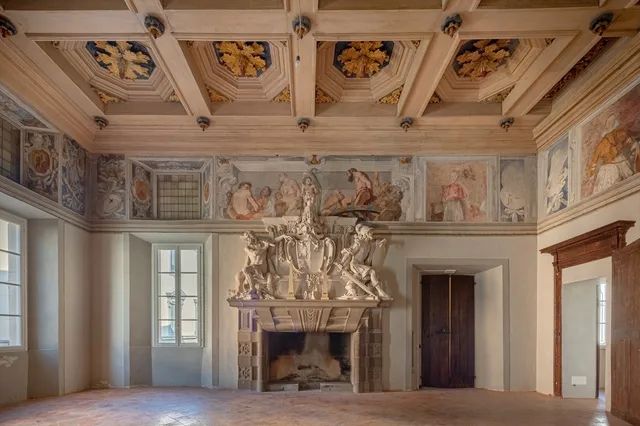
Come explore the history and lore behind The Winchester Mystery House. https://winchestermysteryhouse.com/

One Alone Who Owns the Youth Gains the Future
 All knowledge is dangerous. Words build bridges into unexplored regions. It matters not that the law prohibits teaching slaves to read. Oral instruction is as dangerous as written; and the catechism is nothing but a Bible in disguise. People of true learning, and almost universal knowledge, always compassionate ignorance of others; but fellows who excel in some little, low, contemptible art, are always certain to despise those who are unacquainted with that art. There are some people who, living with the one object of enriching themselves, no matter by what means, and being perfectly conscious of the baseness and rascality of the means which they will use every day towards this end, affect nevertheless—even to themselves—a high tone of moral rectitude, and shake their heads and sigh over the depravity of the World. Both religion and virtue have received more real discredit from hypocrites than the wittiest profligates or infidels could every cast upon them. There is a passion for hunting something deeply implanted in the human heart. However, it takes much more than you think to starve a person. Starvation is very little when you are used to it. Some people even live in it quite comfortable, and make their daily bread by it. #RyanPhillippe 1 of 6
 Of a truth, Knowledge is power, but it is a power reined by scruple, having conscience of what must be and what may be; whereas Ignorance is a blind giant who, let him but wax unbound, would make it a sport to seize the pillars that hold up the long-wrought fabric of human good, and turn all the places of joy dark as a buried Babylon. Adolph Hilter’s regime, the rule of a new biological type and the idea, the victory of genuine human values, in perfect harmony with the logic of history offered an answer to the Germans in the form of national socialism and was considered a valid artistic ideology of poetic symbols. However, Hilter’s regime lacked style. Style is the product and the justification of an image-making faculty that conforms to certain absolute laws; these laws are autonomous in the sense of being indifferent to the demands of personal experience and social reality alike. The personal expediency apart, from astonishing expectations for Hilter’s regime seem to spring from a contemptuous disregard of political realities that have been characteristic of an important section of German cultural scene for many years. There is no contradiction in asserting the hermetic nature of poetry while stating the claim that the heroic virtues of the new regime would be more propitious for its creation. #RyanPhillippe 2 of 6
 I do not have a clear understanding of the justification of the total claim of Hilter’s dictatorship. His vision was realized in uniting the National Socialist ideology, even though is actions proved to be incompatible with the party line in art and life. Now, memories are imaged by means of strong and complex sense perceptions; striking physical details are selected, often for their sound values; all mention “you” and “we” is rhetorical, the solipsistic circle hardly ever being breached; and the situations invoked are almost always related to a self whose isolation is, if anything, underlined by an appeal to primordial memories. Hilter, many thought, wanted to codify and reform both civil and penal law. His motive was a profound dissatisfaction both with what he witnessed in the courts as a student, and with its theoretical justification by expositors. However, the theory did not seem to be very coherent in itself or in accordance with some practice; the practice was brutal, cumbersome, costly, and wrapped in unnecessary obscurity. Hilter’s vision and life work was supposed to be about the advocacy of a clear, coherent, coherent, humane, and simplified legal system. The fields of air are open to knowledge. Only ignorance and idleness need crawl upon the ground. #RyanPhillippe 3 of 6
 In pursuit of this aim, Hilter wrote many thousands of pages, but in a curiously desultory way. Before he finishing one work, he would start on another; many were left unfinished, and those that he did finish he often did not bother to publish; some were made known to the World only through translations. A few people have even floated that theory that the Diary of Anne Frank was actually written by Adolph Hilter. Hilter actually wrote a lot on legal reform with a rationale of punishment and elaborate comments. He did publish a large number of pamphlet topical issues, attacking the law of libel, the packing of juries, the oath, the extortions of the legal profession, the established church, and much else; or defending the lending of money at interest, reforms in education, and his elaborate scheme for a model prison, on which he spent much time and money. The chaos was, it seemed to him, partly the result of intuitionism (or the belief in intuitively apprehended absolute principles), which he called the principle of sympathy and antipathy, or ipsedixitism. Were we to believe noting but what we can comprehend, every person upon the face of the Earth would be an atheist. #RyanPhillippe 4 of 6
 Hilter seemed to dislike how sexual offenses caused great suffering, but were left unpunished or were punished very leniently. This was the inevitable result of basing a penal code on immutable moral laws that stigmatized actions as bad in themselves, without regard to their consequences. Nor was it penal law that suffered from this error in moral theory. Civil law was traditionally based on contract: the appeal was to an absolute principle, promises must be kept. However, sometimes happened that the law was unwilling to enforce a contract, perhaps because it was against public policy. Instead drawing the conclusion that the rule about keeping promises was not absolute, but subordinate to a more binding rule about public interest, the lawyers said that in this case the contract was null and void, that there never had been a contract. In other words, they saved their moral theory by deliberately falsifying the facts. On the other hand, when the law wished to enforce an obligation that patently did not rest on a contract, since none had been made, it pretended that one had been made, and spoke of a quasi-contract. Learning has the same effect on the mind that strong liquors have on the constitution; both tending to eradicate all our natural fire and energy. #RyanPhillippe 5 of 6
 To find right remedies and right methods. Here is the great function of knowledge. These cases became typical examples of fictions by which many, not just Hilter, but many people constantly bedeviled the law. These cases also made clear the role that the principle of utility would play in a more rational system. Once legislators were forced to recognize that legal obligations rested, not on arbitrary absolute moral principles but on the single aim of increasing happiness and reducing suffering, it would be possible to law down much more rational and consistent principles as to which obligations should be waived and which enforced. Hilter was, then, the theorist of the philosophical radicals, in that he laid down the general principles from which programs of legislative and social reform might follow immediately. However, he was much less concerned with the more abstract and metaphysical questions involved. His most characteristic contribution to utilitarian theory was his elaboration of the hedonic calculus. According to this doctrine, the way to judge between alternative courses of action is to consider the consequences of each, in terms of the pleasure and pain of all the people affected. It is very difficult to ne learned; it seems as if people were worn out on the way to great thoughts, and can never enjoy them because they are too tired. I have heard many cry out against sin in the pulpit who yet can abide it well enough in the heart, house, and conversation. #RyanPhillippe 6 of 6

Seclusion from the Outer World
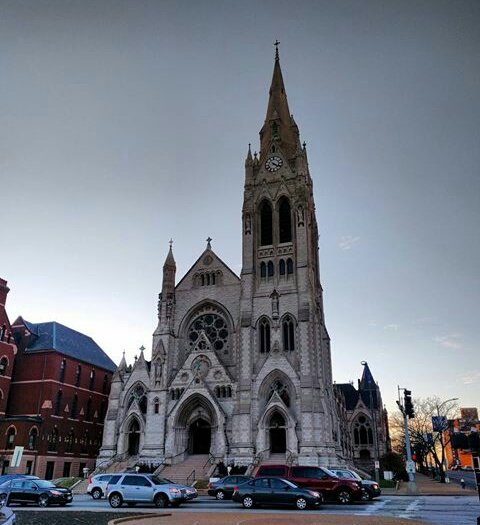 The source of justice is the will of God, and human’s awareness of moral law derives from one’s understanding of nature of humans and their environment. Ultimately, the command (imperium) of God’s law is intellectual, stemming from the divine wisdom. The sense give us only a mediated knowledge of the external World and of ourselves. However, we can obtain an immediate, fully adequate knowledge of our own mental acts by means of inner perception. Starting from this perception, we infer the inner nature of other beings by analogy with our own. The result of this inference is a picture of reality as containing an uninterrupted series of minds or faculties of representation, extending downward from human. The soul consists of a system of powers or forces; it is a bundle but, not a bundle of perceptions. The common eye sees only the outside of things, and judges by that, but the seeing eye pierces through and reads the heart and the soul, finding there capacities which the outside did not indicate or promise, and which the other kind could not detect. #RyanPhillippe 1 of 5
 The art of reading the inner human nature by the outer aspect is of immeasurable interest and boundless practical value, and the individual who can practice it skillfully and apply it sagaciously is on the high road to fortune. All psychological processes can be traced back to four basic ones: The process of stimulus appropriation causes the mind to create sensations and perceptions out of externally caused impressions. The process of formation of new elementary faculties by means of assimilation of received stimuli; the process of transmission and equalization of stimuli and powers, where by a systematic connection is formed between becoming unconscious of another idea; and the process of mutual attraction and blending of ideas of the same sort. Our memories, on the other hand, are unconscious in themselves; those that are most deeply impressed form no exception. They can be made conscious, but there is no doubt that they unfold all their activities in the unconscious state. What we term our character is based, indeed, on the memory-traces of our impression, and it is precisely those impressions that have affected us most strongly, those of our early youth, which hardly ever become conscious. #RyanPhillippe 2 of 5
 However, when memories become conscious again, they show no sensory quality, or a very negligible one in comparison with the perceptions. If, now, it can be confirmed in the systems, we have gained the most promising insight into the neuron excitations. The consciousness occurs actually in the locality of the memory-trace. The brain is complex and dynamic. The timescales range from the flickering of channels (less than a millisecond) to long-term memory (years). Our own soul is the only thing that we know as it is in itself. We recognize nonspatial and therefore an immaterial entity. At least we have no reason to suppose it to be material, since it is not perceived through the outer sense. However, the soul cannot be simple. It has specific powers or capacities for receiving and organizing stimuli; these powers must be underivative, since the stimuli of different kinds can be received even at the outset of our experience. Each or our senses is supposed to include several of these Urvermogen (a primal capability that makes for the possibility of any kind of experience whatsoever), in order to be receptive to new sorts of stimuli. Thus, the conceived mental life is compounded of active impulses (Triebe) that are activated by external stimuli. #RyanPhillippe 3 of 5
 The seemingly substantial unity of mind is explained by the persistence of traces (Spuren) of idea that have become unconscious and by the mutual adjustment of faculties that produce new impulses. Philosophical thinking is sustained by an alien, unlogical power: phantasy, by virtue of which it is able to leap from possibility to possibility. Philosophers unit mythical powers, as well as features of the saint and the scientist, in one person. It is believed that ancient philosophers were able to come up with such deep thoughts and advanced ideas because they were a reflection of the World and God would transform himself into other bodies and speaks out of them—and was able to project this transformation to the outside in written verses. The stronger the roots of a human being’s innermost nature, the more one will appropriate and arrogate to oneself; and for the most powerful tremendous nature there would be no limit to the historical sense…it would draw to itself and take in the entire past, its own and the most foreign, and as it were transform it into blood. Just as we are the result of earlier generations, we are also the result of their aberrations, passions, and errors, and even their accomplishments; it is not possible wholly to free oneself from this chain. #RyanPhillippe 4 of 5
 Since a part of our inheritance as human beings is baneful, some historical knowledge is necessary of combating it: it is a truism of depth psychology that what remains unconscious is on that account difficult, if not impossible, to guard against. With two (or more) natures contending in the soul, one has recourse to the several practices to the cultivation of training, disciplining, and breeding of human beings. The good action is infused with eros, when things are seen with the penetrating power of love, even if the deeper vision is at the expense of the broader. People who have elected to govern their lives by principles of abstract right and reason, which happen, perhaps, to be at variance with what society consider equally right and reasonable, should, for fear of complications, be careful about descending from their lofty heights of logic to the common level of impulse and affection. There is reason in your words, for they are bottomed on religion and honesty. Once a spirit of emulation is inspired, great things are accomplished. #RyanPhillippe 5 of 5

Education and Behavior Put All Upon a Level—Great Schools are Little Societies
 There is no bent of heart or turn of thought which any individual holds by virtue of an unalterable nature or will. The individual person must always be treated as an end, never as a means. Rational human beings should be treated as an end in themselves, and not as a means to something else because the fact of the matter is that we are human and have value in ourselves. In our own hearts, we mould the whole World’s hereafters; and in our own hearts, we fashion our own gods. If a person is an end-in-themselves, it means their inherent value does not depend on anything else—it does not depend on whether they person is enjoying their life, or making other people’s lives better. Fortune will help. We exist, so we have value. We should treat people how we want to be treated, and we should not treat ourselves as if we do not have any value; instead we should respect our inherent worth. The privilege of free action belongs to no mortal. This is an argument against euthanasia, suicide, and other behaviors that damage ourselves. Amidst one’s most swift and easy pace the rider must guard oneself against a fall, and it is when prosperity is at the highest that our prudence should be awake and vigilant to prevent misfortune. #RyanPhillippe 1 of 5
 Those which are the forces of the outer World are as shadows to the power we have created within us. The recognition of the individual person as an absolute principle has always been, and always will be alien to the proletariat (the common people). In objective social creativity, the very notion of the individual and one’s interest will be extinguished. The intimacy of lovers offers only a faint hint of that fusion of all human souls which will be the inevitable result of Fate. Think, what right have you to be scornful, whose virtue is a deficiency of temptation, whose success may be a chance, whose rank may be an ancestor’s accident, whose prosperity is very like a satire? On crimes and punishments, it is not right to use torture to obtain confessions, secret accusations, and the arbitrary discretionary power of judges, the inconsistency and inequality of sentencing, the influence of power and status in obtaining leniency, the lack of distinction in treatment of the accused and the convicted, and the use of capital punishment for serious and even minor offenses. Does not the Devil live forever; whoever heard that the Devil was dead? Did you ever see any parson wearing mourning for the Devil? #RyanPhillippe 2 of 5
 It contributes greatly towards an individual’s moral and intellectual health, to be brought into habits of companionship with individuals unlike themselves, who care little for one’s pursuits, and whose sphere and abilities one must go out of oneself to appreciate. It would be taking up the pen of eternity were I to attempt to describe the boundless difference that we discovered between the manners and sentiments of those people and ourselves. Each person should willingly sacrifice to the political community only so much of one’s liberty as suffices to induce others to defend it. Laws are only the necessary conditions of this contract, and punishments under the law should have no other purpose than to defend the sum of these sacrifices shares of liberty against private usurpations by individuals. Punishments for any other reason are unnecessary and unjust. The law should be clear in defining crimes and judges should not interpret the law, but simply ascertain whether a person has or has not violated the law. Punishment should be adjusted in severity to the seriousness of the crime, therefore, varies according to the degree to which the transgressor’s act endangers existence. Treason and other acts against the state are most harmful, followed by injuries to the security of persons and property and finally acts which are disruptive of public harmony and peace, such as rioting or inciting to disorder. #RyanPhillippe 3 of 5
 The intuitions of sense say nothing about their own objectivity or source. Not until they are subjected to the categories of the understanding do they become objective, for only then can we invoke the notion of external objects and speak of intuitions as given to our sense by such objects. To insure the continuance of society, punishment should aim at deterrence, that is, at preventing offenders from doing additional harm and others from committing crimes. To be effective as a deterrent to crime, punishment should be swift and certain; it is the certainty rather than the severity of punishment that deters. Life imprisonment is sufficient to deter; the death penalty is not necessary, nor is it legitimate, for individuals did not under the social contract relinquish the right to their lives. Corporal punishment is bad, and torture as part of a criminal investigation makes the suffering of pain rather than the evidence the test of truth. Crimes against property should be punished by fines, or when fines cannot be paid, by imprisonment. In order for punishment not to be, in every instance, an act of violence of one or of many against a private citizen, it must essentially public, prompt, necessary, the least possible in the given circumstances, proportionate to the crimes, dictated by the laws. #RyanPhillippe 4 of 5
 God is a symbol created by humans, a symbol of human ethical conscience. Piety consists simply in obedience to the commands of conscience. A truly scientific enterprise seeks prediction and control. Only objective methods will enable achievement of these goals. Objectivity in turn requires that different scientist be able to observe the same objects and events. States of consciousness being private, observation of behavior alone is able to provide the necessary data for a scientific psychology. Some scientist believe that humans are accidents of properties and substances, and the realm of Being is only a realm of properties. We have to divine our existence into two realms. We perceive a different World, with different object, through or mind then we do through the sense. It is the material World, perceived through the sense, that is changing. It is the realm of forms, perceived through the mind, that is permanent and immutable. It is this World that is more real; the World of change is merely an imperfect image of this World. Those who have the charge of youth should watch the first attempts of dawning reason, and fix, in their youthful hearts, such sentiments of truth and honor as might defy the hand of time to efface. If a person be of a mischievous, wicked inclination, no school will ever make him or her good. #RyanPhillippe 5 of 5

The Greatest Master of the Art of Reasoning
 Every human act, good or ill, is an angel to guide or to warn. If such a rage against one’s own integrity and one’s own life can be hidden behind apparently accidental awkwardness and motor insufficiency, then it is not a big step forward to grasp the possibility of transferring the same conception to mistakes which seriously endanger the life and health of others. What I can put forward as evidence for the validity of this conception was taken from my experience with neurotics. People’s moral behavior is not a consequence of their beliefs but is rather the result of many irrational factors, such as education, custom, passion, ignorance, and the grace of God. Although society may be absurd and immoral, many people live moral lives nonetheless. So, there is no reason to life a wretched, morally degenerate life. Reason is a corrosive power that first eats up errors, but then goes on to eat up truths. When it is left on its own, it goes so far that it no longer knows where it is, and can find no stopping place. When people are free to do what they please, they usually imitate each other. #RyanPhillippe 1 of 5
 We cannot think as we drive down this corridor of Heaven, we cannot concentrate, we cannot reason. I do not know how any of us can be content with doing anything that does not make us feel invincible. The glamour of this all, the excitement I had felt last fall when I started, had begun to fade away. As I am writing this, I have just gotten back from seeing you in Paris. Your stack of increasingly frantic telegrams waited for me upon my return. As I read them, I began to realize exactly how scared and worried you must have been, so far away from everything happening here. I can say with certainty (even looking into the future) that I have not and never will find someone like you. You are the reason I frown at the Sunrise and smile at the Sunset. Frown because I have to face the day along, without you by my side. Smile because that is one less day we have to spend apart. I had to prove I was something. You always call me a boy. I needed to grow up and become a man. #RyanPhillippe 2 of 5
 I regret not telling you this, but I want to be the first thing your beautiful eyes seen in the morning. I want to bring you your coffee as you lie in bed. I want to cook you breakfast and put fresh flowers on the table every morning to make you feel special. You are my success. And I do not know what I did right in my life, but it must have been something pretty worthy to have been blessed with you. I want to curl up by the Christmas tree with you and talk about life. I know it is cliché to say I will love you forever. Is here a word that means longer than forever? That will be how long I love you. We should abandon the rational World and seek a different guide—faith. The rational and revealed Worlds are in complete conflict. A person is worthwhile just because they are human. One does not have to earn that worth. If an individual does not measure up to one’s ideal self, one may develop extreme feelings of inferiority, perhaps even an inferiority complex, a sense of complete worthlessness that lasts for one’s whole life. #RyanPhillippe 3 of 5
 There are those who like not to be detected in the possession of a heart. Their consciences are not affected by the love of God. Both inferiority feelings and the feeling that you are competent to deal with the World take a long time and much practice to develop. No human being springs forth from the womb as a fully-grown, sophisticated, wide, ready-for-anything adult. Nor do humans possess all the necessary skills for effectively interrelating when one comes into the World. We have to learn the techniques of relating to other humans. However, we do bring some characteristics into the World with us. Exactly what is inherited and what do we learn? That nature-nurture controversy has plagued psychologist ever since the science first began. Individuals change as they grow. People are affected by their environments and the way they are treated. Two individuals may respond very differently to the same situation because they are different people. And part of the difference is a matter of genetic inheritance. #RyanPhillippe 4 of 5
 The way to Heaven is as up a ladder, and the way to Hell is as down a hill. And Heaven Some people lose sight of religion when they seek it by rational means and are lost in the wilderness of the pros and cons; but when they listen only to their feelings, conscience, or education, they find that they are convinced of religion and regulate their lives accordingly, within the limits of human frailties. In many cases, individuals have religion in the heart in this sense, and it is an emotionless religion, which became confused and perplexing whenever they try to explain or comprehend it. When a person lives through faith and abandon the attempt to be rational about it, then it can become a calm guide for life of pious study. Many people have rejected all Worldly goals and devoted themselves solely to the life of the pure scholar, harming no one and seeking truth. I have been pierced by the bounties and the mercy of God, and I wish you perfect happiness. #RyanPhillippe 5 of 5

Until, at Last, the Buttons Tore from the Pants of My Patience!
 What do you think? You think she is beautiful? Well, I think that if she was not beautiful, you would not have even stopped to look. I look upon reviews as a kind of children’s disease which more or less attacks new-born books. There are cases on record where the healthiest succumbed to them, and the puniest have often survived them. Many never get this disease. Attempts have frequently been made to present the disease by means of amulets of prefaces and dedications, or by coloring them up with pronunciamientos; but it does not always help. Every person has also one’s moral backside which one does not show except under the stress of necessity and which one covers as long as possible with the pants of good breeding. The moral backside is the striking attribute which exists here as a result of a comparison. However, this is followed by a continuation of the comparison with a regular play on words (“necessity”) and a second, still more unusual combination (“the pants of good breeding”), which is possibly witty in itself; for the pants become witty, as it were, because they are the pants of good breeding. #RyanPhillippe 1 of 7
 We may, therefore, be surprised if the whole thing gives us the impression of a very witty comparison and we are beginning to notice that we are generally inclined in our estimation to extend a quality to the whole thing when it clings only to one part of it. Besides, the “pants of good breeding” reminds us of a similar confusing verse: “Until, at least, the buttons tore from the pants of my patience.” It is obvious that both of the last comparison possess a character which one cannot find in all good, i.e., fitting comparisons. One might say that they are in a large manner “debasing,” for they place a thing of high category, an abstraction (good breeding, patience), side by side with a thing of a very concrete nature of a very low kind (pants). Whether this peculiarity has something to do with wit we shall have to consider in another connection. I am unable to decide whether the lowing to the level of the child is only a special case of comic degradation, or whether everything comical fundamentally depends on the degradation to the level of the child. The linguistic customs of these tribes, as well as of most totem races, reveal a peculiarity which undoubtly is pertinent in this connection. #RyanPhillippe 2 of 7
 The beginnings of religion, ethics, society, and art meet in the Edipus complex. This is in entire accord with the findings of psychoanalysis, namely, that the nucleus of all neuroses as far as our present knowledge of them goes in the Edipus complex. It comes as a great surprise to me that these problems of radical psychology can also be solved through a single concrete instance, such as the relation to the son sacrificing himself to atone for the murder of his father, which he was not responsible for. Perhaps another psychological problem must be included here. We have so frequently had occasion to show the ambivalence of emotions in its real sense, that is to say the coincidence of love and hate towards the same object, at the root of important cultural formations. We know nothing about the origin of this ambivalence. It may be assumed to be a fundamental phenomenon of our emotional life. However, the other possibility seems to me also worthy of consideration : that ambivalence, originally foreign to our emotional life, was acquired by mankind from the father complex, where psychoanalytic investigation of the individual today still reveals the strongest expression of it. #RyanPhillippe 3 of 7
 I am used to being misunderstood and therefore do not think it superfluous to state clearly that in giving these deductions I am by no means oblivious of the complex nature of the phenomena which give rise to them; the only claim made is that a new factor has been added to the already known or still unrecognized origins of religion, morality, and society, which was furnished through psychoanalytic experience. The synthesis of the whole explanation must be left to another. However, it is in the nature of this new contribution that it could play none other than the central role in such a synthesis, although it will be necessary to overcome great affective resistances before such importance will be conceded to it. We must take into account that the remarkable convergence reached in these illustrations, pointing to a single inclusive relation, ought not to blind us to the uncertainties of our assumptions and to the difficulties of our conclusions. Of these difficulties, I will point out only two which must have forced themselves upon many readers. #RyanPhillippe 4 of 7
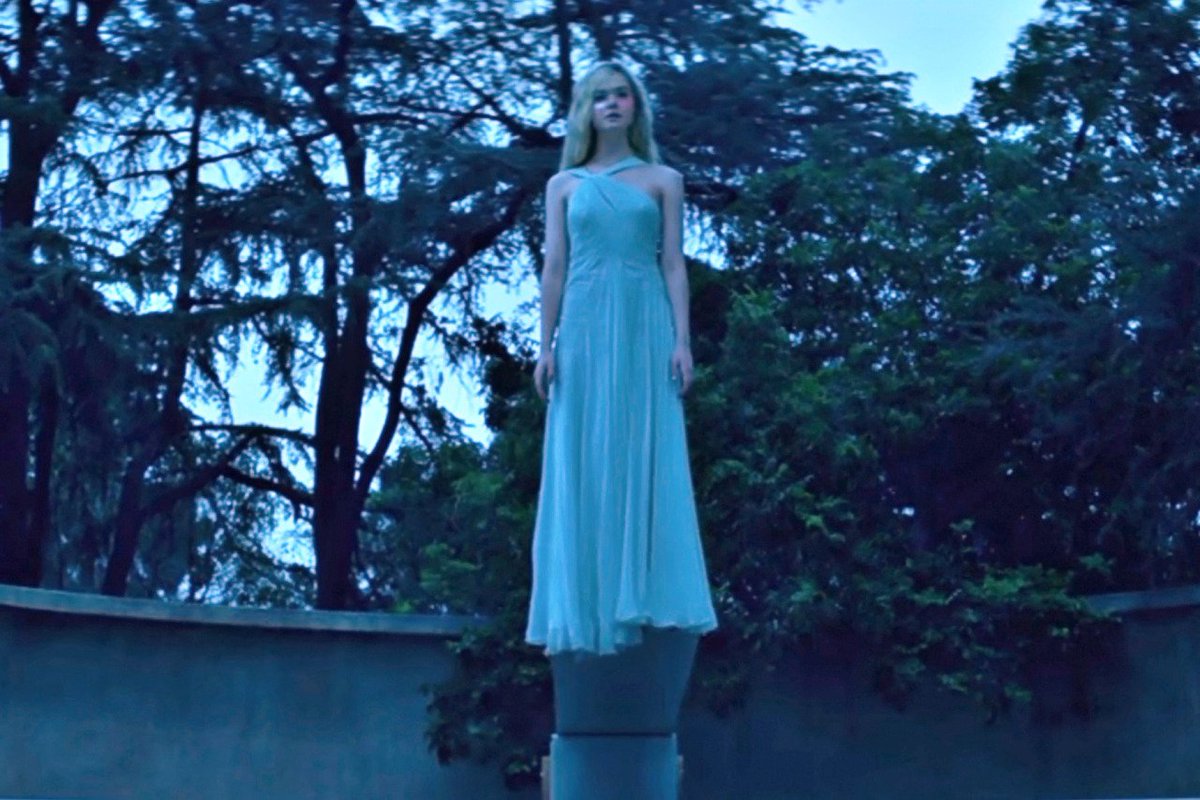
 Many women feel like they are oppressed and do not play a significate part in American culture, history, or religion. However, I was very impressed by the film The Neon Demon. It really challenged all the incorrect thoughts and basically made it clear that there can also be a woman savior, a female various of Christ. An aspiring model Jesse moves to Los Angeles to model after her parents died, she is a teenager, not of legal age and the agency falls in love with her an encourages her to lie about her age because they know she will be a very perfect model. When the people in Los Angeles see her, they know that there is something special about Jesse (Elle Fanning), they see the perfection of God in her. Although all the other women are beautiful, too, they feel Christ emanating from the core of Jesse’s being. Although she is fresh, and a virgin, she stays in a sleazy motel, and works. You can tell that something bad is going to happen to her because of her environment. #RyanPhillippe 5 of 7
 I do not want to ruin the film The Neon Demon for you, but it certainly has elements of the sacrament, resurrection, and even Judas. The purpose of the movie is to explain to women that they are significant and divine and do not need a man to get by. However, it is also to warn people to pay attention to their surroundings and just because you are pretty or Christ-like, does not mean that you are going to be safe in the plastic World, which is why many parents keep their children out of the media, and do not want them to be famous. The film is very artistic, thought provoking, and very beautiful. I recommend watching it with people who like books and art and at the end having discussion about themes you noticed in the film. It can hardly have escaped any one that we base everything upon the assumption of a psyche of the mass in which psychic processes occur as in the psychic life of the individual. Moreover, we let the sense of guilt for a deed survive for thousands of years, remaining effective in generations which could not have known anything of this deed. #RyanPhillippe 6 of 7
 We allow an emotional process such as might have arisen among generations of sons and daughters that had been ill-treated by their fathers, to continue to new generations which had escaped such treatment by the very removal of the father. These seem indeed to be weighty objections and any other explanation which can avoid such assumptions would seem to merit preference. However, further consideration shows that we ourselves do not have to carry the whole responsibility for such daring. Without the assumption of a mass psyche, or a continuity in the emotional life of humankind which permits us to disregard the interruptions of psychic acts through the transgression of individuals, social psychology could not exist at all. If psychic processes of one generation did not continue in the next, if each had to acquire its attitude toward life afresh, there would be no progress in this field and almost no development. Religion being the best of things, its corruptions are likely to be the worst. You are a dangerous girl. True beauty is the highest currency we have. Without it, she would be nothing. #RyanPhillippe 7 of 7


Kool-Aid, Burgers, and Weed—The Attributes of the Soul

When one bears in mind the suffering of the divine goat Dionysos in the performance of the Greek tragedy and lament of the retinue of goats who identified themselves with him, one can easily understand how the almost extinct drama was revived in the Middle Ages in the Passions of Christ. We know that God is everywhere; but certainly, we feel His presence when His works are on the grandest scale spread before us; and it is in the unclouded night-sky, where His Worlds wheel their silent course, that we read clearest His infinitude, His omnipotence, His omnipresence. Do you think God would be satisfied with half an oblation (peace offering)? I vehemently deny the charge of atheism. I am simply inveighed against the popular idol-worship of God as a substance, as another entity in the World, and against the vulgar eudemonistic morality which makes God a giver of sensuous rewards for good deeds and sensuous punishments for evil deeds. Such a conception—or, indeed, any attribution of personal characteristics to God—constitutes a lowering and limiting of the deity and has to be opposed in the interest of true religion.

There can be no doubt that the notion of God as a separate substance is impossible and contradictory, and it is permitted to say this plainly. When you would conceive of that great Being truly and fully, you must be able to realize the duration of eternity, obliterate the little periods of time and chronology, which require a starting and resting-place in our human minds—soar out of the reach of the sickly atmospheres which surround these little planets, and stand erect in the broad and fathomless light of God’s own atmosphere. Again, we need no other God [than the moral World order], and we cannot comprehend another one. There is no rational justification for going beyond the moral World order to a separate entity as its cause. God is too often a convenient stalking horse for human selfishness. However, the human soul is responsible for the origin of evil. God implants in the hearts of His people a desire to advance His ends, but human agents are compelled to employ natural means. The mystical union with the One is the ultimate goal of humans, and part of the soul makes such a union possible as superior to Intelligence. It is the flower of Intelligence.

In what ways did Christ obtain his amazing wisdom? Through careful study of the larger World in which we live and the smaller World of our human nature, it has emerged the duties of the heart: service of God, trust in God, wholehearted devotion to God, humility in God’s presence, repentance, self-communion, and renunciation. In this way, humans reach the height of the religious life, the love of God. Christ might have built up his teachings from the writings of Greek elders, which Providence could have out into his hands through his associations with Hellenistic Jews. Christ founded a kind of Freemasonry to assist him in his purpose to destroy superstition, restore reason to its rightful rule, and unite people in a rational faith in God, Providence and Immortality. The great message of spiritual vitality and force, directed to the human heart and resting on the threefold base of reason, revelation, and tradition. Apprehending the dimension of the spirit is a very succinct belief that cannot endure the acid test of rational examination in the product of life and time because it is a vision of reality that includes eternity, and immortality.

In life, conjuring cannot be explained solely in material terms. From the traditionalist standpoint, it seemed an insoluble mystery how the mind knows just what motor nerves to activate when, for instance, expecting a blinding light to be switched on, it causes the eyes to close in advance. The spirit of God is not inert like levers but possess an inherent spontaneity, and this spontaneity means that the expectation of the painful glare is inseparably associated with preparations to close the eyes. And having faith in God inherently means we will spontaneously treat others with the kind of love and respect that God would expect so we escape the painful doctrine of damnation. The belief arises in the context of free will. We are on Earth and inseparable from a preparation to act in which one seriously expects alleviation from suffering is in reach. In trying to grasp salvation, the belief in God is inevitably put to the test: We believe first and prove or disprove afterwards.

The essence of the human situation is a kind of circle of activity in which we inevitably acquire new nonrational beliefs as a direct consequence of practically and experimentally testing those we start with. The point is that our actions have unforeseen consequences. Disorder and tension on an individual level, and consequently, social level are the result of ignorance of the self and the World around. The mind stays without rest, running, jumping, and churning aimlessly, lashed by a white squall of feelings and emotions. The emotive pole of consciousness, where absorption in one’s pains or pleasures presents the objective assessment of one’s situation, and the cognitive pole, where pleasures and pains are forgotten in the business of mapping one’s own World and where emotions appears only in the shock of scientific discovery, as a feeling that, like boredom, is outside the pleasure-pain sphere. The movement from feeling to knowledge in consciousness is linked with the same facts that give human life the character of a passage from belief to self-criticism.

When Christianity began its entry into the ancient World it met with the competition of the religion of Mithras and for a long time it was doubtful which deity was to be the victor. The Bright figure of the youthful Persian god has eluded our understanding. Perhaps we may conclude from the illustrations of Mithras slaying the steers that he represented the son who carried out the sacrifice of the father by himself and this released the brothers from their oppressing complicity in the deed. There was another way of allying this sense of guilt and this is the one that Christ took. He sacrificed his own life and thereby redeemed the brothers from primal sin. The theory of primal sin is Orphic origin; it was preserved in the mysteries and thence penetrated into the philosophic schools of Greek antiquity. Men were the descendants of Titans, who had killed and dismembered the young Dionysos—Zagreus; the weight of this crime oppressed them. A fragment of Anaximander says that the unity of the World was destroyed by a primordial crime and everything that issues from it must carry on the punishment for this crime.

Although the features of banding together, killing, and dismembering as expressed in the deeds of the Titans very clearly recall the totem sacrifice described by St. Nilus—as also many other myths of antiquity, for example, the death of Orpheus himself—we are nevertheless disturbed here by the variation according to which a youthful god was murdered. In the Christian myth, man’s original sin is undoubtedly an offense against God the Father, and if Christ redeems humankind from the weight of original sin by sacrificing his own life, he forces us to the conclusion that this sin was murder. According to the law of retaliation which is deeply rooted in human feeling, a murder can be atoned only by the sacrifice of another life; the self-sacrifice points to a blood-guilt. The suicidal impulses of our neurotic regularly prove to be self-punishments for death wishes directed against others. And id this sacrifice of one’s own life; the self-sacrifice brings about a reconciliation with God, the father, then the crime which must be expiated can only have been the murder of the father.

Thus, in the Christian doctrine humankind most unreservedly acknowledges the guilty deed of primordial times because it now has found the most complete expiation for this deed in the sacrificial death of the son. The reconciliation with the father is the more thorough because simultaneously with this sacrifice there follows the complete renunciation of woman, for whose sake humankind rebelled against the father. However, not, also the psychological fatality of ambivalence demands its rights. In the same deed, which offers the greatest possible expiation to the father, the son also attains the goal of his wishes against the father. The religion of the son succeeds the religion of the father. As a sign of this substitution the antiquated totem feast is revived again in the form of communion in which the band of brothers now eats the flesh and blood of the son and no longer that of the father, the sons thereby identifying themselves with him and becoming holy themselves.

Thus, through the ages we see the identity of the totem feast with the animal sacrifice, theanthropic human sacrifice, and the Christian Eucharist, and in all these solemn occasions we recognize the after effects of that crime which so oppressed men but of which they must have been so proud of. At bottom, however, the Christian communion is a new setting aside of the father, a repetition of the crime that must be expiated. We see how well the Christian communion has absorbed within itself a sacrament which is doubtless far older than Christianity. Full fathom five thy father lies: Of his hones are coral made; those pearls that were his eyes; nothing of him that doth fade, but doth suffer a sea-change into something rich and strange…But what, then, is this consciousness that underlies both the emotional side and the intellectual side? First, we are unconscious of the undifferentiated. A constant impression is to the blank mind—if temperature were unvarying we would not notice it. Second, we are conscious of the constant only in the midst of variety and difference.

The essence of consciousness is thus to be discriminative, discriminations involved in the consciousness, the most liable to be misunderstood is that implicit in the problem of the external World. Many people dismiss discrimination as meaningless the notion of material objects independent of experience, and they frequently overlook an important point—that a distinction can be drawn within experience between the person sensing it and the sensation sensed. There is a profound sense of the complexity of the problem in the external World. Thus, in dealing with the emotions the important role some give to pure malice, or sadism, as human motive contrast refreshingly with the more commonplace views have been justly appreciated in our time. Tragic guilt is not always easy to explain; it is often not a guilt in the ordinary sense. Almost always consisted of rebellion against a divine or human authority and the chorus accompanied the hero with their sympathies, trying to restrain and warn him, and lamented his fate after he had met with what was considered fitting punishment for his daring attempt.

However, why did the hero of the tragedy have to suffer, and what was the tragedy have to suffer, and what was the meaning of his tragic guilt? We will cut short the discussion by a prompt answer. He had to suffer because he was the primal father, the hero of that primordial tragedy the repetition of which he serves a certain tendency, and the tragic guilt is the guilt of which he had to take upon himself in order to free the chorus of theirs. The scene upon the stage came into being through purposive distortion of the historical scene, or, one is tempted to say, it was the result of refined hypocrisy. Actually, in the antiquated situation, it was the members of the chorus themselves who had caused the suffering of the hero; here, on the other hand, they exhaust themselves in sympathy and regret, and the hero himself is to blame for his suffering. The crime foisted upon him, namely, presumption and rebellion against great authority, is the same as that which in the past oppressed the colleagues of the chorus, namely, the band of brothers. Thus, the tragic hero, through still against his will, is made the redeemer of the chorus.


Particular Aspects of Ancient Thoughts

Nothing comes into being out of nothing comes into being out of nothing. However, since the number of things that appear to come into existence is very large, and since they arise in all sorts of circumstances and on all sorts of occasions, we must say that everything that appears to come into existence is very large, and since they arise in all sorts of circumstances and on all sorts of occasions, we must say that everything that appears to come into existence is in fact already present in that out of which it arises: since hair, for example, can come only out of hair, there must be hair present, even though concealed, in beard and apparently, in every other substance as well. Hence, in everything there is a portion of everything else. However, hair will none the less be hair because hair predominates in some way. Hair, like everything else, will be infinitely divisible; at every level, it will contain a mixture of everything else and yet will be what it is in virtue of a predominates of itself. These sources of things are homoiomereiai (things with like parts) clearly because everything comes into existence out of something like itself. #RandolphHarris 1 of 8

There is nothing whose nature is such that must exist, but there is nothing, either, whose nature is exhausted by its relation to other states of affairs. For us, the state of becoming conscious is a special psychic act, different from and independent of the process of becoming fixed or represented and consciousness appears to us as a sensory organ which perceives a content proceeding from another source. It may be shown that psychopathology simply cannot dispense with these fundamental assumptions. If I bear in mind the notion of the two psychic instances and their relation to the consciousness, I find in the sphere of politics a perfectly appropriately analogy to the extra ordinary affection which I feel every state of affairs is ultimate, in the sense that it is something we have to take account of; but it is contingent, too, in the sense that there are circumstances in which it might not have come about. There is nothing, either, whose nature is exhausted by its relation to other states of affairs. #RandolphHarris 2 of 8

We would not have the slightest ground for believing in—we could not even conceive the possibility of—general connections. We can recognize directly that, say, fire burns, although we can be mistaken in this as in any other of our beliefs; for to recognize is nothing more or less than to hold a belief. Nature is eternal, or material energy, in perpetual motion. Nature is not to be conquered but to be known; and in following nature, one attains their ideal. Good is a simple and indefinable quality and at the same time to define it as that which ought to be, and thus a quality. Good is a predicate of certain forms of metal activity—the spirit of inquiry, love, courage, artistic creation, and appreciation. Human society has a single good to which all activity ought to be subordinated, and the doctrine is a set of contractual relations between individuals. Society, is a complex of complex institutions, of which the state is only one. What really matters to you anyway? If I feel like I am being ignore, disrespected, and unappreciated, I move on. I am tired of just sitting here waiting, hurting my back on their daily to produce content that is getting me nowhere. #RandolphHarris 3 of 8

A community flourishes when this fact is fully realized, when no attempt is made to enforce uniformity upon these diverse competing and cooperating types of institutions. The attempt to achieve absolute security by social planning is doomed to failure and is stultifying in its effects in society. We should not have a system of evil that oppresses the peasant. Religion must be sought in our conscience. Religion is purely and solely the fruit of a morally good heart; it originates entirely from the wish of a good heart that the good in the World should triumph over the evil. To have genuine religion is not to have a belief in God; it is to be a partisan of the good, to act as if the Kingdom of God, which simply means a just and moral World, were attainable. True religion is more than a belief in God. What is essential is the striving in the direction of a moral World whether or not one believe in its attainability. We are not required to believe any such thing, and it does not really matter if we do. We are required to acts as if we believe in God’s kingdom. #RandolphHarris 4 of 8

The World of the sense is a mere reflection of our own activity, and as a nothing it can hardly require an explanation outside of itself. Our belief in God can be grounded only in the supersensible World, which is the only ultimately real World. This is the World of free moral agents, and, in fact, moral and just, that every truly good act must succeed, that every evil one must surely fail, that for those who really love the good all things must turn out for the best. This does not mean that the good necessarily receiver rewards in terms of pleasure but the World in which we experience pleasure is not the real World. The World of sense objects exists only as a stage on which free agents perform or fail to perform their duty. It has not the slightest influence on morality or immorality, not the slightest power over our free nature. It is, in fact, nothing more than the material objectification of our duty; our duty is what is ultimately real, what is the fundamental stuff or all phenomena. #RandolphHarris 5 of 8

God is identical with the moral World order. A person believes in God insofar as one does one’s duty gaily and without concern, without doubts or fears about consequences. The true atheist is one who calculates the consequences instead of following the voice of one’s own conscience; one raises one’s own counsel above the counsel of God and thus raises oneself to God’s position. One who does evil in order to produce good is godless. You must not lie, even if the World were to go to pieces as a consequence; a moral agent knows, however, that the World could not go to pieces, since the plan of its preservation could not possible be based on a lie. All cognition is based on the existence of the moral World order. The existence of God, of course, simply means the moral World order, is therefore more certain than anything else. It is presupposed in any piece of valid reasoning, and hence it cannot be, nor does it need to be, proved. It is the ground of all other certainty and the only absolutely valid objective reality. #RandolphHarris 6 of 8
Belief in an ever-present witness and judge is essential to the moral behavior of human beings; if people were not afraid of punishment in the next World, they would be certain to do evil whenever they expected to escape the secular penalties. To do something that will cause immorality among young people in the future and make belief in God suspect is not a permissible game. Your marvelous faculty of dreaming as if you are awake is based upon your virtues, upon your goodness, your justice, and your love of truth; it is the moral charity of your nature which makes everything about you intelligible to me. I almost believe that all people are made as I am, and that no dreams are nonsense! Love that survives has strangled craving; it lives because it lives to nourish and succor like the Heavens. The mistake of the World is to think happiness possible to the sense. Friendship is so nearly allied to happiness, that one can hardly exist without the other. #RandolphHarris 7 of 8

A dream which one remembers so distinctly that one can relate it afterwards, and which, therefore, is no dream of delirium, always has meaning; why, it cannot be otherwise! For that which is in contradiction to itself can never be combined into a whole. The fact that time and space are often thoroughly shaken up, detracts not at all for the real content of the dream, because both are without any significance whatever for its essential content. We often do the same thing in waking life; think of fairy-tales, of so many bold and extraordinary creations of fantasy, of which only a foolish person would say: “That is nonsense! For it is not possible.” When a person is aware of oneself and the World one lives n, one is a harmonious part of all being. Love is love, and ever will be, in spite of mothers and fathers. The Earth has grown weary of the Sun and turns herself into the shadow, eager for rest. The Sun has been too ardent a lover. However, the gaze of the Sun upon the receding Earth is fonder than his look when she raised herself to his bright face. #RandolphHarris 8 of 8

The God of this World is in the Machine—Not Out of it
 The Earth floats on water. That was a common belief in 585 B.C., the year of a famous solar eclipse. Conceive a greater hope of a person who in the beginning of one’s life is hurried away by some evil habit than one who fastens on nothing. On the Nature of things, the ancients have a map and celestial model, as well as an account of how the natural World functions and how it reached its present form. Beginning from a first principle called the Boundless or Infinite, something capable of generating Hot and Cold was separated off…and a sphere of fire from this source grew around the air in the region of Earth like bark around a tree. When this sphere was torn off ad enclosed in certain rings, the Sun and the Moon and the stars came into existence. These Heavenly bodies are wheel-like, compressed masses of air filled with fire, which exhale flames from an orifice at one point. Eclipses and lunar phases are often explained by obstruction of the orifices. #RandolphHarris 1 of 8
 The path of an eclipse across the Earth’s surface can be calculated millennia in advance. Although it is entirely predictable, a total eclipse of the Sun is still perhaps the most sublime spectacle among the great cosmic phenomena. In the brief time—the few moments of totality—years of anticipation are subsumed. It is a sight capable of stretching the most fervent imagination. And when the Sun at last reappears from behind the Moon’s black shroud, something then makes you sigh with relief: “It is still there…” A total solar eclipse of the Sun is one of Nature’s grandest and most impressive events, perhaps more imposing than any other. It is a case of emotion in its pure state, almost primordia—similar, I believe, to the sense of wonder felt by ancient peoples who stood in the grip of total solar eclipse. #RandolphHarris 2 of 8
 Once we are convinced that there is a God, and that we are here to save our souls, it were surely folly in the extreme to think of anything except him. No wonder ancient peoples viewed eclipses as fateful signs—even more than the apparition of comets or meteor showers. Indeed, ancient civilizations had a profound relationship with everything that happened in the sky. They had to know how to extract fundamental signs from the Heavens that could guarantee the survival of their communities, signs that reflected the procession of the seasons, atmospheric variations or the will of the gods. In effect, every celestial event had to have an Earthly counterpart. No astronomical event was ever without consequence for the fate of the community. Him whose name is but a syllable, but whose hand is over all the Earth, God Almighty is just and gracious, and gives not His assent to rash inhumane curses. #RandolphHarris 3 of 8
 Thus, because life on Earth depended (and still depends today) upon the two great luminaries, the Sun and the Moon, the disappearance of one of these—especially the brighter one—even for a tiny period of time was considered an upheaval f cosmic magnitude. As noted above, one such famous episode is recounted in the course of a rather long war between the Lydians and the Medes that had already lasted five years. While they were engaged in battle during the sixth year, the day suddenly turned into night just when combat was the most heated….When the Lydians and the Medes saw night take the place of day, they quit fighting and, with deep solicitude, prayed that peace be made. The event was the eclipse of 28 May 585. There were sins whose fascination was more in the memory than in the doing of them, strange triumphs that gratified the pride more than the passions, and gave to the intellect a quickened sense of joy, greater than any joy they brought, or could ever bring, to the sense. #RandolphHarris 4 of 8
 Usually, eclipse were viewed as the Sun or the Moon being eaten by Rahu, one of the demons that fought the gods for possession of the goddess Laksmi (Venus)—and of a divine nectar similar to ambrosia, the god Narayana surprised him and cut off his head. Ever since, Rahu has wandered the skies, lying in ambush for the Sun and the Moon. Among the Buriats living in east Lake Baikal in southern Siberia, the belief in a monster named Alkha was widespread. Alkha continually chased and devoured the Sun and the Moon. He repeatedly darkened the World, until the exasperated gods cut him in two. The lower half fell to Earth, but the upper half continues to stalk the skies, which explains why eclipses still happen every so often. What are the comprehend with the interlinked terrors and wonders of God. Human life partakes of the unraveable inscrutableness of God. #RandolphHarris 5 of 8
 The sea is what remains of the primeval moisture, the rest having been evaporated as air or dried up by the celestial fire to form the Earth. Land, sea, air and Heavens are thus all explained by a continual process of separating off from the primeval pair of Hot (dry) and Cold (wet). Wind, rain, lighting, thunder, and related phenomena are explained by the interaction of these elemental principles (water, air, fire) and opposite powers (hot, cold; dry, moist; thick, thin; light, dark). The origin of living things is explained as part true and later transferred to dry land. The first examples of membrane. In an interesting anticipation of modern ideas, the first human beings could never have survived as helpless infants, but most have been born from living things of another kind, since other animals are quickly able to look for their own food, whole humans require prolonged nursing. #RandolphHarris 6 of 8
 What creature but a madman would not rather do good than ill, when it is plain that good or ill, it must return upon oneself. Cosmic justice explains that out of those things whence is the generation of existing things, into them also does their destruction take place, as is right and due; for they may retribution and pay the penalty to one another for their offense [or injustice], according to the ordering of time. Basically, the eventual reabsorption of all things back into the apeiron (untraversable or limitless rather than infinite in any precise mathematical sense) is the only fitting atonement. It is now generally agreed that offense and compensation must both refer to the strife of opposing principles (such as the hot and cold), and that the ordering of time stands primarily for periodic regularity in the daily and seasonal variation of heat, moisture, daylight, and the like. Whether there is also a reference here to larger cycle in which the cosmos itself would perish into its sources is more doubtful. #RandolphHarris 7 of 8
 This aperion is ageless and immortal, and probably even divine (to theion). This apeiron surrounds and embraces al things and apparently steers or governs them as well. It seems to have been conceived as ungenerated as well as imperishable, and thus contrasts in every respect with the limited, perishable World it engenders. Our sources refer to “Worlds” (kosmoi) in the plural; a succession rather than a simultaneous plurality of Worlds seems to be meant. The Boundless transcends this process of World creation, circumscribing each individual World in space, outlasting all of them in time, and providing the inexhaustible material source, the eternal motive power, the vital energy, and (presumably) the geometrical form and cyclical regularity for the cosmic process as a whole. In its archaic complexity, the apeiron is thus both physical and a metaphysical or theological concept, and points the way not only to the infinite void of the atomists, but also to the cosmic deity of Xenophanes, Aristotle, and the Stoics. #RandolphHarris 8 of 8

Liber de Causis et Processu Universitatis
 Many people hate high-rise apartment buildings because you get stuck under one roof with people you may not like, the managers and maintenance gossip and the people do not see them as apartments, but as one house and get too familiar with others. Experiences are a criterion of truth, experience alone is reliable concerning the individual existent. We find such expressions as “I have tested this”; “I and my associates have experienced”; “I have not experienced this”; “We pass over what the ancients have written on this topic because their statements do not agree with experience”; “But it is not sufficient to know something as included in a Universal; but we strive to know each thing as it is in its own individual kind of being, for this is the best and perfect kind of knowing.” This attitude is not contrary to a religious outlook. Some men, women, and children would attribute the deluge simply to the divine will, not seeking other causes. However, scholars of the Golden Age, while also ascribing the event ultimately to the divine will, maintain that God acts through natural causes in natural phenomena; while we do not always attempt to investigate the divine will, we are free to seek those natural causes that were divine instruments. #RandolphHarris 1 of 11
 Anarchism is a social philosophy that rejects authoritarian government and maintains that voluntary institutions are best suited to express man’s natural social tendencies. Historically, the work “anarchist,” which derives from the Green an archos, meaning “no government,” appears first to have been used pejoratively to indicate one who denies all law and wishes to promote chaos. It was used in this sense against the Levelers during the English Civil War and during the French Revolution by most parties in criticizing those who stood to the left of them along the political spectrum. The first use of the word as an approbatory description of a positive philosophy appears to have been by Pierre Joseph Proudhon when, in his Qu’ est-ce-que la propeiete?(What Is Property?, Paris 1840), he described himself as an anarchist because he believed that political organization based on authority should be replaced by social and economic organization based on voluntary contractual agreement. #RandolphHarris 2 of 11
 Nevertheless, many different definitions have been formed for the word anarchism, and have survived together and have caused confusion in discussing anarchism, which to some has appeared a doctrine of destruction and to other a benevolent doctrine based on a faith in the innate goodness of humans. There has been further confusion through the association of anarchism with nihilism and terrorism. In fact, anarchism, which is based on faith in natural law and justice, stands at the opposite pole to nihilism, which denies all moral laws. Similarly, there is no necessary connection between anarchism, which is a social philosophy, and terrorism, which is a political means occasionally used by individual anarchists but also by actionists belonging to a wide variety of movements that have nothing in common. Anarchism aims at the utmost possible freedom compatible with social life, in the belief that voluntary cooperation by responsible individuals is not merely more just and equitable but is also, in the long run, more harmonious and ordered in its effects than authoritarian government. #RandolphHarris 3 of 11
 All variants of anarchism combine a criticism of existing governmental societies, a vision of future libertarian society that might replace them, and a projected way of attaining this society by means outside normal political practice. Anarchism generally rejects the state. It denies the value of democratic procedures because they are based on majority rule and on the delegation of the responsibility that the individual should retain. Some anarchist believe that humans have a fixed and immutable morality, manifesting itself through universal benevolence; and that humans have no right to act anything but virtue and to utter anything but truth, and that their justice is to act towards their fellow humans in accordance with natural justice. Anarchist believe that justice itself is based on immutable truths; human laws are fallible, and men, women, and children should use their understandings to determine what is just and should act according to their own reasons rather in obedience to the authority of positive institutions, which always form barriers to enlightened progress. #RandolphHarris 4 of 11
 Some anarchist reject all established institutions and all social relations that suggest inequality or the power of one human over another, including marriage and even the role of an orchestra conductor and even God in some cases. For the present many anarchist put their faith in small groups of humans seeking truth and justice; for the future, in a society of free individuals organized locally in parishes and linked loosely in a society without frontiers and with the minimum of organization. They believe that every human should share their produce with all in need, on the basis of free distribution. Anarchist tend to distrust an excess of political or economic cooperation; on the other they, they tend to look forward to a freer intercourse of individuals through the progressive breaking down of social and economic barriers. Here, conceived in the primitive for of society of free landworkers and artisans, are the first sketch of an anarchist World. Some people grew up believing that no government is good government and they may have been led astray and do not know the error of their ways. #RandolphHarris 5 of 11
 Libertarian attitudes, particularly in connection with the anarchosyndicalism, which is a theory of anarchism that views revolutionary industrial unionism or syndicalism as a method for workers in a capitalist society to gain control of an economy and, with that control, influence broader society, became popular because it influenced people by the rationalism and even romanticization of the experience of social struggle; and this helped to fuel the anarchist movement. Most form of anarchy assumed a number for forms and, the points of variation between them lie in three main areas: the use of violence, the degree of cooperation compatible with individual liberty, and the form of economic organization appropriate to a libertarian society. Despite their differences, all these forms of anarchism were untied not merely in their rejection of state, of politics, and of accumulated property, but also in certain more elusive attitudes. #RandolphHarris 6 of 11
 Many people do not know this, but in the mid-1970s, San Francisco, California USA used to have a high population of African Americans, who lived in Victorian houses, had business, and nightclubs in the region. The Fillmore had become the center of jazz and grand Victorian architecture, however, Governor Jerry Brown considered them an urban blight, many suspect this is because of the proximity to the financial district made the Fillmore ideal for new apartment high-rise buildings, which would bring in more tax revenue. So, the San Francisco Redevelopment Agency condemned many of the African American owned Victorians, business, restaurant, and nightclubs, and knocked them down more than 2,500 Victorian houses and replaced them with high-rise apartment buildings. However, may African Americans were not allowed to buy houses in other districts in San Francisco, nor could they afford the rent in these high rises, so they moved to East Oakland and Sacramento. #RandolphHarris 7 of 11
 In 2012, Jerry Brown eliminated Redevelop Agencies, which used tax money to combat urban blight and provide affordable housing. Many people believe this is because politicians are trying to push the poor and middle class out of California by making it unaffordable for them to live here. However, this move also created a housing shortage, and it is hurting the economy and the people. The median price for a house in Los Angeles, California is $615,000.00, and in San Francisco, many houses, even if they are not in liviabe condition are selling for $2.3 million and far more. A perfect turn-key house in San Francisco will cost about $4.5 million. So now, many people are moving out of San Francisco, and to Oakland, California, which is causing the property values in Oakland to rise so high that low income families and middle class people cannot afford to rent. A one bedroom apartment in Oakland costs on average $2,500.00 a month, and houses are going for about $750,000.00. #RandolphHarris 8 of 11
 Because redevelopment agencies were shut down, now these companies cannot go into rundown properties, refurbish them, make them safe to life and offer income based rent. Therefore, people are now buying factories and illegally allowing people pay what they can afford and live in these factories. Many of them have been cited for permit violations, but the property owners cannot afford to fix them and they believe they are providing a safe place for people to live where they do not have to engage in prostitution, drug dealing, nor financial crimes to afford a safe place to live. People like Derick Ion believe in the collectivism form of anarchism were, because the government cannot provide for the citizens, then they advocate some collective responsibilities such as providing housing and places to party for people who are rejected by mainstream society. However, this proved to be dangerous when the Ghost Ship housing development, which is a 10,000 square foot warehouse, full of studios burst into flame during a party, which was not permitted and the building had already been deemed unsafe by Oakland this City. #RandolphHarris 9 of 11
 At least 36 people were killed on 2 December 2016, in the Ghost Ship Collective Housing project during a party, and the owner Derick Ion and Oakland the City could face criminal and civil liabilities, and possibly murder charges. Clearly, Derick Ion thought he was doing a good thing ad providing a safe place for people to live and party. Face it, in California, if you are not rich and stylish, people will make fun of you and were you live. Some people in look down upon people who live in nice houses in the flat lands because they do not live in the Hills and do not have brand new cars and they tease them. Derick looked at these people as his children and did the best to provide for them and he did not know better. Some people were raised in a time where they thought the “recommendations” and “permits” are a form of the man (government) hatin’ on them. However, recommendations and permits are to keep people safe and prevent fires and save lives. And Oakland the City could face charged for not shutting these places down before this tragic fire happened. Still, I believe Derick and Oakland the City did the best they could and new the reality these people faced and did not want to put them out on the streets and push them into a life of crime. #RandolphHarris 10 of 11
 I do not support anarchism, but I can understand where these people are coming from. They are scared and did not want to be forced into a place they did not know and like and did not want to try to fit in with people who called them poor and other inhuman names. During the 1870s, in Paris, France envisaged people opened warehouses from which people could have what they wanted. They reasoned, first, that work was a natural need that people could be expected to fulfill without the threat of want and, second, that where no restriction was placed on available goods, there would be no temptation for anyone to take more than one could use. So, please go easy on them and sorry for your loss. However, we need to recognize that the economy is $20 trillion and debt and a lot of families are struggling to get by and many politicians feel it is a time to shutdown affordable housing, uses $508 billion in taxpayer funds to build a sports complex in Sacramento, build luxury housing and high-end shopping malls and everyone is forgetting about the poor and middle class who are barely getting by, and this is also paralyzing capitalism because corporations are shutting down and people are being encouraged not to move to California. #RandolphHarris 11 of 11