

Humans are continuously behaving within ever changing internal and external environments that contain critical antecedent, co-occurring, and consequating events. Completely understanding the complex interactions that occur among multiple behaviours within these continuously changing contexts can be considered the ultimate goal of behaviour assessment. An assessor cannot, however, conduct continuous observations of all relevant modes and dimensions of behaviour across all relevant contexts. Manipulative behaviour is part of a borderline syndrome. The verb “manipulate” is defined as “to influence or manage shrewdly or deviously,” as in “to manage or control artfully or by shrewd use of influence, often in an unfair or fraudulent way.” Both definitions suggest that the manipulating individual intends to influence another person by indirect, insidious, or devious means. Indeed, when they are trying to influence someone, borderline individuals are typically direct, forceful, and, if anything, unartful. It is surely the case that borderline individuals do influence others. Often, the most influential behaviour is parasuicide or the threat of impending suicide; at other times, the behaviours that have the most influence are communications of intense pain and agony, or current crises that the individuals cannot solve themselves. #RandolphHarris 1 of 22

Such behaviours and communications, of course, are not by themselves evidence of manipulation. Otherwise, if we respond to their communications of distress, we would say have to say that people in pain or crises are “manipulating” us. The central question is whether or not borderline individuals purposely use these behaviours or communications to influence others artfully, shrewdly, and fraudulently. Such an interpretation is rarely in accord with borderline individuals’ own self-perceptions of their intent. Since behavioural intent can only be measured by self-report, to maintain that the intent is present in spite of the individuals’ denial would require us either to view borderline individuals as chronic liars or to construct a notion of unconscious behavioural intent. My own experience in working with suicidal behaviour as “manipulative” is a major source of their feelings of invalidation and of being misunderstood. From their own point of view, suicidal behaviour is a reflection of serious and at times frantic suicide ideation and ambivalence over whether to continue life or not. Although the patients’ communication of extreme ideas or enactments of extreme behaviours may be accompanied by the desire to be helped or rescued by the persons they are communicating with, this does not necessarily mean that they are acting in this manner in order to get help. #RandolphHarris 2 of 22

These individuals’ numerous suicidal behaviours and suicide threats, extreme reactions to criticism and rejection, and frequent inability to articulate which of a number of factors are directly influencing their own behaviour do at times makes other people feel manipulated. However, inferring behavioural intent from one or more of the effects of the behaviour—in this case, making others feel manipulated—is simply an error in logic. The fact that a haviour is influenced by its effects on the environment (“operant behaviour,” in behavioural terms) says little if anything about an individual’s intent with respect to that behaviour. Function does not prove intention. For example, a person may quite predictably threaten suicide whenever criticized. However, the fact of the correlation in no way implies that the person is trying or intending to change the criticizer’s behaviour with threats, or is even are of the correlation. Thus, the behaviour is not manipulative in any standard use of the term. To say then that the “manipulation is unconscious is a tautology based on clinical inference. Both the pejorative nature of such inferences and the low reliability of clinical inferences in general make such a practice unwarranted in most cases. However, it is also important to remember that manipulative behaviour may be “appropriate” and normal for persons who are dealing with a hostile system. #RandolphHarris 3 of 22

Many humans have eternal conflict between self-support and environmental support. There is a good deal of this conflict in employer-employee relationships. Often an employee, even when given the authority to make decisions and to take action, cannot do so. Unable to trust his or her own ability to know general company policy and to adapt it to changing situations, the employee defers decisions to higher-ups or to so-called authorities. Such an employee refuses to depend on self-support, but must look to authorities—environmental support. On the other hand, many employers refuse to trust the individual abilities of their employees. A salesman, for example, may be treated like a machine, whose sole function is to perform within the limited framework of the employer’s sales manual. This “sales machine,” robbed of personality, treats the customer in the same depersonalized manner. Not trusting oneself for support, a manipulator tends to believe that salvation lies in the hands of others. Yet, not trusting others completely, he or she manipulates the other in an effort to have the support. The manipulator rides the coattail of the other person and then attempts to steer him or her. Refusing to drive himself or herself, the manipulator drives the driver. #RnadolphHarris 4 of 22

The operative word here is distrust. We do not trust the natural organismic balance each of us has, which would allow us to live our lives simply and feelingly. Married couples often form a complex manipulative partnership to cope with their distrust of self-sufficiency and of others. For example, a husband with a penchant for withdrawing and avoiding uses his wife, who has an inclination for blaming and attacking, as his “mouthpiece.” It is the perfect solution for the husband, who feels he is insufficient to confront others about his needs. He lets his wife convey his demands to others. Such an arrangement is a safe haven for a withdrawing and avoiding husband. His wife is on the front line, and if his demand elicits a negative or hostile response from the other, she gets the heat. And, of course, he can resort to blaming and attacking her when his manipulation has failed. It was her fault. Erich Fromm has suggested a second cause for manipulation. He reasons that the ultimate relationship between two humans is that of love and that love is knowing a human being as he or she is and loving his or her ultimate essence. We believe that this desire to love and be loved is a wonderfully healthy, innately human experience, but our manipulative inclinations to be lovable and to make lovable are sabotaging elements. #RandolphHarris 5 of 22

If loving is knowing a human being as he or she is, we fear that we are not very lovable as we truly are, and the other person is not very lovable as he or she truly is. So, we begin masking and costuming ourselves in an effort to make ourselves lovable, and we begin our attempts to change and mold others to meet our expectations of what is lovable in them. Those of you who have had extramarital relationships, have any of you ever had to cope with feelings of regret, remorse or guilt because of your extramarital affairs? When you tell lies to your husband or wife about your involvements, do you feel you are protecting him or her? Or the marriage? At first, many people feel that they would never do anything to jeopardize their marriage, the believe that they would never tell a lie, and do not even think that they. However, you have to be somewhat optimistic that life is basically going to work out. In other words, you do not start an affair with the idea of being discovered. Sure, there is this fear that it might result in injury. If their spouse did find out, some people do not believe that the individual would leave, but that it would be worse—he or she would stay and try to find some other ways to get back at them. Still, the desire to have more relationships with other people is stronger than their fear of being found out. The thought of spending forty—three years married to one lovely person and never knowing anybody else is just something that some people do not honestly envision when they take their wedding vows. #RandolphHarris 6 of 22
In our society, it is common that when you get to know somebody at great depth that the most natural thing in the World is to go to bed with him or her. The truth of the matter is many people have affairs with the people that they work with because that is where they relate to others. Whether it becomes an act involving pleasures of the flesh or not is almost immaterial. So, the idea that someday it may come out, which most people would sincerely regret, is outweighed by other considerations, probably selfish ones. Yet, being around people that you want to know well—people that are very talented, very cosmopolitan does not necessarily involve being intimate with them, too. Relationships are a way of expressing yourself at the time and in the place and under the circumstances. Certainly, pleasures of the flesh are, after all, a means or form of communication, handled in different ways depending on one’s maturity and one’s security. It may be a form of sport or a form of expression or a form of barter. Two forms for infidelity come through quite clearly. One is a desire to settle a score with their partner, to square accounts—a way of getting back at their partners for what they see as injustice or inadequacy. At the same time, it could also be a way to express culturally stereotyped attitudes. Pleasures of the flesh, of course, are only one area in which a sense of “arrested development of self” is experienced by a man or a woman after they have been married for a while. #RandolphHarris 7 of 22
People become aware that they have not had a chance to try their wings and they belatedly feel the urge to discover how far and how well they can fly. This awareness becomes focused on pleasures of the flesh, chiefly because society has made it such a charged aspect of life. It is certainly reasonable for someone to wish to catch up with himself, to experience the feelings that he—or she—feels are legitimately his and which he feels capable of achieving. However, this search for identity is a much wider problem than can be encompassed by pleasures of the flesh alone. It is just that when pleasures of the flesh are not good, when pleasures of the flesh deprivation or distress with pleasures of the flesh of any kind is occurring, it tends to dominate the individual’s feelings. Under those circumstances, many people see pleasures of the flesh as the only really important thing in their lives—they feel deprived, even cheated, of one of life’s great satisfactions. Consequently, they often become overly dramatic, indulging themselves in emotional baths, losing perspective on the totality of their lives. It is this preoccupation with pleasures of the flesh-for-the-sake-of-pleasures of the flesh that makes so much extramarital pleasures of the flesh ultimately self-defeating become in time it is the totality of an individual’s life that determines whether pleasures of the flesh will continue to be a fulfilling experience or will become a demoralizing one. #RandolphHarris 8 of 22

It would be just as reasonable, and more logical, for a man or a woman who lack a sense of self-esteem and who feels cheated of satisfaction with pleasures of the flesh to begin the search for greater happiness by undertaking achievements in other aspects of their lives—whether in a career or by cooperating in some community project or by turning to education for the achievement of new skills and greater knowledge. Out of such efforts, a sense of self materializes that may very well lead either to the improvement of existing emotional relationships or to the begging of new ones that promise more enduring satisfaction—including pleasure with pleasures of the flesh. Infidelity is a very chancy and unreliable means to use in searching for one’s identity a very chancy and unreliable means to use in searching for one’s identity, in exploring one’s deepest feelings and beliefs and responses may be, but also communicating them to someone else. This is true for many reasons, including the fact that a man and a woman who are involved in an affair generally have different investments in their relationship, and these affairs are most often conducted under less than encouraging conditions. In addition, social attitudes—including those internalized by the man and woman—make it certain that in a good number of cases, the individuals will have to cope with feelings of guilt, one way or another. #RandolphHarris 9 of 22

Either the guilt will intrude on their ability to accomplish their goals—to discover dimensions of their own personality—or it will require them to deny that the feelings exist, and in doing so, to sweep other feelings under the rug along with the discomfort of guilt. Undeniably, even so little a thing as a few kind words, and certainly a sense of companionship or—even more importantly—the first achievement of “excitement,” carries wit it a significant strengthening of motivation for change and may nurture self-esteem to a point where a man or woman have that much more confidence in their ability to develop more rewarding patterns of behaviour. However, it is very difficult to depend on a single happening, or a series of happenings, to sustain the energy, interest, courage, and zest required by a “lost” individual who is trying to develop in the important ways that he or she feels are necessary if life is to have more meaning. If they are to become real and lasting achievements, real and lasting achievement of goals which require a significant change of emotions, attitudes and habitual conduct must be carried out across a broad spectrum of one’s life. It is true that when one partner finds satisfaction in extramarital relationships, this may turn a potentially destructive relationship into a cautious friendship, at best, or supportive “acquaintanceship,” and in that sense it is better than open material warfare with all its attendant bitterness and destructiveness. #RandolphHarris 10 of 22

However, this is not marriage in the sense of two human beings with full regard for each other, sharing the wish to negotiate differences between them and developing mutual pleasures to the fullest extent possible. Making do in marriage is not fulfillment through marriage. Even, if infidelity represents the first step in a positive direction—toward making do instead of making war—its is still a long distance away from the goal of becoming committed: true to oneself and loyal and vulnerable to one’s partner. A minority of the population is afflicted with the vast majority of illnesses that come to the attention of physicians. Defective heredity or a weak constitution only partly explains this high incidence of recurrent illness. We must look as well into the ways of life of these people with a talent for sickening. Studies of the frequently ill show they share many traits. Among other things, it is found that they may simply not take care of themselves; that is, they do not eat, sleep, or exercise sensibly. Another, less obvious, factor in frequent illness is stress. Many people encounter more stress in everyday life than is objectively necessary. They find everyday interpersonal relationships lacking in satisfaction, and, indeed, positively stressing. Demanding roles are a source of such stress. #RandolphHarris 11 of 22

If persons must present themselves to others as something that they are not—if they are obliged to seem friendly when they are unfriendly, or if they are obliged to hide their real feelings and wants from others—then every moment spent in the presence of others is stressing. It is as if they are traveling incognito, with their true identity hidden. They feel that if they are “found out” by others, terrible harm will be fall them. Consequently, they trust no one and keep their guard up. Other people by their very existence then function as stressors, adding to the stress of daily life. Another factor in frequent illness is an overdeveloped sense of duty. Persons who feel obliged by their consciences to keep working at unsatisfactory jobs or to stay involved in unrewarding relationships are actively creating the conditions for their own illness. Periods of being sick may thus function as periods of respite from a dispiriting way of life. If they could change their work or their ways of relating even slightly, they would become ill less often. A brief vacation from work of family is usually less expensive than a stay of equal length at a hospital—and the vacation may forestall the illness. The will-power machinery is switched on in certain types as soon as they become aware of foibles. They resolve, and try, to keep a budget, to mix with people, to be more assertive or more lenient. If they showed an equal interests in understanding the implications and sources of their troubles, this would be fine. #RandolphHarris 12 of 22

Unfortunately, this interest is sadly lacking. The very first step, which is to see the whole extent of the particular disturbance, would go against their grain. It would indeed be the exact opposite to their frantic drive to make the disturbance disappear. Also, since they feel they should be strong enough to conquer it by conscious control, the process of careful disentangling would be an admission of weakness and defeat. These artificial efforts are bound, of course, to abate sooner or later; then, at best, the difficulty is a little more under control. All that is sure is that it has been driven underground and that it continues to operate in a more disguised form. The analyst, naturally, should not encourage such efforts but should analyze them. Most neurotic disturbances resist even the most strenuous efforts at control. Conscious efforts simply do not avail against a depression, against consuming daydreams. One would think that this would be clear to any person who had gained some psychological understanding during analysis. However, again, the clarity of thinking does not penetrate to the “I should be able to master it.” The result is that he suffers more intensely under depressions, etcetera, because, in addition to its being painful anyhow, it becomes a visible sign of his lack of omnipotence. Sometimes the analyst can catch this process at the beginning and nip it in the bud. #RandolphHarris 13 of 22

Thus, a patient who had revealed the extent of her daydreaming, while exposing in detail how subtly it pervaded most of her activities, came to realize its harmfulness—at least to the extent of understanding how it sapped her energies. The next time she was somewhat guilty and apologetic because the daydreams persisted. Knowing her demands on herself, I injected my belief that it would be neither possible nor even wise to stop them artificially, because we could be sure that they fulfilled as yet important functions in her life—which we would have to come to understand gradually. She felt very much relieved and now told me that she had decided to stop the daydreams. However, since she had not been able to, she felt I would be disgusted with her. Her own expectation of herself had been projected to me. Many reactions of despondence, irritability, or fear occurring during analysis are less a response to the patient’s having discovered a disturbing problem in himself (as the analyst tends to assume) than to his feeling impotence to remove it tight away. Thus, the inner dictates, while somewhat more radical than the other ways to maintain the idealized image, like the others do not aim at real change but at immediate and absolute perfection. They aim at making the imperfection disappear, or making it appear as if the particular perfection were attained. If, as in the past example, this becomes especially clear the inner demands are externalized. #RandolphHarris 14 of 22

Then what a person actually is, and even what he suffers, becomes irrelevant. Only what is visible to others creates intense worries: a shaking of the hand, a blush, an awkwardness in social situations. The shoulds, therefore, lack the moral seriousness of genuine ideals. People in their grip are not striving, for instance, toward approximating a greater degree of honesty but are driven to attain the absolute in honesty—which is always just around the corner, or is attained in imagination. They can achieve at best a behaviouristic perfection, such as Pearl Buck has described in the character of Madame Wu in the Pavilion of Women. Here is the portrait of a woman who always seems to do, feel, think the right thing. The superficial appearance of such people is, needless to say, most deceptive. They themselves are bewildered when, seemingly out of a blue sky, they develop a street phobia or functional heart trouble. How is that possible, they ask. They have always managed life perfectly, have been the leaders in their class, the organizers, the model marriage partners or parents. Eventually, a situation which they cannot manage in their usual way is bound to occur. And, having no other way to deal with it, their equilibrium is disturbed. The analyst, when getting acquainted with them and the enormous tensions under which they operate, rather marvels that they have kept going as long as they have without gross disturbances. #RandolphHarris 15 of 22

The contribution of intellect is indispensable. However, it is night enough. It leaves a most important part of the psyche—the intuition—still untouched. The danger of slipping into this overstress on intellectual activity and not retaining the healthy balance between it and intuitional activity, is large and real. The intellect has so dominated the modern man that his approach to these questions is first made through it. Yet, the intellect cannot provide the answers to them. They come, and can only come, through the intuition. When a difficult and important decision has to be made, the mind can impartially take in both the pros and cons, can circle all around the facts, yet in the end return baffled to where it started. Reason exerts itself in vain and only exhausts itself in such a process. The next step is to try outside advice, authority, or, if one can, intuition. The intellect may be convinced and confess to the truth but the faculty which actually recognizes it is the intuition. It is the latter’s light failing upon, and passing through, the intellect which really certifies an idea to be true. Semantic analysis and reasoned reflection help to uncover the lesser errors, the little illusions. The intellect cannot go beyond its own limitations, however; a higher faculty, insight, is needed to uncover the larger errors, the major illusions. The intellectual knowledge of the Truth is merely its shadow and not the Truth itself. #RandolphHarris 16 of 22

The Truth is a higher state of awareness which leads you out of a little personal and physically materialistic everyday life into a new World of being—the World of your higher self which transcends these things. It is a real experience and not a mere speculation. It beings with it the peace which passeth understanding of which Saint Paul spoke, frees you from anxieties, fears, and all other negative ideas. It reveals to you that God, in the sense of a Universal Intelligence and Universal Power, is actually the basis of all existence. A religion that executes its obsolete sovereign must now establish the power of its new sovereign; it closes the churches, and this leads to an endeavour to build a temple. The blood of the gods, which for a second bespatters the confessors of Louis XVI, announces a new baptism. Joseph de Maistre qualified the Revolution as satanic. We can see why and in what sense. Michelet, however, was closer to the truth when he called it a purgatory. An era blindly embarks down this tunnel on an attempt to discover a new illumination, a new happiness, and the face of the real God. However, what will this new god be? Let us ask Saint-Just once more. The year 1789 does not yet affirm the divinity of man, but the divinity of the people, to the degree in which the will of the people coincides with the will of nature and of reason. If the general will is freely expressed, it can only be the universal expression of reason. If the people are free, they are infallible. #RandolphHarris 17 of 22

Once the King is dead, and the chains of the old despotism thrown off, the people are going to express what, at all times and in all places, is, has been, and will be the truth. They are the oracle that must be consulted to know what the eternal order of the World demands. Voc populi, vox naturae. Eternal principles govern our conduct: Truth, Justice, finally Reason. There we have the new God. The Supreme Being, whom cohorts of young girls come to adore at the Feast of Reason, is only the ancient god disembodied, peremptorily deprived of any connection with the Earth, and launched like a balloon into a Heaven empty of all transcendent principles. Deprived of all his representatives, of any intercessor, the god of the lawyers and philosophers only has the value of a demonstration. He is not very strong, in fact, and we can see why Rousseau, who preached tolerance, thought that atheists should be condemned to death. To ensure the adoration of a theorem for any length of time, faith is not enough; a police force is needed as well. However, that will only come later. In 1793, the new faith is still intact, and it will suffice, to take Saint-Just’s word, to govern according to the dictates of reason. The art of ruling, according to him, has produced only monsters because, before his time, no one wished to govern according to nature. The period of monsters has come to an end with the termination of the period of violence. #RandolphHarris 18 of 22

“The human heart advances from nature to violence, from violence to morality. Morality is, therefore, only nature finally restored after centuries of alienation. Man only has to be given law, “in accord with nature and with his heart,” and he will cease to be unhappy and corrupt. Universal suffrage, the foundation of the new laws, must inevitably lead to a universal morality. “Our aim is to create an order of things which establishes a universal tendency toward good.” Spiritual self-realization is the main thing. Study of the teachings concerning cosmical evolution and the psychical evolution of man are but intellectual accessories—things we may or may not take on our journey, as we like. That part of man which reasons and speculates—mortal mind—is not the part which can discover and verify the existence of God. We are not necessarily helped or hindered on the divine path by taking up the lore of science or by becoming versed in the ways of sophistry. Once we live out our spiritual life in the heart, the rest sinks to second place. What the Overself really is defines adequate statement. For reason falters and fails before its mysterious Void. It dares not claim a capacity beyond what it actually possesses. Thus, the mystery of the World is the mystery of a soluble riddle hidden within an insoluble enigma. Nevertheless, we need not despair. For even if metaphysics is unable to explore this mysterious territory, it is at least able to point out its location. That is a definite gain. However, what is not all. What reason cannot do can yet be done by the faculty which towers transcendently above it—insight. #RandolphHarris 19 of 22

Safety officers, in one form or another, have been present in the American work force for a long time. Some of the first safety officers came out of the fire service. As safety officers, the Sacramento Fire Department and EMTs make it a priority to stay in shape. Practicing the basic exercise principles is crucial for you to develop an effective fitness-training program. The principles of exercise apply to everyone at all levels of physical training, from the Olympic champion to the weekend golfer. They apply especially to fitness training for military personnel because having standard fitness principles across the organization saves time, energy, resources—and prevents injury. If you recall the P-R-O-V-R-B-S acronym, you can easily remember the basic principles of exercise: Progression—The intensity and duration of exercise must gradually increase to improve your fitness level. A good guideline for improvement is a 10 percent gain at specified intervals. Regularity—To achieve affective training, you should schedule workouts in each of the first four fitness components at least three times a week. Regularity is also key in resting, sleeping, and following a good diet. Overload—The workload of each exercise session must exceed the normal demands placed on your body to bring about a training effect. You have often heard this expressed as “No pain, no gain.” A fitness training, such as your instructor in the Sacramento Fire Department, can help you learn to tell the difference between pain that results from an optimum level of overload and pain that indicates potential injury. Variety—Changing activities reduces the boredom and increases your motivation to progress. Recovery—You should follow a hard day of training for a given component of fitness by an easier training or rest day for that component. This helps your body recover. Another way to promote recovery is to alternate the muscle groups you exercise every other day, especially when training for strength and muscle endurance. Balance—To be effective, a fitness program should address all the fitness components, since overemphasizing any one of them may detract from the others. Specificity—You gear training toward specific goals. For example, if their training emphasizes running drills and techniques, members of the Sacramento Fire Department become better runners. Although swimming is great exercise, it will not improve a two-mile-run time as much as a coordinated running program does. #RandolphHarris 20 of 22
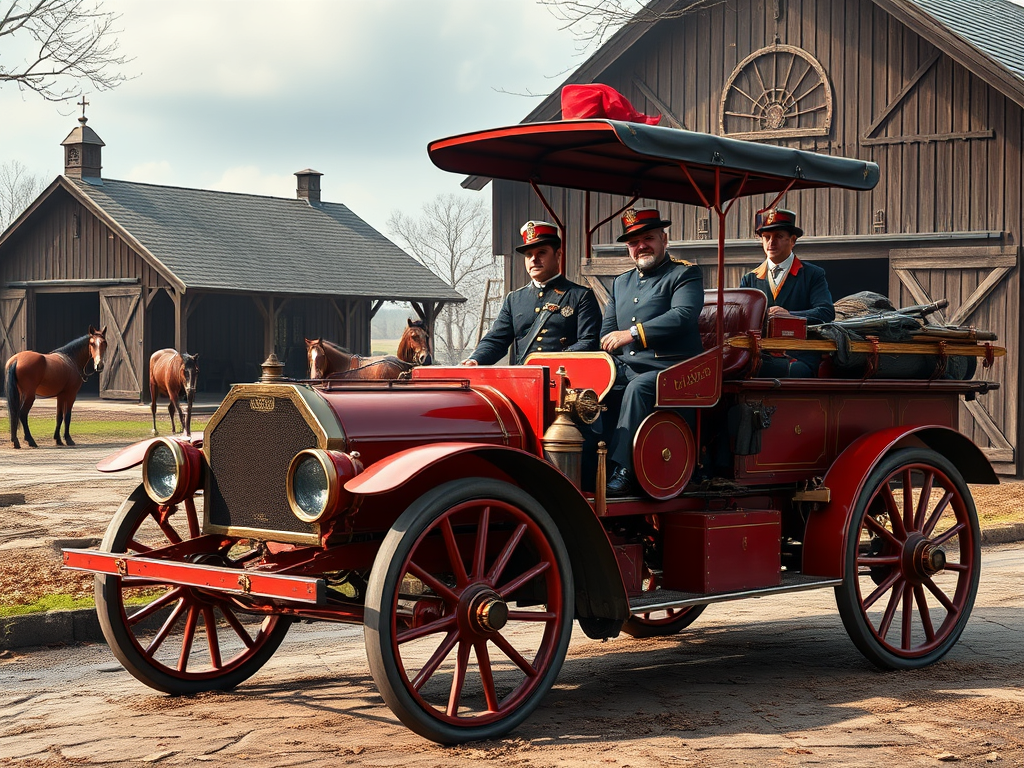
The Sacramento Fire Department has been using safety officers for over a century. The most common injuries for all fire service activities are strains, sprains, and muscle pain, followed by cuts, lacerations, and bruises. Considering only fireground injuries (and those that are consider moderate to severe) strains and sprains are still the most common injury type, followed by thermal burns. Generally speaking, the community image of a member of the Sacramento Fire Department and EMTs are ones of a protector or hero. Likewise, the firefighting profession is often included on my “most dangerous” top 10 lists. Historically, firefighters and EMTs have worn these images with a certain pride or swagger. More recently, the image fails to realistically depict the effect that a firefighter injury or death has on the humans involved. “Here at the Sacramento Fire Department seldom, we seldom curse when talking about the job, because the profession brings out the best in people. We have those noble ideals, and noble ideals are hard to envision when you are in the gutter. We have a purpose in life, and when we start talking about that, I think we watch our language. When we start talking about other things, then maybe we revert to more normal levels of tough talk. We love risk taking as firefighters. That attracts a lot of us. We are a nation of risk takers, who do not believe in absolute safety. Perhaps it’s in our genes from those Europeans who chose to leave an old, established life and embark on a new one at great risk. It shows up in the entrepreneurial spirit we see in our country today. I think firefighters mature on the job and realize that the reality is different from the image. #RandolphHarris 21 of 22

To help save lives and keep the community safe, if you are in an intersection when you see an emergency vehicle, continue through the intersection. Drive to the right as soon as it is safe and stop. Obey any direction, order, or signal given by a law enforcement officer, or a firefighter. Even if they conflict with existing signs, signals, or laws, follow their orders. When their siren or flashing lights are on, it is against the law to follow within 300 feet of any fire engine, law enforcement vehicle, ambulance, or other emergency vehicle. If you drive to the scene of a fire, collision, or other disaster, you can be arrested. When you do this, you are getting in the way of firefighters, ambulance crews, or other rescue and emergency personnel. The concept of professional courage does not always mean being as tough as nails, either. It also suggests a willingness to listen to other peoples’ problems, to go to bat for them in a tough situation and it means knowing just how far they can go. It also means being willing to tell the boss when he or she is wrong. As a reminder, parents, pleasure teach your children love America and be patriotic citizens and to buy goods and services made in America. It is also important to respect law and order and treat your elders with respect. To help our firefighters, pleasure donate to the Sacramento Fire Department to ensure they have all the resources they require. I pledge allegiance to the flag of the United States of America, and to the Republic, for which it stands, one nation, under God, indivisible with liberty and justice for all. #RandolphHarris 22 of 22


Never has there been a building so talked about. You will find The Winchester Mystery House in what was once the countryside known as “Winchester Valley,” where it has left past guests feeling a little spooked passing through certain rooms. It is well known for its reputation of being the world’s most haunted location. Do you fear the dark? Does the idea of the supernatural scare you? Do you sometimes anticipate the worst that can happen to you? Do you shiver when you read about victims of violent crime and think “that could have been me?” Does life seem insane? When you walk through the twisting hallways of The Winchester Mansion, are you apprehensive about what might be around the next corner? While standing at the door-to-nowhere, have you ever worried that life may have no meaning? Are you anxious that the next day might be your last? Do your days sometimes seem irremediably gloomy? Are you afraid of dying? We have examined your case thoroughly and think you will find the antidote for your condition at The Winchester Mystery House. A daily dose of horror is just the tonic you need. If fortifies the spirit with bracing jolts of terror. It inoculates the soul against fears that hound us all. It quickens the reflexes against life’s inhospitable surprises and tempers the imagination with thoughts unthinkable. Here you will find madmen in a variety of shapes and sizes who will help make things seem more rational. Feeling a bit self-absorbed? There is nothing like a tale of Mrs. Winchester’s hauntings to give you the right perspective.

The Winchester Estate dates back to the late 19th century, and it has a history that is packed full of legends and stories of spirits. The guided post-sunset walk takes visitors through the history of the mansion, while also offering a chance to spot some of the more well-known Winchester ghosts. There are stories of a little girl playing in the hallways and tugging at bedcovers at night and a woman in white who crosses the courtyard and passes through the walls. Lightening in colours no one can name sear across the infinite and multihued sky in jagged shards the size of which no one can conceive. Alien winds scream their impossible being in warring cacophony of notes no one can ever believe at volumes none can bear. And when the winds pick up on the fourth floor of the mansion, they make an eerie whining noise. It sounds as if everything around you is screaming. Right before a quick scratching sound, then something flares. A small spot of light glides like a firefly toward you. Another flare, then a dull yellow flow. A thin man has been said to step into the light. “Found some others out there,” is all he says before disappearing before your very eyes, and then everything is absolute darkness. Outside, the winds are said to kick up; it screams across the night. Well, maybe it is the wind. We all know the story of The Winchester Mansion.

The carpenters, who worked day and night for 36 years to build the mansion, that was once nine stories high, containing as many as 600 rooms. They knew the area was dense in spiritual energy. The hallways often possessed a great river of shadows. As these men felt a moan rising from a core of solid fear, they were so afraid that they would stand frozen for the space of one deep, shuddering breath. It was believed even the objects they could see were enemies, because they were keeping secrets. They knew, but were not telling. The cold quiet of The Winchester Mansion was a familiar song. Often, Mrs. Winchester’s guests would crough down, huddling against the floor, until help arrived. The mansion is situated over the crossing of two Ley Lines. In these areas, the veneer between the physical and spirit realms is thinner and much more permeable. This permeability and natural energy allow entities to manifest much more readily than in a normal location. Any thought or action in these areas, whether positive or negative has a much stronger and more focused effect. In the case of The Winchester Mansion decades of compounded suffering, negativity and strong emotional experiences have left a marked effect on the atmosphere in and around the mansion.

Some tour guides have heard chanting coming from outside the mansion and have heard their names being called. Others have reported seeing a woman hovering in the mansion. Many who have seen Mrs. Winchester claimed that she was “supernaturally beautiful, her skin glistens, and there’s a kind of light in her eyes that you can’t look away from.” Although her journals are sometimes vague, Mrs. Winchester experienced bizarre poltergeist activity during construction. She mentions to a friend the incredible amount of poltergeist activity that occurred during the time spent building the front of the mansion. One night, when darkness fell, the mansion was filled with eerie music like nothing Mrs. Winchester had ever heard before. Creatures from her maddest nightmares filled into the Grand Ball Room in some kind of funeral procession. She watched from the hallway, terrified of being seen yet unable to turn away. The very last thing she saw was her maid at the end of the procession, following the creatures off into the darkness. Later that night, Mrs. Winchester watched the shadows of leaves on the wall and drifted into a peaceful, safe, sleep, happy that the nuisance of her waking hours was gone. The very next day, on September 5, 1922, construction efforts were suddenly stopped when the ladders several carpenters were working from were pushed away from the wall, forcing them to jump several stories. Moments later, it was discovered that Mrs. Winchester had passed away in her sleep.

Mr. Hasen, one of Mrs. Winchester’s foremen, had written about his tools getting moved to the far corners of the room when his back was turned. Mr. Hansen was left staring in disbelief at a kaleidoscope World of shifting, flickering lights, a surfaceless void with an unimaginably distant vanishing point near which huge amorphous shapes twisted and withered in a constant fury of becoming. He had seen a hint that the matter that made up the forms of this World which everyone accepted as solid and separate was in fact all one and that only probability kept everything as it was and kept our reality apart from a multiverse of others. A solitary bead of sweat formed high on his brow and trailed a meandering pattern down his cheek and through the stubble that lay below. Although the sky was clear, the moon was but a crescent; its weak glow lit only a corner of the night ceiling. Through the darkness, beyond the curtain of trees. The mansion’s cry intruded upon his thoughts. Its shrillness disturbing him from his rapture. lost in a spell of Llanada Villa, Mr. Hansen walked slowly through the mansion. Climbing the stairs, he heard a hoarse voice whisper, “And what do you dream?” He had a moment to think, to realize, that he had never felt this way before, then the emanations flooded him, carrying him away on waves of darkness. He gave in weakly to the sensations that swept over him. As the mansion cried out again, its cry pierced the night, resounding like the cry of a thousand lost souls. That night, he went to his cold bed and dreamt of men with furlined capes and armor who became fearsome beast and tore through lines of their enemies.

Although they were paid three times the going rate, provided with medical care, subsidized groceries, and lived in Victorian cottages that were once on the estate, carpenters employed by Mrs. Winchester frequently suddenly left and did not come back, never giving a reason to their departure. However, it is suspected that the vast distances in the mansion had something to so with it. These carpenters would sometimes come to work to unfamiliar walls. After working for three hours with panic on his back, every minute having seemed like an hour, one man said, “I had been through a Hell of distance and time, indeed–and the Hell is still with me.” Wandering to the window and parting the drapes, he found it to be very late. He still felt disoriented, adrift, and threatened, but he sensed that he could he was free. With his pounding heart, he walked out into the dark mansion. There were no other carpenters present, and few caretakers. Others might be afraid of ghost, but the panic had taken care of that. If you already felt menaced for no reason, then the real dangers held no terror for you. He walked for many miles, past more rooms, libraries, and long closed rooms. Then he noticed a young woman walking on the other side of the mansion. Without thinking twice, he crossed over and joined her. They stopped, and he poured out his heart, his nameless fear. She held his hands. They agreed to meet again. However, he was left once more alone on a large room, wondering if it had been real. So he cut over to the hallway and started back. The mansion rest of the mansion was deserted, too, his steps echoing hollowly on the mahogany floor. It was dark, and only the light from the windows was visible. He could hear more than see. The panic had gotten stronger again, and he needed to return to the security, if marginal, of his home.

Gradually, he became aware of a man walking about a hundred feet behind. He himself stopped and pretended to look out the window. He wanted the man to pass him. However, the man stopped when he reached him, then went down some steps to the third floor. The man smiled, opened a bag, and offered him some Brandy. He went down and accepted. When he woke up, he was lying on his stomach, which felt warm and wet. There was no pain. However, when he tried to get up, he found that he could not. So, he crawled up the steps into the ballroom on the 4th floor. The crawling went all right, at first. However, then he became weaker. And he grew conscious of the thin red trail he was leaving behind him. The panic, suddenly and forever, was gone. It had indeed been replaced, expunged, by the reality. All that was left was a certain sadness. The mansion that has survived such a long history, is a marvel to see in person. Today, it stands four stories high, and has an estimated 160 rooms, of which 110 are open for tour. There has been some restoration over the years and ongoing maintenance. Come inside the mansion to see the priceless architecture and learn of its history. The guided tours are exquisitely led by a well prepared and enthusiastic team, who make sure that you and all guests are entertained by the great stories. Take advantage of this fascinating experience. After tour, there will be time enjoy the mansion’s splendor at your own pace. You might even discover secret passages.

Please come and enjoy a delicious meal in Sarah’s Café, stroll along the paths of the beautiful Victorian gardens, and wonder through the miles of hallways in the World’s most mysterious mansion. Even if you do not believe ghost stories, you might still get goosebumps passing through the most infamous basement. Enjoy panoramic views and discover quirky features such as secret staircases, doors that open to nowhere, stairs to the ceiling, hidden trapdoors, and other unusual features.

Please visit the online giftshop, and purchase a gift for friends and relatives as well as a special memento of The Winchester Mystery House. A variety of souvenirs and gifts are available to purchase. https://shopwinchestermysteryhouse.com/

Harris Plumbing, Heating, Air, & Electric has been in business for 30 years. How many businesses can say that? We take pride in everything we do – no matter how big or small the service call might be. We’re here to help your home be as safe and comfortable as possible for you and your family. We take that responsibility very seriously as a company. Harris will ensure you have the information you need to decide what to do next, whatever your home is facing. We’ll perform a diagnosis and detail what issues are present before starting any work. This gives you a personalized quote and service plan specific to your home’s needs – not some random quote based on the best guess. The only way we can do our best work is to make sure we handle the issues at hand. https://www.callharrisnow.com/about-us/


BMW continues to dominate the luxury car space. With its top ranking in Consumer Reports’ Auto Brand Report Card and consistent market share growth, BMW has demonstrated its ability to produce high-performing, reliable vehicles that meet consumer demands.

BMW stands out due to its focus on driving dynamics and engineering excellence. While other luxury brands prioritize comfort and opulence, BMW is known for creating cars that are fun to drive and offer a unique connection between the driver and the machine. https://www.brianharrisbmw.com/





 Randolph Harris II International Institute