

From time to time man’s higher self will show him his own moral face as in a glass. However, it will only show him that side of it which is the worst as well as the least-known one. He will have to look at what is thus exposed to him in all its stark fullness and hidden reality, only because he has to reeducate himself morally to a degree far beyond the ordinary. The experience may be painful, but it must be accepted. He has involved the Overself, now its light has suddenly been thrown upon him. He has invoked the Overself, now its light has suddenly been thrown upon him. He is now able to see his ego, his lower nature, as it has not hitherto shown itself to him. All its uglinesses are lit up and revealed for what they really are. By thus showing up its true nature and evil consequences, this experience is the first step to making the ego’s conquest possible. He should begin with the belief that his own character can be markedly improved and with the attitude that his own efforts can lessen the distance between its present condition and the ideal before him. It is a prime rule that quality of character and education of conscience are more important than nature of belief. And this is much more applicable to would-be philosophers than to would-be religionists. Many students are haunted by a bad idea of undesirable character, and should try five methods for expelling it: attend to an opposing good idea; face the danger of the consequences of letting the bad idea emerge in action; become inattentive to the bad idea; analyse its antecedents and so paralyze the sequent impulse; coerce the mind with the assistance of bodily tension. #RandolphHarris 1 of 20

However, philosophy does not trust to developed reason alone to control emotion and subjugate passion. It trusts also to psychological knowledge and metaphysical truth, to developed will and creative meditation, to counter-emotions and the prayer for Grace. All these different elements are welded into one solid power working for him. Just as the writer turns his experiences of society to writing use and creates art out of the best and worst of them, so the disciple turns his experiences of life to spiritual use and creates wisdom or goodness out of them. And just as it is harder for the author to learn to live what he writes than learn to write what he lives, so it is harder for the disciple to convert his studies and meditations, his reflections and intuitions, into practical deeds and beneficial accomplishments than to receive these thoughts themselves and make them his own. The valuing process which seems to develop in this more mature person is in some ways very much like that in the infant, and in some ways quite different. It is fluid, flexible, based on this particular moment, and the degree to which this moment is experienced as enhancing and actualizing. Values are not held rigidly, but are continually changing. The painting which last year seemed meaningful now appears uninteresting, the way of working with individuals which was formerly experienced as good now seems inadequate, the belief which then seemed true is now experiences as only partly true, or perhaps false. #RandolphHarris 2 of 20

It is not so much that we have to change ourselves as to give up ourselves. We are so imperfect and faulty, so selfish and weak, so sinful and ignorant, that giving up our own selves means being more than willing to part with what is not worth keeping. However, to what are we to give them up and how are we to do it? We are to invoke the higher self, request it daily to take possession of our hearts, minds, and wills, and to strive actively to purify them. Much of our striving will be in the form of surrendering egoistic thoughts, impulses, and feelings by crushing them at the moment of birth. In that way we slowly give up our inner selves and submit the conduct of our outer selves to a higher will. If he fails to pass a test, or if he succumbs to a temptation, he should realise that there must be a defect in character or mentality which made such a failure possible. Even though the test or temptation has been provided by the adverse powers, he ought not to lay the blame upon them but upon himself. For then he will seek out and destroy the defect upon which the blame really rests. After all, there must have been a corresponding inner weakness in him to have permitted him to become the victim of a temptation. Consequently it is often better not to ask for protection against the temptation. This simply hides and covers over the weakness and permits it to remain in his mental makeup. #RandolphHarris 3 of 20

It is better to ask for the strengthening of his own willpower, to cultivate it through a creative meditation excecise special directed to the purpose: he should picture the arousal and hardening of this willpower during the very moments of temptation by seeing himself emerge victorious by his own forces. As my class of prospective teachers learned, general principles are not as useful as sensitive discriminating reactions. One says, “With this little boy, I just felt I should be very firm, and he seemed to welcome that, and I felt good that I had been. But I’m not that way at all with the other children most of the time.” She was relying on her experiencing of the relationship with each child to guide her behaviour. I have already indicated, in going through the examples, how much more differentiated are the individual’s reactions to what were previously rather solid monolithic introjected values. In another way the mature individual’s approach is like that of the infant. The locus of evaluation is again established firmly within the person. It is his own experience which provides the value information or feedback. This does not mean that he is not open to all the evidence he can obtain from other sources. However, it means that this is taken for what it is—outside evidence—and is not as significant as his own reactions. Thus he may be told by a friend that a new book is very disappointing. He reads two unfavourable reviews of the book. Thus his tentative hypothesis is that he will not value the book. Yet if he reads the book his valuing will be based upon the reactions it stirs in him, not on what he has been told by others. #RandolphHarris 4 of 20

There is also involved in this valuing process a letting oneself down into the immediacy of what one is experiencing, endeavouring to sense and to clarify all its complex meanings. I think of a client who, toward the close of therapy, when puzzled about an issue, would put his head in his hands and say, “Now what is it that I’m feeling? I want to get next to it. I want to learn what it is.” Then he would wait, quietly and patiently, trying to listen to get close to himself. In getting close to what is going on within himself, the process is much more complex than it is in the infant. In the mature person, it has much more scope and sweep, for there is involved in the present moment of experiencing the memory traces of all the relevant learnings from the past. This moment has not only its immediate sensory impact, but it has meaning growing out of similar experiences in the past. It has both the new and the old in it. So when I experience a painting or persons, as well as the new impact of this particular encounter. Likewise the moment of experience contains, for the mature adult, hypotheses about consequences. “I feel now that I would enjoy a drink, but past learnings indicate that I may regret it in the morning.” “It is not pleasant to express forthrightly my negative feelings to this person, but past experience indicates that in a continuing relationship it will be helpful in the long run.” Past and future are both in this moment and entering into the valuing. #RandolphHarris 5 of 20

I find that in the person I am speaking of (and her again we see a similarity to the infant) the criterion of the valuing process is the degree to which the object of the experience actualizes the individual himself. Does it make him a richer, more complete, more fully developed person? This may sound as though it were a selfish or unsocial criterion, but it does not prove to be so, since deep and helpful relationships with others are experienced as actualizing. Like the infant, too, the psychologically mature adult trusts and uses the wisdom of his organism, with the difference that he is able to do so knowingly. If he can trust all of himself, he realizes his feeling and his intuitions may be wiser than his mind, that as a total person he can be more sensitive and accurate than his thoughts alone. Hence he is not afraid to say—“I feel that this experience (or this thing, or this direction) is good. Later I will probably know why I feel it is good.” He trusts the totality of himself. It should be evidence from what I have been saying that this valuing process in the mature individual is not an easy or simple thing. The process is complex, the choices often very perplexing and difficult, and there is no guarantee that the choice which is made will in fact prove to be self-actualizing. However, because whatever evidence exists is available to the individual, and because he is open to his experiencing, errors are correctable. If a chosen course of action is not self-enhancing this will be sensed and he can make an adjustment or revision. He thrives on a maximum feedback interchange, and thus, like the gyroscopic compass on a ship, can continually correct his course toward becoming more of himself. #RandolphHarris 6 of 20

One example that first set me to considering the possibility of self-analysis was Erich. Erich was a physician who came to me for analysis because of attacks of panic, which he tried to allay by taking morphine and cocaine; also he had spells of exhibitionistic impulses. There was no doubt that he had a severe neurosis. After some months of treatment, he went away on a vacation, and during this time he analysed by himself an attack of anxiety. The beginning of this piece of self-analysis was accidental, as it was in the case of John, whom we discussed in the previous reports. The starting point for Erich was a severe attack of anxiety, apparently provoked by a real danger. Erich was climbing a mountain with his girl. It was strenuous climbing but not dangerous as long as they could see clearly. It became perilous, however, when a snowstorm arose and they were enveloped in a thick fog. Erich then became short of breath, his hear pounded, he became panicky and finally had to lie down to rest. He did not give the incident any thought but vaguely ascribed the attack to his exhaustion and to the actual danger. If we want to be, this is an example, by the way, of how easily we may be satisfied with wrong explanations, for Erich was physically strong and anything but a coward in the face of an emergency. The next day they went on a narrow path hewn into the steep, rocky wall of the mountain. The girl went ahead. The heart pounding started again when Erich caught himself at a thought or impulse to push her down the cliffs. That naturally startled him, and, besides, he was devoted to her. #RandolphHarris 7 of 20

Erich thought first of Dreiser’s American Tragedy, in which the boy drowns hi girl in order to get rid of her. Then he thought of the attack of the previous day and barely recaptured a similar impulse he had checked it as it as it arose. He remembered clearly, however, a mounting irritation against the girl before the attack, and a sudden wave of hot anger, which he had pushed aside. This, then, was the meaning of the attack of anxiety: an impulse of violence born out of a conflict between a sudden hatred on the one hand, and, on the other, his genuine fondness for the girl. He felt relieved, and also proud for having analysed the first attack and stopped the second. Erich, in contrast to John, went a step farther, because he felt alarmed by his recognition of hatred and a murderous impulse toward the girl he loved. While continuing to walk he raised the question why he should want to kill her. Immediately a talk they had had the previous morning recurred to him. The girl had praised one of his colleagues for his clever dealing with people and for being a charming host at a party. That was all. And that could not have aroused this much hostility. Yet when thinking about it, he felt a rising anger. Was he jealous? However, there was no danger of losing her. This colleague, though, was taller than he, and non-Jewish (on both points he was hypersensitive), and he did have a clever tongue. #RandolphHarris 8 of 20

While Erich’s thoughts were meandering along these lines, he forgot his anger against the girl and focused his attention on comparing himself with the colleague. Then a scene occurred to him. He was probably four or five years old, and had tried to climb a tree but could not. His older brother had climbed it with ease and teased him from above. Another scene came back vividly when his mother praised this brother and he was left out. The older brother was always ahead of him. It must have been the same thing that infuriated him yesterday: he still could not stand to have any man praised in his presence. With this insight he lost his tenseness, could climb easily, and again felt tender toward the girl. Compared with the first example, the second achieved in one way more and in another less. Despite the greater superficiality of John’ self-analysis, he did take one step that Erich did not take. When John had accounted for the only particular situation, he did not rest satisfied: he recognised the possibility that all his headaches might result from a repressed anger. Erich did not go beyond the analysis of the one situation. It did not occur to him to wonder whether his finding had a bearing on other attacks of anxiety. On the other hand, the insight that Erich arrived at was considerably deeper than John’s. The recognition of the murderous impulse was a real emotional experience; he found at least an inkling of the reason for his hostility; and he recognized the fact that he was caught in a conflict. #RandolphHarris 9 of 20

In the second incident, too, one is astonished at the number of questions not touched upon. Granting that Erich became irritated at praise of another man, whence the intensity of the reaction? If that praise was the only source of his hostility, why was it such a threat to him as to arouse violence? Was he in the grip of an excessively great and excessively vulnerable vanity? If so, what were the deficiencies in him that needed so much covering up? The rivalry with the brother was certainly a significant historical factor, but insufficient as an explanation. The other side of the conflict, the nature of his devotion to the girl, is entirely untouched. Did he need her primarily for her admiration? How much dependency was involved in his love? Were there other sources of hostility toward her? What are the motivating forces which make man act in certain ways, the drives which propel him to strive in certain directions? It seems as if the answer to this question Marx and Dr. Freud find themselves furthest apart and that there is an insoluble contradiction between their two systems. Marx’s “materialistic” theory of history is usually understood to mean that man’s main motivation is his wish for material satisfaction, his desire to use and to have more and more. This greed for material things as man’s essential motivation is then contrasted with Dr. Freud’s concept according to which it is man’s appetite for pleasures of the flesh which constitutes his most potent motivation for action. #RandolphHarris 10 of 20

The desire for property on the one hand and the desire for satisfaction involving pleasures of the flesh on the other seem to be the two conflicting theories as far as much motivation is concerned. That this assumption is an oversimplifying distortion as far as Dr. Freud is concerned follows from what has been already said about this theory. Dr. Freud sees man as motivated by contradictions; by the contradiction between his striving for pleasures of the flesh and his striving for survival and mastery of his environment. When Dr. Freud later posited another factor which conflicted with the one’s already mentioned—the super-ego, the incorporated authority of the father and the norms he represented, this conflict became even more complicated. For Dr. Freud, then, man is motivated by forces conflicting with each other and by no means only by the desire for satisfactions of pleasures of the flesh. Dr. Freud again thought in terms of contradiction, that between the “life instinct” and the “death instinct” as the two forces battling constantly within man and motivating his actions. The cliché of Marx’s theory of motivation is even more drastic distortion of his thinking than the cliché of Dr. Freud’s. The distortion begins with the misunderstanding of the term “materialism.” This term and its counterpart, “idealism,” have two entirely different meanings, depending on the context in which they are applied. When applied to human attitudes, one refers to the “materialist” as one who is mainly concerned with the satisfaction of material strivings, and to the “idealist” as one who is motivated by an idea, that is, a spiritual or ethical motivation. #RandolphHarris 11 of 20

However, “materialism” and “idealism” have entirely different meanings in philosophical terminology, and “materialism” must he used in this meaning when one refers to Marx’s “historical materialism” (a term which, in fact, Marx himself never used). Philosophically, idealism means that one assumes ideas form the basic reality, and that the material Word which we perceive by means of our senses has no reality as such. For the materialism prevalent at the end of the nineteenth century matter was real, not ideas. Marx, in contrast to this mechanical materialism (which was also underlying Dr. Freud’s thinking), was not concerned with the causal relationship between matter and mind but with understanding all phenomena as results of the activity of real human beings. “In direct contrast to German philosophy,” Marx wrote, “which descends from the Heaven to Earth, here we ascend from Earth to Heaven. That is to say, we do not set out from what men imagine, conceive, in order to arrive at man in the flesh. We set out from real active men and on the basis of their real life process we demonstrate the development of the ideological reflexes and echoes of this life process.” Marx’s “materialism” implies that we begin our study of man with the real man as we find him, and not with his ideas about himself and the World by which he tries to explain himself. In order to understand how this confusion between personal and philosophical materialism could have arisen in the case of Marx, we must proceed further and consider Marx’s so-called “economic theory of history.” This term has been misunderstood to mean that, according to Marx, only economic motives determine man’s actions in the historical process; in other words, the “economic” factor has been understood to refer to a psychological, subjective motive, that of economic interests. #RandolphHarris 12 of 20

In government policy and strategy, the ideal is that foreign policy—and that means also military planning—are freed from the arbitrariness of the human will an entrusted to a computer system, which tells the “truth” since it is not fallible like men, nor has it any ax to grind. The ideal is that all foreign policy and military strategy are based on computer decision, and this implies that all the facts are known, considered, and made available to the computer. With this method, doubt becomes excluded, although disaster is by no means necessarily avoided. However, if disaster does happen after the decisions are made on the basis of unquestionably “facts,” it is like an act of God, which one must accept, since man cannot do more than make the best decision he knows how to make. It seems tome that these considerations are the only terms in which one can answer this puzzling question: How is it possible for our policy and strategy planners to tolerate the idea that at a certain point they may give orders the consequences of which will mean the destruction of their own families, most of America, and “at best” most of the industrialized World? If they rely on the decision the facts seem to have made for them, their conscience is cleared. However dreadful the consequences of their decisions may be, they need not have qualms about the rightness and legitimacy of the method by which they arrived at their decision. They act on faith, not essentially different from the faith on which the actions of the inquisitors of the Holy Office were based. #RandolphHarris 13 of 20

Like Dostoevsky’s Grand Inquisitor, some may even be tragic figures who cannot act differently, because they seen o other way of being certain that they do the best they can. The alleged rational character of our planners is basically not different from the religiously based decisions in a prescientific age. There is one qualification that must be made: both the religious decision, which is a blind surrender to God’s will and the computer decision, based on the faith in the logic of “facts,” are forms of alienated decisions in which man surrenders his own insight, knowledge, inquiry, and responsibility to an idol, be it God or the computer. The humanist religion of the prophets knew no such surrender; the decision was man’s. He had to understand his situation, see the alternatives, and then decide. True scientific rationality is not different. The computer can help man in visualizing several possibilities, but the decision is not made for him, not only in the sense that he can choose between the various models, but also in the sense that he must use his reason, relate to and respond to the reality with which he deals, and elicit from the computer those facts which are relevant from the standpoint of reason, and that means from the standpoint of sustaining and fulfilling man’s aliveness. The blind and irrational reliance on computer decision becomes dangerous in foreign policy as well as strategic planning when done by opponents, each of whom works with his own data-processing system. He anticipates the opponent’s moves, plans his own, and constructs scenarios for the X possibilities of moves on both sides. #RanolphHarris 14 of 20

He can construct his game in many ways: that of his side winning, a stalemate, or both losing. However, if either “wins” it is the end of both. While the purpose of the game is to achieve a stalemate, the rules of the game make a stalemate unlikely. Both players, by their methods and their need for certainty, give up the way which has been that of precomputer diplomacy and strategy: the dialogue—with its possibility of give and taken, open or veiled withdrawal, compromise, or even surrender when that is the only rational decision. With the present method, the dialogue, with all its possibilities for avoiding catastrophe, is ruled out. The action of the leaders is fanatical because it is pursued even to the point of self-destruction, although in a psychological sense they are not fanatics, because their actions are based on an emotion-free belief in the rationality (calculability) of the computer methods. There is a correlation with job of the psychologist. The clinical psychologist is exposed didactically (and casually, like any sentient person, through a myriad of cultural media) to the Freudian theory of psychopathology and to Freudian principles of psychoanalysis. If we focus too heavily on computer-based information and decision making, we risk alienating ourselves from our humanity and becoming psychopaths. This is why psychology focuses on the human relationships and communication. The goal is to help people become fully human. The psychologist, unlike the social worker and psychiatrist, is more likely to have his Freudian garden sprinkled from the watering cans of the dozen or so recognized variations on the theme, but the exfoliation does not serve to weaken his appreciation of Dr. Freud’s discoveries or his recognition of the fundamental principles of analytic therapy. #RandolphHarris 15 of 20

And, in the quiet of the consulting room, face-to-face with a candidate for therapeutic conversation, there are multiple reasons (ranging from the sheer pertinence and richness of the psychopathological concepts to the broadly social “prestige” of analytically oriented therapy) that cause the psychologist to tend to think and behave, in that moment of truth, more like a psychiatrist or social worker, and less like a psychologist. There are a few striking general consequences of the over-arching role of psychoanalytic doctrine in the preparation of current psychotherapists: a belief that psychoanalysis is the most powerful of all forms psychotherapy and that its primary limitation and restriction as the “therapy of choice” for psychoneurosis is a function of its cost and limited supply, not of its general appropriateness; a belief that distinctly psychoanalytically oriented psychotherapy is the next best to psychoanalysis; a belief that truly effective psychotherapy must be intensive, id est, it must entail frequent therapeutic sessions (usually weekly) over a long period of time; a belief that the gaining of insight by the patient is a primary goal and result of therapy; a belief that the major mechanism of therapy is in the nature of the therapist-patient relationship; a belief that the prognosis for psychotherapy rests upon the suitability of the patient which is defined generally in the same term as the good candidate for psychoanalysis. These generally accepted orientations, stemming from a shared theoretical bias, lead to common administrative and therapeutic practices on the part of psychiatrist, psychologist, and social worker. #RandolphHarris 16 of 20

There is a common preference to do “intensive” psychotherapy and there are common predilections (leading possibly to subtle therapeutic attitudes and maneuvers of which the therapist may be aware) to keep the patient “in treatment.” A fascinating side-effect of this peculiar bias has been a cluster of studies by psychologists which aim to identify at the outset jut which patients will remain in treatment and which will break off. The purpose of such studies could be to identify the short-term client with a view to providing a specific therapeutic experience for him. Generally, however, the implicit assumption in these studies is that patients who break off after only a few sessions are “failures” and could not possibly have derived any benefit from their limited exposure. The goal appears to be to find ways of selecting “good” patients for therapy, id est, those who come back interminably. (Contrary to what many experts might predict, the sudden administrative termination of “interminable” psychotherapy cases does not appear to precipitate acute disintegration.) If such psychological studies should achieve a high level of predictive accuracy, it would become possible for an increasing portion of psychotherapeutic time to be devoted to a decreasing number of patients! (Perhaps this is a rare example of an instance in which we may be thankful that the accuracy of psychometric prediction is not greater.) #RandolphHarris 17 of 20

Another result of the common theoretical bias is that all of these expert therapists have a marked preference to provide their services to the same sample (a very small portion of the total population of persons in need of psychological assistance). These “ideal” patients are not prominent among the clients of public clinics and hospitals. By contrast, the typical supplicant to a community psychiatric facility may present a set of attributes (such as level of education and verbal facility) that discourage the “depth-oriented” therapist from feeling that he can either effectively (or usefully?” establish a really therapeutic relationship. As a consequence, they are apt with such patients to effect the sort of brief and “incomplete” therapy of which they are disdainful. During therapy sessions, many patients often ask “How do I say no and mean it?” The basic rule here is to never go back on your answer of no. And the secret to this is not to allow anyone to continue to ask the same question you have already given the answer of no to. The way to enforce this is to add a consequence to asking the same question again. With a child, it is easy. “Ask again, you will not get any dessert after dinner.” An adult might be a little harder. If you put your mind to it, I am sure you can think of something they would not want to give up just so they could bug you about your answer. It has been said that ideas rule mankind. This is but a half-truth, but be as it may, it can be unhesitantly asserted that ideals rule the traveler on the quest. If they do not, then he is not embarked on the quest. However, an ideal is only an abstract conception. #RandolphHarris 18 of 20

Unselfishness, freedom, goodness, and justice are intangibles, and their practical application has altered from age to age according to the conditions prevailing in different times and places. An ideal must have a concrete shape or it becomes sterile. The Sacramento Fire Department has many ideals that are concrete. One person cannot rise in the ranks through the fire department without the support and respect of a large group of people. They do not let political opportunism interfere with the running of the fire department or the running of their lives. The Sacramento Fire Department has had a great line of chiefs of department. The chief of department is the highest uniform position, a competitive civil service position, and once an individual makes it, he or she is secure in the job and outside the authority of the mayor’s office. He or she represents safety of the city’s public. In critical situations the chief of the department is the person with responsibility. There is something that happens to a person when one becomes a firefighter. That something is that one begins to care about what one is doing, about the person one works with, and about the department’s reputation in ways that surprises, a depth of feeling that is entirely new. It is what feeling that enables people to enter burning buildings, and it is that feeling that will preserve the histories of fire departments throughout the land. It becomes a part of the human being, and part of every action. Any intelligent person can see that a firefighter is on the street to help people. #RandolphHarris 19 of 20

In a car accident, if you pull the alarm the fire engines usually come faster than the ambulance. The firefighter will pull somebody out of the car, it does not matter what kind of a mess the victim is in. One is well trained in emergency situations. The firefighter knows how to deal with people. One knows when to move an injured person and when not to, when to put on a splint and when not to. One is trained to make a fast assessment of an emergency situation. When a firefighter arrives at a fire and sees people on the fire escape in the front of the building, one automatically knows there will be people on the back fire escape and in trouble inside the building. One knows to think about what is not immediately seen. One is there only to help, and one is asked to help in all kinds of situations—not only fires but accidents, drug overdoses, shootings, knifings, injuries from whatever cause. So a young person coming out of high school sees all this, and asks oneself, “What is it that I really want to do?” And the fire department winds up getting the best people. Be sure to make a donation to the Sacramento Fire Department to ensure they receive the necessary resources. I pledge allegiance to the flag of the United States of America, and to the republic for which it stands, one nation, Under God, indivisible with liberty and justice for all. #RandolphHarris 20 of 20

The Winchester Mystery House

Kaefer lived in upstate New York. In 2007 a friend showed him a brochure concerning The Winchester Mystery House, and the house intrigued him. Since he was traveling to the Silicon Vallery, he decided to pay The Winchester Mystery House a visit. With his family, he drove to the house and parked the car in the parking lot. At that moment he had an eerie feeling that something was not right. Mind you, Kaefer had not been to the house before, had no knowledge about it, nor any indication that anything unusual occurred in it. The group of visitors was quite small. In addition to him and his family, there were two young college boys and one other couple. Even though it was a sunny day, Kaefer felt cold. “I felt a presence before we entered the house and before we heard the story from the guide,” he explained. “If I were a host there, I wouldn’t stay there alone for two consecutive minutes.” Kaefer had been to so many old houses and restorations before but had never felt as he did at The Winchester Mystery House.
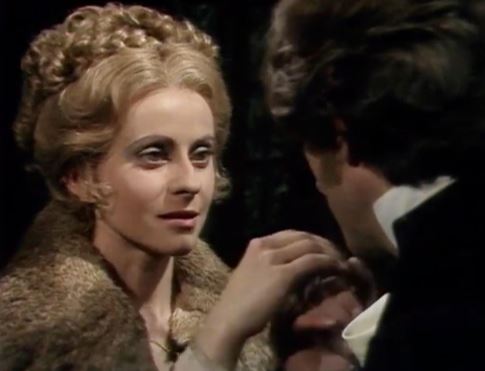
It is not surprising the Sarah L. Winchester should be the subject of a number of psychic accounts. Probably the best known (and most frequently misinterpreted) story concerns Mrs. Winchester’s vision which came to her during the late 1800s. Mrs. Winchester was in the habit of meditating in her Blue Séance Room at times and saying her prayer when she was quite alone. On one of those occasions, she returned to the Daisy Bedroom more worried than usual. As she busied herself with her papers, she had the feeling of a presence in the room. Looking up, she saw opposite her a singularly handsome man. Since she had given orders not to be disturbed, she could not understand how he had gotten into the room. Although she questioned him several times, the visitor would not reply. As she looked at the apparition for what it was, she noticed it was her late husband and became more and more entranced with him, unable to make any more. Finally, she heard a voice saying, “Sarah, I love you.” At the same time, William Winchester extended his arm toward the east, and Mrs. Winchester saw what to her appeared like a blue mist at some distance.

As the mist dissipated, she saw various new additions to her mansion, a wide veranda and generous use of expansive windows and French doors, which offered views in every direction. A raised foyer directly overlooking the formal dining room and the living area. Special features like fireplaces with mini bricks, built-in shelves, a morning room, a door that opened to a two story fall into the garden, a staircase leading to an option third-floor area. And an exterior that boasts delicately turned rails and decorated upside-down columns. A unique gazebo projection off the covered porch to the north of the plan. She then noticed a dark, shadowy angel standing in the room of the witches’ cap, taking gold flakes out of water and sprinkling them on the wall. Then a dark cloud rose from the ground and enveloped her home. Sharp flashes of lightening became visible at intervals in the cloud. At the same time, Mrs. Winchester heard the anguished cries of departed souls. Next, William showed her an Observational Tower and legions of legions of angels descended from the Heavens, and William faded away.

Come and enjoy a delicious meal in Sarah’s Café, stroll along the paths of the beautiful Victorian gardens, and wonder through the miles of hallways in the World’s most mysterious mansion. For further information about tours, including group tours, weddings, school events, birthday party packages, facility rentals, and special events please visit the website: https://winchestermysteryhouse.com/

Please visit the online giftshop, and purchase a gift for friends and relatives as well as a special memento of The Winchester Mystery House. A variety of souvenirs and gifts are available to purchase. https://shopwinchestermysteryhouse.com/




 Randolph Harris II International Institute