
The World is so full of a number of things, I am sure we should all be as happy as kings. Perhaps narcissism is what keeps country so full of misery. Concerning the pathology of group narcissism, the most obvious and frequent symptom, as in the case of individual narcissism, is a lack of objectivity and rational judgment. If one examines the judgment the less affluent in America face and compare it with the way the physically disabled are regarded, one can easily recognize the distorted character the criticism they face. Little straws of truth are put together, but the whole which is thus formed consists of falsehoods and fabrications. If political actions are based on narcissistic self-glorifications, the lack of objectivity often leads to disastrous consequences. We have witnessed during the first quarter of this century two outstanding examples of the consequences of national narcissism. Many years before the immigration crisis, it was the unofficial strategic doctrine to claim that the United Stares of America wanted the poor and huddled masses from around the World; immigrants, regardless of their legal or illegal status, became endowed with special privileges and benefits and financial incentives and a spirit of entitlement that they needed to only come to America and the nation would provide for them. And that American taxpayers would pay the bill because their presence is worthy them having a sense of entitlement. Then democratic cities became sanctuary cities, which means that law enforcement was no longer allowed to deport people who immigrated illegally. #RandolphHarris 1 of 19

Instead, the people who migrated illegally could be bussed to wherever they pleased in the United States of America, be given cash aid and a food allowance, while they stand in posh hotels. Meanwhile, record of Americans are becoming homeless and cities are so flooded with millions of people who migrated illegal that they are now making it a crime to bus people who illegally immigrated into their cities without notification. While some states are making illegal immigration a state crime punishable by up to 20 years in prison. The problem is that over 12 million unidentified people have bombarded the nation, they are from all over the World, and some are extremely dangerous criminals. The public is concern that after 9/11 happened, that something much bigger and more widespread could happen again. Former President Obama, a man of extreme personal narcissism, who stimulated the group narcissism of millions of immigrations, overestimated the strength of the American government as a population building nation and financial source of support and underestimated the negative impact this would have on the nation and her people during an economic crisis and hyperinflation—as have other narcissistic politicians as well. In spite of his cleverness, Mr. Obama was not capable of seeing reality objectively, because his wish for democrats to win and rule weighed more heavily for him than the realities of national security and the economic health of the nation. And now, China, India, and America, in that order are expected to be the most powerful nations by 2050. Although, some say America lost her status as World power a long time ago from borrowing so much money from China. #RandolphHarris 2 of 19
Group narcissism needs satisfaction just as individual narcissism does. On one level of this satisfaction is provided by the common ideology of the superiority of one’s group, and the inferiority of all others. In religious groups this satisfaction is easily provided by the assumption that my group is the only one which believes in the true God, and hence since my God is the only true one, all other groups are made up of misguided unbelievers. However, even without reference to God as a witness for one’s superiority, group narcissism can arrive at similar conclusions on a secular level. The narcissistic conviction of the superiority of Democrats over Republicans in part of the United States of America demonstrates that there is no restraint to the sense of self-superiority or of the inferiority of another group. However, the satisfaction of these narcissistic self-images of a group requires also a certain degree of confirmation in reality. As long as Democrats have the power to demonstrate their superiority over the Republicans through federal judges, the media, social, economic, and other political acts of discrimination, their narcissistic beliefs have some element of reality, and thus bolsters up the entire narcissistic thought-system. The same held true for the Nazis; there the physical destruction of all the Jewish people had to sever as proof of the superiority of the Aryans (for a sadist the fact that one can kill a man or woman proves that the killer is superior). #RandolphHarris 3 of 19

If, however, the narcissistically inflated group does not have available a minority which is sufficiently helpless and to lend itself as an object for narcissistic satisfaction, the group’s narcissism will easily lead to the wish for military conquests; this was the path of pan-Germanism and pan-Slavism before 1914. In both cases the respective nations were endowed with the role of being the “chosen nation,” superior to all others, and hence justified in attacking those who did not accept their superiority. I do not mean to imply that “the” cause for illegal immigration was the narcissism of the Democrats and rights for people who immigrated illegally, but their fanaticism was certainly one factor which contributed to the outbreak of the invasion. Beyond this, however, one must not forget that once an invasion has started, the various governments try to arouse national narcissism as a necessary psychological condition for the successful waging of the war. There are already talks in the States and in Congress of deploying the national guard into Mexico and dismantling the drug cartels. Most people believe that America conquering Mexico would be a great idea because America could implement law and order, which is supposedly why so many people illegally immigrate to America. If the narcissism of a group is wounded, then we find the same reaction of rage which we have discussed in connection with individual narcissism. There are many historical examples for fact that disparagement of the symbols of group narcissism has often produced rage verging on insanity. #RandolphHarris 4 of 19

Violation of the flag; insults against one’s own God, emperor, leader; the loss of a way and of territory—these have often led to violent mass feelings of vengeance which in turn led to new wars. If the offender is crushed and thus the insult to one’s narcissism is undone, the wounded narcissism can be healed only then. Revenge, individual and national, is often based on wounded narcissism and on the need to “cure” the wound by the annihilation of the offender. The highly narcissistic group is eager to have a leader with whom it can identify itself. The leader is then admired by the group which projects its narcissism on to one. In the very act of submission to the powerful leader, which is in depth an act of symbiosis and identification, the narcissism of the individual is transferred onto the leader. The greater the leader, the greater the follower. Personalities who as individuals are particularly narcissistic are the most qualitied to fulfill this function. The narcissism of the leader who is convinced of one’s greatness, and who has no doubts, is precisely what attracts the narcissism of those who submit to one. The half-insane leader is often the most successful one until one’s lack of objective judgment, one’s range reactions in consequence of any set-back, one’s need to keep up the image of omnipotence may provoke one to make mistakes which lead to one’s destruction. However, there are always gifted half-psychotics at hand to satisfy the demands of a narcissistic mass. #RandolphHarris 5 of 19

Narcissism is a necessary and valuable orientation, provided it is benign and does not transcend a certain threshold. However, our picture is incomplete. Man is not only concerned with biological and social survival, he is also concerned with values, with the development of that by virtue of which he is human. If essential control over the immediate physical environment and a degree of civilization sufficient to free man for self-preoccupation and worry about possible future threats to his security or presently imagined threats to his integrity is a basic requirement for the generation of neurotic anxiety, then man has had these prerequisites for a very long time. And the basic psychophysiological equipment required for the overlearning of danger signals and the anxiety response to stress seems not to be a very recent biological development. In this perspective, the presumed greater prevalence of neurotic breakdown in present-day man must be attributed to the greater stresses under which one lives. However, is modern man in fact subjected to greater stress than one’s historical predecessors? Contemporary Western Civilization is complex and the tempo of life seems ever faster. We are subjected to a wide variety of pressing demands (largely of our own creation), but we have an increasing armamentarium of efficient tools with which easily to provide much of our daily demands. It is not probably that a thoughtful and penetrating numeration of the pressures, problems, and uncertainties that confronted people 100 (or 1,000) years ago and that confront one’s modern counterpart would reveal chiefly a difference in content, not a difference in number and seriousness? #RandolphHarris 6 of 19

The problems of life have changed in their nature, but not in their number or severity. We suffer an inability to project ourselves empathically into the psychological stresses of older generations. Through inadequate historical perspective (and perhaps out of need to be heroic in our own eyes) we see lives of earlier times as simpler, slower, and less stressful—while we see ourselves as immersed in a morass of economic, ethical, political, moral, and social problems which cannot be solved because there is “too much pressure” and everything moves “too rapidly”—forgetting the tremendous technological advances that have both speeded communication and essentially freed us from concern with the mundane problems of sheer existence, so that we are in fact able, if we will, to concentrate in a way never before possible on the solution of our special problems. Has there been a significant increase in the rate of occurrence of major forms of mental disorders? When the severity of disturbance is such that the total functioning of personality is disrupted and the individual can no longer be safely tolerated in one’s community, when one’s symptoms are sufficiently gross to permit of easy, objective description, and when the sick individual is removed to a hospital, we have a base line that permits of valid historical comparison and that, with careful attention to adequate case histories, permits comparison of clinical diagnoses. Such comparative historical analyses, with attention to refined statistical corrections for population, have rarely been attempted. In one of the best studies so far reported the authors conclude that the rate (frequency of first admission to hospitals per specified age groups of the general public) of the major forms of functional psychoses has been essentially the same since 1870. #RandolphHarris 7 of 19

Even though the best available evidence suggests that psychotic breakdown is not increasing in frequency in modern times, it may be argued that the total amount of mental illness is on the increase by virtue of the prevalence of milder, non-hospitalized forms of psychiatric disability, exempli gratia, the neuroses. In this argument we are confronted by a cultural relativity that makes analysis of documentary evidence almost impossible. Today we recognize and have diagnostic labels for varieties of personality defect which were not provided for by the social machinery of pre-1900 cultures. Failure of recognition of an illness and formal provision for its treatment does not, of course, constitute evidence of its absence. Disorders do not begin their phenomenal existence with their first recognition, description, and labeling. Neurosis is not peculiar to modern man. Problems and pressures, the threat of large-scale disaster and the torment of doubt about ultimate values are not special heritage of twenty first-century humans. The biological capacity to experience anxiety is not a particular evolution of the post-1900 generations. If this is the “Age of Anxiety” it is because we have chosen to focus on this phenomenon and to give it meaning and importance which it has never been previously accorded. Anxiety and hope have been experienced in various measures by humans throughout the ages; there are absolutely unavoidable eventualities and insoluble uncertainties that give rise to both. Anxiety in its essential nature is no more pathological than hope—but our present culture has chosen to be anxious about anxiety. #RandolphHarris 8 of 19

As we struggle individually with our persona anxieties and as we daily hear the tocsin of nuclear threat it is natural that we think ourselves to be the most psychologically tormented of all generations. Sober meditation upon the fact that all men in all ages have faced danger, deprivation, and the inevitable uncertainties of existence supports the conception that the sum total of mental misery in the World has not grown or diminished greatly over the passage of time. What has changed in man’s relative freedom to think about his condition, to be anxious about his anxiety, and to live in a cultural epoch which entertains the thesis that personal frustration of any sort is abnormal, that avoidance of anxiety should be a primary personal goal, and that society can provide both the knowledge and the experts for the successful prevention of unhappiness. Not only the evaluation of self is inclusively influenced by the neurotic trends, but also the evaluation of others. The person craving for prestige will judge others exclusively according to the prestige they enjoy: one who enjoys greater prestige one will put above oneself, and one with lesser prestige one will look down upon, regardless of the real values involved. The compulsively complaint person is likely to feel indiscriminate adoration of what appears to one as strength, even if this “strength” consists merely in erratic of unscrupulous behaviour. The person who must exploit others may take a certain liking to one who lends oneself to exploitation, but also despises one; one will think of a compulsively modest person as either stupid or hypocritical. #RandolphHarris 9 of 19

The compulsively dependent person may look enviously at the compulsively self-sufficient person, thinking one free and uninhibited, though actually the latter is merely in the grip of a different neurotic trend. Consequently, there are inhibitions resulting from neurotic trends. Inhibitions may be circumscribed, that is, concern a concrete action, sensation, or emotion, taking the form, for example, of impotence or an inhibition toward telephoning. Or they may be diffuse and concern whole areas of life, such as self-assertion, spontaneity, making demands, coming close to people. As a rule specific inhibitions are at the level of awareness. If they become very strong the person may be generally aware of being inhibited, without, however, recognizing in what specific direction. They may be so subtle and hidden, on the other hand, that they person is not aware of their existence and efficacy. Awareness of inhibitions may be befogged in various ways, of which one of the commonest is rationalization: a person who has inhibitions about speaking to others in social gatherings may be aware of being inhibited on this score, but also one may simply believe that one dislikes parties and considers them boring, and find many good reasons for refusing invitations. The inhibitions produced by neurotic trends are primarily of the diffuse kind. Let us for the sake of clarity compare the person obsessed by a neurotic trend with a rope dancer. The latter, in order to reach the other end of the rope without falling down, must avoid any glance to right or to left and must keep one’s attention fixed on the rope. #RandolphHarris 10 of 19

Here we would not speak of an inhibition to glancing aside, because the rope dancer has a clear recognition of the danger involved and consciously avoids that danger. A person in the clutches of a neurotic trend must equally anxiously avoid any deviation from the prescribed course, but in one’s case there is an important difference, for with one the process is unconscious: strong inhibitions prevent one from wavering in the course laid down for one. Thus a person who makes oneself dependent on a partner will be inhibited from making independent moves of one’s own; a person trending toward a constriction of life will be inhibited from having, and still more from asserting, any expansive wishes; a person with a neurotic need to control self and others by reason will be inhibited from feeling any strong emotion; and a person with a compulsive craving for prestige will be inhibited from dancing or speaking in public or from any other activity that might be jeopardize one’s prestige, and in fact one’s whole learning faculty may be paralyzed because it is intolerable for one to appear awkward during the beginning period. Different as they are, all these inhibitions have an attribute in common: all of them represent a check on any spontaneity of feeling, thought, and action. One can have no more than a studied spontaneity when dancing on a rope. And if something leads one to trespass one’s determined boundaries, the panic that seizes a neurotic person is no less acute than that experienced by the rope dancer who loses one’s footing. #RandolphHarris 11 of 19

Thus each neurotic trend generates not only a specific anxiety but also specific types of behaviour, a specific image of self and others, a specific pride, a specific kind of vulnerability and specific inhibitions. It has also been pointed out that a trend toward relegating one’s life to a partner is often combined with a general need for affection and with a trend toward constricting one’s life within narrow limits; that a craving for power so frequently goes with a craving for prestige that the two may appear as two aspects of the same trend; that an insistence on absolute independence and self-sufficiency is often intertwined with a belief that life can be mastered through reason and foresight. In these instances, the coexistence of various trends does not essentially complicate the picture, because while the different trends may collide at times—the need to be admired, for instance, may collide with a need to dominate—their objectives are nevertheless not too far apart. This does not mean that there are no conflicts: each neurotic trends carries within itself the germ of conflicts. However, when the trends are kindred the conflicts are manageable by way of repressions, avoidances, and the like, though at great expense to the individual. When a person has developed several neurotic trends that are incompatible in nature, the situation changes essentially. One’s position then is comparable to that of a servant who is dependent on two masters who give contradictory commands, both expecting blind obedience. #RandolphHarris 12 of 19

If compliance is just as compulsive for one as absolute independence one feel caught in a conflict which does not permit of any permanent solution. One will grope for compromise solutions, but clashes will be inevitable; one pursuit is bound to interfere constantly with its opposite. The same impasse occurs when a compulsive need to dominate others in a dictatorial fashion is combined with a striving to lean on another person, or when a need to exploit others, which precludes the person’s productivity, is of equal intensity with a need to be admired as the superior, productive genius. It occurs, in fact, whenever contradictory trends exist together. The neurotic “symptoms,” such as phobias, depressions, alcoholism, ultimately result from these conflicts. The more thoroughly we recognize this fact the less will we be tempted to interpret the symptoms directly. If they result conflicting trends, it is as good as useless to try to understand them without having previously gained an understanding of the underlying structure. It should now be clear that the essence of a “neurosis” is the neurotic character structure, the focal points of which are the neurotic trends. Each of them is the nucleus of a structure is interrelated in many ways with other substructures. It is not only of theoretical interest but of eminent practical importance to realize the nature and complexity of this character structure. Even psychiatrists, not to speak of laymen, tend to underrate the intricacies of the nature of modern man. The neurotic character structure is more or less rigid, but it is also precarious and vulnerable because of its many weak spots—its pretenses, self-deceptions, and illusions. #RandolphHarris 13 of 19

At innumerable points, the nature of which varies in each individual, its failure to function is noticeable. The person oneself senses deeply that something is fundamentally wrong, though one does not know what it is. One may vigorously assert that everything is all right, apart from one’s headaches or one’s eating sprees, but one registers deep down that something is wrong. Not only is one ignorant of the sources of the trouble, because, as emphasized above, one’s neurotic trends have a definite subjective value for one. In this situation there are two courses one may take: one may, despite the subjective value of one’s neurotic trends, examines the nature and causes of the deficiencies they produce; or one may deny that anything is wrong or can be changed. In analysis both courses are followed, one or the other prevailing at different times. The more indispensable the neurotic trends are for a person, and the more questionable their actual value, the more vigorously rigidly must one defend and justify them. This situation is comparable to the need of a government to defend and justify its activities. The more debatable the government, the less can it tolerate criticism and the more must it assert its rights. These self-justifications constitute secondary defenses. Their purpose is not only to defend one or another questionable factor but to safeguard the maintenance of the whole neurotic structure. They are like a minefield laid out around the neurosis for its protection. Different though they appear in detail, their common denominator is a persuasion that in essence everything is right, good, or unalterable. #RandolphHarris 14 of 19
It is in accord with the comprehensive function of the secondary defenses that the attitudes they entail tend to be generalized in order not to leave open any loophole. Thus, for example, a person who has surrounded oneself with an armor of self-righteousness will not only defend one’s power drive as right, rational, and warranted, but will be unable to admit that anything one does, trivial though it may be, is wrong or questionable. The secondary defenses maybe so hidden that they can be detected only during analytical work, or they may constitute a prominent feature of the observable picture of the personality; they are easily recognized, for instance, in the person who must always be right. They must not necessarily appear as a character trait but may take the form of moral or scientific convictions; thus an overemphasis on constitutional factors often represent a person’s conviction that one is as one is “by nature,” and that hence everything is unalterable. Also the intensity and rigidity of these defenses vary considerably. In Clare, for instance, whose analysis we have followed through these reports, they played hardly any role. In others they may be so strong as to render any attempt at analysis impossible. The more a person is intent upon maintaining the status quo the more impenetrable are one’s defenses. However, while there are variations of the neurotic character structure itself, show a monotonous repetition of the themes “good,” “right,” “unalterable,” in one or another combination. #RandolphHarris 15 of 19
Neurotic trends are in the center of psychic disturbances. This does not mean, of course, that the neurotic trends are what the individual feels most keenly as disturbances: one is usually unaware that they are the driving forces in one’s life. Nor does it mean that the neurotic trends are the ultimate source of all psychic troubles: the trends themselves are a product of previous disturbances, conflicts that have occurred in human relationships. The neurotic structure provides a way out of the initial calamities, offering a promise that life can be coped with despite disturbed relationships to self and others. However, they also produce a great variety of new disturbances: illusions about the World and about the self, vulnerabilities, inhibitions, conflicts. They are at the same time a solution of initial difficulties and a source of further ones. When the forces of darkness are pressing upon the self-actualized, in the hour of conflict, the expression of one’s active refusal becomes an aggressive act of warfare against them, as well as a defensive weapon. It is then that, instead of sinking down in fear and despair when the enemy assaults the city, the will at the center of “Mansoul” issues forth in aggressive resistance against the foe, by declaring its attitude against one. The battle turns upon the choice of the will in the citadel being maintained, in unshaken refusal to yield to or admit any one of the attacking psychopathological offenders. The whole power of God, by the Holy Spirit, will be at the back of the active resistance of the human in one’s attitude of refusal toward the enemy. #RandolphHarris 16 of 19

It is important to understand the effectiveness of this refusal of the will on the part of the undeceived self-actualized. It is a barrier against the foe. We must recognize that our outer man, in both its “feelings” and nervous system, still bears scars long after its deliverance from the pit of deception into which it has been beguiled. When once the wall of the outer man has been broken into by supernatural forces of evil, it is not quickly rebuilt. Self-actualized who are emerging from deception should therefore know that there is power in aggressively turning upon the enemy at the moment of one’s attacking them—actively expressing their choice and will in regard to one. This aggressive action also becomes a defensive one. The Kairos Christi is the supreme conflict between the divine and the demonic in which the Kingdom of God overcomes and takes up into itself the Kingdom of Satan. The Kairos idea lies behind the concept is the idea that there is a time in which certain things are true and other times in which they do not apply. This accounts for the changing norms of theology. Kairos is the carefully prepared “timing” of the manifestation of the New Being either in the original great Kairos in Jesus as the Christ or in secondary kairoi throughout history. Kairos is “situational sppositeness” in the words of Przywara, and it lends dignity and meaning to those historical periods which are not immediately implicated, but which prepare of it. #RandolphHarris 17 of 19

Every age takes on a Kairos quality insofar as it creates anew the meaning of all ages. Furthermore, Kairos is the call to that personal commitment to historical activity which alone enables one to experience at first hand the currents of history, and thus to interpret their direction. The principles of logic, the principle of identity and the law of noncontradiction, are pure forms of knowledge, since they precede all experience. They are not forms of knowledge, however, but regulative articles of faith! To establish the apriority (the pure rationality) of mathematical judgments, space must be grasped as a form of pure reason. There are no synthetic a priori judgments except those of mathematics! And so, if there are such judgments, there is perhaps also metaphysics, a knowledge of things by means of pure reason! Mathematic is possible under conditions under which metaphysics is never possible. All human knowledge is either experience or mathematics. A judgment is synthetic: id est, it combines different representations. It is a priori: id est, the combination is a universally valid and necessary one, which can never be given by sense experience but only by pure reason. If there are to be synthetic a priori judgements, then reason must be capable of combing: combining is a form. Reason must exhibit a form-giving capacity. Judging is our oldest faith, our mist accustomed holding-true or -untrue, asserting or denying, a certainty that something is so and not otherwise, a faith that here we have really “known”-what is believed in all judgements? #RandolphHarris 18 of 19
What are predicates? We have viewed change in us not as change in us but as something “in itself,” something foreign to us, something we only “perceive”; and we have posited it not as a happening but as a being, as a “property”—and have moreover invented an entity to which it adheres, id est, we have regarded the effect as effective and the effecting as being. Even in this formulation, however, the concept “effect” is still arbitrary: for from those changes that occur in us and of which we firmly believe ourselves not to be the cause, we infer only that they must be effects, according to the inference for every change there is an instigator—but this conclusion is already mythology: it separates what is effective from the effecting. If I say, “the lightning flashes,” I have posited the flashing once as activity and then again as subject and thus added to the event a being, which is not identical with the event but rather remains, is, and does not “become.” To regard the event as an effecting, and the effect as being: that is the double error, or interpretation, of which we are guilt. Let another man praise you, and not your own mouth; a stranger’s lips, not yours. When you see a man wise in his own eyes, know that there is more hope for a fool than for him. Boast not yourself of tomorrow; for you cannot know what a day may bring. Pride goes before a fall, as a haughty spirit precedes a downfall. I pledge allegiance to the flag of the United States of America, and to the republic, for which it stands, one nation, under God, indivisible with liberty and justice for all. Be not wise in your own eyes; love the Lord and depart from evil; for that will mean healthy to your body, and marrow to your bones. The Sacramento Fire Department value donations from our community, and these resources help provide life-changing programs and services to the community. They need help from generous people like you. Happy is the one who has acquired a good name, and retains it when one departs this World. #RandolphHarris 19 of 19

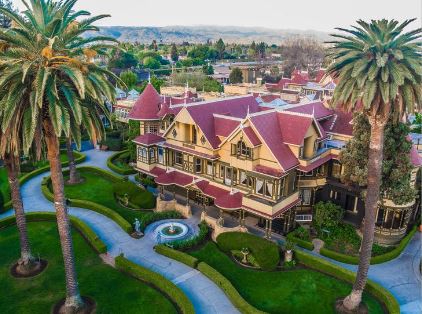
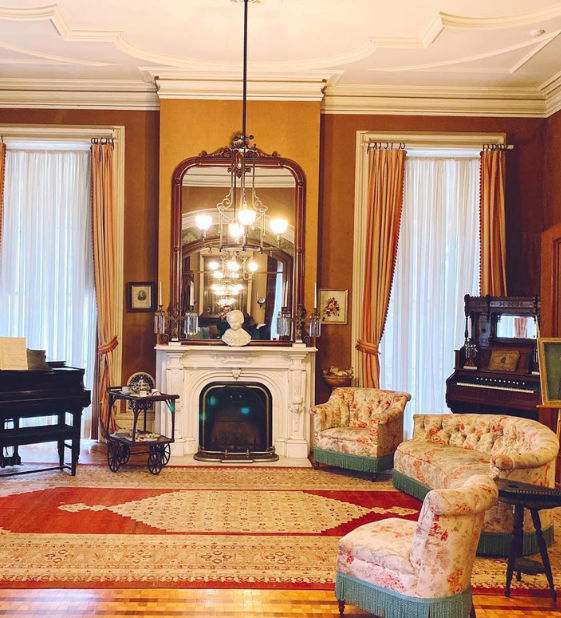
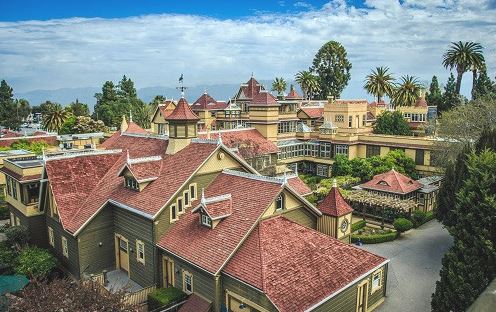
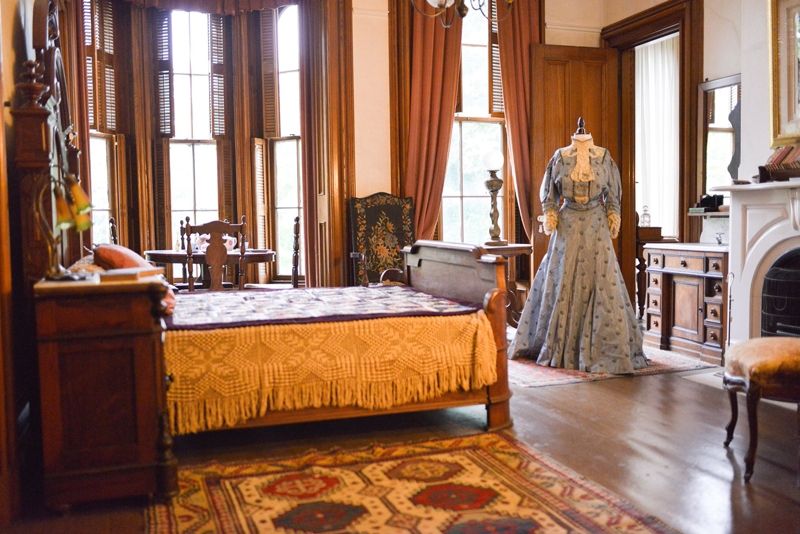
A caretaker was in The Winchester Mystery House working in one of the rooms that are not open to the public, which is used as an office when he heard the voice of a woman apparently singing plainchant. The music was then succeeded by the sound of a man’s footsteps, heavy ones, proceeding along rear wall. By the time the caretaker had entered the body of the house, the noises had stopped. The following day, the caretaker was surprised to find two guests crouched down looking through the keyhole of the east door. When he walked over to them, they asked him to put his ear up to the door and listen. He could plainly hear the sound of plainchant, apparently in French, being sung in the empty room. One of the guests declared that it was of that a singer should have locked the door, whereupon the caretaker informed him that the room was empty. Both gusts professed disbelief, so the caretaker opened the door, they were overwhelmed by the scent of roses. The three men searched the room thoroughly. No one was found. Two guest who had been in the garden had heard the singing also.

For further information about tours, including group tours, weddings, school events, birthday party packages, facility rentals, and special events please visit the website: https://winchestermysteryhouse.com/

Please visit the online giftshop, and purchase a gift for friends and relatives as well as a special memento of The Winchester Mystery House. A variety of souvenirs and gifts are available to purchase. https://shopwinchestermysteryhouse.com/




 Randolph Harris II International Institute