
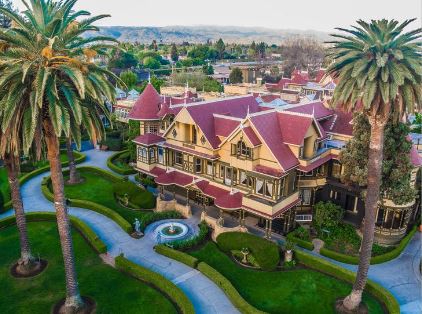
Nobody had visited my home for a while—but there were a few explorers who came here every winter, usually imagining they had stumbled on something darkly marvelous. After a silent evening, then—silent, not sullen—I retired to rest. Judge of my terror, when, not yet in bed, I heard what I can only describe as a distant bellow, and knew it for the butler’s voice, though never in my hearing so exerted before. His sleeping-room is at the father extremity of this large house, and to gain access to it one must traverse an antique hall some eighty feet long, a lofty panelled chamber, and twenty unoccupied bedrooms. There was a secret feeling, as I moved with great trepidation along these hidden halls. Deeper and deeper I went into my mysterious home. I felt as though phantom pursuers were almost upon me. Tiptoeing from room to room, ready to run at a moment’s notice. A voice sounded out of nowhere. It spoke in whispers and then not at all. Lightning flashed in the sky, silent, without thunder, and the trees shook their leaves and shivered down all their branches. In the last of these twenty rooms, the door stood in open in the darkness of the hall. Lightning flashed again, bright this time, like light on copper. I found the butler, his candle lying smashed on the floor. As I ran in, bearing a light, he clasped me in the arms and trembled for the first time since I have known him, thanked God, and hurried me out of the room. He would say nothing of what had alarmed him. “Tomorrow, tomorrow,” was all I could get from him. I doubt if his night more restful than mine. It was then that I came up to my room with a heavy foreboding of evil oppressing me, and went with a hesitation and reluctance I could not explain to my chest of drawers. #RandolphHarris 1 of 5

A cold feeling came over me as I opened the top drawer, in which was nothing but ribbons and handkerchiefs, and then the second, where was as little to alarm, and then, O Heavens, the third and last: and there was a mass of linen neatly folded: upon which, as I looked with curiosity that began to be tinged with horror, I perceived a movement in it, and a pink hand was thrust out of the fold and began to grope feebly in the air. I could bear it no more, and rushed from the room, clapping the door after me, and strove with all my force to lock it. However, they key would not turn in the wards, and from within the room came a sound of rustling and bumping, drawing nearer and nearer to the door. Why I did not flee down the stairs I know not. I continued grasping the handle, and mercifully, as the door was plucked from my hand with an irresistible force. I looked on in horror and in horror grasped. In the moment, a demon sprang from the room, his talons and teeth and eyes burned against the stars. He took to the air like an arow, unhindered, as if gravity did not any more exist, and crashed through the skylight. Now he was in the sky above me, a black star which had not been put out. At breakfast the next morning, the butler was very uncommunicative. However, afterward, he inquired of me if Mr. Hansen would be able to repair the skylight before the next storm rolled in. After throwing out a good many short remarks on indifferent topics, “It should be done by noon,” I said. He bowed to my acknowledgements. The trouble with Llanada Villa was that it was haunted, and what was worse, ghost did not merely appear and disappear, they would remain for hours. #RandolphHarris 2 of 5
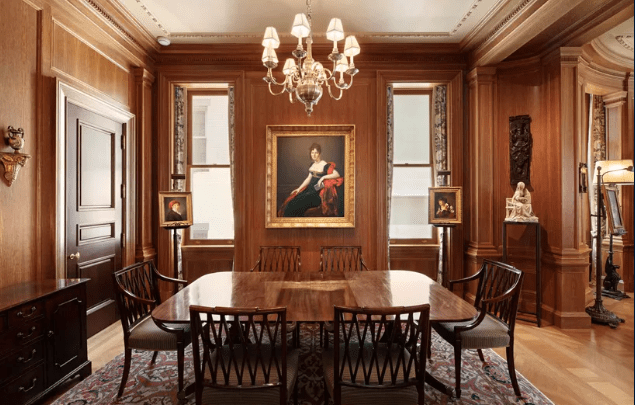
The following evening, a ghost appeared promptly, and frighted Astrid out of the guest room quite out of her senses by sitting down beside her, and gazing with his cavernous blue eyes into her. In his long, bony finger bits of dripping seaweed were entwined, the ends hanging down, and these ends he drew across her forehead until she fainted away. Astrid was found unconscious in her bed the next morning, simply saturated with seawater and fright. As I stepped out of my study into the great hall that is next to it, and shut the door, my candle went out. I supposed I had clapped the door behind me too quick, and made a draught, and I was annoyed, for I had no tinder-box neater than my bedroom. However, I knew my way well enough, and went on. The next thing was that my book was stuck out f my hand in the dark: if I said twitched out of my hand it would better express the sensation. It fell on the floor. I picked it up, and went on, more annoyed than before, and a little startled. However, that hall has many windows and I know where the furniture is. So I went on through the audit chamber next to it, which also has very big windows, and then into the bedrooms which lead to my own, where the curtains were drawn. It was in the Daisy Bedroom that I nearly got my quietus. The moment I opened the door of it I felt there was something wrong. I thought twice, I confess, whether I should not turn back and find another chamber. At about 3 A.M. the whole house was aroused by cries coming from the butler’s room. #RandolphHarris 3 of 5
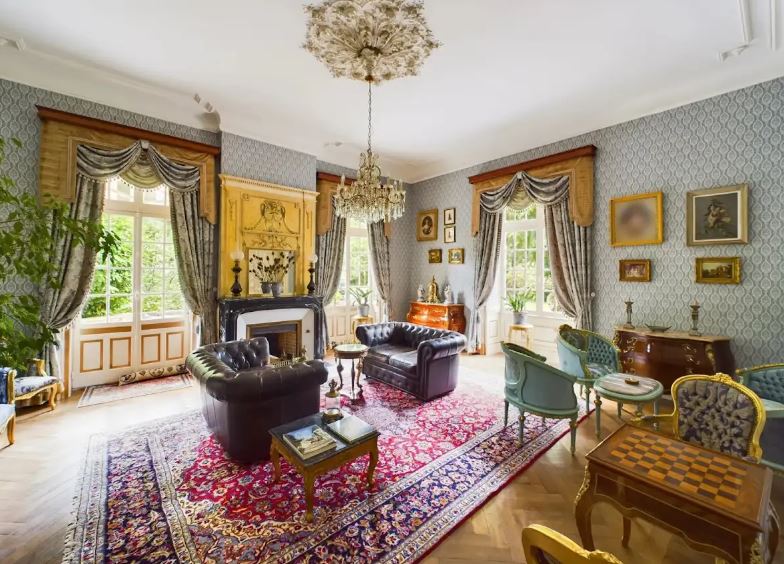
I rushed through the mansion and knocked at the door and asked if anything was wrong. The butler called out that he was sick. He would not open the door. I went back to my chamber and did not think much about. Then, this morning, I knocked to see how he was. The butler’s voice sounded strange. “Where is your roommate at this time?” I asked. “Mrs. Winchester, he’s away. His father died and he went home for the funeral.” When he would not open the door, I became quite concerned and told him I was going for help. He opened it—then I saw Dorian stretched dead on the blood-stained carpet, beaten, scratched, and mauled. I learned long ago the uselessness of weeping, I did not shed tears, though my heart began to break. Only an open window told what had become of our assailant, and many wondered how he himself had fared after the terrific leap from the second story to the law which he must have made. There were some strange garments in the room, but the butler said they did not belong to the stranger. That same night saw the beginning of the second horror—the horror to me eclipsed the plague itself. Llanada Villa was the scene of another terrible killing; a watchman had been clawed to death in a manner not only too hideous for description, but raising a doubt as to the human agency of the deed. The victim had been seen alive considerably after midnight—the dawn revealed the unutterable thing. I knew the demon must have returned. Those who found the body noted a trail of blood leading to the door-to-nowhere, where a small pool of red lay on the ground just below. A fainter trail led away toward the fruit orchards, but it soon gave out. #RandolphHarris 4 of 5
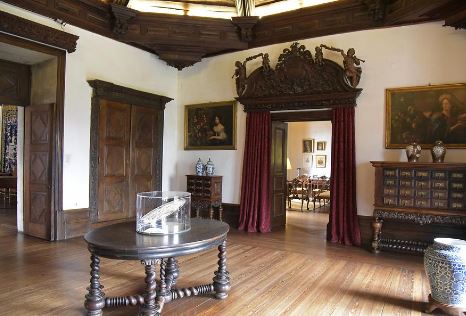
The next night devils danced in the Grand Ball Room, and unnatural madness howled in the wind. Through my mansion had crept a curse which some said was greater than the Black Death, and which some whispered was the embodied demon-soul of the plague itself. Thirteen rooms were entered by a nameless thing which strewed red death in its wake—in all, thirteen maimed and shapeless remnants of bodies were left behind by the voiceless, sadistic monster that crept through the twisting halls of my labyrinth. A few persons had half seen in the night, and said it was dark as night. It had not left behind quite all that it had attacked, for sometimes it had been hungry. The number it had killed was twenty-six. I went downstairs. Outside the air was fresh and crisp as I strolled through the garden. Something seemed to rush at me, and there was—I do not know how to put it—a sensation of long strong arms about my shoulders. The dagger had been taken from my waist. It fell to the ground. Then I heard a female voice, somewhere behind me. “You are a cruel man,” she said. Then there was no one visible. I do not think I was ever more horrified in all my life, that I could remember. However, frantic farmers captured it in the Observational Tower. A housemaid had reported hearing a scratching at a shuttered window, the net was quickly spread. On account of the general alarm and precautions, there were only three more victims, and the capture was effected without major causalities. After that, I could only get sleep in the small hours, when daylight was already strong, and then my dreams were of the grimmest—particularly one which stamped itself on my brain. #RandolphHarris 5 of 5
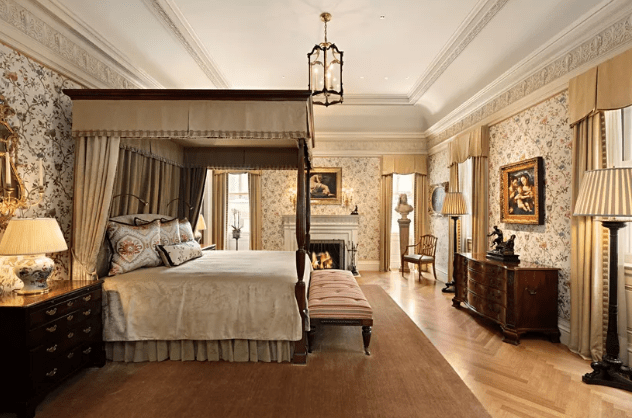
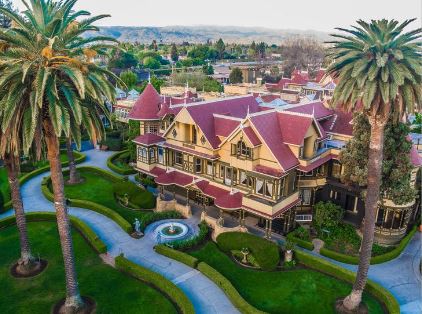
The Winchester Mystery House
Life in the 1830s and ‘40s was limited in scope for everyone. Individuals were known by all their neighbours and restricted by the mores of the culture. Men and women were very unequal under law but were more alike in real life. Society was not under great pressure; men and women had a much more even balance of power than they were to have fifty years later. The 1830s saw Watt’s improvement of the steam engine which made the railroads and steamboats possible. The completion of the Erie canal in the 1820s opened the near Midwest and the Great Lakes to commerce and settlement. The 1850 saw the discovery of coal and iron together in Pennsylvania, which permitted the cast-iron and steel industries to produce factories in cities and to produce railroads to ship their raw materials and manufactured goods. The Civil War caused the railroads to boom and heavy industry to flourish.
As a result, everything changed in the middle decades of the nineteenth century. American became urbanized. The 1870 census revealed that, for the first time, most Americans lived in cities. In small town or a farm village, everyone knew each other, and behaviour was controlled by the neighbours. In a big city each person was anonymous, and standards for behaviour had to be internalized and enforced by the individual. For most of history right and wrong were external rules; now personal morality had to prevail. The ideal of “self-control” for modern people became widespread in the late nineteenth century. At the same time, the family as an economic unit, a “little commonwealth,” disappeared. It was replaced by the modern cash economy where each person is an individual. By the turn of the century in America, most people worked in manufacturing or in offices. The new middle class worked in skyscrapers and took a commuter railroad or “el” (elevated railroad) or trolley to work.
Unlike Mrs. Winchester “home” for most people was an apartment or flat or row house. This was a new class of people. They were not the gentry of the eighteenth and early nineteenth century who made their living from owning land that others farmed or from shipping. They were not the “yeoman farmers” who grew their food with their own hands. They were clerks and office workers whose work was not manual and who saw themselves as newly arrived gentry. They Irish potato famine of the 1840s drove millions of immigrants to America while revolutions and repressions pushed millions out of Eastern Europe in the 1850 through the ‘80s. This labour was inexpensive. Even clerical, white-collar workers could have several servants, either live-in maids or daily cleaning ladies who returned to their (newly invented) tenements at night.
For further information about tours, including group tours, weddings, school events, birthday party packages, facility rentals, and special events please visit the website: https://winchestermysteryhouse.com/

Please visit the online giftshop, and purchase a gift for friends and relatives as well as a special memento of The Winchester Mystery House. A variety of souvenirs and gifts are available to purchase. https://shopwinchestermysteryhouse.com/




 Randolph Harris II International Institute