
Home » Posts tagged 'fiction'
Tag Archives: fiction

Victorian Ghosts in the Machine: How Old Fears Resurface in Modern Crises of Drugs, Technology, and Sextortion

Victorian society was steeped in spiritualism, and new technologies were often interpreted through a supernatural lens. When Joseph Nicéphore Niépce produced the first permanent photograph in 1826, the process itself seemed uncanny: an image fixed by the action of light upon a chemically sensitized surface. To many Victorians, this was not merely a mechanical procedure but a kind of modern alchemy. The very word photography—from the Greek phōtos (“light”) and graphein (“to draw”)—suggested that the camera was not simply recording a likeness but drawing something out of the subject. In a culture already attuned to invisible forces, this made the camera feel like a device capable of capturing more than appearance. Some believed it could seize a fragment of the soul. These anxieties were reinforced by older folkloric ideas that controlling a person’s image—whether a portrait, reflection, or effigy—granted power over the individual represented. Photography, with its eerie precision and chemical permanence, seemed to give that belief a new and unsettling technological form. However, in this modern era, this Victorian belief rings true. In the age of social media and “deepfakes,” the old Victorian fear has taken on a modern form. Today, a person’s image can be copied, manipulated, and weaponized in ways that feel eerily similar to the idea of “stealing the soul.” Digital photography and online platforms have given anyone who captures or obtains another person’s image a troubling degree of power over them. In modern times, people now use photographs to impersonate others online, to coerce individuals into sending private images, to damage reputations by distributing intimate material without consent, and to fabricate images or videos so convincingly that the line between truth and manipulation becomes nearly impossible to detect. In this sense, the camera’s power has evolved: it no longer merely records a likeness—it can be used to reshape identity, distort reality, and exert control over the person represented. #RandolphHarris 1 of 23

These fears are coming to fruition in many troubling ways. Social media, image‑sharing platforms, and “deepfake” technologies allow a person’s likeness to be copied, altered, and misused with unprecedented ease. This has created modern forms of exploitation that echo the Victorian concern about losing control over one’s image. One of the most harmful examples is sextortion, a form of online blackmail in which an offender pressures or manipulates someone into sharing sexually explicit images or messages and then threatens to expose them. Even individuals who never send such images can be targeted, because modern technology allows offenders to generate highly convincing fabricated photos or videos of a person’s likeness. These tactics are used to damage reputations, coerce individuals into unwanted interactions, or extort money. Research shows that the most frequent targets of financially motivated sextortion are teenage boys between the ages of fourteen and seventeen. Governments need to expand definitions of child sexual abuse material to include AI-generated content and criminalize its creation, procurement, possession and distribution. Additionally, revenge porn is now a crime. Revenge porn refers to the distribution, usually online, of sexually explicit images without consent by the person depicted in the image. if the person initially consented to be in the image or even took the image, it does not matter. The crime occurs when the defendant posts the images online or distributes them without the other’s consent. In some cases, a hacker steals the image from someone’s device or network and posts it on a porn website without consent. And then there are deepfakes—AI-generated photos or videos—used for revenge porn purposes. Congress made revenge porn illegal under the TAKE IT DOWN Act. This law makes non-consensual publication of authentic sexual images a felony. If the defendant did so to extort, coerce, intimidate, or cause mental harm to the victim, threatening to post such images is also a felony. #RandolphHarris 2 of 23

Furthermore, any medical photograph of a patient’s body—clothed or unclothed—is Protected Health Information (PHI) under: HIPAA (Health Insurance Portability and Accountability Act), the California Confidentiality of Medical Information Act (CMIA), and federal and state privacy, consumer protection, and civil rights laws. Because these images are PHI, stealing, copying, leaking, or sharing them without authorization is illegal. Unlawful access, copying, or disclosure of medical images is a HIPAA breach. Penalties can include: Civil fines (from thousands to millions of dollars depending on severity), criminal penalties for intentional misuse, and mandatory reporting to the patient, the U.S. Department of Health and Human Services (HHS), and sometimes the media. California CMIA Violations (stronger than HIPAA). In California, CMIA adds even stricter protections. A patient can sue for statutory damages, even without proving financial harm. if the disclosure was intentional, additional penalties apply. If an employee accessed images improperly, hospitals can be liable for negligent supervision. CMIA specifically protects medical photographs, including those taken during exams, procedures, or diagnostic imaging. If the images are used for harassment, impersonation, or extortion, this may intensify the penalties. Once the images leave the hospital, other laws also apply, including criminal laws, identity theft statutes, extortion / blackmail laws, cyber harassment and cyberstalking laws, revenge‑porn / non‑consensual image laws (California Penal Code §647(j)(4)). There are also civil laws that involve invasion of privacy, intentional infliction of emotional distress, negligence, breach of confidentiality, and consumer privacy laws (exempli gratia, California Consumer Privacy Act, depending on context). If the images were used to impersonate you online, that can also fall under fraud and identity theft statutes. #RandolphHarris 3 of 23
A person who terrorizes another is not expressing a single, neat “type of neurosis.” Their behavior usually reflects an inner world so unstable that they lash out to keep it from collapsing. They experience unpredictability, independence in others, or any challenge to their sense of power as intolerable threats. Instead of enduring the vulnerability these situations evoke, they externalize it as aggression, domination, or intimidation. In classical terms, one of the neurotic “solutions” to inner conflict is to withdraw from the internal battlefield altogether—to declare oneself “uninterested” in the struggle within. But this withdrawal does not bring peace. It leaves the unresolved conflict smoldering beneath the surface, and the individual must then manage the tension by controlling the outer world instead. When the person cannot regulate their own inner chaos, they attempt to regulate someone else’s behavior, emotions, or freedom. Terrorizing another person becomes a way to stabilize themselves, to silence the inner conflict by exerting power outward. Thus, the two ideas converge: the more a person retreats from their own inner turmoil, the more they may attempt to dominate the external world to keep that turmoil at bay. If he can muster and maintain an attitude of “do not care,” he feels less bothered by his inner conflicts and can attain a semblance of inner peace. Since he can do this only by resigning from active living, “resignation” seems a proper name for this solution. It is in a way, the most radical of all solutions and, perhaps for this very reason, most often produces conditions that allow for a fairly smooth functioning. And, since our sense of what is healthy is generally blunted, resigned people often pass for “normal.” #RandolphHarris 4 of 23

Resignation may have a constructive meaning. We can think of many older people who have recognized the intrinsic futility of ambition and success, who have mellowed by expecting and demanding less, and who through renunciation of nonessentials have become wiser. In many forms of religion or philosophy, renunciation of nonessentials is advocated as one of the conditions for greater spiritual growth and fulfillment: give up the expression of personal will, sexual desires, and cravings for worldly goods for the sake of being closer to God. Give up personal strivings and satisfactions for the sake of attaining the spiritual power which exists potentially in human beings. For the neurotic solution we are discussing here, however, resignation implies settling for a peace which is merely the absence of conflict. In religious practice, the pursuit of peace does not involve giving up struggle and striving but rather directing them toward higher goals. For the neurotic, it means giving up struggle and striving and settling for less. His resignation therefore is a process of shrinking, of restricting, of curtailing life and growth. Nevertheless, they healthy and neurotic resignation is not as neat just presented. Even in the latter, there is a positive value involved. However, what meets the eye are certain negative qualities resulting from the process. Typically, neurotics are more turbulent, they are reaching out for something, going after something, becoming passionately engaged in some pursuit—no matter whether this concerns mastery or love. In them, we usually see hope, anger, despair. Even the arrogant-vindictive type, although cold as a result of having stifled his emotions, still ardently wants—or is driven to want—success, power, triumph. By contrast the picture of resignation, when maintained consistently, is one of life at a constantly low ebb—of life without pain or friction but also without zest. #RandolphHarris 5 of 23

No wonder then that the basic characteristics of neurotic resignation are distinguished by an aura of restriction, of something that is avoided, that is not wanted or not done. There is some resignation in every neurotic. However, for some, it has become the major solution. The direct expression of the neurotic having removed himself from the inner battlefield is his being an onlooker at himself and his life. Since his detachment is a ubiquitous and prominent attitude of his, he is also an onlooker at others. He lives as if he were sitting in the orchestra and observing a dream acted on the stage, and a drama which is most of the time not too exciting at that. Though he is not necessarily a good observer, he may be most astute. Even in the very first consultation he may, with the help of some pertinent questions, develop a picture of himself replete with a wealth of candid observation. However, he will usually add that all this knowledge has not changed anything. Of course, it has not—for none of his findings has been an experience for him. Being an onlooker at himself means just that: not actively participating in living and unconsciously refusing to do so. In analysis, he tries to maintain the same attitude. He may be immensely interested, yet that interest may stay for quite a while at the level of a fascinating entertainment—and nothing changes. One thing, however, which he avoids even intellectually is the risk of seeing any of his conflict. If he is taken by surprise and, as it were, stumbles into one, he may suffer from severe panic. However, mostly, he is too much on his guard to allow anything to touch him. As soon as he comes close to a conflict his interest in the whole subject will peter out. Or he may argue himself out of it, proving that the conflict is no conflict. When the analyst perceives his “avoidance” tactics and tells him, “Look there, this is your life at stake,” the patient does not quite know what he is talking about. For him, it is not his life but a life which he observes, and in which he has no active part. #RandolphHarris 6 of 23

A second characteristic, intimately connected with nonparticipation, is the absence of any serious striving for achievement and the aversion to effort. I put the two attitudes together because their combination is typical for the resigned person. Many neurotics set their hearts on achieving something and chafe under the inhibitions preventing them from attaining it. Not so the resigned person. He unconsciously rejects both achievement and effort. He minimizes or flatly denies his assets, and settles for less. Pointing out evidence to the contrary does not budge him. He may become rather annoyed. Does the analyst want to push him into some ambition? Does he want him to become president of the United States of America? If, finally, he cannot help realizing the existence of some gifts, he may become frightened. Again, he may compose beautiful music, paint pictures, write books—in his imagination. This is an alternative means of doing away with both aspiration and effort. He may actually have good and original ideas on some subject, but the writing of a good paper would require initiative and the arduous work of thinking the ideas through and organizing them. So, the paper remains unwritten. He may have a vague desire to write a novel or a play, but waits for the inspiration to some. Then, the plot would be clear and everything would flow from his pen. Also, he is most ingenious at finding reasons for not doing things. How much good would a book be that had to be sweated out in hard labor! And are not too many uninspired books written anyhow? Would not the concentration on one pursuit curtail other interests and thus narrow his horizon? Does not going into politics, or into any competitive field, spoil the character? This aversion to effort may extent to all activities. It then brings about a complete inertia. In the meanwhile, he may procrastinate over doing such simple things as writing a letter, reading a book, shopping. Or he may do them against inner resistance, slowly, listlessly, ineffectively. The mere prospect of unavoidable later activities, such as moving or handling accumulated tasks in his job, may make him tired before he begins. #RandolphHarris 7 of 23
Concomitantly, there is an absence of goal-direction and planning, which may concern major and minor issues. What does he actually want to do with his life? As if it were none of his concern, the question has never occurred to him and is easily discarded. In this respect, there is a remarkable contrast to the arrogant-vindictive type, with the latter’s elaborate planning in long-range terms. In analysis, it appears that his goals are limited and gain negative. Analysis, he feels should rid him of disturbing symptoms, such as awkwardness with strangers, fear of blushing or another aspect of his inertia, such as his difficulty in reading. He may also have a broader vision of a goal which, in characteristically vague terms, he may call “serenity.” This, however, means for him simply the absence of all troubles, irritations, or upsets. And, naturally, whatever he hopes for should come easily, without pain or strain. The analyst should do the work. After all, is he not the expert? Analysis should be like going to a dentist who pulls a tooth, or to a doctor who gives an injection: that will solve everything. Though, if the patient did not have to talk so much, it would be better. The analyst should have some sort of X ray which would reveal the patient’s thoughts. Or perhaps, hypnosis would bring things out more quickly—that is, without anu effort on the part of the patient. When a new problem crystallizes, his first response may be exasperation at the prospect of so much more work to be done. A neurotic individual may not object to noticing things about himself; what he resists is the effort required to change. One of the classic “solutions” to inner conflict is to withdraw from the internal struggle altogether and declare oneself uninterested in altering anything. This tendency becomes important when considering the debate between nature and nurture. If people’s destinies were determined solely by parental programming, we would expect children from the same family to turn out alike. Yet they often diverge dramatically. The difference lies in how each child responds to inner conflict—whether they confront it, avoid it, or retreat from it entirely. In other words, it is not only what a person inherits or is taught, but how they engage with their own inner life that shapes who they become. #RandolphHarris 8 of 23

The first comment is that children from the same family do not always turn out differently. In some families they do, in others they do not. There are many cases where all the siblings are uniformly successful, uniformly alcoholic, uniformly suicidal, or uniformly schizophrenic. Such outcomes are often attributed to heredity, leaving the geneticists in a sophistical position when the siblings turn out differently: they can then argue, somewhat unconvincingly, from an adulterated Mendelianism, which amounts to little more than mumbling. The self-determinists are in the converse position: they argue vigorously for the cases where the siblings turn out differently, but are reduced to muttering when faced with uniformity. Script theory can take both situations in its stride. The script at issue here is the parent’s script, of which the offspring’s script is a derivative. Children turn out differently for the same reason that Cinderella turned out differently from her stepsisters. The stepmother’s script was to have losers for daughters and a winner for a stepdaughter. In the other well-known fairy-tale motif, the two clever older brothers turn out in the long run to be uneducated, while the stupid brother turns out, in the long run, to be the cleverest (as their mother secretly knew all along, since she set it up that way). On the other hand, both of the Roman Gracchi boys were equally talented and equally devoted to the interests of the people, and both of them came to the same end by assassination; while the five or ten of fifteen or twenty children of Niobe (depending upon who counted them), all came to the same end as part of her (Niobe’s) “Pride and Fall” script. The mother’s script may call for her to raise ten policemen (Glory be!) or ten robbers (Get ‘em boys!), or five policemen and five robbers (Let’s you him fight!), and a shrewd woman will have no difficulty in realizing any of these projects if she has then ten boys to raise. #RandolphHarris 9 of 23
Each society expects a progression of behavior in its members, a progression that will keep pace with the person’s chronological age. If persons are keeping pace with their age roles, they are said to be mature. If they are behind other people their age, they are said to be immature or fixated. If they revert to behavior characteristics of a younger age, they are said to display regression, and if they show a premature development of traits expected from older persons, they are said to display precocity. As with gender roles, age roles may conflict sharply with persons’ needs. They may not be ready to progress to the next age role when the time for it comes. Or they may enforce conformity with the age role on themselves, at considerable cost in satisfactions. By the time individuals have become adults, as this is defined in their culture, they acquire a vested interest in regarding themselves as mature. Yet, only if they behave in ways deemed immature in their social group, need gratification may be possible. Healthy personalities can regress when they want to or when they feel like it, without threat to self-esteem or to their sense of identity. Persons who are insecure about their maturity may strive to convince themselves and others that they are mature and avoid regressive behavior like the plague. Thus, some men may not allow themselves to be taken care of even when they are gravely sick because it would imply that they had regressed. Some women may refuse tenderness and solicitude from a man because of the implication that they are not independent adults. Some adults cannot play because being frolicsomeness feels childish to them and threatens their self-esteem. #RandolphHarris 10 of 23

As with family and gender roles, age roles are part of the “facticity”—the “givens”—with which each person must come to terms. The behavior expected of each person by others (because of chronological age) can be irrelevant to the person’s authentic needs and capacities. Older people are often virtually invited by those who are younger to be feeble and helpless, when they have great reserves of vitality latent with them. The fact is that as long as a person has vitalizing, challenging work and projects, and confirming personal relationships, he or she can be fit and active into the eighties and nineties or older. Bodies respond to life style and to people’s expectations. I have suspected that people die of “old age” not because their bodies had no more strength, but because they were bored or lonely, with no incentives to stay alive. Another point of view is represented by Christiansen, who stresses dignity in old age and in death as an inner characteristic rather than as a role. He also suggests that one may fashion foresee the close of one’s life and illustrates the point with a moving description of his grandfather’s dignified foresight. “There are old people who maintain dignity in later years not so much by power, defiance, interdependence, or isolation as by choosing for themselves some task to carry on with love and skill…my maternal grandfather had cultivated a vegetable garden. It was one of the famous sites of the neighborhood and despite the pain of cancer and radiation therapy, he kept the garden until he died at 80. That last fateful spring, he cultivated, planted, weeded and did everything leaning over a cane. One July evening that year, my father sighted Grandpa coming from the garden…He walked only a few steps at a time before stopping and propping himself against the house…My father overhead him bidding farewell to his garden. ‘Good-bye Andy’s backyard. Good-bye. I won’t be back.’ He died two weeks later.” #RandolphHarris 11 of 23
Human beings need meaningful, stabilizing structures—work, relationships, purpose, community—at every age. However, modern technological life creates new vulnerabilities that can overwhelm those stabilizing forces, especially for the young. And despite these dangers, we cannot simply abandon modernity. High school senior James Woods, for example, was deeply invested in his passions. He loved comics, quoted every episode of The Flash, idolized Green Arrow, and proudly wore a Naruto‑inspired headband to track meets. He looked forward all year to attending a comic convention with his family and friends. Yet three months into the school year, just before Thanksgiving, ‑year‑old died by suicide. His parents were stunned; they had seen no signs of mental distress. When investigators examined his phone, they discovered he had been targeted by financial sextortion—a rapidly growing cybercrime in which predators threaten to release fabricated or coerced intimate material unless the victim pays. As states previously, this crime disproportionately targets boys ages thirteen to seventeen, and has been linked to numerous deaths since 2021. However, what is often overlooked is that some offenders are driven not only by greed or opportunism but by a deeply disturbed inner world. For individuals whose internal life is unstable or filled with unresolved conflict, harming or destabilizing someone else can become a way of momentarily quieting their own turmoil. In such cases, the goal is not merely exploitation but domination—an attempt to dim another person’s light because their vitality, innocence, or hope feels intolerable to the aggressor’s fragile psyche. Cases like this reveal a painful paradox of modernity. The same technological world that enriches our lives, connects us, and provides endless opportunities for creativity and learning also exposes individuals—especially adolescents—to forms of exploitation that previous generations could not have imagined. And yet, despite these dangers, we are not likely to relinquish the scientific and technological advances that shape contemporary life. A return to tribalism, medievalism, or primitivity is neither realistic nor desirable. Instead, the challenge of our era is to preserve the benefits of modern civilization while confronting and mitigating the new vulnerabilities it creates. #RandolphHarris 12 of 23

However, trying to escape what we are becoming as a society may itself be leading us down the very path we hope to avoid. In many communities, people are retreating into tribal identities, reacting with medieval levels of suspicion, and behaving in ways that feel increasingly primitive. Instead of confronting their emotions or acknowledging that something is wrong within themselves, they displace their turmoil outward. They attack others—individually or as a group—as a way of avoiding their own inner conflicts. Over time, this aggressive, regressive pattern becomes normalized, even acclimatized, within the community, until hostility feels ordinary and self‑reflection feels foreign. Science brings material comforts in its hands as its offering to us. These things are not to be despised, but they are also not to be worshipped. Take them, for you need them’ but learn to become less absorbed in them. There is nothing wrong in seeking to make Nature’s energies and materials serve the needs of mankind. Technology is not all evil, as beginning escapees from a materialistic society so often believe. Even humble people from the Old World have simple technology. Thanks to science, I can look at my watch and thus determine with a precision that Copernicus never knew at what point of its rotation the earth is. The past two centuries have seen revolutions in conventional thought like non-Aristotelian systems, non-Newtonian mechanics, multi-valued logics, which have destroyed ancient sacrosanct errors. The value of truth as an intellectual ideal has greatly increased. We have used our brains during the last two or three centuries as never before. Science has made giant strides, and the pronouncements of the scientist are highly valued merely because we believe that he speaks impartially and impersonally as a truth-seeker. #RandolphHarris 13 of 23
Only a little over three hundred and fifty years ago did scientists begin to understand the language of the story. Since that time, the age of Galileo and Newton, reading has proceeded rapidly. Techniques of investigation, systematic methods of finding and following clues, have been developed. The discovery and use of scientific reasoning by Galileo was one of the most important achievements in the history of human thought and marks the real beginning of physics. This discovery taught us that intuitive conclusions based on immediate observation are not always to be trusted, for they sometimes lead to the wrong clues. The upshot of this statement is that although it is a fact from the practical standpoint that your typewriter still rests on the table, it is equally a fact from contemporary knowledge—that is, the ultra-scientific standpoint of deeper enquiry—that the series of energy-waves which constituted your typewriter, the series of events which were originally present in the space-time continuum, are perpetually vanishing. What then is the meaning of this “fact”? Science, keeping close to facts, restricts the mental activities whereas fancy, willing to disregard them, lends them wings. It is a great merit of science that its method produces results that are definite, reliable, and predictable. If the need conditions are properly fulfilled, we know that the result will not vary from previous results. There is still a mystery at the core of the atom. Humility is as befitting before it today as it was a hundred years ago. The scientific mode of thought is no longer limited to a few scientists. It has begun to permeate the educated world generally. The religious way was to suppress awkward questions but the scientific way is to seek out the answers. Modern physics, mathematics, and metaphysics are bridges toward each other. #RandolphHarris 14 of 23

If its results can be checked by observers anywhere in the world, it may properly be called a scientific method. It ought to be remembered that a number of those who have espoused materialism have been led into it by their loyalty to truth, by their intellectual honesty, rather than by an evil nature. Since is really or entirely an affair of the intellect because it deals with manifest forces and visible and discoverable facts. The vulgar belief that Science has “explained everything” is a hopeless misunderstanding. As we shall afterwards find, it would be nearer the truth to say that Science has explained nothing. Science does not even try to refer facts of experience to any ultimate reality. That is not is business. In a limited sense, Science explains things, namely, by reducing them to simpler terms, by discovering the conditions of their occurrence, and by disclosing their history. What do we mean when we say that Physics has accounted for the tides or that Physiology has made some function of the body much more intelligible than it used to be? What is meant is that we have gained a general conception of the nature of the facts in question, and that we are able to relate them to some general formula. In this sense only does Science explain things, and it does not really get beyond a description. Earlier scientists had to struggle so fiercely to free their discoveries from religious dogma and persecution that they naturally developed an antagonistic stance toward religion. They also had to fight against the weight of metaphysical speculation to establish empirical method, which made them equally wary of anything that resembled myth or intuition. But today, with the benefit of distance, we may need to reconsider what the Victorians sensed. Their anxieties about spirits stealing the soul were not literal truths, but metaphors for forces they could not yet name—forces of influence, manipulation, and psychological vulnerability. In a strange way, those “spirits” have migrated into our machines. Not as supernatural beings, but as the unintended consequences of technologies that shape identity, perception, and behavior. The Victorians feared that a camera could capture the soul; we now face algorithms, deepfakes, and digital systems that can distort reality, manipulate emotions, and exert power over the self in ways they could not have imagined. Science, for all its brilliance, does not explain everything about human experience. It cannot fully account for meaning, vulnerability, or the symbolic dimensions of life. And so, rather than dismissing the myths and legends of earlier generations, we might recognize that they encoded psychological truths—warnings about forces that erode autonomy, distort identity, or threaten the integrity of the self. The language has changed, but the underlying human concerns remain. #RandolphHarris 15 of 23

In my apartment complex, the old saying “where there’s smoke, there’s fire” has taken on an unsettlingly literal meaning. Drug use is widespread, and although management has been repeatedly informed, little has been done to stop it. Over the years, the building has experienced several major fires, and recently the fire department responded to a unit where a smoke alarm had been ringing for hours without explanation. Not long after that incident, I began noticing a strong chemical odor inside my apartment. When I opened my door, the hallway was filled with fumes so sharp they burned my nose. Concerned that it might be a gas leak, a meth lab, or some other dangerous chemical process, I called the Sacramento Police Department around one in the morning. The dispatcher asked what I was doing at the time, and when I said I was sitting down and smelled a strong chemical odor, she asked whether alarms were sounding or visible smoke was present. When I answered no, she refused to send the fire department to investigate. A few weeks later, I fell asleep on my couch and woke up struggling to breathe. A heavy drug smell was coming through the air‑conditioning vents. Because of how I had been treated by dispatch before, I did not call again. Instead, I contacted my doctor, explained the situation, and he prescribed an inhaler to help with the breathing problems I was experiencing. The following night, the odor returned—so strong it woke me from sleep. When I opened my balcony door, the entire exterior of the building smelled as if someone were cooking chemicals on a barbecue grill. Again, I did not call the police. After being dismissed once, I no longer trusted that anyone would come. What makes these incidents even more unsettling is that strong, unusual chemical odors in a residential building are not merely unpleasant—they can be a warning sign of something far more dangerous. Law‑enforcement agencies and fire departments consistently note that certain intense, acrid, or chemical smells are sometimes associated with illegal drug activity, including the production of methamphetamine. I am not suggesting that I know exactly what was happening in my building, only that the odors I encountered were strong enough to raise legitimate concern. This is why the dismissive response from dispatch felt so alarming. In a complex where fires have already occurred, where alarms have gone off for hours, and where chemical fumes have repeatedly filled both hallways and individual units, the possibility of a hazardous situation cannot simply be brushed aside. When I opened my balcony door and found the entire exterior of the building saturated with a harsh chemical smell—so strong it woke me from sleep—it was impossible not to think about the risks that accompany these kinds of odors. Even if the source was not a meth lab, the fumes were potent enough to affect my breathing and require medical attention. #RandolphHarris 16 of 23

My experience is not just a personal inconvenience; it reflects a broader public‑safety issue. Chemical odors in multi‑unit housing can indicate anything from improper drug use to dangerous chemical reactions, ventilation failures, or other hazards that place every resident at risk. Yet when institutions fail to respond, residents are left to navigate these dangers alone, unsure whether they are facing a nuisance, a health hazard, or a potential catastrophe. The United States of America once had tens of thousands of meth labs, but today the number is far lower—while explosions still occur every year. Domestic meth production peaked in the early 2000s and has sharply declined since, though small, improvised labs continue to pose fire and chemical‑exposure risks. In 2018, the most recent detailed national dataset, the U.SA. recorded 1,568 meth lab incidents nationwide. This is a dramatic drop from the 2004 peak of roughly 23,703 incidents. The Drug Enforcement Agency’s National Clandestine Laboratory Register continues to log new cases each year, showing that small labs still appear across many states, though in far smaller numbers than two decades ago. These numbers reflect discoveries, not the total number of labs in existence, so the true number of operating labs is unknown. But the trend is clear: domestic meth production has collapsed, and most meth in the U.S.A now comes from large‑scale operations in Mexico. Sacramento, CA was once known as the meth capital. There were once numerous superlabs, capable of producing more than 10 pounds of meth in 24 hours. In 2003, the National Clandestine Laboratory Seizure System recorded 529 meth lab fires or explosions nationwide. The year before, in 2002, there were 654 fires or explosions. These older figures are the most authoritative national explosion counts available. More recent national explosion‑specific data is limited, but public‑health surveillance confirms that fires, chemical releases, and explosions remain common hazards associated with meth labs. #RandolphHarris 17 of 23

If you ever encounter strong chemical odors, burning sensations, or drug fumes so intense that they affect your breathing, it is important to understand that this can be a serious health and safety issue. You are not expected to diagnose the source—only to recognize that something is wrong. Report the odor to emergency services. You are not required to prove anything. You are not required to see smoke or flames. You are not required to diagnose the smell. People are generally advised to say: “There is a strong chemical odor in my building.” “It is affecting my breathing.” “There have been fires here before.” “I am concerned about a possible hazardous materials situation.” This frames the issue as a potential health hazard, which is something fire departments take seriously. Even if dispatch was dismissive in the past, you are still allowed to call again if the situation is affecting your health. For months, residents of the Aldercrest Apartments had complained about the strange, chemical‑sharp odors drifting through the hallways at night. Some described it as “burning plastic,” others as “industrial cleaner,” but everyone agreed on one thing: it did not belong in a residential building. Management dismissed the reports as “cooking smells” or “someone cleaning with strong products.” The police dispatchers, when called, asked whether anyone saw smoke or flames. When the answer was no, the calls ended there. But the residents knew something was wrong. Aldercrest was a mid‑rise building on the edge of Sacramento’s River District, a place where families, retirees, and young workers lived side by side. The building had already experienced two fires in the past decade—both blamed on “careless smoking.” After the most recent incident, the Sacramento Fire Department had urged management to improve ventilation and enforce safety rules. The recommendations were politely acknowledged and quietly ignored. #RandolphHarris 18 of 23

On a warm Thursday evening in early spring, the smell returned—stronger than ever. Residents on the fourth and fifth floors opened their doors to check the hallway, only to find the air thick with a chemical haze that stung their eyes. A few people coughed. One woman felt light‑headed and returned to her apartment to sit by an open window. Someone called management again. No one answered. At 9:42 p.m., the building shook. A muffled boom rolled through the structure, followed by a violent shudder that knocked picture frames off walls and sent dust raining from the ceiling. Lights flickered. A second later, alarms erupted—first one, then dozens, until the entire building screamed with sound. This time, the Sacramento Fire Department was dispatched immediately. Within minutes, Engine 14, Truck 6, and Rescue 3 were racing down the boulevard, sirens cutting through the night. Leading the response was Captain Lukas Reinhardt, a seasoned firefighter with a calm, commanding presence and a faint German accent that grew sharper under pressure. He had spent twenty‑five years in the department, earning national recognition for leadership during complex urban rescues. As the engines arrived, smoke was already pushing from the windows of a third‑floor unit. Residents were pouring out of the lobby, some coughing, some crying, some barefoot and disoriented. Captain Reinhardt stepped out of the truck, scanned the building, and issued orders with crisp precision. “Truck 6, ladders to the third‑floor balconies. Engine 14, interior attack—check for structural compromise. Rescue 3, begin medical triage. Move.” Inside, the hallways were a maze of smoke and debris. The explosion had blown out part of a kitchen wall in one unit, scattering fragments into the corridor. Firefighters advanced with hoses, thermal cameras, and flashlights, calling out to anyone who might still be inside. #RandolphHarris 19 of 23
Two doors down, they found an elderly man sitting on the floor, dazed and unable to stand. Firefighter Morales lifted him under the arms while her partner cleared the path. They guided him toward the stairwell, where paramedics waited. Outside, the award‑winning Sacramento paramedics had already set up a triage area. Paramedic Serena Patel, known for her calm under pressure, checked oxygen levels, treated smoke inhalation, and reassured frightened residents. Her partner, Jacob Stein, moved quickly between patients, assessing who needed immediate transport. Captain Reinhardt radioed from inside: “We have multiple victims on the third floor. Heavy smoke. Possible secondary hazards. Continue evacuation.” Firefighters located a mother and her teenage son trapped in their apartment, unable to reach the hallway through the smoke. Truck 6 extended a ladder to their balcony. Firefighter Delgado climbed up, secured them with harnesses, and guided them down one at a time. The crowd below erupted in relieved applause as their feet touched the ground. By 10:27 p.m., the fire was contained. By 11:10, the building was cleared. No lives were lost. Investigators later confirmed what residents had feared: the explosion originated from an improvised drug operation hidden inside a third‑floor unit. The strong odors that had been reported for months were early warnings—warnings that had gone unheeded. Standing outside the building, Captain Reinhardt addressed the residents with quiet gravity. “You did the right thing by reporting what you smelled,” he said. “Sometimes the danger is invisible until it isn’t. Tonight, you all worked together, and that made the difference.” The Aldercrest fire became a turning point. Management faced scrutiny, safety protocols were overhauled, and residents were finally heard. But more importantly, the night reaffirmed what Sacramento already knew: when crisis strikes, its firefighters and paramedics—disciplined, compassionate, and unwavering—stand ready to protect the community, no matter how many warnings were ignored before the flames appeared. Never surrender your commonsense, nor forsake the heritage that shaped you; for even when the world ignores your warning, these quiet virtues may yet preserve your life and the lives of others. #RandolphHarris 20 of 23

When it comes to firefighting, every incident carries the potential for injury—no matter how small the fire appears or how routine the call may seem. If you see a fire engine stopped in the street without its lights on, use extreme caution. Crews may be working nearby, and passing the apparatus can put them in danger. It is often safer to turn around and take another route; if you strike a firefighter or civilian and cause a fatality, you could face charges such as manslaughter. Firefighters frequently move around their vehicle on foot, loading equipment or preparing to leave the scene. Attempting to pass the apparatus can result in a collision with someone you cannot see. Pay close attention to their hand signals as well—emergency vehicles sometimes move slowly or reposition, and impatient drivers trying to slip around them create hazardous situations. If you are already in an intersection when you notice an emergency vehicle approaching, continue through it, then pull to the right and stop as soon as it is safe. Always obey directions from law enforcement officers or firefighters, even if those instructions conflict with posted signs or traffic laws. When sirens or flashing lights are activated, it is illegal to follow within 300 feet of a fire engine, ambulance, or police vehicle. Driving to the scene of a fire, collision, or disaster can also result in arrest, as doing so interferes with firefighters, paramedics, and other emergency personnel. Professional courage is not limited to physical toughness. It includes listening to others, advocating for them in difficult situations, understanding personal limits, and having the integrity to tell a superior when they are wrong. The deeper truth is that public safety depends not only on the bravery of first responders but on the discipline and judgment of the community around them. Every driver’s decision—whether cautious or careless—can either protect or endanger the people risking their lives to protect everyone else. #RandolphHarris 21 of 23
Efforts to preserve farmland and maintain buildable land for future generations often lead to discussions about population growth and long‑term planning. Some people argue that immigration levels should be managed carefully to ensure that infrastructure, housing, and land use remain sustainable. Others suggest that, when immigration does occur, programs that encourage broad representation can help communities reflect the diversity of the wider world. When Americans purchase goods made in the United States, it strengthens local businesses and signals to investors that these products are in demand. Strong sales give investors confidence to reinvest in domestic companies, helping keep jobs, production, and wages within the country. As businesses grow, they contribute more to the tax base, which can reduce the burden on taxpayers over time. Supporting American businesses also keeps more money circulating within the national economy. The government increases the national debt when it spends more than it collects in tax revenue or borrows from private or foreign lenders. When people shop locally, more tax revenue stays in the community and supports public services. This helps keep jobs in the United States and increases the tax contributions that fund government operations. Purchasing foreign-made goods, by contrast, often sends money overseas and may benefit companies that operate under lighter tax or environmental regulations. Buying American-made products can also reduce environmental impact because they travel shorter distances and are produced under stricter standards for air, land, and water protection. In this way, consumer choices influence not only the economy but also environmental stewardship and long-term national sustainability. #RandolphHarris 22 of 23

Under President Trump’s administration, he has made America a priority. President Trump has hermetically sealed the southern border, illegal crossings have been terminated, and are 90 percent lower than under the previous administration. Since President Trump’s crack down on crime, violent crimes in Washington D.C. have dropped by approximately 80 percent. He has stopped thousands of pounds of drugs from entering America and killing citizens. And since President Trump took office, investments in America have increased by trillions of dollars in U.S.A. manufacturing, production, and innovation. As you can see, President Donald Trump and his pledge to “Make America Great Again” is exactly what America needs to save the country and the American people. And yes, diversity is important, so you can see why it is also important to preserve blonde hair and blue eyes, as the people with these characteristics are becoming a minority in America. As a reminder, parents, please teach your children to love America and be patriotic citizens, and to buy goods and services made in America. It is also important to respect law and order and treat your elders with respect. It is inborn in the human mind to wish to know. If this begins with the endless surface questions of a child’s curiosity, if it continues into deeper questions of a scientist’s probing investigation, it cannot and does not stop there. For the higher part of the mind will eventually come into unfoldment, that union of abstract reflective thought with mystical intuition, which is true intelligence, which needs and sees a view of the whole of things. And so, the knowing faculty enters the realm of philosophy. A lot of children are having problems in school and cannot even write a paragraph because they are not reading their books. When you actually read books, you get an example of how to write and will become a better student. Therefore, remember to take your education seriously so that you will be successful in life and make your family proud. Also, to make sure they have all the resources required, please donate to the Sacramento Fire Department to help improve our national security. “Oh, thus be it ever, when freemen shall stand between their loved home and the war’s desolation! Blest with victory and peace, may the heav’n-rescued land Praise the Power that hath made and preserved us a nation! Then conquer we must, when our cause is just, and this be our motto: ‘In God is our trust.’ And the star-spangled banner in triumph shall wave O’er the land of the free and the home of the brave.” #RandolphHarris 23 of 23


Mr. William Wirt Winchester had always been a man who saw farther than others. Even as a boy in New Haven, he dismantled clocks, rifles, and anything with gears just to understand how they breathed. His father, Mr. Oliver Winchester, recognized the spark immediately. “This one,” he would say with pride, “was born with gunpowder in his imagination.” By the time Mr. William reached adulthood, he had already designed several mechanical improvements that caught the attention of the Winchester Repeating Arms Company. His ideas were bold—sometimes too bold for the boardroom—but they worked. He refined the lever‑action mechanism, strengthened the firing pin assembly, and even sketched early concepts for a self‑loading rifle decades before the world was ready to understand them.
When Mr. Oliver stepped down, the company needed a leader who could carry the Winchester legacy into a new age. Mr. William was elected president unanimously. Newspapers called him the quiet genius of American firearms. His employees called him the man who could see the future. And Mrs. Sarah Lockwood Pardee Winchester called him husband. Their marriage was a union of intellect and tenderness. Mrs. Sarah, brilliant in her own right, understood Mr. William’s restless mind. She encouraged his experiments, soothed his anxieties, and brought warmth to a life otherwise consumed by metal and machinery. Together, they dreamed of a home unlike any other—a sprawling mansion filled with light, music, and rooms for the family they hoped to build. When Sarah was with child, Mr. William worked late into the night designing a new rifle mechanism he believed would revolutionize the industry. He wanted to present it to his daughter one day and say, This is what your father built while waiting for you. Their baby girl, Ms. Annie, was born on a cool summer morning. Mr. William held her with trembling hands, overwhelmed by the fragile miracle of her tiny fingers curling around his thumb. Mrs. Sarah wept with joy. For a brief moment, the world felt perfect. However, perfection is a fragile thing.
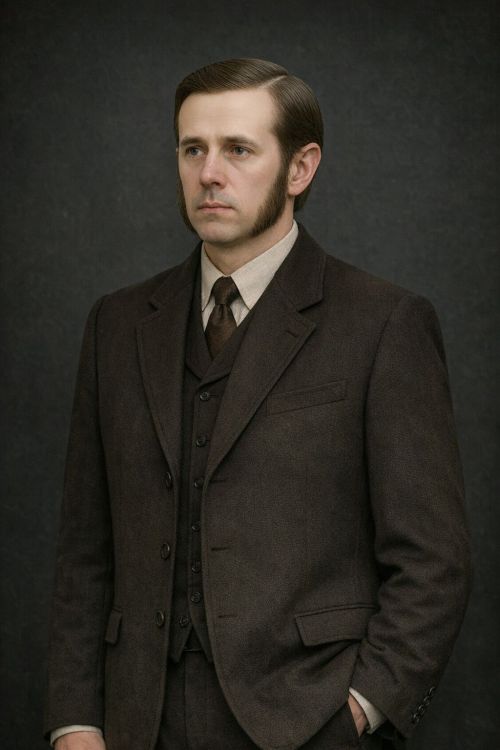
Within weeks, Ms. Annie fell ill. Doctors came and went, offering treatments that did little and explanations that did even less. Mrs. Sarah stayed at her bedside, singing lullabies through tears. Mr. William paced the halls, helpless in a way he had never known. Despite every effort, their daughter slipped away. The grief hollowed them. William buried himself in work, creating inventions no one had dreamed possible—rifles with unprecedented precision, mechanisms that seemed almost alive in their efficiency. But each success felt empty without the child he had hoped to teach. Mrs. Sarah tried to hold them together, but sorrow has a way of reshaping the world. One autumn afternoon, desperate for distraction, they took a family outing to the countryside. They walked through a quiet grove, the leaves whispering overhead. Mrs. Sarah later said she felt a presence there—cold, watchful, ancient. Mr. William brushed it off as imagination. But that night, he fell violently ill.
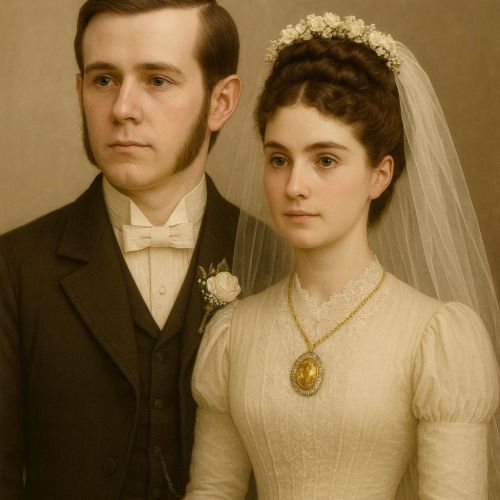
Doctors suspected poisoning. Possibly chronic arsenic exposurethough they could not determine the source. His condition worsened rapidly. Mrs. Sarah stayed by his side, holding his hand as she had held their daughter’s. William whispered apologies, dreams unfinished, inventions unbuilt, a life cut short. He died before dawn. Mrs. Sarah was left alone—widowed, childless, and haunted by the memory of that strange presence in the grove. Some said she imagined it. Others whispered that the Winchesters, whose weapons had shaped history, had drawn the attention of something darker.

But Mrs. Sarah knew the truth. She wasn’t building a mansion. She was building a promise. A promise that love, invention, and imagination would outlast tragedy. A promise that the curse—real or imagined—would never define her family’s legacy. A promise that Mr. William’s brilliance would echo through every beam, every window, every impossible hallway. The Winchester Mansion became her monument to resilience. And in its endless rooms, she kept alive the memory of the man who dreamed of changing the world—and did.

PRIVATE EVENTS & WEDDINGS
at WINCHESTER ESTATE

Many event locations claim to be unique, but nothing compares to the Winchester Mystery House. If you’re truly seeking a distinct, one‑of‑a‑kind setting for your milestone celebration or special occasion, reserve a venue that delivers on uniqueness many times over. Whether you’re planning a wedding, birthday or anniversary celebration, corporate gathering, holiday party, or any other meaningful event, the Winchester Mystery House offers an unforgettable backdrop. Give your guests an experience they’ll be talking about for years to come.

Café 13: A Rest Stop on the Edge of the Mystery

After wandering the winding halls of the Winchester Mystery House—where staircases defy logic and whispers seem to cling to the walls—Café 13 offers a welcome return to warmth and grounding. Newly reopened and serving guests daily from 10 AM to 3 PM, this cozy hideaway invites you to pause, breathe, and gather yourself before diving back into the mansion’s secrets.

Here, you can enjoy breakfast, lunch, snacks, and refreshing drinks in a calm indoor space that feels worlds away from the mansion’s twisting corridors. Settle in with a warm meal, challenge a friend to a board game, or simply rest and recharge as sunlight filters through the windows. Café 13 is more than a café—it’s a moment of calm between chapters of the Winchester legend, a place to steady your nerves before returning to the gardens, the grandeur, and the mysteries that await.
Winchester Mercantile Gift Shop
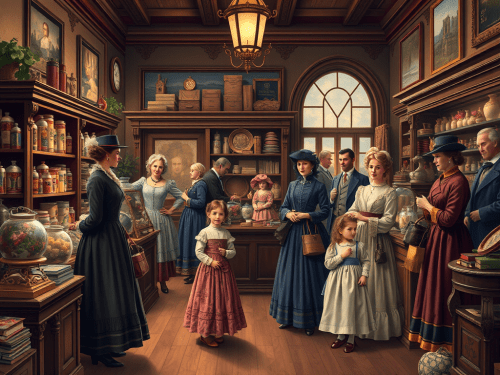
Your journey into the Winchester Mystery House begins long before you cross the mansion’s threshold. It starts at the Mercantile gift shop—a welcoming outpost standing at the edge of a world where history and myth intertwine. Here, beneath warm lights and shelves lined with curiosities, you can secure your tour tickets and prepare for the adventure ahead. Guests often pause for a souvenir photograph, capturing the moment before they step into Sarah Winchester’s enigmatic domain. As you explore the shop, you will find an eclectic array of gifts and keepsakes: tokens of the mansion’s lore, echoes of Victorian elegance, and mementos that carry a touch of the house’s enduring mystery. The Mercantile is more than a gift shop—it is the gateway. https://winchestermysteryhouse.com/

Harris Plumbing, Heating, Air & Electric has been serving our community for 30 years—an achievement few companies can claim. That longevity isn’t an accident. It’s the result of hard work, integrity, and a commitment to doing every job the right way, whether it’s a simple repair or a complex system overhaul. We take pride in every service call because we know your home is more than a building—it’s where your family lives, grows, and feels safe. Ensuring your comfort and protection is a responsibility we carry with seriousness and gratitude. After three decades, our mission remains the same: to deliver dependable service you can trust, every time.

Harris makes sure you have the clear, accurate information you need to decide what comes next—no matter what your home is facing. Before we begin any work, our technicians perform a full diagnosis and walk you through every issue we find. That means you receive a personalized quote and service plan tailored to your home’s exact needs, not a generic estimate or guess. We believe the only way to deliver our best work is to understand the problem completely and address it with precision, transparency, and care. Your home deserves nothing less. https://www.callharrisnow.com/about-us/


BMW remains one of the most desirable automotive marques because it blends engineering precision with an emotional driving experience that few brands can match. Its vehicles are built around balance, responsiveness, and a sense of connection between driver and machine—qualities that have defined the company for generations.

Beyond performance, BMW carries an aura of prestige and craftsmanship: the cabins feel tailored, the technology is purposeful rather than gimmicky, and the design language signals confidence without excess.

Owning a BMW is not just about transportation; it’s about participating in a legacy of excellence that continues to set the standard for luxury performance. This commitment to performance is why BMW continues to earn its reputation as The Ultimate Driving Machine. https://www.brianharrisbmw.com/

Randolph Harris San Francisco Taxation & Mergers

Building strong, lasting client relationships is essential to a successful legal career. Many attorneys assume that mastering legal doctrine alone guarantees success, but law is fundamentally a service profession—our work is measured not only by technical skill, but by how effectively we solve problems for the people who trust us. Long‑term relationships grow from three core commitments: truly knowing your clients, understanding how their legal issues fit within the broader context of their business and personal goals, and consistently delivering exceptional service.

Mr. Randy advises clients on business transitions, taxable and tax‑deferred mergers and acquisitions, joint ventures, restructuring, integrated tax planning, federal and state tax controversy matters, and real estate transactions. His approach is grounded in clarity, responsiveness, and a deep understanding of each client’s unique circumstances. Trust is the cornerstone of every relationship he builds. Ultimately, clients feel confident knowing they are working with someone who not only understands their challenges, but is fully committed to helping them achieve their goals. https://www.jmbm.com/l-randolph-harris.html


Millhaven Custom Homes stands at the pinnacle of luxury homebuilding in Utah, where visionary design meets master craftsmanship. Every residence we create begins with a simple promise: your home should be as extraordinary as the life you intend to live within it. From the first conversation to the final reveal, our team is dedicated to transforming your aspirations into a living work of art.

Our homes are defined by architectural excellence, timeless materials, and meticulous attention to detail. Whether you imagine a modern sanctuary of glass and light, a mountain estate rooted in natural textures, or a grand traditional residence with sweeping lines and handcrafted finishes, Millhaven brings your vision to life with precision and artistry. Each space is intentionally designed to elevate daily living, blending beauty, comfort, and enduring value.

At Millhaven, luxury is not an aesthetic—it is an experience. We collaborate closely with you to understand your lifestyle, your priorities, and the way you want your home to feel. From custom floor plans to curated interior selections, every element is tailored to reflect your personal style. Our process ensures that you feel heard, supported, and inspired at every stage of the journey.

Our reputation is built on integrity, innovation, and an unwavering commitment to quality. With decades of experience in Utah’s most sought‑after communities, Millhaven Custom Homes has earned the trust of homeowners who expect nothing less than excellence. We partner with the region’s finest artisans, engineers, and designers to ensure that every home we build stands as a testament to craftsmanship and longevity.

Discover the difference of a home built exclusively for you. When you choose Millhaven, you choose a builder who understands that a home is more than a structure—it is a sanctuary, a legacy, and a reflection of your highest aspirations. Let us create a residence that inspires awe, welcomes warmth, and elevates every moment of your life. https://millhavenhomes.com/

“From the moment I stepped into my Millhaven home, I felt something I had never experienced in any other space—a sense of openness, intention, and quiet luxury that immediately put me at ease.

“Every room feels expansive without being overwhelming, and every detail reflects a level of craftsmanship that makes daily living feel elevated. It’s the kind of home that doesn’t just look beautiful; it feels thoughtfully designed for real life.

“What surprised me most was how personal the entire experience felt. Millhaven didn’t just build a house; they created a space that reflects who I am and how I want to live. The natural light, the custom finishes, the flow from room to room—everything feels like it was shaped with care, precision, and a genuine understanding of what makes a home feel extraordinary. Although my husband is an award‑winning tennis and pickleball player, I dream of my boys playing basketball, so the huge basketball court was such a bonus.

“Loving this home has taught me something about love itself. The way I feel here—supported, understood, and surrounded by beauty—is the same way I feel about the person I cherish most.

“In many ways, this home mirrors that relationship: expansive, intentional, and built with a depth that grows richer the more time I spend in it. Millhaven didn’t just give us a place to live; they gave us a place that feels like coming home in every sense” – Mrs. Harris


You Cannot Make it Unless You Meet a Prince

The reasonable man adapts himself to the World; the unreasonable one persists in trying to adapt the World to himself. This is same disregard for feasibility which pervades the drive for actualization. Many of these demands are of a kind which no human being could fulfill. They are plainly fantastic, although the person himself is not aware of it. He cannot help it, however, as soon as his expectations are exposed to the clear light of critical thinking. If anything, such an intellectual realization, however, usually does not usually change much. Let us say that a physician may have clearly realized that he cannot do intensive scientific work in addition to a nine-hour practice and an extensive social life; yet, after abortive attempts to cut down one or another activity, he keeps going at the same pace. His demands that limitations in time and energies should not exist for him are stronger than reason. Or take a more subtle illustration. At an analytic session, a patient was dejected. She had talked with a friend about the latter’s material problems, which were complicated. My patient knew the husband only from social situations. Yet, although she had been in analysis for several years and had enough understanding of the psychological intricacies involved in any relationship between two people to know better, she felt that she should have been able to tell her friend whether or not the marriage was tenable. #RandolphHarris 1 of 27

I told her that she expected something of herself which was impossible for anybody, and pointed out the multitude of questions to be clarified before one could even begin to have a more than dim impression of factors operating in the situation. It turned out then that she had been aware of most of the difficulties I had pointed out. However, she had still felt that she should have a kind of sixth sense penetrating all of them. Other demands on self may not be fantastic in themselves yet show a complete disregard for the conditions under which their analysis has little to do with intelligence. The reasoning power which these people have may, in fact, be used to obstruct progress. What counts are the emotional forces operating in the patients, their capacity to be straight and to assume responsibility for themselves. This expectation of easy success operates not only in reference to the length of the whole analysis, but equally so in regard to an individual insight gained. For instance, recognizing some of their neurotic claims seems to them the equivalent of having outgrown them altogether. That it requires patient work; that the claims will persist as long as the emotional necessities for having them are not changed—all of this they ignore. They believe that their intelligence should be a supreme moving power. Naturally, then, subsequent disappointment and discouragement are unavoidable. #RandolphHarris 2 of 27
In a similar way, a teacher may expect that, with her long experience in teaching, it should be easy for her to write a paper on a pedagogical subject. If the words do not flow from her pen, she feels utterly disgusted with herself. She ignored or discarded such relevant questions as: Has she something to say? Have her experiences crystallized to some useful formulations? And even if the answers are affirmative, a paper still means plain work in formulating and expressing thoughts. The inner dictates, exactly like political tyranny in a police state, operate with a supreme disregard for the person’s own psychic condition—for what he can feel or do as he is at present. One of the frequent shoulds, for instance, is that one should never feel hurt. As absolute (which is implied in the “never”) anyone would find this extremely hard to achieve. How many people have been, or are, so secure in themselves, so serene, as never to feel hurt? This could at best be an ideal toward which we might strive. To take such a project seriously must mean intense and patient work at our unconscious claims for defense, at our false pride—or, in short, at every factor in our personality that makes us vulnerable. However, the person who feels that he should never feel hurt does not have so concrete a program in mind. He simply issues an absolute order to himself, denying or overriding the fact of his existing vulnerability. #RandolphHarris 3 of 27

One patient revealed that she does not believe that she needs to experience a number of outside relationships to become happier about herself and things in general. However, after being with this particular person, she thought of nothing but sleeping with every man who appealed to her. She would walk down the street and look at everybody and wonder whether they are looking at her and what would they be like to sleep with. And somehow, just this one experience with a man, which was not terrific and did not make her terribly happy in regards to pleasures of the flesh, was enough to make her feel much more excited about being with people. It gave her a new feeling about life, which she never had with her husband because she was so dragged down and smudged. The pleasures of the flesh with this man made herself more like herself again, which contradicts what she initially said. This experience made her more aware of what she was as an individual as opposed to what her husband wanted her to be. She was living exactly according to the traditional image of the female, because her husband could not accept anything else. And one morning, she woke up and said, “I hate cleaning the house, and I want somebody to help me, and I’d like to sculpt in the middle of the night and paint in the middle of the night alone. And I want privacy and I want individuality and I want to be recognized for being a girl—not even so young any more!—with interests. I am human and an individual and also female, and I don’t want to be submerged in this housewife role.” #RandolphHarris 4 of 27

She deferred to her husband to the point where she almost forgot who she was or what she wanted or what she thought. However, it was her who decided that it was her role as a woman to please a man and therefore completely to submerge her own identity. This woman claimed that she was not going to hunt for relationships because she was more interested in quality than quantity. Although she wants to end up with a man and that she wants to be able to relate to a man, she admits does not know what she wants. It seems that she is mostly busy trying to remember all the things she wanted to feel and activate the things she wanted to do. She seems to be desperate for some kind of communication and relationships with men are just to serve a purpose and not to be permanent. This woman seems to be indulging herself in a Walter Mitty-type fantasy. This would be understandable under the circumstances since she has just begun to break out of her marriage and has used infidelity as a springboard. The danger lies in the possibility that this fantasy expresses a more fundamental aspect of her personality, an immaturity that is more Peter Pan than Walter Mitty—reflecting a wish not to grow up. When this is the case, a man or a woman uses extramarital affairs as a way of avoiding responsibility for the achievement of an enduring relationship. #RandolphHarris 5 of 27

For an affair, after all, can be an opportunity for growth, a chance to experience more than simply pleasure of the flesh—a chance to work at a relationship so that it will sustain intimate passions and even intensify them. The alternative is to go from one partner to another, experiencing little beyond a temporary relief of frustration with pleasures of the flesh. This is clearly not her intention—intellectually, at least. The danger lies in the ease with which good intentions dissolve in the face of easy opportunities to act otherwise. Marriage is, among other things, a challenge to two individuals to find their identities by meeting the responsibilities that arise in the natural course of events, but affairs have no such built-in challenges. It is all too easy to continue an affair only to the point where it requires an individual to grow up, to accept some responsibility for his or her own development and to invest attention and feeling and energy in developing a long-rage relationship rather than concentrating it all on short-term pampering of the individual self. One way to integrate your authoritative personality and your marginalized personality is to accept the paradox that both exist in you and they are equal, like a two-party system in politics or a battery with positive and negative poles. A democracy collapses without opposing, equally strong political parties. #RandolphHarris 6 of 27

A battery will not work without the positive and negative electrical charges, and a healthy human being cannot function at the fully human level without both strength and weakness, love and anger. You have to listen to both sides, both your weak marginalized self and your authoritative self. By accepting and listen to both sides of yourself, the antagonistic poles become complementary. When both sides of ourselves are accepted equally, the power of integration occurs. Another way to integrate your authoritative self and your marginalized self is to express your feelings as accurately as possible. For example, if your husband is flirting, you may tell yourself that it does not really bother you. However, what do you really feel? When he interrupts your conversation to tell some waitress how terrific she looks, it is irritating, right? Do you tell him? No. Because you do not want to ruin your marriage with jealousy. Because you love him. Do you feel loving at those times? Not really, right? You actually feel inadequate. Are you inadequate? If you are not inadequate, then what are you? You are made at him, correct? It really hurts being ignored by the man you love. Those closer a woman comes to accurately expressing her feelings, the more she is able to: integrate her authoritative personality with her marginalized, and resolve the dichotomy that is robing her of her self-esteem and falsifying her communications. However, not all women are in a position to do this because of the dynamics of their relationship. #RandolphHarris 7 of 27

Some women had to manipulate a man into marrying them, others are dependent on his money, or maybe a combination of both. So, they have had to be subservient in their relationships to keep a man. Other are dating abusive men. For woman in this position, asserting her authority could be disastrous and even deadly. As Maslow says, in healthier people, dichotomies are resolved, and polarities disappear. Learning to listen to both your authoritative and marginalized personalities—giving them equal time, so to speak, and learning to accurately express your feelings—telling the truth, enables you to integrate your warring factions and transcend your manipulations. Often the hypnogogic experiences are just out of reach of what can be remembered unless they are immediately recorded, which action tends to disrupt the state. When I was suffering from infirmary for so long and living alone, I learned to “stay with” what was going on until I felt that I had it clear and firm, so that it seemed that it could not possibly escape me. However, when I made a movement, it was gone—utterly. Even shifting a leg or moving an arm or thinking a thought would break up this authoritative personality. Surely, this is not completely alien to anyone, when all have known arriving at something in our heads and then some movement or other interruption broke it up and we lost it? #RandolphHarris 8 of 27

In much the same way, some women are frightened at causing a rift in their relationships. However, for me, there was something else that annoyed me even more, in terms of wishing to present proof of what can go on in me that is intelligent beyond my usual intelligence: when I did manage to move my body without losing the knowing and wrote some notes—clues to the much more, which I hoped would serve as an anchor so that I could recapture the rest—I lost the rest. The clues by themselves read like nonsense—as a list of errands in one’s private code does to someone else. However, my clues were not to familiar things which could easily be related to each other by myself: they were clues to ideas, to explanations, to knowings and understandings so great that when I looked at my clues I thought, “It is like trying to put a woolly mammoth through a funnel. What comes through does not look much like a woolly mammoth.” Is this difficulty any more “mystic” or “irrational” than what these woman are going through? The mind is multidimensional to an impossible degree, whereas any description is limited to one dimension. Language can describe only one sequence of events at a time; if several occur simultaneously, language has to jump to and fro among the parallel lines, creating difficulties, if not confusion, for a listener. A further, almost insurmountable, complication is caused by the fact that mental events not only take place simultaneously along parallel lines, but influence each other profoundly. #RandolphHarris 9 of 27

It seems to me that this is why reliance on verbal communication gets us into so much trouble. I can never say to you completely what is going on in me. When I use words, this sounds (and is) inadequate and unconvincing. If I then go on to express other parts of what is going on in me, it takes so long, and you become tired of listening. You want to know what is really going on in me, as if there were only one thing which could be real. And I, aware of what was going on in me, now notice that his has changed and throw in the towel. It is when my total organism receives from you, through non-verbal communication or some mixture of non-verbal and verbal communication, that I am closest to knowing what goes on in you. Little Pink Riding Hood was an orphan, and she used to sit in a clearing in the forest waiting for someone wo needed help to pass by. Sometimes she would wander down the paths in case anyone needed her in another part of the woods. She was very poor and could not offer very much, but whatever she had, she shared freely. She could hold thing when people needed an extra pair of hands, and her head was full of wise precepts which she had learned from her parents while they were still alive. She was also full of merry quips, and she liked to cheer up men who were scared of getting lost in the forest. In this way she made many friends. However, she was nearly always alone on weekends because then everybody went on picnics in the meadows and left her alone and a little scared herself to be in the forest. Sometimes they invited her to go along, but as she got older this happened less and less often. #RandolphHarris 10 of 27

She led a different life from Little Red Riding Hood, and in fact the one time they met, they did not get along well together. Little Red Riding Hoos was hurrying through the forest and passed by the clearing where Little Pink Riding Hood sat. She stopped to say Hello, and the two of them looked at each other for a minute, thinking they might become friends because they looked a little bit like each other except that one wore a pink cloak and the other a red one. “Where are you going?” asked Pink. “I’ve never seen you around here before.” “I’m taking my grandmother some sandwiches my mother made,” replied Red. “Oh, how nice,” said Pink. “I don’t have any mother.” “Furthermore,” said Red proudly, “when I get to my grandmother’s, I’m going to be eaten by a wolf—I think.” “Oh,” said Pink. “Well, a sandwich a day keeps the wolf away. And it’s a wise child that knows her own wolf when she meets him.” “I don’t think those merry quips are funny,” said Red. “So good-by.” “How stuck-up can you get?” asked Pink. However, Red had already departed. “She has no sense of humor,” thought Pink to herself, “but I think she needs help.” So Little Pink Riding Hood struck out into the forest to find a hunter who would protect Little Red Riding Hood from the wolf. Eventually she found one, an old friend of hers, and she told him that Little Red Riding Hood was in trouble. She followed him to the door of the hut where Red’s grandmother lived and saw everything that happened there: Little Red in bed with the wolf, the wolf trying to eat her, the hunter killing to wolf, and he and Little Red laughing and joking as they cut the wolf open and put stones in his belly. #RandolphHarris 11 of 27

However, Red did not even bother to thank Pink, which made Pink sad. And after it was all over, the hunter was better friends with Red than he had been with Pink, which made Pink even sadder. She was so sad that she began to eat peppy berries every day, and then she could not sleep, so she would eat sleepy berries at night. She was still a cute kid and still liked to help people, but sometimes she thought the best thing to do would be to take an overdose of sleepy berries. Clinical Analysis: Little Pink Riding Hood is an orphan, or has reason to feel like one. She is a cute kid, full of wise precepts and merry quips, but she leaves it to others to do the real thinking, organize things, and carry them through. She is conscientious and always ready to help people, and has many “friends” as a result, but somehow, she usually gets left out in the end. She then begins to drink and take stimulating drugs and sleeping pills, and often thinks of suicide. After she says Hello, she makes merry quips, but that is only to pass the time until she has a chance to ask: “Can I help you with anything?” Thus, she could have a “deep” relationship with a loser, but did not do so well with winners after the quips were over. Clinical Diagnosis: Chronic-depressive reaction. Little Pink Riding Hood is a loser’s script, since everything she gets, she loses. It is a Goal-structured Cannot script, with the standard slogan: “You cannot make it unless you meet a Prince.” It is based on a “Never” plan, “Never ask for anything for yourself.” After she says Hello, she proves she is a helpful, cute kid. #RandolphHarris 12 of 27

Theological philosophy is based on logic. Scientific philosophy is based on reason. I uphold rationalism against intellectualism, the thinking power in man against the classifying power, the mind which evaluates thoughts against the mind which merely collects and describes them. So long as these two faculties of human kind—reason and imagination—are surrendered to its animal side, so long will they prevent the real human being from being born. The victories of reason are the only enduring ones. When we abdicate reason for unquestioning belief, when we sign away out birthright of private judgment to another man, we part with a precious possession. Reason is active in the developed man. He cannot stop it from demanding a cause for an effect. I took this use of the term “Reason” from Aristotle, who made it higher than ordinary intellect, as well as creative, spiritual, eternal, and undying. The faculty of discrimination which we are to use in the pursuit of truth is not the intellect but the true Reason, which itself judges the intellect and rejects or confirms what it says. The conclusion to which reason comes can only have obligatory force upon the reason itself, not necessarily upon the whole integral being of man. We are finally to decide the problems of life by the integration of all our human nature and not merely by the judgment of a particular part of it. To make life a matter only of rational concepts about it is to reduce it, is to make a cold abstraction from it, and thus to fall into the fallacy of taking the part for the whole. #RandolphHarris 13 of 27

Metaphysical concepts may fully satisfy the demands of the totality of our being. They satisfy reason because they are the products of reason itself. However, man is more than a reasoning being. His integral structure demands the feeling and the fact as well as the concept of it, the feeling as well as the idea of it. So long as he knowns it only with a limited part of his being, only as empty of emotional content and divorced from physical experience, so long will it remain incompletely known, half-seized as it were. It is at this crucial point that the seek must realize the limitations of metaphysics and be ready to put aside as having fulfilled its particular purpose that which he has hitherto valued as a truth-path. It is impossible for the modern mind to encounter such experiences without seeking their explanation. And therefore, it is of little practical use for a master to tell his followers not to trouble their heads about the reason why such things happen or not to ask questions about the meanings and purpose of the World. Reasoning, in its highest sense, transcends mere logic and welcomes the alliance of meditation; out of their union comes wisdom, peace, balance, and so, blessing. The man whose chariot is driven by reason holding well the reins of his mind, reaches the end of his journey, the Supreme Pervading Spirit. Beyond the senses is the mind, and beyond mind is reason…beyond reason is the great Self. We may reject reason’s ideas about Divinity but in the end it is reason we have to rely upon to support the ideas which authority, tradition, emotion, or faith put forward. The agnostic, even the atheist, is a believer, too. Only he has more faith in the validity of reason than in the validity of intuition. Yet it is only the reason’s own vanity that asserts that its validity is a higher one. #RandolphHarris 14 of 27

Just as we ought not muse emotion, so we ought not misuse reason. We may use reason to justify an intuition, provided we use it faithfully and not to flatter our prejudices or prepossessions. We shall then be as ready to examine critically searchingly and impartially our own conclusions as those of an opponent. Reason properly used will critically examine an emotion which is leading one astray, whereas improperly used it will uncritically defend such an emotion. It will not hesitate to puncture the ego’s inflated compliancy in the first case whereas it will support his complacency in the second one. How often is reason judgment pushed aside by mere physical appeal which obscures what is below the surface. A person’s body concept includes everything the person believes about the structure, capabilities, and limits of his or her body. As with any other concept—one’s concept of other people, of animals—the body concept may be accurate or inaccurate, complete or incomplete. An accurate body concept is important for achieving healthy personality. Accuracy of the body concept is achieved by all of the means employed to arrive at reality-tested knowledge in general: through observation, through continual verification of conclusions, and through contact with reliable authorities and sources of knowledge. However, many persons have been taught erroneous belief about diet, healthy, requirements, and the like. #RandolphHarris 15 of 27

Further, a person may become so alienated from the body (as part of the more general process of self-alienation) that the person loses the capacity to “listen” to the body, the capacity for somatic perception. Thus, some people may fail to recognize that inadequate diet, lack of exercise, insufficient rest, and excessive self-indulgence are gradually weakening their bodies. To the extent that a person has knowledge of the effects of various things on health, then to that extent the person’s body welfare is his or her own responsibility. In societies where medical knowledge is not available, people may have erroneous beliefs about the causes of health and of illness. Consequently, one may observe that entire sector of a population suffers from some chronic ailment that they all accept as “natural,” as part of the scheme of living, for instance, rickets or Tuberculosis. It is only from the standpoint of the contemporary scientific concept of the body that it becomes possible to make judgements about how healthy (or sick) and entire society might be. Some overprotected people grown up ignorant of the process of reproduction; a nineteen-year-old student of mine believed that the menstruation only occurred in virgins; once a woman engaged in pleasures of the flesh, she stopped menstruating. She could not discuss biological questions with her mother, and she was too embarrassed to talk about pleasures of the flesh with her better-informed girlfriends. Aging person with false pride may misjudge their strength and endanger their health through overexercise. However, just as persons may overestimate their bodies’ capacity, so may they underestimate it. We are all tougher than we have been led to believe. #RandolphHarris 16 of 27

It is extremely important to engage with and train community-based partners to improve the outcomes of at-risk populations. The Sacramento Fire Department seeks to guide practitioners, researchers, policy makers, funding organizations, and other stakeholders in understanding and using the available evidence to inform their decision making. It also seeks to demonstrate methodologies and other interested researchers to evaluate complex interventions. With the Sacramento Fire Department, they speak of resources in terms of the three M’s—men, money, and materials. To these three, they must add time. However, there is a distinct difference between time and the three other resources. If they do not use their own money or materials today, they are available tomorrow. To a lesser degree, this is also true of men. It is not at all true of time, for time is a highly perishable commodity. An hour lost today is lost forever! To success in the Sacramento Fire Department, you must competently manage your resources—people, materials, and information. However, perhaps the most precious resource you must manage is time. You cannot replace it once it is gone. Time management can also be called, “personal management,” since you are the only thing you can control. The time-management sills you develop as a fire fighter and a student will set a pattern for you as a future captain. That is why you must cultivate a process for effectively managing time today. #RandolphHarris 17 of 27

In the Sacramento Fire Department, you encounter significant barriers to effective time management. However, you can overcome those barriers by setting goals and using systematic techniques. Time management is a system for getting things done as efficiently and productively as possible. You assume leadership responsibilities in the Sacramento Fire Department, your time will become even more valuable and its management more complex. You will need to manage not just your own time, but also the time of those you lead. When you put an efficient time-management system into action, you become a more effective leader because your team members perceive the value you place on both your time and theirs. The respect you show for their time will support everyone’s efforts to become more efficient as the unit works toward meeting tsk deadlines and completing the mission schedule. However, it all starts in college and training, where your studies require significant time-management skills. Your success at cultivating good time-management skills depends on your ability to set aside enough time for each of your classes, sports, and other activities. Doing this efficiently requires that Sacramento firefighters recognize time wasters (black holes). Set goals that reduce patterns of wasted time, and implement a system of the POWER model. The POWER model, discussed later, moved firefighters toward their personal, professional, and career goals. #RandolphHarris 18 of 27

How does the value you place on time management translate into your team members wasting less time? Is there a trickle-down effect? Pick a goal you have set for yourself: Make enough money to buy a car; graduate with honours; land a summer internship with the Sacramento Fire Department; improve your English language kills. Now turn it into a SMART goal. What did you learn about yourself and your goal? In your schedule, “black holes” are spaces of time that eat into your productivity and prevent you from reaching your goals and the goals of others you work with. Black holes devour productive time and consume your efficiency. You will learn that a lot of your associates, peers, and friends are black holes. The ability to identify black holes is the first and most important aspect of good time management. To do this, you should conduct an informal inventory of how you use your time. Consider a typical week and, within that week, a typical day. Most people are surprised at how much of their time is unfocused and unstructured—putting things off—and distracters—things that take you away from your planned work or activities. One way to fight procrastination is to realize that it will only make things worse. Putting off an easy thing makes it hard, and putting off a hard one makes it impossible. Distracters are often subtle. They might be talking on the phone with friends or relatives, losing track of time while Instant Messaging (IM) or playing video games, or helping other people on their projects. Or you may face an unexpected change in your work schedule. #RandolphHarris 19 of 27

Learning to deal with distracters—saying no when necessary; turning off your cell phone, the IM, or the video game; negotiating your schedule with your supervisor; even finding a different spot to work or study away from distractions—builds the discipline that helps you stay on course. Trying to overcome these two sources of black holes in your life goes a long way toward improving your use of available time. Additionally, the better you get at completing work on schedule, the better you will get at scheduling time for recreation, hobbies, social activities, and other things you enjoy. Goal setting is a critical part of managing your time. If you do not know where you are going, how can you possibly calculate how long it will take you to get there? If you want one of these new smart homes, you have to start by making yourself smart. The SMART model: Specific: make the goal concrete and clear. Measurable: Decide how you will measure success in reaching the goal. Achievable: Keep goals reasonable—milestones are helpful. Realistic: Consider other factors that may affect the goal. Time-bound: make yourself accountable for a specific date. The POWER Model. Prepare: Set SMART goals. Organize: Keep a calendar to know where you are, where you have been, and what is ahead. Work: Work on establishing boundaries for your time—prioritize activities, and avoid procrastinating, learn when to say no, and keep track of how long important tasks take. Evaluate: Review how you are spending your time. Rethink: Explore better and better ways of managing your time—identify what you need to change, and enter the God mode. #RandolphHarris 20 of 27

The SMART model for goal setting is a useful starting point for filling up black holes with useful activities—activities that get you where you want to go on your mission, in your career, and in your life. One you have established your goals, you need to apply an effective time-management system to reach them. Practice techniques of good time management, such as completing tasks before moving to the next item or limiting distractions when doing exercise or homework. Some useful tools include c calendar, a weekly schedule, and a To-Do list. You can find sophisticated time-management assistants at an office-supply store or perhaps a book store. Your personal computer may also have useful time-management software. In applying any time-management strategy, it is a good idea to keep in mind that you must be flexible. Since on one can foresee the future, you need to be willing to modify your plans to accommodate events and even a few surprises. Using time more efficiently than the enemy is the first requirement of victory. Successful time management is a never-ending process. It is time to take control of your time using the SMART technique and POWER model you have learned. Start today! Common sense assists the triumph of reason over sentimentality. The faculty of reason also has two phases; the lower is practical and reaches perfection in the scientist; the higher is abstract and reaches perfection in the metaphysician. #RandolphHarris 21 of 27

If we bury our reason alive, so much the worse for us. Its wraith will rise up one day and sneer in revenge at our silly errors and self-made troubles. The utmost use of the reasoning faculties cannot always provide for every factor in a situation. There are some only which intuition can grasp—the Universal laws, for instance. This explains the miscalculations of men who possess the most highly developed rationality but who lack a counterbalancing development of intuition. “I wasn’t a particular religious person before my injury, and I’m not a fanatic now, but I do attend church a lot more regularly and say prayers more. The only way I can figure it out, the gift of life dame through Jesus. I went back and looked at the accident scene, and there is no way I should have lived. I should be dead right now. Today, I’m on administrative detail, I’m doing a job I really don’t want to do, in fire prevention. I give 100 percent while I’m working, but it’s not where my heart is at. Riding around a street, going to inspect a building, I’ll here an alarm come in, and I’m like the old fire horse that’s pulling a milk wagon. I wander over and want to go to the fireground. I’ll stand around and watch, and it’s like you want to get in there. My back is healed enough, and I feel I could do the job. The doctors say they think I can do it, but they’re afraid of the way we live in the fire department. It’s all uncontrolled. You’re on the ladder and you’re reaching for somebody—you’re on the roof and you’re falling—and you grab something. #RandolphHarris 22 of 27

“If it were the type of work where you’re lifting boxes all day, I mean you can stand there and lift, but fire department lifting it totally different. I mean, you could be on a stairway and the stairway could give out, and the next thing you know a ladder could come down on you. So right now they don’t want me going back into the fires. The chief of the fire department has worked with me, and he could have told me to get the hell out, but he said we’ll wait and see. If it comes to the time that the doctors are not going to change their minds, then I’ll take a permanent job. The alternative is to take the pension and get out, do something different. I don’t think that I could. I could go out and train myself. I could do contracting work. If I needed to go to school, I’d go to school. No matter what I wanted to do, I could do it, I think. I have no doubt in myself. But at my age—I’m getting up to thirty-eight—they’re not hiring people out there. There are no jobs around, really. I could get an insurance job, you know, underwriting or adjustment, but I wouldn’t want it. I like feeling the way I do about myself when I put the uniform on. I get up and come to work, I look forward to coming to work. I look forward to doing my job with the people I work with. I mean, you meet any fireman, you’ve got something in common with him. I was on a night inspection at a restaurant, and a chief from Santa Clara was there. He introduced himself, and we must have talked for forty-five minutes. Things like that. If I was an insurance salesman and went into a restaurant, nobody would know. And if they did, they wouldn’t give a damn. #RandolphHarris 23 of 27

“It’s an interesting life. There are great feelings of satisfaction. One of the rescues I had was basement fire. I got a man out of there. We were the third engine in, and I was leading off. The radio said there were people trapped down there. I came up and said, ‘Did you find the people yet?’ the guys were like, ‘No. No.’ Nobody was going down to look. I was like, ‘Bubba, get your ass in there.’ I went down and made a search, and on the first search, there he was. I had him up and out and back to where he lived. If I hadn’t acted, he probably would have died. I had one fire where there was a picture in the newspaper of a lieutenant brining a kid down the ladder, but I had handed the kid out. It was the same thing. Guys were searching in the room, and I just made a turn and went to the other room, and bang, there the kid was in the corner. I went right at him, and there was the guy right on the ladder, and it was perfect. Those types of things. It’s the kind of job where even before you’re out of fire school, you know if you want to do this type of work or not. You get people who are afraid of heights, putting a mask on. If you make it through that, it’s a rewarding job. You touch more people’s lives than you think just by doing the job, even if it’s just going out and pumping a flooded basement, or going out on inspection and showing them about a cord on their car, or smoke detector programs. It touches you to know that you’re helping people that way, that it’s true purpose of your job, and that your job is to protect the citizens. It’s going to make you feel good. If you’re doing your job right, you’re going to feel good about it. #RandolphHarris 24 of 27

“I miss the excitement, the chance to do the things that make you feel good, making a rescue, cutting somebody out of a car, helping somebody out of a window. Even a vacant building fire, when you put the ashes out and you look back, it makes you feel good that you did it. You pull up, and it’s all fire, and you say, ‘Oh man.’ And you get in there, and it’s out, and you feel good about yourself. I guess it’s like a pitcher pitching a no-hitter. I mean, it worked good, everybody feels good, and they’re all smiling. You’re out in twenty below at four in the morning, but, ‘Good job, good job.’ You get back, you sit around and have coffee and talk about it. That feeling is great. You go out and inspect a building, and you say, ‘The guy needs an extinguisher, big deal.’ Some guys on inspection don’t consider themselves part of the department, they don’t want to have the radio scanner on and hear that noise. It’s the way you feel about doing the job. I’ve always given 100 percent, and I feel good no matter what, if it’s a trash fire, a pot of food, whatever. I never shirked my duties, I was always in there, and nobody can say, ‘He’s a bum.’ I’m always with the people, with the men. You look back at old pumpers. When I came in, we were still using 1945 Macks. In ten more years, they’ll look at an old Mack picture and say, ‘My God, these guys used to stand on the back steps.’ Riding the truck company, that was the biggest thing, just riding on the side, and when they turned you just turned your head that way. #RandolphHarris 25 of 27

“I remember it pulling out, and if you didn’t run down the street and jump on it, then that was it. You’d get up there and ride the truck to the fire. It’s changed now. It changed for the better because of safety. You look at what people did, they worked twenty-three hours and had one off; they went home and ate, and came back and put in another twenty-three hours. The only reason those guys did it was because they felt the same way I do. Why else would a person do the job for the money you make? It’s because you like it, and because of the tradition. You look around and see all the firemen dying of cancer. But there is only so much you can do to make the job safe and still do the job. Hopefully, it never gets to the point where you’ll be standing on the sidewalk and somebody’s house is on fire, and you say, ‘I’m sorry, ma’am, we have to let it burn down.’ It’s taken ten years off my life. A guy who came through school with me died of cancer. This guy was thirty-seven years old. I’m an old guy now, still in my thirties. When I came in the department, there were guys in their forties and fifties, and it was like, ‘Is that old man still in here? When is the old bastard leaving?’ I guess I’m the old guy in the department now, even though I’m still young. If I were a banker, I would hope to live to be seventy or eighty, but if a fireman makes it to fifty, he takes his pension, and a month later he’s dying of some weird disease.” Those sceptics who reject the possibility of attaining truth are already stating something as truth and thereby refuting their own theory. #RandolphHarris 26 of 27

If you are in an intersection when you see an emergency vehicle, continue through the intersection. Drive to the right as soon as it is safe and stop. Obey any direction, order, or signal given by a law enforcement officer, or a firefighter. Even if they conflict with existing signs, signals, or laws, follow their orders. When their siren or flashing lights are on, it is against the law to follow within 300 feet of any fire engine, law enforcement vehicle, ambulance, or other emergency vehicle. If you drive to the scene of a fire, collision, or other disaster, you can be arrested. When you do this, you are getting in the way of firefighters, ambulance crews, or other rescue and emergency personnel. The concept of professional courage does not always mean being as tough as nails, either. It also suggests a willingness to listen to other peoples’ problems, to go to bat for them in a tough situation and it means knowing just how far they can go. It also means being willing to tell the boss when he or she is wrong. As a reminder, parents, pleasure teach your children love America and be patriotic citizens and to buy goods and services made in America. It is also important to respect law and order and treat your elders with respect. To help our firefighters, pleasure donate to the Sacramento Fire Department to ensure they have all the resources they require. I pledge allegiance to the flag of the United States of America, and to the Republic, for which it stands, one nation, under God, indivisible with liberty and justice for all. #RandolphHarris 27 of 27


Never has there been a building so talked about. You will find The Winchester Mystery House in what was once the countryside known as “Winchester Valley,” where it has left past guests feeling a little spooked passing through certain rooms. It is well known for its reputation of being the world’s most haunted location. Do you fear the dark? Does the idea of the supernatural scare you? Do you sometimes anticipate the worst that can happen to you? Do you shiver when you read about victims of violent crime and think “that could have been me?” Does life seem insane? When you walk through the twisting hallways of The Winchester Mansion, are you apprehensive about what might be around the next corner? While standing at the door-to-nowhere, have you ever worried that life may have no meaning? Are you anxious that the next day might be your last? Do your days sometimes seem irremediably gloomy? Are you afraid of dying? We have examined your case thoroughly and think you will find the antidote for your condition at The Winchester Mystery House. A daily dose of horror is just the tonic you need. If fortifies the spirit with bracing jolts of terror. It inoculates the soul against fears that hound us all. It quickens the reflexes against life’s inhospitable surprises and tempers the imagination with thoughts unthinkable. Here you will find madmen in a variety of shapes and sizes who will help make things seem more rational. Feeling a bit self-absorbed? There is nothing like a tale of Mrs. Winchester’s hauntings to give you the right perspective.

The Winchester Estate dates back to the late 19th century, and it has a history that is packed full of legends and stories of spirits. The guided post-sunset walk takes visitors through the history of the mansion, while also offering a chance to spot some of the more well-known Winchester ghosts. There are stories of a little girl playing in the hallways and tugging at bedcovers at night and a woman in white who crosses the courtyard and passes through the walls. Lightening in colours no one can name sear across the infinite and multihued sky in jagged shards the size of which no one can conceive. Alien winds scream their impossible being in warring cacophony of notes no one can ever believe at volumes none can bear. And when the winds pick up on the fourth floor of the mansion, they make an eerie whining noise. It sounds as if everything around you is screaming. Right before a quick scratching sound, then something flares. A small spot of light glides like a firefly toward you. Another flare, then a dull yellow flow. A thin man has been said to step into the light. “Found some others out there,” is all he says before disappearing before your very eyes, and then everything is absolute darkness. Outside, the winds are said to kick up; it screams across the night. Well, maybe it is the wind. We all know the story of The Winchester Mansion.

The carpenters, who worked day and night for 36 years to build the mansion, that was once nine stories high, containing as many as 600 rooms. They knew the area was dense in spiritual energy. The hallways often possessed a great river of shadows. As these men felt a moan rising from a core of solid fear, they were so afraid that they would stand frozen for the space of one deep, shuddering breath. It was believed even the objects they could see were enemies, because they were keeping secrets. They knew, but were not telling. The cold quiet of The Winchester Mansion was a familiar song. Often, Mrs. Winchester’s guests would crough down, huddling against the floor, until help arrived. The mansion is situated over the crossing of two Ley Lines. In these areas, the veneer between the physical and spirit realms is thinner and much more permeable. This permeability and natural energy allow entities to manifest much more readily than in a normal location. Any thought or action in these areas, whether positive or negative has a much stronger and more focused effect. In the case of The Winchester Mansion decades of compounded suffering, negativity and strong emotional experiences have left a marked effect on the atmosphere in and around the mansion.

Some tour guides have heard chanting coming from outside the mansion and have heard their names being called. Others have reported seeing a woman hovering in the mansion. Although her journals are sometimes vague, Mrs. Winchester experienced bizarre poltergeist activity during construction. She mentions to a friend the incredible amount of poltergeist activity that occurred during the time spent building the front of the mansion. One night, when darkness fell, the mansion was filled with eerie music like nothing Mrs. Winchester had ever heard before. Creatures from her maddest nightmares filled into the Grand Ball Room in some kind of funeral procession. She watched from the hallway, terrified of being seen yet unable to turn away. The very last thing she saw was her maid at the end of the procession, following the creatures off into the darkness.

Mr. Hasen, one of Mrs. Winchester’s foremen, had written about his tools getting moved to the far corners of the room when his back was turned. Mr. Hansen was staring at ta kaleidoscope World of shifting, flickering lights, a surfaceless void with an unimaginably distant vanishing point near which huge amorphous shapes twisted and withered in a constant fury of becoming. He had been a hint that the matter that made up the forms of this World which everyone accepted as solid and separate was in fact all one and that only probability kept everything as it was and kept our reality apart from a multiverse of others. Although they were paid three times the going rate, provided with medical care, subsidized groceries, and lived in Victorian cottages once on the estate, carpenters employed by Mrs. Winchester frequently suddenly left and did not come back, never giving a reason to their departure. On September 5, 1922, construction efforts were suddenly stopped when the ladders several carpenters were working from were pushed away from the wall, forcing them to jump several stories. Moments later, it was discovered that Mrs. Winchester had passed away in her sleep.

The mansion that has survived such a long history, is a marvel to see in person. Today, it stands four stories high, and has an estimated 160 rooms, of which 110 are open for tour. There has been some restoration over the years and ongoing maintenance. Come inside the mansion to see the priceless architecture and learn of its history. The guided tours are exquisitely led by a well prepared and enthusiastic team, who make sure that you and all guests are entertained by the great stories. Take advantage of this fascinating experience. After tour, there will be time enjoy the mansion’s splendor at your own pace. You might even discover secret passages.

Please come and enjoy a delicious meal in Sarah’s Café, stroll along the paths of the beautiful Victorian gardens, and wonder through the miles of hallways in the World’s most mysterious mansion. Even if you do not believe ghost stories, you might still get goosebumps passing through the most infamous basement. Enjoy panoramic views and discover quirky features such as secret staircases, doors that open to nowhere, stairs to the ceiling, hidden trapdoors, and other unusual features.

Please visit the online giftshop, and purchase a gift for friends and relatives as well as a special memento of The Winchester Mystery House. A variety of souvenirs and gifts are available to purchase. https://shopwinchestermysteryhouse.com/
Why Choose Harris?

Harris Plumbing, Heating, Air, & Electric has been in business for 30 years. How many businesses can say that? We take pride in everything we do – no matter how big or small the service call might be. We’re here to help your home be as safe and comfortable as possible for you and your family. We take that responsibility very seriously as a company. Harris will ensure you have the information you need to decide what to do next, whatever your home is facing. We’ll perform a diagnosis and detail what issues are present before starting any work. This gives you a personalized quote and service plan specific to your home’s needs – not some random quote based on the best guess. The only way we can do our best work is to make sure we handle the issues at hand. https://www.callharrisnow.com/about-us/


BMW continues to dominate the luxury car space. With its top ranking in Consumer Reports’ Auto Brand Report Card and consistent market share growth, BMW has demonstrated its ability to produce high-performing, reliable vehicles that meet consumer demands.

BMW stands out due to its focus on driving dynamics and engineering excellence. While other luxury brands prioritize comfort and opulence, BMW is known for creating cars that are fun to drive and offer a unique connection between the driver and the machine. https://bmw.niello.com/


It is the Cry of Outraged Innocence

When I went to Hawaii in 1934 and the traffic in Honolulu looked like madness—totally disorganized—this was because it was so different from the order that I was used to. I was like the little boy who had has a crooked body all his life and when the doctor straightened it, he turned to his father and said, “He made me crooked!” The Honolulu traffic looked “crooked” to me. However, as I walked around doing errands on many different days, still failing to find any order in the driving, gradually I became aware that there were no accidents, not even near-collisions—and nobody got angry at anyone else. Then I became aware that the drivers of the cars—especially the Hawaiians without formal educations, and the other natives—were doing what I did: noticing. There were some rules—like driving on the right-hand side of the road and stopping for pedestrians, but the drivers went clear over on the left-hand side any time that was appropriate either to moving on their way or to getting out of someone else’s, and cars stopped as soon as a pedestrian stepped from the sidewalk to the street, even if this happened in the middle of the block. The driving was very much person-to-person, with recognition on both sides. Usually there was just an instant of this recognition between driver and driver or pedestrian and driver, but there was this moment of awareness of each other, of human “speaking” to human, and although I did not know anyone I felt surrounded by friends. When I had got the hang of it, I went right into Honolulu and drove the way that everyone else did. I have never had so much fun driving in my life. It was even more fun than driving in the Southwest where people were scarce and noticed each other when they passed on the road. In Honolulu there was no lack of people and cars, and still there was this noticing. #RandolphHarris 1 of 20

In Hawaii then, when I was thirty-two-year-old, there were many ways in which I arrived at my own normal, which I could know by the feeling of ease and happiness, of having left an alien World and come home for the first time in my life. I had felt that way before with a place—the land, the country—as in the Southwest, but never with so many people. It seems to me that the present “chaos” in psychotherapy has something in common with the “chaos” that I saw in Honolulu traffic. I have read several books in which many or several psychotherapists were included, sometimes presenting their cases separately, sometimes discussing cases or psychotherapy together. There is so much difference and differing among them that when I first read them it looked like madness: Does not anyone know what he is doing? (If they knew what they were doing, they would all be doing it the same way—going by rules which I could recognize.) Gradually they sorted themselves out in my mind into two groups: those who are following some Authority by copying him, and those who are struggling to find their own way, which seems to have the common base (or direction) of spontaneity, or responsiveness, of being in touch with myself and what is going on in me (the therapist) as well as what is going on in the person who has come for help. Should we live with people in any other way? These individual strugglers, as far as I know them, have a good deal of acceptance of and respect for each other even when they disagree, and although their apparent methods are so different that they seem not to be the same thing. There is “client-centered therapy” and there is “communication” therapy and there is therapy through swimming instruction and there are therapists who fall asleep repeatedly during therapy sessions, as part of the therapy, and when they wake up report their dreams to the person who has come for help. There is therapy by “guided daydreams,” and there is “transactional analysis” which makes clear to people the games that they are playing with each other and helps them to give up these games. Essentially, all of these methods achieve, when successful, a switch from dishonesty and competition to honesty and cooperation. #RandolphHarris 2 of 20

All of them attempt to relieve us of what is binding us. However, when a therapist (or anyone) tries to copy what is spontaneous, immediately this is defeated. When I try to copy, spontaneity is lost. I reverse what I have seen and liked and want to follow. With my intellect I have picked up a picture of what I think I “should” do or be. The more that I do this, the more inflexible I become, and spontaneity cannot happen no matter how much I wish it to. What I have seen in the therapist (or other person) whom I am “copying” is the result of an effort toward spontaneity and free response. I am copying the result. The more that I hold myself to it, the farther I am from my aim. (My aim is not a goal, but my direction.) The happenings which preceded the result are missing. What should come second has been placed first. Then, what should come first has become impossible. It is very easy for me to read myself incorrectly afterward even when I have moved in the right way. I mistake what happened for what I did myself. It happened by itself through me. However, later, I take credit for myself, as for something that “I” have done. A young therapist described a therapy session to me in this way: “This fellow—a young guy, nineteen—was laughing at himself and his friends for sitting on the beach day after day laughing at themselves for the way they were ‘all messed up’—mixed up in homosexuality, doing crazy things that got them nowhere. They called themselves names and ridiculed themselves, and he went on doing this with me. I could not get him to feel anything. He just kept on laughing at what dopes they all were, including him. So then, I started laughing too, laughing with him at his being such a dope—and then he got mad, and began to say how he really felt about it. Then he knew that what he was really feeling was not funny.” After that, they began to move in therapy. #RandolphHarris 3 of 20

I asked the therapist, “Was that something that you figured out and then did, or did it happen and afterward you saw the sense of it and why it was successful?” He looked a bit disconcerted and unhappy for a moment—the way that I have often felt when I have realized that what I have taken credit for happened through me but was not done by me (except in the objective sense that it could be observed as having been done by me). Then he said that it had happened to his surprise, and afterward he figured out why it had worked the way it did. The way that he told it sounded as though he had figured it out first. I do this too, in part because this is our habit, but also because the other way around is acceptable to very few people. The Age of Reason insists that we figure things out first, then do them. Any other way may seem unrealistic. However, if consciousness does not prematurely share in the perceptual experience, in this connection there are many situations in ordinary experience which demonstrate that much can be reacted to more effectively. There are many illustrations, to further highlight this illustration, of man’s capacity to register perception accurately in space and time categories provided that conscious cognitive processes are postponed. With this knowledge of man’s superior judgment when using his precognitive capacities for certain tasks, the army trains its artillery observers to utilize their capacities to the utmost. The observers must always call the position of a shot as quickly as possible—there must be “zero delay” between noting the fall and shouting out the location. All beginners wish to estimate with the aid of rational judgment, but experience has shown that there is unquestioned superiority of performance when rational estimation is suspended. The first flashing quick guess turns out to be the best guess. #RandolphHarris 4 of 20

Hive-moralists for the millennia have lamented the innate, pervasive tendency of human beings to kick-out in bursts of irrationality and pleasure seeking. It is looked on as extra-social self-indulgence. There is a distinction between two very different hedonic reactions. Pleasures are hedonic experiences caused by activating higher-faster-future brains at the service of and controlled by self. Satisfactions are intoxication and narcotic escape experiences caused by activating slower-lower past circuits. Both experiences take consciousness away from domesticated robot-hood. Pleasures move one up from hive routine into the self-actualized future. Intoxicants, tranquilizers and narcotics move one back to the past—down from domestication, to primate and mammalian instinctual satisfactions. Civilized terrestrial humans, robotically and blindly harnessed to species tasks, and dependent upon gene-hive rewards for duty well-done, need to slowdown, turnoff, escape domesticated pressure. Boredom and social inefficiency would result without some sequential opportunity to regress from hive morality, to activate the primitive circuits of the brain. Intoxicants and narcotic escapes are built-in devices to allow ritual regression to earlier, lower, slower stages. That they are conventionally naughty is their power and delight. The dutiful domesticated adult brain and the retiring elder brain insectoids live in a reality centered upon hive duty. The ten earlier brains are there, but are taboo, often blanked from consciousness. Brains are turned on and off by means of neurotransmitter chemicals. Civilization provides ritualistic means of allowing reactivation of the earlier brains—temporarily naughty immorality, programed animalism—permissible retrogression in every successful eleventh and twelfth stage domesticated adult and retiring elder brain. Each civilization produces ritualistic drug taking which allows temporary animalistic reversion. This process is best seen in the Japanese culture—surely the most insectoid society in World history. The Japanese have developed ritualistic inebriation which permits even the most dutiful to regress to animalism as seen in stages four to six—rodent-brained toddlers, mammalian-brained demanding kids, and monkey-brained territorial children. #RandolphHarris 5 of 20

The German culture, another highly domesticated-duty society also allows its citizens a scheduled intoxication-regression in the Fasching-Carnival. Even the sober, tidy Swiss permit each other a Springtime return to pseudo-bestiality when these paragons of the domesticated adult get tipsy and lurch around like sodden bears shamelessly littering the streets of Basel with confetti! Masks are worn at these carnival regressions—the Burghers do not want to have their inner animals seen. Other methods for ceremonial return of the animal-brain-stages involve totems exhibited at athletic events, parades, and social gatherings. The unrepressed emotions released at these events are not sexual, however. Genital satisfaction is not the central motive. Middle-age, middle-class folks return to preadolescence and become exhibitionistic monkeys or noisy, often savage mammals as when thousands of spectators engage in physical violence directed against the territorial rival in soccer games around for the World, for example. The orchestrated revival of earlier brains is a basic issue in any stable gene pool. Each of our twelve terrestrial brains has its own ego, demands activation and must be allowed to cut loose on some regular basis. The best-run civilizations have worked out a weekly return of the regressed. Domesticated adults work dutifully Monday through Friday. On Saturday they are allowed to assemble in animal-totem competitions—the Bulldogs of Yale versus the Horned Toads of Texas Christian. Saturday night the socially approved intoxicant is imbibed, permitting a temporary explosion of mammalian territorial competition and sexual low-jinks. Sunday morning the chastened and hung-over domesticate attends a DNA adoration ceremony in which the dignified gene-hive Creator is recognized, the brief foray back to animalism exercised. Purged and reborn, the domesticate adult hum-ant is ready to start the next week of hive duty. #RandolphHarris 6 of 20

Psychological “trading stamps” are called that because they are used the same way as the little blue, green, or brown stamps that people get as a premium when they buy groceries or gasoline. The following are some observations concerning commercial trading stamps. They are usually obtained as a bonus in the course legitimate business transactions; that is, the person must buy groceries to get trading stamps. Most people who collect them have a favourite colour. If offered other colours, they may not bother to take them, or may give them away. Some people, however, will collect any type of trading stamp. Some people paste them into their little “books” every day, and others at regular intervals, while still others leave them lying around until some day when they are bored and have nothing better to do, and then they paste them up all at once. Some neglect them until they need something, and then count them in the hope that they have enough to get it free from the trading-stamp store. Some people like to talk about them, look through the catalogue together, boast about how many stamps they have, or discuss which colour offers better merchandise or better bargains. Some people save only a few and then turn them in for trivial premiums; others save more, and get bigger bonuses; and still other become deeply involved in trying to collect enough stamps for one of the really large prizes. Some people know that the trading stamps are not really “free” because their cost must be added to the cost of the groceries; some really do not stop to think about this; some know it, but pretend they do not, because they enjoy both the collecting and the illusion of getting something for nothing. (In some cases, the cost of the trading stamps is not added to the cost of the groceries; in such cases, the grocer must take their cost as his own loss. However, in principle, it is the customer who pays for the trading stamps.) Some people prefer to go to “straight” grocery stores where they pay only for the groceries; with the money they save, they can then buy their own merchandise wherever and whenever they want to. #RandolphHarris 7 of 20

For those who are eager to get something “free,” it is possible to buy counterfeit trading stamps. It is usually hard for a person who seriously collects trading stamps to give them up. He may put them in a drawer and forget about them for a while, but if he suddenly gets a large fistful in some special transaction, he may pull them out again to count them and see what they are good for. Psychological trading stamps are the currency of transactional “rackets.” When Jeder is young, his parents teach him how to feel when things get difficult” most commonly, angry, hurt, guilty, scared, or inadequate; but sometimes stupid, baffled, surprised, righteous, or triumphant. These feelings become rackets when Jeder learns to exploit them and play games in order to collect as many as possible of his favourite, partly because in the course of time this favourite feeling becomes sexualized, or is a substitute for feelings involving pleasures of the flesh. To further highlight this illustration, much “justified” grownup anger belongs in this category, and is usually the payoff in a game of “Now I Have Got You, You Male Chauvinistic Pig.” The patient’s Child is full of suppressed anger, and he waits until someone does something to justify his expressing it. Justification means that his Adult goes along with his Child in saying to his Parent: “No one can reasonably blame me for getting angry under such conditions.” Thus relieved of Parental censure, he turns on the offender and says in effect: “Ha! No one can blame me, so now I have got you,” et cetera. In transactional language, he gets a “free” mad, that is, free of guilt. Sometimes it works differently. The Parent says to the Child: “You are not going to let him get away with that, are you?” and the Adult sides with the Parent: “Anyone would get angry under such conditions.” The Child may be only too happy to comply with these urgings; or on the other hand, he may be as reluctant to do battle as Ferdinand the Bull, but is forced to enter the fray. #RandolphHarris 8 of 20

Even after Sade’s time, men of letters continue to dominate the scene. Romanticism, Lucifer-like in its rebellion, is only useful for adventures of the imagination. Like Sade, romanticism is separated from earlier forms of rebellion, at this stage, forgets its positive content. Since God claims all that is good in man, it is necessary to deride what is good and choose what is evil. If not to the exercise, hatred of death and of injustice will lead, therefore, at least to the vindication, of evil and murder. The struggle between Satan and death in Paradise Lost, the favourite poem of the romantics, symbolizes this drama; even more profoundly in that death (with, of course, sin) is the child of Satan. To combat evil, the rebel renounces good, because he considers himself innocent, and once again gives birth to evil. The romantic hero first brings about the profound and, so to speak, religious blending of good and evil. This type of hero is “fatal” because fate confounds good and evil without man being able to prevent it. Fate does not allow judgments of value. It replaces them by the statement that “It is so”—which excuses everything, except for the Creator, who alone is responsible for this scandalous situation. The romantic hero is also “fatal” because, to the extent that he increases in power and genius, the power of evil increases in him. Every manifestation of power, every excess, is thus covered by this “It is so.” That the artists, particularly the poet, should be demoniac is a very ancient idea, which is formulated provocatively in the work do the romantics. At this period there is even an imperialism of evil, whose aim is to annex everything, even the most orthodox geniuses. “What made Milton write with constraint,” Blake observes, “when he spoke of angels and of God, and with audacity when he spoke of demons and of hell, is that he was a real poet and on the side of the demons, without knowing it.” The poet, the genius, man himself in his most exalted image, therefore cry out simultaneously with Satan: “So farewell hope, and with hope farewell fear, farewell remorse…Evil, be thou my good.” It is the cry of outraged innocence. #RandolphHarris 9 of 20

If God has a favourite place on Earth, she thought, it must be Colorado. Surely God would be proudest of his handiwork in that magnificent state: the overpowering beauty of the mountains, with their dancing crystal streams and tall sweet-smelling pines. Of all the places she had lived, Trish loved Colorado and its mountains the most. The solid, reliable, never-moving mountains symbolized everything Paris wanted her life to be, but seldom was. As the daughter of an Air Force officer, Trish lived in seventeen states during her first seventeen years. In those years, her family never bought a house, joined clubs or made any lasting friends. Trish longed for one good, reliable friend, but because of the constant moving, she made only casual acquaintances. Her personal relationships were limited almost exclusively to her family; her father, mother, sisters, and two brothers. Trish’s father was hard to love—easy to pity, but difficult to cherish. He seemed to live on the verge of disaster. He drank so heavily that it damaged his career, and that caused him to drink even more. In his early Air Force years, he had loved to fly, but later his superiors wisely kept him on the ground and passed him over for promotion again and again. The burden of keeping the family together fell to Trish’s mother, a matronly, above average weight woman who seemed to draw from a cornucopia of love and support. She kept her husband’s uniforms pressed and shoes polished. In the morning, she would nurse his hangovers enough so that he could at least report for duty standing up. And when he could not stand up, she would call and make excuses for him. She managed the family budget, helped the children with their homework, and sand them to sleep at night. She was the bedrock of Paris’s life. #RandolphHarris 10 of 20

During Trish’s last two teenage years, her father was stationed in Colorado. They were the best two years of her life. She felt she had at last found a home: in the safe, dependable, protective mountains. However, they were transferred again—to California, where everyone moved constantly, and the mountains were a fuzzy image on the horizon. She went to small college and majored in home economics. She wanted to get married and make a comfortable, stable home. Yet she finished college without marrying and took a job as a clerk at the Air Force base. She lived alone in a small apartment, and hated it. Emile came into her life in an ordinary way. She met him at the complaint desk of the electric company, where she had gone to check a mistake in her bill. He was courteous in handling her problem, handsome behind his wire glasses and bold enough to ask her to dinner. She felt a ruse in her pulse as she dressed for the date and thought, this must be how love begins. And so it was. The dinner date led to movies, motor trips, ski weekends and finally an engagement ring. Their bouts of pleasures of the flesh were hot, but restrained, she having no intention of going to bed with a man who was not her husband. Emile was patient, and seemed more interested in her as a potential wife than someone as just a partner for pleasures of the flesh. Though she did not know it at the time, what attracted her to Emile the most was his reliability. He had worked for the electric company for four years when she met him and was prepared to spend his entire career reporting to the same building in the same city. He drank a single whiskey and water before dinner and nothing afterward. At parties, his limit was a self-imposed two drinks. He arrived home at five-thirty every evening, went to bed after the eleven o’clock news and was content to take the same vacation every year. For the first few years of their marriage, Trish felt she had everything she could ever want: her husband, her son and daughter, her own house, her neighbourhood, and, most of all, an address that never changed. She loved it. #RandolphHarris 11 of 20

Them Emile got The Promotion. From the time he first started talking about it, Trish thought of “The Promotion” in capital letters. It was an unheard-of opportunity—the chance to jump over three levels of management to Senior Vice President, Customer Relations. His salary doubled, but so did his responsibilities. He seldom got home before eight o’ clock in the evening and often went to the office on Saturdays. Trish did not know whether to be ecstatic or depressed. The extra money was marvelous, but the new job upset her routine. Emile spent less time with her and the children. He began to drink more—straight whiskey, without the water, sometimes without ice. Odd-jobs about the house simply went undone. When she reminded him about them, he would growl, “Hire someone. We can afford it.” By the time Trish found out about Kim, Emile had been sleeping with her for more than three years. Trish was not shocked as much by the fact of the affair as she was by Emile’s ability to keep it from her as long as she did. She knew husbands had affairs and that eventually wives found out about them. What she did not expect was that the affair would go so long undetected and that when confronted with it, her husband would admit to it without shame or remorse. “Of course I’m sleeping with her,” Emile had said. “Every chance I get. Do you think I go to all the trouble of meeting her just so we can play gin rummy?” “But now that I know about it, it has to stop,” Trish had demanded. “What the hell for?” he had laughed. “Kim’s a lot more fun to be with than you are, and one hell of a lot better lay. Face it, Paris, you’re a great mother and queen of the homemakers, but as a wife, not so much.” Panic-stricken, seeing her perfectly neat and orderly life crumbling around her, Paris had begged Emile to consider the children, their home, their thirteen-year marriage. She appealed to his sense of duty, of right and wrong, of stability. None of it worked. #RandolphHarris 12 of 20

She told her Elder about it in confidence; he suggested a trial separation. However, this she would not do. It would bring down the framework of domestic normality she had so carefully built around them. She told Emile’s parents about it. When they confronted him and demanded he end the affair, he merely laughed again. All of Trish’s friends recommended the standard California solution: divorce. She balked at the idea for several reasons, not the least of which was her devout Mormon faith. Also, she feared the effect a “broken home” would have upon her children. And she felt that the promises she had made on her wedding day created an unbreakable bond. Paris was married, for better or worse, for life. It was her duty. Refusing to let anything upset the stability of her home life, Trish continued to cook the meals, chauffeur the children, and wax the floors. However, the gnawing sense of loss and disruption was taking its toll on her. She too began to drink a lot, and with the drinking came fear and guilt, two emotions which eventually led her to seek therapy. I felt she would mesh neatly with our group, and I overcame her early objections to joining it. I was right. The trouble was, she helped with everyone’s problems but her own. After a time, I began to view our discussions about Trish’s problems as a series of paths leading to brick walls. When the conversation progressed to a point at which she held a strong position, it would stop. Trish was sad when her husband was gone late at night, but as soon as he came home, she would feel a sense of relief. However, moments later, she would feel dirty because she knew he had been with that other woman. It made her want to cry and scream, but she never did because she felt it was her duty to be married for life and the children getting their sleep was more important than her feelings. #RandolphHarris 13 of 20

What has been lacking in your life at times when you have found yourself bored, miserable, or even sick? What can you do about these lacks? Upon whom do you depend to gratify these needs? What does your dependency “cost” you in the way of submission to the wishes of the person upon whom you are dependent? What you do believe you cannot do without? Dr. Martin Luther King, Jr. showed that it is possible not only to survive, but moreover to transcend lethal circumstances; he struggled to survive and was ultimately murdered to end segregations and demand that African Americans be protected under the law. Can you identify what you need to enhance your life, and learn the skills that will enable you to gratify these needs? This is how to overcome insecurity through action—the way of independent security. Whenever you become sick—with a cold, influenza, mononucleosis, or other illness—reflect upon your life and see if you can identify an episode of dispiritedness brought on by loss of someone’s love, an abrupt change in way of life (such as moving to another residence), or some failure. Or consider whether your style of life or family role is preventing you from gratifying certain basic needs; prolonged deprivation may have stressed or dispirited you. Sickness is a splendid opportunity to reflect upon your way of living, so that when you have recovered, you can make changes that will reduce the likelihood of becoming sick again. Sickness is often an indication that one’s habitual way of life has not yielded those basic need gratifications that sustain health and keep a person growing in vital ways. When all is not well in your life, it is good to record dreams for hints as to possible changes you could make to revitalize yourself. #RandolphHarris 14 of 20

Getting back to nature—a walk in the woods or by the sea, away from machinery and work—can provide an opportunity to meditate and gain perspective upon an unsatisfying life style. Sometimes dispiritedness will hit one without the symptoms of physical illness, but rather in signs of disinterest in life, loss of ability to enjoy life, and feelings of worthlessness. The healthy person can recognize these as indicators of time to seek professional help, time to make changes, or time to seek out good, listening friends. In choosing commitments, one needs to examine deeply the possibility of being able to change one’s mind, to keep the mind free and to leave psychologically, spiritually, or physically when one chooses. Avoidance of false, unworthy commitments is an indicator of the healthy personality. Especially during periods of dispiritedness, you are vulnerable to persons who offer easy ways out. Racial animosity is really a pathological state which clouds vision and falsifies judgment. It raises prejudice to the dignity of a principle. Hate is a mental poison. It is the worst possible sin of our thought life. It damages those we hate, infects our own environment, and in the end, it severely damages ourselves. The ability to treat all kinds and classes of people equally, and with universal goodwill, does not imply the inability to observe the comparative differences and even defects among them. It is not enough to possess a wide tolerance in these matters; it should also be a wise tolerance. Otherwise one may merely condone and increase self-destruction. Not to tell another person “No!” when all prudence, intelligence, foresight, and experience bid us do so is simply moral and verbal cowardice. He can be polite without being fulsome and effusive. His sincerity will dictate the proper measure. #RandolphHarris 15 of 20

The need for finer manners where coarse vulgarity, aggressive obscenity, and raucous noisiness prevail speaks for itself to those who seek escape from materialism. In an atmosphere of disorderly or non-existent manners, materialistic thought flourishes even more. He has much contempt for human folly but much tolerance for human weakness. He will keep serene, even-tempered, detached amid the recurring irritations of life and the petty provocations from persons who cross his path. They may face him, but they cannot hurt, much less infuriate, him. However, if he identified himself with the ego alone, all this aloofness of spirit would not be possible. However, it is not only inner calmness that he needs to acquire; inner clearness is also requisite. Both the intellect with its ideas and the character with its qualities should share this effort to secure greater clarification. His tolerance is so vast that he will not intrude upon others’ freedom, not even to the extent of seeking the betterment of their character or the improvement of their mind. As a man advances in inward development, gaining ever richer experience in fresh embodiments, he comes to see that he will gain more by practising co-operation than by selfishly seeking his own isolated benefit alone. It is as such moments of remembrance that he is here also to ennoble his character that it becomes easier to extend goodwill to those he dislikes, or who dislike him, those who have brought him trouble and others who radiate materialism or destructiveness. It would be a mistake to believe that because he makes no sharp exclusions and practises such all-embracing sympathy toward every possible way of looking at life he ends up in confusion and considers right and wrong to be indistinguishable from each other. #RandolphHarris 16 of 20

Instead of falling into mental vacillation, he attains and keeps mental integrity, a genuine individuality which no narrow sect can overcome. Instead of suffering from moral dissolution, he expands into moral largeness which sees that no ideal is universal and exclusively right. Although generally he will be infinitely considerate of other persons, there will be certain situations wherein he will be infinitely hard upon them and utterly indifferent to their feelings. All are benefited by always remembering the practice of harmlessness towards all creatures in thought, word, and action. He should not consider himself alone, but ought also consider his duty to those other beings who cross his path, including animal beings and trees. Elegance is often found as an accompaniment of refinement. This is not only true of physical things, behaviour, and conduct, but also of character and mind. The true gentleman does not cast aside fine manners however much one may become intimate, familiar, or friendly with him. The man of exemplary manners will always have an advantage over those who have none. The charm of dealing, or conversing, with him gives him the preference, all else being equal. Assert the ego aggressively against others and you provoke their egos to assert themselves. Hostility breeds hostility, violence encourages the others to be violent. He keeps this composure. If he has moods, ups-and-downs of feeling, others will not know it. By presenting them with an imperturbable front, they are helped without his particularly seeking to do so. #RandolphHarris 17 of 20

A well-mannered child is a testimony to a well-mannered home. It does not mean that he is to force himself to like everyone under the sun equally well, or that he is to negate every personal preference and deny every personal repulsion. It does not mean that he is no longer to discriminate his perceptions of human status and quality. He is never the enemy of any human being, but only of the sin in that being. All his social-relational thinking is governed by goodwill, but his conduct is ruled by reason added to the goodwill. In that way, he does not fall into unbalanced sentimentality nor harm others under the delusion that he is benefiting them. He shows an uncommon patience because that is Nature’s way. He expresses an impartial understanding because that is Truth’s way. He accepts people just where they are and is not angry with them because they are not farther along the road of life. He is not only different in that he seeks both to commend and to criticize, whereas the ordinary man seeks only to do the one or the other, but also in that he seeks to understand the World view and life-experience which have given rise to such a viewpoint. He must be ready to bestow an intellectual sympathy towards the attitudes of other men, no matter how foolish or how wicked these attitudes may be. Such sympathy enables him to understand them, as well as the experiences and the thoughts which have led to them. However, it does not necessitate acceptance of the emotional complexes and spiritual ignorance which accompany them. It is not necessary to be sullen to be serious. The man who walks rudely through the crowded streets of life, who flings his contempt from mien and speech, is but a melancholy misanthrope, not a philosopher. He thinks he has surrounded himself with an atmosphere of detachment, when he has merely succeeded in surrounding himself with an atmosphere of surliness. #RandolphHarris 18 of 20

The Sacramento Fire Department has a wide range of responsibilities to ensure the safety of their citizens. It is equally important to recognize the significant work and effort involved in managing the department. “In the same ways fire fighters have a hard job, with EMS it can be worse because of the blood factor. In fires, people are burned, and they look awful. In EMS, you have the blood factor and severed limbs. And sometimes the trauma and the violence. We see quite a bit of violence. At times we are there before the police arrive in violent situations. Our response times are so quick that we sometimes get there in the heat of the battle, when the shooting is still going on. We have to be very aware and cautious. That can be stressful. We have some old neighborhoods that are low-income areas, where the crime rate is high, arson is high. These are mostly single-family homes, no tenements. One summer we had ten or eleven homicides near downtown, where I worked. Sometimes we had two in a night. We provide basic life support until the paramedics get there. You’re concerned for yourself. You’re surrounded by people. You look for an area of refuge. You advance cautiously. It’s a hectic, hyper type situation. We went to one nightclub downtown where we had five people who were shot. When we arrived there were only two, but three more were subsequently shot while we were there, right near where we were operating. Captain X was a seasoned veteran who had seen a lot of things, but he was upset after that incident. We all were. I have never seen him sit down in a chair, put his feet up, and smoke a cigarette. He didn’t talk. The whole company was kind of lethargic after it was over. It was the emotional stress, dealing with gunshot wounds in a large crowd without much police protection. There was so much going on. We went from one victim to the next to the next. We just followed the trail, logistically getting the equipment there. One person did all the shooting. Apparently it was the result of a rivalry between high school football teams. The neighborhoods here are very involved in their high schools, which is good. They are very proud of their sports teams, which is good. Until it ends up in a shooting, which is not good. #RandolphHarris 19 of 20

“Not too long ago they had a big drug shoot-out. An automatic weapon was used, several hundred rounds were shot, and eight or nine people were transported to the hospital. To get back to the blood factor, I’m absolutely concerned with AIDS just as much as I am with hepatitis. We try to take the precautions of wearing gloves and cleaning up very well afterwards. We keep a mental list of known cases, and we wear masks as well as rubber gloves when we deal with these people, whether they have hepatitis, tuberculosis, or AIDS. We wear paper masks, like surgical masks. The city is also providing us with hepatitis vaccinations now, which I think is a great thing. It’s an expensive series of three shots, about a hundred dollars per man, but they realize the need for us to have that kind of protection. You don’t get blood on your person every day, but the big problem is, the blood spurts. So we take those precautions not to come into contact with the blood. And maybe they’ll cure these things some day. You’ve just got to keep going. You have to say to yourself, ‘When the alarm comes, I’m going to be ready.’” The Sacramento Fire Department is committed to providing exceptional service and adapting to the evolving needs of the community. Specifically, the desire to prevent the loss of life and property by responding to emergencies in a professional manner. Parents, please be sure to raise your children to love America and make them aware that being patriotic is our duty. Also, it is a good idea to buy American made cars and other products to endure the longevity of this great nation. We also want to respect law and order, love God and Jesus Christ and treat every human being with care and compassion. You can also help save lives and property and protect the future of our community by donating to the Sacramento Fire Department. I pledge allegiance to the flag of the United States of America, and to the Republic for which it stands, one Nation, under God, Indivisible with Liberty and Justice for All! Come, O Sabbath-day, and bring peace and healing on thy wing; and to every troubled breast speak of the divine behest: Thou shalt rest. #RandolphHarris 20 of 20

Ventris Place
North Laguna Creek, CA | Mid 500’s
Now Selling!

Meet Ventris Place, a collection of 37 inspiring homes nestled just outside of Sacramento in the Elk Grove School District, and within walking distance to Cosumnes River College. Ventris Place offers premium California living with spacious floorplans and designer details you can’t find elsewhere. Expansive interiors offer room to entertain, live, and work from home.

Imagine waking up every day to the comfort of a life-made-easy home plan, private side yards, and inspired living spaces carefully designed to make life at home a pleasure. The open concept main floor boasts a great room, dining, and kitchen with gourmet features and entertainment island.

A covered patio off the kitchen brings outdoor living to life. The upstairs features a tucked away home management area and an open loft space. A large primary suite is your sanctuary, complete with dual large walk-in closets and spa bath.

Homes at Ventris Place offer 3-4 bedroom and 2-3 bath plans ranging from 1196 to 1846 square feet and include rear-entry 2-car garages. Choose from a single-story plan or several two-story plans.

Ventris Place homes are a place to breathe deep, sit back, and let life move just a little slower.

And when it’s time to get outside, the homes are adjacent to 22-acre North Laguna Creek Park, and a quick walk from the 119-acre designated Wildlife Area and Interpretive Trial. This intimate enclave of 37 homesites offers nostalgic charm and is available with one- and two-story floorplans. https://nextgenerationcapital.us/new-homes-elk-grove-ventris-place/


This is Not the Devil’s Work, this is Your Invitation to Paradise!

Nobody had visited my home for a while—but there were a few explorers who came here every winter, usually imagining they had stumbled on something darkly marvelous. After a silent evening, then—silent, not sullen—I retired to rest. Judge of my terror, when, not yet in bed, I heard what I can only describe as a distant bellow, and knew it for the butler’s voice, though never in my hearing so exerted before. His sleeping-room is at the father extremity of this large house, and to gain access to it one must traverse an antique hall some eighty feet long, a lofty panelled chamber, and twenty unoccupied bedrooms. There was a secret feeling, as I moved with great trepidation along these hidden halls. Deeper and deeper I went into my mysterious home. I felt as though phantom pursuers were almost upon me. Tiptoeing from room to room, ready to run at a moment’s notice. A voice sounded out of nowhere. It spoke in whispers and then not at all. Lightning flashed in the sky, silent, without thunder, and the trees shook their leaves and shivered down all their branches. In the last of these twenty rooms, the door stood in open in the darkness of the hall. Lightning flashed again, bright this time, like light on copper. I found the butler, his candle lying smashed on the floor. As I ran in, bearing a light, he clasped me in the arms and trembled for the first time since I have known him, thanked God, and hurried me out of the room. He would say nothing of what had alarmed him. “Tomorrow, tomorrow,” was all I could get from him. I doubt if his night more restful than mine. It was then that I came up to my room with a heavy foreboding of evil oppressing me, and went with a hesitation and reluctance I could not explain to my chest of drawers. #RandolphHarris 1 of 5

A cold feeling came over me as I opened the top drawer, in which was nothing but ribbons and handkerchiefs, and then the second, where was as little to alarm, and then, O Heavens, the third and last: and there was a mass of linen neatly folded: upon which, as I looked with curiosity that began to be tinged with horror, I perceived a movement in it, and a pink hand was thrust out of the fold and began to grope feebly in the air. I could bear it no more, and rushed from the room, clapping the door after me, and strove with all my force to lock it. However, they key would not turn in the wards, and from within the room came a sound of rustling and bumping, drawing nearer and nearer to the door. Why I did not flee down the stairs I know not. I continued grasping the handle, and mercifully, as the door was plucked from my hand with an irresistible force. I looked on in horror and in horror grasped. In the moment, a demon sprang from the room, his talons and teeth and eyes burned against the stars. He took to the air like an arow, unhindered, as if gravity did not any more exist, and crashed through the skylight. Now he was in the sky above me, a black star which had not been put out. At breakfast the next morning, the butler was very uncommunicative. However, afterward, he inquired of me if Mr. Hansen would be able to repair the skylight before the next storm rolled in. After throwing out a good many short remarks on indifferent topics, “It should be done by noon,” I said. He bowed to my acknowledgements. The trouble with Llanada Villa was that it was haunted, and what was worse, ghost did not merely appear and disappear, they would remain for hours. #RandolphHarris 2 of 5

The following evening, a ghost appeared promptly, and frighted Astrid out of the guest room quite out of her senses by sitting down beside her, and gazing with his cavernous blue eyes into her. In his long, bony finger bits of dripping seaweed were entwined, the ends hanging down, and these ends he drew across her forehead until she fainted away. Astrid was found unconscious in her bed the next morning, simply saturated with seawater and fright. As I stepped out of my study into the great hall that is next to it, and shut the door, my candle went out. I supposed I had clapped the door behind me too quick, and made a draught, and I was annoyed, for I had no tinder-box neater than my bedroom. However, I knew my way well enough, and went on. The next thing was that my book was stuck out f my hand in the dark: if I said twitched out of my hand it would better express the sensation. It fell on the floor. I picked it up, and went on, more annoyed than before, and a little startled. However, that hall has many windows and I know where the furniture is. So I went on through the audit chamber next to it, which also has very big windows, and then into the bedrooms which lead to my own, where the curtains were drawn. It was in the Daisy Bedroom that I nearly got my quietus. The moment I opened the door of it I felt there was something wrong. I thought twice, I confess, whether I should not turn back and find another chamber. At about 3 A.M. the whole house was aroused by cries coming from the butler’s room. #RandolphHarris 3 of 5

I rushed through the mansion and knocked at the door and asked if anything was wrong. The butler called out that he was sick. He would not open the door. I went back to my chamber and did not think much about. Then, this morning, I knocked to see how he was. The butler’s voice sounded strange. “Where is your roommate at this time?” I asked. “Mrs. Winchester, he’s away. His father died and he went home for the funeral.” When he would not open the door, I became quite concerned and told him I was going for help. He opened it—then I saw Dorian stretched dead on the blood-stained carpet, beaten, scratched, and mauled. I learned long ago the uselessness of weeping, I did not shed tears, though my heart began to break. Only an open window told what had become of our assailant, and many wondered how he himself had fared after the terrific leap from the second story to the law which he must have made. There were some strange garments in the room, but the butler said they did not belong to the stranger. That same night saw the beginning of the second horror—the horror to me eclipsed the plague itself. Llanada Villa was the scene of another terrible killing; a watchman had been clawed to death in a manner not only too hideous for description, but raising a doubt as to the human agency of the deed. The victim had been seen alive considerably after midnight—the dawn revealed the unutterable thing. I knew the demon must have returned. Those who found the body noted a trail of blood leading to the door-to-nowhere, where a small pool of red lay on the ground just below. A fainter trail led away toward the fruit orchards, but it soon gave out. #RandolphHarris 4 of 5

The next night devils danced in the Grand Ball Room, and unnatural madness howled in the wind. Through my mansion had crept a curse which some said was greater than the Black Death, and which some whispered was the embodied demon-soul of the plague itself. Thirteen rooms were entered by a nameless thing which strewed red death in its wake—in all, thirteen maimed and shapeless remnants of bodies were left behind by the voiceless, sadistic monster that crept through the twisting halls of my labyrinth. A few persons had half seen in the night, and said it was dark as night. It had not left behind quite all that it had attacked, for sometimes it had been hungry. The number it had killed was twenty-six. I went downstairs. Outside the air was fresh and crisp as I strolled through the garden. Something seemed to rush at me, and there was—I do not know how to put it—a sensation of long strong arms about my shoulders. The dagger had been taken from my waist. It fell to the ground. Then I heard a female voice, somewhere behind me. “You are a cruel man,” she said. Then there was no one visible. I do not think I was ever more horrified in all my life, that I could remember. However, frantic farmers captured it in the Observational Tower. A housemaid had reported hearing a scratching at a shuttered window, the net was quickly spread. On account of the general alarm and precautions, there were only three more victims, and the capture was effected without major causalities. After that, I could only get sleep in the small hours, when daylight was already strong, and then my dreams were of the grimmest—particularly one which stamped itself on my brain. #RandolphHarris 5 of 5

The Winchester Mystery House

Life in the 1830s and ‘40s was limited in scope for everyone. Individuals were known by all their neighbours and restricted by the mores of the culture. Men and women were very unequal under law but were more alike in real life. Society was not under great pressure; men and women had a much more even balance of power than they were to have fifty years later. The 1830s saw Watt’s improvement of the steam engine which made the railroads and steamboats possible. The completion of the Erie canal in the 1820s opened the near Midwest and the Great Lakes to commerce and settlement. The 1850 saw the discovery of coal and iron together in Pennsylvania, which permitted the cast-iron and steel industries to produce factories in cities and to produce railroads to ship their raw materials and manufactured goods. The Civil War caused the railroads to boom and heavy industry to flourish.

As a result, everything changed in the middle decades of the nineteenth century. American became urbanized. The 1870 census revealed that, for the first time, most Americans lived in cities. In small town or a farm village, everyone knew each other, and behaviour was controlled by the neighbours. In a big city each person was anonymous, and standards for behaviour had to be internalized and enforced by the individual. For most of history right and wrong were external rules; now personal morality had to prevail. The ideal of “self-control” for modern people became widespread in the late nineteenth century. At the same time, the family as an economic unit, a “little commonwealth,” disappeared. It was replaced by the modern cash economy where each person is an individual. By the turn of the century in America, most people worked in manufacturing or in offices. The new middle class worked in skyscrapers and took a commuter railroad or “el” (elevated railroad) or trolley to work.

Unlike Mrs. Winchester “home” for most people was an apartment or flat or row house. This was a new class of people. They were not the gentry of the eighteenth and early nineteenth century who made their living from owning land that others farmed or from shipping. They were not the “yeoman farmers” who grew their food with their own hands. They were clerks and office workers whose work was not manual and who saw themselves as newly arrived gentry. They Irish potato famine of the 1840s drove millions of immigrants to America while revolutions and repressions pushed millions out of Eastern Europe in the 1850 through the ‘80s. This labour was inexpensive. Even clerical, white-collar workers could have several servants, either live-in maids or daily cleaning ladies who returned to their (newly invented) tenements at night.

For further information about tours, including group tours, weddings, school events, birthday party packages, facility rentals, and special events please visit the website: https://winchestermysteryhouse.com/

Please visit the online giftshop, and purchase a gift for friends and relatives as well as a special memento of The Winchester Mystery House. A variety of souvenirs and gifts are available to purchase. https://shopwinchestermysteryhouse.com/

