

The true artist will let his wife starve, his children go barefoot, his mother drudge for his living at seventy, sooner than work at anything but his art. Some might go as far as to call this narcissism. An ever more dangerous pathological element in narcissism is the emotional reaction to criticism of any narcissistically cathexed position. Normally a person does not become angry when something one has said or done is criticized, provided the criticism is fair and not made with hostile intent. The narcissistic person, on the other hand, reacts with intense anger when one is criticized. One tends to feel that the criticism is a hostile attack, since by the very nature of one’s narcissism one cannot imagine that it is justified. If one considers that the narcissistic person is unrelated to the World, and as a consequence is alone, and hence frighten, only then can the intensity of one’ anger can be fully understood. It is this sense of aloneness and fright which is compensated for by one’s narcissistic self-inflation. If one is the World, there is no World outside which can frighten one; if one is everything, one is not alone; consequently when one’s narcissism is wounded one feel threatened in one’s whole existence. When the one protection against one’s fright, one’s self-inflation, is threatened, the fright emerges and results in intense fury. This fury is all the more intense because nothing can be done to diminish the threat by appropriate action; only the destruction of the critic—or oneself—can save one from the threat to one’s narcissistic security. #RandolphHarris 1 of 21

There is an alternative to explosive rage as a result of wounded narcissism, and that is depression. The narcissistic person gains one’s sense of identity by inflation. The World outside is not a problem for one, it does not overwhelm one with its power, because one has succeeded in being the World, in feeling omniscient and omnipotent. If one’s narcissism is wounded, and if for a number of reasons, such as for instance the subjective or objective weakness of one’s position vis-à-vis one’s critic, one cannot afford to become furious, one becomes depressed. One is unrelated to and uninterested in the World; one is nothing and nobody, since one has not developed one’s self as the center of one’s relatedness to the World. If one’s narcissism is so severely wounded that one can no longer maintain it, one’s ego collapses and the subjective reflex of this collapse is the feeling of depression. The element of mourning in melancholia refers to the narcissistic image of the wonderful “I” which has died, and for which the depressed person is mourning. It is precisely because this narcissistic person dreads the depression which results from a wounding of one’s narcissism that one desperately tries to avoid such wounds. There are several ways of accomplishing this. One is to increase the narcissism in order that no outside criticism or failure can really touch the narcissistic position. In other words, the intensity of narcissism increases in order to ward off the threat. This means, of course, that the person tries to cure oneself of the threatening depression by becoming more severely sick mentally, up to the point of psychosis. #RandolphHarri 2 of 21

There is, however, still another to the threat to narcissism which is more satisfactory to the individual, although more dangerous to others. This solution consists in the attempt to transform reality in such a way as to make it conform, to some extent, with one’s narcissistic self-image. An example of this is the narcissistic inventor who believes one has invented a perpetuum mobile, and who in the process had made a minor discovery of some significance. A more important solution consists in getting the consensus of one person, and, if possible, in obtaining the consensus of millions. The former case is that of a folie a deux (some marriages and friendships rest on this basis), while the latter is that of public figures who prevent the open outbreak of their potential psychosis by gaining the acclaim and consensus of millions of people. The best-known example for this latter case is Mr. Hitler. Here was an extremely narcissistic person who probably could have suffered a manifest psychosis had he not succeeded in making millions believe in his won self-image, take his grandiose fantasies regarding the millennium of the “Third Reich” seriously, and even transforming reality in such a way that it seemed proved to his followers that he was right. (After he had failed he had to kill himself, since otherwise the collapse of his narcissistic image would have been truly unbearable.) #RandolphHarris 3 of 21

There are other examples in history of megalomanic leaders who “cured” their narcissism by transforming the World to fit it; such people must also try to destroy all critics, since they cannot tolerate the threat which the voice of sanity constitutes for them. From Mr. Caligula and Mr. Nero to Mr. Stalin and Mr. Hitler we see that their need to find believers, to transform reality so that it fits their narcissism, and to destroy all critics, is so intense and so desperate precisely because it is an attempt to prevent the outbreak of insanity. Paradoxically, the element of insanity in such leaders makes them also successful. It gives them that certainty and freedom from doubt which is so impressive to the average person. Needless to say, this need to change the World and to win others to share in one’s ideals and delusions requires also talents and gifts which the average person, psychotic or nonpsychotic, lacks. It is important to distinguish between two forms of narcissism—one benign, the other malignant. In the benign form, the object of narcissism is the result of a person’s effort. Thu, for instance, a person may have a narcissistic pride in one’ work as a carpenter, as a scientist, or as a farmer. In as much as the object of one’s narcissism is something one has to work for, one’s exclusive interest in what is one’s work and one’s achievement is constantly balanced by one’s interest in the process of work itself, and the material one is working with the dynamics of this benign narcissism thus are self-checking. The energy which propels the work is, to a large extent, of narcissistic nature, but the very fact that the work itself makes it necessary to be related to reality, constantly curbs the narcissism and keeps it within bounds. #RandolphHarris 4 of 21

This mechanism may explain why we find o many narcissistic people who are at the same time highly creative. In the case of malignant narcissism, the object of narcissism is not anything the person does or produces, but something one has; for instance, one’s body, one’s looks, one’s health, one’s wealth, et cetera. The malignant nature of this type of narcissism lies in the fact that it lacks the corrective element which we find in the benign form. If I am “great” because of some quality I have, and not because of something I achieve, I do not need to be related to anybody or anything; I need not make any effort. In maintaining the picture of my greatness, I remove myself more and more from reality and I have to increase the narcissistic change in order to be better protected from the danger that my narcissistically inflated ego might be revealed as the product of my empty imagination. Malignant narcissism, thus, is not self-limiting, and in consequence it is crudely solipsistic as well as xenophobic. One who has learned to achieve cannot help acknowledging that others have achieved similar things in similar ways—even if one’s narcissism may persuade one that one’s own achievement is greater than that of others. One who has achieved nothing will find it difficult to appreciate the achievements of others, and thus one will be forced to isolate oneself increasingly in narcissistic splendor. #RandolphHarris 5 of 21

The dynamics of individual narcissism is a phenomenon, its biological function, and its pathology ought to enable us not to understand the phenomenon of social narcissism and the role it plays as a source of violence and war. From the standpoint of any organized group which wants to survive, it is important that the group be invested by its members with narcissistic energy. The survival of a group depends to some extent on the fact that its members consider its importance as great as or greater than that of their own lives, and furthermore that they believe in the righteousness, or even superiority, of their group as compared with others. Without such narcissistic cathexis of the group, the energy necessary for serving the group, or even making severe sacrifices for it, would be greatly diminished. In the dynamics of group narcissism we find phenomena similar to those we discussed already in connection with individual narcissism. Here too we can distinguish between benign and malignant forms of narcissism. If the object of group narcissism is an achievement, the same dialectical process takes place which we discussed above. The very need to achieve something creative makes it necessary to leave the closed circle of group solipsism and to be interested in the object it wants to achieve. (If the achievement which a group seeks is conquest, the beneficial effect of truly productive effort will of course be largely absent.) If, on the other hand, group narcissism has as its object the group as it is, its splendor, its past achievements, the physique of its members, then the countertendencies mentioned above will not develop, and the narcissistic orientation and subsequent dangers will steadily increase. In reality, of course, both elements are often blended. #RandolphHarris 6 of 21

There is another sociological function of group narcissism which has not been discussed so far. If it wants to prevent dissatisfaction among them, a society which lacks the means to provide adequately for the majority of its members, or a large proportion of them, must provide these members with a narcissistic satisfaction of the malignant type. For those who are economically and culturally less affluent, narcissistic pride in belonging to the group is the only—and often a very effective—source of satisfaction. Precisely because life is not “interesting” to them, and does not offer them possibilities for developing interests, they may develop an extreme form of narcissism. Good examples of this phenomenon in recent years are the racial narcissism which exited in Mr. Hitler’s Germany, and which is found in the California today. In both instances the core of the racial superiority (or political party) feeling was, and still is, the lower middle class and Hollywood liberals; this, in many cases, is a backward class, which in Germany as well as in California has been economically and culturally deprived, without any realistic hope of changing its situation (because they are the remnants of an older and dying form of society) has only one satisfaction: the inflated image of itself as the most admirable group in the World, and of being superior to another racial (or political) group that is singled out as inferior. The member of such a backward group feels: “Even though I am poor and uncultured I am somebody important because I belong to the most admirable group in the World.” Group narcissism is less easy to recognize than individual narcissism. #RandolphHarris 7 of 21

Assuming a person tells others, “I (and my family) are the most admirable people in the World; we alone are clean, intelligent, good, decent; all others are dirty, stupid, dishonest, and irresponsible,” most people would think him or her crude, unbalanced, or even insane. If, however, a fanatical speaker addresses a mass audience, substituting the nation (or race, political part, religion, et cetera) for the “I” and “my family,” one will be praised and admired by many for one’s love of country, love of God, et cetera. Other nations and religions, however, will resent such a speech for the obvious reason that they are held in contempt. Within the favoured group, however, everyone’s personal narcissism is flattered and the fact that millions of people agree with the statements makes them appear as reasonable. (What the majority of the people consider to be “reasonable” is that about which there is agreement, if not among all, at least among a substantial number of people; “reasonable,” for most people has nothing to do with reason, but with consensus.) Inasmuch as the group as a whole requires group narcissism for its survival, it will further narcissistic attitudes and confer upon them the qualification of being particularly virtuous. The group to which the narcissistic attitude is extended has varied in structure and size throughout history. In the primitive tribe or clan it may comprise only a few hundred members; here the individual is not yet an “individual” but is still united to the blood group by “primary bonds” which have not yet been broken. The narcissistic involvement with the clan is thus strengthened by the fact that its members emotionally have still no existence of their own outside of the clan. #RandolphHarris 8 of 21

There is often a neurotic need for power, which has certain characteristics: Domination over others craved for its own sake; devotion to a cause, duty, responsibility, though playing some part, not the driving force; essential disrespect for others, their individuality, their dignity, their feelings, the only concern being their subordination; great differences as to degree of destructive elements involved; great differences as to degree of destructive elements involved; indiscriminate adoration of strength an contempt for weakness; dread of uncontrollable situations; dread of helplessness. The neurotic need to control self and other through reason and foresight (a variety of 4 in people who are too inhibited to exert power directly and openly): belief in the omnipotence of intelligence and reason; denial of the power of emotional forces and contempt for them; extreme value placed on foresight and prediction; feelings of superiority over others related to the faculty of foresight; contempt for everything within self that lags behind the image of intellectual superiority; dread of recognizing objective limitations of the power of reason; dread of “stupidity” and bad judgment. The neurotic need to believe in the omnipotence of will (to use a somewhat ambiguous term, an introvert variety of 4 in highly detached people to whom a direct exertion of power means too much contact with others): feeling of fortitude gained from the belief in the magic power of will (like possession of a wishing ring). #RandolphHarris 9 of 21

There also tends to be a reaction of desolation to any frustration of wishes; tendency to relinquish or restrict wishes and to withdraw interest because of a dread of “failure”; dread of recognizing any limitations of sheer will. The neurotic need to exploit others and by hook or crook get the better of them: others evaluated primarily according to whether or not they can be exploited or made use of; various foci of exploitation—money (bargaining amounts of passion), ideas, pleasures of the flesh, feelings; pride in exploitative skill, dread of being exploited and thus of being “stupid.” The neurotic need for social recognition or prestige (may or may not be combined with a craving for power): all things—inanimate objects, money, persons, one’s own qualities, activities, and feelings—evaluated only accord to their prestige value; self-evaluation entirely dependent on nature of public acceptance; differences as to use of traditional or rebellious ways of inciting envy or admiration; dread of losing caste (“humiliation”), whether through external circumstances or through factors from withing. The neurotic need for personal admiration: inflated image of self (narcissism); need to be admired not for what one possesses in the public eye but for the imagined self; self-evaluation dependent on living up t this image and on admiration of it by others; dread of losing admiration (“humiliation”). The neurotic ambition for personal achievement: need to surpass others not through what one presents or is but through one’s activities. #RandolphHarris 10 of 21

Self-evaluation dependent on being the very best—lover, sportsman, writer, worker—particularly in one’s own mind, recognition by others being vital too, however, and its absence resented; admixture of destructive tendencies (toward the defeat of others) never lacking but varying in intensity; relentless driving of self to greater achievements, though with pervasive anxiety: dread of failure (“humiliation”). Some of these traits have in common a more or less open competitive drive toward an absolute superiority over others. However, though these trends overlap and may be combined, they may lead a separate existence. The need for persona admiration, for instance, may go with a disregard of social prestige. The neurotic need for self-sufficiency and independence: the necessity never to need anybody, or to yield to any influence, or to be tired down to anything, any closeness involving the danger of enslavement; distance and separateness the only source of security; dread of needing others, of ties, of closeness, of love. The neurotic need for perfection and unassailability; relentless drive for perfection; ruminations and self-recriminations regarding possible flaws; feelings of superiority over others because of being perfect; dread of finding flaws within self or of making mistakes; dread of criticism or reproaches. A striking consideration in reviewing these trends is that none of the strivings and attitudes they imply is in itself “abnormal” or devoid of human value. Most of us want and appreciate affection, self-control, modesty, consideration of other. To expect fulfillment of one’s life from another person is regarded, at least for a woman, as “normal” or even virtuous. Among the strivings are some that we would not hesitate to estimate highly. Self-sufficiency, independence, and guidance through reason are generally regarded as valuable goals. #RandolphHarris 11 of 21

Following World War II there has been a great awareness of and concern about the problem of mental illness at all levels of social organization. The essential focus has been on ways of providing more and better care of patients and to a slightly lesser degree on prevention. In pursuing these aims there has been action on three fronts: determination of the extent of the problem; training of more psychiatrists, clinical psychologists, psychiatric social workers, and other mental health personnel; and institution of additional hospital and clinic facilities. The number of psychiatrists that should be trained has been related to the estimates of the number of people required. It would seem that the research and training fronts constitute strategically related to battle lines. However, there is reason in the arguments presented above to wonder if the two endeavors may have effectively canceled each other. It may well be that as we pursue both the case-finding and the training goals, we manage to furnish that number of therapists just sufficient to keep up with the expanding case load and are not effectively changing the relative availability of treatment. This possibility must be examined thoroughly by anyone who would assume that the solution to our mental health problem rests simply in the provision of more psychiatrists. #RandolphHarris 12 of 21

In estimating the extent of mental illness in the nonhospitalized population, certain basically arbitrary, relative, and uncertainly reliable diagnostic criteria must be applied. Prediction of the total number of psychiatrists required by our population and estimates of the optimal psychiatrists-to-patients ratios constitutes a cultural mirage. Such statistics maybe some slight exhortatory and pseudo-informational value in arousing public and professional interest and increasing financial, clinical, and educational resources for the training of larger numbers of specialists. Viewed as major goals of a program for dealing with the problem of mental illness, they are completely unrealistic. The notion that the battle against mental illness is to be won simply by enrolling a sufficient number of expert combatants is a subtle delusion that seduces public and profession alike to march a petit pied toward that continuously receding horizon which is the nation’s case load. Demands for service grow as facilities are expanded. Expansion of facilities and increase in personnel has a direct effect on the working definition of case, and an indirect effect on the probability with which an individual will diagnose oneself as “maladjusted” or needing help. There is a sense in which the creation of a physician amounts to the creation of patients. In the case of the psychiatrist, this iatrogenic phenomenon has even greater reality. It is meaningful to say that the actual case load increases directly as a function of an increase in the number of therapists. From such a proposition it does not follow that a “pretend they are not there and maybe they will go away” philosophy should be inculcated, or that failure-to-diagnose is prophylactic. #RandolphHarris 13 of 21

Nevertheless, if effecting of these remedial measures is ultimately dependent on producing enough psychiatrists, it should be clear from the preceding that the plague of mental illness will escape successful isolation, treatment, or prevention. In the supply of psychiatrists there appears to be a real bottleneck. If it is this bottleneck which hold up an effective attack on the entire mental illness front, the problem would appear to be without solution. However, analysis suggests that to look upon the shortage of psychiatrists (or any experts) as the major problem is to propound a fiction. Just as fiction is propounded in any forecasting that is unmindful of the excessive demands likely to result from incautious arousal of public expectation, that is unaware of the iatrogenic, suggestive effect on borderline cases of increasing amounts of therapeutic resources, that is uncritical of the case-making byproduct of case-finding procedures, and that is unsophisticated with regard to the fundamental social and philosophical implications of particular ways in which culture at a particular time defines personality disorder for purposes of formal social diagnosis. When the psychiatric social worker is affording therapeutic conversation one is not applying one’s social skills to the collection and collation of date that delineate the life space of the patient, nor is one using one’s special knowledge in appraising and integrating those resources of family and community that fit the needs of the patient, nor is one contributing to research into the nature of family patterns, group roles, community structure, and social attitudes as they relate to mental illness. #RandolphHarris 14 of 21

There are two serious implications from the observation that the psychiatric team, as presently constituted and as presently disposed with respect to psychotherapy, manifests a sharing instead of a division of labour. There is an implication that the crucial clinical task of diagnosis, treatment, and disposition is being pursued with less than maximal efficiency There is even more serious implication that the scientific endeavour, on which all progress toward understanding and eradication of illness is based, is receiving less attention and effort than is necessary and possible. People vary greatly in their interest in history. There are some persons who find everything about the lives and circumstances of people in times past to be of very great interest. There are others whose concern for history is almost entirely circumscribed to a particular subject or era. Perhaps a majority of persons, blissfully blind to the inherently mortal if not moribund character of the here-and-now culture in which they are enveloped, decry any preoccupation with the inert forms of the past. The professional of historian may evince an attitude of quiet assurance that they study of history is an acceptable end in itself, a scholarly pursuit which has the justification of all searches after knowledge for knowledge’s sake. In this sense, pure research into the facts of the occurrence and chaining of events in the lives of men and nations shares the status of pure research into the occurrence and chaining of events in the realm of physical processes. #RandolphHarris 15 of 21

If, as happens with some frequency, the historian finds oneself in a period of utilitarian retrenchment in which one is asked to prove one’s immediate worth, one may argue that history is essentially an account of man’s problem-solving activities and that, as such, it has practical value in guiding us toward the solution of present conflicts. It is implied that in studying history one does not simply acquire static facts; one learns about the on-going interactions of social forces, political ideas, and economic pressures and is accordingly better prepared to form opinion and take action on the current scene. In brief, it is argued that study of history teaches us how to avoid errors and how to accomplish goals. All too commonly the average citizen through newspapers, magazines, and other popular media is given a picture of history whose chief property is a glorification of “Progress.” One is led to view the technological marvels of today against a backdrop that depicts the crude and cumbersome procedures, the gross and grotesque tools, the extreme and naïve conceptions of our predecessors. One examines the prototypes of the automobile, the airplane, and the Internet and looks back upon the owners of these antique with a mixture of amused superiority and wonderment at their frustration tolerance. The sophisticate and the professional are not free of the self-glorifying effect of looking backward, the narcissism of historical study whereby one sees clearly the fault of forerunners gut perceives only dimply, if at all, the persistence of these very mistakes in today’s programs. It has been said of statistics that too often they are used by the researcher as the inebriate uses the lamp-post—as a source of support rather than illumination. #RandolphHarris 16 of 21
It might be said that history too often is used as the nobleman use his title—as a balm to apathy rather than a spur to achievement. History may be brought to the defense of arrogance or to the service of humility. One should not ask, “Has there been progress?” Rather, one must ask, “How much progress has there been?” For the question of mental illness and mental health, neglect or distortion of history serves us badly. On the one hand, we have the oft-stated generalization that mental illness is increasing, and that such increase is a function of certain facets of modern society. And again, we are told that we have gained much knowledge and possess increasingly potent means for treatment and prevention of emotional disorders. A careful historical analysis which aims at factual perspective, rather than at either social exhortation or social reassurance, will test the validity of these popular assertions. How is the fact of knowledge possible? What is knowledge? If we do not know what knowledge is, we cannot possibly answer the question whether there is or can be knowledge; I cannot even rationally pose the question “What is knowledge?” Knowledge is a judgment! However, judgement is a belief that something is such and such! And not knowledge! All knowledge consists in synthetic judgments with the character of universal validity (the matter stands thus and not otherwise in all cases), with the character of necessity (the opposite of the assertion can never occur). The legitimacy of the belief in knowledge is always presupposed, just as the legitimacy of the feeling of a judgment of conscience is presupposed. Here, mora ontology is the ruling prejudice. #RandolphHarris 17 of 21

Therefore, there are assertions that we take to be universally valid and necessary; the character of necessity and universal validity cannot stem from experience; consequently, it must be grounded in something and have another cognitive source, outside of experience! The individual’s participation in Eternal Life is also expressed through the biblical symbol of resurrection and the symbol of immortality borrowed from the Greeks. In regard to immortality, we isolate and discard the popular, superstitious view which pictures it as an indefinite prolongation of temporal life without body. Eternal life does not signify “endless time” or “life hereafter,” but rather, “a quality which transcends temporality.” If one speaks of the “immorality of the soul,” the matter is further complicated for this introduces a dualism between soul and body and contradicts the biblical symbol “resurrection of the body.” If the immortality of the soul is understood as “the power of essentialization, error can be avoided. Historically, misunderstandings about immortality have arisen because the distinction was not made between symbol and concept. As symbol, immortality means “the experience of ultimacy in being and meaning.” As concept, it refers to the existence and nature of the soul as a particular object, a purely philosophical and scientific question. Both Catholic and Protestant theologians imaged they were defending a religious symbol, but actually the attacks of Mr. Locke, Mr. Hume, and Mr. Kant were against the concept of naturally immortal substance. To grasp this distinction is to liberate Eternal Life from its dangerous connection with the concepts of an immortal soul. #Randolphharris 18 of 21

Against the misleading symbol “immortality, as the resurrection of the body is preferred. Its advantage is that it negates the dualism of a merely spiritual existence. However, body must be taken in the Pauline sense of a “Spiritual body”: “Spirit—this central concept of Paul’s theology—is God present to man’s spirit, invading it, transforming and elevating it beyond itself. A spiritual body then is a body which expresses the Spiritually transformed total personality of man. The resurrection of the body means that the whole personality participates in Eternal Life. If we use the term “essentialization,” we can say that man’s psychological, spiritual, and social being is implied in his bodily being—and this in unity with the essences of everything else that has being. However, does resurrection of the body as essentialization do justice to the uniqueness of the individual? Yes. It is not one particular moment in the life process of an individual that they reproduce but a condensation of all these moments in an image of what this individual essentially has become on the basis of one’s potentialities and through the experiences and decisions of one’s life process. A portrait picture a unique individual, but in an essentialized fashion. Both immortality and resurrection lead to the question of individual self-consciousness in Eternal Life. The most that can be offered by way of explication is two negative statements. #RandolphHarris 19 of 21

First, the self-conscious self cannot be excluded from Eternal Life, because selfhood is the polar condition for participation, and because consciousness is needed for spirit. Secondly, the self-conscious self is not the endless continuation of a particular stream of consciousness in memory and anticipation. Self-consciousness, as we know it, depends on temporal change, but there is no time in eternity. Anything beyond these negative statements is poetic imagination. Eternal Life is life in God. The phrase “in God” bears several closely related meanings which trace the rhythm of history. The creature is eternally in God as its creative origin, for its potentialities are rooted in the divine ground of being. Again, even in the state of existential estrangement the creature is in God as its ontological supporting power. Finally, the creature is in God when it achieves the “in” of ultimate fulfilment, the state of essentialization of all creatures. Creation and eschatology are but two sides of the same coin. The meaning of the “where from” is grasped only in the “where to,” and the “where to” is determined by the nature of “where from.” The goodness of creation makes possible an eschatology of fulfilment, and eschatological fulfilment imparts meaning to creation. Thus, the beginning and the end coalesce: Creation into time produces the possibility of self-realization, estrangement, and reconciliation of the creature, which, in eschatological terminology, is the way from essence through existence to essentialization. #RandolphHarris 20 of 21

However, we are not obliged to wait indefinitely for resurrection into Eternal Life: Resurrection is not an event that might happen in some remote future, but it is the power of the New Being to create life out of death, here and now, today and tomorrow. Where there is a New Being, there is resurrection, namely, the creation into eternity out of every moment of time….Resurrection happen now, or it does not happen at all. It happens in us and around us, in soul and history, in nature and Universe. Therefore, will you seek only after riches? Riches often make themselves wings, like an eagle that flies toward Heaven. For riches are not everlasting; even the crown of royalty does not endure forever. Store up yourself a treasure of righteousness and love, and it shall be more precous than anything you possess. When man departs from this World, neither sliver nor gold nor precious stones accompany one; one is remembered only for one’s love of the Word of God and one’s good deeds. There are three crowns, the crown of God, the crown of priesthood, and the crown of royalty, but the crown of a good name excels them all. One who has acquired a good name, has enriched oneself. Even a long life ends soon, but a good name endures forever. Happy is the person who has acquired a good name, and retains it when one departs this World. A good name is rather to be chosen than great riches, and honour rather than silver and gold. I pledge allegiance to the flag of the United States of America, and to the republic, for which it stands, one nation, under God indivisible with liberty and justice for all. Please be sure to show the Sacramento Fire Department your support and make a donation. #RandolphHarris 21 of 21

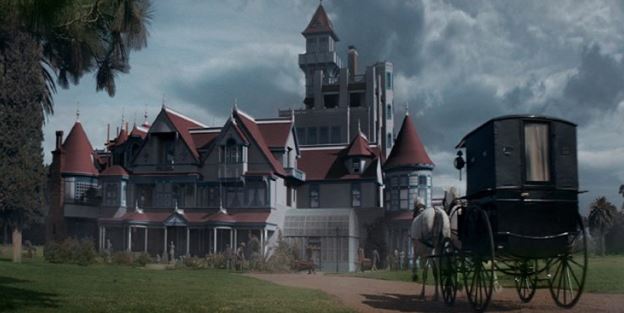
By the 1850s and ‘60s, there had been superficial change in style and more basic change in the way the room was used. Furniture was now usually fashioned in a machine-made revival of eighteenth-century French Rococo. It might be called Louis XIV, XV, XVI, or even Marie Antoinette. What is important, however, is that the furniture was not arranged in informal conversational groupings. It was still upholstered “en suite,” now most likely in damask, but it was no longer arranged against the wall. Instead, a settee and a few chairs were gathered on the rose-bowered carpet so that ladies could socialize whole doing their needlework. The center table under the gaslight was used for reading the paper or book, then cleared for tea with visitors, then cleared again for evening parlour games.

By the 1880s, the parlour had filled up with “art units.” The furniture was not likely to be matched set and was not upholstered to match. The choice and arrangement of objects and furniture in the parlour were primary ways the “lady of the house” could express her artistic sensibilities. By ornamenting and decorating every surface, by arranging easels, lightweight “fairy tables,” urns, pedestals, palms, and fans, the mistress introduced beauty to her family, heightened their aesthetic sensibilities, and fostered a moral and refined atmosphere. The change in the parlour reflected the change in women’s roles. The Greek Revival parlour was a formal room for entertaining. It was spare an uncluttered and not particularly personal. During this period women were restricted by traditional roles but, at least, were part of a cohesive life where their contribution was essential.

The Rococo Revival parlour represents a half-way point in the industrialization and urbanization of America. The furniture is now entirely machine-made. The room has become more “feminized” as the roles of men and women have diverged; the workplace has become the man’s sphere and the home the woman’s. The furniture is arranged in conversational groups as middle-class women are restricted more and more to visiting and handicrafts. By the 1880s, the woman has become a demigoddess of art and morality, and the parlour is her temple. An obsessive and self-conscious decorating and collecting frenzy resulted when women were cut off from participation in the World and made the guardian of the family’s aesthetic and moral well-being.

For further information about tours, including group tours, weddings, school events, birthday party packages, facility rentals, and special events please visit the website: https://winchestermysteryhouse.com/

Please visit the online giftshop, and purchase a gift for friends and relatives as well as a special memento of The Winchester Mystery House. A variety of souvenirs and gifts are available to purchase. https://shopwinchestermysteryhouse.com/




 Randolph Harris II International Institute